The project has been delayed by a year.

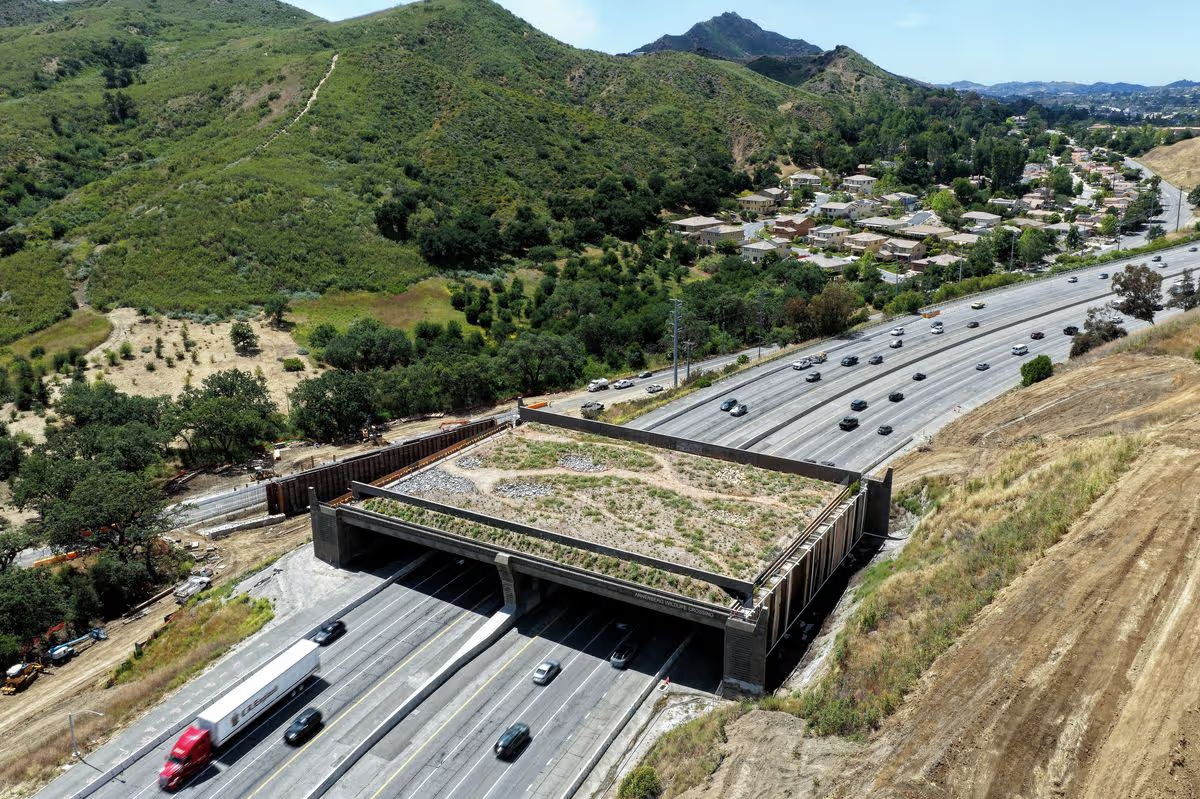
The bridge will provide a safe passage for wildlife(Image: Mario Tama/Getty Images)
After multiple setbacks and delays, the opening of the world’s largest wildlife bridge has finally been revealed. Spiralling costs and building delays pushed the project back by at least a year.
Work has been underway on the bridge for four and a half years. Now, it has been confirmed that the Wallis Annenberg Wildlife Crossing over the 101 Freeway in Agoura Hills, north of Los Angeles, will open on December 2.
The project leaders made the announcement on Earth Day. Managers said: “What a journey this has been! And we cannot wait to celebrate with you all.”
The main section of the bridge, which spans 10 lanes of the freeway, has largely been completed and landscaped. Work still left to do includes building over Agoura Road and connecting both ends of the bridge to the open space on either side.
It will eventually allow wildlife to safely pass through. California’s regional director for the National Wildlife Federation, Beth Pratt, has already seen some wildlife enjoying the bridge.
She told KNX News Radio: “I’ve recorded multiple species of butterflies up here. We’ve had, I think, eight species of birds.
“We’ve had red-tailed hawks and American kestrels fly by, so wildlife are already responding to it, even though it’s not connected to the landscape.”
The goal of the project is to reinvigorate the mountain lion population in the area. Animals that are frequently hit by cars on the freeway are also set to benefit, which include bears, bobcats, foxes, coyotes and deer.
The bridge has faced multiple delays and criticism. In 2022, the project broke ground with a $90million price tag (£66.5million) and was set to be completed by 2025.
However, reports today say the total has climbed to $114million (£84.5million), which has been paid for through private donations and public funds.
Project leaders have said near-record rainfall, which saturated the site in 2023 and 2024, delayed work. Project costs were also pushed higher due to inflation, labour shortages and the complexity of the project.
In a blog post, project leaders said: “The criticism often flattens a far more complicated reality. This is not a standard overpass. Engineers are effectively building a living ecosystem over 10 lanes of one of the busiest freeways in the country.”
It added: “Projects of this scale should be questioned, audited and debated—especially when it’s the public’s money being used.
“But they should also be judged on their purpose. In a region where wildlife populations face genetic isolation and frequent freeway deaths, doing nothing carries its own cost.
“The real question is not whether the crossing is ambitious—it clearly is. It’s whether Southern California is willing to invest in repairing the environmental missteps that made the project necessary in the first place.”