bridge

World’s longest suspension bridge will cost £11.7bn and Brits on holiday will benefit

The world’s longest suspension bridge is currently in Turkey but a new record could be held if the government in Italy gets its way and the Messina Bridge project is completed by 2033 as planned

The world’s longest suspension bridge was given the green light last year – and it could be of serious interest to Brits. In 2025, the Italian government’s plans to build the longest suspension bridge in the world was approved. If it becomes a reality, it would connect the mainland region of Calabria to Sicily.

However, a lot has happened since then. The controversial Messina Bridge project, which would cost a staggering £11.7bn, faced a setback last November, meaning it was put on hold again.

If the bridge ever gets built along the Strait of Messina, as Prime Minister Giorgia Meloni still intends, it would be a hugely ambitious infrastructure challenge that has been talked about in Italy for decades.

Pietro Salini, chief executive of Webuild, the engineering group leading the project, said it would be “transformative for the whole country” and he promised that it would “stimulate growth, employment, and lawfulness across southern Italy”.

The colossal bridge, consisting of two towers stretching 400-metres (1,300 feet), would span an incredible 3.3km (2.05 miles). Three lanes of traffic would sit either side of two railway lines in the middle.

It would be particularly welcomed by Brits travelling in Italy, because it would cut their journey to Sicily to just ten minutes, compared to taking the ferry, which can take a lot longer than the 30 minutes crossing when you factor in the immense queuing at peak times.

Speaking last year, Meloni said: “It is not an easy task but we consider it an investment in Italy’s present and future, and we like difficult challenges when they make sense.”

Transport minister Matteo Salvini spoke in August that the goal was to have it built between 2032 and 2033. He also boasted that 120,000 jobs a year would be created, something he said would bring economic growth to the poor regions of Sicilia and Calabria, which is on the tip of Italy’s boot.

Rome was given the approval for the project in August after years of the plans being scrapped. One of the biggest reasons plans have been halted historically was concerns of mafia fraud, including worries about taxpayers’ money being siphoned off by the Sicilian and Calabrian gangsters.

Other concerns have repeatedly been raised about environmental damage, cost and safety, and given the region is one of the most seismically active areas in the Mediterranean, designers promised the Strait of Messina Bridge would be able to withstand earthquakes.

However, in November, yet another setback was reported, after an Italian court ruled the bridge would go against EU environmental and tender rules.

The Court of Auditors ruling concluded: “The assumptions regarding the various ‘reasons of public interest’ are not validated by technical bodies and are not supported by adequate documentation.”

But the Italian government is refusing to give up and has vowed to review the ruling carefully and continue with its ambitions of making the bridge a reality.

As well as still having to convince the Italian Court of Auditors and both national and EU environmental agencies, there would also be pushback from the 4,000 residents who live either side of the Strait.

Their homes would be at risk of demolition and this could mean legal challenges regarding having to abandon their properties.

As it stands, the current world’s longest suspension bridge is the 915 Canakkale Bridge in Turkey – which connects Asia to Europe and takes six minutes to cross.

Construction across the passage of water (Dardanelles Strait) started in 2017 and it only became open to the public three years ago. Journey times have been cut by up to 93%.

This means 90-minute ferry trips can be avoided by using the bridge that starts in Gelibolu, Turkey, which is based on the European side of the country, to the Asian town of Lapseki.

Source link

New VC-25B Air Force One “Bridge” Aircraft Now Fully Modified And Flight Tested

The U.S. Air Force said its new interim Air Force One jet, dubbed the VC-25B Bridge aircraft, has officially completed modifications and flight testing and is being painted in the red, white and blue livery sought by President Donald Trump. The extremely lavish 747-8i Boeing Business Jet (BBJ) – donated by Qatar to the U.S. last year for use by Trump – is set to serve in the Air Force One role while the White House awaits the delayed delivery from Boeing of two fully-outfitted VC-25B Air Force One aircraft. There are no plans to retire the VC-25As that currently serve as Air Force One until both full-up VC-25Bs are operational.

The Air Force said the VC-25B Bridge aircraft is on schedule to roll out in its new paint scheme and be delivered to the Presidential Airlift Group this summer. It is not clear when it will start flying Trump. The White House referred us to the Air Force for additional information.

A VC-25B Bridge aircraft takes off for flight testing at Greenville, Texas. The aircraft recently completed modification and flight-testing phases, entering maintenance to be painted in red, white, gold and blue livery. The program remains on schedule to deliver the Bridge aircraft to the Presidential Airlift Group no later than summer 2026. (Courtesy photo)

The jet recently underwent flight testing in Texas, which you can see in the following photos that aviation photographer TT-33 operator was kind enough to share with us at the time.

The Qatari-donated 747-8i jet envisioned as a presidential airlifter, had a recent test flight.
The Qatari-donated 747-8i jet envisioned as a presidential airlifter, had a recent test flight. (TT-33 operator photo)
(TT-33 operator)

The USAF now says that with the Boeing VC-25B deliveries delayed far past its initial 2024 target and VC-25A heavy maintenance cycles being extended, an interim capability became “an absolute imperative.” How accurate this claim actually is isn’t clear. Trump has been talking about an interim Air Force One aircraft for some time since deliveries of the new VC-25Bs were pushed back beyond his second term. We heard of no actual requirements originating for this capability from within the USAF prior to the new administration or far in advance of Trump’s deal with the Qataris to source the jet. Very early in the new administration, Elon Musk was even working to find out how to get Trump a new Air Force One as fast as possible, for instance.

The Air Force claimed that in February 2025, a dedicated task force launched a “full-court press” on the VC-25B Bridge program while simultaneously working to accelerate Boeing’s long-term VC-25B production.

The U.S. Air Force has confirmed it is buying two Boeing 747-8 airliners from German flag carrier Lufthansa.
A rendering of a future US Air Force VC-25B Air Force One jet in the red, white and blue livery desired by President Donald Trump. (Boeing) Boeing

Though questions were swirling about the legality and ethics of receiving the gifted plane, the Pentagon last May took delivery of the aircraft and said it would rapidly undertake the required modifications.

It’s one thing to have a donated ultra-luxury jet, but turning it into one safe and connected enough to carry a president is another story.

As TWZ has previously noted, converting any aircraft into one that is secure enough to transport the president is a complex undertaking. The aircraft needs to provide constant, secure communications, including what is needed to order a nuclear strike under extreme conditions. Historically, it also needs to be physically hardened both inside and out to withstand myriad threats, from the electromagnetic pulse of a nuclear weapon going off to incoming surface-to-air missiles to enemy intelligence-gathering efforts. To do this requires significant modifications right down to the aircraft’s outer structure. It is very unlikely, if not impossible, that this aircraft was hardened against EMPs in the timeframe required for fielding it.

The VC-25As are speckled with missile approach warning sensors and many laser countermeasures turrets (DIRCM). They also include the legacy Matador infrared countermeasure system above their jet engines and APU. This is in addition to other defensive features which are less visible and remain closely guarded secrets.

Common Infrared Countermeasures (CIRCM) thumbnail

Common Infrared Countermeasures (CIRCM)


In previous coverage, we noted that at the very least, “this aircraft will have to feature some kind of DIRCM setup to repel shoulder-fired heat-seeking missiles, and modular units are available that can be attached in a canoe to the bottom of the aircraft. These systems, such as Elbit’s C-MUSIC or Northrop Grumman’s Guardian, are in service with foreign VVIP 747s, as well as commercial aircraft, including those flying for Israeli airline El Al. You can read all about these systems here. Still, while they offer far less defensive capacity compared to what is seen under the belly of a VC-25A, they would offer a significant layer of protection.” We still don’t see any evidence of the aircraft being modified with defensive countermeasures.

Northrop Grumman’s Guardian pod is a self-contained DIRCM (includes missile approach and warning sensors and laser pointer) solution for airliner-type aircraft. (Northrop Grumman)

L3Harris, known for its communications systems and aircraft alterations, was selected to undertake the “complex modification of the bridge aircraft,” the Air Force explained. The company already delivers “secure, reliable and resilient communications” for VC-25A and the executive airlift fleet “but has extensive experience with self-protection and customization of VIP aircraft,” the Air Force added. “The accelerated timeline was further made possible by a mission-focused partnership with Boeing, who provided the necessary engineering data to support the required structural modifications.”

In addition, “elite specialists from multiple government agencies developed advanced protocols to detect and – if necessary – neutralize potential technical hazards on previously owned aircraft,” according to the Air Force. “Their rigorous approach on the Bridge aircraft has literally ‘written the book’ and set the benchmark for integrating used airframes into the secure military inventory.”

In response to our question about what modifications the jet received, the Air Force told us the following:

“Safety and security were at the forefront of this program. We deliberately minimized interior aesthetic modifications to focus on modifications for safety, security and mission execution. We assessed which requirements were necessary for an interim capability. We had greater flexibility in developing our mission requirements.

After safety and security, we focused on the mission communications systems.

We have made deliberate decisions such as the reduction of the number of airstairs, less chiller space, and exclusion of the Golden Eagle mission [to fly the remains of former presidents] to minimize structural modifications, while prioritizing modifications focused on safety, security and secure communications.”

We also asked whether this jet will be able to fly overseas and into higher-risk areas, but have not gotten a response. At this point, based on the limited info we have at this time, that seems unlikely. But if this is the case, the question then can be raised why the USAF is spending billions on two full-up Air Force One aircraft if standards have been so relaxed that this simpler aircraft can do all their missions? We will update this story with any pertinent details the USAF provides.

In this February 15, 2025 a Qatari Boeing 747 sits on the tarmac of Palm Beach International airport after US President Donald Trump toured the aircraft on February 15, 2025. Donald Trump plans to accept a luxury Boeing jet from the Qatari royal family for use as Air Force One and then continue flying in it after his tenure, despite strict rules on US presidential gifts, media reported May 11, 2025. Calling the plane a "flying palace," ABC News, which first reported the story, said the Boeing 747-8 jumbo jet would possibly be the most expensive gift ever received by the American government. (Photo by ROBERTO SCHMIDT / AFP) (Photo by ROBERTO SCHMIDT/AFP via Getty Images)
A Qatari Boeing 747 sits on the tarmac of Palm Beach International airport after US President Donald Trump toured the aircraft on February 15, 2025. (Photo by ROBERTO SCHMIDT / AFP) ROBERTO SCHMIDT

To help speed up the delivery process of this interim Air Force One jet, the Air Force said it “constructed an at-scale mockup of the interior, complete with virtual reality views, to enable early commissioning activities for White House staff.”

“Our commitment to providing the president with a secure, resilient and reliable airborne command post is unwavering,” said Chief of Staff of the Air Force Gen. Ken Wilsbach. “The VC-25B Bridge program is a testament to the Air Force’s ability to innovate and rapidly evolve to ensure the continuity of our government under any conditions.”

The Air Force said the estimated delivery of Boeing’s VC-25Bs is now expected in 2028. If that holds up, then this ‘bridge’ aircraft will have served at most around two years until the first full-up VC-25B is delivered.

We will continue to follow developments in this program and provide updates when warranted.

Contact the author: howard@thewarzone.com

Howard is a Senior Staff Writer for The War Zone, and a former Senior Managing Editor for Military Times. Prior to this, he covered military affairs for the Tampa Bay Times as a Senior Writer. Howard’s work has appeared in various publications including Yahoo News, RealClearDefense, and Air Force Times.


Source link

‘Bucket-list’ destination is bridge where you can see four countries at once

It is the only place in the world where you can see four countries at once — and it’s fast becoming a must-visit travel destination

Holidaymakers are adding a rather unusual spot to their bucket lists. The Kazungula Bridge, which spans the Zambezi River and links Zambia and Botswana, is the only location on Earth where four countries can be seen simultaneously.

While Botswana and Zambia are connected by the 923-metre structure, both Namibia and Zimbabwe sit just metres away on the opposite bank. From the bridge and nearby vantage points, visitors can witness multiple international frontiers within seconds, making this an extraordinary and essential stop for anyone exploring these nations.

The bridge, which opened in 2021, replaced a slow and rather unreliable ferry crossing, making access far simpler for tourists and locals alike.

Now, thanks to the bridge and swifter border procedures, visitors can arrange multi-country trips with considerably more ease.

Dr Mohanjeet Brar, seasoned travel expert and MD at African safari camp operator Gamewatchers Safaris, points out that while this spot may provide a one-of-a-kind experience, it’s crucial to bear in mind that you’ll be crossing at least one frontier, and therefore adequate preparation is essential.

He said: “This is exactly the kind of experience that sounds easy on paper but can quickly become complicated without proper planning.

“You’re dealing with multiple border crossings, visa requirements, and varying wait times – all within a relatively small geographic area.

“The key is to treat it less like a spontaneous stop and more like a structured itinerary.

“With the right preparation, it can be one of the most rewarding travel experiences in Africa.”

This convenient crossing makes it straightforward to combine several unmissable destinations into a single trip, such as Chobe National Park in Botswana alongside Victoria Falls in Zimbabwe or Zambia.

For those seeking something a little closer to home, where you can set foot in multiple countries at once, Europe offers plenty of options.

These include Drielandenpunt, where Germany, Belgium, and the Netherlands converge, or Trojmedzie, where the borders of Poland, Slovakia, and Czechia all meet.

Source link

World’s largest wildlife bridge that’s cost £84.5 million finally has opening date

The project has been delayed by a year.

After multiple setbacks and delays, the opening of the world’s largest wildlife bridge has finally been revealed. Spiralling costs and building delays pushed the project back by at least a year.

Work has been underway on the bridge for four and a half years. Now, it has been confirmed that the Wallis Annenberg Wildlife Crossing over the 101 Freeway in Agoura Hills, north of Los Angeles, will open on December 2.

The project leaders made the announcement on Earth Day. Managers said: “What a journey this has been! And we cannot wait to celebrate with you all.”

The main section of the bridge, which spans 10 lanes of the freeway, has largely been completed and landscaped. Work still left to do includes building over Agoura Road and connecting both ends of the bridge to the open space on either side.

It will eventually allow wildlife to safely pass through. California’s regional director for the National Wildlife Federation, Beth Pratt, has already seen some wildlife enjoying the bridge.

She told KNX News Radio: “I’ve recorded multiple species of butterflies up here. We’ve had, I think, eight species of birds.

“We’ve had red-tailed hawks and American kestrels fly by, so wildlife are already responding to it, even though it’s not connected to the landscape.”

The goal of the project is to reinvigorate the mountain lion population in the area. Animals that are frequently hit by cars on the freeway are also set to benefit, which include bears, bobcats, foxes, coyotes and deer.

The bridge has faced multiple delays and criticism. In 2022, the project broke ground with a $90million price tag (£66.5million) and was set to be completed by 2025.

However, reports today say the total has climbed to $114million (£84.5million), which has been paid for through private donations and public funds.

Project leaders have said near-record rainfall, which saturated the site in 2023 and 2024, delayed work. Project costs were also pushed higher due to inflation, labour shortages and the complexity of the project.

In a blog post, project leaders said: “The criticism often flattens a far more complicated reality. This is not a standard overpass. Engineers are effectively building a living ecosystem over 10 lanes of one of the busiest freeways in the country.”

It added: “Projects of this scale should be questioned, audited and debated—especially when it’s the public’s money being used.

“But they should also be judged on their purpose. In a region where wildlife populations face genetic isolation and frequent freeway deaths, doing nothing carries its own cost.

“The real question is not whether the crossing is ambitious—it clearly is. It’s whether Southern California is willing to invest in repairing the environmental missteps that made the project necessary in the first place.”

Source link

World’s longest bridge takes 40 minutes to drive across and cost £15billion to build

The longest sea crossing connects three major cities

Stretching 34 miles across the Pearl River Delta, the Hong Kong-Zhuhai-Macau Bridge holds the record as the longest sea crossing ever constructed, connecting the southern Chinese cities of Hong Kong, Zhuhai and Macau. The 55km structure took nine years to build at a cost of approximately £15bn.

It has dramatically cut journey times between the three cities, transforming what was once an hour-long ferry trip into a drive of roughly 40 minutes. The bridge forms part of a broader initiative to strengthen transport links across the Greater Bay Area, a region the Chinese government is nurturing into a major economic powerhouse.

By connecting Hong Kong and Macau more directly with cities in Guangdong province, the crossing is designed to boost trade and movement throughout the region. Its construction incorporates several key elements, including a series of long-span bridges, man-made islands and connecting roads.

The main section features three navigation channel bridges – Jiuzhou, Jianghai and Qingzhou.

This was constructed to permit large vessels to pass through one of China’s most heavily trafficked shipping zones.

Engineers were required to contend with challenging conditions, including regular typhoons and a demanding marine environment, reports the Express.

The bridge employs single-column piers embedded in the seabed to minimise disruption to water flow and reduce the impact on local wildlife, including the Chinese white dolphin.

The three principal bridges feature cable-supported structures, each boasting a distinctive tower design.

These were designed to provide the crossing with a uniform yet diverse aesthetic, especially considering its prominence from land, sea and air.

The Jiuzhou Bridge maintains its original sail-shaped towers after modifications during the detailed design stage.

Engineering consultancy Arup played a role in various aspects of the scheme, including preliminary design work, artificial island construction and significant road and tunnel connections on the Hong Kong and Macau sides.

Further infrastructure associated with the crossing encompasses boundary crossing facilities and links such as the Tuen Mun-Chek Lap Kok Link, assisting in incorporating the bridge into the broader transport network.

Since its inauguration, the bridge has emerged as a vital route within the region’s transport infrastructure, demonstrating both the magnitude of China’s infrastructure objectives and the practical requirement for quicker links between its major urban centres.

Source link

Fresh blow for Scott Mills after BBC sacking as M3 bridge tribute to star is permanently removed

SCOTT Mills has been dealt with a fresh blow after his sacking from the BBC as his M3 bridge tribute has been permanently removed.

It was officially unveiled as The Scott Mills Bridge back in 2016 and a plaque was installed at Fleet Services on the M3.

Scott Mills has been dealt with a fresh blow after his sacking from the BBC Credit: Shutterstock Editorial
A tribute plaque was installed in 2016 after a bridge was named after him Credit: News Group Newspapers ltd
The plaque has now been taken down Credit: Not known, clear with picture desk

His then BBC Radio 1 co-host Chris Stark and Welcome Break staff led a campaign to rename it after him.

However, after his dismissal from the BBC, the plaque has now been removed.

In official pictures obtained by The Sun, the plaque which was previously on a wall next to a set of stairs, has been taken down.

The black and silver frame previously said “The Scott Mills Bridge” alongside the Welcome Break logo and his signature.

SCOTT-FREE

BBC axes all Top of the Pops episodes Scott Mills in amid sex abuse claims row


MILLS STEPS OUT

Scott Mills seen for first time since being sacked by BBC over sex probe

The Sun previously revealed that the bridge would be renamed as Welcome Break, who own the service station, want to disassociate themselves from Scott, 53, following the scandal.

A source explained last month: “It’s highly likely Welcome Break will rename the bridge in light of Scott being fired, especially given the nature of the allegations.

“It’s not a great look for them to be associated with any scandals.”

Scott was suddenly axed by the BBC with news of his sacking being made public last month.

He was last on-air as host of the Radio 2 Breakfast Show on Tuesday, March 24, before a complaint arose.

BBC chiefs are understood to have taken swift action in sacking him thereafter.

The complaint is believed to relate to “serious sexual offences” against a teenage boy.

He was questioned by police under caution in 2018 – when he was in his 40s, the Mirror reports.

The interview was related to alleged offences which took place between 1997 and 2000.

The case was dropped in full due to a lack of evidence.

Scott was sacked last month due to his “personal conduct” Credit: Shutterstock Editorial

A source close to Mills — the BBC’s 11th highest-paid star — told The Sun: “Scott was told about the allegation in a meeting with senior staff present. He was tense.

“He has completely shut down now and no one can get hold of him. No calls, no messages — nothing.

“The people who know him are blindsided by all of this and they can’t get hold of him.”

An internal message was sent around Radio 2 after Mills’ exit was made public.

It was revealed last week that Sara Cox will take over as host of BBC Radio 2’s Breakfast Show.

She expressed: “There are not enough adjectives to really sum up how I’m feeling about being trusted with such an iconic show but let’s start with ecstatic, honoured and incredibly chuffed.

“It’s been a dream to host the Breakfast Show since I joined Radio 2 and it feels like a bit of a full circle for me.

“I’ve had the most glorious seven years of my career on Teatime so thank you to my brilliant Teatime listeners who hopefully will join me at Breakfast for excellent music and all my usual nonsense plus some superstar guests.

“I honestly can’t wait to wake the nation up with the biggest most fun breakfast show ever.”

Sara Cox has replaced Scott as host of BBC Radio 2’s Breakfast Show Credit: Getty

Source link

The only bridge in the world that shows 4 countries at once

For those who love to travel and want to tick off as many destinations as possible, there is one remarkable spot that serves as the ultimate shortcut

This extraordinary location lets you set eyes on four countries simultaneously – without moving a single step. The Kazungula Quadripoint sits along the Zambezi River, a rare geographical marvel where four nations lie within just a few hundred metres of one another.

Those four countries are Botswana, Namibia, Zambia and Zimbabwe. While it may not be a perfectly precise four-corners crossing, the nations are close enough that visitors can stand in one country and stride into another, while gazing across the river at two more.

At the heart of this unique experience is the Kazungula Bridge, a 923-metre structure connecting Zambia and Botswana across the Zambezi River.

The bridge was meticulously designed to honour complex border boundaries, meaning it directly links only two countries – yet crucially, it sits within touching distance of both Namibia and Zimbabwe, reports the Express.

The remarkable result is that you can stand on the bridge joining the two nations.

Zimbabwe is just metres away on one side and Namibia clearly visible across the river – a truly breathtaking experience.

Prior to the bridge’s construction, travellers crossing between Zambia and Botswana were reliant on a ferry service notorious for its delays, which severely restricted movement between the neighbouring countries.

Nearer to home, there is another spectacular chance to take in multiple countries from a single vantage point – though you won’t be quite as close as the Kazungula Bridge allows.

Nestled in the Swiss Alps lies a mountain known as Hoher Kasten, which on a clear day boasts breathtaking panoramic views across the alps of Germany, Austria, Italy and France.

The best part is that you don’t even need to trek to the summit to soak up this stunning vista. Instead, a cable car whisks you up from the town of Brülisau, scaling the mountainside in just eight minutes.

Source link

Trump holds fast to Tuesday deadline, threatening Iran’s bridges and power plants

President Trump said Monday that the United States and Iran are at a “critical point” in negotiating a potential ceasefire agreement, but the chances of reaching a deal by a Trump-imposed deadline on Tuesday evening appeared uncertain.

In a lengthy news briefing at the White House, the president echoed an expletive-laden Easter Sunday warning to strike Iran’s vital infrastructure if Tehran does not agree to open the Strait of Hormuz by 5 p.m. PDT on Tuesday.

“The entire country can be taken out in one night and that night might be tomorrow night,” Trump told reporters.

Mediators from Egypt, Pakistan and Turkey sent the United States and Iran a draft proposal of the 45-day ceasefire on Friday, the Associated Press reported. Its prospects seemed dim amid the president’s threats and a lukewarm response from Iranian leaders, who dismissed the president’s diplomatic overtures as “unrealistic” and denying direct talks with the United States.

Iranian Foreign Ministry spokesman Esmail Baghaei rejected the latest ceasefire proposal, saying Monday that the American demands were “both highly excessive and unusual, as well as illogical.”

Still, Trump continued to assert that Iranian leadership has been negotiating in good faith. He characterized newly installed leaders as an improvement over their predecessors.

“The people that we are negotiating with now on behalf of Iran are much more reasonable,” he said Monday.

Trump declined to comment further on the ceasefire proposal at the news conference, but told reporters that Iran is negotiating ahead of his Tuesday deadline.

“I can tell you they’re negotiating, we think in good faith,” Trump said. “We are going to find out.”

The president did not say whom the United States is negotiating with, but said the most difficult challenge so far has been establishing a reliable channel of communicating with Iranian officials who he said have “no method of communicating.”

Trump also declined to say whether he was prepared to offer Iran assurances to wind down the conflict, or whether he would escalate by following through with his threats to bomb critical Iranian infrastructure, leaving the door open to both diplomacy and military action.

“I can’t tell you — it depends on what they do. This is a critical period,” he said,

Central to the negotiations is Iran’s control of the Strait of Hormuz, a choke point that, if left blockaded, could continue driving oil prices higher and further destabilizing global energy markets.

Trump, in characteristically unorthodox fashion, floated the possibility of the United States seizing operational control of the waterway and charging tolls for passage, a proposal that he provided without much detail.

“Why shouldn’t we?” Trump said. “We have a concept where we’ll charge tolls.”

He also mused openly about seizing Iranian oil, as he has in recent social media posts in which he floated the idea of using the war to claim Iranian energy resources. He acknowledged public pressure was holding him back from that course.

“Unfortunately the American people would like to see us come home,” he said. “If it were up to me, I’d take the oil, keep the oil and make plenty of money.”

In addition to reopening the Strait of Hormuz, Washington is also demanding the permanent decommissioning of Iranian nuclear sites and an end to its uranium enrichment programs. The proposal also requires Iran to halt support for regional proxies and accept strict ballistic missile limits.

In exchange, the United States says it will provide sanctions relief and assistance with civilian energy production, according to media reports.

Speaking at the White House Easter Egg Roll earlier Monday, Trump showed no signs of softening his posture to bring “hell” to Iran if a deal doesn’t materialize.

“We are obliterating their country. And I hate to do it, but we are obliterating. And they just don’t want to say uncle. … And if they don’t, then they’ll have no bridges, they’ll have no power plants, they’ll have nothing,” he said, adding ominously that “there are other things that are worse than those two.”

Iran has warned of “more severe and expansive” retaliations if Trump follows through on the threats.

Also at Monday’s briefing, Trump celebrated the dramatic rescue of the American officer whose fighter jet was downed by Iran last week. He told reporters the operation to retrieve the wounded officer from “one of the toughest areas in Iran” was possible with a mix of “talent” and “luck.”

The president, however, was angered that a news outlet, which he did not name, reported that the weapons system officer had gone missing and was stranded behind enemy lines. Trump vowed to root out the source of that information, including by threatening to jail the journalist who broke the story.

“We have to find that leaker because that is a sick person,” Trump said. “We are going to find out, it is national security. The person who did the story will go to jail if he doesn’t say.”

Also Monday, Israel struck Iran’s largest petrochemical facility in Asaluyeh and killed Gen. Majid Khademi, the head of the Islamic Revolutionary Guard Corps’ intelligence organization.

The Israeli military also hit three Iranian airports, purportedly targeting dozens of helicopters and aircraft it said belonged to the Iranian air force.

Iran responded with missile strikes targeting Haifa, Israel, and energy infrastructure in Kuwait and Bahrain.

Source link

Todd Bridges officially files to divorce Bettijo Hirschi

Todd Bridges has taken steps to make his split from Bettijo Hirschi official after announcing in January that he and his spouse had separated.

The former “Diff’rent Strokes” actor, 60, filed paperwork asking to end his marriage Tuesday in Arizona, Us Weekly reported Thursday. This will be the second divorce for both parties.

A representative for Bridges didn’t respond immediately to The Times’ request for confirmation and comment.

Bridges announced in January that he and Hirschi were heading their separate ways after getting married in 2022. At the time, he called the decision a “difficult” one for him.

“This was not an easy choice, and it comes with a heavy heart, but also with love and gratitude for the life we shared,” he said in a statement to The Times. “I thank God for the time we’ve had together, the lessons we’ve learned, and the family we’ve built. Even in this season of change, I trust He is guiding us both toward healing, peace, and new beginnings.”

Bridges said at the time that he would “continue to lift my former partner up in prayer, wishing them joy and fulfillment in the chapters ahead.”

The two met in January 2022; they married nine months later, after a brief engagement. Hirschi told Tamron Hall last year that a friend who wrote a new dating profile for her showed it to Bridges as “market research.” The friend then told Hirschi that Bridges wanted to get in touch.

“She’s a lot like my mom,” Bridges told Hall.

During a contentious spousal support dispute in 2025, Hirschi described the “Everybody Hates Chris” veteran as “semi-retired,” Us Weekly reported in February. The documents came as part of a battle Hirschi fought with first husband Heath Hirschi after marrying Bridges. At the time, Us said that Bettijo was claiming monthly expenses of around $16,550 and said Bridges made only “about $700” a month in 2024 unless he obtained “contract work.”

The Hirschis, who divorced in 2020, share four children, two of them minors, the outlet said. Heath Hirschi wanted out of paying $2,700 a month in spousal support payments after his ex married someone his legal team called a “well-known Hollywood actor.” Us said that in December 2025, the court revised the former couple’s agreement to $1,206 per month in child support, with $43,401.96 due for unpaid past support.

Bridges, meanwhile, has about a dozen acting credits since 2020, according to IMDb, which also says he worked on several new projects in various stages of production.

He also has two adult offspring: Daughter Bo is from a previous relationship with Amanda Rushing; he shares son Spencir, 27, with his first wife. Spencir Bridges was, like his dad, a child actor, with roles in the 2007 movie “Daddy Day Camp” and, in 2005, the TV series “ER.” Spencir’s most recent acting credits were in 2009 when he appeared in the series “iCarly” and in the TV movie “The Three Gifts.”

Todd Bridges is the last surviving original cast member of the hit sitcom “Diff’rent Strokes,” which ran from 1978 to 1986. Conrad Bain played Phillip Drummond, a wealthy Park Avenue businessman and father of Kimberly (Dana Plato). Drummond adopted sons Arnold (Gary Coleman) and Willis (Bridges), who were from Harlem. The character of housekeeper Edna Garrett, played by Charlotte Rae, was spun off in 1979 into a second hit series, “Facts of Life,” which ran until 1988.

Plato, who played Bain’s daughter Kimberly, died in 1999 from an overdose when she was 34. Bain died of natural causes in January 2013, at age 89, while Rae died in August 2018 at 92.

Gary Coleman died in May 2010 at age 42 after suffering a brain hemorrhage in an accidental fall at his home in Utah.

Source link

Key Iranian Bridge Severed By Airstrikes (Updated)

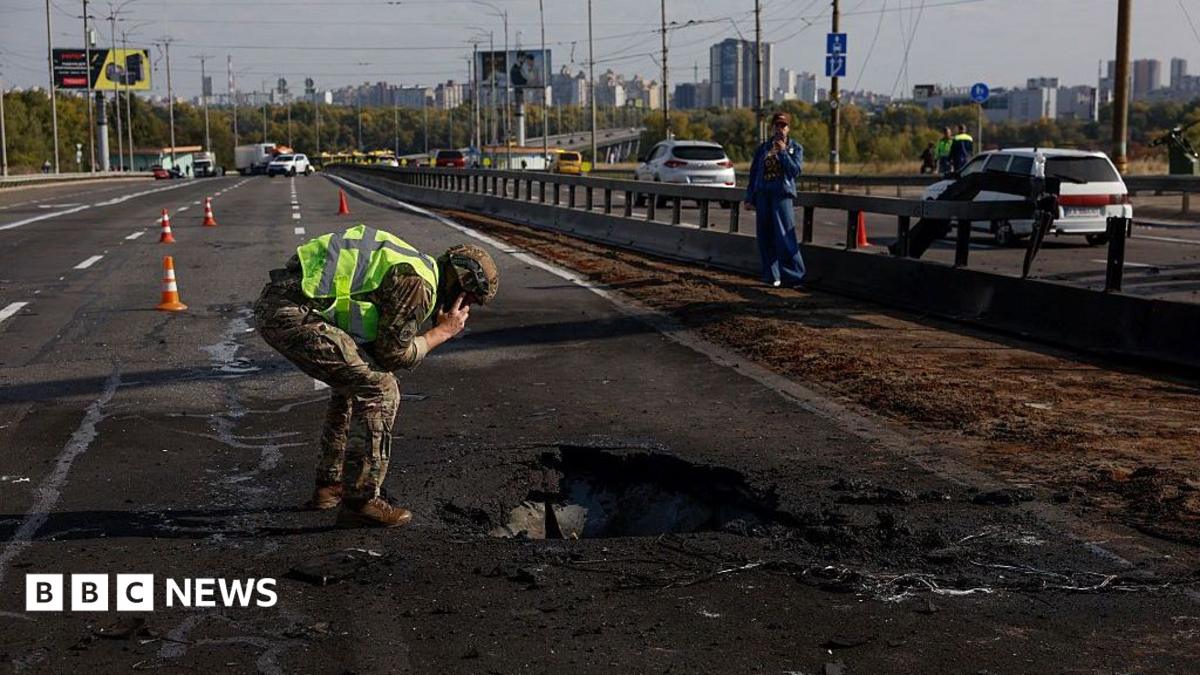
A major bridge near Tehran was struck today by what Iran has said were U.S.-Israeli strikes. The B1 bridge in Alborz province, one of the tallest in the Middle East, was hit in two waves of attacks, separated by around an hour, Iranian state TV reported. The bridge provides a critical link between Tehran and Karaj. The attack comes a day after U.S. President Donald Trump’s threat to bomb Iran “back to the Stone Ages.”

Iran threatens regional bridges, including in Israel, after ‘engineering masterpiece’ hit

Iran said the B1 bridge linking Tehran and Karaj was struck and urged civilians to avoid the area, adding an Alborz industrial facility was …https://t.co/Hx6YCoTlmh pic.twitter.com/VkEJHL309Z

— Ynet Global (@ynetnews) April 2, 2026

“A few minutes ago, the American-Zionist enemy once again targeted the B1 bridge in Karaj,” a city west of Tehran, state TV said earlier today, adding that the first strike had caused two civilian casualties.

It said the a later attack took place as emergency teams were deployed to the site to help victims of the first strike. We cannot confirm this claim.

US/Israeli airstrikes targeted the B1 Bridge in Karaj, northern Iran.

This is one of the tallest bridges in Iran. There are reports of several injuries. pic.twitter.com/umYCcL746c

— AMK Mapping 🇳🇿 (@AMK_Mapping_) April 2, 2026

Imagery posted to social media showed a clear breach in the road bridge, which connects Tehran and Karaj. While a key logistics node between the two regions.

Earlier today, the B1 Bridge on the Karaj Northern Bypass in western Tehran, Iran was targeted in a U.S. and/or Israeli strike, amidst an uptempo in joint U.S.-Israeli strike operations, announced by U.S. President Donald J. Trump last night. pic.twitter.com/Gm0NA2RZOC

— OSINTdefender (@sentdefender) April 2, 2026

Earlier this week, Trump’s threatened to “completely obliterate,” all Iranian electrical-generation plants and oil wells. This led to questions about whether the U.S. military was being primed to commit potential war crimes under international law, with the campaign expanding to include civilian targets as a matter of policy.

When asked about this point, White House press secretary Karoline Leavitt said that Trump’s statement showed that Iran’s “best move is to make a deal.”

“The United States Armed Forces has capabilities beyond their wildest imagination, and the president is not afraid to use them,” she said.

US and Israeli forces struck the B1 bridge connecting Tehran to western regions, hitting Iran’s highest bridge linking Tehran and Karaj, a major transport artery opened earlier this year. #Iran pic.twitter.com/Sb4y1t2Z6s

— NOELREPORTS 🇪🇺 🇺🇦 (@NOELreports) April 2, 2026

In response to the bridge strike today, Iran has threatened to hit regional bridges, including in Israel.

Iranian statements also referenced potential targets in Kuwait, Abu Dhabi, Jordan and Iraq, signaling a possible widening of threats to regional infrastructure.

UPDATES

UPDATE: 3:15 PM EST –

In a post on his Truth Social site, Trump confirmed that the U.S. attacked the B1 bridge and said there will be more such strikes unless Iran agrees to a peace treaty.

“The biggest bridge in Iran comes tumbling down, never to be used again — Much more to follow!,” Trump proclaimed. “IT IS TIME FOR IRAN TO MAKE A DEAL BEFORE IT IS TOO LATE, AND THERE IS NOTHING LEFT OF WHAT STILL COULD BECOME A GREAT COUNTRY!”

UAE Maj. Gen. Major Nasser Al Humaidi told MSN News Now that his country is not ruling out joining Epic Fury as a combatant.

UPDATE: 3:00 PM EST –

Unverified footage claims to show the impact of an Iranian ballistic missile in the Israeli city of Petah Tikva, to the east of Tel Aviv, this evening.

UPDATE: 2:45 PM EST –

Israel is receiving conflicting messages about U.S.-Iran negotiations to end the war, Ynet reports.

According to Israeli officials familiar with the situation, the talks are proceeding along two separate tracks. On one front, U.S. Vice President JD Vance is engaging with Pakistan’s army chief, Asim Munir, who is regarded as a crucial intermediary with Tehran. At the same time, U.S. envoy Steve Witkoff has been communicating directly with Iran’s foreign minister, Abbas Araghchi.

Israel sees mixed signals in US-Iran talks, fears temporary ceasefire

Officials say talks are being held via two channels: Vice President JD Vance is in contact with Pakistan’s army chief, who relays messages to Tehran, while envoy…https://t.co/9S1uVLSC39 pic.twitter.com/Qr1V4wUncY

— Ynet Global (@ynetnews) April 2, 2026

Based on this still photo, the legitimacy of which cannot be fully confirmed, airstrikes against the B1 bridge earlier today involved 2,000-pound class Joint Direct Attack Munitions (JDAM), weapons widely used by Israel and the United States.

Adm. Brad Cooper, the commander of U.S. Central Command (CENTCOM), has laid out his assessment of Operation Epic Fury, with the campaign against Iran now in its fifth week.

“It is my operational assessment that we are making undeniable progress,” Cooper said. “We don’t see their navy sailing. We don’t see their aircraft flying, and their air and missile defense systems have largely been destroyed.”

“Now in our 5th week of the campaign, it is my operational assessment that we are making undeniable progress. We don’t see their navy sailing. We don’t see their aircraft flying, and their air and missile defense systems have largely been destroyed.” – Adm. Brad Cooper, CENTCOM… pic.twitter.com/cTHgYJDxCF

— U.S. Central Command (@CENTCOM) April 2, 2026

Another U.S. Air Force’s prized E-3 Airborne Warning and Control System (AWACS) aircraft appears to be heading toward the CENTCOM region. Publicly available flight-tracking data showed the aircraft heading out over the Atlantic this morning. This comes after an E-3 was destroyed in an Iranian attack on Prince Sultan Air Base in Saudi Arabia on March 27 — another example may also have been damaged in the same raid.

The E-3 AWACS are critical for spotting incoming barrages and coordinating the air war. The U.S. sent six to the Middle East prior to the war beginning, and additional airborne early assets have been sent to the region. Satellite imagery shows E-2D Hawkeyes at Prince Sultan Air Base, where the E-3 was destroyed. The U.S. only had 16 E-3s remaining, with the rickety fleet nearly cut in half as it struggles to maintain readiness in its old age. 

🇸🇦🇺🇸PSAB BDA: The Day After
High-res imagery from the morning of Mar 28 gives us a clear look at Prince Sultan Air Base (PSAB) following the early morning Mar 27 strike. The damage is significant, but the response is baffling.

✈️E-3 Sentry: Wreckage remains in pieces near the… pic.twitter.com/M5ZZ8krXuJ

— MT Anderson (@MT_Anderson) April 1, 2026

Speaking last night, U.S. President Donald Trump once more laid out a “two to three week” timeframe as he justified his choice to engage in the war.

In his first national address since the conflict with Iran began, Trump defended the burden the war is placing on both the United States and the global community, while still insisting that an end to the fighting is within reach.

Speaking on Wednesday night, Trump claimed that Iran had been severely weakened and that the most difficult phase of the conflict was over. However, he also warned that the U.S. military would continue to strike Iran “very aggressively” over the coming two to three weeks.

“Tonight, I’m pleased to say that these core strategic objectives are nearing completion,” Trump said. “In these past four weeks, our armed forces have delivered swift, decisive, overwhelming victories on the battlefield — victories like few people have ever seen before.”

In response to Trump’s address, Iran vowed to launch “crushing” attacks on the United States and Israel, and fired missiles at Tel Aviv. Israeli air defenses were in action, and police responded to “several” impact sites. Four people were reportedly lightly injured in the Tel Aviv area.

The Iranian military command center Khatam Al-Anbiya put out a statement carried on state TV warning the United States and Israel to expect “more crushing, broader, and more destructive actions.”

“With trust in Almighty God, this war will continue until your humiliation, disgrace, permanent and certain regret, and surrender,” said the statement.

The IRGC carried out the 89th wave of Operation True Promise 4 against American and Israeli targets in the region, emphasizing that the situation in the Strait of Hormuz is under the full control of Iranian naval forces. pic.twitter.com/fvU0ljm6eI

— Press TV 🔻 (@PressTV) April 2, 2026

According to the semi-official Tasnim News Agency, the commander of the Iranian Armed Forces has now ordered operational headquarters “to ensure that no invading forces survive if the enemy launches a ground offensive.” The commander has reportedly also issued a directive to units calling for “highly cautious monitoring of hostile movements and timely execution of counterattack plans.”

Army Sets ZERO-SURVIVAL RULE for Enemy Invasion

Iranian Army Commander ordered operational HQs to ensure that no invading forces survive if the enemy launches a ground offensive, stressing highly cautious monitoring of hostile movements & timely execution of counter-attack plans https://t.co/hdrDudD5ZB

— Tasnim News Agency (@Tasnimnews_EN) April 2, 2026

Meanwhile, another bellicose statement came from Mohammad-Bagher Ghalibaf, the speaker of the Islamic Republic of Iran’s parliament, under the warning “You Come for Our Home… You Meet the Whole Family.”

Russia also issued an Ironic statement in response to Trump’s speech, with Kremlin spokesman Dmitry Peskov saying: “President Putin is a staunch supporter of the idea that all disagreements should be resolved exclusively through political and diplomatic means.”

Kremlin spokesman Dmitry Peskov responds to questions about Trump’s speech last night: “President Putin is a staunch supporter of the idea that all disagreements should be resolved exclusively through political and diplomatic means.” pic.twitter.com/6p6GKWjVdX

— Mike Eckel (@Mike_Eckel) April 2, 2026

Meanwhile, Israel has continued to strike targets in Iran, with the Israel Defense Forces (IDF) stating that the latest attacks have targeted, among others, an Islamic Revolutionary Guard Corps (IRGC) Ground Forces base and a mobile command post used by regime commanders in Tehran, as well as a ballistic missile storage site in the Tabriz area.

🎯STRUCK: An IRGC Ground Forces base and a mobile command post used by regime commanders in Tehran.

Additionally, a ballistic missile storage site belonging to the missile unit in the Tabriz area was also struck.

— Israel Defense Forces (@IDF) April 2, 2026

The Israeli military says it has completed its planned strikes on critical military-industrial and nuclear-related targets in Iran, claiming that nearly all sites designated in advance as “vital and strategic” have now been put out of operation.

❗️ Israeli Air Force completes all planned strikes on Iran’s military industries and nuclear program; almost all strategic sites designated as vital targets were knocked out (Ynet)

— Israel Radar (@IsraelRadar_com) April 1, 2026

A video showing a column of black smoke apparently rising from the vicinity of Mashhad International Airport in Mashhad, Razavi Khorasan province, suggests that a fuel depot located there may have been among the recent targets of U.S.-Israeli airstrikes. The airport is a dual-purpose civilian/military facility.

The semi-official Tasnim News Agency has published photos that is claims show wreckage of U.S. military MQ-9 Reaper drones brought down by Iranian air defenses in the Shiraz area. While multiple MQ-9s have been lost over Iran in the conflict so far, it seems that the wreckage actually shows the Chinese-made Wing Loong 2, a drone that is operated by Saudi Arabia and the United Arab Emirates.

China stated today that the effective closure of the Strait of Hormuz to commercial traffic stems from U.S. and Israeli strikes on Iran, following a call by President Trump for affected nations to take control of the vital maritime route.

Trump argued that countries dependent on oil shipments through the Strait of Hormuz should “handle the security of that corridor,” which Tehran has effectively shut down in response to the joint U.S.-Israeli attacks, the Straits Times reports.

According to Reuters, around 40 countries are now discussing joint action to reopen the Strait of Hormuz, the U.K. government has said.

British Foreign Minister Yvette Cooper said Iranian “recklessness” in blockading the waterway was “hitting our global economic security” as she chaired the virtual meeting, which included France, Germany, Canada, the United Arab Emirates, and India.

(Reuters) – About 40 countries are discussing joint action to reopen the Strait of Hormuz to stop Iran holding “the global economy hostage,” Britain said on Thursday, after U.S. President Donald Trump said securing the waterway was for others to resolve.

British foreign minister…

— Phil Stewart (@phildstewart) April 2, 2026

Concerns over the possibility of prolonged Iranian control of the Strait of Hormuz are prompting Gulf states to reconsider expensive pipeline projects designed to bypass the strategic chokepoint and maintain oil and gas exports.

According to the Financial Times, officials and energy sector leaders consider that building new pipelines may be the most viable way to lessen the region’s long-term exposure to disruptions in the strait, despite the high costs, political challenges, and lengthy timelines such infrastructure would involve.

NEW: Gulf states are reconsidering costly pipeline projects to bypass the Strait of Hormuz amid fears of prolonged Iranian control threatening vital oil and gas exports.

– FT pic.twitter.com/VbJ2KR1iGi

— Mintel World (@mintelworld) April 2, 2026

The Philippines says that Iran has pledged to allow the safe passage of oil shipments through the strait.

Officials said a “productive phone conversation” between the Philippine foreign secretary, Theresa Lazaro, and her Iranian counterpart, Abbas Araghchi, had opened the door to crucial oil shipments.

The effect on the global energy, industrial, and financial markets of the more than 4,000 Iranian projectiles launched against the Gulf Cooperation Council (GCC) states since March 19 is analyzed by the International Institute of Strategic Studies (IISS) in one of its latest reports.

The IISS notes that, while only a few of these projectiles hit their intended targets, “Iran’s decision to strike its neighbours will reshape how they define their security and defence priorities.”

Since the US and Israel began their air campaign against Iran, the Islamic Republic has launched wide-ranging drone and missile attacks against all six GCC states.

While only a few of the more than 4,000 Iranian projectiles launched against GCC states have hit their intended… pic.twitter.com/jYTgZolSEk

— IISS News (@IISS_org) April 2, 2026

The Iran-backed Lebanese militia, Hezbollah, also launched another round of rocket attacks on Israel on Thursday, as residents marked the Passover holiday.

According to the Magen David Adom emergency service, two men sustained minor injuries from a Hezbollah strike, DPA reports.

Iran and its Lebanese Hezbollah militia proxy fire rockets again at Israel, where people are currently celebrating Passoverhttps://t.co/cmrJC3pFXJ

— dpa news agency (@dpa_intl) April 2, 2026

The following video purports to show Hezbollah employing rocket launchers hidden within civilian homes and firing from residential areas.

This is outstanding footage. Over the years, I’ve seen all different types of military intelligence and surveillance about how Hezbollah built their missile launching capabilities within houses. Here’s the how they built a house around a mobile launcher. https://t.co/bhUuDh7tml

— Lt. Col. (R) Peter Lerner (@LTCPeterLerner) April 2, 2026

As well as rockets, Hezbollah appears to now be using a previously unknown Iranian jet drone design. The drone looks to draw inspiration from the Do-DT25, a target drone originally developed by EADS of Germany and now an Airbus product. 

Lebanese Hezbollah started using an unnamed Iranian jet drone design. Looks like it might have been inspired by the Airbus Do-DT-35 target drone. pic.twitter.com/uU7xgOiJBP

— Fabian Hinz (@fab_hinz) April 1, 2026

A senior Houthi official told Al-Monitor that the group could seek to shut down the Bab el-Mandab Strait if any Gulf states join the U.S. and Israeli military action against Iran.

The official indicated that such a move would be a possible response to regional involvement in the strikes, escalating pressure on key maritime routes.

“We bear a religious, moral, and humanitarian responsibility that precludes us from standing idly by,” Houthi Deputy Information Minister Mohammed Mansour said. 

You can read our post on the possibility of the Houthis closing the Bab el-Mandeb from yesterday by clicking here.

NEW: The Houthis’ Deputy Info Minister tells me closing the Bab el Mandab strait is an option “if any Gulf state becomes directly involved in military operations” https://t.co/Z1HRA05qmi

— Elizabeth Hagedorn (@ElizHagedorn) April 1, 2026

While the footage cannot be verified, a video has been shared on social media with the claim that it shows an overnight drone strike on the U.S General Consulate in Erbil, Iraq, launched by Iran-backed Iraqi militia.

Overnight, an Iraqi militia drone struck the U.S General Consulate in Erbil, Iraqi Kurdistan.

Coordinates: 36.2752896, 44.0960493 pic.twitter.com/Qk6EERJxGA

— AMK Mapping 🇳🇿 (@AMK_Mapping_) April 2, 2026

Also in Iraq, the U.S. Embassy in Baghdad has issued a warning that pro-Iran armed groups in the country may launch an attack against the city in the next one or two days.

Iraq: Iraqi terrorist militia groups aligned with Iran may intend to conduct attacks in central Baghdad in the next 24-48 hours. Iran and Iran-aligned terrorist militias have conducted widespread attacks against U.S. citizens and targets associated with the United States… pic.twitter.com/8R5ClIH6YL

— TravelGov (@TravelGov) April 2, 2026

A statement from the embassy on X requests help to “stop the terrorist attacks against the United States Embassy in Baghdad or anywhere else.”

ساعدونا على وقف الهجمات الإرهابية ضد سفارة الولايات المتحدة الأمريكية في بغداد أو أي مكان أخر.

إذا كان لديكم أي معلومات عن الميليشيات الإرهابية المتحالفة مع إيران أو عن الأفراد المسؤولين عن هذه الهجمات، أرسلوها إلينا اليوم. https://t.co/NQYudL5hXx

— U.S. Embassy Baghdad (@USEmbBaghdad) April 2, 2026

The video below claims to show an airstrike against an Iranian-backed Iraqi militia, specifically the Popular Mobilization Forces (PMF), in the Mosul region.

Meanwhile, Iranian media outlets have released satellite imagery that they claim shows damage at a U.S. military complex in Tell Beydar, northern Syria. If verified, these strikes were likely also carried out by pro-Iranian militias in Iraq.

Iranian media outlets have released satellite imagery confirming damage at a U.S. military complex in Tell Beydar, Hasakah Governorate, northern Syria.

The coordinates are 36°43’16.85″N, 40°30’49.15″E.

The strikes were likely carried out by pro-Iranian militias in Iraq. pic.twitter.com/Jd18llT1iw

— Egypt’s Intel Observer (@EGYOSINT) April 2, 2026

Publicly available ship-tracking data shows the movement of several U.S. Navy warships around the Strait of Gibraltar, the point of access to the Mediterranean in recent hours. The vessels comprise the Arleigh Burke class destroyers USS Gonzalez, which departed Naval Station Norfolk, Virginia, last month. The other vessels are an unidentified landing ship and an unidentified Arleigh Burke class destroyer.

Some US warship traffic near strait of Gibraltar area past 24 hours.

USS Gonzalez (DDG 66) – Departed Norfolk 16. march
USAV LSV5 MG GROSS – Landing ship
Unidentified Arleigh Burke-class – Destroyer pic.twitter.com/eRfKKBUdIv

— AtlasObserver (@AtlasObserver) April 2, 2026

Also en route to the Middle East is the aircraft carrier USS George H.W. Bush, which is expected to relieve the USS Gerald R. Ford, which was damaged by a fire and is now undergoing repairs in Crete. 

The Australian Daily Telegraph reports that a contingent of elite soldiers from the Special Air Service Regiment, a special forces unit of the Australian Army, has been deployed to the Middle East amid fears the conflict in the region could escalate.

The Albanese Labor Government has sent SAS troops into the Middle East while this awful and illegal US and Israeli War on Iran expands.

How could the PM not have told the truth about this last night? pic.twitter.com/3Q7MU4Tdev

— David Shoebridge (@DavidShoebridge) April 2, 2026

The Chief of Staff of the Army, General Pierre Schill, has confirmed that the French Army is deploying Tigre attack helicopters to the Middle East for the counter-drone mission. Unconfirmed reports suggest that a pair of the rotorcraft have already been deployed to the United Arab Emirates.

France’s Army Chief of Staff confirmed that, in mid-March, two Tiger attack helicopters were quietly deployed to the UAE to help counter Iranian loitering munitions.

Compared to the Air Force’s Rafale fighters, Army Tigre helicopters have proven to be significantly more… pic.twitter.com/pOZykfofFT

— 笑脸男人 (@lfx160219) April 2, 2026

The final group of 200 Russian employees at the Bushehr nuclear plant, along with their families, will be evacuated from Iran this week, according to the head of Rosatom, the Russian state nuclear corporation.

The head of Russia’s state-run atomic company Rosatom says more than 200 employees at the Bushehr nuclear plant, along with their families, will be evacuated from Iran this week– the final group of evacuees pic.twitter.com/8q9ergcgAR

— Mike Eckel (@Mike_Eckel) April 1, 2026

As well as nuclear sites, it appears that other facilities connected to the potential production of weapons of mass destruction (WMD) continue to be hit in Iran, including an apparent strike on the Pasteur Institute. The institute has been listed by the United Kingdom and Japan for potential WMD-related procurement and proliferation, specifically for biological and chemical weapons proliferation.

If confirmed, this shows continued strikes on entities–here the Pasteur Institute of #Iran–which have been listed by the UK and Japan for potential WMD-related procurement and proliferation, specifically for biological and chemical weapons proliferation. @statedept has found… pic.twitter.com/3fObJZFSdZ

— Jason Brodsky (@JasonMBrodsky) April 2, 2026

Contact the author: thomas@thewarzone.com

Thomas is a defense writer and editor with over 20 years of experience covering military aerospace topics and conflicts. He’s written a number of books, edited many more, and has contributed to many of the world’s leading aviation publications. Before joining The War Zone in 2020, he was the editor of AirForces Monthly.


Source link

A great city needs a walking path to Dodger Stadium. Do it, Frank McCourt

Dodgers fans generally hiss at the mention of Frank McCourt — the former owner took the team into bankruptcy, after all — but today is about tipping our cap to him.

Without him, fans would have no option to take public transit directly to Dodger Stadium. On his watch, the Dodgers helped secure government funding for the shuttle buses that provide free rides between Union Station and Dodger Stadium.

Sixteen years later, beyond the addition of a sister shuttle from the South Bay, that’s it.

The Dodgers boast the best team in the world. Shohei Ohtani is a tourist attraction. So is their historic ballpark. The Dodgers sold a record 4 million tickets last year.

In 1990, the last year Fernando Valenzuela pitched for the Dodgers, Los Angeles County unveiled a report that suggested ways to improve access to Dodger Stadium “for those who cannot or do not wish to drive.”

The options: a monorail, people mover, or light rail extension from the Chinatown Metro station; the shuttle buses that McCourt and Metro launched 20 years later; the gondola that McCourt first pitched in 2018 and continues to pursue; and a walking path.

A passenger exits the Chinatown Metro station in January.

A passenger exits the Chinatown Metro station in January.

(Etienne Laurent/For The Times)

L.A. is all about the car. You will most likely drive to Dodger Stadium, and so will your children.

For decades, the Dodgers have promised to ease traffic by adding amenities that encourage fans to come early and stick around after the game. That has not materialized, and notorious congestion within and around the stadium is as much a tradition as Dodger Dogs.

What if you could walk, for real? What if you could head into the stadium along a beautifully landscaped and wide Dodgers-themed path, a blue ribbon of fans coalescing into a community, with decorations and food carts, shade and lighting, and chants of “Let’s Go Dodgers!” along the way?

You can walk now, sort of. It’s about a mile.

A map indicating the pedestrian path toward Dodger Stadium from the Chinatown Metro station.

There’s a map at the Chinatown Metro station displaying the pedestrian path toward Dodger Stadium.

(Etienne Laurent/For The Times)

At one end of the Chinatown station, there is a map with a pedestrian route, in a glass case that faces away from Dodger Stadium. If you walk out of the station at the other end, or if you just start heading in the direction of Dodger Stadium, good luck finding the map.

There are Metro signs leading you back to the station from Dodger Stadium, but none leading you along the route there.

The Dodgers actually would prefer you did not take that route, or at least the last part of it. I walked it with Alissa Walker, whose Torched newsletter is the go-to place to learn how major sporting events impact the everyday lives of Angelenos.

We entered the Dodger Stadium property at an intersection with no crosswalks, where cars enter and exit the 110 freeway. We stood atop a dirt patch next to a crumbling curb.

“To go a very short distance safely with a feeling that you’re not going to die,” Walker said, “is very difficult.”

With Game 3 of the World Series underway at Dodger Stadium last October, a few folks scurried across a pedestrian bridge with LED lights and blue glow sticks.

The bridge connects Chinatown with Dodger Stadium, traversing the 110. Without this bridge, there is no walking path to Dodger Stadium.

At night, the bridge offers magnificent views of downtown lights. But it had no lights of its own, so the volunteers used the LED lights and glow sticks to attach homemade Dodgers-themed signage to the fence that encloses the bridge.

“Our goal was, just by adding some lights, to make the really dark path at the top of the bridge at night a little bit brighter, so that it felt a little less scary,” transit advocate Jeremy Stutes said, “and to add a little bit of fun and whimsy.”

Pedestrian bridge over the 110 freeway connecting Chinatown to the area where the Dodger Stadium is located.

Glow sticks forming the “LA” logo of the Dodgers were placed on a pedestrian bridge over the 110 Freeway connecting Chinatown to the area where Dodger Stadium is located during the World Series and for several months after. As of last week, the glow sticks were no longer there.

(Etienne Laurent/For The Times)

From the Chinatown Metro station, the bridge is three blocks up College Street and one block down Yale Street. It’s an easy walk, and for now you pass an elementary school, a church, a row of Chinese restaurants, a dirt lot where a hospital once stood, parking lots, and an auto repair facility with a Dodgers flag hung on a wall.

When I did the walk last week, the trash at the foot of the bridge included a plastic cup, socks, a piece of rotting fruit, a half-full bottle of tequila, and half of a turkey sandwich, peeking out from torn plastic wrapping that indicated the sandwich had gone bad three days earlier. On the bridge: shopping bags, a pair of flip-flops, stray clothes scattered at one end, and graffiti everywhere.

A sign painted on the sidewalk indicates the direction toward the Chinatown Metro station.

A sign painted on the sidewalk indicates the direction toward the Chinatown Metro station.

(Etienne Laurent/For The Times)

That was the point those volunteers made last October: Clean up the bridge and light up the bridge — as they did for three days — and fans will walk there.

“It’s not that it’s not used,” Stutes said. “It’s not designed to be a safe space to use as an alternative to driving.”

When you cross the bridge, you can turn right or left along Stadium Way to get to a stadium entrance.

Turn right, as the map tells you to do, and you’ll encounter decaying sidewalks, with cracked and buckled concrete that turns a modest uphill walk into an obstacle course. Once you get onto the stadium grounds, the paint is fading along the pedestrian path, which offers you no protection from passing cars.

Turn left, and you’ll have to walk part of the way in the street, on an unprotected bike lane. You also could walk along the road behind the Fire Department training center, a path with no sidewalks and passing fire trucks. Either route takes longer than the one on the map, but you would enter Dodger Stadium through a pair of protected and brightly painted pedestrian paths. (That entrance, along Vin Scully Avenue, is a quarter-mile from Sunset Boulevard, where two Metro bus routes stop.)

If the primary choices for getting out of Dodger Stadium after a game are car congestion or Dodger Stadium Express shuttle bus congestion, a downhill walk to Chinatown Metro station — 12 minutes, Metro says — would be a nice option. That’s why those folks lit up the bridge over the freeway during the World Series.

“The lights were just a fun way,” transit advocate Kevin Dedicatoria said, “to show, ‘Hey, here’s a bridge so you don’t have to play, ‘Dude, where’s my car?’ or have to worry about waiting for the bus.’”

McCourt hails from Boston, where the local subway drops Red Sox fans a few short blocks from Fenway Park. When McCourt owned the Dodgers, I asked him if he could envision a subway or light rail extension to Dodger Stadium.

He’d love it, he said then, but the Dodgers were a private business, and government should pay for public transit.

Homes line a street in Eylsian Park, where Dodger Stadium is located.

Homes line a street in Eylsian Park, where Dodger Stadium is located.

(ETIENNE LAURENT/For The Times)

It was a fair point. The Dodgers pay taxes. In an era where teams regularly demand stadium and arena deals that exempt them from property tax, the Dodgers have paid $12.8 million in property taxes over the past three years, according to Los Angeles County tax collection records.

Would demand for public transit amid a car culture justify the investment? The Dodger Stadium Express indicates it could: Ridership has just about quadrupled since its inaugural season, from 122,273 in 2010 to 463,147 last year, according to Metro.

Even along the poorly maintained, poorly lit and poorly advertised pedestrian path, Metro said more than 700 riders returned to the Chinatown station on each of the three nights of World Series home games last year.

“As seen in social media videos during the 2025 postseason, the walking path continues to explode in popularity,” Metro spokesman Jose Ubaldo said.

Next steps?

“It’s astonishing to me that the Dodgers have not taken it upon themselves, as this great community partner, to fix this problem,” Walker said. “It is the city’s responsibility, but the Dodgers should be doing this, as part of what they want to represent to this community.”

The walking path includes segments along city streets, a Caltrans bridge, and Dodger Stadium property. Just who is the responsible party?

A Caltrans spokesman said the city is responsible for maintaining the bridge. A spokesman for the city’s department of street services did not provide an answer. A spokesman for the Dodgers declined to comment.

You could almost hear the sigh from city councilwoman Eunisses Hernandez, whose district includes Dodger Stadium.

“That’s what my job is: to bring people and agencies and organizations together to accomplish a goal,” Hernandez said. “We’re already in conversation with all these entities.

“We’re looking at some of the things we can enhance to make this a more walkable and accessible option for people.”

City Council member Eunisses Hernandez, center, talks with Circle outreach workers a homelessness response team.

City Council member Eunisses Hernandez, center, talks with Circle outreach workers in Los Angeles.

(Allen J. Schaben/Los Angeles Times)

How much might those enhancements cost?

Without a look at a city-commissioned Dodger Stadium traffic mitigation study, expected to be completed this fall, Hernandez said she could not put a price tag on it.

“What I can tell you,” she said, “is that it will be less than half a billion dollars, for sure.”

By year’s end, the Los Angeles City Council is expected to vote on McCourt’s gondola project, estimated to cost $500 million and proposed as privately financed. Last November, the council voted 12-1 to urge Metro to kill the project.

Metro granted its approval, but with conditions that included a requirement to explore supplementing the gondola with other Dodger Stadium transit options, including more buses along Sunset Boulevard and a designated walkway from there to the stadium.

The walking path proposed in that 1990 study would have avoided Sunset Boulevard and the current Stadium Way routes — the ones with crumbling sidewalks, or no sidewalks at all — by using escalators and walkways to get fans up and down the hill between Lookout Drive, just off Stadium Way, and Dodger Stadium.

“Pedestrians could be directed through Chinatown,” the study read, “where numerous restaurants, shops and pedestrian amenities are provided.”

It’s hard to sell Chinatown businesses on the benefits of the gondola when fans would ride between Union Station and Dodger Stadium, soaring over Chinatown. It would be easier if a walking path led at least some of those fans through Chinatown, even if only on the way back from the game.

Even if the gondola system really can accomplish what its proponents say it can — loading 35 people into a cabin every 23 seconds — thousands of riders leaving when the game ends could mean a long line to board.

One of the entrances to Dodger Stadium on Stadium Way, the easiest access when walking from Chinatown Metro station.

One of the entrances to Dodger Stadium on Stadium Way, the easiest access when walking from Chinatown Metro station.

(Etienne Laurent/For The Times)

“Also,” the 1990 study said, “passenger waiting following a game is psychologically perceived as being three to four times longer than actual waiting time.”

From this perspective, McCourt might win a few council votes by funding a first-class walking path. The cost, I’m told, would depend on what the enhancements include: signs, lights, trees, shade canopies, sidewalk repairs, escalators, and so on. For something close to $5 million — one one-hundredth of the projected cost of gondola construction — McCourt likely could do an exceptional job.

Is there any sign of progress here? Happily, yes.

In an internal report last December, Metro said Zero Emissions Transit (ZET) — the nonprofit organization now shepherding the gondola project — is pursuing ways to link pedestrians and bicyclists to the transit system and to Dodger Stadium. Those potential improvements include sidewalk repairs and a revitalized pedestrian pathway from the Chinatown Metro station to the bridge across the 110 and then across Stadium Way, to Lookout Drive and the hill above.

“Dodger Walk is envisioned as a series of switchbacks,” the report said, “inspired by the original walking path up Lookout Mountain that existed prior to the construction of Dodger Stadium.”

Whether such switchbacks would make the walk to the stadium longer or shorter than the current path remains to be determined.

In a statement, ZET said: “We embrace and include active transit solutions to increase pedestrian and bike access throughout the project area.” In particular, ZET said, it was “supportive” of a walking path to Dodger Stadium.

The Metro report cautioned the concepts “are in the early planning stage,” so L.A. might get an extravagant walking path, a utilitarian one, or none at all.

Here’s hoping McCourt gives us a path of some kind — whether the city approves the gondola or not — because a pretty walk generations can enjoy would be a prettier civic legacy than driving a team into bankruptcy.


Source link

Israeli strike on Lebanon bridge raises fears of ground invasion | Israel attacks Lebanon News

Lebanon fears that Israel’s attack on Qasmiyeh Bridge, a key crossing linking the south to the rest of the country, could be a “prelude to a ground invasion”. The damage caused in the attack could cut off access for civilians, aid and supplies.

Source link