WASHINGTON — In September, just weeks before Americans were set to vote in this year’s midterm elections, a sudden panic over the dangers posed by artificial intelligence caught the White House off guard. A whistleblower had gained viral attention warning the technology could soon pose an existential threat.
President Trump was quick to dismiss concerns, evoking urgency in the U.S. race to achieve global dominance in superintelligence. He rejected calls to negotiate guardrails on the most advanced AI models with China’s leader, Xi Jinping, weeks later, during a prime opportunity to do so in Washington.
Privately, the president expressed concern that public hysteria over AI could jolt markets that have become excessively concentrated in AI-related stocks. He had already seen fresh polling that showed widespread bipartisan opposition to the boom in construction of AI data centers, a push by Trump that has cannibalized chips and energy from other sectors of the economy, driving up costs.
Now, on the campaign trail in the final days before the vote, Trump is vowing to expand a “golden age” of prosperity through the end of his presidency. But experts say his policies on AI have set the U.S. economy up for a period of tremendous risk over the next two years.
Some of the world’s leading financiers are sounding increasingly alarmed about an AI bubble. Ray Dalio, founder of Bridgewater Associates, has warned that AI stocks have become detached from financial fundamentals, pushing markets to precarious highs. Ken Griffin, the world’s richest hedge fund owner, said last week that AI is “almost certainly” fueling a market bubble that could be on the verge of a burst.
Economists warn that Trump has overseen fiscal policy that would give the federal government fewer tools than it has had in the past to respond to a crisis.
“Trump could easily run into a financial crisis before his term is up,” said Kenneth Rogoff, an economist at Harvard. “It is entirely plausible to have a 30% — or more — drop in the stock market, and in the context of an economy so dependent on AI, this in turn could easily lead to a recession and widespread financial distress.”
Spending on data center infrastructure last winter and spring accounted for nearly all U.S. economic growth, according to independent analyses. Without it, growth would have slowed to a mere fraction of a percentage point, leaving the economy nearly stagnant and flirting with recession.
The Nasdaq 100 has about 70% of its index weight in companies that depend on AI, from semiconductor manufacturers and Big Tech giants to cloud platforms and software providers. Anthropic, one of the top AI industry leaders, plans an initial public offering next month, while its chief rival, OpenAI, expects to go public next year.
From left, Chris Painter, president of the Model Evaluation and Threat Research, Marius Hobbhahn, CEO of Apollo Research, Paul Ohm, professor of law at the Georgetown University Law Center, Kurt Gaudette, senior vice president of Dragos, and Daniel Kokotajlo, executive director of the AI Futures Project, are sworn in to the Senate Homeland Security and Governmental Affairs Subcommittee on Disaster Management, District of Columbia, and Census hearing titled “Rogue AI: Securing the Homeland Against AI Agent Attacks,” in Dirksen Senate Office Building on Wednesday, September 30, 2026.
(Tom Williams/CQ-Roll Call, Inc via Getty Images)
“Because government finances are already strained, with the national debt on a patently unsustainable trajectory, there is no guarantee of a sharp drop in long-term borrowing rates for the government,” Rogoff continued. “So the options for bailing out the financial sector, or fighting recession, could be much more constrained than during the global financial crisis.”
While doubling down on the promise of an untested, frontier technology, Trump’s other economic policies may be hobbling its growth. Tariffs have raised the costs of imported chips, servers, networking equipment, metals and electrical components, and visa restrictions have tied the hands of industry leaders trying to secure the world’s best talent. Runaway federal deficits have driven long-term bond interest rates, adding pressure on AI firms already strapped with debt.
Servaas Storm, an economist closely following the AI sector at the Delft University of Technology, said the industry is already facing severe financial headwinds that could precipitate a panic.
Prices for energy, chips and minerals are driving up the cost of doing business, while early AI adopters such as Microsoft, Meta and Walmart are scaling back its use as employees spend too much time correcting errors, cleaning up low-quality output and addressing security lapses.
Slower adoption could further complicate the search for revenue, particularly for companies already struggling to monetize the technology. For now, hyperscalers are shouldering the cost of financing frontier AI labs that, as Storm put it, “do not have a credible path to profitability.”
“There is indeed an AI bubble in the stock market and in data center construction, which could pop rather soon, as rising debt loads and elevated interest rates could prove too much to sustain it,” Storm said. “That moment is not imminent, but it is approaching — and it will very likely happen before the end of Trump’s presidency.”
An economy already under duress from Trump’s other economic policies — from tariffs and tax cuts to the Iran war — could precipitate further pain, said Darrell Duffie, a finance professor at the Stanford Graduate School of Business.
Leading AI companies are already running “day-after” drills in anticipation of an AI-related crisis within the next year, according to Axios.
Inflation has fallen sharply from its 9% peak in 2022, during a pandemic-era surge, reaching 2.9% by the end of Biden’s presidency. Under Trump, it has climbed once again to 3.7%, driven by rising energy, transportation and housing costs — among the top concerns for voters entering next month’s vote.
Persistent inflation has forced the Federal Reserve to keep interest rates elevated, squeezing borrowers. And those rates — paired with high government spending and concerns over mounting deficits — have pressured the bond market, pushing 10-year Treasury yields to levels not seen since the early 2000s.
“Financial crises, by their nature, are virtually impossible to predict,” Duffie said, asked whether he shared concerns of a potential AI bubble.
“If we know we are going to be in a crisis soon,” he added, “markets advance the crisis to now.”
Beirut, Lebanon – After her husband died from COVID-19 in 2020, Lena Kouyoumjian moved back to her parents’ house in Mazraat Yachouh, a village 20 minutes’ drive from Beirut. For Lena, energetic and outgoing, the move was difficult, but she accepted that she needed help to care for her 20-year-old daughter, Vana, who is autistic and non-verbal.
Lena first noticed her daughter’s symptoms when she was two years old. Vana is still unable to communicate verbally how she feels, but her mother does her best to understand her.
Recommended Stories
list of 3 itemsend of list
Like many autistic individuals – and neurodivergent people in general – Vana needs a supportive and stable environment, alongside a structured routine, to feel well.
Lebanon has been engulfed in war since October 2023, with bombings across the country and an economic crisis continuing to impact all Lebanese, particularly neurodivergent people.
When Israel escalated its attacks on southern Lebanon in March, as a trainer for children with disabilities, Lena understood that this could impact her autistic daughter.
“Any sudden change in routine, loud noises, fear, or uncertainty can increase their anxiety and make them feel unsafe,” Lena told Al Jazeera.
“I can see this in my daughter. Since the situation became more difficult, she has become more anxious and sensitive to the changes happening around her.”
Lena Kouyoumjian poses for a selfie with her non-verbal autistic daugher Vana, whose symptoms have worsened due to Israel’s war in Lebanon, as the 20-year-old fears loud noises or “any sudden change in routine” [Courtesy of Lena Kouyoumjian]
Challenging a social stigma
The symptoms of autism and attention-deficit/hyperactivity disorder (ADHD) vary depending on the person and condition, but they frequently include sensory issues and emotional dysregulation. ADHD and autism often occur together, combining to make AuDHD, where traits from both conditions can be seen.
People with these neurodevelopmental conditions are often stigmatised by societies that do not fully understand them, including in Lebanon.
While the pressures caused by Israel’s war on Lebanon and mass displacement have led to psychological issues for many, neurodivergent people are more vulnerable due to their need for consistent support and routine.
“Being a parent of an autistic child isn’t something every parent can handle. A challenge I often face is deciding the amount of time and energy I should allocate to my child,” said Lena.
Lebanon’s Autism Awareness Association (AAA) has provided support for both mother and child. Vana has attended classes at AAA, a nonprofit based in Antelias, outside Beirut, for the past six years, which serves as an alternative school for young autistic people.
But rising costs in Lebanon during the war have prevented Vana from attending classes regularly. “Even transportation to her centre became very difficult, especially with the increasing financial challenges. At times, it became impossible for her to go, so she had to stay home,” Lena said.
Ghada Hayek Makhoul, who co-founded AAA with other parents of autistic children in 2015, said the group has made constant efforts to increase awareness about the condition in Lebanon.
“Many people don’t know what autism really is. They don’t know the spectrum; how it can vary from mild to moderate to severe,” Ghada told Al Jazeera.
A teacher for young autistic people high-fives Anthony at the AAA after he scores a basket [Alex Milan Durie/Al Jazeera]
Sensory overload
Ghada’s son, Anthony, is a calm 27-year-old autistic, non-verbal man who relies heavily on helpers. Although he is unable to speak, his mother said it is clear when he is distressed, putting his hands over his ears when he is in pain due to sensory discomfort.
Autistic people can be more sensitive to noises than neurotypical people. During the war, people in Lebanon have been subjected to a harrowing range of sounds, from Israeli bombs exploding on the ground to the sonic booms of warplanes flying overhead.
“So, imagine the drones all the time [for autistic people], the bombs, and the vibration of the bombs … all of this that we were hearing, so of course it affected him a lot,” Ghada said.
“My son can’t listen to the TV any more due to the news. He switches it off and removes the remote control. It’s too triggering for him.”
Anthony’s mother said he senses tension and anxiety, even if his understanding of what is being said or happening is limited.
“[It affects] all the senses, everything. He doesn’t want to go into a pool any more. He used to love the water. And now, he doesn’t want to go into the pool any more,” Ghada said.
“I don’t know what changed. Because it’s outside? Because of the sound? I don’t know.”
A non-verbal autistic girl practices her writing in French as a teacher at the AAA holds her hands to support her [Alex Milan Durie/Al Jazeera]
Mental health support as a luxury
Israel’s war on Lebanon has had a direct economic impact on the AAA and other organisations providing neurodivergent or psychological support.
Lebanon’s economic crisis, with inflation potentially reaching 17 percent this year, has also led to a brain drain of professionals who could support neurodivergent people.
AAA is a crucial support base for families with autistic children. But it comes at a significant cost of $700 per month for children attending five days a week. With 80 percent of the population living in poverty, few can afford such services.
“We need more trained staff, and we also need to keep the staff that are leaving the country. So, we need to have better salaries, but we cannot afford it, because we will have to increase the load on the parents,” said Ghada. “Things are in crisis mode for everybody during the war.”
The same thing is being seen with other mental health services. While many nongovernmental organisations (NGOs) provide free therapy, private consultations can cost more than $100 for a single 50-minute session.
Nour Toukan, a public health researcher at Enmaeya, a media platform focused on sustainable development, told Al Jazeera that care for people with autism or even for ADHD is “very much an out-of-pocket expense.”
While the government did launch a National Disability Allowance in 2023, with funding from the European Union and the United Nations Children’s Fund (UNICEF), the allowance of $40 per month is not enough to cover even the basics in Lebanon. People with autism can get a personal disability card, issued by the Ministry of Social Affairs, making them eligible for support, but those with ADHD cannot.
Lebanon’s National Mental Health Programme, established in 2014 by the Ministry of Public Health, is trying to bridge gaps in support caused by economic and geographic variables.
Dr Rabih El Chammay, the founder and director of the programme, told Al Jazeera a national mental health strategy for children and teenagers is being finalised.
“National studies addressing autism and ADHD have also been conducted, providing evidence to inform this work. We are meeting with several organisations, particularly organisations representing families of persons with autism, to understand priorities and build momentum for further coordinated action,” Dr Rabih said. “War makes this work more difficult because it can increase support needs while disrupting the services people depend on.”
Nour Toukan, a public health researcher at Enmaeya, a Lebanese media platform focused on sustainable development, told Al Jazeera that “at the moment, care for autism or even for ADHD is very much an out-of-pocket expense” [Alex Milan Durie/Al Jazeera]
Developmental regression
Displaced people have been the most impacted, but all of those in Lebanon whose schooling and routines have been disrupted are affected.
Adham Faraj, a 23-year-old psychology student at the Lebanese American University in Beirut, who was diagnosed with ADHD in 2024, said that when his classes moved online due to the war, he found himself staying at home more and more.
“It’s less engaging, especially if you struggle with attention. You’re less motivated to go out, so you just attend classes from bed,” Adham said.
Adham said the intensity of Israeli air strikes in Lebanon unsettled him, along with concerns about the rising price of medicine.
“There’s always a cheaper alternative, but it depends on people’s social class. Maybe an $11 box of medication is affordable for some, but not for everyone,” he said.
Rim Ajjour, a psychologist and psychotherapist in Beirut, whose work focuses on young people with autism, has seen that many of the skills neurodivergent people learned before the war are now being lost.
“With the limited resources available in Lebanon and the shift in people’s priorities, there has been more limited access to therapy,” she said.
Rim said that her clinic and others are doing their utmost to keep therapy accessible by freezing consultation fees, even when their own expenses are increasing.
With Israeli attacks continuing in southern Lebanon, which remains occupied by Israeli forces, in violation of a US-brokered June ceasefire, many fear the impact on their work in case of a return to full-scale war.
“I don’t know how we’ll be able to take it again,” Rim said.
Alongside economic protests in European countries, rising living costs are fueling frustration in other nations too. People in Senegal, Costa Rica and Indonesia have been demanding action on the issue.
Student protests in France are into their second month, escalating into demonstrations across Europe.
What began in September in France with pupils protesting against overcrowded classrooms and teacher shortages has grown into wider anger at the cost of living and planned cuts to public services.
Recommended Stories
list of 3 itemsend of list
Protesters in Albania, Belgium, Greece, Italy, Portugal and Spain have also taken to the streets over the lack of affordable housing, rising costs and failing public services – with many young people saying they no longer expect to be better off than their parents.
Facing their anger are leaders such as French President Emmanuel Macron, Italy’s Prime Minister Giorgia Meloni, Spain’s PM Pedro Sanchez and Portugal’s PM Luis Montenegro. Sanchez belongs to the left, Meloni to the right and Macron and Montenegro are conservative-leaning centrists. But while their politics vary, they all face mounting unrest because of soaring costs of living.
Are they out of touch with the experiences and sentiments of youth in their countries? Al Jazeera visualises how prices, wages, housing and education have changed in France, Italy, Spain and Portugal over the past 26 years, from when Macron, Meloni, Sanchez and Montenegro were in their 20s, much like many of the protesters angry with them.
How much more expensive is it compared to 2000?
The prices paid for everyday items such as food, energy, transport and bills have risen by between 59 and 78 percent since 2000 in France, Italy, Spain and Portugal, according to Eurostat – the European Union’s statistics agency. Its harmonised index of consumer prices (HICP) is the EU’s official measure of how much everyday goods and services cost.
Spain recorded the steepest increase at 78 percent, followed by Portugal at 71 percent, 68 percent in Italy and France at 59 percent.
That means goods and services that cost 100 euros ($112) in 2000 now cost about 178 euros ($200) in Spain, 171 euros ($192) in Portugal, 168 euros ($188) in Italy and 159 euros ($178) in France.
Prices rose by about 2 percent a year on average, but jumped in 2022, when annual inflation hit 8.7 percent in Italy, 8.3 percent in Spain, 8.1 percent in Portugal and 5.9 percent in France, the highest rate in all four countries since at least 2000.
The surge was driven mainly by energy costs, which soared after Russia’s invasion of Ukraine in February 2022. By October that year, eight months into the war, energy prices across the eurozone were almost 42 percent higher than a year earlier, and food prices were also rising sharply, according to Eurostat.
Between 2021 and 2023, prices increased by 12 to 15 per cent in the four countries. Wages failed to keep up, and because prices do not fall back once inflation eases, many households are still feeling the squeeze today.
(Al Jazeera)
How have salaries changed?
Once inflation is taken into account, the average full-time wage in Italy fell by almost 5 per cent between 2000 and 2025. Over the same period, real wages rose by 7 per cent in Spain, 11 per cent in France and 20 per cent in Portugal, according to OECD wage data adjusted with Eurostat’s price index.
In Spain most new jobs were in tourism and services, and were often seasonal and poorly paid, Jaime Velazquez, a journalist in Madrid, told Al Jazeera’s Inside Story.
Julius Fintelmann, cofounder and editor-in-chief of The European Correspondent, said ageing societies were squeezing out opportunities for younger workers, adding that the pay gap between older and younger workers has been widening across high-income economies for decades, so the promise that each generation would be better off than the last no longer holds.
How has the cost of housing changed?
Housing has become harder to afford in all four countries since 2000, according to the OECD’s price-to-income ratio. It provides a broad picture of how house prices have changed relative to incomes over time. When prices rise faster than incomes, the ratio goes up, suggesting homes are becoming less affordable on average.
However, it doesn’t show which households or regions are hit hardest, does not account for mortgage and borrowing costs, and says nothing about the quality of the homes people are paying for.
Spain has seen the biggest change. Its price-to-income ratio is 56 per cent higher than in 2000, even after falling sharply following the 2008 financial crisis.
In France, the ratio is 39 per cent higher than in 2000, though it has eased slightly since peaking in 2022.
Italy is the exception where house prices have broadly kept pace with incomes, leaving the ratio just 5 per cent higher than in 2000.
Portugal has seen the sharpest change in recent years. Its price-to-income ratio fell steadily for 15 years after 2000, meaning homes became more affordable. But since 2015 the ratio has risen by 67 per cent.
The OECD publishes the price-to-income ratio with 2015 as its reference year. To compare it with the wage and price data in this article, which started in 2000, Al Jazeera has reset the figures so that 2000 = 100.
How has state expenditure on education changed?
Education has been at the heart of the unrest in France, where protests began because of overcrowded classrooms and teacher shortages. While in Belgium and Albania, demonstrators have rallied against the rising cost of education and access to universities.
According to the latest data from Eurostat, France’s public spending on education amounts to 5.1 per cent of its gross domestic product (GDP) compared to 5.6 per cent in 2000.
Italy spent 4.4 per cent of its GDP on education compared to 4 per cent in 2024, Spain spent 4.1 per cent in 2000 and the same in 2024. Portugal spent 4.8 per cent in 2000 and 4.3 per cent in 2024.
Hundreds of thousands of Europeans took to the streets for separate demonstrations putting pressure on governments across the EU.
Published On 17 Oct 202617 Oct 2026
Hundreds of thousands of Europeans have taken to the streets in separate, uncoordinated demonstrations to protest against the rising cost of living in their countries.
Saturday’s protests were in Belgium, France, Italy and Portugal in a wave of unrest that has put pressure on national governments across the European Union.
Recommended Stories
list of 3 itemsend of list
France experienced one of its most turbulent days of protests in decades, with over 550,000 people joining demonstrations and police facing off with protesters across the country – but it was not the only country to see significant demonstrations.
In Belgium’s capital Brussels – which has already seen weeks of protests by students against university registration fees – police fired tear gas and water cannon to disperse protesters, who they accused of launching missiles at them and setting fires.
In Liege, a smaller city east of Brussels, police also deployed water cannon to break up demonstrations. Police did not say how many people attended.
An estimated tens of thousands of protesters marched in Lisbon, the Portuguese capital, against the cost of living crisis, low wages and an inability to access housing in major cities. House prices in Portugal have more than doubled since 2017, while rents for new leases have increased nearly as much.
Portuguese Parliamentary Affairs Minister Carlos Abreu Amorim said on Friday that the “government will not yield to shouts from the street”.Protesters said their leaders are “out of touch” with the problem.
In Milan and Bologna, Italian police reported that, alongside peaceful cost of living rallies, protesters threw stones and clashed with officers.
Italian media reported several injuries and arrests.
Portuguese demonstrators in Lisbon set up tents to protest against the housing shortage, soaring rents and low wages [Filipe Amorim/AFP]
French protests spill over
None of the protests reached the same scale as the nationwide rallies in France but they may be a sign of spilling over into other European nations, according to Alberto Alemanno, Professor of EU Law & Policy at HEC Paris business school.
“France is the epicentre of this movement … and there are signs now that this is spreading beyond France,” Alemanno told Al Jazeera.
He said Saturday’s protests may not be the last in many of these countries and new hotspots could emerge.
In Greece, Germany, and Austria, the “early stages” of a movement is emerging, with mobilisation expected “in the coming week”, he said.
They are not a single movement, he explained, but several protests happening at the same time, with some “shared grievances”: underfunded education, rising costs and, for students, uncertain prospects after graduation.
The unrest comes at a crucial time for Europe, as the continent prepares for what Alemanno called an “unprecedented super-cycle of national elections” in the coming 12 months, with votes scheduled in Spain, France, Italy and Poland.
“Inevitably, all these protests, all these mobilisations, are going to be at the centre of the political conversation,” Alemanno said.
Riot police fire water cannon during a youth protest in Brussels [Nicolas Maeterlinck/AFP]
Protesters have set fire to cars and buildings in France as demonstrations against the cost of living and declining public services escalate. There is serious unrest in Paris and multiple locations across the country.
Natasha Whitley has saved a huge amount compared to the costs people expect to pay
Natasha Whitley on her budget holiday to the Maldives(Image: Natasha Whitley/SWNS)
A budget traveller who has been to the Maldives four times has revealed how she spent less than £350 on one trip.
Natasha Whitley, 30, first travelled to the country in April 2024 with friend Kara, 26, for five days and tried out two islands – Thulusdhoo and Dhiffushi. Staying in cheap accommodation costing just £60 per night and a local ferry costing them just £1 to get from the airport, Natasha “loved it”.
Since then Natasha started her own business for solo travellers, Say Yes Adventures, and returned to the Maldives a further three times as part of group trips. Her most recent visit in February 2026 saw her travel solo on a new island – Fulidhoo – for three nights.
She flew from Gatwick Airport with her flights costing £800 – but it cost just £2.50 for the three-and-a-half-hour ferry trip from Malé to Fulidhoo. She stayed at a hotel costing £260 for three nights, she explored the local island and tried out local food like Maldivian fish curry while there. After paying £29 for a speedboat back from Malé, she continued on to stay at an all-inclusive resort called Niva Kuramathi Maldives – which she says was “not affordable at all but interesting to see the contrast”.
Love of travel
Natasha, a content creator from Bournemouth, Dorset, said: “I’ve always loved travel and I was lucky my parents were interested in travel. They met while travelling in the 80s, so it’s always been a part of my life and story.
“I’m a pharmacist and I worked for four years and took a career break, which was meant to be eight months – it was a big round-the-world trip to Australia, New Zealand, Hawaii and Central America all on a budget.
“I quit my pharmacy job for a content creation summer job. I met my friend Kara the following year and put the feels out there to see if she wanted to come to the Maldives with me.
“There’s not much online about the Maldives on a budget – people know it as somewhere super expensive and a honeymoon destination. In terms of budget I think we said we’d spend around £100 per day on accommodation and activities.
“We spent less than that and spent £420 over the five or six days. You see all the resorts across from you on the local islands, which is crazy because people are paying thousands and you’re spending a fraction of the price in the same waters. Staying on local islands has saved me a lot of money.”
2026 trip
In February 2026, Natasha headed out on her fourth trip to Fulidhoo.
She said: “In the Maldives my favourite food is the Maldivian fish curry, which is usually five dollars. From that island you can do snorkelling trips and watch wild stringrays and nurse sharks from the jetty at night.
“You can snorkel off the beach as well. If you’re nervous about solo travelling just start small, don’t think big because a big six-month trip can be quite overwhelming. The best way to start is to join a group trip because you travel solo, but as soon as you arrive you’re in a group of people, so you get a bit of both”.
In total, Natasha has spent more than 100 nights in the Maldives over the last two years, which would have cost her more than £45,000. You can follow Natasha’s adventures on @travelsbytash and find out more about her group travel company Say Yes Adventures at sayyesadventures.com.
Costs for Natasha’s trip to Fulidhoo
Accommodation: £261 for 3 nights, including breakfast
Transport: £2.50 for local ferry, £30 for speedboat
Food: £7 to £10 per meal
Total cost: £344.50
Example costs for a trip to a resort
Accommodation: £2,482 for 3 nights in an overwater bungalow with private pool and full-board
Transport: £127 return speedboat from Malé
Food: £47, including shrimp pad-Thai at à-la-carte restaurant
WASHINGTON — The Supreme Court sided with Republicans Wednesday and gave political parties and their fundraising committees lower rates for broadcast campaign ads.
Over two dissents, the justices granted a fast-track appeal from the Trump administration and the National Republican Congressional Committee and upheld the use of the GOP-friendly rule in the midterm election.
In a brief order, the court said the issue should be left to the Federal Communications Commission.
The outcome has given Republican candidates an advertising edge in the final weeks of the campaign.
Federal law says a “legally qualified candidate” running for election is entitled to a “lower unit charge” for campaign ads in the 60 days prior to an election.
However, on March 30, the FCC, under Republican control, announced that broadcasters must extend the lower rates to political parties and their joint fundraising committees.
The FCC notice did not explain the basis for this change, and it refused to hold a commission hearing to debate the issue.
But the change was seen as benefiting Republicans.
Democratic candidates have raised more money from direct but limited contributions from individuals, while Republicans have raised far more through party committees that are funded by wealthy donors.
The non-partisan Campaign Legal Center said the FCC’s rule change was “contrary to the text and purpose of the federal statute and would effectively grant super PACs an advertising discount.”
Anna Gomez, the lone Democrat on the FCC, issued a statement objecting to the change.
“The American public should not have sweeping election-year rule changes forced on them in the dark, on the eve of the election, without a single opportunity for public input,” she said.
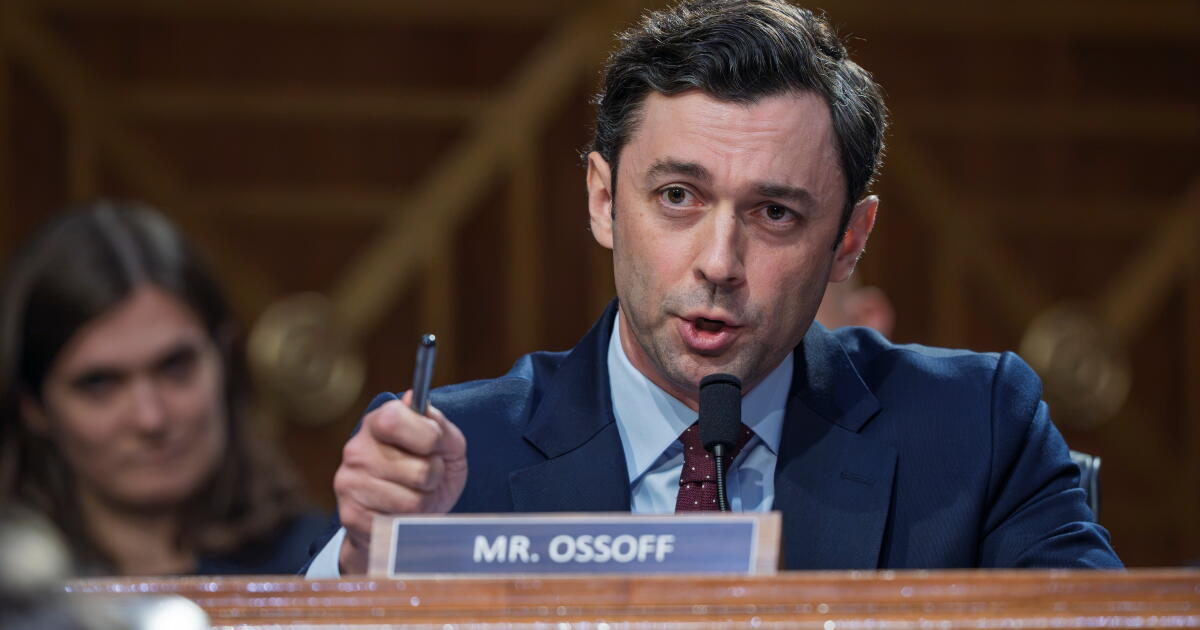
Democratic Senate candidates Sherrod Brown of Ohio, Jon Ossoff of Georgia and Roy Cooper from North Carolina objected to the FCC rule change in April and and asked for a review.
When no action was taken, they filed suit in federal court. They argued the FCC had no authority to change the law that gave only candidates, not fundraising committees, the benefit of the lower ad rates.
Since then, the two sides have gone back and forth in the courts, with both accusing the other of seeking a late change in the rules.
The U.S. 4th Circuit Court of Appeals in Virginia ruled for the Democrats in a pair of 2-1 decisions.
“Suffice to say that any ‘chaos’ is the FCC’s fault, not ours,” Judge Robert B. King, a Clinton appointee, said on Oct. 7. It “has endeavored to create from whole cloth a new rule entirely outside the purview of judicial review.”
But the Supreme Court stepped in twice to overturn the 4th Circuit and rule for the Republicans.
In a Sept. 4 order, the court said in an unsigned order the 4th Circuit intervened too soon. The law “makes clear that an aggrieved party must wait for the Commission to resolve its application for review by order before filing a petition for judicial review.”
Only Justice Ketanji Brown Jackson dissented.
In September, the FCC did nothing other than to ask for public comments on its March rule change.
Frustrated with the delay, the 4th Circuit issued a second order requiring the FCC to act by Oct. 9.
Last week, in response to an appeal from Solicitor Gen. D. John Sauer, Chief Justice John G. Roberts put the 4th Circuit order on hold.
On Wednesday, the full court said the 4th Circuit Court should have left the issue to the FCC.
“Our system of separation of powers does not allow the judiciary to meddle in the workings of a coordinate branch of the government in this manner,” the court said an unsigned opinion.
In dissent, Jackson and Justice Sonia Sotomayor voted to deny the administration’s appeal.
AEVEX Corp. has publicly shown its Specter jet-powered drone for the first time at the Association of the U.S. Army’s (AUSA) annual meeting in Washington, D.C., where TWZ is in attendance. The aircraft is the latest development from a company that has played a significant role in the U.S. military’s one-way attack drone efforts. Most notably, it built the secretive Phoenix Ghost family rushed to Ukraine in 2022.
AEVEX announced Specter in September, describing it as a high-speed, low-cost, jet-powered autonomous platform designed for high-risk operational environments. The aircraft is being developed around a modular architecture, with ground-launched and air-launched variants planned. Its interchangeable nose section is intended to accommodate different payloads, including kinetic warheads, electronic warfare equipment, intelligence, surveillance and reconnaissance (ISR) systems, and other future capabilities.
The Specter jet-powered drone shown for the first time at the Association of the U.S. Army’s (AUSA) annual meeting in Washington, D.C. Jamie Hunter
That flexibility is central to how AEVEX is pitching the aircraft. The company is aiming for an adaptable system that can be configured for different operational needs while remaining affordable enough to be used basically as a cruise missile in combat applications.
The aircraft’s external configuration features a prominent V-shaped lower fuselage, high-mounted, unswept trapezoidal wings, a v-tail and rear-mounted conformal engine intakes. Clearly, low observability was one design driver for Specter, with the goal of balancing survivability with low-cost likely factored in heavily. AEVEX has not publicly discussed Specter’s low-observable characteristics.
The company has also not disclosed key performance and technical details, including the aircraft’s range, payload capacity, communications architecture, terminal targeting methods or the extent of its autonomous capabilities.
A rendering of the Specter in flight. AEVEX Corp. AEVEX Corp.
“We’re really excited to kind of really up our stats on range and speed,” Craig Anders, an AEVEX representative, told TWZ at AUSA, describing Specter’s turbine engine. The aircraft is being designed to reach speeds in the sub-Mach range, he said.
Anders also elaborated on how Specter is intended to carry more than a conventional warhead. “This thing is going to have the ability to carry cameras and different types of non-kinetic effect payloads,” he said, describing it as a “multi-mission, multi-domain fighter.”
Despite that broader mission set, attrition remains a core part of the concept. Anders said the idea was for the aircraft to be attritable, with a relatively low price tag allowing commanders to send it farther into dangerous areas without putting more expensive capabilities at risk.
The distinction is important. Specter is not being presented simply as a disposable munition, nor as a high-end unmanned combat aircraft. Instead, AEVEX appears to be pursuing a middle ground: a jet-powered platform that can perform one-way attack missions but also support reconnaissance and provide other effects in high-threat areas, depending on its configuration. It is also meant to be built economically at scale.
AEVEX is developing Specter with Divergent, an engineering and manufacturing company known for its digital production processes and metal additive manufacturing. The partnership is intended to help make the aircraft easier to manufacture at scale while supporting changes to its design and configuration.
Anders said Divergent works with AEVEX engineers on the aircraft’s digital design and produces its fuselage. AEVEX is responsible for the internal systems, mission integration, flight characteristics and navigation science, he explained.
The manufacturing approach is a significant part of the program’s affordability ambitions. AEVEX says Divergent’s Digital Manufacturing and Production System (DAPS) is being used to support scalable production and manufacturability. However, the companies have not disclosed Specter’s projected unit cost or demonstrated that it can yet be produced at the volumes and prices the concept ultimately requires.
Introduction to DAPS™
AEVEX is also drawing on its CompassX autonomy architecture and experience delivering thousands of autonomous systems. The company says Specter’s open interfaces and software-defined capabilities are intended to allow the platform to evolve as operational requirements change, rather than being optimized around one fixed mission.
Specter remains in development, with its first flight planned for December 2026. Anders said the initial flight would be a basic test, with early test aircraft fitted with landing gear so they can be recovered and reused for work on flight characteristics and handling. It isn’t clear if a truly reusable gear-equipped operational version is eyed for the future. Regardless, further testing could include tuning the aircraft’s dive profile.
The planned initial configuration uses a ground launch assisted by a rocket, or rocket-assisted takeoff (RATO), system. An air-launched version is also on the roadmap, Anders said, with that capability expected to follow in the relatively near term.
AEVEX is pursuing several potential military applications. Anders identified the U.S. Army’s Family of Affordable Mass Missiles (FAMM) effort as a primary focus, while noting that the service has its own high-speed requirements. He also said the company is looking at opportunities associated with Rapid Dragon and other programs.
In FY 2027, the US Air Force is requesting $55 Million in discretionary and $300 Million in mandatory (reconciliation) funds for the Family of Affordable Mass Missile (FAMM) to procure 1,000 All Up Rounds covering both the Palletized (FAMM-P) and Lugged (FAMM-L) variants. The… pic.twitter.com/EgVaefmJgY
— Air-Power | NatSec Ledger (@NatSecLedger) April 22, 2026
Those comments indicate the range of applications AEVEX hopes Specter could address, not that the aircraft has been selected for any of them. Its performance, cost and ability to meet specific requirements will need to be demonstrated as development and testing progress.
Specter’s intended combination of jet propulsion, attritability and modular payloads could offer an enticing balance. It is not being presented as a higher-end ‘exquisite’ cruise missile, but neither is it limited to carrying a single payload type. The challenge for AEVEX will be delivering enough speed, range and mission flexibility to make the aircraft useful across multiple roles without pushing its price beyond what operators can justify procuring it in large numbers.
A stealthy weapon that is jet-powered like Specter, one that can be configured for various types of one-way missions, could bridge the gap between far more advanced and costly autonomous aircraft and cruise missiles and lower-end one-way attack drones. There have been other concepts that are similar to Specter, we are living in a low-cost cruise missile explosion of sorts, but the company’s unique pedigree of innovation and fast fielding in the one-way attack munition space could give Specter additional credence.
The Tom Cruise-led “Digger” is poised for a massive loss after ticket sales for the political satire fell 60% in its second weekend in theaters in the U.S. and Canada.
The Warner Bros. film made just $3.2 million in those theaters over the weekend, according to a studio estimate. Its opening weekend brought in $8 million, Cruise’s lowest opening as a leading man since 2007’s “Lions for Lambs.” Global ticket sales for “Digger” were only $35.3 million.
The tepid box-office returns mean the studio is now expected to lose at least $150 million on the film, including ancillary revenue streams such as premium video-on-demand and streaming, industry sources said. Historically, a film has typically needed to make 2½ to three times its budget to recoup its costs.
A Warner Bros. spokesperson did not respond to a request for comment.
It’s a tough result for the film, which stars Cruise as an aging oil tycoon whose company sets off an environmental catastrophe. Analysts have said that the film was challenging to market, given a major twist in the plot, and that Cruise’s nearly unrecognizable appearance could have dissuaded his fan base from coming out to support the film.
The film suffered from polarizing critical reviews, notching a 53% on aggregator Rotten Tomatoes. Opening-night audiences gave it a C+ on CinemaScore, a grade that typically points to weak word of mouth and steep drops in the weeks that follow.
The budget for “Digger” raised the stakes. Warner Bros. has said the film cost $125 million to produce, though some industry experts and trade reports have estimated the cost was at least $160 million, citing production delays.
That figure also doesn’t include marketing costs, which sources said could have increased in the days after the film’s opening since Warner Bros. began using the divided reviews in social media and TV ads to encourage people to see the film for themselves.
The film will have value to Warner Bros. — and Skydance, the newly combined company that now owns it — beyond its theatrical reception. “Digger” probably will make money through downstream revenue sources such as streaming. If Cruise wins his first competitive Oscar, that also would be a plus for the film.
But a film’s domestic reception, and to some extent, its international box office revenue, does play a role in the value of those downstream revenue opportunities, experts said.
“Even with respectable ancillary income based on the film’s pedigree, the movie is going to lose a lot of money,” David A. Gross wrote in his FranchiseRe movie industry newsletter shortly after the film’s opening.
The reception for “Digger” comes during a tough time for Warner Bros.
The studio has had a string of disappointments this year, including Maggie Gyllenhaal’s “The Bride!” and DC Studios’ “Supergirl.” None of its 2026 releases has crossed $100 million at the domestic box office.
But the prospects for Warner Bros. should improve next year, according to the research and brokerage firm Bernstein. Skydance has said it will keep the Warner Bros. and Paramount studios distinct, though Paramount Pictures chiefs Dana Goldberg and Josh Greenstein are expected to oversee both. Bernstein expects the Warner Bros. film and TV studios to amass $11.7 billion in revenue, driven by strong titles that include the sequel to “Minecraft” and a new “Lord of the Rings” movie.
Caledonia Mining (CMCL) fell 2.6% in Friday’s trading after reporting Q3 gold production at its Blanket mine in Zimbabwe declined 11% Y/Y to 19,106 oz, citing a shortage of compressed air at certain high-grade, high-volume mining areas and
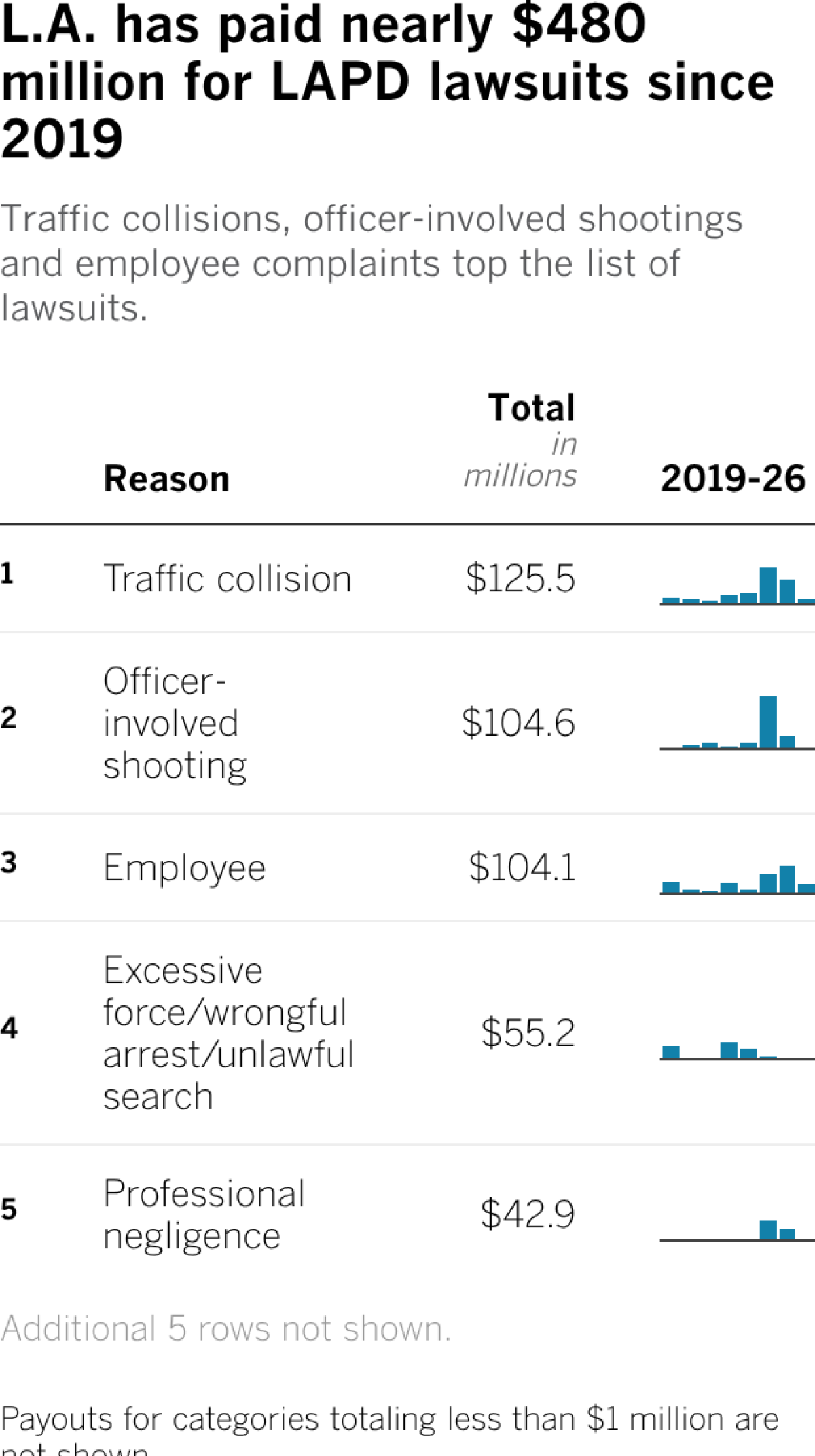
The city of Los Angeles has shelled out nearly $480 million over the last five and a half years to end legal disputes involving the Police Department, including claims of excessive force, litigation over traffic accidents and cases filed by employees who allegedly faced retaliation after reporting misconduct.
The soaring legal costs have come under greater scrutiny in recent years as Los Angeles’ financial problems have gotten worse. The city faced a $1-billion budget shortfall in 2025 but, after various cost-cutting measures, managed to set aside funding for the LAPD to hire more than 500 new officers in the coming year.
The LAPD’s annual lawsuit costs more than doubled from 2019 to 2025. The payouts peaked in 2024, when the city spent $178.6 million to resolve more than 300 police-related lawsuits and civil claims, before dropping to just over $100 million in 2025, according to a Times analysis of city attorney’s data.
The Times reviewed hundreds of pages of court documents and analyzed data from the city attorney’s office released through a public records request showing nearly 2,000 payouts dating to January 2019.
Through the first six months of this year, the city has paid out $20.3 million in legal settlements and court judgments involving LAPD officers. Several recentbig-dollarverdicts aren’t included in that tally because they hadn’t yet been approved by the City Council.
The surging cost of LAPD payouts depriving the cash-strapped city of money for pressing needs such as fixing roads and sidewalks, according to City Controller Kenneth Mejia.
“There’s a reason why your streetlights are out and they’re not fixed for a year, there’s a reason why your sidewalk won’t get fixed or your animal shelters are understaffed or underfunded,” said Mejia, whose office is conducting an audit of the city’s risk management strategies, the results of which will be released this year.
Experts are still untangling the reasons for the explosion of legal payouts involving police — which stretches far beyond L.A.
This year, a legal defense organization found that New York City has paid more than $796 million since 2019 to settle lawsuits involving accusations of police misconduct — including $117 million in 2025. In Chicago, the city is on track to blow past the $252 million spent last year to resolve police lawsuits, mostly involving plaintiffs who went to prison based on faulty evidence, according to local news reports.
In Los Angeles, the surge has come under the watch of City Atty. Hydee Feldstein Soto, who has blamed the rising costs on the way the office handled litigation of all kinds before her administration — as well as a national legal trend of so-called nuclear verdicts.
“The system is getting inflated in a way that is unhealthy and it creates, I think, incentives to sue and to do pie-in-the-sky settlements,” Feldstein Soto said in interview with The Times earlier this year. She said her office evaluates each claim case by case, deciding when it makes more sense to settle rather than go to trial, at which juries can issue decisions based on emotion or differing perceptions of what occurred. Feldstein Soto has lobbied for years to change state law to limit “non-economic” damages.
Feldstein Soto’s critics contend that she has pursued a hard-line approach in recent years, refusing to settle except in cases where it is clear the city is likely to lose in court.
That tough stance has led to mixed results. The city has lost some jury verdicts that could have been avoided if it had been willing to settle. It has also prevailed in several high-profile cases, including this year when a jury ruled that an officer was not liable for the 2021 death of a 14-year-old girl killed by a wayward bullet fired during a hasty confrontation with a suspect at a North Hollywood department store.
The city attorney’s office said in a statement to The Times that while it is proactively working to curb rising litigation costs “by every means possible,” it could not “control the number, timing or claimed damages of lawsuits filed against the City.”
“Nor does the Office have control over the alleged root causes of these liabilities: the City Attorney’s Office is not responsible for LAPD policies or personnel,” said the statement, adding that the number of lawsuits filed against the city has risen by roughly 20% in each of the last four budget years, straining the office’s resources.
Zachary Powell, an associate professor of criminal justice at Cal State San Bernardino, said that although data suggest that use of force by police has decreased since 2020, the public has become “much more aware of police abuses and conduct than they ever were before.”
“I think people also ask a lot more questions in a jury setting,” he said.
Other explanations, he says, are the passage of statewide police accountability measures and the fact that a backlog of cases from the pandemic years are finally coming due.
The Times’ analysis found that hundreds of legal battles involving officer-involved traffic incidents make up nearly a quarter of all payouts. Since 2019, the city has paid $125 million for the thousands of accident claims, just under a third of which stemmed from cases in which officers were found to have failed to stop or yield at crossings before crashing into another vehicle or a pedestrian. Pursuit-related claims and suits stemming from cases in which officers made improper left turns have also cost the city millions.
Other legal costs date back years — and in some cases decades.
The city is still paying $7,410 a month to Clarence Chance, who in the early 1990s was awarded a large payment over a wrongful arrest that led him to spend 17 years in prison for a murder he didn’t commit. Nearly $40 million has gone to people whose homes were damaged after the LAPD bomb squadbotched the detonation of seized fireworks and leveled part of a city block in 2021.
One of the biggest payout categories was $104.6 million spent since 2019 on claims related to police shootings — more than three-fourths of which involved people who were reported to be under the influence of a substance or in the midst of a mental health crisis, according to The Times’ analysis. Roughly $38.4 million was paid out after police shot someone wielding an edged weapon, such as a knife, the analysis found. Shootings involving gang officers cost the city nearly $4 million in that span.
Dozens of lawsuits remain pending, including claims related to the handling of mass pro-immigration protests since last year, likely putting taxpayers on the hook for more large payouts in the future. Police use of hard foam projectiles, house-mounted officers and other tactics against crowds have already cost the city at least $22 million in the last seven and a half years — just over half of which stemmed from the department’s response to the 2020 mass protests over the murder of George Floyd.
Such totals may not always include lawyer fees that are negotiated after a settlement is reached — or if a case is appealed.
Jonathan Evans, a civil rights attorney who has sued the department, thinks the big payouts show that greater public awareness of mental health issues is a factor. Recognizing this, he said, municipalities are agreeing to higher settlements than in years past.
“The decision to use lethal force is being more heavily scrutinized,” he said.
Tens of millions of city dollars have in recent years gone to disgruntled police officers who sued over workplace injustices such as sexual harassment, racial discrimination and retaliation. Since 2019, at least 27 LAPD employees have won million-dollar-plus jury verdicts or settlements from the city; many more have seen five- or six-figure paydays.
To clamp down on future legal costs, the department last year brought back a former senior official, Arif Alikhan — at a monthly salary of $20,000, paid for by a private donation — to study how to reduce the number of costly lawsuits. Alikhan did not respond to a call requesting comment.
The department maintains an early intervention system that flags officers based on risk factors, such as a relatively high volume of civilian complaints, frequent use force, and involvement in preventable traffic collisions or pursuits. The system is used to determine whether they need additional training or should be reassigned or placed on a performance improvement plan.
Within the LAPD, some officers and the Los Angeles Police Protective League, the rank-and-file union, argue that the city should fight back harder against claims with no credibility, instead of settling. They say officers who are most often sued tend to come from specialized units that do the type of proactive policing that the department and most of of the public wants: targeting gangs, drugs and guns.
Attorneys who represent officers that have sued the department over whistleblower retaliation dismiss the claim by Chief Jim McDonnell and others that some cops are exaggerating their claims in pursuit of a big payday. If anything, they contend, the continued large payouts are a product of entrenched racial and gender bias and inconsistent discipline — and the LAPD’s unwillingness to learn its lessons from past lawsuits.
Greg Yacoubian, a labor attorney, said there is little incentive for the current system to change because the costs of lawsuits are passed on to taxpayers — not the officers involved in misconduct and their bosses.
“The person responsible for the error never feels the pinch,” Yacoubian said.
Times staff writer James Queally contributed to this report.
WASHINGTON — President Trump says his administration will make one-time payments of $90 per person to help more than 20 million Medicare enrollees pay for their Part B premiums. It will cost about $2 billion.
Less than one-third of all Medicare recipients are eligible for the payments, which are expected to be sent out this week. Not eligible are roughly 35 million Medicare Advantage enrollees, millions of people with disabilities who get premium assistance and low-income Medicare recipients.
The election-year promise that the Republican president made over the weekend comes as the Nov. 3 midterms are fast approaching, with the cost of living and healthcare expenses among the top issues for voters.
Some questions and answers about the payouts:
Who will benefit?
Some 20.8 million people in the original Medicare Part B who are living in the United States, not receiving premium assistance from Medicaid or not paying an income-related monthly adjusted amount.
Medicare Advantage enrollees, who make up more than half of the eligible 64.2 million Medicare beneficiaries, will not receive a payment, according to KFF, a healthcare research nonprofit. Nor will 12 million low-income older adults and people with disabilities who get premium assistance.
The Part B program covers expenses such as doctor’s visits, ambulance services and lab tests. Total monthly costs generally start at about $200 and vary with income.
Allison Schuster, a White House spokeswoman, said in a statement that the administration “is enabling Americans to take control of their health by putting money directly back in the hands of Medicare patients.”
When will the payments go out and how will they be disbursed?
According to the Centers for Medicare & Medicaid Services website, eligible beneficiaries will receive one $90 rebate this month, with most getting a direct deposit on or around Friday. Others will receive a paper check from the Treasury Department later in October.
Juliette Cubanski, director of KFF’s program on Medicare policy, said the payment will be automatic.
“As far as a benefit goes, people don’t have to call or sign up — it’s just money they receive directly, but not everybody on Medicare will receive this money.”
A White House fact sheet says people can call (800) MEDICARE ([800] 633-4227) to check their eligibility for the premium rebate. To check on payment status, people should call the Social Security Administration at (800) 772-1213.
What is the source of the money?
Payments will come out of the Medicare Improvement Fund created by Congress in 2008 and intended to make improvements to the Medicare fee-for-service program.
The fund was created to improve program management and conduct oversight of contracts and contractors, according to the Congressional Budget Office, but its purpose has expanded after various legislative changes.
This is not the first time the fund has been used.
President Obama’s administration, along with Congress, redirected $20 billion to expand healthcare coverage through the Affordable Care Act.
But under Trump, it is the first time that the fund has been used to directly pay recipients.
What are critics of the plan saying?
Critics of Trump’s promise characterize the $90 payments as a preelection stunt designed to sway voters rather than address structural problems in healthcare costs and administration.
The top Democrat on the Senate Finance Committee, Oregon Sen. Ron Wyden, said in a statement that “this is another desperate attempt by a failed president to escape Americans’ revulsion with his failed agenda, amounting to one tank of Trump-inflated gas.”
Trump recently promised $500 rebate checks to an estimated 1 million Obamacare enrollees across 30 states whom the White House alleged were overcharged by the Biden administration for some fees.
Cubanski said the Medicare rebate payments were being doled out when Americans were feeling the bite of higher food, energy and gas prices. Surging healthcare costs are only compounding those pressure, she said.
“This might be helpful for people but it might not go very far.”
The California I grew up in had its pluses and minuses, just like the state I’m living in now.
But consider this:
In 1974, I wrote a check for a semester of college.
The fee was $98.
That was the cost of registration, by the way. Tuition for in-state residents was free at San José State University and other public universities in California. The state’s leaders believed subsidized higher education would serve the greater good and seed economic growth.
Two years after graduating, I was working as a sportswriter for a small Bay Area newspaper. My spouse was a drug store clerk. Together we made less than $20,000 a year.
And we bought a brand-new house, 45 minutes east of Oakland, for just under $50,000.
In a thousand ways, we’re living in a different California today. Tuition and fees for a semester on a Cal State campus now run about $4,500, and the average mid-tier home costs about $775,000 in some places and far more in others, which is out of reach for nearly 80% of working people.
So as I watched the gubernatorial debate Wednesday night between the two men who want to lead us into the future, I was wondering which California is better in terms of hope, opportunity and livability?
The one I was born in during the postwar boom, or the one we’re living in now?
There’s no easy answer. The California of my youth was more affordable, but it was no utopian dreamscape. Housing discrimination and segregation were deep-seated, and the Los Angeles sky was the color of swamp water.
In the last half of the 20th century, California went on to become a global leader in technology, aerospace, the arts and healthcare, and its investment in public education helped build an economic superpower. Even the air got cleaned up, to a degree.
But for all of California’s riches and unrivaled natural beauty, it’s fair to say things are out of whack at the moment. How is it that the world’s fourth-largest economy also has the nation’s highest poverty rate?
There’s a flotilla of yachts, but millions of have-nots, and enough homeless people to fill stadiums. If we’re so progressive, and swimming in more venture capital than the rest of the nation combined, why are the masses crippled by a housing shortage and the high cost of living, and why did we build a soaring higher education model while letting our once exalted K-12 system sink in national rankings?
If California weren’t so lopsidedly blue, Republican candidate Steve Hilton might get a little more traction with a campaign built around the idea that there’s an easy explanation for the state’s misery of problems: Democrats have been in charge for years, they’ve mucked things up, and Xavier Becerra is yet another textbook California liberal who will stay the course.
“It’s impossible for regular working people to live in this state anymore,” Hilton charged during the debate, calling out over-regulation, the high cost of living, the housing shortage and a homelessness problem that “shames” our state. “And all you’re offering,” Hilton continued, “is more of the same, backed by the same corrupt machine in Sacramento.”
Becerra, meanwhile, kept handcuffing Hilton to President Trump, a good move, given that the president has helped launch an idiotic war, gummed up the economy, and seen his favorability plummet.
Hilton is not entirely off base, although there’s no evidence he has plausible solutions.
What he doesn’t tell you is that other states have their own problems, many of which have more to do with global economic forces — and President Trump’s war-mongering and tariff tirades — than with public policy decisions at the state level.
When I was a lad, my father drove a milk truck, and then a bread truck, and then he sold candy and tobacco for a wholesale distributor based in Oakland, near the Coliseum, where he’d take me to A’s games but save a few bucks by parking next to the railroad tracks a half-mile away from the parking lot.
His jobs were mostly unionized. Unions were plentiful in the private sector back then. My family saved up for a house while we lived in an apartment, and then I paid next to nothing for a college degree.
The boldness of that idea — a free education at an elite university, with a lofty if unfulfilled goal of equal access for all — is still a testament to California’s long-ago grand ambition, even if Gov. Ronald Reagan eventually ended free tuition.
In her new book, “California Dreams: The Making and Remaking of the University of California,” Miriam Pawel references a quote from UC Berkeley alum Joan Didion, who called the system “the most coherent expression of the California possibility.”
The staircase I climbed was the essence of what USC professor Natalia Molina called “the infrastructure” of upward mobility. In her immigrant family, her grandmother established an Echo Park restaurant that Molina wrote a book about — “A Place at the Nayarit” — and her mother ran the bar there after attending bartending school.
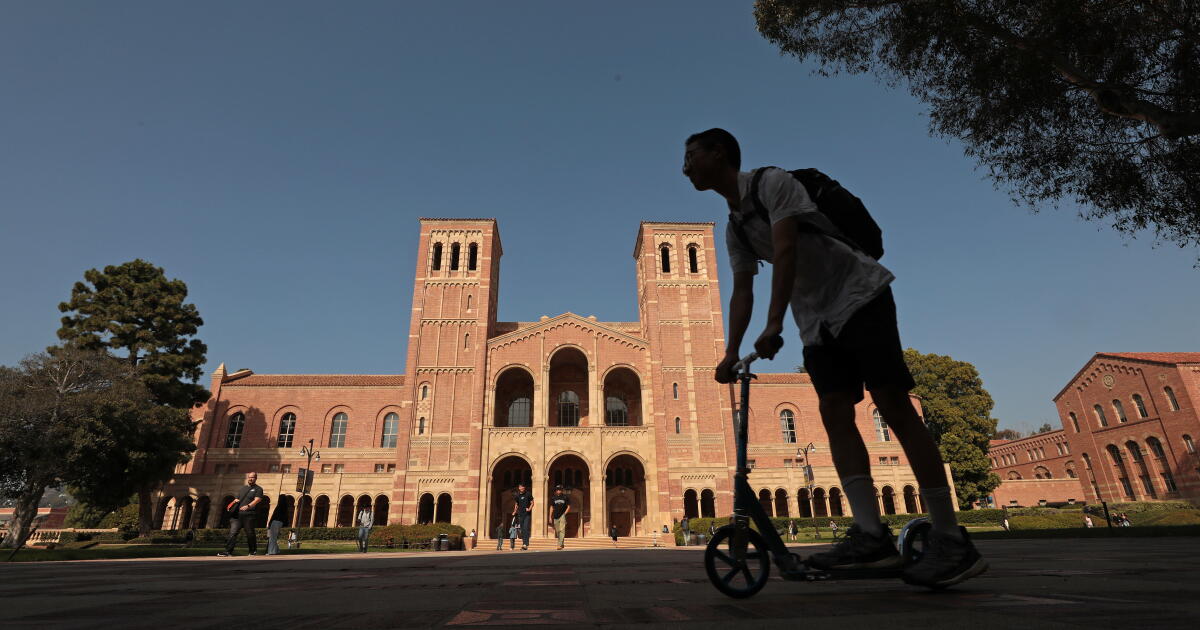
Molina went to UCLA, and is now both a MacArthur Foundation fellow (the “genius” grant) and a Guggenheim fellow.
“There’s not that same path for upward mobility,” Molina said. “But there sure seems to be a path for downward mobility.”
That brings me back to the economy, and lessons I learned in 2018, when I spent several weeks in and around Telfair Elementary School in Pacoima, looking into why nearly a quarter of the students were homeless.
The answer? Several once-bustling manufacturing and aerospace companies in the area had shut down. The new economy was fast food and big box stores. Pay dropped; housing prices spiked. It was a snapshot of a changing world — one we haven’t yet adapted to.
Modern politics is not built to foster long-term thinking about such challenges, said longtime political strategist Darry Sragow.
“What are the dreams, what are the aspirations, where do you want to go?” said Sragow, who doesn’t know the answers but would like to at least hear the questions. “I keep looking for somebody who will do that.”
Agoura Hills resident and attorney Dan Douglass, 80, who detests President Trump and isn’t a fan of Hilton, told me that as a moderate Republican, he feels like “a man without a party.” But he is not without an answer to California’s housing problem.
“They’ve made it too complicated to build anything,” Douglass said. “Too many permits. Too much time to build.”
“California must reduce regulatory costs that fall disproportionately on low- and middle-income residents,” Trachtman wrote in a recent four-part analysis.
“The state has “long led the nation in regulations promoting safety, sustainability, and quality,” he went on. “These policies can produce strong benefits. But they can also drive up the cost of essentials — costs that hit the poor hardest. This amounts to regressively funded progressivism.”
California was, and is, a work in progress, richly endowed and deeply flawed. Fixing complicated problems isn’t easy, but what I’d like to see from the next governor is more of the striving, imagination and sense of collective purpose that made California great.
There’s no way and no reason to go back to the state of my youth, but Trachtman had a thought about where to go next.
“In some ways we can use the past as a model,” he told me. “But in other ways we need to be more innovative and think about charting a path forward.”
Toward the most coherent expression of the California possibility.
The two candidates to become California’s next governor painted vastly different portraits of the state they want to lead during a televised CNN debate Wednesday night — though they both agreed the state faces tremendous challenges.
Democrat Xavier Becerra, leading in polls, cast the state as an economic engine and a critical bulwark against the disastrous economic policies and creeping authoritarianism of the Trump administration, but also a victim of Trump policies, including tariffs and the war in Iran, that have made life less affordable and the nation less safe.
Becerra said he would work hard to help struggling Californians — including by cutting red tape on housing and regulating AI to ensure it doesn’t destroy jobs — while his challenger, Republican Steve Hilton, would harm them further by backing President Trump’s agenda at every turn.
Hilton, endorsed by Trump, blamed the state’s most entrenched ills on years of Democratic governance, awash in unnecessary state bureaucracy and regulation that have made it wildly unaffordable, and wrongly obsessed with fighting the president instead of bringing down costs and fixing related local issues like homelessness.
Hilton said he would help struggling Californians by cutting taxes, cutting the cost of building new housing, eliminating fraud and bringing common sense back to state policy-making.
Both candidates came out of the gate on offense, and at times it got intensely personal, particularly on immigration — with Becerra accusing Hilton of welcoming white immigrants into the country while rejecting Latino immigrants, and Hilton accusing Becerra of handing migrant children over to sex and labor traffickers during his time as U.S. Health and Human Services secretary.
With ballots soon arriving in voters’ mailboxes and the Nov. 3 midterm election rapidly approaching, the hour-long debate — moderated by CNN anchors Jake Tapper and Dana Bash in Burbank and aired live by the national news network — provided the public with its latest look at two candidates vastly different both in politics and campaign style.
Becerra, a former Congress member from Los Angeles, California attorney general and Health secretary under President Biden, surged past a slate of other Democrats to win the June primary after onetime front runner Rep. Eric Swalwell dropped out of the race amid sexual assault allegations. Hilton placed second after Republican voters and others coalesced behind his message to shake up Sacramento — earning him the right to face off against Becerra in November.
Hilton, a former British political aide, former Fox News host and Silicon Valley entrepreneur, has been crisscrossing the state looking for votes anywhere he can find them — an uphill battle given registered Democrats outnumber Republicans by a nearly 2-to-1 margin, and opposition to Trump is widespread in the state and growing even among Republican voters.
A poll this month by the UC Berkeley Institute of Governmental Studies and co-sponsored by the Los Angeles Times found 58% of likely voters surveyed said they support Becerra, compared with 33% who back Hilton — a slight increase to Becerra’s lead compared with an August IGS poll. California voters identified the high cost of living as their top concern, but that was followed closely by opposition to the Trump administration.
Becerra has taken a less visible approach to campaigning, with critics accusing him of intentionally keeping a low profile in an effort to cruise to victory in a state that hasn’t elected a Republican to statewide office in two decades.
“I just want to say thank you to CNN for bringing Xavier out of hiding,” Hilton said at the beginning of Wednesday’s face-off. “He’s barely been seen in public since the primary four months ago; it’s very important we have this debate.”
During the debate, both candidates seemed prepared to focus on the lack of affordability — namely by blaming the other’s political party for it. But they also discussed artificial intelligence and data centers, immigration policy and, of course, Trump.
Tackling gas prices, high cost of living
California has some of the highest housing and energy costs in the nation, and affordability tops the list of concerns for likely voters. It also was the first issue the candidates debated.
Hilton has made the cost of living a central theme of his campaign, with a plan he calls “Califordable” to cut gas prices and end income taxes on earnings up to $150,000. He blamed California’s high costs on Democrats, who have controlled the Legislature and statewide offices for more than 15 years. Hilton says he can lower costs by slashing onerous state regulations on businesses.
Hilton said the “quickest way to get more money in people’s pockets is for the government to take less out” and to reduce regulations to allow more housing to be built — including in “10 new cities” he said he would help build in the state.
Becerra has blamed higher prices on Trump’s tariffs and the war against Iran. In response to attacks from the U.S. and Israel, Iran has for months choked off a major oil trade route, sending global gas prices soaring — to a national average of $4.48 per gallon this month.
Becerra said Hilton’s plan to end income taxes would amount to a massive tax cut for “billionaires and millionaires” that would take money from schools, healthcare and other critical services. “The math doesn’t add up to what he’s talking about. He’s going to have to take it out of somewhere. It will come out of our schools,” Becerra said.
Becerra said he would bring down costs for people by cutting red tape, including on housing, and fighting the Trump administration — which he said is the real driver of cost increases. He also said he has helped create millions of jobs during his career.
Agree but disagree on AI and data centers
Hilton and Becerra both support regulations for data centers and artificial intelligence companies, a sign of growing bipartisan pushback seen across the country.
Hilton said he wants California to take a leading role in regulating AI, given much of the industry is located in the state, and expressed concern about losing AI jobs to other states such as Texas and Arizona. Hilton questioned whether Becerra would have the political courage to rein in the industry, saying his campaign has received funding from it.
When Bash asked Hilton if those companies should be able to “self-police,” as Trump has suggested, Hilton said, “We’ll have to see.” He also said he appreciates the effort by Trump to get assurances from AI companies on safety during a recent summit, and he would work to make sure that those promises are upheld.
Becerra derided Trump’s deal as a meaningless “pinky promise” that does not guarantee a safe path forward. He said he would lead efforts to reach real and meaningful regulations but also work directly with local communities on what they want.
“If someone wants to come in and build a data center that creates more jobs in the community, adds more energy to our grid, and it actually protects and adds more water capacity, then let’s talk,” he said. “But it has to be good for the community.”
Sharp attacks on immigration
Becerra has faced bipartisan criticism of how Health and Human Services cared for the influx of unaccompanied immigrant children during the pandemic.
Hilton has hammered Becerra on it, and at the debate accused him of sending “thousands of young children directly into the clutches of child sex and labor traffickers.”
Becerra was attacked by Democratic rivals in the gubernatorial primary in the aftermath of a Pulitzer Prize-winning series in the New York Times, including an article that said thousands of migrant children who entered the United States between 2021 and 2023 worked in slaughterhouses, factories and other dangerous jobs that violated child labor laws. The investigation also alleged that tens of thousands of the children Becerra’s agency released couldn’t be found because he relaxed screening of relatives and sponsors.
Becerra repeatedly has said that despite a lack of congressional funding for licensed-care facilities dismantled by the Trump administration, his staff worked hard to vet the people who the children would be placed with.
At the debate, he called Hilton’s claims “Trump talking points.” He also said more needs to be done to ensure children aren’t separated from their immigrant parents.
Becerra also has slammed the Trump administration for its mass deportation program and immigration crackdown, which has sent immigration enforcement agents into cities across the country, including Los Angeles.
Hilton said he would work to “lower the temperature” in the immigration debate and “prioritize the removal of dangerous criminals,” which he said is not occurring in California because Democrats are playing “politics” with the Trump administration.
Becerra, the son of immigrants, said California welcomed Hilton as an immigrant, and Hilton “welcomed ICE mercenaries” into California in return. He also accused Hilton of welcoming immigrants that look like Hilton, who is white, while working to remove immigrants who look like Becerra, who is Latino.
“I have fought all my life to make life better for immigrants, to represent them well, to defend them, to let them grow and build like my parents. But here’s the problem I have with your policies: You seem to welcome immigrants who look like you, but deport immigrants who look like me,” Becerra said.
Hilton called that “disgraceful.”
Trump, Trump and more Trump
Hilton repeatedly has praised Trump and his policies and consolidated support among California Republicans after Trump endorsed him before the June primary. But Trump’s endorsement could be an albatross in the Nov. 3 election, given his low approval ratings — particularly in California.
Becerra repeatedly hammered Hilton as a Trump acolyte, so much so that Hilton said that it was Becerra’s only attack line, and that Becerra “takes no responsibility” for Democratic policies that have harmed California for years.
“All you ever say is Trump, Trump, Trump, and that’s nothing but an insult to every Californian who is desperate for something to change in this state, and all you’re offering is more of the same,” Hilton said.
Becerra countered that Hilton embraced Trump during the primary.
“Your words, Trump, Trump, Trump. Because he is your supporter,” Becerra said. “You chased his endorsement.”
Where they stand on billionaire’s tax, schools and other quick hits
Proposition 40, the billionaires tax: Both Becerra and Hilton oppose the controversial wealth tax proposal on the ballot that would enact a one-time 5% levy on billionaires’ assets to largely replace $100 billion in federal healthcare funding cuts to California.
Proposition 39, voter ID: Hilton expressed support for the ballot measure, which would require voters to present ID at the polls or write a special pin on their mail-in ballot. Becerra, who opposes the measure, claimed the initiative is part of an effort by Trump and his supporters to interfere in elections.
Improving schools: Fewer than half of third-grade students read at grade level. Hilton said it’s a “catastrophe” that exemplifies Democratic failure in the state. Becerra conceded that the school system is not “well coordinated” but supports transitional kindergarten, a new pre-K grade created by Gov. Gavin Newsom.



![Lena Kouyoumjian poses for a selfie with her non-verbal autistic daugher Vana, whose symptoms have worsened due to Israel’s war in Lebanon, as the 20-year-old fears loud noises or “any sudden change in routine” [Courtesy of Lena Kouyoumjian]](https://i0.wp.com/www.aljazeera.com/wp-content/uploads/2026/10/Lena-Kouyoumjian-credit-1792403815.jpg?w=640&ssl=1)
![A teacher for young autistic people high-fives Anthony at the AAA after he scores a basketball throw [Alex Milan Durie/Al Jazeera]](https://i0.wp.com/www.aljazeera.com/wp-content/uploads/2026/10/Alex-Durie-photos-Lebanon-Autism-25-1792404535.jpg?w=640&ssl=1)
![A non-verbal autistic girl practises her writing in French as a teacher at the AAA holds her hands to support her [Alex Milan Durie/Al Jazeera]](https://i0.wp.com/www.aljazeera.com/wp-content/uploads/2026/10/Alex-Durie-photos-Lebanon-Autism-15-1792404524.jpg?w=640&ssl=1)
![Nour Toukan, a public health researcher at Enmaeya, a Lebanese media platform focused on sustainable development, told Al Jazeera that “at the moment, care for autism or even for ADHD is very much an out-of-pocket expense" [Alex Milan Durie/Al Jazeera]](https://i0.wp.com/www.aljazeera.com/wp-content/uploads/2026/10/Alex-Durie-photos-Lebanon-Autism-03-1792403759.jpg?w=640&ssl=1)

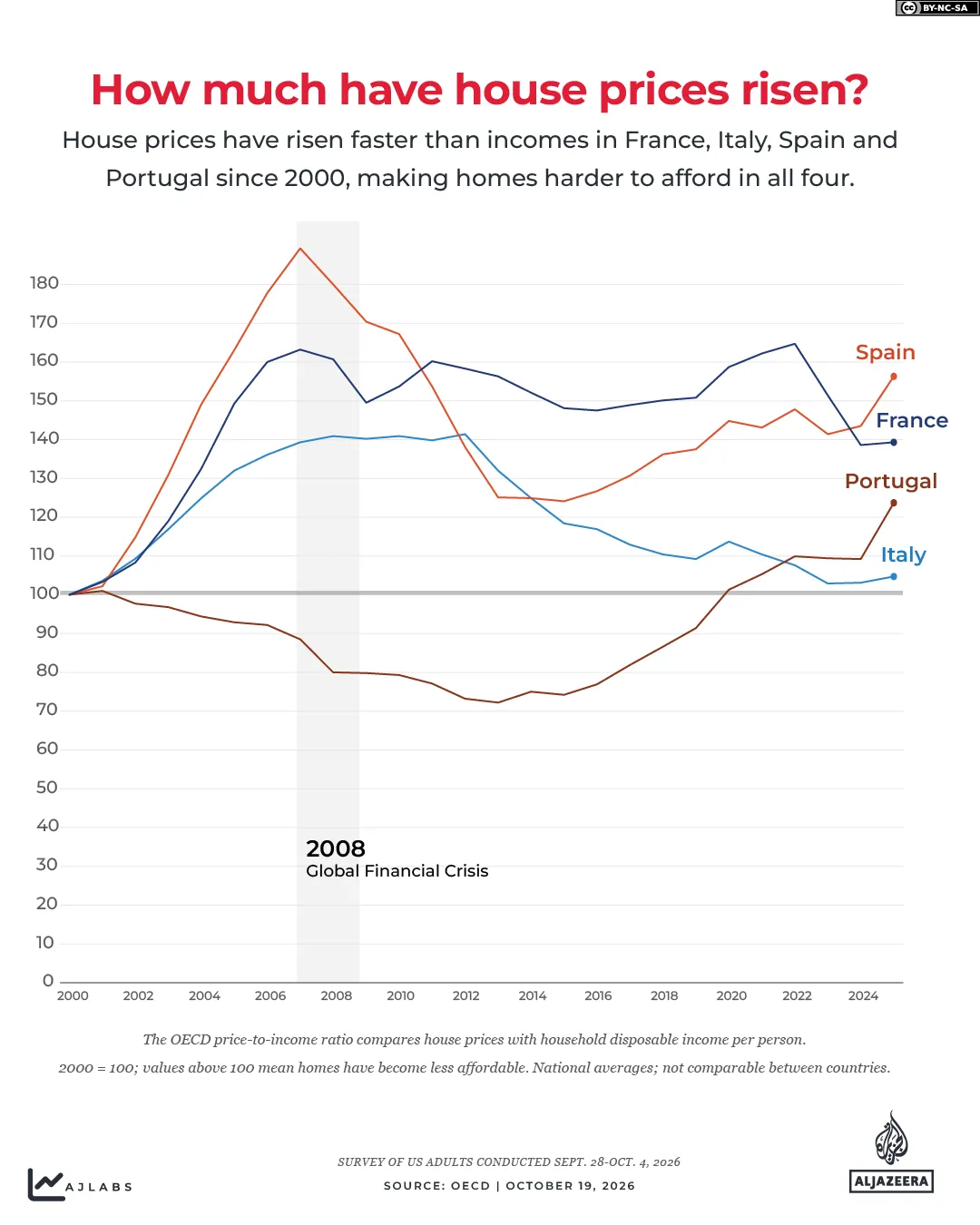


![Demonstrators sit amid 40 tents set up to protest against housing shortage, soaring rents and low wages on Rossio square in central Lisbon on October 17, 2026. Thousands of people marched on October 17, 2026 through the centre of Lisbon at the call of the CGTP trade union to protest against increasingly difficult living conditions. The slogans and demands focus mainly on higher wages and pensions, as well as protests against the rising cost of housing and fuel. [Filipe Amorim/AFP]](https://i0.wp.com/occasionaldigest.com/wp-content/uploads/2026/10/AFP__20261017__D3LK2MC__v1__HighRes__PortugalPoliticsHousingDemo-1792267175.jpg?w=640&ssl=1)
![Riot police uses a water cannon against demonstrators in Brussels during a youth protest [Nicolas Maeterlinck/AFP]](https://i0.wp.com/occasionaldigest.com/wp-content/uploads/2026/10/afp_6ad3d52b2c56-1792267563.jpg?w=640&ssl=1)