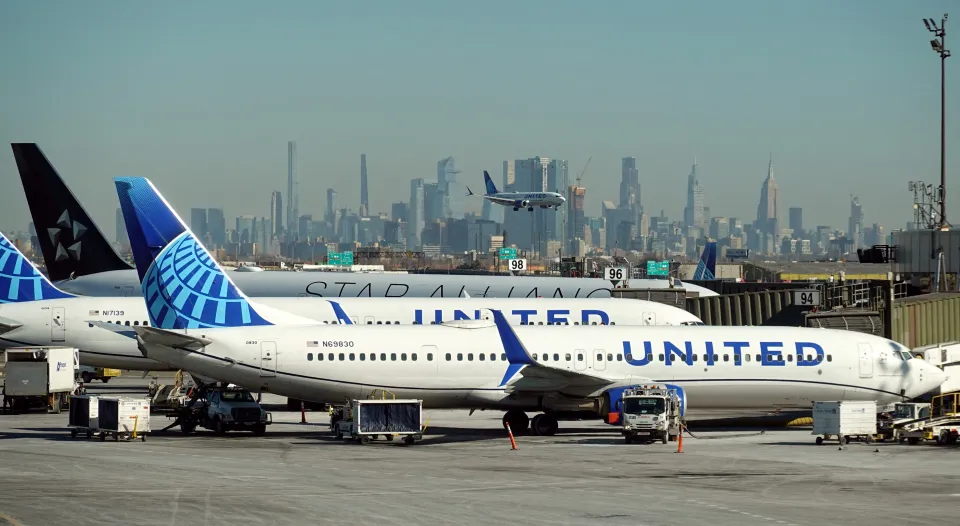
ANOTHER major airline is cancelling hundreds of flight routes due to ongoing fears of rising fuel costs.
The Iran conflict has seen the closure of the Strait of Hormuz, one of the world’s most important shipping routes.

This has had a knock-on effect on the cost of fuel, which has reached new highs.
And a number of airlines have since had to reduce their flight schedule to avoid spiralling costs.
United Airlines is the latest to confirm that it would be cutting five per cent of flights in the second and third quarters of 2026.
With up to 5,000 flights a month – working out to around 4,000 domestic and 800 international routes – this means it affects around 250 flights a month.


And with this set to last until the end of summer, it means thousands of passengers will be affected.
While the affected flights haven’t been confirmed, it will mainly affect the “less profitable” routes so including midweek flights, as well as overnight and Saturday routes.
United Airlines has the world’s largest airline fleet with more than 1,075 aircraft.
United Airlines‘ Chief Executive Scott Kirby said the cancellations were due to fears of oil rising to as much as $175 (£131) a barrel, and remaining above $100 (£75) until the end of next year.
This would mean the airline’s fuel costs would rise to $11billion (£8.2billion) – double the profit of their best year which was $5billion (£3.7billion).
They warned: “There’s no point in burning cash in the near term on flying that just can’t absorb these fuel costs.”
It’s not just the cost of fuel but how much is being used by airlines as well.
The closure of airspaces and Middle East airports, particularly Dubai which is one of the world’s busiest, has forced airlines to fly alternative – and longer – routes, which burn more fuel.
Other airlines have already confirmed they would be cancelling flights due to expected fuel costs.
Air New Zealand has cancelled 1,100 fights, although said it would mainly affect domestic routes.
This works out to around 44,000 passengers.
And Scandinavian airline SAS said it would be cancelling 1,000 flights next month, also affecting domestic routes primarily.
UK airlines are less affected for now, as most have ‘hedged’ oil prices – meaning paying a fixed price for a set amount of time.
Ryanair boss Michael O’Leary said the rise in jet fuel costs “won’t affect our costs and it won’t affect our low fares.”
Major airlines like British Airways and Virgin Atlantic have also cancelled a number of flights to the Middle East as places like the UAE remain on the not-save-to-travel list.
