CALLUM Turner’s bid to bag the role of James Bond has had a boost — he’s advertising luggage for a fashion brand with links to the films.
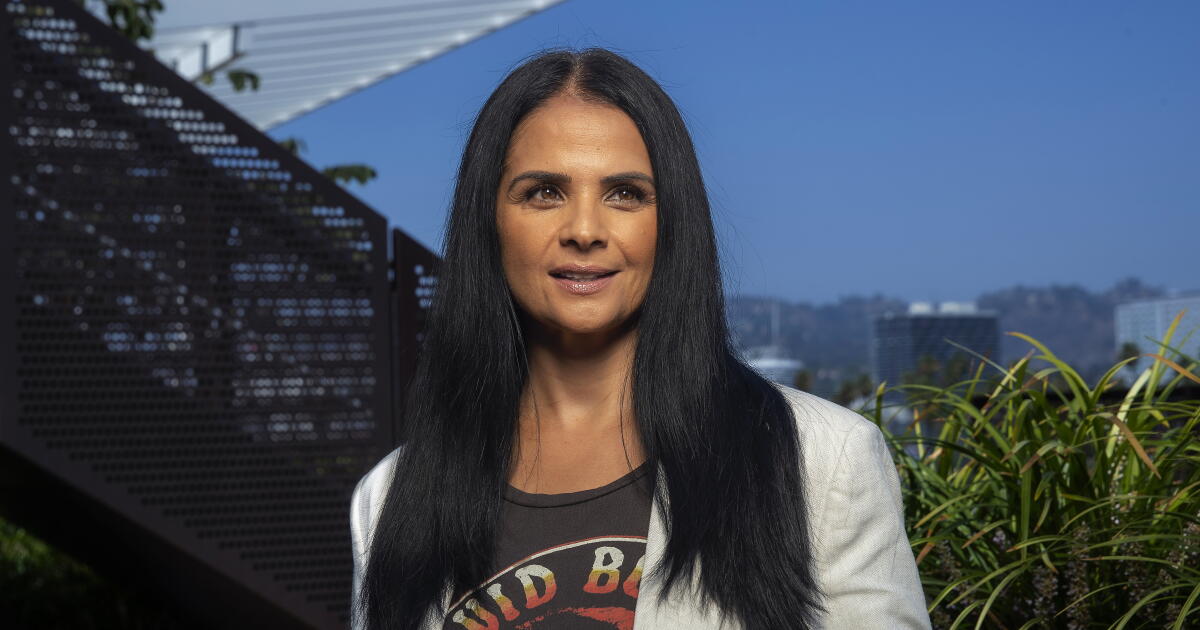
The 36-year-old actor is the face of Louis Vuitton’s new trunk collection.
Callum Turner’s bid to bag the role of James Bond has had a boost — he’s advertising luggage for Louis Vuitton’s new trunk collectionCredit: Gregory Harris/Courtesy of Louis VuittonCallum’s odds of becoming Bond were 2/1 last nightCredit: Getty
Bond casting director Nina Gold was spotted at Bray Film Studios in Berkshire yesterday as screen tests for the role were understood to be taking place.
Callum’s odds of becoming Bond were 2/1 last night.
The Brit, who is married to singer Dua Lipa, 31, co-starred in the Fantastic Beasts movies.
Scottish actor Jack Lowden, 36, is the bookies’ favourite to take over as Bond with odds of 4/7, according to Ladbrokes.
Sinners actor Jack O’Connell, 36, and The Crown’s Josh O’Connor, 36, sit at 12/1.
Daniel Craig stepped down after the release of his fifth Bond film No Time To Die in 2021.
Two years after United States voters delivered a stunning rebuke of the country’s Democratic Party by electing Republican President Donald Trump to a second nonconsecutive term, some of the party’s midterm candidates are reassessing stances on a host of hot-button issues.
Whether they have dialled it back on issues like transgender rights or ramped up efforts to oppose Israel’s genocidal war on Gaza, Democrats in some of the toughest midterm battleground races are responding to voter concerns – or even breaking outright with party leadership.
Those shifts have resonated with some voters, while others have been alienated as the party tries to find its footing in Trump’s second term and wrestle away control of both houses of Congress from Republicans.
But in the time since Trump defeated former Vice President Kamala Harris in 2024, Democratic divisions have only grown deeper. Establishment and self-described moderates within the party have struggled to hold back a rising tide of progressive populism as voters increasingly demand stronger, bolder policies.
That movement, powered by groups like the Democratic Socialists of America, has forced a reckoning over what it means to be a Democrat in Trump’s second term, leading to significant differences among candidates on policies that often depend on where they are running.
Here’s how – and why – the party has shifted:
Democrats’ shifting views on Israel
The most notable shift among Democrats has, arguably, been on Israel.
Three years after Israel launched its genocidal war in Gaza and killed more than 74,000 Palestinians following Hamas’s October 7, 2023, attacks, polls have suggested that Americans hold increasingly negative views on Israeli military actions.
A Pew Research Center survey conducted earlier this year suggested that 60 percent of US adults had an unfavourable opinion of Israel. That number is significantly higher – 80 percent – among US Democrats.
In response, some longtime Democratic supporters of Israel – including Senator Chris Coons, who is likely to chair the Senate Foreign Relations Committee if Democrats retake control of the Senate next month – have shifted, as voters, especially younger ones, demand greater accountability from the US ally.
US Democratic Senator Chris Coons of Delaware speaks at the COP26 UN Climate Summit in Glasgow, Scotland [Alastair Grant/AP Photo]
The moderate Delaware Democrat told Politico in an interview this month that he wants a “thorough reexamination” of the US-Israeli relationship and is even willing to impose sanctions on Israel’s prime minister, Benjamin Netanyahu.
It is a marked change in tone after Harris rejected calls to feature a Palestinian American speaker at the 2024 Democratic National Convention in Chicago.
Earlier this year, 40 Democratic senators voted in support of a motion that disapproved proposed military sales to Israel. Only seven Democratic senators voted with Republicans to block it.
But as a new Congress may include even more progressive voices demanding the US rethink its relationship with Israel, those calls would likely be met with stiff resistance from some in the Democratic leadership, including Senate Minority Leader Chuck Schumer.
The New York Democrat, who would likely become majority leader if Democrats retake the Senate, has said that the US “commitment to Israel’s security and defense must be ironclad”.
Have Democrats changed their positions on transgender rights?
Following years of attacks from Republicans, Democrats in tightly contested US House or Senate races have downplayed – or outright dismissed – support for the transgender community, mostly when it comes to the participation of transgender students in school sports.
In Ohio, Democratic Representative Marcy Kaptur ran an advertisement featuring her saying, “Boys should not play in girls’ sports”. And in North Carolina, Representative Don Davis released a television commercial in which the Democrat says there “should always be a safe and fair space for women and girls in sports”.
Next door in South Carolina, Democratic Senate candidate Annie Andrews, a doctor, said in a newly released advertisement that she opposes “biological men playing in women’s sports”.
Trump’s return to the White House was fuelled, in part, by a now-famous advertisement in the 2024 campaign that highlighted Harris’s support for transgender Americans.
“Kamala is for they/them,” a narrator said in the advertisement, referring to gender neutral pronouns used by some in the transgender and nonbinary community. “President Trump is for you.”
But the reassessment of transgender rights after the commercial’s airing is not taking place in every part of the party.
On Thursday at a “Students vs Billionaires” town hall in Portland, Maine, Representative Alexandria Ocasio-Cortez addressed concerns from a transgender college student who told the New York progressive that they felt “abandoned” by Democrats.
“They’re wrong”, Ocasio-Cortez said about some members of her party. “First and foremost, I want to just let you know how shameful and sorry I am that there are people out there that scare so easily after an election”.
The congresswoman added, “The moment you compromise the rights of a trans person in America, you compromise the rights of every citizen.”
What has changed on immigration and border security?
During former US President Joe Biden’s term, Democrats encountered near-daily attacks from Republicans on the country’s immigration system.
US Customs and Border Protection (CBP) recorded more than 8 million encounters at the US-Mexico border between 2021 and 2025, fuelling concerns among some voters that the Biden administration had ignored the issue.
In Texas’s closely watched Senate race, candidate James Talarico has positioned himself as a “border security Democrat”, advocating for stronger border enforcement and comprehensive immigration reform.
Third Way, a US-based organisation that pushes for moderate policies, said stances like Talarico’s resonate better with voters because they have taken a proactive, rather than a reactionary approach.
Democratic US Senate candidate James Talarico speaks at a campaign rally in Galveston, Texas, on Thursday [Mark Felix/AFP]
“I remember very clearly when Harris came out and spoke at the DNC in 2024; she… said we need order at the border and to have a strong immigration system”, Third Way’s senior political adviser, Lucas Holtz, told Al Jazeera.
“The problem is, after that, the Harris campaign really did not stick with that line in the sand… They stopped taking a stand on these issues, and more voters thought that she was too far to the left.”
“[Talarico] is making the case in a lot of his ads that the Biden administration failed on securing the border… It’s putting Republicans on their back foot in some of these races.”
But among progressives, Trump’s response to the nation’s immigration issue has also prompted a strong swing to the left.
After several high-profile incidents earlier this year – including federal immigration agents in Minneapolis, Minnesota, shooting dead US citizens Renee Good and Alex Pretti – calls to abolish, or drastically overhaul, US Immigration and Customs Enforcement (ICE) have gained momentum.
Left-leaning political groups and politicians have united behind a message of “abolish ICE”, which would dismantle the federal agency and end its enforcement authority.
Do Democrats support Medicare for All?
As cost-of-living issues remain paramount for voters, Democrats of all stripes have coalesced behind the need for more government intervention in the country’s healthcare system.
But how exactly the party addresses rising medical costs remains up for debate.
Some progressives, including Michigan Democratic Senate candidate Abdul El-Sayed, have championed policies like Medicare for All, which would expand the nation’s federal health insurance programme for seniors so all US citizens would be guaranteed healthcare.
US Senate Democratic candidate Abdul El-Sayed gestures to supporters during a campaign rally in Dearborn, Michigan [Rebecca Cook/Reuters]
Others running in more conservative states, like Andrews, have called for the return of Affordable Care Act subsidies that lapsed during Trump’s second term, as well as limits on health insurance companies’ profits.
Polling released by the independent health organisation KFF suggested that 66 percent of US adults now support Medicare for All, a 13-point increase from October 2020.
“Everybody’s going to have their own approach to this, but by and large, all Democrats want to move to a universal healthcare system in the best way possible”, Holtz said.
“We’re in agreement that we need to do better than what the Trump administration has done.”
A MAJOR airport is about to spend billions on a huge upgraded terminal.
Not only that, but British Airways is launching the new route in January with year-round flights every day.
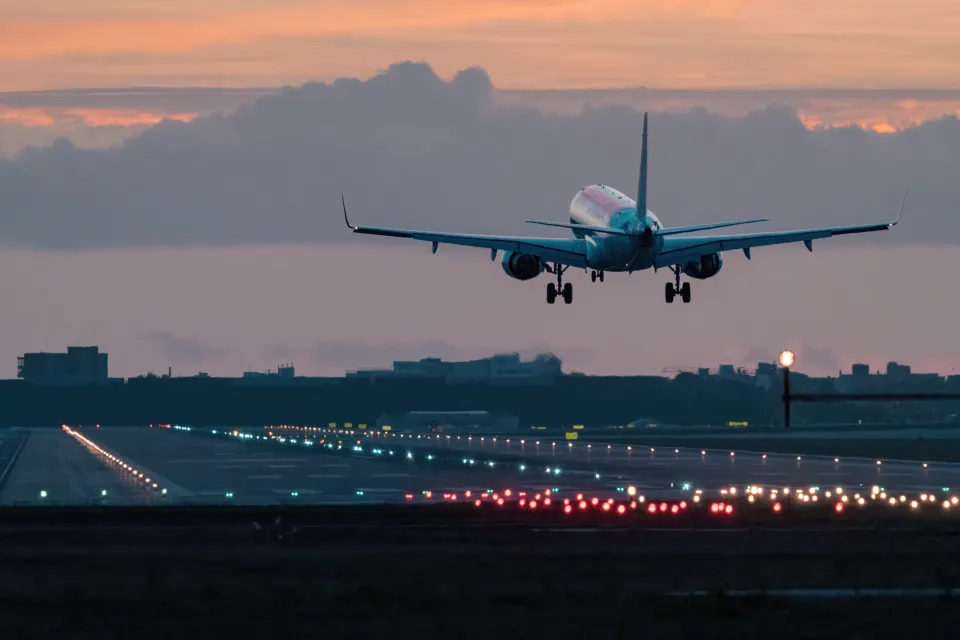
Melbourne Airport is upgrading is preparing to upgrade its International TerminalCredit: Melbourne AirportThere will be more space in arrivals and departure due to a rise in demandCredit: Instagram/melbourneairportau
Melbourne Airport has announced its one step closer to its $4.5 billion (£2.35million) International Terminal expansion.
New designs show off expanded check-in, arrivals and departure areas.
Sign up for the Travel newsletter
Thank you!
It will have a larger check-in hall with high-tech, common-user systems and expanded baggage claim with additional carousels.
Five additional aircraft stands will accommodate more flights.
Throughout the International Terminal will be windows to maximise natural light for a calming atmosphere.
There will also be more retail, dining and lounge options as well we improved waiting areas for passengers.
Works will coincide along the construction of Melbourne Airport’s third runway.
Stats revealed that in January, more than 1.26million passengers travelled through the international terminal which was their busiest month on record.
Just last month the airport opened its new Pick up and Drop off zones for Terminals 1,2 and 3 and a new pedestrian bridge linking passengers to the terminals.
For anyone who lands and immediately wants a slice of Australia, the famous “kangaroo spotting trail” is right next door to the airport at Woodlands Historic Park.
Melbourne Airport had a record breaking 1.26 million international passengers in JanuaryCredit: Instagram/melbourneairportau
British Airways is launching its Melbourne route on January 9, 2027 – flights will operate year-round from London Heathrow, via Kuala Lumpur, on a daily basis.
Flights will take off from Heathrow at 9.10pm and land in Kuala Lumpur at 6.05pm the following day.
The plane will then take off again at 7.45pm and land in Melbourne the following morning at 6.40am.
Return flights will start on January 11, taking off each day at 4.35pm and landing in Kuala Lumpur at 9.35pm.
It will have also have five additional aircraft gatesCredit: Melbourne AirportIt comes after the airport upgraded its Terminals 1,2 and 3 with drop off zones and a walkwayCredit: Melbourne Airport
The flight will then take off from Kuala Lumpur at 11.15pm and land back at Heathrow the following day at 5.20am.
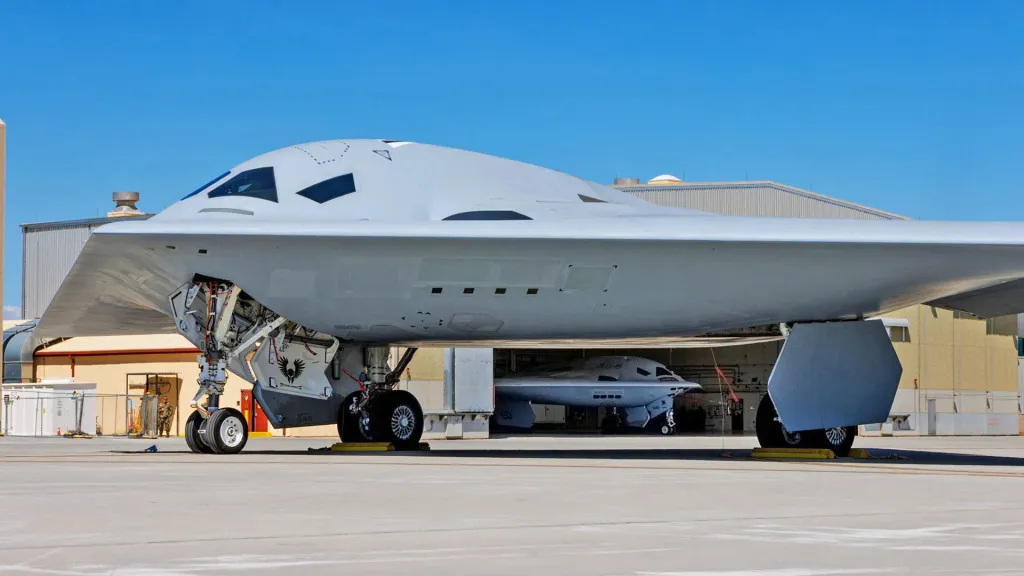
The U.S. Air Force is exploring options for adding air-to-air combat capabilities to its bombers as part of efforts adjacent to its latest fighter force structure plans. The service has raised the possibility of the B-21 Raider, specifically, taking on an air-to-air role, and potentially doing so in cooperation with Collaborative Combat Aircraft (CCA) drones, in the past. As TWZ has explored for years, the B-21’s inherent attributes – size, extreme range, high operating ceiling, broadband low-observability (stealthiness), and advanced sensors – could actually make it especially well suited to taking part in air-to-air combat missions. The Air Force’s other bombers could also be part of these future plans.
Aviation Week was first to report on the potential for bombers to help bolster the Air Force’s air-to-air combat capacity after obtaining a copy of a new long-term fighter force structure report submitted to Congress last week. Media coverage of this report first began to appear earlier this week following a roundtable on Tuesday with Lt. Gen. David Tabor, the service’s Deputy Chief of Staff for Plans and Programs. The full report, which is unclassified, was not disseminated to reporters at that time.
Pre-production B-21 Raider bombers at Edwards Air Force Base in California. USAF
The Air Force’s central goal now is having 1,509 combat-coded fighters in inventory by 2035, which is hundreds more than it has in service today. This will come from the acquisition of new F-35As, F-15EXs, and F-47s. There are already questions about how realistic this plan might be, and the service has acknowledged several hurdles it will need to overcome. You can read more about this in our initial reporting here.
The F-47, a rendering of which is seen here, is a critical component of the Air Force’s current future fighter force structure plans. USAF
“Accordingly, the USAF is also evaluating additional recapitalization options, including a new capacity fighter, increased reliance on CCAs [Collaborative Combat Aircraft], and developing air-to-air capabilities on bombers,” the latest fighter force structure report says, per Aviation Week.
The possibility of the Air Force buying a version of the current-generation Block 70 F-16, an example of which is seen here, has been raised. USAF A Bahraini Block 70 F-16D flown by members of the 416th Flight Test Squadron pulls away after receiving fuel from a KC-135 tanker with a crew from the 370th Flight Test Squadron during asortie out of Edwards Air Force Base in California on March 7, 2024. USAF
At the roundtable on Tuesday, Tabor also made clear that the introduction of CCAs would influence future fighter force structure plans, but the expected scale and scope of those impacts remain unclear. He does not appear to have addressed the role bombers could play in this equation at that time. The new fighter report itself does not elaborate further on the potential use of bombers, based on Aviation Week’s story. TWZ is seeking more information.
When it comes to the possibility of Air Force bombers, and the B-21 more specifically, taking on an air-to-air role, this is not the first time the possibility has been raised, as mentioned earlier.
“As the NGAD [Next Generation Air Dominance] review goes forward, like, is it possible that what that ends up with could be the B-21 taking a larger role?” reporter Stephen Losey, working at the time for Defense News, asked then-Air Force Chief of Staff Gen. David Allvin at the Military Reporters & Editors (MRE) Conference in 2024.
“We have not taken that off the table,” the Air Force’s top officer said in response to Losey’s question, but did not elaborate.
B-21 Takeoff and Landing
At that time, the Air Force’s NGAD program was undergoing a deep review, and the future of the sixth-generation fighter component of the effort had come into question. The decision was ultimately made to continue pursuing plans for what has now become the F-47.
For years now, TWZ has been highlighting how the B-21 could serve in multiple roles beyond just that of a traditional bomber, including in an air-to-air capacity. Air Force officials have themselves described the Raider as having multi-mission capabilities, which could extend into the realm of air-to-air combat.
“If we were to characterize it [NGAD] as a fighter, we would be… thinking too narrowly about what kind of airplane we need in a highly contested environment,” then-Air Force Maj. Gen. Scott Pleus told what was then just Air Force Magazine back in 2019. This could be “a B-21 that also has air-to-air capabilities” and can “work with the family of systems to defend itself, utilizing stealth – maybe that’s where the sixth-generation airplane comes from.”
Pleus’ comments had tied in with adjacent discussions at the time and thereafter about how the B-21 might operate together with future CCA drones. Pleus, who was subsequently promoted to lieutenant general and whose lasting posting was as Director of Staff at the Air Force’s top headquarters at the Pentagon, retired in August of this year.
A composite image showing the two drones – General Atomics FQ-42 Vengence and Anduril’s FQ-44 Fury – that the Air Force is acquiring now under the first phase of its CCA program. USAF
It remains unclear how the Air Force might be considering employing the B-21, or any of its other existing bombers, in air-to-air combat. This could entail loading out bombers for direct air-to-air engagements, or the integration of new capabilities to help them find targets or to otherwise enable new supporting roles, or a mix of all of the above. The process of achieving air superiority is not limited to neutralizing aerial threats, either.
As TWZ has written in the past in the context of an air-to-air role for the Raider in particular:
“The Raider has the potential to serve as a launch platform for air-to-air missiles, especially outsized very long-range types. Its payload capacity would give it the ability to carry a large volume of smaller air-to-air missiles, as well. B-21s could also employ air-to-ground munitions in support of the suppression and destruction of enemy air defenses mission (SEAD/DEAD), which is also part of the air superiority equation.”
“Maybe most significantly, the B-21s could also act as airborne nerve centers in support of counter-air missions, especially for controlling drones like the Air Force’s planned fleets of Collaborative Combat Aircraft (CCA), and have the ability to do so even in the most heavily contested of airspaces. Uncrewed aircraft, in turn, could feed targeting data back to Raiders with air-to-air loadouts. B-21s might even be able to launch some of those drones themselves.”
A head-on view of the first pre-production B-21 Raider. USAF
Deeply networked ‘kill webs’ that bring together distributed arrays of sensors and other supporting elements across vast distances and multiple domains, coupled with very-long-range air-to-air missiles, open up new operational possibilities more generally. This applies to Air Force bombers beyond the B-21.
When it comes to longer-range air-to-air missiles, the Navy has notably already fielded the AIM-174B air-launched version of the Standard Missile-6 (SM-6). The service more recently disclosed another such missile in flight testing now, the AIM-424 Malice.
A US Navy Super Hornet fighter seen carrying a load of AIM-424 missiles during a flight test. USN
There is also the Defense Advanced Research Projects Agency (DARPA) LongShot program, which the Air Force, as well as the U.S. Army and Navy, have been involved with over the years. The aim of that effort is to demonstrate the concept of an air-to-air missile-carrying drone to help extend the reach and reduce the vulnerability of tactical fighters and bombers.
A rendering depicting LongShot drones being launched from a B-52 bomber, as well as F-15 fighters. General Atomics
On top of all this, tactical fighters are generally ill-suited to, and in some cases outright incapable of, carrying the kinds of outsized payloads being discussed here. This underscores the potential value of incorporating bombers into this equation as a means to engage targets at extreme ranges.
Even in a closer proximity support role of fighter aircraft, B-21s, as well as B-52s, could contribute to air-to-air fight as arsenal ships for longer-range weapons, firing on demand from the rear in coordination with crewed and uncrewed platforms operating at the tip of the tactical edge. B-21s could also use their penetrating capabilities to command drones of their own that provide penetrating fighter-like capabilities.
New air-to-air capabilities on Air Force bombers could include self-protection systems, too. Years ago now, the B-21’s prime contractor, Northrop Grumman, patented an anti-missile defense system for stealthy aircraft designed to fire hard-kill interceptors. The Air Force, as well as the Navy, have openly expressed interest in similar defensive capabilities for aerial refueling tankers and other larger planes. Just being able to provide localized close-in defensive ‘bubbles’ around individual bombers could impact the calculus when it comes to future air-to-air combat requirements.
Drawings from Northrop Grumman’s aircraft anti-missile defense system patent. USPTO
Speaking more broadly about Air Force future fighter force structure demands, as we wrote previously:
“In recent years, sustainment costs, broadly, have only become an increasingly serious concern for the Air Force, as well as the other branches of the U.S. military, especially when it comes to complex manned platforms, such as the F-22 Raptor and the F-35 Joint Strike Fighter. Fleet size and the readiness of those fleets are also highly pressing issues. So, at least in the near term, it’s not surprising that NGAD may end up focusing more on exploring available lower-cost options with distributed capabilities as alternatives to traditional air combat assets with highly centralized capabilities, such as manned fighter jets packed with ‘exquisite’ technologies.”
Despite the decision in the end to proceed with the more exquisite F-47, these points have only become more pronounced as time has gone on. How many F-47s the Air Force ultimately intends to buy is another question that looks to remain unanswered by the latest fighter force structure report. At the same time, there are clear signs that the Air Force is planning to significantly increase its planned B-21 fleet size. The official acquisition target has long been at least 100 Raiders, but the Air Force and Northrop Grumman have said a new topline figure is expected to come in the Fiscal Year 2028 budget proposal next year. The service is now explicitly aiming to have at least 500 CCA drones in service by 2032, too. All of this will compete for funding and other resources, at least to a degree.
A pre-production B-21 seen during a test flight. USAF
In the meantime, there has been a “persistent decline in AA [aircraft availability] rates across the USAF tactical fighter fleet,” which “is the direct mathematical consequence of operating an inventory with an average age exceeding 31 years,” the Air Force’s latest fighter force structure report says, according to Aviation Week. “As legacy platforms – such as the F-16C/D, F-15E, and A-10C – operate well beyond their original engineering service lives, they experience compounding structural fatigue, widespread corrosion, and subsystem degradation.”
“Achieving the mandated AA rates required for a peer-conflict scenario necessitates aggressive divestment of the oldest airframes to fund the procurement of highly available, modernized platforms like the F-35A and F-15EX,” the report adds, per that outlet. Furthermore, “to counter the [Chinese] industrial capacity and numerical advantage in fielding fighters like the J-20 and J-16, the USAF must embrace a hybrid force of manned and unmanned systems.”
A Chinese J-20 fighter. PLAAF
With all this in mind, active consideration of new air-to-air roles for bombers, as well as the possibility of “increased reliance on CCAs” and the potential to acquire new current-generation F-16s, at least seems to reflect a hedge strategy on the part of the Air Force.
If nothing else, the door clearly remains open to bombers being a key part of the Air Force’s ‘fighter’ vision in the future.
She had an intimate bash attended by her loved ones – but Kendall was missingCredit: Instagram/kimkardashianKendall was also missing earlier this week when she snubbed sister Kylie’s VS Fashion Show debutCredit: Getty
“Kendall must be fighting with Kylie and everyone, first she skips the VS show and now this,” noted one person in the comments.
“I think she just didn’t wanna do the pap walk,” said a second.
“With a family of this size it has to be someone’s birthday every month…can’t make every event every time I assume,” added a third.
This isn’t the first glimmer of a feud between the famous family that we’ve had in recent days.
Most read in Entertainment
Kylie strutted down the runway at the annual VS show on Sunday night wearing a $50 million bra, and Kendall was nowhere to be seen.
Kylie is the first non-Angel to wear the coveted Fantasy Bra, which she paired with a white thong, a sheer miniskirt, and massive white angel wings.
But her sister Kendall, who had walked in the show in the past, didn’t participate this year.
Kendall wasn’t even in the audience supporting her baby sister, alongside their mother, Kris Jenner, and Kylie’s boyfriend, Timothee Chalamet.
The supermodel also didn’t shout out Kylie’s monumental moment on social media, despite their sisters Kim and Khloe Kardashian doing so on their Instagram pages.
“There is no way Kendall is not seething at Kylie being in the show,” one person suspected in a popular Kardashian family Reddit forum at the time.
But Kendall did acknowledge her younger sister’s fashion show stint.
She reposted of Kylie strutting her stuff down the runway, writing: “My perfect baby sister.”
A statement was then shared with Page Six.
“Kendall thought Kylie absolutely killed it,” a source told the outlet.
“Even though Kylie has some runway experience, she still asked Kendall for a few tips ahead of the Victoria’s Secret Fashion Show.”
There has been a significant update to a UK airport that closed its doors four years ago, with plans to reopen for passengers from 2028 following a £160 million project
Plans to reopen the beloved UK airport, which has been abandoned for four years, are underway(Image: Getty Images)
A UK airport that has been abandoned for the past four years has reached a ‘major milestone’ with plans to be under public ownership. There is hope that holidaymakers will be able to fly from the airport, which had provided routes to some of the most popular holiday hotspots across Europe, within the next few years.
Doncaster Sheffield Airport was forced to close in 2022 after its former owner, Peel Group, said it was no longer financially viable to continue operating. It came as a blow to travellers, particularly locals, who could conveniently fly from the airport to destinations such as Alicante, Palma, Amsterdam, Budapest, Dublin and Paphos, through Wizz Air, TUI or Ryanair.
Now, at a significant turning point for the airport’s future, the South Yorkshire Mayoral Combined Authority (SYMCA) plans to purchase Doncaster Airport, thereby becoming the freehold owner and landlord under the City of Doncaster Council’s lease. The exact details of the planned proposal and its approval are set to be discussed next week, but the update, which would see the airport come under public ownership, has been hailed as a “major win”.
Doncaster mayor Ros Jones said: “This partnership proposal to bring the airport into public ownership is a major win for Doncaster and South Yorkshire. I pressed this proposal back in 2022 and the landowner declined. We are now in a different place and a different time. This proposal will end our lease with the current landowner. As a council, we need to enter into a contractual arrangement with SYMCA to agree how this progresses in a phased approach. The meeting of cabinet next week will take the decisions the council needs for this to take place.”
Previous reports estimate that the airport could reopen with flights available for passengers during the winter 2027-28 season, following a £160 million project. Currently, the airport stands eerily abandoned until a final decision is made about its future, but the latest update has sparked excitement.
South Yorkshire mayor Oliver Coppard said the deal was a “major milestone”. He further commented: “I’m delighted to say that subject to formal approval of the MCA board next week and then Peel, we’ve agreed a deal that means we’re taking Doncaster Sheffield Airport and adjacent Innovation Quarter employment land into public ownership.
“This is a deal that puts the future of DSA back in our hands and finally gives one of the biggest and best growth opportunities in South Yorkshire the platform for long-term success that it needs and deserves. Four years ago, we were told that our airport would be closing. But alongside Ros Jones, I said I would do anything I could to save DSA, and I meant it.
“Which is why after months of negotiations and the growing flexibility afforded to us by the government’s devolution agenda, today we can announce that we have come to an agreement for SYMCA to buy the airport and Innovation Quarter employment land from Peel. Subject to the agreement of the MCA board next week, the airport and surrounding Innovation Quarter employment land will be owned and controlled by us, for us; the people of South Yorkshire. This deal means our future will be in our own hands again.
“When the airport closed, almost everything was against us; the owners did not want to sell, we had no legal powers to intervene or stop the airport from closing, and no backing from the government at the time. Today, the future for DSA is bright, with the airport back in our hands, the sky’s the limit.”
Do you have a travel story to share? Email webtravel@reachplc.com
Ukraine continues to struggle with throttling of the speeds at which weapons using the vital satellite communications services provided by the SpaceX Starlink system can operate, one weapons manufacturer tells us it is rethinking whether to rely on it in the future. As we have previously reported, heavy use of Starlink on both sides of the conflict in Ukraine, including as a means of guiding one-way attackers in the air and at sea, has underscored potential risks of exclusive reliance on Elon Musk’s orbital communications networks in critical tactical tasks.
At issue are complaints by Ukrainian officials that “in various sectors of the front, the equipment ceases to function at speeds of 130–161 kilometers per hour.”
A limit on how fast Starlink terminals on vehicles can travel before the feed is cut off in certain areas impacts a slew of weapons and campaigns, especially strikes on Russian logistics behind enemy lines and in the sea of Asov, as well as the control of defensive interceptor drones critical for taking down Russian long-range one-way attack drones, like the notorious Shahed-136.
The following video shows one such Shahed interception.
Spectacular footage of a Ukrainian interceptor striking a Russian Shahed kamikaze drone, followed by its fall to the ground. pic.twitter.com/8DrJyS22Fn
The limiting of Starlink/Starshield occurred amid deteriorating relations between the Trump administration and Ukrainian President Volodymyr Zelensky. The latest chill between Washington and Kyiv was sparked by the American leader’s claims that Ukraine’s attacks on Russia’s energy infrastructure have reduced the supply of diesel fuel to the U.S. and other nations more than the conflict in the Middle East. Trump was upset Ukraine kept hitting these targets despite his demanding they stop.
Q: Do you think Ukraine should stop attacks on Russian oil refineries? Have you told Zelenskyy that? TRUMP: We’ve talked about it, we have, and I think they’re slowing it down, but they are causing a lot of problems. The lack of refineries is the problem. pic.twitter.com/ffpFnRqFlk
Exacerbating this issue, Trump on Oct. 9 announced via his Truth Social platform that he had made a deal to purchase diesel from Russia, pivoting away from a years-old Western policy that placed massive economic pressure on Moscow.
Trump: “I have just concluded a highly successful discussion with President Vladimir Putin, of Russia, wherein it was agreed that Russia will immediately supply over 300,000 Tons of Diesel Fuel to the American and Global Marketplace, another 500,000 Tons during the month of… pic.twitter.com/zH0I6HA941
Who gave the order to limit the speeds at which Ukrainian weapons using the Starlink/Starshield system operate is unclear.
“The order to limit a satellite system used by Ukraine for battlefield communications and drone operations came from inside the White House,” Reuters reported last week, citing two U.S. officials and a Western official briefed on the matter. “The officials said leaders at the Defense Department received a message that the SpaceX Starshield service for the Ukrainian military needed to be slowed.”
“No such request was ever made by the president,” a U.S. official told us on Monday.
“There has been no change to Department of War policy regarding intelligence sharing or any capabilities we are enabling Europeans to provide to Ukraine,” a senior Pentagon official responded to our questions about whether the Pentagon imposed the limits and, if so, why.
When we pushed for a more specific response to the Starlink/Starshield concerns, the Pentagon declined comment. However, Tuesday afternoon, Defense Secretary Pete Hegseth said the Pentagon did not order any changes and that Ukraine violated Starlink’s terms of services.
We reached out to SpaceX as well, but the company did not immediately respond. Last week, SpaceX’s founder and CEO, Elon Musk, said that “any limits on speed or usage are decided by the US military and ultimately” Trump. Musk had previously refused Ukrainian requests to use Starlink against targets inside Russia.
The prohibition against using Starlink inside Russia has drastically limited Ukraine’s ability to strike dynamic targets like mobile ballistic missile launchers and hunt for drone launch sites. However, Ukraine has not had to rely on Starlink in its campaign against oil infrastructure or other fixed targets deep inside Russia which upset Trump in the first place.
Tuesday morning, Zelensky spoke with U.S. Secretary of State Marco Rubio and again brought up Starlink/Starshield in addition to other major concerns.
“…the situation with Starlink/Starshield… needs to be restored,” Zelensky urged.
I spoke with Marco Rubio @SecRubio, and it was a substantive conversation – focused on the issues that matter. I am grateful for his readiness to help and his clear position. First, ballistic missile interceptors, which are needed to protect lives. Second, early warning of…
— Volodymyr Zelenskyy / Володимир Зеленський (@ZelenskyyUa) October 20, 2026
Rubio denied that any assistance was being withheld from Ukraine. Noting that Starlink “is a private company,” the secretary told reporters that Trump is “frustrated…because he doesn’t like to be blamed for things that aren’t true, including accusations that somehow he had ordered intelligence sharing to be cut off. And that’s not true; he’s said that repeatedly.”
SECRETARY RUBIO: There’s nothing being deliberately denied to Ukraine. It’s simply a balance between our obligations to other partners, and frankly, our own standards and requirements for our own facilities as well. pic.twitter.com/x9NWbIufBa
This most recent flap isn’t the first time SpaceX and Musk have faced particularly significant criticism over limiting some Ukrainian use of the network. Actions SpaceX took earlier this year to block unregistered Starlink terminals also had major consequences for Russian forces, which were sent scrambling to find alternatives to fill the massive resulting communications gap.
Given the tenuous nature of Ukraine’s ability to use Starlink/Starshield, the Wild Hornets company is reevaluating whether to use the SpaceX system in future endeavors even though, so far, it has experienced few problems with it. Wild Hornets is a major Ukrainian combat drone maker. Among other weapons, it makes the Sting interceptors, designed to defend against Russian Shahed kamikaze drones.
The Starlink/Starshield issue isn’t affecting current operations, Wild Hornets spokesman Mike Orliuk told us Tuesday morning. “Our own communications system provides the basic connection to our interceptors,” he said. “Plus, our technology for remote control of the interceptors can use various sources of internet connectivity. True, the military often uses Starlink for this, but in our case, the terminal doesn’t need to be moved at high speeds (it simply provides a connection between the command center and the ground station to which the interceptor is connected—it’s somewhat similar to cell towers).”
Concerns about the reduction in speeds at which Starlink terminals can operate has Wild Hornets thinking about ditching a future project, Orliuk told us.
“But we understand that there are other types of interceptors,” added Orliuk. “For example, some drones carry a terminal on board and need to fly at high speed with it. In such cases, Starlink’s limitations make their operation impossible. From this point of view, it also makes us rethink some of the projects we’re currently working on. For example, launching interceptors from aerial platforms.”
“We’re keeping an eye on the situation,” Orliuk continued. “For our current operations (connections with ground stations), we can use any source of stable internet connectivity. Therefore, various solutions are possible in different locations. However, for these needs, everything is operating normally with Starlink at the moment. As for our plans with new projects, we don’t have a clear decision yet, but we will be testing alternatives.”
Orliuk declined to provide further details about what “alternatives” could look like.
There are a number of ways the lack of Starlink for extended-range drone operations could be mitigated to a degree, but the persistent, reliable, high-bandwidth and compact capability SpaceX provides has no direct alternative at this time. The use of drones that work as line-of-sight relays, which can be daisy chained together electronically with other airborne relays, with a connection spanning dozens or even hundreds of miles to a ground entry point is possible. You can read about this concept here. The use of swarms of balloons to create an active network over a battlespace and using starlink on those slower moving platforms to relay line-of-sight connections to multiple drones below is another possibility. You can read more about this concept here. But we must stress again, nothing can fully replace Starlink/Starshield and its seamless beyond line-of-sight communications architecture at this time.
“I believe, in any case, depending on a single solution is very risky,” Orliuk proffered. “Especially if you don’t have full control over it. Especially when it comes to something as critical on the battlefield as communications. That’s exactly why our ecosystem is built around our own communications technology and basically is open to various solutions when it comes to internet connectivity.”
The No. 1 interceptor: STING by Wild Hornets has destroyed over 15,000 Shaheds and Gerberas in one year 🔥
Confirmed data shows that STING has topped the interceptor rankings for 12 consecutive months. In September this year, Ukraine’s Defense Forces downed around 1,600 Shaheds,… pic.twitter.com/4v1aeOxPiy
As far as military units are concerned, the commander of the Georgian Legion told us that his forces have been affected by issues with Starlink/Starshield even though the main concerns have been about the speeds at which weapons can travel and still have connectivity. The Georgian Legion is fighting in the heavily contested Kramatorsk region of eastern Ukraine.
“We use Starlink a lot because, in this war, reliable communication is essential,” Mamuka Mamulashvili told us. “It helps us stay connected when everything around us is changing. Of course, we’ve learned not to rely on just one system. There are alternatives, like mobile internet, fiber-optic connections, radio and other satellite systems such as OneWeb. But honestly, none of them can fully replace Starlink in Ukraine right now.”
“The problems were not limited to the speed restriction of approximately 160 km/h,” the Georgian Legion commander pointed out. “Starlink connectivity itself was also intermittent, repeatedly switching on and off. This caused communication disruptions across various drone systems, not just those operating at speeds exceeding 160 km/h. As a result, the impact was broader than the restriction on high-speed interceptor drones. Intermittent connectivity created problems for drone control and communications across multiple systems, affecting their reliability and the ability to carry out missions as intended.”
Drones operated by the Georgian Legion. (Georgian Legion Telegram screencap)
“We had serious communication problems,” Mamulashvili explained. “At one point, our drone operators were struggling to maintain a reliable connection with the drone systems, which disrupted coordination and made it difficult to carry out missions as planned. When you lose the connection between the operator and the drone, you can lose control of the situation in seconds. We managed to adapt, but it definitely affected our work.”
“We have to adapt and find solutions, as we always do,” the commander said. “This war teaches you one thing every day. You can’t depend on a single technology or expect someone else to solve all your problems. You have to be ready for anything and keep moving forward.”
Russian sources, meanwhile, are gloating over the speed limits placed on weapons using Starlink/Starshield, particularly how it is affecting Ukraine’s mid-range drone attacks that have crippled Russian logistics. As we explained in a previous report, Ukrainian units have relied on the SpaceX system to help extend the range of their drones to reach as far as 150 miles into Russian-occupied territory. The SpaceX system is not used to hit targets inside Russia proper.
The following video shows some of these mid-range attacks.
Russian rail logistics are now also the target of Midstrike drones, with lines to Crimea being particularly affected. pic.twitter.com/K1BFd0QVov
“Disabling or slowing down Starlink has significantly reduced the enemy’s ability to launch medium-range drone strikes along the ‘Novorossiya’ highway,” influential Russian milblogger Vladimir Romanov reported. The highway, also known as the R-280, is a key link between cities in occupied southern Ukraine and the occupied Crimean peninsula. The road has been a frequent target of Ukraine’s mid-range strike campaign.
“The success of these strikes depends on the Ukrainian Armed Forces’ access to American satellite communication,” Romanov noted. “For the past six months, the Ukrainian Armed Forces have been attacking civilian transport – trucks, cars, and buses – exclusively through the use of ‘Starshield.’ This means that, for the past six months, American military satellite infrastructure has been used to carry out terrorist acts against Russian civilians, and so on. In other words, the United States is still directly involved in the war with Russia!”
America’s gifts to Russia never end, with Russian military bloggers now confirming that Washington’s operation to cut Ukraine’s Starlink has halted Ukraine’s ability to strike Russian logistics routes in Ukraine.
As for how widespread worries among Ukrainian weapons manufacturers are, Orliuk suggested that Wild Hornets is not alone. He said he has spoken with other companies relying much more heavily on Starlink/Starshield who have expressed concerns. He pointed to growing interest in the European Eutelsat satellite constellation as an example of companies seeking options, but noted that “of course, creating something like Starlink won’t be easy.”
It will be interesting to see if other Ukrainian weapons companies also consider scrapping plans to rely on Starlink in the future and what architectures will emerge at least as a backstop to it.
ONE UK airport which closed in 2022 is taking another step closer to welcoming passengers back.
Doncaster Sheffield Airport closed after becoming “commercially unviable” and has been left empty since, but it has now announced it’s set to come under public ownership.
Doncaster Sheffield Airport is set to reopen to passengers in 2028Credit: AlamyNow, it’s been announced that the airport will come under public ownershipCredit: Alamy
South Yorkshire Mayor Oliver Coppard called the deal a “major milestone” towards reopening the airport.
According to reports, South Yorkshire Mayoral Combined Authority (SYMCA) will buy the airport becoming the freehold owner and landlord to the City of Doncaster Council lease.
Sign up for the Travel newsletter
Thank you!
Oliver Coppard said that the airport being bought by SYMCA would also “provide long-term control, certainty and flexibility” and attract private investment too.
Before it closed, the regional airport acted as a gateway to Europe for those living in the north of England.
It had airlines like TUI and Wizz Air and flew to the likes of Spain and Portugal.
When it reopens, it’s possible certain routes could be reinstated, as well as longer ones too.
The airport is home to one of the longest runways in Europe, measuring 2,893 metres, which means it could host big jets for long-haul journeys.
As of yet, no airlines have been confirmed for when the airport reopens.
Designs for the revamped terminal have been revealedCredit: City Of Doncaster / Mayor Ros Jones
Christian Foster, Director of FlyDoncaster – the company set up to manage the airport – told Sun Travel: “It does feel like the world has changed post-Covid, whereas people were focused on two weeks in Spain or Greece, nowadays we’re seeing a lot of people keen to take city breaks.”
“We’d love to fly to places like Croatia, and other destinations that are a bit more quirky like Azerbaijan.
“We’re keen to look at emerging places to visit as well, like India.“
Another plan for the airport is that when it opens, it will have local businesses rather than chains like Costa or Starbucks.
There would be a mixture of restaurants, bars and shops as well as seating.
The dollar index (DXY), which measures the greenback against a basket of major currencies, was last up 0.10% at $101.93 and remains up over 3.8% for the year to date.
The hotel is situated just a 10-minute walk from the iconic West Sands Beach(Image: Getty)
A popular Scottish seaside town has been dealt a devastating blow following the sudden closure of a prominent hotel. The firm behind the establishment recently collapsed into liquidation, forcing its immediate shutdown, with all members of staff confirmed to have lost their jobs.
The Kinnettles Hotel, a five-star boutique property nestled in the heart of St Andrews, Scotland, shut its doors for good in September after its parent company, Kinnettles Hotel Limited, went into liquidation.
The hotel’s on-site restaurant partner, Gidi Grill, was locked out of the building on September 23, with owner Mo Adeniyi claiming “the building was taken over by someone else, but we hadn’t been told”. He confirmed he was now on the hunt for new premises to relocate his West African and Afro-Caribbean restaurant.
The closure of the Kinnettles Hotel, situated just a 10-minute walk from the iconic West Sands Beach and the historic St Andrews Old Course golf links, left all 12 members of staff without work.
The broader Kinnettles portfolio, which includes Kinnettles Mansion in Guardbridge and Kinnettles Castle near Forfar, had previously been put up for sale for £15 million.
Callum Carmichael, a partner at FRP Advisory, has been appointed as liquidator of the company. He confirmed that the challenges facing the business had become “insurmountable”, reports the Express.
Ensure our latest travel stories always appear at the top of your Google Search by making us a Preferred Source. Click here to activate or add us as a Preferred Source in your Google search settings
Mr Carmichael told The Courier: “Kinnettles Hotel has been a well-established part of St Andrews’ hospitality sector, offering boutique accommodation in the heart of the town for many years.
“Despite its established presence, the challenges facing the business and many like it in Scotland’s hospitality sector ultimately proved insurmountable. Our focus is now on safeguarding the assets of the three companies and supporting those affected.”
Nestled at 127 North Street in the heart of St Andrews town centre, the Kinnettles Hotel featured 15 spacious bedrooms, a bar, spa, and an on-site restaurant.
The hotel had garnered a string of glowing reviews on TripAdvisor, with guests heaping praise on the accommodation, spa and facilities alike.
One wrote in July: “I genuinely don’t think I’ve ever had a better spa experience in my life. From the moment I arrived until the moment I left, every single detail was absolutely perfect.”
A second reviewer wrote in May: “I had an amazing experience at Kinnettles Hotel & Spa, truly one of the best I’ve had.”
A third posted in March: “My husband and I stayed for one night and used spa facilities and got a treatment each. First of all we were made to feel very welcomed when we entered the building , staff couldn’t do enough for us.
“The breakfast next morning was lovely but the best part was the spa facilities and the treatment it was absolutely fantastic and cant wait to go back again.”
Another visitor commented in March: “I can’t praise highly enough the Kinnettles Hotel and Spa, St Andrews. We arrived as guests and departed five days later as friends.”
A large fire near a Canadian military base in Alberta has killed and injured some people, the defence minister said, without confirming the number of casualties.
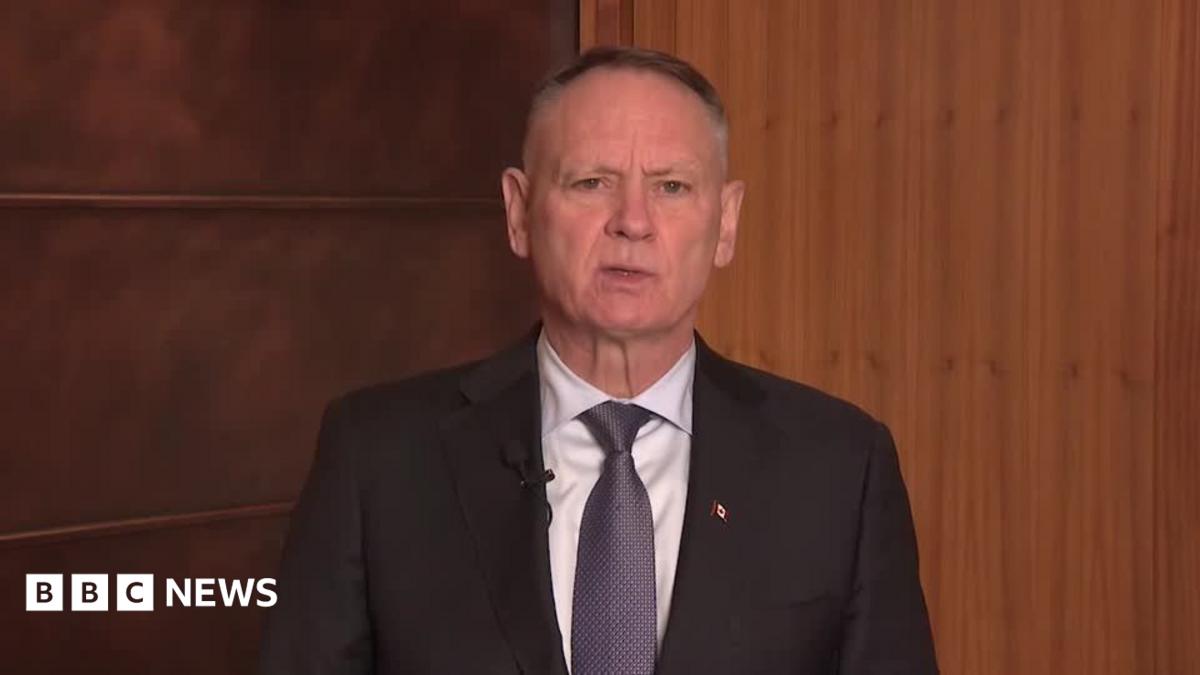
The Canadian Armed Forces were working with local authorities to manage the fire and were looking into what caused it, David McGuinty said, describing the situation as “very, very active and delicate”.
Canada’s Prime Minister Mark Carney said on X that a “serious incident creating a major fire” had occurred, adding his “thoughts are with all the brave women and men affected”.
Canadian Forces Base Wainwright, where the fire broke out, is one of the country’s busiest military training bases.
The Canadian Broadcasting Corporation describes it as “the principal base for live fire training exercises”. About 690 military personnel and 300 civilian workers are on site on a regular day, according to the CBC.
Saturday’s blaze “spread rapidly due to high winds” and had torn through the fences of the base, the Municipal District of Wainwright said.
McGuinty told reporters he “cannot recall an incident like this in recent memory”.
Alberta’s premier Danielle Smith says the “significant and tragic fire” is “affecting many of [the province’s] brave military personnel”. Provincial authorities are in touch with the central government in managing and investigating the situation, she added.
It is unclear when the fire broke out, but the district first posted about the incident at about 17:30 local time (23:30 GMT).
Local authorities have urged residents to avoid the area and give all emergency vehicles right of way.
Neighbouring provinces have offered their support.
Saskatchewan premier Scott Moe says he has deployed resources to Alberta and is “ready to provide more if required”, while British Columbia premier David Eby says his government has “reached out to Alberta to offer all possible assistance”.
Joe Lycett was voted off after telling the Faithful he was desperate to become a Traitor, admitting afterwards ‘I’ve done this to myself’
21:07, 16 Oct 2026Updated 21:08, 16 Oct 2026
Joe was the architect of his own downfall – and he knows it
Banished Faithful Joe Lycett was so desperate for a green cloak that after being voted out of The Celebrity Traitors he called for a rule change allowing dumped players to return as baddies.
His exit last night came after he loudly proclaimed he wanted to be recruited into the turret – which didn’t happen – but nobody believed him when he truthfully announced his disappointment the next morning.
“I’d like to motivate the Traitors to find an unknown clause in the contract that can bring back a Faithful that’s been banished to recruit because I’m there if they want me,” he laughed.
The comedian, 38, received 11 of the 14 votes after what seemed like a big slip-up at the round table in which he said that if he went, the Traitors would need to recruit again. Afterwards he acknowledged that he only had himself to blame. “I sort of didn’t play being a Faithful or a Traitor right. I tried to straddle both, and I was being greedy and I was rightly punished for it.
“I’m a silly billy – it was a combination of me begging for recruitment and then the Faithful being thick as mince. I concede I’ve done this very much to myself, but I was too hungry to be recruited. And you know, if being passionate is a crime, then banish me from the castle.”
Joe, who was instrumental in exposing Richard E Grant as a Traitor by asking him what he was on the first day, said the experience of being kept separate from friends and family during filming had been enjoyable. Asked to explain what he’d learned about himself by taking part in the game, he said: “The word that comes to mind for this whole experience is gratitude. It’s made me really grateful for my life. I’m really grateful that I am in a position that I get to experience this, because I’m famous enough to be in the mix. I loved having my phone taken away from me, and I’m really grateful for the fact that I have a lovely life to miss.”
Admitting that the game was sometimes “infuriating”, but also “joyous and thrilling”, Joe said he thinks the most likely winner is Romesh Ranganathan. “I think Romesh is a front runner,” he said. “I think he’s kind of unreadable but may get heat just on that basis. Then I think there could be a real curve ball, like Jerry or Joanne, someone who’s playing it in a way that’s out there.”
But he said it was hard to stick to strategies when you were inside the castle. “I’ve gone to Round Tables not knowing who I was going to vote for, and I don’t know who’s a Traitor – any of them could win at this stage.”
Miranda Hart formed such a close bond with Joe during their time filming together that she wept when he left – having refused to put his name on her slate and writing Ross instead. During the programme she explained: “Three or four years ago, due to illness, I thought that I might not ever have a gentle walk around a park again. Now I find myself on a Scottish Highland wheelbarrowing along a very large head. It’s really exciting.”
Miranda, 53, has been suffering from chronic fatigue syndrome for many years, which she believes was caused by having Lyme disease as a teenager. Having recently recovered enough to sign up for the programme, she has joined in with the missions wholeheartedly. In last night’s effort she grew tired carrying the statue parts at one point so swapped to transport a giant head in a wheelbarrow towards the plinth where it could be erected on top of its body, earning money for the prize pot. The current fund stands at £46,000, after the players successfully constructed five out of the six statues.
The comedy star tearfully told James Acaster that having fun outside with Joe had made her feel the happiest she’d felt in a long time. “I can’t believe how emotional I’m getting,” she said, as the floodgates opened. “Connection and laughter and joy are bigger than this game and to meet someone and to just play and laugh, it’s all us humans need.”
The good news is that she is proving so popular in the castle that many fans are calling for a return of her BBC sitcom Miranda, which last aired with a Christmas special in 2015. Another suggestion is that she stars in a different show. “A Miranda detective series like Jonathan Creek would be… such fun!” one fan said.
Joe felt that he would miss her too. “Miranda is someone that I’ve met briefly in the past and I’ve always loved. I’m really pleased that I got a chance to play with her, do some sort of an improv, essentially, and kind of mess about. I got very close with her.”
He said that – against his expectations – he’d got on well with everyone. “I really, really liked them all – and didn’t expect to when I saw the lineup. I thought, well, there’s going to be some people I’m going to find difficult, or are divas or whatever. And the reality was completely different.”
Joe’s high point came right at the start when he asked the question that sparked Richard E Grant’s astonishing outburst. The comic said he was glad he hadn’t been persuaded to ignore it. “I know lots of people tried to steer me away from it, but I was like, there’s no game around that, he absolutely meant it when he said it to me. God knows what was going through his head. It was an absolutely superb, classic, Richard E. Grant way of responding to this game. It’s one of the most iconic performances I’ve ever seen.”
ANYONE planning to get to London Heathrow this weekend should check travel options before heading to the airport.
Major engineering works will see one tube line partly close and two other services to the terminals will be scaled back.
Anyone heading to Heathrow on the train or tube could run into problems this weekendCredit: GettyOn both days there will be no service to London Heathrow on the Piccadilly LineCredit: Getty – Contributor
On both Saturday and Sunday, the Piccadilly Line will have no service between Hammersmith and London Heathrow terminals.
There will also be no Night Tube service on October 16 – normal service is expected to resume on October 19.
Sign up for the Travel newsletter
Thank you!
Travel to or from Heathrow Airport on the Elizabeth Line will also experience issues.
Services on Saturday will run as usual, but on Sunday, there will be a reduced service between Paddington and Heathrow Terminal 4.
Netflix replaced one of its top executives in a major management shake-up on Thursday, a day after the company announced it was laying off 6% of its staff.
Chief Content Officer Bela Bajaria is leaving the company after a decade, Netflix said in a statement. She will be replaced by former Disney executive Peter Rice, who was most recently chairman of Walt Disney Television and chairman of general entertainment for Walt Disney Co.
“Peter is one of the most effective at-scale operators in the entertainment industry,” Netflix Co-Chief Executive Ted Sarandos said in the statement. “His business acumen is sharp, his talent relationships are exceptionally strong, and his experience across TV and film is deep and broad.”
Bajaria’s exit comes as Netflix has been under pressure from investors to turn out more hit shows and movies and increase the amount of time consumers spend on the platform amid rising competition from other streamers.
“Due to the slowdown in massive hits and viewer growth, an ax was gonna fall on some executives who led content strategy,” said Ross Benes, senior analyst at research firm Emarketer.
Bajaria oversaw the teams responsible for Netflix content around the world. She joined Netflix in 2016 and was named chief content officer in 2023. She was instrumental in expanding Netflix’s reach internationally and the streamer’s push into live events.
Hits released on Netflix during Bajaria’s tenure include the 2025 animated movie “KPop Demon Hunters” and crime drama series “I Will Find You.” Under her leadership, Netflix grew its reach in live programming, streaming NFL games as well as WWE matches. The company also changed its film strategy to focus on fewer movies that aimed to be bigger and better.
She also played a key role in helping Netflix generate large audiences for its non-English-language original series, reality shows and programs that featured talent from underrepresented communities.
But her tenure also coincided with mounting challenges to growing Netflix’s business.
Free, ad-supported streaming services like YouTube are increasingly taking up more streaming hours and investors are concerned about how Netflix will continue to grow. YouTube represented 14.2% of streaming time in the U.S. on TVs compared to Netflix’s 7.8% in July, according to Nielsen data.
Netflix has said efforts like live programming have been successful at getting significant subscription sign-ups. While live programming represents 5% of Netflix’s content budget, it holds 1% of watch time on the streaming service, Sarandos has said.
The company also was poised to buy Warner Bros. Discovery, which would have dramatically increased its library of content, but Netflix bowed out of the auction after the price became no longer “financially attractive.”
Netflix stock has declined 40% from a year ago. Shares closed Thursday at $72.61, up 3%.
“The drop in share price has been staggering,” said Stephen Galloway, dean of Chapman University’s Dodge College of Film & Media Arts. “That plunge, plus the negative reaction to its move to buy Warner Bros. left it vulnerable, and so you have to do two things. One is right the ship, but you also need to send a message to shareholders that you’re taking action.”
In a memo to staff announcing the change in leadership, Sarandos wrote, “I know this is a big change in a year that has already had its share. But I also see an opportunity to take our slate to the next level, especially in UCAN [U.S. and Canada] where we have an outsize impact in creating big, buzzy hits that our members love and drive conversation around the world.”
Rice is an experienced corporate executive who spent nearly three decades navigating Rupert Murdoch‘s media empire, serving as president of 21st Century Fox and CEO of Fox Networks Group.
He also brings deep roots in the feature film world, having previously run Fox Searchlight Pictures, which could mean he will want to put his own stamp on Netflix’s film group, Galloway said. That group is currently led by executive Dan Lin.
“Netflix has fundamentally changed the way stories are made, shared and experienced around the world,” Rice said in a statement. “They’ve shown again and again that they’re willing to take chances on distinctive voices and fresh ideas, and I’m excited to work with the team to help bring even more great stories to members everywhere.”
BRITS will get more choice of where to go on holiday next year as TUI has announced eight new routes.
These will take-off from London Gatwick to destinations from sunny Spanish cities to North African islands.
TUI is adding eight new routes from London Gatwick for summer 2027Credit: AlamyOne of these routes is to the popular winter sun city of SevilleCredit: arcady_31
For summer 2027, TUI is adding eight new routes which will contribute to its 17 million seats and 84,000 flights planned for next year.
There will be three new routes to Spain, one of which will be to Seville which is popular for winter sun thanks to its year-round sunshine.
Sign up for the Travel newsletter
Thank you!
Even in the winter, Seville can experience highs of 18C.
The city has plenty to see like Royal Alcázar of Seville, Seville Cathedral and Plaza de España which is a cobbled square with four bridges over its small river.
In Greece, one of the new routes is to the Greek city of AthensCredit: Getty
He added: “I climbed Mars Hill to catch the sunset over the city — an experience that’s usually a shoulder-to-shoulder fight in July, but in winter felt like my own private viewing platform.
Another of TUI’s new routes is to Mytilene (Lesvos) which is on the Greek island of Lesbos.
In the city, visitors can explore Mytilene Castle, stroll around Ermou Street Market and enjoy seafood at the tavernas along the waterfront.
It even has its own Statue of Liberty in the harbour.
One of the three Spanish routes is to ValenciaCredit: GettyThe island of Lesvos has bright blue Mediterranean watersCredit: Getty
TUI will also fly to Palermo, the capital of the Italian island of Sicily.
It sits on the northern coast of the country with both sandy and rocky beaches like Mondello Beach and Addaura.
One free attraction is San Domenico Square which is the entrance to La Vucciria a market selling things like food, jewellery and souvenirs.
TUI is also offering a direct route to Tangier in Morocco which sits along the Strait of Gibraltar.
The city itself has plenty to see including its medina, busy souks, and landmarks like the Kasbah and the Caves of Hercules.
The city itself has a blend of cultures; African, French and Spanish.
It has a vibrant café culture thanks to its French influence, tapas culture from Spain.
In the summertime, Tangier sits at around 30C so it’s warm, but still mild enough to explore.
Tangier in Morocco boasts souks and the Cave of HerculesCredit: DoraDaltonDjerba is off the coast of Tunisia and is hot all year-roundCredit: BTWImages
Another route is to Djerba, a large island off Tunisia’s southeastern coast.
It has sandy beaches and for any Star Wars fans, it was the filming location for Star Wars: Episode IV – A New Hope – and there are regular tours too.
Head of Sun Travel, Lisa Minot, visited Djerba last year, she said: “Relatively undiscovered by us Brits, Djerba is a great-value option for those looking to explore beyond the Med favourites.
“Sizzling in summer, temperatures remain high all the way through to November and rarely dip below the 20Cs, even in the depths of winter, making it ideal for out-of-season sunshine.”
SAUDI Arabia has been targeted by missile attacks over the weekend – some of which hit the King Khalid International Airport in Riyadh.
It has led to a change in FCDO advice – so what happens if you have a holiday booked, or a flight stopover?
King Khalid International Airport was targeted in a missile attack over the weekendCredit: APAs a result, the FCDO for Brits advises against all travel to Saudi ArabiaCredit: REUTERS
What is happening in Saudi Arabia?
Over the weekend, Houthi forces in Yemen launched an attack on in Saudi Arabia’s capital city, Riyadh.
The FCDO advises against all travel to parts of Saudi Arabia.
It read: “Following a serious incident at King Khalid International Airport on 10 October 2026 at approximately 1500 (local time), we advise British nationals to stay away from King Khalid International Airport until the airport is secure and to monitor the advice of the Saudi authorities.”
It adds that it advises against:
all but essential travel to all airports within Saudi Arabia except for Medina International Airport
all travel to within 10km of the border with Yemen
all but essential travel to Aseer province, Riyadh province, Najran province, Jizan province and the cities of Taif, Jeddah and Dammam
It continued to say: “There is a heightened threat against airports, military bases, ports and energy infrastructure across Saudi Arabia, including Abha, Jizan, Najran, Riyadh, Taif, Jeddah and Yanbu, as well as Saudi shipping vessels in the Red Sea.”
“Further attacks against airports are very likely. Follow Saudi Civil Defence alerts.”
Riyadh is frequently used as a stopover destination for BritsCredit: Getty
Are flights still going to Saudi Arabia?
King Khalid International Airport closed on Saturday following the missile strikes and remains closed with flight disruption across the region.
While the Saudi Arabia air space remains open, there is a high risk of short-notice airport closures, diversions and airspace disruption.
Reuters has reported that certain airlines have suspended flights to Riyadh.
Lufthansa Group has suspended flights to Riyadh until October 16.
Air France-KLM has halted services to the Saudi capital until the end of the month.
Emirates which flies Brits to Riyadh via Dubai has been affected by cancellations.
What if I’m currently in Saudi Arabia?
The FCDO advice reads that any British national in the Middle East should prepare for flight cancellations and possible airspace closures.
The advice also states:
follow advice from the local authorities and sign up to FCDO Travel Advice email alerts
refrain from capturing or sharing images of conflict-related incidents
monitor local and international media for the latest information, including updates relating to airports and airspace which could close at short notice
stay away from areas around oil infrastructure and military facilities. Exercise caution at transport hubs
keep your travel plans under review and ensure your travel documents are up to date
before you travel, check that your route does not include travelling through areas or airports where FCDO advises against all but essential travel and, if it does, consider whether your travel is essential
if travelling by air, check that your reservation is confirmed and the status of your flight before travelling to the airport. Remain alert at airports and follow instructions from local authorities
if you are advised to take shelter, stay indoors or find the nearest safe building or designated shelter. An interior stairwell or a room with as few external walls or windows as possible may provide additional protection. The greatest risk is from falling debris caused by intercepts, and you are safest inside a secure structure
Saudi Civil Defence may issue early warning alerts to people in affected areas
Head here to read the latest guidance on ‘how to prepare for a crisis’ and what to include in emergency supplies.
What if I have a holiday booked and can I cancel my trip?
Before you cancel a flight or holiday booking, speak to your travel provider first – especially if it’s a stopover flight as it may be rerouted.
In places where the FCDO advises against all but essential travel, you may be able to cancel a package holiday and get a full refund.
NEW ‘contactless’ e-gates have just been introduced at a major UK airport.
Brits returning to the UK won’t have to scan their passport in a new government scheme to speed up arrivals – and it’s now in place at Gatwick Airport.
The new technology means Brits arriving back into the UK won’t needs to scan their passportCredit: AFP
East Midlands Airport was the first to introduce the new system on October 6, followed by Gatwick – and eventually it will be rolled out at 13 UK airports.
The contactless system is set to be up to 25 per cent faster than current e-gates.
Sign up for the Travel newsletter
Thank you!
When one writer for The Times tested out the new e-gates, she said it took just 12 seconds to get through.
How it works is that passengers will have their photo taken at an e-gate which will be checked by the system, verified against immigration, travel and passport information.
Essentially it takes away the need to both have a picture taken and scan the passport.
Once the checks are complete, the e-gates will open automatically.
If there is a need for further checks, then passengers will need to place their passport on the reader – or they could be asked to see a Border Force officer.
Passengers are still being told to keep their passport with them at all times.
At the moment, the contactless system will be for British citizens only, but eventually could be used by other nationalities.
The other airports which will have the new e-gate system are Birmingham, Bristol, Cardiff, Edinburgh, Gatwick, Glasgow, London Heathrow, London City, London Luton, Manchester, Newcastle and London Stansted.
Gatwick Airport has introduced new ‘contactless’ e-gatesCredit: Alamy
Phil Douglas, director general of Border Force, said: “This is a win for travellers coming to our brilliant country.
“By using state-of-the-art technology, we are making journeys smoother and faster, all while fully maintaining the UK’s robust border security.
“Our digital transformation also builds on our work this summer to extend eGates to children aged eight and above, making life a little easier for families.”
A MAJOR UK airport that sees millions of passengers through its doors each year could come to a complete halt this week.
A strike at Leeds Bradford Airport may mean that no flights will be able to land or depart across two days.
Leeds Bradford Airport is set to come to a complete standstill this weekCredit: GettyAlmost 130 members of staff are staging a walkout over payCredit: Alamy
If it does go ahead as planned, then it will mean no flights will be able to land, depart and passengers won’t be able to pass security.
Nearly 130 workers are staging a walkout at Leeds Bradford Airport in a dispute over pay.
Sign up for the Travel newsletter
Thank you!
Those striking includes a mix of air traffic control workers, security, customer service and cleaners.
The industrial action is set to start on October 16 and last until 6am on Sunday 18.
There have been ongoing talks over pay since December 2025 but Unite members involved said it “didn’t go far enough”.
Unite regional officer Neil Whitaker said they had “no choice but to strike,” and what would be needed to call of the action is a “fair pay rise”.
In a statement from the airport, it said: “Leeds Bradford Airport acknowledges the proposed industrial action due to take place between 16-18 October involving a group of operational colleagues.
“We respect the right of employees to participate in lawful industrial action. However, we are disappointed by this and do not believe strike action is the right way to resolve the issues still under discussion.
“The airport has made what we believe is a fair and responsible offer that is significantly above inflation and reflects both current economic conditions and the need to ensure the long-term sustainability of the business.
“Our priority now is to minimise disruption for customers, many of whom have worked hard and saved for important holidays, family visits and business travel. At this stage we anticipate running near-normal operations during the period.”
Leeds Bradford Airport is set to handle around 4.5million passengers every yearCredit: Getty
“Leeds Bradford Airport plays a vital role in connecting Yorkshire to the world. Industrial action has the potential to cause inconvenience for thousands of customers and local businesses who rely on those connections.
“We remain committed to constructive dialogue with Unite and would welcome continued discussions aimed at reaching a resolution.
“It is important to recognise that any profits generated by Leeds Bradford Airport are reinvested back into the airport and has been for a number of years. Those funds support improvements to facilities, infrastructure, operations and customer experience including the ongoing LBA:REGEN project which saw the opening of a new central search zone and staff welfare facilities this week.”
The terminal was renovated with a modern arrivals process with 83 per cent more seating and two premium lounges.
Flight compensation rules
A look at your rights if a flight is delayed or cancelled, when your entitled to compensation and if your travel insurance can cover the costs.
What are my rights if my flight is cancelled or delayed?
Under UK law, airlines have to provide compensation if your flight arrives at its destination more than three hours late.
If you’re flying to or from the UK, your airline must let you choose a refund or an alternative flight.
You will be able to get your money back for the part of your ticket that you haven’t used yet.
So if you booked a return flight and the outbound leg is cancelled, you can get the full cost of the return ticket refunded.
But if travelling is essential, then your airline has to find you an alternative flight. This could even be with another airline.
When am I not entitled to compensation?
The airline doesn’t have to give you a refund if the flight was cancelled due to reasons beyond their control, such as extreme weather.
Disruptions caused by things like extreme weather, airport or air traffic control employee strikes or other ‘extraordinary circumstances’ are not eligible for compensation.
Some airlines may stretch the definition of “extraordinary circumstances” but you can challenge them through the aviation regulator the Civil Aviation Authority (CAA).
Will my insurance cover me if my flight is cancelled?
If you can’t claim compensation directly through the airline, your travel insurance may refund you.
Policies vary so you should check the small print, but a delay of eight to 12 hours will normally mean you qualify for some money from your insurer.
Remember to get written confirmation of your delay from the airport as your insurer will need proof.
If your flight is cancelled entirely, you’re unlikely to be covered by your insurance.
If that is not a major concern for Antonelli, it certainly is for McLaren.
They had their own purple patch in the summer, when Lando Norris took consecutive wins in Hungary and the Netherlands, and would have won in Madrid had it not been for the unfortunate timing of a virtual safety car.
But the world champions have slipped from competitiveness in recent races, and before the Singapore Grand Prix they lie in third place in the constructors’ championship, only 11 points ahead of Red Bull.
Saturday in Singapore was a bad day at the office for McLaren.
Oscar Piastri and Lando Norris were heading for fourth and fifth places in the sprint when Norris made a dive down the inside of his team-mate at Turn Five on the final lap.
This is not a common overtaking spot and from a McLaren point of view it was a move with no reward, only risk.
The move might have made sense if it had come earlier in the race and enabled Norris to challenge Leclerc, struggling in front of them, for third.
But on the last lap, Norris was not going to have a go at Leclerc even if he had got through – the only remaining overtaking place was at the end of the following straight into Turn Seven.
If the McLaren drivers swapped places, it would make no difference to the team in terms of a collective points haul, but if it went wrong, the cost could be high.
And so it did. Norris was in a position to make a legitimate move, but they came together, pirouetted in tandem, Piastri into the barriers and out of the race and Norris slipping down to eighth. Nine points had become one.
The stewards took no action, feeling that “both drivers had contributed to the incident”.
Piastri had explained in the hearing that he did not expect Norris to try a move there, and attempted to leave space when he saw him.
Norris argued that his his car was in a position that, according to the rules, entitled him to make an overtaking attempt, so expected to be left space and had braked and gone over the kerb when he realised he was not going to get as much as he expected.
He said: “There are two sides, one is what the stewards say and that’s a fair reasoning, no-one’s to blame. But I did apologise because it was still me attacking, as I had the right to do. If I just sat there and was boring like I should be, nothing would have happened. So really it’s still my fault but I deserved to go for the space and I still believe I had the right for it.”
Norris added: “As you probably expect, no-one’s very happy. I’m not happy, Oscar isn’t happy. None of us wanted it to go that way. There was things both of us could have done better and, yeah, we spoke about it and we moved on.”
Parking will be vastly improved, too – in the first five years there will be two new car parking areas for flyers.
Nick Barton, Chief Executive Officer at Birmingham Airport Limited, said: “The £2bn proposed investment is unprecedented at Birmingham Airport and will take our airport close to 30m passengers.
“This level of ambition sends a strong signal of support and confidence in our airport and wider region.”
Birmingham Airport has assured local residents that in 2041, the noise impact will be similar to how it is today because of quieter aircraft.
They have also said they will be net zero by 2033; they list energy efficiency, alternative fuels and renewable electricity as a few reasons why.
The West Midlands Mayor, Richard Parker, said: “It’s set to bring thousands of new jobs, better international links, and unlock vital backing for local businesses and supply chains.
“This consultation gives local people and business owners a chance to have their say and help shape the airport’s expansion so that it brings lasting benefits for our communities.”
A MAJOR airport has been hit by strike action with thousands of passengers facing cancelled strikes.
Ground handling group, Alyzia, are taking part in a national strike which affects airlines like Brussels Airlines, ITA Airways, Air Arabia and United Airlines.
Staff at Brussels Airport is staging a walkoutCredit: Getty
The airport expects only half of the flights handled by Alyzia to operate as planned.
Brussels Airport said that airlines working with Alyzia have contacted passengers directly to inform them about the status of their flight and their options.
Sign up for the Travel newsletter
Thank you!
It added: “We regret the inconvenience caused by this union action.”
The strike action comes as workers protest against governmental policies.
According to FlightRadar which monitors movements of planes, Brussels Airport has had 103 cancellations today and 34 flights have been delayed.
As this strike is outside the control of individual airlines, it will be deemed an ‘extraordinary circumstance’, which means if your flight is cancelled you will not be entitled to compensation.
Public transport is also expected to be disrupted in Brussels today too.
The good news for Brits is that flights handled by Aviapartner will not be affected.
This includes major airlines serving UK destinations such as British Airways, easyJet, Ryanair, Tui, and Wizz Air.
The airport told The Independent that around 400 flights will still operate as usual today.
The strike is expected to affect almost 20 airlinesCredit: AP
Flight compensation rules
A look at your rights if a flight is delayed or cancelled, when your entitled to compensation and if your travel insurance can cover the costs.
What are my rights if my flight is cancelled or delayed?
Under UK law, airlines have to provide compensation if your flight arrives at its destination more than three hours late.
If you’re flying to or from the UK, your airline must let you choose a refund or an alternative flight.
You will be able to get your money back for the part of your ticket that you haven’t used yet.
So if you booked a return flight and the outbound leg is cancelled, you can get the full cost of the return ticket refunded.
But if travelling is essential, then your airline has to find you an alternative flight. This could even be with another airline.
When am I not entitled to compensation?
The airline doesn’t have to give you a refund if the flight was cancelled due to reasons beyond their control, such as extreme weather.
Disruptions caused by things like extreme weather, airport or air traffic control employee strikes or other ‘extraordinary circumstances’ are not eligible for compensation.
Some airlines may stretch the definition of “extraordinary circumstances” but you can challenge them through the aviation regulator the Civil Aviation Authority (CAA).
Will my insurance cover me if my flight is cancelled?
If you can’t claim compensation directly through the airline, your travel insurance may refund you.
Policies vary so you should check the small print, but a delay of eight to 12 hours will normally mean you qualify for some money from your insurer.
Remember to get written confirmation of your delay from the airport as your insurer will need proof.
If your flight is cancelled entirely, you’re unlikely to be covered by your insurance.