Murphy is a baseball lifer who paid more dues than a union plumber before finally pulling on a big-league uniform for the first time when he was 56. Murphy pitched in the low minors for two organizations and for two independent teams before retiring to become a college coach at Maryville, Claremont-Mudd, Notre Dame and Arizona State. He also managed the Dutch national team to a European championship and a spot in the 1988 Seoul Olympics.
His big break came in 2015, when the Padres promoted him from their triple A team in El Paso to take over for Bud Black as interim manager. A year later Craig Counsell hired him as bench coach for the Brewers, and when Counsell took the Cubs’ managerial job ahead of the 2024 season, Murphy, now 67, was named his replacement.
Two-hundred and 93 regular-season wins and three playoff trips later, the baseball lifer is four wins away from the World Series, which would be the trip of a lifetime.
“I think it was just the relentless pursuit of something,” Murphy told Yahoo Sports of his long journey. “I wanted to be somebody. I wanted to be special.”
As part of the largest U.K. Commando Force exercise in 15 years, British special operators conducted a submarine insertion off Scotland, making use of a German Navy Type 212A — a boat you can read about in detail here. The maneuvers are the first time since the war in Afghanistan that all of the Commando Force’s specialist elements have operated together. The submarine insertion, conducted at Cape Wrath on September 29, is part of Exercise Strike Warrior, a major NATO drill intended to rehearse allied crisis-response and warfighting operations across the North Atlantic and High North.
The U.K. Royal Navy-led Commando Force specializes in amphibious, littoral, and expeditionary operations. It brings together Royal Marines commandos with specialist elements including reconnaissance, intelligence, targeting, artillery, logistics, and medical capabilities. The force is increasingly focused on smaller, dispersed teams operating across contested littoral environments.
Commandos attempt to drive RIB onto German submarine casing in heavy swell
Including elements of the Commando Force, more than 2,000 personnel from the United Kingdom, United States, Germany, Netherlands, Canada, and Norway are currently participating in Strike Warrior, with eight warships and 19 aircraft involved in activity spanning Scotland, the Western Isles, the North-West Approaches, Galloway, the Borders and the North Sea.
The submarine insertion underscores the type of maritime special operations the British Commando Force is now increasingly training to conduct. Personnel from 148 (Meiktila) Commando Forward Observation Battery, Royal Artillery, boarded the unnamed German attack submarine off Scotland before being infiltrated toward the coast. The sub provided intelligence, surveillance, and reconnaissance (ISR) support as the force approached the target area, after which the commandos conducted a discreet small-boat insertion using inflatable raiding craft.
British Commandos board the German U-boat off the north coast of Scotland during Strike Warrior 26. Crown Copyright
Once ashore, the commandos moved onto the cliffs and established an extemporized observation post. From there, they confirmed the simulated target and coordinated live naval surface fires against a simulated enemy position. Here, firepower was provided by the Portuguese Karel Doorman class frigate Dom Francisco de Almeida, presumably using its Oto Melara 76mm deck gun. Following the engagement, the team was extracted. The complete sequence incorporated submarine infiltration, small-boat insertion, covert reconnaissance and targeting, live naval gunfire, and withdrawal into a single mission profile.
Crown Copyright
The German submarine involved is particularly well suited to this kind of mission. Conventional diesel-electric attack submarines (SSK) lack the nuclear-powered endurance and sustained high speed of an SSN, but those characteristics are not necessarily what a short-range clandestine insertion mission requires. Modern SSKs such as Germany’s Type 212A are designed around extremely low acoustic signatures and can remain submerged for extended periods using air-independent propulsion, making them difficult to detect while operating in relatively shallow and constrained waters.
That combination is hugely valuable for special operations. An SSK can approach a coastline covertly, conduct ISR, release a small team and its boats, and withdraw without exposing a large surface vessel or maintaining the high-speed transit capability associated with a nuclear submarine. Its comparatively small size can also be advantageous when operating closer to shore, where depth, seabed conditions and the presence of coastal sensors can constrain larger submarines. Conventionally powered boats are also far cheaper to procure and operate and have smaller crews.
Crown CopyrightCrown Copyright
An SSN offers major advantages for longer-range deployments: far greater endurance, sustained speed, and the ability to carry and support larger payloads over intercontinental distances. These payloads can include dry deck shelters and swimmer delivery vehicles, allowing divers easy exit and entrance while the boat is submerged and at a standoff distance from the coast.
But for a mission whose essential requirement is to quietly loiter near a coast, put a small team ashore and leave, an SSK remains a highly relevant platform. Conventional submarines are particularly valuable to the kind of distributed littoral operations NATO is rehearsing in northern European waters.
The Upholders were also particularly suited to inshore operations, reconnaissance, and other missions demanding extreme quietness and maneuverability.
The Royal Canadian Navy long-range patrol submarine HMCS Victoria arrives at Naval Base Kitsap-Bangor for a port call and routine maintenance. This boat was formerly HMS Unseen with the U.K. Royal Navy. U.S. Navy photo by Lt. Ed Early/Released
With this in mind, TWZ has, in the past, examined whether the U.S. Navy should complement its all-nuclear submarine fleet with advanced conventional boats. Sweden’s Gotlanddemonstrated the value of these kinds of boats when it was leased to the U.S. Navy for adversary training and proved exceptionally difficult for American ASW forces to detect.
Swedish submarine HMS Gotland, left, HNLMS Tromp, center, and HMS Portland steam in formation with other NATO and partner nation ships during maneuvering drills as a part of exercise Dynamic Mongoose in 2015. U.S. Navy photo by Mass Communication Specialist 2nd Class Amanda S. Kitchner/Released
Returning to the Cape Wrath drill, the 148 Battery operations officer involved explained that “This level of complexity and coordination of live assets has not been achieved by 148 for nearly 30 years.”
“We wanted to demonstrate to our partners across the United Kingdom Commando Force, wider U.K. Defense and NATO SOF community the type of missions we are prepared to execute against future threats,” the officer added.
148 Battery secures a remote beach in Cape Wrath during Exercise Strike Warrior 26. Crown CopyrightCrown Copyright
Multinational integration is central to the exercise. Strike Warrior is testing the ability of the British Commando Force to plug into a much larger allied force in which submarines, surface combatants, aircraft, drones, and small specialist teams can contribute to different parts of the same operation.
Earlier in Strike Warrior, 148 Battery also directed fires from the Dutch Karel Doorman class frigate HNLMS Van Amstel and Royal Canadian Navy Halifax class frigate HMCS St. John’s after establishing observation posts. Those ships were operating as part of Standing NATO Maritime Group One.
HNLMS Van Amstel from the Royal Netherlands Navy during Exercise Strike Warrior. Crown Copyright
The exercise also provides a snapshot of how Britain’s commandos have evolved since their intensive employment in Afghanistan. The Royal Marines’ Future Commando Force concept emphasizes smaller, more dispersed formations capable of operating in contested littoral environments, with greater reliance on maritime mobility, uncrewed systems, long-range fires, and allied capabilities.
Strike Warrior combines those elements, with the exercise including amphibious landings, boarding operations, intelligence and surveillance missions, maritime security, and anti-submarine warfare, alongside drone missions involving strikes and combat resupply. Other elements have practiced establishing protected medical facilities.
The geography of Strike Warrior is equally significant. The exercise extends across Scotland and its surrounding waters, including the Western Isles and out into the North Sea, placing the Commando Force in the maritime environment connecting the highly strategic North Atlantic, Norwegian Sea, and northern European approaches.
That region has become increasingly important to NATO planning because of the difficulty of monitoring and controlling such a large maritime battlespace. Submarines, maritime patrol aircraft, surface combatants, drones, and long-range weapons all have roles to play, while the geography provides numerous opportunities for small forces to operate from the coast and islands.
Crown CopyrightCrown Copyright
The United Kingdom has been repeatedly using the region and the wider High North as a training ground for this type of activity. Earlier this year, British commandos conducted a submarine insertion during Exercise Cold Response in Norway using the German Navy’s Type 212A submarine U-35. That also involved submarine infiltration, small-boat deployment, establishment of an observation post, and the direction of allied naval fires.
Royal Marines on Exercise Cold Response in North Norway training in extreme cold conditions while exercising boat drills within the fjords of Norway. Crown Copyright
Strike Warrior expands that concept considerably and across a much larger battlespace, providing an opportunity to test not simply individual capabilities but the ability to combine them during a sustained NATO exercise.
The exercise began September 28 and concludes October 9.
For the British Commando Force, the significance extends beyond the dramatic imagery of troops emerging from a German submarine at Cape Wrath. After years in which British commandos were heavily committed to land-based counterinsurgency operations, the exercise is intended to put them firmly back in a maritime and high-end warfighting context.
This is the kind of operation that the U.K. Commando Force is now preparing to conduct alongside NATO partners in the increasingly contested waters of the North Atlantic and High North.
Prime Video has unveiled a brand new one-off special as he takes on a “world first”.
Clarkson’s Farm fans are in for a treat after a special new project was announced(Image: Amazon)
Clarkson’s Farm fans will be seeing even more of Jeremy Clarkson as he takes on his toughest challenge yet.
Jeremy Clarkson fans can rejoice as Prime Video has just unveiled a brand-new special episode forming part of the beloved Clarkson’s Farm franchise, which will return for season six. In a one-off instalment, titled Jeremy Grows a Car: A Clarkson’s Farm Special, Jeremy Clarkson goes back to his Top Gear roots.
Prime Video teased the former Grand Tour star will use his automotive experience to undertake a world first, as he bids to grow and build his very own car from produce grown at Diddly Squat Farm. The streamer said: “During his tenure as one of the country’s most famous farmers, Jeremy Clarkson has tried to grow it all: wheat and barley, potatoes and mushrooms, even wasabi.
“But never before has he tried to grow something this ambitious. In fact, no one has. Growing a car is not for the faint-hearted.” Jeremy has decided to put his foot down when it comes to buying cars, saying he would rather make one himself.
Frustrated by modern motoring’s “nanny-state technology“, he will take it upon himself to build his new car. The framework for his grand plan will involve the Jaguar F-Type V6S, a car Jeremy thinks “represents the sweet spot between analogue driving thrill and modern practicality”.
But of course, this is no ordinary restoration, and alongside his very own Diddly Squat leather interior and wool carpets, he will attempt to grow a crop of flax fibre and turn it into a revolutionary and sustainable alternative to carbon fibre.
He will not be taking on the challenge alone, as helping him will be legendary car designer Ian Callum CBE – the man who designed the original F-Type. Prime Video concluded: “Jeremy’s redesigned Jaguar will feature everything he believes the iconic British brand should stand for: style, luxury and performance.”
The one-off special will be on Prime Video worldwide next year, while season six of Clarkson’s Farm will also launch in 2027. Clarkson has been open about the future of his beloved farming series, and in September he announced filming had pretty much wrapped.
Speaking exclusively to Radio Times after collecting the gong for reality docuseries at the National Television Awards, he shared: “We’ve nearly wrapped on six. A couple of weeks away from finishing that, and then it’ll be edited and translated and so on. But nearly done six, and then who knows?”
The latest season paid particular attention to his health scare after he was diagnosed with prostate cancer, but giving a further update on his current state, he shared: “I’m mended, I’m made of rock and steel. “Takes more than a little bit of prostate cancer…
“I would just say to everybody, if you’re my age, get tested. Just get tested, because I did, and they caught it early and were able to mend it. I was back at work in two weeks – so get tested.”
Clarkson’s health is not holding him back by any means as he continues to explore new ventures and find ways to utilise everything Diddly Squat Farm has to offer. He has also recently opened up about some extreme security measures he had to take to stop thieves at the farm, admitting “in the countryside, everything is stolen all the time”.
In his latest column for The Times, he told readers that thieves most frequently target quad bikes, hedge clippers, chainsaws, GPS systems and diesel. He said he’d introduced security measures to protect his diesel tanks, which are “safer than the three most secure places on earth”: Fort Knox in Kentucky, the Federal Reserve in New York and the Global Seed Vault in Svalbard.
Jeremy Grows a Car: A Clarkson’s Farm Special will air on Prime Video in next year.
Rail minister Lord Hendy said: “Manchester Airport is a vital transport hub and this £115m investment from government will deliver more reliable services, increase capacity, and improve connections for the millions of passengers who use the station every year.
“This is the sort of improvement Great British Railways will be designed to deliver.
“By bringing track and train closer together under public ownership, we can take a more joined-up approach to investing in the railway, improving performance, putting passengers at the heart of every decision and growing the economy in the North.”
The £115m investment will be delivered by Network Rail and contractor Kier, and is expected to be completed sometime in 2028.
Passengers will face travel disruption as the programme gets underway.
Network Rail senior sponsor, Simon Daly, praised the improvement plan and apologised for any disruptions it may cause.
Daly said: “Manchester Airport station plays a vital role in connecting people across the country so these improvements will create more capacity for passengers, allow longer trains to serve the station and improve the reliability of services for years to come.
“The station closure on 6 December is an important first step in delivering these benefits. We recognise that any disruption is inconvenient and have worked closely with our partners to put plans in place, so passengers are kept on the move.”
However, if you are due to fly with the likes of Ryanair, easyJet, Wizz Air or British Airways – ground handling for these airlines is carried out by another provider at the airport.
The strike action comes as workers protest against governmental policies.
Unfortunately, as this strike is outside of the airline’s control it will be deemed an ‘extraordinary circumstance’, which means if your flight is cancelled you will not be entitled to compensation.
Ground handling staff are set to walk out and around 140 flights are expected to be cancelledCredit: Shutterstock Editorial
However, airlines do still have a duty of care to passengers.
This means that they should rebook or refund your flight free of charge as well as provide you with food and drink, as well as accommodation if required.
The December closures will affect the two Sundays before Christmas, so travellers are being warned to plan ahead.
This will then follow a huge 38-day closure from Christmas Eve (December 24, 2026) to January 31, 2027.
Liam O’Shaughnessy, TRU programme delivery lead for Northern, said: “The work that has been completed over the last 16 days in the Huddersfield area is another crucial step towards delivering the benefits that the Transpennine Route Upgrade will bring for customers across the north.
“We have worked closely with our industry partners to keep customers on the move, and these works have continued, and we would like to thank customers and local communities for their patience and cooperation, whilst these improvement works have been taking place.”
Upgrades include two new track lines through Huddersfield, restoration of the station’s roof and platforms, as well as upgrades at Deighton Station, and nearby road upgrades.
The station dates back to 1850, and named one of the most beautiful by Lonely Planet.
Now, it welcomes 3.1million passengers a year with routes across Yorkshire.
SEVERE storms have caused flooding on a popular Greek holiday island.
Crete in Greece is currently suffering from mass flooding causing widespread disruption across the island including some tourists being evacuated from coastal accommodation.
Severe storms have caused mass flooding in CreteCredit: ReutersThe popular holiday island has even had to evacuate some resortsCredit: Reuters
Some cars and trees have even been washed into the sea.
Here is the current advice for travel to or from Crete right now:
Sign up for the Travel newsletter
Thank you!
Where is the flooding?
Flooding in Greece right now is mainly impacting the island of Crete.
Massive storms have been battering the island since October 1 and resulted in torrential rainfall with bad flooding and mudslides.
Worst hit areas include the Milopotamos district and the village of Zoniana, as well as Kato Gouves, Finikia, and Heraklion city.
In Chania, there have been big waves as well which have damaged seafront restaurants.
Is it safe to travel to Crete right now?
There is currently a Red Alert warning in Crete, which has been issued by the local authorities and the Hellenic National Meteorological Service (EMY).
Emergency services are still currently clearing mudslides and damage caused by the flooding.
There is currently a Red Alert in place for weatherCredit: AP
“Greece can experience extreme natural phenomena such as earthquakes, wildfires, extreme heat and flash floods.
“To be alerted to events near where you are located in Greece, make sure your mobile phone is set to allow emergency alerts.
“For instructions on how to do this see:
for iPhones go to Settings > Notifications and enable the ‘Emergency Alerts’ option at the bottom
for Android 11 and higher go to Settings > Notifications > Advanced Settings > Wireless Emergency Alerts
for Samsung devices go to Settings > Apps > Messages > Notifications > Emergency Notifications and enable the ‘Emergency Alerts’ option
“This will allow the Greek government’s Emergency Communication Service alerts to reach you. Always keep your phone with you as you will receive alerts according to the location of your phone.
“Adverse weather conditions, including floods, can happen quickly. Register for Emergency alerts and follow ‘112 Greece’ on X for official updates.”
Are flights still going to Crete?
Currently, flights are not impacted to or from Crete.
However, if you are already in Crete and need to get to the airport you may want to allow for more extra time.
If you are due to fly in and have concerns, it may be worth contacting your airline to check if they are operating normally.
Though flights are not being cancelledCredit: EPAIf you have a holiday to Crete booked, it is worth checking with your travel insurance if you wish to cancel itCredit: EPA
What if I have a holiday to Crete booked?
As the Foreign Office has not warned against travel to Greece, there are no special circumstances in place for holidaymakers to cancel their trip and receive a full refund.
Depending on what travel insurance you have, your policy might include natural disaster cover.
If so, your insurance policy should cover you for when you are unable to reach your holiday destination due to natural disasters, like wildfires.
So it is worth checking your travel insurance policy.
Can I cancel my trip?
If you do choose to cancel your trip, it is best to contact your airline or holiday provider.
There is no obligation for companies to refund bookings unless government advice changes.
Unite general secretary Sharon Graham said: “Leeds Bradford Airport is very profitable and can more than afford to come back to the table with an offer that doesn’t fall short of our members’ expectations.
“Our hardworking members should not be paid less than those doing the same jobs at other airports.
“Workers taking action at Leeds Bradford Airport have Unite’s full support in their fight for fairer pay.”
It also previously revealed plans to one day launch long-haul flights, with most routes being to Europe including Spain.
Although the airport is losing all of it’s easyJet flights next year, which will be axed by January 2027.
Unite regional officer Neil Whitaker said they had “no choice but to strike,” citing a “fair pay rise” needed to call it off.
A Leeds Bradford Airport spokesperson told Sun Travel: “Leeds Bradford Airport acknowledges the proposed industrial action due to take place between 16-18 October involving a group of operational colleagues.
“We respect the right of employees to participate in lawful industrial action. However, we are disappointed by this and do not believe strike action is the right way to resolve the issues still under discussion.
“The airport has made what we believe is a fair and responsible offer that is significantly above inflation and reflects both current economic conditions and the need to ensure the long-term sustainability of the business.
“Our priority now is to minimise disruption for customers, many of whom have worked hard and saved for important holidays, family visits and business travel. At this stage we anticipate running near-normal operations during the period.
“Leeds Bradford Airport plays a vital role in connecting Yorkshire to the world. Industrial action has the potential to cause inconvenience for thousands of customers and local businesses who rely on those connections.
“We remain committed to constructive dialogue with Unite and would welcome continued discussions aimed at reaching a resolution.
“It is important to recognise that any profits generated by Leeds Bradford Airport are reinvested back into the airport and has been for a number of years. Those funds support improvements to facilities, infrastructure, operations and customer experience including the ongoing LBA:REGEN project which saw the opening of a new central search zone and staff welfare facilities this week.”
The Fletcher family are back on Sunday with a new instalment of Fletcher’s Family Farm
Kelvin moaned about cleaning up after his wife, Liz(Image: ITV)
Kelvin and Liz Fletcher reflected on what the future holds for their Cheshire Farm on Sunday’s Fletcher’s Family Farm.
The episode, airing today, sees the couple, who share the highs and lows of farming in their ITV series, Liz floated the idea of a maize maze with a cafe, while leaving room for Kelvin to grow oats.
Before the couple sat down to discuss their options for the farm, Kelvin had a bone to pick with Liz over the dishes. He said, “Liz made tea last night, and then she just leaves everything as it was last night. When I make tea, as soon as I finish making it, I tidy up. “
Liz chimed in sarcastically, “And on today’s lesson of how to clean, Kelvin is going to talk you through it,” to which the former soap star replied, “What can I say? I like a tidy ship. And before we talk through our plans for the farm, we’ve got a couple of domestic issues to clean up.”
Turning to his wife, he asked, “Tell me why you keep buying eggs and why you’re buying that many eggs when we’ve got chickens?”
As Liz retorted back that they were the farm’s eggs, Kelvin pointed out, ” They’ve got stamps on them though, darling. I can’t get my head around it. Why’d you buy eggs?”
“Because I can’t keep wasting time looking for eggs,” Liz explained. “So I just think if I’ve bought them, I’ve definitely got them. It’s a bonus.”
“Sometimes I just don’t want to be the parent or the wife. I just want to be like 18 again. I’ve got no responsibilities,” Liz added before turning her attention to the future of the farm. “Should we just discuss the front fields with the crop? Got my notebook, which will also make Kelvin annoyed.”
“Are we sitting next to each other or not?” Kelvin asked, prompting Liz to joke: “No, I’m not your friend.” Kelvin added, “Living and working together can sometimes be a challenge, but we always kiss and make up. Eventually.”
Despite the teasing, Liz had a clear idea of how they could divide the field between their two ambitions. She told Kelvin, “Let’s split it. So I’d like to do the maize in this bottom bit, and then you can have your oats in this top bit. Because I’d like to do a maze with something happening in the middle, a cafe.”
Explaining why she wanted to try something different, she added: “Because I don’t want to waste the whole field on oats again, just in case it doesn’t work, and at least we can lift this, and maybe make some money out of it as an event and as a crop.”
“Yeah. Okay,” Kelvin nodded in agreement, to which a surprised Liz asked, “Is that just a straight yes?”
Kelvin added, “Yeah, that’s a good plan.”
Fletcher’s Family Farm airs on Sunday at 11.25am on ITV.
BRITAIN’S railways continue to see a major overhaul as operators continue to be nationalised – with more to follow in the coming year.
Last week, the Government announced that Avanti West Coast would be taken into public ownership next spring.
Four British train operators are set to be nationalised in the next yearCredit: Alamy
Britain’s railways continue to see major changes as four rail companies are set to be nationalised in the next year.
The decision to take the majority of British train operators into public ownership formed a major part of Labour’s manifesto in 2024, believing the reforms would make trains more reliable and cheaper.
Sign up for the Travel newsletter
Thank you!
It laid out plans to bring all major railways out of the private sector by 2027.
Great Western Railway is set to be taken into public ownership on December 13, 2026.
This is expected to be followed by East Midlands Railway at some point in the latter months of 2026.
The next to be nationalised will be Avanti West Coast, following the announcement last weekend revealing Labour will take control of the private operator from March 7, 2027.
The Government revealed it would be taking Avanti into public ownership “at the earliest opportunity” with Transport Secretary, Heidi Alexander, saying that the service had been “underperforming”, leaving customers “paying the price”.
CrossCountry is the final operator set to be nationalised.
A date for this is yet to be confirmed, however reports indicate it is expected to take place in autumn 2027.
Great Western Railway – December 13, 2026
East Midlands Railway – expected December 2026
Avanti West Coast – March 7, 2027
CrossCountry – TBC (expected autumn 2027)
Many rail companies have made their way into public ownership more recently, as private contracts with the Department for Transport ended.
The following services were all renationalised from 2025:
South Western Railway (SWR) – May 25, 2025
c2c – July 20, 2025
Greater Anglia – October 12, 2025
West Midlands Trains (including West Midlands Railway and London Northwestern Railway) – February 1, 2026
Govia Thameslink Railway (including Gatwick Express, Great Northern, Southern and Thameslink) – May 31, 2026
Chiltern Railways – September 20, 2026
LNER, Northern, Southeastern, TransPennine Express, ScotRail and Transport for Wales Rail are already in the public sector.
While nearly all passenger train operators are set to be taken into public ownership, some services, including private open-access firms, rolling stock companies and rail freight, will not be nationalised.
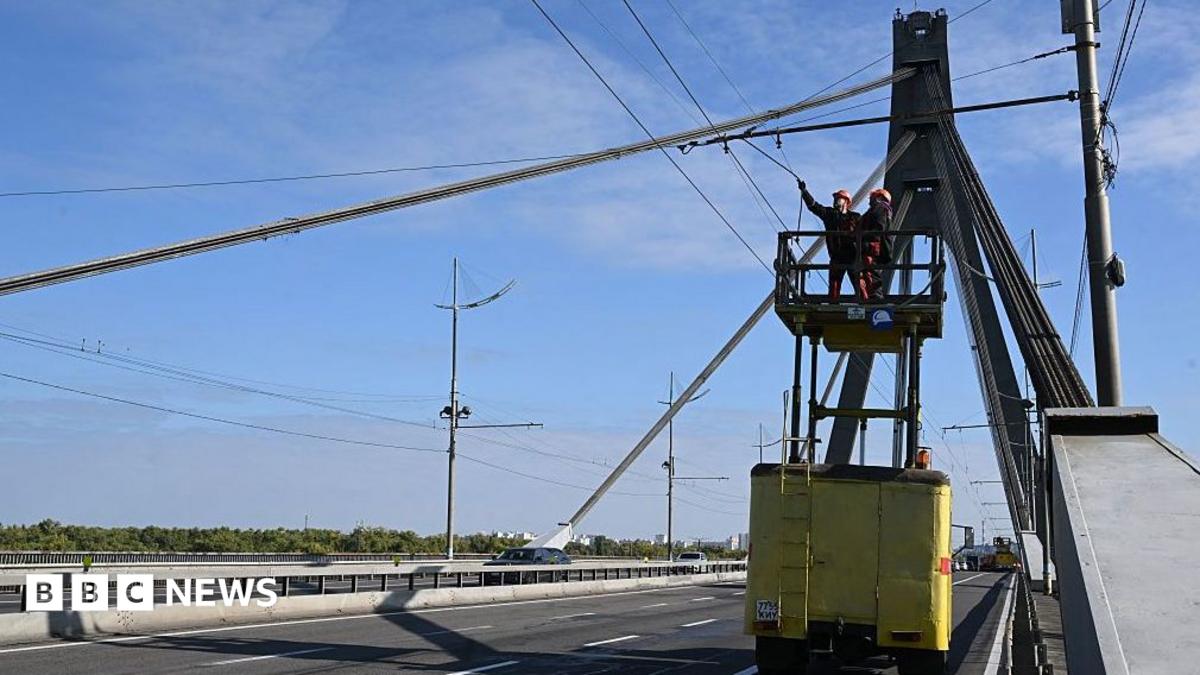
After the Pivdennyi Bridge was attacked, passengers described how dust from a blast wave entered their carriage through the ventilation system.
Ukrainian President Volodymyr Zelensky said Putin had decided that there were “no rules now” when attacking Ukraine.
In an interview with the Financial Times, he said: “The Russians have failed to occupy us. So now they are carrying out massive attacks and mass killings.”
He added: “They want to destroy our bridges… our data centres, the internet, mobile networks, hospitals, kindergartens, schools, universities – everything. They want people to flee their cities.”
Putin on Thursday insisted that Russia’s attacks on Ukrainian economic targets were a direct response to Ukraine’s strikes on Russia’s oil refineries and its ships in the Black Sea.
“Now from every direction we’re receiving calls ‘let’s stop’. But they started it,” Putin said after a wide-ranging speech at the Valdai foreign policy forum.
The Kremlin leader admitted Kyiv had “got some results” from its refinery attacks and Russia had lost about 1% of its GDP. Ukraine maintains it began attacking Russian oil infrastructure because it helps the Kremlin finance the war.
Russia has targeted Ukrainian energy infrastructure, ramping up attacks every winter since Putin launched a full-scale invasion in February 2022.
So if you are able to move your flight, especially to the morning, then you’d be protected from a cancellation.
As a strike is outside of an airline’s control, you sadly won’t get any compensation.
But the airline does have a duty of care, which means they must provide you with food and water as well as book you into a hotel if you are stuck overnight.
Four major airports are expected to be hit, as well as other airports across the countryCredit: Alamy
Flights expected to be impacted tomorrow include a 12:30pm Wizz Air service from Milan to London Luton, a 2pm easyJet flight from Milan to London Gatwick and a 1:20pm easyJet flight from Rome to London Gatwick.
Passengers are being advised to check their flight status with their airline and airport before travelling.
There will be another strike on October 16, lasting 24 hours – but this time it will be easyJet flight crew walking out.
ANOTHER UK airport is hiking its drop-off fees while making time limits shorter in a double blow for travellers.
The transport hub has confirmed that the cost of dropping passengers off at the departures terminal will go up by £3.
Another UK airport has increased its terminal drop-off feeCredit: GettyEast Midlands Airport says the hike has come as a result of “inflationary pressures”Credit: Alamy
East Midlands Airport has introduced the higher fee after Gatwick, Heathrow, Edinburgh, Birmingham, Bristol, Stansted, Leeds Bradford and more did the same earlier this year.
The Derby-based airport will charge £8 for a 10-minute stay at its rapid drop-off zone as of September 29 at 3pm.
Sign up for the Travel newsletter
Thank you!
The price is up by £3 for less time allowed, with drivers previously being charged £5 for a 15-minute stay.
Airport bosses confirmed that the hike was brought in as a result of “significant inflationary pressures”.
The extra money is also set to go towards paying for an ongoing £120million investment to improve the airport.
Prior to the recent increase, the fee remained unchanged for five years.
Last year, the airport swapped its barrier system and introduced automatic number plate recognition cameras to improve the flow of the drop-off system.
Along with the ANPR tracking, new drop-off fee and shorter drop-off window, customers have until midnight the day after their airport visit to pay the charge.
The fee can be paid online or via phone – and those who do not pay in time are slapped with a £100 fine.
While the fine is dropped to £60 if paid within 14 days, North West Leicestershire MP Amanda Hack has hit back at the scheme.
Arguing that the new drop-off rules is “setting people up to fail”, she said: “The announcement by East Midlands Airport of changes to its rapid drop-off pricing and a reduction in the permitted waiting time is frustrating.
“While I welcome the investment the airport has made over the last couple of years, the way the rapid drop-off is currently set up feels stacked against consumers.”
The MP added hat having less time to complete drop-offs and the responsibility to remember to pay will no doubt mean more users face hefty fines.
“I already deal with numerous complaints from constituents and people across the UK who have received a £100 parking penalty notice because they simply forgot to pay,” she told the BBC.
“Increasing the price while simultaneously reducing the time allowed is only likely to make this situation worse.”
Hack says that she has asked the airport to install machines that allow them to pay the drop-off fee there and then.
“My concern has always been that the current arrangement at East Midlands Airport appears to set people up to fail,” she added.
Responding to the criticism over the new fee, East Mindlands Airport said in a statement: “Airport drop-off areas help to manage on-site congestion, with charges managing what is the most polluting form of transport to the airport.
“The new fees are proportionate in the context of inflationary increases and brings East Midlands Airport in line with other UK airports.
“The airport is well served by frequent 24/7 bus services from Nottingham, Derby and Leicester and surrounding communities, with stops close to the terminal.”
THE UK Government has issued a new travel warning to Brits heading to Thailand following mass flooding.
According to the Foreign Office, severe floods believed to be the worst in Bangkok in over a decade are impacting parts of Thailand caused by heavy rainfall.
Floods in Thailand are causing flights to Bangkok to be delayed or cancelledCredit: Reuters
Impacted destinations include Bangkok, Nonthaburi, Pathum Thani and Samut Prakan.
On the FCDO website it states: “All 50 districts of Bangkok have been declared disaster-affected areas. Travel disruption, including road closures and flooding of low-lying areas, is possible.
Sign up for the Travel newsletter
Thank you!
“The Thai government has declared special public holidays on 28 and 29 September in Bangkok, Nonthaburi, Pathum Thani and Samut Prakan.
“Many government offices and services may be closed or operating with reduced capacity.
A local resident told the BBC she alerted the police to suspicious activity near the base early on Sunday.
The woman, who did not want to be named, said she initially called the Ministry of Defence (MoD) police but nobody answered, and then called 999. She said she had seen three parked vans and a group of men wearing masks.
The MoD declined to comment.
Several residents said they had been led from their homes in the early hours and evacuated to a leisure centre.
Julian Tudsbury said he was woken up at 07:00 by police banging on his door in Whelford, where 85 households were advised to evacuate.
“There were several police, three police cars in the drive, and they said you need to evacuate, there’s been a major incident, said he couldn’t elaborate,” he said.
He said another local had seen three vehicles making their way to the base and called the police “straight away”.
Today marks the end of an era. Mark Swed — the last full-time classical music critic at a major American newspaper — has retired. On Thursday, members of The Times editorial staff gathered to celebrate Swed, but the mood was somewhat somber. Although we were glad for our beloved colleague, this was not a happy milestone for journalism — or classical music.
Swed is the rarest of writers: a critic with deep empathy and encyclopedic knowledge who can turn the sonic details of an orchestra playing Mahler’s Seventh Symphony into an epic journey for readers. At a time when orchestra leaders struggle to find new audiences for the art form, Swed’s writing did the job for them.
And in an era when everybody is an expert on TikTok, Swed’s informed criticism was a life raft in a sea of slop. He told us why the music mattered — in its historical context, as it related to the modern landscape, and what it meant to him personally. He made us better listeners, and most importantly, he made us curious. After reading his take, we wanted to run out to a concert, an opera or a new music festival.
That this particular kind of writing — and of seeing and explaining the world to readers — is going away with Swed, is truly a tragedy. Thankfully he is leaving of his own accord, and will hopefully continue to write a monthly column, but his loss still stings.
Like many, I watched with sorrow in February as the Washington Post slashed its staff, including its classical music critic, Michael Andor Brodeur. That blow came a little less than a year after the New York Times shook up its culture desk and reassigned its classical music critic, Zachary Woolfe, to serve as the obituaries editor. (The paper is now actively searching for a new classical music critic.)
A number of staffers spoke at Swed’s retirement lunch, and deputy A1 editor John Penner was among them. In his touching speech, Penner noted that Swed was the last of his kind, adding, “with no full-time critic writing anywhere in any newspaper about classical music, American journalism will be poorer, and its readers less informed, inspired and enlightened.”
Penner continued, saying what all of us gathered in that conference room knew to be true, “Mark’s 30 years at The Times coincided with this city’s Golden Age of classical music — the era of Salonen and Dudamel and Disney Hall. L.A. has been the most important and exciting music capital in the country, if not the world. (Why else would New York be stealing Gustavo from us now?) And central to that excitement and importance has been Mark’s writing and criticism. For my money, even when there were many music critics writing for many publications, Mark set the standard for classical music criticism, while opening our ears to new and under-appreciated music.”
Hear, hear.
I’m Arts editor Jessica Gelt wishing Swed a happy retirement and humbly asking him to come back to us now and again. This is your arts and culture news for the week.
You’re reading Essential Arts
Our critics and reporters guide you through events and happenings in the SoCal arts scene. In your inbox every Friday.
By continuing, you agree to our Terms of Service, which include arbitration and a class action waiver. You agree that we and our third-party vendors may collect and use your information, including through cookies, pixels and similar technologies, for the purposes set forth in our Privacy Policy such as personalizing your experience and ads.
The week ahead: A curated calendar
FRIDAY
Demand To Be Heard Festival The Sunflower Project presents a celebration centering the voices of survivors of abuse beginning with a screening of the film “Break The Silence: The Gabby Petito Story,” followed by a panel discussion with the Gabby Petito Foundation. Saturday and Sunday is the Resident Artist Showcase, featuring the work of six survivor/artists. Also Saturday are three three arts workshops focusing on music, candle making and body movement, respectively. Film screening, 6 p.m. Friday; 6:30 p.m. Saturday-Sunday, Resident Artist Showcase. Wisteria Theater, 7061 Vineland Ave., North Hollywood. Arts workshops, 11:30 a.m., 1 and 2:30 p.m. Art Share L.A. 801 East 4th Place, downtown L.A. towardsthesun.org
Jonah Elijah: Ambiguously Free The first U.S. museum solo exhibition by the L.A.-based contemporary painter and mixed-media artist features work that blends personal memories with broader mythologies, religion and history to explore Black culture. On view through December 16. Xela Institute of Art, 2176 Pacific Avenue, Long Beach. xela.art
Joshua Redman Quartet: Words Fall Short The saxophonist performs a new program of music with his ensemble — pianist Paul Cornish, bassist Philip Norris and drummer Nazir Ebo, plus special guest Skylar Tang, an up-and-coming Bay Area-born trumpeter and composer. 7:30 p.m. The Wallis, 9390 N. Santa Monica Blvd., Beverly Hills.thewallis.org
Melrose Gallery Walk Gallery spaces, including Hostler Burrows, Lawson-Fenning, Meg Turner, Object, Seventh House, The Window and 22RE, open their doors to celebrate the local design community. Free and open to the public. 5-8 p.m. Hostler Burrows, 6819 Melrose Ave. hostlerburrows.com
SATURDAY
Midterms: This Will Hurt Someone Brightwork newmusic performs a program of contemporary works inspired by civic life and social change, including Ted Hearne’s “Bye Bye Huey,” Natalie Dietterich’s “Philosophy of Furniture,” Ian Dicke’s “Get Rich Quick” (with video), Matt Marks’ “This Will Hurt Someone,” Hesam Abedini’s “What Remains” and “Frederic Rzewsk’s “Coming Together” (with video). 8 p.m. Sierra Madre Playhouse, 87 W. Sierra Madre Blvd. sierramadreplayhouse.org
Aperghis Trilogy Long Beach Opera performs three works by experimental composer Georges Aperghis: “Le corps à corps”,” Les Sept Crimes de l’amour,” “Récitations.” Directed by James Darrah Black. Christopher Rountree conducts. 7:30 p.m. The Queen Mary, 1126 Queen’s Way, Long Beach. longbeachopera.org
The Horror Show An immersive deep dive into the movie genre presented in six themed galleries: Gothic, Psychological, Science, Slasher, Religion and Ghosts, with behind-the-scenes looks at a range of titles that includes everything from Oscar winners to drive-in classics. But first, you must pass through “The Hallway,” bwahahaha. 10 a.m.–6 p.m. Wednesday–Monday, on view through July 25, 2027. Academy Museum, 6067 Wilshire Blvd. academymuseum.org
Senon Williams: here now, now gone, gone here A solo exhibition of the artist’s work, in which he collects materials such as nails, slips of paper, fragments of language and industrial remnants, then uses assemblage to rearrange them and discover deeper meaning. Noon-6 p.m. Tuesday-Friday, on view through Nov. 15. The Philosophical Research Society, 3910 Los Feliz Blvd. prs.org
Promised Lands: California’s Unratified Treaties and Native Resilience Archival materials, contemporary objects, images and voices from local tribal communities relate the complex history of the state with its indigenous people. 10 a.m.-4 p.m. Tuesday-Friday, 10 a.m.-5 p.m. Saturday-Sunday. Autry Museum of the American West, 4700 Western Heritage Way, Griffith Park. theautry.org
Rodgers & Hammerstein’s The Sound of Music Sing-A-Long Actor and comedian Melissa Peterman hosts the annual screening of the 1965 Oscar winner for best picture complete with a costume contest and more than a few of your favorite songs. 7:30 p.m. Hollywood Bowl, 2301 N Highland Ave. hollywoodbowl.com
Daymé Arocena’s Alkemi The Grammy nominee and Juno Award–winner blends Afro-Cuban beats with neo-soul, jazz and contemporary Latin pop. 7:30 p.m. The Wallis, 9390 N. Santa Monica Blvd., Beverly Hills. thewallis.org
San Pedro Festival of the Arts The 20th annual event, presented by Los Angeles Choreographers & Dancers, features 20 dance companies demonstrating a variety of styles and cultural traditions. 1-4:30 p.m. Peck Park, Upper Green near the Community Center, 560 N. Western Ave. triartsp.com
Tokio Ueyama: The Hollows Between Mountains The first museum exhibition in California of the Little Tokyo-based Japanese artist (1889–1954) features his drawings, prints, photographs and paintings as well as artists he was associated with, including Diego Rivera, Tōyō Miyatake, Edward Weston and Henrietta Shore. 11 a.m.-6 p.m. Wednesday–Sunday, on view through Feb. 28, 2027. UC Irvine Langson Orange County Museum of Art, 3333 Avenue of the Arts, Costa Mesa. langson.uci.edu
SUNDAY
Grant Gershon conducts the Los Angeles Master Chorale at Walt Disney Hall, Nov. 16, 2025.
(David Butow/For the Times)
Brahms’ Requiem The Los Angeles Master Chorale, led by Grant Gershon, opens its silver anniversary season with a program that also includes Bruckner’s “Te Deum.” 7:30 p.m. Walt Disney Concert Hall, 111 S. Grand Ave., downtown L.A. lamasterchorale.org
WEDNESDAY
Rubén Blades & Roberto Delgado Big Band: Fotografías Tour The Panamanian salsa greats perform classic Afro-Cuban music flavored with rock, jazz and Latin American influences. Silvana Estrada opens. 8 p.m. Hollywood Bowl, 2301 N Highland Ave. hollywoodbowl.com
Menopause The Musical: 25th Anniversary Tour Four women at a lingerie sale share their experiences with “the change” through parody songs of pop hits. 7:30 p.m. Bank of America Performing Arts Center, 2100 E. Thousand Oaks Blvd., Thousand Oaks. bapacthousandoaks.com
The Broadway production of “The Outsiders.”
(Matthew Murphy)
The Outsiders The Tony Award-winning musical adaptation of S.E. Hinton’s coming-of age-novel set in 1960s Tulsa arrives with Ponyboy Curtis and his fellow greasers facing off against the upper-class Socs. Through Oct. 18. Hollywood Pantages Theatre, 6233 Hollywood Blvd., Hollywood. Oct. 20-Nov. 1. Segerstrom Center for the Arts, 600 Town Center Drive, Costa Mesa. tour.outsidersmusical.com
THURSDAY
Laura Benanti: Nobody Cares The Broadway star sings original songs and shares stories with her trademark wit in this one-woman show. Directed by Annie Tippe. 7:30 p.m. Thursday-Saturday. 2 p.m. Saturday-Sunday. The Wallis, 9390 N. Santa Monica Blvd., Beverly Hills.thewallis.org
The Dance and the Railroad Asian American theater collective Artists at Play and Latino Theater Company team up for a rare revival of an early David Henry Hwang play set during the 1867 Chinese railroad workers’ strike. Directed by Katherine Chou. Previews, 8 p.m. Thursday and Oct. 2. 8 p.m. Thursday-Saturdays, 2 p.m. Sundays, through Nov. 1. Los Angeles Theatre Center, 514 S. Spring Street, downtown L.A. latinotheaterco.org
Mahler’s Symphony No. 2: Resurrection Alexander Shelley conducts the Pacific Symphony with soprano Miah Persson, mezzo-soprano Dame Sarah Connolly and the Pacific Chorale. 8 p.m. Thursday-Oct. 2. Segerstrom Center for the Arts, 600 Town Center Drive, Costa Mesa. pacificsymphony.org
The SoCal scene
Gov. Gavin Newsom mingles with guests at the Lucas Museum of Narrative Art opening party.
(Carlin Stiehl/For The Times)
I spent my Saturday night at the Lucas Museum opening party where I got to stand in the lobby by the nifty elevators watching Gov. Gavin Newsom talk to Kim Kardashian. Later, I went to Skywalker Grill and saw U.S. Rep. Nancy Pelosi sitting at a table next to Leonardo DiCaprio and his entourage. It would be an understatement to say that the night was both bizarre and memorable.
Times theater critic Charles McNulty (the paper’s only remaining arts critic) has kept exceptionally busy this fall season. Late last week he wrote a review of “The Ford/Hill Project” At REDCAT, which transforms Senate testimony from Anita Hill and Christine Blasey Ford into a docu-play that explores the details of two of history’s most consequential Supreme Court confirmation hearings. “The restraint imposed by the production adds to its power. There’s no need to editorialize. The proceedings skewer themselves,” McNulty writes.
Huguette Caland in Stone Doorway, France, 1970.
(Huguette Caland Estate)
McNulty also drove to San Diego to see the Old Globe’s world-premiere musical adaptation of John Carney’s “Begin Again,” which explores the stories of two music-industry vets who embark on a grassroots recording project. The show features a score by rocker Pat Monahan and Train. “‘Heartwarming’ is a cliche of theater reviewing that I have studiously tried to avoid, but I’m tempted to use the word in my review of ‘Begin Again’,” McNulty writes.
McNulty penned one of his harshest reviews since last year’s take down of “Hamlet” after he went to Atwater Village Theatre to see Echo Theater Company’s world premiere production of “The Peterson Show,” by Janine Nabers. “Unfortunately, the production is hamstrung by fundamental problems in the writing, directing and acting, all pointing to a failure of control. Control of the story, control of the tone and control of the cast,” McNulty wrote of the show, which is about the impact of disgraced Bill Cosby-like star on his TV family.
Meanwhile contributor Tara Anne Dalbow wrote a beautiful story about the late, great artist Huguette Caland in advance of the largest U.S. retrospective of her work, opening Sunday at the Hammer Museum.
Ernest “Ernie” Wolfe III, owner of an eponymous gallery on Sawtelle, is dying of a traumatic brain injury and his family is looking for homes for his 15,000 pieces of African Art. Contributor Jane Horowitz writes about Wolfe‘s legacy and the (sometimes controversial) origins of his collection.
As one chapter closes with Swed’s retirement, a new one begins as we welcome our new entertainment and arts reporter, Laura Zornosa, who hit the ground running by writing three great arts stories: The first is about the private art collection of Armand Hammer (including Mary Cassatt’s “Summertime,”) coming up for auction at Sotheby’s; the second, covering opening day at the Lucas Museum where Zornosa interviewed guests on their thoughts about the place; and the third is a fun news brief about how Los Angeles Chamber Orchestra commissioned fanfares from half a dozen film composers, including John Williams and Ludwig Göransson, curated by “none other than Seth MacFarlane (best known as the creator and star of “Family Guy”).”
Enjoying this newsletter? Consider subscribing to the Los Angeles Times
Coy Middlebrook has been named the new artistic director of the Wallis.
(Jeff Lorch / The Wallis)
The Wallis Annenberg Center for the Performing Arts announced the appointment of longtime creative staffer Coy Middlebrook as its new artistic director. “Coy brings an extraordinary depth of knowledge about The Wallis and its audiences, along with deep relationships throughout the performing arts nationally and internationally. He understands both the artistic possibilities of this institution and the importance of its relationship to our community. I am excited to work with him as we build a future that is artistically ambitious, deeply connected and open to everyone,” said Wallis Executive Director and Chief Executive, Jean Davidson, in a news release.
Meanwhile Theatre Commons LA (TCLA), the nonprofit organization created and launched a year ago as part of a concerted effort by some of the city’s most prominent theater leaders to unify the city’s sprawling theater scene, has announced its first Executive Director, David E. Shane. Shane previously served as director of program services at the Alliance of Resident Theatres/New York where, according to a news release, “he set the strategic vision and goals for a robust suite of programs serving over 450 of New York’s nonprofit theaters.” He is tasked with doing the same thing in L.A. and we wish him the best of luck.
— Jessica Gelt
And last but not least
The Getty Museum has acquired the recently rediscovered 17th-century painting “Portrait of the Count-Duke of Olivares” by Spanish artist Diego Velázquez (1599-1660). It will be displayed in the museum’s East Pavilion this fall. According to ArtNews, “The acquisition means a Velázquez painting will for the first time be represented in the collection of a West Coast museum.”
HEATHROW Airport bosses have warned plans for a third runway could be delayed by four years due to major planning rows.
The Government’s ambition had been to see flights take off from a new runway in London by 2035.
Heathrow Airport bosses have warned plans for a third runway could be delayed by four yearsCredit: Alamy Stock Photo
But airport bosses are believed to have told ministers that the deadline is not possible and won’t be ready until 2039, reports The Times.
The initial target had been set by then-Chancellor Rachel Reeves in January 2025 – but it was considered an ambitious goal at the time.
Sign up for the Travel newsletter
Thank you!
Ms Reeves used a major speech on infrastructure to announce the Government would be supporting the third runway project as a means of growing the economy, and also said it would create 100,000 jobs.
But London Heathrow has said they aim to “secure planning permission” by 2029 and “once achieved, the runway will be open within a decade”.
Its bosses believe it could be delivered more quickly, but that this may require further regulatory red tape to be removed beyond reforms that the Government has already made to planning law.
A spokesperson said: “It’s right that ambitious targets were set; the sooner expansion begins, the sooner the whole UK will benefit. Our focus has always been to secure planning permission by 2029.
“Once achieved, the runway will be open within a decade – and the benefits of expansion can be felt from today. At least 108,000 new jobs and billions invested in supply chains in every part of the country.
“This is a national project, 100% privately financed, which will support growth today and secure the UK’s position in the global economy once the runway opens.”
Meanwhile, the Department for Transport said the timeline for the plans “has always been ambitious”.
Gary Smith, General Secretary of GMB, said: “This is a deliverable, workable and practical timeline for Heathrow expansion that unlocks over 100,000 jobs.
“We need to put an end to decades of talk and lost benefits for working people across the country and get cracking.”
Transport Secretary Heidi Alexander insisted the project could go ahead in a way that would not fall foul of climate change commitments.
The Climate Change Committee, the expert panel that advises the Government, said earlier this month the expansion of Heathrow airport cannot go ahead unless the aviation industry is forced to clean up its emissions.
The cost of international flights might have to increase by hundreds of pounds by 2050 to pay for measures that will help the airline sector cut its carbon pollution to zero overall, known as net zero, the committee said.
Ms Alexander told the Daily Telegraph the committee had set out “one view” but there was “more than one pathway to meeting our climate mate change obligations”.
“We do remain committed to net zero, and we’re updating some of our wider decarbonisation plans in transport as well,” she said.
“But the UK’s climate change targets are ultimately economy-wide targets, and we really need to look holistically at how emissions are reduced across the economy as a whole.”
She said an expanded Heathrow could be “the country’s front door” to tourists from China and India.
The Heathrow proposals involve building a 3,500-metre runway and requires a new M25 tunnel and bridges to be built 130 metres west of the existing motorway.
It is estimated to cost £33 billion, including £1.5 billion on re-routing the motorway which would also see nearby villages demolished.
The Arora plan had proposed a shorter, 2,800-metre runway that would not require diverting the M25.
The new 3,500 metre runway will be in the northwest of the airport, and will eventually welcome up to 276,000 new flights a year.
This takes the annual flights from 480,000 to 756,000, with as many as 30 new flight routes a day.
A Department for Transport spokesperson said: “There is currently no live planning application for a third runway, and we cannot comment on ongoing consultation processes or prejudice them in a way that will only delay progress.
“The timeline has always been ambitious.
“We’ll continue to work with promoters, including Heathrow, and all other stakeholders at pace to ensure the right framework is in place for which a planning application for a third runway could be considered.”