hundreds

New travel warning for hundreds of thousands of Brits set to fly this summer amid safety fears

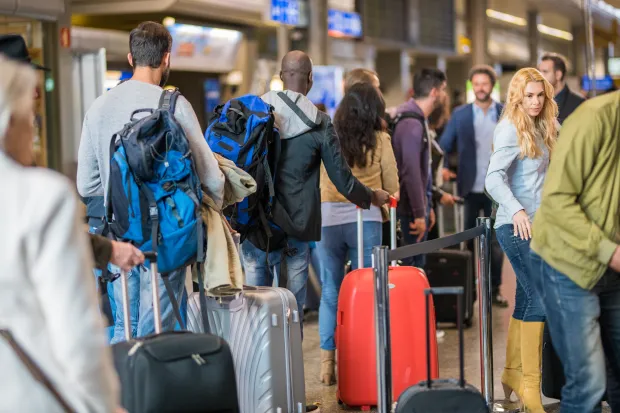
THE UK’s aviation watchdog has issued a new travel warning as thousands of families will jet off on their summer holidays this week.

The UK Civil Aviation Authority (CAA) has updated its travel warnings about common packing items that could delay your travels – or even see them cancelled.

Holidaymakers need to think twice about packing certain items this summer Credit: Getty
Anything with a lithium battery – like a vape, needs to be in hand luggage Credit: Getty

The CAA has warned that incidents involving lithium batteries are on the rise – so it’s important to pack certain gadgets correctly.

It’s well-known now that items like vapes and power banks have to go in hand luggage, but lots of other ones fall under the same category.

The CAA has named another eight items that you may not have realised are powered by lithium batteries.

These are:

COAST EFFECTIVE

Best UK family theme & waterparks with cheap stays from just £3pp a night


DIVE IN

Mega waterpark hotels with EVERYTHING you ever wanted & all inclusive from £189pp

  • Bluetooth speakers
  • Electric fans
  • Fitness and smartwatches
  • Digital cameras
  • Wireless headphones
  • Tablets
  • E-readers
  • Laptops

All of these items should be taken onboard as hand luggage.

This is so that if an incident occurs – like a power bank overheating – the cabin crew can react quickly.

The CAA said that on average, passengers carry four lithium battery devices each which works out as four million gadgets taking to the skies every day.

If any are packed incorrectly, it increases the likelihood of delays and or cancellations to flights.

For example back in May, an easyJet flight was forced to divert when a passenger informed crew during the flight that the portable charger was in the hold of the aircraft.

The flight had been heading to London Luton from Hurghada in Egypt but had to land in Rome as a ‘precaution’.

Other items like electric fans should go into the cabin – not in checked-in luggage Credit: Getty

In another case, a Hong Kong Airlines flight was forced to make an emergency landing after a fire broke out in one of the overhead bins.

Passengers suspected a power bank was behind the cause of the blaze, according to local media.

Giuseppe Capanna, product safety engineer at Electrical Safety First, had some further advice: “Before you head to the airport, give your devices a quick once-over. If a battery is bulging, swelling, changing shape, overheating or showing any other signs of damage, don’t take the risk.

“Instead, safely dispose of it as soon as possible at a local recycling centre with dedicated facilities for electronics and batteries and never put it in your general waste.

“Battery safety starts before you even step foot on an aircraft, starting with where you shop.

“When shopping for your summer getaway, the best way to protect yourself and those around you is to stick to a reputable high street retailer you know and trust to ensure your power bank or any other lithium-ion battery product you’re taking away with you is safe.”

Airlines have been cracking down on the use of power banks onboard this year, after one caught fire on an Air Busan flight in South Korea.

While passengers managed to evacuate, the plane was decommissioned due to the damage

Check out ALL the new rules you need to know before travelling this summer – including power banks.


Source link

Hundreds protest in Kyiv over Zelenskyy’s dismissal of defence minister | Russia-Ukraine war News

Mykhailo Fedorov has been credited with reforming defence procurement and tackling corruption.

Hundreds of people have gathered near the Ivan Franko National Theatre in central Kyiv to protest against the dismissal of Defence Minister Mykhailo Fedorov, calling on President Volodymyr Zelenskyy to reverse the decision.

According to local media reports, protests also took place in several other cities on Thursday, including Lviv, Odesa and Dnipro, while in Kyiv, protesters chanted “Shame!” and carried placards reading “The Russians are celebrating”.

Recommended Stories

list of 4 itemsend of list

The theatre is close to the presidential office, the site of last July’s so-called “cardboard protest”, when public pressure prompted Zelenskyy to reverse a widely criticised measure that stripped Ukraine’s anticorruption agencies of their independence.

The demonstrations came as Ukraine’s parliament prepared to vote on a new wartime government on Thursday following Fedorov’s departure as defence minister. The wider overhaul also saw Prime Minister Yulia Svyrydenko leave office.

The move forms part of Zelenskyy’s second cabinet reshuffle in a year. Lawmakers expect Minister of Internal Affairs Ihor Klymenko to replace Fedorov as defence minister. Parliament is also expected to approve the appointment of energy executive Serhii Koretskyi as prime minister, along with new defence and foreign ministers.

Writing on X, Fedorov said it had been “a great honour to serve the Ukrainian people” as the minister of defence, before outlining what he described as the ministry’s key achievements during his tenure, including disabling “Starlink access for Russian forces” and launching programmes to expand Ukraine’s domestic drone production amid the ongoing war with Moscow.

The 35-year-old technology specialist, who previously served as Ukraine’s first minister for digital transformation, has been credited with streamlining bureaucracy and introducing a more data-driven approach to the war against Russia.

Supporters say his efforts to reform defence procurement and tackle corruption won him enemies within parts of the political and military establishment. However, critics say he failed to deliver quickly enough on promises to overhaul military recruitment.

Speaking to reporters on Wednesday, Zelenskyy said he wanted the Ministry of Defence and military leadership to work with greater unity, appearing to acknowledge reports of tensions between Fedorov and other officials.

Source link

One dead, hundreds rescued in devastating Missouri flooding

July 11 (UPI) — One person was found dead and hundreds evacuated in Missouri after an intense day of flash flooding across the state, authorities said Saturday.

More than 350 people were rescued in Iron, Reynolds and Crawford counties on Friday as floodwaters rapidly took over the area.

Officials said 250 of those were staff and children at Camp Taum Sauk, all of whom were safely evacuated. Another 100 were water rescues.

“It was very harrowing,” Jennifer Box, mother of of two you boys at the camp, told The New York Times. “We knew they were safe, but we didn’t know how to get to them, and that’s kind of your worst nightmare.”

One Crawford County woman, Faith Gregory, was found dead a mile downstream from her home in Huzzah Creek, officials said.

Authorities said Gregory was swept away after part of her home collapsed in the floodwaters.

“It’s definitely not the outcome we were hoping for, but it’s a tragic reminder of how strong Mother Nature can be and how forceful it can be,” Missouri State Highway Patrol Sergeant Eddie Young told FOX Weather.

The region was battered by more than 12 inches of rain, leaving many area residents remained strained throughout Saturday.

“But they’re OK,” spokeswoman Kate Moore, of Missouri Region C, told ABC News. “They’re just stranded because the roads are washed away. We have a lot of damage — the trees, buildings, a lot of things have gone and ripped the roads away.”

Olympic canoeist David Hearn departs the Moultrie Courthouse after pleading not guilty to damaging the Lincoln Memorial Reflecting Pool on Thursday. Hearn was indicted on July 2 on one count of destruction of property of more than $1,000 for allegedly damaging the Reflecting Pool, carrying a maximum penalty of 10 years in prison if convicted. Photo by Bonnie Cash/UPI | License Photo

Source link

Hundreds of UK Ryanair and easyJet flights hit by air traffic control chaos

Hundreds of easyJet and Ryanair flights have been hit by delays today following an issue at the National Air Traffic Services, with 30,000 Ryanair passengers said to be impacted

Hundreds of UK flights have been delayed due to an issue at the UK’s air traffic control (ATC).

There was widespread disruption across UK airspace this morning after an issue at the Met Office meant the National Air Traffic Services (NATS) didn’t receive weather information.

As a result, Ryanair saw 155 of its flights delayed, impacting almost 30,000 passengers, with delays of up to three hours. EasyJet was hit harder, with 253 flights delayed – 13% of its total number of planned departures today.

“A Met Office technical issue overnight meant that we were not receiving vital weather information into our NATS systems this morning. Accurate weather information is vital for air traffic controllers and pilots in managing flights safely,” a spokesperson for NATs said

“As a result, some air traffic restrictions were put in place early this morning and these have now been removed. We continue to work with the Met Office, who are working to fully resolve the problem.”

The Met Office has been contacted for comment.

“Nearly three years after NATS catastrophic 2023 system meltdown, UK passengers are once again being delayed because NATS’ systems have failed,” Ryanair Chief Operations Officer, Neal McMahon, said.

“Today’s outage delayed 155 Ryanair flights and disrupted almost 30,000 Ryanair passengers. Families travelling on holiday, people travelling for work and thousands of visitors to the UK have once again paid the price for NATS’ failure.”

Back in August 2023, a technical problem experienced by NATS saw very significant delays and cancellations across the UK. An outage resulted in hundreds of flights being delayed or canceled. In some cases, passengers waited several days for alternative flights. More than 700,000 passengers suffered cancellations and delays.

An investigation into the incident found that an engineer was unable to correct the fault from home, and so arrived at work more than three hours after the incident began in a bid to fix it.

A single flight from Los Angeles to Paris triggered the failure at 8.30am BST on Monday 28 August, the Civil Aviation Authority previously said. The air traffic control system had been confused by a duplicate code – DVL – which represents both Deauville in France and Devil’s Lake in North Dakota, USA.

Despite the engineer’s best efforts to resolve the problem on site, he was unable to do so. The system was eventually restored at 2.30pm after its manufacturer, Frequentis Comsoft, found the fault.

Following an independent review, Jeff Halliwell, Chair of the Independent Review Panel, said: “The incident on 28 August 2023 represented a major failure on the part of the air traffic control system, which caused considerable distress to over 700,000 aviation passengers, and resulted in substantial costs to airlines and airports. Our report sets out a number of recommendations aimed at improving NATS’ operations and, even more importantly, ways in which the aviation sector as a whole should work together more closely to ensure that, if something like this does ever happen again, passengers are better looked after.”

Rob Bishton, Chief Executive of the UK Civil Aviation Authority, added: “This final report gets to the heart of what went wrong in August 2023 and sets out a number of recommendations that are sector-wide in their scope. It is vital that we learn the lessons from any major incident such as this. I would personally like to thank the Panel for all of their efforts in producing a thorough and wide-ranging report, that will help improve the UK’s aviation system for the future.”

Source link

The clever SIM hack saving Brits hundreds on holiday data – plus a 20% discount for the summer of football

United States fans celebrate a goal by Malik Tillman at Seattle Stadium during the FIFA World Cup 2026 Round of 16 match against Belgium.
Credit: Getty

STILL paying daily roaming fees abroad? Stop: a simple, budget-friendly tech trick is officially killing off old-school data charges this summer. 

If you are jetting off abroad, the dread of returning home to a monster phone bill is all too real. But travel-savvy tourists are sidestepping airport SIM card kiosks entirely and using a game-changing digital alternative: the travel eSIM. 

Mexico v England: Round Of 16 - FIFA World Cup 2026
Fans heading out to watch England in the final stages of the World Cup could benefit from a data plan Credit: Getty

Get 20% off your first purchase of an Ubigi Football Fever data plan using code THESUNFOOT20

Leading the charge is Ubigi, a pioneer in the travel eSIM space since 2018. It offers affordable travel eSIM data plans, providing instant mobile internet access across more than 200 destinations worldwide. 

Best of all, Sun readers can score an exclusive discount to keep connected for less. 

What is an eSIM and how does it stop roaming fees?

An eSIM is a digital SIM on your smartphone, with no need for a physical card.

Instead of swapping physical plastic cards or getting hit with eye-watering daily roaming fees from your service provider, you simply download a digital data plan. 

With Ubigi, you will get a data-only travel eSIM, meaning you’ll get an eSIM dedicated strictly to high-speed mobile internet rather than phone calls or texts. 

This allows you to keep costs incredibly low while retaining the freedom to use WhatsApp, FaceTime, Google Maps and any social media platforms exactly as you would at home.

Catching ‘Football Fever’? Unlimited USA and Canada data 

Heading across the Atlantic for the final matches of the World Cup? Ubigi has launched specialised Football Fever data plans, offering unrestricted, unlimited data across the USA and Canada. 

Whether you need a quick fix or a longer stay, it has you covered with unrestricted tethering allowed so you can share your connection with other devices. Choose a plan that suits your travel needs:  

  • 7-Day USA + Canada Unlimited Football Fever Plan 
  • 15-Day USA + Canada Unlimited Football Fever Plan 
  • 30-Day USA + Canada Unlimited Football Fever Plan 

Don’t forget to use the code THESUNFOOT20 to slice 20% off these specific plans!

Why Ubigi beats competitors

Young man relaxing in the swimming pool on inflatable pool raft and using mobile phone
Having reliable 4G and 5G coverage when abroad can provide extra peace of mind Credit: Getty

Unlike many eSIM providers, Ubigi is a ‘Full MVNO’ backed by telecom veteran Transatel (part of the giant NTT Group).

This means it doesn’t just resell other networks; it has wide regional partnerships, delivering top-tier, reliable 4G and 5G coverage while reducing any potential dead zones. 

Travel-ready and stress-free

Setting up is beautifully simple, and you can buy your plan up to six months in advance to get organised early. 

Thanks to Smart Start functionality, your plan’s countdown duration doesn’t begin when you buy it; it only triggers the moment you land, and your phone detects the local network. 

You install the QR code once, and you can top up on the go via the Ubigi app seamlessly. The app even supports biometric login (FaceID/fingerprint) for rapid, secure access while you travel.

Ready to dodge the data traps on your next getaway? 

Activate your Ubigi Travel eSIM free trial or grab your 20% off Football Fever plan here!

Source link

Hundreds Return to Kumalia After Terrorists Ban Farming 

“I am temporarily relocating to Kumalia.”

When Kaka Ali said those words over the phone on June 8, I nearly asked him to repeat himself. I had been speaking to him about farming and survival in northern Borno for nearly two years. Kumalia was where he was born, but it was also a place that most people had long stopped calling home.

The community is located within Monguno Local Government Area (LGA) in Borno State, northeastern Nigeria. The Boko Haram insurgency had emptied it in 2016, forcing residents to flee to Monguno town and Maiduguri, the state capital. The government never formally reopened the community. In the years that followed, its name surfaced mostly in conversations about what the insurgency had taken.

“Why would you go back there?” I asked. 

“The negotiations did not go through,” Kaka replied. 

I did not fully understand what he meant until weeks later.  

On June 21, I reached him again. I learnt that he had returned to Monguno to attend the funerals of four friends who were killed the previous day by suspected Islamic State West Africa Province (ISWAP) terrorists while working on a farm near Kartari, a remote settlement close to Cross Kauwa town in Kukawa LGA, on the shores of Lake Chad. Twelve other farmers were also killed in the incident. 

The men had travelled to Kartari from different parts of northern Borno, drawn by the search for land to cultivate after farming had been disrupted closer to home. That same day, in Zabarmari, a farming community in Jere LGA, another 11 farmers were reportedly killed. By then, Kaka’s explanation about Kumalia finally made sense.

The warning had come months earlier at the onset of cultivation in February, when farmers across parts of northern Borno began receiving warnings from ISWAP terrorists not to farm this season. The message spread among returning farmers and community leaders through word of mouth.

“They approached farmers who had gone to Kartari and told them we must not cultivate this year,” said Musa Abubakar, a farmer from Cross Kauwa. “They also informed community leaders in villages close to them, and those leaders passed the message to us in other towns,” he said. 

According to Musa, farmers who wished to cultivate were instructed to relocate with their families to terror-controlled territories, locally known as Daula, and farm there instead. Many initially assumed it was another extortion attempt because for years, cultivating in parts of northern Borno had meant paying terror groups for access to land. In 2024, HumAngle documented how farmers in the region paid millions of naira in levies and so-called farming permits to ISWAP. This season, farmers pooled their money together, some contributing at least ₦50,000 each, hoping to negotiate their way back to their fields. However, the effort failed, and the warning held.

So they began looking elsewhere. Some moved toward the Lake Chad region. Others returned to abandoned communities. More than 100 farmers from Monguno, according to Kaka, relocated to Kumalia, where they erected makeshift shelters from sticks and dry grass to plant their crops. They plan to stay until the harvest season in November or December.

The women were not left behind either. 

“My sister is there,” Kaka, the 30-year-old father of two, said. “Many women went with their children. The older ones trekked with their parents. The younger ones are carried on their backs or transported in push carts.” 

Kaka’s older sister, Yabusam Ali, travelled with one of her children and left the others with their grandmother in Monguno. Other women made similar calculations, weighing which children could endure the walk and which would be safer left behind. Yabusam said conditions remain basic but manageable. 

“There is drinkable water there,” she told HumAngle. 

For now, that is enough. Kumalia has no schools, no health facilities, and no visible state presence. It is a settlement held together by necessity. Over the coming months, the community will once again have residents, not because it is safe, but because it has become the least dangerous option left.

Two people on a motorbike carrying jugs and a sack across a dry rural landscape, one wears a straw hat.
File: A family riding to their farm on a motorcycle in rural Gombe in 2024. Photo: Al’amin Umar/HumAngle.

Across Borno, the farming ban, enforced through violence and the threat of it, is reshaping how rural families survive. Some have abandoned cultivation entirely. Others have confined themselves to plots within sight of military positions. A growing number are returning to communities the state had given up on, betting that the promise of a harvest is worth living beyond its protection. Together, these choices are accumulating into something larger than disrupted planting seasons: a food security crisis taking shape incrementally, in the daily calculations of people who can no longer be certain what the harvest will bring, or whether there will be one at all.

The consequences extend far beyond the communities where cultivation has been disrupted. Agriculture remains one of Nigeria’s largest employers and a critical source of food for millions of households. The World Bank estimates that nearly four in every five rural households in Nigeria depend on farming, while livestock rearing is especially common across the country’s northern regions. When insecurity forces farmers off their land, harvests decline, market supplies tighten, and food prices rise.

The Famine Early Warning Systems Network (FEWS NET), a food security monitoring and forecasting initiative, estimates that between 21 and 22 million people across northern Nigeria will require humanitarian assistance during the June-to-August lean season, driven by escalating conflict, lower-than-expected household food production, and constrained access to food. The Integrated Food Security Phase Classification (IPC) similarly projects that more than six million children across northern Nigeria will experience acute malnutrition this year, with conflict, displacement, and reduced access to food among the principal drivers.

Kaka had already made these calculations. “Are you not afraid of attack from the terrorists, or of being mistaken for one by troops?” I asked him. “We will die even if we don’t go,” he replied. “So, it is all the same.”

Flags on the farm

Just as Kaka mentioned, several farmers in northern and central Borno say the people who first heard the warnings were often those who had gone ahead of the rains to clear their fields. 

In Monguno, Koso Abubakar said farmers preparing their land were approached and warned against cultivation. They returned to town carrying the news, and from there, the message spread from household to household. In Cross Kauwa, a farming and fishing community on the shores of Lake Chad, the warning reached those working near Kartari, a remote settlement under Kukawa LGA. Community leaders received it and relayed it to surrounding towns.

In Lassa, a farming community in Askira-Uba LGA in southern Borno, it arrived with violence. Andrew Adamu, a farmer there, said suspected terrorists attacked and flogged women they found working on their fields at the beginning of the season. “They said nobody should farm there,” he said. “They [the women] said they had mounted their flags on those lands.” 

The flags, a territorial marker used by terror groups across the region to signal control, were understood immediately. Few people in Lassa are now willing to venture beyond the land immediately surrounding the town.

Musa, a farmer in Cross Kauwa, said the warning came with an additional condition in the northern Borno community. He said that farmers willing to cultivate were instructed to relocate permanently with their families to terror-controlled territories and continue to farm there while paying levies instead. The requirement to relocate permanently was new. The levies were not. But this time around, levy negotiations failed in some places. 

Illustration of two farmers offering food to armed militants in a grassy field, highlighting a tense exchange.
Farmers handing over money to armed and masked terrorists in a rural setting. Illustration: Akila Jibrin/HumAngle. 

However, in parts of southern Monguno, some farmers were reportedly permitted to cultivate after paying ₦50,000 each. The inconsistency stirred speculation that the restrictions reflected internal disagreements among ISWAP commanders rather than a unified policy. 

“It was said that two Amirs controlling two farming villages had a dispute over farming fees,” Kaka explained. “The Amir controlling where we farm said he would not allow anyone to farm this season. The other Amir said farmers were welcome to cultivate in his territory after paying this year’s levy.”

HumAngle could not independently verify the claim.

When negotiations collapsed, the consequences began to accumulate. In Lassa, Andrew said, women were beaten while working on their farms. In Auno, Konduga LGA, a 55-year-old farmer was attacked and killed while working on his land earlier in February, according to residents. News of his death, Aja Bukar, another farmer, said, spread quickly through surrounding communities, confirming what many had hoped was merely a threat. 

Then, on June 20, 15 farmers were killed near Kartari while working on their fields. Bashir Suleiman, a farmer from Doron Baga, said the victims included four farmers from Monguno, six from Kukawa town, three from Baga, and two from Cross Kauwa. 

In Cross Kauwa, Musa said most farmers have stayed away from their fields since. The few still cultivating have been permitted by the military to plant low-growing crops, such as beans and groundnuts, within a fixed distance of the community’s defensive trench. Beyond that line, he said, most no longer believe the harvest is worth the risk.

The return to Kumalia

For the first time in nearly a decade, Kumalia has residents again. Not many, and not enough to resemble the farming community it once was before the insurgency emptied it in 2016, but enough to bring movement back to a place which has long given up — children’s voices have returned. Smoke rises from cooking fires in the morning. The fields are being planted. And temporary shelters made from sticks, ropes, and dry grass stand across parts of the settlement. 

Getting there, however, is not easy. According to Modu Baluye, a farmer who also relocated to Kumalia, reaching the settlement takes five hours of walking over terrain most vehicles cannot cross. “We travel by foot,” he said. “There is no means of transportation except push carts.” The shelters, he said, are simple: stick frames with dry grass roofing, which offers little protection from rain or wind, but they are enough to house families for the months between planting and harvest.

A group of people working together in a field, with tools in hand, surrounded by mountains and trees in the background.
A family working together in their field. Illustration: Akila Jibrin/HumAngle.

For years, displacement pushed families out of places like Kumalia and into towns where security forces could better protect them. Now, insecurity around farming is pushing some of those same families back, not into safety but into a different kind of exposure: too far from the state to be protected, yet close enough to armed groups to be noticed.

Communities across northeastern Nigeria have learned, often through grief, that living or farming in remote and ungoverned territories can attract a different kind of violence during military operations. Aerial surveillance, in vast terrains where terror groups move through civilian spaces, collect levies, and use local markets, must be able to distinguish between farmers and fighters. In places like Kumalia, unrecognised by the government, absent from any official resettlement record, populated by people living in makeshift shelters on cultivated open land, that distinction is not guaranteed.

In April 2026, reports showed that more than 30 civilians were killed when a Nigerian Air Force strike hit a village market in Jilli, a remote settlement between Gubio LGA in Borno State and Geidam LGA in Yobe State. Military authorities described it as an active terrorist enclave. Borno State Governor Babagana Zulum later acknowledged that the area’s market had been officially closed due to terrorist activity, yet civilians were among the dead. It was not the first such incident. In 2017, a military aircraft bombed a displaced persons camp in Rann, Kala-Balge LGA, killing more than 100 people including aid workers. And in 2024, HumAngle documented cases in which fishermen around Lake Chad were reportedly misidentified during military operations.

Farmers in Kumalia are aware of this history. It sits alongside the warnings from ISWAP, the distance from town, and the inadequacy of their shelters. It is part of what they weighed before they went.

The price of survival

Every morning before sunrise, Esther Danjuma sets up her stall on the roadside outside the Divisional Council Church (DCC) Internally Displaced Persons’ camp in Shuwari, Maiduguri. She heats cooking oil, prepares her bean paste, and waits for the first customers. By the time most people in Maiduguri are awake, she is already working. 

Woman in pink dress cooking by an outdoor stove, placing food into a bowl, with tents and cooking supplies in the background.
Esther Danjuma fries kosai every morning outside her settlement in Maiduguri. The farming restrictions this season led her to switch professions. Photo: Al’amin Umar/HumAngle.

The 26-year-old was displaced from Amuda in Gwoza LGA years ago. Until recently, she measured time by farming seasons, not calendar months. Before the warning reached Chabbal, a farming community in Magumeri LGA where she and thousands of others from the DCC displacement camp cultivate each season, she grew sorghum, sesame, and groundnuts. Last year, she harvested five bags each of sorghum and sesame and three bags of groundnuts. This year, she planted nothing.

“I never thought I would sell kosai,” she told HumAngle. She earns at least ₦3,000 daily. This helps her care for herself and her elderly grandmother at the camp, she said.

A few shelters away from Esther lives Andrawus Yakubu. While Esther replaced farming with a small business, Andrawus has replaced it with whatever work presents itself each day. On some days, he works at construction sites. On other days, he digs pits, cuts logs, or takes on manual labour wherever opportunities arise. The work is irregular and physically demanding, but Andrawus says he cannot afford to be selective. “I will do whatever legal thing that my strength can do,” the father of nine told HumAngle.

For years, Andrawus supplemented his household income through farming in Limanti, a rural community in Konduga LGA. Like many displaced residents of the DCC Shuwari camp, he relied on the farming season to feed his family and reduce their dependence on the market. Last season, he cultivated four hectares of land, harvesting five bags of millet, 12 bags of groundnuts, and eight bags of beans. This season, however, the farming restrictions have forced him to abandon farming. 

Workers carry large sacks at a busy outdoor market.
Andrawus has replaced farming with whatever work presents itself each day. Photo: Al’amin Umar/HumAngle.

Others have chosen to leave Borno altogether. In Auno, Aja Bukar said the killing of a farmer earlier this year convinced many residents that remaining in the area was no longer worth the risk. Some households, including his, have since relocated to Damaturu in neighbouring Yobe State, hoping to find safer opportunities elsewhere.

These different responses – the roadside stall, the day labour, and relocation to another state – all lead back to the same question: what can replace a harvest, if anything?

Agriculture remains the backbone of rural livelihoods across Borno and the wider North East. In Borno, farming is not only an occupation but also a source of sustenance for families; it is how they feed themselves, pay school fees, buy medicine, and prepare for the long dry season. Yet years of conflict have steadily eroded that foundation, limiting access to farmland, disrupting markets, and deepening food insecurity.

When farmers abandon their fields, the consequences ripple far beyond the households directly affected: Harvests decline, local markets receive fewer supplies, and children and other vulnerable groups bear the greatest nutritional burden. The effects are felt not only in the villages where cultivation stops, but across communities that rely on those harvests for food and trade.

A child sorts grains at an outdoor market, surrounded by bags and piles of produce. People stand nearby, and colorful fabrics hang in the background.
A boy sits, selling grain at the Baga Road grain market in Maiduguri. Humanitarian organisations project that food prices may skyrocket, driving food insecurity across Borno and the wider northern region due to increasing restrictions on farming and attacks on farmers. Photo: Al’amin Umar/HumAngle.

The region has been here before. In 2023, HumAngle documented how repeated attacks on farming communities forced many residents to abandon cultivated fields, leaving crops worth millions of naira to wither or be destroyed. A year later, the trend persisted, contributing to worsening food insecurity and malnutrition among vulnerable households, particularly children.

What is unfolding this season is not unique to Borno. Across the North West and North Central, terror groups have used similar tactics to control access to rural farmland, taxing farmers, threatening communities, and displacing those who resist. In Zamfara, HumAngle reported in June that farmers were displaced despite paying millions in levies. Another report the same month showed that 17 farmers were killed in Maradun while working their fields. In 2024, Reuters reported from Katsina that attacks on farmers were driving up food prices. According to SBM Intelligence, a Lagos-based consultancy, 1,356 farmers have been killed across Nigeria since 2020.

The scale of what is at stake is significant. UNICEF estimates that around three million children may require treatment for severe wasting in 2026, with conflict-affected northeastern states carrying a disproportionate share.  

Across Borno, people are making decisions whose consequences they cannot yet fully see.

Source link

Airlines are leaving hundreds of passengers behind in passport chaos

THERE’S been a new plea to suspend the new passport checks this summer amid fears of even more chaos this summer.

So far, some airlines have had to leave passengers behind and there are already queues of up to six hours at border control.

A woman's hand points to the "EES Entry/Exit System" screen, which features the European Union flag.
Airlines and airports have asked for EES checks to be suspended for the summer Credit: Alamy
Collage of travel items including a plane, sunscreen, passport, suitcase, and plane tickets, advertising The Sun's travel Instagram account.

The situation is only predicted to get worse with summer holidays on the horizon when millions of Brits including lots of families will be heading abroad.

Passenger numbers are predicted to increase by an extra 40million across Europe in July and August.

As a result, a number of airlines and airports have submitted a letter the president of the European Commission asking to suspend EES checks.

A number of industry groups have said they’ve reached a “critical point”.

STAR BUY

Luxury holiday spots that are dirt cheap – with 5-star hotels for 3-star prices


BOOK IT

UK fairytale villages that look like children’s picture books with stays from £20

They continued: “Passengers have already been forced to queue for extended periods outside terminal buildings and on exposed aprons because border control facilities cannot process arrivals quickly enough.

“Airlines face half-empty planes at gate closing time, while passengers are stuck in border control queues.”

The groups have asked the authority to allow airports to “completely suspend” the EES when “passenger volumes exceed the operational capacity of border control facilities”.

They’ve said that “immediate intervention” is needed before the situation “deteriorates further during the peak summer travel season”.

There has also been a call for “flexibility’ in September as well.

The Entry Exit System (EES) involves people from third-party countries such as the UK having their biometrics taken to enter the Schengen Area.

Crowds of passengers queuing at Faro Airport security in Portugal.
There are already queues of up to six hours for Brits Credit: Alamy

The progressive rollout began in October 2025 and has caused a number of problems.

Last month, 150 Ryanair passengers missed their flight from Toulouse to the UK due to queues at border control.

The situation was described as “pure chaos” in queues of up to 500 people.

In another case, passengers returning home from Athens were left stranded when a Ryanair flight left without them.

Up to 50 passengers who were still in the airport queuing through passport control missed their flight to London Luton.

Back in March and outside of the peak travel period, Travel Reporter Alice Penwill queued for three hours to get out of Lanzarote Airport.


Source link

Major UK music festival will be axed next month after attracting hundreds of thousands of fans over 18 years

AN ICONIC music festival will host its final line-up this summer – after more than 18 years of hosting performers.

This marks a blow for residents as the county’s biggest festival comes to an end.

A band performing live on stage at Splendour Festival.
Busted have been one of the big-name acts that have performed at the festival Credit: WireImage
A large crowd of people with their hands in the air at an outdoor music festival.
The summer staple regularly drew in crowds of up to 25,000 Credit: Alamy

Nottingham’s Splendour festival will run for a final weekend next month, as the festival is set to be closed permanently.

The decision comes after organisers said they faced challenges within the current festival market, and have struggled to manage “the cost of staging events”.

Launched in 2008, Nottinghamshire’s biggest festival hosted a number of well-known performers throughout its run, including the likes of Noel Gallagher and Calvin Harris.

It regularly drew in crowds of up to 25,000, and had expanded into a two-day event in 2022.

BACK WITH A BANG

X Factor winner in epic music comeback 17 YEARS after winning hit ITV show


MEDICAL SCARE

Hall & Oates rocker, 79, undergoes emergency kidney transplant

Now, the final show will take place from July 18 to 19 in Wollaton Park, with The Wombats, Primal Scream and Snow Patrol performing as headline acts.

George Akins, DHP Family managing director, said: “Like many independent festivals, Splendour has had to navigate a very different landscape in recent years, with the cost of staging events rising sharply at the same time as household budgets have come under pressure and the festival market has become much more crowded.

“After a lot of careful thought, we feel the right thing to do is to make this year a proper celebration of everything Splendour has meant to Nottingham and give it the send-off it deserves.”

Local artists, including Nottingham act Jake Bugg, had often used Splendour as a springboard for their careers.

To mark the final edition, organisers launched a two-for-one ticket offer on general admission day tickets.

Akins added: “Thanks to everyone for your loyalty and support over the years, we couldn’t have done it without you.”

Source link

Plan To Evacuate Hundreds Of Ships Still Stranded From Strait Of Hormuz Closure Is Coalescing

Oman and the U.N. International Maritime Organization (IMO) are sharpening up their plan to evacuate hundreds of ships still stuck in the Persian Gulf since Iran closed the Strait of Hormuz after being attacked by the U.S. and Israel on Feb. 28. The move comes as shipping traffic in this strategic chokepoint is increasing amid tense ongoing peace negotiations between the U.S. and Iran. However, there is still a very long way to go and many challenges, including the possible presence of mines, to overcome before transits reach pre-war levels.

“The Sultanate of Oman based on its responsibilities toward the Strait of Hormuz, and its importance to the global economy, and in accordance to its continued commitment to the international law and the law of the sea to ensure freedom of navigation in the strait without imposing any tolls, in line with the outcomes and efforts reached by the United States and Islamic Republic of Iran…has worked in coordination with the International Maritime Organization (IMO) to provide vessels with the option of a temporary maritime corridor defined by the coordinates announced by IMO and Omani authorities. Ships willing to transit must coordinate with IMO,” Oman’s Maritime Security Center stated Wednesday on X.

“This large-scale operation will be carried out in close cooperation with Iran, Oman, all other coastal States in the region, the United States and the maritime industry,” according to the IMO.

IMO on Wednesday issued additional guidance to what it is calling an “evacuation” plan and noted that there are two routes for ships transiting the Strait. The northern route, close to the Iranian shoreline, is controlled by the Islamic Republic of Iran while the southern route, along the Oman coastline, is coordinated with U.S. authorities.

The southern route is clear of mines and is the preferred route, according to the Joint Maritime Information Center.

Regardless of which route ships prefer, IMO is cautioning them to “remain in their current position and await further instructions.”

Vessels have to wait to “allow safe sequencing, avoid congestion, and mitigate risks related to mines and degraded navigation conditions,” IMO added. “Movements will only begin once vessels are contacted through the coordinated mechanism involving IMO, UKMTO, and MICA Center, followed by coastal State coordination.”

As for current mine clearance operations, CENTCOM would not offer details about how they are being carried out.

“I won’t go into specifics for operational security reasons,” Navy Capt. Tim Hawkins, CENTCOM’s spokesman, told us Wednesday morning. “We’ve been at this for a number of weeks and we’re making progress, as demonstrated by the safe passage currently available to commercial vessels and enabling traffic flow to pick up.”

All this comes after tensions surrounding the Strait erupted again last week, with the Islamic Revolutionary Guard Corps saying it was being closed again after Israeli attacks on Lebanon and CENTCOM maintaining it was open.

Trump on Wednesday took to Truth Social to dispel what he claims are inaccurate media accounts about the Strait.

“Iran has informed the U.S. that, despite troublemaking Fake News reporting to the contrary, there are ‘NO TOLLS, NO INSURANCE COSTS, & NO OTHER CHARGES OF ANY KIND BEING SOUGHT OR RECEIVED BY IRAN ON SHIPS TRAVELING THE STRAIT OF HORMUZ,’” Trump proclaimed. “If this is false information, negotiations would end, immediately!”

TWZ cannot independently confirm any of these statements; however, ship tracking organizations on Wednesday say commercial vessels have been transiting the Strait at increasing rates, though far from what they were before the war.

“Vessel activity through the Strait of Hormuz has rebounded sharply across two consecutive weekends, pointing to a clear shift in traffic patterns through one of the world’s most critical maritime chokepoints,” the MarineTraffic website stated on X Wednesday. “According to #MarineTraffic data and Kpler data, confirmed crossings rose from 32 vessels between 12–14 June to 93 vessels between 19–21 June, an increase of 61 crossings week-on-week.”

The biggest change came on Saturday, MarineTraffic noted, “when crossings jumped from 3 to 42 compared with the previous weekend. The recovery has been supported by recent diplomatic developments and a temporary OFAC general license, which has helped ease immediate compliance uncertainty around approved Hormuz transits until 21 August.”

When it comes to oil, at least 20 tankers carrying 35 million barrels have exited the Persian Gulf through the Strait of Hormuz since the U.S. and Iran agreed to open the sea lane, according to data provided by Kpler.

Still, two major shipping companies we spoke with remain cautious about transiting the Strait.

Maersk referred us to a statement they gave TWZ last week saying that the announcement about the U.S.-Iran Memorandum of Understanding “is a welcome and positive development, but publicly available details are still limited, and it is too early to assess how it will impact logistics and maritime operations in the Middle East. At this stage, there are no changes to our operations in the region.

On Wednesday, a company spokesman told us Maersk still has five ships stuck in the Persian Gulf.

Hapag-Lloyd is also taking a wait-and-see attitude.

“Our vessels are ready for a transit, but we will only sail through the Strait of Hormuz when it is safe to do so,” a company spokesperson told us, declining to say how many ships it still has in the Gulf.

Meanwhile, the Royal Navy’s RFA Lyme Bay and two German warships have transited the Red Sea in case they are needed to help remove mines from the Strait of Hormuz. The Lyme Bay, “now configured as an Afloat Forward Support Base for mine countermeasures, transited the Suez Canal on 19th June and then passed south through the Red Sea,” the Royal Navy (RN) noted

Royal Navy

The ship carries uncrewed surface vessels (USVs) with towed sonar arrays and AI automatic target recognition that can “filter and refine vast amounts of data allowing operators to speed up the process of classifying and neutralizing mines,” according to the RN.

Lyme Bay also has “Video Ray Defender-Viper portable mine disposal submersibles, capable of locating, identifying and destroying mines.”

There are also mine warfare, diving and explosive ordnance disposal specialists on board to assist the mine clearance mission.

Royal Navy Ariadne uncrewed surface vessels (USV). (Royal Navy)

Lyme Bay was accompanied by the German command and support ship FGS Mosel and minehunter FGS Fulda.

However, those vessels “detached from the task group on 23 June to head for Djibouti for resupply and further preparation,” according to Navy Lookout, an independent publication focusing on the Royal Navy. “They currently operate under the European Union mission Operation Aspides, which has the sole aim of defending merchant shipping against Houthi attacks in the Red Sea.”

We have reached out to the German Bundeswehr and Aspides for additional insights.

Amid the renewed flow of traffic through the Strait, oil prices have plummeted in recent days. As of Wednesday morning, Brent Crude was trading at just under $74 a barrel, according to OilPrice.com. That’s down from a high of more than $114 per barrel at the height of U.S.-Iran tensions in early May.

How long oil prices continue to fall is an open question as the U.S. and Iran continue to express disagreements over the terms of a final Iran-U.S. peace deal following the MoU signed last week.

In addition to the aforementioned confusion over the status of the Strait, there is ongoing discord over whether Iran has agreed to allow inspection of its nuclear facilities. Trump and the International Atomic Energy Agency (IAEA) both say Iran has agreed to let inspectors in while the Iranians say that isn’t the case.

Meanwhile, both sides have issued bellicose threats against the other as the often acrimonious negotiations for what is essentially an extension of the ceasefire continue. 

As we have noted in the past, there is tremendous global and domestic pressure on Trump not to resume the war. The world economy is only beginning to recover from rising oil prices while Trump’s Republican party faces a midterm election in November made challenging by the unpopularity of this conflict. In addition, forces have now been deployed for many months and will have to be rotated out in the coming weeks.

Regardless, while getting vessels finally out of the Persian Gulf is still a priority, when robust two-way transits will return is still unclear, which will be critical to stabilizing the situation economically and geopolitically.

Contact the author: howard@twz.com

Howard is a Senior Staff Writer for TWZ. He writes frequently about conflict, focusing heavily on the Middle East and Ukraine, and interviews with military and intelligence officials and industry leaders from around the globe. He lives near Tampa, Florida, home of U.S. Central Command, U.S. Special Operations Command.


Source link

Europe’s crypto reset: MiCA creates a single market as hundreds of firms face exit

The clock is running down on the most consequential deadline the crypto sector has faced in Europe.


ADVERTISEMENT


ADVERTISEMENT

From the start of July, the transitional window under the Markets in Crypto-Assets Regulation (MiCA) closes for good, and companies that have not secured authorisation must either stop serving European customers or wind down altogether.

MiCA is the EU’s first comprehensive law for the crypto industry, bringing exchanges, brokers and digital wallet providers under the kind of formal oversight that has long applied to banks and other financial firms.

It replaces a fragmented mix of national rules with a single rulebook spanning all 27 member states: a company licensed in one EU country earns a “passport” to operate across the bloc, but in return it must meet standards on how much capital it holds, how it is run, how it safeguards customers’ funds and how it prevents money laundering.

“What emerges is a genuine single market replacing the old patchwork of 27 national regimes,” Yamal Kalaf, co-founder of MiCAR Whitepapers Europe, which advises crypto businesses on MiCA authorisation, told Euronews.

Since the core rules took effect at the end of 2024, existing operators have been allowed to keep operating under older national registrations, but that concession was temporary.

Crypto firms need European licences but many are behind

The scale of the looming shake-out is striking.

According to the European Securities and Markets Authority (ESMA), which confirmed in April that there would be no extension, only around 210 firms had obtained full authorisation by May, out of more than 1,200 that previously held national crypto registrations across the EU.

That points to a conversion rate of well under a fifth, leaving the vast majority of the old market without a licence as the cut-off arrives in a few days.

Speaking to Euronews, Roshan Dharia, CEO of distressed-investment firm Echo Base, explained that “the low conversion rate suggests that a meaningful portion of the market has concluded that obtaining and maintaining a MiCA licence is not economically viable within its current operating model.”

National regulators have warned that firms operating beyond the deadline without the new licence face enforcement action. France’s markets watchdog has also cautioned that continuing without authorisation could expose companies to criminal prosecution.

ESMA has told unlicensed providers to prepare orderly wind-downs, including transferring customer assets to authorised platforms or self-custody wallets, and to notify clients in advance so they can move funds safely.

“What we will see after 1 July is a smaller, more institutional market with real passporting. That is not a market in retreat. That is a market growing up,” Miguel Zapatero, Head Counsel at Crossmint, told Euronews.

Crossmint is a crypto infrastructure provider whose licensed rails let developers build wallets, custody and payment products.

A market reshaped around licensed rails

Plenty of familiar names have already cleared the bar.

Coinbase has been authorised in Ireland and Kraken in Ireland and Luxembourg. At the same time, the banking app Revolut secured its licence from Cyprus’s regulator late last year, allowing it to offer crypto services across the EU.

For these firms, the new rules promise a reward as unlicensed rivals retreat, the survivors stand to absorb their departing customers.

“MiCA is a genuine regulatory identity shift, not a registration exercise,” Gal Arad Cohen, partner at law firm S. Horowitz & Co, told Euronews.

The most prominent casualty so far may be Binance, the world’s largest crypto exchange.

According to Reuters, which cited two people familiar with the matter, Binance is set to lose permission to serve EU clients because its licence application to Greece’s market regulator, the Hellenic Capital Market Commission, is poised to be rejected.

Without approval in any member state, the exchange would be unable to operate across the bloc from July onwards.

Speaking to Euronews, Patrick Mollard, CEO at Fipto, a blockchain-based payments company for businesses, referred to the Binance case by stating that “scale earns you no shortcut to a licence, and that is precisely the point.”

Binance has pushed back, saying it has worked constructively with regulators for 18 months and believes its application met MiCA’s requirements. The company added that it understood the Greek authority had completed its review and found the filing compliant.

The company has promised a further update before 30 June.

The episode has also reputedly taken on a political dimension.

French crypto publication The Big Whale reported, citing unnamed sources, that ECB President Christine Lagarde had opposed Binance’s bid for a Greek MiCA licence.

Euronews could not independently verify the report, and neither the ECB nor the Greek government has publicly commented on the allegations.

The Big Whale also reported that Binance is exploring a potential MiCA application in France after the setback in Greece, a claim that neither Binance nor French regulators have publicly confirmed.

Binance did not immediately respond to a request for comment from Euronews.

A shake-out for smaller crypto firms

Beyond the biggest names, the deadline is expected to push smaller crypto apps and brokers towards licensed custody providers. Rather than building their own MiCA-compliant systems, many are likely to rely on authorised firms to hold customer assets.

“We will see consolidation and transfer of clients as the deadline will not be met by all currently operating entries,” Floortje Nagelkerke, partner at law firm Norton Rose Fulbright, explained to Euronews.

The result, analysts suggest, will be a smaller, more concentrated European market, with fewer players, higher barriers to entry and a clear advantage for those holding a licence, but stronger consumer protections.

“People who hold crypto in the EU after 1 July will, on balance, hold it on safer rails,” Miguel Zapatero, Head Counsel at Crossmint, concluded.

Source link

Justice Department says hundreds charged for healthcare fraud

June 23 (UPI) — Acting Attorney General Todd Blanche announced Tuesday that 455 people have been charged in a variety of healthcare fraud schemes totaling $6.5 billion.

Blanche held a press conference to discuss what he called the “2026 national healthcare fraud takedown.” He said 455 people have been charged since June 8 across 56 U.S. attorney’s offices and 45 states and territories.

“These individuals participated in healthcare fraud schemes involving more than $6.5 billion in false claims submitted to Medicare, Medicaid and other healthcare programs,” Blanche said.

Blanche highlighted some of the indictments, including one of a corporate executive in Arizona who was charged for being involved in a $1 billion fraud scheme involving wound grafts.

“This alleged scheme cost Medicare over $1 million per patient,” Blanche said. “In total, our indictment charges 11 defendants for over $2 billion in fraudulent claims in connection to alleged wound care schemes.”

Blanche adds that the money fraudulently claimed in these schemes was used to purchase “multi-million-dollar homes,” cars, jewelry and the construction of a $4.6 million seaside hotel on in the Philippines.

“We’re taking back the money, the luxury cars, the jewelry, and these alleged fraudsters will face justice,” Blanche continued.

Blanche said nine task forces, 57 U.S. attorney’s offices and 41 state attorney general’s offices partnered to investigate healthcare fraud schemes.

Blanche also announced the creation of the West Coast Strike Force and the deployment of more federal prosecutors to bring charges against 295 defendants in Medicaid fraud cases.

President Donald Trump presents a Medal of Honor to Tom Ripley on behalf of his father, John W. Ripley, during a Medal of Honor award ceremony in the East Room of the White House on Thursday. Photo by Aaron Schwartz/UPI | License Photo

Source link

The breathtaking Irish island with hundreds of puffins, ferry trips & stunning coastal views perfect for summer day out

A TINY island off the coast of Wexford could make for one of Ireland’s most spectacular summer day trips.

The breathtaking Saltee Islands are just a two-hour drive from Dublin — with a short ferry ride from Kilmore Quay bringing visitors straight to Great Saltee.

The Saltee Islands is ideal for a summer day out
Razorbills, puffins and gulls can all be spotted at the brilliant bird sanctuary

The islands are famed for their incredible wildlife, with puffin-watching a must for anyone visiting during the summer months.

Day trippers can spend around three-and-a-half hours exploring the stunning island, spotting seabirds, seals and dramatic coastal views.

And with return ferry tickets costing €40 for adults, it could be the perfect seaside escape to kick off the summer.

The islands are located just 5km off Kilmore Quay in Co Wexford — and a 20-minute ferry trip is all it takes to get there.

HIDDEN GEM

Island with only Irish cable car, whales & dolphins near most colourful village

Fabulous views across the sea Credit: Design Pics RF – Getty
A black backed seagull with three chicks spotted on the Saltee Islands

Parking is available at Kilmore Harbour in the free public car park.

However, the little harbour is a busy spot during the summer months.

Visitors are advised to leave plenty of time to get to Kilmore Quay as parking spaces can be limited.

The ferry service picks visitors up at the top of the harbour in Kilmore Quay, beside the boat launching slip.

It brings passengers straight to Great Saltee, as permission to visit Little Saltee cannot be granted due to hazardous landing conditions.

But visitors can only access the island during certain hours each day.

Day trippers are allowed on the island between 11am and 4.30pm, and anyone landing on a boat outside these times will be asked to leave.

The popular Saltee Ferry is a daily service that runs from April to October every year.

A return ticket costs €40 for adults and €20 for children under 12.

Each ferry can carry up to 12 passengers at a time.

Visitors are advised to arrive at the ferry gate ten minutes before the trip.

A smaller transfer boat will meet the ferry just off the shore of the island.

It picks passengers up and brings them on the final part of the journey to Great Saltee.

Once you arrive, you will be given approximately three-and-a-half hours to explore the mesmerising island.

The ferry crew will give you an exact time to be back at the landing area for the return trip to Kilmore Quay.

The ferry trip can be booked in advance online at salteeferry.com.

The Saltee Islands are known as the most famous bird sanctuary in Ireland — and puffin-watching is a must on any trip there.

Puffin season is predominantly between May and June.

There are plenty to spot, so make sure to take lots of pictures.

One visitor said: “The trip of a lifetime. There were hundreds of puffins just a short stroll from the boat. If you sit quietly they’ll wander around you.”

But Discover Ireland chiefs have warned that the puffin population is in a dangerous position, and visitors are advised to keep their distance to avoid disturbing the wonderful birds.

As well as the magnificent puffins, the island is also home to an array of seabirds, from gannets and gulls to Manx shearwaters.

While exploring the picturesque island, you might also come across some friendly sea creatures.

Grey seals are known to breed around the Saltee Islands.

It is one of the very few places in eastern Ireland with a seal population.

Up to 120 animals are present in autumn and up to 20 pups are born annually.

The seals can regularly be spotted resting on the rocks around the island.

The Saltee Islands are among the most ancient islands in Europe.

As long ago as 3,500 to 2,000BC, people were living on the islands.

In December 1943, the Saltees were purchased privately by the late Prince Michael the First.

Since his death in January 1998, the islands have been owned by his five sons and one daughter.

Permission for people to visit the island was granted by the family in recent years — but visitors are asked to respect the island.

When the family is in residence, a flag will be flying at the house — which visitors are asked not to approach.

No one is allowed to stay or camp at the historic spot, but there is no admission fee for a day trip to the island.

But island chiefs have issued a major warning to visitors.

They said: “Please do not approach the nesting birds closer than six metres.

“The footfall is having a devastating effect on the bird population. Should visitors see photographers not obeying the signs, please explain to them that they are killing the birds and to use their lens instead of their feet.

“If things do not improve with the bird population due to the current footfall, we will be forced to close the island to visitors.”

Source link

Hundreds brave freezing weather in La Paz to line up for affordable food | Protests

NewsFeed

Hundreds of Bolivian residents are braving near-freezing temperatures to queue for affordable chicken in La Paz, due to more than a month of food shortages.

Spiked prices and protester blockades have affected access to food and medical supplies in the capital.

Source link

Major strike action to affect entire European country TOMORROW including hundreds of flights

STRIKES across Portugal are set to go ahead tomorrow causing widespread disruption across the country.

Rail workers, cabin crew and public transport staff are all staging a walkout.

easyJet has said it is expected to have some flights impacted by the strike Credit: Alamy
Public services like Lisbon Metro will be affected too Credit: Alamy

At its airports in Portugal, strike action is predicted to affect hundreds of flights with 500 at risk of being cancelled and delayed.

Over half of these flights are operated by TAP Air Portugal, as well as other Portugália and SATA services.

On social media, TAP Air Portugal said it would still operate a minimum of 79, it is also rebooking travel options for affected passengers.

The airline Air Europa has cancelled all of its flights between Madrid and Lisbon and Porto.

BUDGET BREAKS

The stunning Europe beach resorts you can fly to for £15.99 – plus £34 hotels


SPLASH OUT

Top UK waterparks mapped with spas, private cabanas & rollercoasters – from £5pp

The union added that easyJet and Ryanair flights are also expected to be impacted.

easyJet told Sun Travel: “Due to a national strike in Portugal on 3 June, like all airlines operating to and from the country we can expect some disruption to our flying programme. 

“We will be doing all we can to minimise the impact of the strike action and will contact customers directly with their options if their flights are affected.

“While this is outside of our control we are sorry for any inconvenience this strike action may cause.”

Ryanair however told The Independent that it did not expect any disruption and would operate as normal.

Away from airports, staff working for FECTRANS are expected to walkout.

Around 500 flights could be cancelled due to strike action across Portugal tomorrow Credit: Alamy

This is expected to limit service on the Lisbon Metro and will disrupt those with travel plans across the city.

Union members include those working on the Porto Metro, so Porto is another city set to be majorly affected by the strike action.

Due to the sheer volume of staff strikes, it’s thought that the delays could impact travel on the following days, too.

Flight compensation rules

A look at your rights if a flight is delayed or cancelled, when your entitled to compensation and if your travel insurance can cover the costs.

What are my rights if my flight is cancelled or delayed?

Under UK law, airlines have to provide compensation if your flight arrives at its destination more than three hours late.

If you’re flying to or from the UK, your airline must let you choose a refund or an alternative flight.

You will be able to get your money back for the part of your ticket that you haven’t used yet.

So if you booked a return flight and the outbound leg is cancelled, you can get the full cost of the return ticket refunded.

But if travelling is essential, then your airline has to find you an alternative flight. This could even be with another airline.

When am I not entitled to compensation?

The airline doesn’t have to give you a refund if the flight was cancelled due to reasons beyond their control, such as extreme weather.

Disruptions caused by things like extreme weather, airport or air traffic control employee strikes or other ‘extraordinary circumstances’ are not eligible for compensation.

Some airlines may stretch the definition of “extraordinary circumstances” but you can challenge them through the aviation regulator the Civil Aviation Authority (CAA).

Will my insurance cover me if my flight is cancelled?

If you can’t claim compensation directly through the airline, your travel insurance may refund you.

Policies vary so you should check the small print, but a delay of eight to 12 hours will normally mean you qualify for some money from your insurer.

Remember to get written confirmation of your delay from the airport as your insurer will need proof.

If your flight is cancelled entirely, you’re unlikely to be covered by your insurance.

Source link

Hundreds protest U.S.-run Ebola field hospital in Kenya

Health workers wearing full personal protective equipment prepare May 23 to transport the body of an Ebola victim for a safe burial at Sofepadi Hospital in Bunia, Democratic Republic of the Congo. On Monday, hundreds of people in Kenya protested plans for a nearby field hospital to quarantine and treat Americans exposed to Ebola. Kenya has no Ebola cases thus far. Photo by Stringer/EPA

June 1 (UPI) — Hundreds of residents in central Kenya marched Monday in protest of plans for a U.S.-run field hospital in which Americans exposed to Ebola would be treated and quarantined.

Officers from the U.S. Public Health Service would run the facility at Laikipia Air Base near Nanyuki, Kenya. The hospital was supposed to open last Friday. However, a Kenyan court blocked that opening, with another hearing set for Tuesday, The Washington Post reported.

Kenya has had no cases of Ebola in this outbreak thus far, but there have been about 1,000 cases worldwide, with about 200 suspected deaths, mostly in the Democratic Republic of Congo. Kenya has increased screening and security measures to lessen the risk of the disease spreading to the country.

Nanyuki residents said the hospital facility would endanger the lives of those living nearby.

“If it is not good for America, why is it good for us? Why does the U.S. only care about itself?” Gibson Maina, 25, said to The Washington Post. “The moment we get sick people here, how sure are we that we will be able to contain the disease and that we will be able to survive it?”

The protests were largely peaceful with “localized disruptions,” Capital News in Kenya reported. The Post, however, said some demonstrators set fires and “clashed with the police.”

Officials have said the hospital would keep U.S. citizens with Ebola from returning to the United States for treatment. Katiba Institute, a constitutional rights advocacy group in Kenya, filed the lawsuit that blocked the facility from opening.

The Law Society of Kenya has also opposed the hospital, Capital News reported. Charles Kanjama, leader of the society, said that Ebola treatment centers should be closed to the outbreaks and not in countries with no cases.

“We owe patients human solidarity, but public health requires facilities to be placed near outbreak epicenters,” Kanjama said.

Sarah Korere, a local leader, also said such a hospital should be closer to the problem areas.

“As residents of Nanyuki, we have said we do not want the Ebola rescue center in Nanyuki,” she said to Capital News. “And it’s not just Nanyuki; we’ve said we do not want it in Laikipia, and not yet Laikipia, we don’t want it in Kenya.”

Kenyan Health Cabinet Secretary Aden Duale said any international agreement for Ebola treatment facilities must comply with Kenyan laws and public health protocols. The United States said in a statement last week that it was in talks with Kenyan officials after the lawsuit.

Source link

France arrests hundreds of rioters nationwide as PSG win Champions League | Football News

French Ministry of Interior says 416 people detained nationwide, including 283 in Paris, after PSG’s win over Arsenal.

Police in France have detained more than 280 people in Paris after violent clashes erupted when thousands poured onto the streets after Paris Saint-Germain’s victory in the Champions League final.

About 22,000 police were deployed across France for the game on Saturday, including 8,000 in Paris, after unrest marred PSG’s win in the competition last year. Paris tram lines were halted, several metro stations shut and bus traffic halted in places in a bid to minimise disturbances.

Recommended Stories

list of 4 itemsend of list

According to the French Ministry of the Interior, 416 people were detained nationwide, including 283 who were apprehended in Paris. It was not immediately clear how many of these individuals were remanded in custody to face further investigation.

Interior Minister Laurent Nunez said seven officers were wounded and called the unrest “absolutely unacceptable”.

Six vehicles and two businesses were damaged.

A group of supporters also stormed the Paris ring road, the Boulevard Peripherique, bringing traffic to a halt for a time and setting off flares.

PSG supporters drive their scooters past anti-riot police officers (Rear R) as they celebrate their team's win in the UEFA Champions League final between Paris Saint-Germain (PSG) and Arsenal FC played in Budapest, at Place du Trocadero in Paris on May 30, 2026.
PSG supporters drive their scooters past antiriot police at the Place du Trocadero in Paris [AFP]

As fans celebrated the dramatic penalty shootout victory in the Hungarian capital, Budapest, about 20,000 people converged on Paris’s Champs-Elysees avenue, police said.

Shops boarded up their windows before the match to avoid a repeat of disturbances last year when youths ransacked shops on the Champs-Elysees and other streets. Hundreds of people were arrested.

Two dozen flares and about 100 fireworks were seized on Saturday while a bus shelter was destroyed near the Champs-Elysees.

The match was played on a hectic evening in Paris with singer Aya Nakamura performing at the Stade de France national stadium, rapper Damso at the La Defense Arena and the French Open tennis tournament in full swing.

Police said a bakery and a restaurant were damaged near PSG’s Parc des Princes stadium, where tens of thousands of people had gathered inside to watch the match. Another 4,000 to 5,000 people loitered outside with projectiles that were thrown at officers.

About 150 people “attempted to enter through one of the gates” at the stadium, but police pushed them back, a police spokesperson said.

Some also tried to erect a barricade with rental bikes, which was cleared by police.

Clashes broke out between police and supporters near the stadium, and officers responded with tear gas when fireworks were thrown at them.

PSG supporters gather on the Champs-Elysees Avenue after the club won the UEFA Champions League final between Paris Saint-Germain (PSG) and Arsenal FC played in Budapest, in Paris on May 30, 2026. (Photo by ROMEO BOETZLE / AFP)
PSG supporters gather on the Champs-Elysees after the club’s win [Romeo Boetzle/AFP]

‘Only in France’

The scenes angered the French far right. Three-time presidential candidate Marine Le Pen wrote on X that “only in France does a football club’s victory spark riots.”

“Only in France does everyone feel compelled to lock themselves in their homes on the evening of a victory to avoid being confronted with violence,” she added.

Nunez said there was a “very robust, very solid system in place” to curb violence.

“Our responsibility is to guarantee everyone a festive celebration that is calm and fully secure,” a police spokesperson said.

PSG’s players will take part in a parade on Sunday afternoon on the Champ de Mars in front of the Eiffel Tower in front of an expected crowd of 100,000 people before they are received by President Emmanuel Macron at the Elysee Palace.

Source link

Ellie Goulding gives huge update on upcoming sixth album and teases she’s written hundreds of unheard hits

ELLIE GOULDING has confirmed she’s about to drop her sixth album, five months after I told you she was gearing up to release it.

The pop powerhouse teased that the follow-up to 2023 No1 Higher Than Heaven will be out “soon”.

Ellie Goulding has confirmed she’s about to drop her sixth album, five months after I told you she was gearing up to release it Credit: Getty
The pop powerhouse teased that the follow-up to 2023 No1 Higher Than Heaven will be out ‘soon’ Credit: Splash

In an exclusive chat after her headline set at Radio 1’s Big Weekend in Sunderland, Ellie added: “I’ve spent the past few years working really closely with a brilliantly talented producer and multi-instrumentalist called Jack Rochon.

“I actually found him on TikTok when he was still relatively undiscovered, living in Canada.

“He’s since moved to LA and worked with Beyonce.

“I immediately connected with what he was doing creatively.

back to work

Fresh twist in Lee Andrews’ disappearance hours after false arrest claims


SIN CITY

Inside Tom Clare’s boozy Vegas stag do as he prepares to marry Molly Smith

“I have always loved discovering emerging talent and championing new voices, just like I did when I first started out and discovered Starsmith.

“We’ve recorded hundreds of songs together, and I loved the freedom of exploring different sounds, feelings, thoughts and experiences.

“It felt really organic and honest, like journaling through music.”

During her incredible set, where she was watched live for the first time by young son Arthur, Ellie debuted upcoming single Black Prada Dress.

Ellie said of the song: “There’s not one definitive experience that inspired it.

“It’s directed at that negative, critical voice bringing you down. And that voice could be your own, internal voice — that self-critical, destructive one.

“I feel like we all have one of those, just like we have different versions of ourselves.

“I love the honesty of it, the rawness, and I hope people can connect to it in their own way.”

Ellie lit up the crowd in Sunderland, kicking off with I Need You Love before hits including Still Falling For You, Love Me Like You Do and Lights.

The singer added with a grin: “It felt so, so good to be back performing at Radio 1 Big Weekend.

“The crowd was amazing, the sun was shining. Great vibes all round.

“I remember my first-ever Radio 1 Big Weekend performance back in 2010.

“My debut album had just gone to No1 and I was on cloud nine.

“It’s been four albums since then.

“So to come back to debut Black Prada Dress in the mix with some of my old favourites feels like a real full-circle moment.”

It was made all the more special for Ellie, who gave birth to her second child, Iris, in March.

She said: “It’s such a joy, my son is here today.

“I love playing music to them, especially classical music.”

With a potential record of classical music in the works, too, I wouldn’t be surprised if Ellie had already given the kids a taster.

Ra-ra Larsson

Zara Larsson delivered what could easily go down as her best Big Weekend performance Credit: Splash

ZARA LARSSON delivered what could easily go down as her best Big Weekend performance.

The Swedish singer, wearing a light blue ra-ra skirt, pulled out all the stops during her fourth appearance at the festival on Saturday.

She opened with Midnight Sun before blasting through tracks including Can’t Tame Her, Ain’t My Fault, Lush Life and finishing with a cover of Clean Bandit’s Symphony, the No1 song she featured on in 2017.

But the standout moment came when Zara invited one lucky fan, Kayleigh, up to join her.

“This is my favourite part of the show but it’s also the hardest,” Zara said.

“Because I see so many of you are giving me the best energy ever.”

Welcoming Kayleigh on to the stage, Zara immediately recognised her from a previous show in America.

Zara then spray-painted a personalised T-shirt for Kayleigh in front of the crowds after she revealed she was flying over to LA in the coming weeks to watch her perform again.

Now that’s dedication.

EMMA’S GOT NOTHING BUT PRAISE FOR THIEVES

Emma Myers showed she is a Radio 1 superfan and was spotted hanging out backstage Credit: Alamy

WEDNESDAY actress Emma Myers showed she is a Radio 1 superfan and was spotted hanging out backstage.

Presenter Greg James bought her out on stage to introduce Nothing But Thieves.

My mole told me: “Emma is a massive fan of the band and a close personal friend, so they asked her to come out on stage and introduce them. She is so down to earth and lovely. Everyone was obsessed with her.”

Emma said on stage: “I’m having so much fun, I’m seeing so many incredible artists, it’s so lovely to be here.”

Of Nothing But Thieves, she added: “They were my soundtrack when I was shooting season one of The Good Girl’s Guide To Murder, so I have them on repeat.”

NIALL LOVES A TEE PARTY

Niall Horan has revealed he only tours so he can play golf courses around the world Credit: Alamy

NIALL HORAN has revealed he only tours so he can play golf courses around the world.

And he ends up spending more time on makeshift greens than in the studio when writing albums.

The former One Direction singer was on stage at the Big Weekend yesterday in Herrington Country Park, right next to Wearside Golf Club.

Niall, who has a handicap of eight, said: “It’s Niall’s golf tour with music, especially in the States.

“Florida is great – there’s so much good golf in Florida, and we’ll hit random places in Ohio. If we do 30-something shows, I’ll try and get in ten rounds.”

And it doesn’t stop there.

Talking about a place he rented out with songwriter pals to work on his upcoming fourth solo album, Niall said: “When we stayed in this house in the countryside in the UK, we made up our own golf course.

“We put flowerpots in places and made our own courses and chipped balls around.

“We did this all over the world. We make up our own little golf courses in the backyard of wherever we’re playing and we do more of that than we do songwriting.

“On that trip, we wrote Dinner Party – but after a round of golf, of course.”

Now Niall’s eyeing up something entirely different.

When asked on the And The Writer Is podcast if he would pen a musical, he said: “I’d love to. I’ve often thought about that.

“That would be such a cool thing, to put some time aside to actually dig in for six months to try and write something. But I haven’t had the offer yet.”

VICKY: A FAT LOT OF GOOD

DJ Vicky Hawkesworth managed to catch some performances between her own sets at Big Weekend Credit: Copyright 2022. All rights reserved.

DJ VICKY HAWKESWORTH managed to catch some performances between her own sets at Big Weekend.

She said backstage: “Nothing But Thieves were amazing and Fatboy Slim was so good . . .  way better than I thought.

“Not that I thought he wouldn’t be good, but you know what I mean.

“Also, those visuals. If I was off my nut, I’d be, like, ‘I’m not well’.”

Luckily for Vicky, she was as sober as a judge.


MY one to watch from the festival is rising talent Alessi Rose.

The Skin singer smashed her set on the New Music stage and will play a run of shows at festivals this summer, as well as supporting Lewis Capaldi and Lorde at their concerts in July and August.


A STELLAR SMITH GOES EXTRA MYLES ON STAGE

★★★★★

Myles Smith had Sunderland belting out every word as he smashed his 30-minute set Credit: Splash

MYLES SMITH had Sunderland belting out every word as he smashed his 30-minute set – complete with support from his Drive Safe collaborator Niall Horan.

Sprinting up and down the stage, the soulful singer powered through nine tracks yesterday, including a cover of iloveitiloveitiloveit by his friend Bella Kay.

Speaking about the US singer-songwriter, Myles told the crowd: “This is someone that I’ve been following for a little while now.

“They can’t be here this Big Weekend, but I’m sure they’re gonna be here for many more, so hopefully you can enjoy this song with me.”

His energy was off the charts as he worked his way through hits including Behind, Hold Me In The Dark and Nice To Meet You.

Myles jumped off the stage and into the pit to hug fans before singing Gold.

Out of puff as he climbed back up, he said with a laugh: “I need to go back to the gym.”

Myles finished off his belting show with the stellar Stargazing.

Fans are now counting down the days until he releases his new album My Mess, My Heart, My Life on June 19.

FREYA FRASER

FAMOUS FACES HAVE A DAY TO REMEMBER

THERE are celebrations popping off all over the place.

Not only is it looking like being a scorcher of a Bank Holiday, but famous names from television, music and sport are also coming together to take part in a national “Big Toast” tonight.

At 7pm, people across the country will raise a glass for Celebration Day in memory of people who shaped their lives.

Stephen Fry, Spencer Matthews, Prue Leith and Jake Humphrey are all taking part.

Five-time Paralympic swimming gold medallist Ellie Simmonds is also on board.

She said: “On this Celebration Day, I’m raising a cup of tea to my auntie Shirley and my grandma.

“I’ve got so many memories of them.

“When I was at my biggest events, they were always up there in the crowd, cheering me on, decked in their Team GB flags.”

THE WEEK IN BIZNESS

TODAY: BTS and Pussycat Dolls perform at the American Music Awards in Las Vegas.

Queen Latifah will host the bash, where Taylor Swift leads the nominations with eight.

WEDNESDAY: Camila Mendes and Nicholas Galitzine will be among guests at the UK premiere of live-action He-Man film Masters Of The Universe in London’s Leicester Square.

FRIDAY: Take That launch their Circus Live – Summer 2026 tour at Southampton’s St Mary’s Stadium, 17 years after their Circus Live gigs.

SATURDAY: The two-day Mighty Hoopla festival kicks off at Brockwell Park in South London.

The event features performances from Lily Allen, Scissor Sisters, Jessie J and Five.

Source link

Some in GOP want ballots to be counted by hand, not machines

A growing effort to raise suspicion about the security of voting systems has kindled a back-to-the-future moment among conservatives in some parts of the U.S.

Republican lawmakers in at least six states have introduced legislation that would require all election ballots to be counted by hand instead of electronic tabulators. Similar proposals have been floated within some local governments, including about a dozen New Hampshire towns and Washoe County in the presidential battleground state of Nevada.

The push for hand-counting ballots comes amid mistrust of elections stoked by many Republicans who advance the false narrative that widespread fraud cost former President Trump reelection in the 2020 contest.

Despite no evidence of widespread fraud or major irregularities, conspiracy theories have proliferated among his allies that voting systems were somehow manipulated to favor Democrat Joe Biden. That has prompted calls to ban electronic tabulators used to scan ballots, record votes and compile race tallies.

“It’s our responsibility, and it should be our desire, to count every vote and to imbue confidence in our citizenry that our elections are fair and free, and that their vote is being counted,” said New Hampshire state Rep. Mark Alliegro, sponsor of a hand-counting bill that is similar to ones proposed in Arizona, Colorado, Missouri, Washington and West Virginia.

Alliegro said he was motivated by his analysis of recounts in nearly 50 New Hampshire state legislative races, not by the 2020 presidential election.

But some of the bill’s supporters reference the 2020 election to explain why they argue his hand-count legislation is needed. They cite a belief — despite evidence disproving it — that Trump actually won a landslide victory and that cheating is the only way to explain how New Hampshire voters elected a Republican governor and GOP majorities in the Legislature, but then backed Democrats for federal office.

Critics of the proposals to ditch electronic ballot tabulators and return to hand-counting are blunt about what they see as the motivation.

“It’s coming from conspiracy theories and lies,” said Sylvia Albert, director of voting and elections for Common Cause, a nonpartisan group that advocates for expanded voter access. “It’s attempting to lower people’s confidence in elections.”

Albert and others said it’s unrealistic to think election officials can count millions of ballots by hand and report results quickly, given that ballots often include dozens of races. The partisan review last summer of the 2 million ballots cast in Maricopa County, Ariz., which included a hand count, took several months and hundreds of people to complete.

“If you have a jurisdiction with 500 voters, you might be OK. But if you have a jurisdiction with thousands of voters, tens of thousands of voters, hundreds of thousands of voters, it’s just not going to work,” said Jennifer Morrell, a former elections clerk in Colorado and Utah who now advises state and local election officials.

Even in New Hampshire’s small towns, hand-counting is a complicated, lengthy process when a typical ballot might include 50 questions, said Milford Town Clerk Joan Dargie, who spoke against the proposed legislation on behalf of the New Hampshire City and Town Clerks Assn. She estimates her town would have to boost election workers from 200 to 350, and said many of her fellow clerks have said they will quit if they have to tabulate every ballot by hand. “People who are asking to get rid of machines obviously haven’t worked in an election,” she said.

As one example, Cobb County, Ga., performed a hand tally ordered by the state after the 2020 election. It took hundreds of people five days to count just the votes for president on roughly 397,000 ballots, said Janine Eveler, elections director for the county in metro Atlanta. She estimates it would have taken 100 days to count every race on each ballot using the same procedures.

Counting by machine isn’t just faster. Multiple studies have shown it’s also more accurate, said Charles Stewart, professor of political science at the Massachusetts Institute of Technology.

The first research on the topic was done almost two decades ago, comparing recounts of New Hampshire races that were originally tabulated by hand with those tabulated by machines. In that study and subsequent research, the machines won, he said.

“Counting votes is very tedious. Human beings are bad doing tedious things, and computers are very good at doing tedious things,” Stewart said.

Most states also conduct postelection audits that are designed to identify any irregularities with ballot scanning and counting. But with many Republicans believing Biden was not legitimately elected, election machines have become a popular target.

In Nevada, a Republican county commissioner is pushing a proposal that would require hand-counting of all ballots, along with a return to primarily in-person voting and beefing up uniformed security at polling places.

“I’m 82 years old, and I’ve been through a lot of elections,” said Washoe County Commissioner Jeanne Herman. “I know that something is not right.”

The proposal has drawn opposition from other commissioners, the biggest labor union in the state and a rare front-page editorial in the largest newspaper in northern Nevada, which said the measure could cost taxpayers “millions of dollars to chase down Facebook rumors of illusory election fraud.”

In West Virginia, a bill to repeal the state law governing tabulation machines died in committee earlier this month. In Missouri, lawmakers have not yet acted on a proposal that would ban electronic voting machines and tabulation equipment and require hand-counting to be livestreamed and recorded.

The bill’s sponsor, Republican state Rep. Mitch Boggs Jr., said he has no proof elections have been manipulated but is responding to constituent concerns.

“You file what the constituents are asking for,” Boggs said. “But at the end of the day, what they’re really wanting is just the transparency. They want to know that our elections are secure.”

Republican state Rep. Petty McGaugh said the legislation would delay election results and likely undermine their accuracy. When she became clerk of rural Carroll County in 1995, election staff were still hand-counting ballots by marking tallies in blocks of five on paper. She noticed multiple errors and eventually switched the county to an electronic tabulation system.

“I don’t really think that in this day and age we need to go back to hand-counting where it’s so susceptible to human error,” she said. “We’ve got to start trusting electronics and computers.”

In New Hampshire, that message seems to have gotten through. Last week, a state House committee unanimously recommended killing the hand-counting legislation and voters in nine towns where the question was on the ballot in local elections rejected it.

Source link

I found a clever way to save hundreds when staying at Disney World

WE were tucking into mouth-watering Mickey waffles soaked in syrup when in popped the Mouse himself.

It was just after 8am and our amazing Walt Disney World adventure had kicked off with a bang — plus a load of bangers and bacon.

A Disney experience is as much about the great food and drink options as it is the rides Credit: Supplied
Meeting Mickey Mouse on holiday in Disney World is the ultimate treat for young children Credit: Supplied

The delicious food at Tusker House restaurant in the Animal Kingdom was as plentiful as the special guests.

Goofy, Donald Duck and Daisy waltzed in, too, and there was just no containing the grandkids’ excitement.

Nine-year-old Albie’s impersonation of Mickey had the mouse in stitches and there were hugs from Mila, seven, and Lois, four.

The scrumptious character breakfast buffet isn’t cheap, at around £45 an adult and £25 a child.

READ MORE ON DISNEY WORLD

KINGDOM COME

Make Disney World Florida your 2027 adventure – save 10% on bookings


NORTH STAR

I’ve been to Disney World 50 times and UK’s ‘best big town’ is just as much fun

But, as in all the snack bars and restaurants in Orlando’s four Disney parks, the quality of food is excellent and there’s always plenty of it.

One way of saving cash is the Disney Dining Plan, just launched again for next year and even free on selected holidays.

Depending on the package, each day you get the choice of quick- service or table-service meals and snacks from 170 locations.

If staying at a Disney hotel for a week, the plan saves families hundreds of pounds.

Visitors can grab meals and snacks from up to 170 different locations Credit: Supplied
At Teppan Edo the Japanese chefs juggle utensils as they chop and stir-fry dishes at your table Credit: Disney

A Disney experience is as much about the great food and drink options as it is the rides.

Themed restaurants are hugely popular, so we made bookings on the Disney app as soon as reservations opened — 60 days before arrival.

Our choices, with kids’ menus and main courses between £12 and £26, turned out winners.

Magic Kingdom’s Jungle Skipper Canteen, for a touch of African and Asian flavours, and The Plaza for club sandwiches and milkshakes.

At the Fifties-style Sci Fi Dine-In Theater, in Hollywood Studios, we sat in retro cars to eat burgers and fries while watching old movie clips.

And our favourite, at Epcot, was Teppan Edo, where the Japanese chefs juggle cooking utensils as they chop and stir-fry dishes at your table.

Our party of five adults and three kids also did a lot of snacking — extra-large iced doughnuts for less than a fiver, chocolate-chip cookies, Mickey’s ice-cream bars and multi-coloured iced drinks.

But, in our defence, we were often in the parks from dawn until dusk and even later when we saw spectacular night shows.

Brit families can spend thousands on a dream trip to Walt Disney World Credit: Alamy
The rides and parades create an unforgettable experience for visitors Credit: Alamy

I reckon Fantasmic! at Hollywood Studios is one of the most thrilling ever.

Its half an hour of pure magic ­— lights dancing on the water, fireworks flying from Mickey’s hands, lasers and all your favourite characters setting sailing on boats around the lagoon.

Magic Kingdom’s parade and the Happily Ever After fireworks spectacular at Cinderella Castle are a must-see, but then every Disney show is a treat.

You name it, we saw it — including The Lion King, Beauty and the Beast, the hilarious ­Frozen Sing-Along Celebration, Finding Nemo and the new ­Villains: Unfairly Ever After.

Like we did, use them for a breather, and certainly after a meal, before going back to the thrills and spills of some of the best rides in Orlando.

We hurtled up and down on the Tower of Terror and sped around a track on the Seven Dwarfs Mine Train and Expedition ­Everest.

We spun 360 degrees, too, on Guardians of the Galaxy: Cosmic Rewind — the first ever reverse launch on a Disney coaster — and were whisked through the universe on Avatar Flight of ­Passage and Soarin’.

The imagination, hi-tech design and special effects are simply breath-taking.

“Wow!” is the only word when you come face to face with legions of stormtroopers in Star Wars: Rise of the Resistance — or witness the sheer genius of being shrunk down to the size of a rat on Remy’s Ratatouille Adventure.

We blasted our way around Buzz Lightyear’s Space Ranger Spin, just re-opened with new interactive targets, and got very wet on the Kali River Rapids.

Slow the pace by hopping on a Kilimanjaro Safari truck, to see 34 species of African wildlife in their natural habitat, and take a boat to Elsa’s ice palace in wonderful Frozen Ever After.

Disney has hotels with pools and entertainment to suit all budgets — and these include the fabulous Animal Kingdom Lodge, where animals roam free on the ­savannah.

Of course, we ate there — at The Mara where we had a grab-and-go breakfast before catching the free shuttle for early entry into the parks, and at Boma for a buffet dinner.

Oh, there was one more treat — Mickey biscuits filled with oozing, toasted marshmallows — around the firepit. Yum! It just had to be done.

GO: Walt Disney World

GETTING/STAYING THERE: Seven nights’ room-only at Disney’s All-Star Sport Resort, including flights from Heathrow on January 19, seven-day Disney Magic park tickets and a free dining plan for two adults and two children, costs from £5,189 in total.

Includes £200 discount with promo code DISNEY2027.

See virginatlantic.com.

Source link