What’s your favorite sighting heading into the long weekend?
A rare red fox outside Yosemite? A 3-year-old gray wolf roaming Los Angeles County, the first such visit in nearly a century? Or Kiké Hernández returning to the Dodgers after a long offseason spent waiting for him to resign?
I’m Glenn Whipp, columnist for the Los Angeles Times, host of The Envelope newsletter and the guy answering all of the above to this newsletter’s initial question.
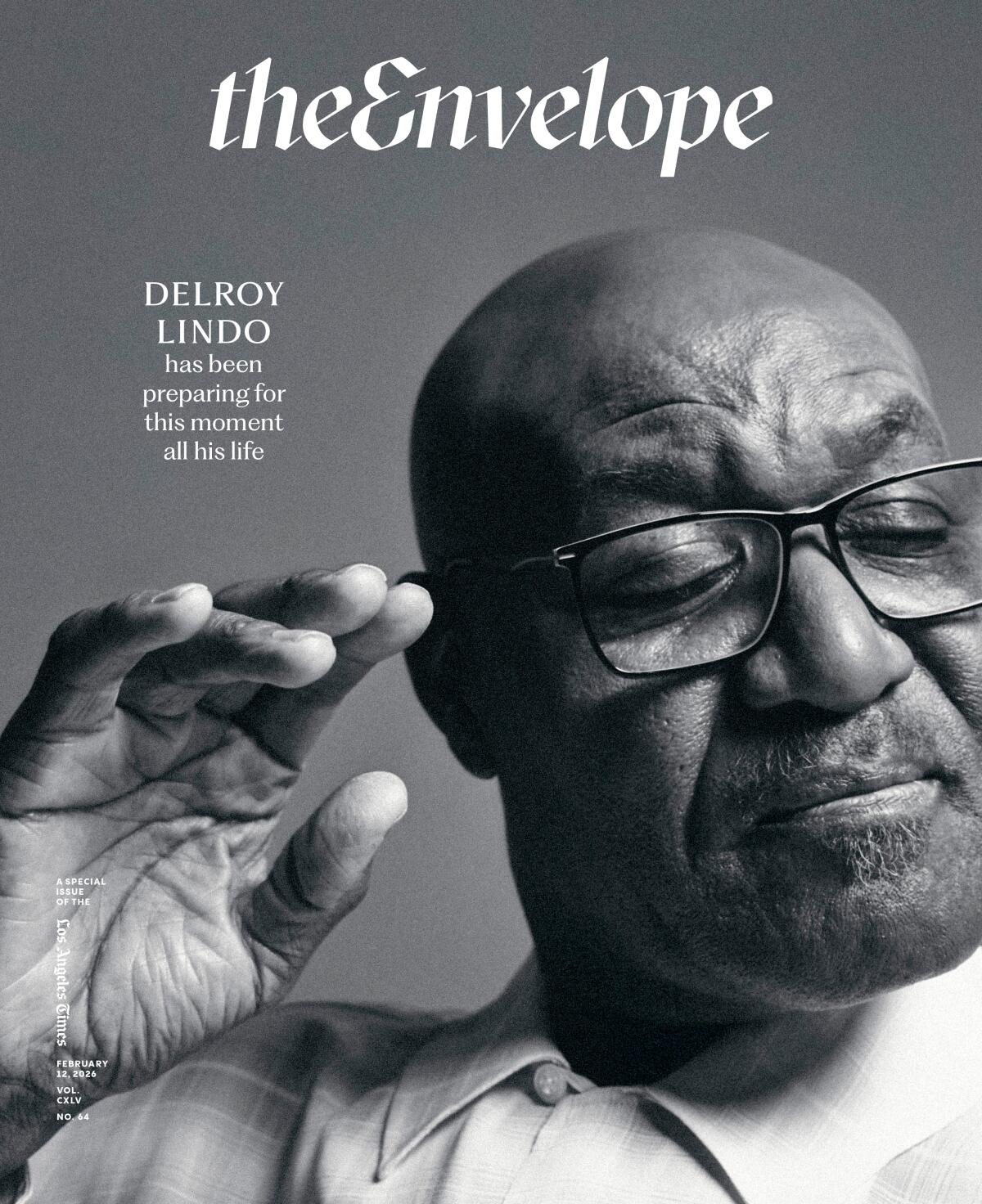
Let’s spend a little more time with The Envelope’s latest cover star, “Sinners” scene-stealer Delroy Lindo, this week.
Cover story: Delroy Lindo

(Bexx Francois / For The Times)
Everyone loves a surprise or two on Oscar nominations morning, and this year gave us the gift of Delroy Lindo, 73, finally earning his first Oscar nomination for his standout performance as bluesman Delta Slim in “Sinners.”
Some people are still smiling about the news. Lindo certainly is.
Lindo and I talked about the lessons he has learned as an actor over the course of a career that has spanned a half-century. He recalled the self-doubts that plagued him when he first played the lead in “A Raisin in the Sun,” the story of a struggling Black family dealing with discrimination in 1950s South Chicago, and how he overcame those fears when he revisited the role three years later.
“This was an absolute period of growth for me as an actor all because I learned the most important thing: preparation, preparation, preparation,” he told me.
But even when you exercise that level of care, you still deal with doubt. Actors will be the first to tell you that they’re needy, neurotic.
To play Delta Slim, Lindo read books on the blues, listened to Son House, Muddy Waters and Howlin’ Wolf and immersed himself in the culture of the Mississippi Delta. Musicians helped him hone his harmonica and piano playing. He was ready.
But that doesn’t mean he couldn’t use a little affirmation for a final boost.
Lindo says there were two such “seminal moments” for him while making “Sinners.” The first came when they filmed the scene where Lindo stands as his car passes a chain gang. Delta Slim exhorts the prisoners to “hold your heads.”
“[Director] Ryan [Coogler] was very nervous,” Lindo says. “He didn’t want any accidents.”
Shortly after shooting the scene, the movie’s unit publicist, Anna Fuson, emailed Lindo’s agents, telling them how his work had moved her and the crew.
“That doesn’t happen,” Lindo says, his voice cracking with emotion.
Later they shot Delta Slim’s monologue, in which he recalls the lynching of a fellow musician, ending with Lindo breaking into a guttural humming and drumming, expressing pain that transcends words. That night Zinzi Coogler, Ryan’s wife and a producer on “Sinners,” wrote Lindo telling him how much that scene had meant to her.
“Those two moments gave me a grounding,” Lindo says quietly. “It let me know this work is impacting people. And you can’t put a value on that kind of thing.”