art

Patrick Caddell : Brown’s Mentor in the Art of Trolling for Frustrated Voters

Steve Proffitt is a contributing reporter to National Public Radio’s “All Things Considered.” He interviewed Patrick Caddell at a Brentwood restaurant

At 21, he was the whiz-kid poll taker for George McGovern, an intense Harvard grad who went on to become an architect of Jimmy Carter’s come-from-nowhere victory in 1976. A pollster and strategist in five presidential campaigns, he became as well-known in Washington for his flamboyance and hair-trigger temper as for his skill at reading the political tea leaves.

These days, 41-year-old Patrick Caddell lives in self-exile from the nation’s capital. He works the phones from a lounge chair beside the pool at his Brentwood home. Almost every day, one of the many calls he takes comes from his friend and presidential candidate, Edmund G. (Jerry) Brown Jr.

Caddell says he retired from professional politics in 1986, when he left Washington–a town he now says is “on the cutting edge of irrelevancy”–to take a job teaching political science at the University of California at Santa Barbara. Though his current role in the Brown campaign is unofficial, he has profoundly shaped the former governor’s election strategy. When Jerry Brown decries politicians’ addiction to money, or talks of the need to “take back our government,” he is playing a tune Caddell composed. The pollster wrote much of the speech Brown delivered last October when announcing his candidacy in Philadelphia, and Caddell is credited with helping Brown identify many of the themes he’s using to appeal to alienated, disaffected voters.

No one, it seems, is more alienated and disaffected than Caddell. He now finds the system he once so skillfully manipulated to be “corrupt to the core,” and he visibly bristles when discussing the “political, economic and media elite.” Caddell vents his spleen on a weekly political talk show aired on Century Cable, and says he is developing several film and television projects. As if to underline his transition to California, he drives a 1966 Mustang convertible and dresses in a casual style that might be considered slovenly in the nation’s capital.

But Caddell’s passion is still politics at the highest level. In addition to advising Brown, Caddell also reportedly prepared a memo for Texas billionaire H. Ross Perot, advising him on a strategy for developing a successful third-party presidential challenge. Over a bowl of Mongolian black-bean soup, Caddell seemed to revel in the role of insurgent, delivering his theories and pronouncements in the rapid fire, impatient style of a man who has plenty of ideas and too little time.

Question: What’s going on in the country? There’s obviously a tremendous amount of frustration with politics and politicians. What do you sense is happening in the minds of the electorate?

Answer: Politics is disconnected from the country. We were already seeing signs of protest in 1990–David Duke, Dianne Feinstein, Clayton Williams (of Texas) and Bernie Sanders (of Vermont) were all supping out of the same pot. And it wasn’t about ideology. For the last 25 years, the politicians in this country have presided over a decline, and it is impossible for them to acknowledge it. Because to change, to turn the country toward what has to be done, they would first have to tell the truth. And to do that would be to risk their own power, because, in a democracy, that means standing up and saying, “We have failed.” And the track record of people who do that is not very good. So the Democratic Party lives a lie, the Washington Establishment lives a lie: “Nothing’s really wrong, don’t worry about the $400-million deficit, just elect us.”

Q: This feeling of anti-incumbency has been building for a good while. Do you sense that it’s finally coming to a head?

A: There are three things that have brought us to what I think is a firestorm. First, an alienated public. Alienation is something I’ve been dealing with politically since the beginning of my career. But this is the worst I’ve ever seen it. In the 1960s, when you asked, “Do your leaders do what’s best for you and not for special interests?” people overwhelmingly agreed–60% or 70% of them. Now it’s totally reversed. People today simply believe the political and economic system is stacked against them.

The second thing is a sense of decline. This are people saying that America is not No. 1 anymore. Americans will rage against that idea, because all America is built on the notion that things will get better. Moving across that psychological divide is a major thing.

Q: So are you saying that you accept the notion that things won’t get better, that we are, in fact, in decline?

A: Absolutely! Get somebody up here to argue with me that, as individuals and as a society, we are better off now than we were in 1968. You don’t have to convince the American people of that–they now know it. Now the third thing, which I don’t think anyone has articulated yet, is that what we pass on should be greater than what we got. We leave our children a better America, and more opportunity. You kill that idea and you will kill this country. And that’s exactly what’s happening! That’s the overwhelming moral issue. When I look at the political leadership, the economic elite that has ripped off the country, the press that has been its propaganda mouthpiece, I tell you this: In their collective and individual pursuit of power, they have committed acts that are worse than treason. And that’s what the American people feel now. That is the third great force that is at work here, and we have not even seen the full fury of that yet.

Q: Is it your role to offer a prescription?

A: No. I want to be like Toto in “The Wizard of Oz.” I want to be the person who pulls back the curtain and shows them that there is no wizard, just an old man with a microphone. My job is to help people connect, and to see that they are not alone. I left politics, and I said I would never be in a venture where I couldn’t speak with my own voice. I don’t speak for Jerry Brown and he doesn’t speak for me.

Q: Still, are there mechanical things that can be done? For instance, term limits. Does that make any sense to you?

A: Yes. But it’s such a minor thing. In a functioning democracy, I think term limits are wrong. But at the moment, I think you need a hatchet. I believe that America faces a crisis that only rivals the Civil War and the Revolution which bore it. It’s not about term limits or campaign-financing reform, it’s about getting people in power. Tom Foley (the Speaker of the House) is not going to reform himself.

Q: Do you get rid of the legislature, do you get rid of the congressional staffs? Do you recreate the bureaucracy, do you move the government to Lincoln, Neb.?

A: I don’t know. First of all, nobody has a single answer. Maybe you should break up the government. You’ve got to cut the staffs down; they are out of control. But you don’t have to totally change the system. There’s nothing wrong with the Constitution. When I say this country needs a revolution, it needs a revolution of restoration. We must first get an agenda of consensus in this country–that the country is in crisis and that we are willing to come together to deal with it. It’s not about arguing if we like this health-care plan or that one. It’s about taking the big steps to save the country. That’s what the issue is, a commitment to change, to the restoration of American greatness. It’s that simple.

Q: If the system is corrupt, can’t one conclude that the political parties are corrupt as well?

A: Yes, and the Democratic corruption is much worse than the Republican corruption. I say that as a Democrat. My party is standing at the verge of following the Whigs into history, of disappearing overnight if they keep this up. The Republicans really do believe in what they say. When they say “Help the rich,” these people act in obedience to their principles. When people in my party do it, they do so in absolute treason of their principles. I’ve realized that my friends are more corrupt than my enemies . . . .

Q: What’s your relationship with Ross Perot? Do you meet with him, do you speak with him regularly?

A: I have had one meeting with Ross Perot, several months ago, and we talked and I encouraged him. Other than that I have nothing to say about my relationship with Ross Perot.

Q: Perot is apparently getting thousands of phone calls a day offering support. How come the public, which presumably knows next to nothing about Perot’s politics, is seemingly so eager to get behind him?

A: I don’t know if this is going to be real; he has a tough course ahead of him. But he is a genuine folk hero. When he goes on TV and talks, people listen. He’s said he will only run if his supporters pave the way for him, if they do the work. Instead of selling out to the Democrats or the Republicans, he says to the people, “I’ll sell out to you.” His message is the reverse of Jerry Brown’s. Jerry’s was, “If I build it, they will come.” Perot’s is, “If you build it, I will come.” His politics are much more complex than they seemed in the beginning. The man is pro-choice, pro-gun control. He’s a very eclectic guy.

Q: Tell me about Jerry Brown. How deep do you think his appeal can be?

A: I don’t know yet. He’s still growing, and they’re still responding. He has a transition to make from simply being the vehicle for discontent, to where people see him as an acceptable leader. You know, in all my life in politics, I am used to dealing with people who are basically finished men. Grown. One thing that struck me about Jerry Brown, in the last year or so, is that the guy is still growing. Can he pass the test of being a real leader in people’s minds? If so, he has many advantages that Ross Perot will never have. He can speak with knowledge about the government. He’s run it.

Q: How optimistic are you about Brown’s chances of capturing the nomination?

A: Every day Jerry Brown is raising $80,000 to $100,000 on his 800 number. He has gone from being a joke to being able to raise $100,000 every day, from people contributing less than $100! Man, I want to tell you, it’s out there, the people are ready. As far as I am concerned, the campaign is just beginning. What happens if Brown sweeps his way through the primaries? He’s going to go to the convention and tell the delegates that he is running on a platform that indicts them as personally corrupt. That’s going to be very tough for those folks to swallow.

This is going to be as exciting as 1968 was politically. We don’t know now how it’s going to shape up. But there are great forces there, and great moments of possibility.

I remember hearing the Washington insiders view of Jerry Brown: “Great message, wrong messenger.” And I would bristle. If your problem is the messenger, if you agree with his analysis of the problems with the political system, then I must ask, “How come his is the only voice?” The answer is there is not another voice, because they are not allowed in. We have a self-perpetuating class of people who have designed the system to keep anyone who questions it on the outside. It’s a system designed to take democracy away from the people. So when Jerry Brown raises the banner of taking back the country, they must kill this message. It’s a message of death for all of them. It is Cromwell, “Out, you are not a Parliament.”

Q: Jerry Brown is running a campaign that has similarities to the race you helped run for Jimmy Carter. Carter also ran as an outsider and a reformer. Can you make a comparison between the two campaigns?

A: It’s gotten much worse. With Carter, we were battling with muskets. Now it’s thermonuclear war. In 1976, the (Democratic) party was still a good party. It had not become what it is today.

Q: If the system is indeed failing, can this leadership recharge the engine, get the growth back? Or do we just have to face the reality of decline?

A: This country cannot survive if the reality is that we continue to go downhill economically. That is not necessary. There’s no reason for it. We can get that engine moving. Jerry Brown’s idea about the flat tax is an idea about getting that machinery going. When he announced it, I didn’t know anything about it. I nearly fell on the floor. But I’ve gotten much more enthusiastic the more I look at it. The principle of it is to get something that’s fair. Even the New York Times said it’s the first interesting idea this year.

Q: Do you have any prediction for Tuesday’s primary in New York.

A: Yes I do, but I’m not going to share it with you, because I don’t believe in jinxing myself. Right this very minute, as I talk to you, I think Jerry Brown–I don’t even want to say this–but it could be a big moment. Let me say this. On Tuesday night, there is the possibility that American politics could be shaken to its foundations in a way that has not happened in our lifetime.

Source link

Heyerde López: ‘Our Challenge Is Staying True as a Left-Wing Organization’

López explained the role played by the arts in building a popular identity. (Venezuelanalysis)

Heyerde “Seko” López is a Venezuelan artist and activist with experience in plastic arts, screen printing, photography, graphic design, and audiovisual production. For 13 years he has been a member of Fundación Nativa Crea, a grassroots organization from Guarenas, on the outskirts of Caracas, dedicated to social work and advancing popular power.

What is Fundación Nativa Crea and what does it do?

Fundación Nativa Crea is a sociocultural organization dedicated to bringing together communes, social movements, and individuals in the town of Guarenas. We organize a variety of activities in our territory, ranging from rescuing abandoned spaces and painting murals to offering free workshops on screen printing, music, theater, and circus in local communities and schools.

Nativa is also dedicated to grassroots communication through social media. We’re always doing digital and graphic design and recording in the community to make visible what people are doing. We work to forge the identity of our barrio, our working-class areas, and our communities, so that people can be the protagonists of the revolution we’re building and the path we’re traveling together.

We’re located in Plaza Bolívar in Guarenas, right next to City Hall, because we had the chance to speak with President Chávez and decided to occupy that space, which was a Corpoelec [state electricity company] substation that had been abandoned for 15 years. At the time, we identified 37 abandoned spaces in Guarenas, but that one stood out as the most visible and strategic. We surveyed the area, and the project was born.

How is Nativa’s work organized in practice, and how does it integrate with the local community and the people’s power organizations?

There are six of us now, but we coordinate with other people in the territory and in other parts of the country. We have a set of goals and an action plan. Each person takes on tasks based on their strengths. We have six production units, two of which are currently operational: the auto repair shop, where we fix cars and motorcycles, and the screen printing and communications workshop, where we make T-shirts. We have a brand called “Contestatarixs” to market prints of iconic figures and world-renowned fighters. The other four units are a cultural café that we will soon reopen, a community bakery, a recording studio, and a greenhouse. In fact, we plan to establish a greenhouse in every community council.

In total, there are 15 community councils in our territory, which make up the General José Félix Ribas Commune. Our organization belongs to the Pueblo Arriba Communal Council. In our sector, we’re going to start with a medicinal garden, as well as tomato and onion seeds, and coffee and cacao seedlings, to later coordinate with local farmers. We’re also considering a partnership to grow barley in the nearby campesino settlements and produce craft beer. Why not have a Venezuelan communal beer?

López at a Palestine solidarity rally. (Archive)

You mentioned the bakery and the café that closed down. What obstacles did they face?

The bakery and the café closed down due to the economic difficulties resulting from the US sanctions. For example, when wheat imports were restricted, it became very difficult for us to acquire the raw materials. Previously, it had been subsidized. Although we were part of a bakery coalition with other grassroots organizations, and we held numerous meetings and coordinated efforts with the government to defend community bakeries, it was not possible to maintain our operations. In Venezuela, wheat is controlled by the owners of the silos. We fought a tough battle between 2014 and 2017, but that coalition practically fell apart, and now only the large, capitalist bakeries remain. But we are creating the conditions to revive this productive unit. We want to build a communal economy. We are going to start creating the conditions, now with more criteria and the lessons learned over these years. After all these battles, I believe we have the necessary experience.

What are the main challenges Nativa has faced over the years?

The main challenge is staying true to our identity as a left-wing organization in the face of the imperialist blockade. Nativa Crea started out as a clothing brand and is now a social organization running a headquarters of 542 square meters. But the hardest part is sustaining ourselves over time. It’s one thing to have an idea, to design a project, and quite another to sustain it –to preserve the ideology, retain the members, and create conditions so that it’s a space where people aren’t exploited and can have free time to organize alongside the pueblo

We also knew that, as we asserted ourselves, we would deal some blows to the bourgeois state. Not all mayors, governors, or institutional leaders will want to relinquish their share of power and accept the consolidation of popular power or the communal state. In practice, we have seen that things are not as beautiful as they are in theory. Rather, they are riddled with contradictions. But we have the spirit to fight and move forward. Today, what we do is join forces with different organizations, communal councils, etc., to keep the project moving forward and to help them identify with it. Nativa has always been a space where people can meet, hold workshops, organize politically, and so on.

Murals by Nativa Crea. (@nativacrea)

What would you highlight as Nativa’s main achievements over the years?

Our main achievement has been bringing together different people, from different communes, and ensuring that everyone understands we’re all fighting for the same cause: building the communal state. 

I believe our task is to demonstrate that popular power is the way forward. For example, eight years ago, using the surplus generated by the bakery, we were able to build a sports court. So, we showed that economic activity can take place under decent working conditions, serve the community, and generate a surplus to contribute to the territory where we live. Therefore, if we have productive units –which is what we insist on in the commune –we will be able to achieve autonomy, we will be able to make decisions in the territory, and we will be able to develop what the barrio needs.

Nativa, and you in particular, place a lot of emphasis on the cultural front, especially on graphic design. What is the vision behind this?

Through graphic arts, we shape our identity. Ever since we started creating prints, painting murals, taking photographs, and producing audiovisual works, we’ve always sought to reclaim Venezuelan identity. Not the identity sold to us about barrios in mainstream culture –the glorification of crime or the idea that people dress and speak a certain way. Every town has its identity, every city has its identity, every territory has its identity. So, through the arts, we try to capture that, what we experience, and in this way, people begin to recognize themselves, know where they come from, and also to appreciate things that are nationally, locally, and indigenously produced. It gives new value to their experiences, to what they consume, read, and so on.

Screen printing at the Nativa headquarters in Guarenas. (Heyerde López)

You recently hosted an international brigade from Brazil’s Landless Workers’ Movement (MST). What was that exchange like, and how can that feedback help strengthen grassroots organizing?

The MST brought a large group that split into seven brigades spread across different parts of the country. We were assigned one as the representative from the central capital region. This experience has been very important, because we see that our brothers and sisters in Brazil are fighting for the same cause as us: against capitalism and imperialism, and for the unity of the Latin American peoples.

The Landless Workers’ Movement has been raising that banner of struggle –the fight for land and the construction of campesino settlements –for over 40 years. They have very advanced methods, and they are masters of organization and planning. In fact, they are advising us on the various productive units. They believe that we, Venezuelans, need to focus more on planning, sticking to schedules, fulfilling responsibilities, etc. The exchange has helped our communards hear the perspective of comrades from outside, with their experience and organizational skills. They have shared their insights with 10 communes here in Guarenas and are also getting to know the local projects that have been approved through popular consultations.

As someone with many years of experience in grassroots organizing, how do you view the relationship between constituted power (institutions) and constituent power? What is working, and what needs to change?

Chávez, and also our professor Manuel Sulbarán, always told us that we, the working-class people, are the only ones capable of bringing about change and progress in our own country through popular power. So, popular power must continue to develop these methods and strengthen our communes, making them active and productive, and demanding that the state or institutions transfer the responsibilities we can assume and the resources we need. 

For example, in the General José Félix Ribas Commune, the project that won last year’s consultation was focused on the youth to build a soccer field. There was a group pushing for it, but the US $10,000 allocated for the project wasn’t enough. That caused a lot of discontent and led some to think that popular consultations were useless. These are the issues we need to debate and politicize. We explained to them in an assembly that this is a megaproject that cannot be done with just $10,000, so it must be conceived in several phases. We have to keep our spirits up and continue participating.

The soccer field has been a good topic for debate and reflection, because it is also true that the commune has many priorities that are more important than a soccer field. Everything is needed, and sports play a fundamental role, but for example, if the sewer system is damaged, the community will likely prioritize fixing that. That’s why we need to plan and see which projects are proposed through which channels. If we do a better job of categorizing projects by scale and setting timelines, we’ll be able to strengthen our commune. 

But, to answer the question, institutions need to work with us, the pueblo, and understand the priorities of each territory. Perhaps it’s not best for the commune to choose building a sports field because that should be the responsibility of the Ministry of Sports. This ends up giving the commune a responsibility that it should not have to assume, or that it is not in a position to take on. Nor should we be taking on the project of repairing a school when we have a Ministry of Education and a Ministry of Public Works. Obviously, our communards will dedicate themselves to anything that improves the community’s life, but why should the commune burn its only chance to access funding for popular power on unfeasible projects that should, moreover, be the responsibility of the institutions? So we must also demand that those holding constituted power –the government and institutions –fulfill their responsibilities, so that we, as an organized people, can move forward with ours. Another challenge we face is that some people confuse the tasks of the party [PSUV] with the exercise of popular power, and as a result, they sometimes end up dragging the commune into areas that are not its responsibility.

Local activity with the MST brigade. (Heyerde López)

Finally, how does Nativa interpret the current political situation, and what role should the organized people play?

January 3 was a grave moment, a call for reflection, just as the 2002 coup had been, when the people took to the streets to make history. The lesson is the same: the people must understand that only popular power will allow us to overcome this onslaught by the capitalist economic system and imperialist attacks.

Today we must organize ourselves once again, win over all those people who were fighting, or who are fighting out there but scattered. We have to unify the struggles, as President Chávez said at the time: it is very important that we know who we are, what we want to build, in order to move forward in consolidating the Bolivarian Revolution. And beyond Venezuela, we must understand ourselves as a bloc with our neighboring countries. 

For the youth, it is important not to abandon the banners of anti-imperialist and anti-capitalist struggle and to create our own methods. The past centuries’ revolutionary struggles of Germany and France will not apply here. It is not enough for us to simply “follow the ideas of Lenin, Mao, Che, or Fidel,” although we must certainly read and study them. Chávez put it very clearly: we are going to give birth to the 21st-century revolution; we are going to create it. We’ve only been at this for 20 years, developing different theoretical and political aspects, with different participants sometimes on different wavelengths. But we all know that we have a right to an anti-imperialist revolution that defends life on the planet.

Source link

Art Deco English lido may not reopen in time for summer after being hit by fresh setback in £5million revamp

A HISTORIC Gloucestershire lido may not open in time for summer, as the council review risk assessments into its damaged infrastructure, reports the BBC.

The site, that saw its heyday back in the 1940s, is struggling under the burden of its ageing facilities.

Stratford Park Lido has been in Stroud for nearly a century Credit: Stroud District Council
Now, a risk assessment showed that the ageing facilities were not fit for purpose Credit: Getty

The Stratford Park Lido, located in Stroud, Gloucestershire, has been serving open air swimmers since 1937 and cost £20,000 to build.

Recently, there were suggestions that the lido could reopen this summer, after Stroud District Council agreed to explore cheaper repair options.

The council had warned that safety concerns and a £5million repair bill would ultimately take too long to settle in time for summer.

However, during a meeting earlier this week, discussions arose that the lido would be unlikely to open this summer due to the condition of the facilities.

TOTAL MAY-HEM

Major UK airport set for May bank holiday weekend travel chaos


DIVE IN

All the UK lidos getting makeovers this year from heated pools to splash parks

In February, a risk assessment revealed serious hazards, including a cracked foundation and excessive corrosion on the pipework.

There was also discussions about the lido becoming the property of the Stroud community or the town council in the future.

Friends of Stratford Lido and the Save Our Lido Campaign Group, alongside the council, have organised a meeting to discuss these decisions.

There had been 100 written requests from residents to understand what would happen to the lido in the future.

The lido was especially popular back in the 1940s, as shown in this postcard Credit: Museum In The Park, Stroud

The Save Our Lido Campaign group also argued that previous maintenance plans included unnecessary upgrades, such as heating.

Now, it will cost the council’s Strategy and Resources Committee up to £200,000 to investigate whether the lido will open this summer.

Source link

Delcy, the Leopard | Caracas Chronicles

Tarek William Saab, one of the key figures in the repressive apparatus that oppresses Venezuelan society, is dismissed as prosecutor general, but a family friend who has spent years denying Maduro’s atrocities on the international stage is appointed in his place. Vladimir Padrino, under investigation for systematic human rights violations, is replaced by Gustavo González López, also under investigation for systematic human rights violations. They pass an amnesty law, but primarily to grant amnesty to themselves. Over 700 political prisoners are released, but another 473 remain in prison, and those who are released do not always enjoy full freedom.

The institutional reforms of Delcy and Jorge Rodríguez generate headlines abroad that portray them, to those who don’t pay attention to the details, as the moderates The New York Times described them as shortly before the military incursion of January 3rd. The economic reforms, on the other hand, provide arguments, or rather content, for the Trump administration to claim on its social media accounts that it is succeeding in reshaping Venezuela, when on the ground the population observes their living conditions—the blackouts, the inflation, the widespread vulnerability—and concludes that they remain the same as when Maduro was dancing calmly over our dead.

Yes, there are some reasons for optimism, especially regarding the economic transition, but the transition to democracy doesn’t seem to be happening yet. The dictator was removed in a helicopter, but the dictatorship remains.

So far, all of this fits into a metaphor that has been cited countless times in decades of opinion pieces in Venezuela: the Rodríguezes are changing everything so that nothing changes. I grew up reading that cliché in the press, before chavismo burst onto the scene, guns blazing, in our history. “They’re like the Leopard, they change everything so that nothing changes.” In a country that has seen so many supposed reinventions, so many revolutions promising a clean slate to simply replace one set of power with another without solving any of the nation’s structural problems, that cliché has been uttered in relation to many governments and many leaders. But where does it come from, and what does it originally mean?

The cunning of the opportunist

Giuseppe Tomasi, Prince of Lampedusa, was a Sicilian aristocrat who seemed like a character from a novel: he failed as a soldier, he couldn’t prevent his family’s ruin, he saw his palace destroyed by Allies bombs during World War II, and in reality, he was only good for reading and learning languages. He published very little during his lifetime, and spent more than twenty years writing a novel that was published a year after his death in 1957. The book, which was a great success from the start, was titled Il Gattopardo (The Leopard in the English translations), after the cheetah that appears on the coat of arms of its protagonist: Don Fabrizio, the Prince of Salina.

The world is full of Tancredis like Jorge, Venezuela has never lacked them. Juan Vicente Gómez also promised change when he overthrew his crony Cipriano Castro, remaining in power for 27 years.

The character, like his creator, was the last of a line. He was a landowner whose noble titles and privileges depended on the existence of the Kingdom of the Two Sicilies, as the Spanish dominion of southern Italy was called in 1860. When, that year, Garibaldi’s troops invaded Sicily, in the process that would eventually produce the Italy we know today, Don Fabrizio found that everything he stood for was in danger. Sicily would cease to be Spanish and merge into the new Kingdom of Italy, and he would lose his place at the pinnacle of that feudal society, dominated by a few through the mere will of a foreign sovereign. Don Fabrizio, who had dedicated his life to preserving what he had inherited, saw no way to stop the transformations that were approaching like a tsunami at the gates of his palace, crowned by wrought-iron leopards. But his favorite nephew, Tancredi, an ambitious climber who married the daughter of an uneducated nouveau riche and joined Garibaldi’s Redshirt revolution without hesitation, showed him what had to be done: “If we want everything to stay the same, we have to change everything.”

The fate of the cynics

Il Gattopardo is an exquisite work, a great historical novel that brings together all the virtues of the genre: the ability to transport you to an era and dissect it; the pleasure of escaping to a beautiful palace in the golden hills of Sicily, beside a turquoise sea; details like the pasta timbale and granitas served at a fully set table. All of that is in Luchino Visconti’s magnificent 1963 film version, starring Burt Lancaster and Alain Delon, and in the superb miniseries—in which all the actors are Italian—on Netflix.

But what immortalized it was that line from Tancredi. Because of its power to synthesize what many people, in many different historical contexts, have done time and again: move from the old order to the new, disguised as reformers, to avoid losing their privileges by securing a place in the emerging elite. Changing everything so that nothing changes is the strategy of those who must pretend to be the future and not the past, because they would pay a heavy price if they didn’t. It’s the roadmap of those who, like Delcy and Jorge Rodríguez, have prepared themselves to take advantage of an external factor that destabilizes the order of their world—Garibaldi’s landing, the arrival of the Marines—and reorganize that world to their advantage.

Perhaps Jorge Rodríguez read Lampedusa back when he frequented bookstores and wrote fiction like the story that won the El Nacional literary contest. Perhaps he saw Visconti’s film. Perhaps he doesn’t even know this story: the world is full of Tancredis like him, and Venezuela has never lacked them. Juan Vicente Gómez also promised change when he overthrew his crony Cipriano Castro, remaining in power for 27 years at the head of a dictatorship that had a very good relationship with foreign oil companies.

In the novel, however, Tancredi meets a bad end: he loses an eye, fails in his ambition to seize power, pays for the mistake of underestimating the Mafia father-in-law with whom he became involved, and for overestimating his own talents. The prince, as expected, disappears along with the world he represented. Italy in the 1860s changed in many ways, and left other things as they were. When you truly read that immortal book left to us by that sad, solitary Sicilian prince, you understand how cynics work to appropriate historical changes, but you also realize that no one, not even those who seem most powerful, can control these.

Source link

How to navigate LACMA’s new David Geffen Galleries? Get lost

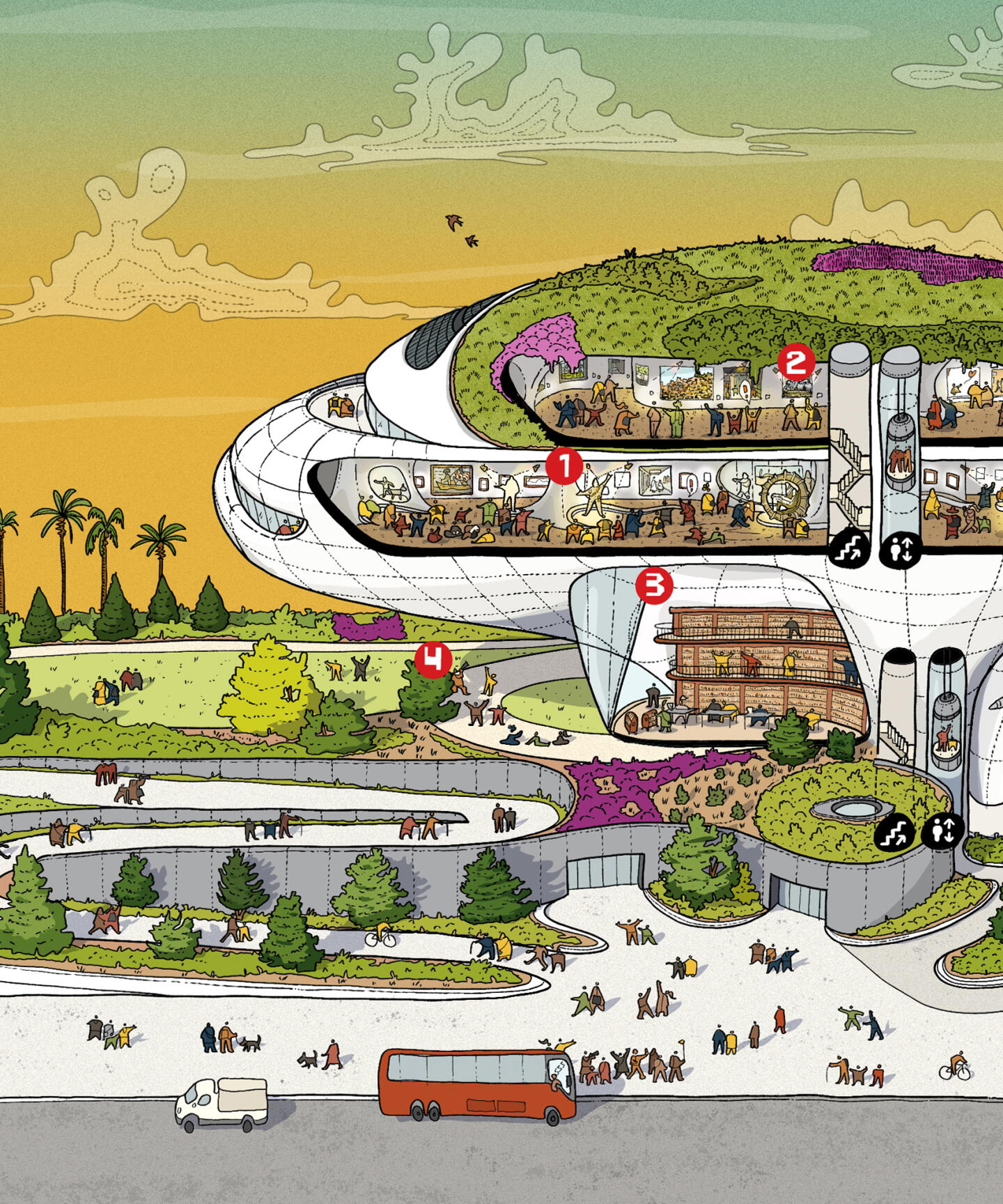
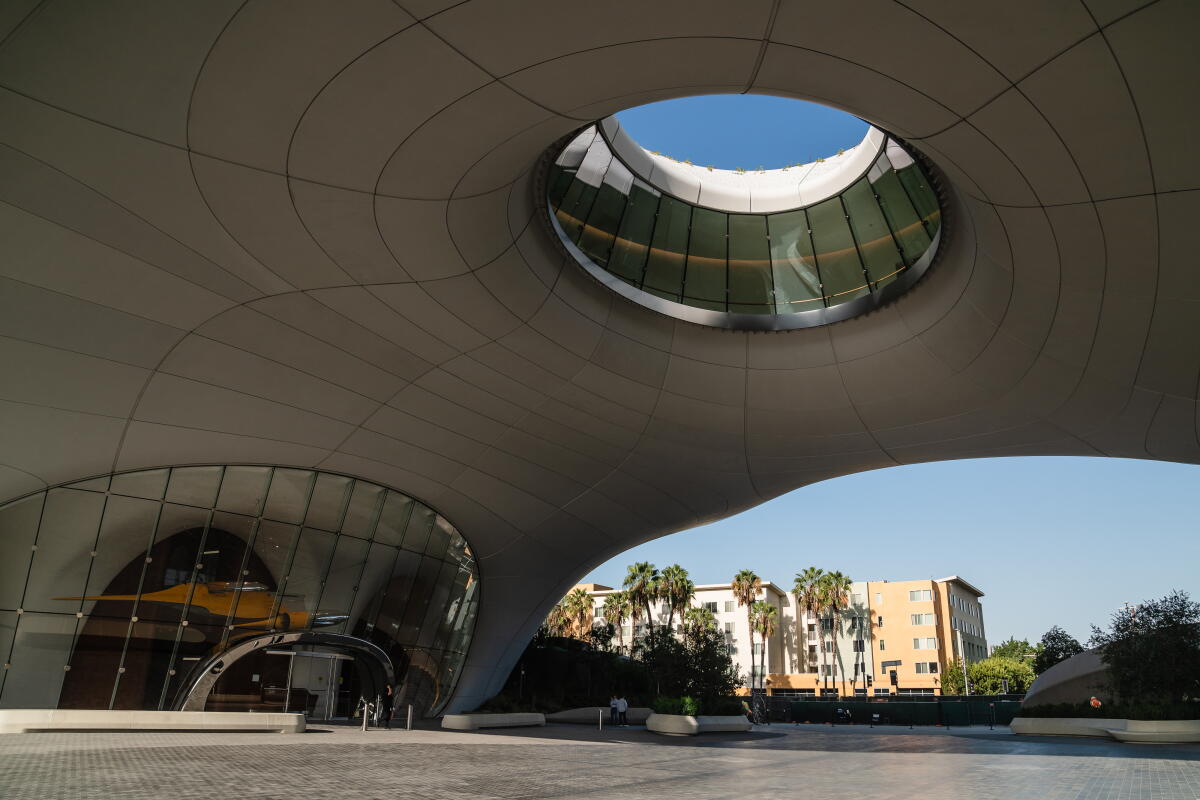
It’s not only easy to get lost in the Los Angeles County Museum of Art’s new David Geffen Galleries, it’s inevitable, intentional — and one of the best things about the place.

The museum has deconstructed the traditional, boxy narrative of art history and rendered the story itself a matter of curves and continuities. Art in the collection is freed from its departmental silos and put into conversation across genre lines, place and time.

The museum has physically invalidated the binaries of center and periphery, major and minor arts. In a startling and largely gratifying way, LACMA has done what the poet Audre Lorde, alluding to a different but not unrelated aspect of patriarchal dominance, deemed impossible: used the master’s tools to dismantle the master’s house.

The change goes far beyond a remodel. It’s a reinvention, a recalibration, a revisionist fever dream.

The vision conceived by museum director and Chief Executive Michael Govan and architect Peter Zumthor is not perfect, and brings with it a modest set of frustrations, but as a whole, the installation registers as ravishing and bracingly fresh. It thrusts us midstream into the ageless, ceaseless flow of makers worldwide reckoning with life, earth and being.

It prompts us, as we bob about, to reflect on our own proclivities and preconceptions, our patterns of reception and perception.

It compels us to recognize that what matters is not just what we see in the museum but how we see, what pulls us close and why, what private histories we bring to the occasion, what expectations, what tools.

Over two visits to the new building, getting my physical bearings mattered less and less as I surrendered to the generative sensations of not knowing. The museum has produced a dense guidebook to the new galleries, whose title, “Wander,” doubles as invitation and imperative. Even at 430 pages, the book is only minimally useful as an orientation device. For help with that internal navigation, Rebecca Solnit’s moving 2005 book, “A Field Guide to Getting Lost,” proved a better compass.

A row of small guidebooks.

LACMA’s guidebook to the David Geffen Galleries, called “Wander,” doubles as invitation and imperative.

(Museum Associates / LACMA)

Solnit, citing the cultural critic Walter Benjamin, writes, “to be lost is to be fully present, and to be fully present is to be capable of being in uncertainty and mystery.” She goes on to recall how roaming freely as a child was key to developing self-reliance, which feels apt to the LACMA strategy. We are put in charge of making our own way, through tapestries and tea sets, past ancient jug and contemporary sphinx, without heavy-handed authoritative direction.

The history of art reads here as one long, free verse poem-in-progress, gorgeous and absorbing. Even so, many of the most memorable moments come in the form of cogent micro-essays, smartly curated ensembles of work bearing a legible, lucid premise. Some of these are contained within four (rectilinear) walls; some occupy less demarcated spaces. “Tonal Variations: Photography and Music,” for instance, gathers images by Paul Caponigro, William Eggleston, Lisette Model and others. These artists were also serious pianists, attuned, no matter which instrument they were using, to the qualities of rhythm, pattern and progression.

Lisette Model, "Window at 5th Avenue," 1940, Los Angeles County Museum of Art

Lisette Model, “Window at 5th Avenue,” 1940, Los Angeles County Museum of Art

(Museum Associates / LACMA)

In a section headed “The Global Appeal of Blue-and-White Ceramics,” a long display case houses a timeline articulated sculpturally. The sequence advances from a 9th century bowl made in Iraq to a 13th century vessel from China, a 14th century example from Thailand, another from 15th century Syria, up to work by a 20th century German artist who transformed a functional vessel into personal adornment by cutting a string of beads out of the planar surface of the bowl.

Dish, Turkey, Iznik, c. 1530-35, Los Angeles County Museum of Art,

Dish, Turkey, Iznik, c. 1530-35, Los Angeles County Museum of Art

(Museum Associates / LACMA)

On the wall facing this display is a huge vitrine containing an 18th century Talavera jar from Mexico, paired with a 2025/26 color photograph by Brooklyn-based Stephanie H. Shih. In the still-life composition, a cheeky visual lesson on the collision and convergence of cultures, the jar holds flowers, cactus and edible Mexican treats influenced by Chinese and Filipino flavors.

Top, Stephanie H. Shih, 梅國 "(Still life with chamoy and Dirty T Tamarindo)," (2025- 26); bottom, Jar (c. 1700-50)

Top, Stephanie H. Shih, 梅國 “(Still life with chamoy and Dirty T Tamarindo),” (2025- 26); bottom, Jar (c. 1700-50)

(Museum Associates / LACMA)

Shih is one of a handful of artists commissioned to create new work using the museum’s collection as muse. L.A.-based Lauren Halsey is another. Her formidable, untitled 2026 sphinx regally commands its space among ancient Egyptian and Roman sculpture, a marvel of the cross-temporal and cross-spatial, spiked with specific references to Black self-determination.

Setting recent works among older ones is an effective element of LACMA’s overall plan to shed outworn hierarchies. It recasts every piece of art by every artist throughout the single-story space as equally relevant. The seamless integration of old and new feels stealthy, and a touch subversive, a doubling-down on the museum’s approach to time as nonlinear, sinuous and delightfully slippery.

A sphinx in a museum.

Lauren Halsey’s untitled 2026 sphinx.

(Museum Associates / LACMA)

That said, a few words readily available would help connect the dots without undermining the provocation. Text — where and how it appears, or doesn’t — is my only major complaint about the installation of the new galleries.

Text panels announce, in one or two paragraphs, the themes of each given section: “Images of the Divine in South Asia”; “The Evolution of Abstract Painting in Modern Korea”; “Textile Conversations: Africa and Black America.” Individual object labels are kept minimal, containing only basic identification about each work, no commentary. When asked about this decision during my first walkthrough, Govan replied that more time reading means less time looking — “and we have the internet.” Every thematic text panel has a QR code that links to the Bloomberg Connects app, an aggregate guide to museums and other cultural sites that offers selected, augmented entries.

Determining how much didactic information is insightful and sufficient, and how much constitutes excessive artsplaining, is a delicate, ongoing challenge for museums. Where LACMA landed on this contested plain strikes me as unfortunate and counterproductive.

A few lines of explanation or context on a wall label can add perspective for even the most informed visitor, and provides crucial support to those with less foundational exposure and access to art.

You can take or leave text on a wall without breaking your stride, but text accessed via QR code is another matter. (Never mind that connectivity is spotty inside a sprawling concrete shell, and several times when I tried to get information from the app, I couldn’t.) Encouraging us to shift our gaze from the wall to our devices — to assume that accursed downward tilt of the neck when splendors abound before our eyes — is simply detrimental. It breaks the spell of being fruitfully lost in the present, and retethers us to the digital distractions that dominate our days.

Text on a museum wall.

Wall text beside Francis Bacon’s “Three Studies of Lucian Freud” (1969), at Los Angeles County Museum of Art.

(Museum Associates / LACMA)

Shouldn’t the imaginative minds that created this space, this opportunity to revel in direct sensual experience, want us to keep our attention where our bodies are? Why this fallback to current convention, when the rest of the experience is about radical reinvention? This feels like a missed opportunity. I’m hoping a more experimental, exploratory approach to providing information, context and interpretation, in keeping with the rest of the enterprise, might yet come.

Does the new structure serve the art? Mostly, very well.

The lighting is varied, treated as another texture in the space, palpable and rich. There’s a generous amount of natural sunlight, but some spots are noticeably dim. Some gallery walls are glazed in deep hues (reddish and eggplant), and the intensity of the color is jarring at first. But neutral, white-box viewing spaces (with even, predictable lighting) can be found elsewhere on LACMA’s campus and pretty much anywhere art is shown. Here, the very irregularity of the interior environment, including the concrete surfaces — richer and more textured than I expected — heightened my alertness. And keener senses tend to make for more consequential experiences.

In deciding how to organize roughly 2,000 works of art across 110,000 square feet of exhibition space, LACMA devised a conceptual schema that isn’t apparent in the galleries themselves. The “Wander” guide maps out the division of the space into four regions correlating to bodies of water: the Indian, Atlantic and Pacific oceans, and the Mediterranean Sea. While the zones and their boundaries aren’t indicated by obvious signage, and I caught one laughable categorization (Ansel Adams’ photographs of the Pacific shoreline landing in the Atlantic section), this schema at least doesn’t get in the way.

And what does work about the propositional structure is its comprehensive realignment. It moves to retire art historical frameworks of the past, dependent on borders between places and times.

Throughout this installation, we are repeatedly reminded of the impact of trade and migration, the fluid movement of resources and belief systems. We’re reminded of porousness and simultaneity, and that all art histories are, in the end, propositional structures.

Here’s a new one, the Geffen Galleries say. Try it out. You might get lost. Indeed, you will get lost. And what wonders await you in the uncertainty and mystery.

Source link

L.A. ‘barn’ explodes with colorful thrifted finds and maximalist flair

“Gambrel roofed Barnhaus,” the listing read, “next door to the best burritos in town.”

Its photos revealed something unusual for Inglewood, which is famous for its mix of architectural styles, including Midcentury Modern homes by R.M. Schindler and Googie-style coffee shops: a brick-red barn-style house on a large corner lot, listed at $449,000.

When Meeshie Fahmy and her husband, Aaron Snyder, toured the house, they learned that the burrito claim was true. The photos, however, had clearly been touched up to make the house, located just a few miles from the Kia Forum and SoFi Stadium, look better than it actually was.

A blue barn-style house with a lush garden filled with flowers.

Outside, the former dirt lot is now a lush garden with towers of colorful black-eyed susans on arches, planters full of nasturtiums and vegetables, a firepit and pergola.

Inside, the house had “wall-to-wall carpets on both floors that were heavily stained and worn, dated wood paneling on the walls, holes in the walls,” Fahmy says.

Despite these flaws, the couple saw the home’s potential and decided to buy it, even though a leaning retaining wall nearly derailed their escrow. “It was a blank canvas for us to play and experiment,” she recalls a decade later.

  • Share via

After they moved in, neighbors revealed the house was not original to the site. Years earlier, the original Craftsman had been torn down; the current house, a sweepstakes prize, arrived in two pieces by crane. “Our neighbors recalled it was quite a sight,” Fahmy says.

At the time, Fahmy, 44, worked as an event planner at the Getty Museum. As renovations started and she followed her passion for interior design, Snyder proudly introduced her to staff at the local Carniceria as “an interior designer.” She replied, “That’s not what I do.”

“I told her, ‘If you don’t start saying it, it’s not going to happen,’” says Snyder, 49, who pursued his own dream of becoming a professional skateboarder before moving into video editing. “Speak it to existence.”

Finishing the house took years, patience and a lot of DIY projects because of their budget. But Fahmy didn’t just dream — she made it happen. In 2018, she started working for interior designer Willa Ford, who mentored her at WFord Interiors. By 2020, Fahmy launched her own design firm, Haus of Meeshie. “It’s been a progressive layering of colors, furniture, reupholstering, adding art, wallpaper, lighting,” she says. “Low and slow; the flavor is richer.”

Meeshie Fahmy and Aaron Snyder's family room, a colorful and over the top maximalist dream.

Meeshie Fahmy and Aaron Snyder’s family room is a colorful maximalist dream with thrifted furnishings, art and layered textures and patterns.

A trippy clock stands next to a large scale print
A living room with green walls, art and eclectic furnishings

Ninety percent of the furnishings are thrifted. “Nothing is too precious,” Fahmy says.

Today, their home reflects Fahmy’s fearless approach — it’s a true “petri dish for experimentation.” The vibrant, layered four-bedroom house is a maximalist fever dream, packed with furniture, accessories and art sourced from Facebook Marketplace, vintage shops, flea markets (Long Beach flea is a favorite), estate sales and secondhand stores in L.A. and elsewhere.

She estimates about 90% of the furnishings and accessories in her home are thrifted, antiques or things she found on the side of the road, and nothing is too precious, reaffirming her playful approach to decor.

A dining room with art hung salon style on the wall.

A Jonathan Adler dining table, found on sale, sits in front of a wall filled with art arranged salon-style. Among the pieces is Fahmy’s favorite: a wedding portrait her father, Walter Fahmy, painted of her.

A colorful lounge with green wallpaper.

The speakeasy features a vintage standing bar from Craigslist, barstools and a Geo pendant light by Los Angeles designer Jason Koharik and a mirror Fahmy found at a neighborhood estate sale.

She likes to refer to her decorating style as “creatively unhinged.”

“It all flows,” she says, curled up with her dogs on a CB2 couch she found on Craigslist. “There’s a rhythm. Every piece tells a story. Pick one — I’ll share it.” She recalls throwing herself on a vintage Baker sideboard at a Florida Goodwill without knowing how she’d get it back to Los Angeles and laughs when Snyder discovers a tiny Jack Black-as-Jesus portrait tucked into a gilded dining-room oil painting.

The sink and vanity in the guest bathroom? That used to be a dresser she found on Craigslist.

Although others have questioned their home purchase, Fahmy never doubted they could transform the space into something special.

A kitchen with blue cabinets.
A purple bathroom with artworks hanging on the walls.

A red wall with photographs.
A staircase leading up to the second level, backed by a pink wall.

Color ties the house together. The powder room is purple, the entry hall is red, the kitchen has blue cabinets and the hallway is painted pink.

“When I first saw the house, when they bought it, I thought she was crazy,” Meeshie’s friend and former colleague, Talene Kanian, says in an email. “Other than keeping the ‘barn’ shape, she completely transformed the interior. Now, when you step inside, you’re welcomed into a home full of color, pattern and playfulness.”

Snyder adds: “Meeshie is able to visualize things 10 steps ahead of everyone else, even things that seem like a complete mess.“

Working together, the couple removed the shag carpeting and wood paneling from the first floor and the stairway, installing drywall in their place.

Next, they painted the walls — no beige here. The deep green living room sets a bold scene: a clock worthy of Dalí, leopard prints, pink Persian rugs, a snake ottoman and a thrifted tufted chair with Art Deco vibes from CB2.

Designer Meeshie Fahmy pictured with her pet dogs in her garden.

“I did not venture into interior design formally,” Fahmy says. “I feel very lucky to have found this passion.”

The color story flows through the house: The powder room is purple, the entry hall red and the dining room walls pink, with one wall in a bold 1970s-style mushroom-pattern wallpaper from Londubh Studio. The speakeasy features a vintage standing bar from Craigslist that Snyder squeezed into his car, barstools and a Geo pendant light by Los Angeles designer Jason Koharik and a mirror Fahmy found at a nearby estate sale.

In the kitchen, they removed the 1970s-era wooden cabinets and Formica countertops, replacing them with more pink walls, Moroccan-style tile flooring and blue cupboard fronts from Semihandmade, which creates cabinet doors for IKEA cabinets.

Fahmy painted a Keith Haring-style black-and-white mural at the top of the stairs and continued onto the second-floor walls using a paintbrush taped to a broomstick. She finished by painting the handrail bright blue and wrapping each stair with a Persian-style runner.

Outside, the couple leveled the once-dirt backyard, added pea gravel, built a pergola with a handyman and installed a firepit where they enjoy entertaining their friends.

A bedroom with burgandy walls
A bathroom with perisan rug print wallpaper

The main bedroom features burgundy walls, while the bathroom next to it has Persian rug-patterned wallpaper from House of Hackney.

Now the once-empty backyard is a lush garden: towers of colorful black-eyed susans on arches, planters of nasturtiums and homegrown vegetables. A trickling fountain greets visitors as they walk through the French doors. Snyder, an avid cook, can easily step out to cut fresh herbs mid-simmer, making the outdoors a true extension of the home.

The couple’s home is full of memories, and as you walk through, you can sense how much their stories matter to them. In the downstairs hallway, Snyder smiles as he points out photos of his family in Wisconsin. Similarly, Fahmy proudly shows a photo of her great-great-grandmother Theresa “Tessie” Cooke Haskins, a noted harpist whose daughter Maud Haskins was the first harpist to perform with the orchestra at the Hollywood Bowl.

Art is everywhere, from the Polaroids pinned to the walls in the powder room to the ceramics and masks hanging throughout the house. Yet Fahmy’s favorite possession is deeply personal: a portrait of her on her wedding day, painted by her father, Walter Fahmy, who studied art in Egypt before coming to America.

A staircase with pink walls leads to the downstairs.
Upstairs hallway leading into designer Meeshie Fahmay and Aaron Snyder's primary bedroom.

Upstairs, Fahmy created a black-and-white mural inspired by Keith Haring at the top of the stairs, then kept going along the second-floor walls using a paintbrush taped to a broomstick. She finished by painting the handrail a bright blue and wrapping each stair with a Persian-style runner.

View of designer Meeshie Fahmy and Aaron Snyder's dining room looking onto their outdoor garden in their home.

French doors connect the house to the garden, so the backyard feels like a natural part of the home.

For Fahmy, these details matter. “I feel like our home is a love letter to my upbringing,” she says, referring to her parents, who were both pharmacists. “It’s an ode to them and the sacrifices they made for me.”

Visitors feel the same way. Their house is a true labor of love, apparent the second you enter,” Kanian adds. “It radiates warmth and love.”

Snyder feels it too. “I feel an immense amount of pride when I walk into our house,” he says.

Like a barn raising that brings people together, their house has become a welcome part of the neighborhood with its blue siding, bright yellow front door and a playful mural by Venice artist and skateboarder Sebo Walker. “We’ve had neighbors knock on our door and tell us, ‘We love what you’re doing,’” says Snyder.

A blue kitchen looking into the living room.

“I love color,” Fahmy says. “I love to experiment.”

With the main house finished for now, Fahmy hopes to turn the garage into an accessory dwelling unit, or ADU, in the style of Mexican architect Luis Barragán: bold with color and texture. “I’m envisioning a mini boutique hotel,” she says. “Simple to execute, yet unique in L.A. I’d love a pink building.”

Like the possibility of a pink building — or not — Fahmy’s freewheeling style proves it’s OK to experiment and make mistakes. (She wants to demo the kitchen next for a fresh look.)

“You’re not tattooing your face. You’re painting your walls,” she says as a way to encourage others to experiment. “Your home should be a reflection of who you are. I hope our home inspires others to live how they want to live.”

Source link

How L.A., LACMA’s David Geffen Galleries changed architect Peter Zumthor

During a recent Zoom interview from his studio in Switzerland, Peter Zumthor offered a candid look at the making of the Los Angeles County Museum of Art’s new David Geffen Galleries.

The Pritzker Prize-winning architect addressed long-standing criticisms of the building and answered questions about his craft. He noted that the structure is a rejection of the overly “slick” architecture he believes defines the present moment, and shed light on the building’s early development, describing a contained process in which the concept was shaped before being presented to the public.

Finally, he discussed the broader ambition of the endeavor: dissolving traditional circulation and prioritizing emotional experience over institutional order.

The following interview excerpts have been edited and condensed for length and clarity.

You are wellknown as both an architect and a craftsman. I think the biggest place for that focus was the concrete. I’m curious about how you formed it. It’s not the typical museum concrete.

I work like an artist in building. This means I custom-make buildings. I can use a few standard details or products, like in the basement. But where the building has an identity, becomes visible, it’s almost all handmade. I have an image of what I want to do, what the building should do, how it should look. So I need people who can help me make custom-made products.

The people who did the formwork — the concrete pouring — [worked in] groups of 100 or more. They were fantastic. They loved their work. At the beginning, formwork leaked on a door, and it looked terrible. They said, “Peter, we’re sorry. We made a mistake. We can fix this. You will not see this afterwards.” But if you make a mistake, you cannot mend it, because what you’re doing here is a concrete sculpture. Sculptures are never mended.

It’s not a perfectly smooth concrete. I’m assuming that’s on purpose?

I love this kind of rawness. This was what I gladly learned. Michael [Govan] in a very friendly, careful way let me know that he would like more “American details” and fewer “European details.” OK, my European details, they stand. That’s what I did 20, 30 years ago. My background as a furniture maker shows, and I can do this. But the challenge in this museum is to get the right “American” roughness. And I think I pretty much succeeded.

What I learned in California [came] back to Europe, and many times we now say in the office, “Let’s do this more L.A.-style.” Because we have too many slick magazines in the world. We have this corporate architecture which doesn’t want to see any touch of a hand. No mistakes. What we need is not refinement. We need wholehearted directness. This is what I take back from America. There’s a certain freshness. It’s not overly refined. I’m proud of that. The roughness has to do with our times. Because our time is slick and glossy, right? The time to make refined, slick architecture is over.

A concrete museum gallery.

Horizontal light enters from floor-to-ceiling windows around the perimeter of LACMA’s new David Geffen Galleries, which use concrete as a kind of living building material.

(Iwan Baan)

In a 2023 interview with [architecture critic] Christopher Hawthorne, you said there were no “Zumthor details” left in the building. Do you think there are any Zumthor details now?

Of course there are Zumthor details. And I love them. They are not Swiss details. I think Christopher got this wrong. I was actually proudly speaking of how I learned a new way of looking at details. It doesn’t have to be refined all the time.

[Editor’s note: Zumthor told Hawthorne verbatim, “There are no Zumthor details any more,” in the 2023 interview with the New York Times.]

There’s always a tension with every building when it comes to value engineering. Were there any other places where you would want [David Geffen Galleries] to be different?

Basically, I say no. I’m very proud of this building. This is what I wanted to do, and this is what Michael helped me to do. This is exactly it. It’s one of my children and I love it.

Do you see this approach as an evolution in your work? Or is it more specifically for L.A.?

L.A. has changed me. And it’s in a good way. I would [not] have changed and reacted to our slick times the same way without L.A.

There were complaints that the project, and the process, were not as public as some people thought they should be. What is your reaction to that criticism?

I think I can say this: Michael said, “We cannot make a competition or anything like it, because competitions in the U.S. always end up with a winner who doesn’t build because he found out his own way of staging this whole procedure. The first, the most important thing, is that we start on a small budget, just the two of us.” That’s what we did. So when we started to talk about this museum, it was him and me, basically, and he gave me a little bit of money. And he said, “There will come a time when we will have to show something to the public. Let’s see whether people say yes.” They could have said no, but I think what they saw at that point was already too convincing.

Architect Peter Zumthor speaks at the press preview for the David Geffen Galleries at Los Angeles County Museum of Art.

Architect Peter Zumthor speaks at the press preview for the David Geffen Galleries at Los Angeles County Museum of Art.

(LACMA/ Museum Associates / Gary Leonard)

Because the museum’s not organized in a traditional way, it might be harder than normal to navigate for some people. It might be a little confusing. What do you say to that concern?

This will take some time, to see the benefits of this new type of museum. I think if you start to like this building in one corner or in another, or you get lost, you start to understand what it is all about. When something new comes, you have to learn, right? But I hope you can see this building never looks down on you. This building is, in a way, deeply human. And it lets you have your opinion.

There are people who have said, very loudly, this space shouldn’t have lost square footage. What is your response to that?

Small museums are beautiful, big museums tend to be really difficult. And the bigger the museum gets, the more difficult it is to make it easily accessible. So I’m very glad that this is not bigger. But it feels bigger.

What is this with bigness? What kind of a hang-up is this? You don’t have to be big. It has the right scale. We were often asked, “Can you experience this building and this collection in one day?” And we said, “Maybe. But maybe it will be better to come back.” Start from the other end. You have your own personal path. And then you research a little bit further. I think these are the beautiful ideas of how to experience the building. And I think it’s endless.

The interior of a concrete museum.

The interior of LACMA’s new David Geffen Galleries encourages guests to wander and make their own connections rather than follow a linear path.

(Eric Thayer / Los Angeles Times)

Can you go back to the beginning and talk about the core concept for the museum?

There are three major things that I always have to answer, whatever I do. What does the building do with the place? Does it help the place? Does it interpret the place? And then, what is the content of the building? What does the building have to do? Why are we building this?

To start out, there was a museum here which was modeled a bit after Lincoln Center. Later, it got clogged up with new buildings and you didn’t recognize the initial idea anymore. These things we took away. Whenever a building is there, whether it’s beautiful or ugly, it will always have grown into the soul of somebody. There will always be people saying, “No, no, I want to keep it.” This is part of my life. I understand this kind of thing always comes up.

The place was rather difficult because I couldn’t see any big urbanistic concept in L.A. L.A. [is] not urban in the European sense with, for instance, the market square.

There was a master plan, which was made by Renzo Piano. And this presented a long axis, and I tried to follow it. It just did not feel right. So I started to react in a more organic way, inspired by the tar pits. This whole area, which to me, is the ancient part of the site, became the starting point.

There was more: like the idea that side light is the most human light. Yeah, no skylights. And another thing was the museum had to be open to its surroundings. So contemporary L.A. should be present at all times. It should come in, whenever you can look out.

Another important thing … was to create or enlarge the public space that Michael [Govan] had started to create between his buildings. Friday evenings, Saturday, you saw so many families there. There is a desire here, a wish, for public space. This is not exactly the strength of L.A. So I think it was amazing that we were allowed to lift up the building and have the whole ground free for people.

Also, let’s do the museum on one level only. Classical museums have a main level, then they have a second level and a third level, a south wing and north wing and so on. And then, as an artist, you can have your work on the main level in the most beautiful spot. But as an artist, you can also land top left, third level near to the attic. So let’s make a building type which treats everybody equal.

A lofted museum building.

LACMA’s David Geffen Galleries are hoisted above the ground on discrete piers, allowing for ample public space below.

(Eric Thayer / Los Angeles Times)

And then we started to think about how we wanted something open for wandering, experiencing and dreaming. This is always difficult to explain — let’s have the knowledge of art, of the history of art, coming second. It’s not because I think this is a secondary thing. It’s just because our experience should come first.

As a boy, I saw the opposite. There’s a tour and there’s a guide, and the guide starts to tell you what you should think. And I never liked this. We thought we should lay out things on a big plane where you can stroll and wander and develop your interest in art. Follow your own path.

You’re overturning a lot of unspoken rules in the art world. And I guess that’s the point in a lot of ways?

This is our point. You see other rules. For instance, if you do a new museum, the conservators say art can be exposed to less daylight. I told them as a joke, “If it goes on like this, soon the art will be in the basement, locked away.”

We have a building wide and long enough that within the building, you can find strong daylight for, let’s say, china or pottery, which love daylight. Then you can go deep into the building where it gets darker, and you can put pieces you don’t want to expose too much to the light. All without having to flip a switch.

Source link

From minimalist to floating art deco

FORGET boring beige hotels and predictable pillows.

Whether you’re lounging on a luxe boutique ship, sipping cocktails in a quirky hub, or waking up in a treehouse — these unique escapes are redefining city stays.

Picture-perfect Edinburgh Credit: Getty Images/iStockphoto

These super-cool stays in two of the UK’s capital cities are perfect weekenders, says Sub-Editor Milcah Fajardo.

Fingal, Edinburgh

THE PAD

Anchor down for the night on luxe Fingal Credit: Jeremy Rata
Luxury cabins feature super-king beds, tartan textiles and a balcony with dock views Credit: Supplied by Hotel

Roll your suitcase along the Port of Leith, and you’ll soon find yourself at the red carpet to this five-star floating hotel.

From the art deco finishings to the grand ballroom, it exudes glamour.

But even after a £5million glow-up, the former Northern Lighthouse Board ship retains its history, preserved in the Engine Room and nautical details.

WAIL OF A TIME

I drove Irish Route 66 with deserted golden beaches and pirate-like islands


TEMPTED?

Tiny ‘Bali of Europe’ town with stunning beaches, €3 cocktails and £20 flights

Luxury cabins feature super-king beds, tartan textiles and a balcony with dock views.

Plus, the jade-green bathroom with brass taps and rain shower is like something from my Pinterest board.

Meanwhile, The Lighthouse restaurant is award-winning for good reason.

Beneath the hammered gold ceiling, we dine on truffle scrambled eggs on toast, £15, and porridge brûlée, £9.50, for breakfast.

Dinner is superb, too, as we tuck into delicate duck ravioli with wild mushrooms, sage and parmesan foam, £15, beef cheek in a périgourdine sauce, £38, and creamy Basque cheesecake with honey ice cream, £11.

EXPLORE

The jade-green bathroom with brass taps and rain shower is like something from my Pinterest board Credit: Supplied by Hotel

Visit The Royal Yacht Britannia, a stone’s throw from Fingal.

The self-guided tour will take you from the Royals’ quarters and grand state dining room to life below deck for crew.

Entry is free for Fingal guests (Royalyachtbritannia.co.uk).

And you have to visit Edinburgh Castle, even if you skip gaping at the sparkling crown jewels and just hike up for the views.

Entry costs £21.50 (Edinburghcastle.scot).

For handmade souvenirs and local eats, Stockbridge Market is open every Sunday.

We defy you to resist the hog-roast buns with apple sauce, £10, or the haggis sausage rolls, £4 (Stockbridgemarket.com).

REFUEL

Sea food and eat it at Badger & Co Credit: Badger & Co/Instagram

Leith eatery Barry Fish does seafood so well that it landed them a spot in the Michelin Guide.

The addictive fish pastrami, £14, and flaky sea trout in a buttery shrimp sauce, £25, won’t disappoint (Barryfish.co.uk).

Also nearby is Alby’s, where hot focaccia sarnies filled with gooey ‘nduja cauliflower cheese, £12.50, and succulent chicken pakora, spiced onions and lettuce, £13.50, are to die for (Albysleith.co.uk).

Tucked away in the centre is games bar Mortal Kocktail – sink a pint with a few rounds on the vintage pinball machines (@Mortalkocktail).

Or experience Scottish cuisine like no other at Badger & Co – sample exquisite Scotsman scallops topped with haggis, neeps and samphire, £14, juicy Highland wagyu burger, £22, and rich blackberry jam teacake, £9.50 (Badgerandco.com).

DON’T MISS

The Johnnie Walker Signature Experience, from £30, is as fascinating as it is boozy.

Learn about the founder and your own whisky palate, then head to the rooftop for a wee dram while gazing at the gorgeous skyline (Johnniewalker.com).

BOOK IT

Double cabins at Fingal cost from £317 B&B (Fingal.co.uk).


Moxy Belfast City, Belfast

THE PAD

Water view of Belfast over the river Lagan Credit: Getty Images

Written across the mirror in pink are the words: “Welcome, Milcah. A good story starts here!”

And they’re not wrong.

Rooms at this central spot are minimalist, but come with huge waterfall showers, Lily O’Brien’s chocs and very handy rain macs.

Refreshing welcome cocktails of gin, elderflower and cranberry set the tone, as does the vibrant lobby, where industrial chic meets playful pop art.

Later, the Wake-Up Call, £11 – a poitín-spiked espresso martini – pairs well with loaded nachos, £10.50, and saucy barbecue wings, £9, in the bar.

Come morning, we find a buzzing breakfast service with a handful of fry-up options and a continental spread.

EXPLORE

Rooms at Moxy Belfast City are minimalist, but come with huge waterfall showers, Lily O’Brien’s chocs and very handy rain macs Credit: Supplied by Moxy Belfast City

Nearby, St George’s Market is home to stalls selling everything from vinyl and vintage wares to Cuban street food – make a beeline for Belfast Bap Co’s humongous bacon rolls, £9.

Next, ride the hop-on-hop-off bus, £19, to stop by the peaceful Botanic Gardens, learn all about the Troubles at Ulster Museum (Ulstermuseum.org), spot incredible street murals and take in the poignant Peace Walls (City-sightseeing.com).

Finally, at Thompson Dock you’ll find Titanic Distillers – the city’s first whisky distillery since Prohibition. Discover the craft and sample it on a one-hour tour, £25 (Titanicdistillers.com).

REFUEL

The Morning Star does treats including stout-and-treacle-braised beef Credit: Morning Star /Instagram

Hit the bustling Cathedral Quarter for excellent pubs.

Don’t miss Kelly’s Cellars – built in 1720, it is Belfast’s oldest pub, and you can expect lively traditional performances alongside your Guinness, £5.80 (Kellyscellars.co.uk).

Head upstairs at The Morning Star, a short stroll away, for treats including stout-and-treacle-braised beef with hispi cabbage, champ and bordelaise sauce, £24, in the classy dining room (Themorningstarbar.co.uk/the-lounge).

Finish your night in opulent townhouse bar Margot, sipping an indulgent Four Storeys cocktail – a mix of bourbon, amaro, cola syrup and chocolate bitters, £13 – in the snazzy leopard-print snug (Margotbelfast.com).

DON’T MISS

Finish your night in opulent townhouse bar Margot, sipping an indulgent Four Storeys cocktail Credit: Margot Belfast/Instagram

At Titanic Belfast, travel back in time to the ship’s construction and even listen to the last SOS messages from its crew – it’s both immersive and compelling.

Entry costs £24.95 (Titanicbelfast.com).

BOOK IT

Double rooms at Moxy Belfast City cost from £109 B&B (Marriott.com).

Meanwhile, Lifestyle Editor Catherine Bennion-Pedley found a tree-mendous family break in the capital of the north.


Treehouse Hotel, Manchester

THE PAD

Climb into bed at Treehouse Manchester Credit: Simon Brown
Treehouse is all stained-glass features, cascading foliage and cute birdhouses in the heart of the city Credit: Simon Brown

After a stay with The Magic Faraway Tree vibes? Found!

This place is all stained-glass features, cascading foliage and cute birdhouses in the heart of the city.

Kids are given wooden tiles to illustrate, then add to the decor, while screening room Flix plays family films in the school hols.

At eatery Pip, Old Winchester gougères, £5, and Lancashire hotpot, £26, steal the show, as do the sherry-based cobblers, £11, while children will be suitably chuffed with home-made fish and chips, £9.

Come morning, roll out of bed for Derbyshire oatcakes with ham and eggs, before hitting shopping heaven on Market Street.

EXPLORE

Have a ball at Bubble Planet Credit: Supplied
Dive into a giant ballpit, crack the dazzling light maze and stand inside an actual bubble Credit: Supplied

From Squid Game to Paw Patrol, Immersive Gamebox in the Arndale Centre offers challenges to conquer as a team, and it’s quite a workout!

One-hour games cost from £28 per adult and £18 per child (Immersivegamebox.com).

Equally close is the Museum of Illusions, with its mind-bending displays and photo opps aplenty.

Entry costs £25.50 for adults, £21.50 for over-fives (Moimanchester.com).

Elsewhere, dive into a giant ballpit, crack the dazzling light maze and stand inside an actual bubble at Bubble Planet.

Tickets cost £16.90 per adult, £12.90 for over-threes (Bubble-planet.com).

REFUEL

Buzzy foodhall Mackie Mayor will please the whole crew – the barbecue burger at Mumma’s Fried Chicken, £12.50, and Pico’s Tacos’ frozen margaritas, £17 for two, are standouts (Mackie-mayor.co.uk).

Need a post-shop sugar hit?

Head to Haute Dolci Deansgate for pistachio-cream-smothered pancakes with raspberries and gelato, £12.50 (Hautedolci.co.uk).

Or scoff top-notch paccheri Genovese – large pasta tubes tossed in beef ragu – £16.90, and pizzas at Vincenzo Trattoria (Vincenzomanchester.co.uk).

DON’T MISS

Feel a piece of the moon, program an interplanetary rover and discover what the planets smell like at the Science And Industry Museum’s new Horrible Science: Cosmic Chaos exhibition, £10 for over-fours (Scienceandindustrymuseum.org.uk).

BOOK IT

Family stays at Treehouse Manchester cost from £190 B&B (Treehousehotels.com/manchester).

Source link

Self-Management in Cota 905: From the Most Dangerous Barrio to an Open Air Art Gallery

Cota 905 offers breathtaking views of Caracas. (Photo by Jessica Dos Santos)

Caracas has two avenues known as “Cotas”: Cota Mil, also known as Boyacá Avenue, which borders the Waraira Repano national park from East to West on the North edge of the capital. And Cota 905, or Guzmán Blanco Avenue, which heads south. In both cases, the name refers to their altitude above sea level.

Cota 905 was inaugurated by Marcos Pérez Jiménez in 1953. Years later, Venezuelan families began building informal settlements around it. By the late 1970s, it had become a complex area, with difficult access that to some extent isolated it from the rest of the city. 

Between 2014 and 2021, armed gangs took control of the area, turning it into the city’s most dangerous barrio, terrorizing 300,000 residents and ensuring that not even the garbage collection service dared to enter. Every day we heard news of clashes with police forces or even of the “occupied territory” expanding into nearby areas.

Over these years, the government alternated between attempts to negotiate with the gangs –in an effort to turn the neighborhood into a “peace zone” –and a “heavy-handed” crackdown on crime. There were police operations as part of the so-called “Operation Liberation of the People” (OLP), followed by raids by the elite FAES unit. Finally, the massive “Operation Gran Cacique Indio Guaicaipuro” was launched in 2021, with the establishment of 34 checkpoints in what appeared to be an invasion of enemy territory by security forces.

Although no one questioned the need for the government to regain control of Cota 905, Operation Cacique Guaicaipuro sparked strong criticism of police actions, including the arrest of dozens of young people who were later proven to have no connection to criminal gangs. The barrio’s kingpin, Carlos Luis Revete, alias “El Koki,” escaped the operation but was killed months later in a shootout near Caracas. 

Since then, residents of the area have noted a decline in crime and drug trafficking. However, they complain that the government should follow up its intervention by addressing other basic needs: street cleaning, improving services, replacing damaged roofs, creating decent spaces for education, culture, sports, and recreation, generating local employment. Above all, there was also the issue of lifting the stigma after all those years. Making people understand that Cota 905 produces more than just criminals.

Still, in Venezuela, whenever the state takes a step back, organized communities step forward. One initiative I had the chance to get to know was “The Cota 905 Tour: A Thousand Stories, Over a Hundred Murals, One Route,” a community-led cultural tour that transforms the neighborhood into an open-air art gallery.

This project was conceived by Jefferson Cárdenas, a young man known as “Gorra,” who spent a couple of years in prison for theft and weapons possession until another group came to his rescue: Free Convict, a Venezuelan hip-hop group made up of former inmates and prisoners who use music as a tool for social reintegration and personal transformation. In fact, many of these rappers have joined him in this new social initiative. 

Jefferson recruited a couple of neighbors and began taking out trash, clearing brush, sweeping, and installing light bulbs. Little by little, other neighbors started donating small amounts of cement or paint they had stored at home. Some neighbors –who are currently out of the country –also did their part. So did some small business owners in the neighborhood: from the owner of a 30-year-old bodega that is a neighborhood institution, to newer ventures like a pizzeria (which I highly recommend!) and a bakery. Meanwhile, graffiti artists and muralists also decided to contribute their art for free.

To begin the tour, it takes some effort to go up an endless amount of painted staircases that are a testament to urban creativity. Then, amid its labyrinthine streets, we witness murals on walls and house façades. Over a dozen artists and collectives contributed more than 100 artworks.

The key word if self-management. The initiative has relied on grassroots organizations in the barrio and also helped them reactivate.

But the tour isn’t just about taking in the views. Visitors are joined by local historians, and there are impromptu concerts, theater plays designed to raise awareness, traditional games, local cuisine, and even souvenirs for sale featuring positive messages about Cota 905. Given its success, the organizers are considering new possibilities, such as tours at sunrise or sunset.

The Venezuelan government, which in recent years has launched various initiatives in Cota 905 but without much consistency, has acknowledged the tour success. The Ministry of Tourism has officially recognized it, and even groups of foreign tourists have come to experience it.

Jefferson’s team has helped redefine the Cota 905 territory. Artists and musicians now come here to shoot music videos, taking advantage of the incredible views. The most breathtaking photos are taken from the so-called “Eye of God,” a spot that lives up to its name, reaching a height of 1,200 meters. Once used by criminals to maintain control over the city, it is now a local attraction.

To those who might be reluctant to visit Cota 905, Jefferson responds clearly: “I didn’t agree with the police operations –there were too many clashes between law enforcement and gangs. It was a war, but ultimately the state had to do something. This neighborhood was a problem for all of Venezuela, but today we want to be part of the solution. We need these initiatives to work because there are still many kids waiting for opportunities: before, they were given radios, drugs, and weapons; today we want to give them paint, balls, and microphones, so they’re seen in the media as an example and not as a tragedy.” 

The group, which tries to stay away from strong political or religious stances, wants to grow food, introduce horseback rides, and more. “This mountain was hurt,” Jefferson continues. “My brother was killed but my son was born here. We have plenty of reasons to commit to this barrio. Hopefully authorities could give us a helicopter ride so we could point out from above everything that needs fixing. But until then, we’ll continue with our work.”

The story of Cota 905 is not unique, nor is it a novelty. The barrios in the major Venezuelan cities, Caracas above all, have always had to overcome marginalization. When Chávez came to power, many of them remained as “green spaces” in local maps, even though they were home to hundreds of thousands of families in piled-up hillside houses. And if they were classified as green areas, it meant they had no public services nor were they part of public policies. But that never stopped the people from organizing to defend their rights, resist against state violence, and build a future together.Venezuelan barrios can be precarious, hostile, violent. But if we are willing to walk and listen to them, we realize that they are also spaces of profound beauty and solidarity. The struggle continues.

Source link

Gagosian’s ‘Frank Gehry’ exhibit showcases his rarely seen art

Most Angelenos know Frank Gehry as the rebel architect whose deconstructivist buildings reinvigorated L.A. amid its late-century identity crisis.

Fewer know him as the sentimental sculptor celebrated in Gagosian Beverly Hills’ upcoming “Frank Gehry” exhibition, the first to showcase Gehry’s work since his death in December. Curated by those who worked with and loved the famous architect, the show, scheduled to open May 14 and run through June 27, is equal parts tribute and art presentation. It will feature several of Gehry’s animal-themed sculptures, including a rarely seen stainless steel bear figure, on loan from the artist’s family.

The exhibition will also include the first public screening of Gehry’s entry in Gagosian Premieres, a series of videos by the gallery showcasing new art exhibitions through a mix of intimate artist interviews, studio visits and specialized musical performances.

By spotlighting Gehry’s artistic practice rather than his design ouevre — which includes Walt Disney Concert Hall, Guggenheim Museum Bilbao and Fondation Louis Vuitton — the exhibition reveals a different side of the late visionary, said Deborah McLeod, senior director at Gagosian Beverly Hills.

“I wouldn’t say it’s a retrospective, but it is a chance to stand in the room and be with him,” McLeod said, adding that she “wouldn’t have the hubris to say this is going to offer anybody closure,” but that she hopes it will help people — especially those who worked closest with Gehry — to process his loss.

“Everybody is kind of raw and missing Frank, and it’s just a chance to come together and do this again as his team,” she said.

McLeod curated the exhibition alongside Meaghan Lloyd, chief of staff and partner at Gehry Partners, whom the director said “really speaks for Frank.” Gehry‘s studio will design the show, which was realized in collaboration with the artist’s family.

Frank Gehry, Bear with Us, 2014, 316L stainless steel

“We didn’t get a chance to put one in the gallery proper. Every time we’d make one, it would get sold,” Deborah McLeod said about Frank Gehry’s bear sculptures.

(© Frank O. Gehry. Photo: Benjamin Lee Ritchie Handler / Courtesy Gogosian)

The highlight of the Gagosian exhibition is an artist proof of “Bear with Us” (2014), which the gallery lifted out of Gehry’s wife Berta Aguilera’s garden with a crane. Another edition of the bear sculpture is on view at the New Orleans Museum of Art, but at Gagosian, the work for the first time will be on view as part of an exhibition.

The stainless steel figure has a crumpled appearance that many believe is the result of Gehry balling up a piece of paper and seeing the bear in the crumple, although McLeod said Gehry told her himself that wasn’t true. The director added that the bear’s form gives the illusion of something “coming into being or dissolving.” The sculpture will likely have the Gagosian’s north gallery completely to itself.

“We’re really going to give him his due,” McLeod said. It was only right for a piece that, to her, reads as Gehry’s “self-portrait.”

A handful of other animal-themed sculptures will populate the south gallery, including a glowing black crocodile, gouache-painted papier-mâché snake lamps, and “Fish on Fire” (2023), the last of Gehry’s fish sculptures to be rendered in copper. Illuminated within the darkened gallery, the pieces will have a “magical” flair, McLeod said.

The first fish sculptures Gehry made in the ’80s were contained, even still. But when he returned to the fish form 30 years later, Mcleod said, “they started to become actually Baroque, so that’s kind of neat to see that evolution.”

Rounding out the exhibition are a series of ink, watercolor and acrylic works on paper that “express the energetic motion of fish in networks of black line and clouds of color,” a news release said.

A portion of the pieces in the exhibition will be available for purchase, with a detailed checklist to come.

Frank Gehry, Untitled (London I), 2013, Metal wire, ColorCore Formica, and silicone on wooden pedestal.

The first Frank Gehry Fish Lamps were exhibited in 1984 at Gagosian in Los Angeles.

(© Frank O. Gehry. Photo: Robert McKeever / Courtesy Gagosian)

Gehry’s designs breathed life into the city’s core, but he didn’t get to finish a number of his most exciting plans, including one to transform the 51-mile-long L.A. River.

And while his architecture was his great gift to his adoptive hometown — his art was his gift to himself.

“As one of the busiest architects in the world, imagine the math and the minutiae that you have to go through,” McLeod said, noting the enormous pressure from clients that Gehry must have felt in his daily practice.

“For him, just to make something the shape he wants to make it, plug it in … I know it was a huge relief for him,” she said. “I know how much he loved doing it, and I loved being a part of that part of his life.”

Source link

Inside LACMA’s David Geffen Galleries lavish opening gala

Finding a revolutionary artist during cocktail hour at the opening gala of Los Angeles County Museum of Art’s new David Geffen Galleries was like shooting fish in a barrel.

Gaze over the rim of your glass to notice Jeff Koons and Ed Ruscha talking closely beside the DJ booth. Mark Bradford strides by with a beneficent smile — towering over everyone, including AI art maker Refik Anadol. Todd Gray, whose 27-foot-long photo sculpture “Octavia’s Gaze” graces the hallway near the building’s south entrance, chats with Wim Wenders, who is making a documentary about architect Peter Zumthor’s controversial new $724 million concrete behemoth. Zumthor is there too — in bright red sneakers — talking to LACMA director and chief executive Michael Govan before Govan turns to take a selfie with immersive installation artist Do Ho Suh.

Jeff Koons talks with Ed Ruscha.

Jeff Koons, left, talks with Ed Ruscha at the opening gala for LACMA’s new David Geffen Galleries on Thursday.

(Jessica Gelt / Los Angeles Times)

Lauren Halsey walks by in her distinctive white shirt, long shorts and ball cap, beset on all sides by friends and admirers.

“It’s beautiful, it’s fantastic,” she said of Zumthor’s creation.

It’s an artist’s world on this breezy evening, as the sun sets golden over the looming gray concrete of the building, and the lights that gird the structure’s underbelly flicker on and twinkle like stars overhead. In this milieu, Hollywood A-listers like Will Ferrell and Sharon Stone, who occupy separate cliques nearby, pale in comparison to the mingling artistic luminaries.

Peter Zumthor and Michael Govan chat.

Architect Peter Zumthor, left, and Michael Govan attend LACMA’s opening gala for the David Geffen Galleries. Govan said he hopes the building lasts 500 years.

(Gina Ferazzi / Los Angeles Times)

“It’s ready for us,” Bradford said of the building. “It’s ready for artists. I walked in and I was overwhelmed with a space that was made for us, and I can’t wait for everything I can do.”

“Snazzy. Does the job,” said Ruscha, looking bemused and speaking in short bursts of headline-style phrases like one of his famous paintings.

Gray said he was glad to see his art during “magic hour,” noting how the setting sun shone warm through the building’s glass windows — diffused by textile designer Reiko Sudo’s chromium spattered curtains — to imbue his photo installation with a distinctive warmth.

“I’ve never seen it at dusk,” Gray said with a smile. “It was a totally different experience to see it at that time of day. And [the light was] actually yellow, so the piece changed … and the concrete warmed up because of that warmer light. It was a lovely chromatic experience, which is wonderful because then you’re aware that you’re experiencing something in a very particular space and time.”

James Goldstein, the owner of architect John Lautner’s famed Sheats-Goldstein Residence, which he promised as a gift to LACMA in 2016, agreed with Gray that the gloaming light was lovely.

“If it were up to me the curtains wouldn’t be closed,” Goldstein said, noting that the curtains in his home — which is also made of concrete and glass — are never closed, and that the views from the Geffen Galleries are extraordinary and worth leaning into.

Koons said the building, and the moment in time that defines its unveiling, has the potential to bring the world together.

“It’s an amazing evening for all these people that love and believe in the value of art and humanity to be together and to celebrate architecture,” said Koons, noting that he looks forward to showing his art inside the new galleries. “LACMA is a place that’s here for future generations and Peter’s building is amazing.”

Will Ferrell and Viveca Paulin pose in front of a building.

Will Ferrell and Viveca Paulin were among the major Hollywood stars at the gala.

(Gina Ferazzi / Los Angeles Times)

Chatter about the building could be heard in every cluster of guests. One group talked about how striking it was to see ancient Greek sculptures juxtaposed against the rush of traffic along Wilshire Boulevard; another discussed their hope for more landscaping, noting that the concrete ground and concrete building begged for some lush greenery.

Govan basked in the limelight nearby, shaking hands and doling out hugs and back pats. His vision for the building has been 20 years in the making, and he’s faced an enormous amount of pushback, but the structure is here and his enthusiasm for it has not waned.

“I’ve just always imagined people in the building — it’s for people,” Govan said. “And I want it to last 500 years, I want those little drill marks to accumulate, I want change. I want this to be something that generations will care for.”

Zumthor also seemed deeply pleased with the moment, saying, “I’ve always been happy,” and emphasized that working in L.A. taught him to embrace a certain frontier-like lack of refinement.

LACMA’s staff was elated, especially those who have been watching the project develop for decades and absorbing the large amounts of criticism that have accompanied its manifestation.

Stephanie Barron, LACMA’s senior curator and modern art department head, said, “This is the first night with our art world colleagues and donors, and it’s thrilling to see how they are responding, and how they are a little confused, at first, about where to go. Then they realize, that’s the point of this — and they are just going with the flow and they are smiling and happy and looking at the art. It’s a game changer.”

“I’ve been here nearly 20 years and seeing this going from concept to reality has been the greatest thing,” said Tiffany August, associate vice president of LACMA’s people and culture department, which oversees human resources. “So much soul and heart and effort went into this.”

Arun Mathai, budget officer and head of finance, has also been with the museum for 20 years and said it’s exciting to finally be on the other side of the project. “To see it happen in such a beautiful way is very gratifying. The notion of no hierarchy, of wandering around and seeing art from all over the world, from all time periods beautifully juxtaposed, it’s just so enlightening,” Mathai said.

A group pf people talk and smile.

Michael Govan, left, Peter Zumthor, Holly J. Mitchell and Mayor Karen Bass attend the opening gala.

(Gina Ferazzi / Los Angeles Times)

Later, during a four-course meal of broiled oysters, tuna tostadas, braised Wagyu short ribs and berry meringue, various LACMA supporters, including board co-chair Tony Ressler; life trustee and major donor Lynda Resnick; and L.A. County Supervisor Holly J. Mitchell, whose district houses LACMA, took to the stage in a tent set up west of the new building to sing the praises of the Geffen Galleries — and to note that the evening’s dinner raised a record-setting $11.5 million. (The Geffen Galleries’ ongoing fundraising campaign now stands at $869 million.)

“This is a great, great example of what can be achieved when government and philanthropy work hand in hand for the public good,” Ressler said before thanking Govan for “taking bold risks.” “Your legacy is now permanently etched in the stunning galleries that will open to the public very soon.”

Mitchell was full of praise for Govan and Zumthor.

“The Geffen Galleries didn’t come to fruition overnight. And frankly, nothing that changes the status quo ever does,” Mitchell said. “To Michael, Peter, David [Geffen] and our dear Elaine [Wynn], thank you for your patience, because visionaries like yourselves often have to wait for the rest of the world to catch up with you.”

Resnick got a big laugh when she described her first meeting with Govan and his wife 21 years ago.

“An exquisite couple walked into [vice chair of the board] Bobby Kotick’s house. There was Michael Govan, a true intellectual, Zen thinker, movie star handsome, and under consideration to run LACMA. By the end of the evening, I was sitting on his lap feeding him peeled grapes.”

She concluded on a more serious note, calling the Geffen Galleries a “masterpiece of public art.” “Only one person in the world could have done all this with the signature elegance and his provocative style,” she said of Govan. “Generations will cross that bridge and watch the cars stream below, and feel the power of being embraced by art above all the gorgeous chaos of our city.”

After a standing ovation, Govan introduced musicians Sean Watkins, Gabe Witcher and T Bone Burnett, who sang — quite fittingly — “The Times They Are A-Changin.’”

Source link

‘I was on Alan Titchmarsh’s Love Your Weekend and off-camera moment left me stunned’

Guests from Alan Titchmarsh’s Love Your Weekend discussed behind-the-scenes antics on the ITV show and shared their honest opinions on the host

Two guests from Love Your Weekend with Alan Titchmarsh have lifted the lid on what truly happens behind the scenes on the popular ITV programme. Shot in a barn nestled in the rural Hampshire countryside, the show sees the beloved gardener celebrate British country living with a roster of weekly guests, including Strictly Come Dancing star Sarah Hadland and comedian Tom Allen.

Recounting their individual experiences on the programme, both stars disclosed that they were offered generous amounts of alcohol away from the cameras.

Speaking together on Pottering with Tom Allen, Sarah said: “I quite like Alan Titchmarsh,” prompting Tom to ask whether she had appeared on his ITV show.

Confirming she had featured twice, she added: “I love it.”

“You go to this barn near Guilford and get p****d,” Tom went on to reveal. Reflecting on her own experience, Sarah recalled drinking “a lot of rum” during her appearance on the show.

“Yeah, they get you really smashed,” Tom added. Sharing her thoughts on the much-loved host, the Strictly star described Alan as “lovely [and] very personable”.

“Very personable,” Tom agreed. “And the people who own the barn [were] very nice.”

Discussing a moment that appeared to take her by surprise, Sarah recalled getting ready in the owner’s daughter’s bedroom, to which the comedian confessed he had done exactly the same.

“I think she moved out a long time ago,” he added. “I was there like, ‘Her eyeliner is magnificent’, she laughed. “The whole feel of it is very chilled.”

Alan remains a firm favourite on ITV, with his show Love Your Garden also proving a massive hit among viewers.

During a recently aired repeated episode, some viewers claimed he and his team “ruined” a garden belonging to couple Rob and Margaret Isdale.

Explaining the 2019 renovation during the episode, the gardener disclosed that he had converted their shed into a mock Tudor-inspired structure, while incorporating several crumbling brick “columns”.

Although many took to X to applaud the transformation, one viewer felt it featured too many “bricks and concrete”, while another described it as “too crowded”.

However, Rob was full of admiration for the team’s hard work, insisting they did “a brilliant job”.

He told us exclusively: “Alan Titchmarsh was great. He came and interviewed us part way through while we were out in the caravan site [as the transformation took place]. Yeah, no complaints at all.”

Rob went on to reveal that while they still cherish their garden, he has made a handful of small changes over the years.

“The shed, that’s now my art studio, I took up painting so I sit in there and do my painting,” he added. “It is the same, the only thing we took down was a tree that was in front of our kitchen window that was blocking out the view a bit and the light.”

Love Your Weekend with Alan Titchmarsh airs today at 9.30am on ITV and ITVX

Source link

Coachella 2026: The best photos from the 25th-anniversary weekend

Music. Art. Fashion. Fun. The Coachella Valley Music and Arts Festival returns to the Empire Polo Club in Indio for its 25th anniversary, with a sold-out crowd for its twin weekends and millions of people watching the livestream from home.

Our team is in the field to capture what it’s really like to be at Coachella, from the biggest stars on stage to the only-at-the-festival vibes of the field.

Sabrina Carpenter, Justin Bieber and Karol G headline, but there are more than 100 acts on the bill, including the Nine Inch Nails and Boys Noize collaboration Nine Inch Noize, girl groups including Katseye and Bini, rock royalty like Iggy Pop and David Byrne and more.

We’ll be updating our gallery all weekend long with images of the performances, iconic art installations, the people, the fashion and more.

If you want to see what Coachella used to look like, take a trip down memory lane with our gallery of photos going back to 1999.

Sabrina Carpenter performs at the Coachella Stage.

Sabrina Carpenter performs at the Coachella Stage.

Sabrina Carpenter performs at the Coachella Stage.

Sabrina Carpenter performs at the Coachella Stage.

Fans watch Katseye perform at the Sahara stage.

Fans watch Katseye perform at the Sahara stage.

Turnstile performs at the Outdoor Theatre.

Turnstile performs at the Outdoor Theatre.

Fans scream as BINI performs at the Mojave stage.

Fans scream as BINI performs at the Mojave stage.

Brendan Yates, lead vocalist of Turnstile, performs during the Coachella Valley Music and Arts Festival.

Brendan Yates, lead vocalist of Turnstile, performs during the Coachella Valley Music and Arts Festival.

Festival goers walk past tents blown down by the wind.

Festival goers walk past tents blown down by the wind.

Ava Acuesta dances as DJ Fifi plays at the DoLab.

Ava Acuesta dances as DJ Fifi plays at the DoLab.

Dijon performs on the Outdoor Theatre.

Dijon performs on the Outdoor Theatre.

Natalie Villegas, 27, from the District of Columbia, poses for a photos inside the SPECTRA.

Natalie Villegas, 27, from the District of Columbia, poses for a photos inside the SPECTRA.

Festival goers walk near the SPECTRA and Ferris Wheel.

Festival goers walk near the SPECTRA and Ferris Wheel.

Bob Baker Marionette performs at the Gobi Stage.

Bob Baker Marionette performs at the Gobi Stage.

Festival goers react to Bob Baker Marionette's performance.

Festival goers react to Bob Baker Marionette’s performance.

Victoria Aular, 29, from Miami takes photographs inside an art installation.

Victoria Aular, 29, from Miami takes photographs inside an art installation.

Katseye performs at the Sahara stage.

Katseye performs at the Sahara stage.

INDIO, CA, APRIL 10, 2026: Katseye performs at the Sahara stage during the Coachella Valley Music and Arts Festival at the Empire Polo Club in Indio on Friday, April 10, 2026. (Christina House / Los Angeles Times)
Katseye performs at the Sahara stage.

Katseye performs at the Sahara stage.

The gates are open at the Coachella Valley Music and Arts Festival.

The gates are open at the Coachella Valley Music and Arts Festival.

Teddy Swims performs at the Coachella stage.

Teddy Swims performs at the Coachella stage.

Festival goers climb up the SPECTRA.

Festival goers climb up the SPECTRA.

Source link

‘The Christophers’ review: Ian McKellen as a reclusive art star is the draw

No actor in a movie this month is enjoying themselves more than Ian McKellen as an egomaniac painter in Steven Soderbergh’s slender pleasure “The Christophers.” Once, his Julian Sklar was the bisexual provocateur of the London art scene commanding millions for a single piece. Now he’s better known as the villain of “Art Fight,” a reality competition show where he took cruel pleasure destroying amateurs’ hopes.

Equally dismissive of his own output, Julian hasn’t wielded a paintbrush in decades. And so his adult children Barnaby and Sallie (James Corden and Jessica Gunning of “Baby Reindeer”) — two money-grubbing, untalented brats — hire a broke art restorer, Lori (Michaela Coel), to finish a stack of half-sketched portraits Julian made of his male ex-lover that were left abandoned in the attic. Don’t think of it as forgery, Barnaby assures Lori, “more like forging through them until they are completed.”

That’s a great line, and “The Christophers” has a dozen more almost as good. Nearly all get delivered by McKellen’s Julian, waving a champagne coupe while monologuing about humidifiers, cancel culture and a doctor who smells like radishes. He seems to imagine acolytes — or at least, television audiences — eagerly soaking up his bon mots. Meanwhile, Lori, a young Black woman hired under false pretenses as an assistant, stares mutely. If their first meeting as boss and employee were freeze-framed into a painting, it would be called “A Study in Contrasts.”

The script is by Ed Solomon, who also collaborated with Soderbergh on the more action-packed 2021 gangster movie “No Sudden Move.” This plot doodles along, rarely going where we expect. Mostly, Julian and Lori take turns thwarting his obnoxious kids and threatening to quit. I chuckled every time Corden and Gunning showed up for more abuse, including from Soderbergh, who shoots them like a wall of stupidity, blocking doorways as they stand side-by-side like Tweedledee and Tweedledum.

The inequalities of the art world are gestured to as fact. Lori, who might be every bit as technically gifted as Julian, ekes out a living serving egg rolls in a food truck while sharing a walk-up loft with three other struggling painters. Julian lords over not one but two swanky adjoining townhouses stuffed with antiques. Once, to flip off the establishment, he sold a work worth 2 million British pounds for the price of a used car. His version of disdain is her idea of a fortune.

One stick figure by Julian would be worth more than anything Lori’s ever done, which makes it extra maddening that he chooses instead to earn a little extra pocket money recording video messages for fans who only care about him as that mean guy on TV. In the glow of a ring light, he tosses off glib advice that might itself be worthless. Quit art school, he tells one, and “happy birthday, blah, blah, blah.” (Even imagining a popular TV show about art is, in itself, culturally aspirational for those of us who enjoy reruns of Bob Ross.)

Why is there such disparity between the value of Julian and Lori’s work? The reasons are so obvious that, to the film, they’re barely worth mentioning: age, gender, era, fame and skill. Julian would dismiss the first two, claiming that wokeness gives an old, white male like him the handicap. But it’s frustrating that the film doesn’t dig very deep into the rest, either. I especially wanted a scene where Julian must reckon with a no-name interloper’s ability to copy his genius, but comparing whether Lori is Julian’s equal would call the film’s bluff and force it to actually show us their art. The handheld camera prefers to lurk on the wooden side of the easel.

Really, I’m not sure Soderbergh even has an opinion on their clash. He just wants to be an eavesdropper in the room, standing back against the dusty brick-a-brack. Of course, if you squint, you can see what interests Soderbergh in this set-up. Like Julian, he’s been threatening to retire for years. He knows how irritated people are when an artist claims they don’t want to bother anymore. And like the neglected paintings in the attic — the Christophers of the title — every filmmaker has their own unfinished projects taking up mental space overhead, treasured ideas that will never emerge to their satisfaction.

Still, I suspect that even if Soderbergh personally identifies with the premise (even though he continues to release more movies in one year than his peers do in five), he still finds Julian’s paralysis a bit pathetic. Julian just needs paint, a brush and the will to create. Filmmakers, now those poor bastards need rich patrons.

Even so, Soderbergh likes to make movies as resourcefully as he can, doing his own editing and cinematography and, above all, prioritizing the act of invention. He can’t be copied because his own work is so eclectic. Have you ever heard of any director being called the next Soderbergh? You sense that, to him, forgery is as creatively dull as a factory-issued franchise sequel. (Except, of course, his “Magic Mike” and “Ocean’s” series, which are, at their best, closer to wacky Warhols.)

Tasked to play the foil to McKellen’s clown, Coel comes off stiff. She has the spine to hold her own against him, but it’s hard to play withholding, particularly when the film needs her character to be both the voice of reason and a politically correct scold. Only her carved cheekbones give off an impression of Lori’s hungry ambition. Still, when she does deign to speak, there’s a dynamite scene where she dresses down Julian critically and psychologically. Whether or not she’s the second coming of him as an artist, she’s more insightful than he ever was insulting watercolors of kittens on TV.

Really, we’re just watching McKellen give a bravura, scene-gobbling performance that doesn’t hold back one iota. My favorite detail he pulls off comes when he greets Lori at the front door undressed and, when she insists he wear clothes, ties on a trench coat that somehow makes him look even more pervy and naked in how McKellen wears it, leaving one bare shoulder roguishly exposed.

The film has plenty of funny little asides like that which make it worth your while. Angelenos will chuckle at a scene in which two characters verbally commit to a meet-up both know won’t happen — or, as we say here, let’s do lunch. Out of magnanimity, I’ll liken this trifle to a Rothko. The more I think about “The Christophers,” the more I imagine it has interesting layers. But I won’t fault anyone who just sees a simple square.

‘The Christophers’

Rated: R, for language

Running time: 1 hour, 40 minutes

Playing: Opening Friday, April 10 in limited release

Source link

Gallery 1988 is closing after 20 years, some think AI is to blame

One of L.A.’s most unique art galleries is closing up shop.

Gallery 1988, which opened in 2004 and proclaimed itself “the first pop culture-focused art gallery in the world,” will cease operations at the end of April. In a post on Instagram, gallery owner Katie Sutton said that while the gallery had been forced to close its physical space on Melrose a few years back, she had “really tried to keep things going [online], especially for our amazing artists.” Unfortunately, she wrote, “the [art] market is the worst I’ve seen it in over two decades,” and the decision to close became inevitable.

A launching pad for artists whose work paid tribute to television, film, video games and more, Gallery 1988 was renowned for shows like the annual “Crazy 4 Cult,” which showcased pieces celebrating underground classics from across the entertainment space. It also specialized in single-focus shows like “Weird Al,” which celebrated the career of the oddball recording artist “Weird Al” Yankovic, and “You’re the Very Best, Like No One Ever Was,” which paid tribute to the world of Pokémon.

A Gallery 1988 exhibition.

Exhibitions at Gallery 1988, which is closing after 20 years, often featured lines around the block, with fans who camped out for a chance to score a prized piece.

(Courtesy of Gallery 1988)

Perhaps most famously, the gallery collaborated with studios to create art-focused campaigns around properties such as “The Avengers” and “Star Wars: The Force Awakens,” while also launching solo shows from artists like Scott C, Luke Chueh and Tom Whalen.

Gallery 1988 was renowned for selling work that ranged in price from $10 into the thousands, enabling customers from around the world to buy pieces that spoke to them, whether a postcard-sized digital print or a large oil-on-canvas painting.

A number of other galleries have closed in recent months across Los Angeles, including Blum, Nino Mier Gallery, Clearing, Tanya Bonakdar Gallery and L.A. Louver. Sutton says that she’s heard through the gallery grapevine that “even galleries that haven’t closed are struggling,” adding that “it’s a hard time for everybody.”

Though there’s never one reason a business closes, some industry observers and art fans have cited the rise in AI-generated content potentially devaluing original art overall. It’s especially true in the pop culture space, with consumer activity down not just at places like Gallery 1988 but also at events such as WonderCon in Anaheim, where artists could often expect to make a good chunk of change.

Jensen Karp, who co-founded Gallery 1988 with Sutton but stepped back after a health scare nearly two years ago, says that while he certainly sees a “malaise in culture because of AI” that’s indicative of the population “losing the understanding of what true art is,” he wouldn’t attribute the collapse of Gallery 1988 solely to that one thing.

A piece of art.

Kristin Tercek “Rejoice” 2015 for the “Force Awakens” show with Disney, LucasFilm and Unicef at Gallery 1988.

(© Kristin Tercek / courtesy of Gallery 1988)

“Our customer base was the people who looked up release dates and who went to the Arclight, and that sense of community is just not there anymore post-pandemic,” Karp says. With the entertainment industry struggling in L.A. as well, that means less disposable income floating around for things like art — especially from the kinds of people who might be inclined to buy a portrait of, say, Steve Martin in the movie “The Jerk.”

Greg Simkins, a California based artist who often sold through Gallery 1988 under the name “CRAOLA,” says he’s felt the impact of the entertainment industry’s contraction firsthand. “People like directors, producers and actors were some of our biggest clients,” Simkins says. “All of the sudden they’re leaving, going to places like Atlanta and Canada. AI is screwing up the movie industry too, and those are the kinds of people who had expendable money to buy original art so it trickles down.”

It doesn’t help that there’s more pop culture-centered art floating around now, and not just on sites like Instagram and Etsy. Though Gallery 1988 was a frontrunner in celebrating popular culture through art when it opened, even hosting a “Rick and Morty”-themed show before the Adult Swim series had a lick of merchandise, it also became a proof of concept for companies including Disney and Netflix, which have started selling their own artist-created material inspired by their properties.

And with Hollywood releasing fewer movies into theaters, the base of what Gallery 1988 artists could pay tribute to also began to contract. Frequent gallery contributor Whalen says that when Gallery 1988 opened, it was filling a niche and “creating fresh content for movies that spoke to” people in their 20s and 30s. Over time, though, art that celebrated properties like “Ghostbusters,” “Back to the Future” and “The Goonies” started to overwhelm the market, causing “a lot of the 1970s and ‘80s movies to become stale,” Whalen says.

A piece of art.

Scott C’s “Breaking Bad Upon the Mount,” 2012, for the “Breaking Bad Art Project: With Sony and Vince Gilligan” at Gallery 1988.

(© Scott C. / courtesy of Gallery 1988)

While Sutton and Karp both say they’re beyond grateful that they got to open Gallery 1988 in the first place, let alone keep it open for more than 20 years, they’re worried about what closing the gallery will mean to some of their contributing artists.

“There are so many incredible artists out there and there are so many more places for them to show their work now and that’s amazing,” Sutton says. “But with that bombardment of media from everywhere, it’s hard to really see stuff because it’s coming at you from all directions. So many artists are out there trying to make a living and support their families and that’s just becoming harder and harder.”

“So many of the artists we showed never expected to have an art gallery email them,” Karp says. “I’m so proud of all the artists we worked with and what we were able to do, but I also know that [Gallery 1988 shutting down] closes up an avenue for all of them too and that sucks.”


Source link

Coachella photos through the years: Iconic performances and art

Before the Coachella Valley Music and Arts Festival became a world-famous event, it started as a much more modest music festival in Southern California’s desert in 1999.

During the festival, the Empire Polo Club in Indio has been the site of some of the biggest music and pop culture moments of the century, from Daft Punk’s iconic pyramid spectacle in the Sahara Tent in 2006 to Beyoncé bringing a legendary “Homecoming” to Coachella’s largest stage in 2018.

As the festival kicks off its 25th year, we combed through The Times’ extensive archives to take a trip down Coachella’s memory lane. Scroll through and you’ll see those epic moments from Daft Punk, Beyoncé, Prince and Madonna, but also the iconic large art installations at the festival and just how much the event has grown and changed over the years.

1999

The inaugural Coachella happened in October 1999 and was a two-day affair headlined by Beck, Rage Against the Machine and Tool, which The Times’ then-pop music critic Robert Hilburn dubbed the “Anti-Woodstock 99.” However, the inaugural event was marred by a triple-digit heat wave and was a financial disaster.

Two men walk on a sunny field with a stage and palm trees ahead of them. One is wearing a sombrero.

Dennis Carrillo wears a sombrero as a shield against the blistering sun as he and friend Dario Soto, both of Los Angeles, walk toward the stage at the inaugural Coachella Valley Music and Arts Festival in Indio in October 1999, where the temperature hit triple digits.

(Luis Sinco / Los Angeles Times)

Beck on stage wearing a long-sleeved shirt covered with ribbons of fringe

Beck was one of the headliners of the original Coachella in October 1999.

(Luis Sinco / Los Angeles Times)

Thousands of fans against the barricade at the first Coachella

Thousands of music fans wait at the main stage area at the inaugural Coachella in 1999.

(Gina Ferazzi / Los Angeles Times)

Tom Morello and Zack de la Rocha of Rage Against the Machine perform in front of a drumset

Rage Against the Machine was one of the headliners of the inaugural Coachella Valley Music and Arts Festival in 1999.

(Gina Ferazzi / Los Angeles Times)

2001

Due to the financial losses, Coachella skipped a year and returned in April 2001 as a one-day event with a headlining set by Jane’s Addiction and a bill featuring artists such as Weezer and Paul Oakenfold. It drew more than 32,000 people to the desert.

Perry Farrell holds a microphone while wearing a white flowy outfit with fringe and a large hat

When Coachella returned as a one-day event in 2001, Jane’s Addiction headlined the show.

(Lori Shepler / Los Angeles Times)

A person in a costume on stilts walks through a crowd of people as straw hats are tossed in the air

Even in its early years, Coachella made art part of the vibe. In 2001, people on stilts roamed the field in front of the main stage.

(Lori Shepler / Los Angeles Times)

Thousands of fans on the field at Coachella

Thousands of fans hang out on the main field at Coachella in 2001.

(Lori Shepler / Los Angeles Times)

DJ Paul Oakenfold wears headphones around his chin and has his palms raised and facing down

Paul Oakenfold’s first time playing Coachella was in 2001.

(Lori Shepler / Los Angeles Times)

2002

Coachella went back to being a two-day event in 2002, headlined by Bjork and Oasis. One of the emerging acts on the bill that year was a rock combo out of New York called The Strokes.

Noel Gallagher plays a red guitar

Oasis, with guitarist Noel Gallagher, headlined the second day of Coachella 2002.

(Kevin P. Casey / Los Angeles Times)

Julian Casablancas sings into a microphone

When The Strokes first played Coachella in 2002, the New York band was just emerging in the rock scene. Singer Julian Casablancas and the group will perform again in 2026.

(Kevin P. Casey / Los Angeles Times)

Bjork, wearing a white dress, sings with her arms outstretched

The first time Bjork headlined Coachella was the 2002 edition of the festival.

(Kevin P. Casey / Los Angeles Times)

Two fans watch a band on a stage labeled Coachella

Fans watch arm in arm as Oasis closes out Coachella 2002.

(Kevin P. Casey / Los Angeles Times)

2003

The Beastie Boys and Red Hot Chili Peppers headlined Coachella 2003, but the lineup also included The White Stripes, Iggy and The Stooges, Underworld and the Blue Man Group.

Looking at the field of Coachella with thousands of fans on it from above

Coachella attracted about 35,000 fans per day in 2003.

(Myung J. Chun / Los Angeles Times)

Meg White plays drums and Jack White plays guitar on a stage

The White Stripes were one of the standout acts at Coachella 2003.

(Myung J. Chun / Los Angeles Times)

People dance in a tent in the bright sunlight on a field.

The Sahara Tent has always been the heartbeat of Coachella’s dance scene, but in 2003 it was much smaller than the airplane hangar-sized stage it is today.

(Myung J. Chun / Los Angeles Times)

Blue Man Group member holds two percussive spoon paddles

The Blue Man Group performed at the 2003 Coachella Valley Music and Arts Festival.

(Myung J. Chun / Los Angeles Times)

2004

In 2004, the Flaming Lips created an iconic Coachella moment when singer Wayne Coyne traveled over the crowd in a giant inflatable ball. Headlined by Radiohead and The Cure, the festival also included a reunion of the Pixies. It also marked Coachella’s first sellout, with 60,000 attendees per day.

The Flaming Lips' Wayne Coyne rides an inflated plastic bubble above the fans at Coachella

The Flaming Lips’ Wayne Coyne travels over the Coachella 2004 crowd in an inflated plastic bubble.

(Robert Gauthier / Los Angeles Times)

Flashes of lightning generated by a tesla coil while people stand around and watch

Syd Klinge’s “Cauac” Tesla coil was one of Coachella’s firstart pieces. It made its debut in 2004.

(Robert Gauthier / Los Angeles Times)

Frank Black wears a white shirt while he plays guitar and sings into a microphone.

Coachella 2004 featured a highly-regarded reunion of the Pixies.

(Robert Gauthier / Los Angeles Times)

Thousands of sweaty fans at a concert

Fans brave sweltering heat as they wait for the Pixies to perform at Coachella 2004.

(Robert Gauthier / Los Angeles Times)

2005

Coldplay and Nine Inch Nails headlined Coachella in 2005. Weezer, The Chemical Brothers and Wilco were some of the other notable acts on the bill. Among the memorable moments was the reunion of Bauhaus and singer Peter Murphy performing “Bela Lugosi’s Dead” while hanging upside down like a bat.

Shot of Wilco from backstage at sunset with thousands of fans watching them at Coachella

Wilco performs before a crowd of tens of thousands at dusk at the 2005 Coachella Valley Music and Arts Festival.

(Myung J. Chun / Los Angeles Times)

Trent Reznor of Nine Inch Nails leans with a microphone

Trent Reznor and Nine Inch Nails headlined Coachella in 2005. Reznor will return to the festival in 2026 with German music producer Boys Noize to perform as Nine Inch Noize.

(Myung J. Chun / Los Angeles Times)

Thousands of people dance, including some with glow sticks, under a large tent at night

Music fans break a sweat dancing in the Sahara Tent during the 2005 Coachella Valley Music and Arts Festival.

(Myung J. Chun / Los Angeles Times)

A man rides a tall bicycle in a field at Coachella

Allen Writhen, of Santa Maria, takes a spin on a bicycle at the Cyclecide arena at Coachella 2005. Cyclecide, a San Francisco–based bicycle rodeo group, brought bike-centric art installations to Coachella for multiple years.

(Myung J. Chun / Los Angeles Times)

2006

Technically Depeche Mode and Tool headlined Coachella in 2006, but neither of those is the act everyone remembers from that year. Daft Punk brought out its elaborate pyramid stage and changed the festival and dance music. It was also the year that Madonna surprised Coachella fans by performing in the Sahara Tent. Kanye West was added to the lineup two days before the festival.

Daft Punk performs in helmets in a pyramid

One of the most iconic moments in Coachella’s history was the performance by French electronic duo Daft Punk at the 2006 festival.

(Spencer Weiner / Los Angeles Times)

Madonna holds a microphone and points toward the audience onstage

Madonna surprised Coachella fans by making her festival debut in the Sahara Tent in 2006.

(Spencer Weiner / Los Angeles Times)

A woman in a metal structure of circles above the crowd on the field at Coachella

Alisa Davis, of Las Vegas, enjoys the music and the view at Coachella 200 from Michael Christian’s climbable sculpture “Hypha.”

(Spencer Weiner / Los Angeles Times)

A man wears a black vest and holds his hand above his eyes in front of a ball that says Angel Love Droop

Dave Gahan and Depeche Mode headlined the opening night of Coachella 2006.

(Spencer Weiner / Los Angeles Times)

2007

Coachella expanded to three days in 2007 with headliners Bjork, Red Hot Chili Peppers and Rage Against the Machine. Amy Winehouse performed to an overflowing Gobi Tent. However, it was the reunited Rage that made headlines, particularly when Zack de la Rocha called for the George W. Bush administration to be “hung and tried and shot” for war crimes during “Wake Up.”

Zack de la Rocha of Rage Against The Machine sings into a microphone. Tom Morello plays guitar behind him

Zack de la Rocha called for the Bush administration to be tried for war crimes during Rage Against the Machine’s reunion set at Coachella 2007.

(Spencer Weiner / Los Angeles Times)

A Field of Sunflower robots with solar panels on a field at Coachella

Stefano Corazza’s “A Field of Sunflower Robots” was one of the interactive art installations at Coachella 2007.

(Spencer Weiner / Los Angeles Times )

British flag and a Canadian flag planted at a tent in the Coachella campground

Raising the flag, music fans from all over the world set up camp at Coachella 2007.

(Spencer Weiner / Los Angeles Times)

Woman wearing a bikini top dances in the dark with the motion blur of lights around her

Abigail Plumhof traveled from New York to Indio for Coachella 2007.

(Spencer Weiner / Los Angeles Times)

2008

Prince was added as a headliner two weeks before the festival began and performed a cover of Radiohead’s “Creep” that is still talked about. It was also the one year that there was a dedicated Coachella Express Amtrak train from Los Angeles to Indio. Jack Johnson headlined the first night and Roger Waters closed the main stage, performing Pink Floyd’s “Dark Side of the Moon” and letting a giant inflatable pig loose in the sky.

Prince stands behind a microphone with his arms outstretched and in the air

Prince headlined Saturday night of Coachella 2008, performing a memorable cover of Radiohead’s “Creep.”

(Spencer Weiner / Los Angeles Times)

People dance on a train with a live DJ

Kestrin Pantera dances while Marc Goldstein DJs aboard a special Amtrak charter, the Coachella Express, which traveled from Los Angeles to Indio in 2008. The free train service provided transportation to Coachella Valley Music and Arts Festival attendees.

(Spencer Weiner / Los Angeles Times)

Roger Waters plays the guitar

Roger Waters performed Pink Floyd’s “Dark Side of the Moon” during the final day of Coachella 2008. His set also included a giant inflatable pig that was let loose into the Indio night.

(Spencer Weiner / Los Angeles Times)

People dance around a person wearing stilts

A dance circle develops inside the Do Lab at the 2008 Coachella Valley Music and Arts Festival.

(Jay L. Clendenin / Los Angeles Times)

2009

Coachella 2009 marked the final year the general public could buy single-day tickets to the festival. Paul McCartney headlined opening night and played 50-plus minutes after curfew. When The Cure tried the same thing to close down Sunday, the sound was cut earlier. Sandwiched in between was a headlining set from The Killers. Other notable performers included M.I.A., who stepped in after Amy Winehouse dropped off the lineup, Morrissey, who complained about the smell of burning flesh, and Leonard Cohen.

Paul McCartney on stage with his bass and a fist in the air

Paul McCartney headlined the main stage at Coachella 2009 in a career-spanning set that went nearly an hour past the 1 a.m. curfew.

(Spencer Weiner / Los Angeles Times)

People sit around a tower of wooden pallets and catch shade

Festivalgoers find shade in the Do Lab at Coachella 2009.

(Jay L. Clendenin / Los Angeles Times)

M.I.A. wears a captain's hat as she performs on stage

M.I.A. stepped in to perform at Coachella 2009 after Amy Winehouse dropped off the lineup.

(Jay L. Clendenin / Los Angeles Times)

a large bamboo tower lit up at night

“Bamboo Starscraper” was a 90-foot-tall bamboo tower by Gerard Minakawa that was part of the art at the festival in 2009.

(Jay L. Clendenin / Los Angeles Times)

2010

This year was the first time the festival only offered three-day passes and Coachella drew a record 75,000 people per day, up nearly 15,000 from the previous year. It was also the year Coachella had its first rap headliner with Jay-Z, who brought out wife Beyoncé to perform “Young Forever.” The other headliners in 2010 were Muse and Gorillaz. The eruption of an Icelandic volcano kept some artists from getting to the festival, including The Cribs and Frightened Rabbit. Then there was Sly Stone’s oft-delayed set that ended with him ranting about his former manager and led to a slander lawsuit. The full festival was also livestreamed for the first time.

 Jay Z wears sunglasses and holds a microphone in his arms stretched out above his head

In 2010, Jay-Z became the first rapper to headline Coachella. He brought out wife Beyoncé as a surprise guest.

(Luis Sinco / Los Angeles Times)

Members of the Old Crow Medicine Show jam in a grassy area

Members of the Old Crow Medicine Show jam in the VIP area of the Coachella Valley Music and Arts Festival at the Empire Polo Club in Indio in 2010.

(Luis Sinco / Los Angeles Times)

DJ Lance Rock leaps above the Yo Gabba Gabba colorful creatures

DJ Lance Rock and the creatures of “Yo Gabba Gabba!” performed at Coachella in 2010.

(Luis Sinco / Los Angeles Times)

People dance and cheer inside the Sahara Tent at Coachella at night

The crowd reacts during Benny Benassi’s DJ set in the Sahara Tent at Coachella 2010.

(Jay L. Clendenin/Los Angeles Times)

2011

Kanye West closed out Coachella 2011, the year before the fest expanded to double weekends, with a theatrical main stage set that featured dozens of dancers. He co-headlined with The Strokes on a lineup that also included Kings of Leon and Arcade Fire, the latter of which dropped giant light-up LED balls on the crowd as part of the performance.

Kanye West raps into a microphone with dancers behind him

Kanye West had an elaborate headlining set with dancers to close Coachella 2011.

(Brian van der Brug / Los Angeles Times)

a fan crowd-surfs at Coachella

A concertgoer crowd-surfs as Death From Above 1979 performed at Coachella 2011.

(Brian van der Brug / Los Angeles Times)

Giant LED balls bounce around the Coachella crowd while Arcade Fire plays

Arcade Fire dropped giant balloons that had LED lights in them during its 2011 Coachella headlining set.

(Brian van der Brug / Los Angeles Times)

A woman gets sprayed with water while other people cool off in the shade at Coachella

Concertgoers cool off at Coachella 2011.

(Luis Sinco / Los Angeles Times)

2012

In 2012, Coachella added a second weekend. It also marked the first time in Coachella history when the famously sunny desert festival received rain. The big moment of the festival was the Tupac Shakur hologram that appeared on stage with Dr. Dre and Snoop Dogg during their headlining performance. The other artists topping the bill included The Black Keys — who brought out John Fogerty for a Levon Helm tribute Weekend 2 — Radiohead, Pulp and Swedish House Mafia. Attendance was estimated at 85,000 people per weekend.

Snoop Dogg and a hologram of 2pac

Snoop Dogg performs with a hologram of Tupac Shakur near the end of the Snoop Dogg and Dr. Dre’s headlining set at Coachella 2012.

(Jay L. Clendenin / Los Angeles Times)

Three women wear rain gear and two have sunglasses at coachella

Laura Newton, left, Lucy Holme and Louise Watkins from Britain attended their first Coachella in 2012 and protected themselves from the rain that swept in on opening day with garbage bags.

(Luis Sinco / Los Angeles Times)

David Guetta behind his DJ setup with lasers and pointing his finger in the air

David Guetta brought lots of lasers to his performance in the Sahara Tent at Coachella 2012.

(Jay L. Clendenin/Los Angeles Times)

Aerial shot of the Coachella Festival with thousands of people in front of a stage with the mountains in the background

An aerial view of the 2012 Coachella Valley Music and Arts Festival.

(Arkasha Stevenson / Los Angeles Times)

2013

Blur and The Stone Roses shared headlining duties on opening night in a celebration of Britpop while Phoenix and the Red Hot Chili Peppers also had headlining turns during the weekends, the latter battling a nasty dust storm Weekend 1. The house-centric (and air-conditioned) nightclub-like Yuma Tent also made its debut in 2013. Art collective Poetic Kinetics brought “Helix Poeticus,” colloquially known as the Coachella Snail, to Indio.

a couple of dozen festival goers walk in front of a giant snail sculpture

“Helix Poeticus,” created by Poetic Kinetics makes its way, slowly, across the polo field at Coachella 2013.

(Jay L. Clendenin / Los Angeles Times)

Flea of the Red Hot Chili Peppers plays the bass and pouts on stage

Flea of the Red Hot Chili Peppers headlined Sunday night at the 2013 Coachella Valley Music and Arts Festival.

(Brian van der Brug / Los Angeles Times)

dozens of people dance inside a tent with disco balls

The Yuma Tent made its debut at Coachella 2013 with air conditioning, a hardwood floor and comfy chairs.

(Luis Sinco / Los Angeles Times)

 Twin Tesla Coils, go off with colorful palm trees in the background

Tesla coils by artist Syd Klinge go off along with the “Coachella Power Station,” left, by artists Vanessa Bonet, Derek Doublin and Chris Waggoner at Coachella 2013.

(Jay L. Clendenin / Los Angeles Times)

2014

A reunited Outkast, Muse and Arcade Fire headlined Coachella 2014, but one of the most memorable performances was Pharrell Williams’ star-studded set on the Outdoor Theatre. We also saw the debut of Poetic Kinetics’ “Escape Velocity,” a.k.a. the Coachella astronaut, and the mirrored “Reflection Fields” by Phillip K. Smith among the festival’s major art installations.

A nearly 40-foot tall astronaut is reflected in a mirrored building surrounded by festival goers

A nearly 40-foot tall astronaut, “Escape Velocity” by L.A. art collective Poetic Kinetics, is reflected in “Reflection Fields” by Phillip K. Smith at the 2014 Coachella Valley Music and Arts Festival.

(Brian van der Brug / Los Angeles Times)

Andre 3000 of Outkast performs inside a screen box

Andre 3000 of Outkast performs inside a screen box opening day of the 2014 festival. Andre 3000 and Big Boi reunited for the festival.

(Bethany Mollenkof / Los Angeles Times)

thousands of people inside the Sahara Tent

Fans pack the Sahara Tent for the performance of Showtek at Coachella 2014.

(Jay L. Clendenin / Los Angeles Times)

 Pharell Williams performs on a stage wearing a hat

Pharell Williams performs at the second weekend of the 2014 Coachella Valley Music and Arts Festival.

(Jay L. Clendenin/Los Angeles Times)

2015

AC/DC, Jack White and Drake headlined, the latter bringing out Madonna for a smooch, but Florence + The Machine was one of the breakout performances from the year, literally. Florence Welch broke her foot Weeken d 1. This year also featured some of the most memorable art in the festival’s history, with the hippos running “Corporate Headquarters” and the transformation of Poetic Kinetics’ Coachella caterpillar into a butterfly.

Angus Young duck walks on stage with his guitar

Angus Young duck walked in his traditional schoolboy uniform during AC/DC’s Coachella 2015 headlining performance.

(Luis Sinco / Los Angeles Times)

colorful butterfly sculpture surrounded by music fans at Coachella

Music fans flock to “Desiderium Eruca,” Poetic Kinetics’ large butterfly sculpture that replaced the “Papilio Merraculous” caterpillar sculpture at Coachella 2015.

(Marcus Yam / Los Angeles Times)

Florence Welch's hair swirls around her as she hits a tambourine

Florence + The Machine was one of the memorable performances at Coachella 2015. Singer Florence Welch broke her foot when she leaped from the stage during Weekend 1.

(Marcus Yam / Los Angeles Times)

Aerial performers on a hoop above thousands of fans under a colorful tent

Aerial performers spin above the crowd at the Do Lab at Coachella 2015.

(Marcus Yam / Los Angeles Times)

2016

Guns N’ Roses reunited for the festival, where singer Axl Rose performed from a throne after breaking his foot at a warm-up show at the Troubadour a week before. The festival also included performances from Ice Cube (with a reunion of N.W.A) and Mavis Staples as well as headlining sets from the reunited LCD Soundsystem and Calvin Harris, who brought out Rihanna.

Axl Rose performs from a lit up throne while elevating his leg

After breaking his foot the week before Coachella 2016 during Guns N’ Roses’ Troubadour warm-up show, Axl Rose performed on stage at Coachella atop the motorized throne Dave Grohl previously used on tour after breaking his leg.

(Brian van der Brug / Los Angeles Times)

people pose for a selfie in front of a sign that says "Besame Mucho" made of flowers

Alejandro Murcia and Wanda Quintero take a photo in front of R&R Studios’ “Besame Mucho” installation at Coachella 2016. The typographic sign was covered in silk flowers and is among the more memorable art pieces from the year. Today, the installation lives on at Miami International Airport.

(Jay L. Clendenin / Los Angeles Times)

Ice Cube raps into a microphone on stage

Ice Cube’s performance at Coachella in 2016 led to an on-stage reunion with the surviving members of N.W.A, featuring MC Ren and DJ Yella Weekend 1 with Dr. Dre joining them on Weekend 2.

(Jay L. Clendenin / Los Angeles Times)

two people hold hands and jump in front of a large yellow sculpture

Brian Sneed and Claudia Jerez jump as a friend takes their photo in front of the “Katrina Chairs” art installation at Coachella 2016.

(Katie Falkenberg / Los Angeles Times)

2017

Beyoncé was originally supposed to headline Coachella in 2017 but was pregnant, so Lady Gaga stepped in. Kendrick Lamar and Radiohead also headlined, with the former releasing “Damn.” on the first day of the festival. Hans Zimmer brought an orchestra and performed his biggest music from the movies too. The festival grounds expanded 20 acres and Coachella boosted capacity from 99,000 to 125,000 people. This year was also the debut of the Sonora Tent, which offers air-conditioning and rock club vibes.

Lady Gaga on a human pyramid of dancers at Coachella

The first time Lady Gaga headlined Coachella was in 2017 and it was because she stepped in after Beyoncé had to postpone due to her pregnancy.

(Brian van der Brug / Los Angeles Times)

People take photos in a mirrored art installation at Coachella during sunset

Crowds of people take photos of Gustavo Prado’s art piece “Lamp Beside the Golden Door”at Coachella 2017. The sculpture featured more than 2,100 mirrors.

(Luis Sinco / Los Angeles Times)

Kendrick Lamar holds a microphone and has his other palm out

Kendrick Lamar released “Damn.” the Friday of Coachella 2017 Weekend 1, two days before his headlining performance that included ninjas.

(Brian van der Brug / Los Angeles Times)

A woman poses for a photo in front of a large sculpture with people walking across a field behind her

Olalekan Jeyifous’ 50-foot-tall “Crown Ether” treehouse art installation provided a backdrop for photos at Coachella 2017.

(Brian van der Brug / Los Angeles Times)

2018

Coachella was already regarded globally as a music festival. Then Beyoncé turned Coachella into the pop culture moment of the year. Coachella became Beychella and her Homecoming performance was nothing short of epic, even becoming its own Netflix special. Beyond Beyoncé, Eminem and The Weeknd headlined, but one of the other standouts was Cardi B’s TLC-inspired performance on the main stage. On the grounds, 2018 was the year “Spectra,” the cylindrical rainbow tower, became part of the festival’s landscape.

Beyonce performs on stage in front of confetti

Beyoncé’s stunning headlining performance at Coachella 2018 celebrated America’s historically Black colleges and universities. Her set also featured cameos from husband Jay-Z, sister Solange and a Destiny’s Child reunion.

(Luis Sinco / Los Angeles Times)

Ferris wheel and a cylinder rainbow tower with people walking by at sunset

The rainbow-colored cylindrical tower “Spectra” made its debut at Coachella in 2018.

(Christina House / Los Angeles Times)

Cardi B sings into a microphone, flanked by a dozen dancers all in white

Cardi B performed a set inspired by TLC at Coachella in 2018.

(Kent Nishimura / Los Angeles Times)

People walk by metal sculptures at dusk with palm trees in the background

Festival goers walk in front of Edoardo Tresoldi’s “Etherea” wire mesh cathedral structures and Randy Polumbo’s “Lodestar,” which was made with the fuselage of a military jet, at Coachella 2018.

(Maria Alejandra Cardona / Los Angeles Times)

2019

Ariana Grande, Childish Gambino and Tame Impala headlined Coachella in 2019, but the big memories from that year were the rise of artists like Bad Bunny and Billie Eilish as they were becoming bona fide superstars. Arguably the most memorable performance of the year wasn’t even during normal festival hours — it was when Kanye West held a Sunday Service in the campgrounds on Easter Sunday during Weekend 2. Meanwhile, to mark Coachella’s 20th year, Poetic Kinetics brought back the famous roving Coachella astronaut in a new form as “Overview Effect.”

Bad Bunny wears colorful visor sunglasses and a colorful shirt while performing

Bad Bunny’s set at Coachella 2019 included a guest spot from J Balvin.

(Mariah Tauger / Los Angeles Times)

Kanye West surrounded by people wearing similar faded maroon and mauve sweatsuits while thousands of people watch from a hill

Kanye West’s Easter Sunday Service happened outside of the main festival grounds during Weekend 2 of the Coachella 2019.

(Kent Nishimura / Los Angeles Times)

A giant astronaut sculpture points at the sun with a Ferris wheel in the background and concertgoers in the foreground

“Overview Effect,” a roaming astronaut sculpture made by Poetic Kinetics, roams around the 2019 Coachella Valley Music and Arts Festival at the Empire Polo Club grounds in Indio.

(Brian van der Brug / Los Angeles Times)

Fans cheer as confetti rains down on them

Fans go wild as confetti drops during Tame Impala’s headlining performance at Coachella 2019.

(Mariah Tauger / Los Angeles Times)

2022

After the coronavirus pandemic canceled Coachella in 2020 and 2021, fans were excited to be back at the polo grounds in 2022. L.A. native Billie Eilish rose to headliner status, along with Harry Styles. Kanye West was supposed to headline Sunday night but canceled two weeks before the fest and was replaced by The Weeknd and Swedish House Mafia.

Silhouette of Billie Eilish holding a microphone

Billie Eilish’s 2022 Coachella headlining turn included a guest spot from Damon Albarn to join her for “Getting Older” and “Feel Good Inc.”

(Dania Maxwell / Los Angeles Times)

Fans in the front row wear turquoise wigs and take photos

Wearing the signature blue wigs of Karol G, music fans cheered the star as she arrived on the main stage at Coachella 2022.

(Gina Ferazzi / Los Angeles Times)

The Weeknd wears gloves and leans back as he sings into a microphone

Swedish House Mafia x The Weeknd became a last-minute headliner replacement for Kanye West at Coachella 2022.

(Christina House / Los Angeles Times)

A woman with a fedora stands in front of a colorful half circle art installation at dusk

One of the largest art installations at Coachella 2022 was Cristopher Cichocki’s “Circular Dimensions x Microscape,” which was made with more than 25,000 feet of PVC tubes and was five stories tall. At night, images were projected on the piece.

(Christina House / Los Angeles Times)

2023

Bad Bunny and Blackpink headlined both weekends of the 2023 festival. Frank Ocean gave a divisive performance Weekend 1 before dropping off the Weekend 2 lineup. A reunited Blink-182 was initially a surprise addition to the festival’s bill and played in the Sahara Tent Weekend 1 before moving to the main stage to help fill the gap left by Ocean Weekend 2. The festival also added a combo of Skrillex, Fred Again.. and Four Tet to replace the absent headliner.

Bad Bunny holds a microphone in the air

Bad Bunny performs at Coachella Weekend 1 in 2023.

(Christina House / Los Angeles Times)

People walk by an X-shaped art piece at dusk

People walk by Güvenç Özel’s sculpture “Holoflux” at Coachella 2023.

(Christina House / Los Angeles Times)

Wearing pink and holding a pink microphone, Doechii sings on stage as she leans back

Doechii performs at Coachella 2023.

(Dania Maxwell / Los Angeles Times)

Blink-182 plays on a stage. Mark Hoppus is mid air

A reunited Blink-182 joined the Coachella 2023 lineup days before the festival. The band played in the Sahara Tent during Weekend 1 before moving to the main stage Weekend 2 to help fill the gap left by headliner Frank Ocean dropping off the bill.

(Dania Maxwell / Los Angeles Times)

2024

Lana del Rey, Tyler, the Creator and Doja Cat headlined the festival in 2024, but one of the big draws was the reunion of No Doubt, who brought out Olivia Rodrigo. Sabrina Carpenter, who is headlining the 2026 festival, also performed on the main stage during the day. The big changes in 2024 were that the main festival grounds expanded with a larger Sahara Tent on the southern end of the site and the addition of the Quasar Stage.

Tyler, the Creator, dressed as a park ranger, holds his hands out on the catwalk of a stage

Tyler, the Creator’s headlining set at Coachella 2024 featured the rapper dressed as a park ranger and an elaborate national park-like stage set.

(Dania Maxwell / Los Angeles Times)

Gwen Stefani raises her hands in the air

Gwen Stefani of No Doubt performs at Coachella 2024. The band reunited for the festival and brought out Olivia Rodrigo as a guest.

(Christina House / Los Angeles Times)

 Doja Cat sings into a microphone while surrounded by yetis

Doja Cat was the Sunday night headliner at Coachella 2024 and her performance included dancers dressed like yetis.

(Dania Maxwell / Los Angeles Times)

Chappell Roan kicks as she dances across a stage with a microphone

Chappell Roan was one of the breakout stars at Coachella 2024.

(Dania Maxwell / Los Angeles Times)

2025

Lady Gaga, Green Day and Post Malone headlined the festival, but other memorable moments included Benson Boone and his acrobatics, Gustavo Dudamel conducting the L.A. Phil and a surprise appearance by Sen. Bernie Sanders.

Profile shot of Billie Joe Armstrong of Green Day playing the guitar on stage

Billie Joe Armstrong of Green Day performs on the main stage at Coachella 2025.

(Allen J. Schaben / Los Angeles Times)

 Benson Boone leaps over Queen guitarist Brian May

Benson Boone leaps over Queen guitarist Brian May at Coachella 2025.

(Allen J. Schaben / Los Angeles Times)

A woman poses for a picture at sunset

Emma Liu poses for pictures at sunset at Coachella 2025.

(Allen J. Schaben / Los Angeles Times)

Gustavo Dudamel conducts the L.A. Phil at Coachella

Gustavo Dudamel conducts the L.A. Phil at Coachella 2025.

(Allen J. Schaben / Los Angeles Times)

Source link

From volcanic wilds to world-class art: 10 fun and fabulous reasons to visit France in 2026 | France holidays

Ride a dragon in Calais

You don’t need to venture too far into France to find its wow factor. Indeed, within minutes of exiting the ferry or Channel Tunnel, you can be staring a fire-breathing dragon in the face. The Dragon de Calais is a 25-metre-long mechanical beast that stomps along the renovated sea front carrying 48 passengers on its back (adult ticket €9.50), emitting jets of fire, steam and water from its nostrils. It was created by the team behind Les Machines de L’île, a collection of steampunk wonders including a 12-metre elephant, in Nantes.

This year, Calais’ dragon is joined by Le Varan, a giant iguana that crawls around the town and the old fishing district with room for 25 passengers (adults €8.50). While you’re there, explore the beaches along the coast at Hardelot-Plage and visit the Chateau d’Hardelot, with its history of Franco-British relations.

Celebrate Monet in Rouen

Rouen cathedral, which Monet painted more than 30 times. Photograph: SC Stock/Getty Images

This year marks the 100th anniversary of Claude Monet’s death and many galleries and venues in Normandy and Paris have events planned. You don’t need to face the crowds at Giverny or the Musée d’Orsay to appreciate the great artist’s work, though. Instead, visit Rouen, where Monet found the ever-changing, silver-grey light on the intricate and imposing facade of the cathedral so inspiring he painted it more than 30 times (from the window of what was, at the time, a ladies’ undergarment shop opposite).

The Musée des Beaux-Arts de Rouen has the largest collection of French impressionist works outside Paris, including one of the cathedral paintings and works by Camille Pissarro and Alfred Sisley. While you’re there, explore the Boucles de la Seine natural regional park, where you can cycle between the loops of the River Seine through orchards and past the ruined Abbaye de Jumièges.

Visit a postman’s palace in Drôme

The Palais Idéal, created by Ferdinand Cheval. Photograph: DV Travel/Alamy

The Dauphiné region, close to Grenoble, combines breathtaking scenery and curious attractions. Chief among them is the Palais Idéal, a whimsical monument built over 33 years from the late 19th century by Ferdinand Cheval, a postman whose inspiration came from the travel journals and postcards he delivered on his 20-mile round. On the facade of the 10-metre-high palace, you’ll see mythical creatures and mysterious grottoes, Egyptian temples and Swiss chalets, while the small on-site museum recounts the stories of Cheval’s tragic life, and those who fought until the 1960s to have the structure recognised as a listed monument.

Nearby, explore the jaw-dropping Vercors mountains, with precipitous roads such as the Combe Laval route, which was chiselled out of the rock in the 19th century to transport timber. Also visit the fascinating Grotte de Choranche underground caves, with curious, spaghetti-like stalactites, and the town of Pont-en-Royans, where medieval houses hang high over a gorge.

Discover Brittany by bike

A cyclist on the Traversée Bretonne passes a chateau in Nantes. Photograph: Un Monde à Vélo

Cyclists have always been spoiled by the smooth, car-free cycle paths throughout France, and now the Traversée Bretonne, a new route through the heart of Brittany, offers a fresh challenge. Starting in the city of Nantes, the 14-stage route takes riders past the curious mid-century architecture of Saint-Nazaire (such as the Soucoupe, a sports centre shaped like a flying saucer), then on to the “Atlantic Riviera” at La Baule, with its belle époque villas and vast beach.

Further along, the lively city of Rennes is perfect for rehydrating: Rue Saint-Michel is nicknamed Rue de la Soif (thirsty street) because it has a bar approximately every 7 metres. The route finishes with a nice flat stage at Mont-Saint-Michel.
traversee-bretonne.com

Celebrate figs in the Var

Figs for sale at the Fête de la Figue in the village of Solliès-Pont. Photograph: Laurent Parienti

Plan a late-summer sojourn in the Vallée du Gapeau, inland from Toulon, which is renowned for its fig orchards: local people say the trees like their heads in the sunshine and their feet in the water. At the end of August, the start of the harvest is celebrated with the lively Fête de la Figue in the village of Solliès-Pont. As well as the bountiful market, there are tours of the groves and a lively four-course dinner with music in the village’s main square.

While you’re there, hike in the wooded valley and admire the curiously shaped “elephant rock”. Visit the local olive oil mill at Moulin à Huile du Partégal (entry free) to explore its ancient grove and taste its oils; and stroll the unspoiled villages of Solliès-Ville and Solliès-Toucas.
valleegapeau-tourisme.fr

Taste cheese in the Jura mountains

Cheese at La Maison du Comté. Photograph: Hemis/Alamy

To truly understand the flavours of French cheeses, it pays to visit the landscapes in which they are made. One of the most enchanting areas for a foray in fromage is the Jura mountains, the home of comté cheese. Here, as part of the Routes du Comté, you can visit the so-called cathedral of comté at the Fort Saint-Antoine (tour reservations essential, €11), where Fromageries Marcel Petite ages its 100,000 wheels of comté between the stone arches of a 19th-century military fort. Nearby, next to the Lac de Malbuisson, Restaurant du Fromage offers a comté and savagnin wine fondue in its Swiss-chalet-like surrounds.

An hour west, the town of Poligny is home to La Maison du Comté, a visitor centre dedicated to explaining how the cheese is made and infused with the flavours of the 130 plants from the spectacular landscape on which the cows graze.
montagnes-du-jura.fr

Hunt for bric-a-brac in Normandy

A flea market in Honfleur. Photograph: Peter Andrew Richardson/Alamy

Take a road trip to the bucolic Perche regional natural park in southern Normandy, an area of rolling hills, cider farms and charming villages. It is ideal, too, for those who love hunting for vintage treasures and bric-a-brac. Near the towns of Bellême, Mortagne-au-Perche and along the D923 road between La Ferté-Bernard and Nogent-le-Rotrou, you will find many brocante shops and warehouses with artfully displayed items on offer.

The area is a popular weekend destination for Parisians, hence the abundance of good restaurants. In the village of La Perrière, La Maison d’Horbé B&B and wine bar (rooms from €142.50) is set in an antiques shop, while in Saint-Hilaire-le-Châtel, the Hotel les Prés has its own restaurant (rooms from €142).
perche-tourisme.fr

Relive history in the Vendée

Cahriot racing at the Puy du Fou theme park. Photograph: Arthur Aumond

You need never utter the word Disney once you’ve discovered the Puy du Fou, a theme park like no other, in the countryside of the Vendée. With bombastic historical re-enactments of Viking invasions, Roman chariot races, medieval jousting and more than 2,500 actors across the park, many of the shows are big on wow factor.

Yet there are also experiences that evoke a quieter sense of wonder – walk through the cabins and hull of the 18th-century ship La Pérouse and see its myriad flora and fauna gathered from around the world, before it sinks in a storm in the South Pacific. Moving, too, is the Amoureux de Verdun experience, which puts you in the trenches of Verdun in the first world war, where actors play out a love story.
Adult tickets from €47, puydufou.com

Swim in a tidal pool in Brittany

Saint-Malo’s Piscine de Bon Secours. Photograph: JJ Farquitectos/Getty Images

There are several tidal swimming pools along the Emerald Coast in Brittany. At Dinard, the Piscine de Mer overlooks the vast main beach, alongside stately belle époque villas and maritime pines; and from Saint-Malo’s Piscine de Bon Secours, you can walk at low tide to the island of Grand-Bé for a great view back to the walled town.

The Emerald Coast is good for hiking too, so make a point to stroll out to the dramatically perched Fort La Latte on the Cap Fréhel headland.
dinardemeraudetourisme.com

Explore the wild Aubrac plateau

The volcanic landscape of the Aubrac plateau. Photograph: Hemis/Alamy

Many holidaymakers speed through the centre of France on the autoroute known as La Méridienne (A75), bound for busy beaches of the Med. Those who prefer more solitude, however, should exit sooner (exit 39 to be precise) and venture west on to the extraordinary, volcanic landscape of the Aubrac plateau. Here, stone-walled meadows abound with wild flowers and the buron huts that once housed cowherds and cheesemakers have been converted into welcoming rustic restaurants, such as the Buron de Born, serving local potato and cheese dishes such as aligot and truffade. At night, the total absence of light pollution makes it ideal for stargazing.
tourisme-en-aubrac.com

Carolyn Boyd is the author of Amuse Bouche: How to Eat Your Way Around France (Profile, £10.99). To support the Guardian, order your copy at guardianbookshop.com. Delivery charges may apply.

Source link

Art Deco English lido SAVED from closure after ex-company goes into administration

BROCKWELL Lido has been saved just days after its operator went into administration.

The popular lido in Herne Hill that’s open year-round, which also has an on-site gym and café, has been taken over by the local council.

Brockwell Lido has been saved after its operator went into administrationCredit: Alamy
The art deco lido has been open since the 1930sCredit: Alamy

Brockwell Lido has been open since 1937, but there were fears that it would close when its operator Fusion Lifestyle went into administration on April 1, 2026.

However, Lambeth Council has already stepped in to take control of the outdoor pool, gym and café.

It confirmed that it will transfer to its in-house leisure service called Active Lambeth from July 1, 2026.

Luckily for keen swimmers, there will be no interruption and the lido will continue to be open to the public.

GO SEA IT

£9.50 holiday spot with shipwrecks, seals offshore & horseshoe-shaped waterfalls


COAST IT

White sand beaches, pirate pubs & Gibraltar Point – Sun readers Lincolnshire faves

It’s a very popular south London lido and attracts nearly 200,000 visitors during the peak summer season.

The swim spot was even crowned the ‘Best Lido in Britain’ by the AA in 2025, based on its popularity, reviews, value, and other factors.

Last year, it was also named the ‘Best Lido in London’ by Time Out.

Brockwell Lido opened in the 1930s with the aim of creating an “oasis in the city” for locals, many of whom cannot afford a holiday, according to its website.

The unheated 50-metre lido is on a Grade II-listed site and is open throughout the year.

During the winter when the water is at its coldest there are two sauna pods so visitors can warm up after their swim.

Under Fusion Lifestyle’s operation, tickets were priced at £9.50 for an adult swim and £6 for juniors.

Brockwell Lido also has a gym, outdoor space for sunbathing and an on-site café which serves up hot and cold drinks, and sourdough pizzas.

Brockwell Lido welcomes thousands of people during the summerCredit: Alamy

Another lido that will open this summer despite previously being marked for closure is in Devon.

In February, the local council announced plans to close Teignmouth Lido in order to save money.

Officials said that not reopening Teignmouth Lido could save £74,000 in 2026.

Just one month later, the decision was reversed by the executive committee of Teignbridge Council.

The 25-metre outdoor pool first opened in the 1970s and opens seasonally, usually having its debut in May half-term.

It has partial opening hours in June and July and then opens full time during the summer holidays.

The pool is heated and holds various swim sessions, from public to fun sessions, as well as activities like aqua fit and aqua circuits.

Check out one of our favourite seaside towns in Devon…

*If you click on a link in this box, we will earn affiliate revenue

Sidmouth, Devon
Take a trip to Sidmouth on the Jurassic Coast and wander down Jacob’s Ladder to its pretty shingle beach. Make sure to walk along the promenade and check out the independent shops and boutiques. Stay at the four-star Harbour Hotel for sea views and traditional afternoon tea from £135 per room.

BOOK A STAY

For more on lidos, this grotty car park could turn into a beautiful outdoor pool as the seaside town plans to bring it back after 50 years.

And this dreamy free lido is opening in UK with sweeping city views, sandpits and even its own sauna.

The popular Brockwell Lido in south London has been taken over by Lambeth CouncilCredit: Alamy

Source link

Shepard Fairey tells Mark Mothersbaugh he’s not afraid of AI art

Legendary street artist and activist Shepard Fairey was omnipresent at the High Desert Art Fair, which unfolded in and around Pioneertown over two unseasonably hot days last weekend. Founded more than seven years ago by art dealer Nicholas Fahey and artist manager Candice Lawler, the event has morphed from a few dozen people in Lawler’s living room to a few thousand roaming the dusty, sunny environs of the kitschy Old West town, with ancillary events in Twentynine Palms and Joshua Tree.

Fairey, who bought a home in the area during the COVID-19 pandemic, DJ’d a spirited opening night party at the Red Dog Saloon — spinning punk, post-punk and new wave hits by Joy Division, Fugazi and Black Flag to a packed house of art fans wearing paint-splattered DIY couture — and he spoke during the weekend’s most anticipated panel alongside Devo frontman and gallery owner Mark Mothersbaugh in a conversation moderated by singer-songwriter Harper Simon, son of folk icon Paul Simon.

Shepard Fairey in a DJ booth.

Artist Shepard Fairey DJ’d the opening night party of High Desert Art Fair at the Red Dog Saloon in Pioneertown. The set was heavy of punk, post-punk and new wave.

(Jessica Gelt / Los Angeles Times)

Fairey was forthcoming about his opinions on art, politics and technology, drawing applause at one point for saying that using AI in art is not something to be afraid of. His assessment came after he lamented the fact that social media algorithms punish “decency” and reward “flamboyant narcissism and controversy.” He then joked that the “algorithm’s gonna love this. S— is gonna go nuts,” before talking about his recent collaboration with the digital artist known as Beeple who’s notorious in the art world for selling an NFT of his art in 2021 for $69.3 million.

People pack a bar.

The Red Dog Saloon was packed with art and music fans during the Friday night opening party of the High Desert Art Fair, which drew thousands of people to Pioneertown during the last weekend in March.

(Jessica Gelt / Los Angeles Times)

“He’s either the vanguard of a new way of working, and a maverick, a trailblazer, or he’s the worst thing that’s happened to art ever, or in between, or both, or neither,” Fairey said as the crowd laughed. “That’s totally my opinion.”

During a late-March event held in Fairey’s hometown of Charleston, S.C., Beeple Studios presented “Shepard Fairey: Obey and Resist,” which leveraged AI to help guests create their own Fairey-inspired paintings. During the panel, Fairey called the results “almost idiot-proof.”

He then elaborated on his feelings about AI’s encroachment on the art world, saying that if he were part of the “traditional art world thinking” he wouldn’t dare “go over to the dark side of digital art and AI, because that’s cheating.”

“All those same people a few hundred years ago when Da Vinci was using the camera obscura were like, ‘Get your proportions right, just by eye. Don’t use a cheating tool,’” Fairey said before taking the analogy to cave paintings and noting that those same types of naysayers would’ve been unhappy when it was discovered that horse hairs at the end of a stick were useful for distributing pigment and might have said, “That’s not keeping it real, bro. Use bloody elbow like everyone else.”

Fairey called that type of thinking “idiotic.”

“A tool in service of someone with a genuine vision that bends the tool to their will, rather than having themselves bent to the tool — that’s what creativity is about,” Fairey said.

The conversation about AI art started when Mothersbaugh, who was headlining a music set at Pappy & Harriet’s later that night, admitted that he was “fooling around with AI” and “just making myself laugh, like mutating old Devo photos and videos. It cracks me up. … I don’t know what is ever going to happen with it. Maybe they’ll just always live on my phone and eventually get thrown away or lost or something.”

An experimental music set-up on stage.

The stage is set for an experimental music show by the General, featuring the stylings of Devo frontman Mark Mothersbaugh.

(Jessica Gelt / Los Angeles Times)

It’s a rock ‘n’ roll art fair

The idea that AI won’t cannibalize artists and their work on a massive scale is refreshingly utopian, but in many ways so was the fair itself. It takes magical thinking to grow anything in the harsh desert environment, which is why artists have been making the trek for decades. There was a youthful, rock ‘n’ roll vibe to the proceedings that was punk in quality but earnest in its quest to be seen.

Mothersbaugh’s gallery, MutMuz, occupied one of 20 rooms reconfigured as show spaces at the Pioneertown Motel, as did Gross!, a Chinatown gallery founded by former Liars drummer Julian Gross and populated with the work of musicians such as Karen O, O’s costume designer Christian Joy and TV on the Radio’s Tunde Adebimpe.

A painting on fabric.

A work of painted fabric by Karen O‘s costume designer Christian Joy hangs in Gross! Gallery at the Pioneertown Motel during High Desert Art Fair. The gallery is owned by former Liars drummer Julian Gross who features plenty of work by fellow artists.

(Jessica Gelt / Los Angeles Times)

Desert pioneers are key to the spirit of the place

The fair featured tours of a number of the most interesting attractions in the area, including the Noah Purifoy Desert Art Museum of Assemblage Art in Joshua Tree and artist Andrea Zittel’s arts outpost and residency program, High Desert Test Sites.

Old computers stacked up.

Old computers are stacked at the center of an installation titled “Carousel” (1996) by Noah Purifoy at the Noah Purifoy Desert Art Museum of Assemblage Art in Joshua Tree.

(Jessica Gelt / Los Angeles Times)

Purifoy’s fantastical assemblages made of found objects and unloved detritus provided the most fitting example of the creative desert mindset. Outsider art in every sense of the word, and laden with scathing political and social commentary, Purifoy’s installations morph and change in the elements. A nonprofit exists to preserve them, but tour guide Teri Rommelmann said preservation efforts aren’t meant to alter the course of nature and time, but rather to save the work from sinking into the sand.

An outdoor sculpture.

Noah Purifoy’s 2001 installation “White/Colored” is the most frequently vandalized piece in the outdoor Joshua Tree museum dedicated to his work.

(Jessica Gelt / Los Angeles Times)

Another aspect of the preservation work is erasing vandalism, which happened most during the pandemic, and was quite telling in its main target: An installation featuring a water fountain marked “White” next to a toilet affixed with a water fountain mouthpiece and labeled “Colored.”

An art installation in the desert.

Noah Purifoy’s sculpture “Ode to Frank Gehry” (2000) stands in the sand as part of the Noah Purifoy Desert Art Museum of Assemblage Art. The piece was once featured in a show at the Los Angeles County Museum of Art, and transporting it can be quite tricky.

(Jessica Gelt / Los Angeles Times)

At High Desert Test Sites, Zittel’s famous A-Z West escape pods are no longer used for camping after the city said the nonprofit would have to attain a commercial camping permit to continue. Nonetheless, the organization’s 80 acres are home to a variety of artist residencies, which use the windswept isolation of the desert to activate dormant ideas. It was just announced that environmental artist Lita Albuquerque will have a residency at the site.

An outdoor sleeping pod.

Andrea Zittel’s famous A-Z West escape pods at High Desert Test Sites can no longer be used for camping, but they still dot the nonprofit’s 80 acres of land as an example of the creativity that the desert environment unleashes.

(Jessica Gelt / Los Angeles Times)

A kitchen with colorful tiles.

The tiled kitchen that artist Andrea Zittel designed for the main residence at High Desert Test Sites, which she lived in for nearly 20 years and can now be rented by artists in residence.

(Jessica Gelt / Los Angeles Times)

Art is everywhere in the desert — and growing

The success of this year’s High Desert Art Fair bodes well for the future of the area as a cultural destination.

Next year will see the return of Desert X, which for the first time will keep its large-scale, site-specific installations up for six months, timed to coincide with other SoCal cultural happenings including the Coachella Valley Music & Arts Festival and Frieze. There are also semi-permanent art installations everywhere in the area, including along driveways and the roadside. This includes a hair salon and museum in Joshua Tree, and the recently opened Reset Hotel in Twentynine Palms features dozens of rooms in retrofitted shipping containers, some with outdoor bathtubs and firepits. The hotel has also carved desert trails in its backyard, with plans to build an art park filled with installations.

An outdoor couch at sunset.

The shipping container rooms at the new Reset Hotel in Twentynine Palms feature outdoor living spaces with firepits and bathtubs. Some overlook trails that will lead to a planned art park on the property.

(Jessica Gelt / Los Angeles Times)

An influx of artists, collectors and art fans will surely have an impact on an area that is already wary of gentrification and the rising cost of living that accompanies it. But there will be no stopping progress, only a utopian, Fairey-like hope that those who come will be inspired to keep and nurture the magical qualities of the place.

Source link

The ‘Ballet Reign’ YouTube channel brings Gen Z vibes to the art form

“Everyone is at least a dormant ballet nerd,” declares 22-year-old Eden Lim, while sitting for an interview in the suburban Dallas studio where she and her sister, Jordan, 24, film and edit their popular YouTube channel “Ballet Reign.”

Judging from the near-universal backlash to Timothée Chalamet’s recent bad-mouthing of ballet, Eden’s summation of the central tenet of their show may be true. With 67,000 subscribers in 166 countries and growing, the Lim sisters are mixing Gen Z humor and exuberance with astounding erudition to bring ballet to a new generation and fire up older, longtime fans.

With episode titles such as “Addictive Ballet Moments to Alter your Brain Chemistry” and promises like “This will increase your lifespan and double your morale,” they are on a mission to ensure that ballet not only survives but thrives.

  • Share via

Mirthfulness is the Lim sisters’ medium, but their message is serious. During each show, they parse video clips of great performances, often by explaining the history of the piece and giving detailed behind-the-scenes stories. They dissect the most famous pas de deux with trenchant insight and introduce their audience to the greatest dancers, including Natalia Osipova and Roberto Bolle. With signature, irrepressible enthusiasm, the sisters help viewers see precisely what makes the shows and dancers so extraordinary.

Two women in dance clothes.

Eden, left, and Jordan Lim of YouTube channel “Ballet Reign” trained as professional dancers before deciding to focus on their show full time.

(Larsen & Talbert / For The Times)

A video clip featured in the “Addictive Ballet” episode shows New York City Ballet principal dancer Ashley Bouder launching herself into a jeté so high she seems to leave Earth’s gravity. In midair she manages to turn herself 180 degrees before being caught by her partner, despite her momentum seeming to drift into his arms like a feather blown by a breeze.

While watching the singular feat, Eden exclaims, “Call the news channels! We found a person who can actually levitate!”

Jordan says the goal is to make viewers feel equipped to say, “I understand what’s going on, and I can appreciate it, and I can appreciate that this was done well.”

“Ballet Reign” launched three years ago with modest hopes. The sisters sought a mere toehold in the YouTube universe, aiming for a narrow niche audience of fellow ballet fanatics (“ballet nerds”) ages 16 to 25. To their initial astonishment, they have attracted a far wider viewership spanning all ages, even followers who hitherto had only scant interest in ballet. They have drawn in many young children and older adults, with those 65 and up now their third-largest subscriber group.

The show has rapidly won acclaim from within and outside of the ballet world — perhaps because the depth and breadth of their knowledge makes it hard to shake the suspicion that they secretly are Ivy League professors.

Two women dancing.

The Lim sisters speak with sophistication about classic ballets and dancers they love — delivering their message through a whimsical show that has attracted fans of all ages.

(Larsen & Talbert / For The Times)

They comment with equal sophistication on ballet steps, choreography, history, musicology and the minute details of costume design. Eclectic references pop out of nowhere — a metaphor from quantum physics, an aside that the flute is the instrument whose sound is closest to a sine wave, that a serinette is an 18th century music box used to teach caged canaries to sing.

Even actual professors laud the show.

Nicolas Krusek routinely shows “Ballet Reign” episodes in his classes for adults on ballet history at Simon Fraser University in Vancouver. Krusek says what makes the show compelling “is the spirit of the videos, just the sense of joyousness and benevolence that they communicate, and a real sense of reverence for the art and the artists.”

John Meehan, a Vassar College professor of ballet and former principal dancer with American Ballet Theatre, calls their episode on Igor Stravinsky’s “The Firebird” ballet “amazing,” adding that it conveys at least as much information in much more palatable form than a “dry” university lecture.

Julie Cronshaw, director of the Highgate Ballet School in London, says even for learned, longtime balletomanes the show opens up a whole new realm of understanding and appreciation. For those weighed down by adult concerns, watching an episode leaves them feeling uplifted.

This is why Jordan believes “Ballet Reign” has attracted a significant older audience — and also because the sisters honor tradition.

“They’re looking at the content and saying, ‘These are pieces that I grew up watching. And these are the dancers that I adored when I was younger,’” Jordan says.

Eden says she hopes “it’s because our content, and the way we deliver it, is able to touch hearts.”

Two women smile.

The Lim sisters keep a disciplined schedule, turning out polished, deftly produced episodes 52 weeks a year.

(Larsen & Talbert / For The Times)

The show also benefits from its high production values, with expertly edited clips from performances, clever blurbs of text and quirky cutaways to, say, a pole vaulter as an allusion to how high a dancer jumps.

Episodes generally begin the same way, with the sisters sitting behind a table with an old-fashioned radio-days microphone nicknamed “Mike-elangelo” between them. Eden kicks things off by announcing, “Ladies and gentlemen, this is Ballet Reign.”

A flash of superimposed text identifies them as “*Very certified*, extremely serious ballet experts.”

Jordan and Eden revel in each other’s company, finish each other’s sentences and play off each other with insightful or witty interjections.

“We grew up best friends from the beginning, and that’s never changed,” Jordan says.

They keep a disciplined, grueling schedule, turning out polished, deftly produced episodes 52 weeks a year.

Comments validating their efforts come in frequently. “You really helped me through a dark time,” reads one. Another notes, “I was going through a really difficult life transition and having your videos helped me get through.”

Jordan says, “That’s a sort of impact that I genuinely did not see coming.”

The sisters are openhearted and enjoy revealing ballet’s best-kept secrets, but they have kept a remarkably mysterious online profile. Until now, they have never even disclosed their last names, let alone anything about their background, education or experience.

There is also nearly nothing on the internet, and fans have long wondered about their credentials, including whether they are professional dancers themselves.

On the show the sisters certainly come across as if they were. Surprisingly, the answer is no — with an “almost” caveat.

The oldest of four siblings, Jordan and Eden spent nearly all of their childhood in Ottawa. From the time they were small the sisters beelined toward becoming professional ballet dancers. Jordan says when she was 4 she got up at the crack of dawn every day and put in a VHS tape of a ballet class that her mother, Mary Lim, had bought. With fierce determination, she performed tendus and relevés along with the older students on the tape.

Eden’s ballet fascination quickly followed. Mary says she soon realized she had no choice but to send them to ballet school.

“Obviously, if you look at a 4-year-old doing ballet at 7 a.m. every single day, you’re like, OK, let’s try lessons,” Jordan says.

Two women having fun.

Eden, left, and Jordan Lim of “Ballet Reign” are the oldest of four siblings and spent nearly all of their childhood in Ottawa before relocating to Texas to pursue their careers.

(Larsen & Talbert / For The Times)

By 2015, the girls needed a better ballet school than was available in Ottawa. Their parents packed up the family and moved to Dallas, where the pair enrolled in the Ballet Academy of Texas. Aside from ballet classes they were entirely homeschooled, but they had plenty of experience dancing in school performances, ballet competitions and with real companies.

Mary says the intent was “to give them an opportunity to move and carve their own path … We wanted them to find their passions.”

The moment the sisters had worked for all their lives arrived in 2020, when the time came to set off around the country — and the world — to audition for ballet companies. But the COVID-19 pandemic hit just as they got started, and almost everything in the ballet world shut down.

Jordan says the hiatus led them to reflect for the first time on whether their lifelong ambition was truly what they wanted. At the same time they groped for a way to put their passion for ballet to temporary use.

For years the sisters had fantasized, half-seriously, about having their own YouTube channel. Eden convinced an initially reluctant Jordan it was time to make the daydream real, and “Ballet Reign” premiered on Dec. 21, 2022.

The sisters say they convinced themselves they were using the show to take “a gap year” while waiting out the pandemic. As the first months passed, and their audience widened and sent glowing feedback, they began to realize they were having a big impact and touching lives. It dawned on them that this wasn’t just an interlude but their calling.

In an agonizing twist, just as the show had gotten underway, Jordan received word she had been accepted by a professional ballet company. She turned down the offer.

“It was one of the hardest decisions I’ve ever had to make,” Jordan says, but in retrospect the right one.

Source link

Nicholas Brendon, star in ‘Buffy the Vampire Slayer,’ dies at 54

Nicholas Brendon, best known for portraying the loyal, wisecracking Xander Harris in “Buffy the Vampire Slayer,” died Friday from natural causes after dealing with a congenital heart defect and other health issues in recent years. He was 54.

His family shared news of his passing in a statement posted on the actor’s social media accounts. While it’s “no secret Nicholas had struggles in the past,” they said, he was on medication to manage his diagnosis and “optimistic about the future” at the time of his death.

His siblings and parents asked for privacy as they grieve the loss of “a man who lived with intensity, imagination, and heart.”

“He was passionate, sensitive, and endlessly driven to create,” the family stated. “Those who truly knew him understood that his art was one of the purest reflections of who he was.”

Brendon was born in Los Angeles in 1971 and began his acting career in the mid-’90s. He got his big break in 1997 when he was cast as Harris in “Buffy.” Over the show’s seven-season run, Brendon became a central figure, portraying the witty, insecure but dependable “everyman” in the gang’s battles against the forces of darkness.

He starred in his first feature film, “Psycho Beach Party,” in 2000, playing the love interest Starcat in the indie flick that’s now regarded as a cult classic.

After “Buffy” ended in 2003, Brendon continued working in television, making appearances on series such as “Without a Trace,” “Private Practice,” and “Kitchen Confidential.” He also played a recurring role as FBI technical analyst Kevin Lynch on “Criminal Minds.”

In 2022, his family shared that he had been rushed to the hospital because of tachycardia, a condition that makes the heart beat abnormally fast, and had been diagnosed with a congenital heart defect that is common in twins. Brendon has an identical twin brother named Kelly Donovan, who appeared as his stand-in and double in episodes of “Buffy.”

The “Criminal Minds” star also underwent multiple spinal surgeries to manage cauda equina syndrome, a rare condition in which nerve bundles in the lumbar or sacral spine are compressed or not functioning properly. His serious spinal injury was triggered by a fall in 2021, which required emergency surgery to prevent paralysis, his manager Theresa Fortier said in a statement at the time.

In recent years, he developed a love for painting and the arts and enjoyed sharing his emerging talent with family and friends, his family said.

Former Times staff writer Nardine Saad contributed to this report.

Source link

Sun-soaked beach resort just 4 hours from UK with £17 flights named cheapest for Brits in 2026

This city has everything you need for a great week away, from a long sandy beach to plenty of shops and restaurants, plus family-friendly attractions for days out with the kids in May half term

The cheapest destination for a week in the sun has been revealed as budget-conscious Brits look for ways to get away in spring or summer for less.

The figures are based on pricing data for package holidays departing between June 1 and August 31 and were compiled by loveholidays, which offers affordable flight and hotel combinations.

A week at this coastal gem will set you back £230 per person on average, working out at a budget-friendly £33 a night, leading loveholidays to crown it the most affordable destination for a week away.

Moroccan coastal town Agadir took the top spot thanks to its cheap flight and hotel combinations, and generally inexpensive food, drink, and days out. The main draw of Agadir is its long coastline with golden sands and its clear blue waters have earned it Blue Flag status.

READ MORE: 5 key hand luggage rules explained as Ryanair warns travellers on restricted itemREAD MORE: Airlines making plans for jet fuel shortages – including possible cancellations

Its beach stretches over five miles, and the sea can be choppy with strong currents, which has made it a popular surfing spot. If you want to swim, then there are some natural pools where you can take a dip when the tide comes in.

Along the beach is a lively promenade, lined with palm trees, and along here you’ll find a huge selection of places to eat, bars, souvenir shops, and places to hire surfboards and water equipment. Many hotels can also be found along this strip, allowing guests easy beach access during their stays.

You can also wander into the modern city centre for lots more restaurant options and a huge range of malls and shopping areas. Many visitors recommend the Marina Shopping Mall on the waterfront, which has international brands and lots of al fresco dining options.

It’s also worth visiting the Souk El Had market for bargains and an excellent way to test your haggling skills. Other than fixed price stores, everything in Morocco can be haggled, and with over 6,000 stalls and shops, you are bound to find something you like among the colourful rugs and textiles that hang from the walls.

Agadir’s centre was destroyed in an earthquake in the 1960s, so many of its historical sites are gone. However, La Médina d’Agadir gives you an idea of what the old city looked like, and it’s a faithful recreation of the traditional market. You’ll see stallholders weaving fabrics and painting ceramics outside their stalls, so you can see how these beautiful items are made. If you’d like to see more of Old Morocco, take a tour of Souss-Massa National Park which includes a visit to a traditional Berber village where people still live in beautiful clay houses.

Agadir is also a great option for May half-term, and with highs of 26C and dry weather, you can enjoy lots of beach and pool days. Take them for a day at Crocopark, a zoo that specialises in all things scaly, from crocodiles to snakes, and you can see these creatures basking in natural desert landscapes.

READ MORE: Alton Towers set to open brand new Bluey Ride – 7 things you need to knowREAD MORE: UK Foreign Office issues travel warning for country popular with 400,000 Brits

Agadir Dolphin World is another place families will love. It has regular dolphin shows, and visitors can get up close to these friendly mammals.

If you prefer to book your flight and hotel separately, there are a few airlines to choose from. Ryanair offers flights from Birmingham, London-Stansted, and Leeds Bradford, where fares start from as little as £17 one way. Jet2 and easyJet also fly from several regional airports, and most flights take just under 4 hours.

Have a story you want to share? Email us at webtravel@reachplc.com

Source link