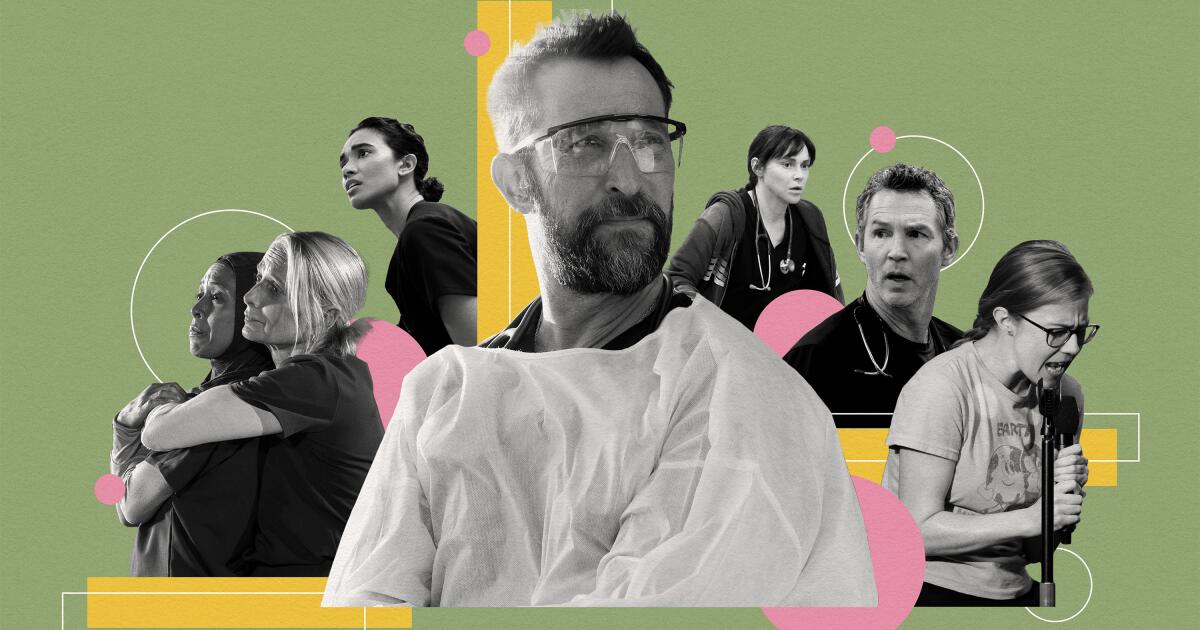
times writer

‘DTF St. Louis’: How Carol resembles Carmela Soprano, Skyler White

I’m confident that I’ll make my way through The Times’ best breakfast burrito list and devour another couple dozen worthy candidates before I’ll ever have the chance to ride on that chronically delayed LAX people mover.

“Ninety-nine percent done”? Sounds like the answer my kids would give me the night before a big homework assignment was due.

Maybe our next breakfast burrito list can be “Best breakfast burritos near John Wayne Airport.” Or Hollywood Burbank. Or Long Beach. The possibilities are endless. No doubt we have got time until that “one percent” gets checked off.

I’m Glenn Whipp, columnist for the Los Angeles Times, host of the Envelope newsletter, and the guy pondering a “DTF Los Angeles” where the characters inch along the LAX horseshoe, kindling all manner of sinister thoughts.

Sign up for The Envelope

Get exclusive awards season news, in-depth interviews and columnist Glenn Whipp’s must-read analysis straight to your inbox.

Cover story: ‘DTF St. Louis’

August 20, 2026 cover of The Envelope featuring Linda Cardellini and David Harbour

(Erik Carter / For The Times)

Are TV viewers a little more judgmental when it comes to complicated women?

Linda Cardellini would always know where someone was on their “DTF St. Louis” viewing journey based on their vibe when they approached her.

“If they were halfway through the show, they usually weren’t warming up to Carol and you could feel that energy,” Cardellini says, talking with me for a recent Envelope cover story on the limited series. “But if they were through with the show, that energy changed. Sometimes you could tell they felt bad that they didn’t like her in the first place.”

Carol, as you know if you’ve watched “DTF,” the season’s best limited series, is an overworked suburban mother forced to umpire Little League games because her job at Purina doesn’t pay enough to cover the bills. She’s married to gentle giant Floyd (David Harbour), an ASL interpreter and a sensitive stepfather to her son. But it’s a sexless marriage, so she turns to local weatherman Clark (Jason Bateman), who possesses a vitality long absent in her husband.

“DTF St. Louis” is ostensibly a murder mystery. Floyd dies in the first episode. Writer-director Steven Conrad employs a fair bit of misdirection, pointing our suspicions first to Clark and then to Carol. Since money is tight and Floyd had an insurance policy, Carol is a logical enough person of interest. We learn that she has a criminal record. And she was cheating.

“When I was reading the episodes, I thought, ‘Oh, OK. It’s going to be Carol, even though there’s so many clues telling you that it’s not her,” Cardellini says. “But we’re conditioned to think that. Like, ‘She had to be after the money,’ even though she never accepts any gifts as she’s struggling financially. Everyone just believed the worst in her.”

Granted, Carol could be a little brusque with service workers, and her passive-aggressive approach to police questioning (“Can you speak up?”) was a master class in control and manipulation that I plan to use if I’m ever interrogated for some crime I’m sure I did not do. (Unless it’s somehow related to picking someone up at LAX. Then all bets are off.)

Reviews for “DTF” too often would note how it’s a poignant look at male loneliness in the suburbs when, in fact, Carol is the most isolated character on the show.

“Carol is immensely lonely, but she’s so burdened by the heavy demand of keeping this household afloat that she doesn’t have the luxury to notice that she doesn’t have a friend,” says Conrad. “The job of bailing water is hers alone.”

In that respect, Carol brings to mind Skyler White on “Breaking Bad” and Carmela Soprano from “The Sopranos,” forlorn women dealing with the man-child they married and getting flak from viewers for being a killjoy.

By the end of “DTF,” we find we should have been on Carol’s side all along.

“It’s a beautiful magic trick,” says co-star Bateman.

Just the latest feat of illusion from the talented Cardellini, one that could result in her first Emmy win next month.
Source link

‘Pluribus’ star Rhea Seehorn has a classic moving-to-L.A. story

The last time I ate at McDonald’s was also the first time I tried a McGriddle.

Why am I thinking about a breakfast sandwich? Well, it’s morning, for starters. And my old friend Laurie Ochoa, who runs all things food at The Times, just had her own first encounter with a McGriddle, inspired by the item’s mention in the most recent season of “The Bear.”

Should McDonald’s have a Michelin star? “The Bear’s” pastry chef Luca thinks so. Laurie is a fan too. Me? Honestly, I ordered it by accident, hangry and delusional after driving too many miles on a road trip home. To this day, whenever my son, Sean, passes that Lost Hills McDonald’s, he snaps a picture and sends it to me, captioning it: “McGriddle?”

I’m Glenn Whipp, columnist for the Los Angeles Times and host of The Envelope newsletter. Does Rhea Seehorn dig McGriddles? She loves bread, so maybe the whole pancake-bun thing would put her off.

Sign up for The Envelope

Get exclusive awards season news, in-depth interviews and columnist Glenn Whipp’s must-read analysis straight to your inbox.

Cover story: Rhea Seehorn

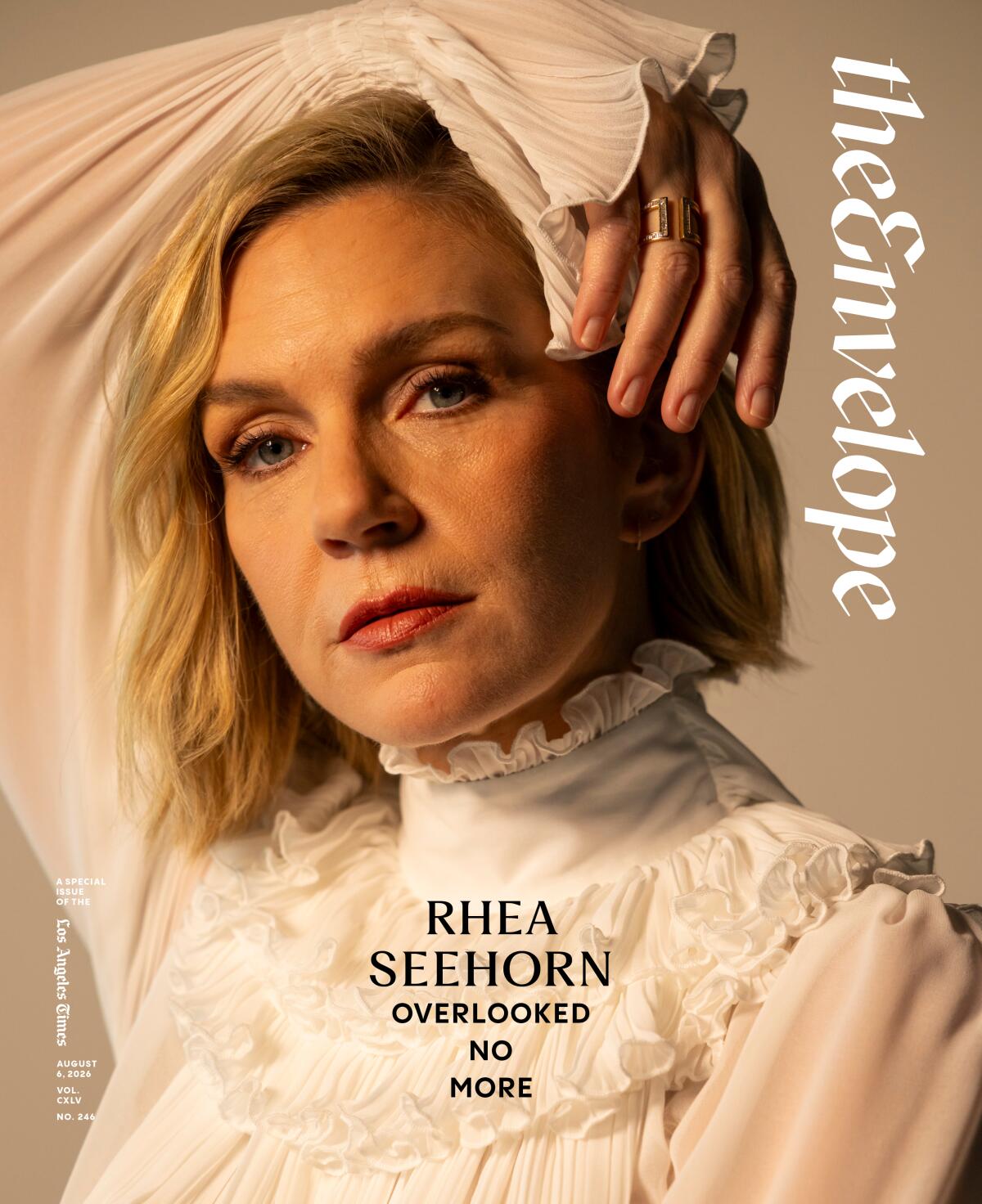
August 6, 2026 cover of The Envelope featuring Rhea Seehorn

(Ian Spanier / For The Times)

If you love great television, you know Seehorn from “Better Call Saul” and the new Apple TV series “Pluribus,” where she plays Carol, a sad woman forced to save the world from happiness and the hive mind.

But other than those two classics and a guest turn on the final season of “Veep,” I have not Seehorn in anything else. Which wasn’t for a lack of trying on her part, as I learned from talking with her for a recent Envelope cover story.

Seehorn moved to Los Angeles in 2003 after landing a lead role on the ABC sitcom “I’m With Her.” Seehorn played … well, I’ll let her describe the character.

“I was the naysaying, coattail-riding, bitchy, alcoholic little sister of Teri Polo’s character,” Seehorn says, laughing. “It was so much fun.”

The comedy ran for 23 episodes and was then summarily canceled, despite the season finale drawing about 11 million viewers. (“Can you imagine?” Seehorn says of the ratings. “You’d be a juggernaut now.”)

When she arrived in L.A., ABC put her up at the massive Oakwood apartment complex on Barham Boulevard, an (in)famous landing place for child actors, musicians and newcomers like Seehorn getting their start in Hollywood. On her way to work each day — she walked to the Warner Bros. lot because she didn’t have a car — Seehorn would pass older men wearing short bathrobes at 7 in the morning and “momagers” hustling their kids to an audition.

Says Seehorn: “It’s weird because you’ve landed a great job and you’re working, so, ‘Yay!’ But also, you’re staying in a one-room apartment that has a kitchenette and a Murphy bed that folds into the wall. When the bed’s folded down, it touches the couch and you can’t walk around. But when the bed is up, it’s a mirror, so you watch yourself have no friends, sitting there watching TV, eating a TV dinner. Then you’re like, is it less depressing to just sit in a bed all day, or should I watch myself sitting here?”

Needless to say, Seehorn moved as soon possible, landing in a fourplex apartment across from the Warner Bros. lot near the Taco Bell and Don Cuco on Riverside Drive. It was heaven. It had a second bedroom. And a window!

She lived there until the second season of “Better Call Saul.”

“The good news is, when you move to L.A. from New York, everything seems like a mansion,” Seehorn says, laughing.

Sitting on that Murphy bed at the Oakwood, was there ever a time when Seehorn wondered, “What am I doing?”

“I had come from supposedly being the receptionist at a construction office in Brooklyn, but what I was really doing was cleaning their bathrooms with like nine pairs of rubber gloves on because it was so disgusting,” Seehorn says. “That was my day job, and then I was working at Playwrights Horizons, a wonderful theater that I’d always wanted to work at, so I was thrilled. But theater doesn’t pay enough to live on. So life was always cobbling something together to pursue my passion, my dream.”

Read more of our ‘Pluribus’ coverage

Source link

Hollywood reacts to Emmy ceremony cuts: It feels like ‘a disinvite’

Do we still call it a “heat wave” if it never ends?

Maybe my Texas and Arizona friends can help me out here on proper nomenclature because, while everybody loves the sunshine, I’m starting to dream of the time when autumn leaves start to fall.

I’m Glenn Whipp, columnist for the Los Angeles Times and host of The Envelope newsletter. My birthday’s still a few months away. Is it OK if I have a slice of this cake, anyway? Maybe the Television Academy can send it to the Emmy nominees who are no longer invited to the ceremony this year.

Read on for more …

Sign up for The Envelope

Get exclusive awards season news, in-depth interviews and columnist Glenn Whipp’s must-read analysis straight to your inbox.

Awards show adaptation or mere party foul?

What if you were invited to a party and then nine days later that invitation is rescinded? A party in your honor, no less, or at least one where you are among the honorees. How would you feel? Would you be tempted to take that birthday cake I just mentioned and smash it into the face of your host?

Maybe I’ve watched the pie fight in “Blazing Saddles” one too many times. (Happy 100th birthday, Mel Brooks!) Still, if I were among the Emmy nominees in the five categories that the Television Academy shuttled off the Primetime Emmy Awards to the untelevised Creative Arts Emmy Awards, I might be reaching for some baked goods and taking aim.

The five categories excised from the show include four from the limited series/movie group — supporting actor and actress, writing and directing. (Variety series writing was also cut.) When I wrote a few weeks ago that the limited series boom had gone bust, it wasn’t my intention that the TV Academy remove more than half of the categories from the show. It could have just been a down year, people! Television was pretty meh across the board the last 12 months. Why pick on one division?

In doing so, the Television Academy effectively disenfranchised HBO’s “DTF St. Louis,” the best limited series of the season, from the ceremony. Steven Conrad’s dark comedy about suburban loneliness earned 13 nominations, including supporting acting nods for each member of its stellar ensemble — Jason Bateman, David Harbour, Linda Cardellini, Richard Jenkins and Joy Sunday. Conrad was nominated for three — writing, directing and producing the series.

But now only Harbour, Bateman and Conrad will receive tickets to the show as executive producers of the nominated series. The other actors can attend the Creative Arts Emmys, held the weekend before the Primetime Emmys. And of course, HBO will be happy to buy them tickets if they want to go to the televised ceremony too.

The question is: Will they and other nominees, which include the likes of Nick Offerman (“Death by Lightning”), Charles Melton (“Beef”) and Dakota Fanning (“All Her Fault”), want to get dressed up two weekends in a row? (First-world problems, I know.)

“It really did manifest as a disinvite for all these people,” says one awards consultant who, like other sources for this story, requested anonymity in order to speak candidly about the move. “Had the Television Academy done it before nominations came out, then at least people’s expectations would have been managed. But now it’s sort of like you got invited to the party and now you can’t come. It’s not a very nice feeling.”

Charles Melton in 'Beef' Season 2.

“Beef” star Charles Melton’s category, supporting actor in a limited series or TV movie, will be presented at the untelevised Creative Arts Emmys the weekend before the Primetime Emmys ceremony.

(Netflix)

Why did the TV Academy wait to shift the categories until after the nominations were announced? Why focus on limited series and not, say, spread the cuts across drama and comedy categories too? Are these changes permanent?

I asked these questions to the Television Academy and the answers were, basically: We announced as soon as possible. We’re going to sidestep that second query. And we’ll see how it goes!

What this comes down to is a desire to create a show that, in the words of a TV Academy spokesperson, is “driven by the need to innovate while delivering a three-hour broadcast, keeping audience expectations and the creative structure of the ceremony in mind.”

Translation: fewer awards, fewer speeches, more throwback segments that have a chance to go viral and get people talking.

The Oscars tried this in 2022, moving eight categories off the telecast, handing them out before the broadcast began. Members hated the idea and order was restored the following year with all 23 awards being presented during the live telecast. (In 2019, when the motion picture academy announced a similar move, saying that four categories would be handed out during commercial breaks, the blowback was so fierce that the decision was almost immediately reversed.)

Emmy ratings were up 8% last year, the highest since 2021. An average of 7.42 million viewers watched. Not NFL numbers, but a continued indication that the audience level for major awards ceremonies has stabilized after steep declines during the COVID-19 pandemic.

Still, there is a feeling among some that awards shows need to adapt and pick up the pace in a time when viewers’ attention spans have shortened. Is there an appetite for a three-hour ceremony when you can simply watch the highlights the next day on social media platforms?

“If people don’t want to see actors winning awards, then the days of televised awards shows should just be over,” gripes another Emmy consultant.

One thing that might be over — or at least greatly diminished — will be submissions for the supporting acting categories for limited series/movie next year if the academy makes this revision permanent.

“I think everyone will be going lead,” one network executive joked, “even if they have just five minutes an episode.”

Source link

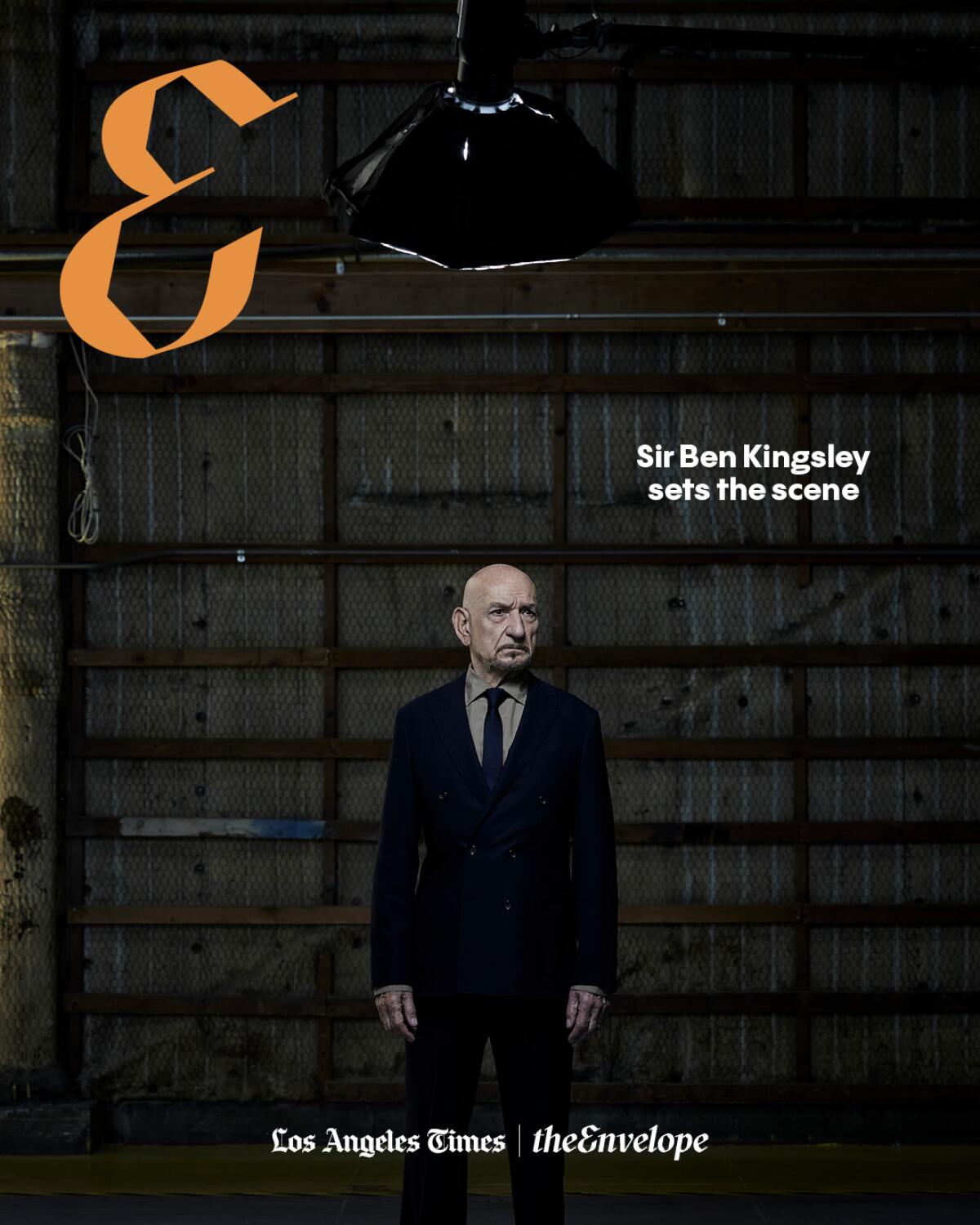
Ben Kingsley’s angriest roles: 3 times ‘Wonder Man’ actor played rage

What is the angriest acting performance you’ve ever seen?

Maybe it’s Joe Pesci in “Goodfellas.” (“Funny how? Do I amuse you?”) Perhaps it’s James Caan kicking the stuffing out of his ne’er-do-well brother-in-law Carlo in “The Godfather.” John Goodman enforcing the rules of bowling in “The Big Lebowski”? It’s in the conversation.

Did Ben Kingsley in “Gandhi” cross your mind? Probably not.

The 82-year-old Oscar winner thinks it should.

I’m Glenn Whipp, columnist for the Los Angeles Times and host of The Envelope newsletter. Don Logan or Mahatma Gandhi? The answer isn’t as plain as you might think.

Sign up for The Envelope

Get exclusive awards season news, in-depth interviews and columnist Glenn Whipp’s must-read analysis straight to your inbox.

Not long ago, I spoke with Kingsley just before an Emmy FYC event for “Wonder Man,” the enjoyable new Marvel TV series that finds him revisiting Trevor Slattery, the washed-up, drug-addled actor he first played in 2013’s “Iron Man 3.”

“Wonder Man” follows struggling actor Simon Williams (Yahya Abdul-Mateen II), trying to land a big break in Hollywood while keeping his superpowers hidden. Trevor befriends Simon. Initially he has ulterior motives, but soon becomes Simon’s mentor, turning the series into a look at the indignities that actors face while pursuing their profession.

Taking notes while watching the show’s eight episodes, I wrote, “Ben Kingsley’s seething anger is everything.”

You may remember Kingsley’s bullying and badgering and swaggering menace playing the underworld sociopath in Jonathan Glazer’s 2000 crime-thriller “Sexy Beast,” still my favorite Kingsley performance, one that earned him a supporting actor Oscar nomination. (He lost to Jim Broadbent in “Iris.”)

Is that kind of boiling rage as fun to play as it is to watch?

“If the expression of rage or indignation is completely dramatically justified and that expression of indignation is of enormous benefit to the tribe, yes,” Kingsley answers.

The Envelope digital cover featuring Ben Kingsley

(Larsen&Talbert / For The Times)

Kingsley says Itzhak Stern, Oskar Schindler’s loyal aide and factory manager in “Schindler’s List,” was, “bless him,” all about “contained rage.”

“And a colleague of mine who saw ‘Gandhi’ said, ‘That’s the angriest performance I’ve ever seen on screen,’” Kingsley continues. “That righteous indignation propelled him, and it can be expressed in many ways. Sometimes the safety valve is efficient enough to allow it to come through language and gesture, and sometimes the safety valve can’t hold it.

“That was Don Logan in ‘Sexy Beast.’ No safety valve.”

Let’s circle back to that thought of how rage can help the “tribe.” In “Wonder Man,” Trevor proclaims that “acting is not a job. It’s a calling, the single most consequential thing anyone could ever do with their life.”

“I would broaden the definition and refine it back to its origins,” Kingsley says when I ask if he shares Trevor’s view on acting. “There are images, thoughts and threads that I find nourishing and sustaining, and I treasure them. The tribal storyteller is a very consequential figure in the tribe, and if the mantle of the tribal storyteller falls upon that person’s shoulders, that is the single most consequential thing that person can do in their lives.”

“Trevor expresses it quite differently, and that’s fine,” Kingsley says. “That’s in the script. I honor the lines. But for me personally, as a rather convoluted answer, the tribal storyteller is the hand I hold and the baton I want passed on to me. Maybe it has. I hope I’m worthy, but it’s …” Kingsley widens his eyes and whispers, “Wow.”

“It is the single most consequential thing I can do with my life.”

Source link

Our awards columnist shares his 2026 Emmy nominations ballot

There are more than 100 Emmy categories, and if you scroll through each and every one of them on the Television Academy’s website, you’re probably one of those people who read the terms and conditions on a document before signing your name.

This hasn’t been the greatest year for television, which has had the converse effect of prompting me to sample more shows than ever in a quest to unearth that one hidden gem that merits a place on my mock Emmy ballot. Truth be told, I’m still looking. I’m sure I’ve missed something. And I’m sure you’ll let me know.

In the meantime, here are my picks for the top 15 categories — five each for comedy, drama and limited series — along with a brief line of reasoning for each. And if it’s predictions you’re after, you can find our full BuzzMeter panel’s choices here. Emmy nominations will be announced July 8.

Sign up for The Envelope

Get exclusive awards season news, in-depth interviews and columnist Glenn Whipp’s must-read analysis straight to your inbox.

Comedy series

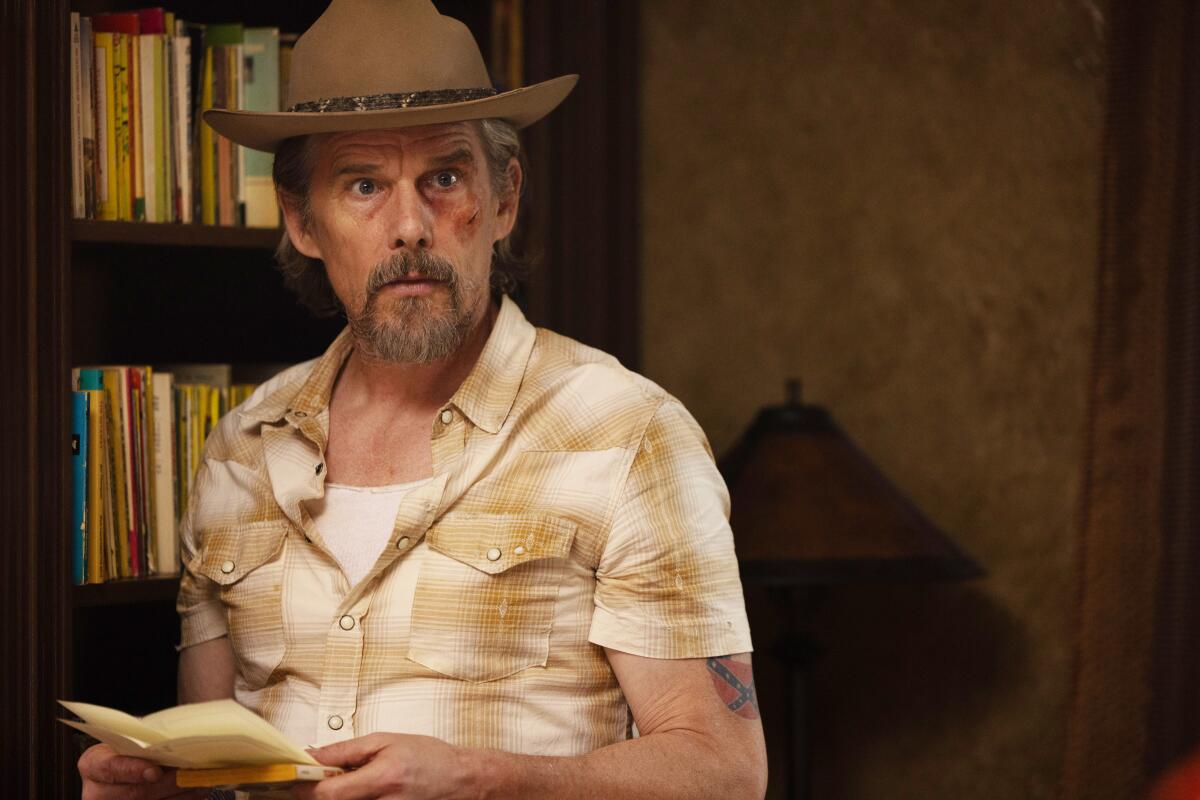
FX's The Lowdown -- "Pilot" Episode 1 -- Pictured: (l-r) Michael Hitchcock as Ray, Ethan Hawke as Lee Raybon.

“Abbott Elementary”
“The Bear”
“The Comeback”
“Hacks”
“The Lowdown”
“Margo’s Got Money Troubles”
“The Fall and Rise of Reggie Dinkins”
“Shrinking”

Sterlin Harjo’s “The Lowdown” feels like it’s on the same trajectory as his last series, “Reservation Dogs,” an under-the-radar charmer that grows in estimation as its audience builds. Noir crime stories don’t come more delightful.

Comedy actress

Rose Byrne in "Platonic."

Quinta Brunson, “Abbott Elementary”
Rose Byrne, “Platonic”
Ayo Edebiri, “The Bear”
Elle Fanning, “Margo’s Got Money Troubles”
Lisa Kudrow, “The Comeback”
Jean Smart, “Hacks”

“Platonic” heightened the chaos and conflict in its second season, affording the gifted Byrne additional room to flex her comic chops. How do you sleep on a show starring a newly minted Oscar nominee?

Comedy actor

The Fall and Rise of Reggie Dinkins -- "Pilot" Episode 101 -- Pictured: Tracy Morgan as Reggie Dinkins

Yahya Abdul-Mateen II, “Wonder Man”
Ethan Hawke, “The Lowdown”
Tracy Morgan, “The Fall and Rise of Reggie Dinkins”
Jason Segel, “Shrinking”
Martin Short, “Only Murders in the Building”
Jeremy Allen White, “The Bear”

Morgan acting oblivious is one of the funniest things ever.

Comedy supporting actress

SATURDAY NIGHT LIVE: Tommy Brennan, Jane Wickline, and Ashley Padilla during the "Mom Confession" sketch on January 31, 2026

Hannah Einbinder, “Hacks”
Janelle James, “Abbott Elementary”
Ashley Padilla, “Saturday Night Live”
Michelle Pfeiffer, “Margo’s Got Money Troubles”
Sheryl Lee Ralph, “Abbott Elementary”
Jeanne Tripplehorn, “The Lowdown”
Jessica Williams, “Shrinking”

The Padilla Pause is one reason I’m watching “Saturday Night Live” again.

Comedy supporting actor

Marcello Hernández during the "Harry For Him" sketch on Saturday, March 14, 2026

Harrison Ford, “Shrinking”
Marcello Hernández, “Saturday Night Live”
Ben Kingsley, “Wonder Man”
Ebon Moss-Bachrach, “The Bear”
Nick Offerman, “Margo’s Got Money Troubles”
Stephen Root, “Widow’s Bay”
Tyler James Williams, “Abbott Elementary”

Hernández’s charisma and physical comedy is another.

Drama series

Myha'la and Marisa Abela in "Industry."

“Industry”
“A Knight of the Seven Kingdoms”
“The Night Manager”
“Paradise”
“The Pitt”
“Pluribus”
“Slow Horses”
“Task”

How many Emmy voters finally caught up on “Industry,” the fast-paced drama about a group of cutthroat Gen Zers? Four seasons in, it’s more addictive than ever.

Drama actress

Caitriona Balfe in "Outlander."

Caitriona Balfe, “Outlander”
Myha’la, “Industry”
Chase Infiniti, “The Testaments”
Michelle Pfeiffer, “The Madison”
Rhea Seehorn, “Pluribus”
Zendaya, “Euphoria”

Now that “Outlander” is over, it’s time to pour one out for Balfe. Over the course of eight seasons, she hopscotched through time, enduring and overcoming numerous assaults and kidnappings, dealing with grief and trauma and enjoying lots of emotionally grounded sex. Balfe has earned a final reward.

Drama actor

a man in cloak standing next to a horse and holding its reins

Sterling K. Brown, “Paradise”
Peter Claffey, “A Knight of the Seven Kingdoms”
Tom Hiddleston, “The Night Manager”
Gary Oldman, “Slow Horses”
Mark Ruffalo, “Task”
Noah Wyle, “The Pitt”

Claffey turned bumbling into art.

Drama supporting actress

Katherine LaNasa in "The Pitt" Season 2.

Isa Briones, “The Pitt”
Taylor Dearden, “The Pitt”
Fiona Dourif, “The Pitt”
Supriya Ganesh, “The Pitt”
Katherine LaNasa, “The Pitt”
Sepideh Moafi, “The Pitt”
Karolina Wydra, “Pluribus”

LaNasa should have bumped herself up to lead. As Whitaker explains to Langdon in Season 2’s penultimate episode, Robby’s the Professor of the ER and LaNasa’s Dana is the Skipper. And the Skipper should be lead.

Drama supporting actor

Tom Pelphrey in TASK Season 1

Patrick Ball, “The Pitt”
Diego Calva, “The Night Manager”
Shawn Hatosy, “The Pitt”
Gerran Howell, “The Pitt”
Ken Leung, “Industry”
Tom Pelphrey, “Task”
Carlos-Manuel Vesga, “Pluribus”

Pelphrey has called his desperate single dad on “Task” the role of a lifetime. No argument here.

Limited series

Richard Gadd, Jamie Bell HBO "Half Man," Season 1

“Bait”
“Beef”
“DTF St. Louis”
“Death by Lightning”
“Half Man”

I put off watching the finale of the punishing “Half Man” for weeks. Does that mean the show worked?

Limited series/TV movie actress

REMARKABLY BRIGHT CREATURES. Sally Field as Tova in Remarkably Bright Creatures. Cr. Courtesy of Netflix © 2026.

Sally Field, “Remarkably Bright Creatures”
Camila Morrone, “Something Very Bad Is Going to Happen”
Carey Mulligan, “Beef”
Sarah Pidgeon, “Love Story”
Robin Wright, “The Girlfriend”

I like her! Right now (and always), I like her!

Limited series/TV movie actor

Mitchell Robertson as Niall, left, and Stuart Campbell as Ruben in "Half Man."

Riz Ahmed, “Bait”
Charlie Hunnam, “Monster: The Ed Gein Story”
Matthew Macfadyen, “Death by Lightning”
Mitchell Robertson, “Half Man”
Michael Shannon, “Death by Lightning”

The young actors on “Half Man” — Robertson and Stuart Campbell — outshone their well-known counterparts.

Limited series/TV movie supporting actress

DTF St. Louis - Linda Cardellini

Linda Cardellini, “DTF St. Louis”
Grace Gummer, “Love Story”
Laurie Metcalf, “Monster: The Ed Gein Story”
Cailee Spaeny, “Beef”
Joy Sunday, “DTF St. Louis”
Constance Zimmer, “Love Story”

Both Cardellini and Sunday for “DTF St. Louis”? No way, José, you say? Yes way, I say. All the way!

Limited series/TV movie supporting actor

Nick Offerman as Chester A. Arthur in episode 102 of Death By Lightning. Cr. Larry Horricks/Netflix © 2024

(Larry Horricks / Netflix)

Jason Bateman, “DTF St. Louis”
Stuart Campbell, “Half Man”
Richard Gadd, “Half Man”
David Harbour, “DTF St. Louis”
Charles Melton, “Beef”
Nick Offerman, “Death by Lightning”

The mutton-chopped Chester A. Arthur joins Ron Swanson’s ’stache in television’s facial hair hall of fame.

Source link

What Charles Melton and Cailee Spaeny beef about: NFL, Letterboxd

Glenn Close is not going to be ignored this time around, as the eight-time Oscar nominee will finally receive recognition from the academy this fall.

I’m Glenn Whipp, columnist for the Los Angeles Times and host of The Envelope newsletter, working up a healthy World Cup fever even if it’s just an excuse to head to Lucky Baldwin’s for a pint or two and watch Cristiano Ronaldo one last time.

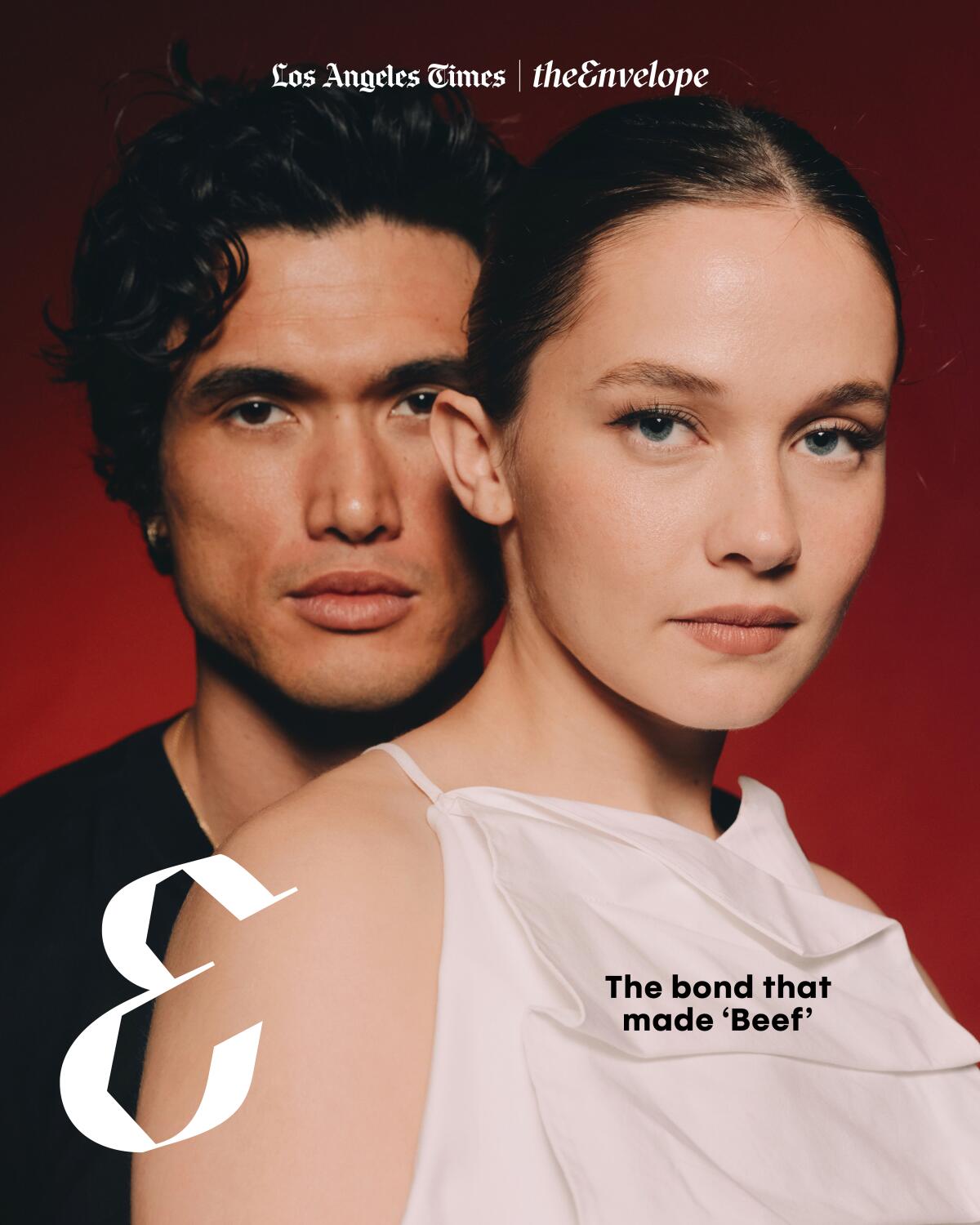
But let’s circle back to American football and my digital cover story with “Beef” stars Cailee Spaeny and Charles Melton, who watched a Super Bowl together, though they were cheering for different teams.

Sign up for The Envelope

Get exclusive awards season news, in-depth interviews and columnist Glenn Whipp’s must-read analysis straight to your inbox.

That Super Bowl in question was Super Bowl LIX, pitting the Philadelphia Eagles against the Kansas City Chiefs. Melton hosted a watch party, and since he considers Kansas home and played football for Kansas State University, you might think he’d be rooting for the Chiefs.

Nope.

“When I was living in Germany, I fell in love with Donovan McNabb,” Melton, an army brat, tells me, name-checking the longtime Eagles quarterback.

Spaeny, it turns out, was the only Chiefs fan at the party. To enter Melton’s home, she had to step on a doormat that was fitted with a red-and-white Chiefs jersey. (“It got real dirty,” Melton says with pride.)

Melton and Spaeny enjoy a relaxed and playful give-and-take, borne from the months they spent preparing to play Austin and Ashley, a Gen-Z couple working at a Montecito country club, dreaming and scheming toward upward mobility in “Beef.”

The Envelope digital cover featuring Charles Melton & Cailee Spaeny

(Erik Carter / For The Times)

The most memorable episode they shared found the couple in an overcrowded, ninth-circle-of-hell emergency room with Ashley, uninsured, experiencing severe ovarian torsion. Her concerns are dismissed and she begs for someone to save her.

“Unfortunately, it’s an all-too-common experience,” Spaeny says. “I probably have a conversation once a month with female friends who go to the doctor’s office and are gaslit by the system, just being made to feel like what they’re experiencing isn’t really happening or they’re making it up. It’s scary.”

Still, being “Beef,” the episode has its share of mordant humor, like the scene where a nurse asks Ashley to rate her pain, zero being pain-free and 10 being excruciating.

“Oh, I thought it was like Letterboxd,” Ashley replies, referring to the movie review social platform. “Two-and-a-half stars out of five is average.”

“My whole life I’ve been a six or seven,” Melton says, noting his own personal pain scale. “I’ll have a cold and I’ll be like, ‘Six or seven.’”

“That sounds like you,” Spaeny says.

“I can get pretty dramatic,” Melton says. “It’s really like the end of the world when I’m sick.”

Spaeny deleted her Letterboxd account because she gets anxious about anything online containing reviews.

“It takes two buttons to click on a movie that I’ve been in and see what people say about me,” Spaeny says. “So I forgot my password and left it that way.”

Melton is an enthusiastic adopter and says he has twice shared his four favorite films, a feature where actors, usually on the red carpet, list a quartet of beloved movies. (Here’s one at the “May December” premiere where Melton enthuses over “The Matrix,” “In the Mood for Love,” “Brokeback Mountain” and “Persona.”)

“I saw them at another event and they were like, ‘Charles, so good to see you.’ And I was like, ‘Do you want my four favorite films?’ And they said, ‘No, you’ve already done it enough,’” Melton laughs. “What can I say? I love movies!”


Source link

Emmy voters, ‘The Pitt’ Season 2 is just as good as Season 1

What was the moment from the season finale of “The Pitt” that finally broke you?

Was it the shot of the day-shift staff watching the Fourth of July fireworks from the hospital roof, the sound of “America the Beautiful” playing in the distance? Maybe it was Dr. Al-Hashimi (Sepideh Moafi) crying in her car, realizing she can’t work around the seizure disorder that makes her a liability in the ER. Or perhaps it came when Noah Wyle’s Dr. Robinavitch (a.k.a. Dr. Robby) swaddled Baby Jane Doe, telling her that “everything’s gonna be just fine,” because she has “so many wonderful things to see and so many people to love.”

But what opened the floodgates for me, after the last half-hour of the episode left me completely dazed and dumbfounded, was Drs. Santos (Isa Briones) and King (Taylor Dearden) exorcising the day’s demons by belting out Alanis Morissette’s “You Oughta Know” at a karaoke bar and demonstrating that primal scream therapy is alive and well three decades into the 21st century.

Sign up for The Envelope

Get exclusive awards season news, in-depth interviews and columnist Glenn Whipp’s must-read analysis straight to your inbox.

Which is all to say: “The Pitt” is the only television show I’ve watched that gives me the same feeling I have when I read a great, immersive novel. When the end is near, I’m bereft. I’m Al-Hashimi in her car, wanting to pound the dashboard. I do not want to let these characters go. They’ve given me 15 hours and I still crave more. I would devour a series of short films about odd couple Santos and Whitaker (Gerran Howell) sharing an apartment or a summer spinoff showing Dr. Abbot (Shawn Hatosy) working off-hours as a SWAT medic. Anything to fill the long, “Pitt”-less weeks between seasons.

Instead, I’ll just have to content myself with scrolling through social media, watching fan-made videos of Dr. King self-soothing her way through the day, (this one, set to Vince Guaraldi’s score from “A Charlie Brown Christmas,” is the absolute best) and taking in the compilation of the show’s cast asking, “What’s the status on Baby Jane Doe?” in their best Katherine LaNasa Pittsburgh accent.

“The Pitt” won five Emmys from 13 nominations, including best drama series, for its celebrated first season, a 15-episode run that began with Dr. Robby up on the hospital roof talking down Dr. Abbot after an intense shift. The season ended with Dr. Abbot returning the favor after Robby and his staff ground their way through a day that included a mass shooting, a child drowning and a patient assaulting LaNasa’s no-nonsense charge nurse.

How do you follow that?

For a few episodes this new season, it looked like “The Pitt” wasn’t up to the task. We watched the ER staff dealing with a series of bloody, messy (the disimpaction!) medical maladies, an avert-your-eyes spectacle that felt like the writers were trying to one-up themselves and find the worst possible affliction to make viewers double over. Worse, the thrill of discovery that kept us invested throughout the first season, the slow drip of information about the characters, wasn’t quite there. Something was missing, and it wasn’t just Dr. Robby’s motorcycle helmet.

But the luxury of having 15 episodes is that the writers can take their time laying the groundwork for the story they want to tell.

And what a story it was.

Over the course of the season, we watched Dr. Robby disintegrate, his mental health more precarious than ever because he has done nothing to address his apparent PTSD. “You need help,” Dr. Langdon (Patrick Ball) tells Robby, confronting him in the finale. “Be honest with yourself.”

Robby isn’t the only one struggling, as Dr. Abbot puts it, to “dance through the darkness.” Langdon is back, managing his sobriety. Dr. Mohan (Supriya Ganesh) is having panic attacks. Santos is still dealing with self-harm. Dana remains haunted by that Season 1 patient assault and now carries a syringe containing a heavy sedative just in case somebody emerging from that overcrowded waiting room crosses the line again.

“I’ve seen so many people die that I feel like it’s leaching something from my soul,” Robby says. “I’m tired of feeling like I’m drowning every day.”

And there you have it, the subject of Season 2 of “The Pitt.” Medical professionals are gasping for air, and the American healthcare system, with its focus on profit above all else, is failing them and the patients they treat.

Remember Orlando, the patient with severe diabetic ketoacidosis who arrives at the ER after fainting? Orlando had to ration his insulin because he lacked insurance and felt he had to cut corners. He ends up leaving the hospital early, fearing the cost of treatment. Later he returns, having fallen (jumped) from a catwalk at his construction job, fracturing his skull. But good news: He now qualifies for Medicare and Medicaid due to long-term disability.

It’s a tragedy, one of many reasons the season finale shot of the ER staff holding back tears as they watched the Fourth of July fireworks felt like a body blow. “America the Beautiful”? How can that be true when the current administration is seeking $1.5 trillion for defense spending — nearly 50% more than this year — while cutting healthcare and social safety nets? How can that be true when an act known as the “Big, Beautiful Bill” removed funding from an already frayed healthcare system and exacerbated the shortage of care in rural areas of the country?

That one scene, the culmination of hours of careful, patient storytelling, said more about the disconnect between American ideals and America’s reality than anything else I’ve read or watched this year.

Give “The Pitt” all the Emmys. It has more than earned them.


Source link

Why ‘Harry Potter’ star Gary Oldman thinks HBO show is a ‘great idea’

Maybe you can use a laugh this morning. Maybe you’re still deep in your feelings, thinking about the “Hacks” series finale and that shot of Hannah Einbinder looking at Jean Smart on the dance floor, grief seeping into her eyes. Maybe you’re lamenting the chaos at our treasured national parks. Hell … maybe you took out a loan to buy a tomato over the weekend.

If you’re feeling down, Gary Oldman would like a word. And that word is: Hufflepuff.

I’m Glenn Whipp, columnist for the Los Angeles Times and host of The Envelope newsletter, back in your inbox for the next few weeks as we navigate our way through Emmy season.

Sign up for The Envelope

Get exclusive awards season news, in-depth interviews and columnist Glenn Whipp’s must-read analysis straight to your inbox.

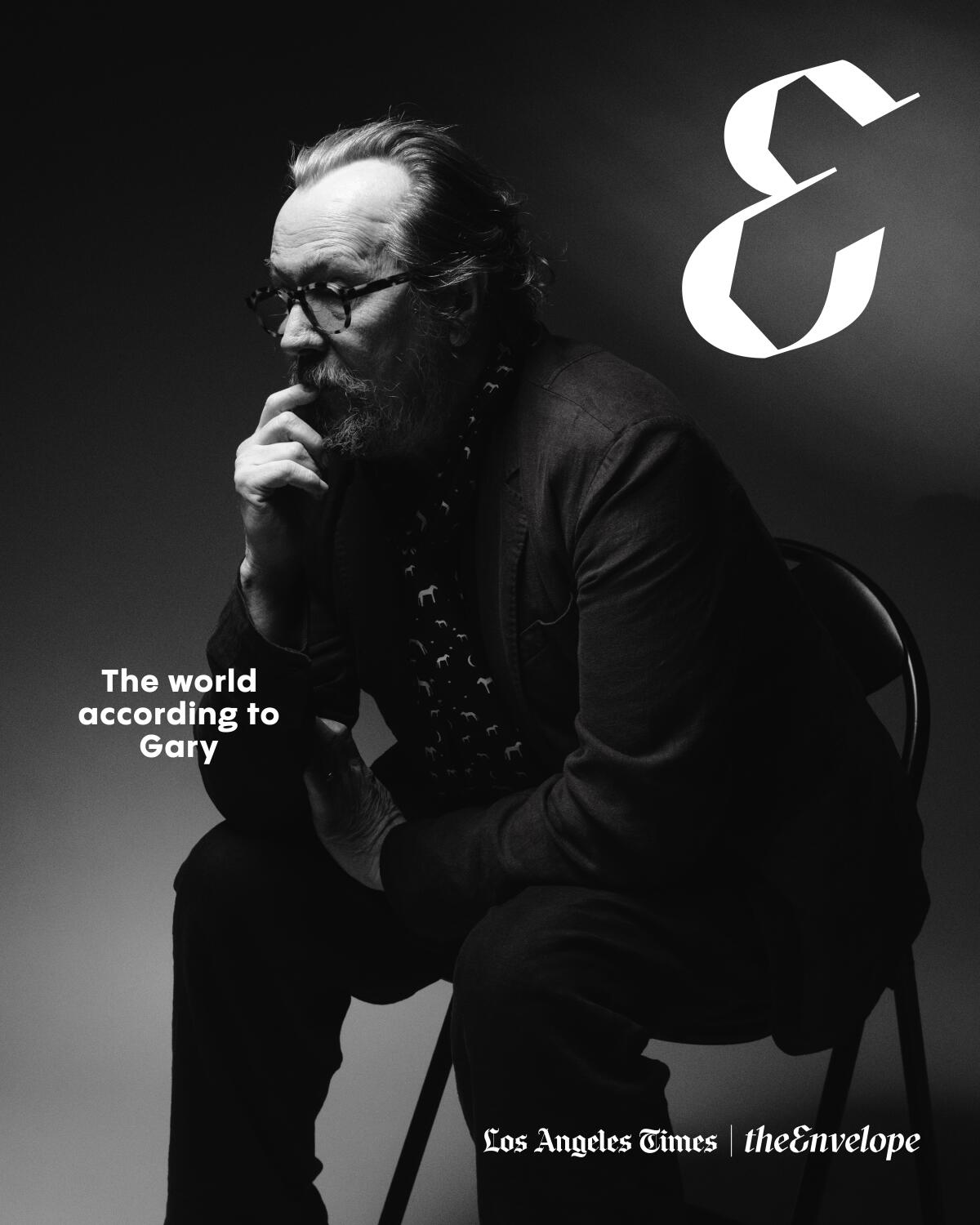
Digital cover story: The world according to Gary

The Envelope digital cover featuring Gary Oldman

(Jennifer McCord / For The Times)

Gary Oldman is a Hufflepuff.

Never mind that the 68-year-old actor, who played the rebellious, impulsive wizard Sirius Black in the Harry Potter film franchise, couldn’t tell you the difference between a Hufflepuff and, say, a Gryffindor.

When journalist Josh Horowitz reads a list of core personality qualities — loyalty, hard work, patience, fairness, dedication — and asks Oldman if that describes him, he nods his head.

You’re a Hufflepuff.

“I’m a Hufflepuff?” Oldman says, trying the word on for size. He likes it. “I’m a Hufflepuff!”

This video clip is a favorite of mine, one I could watch on a loop for the sheer delight Oldman takes in pronouncing the word Hufflepuff.

It’s easy to see why Oldman takes such pleasure in being a granddad these days, one of the things we talked about at length not long ago for an Envelope digital cover story. He can access his silly side with ease.

I asked Oldman about the upcoming HBO “Harry Potter” television series, a decade-spanning endeavor that will spend a season adapting each of J.K. Rowling’s seven fantasy books.

“I’ve seen a trailer for it, and I think it’s a great idea,” Oldman says. “They’re doing the whole book, which I love, because there were a lot of wonderful things, fabric and character detail, we had to lose for the sake of telling the story in two hours.”

Would Oldman be keen to don a distressed velvet overcoat again and participate in the reboot?

“I don’t think they want any of us from the movies contaminating or muddying the waters,” Oldman says, pleasantly. “Besides, I’m too old.”

But with AI, is anyone too old now? Oldman could drop into “Harry Potter and the Prisoner of Azkaban” and look like he hasn’t aged a day since the movie was released 22 years ago.

“I don’t know where we’re going with it because it seems to advance every week,” Oldman says. He ponders the advances made since Martin Scorsese used digital deaging in his 2019 film “The Irishman.”

“I think that was the least successful thing about it,” Oldman says of the technology, “and I’ve been a huge Martin Scorsese fan forever. Ultimately, I don’t know why they wanted to make [Robert] De Niro’s eyes blue.” He pauses, considering the change and why it bothered him. “I guess it’s a blue-eyed Irishman. If I had one negative takeaway, it would be that.”

Oldman prefers directors like Christopher Nolan, whom he worked with on the “Dark Knight” movies and “Oppenheimer,” who think technology should be used sparingly to enhance the storytelling.

“Otherwise it leaves me a bit cold,” he says. “You’re just looking at ones and zeroes.”

“I don’t want to be replaced entirely,” Oldman continues, shaking his head. “I don’t think anyone does.”

Read more coverage of ‘Slow Horses’

Source link