One answer arrived this year in the form of “Music, Fashion, Film,” Charli XCX’s bracing follow-up to 2024’s Grammy-winning “Brat.” An emotionally complicated dance-pop album about the relationship between power and vulnerability, “Brat” struck a nerve in a weird cultural moment and finally brought Charli the kind of stardom she’d been openly seeking for ages. In the LP’s immediate aftermath, the English musician hungrily scooped up the spoils of her success — playing Coachella’s main stage, starring in a highbrow mockumentary, soundtracking Hollywood’s latest take on “Wuthering Heights.”
Yet “Music, Fashion, Film” wonders what it all meant. It’s a digitally enhanced rock record — probably 2026’s best thing-with-guitar — that cycles through thoughts on ambition and trend-chasing before landing with a moving sense of serenity on the idea that everybody dies and takes their accomplishments with them.
Share via
“No One Lasts Forever” is the album’s final track, and Sunday night that was also Charli’s closer at Inglewood’s Kia Forum, where she headlined the second of two shows over the weekend.
Structurally, the concert bookended songs from “Brat” (for which she was accompanied by prerecorded tracks) with stuff from “Music, Fashion, Film” (for which a scuzzy live band backed her up). There were stray oldies too, including “Constant Repeat,” which she introduced as one of the first songs she wrote about her husband, George Daniel — “even though it’s not exactly truthful,” she added — and the landmark hyperpop cut “Vroom Vroom.”
She also did “House,” a spooky goth-folk song from “Wuthering Heights” that had her writhing on the stage in the white-hot heat of a single spotlight — a sex kitten turned scream queen (or perhaps vice versa). And she brought out Adéla, the Slovakian singer famously booted from the reality show that created Katseye, to do her viral hit “Nicole Kidman,” which is just one of a handful of rough-edged pop hits this year that demonstrate “Brat’s” lasting influence.
Indeed, what was illuminating about the middle of the show — basically a half-hour-long club night with strobes cranked happily to here’s-the-seizure-you-ordered — was seeing how very un-tired Charli’s fans are of being pulverized by songs like “Club Classics,” for which she donned her Superman’s-cape sunglasses, and “Guess,” during which pairs of underwear rained down on the audience in a nod to the music video for the song’s remix with Billie Eilish.
Charli had opened with the new album’s “Rock Music,” in which she declares that “the dance floor is dead”; here, her sarcasm fooled precisely nobody.
My favorite part was the home stretch of tunes from “Music, Fashion, Film”: “Camera,” a startlingly frank confession of her movie-star aspirations; “Magic Metal Montana,” a deeply tender ode to her friend and collaborator A.G. Cook; “SS26,” a jittery electro-punk jam about “walking on a runway that goes straight to hell.”
I love the strange emotion in these songs — the feeling that you might as well say what you want because the only thing more embarrassing than taking a risk is not taking one.
At some point, Charli lit up a cigarette and waved it around like someone who’d discovered a critical truth. What were they gonna do — make her end the concert early?
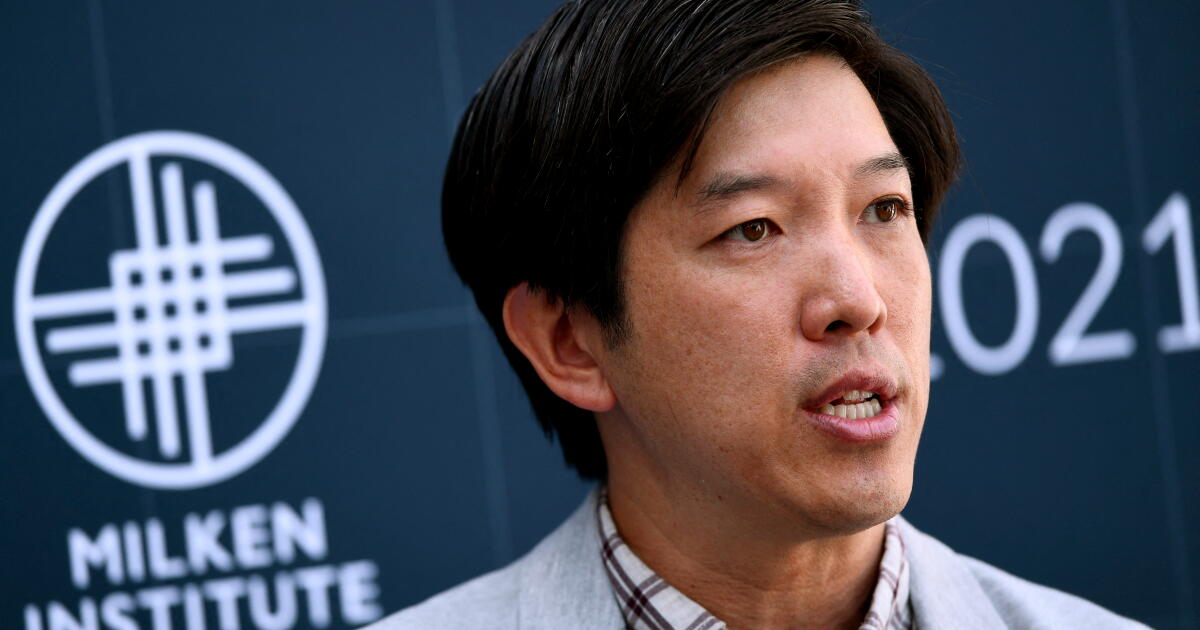
Management upheaval at Netflix continued Monday as the streamer’s head of films Dan Lin exited, according to two people familiar with the matter who declined to be named.
Lin was appointed to the position in February 2024 and was tasked with making fewer, better and bigger movies. During his tenure, Netflix rolled out movies including crime thriller “The Rip,” starring Ben Affleck and Matt Damon and animated hit “KPop Demon Hunters.” His exit arrives as Netflix is going to release highly anticipated movies in theaters in the coming months including David Fincher-directed “The Mis-Adventures of Cliff Booth” starring Brad Pitt in November and Greta Gerwig-directed “Narnia: The Magician’s Nephew next year.
Netflix did not have an immediate response to a request for comment.
Lin’s exit followed massive layoffs at Netflix that began last week, trimming 6% of staff or roughly 1,000 people. Netflix last Thursday announced the company’s Chief Content Officer Bela Bajaria was no longer at the streamer and named her replacement, Peter Rice, a former chairman of Walt Disney Television and chairman of general entertainment for The Walt Disney Co.
After Bajaria was pushed out, many people in the industry expected Lin would be next, according to sources who declined to be named.
Rice will also oversee the film team until a new film head is announced.
Analysts and investors have raised concerns about Netflix’s growth. In the first half of 2026, hours watched on Netflix increased 2% compared to a year earlier, according to the streamer. Investors had hoped for more robust growth, given that the streamer increased its content budget 11% to $20 billion.
Netflix is profitable and continues to grow its revenue. But analysts say the streamer hasn’t had enough big hits recently and are skeptical about Netflix‘s ability to increase prices and grow its subscriber base if it doesn’t have enough popular content.
Netflix stock has dropped 42% compared to a year ago. By mid-morning on Monday, shares were trading at $69.53, down 1%.
In a note to staff about Bajaria’s exit, Netflix Co-CEO Ted Sarandos wrote that he saw an opportunity to take the streamer’s slate to the “next level” especially in the United States and Canada market, “where we have an outsize impact in creating big, buzzy hits that our members love and drive conversation around the world.”
Lin’s role was controversial in Hollywood, as he was named to the role after former Netflix film chief Scott Stuber left. Under Stuber’s leadership, Netflix ramped up its movie production and produced big budget films including 2022‘s “The Gray Man” starring Ryan Gosling but is not ranked in Netflix’s top 10 films of all time. “The Gray Man” cost nearly $200 million to make and at the time was Netflix’s most expensive movie, according to the New York Times.
Lin’s directive to be more budget conscious also irked some people in the industry.
While films released during his tenure including the animated film “Swapped,” as well as action films “Carry-On” and “Back in Action” made Netflix’s top 10 most-watched films list, based on views at the time of their debut, some of his other films were not as successful, analysts said.
Brandon Katz, director of insights and content strategy at Greenlight Analytics, said Netflix’s five most-watched English-language scripted summer movie releases in their first eight weeks posted the lowest average hours watched compared with the streamer’s top five summer releases in 2025, 2024 and 2023, citing Nielsen data.
Analysts and investors are eagerly anticipating Netflix’s third quarter earnings results Tuesday, as executives are expected to address how they plan to move the company forward.
The feature-length factal drama was rigorously researched but Huw has asked for it to be examined inder the ‘fairness and privacy’ clause of the Broadcasting Code
14:36, 19 Oct 2026Updated 14:36, 19 Oct 2026
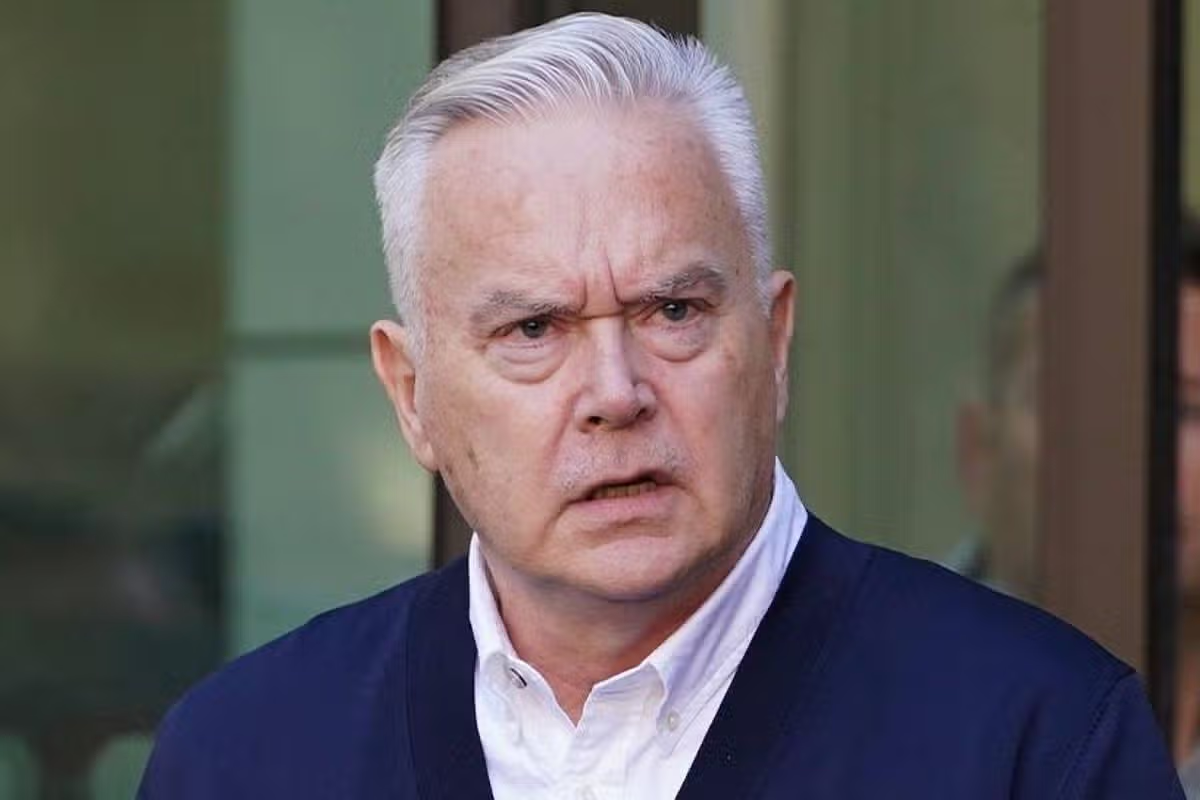
Huw Edwards has filed an Ofcom complaint against the drama about his downfall
Ofcom has launched a probe into Channel 5’s factual drama about Huw Edwards following a complaint which can only have come from the ex-BBC newsreader himself.
The two-part factual drama, called Power: The Downfall of Huw Edwards and starring Martin Clunes as the disgraced journalist, is being examined for “fairness and privacy” under Ofcom’s Broadcasting Code.
The investigation’s criteria covers “unjust or unfair treatment of individuals or organisations in programmes” or “unwarranted infringement of privacy in programmes”.
Huw, 65, has not publicly stated that he has called for the probe. But under the Ofcom code, in order to make a fairness and privacy complaint, it must come from either the affected person directly or by someone authorised to complain on their behalf.
An Ofcom spokesperson told Broadcast : “ We are investigating a fairness and privacy complaint about this programme.”
The feature-length film, Power: The Downfall of Huw Edwards, told the story of the former BBC News presenter’s shattered career. It showed him befriending a 17-year-old boy and grooming him to send explicit photos or videos in exchange for cash. It also showed him linking up with a convicted paedophile online, leading to a criminal conviction for making indecent images of children, for which he pleaded guilty and was given a suspended sentence.
The 90-minute special is currently Channel 5’s highest-rating show of the year, pulling in 3.8m viewers over 28 days when it aired in March.
Ahead of the drama transmitting, Huw claimed that producers had failed to “check with me the truth of any aspect of their narrative” in the factual drama.
In a statement after the drama aired, he accused Channel 5 of “belatedly” asking him for a response after the drama had been made and claims the broadcaster “refused to disclose whether any of those making allegations” used in the research of the drama “had been paid for their contributions”.
In response, a Channel 5 spokesperson insisted it had been “based on extensive interviews with the victim, his family, the journalists who revealed his story, text exchanges between the victim and Edwards, and court reporting”.
They added: “It has been produced in accordance with Ofcom’s Broadcasting Code. All allegations made in the film were put to Huw Edwards via his solicitors six weeks before transmission.”
Huw resigned from the BBC on health grounds, before being charged in June 2024 following a Metropolitan Police investigation.
The Welsh newsreader pleaded guilty at Westminster Magistrates’ Court to three charges of making indecent images of children. These included seven category A images, the most serious classification, which had been sent to him on WhatsApp by 25-year-old convicted sex offender Alex Williams.
Ofcom is now expected to take representations from both sides before either upholding the complaint or dismissing it.
Watching a film on Netflix can take you a few hours, but this movie is so good – people will happily watch it over and over again in one day. So have you seen it?
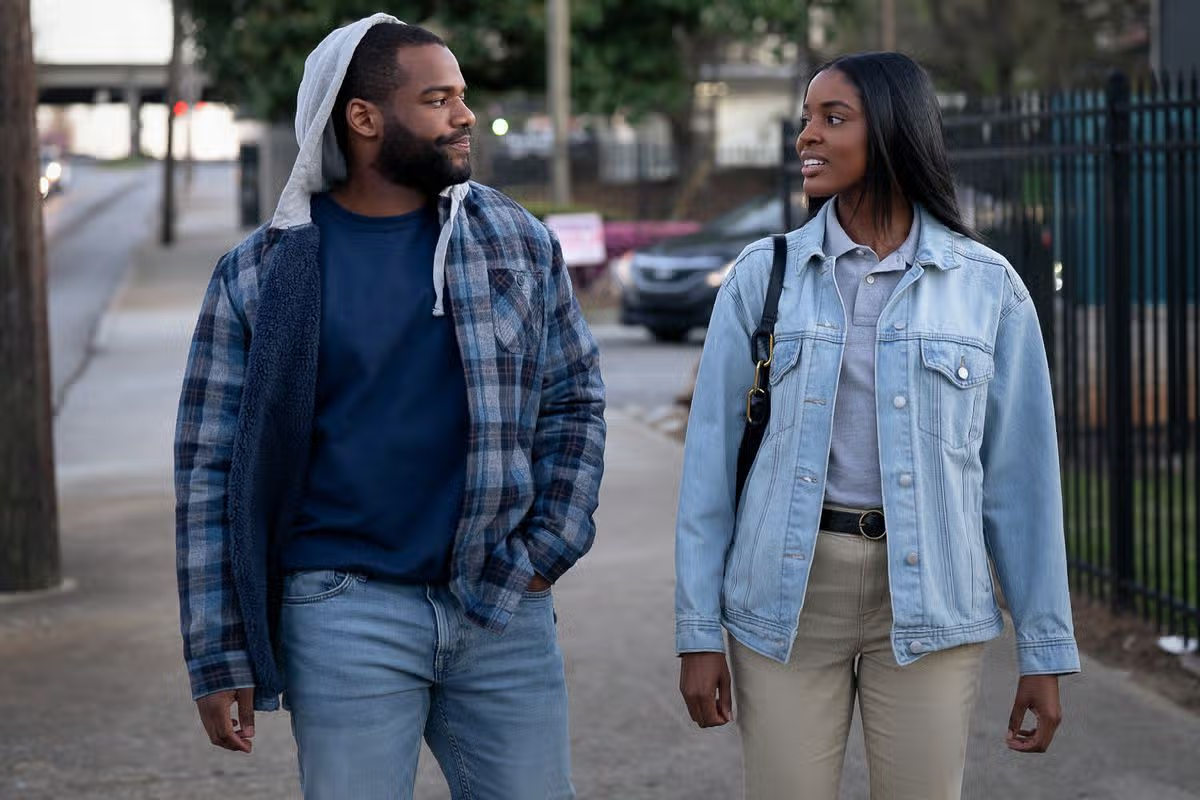
The film is now available to watch on Netflix UK(Image: Quantrell Colbert/Perry Well Films 2/Netflix)
Scrolling through your Netflix can take ages to find something that’ll have you glued to your seats until 6am. Landing on a new series to watch is one thing, but what if you only have time for a film?
The streaming platform has a variety of genres to pick from – like comedy and horror. Sometimes people manage to watch one film, then decide to blitz through its sequels. But lately people can’t stop raving on about a movie which is about two hours long, so much so, they’re watching it multiple times in one day. So have you seen it?
Kim shared a snippet of the Tyler Perry film Doing Life which she rated a 10 out of 10. She captioned the clip: “I cried so much from beginning to end.”
Ensure our latest headlines always appear at the top of your Google Search by making us a Preferred Source. Click here to activate or add us as Preferred Source in your Google search settings…
Content cannot be displayed without consent
And it seems she’s not the only one to have glowing reviews of the 2026 film as one wrote in the comments: “I wish it was longer, a TV show or something. It was so good, I watched it TWICE today.”
Another admitted: “Try up to 4 times, I loved it. I can recite lines now.”
What is Doing Life about?
Starring Naomi Baker, Jay Reeves and Tamberla Perry, this Tyler Perry movie follows a single mum and prisoner forge an unlikely bond through heartfelt letters.
The romantic drama deals with real-life issues, like the cycle of poverty, absentee fathers, single mothers and incarceration. It was released on Netflix on October 2 and has already proven to be a hit.
Directed and written by Tyler Perry, along with Angi Bones and Tony L. Strickland as producers, this film is Perry’s seventh from his creative partnership with the streaming giant.
Speaking about the film, Perry said: “I was inspired by… the idea that sometimes the people we least expect can understand each other in ways no one else can.
“I wanted to tell a story about two people who, on the surface, seem like complete opposites, but who discover a deep commonality in the struggles they’re facing.”
Since its release at the start of the month, the American drama holds a 6.6 out of 10 score on IMDb, with a 69% approval rating based on general audience and social media reviews.
Meanwhile it pulled 9.3 million views in its first three days on Netflix, debuting at no.3 on the global English-language movie chart and reaching no.1 in the US.
You can watch Doing Life on Netflix UK now with a runtime of 1 hour and 48 minutes. So will you be watching it more than once in day?
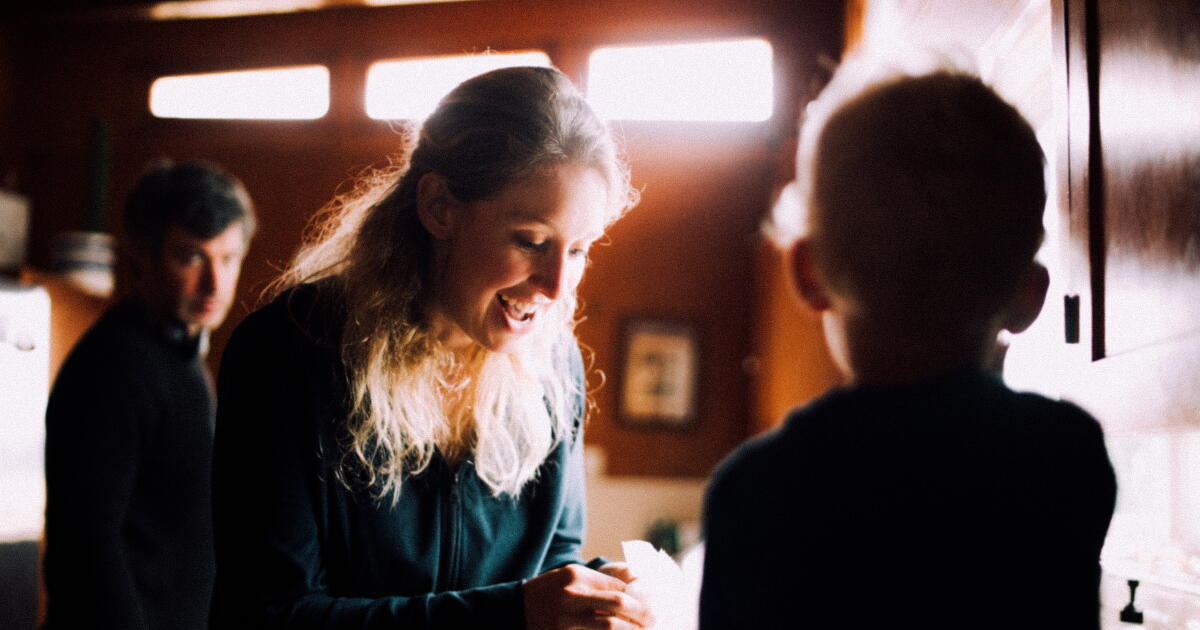
In the mindbending documentary “You Can See Everything,” comedian Nathan Fielder and professed inventor Elizabeth Holmes sit in her beach house staring at each other like gunslingers. Fielder is the creator of the TV series “The Rehearsal” and “Nathan for You” who constructs discombobulating sham realities that include bogus businesses such as Dumb Starbucks. Holmes is the former billionaire CEO of Theranos who pretended she’d built a revolutionary blood testing machine to squeeze investors for a few dollars more.
Each is an expert in the con. But Fielder is deadpan and cold where Holmes is earnest and warm — and he’s been nominated for Emmys while, in May of 2023 when the film begins, she’s about to serve an 11-year sentence in federal prison. As the camera cuts between close-ups of his narrowed eyes and her big, blue ones, Fielder tries to suss whether he can trust the famous fibber to be honest with him. The showdown is riveting.
“You’re being real right now?” Fielder asks, dubious.
Holmes beams. “I’m always being real,” she swears with a smile.
Her charm hits Fielder in the gut. His face stays neutral yet you can see his own confidence bleed out across the screen.
Co-directed by Fielder and Lance Oppenheim (“Primetime”), “You Can See Everything” is the closest Fielder has come to making a traditional documentary. A thrillingly cringe-tastic interviewer, he blurts out blunt questions like a bungee jumper leaping off a bridge, including asking Holmes’ romantic and business partner Billy Evans, the heir to a San Diego boutique hotel chain, whether it’s possible a woman convicted of fraud might be with him for his money.
At nearly three hours long, “You Can See Everything” won’t bore you for a minute. The hook is right there in the title, Fielder’s challenge to the audience: Here’s how Holmes held up to his scrutiny — do we think she’s telling the truth? But be alert. Fielder remains a trickster. One shot in particular proves you can see everything while being blind to what you’re actually watching.
In the first half of the movie, Holmes and Evans, the father of her two young children, give the small crew complete access to their lives during her last weeks of freedom, including inviting Fielder to sleep in their guest bedroom. It’s an act of “radical transparency,” Evans says. As evidence, there’s a fully nude shot of Evans in the shower, testifying to the intimacy the subjects claim they’re granting the team and the confidence they have that the documentary will make them look great. (Evans also boasts that he’s “excellent” in the sack.)
Holmes maintains both her innocence and her eerie smile, a rictus of empathy. She constantly nods, subliminally snake-charming the listener into a sense of agreement. That assessment might be fair or it might be her reputation making you over-analyze her tics. Doubling down, she even insists she’s never told a lie in her life — a claim that momentarily leaves Fielder at a loss for words.
Yet at times, Holmes really does appear to be sincere. Once she surrenders herself to the Bryan Federal Prison Camp in Texas (where, in an unmentioned coincidence, Epstein collaborator Ghislane Maxwell is also incarcerated), the tone shifts into film noir as Fielder struggles to reconcile Elizabeth Holmes’ dual identities. Is she the sweet-natured scientist, the only version of her he’s ever met, or a femme fatale who may still be running a scam?
“It’s personal,” Fielder says of his fixation. How frustrating that he of all people — the dark prince of pranks — may be Holmes’ latest patsy. Composer Ari Balouzian borrows bits of Bernard Herrmann’s violin score from “Vertigo” while cinematographer David Bolen makes the audience hold its breath by framing an image of Fielder and Holmes like they might kiss.
When the movie’s style gets weird, that’s when Fielder is most in his wheelhouse. Stop reading now if you want to preserve the surprise. Micro-analyzing his encounters with Holmes, he reenacts them with an actor, Amanda Seyfried, whose emotional intensity blows into the film like a gust of fresh air. Seyfried, of course, won an Emmy and a Golden Globe for playing Holmes in the 2022 miniseries “The Dropout.” The twists to come, however, feel as much like last year’s naughty hit “The Housemaid,” the domestic thriller in which Seyfried played a shady wife with a marriage made of lies.
Evans initially seems to think they’re participating in a project closer to Netflix’s glossy portrait of Meghan Markle and Prince Harry. The couple doesn’t know much about humor, pop culture or Fielder himself. Fumbling to figure out what makes him tick, Evans attempts to neg the provocateur as someone who lacks the passion to think differently. (Evans may also be the person who used Holmes’ social media account to write a flattering post calling JD Vance “Lisan al-Gaib,” revealing he’s entirely missed the point of “Dune.”)
But thinking differently is Fielder’s awkward superpower. Sooner or later, all of his projects circle around to his concern that he’s simply wired to be unpleasant. His interactions with Holmes are pure cringe comedy, like when she starts to cry perhaps a bit on cue and he stiffly sputters, “Do you want, like, a tissue?” For the record, he brings her one.
As a viewer, the biggest strike against Holmes is this documentary’s very existence. Whether or not you think she’s guilty of fraud, she is about to be separated from her infant and toddler until they’re in grade school. Who on Earth would genuinely want Fielder, the human equivalent of a skunk, to crash their last moments with their loved ones as he does his darnedest to stink up the place?
Fielder is most comfortable as the film’s villain, shooting himself lurking in the couple’s house like “Halloween’s” Michael Myers. At times, his presence does feel monstrous. In one scene, he needles Evans about whether he thinks his soulmate has ever lied to him while Holmes is on the phone in the next room, tearing up as she asks how often she’ll be able to bathe in prison.
The film doesn’t drill into the technical details of Theranos beyond one dizzying scene where Fielder tries to pin Holmes down on exactly what she meant when she said her machine can run hundreds of different tests. She means it just as I would if I bragged I can benchpress a beer keg — that is, once I strength-train beyond my piddly 5 lb dumbbells.
Instead, it tilts into becoming a caper flick as Seyfried’s commitment to understanding her character’s motivation inspires the actor to invite herself along. The drama they uncover is psychological, as befits an era where Silicon Valley CEOs are closer to cult leaders than engineers, making their cash from being televangelists for their IPOs. And both are attuned to the moments when Evans lets his aggravation slip. One scene is a doozy.
Ultimately, suspicion reigns. “You Can See Everything” is an absorbing study of public presentation and private doubts, a documentary that asks more questions than it answers. I hope Fielder will smile and nod approvingly at me if I say I left the film distrusting him, too, especially Seyfried’s re-staging of a long monologue Holmes delivered in prison where recording devices aren’t allowed. Can we believe that Holmes really did say, “I’m tired of having other people speak for me,” or was that laugh line written by the master manipulator himself? I’m now as paranoid as he is — and what a pleasure.
Nathan Fielder would rather you not read this article. At least not until you’ve seen his new movie.
He has a point.
Now in theaters, “You Can See Everything,” the nearly three-hour documentary Fielder co-directed with filmmaker Lance Oppenheim about convicted Theranos founder Elizabeth Holmes, is full of head-spinning twists and turns best left unspoiled, and the filmmakers have gone to extreme lengths to keep them that way. At its secret premiere at the Telluride Film Festival last month, audience members were required to lock their phones in pouches and warned that security guards with night-vision goggles would be watching for anyone trying to record the screening. Afterward, Fielder pleaded with the crowd to keep the film’s biggest surprises to themselves.
Holmes was convicted in 2022 of defrauding investors in her failed blood-testing company and sentenced to more than 11 years in federal prison. Fielder and Oppenheim began filming her and longtime partner Billy Evans, an MIT graduate and heir to a family-owned San Diego hotel business, shortly before she reported to prison in 2023, gaining extraordinary access to the couple and their two young children.
Holmes and Evans welcomed the cameras, hoping they would help vindicate her. But the closer Fielder and Oppenheim got to the couple, the harder it became to distinguish candor from calculated performance. Fielder, whose series “Nathan for You” and “The Rehearsal” put real people through elaborate, often uncomfortable experiments, began to wonder whether the tables had been turned.
“I really am struggling to this day to understand exactly what I experienced in this,” Fielder admitted during a post-screening Q&A at Telluride. “I don’t quite know what I went through.” He said he hoped audiences might help him make sense of the “glitchy feeling” it left in his head.
Having seen the film twice, we’re not entirely sure we can help him.
In deference to Fielder’s wishes, this is your last chance to turn back: Major spoilers follow. For those still with us, here are 10 of the film’s strangest moments — by no means the only ones — along with a few clues from Fielder himself about how they came to be.
Evans takes ’radical transparency’ too far
Evans has a theory about why the world sees his partner as a monster: Nobody really knows her. “In the absence of knowing somebody, it’s really easy to make them feel other and scary,” he tells the filmmakers. His proposed solution is “radical transparency” — a familiar Silicon Valley mantra with an ironic resonance given Theranos’ notorious culture of secrecy. The filmmakers are allowed virtually unlimited access to the family’s life, with Fielder even invited to move into their rented house in Del Mar, near San Diego. In one scene, Evans stands completely naked in the shower, brushing his teeth with the bathroom door wide open and the cameras rolling, as Fielder stands awkwardly nearby. At Telluride, Fielder, who had initially planned to stay behind the scenes, admitted he was still perplexed by the couple’s openness. “I’m a weird guy — why do they want me there?” he said. “That messed with my head a little bit.”
Fielder observes Holmes and her family in a scene from the documentary “You Can See Everything”
(A24)
Theranos, the sequel
A federal fraud conviction apparently hasn’t ended Holmes’ ambitions to revolutionize medical testing. Before heading to prison, she and Evans begin laying plans for a new venture involving lasers and artificial intelligence that Evans describes as “2.0” — a chance, he says, “to put the band back together and do it all again.” Holmes declares, “From wherever I am, I’m going to continue to work inventing, even if it’s inventing from a cage.”
Holmes claims she’s never told a lie
For someone convicted of defrauding investors, Holmes has a remarkably uncomplicated view of her own honesty. Asked by Fielder whether she’s ever told a lie in her life, she replies, “I don’t think so.” Pressed — surely she’s pretended to be sick to get out of a party? — she concedes she has, explaining that she thought he meant the criminal case against her. In a scene that became the centerpiece of the film’s teaser trailer, Holmes fixes Fielder with an unwavering stare. “Why would I deceive you?” she asks. “There’s no reason for me to do that.” When Fielder asks whether she’s being real with him, she doesn’t miss a beat: “I’m always being real.”
The Theranos device gets a second look
Holmes hauls out of storage the infamous Theranos device, the machine that helped bring down her company. “So this is the famous scam device,” Fielder says. “It is not a scam device,” Holmes replies. When she insists the machine can perform any medical test, Fielder finds himself drawn into an absurd debate over the meaning of the word “can.” Did she mean it could actually perform those tests, or that it theoretically would once the necessary chemistry had been developed? The man who has made a career out of baffling other people seems genuinely baffled himself, reduced to explaining the word “can” to the founder of Theranos.
Holmes and Evans enter federal court in 2022.
(Nic Coury / Associated Press)
Elizabeth Holmes meets Abbott and Costello
Still trying to make his point, Fielder turns to Abbott and Costello. He plays Holmes the classic “Who’s on First?” comedy routine — two people hopelessly talking past each other. Holmes watches politely and says she finds it funny. But she seems to have missed the central joke: The first baseman’s name is actually Who. “I didn’t pick it up,” she admits. Fielder’s attempts to explain the joke and why he showed it to her get him nowhere. Evans, watching the exchange, regards his wife’s difficulty following the joke as further evidence that her mind simply works differently from everyone else’s.
Fielder gives Holmes an escape kit
On the morning Holmes is due to report to prison, Fielder arrives with a parting gag gift: hair dye and glasses, in case she’d prefer to disguise herself and flee the country. Fielder is famous for excruciatingly awkward deadpan comedy, but Holmes’ parents are there, the family is preparing for an emotional goodbye and he seems to realize almost immediately that he has misjudged the situation. “I didn’t know your parents would be here,” he says, assuring everyone that it’s “just kind of like a joke.” The more he tries to explain himself, the more uncomfortable things become. “Maybe not appropriate for the moment,” he concedes.
Amanda Seyfried becomes a surprise co-star
Seyfried won an Emmy for playing Holmes in Hulu’s “The Dropout,” which Holmes had avoided watching for fear it would be too emotionally disturbing. Fielder persuades Holmes to watch it for the first time, on a laptop in the couple’s bed. She soon breaks down in tears and asks him to turn it off. Later, Fielder visits Seyfried at her apartment and shows her footage of Holmes watching her performance. So we watch Seyfried watch Holmes watch Seyfried playing Holmes as Fielder watches her. And things only get weirder from there.
At Telluride, Fielder said the filmmakers initially doubted Seyfried would want to participate. But after a brief phone call, she invited them over and agreed to be filmed. Neither side knew where things would lead. “It just actually evolved in that organic way, which was really exciting,” Fielder said.
Seyfried as Holmes in a scene from Hulu’s “The Dropout.”
( Beth Dubber / Hulu)
Seyfried plays detective
Seyfried soon finds herself reenacting Holmes’ conversations with Fielder as he tries to make sense of their encounters. She becomes so invested that she joins Fielder on a visit to Evans’ home, hoping she might get him to open up in ways Fielder can’t. “I feel like an undercover cop right now,” she says, clearly getting a rush. There, after meeting the couple’s children, she unexpectedly winds up on a prison phone call with Holmes herself. With only two minutes for the family to talk, Seyfried suddenly seems mortified to be intruding. “I’m so sorry — I don’t want to ruin your two minutes with your beautiful family,” she says. Fielder, naturally, has a camera running.
Evans takes control of the narrative
With Holmes behind bars, Evans seems determined to manage her public image himself. Armed with power of attorney, he takes over her verified X account, posting messages in her name, some of which sound nothing like the carefully controlled Holmes, including one telling another user to “f— off.” “There’s just so much trust that most things I don’t really consult her on,” Evans says at one point. “I know what she’d want.”
Evans’ attempts to steer the documentary itself begin even before Holmes reports to prison. In a meeting later reenacted in the film, after Holmes leaves the room, he raises the subject of money with Fielder, Oppenheim and executives from A24, the studio behind the film, demanding a share of the profits. Fielder says A24 reluctantly agreed, leaving him worried that the integrity of the project may have been compromised. When Holmes later insists she has no financial interest in the film, Fielder is taken aback. Either she’s “fully sincere,” he tells Seyfried, or “she honestly might be the most manipulative person that’s ever lived.” (The film notes at the end that Evans later changed his mind and decided not to accept payment.)
On Oct. 5, Holmes’ X account promoted the documentary with a tantalizing warning: “I really don’t think you are ready for this doc.” Whether that was Holmes speaking or Evans speaking for her is anyone’s guess.
Seyfried confronts Evans
Things turn ugly during that same visit to Evans’ home. A conversation about conjugal visits and Evans’ sex life gives way to a heated argument over his use of Holmes’ X account. Evans brings up the social media backlash Seyfried faced for criticizing Charlie Kirk after his shooting death, then attacks her portrayal of his partner in “The Dropout.” Soon he’s threatening vengeance against people he believes have wronged Holmes. “I’m going to ruin their lives,” he declares. Asked whose lives he means, Evans replies, “F—ing everyone. I’ve got vengeance in my heart.”
Later, away from Evans, Seyfried offers her own assessment: “He is bat— crazy.”
Steven Soderbergh is stepping in to help finish shooting “The Batman Part II” while director Matt Reeves continues to deal with a personal matter.
“As Matt Reeves continues to attend to an ongoing family matter, Steven Soderbergh, as an admirer of Matt’s work, approached Matt and will step in, with the full support of DC Studios, to help the writer-director complete the final weeks of principal photography on ‘The Batman Part 2,’” the studio said Thursday in a statement first reported by Deadline. “Matt and Steven will work closely together with the actors and crew to fulfill Matt’s vision of the film.”
DC Studios chief James Gunn confirmed the news on social media Thursday while reiterating that Reeves remains the director of “The Batman Part II.”
“Matt is still the director of The Batman 2 and always will be,” he wrote on Threads. “I can’t express how profoundly grateful and moved we are by Steven’s offer to help him complete his vision.”
“Matt has the full support of DC Studios and we look forward to continuing the journey soon,” the studio said in a statement at the time.
The writer-director also took to social media Thursday to express his gratitude and to confirm he would be continuing his work on “The Batman 2.”
“Just to be clear, I am not leaving The Batman Part II,” Reeves wrote in a post on X. “I am profoundly grateful to Steven for coming to my aid during this challenging time to help me finish principal photography. Thank you to all for your concern and well wishes.”
Soderbergh expressed his appreciation for Reeves’ work while addressing his new role Thursday in a widely reported statement.
“I thought Matt Reeves’ work on ‘The Batman’ was stunning; it was intentional, specific, and rigorously coherent,” he said in his statement, first reported by Deadline. “The goal here is to work with Matt and his team to generate footage that will integrate seamlessly with what’s already been shot so Matt can properly finish his film.”
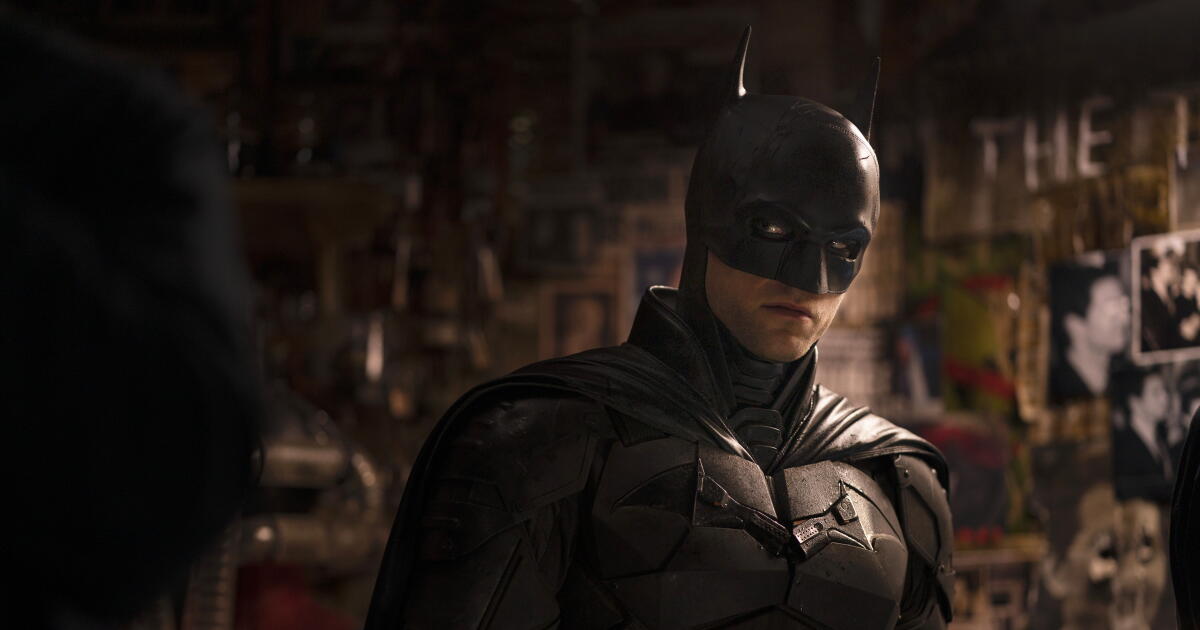
A follow-up to Reeves’ 2022 reboot, “The Batman,” the upcoming film will once again star Robert Pattinson as Gotham’s iconic Caped Crusader. “The Batman Part II” began filming in London in June after a number of previous delays while Reeves and Mattson Tomlin wrote the script. The movie is slated to hit theaters on Feb. 18, 2028.
As Puerto Rico continues to grapple with the long aftermath of Hurricane Maria — from an unreliable electrical grid to ongoing water shortages — the need for stories that see the island as more than a backdrop feels especially urgent.
That’s part of what makes “Hurricane Seasons,” an intimate new independent film about a Puerto Rican family returning home, feel so timely. The film, which screens Sunday at the Newport Beach Film Festival, stars comedian Aida Rodriguez as Glori, a Brooklyn-based artist and community-center worker. She returns to Puerto Rico to help her sister (Justina Machado) care for their terminally ill mother (Priscilla Lopez).
When their matriarch convinces the family to embark on a bucket-list road trip around the island, old family secrets surface as the 2019 protests following Hurricane Maria unfold around them. Directed by Nicole Gomez Fisher and written by Xavier Ortiz — with Rodriguez also serving as a producer — the film is both a story of a multigenerational family and a love letter to Puerto Rico.
For Rodriguez, who is best known as a stand-up comedian, “Hurricane Seasons” also marked a return to a part of her artistic identity that existed long before comedy — her love of acting. But she admits that stepping back into acting, especially as the film’s protagonist, wasn’t an easy transition.
Aida Rodriguez, left, and Priscilla Lopez in a scene from “Hurricane Seasons,” directed by Nicole Gomez-Fisher.
(Laura T Magruder)
“It was terrifying. It was very scary because as a stand-up comedian, I work very hard at trying to obtain my most authentic self so that I can share it with everybody — to be my truest self, my truest Aida,” she says. “And when you loan yourself to a character and the art form of acting, you’re loaning yourself to that character and bringing yourself to that character, of course, because that is why they choose you. But you are telling a story from the perspective of another person.”
Rodriguez had pursued acting before going into stand-up comedy. Upon moving to Los Angeles, she quickly booked acting work, signed with an agency and began taking classes.
But comedy eventually taught her to do almost the opposite of what acting required.
“When I started doing standup, the direction and the notes were always like: ‘Release any character you have in mind and just access yourself,’” she says. “So it was a battle for me. Coming back to becoming an actor and giving the character Glori what Glori deserved — and allowing Glori to live, and Aida to sit in the back — became something important for me to do.”
She adds that it took a lot of work with coaches and classes for her to relax into acting again, allowing Aida the comedian to rest while focusing on what this role required of her.
The film’s protagonist, Glori, is a Brooklyn-born-and-raised Puerto Rican woman whose connection to the island runs deep, despite her living stateside. This is something Rodriguez, who is half Puerto Rican and half Dominican, born and raised in the States, also personally relates to.
That tension — between where you live, where your family comes from, and who gets to decide whether you are “Puerto Rican enough” — is one of the film’s central themes and one reason the script resonated with Rodriguez.
“My testimony through my art has always been finding unity, solidarity, power and connection with other people,” she says. “I think that the story of growing up in the States and connecting to the island is a universal story that most people, regardless of where they come from, experience. [There’s this] idea that you’re never American enough nor whatever you are — in this case Puerto Rican enough — because there’s always a judge and jury on both sides.”
Rodriguez sees those tensions as a consequence of a much larger and complex history. She believes so much of the judgment on both sides is a lingering effect of colonization.
“For me, that was one of the most attractive things about the script — [it] was being able to engage in a conversation about what being Puerto Rican really is,” she says. “Is it based on colonial standards? Or is it based on maintaining our cultural richness and our legacy, that is handed down to us regardless of where we are?”
That question takes on even more weight today as Puerto Rico sits in the aftermath of Hurricane Maria, which Rodriguez believes shifted the relationship between Puerto Ricans on the island and those living stateside.
“There was a shift, because there are wounds from both places,” she says. “There are wounds from the people on the island that stayed and stuck it out. [They want to ask] the ones who left, ‘why do you get to claim this, if you’re not here sticking it out with us?’ Then the people who leave feel like, ‘we had to do this, so that we can not only survive, but send money back to the island.”
Rodriguez explains that, in many ways, the aftermath of the hurricane sparked arguments on both sides that were necessary to begin healing the tension. She believes it highlighted issues that Puerto Ricans, as part of a diaspora, could no longer ignore; it also highlighted an island and a community that Americans outside of the Latine community paid little to no attention to.
“It took a hurricane for people to know what Puerto Ricans were,” she says. “I think there was a cultural shift and there was a conversation that needed to be had, about what happens on the island. And what that means to those of us who are not there.”
That conversation serves as the meat and bones of “Hurricane Seasons,” in which Puerto Rico isn’t simply a location. It’s an integral presence in the story. Rodriguez, Ortiz and Gomez Fisher all agreed that filming most of the movie on the island was essential, not only creatively but also economically and culturally.
“The other thing that was very important about taking the movie back to Puerto Rico was to invest in Puerto Rico and to stimulate some sort of revenues for the island and that the crew was a Puerto Rican crew,” she says. “The DP [director of photography] was a Puerto Rican DP — all people that live on the island.”
It was important to them that if they were going to tell a story about Puerto Rico that was also shot in Puerto Rico, that Puerto Ricans on the island actually benefited from the production.
“It’s not cool to go to Puerto Rico and shoot a movie and bring in your own people from the States, and the people in Puerto Rico have to be inconvenienced with their roads being blocked and things shut down and an influx of Americans that come there to be disrespectful and them not making anything out of it,” Rodriguez says.
This commitment shows in the protest scenes. Rather than using background actors, the film features real Puerto Rican residents, including a local activist and singer.
“It didn’t feel rehearsed. It didn’t feel fake,” she says. “I just think that the feelings and the passion and the rage and the sense of urgency is still there.”
Ortiz’s commitment to specificity extended to the family casting, intentionally matching the actors to the real-life relatives they are based on.
“It wasn’t performative. It was actually real because that’s what all of our families look like,” she says. “Puerto Ricans, Dominicans, we just have that diversity because of all the stuff that’s happened in the past.”
Glori’s character also represents a refreshing departure from the way Latina women are often portrayed onscreen. She is a mother, a daughter, a community center worker, an artist — and a woman with a complicated romantic and family history. She is beautiful and desirable, but her sexuality isn’t the defining characteristic of her existence — something we don’t see enough when it comes to Latina roles.
“For me, I didn’t have to step outside of myself for the role, which was really refreshing because every audition that I ever get, I do have to step out of myself because when people write Latinas in Hollywood, they tend to write them one way,” says Rodriguez. “They look a certain way, they talk a certain way, and that’s not the reality of what being Latino, especially in America, is like.”
Rodriguez could freely inhabit a Latina character without feeling as though she had to perform her Puerto Rican-ness for the audience.
“I didn’t feel like I had to perform my Latinidad. I could just exist in it,” she says.
Rodriguez adds she’s ready for a Hollywood that wants Latina actors to have the same range of characterization that white actors have long been afforded. She’s open to seeing Latinas being everything in TV and film, where can they exist in a world in which they can just be people who just happen to be Latinas.
“I really do look for a day when we can just be people and not just be the funny, spicy friend,” she adds. “Some Latinas are not spicy. Some Latinas are nerds, and some Latinas are quirky, and some of them are goofy and some of them are clumsy. And just like everybody gets to see the spectrum of whiteness with all the different kinds of characters, I would love to see that for our people. For all people of color, actually. I think it’s important to see us all as full human beings, and that means that we can be anything.”
The film’s multigenerational story touches on the cultural inheritance passed between mothers, daughters and grandmothers — whether through old traditions or ordinary rituals. It’s something audiences, regardless of background, can likely relate to.
“The most important message that I’ve kept from my [foremothers] was never to lose my sense of Puerto Rico; that, even if I don’t live in Puerto Rico, Puerto Rico lives in me,” she says. So much of that inheritance lives in the little things she remembers about her Puerto Rican grandmother, she says, from the té de tilo she’d make for an upset stomach; the recao that grew on her grandmother’s balcony because she didn’t have a backyard; or the azabache she still wears to this day for spiritual protection. They are the same small traditions she has passed on to her kids.
“My daughter makes better arroz con gandules than all of us,” Rodriguez says. “And her recipe is true to what my grandmother’s recipe was. That will continue to live on, until we are able to go back to our island and live in peace.”
That freedom is one reason Rodriguez believes independent film is so important for stories like “Hurricane Seasons.” Without a studio machine making decisions based primarily on commercial expectations, filmmakers have more room to tell a story on their own terms.
“Once the studio gets involved, they start thinking about dollars, which they got to make money, but they prioritize the dollars,” Rodriguez says. “And I think that’s why a lot of these big projects that they spend a lot of money on have failed because they don’t honor the storytelling. They don’t honor the authenticity of the world, the authenticity of the stories.”
Her hope is that “Hurricane Seasons” encourages more people to tell their own stories — especially Puerto Ricans.
“Puerto Ricans are not a joke; we’re not a punchline. You don’t get to tell us we don’t speak correct Spanish and make fun of our songs. Then, years later, appropriate our culture and become big time doing what we do, using our terms and our colloquialisms because it brings you capital,” she says. “We are people. We’ve been doing this for a very long time, and our grandmothers and our tias and tios matter, and they’re not [a] costume that you can just put on [to] make money off of it.”
Before we wrapped up the call, Rodriguez paused for a moment when I asked her what Puerto Rico means to her. Then her eyes lit up, and her voice softened as she described why the island means so much to her — and why so many people, even outside of the diaspora, find themselves drawn to it.
“Puerto Rico is a very special place, which is why so many people want to kick us out, so they can move [in],” she says. “But they’ll never have the magic, because the magic is us.”
Fans reported audience members walked out of cinemas when it was first released
The Substance teaser clip
Film fans say it is one of the best thrillers ever, so long as you can stomach it.
Ahead of Halloween, a number of horror movies have been added to BBCiPlayer for fans to enjoy at no extra cost. That includes The Substance, which was originally released in cinemas to great acclaim back in 2024.
It later landed on premium subscription services following its theatrical run. This includes the likes of Paramount+, where it can still be found, but the broadcaster’s platform states it can be watched at no extra cost on iPlayer for the next three months.
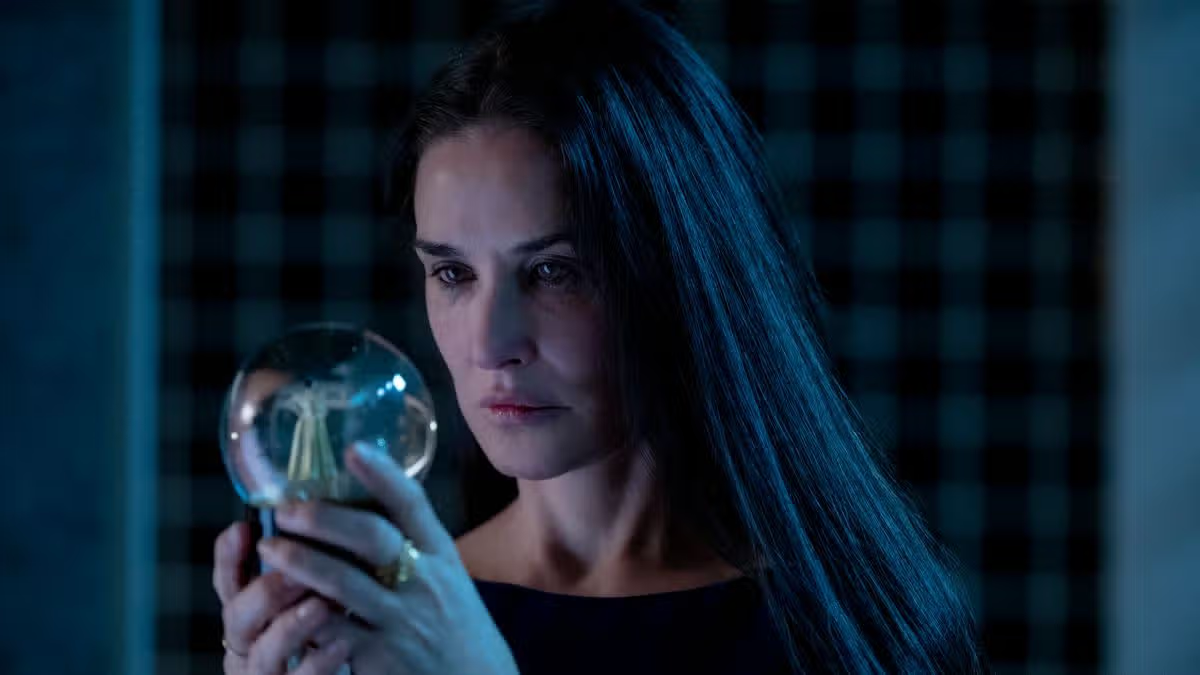
According to its synopsis, the film’s story follows fading actress Elisabeth Sparkle who becomes distressed when her chauvinistic boss fires her from her aerobics show. She soon injects herself with a new and mysterious serum that promises a younger, better version of herself. As you might expect, it’s not long before things go horribly wrong.
Despite being a relatively low-budget production at under $20 million, the title boasted an impressive cast list. This includes Demi Moore, Dennis Quaid, and Margaret Qualley.
It would go on to earn more than $80 million at the box office globally and even earned plenty of awards buzz both for the film and its stars. The Substance was also one of the highest-rated movie releases of the year it came out, boasting an 89% score on the website Rotten Tomatoes.
When it first arrived in cinemas, some reports claimed that moviegoers struggled to actually sit through the entire thing. There were claims on social media that people walked out, unable to stomach it all, while others stated that audiences applauded at the end.
A number of reviews backed this up, such as one which claimed: “The Substance is an incredibly difficult watch, even for the most hardened horror fan. “This film is exemplary, there’s no doubt about that, but it pushed me to my absolute limit – perhaps even just beyond it. Don’t be fooled by the big names in the cast, this does not operate in the boundaries of mainstream cinema, it shatters them completely and you’ll feel like you’re fighting for your life. Bravo.”
Another critic agreed and added: “It’s the kind of film that requires courage from everybody involved, including the caterers who were presumably tasked with preparing a menu that wouldn’t end up on the shooting floor every day.”
Despite this, many fans still recommend it, as one posted online: “What a spectacular film, out of the ordinary, what an incredible social critique, the ending was just a bit exaggerated, but that’s also part of the criticism, I thought it would be just another generic horror film, no, far from it…”
But some still urge caution: “Warning! This movie is insanely gruesome and bloody. So much so that if you can’t handle excessive gore, you might just find yourself gagging. But if you can stomach it, The Substance is an absolutely wild ride, delivering one of the best horror-thriller experiences in years.”
Someone else called it “bonkers” and added: “The last 45 minutes were one of the greatest cinema experiences of my life, listening to a group of humans howl with laughter and scream and cover their eyes and ears in equal measure.”
The Substance is streaming on BBC iPlayer and Paramount+
The Tom Cruise-led “Digger” is poised for a massive loss after ticket sales for the political satire fell 60% in its second weekend in theaters in the U.S. and Canada.
The Warner Bros. film made just $3.2 million in those theaters over the weekend, according to a studio estimate. Its opening weekend brought in $8 million, Cruise’s lowest opening as a leading man since 2007’s “Lions for Lambs.” Global ticket sales for “Digger” were only $35.3 million.
The tepid box-office returns mean the studio is now expected to lose at least $150 million on the film, including ancillary revenue streams such as premium video-on-demand and streaming, industry sources said. Historically, a film has typically needed to make 2½ to three times its budget to recoup its costs.
A Warner Bros. spokesperson did not respond to a request for comment.
It’s a tough result for the film, which stars Cruise as an aging oil tycoon whose company sets off an environmental catastrophe. Analysts have said that the film was challenging to market, given a major twist in the plot, and that Cruise’s nearly unrecognizable appearance could have dissuaded his fan base from coming out to support the film.
The film suffered from polarizing critical reviews, notching a 53% on aggregator Rotten Tomatoes. Opening-night audiences gave it a C+ on CinemaScore, a grade that typically points to weak word of mouth and steep drops in the weeks that follow.
The budget for “Digger” raised the stakes. Warner Bros. has said the film cost $125 million to produce, though some industry experts and trade reports have estimated the cost was at least $160 million, citing production delays.
That figure also doesn’t include marketing costs, which sources said could have increased in the days after the film’s opening since Warner Bros. began using the divided reviews in social media and TV ads to encourage people to see the film for themselves.
The film will have value to Warner Bros. — and Skydance, the newly combined company that now owns it — beyond its theatrical reception. “Digger” probably will make money through downstream revenue sources such as streaming. If Cruise wins his first competitive Oscar, that also would be a plus for the film.
But a film’s domestic reception, and to some extent, its international box office revenue, does play a role in the value of those downstream revenue opportunities, experts said.
“Even with respectable ancillary income based on the film’s pedigree, the movie is going to lose a lot of money,” David A. Gross wrote in his FranchiseRe movie industry newsletter shortly after the film’s opening.
The reception for “Digger” comes during a tough time for Warner Bros.
The studio has had a string of disappointments this year, including Maggie Gyllenhaal’s “The Bride!” and DC Studios’ “Supergirl.” None of its 2026 releases has crossed $100 million at the domestic box office.
But the prospects for Warner Bros. should improve next year, according to the research and brokerage firm Bernstein. Skydance has said it will keep the Warner Bros. and Paramount studios distinct, though Paramount Pictures chiefs Dana Goldberg and Josh Greenstein are expected to oversee both. Bernstein expects the Warner Bros. film and TV studios to amass $11.7 billion in revenue, driven by strong titles that include the sequel to “Minecraft” and a new “Lord of the Rings” movie.
The feature is co-produced by the Daily Wire — the right-wing media company launched in 2015 by conservative political commentator Ben Shapiro — and Bonfire Legend, a production company formed by prolific producer Dallas Sonnier in 2021.
Frequently featured in movies targeting Latino audiences, Trejo built a devoted following within the demographic over the years as one of the more prominent Mexican American actors in Hollywood.
He was criticized online for his involvement in “Pawn Shop” due to its positive portrayal of ICE agents, who have been antagonizing the Latino community at an accelerated clip over the last two years. Trejo was called a “sellout” and a “traitor” across social media in recent days.
“I want to address some social media comments about me. Make no mistake. I am a proud Mexican who has always been and will always be a supporter of my community,” Trejo wrote in an Instagram post. “I am also obviously pro-immigrant. I am not pro ICE. I know where I come from and I know our struggles. I am an actor. My job is to tell a story.”
Trejo’s casting was first announced by the Montana newspaper Bozeman Daily Chronicle after speaking with one of Trejo’s cast members on the film’s set in Livingston, Mont., as well as Livingston locals who had seen and photographed the actor in the city’s downtown area.
Deadline confirmed that Trejo, along with “Reservoir Dogs” actor Harvey Keitel and “E.T. the Extra-Terrestrial” star Henry Thomas, was scheduled to appear in the film after reviewing the call sheet.
The 82-year-old Trejo has previously voiced support for immigrant communities. During the initial onset of the COVID-19 pandemic in spring 2020, he was part of a coalition of Latino actors who pushed forward the #AyudaEnEspanol campaign, which advocated for providing COVID-19 resources kits in Spanish for Latino migrant farmworkers across the U.S.
In an interview with TMZ in fall 2025, the actor, who has appeared in over 400 films and television programs, was asked to give a message to the families that had been affected by ICE raids.
“To the families, keep up hope,” Trejo said. “Help your neighbor and do whatever you can for people in need.”
His recent statement came after “Pawn Shop” made headlines for hitting snags in its production in Livingston following local protests. Residents claimed the movie’s production interrupted local businesses’ operations — and that the crew did not properly communicate with businesses about its schedule.
Production on the film was temporarily paused on Oct. 3 from an order by the Livingston city commission. Filming resumed on Oct. 6 after Livingston officials reinstated permits for the movie.
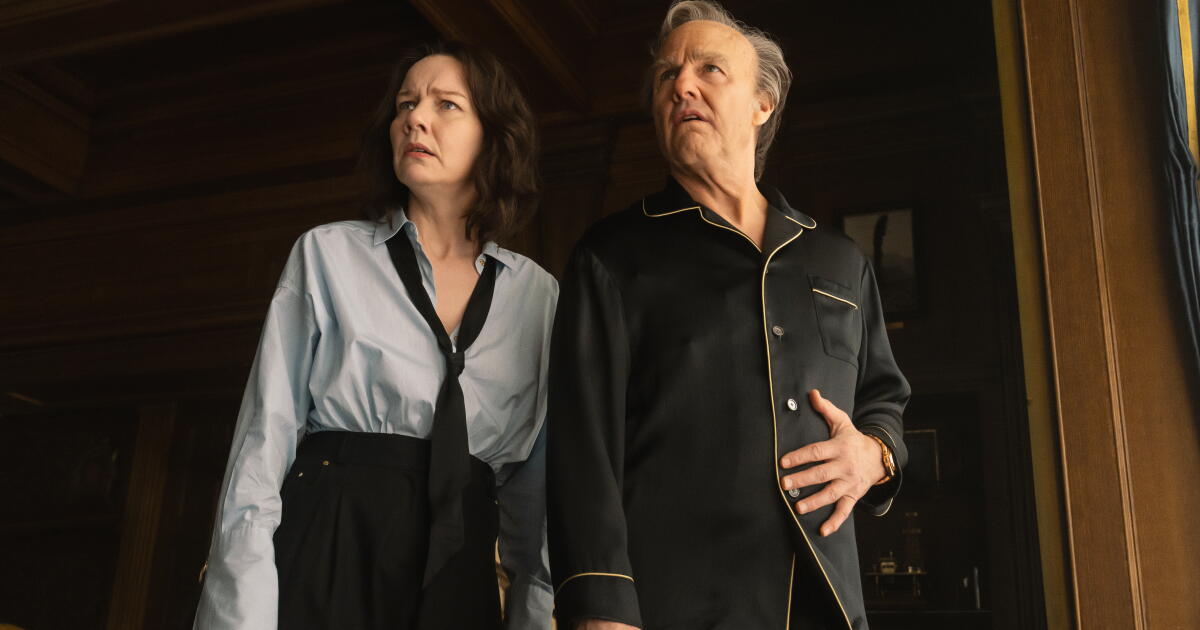
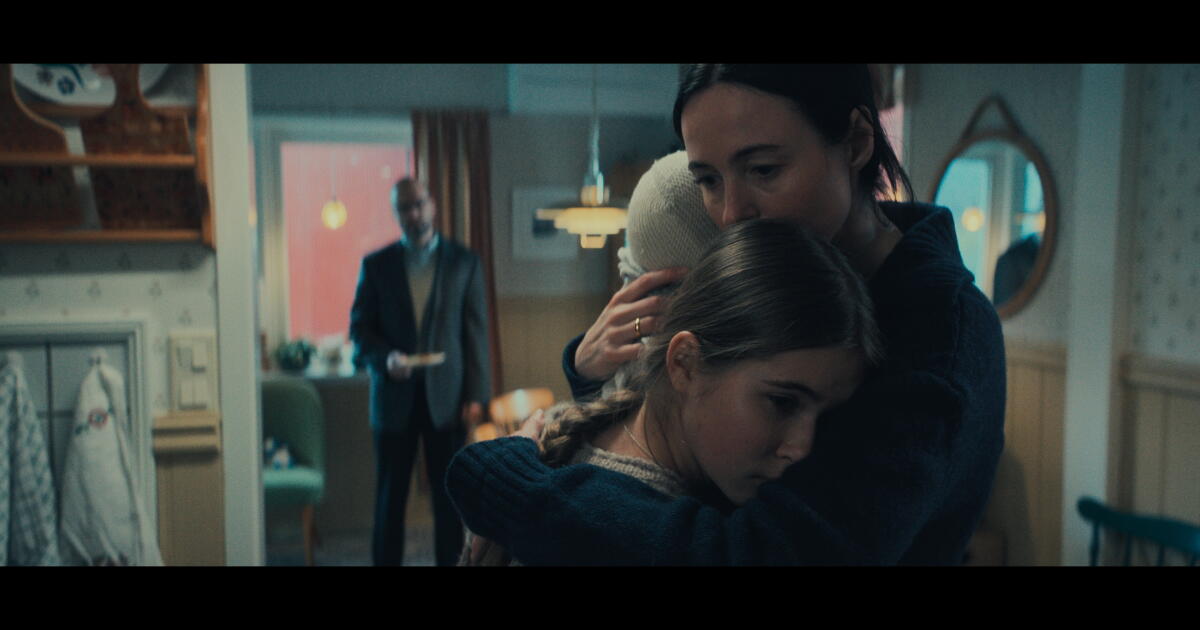
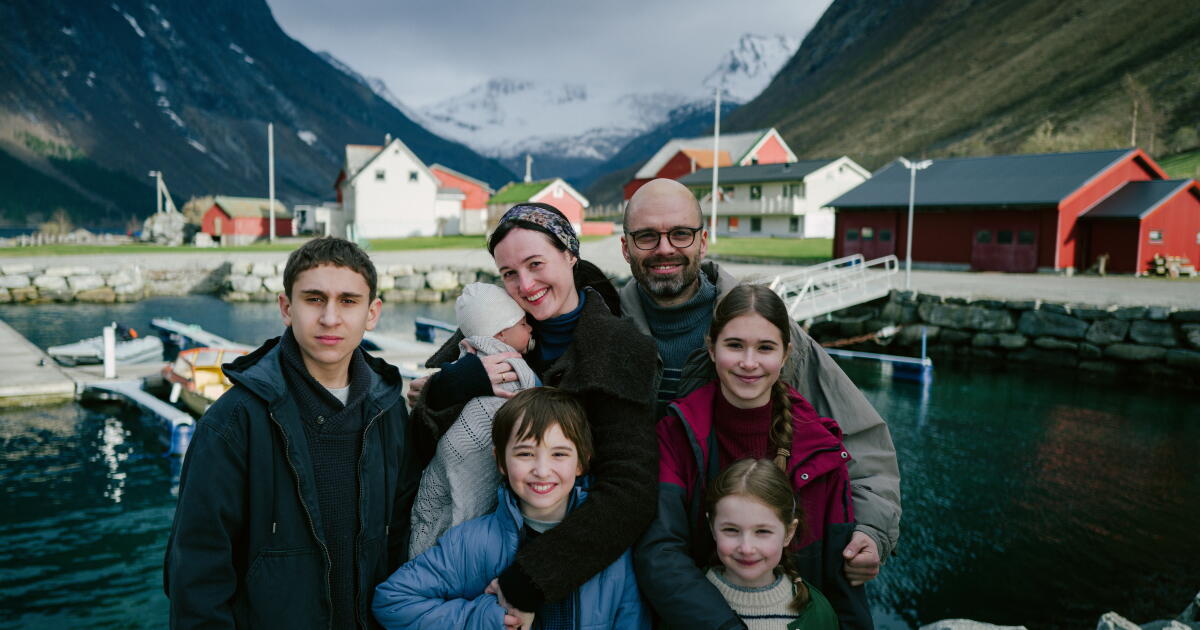
“We’re all hiding a little bit of our personality inside,” says director Cristian Mungiu of the characters in “Fjord,” a searing drama inspired by real Norwegian child welfare cases. “The film speaks about a limit of intimacy, after which you will need to make a choice not knowing precisely what happens. This is why I wanted the film to start at the end of a conversation in which you don’t really know what kind of punishments exist in this family.” Lighting and shallow focus deepen the uncertainty of a mother (Renate Reinsve) comforting her daughter (Vanessa Ceban) and a father (Sebastian Stan) waiting to have his say: “You need to admit when you’re wrong.” “You see the role of a mother who tries to play this more empathic part, while the father is the one playing the role of the educator who imposes his rules,” Mungiu says. “This shot speaks about our way of storytelling and designing everything to be ambiguous enough about their relationship. At the same time, this also speaks about a theme in the film: this idea that there isn’t anything like right and wrong and the truth. And we all believe that the truth belongs to us. And this is the problem.”
Tom Cruise’s latest film Digger is expected to lose around $245m (£185m), Hollywood analysts have said, after the film’s continuing poor performance in cinemas.
Ticket sales for the satirical black comedy, which stars Cruise as oil magnate Digger Rockwell, dropped by around 60% in the movie’s second weekend.
It brings Digger’s total box office takings to around $35m (£26m) globally so far. The film is estimated to have cost its studio Warner Bros around $280m (£211m) to make and market.
But Cruise said last week, external that he “never thought of movies when I’m making them [in terms of] opening weekend,” adding he was instead focused on making films that “hopefully will translate, last and evolve”.
The film’s takings relative to its budget mean it could become one of the biggest film flops in Hollywood history.
Digger’s performance is in sharp contrast to the success of IP-driven hits starring Cruise in recent years, such as new instalments of the Top Gun and Mission: Impossible franchises.
Digger is directed by Alejandro G Iñárritu, best known for films such as Birdman, Babel and The Revenant.
Hollywood trade publication Variety said Digger was expected to end its box office run with around $50m (£38m) worldwide.
The film would need around $350m (£264m) to break even, due to its budget, marketing costs, the portion of ticket sales that go to theatres and the likely spend on an awards season campaign.
However, a Warner Bros spokesman pushed back slightly on the figure, telling Variety the film’s break even point was $300m (£227m).
Documentary draws on 24 anonymous Israeli sources accusing military of killing Palestinians in Gaza using AI systems.
Published On 12 Oct 202612 Oct 2026
Israeli Prime Minister Benjamin Netanyahu has called for an investigation into the anonymous sources featured in a documentary alleging that Israel’s military killed civilians in Gaza using AI-powered targeting systems.
The award-winning film, NAZA, draws on testimony from 24 unnamed Israeli military whistleblowers accusing the army of using the systems to kill numerous civilians in the besieged territory.
Recommended Stories
list of 3 itemsend of list
“I demand that the chief of general staff, the head of the Shin Bet, and the attorney general launch a comprehensive investigation into the participants in the film ‘Naza’ and prosecute them for serious information security violations, criminal libel, and harm to Israel’s diplomatic and security interests,” Netanyahu said on X on Saturday evening.
“The film presents a false, misleading, and biased narrative that defames the State of Israel and the [Israeli military] internationally, severely damaging Israel’s standing,” he added.
In a statement last month, the Israeli military said it “categorically” rejected the whistleblowers’ allegations, calling some of their assertions “absurd’ and contradictory.
It insisted that the selection and approval of strikes “are made by human personnel only”, in line with the military’s guidelines.
Israeli army Chief of Staff Eyal Zamir has called for legal action against the participants to be considered and ordered an investigation into suspected leaks of classified military information used in the film’s production.
NAZA takes its name from the Israeli military term for civilian casualties expected in air strikes, an abbreviated form of the Hebrew phrase for “collateral damage”.
The film was awarded a special jury prize at the Venice International Film Festival and received a historic 25-minute standing ovation.
It has also triggered a political storm in Israel.
The film’s directors, Yuval Abraham and Rachel Szor, have been accused of “treason”. Netanyahu and Culture Minister Miki Zohar have threatened to revoke their Israeli citizenship.
Last week, the head of Israel’s National Public Diplomacy Directorate, Tzipi Hotovely, awarded the creators of another film, NAZA: The Real Story, certificates of recognition for countering the “blood libels” made in the original NAZA film.
According to a statement from the Prime Minister’s Office, NAZA: The Real Story features testimony from soldiers refuting the original claims.
In contrast, 43 Israeli rights groups defended the filmmakers of NAZA and denounced the threats being directed at them, according to Israel’s Channel 12 news.
Israel’s genocidal war on Gaza began on October 7, 2023, after Hamas’s armed wing, the Qassam Brigades, and other Palestinian groups attacked southern Israel, killing 1,139 people and taking about 240 captive.
Since then, Israel has killed at least 74,000 Palestinians, including at least 21,000 children, according to Gaza’s Ministry of Health.
As we head into fall television season, you might notice some familiar titles, not just because a few shows are returning for new seasons, but because they’re prequels, continuations or adaptations of well-known books or films — sometimes both.
The only guide you need for fall entertainment.
Hollywood has leaned into established IP this season, but if you’re seeking an original story, don’t fret, several of those are coming too. Viewers will have plenty to cozy up to, with a slew of series dropping around holidays — a perfect time to binge your new favorite watch.
‘Monster: The Lizzie Borden Story,’ Sept. 17 (Netflix)
Ella Beatty as Lizzie Borden in Netflix’s “Monster: The Lizzie Borden Story.”
(Netflix)
Described as a “darkly comic spin on a Victorian-era murder,” the fourth installment of Ryan Murphy and Ian Brennan’s true-crime anthology chronicles the story of Sunday school teacher Lizzie Borden, who in 1893 was the prime suspect in the still unsolved ax murders of her father and stepmother inside their Fall River, Mass., home. The 32-year-old “spinster” was tried by an all-male jury who found her innocent of the gruesome crime. Their quaint view of women as meek, docile and powerless clearly worked in her favor. Ella Beatty plays the rage-filled, blood-spattered Borden in this eight-episode series. Charlie Hunnam, who appeared in the third installment of “Monster,” portrays her wealthy but ultimately unfortunate father Andrew Borden, and Rebecca Hall plays his second wife, Abby Borden. The drama reportedly includes the music of modern artists such as Kate Bush, while the trailer simply leans into the haunting Victorian-era nursery rhyme “Lizzie Borden took an axe …” — Lorraine Ali
‘Brothers,’ Sept. 23 (Apple TV)
Woody Harrelson and Matthew McConaughey in Apple TV’s “Brothers.”
(Ryan Green / Apple TV)
Twelve years ago, after their chemistry lit up Season 1 of “True Detective,” stars Woody Harrelson and Matthew McConaughey became Hollywood’s most beloved bromance. When Harrelson later told a tale in which McConaughey’s mother revealed she had known Harrelson’s father around the time McConaughey was conceived, it made a lot of hot-rumor sense. Also, apparently, a fine pitch for a series, with the two men playing fictionalized versions of themselves. After a family crisis, Harrelson flees with his wife and daughters to McConaughey’s Texas ranch where he hears a similar “I knew your father” story from Ma Mac (Holland Taylor). As he decides what to do, McConaughey decides to run for governor of Texas. The personal eccentricities of the two leads, along with their odd-couple vibe, provide most of the show’s humor, but the best reason to watch is Taylor, who shows both stars how it’s done, by stealing the show from under their feet. — Mary McNamara
‘American Hostage,’ Sept. 20 (MGM+)
Jon Hamm as Fred Heckman in MGM+’s “American Hostage.”
(Steve Ackerman / MGM+ / Sony Pictures Television)
Set in the 1970s, this anthology series based on a scripted podcast of the same name tells the true story of Fred Heckman, a respected radio journalist played by Jon Hamm, who also executive produces. Heckman, the news director of WIBC-AM in Indianapolis, is placed at the center of a story when hostage-taker Tony Kiritsis (Giovanni Ribisi) requests to be interviewed by the newsman as police attempt to negotiate the release of his hostage, mortgage broker Dick Hall (Kristoffer Polaha). The series contemplates topics like shady lending practices by financial institutions — something that will resonate deeply with today’s economy — and the ethics of placing oneself in a news story. Shawn Ryan (“The Shield,” “The Night Agent”) and Eileen Myers (“Big Love”) serve as co-showrunners and executive producers. — Maira Garcia
‘East of Eden,’ Oct. 1 (Netflix)
Mike Faist as Charles Trask, Christopher Abbott as Adam Trask and Florence Pugh as Cathy Ames in Netflix’s “East of Eden.”
(Netflix)
Zoe Kazan has established herself in the past several years as a versatile artist who impressed critics and audiences with her lead role in “Ruby Sparks” and her Emmy-nominated performance in HBO’s “Olive Kitteridge.” The spotlight is likely to get brighter with Netflix’s “East of Eden,” the latest adaptation of John Steinbeck’s classic novel. A previous version of the novel was directed by Kazan’s grandfather Elia Kazan, and is best known as one of three films starring James Dean. Zoe Kazan is the writer and co-showrunner of the Netflix project, which stars Florence Pugh as anti-heroine Cathy Ames — a character sidelined in the 1955 film. Christopher Abbott (“Girls”) and Mike Faist (“Challengers”) co-star. — Greg Braxton
‘Below,’ Oct. 8 (Netflix)
Josh Hartnett as Calvin and Mackenzie Davis as Fonda in Netflix’s “Below.”
(Netflix)
Summer is over, but that doesn’t mean there can’t still be stories about killer creatures under the sea. Netflix’s “Below” joins the watery spectrum already inhabited by “Jaws,” “The Meg,” “47 Meters Down” and numerous other entries as it unveils its premise about a seaside town targeted by a mysterious monster. Josh Hartnett (“Trap”) stars as a fisherman and single father living in a small Newfoundland town who must find a way to protect his family and the community when an unidentified creature starts wreaking havoc. He joins forces with a marine researcher (Mackenzie Davis of “Station Eleven”) who informs him of the town’s mysterious history and buried secrets. — G.B.
‘Cupertino,’ Oct. 8 (CBS)
Rachel Keller as Olivia Siffre, Ella Stiller as Christy Palladino and Mike Colter as Michael Price in CBS’ “Cupertino.”
(Elizabeth Fisher / CBS)
Robert and Michelle King return to the network and territory of their acclaimed series “The Good Wife” with this Silicon Valley-based legal dramedy, replicating that show’s mix of quirk, current events and courtroom nail-biters. To continue the David vs. Goliath comparison the network has put out, it launches its stones at the brow of the tech industry, with Mike Colter and Rachel Keller as lawyers fired with bad cause who team up to defend the little guys from the big jerks. Ella Stiller is their ingenuous aide-de-camp, Busy Philipps a flamboyant investor and Renée Elise Goldsberry as an opposing counsel who has history with Colter. — Robert Lloyd
‘Avatar: Seven Havens,’ Oct. 9 (Paramount+)
Saheli Khan as Pavi, Dee Bradley Baker as Geet/Ruhi and Aishwarya “Aishu” Devan as Nisha in “Avatar: Seven Havens” on Paramount+.
(Paramount+)
When “Avatar: The Last Airbender” premiered over 20 years ago, it introduced audiences to a world inspired by Asian and Indigenous cultures, where certain people can manipulate elements through a martial arts-infused ability known as bending. It also helped show that an animated kids series can tackle weighty themes such as war, genocide, imperialism, sexism, propaganda and political corruption in a serialized story and be a hit. In the world of “Avatar,” there is one special bender who is the master of all four elements — water, earth, fire and air — and is tasked with maintaining balance in the world. Set after the events of “The Last Airbender” and “The Legend of Korra,” “Avatar: Seven Havens” follows the current incarnation of the Avatar, Pavi. Young Pavi and her twin sister, Nisha, live in a world that no longer sees the Avatar as humanity’s savior after it was devastated by a calamity. Pavi and her allies still have to figure out a way to save the world, though. Every Avatar seems to have to deal with problems caused or left unresolved by their predecessors. As a Korra fan, I’m curious to see what sort of legacy she ended up leaving behind. — Tracy Brown
‘VisionQuest,’ Oct. 14 (Disney+)
Paul Bettany in Marvel’s “VisionQuest” on Disney+.
(Marvel)
When we last saw Vision (Paul Bettany), the reconstructed synthezoid and former Avenger had just regained his memories — thanks to an assist from his magically created double — before flying off into the unknown at the end of “WandaVision.” Much has changed in the Marvel Cinematic Universe since then, but I’m ready to dive back into this corner of the multiverse occupied by “WandaVision,” “Agatha All Along” and the upcoming “VisionQuest.” Capping off the TV trilogy, the new series will see Vision navigating life after “WandaVision” along with existential questions about his personhood and identity with the help of some friends in the form of other Marvel AI and robots, including Ultron (James Spader). Both “WandaVision” and “Agatha” were meditations on grief, trauma and motherhood, by way of sitcoms and magical escape rooms, respectively. I’m interested to see how this final installment will explore the patrilineal connection between Ultron, Vision and Tommy (Ruaridh Mollica), one of Wanda and Vision’s long lost twins who were magically created in “WandaVision.” Could the series tee up a full Maximoff family reunion? I hope so. — T.B.
‘Crystal Lake,’ Oct. 15 (Peacock)
Linda Cardellini as Pamela Voorhees in Peacock’s “Crystal Lake.”
(Peacock)
Drew Barrymore made a fatal mistake in the opening scene of the 1996 horror film “Scream” when the creepy murderer on the telephone quizzed her about the name of the killer in the original “Friday the 13th.” When Barrymore answered “Jason Voorhees,” she was reminded that the original killer was actually Pamela Voorhees, Jason’s mother. Pamela is center stage in “Crystal Lake,” Peacock’s prequel to the bloody franchise launched in 1980. Linda Cardellini (“DTF St. Louis”) plays the grief-stricken mother who seeks revenge after her son drowns at a summer camp. There will be blood. — G.B.
‘The Diplomat’ Season 4, Oct. 15 (Netflix)
Keri Russell as Kate Wyler, Rufus Sewell as Hal Wyler and Allison Janney as Grace Penn in Season 4 of “The Diplomat.”
(Netflix)
For those of us who stay ready for the Kate Wyler 2028 campaign, it’s time to lock in. The highly competent, intensely impulsive, deeply flawed and incredibly relatable political power player with unapologetically messy hair is back to clean up more backroom deals and betrayals, volatile international crises and unstable government leadership — all while managing a topsy-turvy marriage tangled up in it. The fourth season picks up directly after the Season 3 finale cliffhanger, where Kate (Keri Russell) learned that her husband, Vice President Hal Wyler (Rufus Sewell), and President Grace Penn (Allison Janney) secretly conspired to steal a Russian nuclear weapon. The new season will explore the fallout and tension in domestic and international relationships, and the marital strife in between. Somehow, political chaos feels good in a show like this. — Yvonne Villarreal
‘Nocturne,’ Oct. 30 (Apple TV)
Stephen Graham and Liev Schreiber in Apple TV’s “Nocturne.”
(Dennis P. Mong Jr / Apple TV)
Stephen Graham plays the diabolically cunning serial killer Jurek Walter in “Nocturne,” a chilling psychological thriller that promises “Hannibal”-level creepiness (as in the film). The 10-episode drama stars Liev Schreiber as Jonah Lynn, a former soldier turned homicide detective who moves to a small town in western Pennsylvania after working the tough streets of Philadelphia. But the peace and quiet he hoped for is shattered when his family is targeted by Jurek. Lynn’s surrogate daughter, FBI Agent Saga Bauer (Zazie Beetz), steps in the fray, upping the stakes. Based on Lars Kepler’s crime novels “Lazarus” and “The Sandman,” the series also stars Bill Camp, Rory Culkin, Poorna Jagannathan, Chrissy Metz and Gary Carr. The cast alone should make “Nocturne” a killer thriller, but we’ll have to wait until October to see if it slays. — L.A.
‘Yellowjackets’ Season 4, Nov. 20 (Paramount+)
Sophie Thatcher as teen Natalie in the finale of Season 3 of “Yellowjackets.”
(Paramount+ with Showtime)
At the end of Season 3, “Yellowjackets” gave us an on-the-nose cliffhanger: We see young Natalie (Sophie Thatcher) reach a cliff, satellite phone in hand, as Aerosmith’s “Livin’ on the Edge” plays. She screams into the receiver, “Can anyone hear me?” Response: “I can hear you.” Over the past three seasons, the Yellowjackets, the New Jersey girls soccer team lost in the Canadian wilderness after a plane crash, have been trying to survive harsh weather, a lack of food and medical care — and one another. It appears we’ll finally get to see them rescued, based on the recent trailer for the new season, as well as the aftermath. The series, created by Ashley Lyle and Bart Nickerson, was originally pitched as a five-season arc, but they announced last year that Season 4 would be the last. The dual timelines in the show, where we see the survivors as teenagers and adults, have felt disconnected at times, but let’s hope this season finally offers clarity. — M.G.
‘Dig,’ Nov. 23 (Peacock)
Hugh Laurie as Neville and Amy Poehler as Elise in Peacock’s “Dig.”
(Colleen Hayes / Peacock)
A new comedy series starring Amy Poehler that she co-created with “Parks & Recreation” executive producer Michael Schur? Sign me up! The workplace at the center of “Dig” is an excavation site in Greece, where Poehler’s Elise is among a team of archaeologists that unearths a rare artifact. According to the logline, this discovery kicks off an “adventure of a lifetime” — and I’m curious what that might mean for people whose careers presumably involve carefully sifting through old dirt all day. The show also stars Hugh Laurie as Neville, a British archaeology professor, as well as Geraldine Viswanathan, Antonia Thomas and Fina Strazza. The series is based on Kate Myers’ novel “Excavations,” and in the book, the four central women have their own issues and hang-ups and don’t really get along, at least initially. If there’s anyone I trust to mine comedy gold with that setup, it’s Poehler and Schur, who is co-showrunning with J.J. Philbin. — T.B.
‘Blade Runner 2099,’ Nov. 25 (Prime Video)
Hunter Schafer as Cora in Prime Video’s “Blade Runner 2099.”
(Clay Enos / Prime)
Having slept on the franchise’s previous sequel, “Blade Runner 2049,” I find myself quite excited by the prospect of this tale of biological and synthetic life forms in a smoggy, next-millennium Los Angeles, not least (and likely most) because Michelle Yeoh stars in it. Yeoh plays an aging replicant detective in search of rogue replicants — here, in a “Planet of the Apes” style twist, the world has turned upside down, with the artificial life forms in power and the people powerless. Hunter Schafer plays Yeoh’s partner, a human masquerading as a replicant. (As to L.A., you will not recognize the old place, which in any case was created in Prague and Barcelona.) — R.L.
‘The Hunting Wives’ Season 2, Nov. 26 (Netflix)
Malin Akerman as Margo, left, and Brittany Snow as Sophie in Season 2 of “The Hunting Wives.”
(Netflix)
For those who are watching the show for the plot, get ready to yeehaw about all the melodrama that’s about to hit your screen. Following its massive breakout success on Netflix, the series about East Texas socialites is back for a twisty and steamy eight-episode second season that will no doubt launch a heavy helping of memes, GIFs and explicit fanfics. For the uninitiated, the series based on May Cobb’s bestselling novel follows Sophie (Brittany Snow), a married East Coast liberal who moves to a wealthy Texas town and immediately becomes infatuated with Margo (Malin Akerman), the local queen bee of a clique of conservative women who have a knack for behaving badly. Their toxic, lusty friendship and the show’s crime mystery subplots had viewers hooked. After the chaotic events of the Season 1 finale, the new episodes pick up with Sophie and Margo on the outs but pulled back into another dangerous game of cat and mouse that will make their situationship all the more complicated and angsty. But fear not, Margo’s wig remains a comforting presence through it all. — Y.V.
‘Harry Potter and the Philosopher’s Stone,’ Dec. 25 (HBO)
Ron (Alastair Stout), Harry (Dominic McLaughlin) and Hermione (Arabella Stanton) in HBO’s “Harry Potter and the Philosopher’s Stone.”
(Aidan Monaghan / HBO)
In the U.K., Christmas Day telly is a much bigger deal than it is in the U.S., which may be why HBO decided to launch its new “Harry Potter” series, beginning with the U.K.-titled eight-episode “Harry Potter and the Philosopher’s Stone,” on Dec. 25. “Highly anticipated” doesn’t even begin to cover it; a quarter century since the film versions began lighting up the box office, the story of “the boy who lived” continues to entrance fans old and new. Starring newcomers Dominic McLaughlin as Harry Potter, Alastair Stout as Ronald Weasley and Arabella Stanton as Hermione Granger, the series promises a richer, more detailed adaptation of the books, along with a more contemporary feel. With John Lithgow as Albus Dumbledore, Janet McTeer as Minerva McGonagall, Nick Frost as Hagrid and Paapa Essiedu as Severus Snape, the cast is just as formidable and star-studded as the films. And with a reported $58-million price tag, the production values should burn just as brightly, especially at Christmas. — M.M.
‘North of North’ Season 2, Fall 2026 (Netflix)
Anna Lambe as Siaja in Season 2 of “North of North” on Netflix.
(Netflix)
No news regarding the coming fall season has made me happier than the return of this sunny, aspirational Indigenous comedy, set in a small town among the Inuit people in Nunavut, Canada’s northernmost territory. A luminous Anna Lambe plays Siaja, who in the first season went a long way toward finding herself in a life bounded by a narcissist husband (estranged, but always around), a once-difficult mother, a rambunctious child, a new love interest, a surprising father, a capricious yet not uncaring boss (Mary Lynn Rajskub) and a mythological sea spirit — in other words, lots to go on in a second season. (For even more Canadian content: “Kids in the Hall” alum Bruce McCulloch joins the cast as a first-aid instructor.) — R.L.
‘Pride and Prejudice,’ fall 2026 (Netflix)
Lizzie (Emma Corrin), Jane (Freya Mavor), Mrs. Bennet (Olivia Colman), Lydia (Rhea Norwood), Mary (Hopey Parish) and Kitty (Hollie Avery) in Netflix’s “Pride and Prejudice.”
(Ludovic Robert / Netflix)
Every generation gets its own Mr. Darcy. Experiencing Jane Austen’s most famous work — whether on the page or on the screen — is a cultural rite of passage for many young women. The 1995 BBC miniseries starring Jennifer Ehle and Colin Firth, and the 2005 film starring Keira Knightley and Matthew MacFadyen, are the two definitive, most popular screen adaptations of the classic novel, often drawing fierce debate from enthusiasts about which is better. (Sorry, but that misty sunrise walk by MacFadyen’s Mr. Darcy changed lives — namely, mine — and will always give the 2005 version a slight edge in my eyes.) Now, the classic novel is getting its streaming-era adaptation. Written by bestselling author Dolly Alderton (“Good Material”), the six-part limited series promises to be a faithful adaptation. Emma Corrin (“The Crown”) and Jack Lowden (“Slow Horses”) take the mantel as the original and ultimate enemies-to-lovers couple, Elizabeth Bennet and Mr. Darcy. Will it live up to its predecessors? Will it capture Austen’s witty text and unforgettable scenes of yearning? I don’t know. But I’m going to watch it anyway because — I mean, come on — it’s “Pride and Prejudice” and I’m just a girl who’s always on the lookout for slow-burn tension and hand-flex close-ups. I’m preparing myself now for the hours of sleep I’ll lose getting sucked into the TikTok discourse about it. — Y.V.
Aaron Sorkin’s “The Social Reckoning,” a sequel to 2010’s David Fincher-directed “The Social Network,” is hitting theaters as part of a surge of tech geek takedowns that includes documentaries on Elon Musk and Theranos’ Elizabeth Holmes, as well as Luca Guadagnino’s upcoming comedy “Artificial” about OpenAI’s Sam Altman.
Still, its timing couldn’t be worse.
Cursory and hollow, it recounts the true story of Wall Street Journal reporter Jeff Horwitz (Jeremy Allen White) and Facebook whistleblower Frances Haugen (Mikey Madison), a disenchanted data engineer on the company’s civic integrity team, who paired up for a 17-part investigative series that provided proof of what people already sensed: Facebook boosted misinformation and rage-bait to juice user engagement at the cost of our country’s mental health.
The script ends shortly after Haugen testified before Congress in October 2021, noting that the carpet in her waiting room had recently been swapped out because of bloodstains from the Jan. 6 Capitol attack. The film rewinds to that day, too, and attempts to squeeze drama from slow-motion reenactments of the rioters, which Alexandre Desplat scores to an overbearing military dirge as Mark Zuckerberg (Jeremy Strong) and his good little Facebook soldiers mull over whether to take down the U.S. president’s incendiary posts.
Back in our own reality, Zuckerberg and the president just had lunch last week. At this point, we’re all so psychically drained that the only response we can muster to this vacant period piece is: So what?
Sorkin has my sympathies. The future moves faster than a film in development. And he fundamentally gets the peril we’ve put ourselves in by entrusting Zuckerberg, who is, at minimum, an ethically askew man. After all, Sorkin’s own screenplay for “The Social Network” remains a prescient masterpiece.
But the movie’s problems go beyond arriving simultaneously too slowly and too soon for Zuckerberg’s endgame, where his emptying social media empire has him gambling his fortunes (and ours) on AI. Expanding his scope from Harvard to the planet, Sorkin now aims to show that we’re all trapped in Zuckerberg’s insensitive mind view. Cold computer speak has infected everyone like a virus. When Madison’s Frances goes on a blind date, her online match says he appreciates that the internet makes it simpler for singles to pair up “within their own vector.” The buddy-buddy Winkelvoss twins’ version of the app might actually have been better for the world.
Meanwhile, Zuckerberg, who mostly stays on the sidelines of the movie, is now a mighty billionaire and, as Strong plays him, a dour, lifeless dork. Gone are the beer bashes, the thrill of invention and any hint that Zuckerberg lusted for something — women, attention, clout — other than a quarterly earnings report. This Zuckerberg is no longer made of flesh and blood but ones and zeros. Pity Strong couldn’t play the CEO after his bro-y 2024 mutation into MMA-fighting Marky Mark. At least that guy is amusingly ridiculous. Trapped in this stiffer, earlier incarnation, the only acting Strong is able to do is poke his head straight up from his shoulders until he resembles a retractable pen.
Worse, all the other characters in the film talk just like him: charmless, frigid and quick to cut each other off with snippy corrections. I could forgive that if it was just Facebook’s employees: Madison’s quavering, exasperated Frances, the co-worker (Anna Lambe) who insists she and Frances are merely colleagues, not friends, even after their company frittered away the meaning of the word, and a media relations executive (a smooth Billy Magnussen) who gets the scariest line, coolly insisting that “we’re post-government around here.” After all, these are the folks who saw “The Social Network” and still wanted to work for Zuckerberg.
But the opposition is steeped in that same monotone rudeness. Sorkin must have adored that earlier film’s opening scene where Rooney Mara insults a clueless Jesse Eisenberg because he’s written three-dozen takes on it. At Sorkin’s version of the Wall Street Journal, everyone up and down the masthead — editors, writers, even interns — insults each other with such relish that someone should be written up by HR. The fast-and-furious dialogue hits its nadir when Madison’s Frances slips Jeff important documents that he can’t even read because she nonsensically starts chattering about the looming coronavirus.
Here’s where you say that this is just how Sorkin writes characters. And here’s where I counter that a movie about how algorithms destroy humanity has to have some credible humans in it, if only to illustrate its own point.
Instead, Sorkin’s protagonist-bots come with bolted-on personality quirks. White’s journalist is a Luddite who would rather be late to his own job interview than use Google Maps. He comes across as so clueless that the audience can barely credit him for his reporting work winning an eventual Pulitzer — he’s just soulful eyes and a cellphone ringtone that tinkles old show tunes.
Madison, 15 years the junior of the real Frances, is too young to convince us that her character truly believes she can turn Facebook into a digital utopia. An ultra-online 20-something, she was a front row witness to Gamergate, yet somehow she’s shocked to overhear about middle-school girls getting bullied on Instagram. Her character wears legwarmers and knit wristlets to the office as protection against the air conditioning, which also serves to emphasize her company’s interpersonal chill.
Yet, bizarrely, the script makes Frances dress like a sex worker whenever she sneaks to Jeff’s hotel to slip him some corporate secrets. It’s a disguise, she explains, although the gag is so forced that it’s just as easy to believe the literal-minded girl is taking her Deep Throat identity too seriously. Or perhaps Sorkin just wanted to remind audiences that this awkward creature is the same actor who won the Oscar stripping off in “Anora.”
A few moments do work, like an opening showdown between a drunk blond (a nasty-great Portia Doubleday) and two cops that gets live-streamed to the web, and Zuckerberg’s congressional coaching sessions with his crisis team, played by Wunmi Mosaku and the comedian Bill Burr. From what we learn of Burr’s Charlie Garrigan, an insider who sold his Facebook stock too fast and then wrote a negative New York Times editorial against the company, he seems to be inspired by early co-founder Christopher Hughes, which would made him the only other callback character from “The Social Network.” But Sorkin has changed his name and upped his age, so as fun and ferocious as Burr is, we also spend his scenes feeling a little confused.
Do we learn anything new about Facebook itself? No. Still, I appreciated how dismissive Frances gets when asked to confirm small scandals that she finds too piddly to care about, like Jeff’s suspicion that Zuckerberg is goosing his posts so that positive comments outrank negative ones 32 to 1. That’s just obvious, her posture says. Facebook is over two decades old and he still hasn’t made many friends.
Winner of the Palme d’Or at this year’s Cannes Film Festival, still among the most prestigious prizes any movie can claim, “Fjord” aims for both a quiet, subtle power and the directness of a sledgehammer. It speaks to the skill of Romanian writer-director Cristian Mungiu, along with the star power and acting prowess of its leads, Sebastian Stan and Renate Reinsve, that the film achieves those goals, creating a mix of feelings including ambivalence, shock and dismay over what people will do to one another in the name of a common good.
Having recently moved from Bucharest to a remote village in Norway, a conservative, devoutly Christian couple and their five young children have begun to insert themselves into the fabric of their new community. Mihai, the Romanian father (Stan), is a little intense and gloomy; Lisbet (Reinsve), a Norwegian, is shy but kind, and their focus seems clearly on what they see as a warm, loving homelife.
But when their children are suddenly taken into protective custody over allegations of abuse, they find their world turned upside down. Eventually, the father asks a prosecutor with equal parts anger and exasperation, “Am I on trial for my beliefs?”
The official answer to that question, more or less, is both no and yes. The government’s position is that the children cannot be placed back into a home where they will be harmed, whether that means physical violence or indoctrination in ideology counter to that of the state’s, such as no dancing, no internet and that being gay is wrong.
Based on actual events involving a Romanian family in Norway in 2015, “Fjord” is purposefully designed to make a viewer — any viewer — question their assumptions and predispositions regarding the relationship between personal liberty and state power. While this may all sound a bit reactionary or like shooting fish in a barrel, Mungiu wisely complicates matters.
The filmmaker, a previous Palme winner for his 2007 abortion drama “4 Weeks, 3 Months and 2 Days,” presumably knows that the majority of the audience for his international art-house domestic drama will be more aligned with the liberal, progressive politics of the Norwegian state than the religious, conservative couple at the story’s center. So most audiences will automatically be put into the purposefully uncomfortable position of siding with people they would never see themselves inclined to agree with. It is Mungiu’s sharpest and most illuminating maneuver.
Once the story moves to the courtroom, “Fjord” begins to resemble 2023’s “Anatomy of a Fall” — another Cannes-winning champ released in the U.S. by boutique distributor Neon — for the way in which it allows American viewers a glimpse into another country’s legal system. It comes off as more conversational and slightly more chaotic than what we are used to in our own domestic courtroom procedurals. As the government prosecutor, Norwegian actor Christian Rubeck gives a smug and condescending tone to nearly every word out of his mouth, becoming the closest thing the movie has to a villain.
Having previously appeared together in the offbeat comedy “A Different Man,” Stan and Reinsve keep the story from feeling like a dour exercise. As Mihai, Stan puts across a low-simmering rage at being put in the position of defending himself at all, while grappling with how to maintain what he sees as his natural role of patriarchal control. Reinsve, known for more outwardly dynamic roles in “The Worst Person in the World” and “Sentimental Value,” here conveys a subdued nuance as Lisbet struggles with understanding her place between her husband and her children.
The moment when the couple’s infant child is taken from them by the authorities is devastating, each of them capturing a sense of helpless isolation from themselves, their community and each other.
Special mention should also go to the performances by Vanessa Ceban and Jonathan Ciprian Breazu as the couple’s teenage children, also to Henrikke Lund-Olsen as a neighbor girl who becomes close to them. These young performers are the film’s secret weapon, since in practical, lived terms they bear the brunt of the existential hand-wringing on the part of all the adults. And too often they become an afterthought.
The poster and key image from the film is a smiling snapshot of Mihai and Lisbet with their children, a seemingly happy family. Or are they? For a movie so steeped in ambiguity and nuance, it also often states its case quite plainly, such as when the couple’s lawyer says no one can really know what goes on in another family. The film asks one to look closer, not just at others but also at one’s own accepted opinions, assumptions and preconceptions. But it ends up with an outcome that feels as sadly inevitable as it is heartbreaking — an ethical knot that cannot be undone.
‘Fjord’
In English, Romanian, Norwegian and Swedish, with subtitles
The minuscule yet distinctly humanoid figure of a fairy flaps its wings as it flies into the ancient ruins of a bygone kingdom. Guiding a young heroine to meet a mysterious faun, for a moment, the fantastical creature looks as though it might cross the threshold of the screen.
It is in that instant that Guillermo del Toro — wearing 3D glasses while sitting at the Academy Museum of Motion Pictures’ imposing David Geffen Theater for a tech check — chuckles with pride as if to say, “Look at that.” Later that night, almost 1,000 fans were transported into his entrancing 2006 masterwork, “Pan’s Labyrinth,” (a.k.a. “El Laberinto del Fauno”) at the premiere of the new 3D version.
Back in theaters across the country on Friday (which is also Del Toro’s 62nd birthday), “Pan’s Labyrinth” is celebrating its 20th anniversary with a new 4K restoration, available in both 2D and in the aforementioned 3D transfer that Del Toro himself oversaw.
Doug Jones, left, plays the faun that beckons to Ofelia, right, played by Ivana Baquero in “Pan’s Labyrinth.”
(Scott A. Garfitt / Andreea Alexandru / Invision / AP)
As brutal as it is spellbinding, the Mexican filmmaker’s modern classic unfolds during the Spanish Civil War — more precisely, in 1944 — as young Ofelia (Ivana Baquero) and her pregnant mother move into the camp run by the ruthless Capt. Vidal (Sergi López).
Amid the bloodshed, Ofelia discovers an underworld of magical entities, including the alluring faun (Doug Jones), who convinces her that she is a princess who must reclaim her royal status.
By winning three Academy Awards and being nominated for two more — one for Del Toro’s screenplay, the other for foreign language film, representing Mexico — “Pan’s Labyrinth” signified an artistic watershed moment in Del Toro’s career. These accolades came after he directed two comic-book adaptations for Hollywood studios: “Blade II” and “Hellboy.”
Beyond the recognition, the experience felt spiritually transformative for the Guadalajara native; not the least because of the hurdles he overcame to bring it to fruition.
“‘Pan’s’ marks a big divide in what I did before and what I did after. I became invested in a different way in filmmaking,” Del Toro tells me. “I don’t know how to describe it, but filmmaking became a religion, as opposed to something that I could do. It fused with me.”
Though the film is now regarded as one of the greatest works of the 21st century, when Del Toro set out to make it, the industry was not receptive to his ideas.
“Everything I thought I wanted to say about war in ‘Devil’s Backbone’ seemed obsolete, because we had gone through 9/11 and the world had changed,” Del Toro recalls. “I didn’t want to do an American movie. I was being offered a lot of comic- book movies and said, ‘I got to do a companion piece for “Devil’s Backbone” no matter what.’ But nobody wanted to do the movie.”
One key objection was the mature tone of the narrative, in which the child protagonist is directly confronted and endangered by the evils derived from fascist ideologies.
“They said, ‘If it’s a fairy tale then it should be a family movie,’ because I’d been offered ‘Narnia’ a year before by [former Walden Media chief executive] Cary Granat,” Del Toro tells me.
“He said, ‘Why don’t you do ‘Narnia’?’ And I said, ‘Because I want to do my own version of a fairy tale where the lion doesn’t resurrect and it’s about a pitiless world against a boundless imagination.’”
Del Toro’s interest in stories where the woes of children are taken seriously was spurred by ‘Los Olvidados,’ Luis Buñuel’s classic from 1950, about a group of neglected children surviving a harsh reality in the streets of Mexico City.
“When I saw ‘Los Olvidados,’ I was in my early teens,” says Del Toro. “I thought every time somebody told a story about a child that was unsentimental and that was a little brutal — it could be ‘The Spirit of the Beehive’ or ‘Los Olvidados’ or ‘The Red Balloon’ or even Bobby Driscoll in ‘The Window’ — whenever you saw a child in real danger, a child in jeopardy, a child in moral dilemma, like ‘The Fallen Idol,’ I really was transported.”
Children, Del Toro believes, are often invisible to adults. They are “cartoons” in the eyes of “regular adults.” Thus, when his mother started reading child psychology books to better understand a young Del Toro, he read them as well, so that he could try to manipulate her.
Del Toro laughs mischievously as he remembers his antics. “I would do exactly what the book said, and I realized I could work within that preconception and make my grandma buy me horror comic books or make my mom allow me to miss school,” Del Tor recalls. “Ofelia is very strong. That was the point of the movie for me. I wanted to see the clash of wills between a young kid and a fascist captain, and I wanted to see the kid win.”
(Teresa Isasi / Picturehouse)
Del Toro’s mother, Guadalupe, died in 2022. But she lives on in cinema, thanks to the 1985 landmark queer Mexican film “Doña Herlinda and Her Son,” by director Jaime Humberto Hermosillo, where she played the titular Doña Herlinda.
And if you look closely, you’ll also find Del Toro in the movie, which was filmed in Guadalajara.
“I have a cameo with my ex-wife in it. Lorenza. She’s the receptionist and I appear dancing in Chapala, but I’m super thin, so you can never recognize me,” he says. “I’m dancing with a girl that I liked, but I was already in the throes of dating the one who became my wife, Lorenza.”
Then there was the question of the picture’s language. Del Toro wouldn’t waver on making “Pan’s Labyrinth” in Spanish.
“Many of them said, ‘We’ll do it if you do it in English — set in Spain, same ending, the girl dies, no problem, but in English.’ And I said, ‘I can’t. It’s not true to the movie.’ I’m not saying you can never do that, but it’s always this ‘Zorro’ thing like, ‘Are you in a hurry, señor?’ or ‘Come to the hacienda,’” he says, doing a funny, exaggerated accent on the Spanish words.
“If you’re trying to contrast reality versus fantasy, the reality has to be in its language, in its location,” Del Toro adds, emphasizing his resolve to make the movie in his native tongue. “I thought, ‘This is about the reality clashing with the fantasy. I have to make the reality stylized, but I don’t want to do it in English, because then everything is a construct. Everything is just an idea.’”
In 2026, the film’s bilingual appeal is a major component of the marketing strategy that Cineverse — the entertainment company that Del Toro approached to handle the restoration and rerelease of “Pan’s Labyrinth” — is implementing to reach audiences across the country.
“A lot of our messages are in English and in Spanish. The messaging around the making of the 3D — Guillermo likes to say ‘F— AI,’ but we positioned it as ‘Made for humans, for humans. Hecho por humanos, para humanos,’” says Yolanda Macias, chief motion pictures officer at Cineverse. “That’s a really strong message that has resonated with our fans.”
A Mexican American woman whose parents emigrated from Jalisco, Macias sees “Pan’s Labyrinth” as a timeless movie that’s as relevant today as it was two decades ago.
“We are not ignoring a very important segment of the audience, which is the Latino population who have always, in my experience, shown an interest in creators from Mexico or from Latin America,” Macias says. “And we are so proud of Guillermo for being that person for this audience.”
When first envisioning “Pan’s Labyrinth,” Del Toro found himself grappling with existential concerns related to the meaning and relevance of what each person leaves behind when they are gone. Can anything we mortals create stand the test of time? Does it matter?
(Gina Ferazzi / Los Angeles Times)
“One of the things I was going through was I thought, ‘Is making movies worth it? You give them years and years and years, and then they just move down the current into the oblivion of the culture,’” Del Toro says. “A central theme in the film is, ‘Can we give our lives to something that doesn’t change the world?’ That’s why the movie ends with a little flower blooming in a dried tree. That’s all that is left of her story in the real world.”
His films will one day too become flowers left not only as proof of his time on earth, but perhaps as messages for those to come who have the sensibility to appreciate them.
“You can say, ‘Ofelia lived in the other kingdom,’ but in the real world, there’s only one tiny flower. And that’s why it says, ‘For those that know where to look.’ Because that’s what we do as filmmakers. When you ‘discover’ a filmmaker, you say, ‘I discovered this guy Fellini.’ Well, he’s been there for a while, but sure. Or you discover Miyazaki or Mamoru Oshii … They’re continents, but they are only in maps that are very secret. I like that image.”
So long as they are found, Del Toro doesn’t worry that much about how people encounter them.
“[Films] live on to a certain degree. Like when we were shooting ‘Frankenstein,’ I said, ‘We will live forever in the Netflix queue,’” he recalls, trying not to laugh. “Theatrical is the best. There’s no comparison. But I remember my childhood, I saw all the Universal monster movies on TV, and they were monumentally important for me. There’s something to be said about accessibility that is also important.”
I agree with him — and mention that some of the most revelatory movie-watching experiences for me as a young cinephile happened thanks to bootleg DVDs, which I would buy as a teen in Mexico City.
“I love the pirate DVDs in Mexico,” says Del Toro with a laugh. “I’ll tell you a little story: We went to promote ‘Hellboy’ in Mexico City, and we were having coffee. A guy came in and said, ‘You want to buy movies?’ And he had ‘Hellboy’ already, opening week … and it didn’t have a cover either!”
Another distinction that “Pan’s Labyrinth” holds is that it was the last film in Spanish that Del Toro directed. But that could change, he says; he still has another project he’d like to make in Mexico.
“I actually have an idea that I would love to shoot, but I want to make it a drama. I don’t want to make it a fantasy movie,” he explains. “I have a great story that I want to shoot one day. It’s a kidnapping scene from three points of view. The victim, the people doing the pickup, and another component that I will not reveal.” (Del Toro’s late father, Federico, was famously kidnapped in Guadalajara in the late 1990s.)
The thought of Del Toro making another Mexican film in the future, reminded me that the original screenplay for his period ghost story, “The Devil’s Backbone,” was set in Mexico, but a lack of funding forced him to shift the production to Spain, with the help of Pedro Almodóvar’s company El Deseo.
“It was about a traveling circus during the [Mexican] revolution with a mother, a father and a boy. It was full of jarred fetuses. The boy was a clown, and the father was a magician. I was trying to do Bergman’s ‘Hour of the Wolf’ or ‘The Magician’ — modest but creepy,” he explains. “But it was very different. I had the orphanage, I had the legend of the fetuses and a ghost; and I had the devil live in the monastery.”
In any language, Del Toro is a fierce advocate against the use of generative AI in artistic creation. He believes that anything touched by humans has a better chance to endure. The love audiences still hold for “Pan’s Labyrinth” is a testament to this sentiment.
“[Pan’s Labyrinth”] is very truthful to who I was. And whenever you are able to be truthful, people feel that it matters to you,” Del Toro says. “And when you think it matters to someone, you cherish it.”
A new Pixar animated film, the sequel to Lionsgate’s “Michael” and a large crop of indie projects are among the latest films to be awarded a California tax credit for in-state production.
In total, 35 films — including 28 independent projects — received production incentives in the latest round of incentives.
Together, the projects are expected to contribute more than $1 billion in direct production spending in-state and hire more than 5,400 cast and crew members and more than 24,800 background actors, the California Film Commission said Wednesday.
“California is the home of entertainment, full stop,” Gov. Gavin Newsom said in a statement. “We’re not just protecting that legacy; we’re investing in its future.”
Pixar received the largest credit ($40.1 million) for an untitled animated film, followed by Lionsgate, which was awarded $30.8 million for the sequel to “Michael,” the film based on the life of Michael Jackson. Paramount Pictures got $29.3 million for an untitled crime thriller.
The latest round of tax credit awards comes less than a month after Newsom signed a bill to create the state’s first post-production incentive. Industry editors, sound mixers, visual effects artists and composers had said such a credit was necessary to lure jobs back from overseas.
On a national level, a bipartisan coalition of lawmakers is pushing to create a federal tax credit for film and TV. The bill is expected to be introduced in Congress in early November and backers are aiming to get it passed by Dec. 11, when the current Congress ends. If passed, the credit would take effect in 2027 and would be stackable with states’ production incentives.
TOM CRUISE has built a career on cheating death, but even the veteran star couldn’t escape a crash landing at the weekend.
The Hollywood heavyweight is facing one of the most humiliating moments of his career after Digger, his first film since the last Mission: Impossible, bombed with critics and at the box office.
Tom Cruise’s box office disaster Digger is the latest setback for the Hollywood starCredit: AlamyA heavily made-up Cruise as a corrupt tycoon in DiggerCredit: Alamy
And it comes at the end of a bruising year for the star, from the collapse of his whirlwind romance with actress Ana de Armas to his daughter Suri dropping his surname.
The satirical black comedy took just £15million globally in its opening weekend, and industry experts fear it could lose as much as £100million.
Sign up for the Showbiz newsletter
Thank you!
It is one of the weakest debuts of Cruise’s career — a bitter result for a film billed to be the start of his next big chapter, as the ageing star looks to slow down the stunts and be taken seriously.
Instead, his bold attempt to prove he could move beyond the action-man image has been met with a resounding thumbs down.
It was meant to be a daring creative swing for a star who has spent decades being synonymous with blockbuster action.
But audiences appear to just want the old Tom back.
Ana, Tom and her dogs arriving for a London night out to celebrate her birthday in April this yearCredit: BackGridCruise’s ex Ana de Armas has a new love and plenty of top rolesCredit: Getty
The film’s £125million production budget, coupled with an estimated £75million marketing spend, means its disappointing box-office debut is unlikely to justify its hefty price tag.
Reviews were so divisive that Warner Bros reportedly resorted to running “decide for yourself” adverts in the run-up to release, after estimates were repeatedly revised down.
One fan summarised it as: “Tom Cruise’s Digger is a disaster — I couldn’t wait for it to be over.”
For Cruise, who has been box office gold since Risky Business and Top Gun in the Eighties, the figures will make uncomfortable reading.
His last major disappointment was 2017’s The Mummy, but since then he has enjoyed one of the biggest career resurgences in Hollywood.
Top Gun: Maverick became a global phenomenon, while Mission: Impossible kept him at the top of the action game well into his 60s.
Digger was supposed to prove there was another side to him. Instead, it marks his lowest box office opening in nearly 20 years.
Though Cruise certainly did everything he could to sell it.
Tom’s estranged daughter Suri ditched his surname ‘Cruise’Credit: SplashTom back in the cockpit for 2022’s smash hit sequel Top Gun: MaverickCredit: Alamy
Defending the film after the mixed reviews, Cruise told a screening audience: “OK, the door’s open. Now I want to push it again.”
He added: “This film is handmade. People want to see real things.”
But the response has left the awards buzz that once surrounded Digger fading fast.
Cruise had been tipped to land his first competitive Oscar after years of nominations, but those hopes now look considerably more distant.
It could also force the Hollywood veteran to reconsider whether audiences really want to see him outside of blockbuster action. There is already a clear indication of where he may go next.
Rather than continuing to take creative risks, Cruise is returning to familiar territory with a sequel to 1990’s Days Of Thunder, co-starring Anne Hathaway, while Top Gun 3 is also in the works, with him reprising his role as Maverick.
For a star whose career has been built on refusing to play it safe, it could be that the safest option is exactly what he needs.
Speaking to GQ, Cruise said: “Life, I’m coming right at it. It’s coming at me and I’m coming right at it.”
He certainly was not wrong about the second part.
Because Digger is far from the only thing to have knocked him off his stride this year.
Cruise in action for the final Mission: Impossible movieCredit: AlamyThe star with William, Kate and Becks at the Digger premiere in LondonCredit: Getty
In July, it emerged that his 20-year-old daughter Suri had seemingly severed her final tie with her famous father, after more than a decade of estrangement.
The college student has dropped the Cruise surname entirely, opting to go by Suri Noelle, her mother Katie Holmes’s middle name.
She publicly registered to vote in Pennsylvania, where she is studying, under the new moniker.
Suri was born in April 2006, and her parents tied the knot six months later.
They divorced in 2012 over irreconcilable differences, and the pair’s last public appearance together was that same year.
Insiders have since claimed Cruise and Suri have not seen one another privately in more than a decade.
Katie, meanwhile, has been enjoying a summer of love after making things official with a new man on her arm — artist Jason Bard Yarmosky — who is said to have helped her move on from the “trauma” of her marriage to Tom. But Tom’s love life has been rather more bruising.
Last October, Cruise suffered an even more public heartbreak, when The Sun exclusively revealed he had split from Ana de Armas after less than nine months together.
The star was first linked to the Cuban-born actress, 37, in February 2025, and they went public in the spring after being pictured holding hands during a break in Vermont.
Two months later, Tom whisked Ana to Madrid on his private jet, before they flew to London by helicopter for her 37th birthday, sharing selfies and describing it as “a fun night out on the town”.
But a source close to the couple told The Sun at the time: “Tom and Ana had a good time together but their time as a couple has run its course.
“They are going to remain good friends but they aren’t dating any more.
“The spark had gone between them but they still love each other’s company and they’ve both been really adult about it.”
A year on, the contrast between the former couple could hardly be starker. While Cruise licks his wounds, Ana appears to have moved on in spectacular fashion.
She has been linked to Venezuelan musician Beto Montenegro after the pair were spotted dancing at a concert in Madrid and sharing kisses on a romantic getaway to Spain’s Formentera island.
Before that, she was briefly pictured with venture capitalist Marcelo Valente in Los Angeles following the Cruise split.
A source said of Beto: “He’s an extremely charming and sophisticated guy, and he checks all the boxes Ana’s looking for right now.
“It’s an exclusive relationship, and they’ve had a pretty magical summer.”
Ana has also been getting back in front of the cameras, with a strong slate of projects, including espionage thriller Impunity.
And just this week she was pictured rubbing shoulders with an A-list crowd at a private Louis Vuitton party in Paris, joining Emma Stone and Chloe Grace Moretz.
She looked every inch the Hollywood star in a long-sleeved blouse, carrying a Louis Vuitton box clutch with gold trim.
There is still some unfinished business between the exes. Their joint project, Deeper, has been put on hold because of budget issues.
It all leaves Cruise facing a very different end to the year than the one he had planned.
He has, of course, bounced back from career setbacks before, and with Top Gun 3 and Days Of Thunder 2 on the way, he will be hoping a return to familiar territory can restore his reputation.
But for now, the man who has spent a lifetime defying gravity is facing being brought back down to earth.
The Tom Cruise-led movie “Digger” cratered at the box office this weekend, limping to a fifth-place finish with $8 million in the U.S. and Canada in its theatrical debut.
The Warner Bros. film was expected to do poorly after polarizing reviews from critics and a challenging marketing campaign. The film had a production budget of about $125 million. Worldwide, the film brought in just $20 million in its opening weekend, meaning the studio will probably post a significant loss from the release.
A representative of Warner Bros. did not respond to a request for comment.
Amazon MGM Studios’ “Verity,” starring Anne Hathaway, easily lapped “Digger,” coming in first at the domestic box office with a haul of $32.6 million. The film made $62.5 million worldwide.
The underwhelming performance from “Digger” marks a rare misfire from the usually bankable Cruise and adds to a difficult year for Warner Bros.’ film studio, whose lineup of movies has struggled to connect with audiences. That’s in stark contrast to 2025, when the studio ran up a string of hits such as “Sinners” and “Weapons.”
It also comes as Paramount Skydance’s $111-billion acquisition of Warner Bros. Discovery is set to close Tuesday. As part of the merger, there have already been several management shake-ups, including the exit of Warner Bros. film chiefs Pam Abdy and Michael De Luca. The duo oversaw the studio for the last four years, providing a mixed bag of hits and misses for the Burbank-based studio.
The deal is expected to dramatically reshape Hollywood by combining two of the major studios, a move that is expected to lead to massive layoffs. Paramount has already told Wall Street that it’s planning $6 billion in cost cuts.
“Digger” is the result of nine years of work, as director Alejandro González Iñárritu started on the project before the pandemic. The film is a satire about an impending climate change apocalypse that’s triggered by the drilling operations of oil tycoon Digger Rockwell, played by Cruise, who looks nearly unrecognizable clad in prosthetics and graying hair.
In a post-screening, onstage discussion last week, Cruise noted the carefully handcrafted props and sets.
“Everything is practical,” he said. “It was so beautiful, and I just have to say … AI can’t do that.”
Sony Pictures’ “Resident Evil” came in second at the box office this weekend with $12.5 million in its third weekend in theaters. Paramount’s “Heart of the Beast” ($11 million) and A24’s “Primetime” ($8 million) ranked third and fourth.
As of last week, Warner Bros.’ domestic box-office haul this year was $437.7 million, representing about 5.6% of the total theatrical revenue in the U.S. and Canada, according to Rentrak data.
Last year, Warner Bros.’ total at this time was $1.8 billion, aided by back-to-back successes starting with “A Minecraft Movie,” which went on to become the highest-grossing movie at the domestic box office during that calendar year.
The studio does not have any film in the top 20 of domestic box-office earners this year, with Emerald Fennell’s adaptation of “Wuthering Heights” ranking at 21 with $84 million. Bets on films such as Maggie Gyllenhaal’s “The Bride!” cratered, while DC Studios’ “Supergirl” misfired.
The multidisciplinary artist rafa esparza was maybe 19 and in the break room of the now-defunct Orchard Supply Hardware in Pasadena when he first found out about the revolutionary art group Asco. It was the early 2000s, and he was working full-time while going to school part-time at East Los Angeles College. He’d bring his homework to his job, and an older colleague, Ignacio, took interest in the books he was reading — mostly about Chicana/o studies and art.
Ignacio grew up in East L.A., and showed esparza a big manila envelope stuffed with incredible sketches and drawings by Glugio “Gronk” Nicandro. Gronk, a friend of Ignacio, was one of the founding members of Asco, which roared to life as an unapologetically Chicano organization in the early 1970s and was made up of East L.A. natives including Patssi Valdez, Harry Gamboa Jr. and Willie Herrón.
Esparza is now among two generations of L.A. Chicano and Mexican artists who have passed the torch that Asco used to blaze its groundbreaking trail. The story of the art group and its descendants, also including Maria Maea and San Cha, is featured in the new documentary, “Asco: Without Permission.” Executive produced by Gael García Bernal and Diego Luna, the film premiered last year at SXSW and arrives on TV for the first time at 7 p.m. Friday as part of PBS SoCal’s “Voces” series (plus PBS.org and the PBS app).
The beginning of a movement
When Asco first coalesced, Gamboa Jr. went to Los Angeles County Museum of Art and noticed a striking absence of Chicano pieces. In the film, he recounts how, after his concerns were dismissed by a higher-up at LACMA, Asco decided to take matters into its own hands. The group came back later that evening and tagged the building with their names (“Spray Paint LACMA,” 1972), effectively reclaiming the entire museum as a work of Chicano art.
1/7
The No-Movie “Chicano Cinema,” starring Harry Gamboa Jr. (Asa Nisi Masa Films / PBS)
2/7
A group shot of the art group Asco. From left to right: Willie Herrón, Gronk, Patssi Valdez and Harry Gamboa Jr. (Asa Nisi Masa Films / PBS)
3/7
Members of the art group Asco pose in Malibu. From left to right: Gronk, Patssi Valdez, Willie Herón and Harry Gamboa Jr. (Asa Nisi Masa Films / PBS)
4/7
Patssi Valdez poses with her golden No-Movie Award, a parody of the Academy Awards, protesting the lack of Latino representation in Hollywood. (Asa Nisi Masa Films / PBS)
5/7
The Asco No-Movie “The Gores (Whittier Blvd + Ax)” (1974). (Asa Nisi Masa Films / PBS)
6/7
The Asco No-Movie “Star” (1980), starring Patssi Valdez. (Asa Nisi Masa Films / PBS)
7/7
A still photo of the Asco performance piece “Birds Wave Goodbye,” from 1972. (Asa Nisi Masa Films / PBS)
Asco’s work remained in relative obscurity — living in local mythology through storytellers like Ignacio — for decades. Then, in 2011, LACMA‘s views evolved and the museum gave Asco its first major retrospective, “Elite of the Obscure.” Documentary writer and director Travis Gutiérrez Senger came across press coverage of the retrospective and felt immediately drawn to the group, connected “on almost a cellular level.”
But it wasn’t until Trump’s first run for presidency and subsequent election, when his language around Latinos and immigrants dangerously sharpened, that Gutiérrez Senger knew in his gut that he needed to make this film now.
What set Asco apart was the fact that it was an art group, not a singular artist, working in tandem to react to social and political realities, including the 1968 East L.A. walkouts, the 1970 Chicano Moratorium, the Vietnam War, police brutality and gang violence.
“I would have never done the film if it wasn’t a collective,” Gutiérrez Senger said. “The thing about art history — and in literature and film — we often canonize individuals. When I saw Asco and it was a group, and they’re [on] the cover of Artforum or at the Whitney … that to me was really, really captivating. And, I thought, also very constructive.
“This isn’t just a group; this is a metaphor for how we mobilize and change,” Gutiérrez Senger remembers thinking.
Art as action
Asco was a fecund ecosystem, as is the close-knit community of contemporary artists following in its footsteps. The documentary recounts the history of the original group while heeding its call to action by collaborating with next-gen artists to carry the tradition forward. In 2023, Gutiérrez Senger curated a pop-up exhibition — featured in the film — alongside Pilar Tompkins Rivas, called “Asco and the Next Gen: An Inter-Generational Celebration of Latinx Art.” “Asco and the Next Gen” included esparza, Maria Maea, San Cha, Ruben Ulises Rodriguez Montoya, Guadalupe Rosales, Gabriela Ruiz and Dorian Wood.
“When you’re deeply collaborating with folks, and you’re in each other’s mediums and you’re sharing thoughts, and you’re thinking together, conceptualizing together, birthing a project together from scratch, you really have to step beside yourself, and understand that this is something that you’re co-creating,” esparza said. “Versus, I think art teaches us to center the single voice, the singular author of an artwork. And my experience of life, of art-making, has been the complete opposite: I think that we’re constantly reflecting each other.”
Esparza’s contribution to that 2023 pop-up was called “Corpo RanfLA: Terra Cruiser” and was originally staged outside the fairgrounds of Art Basel Miami a year prior. The L.A. version took place in the parking lot of an Arts District strip mall. Esparza bounced. He lay in a prone position, arms extended, body ensconced in gold and green lowrider armature, adhered to a blue bike frame, rocking on a 25-cent mechanical ride mechanism. The early connections esparza had with Asco resonated deeply in his relationship to art-making.
“They’re guerrilla, not asking for permission, just doing what they wanted to do with the help of their collective efforts,” esparza said. “That’s an ethos that’s very present in my own performance work, and it’s something that I hold very dear to me. It’s something that I always want to protect, in terms of how the art industry so powerfully commodifies everything you make as artists. I feel like performance still holds this power to really resist that, depending on how we will it into being.”
The interdisciplinary artist Maria Maea (left) and the filmmaker Travis Gutierrez Senger (right), writer and director of “Asco: Without Permission,” pose at Barker Block. Maea is featured in the film, in which she and Gutierrez Senger collaborated on a new “No-Movie,” titled “Pasado/Futuro.”
(Carlin Stiehl / For The Times)
Moving pictures are part of the revolt
Asco also had an interest in film. The art group members didn’t see themselves — or Chicanos or Latinos — represented in Hollywood, so they did it themselves, subverting a movie into a single still photograph that became its own story; an implied narrative. These, featured in the documentary, were called No-Movies.
In addition to the “Asco and the Next Gen” pop-up exhibition, Gutiérrez Senger and the filmmaking team invited multidisciplinary artist Maria Maea, San Cha, musician Fabi Reyna and Mexico City-based Ruben Ulises Rodriguez Montoya to create new No-Movies, also featured in the film, in response to Asco’s original No-Movies.
Maea first learned about Asco through esparza, too. He’s a mentor of sorts to her (they’re part of the same “interlocked brown community,” she says), and they were making adobe bricks together on the banks of the L.A. River for esparza’s 2017 Whitney Biennial installation when he told her the story about the hardware store and the manila envelope.
“They had a finite amount of resources, and they took this cinematic film lens or film camera film and shot these stills,” Maea said. “I think for me, it was so beautiful to see the infinity that could happen in front of it, the story that could happen behind it. It felt like we were just seeing this snapshot of a beautiful cinematic moment.”
The documentary’s new No-Movies are slightly longer, but still snippets of less than five minutes. The main character of Maea’s “Pasado/Futuro” No-Movie, the Being, sprang from the show “L.A. Fonts,” in the artist Alfonso Gonzalez Jr.’s backyard. (“Pasado/Futuro” also includes a group of kids working in a garage, meant to emulate Asco’s own garage origins — and to represent the next next gen. Its cast includes Maea’s younger sister, Ariel-Evelia Tuilaepa Diaz.) The Being is alien, mystical and magical, a migrant finding her way in a new world. (Maea often works with palm weaving, incorporated here, and palms have their own migration story to L.A.)
A still from “Pasado/Futuro,” one of the contemporary No-Movies in the film, featuring Maria Maea as The Being.
(Asa Nisi Masa Films / PBS)
“Something that really intrigued me was their sci-fi aspect of this film,” Maea said of Asco. “Like, they lived in a real world where they were experiencing the Chicano Moratorium, they’re experiencing violence in the streets, and they were also experiencing … the news projected back at them, that they were the issue,” stranger-than-fiction scenarios they synthesized into sometimes-futuristic or dystopian work.
Composer and performer San Cha’s No-Movie, “Luna,” made together with the musician Fabi Reyna, began as a song San Cha had written for a friend who had died; she had had a dream of him on the moon. In collaboration with Gutiérrez Senger, the No-Movie evolved into a piece about a lover, played by Reyna. Now, “Luna” is tender and otherworldly, drenched in the high drama and glamour that San Cha so loves.
San Cha was born in San José, then moved to San Francisco, where she was taken in by the Bay Area drag scene — specifically by her drag mother Per Sia, who’s still there. (San Cha recently relocated to Amsterdam.)
“She is from South-Central, but she studied art, visual art,” San Cha said. “She was a photographer, and she really got into the drag scene, and she was super familiar with Asco. We would do these processions in the Mission, from the Mission to the Castro … and she would always mention Asco in these moments.”
That’s likely because Asco’s early performances, as the art historian and curator C. Ondine Chavoya points out in the film, emphasized procession, mobility, mobilization and occupation, marking sites of political violence. Once San Cha moved to L.A., she found community quickly, too. She met Maea — with whom she made a video, “Coatlicue,” for the Music Center’s For the Love of L.A. program — and later lived with esparza.
“We can’t really perform in a vacuum,” San Cha said. “I can’t imagine doing this by myself, ever.… When I moved to L.A., there’s someone for everything.… And that way I didn’t feel the need to do everything alone. And even though in L.A. it was a little more professional, there’s so many people that are just like family.”
A still from “Luna,” one of the contemporary No-Movies in the film, featuring Fabi Reyna (left) and San Cha (right).
(Asa Nisi Masa Films)
When Gutiérrez Singer first started making this film, he thought that it — and Asco itself — was about saying “f— you” to the systems and institutions and racism that give us asco. (“Asco” means nausea or disgust in Spanish.)
“But at the end of the project, I started looking at the work and myself and the artists I had made the film with, and just seeing this incredible beauty and love,” he said. “And I realized that the power of Asco’s work is ultimately about self-love, and that when you feel that — and you can feel almost a collective sense of self-love as brown people — it gives you incredible potential and strength.”