CANNES, France — Greeting from the Croisette, where the 79th Cannes Film Festival is underway — and where the Envelope has its inaugural Cannes issue.
I’ve been hard at work since before the Oscars assigning and editing stories about the global film industry and this storied event’s role in it, albeit with an L.A. twist. And with this special edition of the newsletter, you too can be a part of the “Entourage,” at least vicariously. Read on for more highlights from the issue, and be sure to check out Amy Nicholson and Joshua Rothkopf’s conversation about the Cannes films they’re most excited to see before you block out your schedule.
Cover: Almodóvar, uncensored
(Shayan Asgharnia / For The Times)
You know you have a juicy interview on your hands when you wake up to it being aggregated by the trades, and I can’t really blame them: Columnist Glenn Whipp’s cover profile of Spanish auteur Pedro Almodóvar, in competition here with his new film “Bitter Christmas,” is chock full of pungent quotations.
At 76, the filmmaker is unafraid to speak his mind, whether it be about the apolitical Oscars or the decline of American democracy. But his metafictional treat, in which an acclaimed filmmaker falls out with an old friend over pilfering real life for inspiration, shows that he’s equally willing to turn that critical lens inward. It’s the film, he says, “where I’ve been cruelest with myself.”
Digital cover: Cannes kid Diego Calva
(Ian Spanier / For The Times)
In one of those serendipitous intersections editors dream off, it’s Almodovar that our digital cover star is most amped to meet during the fortnight: “If Almodóvar shakes my hand, I can die in peace,” Diego Calva tells contributor Carlos Aguilar.
With two films at the festival — Jordan Firstman’s “Club Kid,” playing in Un Certain Regard, and Nicolas Winding Refn’s highly anticipated out-of-competition title “Her Private Hell” — Calva, who appeared earlier this year in “The Night Manager” Season 2, may be hard for Almodóvar to miss. But the actor isn’t letting the auspicious moment go to his head. “My friends don’t care whether I have seven Golden Globes or if I’m not working at all,” he says. “To them, I’m just Diego.”
What’s next for Nollywood
(Photo illustration by Stephanie Jones / For The Times; photos courtesy of Anthill Studios, African International Film Festival)
I admit I didn’t know much about the Nigerian film industry beyond the term “Nollywood” before reading Daron James’ deep dive on how the West African country is charting a new course after its recent streaming boom went bust. Now I’m eager to see if its embrace of theatrical exhibition — including, gasp, building more cinemas — can rub off on its American namesake.
Nollywood may produce “the second most movies globally after India,” as James writes, but “creative hustle… is still as important as ever.”
The former Love Islander sashayed around the city in a 1980s-style shirt dress with big shoulders and collar.
Sign up for the Showbiz newsletter
Thank you!
Maura Higgins stunned in a dramatic Guinness-like black and white gown for the opening ceremony of the Cannes film festivalCredit: EPAActress Demi Moore posed in a pearl sequinned gown on the French RivieraCredit: Getty
Route 66 has its tendrils throughout SoCal, and especially in the L.A. area, winding through Pasadena, West Hollywood and culminating in Santa Monica. But the most loving ode to Route 66 may in fact be at the Disneyland Resort, specifically at Disney California Adventure.
Stories, photos and travel recommendations from America’s Mother Road
Cars Land opened in 2012 as part of a reworking of the theme park and at long last gave it a striking land that could rival — and in many cases surpass — those of its next-door neighbor, Disneyland. Flanked by sun-scarred, reddish rocks that look lifted from Arizona, Cars Land is a marvel of a theme park land, with its backdrop mountain range ever so slightly nodding to the fins of classic Cadillacs from 1957 to 1962. That design element is a salute to the Cadillac Ranch in Amarillo, Texas, where 10 vintage Cadillacs are buried nose-first in the ground that to many resembles a 20th century Stonehenge.
Yet before the area was attached to the 2006 film, it was envisioned as a theme park destination dedicated to roadside attractions and trips along the so-called Mother Road. Cars Land is a make-believe area based on a fictional town from an animated film, but its roots are decidedly real.
Cadillac Ranch, an artwork made from 10 old cars by the Ant Farm artists’ collective in the 1970s, has become one of Amarillo’s top attractions. Visitors are invited to add their own spray-painted touches.
(Christopher Reynolds / Los Angeles Times)
The backdrop mountain range of Radiator Springs Racers is a nod to Cadillac Ranch. The peaks are designed to look like the tail fins of classic cars.
(Mark Boster / Los Angeles Times)
“We very much acknowledge that up front, that you’re walking down Route 66,” says Kathy Mangum, the retired Walt Disney Imagineer who served as the executive producer of Cars Land.
“But you’re also not walking down a part of Route 66 that exists anywhere,” Mangum continues. “There’s no part of Route 66 where you’re looking up at a Cadillac range surrounded by red rocks. It’s the spirit of Route 66. I wouldn’t even call it a ‘best-of.’ It’s just a little bit of this, a little bit of that, and combined it feels real.”
Tour guide Michael Wallis, left, and Walt Disney Imagineer Kevin Rafferty during a research trip at Cadillac Ranch in 2008.
(Kevin Rafferty)
Before those at Walt Disney Imagineering, the secretive arm of the company devoted to theme park experiences, were even aware that Pixar Animation Studios was working on the “Cars” film, an automotive-focused land was in the planning stages for Disney California Adventure. The park had opened in 2001 and had struggled in its early years to pull in crowds, with audiences zeroing in on a lack of Disneyland-style attractions and an absence of grandly designed vistas.
In an effort to rejuvenate the park, then-Imagineer Kevin Rafferty envisioned an area to be called Car Land — without the “s” — pulling heavily from his family’s road trips and Route 66-like roadside attractions and oddities. Among its standout attractions was to be one initially named Scoot 66, later changed to Road Trip, USA, a slow-moving ride that took guests on a cross-country journey through nature and roadside quirkiness, although its showcase scene would have been a trip trough a miniaturized Carlsbad Caverns, a bit of a detour from Route 66.
“It was kind of tongue-in-cheek,” says Rafferty, now retired, of the never-built ride. “You were going to be seeing all these roadside attractions that would draw you in, like giant bunnies.”
Mater’s Junkyard Jamboree brings the rusty, old tow truck character from the “Cars” movie to life in Cars Land at Disney California Adventure. (Mark Boster / Los Angeles Times)
An artwork in Seligman, Ariz., pays homage to the Disney-Pixar “Cars” movie, which was heavily inspired by the town. (Mark Lipczynski / For The Times)
Rafferty believed a place such as Car Land would be ripe for exploration in a Disney park, as it was to be set from the late 1950s to the early 1960s and tap into a collective nostalgia for a time when a vehicle meant the freedom to explore the open road. Cars Land today still has some of that ageless energy, boasting a vintage rock ’n’ roll soundtrack and a strip of a street filled with colorful neon, its lights, especially at night, beckoning guests to come closer.
“The reason why I thought it would fit into a Disney park, especially Disney California Adventure, is because cars are so much a part of the California story,” Rafferty says. “Cars are designed in California, even though they’re built elsewhere. There’s more custom shops in California. There’s more design studios in California. There’s more car clubs. And all the cars songs. ‘She’s so fine, my 409.’ It was all the Beach Boys and Jan and Dean.”
The neon signs of Radiator Springs. Flo’s V8 Cafe isn’t a direct match for any Route 66 diner, but it was inspired in spirit by the Midpoint Cafe in Adrian, Texas.
(Paul Hiffmeyer / Disneyland Resort)
Development on Rafferty’s Car Land idea would change course when Imagineering and Pixar eventually aligned. But it was also a shift that would more formally ground the area in the culture of Route 66, which heavily influenced the film. Both the filmmakers and, later, those with Imagineering, embarked on 10-day research trips along the road led by historian Michael Wallis, author of “Route 66: The Mother Road.” Those at Pixar, in fact, were so charmed by Wallis’ tours that the author was asked to voice the role of the film’s sheriff.
Wallis says he took the teams out in rented Cadillacs. “I like to stop every 300 yards,” Wallis says. “If I’m doing a road trip, I get into it. So we stopped to move box turtles off the road. I waded them into winter wheat to dance, to pick wild grapes. I introduced them to people that I guaran-damn-tee that they never would have met, the great characters of the road, and I showed them the man-made and natural sites of the road.”
Though the fictional “Cars” and Cars Land community of Radiator Springs has no single inspiration, it echoes the scenery and history of several small towns between Tulsa, Okla., and Kingman, Ariz., including Tucumcari, N.M., Seligman, Ariz., and Oatman, Ariz. And the single, graceful bridge that is centered upon the land’s backdrop mountain range closely resembles Pasadena’s own Colorado Street Bridge, although there’s no roaring waterfall next to the original.
Scenes from Route 66 in Seligman, Ariz. The town was one of the inspirations for the fictional “Cars” and Cars Land town of Radiator Springs.
(Mark Lipczynski / For The Times)
The centerpiece bridge of the Cars Land mountain range was modeled after a local landmark. (Paul Hiffmeyer / Disneyland Resort)
The Colorado Street Bridge in Pasadena, an inspiration for the Cars Land structure. (Adam Markovitz)
Elsewhere, Ramone’s House of Body Art connects with the U-Drop Inn, a 1936 Art Deco gas station in Shamrock, Texas, that now serves as a visitor center and cafe. The Cozy Cone Motel nods to the Wigwam motel chain, which once included seven locations from Kentucky to California. Two remain in business along Route 66: the Wigwam in San Bernardino and another in Holbrook, Ariz.
While Imagineers had visual references from the animated film, Mangum says the research trip was invaluable in lending authenticity to the park.
“We could walk into a building in Shamrock, Texas, that looks so much like what Ramone’s House of Body Art looks like and see that those tiles are made of raised terra-cotta,” Mangum says. “So we could get the actual texture. It’s a movie world, but it’s also a real world.”
Flo’s V8 Cafe isn’t a direct match with any Route 66 eatery, the Imagineers say, but was certainly influenced in spirit by the Midpoint Cafe in Adrian, Texas.
The Midpoint Cafe in Adrian, Texas, celebrates the halfway point on Route 66 between Chicago and Los Angeles.
(Christopher Reynolds / Los Angeles Times)
“We sampled all their pies and food and made copious notes on this stuff,” Rafferty says. “The two women who owned the Midpoint Cafe had what they said was their mother’s recipe for ‘ugly crust pies.’ We fell in love with ugly crust pies. I met with the head chef of Disneyland, who was a Frenchman at the time, and I said we wanted to serve ugly crust pies at Flo’s V8 Cafe. And he said, ‘No, no, no, nothing at Disneyland will be ugly.’”
No, but it may be influenced by abandoned buildings. Mangum says a key locale for the land was the deserted structures of Two Guns, Ariz. Gas station remains led to sketches that would inspire parts of the “Stanley’s Oasis” area of the Radiator Springs Racers queue, which Rafferty and company filled out with an oil service station and then a building composed of empty oil bottles. The story goes that Stanley’s Oasis is a roadside attraction settlement that led to the development of the town of Radiator Springs.
At the Cozy Cone Motel, a string of cone-shaped food stalls sell quick bites such as swirled soft-serve cones. (Stephanie Breijo / Los Angeles Times)
The Cozy Cone is based on the real-life Wigwam Motels. (Christopher Reynolds / Los Angeles Times)
“That kind of Route 66-inspired story was all made up,” Rafferty says. “It wasn’t in the film.” That backstory, however, would inform the 2012 short “Time Travel Mater.”
The enduring strength of the land, however, isn’t just due to the popularity of the animated properties that led to it. While Route 66 wasn’t magic for everyone — the history of the road is dotted with tales of extreme poverty and horrific racism — it’s become romanticized as a slice of Americana and stands as a jumping-off point to further delve into our past.
The land is, in a word, timeless. It’s also representative of the ideal of a working small town, the sort of place we forever long for. “It may not be the America of today,” Mangum says, “but in a way it is.”
Times staff writer Christopher Reynolds contributed to this report.
When Kevin Hart announced in January that he’d licensed his name to Authentic Brands Group, the popular comedian was silent on a key detail: the future of his namesake media company.
Hart sold some ownership and oversight of his brand in exchange for an undisclosed sum of money and a stake in Authentic, a New York-based firm that manages the likenesses of Marilyn Monroe, Muhammad Ali, Shaquille O’Neal and David Beckham.
Hart used the partnership with Authentic to reset his relationship with the people around him and his company, according to six current and former employees. Hart’s employees say they worry that this deal marks the beginning of the end of Hartbeat, the comedian’s namesake media company that produces films, owns a network of short-form video channels and handles marketing for brands.
Though the announcement made no mention of Hartbeat, the agreement gave Hart money to buy out his private equity partner in the company over time and regain control of the use of his name, image and likeness. Hart’s endorsement deals, which had been a pillar of Hartbeat business, will now be handled by Authentic.
Once valued at about $650 million, Hartbeat has shriveled over the past few years. The company enacted its latest round of job cuts in December, firing the heads of its scripted TV division, as well as employees working across marketing, social media and brand partnerships, said the people. Earlier this year it let go the leaders of its podcast division and later sued them for breach of contract.
Hart has withdrawn from the company, leaving day-to-day management in the hands of a small group of executives. Staff meetings have been canceled. The development of new film and TV projects has slowed. A slate of new podcasts was pitched but never produced.
Hartbeat’s struggles reflected the challenging environment for many Hollywood production companies as media giants merge and cut spending. The company is also a cautionary tale in this age of the celebrity media mogul. Financial firms have plowed money into media companies led by high-profile figures, believing they could use their notoriety to build valuable businesses. Yet even seemingly successful ones have had a hard time.
Hartbeat, like many of its peers, has suffered from mismanagement and grappled with the tension between the needs of the star and his company. Hart, one of the hardest-working people in Hollywood, tired of subsidizing a company that relied so much on him
Hart declined to comment for this story, which is based on conversations with several current and former employees. On Sunday night, Hart, who hosted the widely viewed roast of NFL great Tom Brady two years ago, was the subject of his own roast on Netflix.
Building a Billion-Dollar Business
One of the most successful stand-up comedians and actors of his generation, Hart, 46, has always been entrepreneurial. In 2017, he started Laugh Out Loud, an online video comedy business that later grew to include branded entertainment. He also operated his own production company, Hartbeat Productions, that made programs for streaming services like Peacock, Quibi and Netflix Inc.
With Hollywood in the midst of a production boom, Hart watched his fellow celebrities get rich from their media enterprises. Reese Witherspoon sold her media company, Hello Sunshine, in a deal that valued it at as much as $900 million. Hart’s friend LeBron James raised money for his company, SpringHill, at a valuation of $725 million. Hart believed he could be next.
In late 2022, Hart merged his business interests under the Hartbeat banner and raised money by selling a 15% stake to the private equity firm Abry Partners. The deal valued the company at about $650 million.
The new business was predicated on three pillars: film and TV, short-form video and advertising. Hartbeat had a deal to produce movies for Netflix, a slate of podcasts for SiriusXM Holdings Inc. and original audio series for Audible. Hartbeat also developed relationships with advertisers such as Lyft Inc., Procter & Gamble Co. and DraftKings Inc.
While Hart would star in Hartbeat projects, the goal of the company was to develop projects and new business that didn’t involve its namesake founder. The company could leverage Hart to sell projects and secure broad programming partnerships. Hart would ask that Hartbeat be involved in producing his movies and any advertising campaign for which he was a spokesperson. His fees as a producer and brand ambassador would help pay the bills. The hope was he’d convince other celebrities to use Hartbeat as well. Thai Randolph, who had been running Laugh Out Loud, was named chief executive officer.
Hartbeat opened offices in New York and Atlanta and took over a 40,000-square-foot West Hollywood office once occupied by Oprah Winfrey. Hart redesigned the space and installed a world-class art collection.
The upper-level lobby featured a work by Ghanaian artist Serge Attukwei Clottey, while the conference room had a sculpture by Zimbabwean artist Moffat Takadiwa made of computer keyboard keys. A portrait of Kobe Bryant by Julian Pace hung outside a podcast studio.
Hart’s own office featured a dressing room, a series of paintings by South African artist Feni Chulumanco, multiple TVs and a desk from a prominent French designer. “He really has almost a full-service apartment in his suite,” Kai Williamson, who worked with Hart on the project, told Architectural Digest. Hart was interviewed for a story and also filmed an episode of the design magazine’s “Open Door” video series.
While Hartbeat expanded, Hollywood entered a recession. Economic uncertainty, rising interest rates and growing skepticism about the profitability of streaming caused major media companies to fire staff and pull back on buying new projects. Hartbeat was a little more insulated than most because talent like Hart could usually still get a project made. Still, producing projects without Hart in a starring role became more difficult.
Randolph left the company in late 2023 and was replaced by Jay Levine, who had spent much of his career at Warner Bros. Discovery Inc. Levine brought in a couple of other senior leaders with experience at major media companies.
A contingent of executives pushed Hart to scale back some ambitions, the people said. The company couldn’t afford to be working in so many different businesses at the same time, especially as areas like free, advertising-supported online video, and podcasts got more competitive. Hart was one of the most prolific and productive creative people in the world, starring in and producing movies, TV shows, comedy, short-form videos and advertisements. The point of the company was to relieve the stress on him, not add to it.
While Hartbeat closed its New York office, Hart was reluctant to scale back his vision or replace some long-time lieutenants. Levine negotiated his exit at the end of 2024 and was followed out the door by the company’s chief financial officer and chief content officer. Days before Thanksgiving, Hartbeat laid off about 20 people, nearly one quarter of its work force.
A year of chaos and conflict
In January 2025, Hart announced he would be the new CEO of Hartbeat and pledged to outline the firm’s strategy in the coming weeks. Instead, Hart went weeks and sometimes months without visiting the office, the people said, and empowered Jeff Clanagan and CFO Eric Stoneburner to run the company day to day. (Hart was on set to shoot at least a couple movies last year, in addition to his other work.)
A former concert promoter and movie producer, Clanagan had helped make Hart a major star. He had partnered with Hart to bring his stand-up specials to the big screen, producing shows such as 2013’s Kevin Hart: Let Me Explain, which grossed $32 million at the box office. Clanagan produced some of these specials under the banner of his own company, Codeblack Films, which helps promote, market and distribute video from Black creators.
Clanagan continued to operate Codeblack while serving in a senior capacity at Hartbeat, said the people. He pushed employees at Hartbeat to post its videos to the Codeblack channels as well, saying they could use the additional reach to raise awareness. The videos generated advertising sales for Codeblack.
Clanagan had employees at Hartbeat oversee Codeblack’s social media pages and asked to get those channels loaded into Hartbeat’s content management system. That gave Codeblack’s YouTube channels advantages over others because of Hart’s prominence and his company’s designation with YouTube. Employees raised concerns with human resources and the company’s lawyer.
Clanagan also became increasingly interested in video generated by artificial intelligence. He started a new app called Blktopia, a streaming service for Black viewers programmed with content from online creators and often made by AI. He urged employees to work on it, the people said. Clanagan initially responded to a request for comment and then retracted the text message.
Meanwhile, many of Hartbeat’s main businesses languished. Sales from the company’s YouTube channels fell and investment in new film and TV projects slowed. Hartbeat, once profitable, started to bleed cash. Hartbeat had hired Eric Eddings and Lesley Gwam to produce audio shows that didn’t involve Hart. While the pair developed a slate of projects, they never got approval to make them.
In mid-December, Hartbeat fired about a dozen employees, including some of those who were supposed to develop the podcasts. Eddings and Gwam then decided to start their own company and began trying to raise money. When Clanagan found out, Hartbeat fired them and sued for alleged theft of trade secrets and breach of contract.
A court approved a temporary restraining order but then rejected a preliminary injunction, saying Hartbeat had not demonstrated Eddings and Gwam had used proprietary information or trade secrets. The court said the request was “vague, ambiguous, and overly broad.” The case is ongoing.
Hartbeat also fired the heads of its TV division, Tiffany Brown and Mike Stein, who were in the middle of producing a TV show based on the film Barbershop for Amazon.com Inc. and a second season of the animated series Lil Kev.
The company made no official announcement explaining the cuts. The following week, senior leadership arranged a Zoom meeting. Hart remained off camera until it was his time to speak. He talked for a few minutes about changes at the company and took no questions. Hart changed his phone number in the weeks following the layoffs. (Some of his advisors had suggested he do this years earlier so that he wasn’t so available.)
A few weeks later, Hart announced the deal with Authentic Brands Group. Hart used some of the proceeds to buy out Abry Partners, freeing him to steer his brand deals to Authentic and outside of Hartbeat. A few of his employees and his publicist joined him at Authentic.
“This is a turning point for Hartbeat,” the company wrote in a subsequent email to employees, explaining that the deal would free Hart up to focus on what he does best, while allowing Hartbeat to stand on its own and grow beyond him.
“I know the past few months have been tough,” Hart wrote, adding that for too long the company had been too dependent on him. The email was said to be from “Kevin AKA Boss Man.” It was sent by Hart’s assistant.
Nick Pasqual, an actor who appeared in “How I Met Your Mother,” has been found guilty of the attempted murder of L.A.-based makeup artist Allie Shehorn.
Following a jury trial, Pasqual was also convicted of counts of injuring a spouse or partner, first-degree burglary and rape, according to court documents.
The incident occurred in May 2024, when Pasqual repeatedly stabbed Shehorn, his ex-girlfriend, in her Shadow Hills home. Prosecutors claimed that he broke into her home, attacked her with a knife and fled California. Pasqual was later stopped by authorities at a border checkpoint in Sierra Blanca, Texas, the Los Angeles County district attorney’s office said.
At the time, Shehorn’s friends speculated that she had been stabbed more than 20 times. Following the attack, she underwent emergency surgery and spent days in intensive care.
The pair first met on the set of Zack Snyder’s film “Rebel Moon.” Pasqual worked as a background actor, with credits including “How I Met Your Mother” and “Archive 81,” and Shehorn worked as a makeup artist on movies including “Family Switch” and “Babylon.”
Prior to the stabbing, Shehorn had filed a restraining order against Pasqual, which detailed acts of sexual and physical assault.
Pasqual will be sentenced on June 2. He could face a maximum sentence of life in state prison.
Former L.A. Times staff writer Nathan Solis contributed to this report.
For Vince Gervasi, chief executive of Triscenic Production Services, it was yet another body blow.
His company, a leading supplier of set and scenery storage and transportation for the film industry, was poised for a turnaround after nearly three years of losing money.
Then, last week, he said a line producer on “Shark Tank,” one of his long-standing clients, called him to say the hit ABC reality show was relocating production from the Sony Pictures Studios lot in Culver City to Atlanta.
“They said it was too expensive here to do anything,” Gervasi recalled being told. “I said, ‘Are you kidding me?’ This show has money.’”
For the last six years, Triscenic had dedicated a 70,000-square-foot warehouse at its Santa Clarita facility to store the show’s items, transporting them in 30 custom made semitrucks between seasons.
Battered by the pandemic, the dual labor strikes, economic downturns and consolidations, Gervasi told The Times in 2024 that he had laid off 78 of his 85 employees and winnowed down his once-buzzing operations that housed sets and scenery across 2 million square feet in 41 buildings to half that, with the expectation that things would bounce back.
Like many other local film industry veterans, he is still waiting.
Vince Gervasi, at Triscenic Production Services, in Santa Clarita.
(Bob Doyle)
“I’ve been doing this for 41 years. I’ve seen the good and the bad — this is a complete decimation. It’s unprecedented.”
From florists to prop rentals to catering and beyond, production services and craft businesses are the hub and spoke of L.A.’s film and TV industry. But many of these businesses — some of which have been family-operated for generations — are struggling to weather a post-pandemic slump in film activity deepened by runaway production, media consolidation and the end of the streaming boom.
Film shoot days in the Los Angeles region have fallen nearly 50% since 2019, according to FilmLA data reviewed by The Times. Employment in Los Angeles County’s motion picture and sound recording industry has similarly plummeted, with a loss of some 57,000 jobs in the last four years, federal labor data show.
The slowdown has become a major issue in the L.A. mayoral race as evidence mounts of the economic toll on the city.
Just last month major industry vendor Quixote — whose Star Waggons trailers were once ubiquitous on the streets of L.A. — announced that it was winding down most of its sound stage business in Los Angeles, closing its operations in Atlanta and laying off 70 employees.
In a note to its clients and partners, Hudson Pacific Properties Inc., Quixote’s parent company, said that “we have persisted through the prolonged and ongoing slowdown in commercial, television and film production. But ultimately, industry conditions have forced difficult decisions.”
Between 2022 and 2025, more than 80 such businesses across Los Angeles have closed down, according to a list compiled by the ACME Directory, a production resource that connects TV and film professionals with specialized products and services.
“It’s, in many ways, a much bigger reflection of the contraction we’re seeing in the industry right now,” said Kevin Klowden, a senior fellow at the Milken Institute, focused on entertainment and technology. “The surge in demand for streaming and the consequential demand to catch up on content hid the fact that the industry was shrinking.”
Last October, the family-run Costume Rentals Corp. began liquidating its inventory after dressing film and television characters for 50 years. The North Hollywood firm provided costumes for “Forrest Gump,” “Apocalypse Now,” “Fast and Furious” and, more recently, the 2024 Bob Dylan biopic, “A Complete Unknown.”
A year earlier, Valentino’s Costume Group closed its doors after two decades in business and sold off its 400,000 items. At the time, Shon LeBlanc, the North Hollywood shop’s last owner standing, said he had endured a “perfect storm” of calamities and was drowning in debt following the cancellation of 15 shows in a single week.
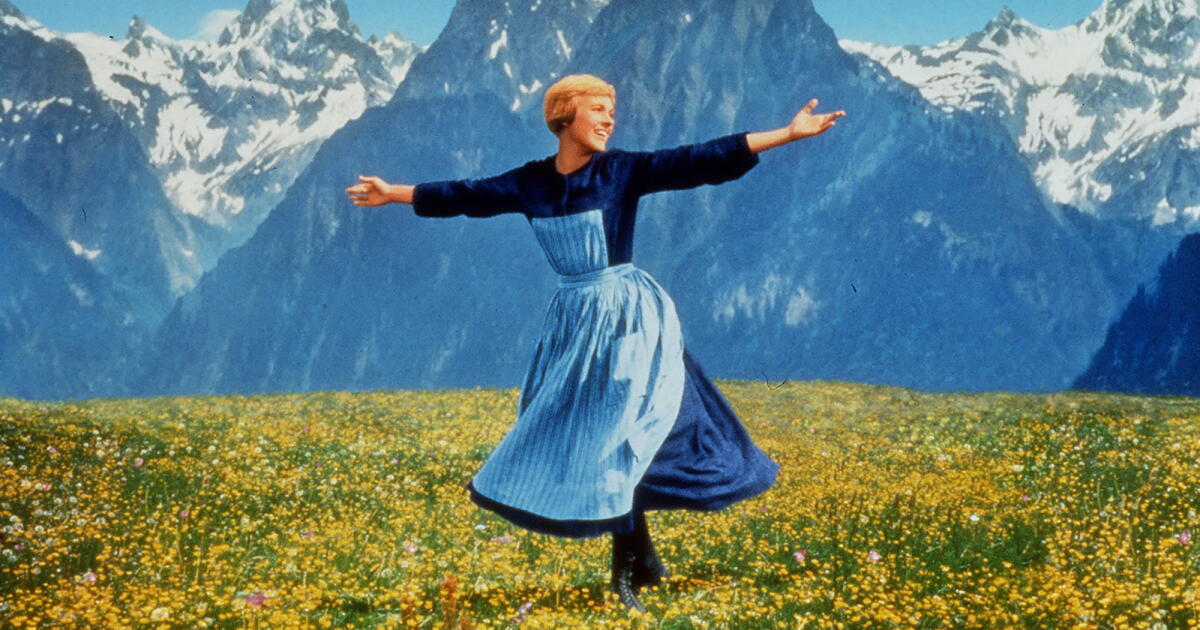
Even the legendary Western Costume, which has been in business since 1912, has been hurt by the slowdown. During the 2023 strikes by writers and actors, Western Costume furloughed 43 employees, or about two-thirds of its staff. Recently, the North Hollywood costume mecca, which has supplied such classic films as “Gone with the Wind,” “The Wizard of Oz,” “The Sound of Music” and the TV series “Mad Men,” furloughed an unspecified number of its workers, said two people familiar with the matter who were not authorized to speak publicly.
A representative of Western Costume did not respond to a request for comment.
Marc Meyer, the owner of Faux Library Studio Props, had strained to stay in business through the pandemic shutdown and the 2023 labor strikes — laying off 11 of his 13 employees.
By the start of 2024, Meyer, a set decorator who was credited with inventing the fake movie book, was drastically behind on rent, owing $500,000, he said.
Marc Meyer, closed the doors on Faux Library Studio Props in North Hollywood after almost 25 years in business.
(Mel Melcon/Los Angeles Times)
Meyer’s landlord had given him a week to come up with more than $100,000 in unpaid rent or vacate the 89,000-square-foot warehouse in North Hollywood filled with props, books, antique furniture and other items that have decorated such film and TV sets as “Angels & Demons” and “The X-Files” for almost a quarter-century.
Meyer came up with $45,000 to mollify his landlord, garnering a month’s reprieve. A GoFundMe was set up during the strikes and a host of industry colleagues such as “Top Gun: Maverick” set decorator Jan Pascale stepped up, buying props to help fill his coffers.
“The change in our city is palpable,” said writer and director Sarah Adina Smith, a co-founder of Stay in LA’s, a grassroots campaign aimed at increasing film and television production in Los Angeles. “It’s not just that so many crafts and artists are out of work, but you see small businesses, too. In L.A., we’re an ecosystem fed in large part by creative jobs, and that is quickly vanishing.”
Marlon Gilbert still waxes nostalgic about the days his Commerce-based company, Gilbert Production Service, stored and transported scenery and props for TV shows including “Dancing with the Stars” and feature films like “Batman.” At one time, he said, he was handling seven active TV shows in a single season.
“When it was still on Fox, the ‘American Idol’ finale, we had like 20 semitrucks going in and out. Money was flowing like crazy,” he said. “But eventually times got hard for them, and they cut back on their production stuff.”
By last year, Gilbert was down to just three clients. “It wasn’t sustainable,” he said.
In December, after three decades, the family-owned business filed for Chapter 11 bankruptcy and shut down too.
“I couldn’t pay rent on our warehouse lease, I blew through my savings and my 401(k),” he said. After his wife was hospitalized following multiple strokes in 2023, he said, “I didn’t have the energy to beat the bush for new business.”
“I would’ve liked to have gone out with more panache and made a big splash and money selling the business. But there was nothing left to sell.”
Scott Niner, president and owner of Dangling Carrot Creative, checks on a robotic machine as it fabricates at his shop in North Hollywood.
(Jason Armond/Los Angeles Times)
Scott Niner, president and owner of Dangling Carrot Creative, offers a case study in how production service businesses have navigated the tidal wave of upheavals.
After 18 years in business creating graphic signage, custom flooring and wallpaper to make sets look exactly as art directors dreamed up, the company filed for Chapter 11 bankruptcy last April.
Before the pandemic, Niner’s Valencia-based business was thriving.
In 2014, he opened a Georgia satellite office to service the film and TV productions that had migrated to take advantage of the state’s generous tax credits. He steadily expanded his workforce to 32 employees in L.A. and Georgia.
Production was so plentiful that he even branched into the bakery business in 2018, delivering graphics and cupcakes in the same order. At its peak, Dangling Carrot generated $800,000 a month.
When the pandemic shutdown hit, Niner’s monthly revenue dropped to $50,000, he said. He kept his workers employed by making face shields that he donated to hospitals.
“I hung in there, and it was painful,” said Niner, who received some government assistance.
During the strikes in 2023, he drained his 401(k) and his union pension to keep his shop open and his workers employed.
Niner said he deployed a strategy of “pivoting and praying.” He shifted his business to focus more on fabrication, making giant 3-D-printed items for movie premieres, 25-foot-long, 8-foot-tall and 8-foot-deep ammo chests for a “Call of Duty” promotion and even graphics at airports.
Last last month, Niner sold off his Georgia business as filming in that state shifted to the U.K. He downsized his home and moved his business from Valencia to a much smaller building in North Hollywood. He is now down to 11 employees.
“I have a very bright outlook on the future, especially because we’re getting phone calls from people who never would have called us because all the other guys are out of business,” he said. “There’s something to be said about the last man standing. But I’m the last man standing on $2 million in debt. I’m more like lying down.”
The industry got a reprieve last week when CBS announced that it was relocating its hit drama “Tracker” to Los Angeles from Vancouver, Canada, after receiving a $48-million tax credit. Many view such moves, however, as small wins over comprehensive ones.
“There’s been a fundamental change happening here over the past five years,” said Cale Thomas, a makeup artist who has worked on “Guardians of the Galaxy 3” and the recent biopic “Michael.”
Thomas, who is a member of Stay in LA, acknowledges that California’s step last year to double its tax incentives has helped to spur an uptick in local production, but that has not stopped the outflow of productions or resolved a host of restrictions and costs that have hampered the industry.
He worked on “The Mandalorian” and other Lucasfilm series that stream on Disney+ for five years. “We shot in Manhattan Beach Studios,” he said, but noted that Lucasfilm has since moved one show to the U.K. and produced two others there.
“This has been devastating for our industry,” he said. “Hundreds of generational family businesses aren’t being used anymore.”
The pain points are not confined to Hollywood.
Last year, Marvel Studios — which had made Georgia, known as Hollywood of the South, its primary filming center for such major franchises as “Avengers: Infinity War” — relocated much of its production to the U.K.
The impact has meant even fewer domestic productions causing an even bigger ripple effect.
Among the high-profile casualties was Hackman Capital Partners, which aggressively snapped up studios, acquiring $10 billion in assets under management before production activity plummeted nationwide.
In January, the company defaulted on its $1.1-billion mortgage on Radford Studio Center, the historic lot where “Seinfeld” and “Gunsmoke” were filmed and which gave Studio City its name.
Earlier this year, Hackman Capital Partners defaulted on its $1.1-billion mortgage on Radford Studio Center, the historic lot where “Seinfeld” and “Gunsmoke” were filmed.
(Gary Coronado/Los Angeles Times)
Three months later, lender Deutsche Bank filed a foreclosure complaint on the also-historic Kaufman Astoria Studios in Queens, N.Y., home to “Sesame Street” and “Succession.”
Gregg Bilson sold ISS Props, the Sunland-based company his father founded in 1977, to Manhattan Beach Studios, part of Hackman Capital Partners, five years ago, staying on as CEO to help run and expand the company.
After 40 years in the business, he retired last August with a little more than a year and a half left on his contract.
Bilson now sees himself as a Hollywood relic.
“Many of my contemporaries and I have had conversations where we say we saw the best of the film and TV industry when it was an art form,” Bilson said. “It will never be the same.”
To describe a movie as including a ski mask, a camcorder and $50,000 in cash would certainly lead one to imagine a specific type of story. Add two men and sex work and the brain might roll around more pointed scenarios.
But none of that can prepare you for what micro-indie “Blue Film” has in store. The nexus of perversion, pain and sexual purpose driving writer-director Elliot Tuttle’s dark, discursive chamber drama is of a stripe rarely attempted in even the most self-consciously daring movies. Should you need a self-imposed break afterward from intimate two-handers, even Tuttle might understand, then wink in the general direction of his Pasolini posters. (I’m guessing at this provocateur’s wall art.)
Is it clear yet that “Blue Film,” set primarily in a house in Los Angeles over the course of a revelatory night, isn’t for everybody? Some of that “everybody,” incidentally, includes the festivals and distributors who rejected the queer filmmaker’s debut feature, despite having critical buzz, Tony-winning actor Reed Birney as one of its stars and indie guru Mark Duplass as a mentoring producer.
But certain subjects (spoilers ahead) are bound to trigger a different kind of scrutiny. Initially, our attention is on macho-posturing tattooed camboy Aaron (“Boots” star Kieron Moore), graphically boasting to his followers online of the big payday he’ll receive that evening from a submissive client. What he later encounters, however, at the door of a Craftsman on a quiet street is a masked, polite, older host (Birney) with a camera and, once it’s turned on, a lot of personal questions, the kind that begin to crack the facade of a young man used to being in control of his transactional life.
Then his client’s face is revealed and Aaron recognizes it’s his middle school teacher Hank, a convicted pedophile who once coveted him. Hank, who completed prison time for the attempted assault of a different boy, has made a cross-country trip to seek out the adult version of someone who could have been his first victim. He is still processing what he is, wondering if desire, even love, is available to him anymore.
The question is, will you care? Even viewed through Aaron’s cautious, clear-eyed empathy, it’s a steep ask. But you should. Tuttle’s fearless inquisition won’t insult your intelligence, ask your mercy or hogtie your feelings. Honestly, it’s refreshing to be repulsed and intrigued by a movie willing to plumb these psychological depths when Hollywood won’t. In its commitment to unvarnished talk — even if that leads to a clunky staginess — “Blue Film” has thoughts about identity, choice, sin and salvation. There’s a sincere engagement with humanity’s more difficult realities.
Needless to say, this type of graphically articulated exchange wouldn’t work if the performances didn’t land. Thankfully, Moore’s affecting portrayal of jumbled masculinity mixed with situational curiosity is well-calibrated, while Birney, a pro with a challenge, eases us into Hank’s weary self-possession (if not always the nauseating facts of it) before coloring outside the lines with a believably interesting philosophy about reckoning.
But “Blue Film” is tough, make no mistake. Awkward and searching, it exists in a filmic space that you could argue was opened up by last year’s courageous documentary “Predators.” And sometimes that gaze is just discomfiting, full stop. Tuttle wants that. He has room to improve but he’s someone to watch, plumbing the hard-to-fathom.
If, god forbid, there’s a natural disaster in L.A. in the near future, Jena Malone might be one of your first responders.
“I’ve been studying Community Emergency Response Team training,” the actor-musician, 41, said, drinking coffee in the living room of her home overlooking pomegranate trees and a canyon in northeast L.A. “Whether it’s fire management or building a neighborhood tool shed, it’s less important for me to hit career milestones now than to transform how I live on this planet. Let’s build something where we’re all taking care of each other’s needs through mutual aid.”
Those are galvanizing priorities from Malone, who’s led generationally beloved films like the sci-fi noir “Donnie Darko,” played the axe-chucking Johanna Mason in two “Hunger Games” tentpoles and recently co-starred in the lesbian bodybuilding revenge flick “Love Lies Bleeding.” For almost as long, she’s also made experimental folk and electronic records that toy with avant-garde noise and quietly poignant songwriting.
This is a wild time in L.A. for anyone concerned about the city and its culture industries, and Malone is deeply invested in both. Just before the release of her new Netflix series, the Duffer Brothers-produced “The Boroughs,” she’s released her first album in nearly a decade. “Flowers For Men” is an effects-shredded, future-primitive record, written after the birth of her son upended her obligations — and expectations — toward the men in her life and the world they’ll inherit.
“It changed everything,” Malone said, about raising a son. “I grew up learning to thrive and mask in masculine spaces. Grind culture is a masculine toxicity that I inherited and indoctrinated myself in. But parenthood offers you this opportunity to burn your entire life down in sacrifice to finding out what’s real. I had no idea what it was to be a man. All of my ideas burned down and not much was being raised back up.”
For millennial film fans, Malone’s been a consistently compelling, trust-anything-she’s-in actor since her child-star turn in 1997’s “Contact.” Few embody a tortured, beguiling Americana quite like her.
“The Boroughs” — a high-profile follow-up to “Stranger Things” from the masters of unreality, created by Jeffrey Addiss and Will Matthews — has a stacked cast that includes Alfred Molina, Geena Davis and Bill Pullman, set amid a bucolic retirement community under supernatural threat. A ragtag group of Duffer Brothers misfits teaming up to fight off eldritch horror might be the last safe bet in television.
Yet that’s also how Malone feels about the current climate of Hollywood — a once-stable neighborhood fending off malign forces. Institutional consolidation and retreat, spiraling costs, technological upheaval — they all add to a creeping sense that an era is over, and worse is coming.
“Film is in such a delicate transition. I think that where music was 20 years ago, film is now,” she said. “It’s like being on an elevator where every floor is on fire. A lot of the things that I loved about it no longer exist, even if what I love about it is still wildly potent. My stress levels go down and my creativity goes up when I’m building a world that does not rely on the film industry, even though it’s my main love.”
That feeling called her back to music on “Flowers For Men,” arriving nine years after her last LP. The ego-shattering experience of giving birth in 2016 and raising a son prompted reflections about what men’s inner lives were really like, and she wanted to write about them.
“I was raised by two moms, and I had this strange aspiration to become the dad,” Malone said, laughing. “I was the breadwinner of my family then. But being a parent was all brand-new to me. I kept seeing my father in him, my grandfather, these older relationships with men. It was asking me to look at him with curious, childlike eyes.”
“Flowers For Men” was written from a sincere curiosity about mens’ strictures, bad influences and better aspirations. To inhabit someone else’s life, she had to sound different, too.
“Film is in such a delicate transition. I think that where music was 20 years ago, film is now,” Malone said. “It’s like being on an elevator where every floor is on fire. A lot of the things that I loved about it no longer exist, even if what I love about it is still wildly potent.
(Evan Mulling/For The Times)
The most prominent instrument on the album is its layers of vocal treatments. Malone has a lovely natural voice — intimately whispered, with hints of ‘70s country rock. But here she douses it in pitch-shifted digital acid, like a late 2000s R&B record dropped in the pool at the Joshua Tree Inn.
It’s an uncanny combo, but its lends modern melancholy to “Barstow,” which has the narrative structure of a Townes Van Zandt banger but is corroded with bleary effects. “Create In Your Name” has a Billie Eilish-worthy late-night murk, with lyrics so devotional they almost sound consumptive. “Disaster Zones” is all blown-out ambience, and the LP closes on a showstopping cover of John Prine’s classic “Angel From Montgomery.”
“I just love that a man wrote a song where the first line is ‘I’m an old woman,’” Malone said. “As a female songwriter, it gives me so much permission. Now all the doors are open. If I was to give flowers to all of the different men that have touched or changed things that deserve celebration, John Prine would be one of them.”
That idea — celebrating men for the good they’re capable of — felt transgressive enough today that it cohered the album for her. But it also came with questions about how romantic partnership fit into her life. Settling into motherhood, she read up on relationship anarchy — which she sees as not abiding by tiers of connection. She bought books on ethical nonmonogamy (“Sex at Dawn” was a big one) to learn how other lives were not just possible, but maybe even more fulfilling.
(Perhaps this was not a stretch from an actor who played the wild child Lydia Bennet in “Pride and Prejudice.”)
“I had been under this societal understanding that hierarchical love, placing one partner above everything else, was the ultimate romantic expression. I could name hundreds of movies that brought that up,” she said. “But while I’m learning to take care of this child, I’m realizing that self-love is one of the most important parts of this equation. I need to have expression, some work in life that felt like another love. And then my family, and how important friends were. And all of a sudden there’s no world where I would just have one love, not even just romantic love.”
“I had been under this societal understanding that hierarchical love, placing one partner above everything else, was the ultimate romantic expression. I could name hundreds of movies that brought that up,” Malone said. “But while I’m learning to take care of this child, I’m realizing that self-love is one of the most important parts of this equation. I need to have expression, some work in life that felt like another love.
(Evan Mulling/For The Times)
“Flowers For Men” is, in her way, a bargain with that contradiction — to love men deeply, but never put them above all else, even as she got engaged to her partner, actor Jack Buckley, earlier this year.
She’s still sorting out how to present this album live. She said she’s a fan of the Dead City Punx model of renegade shows in forgotten corners of L.A. Maybe as the city seems to fall apart, she’ll find a leafy park or the back of a dingy bar that’s the right home for these strange, lonely yet hopeful songs.
“I want someone to walk into the bathroom and be like, ‘Whoa, why is there a woman singing to me?’” Malone said. “I like the idea that art makes you a little uncomfortable and you don’t have the previously held expectations to know how to hold it.”
On one of her previous visits to Los Angeles, Argentine filmmaker Lucrecia Martel found herself having a smoke on Hollywood Boulevard.
There, while she stepped over the famous concrete-embedded stars, an unhoused man struck up a conversation with her.
“He kept explaining to me that he was poorly dressed because he was currently living on the street after someone robbed him, but he had written a screenplay,” Martel, 59, recalls in Spanish over coffee on a morning in April at a West Hollywood hotel.
“He told me they had stolen a watch from him — not a Rolex but a known brand,” she continues. “The whole time he was trying to convince me he was a millionaire who just so happened to be on the street because of random circumstances.”
One of Latin America’s most indispensable storytellers, Martel is fascinated by how prevalent that dream still is in L.A. — that movies can change your life overnight.
“That particular fantasy is par for the course in this city,” she says, though she’s not above it. It’s the reason she’s back to promote her first documentary, “Our Land,” out Friday.
Unhurried when it comes to her output, Martel has only made four fiction features, among them 2001’s “La Cienaga” and 2008’s “The Headless Woman” (returning to theaters this month in a new 4K restoration). Her biting and formally audacious narratives examine class, politics and — a speciality — the interiority of women through enigmatic portraits of psychologically complex individuals.
“Our Land,” a piercing indictment of the enduring wounds of colonialism, chronicles the murder of Indigenous Argentine activist Javier Chocobar in 2009 and the prolonged trial of the perpetrators in 2018.
Chocobar was shot during a confrontation with armed men over land in the Tucumán province of Argentina where the Chuschagasta Indigenous community has lived for many generations. Martel explores the killing not as an isolated event in her country’s recent past but as part of a long history of dispossession.
“Racism is a foundational element,” she says of her homeland. “The only consistent thing in Argentina, from the country’s birth to the present day, is the rejection of Indigenous people.”
In Argentina, Martel explains, public education has indoctrinated the population into believing Indigenous people no longer exist. Yet many Argentines proudly claim a connection to the Europeans, Italians in particular, who arrived in the country in the late 1800s and early 1900s.
“When giving speeches, our presidents always say, ‘We are a country of immigrants,’ or ‘We came from the boats,’” says Martel. “They use metaphors like these because deep down Argentines feel much more indebted to European immigration than to our Indigenous population. But more than half of the people in Argentina have Indigenous ancestors.”
In 2020, Chocobar’s three convicted murderers appealed their guilty verdicts and were set free. “Our Land” premiered at the Venice Film Festival in September 2025, which brought renewed attention to the case. A month later, the sentence was upheld and two of the men returned to prison (one died in the interim).
Martel believes that outcome was a response to her film. “Communities wage the fight but cinema helps,” she says.
“I believe that we must use cinema for its enormous power to alter perception and not soothe the rich,” Martel says. “It’s not about delivering a message but rather about showing how an idea functions.”
(Jason Armond / Los Angeles Times)
For over 14 years, Martel worked on “Our Land” on and off. This time included periods when she focused on 2017’s “Zama,” her masterful period piece following a Spanish official in 18th century Argentina “who doesn’t want to be American,” she says, referring to the continent. In her mind, both “Zama” and “Our Land” come from the same impulse to dissect colonialism.
As part of her research process, Martel and her team created a detailed archive of documents related to the case that the Chuschagasta community now has at its disposal. Over the years, Delfín Cata, one of the Indigenous men present during the attack, would call Martel. He never asked about how her film was going, but the director sensed he was tacitly checking in on her progress, hoping that she was not losing faith.
“That was a confirmation that, beyond my own interest, there were people who needed this film,” she says. “I felt the immense satisfaction of knowing I was doing something that would be concretely useful.”
For Martel, the question of whether she was the right person to make this film (one she got in Venice) seems unfair. “It’s wrong to prevent a human being from speaking about their own history because they are not a woman, because they are not Black, or because they are not Indigenous,” she says. “It’s better to make mistakes trying to understand something than not to try at all. The chances of making a mistake are enormous in a film, no matter how good your intentions are.”
A key piece of evidence in the Chocobar case, prominent in the film, is a video that one of the attackers filmed, presumably expecting the Indigenous community to react violently, to justify firing his gun at them. The Chuschagasta men that faced them weren’t armed. As used by their aggressors, the camera functioned as a weapon.
Hollywood feels incompatible with Martel’s sophisticated, confrontational movies rooted in her country’s troubles. By Martel’s own admission, it doesn’t feel like a fit for her.
“I would have to force myself to create something outside my own country, outside my own language,” she says. “And that doesn’t really appeal to me.”
Still, Marvel Studios famously asked to meet with her when seeking a director for 2021’s “Black Widow.” Martel says she was among many directors they contacted, but she was curious to take the meeting even if she knew nothing would come of it.
“They wanted to do it over Zoom and I happened to be here in Los Angeles,” she remembers. “I told them I could come in, because I wanted to see what the whole process was like.”
Martel describes the month she spent in L.A. — an eye injury prevented her from flying home sooner — as a “lot of fun in the end,” even if no blockbuster emerged from it. More recently, another Hollywood offer did tempt her, but she ultimately passed.
“It was a good book suggested to me by an actress of undoubted talent,” Martel shares, careful to avoid names. “I considered it, but you very quickly have to picture yourself spending three years or at least a year and a half living in the United States making a movie. I have a thousand things in Argentina to worry about.”
Still, Hollywood, and its significance to moviemaking, has a singular, unnerving allure on her. Two of Martel’s favorite movies set in L.A. are David Lynch’s nightmarish “Mulholland Drive” and Robert Aldrich’s psychodrama “What Ever Happened to Baby Jane?”
“There is something ruthless and utterly devoid of sanity at the heart of this film industry, and I’ve never felt that darkness as clear as in ‘Mulholland Drive,’” she says. “How can an industry that handles so many millions [of dollars] and such impeccably dressed famous people be so full of lunatics? That film captures that perfectly.”
And occasionally, she thinks, a big production breaks the mold, such as Todd Phillips’ “Joker,” which won the Golden Lion at the Venice Film Festival in 2019 when Martel served as jury president — a controversial choice.
“It certainly had an impact on me,” says Martel. “I didn’t vote for it, though. I had another favorite, a Chinese film that stood no chance of winning.”
Phillips, she thinks, created a premonition for what was to come. “For me, the real killer clowns are Trump, Milei or Orbán,” Martel says, referring to polarizing leaders. “They expose themselves to ridicule and spout all sorts of nonsense. Those are clowns. And I think that movie captured that.”
Not one to mince words, Martel elaborates on the relation of Joaquin Phoenix’s social outcast turned supervillain and President Trump.
“The origin of the Joker is social resentment,” she says. “Trump holds no resentment toward society because the system gave him everything. But he has exploited the people who do harbor resentment. That is where you see the kind of clown he is, one who knows how to use people.”
Artificial intelligence, far-right ideologies, voracious capitalism — all of it makes Martel alarmed, seeing it as pushing us collectively to the brink of collapse. But there is hope, she thinks.
“What we have invented is very dangerous but we can dismantle it,” she says. “That is the only thing I’m betting on, that, at some point, a consensus will emerge and we’ll go, ‘Let’s not do this.’”
“I believe that we must use cinema for its enormous power to alter perception and not soothe the rich,” she says. “It’s not about delivering a message but rather about showing how an idea functions.”
She points to one of her subjects in “Our Land,” an Indigenous man who told her he loves the 1959 Charlton Heston epic “Ben-Hur,” a passion she does not share but understands.
“That’s a blow for all of us who make auteur cinema,” Martel says with a laugh. “That feeling that ‘Ben-Hur’ evoked gave him the strength to continue fighting for his community’s territory.”
The night before our interview, Martel rode around L.A. on a scooter holding onto a friend. These days she uses a cane to help her with mobility. “The city has great light,” she says, still open to being surprised by it.
“Tracker,” one of TV’s most-watched shows, is uprooting its Canadian production and moving to Los Angeles.
The action drama, produced by Disney’s 20th Television, is among a slate of new and recurring series benefiting from California’s improved $750 million tax incentive program. The show’s fourth season, set to begin shooting this summer, will receive the state’s largest tax credit , at $48 million, according to the California Film Commission.
The production will film for 176 days in California, with 250 crew members and 275 actors on board. The tax credit is based on the show’s projected spending of over $129 million. Deadline first reported the news of the show’s relocation.
The show stars actor Justin Hartley and follows his character as he tracks down people for reward money. Ever since its 2024 premiere, the show has resonated with audiences. Its third season is currently airing and was the fourth most-watched program on linear TV as of late April, according to Nielsen.
“Tracker” is primarily set in the wilderness, making the move to California a fresh opportunity for the production to explore diverse landscapes as its backdrop. Due to the rural setting, the show is also eligible to earn an extra 5% tax credit bonus, in addition to the 35% base credit, on qualified expenditures incurred outside the designated 30-mile zone of the Greater Los Angeles area.
Before “Tracker” secured the highest TV show tax credit, season 3 of Amazon’s “Fallout,” which relocated from New York to Los Angeles, received a $42M incentive. Dan Fogelman’s new NFL drama “The Land” received $42.8M. Other productions that have benefited from the tax program include medical drama “The Pitt,” Disney’s new animated movie “Phineas and Ferb” and Netflix’s upcoming reboot of “13 Going on 30.”
More than 100 productions have received tax credits since the program was expanded last year in response to the continued migration of productions to other countries like Ireland, U.K. and Canada.
But film industry advocates say these efforts aren’t enough to fully revitalize U.S.-based productions and local film economies.
To that end, , U.S. Sen. Adam Schiff (D-Calif.) announced in March he is working on a bipartisan federal film incentive proposal that would be globally competitive.
“State programs cannot simply substitute for the kind of global, federal and competitive tax incentives that are needed to bring production back to American soil and stop its offshoring,” Schiff said.
Paramount Skydance Chairman David Ellison defended his commitment to release 30 movies a year once his media company swallows Warner Bros. Discovery — a goal that some industry observers view as overly ambitious.
During a Monday call with analysts to discuss Paramount’s first-quarter earnings, the tech scion said the target was achievable because his management team would maintain current levels of production. Paramount has doubled its film release capacity to 15 films this year, matching the number of theatrical releases planned by competing Warner Bros.
“The two companies are actually making 30 films to date,” Ellison said. “We really view our pending acquisition of Warner Bros. Discovery as a powerful accelerant to our strategy.”
The company said it was on track to finalize its Warner takeover by the end of September. The $111-billion deal would transform the smaller Paramount into an industry titan with prestigious programming, including Harry Potter, “Game of Thrones,” “Euphoria,” as well as its current slate of Taylor Sheridan-produced franchises, including “Yellowstone” and “Landman.” The combined company also would own dozens of popular TV networks, including CBS, CNN, Comedy Central, Food Network and HGTV.
But the proposed merger would saddle the combined company with $79 billion in debt, stoking fears that Paramount would need to make steep cost cuts to balance such a large debt load. During the quarter, Paramount lined up banks and other institutional investors to provide bridge financing to help pull off the transaction, the company said.
“We’re pleased with the momentum and will continue to take the necessary steps to bring this deal to completion,” Ellison told analysts.
Late last month, Warner Bros. Discovery stockholders overwhelmingly voted in favor of the deal, which will pay $31 a share to Warner investors. The company now must secure regulatory approvals in the U.S. and abroad, and that process is well underway, Paramount said.
Paramount has asked the Federal Communications Commission for permission to exceed a cap on foreign ownership for U.S. media companies. Ellison’s company is expecting $24 billion from three Middle Eastern royal families, who would become part owners of the combined entity. Those total funds will represent about 49% of equity in that new company, exceeding the current foreign ownership cap of 25%.
More than 4,000 filmmakers, actors and industry workers, including Bryan Cranston, Connie Britton, Kristen Stewart, Jonathan Glazer and Jane Fonda, have signed an open letter asking California Atty. Gen. Rob Bonta and other regulators to block the deal, saying it “would reduce the number of major U.S. film studios to just four.”
Late last week, a small group of consumers sued to block Paramount Skydance’s acquisition of Warner Bros. Discovery and unwind Ellison’s Skydance Media’s takeover of Paramount, alleging that both deals reduce marketplace competition.
For the January-March quarter, Paramount’s earnings beat Wall Street’s expectations. Revenue grew 2% to $7.3 billion compared with the first quarter of 2025.
Adjusted earnings before interest, taxes, depreciation and amortization (EBITDA) reached $1.1 billion, helped in part by growth in its streaming services unit. Paramount+ increased its revenue by 17% to nearly $2 billion, compared with the year earlier period when it generated $1.7 billion. The service added 700,000 subscribers, bringing the total to nearly 80 million.
With Warner’s HBO Max streaming platform, the combined service would boast more than 200 million subscribers.
Paramount reported first-quarter net earnings of $168 million, or 15 cents per share, compared with $152 million in 2025, which occurred before Skydance acquired the media company in August.
Executives pointed to “Scream 7,” a late February release that has topped $200 million in global ticket sales, as a success story. Studio revenue grew 11% to $1.28 billion for the quarter.
Television networks revenue declined 6% to $3.7 billion as Paramount’s cable channels continue to contend with the loss of cable cord-cutters, which reduces the company’s collections from pay-TV providers. Nonetheless, Paramount pointed to the strength of Sheridan’s “Landman,” starring Billy Bob Thornton, Ali Larter, Sam Elliott and Demi Moore, and the strength of the CBS television network, which currently has 13 of the broadcast industry’s top 20 prime-time shows, including “60 Minutes,” “Marshals,” and “Tracker.”
The company told analysts it would achieve $30 billion in revenue for the full year and $3.8 billion in adjusted EBITDA. Paramount said it would also make $2.5 billion in cost-cuts by the end of this year and reduce expenses by $3 billion in 2027.
Paramount said it ended the quarter with $1.9 billion in cash and cash equivalents. It also was carrying $15.5 billion in debt. The company had to draw $2.15 billion from its revolving credit facility to pay Netflix a $2.8-billion termination fee that Warner Bros. Discovery had agreed to pay under a previous deal to sell the company to Netflix.
Paramount released its earnings after Monday’s trading day. Its shares closed at $11.13, basically unchanged.
Everyone wants to be “The Devil Wears Prada 2,” as the 20-year sequel strutted to an estimated $77 million in the U.S. and Canada in its opening weekend, highlighting the spending power of women moviegoers at the box office.
The film, which returned stars Meryl Streep, Anne Hathaway, Emily Blunt and Stanley Tucci, nudged out Lionsgate’s “Michael” for the domestic top spot at theaters this weekend. In its second outing, the Michael Jackson biopic brought in $54 million, upping its overall North American total to $183.8 million and its cumulative global haul to $423.9 million.
Worldwide, Walt Disney Co.-owned 20th Century Studios’ “The Devil Wears Prada 2” brought in $233.6 million, according to studio estimates. The theatrical revenue, both domestic and worldwide, edged studio expectations. Already, the film has brought in 72% of the total revenue that the original movie made ($326 million).
The 2006 original has become a cult classic, with lines like Streep’s infamous “that’s all” and Tucci’s “gird your loins” now millennial catchphrases. The popularity of that film has continued over time with repeat viewings on cable television and the Disney+ streaming service.
“Nostalgia is a big driving factor for movies like this,” Andrew Cripps, head of theatrical distribution for Walt Disney Studios, said. “It’s just one of those movies that got into the zeitgeist.”
The fashion-forward sequel had a production budget of about $100 million. The film notched a 77% approval rating on aggregator Rotten Tomatoes.
Women comprised the majority of the audience for “The Devil Wears Prada 2” this weekend, representing 71% of moviegoers, according to data from EntTelligence.
The strong showing for “The Devil Wears Prada 2” highlights the spending potential of female moviegoers, who have had few big movies aimed at them in the last few years.
Despite the billion-dollar blockbuster that was “Barbie” in 2023, Hollywood has largely failed to consistently deliver big films targeted to women. That’s led multiple box office analysts and studio executives to note that the industry is leaving money on the table.
In the past, comparable titles to “The Devil Wears Prada 2” would have been 2008’s “Mamma Mia” or the “Sex in the City” film, but those kinds of movies are now few and far between.
“There haven’t been enough movies for females,” Cripps said. “When you can give them a good movie, as long as the movie plays well and I think this one plays brilliantly, there’s a big audience out there.”
Universal Pictures, Nintendo and Illumination’s “The Super Mario Galaxy Movie” continued its run with a third place finish of $12.1 million at the box office this weekend, followed by Amazon MGM Studios’ “Project Hail Mary” in fourth and Neon’s horror flick “Hokum” in fifth, according to Comscore data.
As artificial intelligence becomes more embedded in film production, the Academy of Motion Picture Arts and Sciences is drawing a clearer line around it.
In new rules announced Friday for next year’s 99th Academy Awards, the academy said screenplays must be “human-authored” to be eligible for awards consideration, and that only performances “demonstrably performed by humans with their consent” will qualify for acting prizes. The group also reserved the right to request additional information about how AI tools were used in a film and the extent of human involvement.
The academy’s Board of Governors reviews its rules annually.This year’s revisions arrive as the industry continues to grapple with how AI tools are reshaping the creative process — and how institutions like the Oscars should reward that work, if at all.
The new changes build on guidance introduced a year ago, when the academy said that the use of AI would “neither help nor harm” a film’s chances of receiving a nomination, while emphasizing that voters should consider “the degree to which a human was at the heart of the creative authorship.” At the time, the organization stopped short of requiring formal disclosure of AI use, even as the technology became a flash point across Hollywood.
Taken together, the updated language suggests an effort to more clearly define the boundaries of authorship at a moment when tools such as voice cloning, digital doubles and AI-assisted writing are becoming more common in film production. The emergence of synthetic performers such as Tilly Norwood reflects how quickly those questions have moved from theoretical to practical.
In announcing the new rules, the academy framed the changes as part of an effort to reflect the current state of filmmaking, while maintaining what it called a “commitment to honoring human authorship and artistry.”
Beyond the AI provisions, academy leaders approved several structural changes across different categories.
In acting, performers may now receive multiple nominations in the same category if their performances rank among the top vote-getters, aligning the category with other branches.
The international feature film category also saw a notable shift. In addition to the traditional submission process through individual countries, non-English-language films can now qualify by winning top prizes at select major festivals, including Cannes, Berlin and Sundance. The award will be credited to the film itself, with the director accepting on behalf of the creative team, rather than to a submitting country or region.
Other changes — including updates to voting procedures in categories such as cinematography, visual effects and makeup and hairstyling — were largely technical in nature.
The new rules will take effect with next year’s Oscars, scheduled for March 14, 2027.
A group of five consumers have filed a lawsuit against Paramount Skydance seeking to block its acquisition of Warner Bros. Discovery and unwind the earlier merger that joined the storied Melrose Avenue studio with David Ellison’s Skydance Media, alleging that both deals reduce marketplace competition.
The lawsuit, filed Thursday in U.S. District Court in the Northern District of California, alleges the Paramount-Warner deal will lead to increased prices, fewer consumer choices and reduce production of film and TV since a major rival in the entertainment business will be eliminated.
The suit also alleges that the Paramount-Skydance merger, which was finalized last year, led to higher prices for the Paramount+ streaming service.
The plaintiffs — Pamela Faust, Len Marazzo, Lisa McCarthy, Deborah Rubinsohn and Gary Talewsky — are either Paramount+ subscribers, pay for cable bundles that include Paramount-owned TV channels or are moviegoers who watch films in theaters.
“These acquisitions show an industry moving by successive combinations toward fewer independent rivals, exactly the consolidation backdrop that heightens the competitive threat posed by the next merger, even if the combined firm remains smaller than the largest platforms,” the lawsuit states.
Paramount is aware of the lawsuit and “confident that it is without merit,” a company spokesperson said.
“The combination of Paramount and [Warner Bros. Discovery] will create a stronger competitor that is well positioned to serve as a champion for creative talent and consumer choice,” the spokesperson said in a statement.
The Paramount-Warner deal is currently winding its way through regulatory approvals. While that process is underway, Paramount has asked the Federal Communications Commission for permission to exceed a cap on foreign ownership for U.S. media companies.
Paramount expects to receive $24 billion in funds from three Middle Eastern royal families, who will become part owners of the combined company. Those total funds will represent about 49% of equity in that new company, exceeding the current foreign ownership cap of 25%.
Paramount has said the Ellison family and RedBird Capital Partners “collectively hold the largest equity stake in the combined company and continue to be the sole owners of Class A Common Stock, representing 100% of the voting shares.”
But on Friday, Rep. Sam Liccardo (D- San Jose) urged the FCC to deny Paramount’s petition on the foreign ownership aspect of the deal.
“Congress did not entrust the public airwaves to this agency so that it could auction off America to Riyadh, Abu Dhabi and Doha,” he wrote in a statement. “This will not stand.”
“All the President’s Men” was released 50 years ago this month, an anniversary that’s been greeted with equal parts rue and reverence by the journalists, political junkies and discerning cinephiles who have worshiped the film for five decades.
As a member of all three of those constituencies, I’ve done my share of genuflecting, most recently as chief film critic at the Washington Post, whose city room was as vivid and fully realized in the movie as Robert Redford’s Bob Woodward and Dustin Hoffman’s Carl Bernstein.
Like so many Posties of my generation, I’ll never forget the so-real-it’s-surreal experience of walking into the fifth-floor newsroom for the first time in 2002. By then, standard-issue electric typewriters and six-ply carbon paper had been replaced by far less visually interesting computers. But the office’s pervading atmosphere of hard work and quiet focus felt uncannily similar to its big-screen analog.
For the last two years, I have been researching a book about the making of “All the President’s Men,” whose production involved almost as many contingencies and unresolved questions as Watergate itself. Among the film’s many mysteries, one I’ve found particularly intriguing has to do with Katharine Graham, publisher of the Washington Post and CEO of its parent company during the Watergate investigations. As the movie amply demonstrates, it took guts for Woodward and Bernstein to persevere with their reporting in the face of terrified sources and their own growing paranoia. But, unbeknownst to many observers at the time, Graham was enduring even more withering pressures, with determination that was all the more impressive for being almost entirely invisible.
I’m still in the process of discovering why she remained invisible in “All the President’s Men.” For now, it’s clear that the backstory is more nuanced than mere oversight or, as many are quick to assume, simple sexism.
In fact, William Goldman’s first script of the film featured a sequence with Graham and Woodward, a scene that appeared in every subsequent draft. Based on an actual meeting between the two, it’s a cagey game of cat-and-mouse, with the publisher taking the measure of a nervous, still-inexperienced journalist, looking for reassurance that his reporting will prove out.
Earlier this year, at a January staged reading of “All the President’s Men” at Harmony Gold Theater in Hollywood — a fundraiser for the Stella Adler Academy — it was possible for fans to conjure what might have been. Mark Ruffalo played Woodward and Ethan Hawke played Bernstein in a version of the movie assembled from different Goldman drafts.
A high point of the evening was when Ruffalo and actor Susan Traylor brought the Graham-Woodward scene to tentative, tense and teasingly playful life. After grilling Woodward about his sources and coyly asking him about Deep Throat’s identity, Traylor’s Graham asked him if the truth about Watergate would ever be revealed. “It may never come out,” Ruffalo’s Woodward replied. “Don’t tell me ‘never,’” Graham laments, before bringing the meeting to a close with a gently peremptory “Do better.”
In poring over director Alan J. Pakula and Goldman’s papers, I’ve probably read that scene dozens of times. But when I heard it play out in real time, I was ambushed by the emotions it stirred — a mixture of pride in Graham’s legacy and deep sadness at how that legacy has been so inexplicably ignored in recent years.
I was also sad that Redford, who died in September, wasn’t there. He often expressed regret that Graham wasn’t a featured character in “All the President’s Men.” Keenly aware of how her spine and steadfastness made Woodward and Bernstein’s work possible, he wanted to honor that crucial support. When I interviewed him for the first time in 2005, he insisted that fearless owners were every bit as important in preserving democracy as the reporters he and Hoffman helped glamorize.
Over the next two decades, every time I saw Redford, he bemoaned the “downward slide of this thing,” by which he meant the constellation of institutions “All the President’s Men” celebrates: not just journalism and a robust First Amendment but a Washington where investigators, prosecutors, judges, the Senate and Congress did their jobs regardless of partisan loyalties, and a Hollywood where a studio as mainstream as Warner Bros. would agree to finance a tough-minded film about a contentious and still-raw period in recent history.
Granted, that film was based on a bestselling book and anchored by two huge stars. But today, with political and corporate leaders — including media companies — falling over each other to curry favor with President Trump, “All the President’s Men” feels like an artifact from a vanished age.
Nowhere is this more distressingly true than at the Post itself, where the newsroom immortalized by the movie has been slashed by more than a third, and where Jeff Bezos, who bought the paper in 2013, seems intent on erasing Katharine Graham’s legacy until it vanishes completely. During the first Trump administration, Bezos stood up to threats against the Post and the press at large that would make Nixon blush, or at least pea-green with envy.
Now, Bezos has become a one-man meme of what author Timothy Snyder calls “obedience in advance,” quashing an endorsement of Kamala Harris, ostentatiously grinning his way through Trump’s second inauguration, vastly overpaying for a promotional film about First Lady Melania Trump and staying conspicuously mum (at least publicly) when a Post reporter’s home was raided by the FBI in January.
All of this has come at an enormous moral and material cost, with thousands of readers canceling their subscriptions and an alarming number of the Post’s finest reporters and writers leaving for other publications and platforms. As my former boss Marty Baron told my former colleague Ruth Marcus in the New Yorker in February, Bezos’ turnaround has been “sickening” to witness: “a case study in near-instant, self-inflicted brand destruction.”
Of course, that brand was built, in no small part, by “All the President’s Men,” which taught a generation how to walk, talk, dress and act like real reporters. (Hint: A good corduroy jacket and a pen in your mouth can’t hurt.)
In 1976, Pakula was interviewed about his dealings with Graham, whom he admired tremendously and with whom he would become close friends. “I could do a film about the Katharine Graham story,” he enthused. “It’s a superb story.”
Thirty years later, Steven Spielberg would bring Pakula’s idea to fruition with “The Post,” about Graham’s decision to publish the Pentagon Papers, a dress rehearsal for the even higher stakes of Watergate a year later.
“The Post,” which starred Meryl Streep in a shrewdly judged performance of aristocratic assurance and creeping insecurity, premiered in Washington less than a year into Trump’s first administration. Bezos attended that screening, which many of us saw as tacit acknowledgment that he was taking her lessons in character, comportment and competence to heart.
That was clearly wishful thinking. Graham may have finally assumed her rightful place in the newspaper-movie canon, but we’re still left to ponder her absence from the most iconic journalism movie of the 20th century.
It’s no longer the shoe-leather reporters who need a big-screen tutorial in how to do their jobs. It’s their bosses. A simple place to start would be to memorize the best two-word speech to never appear in a major motion picture: Do better.
Ann Hornaday was a film critic at the Washington Post from 2002 to 2025, when she retired. “All the President’s Men” plays at TCM Classic Film Festival Saturday at 2:45 p.m.
1 of 6 | CJ ENM premiered its AI-hybrid film “The House” in Seoul Thursday, presenting the low-budget occult thriller as a test case for AI use in Korea’s struggling film industry. Photo by CJ ENM
SEOUL, May 1 (UPI) — South Korean entertainment giant CJ ENM premiered its AI-hybrid feature film The House this week, presenting the low-budget occult thriller as a test case for how artificial intelligence could help revive a struggling film industry.
The 60-minute film, unveiled Thursday at CGV Yongsan I’Park Mall in Seoul, follows a young woman who can see dead souls after moving into a decrepit apartment building. It is scheduled to be released Friday on CJ ENM’s streaming platform TVING.
Taken on its own merits, The House is far from innovative. It scans as a fairly forgettable horror flick, leaning heavily on gloomy atmospherics, digital gore and jump scares in service of a paper-thin story.
But behind the scenes, the film represents a cutting-edge use of fast-evolving technology that dramatically reduces both costs and production time.
CJ ENM said the actors’ performances were filmed entirely indoors on a green-screen stage, while every background and visual effect was created with AI, using Google tools including Imagen, Nano Banana and Veo.
“We have expanded the production paradigm,” Jeong Chang-ik, head of CJ ENM’s AI Studio and lead producer of The House, said at a panel discussion after the premiere Thursday.
The film cost about $337,000 to produce — at least five times less than a comparable conventional production, Jeong said.
He added that the efficiency gains could be especially significant for genre films, disaster movies and other effects-heavy productions.
“From our perspective, there isn’t much difference in production costs between making a scene where a main character drinks coffee at a cafe and making a scene where that main character defeats a monster,” he said. “In reality, there is a huge difference, but in terms of AI, the difference is not much.”
Actor Kim Shin-yong, who plays a security guard in the film, said the process differed sharply from traditional chroma-key filming, where performers must imagine effects that are added later.
“I could perform while seeing the completed backgrounds in real time, which made immersion much better,” Kim said, adding that the entire shoot took just four days.
The rapid adoption of AI has raised alarm across the global entertainment industry, helping fuel strikes in Hollywood in 2023 amid concerns over job losses and creative control. But the technology is already being widely integrated across production pipelines.
The team behind The House said the goal is not to replace actors or creators, but to integrate AI into existing production workflows.
Ahn Sung-min, director of customer engineering at Google Cloud Korea, said AI is being used not to “take the place of creation,” but to help realize creators’ intent within the filmmaking process.
CJ ENM executives also pushed back on the idea that AI could replace human performers.
“We are actually certain that AI cannot replace the acting of actors,” Baek Hyun-jung, head of content innovation, said. “That’s why we designed this hybrid approach — to preserve the actor’s unique expressiveness while using AI for backgrounds and effects.”
The experiment comes as South Korea’s film industry faces mounting pressure from rising production costs, reduced investment and competition from streaming platforms.
Korean Film Council data showed theater admissions fell 13.8% in 2025 from a year earlier, while revenue from domestic films plunged 39.4%.
Despite the global popularity of Korean content, Culture, Sports and Tourism Minister Chae Hwi-young said in September that the reality facing the country’s creative industries is one of “despair.”
He singled out the film sector as the most vulnerable, noting the number of commercial Korean productions has dropped from around 60 per year to about 20 in 2025.
“Investment has stopped, and the film production scene has run out of money,” Chae said. “The ecosystem of the film industry is collapsing to the point where filmmakers can’t make a living.”
Some A-list filmmakers have responded with dramatic measures such as “microbudget” productions. Train to Busan director Yeon Sang-ho’s 2025 film The Ugly was made for around $150,000 and performed respectably, drawing more than 1 million theatrical viewers before landing on Netflix.
Against that backdrop, AI is increasingly being seen as a potential lifeline for the industry.
For CJ ENM, The House builds on a growing slate of AI-driven projects, including the animated series Cat Biggie, released online last year.
The new film is less a finished template than a proof of concept. Its visual seams remain visible, and panelists acknowledged that AI tools still struggle with consistency, particularly in longer narrative works.
Still, executives said AI will likely become inseparable from mainstream filmmaking.
“I think AI will be the next generation after CGI,” Baek said. “The era in which the boundaries between regular movies and AI movies disappear will surely come quickly.”
“I WAS a bit of a Duracell bunny,” confesses Iron Maiden’s irrepressible Bruce Dickinson.
“To some extent, I still am — much to the dismay of people around me! They’re like, ‘Don’t you EVER stop?’”
Sign up for the Showbiz newsletter
Thank you!
Bruce on the No Prayer On The Road tour in 1990Credit: Ross HalfinWith mascot Eddie in JapanCredit: Ross Halfin
Dickinson is reflecting on the manic energy he brought to the heavy metal titans after replacing original singer Paul Di’Anno.
In 1981, he was a 22-year-old member of hard-rocking fellow travellers Samson when Maiden’s manager Rod Smallwood came calling.
Unlike many of his peers, including his predecessor, Dickinson didn’t have to rely on drugs and booze to fuel his high-octane performances.
He continues: “I discovered that having these amazing, ecstatic, endorphin-filled moments — being in front of people and singing with a group in total sync — was way more uplifting than any drugs on offer.”
Iron Maiden on tour in 1990Credit: Ross HalfinSteve Harris on stage during the World Piece Tour in 1983Credit: ROSS HALFIN
One of the great spectacles in rock is a sweat-soaked Dickinson running and jumping around on stage with audiences in the palms of his outstretched hands.
Match his physical presence to a rich operatic tenor and an iconic catchphrase, “Scream for me!”, and you have a powerful combination.
The songs that stretch his vocal cords aren’t too shabby either — many filled with intriguing historical references.
Run To The Hills deals with European colonisation of Native American territory, The Trooper visits the Crimean War’s Charge Of The Light Brigade and Aces High is a pilot’s eye-view of the Battle Of Britain — not your average metalhead subject matter.
Bruce and Steve backstage on their Fear Of The Dark tour in 1992Credit: ROSS HALFINBruce pictured in 2022Credit: John McMurtrie
What about the 14-minute Rime Of The Ancient Mariner, based on Samuel Taylor Coleridge’s poem and written by Maiden founder and leader Steve Harris?
“It’s just epic,” says Dickinson of the closing track on the band’s fifth album Powerslave, released in 1984.
“It’s one of my favourites to perform.
“I love the storytelling aspect and we’ve got huge screens now to tell the whole story.”
Let’s also not forget the enduring core band which today comprises bassist and chief lyricist Harris, three virtuoso guitarists in Dave Murray, Adrian Smith and Jannick Gers, mighty drummer Nicko McBrain (now retired from touring after a stroke in 2023) — and, of course, Dickinson.
The singer remembers Maiden’s gruelling, breathless climb to metal’s summit in the Eighties, when he was “run ragged but young enough to handle it”.
Now 67, he accepts that his unfettered antics have taken their toll on his body, but insists: “Damaging it and knackering it by doing things on stage is a relatively easy fix — drugs take away your soul.”
I’m speaking to Dickinson to mark the arrival in cinemas next Thursday of Iron Maiden: Burning Ambition, a riveting film documenting their 50-year rollercoaster ride with insightful interviews, live footage and unguarded offstage moments.
Through the prism of band members past and present, and superfans including Metallica’s Lars Ulrich, Public Enemy rapper Chuck D and actor Javier Bardem, it is 106 minutes of pedal to the metal.
The movie is the first milestone in a momentous year for the band formed in Leyton, East London, by Harris in 1975.
In late May, Maiden continue the Run For Your Lives world tour, including a monster outdoor event, Eddfest (named after their shape-shifting undead mascot Eddie), at Knebworth on July 10 and 11.
Then, in November, they join Oasis, Phil Collins and Billy Idol, among others, in being inducted into the Rock & Roll Hall Of Fame in the US.
Dickinson says: “We’re about to do the biggest tour of our lives, playing to 2.5million people in six months.
“People might say, ‘How the hell did that happen?’ to which I answer, ‘Have a look at the film — that is how’.
“We’ve had lots of tidal waves and earthquakes in our career.”
Crucial to the upward trajectory has been the sense of community around Maiden and their fans, which Dickinson believes is only rivalled by “a very different kind of band, the Grateful Dead and their Deadheads”.
He says: “We’ve never compromised and have grown on our own terms, creating our own universe.
ON CANCER: ‘A PROFOUND EFFECT ON ME’
IN 2014, Bruce Dickinson faced one of the biggest challenges – and it had a profound effect.
“I discovered I had a three-and-a-half centimetre tumour at the base of my tongue,” he says. “And another one in my lymph node.”
He recalls how he felt at the time of his devastating throat cancer diagnosis: “You’ve had scans, you’ve had biopsies and you’re sitting there at home, going, ‘I’m not dreaming, this is real’.
“You start wondering what it feels like to die and you have to own up to these thoughts.”
Dickinson adopted a positive approach. “I decided to take proactive measures and to make the assumption I could beat this.
“I fattened myself up, eating like a pig over Christmas. By the time I went into treatment, I was 75 kilos and just under 67 when I came out. Some people lose a lot more, so I got off lightly.
“I had 33 radiation sessions over five weeks and nine weeks of chemo, which knocks the hell out of you. But in May 2015, I got the all clear. All gone. No surgery. Nothing.”
Dickinson reserves huge praise for the medical professionals. “I had a great oncologist and a great team – and I wish that everybody was able to have that.”
And how does he look back on that time? “When I was asked afterwards what effect cancer had on me, I tried to make light of it.
“But recently I realised that it affected me quite profoundly. I’ve always been one to grab life by both hands – now, doing that is more important to me than ever.”
“You reach those millions one person at a time,” he adds. “Look them in the eyes — although that is a lot easier in a pub than in a 50,000-seat arena!”
Though the upcoming tour will send Maiden through Europe, then on to North, Central and South America, Australia and Japan, Dickinson spares a thought for the places they can’t visit “because of the chaos in the world”.
“There are huge pockets of fans in Iran,” he affirms.
“And in Israel, Ukraine and Russia — all these wonderful people who just want to love everybody else who loves Iron Maiden. It’s tragic.”
This is cue for him to trawl through the mists of time to the early days again and it’s clear that, above all, it is Steve Harris’s band.
Referred to as “the boss”, he formed Maiden just before punk upended the music scene.
Dickinson says: “Steve felt very strongly about punk because many in the media decided it was the ‘acceptable face of heavy metal’ — and that enraged him.
“Frankly, the first LP wasn’t that well produced so it actually sounded like a crap punk album.
“Steve has always said, ‘My God, I wish I could have remade it with Martin Birch [who produced their next eight records].”
In the Burning Ambition film, we see the struggles of original singer, the late Paul Di’Anno, who embraced rock and roll excesses to the full, prompting Harris and Smallwood to search for a replacement.
“Paul was very charismatic with a characterful voice,” says his successor. “He was a bit of a pirate . . . like Adam Ant or a member of band I loved, Johnny Kidd & The Pirates.
“His look was different to the rest of the metal world — and that was cool.”
With a rueful expression, Dickinson remembers being described as a “human air-raid siren” after his first gig with Maiden.
He says: “They were obviously big fans of Paul who came to see me at the [now defunct] Rainbow and one of them sent a letter to a music magazine, Melody Maker maybe.
“It said what a terrible disaster the show was, like ‘hearing my favourite songs being sung from inside a cement mixer by an air-raid siren’.
“Even though someone was trying to be insulting, Rod Smallwood took the attitude, ‘When life throws lemons, make lemonade’.
“He nicked the idea and turned the whole thing on its head, which actually made me laugh.”
ON EDDIE: ‘EASTWOOD OF ZOMBIES’
MENACING mascot Eddie is an Iron Maiden icon.
Illustrated in numerous guises by Derek Riggs, the shape-shifting creature has appeared on every album cover and in every outlandish stage set.
He inspired the name of the band’s outdoor shindig Eddfest at Knebworth in July and features in new animated sequences for the Burning Ambition movie.
Bruce Dickinson calls Eddie the “Clint Eastwood of zombies” and says: “He has a Dirty Harry type of morality about him.
“You think he’s evil but he’s ambivalent, so you don’t know exactly where you stand with him,” he explains.
“If you’re basically a good person, you’re probably going to be OK – but he’ll blow you away if you’re not!”
Dickinson believes Eddie has a future beyond Maiden. “One day, inevitably, we’ll stop playing live.
“The great thing about Eddie is that he’s eternal. He can have a whole career on his own. We could even write albums for him.
“In fact, there’s so much you could do with him, whether it’s movies, animation, or an Eddie avatar show. All these things are up for grabs.”
To Dickinson, sharing the stage with Eddie is a rite of passage.
“He’s an extension of our world but you just can’t pin him down.”
A fascinating aspect of Maiden has been Dickinson’s relationship with Harris, not always plain sailing but one that created undeniable chemistry.
And surely Harris accepts that the flamboyant singer helped propel his band to stadium-slaying proportions.
“When I was in Samson, people were calling Steve ‘the Ayatollah’,” says Dickinson. “He had a reputation for being uncompromising and rigid.
“But, as we’ve got older, he’s been much more amenable to ideas that might broaden the vision.”
However, Dickinson had to set one thing straight from the start.
“When I first did shows with Maiden, I was thinking, ‘Why am I standing on one side of the stage? I’m the singer’.
“The answer was because Steve would go running down front and centre playing the bass. Suddenly I would have this big old lump of wood thrust in my ear. I nearly lost a couple of teeth because of it!”
Dickinson insisted that, as lead singer, he was going to “stand at the front, in the middle — and I wasn’t going to back down”.
Iron Maiden’s third album, The Number Of The Beast (1982), was Dickinson’s first and its songs including the title track, Run To The Hills and Hallowed Be Thy Name took the band to the next level.
For the new recruit, making the album was the calm before the storm.
He says: “It was like 1939 when Britain was at war but everybody was still out sunbathing and reading the papers because nothing bad had happened.
“Then we hit the road and, wow, we had a No1 album, the single was going crazy and we were doing seven, eight, nine shows in a row. Even our day off was travelling.”
Despite the overwhelming demands, Maiden enjoyed a rocket-fuelled rise to the crest of the New Wave Of British Heavy Metal (NWOBHM), a movement that included Def Leppard, Saxon and Motörhead.
Dickinson says: “The albums we were producing in the Eighties were phenomenal. We created a style with The Number Of The Beast and it continued with Piece Of Mind and Powerslave. The trajectory was fantastic.”
As the Burning Ambition movie attests, the band began building a devoted following in all corners of the globe.
In August 1984, Iron Maiden ventured behind the Iron Curtain to play five shows in Poland, much to delight of fans starved of music from the West.
In January the following year, the band went nuclear in South America by playing Rock In Rio to a 300,000-plus crowd.
ON FLYING: ‘I HAD ROAD TO DAMASCUS MOMENT’
ANYONE who follows the life less ordinary of Bruce Dickinson will know there’s a lot more to him than just being the singer in Iron Maiden.
At school, he took up boxing but he “wasn’t very big” and people “would beat the crap out of me”.
So he took up fencing instead, inspired by a metalwork teacher who brought in a “full-on, two-handed sword like Excalibur”.
Not one to do things by halves, he became a champion – so good that he reached the UK top ten, trained with the Olympic squad and is still a member of fencing clubs in London, Paris and LA.
Dickinson harboured other dreams, too. “I was really into aviation and wanted to be an astronaut or a pilot,” he says.
This helps explain how he qualified as an airline pilot and ended up flying Iron Maiden on three world tours, firstly in a Boeing 757 dubbed Ed Force One and then, in 2016 for the Book Of Souls tour, a jumbo jet.
He says: “My love of flying came from my great uncle who was in No. 200 Squadron RAF in the Second World War. When I was five, he’d tell me all these stories.
“But I was rubbish at maths in school and you need to be a rocket scientist to be a pilot so I became a rock star instead.
“Then, in the Nineties, I took a trial flying lesson in Florida for 30 bucks, just to see. It was a road to Damascus moment.”
The next step for Dickinson was training with British Airways, flying a 757. Picking up the story, he says: “From 2000 to 2011, I was a pilot for UK company Astraeus, flying people around the world on holiday. I had to take unpaid leave to go on tour with Iron Maiden.
“You would probably have had no idea I was your captain because no one listens to captain’s announcements!”
During this time, Dickinson hatched the idea to extend his flying exploits to his other job as a member of Iron Maiden.
“I thought, ‘Wouldn’t it be cool if we put all the equipment, the band and the crew on one airplane?’ To my surprise, our manager Rod thought it was a great idea. Normally, I get told to p*** off!
“So we did three world tours. It was brilliant calling it Ed Force One – I think that was an invention by the fans.”
Dickinson remembers his initial horror when American secret servicemen boarded the plane in Chicago. “I went, ‘Oh s**t! What have we done wrong?’ Turned out Obama was coming in the next day on Air Force One and the men just wanted to have a look at Ed Force One.
“I’ve still got Air Force One-branded M&Ms, matches and a bottle opener somewhere.
“So, I’m thinking, ‘What’s going on in the President’s plane?’ They’re cracking open beer bottles, smoking themselves to death and taking all the red Smarties.”
As the Eighties progressed and the Nineties dawned, the pace rarely slackened and, as we witness in unvarnished detail in Burning Ambition, “the wheels eventually fell off”.
Guitarist Smith quit in 1990 over “creative differences” and an exhausted Dickinson dropped a second bombshell by leaving in 1993 to pursue his solo career, much to the consternation of his bandmates, notably McBrain.
“It was a sudden burst of artistic integrity of my own invention,” confesses Dickinson.
“I knew Maiden were great, but they didn’t allow me to do anything a bit out there.
“I was still in my thirties and the thought of leaving momentarily terrified me. But then I read Henry Miller’s quote, ‘All growth is a leap in the dark, a spontaneous unpremeditated act without the benefit of experience’.
“It hit me like a ton of bricks. I thought to myself, ‘If you don’t jump, you’ll never find out’.”
As for the reaction to his departure in the Maiden camp, Dickinson says: “The only person I told was the manager, Rod. I don’t know what got said between him and the guys but Nicko got upset about it. And fair enough.”
He sees what became a five-year absence as part of “a real story of real people”.
He adds: “We’re a bunch of bizarre brothers who got stuck together. In the end, we had to make it work.”
So it was in 1999, after Wolfsbane singer Blaze Bayley had gamely attempted to hold the fort, that guitarist Smith and singer Dickinson returned to the fold — for good.
“To use a football analogy, Blaze had been passed a ball which was a ticking timebomb,” says Dickinson, before recalling his bizarre meeting with Harris and Smallwood to discuss his return.
They convened in secret at a yacht club in Brighton, entered by a special code — an occasion Dickinson likens to a scene from a John Le Carré novel.
“Part of me was thinking, ‘This is ridiculous’. It felt like going through Checkpoint Charlie in The Spy Who Came In From The Cold,” he says.
“But I looked at Steve and realised he’d been through the ringer with all kinds of things. I decided that if he’s up for it, then we should get on with it.
“I told him, ‘I am the one guy on the planet you can trust. When I say we’ll make a great new album together, we will’. And we did [Brave New World].
“Steve and I are very different individuals — but that’s our strength.
“I’ve certainly grown to respect him. Has he grown to respect me? I don’t want to put words into his mouth.”
Dickinson signs off with a heartfelt statement: “The music is the thread that holds us in Maiden together. Whatever we started, we started well — and when eventually we finish, we will finish well.”
Burning Ambition is in cinemas from May 7. Iron Maiden’s Eddfest takes place at Knebworth on July 10 & 11
Lionsgate’s “Michael” is on track to unseat “Straight Outta Compton” as the king of musical biopics.
Early returns suggest the Antoine Fuqua-directed film will surpass the $60-million opening weekend box office record set by the N.W.A biopic in 2015, with the studio expecting an opening that could reach $70 million.
“Michael Jackson is one of the most influential artists in human history. His impact on music, fashion, dance, film and business has withstood the test of time,” said Adam Fogelson, the chair of the Lionsgate Motion Picture Group.
“All of those things together seem to have created a profound response from audiences of all ages,” he added.
“Michael,” starring the legendary pop star’s nephew Jaafar Jackson, hits 3,900 screens nationwide on Friday.
That film remains the highest-grossing documentary of all time with nearly $270 million in global ticket sales.
The stakes may be higher for “Michael,” not just because of its roughly $200-million cost, but also its circuitous journey to the big screen.
Early development on the motion picture began in 2019, but frequent changes — both in the storyline and production — forced delays. The original idea was to encapsulate Jackson’s life from childhood fame with the Jackson 5 to his solo commercial peak during the ’80s and end with the child sex abuse allegations he faced in 1993.
That version of the film was well underway when the production was forced to go back to the drawing board due to a legal issue. The Jackson estate, which is in support of the project, reportedly discovered the early draft of “Michael” violated a $15-million settlement with the accuser in that case. Part of the agreement stipulated that the alleged victim would never be pictured or mentioned in a dramatization of Jackson’s life.
Production reconvened for 22 additional days and the Jackson estate took on tens of millions of dollars in additional reshoot costs.
The current version of “Michael,” hitting theaters this weekend, is set between the 1960s and 1988. It closely follows the controlling relationship between Jackson and his father, Joe Jackson, played by Colman Domingo, and tracks the king of pop’s peak stardom. Janet Jackson is notably absent from the storyline.
Depending on how the movie performs, there are plans for a potential sequel. The follow-up would tell the second half of Jackson’s career, where much of the scrapped footage could be used. Lionsgate has done advanced work to ensure that a significant amount of the previously captured footage could be included.
So far, the movie is receiving mixed reviews. As of Friday morning, the critic’s consensus on Rotten Tomatoes was less than favorable, with a score of 40%. But Lionsgate remains confident the film will resonate positively with average moviegoers and Jackson fans, both domestically and globally.
“The audiences that are now starting to watch the movie in early previews have been euphoric,” Fogelson said. “Audiences are speaking loudly and clearly about how much they appreciate the final product.”
Even outside of theaters, Jackson’s story continues to find success. “MJ,” the jukebox musical based on his life, is in its fourth year on Broadway and has had both national and international showings. Michael Jackson’s estate has also collaborated with Cirque du Soleil for several acrobatic productions since 2011. The “Michael Jackson ONE” show, which first premiered in 2013, recently extended its run on the Las Vegas Strip until 2030.
Tiffany Naiman, the director of music industry programs at UCLA, said the sustained interest in the pop icon speaks to his loyal fan base and place in American cultural history.
“He represents not only extraordinary artistic achievement, but also the contradictions of fame at its most amplified,” Naiman said in a statement. “That tension — between brilliance and controversy, innovation and scrutiny — is precisely what continues to draw audiences back, and what will likely shape both the film’s reception and its broader cultural impact.”
Fans have hailed the war film ‘vital viewing’ (Image: Sony Pictures)
Fans of war films are being urged to watch a “powerful and moving” movie with a star-studded cast.
Those who love war movies and historical dramas are in for a treat as a classic biographical war drama is available to stream now.
The film is based on the Austrian mountaineer and Schutzstaffel sergeant Heinrich Harrer’s 1952 memoir of the same name.
Documenting his experiences in Tibet between 1944 and 1951, Seven Years in Tibet stars Brad Pitt and David Thewlis, and it is available to stream on Paramount+.
The film sees Thewlis play Austrian Peter Aufschnaiter, with Pitt as Harrer as the pair go mountaineering in 1930s India.
When the Second World War begins, their German citizenship results in their imprisonment in a British prisoner-of-war camp in the Himalayas.
Fans have taken to IMDb reviews to share their thoughts on the film, with one hailing it a “masterpiece”, adding: “I strongly recommend this movie to those who think about war and occupation all day long.”
Another called it “vital viewing”, adding: “This movie is in my Top 100 of all time. Well acted by everyone involved, well directed, and the soundtrack is awesome. I feel this movie should be shown in schools [over the world].”
A third called it a “must-see”, sharing: “I accidentally picked this movie up w/o knowing anything about it! I was intrigued with it from the very beginning! Brad Pitt did an excellent job! I don’t know why I haven’t seen or heard anything about it before.”
Another fan added: “I can’t believe I did not watch this masterpiece earlier. Heinrich Harrer, from climbing mountains and escaping prison to being the Dalai Lama’s teacher, lived a life that it’s fascinating to learn about, and the movie shows that excellently.”
Another viewer commented: “This masterpiece still makes me curious every time I see it. Brad Pitt does an amazing job portraying an Austrian, even down to his accent.
Get Paramount+ free for a week
This article contains affiliate links, we will receive a commission on any sales we generate from it. Learn more
Telly fans can get seven days of free access to Paramount+ shows like Tulsa King and Dexter: Original Sin by signing up for a free trial via Amazon Prime’s Paramount+ channel.
“The cinematography is extraordinary, and the direction is quite good. I love watching it every so often, and learning new things that I missed the times before.”
The film did not go down well in China, and it was condemned by the government of the People’s Republic of China, which said the Communist Chinese military officers were intentionally shown as rude and arrogant, brutalising the local people.
Films produced by Sony were initially banned from playing in China and Pitt and Thewlis were temporarily banned from entering the country.
The movie was nominated for a Golden Globe Award and Pitt won a Rembrandt Award for Best Actor for his role.
Like the milieu in which they’re set, prison movies can be terribly constricting. Often focusing on well-worn themes of masculinity, regret and redemption, they feature (and sometimes indulge) rough-hewn portrayals of tortured characters suffering through physical and emotional tumult. Inherently compelling but also a shade predictable, the genre promises a tantalizing glimpse at a terrifyingly macho world — one that most of us are fortunate not to know firsthand.
Cal McMau’s feature directorial debut hardly reinvents the formula, but it does remind audiences what remains so sturdy about the premise of an ordinary man trying to stay alive behind bars. And thanks to the latest impressive turn from rising star David Jonsson, “Wasteman” even finds a few new notes to play within a familiar stark melody.
Jonsson is Taylor, who has been serving 13 years in a U.K. prison for a drug deal that went tragically wrong, leading to an accidental death. Soft-spoken and overly accommodating, the young man mostly wants to avoid trouble, allowing himself to be bullied by cell-block thugs Paul (Alex Hassell) and Gaz (Corin Silva) while offering to cut their hair in exchange for the pills that fuel his addiction. Taylor has learned to go along to get along, existing in a zombie-like state from the perpetual high he chases.
But Taylor’s stasis is interrupted by the news that he may be granted early parole. (The overstuffed U.K. penal system needs to shed nonviolent prisoners to make room for dangerous offenders.) Longing to reconnect with his estranged teenage son Adam (Cole Martin), Taylor can see the light at the end of the tunnel — until the arrival of Dee, his new cellmate.
Played by a snarling, coiled Tom Blyth, Dee swaggers whereas Taylor shrinks. Seeing his new home as his kingdom, Dee quickly becomes the prison’s chief supplier of whatever you need — sneakers, candy, drugs — while ferociously asserting his dominance. (Early on, Dee slashes a fellow inmate’s face, recognizing him as someone who once ran with a rival crew.) Taylor adapts to the volatile situation as he always has, serving as the unthreatening beta, eventually earning Dee’s trust and friendship. Soon, Dee takes an interest in Taylor, ordering his lackeys on the outside to give Adam gifts that they claim are from his dad.
“Wasteman” introduces this odd-couple scenario and then waits for their fragile coexistence to rupture. Accustomed to being the prison’s top dogs, Paul and Gaz don’t take kindly to Dee invading their turf, resulting in an escalation of tension that puts Taylor’s parole at risk. But if much of “Wasteman” follows an expected trajectory, the film’s conception of Taylor proves thornier than anticipated.
Although probably best known for the HBO series “Industry,” Jonsson has demonstrated a dazzling range over a short period of time, including acing romantic dramas (“Rye Lane”) and dystopian thrillers (“The Long Walk”). But what unites his diverse roles is the sense of a sensitive, intelligent actor who constantly makes us wonder what he’s thinking.
Jonsson’s silences always seem to say so much and in “Wasteman” he capitalizes on his reserved demeanor and smaller frame to create a character who is much less frightening than those around him. Unlike Dee, he’s no hardened criminal, merely a guy who made one stupid mistake to financially support his child, and “Wasteman” initially encourages viewers to sympathize with this delicate soul who’s been thrown to the wolves.
Gradually, though, Jonsson complicates our feelings about Taylor. Equally desperate to be freed and to keep getting high — essentially escaping one prison while remaining in another — he slowly reveals himself to have little in the way of principles or ethics. When Paul and Gaz confront Dee, Taylor’s response is so cowardly that it’s pathetic, suggesting a spinelessness that bedeviled him long before he wound up in jail. The film presents Taylor as a kindly spirit, which turns out to be little more than calculated self-preservation.
Within the confines of a fairly conventional prison drama, McMau dissects an anonymous nobody who discovers that, both in prison and in life, there are consequences for not taking sides. Despite Dee’s savagery, Blyth portrays Taylor’s cellmate as loyal and honest — someone who believes in a personal code of conduct. The movie’s bitterest irony is that, of the two men, it’s ultimately Dee who may be more honorable.
McMau’s attempts to amplify the story’s grim authenticity occasionally fall flat. (Inspired by footage shot by actual inmates with contraband cellphones, the first-time director incorporates stagey inserts meant to re-create these intimate, graphic images.) He’s on firmer footing exploring his two leads as they square off inside this smoldering crucible. Like Jonsson, Blyth hints at a whole universe inside his character simply by the way he quietly listens and observes. As Taylor’s parole looms, the stakes grow. By the time “Wasteman” reaches its ambiguous finale, our loyalties are far from clear-cut.
‘Wasteman’
Not rated
Running time: 1 hour, 30 minutes
Playing: Opens Friday, April 24 at Laemmle Monica Film Center
In the first of several significant flashbacks in “Over Your Dead Body,” Samara Weaving’s unhappy Lisa complains to a friend about a hunting trip her equally miserable husband Dan (Jason Segel) is taking her on. “You know how much I hate guns,” Lisa fumes. “So dangerous.” Turns out, she’s actually telling two lies, which is par for the course for this twisty yet underwhelming dark comedy that views marriage as both a hyperviolent blood sport and a battle to the death.
Based on Norwegian filmmaker Tommy Wirkola’s 2021 “The Trip,” “Over Your Dead Body” concerns a couple whose wedded bliss has faded along with their professional prospects. Dan directed a moderately successful sci-fi film several years ago but is now stuck shooting cheesy pop-up ads. Meanwhile, Lisa’s nascent acting career is flailing. As the movie begins, Dan conspicuously informs his production team that he and his wife are going hiking in the middle of nowhere — something, he insists, the risk-taking Lisa wants to do, despite how perilous that might be. What we soon realize is that he’s creating cover for his nefarious plan, which is to kill Lisa at his family’s forest cottage, making it look like she disappeared without a trace in the woods.
But director Jorma Taccone eventually reveals that it’s not just Dan who has murder on his mind. That first flashback rewinds to Lisa’s simultaneous scheming, claiming to those close to her that Dan longs to go hunting — when, in fact, she’s secretly brought a rifle so that the authorities will assume he accidentally shot himself. (Whatever fears she once harbored about firearms are, clearly, no longer an issue, if they ever were.) Dan is offended when he uncovers her plot: Why would she want to kill him? At least he’s justified, he believes, having caught Lisa in an affair with her scene partner.
More surprises are in store as Dan and Lisa engage in a deadly standoff in the cabin, only to discover that they’re not alone. Another flashback details how two convicted killers, Todd (Keith Jardine) and Pete (Timothy Olyphant), escaped from a local penitentiary with the help of Pete’s girlfriend, prison guard Allegra (Juliette Lewis), and are seeking refuge at the cottage. Suddenly, the feuding married couple must work together to stay alive.
One-third of the comedy troupe the Lonely Island, Taccone previously directed the big-screen adaptation of the “Saturday Night Live” sketch “MacGruber” and co-directed the endlessly rewatchable mockumentary “Popstar: Never Stop Never Stopping.” For “Over Your Dead Body,” he teams with producer David Leitch, whose 87North shingle specializes in R-rated action-comedies like “Nobody” and “Violent Night.” Taccone’s irreverent, slyly shocking style would seem a good match for a story in which the pain of romantic discontent is paired with myriad scenes in which a variety of weapons wreak grisly havoc, including lawnmowers, sports cars, gardening equipment and a sock with a pool ball in it.
But despite Segel and Weaver’s best efforts, they can’t make this bickering duo deliciously awful, the characters proving more grating than hilariously combustible. And when Pete and his cohorts arrive, they’re too broadly quirky to be either menacing or hysterical, although Olyphant’s long-suffering leader has some nice moments slowly processing how dumb Todd and Allegra are.
Other than one queasy homage to “Deliverance,” the film’s handling of the showdown between this drab married couple and the cartoonish criminals is rarely gripping. Instead, “Over Your Dead Body” delivers over-the-top fight sequences emphasizing grimaces and gross-out laughs. People aren’t simply shot in the head — the bullet transforms it into a gooey slab of meat. Fingers get sliced off, stakes are driven through hands and a foot is reduced to bloody tatters. Taccone handles all this with gleeful excessiveness but once you’ve seen one pulverized face, you’ve seen them all.
A droll irony is intended to unfold alongside the rising body count. Dan and Lisa embarked on this getaway to murder one another, but they’ll end up rekindling their love. To be sure, Segel and Weaving are much more winning once their characters start warming to one another. Still, the film feels like a missed opportunity for Weaving, who became a scream queen in the “Ready or Not” films. In those movies, as an unsuspecting bride thrust into a life-or-death situation, she appealingly balanced a convincing physical performance with an understated comedic streak, her beleaguered character enduring one absurdity after another.
Weaving finds herself in a somewhat similar role in “Over Your Dead Body” and this uneven action-comedy is anchored by her had-it-up-to-here performance, which provides a witty insight into marriage that the film otherwise ignores. It’s bad enough that Lisa has to deal with Dan’s insecurity — now she’s got to tangle with some dopey crooks? Women have to do everything in a relationship.
‘Over Your Dead Body’
Rating: R, for strong bloody violence, gore, sexual assault, pervasive language, and sexual content
Sophy Romvari’s luminous debut feature “Blue Heron” is a loving and studious act of remembrance. Her protagonist and surrogate, Sasha (Amy Zimmer), attempts to understand her family’s past through a reverent process of recreation. While she finds that not everything can be understood, there is beauty and solace in the journey itself — and maybe a kind of catharsis.
“Blue Heron” is an autobiographical project, but it’s more apt to call it a memoir. Sasha admits she doesn’t remember much of her childhood and doesn’t even trust the fragments. But she will try anyway. As Sasha zooms in on her iPhone, standing at the bluff overlooking her hometown, Romvari rolls up the back of a moving truck to deliver a lush slice of ’90s childhood nostalgia, picking up the memory as her Hungarian immigrant family — two parents, three brothers and one sister — arrive at their new home on Canada’s Vancouver Island.
Father (Ádám Tompa) settles into work on the home computer; Mother (Iringó Réti) attempts to amuse the kids with trips to the beach and nature preserves. Snippets of summer filter through the eyes and ears of 8-year-old Sasha (Eylul Guven) and in the photos snapped by their parents.
But a disquieting presence looms: Jeremy (Edik Beddoes), the eldest son. Blond, light-featured and tall, he is visually distinct from the three other children and his silent rebellion permeates the atmosphere.
His misbehavior is minor — irritating but untenable when stacked together — like bouncing a ball against a wall, disappearing for fun or climbing on the roof. He mostly just seems like a moody, unsatisfied teen, drawing elaborate maps and sometimes playing with his siblings sweetly. It all seems like harmless mischief until it escalates.
The movie’s title refers to a key chain from a gift shop that Jeremy, who almost never speaks, presents to his younger sister. Like him, the film is quiet and meditative, bathed in the cool blues and verdant greens of the setting, captured in Maya Bankovic’s saturated cinematography. We are transported to a place of natural beauty and a period of seemingly unlimited time. But Jeremy-related tension simmers beneath the domestic surface, just as it does in Chantal Akerman’s 1975 landmark “Jeanne Dielman, 23 Quai du Commerce, 1080 Bruxelles,” referenced in a shot of a mother and daughter peeling potatoes.
“Blue Heron,” though, is not just going to simply be a throwback family drama about a troubled boy and his younger sister. The film suddenly zooms out, linearly, to two decades later. Zimmer’s older version of Sasha is grappling with her brother’s void and she does so with her mind, her work, her actions. She conducts a focus group of social workers for a documentary in order to try to understand Jeremy’s behavior and the treatment he got at the time. She scrubs through video and photos and interviews a case worker. She escapes into old movies.
In Romvari’s award-winning 2020 short “Still Processing,” a companion piece to “Blue Heron,” she processes the loss of two brothers through photography, sifting through boxes of old photos and film negatives shot by her father, who trained as a cinematographer in Hungary. It seems natural for Romvari to access the emotional through artistic practice, to give her — and Sasha — something to do with their hands. The tactility of the photographs in “Still Processing” provide an access point to the past. Romvari weeps as she spreads them out on a table, saying “hi” softly to her brothers. But there’s a remove in the rigorous focus on the snapshots that perhaps also protects her from the full crushing weight of these emotions.
But in a film like “Blue Heron,” anything is possible, including time travel, and for Romvari, it’s the channel that she offers Sasha to achieve the closure that she needs: a visit to a time she doesn’t really remember, even as she’s building an archive of materials to bolster herself.
If young Sasha watches (and Guven is absolutely terrific at watching), the older Sasha speaks. Zimmer, a New York City comedian, is tasked with a heavy, grief-laden dramatic role, and she’s utterly convincing, entrancing in her stillness. But she also has a way with words, a clarity that rings with a rare kind of honest empathy, especially in a letter that Sasha reads to her parents.
That letter is what “Blue Heron” represents for its filmmaker — an attempt to re-create the past, to bring it back to life. Even if imperfect, the value is in the effort, in the ongoing practice of remembering, as an act of devotion to family and self.
‘Blue Heron’
In English and Hungarian, with subtitles
Not rated
Running time: 1 hour, 30 minutes
Playing: Opens Friday, April 24 in limited release