








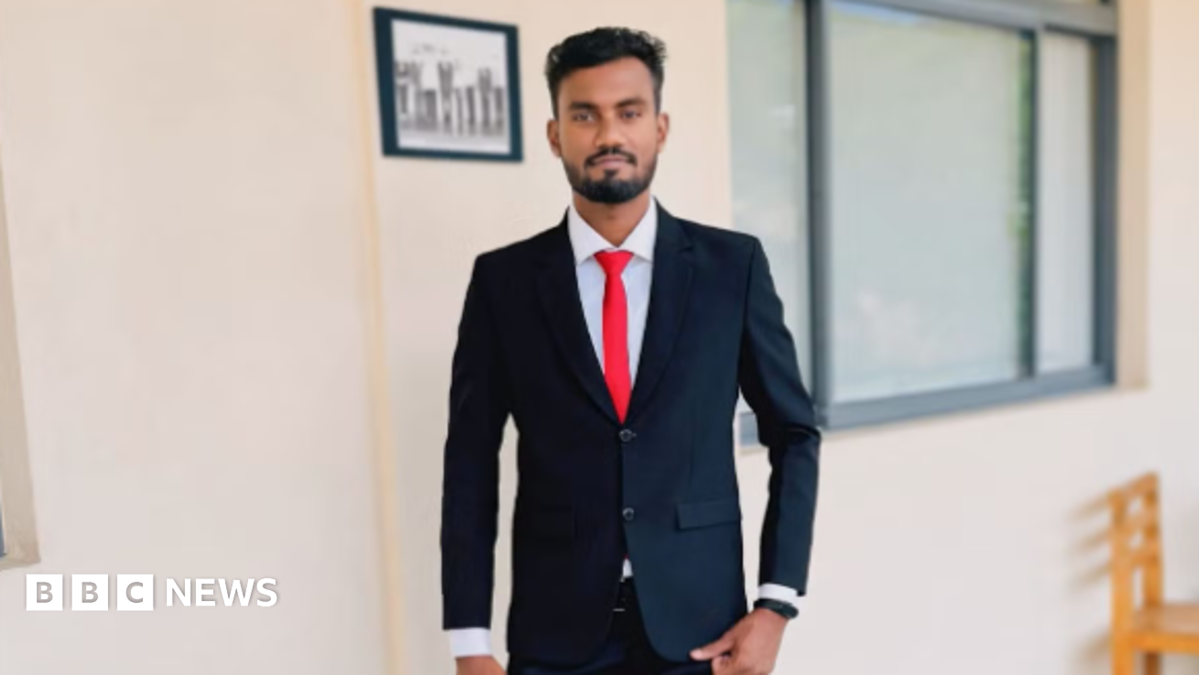

A 26-year-old man has been arrested on suspicion of murder following the death of former MP and government minister Ann Widdecombe.
Devon and Cornwall Police confirmed the man, who is a white British national, was arrested at an address in Newton Abbot, Devon, on Friday and is in custody.
The body of the 78-year-old former Conservative minister and Reform UK spokesperson was found by police with serious injuries at her home in Haytor, a rural village on Dartmoor in Devon, at about 11:40 BST on Thursday.
The incident is not being treated as terrorism, after counter-terror policing was involved as part of “initial enquiries”.
Assistant Chief Constable Matt Longman told a news conference on Friday they currently have “no information to believe that that is a politically motivated crime” – and it was “too early” to comment on whether or not the suspect was known to Widdecombe.
He said the investigation was in the early stages and urged anyone with information to come forward.
Widdecombe’s next of kin have been informed and are being supported by specially trained officers.
The prime minister and other political leaders said they were stunned by the development on Friday afternoon.
Sir Keir Starmer said it was “really shocking”, while Conservative leader Kemi Badenoch said she was “stunned to hear this awful news”.
Reform UK leader Nigel Farage said he was “deeply, deeply upset by the nature of her death”.
Widdecombe’s political career spanned decades. She served as MP for Maidstone in Kent for 23 years, and worked as a Home Office and employment minister in Sir John Major’s government between 1994 to 1997.
After leaving Parliament she embarked on a showbiz career, appearing on Strictly Come Dancing in 2010 and Celebrity Big Brother in 2018.
A staunch supporter of the UK’s departure from the EU, she became an MEP for the Brexit Party, representing South West England in the European Parliament between 2019 and 2020.
In 2023, Widdecombe joined Farage’s Reform UK party, after it changed its name from the Brexit Party, and made a number of appearances as the party’s immigration and justice spokesperson.
A man was reportedly nearly sucked through an airplane window Friday morning. Four people were injured. File Photo by Stringer/EPA
July 10 (UPI) — A man was nearly sucked out the window of a plane on a Ryanair flight from Greece to Germany on Friday, passengers said.
Not long after takeoff from Thessaloniki, in northern Greece, on Flight FR1879 operated by subsidiary Malta Air, a piece of an engine came off and hit a passenger window, shattering it. A 61-year-old Serbian man was lifted out of his seat and hung headfirst out of the window, and was kept from flying out by his wife, who held his legs, The Guardian reported.
Oxygen masks were deployed on the Boeing 737-800 as a precaution.
Data from FlightRadar24 shows the flight was airborne for just over an hour and reached 16,000 feet before descending back to Thessaloniki airport.
“According to reports, the passenger seated next to the affected window was pulled towards it and hit their head. Oxygen masks deployed and passengers seated in the row were relocated.
“The crew descended below 10,000 feet, burned off fuel and safely landed back in Thessaloniki around 75 minutes after departure,” the post said.
Euro News reported that authorities said there was no crack or breach in the aircraft’s fuselage, despite initial concerns about the damage.
Four passengers went to a hospital as a precaution, and one was kept for observation and tests.
Ryanair sent the rest of the passengers on to Germany with a replacement plane.
The airline sent a statement to media Friday.
“A Ryanair flight from Thessaloniki to Memmingen [Germany] on Friday morning (July 10) returned to Thessaloniki shortly after take-off when a passenger window dislodged inflight. The aircraft landed normally, and passengers returned to the terminal. One passenger requested and received medical assistance on the ground in Thessaloniki. In order to minimize any delay, a replacement aircraft was arranged to bring passengers to Memmingen which departed Thessaloniki at 9:53 local this morning,” the statement said.
PROVO, Utah — Lawyers for the man accused of killing conservative activist Charlie Kirk planned to call a final witness Friday as they try to raise doubts about the prosecution’s case before it can go to trial.
A Utah judge is deciding whether prosecutors have enough evidence to put Tyler Robinson on trial on a charge of aggravated murder. Kirk, 31, was killed as he spoke to a crowd of thousands at Utah Valley University on Sept. 10.
One of Robinson’s attorneys, Michael Burt, tried to inject uncertainty into the case Thursday by challenging the reliability of ballistics tests on a bullet fragment recovered from Kirk’s body.
Authorities sought to tie the fragment to the suspected murder weapon, but the results were inconclusive.
“Saying anything but inconclusive was inappropriate,” said Samantha Karner with the Bureau of Alcohol, Tobacco, Firearms and Explosives.
Earlier in the week, Robinson’s team questioned the reliability of DNA evidence that investigators said linked Robinson to the scene. Experts say the science behind DNA testing is sound.
Robinson has not entered a plea. He turned himself in a day after the fatal shooting of Kirk, a close ally of President Trump credited with helping galvanize young voters for the Republican in the 2024 election.
At the request of Kirk’s family, State District Judge Tony Graf said he would allow to be shown inside the courtroom an altered version of campus surveillance video that prosecutors said shows Robinson crawling out to a rooftop “sniper’s perch” before shooting Kirk.
The unaltered video was previously shown. The altered version includes footage that zooms in on a figure that prosecutors said was Robinson and red marks that were added to the video.
The weeklong preliminary hearing ends Friday, but a decision won’t come until after Sept. 1, when Graf scheduled oral arguments in the matter.
Prosecutors on Thursday aired portions of a recorded interview with Robinson’s roommate, Lance Twiggs. The day after Kirk was shot in the neck, Robinson allegedly told Twiggs “he wishes he hadn’t done it,” a recording played in court revealed.
Later that same day — and only about an hour before turning himself in — Robinson posted “it was me at UVU yesterday,” in a chat room on the Discord social media platform, according to investigators and messages shown by prosecutors.
Defense attorneys unsuccessfully fought the public release of the statements from Twiggs and the chat room messages. They argued prosecutors would characterize the material as a confession, undermining Robinson’s right to a fair trial.
Prosecutors contend the shooting endangered others at Kirk’s campus event — an aggravating circumstance that could make the crime punishable by death under Utah law. Robinson also faces possible sentence enhancements based on claims by prosecutors that he targeted Kirk because of his political views.
Twiggs said in the April interview with prosecutors and investigators that Robinson sometimes talked about politics, including Trump. But Twiggs said he never heard Robinson talk about Kirk before the shooting. The defendant also did not talk much about gender issues or LGBTQ rights, Twiggs said.
The weeklong preliminary hearing has attracted intense media coverage and spectators who have angled for one of the 14 seats in the courtroom that are reserved for the public.
People have lined up early — sometimes sleeping there overnight — in hopes of getting in.
Schoenbaum and Brown write for the Associated Press. Brown reported from Billings, Montana.
“President Trump is excited to welcome the Los Angeles Dodgers BACK to the White House to celebrate their World Series championship!” White House spokesperson Taylor Rogers said in a statement to The Times.
“Back” to the White House.
How embarrassing.
The 2017 NBA champion Golden State Warriors wouldn’t go. The 2018 Super Bowl champion Philadelphia Eagles wouldn’t go. The 2025 NBA champion Oklahoma City Thunder wouldn’t go.
And now this group of Dodgers is going twice?
Their first visit last spring was bad enough, with Trump noting, “That is a very good-looking group of people,” while the Dodgers stood around him in slack-faced awe.
Dodgers owner Mark Walter smiles while listing to President Trump speak during the Dodgers’ championship visit to the White House in April 2025.
(Alex Wong / Getty Images)
Some, including Dodgers officials, argued this was a visit about tradition, not politics. Teams have been visiting the White House since President Andrew Johnson hosted two amateur baseball clubs in 1865. The Dodgers said they were just abiding by this once-revered sports custom. They said they were showing respect for this country’s highest office, not necessarily the man inhabiting it.
Understood. But what happened two months after that first visit altered even that flimsy bit of logic, as the man inhabiting the office rained terror on Los Angeles with the midsummer ICE raids that changed the lives of thousands.
Many impacted were the Dodgers fans who filled the stadium every night for the team with arguably the largest immigrant fan base in sports. Some even were wearing Dodgers caps and jerseys when they were swept up and hauled away.
While other pro sports teams in town immediately condemned the raids, the Dodgers said nothing until finally announcing and fulfilling a $1.1-million donation to community organizations to support families impacted by Immigration and Customs Enforcement.
At the time, only one Dodger spoke out publicly, with Kiké Hernández writing on Instagram, “Los Angeles and Dodger fans have welcomed me, supported me and shown me nothing but kindness and love. This is my second home. And I cannot stand to see our community being violated, profiled, abused and ripped apart. ALL people deserve to be treated with respect, dignity and human rights.”
A year later, Hernández is still on the Dodgers, he has much clubhouse credibility, and yet they’re still going back? Were they not listening?
The roster is filled with other levelheaded veterans who surely realize that by serving as a cheap Trump photo-op, they are honoring a man whose policies have ravaged their fans more than any other group in America, and yet they’re still going back?
An organization cannot boast of sharing a uniform with Jackie Robinson while sharing a very public afternoon with President Trump. That doesn’t work.
Kiké Hernández was the only Dodger who spoke out publicly last year.
(Gina Ferazzi / Los Angeles Times)
An organization that admirably fought back against the wishes of a conservative clubhouse to pioneer Pride Night cannot be the same organization that publicly normalizes the morality of President Trump. That doesn’t compute.
Can’t anyone on Vin Scully Avenue see the big picture here?
Maybe Jose Madera, director of the Pasadena Community Job Center, can show them.
Madera, a die-hard Dodgers fan, hasn’t attended a game since last summer’s ICE raids because he’s lost faith in the Dodgers’ connection with the Los Angeles community.
He says this latest news of a second White House visit only frays that connection further.
“It’s very disappointing to hear that our team is going to shake the hand of a person who has sent so much hate and terror into our community,” he said. “Thousands of families in our city live in fear … we can’t stand for what’s going on.”
Madera said the Dodgers need to remember who they are.
“The Dodgers bring so much joy to our community, but a large part of their fan base is the immigrant community, and they need to stand with us,” he said. “It’s very disappointing that they’re not, and we need to hold them accountable.”
It’s not too late. The Dodgers still have time to change their minds and do the right thing. They still have time to acknowledge that this is not about eschewing tradition or succumbing to politics or anything but common human decency.
The president has treated the Dodgers fans with a careless disregard for their basic humanity, and the Dodgers need to let him know this is not OK.
“They still have a chance to decline,” Madera said. “We’re all hoping they do.”
Yeah, sure, in two weeks they could strut into the most celebrated residence in America as two-time defending champions.
The family of a man killed by an Immigration and Customs Enforcement (ICE) agent in Texas has called for an investigation into the incident.
The appeal on Wednesday came a day after the ICE agent fatally shot Lorenzo Salgado Araujo in Houston during a traffic stop, the most recent high-profile killing by immigration enforcement agents amid the administration of US President Donald Trump’s mass deportation drive.
Recommended Stories
list of 3 itemsend of list
Salgado Araujo’s family said he was working at the time he was killed, driving a crew to a home build in the area. They said he may have been scared that the individuals in the unmarked vehicles that stopped him were trying to steal his tools.
They further said the Mexican national had lived in the US for 35 years and was working towards getting legal status. He had no criminal record and worked tirelessly to support his three US sons, all US citizens.
“He did not deserve to die. He did not deserve to be reduced to a headline of ‘Mexican man shot and killed by ICE’,” son Ronaldo Salgado said during a news conference.
“He deserved to live a quiet life as Lorenzo Salgado Araujo, a husband, a father and a job creator for dozens of men who also wanted the American dream,” he said.
The US Department of Homeland Security (DHS) has said Salgado Araujo attempted to ram an ICE agent, who opened fire in response. Prior to that, they said Salgado Araujo’s car had struck an ICE vehicle.
No video or images of the incident have been released, although a bystander recorded its aftermath.
DHS said Salgado Araujo had been targeted by the agents because he was living in the US without documentation.
While the Trump administration had initially said it would only target criminals in its mass deportation push, it quickly said that it considered anyone in the US without documentation a criminal. Irregularly entering the US is a civil, not a criminal, violation.
Rights groups have accused immigration agents of using “dragnet” techniques under pressure to meet detainment quotas. The Trump administration has denied such quotas exist.
Speaking at the news conference on Wednesday, League of United Latin American Citizens President Roman Palomares said the immigration crackdown has created a country where it is “open season on Latinos” by officers who think they can “shoot and explain later”.
The initial details of the Texas killing resemble the killing of Renee Nicole Good in Minneapolis, Minnesota in January. DHS officials initially said that Good, a US citizen, was attempting to ram an ICE agent when she was fatally shot, although video appeared to show her steering around the agent, who opened fire after stepping to the side of her vehicle.
Just days later, 37-year-old Alex Pretti was fatally shot by a Border Patrol agent and a Customs and Border Protection officer as he sought to document immigration enforcement actions in Minneapolis.
Little has emerged from federal probes into the killings, which came amid an enforcement surge in the city. In a rare move, the Department of Justice declined a separate civil-rights probe into Nicole Good’s killing.
‘Working to give us the American dream’
Speaking at the news conference on Wednesday, Ronaldo Salgado recounted frantically looking for his father at his job site after his mother had been told something bad had happened.
At some point during the search, he was shown the video of his fatally wounded father.
“I recognised him, not from his appearance but from his voice crying for help as he lay on the street,” Salgado said.
“After nearly 35 years of working to give us the American dream, he made the choice to begin the process of obtaining his American dream through a work permit,” Salgado said.
“We dotted every I, crossed every T, filled every document, and attended every appointment. He was close to obtaining his legal status.”
Mexico’s President Claudia Sheinbaum also condemned the killing, saying she was considering legal measures or an appeal to the United Nations.
“There has been another tragic death of one of our compatriots in the United States due to detention issues, even though their only ‘offence’ is not yet having proper documentation,” Sheinbaum said.
The shooting was at least the eighth known death during an encounter with federal immigration officers since the start of the Trump administration’s immigration crackdown.
On my way through Skid Row to meet up with Estela Lopez, things looked pretty much as they did when I spent time there more than 20 years ago and first heard the promises that things would be better soon.
Tents lined some of the sidewalks, making them unpassable. Some people wore the damage of physical or mental disease, addiction, poverty, or all of the above. Outreach workers with ID lanyards strode through the trash-strewn landscape like lifeguards working against endless tides of fresh emergencies.
When I arrived at Lopez’s office in the 700 block of Crocker Street, where she runs a business improvement district on behalf of 600 or so beleaguered merchants, she had just completed a tour of the neighborhood with John McKinney, a candidate for city attorney.
She held a note card in her hand and shared some numbers, telling McKinney that by her latest count, 131 of the 702 streetlights in the district were out, 27 children were living on Skid Row, and 72 RVs were parked in the area.
“I came out here because I think this symbolizes the greatest failure in government,” McKinney said. “I think it’s the result of bad law and bad policy. I think it’s the result of a lack of leadership and indifference to the way people are living out here. To me, it’s completely untenable.”
But will anything ever change?
It’s a question two people in particular need to address, and I’ll get to that in a minute.
A lot of people I trust and admire work tirelessly to make a difference on Skid Row, and they’re always eager to share the success stories of those who move through and move on. (I’ve got a column on that coming up soon.)
The long-standing problem is that Skid Row is both a social service center and a mecca of drugs and other vices, with traps on every block. And so it’s a neighborhood at war with itself, with some viewing Skid Row as one of the largest recovery centers in the country while others see a snapshot of social collapse.
Estela Lopez has reached out to me several times over the years. About illegal dumping. Typhus. Calls to City Hall that don’t get answered. About the relentless plague of fires, overdoses and assaults.
“Can you imagine, in 24 years, how many people I’ve seen dead on these streets?” Lopez asked me near her office last week.
Estela Lopez runs a business improvement district on behalf of 600 or so beleaguered merchants.
(Genaro Molina / Los Angeles Times)
When the local post office closed recently in part because of security issues, Lopez told The Times’ Melissa Gomez that “we have reached a point in this city where we are unable to address criminal activity. … It’s surrender.”
We walked to the corner of 8th Street, where paramedics had just pulled away from a medical emergency. Cars and pedestrians stopped at tents for brief transactions, leaving little doubt as to the nature of the business being conducted.
We passed a caged dog and saw a puppy on a short leash being loaded into a vehicle. There’s a lot of talk about dogs being bred and sold, and Lopez said she’s seen evidence of animals being mistreated.
On 7th Street we passed the charred residue of a recent fire. A half block east, four men were slumped on the sidewalk, hitting pipes. Lopez gets calls from exasperated merchants dealing with vandalism and with people blocking their storefronts.
“I’ve never seen so many people overdose right here,” said Sergio Moreno, who runs a check-cashing business and said his family has been in business going back to the ‘70s. He said he’s seen paramedics use naloxone to revive opioid users, only to see the same people go down again just days later.
“How can you run a business?” asked Moreno, who chairs the board of the business improvement district Lopez runs. “This business is our life. This is how we got through school, this is how we put our kids through school.”
And yet despite paying city taxes and BID fees, Moreno said, problems persist and his customers fear for their safety.
Dr. Susan Partovi, a street medic for 22 years, has been advocating for more proactive intervention for those in obvious distress. Partovi told me she recently saw a man rise from a gutter, pull down his pants and defecate in front of her. She called to get help for him but said neither paramedics nor police determined him to be gravely disabled.
Lopez walks past residents of Skid Row last week. By her latest count, 131 of the 702 streetlights in the district were out, 27 children were living on Skid Row, and 72 RVs were parked in the area.
(Genaro Molina / Los Angeles Times)
“We have become complacent with having people lying in the gutter, having diarrhea, speaking nonsensically and putting their lives at risk,” said Partovi, whom I once accompanied as she administered long-acting anti-psychotic injections, arguing that people need clear heads to make better choices.
One sore point for Lopez is the Skid Row Care Campus in the 400 block of Crocker Street, which opened a little more than a year ago and offers all sorts of social services, meds that reduce drug cravings, and supplies that allow for safe use of drugs.
Lopez said she understands the theory of harm reduction: Engage people with a goal of getting them into treatment and back on track. But she wonders how successful such programs are, and argues that they become magnets for lawlessness.
As we talked, a young man approached and told Lopez he’d seen her airing her grievances on TV news.
“I’m wondering, what would be your solution?” he asked.
“I would hope that people could return to life in sobriety,” Lopez responded.
The man said he is “trying to elevate” himself, but that he’d been on a waiting list for housing for six months.
Lopez is tired of being on a waiting list, too.
“If something is working down here,” she told me, “you can’t prove it by me.”
Progress is undeniable, said Sieglinde von Deffner, a social worker and Skid Row coordinator for the Los Angeles County Department of Homeless Services and Housing. But given the “highly vulnerable” nature of the population, “the need is colossal,” she said.
A man stands among his belongings along 7th Street in Skid Row in downtown Los Angeles.
(Genaro Molina / Los Angeles Times)
“I have not yet met someone here who doesn’t want housing of some kind. We just don’t have enough affordable housing for everyone,” Von Deffner said, and long-term homelessness makes people harder to reach. “Now, if we could just stop the inflow.”
Dennis Culhane, a University of Pennsylvania professor who researches homelessness and served as an L.A. County consultant, said there are other ways to get people indoors than investing billions of dollars in new housing that takes years to build. Culhane said single adults who are not veterans, including the elderly and disabled, constitute a majority of the homeless population. But assistance is scarce.
“It’s like you have a famine, and you’ve only got food for 15% of the people,” Culhane said.
Rapid rehousing is critical for the newly homeless, he said. But it can take two years for them to qualify for Social Security disability, and once they do, the $1,000 a month “is completely deficient in the face of rising rents.”
Culhane recommends faster approval of SSI benefits and supplementing that income with additional sources of rental assistance. He believes there are enough vacancies at the low end of the housing market to make a sizable dent in homelessness without new construction.
Judy Mauricio, 65, who has been homeless for nine years, rests inside her tent next to her walker. She says her drug addiction has kept her on the street. She receives state disability funds and says she has cancer.
(Genaro Molina / Los Angeles Times)
As campaign season warms up, I’d like to know if Mayor Karen Bass and her challenger, Councilmember Nithya Raman, agree.
The mayor of L.A. is limited by a power split with the City Council, and the county oversees most addiction and mental health services. But Skid Row sits just a few blocks from the seat of city authority, and nobody has more power or responsibility to address the decades-long human catastrophe on Skid Row than the mayor.
Estela Lopez and the merchants deserve better. The people on the street deserve better. Thousands of housed residents deserve better.
Does Bass have a plan other than what’s currently in place? Does Raman have a better one?
If so, I’d like to hear the details, and I’m available.
Everyone knew going in that Lionel Messi would be the narrative centerpiece of the 2026 World Cup. Easily the most recognized name in the competition, Messi is considered by many to be the greatest soccer player of all time and, as the captain of 2022 winner Argentina, he is the reigning World Cup champ. At 18, he scored his first World Cup goal in 2006 and has competed in every World Cup since. He celebrated his 39th birthday before this year’s knockout rounds began, so it’s not unreasonable to assume that this will be his last.
No matter what Messi did, or failed to do, it would be News. Everyone with even a passing interest in the event knew this. Including me.
But I didn’t expect to completely fall for the guy. He’s a professional male athlete, for heaven’s sake, and I don’t emotionally invest in professional male athletes. Admire some of them, sure; watch with bated breath and then scream in astonishment when they pull off some amazing feat or another, absolutely. But the only athletes that have ever touched my heart have been women — Nadia Comăneci; Billie Jean King and the Title IX-sparking stars of women’s tennis; Dorothy Hamill; Brandi Chastain and 1999 Women’s World Cup winners; Venus and Serena Williams; Simone Biles; Caitlin Clark.
But here I am, at age 62, truly, madly, deeply in love with Lionel Messi.
I know, I know, me and half the world. Which normally would serve as an effective prophylactic. I am habitually wary of super-intense fandoms and the men who inspire them; stadiums filled with people chanting a single name inevitably set off internal alarm bells. As I have asked several times in columns throughout the years, how many “heroes” must we watch falter under pressure or be exposed for decidedly unheroic acts before we wise up and get out of the pedestal-placement business?
Yet here I am, stalking him on Instagram, up all hours flicking through interviews and career highlight clips. (I even watched the Apple TV docuseries “Messi Meets America”!) Here I am, literally praying to God, who clearly has more important things to do, for Argentina to advance and screaming Messi’s name every time he scores, assists or pretty much does anything at all.
In a matter of weeks, I have become addicted not just to watching the man play but seeing how he reacts when a shot is made or a game won.
Every World Cup player is happy when they or their team scores, but Messi is delighted. Like a kid seeing a puppy under the tree on Christmas morning. Like he cannot believe this wonderful thing that has just happened even if he was the one who sweat and ran and defied physics to make it happen.
His smile is infectious and even when he is running toward the stands, arms spread wide, after making some impossible shot or other, it never seems self-congratulatory. He is simply filled with joy and wants to spread it around. The field, the stadium, the world.
And his hugs. Long, deep, radiating emotion, utterly unself-conscious. Everyone needs to find someone who hugs them like Messi hugs people — teammates, coaches, opposing players, young fans. I could watch videos of him hugging his mentor and former teammate Ronaldinho or Argentina coach Lionel Scaloni all day long. (I’m not saying I have, nor am I saying I haven’t.)
Sometimes the hype gets a bit nauseating — former teammates who claim he never makes a mistake, commentators who refer to him as superhuman (despite the fact that he has missed as many penalty kicks as he has made in this World Cup). Whether Messi himself agrees that he is the GOAT is none of my business, but he doesn’t act like many sports stars who have received similar adulation. He doesn’t peacock, he doesn’t preen; he is visibly angry with himself when he doesn’t produce. He isn’t perfect — in various past games, he has gotten into heated disputes and shoving matches and famously (and many believe deservedly) taunted Netherlands coach Louis van Gaal during World Cup 2022. But for a man who has been such a star for so long, he presents himself as simply a player among players. The captain, certainly, but not the most important person on the field.
That is the most lovable, and superhuman, thing about him.
It feels pretty basic, not to mention embarrassing, to have a sudden summer crush on Messi, but I don’t care. He’s married to his childhood sweetheart, has three adorable sons and a picture of his mother tattooed on his back. He lets his teammates hoist him in the air and allows sports commentators to regularly (and lovingly) refer to him as “Little Messi.” He gets angry sometimes, but in this tournament he has yet to noticeably hector the refs or rumble with his opponents. He wants to win, obviously, but his joy comes from playing the game well rather than defeating another team.
That’s why, despite my newfound addiction to Messi delight, the moment I loved him best was when he didn’t celebrate at all. In the round of 32, Argentina (No. 2 in FIFA rankings) seemed guaranteed a win over Cape Verde (67). But even with Messi’s early goal, the game was a nail-biter, with Cape Verde scoring two brilliant goals while their goalie Vozinha made eight saves, including four shots (one of them a free kick) from Messi. After Argentina won in additional playing time, there was none of the usual jubilation. Instead, a subdued Messi walked to the midfield to shake hands with his opponents, a sign of exhaustion, no doubt, but also of respect. He hugged Vozinha and told him that his country should be proud of him.
The exuberance was back Tuesday, however, when, after trailing Egypt for most of the round of 16 game, Argentina managed to pull off the comeback of the tournament, going from a 0-2 deficit to a 3-2 win after the 79th minute, with Messi scoring the tying goal.
This time, the smiles, the hugs, the radiant joy filling Atlanta Stadium could have powered the entire state of Georgia. This time, Messi was so happy, he wept.
So did I. The World Cup is over in less than two weeks, and France and Spain are currently the 1-2 favorites to win the thing. My love for Messi is, after all, just a summer romance.
And as with any summer romance, I want it to last forever.
Harry Poulton moved from Brighton and moved to Benidorm after visiting the city with his mates when he was 18 – but there are certain spots he says tourists should avoid
Harry said his decision to move to Benidorm was the best choice he’s made(Image: Jam Press/@harrytokky)
Benidorm is one of the most popular European holiday destinations among Brits and attracts approximately five million tourists annually. Harry Poulton, 24, grew fond of the resort following a visit with mates at 18 and now regards his decision to relocate there as the finest decision he’s ever made.
Nevertheless, he wishes to pass on his expertise to holidaymakers preparing to explore the seaside city on Spain’s Costa Blanca. Taking to TikTok, where he’s amassed more than 40,000 followers, he highlighted three locations in the nightlife hotspot that he believes are best avoided owing to safety concerns.
First on his list is the ‘Yellow Brick Road’, a centre of bars and eateries that represents the core of local nightlife, covering streets such as Leanto, Ibiza, and Leerida.
Harry cautioned: “The Yellow Brick Road – this little public pathway […] leads all the way up to the Rio Park. Now, it has been known for a few things, mainly small thefts like pickpocketing. Generally, during the day, it’s absolutely fine. I’d recommend avoiding it at night.”
The second spot Harry suggests swerving is Pueblo Alley, situated close to Levante Beach.
“This is one I definitely recommend avoiding, especially late at night, as you do get the pickpockets hanging around this area,” he warned. “You also get the odd lady of the night. There are plenty of other ways around”.
Topping Harry’s list of places to steer clear of is ‘Mugger’s Alley’, meanwhile.
“It is the most notorious – it’s the one we all know,” he exclaimed. “Known for pickpocketing, ladies of the night, it’s just an area I would avoid. They’re even doing these new taxi scams. It’s crazy. Save yourself the hassle and cross the road.”
Despite acknowledging these risks, Harry remains a devoted admirer of this popular holiday hotspot.
He argues that many British holidaymakers hold misconceptions about Benidorm, insisting that concerns over crafty scams and overpriced goods are often way off the mark.
What’s more, since swapping Brighton for Benidorm, Harry has watched his living expenses drop considerably, with monthly outgoings now falling between £500 and £1,000, including bills.
Harry proclaimed: “If you live here, you get it. Benidorm is paradise – and anyone who says otherwise is lying.”
July 7 (UPI) — Maryland officials said Tuesday that they have declined to charge police officers who fatally shot an autistic man who had called them for help.
Police shot Alex LaMorie, 25, early in the morning of March 1 in Columbia, Md., after he called them to report that he was being harassed and blackmailed.
“After completing its investigation and evaluating all the available evidence, the Office of the Attorney General has determined that the subject officers did not commit a crime under Maryland law,” said the announcement by state Attorney General Anthony G. Brown. “Accordingly, the attorney general has declined to prosecute the subject officers in this case.”
The attorney general’s Independent Investigations division, which is in charge of investigating and prosecuting police-involved incidents, issued the finding. Officials said they would be unable to secure a conviction of the officers for use of force or homicide offenses and that they would not be able to disprove self-defense on the officers’ part.
In their report, investigators said LaMorie refused police orders to drop a knife and moved toward them before they shot him. State police collected 12 cartridge casings from the scene, The Washington Post reported.
Police said LaMorie made suicidal statements on the phone before they arrived. Officers’ body-camera footage showed he did not lift the knife in their direction, The Post reported.
Jill Harrington, LaMorie’s mother, said in a statement to the Post that the officers should have been charged with involuntary manslaughter and that they “treated Alex’s life-threatening behavioral-medical crisis like a crime.”
“It represents a step backward, and risks undermining the state’s committed progress toward a more humane and effective crisis response system,” Harrington said.
LaMorie lived at Patuxent Commons, an inclusive housing community for those with and without disabilities. He’d moved there days before the shooting.
Parks, who had originally given himself a year to see if wheelchair tennis was feasible, is proud but modest about his own role 50 years on.
“I was the head of the organisation, I was the first player to really play the game but it’s hard for me to say Brad, you invented wheelchair tennis, but you know I was part of it,” he said, pointing to others like Minnebraker.
Today’s players, though, do not hold back.
“I think I’m in awe. Absolute awe,” said Britain’s 34-time Grand Slam champion Alfie Hewett.
“It [wheelchair tennis] is not about accolades and the external things. It’s actually just the life it’s given me and the purpose that it’s given me.”
And Gordon Reid, who has won 30 Grand Slam titles, added: “It’s an incredible story and that little idea that he had 50 years ago has turned into a huge worldwide sport now. So yeah, [I’m] very thankful that he had that idea back in the day.”
So much has changed since the early days, not least the chairs which are much lighter and often feature a moulded seat that is more energy efficient for turning.
And the sport continues to grow – the wheelchair event at Wimbledon, which begins on Tuesday, offers a prize pot of more than £1m, with the winners of the men’s and women’s singles earning £82,000.
Its profile is also rising and the finals are now played on the 12,345-capacity Court One, compared to the 276-seat Court 17 that hosted the first wheelchair singles final 10 years ago.
Parks says he is “very happy to see where we’re at”.
“I’m jealous in a way but in a good way because I would have loved to have been able to play in [tournaments like Wimbledon],” he said.
But that was never what his dream was about when he set out.
“I just loved to hit tennis balls, and I wanted to share the feeling of hitting a tennis ball from a wheelchair,” he said.
“The thing that I feel really, really good about is that I really wanted other people to be tennis players.
“I used to get disappointed when I thought that everybody was wheelchair basketball players. Tennis was not their main thing. And today I feel like tennis really stands on its own and they’re tennis players. They just happen to be in a wheelchair.”
A man has died after a holiday in Turkey when he suddenly fell seriously ill hours before flying home. David Kelly was at the airport when his health rapidly deteriorated.
Within hours, the joiner was rushed into intensive care and placed in an induced coma. He was kept alive on life support as he fought for his life miles from home. His devoted wife, Dawn, remained at his bedside in a Turkish hospital for four weeks.
A fundraiser set up with the permission of David’s family said: “What was meant to be a relaxing holiday in Turkey turned into a nightmare that none of us could have imagined. Just hours before his flight home, David suddenly became seriously unwell at the airport.
“Within a matter of hours, his condition deteriorated rapidly, and he was rushed to intensive care. Placed into an induced coma and kept alive by life support, David was fighting for his life thousands of miles from home.
“For four long weeks, his devoted wife, Dawn, remained by his side in a Turkish hospital, never leaving him as he battled with incredible strength and courage.”
David, from Barrhead, Renfrewshire, was eventually repatriated on 8 June aboard a specialist flying intensive care unit. He was taken to the Intensive Care Unit at the Royal Alexandra Hospital in Paisley.
The fundraiser said he continued his fight while receiving “outstanding care” from hospital staff. But David sadly died peacefully on 18 June surrounded by his family. The fundraiser added: “Despite everyone’s best efforts, our warrior David passed away peacefully on 18 June, surrounded by his loving family.”
His family later announced the devastating news through his business’ Facebook page, Barrhead Joinery. They said: “We would like to share the devastating news that sadly after fighting as hard as he could, our lovable, amazing David Kelly passed away on Thursday 18 June.
“Barrhead Joinery will now cease trading, as a family we’d like to thank you all for the work you all have given David over the years. Lots of love from his wife Dawn and daughters Gemma & Sophie.”
David was described as a much-loved husband, father, brother, uncle and friend. The fundraiser said: “He was someone who was always there to lend a hand, offer support, and put others before himself. Now it is our turn to be there for those he loved most.”
Tributes have also poured in from members of the local community. Noreen McHugh wrote: “I am devastated to hear this sad news about Davie. He was an excellent professional who I counted on over the years.
“But upmost a wonderful human being who was always friendly and honest. My sincerest condolences to you and your daughters. A huge loss for you all. RIP Davie, you will be sorely missed.”
Another person added: “So sorry to hear this very sad news. David did some work for me when I moved into my home in Newton Mearns some years ago. Such a lovely, lovely man. Sending you all my heartfelt condolences. x”
Long before kick-off, thousands of Norway supporters had gathered outside the stadium, many draped in Viking helmets, waving giant red flags and singing songs that have become familiar throughout this World Cup.
There was excitement, naturally, but also something else – belief. A quiet confidence that this team could compete with anyone.
For years, Norway have watched major tournaments from afar despite producing world-class talent.
This is only their fourth World Cup appearance – the first since 1998. And the furthest they had gone before this year were two last-16 finishes 50 years apart, in 1938 and 1998.
They had not won a World Cup knockout tie until last Tuesday. Now they have won two in a row – the latest against the five-time winners and most-decorated side in the tournament.
“I said to the boys that I don’t think it’s 50-50, but we have a fair chance if we play at our best and have match-winners, and we had that,” Norway boss Solbakken said.
At full-time, it was Haaland who led the celebrations, banging the drum as he and his team-mates performed the iconic Viking Row with their supporters.
“This is just an insane day,” said Haaland. “It is one of the most insane days in Norwegian history.”
Warnock said: “He is hugely emotional and rightly so. He plays in one of the best teams in world football, in terms of clubs.
“But when you play for Norway they’re not a huge name. Norway are starting to make history for themselves, and he is at the forefront of that.”
Solbakken said: “The whole nation is rowing together, and with that, I mean that we are having a great party here and in Oslo and in all the other big and small cities all the way through Norway.
“The rowing is in a way a symbol of that, and that we are all together. So I think it’s great days, it’s a great summer to be a fan – I think it’s better to be a fan than a coach.”
Four years ago Brazil were unlucky to go out of the World Cup to Croatia in the quarter-finals. Four years prior that they were also slightly unfortunate to fall to Belgium at the same stage. This time they failed even to get that far and there was nothing unlucky about their loss to Norway.
This, frankly, is an unmitigated disaster.
Carlo Ancelotti arrived with his band aid after a 4-1 thrashing by Argentina in March of last year.
Of his 16 games in charge of the national team he has won 10, drew three and lost three. He turned around a side that had struggled in World Cup qualifying, losing four out of five games prior to his arrival.
But that has not proved enough.
Brazil now need major surgery – starting with the area of the field where they used to be so strong, so creative, so entrancing – the midfield.
Turning their back on imaginative central midfield play has lost Brazil some friends along the way, and it is also losing them matches. The fact that they were comprehensively outpassed by Norway on a warm summer’s afternoon at this World Cup is simply astonishing – but it has to do with the make up of the side.
Ancelotti was a hostage to Casemiro. The first thing the coach did was recall the player from 18 months in the international wilderness.
There were plusses. Casemiro gave the team structure and freed Bruno Guimaraes, who until his early missed penalty against Norway – and what a difference that might have made – was enjoying a fine tournament.
But Casemiro’s vulnerability in open space was always a problem – clear in the second minute when Norway had a goal disallowed. And so the way Brazil defended was to drop deep and watch Norway exchange their passes and grow in confidence.
And then there is the absence of Lucas Paqueta, injured in the previous round against Japan. Ancelotti confessed that he did not have another player with the same characteristics. In came Arsenal’s Gabriel Martinelli, which had the effect of making the team’s attack almost entirely dependent on quick direct breaks.
The coach made an error with his initial call up – having only five midfielders was a serious lapse, and when right back Wesley was injured in the final warm-up game Ancelotti used the opportunity to bring in potential Manchester United signing Ederson. But if the coach is to blame then so is the country.
One man was critically injured in a fire in Los Angeles Friday after illegal fireworks went off, setting two vehicles on fire in a motel parking lot. File Photo by Stuart Palley/EPA
July 5 (UPI) — One man was critically injured in a fire in Los Angeles Friday after illegal fireworks went off, setting two vehicles on fire in a motel parking lot.
The 22-room Crescent Inn motel in the Wilmington neighborhood of Los Angeles was completely evacuated from the incident. Los Angeles Fire Department Assistant Chief Carlos Calvillo said first responders discovered a wounded man near the burning BMW when they arrived on the scene.
“This is a good example of messing with illegal fireworks, fireworks in general, extremely dangerous,” he said. “This person’s body was severely traumatized from this incident.”
Emergency responders were called to a report of two vehicles on fire at about 8:30 p.m. PDT Friday. The Los Angeles Police Department also responded to the scene.
A single family home next to the motel was also evacuated. Twelve people, including two children, were displaced by the fire.
The cause of the fireworks going off has not been determined. Fire officials say they believe the man was smoking in the BMW.
If you buy books linked on our site, The Times may earn a commission from Bookshop.org, whose fees support independent bookstores.
New reads abound for your vacation tote throughout the weeks of July, with fiction picks featuring a Carnival cruise casualty, a highly entertaining jewel heist at the Waldorf-Astoria, and a Soviet-era madcap adventure. In nonfiction, authors consider how we define wild places, how we pigeonhole the aging, and how languages live or die. Happy reading!
FICTION:
A Real Animal: A Novel By Emeline Atwood Catapult: 368 pp., $29 (July 7) After surviving a sexual assault, narrator Lucy stalks her college campus as a leopard. Don’t spend too much time worrying about whether this transformation is real, or not; Lucy’s knowledge of her fierceness is the point, a fierceness she employs as she struggles to negotiate her independence from parents who wish she’d come home to recover and men who offer up their desires and ignore hers. It’s an astonishing debut with a compelling voice.
Man Overboard!: A Novel By Kathleen Rooney Gallery Books: 208 pp., $27 (July 7) Readers expecting something akin to Rooney’s wondrous previous novel, “Lillian Boxfish Takes a Walk,” should remember that that book followed “Cher Ami “ and “Major Whittlesey,” a story about a pigeon and a World War I Army officer. In other words, Rooney doesn’t repeat herself, and in “Man Overboard!” she’s concocted a hilarious adventure tale of a man floating in the Gulf of Mexico, adrift with himself, his thoughts, and a few sea creatures.
Astronaut!: A Novel By Oana Aristides W. W. Norton: 272 pp., $28 (July 14) Imagine a dystopia set neither in the future nor in fantasy; that’s the 1989 Romania 7-year-old Lia inhabits, its adults living in fear of Communist dictator Nicolae Ceauşescu, its infrastructure strained by deprivation, and its reality so scrambled that calling an explorer an “astronaut” instead of “cosmonaut” risks punishment. When Lia sets out to buy her mother a birthday gift, she sets in motion a series of weirdly probable yet totally weird events.
City of Widows: A Novel By Nadia Hashimi William Morrow: 432 pp., $32 (July 28) During the two decades of American occupation, Afghanistan experienced a sort of peace, one in which women could be educated, work as professionals, and even serve in the military. When the U.S. left in 2020, those same women found themselves — regardless of their individual status — subject to Taliban restrictions that deny differences in gender, desire and ambition. Hashimi (“Sparks Like Stars”) shows how desperate and daring the women become.
Cool Machine: A Novel By Colson Whitehead Doubleday: 368 pp., $30 (July 21) First “Harlem Shuffle,” then “Crook Manifesto,” and now, “Cool Machine,” the highly anticipated “Harlem Trilogy” conclusion from the two-time Pulitzer Prize-winning Whitehead. The inimitable Ray Carney, who started out as a minor criminal, is now Sterling Furniture’s “Northeast Regional Dealer of the Month,” a respected businessman. It’s the mid-1980s, and when Ray’s beloved wife Elizabeth gets turned down for a small-business loan, he takes matters into his own hands, in his own former ways.
NONFICTION:
How to Kill a Language: Power, Resistance, and the Race to Save Our Words By Sophia Smith Galer Crown: 304 pp., $33 (July 7) Smith Galer’s nonna spoke an Italian she called “dialet”; her mother spoke “dialet” and English; Smith Galer herself speaks only English. What do we lose, the author asks, when a language dies? The answers she found are powerful, like an enzyme to treat HIV that was found in a tree that was discovered because a researcher spoke Samoan. Unsurprisingly, she also found that language death often corresponds to ecological and cultural devastation.
The Earth Said Remember Me: How to Revive Our Memories and Restore Our Planet By Jason Dove Mark W. W. Norton: 224 pp., $25 (July 14) Perhaps art will be the thing that preserves the environment, even if humans can’t save it. “Go outside. Bear witness. Make a record. Pass it on,” writes Mark in this eloquent, impassioned plea for us all to remain involved in environmental action. The more we appreciate the natural world, the more we’ll want to care for it, share it with others, and help future generations understand how some changes are natural and not all are inevitable.
Aging Out: An Exploration of Caregiving, Community, and How Americans Grow Old By Lucy Schiller Flatiron Books: 272 pp., $30 (July 14) Services for the elderly range from luxury assisted-living facilities to special digital devices meant to bypass phone scams, but as Schiller explains, these things not only commodify a natural life passage — they separate older people from their natural communities. The author was inspired to investigate our country’s aging population when she cared for a grandmother who died from COVID; the book weaves the personal with the political in a meaningful way.
(Avid Reader Press/Simon & Schust)
Dad, Love, Me: A Memoir By Matthew Quick Avid Reader Press: 320 pp., $30 (July 21) Novelist Quick (“The Silver Linings Playbook”) turns to memoir in recounting his contentious relationship with his father, whom he’s losing to dementia. While the author has had big highs (like the movie adaptation of “Playbook”), he’s also experienced deep lows, including alcoholism and severe creative block. Somehow, through recovery (which he credits to Jungian therapy), he affords both his imperfect, ailing parent and himself grace.
The Savage Landscape: How We Made the Wilderness By Cal Flyn Viking: 448 pp., $35 (July 28) In “Downton Abbey”, the Dowager Duchess of Grantham starchily asked “What is a ‘weekend?’” In this book, journalist Cal Flyn asks — more affably, but with equal intensity — “What is a wilderness?” Her answer: Depends on your perspective. In other words, nearly every place on Earth teems with life. It’s only humans who have attached words like “wild” and “unexplored” to regions where they feel uncertain, afraid, and even awed.
Patrick is a freelance critic and author of the memoir “Life B.”
A British expat living in Benidorm has shared the best time to visit Spain’s beloved seaside hotspot, ideal for those looking to avoid crowds while still enjoying perfect weather
Benidorm is a popular holiday destination and one Brit who’s lived there for 30 years has shared the best time to visit (stock image)(Image: Sergio Formoso via Getty Images)
A British expat living in Spain has revealed the best time to visit the popular coastal hotspot of Benidorm in order to dodge the “crowds” and “chaos”.
Benidorm is a hugely popular seaside resort in Spain, renowned for its vibrant nightlife, vast selection of hotels and towering skyscrapers, golden sandy beaches, busy cafés and restaurants, and much more. It’s a firm favourite for countless hen and stag dos, while others sing the praises of its charming Old Town and the stunning natural, rugged coastline – a far cry from the images most commonly associated with the resort.
According to the annual report published by the Visit Benidorm Foundation, the destination welcomed just over three million visitors in 2025, a rise of 7.7 per cent on 2024’s figures.
The total number of overnight stays surpassed 16 million, an increase of 3.4 per cent on 2024’s bookings. It marked the first time in Benidorm’s history the resort had recorded such numbers.
Many Brits choose to up sticks and move to Benidorm for its reliably sunny skies all year round and a more laid-back way of life.
That’s certainly true of Geoff, who shares content on social media under the name “Benidorm Resort Expert”.
He bills himself as a “Benidorm Travel Expert” having lived and worked in the Spanish resort for 33 years, with his content centred on providing “deals, trips and advice” about life in the popular destination.
In a recent TikTok video, Geoff recommended visiting Benidorm during the cooler periods. Speaking directly to camera, he began: “Everyone wants Benidorm at its hottest but they’ve got it wrong. We’ve just had three days of red alert – this is the first time, ever, three days on the bounce and honestly, we’ve been melting out here.
Content cannot be displayed without consent
“But this morning, look at it. Temperature’s dropped five or six degrees, we’ve got a bit of cloud, there’s a gentle breeze and the sea, it’s like a mill pond.”
He continued: “No crowds, no chaos, no 40 degree heat bouncing off the pavement; just a calm morning, a bit of grounding, feet in the sand and literally the whole beach to myself.”
Geoff was full of praise for the tranquil early morning atmosphere on offer. He added: “The day hasn’t kicked off yet and this right here is the best bit of it – 24 degrees, sea like glass, and not a soul rushing anywhere.
“Forget the heatwave hype, this is when Benidorm is at its best.”
Benidorm isn’t the only destination grappling with scorching temperatures brought on by a heatwave, with Britain experiencing Spain-like conditions as record-breaking heat swept across the country.
However, this week the stifling temperatures have finally begun to ease across parts of the UK.
Met Office deputy chief forecaster Tony Wisson said: “Toward the weekend, high pressure will continue to build in across most of the UK as it extends from the Azores.
“This will lead to more settled, warm or very warm conditions for many, especially across England and Wales, though some rain may still affect the far north.”
He added: “The forecast for this weekend suggests that temperatures could approach high 20°C across parts of England, perhaps 30°C in parts of the southeast, with values of mid to high 20°C in Wales.
“Although a return to heatwave conditions is looking increasingly likely for some areas, the likelihood of such extreme high temperatures or high levels of humidity as last week is currently low.”
A Texas man has been charged with manslaughter after his Tesla (TSLA) Model 3, which was operating in Full Self-Driving mode, crashed into a home and killed a 76-year-old woman.
Michael David Butler, 44, told paramedics “the car was on ‘Autopilot,'” when it hit the
Federal and local authorities have been investigating the disappearance of Nancy Guthrie, who was last seen at her Arizona home on Jan. 31, 2026, around 9:45 p.m. Photo courtesy Pima County Sheriff’s Department/UPI
July 3 (UPI) — A California man has pleaded guilty to sending phony ransom requests to the family of Nancy Guthrie, the mother of Today host Savannah Guthrie, who has been missing for five months, federal prosecutors said.
Authorities have been investigating the disappearance of Nancy Guthrie as a kidnapping and ransom scheme since she was reported missing from her Arizona home on Feb. 1.
In his plea deal, announced Thursday, 42-year-old Derrick Callella of Hawthorne, Calif., admitted to calling and texting a demand for a bitcoin transfer to a member of Nancy Guthrie’s family on Feb. 4, while acknowledging that he knew there had been an earlier ransom demand.
He also admitted that he meant to harass the family by seeking information about the 84-year-old woman and the investigation into her disappearance.
Authorities have said that Callella is not connected to the disappearance of Nancy Guthrie.
After Nancy Guthrie went missing, her adult children, including Savannah Guthrie, posted a video to social media urging the kidnappers to contact them.
According to the complaint, not long after the video was published, two people identified in the document as A.C. and A.C.’s husband, T.C., who are believed to be Annie Guthrie, one of Nancy Guthrie’s daughters, and Tommaso Cioni, separately received text messages, stating: “Did you get the bitcoin were [sic] waiting on our end for the transaction.”
Authorities said the messages were sent with the use of voice-over-Internet-protocol and a smartphone application that allows users to obtain a separate phone number for the device other than the one they were assigned.
Despite the efforts to obfuscate the origin of the text messages, authorities were able to trace the messages back to Callella in California, the complaint states.
The FBI arrested Callella a day after the text messages were sent.
When sentenced, Callella faces up to a maximum penalty of two years’ imprisonment and a fine of $250,000 for each of the two counts of harassment using a telecommunications devices he pleaded guilty to.
Callella pleaded guilty amid renewed interest into the case following reports stating authorities believe notes from the purported kidnappers claiming Nancy Guthrie had died were legitimate.
On Wednesday, the FBI’s Phoenix field office appeared to be undercutting those reports, issuing a statement stating that some of the ransom notes they have received over the course of their investigation have not been legitimate.
July 3 (UPI) — A man, identified by Tibetan exile media as a Tibetan activist, died Thursday evening after setting himself on fire outside the United Nations’ headquarters in Manhattan, authorities said.
Video of the incident posted online shows the man dressed in robes and holding a Tibetan flag, which he places on a pole that keeps it erect, before he is seen flicking an apparent fire starter and becoming engulfed in flames.
Responders arrived with extinguishers more than a minute later and putting out the fire. The man had crumpled to the ground.
Voice of Tibet, a Tibetan exile media outlet, identified the man as Tibetan activist Lobga Rangzen who self-immolated after “a live appeal for Tibetan independence and unity.”
Gonpo Dhundup, a Tibetan exile parliamentarian, said in an online statement that the man made “the ultimate sacrifice through self-immolation to protest China’s occupation of Tibet and its repression of the Tibetan people.”
Rangzen was taken to Bellevue Hospital, where he was pronounced dead, according to police, the New York Post reported.
UPI has contacted the New York Police Department for comment.
China has controlled Tibet since 1951 and views the region as having been an integral part of Chinese territory since ancient times. The Chinese Communist Party considers the Tibetan independence movement to be one of the so-called Five Poisons that threaten its territorial claims, along with Taiwanese independence and Chinese democracy movement.
The International Campaign for Tibet, a Washington, D.C.-based human rights group, called Rangzen “a tireless advocate for Tibet who devoted himself to peacefully raising awareness of the human crisis in Tibet.”
The organization said in a statement that Rangzen had in his final statement warned that “China’s policies threaten the very survival of Tibetan identity, language and culture, and called on all Tibetans to be united in their fight for the cause of the Tibetan struggle.”
Self-immolation is not an unprecedented form of Tibetan protest.
According to the International Campaign for Tibet, a Washington, D.C.-based human rights group, 159 Tibetans have self-immolated in Tibet, China and in exile since 2009.
For much of an international career that began a decade ago at the age of 19, Oyarzabal has not enjoyed much of the limelight.
He missed out on the 2022 World Cup in Qatar with a ruptured anterior cruciate ligament (ACL) in his left knee.
But four years later – and before a World Cup debut – he was in the form of his life with 12 goals in 12 international appearances.
The double against Austria extended that run to 17 in his last 16 starts, with four goals at this tournament.
“His last two seasons, since he recovered, are the best of his career,” added Balague.
“Four goals in the World Cup – our most decisive player, no doubt.”
Spain memorably played without a recognised striker at Euro 2012, but Oyarzabal is now very much the focal point of their attacks with two excellent finishes against Austria.
“Sometimes people are in doubt about Spain because of the centre-forward, but Oyarzabal is doing the job,” former Spain defender Cesar Azpilicueta told BBC One.
“A few years ago, Oyarzabal was playing a bit more on the right wing and he has transitioned more into the middle.”
Since the start of last year, the only European player with more international goals than Oyarzabal is Norway striker Erling Haaland with 22.
He also became the first Spanish player to score twice in a World Cup knockout match since Emilio Butragueno against Denmark in the last 16 of the 1986 tournament.
The statistics are impressive, but it is not to say he is overshadowed by Lamine Yamal, with the 18-year-old playing a key role in Oyarzabal being able to shine.
The Barcelona forward’s excellent ball control and dribbling skills clearly unsettles defences and pulled the Austrian defenders towards him to create more space for Oyarzabal.
“When you have someone in your team like Lamine Yamal who attracts so much attention, you know you will get more space,” said former Germany midfielder Thomas Hitzlsperger.
“Oyarzabal uses that space, gets the ball, and scores goals.”
A man has been rescued from a collapsed building eight days after twin earthquakes devastated Venezuela.
The rescue on Thursday came as attention has begun to shift from finding survivors under the rubble to addressing the humanitarian needs of the thousands of residents displaced.
Recommended Stories
list of 3 itemsend of list
An estimated 60,000 buildings were damaged or destroyed in last week’s earthquakes, which hit magnitudes of 7.2 and 7.5, respectively. An estimated 13,000 people have been left homeless.
In its last official update, Venezuela’s government said that at least 2,295 people have been confirmed killed, with 11,000 injured. The death toll was expected to rise, with about 50,000 people reported missing.
But in a rare ray of hope, rescue workers were able to reach 43-year-old security guard Hernan Gil on Thursday, after days of trying to retrieve him from a collapsed seven-storey building where he worked in the hard-hit coastal area of Catia La Mar.
Gil had been located three days earlier. Rescue teams from seven countries, including Venezuela, Chile, the United States, Portugal, Costa Rica, El Salvador and Mexico, worked to free him.
“This is truly a miracle,” Gil’s wife, Gusbimar Gonzalez, told the news agency AFP.
Cristian Vera, the leader of the Chilean rescue team, told AFP that rescuers eventually were able to dig a three-metre (9.8-foot) tunnel to extract Gil. They had been able to provide him water via a hose and oxygen tube in recent days.
“It wasn’t easy to reach the exact spot where the victim was located,” he said.
Reporting from the state of La Guaira, Al Jazeera correspondent Zein Basravi said that, while Gil’s recovery has given some families hope, countless rescue attempts across the country have ended in tragedy.
Many of the collapsed buildings in La Guaira, located north of Caracas, have already been marked with the letter D for “deceased”, signalling no signs of life could be detected.
“One search-and-rescue expert we spoke to on the ground said the footprint of this disaster is so big, there are 58,000 buildings that have been destroyed or damaged, there’s so much area to search, and so many days into the aftermath of this earthquake, it is less and less likely that anyone can be found alive,” Basravi said.
He added that the emergency response is set to “move away from rescue and recovery into a very different phase of this disaster, which will see more relief work, more humanitarian work needed on the ground”.
Risks of health crisis
Humanitarian workers have warned that the aftermath of the earthquake could lead to a health crisis, as understaffed medical centres are likely to face cases of untreated injuries and infectious disease.
For years, the country’s health system has been strained by shortages of critical medical equipment, highly trained staff and electrical power.
The World Food Programme has appealed for $50m to feed some 500,000 people for three months. The United Nations Development Programme has put the estimated cost for the physical damage at $6.7bn, based on satellite imagery.
Several countries and regional blocs have pledged funding to help with relief efforts.
That has included $300m from the US, according to the Department of State. The administration of US President Donald Trump, who abducted Venezuelan leader Nicolas Maduro earlier this year, has continued to support the country’s interim President Delcy Rodriguez despite criticism over a lack of preparedness.
Reporting for Al Jazeera from Caracas, journalist Noris Soto said that international aid will be “more than necessary” in the months and weeks ahead.
“Venezuela has been struggling with economic hardships for the past two decades. So, if you add this disaster to that economic crisis that Venezuelans were already suffering, they will need help for years to come,” she said.
SANTA CLARA, Calif. — What do you mean U.S. forward Folarin Balogun got red-carded? For that?
As a nation, we’re pretty new to all this. And this VAR abomination we’ve all now been introduced to? Thanks, we hate it.
Soccer’s video assistant referee system is worse than the NBA’s tedious in-game reviews. Worse than the existential NFL question of whether it is or is not a catch. Dumber than not being able to argue obvious balls and strikes in a pre-ABS baseball world.
Worse than all those things put together.
And now that we witnessed it burn the U.S. men’s soccer team in its rousing 2-0 round of 32 World Cup victory over Bosnia and Herzegovina on Wednesday, all of us newly accredited soccer experts in America are ready to declare war on VAR.
In a physical fixture filled with shoving and shouldering, pushing and pummeling, blood and guts, after 60-plus minutes of letting ’em play, Balogun’s off-balance misstep got him kicked off the pitch.
A match of no-calls — including, initially, this gnarly moment of incidental contact between Balogun and Tarik Muharemovic — and the United States found itself down a man for most of the second half at Levi’s Stadium.
The unfortunate accident will rob Americans — both those on the pitch and those glued to screens at home or at a watch party — of their top scorer (Balogun has three goals in three matches) in a round of 16 showdown with Belgium on Monday in Seattle.
The young man was doing LeBron James’ silencer celebration after scoring a goal one moment and being tagged with soccer’s equivalent of a Flagrant 2 the next — because of how one moment was assessed on tape delay.
Delay being the operative phrase. No one loves late calls, but soccer has some late calls. Examined in super-slow motion. And, as the United States’ Tyler Adams pointed out: “When you slow everything down, it’s only going to look worse.”
And Balogun didn’t mean it! That’s a better defense in some situations than others — including this one. Per letter of the law.
ESPN’s resident refereeing expert, Andy Davies, a former Select Group referee with more 12 seasons on the elite list provided this summary judgment: “With both players challenging for ball, the contact from Balogun on Muharemovic, while it looked bad in slow motion, was purely accidental and an unfortunate result from two players challenging for possession of the ball in a normal football movement.”
Also, Davies: “VAR made their recommendation to the referee based on slow-motion and still replays, which is not aligned with VAR protocols, as these should be used for only point-of-contact purposes in a red card tackle situation.”
Let me tell you something you already knew: FIFA is inconsistent.
Malik Tillman’s exquisitely placed, curving free kick for a goal in the 82nd minute might have been Messi-esque, but the call on Balogun? Not Messi-esque.
In a group play match against Algeria, Lionel Messi, the Argentine superstar, seemed to rake his studs along Aïssa Mandi’s right calf and ankle. That time, a foul was called. VAR had a look. And despite the rules stating that a challenge from behind with studs-on-calf contact and a level of force should be a red card — no card was administered. Can’t have Messi missing games.
“For me, never is this red card,” Pochettino said. “Watching after on TV, never was [it] intention[al] to step up on the player. That was a normal action in football that happened by accident.
“That is why for me it’s never a red card.”
But you don’t have to take his word for it.
On Fox, former French footballing legend Thierry Henry said: “You need to adopt some type of common sense. He never went to hurt nobody. He went to get the ball, and where do you land after? You have to land somewhere.”
Commentator Ian Darke weighed in with a post on X: “Reckless and yellow would have covered it.”
Trust your own eyes.
In an attempt to eliminate human error, this great sport has introduced human error. But it feels more egregious than a bad call in the run of play because it’s justice — or injustice — meted out arbitrarily, unevenly and after the fact.
Look, I’m sure the world doesn’t want to hear any of our star-spangled opinions about how to improve the beautiful game — but in this, we’re united.
There’s a universal sentiment: Give VAR the red card.