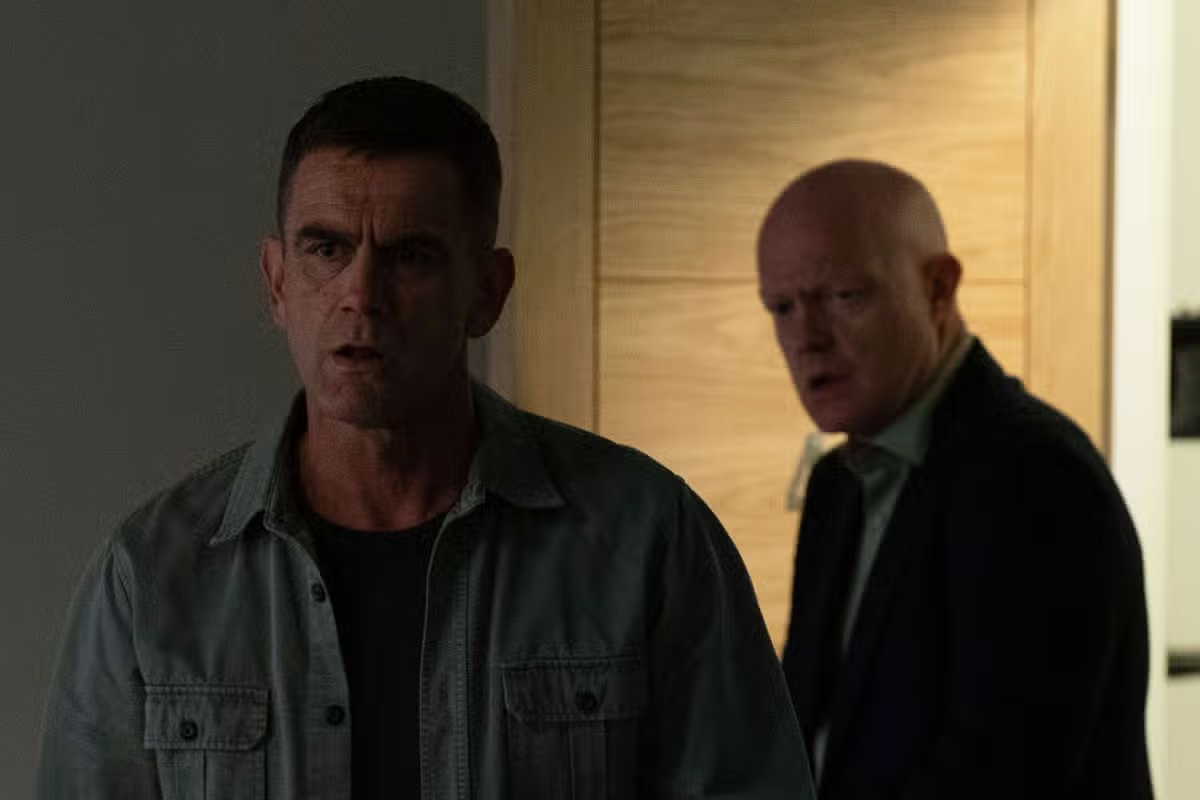
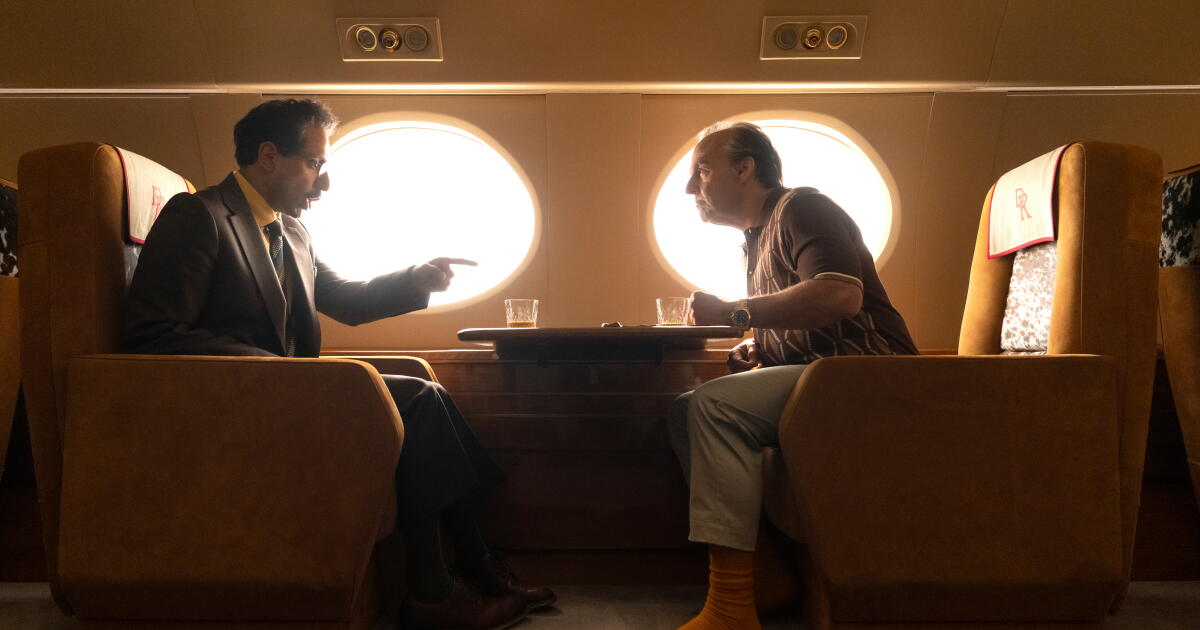
EastEnders fans are pretty sure they know the real reason Jack Branning isn’t on speaking terms with brother Max at New Year, after a shocking twist concerning his daughter Amy
20:02, 22 Oct 2026Updated 20:03, 22 Oct 2026
EastEnders fans are pretty sure they know the real reason Jack Branning isn’t on speaking terms with brother Max at New Year(Image: CREDIT LINE:BBC/Jack Barnes/Kieron McCarron)
No one seems to fight more than the Branning brothers, but EastEnders have set Jack and Max Branning up for a major clash by New Year’s Day.
The flashforward that aired at the start of the year showed that Jack Branning (Scott Maslen) no longer talks to his brother Max (Jake Wood) and fans think they know why after a shocking twist in tonight’s episode. Over the past few weeks, Jack’s daughter Amy (Ellie Dadd) has been groomed by Craig Ingram (Matthew James-Bailey).
Craig has been pushing Amy for money and she was determined to empty her trust fund, which held £100,000 in it. Needing the signature of one of the trustees, she turned to Uncle Max.
To see more of the stories you love from The Mirror and to find them easily in Google then make us your preferred source. Free and easy-to-do, just click on the link here to find more from The Mirror at the top of your feed.
Max, who has money troubles of his own, seemed keen to help Amy – for a cut. Though he didn’t know why Amy wanted the money, he later saw her getting into Craig’s car. Max clearly sensed something was up and rushed to tell Jack… only to change his mind.
The slimy businessman chose not to say anything about his niece getting into the car of an older man because he still wanted money. He told Amy that he would help her get the money, but it had to be a secret.
Fans are now sure this is the reason Jack hates Max at New Year – if something happens to Amy and Jack finds out what Max did, he will blame his brother, who could have said something and didn’t.
One fan said: “So Jack and Max aren’t on speaking terms on NYD because he’s gonna help Amy get the money to run off with Craig, isn’t he?”
Another said: “I could also see max and jack not being on speaking terms due to the fact max uses her trust fund money. Either or is possible.”
A third slammed Max for his actions saying they weren’t surprised no one seemed to like Max on New Year’s Day: “It’s never about anyone else it’s always me me me with that guy then he makes himself look good by helping Jack break into Craig’s flat . No wonder everyone is gunning for him at New Years .”
On 1 January 2027, it isn’t just Jack who seems to hate Max. Peter Beale (Thomas Law) also isn’t speaking to his father-in-law and refuses to attend his wedding.
Likewise, Max is arrested for soliciting a murder and claims he’s being set up, implying someone else hates him enough to want him in prison. Finally, a mystery gunman takes Max’s children Lauren (Jacqueline Jossa) and Oscar (Pierre Counihan-Moullier) hostage and forces him to pick one to save.
WASHINGTON — A federal judge on Monday questioned the Trump administration’s claims surrounding its efforts to redevelop a historic Washington golf course, challenging its contention that a recent tree-cutting spree did not indicate work was moving forward on the project, which is temporarily blocked by a court order.
“There is no universe in which all of this coincidentally happened all at the same time,” U.S. District Judge Ana Reyes said during a hearing over the fate of a project that has emerged as the latest legal flashpoint in President Trump’s campaign to leave his personal imprint on the nation’s capital.
Reyes last week ordered a halt to the golf course’s redevelopment plans until at least Oct. 26 after scolding the government for starting a large-scale tree removal at the course over a holiday weekend while providing little notice to the court or the plaintiffs trying to stop the makeover.
Then, on Sunday, Trump announced plans on social media to close the golf course for 15 months, starting on Nov. 15, and redevelop the 106-year-old park and course despite a court challenge by the D.C. Preservation League and two golfers. In a post on Monday, Trump said the work would start immediately.
Plaintiffs’ attorneys challenging the golf course renovation work have asked Reyes to extend her order that temporarily paused the work. They say the work is inflicting irreversible damage and that the redevelopment would violate the congressional act that created the park where the course is located.
The hearings on the century-old golf course have grown increasingly tense and on the eve of Monday’s hearing, Reyes rejected the administration’s request for her to recuse herself from the case. The government questioned her impartiality and accused her of engaging in “egregious” behavior from the bench during last week’s emergency hearing for the case.
Trump, a Republican, referred to Reyes as a “crazed lunatic” in his social media post on Monday.
“The United States Department of Interior wants to take a terrible and very unsafe golf course, and make it into a great, safe, and prestigious golf course. They have an absolute right to do so. It’s as simple as that!” Trump wrote.
Reyes, who was nominated by Democratic President Biden, said the government has failed “by any objective measure” to demonstrate the need for her recusal from the case.
“It is easy to weaponize selective quotations to bring a baseless recusal motion. But it is much harder to meet the demanding legal standard against a full record,” she wrote.
Trump has pledged to turn the course into a world-class golf venue — part of his grand vision for Washington, D.C., where he has torn down storied structures, remade or renamed others and deployed the National Guard for more than a year.
While it has been open to Washingtonians of all income levels, opponents of Trump’s plans for the golf course have argued it will alter the character of the space and make it less affordable to people.
Monday’s hearing started with a tense confrontation between Reyes and Justice Department official Stanley Woodward, when the judge asked if other any government attorneys in the room “as officers of the court” were willing to certify that everything within a Sunday filing was truthful and legally sound under federal rules of civil procedures.
In that filing Woodward argued that there were no final plans for the park.
“First, the plan is not final because the Park Service has not completed its review and the details of the proposal are subject to change during the review process,” the filing said.
Much of the hearing revolved around Trump’s social media posts over the weekend and his appearance last June at the golf course, accompanied by golf course architects and members of the administration and why there was such a sense of urgency for the cutting of the trees.
The witnesses at the hearing, Greg Wischer, deputy chief of staff at the Interior Department, and acting National Park Service director Jessica Bowron both acknowledged that they had only learned of the National Park Service Cultural Landscape Report in September that led to the tree cutting. That NPS report was from 2019.
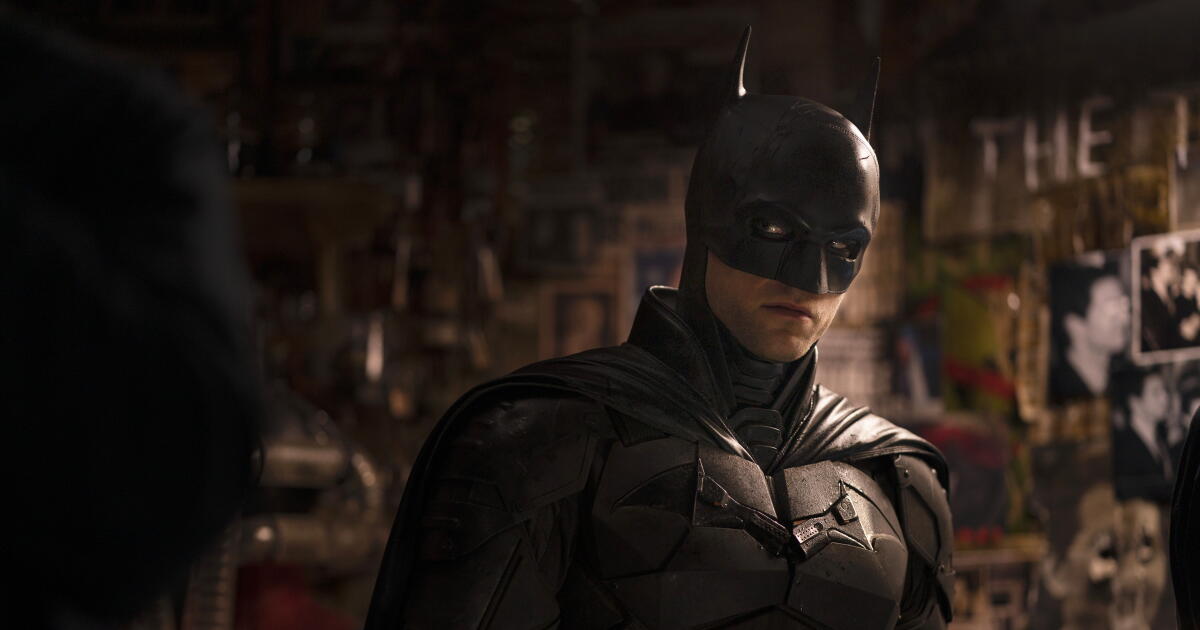
Steven Soderbergh is stepping in to help finish shooting “The Batman Part II” while director Matt Reeves continues to deal with a personal matter.
“As Matt Reeves continues to attend to an ongoing family matter, Steven Soderbergh, as an admirer of Matt’s work, approached Matt and will step in, with the full support of DC Studios, to help the writer-director complete the final weeks of principal photography on ‘The Batman Part 2,’” the studio said Thursday in a statement first reported by Deadline. “Matt and Steven will work closely together with the actors and crew to fulfill Matt’s vision of the film.”
DC Studios chief James Gunn confirmed the news on social media Thursday while reiterating that Reeves remains the director of “The Batman Part II.”
“Matt is still the director of The Batman 2 and always will be,” he wrote on Threads. “I can’t express how profoundly grateful and moved we are by Steven’s offer to help him complete his vision.”
“Matt has the full support of DC Studios and we look forward to continuing the journey soon,” the studio said in a statement at the time.
The writer-director also took to social media Thursday to express his gratitude and to confirm he would be continuing his work on “The Batman 2.”
“Just to be clear, I am not leaving The Batman Part II,” Reeves wrote in a post on X. “I am profoundly grateful to Steven for coming to my aid during this challenging time to help me finish principal photography. Thank you to all for your concern and well wishes.”
Soderbergh expressed his appreciation for Reeves’ work while addressing his new role Thursday in a widely reported statement.
“I thought Matt Reeves’ work on ‘The Batman’ was stunning; it was intentional, specific, and rigorously coherent,” he said in his statement, first reported by Deadline. “The goal here is to work with Matt and his team to generate footage that will integrate seamlessly with what’s already been shot so Matt can properly finish his film.”
A follow-up to Reeves’ 2022 reboot, “The Batman,” the upcoming film will once again star Robert Pattinson as Gotham’s iconic Caped Crusader. “The Batman Part II” began filming in London in June after a number of previous delays while Reeves and Mattson Tomlin wrote the script. The movie is slated to hit theaters on Feb. 18, 2028.
Remember Edward Warchoki? The Polish humanoid robot that went viral in April for chasing wild boars through a parking lot in Warsaw? Even late-night comedian John Oliver did a bit on him, calling Warchoki “a pretty canny PR campaign for anthropomorphic robots. All I’m saying is, ‘That is a nice way to get us all used to him before he’s inevitably one day used as a weapon of war.’ ”
Warchoki has not yet turned into a weapon of war — unless you consider being an online influencer a form of digital warfare. As the first robot influencer, Warchoki has his own social media accounts and appeared at Poland’s parliament. Last week he entered the art world when he was among the first visitors to what looks to be a fascinating exhibition, “How to Feel Real. Art, Technology and Us,” at MO Museum in Vilnius, Lithuania. The show is a collaboration of the modern art museum with ZKM | Center for Art and Media Karlsruhe, which specializes in media art.
According to a news release, the show “explores questions that are becoming increasingly urgent in a world shaped by technology: How do we feel real, and what does it mean to be alive?” Apparently Warchoki was there to address the issue head on.
“People keep asking me if I’m real, so when I heard about an exhibition asking what ‘real’ actually means, I thought: Finally, someone is asking the right question. I’m coming to the beautiful Vilnius to see what the artists have to say — and, of course, to check whether they think I’m real,” Warchocki said in the release.
A number of works in the exhibit explore artificial intelligence, automation, “and the ways machines are increasingly taking on roles we once considered distinctly human,” said MO Museum director Milda Ivanauskienė. “Bringing Edward into the museum is a playful extension of this idea, as his deliberately human-like and slightly absurd persona makes the questions raised by the exhibition tangible — inviting us to wonder why we are so eager to find the human in a machine.”
I am intrigued by this last question and wonder about it myself: Why exactly are we so quick to anthropomorphize AI? Every time I’ve interacted with a chatbot I feel the urge to be polite in my dealings, to say “please” and “thank you” when I ask questions. I certainly don’t do that with a Google search. And once, when I saw a delivery robot hopelessly stuck in a pothole, I felt genuinely bad for it. “Poor little guy,” I thought. I imagine if I met Warchoki, I’d react the same way.
I’m glad MO Museum is exploring these impulses by using artist’s thoughts and interpretations as a way to offer answers to an issue that is not going away — but only growing more powerful and omnipresent by the day.
I’m Arts editor Jessica Gelt and I’ve got a pickle-kimchi lollipop to sell you. This is your arts and culture news for the week.
You’re reading Essential Arts
Our critics and reporters guide you through events and happenings in the SoCal arts scene. In your inbox every Friday.
By continuing, you agree to our Terms of Service, which include arbitration and a class action waiver. You agree that we and our third-party vendors may collect and use your information, including through cookies, pixels and similar technologies, for the purposes set forth in our Privacy Policy such as personalizing your experience and ads.
The week ahead: A curated calendar
FRIDAY
Elim Chan conducts the L.A. Phil in 2024.
(Gina Ferazzi/Los Angeles Times)
Elim Chan Conducts the L.A. Phil It will be a busy couple of weekends in L.A. for the San Francisco Symphony music director-designate. First up is a program featuring Dongshoon Shin’s “Dance Card,” Franz Liszt’s “Piano Concerto No. 2 in A major, S. 125” with pianist Yefim Bronfman, and Pyotr Ilyich Tchaikovsky’s suite from “Swan Lake.” Next week will be “A Symphonic Ballet,” with Claude Debussy’s “Prelude to the Afternoon of a Faun, L. 86,” Karen Gomyo premiering Samuel Adams’ “Violin Concerto No. 2 (The Wheel),” and Igor Stravinsky’s “Petrushka (1947).” “Swan Lake,” 8 p.m. Friday-Saturday, 2 p.m. Sunday. “Symphonic Ballet,” 8 p.m. Thursday, 2 p.m. Oct. 17-18. Walt Disney Concert Hall, 111 S. Grand Ave., downtown L.A. laphil.com
Kuniko Kato Presents Reich90 The North American tour of the Steve Reich Project, conceived and produced by Japanese percussionist Kato arrives downtown in honor of the composer’s 90th birthday. 7:30 p.m. Colburn School, Zipper Hall, 200 S. Grand Ave., downtown L.A. colburnschool.edu
Victoria Marks : A Deer Walks into a Dance The award-winning choreographer and four performers (Rian Alcid, Maya Billig, Karen Chuang and Aaron Mason) explore the idea connection in a world of division via movement, text and the deconstruction of a (bad) joke. 8 p.m. Friday-Saturday. UCLA Nimoy Theater, 1262 Westwood Blvd., Westwood. cap.ucla.edu
SATURDAY
L.A. Opera’s new music director, Domingo Hindoyan, conducts a dress rehearsal of “Carmen.”
(Jason Armond / Los Angeles Times)
Carmen Los Angeles Opera’s new music director, Venezuelan conductor Domingo Hindoyan, opens the company’s season with a new production of Bizet’s “Carmen.” It stars mezzo-soprano Rihab Chaieb, who has dazzled in Mozart at L.A. Opera. The Spanish gothic new production is by director/designer Thaddeus Strassberger and choreographer Antonio Najarro. (Mark Swed) The season-opening performance will be broadcast live in high definition, free of charge, at Steinmetz Park in Hacienda Heights and at the Santa Monica Pier. Through Nov. 7. Dorothy Chandler Pavilion, 135 N. Grand Ave., downtown L.A. Free simulcast, 6 p.m. Saturday, Santa Monica Pier and Steinmetz Park, 545 S. Stimson Ave., Hacienda Heights. laopera.org
Strauss, Ravel, Beethoven Music Director Jaime Martín conducts the Los Angeles Chamber Orchestra in Richard Strauss’ “Metamorphosen,” Maurice Ravel’s “Piano Concerto in G Major” with Conrad Tao, and Ludwig van Beethoven’s “Symphony No. 3 in E-flat Major (Eroica).” 7:30 p.m. Saturday. Zipper Hall, 200 S. Grand Ave., downtown L.A.; 4 p.m. Sunday. The Wallis, 9390 N. Santa Monica Blvd., Beverly Hills. laco.org
SUNDAY
Dale Brockman Davis, Alonzo Davis and David Hammons.
(Museum Associates)
The Brockman Gallery: Los Angeles,1967-1990 For more than two decades, the Leimert Park gallery, founded by Alonzo and Dale Davis, served as a vital cultural hub, staging exhibitions, festivals, concerts, literary events and more. Named after the brothers’ maternal grandmother, born enslaved, the Brockman Gallery was a flourishing, ongoing act of self-determination in the wake of the 1965 Watts Rebellion. It showcased Black artists whose opportunities were severely limited at mainstream, white-run institutions and galleries: David Hammons, Suzanne Jackson, John Outterbridge, Elizabeth Catlett, Betye Saar, Carrie Mae Weems, Senga Nengudi, Noah Purifoy and many more. More than 60 works by artists associated with the gallery will be included in this first full-scale consideration of the Brockman’s scope and impact. (Leah Ollman) Through Jan. 24. Los Angeles County Museum of Art, 5905 Wilshire Blvd. lacma.org
Pacific Jazz Orchestra: A Tribute to Quincy Jones Led by Chris Walden, and featuring vocalists Nayanna Holley and Adam ‘Aejaye’ Jackson, the ensemble performs early work by the late producer/composer. Presented by Ventura Music Festival, 3 p.m. Sunday. Rancho Campana Performing Arts Center, 4235 Mar Vista Drive, Camarillo. pacificjazz.org
TUESDAY
Mendelssohn & Brahms Members of the Los Angeles Philharmonic perform a program of chamber works from Joseph Haydn, Felix Mendelssohn and Johannes Brahms. 8 p.m. Walt Disney Concert Hall, 111 S. Grand Ave., downtown L.A. laphil.com
Ulysse Marion A new work by choreographer Dimitri Chamblas, created with former Paris Opera Ballet dancer Marion Barbeau and dancer and musician Ulysse Zangs, explores the journey of a performer throughout a life in art. 8 p.m. Tuesday-Wednesday. REDCAT, 631 W. 2nd St., downtown L.A. redcat.org
THURSDAY
At the Very Bottom of A Body Of Water The latest work by Benjamin Benne, a dramatist many have been keeping close tabs on, continues his collaboration with veteran director (and fellow L.A. native) Juliette Carrillo, and dives even further into magical realism in an unconventional work exploring the oceanic depths that grief can reveal. (Charles McNulty) Through Nov. 29. Boston Court Pasadena, 70 N. Mentor Ave. bostoncourtpasadena.org
Judy Baca, detail from the 1960s segment of the Great Wall of Los Angeles mural.
(Judy Baca and the SPARC Archives.)
Skirball Cultural Center Three new exhibits open: “The 1960s — A Generation on Fire: Judy Baca’s Great Wall of Los Angeles” presents new murals as part of the evolving L.A. landmark; “Patrisse Cullors: Wishes Made Material” features three new works inspired by conversations between Black and Jewish communities; and “Jenny Yurshansky: What We Carry” explores local immigration stories, memories and family history through collected objects. Skirball Cultural Center, 2701 N. Sepulveda Blvd. skirball.org
The SoCal scene
Zoe Ryan, director of UCLA’s Hammer Museum.
(Christina House/Los Angeles Times)
ICYMI, the best of this week’s L.A. Times arts coverage:
Climate activists in Tallahassee this week unveiled a statue of Florida Gov. Ron DeSantis that was created to melt. “In response to the Governor’s recent ‘Don’t say climate change’ action in state law, 350Action (one of the world’s most influential climate change advocates) built quite a visual — a statue that couldn’t withstand Florida’s daily climate. It’s provocative but for a purpose, to encourage young people to vote in a few weeks for candidates that recognize the threat from climate change,” a news release noted of the “climate denial statue.”
And finally, not strictly arts related, but some Halloween fun for you: Street Food Cinema is hosting its annual Boo-ze, Bites and Frights events with some spooky horror film screenings at Heritage Square and the Ford over the next few weekends, including a Saturday showing of “A Nightmare on Elm Street,” which is a film that still genuinely terrifies me.
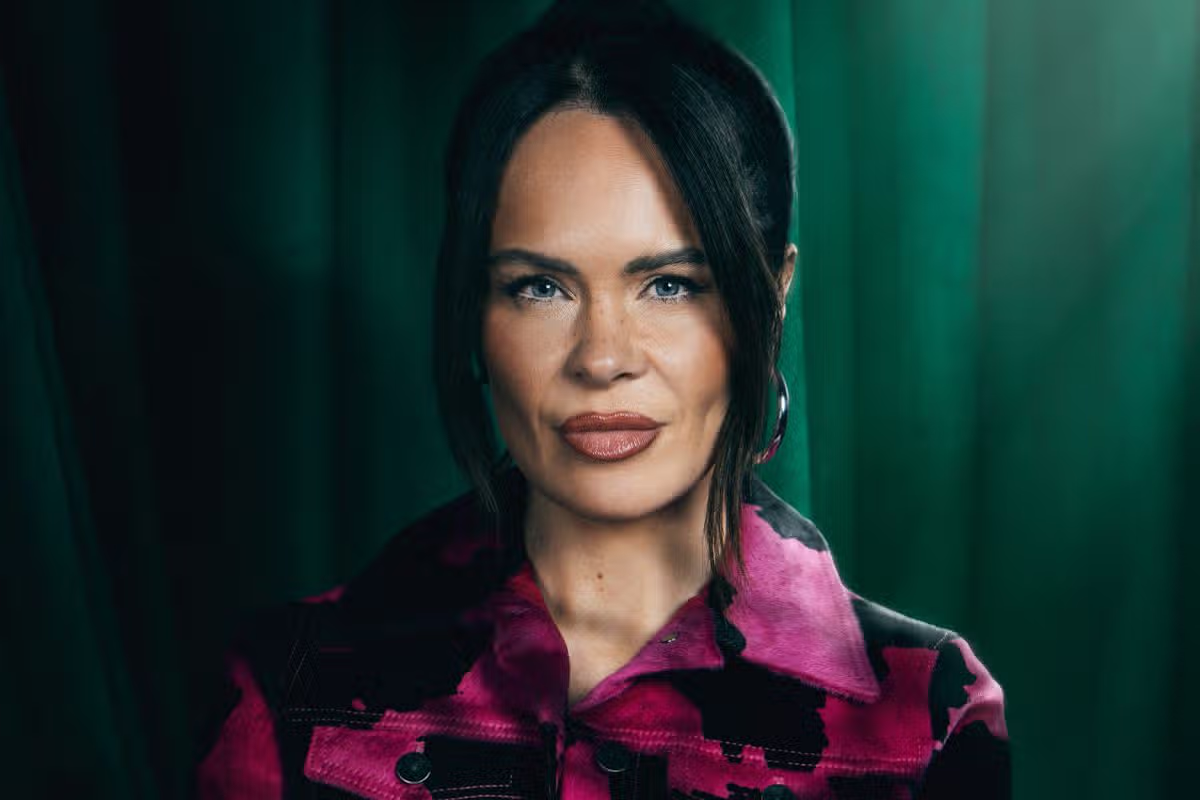
Celebrity Traitors fans think that comedienne Joanne McNally will be banished from the castle next after she made something of a huge mistake during the roundtable
21:38, 15 Oct 2026Updated 21:38, 15 Oct 2026
Celebrity Traitors fans think Joanne McNally will be banished from the castle next(Image: CREDIT LINE:BBC/Studio Lambert/Cody Burridge/BBC Creative)
Celebrity Traitors fans think Joanne McNally will be banished from the castle next.
The Irish comedienne, 43, is currently playing as a Faithful on Claudia Winkleman’s hit BBC game show but one tactic she seems to have employed at the roundtable has seemingly sealed her fate. During Thursday’s episode of the programme, she voted for actor Sebastian Croft to be banished, thereby claiming she believed he was a Traitor.
But the majority of the players had correctly guessed that scientist Dr Hannah Fry was in fact a Traitor, and this was not the first time Joanne had gone against the status quo. She said: “I feel like we’re getting into the habit of punishing vocal Faithfuls, and, at the roundtable, you cannot.”
In the turret, Maya told fellow Traitor James Acaster: “She could blow the whole thing up but no one is expecting her because she’s so all over the place.”
Ensure our latest headlines always appear at the top of your Google Search by making us a Preferred Source. Click here to activate or add us as your Preferred Source in your Google search settings.
Earlier in the episode, Joanne seemed to raise suspicion that she was a Traitor, accidentally claming that she had been the Hide & Seek game when Ross Kemp said: “I looked at everybody when we got out of those cars and I thought I was going home, and it was honestly, an awful experience.”
It was then that Joanne bizarrely chimed in with: “It was horrible…it was…I wasn’t there I mean but I was watching.”
At the roundtable, Hannah had claimed that Traitors tend to deflect attention from themselves by voting against the grain.
Reacting to the apparent tactic, one fan wrote on X: “Hannah bringing up traitors voting for random people followed by Joanne voting for Bash… babes.”
Another said: “i do fear joanne is absolutely f***** at the next round table though, especially after throwing out a random vote for bash when almost everyone else had gone for hannah, even the actual traitors. it’s not looking good for her.”
A thrid wrote: “Joanne on another planet because her logic is nonexistent lmao,” and another said: “One of the traitors could wear their traitors cloak to the roundtable and Joanne would somehow vote Claudia.”
A fifth said: “Hannah’s point about traitors not voting for who everyone else seems to vote for is a good point, but why is Joanne not being questioned when she keeps doing exactly that.”
Mackie, known widely as the King of Camp, who adorned superstars including Diana Ross, Dolly Parton, Beyoncé and Miley Cyrus with fringe and sparkles, died on Sept. 14 in Palm Springs. He was 87. His publicist initially told the Associated Press that the renowned designer died of pneumonia, but a death certificate obtained by Us Weekly paints a different picture.
The certificate lists Mackie’s cause of death as a subarachnoid hemorrhage and blunt head trauma. The Mayo Clinic says a subarachnoid hemorrhage is a type of stroke that involves bleeding in the space between the brain and the tissues that cover the brain.
On Sept. 11, the designer fell at the home of his longtime design director Joseph McFate, according to the outlet, and he died days later at Desert Regional Medical Center in Palm Springs. The designer’s rep further shared that Mackie was staying at McFate’s house at the time of his fall, and that he was battling pneumonia at the time. “A healthcare professional was with him when he fell,” the rep said.
According to the death certificate, Mackie was cremated on Sept. 17, and his ashes were scattered off San Diego.
“Costume designers have long been overlooked for the importance of their work in creating and influencing mainstream contemporary fashion,” fellow fashion designer Tom Ford told The Times in a 2019 email. “Bob Mackie’s work has influenced fashion in a dramatic way, in that many of the body fitting, seemingly transparent and heavily beaded gowns that are worn on red carpets today are derivative of his work for stars like Diana Ross and Cher. The images of his costumes and gowns for these women have become a part of the landscape of fashion from the ’60s, ’70s, and ’80s and in my case become part of my hard-drive of references.
“His famous quote that his clothes are ‘for the woman who is not afraid to be noticed,’ ” Ford added, “is one of my mantras.”
Stars dressed by Mackie posted tributes to the designer after his death. Elton John said he was saddened by the news of Mackie’s death, writing, “Every time I put something on that Bob made, I felt very, very special. His costumes were works of art, and he will go down as one of the most legendary designers ever in Hollywood.”
Cher also weighed in, posting a tribute to Mackie on X that read, “Bob has gone up to heaven. Knowing him, he’s bringing Sequins, Beads, & his sketch pad. Good nite sweet Prince.”
MYLEENE Klass looked utterly gorgeous dolled up tonight for the Sky Arts Awards.
It comes shortly after the stunning star turned down joining her Hear’Say bandmates on their reunion tour alongside Liberty X due to being “too busy”.
Myleene Klass looked gorgeous in a blue gown at tonight’s Sky Arts AwardsCredit: Shutterstock EditorialThe gown fell all the way to the floor and featured tasselsCredit: Shutterstock Editorial
Myleene slipped into a baby blue strapless gown that fell all the way to the floor.
The dress featured a blue slip underneath and then all-over tassel details draping down the fabric.
Sign up for the Showbiz newsletter
Thank you!
The star paired the beautiful dress with simple accessories including a gold watch and a small golden clutch bag.
For an added pop of colour Myleene opted to wear large red earrings, visible underneath her chic bob.
Myleene was supposed to be joining Hear’Say on their reunion tourCredit: PA:Press AssociationLiberty X are touring alongside themCredit: Getty – Contributor
However, a source revealed that Myleene wouldn’t be joining the line up.
They shared: “The group have been asked multiple times over the years about a reunion but it was never the right time.
“The 25th anniversary feels like a special moment to celebrate the success of the band and give something back to their fans. Myleene was invited but their diaries did not align.”
The group formed on ITV reality television show Popstars and debuted in 2001.
WASHINGTON — U.S. District Judge Ana Reyes on Monday ordered a 24-hour halt to tree-cutting at the East Potomac Golf Course, a historic D.C. golf course that has been part of President Donald Trump’s plans to remake the city.
Reyes issued the order following a tense three-hour hearing in which she blistered the government for having deceived her with its actions over the holiday weekend.
Reyes said the 24-hour temporary order could be extended to 14 days if necessary. It was limited to one day while the government tries to find a key Trump administration official to discuss why a massive tree-cutting at the park needed to occur over the holiday weekend, with little notification to plaintiffs in a lawsuit trying to halt renovation plans or the judge.
It’s the latest example of the erosion of trust between the government and the independent judiciary, as the Trump administration tries to steamroll scrutiny of its actions, from the White House ballroom to immigration enforcement.
The hearing started with a blistering 15-minute statement from Reyes, who has declined repeated motions from the plaintiffs to halt work by the administration out of concern that its strategy has seemed to be move ahead on projects despite court actions.
“I am thoroughly unamused right now,” Reyes said. “I do not know how I could have made it any plainer that I did not want what was to happen, to happen.” The judge added: “I have given the government every single benefit of the doubt that it would not do precisely what it has done.”
She told the government’s lawyers sharply: “I wanted you all to be better than you have been.”
The emergency hearing on a holiday expanded as the judge ordered the government to get various participants in the decision-making process into the hearing remotely.
Reyes plans to hold another hearing Tuesday and wants to hear from Greg Wischer, deputy chief of staff at the Interior Department. Wischer pushed for the work to be done urgently, according to testimony from Frank Lands, deputy director of operations for the National Park Service.
Fields writes for the Associated Press.AP writer Matthew Daly contributed to this report.
Morgan Stanley recommends sticking with quality stocks, expanding into higher-quality cyclicals such as capital goods, favoring equal-weight S&P 500 or S&P 600 indices over the lower-quality Russell 2000, and monitoring financials and bond volatility for market stability signals.
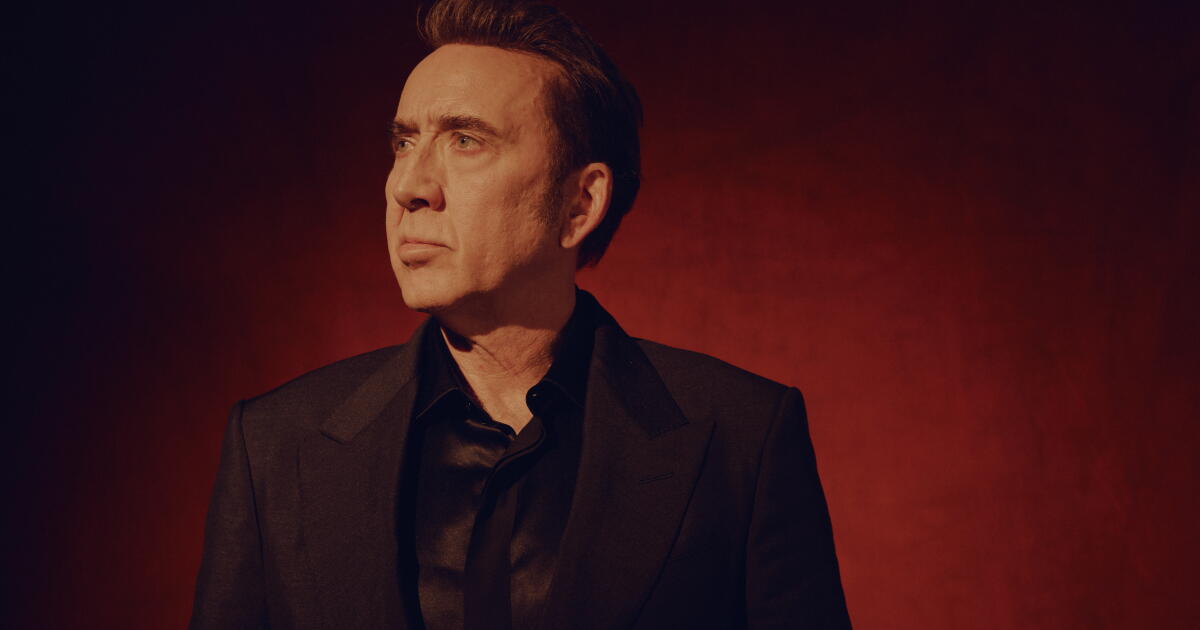
Nicolas Cage is making it clear — he’s not an “AI-friendly actor.”
The 62-year-old actor spoke out against a tech giant during an appearance at New York Comic Con on Saturday. He alleged that he was asked to sign an artificial intelligence waiver for the television series “Spider Noir.”
“Amazon is a very AI-friendly company, to the tune of $50 billion invested in OpenAI,” Cage said on stage.
“I am not an AI-friendly actor, so it’s like, connect those dots! I’m not a member of their club. I didn’t sign the waiver to let him use AI on ‘Spider-Noir.’ I’m probably not going to be working with that studio again, but that’s OK.”
Amazon did not immediately respond to a request for comment.
“Spider-Noir,” which premiered in May, is a “Spider-Man” project that put a 1930s crime-thriller spin on the web-slinging superhero. The show was produced by both Sony Pictures Television and Amazon MGM Studios.
Cage’s part as “The Spider” marked his first leading role in a series. The Oscar-winning actor, whose home in Malibu was recently affected by a sinkhole, is known best for his roles in movies like “National Treasure,” “Moonstruck” and “The Rock.”
Upon its release, “Spider-Noir” received much praise from fans and critics alike. In its first six weeks of streaming, the series earned 2.6 billion minutes watched, according to Nielsen. It was also Amazon’s most-nominated show at this year’s Emmys, with 11 nominations and five wins.
Last month, Amazon announced that the show was canceled after only one season, leaving much of the industry in shock.
During his Comic Con panel, Cage also said he plans to keep working in TV. He announced that he will be joining the HBO series “True Detective.”
“My agent’s out there somewhere listening,” Cage said. “That’s OK that I’m the first to announce that, right?”
Iran. Afghanistan. North Korea. Somalia. And now, the United States.
If Secretary of Defense Pete Hegseth is to be believed, America will soon gain the dubious distinction of joining the only four countries on the globe that carry out executions in public.
Hegseth said Thursday that he wanted the execution of convicted F.t Hood shooter, Army Maj. Nidal Malik Hasan, to be available for public viewing.
“It was a radical Islamist attack … so he’s going to get a firing squad of soldiers, as it should be,” Hegseth said in an interview with far-right political activist Jack Posobiec. “We’ll make sure that people are able to watch it. That it’s public. Because people need to understand that there’s serious consequences for these types of things.”
The execution is scheduled to be live streamed Dec. 3 from the same military base where Hasan opened fire in 2009, killing 13 and wounding 32.
The planned public display is, in a word, barbaric. It’s the archaic act of tyrannical monarchies, staged in the shadow of a looming tower or in the town square. The Taliban and ISIS were big on public executions. So was Nazi Germany. They were either fighting a war on their own soil or had just come out of one. It’s a poor excuse, but the U.S. military can’t even point to that as justification for the animalistic intention of broadcasting a state-sanctioned murder.
Should plans for the livestream of Hasan’s killing become a reality, our peers will be countries that the U.S. has long held up as the worst of the worst. Oppressive “shithole” countries, to use a Trump term, that wield intimidation and the threat of death to keep their people in line.
Iran carries out its hangings in public squares, typically using truck-mounted cranes as makeshift gallows. The Taliban exacts its death penalty in sports arenas. Amnesty International reports that North Korea forced local residents, students and workers to watch the 2008 execution of 13 women and two men as a deterrent. Their crime? Attempting to flee to China.
Hasan, an Army psychiatrist and a Muslim, opened fire on dozens of his fellow soldiers as they were preparing to deploy to Afghanistan. He was reportedly angry about the U.S. involvement in the region and in Iraq. In court, prosecutors argued that he was radicalized online and motivated by an ideology that called for “jihad duty.”
His crimes were horrific, and he should be punished. Whether you believe in the death penalty or not (I do not), turning his execution into a morbid form of entertainment — or a warning to never do what he did — would mark a new low for this country.
And we are pretty low as it is. On Thursday, ICE agents in civilian clothing fired at least seven rounds, at 4 p.m. on a busy Manhattan street, into a car with a 5-year-old boy inside. They hit the driver, who survived, and by some act of god missed the child.
Federal immigration agents have shot at least 21 people, killing seven, since President Trump returned to office less than two years ago with the promise of cracking down on crime and making the country safer via mass deportations. The public execution of Hasan, who is a U.S. citizen, is being sold as part of that tough-on-crime initiative. Hegseth himself said the public killing is meant as a deterrent.
The idea that keeping a population safe requires removing the guardrails of civilized society is absurd, though despots throughout history would have us believe otherwise.
If Hasan’s death is televised, it will be the nation’s first government-sanctioned execution carried out in public since 1939. It will be the first U.S. military execution since 1961 and the first military death by firing squad, or “musketry,” since 1945, according to the Death Penalty Information Center.
The Army had planned a very different type of execution for Hasan. ABC News reported that officials were preparing to use lethal injection if Trump authorized the execution of one of the four prisoners on the service’s death row.
Trump’s approval of Hasan’s execution last Friday came days after a botched lethal-injection execution in Tennessee. Christa Pike, who was sentenced to death for a 1995 murder she committed as a teenager, survived despite being injected with two supposedly lethal doses. She is now said to be lucid and even walking.
Hasan, who is partially paralyzed and uses a wheelchair after being shot by officers who were responding to the Ft. Hood attack, will be put to death in a more dramatic fashion — and for everyone to see.
“The public execution even of one who has done grave harm will only further undermine the moral fabric of our nation and be a blight on the conscience of its people,” Oklahoma City Archbishop Paul Coakley said in a statement Friday. “The word of God exhorts us: ‘do not repay anyone evil for evil’ (Romans 12:17).”
A few congressional Republicans even broke ranks with their party and criticized Hegseth’s plans for the livestream. Sen. John Curtis of Utah posted on X that “a civilization erodes when it cultivates an appetite for executions as a form of entertainment. Secretary Hegseth’s plan to livestream the Fort Hood execution risks feeding that appetite.”
There is no reason the U.S. should stoop to the barbarism of public executions. It’s ghoulish, inhumane and a marker of tyrannical rule. Do we really want to join Iran, Afghanistan, North Korea and Somalia in the global hall of shame?
We are weathering a truly apocalyptic heat wave in L.A., but that hasn’t stopped Halloween from sneaking up on us. For those who like to give themselves the creeps, the city has its fair share of spook shows, including Griffith Park’s Haunted Hayride and the Queen Mary’s Dark Harbor. These mainstays offer hardworking actors seasonal jobs, but usually don’t allow for any real narrative besides jump scares and chainsaws. Which is why I’m so jazzed about a new entry to the immersive Halloween show scene: “Hospital of Emotions After Dark,” with its specially ticketed basement creep-fest, “Below.”
For readers who haven’t been inundated with a million ads for “Hospital of Emotions” on your Instagram feeds, it’s an immersive art show that unspools in 80 discrete rooms over four floors of the shuttered St. Vincent’s Medical Center near downtown L.A. The 45,000-square-foot exhibition opened in late May and was supposed to close in late July, but has extended its run due to popular demand. This month that run includes an after-dark option, which features the regular show — only after-hours — with ambient lighting and roving actors who show up in the most unexpected places (I won’t spoil it, but I got one of the most serious jump scares of my life in one of the exhibit rooms).
A separate ticket (which can be purchased in a bundle with the main exhibition) gets you a ride in an elevator to the hospital’s long-abandoned basement where you are treated to an immersive theater show with a nun for a tour guide. My nun was played by Penny Wiggins, and I’m not sure I have ever witnessed such true commitment in a spook show. Wiggins sold her character — at one point with genuine tears.
I won’t give away the plot, but it’s harrowing, especially if you are someone familiar with the hospital, which opened in the late 1800s and was the first hospital in the city. I had my daughter there in 2016, so it was extra chilling to know that this basement of horrors was there even then. The show uses the building’s actual abandoned infrastructure as its framework, so guests are led through dank subterranean corridors, old examination rooms and specimen labs, as well as an autopsy room.
“Below” isn’t as viscerally gory as “Dark Harbor” or “Haunted Hayride,” but it’s more artistic. There is dancing and an actual script that features a “gotcha” twist — as well as an upsetting demon who appears out of nowhere. I applaud the commitment by the actors who, I imagine, must find it kind of scary just waiting down there for the next round of guests. Plus, it’s good fun to be in the “Hospital of Emotions” at night when everyone is a little wild and there’s a sense that something out of the ordinary might pop out at you at any minute.
I’m Arts editor Jessica Gelt begrudgingly wearing a tank top and shorts in early October. This is your arts and culture news for the week.
You’re reading Essential Arts
Our critics and reporters guide you through events and happenings in the SoCal arts scene. In your inbox every Friday.
By continuing, you agree to our Terms of Service, which include arbitration and a class action waiver. You agree that we and our third-party vendors may collect and use your information, including through cookies, pixels and similar technologies, for the purposes set forth in our Privacy Policy such as personalizing your experience and ads.
The week ahead: A curated calendar
FRIDAY
Felipe Dulzaides / Bradley Baboc Cuban-born artist Dulzaides uses photography, drawing, video, performance, sculpture and sound to capture the sublime nature of Havana knife sharpeners in the exhibition “Balance in Place.” L.A. painter Boboc drew on the Toy District as inspiration for a new series of paintings, “Shadoobie (Shattered).” Opening, 6-9 p.m. Friday; 10 a.m.-4 p.m. Thursday-Sunday, through Nov. 8. Arcane Space, 324 Sunset Ave., Unit G, Venice. arcanespacela.com
Ludovico Einaudi The popular Italian pianist and composer returns to Disney Hall for the first time since 2019 on this solo tour. 8 p.m. Friday. Walt Disney Concert Hall, 111 S. Grand Ave., downtown L.A. laphil.com
Mälkki Conducts Bartók Susanna Mälkki leads the Los Angeles Philharmonic in Béla Bartók’s “Concerto for Orchestra.” 11 a.m. Friday, 2 p.m. Sunday. Walt Disney Concert Hall, 111 S. Grand Ave., downtown L.A. laphil.com
Takács Quartet with Jeremy Denk The Grammy winning ensemble teams up with the MacArthur Grant-winning pianist for a program of chamber music featuring works by Haydn, Mendelssohn and Franck. 7:30 p.m. Broad Stage at Santa Monica College Performing Arts Center, 1310 11th Street, Santa Monica. broadstage.org
SATURDAY
Laura Andreson, 1979, Forrest L Merrill Collection, Photo by M. Lee Fatherree
(Photo by M. Lee Fatherree)
The Eternal Quality of Aesthetic Joy: Laura Andreson and Her Legacy The artist bristled at “superfluous” decoration, favoring distilled jar, box, bowl and vase forms influenced by her love for Scandinavian and Bauhaus design. She became a wizard with glazes, conjuring lustrous surfaces resonant with elements of the Southern California landscape. This show offers a rare opportunity to savor the gorgeous purity of her work, alongside that of several of her mentors and peers, such as Gertrud and Otto Natzler and Glen Lukens, as well as some of her students, including JB Blunk and Bernard Kester. (Leah Ollman) Noon-6 p.m. Tuesday-Saturday, Oct. 10-Jan. 9, 2027. Craft in America Center, 8415 W 3rd St. craftinamerica.org
Haunted Soiree: True Crime An immersive theater experience inspired by the 1928 Hex Hollow murder with cocktails and curious encounters. Selected nights through Oct. 31. Nocturne Theatre, 324 N. Orange St., Glendale. hauntedsoiree.com
Pacific Jazz Orchestra’s Benefit Concert Songwriter and producer David Foster, singers Katharine McPhee, Joanna “JoJo” Levesque, Veronica Swift, Adam “AeJaye” Jackson, violinist Anne Akiko Meyers and pianist Emmet Cohen are the headliners for a celebration of founding Artistic Director Chris Walden’s 60th birthday, which also includes a buffet reception and dancing under the stars. 7 p.m. Private estate in Toluca Lake, address to be provided upon confirmation of attendance. pacificjazz.org
Saint Megan Playwright Joy Gregory, inspired by the journey of the granddaughter of the founder of the controversial Westboro Baptist Church, examines the long history of American Christian zealotry. Opening, 8 p.m. Saturday, 8 p.m. Fridays, Saturdays and Mondays, 2 p.m. Sundays through Nov. 22 (no performance Oct. 12 or Oct. 31. Rogue Machine at the Matrix Theatre, 7657 Melrose Ave. roguemachinetheatre.org
SUNDAY
Akram Khan Company In the London-based dance troupe’s final touring production, “Thikra: Night of Remembering,” an international cast of women perform contemporary and Bharatanatyam dances. 8 p.m. UCLA, Royce Hall, 340 Royce Drive, Westwood, cap.ucla.edu
Camerata Pacifica The chamber ensemble opens its 37th Season with Rachmaninoff’s “Variations on a Theme of Chopin, Op. 22” and Schubert’s “B-Flat Major Trio.” 5 p.m. Sunday. Bank of America Performing Arts Center, Janet & Ray Scherr Forum Theatre, 2100 Thousand Oaks Blvd., Thousand Oaks; 7:30 p.m. Tuesday. The Huntington, Rothenberg Hall, 1151 Oxford Road, San Marino; 8 p.m. Wednesday. The Colburn School, Zipper Hall, 200 S. Grand Ave., downtown L.A.; and 7 p.m. Thursday. Music Academy of the West, Hahn Hall, 1070 Fairway Road, Santa Barbara. cameratapacifica.org
Heartbreak House The Antaeus Theatre Company launches its 35th season with George Bernard Shaw’s dark comedy. Directed by ATC Artistic Director Nike Doukas. The cast includes Elinor Gunn, Harry Groener, Arye Gross and Bernard Addison, Previews, 2 p.m. Sunday, 8 p.m. Tuesday-Oct. 16; opening, Oct. 17-Nov. 16. Kiki & David Gindler Performing Arts Center, 110 East Broadway, Glendale. antaeus.org
Musical Theater Guild members Valerie Larsen and Gabriel Navarro during a reading of “The Light in the Piazza” in 2024.
(Stan Chandler)
Here’s to Us! The Musical Theatre Guild marks its 30th anniversary with a benefit concert featuring show tunes from “Titanic,” “Fanny, “The Pajama Game” and “Sunday in the Park with George.” 7 p.m. Broad Stage at Santa Monica College Performing Arts Center, 1310 11th Street, Santa Monica. musicaltheatreguild.com
Untitled, n.d. Mavis Pusey
(Neil Lane Collection / Estate of Mavis Pusey)
Mavis Pusey Two exhibitions this fall will help familiarize audiences with this remarkable woman. “Mobile Images” at the Hammer is a full-scale survey co-organized by the Studio Museum in Harlem and the Institute of Contemporary Art at the University of Pennsylvania, and is accompanied by a rich and thorough catalog. “Restless” also adds a Pusey publication to the shelf. The Benton show focuses mostly on Pusey’s prints, drawing exclusively from the collection of Ian White, artist, educator and son of esteemed artist Charles White. (Leah Ollman) “Mobile Images,” through Feb. 28, 2027. UCLA Hammer Museum, 10899 Wilshire Blvd., Westwood. hammer.ucla.edu “Restless,” through Jan. 3, 2027. Benton Museum of Art, Pomona College, 120 W. Bonita Ave., Claremont. pomona.edu
MONDAY
Art Of Elan: In The Desert Inspired by a trip to Bryce Canyon, Olivier Messiaen wrote his percussion-rich chamber music masterpiece “From the Canyons to the Stars” as a 1976 U.S. Bicentennial commission from Alice Tully Hall in New York. Replete with Messiaen’s characteristic bird calls, it’s been done out of doors before, and memorably at the Ojai Music Festival. But the San Diego imaginative new music series Art of Elan is now taking it to the desert for a special performance led by percussionist Steven Schick at an outdoor theater in Borrego Springs. (Mark Swed) 6:30 p.m. Stargazing Theater, La Casa del Zorro Desert Resort & Spa, 3845 Yaqui Pass Road, Borrego Springs. artofelan.org
TUESDAY
Angela Hewitt The pianist performs an all-Mozart recital accompanied by Los Angeles Chamber Orchestra concertmaster and violinist Margaret Batjer for the first installment in LACO’s inaugural recital series. 7:30 p.m. Tuesday. The Colburn School, Zipper Hall, 200 S. Grand Ave., downtown L.A. laco.org
WEDNESDAY
Lisa Batiashvili/Gautier Capuçon/Jean-Yves Thibaudet The superstar violinist, cellist and pianist team up for an evening of Shostakovich, Debussy, and Dvořák. 8 p.m. Walt Disney Concert Hall, 111 S. Grand Ave., downtown L.A. laphil.com
Joey Soloway.
(Loshara Vova)
A 1 They/Them Show The Emmy and Golden Globe-winning creator of “Transparent” steps out from behind the camera to try out their stand-up routine in L.A. before hitting the road with a deeply personal solo comedy performance exploring family, Hollywood, gender, sex, Judaism, ambition and reinvention. A tour is expected to include a November stop in Chicago. 8 p.m. Wednesday and Oct. 28, doors open at 7 p.m.. The Virgil, 4519 Santa Monica Blvd. dice.fm
THURSDAY
Houston Ballet
(Quinn B. Wharton/Segerstrom Center for the Arts)
Houston Ballet The Texas dance troupe brings celebrated young pianist George Li for an ode to Frédéric Chopin. Making its West Coast debut, and created by Stanton Welch AM, artistic director of the Houston Ballet, the piece, “Sons de L’âme” (Sounds of the Soul), merges choreography with a live performance of Chopin’s famed piano pieces, showcasing the talents of the nation’s fourth-largest ballet company and a rising star of classical music. (Eloise Rollins-Fife) 7:30 p.m. Thursday-Friday, 2 and 7:30 p.m. Saturday, 1 p.m. Sunday. Segerstrom Center for the Arts, 600 Town Center Drive, Costa Mesa. scfta.org
Speaking In Tongues The world premiere of a Luis Alfaro play is always a welcome event. And his latest work, commissioned by Latino Theater Co. and developed at the theater’s Circle of Imaginistas playwriting group, resonates thematically with Alfaro’s 2023 play “The Travelers,” which LTC produced in 2023 and made my list of that year’s best theater productions. The new play, infused with Alfaro’s trademark Chicano humor, returns us to the world of California’s Central Valley and the stories of migrant farmworkers and their spiritual quests in a societal landscape transforming faster than anyone can keep up. (Charles McNulty) Previews, 8 p.m. Thursday-Friday; opening night, 8 p.m. Saturday; 8 p.m. Thursdays-Saturdays, 2 p.m. Sundays, through Nov.. 15. Los Angeles Theatre Center, 514 S. Spring Street, downtown L.A. latinotheaterco.org
The SoCal scene
Cuban-born artist Enrique Martinez Celaya paints the new curtain for the L.A. Opera at the Dorothy Chandler Pavilion.
(Carlin Stiehl / For The Times)
ICYMI, the best of this week’s L.A. Times arts coverage:
L.A. artist Enrique Martínez Celaya hand-painted a brand new 70-foot curtain for L.A. Opera’s new season.
A documentary about Asco, the revolutionary arts group founded in the 1970s, is streaming for the first time on PBS.
As 24th Street Theatre prepares to celebrate its 30th anniversary, it has announced that it raised $3 million to officially buy the converted 1928 carriage house it’s called home for the past 29 years. It also purchased properties next door and across the street in order to expand its mission and community programming, including plans for an outdoor garden and a black box theater, which is, according to a news release, “officially named the 24th Street Black Box Theatre in honor of longtime supporter Jack Black, who is also the new venue’s first donor.” Black is set to host the theater’s gala on Oct. 18.
Tesserae — Andrew McIntosh, left, Ian Pritchard and Joshua Rubin — perform “Bowling, Animals and the Ocean” at the Sierra Madre Playhouse.
(Dania Maxwell / Los Angeles Times)
The 99-seat Sierra Madre Playhouse announced it has received $2.5 million from the State of California for a slew of exciting upgrades to its 100-year-old building — marking the largest gift in the organization’s history. The funds were secured by Pasadena Assemblymember John Harabedian, and will be used toward making the historic venue ADA-compliant, as well as to renovate lobbies and other areas open to the public. It will also help with new programming and building infrastructure.
The LA Phil and Orchestre de Paris have announced the launch of a new opportunity: the Salonen International Conducting Fellowship, which is, according to a news release, “designed to nurture and accelerate the careers of the next generation of orchestral conductors … the fellowship will offer early-career conductors unparalleled access to artistic mentorship, practical podium experience, and professional development opportunities at Los Angeles’ Walt Disney Concert Hall and the Philharmonie de Paris.” The first yearlong program will start in the 2027-28 season, and will feature two to four fellows, who will spend about six weeks working with each orchestra.
The Hammer Museum at UCLA announced this week that Eric Esrailian is succeeding Marcy Carsey as the new chair of the museum’s board (after previously serving as vice chair). Karen Hillenburg will now serve as vice chair. The Hammer also named three new members to its board: philanthropist Leslie McMorrow, attorney Alicia Miñana de Lovelace and Joan Weinstein, vice president of program planning at the Getty.
Tech scion David Ellison spent three years doggedly pursuing his dream: acquiring Paramount, then Warner Bros. Discovery.
Ellison pulled off his bold feat this week by completing Paramount’s $111-billion takeover of Warner Bros., uniting two industry pioneers and a wealth of cherished properties — Batman, Bugs Bunny, Harry Potter and Maverick of “Top Gun,” as well as CBS, HBO, Comedy Central and CNN. All will be tucked under a corporate umbrella that Ellison is calling Skydance — the name of the studio he formed two decades ago.
The mogul and his lieutenants celebrated their victory in style, ringing the New York Stock Exchange opening bell on Thursday, capping a bruising battle to secure approval of a deal that had sparked protests across Hollywood over fears of looming job cuts.
Ellison and his team must braid together two huge film studios (housing nine film labels), four streaming services, three TV production studios, three animation units and more than 50 television networks, including two prominent news organizations. That could be a daunting task, particularly based on how previous Hollywood mergers have fared.
“Now, the real work begins,” David G. Fubini, a Harvard Business School senior lecturer, said in an interview.
Anxieties were evident Tuesday — the day the deal closed — when Ellison held a town hall meeting at Warner Bros., which drew nearly 500 employees.
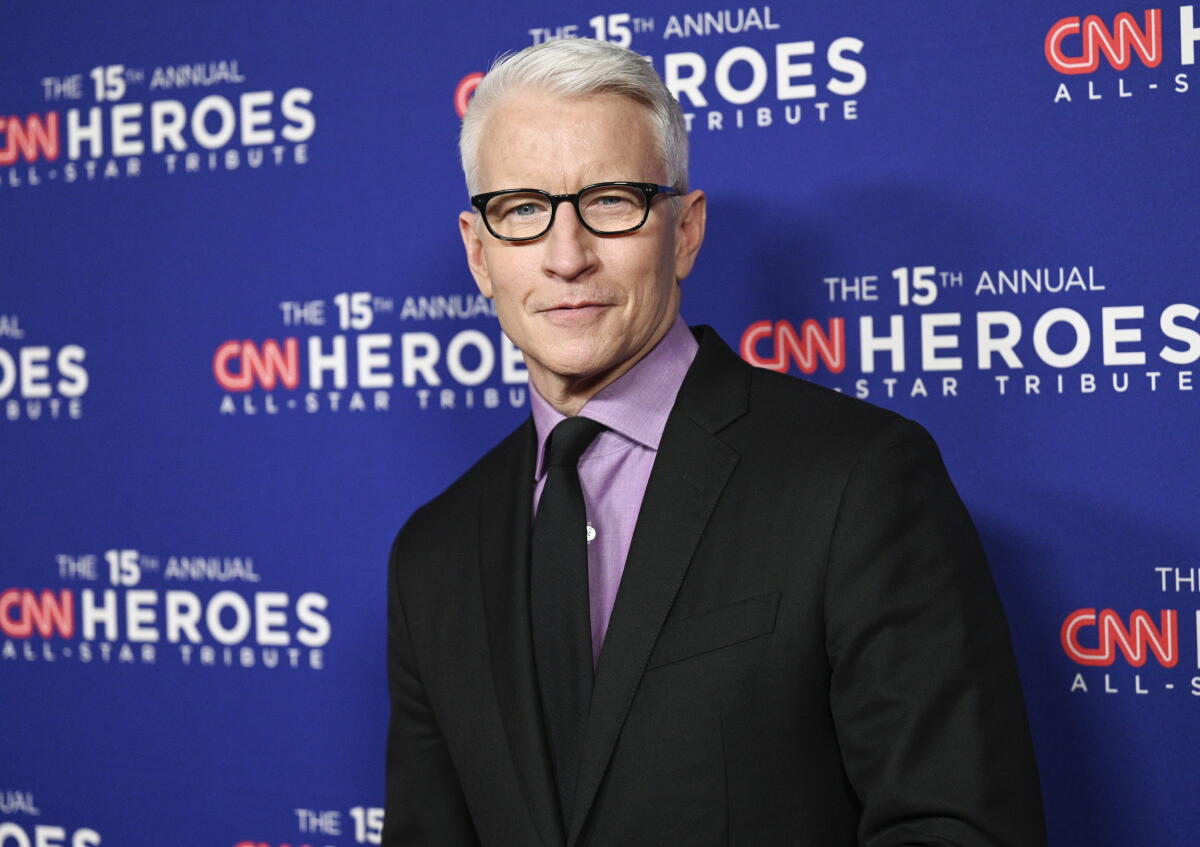
During the session, CNN’s Anderson Cooper quizzed his new bosses, including about anticipated layoffs and news independence.
“Do you stand with CNN and our effort to completely restore access to covering President Trump?” Cooper asked, referring to CNN’s legal fight alongside MS Now and Politico to reverse the president’s ban on the three organizations.
“Of course,” Ellison replied.
CNN news anchor Anderson Cooper, pictured here in 2021, quizzed his bosses at a Burbank town hall.
(Evan Agostini / Invision / Associated Press)
Hours later, Ellison parried with reporters in Paramount’s darkened Stage 3, recently revamped with laser projection capabilities to simulate fantastical and far-flung settings for TV shows, such as the streets of New York.
“This was a turbulent process, and, at times, a really ugly process, to actually get this deal over the finish line,” Ellison acknowledged to reporters. “What I want to be able to do now is turn the page, and actually make sure that we are in the business of rebuilding trust.”
To do that, Ellison intends to make more movies and TV shows than rivals. He wants to ensure the Warner Bros. and Paramount studios, which will be kept separate for now, remain talent-friendly destinations.
Ellison has taken an opposing view from his predecessors who confronted crumbling industry economics by cutting expenditures to boost their corporate bottom lines.
The 43-year-old executive, son of Oracle co-founder Larry Ellison, proudly views his family as “owner-operators,” unshackled by quarterly earnings expectations or the need to dole out dividends to keep investors happy. The Ellison family controls the company’s voting stock, allowing David Ellison to take a long-term view as he charts Skydance’s course.
The goal is to “win in storytelling,” Skydance said in an investor presentation. It intends to build the media industry’s most “technologically capable” firm, which uses artificial intelligence to speed work flows. Skydance plans to spend at least $30 billion a year on film, television and video game content.
Skydance co-CEO Ynon Kreiz, Sarah Ellison, CEO David Ellison and investor Gerry Cardinale of RedBird Capital Partners on the floor of the New York Stock Exchange on Thursday.
(Yuki Iwamura / Associated Press)
The realities of Ellison’s big swing will soon sink in as he and his team turn their focus to integrating the myriad operations and about 55,000 employees.
In some ways, Ellison is behind the curve.
Most major mergers are consummated after executives have dedicated months to quietly drafting detailed operational plans and organizational hierarchies. Ellison, in contrast, has spent the last nine months in a pitched battle for Warner Bros. — ultimately vanquishing Netflix, hundreds of vocal merger opponents, and California Atty. Gen. Rob Bonta and his coalition of 11 other state attorneys general who filed an antitrust lawsuit in July in an attempt to derail the deal.
Ellison and Bonta resolved their legal fight Sept. 21. A week later, a federal judge cleared the way for the merger to close.
The lawsuit settlement with Bonta requires that the combined company produce at least 30 movies a year for five years. It also must maintain the studio facilities in Los Angeles, making “reasonable efforts to operate the lots in a manner consistent with past practices,” according to the agreement.
Skydance has committed to maintaining operations on the Warner Bros. lot, pictured here, and at Paramount Pictures in Hollywood.
(Eric Thayer / Los Angeles Times)
Ynon Kreiz, former chief executive of Mattel toys in El Segundo, has been tasked with leading the integration. The 61-year-old executive joined Ellison at Skydance as his co-CEO earlier this week. Day One of the combined company marked Kreiz’s second day on the job.
“They have a whole new management team that will be expected to immediately lead this massive integration,” Fubini, a former partner at consulting firm McKinsey, said. “The clouds have cleared, and they are at the base camp of Mt. Everest facing this enormous undertaking.”
In a report this week, TD Cowen Global Research maintained its “hold” rating on the newly constituted Skydance, expressing some doubts about Ellison and his team’s ability to “avoid integration and execution problems that have bedeviled other major media mergers.”
Hollywood has had a history of failed mergers, including Discovery’s 2022 takeover of WarnerMedia from AT&T, which led to years of cost cuts that ultimately seeded the ground for Ellison’s takeover. AT&T’s purchase of the same assets in 2018 also quickly unraveled, some 20 years after the epic failure of AOL Time Warner.
Ellison now must grapple with the hefty acquisition costs for Warner Bros., which climbed as the deal was delayed. The company emerged from the transaction with $86.8 billion in total debt; with most of that going toward buying out Warner Bros. Discovery’s stockholders at $31.17 a share.
The debt burden also includes more than $18 billion in obligations leftover from past mergers. Skydance has nearly $7 billion in cash on hand.
Oracle’s Larry Ellison and executive producer David Ellison arrive at the L.A. premiere of “Star Trek Into Darkness” at the Dolby Theatre in 2013.
(Eric Charbonneau / Getty Images for the Hollywood Reporter)
The Ellison family brought in foreign investors, including royal families of Saudi Arabia, Qatar and Abu Dhabi as passive owners, to contribute equity to the deal. Gerald Cardinale’s RedBird Capital Partners, a longtime Skydance stakeholder, added $4 billion, bringing its total investment in Skydance deals to $6 billion.
The deal’s financial terms pose deep challenges, analysts said. Fitch Ratings this week downgraded Skydance credit, citing “materially higher leverage after the acquisition and significant execution and integration risks,” according to its report.
“Interest rate increases made financing this transaction far more expensive than anyone anticipated,” said Eric Talley, a professor at Columbia Law School. “Those lenders are going to start expecting their interest payments — Skydance executives won’t have the luxury of time.”
The company could struggle, Talley said, to “generate the cash flow needed to easily service that debt unless they can significantly cut costs.”
Skydance has promised investors that it will make $6 billion in cost cuts over three years. It anticipates $2 billion in reductions within a year, with the bulk of the rest occurring in the second year of the merger.
“They are going to be firing a lot of people,” TD Cowen Global Research media analyst Doug Creutz said.
During the press briefing, Kreiz sought to downplay the expected workforce toll, saying Skydance would achieve savings by combining technologies that support streaming services and marketing expenditures. It plans to save costs on real estate by locating employees at Skydance-owned properties in Santa Monica, Hollywood and Burbank.
Ellison and Kreiz said they would jointly manage the new colossus.
“Where David will focus on creative, technology, long-term strategy, including especially as it relates to the creative part of the business, I will focus more on the operations and the day-to-day management of the business,” Kreiz said.
Kreiz was named to Skydance‘s expanded board this week along with Laurene Powell Jobs, founder of the Emerson Collective; and Bobby Kotick, former CEO of Activision.
The new leaders expressed confidence they could expand and integrate their two major streaming services to drive growth. HBO Max and Paramount+ combined will reach more than 200 million subscribers.
The plan, they said, is to combine the two streamers within a couple of years, but the company may offer subscribers a bundle with the two offerings sooner.
Skydance, according to sources, also expects to bolster its free, ad-supported service Pluto TV, which offers more than 200 channels. The service hasn’t had much corporate attention in recent years amid the cuts and deal-making.
The executives have not disclosed which teams would soon be affected or how they will structure overlapping business units.
For example, the company’s three TV studios each have their own leader: Channing Dungey runs the largest, Warner Bros. Television; David Stapf has long managed CBS Studios; and Skydance executive Matt Thunell has been president of Paramount Television Studios since last year.
Integrating CNN and CBS
Anxiety over whether CNN and CBS News would be mashed together was quelled, at least for now.
Skydance announced that it was retaining CNN Worldwide Chairman Mark Thompson as head of the larger news organization. CNN journalists had worried that CBS News Editor in Chief Bari Weiss, who has presided over a year of turmoil at the network, would be put in charge of both.
Any news consolidation could take years, in part, because CBS News is largely unionized while CNN is a non-union shop.
“We are going to spend the next several months basically getting under the hood,” Ellison said.
CBS News Editor in Chief Bari Weiss, pictured here in 2023 in Los Angeles, has had a turbulent tenure at CBS.
(Francine Orr / Los Angeles Times)
Another challenge will be stabilizing the Warner Bros. film unit, which has had a rough year at the box office. This month, the top two Warner Bros. film executives, Mike DeLuca and Pam Abdy, exited abruptly, clearing the way for longtime Ellison lieutenants Dana Goldberg and Josh Greenstein to oversee both film studios. The co-heads of DC Comics, James Gunn and Peter Safran, segued to the new Skydance.
Skydance also will have to deal with the NFL, which could demand substantially higher fees for CBS to keep its Sunday games.
The current contract allows the league to reopen negotiations because of the ownership change. Skydance is hoping it can wait three years until the contracts of other broadcasters also are up for discussion.
Skydance will be a major player in sports. Last year, Paramount agreed to spend $7.7 billion for UFC fights. The combined company also has rights to professional golf, including the Masters tournament; National Hockey League; Major League Baseball and NCAA basketball, including March Madness, as well as European rights to televise the Olympics.
“Until you actually get inside the company, there are things you won’t know,” Creutz said. “But they are going to have to come up with answers pretty quick.”
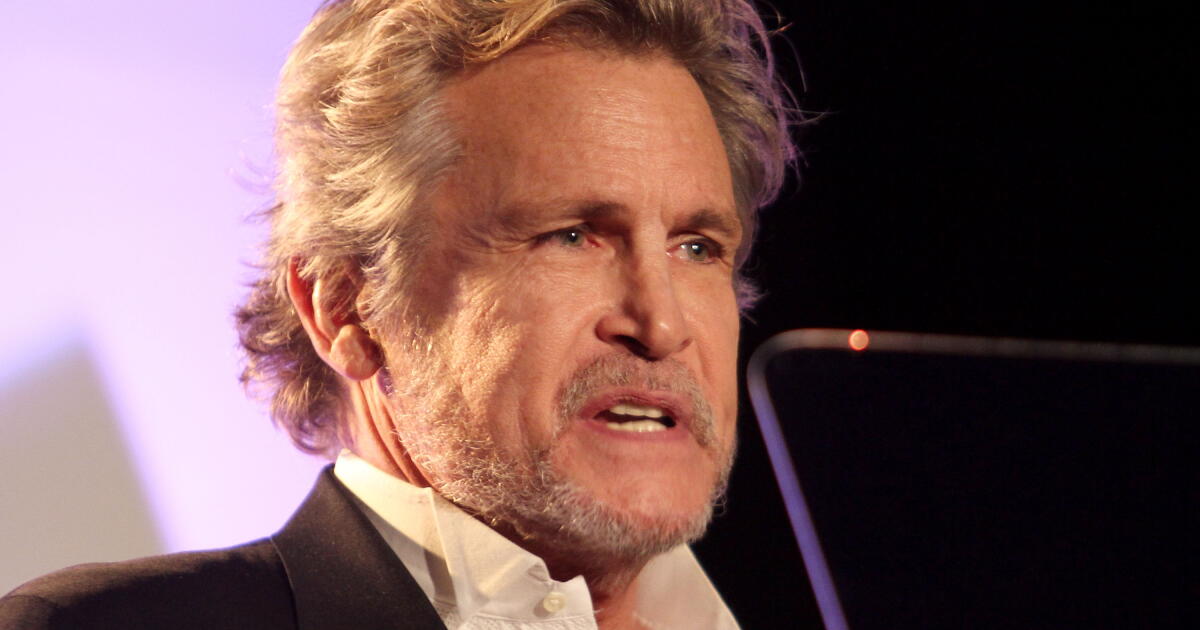
Michael Kearns, a trailblazing AIDS activist and author credited as the first out gay actor, has died. He was 76.
Filmmaker and professor Roland Palencia confirmed the actor’s death on social media, writing that Kearns had died Monday evening after feeling unwell and calling the paramedics on Sunday. Palencia said that the actor had been in and out of emergency rooms more than five times in the last few months.
“Michael Kearns was a friend, mentor, neighbor, and my movie buddy,” Palencia wrote. “For the past year, we watched an average of a movie a month. Our favorite theater was the Vista Theater in Los Feliz, with a larger-than-life screen and within walking distance of where we both lived. Our favorite film this year was ‘The History of Sound.’
“It is a strange feeling to know we will not see the living Michael again, who spoke in hyperbolic, superlative tones. For him, nothing in life was small enough; everything had magnified significance. He himself and his legacy are larger than life,” he continued. “I will miss him deeply. Our next movie was going to be ‘La Bola Negra,’ a film based on Federico García Lorca’s first openly gay play, the Spanish playwright [was] killed in 1936 by the fascist Francisco Franco army. Michael was our Los Angeles García Lorca.”
Born Jan. 8, 1950, and raised in St. Louis, Kearns felt odd from an early age.
“I couldn’t throw a ball particularly well. I didn’t excel in sports,” he told talk show host Sheila Kuehl during a 1998 appearance on “Get Used to It.”
“But one day I was put in the school play, and I excelled. Suddenly I realized I could entertain, and from that moment on it was just like this realization, ‘Oh my God, here is something that I can do, I have found it,’ and I was only 8 years old. From that moment on, to this very moment, I’ve never ever veered from that path.”
Kearns realized along the way that his path to stardom wouldn’t be so simple. He had initially been drawn to the theater as a means to escape his home life, and himself, but he ultimately found the craft inspired the opposite: “As I got into my 20s, coinciding with an awakening of other areas of my life — spiritual, sexuality — I found that the theater and being an actor was more of a way to truly connect with who I was as a person,” he told Kuehl.
Around this time, Kearns made his way to Chicago, where he studied acting at the original Goodman School of Drama, which became the Theatre School at DePaul University, and graduated in 1972. It was here that Kearns got his first taste of casting bias, and realized that he was facing a real dilemma: Did he want to be gay or did he want to become a commercially successful actor?
“In spite of the fact that most of the teachers were gay or lesbian, they had that Hollywood philosophy that if they knew you to be a homosexual, you were not as eligible to play heterosexuals,” he continued. “By that point I was out, out, out. I mean, there was no way I was going to alter my offstage behavior to please anyone.”
Kearns acted across film and television from the 1970s through the aughts, including roles in “Body Double,” “Nine Lives,” “Street Asylum” and “Beverly Hills, 90210.” During an era when it could be dangerous to be queer, the actor was out, and in 1991, he made television history when he shared that he was HIV positive on NBC’s “A Closer Look,” and the next day, “Entertainment Tonight.” The following year, he appeared on a segment of ABC’s dramedy series “Life Goes On” and played a character with HIV.
In 1975, Kearns used his acting chops to pull off a literary stunt in which he posed, both in nude photographs and in extensive interviews, as author Grant Tracy Saxon, a pen name for TV writer Thom Racina who penned “The Happy Hustler,” a faux memoir (it was actually fictionalized erotica) about a high-priced male sex worker. Years later, Kearns became an author himself and published five theater books including “T-Cells & Sympathy” and “Acting = Life,” which were nominated for Lambda Literary Awards.
The actor’s first major theater role in Los Angeles was in Tom Eyen’s comedy “The Dirtiest Show in Town” in 1972. Perhaps his most celebrated performance was playing the title role in Charles Ludlam’s “Camille” at Highways Performance Space in 1993. He also acted in James Carroll Pickett’s “Dream Man,” in 1985 and toured with the production internationally.
Kearns, who considered himself “a political creature as well as an actor,” also garnered acclaim for his solo theater works, which were inspired by the AIDS epidemic and his grief surrounding the too-frequent death of his friends. “Intimacies” and “More Intimacies,” in which he played a dozen diverse characters with AIDS, as well as solo pieces “Rock” and “Going In: Once Upon a Time in South Africa,” made Kearns feel that he had found new purpose and depth in his work.
“Somewhere in that time, I became an artist,” Kearns told The Times in 1994. “Whatever that pain, that loss, that tragedy was, I managed to spin it like an alchemist into something passionate. And it’s been increasingly so since.”
In 1992, he married his husband, Philip Juwig, who died the same year. Bereft, Kearns spent three years thinking, “What now?” and kept coming back to the same thing: He wanted to be a dad. In 1995 he adopted a baby girl, Tia Katherine Kearns, whom he named after his grandmother.
In 2017, he interviewed his daughter for the summer issue of Honeysuckle Magazine about her identity as a Black woman, her work as an artist and her unique upbringing. She said that she attended a progressive school and didn’t feel judged, noting, “they doted on my dad because he had a skill set that other dads didn’t; for school fundraisers; he could climb a ladder and decorate with panache.”
Later in the interview, she revealed that she had her dad’s passion for political activism.
“I think my political consciousness was formed early on,” she said. “I think it would have been impossible for me not to have an awareness of the world and political climate with a dad who is an openly gay actor and activist. Your openness and courage forced me to be honest with myself and the world I live in.”
Kearns gushed in a 2015 interview that his dream creative collaboration would be directing a project written by his daughter that explored race.
In the last couple of decades, the social justice crusader worked with Angelenos to develop their own voices through writing workshops. He also served as an artistic associate at the Skylight Theatre in Los Angeles, artist-in-residence at Housing Works, and artistic director of QueerWise, a Spoken Word collective he founded in 2012.
Kearns was widely recognized for his work, including the Robert Chesley Playwrighting Award (2005), honoring lifetime achievement in LGBTQ+ theater, and a COLA Fellowship (2005) from the city of Los Angeles Cultural Affairs Department to fund major new creative works. His acting career was highlighted by a Drama-Logue Award and a Los Angeles Drama Critics Circle Award nomination for his lead role in “Camille.” Additionally, his national advocacy earned him the Victory Award (1999) from the Gay & Lesbian Victory Fund, alongside honors from the ACLU of Southern California (1987).
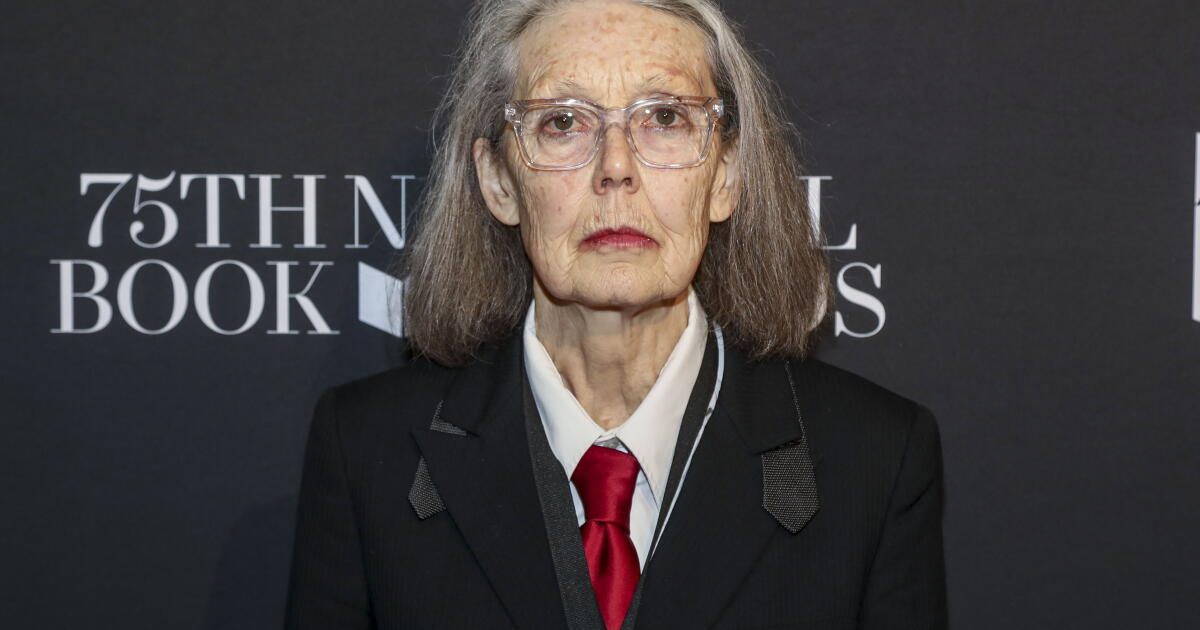
Anne Carson, the Canadian poet, essayist, professor of classics and translator, has won the 2026 Nobel Prize in literature.
The prize, announced at the Swedish Academy in Stockholm on Thursday, awarded Carson “for her bold and inventive oeuvre that, in playful dialogue with the classical tradition, has created new forms for contemporary literature.” Carson is the 19th woman to win.
Among Carson’s myriad acclaimed works are her novel in verse “Autobiography of Red” and its sequel, “Red Doc>”; her seminal book of literary criticism, “Eros the Bittersweet”; poetry collections such as “Glass, Irony, and God” — which contains “The Glass Essay” — and the T.S. Eliot Prize-winning collection of narrative poetry “The Beauty of the Husband: A Fictional Essay in 29 Tangos”; her haunting accordion-fold elegy, “Nox”; and her widely praised translation of Sappho’s surviving fragments, “If Not, Winter.”
“In 1981, she published her doctoral thesis in classics, and has throughout her entire career, combined poetry writing with translation work and teaching at various universities,” said Anders Olsson, who serves as the chair of the Nobel Committee for Literature at the Swedish Academy, and presented the laureate. “Almost all her literary production has centered upon the intersection between the philologist’s obsession with words and the poet’s desire for new meaning.
“Throughout her entire authorship, Carson, with a light touch, explores the possibilities of writing, a process by which the literary sketch has become of particular value for her. In her collaborations with visual artists and choreographers, and with opera and theater directors, she has crossed over into various artistic fields, which has lent her writing a strongly performative aspect,” Olsson continued. “This demonstrates the freedom with which she relates to literary expectations and rule systems, which in turn lies behind the outstanding importance her work since the 1990s has had for the international art and literature scene.”
Nobel committee member Steve Sem-Sandberg said Carson is “an author for our time,” unique in her skill at connecting contemporary ways of living through antiquity. Sem-Sandberg marveled at Carson’s use of the myths, characters, stories and fables from that time, and the way she puts them into a modern context. “The mixture between those two gives an enormous energy to her writing,” he said. “Nobody writes like her, and nobody would even, I think, dare to do this in this way.”
Carson was sipping tea and eating crackers at her seaside home in Iceland — she also resides in Ann Arbor, Mich., where she teaches — after she got the big news. She said she was thinking of ways to give the 12 million Swedish kronor ($1.2 million) award away. “We have a friend who needs a house, and we always give a lot to Doctors Without Borders,” she said. She also planned to celebrate by taking a walk through the woods and turning off the phone.
Carson’s initial reaction was surprise. “Who would expect it? For heaven’s sake!”
While England’s League A campaign has gone well so far, Wales’ has been trickier.
In a tough group with Portugal, Denmark and Norway, Wales have picked up three points from four games after beating Norway 2-1 in Cardiff.
With Portugal already qualified for the last eight, Wales will need close to maximum points in their final matches against Norway and Portugal to stand any chance of making the last eight.
A third-place finish would put them in a play-off to avoid relegation in March, while coming last in the group would guarantee a drop down to League B.
Like England, Scotland have three rounds of fixtures remaining. They face Slovenia at Hampden Park on Tuesday.
Going into that tie, they are third in League B1 but only behind Slovenia on goal difference. A win for Sebastien Pocognoli’s side would put them second behind Switzerland heading into the November break.
With Scotland’s penultimate match coming against bottom of the table North Macedonia, wins in their next two games would all but seal a place in the top two heading into their final match against Switzerland, who are expected to clinch the automatic promotion spot.
Northern Ireland have had a successful international break with two wins, two draws and no goals conceded in their four matches in Group B2.
They sit top of the group by a point, with their remaining matches against bottom side Georgia and second-place Hungary.
Should they beat Georgia and Hungary fail to beat Ukraine in November’s first round of fixtures, they will guarantee top spot and promotion. A win for them and Hungary doing the same would mean the two sides face off in a promotion-decider in the final round of games.
The Republic of Ireland are third in Group B3 following five points from their first four matches.
Their remaining two fixtures are against the top two teams Austria and Kosovo. Wins in both would guarantee a top-two finish and would also put them in a strong position to win the group, depending on goal difference and the result of Austria’s meeting with Israel.
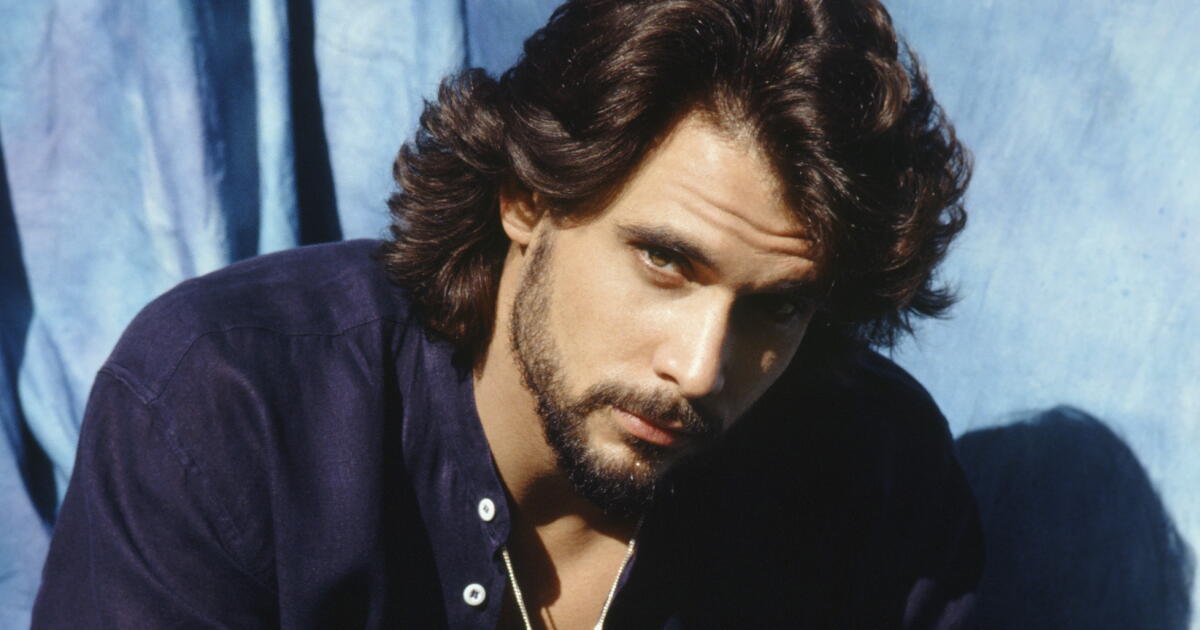
Actor Robert Kelker-Kelly, who was a familiar face in daytime dramas in the 1990s with turns in “Days of Our Lives” and “General Hospital,” has died.
Kelker-Kelly died Saturday evening at his home in St. Peters, Mo., the city’s Police Department confirmed Monday to The Times. Law enforcement officials responded Saturday evening to a report of an unconscious man who was not breathing. Police arrived at the actor’s home along with paramedics and “life-saving measures were administered but were unsuccessful,” police said.
Police said officers found nothing suspicious at the scene. A cause of death was not revealed, but police noted that Kelker-Kelly was said to have complained of chest pain before he became unresponsive. A spokesperson for the St. Charles County Ambulance District confirmed paramedics responded Saturday to a report of a man in cardiac arrest. Kelker-Kelly was 62.
Kelker-Kelly primarily acted in TV and was best known for his work in long-running daytime dramas, which also included “Another World.” Notably, he portrayed the rebellious heartthrob Beauregard “Bo” Brady in “Days Of Our Lives” from 1992 to 1995. He began his turn as Bo, which lasted for more than 586 episodes, following the departure of original actor Peter Reckell, who would return to the show off and on in the following decades.
During his tenure, Kelker-Kelly portrayed the spouse of Hope Brady and love interest of Lisa Rinna’s Billie Reed. She spoke negatively of that experience and called her co-star a bully in her memoir, released earlier this year. He did not respond to People’s request for a response at the time.
Kelker-Kelly made his official debut in “Another World” in 1987 and appeared in more than 400 episodes in a handful of roles until 1998, according to the actor’s IMDb page. He was also known for his work as Stavros Cassadine in “General Hospital” and its spinoff series “Port Charles.” John Martinuzzi originated the role. Kelker-Kelly’s “General Hospital” tenure lasted from 2001 to 2014 and was his final TV role. His television credits also include “Jack’s Place,” “Touched by and Angel” and “Rescue 77.”
The actor was born April 18, 1964, in Wichita, Kan. His mother was a nurse and his father a pathologist. Kelker-Kelly’s parents divorced when he was 7 years old, and he later moved in with his father. The actor was in and out of colleges but studied acting and grew fond of Shakespeare, according to People.
After his acting career, Kelker-Kelly became a professional pilot. He married production assistant Linda Ratner in 1988; they divorced four years later. Kelker-Kelly then married “Days of Our Lives” actor Miriam Parrish in 1997. That marriage ended in 2013. He is reportedly survived by a daughter, Amelia Rose Kelly.
The Tom Cruise-led movie “Digger” cratered at the box office this weekend, limping to a fifth-place finish with $8 million in the U.S. and Canada in its theatrical debut.
The Warner Bros. film was expected to do poorly after polarizing reviews from critics and a challenging marketing campaign. The film had a production budget of about $125 million. Worldwide, the film brought in just $20 million in its opening weekend, meaning the studio will probably post a significant loss from the release.
A representative of Warner Bros. did not respond to a request for comment.
Amazon MGM Studios’ “Verity,” starring Anne Hathaway, easily lapped “Digger,” coming in first at the domestic box office with a haul of $32.6 million. The film made $62.5 million worldwide.
The underwhelming performance from “Digger” marks a rare misfire from the usually bankable Cruise and adds to a difficult year for Warner Bros.’ film studio, whose lineup of movies has struggled to connect with audiences. That’s in stark contrast to 2025, when the studio ran up a string of hits such as “Sinners” and “Weapons.”
It also comes as Paramount Skydance’s $111-billion acquisition of Warner Bros. Discovery is set to close Tuesday. As part of the merger, there have already been several management shake-ups, including the exit of Warner Bros. film chiefs Pam Abdy and Michael De Luca. The duo oversaw the studio for the last four years, providing a mixed bag of hits and misses for the Burbank-based studio.
The deal is expected to dramatically reshape Hollywood by combining two of the major studios, a move that is expected to lead to massive layoffs. Paramount has already told Wall Street that it’s planning $6 billion in cost cuts.
“Digger” is the result of nine years of work, as director Alejandro González Iñárritu started on the project before the pandemic. The film is a satire about an impending climate change apocalypse that’s triggered by the drilling operations of oil tycoon Digger Rockwell, played by Cruise, who looks nearly unrecognizable clad in prosthetics and graying hair.
In a post-screening, onstage discussion last week, Cruise noted the carefully handcrafted props and sets.
“Everything is practical,” he said. “It was so beautiful, and I just have to say … AI can’t do that.”
Sony Pictures’ “Resident Evil” came in second at the box office this weekend with $12.5 million in its third weekend in theaters. Paramount’s “Heart of the Beast” ($11 million) and A24’s “Primetime” ($8 million) ranked third and fourth.
As of last week, Warner Bros.’ domestic box-office haul this year was $437.7 million, representing about 5.6% of the total theatrical revenue in the U.S. and Canada, according to Rentrak data.
Last year, Warner Bros.’ total at this time was $1.8 billion, aided by back-to-back successes starting with “A Minecraft Movie,” which went on to become the highest-grossing movie at the domestic box office during that calendar year.
The studio does not have any film in the top 20 of domestic box-office earners this year, with Emerald Fennell’s adaptation of “Wuthering Heights” ranking at 21 with $84 million. Bets on films such as Maggie Gyllenhaal’s “The Bride!” cratered, while DC Studios’ “Supergirl” misfired.
The anonymous arts group known as Secret Handshake has gone international with its piquant form of satirical anti-Trump artwork, this time placing a playable video game console called “Nuuk ‘Em All” in, yes, Nuuk, Greenland. The group sent a picture of the console to The Times. It sits alone on a barren cliff above the sea, with a smallish iceberg visible in the water below. The peaked roofs of a nearby town can be seen in the distance.
Secret Handshake has created more than a dozen pieces of guerrilla art mocking Trump since last year — all of which appeared on the National Mall in Washington, D.C., until July when a golden, 10-foot tall “Iran War Participation Trophy,” cropped up in New York City. That piece arrived at the Minnesota State Capitol in early August.
Greenland is ambitious though, even for a collective that revels in creating outsize splashes with its work (see the Trump-Epstein “Best Friends Forever” sculpture). Asked via email how the group transported the full-size video game console to the country — which has weathered a series of unwelcome overtures from Trump to become part of the U.S. since he retook office early last year — a representative wrote, “You have no idea — it was honestly very difficult. A true ‘planes, trains, and automo … ships’ situation. Did you know that the arctic is actually quite far? And they’re not used to whipping over arcade games.”
“Nuuk ‘Em All” is the second satirical video game Secret Handshake has released since July when it first introduced the world to “Operation Epic Furious: Strait to Hell,” which finds Trump waging a futile war with Iran while making all kinds of bumbling choices including whether to order a Diet Coke or bomb the country.
The game arrives in Greenland shortly after the Trump administration signed an agreement with the country and Denmark to expand the U.S. military presence in the Arctic while seemingly dropping threats to annex the semi-autonomous Danish territory.
Three additional cabinets of the game were simultaneously placed at the D.C. War Memorial on the National Mall, and can be played online on any old computer. The game begins with an animation of the White House, its lawn covered with cranes and backhoes. “The year is 2026,” the scrolling text reads. “The White House is under constant construction, reconstruction and construction of the reconstruction.”
The action moves to Trump’s Mar-a-Lago headquarters where Trump is approached by Defense Secretary Pete Hegseth, who apologizes for waking Trump from his “tactical nap” to tell him about some “issues with Iran.” Trump asks if the Strait of Hormuz is 100% open and Hegseth replies, “Yes, sir. It’s so open that we’ve used up all our missiles, and gas now costs more than bourbon.”
I haven’t had the chance to play the game for long, but Secret Handshake’s email details what to expect, “In this game, Iran is going great (spoiler — it’s not), so Trump heads north to check on his new frozen frontier. Along the way, he battles unthinkable evils like Fully Vaccinated Children, Woke Yetis, and the happiest people on Earth, the Danish. All the while, the player’s greatest challenge is trying to keep President Trump from falling back asleep.”
Secret Handshake didn’t have any information about how Greenland has responded to the game, with the rep noting, “I think there is a lot of hope and relief over there right now that this agreement is the end of the barrage of bullying and threats from the US. But our feeling—and I truly hope we’re wrong— is that it’s just the beginning. Especially with Trump refusing to answer if an invasion is completely off the table now.”
Regardless of what happens in Greenland, the rep continued, “the thing I really like the most about this new game is that between all the satire, and jokes, and silliness, it actually ends up back in reality — the character is still stuck in an endless loop of war in Iran. And that, sadly, is still just as true as when we released the Iran game almost half a year ago.”
I’m Arts editor Jessica Gelt screaming into the void. This is your arts and culture news for the week.
You’re reading Essential Arts
Our critics and reporters guide you through events and happenings in the SoCal arts scene. In your inbox every Friday.
By continuing, you agree to our Terms of Service, which include arbitration and a class action waiver. You agree that we and our third-party vendors may collect and use your information, including through cookies, pixels and similar technologies, for the purposes set forth in our Privacy Policy such as personalizing your experience and ads.
The week ahead: A curated calendar
FRIDAY
Boston Marriage David Mamet’s 1999 epigram-filled comedy about two women sorting out their affairs while maintaining their standard of living at the turn of the 20th century. Directed by Bernardo Cubría. With Nicole Pacent, Heather Wake and Dulce Valencia. 8 p.m. Fridays-Saturdays (and one Thursday, Oct. 22): 2 p.m. Sundays, through Oct. 24. European House LA, 12355 Rye Street, Studio City. ticketsource.com
Yvette Janine Jackson With Radio Opera Workshop The ensemble integrates electronics, acoustic instruments, voice and images to produce new music by the award-winning composer and sound artist. Presented by CAP UCLA in collaboration with the UCLA Herb Alpert School of Music and the UCLA Center for Musical Humanities. 8 p.m. The Nimoy, 1262 Westwood Blvd. cap.ucla.edu
The Little Women Ballet in action.
(Edie Tyebkhan-Melissa O’Gara)
Little Women Ballet The dance troupe’s Autumn Immersive Experience brings audiences into the world of Louisa May Alcott through movement amid Victorian Era architecture. 6:30 p.m. Friday, 3 and 6:30 p.m. Saturday-Sunday. Heritage Square Museum, 800 Homer St., Montecito Heights. littlewomenballet.org
Outside Mullingar An Irish romance written by Pulitzer Prize and Academy Award winner John Patrick Shanley that premiered on Broadway in 2014 finds a middle-age man and woman, longtime neighbors, circling an uneasy relationship in uncertain times. Michael Kirby, Liza Seneca, Armin Shimerman and Kitty Swink star. Directed by Matthew Leavitt. 8 p.m. Fridays-Saturdays, 2 p.m. Saturdays, 4 p.m. Sundays, through Oct. 25. Sierra Madre Playhouse, 87 W. Sierra Madre Blvd. sierramadreplayhouse.org
Gretchen Parlato The jazz singer-songwriter performs music from her new album, “The Wise Ones,” joined by her band Alan Hampton on bass and guitar, Mark Guiliana on drums and percussion and Gerald Clayton on piano and keyboards. 8 p.m. Carpenter Center, 6200 E. Atherton St., Long Beach. carpenterarts.org
SATURDAY
Isaiah Collier performs Saturday at the Segerstrom Center for the Arts.
(Johanna Brinckman)
Isaiah Collier Plays Coltrane The rising jazz musician and composer pays tribute to the saxophone legend by applying his own sound and reaffirming the music’s ability to evolve. 7:30 p.m. Segerstrom Center for the Arts, Samueli Theater, 600 Town Center Drive, Costa Mesa. scfta.org
Democracy Sessions 2026 Music collective Wild Up expands upon its successful election-themed 2024 event examining how art can function as a democratic practice in this time of censorship, polarization and shifting public trust. The new month-long festival was developed in partnership with MOCA, REDCAT and CalArts, with related programming independently conceived and presented by Clockshop, 2220 Arts + Archives, Human Resources, Performance Art Museum and Living Earth, for the run-up to the Nov. 3 midterms. Saturday through Nov. 3, various locations. wildup.org
A calavera mask designed by artist Leo Limon and a paper marigold for Self Help Graphics & Art’s Dia de los Muertos Community Art Workshop Series in October 2026.
(Self Help Graphics & Art)
Día de los Muertos Community Art Workshop Series Self-Help Graphics & Art launches the holiday season with five free Saturday community art workshops. Participants of all ages will learn crafts to honor ancestors and loved ones. Each week features papel picado (tissue paper with cutout shapes) and a paper marigold craft activity, plus a special project: Stamp collages with SHG Lead Printer Dewey Tafoya (Oct. 3); Calavera (skull) masks featuring a design by artist Leo Limon (Oct. 10); Recuerdo (memory) posters with Victoria Delgadillo (Oct. 17); “Living candle” mini paintings with Ivan Zuno (Oct. 24); and Candle decorating with Nupur Behera (Oct. 31). Noon-3 p.m. Saturdays through Oct. 31. East Los Angeles County Library, Community Room, 4837 E. 3rd St. selfhelpgraphics.com
Woof A revised version of “Go Play,” written and directed by Barra Grant, featuring the same loquacious dogs with new insights into their clueless owners. Previews, 2 and 7 p.m. Saturday, 2 p.m. Sunday and Oct. 10; opens 7 p.m. Oct. 10; 2 and 7 p.m. Saturdays, 2 p.m. Sundays, through Nov. 8. Odyssey Theater, 2055 S. Sepulveda Blvd. odysseytheatre.com
SUNDAY
Come From Away The award-winning Broadway hit musical, written by the husband-and-wife team of Irene Sankoff and David Hein, tells the true story of a Canadian town that sheltered thousands of airline passengers whose flights had been diverted on Sept. 11, 2001. Directed by Julia Rodriguez-Elliott, with music direction by Rod Bagheri. Previews, 2 p.m. Sunday, 7:30 p.m. Wednesday, Thursday and Oct. 9; opens Oct. 10 through Nov. 8. A Noise Within, 3352 E. Foothill Blvd. Pasadena. anoisewithin.org
WEDNESDAY
The Best Medicine Caroline Aaron stars in the West Coast premiere of this solo comedy by playwright Robin Gerber and directed by Jane E. Unger. Previews, 8 p.m. Wednesday-Friday; Opening, 8 p.m. Saturday; 8 p.m. Fridays-Saturdays, 2 p.m. Sundays, through Nov. 15. Odyssey Theatre, 2055 S. Sepulveda Blvd. odysseytheatre.com
B+ Mom (An Enthusiastic Guide to Imperfect Parenting) Melissa Greenspan wrote and performs this solo comedy directed by Guy Picot. 7:30 p.m. Wednesdays, through Oct. 28. Rogue Machine at the Matrix Theatre, upstairs on the Henry Murray Stage, 7657 Melrose Ave. roguemachinetheatre.org
Charlemagne Palestine The Brick and Piano Spheres presents the visual artist and musician performing “Strumming Music,” which he describes as “an evolutionary liquid sound continuum process” and performed hundreds of versions over the last 50+ years. 8 p.m. The Brick, 518 N. Western Ave. the-brick.org
THURSDAY
Ronald K. Brown / Evidence The landmark African diasporic dance company led by choreographer Brown recently celebrated its 40th anniversary. West Coast fans will have the chance to experience the New York-based company’s unique blend of contemporary, African and African American dance traditions with this program of four pieces that includes tributes to some of Brown’s most enduring collaborators. (Eloise Rollins-Fife) 7:30 p.m. Thursday-Oct. 10. The Wallis, 9390 N. Santa Monica Blvd., Beverly Hills. thewallis.org
Wives East West Players presents the Southern California premiere of Jaclyn Backhaus’ feminist comedy examining a selection of “great men” in 16th century France, 1920s India and 1960s Idaho. A primarily South Asian and South Asian American cast, under the direction of Hypokrit Live Arts NYC co-founder and artistic director Arpita Mukherjee, brings this redress of women’s erasure in history to astringent comic life. (Charles McNulty) Through Nov. 1, check website for specific dates. East West Players, Union Center for the Arts, David Henry Hwang Theater, 120 Judge John Aiso St. eastwestplayers.org/wives
Yamel Cucuy Austin’s Glass Half Full Theatre returns with this production, last seen in L.A. at the Latino Theater Company’s 2024 Encuentro theater festival. The tale of a girl on the verge of adulthood facing the threat of immigration agents and haunted by specters from Mexican folklore is told through live actors, sophisticated puppetry and an original score of Indigenous percussion. Written by Gricelda Silva, Indigo Rael and Caroline Reck, with additional writing by Jesus I. Valles and Connor Hopkins. Directed by Reck. 8 p.m. Thursdays-Saturdays, 2 p.m. Sundays, through Nov. 1. Los Angeles Theatre Center 514 S Spring St. latinotheaterco.org
The SoCal scene
Wendy Raigosa, 27, Long Beach, uses repurposed materials in her art project at Kate Ingold’s bi-monthly Samizdat Sundays workshop at the Wende Museum.
(Carlin Stiehl / For The Times)
Times contributor Miranda Huang wrote about bi-monthly classes at the Wende Museum called “Samizdat Sundays” in which teacher Kate Ingold teaches participants samizdat, “a practice in which Soviet dissidents hand-typed literature, criticism and poetry to bypass state censorship. Each week, Ingold opens the workshop with a new prompt related to speech suppression — an issue with renewed currency today.”
Vincent Price Art Museum is currently staging a unique exhibit featuring the work of Anida Yoeu Ali, a Cambodian-born artist who lives in Tacoma, Wash. It’s called “The Buddhist Bug” and features a 328-foot-long orange insect, which Ali will occupy on opening day, and again on closing day. “Ali’s numerous performance-based exhibits explore her Cambodian American identity and Buddhist and Muslim religions. The bug is her ‘totally humorous take on hybridity’,” writes contributor Siran Babayan.
Ed Ruscha’s new poster for Alejandro Iñárritu’s “Digger,” featuring the Boy Scout Utility Modern font, which Ruscha designed himself and has used exclusively since around 1980.
Segerstrom Center for the Arts turned 40 last month and Times contributor Jenelle Riley made the drive to interview the organization’s leaders, including President and Chief Executive Casey Reitz, about how the campus grew out of windswept lima bean fields to become the epicenter of art and culture in Orange County.
Architecture critic Sam Lubell went to the Lucas Museum of Narrative Art last weekend and was sorry to see that the museum has erected gates around its main courtyard. Lubell, like many, had been under the impression that the courtyard was meant to function as a grand civic plaza, so he penned a piece of commentary questioning the founders’ motives for cordoning off the area. “It’s hard not to wonder whether these barriers represent something more than security: the extension into public space of the gated, closely guarded world inhabited by co-founders George Lucas, Mellody Hobson and those in their orbit,” Lubell writes.
Enjoying this newsletter? Consider subscribing to the Los Angeles Times
A rendering of the Las Vegas Museum of Art, designed by architect Francis Kéré.
(Kéré Architecture / Las Vegas Museum of Art)
Culture News
Earlier this week the long-gestating Las Vegas Museum of Art hosted a preview of its Grand Central Galleries — a multipurpose media lab and exhibition space located in Symphony Park down the street from the museum’s future main building. Scheduled to open in April 2027, the 15,000-square-foot space will act as an entry point to the museum and is slated to host a variety of exhibitions and programs while the museum’s Francis Kéré-designed building remains under construction through 2029.
The Grand Central Galleries exhibition program was organized by the LVMA in collaboration with LACMA, and will open with “A Shared Light: Monet, Impressionism, and the American Landscape,” organized by Shannon Vittoria, LACMA’s associate curator of American art, along with David Bardeen, LACMA’s assistant curator of European painting and sculpture. It features nearly 60 works by artists including Claude Monet, Paul Cézanne, John Singer Sargent, Pierre-Auguste Renoir and James McNeill Whistler.
In 2011, Joe Kay debuted Soulection as a college radio show at Cal State Long Beach, spinning rare B-sides, progressive beats, inventive flips of classic records and soulful underground tracks.
Fifteen years later, the niche local broadcast on K-Beach Radio has ballooned into a cultural movement that extends far behind his alma mater’s campus. Beyond its flagship on Apple Music with nearly 750 episodes (Grammy-winning producer Swizz Beatz was a recent guest DJ), Soulection is also an independent record label, live event and clothing brand. Operating under the banner “the Sound of Tomorrow,” the collective championed artists like Kaytranada, Brent Faiyaz, Bryson Tiller and Snoh Aalegra before they were household names.
Still, Kay remains hungry for more. “There’s so much more to do,” says Kay, who released his first project “If Not Now, Then When?” last year.
“We’re at this breaking point of not just being underground,” he adds. “It’s like we’ve been D-1. We’ve been to the playoffs. Now we’re like how do we get to the championship and not just show up to the championship, how do we win?”
On Saturday, Kay and his tight-knit crew are celebrating Soulection’s 15th anniversary with a festival at Reframe Studios Outdoors in Atwater Village. The lineup includes DJ sets from Kay, Grammy-winning producer and artist Kaytranada, Sango, Esta, DJ Miss Milan (who DJs for Doechii), Ayanna Heaven and surprise guests. (Kay doesn’t even know who all will show up.)
Ahead of the hallmark event, Kay spoke about how he continues to find emerging talent when everyone’s an artist or DJ these days, building long-term staying power, his new dance music concept and why he’s nowhere near done pushing the limits of what Soulection can do.
Joe Kay and his team are celebrating 15 years of Soulection on Saturday at Reframe Studios Outdoors in Atwater Village.
(Jason Armond / Los Angeles Times)
This weekend, you are celebrating the 15th anniversary of Soulection with several guests, including Kaytranda, who has been connected to the brand for years but has yet to be on an official Soulection lineup until now. What does this homecoming mean for you?
It’s special. Just having Kaytranada, it’s been long overdue but right on time, and to me that’s all that matters. About four years ago, we did a private party in L.A. in between Coachella, and it was him, Peggy Gou and myself, and it was a really cool party. So we played together, but in terms of a public, front-facing event, this is the first time he’s been on one of our lineups. What I appreciate about him is his work ethic. That man just doesn’t love to DJ, but this man works so hard. I work really hard, and then I see him and it makes me just want to go harder. This man is constantly on tour and he just finds a way to keep putting out music that people care about so much. I think that alignment between him, Esta and Sango is special. Even having Miss Milan, it’s one thing to be a DJ for someone like Doechii, but to also see what she does independently, I really admire that. There’s not a lot of women in the space who are moving like that and are recognized. She’s a boss on stage. Then, Ayanna Heaven is from New York, but she’s Jamaican and we’re lucky to have her.
What else can we expect at the show?
We’ll have a sunset set of Soulection and Friends, so special guests will pop out to do a couple songs. We’re not even sure who’s going to be popping out completely, but we have a handful of names and there’s some good people who I feel like have been part of the Soulection sound and Soulection radio. In London, people were like :We wanted a party. There were a lot of performances.” So now we’re giving people the party and we’re trying to move, but there will be a portion where everyone does a couple of songs. I love how we listen to feedback from one event and we make adjustments. I think that’s part of why we’re still around.
Soulection was pivotal in giving early platforms to artists like Brent Faiyaz, Bryson Tiller and Anderson .Paak before they became global superstars. What is your internal filter for spotting rising talent and has this changed over the years?
It’s a loaded question because talent and gifted people are everywhere. I find those people everyday. But in terms of who has the “it factor,” that one takes more layers. It’s not about “Does this person have to have that ‘factor’ for me to give them an opportunity or to be excited about them?” It’s more so an internal feeling. Nowadays, content is important so it’s the music and it’s mainly how they message themselves. How are they communicating their work, their vision and is it resonating with me? Then I scan their socials. I have no problem following anyone. I’m not one of those guys like “I have to have my following ratio at a certain amount and I’m too cool to follow you.” If I’m interested, I’m interested. I think today it takes a lot more to stand out. It’s a saturated [market], but I feel if you can break off and stand out now, it says a lot more than ever because everyone’s an artist and a DJ. Whereas 10 to 30-plus years ago, it was so much more of a rarity. It was a lot harder to be an artist so now that’s what makes it a bit more complicated.
It’s been over a year since you released your debut project “If Not Now, Then When?” You’ve talked about overcoming impostor syndrome to make it. What did you learn about yourself throughout the process?
It went by really quick. I’m really glad we dropped that project. It taught me a lot. When people ask, “So what do you do? Or can I find you on Apple or Spotify?” It’s nice to have something to direct people to outside of the radio show, there’s a body of work. I get emails every week of how many people are still discovering the music even though it might be old to us. Working on this project taught me a lot about accountability. I realized putting out a project as a label head and allowing artists to share their vision versus how I would do things are two different worlds even under Soulection. I’m so used to being on the executive or A&R side and letting people cook like “We’re here to help market it, but this is your work.” I honestly was proud of it because in my opinion “This is how I think you should do a rollout” and it was nice to show proof of concept. Also, working with all these great artists. I’m still in awe when I think about D-Mile being on two records. Bruno Mars is on tour right now, selling out SoFi Stadium. He’s doing like 8-10 times what we’re doing and D-Mile is a big part of his sound. To know we had him be a part of my project was a blessing and says a lot about the work that has been done.
Last year, you talked about potentially releasing an album this year. Are you still planning to do that?
It truly is extremely difficult to get a project done when you’re on tour and that’s why it didn’t get done. I did about 30 cities and when you’re going city to city, country to country, there’s really no time. When you’re putting together these projects, I feel like you have to literally be stationary for weeks at a time when you wake up and that’s all you think about. It’s very difficult when you’re stopping and going and nowadays. There’s a lot of chasing with the artists. Even if they are down, artists have their own projects, their own rollouts, their own tours. We’ve also been working on this 15-year celebration for the last year and a half, so I would say the album is the next focus.
You’ve been cooking up a new concept called Tempo. Can you tell us about that?
I’m very passionate about Tempo. If I could launch it today, I would. I’ve been using that word so much because I keep trying to tell people we’re trying to make people dance. If the women move and are having a good time, everyone’s moving. That’s why we love dancehall, Afrobeats, amapiano and now as we’ve seen in the last years, Afro House, and these other genres. It’s essentially dance music. I’m also very close to South Africa, specifically Cape Town and Johannesburg. That’s a place I’ve been going since 2015 and I’ve built a really good connection with people out there. As these new subgenres started to come out in like 2018, I’ve been very passionate and researching that music. A couple years ago, I was there and I curated these shows with some really great local artists and producers. I’m just very passionate about trying to push those artists to a higher scale. Imagine Brent [Faiyaz], Leon [Thomas], SiR or Snoh Aalegra or Kwn, hearing their vocals on an Afro House record or just the right tune that has that tempo. Now all of a sudden, you have Shimza, Keinemusik or Francis Mercier playing the records in front of 30,000 to 50,000 people. I feel like we have those relationships with the artists. They need to be told like, “This is who you need to work with. Trust me.” Then bringing them together and not feeling like we have to make it pop or saturate the music or make the drums lighter and more radio-friendly. I think we do it in an organic Soulection style. To me, that’s really the goal of Tempo. It’s not just an event, but it’s also like a sub label of Soulection that focuses on electronic music, a lot of Afro electronic music but not just that — just house music in general. There’s no boxes or boundaries to it. If it moves you, we’re going to put it out.
Joe Kay will be DJing alongside Kaytranda, Sango, Esta, DJ Miss Milan and Ayanna Heaven at the Soulection anniversary show on Saturday.
(Jason Armond / Los Angeles Times)
Looking back on the last 15 years, what are you most proud of what you’ve built with Soulection?
There’s a couple things. One, it’s nice to have my team who have been with us for over a decade. It’s a testament to what we’ve built, that people still want to be here. It makes me feel good that I have a loyal group of people who are my friends, who I’m grateful to call my family and who go up to bat for me and the team everyday. It’s not easy. Now that we’re older, I feel like, we choose to be here. Secondly, to think about all the artists and collectives that have been motivated by Soulection and have gone on to create their own businesses or have gone on to sign to agencies or get a manager. To know they were listening to Soulection at one point, that’s all it was meant to be — to inspire. It’s not about being on Soulection, it’s more of how do you take this motivation and create your own. It’s nice to be a part of that, but also they did the work.
That’s cool because it makes me think of how you were heavily inspired by labels like Stones Throw. You wanted to intern for them, but ended up creating your own thing and now Soulection is a blueprint for others.
I’m still inspired by Stones Throw. They literally just hit 30 years, so they’re literally two times what we’re doing. That had me thinking like, “Damn, what are we at year 30?” To see them still doing it, it’s very admirable. To be [a blueprint] is still great, but I don’t feel complacent. We just feel like there’s so much more to do. You asked, “How do I stay excited to show up to work everyday amongst all the craziness” and I think it’s my curiosity. I’m just grateful to provide for my family and for so many others for just doing something that I love everyday. Being about music, arts and highlighting people, that’s a blessing. I think we can take that for granted, but I don’t and I really do wake up everyday like, “How are we going to change someone’s life?” That’s the best part about it.
Like any other building from 1971, or a democracy created in 1776, the Kennedy Center could use some attention and possibly some structural repair. But I was a vice president at that arts center in Washington, and I can tell you that maintenance is almost certainly not why it closed its doors last month.
Officially, it’s closed because a section of the Grand Foyer ceiling gave way in a storm, plaster crashing to the floor, and the building needed to be shut down for safety. The Justice Department itself has argued in court filings that there is no real emergency requiring the closure. The board, meanwhile, has approved a quarter-billion-dollar renovation plan, put together without competitive bidding, while the president muses openly about tearing the building down altogether if his own name isn’t affixed to it. This administration is effectively bulldozing arts infrastructure in an attempt to abolish an infrastructure of the imagination.
I watch all of this from the outside now. When the new “leadership” took over last year, my team and I were among the first let go. My department worked on free public programming, on creative equity, on cross-sector community development and on measuring the social impact of art. That we were among the first out the door probably tells you everything you need to know about who was put in charge of the place.
As an American, as an artist and as a former member of its labor force, I understand that the Kennedy Center is more than a building. It is a living memorial to a president who was taken from us too soon, a man who had the audacity to aim for the moon before the science existed to get us there. To honor that kind of visionary, this country built a center for the creative impossible, and gave it his name.
And true to that name, my job at the Kennedy Center was to investigate the correlation between the arts economy and the economy of civic aspiration. As a team, we believed that inspiration erodes apathy and yields empathy. The building is a container of federal infrastructure, but the arts that imbue the Kennedy Center make the argument that inspiration itself is part of the infrastructure of our democracy. An arts center is built to ask: “What are the conditions necessary to dream together in public?”
Who, if not artists, are the authors of the public imagination? When a baby is born, or your daughter gets married, do you read a piece of legislation to commemorate the occasion or do you quote a poem, or dedicate a song? Who, if not artists, might light the path to a post-fear economy?
So why invade an arts center? What could possibly be gained by shuttering a national citadel for creative excellence? How perverse that a president whose policies have underfunded education and the arts would gut a national sanctuary for curiosity, and then demand that his name be emblazoned on the shell of what was. This president has used executive orders to intimidate artists, banned writers and journalists, sabotaged arts education, created oppressive red lines within the National Endowment for the Arts and threatened philanthropic organizations that fund arts and culture, and then he turns around and wants his name on our national cultural center.
When I worked there, the Kennedy Center wasn’t perfect. No institution is. But the business was viable, the staff was talented and reliable, and the work we made together would, often enough, touch something close to the sublime. Our job, like those of so many arts workers across the country, was to activate creative magic in service of social cohesion and well-being.
This is what gets lost in the noise of storms and lawsuits and renovation budgets: Entertainment is everywhere, but inspiration is rare. Sometimes you are sitting in a dark theater with strangers and the right note gets struck, and you hear it with your ears but you feel it somewhere else entirely. In the gut and heart. And the person next to you, a stranger, feels it too, at the exact same moment. You can practically feel the room change. All that magic can happen in one theater, and the Kennedy Center has nine of them. If a solar panel uses the energy of the sun to power a building, an intentionally run theater can use the energy of its inspired audiences to power a city.
Art holds memory. It also holds the horizon, the sense of what a country could still become. Patriotism as enacted by the creative community takes the American experiment seriously enough to question, examine, remember what we’ve forgotten and catalyze collective American dreaming. That is what the Kennedy Center was named for: a president who dreamed of a country unafraid of beauty, unafraid of grace.
Thankfully, America’s creative labor force tirelessly stewards that sense of creative provocation and patriotic inquiry. It is alive everywhere, including in the work of individual artists such as Carrie Mae Weems or in the work of collectives such as For Freedoms and their “America, the Beautiful” initiative.
We, the chronically underwhelmed citizenry of the United States, can’t afford one less pillar of creativity. We should be fighting to reconstitute any and all artistic institutions with an eye toward an inspired future.
Marc Bamuthi Joseph, a spoken-word artist and actor, was vice president for social impact at the Kennedy Center.
MIAMI — A former Miami congressman and longtime friend of U.S. Secretary of State Marco Rubio was sentenced Friday to 10 years in prison in connection with a secret $50 million lobbying campaign on Venezuela’s behalf during the first Trump administration.
Republican David Rivera has been jailed since jurors found him guilty in May on all counts, including failing to register as a foreign agent and conspiracy to commit money laundering as part of his work for former Venezuelan President Nicolás Maduro ’s government.
Rivera, 61, appeared stone-faced as Judge Melissa Damian denounced him for betraying his life’s mission, saying he would surely have been judged harshly his many friends had the millions of dollars come from the Cuban regime instead of its allies in Caracas.
“Nobody would accept that’s ok and I don’t think this is different,” the judge said. “There’s no dispute this money came from the Maduro regime.”
The seven-week trial offered a rare glimpse into Miami’s role as a crossroads for foreign influence campaigns aimed at shaping U.S. policy toward Latin America, highlighting the city’s reputation as a magnet for both anti-communist crusaders and corruption among its sizable exile population.
It included testimony from President Trump’s secretary of state, Rep. Pete Sessions of Texas and a top Washington lobbyist — all of whom testified they felt betrayed when learning of Rivera’s mammoth consulting contract with a U.S.-based affiliate of Venezuela’s state oil company, PDVSA.
Attorneys for Rivera plan to appeal and in June applied for a presidential pardon. Rivera faces additional federal charges in Washington, D.C., in a related foreign lobbying case.
Prosecutors said betrayal featured coded figures — ‘Sombrero’ and ‘Miss Clairol’
In an indictment unsealed in 2022, prosecutors alleged that Rivera was tapped by then Foreign Minister Delcy Rodríguez — now Venezuela’s acting president — to work Republican connections to get the first Trump administration to abandon its hard line and crippling sanctions on Venezuela.
As part of the charm offensive, Rivera and a co-defendant, political consultant Esther Nuhfer, sought to manipulate influential friends, including Rubio and Sessions. Their goal was to normalize relations with the new Trump administration even as the Maduro government faced sanctions over serious accusations of human rights violations.
But Rivera and Nuhfer didn’t disclose their lobbying work as required, for fear it would have ended Rivera’s political career as an anti-communist stalwart, prosecutors argued at trial.
“The United States and the public were the true victims of this fraud,” Assistant U.S. Atty. Roger Cruz said in urging a stiff sentence. “He used his position of trust — and betrayed it consistently and repeatedly.”
To hide his work, prosecutors allege, Rivera also set up an encrypted chat group called MIA — for Miami — with his main conduit to the Maduro government: Venezuelan media tycoon Raúl Gorrín, who was subsequently charged in the U.S. with bribing top Venezuelan officials.
Members of the group used playful code words to discuss their activities: Maduro was the “bus driver,” Sessions “Sombrero,” Rodríguez “The Lady in Red,” and their windfall payments “La Luz,” Spanish for “The Light,” according to copies of text messages presented to the jury. Rubio was known as “Miss Clairol,” because rubio means blond in Spanish.
Defense said only missing paperwork made the $50 million contract illegal
At Friday’s sentencing, attorneys for Rivera repeated their trial argument that the former congressman believed he was under no requirement to disclose the work. The three-month, $50 million contract with Rivera’s one-man consulting firm, they said, was focused on luring oil giant ExxonMobil back to Venezuela — commercial work that is generally exempt from the Foreign Agents Registration Act.
“David Rivera does not deserve to die in prison because he failed to file a FARA registration,” defense attorney Ed Shohat said at Friday’s hearing. “If he had filed that paper, that form, everything he did, including the $50 million contract, which totally distorted this case, is perfectly legal.”
Wholly distinct from that consulting work, they say, were Rivera’s meetings with Rubio and Sessions, which were focused on ushering in leadership in Venezuela that would be less hostile to the U.S. – not supporting Maduro in normalizing relations with the U.S.
“There’s not one word in any chat, not one document, not one thing he did to help Nicolás Maduro,” said Shohat.
Prosecutors said Rivera used the contract with the affiliate, New York-based PDV USA, as cover for illegal lobbying.
“This is a classic money laundering case,” the judge said Friday in rejecting Rivera’s motion to lower the federal guidelines range.
Where did the money go? A luxury yacht, among other things
The partners tried to hide the work — backdating documents and coming up with sham agreements, like one to justify a wire transfer of $3.75 million to a South Florida company that maintained Gorrín’s luxury yacht, prosecutors said.
The political activity included setting up meetings for Rodríguez in New York, Caracas, Washington and Dallas. As part of the effort, Rivera roped in Sessions, who later tried to broker a meeting for Rodríguez with the ExxonMobil executive who took over as CEO when Rex Tillerson became Trump’s first-term secretary of state. After a secret meeting in Caracas with Maduro, Sessions also agreed to deliver a letter from the Venezuelan president to Trump.
The outreach quickly unraveled, however. Within six months of taking office, Trump sanctioned Maduro and labeled him a “dictator,” launching a “maximum pressure” campaign to unseat the president.
And now, nearly a decade later, Rodríguez has emerged as the second Trump administration’s trusted partner after the U.S. military’s ousting of Maduro.
Rubio’s former housemate faced scandal before, but Cuban Americans support him
Before being elected to Congress in 2010, Rivera was a high-ranking Florida legislator and shared a Tallahassee home with Rubio, who eventually became the Florida House speaker.
Rivera faced earlier controversy, including allegations that he secretly funded a Democratic spoiler candidate in a 2012 congressional race. Last year, federal prosecutors dropped that case after an appeals court threw out a sizable fine imposed by a lower court. Rivera was also investigated — but never charged — for alleged campaign finance violations and a $1 million contract with a gambling company while serving in the Florida Legislature.
Despite all that, Rivera remains popular among Miami’s Cuban American establishment.
Friends of the former congressman, including the former president of Florida International University and Miami-Dade County’s supervisor of elections, packed the courtroom to show their support.
Sessions, in a letter seeking leniency that was read into the record by his chief of staff, said his former congressional colleague devoted decades to public service, much of it focused on defending liberty and democracy.
“I don’t think it’s productive for society by sending David away for a long, long time,” testified Liliana Ros, a longtime Miami GOP committee member.