



Israeli settler attacks target Palestinian olive harvest in West Bank | Occupied West Bank News
Israeli settlers have carried out attacks and pogroms disrupting the Palestinian olive harvest in the West Bank, while Israeli forces separately detained several Palestinians across the occupied territory.
At least 19 settler attacks were recorded on Friday by the Palestinian Colonization and Wall Resistance Commission, a Palestinian government body operating under the Palestine Liberation Organization (PLO).
Recommended Stories
list of 3 itemsend of list
The commission said the incidents included attacks on Palestinian olive harvesters, the burning and uprooting of olive trees, and the theft of crops and livestock. Other Palestinians and their vehicles were also targeted.
Settlers set fire to Palestinian-owned groves and stole olives in what is considered the most important season for harvesting the single-seeded stone fruit.
More than 50 olive trees were uprooted by settlers in Qusra, the commission said.
Settlers also assaulted and injured Palestinian farmers involved in the harvest in the Tal, where a Palestinian-owned vehicle was set on fire, it added.
Additionally, olive harvesters were attacked in Jorish, Beita, Naqoura, Birzeit, Deir Bzeih and Farata.

A farmer was injured in reported gunfire in Kafr ad-Dik, and the use of live ammunition was reported during a settler pogrom, backed by Israeli forces, in Deir Ballut.
Elsewhere, an elderly Palestinian woman in Berin, east of Hebron, was injured after settlers set their dogs on farmers while sheep were stolen in Ein Qinya.
A Palestinian man and his child were attacked and their vehicle stolen by settlers in Yabrud. Settler attacks on Palestinian-owned vehicles were also reported in the towns of Sarda and al-Rihan.
Brazen attacks against Palestinians
Al Jazeera’s Nida Ibrahim reporting from Ramallah in the occupied West Bank said settlers, backed Israeli forces, have grown more brazen in their attacks against Palestinians during the olive harvest despite the presence of foreign activists and observers.
“Palestinians have to go about the harvest in large groups, that include international solidarity activists, to try to stop settler intimidation and attacks,” Ibrahim said, adding that the settlers wait for the groups to start leaving at the end of the harvest, before springing into action.
“It has become a very difficult journey, as the Palestinians try to leave the harvesting areas, Israeli settlers continue to intimidate them under the protection of the Israeli army,” she said.
As Ibrahim reported, a Palestinian family was under attack by Israeli settlers who recently started building an illegal settlement outpost near Ramallah, “using it as a base to attack Palestinians”, she said.
“No one is being spared,” said Ibrahim.
For Palestinians, the olive harvest is supposed to be a joyous season, but instead, they fear settler attacks and intimidation backed by the Israeli forces.
Sixteen Palestinians arrested
As settler attacks and pogroms continue, the Israeli army arrested 16 Palestinians in raids across the occupied West Bank on Friday, according to the Palestinian Wafa news agency and local sources speaking to the Anadolu news agency.
In Hebron, southern West Bank, Israeli forces arrested nine Palestinians after raiding and searching their homes, including Ibrahimi Mosque Director Moataz Abu Sneineh and Hammam Abu Markhiya, an official responsible for the mosque’s custodians, Wafa reported.
In the city of Qalqilya, Israeli forces arrested five Palestinians during a raid, local sources said.
Two other Palestinians were arrested after Israeli forces raided and searched several homes in Beita, south of Nablus, the sources said.

Man City charges: How Premier League reacted – United, Arsenal, Liverpool | Football
After Manchester City were found guilty of Premier League breaches, rival managers give their reaction as games resume.
Published On 9 Oct 2026
The Premier League returns to action this weekend following the international football break, and since a ball was last kicked domestically in the English top flight, a seismic shock was sent around the world by the guilty verdict faced by Manchester City.
An independent commission found the team guilty of more than 100 breaches of the Premier League’s financial rules between 2009 and 2018.
Recommended Stories
list of 4 itemsend of list
City have continued to protest their innocence and have lodged an appeal, but if the decision is upheld, then points deductions, fines, transfer embargoes and relegation are all possible punishments for the club.
City manager Enzo Maresca has said he believes the appeal will be won, and none of the trophies claimed since the period the charges began are tainted.
Al Jazeera Sport has collated the reaction of some of the managers, who were all speaking publicly for the first time since the verdict, starting with the club City face next when they travel to Liverpool on Sunday.
Liverpool manager – Andoni Iraola
“I think uncertainty is not good for anyone, and anyone involved, but the process is ongoing, and we have to be patient like everyone else and see what happens at the end,” Iraola said.
Manchester United manager – Michael Carrick
“I’ve got my own questions about it; it’s affected me personally in different ways over a period of time,” said the former United midfielder, who finished second to City as both a player and assistant manager since the 2008 Abu Dhabi takeover.
“What I will say, the sooner it gets sorted for everyone’s benefit is essential.
“There’s so many angles to look at, from so many different perspectives, but really speed is essential for everyone to be clear, to be able to deal with it, to be able to move on whatever happens.
“It’s unprecedented, a unique situation to be in, at this level with such a huge impact in so many ways.”
Arsenal manager – Mikel Arteta
“It is very important that we respect the process and the timelines; it is still an ongoing process because it has been appealed,” said the Spaniard, who was assistant manager to Pep Guardiola at City from 2015-2019.
“My position, and I think the club’s position, is to not make any comment until the appeal is fully resolved.
“In our hands is the way we have prepared since the international break to set the club up to win.”
Everton manager – David Moyes
“It looks terrible that Everton have been docked points and had to pay fines, and this was not so long ago, but there are other things going on that were more than 10 years ago and have not been dealt, which I find really difficult,” Moyes said in relation to the sanctions Everton faced, including being docked 10 points. Their charges related to breaches of financial sustainability rules between 2019 and 2022.
“I hope it is not just Everton that are being picked on. Manchester City have helped raise the level of the Premier League by the football they have played, their manager and the players they have had.
“We all had to park the bus, because they were that good and everybody used to say: ‘Why are you not having a go?’ – it was tough.
“But they were such a good side, and it was great times to play against Pep’s teams because they had so many good players.”
Chelsea manager – Xavi Alonso
“We need to be patient and wait until the final sanctions from the panel; they are independent enough to assess the situation,” Alonso said.
“Whatever I say and whatever opinion we have, they are the ones to take it, and we need to respect it.
“It is not in our hands; let’s see what happens, and then we need to respect it.”

Rhian Sugden admits marriage is under strain and she sleeps in separate bed from husband saying ‘we’re strangers’
Rhian Sugden has admitted that her and husband Oliver Mellor are spending more time apart after welcoming their miracle IVF baby.
The former glamour model, 40, told how becoming parents has put more strain on their marriage than their heartbreaking six-year battle to have a child.
Rhian and ex Coronation Street actor Oliver, 45, spent around £150,000 on eight rounds of IVF before welcoming their son George, now two, in 2024.
But while their gruelling fertility struggle brought them closer together at the time, Rhian says life as parents has left them struggling to find time for each other.
“The IVF itself made us stronger because we’d had to back each other up,” said Rhian.
“I felt guilty that I wasn’t gonna make him a dad because he’s like the best dad.
Read more on Rhian Sugden


“So I had all that guilt of, oh god, I’m not gonna be able to fulfill his dream, my dream. So, he was very good in that respect.”
However, Rhian admitted things have dramatically changed between them since George arrived.
Speaking on the Private Parts podcast this week, Rhian explained: “The thing that’s changed our marriage is having the actual child.
“Like, we’re like strangers at the minute. It’s hard. Even when we go on holiday, we’re not really getting much time alone.”
The Celebrity Big Brother alum also revealed she now sleeps in George’s bedroom because of his sleep struggles.
She said: “George just didn’t sleep as a baby, and I was like, I can’t do this. Just get him in bed. So we’ve just bought him a double bed and now I’m in George’s bedroom.”
Rhian and Oliver began dating in 2013 and tied the knot in Turkey in 2018.
Last year, Rhian publicly criticised Oliver after claiming he had gone drinking with friends while she and George were unwell – although she later insisted their marriage was fine.
The couple have spoken openly about their struggle to become parents, with Rhian undergoing eight rounds of IVF after discovering she had a very low egg count.
Elsewhere in the podcast, Rhian recalled breaking down in tears when a doctor warned her that the egg being used in her final IVF attempt was very low grade.
“I was crying on the table,” she said. “I was like, so why are we putting it in?”
But the treatment worked, leaving Rhian stunned when she discovered she was pregnant.
She recalled: “I couldn’t believe it. I still had lots of pregnancy tests even when I was like six months pregnant because I was just like every day thinking, surely not.
“You kind of set yourself up for a fail so that when it actually becomes reality, you’re like, oh no, like what happens now?”
Rhian was asked if her OnlyFans earnings had helped fund IVF and she replied: “I do more things than OnlyFans, but it definitely helped.”
Despite the challenges of parenthood, Rhian said: “I love it. I mean, [George]’s the best thing that’s ever happened to me. But it’s so full on.”
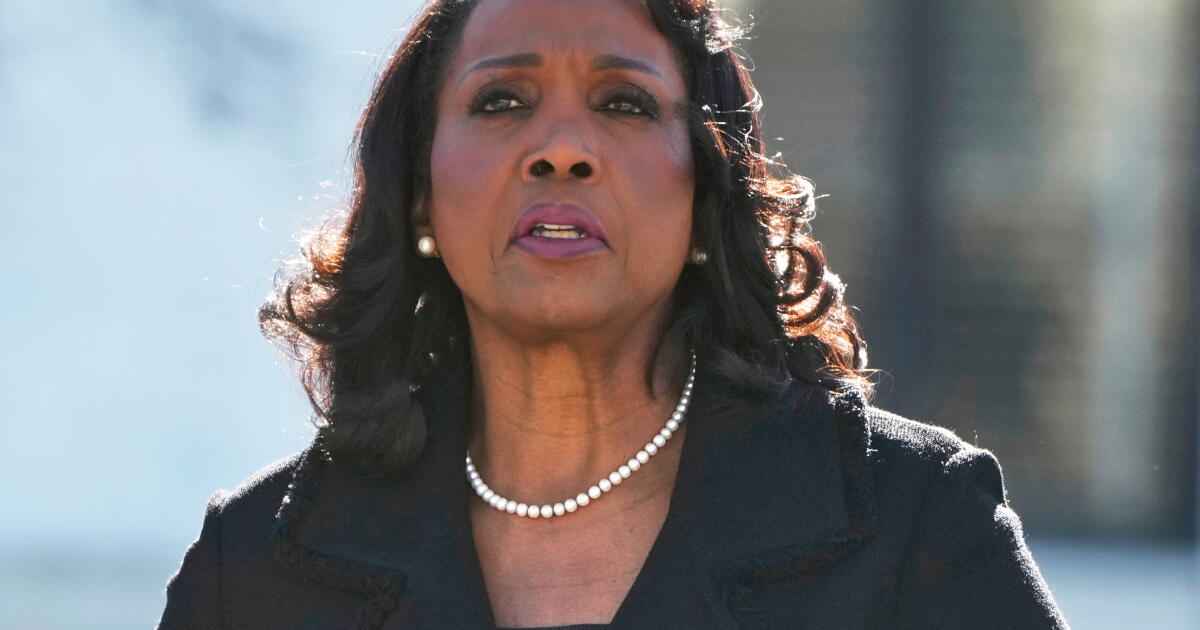
Trump establishes committee to investigate Federal Reserve’s Lisa Cook in latest effort to fire her
WASHINGTON — President Trump opened another chapter in his effort to fire Federal Reserve Governor Lisa Cook Friday by establishing a “committee of inquiry” to investigate allegations that she made false statements in mortgage applications.
The inquiry will include a hearing at the White House Nov. 5, Trump said in a written memo, that Cook “shall” attend to answer questions from the committee. The hearing wouldn’t be public but a transcript would be published, the memo said.
Trump’s extraordinary demand that Cook testify before the committee will likely renew concerns about threats to the Federal Reserve’s independence as the president demands the central bank cut its key interest rate. Just last month, the Fed raised its key rate instead, led by Chairman Kevin Warsh, whom Trump appointed earlier this year.
“As President, it is my job to ensure the laws are faithfully executed, including by firing subordinates who cannot be trusted to tell the truth and follow the law,” Trump wrote in the memorandum.
Trump and some of his economic advisers have blamed the Fed’s broader rate-setting committee, which includes 12 voting members and 19 officials in total, for the rate hike. Cook is one of the 12 participants on the committee that votes on interest-rate decisions. The vote to lift rates Sept. 16 was unanimous.
The move follows a Supreme Court ruling in June that Cook could keep her job after Trump sought to fire her last year. That ruling included a footnote that said nothing prevented Trump from “trying again” as long as she was given proper notice and an opportunity to respond to the charges.
Cook has denied any wrongdoing and has not been charged with a crime.
Rugaber writes for the Associated Press.

Singapore Grand Prix: Max Verstappen beats George Russell to Singapore sprint pole
Verstappen’s pole lap appeared to be further confirmation of Red Bull’s resurgence after his dominant win in Malaysia but he faces an investigation for overtaking under yellow flags shown before the first session was stopped for the Perez incident.
The four-time champion said he had not believed pole was possible before qualifying.
“We have some difficulties with the car in ride, as we know,” he said, “but at least when we went to the soft tyres (in the final session), it made the car a bit more stable in places where before you were a bit unsure.
“I did not expect this but you take it, I’m happy for sure. Qualifying tomorrow is still the main goal and for us the start is always a critical point but at least a positive end to our day.”
Russell’s performance compared with that of Antonelli raises further doubts about the efficacy of the Mercedes upgrade introduced in Malaysia.
It was their biggest car update since the Canadian Grand Prix in May but team boss Toto Wolff said at Sepang that it had appeared to take them backwards rather than forwards.
Mercedes split the car spec here in Singapore in an attempt to better understand its performance but Antonelli ended the session 0.573secs behind Russell.
The Briton said: “As a team there is still nothing telling us it isn’t working but it’s all driven by the stopwatch and, yeah, the stopwatch hasn’t been great for the upgrade yet. Maybe tomorrow’s a different day.”
Antonelli, who leads the championship by 84 points going into the weekend, said: “Already FP1 I was struggling and there is still a lot to understand about this package. Really the car is very difficult, very unpredictable, very difficult to put a lap together. It’s a shame. I was coming with high hopes but so far it has been very difficult.
“It’s going to be a difficult weekend unless we can pull something out tomorrow. Other than that it is going very tricky. I don’t really see where we can find 0.7secs but you never know.”
Wolff said before sprint qualifying: “The new car seems to be a little more tricky to drive. Not saying it’s necessarily slower, because there will be goodness in it, but maybe we haven’t just found a way of putting it all together and tuning it. The older car is a bit more stable, grippy, but that is really just one data point.”
Leclerc was 0.243secs off pole, and ruing what he said was Ferrari “losing a little bit of our raw performance” in the past three or four races.
However, he added: “Still I feel there is potential in the car and maybe tomorrow we can be there or thereabouts in fighting for pole.”
Hamilton said: “We did a slightly different run plan to the others. It was my choice, but I think we got that wrong. But ultimately, the car was very oversteery on that lap. If the rears [tyres] are not ready or they are overheating, it’s difficult to say. But it was very snappy and oversteery in the lap overall.”

Man City case causing ‘uncertainty’ for whole Premier League, says Iraola | Football
Liverpool’s Andoni Iraola looks to Manchester City clash and rival’s appeal over guilty verdict for financial breaches.
Published On 9 Oct 2026
Liverpool boss Andoni Iraola said the lack of clarity over Manchester City’s future after the club was found guilty of multiple breaches of financial rules was causing uncertainty throughout the Premier League.
City remain adamant they have done no wrong and have appealed against the findings of an independent commission announced last week.
Recommended Stories
list of 4 itemsend of list
The Premier League leaders potentially face a severe points deduction that threatens their place in the English top flight.
Iraola believes the world’s richest league is caught in limbo until there is a definitive outcome.
“I think the worst thing probably is the uncertainty, that no one knows what’s going to happen,” the Spaniard said ahead of City’s first outing since the verdict at Liverpool on Sunday.
“But we have to focus on Liverpool – be the best club we can be, the best team we can be and that’s my challenge.”
Iraola only joined the Reds in June but is looking forward to a red-hot atmosphere at home.
“The atmosphere is going to be big, especially at Anfield,” he said.
“We want to give also our supporters reasons to be with us. When they see the team they want to see on the pitch, we can create an even better atmosphere and we will work for that.”
Liverpool are still unbeaten under Iraola, but three draws in their opening five league games means they start the weekend six points off the top.
Iraola’s options up front are limited after Alexander Isak and Cody Gakpo were injured on international duty.
“As a club manager, you are always waiting until the game ends (hoping) the doctor doesn’t call you, doesn’t give you bad news, but in this case we’ve been unlucky with Alex and Cody, both of them,” he said.
“They are injured and they are not going to be involved on Sunday.”

Ethiopia and Eritrea accuse one another of launching war | Conflict News
Eritrea denies backing TPLF as Ethiopia alleges collusion, further straining their already volatile relationship.
Published On 9 Oct 2026
Ethiopia has accused Eritrea of an “all-out invasion” in a message to the United Nations Security Council, while Eritrea says it is facing a “war of aggression” from its neighbour.
“The all-out invasion of parts of northern Ethiopia by Eritrea is a matter of public record,” said a letter by Ethiopia’s Minister of Foreign Affairs Gedion Timothewos, which was shared with news agencies on Friday.
Recommended Stories
list of 3 itemsend of list
“It is a blatant act of aggression that engages Ethiopia’s inherent right to self-defence,” added the letter dated Thursday and addressed to French Foreign Minister Jean-Noel Barrot.
Gedion said that Eritrean troops had advanced up to 60 kilometres (37 miles) into Ethiopia’s northern Tigray region and demanded their withdrawal, just days after the two nations cut diplomatic ties.
Eritrea’s Minister of Information Yemane Gebremeskel rejected Ethiopia’s claims.
“The Ethiopian regime has been pursuing, in effect, an unprovoked war of aggression against Eritrea for more than three years now,” he said on X.
Yemane said Asmara had shown restraint since landlocked Ethiopia had essentially declared a war against Eritrea when it stated in 2023 that it would gain access to the sea.
Citing statements made by Ethiopian officials, Yemane accused Addis Ababa of using the current conflict to take Assab, an Eritrean port, in order to restore access to the Red Sea.
Eritrea also denied Ethiopia’s claim that it is backing the Tigray People’s Liberation Front (TPLF), which is part of an alliance of seven armed groups that has been attempting to overthrow Prime Minister Abiy Ahmed’s government since September.
Over the past week, Ethiopia’s army has pushed back the TPLF and seized the Tigrayan capital, Mekelle.
Witnesses also told the AFP news agency that rebels had lost the Tigrayan cities of Shire and Adigrat. Eritrean troops were reportedly seen in Adigrat before Ethiopian drone strikes hit them, according to several witnesses.
Tumultuous history
Ethiopia and Eritrea have traded accusations since the reported incursions by Eritrean troops this week raised fears of outright war in the region, where the two nations have fought previous conflicts.
The stakes have been raised this time around by conflicts in the Horn of Africa region and tensions across the Red Sea.
Diplomatic ties between the two have collapsed amid the escalation: Ethiopia closed its embassy in Asmara and ordered 10 Eritrean diplomats to leave the country last week. In response, Eritrea announced it was severing ties.
The neighbours have a tumultuous history, as Eritrea won independence from Ethiopia in 1993 and they fought a border war for two years in 1998.
Relations improved slightly in 2018 when Abiy took power in Addis Ababa, and Eritrea fought alongside Ethiopia against the TPLF in a civil war from 2020 to 2022.
Eritrea, however, was not part of the peace deal that ended the war, which soured ties soon afterwards.
Tensions are also fuelled by Abiy’s repeated claim that landlocked Ethiopia – which lost its access to the coast when Eritrea secured independence – has a right to sea access, which Eritrea sees as a threat to seize its Red Sea port of Assab.
15 most extreme Method acting performances: Jeremy Strong to Jared Leto
The one consensus about Method acting is that it’s controversial. Other than that, everything’s up for debate: What is Method acting, exactly? Do actors and audiences love it or hate it? And, perhaps most importantly, who can afford to practice the technique?
Method acting is a technique in which an actor embodies a character absolutely, usually both on- and off-camera, for months at a time (and sometimes, as in the curious case of Austin Butler’s Elvis accent, beyond the project itself).
Some actors, like those in the list below — including Daniel Day-Lewis, Christian Bale and Robert De Niro — swear by it. But others — like Brian Cox, Toni Collette and Robert Pattinson — eschew the practice. (Collette called it “total bulls—” and “utter wankery,” and Jennifer Lawrence said that working with a Method actor would make her nervous.)
Female actors — like Charlize Theron, Kristen Stewart, Natalie Portman, Anya Taylor-Joy and Ellen Burstyn — have pointed out that it’s a luxury they can’t afford. (“I don’t think that children or partners would be very understanding of, you know, me making everyone call me ‘Jackie Kennedy’ all the time,” Portman said about portraying the first lady.) And Black actors — like Brian Tyree Henry and Omari Hardwick — have said they wouldn’t be able to do it safely. (“I’ve never gone full Method,” Hardwick said. “I don’t want to be pulled over while ‘driving while Method.’ … I’ll get in trouble for that. That’s scarier.”)
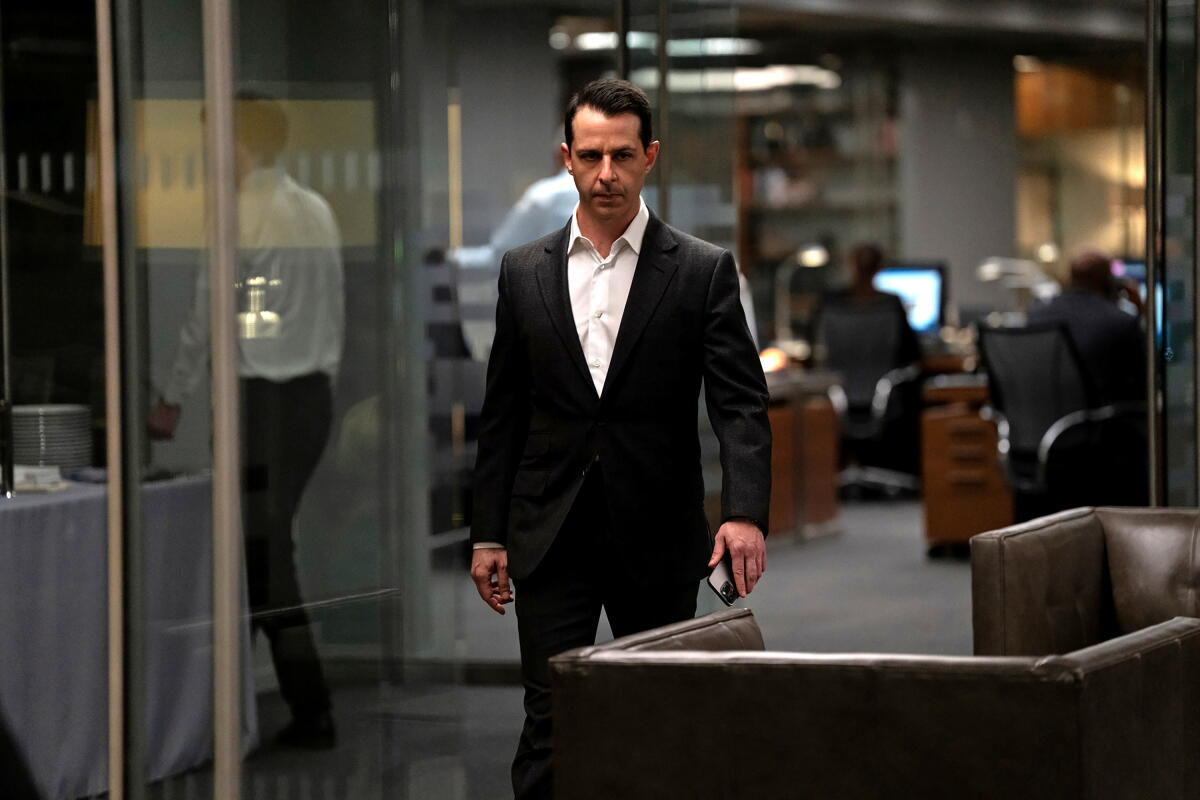
Jeremy Strong — who plays Mark Zuckerberg in “The Social Reckoning” — recently defended his commitment to Method acting. Here are some of the most extreme Method acting performances of all time.

Jeremy Strong as Kendall Roy in “Succession.”
(Macall Polay / HBO)
Jeremy Strong (again)
Strong is known for his unrelenting adherence to Method acting, especially on the set of “Succession.” (“The result that Jeremy gets is always pretty tremendous,” his TV dad Cox told the New Yorker in 2021. “I just worry about what he does to himself. I worry about the crises he puts himself through in order to prepare. … It’s a particularly American disease, I think, this inability to separate yourself off while you’re doing the job.”)
This tendency held true on the set of “The Social Reckoning” too. “He showed up walking like Mark, talking like Mark,” director Aaron Sorkin told Entertainment Weekly. “I heard crew members on set call him Mark. I never heard him use his own voice until after I called ‘cut’ on his last shot.”
“I’ll be honest, I think this isn’t just the way he likes to do it,” Sorkin added. “I think it’s the only way he knows how to do it.”

Andrew Garfield as Father Sebastião Rodrigues in “Silence.”
(Kerry Brown / Paramount Pictures)
Andrew Garfield
Then there are those who argue that the Method is misunderstood — first by actors, and subsequently by public perception.
“I’m kind of bothered by this idea that ‘Method acting is f— bulls—,’” Andrew Garfield said on the “WTF With Marc Maron” podcast in 2022. “No, I don’t think you know what Method acting is if you’re calling it bulls—, or you just worked with someone who claims to be a Method actor who isn’t actually acting the Method at all. It’s also very private. I don’t want people to see the f— pipes of my toilet. I don’t want them to see how I’m making the sausage.”
Garfield employed the Method in Martin Scorsese’s 2016 historical drama “Silence,” in which he played a 17th-century Portuguese Jesuit missionary who goes to Japan. He studied Catholicism with Jesuit priest James Martin, partook in the 31-day Ignatian Spiritual Exercises and denied himself food and sex.

Al Pacino as Tony Montana in “Scarface.”
(Universal Studios / Universal Pictures)
Al Pacino
On that same podcast, Garfield praised two actors known for applying the Method well and seemingly with respect — to the craft and those around them: Al Pacino, especially in “Dog Day Afternoon,” and Robert De Niro, most notably in “The Mission.”
In “Dog Day Afternoon,” Pacino played Sonny Wortzik (based on John Wojtowicz), a first-time crook whose attempt to rob First Brooklyn Savings Bank goes awry and devolves into a hostage situation. Pacino backed out of the role three times before committing (though he later won a BAFTA Award for the performance).
Producer Martin Bregman attributed this hesitancy to Pacino’s Method acting, saying this might have been a world the actor didn’t want to explore, as “no major star had ever played a gay.”
“Scarface” drug kingpin Tony Montana is also considered the pinnacle of Pacino’s Method acting. “I’ve never been that committed to a role,” he said, also on “WTF With Marc Maron.” “I mean, I was there. I said, ‘I am this guy.’”

Robert De Niro as Travis Bickle in “Taxi Driver.”
(Columbia Pictures)
Robert De Niro
In “The Mission,” De Niro stars as Captain Rodrigo Mendoza, a mercenary, slave trader and guest of the Spanish governor of 18th-century Paraguay. Jeremy Irons co-stars as Jesuit priest Father Gabriel, who challenges Mendoza to undergo penance.
De Niro channeled real-life tension with Irons — who he didn’t want cast for the role — into on-screen animosity between the two characters.
And then there’s “Taxi Driver” — for which he got a real New York City cab license and drove 15 hours a day for a month — and “Raging Bull” — when he trained with the boxer he portrays, Jake LaMotta, for over 1,000 rounds — making him a quintessential Method actor.

Lady Gaga as Patrizia Reggiani in “House of Gucci.”
(Metro Goldwyn Mayer)
Lady Gaga
There are also counterexamples of the limitations Method acting often places on women and actors of color. (Theron told The Times in 2020 that, “I can’t do the Method thing. I did it once, for ‘Devil’s Advocate,’ and I was just exhausted. It was really hard to go to those deep, dark places because I was so tired.”)
Lady Gaga, though, lived as Italian socialite Patrizia Reggiani for a year and a half while working on “House of Gucci.” She spoke with a thick Italian accent for nine months, both on- and off-camera.
“I was either in my hotel room, living and speaking as Reggiani, or I was on set, living and speaking as her,” Gaga told British Vogue. “I remember I went out into Italy one day with a hat on to take a walk. I hadn’t taken a walk in about two months and I panicked. I thought I was on a movie set.”

Jared Leto as the Joker in “Suicide Squad.”
(Warner Bros. Pictures)
Jared Leto
Jared Leto also starred in “House of Gucci,” as Paolo Gucci, who aspires to be a designer, despite his apparent lack of talent.
“He works in a very similar fashion,” director Ridley Scott told Vulture. “Once he goes in, it’s like he’s immersed, and he doesn’t come out and breathe for air until he’s finished.”
Leto is infamous for his extreme and controversial approach to the Method. As the Joker in “Suicide Squad,” he sent bizarre “gifts” — a live rat, a dead pig, bullets, anal beads and used condoms — to co-stars Will Smith and Margot Robbie to create a dynamic of “surprise and spontaneity.”
“Leto’s Joker is the latest evidence that the prestige of method acting has dimmed,” essayist Angelica Jade Bastién wrote in the Atlantic, “thanks to the technique’s overuse by those seeking award-season glory or a reputation boost, as well as its history of being shaped by destructive ideas of masculinity.”

Joaquin Phoenix as the Joker in “Joker.”
(Niko Tavernise / Warner Bros. Pictures)
Joaquin Phoenix
The Joker seems to elicit intense psychological commitment like moths to a ghastly green flame. Joaquin Phoenix didn’t quite go Method to play him in “Joker” and “Joker: Folie à Deux,” but he did shed 52 pounds for the role.
“And, as it turns out, that then affects your psychology,” Phoenix told the Daily Beast. “You start to go mad when you lose that amount of weight in that amount of time.” (Heath Ledger walked that same fine line for “The Dark Knight.”)
For his role in “The Master,” as Freddie Quell, a World War II Navy veteran struggling to adjust to a postwar society, Phoenix forced himself to talk out of one side of his mouth by asking the dentist to fasten metal brackets to his teeth.

Jamie Foxx as Ray Charles in “Ray.”
(Nicola Goode / Universal Pictures)
Jamie Foxx
Taylor Hackford, the director of “Ray” — a biopic about Ray Charles — asked Jamie Foxx, who starred as the blind soul musician, to have his eyes glued shut. This was not Foxx’s idea (perhaps a key tenet of the Method), but he agreed to it.
“Imagine having your eyes glued shut for 14 hours a day,” Foxx told the New York Times. “That’s your jail sentence.” For the first two weeks of filming, the actor suffered panic attacks, until he eventually got used to the claustrophobic sensation.
Years later, on the set of “Django Unchained,” Foxx and co-star Leonardo DiCaprio discussed embracing Method acting to help both of them better handle the disturbing material. (DiCaprio plays the ruthless owner of a plantation where Foxx’s character’s wife is enslaved.)

Leonardo DiCaprio as Hugh Glass in “The Revenant.”
(Kimberley French / 20th Century Fox)
Leonardo DiCaprio
The film for which DiCaprio finally won an Oscar (after four previous lead actor nominations, plus one for supporting actor) was also his most Method approach. As fur trapper Hugh Glass in “The Revenant,” DiCaprio crawled inside of a prop horse carcass, ate raw bison liver (despite being a vegetarian) and endured freezing temperatures, his icy breath fogging up the camera lens.
Like Phoenix, DiCaprio might not be a traditional Method actor, but he comes quite close. In 2016, after his “Revenant” nom, director Agnieszka Holland — who directed DiCaprio in “Total Eclipse,” before he filmed “Romeo + Juliet” — reflected on this.
She said he has never been a classic American Method actor, instead relying on personal experience. “But he’s doing some trick which is pretty mysterious to everyone watching — frankly even for the director,” she told the BBC. “Look at him on screen and, for the moment of the shot, he really becomes the character.”

Montgomery Clift as George Eastman and Elizabeth Taylor as Angela Vickers in “A Place in the Sun.”
(Getty Images)
Montgomery Clift
And then there are the true, original Hollywood Method actors. Montgomery Clift, Marlon Brando and James Dean are considered to have christened the technique in the 1950s. Even Clift, though, expressed reservations about the term when asked about it — “Method acting,” as it turns out, is a contentious phrase.
Method acting began with Russian/Soviet theatermaker Konstantin Stanislavski in the 1930s. From there, acting coach and actor Lee Strasberg — who co-founded the Group Theater — largely coined “the Method” in America. Group members Stella Adler and Sanford Meisner eventually left and rejected parts of Strasberg’s technique. All three of them approached the Method slightly differently, and became prominent acting teachers.
Clift was among the first actors invited to study in the Actors Studio with Strasberg and Elia Kazan. His role as George Eastman, the poor nephew of a rich industrialist, in “A Place in the Sun” is considered a landmark Method acting performance.

Marlon Brando as Stanley Kowalski in “A Streetcar Named Desire.”
(Cineclassico / Alamy / Warner Bros. Pictures)
Marlon Brando
Clift and Brando were both contemporaries and, at times, acting rivals. But Brando was so moved by Clift’s performance in “A Place in the Sun” that he voted for him to win the 1952 Academy Award for lead actor — Clift, meanwhile, voted for Brando to win for his role as Stanley Kowalski in “A Streetcar Named Desire” the same year. (Humphrey Bogart ended up victorious for his role as Charlie Allnut in “The African Queen.”)
“A Streetcar Named Desire” — both the original 1947 Broadway production and the 1951 film adaptation — was directed by Actors Studio co-founder Kazan. Brando also starred in both versions, and, though his performance was temperamental, Kazan said: “Marlon was living on stage. … A performance miracle was in the making. What was there to do but be grateful?”

James Dean as Cal Trask and Julie Harris as Abra Bacon in “East of Eden.”
(Warner Bros. Pictures)
James Dean
James Dean only got the chance to star in three films — “East of Eden,” “Rebel Without a Cause” and “Giant” — before he died at 24, and the latter two were released after his death. Prior to all three, though, he also studied at the Actors Studio under Strasberg.
In “East of Eden,” also directed by Kazan, Dean played the wayward young man Cal Trask, who competes against his (favored) twin brother (played by Richard Davalos) for the affection of their pious father. Dean had a turbulent relationship with his own father, and his mother died when he was 9. (The Trask brothers’ mother is ostensibly dead too.)
“One of the things that made [Dean] noticed,” actor Martin Landau told PBS, “was his vulnerability. He understood a mother he didn’t have. … ‘East of Eden’ was like a chance to meet his mother again, if one accepts that.”

Ruth McCabe as Mary and Daniel Day-Lewis as Christy Brown in “My Left Foot.”
(Miramax)
Daniel Day-Lewis
Daniel Day-Lewis is perhaps the closest contemporary follower in Clift, Brando and Dean‘s footsteps. He has won a record three Academy Awards for lead actor, including in 1990 for his iconic performance as Irish writer and painter Christy Brown in “My Left Foot.” (Day-Lewis beat out Tom Cruise in “Born on the Fourth of July,” Morgan Freeman in “Driving Miss Daisy” and Robin Williams in “Dead Poets Society.”)
Brown, who was born with severe cerebral palsy, could not walk or talk, was wheelchair-bound and only had control of his left foot, which he used to paint and write. Day-Lewis refused to stand between takes, remaining in his wheelchair, and made production assistants feed him by hand. He is now renowned for his Method acting, grueling process and devotion to his roles.

Christian Bale as Trevor Reznik in “The Machinist.”
(Paramount Classics)
Christian Bale
Another Method actor who rejects the label, Christian Bale is oft-associated with extreme physical transformations and intense focus onset, including in “American Psycho” as serial killer Patrick Bateman and in “The Machinist” as sleepless industrial worker Trevor Reznik.
Bale lost more than 50 pounds in four months to play the machinist, paranoid and deluded after being unable to sleep for a year. Bale’s daily diet consisted of black coffee, an apple and a tin of tuna.
But in 2011, Bale told the Mirror: “At the end of the day, I’m faking it. Pure imagination. I never took any classes, I just go, ‘I better wing this one and make it up!’ Everybody talks about the process too much. The interesting thing about a movie is the movie.”

Austin Butler as Elvis Presley in “Elvis.”
(Warner Bros. Picture / Warner Bros. Pictures / AP)
Austin Butler
Eight months after “Elvis” hit theaters in June 2022, Austin Butler — who starred as the King of Rock and Roll — said he would finally drop Presley’s deep Southern twang. (That came after fans noticed the Elvis accent creeping in during his Golden Globes acceptance speech, “Saturday Night Live” monologue and “Jimmy Kimmel Live!” guest spot.)
“It’s funny to me because I don’t even think about it,” Butler told The Times after his Oscar nomination for the role. “I guess after three years of doing everything that I could to focus on this one goal of trying to bring life to Elvis in this film, I think that there’s certain muscular habits that must pop up.”
Once again, though, Butler wouldn’t use the term to describe himself. “I never have used the word ‘Method,’” he told the Hollywood Reporter. “I think that word gets thrown around a lot. It’s a very misunderstood thing that isn’t really what I do. … It’s more that I just like to immerse myself.”

Avolon orders 140 jets from Boeing, 110 from Airbus with option for more (BA:NYSE)
To ensure this doesn’t happen in the future, please enable Javascript and cookies in your browser.
Is this happening to you frequently? Please report it on our feedback forum.
If you have an ad-blocker enabled you may be blocked from proceeding. Please disable your ad-blocker and refresh.

Skydance’s David Ellison conquered Hollywood, but now the work begins
Tech scion David Ellison spent three years doggedly pursuing his dream: acquiring Paramount, then Warner Bros. Discovery.
Ellison pulled off his bold feat this week by completing Paramount’s $111-billion takeover of Warner Bros., uniting two industry pioneers and a wealth of cherished properties — Batman, Bugs Bunny, Harry Potter and Maverick of “Top Gun,” as well as CBS, HBO, Comedy Central and CNN. All will be tucked under a corporate umbrella that Ellison is calling Skydance — the name of the studio he formed two decades ago.
The mogul and his lieutenants celebrated their victory in style, ringing the New York Stock Exchange opening bell on Thursday, capping a bruising battle to secure approval of a deal that had sparked protests across Hollywood over fears of looming job cuts.
Ellison and his team must braid together two huge film studios (housing nine film labels), four streaming services, three TV production studios, three animation units and more than 50 television networks, including two prominent news organizations. That could be a daunting task, particularly based on how previous Hollywood mergers have fared.
“Now, the real work begins,” David G. Fubini, a Harvard Business School senior lecturer, said in an interview.
Anxieties were evident Tuesday — the day the deal closed — when Ellison held a town hall meeting at Warner Bros., which drew nearly 500 employees.
During the session, CNN’s Anderson Cooper quizzed his new bosses, including about anticipated layoffs and news independence.
“Do you stand with CNN and our effort to completely restore access to covering President Trump?” Cooper asked, referring to CNN’s legal fight alongside MS Now and Politico to reverse the president’s ban on the three organizations.
“Of course,” Ellison replied.

CNN news anchor Anderson Cooper, pictured here in 2021, quizzed his bosses at a Burbank town hall.
(Evan Agostini / Invision / Associated Press)
Hours later, Ellison parried with reporters in Paramount’s darkened Stage 3, recently revamped with laser projection capabilities to simulate fantastical and far-flung settings for TV shows, such as the streets of New York.
“This was a turbulent process, and, at times, a really ugly process, to actually get this deal over the finish line,” Ellison acknowledged to reporters. “What I want to be able to do now is turn the page, and actually make sure that we are in the business of rebuilding trust.”
To do that, Ellison intends to make more movies and TV shows than rivals. He wants to ensure the Warner Bros. and Paramount studios, which will be kept separate for now, remain talent-friendly destinations.
Ellison has taken an opposing view from his predecessors who confronted crumbling industry economics by cutting expenditures to boost their corporate bottom lines.
The 43-year-old executive, son of Oracle co-founder Larry Ellison, proudly views his family as “owner-operators,” unshackled by quarterly earnings expectations or the need to dole out dividends to keep investors happy. The Ellison family controls the company’s voting stock, allowing David Ellison to take a long-term view as he charts Skydance’s course.
The goal is to “win in storytelling,” Skydance said in an investor presentation. It intends to build the media industry’s most “technologically capable” firm, which uses artificial intelligence to speed work flows. Skydance plans to spend at least $30 billion a year on film, television and video game content.

Skydance co-CEO Ynon Kreiz, Sarah Ellison, CEO David Ellison and investor Gerry Cardinale of RedBird Capital Partners on the floor of the New York Stock Exchange on Thursday.
(Yuki Iwamura / Associated Press)
The realities of Ellison’s big swing will soon sink in as he and his team turn their focus to integrating the myriad operations and about 55,000 employees.
In some ways, Ellison is behind the curve.
Most major mergers are consummated after executives have dedicated months to quietly drafting detailed operational plans and organizational hierarchies. Ellison, in contrast, has spent the last nine months in a pitched battle for Warner Bros. — ultimately vanquishing Netflix, hundreds of vocal merger opponents, and California Atty. Gen. Rob Bonta and his coalition of 11 other state attorneys general who filed an antitrust lawsuit in July in an attempt to derail the deal.
Ellison and Bonta resolved their legal fight Sept. 21. A week later, a federal judge cleared the way for the merger to close.
The lawsuit settlement with Bonta requires that the combined company produce at least 30 movies a year for five years. It also must maintain the studio facilities in Los Angeles, making “reasonable efforts to operate the lots in a manner consistent with past practices,” according to the agreement.

Skydance has committed to maintaining operations on the Warner Bros. lot, pictured here, and at Paramount Pictures in Hollywood.
(Eric Thayer / Los Angeles Times)
Ynon Kreiz, former chief executive of Mattel toys in El Segundo, has been tasked with leading the integration. The 61-year-old executive joined Ellison at Skydance as his co-CEO earlier this week. Day One of the combined company marked Kreiz’s second day on the job.
“They have a whole new management team that will be expected to immediately lead this massive integration,” Fubini, a former partner at consulting firm McKinsey, said. “The clouds have cleared, and they are at the base camp of Mt. Everest facing this enormous undertaking.”
In a report this week, TD Cowen Global Research maintained its “hold” rating on the newly constituted Skydance, expressing some doubts about Ellison and his team’s ability to “avoid integration and execution problems that have bedeviled other major media mergers.”
Hollywood has had a history of failed mergers, including Discovery’s 2022 takeover of WarnerMedia from AT&T, which led to years of cost cuts that ultimately seeded the ground for Ellison’s takeover. AT&T’s purchase of the same assets in 2018 also quickly unraveled, some 20 years after the epic failure of AOL Time Warner.
Ellison now must grapple with the hefty acquisition costs for Warner Bros., which climbed as the deal was delayed. The company emerged from the transaction with $86.8 billion in total debt; with most of that going toward buying out Warner Bros. Discovery’s stockholders at $31.17 a share.
The debt burden also includes more than $18 billion in obligations leftover from past mergers. Skydance has nearly $7 billion in cash on hand.

Oracle’s Larry Ellison and executive producer David Ellison arrive at the L.A. premiere of “Star Trek Into Darkness” at the Dolby Theatre in 2013.
(Eric Charbonneau / Getty Images for the Hollywood Reporter)
The Ellison family brought in foreign investors, including royal families of Saudi Arabia, Qatar and Abu Dhabi as passive owners, to contribute equity to the deal. Gerald Cardinale’s RedBird Capital Partners, a longtime Skydance stakeholder, added $4 billion, bringing its total investment in Skydance deals to $6 billion.
The deal’s financial terms pose deep challenges, analysts said. Fitch Ratings this week downgraded Skydance credit, citing “materially higher leverage after the acquisition and significant execution and integration risks,” according to its report.
“Interest rate increases made financing this transaction far more expensive than anyone anticipated,” said Eric Talley, a professor at Columbia Law School. “Those lenders are going to start expecting their interest payments — Skydance executives won’t have the luxury of time.”
The company could struggle, Talley said, to “generate the cash flow needed to easily service that debt unless they can significantly cut costs.”
Skydance has promised investors that it will make $6 billion in cost cuts over three years. It anticipates $2 billion in reductions within a year, with the bulk of the rest occurring in the second year of the merger.
“They are going to be firing a lot of people,” TD Cowen Global Research media analyst Doug Creutz said.
During the press briefing, Kreiz sought to downplay the expected workforce toll, saying Skydance would achieve savings by combining technologies that support streaming services and marketing expenditures. It plans to save costs on real estate by locating employees at Skydance-owned properties in Santa Monica, Hollywood and Burbank.
HBO could move from Ivy Station in Culver City, its home for the last five years, to one of the studio lots.
Ellison and Kreiz said they would jointly manage the new colossus.
“Where David will focus on creative, technology, long-term strategy, including especially as it relates to the creative part of the business, I will focus more on the operations and the day-to-day management of the business,” Kreiz said.
Kreiz was named to Skydance‘s expanded board this week along with Laurene Powell Jobs, founder of the Emerson Collective; and Bobby Kotick, former CEO of Activision.
The new leaders expressed confidence they could expand and integrate their two major streaming services to drive growth. HBO Max and Paramount+ combined will reach more than 200 million subscribers.
The plan, they said, is to combine the two streamers within a couple of years, but the company may offer subscribers a bundle with the two offerings sooner.
Skydance, according to sources, also expects to bolster its free, ad-supported service Pluto TV, which offers more than 200 channels. The service hasn’t had much corporate attention in recent years amid the cuts and deal-making.
The executives have not disclosed which teams would soon be affected or how they will structure overlapping business units.
For example, the company’s three TV studios each have their own leader: Channing Dungey runs the largest, Warner Bros. Television; David Stapf has long managed CBS Studios; and Skydance executive Matt Thunell has been president of Paramount Television Studios since last year.
Integrating CNN and CBS
Anxiety over whether CNN and CBS News would be mashed together was quelled, at least for now.
Skydance announced that it was retaining CNN Worldwide Chairman Mark Thompson as head of the larger news organization. CNN journalists had worried that CBS News Editor in Chief Bari Weiss, who has presided over a year of turmoil at the network, would be put in charge of both.
Any news consolidation could take years, in part, because CBS News is largely unionized while CNN is a non-union shop.
“We are going to spend the next several months basically getting under the hood,” Ellison said.

CBS News Editor in Chief Bari Weiss, pictured here in 2023 in Los Angeles, has had a turbulent tenure at CBS.
(Francine Orr / Los Angeles Times)
Another challenge will be stabilizing the Warner Bros. film unit, which has had a rough year at the box office. This month, the top two Warner Bros. film executives, Mike DeLuca and Pam Abdy, exited abruptly, clearing the way for longtime Ellison lieutenants Dana Goldberg and Josh Greenstein to oversee both film studios. The co-heads of DC Comics, James Gunn and Peter Safran, segued to the new Skydance.
Skydance also will have to deal with the NFL, which could demand substantially higher fees for CBS to keep its Sunday games.
The current contract allows the league to reopen negotiations because of the ownership change. Skydance is hoping it can wait three years until the contracts of other broadcasters also are up for discussion.
Skydance will be a major player in sports. Last year, Paramount agreed to spend $7.7 billion for UFC fights. The combined company also has rights to professional golf, including the Masters tournament; National Hockey League; Major League Baseball and NCAA basketball, including March Madness, as well as European rights to televise the Olympics.
“Until you actually get inside the company, there are things you won’t know,” Creutz said. “But they are going to have to come up with answers pretty quick.”

Manchester City charges: Enzo Maresca says ‘titles absolutely not tainted’
Manchester City manager Enzo Maresca says the club’s titles are “absolutely not” tainted after they were found guilty of the majority of the 115 charges brought against them by the Premier League.
Maresca reiterated his faith in the club’s owners and belief that they will win their appeal against the verdict during a news conference on Friday dominated by questions on the matter.
The Italian, notably relaxed as he offered his responses, rejected the suggestion City’s titles have been tainted by the ruling, as he knows “exactly the effort that the club put in to achieve” them.
An independent commission found Manchester City guilty of all charges relating to breaches of the Premier League’s financial regulations between the 2009-10 and 2017-18 seasons.
The club have appealed against the verdict and claimed in a statement the commission’s ruling contained “clear material errors, of law, principle and fact and is unsafe”.
Preparing to play their first match since that verdict was announced, away to rivals Liverpool on Sunday, Maresca said in an in-house interview on Thursday the “feeling is fantastic” among his players and they are not affected by “the noise” surrounding the club.
He added on Friday: “The reason I joined this club is that I completely trust, 100%, the owner, the CEO, the sporting director, all the organisation. So I don’t have doubt about that.
“I spoke with the club for sure. We all trust, and probably the right moment to speak about that is when we are going to win this appeal.”
He added: “For me, the players – we can control just the pitch side, the football side. So we are focused on that. This is what we can do and what we can control.”

Child flees as Israeli settlers hijack car during pogrom | Conflict News
A Palestinian boy was seen fleeing after Israeli settlers attacked his father and stole their car in Ramallah. At least 19 pogroms by Israeli forces and settlers were reported across the occupied West Bank on Friday morning.
Published On 9 Oct 2026

From underground dens to £2,000 cocktails
LOOKING for a new drink spot? Well, the best bars in the world have just been revealed.
The50 has just announced its list of the ultimate bars – and three of them are in the UK.
The Connaught Bar has been named the best UK bar on The50 list landing at number eight.
The publication praised it for its cocktails which “are near unimpeachable – a few of its signatures are genuine neo-classics – and the hospitality is as warm as it is indiscriminate”.
The bar is inside the Connaught Hotel in Mayfair and serves up signature cocktails.
You’ll want to start saving for some of the cocktails though – opt for the The Vintage Martini Cocktail made from Gordon’s Dry gin 1970s, Martini Extra Dry vermouth 1970s and you’ll pay a whopping £150.


Another cocktail called the Silver Jubilee Rob Roy will set you back even more – a huge £2,210.
The judges particularly liked the new BRB cocktail that’s a “a melon-spiked paloma” which you can enjoy for a much more modest £26.
It’s reportedly a popular spot for celebrities too with the likes of Gwyneth Paltrow, Cameron Diaz and Taylor Swift having all checked into the Connaught Hotel.
Also on the list is Satan’s Whiskers which is in Bethnal Green and came in 29th spot.
It has a very different look to the Connaught Bar with a more grungy feel.
The judges recommended the bar’s Miami Vice which is a frozen strawberry daiquiri and piña colada in one glass.

Another top UK bar called The Waltz has been described as a ‘serene hideaway in Shoreditch, and ‘a perfect little piece of Japan‘.
The menu is split into two sections; In Season and Evergreen – there there always new drinks to try especially as one is based on the 72 Micro-Seasons of the ancient Japanese calendar.
Going back to the very top of the list, the bar that landed in the top spot is Bar Leone in Hong Kong.
The 1970s Roman-inspired bar has with intimate lighting, vintage tiled floors where you can pick Italian classic cocktails like negronis, martinis, old fashioneds.
This win means it has now won the top spot in The 50 Best Bars Asia and the global edition twice.
Second on the list is Moebius Milano in Milan which is inside a former textile warehouse.
The seating is situated around a huge 700-year-old olive tree that that is the height of two floors.
It has weekly live music performances from jazz, bossa nova to soul.
This is followed by Alquímico in Cartagena which has an enormous open-air tropical-style tiki-bar.
It’s on the third floor of a 100-year-old colonial mansion where the bar is found.
Following on in fourth and fifth place is Bar Us in Bangkok, and Line in Athens.
Coming in sixth spot is the Handshake Speakeasy in Mexico City which has a secret underground basement bar where hip-hop is played and there are cocktails on tap.
Here is the full list of the World’s Best Bars…

- Bar Leone, Hong Kong, China
- Moebius Milano, Milan, Italy
- Alquímico, Cartagena, Colombia
- Bar Us, Bangkok, Thailand
- Line, Athens, Greece
- Handshake Speakeasy, Mexico City, Mexico
- Zest, Seoul, South Korea
- Connaught Bar, London, UK
- Lady Bee, Lima, Peru
- Bar Mauro, Mexico City, Mexico
- Schmuck, New York, US
- Hope & Sesame, Guangzhou, China
- The Cambridge Public House, Paris, France
- Sip & Guzzle, New York, US
- Bar Nouveau, Paris, France
- Sips, Barcelona, Spain
- Paradiso, Barcelona, Spain
- Jigger & Pony, Singapore, Singapore
- The Bar in Front of the Bar, Athens, Greece
- Exímia, São Paulo, Brazil
- Tres Monos, Buenos Aires, Argentina
- Mamba Negra, Medellín, Colombia
- De Vie, Paris, France
- Himkok, Oslo, Norway
- Argo, Hong Kong, Hong Kong
- Danico, Paris, France
- Dry Wave Cocktail Studio, Bangkok, Thailand
- El Gallo Altanero, Guadalajara, Mexico
- Satan’s Whiskers, London, UK
- BKK Social Club, Bangkok, Thailand
- Victor Audio Bar, Buenos Aires, Argentina
- Waltz, London, UK
- Locale Firenze, Florence, Italy
- Mirror Bar, Bratislava, Slovakia
- Tan Tan, São Paulo, Brazil
- Montana, Hong Kong, Hong Kong
- Sastrería Martinez, Lima, Peru
- Nutmeg & Clove, Singapore, Singapore
- Bar Carmen, Medellín, Colombia
- Barro Negro, Athens, Greece
- Gokan, Hong Kong, Hong Kong
- Mimi Kakushi, Dubai, UAE
- Nouvelle Vague, Tirana, Albania
- Bar Benfiddich, Tokyo, Japan
- Caretaker’s Cottage, Melbourne, Australia
- Martiny’s, New York, US
- Tlecān, Mexico City, Mexico
- Virtù, Tokyo, Japan
- Bar Snack, New York, US
- Angelita, Madrid, Spain

Ukraine pushes Russia back in Donetsk as military, civilian casualties soar | Russia-Ukraine war News
Russian forces continue to retreat in Ukraine’s eastern Donetsk region.
The Kremlin-aligned channel Rybar, on Telegram, said on October 7 that Moscow’s forces were losing villages south of Lyman, a town they have tried to capture as a springboard to mount a full-scale offensive on the “fortress belt” cities of Sloviansk and Kramatorsk.
Recommended Stories
list of 4 itemsend of list
A Ukrainian counteroffensive named “Operation Vivaldi” this year has reclaimed 175 square kilometres (67 square miles) of previously occupied land around Lyman.

“The enemy is using successes in the Lyman direction to develop attacks [east of Sloviansk], where Russian troops are forced to defend previously occupied positions and expend resources on restoring control, instead of launching their own offensive,” wrote Rybar.
“It is becoming increasingly clear that the possibility of storming the urban area [of Sloviansk] is receding into the more distant future.”
A key battle seems to be building for the village of Kryva Luka east of Sloviansk, which sits on high ground on the Russian-held right bank of the Siversky-Donets River, and which could serve as a base to launch counterattacks further east.
Ukrainian President Volodymyr Zelenskyy told the Reuters news agency that Operation Vivaldi was successful but incomplete.
To get as far as Kryva Luka, Russian sources acknowledged that Ukraine has recaptured settlements west of it. They blamed the Russian communications strategy of claiming settlements that have not been captured, giving away the plan of attack.
“Premature statements” aided Ukraine, said Rybar. “Some villages were declared liberated even before Russian units arrived, which allowed the enemy to accumulate forces there and launch counterattacks.”

Ukraine built up reserves in the Lyman area before unfolding its counteroffensive. That preparation seems to be yielding results.
Ukraine’s Ministry of Defence said its campaign to disrupt the flow of Russian ammunition and fuel to the front struck a record number of air defence assets and targets more than 50km (30 miles) away in September.
Russian President Vladimir Putin claimed Russia had captured 1,300sq km (500sq miles) of Ukraine in September, echoing claims by his generals.

The Institute for the Study of War, which monitors territorial advances using geolocated, open-source data, said Russia actually lost 80sq km (30sq miles) during that month.
The Russian casualty rate rose to a record for 2026 of 46,230 in September, according to Ukraine’s military.
Of these, 33,087 – more than 70 percent – were confirmed kills, said Ukraine.
The commander of Ukraine’s Unmanned Systems Forces, Robert Brovdi, said enemy casualties were up by 40 percent in the first five days of October, compared with the same period in September.
The Ukrainian military on October 7 counted 1,545,950 Russian dead and wounded for the entire full-scale invasion since 2022.

Putin’s response
Putin’s response has been to intensify bombing, causing civilian suffering.
Twenty-two people, five of them children, were killed in the city of Pryluky, in the northern Chernihiv region, when a Russian cruise missile demolished a five-storey apartment building on October 7, Putin’s birthday.
“Today, for Putin’s birthday, the Russian army ‘gifted’ the destruction of a residential building in Pryluky,” said Zelenskyy.
Ukraine’s Air Force said Russia unleashed 130 drones and 48 cruise missiles across 12 regions that day, as well as ballistics. At least two more people died in Kyiv and two in Oleksandria.
At least 30 people died in Kramatorsk on October 8, when a Russian bomb struck two city buses. Video of the emergency response showed bodies strewn across an avenue and in a park.

Recent analysis of the Geran-4 and Geran-5 jet-powered drones Russia increasingly uses for many of its attacks makes it unlikely that these attacks on nonmilitary targets are accidental.
Ukraine’s military intelligence said the attacks use satellite and sophisticated inertial navigation systems, as well as a camera that reads landmark features and checks them against an on-board database – all three systems working in concert to ensure accurate navigation.
Ukraine has responded to the jet-powered drones by speeding up delivery of F-16 fighters from its allies, which are proving an effective first line of defence.
“Currently, F-16s are destroying between 50 percent and 60 percent of the drone attacks,” said Zelenskyy.
Ukraine is also testing five new types of interceptor drones, the most successful of which is 30 percent effective, and experimenting with small-scale missiles, Zelenskyy said.
A dozen AI-driven heavy machine-gun turrets have been placed around Kyiv as a last line of defence, with dozens more planned around the country.
These are a “facility-level” defence, said Serhiy Beskrestnov, a senior Defence Ministry adviser. “It can protect a warehouse, factory, bridge, or power substation.”
Russia has begun hitting bridges across the Dnipro River, striking Kyiv’s southern and northern bridges seven times in the first four days of October. It has previously struck the building where Ukraine’s cabinet met, as well as energy facilities feeding the city, in an effort to cause a blackout.
Russia’s jet-powered drones travel at more than 500km (310 miles) per hour and are more difficult to intercept than its propeller-driven Shahed drones.
Despite this, during the October 7 strike, Ukraine’s Air Force said it intercepted 80 percent of the jet-powered drones, 95 percent of the propeller-driven drones and 80 percent of cruise missiles.
On October 7, German Chancellor Friedrich Merz visited Kyiv to announce a 1.3-billion-euro ($1.46bn) military aid package, and to sign agreements worth 8.5 billion euros ($9.5bn) to jointly develop drone defences and other weapons with Ukraine.
Merz’s visit was an important political gesture following recent elections in two German states where the pro-Russian AfD trounced his governing CDU party.
Ukraine continued long-range strikes inside Russia.
These struck refineries in Volgograd on October 2 and Bashkortostan on October 8, as part of a strategy to starve the Russian economy and military of fuel.
“Over 51 percent of the enemy’s oil refining capacity has been disabled,” said Ukraine’s military.
Ukraine also hit the Samara linear production and dispatch station, which its General Staff described as “a major hub for receiving, storing, and blending oil”.
The staff said eleven 20,000-tonne storage tanks and three 50,000-tonne storage tanks had been destroyed.
“The facility blends high- and low-sulfur oil from various fields to produce the export grade of oil known as Urals, which accounts for up to 50 percent of the total volume of Russian oil exports,” the military said.

Ukraine also struck military targets. On October 7, it struck the Astrakhan Gas Processing Plant, which extracts gaseous sulphur for use in explosives.
On October 4, it destroyed a Sukhoi Su-35 multi-role fighter and a Sukhoi Su-34 fighter-bomber on the Adygea airfield, and also hit the Seshcha airfield in Bryansk.
Its campaign of mid-range strikes to destroy Russian power supply in occupied areas had reached 456 between July 6 and October 3.

‘Pan’s Labyrinth’ at 20: ‘I wanted to see the kid win,’ says Guillermo del Toro
The minuscule yet distinctly humanoid figure of a fairy flaps its wings as it flies into the ancient ruins of a bygone kingdom. Guiding a young heroine to meet a mysterious faun, for a moment, the fantastical creature looks as though it might cross the threshold of the screen.
It is in that instant that Guillermo del Toro — wearing 3D glasses while sitting at the Academy Museum of Motion Pictures’ imposing David Geffen Theater for a tech check — chuckles with pride as if to say, “Look at that.” Later that night, almost 1,000 fans were transported into his entrancing 2006 masterwork, “Pan’s Labyrinth,” (a.k.a. “El Laberinto del Fauno”) at the premiere of the new 3D version.
Back in theaters across the country on Friday (which is also Del Toro’s 62nd birthday), “Pan’s Labyrinth” is celebrating its 20th anniversary with a new 4K restoration, available in both 2D and in the aforementioned 3D transfer that Del Toro himself oversaw.

Doug Jones, left, plays the faun that beckons to Ofelia, right, played by Ivana Baquero in “Pan’s Labyrinth.”
(Scott A. Garfitt / Andreea Alexandru / Invision / AP)
As brutal as it is spellbinding, the Mexican filmmaker’s modern classic unfolds during the Spanish Civil War — more precisely, in 1944 — as young Ofelia (Ivana Baquero) and her pregnant mother move into the camp run by the ruthless Capt. Vidal (Sergi López).
Amid the bloodshed, Ofelia discovers an underworld of magical entities, including the alluring faun (Doug Jones), who convinces her that she is a princess who must reclaim her royal status.
By winning three Academy Awards and being nominated for two more — one for Del Toro’s screenplay, the other for foreign language film, representing Mexico — “Pan’s Labyrinth” signified an artistic watershed moment in Del Toro’s career. These accolades came after he directed two comic-book adaptations for Hollywood studios: “Blade II” and “Hellboy.”
Beyond the recognition, the experience felt spiritually transformative for the Guadalajara native; not the least because of the hurdles he overcame to bring it to fruition.
“‘Pan’s’ marks a big divide in what I did before and what I did after. I became invested in a different way in filmmaking,” Del Toro tells me. “I don’t know how to describe it, but filmmaking became a religion, as opposed to something that I could do. It fused with me.”

Though the film is now regarded as one of the greatest works of the 21st century, when Del Toro set out to make it, the industry was not receptive to his ideas.
“Everything I thought I wanted to say about war in ‘Devil’s Backbone’ seemed obsolete, because we had gone through 9/11 and the world had changed,” Del Toro recalls. “I didn’t want to do an American movie. I was being offered a lot of comic- book movies and said, ‘I got to do a companion piece for “Devil’s Backbone” no matter what.’ But nobody wanted to do the movie.”
One key objection was the mature tone of the narrative, in which the child protagonist is directly confronted and endangered by the evils derived from fascist ideologies.
“They said, ‘If it’s a fairy tale then it should be a family movie,’ because I’d been offered ‘Narnia’ a year before by [former Walden Media chief executive] Cary Granat,” Del Toro tells me.
“He said, ‘Why don’t you do ‘Narnia’?’ And I said, ‘Because I want to do my own version of a fairy tale where the lion doesn’t resurrect and it’s about a pitiless world against a boundless imagination.’”

Del Toro’s interest in stories where the woes of children are taken seriously was spurred by ‘Los Olvidados,’ Luis Buñuel’s classic from 1950, about a group of neglected children surviving a harsh reality in the streets of Mexico City.
“When I saw ‘Los Olvidados,’ I was in my early teens,” says Del Toro. “I thought every time somebody told a story about a child that was unsentimental and that was a little brutal — it could be ‘The Spirit of the Beehive’ or ‘Los Olvidados’ or ‘The Red Balloon’ or even Bobby Driscoll in ‘The Window’ — whenever you saw a child in real danger, a child in jeopardy, a child in moral dilemma, like ‘The Fallen Idol,’ I really was transported.”
Children, Del Toro believes, are often invisible to adults. They are “cartoons” in the eyes of “regular adults.” Thus, when his mother started reading child psychology books to better understand a young Del Toro, he read them as well, so that he could try to manipulate her.
Del Toro laughs mischievously as he remembers his antics. “I would do exactly what the book said, and I realized I could work within that preconception and make my grandma buy me horror comic books or make my mom allow me to miss school,” Del Tor recalls. “Ofelia is very strong. That was the point of the movie for me. I wanted to see the clash of wills between a young kid and a fascist captain, and I wanted to see the kid win.”

(Teresa Isasi / Picturehouse)
Del Toro’s mother, Guadalupe, died in 2022. But she lives on in cinema, thanks to the 1985 landmark queer Mexican film “Doña Herlinda and Her Son,” by director Jaime Humberto Hermosillo, where she played the titular Doña Herlinda.
And if you look closely, you’ll also find Del Toro in the movie, which was filmed in Guadalajara.
“I have a cameo with my ex-wife in it. Lorenza. She’s the receptionist and I appear dancing in Chapala, but I’m super thin, so you can never recognize me,” he says. “I’m dancing with a girl that I liked, but I was already in the throes of dating the one who became my wife, Lorenza.”
Then there was the question of the picture’s language. Del Toro wouldn’t waver on making “Pan’s Labyrinth” in Spanish.
“Many of them said, ‘We’ll do it if you do it in English — set in Spain, same ending, the girl dies, no problem, but in English.’ And I said, ‘I can’t. It’s not true to the movie.’ I’m not saying you can never do that, but it’s always this ‘Zorro’ thing like, ‘Are you in a hurry, señor?’ or ‘Come to the hacienda,’” he says, doing a funny, exaggerated accent on the Spanish words.
“If you’re trying to contrast reality versus fantasy, the reality has to be in its language, in its location,” Del Toro adds, emphasizing his resolve to make the movie in his native tongue. “I thought, ‘This is about the reality clashing with the fantasy. I have to make the reality stylized, but I don’t want to do it in English, because then everything is a construct. Everything is just an idea.’”
In 2026, the film’s bilingual appeal is a major component of the marketing strategy that Cineverse — the entertainment company that Del Toro approached to handle the restoration and rerelease of “Pan’s Labyrinth” — is implementing to reach audiences across the country.
“A lot of our messages are in English and in Spanish. The messaging around the making of the 3D — Guillermo likes to say ‘F— AI,’ but we positioned it as ‘Made for humans, for humans. Hecho por humanos, para humanos,’” says Yolanda Macias, chief motion pictures officer at Cineverse. “That’s a really strong message that has resonated with our fans.”
A Mexican American woman whose parents emigrated from Jalisco, Macias sees “Pan’s Labyrinth” as a timeless movie that’s as relevant today as it was two decades ago.
“We are not ignoring a very important segment of the audience, which is the Latino population who have always, in my experience, shown an interest in creators from Mexico or from Latin America,” Macias says. “And we are so proud of Guillermo for being that person for this audience.”
When first envisioning “Pan’s Labyrinth,” Del Toro found himself grappling with existential concerns related to the meaning and relevance of what each person leaves behind when they are gone. Can anything we mortals create stand the test of time? Does it matter?

(Gina Ferazzi / Los Angeles Times)
“One of the things I was going through was I thought, ‘Is making movies worth it? You give them years and years and years, and then they just move down the current into the oblivion of the culture,’” Del Toro says. “A central theme in the film is, ‘Can we give our lives to something that doesn’t change the world?’ That’s why the movie ends with a little flower blooming in a dried tree. That’s all that is left of her story in the real world.”
His films will one day too become flowers left not only as proof of his time on earth, but perhaps as messages for those to come who have the sensibility to appreciate them.
“You can say, ‘Ofelia lived in the other kingdom,’ but in the real world, there’s only one tiny flower. And that’s why it says, ‘For those that know where to look.’ Because that’s what we do as filmmakers. When you ‘discover’ a filmmaker, you say, ‘I discovered this guy Fellini.’ Well, he’s been there for a while, but sure. Or you discover Miyazaki or Mamoru Oshii … They’re continents, but they are only in maps that are very secret. I like that image.”
So long as they are found, Del Toro doesn’t worry that much about how people encounter them.
“[Films] live on to a certain degree. Like when we were shooting ‘Frankenstein,’ I said, ‘We will live forever in the Netflix queue,’” he recalls, trying not to laugh. “Theatrical is the best. There’s no comparison. But I remember my childhood, I saw all the Universal monster movies on TV, and they were monumentally important for me. There’s something to be said about accessibility that is also important.”
I agree with him — and mention that some of the most revelatory movie-watching experiences for me as a young cinephile happened thanks to bootleg DVDs, which I would buy as a teen in Mexico City.
“I love the pirate DVDs in Mexico,” says Del Toro with a laugh. “I’ll tell you a little story: We went to promote ‘Hellboy’ in Mexico City, and we were having coffee. A guy came in and said, ‘You want to buy movies?’ And he had ‘Hellboy’ already, opening week … and it didn’t have a cover either!”

Another distinction that “Pan’s Labyrinth” holds is that it was the last film in Spanish that Del Toro directed. But that could change, he says; he still has another project he’d like to make in Mexico.
“I actually have an idea that I would love to shoot, but I want to make it a drama. I don’t want to make it a fantasy movie,” he explains. “I have a great story that I want to shoot one day. It’s a kidnapping scene from three points of view. The victim, the people doing the pickup, and another component that I will not reveal.” (Del Toro’s late father, Federico, was famously kidnapped in Guadalajara in the late 1990s.)
The thought of Del Toro making another Mexican film in the future, reminded me that the original screenplay for his period ghost story, “The Devil’s Backbone,” was set in Mexico, but a lack of funding forced him to shift the production to Spain, with the help of Pedro Almodóvar’s company El Deseo.
“It was about a traveling circus during the [Mexican] revolution with a mother, a father and a boy. It was full of jarred fetuses. The boy was a clown, and the father was a magician. I was trying to do Bergman’s ‘Hour of the Wolf’ or ‘The Magician’ — modest but creepy,” he explains. “But it was very different. I had the orphanage, I had the legend of the fetuses and a ghost; and I had the devil live in the monastery.”
In any language, Del Toro is a fierce advocate against the use of generative AI in artistic creation. He believes that anything touched by humans has a better chance to endure. The love audiences still hold for “Pan’s Labyrinth” is a testament to this sentiment.
“[Pan’s Labyrinth”] is very truthful to who I was. And whenever you are able to be truthful, people feel that it matters to you,” Del Toro says. “And when you think it matters to someone, you cherish it.”

I went to Europe’s biggest scarefest with flamethrowers, live actors and chainsaws
FORGET kid-friendly Halloween events of pumpkin picking and trick or treating… this is the ULTIMATE nightmare zone.
This October marks 30 years since Tulleys Shocktober Fest first launched at Tulleys Farm near Three Bridges in Surrey.
If you are wondering what on earth a ‘Shocktober Fest’ is, it is exactly what it sounds like; a festival packed full of heart-stopping scares and 100 per cent adrenaline.
Tulleys Shocktober Fest is Europe’s largest scream park with 12 scare mazes full of live actors waiting to make you jump with real chainsaws (don’t worry, the chains have been removed), decaying dolls and a whole load of literal smoke and mirrors.
Be warned: it is strictly not for the faint-hearted.
The haunts have varying levels of scariness but I took no notice, deciding to enter The Chop Shop first.
Read more on travel inspo


It felt like stepping straight into a morgue, with the temperature plunging the second I crossed the threshold.
The stench of oil and grease lingered in the air. Before I knew it I was standing in a garage beside a mangled car.
Out of the dark, a human-pig creature lunged at me with a chainsaw, squawking into my ear and setting the tone for the rest of my night.
Electrick Circus was next and certainly one to avoid if you have coulrophobia (an intense fear of clowns).
With sparks flying and sinister tricks lurking in the dingy corners, the abandoned circus was more like a scene ripped from a horror movie with Sparky the clown leading an army of dead clowns to make my stomach lurch.
Meanwhile, the award-winning Doom Town was the real-life version of Shaun of the Dead, complete with a zombie-infested Greggs takeaway where a worker chased me out when I was bold enough to ask for a sausage roll.
The Village Coven of 13 sent my pulse through the roof.
The maze felt endlessly long, kicking-off in a pitch black room filled with thick smoke.
For what felt like hours, I stumbled disorientated in the dark desperately hoping to find the exit and not accidentally grab something more sinister.
The maze then spills outside to an eerie cemetery where witches lurk in the shadows, chanting spells over your shoulder.
One stalked me right up to a closed door but what awaited me on the other side was far worse.
Stepping through the gateway, I thought I had entered a furnace.
Mimicking witches being burnt at the stake, the room was scorching, thick with smoke and crawling with dark figures ready to scream down my neck.
I felt lucky to escape in one piece.
Other highlights include the award-winning Wasteland Penitentiary – an abandoned prison haunted by escaped inmates – alongside new scare mazes; Appleton Sawmill, Appleton Farm and The Cellar Returns.
All bring different scares, thrills and blood-curdling screams but for the ultimate test of your bravery though, try Hell-elements.
You’re hooded and forced to navigate through total darkness with only a small rope to guide you.
Deprived of my sight, I felt like the jump scares hit ten times harder.
The maze plays on the four elements: chilly wind breeze past your neck, suffocating heat takes your breath away, damp mist sends a shiver down your spine and the scent of fresh earth overwhelms your senses.
Not being able to see the scare actors felt like a blessing in disguise until one breathed wetly on my collarbone.
Outside the mazes you aren’t safe either and if you arrive thinking you can avoid frights, then you are VERY naive.
Around the entire attraction, scare actors roam ready to pounce on you at every unsuspecting moment.
The production is staggering with the attention to detail being Hollywood-level from the cinematic sounds and flicking lights to minute cracks down brick walls and huge cauldrons with roaring fire.
There’s thrill rides too and a new show called House of Hades for when you need a break from the haunts, with transfixing fire stunts and daredevil performers – it is tantalising, thrilling and super sexy.
You won’t go hungry either as there are food vendors around the entire grounds from huge chicken burgers to tasty pasta dishes – though you’ll have to fork out extra cash for these.
There are loads of bars as well, with alcoholic drinks reasonably priced.
Imagine all your worst nightmares in one place and that’s what you’ll get out of Tulleys Shocktober Fest… I couldn’t think of a better way to test my bravery this spooky season.
What to know about visiting
There are a variety of different tickets available with the most popular being the XScream Pass costing between £46.95 to £69.95pp, depending when you visit.
It includes unlimited access to all haunts, park entry, street theatre, live music, food courts and free car parking.
Or you can get an XScream Pass with a number of fast tracks included.
For three fast tracks, it costs between £66.95 to £89.95, for six between £86.95 to £109.95 and for one for each maze (12 total) it costs between £126.95 to £149.95.
With previous visitors noting that queues can be as long as two hours for a single maze on some nights, I would definitely recommend purchasing a ticket with at least three fast tracks included.
The dates further away from Halloween are likely to have less wait times at each haunt, which is worth bearing in mind too.
The attraction is for teens and adults, though I think this one should certainly be left for those brave enough and with a healthy heart.
The nearest train station is Three Bridges, which is less than half an hour from central London.
You’ll then need to jump in a taxi for five to 10 minutes to get to the farm.
And be warned, all that screaming may leave you without your voice the next day…

Medicaid reckoning awaits next California governor after program’s rapid expansion
In March 2025, when California ran out of Medicaid funds to pay doctors and hospitals, the state borrowed $3.4 billion to keep the program afloat. It was, as a spokesperson for Gov. Gavin Newsom insisted, nothing new. Indeed, a handful of times over the years, the state had taken out internal, short-term loans to sustain its healthcare program for poor and disabled people.
The unprecedented move came a few months later, when Newsom and Democratic state lawmakers agreed to pay down the loan — which grew to $4.4 billion — over 10 years instead of later in the year. California’s healthcare safety net, it seemed, was buckling.
Rising healthcare costs systemwide were partly to blame. But so were several state-led expansions that made California’s Medicaid program, known as Medi-Cal, one of the nation’s most generous.
Now, with congressional Republicans’ One Big Beautiful Bill Act expected to reduce federal Medicaid spending by more than $900 billion over 10 years, California and dozens of other states must contemplate the limits of their generosity. The problem is particularly acute in the nation’s most populous state, which spends more on Medicaid than New York and Texas combined.
“We know we can’t afford to serve everybody we want to serve in the model that we have today,” said Mark Ghaly, the former top Newsom health official who now co-chairs the Future of Medi-Cal Commission, a 29-person panel with the goal of modernizing and sustaining California’s Medicaid program for those who need it. “What can we do differently? What can we do smarter?”
The 2025 law that Newsom, a Democrat, has dubbed President Trump’s “Big Ugly Bill” is expected to leave millions more Americans without health insurance, mostly because of new work requirements. It also curbs the use of healthcare provider taxes and other strategies states have deployed to maximize federal funds. Some state lawmakers and consumer advocates have argued the federal cuts, along with rising costs, present an opportunity for the next governor to overhaul a program plagued by long appointment wait times, low reimbursement rates for healthcare providers, and volatile financing.
“If we continue to just give millions and millions into the same system and expect something different — I’m sick and tired of that,” said Caroline Menjivar, a Democratic state senator representing a Los Angeles-area district where roughly half of constituents rely on Medi-Cal.
Democratic lawmakers, who have often clashed with Newsom on Medi-Cal rollbacks, succeeded in getting him to delay a number of painful cuts until 2027 in hope that a new governor might reverse them.
So far, neither of the gubernatorial candidates running in the November election to replace Newsom has offered substantive proposals for a program that covers 1 in 3 Californians — roughly 13.6 million people.
Republican Steve Hilton, a former Fox News commentator, wants to pare back Medi-Cal eligibility and has promised to end coverage for immigrants without legal status, citing that benefit as an example of “wildly unsustainable” state spending. Democrat Xavier Becerra, who has spent decades trying to expand government-funded healthcare, has promised to protect Californians from the massive federal cuts and find and cut billions in administrative waste.
Expanding coverage
President Johnson signed the law that established Medicaid and Medicare in 1965 to cover certain low-income groups, such as families with children, older people and those with disabilities. Over the last six decades, states have substantially widened that pool, most notably under the Affordable Care Act’s Medicaid expansion to childless adults.
Starting in 2024, California offered healthcare coverage to all low-income residents, regardless of age or immigration status, although lawmakers scaled that back this year. At the same time, the state opted to cover a slew of non-mandated benefits such as physical therapy, hospice care and housing assistance.
“California has always struggled with wanting to have as broad a program as possible but then having to figure out a way to pay,” said Jennifer Kent, who oversaw Medi-Cal under Gov. Jerry Brown, a Democrat. “There is no population that we have met that we don’t want to offer coverage to, and we’ve never met a benefit that we don’t like.”
Since 2010, California’s Medi-Cal enrollment has nearly doubled while spending has ballooned from $50 billion a year to $222 billion. It now makes up more than 40% of overall state spending, according to the nonpartisan Legislative Analyst’s Office.
Conservatives argue the program is bloated and rife with fraud. They say the federal changes will force states to refocus resources on the neediest.
“The role of the safety net programs was just that — to be a safety net,” Hilton said in an interview. “I don’t think it’s a particularly positive boast to say 40% of Californians should be on a program that was designed for people living in poverty.”
Becerra declined an interview request.
Nelly, a 59-year-old from Los Angeles County, was one of millions who have benefited from the state’s Medi-Cal expansion, but she was initially reluctant to sign up.
For years after she left her corporate job to care for her ailing mother, Nelly said, she didn’t consider applying. She remained uninsured until three years ago, when she woke up and couldn’t see out of her left eye.
She enrolled in Medi-Cal in the emergency room. It now covers her appointments with specialists and transportation to and from. While her condition may exempt her from the new Medicaid work requirements, Nelly said, she’s still worried about losing coverage after experiencing numerous paperwork hiccups simply trying to renew.
Nelly, who asked that her full name not be used because she hasn’t told her family about her condition, said she understands not everyone on the program may need it. But, she added, “it should be there for someone like me.”
Tough choices ahead
When Republican state lawmakers got wind of Newsom’s plan to stretch the debt repayment over a decade, they accused Democrats of trying to “paper over” the state’s structural deficit.
“This leaves future governors and legislatures to clean up the mess,” stated a July 2025 memo from GOP senators. The Legislative Analyst’s Office later called the maneuver “unusual.” That could leave Becerra, the favorite to succeed Newsom in the overwhelmingly liberal state, as the face of staggering changes to a program he spent his career defending.
More than 2 million Californians under age 65 could lose health coverage over the next four years as a result of the state and federal policy changes, according to recent estimates by the UC Berkeley Labor Center and the UCLA Center for Health Policy Research. At least 730,000 residents have already disenrolled since June 2025.
State agencies are scrambling to implement new federal work requirement rules for adult Medicaid enrollees under 65, hoping to automate as much verification as possible to blunt coverage losses. And in 2028, states will be required to charge some enrollees fees for many services, making it harder for them to maintain coverage.
Disability rights activists say new asset limits will prevent Californians from getting needed home care, which they say is more cost-effective and humane than nursing homes. Counties, deemed by state law to be healthcare providers of last resort, say they need immediate funding for the millions of uninsured patients they anticipate in the new year.
Hospital administrators have urged policymakers to help them keep their facilities stable, and the state’s most recent budget included some $390 million to assist public and distressed hospitals.
Martin Luther King Jr. Community Hospital in Los Angeles treats five times the patients it was designed to serve, and 80% of patients are uninsured or on Medi-Cal. Demand is so high in the chronically underserved area, MLK Community Healthcare CEO Elaine Batchlor said, that the hospital has erected tents in the parking lot. Most emergency room patients are now treated there.
“We already have an extremely overcrowded, overburdened emergency department,” MLK Community Healthcare CEO Elaine Batchlor said. “Insured care will turn into uncompensated care, and the financial burden for that will fall on providers.”
Becerra has said he opposes the state’s recent freeze on enrollment for adult immigrants without legal status, as well as new monthly premiums set to take effect next year, saying such moves will only saddle taxpayers with higher bills for ER care.
If elected, Becerra will probably need to wade into the politically toxic debate over whether to raise more revenue, cut benefits further, or do both.
Aside from promising to find and eliminate billions in administrative waste from the industry, the nation’s former top health official has not explained how he would cobble together the tens of billions of dollars the state is likely to need just to maintain status quo.
The next governor must tread carefully, Kent warned. “When people come and say, ‘Well, you should just do this because it’s the right thing,’ ” she said, “all of those right things have fiscal consequences.”
Mai-Duc writes for KFF Health News, a national newsroom that produces in-depth journalism about health issues and is one of the core operating programs at KFF — an independent source of health policy research, polling and journalism.

Fury vs Joshua: Tickets priced up to £13,000 for all-British showdown sell out in one hour
Tickets for Tyson Fury and Anthony Joshua’s fight at Cardiff’s Principality Stadium have sold out in just one hour.
Fury and Joshua will meet on a bill that begins on 11 December but they are not expected to fight until the early hours of 12 December.
The highest-priced tickets were available at £13,128, including booking fees, with the lowest at £88.50.
The all-British heavyweight contest, which will be broadcast globally on Netflix, was announced in September and around 80,000 tickets went on sale at 12:00 BST on Friday.
Just minutes after the tickets went on sale more than 500,000 people were waiting in the online queue.
Tickets quickly began emerging on resale websites, with ringside VIP seats being advertised for £73,645, while upper tier seats were available for £425.
Ringwalks are expected to start around 01:00 GMT on Saturday 12 December, following a short live music performance, and the stadium will remain open until 03:30.
The event is being promoted as a collaboration between Saudi boxing powerbroker Turki Alalshikh’s The Ring and UFC chief Dana White.
Organisers are yet to confirm any of the undercard fights.

Satire silenced: Indian artists face censorship as anti-Modi protests grow | Protests News
New Delhi, India – Stand-up comic Brijesh Jha posted a parody video on Instagram last week to protest the removal of his name, along with his father’s and sister’s, from a voter list in the eastern Indian state of West Bengal.
The video, which alleged that India’s Chief Election Commissioner Gyanesh Kumar had disenfranchised millions of voters at the behest of Prime Minister Narendra Modi’s Bharatiya Janata Party (BJP), garnered 1.7 million views after it was posted on September 29.
Recommended Stories
list of 4 itemsend of list
Two days later, Meta, the United States-based company that owns Instagram, took the video down, citing “local laws” without giving further explanation.
“I felt very helpless that day. I have only one thing in this country – that I can vote. If you take that away from me, then I have nothing left. So I didn’t know what to do. As an artist, I can just make art, or I can protest,” the Mumbai-based artist told Al Jazeera.
Jha said his parody song was removed because the Modi government is “scared” after an investigation by the Indian Express newspaper last month revealed that two of the election commission’s three members had raised serious concerns over a controversial revision of voter rolls being conducted by the poll panel across the country.
The exercise, known as the Special Intensive Revision (SIR), was launched in June last year to identify deceased, duplicate or dubious voters and remove them from the rolls. So far, the process has deleted more than 130 million voters – nearly 14 percent of India’s total voters, an overwhelming number of them Muslims who do not usually vote for Modi’s Hindu nationalist party.
The Indian Express investigation found that two of Kumar’s fellow election commissioners had formally objected at least 14 times to key decisions linked to the SIR exercise taken by their chief.
Opposition politicians and critics accused Kumar, a Modi government appointee, of acting at the behest of the BJP and demanded an independent inquiry into the decisions taken by the election commission during his tenure.
The revelations have led to street protests across India, demanding Kumar’s resignation.
On Tuesday, police in the capital New Delhi briefly detained the main opposition leader, Rahul Gandhi, and other leaders of his Congress party as they tried to march to the election commission office.
“The country has been hijacked by Narendra Modi through vote theft,” Gandhi told reporters. “What has been done to our country is called treason. Nobody is going to escape.”
In response, the BJP accused the opposition parties of “making a concerted effort to change the government”.
“They are deliberately attacking India’s democracy and constitutional institutions,” a BJP spokesman told reporters on Tuesday.
The Congress protesters and their political allies were back on the streets on Wednesday. Their demonstrations followed a series of protests by the satirical Cockroach Janta Party (CJP) and a group of left-wing students in Mumbai and New Delhi since October 2. The CJP has planned another demonstration in New Delhi on October 10 if Kumar does not resign by then.
‘Question the people in power’
What stood out in these protests was an increasingly inventive language of dissent, driven by humour, art and music, with much of it existing online alongside the demonstrations on the streets.
But a crackdown on such memes and jokes has also been simultaneous.
According to the Indian Express newspaper, the government issued nearly 195,000 content-blocking orders to Instagram, Facebook and YouTube between March and July this year – an average of one blocking order every 68 seconds.
Rejecting the newspaper report, the government said in a statement, “With 600 million users in India posting up to 78,703 items every 68 seconds, it is reasonable to expect that on average, one of these items may not be lawful.”
The crackdown came after the Modi government tightened rules governing online content in February. According to the new rules, social media platforms must remove content that a government authority or court has declared “unlawful” within three hours of receiving the order, down from 36 hours previously.
Among those whose works were taken down was political cartoonist Satish Acharya.

Several of Acharya’s cartoons, some up to three years old, were removed and his Instagram account was blocked in India from September 28 until late on October 5, he told Al Jazeera.
“At different phases of history, people used cartoons as a tool to express their protest and question the people in power. With the advanced use of social media, cartoons appear in different forms now, sometimes memes and reels,” the 55-year-old said.
“I have a lot of hope in Gen Z. They are fearless, they are creative and they care for the country. Our politicians can learn a lot from them.”
Stand-up comic Jha, who attended the CJP’s protest in Mumbai, agrees. “The more cruel the power is, the softer, more humorous and more artistic the protest becomes,” he told Al Jazeera.
But Jha has refused to apply for a reinstatement of his name in the voters’ list.
“I think they will see this interview and probably I will be in some detention centre. I just want to see what will happen. I’ll not register my name again,” he said.
However, he had a satirical message for Modi as he urged the Indian leader to stop the crackdown on online content.
“Please give back my right to vote. You are a great leader with a 56-inch chest. You shouldn’t be scared of one video,” he said, invoking a long-held right-wing boast about Modi’s famous bust.

‘New here’ means ‘recently dumped’: common dating app terms translated
NEW to dating apps? Confused by the phrases all the long-term singletons who long ago lost all faith in love are using? Find your way with this guide:
‘New here’ means ‘Recently dumped’
Dating apps are haunted by the sad, lonely wraiths of society doomed to never find companionship. Nobody stumbles in happily, no matter how cheerfully it’s phrased. Being new to a dating app means a previous life of happiness has imploded and now you’re in the trenches of loneliness with everyone else in the radius you’ve arbitrarily set.
‘Want children’ means ‘You are a means to an end’
Taken at face value, someone saying they want children is refreshingly straightforward. But look closer. The singleton in question is edging toward 40. There’s a manic glint in her eye which suggests this is her last roll of the dice. If you meet up, she will be trying to harvest your genetic material within hours, once you’ve provided proof of earnings.
‘Figuring out my dating goals’ means ‘I want to shag around’
Everyone has a decent idea of what they want out of a relationship. If someone says they’re still figuring it out, it means they want to up their body count before they settle down. Unfortunately in this case he’s a balding man in his early 40s called Darren, so he has to dress up his urges so women don’t realise.
‘Looking for long-term relationship, open to short’ means ‘I’m desperate’
Being open to anything is to admit you’re scrambling. They want a committed relationship for life, but they’re so starved of love that they’ll settle for a couple of dates and hoping you’re so impressed by their oral skills you’ll tumble into marriage. An easy lay if you’re so inclined, but expect tears after. Or during.
‘I don’t take life too seriously’ means ‘I am insufferable’
This harmless phrase suggests a zest for life, surely? Wrong. People who use this are non-entities who think going for a Sunday roast counts as a spontaneous adventure. They also usually claim to not be political, which means they’d be the first person to report you to the secret police should fascism get going again.

Ryanair announces 29 new flight routes for summer with tickets from £14.99

NEARLY 30 new routes are being launched by Ryanair next summer.
The budget airline has revealed all of the new flights, and they start from £14.99.
While some of the destinations are between European airports, there are a number of new UK routes.
This includes Birmingham, Bournemouth, Newcastle and Leeds.
The full list of new UK routes are:
- Birmingham to Wroclaw
- Bournemouth to Porto
- East Midlands to Gdansk
- Exeter to Porto
- Leeds Bradford to Tirana
- Newcastle to Reus
- Newcastle to Rhodes


While none of the routes are new for Brits, more routes also mean lower prices.
The flights are already on sale, with the cheaper options if you book sooner rather than later.
Ryanair CMO Dara Brady, said: “These are the first of our new Summer 2027 routes to go on sale, with more exciting additions to be announced as Ryanair continues to expand Europe’s largest route network.
“Customers looking to secure the lowest fares for their Summer 2027 travel should head to the Ryanair app/website and book now to get ahead of the curve.”

India’s Cockroach Party says members detained ahead of protest | Corruption News
India’s Cockroach Janta Party says its members have been subjected to mass arrests across India ahead of Saturday’s protest in New Delhi. Protesters are demanding the election panel chief’s resignation over alleged irregularities in voter-list revisions that critics say benefited Modi’s BJP.
Published On 9 Oct 2026