



U.S. hits International Criminal Court with sweeping sanctions as part of drive to dismantle tribunal
WASHINGTON — The Trump administration has imposed sweeping new sanctions on the International Criminal Court as part of its campaign to dismantle the tribunal over investigations into the United States and its allies, including Israel.
Secretary of State Marco Rubio announced the sanctions Friday, after the Nobel Peace Prize was awarded to South African jurist Navi Pillay, a former judge at the ICC and other international courts whose selection was condemned by Israel. President Trump has coveted that prize for himself.
“We will ban transactions with this rogue court, cutting off their resources and crippling its ability to operate against us,” Rubio said in a video address posted to social media. “The United States and the American people are not subject to the jurisdiction of this fake ICC.”
The sanctions cut the court off from U.S.-based financial services, technology companies and even using U.S. dollars. They set a six-month timeline for U.S. companies and individuals that have business with the court to wind that business down.

U.S. Secretary of State Marco Rubio speaks at the Pnyx hill, where ancient Athenians held democratic assemblies, with the ancient Parthenon temple atop the Acropolis in the background, in Athens,Wednesday, Oct. 7, 2026.
(Mark Schiefelbein / Associated Press)
The ICC denounced the step as an attack on the rule of law and the foundations of international order, themes that Rubio had appeared to embrace only two days ago in a speech in front of the Acropolis in Athens.
“It is an attempt to obstruct the course of justice and to prevent the court from doing what it was created to do,” the court said in a statement. “It is an assault on the rule of law and on the very foundations of the international legal order which strikes at the simple principle that no one stands above the law.”
ICC President Tomoko Akane, a citizen of U.S. ally Japan, said the court would “continue to fully discharge its mandate, with independence and impartiality, acting only on the basis of the law and the evidence, for the sake of the countless victims of grave crimes.”
She also appealed to other ICC members for support. “This is not just about defending a single institution, but about safeguarding the international order grounded upon the rule of law.”
Rights groups also denounced the sanctions.
“This existential attack must fail,” said Erika Guevara Rosas, an Amnesty International senior director. “States must take concrete action to resist the imposition of these measures and actively protect the Court.”

A view of the International Criminal Court in The Hague, Netherlands, on August 22, 2026.
(Karolina Janik/NurPhoto via Associated Press)
The court’s host country of the Netherlands has been preparing for weeks for the move. One possible measure to mitigate sanctions is the EU “blocking statute,” which could be used to protect European court staff by preventing European companies from complying with the U.S. measures. Dutch Foreign Minister Tom Berendsen has called the blocking statute the “nuclear option” in countering possible sanctions, but said the Netherlands has been in talks with the European Commission to ensure that if it is necessary it can be quickly enacted.
In a joint statement, Canada, Denmark, Germany, France, Italy, Japan, the Netherlands and the United Kingdom expressed strong disagreement with the U.S. sanctions.
“We will continue to work together to support the court’s vital work, uphold the rules-based international system, and advance accountability,” the statement said.
“If put into effect, these sanctions will have a significant impact on the court’s work, its dedicated staff and their families. They work every day to bring those accused of the most serious international crimes to justice and to support their victims.”
Rubio said U.S. allies should join in the U.S. actions. “If they do not, the United States will continue its campaign to dismantle the ICC, piece by piece, until Americans are threatened no longer,” he said.
A number of countries have withdrawn from the court this year, including Venezuela and Chad. The South Pacific island nation of Naoero was the most recent to announce it would quit.
Lee and Quell write for the Associated Press. Quell reported from The Hague, Netherlands. AP writer Mike Corder contributed to this report from The Hague.
Prep talk: Brewers are filled with former Southland standouts
If the Brewers are going to take down the heavily favored Dodgers, their group of Southland products will be key in the National League Championship Series that begins Sunday in Milwaukee.
Former Westlake star Christian Yelich is Mr. Brewer. He’s a three-time All-Star and the National League MVP in 2018. He’s always been willing to come back to the community and make contributions.
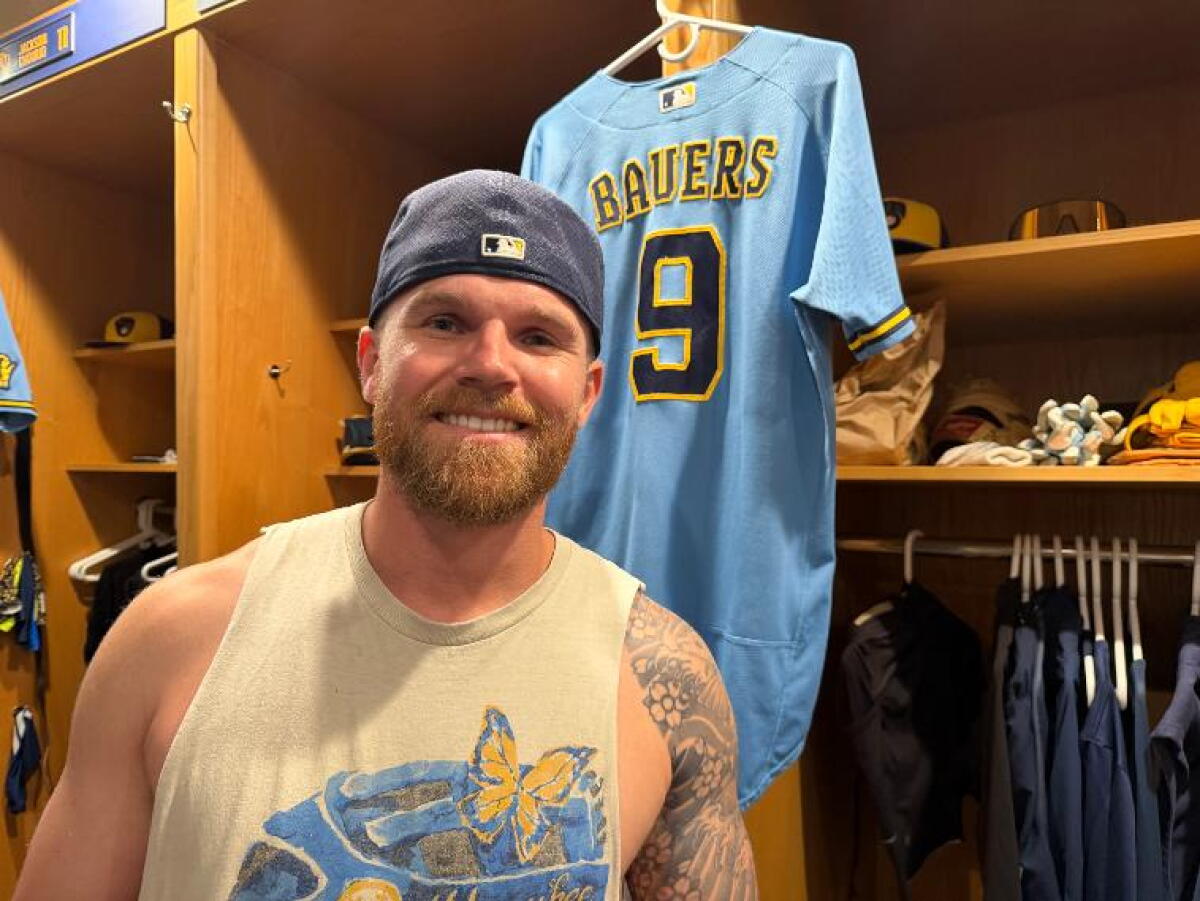
First baseman Jake Bauers is a Marina High graduate who lost in the Southern Section Division 1 championship game at Dodger Stadium to Jack Flaherty and Harvard-Westlake 1-0. Here’s a look at Bauers this season.

Former Marina first baseman Jake Bauers has 21 home runs for the Milwaukee Brewers.
(Eric Sondheimer / Los Angeles Times)
Here’s a story from 2013 when Bauers was showing off his hitting prowess.
Closer Trevor Megill also played at Marina. Pitcher JoJo Romero went to Oxnard High.
Second baseman Brice Turang was a star at Corona Santiago. In 2015, he started his freshman season eight for 12 at the plate.
Center fielder Garrett Mitchell, who went to Orange Lutheran and UCLA, has overcome Type 1 diabetes while needing an insulin pump. Here’s a story from 2019 when he was playing for UCLA.
Infielder Joey Ortiz was a standout at Garden Grove Pacifica.
It all makes for an interesting homecoming when the Brewers come to Dodger Stadium next week.
This is a daily look at the positive happenings in high school sports. To submit any news, please email eric.sondheimer@latimes.com.
Trump announces Russian diesel deal amid soaring US fuel prices | Oil and Gas News
Russia to supply 300,000 tonnes of diesel immediately, followed by 1.5 million more, as prices soar amid the Iran war.

Published On 9 Oct 2026
United States President Donald Trump said that Russia has agreed to supply 300,000 tonnes of diesel fuel to global markets amid discussions with Russian President Vladimir Putin.
“I have just concluded a highly successful discussion with President Vladimir Putin, of Russia, wherein it was agreed that Russia will immediately supply over 300,000 Tons of Diesel Fuel to the American and Global Marketplace, another 500,000 Tons during the month of November, and 1,000,000 Tons immediately thereafter,” Trump said in a post on his Truth Social platform.
Recommended Stories
list of 4 itemsend of list
The president added that Russia would deliver an additional 3 million tonnes of fuel “within a short period of time”. He said that the country would supply 500,000 tonnes in November.
An envoy for Russian President Vladimir Putin, Kirill Dmitriev, praised cooperation between Russia and the United States on diesel and energy in a post on X shortly after.
“Russia-US cooperation on diesel and energy will benefit the world,” Dmitriev wrote on X.
Petrol price pressures
The deal comes despite Ukrainian air strikes, which have taken more than half of the country’s oil refining capacity offline, according to claims made by Ukraine’s Ministry of Defence on Sunday.
The latest announcement comes a week after the G7 countries agreed to release 100 million barrels amid pressure from the White House.
The move also comes as prices of diesel, used in agriculture, heating homes and trucking goods, are near record highs ahead of the November 3 congressional elections that will determine control of Congress.
Diesel prices have been elevated in recent months but have started to decline. The average price for a gallon is $6.27 ($1.66 per litre), according to the American Automobile Association (AAA), which tracks daily petrol prices. That’s down $0.10 from this time last week, but up $5.94 from this time one month ago.
Diesel prices, which can drive inflation, are up 70 percent since the US and Israel’s war on Iran began this year, despite two high-profile recent moves by Trump to boost supplies of the fuel: pressuring allies to release emergency reserves and expanding access to tax-exempt red-dyed diesel, which is normally used for farm equipment.
The wars in Iran and Ukraine have triggered an unprecedented global fuel supply crunch.

Injured Orangutan rescued from Indonesia wildfires | Climate Crisis
A young orangutan has been rescued from wildfires on Borneo Island in Indonesia. She suffered burns to her hands and feet and is now being treated in an animal hospital. Dozens of orangutans have been rescued from fires that have caused massive habitat destruction.
Published On 9 Oct 2026

Emmerdale’s Sadie King finally gets comeuppance but her next targets revealed
Emmerdale’s Sadie King, played by Patsy Kensit, got her comeuppance after her lies about Jimmy King were exposed, but two more characters will soon be targeted by her

Emmerdale’s Sadie King, played by Patsy Kensit, got her comeuppance(Image: ITV)
Emmerdale fans rejoiced on Friday as they saw Sadie King exposed, and she certainly faced the consequences.
Nicola King finally learned the truth about Sadie’s lies. After listening to a voice message on her late husband Jimmy King’s laptop, she realised he had not cheated on her with Sadie after all.
Sadie claimed Jimmy had been leading a double life, enjoying a secret romance with Sadie for three years. She said he was planning to leave Nicola too, when in fact Sadie was making it all up, and was actually just after some money he had promised her prior to his death.
When Nicola finally listened to what Jimmy actually said to Sadie and realised Jimmy was simply giving her some money as a one-off payment, while also confessing his love for his family, she took action. Later confronting Sadie at the graveyard, Nicola attacked her with flowers before knocking her to the floor.
Viewers loved the moment, and so did the other village residents watching. Sadie finally found herself caught out and faced the repercussions, with fans saying it was about time.
One fan posted: “I am SO HAPPY Nico got to do that to Sadie.” Another agreed: “Me when Nicola started whacking Sadie with the flowers.”
A third fan commented: “The funeral scenes were so good,” as a fourth added: “Sadie being pushed was good.” However, Nicola might have taken down Sadie, but it’s not over.
Sadie’s about to form an alliance with another village baddie, and she’s got two new targets lined up. Joe Tate and Sadie team up next week against the Miligans, and it’s set to be explosive.
Joe wants to take revenge on the couple yet again, but this time, it’s not missing Graham Foster he’s enlisting the help of. Sadie agrees to help Joe, as she plots to split Caleb and Ruby up.
Joe tasks Sadie with spying on Ruby and Caleb, as he wants her to find evidence that will destroy them. Sadie’s got her own ideas though, and she tells Joe she will seduce Caleb.
Soon Sadie works on getting Ruby to open up, and secrets are revealed. Sadie reels Ruby in with a sob story, but Cain Dingle is suspicious about Sadie deciding to stick around in the village.
Cain warns his brother Caleb that Sadie will ruin his life, but he’s sure he’s too smart for her. But will Sadie be able to get her own way, and will she and Joe be successful in their plan to target the couple?
Emmerdale airs weeknights at 8pm on ITV1 and ITVX. * Follow Mirror Celebs and TV on TikTok , Snapchat , Instagram , Twitter , Facebook , YouTube and Threads .


U.S. plan to live-stream execution by firing squad draws bipartisan, international outrage
In confirming his plans to live-stream Fort Hood mass shooter Nidal Malik Hasan’s military execution by firing squad on Dec. 3, Defense Secretary Pete Hegseth called it a “no brainer” punishment for a “radical Islamist terror attack” on U.S. service members.
“We’ll make sure that people are able to watch it, that it’s public, because people need to understand [that] there are serious consequences for these types of things,” Hegseth said in an interview with the Real America’s Voice network.
Others across the country and around the world — Democrats and Republicans, human rights experts, legal scholars and military and religious leaders — condemned it as a barbaric throwback to an era when executions were cast as entertainment, and as the world’s leading democracy adopting a form of punishment carried out in modern times only by authoritarian regimes and terrorist organizations.

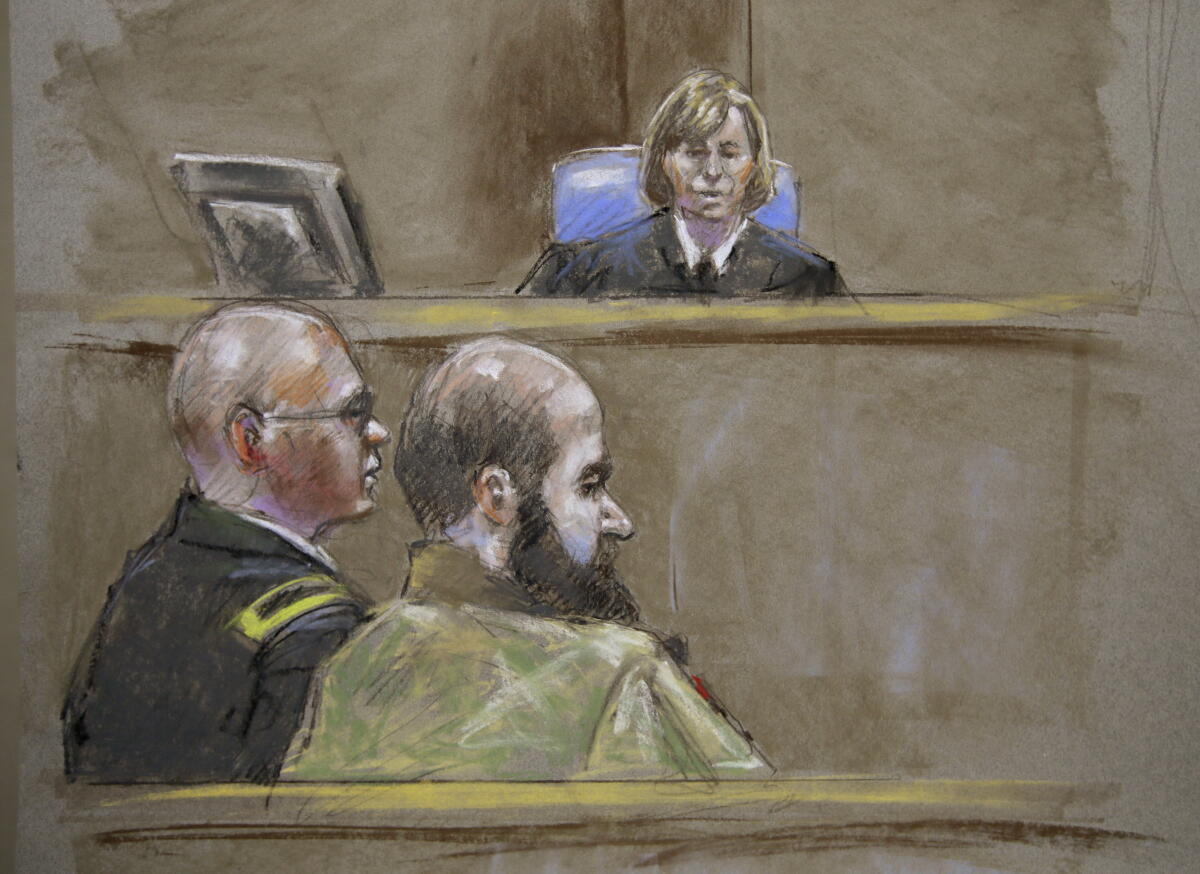
Nidal Malik Hasan is shown in a courtroom sketch in 2013.
(Brigitte Woosley / Associated Press)
“Hasan should face the death penalty, but making his execution public and streaming it? Beyond disgusting,” Sen. Thom Tillis (R-N.C.) wrote on X. “Public executions are what oppressive dictatorships like Iran and Afghanistan do. It should not be happening in America.”
“I absolutely support the sentence of death, but live-streaming executions is what jihadists do. America is better than that,” Rep. Austin Scott (R-Ga.) wrote.
The United Nations’ High Commissioner for Human Rights said that “the livestreaming of an execution is tantamount to a public execution and would breach the absolute prohibition of torture.” The head of the U.S. Conference of Catholic Bishops said it would “further undermine the moral fabric of our nation and be a blight on the conscience of its people.”
Matthew Robinson, a criminal justice professor at Appalachian State University and author of a book on U.S. capital punishment titled “Death Nation,” said he was “appalled” by the plans. “It strikes me as meant to be entertaining.” He said the last military execution was in 1961, and the last by firing squad was in 1945.

Soldiers hold a candlelight vigil at Fort Hood, Texas, in 2009, one day after Nidal Malik Hasan shot and killed 13 people.
(LM Otero / Associated Press)
Hasan was an Army psychiatrist and major who in 2009 entered a medical building on the Texas military base with a laser-sighted handgun, shouted “Allahu akbar” — Arabic for “God is great!” — and opened fire, killing 13 people and injuring 32 others. He has since spoken of being a “martyr” if executed.
President Trump, an outspoken proponent of the death penalty for years but also a past critic of public executions in places like Iran, has signed off on Hasan’s execution but not addressed Hegseth’s plans. The White House did not respond to a request for comment.
Vice President JD Vance, who is Catholic, said Friday that people should remember that Hasan “brutally murdered a lot of innocent people.” But he also said he would not watch a live-stream of the execution, and expressed doubt that is “actually going to happen.”
On his first day in office this term, Trump issued an executive order requiring federal agencies to restore the death penalty to prominence. In April, the U.S. Department of Justice announced it had taken steps to do so, including by “expanding the protocol” to include firing squads.
Five states currently allow firing squads to carry out executions: Idaho, Mississippi, Oklahoma, South Carolina and Utah. The U.S. Supreme Court has repeatedly turned down appeals contending such executions amount to “cruel and unusual punishment,” which is barred under U.S. law. South Carolina executed three men by firing squad last year.
When the Supreme Court last year rejected an Alabama inmate’s request to be killed by firing squad rather than with nitrogen hypoxia, liberal Justice Sonia Sotomayor — joined by fellow liberal Justices Elena Kagan and Ketanji Brown Jackson — dissented, writing, “Boyd asks for the barest form of mercy: to die by firing squad, which would kill him in seconds, rather than by a torturous suffocation lasting up to four minutes. The Constitution would grant him that grace.”

Kathleen Walter prays outside the Nashville, Tenn., prison where Christa Pike was set to be executed.
(George Walker IV / Associated Press)
Last week, a Tennessee inmate named Christa Pike survived what was meant to be a lethal injection of the barbiturate pentobarbital. Other states have also struggled with executions by lethal injection in recent years.
Much of the criticism of Hegseth’s plan for Hasan has centered not on the method of killing, but on the live-streaming of it.
Robin M. Maher, executive director of the Death Penalty Information Center, said the center has “no record of any execution being live streamed,” and is “not aware of any regulation or precedent for a military execution to be live streamed on the internet or otherwise made widely available to the public.”
Fox News commentator Howard Kurtz wrote: “I’m sensing revulsion on the left and right, not so much for killing a death row prisoner — although firing squad seems extreme in the modern age — but for the Pentagon to live-stream it, turning this into a horrifying TV show to entertain the masses. Is this America?”
Daniel LaChance, an associate history professor at Emory University and author of the book “Executing Freedom: The Cultural Life of Capital Punishment in the United States,” said the last public execution in the U.S. occurred in 1936, when a Black man convicted of rape was hanged in Kentucky — which still allowed public executions after most states had abandoned the practice.
That execution was “by all accounts a grotesque carnival” and “sort of like a gladiatorial contest brought to life in the 20th Century, where the crowd was surly, shouting,” LaChance said. “It was a debacle.”
That the Trump administration is seeking to turn capital punishment into a public spectacle once more, LaChance said, is out of line with decades of thinking on the issue, but in line with Trump’s own ethos about crime and punishment.
“His whole brand is this kind of populist, anti-elitism. And when executions moved into the bowels of prisons in the early 20th century, they were really becoming bureaucratic affairs, run by experts, carried out in front of a small group of professionals and clergy,” LaChance said. “It was a denial of the public’s right to see a punishment that was carried out in their name, in part because there were elites who thought that the public couldn’t handle this kind of spectacle, that they were misbehaving, that it would generate more disorder when an execution is designed to do the exact opposite: to generate order.”

President Trump points to fans to as he walks to the stage at a political rally Wednesday in San Antonio.
(San Antonio Express-News via Getty Images)
Trump clearly thinks he is pushing back against elitism and expertise and giving people what they want, LaChance said, though the question many scholars have is whether doing so will “increase people’s bloodthirst” or force them to recoil — and ultimate decrease support for such punishments.
Eugene Fidell, who teaches military justice at Yale Law School, said Trump has publicly mused about killing people by firing squad for years, so Hegseth’s plans to use a firing squad should not be surprising. However, the decision to live-stream the killing is clearly a source of “dismay” for many. “Even people who are resigned to the death penalty, who don’t have religious or other scruples about the death penalty, have real heartburn over this,” he said.
Fidell said “brutality” has become an “operating principle” for the Trump administration broadly, from its decision to host an Ultimate Fighting tournament at the White House to its immigration tactics across the country to, now, it’s plans to live-stream an execution — which Fidell said has “nothing to do” with deterring future crime.
“There’s a pathology going on here that is so out of keeping with the dignity that ought to characterize the taking of a life as a result of a legal process,” he said.
Robinson, of Appalachian State, said a student of his Friday morning asked what would happen when children tune in to watch the execution, which Robinson said he believes they will do, as if it’s a video game. He said the idea was appalling — and not just to him.
“I imagine the rest of the world, the civilized world, will see this and have the same response that I did,” he said. “They’ll respond with shock.”
Times staff writer David G. Savage contributed to this report.
Dak Prescott was miffed after man called loss ’embarrassing’
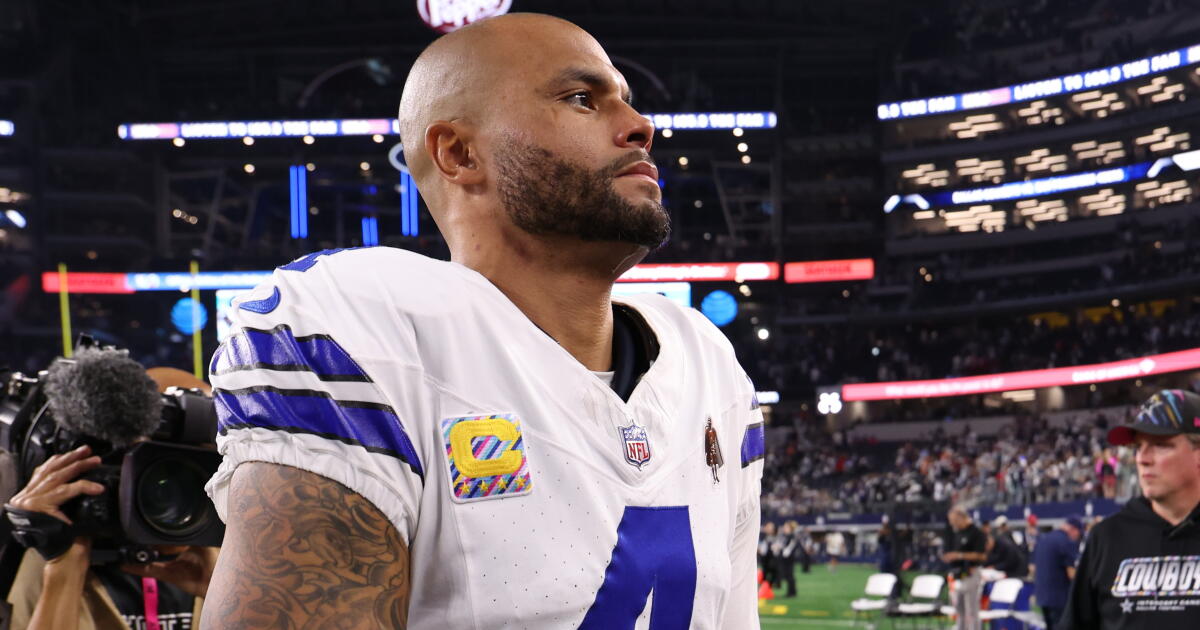
Dak Prescott and the Dallas Cowboys suffered an unexpected loss to the previously winless Tampa Bay Buccaneers and their undrafted rookie quarterback Jalon Daniels in front of a home crowd on “Thursday Night Football.”
Some might describe the loss as “embarrassing” — in fact, one guy actually said that exact word in the Cowboys tunnel within earshot of Prescott as he walked to the locker room after the game.
Online video footage shows Prescott looking back at the man — who was there as a transportation service driver and not an employee of the Cowboys or AT&T Stadium — while still walking, then turning away. The man then said something else, possibly “you heard me,” which prompted the veteran quarterback to look back and say, “You say it once I look off, huh?” while still walking.
Prescott can then be seen speaking to a Cowboys security employee and gesturing in the direction of the other man. Footage shows the security employee going back down the tunnel, presumably in search of the heckler, but it is unclear what happened after that. The Cowboys declined to comment for this article.
Prescott was asked about the incident during his postgame news conference. At first, he simply acknowledged that the person wasn’t necessarily wrong in his assessment of the game.
“He’s free to speak his mind,” Prescott said.
The four-time Pro Bowl selection was then asked if he thought the comment was disrespectful.
“You know, when he said it I just happened to look at him, and at that point he looked away, didn’t look. And when I turned my head back, he said something else,” said Prescott, who completed 24 of 42 passes for 316 yards with one touchdown and two interceptions.
“So that’s the part that — just as a man or as a person, feel free to speak your mind. Just speak it. Don’t coward away from the reaction that you’re going to get. If you’re saying it’s embarrassing, say it’s embarrassing. If you’re saying it to me, then say it to me. Don’t go back on it. So that’s all that was, and hate it that it’s even being talked about, to be honest with you.”
The Cowboys led 10-7 at halftime, but Tampa Bay scored 17 points in the third quarter to take control of the game. Dallas pulled to within 24-16 late in the fourth quarter, but Prescott threw his second interception of the night deep in Buccaneers territory with 1:16 remaining to seal the game.
Owner Jerry Jones called the game’s result “extraordinarily, extraordinarily disappointing.”
“Boy, I’ve been so disappointed before with losses, but this was disappointing,” Jones told reporters after the game. “And I’m disappointed because I see potential growth here. And we need to have good experiences on an individual basis as well as a team. And this was not a good experience out here.”
Prescott said he hesitates to use the word “embarrassing” to describe the loss because “I feel like I’m discrediting the NFL if I use that and particularly the Tampa Bay Bucs and a great Todd Bowles-coached and defensive-coached team.”
But, he added, “when a winless team comes into your home stadium on a Thursday night primetime game, yeah, we’re supposed to win that. So it sucks and it’s right up there close to ‘embarrassing,’ but I don’t know if I would say that.”
Katie Zacharia ‘offered’ position as White House press secretary | Donald Trump News
The role has been vacant since former White House press secretary Karoline Leavitt left in August.

Published On 9 Oct 2026
Conservative commentator Katie Zacharia has been picked to be US President Donald Trump’s next press secretary.
A White House source told Al Jazeera on Friday that the position has “been offered” to Zacharia.
The role has been vacant since former White House press secretary Karoline Leavitt left in August.
This story is developing…
JD Vance casts doubt on firing squad execution and says he won’t watch it
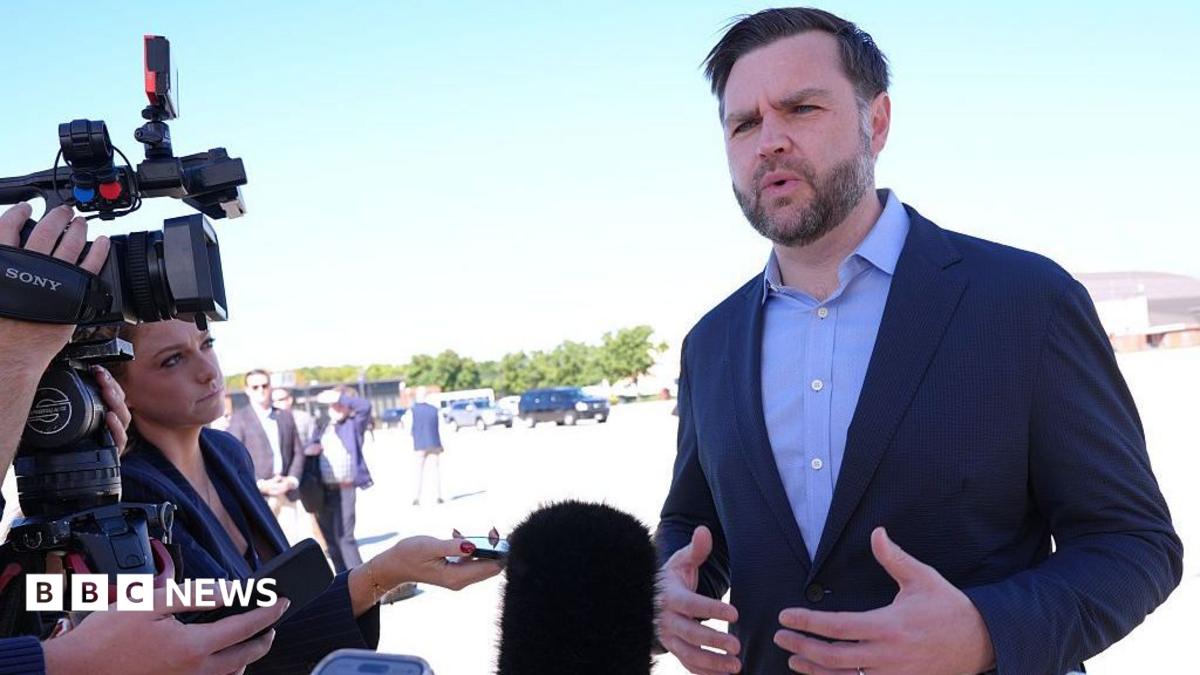
US Vice President JD Vance has cast doubt on the Pentagon’s plans to livestream a firing squad execution of the Fort Hood shooter.
Talking with reporters, Vance expressed doubt that it would happen as planned, saying: “I don’t know that that’s actually going to happen”.
He added, that “if it’s through live stream, I’m not going to be watching it”. Vance described the actions by former US Army major Nidal Hasan as “the worst terrorist attack on American soil outside of 9/11”.
Hasan fatally shot 13 unarmed US soldiers at Fort Hood in 2009, injuring another 32. His execution by firing squad would be the first military execution in more than 60 years.

Ex-Warner Bros. CEO pockets $600 million in sale to Paramount
David Zaslav, the longtime TV executive who created Warner Bros. Discovery Inc. but ultimately failed to keep it going as an independent company, made about $600 million on the sale of the business to Paramount Skydance Corp. this week.
Much of Zaslav’s compensation came in the form of stock options. Warner Bros. stockholders received $31 a share in cash in the sale, a nearly 25% increase from when the stock first began trading in April of 2022. The Standard & Poor’s 500 rose 76% over that period.
Many other Warner executives received large paydays, including streaming boss JB Perrette and strategy chief Bruce Campbell. A spokesperson said Zaslav doubled the number of employees overall who received stock awards.
The new company, now called Skydance Corp. and led by technology scion David Ellison, is one of the largest media businesses in the world, comprising the century-old Paramount and Warner Bros. movie studios, dozens of TV networks, like CBS and CNN, as well as the Paramount+ and HBO Max streaming services.
Christopher Palmeri and Dylan Sloan report for Bloomberg.

Republicans once raced to embrace Trump. Their debate answers tell a different story now
ATLANTA — Not long ago, Georgia gubernatorial nominee Rick Jackson eagerly compared himself to his fellow billionaire in the Oval Office. He promised to be Donald Trump “with a Southern tone.” And sharing a summer rally stage, Jackson pointed at the president and declared, “I’m going to be this man’s favorite governor.”
On the debate stage this week with his Democratic opponent, however, Jackson discussed Trump only when Keisha Lance Bottoms brought him up. And he assured his audience that he’d “stand up to anybody.”
Jackson is not alone in his recalibration: Republican nominees for Senate, the U.S. House and governor’s offices across the country are sidestepping President Trump or openly distancing themselves as they debate before Election Day.
Those tactics, not unlike Republicans scrubbing Trump from their campaign websites, are the latest signs of how much Trump’s standing has fallen because of voters’ frustration with inflation, the Iran war and other matters. And the dynamics highlight the perilous options many Republicans face as they try to stitch together winning coalitions that go beyond Trump’s core supporters.
“Republicans right now are facing a voter turnout problem” in their own party, said GOP pollster Paul Shumaker, and must win “unaffiliated voters” who care most about the economy.
“You have to have something significant to change this narrative,” Shumaker said. But, he explained, that means “a significant victory in Iran” and seismic economic improvements — not something any Republican midterm candidate can force from behind a debate podium.
There’s a Trump tightrope on Iran, tariffs and rhetoric
Some Republicans are taking specific positions at odds with the president.
Michigan Senate candidate Mike Rogers said in his debate Thursday with Democrat Abdul El-Sayed that he’d urged the White House privately to reach a trade deal with Canada and end the president’s tariffs. Canada is Michigan’s largest trading partner, as it is for many Great Lakes and Midwestern states.
Days before, Rogers unveiled a new ad in which he said, “We know that Canada is not our enemy. We need to end the tariff war — now.”
That’s a noticeable departure from Rogers’ earlier, less specific statements praising Trump’s “America First” economic agenda while saying tariffs are not a “one-size-fits-all” solution.
Another Michigan Republican, Rep. Tom Barrett, already had bucked the president by voting for a war powers resolution intended to assert congressional authority over military actions in Iran. But debating Democrat Will Lawrence in their central Michigan district, Barrett added a criticism of Trump’s rhetoric Monday in Nebraska, where he floated the possibility of Iran attacking San Diego and Los Angeles.
The president mentioned those cities as part of his argument that higher gas prices because of his Iran war are a “small price to pay” to keep the country safe. But Democrats seized on the remarks, some insisting that Trump was calling for Iran to attack U.S. cities.
Barrett was asked whether Trump’s words were acceptable. Given the opportunity to echo the White House explanation that Trump was offhandedly mentioning a worst-case scenario he was trying to prevent, Barrett offered no defense.
“Nope,” he said flatly.
Many Republicans prefer a more generalized stiff arm
Reflecting the complex electoral balance, most Republicans have attempted to separate themselves without naming any firm difference with the president.
Running for a promotion to the Senate, Iowa U.S. Rep. Ashley Hinson tried in her debate Wednesday against Democrat Josh Turek to reconcile her earlier promises to be a Trump ally in Congress’s upper chamber. She said it would be “really easy” to keep her word and still be bipartisan — a buzz word she’s already been featuring in her campaign.
“I’ll be President Donald Trump’s ally when it is important for Iowa, but I will push back on him — he knows this, because I talk to him regularly — on things that are wrong for our state,” she said. “That’s true no matter who’s in the White House. That’s true no matter who is governing and who has the gavel.”
That’s the same path Jackson took in Georgia, as he pivoted away from Trump by embracing outgoing Georgia Gov. Brian Kemp, a Republican who has clashed with the president, starting with Trump’s false claims that he won Georgia in the 2020 presidential election.
“I will stand up to anybody, just like Brian Kemp has done,” Jackson said.
Another Republican House member, Mike Lawler of New York, made a point of name-checking a Democratic colleague, New Jersey’s Josh Gottheimer, and discussing bills they’d work on together. It was part of his argument that he’s able to challenge Trump and the party line.
“When I agree with the president I say it. When I disagree with the president, I say it,” he said in his closing remarks.
Hinson, meanwhile, referenced bills she’s worked on in the House that have been signed into law by both President Joe Biden and Trump.
But she also avoided criticizing Trump when asked about the president sending Affordable Care Act rebate checks to some Americans and promising a $5,000 bonus after the midterm elections if Republicans retain control of the House and Senate.
She said she “cares very deeply” about making sure Congress maintains the power of the purse and thinks it’s important to “live better within our means.”
Democrats pounce on either approach
Regardless of the Republican efforts, Democrats have continued peppering them with attacks and retorts about Trump. The most heated moments came when Democrat Cait Conley repeatedly said Lawler always voted with Trump.
“No matter how many times you say 100% of the time,” the congressman answered, “it’s provably false.”
When Rogers conceded in his back-and-forth with El-Sayed that the administration “probably” made errors in its mass deportation strategy, the Democrat answered swiftly.
“He said it was probably not right. I mean, it’s definitely not right,” El-Sayed said. “They killed two people.”
And while Georgia’s Jackson seemed uncomfortable talking about Trump, Bottoms was more than happy to mention him.
“I’m not running to be his favorite governor,” she said. “I’m running to work on behalf of people like you.” ___ Associated Press reporters Joey Cappelletti in Washington; Hannah Fingerhut in Des Moines, Iowa; and Jill Colvin in New York contributed to this report.
Barrow writes for the Associated Press.

Shaun Edwards takes Argentina defence coach role
Defence coach Shaun Edwards has joined Argentina’s coaching staff on a deal that runs until the end of the 2027 Rugby World Cup in Australia.
The announcement ends any speculation that Edwards could be handed a role in Steve Borthwick’s England set-up, with the 59-year-old set to fulfil his consultancy role with England’s women’s team before joining Felipe Contepomi’s staff.
“I’m delighted to join Felipe Contepomi, his coaching staff and the Argentina rugby team at the end of this month until the World Cup next year in Australia,” said Edwards.
“I’ve always admired the ability and quality of Argentine players and I hope to bring some of my international experience to the team during the next year,” added the former Wigan rugby league great.
Englishman Edwards, who is one of the most decorated coaches in rugby union, left his position as France men’s defence coach earlier this year after helping them win three Six Nations titles.
Edwards and former Argentina head coach and hooker Mario Ledesma, who has been appointed to take charge of the forwards, will start work with the Pumas at the end of October.
Argentina are then set to face Ireland, Italy and France in November in Nations Championship matches.
Three-time semi-finalists Argentina have been drawn in a pool with Fiji, Spain and Canada at the World Cup which takes place between 1 October and 13 November in 2027.
Edwards, who also spent a successful 12 years with Wales and won four English titles and two Champions Cups while on Wasps’ staff, said in March that he was interested in coaching in the Rugby Championship, the southern hemisphere tournament contested by South Africa, New Zealand, Australia and Argentina.
He turned down a chance to coach his country in 2006, believing that the busier fixture list at Wasps would suit him better as he grieved the death of his brother.
Two years later, he opted to take on a defence role with Wales, rather than lead England’s second-string side, then known as the Saxons., external
In 2021, he met with Rugby Football Union chief executive Bill Sweeney but, without a firm offer forthcoming, signed a contract extension to stay with France.

Jerusalem Daily: US charity to use AI to monitor Gaza classrooms | Government
A US charity announced it will use an AI-software to monitor Gaza classrooms for ‘anti-Semitism’ and ‘hate speech’, while Israel airstrikes kill Palestinians across the strip.
Al Jazeera’s Marah Ryan has the latest.
Published On 9 Oct 2026

Five of the best family Airbnbs in the UK from just £37.50pn
IF the average holiday home isn’t quite cutting it with the kids, you’ll love these ones.
With whole role-play villages, ziplines and even ballpit rooms, these are the five best family-friendly Airbnbs in the UK.
Imagine at High Parks
This pretty farmhouse might look like your average Airbnb – but inside, it has a secret wing that’s dedicated to children’s play.
It’s a paradise and will definitely inspire play as inside you’ll find a tearoom with an oven, cups and mugs and even a stable with a rocking horse.
The village shop has a real-life counter with a cash machine and around the corner is a cinema.
There’s also a hotel that is actually where the children’s rooms are and each is kitted out with single beds and made to feel cosy.
Outside there’s even more for kids to enjoy as there’s a huge wooden climbing frame with a basket swing, see-saw, toddler swing and slide.
The climbing fort is set amongst a huge garden so there’s plenty of room to run around too.
One visitor wrote: “I stayed with my two children aged 8 and 5, they were so excited when we arrived and said it was the best holiday house ever.”
As for the rest of the property, it can sleep up to six guests.
It has a light and airy living room with high ceilings, and wooden beams across the ceiling.
There’s also a modern kitchen with a dining area, the master bedroom is on a mezzanine level.

Three of the bedrooms have a single bed, two of which have views across the garden, and bedroom five has a cot.
Surrounding the house is a patio area, a great spot to sit and enjoy the views in the summertime.
A seven-night stay for six people in January 2027 starts from £1,575 – or £37.50pppn.
Searles Cottage, Cornwall
Tredethick Farm Cottages is in the top 10 per cent of homes on Airbnb and is a particular hit with families.
Inside, kids and teenagers will enjoy playing in the games barn which has a pool table, table tennis table, indoor slide and sand pit – the home even has an heated indoor swimming pool.
When the weather plays ball, children can enjoy the outdoor playpark and balance bike track.
As it’s on a working farm, there are morning animal feeding sessions held at least three times per week with the goats, pigs, chickens and guinea pigs.
In the summertime, guests can book pony experiences.
There’s also a heated indoor swimming pool for splashing about and a private garden for playing in.
Meanwhile, adults can take advantage of the hot tub and relaxing in front of the fireplace in the living area.
The home sleeps up to four guests in its two bedrooms, one with a king- size bed, the other with two singles.
A four-night stay in April 2027 for a family of four starts from £1,000 – or £62.50pppn.
Fun City Stay, Essex
Just outside of Colchester in Essex is this beautiful Grade-II home which looks like it should be a cosy retreat, and it is – but there are lots of surprises inside too.
Along with its open kitchen-diner, large living room and Disney-themed bedrooms is a play room called Narnia.
Not only is it a soft play, but it has a huge ball pit that children will love.
One visitor wrote in their review: “The soft play was a huge hit with the children and kept them entertained for hours!”
Another added: “We had a fantastic stay here for a family getaway! Everything was perfect. The soft play room was amazing for the children.”
In the kitchen is a seven-foot table that can transform into a pool and table tennis table.
There’s also a darts board if you fancy a go.
In total, the home can sleep up to nine guests across its four bedrooms inspired by Disney’s Madagascar, Pirates of the Caribbean, The Jungle Book and Aladdin.
A five-night stay for nine guests in November 2026 is £1,793 – or £39.84pppn.
The Narnia room is available to book at an additional cost, as is the hot tub.
Country cottage and treehouse, Salisbury
This beautiful countryside cottage is tucked away in a private 80-acre woodland near Salisbury.
Next to the pretty Airbnb is where the kids are likely to spend most of their time – up in the treehouse.
Once up there the whole family can take it in turns zooming through the woodland on the 100-foot zipline.
It’s definitely a hit with previous visitors, one said: “So much space for the children to run around in, an incredible tree house with zip wire (just as much fun for the adults).”
Another added: “The kids were in their element with the zip line, treehouse, and lake-endless adventures right on the doorstep.
“It felt like a little paradise for them, and gave us all such a chance to properly switch off and enjoy time together.”
The home is nestled in a private 80-acre woodland near a secluded lake. Enjoy tranquil trekking trails, or relax by the secluded lake.
The country cottage has a kitchen, living room, bedroom and bathroom downstairs – the further two bedrooms are upstairs.
While the kids are enjoying the activities, parents can soak in the wood-fired Dutch tub.
On arrival there’s complimentary tea, coffee, sugar, 1 litre of organic milk, locally produced apple juice, cornflakes, oats and cereal from the hosts.
The home can sleep up to six guests across its three bedrooms.
The base price is based on a two person occupancy – it then increases by £40pppn (there is no charge for infants).
There’s an offer of 20 per cent off on weekly stays and 40 per cent off on monthly stays.
A five-night stay in November for a group of six costs £2,016 – or £67.20pppn.
Halula’s House of Fun, Somerset
For the ultimate family and friends holiday, the Halula’s House of Fun has it all.
It can sleep up to 21 guests – it also has a swimming pool, swim up bar, hot tub, indoor slide and ballpit and children’s play area.
The whole house will be like a play park for the kids thanks to its bright decor and plenty to do. One of the rooms has a rainbow slide that goes straight into the ballpit.
Kids will also love the huge movie room with snug sofas and projector screen.
Outside, there’s a climbing frame, playhouse, trampoline and play cars.
Between April and October, the outdoor swimming pool is open for business too.
All six bedrooms have their own theme – and there’s even a cosy book nook for bedtime stories.
It’s not just kids that will love this house, it’s possible parents might enjoy it even more, it has a pool house, bar and hot tub.
The home sleeps up to 21 guests across seven bedrooms
A six-night stay in April 2027 starts from £8,338 – or £66.17pppn.
DHS defends ICE shooting in NYC, says officers believed they were in danger | Gun Violence News
The shooting prompted protests in New York City as officials defended ICE and Mayor Zohran Mamdani condemned the incident.
Published On 9 Oct 2026
The United States Department of Homeland Security has defended Immigration and Customs Enforcement’s (ICE) shooting of a man in New York City while his child was present. Federal officials used the incident to criticise sanctuary-city policies that limit cooperation with federal immigration authorities.
New York officials have condemned the shooting and have called for ICE to end its operations in the city.
Recommended Stories
list of 3 itemsend of list
The shooting took place on Thursday afternoon when ICE officers attempted to arrest a man identified by New York City police as Oscar Belgal.
Homeland Security officials gave their account of the incident on Friday during a news conference, saying that Belgal refused to exit his car when approached by officers and then accelerated, striking two ICE vehicles.
They said officers then opened fire, grazing Belgal’s neck while his five-year-old child was in the back seat.
According to Homeland Security officials, Belgal received first aid and was taken to hospital before being transferred to a secure detention facility outside New York state. They did not disclose where Belgal is being held.
Department of Homeland Security (DHS) Secretary Markwayne Mullin said that the agents did not know the child was inside the vehicle when they fired.
ICE senior official Marcos Charles said agents had attempted to arrest Belgal as part of an investigation into suspected gang involvement in an earlier shooting of a US Customs and Border Protection officer.
According to US officials, Belgal is an undocumented migrant from the Dominican Republic who had previously evaded arrest and received a five-year sentence for grand larceny in April 2025.
“[Belgal] was a thug,” Mullin said at the Friday news conference. “The absolute worst of the worst.”
Mullin confirmed that officers were wearing body cameras but the footage has not been made public. New York City police released bodycam footage on Friday of police officers on the scene who had responded to a 911 call about the incident.
In other violent incidents involving federal immigration officers, video evidence has contradicted initial accounts from ICE and Homeland Security officials, including in Minneapolis, where footage of the fatal shootings of Alex Pretti and Renee Good challenged federal officials’ descriptions of the encounters.
The latest shooting prompted protests on Thursday night in the Bronx, where the shooting took place, with demonstrators condemning ICE and calling for the agency to be abolished. Tensions rose after NYPD officers clashed with some of the protesters.
New York City Mayor Zohran Mamdani condemned the shooting and said he had called US President Donald Trump to demand an end to ICE enforcement in the city.
Speaking to reporters late on Thursday at the scene of the shooting, Mamdani said he had tried unsuccessfully to secure Belgal’s release in phone calls with Trump and Mullin.
“These actions are making the city less safe,” Mamdani said. “ICE is rotten to its core.”
Mullin accused Mamdani of prioritising politics over public safety and said Trump had offered to transfer Belgal to New York police custody if they pursued charges. Mullin said Mamdani refused this offer.


Tricky moral ambiguities fuel a courtroom drama in ‘Fjord’
Winner of the Palme d’Or at this year’s Cannes Film Festival, still among the most prestigious prizes any movie can claim, “Fjord” aims for both a quiet, subtle power and the directness of a sledgehammer. It speaks to the skill of Romanian writer-director Cristian Mungiu, along with the star power and acting prowess of its leads, Sebastian Stan and Renate Reinsve, that the film achieves those goals, creating a mix of feelings including ambivalence, shock and dismay over what people will do to one another in the name of a common good.
Having recently moved from Bucharest to a remote village in Norway, a conservative, devoutly Christian couple and their five young children have begun to insert themselves into the fabric of their new community. Mihai, the Romanian father (Stan), is a little intense and gloomy; Lisbet (Reinsve), a Norwegian, is shy but kind, and their focus seems clearly on what they see as a warm, loving homelife.
But when their children are suddenly taken into protective custody over allegations of abuse, they find their world turned upside down. Eventually, the father asks a prosecutor with equal parts anger and exasperation, “Am I on trial for my beliefs?”
The official answer to that question, more or less, is both no and yes. The government’s position is that the children cannot be placed back into a home where they will be harmed, whether that means physical violence or indoctrination in ideology counter to that of the state’s, such as no dancing, no internet and that being gay is wrong.
Based on actual events involving a Romanian family in Norway in 2015, “Fjord” is purposefully designed to make a viewer — any viewer — question their assumptions and predispositions regarding the relationship between personal liberty and state power. While this may all sound a bit reactionary or like shooting fish in a barrel, Mungiu wisely complicates matters.
The filmmaker, a previous Palme winner for his 2007 abortion drama “4 Weeks, 3 Months and 2 Days,” presumably knows that the majority of the audience for his international art-house domestic drama will be more aligned with the liberal, progressive politics of the Norwegian state than the religious, conservative couple at the story’s center. So most audiences will automatically be put into the purposefully uncomfortable position of siding with people they would never see themselves inclined to agree with. It is Mungiu’s sharpest and most illuminating maneuver.
Once the story moves to the courtroom, “Fjord” begins to resemble 2023’s “Anatomy of a Fall” — another Cannes-winning champ released in the U.S. by boutique distributor Neon — for the way in which it allows American viewers a glimpse into another country’s legal system. It comes off as more conversational and slightly more chaotic than what we are used to in our own domestic courtroom procedurals. As the government prosecutor, Norwegian actor Christian Rubeck gives a smug and condescending tone to nearly every word out of his mouth, becoming the closest thing the movie has to a villain.
Having previously appeared together in the offbeat comedy “A Different Man,” Stan and Reinsve keep the story from feeling like a dour exercise. As Mihai, Stan puts across a low-simmering rage at being put in the position of defending himself at all, while grappling with how to maintain what he sees as his natural role of patriarchal control. Reinsve, known for more outwardly dynamic roles in “The Worst Person in the World” and “Sentimental Value,” here conveys a subdued nuance as Lisbet struggles with understanding her place between her husband and her children.
The moment when the couple’s infant child is taken from them by the authorities is devastating, each of them capturing a sense of helpless isolation from themselves, their community and each other.
Special mention should also go to the performances by Vanessa Ceban and Jonathan Ciprian Breazu as the couple’s teenage children, also to Henrikke Lund-Olsen as a neighbor girl who becomes close to them. These young performers are the film’s secret weapon, since in practical, lived terms they bear the brunt of the existential hand-wringing on the part of all the adults. And too often they become an afterthought.
The poster and key image from the film is a smiling snapshot of Mihai and Lisbet with their children, a seemingly happy family. Or are they? For a movie so steeped in ambiguity and nuance, it also often states its case quite plainly, such as when the couple’s lawyer says no one can really know what goes on in another family. The film asks one to look closer, not just at others but also at one’s own accepted opinions, assumptions and preconceptions. But it ends up with an outcome that feels as sadly inevitable as it is heartbreaking — an ethical knot that cannot be undone.
‘Fjord’
In English, Romanian, Norwegian and Swedish, with subtitles
Not rated
Running time: 2 hours, 26 minutes
Playing: Opens Friday, Oct. 9 in limited release

Caledonia Mining slides after cutting guidance for full-year production, raising cost outlook

Moussa81/iStock via Getty Images
Caledonia Mining (CMCL) fell 2.6% in Friday’s trading after reporting Q3 gold production at its Blanket mine in Zimbabwe declined 11% Y/Y to 19,106 oz, citing a shortage of compressed air at certain high-grade, high-volume mining areas and

Trump’s memorial arch faces a new lawsuit from Arlington County, Virginia
WASHINGTON — The Arlington County Board in Virginia filed a lawsuit Thursday opposing the construction of the Triumphal Arch, becoming the first governmental body to take legal action against President Trump’s planned monument.
The lawsuit, filed in the Eastern District of Virginia, criticized the speed at which the project slated for Memorial Circle has moved without going through the full review process.
“The National Park Service, the agency responsible for projects on national park land such as Memorial Circle, is proceeding full-speed toward ground-disturbing construction,” the lawsuit said. “Although the agency has claimed that a final decision to construct the Arch has not yet been made and purports to be engaged in a routine decisional process, that rushed process appears to be a pretext designed to shore up justifications for building the Arch in accordance with the President’s repeated marching orders.”
The lawsuit asks that “the agency’s feverish pace toward construction of the arch” be halted to ensure that the requirements of the National Environmental Policy Act be followed and proper analysis and testing be done.
“The Arlington County Board has filed this lawsuit because our community has the most to lose from this egregious and unlawful proposed project,” Arlington County Board Chair Matt de Ferranti said in a statement. He added that the county has acted in good faith in the review process, pointing out the “severe, unique, and wide-ranging negative impacts” the project will have on the county and its residents, only to see them ignored.
Memorial Circle sits on federal parkland west of the Potomac River across the Memorial Bridge and immediately adjacent to Arlington County.
The county is being represented in the lawsuit by legal advocacy group Democracy Forward.
White House spokesman Davis Ingle said the Trump administration and White House have been “fastidiously compliant with all procedural and legal requirements and are certain this meritless and dilatory lawsuit will be dismissed.”
The arch will become one of the world’s most iconic landmarks, he added. “It will enhance the visitor experience at Arlington National Cemetery for veterans, the families of the fallen, and all Americans alike.”
The lawsuit came a day after the Association of Flight Attendants-CWA President Sara Nelson expressed concerns that the 250-foot arch compounds multiple safety issues that she said have gone unaddressed since a deadly January 2025, crash over the Potomac River that killed 67 people. Nelson also criticized Trump’s plan to turn the arch into “a top grade military complex” able to host drones and snipers while storing ammunition.
Though the arch has received early approval from the U.S. Commission of Fine Arts, whose members were all tapped by Trump, a group of three veterans and an architectural historian sued in federal court in Washington, D.C., saying the project needs to be approved by Congress. The judge in that lawsuit said the administration must give the court 48 hours before undertaking any activities related to or in preparation for construction of the arch.
The arch is one of several projects around Washington that Trump has undertaken as he remakes the city, from renovating one of its storied public golf courses to threatening to demolish the John F. Kennedy Center for the Performing Arts.
Fields writes for the Associated Press.

Mike Ditka, coach of 1985 Chicago Bears and first HOF tight end, dies
Mustache. Aviator sunglasses. Bears sweater vest. Though Mike Ditka‘s look may be iconic, his time as a player and coach is what cemented his name in NFL history.
Ditka, the first ever tight end to be inducted into the Pro Football Hall of Fame and coach of the legendary 1985 Chicago Bears, has died. He was 86.. His family announced his death in a statement Friday.
“It is with profound sadness that we announce the passing of our beloved husband, father, grandfather, and friend, Mike Ditka,” The family said. “While the world knew Mike as a Hall of Fame football player, legendary coach, and leader of the Chicago Bears’ Super Bowl XX championship team, we knew him as the heart of our family. Mike will be missed beyond measure and remembered forever.”
With nicknames “Iron Mike,” “Da Coach” and “The Hammer,” Ditka was inducted into the Pro Football Hall of Fame in 1988 after a 12-year playing career that featured five Pro Bowls, 427 receptions, 43 touchdowns and 5,812 receiving yards.
Ditka, who won two Super Bowls as a coach and one as a player, revolutionized the tight end position, transforming it from a primarily blocking-focused role to one that could pose a threat in receiving.
Notorious for his fiery personality, Ditka also took his stardom from field to screen, starring alongside Will Ferrell in “Kicking & Screaming,” in which he played himself. Though instead of coaching the championship-winning Bears, he helps coach a little league soccer team — but his competitive spirit remains the same. He also made several TV appearances, including in “Cheers,” “L.A. Law” and “Entourage.”
Born in Carnegie, Pa., on Oct. 18, 1939, Ditka was a first-round draft pick of the Chicago Bears in 1961. The team at the time was helmed by Bears founder, president and head coach George Halas, who later bestowed Ditka with his first NFL head coaching job in 1982.
Coming from the University of Pittsburgh, where he also played basketball and baseball and received All-America honors in football, Ditka immediately became a mainstay in the Bears lineup, going on to start 84 straight games. He was named rookie of the year with 56 catches for 1,076 yards and 12 touchdowns, becoming the first tight end to reach 1,000 yards receiving in his rookie season.
He also earned All-NFL honors from 1961 to 1964 and made the NFL Pro Bowl five times in his first six seasons. Ditka was enshrined into the College Football Hall of Fame in 1986.

Chicago Bears tight end Mike Ditka is tackled after a pass reception against the Green Bay Packers at Wrigley Field on Oct. 16, 1966.
(Associated Press)
The tight end eventually became a coach, famously leading the 1985 Chicago Bears. The team, one of the best in NFL history, went 15-1 and scored 456 points while only allowing 198. The Bears had plenty of personality that year as well, audaciously recording a rap-styled video called “The Super Bowl Shuffle” that was released during the regular season.
But it was not only a strong season on paper — Ditka is credited with leading the Bears back to relevance and luster after losing records in 1980, 1981 and 1982. He built them back to a team fans adored and competitors feared.
“I think that’s the way Mr. Halas always wanted it,” Ditka told The Times in 1985. “He wanted to have a ballclub with a certain personality, a team made up of, you know, rough, tough guys, a team that didn’t take any crap from anybody and could dish it out.”
Ditka and the team brought triumph to Chicago in Super Bowl XX in New Orleans with a 46-10 win against the New England Patriots.
Winning NFL coach of the year with the ’85 team, Ditka is one of only two who have won a Super Bowl as a player, assistant coach and head coach.
“I believe Mike Ditka represents us, in more ways than one,” then linebacker and captain Mike Singletary told The Times. “We know he’s not coaching the Chicago Bears because he needed a job. The Bears mean something to Mike Ditka. The team is part of him.”
His time in Chicago wasn’t all glitz and glamour, though. Ditka wasn’t immediately welcomed back to the Bears as a coach, with his temper a source of strain between him and the owners. He also had a DUI conviction in 1985 and suffered a heart attack in 1988.
Throughout his tenure, he faced complaints about his hotheaded disposition and outbursts on the sideline, notably having tumultuous relationships with several players and defensive coordinator Buddy Ryan, who left after the Super Bowl-winning season to become the head coach of the Philadelphia Eagles. But Ditka didn’t seem to have an issue embracing his reputation.
“There was a (magazine) poll of 200 NFL players who said the coaches they would least like to play for were, first, (Tom) Landry and, tied for second, Don Shula and me. I was flattered. What a great compliment,” wrote Mike Ditka in his 1986 autobiography.
Ditka was entrenched in controversy, having been outspoken about Washington not changing its name from the Redskins, also facing backlash for comments he made in 2016 criticizing Colin Kaepernick and social justice protests, later apologizing.
Despite it all, his name is etched in NFL history.
“Ditka was proud and headstrong,” wrote former Times sports columnist Mike Downey. “He was common and condescending. … He did as he pleased. But he restored the reputation of the Chicago Bears, made them winners and made them watchable.”
During his playing career, he made an iconic 63-yard catch-and-run against the Steelers on Nov. 23, 1963, which stands in 69th place on NFL’s 100 Greatest Plays. The highlight helped the Bears to a 17-17 tie after being down 17-14 in the fourth quarter; the team later went on to win the NFL championship.
In 1967, he was traded to the Philadelphia Eagles and then to the Dallas Cowboys in 1969. During his time with the Cowboys, Ditka made it to two Super Bowls, with a loss in 1971 and finally a win the following year in which he scored the final touchdown in a 24-3 win against the Miami Dolphins.
After retiring in 1972, Ditka joined the Cowboys as an assistant coach. He got his hands on the Super Bowl trophy once again in 1977 with the team and stayed on until joining the Chicago Bears.
The Hall of Famer’s ties with Chicago were once again severed, this time with his firing in 1993 following a 5-11 season. But he refused to shed the navy and orange in the years after he went 106-62 and led the Bears to seven playoff appearances in 11 seasons.
“Yeah, I was fired by the Bears, but that’s life,” Ditka said during a visit to Chicago’s practice field in 2013. “There has never been a time I was not a Bears fan. I have a right to be a Bears fan as much as anybody. I played on a championship team and I coached a championship team.”
The Bears retired Ditka’s number, 89, in 2013.
His involvement with the NFL expanded off the green as he explored TV commentating, even earning Sports Emmy nominations for outstanding sports personality in 1994 and 1996.
Ditka did have one more head coaching stint in the NFL from 1997 to 1999 with the New Orleans Saints. After two 6-10 seasons, the Saints traded all of their draft picks — plus a first-round selection in 2000 — to move up and select running back Ricky Williams. But the team went 3-13 in 1999 and Ditka was fired after the season.
He finished his coaching career 121-95 after the 15-33 stint in New Orleans.
“I’ve been to the top of the mountain and I’ve seen it,” Ditka told The Times in 2004. “And I’ve been to the bottom of the mountain and I’ve seen that too. I don’t want to get anywhere between them anymore.”
Professional football would not see the last of him, however, as he went on to do radio and TV broadcasting for programs such as The NFL Today, Monday Night Football and SportsCenter. His passion for football would never fade, apparent in his launch of X Football, women’s tackle football competition league, in 2021.
And his mark on Chicago was not confined to the stadium gates; he was a partner in Ditka’s Restaurant Group which first opened a steakhouse in downtown Chicago in 1997, boasting its signature dish, “Da Pork Chop.” While the original location closed in 2020, there are still locations in Oakbrook, Ill., and Pittsburgh.
After a short stint living in Florida, Ditka and his wife, Diana, replanted roots in Chicago at the end of 2024.
‘‘I was born in Pennsylvania and raised in Pittsburgh, but Chicago is my home . . . and it is my life,” Ditka told the Chicago Sun Times.

Powerful tornado rips through western Sicily | Weather
A powerful tornado tore through western Sicily, causing injuries, widespread destruction and forcing evacuations across the cities of Marsala and Petrosino.
Published On 9 Oct 2026
Thousands rally for anti-austerity protest in Brussels amid clashes | Protests News
Belgian police respond to ‘troublemakers’ on sidelines of main rally with tear gas, water cannon and baton charges.
Published On 9 Oct 2026
Clashes have erupted near Brussels Central station on the sidelines of a demonstration organised by the country’s socialist trade union against the federal government’s austerity plans.
As thousands of protesters gathered at the station on Friday, a smaller group clashed with the police and threw wooden beams, glass bottles and rubbish bins, The Belgian Times reported.
Recommended Stories
list of 3 itemsend of list
Police were deployed in large numbers around the stations as officers checked groups of young people not wearing trade union colours.
Police said the main trade union rally went ahead peacefully but “groups of troublemakers were responsible for serious incidents before and after the march.”
Riot police responded to those protesters with tear gas, water cannon and baton charges. Police said those who “cause the problems of public order are not linked” to the rally.
Reporting from Brussels, Al Jazeera’s Rosie Birchard said damage was caused during Friday morning’s protests with an “acrid smell of burning in the air”, due to fires that were set and the tear gas.
“Police [and] emergency services have been arriving, starting to disperse or clean up and then the protests flare up again. So the day is still early; often these things get worse in the evening in terms of the street violence,” Birchard explained.
“There were some young people who came out, they say they were inspired by what they had seen in France in terms of school protests, and they also wanted to talk about the education environment they’re learning in,” she said, adding that the students felt that they were “not being listened to”.

The clashes came after a week of tension in the city of Liege after authorities banned gatherings as students clashed with police and vandalised shops. More than 200 people were arrested in Liege, and dozens of police were injured.
The ABVV trade union and the Christian ACV, the country’s two biggest unions, organised protests on Friday morning, with protesters marching from Brussels Central station to Brussels South Station under the slogan “stay out of our pockets”.
Police said about 30,000 people attended the demonstrations, while ABVV had earlier estimated attendance at 50,000.
The anger stems from the government’s austerity measures, as officials consider a new budget that opposes potential measures that affect purchasing power, the wage indexation system and value-added tax (VAT), as well as plans to introduce annualised working time.
At the same time, the ACV organised a separate protest involving hundreds of activists at the capital’s headquarters of the governing coalition parties.