



Best town to retire in Spain as expats praise ‘affordable living and amazing food’
The beautiful spot is perfect for pensioners seeking a relaxed lifestyle

Best town to retire in Spain as expats praise ‘affordable living’
New analysis from World Atlas has named the best Spanish towns to relocate to. They are all stunning, overlooked locations, ideal for retirees seeking a peaceful and authentic way of life away from well-known resorts such as Benidorm or the Costa del Sol.
The research highlighted seven picturesque towns with fewer than 50,000 inhabitants across Spain that feature “walkable, historic centres with accessible recreation, including coastal paths, mountain trails, canoeing rivers, and reservoirs a short drive from the front door”. On Reddit, expats praised the “affordable living” and the “amazing regional food” of some of these picture-perfect locations.
Trujillo, in Extremadura, was named the best small town to retire in, with the lowest housing prices of around €717 (£605) per month. Locals praised the town’s authenticity on social media, with one saying that “life is more or less affordable, with no uncontrolled tourism problems, and food is amazing”.
Trujillo was followed by Arcos de la Frontera, in Cádiz, which has an estimated population of 31,046. Experts at World Atlas noted: “For retirees who want a classic Spanish white town with water sports on the doorstep rather than just mountain views, Arcos is a rare combination.”
Baiona, in Galicia, was also named one of the best places to relocate to. The charming town in northern Spain has a population of 12,380. World Atlas stated: “Baiona offers a version of coastal Galicia that pairs history with a genuine beach-town feel, at a price most Mediterranean resort towns can’t match.”
Other places included the picturesque town of Sitges, just half an hour down the coast from Barcelona, and Cangas de Onís, best known as the historic gateway to the Picos de Europa National Park.
Best small towns to retire in Spain
- Trujillo, Extremadura
- Arcos de la Frontera, Cádiz
- Baiona, Galicia
- Hondarribia, Basque Country
- Cangas de Onís, Asturias
- Comillas, Cantabria
- Sitges, Catalonia


Is it safe to go to Saudi Arabia? New travel advice after air strikes see major airlines suspend flights
SAUDI Arabia has been targeted by missile attacks over the weekend – some of which hit the King Khalid International Airport in Riyadh.
It has led to a change in FCDO advice – so what happens if you have a holiday booked, or a flight stopover?
What is happening in Saudi Arabia?
Over the weekend, Houthi forces in Yemen launched an attack on in Saudi Arabia’s capital city, Riyadh.
Missiles hit its major airport, King Khalid International Airport, killing at least 14 and injuring over 300 on the weekend.
It is considered the deadliest attack on the Gulf Arab kingdom in over 10 years.
Another attack earlier took place earlier this morning.


Is it safe to travel to Saudi Arabia right now?
The FCDO advises against all travel to parts of Saudi Arabia.
It read: “Following a serious incident at King Khalid International Airport on 10 October 2026 at approximately 1500 (local time), we advise British nationals to stay away from King Khalid International Airport until the airport is secure and to monitor the advice of the Saudi authorities.”
It adds that it advises against:
- all but essential travel to all airports within Saudi Arabia except for Medina International Airport
- all travel to within 10km of the border with Yemen
- all but essential travel to Aseer province, Riyadh province, Najran province, Jizan province and the cities of Taif, Jeddah and Dammam
It continued to say: “There is a heightened threat against airports, military bases, ports and energy infrastructure across Saudi Arabia, including Abha, Jizan, Najran, Riyadh, Taif, Jeddah and Yanbu, as well as Saudi shipping vessels in the Red Sea.”
“Further attacks against airports are very likely. Follow Saudi Civil Defence alerts.”

Are flights still going to Saudi Arabia?
King Khalid International Airport closed on Saturday following the missile strikes and remains closed with flight disruption across the region.
While the Saudi Arabia air space remains open, there is a high risk of short-notice airport closures, diversions and airspace disruption.
Reuters has reported that certain airlines have suspended flights to Riyadh.
Lufthansa Group has suspended flights to Riyadh until October 16.
Air France-KLM has halted services to the Saudi capital until the end of the month.
Emirates which flies Brits to Riyadh via Dubai has been affected by cancellations.
What if I’m currently in Saudi Arabia?
The FCDO advice reads that any British national in the Middle East should prepare for flight cancellations and possible airspace closures.
The advice also states:
- follow advice from the local authorities and sign up to FCDO Travel Advice email alerts
- refrain from capturing or sharing images of conflict-related incidents
- monitor local and international media for the latest information, including updates relating to airports and airspace which could close at short notice
- stay away from areas around oil infrastructure and military facilities. Exercise caution at transport hubs
- keep your travel plans under review and ensure your travel documents are up to date
- before you travel, check that your route does not include travelling through areas or airports where FCDO advises against all but essential travel and, if it does, consider whether your travel is essential
- if travelling by air, check that your reservation is confirmed and the status of your flight before travelling to the airport. Remain alert at airports and follow instructions from local authorities
- if you are advised to take shelter, stay indoors or find the nearest safe building or designated shelter. An interior stairwell or a room with as few external walls or windows as possible may provide additional protection. The greatest risk is from falling debris caused by intercepts, and you are safest inside a secure structure
- Saudi Civil Defence may issue early warning alerts to people in affected areas
Head here to read the latest guidance on ‘how to prepare for a crisis’ and what to include in emergency supplies.
What if I have a holiday booked and can I cancel my trip?
Before you cancel a flight or holiday booking, speak to your travel provider first – especially if it’s a stopover flight as it may be rerouted.
In places where the FCDO advises against all but essential travel, you may be able to cancel a package holiday and get a full refund.

Column: Take a breath. Educate yourself. Then vote.
SACRAMENTO — The California Secretary of State has mailed a thick “Official Voter Information Guide” to every registered voter. It’s jam-packed with helpful material. But one bit should be totally ignored.
It tells voters to fill out their ballot immediately — ”today” — and return it right now. Don’t take any time, in other words, to think about what you’re voting on.
Here’s what it says in bold ink on the cover of the 173-page guide: “Don’t Delay, Vote Today! Return your ballot as soon as you receive it.”
That’s not just a throwaway line. It’s repeated throughout the guide.
Under “Quick Facts” for the Nov. 3 election: “Return your ballot by mail as soon as you receive it.”
Who’s writing this stuff? Officially it’s from Secretary of State Shirley Weber. But is some high school freshman who hasn’t taken a civics course the actual author? Isn’t Weber or anyone in the vast bureaucracy proofreading with raised eyebrows?
Doesn’t anyone realize there are 14 complex propositions on the state ballot that voters may want to mull over for more than two seconds? They aren’t all what they seem. Some require reading between the lines.
Proposition 1, for example, is an expensive $11.25-billion bond issue for affordable housing — mostly rentals — requiring at least $500 million in annual state costs for 25 years. That cuts into spending for other services such as education and healthcare. Is the new borrowing actually worth it?
Proposition 39 is relatively easy but needs some thought. It would require everyone to show a government ID before they’re allowed to vote. Is that really needed when there is scant evidence of voter fraud? And it would invariably slow vote counting even more.
Proposition 40 would impose a one-time 5% tax on billionaires’ wealth. Should we set the precedent of taxing people’s wealth? Who’s next? We’ve already got the nation’s highest state income tax.
Proposition 45 would substantially alter the landmark California Environmental Quality Act. It has been terribly abused, stymying housing development. But the Legislature and Gov. Gavin Newsom recently have streamlined CEQA to expedite home construction. This business-backed proposition is geared more toward easing infrastructure projects. Does it go too far?
Then there are some low-profile propositions that are just mind-numbing.
Not to mention some crucial congressional races that may determine control of the U.S. House.
We’re at the peak of campaign season. TV ads are running practically nonstop. Mailboxes are overflowing with political pitches. There are local candidate debates. And newspaper endorsements.
Let the election season play out. Don’t interfere with the political process.
I intend to do what I’ve always done: Wait until the last minute to vote. Something could happen to change my mind on an issue. I’ll take the filled-out ballot to a post office — or maybe a secure official drop box — a couple of days before the election.
Maybe I shouldn’t take the Secretary of State so literally. But since her “give me your vote now” admonition is featured in an official government publication, some voters are likely to accept it and obey.
This is what Weber apparently really means, as also stated in the guide: “Mail your ballot back as soon as possible. … To be counted, [it] must be postmarked no later than election day. We recommend mailing it at least seven days before election day.”
OK, that’s all she should say. End of lecture.
Still, I resent being urged to mail back my ballot a full week before the election. I’ll take my own sweet time that’s allowed by the law, thank you.
I queried the Secretary of State’s press office about the “vote now” edict but didn’t get a straight answer.
“Of course we absolutely encourage voters to carefully review the [guide] contents … and other trusted sources to make a decision that is best for them,” some unnamed spokesperson emailed. The top cause for ballots being rejected is their late arrival, the aide added.
The Postal Service has slowed its deliveries of all mail, especially in rural areas. Plus, President Trump tried to inject mail voting with crippling rules, but the Supreme Court stopped him.
The secretary’s office also emailed me that “when voters return their ballots early, it ensures more time for the ballot [counting] process.”
“It’s not good policy for the SOS to urge voters to vote the minute they get their ballot,” veteran Democratic strategist Garry South told me. “A lot can happen in the last month. And with a ballot that seems like it’s several feet long, I suspect it’s being done to deal with the criticism of how long it takes to count the votes in California.
“But the goal should be for voters to make considered and informed choices, not just to rush into marking their ballots.”
Dan Schnur, a former Republican operative who teaches political communication at USC and UC Berkeley, said: “Weber is under fire for taking too long to count votes. …. But the answer is for her to count faster, not to push voters to rush their decisions.”
Kim Alexander, president of the nonpartisan California Voter Foundation, points out that vote counting, in fact, has sped up during recent elections. And this year, the Legislature appropriated $29 million to speed up counting much more.
But “I don’t agree with the message” in the voting guide, Alexander said. “It’s a long ballot. People need to take some time to decide.”
Voting is a very personal exercise. It’s my duty not only to vote, but to try to get it right.
It’s not my duty to make vote-counting easier for election officials. It’s their duty to count — more swiftly.
What else you should be reading
The must-read: What Steve Hilton doesn’t get about Xavier Becerra’s parents
CA vs. Trump: FBI whistleblower alleges Trump ordered investigations of L.A.-area immigration protesters.
The L.A. Times Special: Hilton warm on tax cuts, tepid on Trump, cold on offshore wind during gubernatorial town hall
Until next week,
George Skelton
—
Was this newsletter forwarded to you? Sign up here to get it in your inbox.

Prep Rally: Are you ready for the game of the year in high school football?
Hi, and welcome to another edition of Prep Rally. I’m Eric Sondheimer. It’s looking like the game of the year this week in high school football: No. 1 Santa Margarita at No. 2 St. John Bosco.
Assistants in spotlight

Kuika Moaalii, a 6-foot-5 sophomore, makes tough catch for St. John Bosco. He had four catches for 119 yards and one touchdown in 28-14 win over Orange Lutheran.
(Craig Weston / For The Times)
Santa Margarita (7-0) at St. John Bosco (6-1) on Friday night has all the makings of your typical Trinity League title decider. Great coaching, great players, great atmosphere.
While many will focus on the head coaching matchup of Santa Margarita’s Carson Palmer vs. St. John Bosco’s Jason Negro, the real spotlight should fall on the highly respected coordinators who will need to be smart, creative and be ready to improvise and adjust.
For Santa Margarita, that will be offensive coordinator Lenny Vandermade and defensive coordinator Steve Fififa. For St. John Bosco, offensive coordinator Steve Lo and defensive coordinator Chris King have lots of respect for their counterparts. Don’t expect any to be dismissed in the middle of the game.
All need to figure ways to get the ball to their star athletes on offense and prevent big plays on defense.
It’s the defensive chess match that will be most interesting. Santa Margarita has been getting excellent production from a group of freshmen and recorded three shutouts. This will be their biggest game yet. St. John Bosco has fixed some secondary issues with the addition of Kingston Fatu, who has two interceptions in two games. This will come down to which defensive line can apply enough quarterback pressure without having to blitz.
The winner should be in good position to be the Trinity League champion.

Cleveland’s offensive line has been a strength, including right tackle Carlos Gomez (left), right guard Carter Fitzgerald, center Pedro Castaneda, center Adam Garbisch, left guard Jovanni Orellana and left tackle Josue Fonseca.
(Eric Sondheimer / Los Angeles Times )
In case you haven’t noticed, history is being made at Cleveland High, which is 7-0 and has the inside track to win the West Valley League title under 34-year-old third-year head coach Mario Guzman. It has been decades since a young coach at not one of the City Section power schools has guided his team to contention at the highest level in City football.
Franklin and Eagle Rock had their Northern League game postponed Friday because of continuing fallout dealing with the death of a Franklin student. The game will be played Monday night at L.A. Wilson.
There’s a season-long competition to be the best running back in the City Section among Brandon Hernandez of Panorama, Ceasar Reyes of Garfield and Tru Warrior Casas of Fairfax. All are well past 1,000 yards rushing and closing in on 2,000.

Elisha Mueller of St. John Bosco shows off his blocking skills against Orange Lutheran.
(Craig Weston / For The Times)
St. John Bosco set up its showdown with Santa Margarita with a hard-fought 28-14 win over Orange Lutheran. Here’s the report.
Inglewood rallied to defeat Palos Verdes and move to win the Bay League title. Here’s the report.
El Modena knocked off Laguna Beach in the Delta League. Here’s the report.
Crespi junior quarterback Chase Curren became the school’s all-time leader in touchdown passes with 54 by passing for three touchdowns in a 49-0 win over Harvard-Westlake. The old record was 53 held by his offensive coordinator, Bryan Bennett. His standout receiver Bru McFarland, called the record-breaking TD.
There are still 23 unbeaten teams left in the Southern Section and City Section. Here’s the report.
Here’s a look at this week’s top 25 rankings by The Times.
Here’s top individual performances.
Here’s week eight schedule.
The week ahead
Week eight in high school football has the chance to be one of the dramatic in the regular season with many big games.
Besides Santa Margarita at St. John Bosco, there’s Mission Viejo at San Clemente, Bishop Amat at Sherman Oaks Notre Dame, King/Drew at Crenshaw, Hamilton at Palisades, Bellflower at Paramount and Mater Dei vs. Servite at Cerritos College,

Pualani Olotoa-Le’au, a sophomore, has been contributing to Carson in flag football and softball.
(Courtesy Olotoa-Le’au family)
Last week’s heat wave caused lots of postponed flag football games in the City Section. The powerful Northern League needs to catch up. Wilson is 2-0 and Eagle Rock 1-0.
Carson and Narbonne are 4-1 in the Marine League with San Pedro at 3-1. Here’s a look at a two-sport contributor for Carson.
JSerra is 23-0 and few teams are giving the Lions much competition. Here’s this week’s top 10 flag football rankings by The Times.
A big Monday showdown has Huntington Beach facing Newport Harbor.
Roommates at UCLA

Linebacker Scott Taylor (left) and receiver Shane Rosenthal, graduates of Loyola and Newbury Park, have become roommates and contributors for UCLA’s football team.
(Eric Sondheimer / Los Angeles Times)
Former Loyola High star Scott Taylor and former Newbury Park star Shane Rosenthal are roommates and teammates on UCLA’s football team.
They explain how important it is going off to college to explore and find someone with similar ideas and principles.
Here’s a look at why things are working out.
Water polo
Harvard-Westlake made a big move in the water polo rankings this week with consecutive wins over JSerra and Santa Margarita.
Harry Siafaris was a key player with his scoring skills.
Newport Harbor had a big league win over rival Corona del Mar. Here’s the report.
Notes
Junior pitcher Carlos Acuna of Birmingham, the City Section player of the year, has committed to UC San Diego….
Dezi Delgado from Sherman Oaks Notre Dame has committed to CSUN baseball….
King Rachal of Sherman Oaks Notre Dame has committed to Utah State for basketball….
Standout guard Gene Roebuck of La Mirada has committed to Cal….
Former Monroe High and Cal State Northridge pitcher Lew Lerner has died. He was 74. He was a first-round draft pick of the Twins and led CSUN to a national championship in 1970….
JSerra cross-country star Reese Holley has committed to North Carolina….
Bob Hitchcock, who built the Temple City High football program into a powerhouse, has died. He was 97. He won seven Southern Section championships in the 1970s….
Guard Omar Cuffie from Loyola has committed to play basketball at Navy….
Michael Scarince of South Pasadena won the cross-country invitational race at the Clovis Invitational in 15:01….
Track and field athlete Aidan Antonio of Woodbridge has committed to Georgetown….
Guard Pierce Thompson of Harvard-Westlake has committed to Utah….
The JSerra girls volleyball team claimed the Division 1&2 Diamond Bracket at the Southern California Volleyball Invitational at Alliant University in San Diego….
Here are the latest Southern Section girls volleyball rankings.
From the archives: Cooper Barkate

Cooper Barkate playing for Mater Dei in 2021. He’s now at Miami.
(Allen J. Schaben/Los Angeles Times)
In Cooper Barkate’s senior season in 2022 at Mater Dei, the team went 12-1 and he was a vey good receiver who chose academics and the Ivy League, attending Harvard for three years and graduating with a degree in economics. Then he transferred to Duke for one season and is now at Miami, where entered the national discussion after catching five passes for 98 yards and one touchdown against Clemson.
His father, Harold, was a punter for UCLA who grew up in the high desert.
Here’s a story from 2023 from Harvard’s school newspaper.
Here’s a story from 2021 from the New York Times explaining Barkate’s decision to go to Harvard.
Recommendations
From Indianapreps, a story on the changing landscape in covering high school sports.
From KGET in Bakersfield, a story on a private eye uncovering ineligible players.
From Oregonlive, a story on former Crenshaw running back De’Anthony Thomas turning to disc golf.
From Axios, a story on how youth sports is affecting Sunday worship.
Tweets you might have missed
Until next time….
Have a question, comment or something you’d like to see in a future Prep Rally newsletter? Email me at eric.sondheimer@latimes.com, and follow me on Twitter at @latsondheimer.
Did you get this newsletter forwarded to you? To sign up and get it in your inbox, click here.
Nobel economics prize awarded to Robert Hall and Michael Woodford | Business and Economy News
The Swedish academy says the academics’ models are ‘now used by central banks and governments around the world’.

Published On 12 Oct 2026
The 2026 Nobel Prize in Economic Sciences has been awarded to US academics Robert Hall and Michael Woodford for their work on how monetary and fiscal policy can help stabilise fluctuations in the economy, according to the Royal Swedish Academy of Sciences.
The winners of the prestigious award, formally known as the Sveriges Riksbank Prize in Economic Sciences in Memory of Alfred Nobel and the final prize to be given out this year, were announced on Monday.
Recommended Stories
list of 4 itemsend of list
The two laureates developed new macroeconomic models that improve people’s ability to implement effective stabilisation policies, enabling fiscal and monetary policy measures that can reduce damaging swings in the economy.
“The laureates’ work has provided us with a stable theoretical foundation for the models that are now used by central banks and governments around the world,” John Hassler, chair of the Committee for the Prize in Economic Sciences, said in a statement.
“With them, we are better equipped to deal with shocks in the economy, such as energy crises or sudden changes in how much households consume.”
During the oil crises in the 1970s, the existing Keynesian models used to determine when and how measures should be implemented to tackle recessions or other economic fluctuations stopped working. Hall and Woodford then developed new tools to understand what policy responses could be the most effective.
“Rather than basing the models on statistical links between macroeconomic variables, such as inflation, production and consumption, they chose to build them on a microeconomic foundation,” the academy said. “This encompasses an understanding of how the total mass of individual households and businesses affect the economy through their actions.”
The economics prize, first awarded in 1969, is not part of the five original awards created in the 1895 will of industrialist and dynamite inventor Alfred Nobel, but was instead established by Sweden’s central bank.
The majority of previous laureates have been from the United States. Only three women have ever won, most recently Claudia Goldin in 2023 for her work on how gender has affected pay and employment over time in the US.
Last year’s winners – Joel Mokyr, Philippe Aghion and Peter Howitt – won for their work on “creative destruction” and how new technology and production methods can boost growth and living standards.
Like the other Nobel awards, the economics prize consists of a diploma, a gold medal, and a $1.2m cheque.
The Nobel prizes for medicine, physics, chemistry, literature and peace were announced last week, with South African jurist Navi Pillay and Canadian writer Anne Carson among the winners.
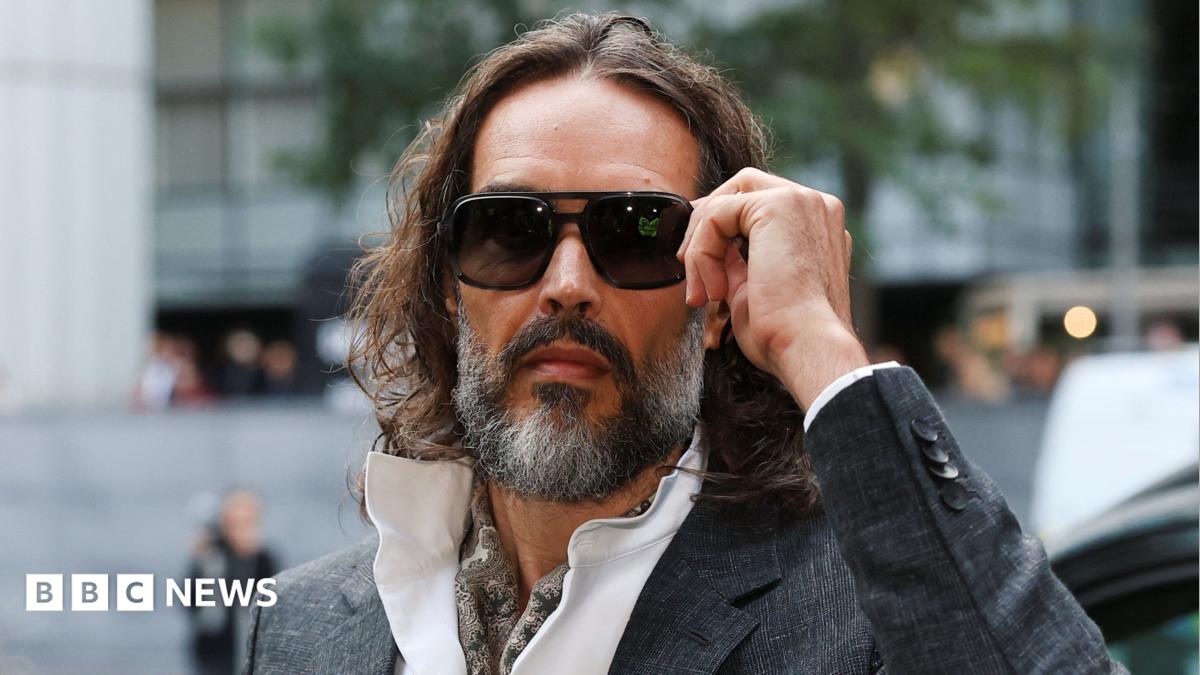
Russell Brand appears in court for start of rape trial
Russell Brand has appeared in court for the start of his rape and sexual assault trial.
The 51-year-old comedian and actor has been charged with three counts of rape, three charges of sexual assault and one allegation of indecent assault, which are alleged to have occurred between 1999 and 2009.
The trial at Southwark Crown Court in London, which could last up to 10 weeks, has now begun with the process of jury selection.
Brand pleaded not guilty to the charges during pre-trial hearings.
The comedian and actor arrived at court wearing a grey suit and sunglasses, accompanied by his wife Laura.
There was a large media presence at the court for the start of the trial, which is expected to last up to 10 weeks.

The ambiguous opening shot of ‘Fjord,’ explained
“We’re all hiding a little bit of our personality inside,” says director Cristian Mungiu of the characters in “Fjord,” a searing drama inspired by real Norwegian child welfare cases. “The film speaks about a limit of intimacy, after which you will need to make a choice not knowing precisely what happens. This is why I wanted the film to start at the end of a conversation in which you don’t really know what kind of punishments exist in this family.” Lighting and shallow focus deepen the uncertainty of a mother (Renate Reinsve) comforting her daughter (Vanessa Ceban) and a father (Sebastian Stan) waiting to have his say: “You need to admit when you’re wrong.” “You see the role of a mother who tries to play this more empathic part, while the father is the one playing the role of the educator who imposes his rules,” Mungiu says. “This shot speaks about our way of storytelling and designing everything to be ambiguous enough about their relationship. At the same time, this also speaks about a theme in the film: this idea that there isn’t anything like right and wrong and the truth. And we all believe that the truth belongs to us. And this is the problem.”


How Lincoln Riley earned his first signature win at USC
Times of Troy writer Ryan Kartje is out sick this week, but we didn’t want USC fans to miss extended coverage of the Trojans’ win at Penn State. Times sports editor Iliana Limón Romero is filling until Kartje returns.
USC coach Lincoln Riley lingered at Beaver Stadium on Saturday night, soaking up a hard-fought moment of vindication.
Riley celebrated out-coaching Penn State’s Matt Campbell like he won a national championship, offered gleeful remarks to NBC and reporters at his postgame news conference and shook the hands of USC fans who ventured to Happy Valley to catch the Trojans’ first road win over Penn State.
“It’s one of my favorite wins as a head coach no question, for so many reasons,” Riley said after the Trojans’ 31-23 victory. “Obviously phenomenal atmosphere, as good as it gets there in college football, so give credit to Penn State, their fans, but really proud of our team, man.”
And even Riley’s harshest critics had trouble arguing this wasn’t a meaningful win. A serious test his team passed. The kind of beast Riley and the Trojans have struggled to slay.
Yes, the Nittany Lions now sit 3-3 overall and 0-3 in Big Ten play, but White Out games are their super power. When an announced crowd of 114,419 fans commits to wearing white and roaring in unison, it’s hard for any visiting team to pull off a victory. USC had never won in State College, Pa., and Riley noted seemingly no one outside of his team believed the streak would end Saturday.
How did USC do it?
The Trojans figured out how to overachieve in every area that was considered a weakness entering the matchup.
Maiava lights up Nittany Lions

USC quarterback Jayden Maiava delivers an option pitch under pressure from Penn State’s Caleb Bacon on a play that scored a touchdown Saturday at Beaver Stadium.
(Isaiah Vazquez / Getty Images)
Last week’s Times of Troy highlighted in great detail the dropoff USC quarterback Jayden Maiava experienced since a shutout of Fresno State on Sept. 4.
Riley was asked this past week whether Maiava was playing through an injury and the head coach insisted no.
It now seems the real injury problem was the one that sidelined freshman receiver Trent Mosley for two games.
With big-play threats Mosley and Tanook Hines on the field, Maiava looked like an elite Big Ten quarterback dealing the ball in locations only his two ace receivers could catch.
Maiava completed 21 of 33 passes for 301 yards, three touchdowns and no turnovers.
Mosley had nine catches for 111 yards and one touchdown. Hines had four catches for 82 yards and another score. The passing attack opened up enough space for King Miller to earn 102 yards and a touchdown in 19 carries.
Of course fans have come to expect big highlight plays from a Riley offense, but Maiava was unquestionably tentative the past few weeks and the offense wasn’t clicking. It hit top gear at Penn State.

USC’s Christian Pierce punches the ball out of the hands of Penn State’s Brett Eskildsen, forcing a fumble in the fourth quarter at Beaver Stadium on Saturday.
(Isaiah Vazquez / Getty Images)
While Riley has caught considerable heat this season, the USC defense directed by Gary Patterson wasn’t far behind.
The Trojans have shown marked improvement with Patterson shifting from the sideline to the press box the last two games.
Patterson had always worked from the sideline, but he also was always surrounded by staff members who knew his system well. Riley said the goal of the move was to speed up communication.
Desman Stephens II returned from his one-game suspension and led USC in tackles with nine. Luke Wafle and Kennedy Urlacher earned sacks. Jahkeem Stewart played after being listed as a game-time decision on the injury report and recorded a quarterback hurry.
Jontez Williams, Prophet Brown and Elijah Newby were credited with breaking up one pass apiece.
Riley can deliver in crunch time

USc coach Lincoln Riley talks with quarterback Jayden Maiava during the Trojans’ win over Penn State Saturday at Beaver Stadium.
(Barry Reeger / Ap Photo/barry Reeger)
During an NBC interview minutes after the game ended and during his postgame news conference, Riley made it clear he heard those chants calling for him to be fired.
And he was well aware few expected USC to win at Penn State, with betting odds favoring a rebuilding Nittany Lions squad by 1 1/2 points.
Riley’s clock management and use of timeouts, along with his play-calling, unquestionably got the best of Penn State’s Campbell and helped seal the USC win.
Opening the second half with an onside kick set the tone that everything was on the table for USC.
When Riley kept his offense on the field on fourth and four at the USC 13 late in the fourth quarter. Campbell said he called timeout with 4:15 remaining to be sure he put his team position to go get the ball.
Riley was delighted Campbell burned his final timeout and sent on his punt team.
After his defense forced a turnover, Riley’s offense burned time off the clock and lined up for fourth down when Penn State jumped offside.
For once, the Trojans didn’t flinch when it mattered most. USC finished with three penalties for a loss of 25 yards, a remarkable improvement for a team that has racked up a lot of ill-timed penalties during Riley’s tenure.
USC was awarded the first down and took a knee to run out the clock on a victory.

USC’s Kameryn Crawford and Luke Wafle celebrate with fans after their win over Penn State Saturday at Beaver Stadium.
(Barry Reeger / Associated Press)
The Trojans celebrated in the rain before starting a bye week.
“I was not surprised at all that we played well,” Riley said. “I felt like we really had one of the best weeks of prep that we’ve had since I’ve been here. I thought team had a great mindset coming in.
”… I’ve only been a head coach at two schools. They’ve both been blue bloods. … Blue bloods are unbelievable. The advantages far, far outweigh the disadvantages, but the disadvantages at blue bloods are the outside noise is always going to be way over the top, no matter what’s happening. And your ability to deal with that as a coach and then your team is critical if you want to have success in these jobs.
“And I thought our team blocked out everything. Our team knows how good of a team we have in that locker room and didn’t flinch.”
House of Troy ‘Chapter 4: Higher Power’ episode drops this week

Lane Kiffin was stunned when he was fired on the tarmac at Los Angeles International Airport at about 3 a.m. on Sept. 29, 2013.
He called his wife, who was equally surprised by the abrupt end to his tenure leading the Trojans.
“And I remember saying, I do not want to wake up tomorrow,” Kiffin recounts in the latest episode. “My life’s over.”
Kiffin helps provide an inside look back at the highs and lows of his USC era during Episode 4 of “House of Troy” available Tuesday morning at latimes.com/sports and everywhere you get your podcasts.
Olympic sports spotlight
The USC women’s volleyball team has been through some big changes, with coach Brad Keller missing matches Oct. 2 and Oct 4 because of an illness. USC announced on Oct. 5 Keller is taking personal leave and assistant Megan Moenoa is the Trojans’ interim head coach.
The Trojans (8-8, 2-4 Big Ten) earned a 26-24, 25-19, 25-22 road win over No. 15 Indiana (10-5, 3-3) in Bloomington on Sunday. It was Moenoa’s first win since stepping in for Keller.
Sophomore Abigail Mullen led USC with 11 kills, four blocks and nine digs. Freshman Milly McGee earned 31 assists, six digs and one kill.
Polling the people
Please note the following poll included voting before USC’s win over Penn State. The results do help illustrate the stress level Riley faced entering the game.
We asked “Will Lincoln Riley be USC’s coach in 2027?”
After 1,976 votes:
Yes, 42.9%
No, 57.1%
In case you missed it
Listen now: Podcast ‘House of Troy’ features inside look at highs, lows of USC Athletics
Lincoln Riley tunes out the criticism, makes bold calls in USC’s win over Penn State
No. 19 USC runs out clock on road win over Penn State
Trojans aim to prove they can stay poised amid constant pressure at packed Penn State
USC, UCLA push to extend West Coast dominance of Big Ten women’s basketball
USC coach Lincoln Riley says Jayden Maiava isn’t hurt despite dip in performance
Times of Troy: What’s going on with USC QB Jayden Maiava?
Until next time …
That concludes today’s newsletter. If you have any feedback, ideas for improvement or things you’d like to see, email Ryan at ryan.kartje@latimes.com, and follow me on X at @Ryan_Kartje. To get this newsletter in your inbox, click here.

‘Energy ceasefire’: What’s behind Trump’s love-hate ties to Russian oil? | Explainer News
US President Donald Trump has announced an immediate “energy ceasefire” between Russia and Ukraine, days after easing sanctions on Russian fuel to tackle soaring domestic and global fuel prices.
The energy truce, announced on Sunday, marks another shift in Washington’s approach to Russian energy, as the Iran-US war and recent Ukrainian strikes on Russian energy facilities disrupted global oil supplies and pushed up fuel prices. Trump has even asked Ukraine not to attack Russian oil facilities, as Moscow remains a major exporter of diesel.
Recommended Stories
list of 3 itemsend of list
The spike in diesel prices in recent weeks has particularly put pressure on Trump’s Republican Party ahead of November’s midterm elections. Surveys show Americans hold the Trump administration responsible for the soaring fuel prices amid the unpopular US war on Iran.
“Attacks on refineries and energy facilities have taken capacity out of an already stretched global fuel market, pushing up costs for transport, agriculture and businesses, with the pain ultimately passed on to consumers,” Susannah Streeter, chief investment strategist at Wealth Club, told Al Jazeera, referring to the mutual attacks on energy sites by Ukraine and Russia.
“A genuine ceasefire could help protect supplies and ease some of that pressure, particularly as winter approaches.”
However, she warned it was too early to call it a “diplomatic breakthrough”, citing Ukrainian President Volodymyr Zelenskyy’s statement that the energy truce came as a surprise to him.
Trump’s decisions have drawn criticism from US politicians and European allies, who warn that allowing Russian fuel back into global markets could provide Moscow with new revenue to finance its war in Ukraine. In March, the Trump administration gave a sanctions waiver to Russian seaborne oil.
So, why has Trump repeatedly changed his position on Russian energy, and what is behind his latest decisions?
What is the ‘energy ceasefire’ Trump announced?
On Sunday, Trump said Russia and Ukraine had agreed to immediately stop attacking each other’s energy infrastructure.
“Both parties have agreed. Do not break it!” he wrote on Truth Social, without providing further details.
Ukrainian President Volodymyr Zelenskyy said he was not aware of the energy truce, saying the deal was “news to me” but welcomed the announcement nonetheless.
However, he said Russian drones continued targeting Ukrainian energy facilities, including a power plant in Kharkiv, after Trump’s statement.
“We are waiting for the details of the conditions between the Americans and Russians, and we are waiting to see one specific step the Americans are ready to take,” Zelenskyy said on Monday during a video address to a security conference in Warsaw.
“This energy ceasefire, it can work, and it can become a major step towards ending the war if the Americans truly step in now and make sure Russians respect it.”

Ukraine has repeatedly targeted Russian oil refineries, arguing that energy revenues help fund Moscow’s war. Russia, meanwhile, has attacked Ukraine’s electricity and heating infrastructure throughout the four-year conflict.
Academic Alexey Muriaev has urged caution over Trump’s announcement, questioning whether an agreement has actually been reached, and if so, what it entails.
“Is it about suspending attacks on oil refineries? And if that’s the case, then the situation would be inadequate, because Ukraine’s oil refineries have already been taken out by Russia’s strikes beforehand,” Muraviev, senior research fellow in Defence and Strategic Studies at Edith Cowan University, told Al Jazeera.
“So, in this sense, it would mean effectively Ukraine suspending unilateral action against Russia’s oil refinery facilities.”
Muriaev also linked the announcement to Trump’s diesel agreement with Russian President Vladimir Putin, suggesting it may be a signal to Zelenskyy.
“Attacking Russian oil refinery capability would probably be interpreted by Washington as an attack on US economic interests,” he said, referring to the agreement on diesel exports through April 2027.
What’s the state of global oil prices?
The ongoing conflicts in the Middle East and Ukraine have continued to keep global oil markets under pressure.
On Monday, Brent crude, the international benchmark, fell to about $103.04 a barrel following Trump’s ceasefire announcement and Russian diesel deal, while US West Texas Intermediate crude traded at about $90.96.
However, prices remain elevated because of the US-Israel war on Iran, which began on February 28, and disruptions in the Strait of Hormuz, a key waterway through which one-fifth of the world’s oil supplies flow.
Recent attacks on Saudi oil installations and airports by Yemen’s Houthis and the fighting around the Red Sea and Bab al-Mandeb Strait have put further pressure on oil prices.
Ukrainian attacks on Russian refineries have compounded diesel shortages, affecting a fuel essential for the agriculture and trucking industries.
The crisis prompted the Group of Seven nations last week to agree to release 100 million barrels of emergency oil and diesel reserves. The G7 decision came after pressure from Trump.
How has the Trump administration zig-zagged between punishing and embracing Russian energy?
Washington’s approach to Russian energy has shifted repeatedly since Moscow launched its full-scale invasion of Ukraine in February 2022.
Under President Joe Biden, the US banned Russian oil and energy imports in March 2022, seeking to cut off revenue used to finance Moscow’s war.
But Washington simultaneously supported a G7 price cap on Russian oil, designed to restrict Moscow’s earnings without removing too much supply from global markets.
Moreover, the Biden administration also accepted India’s continued purchases of Russian crude to prevent global prices from rising.
After returning to power last year, Trump initially intensified pressure on Moscow. In August 2025, his administration imposed additional tariffs on Indian goods over New Delhi’s purchases of Russian oil.

Two months later, Washington sanctioned Russian energy giants Rosneft and Lukoil, accusing Moscow of failing to seriously pursue peace negotiations to end the war in Ukraine.
However, Washington’s approach took a dramatic turn this year. On March 5, Washington issued a 30-day waiver allowing India to buy Russian oil stranded at sea, as disruptions to shipping through the Strait of Hormuz amid US attacks on Iran threatened global supplies.
A week later, the Trump administration expanded the exemption, allowing countries worldwide to buy sanctioned Russian oil and petroleum products already loaded onto tankers, with the waiver lasting until April 11.
In September, Trump urged Ukraine to stop attacking Russian refineries, blaming the strikes for global diesel shortages.
On October 9, he announced an agreement with Russian President Putin for Moscow to release more than 300,000 tonnes of diesel immediately, with another 1.5 million tonnes to follow.
Why has Trump changed his position on Russian oil frequently?
Trump’s shifting public position on Russian energy reflects ongoing, and often competing, political and economic pressures.
“Trump is caught between his geopolitical ambitions and the domestic political consequences of expensive energy,” Susannah Streeter of Wealth Club, told Al Jazeera.
She said Washington was trying to pressure Moscow over its war in Ukraine while simultaneously allowing Russian fuel sales that could generate additional revenue for the Kremlin.
“The shift may deliver a short-term political gain if supplies increase and prices ease, but it could come at a longer-term diplomatic cost,” she said, adding that the benefits appeared limited while the Middle East war continued.
US diesel prices reached a record $6.52 per gallon in September, placing Trump under pressure ahead of the November 3 midterm elections.
However, according to academic Muriev, the US president’s public rhetoric should be distinguished from his administration’s actions.
“I don’t really see inconsistency in Trump’s approach because, apart from his public rhetoric, apart from his frequent media posting, there’s been a more steady approach on behalf of his administration,” he told Al Jazeera.
He pointed to discussions between Russian and American officials in August and September, suggesting that negotiations over the latest diesel agreement may have begun well before Trump’s announcement last Friday.
Muriev suggested the timing of the announcement could be politically motivated, allowing Trump to claim a victory on energy prices before the midterms.
Moreover, Moscow also has an interest in helping Trump retain political influence because his administration appears more willing to negotiate with Russia than former President Biden was. Trump has been relatively more accepting of the Russian position on the Ukraine war and has even blamed Zelenskyy for failing to end the war.
“For Putin, it’s not just about scoring immediate economic benefit, but also achieving longer-term political and strategic goals,” Muriev said, referring to other issues such as Iran, cybersecurity, space cooperation and nuclear arms control.
The energy crisis has also created contrasting consequences for American businesses.
While higher oil prices can boost revenues for US energy producers, they increase operating costs for businesses dependent on fuel.
Susannah Streeter said cheaper diesel could provide relief to trucking companies, farmers and manufacturers, although the additional Russian supplies were unlikely to make a significant difference while disruptions in the Middle East continued.
She also warned that frequent changes to sanctions could create uncertainty for companies making long-term investment and supply-chain decisions.
“If sanctions are relaxed, reimposed or changed at short notice, companies face greater uncertainty over sourcing, compliance and the risk of being caught on the wrong side of a policy reversal,” she said.
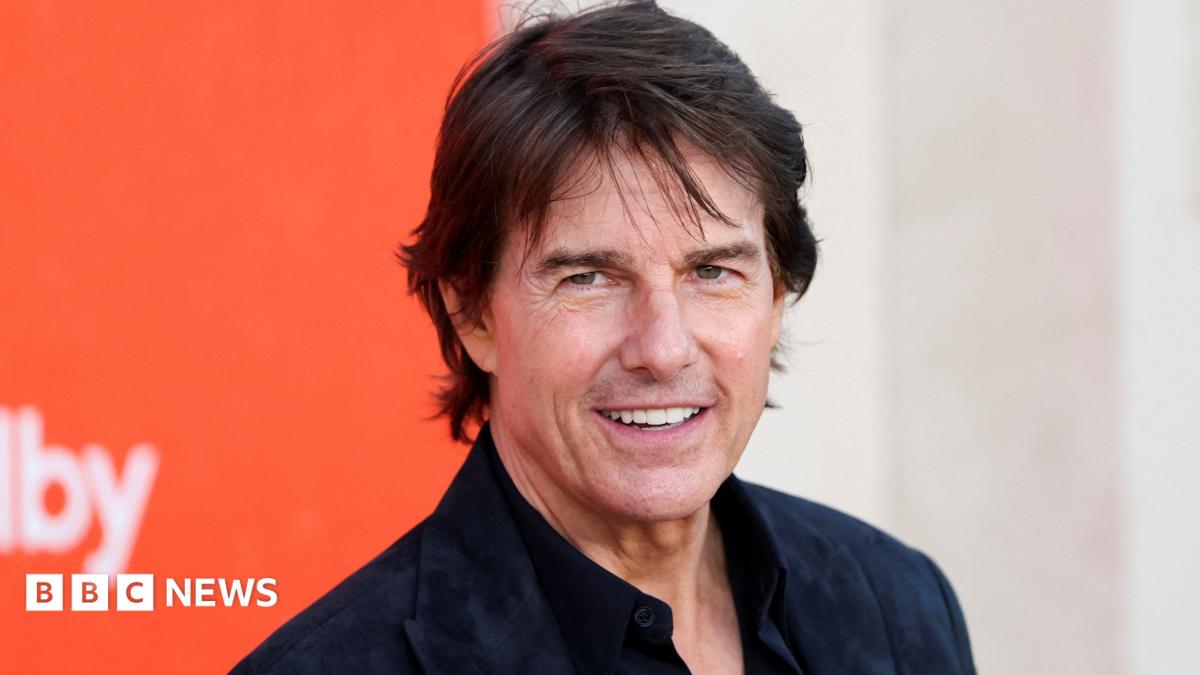
Tom Cruise film Digger could lose $245m as The Social Recknoning also struggles at box office
Tom Cruise’s latest film Digger is expected to lose around $245m (£185m), Hollywood analysts have said, after the film’s continuing poor performance in cinemas.
Ticket sales for the satirical black comedy, which stars Cruise as oil magnate Digger Rockwell, dropped by around 60% in the movie’s second weekend.
It brings Digger’s total box office takings to around $35m (£26m) globally so far. The film is estimated to have cost its studio Warner Bros around $280m (£211m) to make and market.
But Cruise said last week, external that he “never thought of movies when I’m making them [in terms of] opening weekend,” adding he was instead focused on making films that “hopefully will translate, last and evolve”.
The film’s takings relative to its budget mean it could become one of the biggest film flops in Hollywood history.
Digger’s performance is in sharp contrast to the success of IP-driven hits starring Cruise in recent years, such as new instalments of the Top Gun and Mission: Impossible franchises.
Digger is directed by Alejandro G Iñárritu, best known for films such as Birdman, Babel and The Revenant.
Hollywood trade publication Variety said Digger was expected to end its box office run with around $50m (£38m) worldwide.
The film would need around $350m (£264m) to break even, due to its budget, marketing costs, the portion of ticket sales that go to theatres and the likely spend on an awards season campaign.
However, a Warner Bros spokesman pushed back slightly on the figure, telling Variety the film’s break even point was $300m (£227m).
Digger was the last standalone release for the studio before its recent takeover by Paramount.

2027 Oscars power rankings: Top 10 best picture contenders right now
Venice, Telluride and Toronto have wrapped, and the New York Film Festival is winding down. Ovations have been meticulously timed. Existential crises have been parsed, not including the trauma induced by Tom Cruise’s “Digger,” which prudently skipped the festivals to delay, if only for a couple of weeks, the poisonous word of mouth from seeping out. (It’s still well worth seeing.)
And there have been, of course, prizes, including a Netflix movie, the Spanish maximalist melodrama “La Bola Negra,” winning Toronto’s People’s Choice Award. That’s a first for the streamer, which means we will again be asking the question: Can a Netflix film finally win the best picture Oscar?
If you’ve seen “The Odyssey,” you probably know the answer to that question. But with more than five months (!) until the 99th Academy Awards, it’s a bit early for ironclad guarantees, even if it feels like it would take the winds of Poseidon to blow “The Odyssey’s” best picture campaign off course.
But it’s not too soon to roll out a first set of Oscar power rankings for best picture. With apologies to “Obsession,” “Fjord,” “Possible Love,” “You Can See Everything,” “Elsinore,” and whatever other movies you love (or look forward to loving), let’s start counting.
10. ‘Tender Loving Care’

(Joseph Lynn / Thin Man Films / Bleecker Street)
Because of ongoing health issues, Mike Leigh has said that this warm and wrenching drama will be his last movie. If so, it’d be quite the capper to a career that has netted him seven Oscar nominations, five for his screenplays and two for direction. Yes, only one of his movies, “Secrets & Lies,” has been nominated for best picture. But “Tender Loving Care,” centered on two social service workers navigating the fraying social safety net and, in one case, anxiety about aging parents, possesses a bracing humanity full of compassion and urgency. It’s also quite funny. And it boasts a great cast, including newly minted Emmy winner Kate O’Flynn, as charming here as she is on “Widow’s Bay.” Leigh has more than earned a final curtain call with this one.
9. ‘Club Kid’

Jordan Firstman’s sincere, funny and genuinely moving debut feature has him playing a queer New York underground party promoter blindsided by the arrival of the 10-year-old son previously unknown to him. You could take issue with the uncomplicated perfection of the child, who has exquisite taste in music (Cocteau Twins, really?) and barely a trace of trauma despite the harrowing event that landed him in New York. But “Club Kid” is so assured and heartwarming that you can’t muster the energy to object. There’s probably going to be one feel-good movie nominated, and if it’s between this and “I Play Rocky,” I’ll cast my lot with the one that doesn’t rely so heavily on re-creating the familiar.
8. ‘All of a Sudden’

This 196-minute movie unfolds at, let’s just say, a leisurely pace, and includes a near-20-minute scene in which a character lays out the flaws of late-stage capitalism using a whiteboard. And it’s riveting. Or at least engaging. It’s certainly audacious, this drama about a hardworking director of a Parisian nursing home and the way a chance friendship changes her life. The Oscars’ best picture field now routinely includes two international movies, and Ryûsuke Hamaguchi’s dreamlike meditation on mortality and human connection feels like a sure bet to make the cut. Virginie Efira and Tao Okamoto shared the best actress prize at Cannes and merit attention from Oscar voters as well.
7. ‘The Debut’

Spoiler alert: One awards-season shoo-in is Julianne Moore winning every lead actress prize for her bravura work in this delightful Jesse Eisenberg comedy. Moore plays Mona, a meek, thoroughly unseen wife and mother who impulsively decides to audition for a community theater musical despite having no experience. The movie earned a huge response at its Telluride premiere, though there were some quibbles about the surprising, surreal turns the story takes. C’mon. Isn’t that precisely what we want from a film? With Moore, co-star Paul Giamatti, Eisenberg’s screenplay and original song (Eisenberg wrote several numbers for the film’s fictional musical) assured spots, a best picture nod feels undeniable.
6. ‘The Invite’

(Atsushi Nishijima / A24)
Olivia Wilde’s dinner-party dramedy boasts a killer quartet — Wilde and Seth Rogen as longtime marrieds nursing resentments, Penélope Cruz and Edward Norton playing their upstairs neighbors — and expert direction from Wilde, who navigates the movie’s tonal shifts with authority. It’s wickedly funny and unsentimental and pulls off a bittersweet ending that’s ambiguous enough to keep you talking long after the film ends. One of the year’s most satisfying pleasures.
5. ‘Project Hail Mary’

(Jonathan Olley / Amazon MGM Studios)
Speaking of endings, how many did “Project Hail Mary” have? Two? Three? I lost count. And it doesn’t matter. This was the upbeat end-of-the-world movie that audiences needed at a time when the possibility of human extinction feels uncomfortably real. In a year full of Spielberg knockoffs (and an uneven movie from the man himself), this will be the one left standing.
4. ‘Wild Horse Nine’

(Diego Araya Corvalan / Searchlight Pictures)
Martin McDonagh’s melancholy irreverence plays well with Oscar voters. His last two movies, “Three Billboards Outside Ebbing, Missouri” and “The Banshees of Inisherin,” earned best picture nominations and a combined 16 nods. “Wild Horse Nine,” a biting buddy dramedy about two mismatched CIA assassins (John Malkovich and Sam Rockwell), should continue the filmmaker’s success and may even catapult Malkovich to a long-overdue Oscar. At the very least, it gave him his best role in decades.
3. ‘La Bola Negra’

The filmmakers, Javier Calvo and Javier Ambrossi, are talented and charismatic, former romantic partners who still work together because that’s how Europeans roll. Los Javis (they even have a fun nickname) won the directing prize at Cannes, the first of several festivals that their movie conquered, culminating in that audience award at Toronto. With its three interconnected stories that follow queer men through nearly a century of Spanish history, “La Bola Negra” has an epic feel and emotional payoff that could carry it far. Netflix is all in, opening it in select theaters Oct. 16 and giving it an exclusive 46-day theatrical window, the longest it has afforded any movie. We’ll see if that puts it into the cultural conversation in a way that has eluded other Netflix contenders.
2. ‘Dune: Part Three’

Can Denis Villeneuve’s third and final “Dune” movie, which hasn’t screened widely for press, take the “Lord of the Rings” trilogy path to a best picture victory? If there’s resistance to giving Christopher Nolan back-to-back best picture winners, the greatest threat might come from a movie occupying the same lane, an auteur-driven epic lauded by critics and embraced by audiences. The second (and superior) “Dune” won just two Oscars, compared to the six taken by 2021’s “Dune: Part One.” Perhaps voters were playing the long game.
1. ‘The Odyssey’

(Melinda Sue Gordon / Universal Pictures)
Maybe you saw it when it opened in July, contributing to its $1.75-billion box office. Maybe you’re still trying to see it in Imax 70 mm, the way God (i.e., Christopher Nolan) intended. Maybe you agree with translator Emily Wilson, who thinks Nolan’s movie “lacks psychological, emotional, political and ethical depth” and that its writing is “abysmal.” Whichever side you’re on, “The Odyssey” is probably going to sweep through the Oscars, owing to its craft and thrilling showmanship, its stellar acting and that moment when Odysseus’ dog recognizes his long-absent master and wags his tail before heading off to Elysian Fields.

Euro Tech Holdings enters Norway with PortoBallast joint venture

Zolak
Euro Tech Holdings Company Limited (CLWT) announced its entry into the Norwegian market through a 50/50 joint venture between its wholly owned subsidiary, Euro Tech Global Pte Ltd, and Sea Clean AS.
The newly formed joint venture, CleanPACT Environmental and Marine

23 teams remain unbeaten in local high school football
Going into Week 8 of the high school football season, there are still 23 teams unbeaten in the Southern Section and City Section.
The three City teams are Cleveland, Granada Hills Kennedy and Marshall.
There are 20 in the Southern Section: Santa Margarita, Sierra Canyon, San Clemente, Corona del Mar, Sherman Oaks Notre Dame, San Jacinto, Huntington Beach, Orange, Charter Oak, Mary Star, Bonita, Desert Christian, Los Altos, Nordhoff, San Marino, Nogales, Viewpoint, Royal, St. Bernard and Rancho Alamitos.
There are tough league games ahead, starting on Friday with Santa Margarita at St. John Bosco and Bishop Amat at Sherman Oaks Notre Dame.
Sierra Canyon (7-0) remains the most likely to go 10-0, with Mission League games still remaining against Chaminade, Sherman Oaks Notre Dame and Bishop Amat.
This is a daily look at the positive happenings in high school sports. To submit any news, please email eric.sondheimer@latimes.com.
Ukraine’s Zelenskyy accuses Russia of violating Trump’s ‘energy ceasefire’ | Russia-Ukraine war News
The EU also announced that it officially added almost 1,600 new sanctions on Russia’s military industrial complex.
Published On 12 Oct 2026
Ukraine’s Volodymyr Zelenskyy has accused Russia of violating the “energy ceasefire” that United States President Donald Trump unilaterally announced at the weekend and promised to respond if the attacks continue.
Speaking at the Warsaw Security Forum via videolink on Monday, the Ukrainian president urged the US to step in to ensure that Moscow abided by the truce, noting that there have already been “Russian violations of the energy ceasefire announced by President Trump.”
Recommended Stories
list of 4 itemsend of list
“We are waiting for the details of the conditions between the Americans and Russians, and we are waiting to see what specific steps the Americans are ready to take,” said Zelenskyy, who expressed surprise at the ceasefire deal.
“This energy ceasefire, it can work, and it can become a major step toward ending the war if the Americans truly step in now and make sure Russians respect it … If Russia does not agree to an energy ceasefire, we will respond,” Zelenskyy told the Warsaw Security Forum.
Trump’s announcement on Sunday that the two countries had agreed to an “energy ceasefire” caused confusion. It came two days after Trump declared a temporary easing of US sanctions on Russian diesel, prompting outrage from European allies and Kyiv, who said it would only embolden Russian President Vladimir Putin.
Both Ukraine and Russia have been launching mutual attacks on each other’s energy infrastructure for months, adding to upward pressure on global energy prices that have risen amid the US-Israeli war on Iran.
Zelenskyy initially denied any knowledge of the agreement and said it was “news to him,” according to Axios.
Trump has previously taken to his Truth Social account to announce truces or other arrangements before either Kyiv or Moscow confirmed them.
“An energy ceasefire and other steps to reduce escalation and guarantee security are truly needed here in reality, not just on Truth Social,” Zelenskyy added.
European leaders expressed encouragement at the proposed ceasefire, but agreed with Zelenskyy that it had not taken effect.
“I have not noted, over the last 48 hours, any energy ceasefire coming from the Russian side,” French President Emmanuel Macron told reporters at a Paris autoshow.
At the Warsaw Security Forum, Polish Prime Minister Donald Tusk said that “Russia is not interested in a ceasefire, de-escalation, or peace … that is why I will go to Brussels to urge all European partners to consider increasing sanctions.”
In Brussels, the European Union announced that it has officially added almost 1,600 new sanctions on Russia’s military industrial complex, including individuals and entities involved in its four-and-a-half-year war, in a bid to maintain pressure on Moscow.
“This is the single largest expansion of our sanctions list since Russia started its war,” EU foreign policy chief Kaja Kallas wrote online. “Europe is again showing a united front … We are making it significantly harder, slower and more expensive for Russia to produce the weapons it uses to kill Ukrainians,” she added.
Meanwhile, Russia attacked Ukrainian gas production facilities belonging to its state oil and gas company Naftogaz in the Kharkiv region overnight, which caused a fire, the company said on Monday.
“The attack damaged critical equipment. Our employees are doing everything possible to repair the damage as quickly as possible and prevent risks to the stable operation of the energy system,” Naftogaz acting CEO Sergii Fedorenko wrote on Telegram.
A day earlier, Zelenskyy had said that Ukraine was ready to halt attacks on Russian oil refineries if Moscow ceased its own attacks on Ukrainian energy infrastructure.

‘Our £4k family holiday was ruined by filthy hotel which left son, 5, on antibiotics’
They said the hotel was dirty and food on the all-inclusive trip was undercooked. They also claimed to see faeces in the swimming pool on more than one occaision

Samantha Smithson with husband Dion Hart, their two children and Samantha’s parents(Image: SWNS)
A family say their £4,000 holiday was ruined by a “filthy” hotel which left their five-year-old on antibiotics. Samantha Smithson, 34, and husband Dion Hart, 31, took their two children – aged two and five- and Samantha’s parents away to Tunisia in August.
But when they arrived at their hotel on August 10, they were apparently put in a room that had just a double, which Samantha shared with the children, and a single bed, which Dion took. The couple also claim they found exposed cabling, wobbly balcony railings, a smashed light, and a shower tray that did not drain inside the room.
They said the hotel was dirty and food on the all-inclusive trip was undercooked, so they shelled out around £500 extra buying food from outside the hotel. They claimed to notice faeces in the swimming pool twice and alerted staff. Booking provider On The Beach has offered the family a partial refund of £496.
Samantha, an operations manager, from Canterbury, Kent, said: “It was the most horrendous experience. Our room wasn’t safe and I spent the whole week feeling anxious about the kids. I was in tears all the time, it was awful. We just couldn’t wait to get home.
“I do not believe that £496 fairly reflects what our family experienced or the significant difference between the holiday we paid for and the holiday we actually received.”
The family said rubbish was left out, and their towels were dirty. Samantha said the hotel had no air-con in the 40-degree heat. Playground equipment was broken, and the advertised spa and gym were not open, Samantha said.
Their five-year-old has been given antibiotics for 40-degree temperatures and gunky eyes since coming home, and doctors said it was likely caused by dirty water, Samantha said. Samantha and builder Dion booked the holiday, in the Abou Sofiane Sousse hotel and aqua park, through online-travel-agent On The Beach.
Samantha made a complaint on August 17 and on August 25, and was offered a partial refund 28 days later. Samantha, who shared the story on Talk to the Press, said: “It’s just unacceptable to book in more people than they have capacity for, and to take bookings for rooms they don’t have.
“I’m really disappointed that On The Beach didn’t help us at all. We trusted them with our money and have been completely let down. We spent the whole time trying to contact them, but you can’t speak to anyone.
“It was filthy everywhere; it was horrible. Our kids were hungry the whole time because the hotel food we had paid for was so bad, and dangerous.”
A spokesperson for On the Beach said: “We’re sorry that Ms Smithson was disappointed with her hotel stay and we have been in contact directly in an effort to resolve her complaint.
“A partial refund of the hotel cost has been offered and has not yet been accepted.”
Abou Sofiane Sousse Hotel and Aqua Park were contacted for comment.

Delcy Rodríguez is Bending Over Backward to Accommodate Washington
Trump has boasted repeatedly that “to the victor belong the spoils,” in reference to Venezuelan oil. (Presidential Press)
Venezuelan provisional president Delcy Rodríguez’s all-smiles photo op with Trump in a Manhattan hotel on September 22 proved too much for some of her erstwhile supporters. For the Spanish leftist Juan Carlos Monedero, a staunch defender of Hugo Chávez, Maduro and at first Rodríguez, her New York appearance “clashed with the previous socialist and anti-imperialist discourse” of her movement.
Shortly before the encounter, Rodríguez evaded a reporter’s question about whether she would visit jailed Venezuelan president Nicolás Maduro in Brooklyn. Her decision to stay clear of Maduro is consistent with her attempt to chart a new course for Venezuela.
Rodríguez became interim president following the bloody U.S. military incursion on January 3, 2026 that resulted in the kidnapping of Maduro and the First Lady Cilia Flores. Facing the prospect of a second, more devastating military attack, Rodríguez shifted sharply toward Washington on foreign and oil policy while reshuffling the public administration and military at the expense of hardline pro-Chávez (Chavista) loyalists.
Rodriguez’s strategy goes too far
Rodríguez’s strategy from the outset was to demonstrate that she was not cowardly submitting to Washington’s dictates or acting as a collaborationist a la Vichy France. Her wholehearted embrace of policies pushed by Washington is designed to dispel any impression that she is bowing to U.S. pressure. On many key issues, she has become as Catholic as the Pope with regard to Trump, while retaining the Chavista label. Shortly after January 3, Rodríguez affirmed “there is no foreign agent” governing Venezuela, a claim unconvincingly echoed by the second in command Diosdado Cabello who alleged “we don’t depend on anyone.”
In a different vein, pro-Rodríguez analysts argue that the interim president has zero options given the U.S. threats. Either submit to Washington or expect massive bombardment and/or a return of the old regime.
But there is clear evidence that Rodríguez has some latitude, albeit limited, which she has declined to fully exercise. That’s because Trump is fully wedded to his partnership with her.
Trump decided to recognize Rodríguez rather than right-wing leader María Corina Machado – much to the disappointment of Miami-based anti-Communist hawks – for good reasons. A confidential CIA report requested by the Trump administration prior to January 3 warned that the Venezuelan opposition lacked support within the pro-Chavista armed forces as well as the police force. The conclusion was obvious: turning power over to Machado was a recipe for chaos, if not civil war.
Trump has assimilated the Pentagon’s assessment of “de-Baathification” following the U.S. invasion of Iraq as a “complete disaster,” responsible for the endless internecine conflict in that nation. Trump has repeatedly invoked the Iraq fiasco when discussing the Rodríguez government. At one press conference he noted with reference to Venezuela “We had, as you remember, Iraq, where everybody got fired…And you know what they turned into? ISIS. And we don’t want that.”
Moreover, the decision to recognize Rodríguez rather than Machado was not taken on a whim but rather followed months of careful deliberation at the highest level of the Trump administration. He now touts his partnership with Rodríguez as a major success at a time in which he has very few of them to tout. It is thus unlikely that Trump will readily turn his back on Rodríguez. The upshot is that Rodríguez has some room to maneuver.
How much wiggle room?
The Chavista movement under Rodríguez has retreated from its defining banner: the uncompromising defense of national sovereignty. To its credit, the movement’s leadership continues to cast itself as an opponent of the traditional elite and a defender of the collective production units known as “communes.” But these positive features fall short for a movement that once raised such high expectations. While retaining a sense of realism, Rodríguez could have at least maintained a more neutral position on issues that compromised national sovereignty.
One of the most troubling examples was Venezuela’s collaboration in the extrajudicial killing of Niño Guerrero, leader of the criminal Tren de Aragua, in a U.S. Southern Command missile strike in the state of Bolívar in June 2026. The Venezuelan government, which provided intelligence information to the Southern Command, issued a statement in which it “congratulated” all participants in the operation. In doing so, Caracas lent credence to Trump’s false narrative that drug traffickers are terrorists. At the very least, the Rodríguez government could have stayed out of the operation while maintaining a neutral public posture.
Equally striking was the marked presence of Israeli military officers, including senior army officer Brigadier General Elad Edri, at a formal farewell meeting on July 21 in which Rodríguez thanked Israel for its earthquake relief efforts. U.S. and Israeli military involvement in the recovery operations drew objections from Chavista social movements, such as the famed Caracas barrio-based Coordinadora Simón Bolívar. They especially resented the conspicuousness of the presence of military personnel of both nations, symbolized by a controversial photograph of a beaming Diosdado Cabello shaking hands with U.S. Southern Command chief Francis L. Donovan, who had overseen the January 3 incursion. This, then, was another instance in which the Chavista leadership offered Washington a level of support that went well beyond what was necessary given the circumstances.
Still another example of the lengths to which Rodríguez has gone in accommodating Washington is her willingness to accept the Pentagon’s participation in the Venezuelan oil industry. The mega oil deal reached between Washington and Caracas in late August gives the Pentagon 35 percent ownership of the operating company that is to exploit 17 Venezuelan oil fields representing nearly 150 percent of U.S. proven reserves. But there is no precedent for the Pentagon’s equity ownership of this nature which is of dubious legality. Venezuelan analyst Phil Gunson, who has been briefed on the deal, told the Guardian that the major oil companies “are concerned about the irregularities.” From Venezuela’s viewpoint, the involvement of the Pentagon in the nation’s oil business makes little sense.
From the perspective of the Pentagon and its Israeli counterpart, Rodríguez’s conciliatory stance appears to be a vindication and a reversal of Chavista defiance – if not a payback for past grievances. In January 2000 Chávez turned back a sizable relief operation that the same U.S. Southern Command was in the process of sending in response to catastrophic floods, which had devastated the state of Vargas the previous month. Chávez’s decision was an embarrassing rebuff for the Pentagon, if not humiliating.
Along similar lines, Roni Kaplan, spokesperson for the Israeli armed forces and a member of his nation’s aid mission, told CE Noticias Financieras-English on July 22, “it’s like when you fight with someone and they come to apologize, and when they say they’re sorry, you say, “‘I’ve already forgotten all about it.’” Kaplan’s statement puts in sharp relief the extent to which Rodríguez’s posture breaks with the Chavista past.
Where things now stand
The pro-Chavista think tank Misión Verdad puts a positive spin on Rodríguez’s strategy. According to its take, the Manhattan meeting with Trump marked the point at which “Washington’s asymmetric coercion and the strategic adaptation deployed by the Chavista movement converge.” For both Trump and Rodríguez, the aim was the same: “stabilization… to reduce political costs by sacrificing ideological orthodoxy.” The asymmetry according to the Misión Verdad statement “does not erase the agency of the quantitatively weaker actor; it alters its tactics, shifting it from open confrontation toward strategic adaptation.”
The adaptation demanded by the asymmetry is captured in a slogan championed by Diosdado Cabello: “Venezuela: Reborn United.” Strip away the Misión’s lofty language, and the message is that the Chavista movement needs to make a fundamental break with its past in important ways.
Adaption is understandable given the circumstances of January 3. But if Chavismo abandons the banner of defense of national sovereignty, little remains of what defined the movement. And that is precisely where the strategy of being “as Catholic as the Pope” in accommodating Washington has led.
That’s not to say there are easy answers or that an alternative strategy would necessarily succeed, particularly given Trump’s notorious unpredictability. Nor does it mean that Rodríguez deserves to be demonized as a sellout as so many on the left are doing. Such demonization underestimates the challenges and uniqueness of the situation, at the same time that it divides the solidarity movement. The relative unity of the Chavista leadership has been one of its strengths ever since Chávez’s death in 2013, and the same needs to be preserved in the solidarity movement.
The problem is that the options available to Rodríguez are scarce, whereas Trump has many. He need not pull off another January 3. Nearly all Venezuela’s oil-derived revenue is in a U.S. account handled by Marco Rubio. All Rubio has to do is to withhold it or scale it back whenever Rodríguez steps out of line with Washington.
Even with this reality hanging over her, Rodríguez and other Chavista leaders have put forward two major demands: free Maduro and Flores and an end to the sanctions, which remain largely intact. Rodríguez, however, has not put these two demands front and center in her dialogue with the Trump administration – not by a long shot.
As pressure from Miami grows for Venezuela to set an electoral timetable, the position that elections and harsh sanctions are incompatible would shift responsibility for any delay onto Washington. Last Spring, Chavista leader Ernesto Villegas, who headed the government’s Program for Peace and Democratic Coexistence, called for “elections free of sanctions.” Linking elections explicitly to the lifting of sanctions would allow the Rodríguez government to reclaim some distance from Washington, even as U.S. blackmail severely limits its ability to fully assert national sovereignty.
Steve Ellner is a retired professor of the Universidad de Oriente in Venezuela where he lived for over 40 years and is currently Associate Managing Editor of Latin American Perspectives. He is the author and editor of over a dozen books on Latin American politics and history. In 2018 he spoke in over twenty cities in the U.S. and Canada as part of a Venezuelan solidarity tour.
The views expressed in this article are the author’s own and do not necessarily reflect those of the Venezuelanalysis editorial staff.
Source: Counterpunch

How to get tickets for Popinjay Cavalier: What time they go on sale for Quentin Tarantino’s play with Sacha Baron Cohen
QUENTIN Tarantino is swapping the big screen for the stage with his first West End play.
The Popinjay Cavalier is written and directed by the Pulp Fiction filmmaker, with Sacha Baron Cohen taking on the leading role.
And theatre fans don’t have long to wait to get their hands on tickets. Here’s everything you need to know.
What time do The Popinjay Cavalier tickets go on sale?
Tickets for The Popinjay Cavalier go on general sale at 12pm on Monday, October 12, 2026.
Fans who previously signed up for priority access can buy tickets earlier, with that sale opening at 9am.
Tickets can be bought through the production’s official website at popinjayplay.com.


Prices start at £25, while more than 16,000 tickets across the run will cost less than £50.
The show is booking until June 13, 2027.
Demand is likely to be high given Quentin Tarantino’s huge film following and Sacha Baron Cohen’s first major leading role on a West End stage.
Anyone hoping to go should have the official ticket page ready before the sale opens.
When is The Popinjay Cavalier on in London?
The Popinjay Cavalier begins previews at the Phoenix Theatre in London’s West End on February 23, 2027, while its official opening night is on March 18.
At the time of writing, the limited run is booking until June 13, 2027.
Situated on Charing Cross Road, The Phoenix Theatre is currently home to Stranger Things: The First Shadow.
Further casting for Tarantino’s production is still to be announced.
What is The Popinjay Cavalier about?
The play is set in Europe during the 1830s and has been billed as a swashbuckling comedy about deception and disguise.
It follows actor Rupert Sebastian Thomas Jr as he travels to Paris to perform at the Comedie-Francaise.
But after making some badly chosen comments about the French, his journey across the Channel takes a much more dangerous turn.
The production promises sword fights, acrobatics and adventure, drawing inspiration from classic Hollywood swashbucklers.
Tarantino said he was “keen with anticipation to give the West End a great night out.”
Who is starring in The Popinjay Cavalier?
Sacha Baron Cohen is set to play the title role, Rupert Sebastian Thomas Jr.
He is best known for creating characters including Ali G, Borat and Bruno, as well as appearing in films including The Dictator and Les Miserables.
The British comedian and actor said: “Quentin called, I said yes before he even got to say his first ‘motherf***er’.
“When the best director in the world calls, you don’t ask questions.
“I am beyond delighted that we will be losing our West End virginity together. I have made him promise not to be gentle.”
The pair have almost worked together before.
Tarantino cast Sacha Baron Cohen in his 2012 Western Django Unchained, but the actor ultimately pulled out to appear in Les Miserables.
The Popinjay Cavalier is being produced by Sony Pictures Entertainment and Sonia Friedman Productions.
Tarantino first revealed in 2025 that he had completed a play and intended to make theatre his next major project.
Now audiences will finally get to see what his unmistakable style looks like live on a West End stage.

Microsoft’s Brad Smith calls for AI rules, noting milk faces more regulation than tech

tupungato
Microsoft’s (MSFT) president called for urgent global regulation of artificial intelligence, advocating for independent evaluators to assess new developments and warning that AI faces fewer safety standards than milk.
In an interview with the BBC published on Monday, Brad Smith said a

Republican Steve Hilton leans on cheeky ads, voter discontent in long-shot campaign for governor
In rural Modoc County, in California’s remote northeast corner, Republican gubernatorial candidate Steve Hilton donned a beige cowboy hat and climbed atop a horse.
Riding through a grassy field, with his dress shoes in the stirrups, Hilton lamented to a camera that California was “completely being ruined by killjoy bureaucrats” who put too many rules on fun stuff like beach fire pits and bars that stay open extra late.
In coastal San Luis Obispo County, Hilton boarded a bright yellow dune buggy at the Oceano Dunes State Vehicular Recreation Area and called the California Coastal Commission “idiots” for trying to end off-road beach driving.
And in the Central Valley, he waved the ceremonial green flag at a stock car race at the Madera Speedway, where he was named grand marshal of the annual Harvest Classic. (The designation caused a minor uproar, prompting the operator of the racetrack to make a fake online concession menu that offered a hot dog and soda for $6 for Republicans and $17.50 for Democrats.)
If it seems like Hilton — the British immigrant and former Fox News talk show host — is just about everywhere, taking just about every media interview that comes his way, well, that’s the point, he says.
He has logged thousands of miles on the proverbial campaign trail, visiting all 58 counties in his quest to lead the nation’s most populous state, where no Republican has been elected to statewide office in 20 years.
Meanwhile, his heavily favored — and far more staid — opponent, Democrat Xavier Becerra, has kept a comparatively low profile, agreeing to just one debate with Hilton and holding few public events, mostly in urban areas.
In a phone interview while driving through Los Angeles, Hilton said: “Whether I’m in Humboldt or Del Norte or Siskiyou County, my joke is, when people say, ‘Where do you live?’ I say I live in the Hampton Inn somewhere in California because we’re basically in a different place every night.”
The odds are against him.
Sure, California produced GOP presidents Richard Nixon and Ronald Reagan. But today, Democrats outnumber Republicans nearly 2 to 1 in the state, and the current White House occupant shares a mutual disdain with the vast majority of Golden State voters.
Hilton was endorsed during the primary by President Trump, who suggested at a campaign rally this month that Iran could “take out” Los Angeles and San Diego, drawing swift outrage from both Democrats and Republicans.
Hilton has tried to walk a fine line, appealing to the 6 million Californians who voted for the president in 2024 while simultaneously downplaying Trump’s support.
This summer, Hilton took out full-page ads in The Times and the San Francisco Chronicle asking: “Can you be anti-Trump and still vote for me?”
“Yes, I’m the Republican,” it said. “The ‘Fox News guy.’ Endorsed by Trump. But this election is not about who you hate in Washington. It’s about what you love here.”
Corrin Rankin, chairwoman of the California Republican Party, said that 16 years after the state’s last Republican governor, Arnold Schwarzenegger, left office, “it’s safe to say Democrats own all the problems in California.”
“You can’t blame Trump for what’s going on here in California,” she said. “We feel really good about Steve Hilton’s campaign. He is working so hard, up and down the state.”

Hilton has blasted California Democrats as entitled, saying they assume Becerra will cruise to victory in the race to replace termed-out Gov. Gavin Newsom simply because he has a “D” beside his name on the Nov. 3 ballot.
Hilton frequently quotes a September podcast interview by Los Angeles’ Democratic mayor, Karen Bass, who mocked his British accent and said: “The governor’s race right now is over. Our governor’s name is Xavier Becerra. You don’t need an election on Nov. 3. A Republican cannot win in this state.”
Hilton told The Times that Democrats “feel they don’t have to earn your vote. … They can deliver results that are bad as ever, and they don’t need to work hard to deliver results for people or earn their support. And I think it’s that attitude that is going to be their downfall.”

Steve Hilton has the support of 33% of likely California voters, according to a recent poll, while rival Xavier Becerra has 58%.
(Jason Armond / Los Angeles Times)
Becerra is a former member of Congress who represented Los Angeles, and he was the California attorney general and U.S. Health and Human Services secretary under President Biden. He has the backing of 58% of likely California voters, compared with 33% who support Hilton, according to a poll released late last month by the UC Berkeley Institute of Governmental Studies and co-sponsored by The Times.
The poll showed that voters’ top concern was reducing the state’s high cost of living — followed by fighting Trump administration policies.
Jonathan Underland, a spokesman for the Becerra campaign, said, “Trump has browbeaten his way into the California political discourse” with his mass deportation raids, his willingness to stonewall federal wildfire relief funds for political reasons, and his aggressive tariffs that many blame for driving up costs nationwide.
“Hilton is trying to win an election, so he tries to frame himself as someone who can appeal to the broader electorate,” Underland said. “But at the end of the day, he has the albatross around his neck, which is Trump, who is openly hostile to California.”

Hilton cuts a colorful and pugnacious figure on the campaign trail. He eschews ties and jackets, favoring T-shirts with punchy phrases like, “$ave With Steve” and “WAKE UP” superimposed on a California license plate — a reference to his proposal to eliminate the state’s Department of Motor Vehicles and slash vehicle registration fees, which would cut billions in state revenue.
He wears one bracelet with the name of slain right-wing activist Charlie Kirk, whom he called an “incredibly close friend.” Another reads, “Save Girls’ Sports,” calling back to this spring, when he traveled to the state high school track and field championship in Clovis to protest the participation of a transgender athlete.

Republican nominee Steve Hilton protests transgender athletes’ participation in girls’ sports during a May 29 news conference in Clovis, Calif.
(Tomas Ovalle / For The Times)
Hilton, 57, was born in London to parents who fled conflict in their native Hungary during the 1956 uprising against the Soviet-controlled communist government and later anglicized their surname, Hircsák, to Hilton.
He was a senior advisor to British Prime Minister David Cameron, a member of the Conservative Party, though the men’s once-close friendship never recovered from Brexit, Britain’s withdrawal from the European Union. Hilton supported it; Cameron did not.
Hilton earned a reputation as eccentric but savvy, pushing the Conservative Party to embrace same-sex marriage and more climate-friendly policies. Dubbed “the barefoot revolutionary” for his refusal to wear shoes, Hilton was satirized on the BBC political sitcom “The Thick of It” as Stewart Pearson, the Tories’ “eco-friendly, media-savvy, blue-sky-thinking” communications director.
He and his family moved to California in 2012 after his wife, Rachel Whetstone, was promoted to lead global communications at Google. For six years, he hosted “The Next Revolution,” a weekly Fox News show from which Trump regularly tweeted clips.
In 2015, the couple purchased their home in the Silicon Valley city of Atherton, one of the wealthiest ZIP Codes in the U.S., for $12.5 million, property records show.
Whetstone now leads communications for Sierra, an AI startup founded by OpenAI board Chairman Bret Taylor and Clay Bavor, who met while working at Google. Hilton and Whetstone’s 2024 tax returns show they had a combined household income of $7.5 million, which included his reported earnings of $250,000 from Fox News and her $6.7 million from her then-employer, Netflix.
Hilton became a U.S. citizen in 2021 and last year renounced his British citizenship.
He finished second in the June 2 primary behind Becerra. Under California’s top-two primary system, the first- and second-place finishers, regardless of party, advance to the general election.
The pack of Democratic candidates was so large that party leaders initially urged struggling candidates — including Becerra — to drop out to avoid splitting the vote. Becerra shot to the top of the polls when then-Rep. Eric Swalwell, a front-runner at the time, dropped out of the race after he was accused of sexual assault and misconduct.
Republicans coalesced around Hilton after the president endorsed him over his GOP rival, Riverside County Sheriff Chad Bianco, a staunch Trump supporter who later said the endorsement made Hilton unelectable.
Kim Nalder, director of the Project for an Informed Electorate at Sacramento State, said it is exceedingly difficult for Hilton to distance himself from Trump and the Fox News brand.
“If you had a different brand of Republican they might have a shot,” given the discontent in the state over myriad issues, she said. “But Trump is so politically radioactive in California right now that it is an effective technique to tie this particular candidate to him.”

The governor’s race comes as Californians are deeply frustrated by the state’s exorbitant housing costs, top-in-the-nation gasoline prices and high taxes, as well as its entrenched homelessness crisis.
California’s population growth is stagnant after years of pandemic-era losses, with immigration lagging amid the Trump administration’s crackdown and many residents leaving the state for more affordable parts of the country.
Greg Perrone, past president of the conservative Greater Bakersfield Republican Assembly, said he was impressed with Hilton’s policy knowledge and the amount of detail in his economic plans.

Steve Hilton, right, chats with Sir Richard Branson before a White House dinner with then-British Prime Minister Cameron and President Obama in 2012. Hilton was an advisor to Cameron.
(Susan Walsh / Associated Press)
“There’s a real concern that the current state of the economy is worse than people expected,” Perrone said. “A lot of people hung their hat on Donald Trump saying he was going to bring down prices, and that just has not happened. There’s a lot of angst.”
Perrone said he remains a Trump supporter, though he has been frustrated by the frenetic roll-out of tariffs that, he said, hurt many businesses. While he has been annoyed that Becerra, in his view, has focused more on the president than laying out his own detailed economic plans, he acknowledged that the strategy plays well in blue California.
Christopher Cole, former chairman of the Lassen County Republican Party, said that in his rural corner of the state, he has seen Trump banners that have hung since 2016 start to come down because people are angry about the Iran war, the high cost of fuel and the economy.
“When Trump stupidly endorsed Hilton, it was the kiss of death for any down-ticket Republican,” said Cole, whose county voted for Trump on 76% of the ballots in 2024, the highest percentage in the state, and was the only one to support Bianco in this year’s primary.
“Hilton is a carnival barker and a very wealthy man,” said Cole, who supported Bianco. “You can’t run a multimillionaire when people are struggling to put food on the table.”
Hilton has made a slew of campaign promises to lower the cost of living, including having no taxes on income below $150,000, lowering energy bills by slashing climate-friendly regulations imposed by Democrats, and having $3 gasoline (though governors cannot directly set the price at the pump, which is driven largely by global crude oil supply and demand).
He has tried to channel the state’s discontent into persuading voters to “try something different” by voting Republican.
During the gubernatorial race debate on CNN last month, Hilton quoted a former Biden domestic policy advisor who reportedly called Becerra a “bitch-ass,” and his campaign promptly launched a website, bitchassbecerra.com, outlining alleged failures of the politician known for his calm demeanor and decades of government experience.
“I think Hilton got dealt a bad card with Becerra making the runoff,” said Rob Stutzman, a Republican strategist who was Schwarzenegger’s spokesman. “It’s difficult to get anyone outraged about Becerra because he is perfectly boring. He worked for Joe Biden — maybe that upsets some people? — but you can’t associate him with any bizarre, woke policies like you could Kamala Harris or Gavin Newsom.”
Hilton’s campaign this month released a provocative, sexually suggestive ad titled “Just Try It!” in which two young women sit on a bed in a candlelit room. An LGBTQ+ pride flag hangs on the wall, and they’re seemingly talking through one’s first romantic encounter with another female.

In a recent poll, voters rated California’s high cost of living as their top concern, followed by fighting Trump administration policies. Above, people gather in North Hollywood to watch the Sept. 30 gubernatorial debate.
(Jason Armond / Los Angeles Times)
Wearing a T-shirt that says, “RESIST,” the anti-MAGA mantra, the first-timer nervously says: “I’ve just never done anything like this before. Like, what if my dad finds out?”
The other woman holds her hand as she fills out a ballot for Hilton then says, “Now lick it,” referring to the mail ballot envelope.
Some conservatives condemned the ad, saying it promoted lesbianism. Liberals criticized it, too, saying it was insensitive to the LGBTQ+ community.
The day the ad launched, he told The Times: “I think there’s a very strong sense that things aren’t working in California, and my argument is: ‘OK, let’s try something different.’”
Later, he said he never meant to offend anyone with the risqué ad, which did, after all, do its job in racking up millions of views online — coveted and invaluable publicity for a long-shot California Republican.

Is there a law that says the Dodgers can’t play small ball?
MILWAUKEE — The Dodgers executed their game plan and lost. The Milwaukee Brewers executed their game plan and won.
Back in California, Dodgers fans screamed at their television sets. This is postseason baseball, where the best pitchers take center stage and runs are at a premium.
Why don’t the Dodgers at least try to mimic the Brewers? Would a stolen base or a sacrifice bunt every so often kill the Dodgers?
“I think we should play Dodger baseball,” shortstop Mookie Betts said. “So, whatever Dodger baseball is, that’s what we should do. We should not try and play Milwaukee Brewers baseball.”
And what is Dodger baseball?
“It’s a very complex thing,” Betts said. “We pitch. We play defense. We hit. We’ve got to figure out a way to get some timely hits. If we’ve got to steal a base, we’ll steal a base. But we don’t need to change our identity.”
In the big picture, no need to overreact to the Dodgers’ 2-1 loss in the National League Championship Series opener.
But take a close look at the bottom of the fifth inning, when the Brewers scored the decisive run. With the score tied 1-1, Garrett Mitchell walked to start the inning, and Cooper Pratt sacrificed him to second. Luis Lara singled him home, scoring a runner in scoring position.
Joey Ortiz then grounded into what would have been a double play, had the Brewers not started Lara from first base. That was huge: Ortiz was out at first but, by staying out of the double play, the Brewers forced Dodgers starter Tarik Skubal to throw an additional 15 pitches to secure that third out.
That forced the Dodgers to remove Skubal from the game after he made 26 pitches in the fifth inning, and 81 overall.
“They’re willing to give up an out to get a guy in scoring position to get a hit,” Dodgers manager Dave Roberts said.
The Dodgers have not dropped a sacrifice bunt this postseason. In their World Series championship run last year, they dropped five sacrifice bunts: two by outfielder Andy Pages, who wasn’t hitting; two by light-hitting backup catcher Ben Rortvedt; and one by infielder Miguel Rojas.
This is Dodger baseball: The Dodgers hit 50 more home runs this season than the Brewers, who finished last in the NL in homers.
The Brewers had more than twice as many stolen bases as the Dodgers and more than twice as many sacrifice bunts. The Dodgers’ NLCS roster accounted for six sacrifices this season, including three by infielder-outfielder Tommy Edman.
Brice Turang, who bats second for Milwaukee, homered off Skubal in the fourth inning Sunday and sacrificed in the eighth.
If you want to say the Dodgers should slug away and play for the big inning, fine. If you want to say the Dodgers should be reluctant to bunt in October with players not asked to bunt during the regular season, Edman isn’t buying that.
“It’s definitely tough,” Edman said. “But it’s definitely something that we should all be able to do. If you’re a big leaguer, you should be able to do everything on the field that you’re asked to do. If that’s what the situation of the game calls for, we should be able to do it.”
The Brewers have played five postseason games, scoring 15 runs. They have won four games, three of them by one run. If the Dodgers can take a few big swings, they could get mighty comfortable.
The Dodgers also have played five postseason games, scoring 15 runs. But here’s a defining difference: In each of their five games, the Brewers have two hits with runners in scoring position.
In their five games, the Dodgers have a total of two hits with runners in scoring position.
This is the place where you, gentle reader, remind me that I said the Dodgers executed their game plan. What the heck?
They did, actually: They thought their best chance to win was to run up the pitch count on Milwaukee ace Jacob Misiorowski and get him out of the game early.
Seven of the first nine batters did not swing at the first pitch. More than half the at-bats off Misiorowski took at least four pitches.
They fouled off 20 pitches and got him out of the game after 4⅓ innings, so the Milwaukee bullpen would have to cover more innings than he would.
“We lost, so it didn’t really work,” Betts said. “But we did a good job with some good at-bats and fouled off some pitches and made him work. That’s really all you can do.”
The Brewers have scored five of their 15 runs via the home run, the Dodgers 11 of 15. Do the Dodgers need to mix in some small ball and change their approach at bat?
“I don’t think guys are going up there trying to hit home runs,” Betts said. “Guys are going up there just trying to have good at-bats. Sometimes, you get ‘em. Sometimes you don’t. But we are playing against a really good team. We just have to put it behind us and just come out and play Dodger baseball.”
It’s time for Dodger baseball. Lose Game 2, and the Dodgers will be two defeats from a bitter winter.
