



Many GOP states have imposed new voting rules this year, some mirroring Trump’s midterm proposals
President Trump has pushed Congress to pass a proof-of-citizenship law, signed an executive order seeking a national voter ID requirement and tried to limit mail voting through U.S. Postal Service changes.
None of those moves succeeded in time to affect this year’s midterm elections. It’s a different matter in the states.
More than three dozen voting laws passed in Republican-controlled states are taking effect for the first time this year, many of them containing elements of Trump’s stalled proposals. They include changes to what IDs are acceptable to register for the first time and requirements to show proof of citizenship, an issue the Republican president has tried but failed to get through Congress.
“Trump’s attacks on our elections are deeply damaging, but they are not happening in isolation,” said Sophia Lin Lakin, director of the American Civil Liberties Union’s Voting Rights Project. ”Across the country, states are also advancing restrictions that make it harder for eligible voters to cast a ballot.”
Republican lawmakers who support the tighter voting laws, especially around voter ID, describe them as common sense changes that help build trust in elections.
Trump and other Republicans have been pushing for more restrictive rules since the president’s false claims of widespread fraud in his 2020 election loss to Democrat Joe Biden. Trump’s false claims have resonated with Republican voters, a majority of whom believe Biden was not legitimately elected despite all evidence to the contrary. Trump lost dozens of court challenges, his own attorney general found no evidence of widespread fraud, and reviews, audits and recounts in the battleground states where he contested his loss all affirmed Biden’s victory.
Among the changes confronting voters as early voting gets underway: Students in New Hampshire can no longer use student IDs; Utah voters returning mail ballots must include more information on the envelope; and some voters in Mississippi might need birth certificates or passports to verify their identities.
Changes to voter ID requirements are challenged
New Hampshire state Rep. Donald McFarlane said he sponsored the bill to eliminate student IDs as acceptable for voting because colleges don’t have the same controls when issuing those cards as government agencies.
“The change removes a special exception and applies the same government-issued ID standard to all voters,” he said, adding that his bill had bipartisan support.
Students, he said, can still get state IDs free of charge.
The new requirements have not gone unchallenged.
In South Dakota, the ACLU has filed a lawsuit seeking to halt a new law that includes requiring voters registering for the first time to present the most common forms of ID — driver’s licenses, Tribal IDs and non-driver state IDs. They must be presented in person at places that accept registration.
“Proof of citizenship in itself is not terrible,” said Kathryn Johnson, president of the League of Women Voters of South Dakota.
Her concern is the requirement to present the IDs in person.
“We’re kind of a remote state, so sometimes it takes a drive, and you have to coordinate, you have to take off work, and all of these kinds of things,” she said.
Some Democrats also have expressed support for voter ID during recent debates. Pennsylvania Gov. Josh Shapiro said he was open to the idea as long as it wasn’t based on “conspiracy theories.” When legislatures change their state’s voting laws, they typically give election offices and voters time to adjust. Trump wanted federal voter ID and proof-of-citizenship legislation to take effect immediately, forcing election officials and voters to comply in the middle of the midterms.
Ohio seeks to scrub voter rolls
Ohio has a proof of citizenship requirement in effect for the first time this year for those registering to vote or updating their voter registration information at a Bureau of Motor Vehicles location. The state also eliminated its four-day grace period for mail ballots, which now must be received at local election offices by Election Day.
Yet the biggest concern for voting rights groups is an ongoing purge of the state’s voter rolls. The databases used to check citizenship against voter registration lists can be outdated, said Freda Levenson, legal director of the ACLU of Ohio, which has sued to overturn the law.
“Vast numbers of perfectly eligible voters are vulnerable to being disenfranchised,” she said.
Republican state Sen. Theresa Gavarone, one of the primary sponsors of the bill, challenged the ACLU’s legal action and said the problem it addresses is a real one.
“In the past two years, hundreds of noncitizens have been removed from Ohio’s voter rolls,” she said in an email. “Every single vote cast by a noncitizen disenfranchises a lawful Ohio voter.”
Voters have mixed views on the changes
Outside an early voting center in Wayne County, Ohio, retired steel worker Dan Walter, an independent voter, said he opposes requiring documentary proof of citizenship to vote.
“It’s to keep people from voting, it sounds to me like,” he said.
His wife, Jody, a retired aerospace executive and a Democrat, said she felt the same way about Ohio’s new requirement for registering to vote.
“A driver’s license doesn’t prove citizenship, and that’s all they ask for now,” she said. “It’s going to be an obstacle for so many people.”
Genia Fortune had a different view. A nurse, the Millersburg resident described herself as an independent and said she voted for President Barack Obama, a Democrat, and later for Trump. She believes Trump’s false claims that the 2020 election was stolen and sees requiring documentary proof of citizenship as a necessary precaution.
“I just feel like you need to be a citizen and show proof of ID,” she said.
Voting and election laws have become a regular target for legislatures
The Trump administration has pushed multiple strategies to influence this year’s midterm elections, most of them stymied by Congress or the courts.
Chris Diaz, director of legislative tracking at the Voting Rights Lab, said the group has seen several versions of the Republican president’s proposals passed by his allies in the states.
A recently released report by the group highlighted some of the key areas drawing Republican lawmakers’ attention, including mail balloting, voter ID and the hunt for noncitizens on voter rolls.
Noncitizen voting has been a focus of the Trump administration despite it being a rare problem. The U.S. Department of Justice recently announced it had brought charges in roughly 90 cases for various types of election misconduct, including 50 against people who are alleged to have voted as noncitizens. The U.S. had 227 million registered voters for the 2024 presidential election.
The Brennan Center for Justice has identified nearly 40 laws in 21 states taking effect this election season that will make it harder for eligible voters to register, stay on the rolls or cast ballots.
The report from the center, part of the New York University School of Law, found that many of the new laws target subsets of voters.
“What I want voters to take away from this is that elections are still run by the states and there are still people in many states who are trying to make it harder for you to vote,” said Sean Morales-Doyle, senior director of the center’s Voting Rights and Elections Program. “But that’s all the more reason to go make a plan to vote and participate.”
Fields and Smyth write for the Associated Press. Fields reported from Washington and Smyth reported from Wooster and Millersburg, Ohio.

‘Total disbelief’: Magic Johnson blasts Commanders’ clock management
Magic Johnson is relentlessly positive, a quality that has served him well as a player, a businessman and even while living with HIV since 1991.
The former Lakers great generally keeps his social media comments upbeat. Yet, a last-second mental lapse Sunday by one of the five professional sports franchises Johnson co-owns prompted him to tweet the equivalent of a distress signal.
“I’m in total disbelief my Commanders had such poor clock management in today’s overtime game against the Giants. All we had to do was kick the field goal and we would have won the game!”
The tweet ended with an emoji of a man facepalming, conveying Johnson’s exasperation over the last play of Washington’s 27-27 tie with the New York Giants.
The Commanders were at the Giants 24-yard line with 12 seconds to play, no timeouts and the clock running. What needed to be done was obvious: Quarterback Jayden Daniels takes a snap, spikes the ball and the field-goal team trots out.
Nope. Daniels took a snap, danced around, was tackled and the clock expired.
Head coach Dan Quinn ripped off his headset and slammed it to the ground. Daniels stood on the field looking stunned. Johnson, who acquired 4% of the team when his pal Josh Harris bought it for $6.05 billion in 2023, vented on social media.
Johnson’s public comments are usually motivational gems such as “When you face a crisis, you know who your true friends are.” Or “Life doesn’t stop because something happens to you.” Or “I’m the one who will take chances, not worry about the backlash.”
When the Commanders lost their first two games this season, Johnson stayed silent. When they upset the Seattle Seahawks two weeks ago, Johnson took to his keyboard to congratulate the team, tweeting a photo of himself in a luxury box.
The last time he had expressed frustration about the Commanders on social media was three years ago, shortly after Harris became majority owner and Johnson had chipped in $240 million as a limited partner. On Oct. 5, 2023, he tweeted “Tonight the Commanders played with no intensity or fire. We didn’t compete in the first half and got down 27-3 heading into halftime. It was too big of a hole to climb out of and that is why we ended up losing 40-20.”
This time, he didn’t need nearly as many words. Quinn and Daniels both took responsibility for the lapse.
“The right call is honestly, we can go clock it early and don’t put ourselves in that spot,” Quinn said. “That’s my responsibility.”
Added Daniels, whose nonchalance after getting tackled seemed to indicate he thought his team had a timeout: “We’ve got to stop the clock. We’ve got to know the situation. We’ve got to relay that as an offense. It starts from everybody, from the top down. Ultimately, you know, it’s on me.”
For his part, Johnson could turn his attention to another of the teams in which he has a financial interest: the Dodgers, who lost Game 1 of the National League Championship Series to the Milwaukee Brewers on Sunday. He remained mum about that game, having last posted several congratulatory tweets when the Dodgers sailed through the NLDS against the Atlanta Braves last week.

Photos: Protests over voter lists escalate in India’s capital | Protests News
Published On 12 Oct 2026
Thousands of protesters have marched in New Delhi, demanding the resignation of India’s top election official over alleged misconduct during a voter roll revision.
The demonstrations on Monday marked the latest confrontation with authorities in the heavily fortified capital.
Opposition parties and supporters of the youth-led Cockroach Janta Party protest movement have taken to the streets in recent days, defying a strict security clampdown to demand the government stop deleting voters from the rolls and calling for the resignation of Chief Election Commissioner Gyanesh Kumar.
More than 133 million names have been removed from voter lists since last year, according to media reports. About 969 million people were eligible to vote in India’s 2024 polls.
Critics say the large-scale revision of electoral rolls could benefit Prime Minister Narendra Modi’s ruling Hindu nationalist Bharatiya Janata Party (BJP).
The Election Commission of India, which oversees the voting process in the world’s most populous nation, has denied any wrongdoing.
Authorities deployed thousands of security personnel across central Delhi for a third straight day, erecting heavy metal barricades and closing key metro stations.
Public attention has also focused on the police response, after a weekend in which thousands of protesters, including organisers, were detained, according to local media reports.
Most of those detained, including three top leaders of the Cockroach movement, have since been released.
Several journalists covering the protests said they were detained despite clearly displaying their press cards.
The demonstrations have become a major political challenge for Modi, drawing together opposition parties, student groups and activists angered by the voter roll revision.
Critics say the measure has disproportionately affected minorities, particularly Muslims.
Election authorities say the move was intended to eliminate duplicate, deceased and fraudulent names.
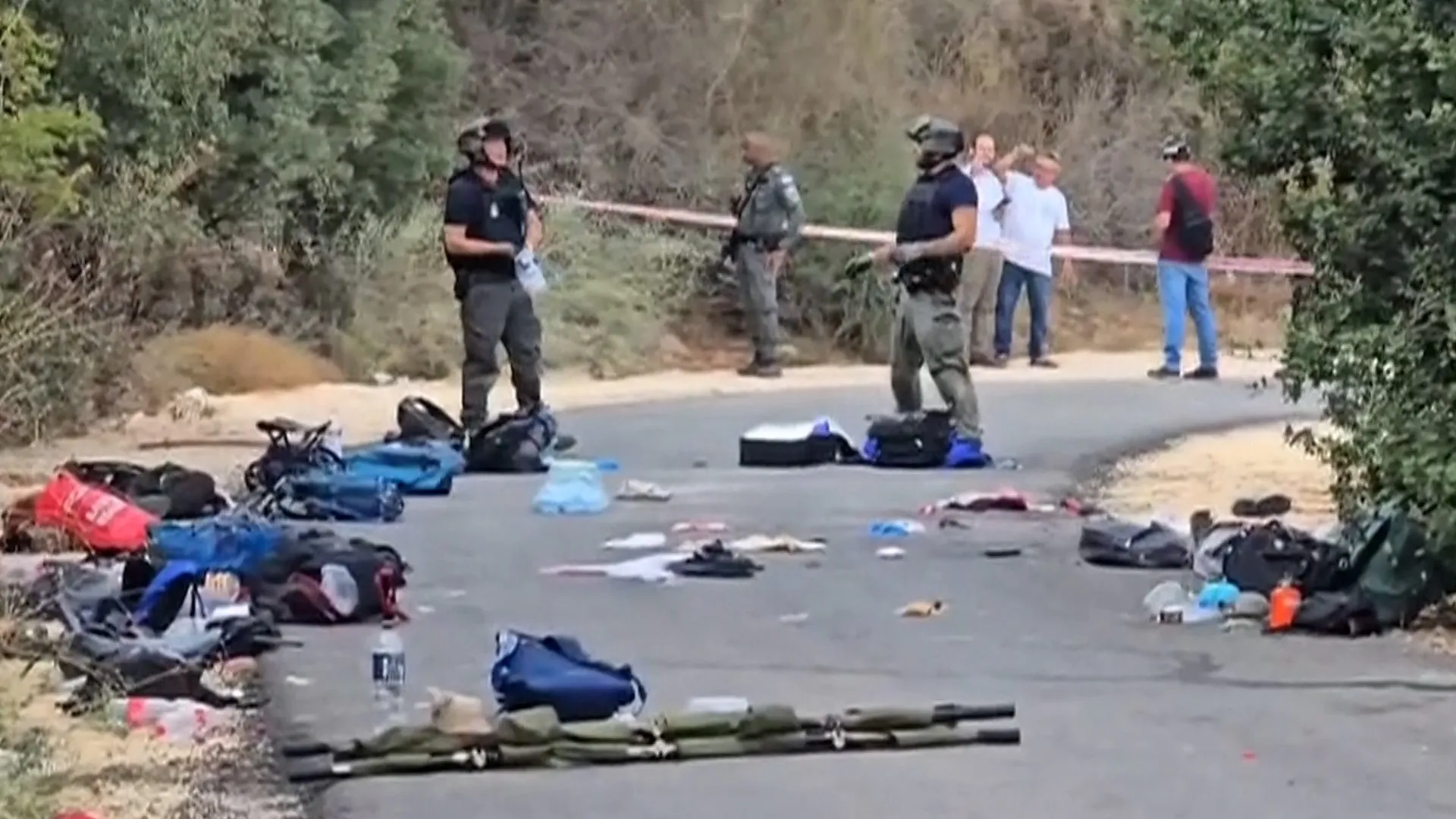
Blast kills teenager, injures dozens in northern Israel | Israel attacks Lebanon News
A 15-year-old was killed and around 20 people injured when unexploded ordnance detonated during a school trip in northern Israel. The army is investigating whether the munition came from Hezbollah or Israeli forces, amid recent fighting near the Lebanon border.
Published On 12 Oct 2026

Tobey Maguire officiates ex-wife Jennifer Meyer’s wedding to Geoff Ogunlesi
Tobey Maguire closed off one chapter of his love life by helping ex-wife Jennifer Meyer enter a new one.
The “Babylon” and “Spider-Man” star, 51, officiated Meyer’s marriage to music executive Geoff Ogunlesi at the Four Season Resort Lanai in Hawaii over the weekend, according to photos published Sunday by TMZ. Maguire can be seen pronouncing Ogunlesi and jewelry designer Meyer, 49, husband and wife as the newlyweds share a kiss in a photo from the luxury golf course wedding. Other photos published by TMZ show Amazon’s billionaire owner Jeff Bezos and wife Lauren Sánchez Bezos and Leonardo Di Caprio were among the guests present for the ceremony.
Maguire and Meyer’s meaningful reunion came more than a week after they finally settled their divorce. The former spouses, who share two teenage children, officially terminated their marriage on Oct. 1, according to court documents filed in Los Angeles County Superior Court. The exes married in 2007 and announced their separation in 2016.
Meyer and Ogunlesi reportedly began their romance in the summer of 2023 and made their relationship red-carpet official at the Baby2Baby Gala later that fall. They got engaged in August 2024 and in December 2025, Meyer announced she was expecting her third child. The pair welcomed their first child together, a baby girl in June.
The designer has since shared scenes from her latest chapter of motherhood on Instagram, posting photos of herself cradling her daughter, taking the baby out on the town and spending time with her loved ones, including her daughter with Maguire and her now-husband.
“Last few months…. 10000000000/10,” she captioned an Instagram carousel of photos in August.

A small-town Alaska fisherman has Republicans on the defensive as they try to keep U.S. House majority
JUNEAU, Alaska — In the thick of Alaska’s primary election season this summer, independent Bill Hill took a break from his U.S. House campaign to return home to Bristol Bay.
The world’s biggest sockeye salmon run was beginning, and that meant he needed to get back to work.
“I told my team that I have got to fish,” he said, adding: “Commercial fishing is the way that we pay the bills.”
Hill, 57, grew up in a tiny southwest Alaska village where he said his family had no phone and had to haul water from a nearby lake for cooking and bathing. Today, while he no longer has to fetch water, his lifestyle is not much different. He lives in a remote fishing community of about 430 people that he has called home for nearly half his life.
A retired teacher and school administrator, Hill has positioned himself as a working-class candidate who can relate to Alaskans’ frustrations with high fuel and other costs. He has made affordability and pushing back against billionaires a central theme in his campaign against Republican Nick Begich, who’s seeking a second term in Congress.
“We are pedal to the metal, making sure that every Alaskan knows about this campaign, every Alaskan knows what we stand for and every Alaskan knows that it’s really one of them going to Congress,” Hill told people at a campaign event this week in Juneau, wearing his standard campaign uniform of jeans, a zip-up vest and cap with a fishing company logo. “I need your help getting there.”
The race has become a concern for Republicans as they are trying to hold onto their majority in the U.S. House. Vice President JD Vance held a rally this week for Begich and Dan Sullivan, the U.S. senator who also is in a tight reelection race. President Trump is scheduled to do another in the coming week.
Begich and Republican political action committees have ratcheted up ad spending in the House race since the primary.
Planes, ferries and four-wheelers on the campaign trail
Hill, a first-time candidate who is Alaska Native, faces an incumbent from a prominent family long associated with the state’s politics. Begich’s late grandfather once held the state’s only U.S. House seat. Begich’s uncle Mark was a U.S. senator. Both were Democrats. Nick Begich is a lifelong Republican and has aligned himself with Trump, who has carried Alaska in his White House runs.
Hill’s campaign said he has traveled more than 20,000 miles in the state, including by plane, ferry and all-terrain vehicle, to introduce himself to voters and promote his message.
Begich’s name recognition presents a hurdle for Hill’s campaign, but some Democrats tried to clear a better path for Hill. One suspended his campaign before the August open primary and endorsed Hill. Two other Democrats with virtually no name recognition withdrew after the primary despite being in line to advance.
One candidate registered as a Democrat remains in the top four, Eric Hafner. He has no apparent ties to the state and is incarcerated in New York.
Hafner received 3.8% of the vote, enough to qualify for the ranked vote general election on Nov. 3. His submitted candidate biography appearing in state election materials makes no reference to his stint in federal prison, where he is serving time for making threats against police officers, judges and others.
Hill’s campaign has shared stickers showing Hafner in an orange jumpsuit and calling him a “fake ‘Democrat.’”
“We want to make sure that the Alaskan people are well-informed,” Hill said.
Begich gets support from Trump and the U.S. House speaker
The contest has received national attention, with spending by groups that include the National Republican Congressional Committee and House Majority PAC, which seeks to flip the U.S. House to Democrats.
In early August, U.S. House Speaker Mike Johnson, R-La., held a rally for Begich that was closed to reporters. Vance called Begich a “machine” and effective legislator during his rally in Fairbanks, where Vance also gave support to Sullivan, who faces a challenge from Democrat Mary Peltola, a former congresswoman.
Trump has cited Begich’s support of his signature package of tax breaks, social service cuts and immigration enforcement that was passed last year. The president plans to headline a rally Tuesday in Wasilla, hometown of Sarah Palin, the party’s 2008 vice presidential nominee.
Hill said the visits show Republicans are nervous.
“I was not going to get into this race to waste people’s time, to waste people’s money,” he said. “I did my due diligence before jumping in to ensure that there was a path to victory.”
Begich’s campaign did not respond to messages from the Associated Press. On social media, the campaign has highlighted events such as Begich’s visit to the Alaska State Fair and recently has taken swipes at Hill.
Zach Bannon, an NRCC spokesperson, said Begich has delivered “commonsense wins for Alaska,” including support of expanded oil and gas development. He called Hill a “far-left Democrat.”
Hill was endorsed by Democrats but asserts his independence
Hill, who was endorsed by the Alaska Democratic Party, said he is a lifelong independent. He said he will not be beholden to a “party boss” or party line, and he rankled some voters earlier in the campaign by not explicitly saying which party he would caucus with in the House if he were elected.
He has said he is willing to work with anyone on what is best for Alaska. He also has called for bans on congressional stock trading and for limiting the influence of money in elections.
Hill said he wants to help build coalitions, saying he “can be a big part of a small group that makes big changes.”
Democrat Bill Brown came to the Juneau event planning to vote for Hill but wanting to talk with him directly. He said they aligned on numerous issues, including support for the environment, schools and ending “forever” wars.
The retired economics professor said policy is important, but in this political moment he finds himself “most interested in the integrity of the candidate. Bill Hill convinced me on that issue.”
Hill, who is Dena’ina Athabascan, said the top concerns he hears about from Alaskans are the price of fuel and overall cost of living. He said he had to fly home earlier this year and pump fuel oil from the textile manufacturing business he runs with his wife and bring it back to his house in a barrel because the community had run out.
He said fuel prices jumped from about $6.70 per gallon to about $9 per gallon after a barge shipment to his town earlier this year. Prices also have been higher elsewhere, particularly in communities accessible only by air or water. On social media, Hill’s campaign calls out Begich for his support of the Iran war as it posts photos of fuel prices around the state.
Steve Davis, a voter at Hill’s Juneau event this week, called him authentic and a “really good dude.” He said he was drawn to Hill in part because he wants to see Congress reclaim its oversight role. Hill drew applause during the gathering when he said Congress must reassert itself as a separate but equal branch of government.
“We don’t need a unified executive, we don’t need kings,” Davis said. “We need a Congress that actually functions.”
Bohrer writes for the Associated Press.

Brydon Carse can return, says Rob Key, as England reveal central contracts
As well as announcing player deals, England also confirmed new-look backroom teams underneath Test head coach Stephen Fleming and white-ball counterpart Brendon McCullum.
Fleming has brought in Richard Dawson, who leaves his position as Glamorgan head coach, alongside former England wicketkeeper James Foster and South African Eric Simons. Fleming worked with both Foster and Simons at Indian Premier League side Chennai Super Kings.
Marcus Trescothick, who took interim charge of the Test team for the home series against Pakistan, remains with the red-ball team.
McCullum keeps the bulk of the staff who worked with him across formats: Sarah Taylor, Jeetan Patel and Tim Southee. Kevin Pietersen will also work with the white-ball teams in the run-up to the 50-over World Cup in southern Africa next year.
Of the 39 players handed England deals, 30 have full central contracts and nine are on development contracts.
The large number of players on England deals is a result of high-earners like Ben Stokes and Mark Wood retiring from international cricket and freeing up space in the budget.
Eleven players, including Test captain Joe Root and white-ball captain Harry Brook, are given two-year contracts.
In an unprecedented move for an uncapped player, pace bowler Henry Crocombe is also given a two-year contract.
———————————————————
England’s centrally contracted players: Joe Root* (Yorkshire), Harry Brook* (Yorkshire), Rehan Ahmed (Leicestershire), Jofra Archer* (Sussex), Gus Atkinson* (Surrey), Sonny Baker* (Hampshire), Tom Banton (Somerset), Shoaib Bashir (Derbyshire), Jacob Bethell* (Warwickshire), Jos Buttler (Lancashire), Brydon Carse (Durham), Sam Cook (Essex), Jordan Cox* (Essex), Henry Crocombe* (Sussex/Surrey), Sam Curran* (Surrey), Liam Dawson (Hampshire), Ben Duckett (Nottinghamshire), Emilio Gay (Durham), Matthew Fisher (Surrey), Will Jacks* (Surrey), Dan Lawrence (Surrey), Saqib Mahmood (Lancashire), Jamie Overton (Surrey), Ollie Pope (Surrey), Matthew Potts (Durham), Adil Rashid (Yorkshire), Ollie Robinson (Sussex), Phil Salt (Lancashire), Jamie Smith (Surrey), Josh Tongue* (Nottinghamshire)
*Denotes two-year deal through until 30 September 2028.
England development contracted players: James Coles (Sussex), Mason Crane (Glamorgan), Josh Hull (Leicestershire), Eddie Jack (Hampshire), Ben McKinney (Durham), Liam Patterson-White (Nottinghamshire), Thomas Rew (Somerset). Matthew Revis (Yorkshire), Mitch Stanley (Lancashire).
———————————————————
Crocombe is one of five specialist fast bowlers to be given a multi-year deal, joining Jofra Archer, Gus Atkinson, Sonny Baker and Josh Tongue.
Before the Derby incident, Carse had not played for England since the Ashes in January because of a wrist injury.
Prior to the injury, the Durham man was an international regular across formats and was the only England seamer to play in all five Tests in Australia.
With inexperienced bowlers like Baker and Crocombe receiving longer contracts, Key was asked if a lack of extension for Carse revealed England’s feelings on his international future.
“No,” replied the former Kent batter. “I think it means if he gets a chance to come back and play for England he’s got to try to maximise his career and be the best bowler he possibly can be.
“That investigation is going on with the Regulator. I don’t know a lot about what happens in that investigation, because that is with them and we deal with that afterwards. There’s nothing really I can say about that. We haven’t had those conversations. We’ll find out more in due course. We’ll find out more when that investigation comes to a head.”
Along with Crocombe, Emilio Gay, Jordan Cox, Dan Lawrence, Tom Banton, Sam Cook and Matt Fisher are given full central contracts for the first time.
Ollie Robinson returns to the contract list after missing out for the past two years, rewarded following his superb return to the Test team in the home summer.
Off-spinner Shoaib Bashir keeps his deal and is the only specialist red-ball spinner on the list. However, Mason Crane and Liam Patterson-White are given developmental deals as an indication of how England could grow their Test spin-bowling options.
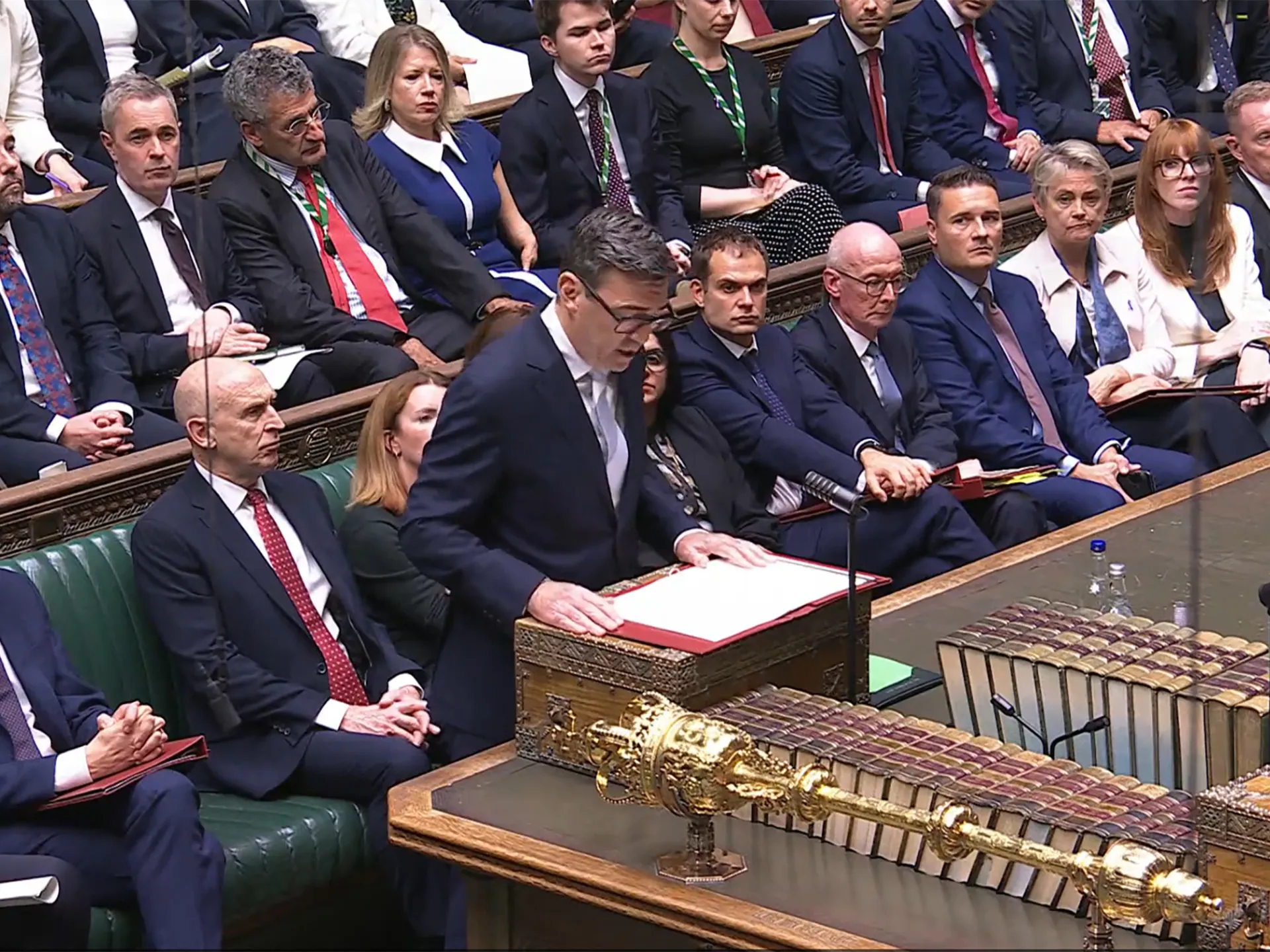
UK PM Andy Burnham vows to renegotiate post-Brexit trade deal with EU | Brexit News
UK Prime Minister Andy Burnham says renegotiating relationship with the EU could reverse some post-Brexit ‘damage’.
Published On 12 Oct 2026
UK Prime Minister Andy Burnham has pledged to push for closer relations with the European Union, confirming he will attend a bilateral summit in Brussels next month.
Addressing parliament on Monday, Burnham said parts of the trade deal agreed with the EU after the UK voted to leave in 2016 would be renegotiated.
Recommended Stories
list of 3 itemsend of list
Burnham said that the British public would be “the boss” at every stage of renegotiating Britain’s relationship with the EU and that he wanted “serious dialogue” about long-term ties.
He told members of parliament that his focus at the summit would be boosting growth in the economy and controlling illegal immigration.
Among the topics of discussion at November’s summit are cutting bureaucracy for British food exports and emissions trading, as well as a “new youth experience scheme” and deeper cooperation on immigration.
The prime minister, who came into office in July, said the agreements could reverse some of the “damage” done to the post-Brexit British economy.
He told MPs that Britain needed to “take a calm, clear-eyed look at the world as it is today”.
“Sticking to the status quo is not good enough,” he said, adding that “public opinion currently supports a pragmatic approach like the one I am suggesting”.
After his address, the leader of the opposition, Kemi Badenoch, said Burnham would be unable to secure a better deal as the EU was ” tough negotiators” and warned that he had already “shown his hand”.
The ICJ’s Rohingya ruling will test the OIC’s promises | Rohingya
Muslim governments backed the genocide case against Myanmar. They must now show that their commitment to the Rohingya goes beyond words.

Published On 12 Oct 2026
The Organisation of Islamic Cooperation (OIC) has made Muslim solidarity central to how it presents itself. Nine years ago, Myanmar’s military massacred Rohingya civilians and drove hundreds of thousands from their homes. The persecution has not ended: the Rohingya remain stateless, face continuing violence and risk death while fleeing by sea. Throughout those years, the OIC has held summits and passed resolutions. Yet it has failed to protect them.
When I founded the Burma Human Rights Network 14 years ago, I believed that if we gathered evidence carefully and put it before institutions with the power to act, they would act. We have gathered testimony from survivors of massacres. We have documented the systematic destruction of Rohingya villages, the denial of their citizenship and the deliberate starvation of a people. Yet despite all this documentation, the situation facing the Rohingya has mostly grown worse. The International Court of Justice is expected to rule later this year on whether Myanmar’s actions constituted genocide.
I have sometimes asked myself whether a ruling could help stop the atrocities. The Rohingya survivors who gave evidence in The Hague relived the worst moments of their lives before international judges because they trusted that their testimony would matter. Many of them are still in Bangladesh, still in limbo, dependent on food assistance worth as little as $7 per person per month. One in every seven Rohingya who attempted sea crossings last year was reported dead or missing. They are unprotected, and governments that could do more have not done so.
People often ask me why we continue. I have never had a satisfying answer. What I know is that without a record of these atrocities, it becomes easier to deny they happened. I continue because, after hearing these accounts and seeing the evidence, I do not know how to walk away from it.
We have published evidence that governments did not want to confront, and we have called the atrocities what they are: genocide. If the court finds that Myanmar committed genocide, it would be the first time in the International Court of Justice’s 80-year history that a state has been held responsible for the crime.
I now address the OIC foreign ministers who will gather in Baghdad on October 17. The OIC backed this case, and your governments supported the effort to hold Myanmar accountable for its treatment of the Rohingya. Many Rohingya, along with many of us who work with them, took those commitments seriously. When the ruling arrives, I expect statements welcoming it and renewed promises of accountability. But another communiqué will not protect anyone. OIC governments should refuse to forcibly return Rohingya to Myanmar, protect Rohingya who reach their territory, sustain support for refugees in Bangladesh and agree on diplomatic and economic measures against those responsible for their persecution. These are choices your governments can make.
The way Rohingya are treated across the region is hard to reconcile with those commitments. Some governments that speak about the Rohingya in international meetings do not offer the same protection to those who arrive at their borders. A government cannot demand accountability from Myanmar and at the same time send people back into danger.
Bangladesh hosts 1.2 million Rohingya and has faced years of pressure to send them back. The OIC must also challenge abuses against the Rohingya by governments outside its membership. In 2025, according to testimony documented by Amnesty International, Indian authorities forced at least 40 Rohingya from a naval vessel into the Andaman Sea, leaving them to swim towards Myanmar. If the OIC says nothing when governments expose Rohingya to that kind of danger, those governments have little reason to change course.
To the Rohingya community organisations that kept working, the journalists who reported despite restrictions on access, those who helped survivors bring their testimony to international forums, and the advocates who stayed with this issue when official attention moved elsewhere, I can only say this: you did work that governments with armies and treasuries should never have left to you. The evidence you preserved is now part of the record.
The 57 governments meeting in Baghdad have repeatedly pledged solidarity with the Rohingya and supported efforts to hold Myanmar accountable for genocide. But solidarity means little if it does not translate into action. A judgment from The Hague will not protect the Rohingya by itself. What those governments do after it will show whether their support for this case has consequences beyond the courtroom.
The views expressed in this article are the author’s own and do not necessarily reflect Al Jazeera’s editorial stance.

Chloe Ferry reveals she’s trying for a baby with boyfriend Alex saying ‘it could happen at any time’
CHLOE Ferry has opened up about her plans to start a family with her property developer boyfriend.
The reality star, 31, who has previously revealed she would like 10 children, went Instagram official with Alex Swinney in September last year.
Since then, Chloe has loved sharing an insight into her relationship on Instagram.
And during a recent Q&A on the social media platform, she’s hinted that she’s ready to become a mum.
One fan asked her: “Are you going to plan to have kids soon?”
Chloe replied: “I have a date in mind when I would love to have babies, but it could happen any time as I’m not anything.”


Earlier this year, Chloe gushed over her ‘soulmate’ boyfriend as she opened up about marriage, kids and if he would join the Geordie Shore cast.
Talking to The Sun, Chloe said of Alex: “He is definitely, definitely the person that I want to be with for the rest of my life. I’ve never felt like this ever about someone.
“I thought that I knew what love was before but this is like true love.
“I know it’s a bit cringe to say true love but I just know that this is 100% my person. I’ve planned my full life with this person and I’ve never done that with anyone.”
Chloe added that she is moving in with her beau and would “love” to get married and have children one day.
In a snap Chloe was seen holding up a brown envelope.
Scrawled on the back of the envelope were the words: “I [heart] you my wife.”
Chloe wrote over the top of the photo, sharing: “Woke up to this today,” followed by three emojis: a love heart and a teary-eyed face.
The star joined the cast of Geordie Shore in 2015.
Chloe has dated Sam Gowland, Jon Clark, Marty McKenna and Johnny Wilbo in the past.

Tighter financial conditions doing part of Fed’s work – Morgan Stanley (SPY:NYSEARCA)
Morgan Stanley recommends sticking with quality stocks, expanding into higher-quality cyclicals such as capital goods, favoring equal-weight S&P 500 or S&P 600 indices over the lower-quality Russell 2000, and monitoring financials and bond volatility for market stability signals.

I’ve been a TUI holiday expert for 25 years
STILL stuck on where to go on holiday this autumn? One TUI travel expert has the insider track on places that are still hot, and great value.
Kim Boucher, who has worked in TUI’s Mansfield store for more than 25 years, has revealed her top five destinations that are still warm in autumn – and has beer as cheap as £1.50.
Marmaris, Turkey
For cheap breaks, average temperatures of 24C, a pint for less than £2, a glass of wine from £2.70 AND meals out from £10, Turkey is a great option for an autumn break.
There are still TUI breaks on offer too.
Kim recommends Marmaris in particular for break during October and November thanks to its sunshine and temperatures which sit at around 24C.
She said: “You can spend your days unwinding on the beach or taking a boat trip along the stunning coastline, then enjoy the town’s vibrant atmosphere once the sun goes down.


“One of the things I love most about Marmaris is the buzz in the evenings. The waterfront and marina come alive with bars, restaurants and cafés, creating a fantastic atmosphere.”
Kim suggests Lalila Blue Suites for a “stylish and relaxing getaway”.
The hotel is a short walk away from the beach, it also has a swimming pool and is a five-minute drive from the centre of Marmaris which has lots of bars and restaurants.
TUI offers seven-night holidays to the 4T Lalila Blue Suites on an all-inclusive basis from £496per person or – £70.85pppn.
Tunisia

This North African country is pretty much a fail-safe when it comes to autumn holidays with average highs of 25C.
For Brits, it’s not as far as you’d think either – it takes just three hours to get from the UK to Tunisia.
Kim recommends it not just for the temperatures, but says it has “exceptional value” compared to some Mediterranean destinations .
She added: “Hammamet in particular offers beautiful beaches, a charming old town and a welcoming atmosphere that’s perfect for a relaxing getaway.”
In Hammamet, visitors can explore traditional Medinas, check out the local markets and try some traditional Tunisian food.
For a hotel recommendation, Kim suggests Hilton Skanes Monastir Beach Resort which is perfect for a “relaxing escape in Tunisia.”
It has five swimming pools, four restaurants and three bars – plus there’s a white sandy bay right on the doorstep.
TUI offers a seven-night holiday to the 5T Hilton Skanes Monastir Beach Resort on a bed and breakfast basis from £610per person – or £87.14pppn.
Majorca, Balearic Islands
When it comes to the Mediterranean, Kim says Majorca is one of the first destinations she suggests when customers ask about an autumn getaway.
She explained: “It offers something for everyone. Even later in the season, you can still enjoy plenty of sunshine, while the slightly cooler temperatures make it ideal for exploring the island’s picturesque villages, coastline and vibrant resort towns.”
“You can spend your days relaxing on golden sandy beaches, discovering hidden coves and enjoying waterfront restaurants, before wandering through the island’s beautiful old towns in the evening.”
Pints of beer on the island are around £3, glasses of wine can be picked up for £4.50 and meals out for £20pp.
Kim recommends the Grupotel Gran Vista & Spa which has two lagoon pools, a children’s splash park and it’s a short walk away from the beach.
TUI offers a seven-night holiday to 4T Grupotel Gran Vista & Spa on a bed and breakfast basis from £326per person – or £46.58pppn.
Algarve, Portugal
The Algarve is another trusted holiday option for autumn thanks to its warm temperatures and short flight time.
When it comes to the region, Kim suggests heading to Albufeira.
She calls it a “fantastic option for anyone looking to extend their summer.”
Albufeira in particular is ideal “for beach days, waterfront dining and exploring the picturesque Algarve coastline.”
She added: “What makes Albufeira so popular is its versatility. Whether you’re looking for a laid-back couples’ retreat, lively nightlife or scenic coastal walks, there’s something for everyone.
“Combined with great-value accommodation and plenty of sunshine, it’s easy to see why it remains a favourite year after year.”
The average temperature of the Algarve in autumn is 20C with the average price of a local beer being as low as £1.50.
TUI offers a seven-night break at the 4T Vila Gale Cerro Alagoa on a bed and breakfast basis from £363 per person – or £51.85pppn.
Orlando, Florida
Whether you’re after the theme parks, shopping malls or just want some great restaurants and entertainment, Florida is a great autumn getaway spot, especially Orlando.
It’s still hot at 24C during autumn, but it’s much cooler than during the summer months, and more pleasant for wandering around.
Kim said: “While Orlando is best known for its incredible theme parks, there’s so much more to discover beyond the attractions.
“From lively entertainment districts and world-class dining to nearby natural springs and golf courses, it offers something for all types of travellers.
“It’s a destination where you can fill every day with adventure while still finding plenty of opportunities to relax and unwind.”
For a hotel recommendation, Kim suggests Holiday Inn Resort Lake Buena Vista which she called a “peaceful retreat” away from the theme parks – but still close enough to get to.
It has a palm-tree lined swimming pool, video games arcade and movies in the lobby as well as an Applebee’s restaurant, a breakfast buffet and a tiki bar.
TUI offers a seven-night holidays at the 3T+ Holiday Inn Resort Lake Buena Vista on a room only basis from £832 per person – or £118.85pppn.
Tenerife, Canary Islands
While temperatures in the UK drop during October, the Canary Islands is one spot where they sit at around 24C.
Kim added: “Tenerife is one of the destinations I regularly recommend for an autumn getaway.
“I love the variety it offers. You can have a completely relaxing beach holiday, explore the island’s dramatic scenery or head into the livelier resort areas for restaurants, bars and entertainment.
“It’s a fantastic all-round choice for couples looking for sunshine, great value and a change of scenery this autumn.”
On the island, popular activities include sunbathing on the beaches, snorkelling, hiking in Teide National Park.
Or for those who love watercoasters, heading over to Siam Park – a Thai-themed waterpark.
The average local pint here starts from £2.50 with the average meal out being as little as £15pp.
For a hotel recommendation, Kim suggests TUI SUNEO Tamaimo Tropical which she called a “great-value escape”.
The hotel is a top pick thanks to its child-friendly entertainment with plenty of activities as well as having two swimming pools and waterside bars.
TUI offer a seven-night holidays at the 3T TUI SUNEO Tamaimo Tropical on an all-inclusive basis from £423 per person – or £60.43pppn.

Trump’s Medicaid cuts strip refugees and other legal immigrants of their health coverage
New restrictions have stripped Medicaid coverage from certain legal immigrants, including refugees and victims of human trafficking, as part of broader federal changes to the health insurance program that are expected to force millions off their coverage.
The change effective Oct. 1 cut from Medicaid what is estimated to be hundreds of thousands of people who legally immigrated to the United States, many of whom work and pay taxes, in the latest Trump administration policy to target foreigners.
The move is part of sweeping changes to Medicaid under President Donald Trump’s 2025 tax cut and policy law, with many set to take effect early next year. The Medicaid changes are projected to result in 7.5 million fewer people with health insurance, according to the Congressional Budget Office’s 2025 estimate.
Advocates say that without Medicaid, people will not be able to afford private insurance and will either delay care or end up in emergency rooms, adding pressure to a strained health system. For immigrants, the cuts could be felt more acutely, compounding the effects of other administration efforts to restrict their access to public assistance as part of a broader immigration crackdown.
“This is about telling every immigrant in the United States that they are not welcome here and that they should leave,” said Ben D’Avanzo, a senior strategist at the National Immigration Law Center, which has pursued litigation against the Republican administration over its immigration agenda.
Refugees, asylum seekers, victims of human trafficking and domestic violence are among those who have lost coverage. Green-card holders were not impacted.
Lauren Bis, a White House spokesperson, said in a statement that “immigrants must be able to support themselves without taking from overburdened benefits programs paid for by hard-working American taxpayers.”
D’Avanzo said many people who have lost coverage will likely only realize when they need medical care. But for some, the change has been felt immediately.
Dwindling supplies of lifesaving medication
In Tucson, Arizona, María Chacon has been caring for her son Jesus for almost five years since a car accident at 17 left him unable to breathe on his own. He requires a ventilator, a feeding tube and daily medication, and must be turned once every two hours to stop sores from forming. Chacon said he sometimes opens his eyes.
The family is originally from Mexico and entered the U.S. on a T visa, offered to victims of human trafficking, in 2018.
Chacon said Medicaid has helped cover almost $25,000 per month of care for her son, which includes a small stipend for her and her husband as compensation for being long-term caregivers. She said doctors have explained that even if they both worked 24 hours a day, they would not be able to cover the cost of his care.
“Since that day I haven’t been able to sleep. We haven’t been able to eat or anything. We’re wondering what we’re going to do?” Chacon said.
Jesus takes medication that Chacon estimates costs $7,000 a month. The supply runs out in mid-October. Without coverage, she does not know how her son is going to survive.
Chacon found out just days before the cuts that she was losing care. She called the state’s Medicaid offices to appeal. Although she is in the process of obtaining a green card, Medicaid coverage would only kick in five years after she is approved.
Steven Camarota, research director for the Center for Immigration Studies, a right-leaning think tank that seeks less immigration, said the administration “is trying to nibble around the edges” with the Oct. 1 cuts, finding piecemeal ways to curb immigration into the U.S.
Camarota believes the government should screen legal immigrants for income potential and education, reducing the number who might rely on public benefits once they cross the border.
“You need immigrants who are unlikely to need welfare,” he said, or those with high educational attainment.
The administration recently revived a federal rule that could deny green cards to immigrants who use public benefits that could include food stamps, Medicaid, housing vouchers and others.
Chacon believes the cuts to Medicaid coverage are part of the administration’s clampdown on immigrants. She said her son is in no condition to travel.
“I know that’s what he’s doing, but, as my son is, I couldn’t go to Mexico,” Chacon said.
Millions more will be dropped from Medicaid
Medicaid, jointly funded by states and the federal government, has become a political focal point during Trump’s second term. The president has pushed to root out what he describes as fraud in the program. In July, the administration deferred over $1 billion in Medicaid payments to California and Minnesota, claiming there was suspected fraud; critics argued the move targeted Democratic-led states.
As more people are cut from Medicaid, the federal government is predicted to reduce program spending by $911 billion, according to healthcare research nonprofit KFF.
In Arizona, officials said 29,000 legal immigrants were cut from Medicaid rolls on Oct. 1. In Florida, estimates are closer to 177,000. Overall, more than 281,000 immigrants from nine states and the District of Columbia are estimated to lose Medicaid coverage, according to KFF.
As more states implement various restrictions to coverage, 7.5 million people are expected to lose coverage by 2034, according to analysis by the Congressional Budget Office.
Without coverage, people will turn to emergency rooms for care. When people delay seeing a doctor, conditions can worsen and become even more expensive to treat.
“At the end of the day, it does raise the cost for the states because once you get these people in for something that could have been prevented, they could not go to the doctor because they were uninsured; they most likely will end up at a hospital in an emergency room,” said Carmen Feliciano, the vice president of policy and advocacy at UnidosUS, a Latino civil rights organization.
UnidosUS partners with community organizations to help provide medical care, but Feliciano said they already are overwhelmed and would not be able to support the number of people who are going to lose medical coverage in the coming months.
“We are not going to have the capacity to serve all the people who need it,” Feliciano said.
Schuettler and Hussein write for the Associated Press.

Dodgers Dugout: Random thoughts on Game 1 of the NLCS
Hi, and welcome to another edition of Dodgers Dugout. My name is Houston Mitchell. Another year, another NLCS. What happens this time? Let’s find out together.
Game 1 thoughts
—As always, this is written as the game is going on, and I don’t go back and change my opinions to match the outcome of the game, so I might write something in the second inning that looks dumb considering how the game ended. Baseball!
—I’m predicting Dodgers in six. They lose today. Win tomorrow. Win two of three at home, win Game 6 in Milwaukee.
—Dodgers won the past two World Series. Brewers were last in the World Series in 1982, when they lost to the St. Louis Cardinals.
—I’m not a big fan of the Fox pregame show.
—Jacob Misiorowski can throw the ball 104 mph. I once threw a baseball 104 … feet.
—His nickname is “The Miz,” but we all know there is only one Miz.
First inning
—Good to see Joe Davis back.
—There’s something about Ken Rosenthal that I find disquieting. Of course, I’m sure some people say the same about me.
—Nice play by Jake Bauers to open the game.
—Freddie Freeman seems like he says “don’t like that two-strike pitch, so I’ll foul it off.”
—And Will Smith‘s struggles continue. But, the Dodgers are making contact.
—The Dodgers seem to have a lot of PitchCom problems.
—Two strikeouts for Skubal, 15 pitches. No strikeouts for Misiorowski, 12 pitches.
Second inning
—Opponents are still pitching to Shohei Ohtani as if he is full-strength Ohtani.
—Andy Pages does it again. He does not look intimidated by any situation. Dodgers 1, Brewers 0.
—Great at-bat by Kyle Tucker. He has really been what they expected for the past six weeks. Already 40 pitches for Misiorowski.
—It would be really nice to get at least one more run here. Bases loaded, one out.
—Kiké grounds into a double play. More Clark Kent than Superman there. That could come back to haunt the Dodgers later.
—Tarik Skubal looks really good so far.
—As soon as I wrote that, he gives up a double. Sorry.
—Skubal has very wide open eyes. He looks perpetually astonished. Skubal: 29 pitches. Misiorowski: 47.
Third inning
—Dodgers waste a leadoff single by Mookie Betts. This could be important later.
—I got a lot of emails during this game disagreeing with me about John Smoltz, saying he talks way too much. I agree (I wrote that), but what he says is often insightful. He just needs to edit things down in his brain before it reaches his mouth.
Fourth inning
—A leadoff single by Teoscar. Will they waste this one? Insurance runs would be nice.
—No one has ever successfully explained a balk call. I think the umpiring crew decides before a game, “We need to call a balk today.”
—And the Dodgers can’t cash in. This could be important later.
—Misiorowski has made 85 pitches through four, so he probably has one more inning left in him.
—And now it’s tied. Dodgers 1, Brewers 1. By the way, in tribute to my old boss, Mike James: The game is not tied, the score is tied.
—It’s hard to see from the center-field camera. Stupid fireworks. What about those of us with asthma? First-world problems.
—Dodgers are down to their last challenge! For some reason I don’t find that as stressful as many others do.
—Don’t Brice Turang and Jake Bauers realize they aren’t supposed to hit left-handers well? Come on guys, get with the program.
—And a double play ends the inning.
—You know that swing Ohtani has in the New Balance commercial? That’s the swing he is missing. Maybe study that ad.
—Things I don’t need to see during a game while watching with my grandchildren: Ads for horror movies (like “Other Mommy.”) And that Sydney Sweeney ad.
—By the way, I need all you kids to get off my lawn. Darn neighborhood rapscallions.
Fifth inning
—That will be it for Misiorowski. 4 1/3 innings, five hits, three walks. Didn’t have his best stuff, but he battled. Seems like you should have more than one run when you get eight batters on base in 4 1/3.
—It is funny, though, to hear everyone praise the ace after he just went 4 1/3. I always think back to Fernando Valenzuela in Game 3 of the 1981 World Series. He pitched a complete game despite not having his best stuff, throwing 147 pitches, giving up nine hits and walking seven while defeating the Yankees, 5-4. Now that was battling without your best stuff.
—Another double play. Dodgers don’t get a left on base that inning, but really they did.
—Hey, a bunt! I thought those weren’t allowed anymore because they were a waste of an out.
—And the Brewers immediately cash in, something the Dodgers haven’t been able to do. Brewers 2, Dodgers 1.
—Skubal won’t last much longer.
—Gift hit for Jackson Chourio.
—Turang walked to load the bases. I can’t believe Skubal is still in the game.
—And Skubal escaped the jam. Dodgers are lucky to be trailing by only one.
Sixth inning
—Ohtani has become Bill Russell as a hitter.
—One thing the Dodgers do that is bothersome: When they fall behind, they seem to abandon their plan to make the pitcher work.
—Max Muncy with a hard single. The most underrated player on the team this season.
—And Pages strikes out. Another chance wasted.
—Alex Vesia is great.
Seventh inning
—It didn’t work out, but the Dodgers were less swing happy that inning.
—I find Brewers fans far less annoying than Braves fans.
—The five franchises to never win a World Series: Brewers, Colorado Rockies, San Diego Padres, Seattle Mariners, Tampa Bay Rays.
—I wrote that before Fox put up the graphic with the same info. Really.
—Evan Phillips strikes out the side.
Eighth inning
—And the Dodgers strand another runner.
—Another bunt! Anarchy!
—First and second, one out. Can the Brewers cash in against Tanner Scott?
—Intentionally walking the bases loaded is a gutsy move.
—But it pays off.
Ninth inning
—Muncy, Pages and Tucker against Trevor Megill.
—Muncy pops out.
—Pages flies out.
—Tucker walks. Good at-bat.
—Can Josue De Paula, at 21 years old, be a Game 1 hero? (As former colleague Bob Cuomo would say, “Hero? How many lives did he save?”)
—De Paula walks. He feels no pressure ever. What a batting eye for one so young.
—Betts flied out. One final blown chance by the Dodgers.
—I should point out that the Dodgers were seventh in the majors this season in batting average with runners in scoring position at .262. The Brewers were second, .276. The Dodgers were seventh with two out and runners in scoring position at .241. The Brewers were ninth at .239.
Final score: Brewers 2, Dodgers 1.
Nothing to worry about. The Dodgers have trailed 1-0 before and won, and led 1-0 and lost. This is why they play seven games. We’ll be back tomorrow.
Poll results
We asked, “Who will win the NLCS?”
After 11,784 votes, the results”
Dodgers in six, 51.3%
Dodgers in five, 18.4%
Dodgers in seven, 15.8%
Brewers in six, 7.5%
Brewers in seven, 3.2%
Dodgers in four, 2.2%
Brewers in five, 1.4%
Brewers in four, 0.2%
Up next
Monday: Dodgers (Yoshinobu Yamamoto) at Milwaukee (Logan Henderson), 2 p.m., Fox/FS1/Fox Deportes/Fox One
Wednesday at Dodgers, 5 p.m., Fox/FS1/Fox Deportes/Fox One
Thursday at Dodgers, 6 p.m., Fox/FS1/Fox Deportes/Fox One
*Friday at Dodgers, 6 p.m., Fox/FS1/Fox Deportes/Fox One
*Sunday at Milwaukee, 5 p.m., Fox/FS1/Fox Deportes/Fox One
*Monday, Oct. 19 at Milwaukee, 5 p.m., Fox/FS1/Fox Deportes/Fox One
All times Pacific
*-if necessary
In case you missed it
Plaschke: Dodgers could be in big trouble if Brewers steal their October swagger
Brewers get just enough off Tarik Skubal, draw first blood in NLCS Game 1 win
Dodgers Debate NLCS Game 1: Great pitching but no offense
Dodgers add Justin Wrobleski to NLCS roster, keep Miguel Rojas and drop Hyeseong Kim
Shaikin: ‘We responded to the moment’: Fred Claire’s lasting lesson for a former young assistant
Dodgers confident Shohei Ohtani will break out of his slump against Brewers
Shaikin: Here’s why the Dodgers-Brewers NLCS might have been decided in August
By not overextending itself vs. Braves, Dodgers’ rotation primed for success vs. Brewers
‘I just want chaos.’ Don’t expect Dodgers to sweep Brewers again in NLCS
And finally
Shohei Ohtani hits three home runs, strikes out 10 in Game 4 of the 2025 NLCS against the Brewers. Watch and listen here.
Until next time …
Have a comment or something you’d like to see in a future Dodgers newsletter? Email me at houston.mitchell@latimes.com. To get this newsletter in your inbox, click here.
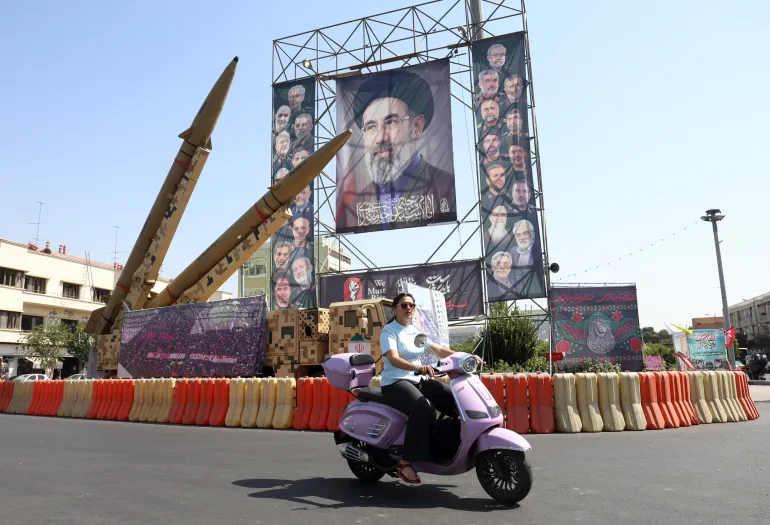
Iran sets crosshairs on ‘US-UAE’ oil shuttle out of Strait of Hormuz | US-Israel war on Iran News
Tehran, Iran – Iranian authorities have signalled they intend to disrupt an Arab-operated and United States-assisted shuttle system that has enabled more energy exports through the Strait of Hormuz during the US-Israel war on Iran.
With the US naval blockade of Iran’s southern ports in place and sanctions tightening, Tehran has said it will pursue military and diplomatic efforts to put pressure on Washington to submit to its demands regarding reopening the Strait of Hormuz.
Recommended Stories
list of 3 itemsend of list
This strategic waterway, through which roughly a fifth of global oil and gas flowed before the war, has been largely closed to shipping following Iranian attacks since the US and Israel launched strikes on Iran on February 28.
But the US Navy has reportedly opened up a route so Gulf states can export oil and other commodities amid an energy crisis.
Iran’s security chief Mohsen Rezaei responded on Sunday night, saying the shuttle system is now an explicit target for Tehran.
Rezaei claimed that the US Central Command, with the assistance of the United Arab Emirates military, was using smaller vessels to transfer oil to larger tankers. He claimed Iran had been striking five or six participating vessels nightly for weeks.
“You are smuggling, but the strait is under Iran’s control, and we manage it,” he asserted.
This appeared to be a taunt aimed at US President Donald Trump, who has hailed energy exports at times reaching pre-war levels over recent weeks.
Rezaei appeared to give the impression that Iran wants to have lasting authority over Hormuz, and promised a harsh response if Iran’s energy and civilian infrastructure were attacked again.
His threats appeared aimed at Arab regional states, with a warning that digital infrastructure could be targeted. Rezaei threatened US-linked cables, data centres and artificial intelligence facilities in the UAE and around the Strait of Hormuz.

Rezaei also accused Saudi Arabia of helping the US move oil around Iran’s restrictions. But he did not threaten a direct attack against Riyadh – which is currently being targeted by Yemen’s Tehran-aligned Houthis.
In early September, Iran’s Islamic Revolutionary Guard Corps (IRGC) threatened tankers at ports and anchorages in Kuwait and Bahrain, citing US attacks on Iranian tankers. It accused both countries of complicity through hosting US armed forces.
Iran has claimed the US accepted some of Tehran’s seven conditions for the full reopening of the Strait of Hormuz and ending the war. But Tehran insists that a deal will only materialise when all its demands are met.
Hamidreza Azizi, a senior Iran analyst at the Crisis Group, said this reflects Tehran’s apparent assessment that it is under no immediate pressure to reach an agreement with the US since its pressure in the Hormuz has a global impact.
“The question, however, is whether Tehran is overestimating its ability to sustain this pressure, given the growing economic costs of the confrontation for Iran itself,” Azizi wrote on X.
Transfer system
The system involves very large crude carriers (VLCCs) and smaller vessels coordinating with the US military to load crude oil at Arab ports and use southern corridors near the coast of Oman to exit the strait.
Vessels often switch off their transponders and travel at night to minimise the risk of being targeted by the Iranians. After ship-to-ship transfers in the Gulf of Oman, some of the shuttles come back to load more.
Multiple vessels were targeted overnight Sunday to Monday, including two outbound tankers and one in anchorage near Oman’s port city of Sohar, where ship-to-ship transfers are allegedly being conducted.
Other vessels were targeted by projectiles last week, indicating that attacks have extended beyond the Strait of Hormuz to target the shuttle system.
The IRGC has also increasingly driven a narrative that naval mines, believed to have been planted across the Strait of Hormuz since the start of the war, pose a serious threat to vessels attempting to navigate the waterway without coordinating with Iran’s Persian Gulf Strait Authority.
The IRGC said three tankers suffered major damage over the weekend after being struck by mines. It also released footage of one ship ablaze that is said to have been struck by a mine, although the footage did not appear to show a mine going off.
‘Cascading impact’
The shuttle system has provided Arab national oil companies with a way out of Hormuz via the southern corridor near Oman.
Michelle Wiese Bockmann, a London-based senior maritime intelligence analyst at Windward, said this system has proven highly effective.
“Under international maritime law, which underpins 11 billion tonnes of seaborne trade annually, vessels have what’s called the right of transit passage,” Bockmann told Al Jazeera. “So, what Oman has done is allow vessels to go through under international maritime law, but they have had US military assistance.”
Tehran says shipping will be disrupted so long as the US continues its choking naval blockade against Iran, which has also stepped up its efforts to counter efforts by Arab states to export oil. At least 15 ships are believed to have been targeted in October so far, according to Winward.
“The more effective the route has become in facilitating the transport of oil and gas, the less leverage Iran has over Hormuz, and more attacks we are seeing on vessels that are using that southern corridor,” Bockmann said.
Windward’s data shows 31 ships transited the Strait of Hormuz daily in the final week of September. This was considerably lower than the 138 before the war.
Eighty-seven percent of the 45 ships targeted by Iran during the third quarter of 2026 were tankers.
Around 47 percent belonged to Gulf Arab energy companies’ national shipping fleets, Windward noted, and 93 percent of the strikes took place in the Strait of Hormuz. Most attacks targeted vessels transiting the southern corridor with their transponders turned off.
These attacks have contributed to a massive increase in freight costs. Freight represented 25-30 percent of Gulf crude’s cost, versus just 1 to 3 percent before the war, according to Windward. National oil companies have resorted to offering discounts of up to $35 per barrel below official selling prices.
The main reason for the rise is a shortage of tankers willing to make the dangerous crossing. Between 15 and 20 percent of very large crude carriers (VLCCs) are tied up with an inefficient logistics system that relies on shuttle transfers, complicated by escalating attacks and exposure at loading ports and anchorages.
“This is having cascading impacts for all vessel classes on freight and values across the world,” Bockmann said.

Iran-Saudi talks on Yemen’s Houthis: What’s in it for Tehran? | Explainer News
Iran has offered to facilitate talks between Saudi Arabia and Yemen’s Houthi group after a series of deadly attacks on the kingdom, raising questions about Tehran’s diplomatic calculations as fighting intensifies across the region.
Iranian Foreign Minister Abbas Araghchi spoke with his Saudi counterpart, Prince Faisal bin Farhan Al Saud, on Sunday, in their first publicly reported contact since the Iran-aligned Houthis stepped up attacks on Saudi Arabia.
Recommended Stories
list of 3 itemsend of list
The diplomatic outreach comes after strikes on Riyadh’s international airport over the weekend killed 14 people and wounded hundreds, while Saudi-backed forces continued their offensive against the Houthis, also known as Ansar Allah, in Yemen.
The talks also come against the backdrop of the wider US-Israel war on Iran, with Tehran potentially seeking to avoid being dragged into another confrontation.
“Tehran is an ally of Ansar Allah and has influence with the movement, although it does not control its decisions,” Negar Mortazavi, senior fellow at the Washington, DC-based Center for International Policy, told Al Jazeera.
“By offering to facilitate talks with Riyadh, Iran is positioning itself as an indispensable party to a broader regional settlement.”
So what discussions are happening between Riyadh and Tehran, and why is Iran offering to facilitate talks?
What did Iran and Saudi Arabia talk about?
According to the Saudi state news agency, the two foreign ministers discussed the recent escalation in the region and efforts to reduce tensions. Iran’s Foreign Ministry also confirmed the development.
Following the discussions, Araghchi on Sunday warned against pursuing a military solution to the conflict and offered Tehran’s assistance in facilitating dialogue between Saudi Arabia and Yemen.
“Insisting on a military approach and disregarding a political solution would only further complicate the situation,” Araghchi said, according to Iran’s Foreign Ministry.
On Monday, ministry spokesman Esmaeil Baghaei reiterated Tehran’s willingness to mediate, saying Iran was deeply concerned about developments in the Arabian Peninsula.
“We absolutely do not want hostilities and war to continue between two Islamic countries,” Baghaei said, urging dialogue to resolve the conflict.
What is Iran’s stance on the war in Yemen?
Iran has repeatedly called for a diplomatic settlement to Yemen’s conflict and says it supports a political solution rather than continued military action.
Tehran backs the Houthis, who control Yemen’s capital, Sanaa, and other parts of the country.
The armed group forms part of the Iran-aligned “axis of resistance”, which also includes Lebanon’s Hezbollah and armed groups in Iraq.
Saudi Arabia, meanwhile, has led a military coalition supporting Yemen’s internationally recognised government since 2015.
Baghaei said on Monday that the conflict served Israeli interests, framing a negotiated settlement as preferable to further fighting.
What is the latest in the Yemen fighting?
Fighting has intensified in Yemen, after the internationally recognised government’s forces announced Operation Dawn of Yemen on October 4 to reverse recent Houthi territorial gains, including the capital, Sanaa.
Government forces, backed by Riyadh, have reported advances near the strategic Bab al-Mandeb strait, a vital international shipping route. However, competing battlefield claims remain difficult to independently verify.
The Houthis have responded with missile and drone attacks on Saudi airports, energy infrastructure and other targets.

Two strikes on Riyadh’s King Khalid International Airport on Saturday and Sunday killed 14 people and wounded more than 300. The casualties included foreign nationals from Bangladesh, Pakistan and Palestine.
The escalating violence has also disrupted commercial flights, businesses and schools in Riyadh, underlining the growing economic and civilian consequences of the conflict.
UN Special Envoy for Yemen Hans Grundberg warned on Friday that Yemen had returned to “full-scale war”, with civilians bearing the brunt of the attacks.
Why is Iran willing to facilitate talks between Saudi Arabia and the Houthis?
Iran’s offer to facilitate talks between Riyadh and the Houthis could be an attempt to strengthen Tehran’s diplomatic position and secure a wider regional agreement that extends beyond Yemen.
“I think Iran is trying to turn Yemen from a military liability into a diplomatic asset,” Andreas Krieg, a Middle East security analyst at King’s College London, told Al Jazeera.
He said Tehran recognises that Saudi Arabia is struggling to reverse Houthi territorial gains, particularly around Taiz and Bab al-Mandeb, despite intensifying its military campaign.
“Araghchi’s offer is an attempt to position Iran as part of the solution to a crisis in which it has also helped sustain the problem,” Krieg said.
Analyst Mortazavi, meanwhile, said Iran’s diplomatic outreach is part of a broader effort to link the conflicts unfolding across the region.
“The larger political objective is an informal non-aggression arrangement between Iran and its allies on one side and the United States and its regional partners on the other,” she said.
Such an agreement, she argued, would require an end to hostilities across multiple fronts, including Yemen and Lebanon, rather than a settlement confined to the US-Iran conflict.
Moreover, academic Krieg said there was also an important “Saudi dimension” to the discussions.
“Riyadh is increasingly uncomfortable with its dependence on Washington, frustrated by the limited American willingness to intervene in Yemen and reluctant to become dependent on the UAE again,” he said.
“Iran sees an opportunity to demonstrate that engagement with Tehran can deliver something Saudi Arabia’s traditional security partnerships have struggled to provide.”
There are also economic considerations, the analysts noted. Iran is under significant pressure from the US blockade, while Gulf countries are gradually recovering their energy exports to pre-war levels despite Iranian disruptions.
“Offering Riyadh a way out of Yemen potentially gives Iran leverage well beyond the Yemeni theatre, particularly in negotiations over Hormuz, sanctions relief and the wider regional security architecture,” Krieg said.
However, Krieg cautioned against overstating Iran’s influence over the Houthis, who have their own political ambitions and demands.
“Ansar Allah is not simply an Iranian proxy awaiting instructions,” Krieg said. “Its leadership has its own political ambitions, increasingly sees itself as a regional military actor and believes its recent territorial gains have strengthened its negotiating position. Iran can facilitate talks and potentially influence the intensity of escalation, but it cannot simply order the Houthis to surrender their gains around Mocha or Bab al-Mandeb.”
For Mortazavi, the broader message is that regional security cannot be addressed in isolation.
“Ultimately, Tehran’s message is that regional security cannot be divided,” she said. “Saudi Arabia cannot obtain security from attacks, while Iran and its allies remain under military and economic pressure.”

Carol Vorderman tells of being ‘really poorly’ after painful diagnosis
Pride of Britain host Carol Vorderman says her recent health crisis has given her a new perspective, forcing her to focus on what truly matters.

Carol says: “As you get older, health becomes one of your top priorities.”(Image: Adam Gerrard / Daily Mirror)
After a year-long health crisis, and as she marks 44 years on television, Carol Vorderman wants to “deep cleanse” her life and focus on what matters. The 65-year-old Pride of Britain presenter and former Countdown star was completely floored for most of last year, with a sudden debilitating case of rheumatoid arthritis.
She couldn’t walk without crying in pain and found the experience depressing and a shock to the system. Carol says: “As you get older, health becomes one of your top priorities. And time – who you spend that time with, and what you spend that time on. Time becomes your currency, so you don’t want to waste it.
“Every single person I know of my age group, we’re all trying to get rid of stuff. You spend all your life accumulating, but you don’t want to waste time curating things you’ve accumulated. It’s a deep cleanse for old age. Being really poorly and on a lot of medication for so much time really has given me a new perspective.
“You become much more conscious of your overall health. Your priority list changes. It was a big shock to the system, and that’s why I have every sympathy for people with chronic pain. I just don’t know how they live with it. It’s just depressing.”
Carol is due to present The Daily Mirror Pride of Britain Awards, in partnership with P&O Cruises, for the 27th year – a show she has recently co-hosted with Diversity star Ashley Banjo.
The event, shown on ITV and ITVX, celebrates the nation’s unsung heroes and includes awards for Child of Courage, Outstanding Bravery, Lifetime and Young Fundraiser.
Carol says: “The first Pride of Britain was 1999, so it only occurred to me this week that I was on Countdown for 26 years, but now Pride of Britain is my long runner. On November 2, I celebrate 44 years on TV. I’m not having a party, but I am getting a BAFTA Cymru for Outstanding Achievement. In other words, still being alive!
“The reason I keep doing Pride of Britain is because it’s the best job. It’s very glam. There are lots of very glam shows, but it’s very real. I do get emotional about the show about a week before. I remember the people who have won awards and have either passed away through old age or particularly the youngsters who died. They came on because they had cancer and raised money, or whatever their story might have been, and they’re no longer with us.
“Then you also remember the people who were doing these great things 15 years ago are still doing them. I always come back to how many great people there are. The show makes you want to be better and it’s made me more of a fighter.”
Carol recalls how she had to fight when her health nosedived. She says: “I had travel vaccines for a trip to Thailand and within three days I had chronic rheumatoid arthritis. I can’t prove that they caused it. My hands doubled in size. I couldn’t walk. I literally couldn’t move anything without crying in pain.
“I was on steroids probably for about eight months, and now I’m on other medication for the rest of my life. That’s hard because I’ve always prided myself on being healthy. It was as much as I could do to look out of the window and think, ‘I hope one day I’ll be able to walk without pain again.’
“The big thing for a lot of older people is community. You’ve got to feel a part of something. I know that my mum living with us and being around the kids, living in a busy house, gave her a purpose.
“If she’d just been living by herself somewhere, she wouldn’t have lasted. And smartphones don’t help. I love keeping up to date with what people are doing on Instagram, but it’s not the same as getting people together.”
Carol also reveals that laughter is extremely important to her wellbeing. “People who laugh are very special,” she says. “I love laughing. I love laughing at myself. Most of my friends just completely take the p*** out of me all the time.
“As you get older, you realise that even people who make you laugh and want to share, there’s a kindness in it. So for me, there are people who are heroes, because they make you feel better, they make you laugh, rather than taking offence, and I think there’s something quite heroic in that. There’s something about laughter that just breaks down the barriers.”
Carol has also long been a passionate, unfiltered voice of public frustration, turning to political advocacy to expose what she calls “political corruption”. She says: “Good people also need support so that they can do even more good things. Some people have been through so much pain and grief, some of it caused by certain politicians.
“Those things make me very angry, and I suppose now I’m at an age where I no longer need to build a career. A lot of girls say to me, ‘I believe in everything that you do, Carol, but I wish I could say the things you do. I just don’t feel strong enough.’ I say, ‘Yeah, but you’re not in a position to. I am in a position to say it, so I feel that responsibility.’”
Despite the emotional weight of Pride of Britain, Carol says there is always lightness on the show. She recalls: “The one that I always remember was in 2012 when we had lots of people on the stage, because we were celebrating the London Olympics. To present the award was Prince Charles and Camilla, Duchess of Cornwall, as they were then.
“Then in my ear, the show’s boss said, ‘You’ve got to make Charles do the Mobot. Do it.’ So I talked about the wonderful Mo Farah and said, ‘Obviously sir, you will have seen this, shall we all do the Mobot?’ I collared him into it, he couldn’t stand there and say no. So he did it, what a good sport. The next day officials at Clarence House brought up that they hadn’t approved the Mobot ‘incident’ and asked who was responsible.”
For Carol, Pride of Britain is a chance to take a moment and appreciate good people. She says: “Pride of Britain gives us all an opportunity to take a breath for a couple of hours and witness these very real people who are doing very real things because they are brave, they’re determined. It’s a whole balance of life.”
*The Pride of Britain Awards will take place on 19th October, before airing on ITV and ITVX from 22nd October. Find out more about the Pride of Britain Awards 2026 HERE

Bitcoin flashes first bullish 13/34-week EMA crossover in 3.5 years (BTC-USD:Cryptocurrency)

Chinnapong/iStock Editorial via Getty Images
Bitcoin’s (BTC-USD) 13-week exponential moving average has crossed above its 34-week average for the first time in three and a half years, according to a weekly chart shared by Raymond James’ David Cox.
The chart marked the crossover as bullish
A Proper Supreme Court Should Be the Cornerstone of Venezuela’s Transition
Is it a good idea to begin the transition through the Supreme Court (TSJ)? Perhaps. In any case, it is the path charted by Secretary of State Marco Rubio, who—following January 3rd—wields enormous influence over Venezuela’s interim authorities and all opposition players, including María Corina Machado.
Marco Rubio himself stated this on October 9, with Dinorah Figuera by his side: “To achieve a peaceful transition—which is what we desire, a peaceful transition toward a permanent and lasting democracy— a great deal of hard work must be done, along with some patience, and free and fair elections. But beyond mere free and fair elections, there will be a need for institutions that not only uphold democracy but also sustain stability, progress, prosperity, and freedom for the people of Venezuela for the foreseeable future.”
Those institutions are, fundamentally, the Supreme Court of Justice (TSJ) and the National Electoral Council (CNE). In that order.
The argument is simple yet very powerful. We have seen in Venezuela that it is possible to win an election (such as the National Assembly vote in 2015 and the presidential election in 2024) and yet have that victory yield no practical effect: in 2015, the election’s impact was nullified via the TSJ, and in 2024, via both the CNE and the TSJ.
Rubio knows this well, as he has been monitoring Venezuelan politics for many years and has surely heard the explanation of how the regime stripped those election results of their meaning through the TSJ and the CNE. In all likelihood, he heard those explanations from Machado herself. This is the path currently being pursued by the negotiating table comprising the interim authorities and the delegation from the 2015 National Assembly. So far, there have been three results. First, Article 65 of the Organic Law of the Supreme Tribunal of Justice (TSJ) was reformed to improve the balance between lawmakers and civil society representatives within the Judicial Nominations Committee—a body for which 127 candidates have already been proposed. Next, a council was appointed to verify the credentials of TSJ nominees; this council includes four of Venezuela’s most serious and respected legal experts. Third, civilian organizations were invited to put forward members for the Judicial Nominations Committee.
This week, both the Judicial Nominations Committee and the verification council are being formally established. The subsequent step is to call upon legal experts to apply for positions on the TSJ.
Given the current circumstances, it is to be expected that the negotiating table and the Trump administration will exert influence over the entire process, just as they have been doing. In fact, Juan Miguel Matheus—a member of the opposition team at the negotiating table—told El Pitazo that the 12 civil society members who will sit on the Nominations Committee will be selected through that table.
With a transition process in mind, why would having a competent TSJ in place within a couple of months be significant?
For a fundamental reason: under the state model established by the 1999 Constitution, the TSJ holds the final institutional say regarding any decision made by the Venezuelan state. The TSJ has the power to strike down laws passed by the National Assembly, declare presidential decrees null and void, annul acts of the National Electoral Council (CNE), and review rulings from any court in the country.
Therefore—and drawing on Venezuela’s past experience—if we aim to hold free elections, it is far better to approach them with a competent TSJ already in place. A capable Supreme Court of Justice could play a robust role in defending elections based on standards of electoral integrity.
Therefore, initiating the transition through a new Supreme Court is a good idea.

Alexander Zverev to end year as world number one after Carlos Alacaraz loses
Alexander Zverev is guaranteed to finish the 2026 season as the world number one after Carlos Alcaraz’s surprise defeat in the Shanghai Masters.
German Zverev was on course to climb above current world number one Jannik Sinner, who has been ruled out for the rest of the year with a knee injury.
Alcaraz still had a mathematical chance of stopping Zverev until he was beaten 7-5 7-6 (7-4) by Belgium’s Zizou Bergs in the third round on Monday.
“It’s been a fantastic season for me. Knowing that I will finish the year on top of the rankings is just a dream come true,” said Zverev.
After losing three major finals, Zverev landed the first Grand Slam title of his career by winning the French Open in June, and followed that with victory at the US Open last month.
The 29-year-old has taken advantage of the injury problems suffered by Spaniard Alcaraz and Italian Sinner – the dominant pair on the ATP Tour in the previous two seasons – to become the world’s leading player.
Zverev cannot overtake Sinner until 2 November at the earliest.
He will become the first German to end the year as number one, and the oldest player to achieve the feat for the first time.
After suffering a serious ankle injury in the 2022 French Open semi-finals which kept him out for seven months, Zverev regained his place in the upper echelons of the sport and been ranked inside the top four continuously since March 2024.
“So much work and effort have been put into achieving this goal, especially after coming back from the ankle injury. I look forward to finishing the season in style,” he said.

Tell us about your favourite spooky spot in the UK | Travel
For our Halloween edition of readers’ tips, we’d love to hear about spooky spots, haunted houses and ghost tours you’ve experienced around the UK. Perhaps you enjoyed a guided (or self-guided) city ghost walk, visited a haunted castle or wandered around eerie ruins at twilight. Tell us what made it so spook-tacular for the chance to win a holiday voucher.
The best tip of the week, chosen by Tom Hall of Lonely Planet wins a £200 voucher to stay at a Coolstays property – the company has more than 3,000 worldwide. The best tips will appear in the Guardian Travel section and website.
Keep your tip to about 100 words
If you have a relevant photo, do send it in – but it’s your words we will be judging for the competition.
We’re sorry, but for legal reasons you must be a UK resident to enter this competition.
The competition closes on Monday 19 October at 10am BST
Have a look at our past winners and other tips
Read the terms and conditions here
Share your tip
Share your travel tip in the form below.
Your responses, which can be anonymous, are secure as the form is encrypted and only the Guardian has access to your contributions. We will only use the data you provide us for the purpose of the feature and we will delete any personal data when we no longer require it for this purpose. For alternative ways to get in touch securely please see our tips guide.
If you’re having trouble using the form, click here. Read terms of service here, and privacy policy here.
What are the key matches to watch as the UEFA Champions League returns? | Football
EXPLAINER
Atletico vs Man United and Man City vs PSG headline the Champions League match day two action as the competition returns.

Published On 12 Oct 2026
The UEFA Champions League (UCL) 2026-27 enters its second round of matches this week, with 36 teams in action across Europe as clubs return to the elite football competition.
After the first set of league fixtures, two-time title holders Paris Saint-Germain lead the points table with three points, followed by six-time champions Bayern Munich and five-time winners Barcelona, who also won their opening matches.
Recommended Stories
list of 4 itemsend of list
The competition’s league phase format, now in its third year, started in September and runs until January 2027. It will be followed by the knockout rounds, with the champions crowned in early June.
Here’s all you need to know about this year’s competition:
What is the Champions League?
The Champions League is an annual club competition that features the best teams from across Europe.
This season marks the third time that 36 teams will participate in the main round, an increase from 32 under the old format.
What is the 2026-27 Champions League format?
Since 2003, the UCL has featured 32 clubs split into eight groups of four, with the top two from each section advancing to the last 16.
That has changed radically in recent years.
From the 2024-25 season, the 36 clubs are pooled into a single league in a “Swiss system” more commonly associated with chess.
Earlier, participating teams played six games in the group stage, facing each opponent home and away. Now, each club plays eight games, one each against eight different opponents.
How does the Champions League knockout format work?
At the end of the league phase, the top eight qualify directly for the knockouts, while those between the ninth and 24th places have to compete in two-legged knockout-phase playoffs.
Teams ranked 25th and below are eliminated.
The UCL knockout format is straightforward – it begins with the round of 16, followed by the quarterfinals, semifinals and the final.
When are the league phase and knockout matches?
The league phase matches are scheduled for:
- Match day 1: September 8-10
- Match day 2: October 13 and 14
- Match day 3: October 20 and 21
- Match day 4: November 3 and 4
- Match day 5: November 24 and 25
- Match day 6: December 8 and 9
- Match day 7: January 19 and 20
- Match day 8: January 27
The knockout phase matches are scheduled for (all dates in 2027):
- Playoffs: February 16, 17 and 23, 24
- Round of 16: March 9, 10 and 16, 17
- Quarterfinals: April 6, 7 and 13, 14
- Semifinals: April 27, 28 and May 4, 5
- Final: June 5
Which are the best Champions League matches to watch?
The key matches to follow on matchdays two and three are as follows:
Top five UCL matches to watch this week
- Arsenal vs Lille, Tuesday 19:00 GMT
- Atletico vs Manchester United, Tuesday 19:00 GMT
- Galatasaray vs Barcelona, Tuesday 19:00 GMT
- Manchester City vs PSG, Wednesday 19:00 GMT
- AS Roma vs Real Madrid, Wednesday 19:00 GMT
Top five Champions League matches to watch next week:
- PSG vs Barcelona, October 20, 19:00 GMT
- Liverpool vs Villarreal, October 20, 19:00 GMT
- Como vs Manchester United, October 21, 16:45 GMT
- Bayern Munich vs Arsenal, October 21, 19:00 GMT
- Real Madrid vs RB Leipzig, October 21, 19:00 GMT
What are the key UCL storylines to follow?
Man City’s home clash with PSG headlines the upcoming round of matches, marking the troubled Etihad club’s first Champions League match since an independent commission found them guilty of breaking more than 100 Premier League financial rules.
Elsewhere, City’s crosstown rivals, under-fire Man United, are also in action this week. They head to Madrid to face an in-form Atletico, hoping to register just their third win this season.
Meanwhile, manager Jose Mourinho will face his former club AS Roma when Real travel to the Italian capital.
Who are the top players to watch in the Champions League?
PSG’s Ferran Torres, who scored a hat-trick in the first UCL match, is a joint top scorer in this year’s UCL alongside Ermedin Demirovic of Stuttgart.
Also watch out for Man City’s Erling Haaland, Bayern Munich’s talented Michael Olise and PSG forward Ousmane Dembele, all of whom scored two goals in their respective UCL openers.