



Big Brother nomination twist confirmed as fans say ‘this actually sounds exciting’
Big Brother fans predicted that this week would see a dramatic change to how nominations work

Fans think they know who will be in danger of eviction(Image: ITV)
GK Barry and Kate Lawler have confirmed the next dramatic twist after the latest episode of Big Brother aired.
Fans believe they have already worked out the next housemate to be evicted after the presenters of ITV’s companion series The Group Chat confirmed the latest shake-up to nominations.
The current iteration of the show has seen a certain theme be imposed on the house. Following on from ‘the house of revelation’ it has now become ‘the house of power’.
It all began with the entrance of Gemma Collin s who spent a brief 48 hours among the housemates. Scenes shown during Monday night’s (October 12) saw Gemma spend her final day and make an abrupt exit.
Between this, the contestants were split into the red team and the blue team. Members of each side was picked by a captain picked by Gemma herself.
This saw the likes of Rob and Sam chosen to select who they wanted to team up with. Each had to then nominate someone over the last two days who should face a task.
Tonight, Twinks beat Lynx by building a tower of cards with four layers. It meant that the red team were treated to a pizza party with Gemma, while the blue team were left out. In addition, they were not permitted to sit on the sofas and could only shower for two minutes.
Try ITVX Premium free for a week
This article contains affiliate links, we will receive a commission on any sales we generate from it. Learn more
ITVX Premium offers exclusive ad-free content that can be streamed on-demand and on the go, with everything from Hollywood blockbusters to bingeable British box sets.
An annual plan costs £59.99 – equal to £4.99 per month – after a seven-day free trial.
Following the main show, Kate Lawler and GK Barry interviewed Gemma and reflected on her stint back in the Big Brother house. They also eventually revealed this week’s twist to nominations.
Normal nominations will still take place but there could be an extra person up for the vote. GK Barry said: “Whoever wins this task as a group, they get to decide who is up for eviction.” Kate added: “The winning team is going to be in possession of a killer nomination.”
Taking to X following the shock announcement, one fan penned: “Killer nom for Phillip would be just lovely.” Another added: “Oh a killer nomination. I need red team to win.”
Someone else said: “This actually sounds exciting. I wonder if 3 will go up for eviction the, double eviction maybe?”
Big Brother continues tomorrow at 9pm on ITV2 and ITVX

Michael Jordan’s 1998 NBA Finals jersey sells for record $14 million
An autographed Chicago Bulls jersey worn by Michael Jordan during Game 2 of the 1998 NBA Finals was privately sold to a Miami real estate investor for $14 million, an auction house announced Monday. The price is believed to be the highest ever paid for basketball memorabilia.
A game-worn red road jersey was purchased by Ron Firman, according to Philadelphia-based Hunt Auctions. Jordan wore it June 5, 1998, while scoring 37 points in the Bulls’ victory over the Utah Jazz. The Bulls went on to win the series in six games, giving Jordan his sixth and final championship.
This is the third Jordan jersey from the 1998 Finals that has sold for more than $10 million. Jordan’s Game 3 white home jersey was auctioned in September for $12.26 million and his Game 1 red road jersey was sold at auction for $10.09 million in 2022.
“While Michael Jordan’s importance within the sports memorabilia marketplace has long been established, it has now escalated to an elite asset class more typically reserved for iconic works of art,” said David Hunt, president of Hunt Auctions, in a statement.
Firman’s X account describes him as a “Commercial Real Estate Co. Principal. Partner in private co. who’s trading is comparable to a hedge fund’s. Rare Vintage Sports Memorabilia Collector.”
His most recent post came Nov. 29, 2022, and features a signed photo of Joe DiMaggio belting a single in the seventh inning of the 42st consecutive game he recorded a hit in 1941, setting an American League record. DiMaggio extended the streak to 56 games, a Major League record that still stands.
Firman also recently set a record by spending $3 million for a 1951 Mickey Mantle first-generation photo used as the basis for Mantle’s celebrated 1952 Topps rookie card. Now Firman owns another piece of legendary memorabilia. The Bulls’ 1997-98 season was the subject of the “Last Dance” documentary series released in 2020.
“Michael Jordan was an incredibly talented player who is admired around the world,” Firman said in a statement distributed by Hunt Auctions. “I’m very excited about the purchase.”
The only game-worn jersey publicly to fetch more than $14 million was worn by Babe Ruth when he supposedly called his shot before hitting a home run against the Chicago Cubs at Wrigley Field in Game 3 of the 1932 World Series. That jersey sold for $24.12 million in 2024 at Heritage Auctions, setting a world record for the most expensive piece of sports memorabilia. It appreciated more than 25 times from the $940,000 it went for in 2005.
“In our opinion, and 36 years of market experience, Babe Ruth and Michael Jordan stand above all others in the history of American sports,” Hunt said. “The record-setting price achieved for the related Michael Jordan jersey is yet another corroborative result as to the significance of Jordan within the industry and popular culture.”

Why do Iran’s oil ‘intermediaries’ owe the government billions? | US-Israel war on Iran News
As the United States maintains a naval blockade of Iran’s ports and imposes more sanctions on its oil exports, Tehran is confronting another problem: billions of dollars in revenue from previous oil sales that it says have gone missing.
A spokesperson for Iran’s judiciary said in September that a network of oil intermediaries known as “trustees” owed the Iranian government between 10 billion euros ($11bn) and 11 billion euros ($12bn). That figure was equivalent to half of the total oil revenue projected in Iran’s government budget for the current fiscal year.
Recommended Stories
list of 3 itemsend of list
US officials, including Treasury Secretary Scott Bessent, have tied Iran’s struggles to access oil revenues as evidence that its economic pressure campaign is having an effect. In August, Bessent said that “Iran’s shadow banking system was buckling” under pressure from the US campaign against the country, which has been ramped up as Washington seeks a way to force Tehran to capitulate in the war between the two countries, launched by the US and Israel in late February.
So who are the oil intermediaries, why does Iran depend on them, and what has happened to the billions of dollars they owe? Let’s take a closer look.
The debt, and the crisis it has created for the Iranian government, both stem from an oil-sales arrangement Tehran adopted in 2012 in response to US sanctions targeting Iranian oil exports.
American and European sanctions targeting Iranian oil sales and revenue collection began in 2012. The stated rationale behind both sets of measures was that revenue from oil sales helped finance Iran’s nuclear programme and that restricting Iranian oil exports could prevent the programme from advancing.
In response, the Iranian government devised a way to circumvent international sanctions on its oil sales. Unable to sell oil through the Oil Ministry and receive the proceeds through the Central Bank, it began selling oil to domestic buyers or using it to settle outstanding obligations to institutions and organisations owed money by the state.
This arrangement gave rise to a network of oil intermediaries often referred to in Iran as the “trustee network”. Rather than selling all its oil through official government channels, the state entrusted crude oil to institutions, individuals and companies to sell on its behalf. The proceeds were supposed to be transferred to the government’s treasury, with the sellers or recipient institutions subsequently recovering their agreed costs and outstanding claims. Some institutions sold the oil themselves, while others contracted private trading companies to handle the sales.
The Oil Industry Pension Fund, established for retired Oil Ministry employees familiar with the oil-sales process, was among the first institutions to receive crude oil for sale. Other recipients included Khatam al-Anbiya Construction Base, a major hub for large-scale infrastructure projects. Even the municipal police received payments owed to them by the government in the form of crude oil.
Effect of the nuclear deal
Even in those early experiments, discrepancies emerged between the revenue expected from oil sales and the amounts sellers actually deposited into the government’s treasury. These discrepancies eventually gave rise to some of Iran’s largest economic corruption cases.
The accounting discrepancies and the government’s inability to recover money from private sellers entrusted with Iranian oil persisted until 2016, when the Joint Comprehensive Plan of Action (JCPOA) nuclear deal was signed and when sanctions on Iranian oil sales were lifted. The government was subsequently able to regain control over oil sales.
Individuals who had sold Iranian oil but failed to return the proceeds were imprisoned. With the ability to sell oil again through legal and transparent channels, the government was able, for a time, to manage its oil revenues and spending with greater control.
How did money from oil sales go unreturned?
After US President Donald Trump withdrew the United States from the JCPOA in 2018 during his first presidential term, the Iranian government once again had to rely on private oil traders to sell its oil. But the problems associated with selling oil through intermediaries rather than official state channels, including delays in returning revenues, accounting discrepancies, debts owed by oil sellers to the government, and the occasional seizure of Iranian oil shipments at sea, once again constrained the government’s ability to manage its oil revenues.
Moreover, the US expanded its sanctions beyond Iranian government institutions and interests, adding bank accounts involved in transactions with the Iranian government, currency-exchange offices, companies, and individuals to its sanctions lists. As a result, the time between individuals participating in Iran’s oil-trading network and being sanctioned themselves, along with their assets and companies, and having their accounts blocked or frozen grew progressively shorter.
This contributed to an accumulation of debts owed by sanctioned oil traders – no longer able to access their accounts – to the government. It also left Iran with little choice but to expand its private oil-sales network. That meant increasing the number of people involved in trading Iranian oil, reducing the volume of oil allocated to each individual or company and, ultimately, increasing the risk that the proceeds would not be returned.
Iranian officials have also accused trustees of exploiting the sanctions workarounds to enrich themselves.
The billions of dollars owed by private oil sellers to the Iranian government are a combination of outstanding payments, disputed financial obligations and allegations of corruption. Iran’s judiciary chief recently addressed the issue, warning that oil sellers who refuse to return the proceeds from oil sales will face legal action. But such warnings do not change the sanctions environment or remove the obstacles that prevent some oil sellers from returning the money.
Canada’s Carney calls for unity as Alberta prepares for secession vote | Elections News
Prime Minister Mark Carney’s Thanksgiving message comes a week ahead of Alberta’s vote on a separatism referendum.

Published On 12 Oct 2026
Prime Minister Mark Carney has used his Thanksgiving message to Canadians to call for national unity, a week before the oil-rich province of Alberta is set to vote on a proposal to secede from Canada.
“We can’t build big things on fault lines,” Carney said in his video message on Monday, warning that Canada faces threats to its economy, security and way of life.
Recommended Stories
list of 3 itemsend of list
“We have to be strong, and we are stronger together.”
His comments come as Albertans head to the polls on October 19 to decide whether to begin the process of seeking independence. The initial referendum is non-binding, but it proposes to hold a binding vote in the future to decide whether Alberta should secede.
The question facing voters is: “Should Alberta remain a province of Canada, or should the Government of Alberta commence the legal process required under the Canadian Constitution to hold a binding provincial referendum on whether or not Alberta should separate from Canada?”
The vote follows a growing push by a vocal group of separatists, fuelled by longstanding grievances over federal energy and environmental policies.
The secessionist movement has accused the Canadian government of unfairly targeting Alberta’s oil and gas industry, the cornerstone of the province’s economy.
The movement is also being watched south of the border, as Canada’s relationship with the United States under President Donald Trump has become strained.
An investigation by The Globe and Mail earlier this month revealed that US Republican operatives met with secession organisers in Alberta to talk about campaign strategies. Separatist leaders had reportedly offered access to the province’s water and oil royalties in exchange for US support for independence. Separatist leaders have disputed those claims.
Carney’s comments also come after another secessionist movement, the Parti Quebecois, won the most seats in a provincial election in Quebec last week, allowing it to return to power after more than a decade.
The Parti Quebecois, however, only won 59 seats out of a total of 129 in Quebec’s National Assembly, leaving it short of a majority government.
Still, following that victory, US tech entrepreneur Elon Musk, considered the richest man on the planet, applauded the results. He has been known to use his wealth and influence to support political causes, particularly on the far right.
“Good. Quebec should separate,” Musk wrote on social media. “They would be better off. Alberta and Saskatchewan should separate too.”
Carney, who grew up in Alberta, said he was filming the message from a classroom at his former school, St Francis Xavier High School in Edmonton.
“I’m back home a lot these days because we are building big things again in Alberta: thousands of new homes, high-speed rail, a new pipeline to the West Coast that will create lasting opportunity and prosperity for hundreds of thousands of people in this province and across the country,” he said.
Despite the secessionist movement’s growing visibility, polls suggest most Albertans oppose independence.
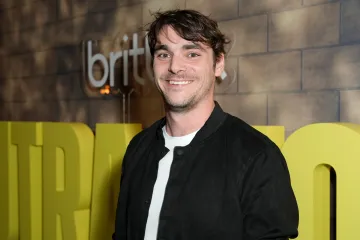
Final picture of RJ Mitte as star appeared at his new film’s premiere just days before tragic death aged 34
BREAKING Bad star RJ Mitte made his final public appearance just days before he tragically passed away.
The actor, 34, smiled on the red carpet at the premiere of his new movie, Talking to Strangers, on September 30 in California.
RJ, who played Walter White Jr. in the Emmy Award-winning show, died on Monday in Brownsville, Texas.
Announcing his passing, the actor’s representative told Deadline: “It is with profound sadness that we share the tragic passing of beloved actor, philanthropist, and passionate disability rights advocate RJ Mitte.
“Drawing from his own experience living with cerebral palsy, RJ brought authenticity to the role and built a platform on disability awareness and inclusion.”
RJ’s cause of death was not immediately disclosed, however, TMZ reported that he died by suicide.


His new movie tells the story of introvert with cerebral palsy who meets a vibrant force of nature who he goes on to form an unlikely and complicated friendship with.
Talking to Strangers is available to stream on Prime Video.
Just four days before his death, RJ posted to Facebook about the movie.
He wrote: “Had the pleasure of attending the LA premier for a film I made, Talking to Strangers The Movie, now streaming on Amazon Prime Video.
Most read in Entertainment
“It’s got a little love, some comedy, and maybe even some drama.”
Speaking on a podcast, RJ praised the film for “pushing social norms” and “stepping out of the realm of comfort”, pagesix reports.
RJ was diagnosed with cerebral palsy at age 3, and used his stardom as a Hollywood actor to become a leading disability rights advocate.
He served as a proud celebrity ambassador for several organizations, including United Cerebral Palsy and Shriners Children’s.
Giving advice to young people with disabilities, he told Future of Personal Health: “My hope is to inspire a ‘never give up’ mentality.
“If there is something you want in life, pursue it no matter how hard it may be.
“Keep your dreams alive. Don’t lose sight of who you want to become.”
In Breaking Bad, his character also had cerebral palsy, although the actor’s real-life condition was milder compared to his character.
RJ played the son of Bryan Cranston and Anna Gunn’s characters on the hit crime drama.
He appeared in 56 episodes.
Last year the late actor got engaged to his girlfriend Kennedy Suarez after years of dating.
If you or someone you know is affected by any of the issues raised in this story, call or text the 988 Suicide & Crisis Lifeline at 988, chat on 988lifeline.org, or text Crisis Text Line at 741741.
How to get help
EVERY 90 minutes in the UK a life is lost to suicide
It doesn’t discriminate, touching the lives of people in every corner of society – from the homeless and unemployed to builders and doctors, reality stars and footballers.
It’s the biggest killer of people under the age of 35, more deadly than cancer and car crashes.
And men are three times more likely to take their own life than women.
Yet it’s rarely spoken of, a taboo that threatens to continue its deadly rampage unless we all stop and take notice, now.
If you, or anyone you know, needs help dealing with mental health problems, the following organisations provide support:
CALM, www.thecalmzone.net, 0800 585 858
Heads Together,www.headstogether.org.uk
HUMEN www.wearehumen.org
Mind, www.mind.org.uk, 0300 123 3393
Papyrus, www.papyrus-uk.org, 0800 068 41 41

BofA analysts see gold unable to hold above $4,000 over next three months
BofA analysts see gold unable to hold above $4,000 over next three months
Source link
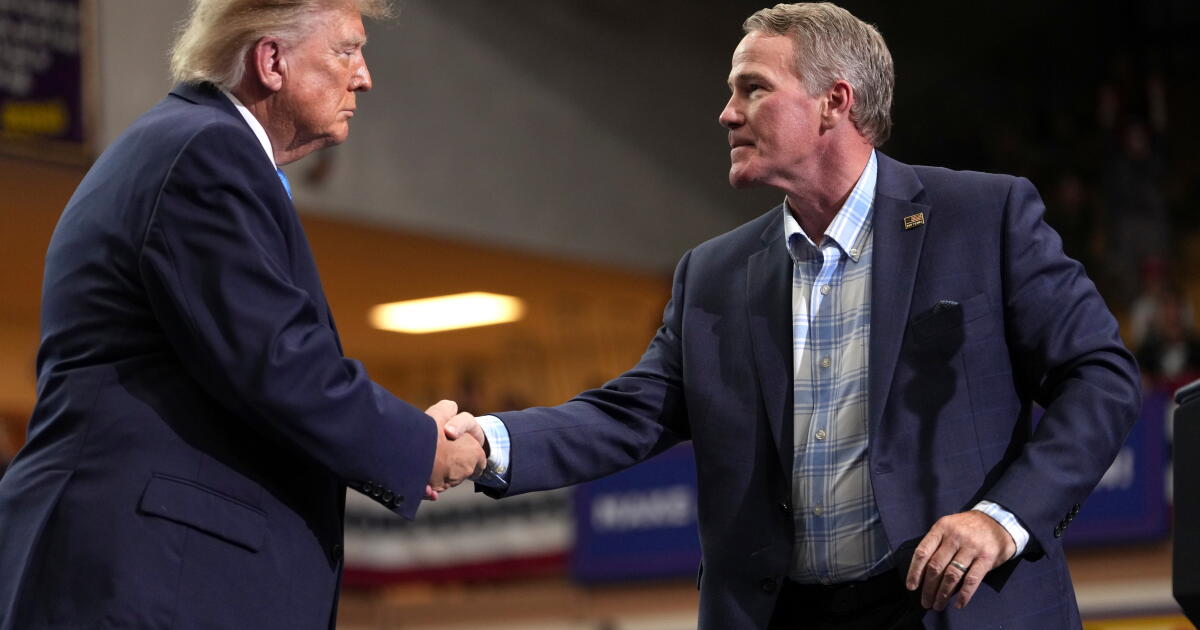
Mailers promoting a socialist candidate in Ohio’s U.S. Senate race have links to MAGA super PAC vendor
COLUMBUS, Ohio — Campaign mailers urging Ohio voters to support a socialist U.S. Senate candidate over Democratic nominee Sherrod Brown are being underwritten by a newly incorporated PAC with ties to President Trump’s MAGA Inc., public filings show.
The mailers are sponsored by Enough Promises Ohio PAC and began arriving in voters’ mailboxes in recent days. They promote independent candidate Greg Levy over Brown with messages such as “Join the Revolution” and “Send a Worker to the Senate.” Levy describes himself as “Socialist running for the U.S. Senate to represent Ohio in 2026” on his X account.
Levy condemned the fliers for falsely impersonating his campaign and engaging in “dirty tricks” designed to mislead voters. He said he is considering legal action.
“This is a highly undemocratic practice and does a disservice to voters in Ohio and throughout the country,” he wrote on X.
According to Federal Election Commission filings, Enough Promises Ohio was founded on Sept. 29. It has not yet had to disclose its contributors, but additional federal filings lay out a trail of associations linked to Republicans.
Enough Promises paid the firm Seven Farms more than $397,000 on two dates last week for printing, postage and mail services either supporting Levy or opposing Brown. Seven Farms, also a new entity, lists as its address the same South Carolina business suite as the one used by Whistlestop Strategies LLC.
Whistlestop is a direct mail outfit operated by Big Dog Strategies LLC, the strategy firm that advises Trump’s MAGA Inc. super PAC and that managed Republican Sen. Bernie Moreno’s successful campaign against Brown in 2024.
Messages seeking comment were left with Enough Promises Ohio and Big Dog.
MAGA Inc. and affiliated groups began pouring huge sums of cash into midterm races in September, after party officials had been urging Trump to begin spending some of the fortune he had amassed to help embattled Republicans before it was too late.
Smyth writes for the Associated Press. AP writer Jill Colvin in New York contributed to this report.
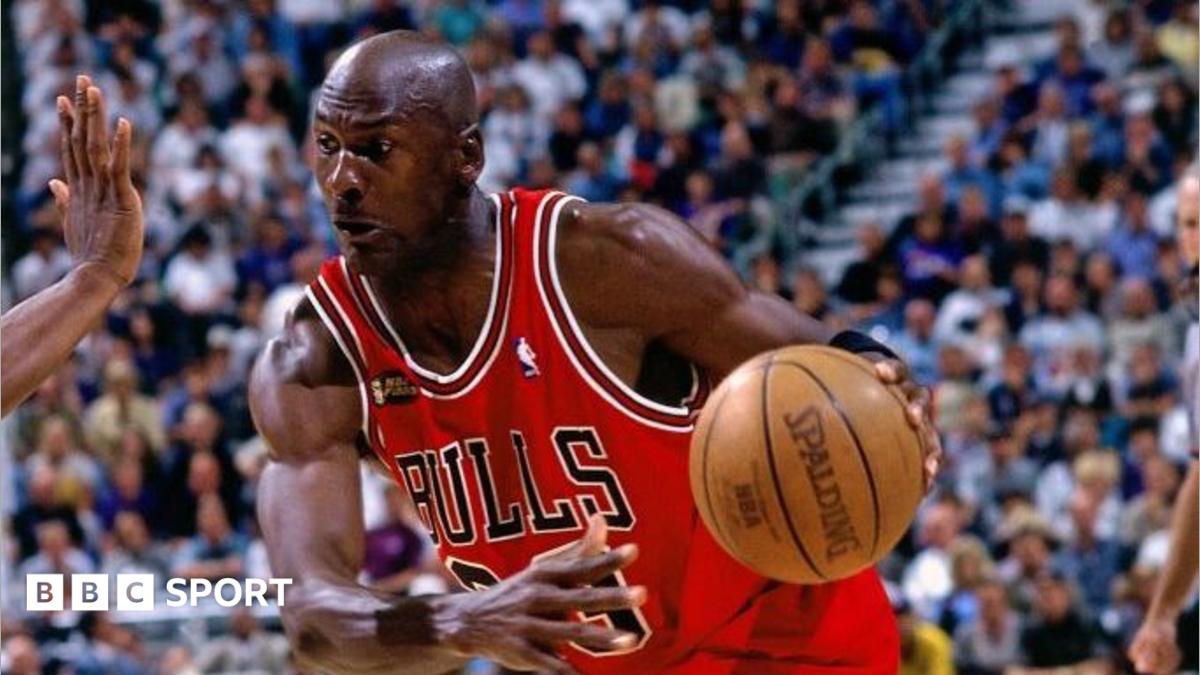
Michael Jordan jersey from ‘Last Dance’ season sells for record £10.6m
A Michael Jordan jersey from his ‘Last Dance’ season has sold for $14m (£10.6m), a record for a piece of basketball memorabilia.
Jordan wore the Chicago Bulls jersey during game two of the 1998 NBA Finals and has autographed it too.
He scored a game-high 37 points that evening before ending his last season with the Bulls with a 4-2 series win for his sixth and final NBA Championship. He was named the Finals’ Most Valuable Player in all six.
The only item of sports memorabilia that has cost more is the jersey worn by baseball legend Babe Ruth when he “called the shot” during the 1932 World Series, which was sold for $24.1m (£18.2m) in 2024.
The previous high for a basketball item was a card featuring Jordan and Kobe Bryant from 2007-08 which sold for $12.9m (£9.8m) last year.
The previous record for a piece of game-worn Jordan memorabilia was set just two weeks ago when his jersey from game three of the 1998 Finals, which is not autographed, sold via auction for $12.3m (£9.3m).
The latest purchase was made by Miami real estate investor Ron Firman in a private sale through Hunt Auctions.
David Hunt, president of Hunt Auctions, said in a statement: “While Michael Jordan’s importance within the sports memorabilia marketplace has long been established, it has now escalated to an elite asset class more typically reserved for iconic works of art.”
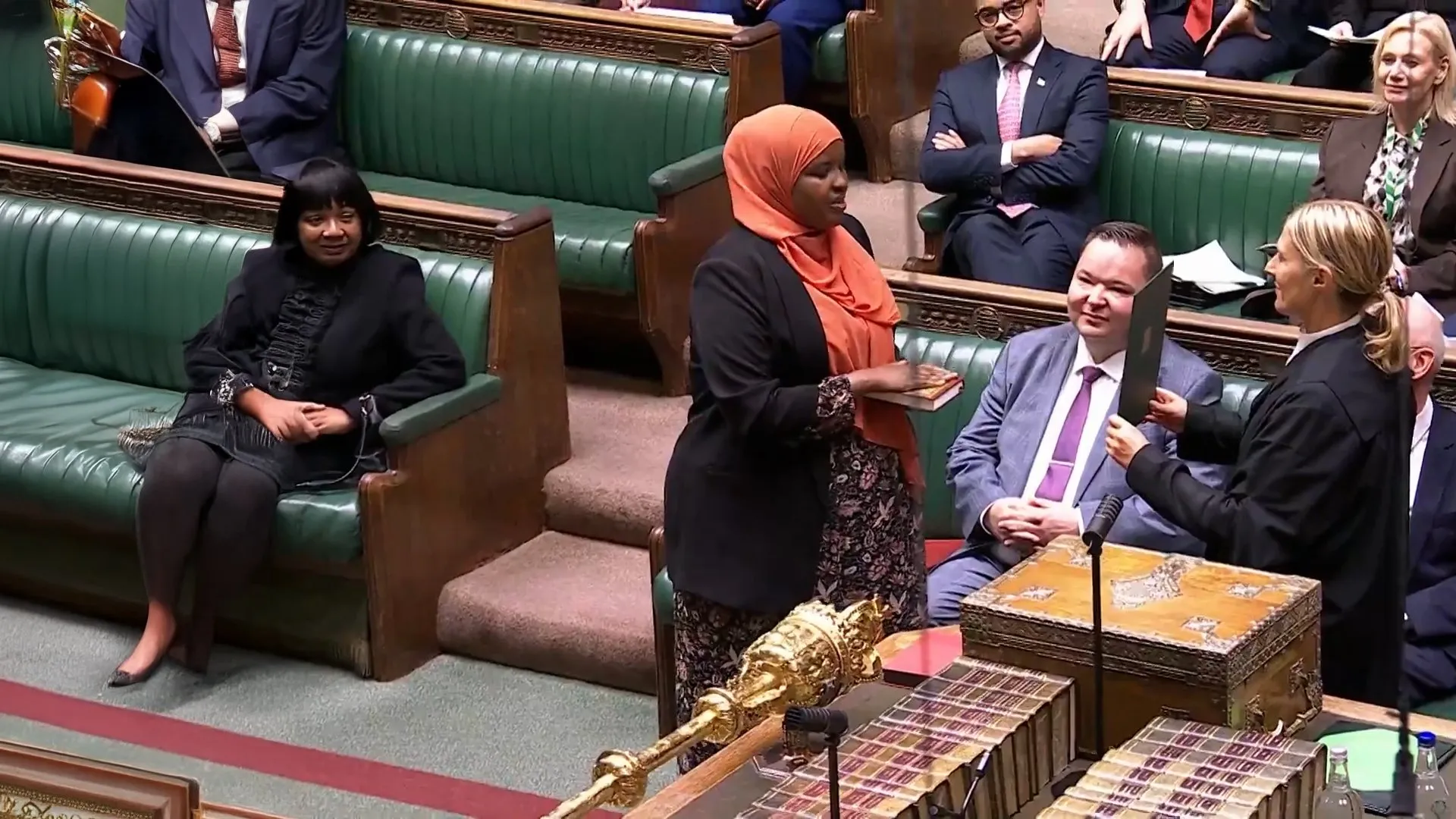
Abdi-Wali makes history as first Somali-born refugee in UK Parliament | Politics
Newly sworn-in Labour MP Sagal Abdi-Wali has made history as the first Somali-born refugee woman elected to UK Parliament. She won London’s Holborn and St Pancras seat, vacated by former Prime Minister Keir Starmer, defeating Green Party leader Zack Polanski.
Published On 12 Oct 2026

Israeli strike on tent in Gaza’s Khan Younis kills three | News
Palestinians attended funerals Monday of three people killed in an Israeli airstrike on a tent in Khan Younis a day earlier, as well as victims of other attacks. The latest strikes come amid mounting tensions over the Gaza ceasefire.
Published On 12 Oct 2026
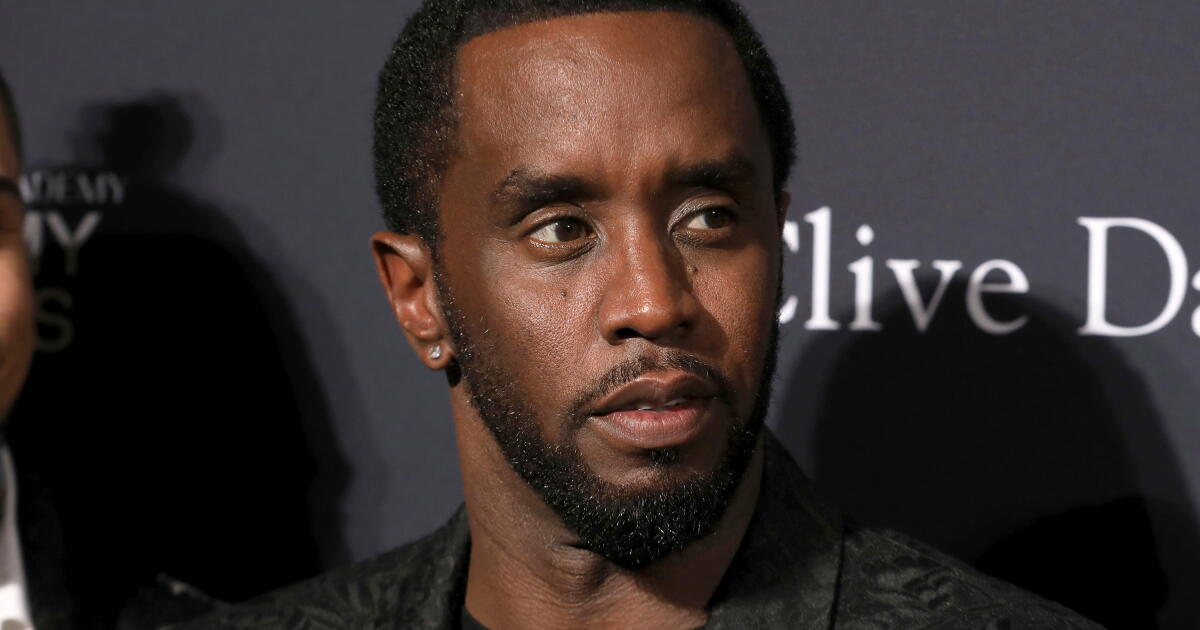
Sean ‘Diddy’ Combs hospitalized after prison head injury
Sean “Diddy” Combs’ stay in federal prison has taken yet another turn. The disgraced music and alcohol mogul has been hospitalized after suffering a head injury, The Times has learned.
Combs, 56, is receiving treatment for the head injury, sources say. A representative for the fallen Bad Boy Records founder said in a statement to The Times, “We are aware of the reports concerning Sean Combs and are working to confirm the circumstances. Sean’s health and well-being are our immediate concern, and we appreciate everyone who has reached out.”
A spokesperson for FCI Ft. Dix, a low-security federal prison in New Jersey, did not comment. Combs, who is behind bars for two counts of a prostitution-related charge, was rushed to a hospital on Saturday for a non-life-threatening injury, TMZ reported. Combs reportedly was conscious and speaking before his hospitalization, according to the outlet.
Combs and his time in FCI Fort Dix recently made headlines when NBC News reported last month that the musician had been paying men for special services, including paying inmates to clean and cook special meals for him. Curry chicken, pizza and empanadas were reportedly among those special meals. NBC News also reported that the hip-hop and R&B music producer also receives Chinese-style massages. Combs also allegedly obtained a contraband phone, had access to a “jailbroken” tablet and had smuggled an illegal stash of alcohol.
“The continued scrutiny of every mundane detail of Sean Combs’s life in prison has reached the point where the media characterizes ordinary prison life as news,” a spokesperson for Combs said in a statement to NBC News.“The only real news is that Sean continues to serve his sentence while awaiting the court’s decision on his appeal.”
After NBC News shed light on Combs’ alleged prison privileges, the rapper was reportedly moved back to solitary confinement.
Combs was sentenced in October 2025 to 50 months in prison after he was convicted of transporting prostitutes across state lines for drug-fueled sex performances known as “freak-offs.” After some back-and-forth with his prison sentence, he is currently set to be released in March 2028.
Times staff writer Andrea Flores and Richard Winton contributed to this report.
Omar says she won’t ‘be silenced’ by search of her home and blasts Trump’s ‘intimidation’ campaign
WASHINGTON — Federal agents on Monday searched the home of Democratic U.S. Rep. Ilhan Omar, a startling escalation in a criminal investigation that brings renewed scrutiny to the frequent target of Trump administration derision in the final weeks of her reelection bid.
Omar said she will “not be silenced” and called the search of her home the “latest escalation” in President Trump’s ‘‘intimidation” campaign.
The search of the Minnesota congresswoman’s home so close to next month’s midterm contests that will determine control of the House and the Senate was swiftly condemned by top Democrats in Congress and raised questions about the timing given longstanding Justice Department protocol to avoid overt investigative steps involving political candidates in the direct run-up to an election.
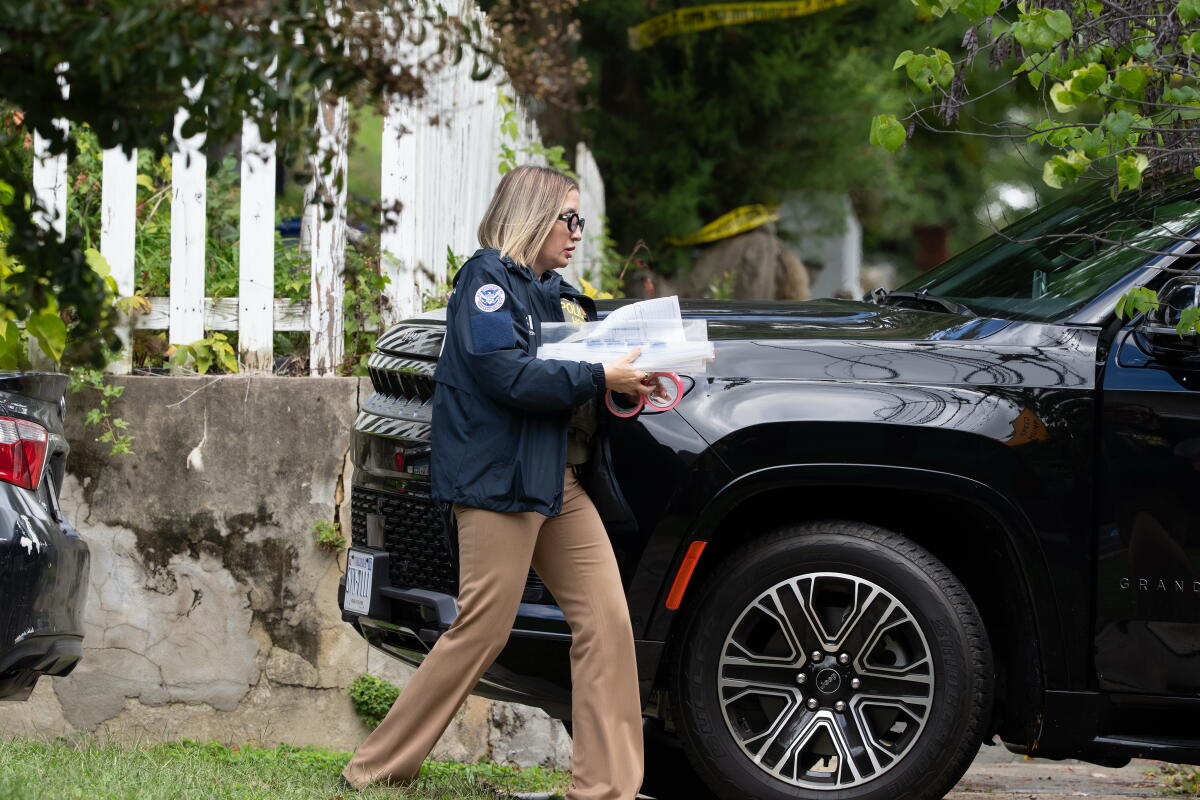
The Justice Department confirmed in a statement that Homeland Security Investigations agents executed a judicially authorized search warrant in the Washington, D.C., area in connection with an ongoing federal criminal investigation but provided no other details.
The nature and scope of the investigation were unclear, though officials in Trump’s administration have repeatedly hinted at the existence of an inquiry targeting Omar, a Somali-born Democrat whose status as an immigrant to the U.S. and left-wing views have repeatedly drawn criticism from Republicans and senior Trump officials.
Homeland Security Secretary Markwayne Mullin said last month that there was an “ongoing investigation” related in part to whether Omar lied on her immigration forms and that “something’s going to happen.”
Though the Republican focus on Omar’s background dates back years, the search of her home took place three weeks before the November midterms, in which Omar is on the ballot for reelection. The Justice Department has historically sought to avoid public investigative actions involving a candidate within 60 days of a primary or general election.
“For years, Donald Trump and far-right extremists have relentlessly targeted Congresswoman Omar with vile personal attacks and baseless accusations,” top House Democratic leaders said in a statement. “Now, less than 30 days until the midterm election, his violent mass deportation machine has descended upon the home of a duly elected Member of Congress and her family.”

A Homeland Security officer walks out of the Washington residence of Rep. Ilhan Omar, D-Minn., during a search, Monday.
(J. Scott Applewhite / Associated Press)
Trump has frequently targeted Omar
Trump as recently as this past weekend brought up Omar at a rally in Tennessee, where he attacked her upbringing and suggested that Vice President JD Vance “and our people” were investigating her.
Vance has in the past accused Omar of committing immigration fraud — an allegation she has denied — and has said he and a top White House official were trying to figure out how to investigate her.
On Monday morning, the street
in Washington where Omar lives was blocked off as HSI agents remained near the home.
“This enforcement action is part of an ongoing federal criminal investigation,” the department said.
A spokesperson for the Department of Homeland Security, of which Homeland Security Investigations is part, referred questions about the search to the Justice Department.
Omar has long been a target for Republicans
Omar, who was first elected to the House in 2018, represents Minnesota’s 5th District, including Minneapolis. She is part of “The Squad,” progressive lawmakers who are a vibrant political force on the left wing of Congress but have also endured repeated attacks from Trump, dating to his first term. She was one of the first two Muslim American women in the House and the first African refugee to be elected to Congress.
When Republicans swept control of the House in 2023, they voted to oust Omar from the Foreign Affairs Committee, citing her anti-Israel remarks.
In January, Trump lashed out at Omar during a rally in Iowa hours before an assailant sprayed the congresswoman during a town hall meeting in Minneapolis with a substance that turned out to be vinegar. The attacker was sentenced to 14 months in prison.
Republicans have raised questions about Omar’s past since before she was elected, including asserting that she had married her brother and committed immigration fraud. Omar has broadly denied the allegations as “disgusting lies.”
“It certainly seems like something fishy is there, but everybody’s entitled to equal justice under the laws,” Vance told reporters in May. “So we’re going to investigate it. We’re going to take a look at it. If we think there’s a crime, we’re going to prosecute that crime.”
In a separate interview with conservative podcaster Benny Johnson, Vance said without offering evidence that “we actually think that Ilhan Omar definitely committed immigration fraud against the United States of America.”
He said that he and deputy White House chief of staff Stephen Miller had been discussing it.
“That’s the thing that we’re trying to figure out,” he said. “What are the legal remedies now that we know that she’s committed immigration fraud? … How do you build the case necessary to get some, some, some justice for the American people?”
Omar’s office has defended her against past allegations
Omar’s office in March dismissed Vance’s claims as fabricated and defamatory.
“This is rich coming from someone who literally said they were willing to ‘create stories’ to redirect the media,” Omar’s chief of staff, Connor McNutt, said in a statement.
“This is a ridiculous lie and desperate attempt to distract from the pedophile protection party’s unpopular war of choice, increasing gas prices, and rapidly dropping polling numbers,” McNutt said.
Tucker and Richer write for the Associated Press. AP writers Lisa Mascaro, Michelle L. Price and River Zhang in Washington, Kathy McCormack in Concord, N.H., Mike Catalini in Morrisville, Pa., and Meg Kinnard in Columbia, S.C., contributed to this report.
UCLA quarterback Nico Iamaleava out for season with knee injury
UCLA senior starting quarterback Nico Iamaleava will miss the rest of this season with a knee injury, according to a person with knowledge of the injury not authorized to discuss it publicly.
The injury is a blow for the No. 12 Bruins, who are 5-0 during coach Bob Chesney’s first season and have a favorable path to a spot in the College Football Playoff.
Iamaleava sustained the injury at the end of the first half of UCLA’s win over Oregon.
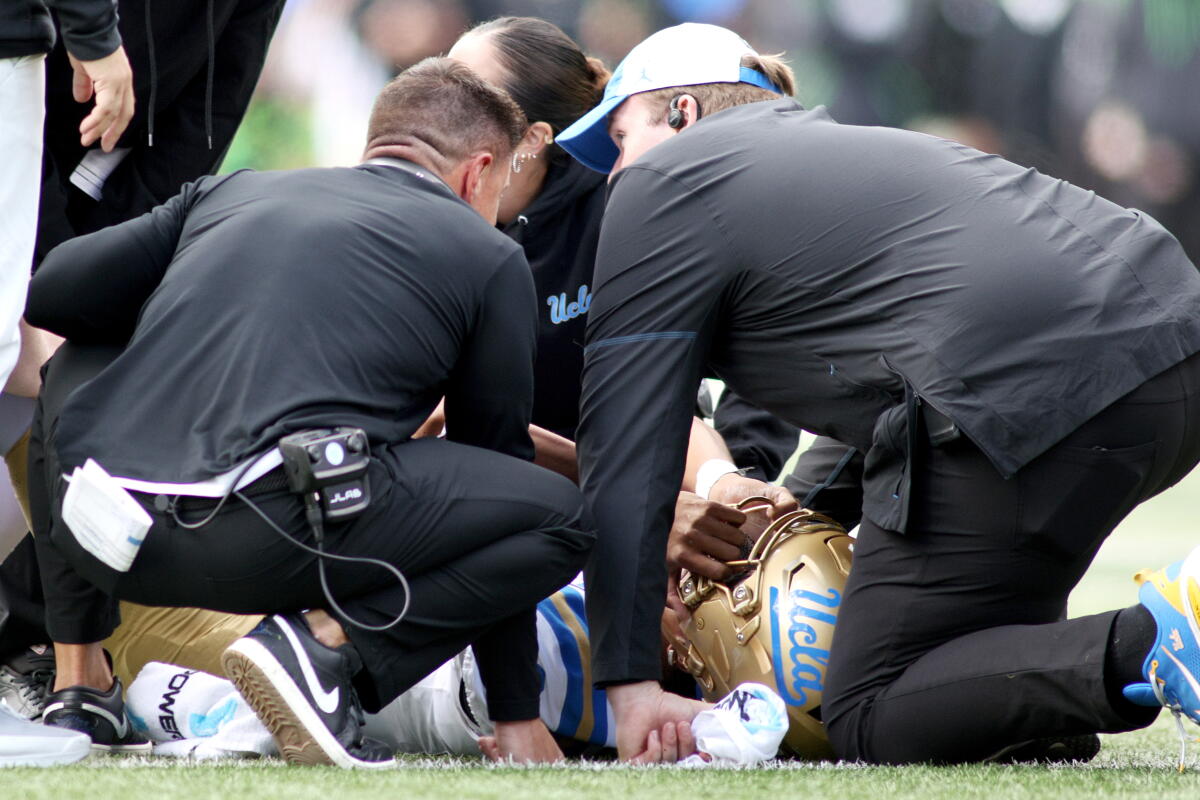
The quarterback was running with the ball when he was spun around and was tackled. He grabbed his leg as he was hit in the head by Oregon’s Bear Alexander. Iamaleava briefly returned for one play and Chesney said during a halftime TV interview the quarterback was fine after getting hit in the quad.
Iamaleava, however, did not return with the team after halftime and eventually emerged from the locker room in the third quarter wearing street clothes.

UCLA quarterback Nico Iamaleava is examined by medical staff while coach Bob Chesney watches Saturday in Eugene, Ore.
(Lydia Ely / Associated Press)
Before his exit, Iamaleava went 10 of 17 passing for 162 yards and two interceptions. Through five games, the quarterback tallied 982 passing yards, 144 rushing yards, five total touchdowns and four interceptions.
After Saturday’s win, Chesney said that he thought Iamaleava injured his thigh, but he noted the injury may have been more extensive and it would require a full medical evaluation.
Senior quarterback Ty Dieffenbach, who had been listed third on the depth chart behind Iamaleava and his younger brother Madden, ran the UCLA offense during the second half. He completed three passes for 43 yards and one touchdown, helping the Bruins earn a 17-15 win.
“When someone goes down, and someone’s gotta step up, you’re either exposed or you’re revealed,” Chesney said. “One of the two is going to happen when your number gets called, and for Ty to step up in that moment when Nico couldn’t go and to put himself in the spot where he was revealed for knowing the run game, knowing what to get us into, the touchdown pass I thought he threw.”
Madden Iamaleava appeared in two games this season, taking over the offense against Purdue when his older brother went down with a shoulder injury and against Maryland with UCLA up multiple scores.
Chesney turned to Dieffenbach, who started last season at Cal Poly, during one of the biggest moments of the season. Dieffenbach said after the win he didn’t know he would be asked to lead the offense if Nico Iamaleava was knocked out.

UCLA quarterback Ty Dieffenbach prepares to receive the ball during a win over Oregon Saturday in Eugene, Ore.
(Lydia Ely / Associated Press)
The decision to play Dieffenbach instead of Madden was based on the game script and the threat of Dieffenbach in the ground game, Chesney said.
“We are really on a week-to-week basis here, and this week we felt like we had to run a little bit more with the quarterback possibly, and that’s where I felt Ty had a really nice week and that put us in that spot,” Chesney said. “This is just one of those things that I’m sure if Madden would’ve went in there, he would have done a phenomenal job as well. But I thought Ty was the guy we decided on at this moment based on the previous week of practice.”
Chesney and Dieffebach acknowledged that the fight for the UCLA backup spot never ends.
“Every week is a battle between me and Madden for the two-spot, and I mean both of us were executing in practice,” Dieffenbach said. “… When I heard that I was [going to play, it was] just tunnel vision, just ready to go execute.”
Prior to helping earn UCLA’s first victory at Autzen Stadium since 2004, Dieffenbach spent the 2025 campaign at Cal Poly, where he started 11 games, throwing for 1,305 yards, nine touchdowns and nine interceptions, alongside 321 ground yards and four scores.
Dieffenbach’s one-year stint in San Luis Obispo was preceded by two years at Pittsburgh, where he did not see any game action. The signal caller’s transfer to UCLA marked a return to Southern California for the Agoura High product, who started his high school career as a wide receiver but finished his three varsity seasons with 4,153 passing yards and 48 touchdowns.
Elon Musk spends $366m to bolster Republican Party in US midterm elections | Elon Musk News
The barrage of spending comes as Republicans fight to overcome Trump’s declining popularity and cost of living concerns.
Published On 12 Oct 2026
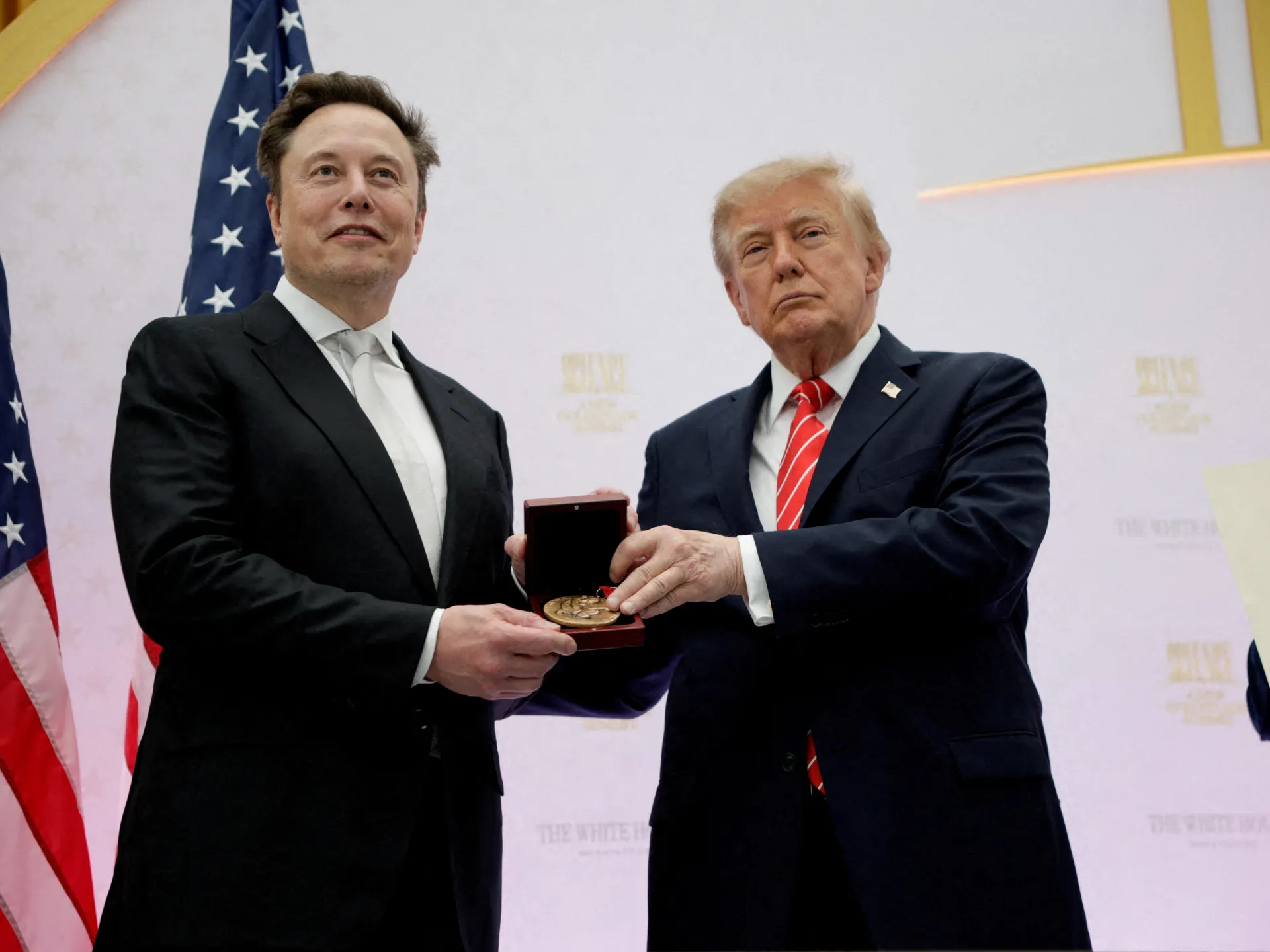
Elon Musk, the trillionaire tech mogul and backer of far-right causes, has reportedly spent $366m since last year to buoy the Republican Party in the United States midterm elections.
The New York Times first reported on Monday that Musk has spent $276m since July alone, including $158m for a super PAC focused on Republican Senate candidates, making him the largest single donor this year.
Recommended Stories
list of 3 itemsend of list
Musk is considered a close ally of President Donald Trump, the leader of the Republican Party, and was a special government adviser to the White House last year.
Musk’s political action committee, America PAC, has confirmed the spending totals. In a statement to The New York Times, a spokesperson framed the record amount as necessary to defend Congress from a Democratic takeover during the midterm races.
“These robust investments have allowed the GOP apparatus to get its message out so Republicans can have a fighting chance to defy history,” America PAC spokesman Andrew Romeo told the Times.
The barrage of spending by Musk comes as Republican candidates are fighting to overcome Trump’s low popularity and rising concerns about the cost of living among US voters.
Democrats are hoping to capitalise on voter dissatisfaction with Trump’s tenure to seize control of Congress, where Republicans currently hold majorities in both the House of Representatives and the Senate.
The influence of wealthy donors and PACs has long been the subject of criticism. Opponents argue that such spending distorts US politics in favour of powerful interests.
Musk became the world’s first trillionaire in June, when his aerospace company SpaceX made its initial public offering (IPO) on the Nasdaq stock exchange.
The tech entrepreneur had previously said that he planned to step back from his involvement in US politics, stating in May that he had “done enough” and did not have plans for large spending efforts.
Still, Musk has leveraged his tech holdings and wealth to support right-wing groups around the world.
Last year, for instance, politicians in Germany accused Musk of trying to meddle in the national election. Musk has been a vocal backer of the Alternative for Germany (AfD) party, which has been accused of adopting a discriminatory stance on immigration and other issues.
Voters in the US will head to the polls on November 3 to cast their ballots in the midterms, which will decide key state and local races, as well as congressional majorities.
The Republican Party is considered to have a sizeable financial advantage over the Democrats ahead of the race, with heavy spending from groups such as MAGA Inc, a pro-Trump super PAC named for the president’s “Make America Great Again” movement.
As of August, MAGA Inc reportedly had $416m in its coffers. The tracking site AdImpact found that it had spent $22m over the past month alone on the tight race unfolding for the open Senate seat in Texas.
Trump has also increased his campaign activities, hosting a string of rallies in the final weeks before the election to help Republicans push their message.
But Democrats appear confident that the Republicans’ spending advantage will not be enough to counter the effects of growing dissatisfaction with Trump.
“Republicans are hoping to buy these elections, injecting tens of millions into races to try and outrun their unpopular candidates, unpopular president and unpopular economy,” said Lauren French, a spokesperson for Democrats’ Senate Majority PAC.
Pope Leo to undergo surgery to remove lung nodule in Rome | Religion News
Vatican officials expect a one-week hospital recovery for the 71-year-old religious leader ahead of his scheduled Latin America tour.
Published On 12 Oct 2026
Pope Leo XIV is to undergo surgery to remove a lung nodule, the Vatican has announced.
The 71-year-old leader of the Catholic Church will enter Rome’s Gemelli Hospital late on Tuesday morning for the procedure, which is expected to require about a week of inpatient recovery and has forced the cancellation of upcoming papal audiences.
Recommended Stories
list of 3 itemsend of list
During his weekly blessing in St Peter’s Square on Sunday, Leo told pilgrims that a small nodule was found on his left lung during a routine checkup and said it was “well-contained” and had been spotted early.
“The doctors believe it’s best to take action, so, following their advice, I’ve decided to have surgery to remove it,” he said during remarks delivered in Italian.
Later, the Vatican said a week of recovery time is expected after Leo’s surgery, and his audiences have been cancelled until October 20.
Spokespeople did not clarify whether the nodule is believed to be malignant.
The pope has no reported history of serious illness and is considered physically active, routinely swimming and playing tennis.
The upcoming surgery comes ahead of an official Latin America tour scheduled for November 6–17, with stops planned across Uruguay, Argentina, and Peru.
Whether the operation and subsequent recovery will force changes to the itinerary remains unclear, though the pontiff told reporters on Sunday that he intends to make the journey.
The late Pope Francis, Leo’s predecessor, died at age 88. Francis was hospitalised several times and grew frail in his later years. He did not usually announce his hospital visits in advance, sometimes sparking intense media speculation about his health.
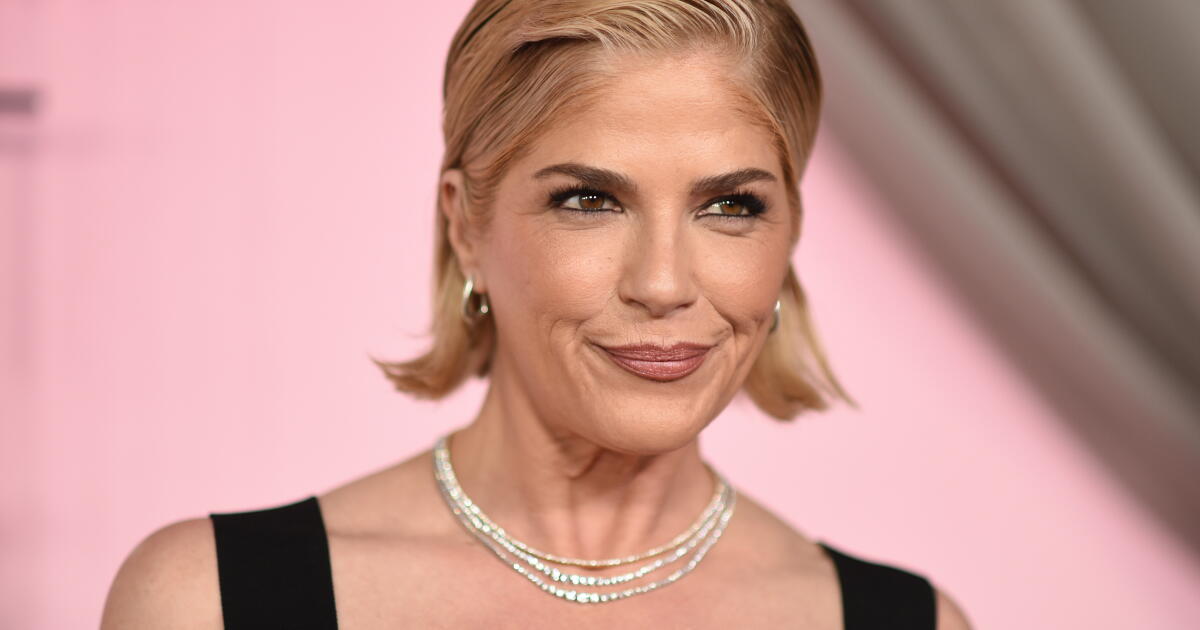
Selma Blair arrested, accused of injuring flight crew
Selma Blair allegedly had a violent episode aboard a Delta Airlines flight.
The “Cruel Intentions” star was taken into custody and transported to a hospital for evaluation on Sunday night after allegedly becoming physically abusive with the flight staff, according to the New York Port Authority. The Port Authority Police Department responded to a call around 11 p.m., when a flight coming from Los Angeles International Airport landed at John F. Kennedy International Airport, and two flight attendants needed medical assistance after an alleged altercation while in flight. One flight attendant was also transported to the hospital for further evaluation.
The FBI is investigating the incident.
According to representatives for Blair, “Selma experienced a medical emergency that led to the alleged conduct. Upon landing, she received immediate medical attention and is currently in stable condition.”
In dispatch audio, obtained by TMZ, a flight attendant suffered a bloody nose and Blair is alleged to have “bashed her head” against an overhead compartment.
A spokesperson for Delta told The Times in an emailed statement, “Delta has zero tolerance for unruly or unlawful behavior, as the safety of our customers and crew always comes first.”
In 2016, Blair was hospitalized after an incident on a flight to Los Angeles International Airport from Cancun, Mexico. She subsequently apologized for the behavior, saying in a statement, “I made a big mistake yesterday. After a lovely trip with my son and his Dad, I mixed alcohol with medication, and that caused me to black out and led me to say and do things that I deeply regret.”
The FBI could not immediately be reached for comment.
This story is developing.
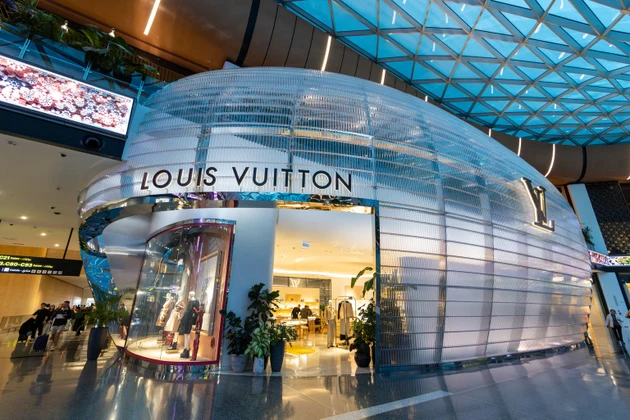
Luxury letdown: LVMH misses organic sales expectations due to China weakness (LVMHF:OTCMKTS)

winhorse
LVMH (LVMHF) updated investors that third-quarter revenue reached €18.50B, slightly above analysts’ €18.46 billion consensus. Organic sales growth of 1% was reported, down from the 3% pace seen in the second quarter. Strength in the U.S., Europe, and Japan offsets weaker demand in China.
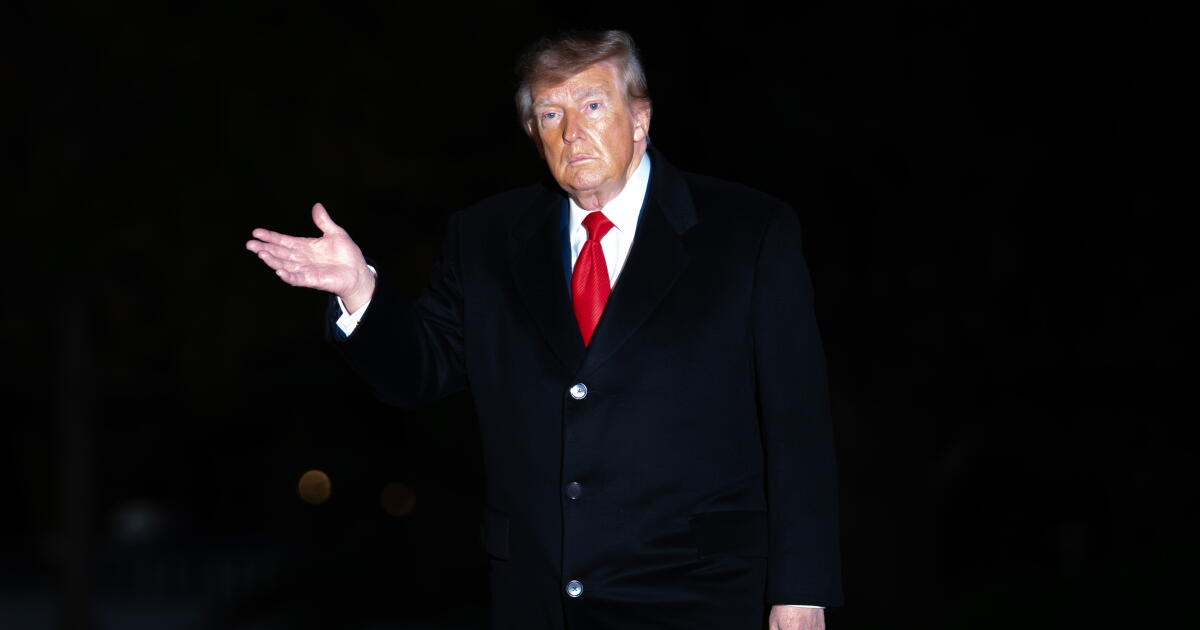
Federal judge orders Trump administration to halt work for a day on historic D.C. golf course
WASHINGTON — U.S. District Judge Ana Reyes on Monday ordered a 24-hour halt to tree-cutting at the East Potomac Golf Course, a historic D.C. golf course that has been part of President Donald Trump’s plans to remake the city.
Reyes issued the order following a tense three-hour hearing in which she blistered the government for having deceived her with its actions over the holiday weekend.
Reyes said the 24-hour temporary order could be extended to 14 days if necessary. It was limited to one day while the government tries to find a key Trump administration official to discuss why a massive tree-cutting at the park needed to occur over the holiday weekend, with little notification to plaintiffs in a lawsuit trying to halt renovation plans or the judge.
It’s the latest example of the erosion of trust between the government and the independent judiciary, as the Trump administration tries to steamroll scrutiny of its actions, from the White House ballroom to immigration enforcement.
The hearing started with a blistering 15-minute statement from Reyes, who has declined repeated motions from the plaintiffs to halt work by the administration out of concern that its strategy has seemed to be move ahead on projects despite court actions.
“I am thoroughly unamused right now,” Reyes said. “I do not know how I could have made it any plainer that I did not want what was to happen, to happen.” The judge added: “I have given the government every single benefit of the doubt that it would not do precisely what it has done.”
She told the government’s lawyers sharply: “I wanted you all to be better than you have been.”
The emergency hearing on a holiday expanded as the judge ordered the government to get various participants in the decision-making process into the hearing remotely.
Reyes plans to hold another hearing Tuesday and wants to hear from Greg Wischer, deputy chief of staff at the Interior Department. Wischer pushed for the work to be done urgently, according to testimony from Frank Lands, deputy director of operations for the National Park Service.
Fields writes for the Associated Press. AP writer Matthew Daly contributed to this report.
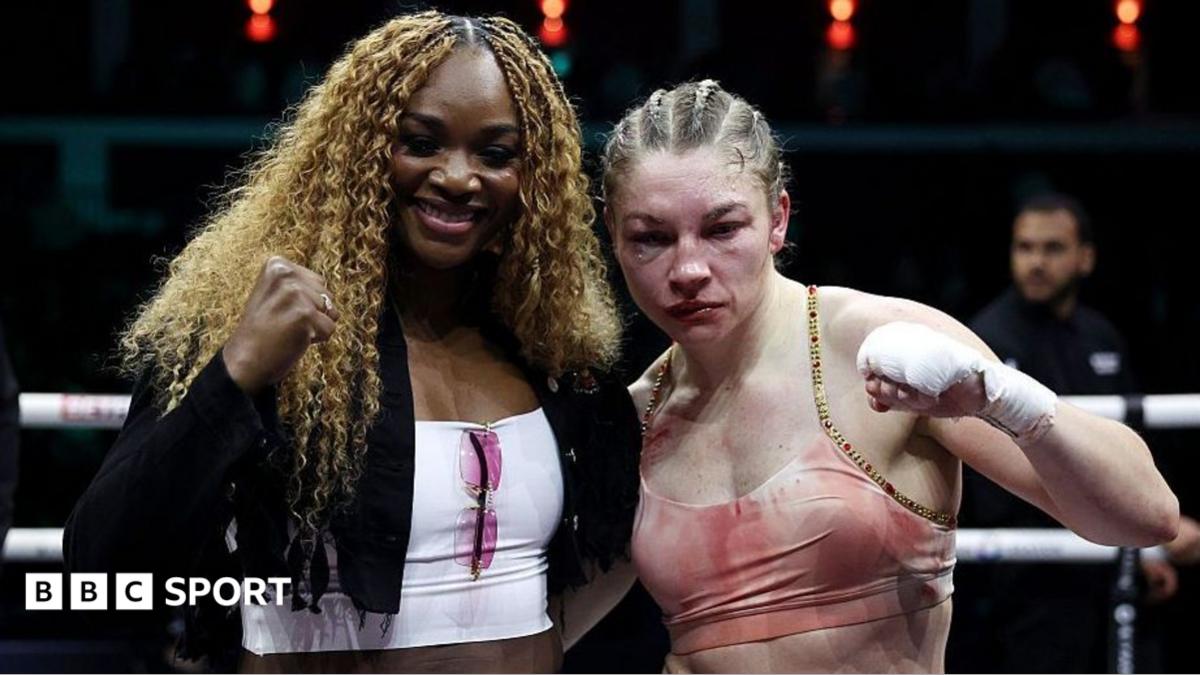
Lauren Price rules out Claressa Shields but hints at big showdown
Price says her focus is simply on Kotaskova, who took Cameron the distance in London in April.
Her loss on the scorecards at light-middleweight is her only defeat in a 15-fight career and will present a tough challenge for Price in her 11th fight since giving up her amateur status.
At one stage it had seemed as though all roads led to a showdown with Shields, with the two facing off after Price’s win over Pineiro earlier this year.
Shields called out Price as recently as August having reclaimed titles at middleweight.
A two-fight deal had been speculated but, when pressed on what happened, Price told BBC Sport Wales: “There was nothing on my side. The money wasn’t great, I wanted to fight in America and in Wales, but she wouldn’t come here, and there was no rematch clause.
“Everything basically was stacked against me and it just didn’t make sense.
“I have to stand on my own two feet and think: ‘I’m Lauren Price, I’m unified champion, Olympic gold medallist.’
“If I was towards the end of my career or if I had a few losses, absolutely you jump on it.
“But there’s no rush and there’s equally exciting fights out there.
“That fight will definitely happen, but only when it’s the right time and it makes sense.”

Cuba forges ahead with renewable energy plans amid US oil blockade | Energy News
Published On 12 Oct 2026
The Cuban government is pushing ahead with its plans to transition to renewable energy, amid a de facto oil blockade from the United States that has strangled the island’s economy.
In an interview with the Reuters news agency on Monday, Cuban Minister of Energy and Mines Vicente de la O Levy explained that the blockade has forced Cuba to explore domestic alternatives to foreign fuel imports.
Recommended Stories
list of 4 itemsend of list
“We are seeking our own alternative solutions, using our own resources, our sun, wind, tides, fuel, Cuban crude oil and the gas produced in our wells,” de la O Levy said.
He said 144 solar farms with a combined capacity of about 1,418 megawatts have been installed on the island in recent years.
China has been the largest supplier of solar panels to the island, and shipments have increased since the blockade began in early January.
At the time, US President Donald Trump halted all oil shipments from Venezuela, a close ally of the Cuban government.
Later that month, Trump also announced he would impose heavy tariffs on any country that exported oil to Cuba, justifying the threat by calling the island’s government a “national security” threat.
Since then, only a single oil tanker from Russia has reached Havana. The US has increased its shipments of oil to Cuba’s private sector, but it has largely barred fuel exports for nationalised industries on the communist-led island.
The government-run electrical grid, widely considered to be antiquated, relies heavily on fossil fuels. Only 40 percent of Cuba’s electricity comes from domestic oil production, according to the International Energy Agency.
As of 2023, only nine percent of the country’s energy consumption was covered by renewable sources.
De la O Levy admitted in his interview with Reuters that the country was facing difficulties. The blockade has caused shortages of medicine, water and fuel, pushing Cuba to the brink of a humanitarian crisis.
“We are surviving and moving forward, little by little, even if not at the pace we would like,” he said.
“We face long hours of blackouts and lack fuel for cooking and transportation. We lack fuel, but we are gradually making headway through our own solutions and our people.”
Cuba’s production of domestic crude oil remains stable, he added, but is almost entirely allocated to power plants.

The United Nations and human rights watchdogs have criticised the oil blockade as a violation of international law.
Cuban Foreign Minister Bruno Rodriguez Parrilla also condemned the oil blockade in his speech at the UN General Assembly last month.
“It is an unusual and unprecedented action,” Rodriguez said of the blockade.
“A superpower unilaterally deprives all states of their right to export the commodities that they wish to the country that they wish.”
The US has maintained an economic embargo on Cuba for more than 60 years, since the Cold War era.
But since taking office for a second term as president, Trump has sought to squeeze Cuba’s economy further, as part of a “maximum pressure” campaign. His administration has indicated that it wants to topple Cuba’s government.
On October 7, US authorities announced they had seized 90 biodiesel fuel shipments valued at over $2.8m destined for Cuba.
“These shipments were part of an attempt to unlawfully export fuel to Cuba in violation of federal export laws,” US Immigration and Customs Enforcement (ICE) said in a statement.
But in his interview with Reuters, de la O Levy denied the Cuban government had any link to the shipments.
“No Cuban state-owned company has managed to secure a fuel contract, whether for small or large quantities,” he said.
He added that any US oil shipments to private firms fall far short of the country’s requirements.
“I would venture to say that the amount entering the country doesn’t even cover 3 percent of its fuel needs,” de la O Levy said.
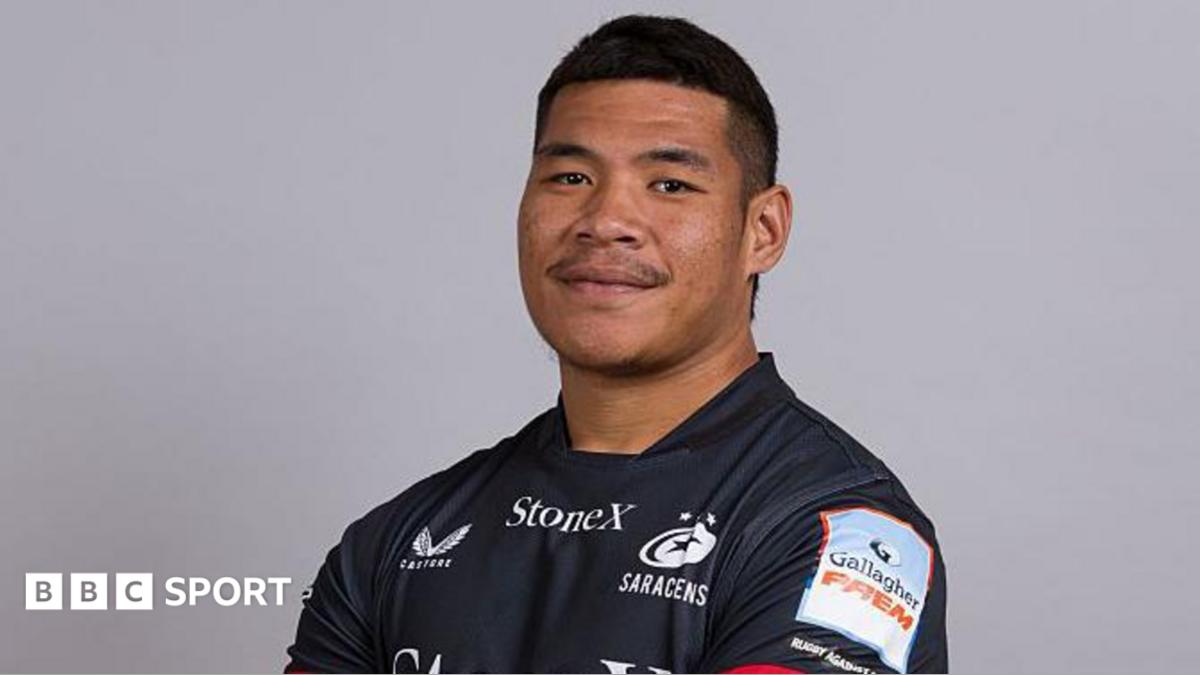
Totoa Auvaa: Saracens academy player sacked after incident in St Albans
Saracens have sacked Totoa Auvaa, the academy player who was involved in a nightclub incident with England cricketers Ben Stokes and Gus Atkinson in June.
The English Prem club have confirmed that the 21-year-old Samoan forward has left with immediate effect following another incident in St Albans on Saturday.
Auvaa had originally been stood down from all club duties while Saracens investigated the matter.
“The club has determined that his conduct falls short of the standards expected of everyone who represents Saracens, both on and off the pitch,” read a club statement., external
“We take our responsibilities to our supporters, young people and partners seriously and we remain committed to upholding the standards of our conduct expected across the club.”
A disciplinary hearing by the England and Wales Cricket Board (ECB) found that then England captain Stokes and pace bowler Atkinson breached “contractual obligations” but were blameless for “violent conduct” in an incident in June.
Both were present in a London nightclub when a member of England’s security staff was left bloodied and in need of medical attention after being struck by Auvaa.
Stokes and Atkinson were made unavailable for England’s second Test defeat by New Zealand while Auvaa was not sanctioned.
All-rounder Stokes was restored to the team for the deciding third Test, during which he made a stunning announcement to retire from international cricket at the conclusion of the match.

Aria Vega will bring ‘Caribbean maximalism’ to L.A. — and soon, the Latin Grammys
One word that could describe Aria Vega’s whirlwind 2026? Chévere.
The Colombian expression for “awesome” is also the name of the fast-rising star’s global smash hit. Released in January, the breezy tropical swing of “Chévere” — and the rest of her sun-kissed singles — embodies the spirit of Colombia’s Caribbean coast where she hails from.
Ahead of the Latin Grammys on Nov. 12, where Vega will be in the running for the best new artist award, Vega is taking what she calls her “Costeñita Core” pop movement on the road, with her first-ever U.S. tour.
“Looking back at all the dreams I’ve accomplished and made come true, it’s all blessings,” a wide-grinning Vega says over Zoom from Miami.
“I’ve been crying tears of joy with my family, my friends and my combo chévere, as I like to call my fandom. Every artist wishes and dreams of a Latin Grammy, and for me, just to be one of the nominees is like, ‘Yo, I’m a winner!’”

Vega was born Mariana Padilla Pérez in Barranquilla, where she lived the lifestyle of the costeños — or the people of Colombia’s Caribbean coastal region. She has been steadily chasing her dreams of superstardom since competing on “Idol Colombia” in 2014; but Vega finally started making waves last year when she integrated more costeño culture, rhythms and slang into her mellowed, Spanglish pop flow.
“Chévere” exploded in popularity after fellow Colombian singer Ryan Castro jumped on the remix in February. Since then, Vega has pushed “Costeñita Core” further into the mainstream with songs like the alluring “Cule Poco (Sirena_Besarico_Costeña),” and the sultry “Compa Coleto (Uy_Como),” offering unhurried takes on champeta and other Afro-Caribbean rhythms.
Vega just kicked off her U.S. Cariavales Tour, which includes a stop at the Roxy in Los Angeles on Oct. 13. Just a week before, she was handpicked by her pop foremother and icon from Barranquilla — Shakira — to perform as part of her 12-show residency in Madrid.
In an interview with The Times, Aria Vega opened up about her Latin Grammy nomination, representing costeños and getting a co-sign from Shakira.

How did the success of the song “Chévere” change your life?
I didn’t expect to be on [so many] airplanes and flights. Right now, I’m starting to feel the weight of that. I’ve seen what it’s like to live on the road. The remix happened after Ryan [Castro] sent me a DM on Instagram saying, “‘Chévere’ is a banger!’” I was really excited to even get that message from him, because I’m a fan of his music. That was a really cool moment.
What can you tell us about your upcoming debut album?
It’s Afro-Caribbean-inspired music. Right now, the album is really long. I have recorded more than 30 songs for it. I’m working on cutting it down to hopefully 15 songs that will touch your heart and soul … I want to make people vibe with my songs, feel cool, and feel chévere. That’s my goal with this album [I call] “Costeñita Core.”
What does “Costeñita Core” mean to you?
It’s an energy that you either vibe with or you don’t. It’s like our food, our slang and experimental fashion. Caribbean maximalism and shifting [mainstream] culture. Overall, it’s about making bold choices and being rebellious.
How do you feel about representing costeño culture through your music and visuals?
It’s a big responsibility. I feel really happy and excited when I see comments that say things like, “It’s an honor for you to represent us, and we love what you’re doing.” I get emotional because I don’t always get that response … There’s also people that say, “I feel that I’m not represented by her in any way.” It’s a mixture of feelings. What can I say? I’m doing this with a lot of love for Barranquilla, Colombia and Colombia’s Caribbean coast. I want to be a voice of the Caribbean coast.

What did it mean for you when Shakira selected you to perform for her residency in Madrid?
As soon as my team told me about this opportunity with Shakira, I was going crazy because she’s so inspiring. She’s also from Barranquilla. Her music has been a part of [my] life. It has been like a companion for me. Since I was like 5 years old, there’s always been a Shakira song that I was vibing with. I’m really excited even about the possibility of meeting her.
How do you feel about performing in L.A. for the first time on your U.S. tour?
I’ve been to Los Angeles before in meetings with my agents and stuff like that, and it felt like a movie. It’s Hollywood vibes and I’ve never felt that energy in my life. It’s really special getting to perform all my songs that are not just in Spanish, but in Costeñol [the costeño dialect of Spanish] at the Roxy. I’m going to wear outfits with cultural designs and perform traditional dances that have been part of my life, ever since I was literally in my mom’s belly. Los Angeles is a coastal city too, so there’s something that connects us.
What are your thoughts about being nominated in the category of best new artist at this year’s Latin Grammys?
Everyone says it’s a really important category, because you can’t be nominated twice. You can only be nominated once in your career. Hopefully I’ll go to Las Vegas for that Latin Grammy and I’ll take it over to la costa.
What will you do if you win the award?
Maybe I’ll do a concert at home. I want to do something that feels honest and authentic, because that’s what led me to being nominated. I dream of becoming a bearer of my culture. What better way to do it than being recognized in the eyes of the Latin Recording Academy?
What was the inspiration for your latest single “Compa Coleto (Uy_Como)”?
My muse is always my tiburón, my shark. It’s no secret that I’m in love. It just makes sense to talk about him in these really loving and cool songs. It’s a song with flirtatious vibes. When you understand the song’s lyrics, it just makes sense to flirt that way and have fun with it.
Who do you want to collaborate with in the future?
I would love to collaborate with Shakira and Beéle. I feel they do a lot for Barranquilla as well. I would love to collaborate with Bomba Estéreo from Santa Marta. Maybe I’ll do vallenato music with Silvestre Dangond. That would be really cool. Felipe Peláez has an amazing voice. It would be cool to bring these sounds of our own to the world.