



New passport rule for Brits rolled out across major UK airport
NEW ‘contactless’ e-gates have just been introduced at a major UK airport.
Brits returning to the UK won’t have to scan their passport in a new government scheme to speed up arrivals – and it’s now in place at Gatwick Airport.

East Midlands Airport was the first to introduce the new system on October 6, followed by Gatwick – and eventually it will be rolled out at 13 UK airports.
The contactless system is set to be up to 25 per cent faster than current e-gates.
When one writer for The Times tested out the new e-gates, she said it took just 12 seconds to get through.
How it works is that passengers will have their photo taken at an e-gate which will be checked by the system, verified against immigration, travel and passport information.


Essentially it takes away the need to both have a picture taken and scan the passport.
Once the checks are complete, the e-gates will open automatically.
If there is a need for further checks, then passengers will need to place their passport on the reader – or they could be asked to see a Border Force officer.
Passengers are still being told to keep their passport with them at all times.
At the moment, the contactless system will be for British citizens only, but eventually could be used by other nationalities.
The other airports which will have the new e-gate system are Birmingham, Bristol, Cardiff, Edinburgh, Gatwick, Glasgow, London Heathrow, London City, London Luton, Manchester, Newcastle and London Stansted.


Phil Douglas, director general of Border Force, said: “This is a win for travellers coming to our brilliant country.
“By using state-of-the-art technology, we are making journeys smoother and faster, all while fully maintaining the UK’s robust border security.
“Our digital transformation also builds on our work this summer to extend eGates to children aged eight and above, making life a little easier for families.”

Maps show how Israel’s ‘Yellow Line’ keeps squeezing Palestinians in Gaza | Israel-Palestine conflict News
Israel has expanded its military occupation in the Gaza Strip in violation of a United States-brokered ‘ceasefire’, forcing Palestinians into an ever-smaller share of the besieged territory, devastated by Israel’s ongoing genocidal war.
Nearly two-thirds of Gaza is now under Israeli military control or subject to access restrictions.
The original ‘Yellow Line’, established under US President Donald Trump’s 20-point plan to end the war, marked the area to which Israeli forces initially withdrew. They were expected to make further withdrawals gradually, but instead, they have seized more territory.
On Sunday, Israeli forces moved yellow concrete blocks dozens of metres west in Shujayea, a neighbourhood in southeastern Gaza City, forcing Palestinian families to flee and bringing more of the neighbourhood under Israeli military control.

“It’s not simply about where the ‘Yellow Line’ is today but where it can move next,” Al Jazeera’s Ibrahim al-Khalili said, reporting from Gaza City. “For families who have been repeatedly displaced in the past three years, the situation remains dire, and they have to make the impossible decision of where they can go.”
More than 90 percent of Gaza’s 2.1 million population has been forcibly displaced by Israel’s war, launched on October 7, 2023, after Hamas-led attacks on southern Israel.
Using maps, Al Jazeera shows how much of Gaza Israel has grabbed since the ‘ceasefire’.
Gaza before the war
Before the war, Palestinians were spread across the Gaza Strip, a 365sq km (141sq-mile) territory roughly 41km (25 miles) long and from 6km to 12km (4 to 7 miles) wide.
That made it one of the most densely populated places on Earth with about 6,000 people per square kilometre, similar to Nairobi or London. Each person had, on average, about 160sq metres (1,722sq ft) of land.
Even then, not all of Gaza’s land was accessible. Israel enforced a buffer zone along the fence with Israel, and Palestinians who approached it risked being shot. In 2010, the United Nations Office for the Coordination of Humanitarian Affairs (OCHA) estimated that the restricted area covered 17 percent of Gaza’s land and 35 percent of its farmland.
Gaza has been under an Israeli land, air and sea blockade since 2007.

Gaza at the ‘ceasefire’
Under the first phase of the “ceasefire”, Israeli forces were to withdraw to the “Yellow Line” within 24 hours, after which a 72-hour period began for the handover of Israeli captives held in Gaza. Trump first published a map of the line on his Truth Social platform.
The line left Israel in control of 53 percent of the Strip, mostly farmland and border areas in the east, and confined Palestinians to the remaining 47 percent, about 172sq km (66sq miles).
By October 2025, two years of war had killed more than 67,000 Palestinians, and tens of thousands more had left the territory, reducing Gaza’s population to about 2.1 million.
Pushed into less than half of Gaza’s territory under the “ceasefire”, its density doubled to about 12,000 people per square kilometre, comparable to New York City. Each person was left with about 82sq metres (883sq ft).

Gaza today
Since the “ceasefire”, Israeli forces have repeatedly moved the yellow concrete blocks marking the “Yellow Line” farther west, sometimes overnight, expanding the areas under their control. Satellite imagery has also documented continued demolitions in areas held by Israeli forces.
The research group Forensic Architecture estimated that Israel controlled 58 percent of Gaza by December. In March, the Israeli military sent aid agencies maps of a new “orange line”, a restricted zone beyond the “Yellow Line” where humanitarian movements must be coordinated with the army.
According to OCHA, restrictions now cover 65 percent of Gaza. Israel itself said it controls about 70 percent of the territory, a UN official told the Security Council in June.

That leaves 2.1 million people in about 35 percent of the Strip, roughly 128sq km (49sq miles). The population density has nearly tripled since before the war to about 16,000 people per square kilometre, close to central Tokyo.
Each person now has about 61sq metres (657sq ft) of land for everything: shelter, roads, schools, hospitals and farmland.
Unlike Tokyo, Gaza has little space left to house its people. The UN Satellite Centre, UNOSAT, found 82 percent of structures in the Strip are damaged or destroyed. The UN Food and Agriculture Organization says only 3 percent of Gaza’s cropland is both undamaged and accessible.

OCHA says the remaining 35 percent of Gaza is “already overcrowded” and access restrictions are a key obstacle as aid groups try to relocate families before the rainy season. More than 950,000 people live in displacement sites at risk of flooding, according to the UN, most of them in tents and makeshift shelters, as seen in the satellite image below.
Approaching the ‘Yellow Line” can be deadly. Israel treats areas beyond it as a free-fire zone, and Palestinians who come near it have been shot. Nearly 1,500 people have been killed across Gaza since the ceasefire was announced.

Neighbours & Home and Away legend dies aged 85 as tributes pour in for writer behind iconic soaps
NEIGHBOURS and Home and Away legend Ray Kolle has died aged 85.
The Australian soap star and script writer passed away in Sydney, it was confirmed today.


Tributes have flooded in from heartbroken fans and friends who remembered Ray as an “important part of Australian television history”.
Australian entertainment and production company, TV City wrote in a statement: “Very sad news to hear of the passing of veteran Australian television writer and story editor Ray Kolle.
“Ray was one of those incredibly talented people working behind the scenes who helped shape some of Australia’s most iconic television dramas.
“Another important part of Australian television history has left us.
“Thank you, Ray, for the stories and memories you helped create for generations of television viewers.”
Ray served as head writer on Neighbours from 1986 until 1992, introducing iconic characters like Scott and Charlene Robinson.
His 46-year career began with a big break writing comedy sketches for In Melbourne Tonight.
More to follow… For the latest news on this story keep checking back at The Sun Online
Thesun.co.uk is your go-to destination for the best celebrity news, real-life stories, jaw-dropping pictures and must-see video.
Like us on Facebook at www.facebook.com/thesun and follow us on TikTok @TheSun.

Biogen upgraded at JPMorgan with $300 PT on 2027 pipeline catalysts, shares rise (BIIB:NASDAQ)

Veronique D
- Biogen (BIIB) shares rose 2.1% in Monday’s premarket trading after JPMorgan upgraded the stock to overweight from neutral, citing an increasingly attractive pipeline of catalysts expected in 2027.
- The brokerage set a PT of $300, which implies a 33% increase from last close.
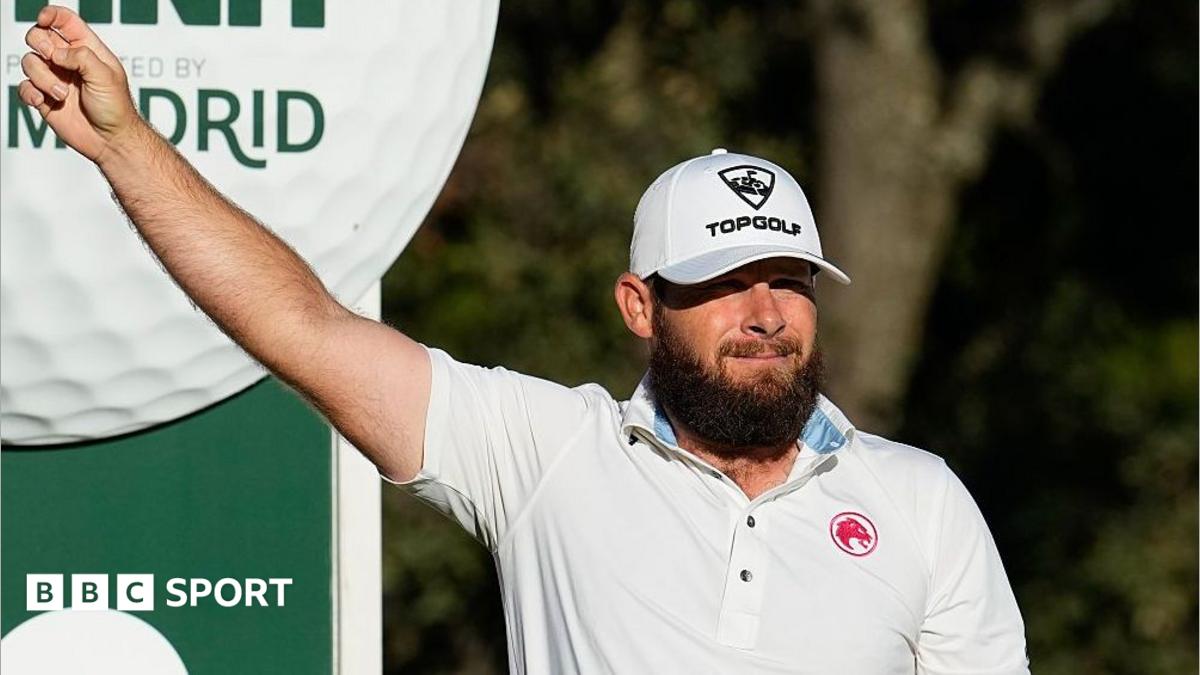
Golf: DP World Tour to refuse LIV players in 2027 season
While the DP World Tour agreed to grant conditional releases with nine players this season, it is understood the change for 2027 is predominantly down to LIV offering players equity in future and a feeling this is incompatible with the European tour being a members organisation.
However, it also comes at a time when the DP World Tour’s strategic alliance with the PGA Tour is being negotiated, so the move likely reflects a desire to put itself in the best position possible in those discussions.
Players will have until 16 November to sign up to the DP World Tour for next year.
Under the terms of its court-supervised restructuring process, LIV Golf needs to sign players up by 25 October.
Ted Goldthorpe, head of BC Partners Credit, told BBC Sport last week he was “confident” LIV would have a “critical mass” of players.
But since then two-time major winner Rahm has said he will not continue playing on the LIV tour.
Lawyers representing a number of other players, including fellow major winners Bryson DeChambeau and Cameron Smith, sought clarification from the court that rejection of contracts would equate to “termination”, enabling players to hold discussions with third parties about their futures.
Richard Bland is currently the only player to have stated publicly a desire to play on LIV 2.0.
However, Perez indicated last month he hoped there would be a future for the league.

Steve Smith breaks Test fielding record as Australia dominate South Africa | Cricket
Smith moves to 223 career catches, a record for fielders, as Australia bowl out South Africa for 284 in reply to 390.
Published On 12 Oct 2026
Steve Smith has broken the Test record for the most career catches by a fielder as Australia have played themselves into a strong position on the third day of the first Test against hosts South Africa.
Smith held four catches on Sunday, taking his total to 223, as South Africa were bowled out for 284 in reply to Australia’s first innings of 390 at Kingsmead Stadium in Durban.
Nic Maddinson (17 not out) and Travis Head (10 not out) added 33 runs off just 5.4 overs to stretch Australia’s overall lead to 139 before bad light ended play for the third day in a row.
Maddinson, who laboured to a 33-ball duck in the first innings, hit two fours off Marco Jansen in the first over of the second innings and added a six off Wiaan Mulder before play was called off.
Australia’s bowlers applied relentless pressure on an easy-paced pitch and a succession of South African batsmen contributed to their own dismissals by playing poor shots.
Six Protea batters reached 30, but David Bedingham’s 49 was the top score.
Australian captain Pat Cummins took three for 54, and Mitchell Starc, Josh Hazlewood and Nathan Lyon claimed two wickets each as Australia’s long-serving bowling quartet combined with customary efficiency.
Smith special in the slips
Smith started the day on 219 catches, one behind Joe Root of England.
He equalled the record when he caught Temba Bavuma. Smith, playing in his 126th Test, broke the record when he lunged to his left from second slip to hold a sharp edge from Bedingham off Cummins.
Smith was in the action again with a spectacular catch to dismiss Verreynne, again anticipating well at slip as the South African wicketkeeper made good contact with a reverse sweep that Smith held in an outstretched right hand.
His fourth catch was from an edge to slip by last man Anrich Nortje off the bowling of Beau Webster.
Smith’s career haul of 223 catches exceeds the total of all but 11 specialist wicketkeepers.
Anduril Unveils Steelfin Family Of Modular Surface-To-Air Missiles
Anduril has unveiled Steelfin, a family of surface-to-air interceptor missiles designed to share a common architecture and manufacturing process while being configured for different air and missile defense missions. The company says this approach will enable high-volume production at significantly lower cost than existing weapons, though it has not disclosed prices or detailed performance specifications.
The announcement comes as the U.S. military seeks to expand air defense inventories against an increasingly diverse range of threats, from inexpensive drones to cruise missiles, ballistic missiles, and advanced maneuvering weapons, including hypersonic ones. Recent experiences from Ukraine and the Middle East make it abundantly clear that the challenge is not simply developing interceptors capable of defeating those targets but producing enough of them to sustain operations without exhausting stocks of more expensive weapons.

Using high-end interceptors against comparatively inexpensive threats can rapidly consume limited inventories, as it has in the Middle East, especially, even when engagements are necessary to protect personnel and critical infrastructure. A broader range of defensive weapons, matched to different threats and engagement requirements, could help ease that burden.
Anduril’s answer is a family of missiles built around a common two-stage design. The first stage consists of a booster, while the second is a terminal interceptor intended to share a baseline airframe, avionics, software, flight control system, and interfaces across variants. Different boosters and terminal-stage components would allow the company to tailor individual configurations to specific missions without developing an entirely new missile for each requirement. Both hit-to-kill and blast-fragmentation terminal-stage interceptors will be offered, Anduril says.
“It is an open system, so the ability to fly it with different rocket motors, different seekers, to be able to swap these components out, to be able to reconfigure the system for a range of different threats is a feature that we built into this,” explained Christian Brose, who serves as the president and chief strategy officer at Anduril. He was speaking to members of the media, including TWZ, ahead of the official unveiling of Steelfin.

The company says the family is intended to cover missions ranging from point defense and lower-tier integrated air and missile defense to upper-tier ballistic missile defense. It also identifies cruise, ballistic, and hypersonic missiles among the threats the broader family is designed to address. Overall, is an extremely ambitious goal, and something that has not been attempted previously to this degree.
The announcement does not specify which variants would address individual threats or provide engagement envelopes and performance figures with which to assess those claims.
Brose did clarify that the different ranges that the various Steelfin variants will achieve will be based on the booster sizing. “Right now, we’re looking at integrating on 10-inch, 18-inch, and 21-inch boosters, but we’re also looking at quad pack and dual pack for the Mk 41 Vertical Launch System as well for different installations, which imply different range and altitudes.”

Anduril’s emphasis on commonality is also intended to address the industrial challenges associated with conventional interceptor production. Different missile programs traditionally require specialized tooling, manufacturing processes, suppliers, and facilities, limiting opportunities to shift production rapidly as operational requirements change.
Steelfin variants are intended to use shared production lines and equipment, with mission-specific boosters and terminal-stage components incorporated during final assembly. Anduril says this would allow manufacturing capacity to be redirected toward whichever variant is in greatest demand. The company is planning near-term production on the order of several thousand missiles annually, with capacity designed to expand or shift according to requirements.
That remains a production ambition, and Anduril has not provided a detailed production schedule or contracted quantities demonstrating how quickly it could reach that scale.
The company also says Steelfin is designed to be compatible with existing land- and sea-based launch infrastructure, including the M903A2 launcher used by newer PAC-3 series interceptors, the Mk 41 Vertical Launch System, and Typhon, as well as emerging containerized launchers. It cites compatibility with established fire-control systems, including AEGIS and the Army’s Integrated Battle Command System (IBCS).

When it comes to cost, Steve Milano, the lead for Air Dominance & Strike at Anduril, suggested that the “more exquisite version” of the Steelfin would sit somewhere above the PAC-3 MSE and below THAAD, but would accomplish “100 percent of the THAAD mission at a fraction of the cost.” In a different configuration, tailored for the PAC-3-type mission, Steelfin would accomplish 80 percent of that mission at less than 50 percent of the cost, Milano added.
While THAAD is aimed at taking out short, medium, and intermediate-range ballistic missiles in the terminal phase of flight, PAC-3 provides high-altitude, hit-to-kill air and missile defense against tactical ballistic missiles, cruise missiles, and aircraft.
Milano continued: “Looking at the lower end of the the spectrum, as far as low-cost interceptors are concerned, I just saw an article on the [aircraft carrier USS Abraham] Lincoln coming back with all of the Shahed markings on the side, and I was contemplating the number of SM-2s that were fired against those assets. When I think of that cost exchange, the Steelfin enters into that market and provides greater than 80 percent of the capability of an SM-2 for a third of the cost.”
For reference, a single THAAD interceptor costs around $15.5 million. The unit price of each PAC-3 MSE interceptor now stands at approximately $5.3 million, according to the Army’s latest proposed budget for the 2027 Fiscal Year. Meanwhile, the price of a single SM-2 Block IIIC interceptor, the most advanced version of that missile currently in service, is around $2.5 million.

Steelfin is entering a market in which the U.S. military is already pursuing several approaches to expanding its low-cost interceptor inventory.
In May, the U.S. Army sought industry proposals for a Patriot-compatible interceptor with a target unit cost below $1 million. The effort reflects the service’s desire for a less expensive weapon for appropriate engagements, preserving higher-end interceptors for targets that warrant their cost and capabilities. The Army’s solicitation also emphasizes component-level cost targets and competition among suppliers, including for rocket motors, seekers, and guidance systems.
Lockheed Martin has offered a separate industry response with its PAC-3 Adapted Capability Effector (ACE), a lower-cost interceptor intended to operate within the Patriot ecosystem. Unveiled in July, the weapon is intended to cost less than half as much as the PAC-3 Missile Segment Enhancement (MSE), according to the company. The MSE’s unit price is approximately $5.3 million in the Army’s fiscal 2027 budget request, putting the ACE’s implied price at around $2.5 million if Lockheed’s comparison holds.

Its projected price would still be well above the Army’s separate sub-$1 million target, reflecting the different objectives and requirements behind the two efforts.
The Navy, meanwhile, is pursuing a potentially broader shift toward modular interceptor architectures. Its Naval Modular Missile initiative envisions a family of surface-to-air weapons built around a common Terminal Stage Interceptor, with different boosters and canisters producing configurations for different missions and platforms. The plans include variants intended to fit multiple missiles within a Mk 41 launcher cell, as well as a version designed for launch from Virginia class submarines equipped with the Virginia Payload Module.
The Navy’s longer-term vision is to replace its existing Standard Missile family with modular variants, although the effort remains in development. The concept highlights potential operational benefits beyond manufacturing: smaller interceptors could increase the number of weapons carried aboard ships, while other configurations could preserve longer-range capabilities. The Navy has also outlined an ambition to reach production of 1,000 missiles annually within five years of a contract award.
Both the Navy’s modular missile initiative and Steelfin reflect a push toward common architectures that can support multiple interceptor configurations without requiring an entirely new missile for every mission. Steelfin’s stated scope is particularly broad, with Anduril pitching the family for missions spanning point defense through lower-tier air and missile defense to upper-tier ballistic missile defense. That would cover much of the air and missile defense spectrum, although it does not extend to exoatmospheric midcourse interception. Whether the family can deliver that breadth of capability at the promised cost and scale remains to be demonstrated.

Anduril says it has been developing Steelfin for several years with investment from multiple customers and has completed ballistic testing using representative air vehicles. Flight testing of Steelfin variants is planned for 2027.
Already, Anduril says it is working closely with “a number of different customers to to get into the field.” Brose continued: “We feel like this is going to be a critical component of the U.S. and allied inventories to complement the range of exquisite capabilities that all of us are familiar with and know by name.”
Steelfin underscores what is now a broader trend toward lower-cost interceptors that can be manufactured at scale, and plugged into existing ecosystems, often with at least a degree of modularity to tackle new and emerging target sets. Steelfin adds Anduril’s proposal to combine that modularity with a common production system designed to support thousands of weapons annually.
Anduril has yet to develop or produce a surface-to-air missile, although its Roadrunner system gives it experience in the related field of countering aerial threats, including loitering munitions. The company’s ambitions for Steelfin are significant, and modular architectures are certainly attractive. After all, a common baseline should simplify production, reduce costs, and allow interceptors to be tailored to different missions. In practice, however, realizing those benefits has historically proved difficult, and fraught with compromises. Whether Anduril can avoid those pitfalls while delivering the promised combination of capability, affordability, and production scale remains an open question. If it can, Steelfin could put the company in a strong position in the future surface-to-air missile market.
Contact the author: thomas@thewarzone.com

Big Brother fans say same thing about never-seen-before house feature
Big Brother has returned to screens on ITV2 for another drama-filled series

Fans had to do a double-take(Image: ITV)
Big Brother fans were left stunned after spotting a never-before-seen house feature.
The show returned to screens last month for a brand new series, originally welcoming 16 contestants into the famous house. And it’s fair to say the show – hosted by AJ Odudu and Will Best – has delivered on the drama.
Recently though, eagle-eyed ITV viewers had their jaws on the floor after they noticed one of the bathrooms has a “luxury toilet and bidet” inside of it.
Rushing over to X, fans shared their shock, with one person writing: “sorry, they have a massage toilet????” Another person penned: “All the budget went for the special toilet then.”
A third chimed in: “THEY HAVE A JAPANESE SELF-CLEANING TOILET???” Someone else wrote: “They’ve got a luxury toilet seat & bidet!???”
It comes after an argument took place inside the Big Brother house between an unlikely duo recently. The House of Power kicked off during Sunday’s (October 11) episode and it didn’t take long before a row broke out between Phillip and Rochelle.
During a conversation with house guest Gemma Collins, Phillip and Rochelle opened up about Twinks moving into the house as one of the new arrivals alongside Catrin.
Phillip explained: “I said her [Twinks] ‘you’ve come into our house, our house’. I said ‘don’t you f****** forget it’. However, Rochelle disagreed saying: “You didn’t f****** say it like that’.”
A furious Phillip hit back, saying : “Don’t call me a liar” before adding “You’ve got too much to f***ing say for yourself, you f****** nosey t*** and you can f*** off away from me”. However, Rochelle insisted: “I haven’t called you a liar.”
The row didn’t last long and they quickly made up much to the amusement of their fellow housemates but some fans have been left wondering if Phillip is “turning on” Rochelle because he heard the crowd chanting “Get Rochelle out” during Friday’s (October 9) live eviction which saw Pauline forced to the leave the house.
Taking to X, formerly known as Twitter, one fan penned: “Phillip turning on Rochelle after he heard the get Rochelle out chants. More faces than a town clock that one.” Another added: “I think Phillip heard the ‘get Rochelle’ out chants.”
Watch Big Brother on ITV2 at 9pm.

Major UK airport faces huge strike action this WEEK with fears of flight ‘standstill’
A MAJOR UK airport that sees millions of passengers through its doors each year could come to a complete halt this week.
A strike at Leeds Bradford Airport may mean that no flights will be able to land or depart across two days.
If it does go ahead as planned, then it will mean no flights will be able to land, depart and passengers won’t be able to pass security.
Nearly 130 workers are staging a walkout at Leeds Bradford Airport in a dispute over pay.
Those striking includes a mix of air traffic control workers, security, customer service and cleaners.
The industrial action is set to start on October 16 and last until 6am on Sunday 18.


There have been ongoing talks over pay since December 2025 but Unite members involved said it “didn’t go far enough”.
Unite regional officer Neil Whitaker said they had “no choice but to strike,” and what would be needed to call of the action is a “fair pay rise”.
In a statement from the airport, it said: “Leeds Bradford Airport acknowledges the proposed industrial action due to take place between 16-18 October involving a group of operational colleagues.
“We respect the right of employees to participate in lawful industrial action. However, we are disappointed by this and do not believe strike action is the right way to resolve the issues still under discussion.
“The airport has made what we believe is a fair and responsible offer that is significantly above inflation and reflects both current economic conditions and the need to ensure the long-term sustainability of the business.
“Our priority now is to minimise disruption for customers, many of whom have worked hard and saved for important holidays, family visits and business travel. At this stage we anticipate running near-normal operations during the period.”

“Leeds Bradford Airport plays a vital role in connecting Yorkshire to the world. Industrial action has the potential to cause inconvenience for thousands of customers and local businesses who rely on those connections.
“We remain committed to constructive dialogue with Unite and would welcome continued discussions aimed at reaching a resolution.
“It is important to recognise that any profits generated by Leeds Bradford Airport are reinvested back into the airport and has been for a number of years. Those funds support improvements to facilities, infrastructure, operations and customer experience including the ongoing LBA:REGEN project which saw the opening of a new central search zone and staff welfare facilities this week.”
The airport is predicted to handle 4.5million passengers this year, after undergoing a huge £100million terminal renovation last year.
The terminal was renovated with a modern arrivals process with 83 per cent more seating and two premium lounges.
Flight compensation rules

A look at your rights if a flight is delayed or cancelled, when your entitled to compensation and if your travel insurance can cover the costs.
What are my rights if my flight is cancelled or delayed?
Under UK law, airlines have to provide compensation if your flight arrives at its destination more than three hours late.
If you’re flying to or from the UK, your airline must let you choose a refund or an alternative flight.
You will be able to get your money back for the part of your ticket that you haven’t used yet.
So if you booked a return flight and the outbound leg is cancelled, you can get the full cost of the return ticket refunded.
But if travelling is essential, then your airline has to find you an alternative flight. This could even be with another airline.
When am I not entitled to compensation?
The airline doesn’t have to give you a refund if the flight was cancelled due to reasons beyond their control, such as extreme weather.
Disruptions caused by things like extreme weather, airport or air traffic control employee strikes or other ‘extraordinary circumstances’ are not eligible for compensation.
Some airlines may stretch the definition of “extraordinary circumstances” but you can challenge them through the aviation regulator the Civil Aviation Authority (CAA).
Will my insurance cover me if my flight is cancelled?
If you can’t claim compensation directly through the airline, your travel insurance may refund you.
Policies vary so you should check the small print, but a delay of eight to 12 hours will normally mean you qualify for some money from your insurer.
Remember to get written confirmation of your delay from the airport as your insurer will need proof.
If your flight is cancelled entirely, you’re unlikely to be covered by your insurance.

Beyond T+1: Custody for 24/7 Markets
Faster settlement is forcing banks and treasurers to rethink liquidity, payments, and custody.
This article appears in the October issue of Global Finance Magazine.
The transition to compressed settlement cycles was initially framed as an operational hurdle. In reality, it exposed a fundamental flaw: markets trade 24/7, while legacy custody and payment rails remain shackled to traditional banking windows.
As settlement windows shrink, treasurers no longer have the luxury of multi-day batch reconciliations. Prefunding trades require real-time liquidity optimization to prevent settlement fails. “We are at an inflection point,” said Lim Soon Chong, group head of Global Transaction Services at DBS Bank Ltd. “Intermediaries are reassessing their strategies to capture the shift toward an ‘on-demand’ digital economy.”
Since 2021, DBS has operationalized this through blockchain-powered token services, enabling real-time multicurrency liquidity and automated treasury actions. By integrating these services with custody and digital exchange services, DBS provides the infrastructure for a programmable, real-time financial ecosystem.
Operational Vanguard: Citi’s Custody+ and SEP

DBS Bank
Custody transformation is being driven by integrating real-time processing with modular delivery. At the forefront is Citigroup Inc.’s Custody+, a platform designed for an always-on economy.
For Amit Agarwal, head of custody at Citi, the requirement is clear: “To deliver a frictionless, always-on market, cash and securities for fiat and digital assets must settle in real time, 24/7, supported by custody infrastructure that is equally always on.” This vision is operationalized through Citi’s patented Single Event Processing (SEP) technology. Agarwal noted that SEP’s value extends beyond efficiency. By compressing timelines for income events, corporate actions and tax processing, SEP provides clients with earlier liquidity. This transforms faster settlement from a back-office metric into a strategic advantage.
Chris Cox, head of investor services at Citi, added that clients are modernizing legacy models to address cost and regulatory pressures. Cox said the Custody+ ecosystem is the direct answer to these needs. “Customers fundamentally want simplification and improved outcomes,” Cox explained. “Custody+ is our response to addressing those needs—it’s about creating front-office benefits rather than just letting custody be about post-trade. We chose to disrupt our own custody model and bring together our suite of near- and real-time capabilities as a modular ecosystem.”
Yet, technological speed alone is insufficient. Anthony Yeung, chief commercial officer at CoinCover, argues that institutional confidence requires secure key management and transparent recovery. “The regulatory architecture must be matched by institutional-grade safeguards,” Yeung explained. “The real measure of success is whether the ecosystem is built with resilience and operational integrity at its core.”
While Citi’s modular approach serves as a blueprint, this evolution is triggering a cascading effect across the landscape. The move to 24/7 markets is being actively operationalized by major players stripping away the obsolescence of batch-driven infrastructure, fueled by the rise of 24/7 trading, the need for instantaneous collateral fluidity and the proliferation of tokenized real-world assets.
Industrywide Architectural Shifts
Global custodians are redefining the infrastructure layer through digital adoption. BNY has pioneered a unified omnibus architecture that integrates legacy and digital instruments within a single compliance framework. By using distributed ledger technology, BNY enables microsettlements and real-time collateral movement, bypassing standard clearing hours.
Similarly, J.P. Morgan’s Kinexys platform leverages its institutional blockchain arm for intraday liquidity and near-instant delivery-versus-payment, allowing managers to pledge tokenized money market shares as collateral during weekends, neutralizing settlement drag. State Street Bank and Trust Company is bridging the gap between digital asset solutions and legacy accounting via strategic partnerships, replacing traditional reconciliation feeds with streaming APIs. Specialized players like Sygnum and AMINA, meanwhile, further enable atomic cross-currency settlements and smart-contract-based custody.
Buy-Side Adoption & Operational Impact
The buy side is equally driving the push for modernization. BlackRock’s BUIDL fund, in partnership with BNY and Securitize, Inc., enables continuous yield and peer-to-peer collateral transfers. Franklin Templeton’s Franklin OnChain US Government Money Fund uses public ledgers to enable round-the-clock share creation, while Fidelity Digital Assets supports continuous digital clearing. Additionally, UBS Asset Management is piloting automated fund servicing through Project Guardian. These initiatives signal a shift toward programmable financial services.

The infrastructure of 24/7 custody rests on three pillars. First, tokenized liquidity replaces traditional, time-restricted batch messaging windows with programmable cash legs, allowing instantaneous value movement. Second, automated servicing utilizes smart contracts to manage corporate actions, drastically reducing latency. Third, advanced security orchestration, leveraging multiparty computation and hardware security modules, ensures that high-value movements remain secure and verifiable, even outside banking hours. As custodians dismantle legacy constraints, the focus is shifting toward always-on capabilities. The race is no longer about who settles fastest but who builds the most reliable architecture for a global economy that never sleeps.
Navigating the New Custody Paradigm
Moving from traditional, batch-reliant processes to always-on operations transforms custody into a strategic advantage. It allows automated, round-the-clock value movement, continuous yield opportunities, and real-time liquidity management. However, operating in a 24/7 market shifts focus toward new security and regulatory obligations.
Regulatory requirements from the U.K. Financial Conduct Authority (such as the crypto asset authorization gateway and CRYPTOPRU prudential rules) and U.S. federal stablecoin rulemaking have effectively shifted compliance from a legal filing into an operational and technical security mandate. As a result, custodians and issuers must move away from treating digital asset security as simple smart contract auditing, moving instead toward protecting off-chain infrastructure.
Ultimately, the era of the “siloed vault” is ending. Custody modernization is no longer merely an IT upgrade; it is a fundamental reengineering of the trust model. By embedding institutional-grade wallet infrastructure directly into core banking rails, custodians are shifting from passive gatekeepers to active enablers of the 24/7 digital economy. This evolution is the critical foundation for the next decade of institutional finance, where speed, transparency, and ironclad security are the primary competitive currencies.
Gilly Wright is a contributing writer based in the U.K.

St. Louis ties MLS record with win over Galaxy
Carlo Holse scored three goals in the first 21 minutes and had the second hat trick in club history to help St. Louis City beat the Galaxy 6-2 on Sunday night to extend their unbeaten streak across all competitions to 20 games and tie the MLS record.
St. Louis, which is 13-0-5 in its past 18 regular-season games, tied the mark set when the New York Red Bulls went unbeaten in an MLS-record 20 consecutive games across all competitions in 2016.
Rafael Navarro converted from the penalty spot in the 45th minute, scored again in the 53rd and added two assists for St. Louis (14-6-8). Lukas MacNaughton scored on a diving header in the seventh minute of first-half stoppage time and Roman Burki had five saves.
Holse opened the scoring in the second minute, added a goal in the seventh and skipped a shot inside the right post from the center of the area to make it 3-0 in the 21st minute to record the second-fastest hat trick in MLS history. Hany Mukhtar scored three goals for Nashville in the first 16 minutes of 5-1 win over Chicago on July 17, 2021.
The Galaxy’s Kyogo Furuhashi went off because of an apparent hamstring injury and was replaced in the 10th minute by João Klauss, whose goal in the 71st minute capped the scoring. Klauss, a 29-year-old midfielder in his first season with the Galaxy, had St. Louis City’s first hat trick in a 3-3 tie with the Galaxy on June 14, 2025.
Robert Taylor scored in the 31st minute for the Galaxy (9-11-9).
St. Louis beat the Galaxy 3-1 on July 22 at Dignity Health Sports Park.
Alvarez vs M’billi boxing bout to go ahead in Saudi Arabia despite attacks | Boxing
Mexican boxer tells Turki Al-Sheikh he ‘fears nothing’ and will face M’billi in Riyadh on October 31 ‘no matter what’.

Published On 12 Oct 2026
The world title fight featuring Saul “Canelo” Alvarez and Christian M’billi will go ahead this month in Saudi Arabia despite attacks on the country’s airports, which have killed at least 14 people in Riyadh in two days, Saudi sports promoter Turki Al-Sheikh confirms.
Alvarez vs M’billi is scheduled for October 31 in the Saudi capital, which has repeatedly come under attack from Yemen’s Houthis, but Al-Sheikh sought to allay the doubts over the bout on Sunday.
One person was killed and 11 were injured on Sunday when a projectile struck King Khalid International Airport in Riyadh, according to Saudi Arabia’s General Authority of Civil Aviation (GACA).
A Houthi strike on the same airport on Saturday killed 13 people and injured more than 300, making it the deadliest attack on Saudi Arabia in more than a decade.
The Houthis claimed responsibility for all four strikes on Saudi airports before Sunday’s attack, which has yet to be claimed by any group.
Alvarez, who has held multiple world titles across several weight classes, will face WBC super-middleweight champion M’billi in a highly anticipated bout.
“Canelo reached out and told me he’ll still fight in Riyadh this October, no matter what happens,” Al-Sheikh, chairman of Saudi Arabia’s General Entertainment Authority, wrote in a social media post. “He [Alvarez] fears nothing.”
The Mexican boxer, a former two-time undisputed super-middleweight champion, has not fought since he was beaten by American Terence Crawford in September 2025.

Woman badly hurt in fall from hotel balcony on birthday trip to Greece
She was celebrating her 390th birthday but now has a broken back – her family wants to bring her home

Denby McLaren.
A woman has been badly injured after falling from a third-floor hotel balcony while celebrating her 30th birthday on a dream holiday in Greece. Denby McLaren suffered a broken vertebra, multiple broken bones in her foot and other injuries in the fall.
She his now in hospital in Greece, with her family desperate to bring her home to Larkhall, South Lanarkshire. Denby had been enjoying a birthday getaway with her mum.
A fundraiser set up to help get her home said: “No family should ever have to experience something like this, and never in a million years did we imagine we would find ourselves in this position. Denby was on holiday in Greece with her mum, celebrating what should have been a very special milestone – her 30th birthday.
“What should have been a happy time filled with memories has turned into every family’s worst nightmare.”
The fall left Denby with serious injuries and facing a long road to recovery far from home and her loved ones.
The fundraiser adds: “Denby has now spent four days in hospital in Greece, far away from home, her family and the people who love her most. It is impossible to put into words the fear, heartbreak and uncertainty that Denby and our family are experiencing right now.
“In a matter of moments, everything changed, and we are now facing a situation none of us could ever have prepared for. Our biggest wish is simple: we just want to bring Denby home.”
Denby requires specialist repatriation by air ambulance, travelling on a stretcher with medical assistance throughout the journey. But the cost has added further strain to the situation.
The fundraiser said: “We want nothing more than for Denby to be back on home soil, surrounded by her family, where she can receive the ongoing medical care and treatment she needs and begin the long road to recovery with her loved ones by her side.
“Right now, being able to get her home safely is our greatest priority. No one ever expects something like this to happen to someone they love, and the emotional and financial strain has been overwhelming.”
The fundraiser had raised more than £10,700 at the time of writing. The appeal added: “Any donation, no matter how big or small, would mean more to us than we could ever explain.
“Every single contribution will help us get one step closer to having Denby safely back with her family, where she belongs.”

Sun-soaked island with 21C in November has ‘everything you need’ just 4 hours from UK
The breathtaking island is about a four-hour flight from the UK and boasts heaps of history, culture, TV links and a new hotel that is going to be a hit with rock fans

(Image: Getty Images)
There are few better places where you can move effortlessly between sunshine, sea and centuries of history than the stunning island of Malta. Friends and family had recommended it to me as the perfect holiday for a mix of sightseeing and relaxation, and it certainly delivered.
As a small island, Malta packs a punch, offering tourists everything they want right on their doorstep. There are few bigger mood killers than a day tour entailing hours and hours cooped up in the car, but Malta’s size means you can hop from place to place in no time at all.
You can easily get a boat to Gozo or the Blue Lagoon in half a day, drink in the incredible sights of Malta’s shoreline, and be back in time to hit the pool before dinner. Meanwhile, Valletta, the EU’s smallest capital, is easily accessible by car or bus, and you need only a few hours to soak up the famous yellow architecture, pretty alleyways and sea views.
The city blows you away with its vivid colours as you arrive. Valletta may be modest in size, but it is extraordinary to look at, boasting a rich history closely connected to the UK. It played a major role in World War Two and became a favourite destination of Queen Elizabeth II and Prince Philip. Even today, a British influence is visible on the streets, with our famous red postboxes and iconic Victorian architecture everywhere you go.
Despite being only 0.3 square miles, Valletta offers plenty for a day trip; it boasts 320 historic sites, from the famous St John’s Co-Cathedral to Fort St Elmo. Not only that, it has been the backdrop for several hit Hollywood films, including Assassin’s Creed and Napoleon, making the city a treat for film buffs. At every turn, you are greeted by grand churches and colourful balconies, and all with a jaw-dropping coastline backdrop. A mere few hours was the perfect amount of time to explore before settling down with an Aperol Spritz.
Just a few miles along one of Malta’s most vibrant stretches of coastline lies St Julian’s, a perfect spot for those who like to swim and sunbathe during the day and head out at night. If Valletta is Malta’s historic beating heart, St Julian’s is its party spirit. As it gets dark, restaurants spill onto terraces and the waterfront fills up for sunset drinks.
Nestled nearby in the beautiful St George’s Bay is the Hard Rock Hotel Malta, which opened its doors this summer and could quickly become Malta’s go-to destination. Boasting stunning panoramic sea views, a state-of-the-art gym, a luxury spa area, and eleven (that’s right) swimming pools, it has truly thought of everything. Forgotten your sunscreen? That’s okay, because the hotel even has its own huge shopping centre and supermarket, with everything you could possibly need just a few steps from your room.
The swim-up bar at Hard Rock Hotel was also a particular highlight; I loved basking in the water with a chilled glass of wine while people-watching down onto the beach below. It made the lazy afternoons flow perfectly into the evenings, with sunbathing by the water giving way to sunset drinks on the terrace as guests soaked up the views at all points of the day.
Inside, music memorabilia gave a personal touch, while the hotel’s luxury amenities almost tempt you to forgo exploring. The hotel also boasts a wide range of stylish restaurants and bars serving impeccable food and cocktails from around the world. The experience could be a little overwhelming, but as someone who typically prefers a smaller, boutique stay, I loved the convenience that the Hard Rock Hotel offers when you have only a few days to enjoy. The spacious rooms were also gorgeous with sea-themed decor and a large balcony, and the best part is you’re guaranteed a sea view, with both sides of the hotel offering a stunning glimpse at the Maltese coastline.
If you do want to venture a little further afield for dinner, Cristiano Ronaldo’s restaurant TATEL is a must. Expect beautiful views of the bay’s sparkling waters and a menu that served up some seriously delicious fare (don’t miss out on the iconic Basque Cheesecake).
That’s why Hard Rock Hotel’s location is ideal. The comfort, convenience and style summed up my stay in Malta – everything you need is right in front of you. Exploring doesn’t have to be an ordeal when a morning in ancient streets can be quickly followed by a slow afternoon by a gorgeous pool. You have the beach, the sights, delicious food and drinks all at your fingertips. After a day of sightseeing, returning to the hotel and settling down for a terrace drink felt like part of the holiday rather than a break from it.
Travellers looking for a cost-effective and peaceful Mediterranean escape that offers more than beaches would do a lot worse than enjoy Malta’s ideal combination of history, culture, food and contemporary island life right on your hotel doorstep.
Book it
- Rooms at the Hard Rock Hotel Malta start from £210 a night, based on two adults sharing a Superior Room. Book at hotel.hardrock.com/malta.
Healey faces £35bn Budget challenge to meet spending pledges, says think tank
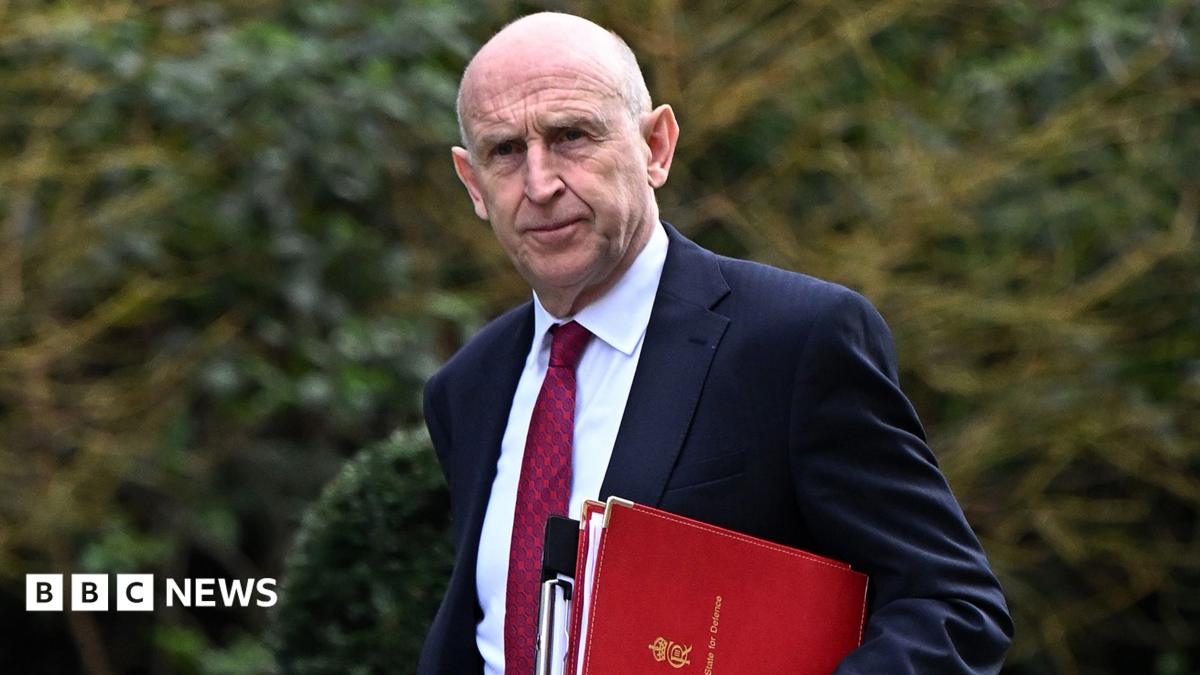
Chancellor John Healey is facing a funding gap of up to £35bn and must set out “credible” spending plans in his first Budget on 28 October, an influential think tank has warned.
The Institute for Fiscal Studies (IFS) said that if the government wants to increase defence spending to 3% of national income by 2030 and lift health spending without squeezing other departments, it will need a “top-up” of billions of pounds.
Higher inflation, caused by the Iran war, could eat into what the government hoped to spend on public services, meaning Healey will have to choose between spending cuts, tax rises, or a mixture of both, the IFS warned.
The Treasury declined to comment on “rumour and speculation”.
The IFS urged the government to ensure its spending plans are credible, as opposed to proposing unrealistic future cuts to make the Budget add up.
The government is under growing pressure to show financial markets that it has a tight grip on finances as the cost of borrowing rises.
The IFS cautioned Healey about making any spending announcements in the 28 October Budget speech he has no intention of honouring.
“A ‘steady-as-she-goes’ Budget is not an option available to the chancellor,” said IFS director Helen Miller.
“Choosing to stay the course with the inherited tax and spending plans would mean allowing inflation to blow departments’ spending plans off course.
“Simply pencilling in implicit cuts that he has no intention of delivering would make the Budget a work of fiction,” she added.
Speaking ahead of the annual International Monetary Fund meeting this week, Healey said: “The consequences of conflict in the Middle East and Europe are hitting countries worldwide, leading to higher prices at the pumps and more expensive mortgages at home.
“But Britain and our allies can face up to these challenges together.”
He said his Budget “will build on this approach with fiscal discipline helping to deliver economic resilience” and give people “breathing space”.
Miller told the BBC’s Today programme that Healey has inherited spending plans for government departments where spending growth would slow in the coming years.
“[It] already looked likely that he would have to make spending cuts just to live within those,” she said. “Now, along comes the Middle East war, inflation goes up and those spending plans look very tight indeed.”
Added to that, the chancellor has said he wants to get defence spending up to 3% of national income. Under Keir Starmer’s leadership, Healey resigned as defence secretary in June in a battle with the Treasury over military spending.
Miller said: “You put all that together, if he wanted to do all of that within current spending plans he’s looking at having to cut some other services by something like £35bn.”
The chancellor does not have to address spending totals in this Budget, and may choose to leave such decisions until future events – for example, next year’s Spring Statement or Spending Review – by which time the outlook for the economy could look very different.
But the IFS warned not addressing it would cast doubt on the credibility of the government’s plans.
Previous chancellors have relied on a similar strategy of pencilling in unrealistic future spending plans to ensure that they meet the fiscal rules on the day – only to change the plans further down the line.
Miller said Healey’s focus on fiscal discipline was a “good first start but what he needs to do is not just say he’s going to cut borrowing in coming years but actually deliver on those plans.”

Why Towie star Dan Edgar and Olivia Attwood have ‘snubbed’ each other for years

HE’S Towie’s handsome long-serving lothario who’s charmed a long list of show stunners over the years.
But you can’t break hearts for a decade on a major reality show and not cop any flack for it.
And Dan Edgar has been on the receiving end of some stinging barbs from former show star Olivia Attwood, who once branded him “boring” and a “coward” on account of his love-life drama with Chloe Sims.
The Essex charmer famously cooled things off with Chloe amid cheating allegations in 2019 and he went on to reunite with on-off girlfriend Amber Turner.
Chloe later told us that the way Dan handled the split “bulldozed” her confidence and led to a cruel pile on from trolls.
Despite brushing off Liv’s criticisms publicly, sources say it left Dan bristling and his decision not to follow Olivia on social media is telling.
Now the follicly-blessed 36-year-old is determined to prove Liv wrong with current girlfriend Chloe Lewis, 35, who he hard-launched in August and has appeared in fun, loved-up snaps with ever since.
An insider told The Sun: “Towie fans will remember it was Olivia who told Chloe that Dan had cheated on her with another woman.
“That led to the implosion of her blossoming romance with Dan, and while Liv was sticking up for her mate, Dan just thinks she’s a trouble maker.
“The ‘boring’ jibe has also never been forgotten by Dan. That was a bit of a sore spot for him, he thinks it was a low blow.
“As a result he still doesn’t follow Olivia on social media to this day, and unsurprisingly she doesn’t follow him either.
“It’s been made a bit awkward though since Olivia started dating Pete Wicks as Dan is still mates with Pete.”
Mum-of-one Chloe Lewis left Towie after four years in 2018, just months before the drama that would kickstart the simmering feud.
She doesn’t appear to have taken offence to Olivia’s past comments about Dan as she remains on the documentary-maker’s social media friends list and even shares the same management.
Our insider said: “It’s a bit of an elephant in the room but it’s safe to say the four of them won’t be going on double dates anytime soon.”
When contacted by The Sun, Dan’s rep denied any beef, saying: “Dan is genuinely surprised by these claims as he has never had an issue with Olivia.
“They’ve had very little interaction over the years, and he certainly doesn’t hold any negative feelings towards her. There’s no feud from Dan’s side, and he wishes her nothing but the best.”
As for Olivia, her issues with Dan stem from the way he treated Chloe Sims during their fling in 2019 on a cast trip to Thailand.
ITV golden girl Liv was a member of the cast at the time and ripped into Dan for ghosting Chloe every time the going got tough, a view shared by viewers who likened him to someone going to ground in witness protection.
Olivia’s boyfriend Pete Wicks once had his own close relationship with Chloe Sims and their friendship secretly spilled into romance on a number of occasions.
It was around this time that Dan, fresh from his split with girlfriend Amber, hooked up with Chloe.
The love triangle, and its murky timeline, sparked confusion and saw Dan and Pete clash in heated scenes.
Liv has made past comments about Dan’s penchant for fading out romances rather than having an honest and frank discussion about the issues getting in the way.
There have been digs about his passivity, with it said that if he wasn’t so good-looking his partners wouldn’t tolerate his behaviour.
Olivia’s past assessment that Dan wasn’t mature enough for Chloe Sims led to fans likening him to Peter Pan, the boy that never grew up.
Pete, whose friendship with Dan has been turbulent over the years, has had a few tongue-in-cheek comments too, once joking that laidback Dan is so chilled that his heartrate remains below 40bpm no matter what drama is unfolding.
Last year, Dan experienced another failed relationship when he and Ella Rae Wise ended their 18-month partnership, despite having a “great sex life”, and it looked like Dan was destined for the single life.
That is until former Towie star Chloe Lewis caught his eye at mutual pals Georgia Kousoulou and Tommy Mallett’s Majorca wedding last summer.
Romance rumours began to swirl in the months that followed as the pair dropped crumbs online, before they enjoyed a joint holiday in Marbella this August, sharing kisses and confirming their relationship.
They had their first official engagement as a couple when they attended a Primark event together last month.
The star-studded bash also had Pete on the guestlist and the trio posed together for a picture, suggesting the frosty relations between Dan and Liv hasn’t affected his and Pete’s friendship. Unlike Dan and Liv, the two do follow each other on Instagram.
There have been a number of smitten social media pictures of Chloe and Dan together since, with the latter now willing to be less subtle about his feelings and seemingly keen to prove to the naysayers that he can be serious and is ready to grow up.
The Sun has contacted a representative for Dan for comment.

I stayed in the viral Instagram ‘bubble tents’ with an amazing feature by the bed
Cromore Retreat in Northern Ireland’s Portstewart has just opened a series of the kind of bubble domes that have been setting Instagram and TikTok alight this year

Bubble domes have become all the rage
If you’ve been on Instagram or TikTok this past year and your algorithm has a travel slant, there’s a very good chance you’ve seen the bubble tents.
There are countless wanderlusty clips of people twirling around in large inflatable dome tents that look as if they’ve been blown out by a giant with an oversized pot of bubbles. They are striking, beautiful structures, standing three or four metres high, often on top of rolling hills or in the middle of woodland.
But to my eyes, there is also something a little insubstantial, let alone gimmicky, about the translucent tents that had left me wondering if they were more Temu yurt than Glastonbury tipi. So when I visited Portstewart in Northern Ireland at the beginning of this week, and was given the opportunity to stay in a bubble of my own, I was intrigued and a little skeptical.
The bubbles in question are set up on the grounds of the Cromore House, built by the town’s founder John Cromie back in 1776. From the outside at least, the considerable property appears to be empty today, having recently ceased operating as a care home. If anything, the lack of movement at the grand house was a benefit. For the duration of my trip, I didn’t see a soul, which left me feeling cut off from the world in exactly the right way.
Do you have a travel story to share? Email webtravel@reachplc.com
The outside
With the lockbox keys, I let myself into a private, wood-fenced area with trees lining the perimeter and a dome in the centre. “Won’t they see you naked?” my wife had asked when I explained that the accommodation walls were completely see-through. Happily, ‘they’ may as well not have existed, so private and snugly tucked away are the bubbles.
The location is perfect. A 40-minute walk out through the woods takes you to the highly rated Portstewart Arms, where perfect pints of Guinness go for £5, or you can stay on-site and enjoy a steam in the communal sauna.
The inside
Inside the bubbles is where the action really is. On a brisk October day, I was relieved to find the dome warmed to a very snug 22 °C thanks to a ground-source heat pump. My particular accommodation, the McDonnell Suite (named after a former estate owner), consisted of three domes squashed together.
One is occupied by the shower and toilet, which are wisely hidden from the rest of the dome by a partition wall and from the outside world by some tastefully opaque section of dome. It comes complete with an information-rich smart tablet and a high-tech touchscreen mirror.
The central bubble stands in for the living room. A low coffee table sits between two armchairs, a comfortable spot for reading. There’s also a tea and coffee area with a Nespresso machine and a fridge stocked with a breakfast hamper from Chestnutt’s Farm in Portrush. As in Covid, there is a joy in the isolation that comes with bubbles. Instead of trooping over to a breakfast buffet, Cromore Retreat guests are given everything they need for a solitary and delicious start to the day: soda bread, strawberry jam, granola, absurdly creamy butter, and a little bottle of particularly thick milk.
Hungry after an afternoon’s surfing, I ripped this open a good 14 hours early and tucked in, in the third and final wing, the bedroom. Here you will find a wide four-posted bed with curtains around the side but no roof, allowing you to wall yourself in and watch the stars twinkling through the tree canopy above.
At the end of the bed is a large standalone tub in which I ate my way through the breakfast box while enjoying a long, needlessly indulgent soak.
The final feature, and arguably the stand-out, is the private hot tub that sits outside the dome. To my shame, I did not bubble in it, forgoing the ultimate indulgence of a solo jacuzzi on a Monday evening in favour of a second bath and then a quite flawless night’s sleep.
The verdict
I was entirely wrong. There is nothing gimmicky or insubstantial about these see-through domes. They are pure, indulgent, slightly silly fun, right until you check out and step into the bubble-bursting Northern Irish drizzle.
Book it
Stays cost from £235 a night, with breakfast hampers costing an additional £20. Go to cromoreretreat.com/book

Will Smith is in a slump, but benching him isn’t an option for Dodgers
MILWAUKEE — The Dodgers have a big hole in the middle of their batting order, and it’s not Shohei Ohtani.
If anything, Ohtani has reemerged as an offensive force in the cleanup spot, singling, walking and scoring the Dodgers’ only run Sunday in a 2-1 loss to the Milwaukee Brewers in Game 1 of the National League Championship Series.
The problem is with the guy hitting in front of Ohtani.
Will Smith walked in four plate appearances, marking just the second time he’s reached base in the postseason. In the four division series games against the Atlanta Braves, he had a single in 16 at-bats, striking out seven times. He’s hitting .053 in the playoffs — only Cleveland’s Ángel Martínez has a lower average among players with at least nine at-bats.
But there’s not much the Dodgers can do about it. They are built to win with pitching and Smith, the catcher, is the guy they rely on to guide those pitchers through games.
Dalton Rushing, who started just five fewer games behind the plate than Smith this season, is injured and not on the roster. Hunter Feduccia, who did make the team, caught just 15 complete games this season and isn’t an option to start in the playoffs.
“I’m not going to put Feduccia in place of Will Smith,” Dodgers manager Dave Roberts said. “That’s just not going to happen.”
So Roberts and the Dodgers are left to muddle on with Smith regardless of how much he struggles offensively. That’s because he’s far more valuable crouching behind the plate than standing next to it.
“I don’t even know how he’s performing offensively,” said Tarik Skubal, who took the loss Sunday. “Catchers, I think it’s the most important position on the field. They’re the ones calling pitches, dictating game flow, rhythm, all that type of stuff. I’m going to trust those guys always.”
Smith appears to be executing his catching duties very well, since opponents have scored just 10 runs and are hitting .160 against the Dodgers this postseason. Only Tampa Bay, which has played two fewer games, has done better.

As for what Smith thinks, that’s unknown because the Dodgers did not make him available to the media Sunday. But since he’s not coming out of the lineup, the next-best solution might be moving him to another spot in the order.
That worked with Ohtani, who had as many strikeouts as hits in the first two games of the division series, when he batted second. Since being dropped in the order, he has reached base four times in three games, stolen a base and scored twice.
“There’s always lineup construction. I can think it through. He’s not swinging the bat well,” Roberts said of Smith. “It’s hard because of the body of work, he just has that knack to get a hit, to get a big hit.”
That’s exactly what happened last fall when Smith’s two-out, 11th-inning home run in Game 7 of the World Series helped the Dodgers win a second straight title.
Smith was on the injured list for 86 days this summer because of neck disk inflammation, returning for the final month when he slashed .290/.400/.548. He has cooled off considerably in October, just as he did last year, when he returned from a right hand contusion three games into the playoffs and got just two hits in his first 14 at-bats.
He recovered to bat .400 in last year’s NLCS win over Milwaukee, then broke a 4-4 tie with his winning homer against the Toronto Blue Jays. Just as important, though, Smith caught all but 11 innings in the Dodgers’ final 15 postseason games — including two 11-inning games and another that lasted 18 innings.
Smith rarely has hit well in the postseason, batting just .206 in 18 series, which may explain Roberts’ lack of panic. Plus, Roberts knows his All-Star catcher has helped him win three World Series rings, and if the Dodgers are to get another, it will be on the strength of their pitching, not their hitting.
And that side of Smith’s game is as strong as ever.
“To be honest, that’s not where my focus is with Will,” Skubal said of his catcher’s hitting. “My focus is what he’s doing behind the dish and he’s very important. He’s very important to the entire pitching staff.”
Countries warn against travel to Saudi Arabia following Houthi attacks | Aviation News
US, Australia, Canada, Japan, South Korea and New Zealand among countries urging citizens to avoid travel to Kingdom.

Published On 12 Oct 2026
Several countries have warned their citizens against travel to Saudi Arabia following a series of Houthi attacks on airports in the kingdom.
On Monday, Australia and New Zealand became the latest to issue advisories against travelling to the kingdom, following similar warnings from the United States, Canada, the UK, South Korea, and Japan.
Recommended Stories
list of 4 itemsend of list
Australia’s Department of Foreign Affairs and Trade said Australians should avoid King Khalid International Airport in Riyadh and “reconsider” travel to other Saudi airports.
New Zealand’s Ministry of Foreign Affairs and Trade urged citizens not to travel to the Saudi capital’s main gateway and the provinces of Najran, Jazan and Asir for any reason, and to avoid “non-essential” travel to Saudi Arabia as a whole.
The US embassy in Riyadh on Sunday advised US citizens to reconsider travel to the kingdom, citing the threat of attacks by Iran and the Iranian-backed Houthis.
Global Affairs Canada issued an advisory against non-essential travel to any part of Saudi Arabia.
South Korea’s Ministry of Foreign Affairs recommended that its citizens in Saudi Arabia leave unless they are on essential business and advised anyone planning to travel to the kingdom to cancel their trip.
The UK’s Foreign, Commonwealth and Development Office urged citizens to avoid travel to Jeddah and Dammam, and to all airports apart from Medina International Airport, except for essential reasons.
The warnings come as Saudi Arabia reels from five attacks on its airports in less than a week.
One person was killed and 11 others were injured on Sunday when a projectile struck King Khalid International Airport, according to Saudi Arabia’s General Authority of Civil Aviation (GACA).
A Houthi strike on the same airport on Saturday killed 13 people and injured more than 300 others, marking the deadliest attack on Saudi Arabia in more than a decade.
The Houthis claimed responsibility for all four strikes on Saudi airports before Sunday’s attack, which has yet to be claimed by any group.
King Khalid international airport and King Fahd international airport in Dammam remain closed following the attacks, causing significant disruption to aviation across the Middle East.
The attacks have also disrupted flights to and from King Abdulaziz International Airport in Jeddah.
More than 150 flights were cancelled and 374 flights were delayed at the Jeddah airport on Sunday, according to the flight tracking website Flightradar24.
Brendan Sobie, an independent analyst and consultant in Singapore, said it was too early to predict the ramifications of the attacks for aviation across the region and beyond.
“As has been the case with the Iran war and the impact from that crisis on the UAE, Kuwait and Bahrain, the impact of this latest crisis really depends on how long it lasts, how long Riyadh airport remains closed, and how long and to what extent are the restrictions once it reopens,” Sobie told Al Jazeera.
India protest live: Opposition to march to Supreme Court over ‘vote theft’ | Elections News
Live updatesLive updates,
Main opposition Congress party announces rally to the top court to demand removal of the chief election commissioner.


Published On 12 Oct 2026

Big Brother Phillip’s real reason for ‘turning on’ Rochelle exposed as fiery row erupts
Phillip and Rochelle ended up on a blazing argument during the latest episode of Big Brother but fans of the ITV2 reality show are convinced they know the real reason behind their row

Rochelle and Phillip come to blows in the Big Brother house(Image: ITV)
Another argument has blown up inside the Big Brother house between an unlikely duo.
The House of Power kicked off during Sunday’s (October 11) episode and it didn’t take long before a row broke out between Phillip and Rochelle.
During a conversation with house guest Gemma Collins, Phillip and Rochelle opened up about Twinks moving into the house as one of the new arrivals alongside Catrin.
Phillip explained: “I said her [Twinks] ‘you’ve come into our house, our house’. I said ‘don’t you f****** forget it’. However, Rochelle disagreed saying: “You didn’t f****** say it like that’.”
A furious Phillip hit back, saying : “Don’t call me a liar” before adding “You’ve got too much to f***ing say for yourself, you f****** nosey t*** and you can f*** off away from me”. However, Rochelle insisted: “I haven’t called you a liar.”
The row didn’t last long and they quickly made up much to the amusement of their fellow housemates but some fans have been left wondering if Phillip is “turning on” Rochelle because he heard the crowd chanting “Get Rochelle out” during Friday’s (October 9) live eviction which saw Pauline forced to the leave the house.
Taking to X, formerly known as Twitter, one fan penned: “Phillip turning on Rochelle after he heard the get Rochelle out chants. More faces than a town clock that one.” Another added: “I think Phillip heard the ‘get Rochelle’ out chants.”
A third person said: Phillip heard the crowd saying ‘get Rochelle out’ now he thinks if I turn on her people will love me, well no.” A fourth agreed: “Philip heard the ‘get Rochelle chants’ and is now turning on her.”
However, some fans are convinced Phillip will go on and win the entire series, with one viewer writing on social media: “Honestly Phillip for the win” and someone else posting: “Love Phillip he owns it, says how it is, he’s funny and he cheers the housemates up as well. Phillip to win for me.”
The argument between the friends comes just days Rochelle said her and Phillip were “the Beckhams” because they were “better together” in reference to celebrity couple David and Victoria Beckham.
Elsewhere in the episode, Big Brother shared the House of Power rules explaining: “Housemates, as you know, this week is all about the power. Soon, the house will be split into two teams. In your teams, you’ll take on a series of tasks. At stake – power in the house. “
Celebrity house guest Gemma then had pick two team captains, she chose Sam and Rob, and they then had to decide who they wanted on their teams in preparation for the head-to-head battles that lie ahead.
The winning team gets power of the house until the next game and are the only ones allowed to use the kettle, toaster, air fryer, hot tub and hair appliances.
The losing team must do all the cleaning, are only allowed two minutes in the shower each and aren’t allowed to sit on the sofa.
Big Brother airs Sunday to Thursday on ITV2 and ITVX at 9pm

Track World Championships: Emma Finucane and Sophie Capewell compete for GB
Olympic and defending world champions will be competing at the Shanghai Velodrome for the 2026 Track World Championships this week, and you can watch it on the BBC.
There are 22 titles at stake and this is the first track cycling qualifying event for the Los Angeles 2028 Olympics.
The championships, taking place between 14 and 18 October, will see riders compete for the coveted rainbow jerseys in a range of disciplines, with events split between endurance and sprint.
Great Britain finished second in 2025 with the Netherlands taking top spot with nine gold medals. Harrie Lavreysen was once again the dominant force for the Dutch team, winning an incredible four gold medals in the Keirin, Sprint, 1km Time Trial and the Team Sprint.
GB will be without one of their most decorated track cyclists, as reigning Madison world champion Katie Archibald hung up her cleats in May this year to pursue a career in nursing. Olympic team sprint champion Katy Marchant also announced her retirement last month.
They do, however, boast a strong team including eight riders who have won world titles and eight Olympic medallists.