




Doctors warn about the risks energy drinks pose to kids. What families need to know
Sean and Heidi Cripe will never forget the call from their son’s high school saying Davis was being taken to the emergency room.
“He chugged an energy drink — like, just trying to be cool,” said Sean Cripe, recounting the day nearly a decade ago.
The teen’s heart soon fell out of rhythm and he died. While such deaths are rare, doctors across the country have warned for years that energy drinks contain high levels of caffeine that can seriously harm children, causing problems such as abnormal heartbeats, increased heart rate, sleep disturbances, dehydration, agitation, high blood pressure and seizures.
A newly formed coalition of doctors is highlighting these risks in the wake of a sponsorship deal between Monster Energy and the Big 12 Conference college athletic organization. The group has asked conference leaders to pause the sponsorship and the NCAA to review energy drink marketing to youths in general, citing the deaths of three children including Davis, a 16-year-old from South Carolina.
The doctors stress that they’re not just concerned about Monster but all energy drinks and any similar partnerships.
“Kids are going to see energy drinks now promoted by the universities and the athletes that they admire and want to emulate,” said Dr. Matthew Nelson, an Idaho cardiologist involved with the effort. “The kids will think of them as sports drinks, which they’re not.”
Too much caffeine can harm kids in many ways
Various medical groups, including the American Academy of Pediatrics, say children and teens should avoid energy drinks altogether. Yet many are not. According to the latest results of the federally funded Monitoring the Future survey, run by the University of Michigan, 23% of 12th-graders, 20% of 10th-graders and 18% of eighth-graders reported consuming energy drinks daily.
Depending on the product, caffeine content can range from 80 to 300 mg per serving. By comparison, a typical 8-ounce coffee contains about 80 to 100 mg and some sodas contain 50 mg or less. Overall, the pediatrics academy recommends children ages 12 to 18 limit caffeine to 100 mg a day. Younger kids are discouraged from consuming any caffeine.
Caffeine and other stimulants increase heart rate and the reactivity of the nervous system — basically “how fast things go in the body, which can create an overload of the system,” said Dr. Tamara Hannon, an Indiana pediatrician who chairs the academy’s nutrition committee.
She likened it to running a blender until the motor heats up too much. “The same thing can happen when you deliver stimulants to people,” she said. “The heart can wear out, the nervous system can go haywire and you can have really serious consequences.”
Mixing different types of caffeine can be risky
Children with preexisting conditions such as high blood pressure are at especially high risk, Hannon said, but even healthy children who get too much of a stimulant can have serious problems. That includes young athletes.
Another consideration: Kids often drink various types of caffeinated beverages. That was the case with Davis Cripe, who died in 2017. According to the coroner at the time, Davis had no prior heart condition and drank a Mountain Dew and a latte from McDonald’s earlier in the day. He experienced arrhythmia after having the energy drink.
It wasn’t the first time Davis drank one, although he didn’t consume them regularly.
“We had talked to him and let him know that they weren’t healthy,” Sean Cripe said. “We didn’t understand they could be deadly.”
Trade group says the energy drink industry tries to protect kids
The American Beverage Assn. — which includes Monster and other companies comprising 94% of the energy drink category — said members voluntarily disclose caffeine totals on product labels, which carry advisories such as: “Not intended for children, pregnant or nursing women, or persons sensitive to caffeine.” Members also don’t sell or market energy drinks in K-12 schools.
Monster Energy said in a statement that caffeine and other drink ingredients are found in a broad variety of food products. “Mainstream energy drinks have been marketed worldwide for more than 30 years and more than 100 billion energy drinks have been sold and safely consumed globally,” the company added.
The deal between Big 12 and Monster calls for a co-branded logo on football and basketball jerseys, fields and courts, and across digital and social media channels.
“The energy drink category is not new to collegiate athletics,” the Big 12 Conference said in a statement, adding that beverage companies are always looking for ways to reach sports fans.
The NCAA doesn’t have the authority to regulate conference or school sponsorship agreements, Dr. Deena Casiero, the association’s chief medical officer, told the doctor group in a letter. She said the association offers schools educational resources on caffeine and student-athlete health, and caffeine has been a topic of interest for an NCAA committee, which recently commissioned a cardiac advisory group.
How to educate kids about excess caffeine
To protect children, teachers and coaches can educate them about the dangers of too much caffeine and the difference between energy drinks and sports drinks, according to the U.S. Centers for Disease Control and Prevention. Sports drinks are designed to help replace water and electrolytes lost through sweating after activity.
Parents and other adults can also model good behavior by not consuming energy drinks in front of kids.
On a related topic, Harvard Medical School experts say there’s no scientifically valid evidence behind the common belief that caffeine can stunt a person’s growth.
At well visits, parents should talk with pediatricians about all the beverages their children are consuming, said Hannon, who often advises families to “Rethink your drink.”
Sean Cripe said sharing stories like his could also help children understand that energy drinks are not for them.
Ungar writes for the Associated Press.
Iran war live: Trump says Houthis ‘misbehaving’ as Riyadh flights halted | US-Israel war on Iran News
Live updatesLive updates,
Saudi-led coalition spokesperson Turki al-Maliki says forces intercepted and destroyed two Houthi ballistic missiles targeting Khamis Mushait airbase.
Published On 13 Oct 2026

PAC-3 Edge Will Be The Most Capable Patriot Interceptor Ever
Lockheed Martin has unveiled the PAC-3 Edge, a new interceptor that would represent the top tier of the U.S. Army’s Patriot air defense missile family. The missile is being developed to deliver greater performance against advanced threats than the current PAC-3 Missile Segment Enhancement (MSE), as the Army advances a competition for its next-generation interceptor.

The company says PAC-3 Edge will offer improved performance against increasingly challenging aerial threats, including advanced ballistic and hypersonic missiles. The design builds on the PAC-3 MSE’s existing technology while incorporating a new seeker, an upgraded control system, and a more advanced solid rocket motor developed with Northrop Grumman.
In terms of appearance, PAC-3 Edge differs significantly from the PAC-3 MSE. It does away entirely with the mid-body strakes. The missile body also lacks the distinctive tapered section that separates the narrower forward section from the broader rear section on the MSE version.

Lockheed announced on October 9 that it had been selected to advance to the next phase of the Army’s Future Interceptor program. Company officials said testing is expected to begin in 2027, with initial deployment targeted for 2031.
The Army’s selection of Lockheed and another unnamed competitor marks a significant development in the service’s effort to improve the Patriot system’s ability to deal with more sophisticated threats. The Army previously abandoned its Lower-Tier Future Interceptor (LTFI) program in 2024, citing cost concerns, and instead emphasized incremental improvements to the existing PAC-3 MSE. The subsequent emergence of the Future Interceptor competition points to renewed interest in a more substantial leap in capability.

A More Capable Patriot Interceptor
PAC-3 Edge is intended to preserve the advantages of the existing PAC-3 family while improving the missile’s ability to engage targets at longer ranges and higher altitudes.
One of the central changes is a new seeker being developed by Lockheed Martin’s Strigo Product Center. The company says the technology will improve target detection and tracking, helping the interceptor deal with more demanding threats. The company has not disclosed the seeker’s technical details, but one possibility is a dual-mode or multimode configuration, combining different sensing methods to improve target acquisition and tracking in challenging conditions. Such an approach could help an interceptor maintain a reliable track against maneuvering targets and better distinguish real threats from decoys or other countermeasures.
Tim Cahill, president of Missiles and Fire Control (MFC) for Lockheed Martin, told TWZ that the same seeker technology that will be used in PAC-3 Edge will also find its way into future offensive and defensive systems going into the future. “So it isn’t just a one single seeker solution, but it will be a family of seekers that will operate across a number of regimes,” Cahill explained. “Frankly, I’d like to not tell everybody exactly what we’re doing, but it is clearly different from what is out there right now,” Cahill said, adding that hardware assemblies and components are now being tested in the lab, and that seekers have been flown on aircraft testbeds.

Lockheed PAC-3 promo
The missile will also use a three-pulse (as opposed to two-pulse) solid rocket motor designed by Northrop Grumman. Unlike a conventional motor that provides most of its thrust in a single sustained burn, a multi-pulse design can deliver thrust at different points during flight. That can help preserve energy for the terminal engagement, when an interceptor may need to maneuver aggressively to reach a target.
Lockheed says the combination of the new seeker, propulsion system, and control system improvements will provide greater maneuverability and improve performance at extended ranges and higher altitudes. To ensure greater agility, Jason Reynolds, vice president and general manager of Integrated Air and Missile Defense (IAMD) at Lockheed Martin, explained that the new missile adds a greater number of more capable attitude control motors (ACMs), compared to the PAC-3 MSE. These small thrusters ring the missile’s forward body.

PAC-3 Missile: How The System Works
The new characteristics could be particularly important against maneuvering ballistic missile warheads and hypersonic weapons, which can pose difficult interception problems because of their speed, altitude and dynamic flight profiles. However, the company has yet to demonstrate PAC-3 Edge’s performance in flight testing.
The extent to which PAC-3 Edge could overlap with, or potentially augment, the capabilities of the Army’s Terminal High Altitude Area Defense (THAAD) system also remains unclear. THAAD is designed to intercept ballistic missiles at higher altitudes and longer ranges than Patriot, where midcourse window bleeds into the terminal intercept window. If PAC-3 Edge delivers a substantial improvement in engagement range and altitude over PAC-3 MSE, it could potentially provide at least some backfill for THAAD.
The announcement did not provide detailed performance figures for the new interceptor, including its maximum engagement range, speed, or specific target set. It also did not establish how much better the missile will perform than the PAC-3 MSE in operational conditions.
Addressing An Air Defense Force Under Pressure
The Army has a pressing need to improve its air and missile defense capabilities while expanding the number of interceptors available to its forces.
TWZ has been reporting on the strain facing the Patriot force and its interceptor supply for years. In July 2025, we reported on the Army’s plan to expand its Patriot air defense force by roughly a quarter, adding four battalions as the service sought to meet growing operational demands. More recently, we have detailed the challenges of replenishing interceptors after intensive combat operations, including the scale of U.S. missile and drone engagements in the Middle East, as well as transfers to Ukraine.
Related to this, the push for a more capable Patriot interceptor comes as the system faces increasingly sophisticated threats and adversaries that have learned from years of combat. Russia has improved its ballistic missile tactics to pierce the Patriot’s protective umbrella, while Iran has demonstrated ways to exploit gaps in layered missile defenses, including introducing extremely high-speed ballistic missiles and cluster warheads that open at high altitude.

PAC-3 MSE is currently the most advanced operational member of the PAC-3 family. It is designed primarily as a hit-to-kill interceptor, destroying targets through the force of direct impact, but it also incorporates a small explosive charge known as a “lethality enhancer,” as TWZ has previously detailed.
PAC-3 Edge is intended to push those capabilities further still. Lockheed says the new missile is being designed to work within the Army’s existing and future integrated air and missile defense architecture, including the Integrated Battle Command System (IBCS) and the M903 Patriot launcher. The company has also identified containerized launchers and HIMARS Flex among the systems with which it intends to integrate the interceptor.

Such compatibility could allow the service to retain much of its existing infrastructure while improving the performance of the weapons used within it.
The precise extent of that compatibility, however, will depend on development, testing, and integration work that remains ahead.

IBCS a Revolutionary C2 System
Production And Cost
Lockheed is developing PAC-3 Edge as the company and the Pentagon work to expand production of the existing PAC-3 MSE.
In January, Lockheed Martin announced a seven-year agreement with the Pentagon to more than triple annual PAC-3 MSE production capacity, initially targeting an increase from roughly 600 interceptors to 2,000 a year. The effort subsequently received a major funding boost in July, when the U.S. government awarded Lockheed a contract modification worth up to $53.86 billion, bringing the total multiyear contract value to $58.62 billion. Lockheed says the effort is intended to more than triple production by the end of 2030, while expanding its workforce and investing in manufacturing infrastructure and its supply chain.
Those efforts could provide a foundation for producing PAC-3 Edge if the missile completes development and enters service. Lockheed has said the new interceptor will be manufactured on its existing PAC-3 production line in Camden, Arkansas, with factory modernization expected to support the eventual transition.

The company has also highlighted substantial internal investment in the new missile and its seeker technology. That investment could reduce development risk and give Lockheed greater control over critical components, although the program’s final cost and production schedule remain important unknowns.
The broader challenge is not simply developing an interceptor with better performance. Advanced missiles can be expensive, and air defense forces must balance the capabilities of individual weapons against the number they can afford to procure and keep available. Sustained combat operations can rapidly consume interceptor inventories, making production rates and replacement costs central considerations.
Cahill says the company has also identified the opportunity to mix and match components between PAC-3 Edge and other missile offerings from Lockheed Martin. “We are getting increasingly modular, and increasingly we’re mixing and matching pieces and parts,” he said.
Ultimately, if it chooses PAC-3 Edge, the U.S. government will decide exactly how to handle production of the PAC-3 MSE and the new missiles. “We would expect the typical thing is you’ll feather them, so you would expect that over time MSEs would come down,” Cahill continued. “We’re still talking, seven, eight, nine, 10 years away. You would expect that the Edge production would go up, but there’s plenty of capacity in the factory to manage whatever surges are going to be needed there.”
At the same time, it should be noted that Lockheed Martin is also working on a lower-cost PAC-3 development, the PAC-3 Adapted Capability Effector (ACE). The company says that this interceptor will cost less than half as much as the PAC-3 MSE, meaning it would have a price tag of around $2.5 million. The company says that the PAC-3 ACE will preserve two-thirds of the capability the PAC-3 MSE had, and it has already generated considerable international interest.

Future Interceptor Competition
Lockheed has confirmed that it is one of two companies selected to continue in the Army’s Future Interceptor competition. The identity of the other competitor has not yet been disclosed, and the Army has not publicly provided a complete account of the competition’s requirements.
The effort follows the cancellation of the earlier Lower-Tier Future Interceptor (LTFI) program, which had involved Lockheed Martin and Raytheon. At the time, the Army opted to focus on upgrades to the PAC-3 MSE and on better integration of its existing air and missile defense systems.
The renewed competition suggests that incremental upgrades alone may not be sufficient to address the Army’s longer-term requirements. The development of faster, more maneuverable missiles and other advanced aerial threats is driving demand for interceptors capable of operating across a wider engagement envelope.
For PAC-3 Edge, which is designed to address emerging threat requirements, the planned 2027 testing start and 2031 deployment target leave substantial development work to complete, including demonstrating the seeker’s performance, validating the propulsion system, and proving the missile’s ability to engage representative targets.
For now, the unveiling establishes the direction Lockheed wants to take the Patriot interceptor family. Whether PAC-3 Edge can deliver the promised increase in performance, while meeting the Army’s cost and production requirements, will become clearer as the program progresses. Regardless, from what is being experienced on the battlefield, a more capable, higher-reaching Patriot would be a very welcome addition to the Army’s Patriot family.
Contact the author: thomas@thewarzone.com

ITV The Party’s Sarah Solemani shares what it’s really like sharing bed with Luke Evans
The Party stars Luke Evans and Sarah Solemani play husband and wife in ITV’s gripping new five-part drama

Luke Evans and Sarah Solemani have opened up about playing husband and wife in The Party(Image: ITV / World Productions)
The Party stars Luke Evans and Sarah Solemani have opened up about playing husband and wife in ITV’s gripping new drama.
The pair portray couple Martin Gilmour and Lucy Farni and Luke, who also serves as executive producer, originally conceived the idea of bringing Elizabeth Day’s widely praised novel to the small screen.
Showrunner and actress Sarah was subsequently approached by the team behind The Pembrokeshire Murders, World Productions, to adapt Elizabeth’s critically acclaimed novel of the same name.
Reflecting on his collaboration with Sarah, Luke said: “The wonderful part of this whole project, of course, is that very soon after she’d written a few episodes, she expressed an interest in playing Lucy.
“I thought it was just absolutely perfect. I thought, ‘What a brilliant thing. Now we’ll have the writer on set’.”, reports Wales Online.
“Any changes we want to make, or any conversations we want to have, there won’t be any phones being picked up. We can just literally go, ‘Sarah, what do you think of this?'”.
“That is exactly what happened. It was such a rewarding experience. She’s immensely talented in so many different ways, and it was just wonderful to see her just fill this character, and also to build this on-screen relationship together. I loved every day I was on set with Sarah. It was really special.”
Sarah has since spoken out about her own experience of collaborating with Luke on the project. She revealed: “It was wonderful. I hadn’t worked with him before.
“I was making a show with David E. Kelley, starring Nicole Kidman, and I asked Nicole about him because they had just done Nine Perfect Strangers together.
“I was really blown away by him in that – it was probably the performance that made me think ‘I would love to work with this actor’. And so, I asked Nicole about him, and she said he was not only just a brilliant actor, but he was great fun. That counts for a lot.
“When you’re jumping into bed with someone on a production and spending a lot of time together, it’s important to have a good vibe on set – and he really had that.
“So it was Nicole’s recommendation that made me trust that Luke would be excellent – and he was. He was very grateful for the scripts and really dedicated to making the best story we could.”
The Party continues on Tuesday, October 13 on ITV1 and ITVX at 9pm

Tuesday 13 October The Passing of King Bhumibol in Thailand
Known as Rama IX, he reigned Thailand since June 9th 1946 until his death on October 13th 2016, making him the longest-reigning monarch ever in Thailand’s history.
Despite being a constitutional monarch, and not legally being allowed a role in politics, Bhumibol made several decisive interventions in the Thai political sphere and has been credited with helping facilitate Thailand’s transition to democracy in the 1990s.

Atlanta Dream will host at least two WNBA Finals games. But where?
The Atlanta Dream made it to the WNBA Finals, which is obviously a good thing.
In fact, it’s so good that many fans will surely want to come out and support the team when it hosts Games 3 and 4, plus Game 6 if needed, against the Golden State Valkyries.
And that could be a problem. Gateway Center Arena in College Park, Ga., where the team has played most of its home games since 2021, seats only 3,500 people for basketball games.
The Dream played six regular-season games and all three home playoff games this season at the Atlanta Hawks’ State Farm Arena, which holds around 17,000 and will be the Dream’s official home venue starting next season. But that facility is booked for all three dates the team would need it, with a Sombr concert slated for Oct. 22 and Hawks regular-season games on Oct. 24 and 29.
So, what’s a franchise playing in its first WNBA Finals since 2013 to do?
It’s not a rhetorical question. The team hasn’t announced where their home games in the series will be played, and tickets for the
games in Atlanta have yet to go on sale.
Last week, Dream president Morgan Shaw Parker said they were “finalizing details” on where the team’s home games will be played during the Finals. Efforts to move the games to larger area venues, such as Gas South Arena (around 13,000 seats) and Georgia Tech’s McCamish Pavilion (8,600 seats), have hit snags, according to USA Today.
The Dream did not immediately respond Monday to questions from The Times. The WNBA referred questions back to the Dream.
The Valkyries play their home games at Chase Center in San Francisco, which seats around 18,000 people. A Doja Cat concert originally scheduled for Oct. 19 was rescheduled to Oct. 25 to avoid conflict with Game 2 of the WNBA Finals.
If the Dream can’t relocate the games, this wouldn’t be the first time WNBA Finals were held in a small venue: In 2019, the Washington Mystics hosted three games at their home venue (known now as CareFirst Arena), which seats about 4,200 people.
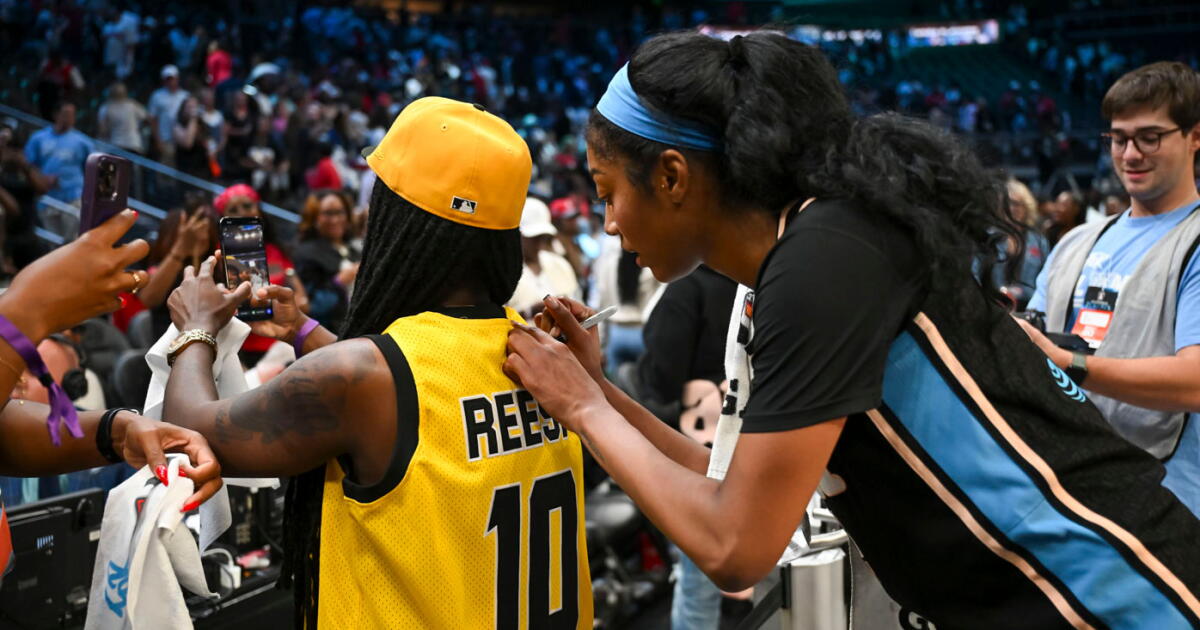
Led by Rhyne Howard, Allisha Gray, former UCLA star Jordin Canada and 2026 defensive player of the year Angel Reese, fourth-seeded Atlanta swept through the first two rounds of the playoffs, dismissing No. 5 Washington and No. 8 New York.
The Associated Press contributed to this report.

Israel demolitions in Negev displace 400 Palestinians | Newsfeed
Israeli authorities have demolished 80 structures in Al-Dahiya village in Israel’s Negev Desert, claiming they were built without permits. Rahat’s mayor says the demolitions have displaced around 400 Palestinians, leaving families facing uncertainty over where to find shelter.
Published On 12 Oct 2026
Two deaths reported as Hurricane Simon, storm Rachel batter Mexico’s coast | Weather News
Simon caps a Pacific season of record-breaking intensity, as deadly storms wreak havoc from Hawaii to Mexico.
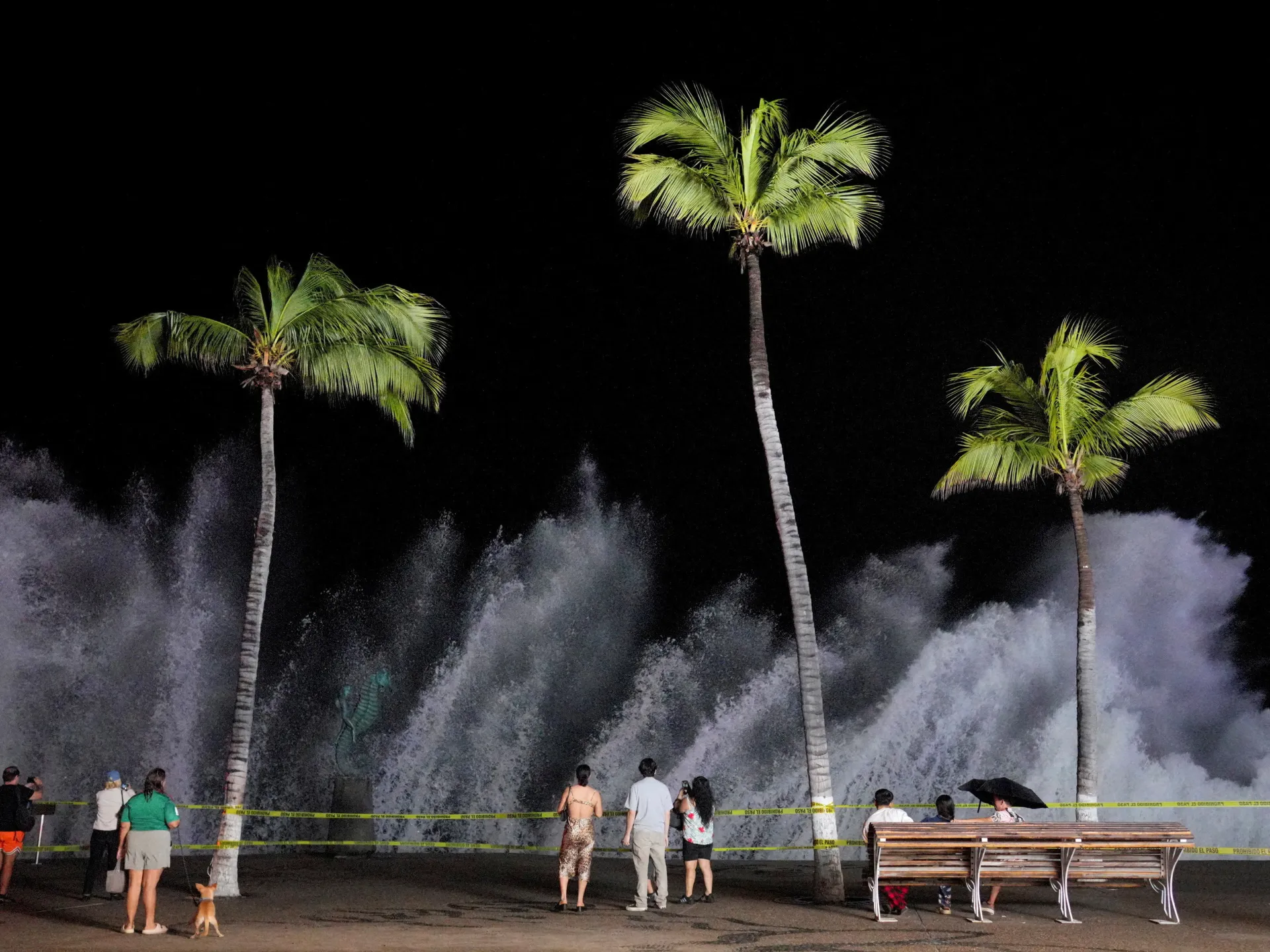
At least two people have died in Mexico after Hurricane Simon and former tropical storm Rachel brought torrential rain and catastrophic flooding to Pacific coast communities.
At a Monday news briefing, Guerrero Governor Evelyn Salgado confirmed that a 71-year-old man had died during Hurricane Simon after a retaining wall collapsed under the weight of intense precipitation.
Recommended Stories
list of 3 itemsend of list
According to the Guerrero-based news agency IRZA, the man, identified by his family as Albino Moreno Jimenez, had been feeding his animals on the western outskirts of Chilpancingo when a wall came crashing down on him.
A second death was announced later in the day in the state of Baja California along Mexico’s western coast. There, Governor Marina del Pilar said that a young girl had died from the effects of what was once Hurricane Rachel, which peaked in early October as a Category 3 storm.
At least 10 more people remain missing in Baja California, according to the governor. Eight were reported missing in the city of Ensenada, on the Pacific coast, and two in the fishing town of San Felipe on the Gulf of California.
The figures remain preliminary, with local newspaper La Jornada reporting a higher death toll of two in Baja California and 11 missing.
Death toll expected to rise
Rachel made landfall in the Mexican state as a post-tropical cyclone, and its remnants have travelled north through southern California in the southwestern United States.
Hurricane Simon, meanwhile, has churned off the coast of Mexico since the weekend. By late Monday morning, it had weakened from a powerful Category 4 storm to a Category 2.
Its maximum sustained winds had slowed slightly to around 155km/h (100mph), according to the US National Hurricane Center. Its centre was about 115km west-southwest of Cabo Corrientes, a cape in the state of Jalisco, drifting west at 3km/h.
Forecasters predict Simon could make landfall on Thursday or Friday. Hurricane warnings remain in effect for western Mexico, which is vulnerable to landslides and deadly surf conditions as a result of the storm.
Experts warn the death toll from both storms could rise, and officials have called on residents to exercise caution amid the devastation wrought by downed trees, high winds and floodwaters.
The Spanish newspaper El Pais reported the death of a cliff diver, Juan Patines, who was killed in Mazatlan, the northwestern state of Sinaloa, after jumping into the sea on Saturday night.
According to Mexican media, the heavy surf hampered his efforts to return to shore amid dangerous coastal conditions associated with Hurricane Simon. Local authorities later halted cliff-diving at the site due to hazardous sea conditions.
Officials have yet to confirm whether his death was directly linked to Hurricane Simon.
A record Pacific storm season
Rachel and Simon have battered Mexico’s western coast as part of an extraordinary stretch of hurricane activity across the Pacific.
The northeastern and central Pacific Ocean has experienced a record storm season this year, fuelled in part by the El Nino weather phenomenon, which results in warming waters in parts of the region. Twenty-one named storms have been recorded in the Pacific so far.
On Sunday, Simon tipped the region to a historic high for accumulated cyclone energy (ACE), a metric of the combined strength and longevity of tropical storms. This year has already surpassed the previous high set in 2018.
The US island chain of Hawaii has been among the hardest-hit places. In August, Hurricane Lala unleashed ruinous flooding on Hawaii’s Big Island as a Category 1 storm, killing a 93-year-old woman and destroying some 100 homes, according to state officials.
A few weeks later, Hurricane Lowell, a Category 4 hurricane at its peak, struck the Hawaiian islands of Kauai and Niihau, where powerful winds, storm surge and flooding overwhelmed towns and roads.
Roughly 90 percent of Kauai’s power customers were plunged into darkness as a result of electricity outages. At least two deaths were linked to Lowell.
In late September, Hurricane Nolo brought another round of flooding and landslides to the Hawaiian islands, though it did not make landfall.

Brooklyn Beckham smooches wife Nicola Peltz in front of Eiffel Tower after family feud overshadows Paris Fashion Week
BROOKLYN Beckham and his wife Nicola Peltz puckered up in Paris after the Beckham’s family feud clouded over Paris Fashion Week.
The loved-up duo were over in France enjoying the much-anticipated fashion event, but also appeared to be making the most out of their trip.
In a series of snaps posted to Brooklyn’s Instagram page, he and Nicola are sharing an incredibly romantic smooch.
Nicola’s arms are wrapped around Brooklyn’s neck as she leans in for the kiss.
All the while, the Eiffel Tower cinematically glitters behind them in the dark.
Other snaps show Brooklyn feasting on an enormous pain au chocolat, delving in a plate of escargot, and Nicola flashing her huge wedding ring.
Read more Brooklyn Beckham
One word and a little kiss fill the post’s caption, simply reading: “paris x”.
The photo dump follows the Beckham’s family feud rumbling again during Paris Fashion Week.
Brooklyn sensationally cut contact with his family after dropping a bombshell statement back in January.
The statement called his family “performative” and he forbade them from posting about him or interacting with him on social media.
Brooklyn’s father David Beckham appears to have been trying to extend olive branches by “liking” his posts from PFW.
He appeared to clap back at his dad by walking out wearing a short with the words “it’s not clocking to you” on it from Justin Bieber‘s clothing label Skylrk.
It’s another way saying “you’re not understanding”, in reference to the breached social media contact rule.
Meanwhile Brooklyn hasn’t been liking any posts back, and swerved seeing his mother Victoria Beckham while she was in France to showcase some of her new clothing at a PFW event.

Five of the best family cruises from new Disney ships and huge waterparks to onboard funfairs and 11-deck slides

DISNEY Cruise Line has just unveiled its newest ship – and it’s the company’s glitziest yet.
With themed dressing-up parties, glam stage shows and immersive dining experiences featuring much-loved characters, kids will love everything about Disney Believe.
But it’s not just the House of Mouse putting little ones at the forefront.
Many cruise lines are introducing activities, meals and entertainment options to keep youngsters happy – which means more downtime for Mum and Dad.
Here, Sophie Swietochowski shares her pick of the most child-friendly cruise ships for 2027.
DISNEY CRUISE LINE
LITTLE ones can just Let It Go on board Disney Believe, which is home to a sparkling Frozen-themed dining venue.
Oaken’s Table: A Frozen Family Feast is more than just a restaurant.
Here, youngsters are surrounded by characters Oaken, Anna and Kristoff as they tuck into dinner with live singalongs and performances throughout.
The kids’ clubs here take things to new heights, and children will love checking out the first ever Encanto musical, too.
But parents are not forgotten about.
While teens are soaring on the ship’s water coaster AquaMouse, unleashing their inner Spider-Man at the Hero Zone or paddling in the Toy Story-themed splash zone, adults can knock back cocktails at Sea Notes — the Little Mermaid-inspired piano bar.
GO: The ship makes its debut in December next year. More info, including cruise packages, will be released on Monday next week. See disneycruise.com or call 0800 171 2317.
ROYAL CARIBBEAN CRUISES
ROYAL CARIBBEAN is renowned for its family-friendly offering, and has enough high-energy activities to keep rugrats happy for at least two weeks on the trot.
Freedom of the Seas, in particular, ranks highly for its adrenaline-pumping fun.
While tiny tots play with cannons and drench buckets in Splashaway Bay, teens can race each other on the Perfect Storm waterslides or unlock new surf skills on the FlowRider surf simulator.
On top of some excellent kids’ clubs, there’s laser tag, rock climbing, mini golf, an arcade and even an ice rink.
Pizzas, tacos and burgers will ensure they never go hungry, although the ice cream counter is sure to be the biggest hit — and it’s free for all cruisers.
GO: A five-night Northern Europe sailing is from £579.50pp for a family of four, departing from Southampton on August 17 next year. The cruise calls at Hamburg and Zeebrugge (for Bruges). Check out seascanner.co.uk.
P&O CRUISES
BUCKLE in for a thrilling ride on board P&O Cruises’ Arvia.
This ship has a properly immersive escape room that takes you well below sea on a fictional submarine.
Families will rely on interactive consoles, motion simulators and high-tech controls to succeed in their mission and retreat from the submarine safely.
Kids can reward themselves with a sundae from the gelateria afterwards but most of the time they’ll be itching to get to the youth club.
There is also the Altitude Zone with a high-ropes course, mini-golf and splash zone.
Families can also benefit from a Children’s Tea at the buffet.
It’s at 5pm daily so parents can get little ones fed before dropping them at the night nursery.
GO: A 14-night Spain and France sailing is from £1,049pp, based on a family of four sharing and departing Southampton on July 18 next year. Ships calls at Vigo, Malaga, Alicante, Toulon, Barcelona and Cadiz. See pocruises.com.
NORWEGIAN CRUISE LINE
AURA is the newest ship to grace Norwegian Cruise Lines’s fleet and definitely one for action-seekers.
Its thrill zone, Ocean Heights, is spread across three decks and features so many spine-tingling activities you won’t know where to start.
Along with rock climbing, a high-ropes course and funfair, there are three waterslides and a main pool deck with sea-view hot tubs.
Best of all, grown-ups with their eyes on the speciality dining can bag free meals for kids under the age of 12.
GO: A seven-night Eastern Caribbean sailing is from £907pp departing Miami on August 7 next year. Calls at Puerto Plata, St. Thomas, Tortola and Great Stirrup Cay, NCL’s private island. See iglucruise.com or call 020 3733 5557.
MSC CRUISES
THE highlight for children on MSC’s World Europa is the dry slide that drops 11 decks, making it the longest slide at sea and sending riders spinning down 240ft in a matter of seconds.
With Lego on board as official sponsor, children will have their fill of building-block games at the kids’ clubs, while teens can get stuck into video games.
The waterslides integrate virtual reality and project animations while riders whizz to the bottom.
The high-tech fun does not end there, either.
The ship also has a Formula 1 simulator, 5D interactive cinema and virtual reality arcades.
GO: A seven-night Western Mediterranean sailing is from £574pp based on a family of four sharing and departing from Civitavecchia in Italy on May 1, 2027. It calls at Palma de Mallorca, Barcelona, Marseille, Genoa and La Spezia. See msccruises.co.uk.
Coventry 4-1 Newcastle: Frank Lampard’s Sky Blues out of Premier League drop zone
Coventry backed up their victory at Nottingham Forest before the international break, scoring four goals in the top flight for the first time since a 4-1 win over Sheffield Wednesday in May 2000.
Those around the Sky Blues’ training ground at Ryton feel that, if they are competitive over the next seven games, they will have a platform for survival.
A trip to Tottenham and the visit of Fulham – both winless – come next, with games against Sunderland, Everton, Crystal Palace, Leeds and Ipswich to take them into December.
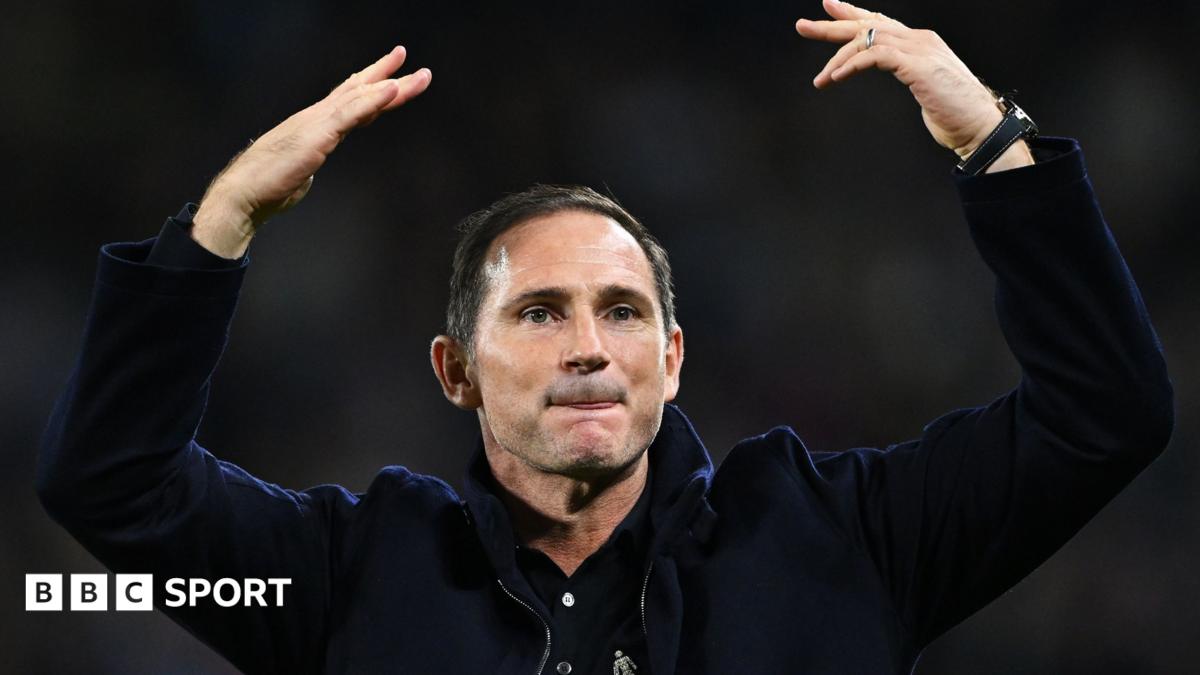
“It’s big and we have to tap into that in a good way, in a humble way,” said Lampard, whose side are now 14th.
“We have to be excited and I’m seeing players in my eyes that are developing quite quickly.
“A lot of players had low Premier League minutes, or zero Premier League minutes – Jack Rudoni, [Brandon] Thomas Asante, [Ephron] Mason-Clark, a lot of them.
“So is it human nature in the first few games we’ve had two top teams in the league (Arsenal and Manchester City) and we’ve had Brighton and we’ve gone: ‘hmm, it’s not easy here’.
“This [win] gives good confidence, so it’s the balance of confidence against overconfidence. But it’s great when you have a template of feeling when you get a result of that level.”
It can be a defining six weeks for Lampard’s men after a resounding, if not perfect, win against Newcastle.
Coventry’s previous home games had seen them fall to a 1-0 defeat by fellow promoted side Hull before a 5-0 thumping by Brighton.
Sandwiched in the middle was a 3-1 loss to Aston Villa in the Carabao Cup, meaning it was imperative they found form at the CBS Arena.
“We’re going to be a relative underdog in pretty much every game,” added Lampard. “So we have to maximise everything and be on the limit and I thought we were on the limit in loads of ways.
“They need to keep their feet on the ground because the next one’s tough and the one after that will be tough.
“But we look like a team that [will make it] hard for teams to come here. That’s the feeling we haven’t quite had in our first CBS games this season.”
Poland says two Turks arrested over Russia-linked Starlink station fire | Cybersecurity News
Warsaw says the 2 suspects held in Germany will face sabotage charges.
Published On 12 Oct 2026
Two Turkish citizens have been detained in Germany over a fire at a Starlink station in central Poland that Warsaw has branded an act of sabotage carried out on Russia’s behalf.
Polish officials announced the arrests on Monday, one month after the fire, which they say was aimed at disrupting internet services, including for Ukraine’s military. The fire, in Masovia in Eastern Poland, engulfed the Starlink station’s power system and backup generator.
Recommended Stories
list of 2 itemsend of list
Polish Minister of Interior Marcin Kierwinski said the two men would face charges in Poland of carrying out sabotage on the instructions of a foreign intelligence agency. German police made the arrests on behalf of Polish services, according to Deutsche Welle. Polish officials did not say where or when in Germany the men were detained.
“We have no doubt that Russian services are behind this act of sabotage,” Special Services Minister Tomasz Siemoniak said in a news conference. “It is worth adding that Russian services are increasingly turning to individuals linked to the criminal underworld,” he said.
The case is the latest in a string of incidents that officials across the European Union deem to be part of a Russian campaign of sabotage and hybrid attacks aimed at eroding support for Ukraine.
The Russian embassy in Warsaw did not immediately reply to a request for comment. Moscow has previously dismissed similar accusations as baseless and the product of anti-Russian hysteria.
Ukraine’s military relies on tens of thousands of Starlink terminals for battlefield communications and occasional drone operations. Starlink founder Elon Musk activated the service over Ukraine in 2022, days after Russia’s full-scale invasion, following a plea from Kyiv. Poland has said it pays for Ukraine’s Starlink subscription.
Musk has since clashed with Ukrainian officials over his views on the war. This year, he also agreed to switch off thousands of Russian “grey-market” Starlink terminals in Ukraine, causing problems for Russian forces. Ukraine is now seeking to use the terminals for attacks on Russian territory.

Why the Cornell gang rape case has raised concerns about fraternity culture | Education News
For more than 40 percent of US presidents, the fraternity hall was an early stop on the road to the White House.
Fraternal organisations, more commonly known as fraternities or frats, have a long and storied history on college campuses in the United States.
Recommended Stories
list of 3 itemsend of list
One industry group, the North American Interfraternity Conference (NIC), represents 58 fraternities spread across 600 schools. It claims nearly 200,000 undergraduate students as active members and an alumni population of 4.2 million.
The draw for college-aged men is the promise of brotherhood, a bond that transcends keg parties and late-night revelry. Like sororities and other members-only student organisations, fraternities are often touted as pathways to personal, academic and professional success.
But critics argue that some fraternities have leveraged their exclusivity to encourage and normalise violence, dangling social acceptance as a reward for compliance.
“This isn’t [some sort of] a hobbyist club,” said anthropologist Aldo Cimino, a Kent State University professor who studies fraternity hazing. “It is the seriousness of the affiliation that has generated the intensity of these induction rituals.”
In recent weeks, one case has renewed debate over fraternity culture and whether the campus organisations use their exclusivity to shield bad behaviour.
In September, an anonymous woman known as Jane Doe filed a civil lawsuit against the Chi Phi fraternity at Cornell University and seven of its members, accusing them of gang raping her during a party on the night of October 19, 2024.
Doe’s sorority, Delta Delta Delta, and Cornell itself are among the co-defendants.
Her lawsuit raises questions about fraternity and sorority culture at US schools, collectively known as “Greek life” for the groups’ use of Greek lettering and symbols.
Upon her admission to Cornell, Doe argues she encountered a “glorified – yet materially false and misleading – facade” for Greek life.
“She arrived on a campus where the University actively promoted Greek membership as a ‘vital’ part of the campus community and endorsed these organizations as well-managed, worthy pathways to new friendships and improving one’s educational and professional opportunities,” the lawsuit said.
The complaint accuses the fraternities of instead perpetuating a pattern of sexual assault and abuse.
What are fraternities?
Now a multibillion-dollar industry, fraternities in the US trace their origins to men-only clubs established at some of the country’s oldest universities.
The tradition began at the College of William and Mary in 1776, when Phi Beta Kappa was founded as a secret society for debate and scholarly exchange.
Its adoption of the Greek alphabet, oath of secrecy, and arcane membership rites helped establish a blueprint for future fraternities and sororities. Often with houses of their own, fraternities eventually grew into informal extensions of the campus residential system.
Historian Nicholas Syrett wrote about the origins of such groups in his book The Company He Keeps: A History of White College Fraternities.
In an interview with Al Jazeera, he explained that fraternities have long embraced so-called masculine ideals. But those ideals have changed from generation to generation.
In the past, fraternities sought to position themselves in “opposition to boyhood” by embracing “independence, strength of character, handsomeness and loyalty”, Syrett explained.
But their modern iteration has shifted to include a greater emphasis on “athleticism, sexual success with women, and recklessness” as well as alpha-male posturing.
Syrett argues that the fraternity system’s cult of toughness reflects a wider matrix of gendered expectations and social hierarchies.
Early fraternity men, Syrett says, prized intellect and academic distinction, provided neither betrayed too much effort. But “this has largely taken a backseat in contemporary fraternities”, he explained.
“When [men] are initiated, they are taught that loyalty to the brotherhood is of the utmost importance,” Syrett said of fraternities today. “This leads to the keeping of all kinds of secrets, including things that are against the rules and/or the law.”
A mark of elite status
In the two and a half centuries since the first fraternities were formed, Greek life has expanded to include different races and identities outside of white men.
Some Greek groups have even eschewed the traditional gender divide altogether to better embrace transgender and non-binary members.
But fraternities and sororities overall tend to act as “microcosms of the larger society”, according to Elizabeth Allan, a professor at the University of Maine and director of its Hazing Prevention Research Lab, “with race, pretty privilege and economic segregation helping shape the system”.
“The [social] stratification that we see in the larger society is going to be reflected, in large part, in many of these organisations, unless they’re actively working to disrupt it,” she added.
Between membership dues and rent at fraternity chapter houses, Greek organisations can price out all but the more affluent students, according to Allan.
“Pretty privilege” – the social bias in favour of those deemed conventionally attractive – can add to the pressure, with sorority applicants in particular shelling out hundreds, if not thousands, of dollars for cosmetic treatments and outfits.
Experts say the sense of exclusivity that many fraternities and sororities cultivate is a powerful draw for incoming students, who see membership as a path to upward social mobility.
That perception is reinforced by the groups’ internal dynamics. Many sororities and fraternities encourage networking among members.
A 2021 Gallup survey commissioned by the NIC and the National Panhellenic Conference found that 42 percent of fraternity or sorority alumni said a fellow member had helped them find an internship or job.
Meanwhile, 51 percent of Greek members reported having a job waiting at graduation or found employment within two months. The rate was much lower among those who were not members of such fraternities or sororities, at 36 percent.
How hazing shapes fraternities
Critics often point to hazing rituals in particular as shaping a culture of violence at some fraternities and sororities.
Hazing is a process through which prospective Greek life members undergo humiliating and sometimes perilous tasks to secure admission.
The phenomenon is prohibited by law in most US states, though the definitions, penalties and scope of such laws vary. The consequences, however, can be deadly.
One of the earliest recorded deaths associated with fraternity hazing took place at Cornell in 1873.
At the time, a group of “pledges” – would-be fraternity members – were blindfolded and led far from campus at night, with instructions to make their way back on their own.
In the dark, one of the pledges, Mortimer M Leggett, and two fraternity members stumbled over a cliff and plunged into the gorge of Six Mile Creek. The two fraternity members survived. Leggett, however, did not.
Secret initiation rituals can forge an “informal psychological social contract in which members feel obligated to protect the organisation”, according to Pietro Sasso, who studies college student experience at Old Dominion University.
Some members may feel the need to rally around the fraternity even when “doing so conflicts with their personal values or responsibilities to others”, Sasso added.
“My research on fraternity cultures suggests that organisational socialisation can normalise behaviours that individuals might otherwise question, making the environment itself an important part of prevention,” he explained.
Inside Doe’s lawsuit against Chi Phi
Doe’s case cites some of the social pressures and incentives that lead young men and women to Greek life on campus.
“She was drawn to the sorority and its promises of sisterhood and lifelong friendships, the status it conferred on its members, and the community it provided on campus when she was over 1,000 miles away from home,” the lawsuit said of Doe.
But Doe said she joined Cornell’s Greek community without being fully aware of the pattern of sexual assault associated with the local fraternities.
During Doe’s first semester, in 2022, there were at least five reported cases of victims at Cornell being drugged, and two alleged cases of sexual assault. All of those cases, according to her lawsuit, took place at fraternities.
Two years later, on the night of the alleged gang rape, Doe claims she was pressured by fraternity members to take drugs like ketamine, marijuana and alcohol. After agreeing to a threesome, she said she found herself in a “room full of predatory, fraternity men” who raped her while she was incapacitated.
A photo of a group chat included in her lawsuit shows one Chi Phi member informing his fellow fraternity brothers that there was “free pussy” in an upstairs alumni room. A member of the chat replies, “I f***ing love chi phi.” Another chimes in, “Like you can walk in and whip it out.”
Several of the men have denied any wrongdoing.
But the case has sparked questions about whether the culture of Greek life contributes to a high rate of sexual assault in fraternities and sororities.
One 2021 survey published by the American Psychological Association tracked male students from high school through their second year of college. It found that fraternity members were 62 percent more likely to report sexual aggression during their first two years of college.
Separately, a 2009 study published in the journal Violence Against Women estimated that 29 percent of sorority members reported suffering sexual assault during college, roughly four times the rate of non-members.
Reforming Greek life
After the alleged gang rape in 2024, Cornell’s Chi Phi chapter was closed, and the fraternity remains barred from campus. Two male defendants in Doe’s lawsuit were expelled, while another two were suspended.
But some student activists say too little is being done to reform Greek life in the wake of Doe’s case. They want stronger measures to enforce accountability within private, members-only groups where secrecy often reigns.
CJ Barles, a junior at the University of California, Davis, is one of the students across the US organising protests in support of Doe. She told Al Jazeera she understands the appeal of the fraternity and sorority systems.
“Affiliated students say it looks good on their resume,” Barles explained. “They see it as a built-in cult, a seat at the table and a crew to call their own.”
But Barles said she has heard troubling reports. Some fraternities, she explained, hold parties “requiring every man” to arrive with several women in tow. That requirement says “a lot about the culture some of these spaces cultivate”, she added.
At a rally last week, Barles and other protesters called on the University of California system to implement new measures to hold fraternities accountable for sexual assault, including enshrining students’ right to withdraw consent during sexual encounters.
But Barles said she left feeling dumbstruck by the accounts of sexual violence shared by women on campus, many of whom spoke from personal experience.
“It’s unbelievably upsetting, the amount of stories I heard,” said Barles. The litany of grievances has fanned her scepticism of the Greek system: “I wouldn’t step within a mile of most of them.”

Big Brother nomination twist confirmed as fans say ‘this actually sounds exciting’
Big Brother fans predicted that this week would see a dramatic change to how nominations work

Fans think they know who will be in danger of eviction(Image: ITV)
GK Barry and Kate Lawler have confirmed the next dramatic twist after the latest episode of Big Brother aired.
Fans believe they have already worked out the next housemate to be evicted after the presenters of ITV’s companion series The Group Chat confirmed the latest shake-up to nominations.
The current iteration of the show has seen a certain theme be imposed on the house. Following on from ‘the house of revelation’ it has now become ‘the house of power’.
It all began with the entrance of Gemma Collin s who spent a brief 48 hours among the housemates. Scenes shown during Monday night’s (October 12) saw Gemma spend her final day and make an abrupt exit.
Between this, the contestants were split into the red team and the blue team. Members of each side was picked by a captain picked by Gemma herself.
This saw the likes of Rob and Sam chosen to select who they wanted to team up with. Each had to then nominate someone over the last two days who should face a task.
Tonight, Twinks beat Lynx by building a tower of cards with four layers. It meant that the red team were treated to a pizza party with Gemma, while the blue team were left out. In addition, they were not permitted to sit on the sofas and could only shower for two minutes.
Try ITVX Premium free for a week
This article contains affiliate links, we will receive a commission on any sales we generate from it. Learn more
ITVX Premium offers exclusive ad-free content that can be streamed on-demand and on the go, with everything from Hollywood blockbusters to bingeable British box sets.
An annual plan costs £59.99 – equal to £4.99 per month – after a seven-day free trial.
Following the main show, Kate Lawler and GK Barry interviewed Gemma and reflected on her stint back in the Big Brother house. They also eventually revealed this week’s twist to nominations.
Normal nominations will still take place but there could be an extra person up for the vote. GK Barry said: “Whoever wins this task as a group, they get to decide who is up for eviction.” Kate added: “The winning team is going to be in possession of a killer nomination.”
Taking to X following the shock announcement, one fan penned: “Killer nom for Phillip would be just lovely.” Another added: “Oh a killer nomination. I need red team to win.”
Someone else said: “This actually sounds exciting. I wonder if 3 will go up for eviction the, double eviction maybe?”
Big Brother continues tomorrow at 9pm on ITV2 and ITVX

Michael Jordan’s 1998 NBA Finals jersey sells for record $14 million
An autographed Chicago Bulls jersey worn by Michael Jordan during Game 2 of the 1998 NBA Finals was privately sold to a Miami real estate investor for $14 million, an auction house announced Monday. The price is believed to be the highest ever paid for basketball memorabilia.
A game-worn red road jersey was purchased by Ron Firman, according to Philadelphia-based Hunt Auctions. Jordan wore it June 5, 1998, while scoring 37 points in the Bulls’ victory over the Utah Jazz. The Bulls went on to win the series in six games, giving Jordan his sixth and final championship.
This is the third Jordan jersey from the 1998 Finals that has sold for more than $10 million. Jordan’s Game 3 white home jersey was auctioned in September for $12.26 million and his Game 1 red road jersey was sold at auction for $10.09 million in 2022.
“While Michael Jordan’s importance within the sports memorabilia marketplace has long been established, it has now escalated to an elite asset class more typically reserved for iconic works of art,” said David Hunt, president of Hunt Auctions, in a statement.
Firman’s X account describes him as a “Commercial Real Estate Co. Principal. Partner in private co. who’s trading is comparable to a hedge fund’s. Rare Vintage Sports Memorabilia Collector.”
His most recent post came Nov. 29, 2022, and features a signed photo of Joe DiMaggio belting a single in the seventh inning of the 42st consecutive game he recorded a hit in 1941, setting an American League record. DiMaggio extended the streak to 56 games, a Major League record that still stands.
Firman also recently set a record by spending $3 million for a 1951 Mickey Mantle first-generation photo used as the basis for Mantle’s celebrated 1952 Topps rookie card. Now Firman owns another piece of legendary memorabilia. The Bulls’ 1997-98 season was the subject of the “Last Dance” documentary series released in 2020.
“Michael Jordan was an incredibly talented player who is admired around the world,” Firman said in a statement distributed by Hunt Auctions. “I’m very excited about the purchase.”
The only game-worn jersey publicly to fetch more than $14 million was worn by Babe Ruth when he supposedly called his shot before hitting a home run against the Chicago Cubs at Wrigley Field in Game 3 of the 1932 World Series. That jersey sold for $24.12 million in 2024 at Heritage Auctions, setting a world record for the most expensive piece of sports memorabilia. It appreciated more than 25 times from the $940,000 it went for in 2005.
“In our opinion, and 36 years of market experience, Babe Ruth and Michael Jordan stand above all others in the history of American sports,” Hunt said. “The record-setting price achieved for the related Michael Jordan jersey is yet another corroborative result as to the significance of Jordan within the industry and popular culture.”

Why do Iran’s oil ‘intermediaries’ owe the government billions? | US-Israel war on Iran News
As the United States maintains a naval blockade of Iran’s ports and imposes more sanctions on its oil exports, Tehran is confronting another problem: billions of dollars in revenue from previous oil sales that it says have gone missing.
A spokesperson for Iran’s judiciary said in September that a network of oil intermediaries known as “trustees” owed the Iranian government between 10 billion euros ($11bn) and 11 billion euros ($12bn). That figure was equivalent to half of the total oil revenue projected in Iran’s government budget for the current fiscal year.
Recommended Stories
list of 3 itemsend of list
US officials, including Treasury Secretary Scott Bessent, have tied Iran’s struggles to access oil revenues as evidence that its economic pressure campaign is having an effect. In August, Bessent said that “Iran’s shadow banking system was buckling” under pressure from the US campaign against the country, which has been ramped up as Washington seeks a way to force Tehran to capitulate in the war between the two countries, launched by the US and Israel in late February.
So who are the oil intermediaries, why does Iran depend on them, and what has happened to the billions of dollars they owe? Let’s take a closer look.
The debt, and the crisis it has created for the Iranian government, both stem from an oil-sales arrangement Tehran adopted in 2012 in response to US sanctions targeting Iranian oil exports.
American and European sanctions targeting Iranian oil sales and revenue collection began in 2012. The stated rationale behind both sets of measures was that revenue from oil sales helped finance Iran’s nuclear programme and that restricting Iranian oil exports could prevent the programme from advancing.
In response, the Iranian government devised a way to circumvent international sanctions on its oil sales. Unable to sell oil through the Oil Ministry and receive the proceeds through the Central Bank, it began selling oil to domestic buyers or using it to settle outstanding obligations to institutions and organisations owed money by the state.
This arrangement gave rise to a network of oil intermediaries often referred to in Iran as the “trustee network”. Rather than selling all its oil through official government channels, the state entrusted crude oil to institutions, individuals and companies to sell on its behalf. The proceeds were supposed to be transferred to the government’s treasury, with the sellers or recipient institutions subsequently recovering their agreed costs and outstanding claims. Some institutions sold the oil themselves, while others contracted private trading companies to handle the sales.
The Oil Industry Pension Fund, established for retired Oil Ministry employees familiar with the oil-sales process, was among the first institutions to receive crude oil for sale. Other recipients included Khatam al-Anbiya Construction Base, a major hub for large-scale infrastructure projects. Even the municipal police received payments owed to them by the government in the form of crude oil.
Effect of the nuclear deal
Even in those early experiments, discrepancies emerged between the revenue expected from oil sales and the amounts sellers actually deposited into the government’s treasury. These discrepancies eventually gave rise to some of Iran’s largest economic corruption cases.
The accounting discrepancies and the government’s inability to recover money from private sellers entrusted with Iranian oil persisted until 2016, when the Joint Comprehensive Plan of Action (JCPOA) nuclear deal was signed and when sanctions on Iranian oil sales were lifted. The government was subsequently able to regain control over oil sales.
Individuals who had sold Iranian oil but failed to return the proceeds were imprisoned. With the ability to sell oil again through legal and transparent channels, the government was able, for a time, to manage its oil revenues and spending with greater control.
How did money from oil sales go unreturned?
After US President Donald Trump withdrew the United States from the JCPOA in 2018 during his first presidential term, the Iranian government once again had to rely on private oil traders to sell its oil. But the problems associated with selling oil through intermediaries rather than official state channels, including delays in returning revenues, accounting discrepancies, debts owed by oil sellers to the government, and the occasional seizure of Iranian oil shipments at sea, once again constrained the government’s ability to manage its oil revenues.
Moreover, the US expanded its sanctions beyond Iranian government institutions and interests, adding bank accounts involved in transactions with the Iranian government, currency-exchange offices, companies, and individuals to its sanctions lists. As a result, the time between individuals participating in Iran’s oil-trading network and being sanctioned themselves, along with their assets and companies, and having their accounts blocked or frozen grew progressively shorter.
This contributed to an accumulation of debts owed by sanctioned oil traders – no longer able to access their accounts – to the government. It also left Iran with little choice but to expand its private oil-sales network. That meant increasing the number of people involved in trading Iranian oil, reducing the volume of oil allocated to each individual or company and, ultimately, increasing the risk that the proceeds would not be returned.
Iranian officials have also accused trustees of exploiting the sanctions workarounds to enrich themselves.
The billions of dollars owed by private oil sellers to the Iranian government are a combination of outstanding payments, disputed financial obligations and allegations of corruption. Iran’s judiciary chief recently addressed the issue, warning that oil sellers who refuse to return the proceeds from oil sales will face legal action. But such warnings do not change the sanctions environment or remove the obstacles that prevent some oil sellers from returning the money.
Canada’s Carney calls for unity as Alberta prepares for secession vote | Elections News
Prime Minister Mark Carney’s Thanksgiving message comes a week ahead of Alberta’s vote on a separatism referendum.
Published On 12 Oct 2026
Prime Minister Mark Carney has used his Thanksgiving message to Canadians to call for national unity, a week before the oil-rich province of Alberta is set to vote on a proposal to secede from Canada.
“We can’t build big things on fault lines,” Carney said in his video message on Monday, warning that Canada faces threats to its economy, security and way of life.
Recommended Stories
list of 3 itemsend of list
“We have to be strong, and we are stronger together.”
His comments come as Albertans head to the polls on October 19 to decide whether to begin the process of seeking independence. The initial referendum is non-binding, but it proposes to hold a binding vote in the future to decide whether Alberta should secede.
The question facing voters is: “Should Alberta remain a province of Canada, or should the Government of Alberta commence the legal process required under the Canadian Constitution to hold a binding provincial referendum on whether or not Alberta should separate from Canada?”
The vote follows a growing push by a vocal group of separatists, fuelled by longstanding grievances over federal energy and environmental policies.
The secessionist movement has accused the Canadian government of unfairly targeting Alberta’s oil and gas industry, the cornerstone of the province’s economy.
The movement is also being watched south of the border, as Canada’s relationship with the United States under President Donald Trump has become strained.
An investigation by The Globe and Mail earlier this month revealed that US Republican operatives met with secession organisers in Alberta to talk about campaign strategies. Separatist leaders had reportedly offered access to the province’s water and oil royalties in exchange for US support for independence. Separatist leaders have disputed those claims.
Carney’s comments also come after another secessionist movement, the Parti Quebecois, won the most seats in a provincial election in Quebec last week, allowing it to return to power after more than a decade.
The Parti Quebecois, however, only won 59 seats out of a total of 129 in Quebec’s National Assembly, leaving it short of a majority government.
Still, following that victory, US tech entrepreneur Elon Musk, considered the richest man on the planet, applauded the results. He has been known to use his wealth and influence to support political causes, particularly on the far right.
“Good. Quebec should separate,” Musk wrote on social media. “They would be better off. Alberta and Saskatchewan should separate too.”
Carney, who grew up in Alberta, said he was filming the message from a classroom at his former school, St Francis Xavier High School in Edmonton.
“I’m back home a lot these days because we are building big things again in Alberta: thousands of new homes, high-speed rail, a new pipeline to the West Coast that will create lasting opportunity and prosperity for hundreds of thousands of people in this province and across the country,” he said.
Despite the secessionist movement’s growing visibility, polls suggest most Albertans oppose independence.
Final picture of RJ Mitte as star appeared at his new film’s premiere just days before tragic death aged 34
BREAKING Bad star RJ Mitte made his final public appearance just days before he tragically passed away.
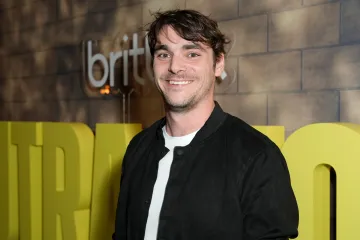
The actor, 34, smiled on the red carpet at the premiere of his new movie, Talking to Strangers, on September 30 in California.
RJ, who played Walter White Jr. in the Emmy Award-winning show, died on Monday in Brownsville, Texas.
Announcing his passing, the actor’s representative told Deadline: “It is with profound sadness that we share the tragic passing of beloved actor, philanthropist, and passionate disability rights advocate RJ Mitte.
“Drawing from his own experience living with cerebral palsy, RJ brought authenticity to the role and built a platform on disability awareness and inclusion.”
RJ’s cause of death was not immediately disclosed, however, TMZ reported that he died by suicide.


His new movie tells the story of introvert with cerebral palsy who meets a vibrant force of nature who he goes on to form an unlikely and complicated friendship with.
Talking to Strangers is available to stream on Prime Video.
Just four days before his death, RJ posted to Facebook about the movie.
He wrote: “Had the pleasure of attending the LA premier for a film I made, Talking to Strangers The Movie, now streaming on Amazon Prime Video.
Most read in Entertainment
“It’s got a little love, some comedy, and maybe even some drama.”
Speaking on a podcast, RJ praised the film for “pushing social norms” and “stepping out of the realm of comfort”, pagesix reports.
RJ was diagnosed with cerebral palsy at age 3, and used his stardom as a Hollywood actor to become a leading disability rights advocate.
He served as a proud celebrity ambassador for several organizations, including United Cerebral Palsy and Shriners Children’s.
Giving advice to young people with disabilities, he told Future of Personal Health: “My hope is to inspire a ‘never give up’ mentality.
“If there is something you want in life, pursue it no matter how hard it may be.
“Keep your dreams alive. Don’t lose sight of who you want to become.”
In Breaking Bad, his character also had cerebral palsy, although the actor’s real-life condition was milder compared to his character.
RJ played the son of Bryan Cranston and Anna Gunn’s characters on the hit crime drama.
He appeared in 56 episodes.
Last year the late actor got engaged to his girlfriend Kennedy Suarez after years of dating.
If you or someone you know is affected by any of the issues raised in this story, call or text the 988 Suicide & Crisis Lifeline at 988, chat on 988lifeline.org, or text Crisis Text Line at 741741.
How to get help
EVERY 90 minutes in the UK a life is lost to suicide
It doesn’t discriminate, touching the lives of people in every corner of society – from the homeless and unemployed to builders and doctors, reality stars and footballers.
It’s the biggest killer of people under the age of 35, more deadly than cancer and car crashes.
And men are three times more likely to take their own life than women.
Yet it’s rarely spoken of, a taboo that threatens to continue its deadly rampage unless we all stop and take notice, now.
If you, or anyone you know, needs help dealing with mental health problems, the following organisations provide support:
CALM, www.thecalmzone.net, 0800 585 858
Heads Together,www.headstogether.org.uk
HUMEN www.wearehumen.org
Mind, www.mind.org.uk, 0300 123 3393
Papyrus, www.papyrus-uk.org, 0800 068 41 41

BofA analysts see gold unable to hold above $4,000 over next three months
BofA analysts see gold unable to hold above $4,000 over next three months
Source link
Mailers promoting a socialist candidate in Ohio’s U.S. Senate race have links to MAGA super PAC vendor
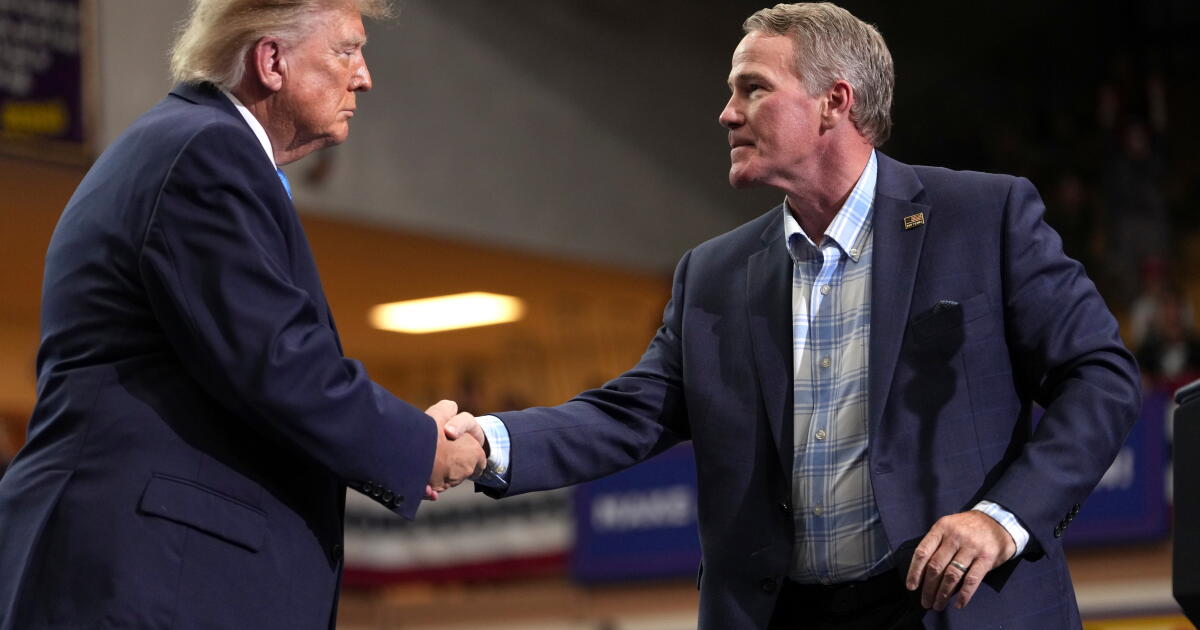
COLUMBUS, Ohio — Campaign mailers urging Ohio voters to support a socialist U.S. Senate candidate over Democratic nominee Sherrod Brown are being underwritten by a newly incorporated PAC with ties to President Trump’s MAGA Inc., public filings show.
The mailers are sponsored by Enough Promises Ohio PAC and began arriving in voters’ mailboxes in recent days. They promote independent candidate Greg Levy over Brown with messages such as “Join the Revolution” and “Send a Worker to the Senate.” Levy describes himself as “Socialist running for the U.S. Senate to represent Ohio in 2026” on his X account.
Levy condemned the fliers for falsely impersonating his campaign and engaging in “dirty tricks” designed to mislead voters. He said he is considering legal action.
“This is a highly undemocratic practice and does a disservice to voters in Ohio and throughout the country,” he wrote on X.
According to Federal Election Commission filings, Enough Promises Ohio was founded on Sept. 29. It has not yet had to disclose its contributors, but additional federal filings lay out a trail of associations linked to Republicans.
Enough Promises paid the firm Seven Farms more than $397,000 on two dates last week for printing, postage and mail services either supporting Levy or opposing Brown. Seven Farms, also a new entity, lists as its address the same South Carolina business suite as the one used by Whistlestop Strategies LLC.
Whistlestop is a direct mail outfit operated by Big Dog Strategies LLC, the strategy firm that advises Trump’s MAGA Inc. super PAC and that managed Republican Sen. Bernie Moreno’s successful campaign against Brown in 2024.
Messages seeking comment were left with Enough Promises Ohio and Big Dog.
MAGA Inc. and affiliated groups began pouring huge sums of cash into midterm races in September, after party officials had been urging Trump to begin spending some of the fortune he had amassed to help embattled Republicans before it was too late.
Smyth writes for the Associated Press. AP writer Jill Colvin in New York contributed to this report.
Michael Jordan jersey from ‘Last Dance’ season sells for record £10.6m
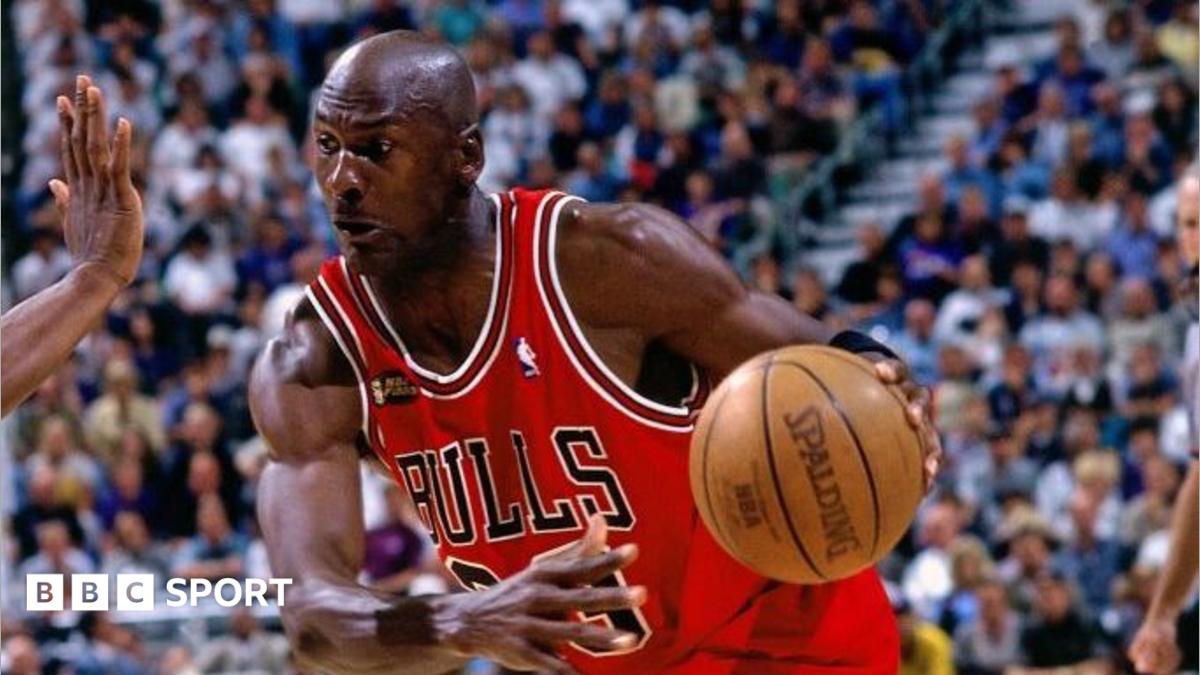
A Michael Jordan jersey from his ‘Last Dance’ season has sold for $14m (£10.6m), a record for a piece of basketball memorabilia.
Jordan wore the Chicago Bulls jersey during game two of the 1998 NBA Finals and has autographed it too.
He scored a game-high 37 points that evening before ending his last season with the Bulls with a 4-2 series win for his sixth and final NBA Championship. He was named the Finals’ Most Valuable Player in all six.
The only item of sports memorabilia that has cost more is the jersey worn by baseball legend Babe Ruth when he “called the shot” during the 1932 World Series, which was sold for $24.1m (£18.2m) in 2024.
The previous high for a basketball item was a card featuring Jordan and Kobe Bryant from 2007-08 which sold for $12.9m (£9.8m) last year.
The previous record for a piece of game-worn Jordan memorabilia was set just two weeks ago when his jersey from game three of the 1998 Finals, which is not autographed, sold via auction for $12.3m (£9.3m).
The latest purchase was made by Miami real estate investor Ron Firman in a private sale through Hunt Auctions.
David Hunt, president of Hunt Auctions, said in a statement: “While Michael Jordan’s importance within the sports memorabilia marketplace has long been established, it has now escalated to an elite asset class more typically reserved for iconic works of art.”