



Atlanta Dream will host WNBA Finals Games 3 and 4 at State Farm Arena
The Atlanta Dream will host Games 3 and 4 of the WNBA Finals against the Golden State Valkyries in the building they will call home starting next season, not the one where they played most of their home games this year.
That’s good because State Farm Arena — home of the NBA’s Hawks and soon-to-be the fulltime home of the Dream — can seat around 17,000 people, while Gateway Center Arena — the WNBA franchise’s home facility since 2021 — can only hold 3,500 fans.
“This is what the players and the fans deserve,” Dream majority owner Larry Gottesdiener said in a statement. “We are grateful to all of the stakeholders who worked together to resolve the conflicts and make this happen.”
Things were looking pretty iffy for a while.
Game 3 will be played Oct. 21 at 5 p.m. PDT. The game was originally supposed to be played the following day, but a Sombr concert is taking place at the arena on that date.
Game 4 will take place Oct. 24 at 10 a.m. PDT. While that date wasn’t changed, the game was originally slated to start 2 1/2 hours later. The Hawks also pushed back the time of their home opener that evening by a half-hour to 5:30 p.m. PDT to help accommodate the WNBA game.
“The change of venue dramatically expands the seating capacity and ensures that the Dream will be able to provide an extraordinary atmosphere for the first WNBA Finals game to be played in the Atlanta market since 2013,” league commissioner Cathy Engelbert said in a statement. “We are pleased that thousands more fans across the Southeast region will have the opportunity to experience the ultimate WNBA action — the WNBA Finals — in person.”
The Dream played six regular-season games and all three home playoff games this season at State Farm Arena. Efforts to hold the Dream’s home Finals games at such area venues as Gas South Arena (around 13,000 seats) and Georgia Tech’s McCamish Pavilion (8,600 seats), didn’t work out, according to USA Today.
There has been no word on the venue for a possible Game 6 of the best-of-seven series, which the Dream are currently scheduled to host on Oct. 29, the same date as another Hawks home game.
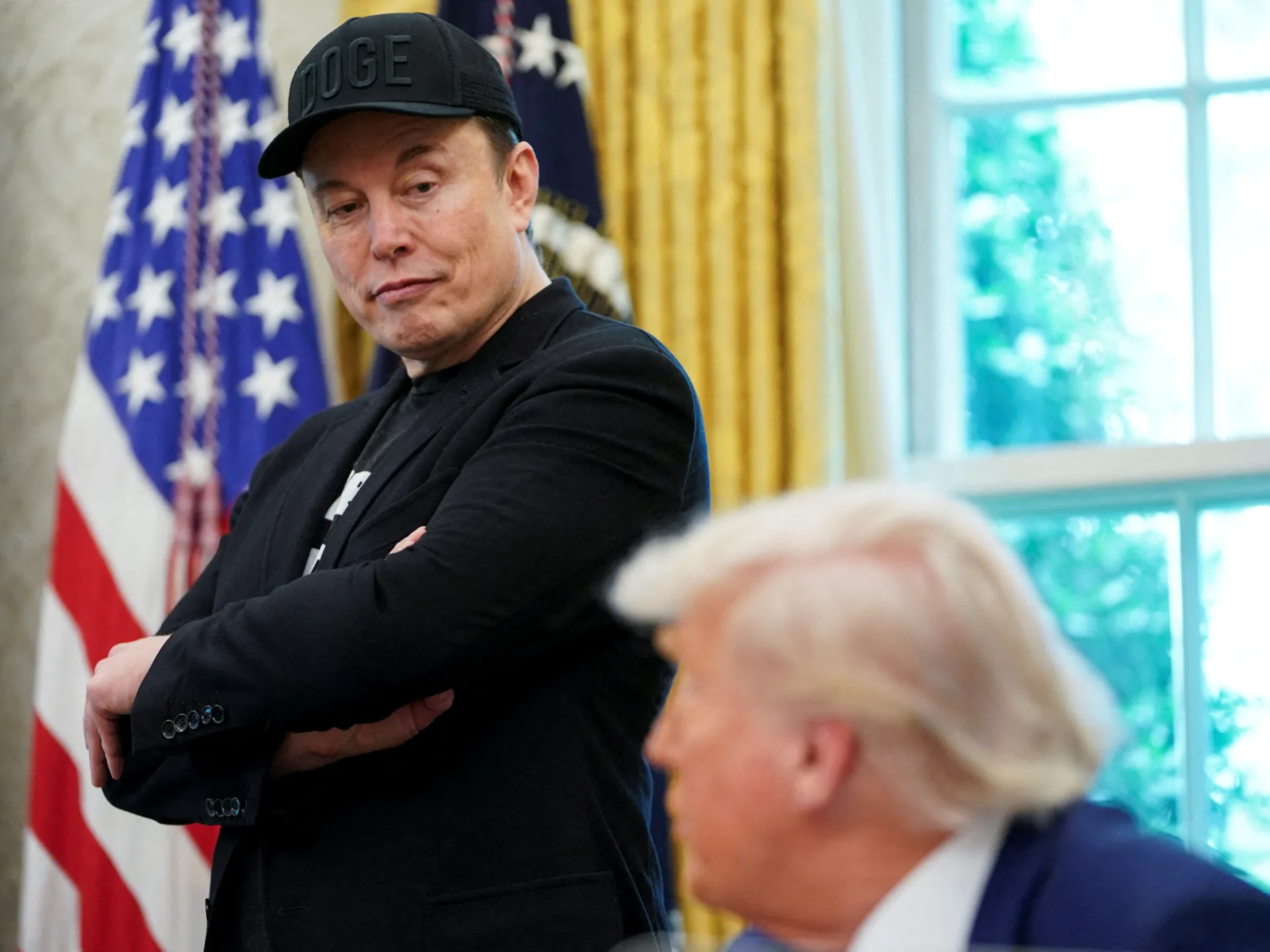
US Supreme Court agrees to hear watchdog case on Elon Musk’s DOGE records | Politics News
The Trump administration argues that DOGE is exempt from freedom of information requirements.
Published On 13 Oct 2026
The United States Supreme Court has agreed to hear arguments in a watchdog’s lawsuit seeking public records about trillionaire Elon Musk’s Department of Government Efficiency (DOGE).
The high court is intervening on Tuesday for a second time in Citizens for Responsibility and Ethics (CREW) in Washington’s case, which seeks access to DOGE records from its operations in the early days of US President Donald Trump’s second term. The Trump administration asked the court to hear the case.
Recommended Stories
list of 3 itemsend of list
Last year, the high court reined in a district court’s order for the government to produce DOGE-related records to CREW. The high court’s conservative majority concluded in June 2025 that US District Judge Christopher Cooper ruled too broadly in ordering documents to be turned over to the group.
CREW claims DOGE is a federal agency and therefore is subject to the Freedom of Information Act (FOIA).
The Trump administration argues that DOGE is exempt from FOIA’s requirements as a presidential advisory body.
Cooper ruled in CREW’s favour and ordered expedited processing of the group’s records request. An appeals court panel also sided with CREW.
The Trump administration claims the panel ignored the Supreme Court’s direction to consider separation-of-powers concerns and intruded on the “autonomy and confidentiality” of presidential advisers.
“Subjecting advisory bodies to intrusive discovery triggers the very concerns that Congress sought to avoid by excluding presidential advisory bodies from FOIA’s reach,” US Department of Justice lawyers wrote.
The administration also says the appeals court impermissibly authorised the plaintiffs to take a sworn deposition of DOGE acting administrator Amy Gleason.
CREW says the appeals court fully complied with the Supreme Court’s previous order. The group also asserts that the public has a right to know how DOGE helped the administration carry out a sweeping overhaul of government operations in 2025.
“Undisputed facts in the public record — including the President’s statements — confirmed that (DOGE) was wielding enormous independent authority across the federal government,” CREW lawyers wrote.
In a statement Tuesday, CREW lawyer Nikhel Sus said the lower courts have uniformly ruled that it is entitled to records that could help the court determine whether DOGE wields the type of authority that would make it subject to the Freedom of Information Act.
“We will continue to pursue transparency for the American people, who deserve to know the details of the Trump Administration’s efforts to unilaterally remake the federal government,” Sus said in the statement.
DOGE said it had slashed tens of billions of dollars in expenditures, but its claims were difficult for outside financial experts to verify.
Federal auditors found that some of DOGE’s reported savings across contract, grant and lease terminations were incorrect, lacked supporting evidence or included terminations that were already under way when DOGE was established, according to a report by the Government Accountability Office.

Specter Jet-Powered Drone Aims At Low Cost, Multi-Mission, Single Use
AEVEX Corp. has publicly shown its Specter jet-powered drone for the first time at the Association of the U.S. Army’s (AUSA) annual meeting in Washington, D.C., where TWZ is in attendance. The aircraft is the latest development from a company that has played a significant role in the U.S. military’s one-way attack drone efforts. Most notably, it built the secretive Phoenix Ghost family rushed to Ukraine in 2022.
AEVEX announced Specter in September, describing it as a high-speed, low-cost, jet-powered autonomous platform designed for high-risk operational environments. The aircraft is being developed around a modular architecture, with ground-launched and air-launched variants planned. Its interchangeable nose section is intended to accommodate different payloads, including kinetic warheads, electronic warfare equipment, intelligence, surveillance and reconnaissance (ISR) systems, and other future capabilities.

That flexibility is central to how AEVEX is pitching the aircraft. The company is aiming for an adaptable system that can be configured for different operational needs while remaining affordable enough to be used basically as a cruise missile in combat applications.
The aircraft’s external configuration features a prominent V-shaped lower fuselage, high-mounted, unswept trapezoidal wings, a v-tail and rear-mounted conformal engine intakes. Clearly, low observability was one design driver for Specter, with the goal of balancing survivability with low-cost likely factored in heavily. AEVEX has not publicly discussed Specter’s low-observable characteristics.
The company has also not disclosed key performance and technical details, including the aircraft’s range, payload capacity, communications architecture, terminal targeting methods or the extent of its autonomous capabilities.

“We’re really excited to kind of really up our stats on range and speed,” Craig Anders, an AEVEX representative, told TWZ at AUSA, describing Specter’s turbine engine. The aircraft is being designed to reach speeds in the sub-Mach range, he said.
Anders also elaborated on how Specter is intended to carry more than a conventional warhead. “This thing is going to have the ability to carry cameras and different types of non-kinetic effect payloads,” he said, describing it as a “multi-mission, multi-domain fighter.”
Despite that broader mission set, attrition remains a core part of the concept. Anders said the idea was for the aircraft to be attritable, with a relatively low price tag allowing commanders to send it farther into dangerous areas without putting more expensive capabilities at risk.
The distinction is important. Specter is not being presented simply as a disposable munition, nor as a high-end unmanned combat aircraft. Instead, AEVEX appears to be pursuing a middle ground: a jet-powered platform that can perform one-way attack missions but also support reconnaissance and provide other effects in high-threat areas, depending on its configuration. It is also meant to be built economically at scale.
AEVEX is developing Specter with Divergent, an engineering and manufacturing company known for its digital production processes and metal additive manufacturing. The partnership is intended to help make the aircraft easier to manufacture at scale while supporting changes to its design and configuration.
Anders said Divergent works with AEVEX engineers on the aircraft’s digital design and produces its fuselage. AEVEX is responsible for the internal systems, mission integration, flight characteristics and navigation science, he explained.
The manufacturing approach is a significant part of the program’s affordability ambitions. AEVEX says Divergent’s Digital Manufacturing and Production System (DAPS) is being used to support scalable production and manufacturability. However, the companies have not disclosed Specter’s projected unit cost or demonstrated that it can yet be produced at the volumes and prices the concept ultimately requires.

Introduction to DAPS™
AEVEX is also drawing on its CompassX autonomy architecture and experience delivering thousands of autonomous systems. The company says Specter’s open interfaces and software-defined capabilities are intended to allow the platform to evolve as operational requirements change, rather than being optimized around one fixed mission.
Specter remains in development, with its first flight planned for December 2026. Anders said the initial flight would be a basic test, with early test aircraft fitted with landing gear so they can be recovered and reused for work on flight characteristics and handling. It isn’t clear if a truly reusable gear-equipped operational version is eyed for the future. Regardless, further testing could include tuning the aircraft’s dive profile.
The planned initial configuration uses a ground launch assisted by a rocket, or rocket-assisted takeoff (RATO), system. An air-launched version is also on the roadmap, Anders said, with that capability expected to follow in the relatively near term.
AEVEX is pursuing several potential military applications. Anders identified the U.S. Army’s Family of Affordable Mass Missiles (FAMM) effort as a primary focus, while noting that the service has its own high-speed requirements. He also said the company is looking at opportunities associated with Rapid Dragon and other programs.
Those comments indicate the range of applications AEVEX hopes Specter could address, not that the aircraft has been selected for any of them. Its performance, cost and ability to meet specific requirements will need to be demonstrated as development and testing progress.
Specter’s intended combination of jet propulsion, attritability and modular payloads could offer an enticing balance. It is not being presented as a higher-end ‘exquisite’ cruise missile, but neither is it limited to carrying a single payload type. The challenge for AEVEX will be delivering enough speed, range and mission flexibility to make the aircraft useful across multiple roles without pushing its price beyond what operators can justify procuring it in large numbers.
A stealthy weapon that is jet-powered like Specter, one that can be configured for various types of one-way missions, could bridge the gap between far more advanced and costly autonomous aircraft and cruise missiles and lower-end one-way attack drones. There have been other concepts that are similar to Specter, we are living in a low-cost cruise missile explosion of sorts, but the company’s unique pedigree of innovation and fast fielding in the one-way attack munition space could give Specter additional credence.
Contact the author: thomas@thewarzone.com

Emmerdale confirms Lawrence Robb’s exit storyline and Robert’s to blame
Strictly Come Dancing star Lawrence Robb has filmed his temporary exit as Mack Boyd on the ITV soap, and now scenes have confirmed how he is leaving as he takes a break

Mack in Emmerdale is leaving the village very soon, and now we know his exit plot(Image: ITV)
Mack in Emmerdale is leaving the village very soon, and now we know his exit plot.
Actor Lawrence Robb is currently taking part in Strictly Come Dancing, and so he’s taking some time out from filming. He will be offscreen for a few months, and now the latest episode has explained what happens to Mack.
It’s all Robert Sugden’s decision for him to leave the village, and not everyone is happy about it. It’s a pretty random exit, but it appears farm owner Robert is paying for Mack to go on a course in Germany.
In the episode, Robert told his partner Aaron Dingle and Mack’s nephew Matty Barton that he was sending Mack on the course the next day. They were shocked as he said he was sending him to Germany for the course to benefit the farm.
Later in the episode, Mack sat down with his wife Charity Dingle and repeated the news to her. Charity said Robert could “get stuffed”, and told her husband not to go, amid her drama with her prison ordeal.
Mack explained it would be good for him and the farm, and would help him in the future. He was keen to go and Charity reluctantly accepted it.
She then confessed she would be happy to visit him in Germany while he was away, with her son Noah Dingle leaving there. Mack explained it would be for a few months and he would then return.
So that’s it, this is exit confirmation for Mack. This confirms exactly why and how he is leaving, paving the way for actor Lawrence to film BBC’s Strictly.
Recently, the Mirror caught up with Lawrence’s co-stars Jeff Hordley and Katie Hill about Lawrence taking on the series. Speaking about their co-star, Katie shared: “I think he was brilliant.
“I think everyone will love him. He’s such a lovable person. He’s so positive. He’ll give it his best go. I think he’s going to be incredible.” Jeff added: “He’s a joy. I share a dressing room with him, and he’s just such a lovely man.
“We all love him and we all want him to do brilliantly, and I think he will because he’s a really dedicated human being. He’ll give it 110 per cent. He’s done musical theatre so he’ll know how to shake those hips.”
When asked if they were backing Lawrence, Jeff quipped: “If it goes on a personality contest, Lawrence will win hands down. I don’t know about the dancing, but we’ll see.”
Emmerdale airs weeknights at 8pm on ITV1 and ITVX. * Follow Mirror Celebs and TV on TikTok , Snapchat , Instagram , Twitter , Facebook , YouTube and Threads .

Burbank airport’s new $1.3-billion terminal opens — bigger and sleeker than ever
After 33 months of construction and $1.3 billion in spending, the Hollywood Burbank Airport’s new terminal opened on Tuesday morning, with a medley of arrivals and departures in the minutes after 7 a.m.
Instead of the snug, historic facility whose Spanish Colonial Revival style dated to 1930, travelers found themselves in a sleek terminal at Winona Avenue and Hollywood Way, distinguished by high ceilings, contemporary art, twinkling terrazzo floors, abundant charging stations and landscaping full of cactus and succulents, along with a few “wet paint” signs. Passengers gawked at mirrored grid artwork by Glenn Kaino overhead.

Passengers at Pete’s Pub inside the new Hollywood Burbank Airport terminal. None of the 13 food concessions are fully open.
(Myung J. Chun/Los Angeles Times)
“It was weird,” said Tanya Radke, 25, of Van Nuys, who was headed to Kansas City and caught off-guard by the terminal switch. “It was not what I thought was going to happen today for me.”
But looking around, the passenger called the new space a big upgrade. “It reminds me a lot of the Kansas City airport,” Radke said. “It was well overdue.”
The day’s schedule called for about 90 departures and arrivals by eight airlines, roughly the same schedule as in the previous buildings. The new terminal also has the same two runways and same number of gates — 14 — as the airport’s previous two-terminal alignment. And passengers still often board planes from the front and back, using outdoor steps from the tarmac, rather than enclosed tunnels. That practice is something travelers have long praised for its informality and efficiency.
But the new building does bring many changes. It measures about 50% larger than the two old terminals combined — about 355,000 square feet — with higher ceilings and a pair of illuminated steel sculptures by Cliff Garten flanking the main entrance.
The first departure was Alaska Flight 3401 to Santa Rosa at 7:03 a.m. with 33 passengers aboard. The first arrival: Southwest Flight 189 from Las Vegas, which landed at 7:16 a.m. with 30 passengers aboard.

The new terminal opened after 33 months of construction and $1.3 billion in spending.
(Myung J. Chun/Los Angeles Times)
“The taxi off was a little different. Instead of turning right, you turn left,” said Southwest Airlines pilot Mike Petros, who arrived at 7:31 a.m. with a planeload of passengers from Sacramento. At the start of the flight, Petros said, “We told them that we would be flying to a new terminal, so if they had anybody picking them up, let them know.”
Still, many were surprised. Airport management deployed several staffers to redirect confused travelers from the old terminals (now idle) to the new one. Anthony Bailey, 29, said he learned of the switch from an Uber driver on his way to the airport.
“So far, I’m liking it,” Bailey said of the new terminal, standing near gate 13 before catching a flight to Las Vegas. “Nice and clean. The TSA line was pretty smooth.”
While most of the six retail stores were open on Tuesday, none of the terminal’s 13 food concessions were fully operating. Two eateries were offering grab-and-go options, and airport spokesperson Mike Christensen said more options would arrive later in the day and week.

Katelyn Bailey and travel companion Pigeon check in for a flight to the Bay Area.
(Myung J. Chun / Los Angeles Times)
When the new terminal concessions open, dining options will include Guy Fieri’s Flavor Town, Spring Chicken, Diane’s Farm Table and Italian Market, Jones Coffee, Perry’s Joint, Poquito Mas, West Coast Smash Burgers, Massis Kabob, Starbucks, Border Grill, Jet Tila’s Asian Table, Santa Canela bakery and a bar, Pete’s Pub, with picture-window views of the runways and Verdugo Mountains.
Many travelers, including William Langlois and Annie Cerillo of Tampa, noted the shortage of eating options on Tuesday. “It’s horrible, there’s no restaurants and not enough security stations,” said Langlois, who had gone to the old terminal first and was redirected. Before this change, “this was the easiest airport,” said Cerillo.
In the new terminal, airport officials say, the walk from the entrance to the farthest gate is 1,285 feet, down from 1,600 feet now, with wider corridors and sidewalks and access to power plugs for devices from every seat. (Its many charging stations are now mostly USB-C ports, not USB.) The new terminal includes eight TSA lines, versus five in the old set-up. Baggage claim carousels have moved from outdoors to indoors.
The airport’s new parking structure includes about 2,000 spots and 310 charging ports for electric vehicles. (The airport’s total number of parking spaces is 6,637, the same as before.)

Alaska Airlines Flight 3401 to Santa Rosa was the first flight to depart from the new terminal at Hollywood Burbank Airport on Tuesday.
(Myung J. Chun/Los Angeles Times)
As it did before, the airport supplies shuttle bus service between the new terminal and Burbank Airport-South Train Station (which connects with Amtrak’s Pacific Surfliner) and the Burbank Airport-North Station at San Fernando Road and Hollywood Way.
Among many preparations for the day, Burbank airport officials staged a “passenger simulation trial” on Sept. 19, inviting 1,500 volunteers to behave like passengers in the new building, giving dozens of airport workers staffers, including TSA staffers and airline gate agents, a chance to prepare for Tuesday.
The airport, second busiest in L.A. County, was built in 1930 and is run by the Burbank-Glendale-Pasadena Airport Authority. For decades it has been favored by many local travelers as a simpler, faster, quainter alternative to Los Angeles International Airport. The Burbank airport’s site in the San Fernando Valley, however, has often put its leaders at odds with residents of surrounding suburban neighborhoods. Unlike LAX, which has no flight curfew, the Burbank airport has limited operating hours — 7 a.m. to 10 p.m.

Passengers disembark Southwest Flight 189 from Las Vegas just before 7:30 a.m. This was the first arrival into the new terminal at Hollywood Burbank Airport.
(Myung J. Chun / Los Angeles Times)
Before this week’s move, the aged Burbank facility didn’t meet current state seismic standards or Federal Aviation Administration design standards, which prompted repeated safety warnings. Airport officials said the new design also increases the distance between the terminal and the nearest runway, formerly as little as 257 feet, to about 880 feet — a change that brings the airport into compliance with FAA standards.
Voters approved the Burbank airport terminal replacement project in 2016. Construction began in 2024. The airport reported about 6.2 million arriving and departing passengers in 2025, flying to and from about 30 nonstop destinations.
“It’s a beautiful building, but buildings aren’t anything without people who fill them with dedication and service,” said Tyron Hampton, president of the Burbank-Glendale Airport Authority and City Councilmember in Pasadena. He predicted that the new facility would attract not only new passengers but new businesses to the commercial corridor along Burbank’s Winona Avenue.
As Burbank unveils its new terminal, the opening of LAX’s most high-profile project — the SkyLink automated people mover (a 2.25-mile electric train route linking terminals to rail service and rental cars) has been delayed by technical and legal issues until Jan. 6 at the earliest.
“I don’t like to compare,” said Hampton when asked about LAX. “We have 14 gates. LAX has 161.”

Wanna be an Imagineer? Advice from the head of USC’s theme park program
Steve Tatham always wanted to work in theme parks. And growing up in Anaheim, some sort of career associated with Disneyland seemed readily attainable.
“Disneyland was the local business,” Tatham says. “It’s where everyone ended up when they were students and working part-time, and I was no exception.”
While in college, he got a job as a Jungle Cruise skipper, and since then, he has never looked back. Over the course of his career, Tatham has spent nearly 30 years with the Walt Disney Co., many of them in theme park design with Imagineering. More recently, Tatham worked at Universal Creative for more than a decade and was the executive creative director of Epic Universe, the company’s impressive new Florida park.
Today, Tatham is turning his focus toward the next generation of theme park designers, having recently been tapped by USC to lead the Bachelor of Fine Arts in Themed Entertainment program, which is offered out of the cinema school. The four-year program is designed to prep students for a myriad of fields — modern theme park design firms work not only on new attractions but readily contribute to museums, zoos, immersive marketing events and more.
And yet theme park designer can feel like an elusive dream job, one based on connections, mentoring or even just luck. Part of that myth was shaped by the initial Disney Imagineers, many of whom were simply making up the job as they went along. As a longtime admirer of Tatham’s work, I recently chatted with the newly crowned academic leader on how one should prep for a career in the field, hoping to demystify it just a little bit.

Steve Tatham, photographed in Florida’s Epic Universe, is leading USC’s undergraduate program in theme park design.
(Steve Tatham)
You don’t need to major in themed entertainment to work in theme parks
There aren’t too many universities that offer a theme park design degree. (Along with USC, Purdue offers a themed entertainment design major and the Savannah College of Art and Design has one of the best-known and longest-running programs in the country.)
But Tatham notes that when he began his career in the industry, it generally wasn’t a field accounted for by universities. And many theme park designers I meet as a reporter, whether relatively new to the industry or veterans, created their own paths into the biz.
Tatham’s own background still provides a solid template for those students looking to enter themed entertainment design, as not everyone will have the means or the ability to attend a program such as USC’s. “I wrote my own major,” he says of his time as an undergrad at UC Berkeley, where he targeted theme parks as his career goal. He majored in film design but took courses that combined theater, architecture, environmental psychology and film studies. After graduating, Tatham went to UCLA for a masters in architecture.
Architecture was a career path pushed to Tatham by longtime scenic designer Henry May, who was his advisor at Berkeley. It was an early recognition that theme park design is an offshoot of urban design, requiring principles necessary in both stagecraft and real-world planning.
Think beyond theme parks
People are hungry for themed experiences. Global theme park attendance topped 246 million in 2024, a 2.5% increase, according to the Themed Entertainment Assn., which also charted a nearly 15% growth in attendance at the world’s top 20 museums, which are often a fertile industry for theme park designers. And that says nothing of the domestic trend of smaller, more locally-focused entertainment centers (think Netflix House or Meow Wolf).
It’s why Tatham tells his USC students to think beyond a Disney or Universal creation.
“If you look in the world out there, there’s marketing firms doing pop-up retail and pop-up dining, and they are doing immersive design in museum spaces,” Tatham says. “In addition to theme parks, there are opportunities within marketing and within architecture. Students who get this interdisciplinary training, which involves coding, architecture, design, exhibition work, landscape architecture and lighting, it’s a growing field.”

Steve Tatham once served as a tour guide on Universal Studios Hollywood’s behind-the-scenes tram tour.
(Genaro Molina / Los Angeles Times)
The best lessons come from observing guests
Long before Tatham was designing Epic Universe, he was working as a tour guide at Universal Studios Hollywood. As a film buff, he enjoyed the early-career job, but says one lesson from those days continues to stick with him.
“I would go on and on, because I love movie history, and I would be like, ‘Right here is where Jimmy Stewart worked, and Edith Head designed costumes,’” Tatham says. “They would politely listen, but then when ducks walked across, they would get excited and take pictures. People love things that are alive and immediate and happening now. People respond to what is immediate.”
The best theme park design is in conversation with guests. I think of Epic’s “How to Train Your Dragon”-inspired land and the bounty of movement found in the space via animatronic dragons (if you promise dragons, guests better see dragons!), or Disneyland’s New Orleans Square, where the curved, winding paths encourage constant discovery.
AI won’t replace great original ideas
Tatham is careful when speaking on the subject of artificial intelligence. He doesn’t want to dismiss its potential to be used as a development tool. And yet Tatham is direct when it comes to AI and creativity.
“I think there are a lot of challenges with AI. I think there are a lot of things that are scary,” he says. “But I think, ultimately, if it’s used as a tool, it can be useful to artists.”
But there are limits.
“AI is never going to come up with a great idea,” he says. “It’s just going to recombine and reconfigure and spit back to you ideas that others have had. So I think this is an opportunity for original thought to stand out even more than it has in the past.”

Jennifer Bascom of Disneyland, gives a telegram to Disneyland guest Keith Kocienski of Fullerton while playing a live-action role-playing game in Frontierland called Legends of Frontierland back in 2014.
(Christina House / For The Times)
But the integration of smartphones remains a challenge
While Disney recently shuttered its Play Disney Parks mobile app, the park is experimenting with connectivity between the video game “Fortnite” and its attraction Millennium Falcon: Smugglers Run. Tatham cautions that any time a theme park invites someone to use a smartphone during their day at the park, designers are then pulling them away from the curated experience.
“The problem is when you’re in Universal or Disneyland, you’re now competing with all the opportunities that people have to explore their own entertainment,” Tatham says. “Are they going to be on Instagram or playing Solitaire online? So now you’re competing with that.”
And yet Tatham thinks there are lessons to be learned from the interactive world, as long as designers focus on real-world play. Tatham, after all, worked on what was once of my favorite Disneyland projects, the great but short-lived Legends of Frontierland. Some of those who contributed to it brought it to Knott’s Berry Farm, where it has been fine-tuned into the terrific Ghost Town Alive! The latter is a rarity in the theme park space.
Yes, it’s possible to make a decent salary
So how much can one expect to make? This isn’t an easy question to answer, as there’s only so many slots at Walt Disney Imagineering and Universal Creative, and the theme park design industry encompasses so much more.
There are independent themed entertainment firms to marketing outposts to studios to museums to architecture companies to theaters and more. And salaries can vary greatly between the public or private sector, as well as entry level versus senior positions. Even recruiting sites have a broad range, from around $50,000 to above $200,000.
The good news, says Tatham, is there is a high ceiling. Additionally, that there is a breadth of industries to work in should help any potential graduates. “There are many different job descriptions with different salaries in the themed entertainment field,” Tatham says.
And yet he knows it’s a concern of parents.
“I want students and parents to know that it is possible to make a solid steady income in the arts and that they shouldn’t focus on a backup plan but rather on putting together a killer portfolio because there is work for those who have honed their skills,” he says. “I would tell them that they should be prepared to live in Orlando, Fla., or Glendale, Calif., and be open to international assignments. Top directors can make in excess of $250,000 a year, but they should be prepared for starting salaries similar to architecture, graphic design or similar creative fields.”

A Disneyland cast member playing the role of Alice in Wonderland interacts with guests.
(Christina House / Los Angeles Times)
Remember why theme parks still matter
Anytime I have an opportunity to chat with someone with Tatham’s experience I want to hear their take on one question in particular, and that’s why they love theme parks and why they believe the spaces resonate with so many people. As someone charged with creating passion among the next generation of theme park designers, I was especially interested in Tatham’s response.
“If you go to a theme park, there is something for every demographic,” he says. “There are things for kids. There are things for grandparents. There are things for everyone in between. People can enjoy those times together, which was the original intent of Walt Disney. He was looking for a place while in Griffith Park where he could go do things with his daughters. He created it because it did not exist.”
For Tatham, it’s about the memories.
“If you ask people about their experience in theme parks, they will remember in great detail which parks they went to and who they were with,” he continues. “Ask them about going to the movies, they might say, ‘Sure, I went with my family, but can’t tell you what movies and who I was with.’ But they will remember those moments with theme parks. It’s a great bonding experience. That’s the reason they exist and the reason I love to create them.”
This week in SoCal theme parks

Plans are underway to refurbish the Griffith Park merry-go-round.
(Christina House / Los Angeles Times)
- The Griffith Park carousel will spin again. Assessments are underway to see what it will cost to once again get the Griffith Park merry-go-round spinning. Theme park fans best know it as the site that is said to have inspired Walt Disney to dream up what would become the Disneyland Resort, and it has been shuttered since 2022. Curiously, there’s also a Disney connection with the carousel today, as some of those who work at Walt Disney Imagineering are volunteering their time and efforts to restore this treasure in Griffith Park. Read my story here.
- Six Flags Magic Mountain shuts down second coaster. Six Flags is closing several rides across the U.S. and Canada — including the Goliath roller coaster at Six Flags Magic Mountain in Valencia — after a man fell to his death from a roller coaster at one of its parks in Georgia. Park officials said Tuesday that the closures were out of an abundance of caution and were temporary. Times writers Hailey Branson-Potts and Fedor Zarkhin have more on this story.
- Merry Minions. Universal Studios Hollywood has unveiled its slate of holiday of programming, and returning this year are its popular “Grinchmas” offerings, including the 65-foot winding, drooping, Dr. Seuss-inspired Christmas tree. There will be meet-and-greets, including a reading of “How the Grinch Stole Christmas,” as well as holiday carolers and ornament decorating. New this year will be holiday festivities in the park’s kid-focused Minion Land, complete with Minions in holiday attire. Super Nintendo World, Wizarding World of Harry Potter and other areas will also be dressed for the season, beginning Nov. 21 and lasting through Jan. 3.
- A heads-up for ‘Cars’ fans. It’s the 20th anniversary of the “Cars” franchise, and those with a special affinity for the series will want to find their way to Disneyland’s Pixar Place Hotel and park themselves on the hotel’s second floor art gallery. That’s where the hotel is hosting an exhibit honoring the film with drawings, paintings, sculptures and behind-the-scenes footage that document how Radiator Springs Racers was brought to life. And before you go, read my story on how Route 66 inspired the film and Cars Land.
- Step into the world of ‘Dune.’ Tickets are now on sale for an immersive “Dune” exhibition in downtown L.A. that promises spectacle, as well as a bit of mystery. Step around, and potentially inside, awe-inspiring vehicles from the film, or come face-to-face with the Bene Gesserit, a group of priestesses who possess, among other things, the ability to bend the will of others. “Dune: The Experience” opens Nov. 20 and and is currently set to run through Dec. 20, although an extension is likely. Standard tickets start at $42 but there are various ticket packages available.
Ride Report

The dinosaurs on the Disneyland Railroad.
(Todd Martens / Los Angeles Times)
It’s always a good idea to hop on a Disneyland attraction that has been recently refurbished. It’s generally a chance to see the ride in tip-top shape. And so I was eager to get on the Disneyland Railroad on a recent trip to the park, as the dinos in the Primeval World world section of the attraction had recently been hidden behind illustrated tarps. Good news, as the dinosaurs are looking as sharp as they ever have. No real changes were made to the figures, but they’re all moving as they should, be it munching on grass, rattling out of an egg or getting ready for battle.
The theatrical lighting overall feels a little brighter, and the few digital effects — a volcano erupting in the background, for instance — are all in working order and bring an added sense of dimension to the diorama scenes. Be sure to add it to your day. The Disneyland Railroad is also a fine reminder to slow down during your Disneyland visit.
Tell us your stories. Ask us your questions.
Have a theme park tale to share? Whether it was a good day or less-than-perfect day, I would love to hear about it. Have a question? A tip? A fun photo from the parks to share? Email me at todd.martens@latimes.com. I may feature your note in an upcoming newsletter.
Ride on,
Todd Martens
P.S.

What is “Eggs in Space”?
(Todd Martens / Los Angeles Times)
A cinematic mystery is brewing, one that seemingly has connections to the local immersive entertainment community. What, for instance, is “Eggs in Space”? A recent sci-fi event at indie nonprofit movie theater and store Vidiots ended with the beginnings of a puzzle.
The screening appeared to be interrupted by a film that was taking control of the projectors. The film? “Eggs in Space.” As an abstract image of an egg appeared on screen, performers began walking toward the front of the theater in a transfixed, cult-like fashion.
There is, of course, no record of a film titled “Eggs in Space,” although there is a website dedicated to its disappearance. So dig in. A new alternate reality game just dropped. I have a hunch you’ll want to know where it leads.
—
This newsletter is free thanks to the support of L.A. Times subscribers. If you’re not yet a subscriber, explore subscription packages to unlock unlimited digital access and support award-winning local reporting.
Was this newsletter forwarded to you? Sign up here to get it in your inbox.
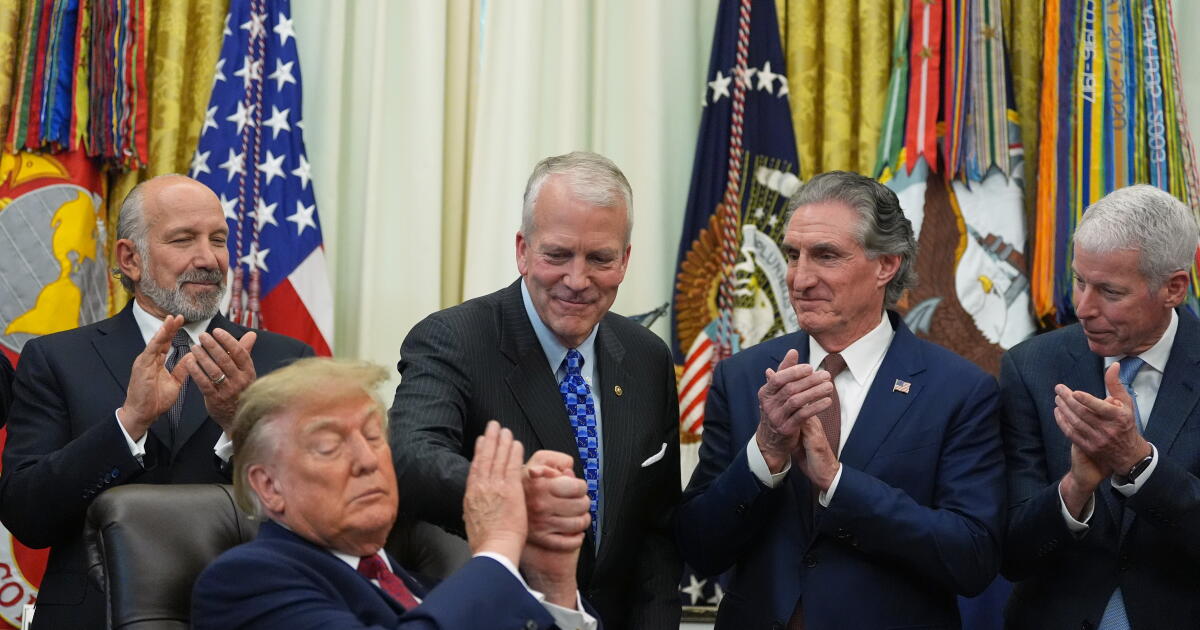
Trump is heading all the way to Alaska in a sign of just how close its Senate race may be
ANCHORAGE, Alaska — It’s a long way from Washington, has a small population and hasn’t backed a Democrat for Senate in nearly 20 years.
Yet President Trump on Tuesday will devote a big chunk of his dwindling time ahead of crucial midterm elections to head all the way to Alaska — attempting to bolster a Republican incumbent senator in another sign of GOP fears about retaining control of Congress after Election Day on Nov. 3.
Trump is headlining a rally for Sen. Dan Sullivan in Wasilla, about 45 miles north of Anchorage — famous for being the hometown of former Republican vice presidential nominee Sarah Palin and the headquarters of the Iditarod sled dog race across the state.
Trump’s stop is part of a western swing also taking him to rallies in Arizona and Montana on Wednesday.
“I’m right now going to Alaska to try and help Dan Sullivan. That’s a long way away,” Trump told reporters as he left the White House for the trip on Tuesday. “I would only do it if I thought he was good. And he’s very good. And so, I’m going to Alaska to help Dan Sullivan, and then I’m stopping in numerous places.”
Democrats last won a Senate seat in Alaska in 2008, and the state hasn’t elected a governor from that party since 1998. The only time Alaska didn’t vote Republican for president was during Lyndon B. Johnson’s landslide 1964 reelection.
Yet high gasoline prices from the Iran war and persistently elevated inflation have damaged Trump’s approval ratings enough to leave Democrats dreaming of Alaska upsets.
Trump and Vance have been trying to boost Sullivan repeatedly
Seeking his third Senate term, Sullivan faces Democrat Mary Peltola, a former congresswoman running to put “Alaska First,” emphasizing cost-of-living issues.
Alaska pollster Ivan Moore said he’s seen a decline in Trump’s support statewide that mirrors the president’s falling approval ratings nationally — meaning the Senate race may be decided by Trump 2024 voters who are now unsure they still back him.
“The visit is certainly appropriate. Whether the visit will be effective or not is another matter,” said Moore, who said when he first heard that Trump would visit Alaska, he didn’t believe it would actually happen.
The Trump administration has prioritized the opening of more of Alaska to oil and gas drilling. Vice President JD Vance already campaigned in Fairbanks for Sullivan.
The senator also recently joined Trump in the Oval Office where the president announced a $54 billion investment by South Korea’s government into an Alaska natural gas project. That’s despite South Korea saying the deal, and its total value, haven’t been finalized.
Still, Trump trekking four time zones west to get to Sullivan’s home turf — an unusually long trip so close to the midterms — is his strongest show of support.
Trump last campaigned in Alaska to try to defeat a fellow Republican
Alaska is home to around 740,000 people, making it slightly less populous than Denver. It ranks 48th out of 50 states in population, smaller than all but Vermont and Wyoming.
Trump nonetheless headlined a 2022 rally in Anchorage opposing Republican Alaska Sen. Lisa Murkowski after she voted to convict him on a charge of incitement of insurrection during his second impeachment trial, following the attack on the U.S. Capitol by a mob of his supporters on Jan. 6, 2021.
Trump endorsed Kelly Tshibaka, who challenged Murkowski that year, but that didn’t stop incumbent Murkowski from winning reelection.
This year, there are two Dan Sullivans on the ballot
Trump has complained about Alaska’s unique elections system. The state has open primaries, in which the four top vote-getters — regardless of party affiliation — advance to the general election, which uses ranked choice voting.
That’s led to a scenario where there also will be another Dan Sullivan on the ballot on Nov. 3: retired teacher Dan J. Sullivan, whom Trump and other allies of Sen. Sullivan have called a sham candidate. Dan J. Sullivan has denied this.
At his rally, Trump also plans to stump for Republican Rep. Nick Begich. Begich is facing a competitive challenge from Bill Hill, an independent.
Alaska has a history of rewarding candidates with an independent streak — something Vance acknowledged during his trip to Fairbanks last week. “In very deep red years, Alaska is competitive. In very deep blue years, Alaska is still competitive,” Vance said. “I think it’s just a reality of the politics of the state.”
Independence has been hard to find in the Republican Party where Trump for years had total control. Some Republicans facing tough elections have begun tiptoeing away from Trump on key issues like Iran and tariffs, but not Sullivan, who has been vocal in supporting both.
In a post last week, Trump questioned why three Republicans were running against a Democrat for governor. “How stupid are we to do this?” he said on social media. This comes at the same time state Republican party leaders are urging voters to rank Republicans on the ballot and leave the Democrats blank.
“We want to be clear: we do not support ranked choice voting. It is a confusing, burdensome and costly voting scheme,” party leaders, including GOP chair Carmela Warfield, said in a statement Saturday. “That said, ranked choice voting is the system Alaska will use for the 2026 General Election, and we must work within it for this election to keep Alaska’s recent momentum going strong.”
Trump’s trade war with Canada may also be a factor
Trump has also triggered a trade war with Canada, which shares a 1,500-plus-mile border with Alaska and is among the state’s most important trading partners.
The U.S. banned nearly $1 billion worth of imports from its neighbor to the north — including alcoholic beverages, dairy products and motorcycles — after previously imposing 50% tariffs on about $20 billion in Canadian products. Canada has responded with reciprocal bans and its own import levies, and the back-and-forth could raise prices for Alaska consumers.
Making Canada an enemy of sorts is “discomforting” for many Alaskans, said pollster Moore.
“We associate, I think, probably more closely with the Canadians — more than a lot of the Lower 48,” he said.
Weissert and Bohrer write for the Associated Press. Weissert reported from Washington. AP reporter Michelle L. Price contributed to this report.

Paris St-Germain boss Luis Enrique hopes Man City will avoid sanctions
Paris St-Germain boss Luis Enrique says he was surprised to learn Manchester City had been found guilty of breaching Premier League financial rules and he hopes the club can avoid sanctions.
City host European champions PSG in the Champions League on Wednesday (20:00 BST) – their first home match since being found guilty of the majority of 115 charges.
“There is a lot of noise around Manchester City and there is often noise around big clubs,” said Enrique when asked about City’s guilty verdict at a news conference at Etihad Stadium on Tuesday.
“We have just have to to wait and see what the final decision will be. I hope everything works out well for Manchester City because I think what they have done on the pitch has been incredible over the last few years and they certainly deserved to win on the pitch all the trophies they have won.
“Now we have to wait to see what the authorities decide or the judge is going to say.”
An independent commission found City had broken rules over a nine-year period between 2009 and 2018 by creating “sham” contracts with commercial partners to secretly funnel more than £830m into their football operations.
City insist they are innocent and have appealed.
Luis Enrique added: “The first thing that you hear, it is a surprise, but we need to respect the process and wait for the final decision.
“The authorities are responsible for making these decisions. But speaking only about football, they deserved those trophies. I love their football. Beyond that, we have to wait for the decision.
“The trophies you win on the pitch remain on the pitch. They deserved to win that and I hope they can avoid the sanction. But we have to wait.”
Cholera cases surge in Yemen as conflict intensifies, WHO says | Humanitarian Crises News
Yemen has reported 8,034 suspected cases and 27 deaths this year, with a quarter of cases from the last four weeks.

Published On 13 Oct 2026
Suspected cholera cases in Yemen have tripled in the past three weeks, the World Health Organization (WHO) has warned, as civilians have fled renewed fighting and sought safety in unsanitary camps.
Ramped up combat, which has pushed more than 200,000 people to flee their homes, the WHO added in a report on Tuesday, driving suspected cases from 217 in the week of September 6-12 to 647 in the week of September 27 to October 3.
Recommended Stories
list of 3 itemsend of list
“Families fleeing conflict are now facing another threat from diseases that can be prevented and treated,” said Annette Heinzelmann, the UN agency’s emergency director for the region.
“Without urgent funding and unimpeded access to safe water, vaccination and essential health services, outbreaks could spread rapidly among already vulnerable communities.”
This year, the global health watchdog said, Yemen had reported 8,034 suspected cases and 27 deaths, with a quarter of the suspected cases occurring in the last four weeks.
Five governorates hosting large numbers of displaced people in the southwest – Abyan, Lahij, al-Dhalea, Taiz and Aden – account for 92 percent of reported cases, they reported. The disease has also reached remote displacement camps in Hadramout in the country’s east that are particularly difficult for medical teams to access.

Emergency response underfunded
Cholera has ebbed and flowed for years as the conflict in Yemen has continued. In 2024, the WHO warned that the country was facing the “highest burden” of a global cholera outbreak. In 2017, a wave of the disease infected hundreds of thousands and killed at least 2,000.
Yemen was already suffering one of the “world’s worst humanitarian crisis” and has seen an escalation of circumstances since fighting reignited between the Houthis – an armed group known as Ansar Allah (Arabic for Supporters of God), and the internationally recognised Yemeni government.
Cholera is an acute intestinal infection that spreads through food and water contaminated with the bacterium Vibrio cholerae, often from faeces. It causes severe diarrhoea, vomiting and muscle cramps.
Contracting the illness can be deadly when not treated with oral rehydration or antibiotics for more severe cases.
The Geneva-based WHO said it had only secured $3.78m of the $31m needed for its 90-day emergency response in Yemen.
The funding is intended to help expand disease surveillance in displacement sites, deploy rapid response teams, strengthen cholera treatment and improve infection prevention in health facilities and cholera treatment sites.

New White House press secretary Katie Zacharia holds first briefing | Donald Trump
Katie Zacharia has held her first briefing as White House press secretary after replacing Karoline Leavitt. A former Fox News and Newsmax commentator and Trump Media adviser, she announced that Washington had asked US ambassador to Greece Kimberly Guilfoyle to resign.
Published On 13 Oct 2026

Pussycat Dolls ‘drop’ hip hop legend Lil Kim from UK tour after missed gig and string of chaotic performances
PUSSYCAT Dolls have kicked rap star Lil’ Kim off their UK tour after a string of controversies.
The Lady Marmalade star, 52, won’t appear for the final night of the run at London’s O2 Arena later today, with the headline act fed-up of her unpredictable behaviour.


A source said: “Kim didn’t show up to their gig in Manchester on Saturday night, and it was all very last minute. It threw everything into chaos and a sign just went up at the last minute to say she wouldn’t be performing.
“As a result, she hasn’t been asked back for the closing night in London tonight, which was seen as the grand finale.
“Her not showing up in Manchester was really the final straw for team PCD, there had been a string of issues where she was challenging to work with.”
The Sun has contacted representatives for the Pussycat Dolls and Lil’ Kim.
READ MORE ON PUSSYCAT DOLLS


No official reason for Kim’s absence in Manchester was given, though some fans claimed she was ill.
However, others noticed she had shared social media videos of herself on her tour bus in the build-up to the gig where it looked she was playing video games.
One fan wrote on TikTok: “She was on the tour bus prepping for GTA 6.”
Another posted: “Omg we were there last night how bad is that, not even a comment on sorry she’s no show or anything, playing GTA in the trailer apparently, previous videos of her trying glad she didn’t show.”
Kim came under fire from baffled fans at a previous gig in Paris when a music video playing on the big screens behind her during her set appeared to be synced from her phone and private messages kept popping up before the feed was quickly pulled.
Kim, whose real name is Kimberly Denise Jones, shot to fame in 1994 after being discovered by late rap legend The Notorious B.I.G.
The larger than life star then invited Kim to join the Brooklyn-based rap group Junior M.A.F.I.A, before she launched her solo career with her double-platinum album Hard Core, which debuted at number 11 on the Billboard 200.
Grammy-winner Kim’s biggest hits in the UK are all collabs, including the 2001 number one ‘Lady Marmalade’, a cover commissioned for the Moulin Rouge soundtrack, and 2003 track ‘Can’t Hold Us Down’ with Christina Aguilera, which reached number six.

Katie Zacharia, Trump’s new White House press secretary, makes a brief appearance before reporters
WASHINGTON — Katie Zacharia, the new White House press secretary, faced reporters for the first time on Tuesday for a very brief turn at the lectern, taking a handful of questions before abruptly wrapping it up.
Zacharia, a conservative commentator who most recently worked for President Trump’s social media company, was named to the job on Friday, succeeding Karoline Leavitt, who left in August and is taking a job with Fox News Channel.
Zacharia told reporters her goal is to “amplify” what Trump is doing and that the president is “his own best spokesperson.”
She quickly proved that Tuesday, appearing for only 14 minutes and taking questions from just three outlets before telling reporters they could go ask the president their questions on the South Lawn of the White House as he prepared to leave for a campaign trip.
“In fact, I am going to end it because President Trump is heading out to Marine One for our historic trip to Alaska, and we can ask him all of the questions out there,” she said.
As Trump left the White House for his trip, he praised Zacharia’s performance to reporters.
“I thought she did excellent,” he said. “She did very good.”
Before taking the questions, Zacharia read slowly from an opening statement that began with a focus on Trump’s recent campaign rallies ahead of the midterm elections and his policies on energy, tariffs, immigration and more since he returned to office.
In naming Zacharia, who has a law degree from Pepperdine University, Trump described her as “a loyal and brilliant supporter, right from the beginning.” She briefly worked as a spokesperson for the Department of Homeland Security earlier this year and has been a commentator for Fox News and Newsmax.
She told reporters that she viewed her role as press secretary to be no different than the way she advocated for Trump while outside the government.
“I get to do what I was doing on the outside already, which was hoping to amplify, multiply and expand upon President Trump’s incredible agenda for the American people,” she said.
She also thanked Trump and said, “I have wanted to work for him for a very long time.”
She took her first question from Breitbart News, the right-wing outlet which has become more influential in the Trump era, and committed to keeping the “new media” rotation created under her predecessor to bring additional media outlets into news briefings and the White House press pool.
But Zacharia did make some big news: she said that Trump had asked for the resignation of Kimberly Guilfoyle, the U.S. ambassador to Greece, after a series of reports alleging she has engaged in improper and possibly illegal conduct before and during her tenure in Athens.
“She has been a wonderful asset to the team and we wish her well,” Zacharia said.
Price and Superville write for the Associated Press. AP writers Seung Min Kim, Josh Boak and Collin Binkley in Washington and Mike Catalini in Morrisville, Pa., contributed to this report.
Prep talk: Southern California has long history of sending officials to NFL, college
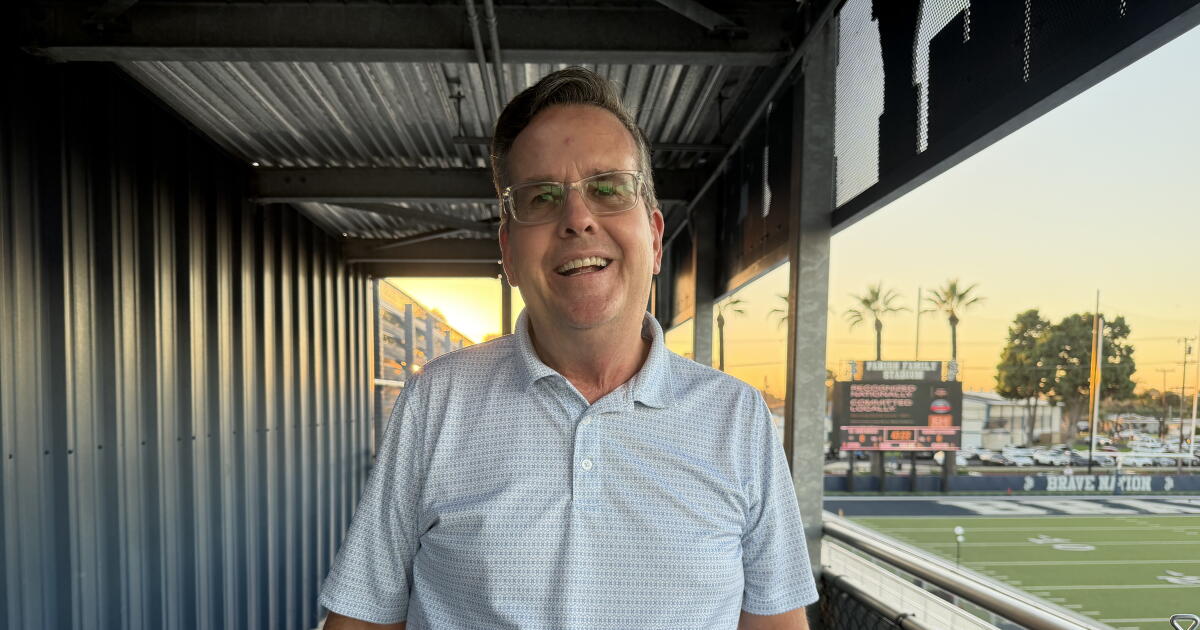
Jimmy Crowley, the son of former Southern Section commissioner Dean Crowley, had a Friday night off from officiating Big Sky Conference football games, so he went to St. John Bosco last week to evaluate the high school officials for a game against Orange Lutheran.
Southern California high school football games have been used as a proving ground for years and a first stop for officials wanting to move to college and the NFL.
It used to be that the commissioners in the City Section and Southern Section were high school or college officials. Jim Cheffers, a former City Section commissioner, used to officiate in the Pac-8. Now his son, Carl, is one of the top NFL referees and has worked three Super Bowls.
Tony Corrente, a former baseball coach at La Mirada who won a CIF title in 1988, made it to the NFL for 26 years as an official and was referee for Super Bowl XI. Former Hollywood High principal Jim Tunney was a long-time NFL referee.
While fans sometimes don’t appreciate officials, in Southern California high school football, you might be watching a future college or NFL referee.
This is a daily look at the positive happenings in high school sports. To submit any news, please email eric.sondheimer@latimes.com.
Majority in US say Trump prioritises personal wealth over all else: Poll | News
A majority of US adults say President Trump and his family have inappropriately profited from presidency.
Published On 13 Oct 2026
Most US adults believe President Donald Trump has placed his personal financial interests and those of his inner circle ahead of the country’s since returning to the White House in 2025, according to a new nationwide poll.
The poll, conducted by the Associated Press-NORC Center for Public Affairs Research and released on Tuesday, suggests that public perception of the Republican president leans heavily critical: Over half of surveyed adults view Trump’s second term as self-serving by investing in his own business and commercial pursuits “a lot”. Roughly one quarter believe he focuses on national interests, but only 11 percent feel Trump represents regular Americans. Fifty-five percent of Republicans surveyed said that Trump has prioritised his personal business interests “a lot” or “some”.
Recommended Stories
list of 3 itemsend of list
Half of the respondents report that Trump has placed zero priority on people “like them”.
As Trump’s family business pulls in record funds from new ventures helped by his policies, the poll results suggest that most US adults think growing his own finances has been the north star of Trump’s presidency, at least to some extent.
Trump’s June financial disclosure revealed massive post-election influxes of foreign and corporate capital into his business empire, stemming primarily from over $1bn in cryptocurrency ventures after he loosened regulation on the industry, as well as from international real estate.
During his first year as president, the Trump Organisation – Trump’s multinational family-owned enterprise dedicated to property development and global brand licensing – made eight real estate deals with authoritarian or one-party foreign states. Some speculate these countries were highly motivated to maintain favourable relations with the US to keep Trump happy on fronts like trade tariffs, military protection and private business dealings.
The administration, meanwhile, has repeatedly dismissed concerns over Trump’s business conflicts of interest, maintaining that he acts solely in the interest of Americans.
In late September, a separate Reuters/Ipsos poll found that Trump’s approval rating has fallen to 32 percent – the lowest of his political career – as his fellow Republicans soured on his handling of the cost of living crisis amid the deeply unpopular Iran war.
The dip in performance and approval ratings follows a high point in January 2025, when the newly inaugurated president boasted a 47 percent approval rating right after taking office.
According to the AP-NORC poll, which surveyed more than 2,000 US adults in late September, general sentiment around the administration’s ethical conduct is highly polarised, with far more citizens feeling that the president has neither prioritised the country as a whole nor everyday Americans.
Just over 40 percent of respondents believe Trump has “done something illegal” vis-a-vis allegations of personal enrichment while in office, with another 18 percent viewing his financial dealings as “unethical but not illegal”.
Opinions surrounding the lawfulness of the president’s financial practices split sharply along party lines, with Democrats overwhelmingly viewing the actions as illegal, compared with about three in 10 independents and about one in 10 Republicans, who largely see his behaviour as justified.

Drones Are Creating New Opportunities For The U.S. Army To Deceive Its Enemies
For more than a year, U.S. Army forces in Europe have been experimenting with new counter-drone capabilities, as well as tactics, techniques, and procedures to go with them, under the umbrella of what is dubbed Project Flytrap. In doing so, the service has also been gaining valuable new insights into how uncrewed systems can help shape the battlefield for friendly forces. It is particularly interesting to hear how the Army envisions using uncrewed platforms to open up new avenues for deceiving opponents.
Army Col. Timothy Price, head of the 2nd Cavalry Regiment, discussed the use of uncrewed platforms for deception and other operational concepts that have emerged in the course of Project Flytrap during a talk yesterday. Price’s remarks came at the Association of the U.S. Army’s (AUSA) main annual convention, at which TWZ is in attendance. 2nd Cavalry Regiment, based in Germany, is a brigade-sized mechanized formation equipped primarily with variants of the Stryker 8×8 light armored vehicle.

Price, by way of introduction, described modern battlefields full of uncrewed platforms in the air and on the ground as presenting new twists on long-standing problem sets. More specifically, he started by describing the typical approach to getting past a minefield or similar obstacle using an established framework called SOSRA, which stands for Suppress, Obscure, Secure, Reduce, Assault.
“If we were going to breach a mined wire obstacle, the first step of SOSRA – suppress – would be the utilization of indirect fires, to get the enemy’s head down, and direct fire systems, so they would not maneuver on you, fix them in place, and you can make a decision about how you’re going to approach the problem,” the 2nd Cavalry Regiment commander explained. “The next step would be to obscure it. In the historical sense, obscurations used is [sic] smoke, to mask your movement to the point of breach, so the enemy doesn’t know what you’re doing. And then, of course, secure would be to establish frontside security, [and] allow your engineers to come up within this local security bubble. They’ll utilize some kind of line charge to open the breach, reduce it – that’s the ‘R’ – and then bring on a follow-on force of assault through.”
“We were brought up around the old traditional mined wire obstacles that we had to physically breach. This is no different,” he added. “It’s just a multi-domain environment. So it’s built up of a combination of electronic warfare, kinetic UAS [uncrewed aerial systems] threats, and then counter-UAS threats, and then the network that holds [that all] together that forms the obstacle, which a unit has to maneuver through in order to maintain the offensive.”

Within this environment, Col. Price described the suppression step of SOSRA as having a different kind of probing dimension, particularly to feel out an enemy’s uncrewed capabilities, as well as those in the electromagnetic spectrum. He also noted that brigade-sized formations like this no longer necessarily have all the required tools organizationally to ‘service’ that aspect of the mission. This is in part because what has to be suppressed, including ground control stations for enemy drones, might now be miles behind the front line.
So, “what we have to do is allow the enemy to turn on their systems. How do I suppress them to allow division, or higher, to put an effect on them for suppression? It probably looks like flying small, attritable UAS [sic] into their security area” in the rear, he said. This, in turn, “cause[s] the enemy to do one of two things, either … go from passive to active with their EW [electronic warfare] systems, or to turn on radars to actually figure out what they’re seeing, which then forms the signature which higher headquarters can use to target.”
Though Col. Price did not describe it as such, there is already something of a deception aspect to this step in fooling enemy emitters to switch on and expose themselves. This, as a general tactic, is also hardly new. Stimulating air defenses, in particular, is a key part of operations to gather intelligence on those capabilities, as well as to suppress and destroy them. Once you have categorized and geolocated an emitter, it is a logical step to then target it. The ultimate goal, with data being passed along a more deeply networked kill chain, is for the time it takes for fires to be brought to bear to be almost instantaneous.

Regardless, deception comes far more into play in the obscure step, according to the 2nd Cavalry Regiment commander.
“Obscuration is different, as well. So instead of trying to hide behind smoke as we maneuver through it, what is the deception plan, right? How am I trying to show the enemy a signature that says I’m going to breach over here when I’m actually going to breach here, right?” he asked rhetorically. “So, that’s probably the implementation of UGVs [uncrewed ground vehicles] with some kind of decoy emitter on top of them to pull the enemy’s eyes, resources, and time to a point that allows me to focus my assets and resources on the point of breach.”
The use of uncrewed platforms as decoys is also not new, and even more complex concepts have emerged within the U.S. military in the past. Uncrewed systems have also been developed for military and other purposes over the years that are designed to mimic something else entirely, including for purposes of deception. This includes masquerading as birds and other animals.
Back in 2019, TWZ was the first to report in detail on a Navy effort to develop and field an entire networked, cooperative electronic warfare ecosystem, at that time referred to as the Netted Emulation of Multi-Element Signature against Integrated Sensors, or NEMESIS. This was also a drone-heavy cross-domain concept intended to make many types of sensors over vast areas believe they were ‘seeing’ the same false fleets of aircraft and/or ships, and deceive and confuse the enemy on a grand scale. This, in turn, represented a massive leap in electronic warfare capabilities.

There is also overlap here with reported sightings of what are now commonly called unidentified aerial phenomena (UAP), and that used to be called unidentified flying objects (UFO). As we have reported on repeatedly over the years, while some UAP sightings remain unexplained, many more have turned out to be drones. Adversaries have been using uncrewed capabilities for intelligence gathering and deception purposes against American interests at home and abroad, likely in part by exploiting UAP stigma for cover. We have talked in the past about how drones will be used in more and more exotic ways to confuse opponents.
When it comes to UGVs, specifically, 2nd Cavalry Regiment, as well as units elsewhere across the U.S. Army, have been experimenting with various designs in recent years. The service has been trying for years to expand its operational use of UGVs, in general, but has faced repeated setbacks.
“It’s also spectral camouflage. So how are we controlling our heat and thermal signatures on our vehicles and our people?” Price continued. “It’s basic soldier discipline issues. It’s how we use our radios. It’s where we’re talking, where we’re not. But that’s what obscuration looks like.”

As a reminder, Project Flytrap’s primary focus has been on counter-drone capabilities, which come into play heavily during the secure stage.
“There’s multi-layered assets on top of that to allow that convergence for our success at the point of breach. I’m going to focus on our corner, our part of the battle, right?” he said. “So, I’m looking at active and passive electronic warfare systems – that can either, one, find [threats], let me know that I’ve got some kind of system flying or operating against me and, then, if it’s an active system, take some kind of effect to maybe cut a downlink and disrupt that system – all the way down to the individual soldier with a shotgun.”
As mentioned, the ‘obstacle’ to be ‘reduced’ at the end of this is not necessarily something as simple as a minefield surrounded by barbed wire anymore. Now it could be enemy one-way-attack drone capabilities preventing holding up an advance. Col. Price, in turn, described friendly kamikaze drones as part of the equation for breaching past those threats. Decoys and deception have a continued role to play in this phase.
“This is where, at the brigade level, we introduce one-way attack munitions to try to destroy the C2 [command and control] network that the enemy is using to operate this reconnaissance/strike complex” that is standing in the way, he explained. “There’s layers to it, right? Like they’ve got a close side to this that’s the local part of this reconnaissance/strike complex. They’ve probably got a theater level that the Corps [the U.S. Army’s command echelon above divisions] and higher is trying to target as we are forcing people to turn on systems to communicate. But at the regiment level, I’m looking at one-way attack munitions, focused on C2 nodes, headquarters, and ground control stations that [sic] I can disrupt their ability to put lethal effects on me as we begin to open the breach.”
The U.S. Army is in the process of fielding a variety of weaponized drones, including loitering munitions and designs capable of releasing grenades and other small bomblets.

During a question-and-answer session that followed his remarks, Col. Price was asked about whether lessons learned and other observations from Ukraine, and specifically that country’s recent Operation Vivaldi counteroffensive, had contributed to this evolving framework.
“In terms of Vivaldi, I’m not an expert, so I’m not going to make any kind of estimations on how that worked or why,” he said in response. “But I will say, if you look at the focus of that operation, you can probably make the assumption that there was convergence of efforts across the different headquarters to enable success. So that’s how I would relate to the two.”
“In order to be successful for a multi-domain breach, the tactical level requires my higher headquarters to be part of that solution to enable me with resources and capabilities that I don’t have in here at the brigade level,” he continued. “I would imagine it’s very similar in the other operational comparisons.”
Though certainly true, in broad strokes, this response in some ways underscores how the U.S. Army continues to lag behind global trends in the use of uncrewed systems, as now typified by the ongoing war in Ukraine. Army leaders have been open about this continued reality in the past, despite efforts to try to reverse it.
“We’re behind. I’ll just be candid. I think we know we’re behind,” Army Lt. Gen. Charles Costanza said during a panel discussion at AUSA last year, in response to a direct question at the panel from our Howard Altman. Costanza was talking about both the employment of drones and counter-drone capabilities, and highlighted work being done then under Project Flytrap, as you can read more about here.

Costanza was head of V Corps, a key component of the U.S. Army presence in Europe, at the time. He was removed from that post abruptly in August for reasons that remain unclear, but were reportedly tied to disputes between top Army leadership and Secretary Pete Hegseth. Secretary of the Army Dan Driscoll resigned last month, amid reports of months of friction with Hegseth about various policies.
The Pentagon under Hegseth has launched a number of initiatives to accelerate the fielding of new uncrewed capabilities across the U.S. military, especially within smaller ground units. This now includes plans for a new Autonomous Warfare Command (AUTOWARCOM) unveiled last month.
For units like the 2nd Cavalry Regiment, new drone-centric concepts of operations are already taking shape. Beyond using them for surveillance and as one-way-attack munitions, there is also a clear focus emerging on employing expanding uncrewed capabilities to deceive opponents and prevent them from making the best use of their own resources.
Contact the author: joe@twz.com

A Place in the Sun’s presenter pays tribute to show guest after ‘tragic’ death
The A Place in the Sun presenter shared the sad news that the guest had died, months before the episode first aired.

Jasmine Harman shared the tragic news(Image: Channel 4)
A Place in the Sun presenter Jasmine Harman shared the tragic news that a guest on the show had died, just months before the episode aired.
The Channel 4 property programme returned with a repeat episode on Tuesday, 13 October, that had originally aired around the same time last year. It saw the presenter take couple Jackie and Delroy around Marbella in Spain, where they were looking for their dream holiday home.
Jackie and Delroy were hoping to buy their first home together, having met two years earlier on a dating site. They wanted to move to Spain permanently to start a whole new life together.
Reflecting on their relationship at the start of the episode, Jackie said: “We met and I think we knew fairly soon that there was something special.” Delroy meanwhile quipped: “Who else would you be with, I’m Prince Charming!” They had a budget of £600,000, telling Jasmine what they wanted to find somewhere with three bedrooms, sea views and their own pool.
At the end of their search, Jackie and Delroy revealed to Jasmine that they’d decided to make an offer on one of the properties they’d seen. “That’s fantastic news,” the presenter celebrated. The property was on the market for under £691,000, though Jackie and Delroy wanted to negotiate a lower price.
They explained: “The house is very tired, it needs a lot of updating. There’s no en-suite in the main bedroom, lots of flooring throughout the house to change, we have a kitchen to change, so we figure, about £605,000.”
Jasmine replied: “That’s over £85,000 off the asking price, which, as cash buyers, for a property of that level, you may stand a chance of getting something for £605,000.”
The presenter rung the vendor’s agent, putting forward the offer, while Delroy told her: “There’s only so much where I will go, with my developer head on, I know what needs to be done, so no way is my heart going to overrule my head.” However, unfortunately their first offer wasn’t accepted, with Delroy and Jackie going up to £625,000 and leaving that price on the table.
After filming, it was revealed that their second offer had been accepted, but Jasmine shared the heartbreaking news with viewers that Delroy had sadly died, just months before the episode originally aired.
After filming with the couple had ended, she said: “A couple of hours later, the agent called me back to say the vendor had decided to accept Jackie and Del’s offer of £625,000. However, sadly Delroy became ill shortly after returning to the UK. And they had to put the move to Spain on hold. Tragically, he passed away in April 2025. We send our deepest sympathies to Jackie and all their family.”
“What a sad ending,” one viewer wrote, as the repeat episode aired on Tuesday, 13 October. Another said: “Not expecting a heartbreaker today on #APlaceInTheSun.” “Well that was an unexpected and sad ending,” another echoed. Someone else commented: “RIP Delroy.”
Viewers also paid tribute on a post Jasmine had shared after Delroy’s death. She’d written on Instagram last year: “Tonight’s episode of A Place in the Sun was in remembrance of a very special person. I was so incredibly sad to hear the tragic news about Del’s passing. My heart goes out to Jacqui and all of Del’s loved ones. Jacqui you are so strong and he would be so proud of you.
“It’s another reminder; we never know what is around the corner. Live life to the full and cherish moments with your loved ones. RIP Del Delroy Alphonso Burke 17/10/1965 – 09/04/2025.”
Having watched the repeat episode, several viewers flooded to the comments. One wrote: “This was the saddest ending ever RIP big fella x.” Another said: “So sorry to hear that Del passed and that you didn’t get to live your lives in the sun. RIP Del.”
Someone else commented: “Just watched this, very sorry to hear this, he looked so well in the show.” Yet another said: “Just watched the episode (a year later) and wasn’t sure I heard it correctly at the end but unfortunately i did! RIP Del!”
A Place in the Sun is available to watch on Channel 4.

The ‘paradise’ Scottish island with seal beaches, historic castles and mountain view hotels

OUR new Spotlight On column gives you the lowdown on what to see, do and enjoy in your favourite holiday hotspots.
This week we are discovering the delights of Scotland‘s Isle of Arran with recommendations from Graham Omand, manager at the Lagg Distillery.
MUST SEE/DO
Graham says: “I have to mention a visit to Lagg Distillery, a place I’ve been calling home for the past six years. Not only is it a modern architectural masterpiece, it is the home of Lagg Single Malt.
“Along with multiple tours and tastings options, there’s also a shop full of bespoke items and gifts, and a cafe with views that stretch from Ailsa Craig to Northern Ireland.
“There’s no better place to fall in love with peated whisky and learn about the local rich distilling history.”
HIDDEN GEM
“It is impossible to visit the island without admiring its picturesque coastal villages,” says Graham.


“Enjoy a drink in Corrie while looking at seals or sunbathing on the beach.
“Or grab a bite to eat in Lamlash while staring at the majestic Holy Isle at sunset. Or go for a wander around Lochranza Castle spotting otters playing on the rocks and deer roaming the hills. Magical.”
BEST VIEW
Graham says: “Arran is a walker’s paradise. You could choose the classic Goatfell, the highest mountain we have on the island, or other famous walks like the one to King’s Cave, to Machrie Moor standing stones, the many Glens and more.
“Expect breathtaking panoramic views, wildlife encounters and unforgettable memories.”


RATED RESTAURANT
“There are so many restaurants, pop-up cafes, food vans and more that offer modern and classic dishes with local produce such as venison or seafood,” says Graham.
“The Mara Fish Bar & Deli in Corrie does amazing seafood platters with fantastic views to enjoy.
“There is also the Blackwater Bakehouse & The Bread Shed for fresh bread and croissants.
“The Corrie Hotel is also great for lunch and dinner. And don’t miss the chance for a scoop at Arran Ice Cream.”
BEST BAR
Of course, Graham recommends the Lagg Distillery for a tipple or two with tours and tastings from 10.30am to 4.30pm, Tuesdays to Sundays.
Also worth a visit is the Douglas Hotel, which Graham says has some of the best views of Goatfell mountain.
HOTEL PICK
Tucked away on the west coast of the island, the Kinloch Hotel has 22 rooms as well as self-catering apartments, many with stunning sea views.
The family owned property promises a peaceful retreat.
The restaurant offers hearty local cuisine including a seafood platter with local fish, Highland venison sausages as well as island treats such as Arran Dairies ice cream and Wooleys oat cakes.
After a day exploring, go for a relaxing dip in the indoor pool or enjoy a sauna. Rooms cost £135, based on two sharing. See kinloch-arran.com.

Supreme Court agrees to hear watchdog lawsuit seeking records on Elon Musk’s DOGE
WASHINGTON — The Supreme Court agreed Tuesday to hear arguments in a watchdog’s lawsuit seeking public records about trillionaire Elon Musk’s Department of Government Efficiency.
The high court is intervening for a second time in Citizens for Responsibility and Ethics in Washington’s case, which seeks access to DOGE records from its operations in the early days of President Trump’s second term. The Trump administration asked the court to hear the case.
Last year, the high court reined in a district court’s order for the government to produce DOGE-related records to CREW. The high court’s conservative majority concluded in June 2025 that U.S. District Judge Christopher Cooper ruled too broadly in ordering documents to be turned over to the group.
CREW claims DOGE is a federal agency and therefore is subject to the Freedom of Information Act.
The Trump administration argues that DOGE is exempt from FOIA’s requirements as a presidential advisory body.
Cooper ruled in CREW’s favor and ordered expedited processing of the group’s records request. An appeals court panel also sided with CREW.
The Trump administration claims the panel ignored the Supreme Court’s direction to consider separation-of-powers concerns and intruded on the “autonomy and confidentiality” of presidential advisers.
“Subjecting advisory bodies to intrusive discovery triggers the very concerns that Congress sought to avoid by excluding presidential advisory bodies from FOIA’s reach,” Justice Department attorneys wrote.
The administration also says the appeals court impermissibly authorized the plaintiffs to take a sworn deposition of DOGE acting administrator Amy Gleason.
CREW says the appeals court fully complied with the Supreme Court’s previous order. The group also asserts that the public has a right to know how DOGE helped the administration carry out a sweeping overhaul of government operations in 2025.
“Undisputed facts in the public record — including the President’s statements — confirmed that (DOGE) was wielding enormous independent authority across the federal government,” its attorneys wrote.
Kunzelman writes for the Associated Press.

Suspension looms over Rams star Alaric Jackson after postgame punch
Alaric Jackson has a history of violent outbursts. Still, it was surprising to see the Rams star offensive tackle punch Buffalo Bills linebacker Bradley Chubb on the SoFi Stadium field moments after the Bills defeated the Rams 37-34 in overtime on Monday.
Players were milling around midfield, exchanging jerseys and making small talk when Chubb appeared to say something to Jackson, who was chatting with another Bills player. Jackson immediately marched over to Chubb and slugged him once in the face, knocking a cap from his head.
Players from both teams intervened, and the episode was documented on video by the NFL. Based on precedent, Jackson, 28, likely faces a suspension.
One year ago, Detroit Lions safety Brian Branch was suspended for one game after he smacked Kansas City Chiefs receiver JuJu Smith-Schuster in the helmet after a game.
At the time, Branch spoke to reporters in the locker room and admitted his actions were “childish.”
Jackson did not make himself available for an interview after Monday’s incident, although Chubb did.
“It’s just emotions, you know what I mean? Emotional game. It was a close game,” Chubb said. “And, you know, they always catch the second guy. So, I let him swing. And then my teammates held me back, and I just chilled.”
Jackson averted a suspension ahead of this season when authorities declined to file formal criminal charges after he was arrested on suspicion of felony domestic violence. Police responded to a call at a home in West Hills on June 8 at 11 p.m. and said in a report that the 6-foot-7, 338-pound Jackson was arrested for “willfully inflicting physical or corporal injury resulting in a ‘traumatic condition’ [such as a bruise, scratch, swelling, or internal injury] on an intimate partner.”
Jackson, who is in his sixth season with the Rams and fourth as quarterback Matthew Stafford’s blindside protector, entered a diversion program that required him to complete probation and anger management classes. Four months earlier, he had signed a three-year contract that included $35 million in guarantees. He is scheduled to earn $18.4 million this season.
In 2024, Jackson was suspended for two games by the NFL for violating its personal conduct policy following a lawsuit filed by a woman alleging he recorded her without her consent during sex. The woman, who also reported it to the league, alleged that Jackson refused to delete the video and taunted her with it. The civil suit was dismissed.
Trump’s ambassador to Greece asked to resign amid misconduct allegations | Corruption News
Kimberly Guilfoyle has faced mounting allegations, including offering access to Trump officials in exchange for money.
Published On 13 Oct 2026
United States President Donald Trump’s administration has asked the US ambassador to Greece, Kimberly Guilfoyle, to resign following a series of allegations of misconduct, including claims that she offered a political donor access to senior administration officials in exchange for money.
“We have asked Ambassador Guilfoyle to resign,” White House press secretary Katie Zacharia told reporters on Tuesday. “She has been a wonderful asset to the team, and we wish her well.”
Recommended Stories
list of 4 itemsend of list
The announcement comes after weeks of damaging reports about Guilfoyle’s conduct.
According to The Wall Street Journal, Guilfoyle asked a Trump donor to cover a $100,000 credit card bill shortly before her congressional confirmation hearing, promising him access to administration officials in return.
The newspaper also reported that she told guests at a reception that she could use US influence to undermine the Greek government, promoted the interests of a Greek construction and energy company and allowed one of its lobbyists to attend private diplomatic meetings.
Guilfoyle’s lawyers have denied any wrongdoing, saying the money she sought was payment for previous speaking engagements and public appearances that she had not received.
Trump had signalled on Monday that he was considering removing her from the post.
“Well, we’re looking at it,” he told reporters. “We’re not happy.”
Secretary of State Marco Rubio initially defended Guilfoyle, calling her a “strong ambassador,” but later declined to comment on the allegations and criticised reporters for asking about them.
Guilfoyle is a former Fox News host and California prosecutor. She is the former wife of California Governor Gavin Newsom and was previously engaged to Trump’s eldest son, Donald Trump Jr.
Houthis threaten Saudi Arabia’s Aramco facilities and airports | Houthis News
Explosions in Sanaa reported shortly after Saudi-led coalition’s evacuation order as Houthis promise ‘harsh’ response.
Published On 13 Oct 2026
Yemen’s Houthis have warned all employees and civilians near Saudi Arabia’s oil facilities to evacuate, calling the sites “a legitimate target”.
The group’s spokesman, Yahya Saree, issued an evacuation alert on Tuesday following the Saudi-led coalition’s statement urging civilians to evacuate Yemeni Oil Company’s al-Sabah central station in the Houthi-controlled capital Sanaa before a planned military operation.
Recommended Stories
list of 4 itemsend of list
Shortly after the Saudi-led coalition’s evacuation order, Al Jazeera’s team on the ground reported hearing explosions in Sanaa. Media outlets affiliated with the Houthis said air strikes by the Saudi-backed forces struck an oil facility in the al-Sabaha area of the capital.
Following the reported explosions, Saree said Houthi fighters were confronting Saudi-backed forces in Sanaa.
Saree responded to the coalition’s evacuation order, warning that any strikes on Sanaa would be met with a “harsh and painful” response in the Saudi Arabian capital Riyadh.
In a statement on X, Saree said the Houthis would target the sites that were ordered to be evacuated if the Saudi-led coalition proceeded with an attack on Sanaa.
Civilians were told to evacuate the Aramco Company headquarters in Dammam, King Khalid International Airport and a refinery affiliated with Aramco in Riyadh.
An attack on King Khalid International Airport on Saturday left at least 13 people dead and more than 300 injured, rocking the world’s top crude oil exporter. Another person was killed, and 11 were wounded on Sunday after a projectile struck the airport in Riyadh.
Many international airlines have since suspended flights to Saudi Arabia and neighbouring countries following the deadly weekend attacks by the Houthis, including Air France-KLM, Air India, Etihad, Lufthansa, Delta, Gulf Air and Qatar Airways.
The kingdom, which backs Yemen’s internationally recognised government, was still weathering new attacks on Tuesday, with the coalition saying its forces intercepted three drones north of Riyadh.
Saree also reiterated the Houthis’ warning to airports in Saudi Arabia following recent attacks on multiple airports and oil facilities across the country since last week in a spillover from the wider regional conflict between the US and Iran.
Saudi Arabia has in recent weeks launched strikes against the Houthis and is backing a Yemeni government counteroffensive known as the “Dawn of Yemen” after the group seized strategic territory along the Red Sea coast last month.

‘I lost two children after my daughter’s disappearance was too much for my son’
The parents of Leah Croucher spoke to This Morning hosts Cat Deeley and Ben Shephard on Tuesday
Leah Croucher: Father discusses son’s mental health decline
Leah Croucher’s dad has made a heartbreaking admission.
The disappearance of the 19-year-old became one of Britain’s highest-profile missing person cases, after she vanished on her way to work in Milton Keynes on February 15, 2019. Leah’s body was eventually found more than three years later, just minutes from where she was last seen.
However, while the family were desperately searching for answers, they were wrongly targeted by online sleuths, and accused of being involved in her death. Leah’s parents, John and Claire, have now chosen to tell their story in a new documentary that shares the devastating impact that the case has had on their lives.
Ahead of the documentary airing tonight (Tuesday, October 13) at 9pm on U&W, John and Claire appeared on the This Morning sofa, where they spoke to hosts Cat Deeley and Ben Shephard about the ordeal they’ve faced. During the interview, John spoke about his son, Haydon, who struggled to cope in the aftermath of his sister’s disappearance.
Haydon was Leah’s half-brother, who took his own life in November 2019 – nine months after Leah’s disappearance. On today’s This Morning, Cat Deeley said: “The other person it hit really hard was Haydon. When all the investigations started happening, he handed out leaflets, he tried his very, very best, but it affected him mentally in the end, didn’t it?”
John then explained how close Haydon was to his sister, Leah. “He just couldn’t cope. It destroyed him mentally, and the people played with him online. They tormented him, and it was just horrific to watch. There was no getting through to Haydon to try and calm him down.
“He suffered from bipolar, which made him worse, [and] paranoia. He was getting so angry, and I had to step back for Claire’s sake, for my own sake, to try and find Leah. It was like, ‘Haydon, you’re going to have to go and get help, [your] mum’s going to have to help you.'”
He went on: “Because his mother’s also a victim in all of this, which people forget. They all look at me and Claire, but Haydon has a mother. She’s suffering. How do you console a mother who has to read this evil stuff online about her son.”
Ben Shephard then said: “Tragically, it was too much for Haydon in the end as well, wasn’t it? So, you lost Leah and you lost Haydon. At that stage, you still didn’t know what had happened to Leah.”
Speaking about his daughter’s funeral, John later shared: “We had months to plan Leah’s funeral. If you lose a loved one, it’s days to weeks. Ours was months because of forensic tests that had to be done on Leah.
“We couldn’t dress Leah like you would dress your loved one. We’re never going to be able to give her a wedding, we’re never going to be able to do the normal things a family could do. So, I said to Claire, because Claire was so upset, ‘We can’t dress her, so let’s dress her coffin. Let’s make this the biggest thing we can ever do for her. Our princess. Let’s give her a princess funeral.’ And that’s what we did.”
Mourners lined the streets for Leah’s funeral back in 2023, which Claire said was “heartwarming”. She added: “It was crazy how many people came to pay their respects.”
This Morning airs weekdays on ITV at 10am, while The Search for Leah Croucher: A Parent’s Nightmare will air on Tuesday (October 13) and Wednesday (October 14) at 9pm on U&W
When life is difficult, Samaritans are available day or night, 365 days a year. You can call them for free on 116 123 or visit samaritans.org