



Protests in UK after arrest of far-right activist Daniel Thomas | Protests
Protesters gathered outside a police station in southern England after far-right activist Daniel Thomas, known as Danny Tommo, was arrested over a video appearing to show him slashing a migrant boat. He has since pleaded not guilty to two charges.
Published On 25 Sep 2026
Humanitarian crisis worsens in Ceuta as thousands remain stranded | Migration News
People in Ceuta face harsh living conditions, overcrowding, limited aid, and alleged abuse while awaiting decisions about their future.
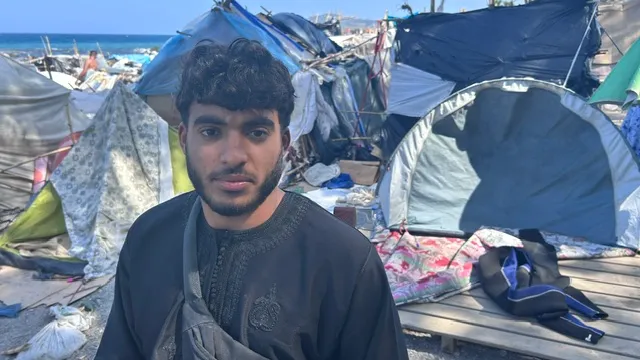
Ceuta, Spain – For more than a month, 21-year-old Anis Fadi, a university graduate and qualified accountant, has been sleeping in a makeshift shelter.
At the end of July, he crossed the border from Morocco to the Spanish enclave of Ceuta, on the North African coast, along with about 70,000 others.
Recommended Stories
list of 4 itemsend of list
At his migrant camp on Trampolin Beach, he queues for hours each day for food at a Red Cross centre.
“I don’t even have a tent,” he told Al Jazeera. “We make shelter with old pieces of wood, sticks from broken branches, and whatever else we find here.”

When the wind blows, these makeshift shelters offer little protection, and soon the temperature will dip.
“There are a lot of people worse than me,” said Fadi.
The Spanish government estimates that between 6,000 and 10,000 who made the crossing remain stranded. Officials in Ceuta believe the figure is closer to 13,000 people.

About 5,000 – mostly women and children – have been given temporary accommodation by the authorities. The rest sleep outside.
Fadi said, as he waits for food in the heat, police officers with batons shout orders at the crowds.
“It’s a hard life here,” he said, but he does not regret leaving Morocco.
“Life was harder there for me. I didn’t see any future for myself.”
‘We are not criminals’
More than 100 people died in the crossing. Fadi said he swam for hours to reach Ceuta, believing it was a gateway to Europe, where he imagines a better life awaits.
He believes men like him who “have the skills … don’t have the chance”.
“We are not criminals,” he said, in response to the anti-migration rhetoric and protests that followed the crossing. “We just want to work.”
Right-wing European politicians have framed the Ceuta crossing as a threatening invasion.

In Spain, protests have erupted against the government’s handling of the crisis.
Ceuta is usually home to about 84,000 people. Its population almost doubled at the outset of this crisis. Though most have returned, the enclave has been struggling to cope with the pressure of hosting those who remain.
After a new temporary shelter opened up recently, offering space for about 1,700 people, it hit capacity within hours.
Claims of abuse
As humanitarian groups struggle to provide basic needs, Nolte Bauer, from Mission Lifeline International, said migrants also feel unsafe.
“Outside the official camps there is a lack of basic hygiene,” he said. “There is insufficient medical aid and the immediate danger of violence, especially at night.”
His organisation often receives reports of people being beaten.

Several people interviewed by Al Jazeera said they had been abused by men in military or police uniforms. Some were wounded, with cuts to the head or bruising around the body.
“These are racist people, these soldiers,” one man who requested anonymity told Al Jazeera. “They found me sleeping and they started to hit me without any reason. They broke one of my hands; they wanted to break the other one. They also beat me on my knees.”
Some said they were afraid to go to hospital, fearing they could be deported, and instead sought help from aid groups. NGO volunteers told Al Jazeera they had treated wounded men.

But Spanish authorities rejected any claims of abuse and discrimination, telling Al Jazeera that the police acts “with absolute respect for human rights”.
They say they are expanding accommodation and providing food and medical care while migrants are identified and their cases are processed.
The government has said the aim is to return to Morocco those who do not have a legal status to remain in Spain, while Ceuta’s leaders have repeatedly called on Madrid and Europe for more support.

Britain’s first flying taxi centre opens in ‘once-in-a-generation’ milestone
BRITAIN’S first flying taxi centre has opened and flights could be taking off soon.
The facility has been hailed a “once-in-a-generation milestone” in the development of new aircraft.

Pioneering tech firm Vertical Aerospace has debuted a new first-of-its-kind facility at its Cotswold Airport site in Gloucestershire.
The team based at the assembly centre are currently working on the development and testing of a new form of air taxi called the Valo aircraft.
The electric vehicle seats up to four passengers and can fly up to 160km without any operating emissions.
Construction on the new Valo aircraft is set to begin in late 2027.
Initially, the tech firm has said it will build 25 aircraft a year but will grow this number to 900 a year by 2035.
Vertical revealed they have already received 1,500 orders, largely from airlines, but is also planning on getting its planes accredited for commercial use by 2029.
The new facilities form part of Vertical’s larger existing flight test centre located at the airport, increasing the site by a further 60,000 sq ft.
Vertical Aerospace’s CEO, Stuart Simpson, told the BBC that we are “getting really close to this idea of flying cars, flying taxis”.
“Opening our aircraft assembly centre is an important step in Vertical’s transition from prototype developer to aircraft manufacturer,” added Simpson.
“Bringing a new category of aircraft to market is a once-in-a-generation opportunity and it is especially rewarding to do that here in Great Britain, drawing on the country’s proud aviation heritage.”
Later this year, plans for a separate full-scale production site are expected to be revealed with the aim of supporting a much larger volume of vehicle manufacturing.

Ronan Keating strips naked and flashes his bum in desperate attempt to flog tickets for tour after Boyzone controversy
RONAN Keating stripped naked and flashed his bum in a desperate attempt to flog tickets for his solo tour, after the recent Boyzone reunion controversy.
The star, 49, who shot to fame in the early 90s in the famous Irish boyband, gave his loyal fans a cheeky thrill in his latest Instagram video.
In the short video Ronan can be seen in his plush kitchen mixing himself a cocktail.
The star is wearing just an apron, with his bare chest visible underneath.
“Been working hard in the gym, getting ready for the World Tour,” Ronan tells fans.
“Treating myself, you know, to a little cocktail.”
Read more on Ronan Keating
The star adds: “Tickets go on sale tomorrow, UK and Europe.”
Ronan then picks up his drink and turns around to reveal he is fully nude underneath the apron.
The singer then flashes his bottom as he walks off with his cocktail.
Fans rushed to comment on the cheeky video, with one saying: “Ok I just spat my drink out!”
While another joked: “Rear of year winner 2003!”
Ronan is gearing up for his solo tour, after performing in Boyzone’s last ever gigs in June.
The singer shot to fame in the Irish boyband in the early 90s, along with Shane Lynch, Keith Duffy, Mikey Graham and the late Stephen Gately, who passed away in 2009.
But during their recent reunion gigs there was some controversy after one of the remaining four bandmates went “missing”.
Fans were left in uproar when Mikey only appeared on stage midway through the concerts to perform only a handful of songs.
During their time together, Boyzone racked up 18 Top Ten singles, with six No1s including 1998’s No Matter What.
However, in 1999, while still a member of Boyzone, Ronan released When You Say Nothing At All which became part of the soundtrack for the movie Notting Hill.
The song topped the UK charts and launched his solo career.

Eaton expands Europe operations with €810M COL Group deal (ETN:NYSE)
- Eaton (ETN) to acquire COL Group from Oaktree’s Power Opportunities strategy for an enterprise value of €810M, expanding its manufacturing capacity and power distribution capabilities in Europe.
- Eaton said the acquisition will enhance its ability to address growing demand from

The winter sun holiday destinations that are CHEAPER to fly to this year including 26C Spanish cities
IF you’re looking for winter sun, but don’t want to spend a fortune on flights, check out these destinations from Spanish cities to Greek islands.
Skyscanner has found the cheapest spots to jet off to between October and February next year – some of which have return flights from £30.
Starting off with the best value destinations for autumn and winter flights, Skyscanner have found it’s Tangier.
The Moroccan city is just over two hours away from the UK – it’s quicker than heading to southern Spain and in October can see highs of 30C.

According to Skyscanner, return flights on average cost £105 – but from the UK to Tangier in November and December these can be as little as £30.
The city itself has plenty to see, from a whitewashed medina to its busy souk, and landmarks like the Kasbah and the Caves of Hercules.
In fact, it’s believed that Tangier was created by the son of Hercules, with the god himself staying in one of the caves.
It has a vibrant café culture thanks to its French influence, tapas culture from Spain – and a mix of languages too.
Thanks to its position in the north of the country, it has long, sandy beaches too like Plage de Tanger and Achakkar Beach.
The second cheapest for return flights is Seville which has an average price of £151.
Seville is Spain’s fourth-largest city – and is one of the hottest during the autumn, winter season.
During October, Seville can still reach highs of 26C and even in January can see highs of 16C.
Here’s the list of the best value destinations for travel from Oct 2026 – Feb 2027…

These are the destinations and the average economy return flight price, according to Skyscanner…
- Rhodes, Greece: Average price £218 (-21% YoY)
- Montego Bay, Jamaica: Average price £764 (-13% YoY)
- Tangier Morocco: Average price £105 (-13% YoY)
- Seville, Spain: Average price £151 (-12% YoY)
- Valencia, Spain: Average price £122 (-11% YoY)
- Valletta, Malta: Average price £164 (-11% YoY)
- Perth, Australia: Average price £1,425 (-6% YoY)
Some of the top attractions include the Royal Alcázar of Seville, Seville Cathedral and Plaza de Espana.
Rhodes in Greece has seen the biggest drop in flight prices year-on-year – it’s down 21 per cent.
The average return flight price is £218 – but in October, we found return flights for less than £60 with Ryanair.
The island is the fourth-largest in Greece, the biggest in the Dodecanese – and it’s considered quieter and cheaper than the likes of Santorini and Mykonos.
Lindos is a popular spot for visitors, the coastal village sits on the eastern coast with a clifftop Acropolis, whitewashed alleys, and sandy beaches.
Greece has incredible summers, but also mild winters with highs of 15C in January and February.
Further afield, long-haul journeys that have cheap return flight include Montego Bay in Jamaica which from the UK has an average price £764.
Montego Bay on north-west coast of Jamaica is the capital of the parish of Saint James and is one of the most popular tourist spots on the island.
Of course Brits flock there for its great weather and beautiful bays like Doctor’s Cave Beach which is considered one of the most beautiful in the country with white sand and bright turquoise waters.
Aside from sunbathing and paddling, snorkelling is popular too as swimmers are likely to spot parrotfish, turtles, and small sharks.
Looking on Skyscanner, October is the cheapest month for flights with returns from £364.
Laura Lindsay, Travel Trends and Destination Expert at Skyscanner gives her top tips for cutting travel costs…
- Head north
For those able to depart from north of the border, Edinburgh airport has some of the best deals for those looking for school holiday breaks as Scottish schools aren’t off the same weeks as England. - Is there a better price when departing a day earlier or later?
Searching by multiple dates and airports will give you the best chance of a bargain. Because some dates are more popular than others, prices will vary. The ‘whole month’ search tool allows you to see cheap flights at a glance and pick the right deal for you. Consider traveling a day before or a day after your original departure dates, flying on less popular days of the week is always cheaper. - Is there a comparable trip to a different destination?
You see a deal from one airline to popular location like Naples, but is there a better price when you consider somewhere less well known, like underrated Bari in Puglia instead? - Can you get a better deal travelling with a different airline?Changing up the airlines you choose to fly with can seriously cut costs. Also, fares don’t have to be booked as returns. Look at flying out with one airline and back with another to save money. You can easily compare prices on Skyscanner’s cheapest month tool.
- Is there a cheaper deal from a nearby airport?
Travelling to an airport a bit further from home or further from your destination can unlock better pricing and routes. A great example of this is when flying from London to New York. There are so many options and going just a little bit further from your point of origin or destination could mean a saving of hundreds of pounds. Make sure to check using the ‘Nearby Airport’ search on Skyscanner. - If you’re still not sure, make a note
“Setting up price alerts will ensure you’re the first to know as prices drop with any additional discounts or added supply. You can mark a flight you’re interested in and Skyscanner will email you whenever the price goes up or down. - Embrace spontaneity by exploring ‘Everywhere’
Re-embrace your spontaneous side and let Skyscanner’s algorithm find the cheapest deal. Just type in ‘Everywhere’ with your travel dates and the site will show you all the destinations that can be reached from your departure point listed in order of price so you can choose the most cost effective one.”
Tax the rich? California voters are divided, according to new poll
The slate of statewide measures on the Nov. 3 ballot provides voters two opportunities to tax the rich, which in past years has proved tantalizing to California’s left-leaning electorate.
Only one of those measures has strong voter support, however, and it’s not the proposition that’s attracted nationwide attention, ignited a nearly quarter-billion-dollar political slugfest and created a rift among top leaders in the Democratic Party.
Likely voters expressed middling support for Proposition 40, a one-time 5% tax on billionaires’ assets intended to compensate for an impending $100 billion in federal healthcare funding cuts. They were far more likely to back Proposition 3, a ballot measure that would make permanent a tax increase on the wealthy that funds schools and healthcare, according to a poll released Friday by UC Berkeley’s Institute of Governmental Studies that is co-sponsored by The Times.
Proposition 3 appears to be a much less controversial endeavor, which may explain why it has more voter support. The ballot measure would extend a tax enacted in 2012 on individuals who earn at least $360,000 a year that is set to expire in 2031. Proposition 40 proposes a brand-new tax on billionaires and is opposed by Gov. Gavin Newsom, who fears that it could hurt the state’s finances in the long run.
“When you’re going about taxing the billionaires’ assets, I mean that’s something kind of new and different, and it’s risky, and the governor’s against it, and you know a lot of people are expressing caution about it,” said Mark DiCamillo, director of the poll.
Voters are deeply concerned about income disparity but also skeptical about the unusual approach of the billionaire tax.
Proposition 40 has drawn the greatest attention and campaign spending of the 14 ballot measures voters will decide on Nov. 3.
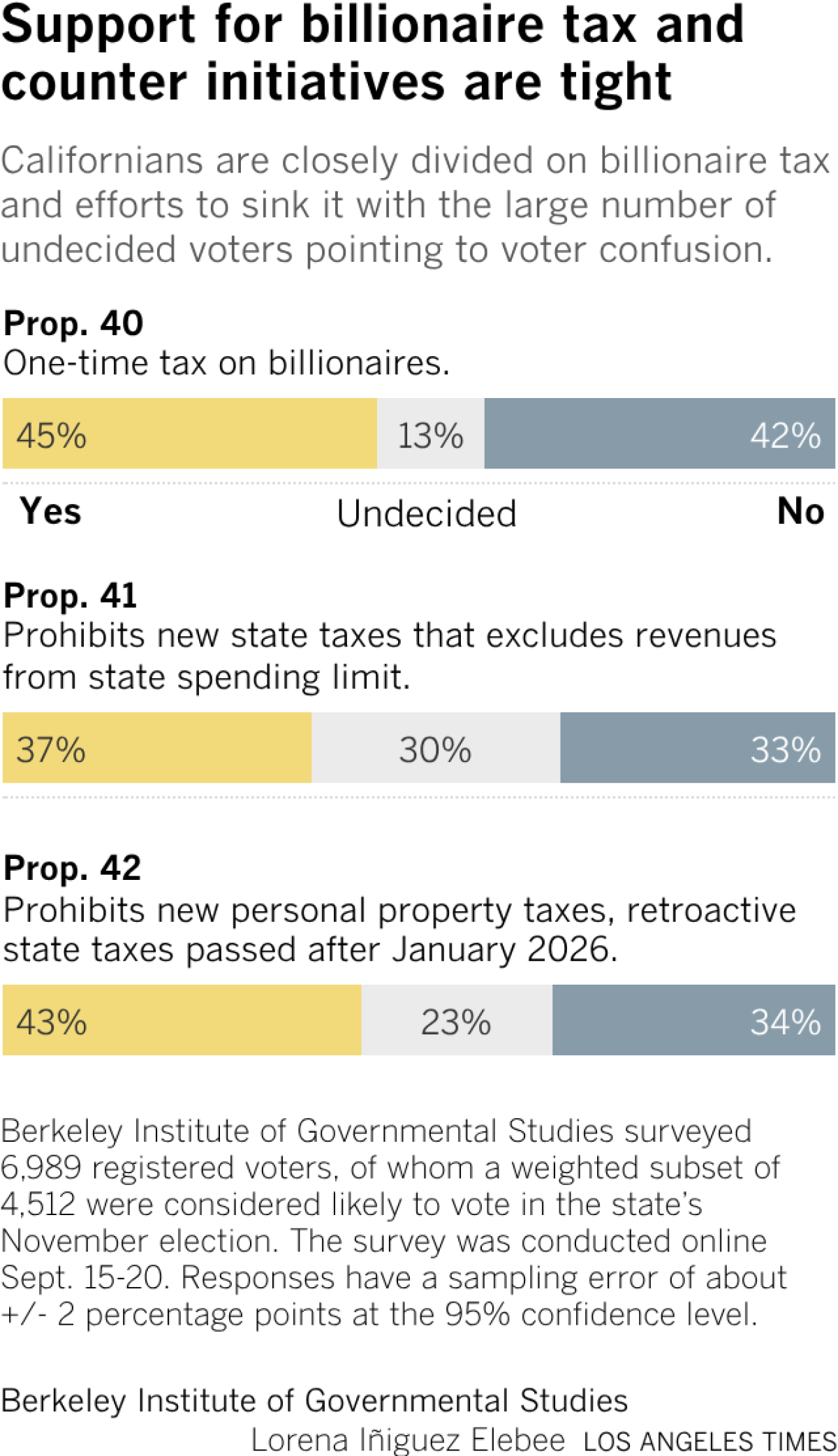
In the poll, 45% of likely voters support the proposal, while 42% oppose it and 13% are undecided. That’s a decline in support compared with six weeks ago, when 48% of likely voters supported it while 41% opposed it, and comes after nearly $100 million of spending on television ads, social media messages and mailers, largely from opponents.

The billionaire tax was crafted by a healthcare union in response to legislation passed by congressional Republicans and signed by President Trump last year that could result in millions of Californians losing Medi-Cal coverage, rural hospitals shuttering and other healthcare services being slashed unless a new funding source is found.
The proposal would retroactively apply to billionaires who lived in California as of Jan. 1, prompting some to preemptively move out of the state. Ninety percent of the revenue would fund healthcare programs, and the remaining funds would be spent on education programs and food assistance.
There are two counterproposals on the ballot that would nullify the wealth tax if either receives more votes than Proposition 40, and they have raised $144 million. Voters are torn about Proposition 41, which would prohibit any new state taxes from being excluded from a voter-approved cap that restricts how much tax revenue the state can spend each year. The billionaire tax would have such an exclusion. Voters also are divided on Proposition 42, which would prohibit new taxes on personal property, intellectual property, retirement accounts and other assets and would limit situations in which a ballot measure or state lawmakers can impose or raise taxes retroactively — both of which are essential parts of the billionaire tax initiative.
Proposition 42 has greater support, with 43% backing it, 34% opposing it and the remainder undecided, according to the poll. Even more voters were uncertain about Proposition 41: 3 in 10 said they were undecided, while 37% said they supported it and 33% said they planned to vote against it.
The large number of undecided voters this close to the election points to voters being overwhelmed by the sheer number of statewide ballot measures, DiCamillo said.
“It’s confusion,” he said, adding that many voters may make a decision once they receive more ballot information.
That said, the fact that none of these proposals has the support of more than 50% of likely voters doesn’t bode well for their prospects, DiCamillo said.
Ballots will begin arriving in the mailboxes of the state’s 23.2 million voters in days.
Democratic voters outnumber Republicans by nearly 2 to 1 in California, but the party’s leaders are deeply divided about the billionaire tax, given the volatile state budget’s reliance on the wealthy. Newsom, who is pondering a 2028 presidential campaign, and the two men vying to replace him — Democrat Xavier Becerra and Republican Steve Hilton — oppose it. Rep. Ro Khanna (D-Fremont), a potential 2028 White House contender, supports it, as does the California Democratic Party.
Additionally, Dave Regan, president of Service Employees International Union-United Healthcare Workers West and architect of the ballot measure, has come under scrutiny. Regan has been accused of threatening and intimidating women who worked for the union’s parent organization, and of physically assaulting one, according to reporting by The Times. He was also accused of trying to extort SEIU’s state council, suggesting that it could face an investigation over “governance issues” if it did not support Proposition 40, according to an investigation commissioned by SEIU.
Regan has denied these claims, describing them as a “smear” campaign orchestrated by Proposition 40 opponents.
Much less attention has been paid to Proposition 3. Californians who earn more than $360,000 now are subject to a 10.3% tax, while those who earn more than $721,000 face a 12.3% levy. The vast majority of the billions raised through this tax go to K-12 schools, while the remainder is spent on community colleges and healthcare.

The other ballot measure that is receiving national attention is Proposition 39, which would require voters to present a government-issued identification document to cast a ballot or provide a PIN or the last four digits of their Social Security number when submitting mail-in ballots.
The measure also would require the California secretary of state and county election officials to verify that registered voters are U.S. citizens by “using government data,” which according to supporters could include information in the federal Social Security Administration database, jury summons information and other government records.

The proposal comes as Trump has continued to make claims that elections, notably in California, are being rigged by Democrats. Americans are increasingly alarmed about the security and sanctity of voting, and growing fears about intimidation efforts at polling places in the midterm elections.
Fifty-two percent of likely California voters oppose the voter ID proposal, while 39% support it and 9% are undecided, according to the poll.
“It doesn’t look like it’s in a strong position,” DiCamillo said, noting that while voters have opposed it in prior polls, the opposition has grown.
Nearly one-third of voters were undecided about two other propositions:
- Likely voters were evenly split about Proposition 4, which would repeal a ban on public funding of campaigns, with 35% supporting it and 35% opposing it, and the remainder undecided.
- Four out of 10 likely voters opposed Proposition 43, which would increase the threshold necessary to pass local taxes from a simple majority to two-thirds, while 31% supported measure and 29% were undecided.
Voters will also face questions about environmental policy, housing, recall elections and other matters, as well as statewide, congressional and local elections. Californians are fatigued by the length of the ballot.
The Berkeley IGS/Times poll findings are based on an online survey in English and Spanish of 6,989 registered California voters, 4,512 of whom are considered likely voters, on Sept. 15-20. The results are estimated to have a margin of error of about 2 percentage points in either direction in the overall sample, and larger numbers for subgroups.
Kevin Pietersen: Former England batter on Harry Brook and working with Test side before Ashes
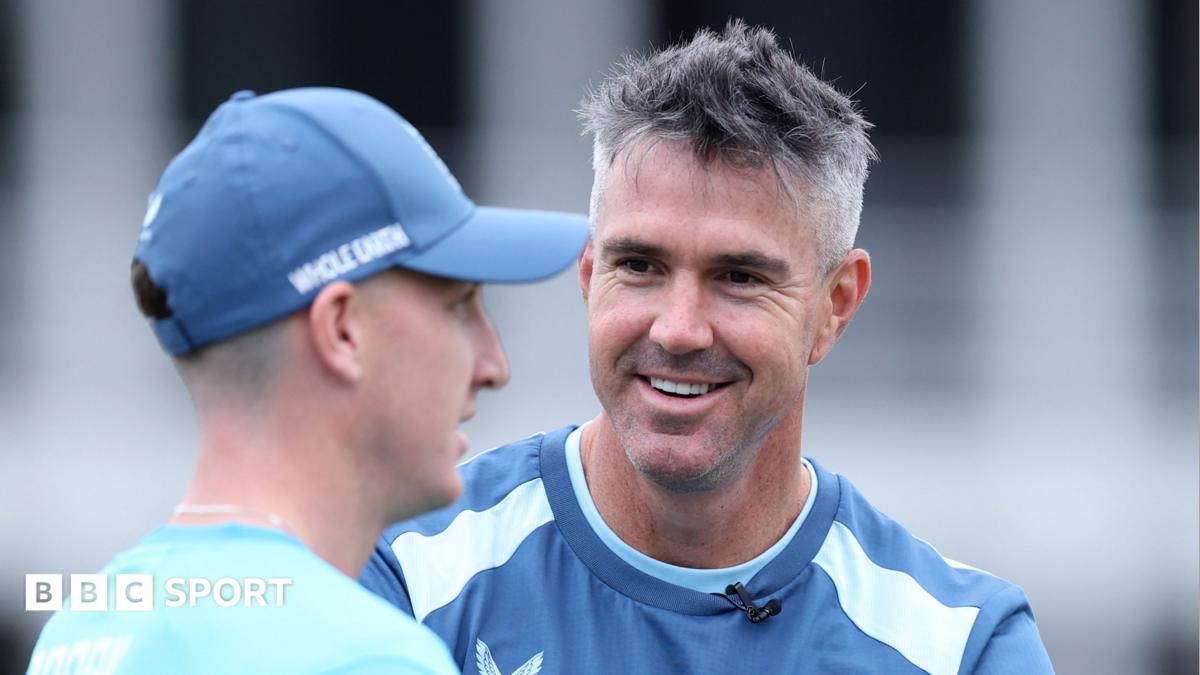
Pietersen’s eyes roll slightly when he is asked about Ben Stokes’ recent comments comparing Harry Brook’s talents to his.
Pietersen, like Brook, was a maverick – a batter capable of incredible highs. Those highs mean the lows come with a disproportionate level of criticism.
“Where I can help him is playing situations, because there was a lot of method in my madness,” Pietersen says.
“Yes, occasionally, I got out to reckless shots and crazy shots in the ’80s and ’90s but there was a lot of structure to the way that I batted.
“I’ve still got notes on my phone on how I played in T20 cricket, one-day cricket, Test match cricket, and about hitting straight back at the stumps, and the techniques, and how I did it, and don’t play certain shots.
“That all-round structure is something I could potentially help him with because he’s so flipping good.
“It’s actually frightening how good he is and how good he can be.”
And Pietersen says he will not limit himself to working purely on white-ball cricket.
He has already spoken to new Test coach Stephen Fleming about how he can help the Test batters during his time with the white-ball squads.
Though he said he would not have time for a full-time role, he suggested he is open to working with the Test side before next summer’s home Ashes series.
“I have got a pretty mad schedule,” he says. “I wouldn’t say no.
“I don’t think that necessarily means I need to be in a dressing room.
“There is a lot of time in the lead up to an Ashes series and a tour of South Africa, when I will be with the Test batters.
“There are conversations I can have there.”
Who knows how long this will last. England may as well make the most of this second chance.
What’s in Iran’s seven-day plan to reopen the Strait of Hormuz? | US-Israel war on Iran News
Iran says it has put forward a plan to the United States to reopen the Strait of Hormuz within seven days, as Qatar passes messages between the two countries at the United Nations General Assembly in New York.
Speaking on the sidelines on Thursday, Iran’s Foreign Minister Abbas Araghchi said the timetable could begin as soon as Washington accepted the proposal.
Recommended Stories
list of 4 itemsend of list
Both sides have described the indirect contact facilitated by Qatar in New York positively, but neither has indicated any diplomatic breakthrough as the war approaches its seven-month mark.
Analysts have told Al Jazeera a firm peace deal remains unlikely, with Iran still wanting to follow the approach set out in an earlier agreement, which would give it and Oman a main role in managing the strait before moving on to discussing terms for a broader peace deal.
For its part, the US, which has claimed to be “in total control” of the Strait of Hormuz, wants Iran’s nuclear programme to be the subject of discussions straight away.
Iran has previously made clear that it will not engage with broader peace talks, including addressing the issue of its nuclear programme, until the US naval blockade of its ports in and around the Hormuz strait is lifted, sanctions are repealed and the US provides a guarantee of an end to strikes, among other conditions.
Here’s what we know.
What has Iran proposed?
Araghchi told reporters in New York that Iran had presented its plan to the US through intermediaries. “If certain conditions are met, the Strait of Hormuz would be open on the end of the seventh day and [peace] talks would restart,” he said.
He did not give details but said the proposal resembles the June 17 memorandum of understanding (MoU) signed by Iran and the US, which briefly eased the conflict before breaking down. “The moment they accept this plan, from the next day, this timetable can start, and after seven days, the strait will be open,” he said.
Under the June agreement, Iran undertook to allow ships to pass through the strait without paying tolls for 60 days – that was the period of time given for peace talks to take place. But the MoU left open what would happen after that period.
Araghchi did not say whether the same arrangement formed part of his new proposal. Nor did he spell out what Washington would have to do before the seven-day timetable began, how either side would verify those steps, or what rules would govern shipping once the strait reopened.
It is highly unlikely Iran would be offering to cede control of the Strait of Hormuz, analysts say.
Urban Coningham, a research fellow at the Royal United Services Institute, told Al Jazeera that Tehran is unlikely to receive the sanction relief it has previously demanded and, therefore, sees the strait as its primary ticket to helping it recover from the war economically.
“Hormuz is a clear Iranian red line,” he told Al Jazeera. “The Iranians will not get reparations for the war, so control of the strait is the only way they can recover economically. I cannot see them backing down from that.”
![[Al Jazeera]](https://i0.wp.com/occasionaldigest.com/wp-content/uploads/2026/09/INTERACTIVE-MIDDLE-EAST-iran-hormuz-shipping-aug-27-2026-1787815800-1788488337.webp?w=640&ssl=1)
Why does the June agreement matter?
The MoU signed in June set out an immediate halt to military operations on all fronts, including in Lebanon, where Israel has launched strikes and occupied part of the country, and triggered a 60-day period for negotiations on a lasting peace settlement. It included US waivers for Iranian oil exports and provisions to restore maritime traffic through the strait.
It deferred other issues, including the future of Iran’s enriched uranium stockpile, to broader peace talks.
But the agreement unravelled the following month amid renewed confrontation over shipping routes through the strait.
Coningham told Al Jazeera that Iran’s latest proposal follows this earlier model: “Open the strait within seven days, then start talks on the nuclear file.”
But “the US does not want to compartmentalise the issues, it wants them discussed as one package”, he said.
How else does this new proposal place pressure on the US?
Coningham also sees a political calculation in making the offer publicly at the UN as Americans contend with high fuel prices. “By explicitly saying this may be the only chance before the midterms, Iran is putting pressure on Trump over oil and gas prices and the strait,” he said. “It is a tactic to put more pressure on the US.”
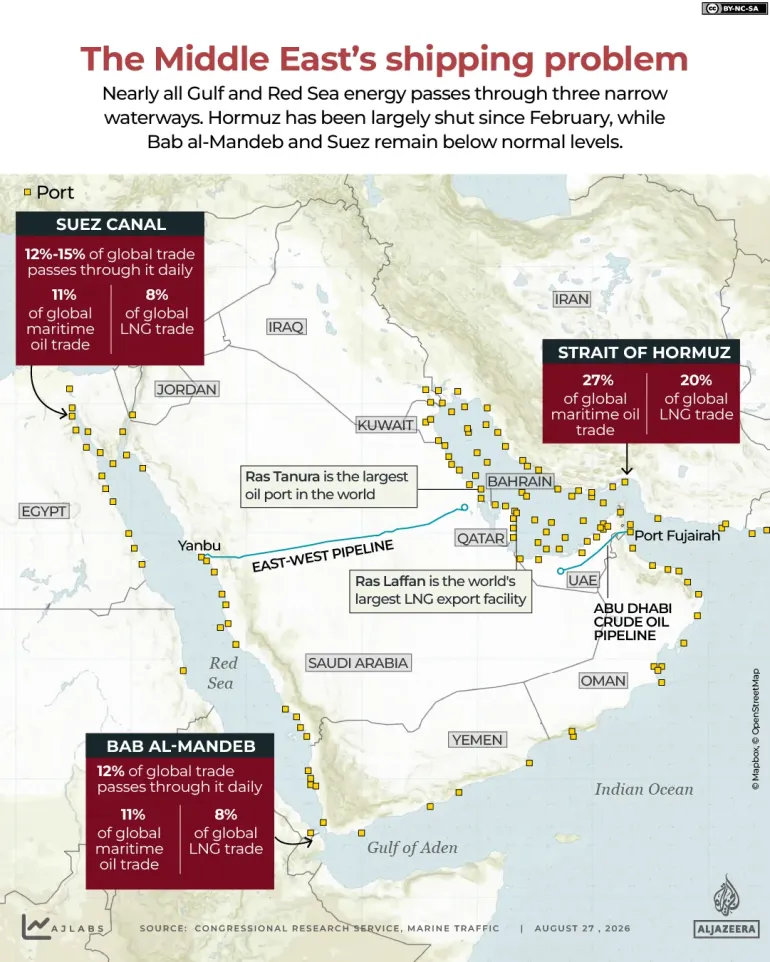
The strait, which runs between Iran and Oman, is a vital route for oil and gas exports from the Gulf. Disruption to shipping has driven up energy prices far beyond the region, giving both governments an economic reason to reach an agreement despite their differences.
With the US midterm elections approaching, a deal to get it reopened could give Trump a chance to bring down fuel prices before voters go to the polls – potentially giving the Republican Party a much-needed electoral boost before the midterms.
Trump has presented the electoral calculation differently, however. In his address to the General Assembly on Tuesday, he accused Iran of waiting to see how his Republican Party performs in November and predicted a deal would happen after the vote. He also threatened to “annihilate the Islamic Republic” if there was no agreement.
Trump claimed the election did not affect his own decision-making on Iran: “The only thing that does is that Iran will never have a nuclear weapon.”
That leaves an open question about whether the prospect of lower energy prices is enough to persuade his administration to accept Iran’s proposed order of talks. Coningham doubts it. “Trump is prepared for this to go on through the midterms,” he said. “The same problem remains where the proposal does not answer questions about the nuclear file.”
Where do broader US-Iran peace talks stand?
Araghchi met US envoy Steve Witkoff and Trump’s son-in-law Jared Kushner on Tuesday in talks mediated by Qatar. The Iranian foreign minister described the exchange as productive and said messages continued to pass between the sides.
US Secretary of State Marco Rubio said it would be wrong to describe the meeting as a major breakthrough, however.
Burcu Ozcelik, a senior research fellow for Middle East security, told Al Jazeera that the major blockage for Washington and Tehran is that each is making different assumptions about how much pressure they can exert on the other. The Trump administration is unlikely to revive the failed MoU, she said, because it assesses its naval blockade and tighter sanctions as working.
“The US appears to believe it can wait this out until Tehran is prepared to make meaningful concessions,” Ozcelik said.
“But Iran remains defiant despite indications that it is hurting economically.”
Inside Ukraine’s Operation Vivaldi That Sees Its Troops Gaining Ground In The East
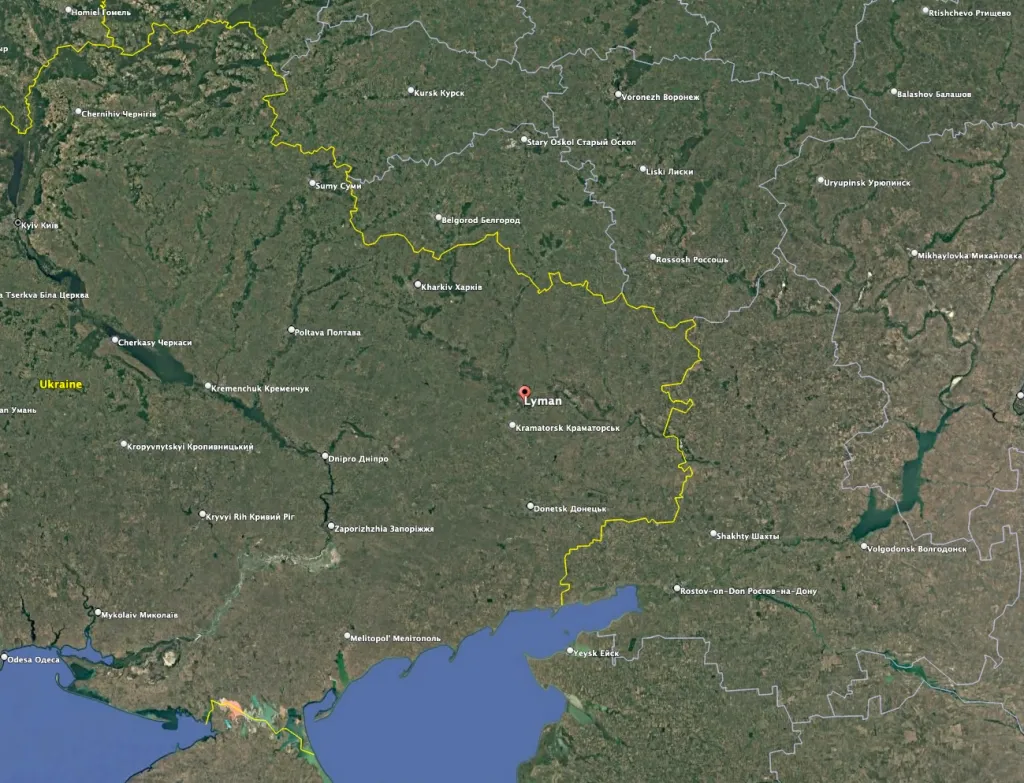
Ukraine claims it has recently regained about 125 sq. km. of territory near the town of Lyman in the eastern Donetsk region during what has been dubbed Operation Vivaldi. Rodion Kudryashov, a Ukrainian colonel and deputy commander of the Third Army Corps, offered some insights into this offensive and what made it different.
Though the operation is still ongoing, the success of Vivaldi began long before any troop movements, Kudryashov explained in an editorial he published in Ukrainian Pravda.

“After the Third Army Corps was formed, we changed the command system of its subordinate units,” he noted. “Some brigades came to the corps after very heavy fighting, with losses, manning problems and, most importantly, eroded trust in their leadership.”
Third Army Corps Commander Brig. Gen. Andriy Biletsky “then set out one of our key principles: a commander must be responsible for the entire cycle, from training a soldier to the result on the battlefield,” Kudryashov pointed out. “In some places that meant replacing a commander. In others it meant restructuring a staff or strengthening the NCO chain. In some cases we had to build, almost from scratch, processes that on paper should have been working long ago.”
At issue was changing the culture from a more rigid Soviet-era model, with a cumbersome chain of command, to a modern, more flexible one better suited for the current conflict.
“A modern commander has to handle an enormous flow of information and make decisions quickly,” the deputy commander proffered. “He has to understand what unmanned systems, logistics, reconnaissance and adjacent units can do, while not smothering initiative at lower levels with endless approvals. An army where every decision takes hours to travel up and down the chain loses to an army that makes the same trip in minutes.”
Once those changes were put in place, the Third Army Corps had to first stop Russian advances in the sector before it could move forward.
“When the corps took over its area of responsibility, our first task was not an offensive,” the officer said. “We had to stop the situation from deteriorating and stabilize the forward edge.”
“The enemy was pressing. In some sectors our combat formations were losing cohesion,” he underscored. “The Russians were actively using infiltration tactics: small groups seeped between positions, massed in our rear, threatened logistics and gradually eroded the defensive line.”
“We had to stabilize the forward edge and stop the infiltration,” Kudryashov said. “We had to rebuild command, put in commanders capable of making decisions, form new teams and reconstitute units. We had to set up the surveillance-and-strike system and sustain the front line. We had to stockpile ammunition, drones and other resources, understand the enemy, and plan the next step before the previous one was finished. Only after that could we move forward.”
By June, the corps was able to secure the front “in the sector from Borova to Lyman and eliminate the enemy’s infiltration zones,” Kudryashov continued. “That sounds less impressive than the word ‘offensive,’ but no offensive ever happens without it.”
“You cannot plan a complex operation if you don’t know where your forward edge will be tomorrow,” the deputy commander extrapolated. “You cannot build up forces if your logistics are constantly under threat. And you cannot form a strike group if your units are always forced to patch new breaches. So the first phase of ‘Vivaldi’ was not an advance at all. It was creating the conditions that made an advance possible in the first place.”
Once the front was stabilized, the next step was shaping the battlefield for the offensive. The corps’ unmanned systems units went to work against Russian logistics, striking a pipeline and depots. That forced the enemy to change its fuel and lubricant supply routes.
“The operation also involved the corps’ brigades, its reconnaissance and unmanned units, and attached forces from the SSO (Special Operations Forces), GUR (Defense Intelligence) and DPSU (State Border Guard Service),” the deputy commander said. “To counter infiltration, a joint headquarters was set up to coordinate special and reconnaissance units at the tactical level under a single concept.”
“In my view, this is one of the main characteristics of modern war,” he further stated. “It is not 10 strong units that each fight well on their own. It is 10 different elements that start working as one system at the right moment.”
The influential, Kremlin-connected Rybar Telegram channel has acknowledged Ukrainian gains in this sector.
“In the first half of summer, Russian units gradually advanced in Lyman,” Rybar wrote this morning. “However, in August, the enemy launched counterattacks and, by the first week of September, regained some positions, and also began attempts to recapture Shandryholovo and Zarechnoye.”
“The enemy did not inflict significant losses on Russian troops, as the concentration of units of the West group of forces in the salient remained relatively low,” Rybar added. “However, later, the UAF deployed reserves to launch an offensive towards Zherebets in order to align the front along the water barrier and return it to the configuration of the end of 2025.”
Though the battle is still in flux, Kudryashov said there are lessons the rest of the Ukrainian military should heed.
“Winning one battle is not yet winning the war,” he said. “The enemy is learning too. He changes tactics, looks for weak spots and tries to scale what works for him.”
“So our task is to be faster, not only in physically moving forward but also in our ability to see, think, decide and put into practice what delivers results,” the deputy commander avowed. “And to do everything possible so that our soldiers pay the lowest possible price for every next kilometer of Ukrainian land.”
The Latest
On the battlefield, in addition to the gains Ukraine has made near Lyman, it has also largely been able to hold off Russian advances across the front lines. Here are some key takeaways from the latest Institute for the Study of War assessment of frontline operations:
- Sumy: Russian forces recently conducted an infiltration mission east of Sumy City, and they continue to conduct glide bomb strikes against frontline settlements in northern Sumy Oblast to set conditions for future offensives.
- Kharkiv: Russian forces continued offensive operations in northern Kharkiv Oblast and in the Borova, Kupyansk and Velykyi Burluk directions on Sept. 21 and 22 but did not advance.
- Donetsk: Ukrainian forces reportedly continue counterattacks in the Lyman direction, including southeast of Lyman, as Russian forces are attempting to use redeployments to stabilize the area. Russian forces continued offensive operations east and southeast of Slovyansk near Rai-Oleksandrivka and toward Mykolaivka and Fedorivka Druha on Sept. 21 and 22 but did not advance. During this period, they also tried to advance in the Novopavlivka and Oleksandrivka directions but made no gains, as Ukrainian forces counterattacked in both areas.
- Zaporizhia: Ukrainian forces recently advanced or maintained positions in western Zaporizhia Oblast.
- Kherson: Neither Russian nor Ukrainian forces reported ground activity in the Kherson direction on September 22.
In his speech to the U.N. General Assembly this afternoon, Ukrainian President Volodymyr Zelensky called for Russia to end its war and said it was paying a heavy price — and exacting a terrible toll — for little territorial gain.
“This ridiculous and never-ending war with Ukraine must be ended,” the Ukrainian leader urged. “I do not know a single world leader who would say otherwise. I do not know anyone who is openly for this war, except one man.”
He was referring to Russian President Vladimir Putin.
“Ladies and gentlemen, for almost five years now, Russian generals have been trying to carry out Putin’s crazy order to seize our eastern land, the Donetsk region,” Zelensky continued. “And just this year, from January through August, the Russian army lost 248,964 people on the battlefield in Ukraine in eight months. Twenty-one countries in the world have smaller populations… than the number of Russian troops lost in just eight months.”

‘Patient Zero’ Putin, Russia-Ukraine war & Trump: Zelensky addresses UN
“It’s madness, but they still keep going there to die because that is what Putin wants,” Zelensky suggested. “After losing so many people, Russia managed to capture just over 1,000 square kilometers of our land this year, and we have already liberated a significant part of it. Russia is a country that already has 17 million square kilometers of its own land without any Ukrainian territory, by the way. So to add another 1,000 square kilometers, Putin is paying with 248 people for every kilometer. Does anyone still think that he is reasonable? And moderate?”
“Russia’s leader, Patient Zero, the man from whom this war began and spread into the world, becoming the largest war in Europe since World War II, will inevitably leave this war,” Zelensky proffered. “But the longer Putin is able to wage war, the more evil he will leave behind in this world. Today, nothing in war works the same way it did, by the way, in 2022, except the courage of people.”
Russian missile and drone barrages have “caused damage, but they didn’t break us,” the president proclaimed. “We build our defense. What is really difficult for us now is Russian ballistic missiles and their new jet-powered Shaheds — Iranian technologies.”

“Just imagine this: since the beginning of this year, Russia has already used more than 2,100 missiles of different types again against us, against Ukraine, our people and our children,” Zelensky stated. “More than 950 of them were ballistic missiles. In eight months of this year, Russia used 63,000 attack drones of different types against Ukraine, our people, and more than 7,700 of them were jet-powered Shaheds, truly destructive and very dangerous weapons. Just think about it. The Russians launch jet-powered Shaheds every hour, every hour, against our cities, our economy, our infrastructure. Our combat aircraft are fighting them 24/7, and this is part of Russia’s strategy to create a new threat every hour, to make life harder for the economy and to disrupt people’s lives, and to stop children from being able to study, to study at school.”
Speaking at the Sixth Summit of the International Crimea Platform in New York on Wednesday, Zelensky said the return of Crimea is a condition for any return to normal relations with Russia.
“Disrespect for international law began in 2014, when Russia entered Crimea,” the Ukrainian leader stated. “There can be no full return to normality without Crimea, the restoration of security, the protection of people and lives, the release of prisoners held by Russia, and a return to the fundamental principles of international law. Territorial integrity matters, state sovereignty matters, and human lives matter. And Russia must learn this.”

Участь Володимира Зеленського в шостому саміті міжнародної Кримської платформи
Tuesday, Zelensky met with U.S. President Donald Trump.
Among the topics of their three-hour meeting were a path to end the war and a renewed discussion about the licensing of Patriot air defense interceptors so they can be built in Ukraine. The country is struggling to defend against Russian ballistic missiles because of the dearth of these munitions.
“Just had a positive and productive meeting with President Trump on the sidelines of the UN General Assembly,” the Ukrainian leader stated on X. “Both the United States and Ukraine want this senseless Russian war to end before winter. We discussed possible de-escalation steps that could pave the way to diplomacy.”
“I am grateful that, in parallel with this, our teams continue to work on launching the production of Patriot interceptor missiles in Ukraine,” Zelensky noted. “This is exactly what will help protect lives if Russia rejects negotiations and continues to rely on ballistic terror against our people this winter and beyond. We also discussed other bilateral and multilateral issues, including the winter air defense package for Ukraine. Thank you to President Trump, his team, and all the American people for their support.”
For his part, Trump said negotiations about Patriots are ongoing but offered no commitments.
“We’re talking about that,” Trump stated. “We’ll be talking about that now. If you would have come in at the end, we would have had an answer. But we’ll be talking about that. I mean, we talk about it all the time. Very capable people, really amazingly capable people.”
This isn’t the first time the two leaders have talked about a Patriot licensing deal. The issue came up back in July. As we noted at the time, such a deal faces big challenges.
First of all, it could face bureaucratic and regulatory hurdles, like getting congressional approval. Major security concerns exist, not just by having license production of a very sensitive weapon in Ukraine but also having to do with whatever facility will perform the work, which would become a top target for Russia. Even if they got the clearance to move forward, delivery of new weapons will still take years due to the time it takes to build the facility and to source long-lead components.
Even Lockheed Martin, one of the world’s biggest arms makers, currently produces only about 650 PAC-3 MSE interceptors a year, or just shy of two per day. However, under a contract with the Pentagon inked in January, Lockheed is committed to boosting Patriot PAC-3 MSE annual production to 2,000 in the years to come.
You can read more about the headwinds a Patriot licensing deal would face, even if it were to come to fruition, in our initial story here.

Ukraine’s president also confirmed that “Kyiv is ready to agree to an energy truce on the condition that Russia does not attack its energy, electricity and heating infrastructure as well as its water supplies,” CNBC reported. “Trump has previously called on Ukraine to stop targeting Russian oil refineries with drone strikes, which he says are ‘hurting the world’ as fuel supply disruptions from the Ukraine and Iran wars propel U.S. diesel prices to a record high.”
Ukraine’s repeated attacks on Russian oil infrastructure is having a major impact.
“Russian refinery throughput fell to 3.8 mb/d, its lowest level in more than 20 years and roughly 30% below a year earlier,” according to a recent report by the International Energy Agency (IEA). “Reported gasoline output is down by 20% compared with 2025 levels, while diesel production is estimated to have fallen by nearly 30%, prompting the government to restrict fuel exports to protect domestic supplies.”
Amid the U.N. General Assembly meeting, strikes by both sides continued.
“At least 16 people were killed and 59 others injured in Russian attacks across Ukraine over the past day, as Russia launched several waves of ballistic missiles at Kyiv overnight,” the Kyiv Independent reported, citing local authorities.
“Two people were killed and eight others injured in Kyiv, where Russian ballistic missiles struck the capital in three waves overnight,” the publication added. “Residential buildings, a maternity hospital, energy, and logistics infrastructure were among the sites damaged, according to President Volodymyr Zelensky.”
“Russia launched 282 attack drones of various types overnight, including jet-powered drones, as well as Zircon anti-ship missiles and Iskander-M, S-400, and KN-23 ballistic missiles,” the news outlet stated, citing the Ukrainian Air Force. “Ukrainian air defenses shot down 227 aerial targets, including 219 drones, four Zircon missiles, three ballistic missiles, and one Banderol munition. Strikes were recorded at 13 locations, while debris from downed targets fell at 10 locations.”
Ukraine’s strikes on Russian energy infrastructure continued.
“Over the past 24 hours, two oil refineries were hit – one in Bashkortostan and one in the Samara region. There were also strikes in the Black Sea,” the Ukrainian Defense Ministry stated on X. “We are taking the war back to where it came from. We are bringing peace closer for Ukraine. I thank the units involved for their precision.”
In an effort to defend against Ukrainian attacks, Russia continues to use netting to protect its energy facilities. You can see a recent example in the video below.
Finland’s President Alexander Stubb and Zelensky this morning “signed an Agreement on Enhanced Defense and Security Cooperation under the Drone Deal format,” the Finnish Defense Ministry said in a statement. “It will enable defense materiel cooperation between the two countries.”
“The agreement will enable Finland and Ukraine to transfer technology and knowledge, pursue research, development and innovation cooperation and promote joint manufacturing and drone technology development between their industries,” the MoD stated. “Another objective is to simplify administrative processes, for example regarding the granting of export authorizations, to make the transfer of defense materiel and technologies between the two countries as efficient as possible.”
With electronic warfare interfering with how drones controlled by radio frequencies operate, Ukraine is testing a new system of small radio beacons placed on the ground that allow drones to navigate without GNSS — including missions deep inside Russia. While many systems might not need this fix, some of the lower-end drones might.
Ukraine is testing and scaling this technology as part of a layered navigation system designed to keep drones autonomous in heavily jammed environments.
“The concept is quite simple,” the BBC wrote. “If the enemy jams the signal coming from above—specifically from GNSS (Global Navigation Satellite System) satellites, which determine the precise coordinates, speed, and time of any object on Earth—then specific points must be created to provide that same signal from below.”
The idea is to guide the drones by triangulating their location.
“To achieve this, special small devices—radio beacons—are either installed on the ground or air-dropped across a specific area. Their coordinates are known; thus, when a drone flies through the area, it receives coordinate data and signal transmission timing from several beacons. From there, it is a matter of basic geometry: the UAV calculates its own spatial position using data on the distance to the beacon and its altitude above the ground.”
In the age of robots, uncrewed ground vehicles (UGVs) are playing a larger role in combat. The following video shows one UGV rescuing another one by pushing it back on its wheels.
That’s it for now.
Contact the author: howard@twz.com

TV Licence rule means Netflix users may have to pay £180 – how to avoid it
Not everyone has to pay – and there’s a simple and legal way to avoid paying this £180 annual fee

Not everyone will need a TV Licence(Image: Getty)
People with a Netflix subscription – regardless of their tier – may need to pay a fee of £180, depending on what they watch.
UK households currently pay £180 a year for a colour TV Licence, or £60.50 for a black-and-white set, after the fee increased on April 1, 2026. Failure to pay when needed could land people in hot water, and a fine of £1,000.
Although many people assume a TV Licence only applies to watching the BBC, that is not true. A TV Licence covers far more than BBC content, including:
- All TV channels like BBC, ITV, Channel 4, U&Dave and international channels
- Pay TV services like Sky, Virgin Media and EE TV
- Live TV on streaming services – like YouTube, Netflix, and Amazon Prime Video
- Everything on BBC iPlayer
- Watching, recording and downloading on any device
Do I need a TV Licence to watch Netflix?
It depends. Officials note: “If you are watching a TV programme that is being broadcast live on Netflix, you need to be covered by a TV Licence. You don’t need a TV Licence to watch on-demand programmes on Netflix.”
If you want to keep watching Netflix and avoid paying the Licence fee, simply do not watch any live TV or events on the platform and watch your usual on-demand content. This means you can watch classics like Gilmore Girls, Manifest, Breaking Bad, and the latest competition series, Wonka’s The Golden Ticket – without the need for a TV Licence.
If you live in a shared household, the UK Government confirms: “You need your own TV Licence if you have separate tenancy agreements and you watch TV in your own room.”
You can have one TV Licence for the whole household if you either:
- watch TV in a single shared area
- have a joint tenancy agreement
I have a Netflix subscription – so why do I need a TV Licence?
TV Licensing explains: “Paying for a Netflix subscription grants you access to a large and varied catalogue of movies, series, documentaries and more. Paying for a TV Licence lets you legally watch and record TV on any channel via a range of TV services, including Sky, Freeview, Virgin and Freesat.
“With a TV Licence, you can also watch live on streaming services (e.g. Amazon Prime and Channel 4) and access the full suite of award-winning movies, series and documentaries on BBC iPlayer.
“Some households enjoy having access to Netflix as well as being covered by a licence. Other households prefer to only pay for a TV Licence to watch live on TV and streaming services, including iPlayer, on any device.”
Netflix isn’t the only streaming service you may need to buy a TV Licence for, on top of the subscription fee. TV Licensing further states: “If you’re watching TV showing live on Amazon Prime, you need to be covered by a TV Licence. You don’t need a TV Licence if you’re only watching on-demand programmes on Amazon Prime.”
You could be fined £1,000
You can be fined up to £1,000 if you watch or record live TV without a Licence. TV Licensing warns: “You could be prosecuted if we find that you have been watching, recording or downloading programmes illegally.
“The maximum penalty is a £1,000 fine plus any legal costs and/or compensation you may be ordered to pay. The maximum fine is £2,000 in Guernsey.”

Trump’s trade war with Canada adds a challenge in Senate races
WASHINGTON — President Trump’s trade war with Canada could intensify the headwinds Republicans are navigating ahead of the November midterms, with its effects poised to reverberate in northern battleground states with crucial Senate races.
With the election less than six weeks away, Republicans are facing an increasingly bleak outlook, as new polls this week showed voters favoring Democrats by as much as 12 points amid widespread cost-of-living anxiety and low approval for Trump.
The escalating beef with Canada — Trump attacked the country anew on social media Wednesday — stands to heighten voters’ economic worries and add to the GOP’s political challenge in dead-heat races, analysts said.
“It doesn’t make things easier. It’s not helping,” said Rusty Hills, a University of Michigan public policy professor and onetime chair of the Michigan Republican Party.
The president’s unpopular policies on the war in Iran, the economy and data centers have already handed Republican candidates the tough task of appearing responsive to Americans’ frustration with cost-of-living issues without alienating Trump and his voter base.
The trade war, said Lance Dutson, a Maine Republican media strategist, puts “another log on the fire” of the affordability issue.
The tariffs have appeared unpopular in recent polling, including among a majority of independent voters. Though they are not expected to dramatically increase consumer prices, they could affect voters’ perception of the economy — and even small economic impacts on certain industries, such as auto manufacturing in Michigan, could have an effect in very close midterm races, experts said.
Trump’s new import bans on some Canadian goods are set to begin next week, a response to retaliatory tariffs Canada levied earlier this month. Trump argues that Canada has “been ripping off” the United States and that tariffs will help domestic manufacturers.
On Wednesday, the president inaccurately claimed on Truth Social that Canada is allowing “millions and millions” of immigrants into its country.
“It is a Liberal takeover that will end very badly. Already showing up in their numbers. Big unemployment. ‘Oh Canada!” the president wrote on social media Wednesday morning.
Five of the nine states most likely to decide Senate control border Canada — Alaska, Ohio, Michigan, New Hampshire and Maine. Two more, Texas and Iowa, also do substantial trade with Canada.
Democrats must retain their Senate seats including New Hampshire and Michigan and flip four of the other states to win a majority, a tall task. As the landscape worsens for Republicans, however, some are testing how much they can distance themselves from Trump.
“It’s a tightrope, there’s no question,” Hills said. “[Candidates] are looking for some wiggle room on some of these issues like the war and prices and Canada tariffs, because they need every independent and swing voter they can get.”
A majority of Americans oppose raising tariffs on Canadian goods, including 64% of independents, an Economist/YouGov poll found. Only 14% of independents said they supported additional U.S. tariffs on Canada in a late August Ipsos poll.
And in Michigan, 68% of independent voters disapprove of the tariffs, a poll this month from the Washington Post and Schar School found.
“The more we put tariffs on stuff, the more they put tariffs on stuff … prices are just ultimately going to go up for all of us,” said one Michigan swing voter in a Sept. 9 focus group conducted by the firm Engagious, in which 11 of 13 participants said the trade war was bad for the state.
The highest costs of the tariffs will be concentrated within a few industries, including auto and other manufacturing, dairy, and alcohol and spirits, said Alex Durante, a senior economist at the Tax Foundation. The tariffs likely won’t create a major change for consumers, but the general impression that tariffs can contribute to higher prices might turn off voters who are already worried about inflation, he said.
Counter-tariffs imposed by Canada in response to U.S tariffs last year resulted in a 6% increase in the prices of affected goods, researchers found in paper published by the Journal of Monetary Economics.

Canadian lumber products at Gutherie Lumber in Livonia, Mich., in August.
(Paul Sancya / Associated Press)
“This trade war is certainly not helping the president and his party in the midterms,” Durante said. “What’s weighing on the top of people’s minds is this general affordability crisis … and they realize that tariffs are another factor that is impacting affordability.”
The latest escalation of the trade dispute began in July, when Trump threatened new 50% tariffs on some Canadian goods, reinvigorating a conflict that began with tariffs the president imposed in 2025.
The two countries began trade talks, but the negotiations fell apart in late August, and Trump imposed tariffs on about $20-billion worth of Canadian goods. Canada retaliated with tariffs on about $20-billion worth of American goods that took effect Sept. 8. Trump then announced import bans on some Canadian goods, including certain alcohol and dairy products, which go into effect next week.
Construction and farm equipment in Illinois, aluminum and pipe products in New York, and iron and steel products in Ohio are among the goods targeted by Canada’s counter-tariffs, the Canadian Broadcasting Corp. reported. In California, about 10.5% of the state’s Canadian imports are exposed to the counter-tariffs imposed by Canada.
Democrats have seized on the issue as another way to tie Republican candidates to Trump’s policies, something that analysts said may have varying degrees of success in different swing states.

Maine Republican Sen. Susan Collins campaigns in August in Kittery, Maine.
(CJ Gunther / Getty Images)
In Maine and New Hampshire, where the Republican Senate nominees have criticized Trump’s move, the tariff issue may be less likely to stick. Efforts to tie Republicans to Trump have historically been less successful in the region because of its independent streak, said Jim Merrill, a veteran Republican strategist in New Hampshire.
Maine Republican Sen. Susan Collins warned the White House against imposing tariffs and successfully pushed for the administration to exempt road salt and cement this month. She told Politico that the Trump administration had “very much underestimated” the effect of the tariffs on Maine residents.
Republican John Sununu, a former senator who is running to retake the seat in New Hampshire, has also criticized the tariffs, saying a trade war with Canada “doesn’t make any sense.” He indicated he would support legislation in Congress to restrain the president’s tariff powers.
Elsewhere, Senate nominees have walked a careful line on tariffs. In Alaska, Sen. Dan Sullivan has largely avoided the issue, even as Democrats there have used it to ramp up attacks on his record in recent days. In Ohio, former Sen. Jon Husted told the National Review in August that the public “would like to understand the strategy behind what the president’s trying to do.”
Former Rep. Mike Rogers of Michigan, the Republican Senate nominee, told reporters over the weekend that he was in favor of “good” tariffs that would help Michigan and opposed to “bad” tariffs that would hurt the state.
Focusing on issues other than tariffs may be the right strategy on the campaign trail, Hills said.
“He’d much rather be talking about the Republican plan for affordability,” Hills suggested. “There’s interesting things we need to be talking about in order to win this election, and this isn’t one of them.”

NHL: Pittsburgh Penguins forward Andrei Kuzmenko’s father killed by bear
Pittsburgh Penguins forward Andrei Kuzmenko has returned to Russia before the start of the NHL season after his father was killed by a bear.
Kuzmenko’s father Alexander, who was an ice hockey coach in Russia, was on a fishing trip along the Krasnaya River in Southern Siberia with a group of seven others when a bear attacked from the trees.
The 62-year-old suffered severe facial injuries in the attack.
A member of the fishing party called for an ambulance but the dense forest made it difficult for emergency services to reach the area.
Kuzmenko was taken by river downstream for four hours before then being airlifted to hospital, where he was later pronounced dead.
Penguins president Kyle Dubas said the team was “deeply saddened” by the death.
“Our deepest thoughts and sympathies are with the Kuzmenko family and their loved ones as they grieve the loss of Alexander. We ask that the privacy of Andrei and the Kuzmenko family be respected at this time,” the team said in a statement.
“Andrei chose to be surrounded by his team-mates and practice with the team this morning before returning to Moscow to be with his family this afternoon. Andrei and the Kuzmenko family have the full support of the Penguins organisation during this time.”
The 30-year-old signed a one-year contract with the Penguins this summer and is about to compete in his fifth season in the NHL, following previous stints with the Vancouver Canucks, Calgary Flames, Philadelphia Flyers and Los Angeles Kings.
The NHL season begins on 29 September.
Israel’s Abu Farchi sent off for gun celebration in Nations League match | Football News
Israel footballer Sayed Abu Farchi was sent off for goal celebration mimicking shooting a gun in match against Austria.
Published On 25 Sep 2026
Israel footballer Sayed Abu Farchi was sent off for his goal-scoring celebration when he used the corner flag to simulate a gun after equalizing against Austria in their UEFA Nations League late on Thursday.
The forward’s goal levelled the match 1-1 early in the second half at Raiffeisen Arena in Linz, Austria, his 55th minute header cancelling out Romano Schmid’s first-half penalty.
Recommended Stories
list of 4 itemsend of list
The 20-year-old then jogged to the corner, pulled out the corner flag, dropped his right knee to the grass and rested the pole on the back of his left hand before making a firing gesture.
It wasn’t immediately clear if Farchi, who plays his club football in Major League Soccer (MLS) in the United States, was about to simulate a pool cue shot or a weapon, but the action that followed left no one in doubt.
The referee promptly showed the Colorado Rapids forward a second yellow card, just four minutes after his first, leading to a red card.
Under the International Football Association Board Law 12, players can celebrate a goal as they wish, but their celebration “must not be excessive” and a player “must be cautioned for acting in a provocative, derisory or inflammatory way”.
Austria regained the lead in the 90th minute through Phillipp Mwene, who netted following a cross from Paul Wanner. Sasa Kalajdzic added a third goal in stoppage time with a close-range finish to seal a 3-1 win.
Israel’s participation in the Nations League has prompted fierce backlash from several other competing countries, including the Republic of Ireland, whose football association said its request to avoid future pairings with Israel had been rejected by UEFA.
A banner with the words “Free Palestine” was also displayed by Austrian fans close to the pitch during Thursday’s match.
Ireland face Israel on Sunday in a match to be hosted at a neutral venue – Nagyerdei Stadion in Debrecen, Hungary – before hosting the return fixture on October 4.
Al Jazeera has contacted UEFA and Colorado Rapids for a response to Farchi’s celebratory simulation.

Foreign Office ‘not worth the risk’ warning to UK holidaymakers
The Foreign Office is urging UK travellers to ‘avoid’

UK travellers continue to be warned(Image: Daniel Garrido via Getty Images)
The Foreign, Commonwealth and Development Office (FCDO) has issued a stark warning to British holidaymakers, urging travellers to stay safe while abroad.
In a recent update on X, formerly Twitter, the FCDO said: “Free drinks aren’t worth the risk. To help reduce the risk of methanol poisoning abroad, avoid free cocktails or shots, unlabelled bottles, and unusually cheap or discounted drinks claiming to be brand-name alcohol.”
The FCDO is raising awareness following the deaths of several British travellers who consumed alcohol contaminated with methanol while overseas.
Simone White, 28, was among six fatalities following the consumption of free shots at the Nana Backpacker Hostel in Vang Vieng, Laos, in November 2024. Cheznye Emmons, 23, lost her life to methanol poisoning in April 2013 after unknowingly drinking tainted counterfeit gin in Bukit Lawang, northern Sumatra, Indonesia.
Kirsty McKie, 38, died in 2022 after inadvertently ingesting the substance while at home with a friend in Bali, where she had lived for eight years. As little as 10ml of methanol can result in blindness, while 30ml can prove fatal.
TravelAware warns: “In some parts of the world methanol products are sometimes illegally mixed with ‘real’ alcohol such as spirit-based drinks and cocktails.”
Holidaymakers are advised only to buy alcoholic drinks from licensed venues, bars and hotels, to avoid homemade alcoholic beverages, check bottle seals haven’t been tampered with, and look out for poor quality labels or spelling errors.
You should also get urgent medical help if you or anyone in your travel group falls ill after drinking alcohol. Early symptoms of methanol poisoning include impaired judgement, loss of balance, and drowsiness.
Between 12 and 48 hours after consumption, you may suffer abdominal pain, dizziness, hyperventilation, breathlessness, blurred vision and/or blindness, coma, and seizures. If you or anyone travelling with you experiences these symptoms, seek urgent medical attention.
Visual problems are a particularly significant warning sign, especially blurred vision, sensitivity to bright lights, and in some cases complete blindness. “Snowfield vision” (seeing snowy static resembling an old television) or tunnel vision may also occur.
If you experience any of these symptoms, seek urgent medical help.

How to have the best Sunday in L.A., according to Leslie Jones
Leslie Jones was 14 when her father broke the news to her: “We’re moving to Los Angeles.”
For the actor and former “SNL” cast member, leaving her Memphis hometown felt like the end of the world. “I lost every bit of my s—,” she recalls. “I cried and begged him, like, ‘Please don’t take me away now.’” She’d just become friends with the popular kids at her high school. Plus, she was in the marching band — a rifle twirler — which in the South basically means “you’re a jock, you’re a star,” she says, laughing.

In Sunday Funday, L.A. people give us a play-by-play of their ideal Sunday around town. Find ideas and inspiration on where to go, what to eat and how to enjoy life on the weekends.
Despite her resistance, Jones’ father stood firm: “He was like ‘I can’t let you stay here in Memphis. You’re not going to do what you need to do with your life,’” Jones says.
Though she hated L.A. at first, she eventually found her footing and joined the basketball team at Lynwood High School. She grew to love the city and now splits time between L.A. and New York.
“[My dad] was really strategic and smart and I’m really glad he did it,” she says.
Jones’ latest project is hosting HGTV’s “Roast My Rental,” a reality show in which she visits some of America’s worst-rated short-term vacation rentals and attempts to transform them within 72 hours, alongside designer Jasmine Roth.
One of her Airbnb pet peeves: when owners put out items that are too personal. “Sometimes they want to put their personal linens in there. They’ve got pictures in there. Like why are your pictures in my room? I don’t want to know who’s renting to me,” she jokes.
Jones, who is also in the middle of a comedy tour, shared what her Sunday Funday in L.A. entails.
This interview has been lightly edited and condensed for length and clarity.

1 p.m.: Sleep in ’til the afternoon then make a big cup of tea
Sunday is the day I know that I can sleep in. I don’t schedule anything on Sundays and Mondays. I’ll probably get up around 1 or 2 p.m. because I stay up until about 3 or 4 a.m. I’m a comedian so we have late hours. Then I’ll come out my room, which is a freezer — it’s literally 59 degrees because I gotta sleep in the cold — to warm up.
I’ll make me a big cup of tea. I’ve got those big “Friends” cups. My favorite is ginger tea. I’ll pick a lemon off my tree to add to it. Then I’d lay on the couch and figure out if I’m going to watch something on TV or play a video game. I play the dumbest games. What has me in a choke hold right now is “Brilliant Sort.” It’s almost like jigsaw puzzle, but it’s electronic. It’s so f— relaxing and I play it for hours. It’s bad now because I’ve been spending money on it and my accountant was like “Hey, you’re spending a lot of money on a video game.” I said “Well, it’s not crack” and they were like “What?” [laughs]. I might have end up deleting this f— game.
3 p.m.: Brunch at the Waffle
About an hour later, I’d figure out what I want to eat. Sunday is the day I eat anything I want. I don’t like to call it a cheat day. I always order from this place called the Waffle in Hollywood because they’ve got this biscuit sandwich with a whiskey glaze and bacon. It’s good as f— and then I get my egg over medium. I always order it with a blood orange-flavored Pellegrino over some ice. Wooooo.

5 p.m.: Watch an action movie
On Sundays, I really like to watch movies. I’ll go on Apple TV or another streamer to find something to watch. If not, I’ll watch “SVU” all day. Some days I can watch serious stuff, but I really like a good action movie like all of the “Fast & Furious” films. I know people talk about them but I f— love “Fast & Furious.” I love “Mission: Impossible.” I love all of the Marvel movies.

7 p.m.: Order dinner from all my favorite spots
Usually I order food from my cook when I’m at home and she’ll make like a week’s worth of food. But if I don’t, I’ll order in. If I want a really good steak, I’ll go to the Nice Guy. I spoil myself on Sundays because I might get a steak from there, a salad from Tender Greens and a lemonade from Cheesecake Factory. The key is getting one driver and telling them, “I’m going to order something else, do you want to go get it?” because then you can give them a big tip. I might not eat until like 10 or 11 p.m. though.
11 p.m.: Catch a second wind
During the day, I probably took a nap so my brain is activated around 11 p.m. to midnight. If my friends call me and say they want to go out, I might go to this karaoke night hosted by Project Studio that my friend Neff took me to. There’s good drinks and a good DJ. I like to go see live music too. I recently saw Olivia Dean [at the Crypto.com Arena]. If there’s a Sparks game on a Sunday, I will go. If not, I’ll stay home and I’ll be up until maybe 4 or 5 a.m. just watching TV, playing my game, doing nothing [laughs].
Nepal PM says global order is broken in fighting climate crisis | Climate
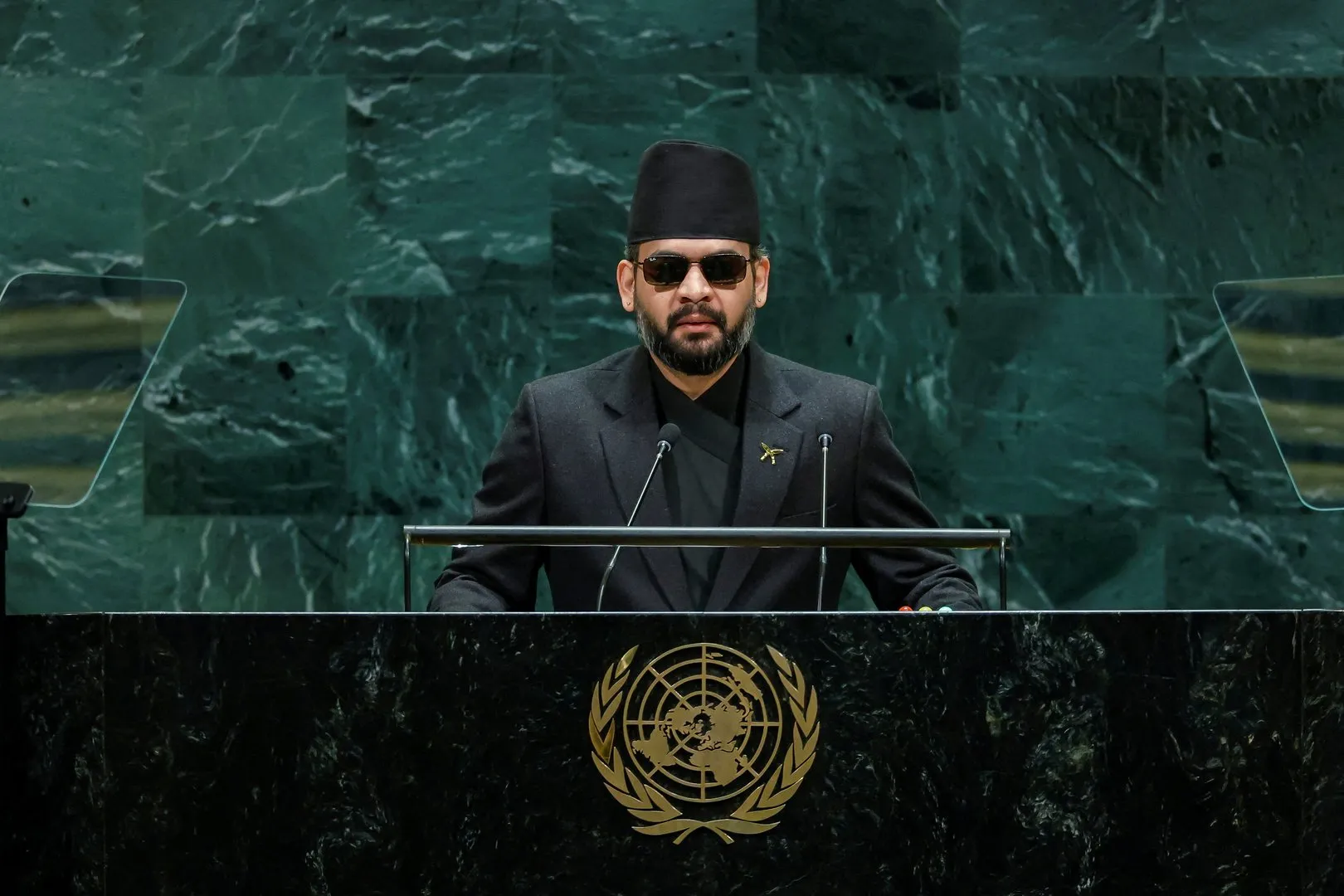
‘Hit by the climate we didn’t warm, hit by the wars we didn’t start.’
Nepal’s Prime Minister Balendra Shah was applauded at the UN General Assembly, as he highlighted how the world is failing countries on the frontline of the climate crisis.
Published On 25 Sep 2026
The 130-year-old English seaside theme park just named one of the best in the WORLD
YOU don’t have to go far to find one of the world’s best theme parks.
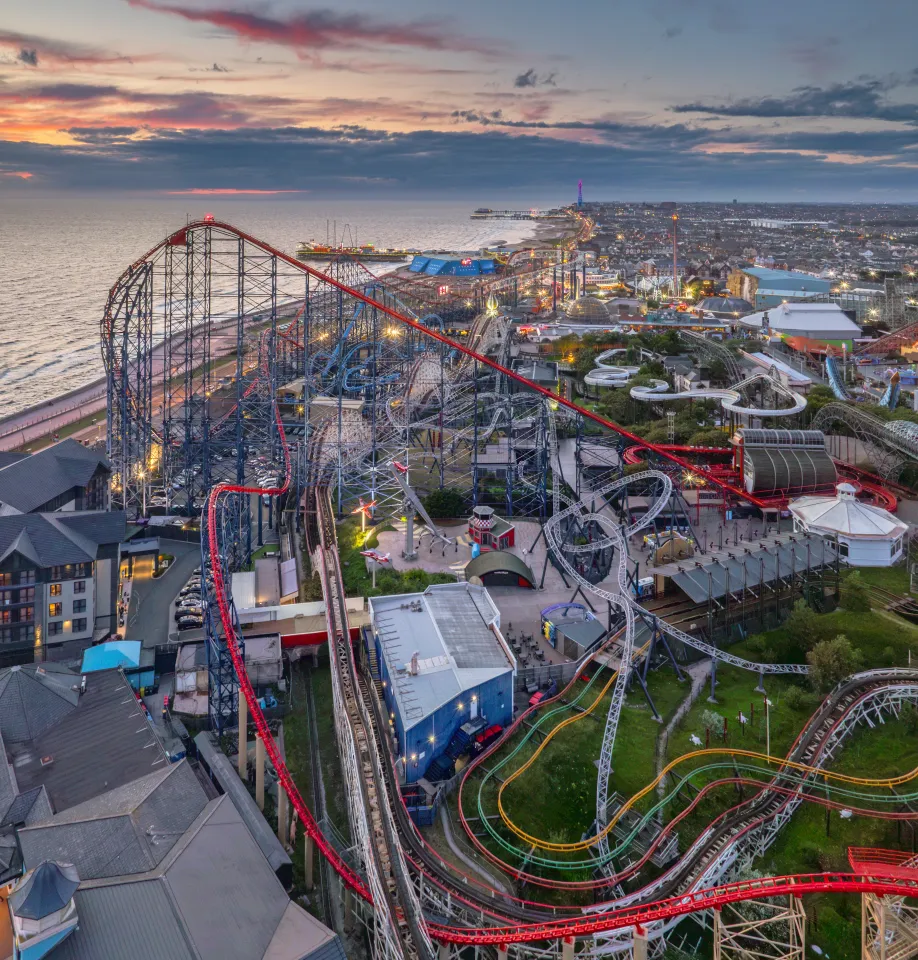
Pleasure Beach in Blackpool has just been crowned the ‘Best of the Best’ in the Park World Excellence Awards.

The ‘Best of the Best’ award is given to theme parks, rides, or tourist attractions that are the ‘best of all time’ within its part of the industry.
And this is the first time a UK theme park has won the award, with previous winners including Europa Park, Siam Park and Liseberg.
The park has around 30 attractions including huge rollercoasters and water rides.
And one of the rides is Aviktas, which opened in May 2026 and has also been named the ‘Best Ride of the Year’ at the awards.
Read more on travel inspo
The £8.7million ride is the largest ride of its kind in the UK, swinging riders 42 metres into the air on a rotating pendulum.
Amanda Thompson OBE, CEO of Pleasure Beach Resort said: “To be named Best of the Best is a massive achievement for our park.
“Our industry is full of so much talent, so to be recognised among the best speaks volumes on the dedication and hard work that has kept us moving forward for 130 years.
“Aviktas has been a hugely valuable addition to the park and I’ve been delighted by its reception so far.


“If they haven’t already I’d absolutely encourage people to visit Pleasure Beach and give our ride, now recognised as one of the world’s best a go!”
If you fancy heading to the theme park this autumn, Pleasure Beach Resort will remain open for most of September and October.
In October, you could also head to the theme park’s Halloween event – Journey to Hell – where you head through an immersive scare experience with three new scare mazes.
The winners of the Park World Excellence Awards
HERE are the top winners:
- Best Roller Coaster of the year: Falcons Flight at Six Flags Qiddiya City
- Best rollercoaster (limited budget of the year): Fireline Redwood, Fraispertuis City at Jeanménil, France
- Best Ride(s) of the Year: Skywatch at Six Flags Widdya City and Aviktas at Blackpool Pleasure Beach Resort
- Best Ride(s) (limited budget of the year): Seesaw Swing at Bellewaerde and Rush Water Canyon and Gold Rush at O’Fun Park
- Best Dark Ride or Media-Based Experience of the Year: Rally Flaklypa at Hunderfossen Eventypark
- Best Water Park Experience: Aquaticar at Legend of the Glowing Gaurdians, Aquarabia Qiddiya City
- Best Large Park of the Year: Europa Park
- Best Regional Park of the Year: Bellewaerde and Nigloland
- Best Waterpark of the Year: Aquarabia Qiddiya City
- Best of the Best: Blackpool Pleasure Beach

Best all-inclusive holidays for a child-free weekend

THE price of a big night out in the UK costs on average £74 per person when you factor in food, travel and drinks.
When you’re looking at those kinds of numbers, it makes way more sense to splash the cash on the latest trend for Brit holidaymakers – all inclusive weekenders in a hot country.
I searched every autumn weekend across October and November to find the absolute cheapest two-night all-inclusive packages for two adults – including return flights.
Somehow, you can jump on a plane, sleep in a hotel, eat three meals a day, enjoy unlimited drinks, and soak up some sunshine for little more than the cost of a couple of nights out at home. Grandparents, get the babysitting schedule ready.
Cala Millor, Majorca – £180pp in October
Cala Millor is one of the best places for international date nights, with its immaculate sandy beach and a flat, palm-lined promenade if you fancy stepping outside the hotel gates for an evening wander.
Early October still feels properly summery in Majorca, with temperatures around 25C – warm enough for poolside lounging without the oppressive August heat.
And you can lock in two nights all-inclusive at the BLUESEA Don Jaime for £180pp.
The outbound flight leaves Birmingham at 7.35pm on Friday and lands in Palma at 11.05pm, so there’s no need to sacrifice a full day’s annual leave.
Even better, the return flight doesn’t leave Palma until 11.15pm on Sunday, landing back in Birmingham at 12.50am – giving you almost all of Sunday on the island.
The hotel sits close to Cala Millor’s main strip and around five minutes’ walk from the seafront, with an outdoor pool, sun terrace and buffet restaurant to eliminate virtually all food-related admin for the weekend.
Alanya, Turkey – £195pp in October
If serious heat is your primary objective, Alanya takes the top spot on the shortlist.
The Turkish Riviera regularly stays in the mid-twenties throughout October, while its beaches, bars and resorts remain alive and kicking long after the British summer has packed up.
I found two nights all-inclusive at Sun Star Beach Hotel for £195pp, with the flight leaving London Stansted at 7.55pm on Friday meaning you can complete the working week before heading to the airport.
The return flight then leaves Antalya at 4.30pm on Sunday and lands back at Stansted at 6.55pm, so you’ll still get most of Sunday in Turkey without arriving home in the middle of the night.
The hotel sits in Mahmutlar and has its own beach area, an outdoor pool with waterslides and an on-site Turkish bath and spa.
For knackered parents, that means you can spend the weekend alternating between the hammam, the beach and the all-inclusive bar. A demanding schedule.
Calas de Mallorca, Majorca – £180pp in October
We’re heading back to Majorca for mid-October, but this time to the more peaceful east coast where it sits at 24C mid-October.
Calas de Mallorca is built around a series of sheltered, dramatic coves rather than one enormous resort strip, making it ideal if your perfect child-free weekend involves making as few decisions as humanly possible.
You can grab two nights all-inclusive at HSM Canarios Park for £180pp.
The outbound flight leaves Birmingham at 7.35pm on Friday, so you can work the day before setting off, and the Sunday flight leaves at 11.15pm, unlocking virtually the whole weekend without using a full day of annual leave.
The real trade secret at HSM Canarios Park is its free shuttle bus, which drops guests at Cala Antena Beach.
The hotel also has three outdoor pools, mini golf, tennis courts and a poolside bar – so you can get competitive before a post-workout tipple.
Lloret de Mar, Spain – £225pp in October
Late October on the Costa Brava loses the peak-summer surge of tourists while keeping hold of pleasant daytime temperatures of around 22C.
I hunted down two nights all-inclusive at BLUESEA Copacabana for £225pp.
The flight leaves London Luton at 7.40pm on Friday, allowing you to finish work before disappearing to Spain.
The return departs Barcelona at 4.10pm on Sunday and lands back at Luton at 5.35pm, getting you home at a surprisingly sensible time while still giving you the chance to spend the morning and early afternoon wringing every last drop out of the all-inclusive bar.
The hotel is close to Lloret de Mar town centre, putting you within easy reach of its shops, seafront promenades, tapas bars and beaches.
It may still be difficult to peel yourself away from the hotel’s sun terrace and outdoor pool, though – particularly once you’ve established a steady flow of all-inclusive drinks and snacks.
Agadir, Morocco – £150pp in November
This is the single best deal on the entire list, for me.
While the UK drops into its usual grey drizzle, Agadir serves up temperatures in the mid-twenties and miles of golden sand.
And for anyone who thinks Morocco is too far for a couple of nights, the outbound flight takes less than four hours.
It leaves London Stansted at 3.45pm on Friday and lands in Agadir at 7.35pm, meaning you may only need to take Friday afternoon off work.
And the return flight leaves Morocco at 7.30pm on Sunday and lands back at Stansted at 11.25pm, giving you almost all of Sunday in the sunshine.
You can secure two nights all-inclusive at El Pueblo Tamlelt for a frankly ridiculous £150pp.
It’s a sprawling, traditional Moroccan-style resort surrounded by gardens, with several pools, restaurants and bars.
And Agadir’s enormous beach and seafront promenade are only a short walk away, too.
El Arenal, Majorca – £155pp in November
El Arenal sits on Majorca’s southern coast, delivering a wide, flat seafront promenade, easy beach walks and plenty of open cafes, bars and restaurants.
November is mild here, with temperatures around 20C, making it a brilliant low-cost escape from the weather, household chores and anything requiring a packed lunch.
The flight leaves London Gatwick at 5.05pm on Friday and lands in Palma at 8.25pm.
Even better, the Sunday return doesn’t leave Palma until 10.45pm, landing back at Gatwick at 12.15am, giving you another full day on the island.
I found two nights all-inclusive at BLUESEA Mediodia for just £155pp.
The hotel sits only around 80m from the sand and right in the heart of El Arenal, meaning you can fit in an early-morning beach walk before heading back for an unlimited breakfast.
Albufeira, Portugal – £175pp in November
Albufeira is a really smart late-autumn pick because its Old Town remains open and lively long after summer ends.
You get historic cobbled streets, cliff-backed beaches and seafront restaurants without fighting half of Britain for a table – and temperatures up to 20C in the day.
And yes, there is a greater chance of rain than in summer, but there’s also every chance of blue skies, alfresco drinks and wondering why you ever considered the local cinema.
The outbound flight leaves Newcastle at 5.20pm on Friday, fitting neatly around the working day.
And the return leaves Faro at 5.25pm on Sunday, so you still get most of Sunday in Portugal without rolling through the front door after midnight.
You can book two nights all-inclusive at the four-star Grand Muthu Forte da Oura for £175pp.
The hotel is close to Oura Beach and the lively Areias de Sao Joao area, with a large outdoor pool and spacious terrace surrounded by gardens.
Perfect for an Aperol Spritz-fuelled wander before heading down to the beach.
Torremolinos, Costa del Sol – £180pp in November
Closing out November, Torremolinos delivers mild 20C Andalusian weather, a gorgeous seafront and excellent fresh seafood in the historic La Carihuela district.
I spotted two nights all-inclusive at the four-star BLUESEA Al-Andalus for £180pp.
The flight leaves Dublin at 5.05pm on Friday, so there’s no need to lose your entire Friday.
And the return doesn’t leave Málaga until 10.30pm on Sunday, meaning you can squeeze the maximum possible amount of sunshine out of a two-night stay.
The hotel is set in peaceful subtropical gardens, with an outdoor pool and sun terrace and within walking distance of La Carihuela Beach – famous for its long promenade and plenty of dangerously tempting seafood restaurants.
That is a four-star all-inclusive escape for less than some couples spend on dinner, drinks and a taxi home. No-brainer.

‘Perfect’ The Damned United cast on Netflix quietly stars Line of Duty icon
The Damned United tells an unbelievable true story that’s perfect for Ted Lasso fans.

Inside The Damned United cast on Netflix. (Image: BBC FILMs)
Netflix’s The Damned United stars legends from the worlds of Harry Potter, The Good Omens and Adolescence.
After dropping on Netflix at the weekend, sports drama The Damned United has soared into the streamer’s Top 10 most-watched list and continues to rise in the charts.
Originally released in 2009 and based on a novel by David Peace three years prior, The Damned United tells the turbulent tale of Brian Clough and his disastrous run as the manager of Leeds United in 1974. Only lasting 44 days in the job, Clough was quickly able to alienate the players and the board, leading to the collapse of his professional football career.
As Netflix subscribers continue to discover the classic sports film, here’s everything there is to know about The Damned United cast.
The Damned United cast in full
Brian Clough – Michael Sheen
Watch Jose Mourinho Netflix doc with free Netflix subscription
This article contains affiliate links, we will receive a commission on any sales we generate from it. Learn more
Jose Mourinho’s three-part Netflix documentary is available to watch at no extra cost for Sky customers as the provider gives away free subscriptions with each of its Sky Stream TV bundles.
Arrogant and fiercely outspoken Brian Clough wasn’t quiet when it came to criticising Leeds United’s former manager Don Revie.
So it took Clough by surprise when he was asked by the team’s board to take over managing the reigning champions.
Actor Michael Sheen has starred in an abundance of hit shows and films throughout his career including The Queen, Good Omens, Masters of Sex, The Twilight Saga and Frost/Nixon.
Peter Taylor – Timothy Spall
Peter Taylor is Clough’s loyal assistant manager and best friend who helps ground the fiery manager when needed.
He is portrayed by actor Timothy Spall who is best remembered for his work in Mr Turner, The King’s Speech and in the Harry Potter franchise as the villainous Peter Pettigrew.
Billy Bremner – Stephen Graham
Billy Bremner is the hard-working captain of Leeds United who is Clough’s main antagonist, leading the resistance that brings about the manager’s infamously short 44-day run at the club.
Bremner is brought to life in The Damned United by Emmy Award-winning actor Stephen Graham, renowned for his work in Netflix’s Adolescence, This is England, A Thousand Blows and Boardwalk Empire.
John O’Hare – Martin Compston
John O’Hare is the team’s striker, known for his aggressive team spirit while playing under Clough.
He is portrayed by none other than Martin Compston, famed for starring as DI Steve Arnott in the unforgettable Line of Duty.
Before becoming a household name in the BBC crime drama, Compston was a professional footballer in Scotland and made a couple of appearances playing for Greenock Morton.
Don Revie – Colm Meaney
Don Revie is the legendary, formidable Leeds United manager who leaves to manage the England national team. It is his exit from the team that leads his rival Clough to begin his chaotic short stint at Leeds.
Don is played by actor Colm Meaney who stars in Remarkably Bright Creatures, In the Land of Saints and Sinners and Star Trek: Deep Space Nine.
Sam Longson – Jim Broadbent
Prior to Clough joining Leeds United, he was the manager of Derby County with Sam Longson acting as its chairman.
Actor Jim Broadbent is recognised for starring in the Harry Potter and Bridget Jones franchises, as well as Game of Thrones and Only Fools and Horses.
The Damned United is available to watch on Netflix.
Monday 21 September Founder’s Day (in lieu) in Ghana
This article highlights the historical significance of Founder’s Day in Ghana, a public holiday established to honor the legacy of the nation’s first president, Dr. Kwame Nkrumah. The text recounts Ghana’s journey from a British colony known as the Gold Coast to becoming the first sub-Saharan African country to gain independence in 1957. It explains the symbolism of the national flag designed by Nkrumah and details his instrumental role in the country’s liberation and early governance. Beyond historical analysis, the source provides contemporary updates on Ghanaian sports, including the reappointment of the national football coach. Finally, it situates these stories within a broader global news context, covering exchange rates an …