


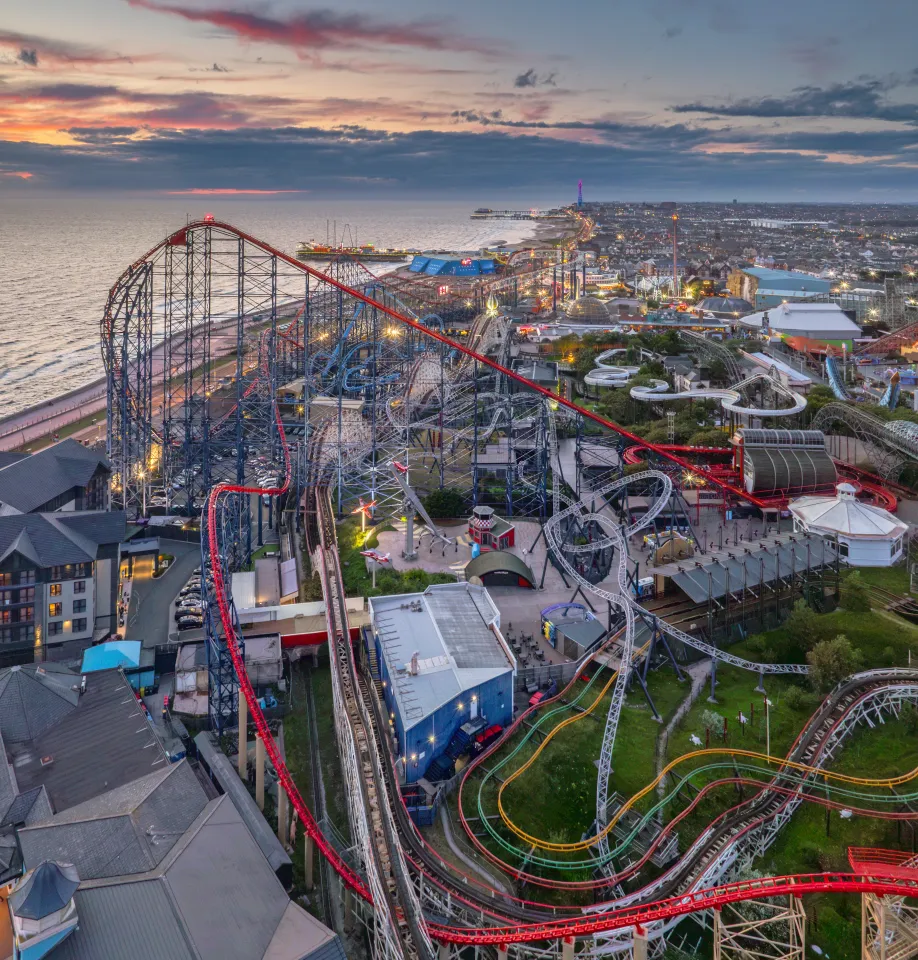
The 130-year-old English seaside theme park just named one of the best in the WORLD
YOU don’t have to go far to find one of the world’s best theme parks.
Pleasure Beach in Blackpool has just been crowned the ‘Best of the Best’ in the Park World Excellence Awards.

The ‘Best of the Best’ award is given to theme parks, rides, or tourist attractions that are the ‘best of all time’ within its part of the industry.
And this is the first time a UK theme park has won the award, with previous winners including Europa Park, Siam Park and Liseberg.
The park has around 30 attractions including huge rollercoasters and water rides.
And one of the rides is Aviktas, which opened in May 2026 and has also been named the ‘Best Ride of the Year’ at the awards.
Read more on travel inspo
The £8.7million ride is the largest ride of its kind in the UK, swinging riders 42 metres into the air on a rotating pendulum.
Amanda Thompson OBE, CEO of Pleasure Beach Resort said: “To be named Best of the Best is a massive achievement for our park.
“Our industry is full of so much talent, so to be recognised among the best speaks volumes on the dedication and hard work that has kept us moving forward for 130 years.
“Aviktas has been a hugely valuable addition to the park and I’ve been delighted by its reception so far.


“If they haven’t already I’d absolutely encourage people to visit Pleasure Beach and give our ride, now recognised as one of the world’s best a go!”
If you fancy heading to the theme park this autumn, Pleasure Beach Resort will remain open for most of September and October.
In October, you could also head to the theme park’s Halloween event – Journey to Hell – where you head through an immersive scare experience with three new scare mazes.
The winners of the Park World Excellence Awards
HERE are the top winners:
- Best Roller Coaster of the year: Falcons Flight at Six Flags Qiddiya City
- Best rollercoaster (limited budget of the year): Fireline Redwood, Fraispertuis City at Jeanménil, France
- Best Ride(s) of the Year: Skywatch at Six Flags Widdya City and Aviktas at Blackpool Pleasure Beach Resort
- Best Ride(s) (limited budget of the year): Seesaw Swing at Bellewaerde and Rush Water Canyon and Gold Rush at O’Fun Park
- Best Dark Ride or Media-Based Experience of the Year: Rally Flaklypa at Hunderfossen Eventypark
- Best Water Park Experience: Aquaticar at Legend of the Glowing Gaurdians, Aquarabia Qiddiya City
- Best Large Park of the Year: Europa Park
- Best Regional Park of the Year: Bellewaerde and Nigloland
- Best Waterpark of the Year: Aquarabia Qiddiya City
- Best of the Best: Blackpool Pleasure Beach
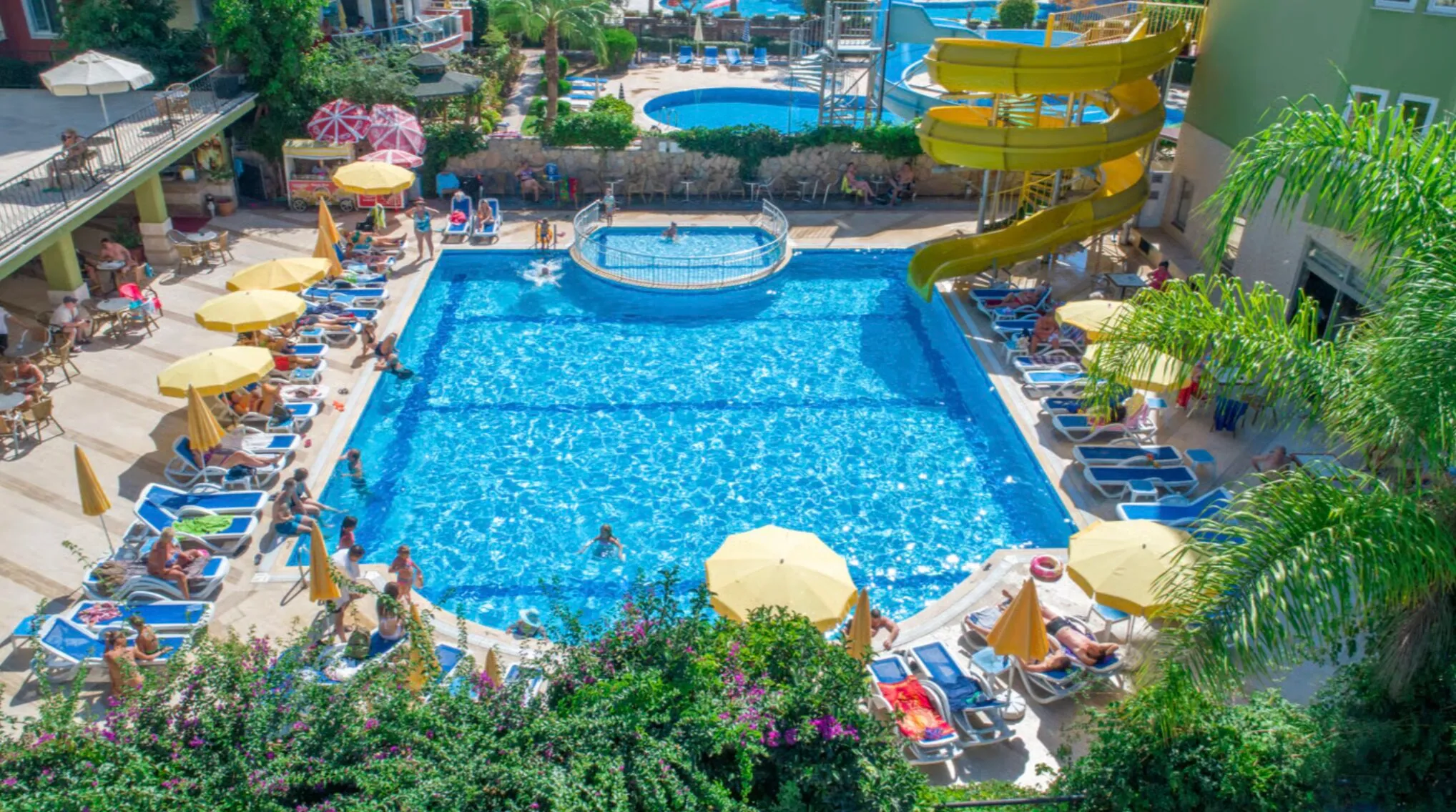
Best all-inclusive holidays for a child-free weekend

THE price of a big night out in the UK costs on average £74 per person when you factor in food, travel and drinks.
When you’re looking at those kinds of numbers, it makes way more sense to splash the cash on the latest trend for Brit holidaymakers – all inclusive weekenders in a hot country.
I searched every autumn weekend across October and November to find the absolute cheapest two-night all-inclusive packages for two adults – including return flights.
Somehow, you can jump on a plane, sleep in a hotel, eat three meals a day, enjoy unlimited drinks, and soak up some sunshine for little more than the cost of a couple of nights out at home. Grandparents, get the babysitting schedule ready.
Cala Millor, Majorca – £180pp in October
Cala Millor is one of the best places for international date nights, with its immaculate sandy beach and a flat, palm-lined promenade if you fancy stepping outside the hotel gates for an evening wander.
Early October still feels properly summery in Majorca, with temperatures around 25C – warm enough for poolside lounging without the oppressive August heat.
And you can lock in two nights all-inclusive at the BLUESEA Don Jaime for £180pp.
The outbound flight leaves Birmingham at 7.35pm on Friday and lands in Palma at 11.05pm, so there’s no need to sacrifice a full day’s annual leave.
Even better, the return flight doesn’t leave Palma until 11.15pm on Sunday, landing back in Birmingham at 12.50am – giving you almost all of Sunday on the island.
The hotel sits close to Cala Millor’s main strip and around five minutes’ walk from the seafront, with an outdoor pool, sun terrace and buffet restaurant to eliminate virtually all food-related admin for the weekend.
Alanya, Turkey – £195pp in October
If serious heat is your primary objective, Alanya takes the top spot on the shortlist.
The Turkish Riviera regularly stays in the mid-twenties throughout October, while its beaches, bars and resorts remain alive and kicking long after the British summer has packed up.
I found two nights all-inclusive at Sun Star Beach Hotel for £195pp, with the flight leaving London Stansted at 7.55pm on Friday meaning you can complete the working week before heading to the airport.
The return flight then leaves Antalya at 4.30pm on Sunday and lands back at Stansted at 6.55pm, so you’ll still get most of Sunday in Turkey without arriving home in the middle of the night.
The hotel sits in Mahmutlar and has its own beach area, an outdoor pool with waterslides and an on-site Turkish bath and spa.
For knackered parents, that means you can spend the weekend alternating between the hammam, the beach and the all-inclusive bar. A demanding schedule.
Calas de Mallorca, Majorca – £180pp in October
We’re heading back to Majorca for mid-October, but this time to the more peaceful east coast where it sits at 24C mid-October.
Calas de Mallorca is built around a series of sheltered, dramatic coves rather than one enormous resort strip, making it ideal if your perfect child-free weekend involves making as few decisions as humanly possible.
You can grab two nights all-inclusive at HSM Canarios Park for £180pp.
The outbound flight leaves Birmingham at 7.35pm on Friday, so you can work the day before setting off, and the Sunday flight leaves at 11.15pm, unlocking virtually the whole weekend without using a full day of annual leave.
The real trade secret at HSM Canarios Park is its free shuttle bus, which drops guests at Cala Antena Beach.
The hotel also has three outdoor pools, mini golf, tennis courts and a poolside bar – so you can get competitive before a post-workout tipple.
Lloret de Mar, Spain – £225pp in October
Late October on the Costa Brava loses the peak-summer surge of tourists while keeping hold of pleasant daytime temperatures of around 22C.
I hunted down two nights all-inclusive at BLUESEA Copacabana for £225pp.
The flight leaves London Luton at 7.40pm on Friday, allowing you to finish work before disappearing to Spain.
The return departs Barcelona at 4.10pm on Sunday and lands back at Luton at 5.35pm, getting you home at a surprisingly sensible time while still giving you the chance to spend the morning and early afternoon wringing every last drop out of the all-inclusive bar.
The hotel is close to Lloret de Mar town centre, putting you within easy reach of its shops, seafront promenades, tapas bars and beaches.
It may still be difficult to peel yourself away from the hotel’s sun terrace and outdoor pool, though – particularly once you’ve established a steady flow of all-inclusive drinks and snacks.
Agadir, Morocco – £150pp in November
This is the single best deal on the entire list, for me.
While the UK drops into its usual grey drizzle, Agadir serves up temperatures in the mid-twenties and miles of golden sand.
And for anyone who thinks Morocco is too far for a couple of nights, the outbound flight takes less than four hours.
It leaves London Stansted at 3.45pm on Friday and lands in Agadir at 7.35pm, meaning you may only need to take Friday afternoon off work.
And the return flight leaves Morocco at 7.30pm on Sunday and lands back at Stansted at 11.25pm, giving you almost all of Sunday in the sunshine.
You can secure two nights all-inclusive at El Pueblo Tamlelt for a frankly ridiculous £150pp.
It’s a sprawling, traditional Moroccan-style resort surrounded by gardens, with several pools, restaurants and bars.
And Agadir’s enormous beach and seafront promenade are only a short walk away, too.
El Arenal, Majorca – £155pp in November
El Arenal sits on Majorca’s southern coast, delivering a wide, flat seafront promenade, easy beach walks and plenty of open cafes, bars and restaurants.
November is mild here, with temperatures around 20C, making it a brilliant low-cost escape from the weather, household chores and anything requiring a packed lunch.
The flight leaves London Gatwick at 5.05pm on Friday and lands in Palma at 8.25pm.
Even better, the Sunday return doesn’t leave Palma until 10.45pm, landing back at Gatwick at 12.15am, giving you another full day on the island.
I found two nights all-inclusive at BLUESEA Mediodia for just £155pp.
The hotel sits only around 80m from the sand and right in the heart of El Arenal, meaning you can fit in an early-morning beach walk before heading back for an unlimited breakfast.
Albufeira, Portugal – £175pp in November
Albufeira is a really smart late-autumn pick because its Old Town remains open and lively long after summer ends.
You get historic cobbled streets, cliff-backed beaches and seafront restaurants without fighting half of Britain for a table – and temperatures up to 20C in the day.
And yes, there is a greater chance of rain than in summer, but there’s also every chance of blue skies, alfresco drinks and wondering why you ever considered the local cinema.
The outbound flight leaves Newcastle at 5.20pm on Friday, fitting neatly around the working day.
And the return leaves Faro at 5.25pm on Sunday, so you still get most of Sunday in Portugal without rolling through the front door after midnight.
You can book two nights all-inclusive at the four-star Grand Muthu Forte da Oura for £175pp.
The hotel is close to Oura Beach and the lively Areias de Sao Joao area, with a large outdoor pool and spacious terrace surrounded by gardens.
Perfect for an Aperol Spritz-fuelled wander before heading down to the beach.
Torremolinos, Costa del Sol – £180pp in November
Closing out November, Torremolinos delivers mild 20C Andalusian weather, a gorgeous seafront and excellent fresh seafood in the historic La Carihuela district.
I spotted two nights all-inclusive at the four-star BLUESEA Al-Andalus for £180pp.
The flight leaves Dublin at 5.05pm on Friday, so there’s no need to lose your entire Friday.
And the return doesn’t leave Málaga until 10.30pm on Sunday, meaning you can squeeze the maximum possible amount of sunshine out of a two-night stay.
The hotel is set in peaceful subtropical gardens, with an outdoor pool and sun terrace and within walking distance of La Carihuela Beach – famous for its long promenade and plenty of dangerously tempting seafood restaurants.
That is a four-star all-inclusive escape for less than some couples spend on dinner, drinks and a taxi home. No-brainer.
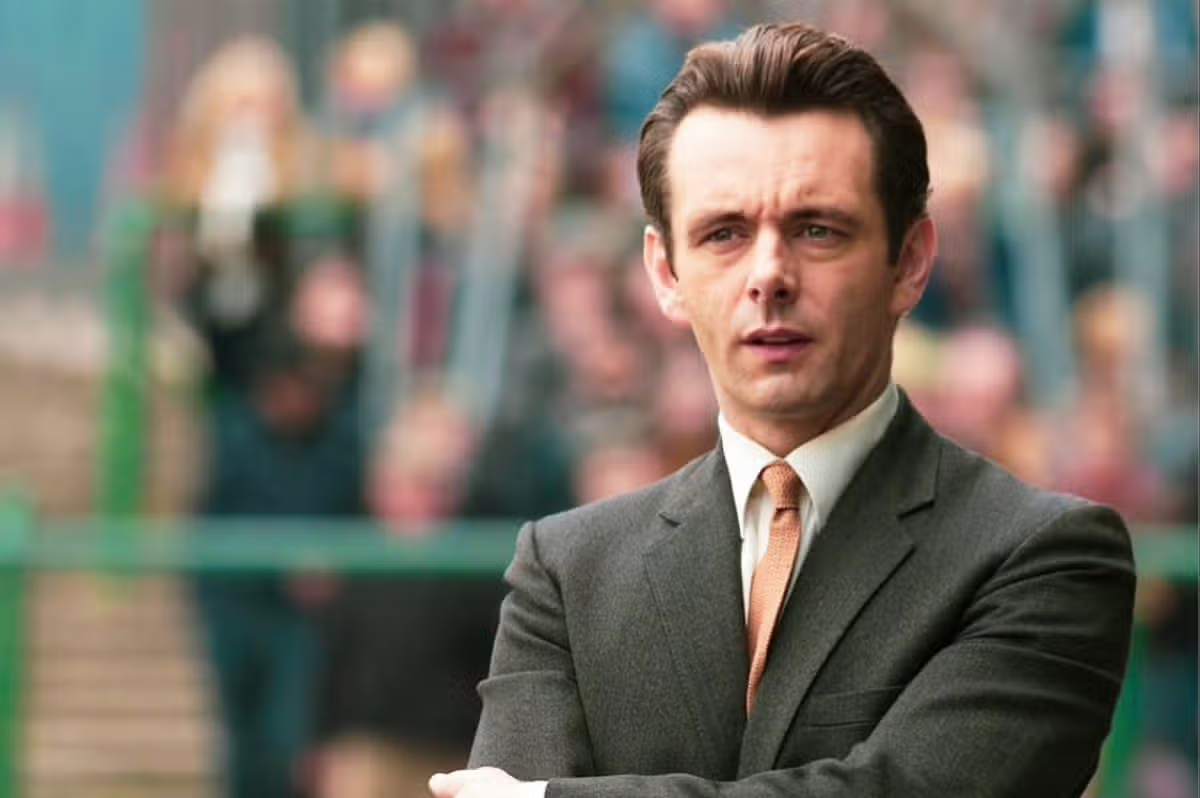
‘Perfect’ The Damned United cast on Netflix quietly stars Line of Duty icon
The Damned United tells an unbelievable true story that’s perfect for Ted Lasso fans.

Inside The Damned United cast on Netflix. (Image: BBC FILMs)
Netflix’s The Damned United stars legends from the worlds of Harry Potter, The Good Omens and Adolescence.
After dropping on Netflix at the weekend, sports drama The Damned United has soared into the streamer’s Top 10 most-watched list and continues to rise in the charts.
Originally released in 2009 and based on a novel by David Peace three years prior, The Damned United tells the turbulent tale of Brian Clough and his disastrous run as the manager of Leeds United in 1974. Only lasting 44 days in the job, Clough was quickly able to alienate the players and the board, leading to the collapse of his professional football career.
As Netflix subscribers continue to discover the classic sports film, here’s everything there is to know about The Damned United cast.
The Damned United cast in full
Brian Clough – Michael Sheen
Watch Jose Mourinho Netflix doc with free Netflix subscription
This article contains affiliate links, we will receive a commission on any sales we generate from it. Learn more
Jose Mourinho’s three-part Netflix documentary is available to watch at no extra cost for Sky customers as the provider gives away free subscriptions with each of its Sky Stream TV bundles.
Arrogant and fiercely outspoken Brian Clough wasn’t quiet when it came to criticising Leeds United’s former manager Don Revie.
So it took Clough by surprise when he was asked by the team’s board to take over managing the reigning champions.
Actor Michael Sheen has starred in an abundance of hit shows and films throughout his career including The Queen, Good Omens, Masters of Sex, The Twilight Saga and Frost/Nixon.
Peter Taylor – Timothy Spall
Peter Taylor is Clough’s loyal assistant manager and best friend who helps ground the fiery manager when needed.
He is portrayed by actor Timothy Spall who is best remembered for his work in Mr Turner, The King’s Speech and in the Harry Potter franchise as the villainous Peter Pettigrew.
Billy Bremner – Stephen Graham
Billy Bremner is the hard-working captain of Leeds United who is Clough’s main antagonist, leading the resistance that brings about the manager’s infamously short 44-day run at the club.
Bremner is brought to life in The Damned United by Emmy Award-winning actor Stephen Graham, renowned for his work in Netflix’s Adolescence, This is England, A Thousand Blows and Boardwalk Empire.
John O’Hare – Martin Compston
John O’Hare is the team’s striker, known for his aggressive team spirit while playing under Clough.
He is portrayed by none other than Martin Compston, famed for starring as DI Steve Arnott in the unforgettable Line of Duty.
Before becoming a household name in the BBC crime drama, Compston was a professional footballer in Scotland and made a couple of appearances playing for Greenock Morton.
Don Revie – Colm Meaney
Don Revie is the legendary, formidable Leeds United manager who leaves to manage the England national team. It is his exit from the team that leads his rival Clough to begin his chaotic short stint at Leeds.
Don is played by actor Colm Meaney who stars in Remarkably Bright Creatures, In the Land of Saints and Sinners and Star Trek: Deep Space Nine.
Sam Longson – Jim Broadbent
Prior to Clough joining Leeds United, he was the manager of Derby County with Sam Longson acting as its chairman.
Actor Jim Broadbent is recognised for starring in the Harry Potter and Bridget Jones franchises, as well as Game of Thrones and Only Fools and Horses.
The Damned United is available to watch on Netflix.

Monday 21 September Founder’s Day (in lieu) in Ghana
This article highlights the historical significance of Founder’s Day in Ghana, a public holiday established to honor the legacy of the nation’s first president, Dr. Kwame Nkrumah. The text recounts Ghana’s journey from a British colony known as the Gold Coast to becoming the first sub-Saharan African country to gain independence in 1957. It explains the symbolism of the national flag designed by Nkrumah and details his instrumental role in the country’s liberation and early governance. Beyond historical analysis, the source provides contemporary updates on Ghanaian sports, including the reappointment of the national football coach. Finally, it situates these stories within a broader global news context, covering exchange rates an …

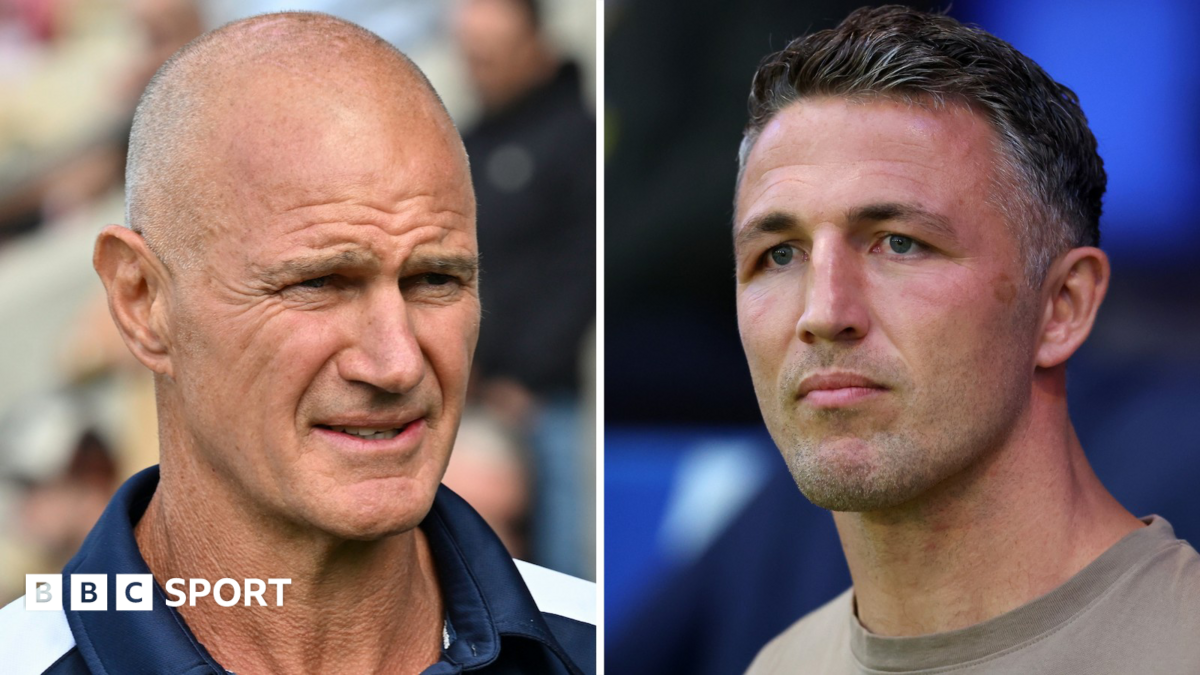
Super League play-off semi-final: Leeds Rhinos and Warrington Wolves meet in first game
Leeds come into the fixture following two losses against Wigan and Hull FC at home.
Looking further back, they closed out their regular campaign with three defeats in five matches.
Asked what it would take to reach the Grand Final, Leeds boss Brad Arthur said he is not worried about his side’s inconsistent run of form.
“[We have to be] the best version of us. We’ve seen that plenty of times this year and we’ve played a lot of good footy,” he told BBC Radio Leeds.
“Our past couple of weeks haven’t been ideal but it doesn’t really count for much right now. It doesn’t mean anything. All those past two games showed was a couple of things that we need to tidy up which we’ve done during the week around execution.
“But like the first 27 rounds, all that’s done is put us in a position where we’re 80 minutes away from Old Trafford so that’s all we got to focus on.”
Leeds last reached a Grand Final in 2022, however that achievement came off the back of Richard Agar’s departure in March of that season, when Leeds had won just once in their opening six games of the campaign.
In stepped Rohan Smith, who eventually strung together 11 wins from 13 matches to take them to Old Trafford where they were defeated by St Helens – however it was an even more impressive achievement given their fifth-placed finish at the end of the season.
This year, Arthur thinks his side are prepared for the rigours of a post-season campaign.
“We’re ready to go. We’re nice and fresh and the best version of us, we know, is good enough,” he added.
“We’ve got to find that and we’ve got to do it for 80 minutes.”
Saudi Arabia allies line up support as Houthi attacks mount | Conflict News
France is sending its military to protect key Yanbu oil terminal; Pakistan and Turkiye to hold military talks with Riyadh.
Published On 25 Sep 2026
Saudi Arabia’s allies are rallying to support the country as the Houthi rebels step up attacks.
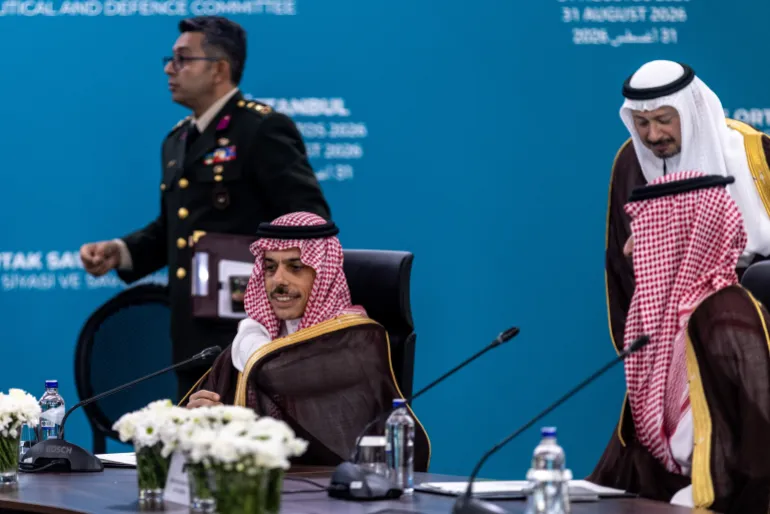
France confirmed on Friday that it is sending troops to guard the major oil terminal at Yanbu. Meanwhile, Saudi officials are meeting with peers from Pakistan and Turkiye to discuss options under their mutual defence pact.
Recommended Stories
list of 4 itemsend of list
French President Emmanuel Macron told broadcasters TF1 and France 2 that Paris is to send “soldiers, radars, and defence systems” to the Red Sea port of Yanbu.
“Not to involve ourselves in any conflict, but to protect the site,” he said.
Yanbu hosts major oil storage and refining facilities and is connected by the East-West Pipeline, which can carry up to seven million barrels a day.
The Houthis, also known as Ansar Allah (supporters of God), have repeatedly fired missiles and drones into Saudi Arabia, disrupting oil flows from the world’s largest energy exporter.
On Thursday, the rebel group said it had struck the facilities of state oil firm Aramco in Yanbu, and a “sensitive target” in Riyadh. Saudi forces said they had intercepted six ballistic missiles. Authorities have not confirmed any damage.
The foreign ministers of Saudi Arabia, Pakistan and Turkiye met on Thursday to arrange an “urgent meeting” of their military chiefs of staff under the Mecca Joint Defence Agreement, which treats an attack on one member as an attack on all, the Saudi foreign ministry said in a statement.
They also condemned Houthi attacks that they claimed targeted Mecca and other civilian sites.
However, doubt persists over what action Turkiye and Pakistan might take under the pact, which is yet to be officially triggered. Both of the Saudi allies are heavily involved as mediators seeking to bring an end to the conflicts across the Middle East.
Saudi Arabia’s grand mufti called on soldiers to be ready to lay down their lives to fight the Houthis, according to the Saudi state news agency.
The Iran-aligned Houthis have been battling the Saudi-backed government of Yemen for more than a decade. That conflict has been rekindled amid Israel’s wars against the Iran-aligned Hamas group in Gaza and the Hezbollah group in Lebanon, and the United States war on Iran.
At the United Nations General Assembly in New York, Yemen’s Vice President Abdullah Abdulkader al-Alimi-Bawzer warned that the Houthis were using shipping security “as a tool for blackmail”.
“It is taking hostage the entire global economy,” he said.
The US has not renewed military involvement, but Saudi Foreign Minister Prince Faisal bin Farhan Al Saud said the kingdom was “continuing to work with our partners in the US”.

The Houthi targeting of Yanbu adds to the pressure on Saudi Arabia’s oil exports.
Earlier this month, the Houthis seized the Yemeni port of Mocha and several Red Sea islands, giving them significant control over the Bab al-Mandeb strait, which usually carries about 12 percent of global oil trade.
Strikes have also disrupted the operation of the East-West Pipeline linking Yanbu to export routes. Riyadh had been using it to export crude bypassing the Strait of Hormuz, which is restricted amid the Iran-US war.
However, the Houthis have now forced the Saudis to switch some exports back to Hormuz.
Brent crude rose more than 3 percent on Thursday, briefly topping $108 a barrel, before easing to $105.77 on Friday morning.
June Goh, a senior oil market analyst at Sparta Commodities in Singapore, said oil would likely stay above $100 a barrel as long as the war on Iran continued.
“With no clear resolution in sight, the gap in oil inventories globally is getting wider,” Goh told Al Jazeera.

I visited ‘world’s most walkable city’ but it’s actually a nightmare for pedestrians
There is no better way to explore a city than by foot, but not all places are as suitable for an adventure as others, as I found out during a recent visit to the world’s most walkable city

I set out on a walk around the city(Image: Milo Boyd)
There is no better way to explore a city than on foot. Once touched down in a city, bag in the hotel and a fresh pair of socks on, the first thing I do is go for a walk.
It is impossible to get a feel for a place from the back of a taxi or from the elevated vantage point of a coach. You’ve got to start pounding the pavement, ideally without a destination in mind, and see where you end up.
On a recent trip to Rome, I set out from my central station hotel and marveled at the carnage of the Trevi Fountain queues, crossed the Ponte Sant’Angelo, and witnessed a coordinated group of ball-under-cup scammers sweatily fail to take anyone’s money. Last spring, I headed out into Benidorm, finding myself an impossibly cheap roast, a seafront pint of Guinness, and a ‘Good boys go to heaven, bad boys go to Benidorm’ t-shirt.
And so, in April, I applied the same approach to Seoul, a city recently named the most walkable in the world.
Do you have a story to share? Email webtravel@reachplc.com

Each year, Time Out conducts an annual city survey, this time around quizzing 24,000 people on how easy or not it is to discover given cities on foot. The ranking is based on the highest percentage of locals who rated their city’s walkability ‘good’ or ‘amazing’, and the South Korean capital tops the list.
“A city doesn’t have to be small to be walkable. In fact, Seoul is one of the largest cities on the list by surface area and population, but its impressive 93 percent approval rating from locals has secured the South Korean capital joint-first position. Why? Well, the city has a reputation as an exceedingly safe place to stroll by day and night, and is home to neighbourhoods such as Myeongdong, Insadong, and Hongdae, which are all primed for exploring on foot,” writes Time Out.
“Then there are the innovative pedestrian walkways, like Seoullo 7017, an 1074m-long elevated ‘sky garden’ which has seen an old inner city highway revamped into a stroll-worthy green space, home to 24,000 different plants. In downtown Seoul, the Cheonggyecheon Stream is flanked by a walkway that not only links many of the city’s central metro stations, but also landmarks such as Gwanjang Market, Jongmyo Shrine and Gyeongbokgung Palace.”
I could not disagree more.
Seoul is a fantastic city. It’s alive with a kind of youthful, optimistic energy that feels far removed from most places I’ve visited; it’s fearlessly trendy, and it’s centered on an urban mountain blanketed with cherry blossoms come the spring.
But walkable it is not. Seoul is a car city.
The almost unbelievably cheap cost of an Uber (we’re talking around £5 for a half-hour ride) means that hopping in a cab is far more common than in the UK, while the wide, four and six-lane roads that dominate much of the city encourage motoring. And produce a lot of fumes.
According to NASA, Seoul is one of the world’s cities with the worst air pollution, beating Los Angeles, Tokyo, Paris, and London. You can certainly feel it. On one crisp morning, I walked up Namsan, the 170-meter-tall hill in Seoul’s center. The view from the top would be spectacular, were it not for the heavy, shimmering cloud that hung over everything.
Walking back down, I started to get the vague feeling I’d done something wrong. I hadn’t accidentally offended a waiter or lost my hotel pass; it was the signs. Seoul is a city of signs. From the expected ‘no smoking’, to the less typical ‘no archery’, to the possibly unique ‘no hiking without a flashlight’, everywhere you look, some kind of rule is being transmitted to you. It doesn’t leave you with a feeling of freedom and exploration, nor do the CCTV cameras placed on tall metal poles in the city’s woodland.
It’s a place that’s big on rules and completely opposed to bins. Having finished a snack, I walked for two hours without finding a trash can. South Koreans are expected to take their rubbish home with them – a system that says a lot about the population’s diligent character, but one I find inherently anti-social.
As I do the lack of pavements that had me regularly sliding down alleyway walls to give way to cars, and the complete, frustrating prohibition of jaywalking. Couple all of this with the fact that the city lacks an obvious centre and is exhaustingly massive, and its status as one of the world’s least walkable cities is clear.
Given my love of treading the tarmac, it says a lot about how fantastic the rest of Seoul is that I left in love with the place. From the fish-filled waters of Cheonggyecheon River, the rusty octopus of Yongma Land, and the impossibly cheap but high-grade cosmetics, it’s a fascinating place that feels like it’s at the centre of the world. Just prepare to order a cab.

Haven to open 40th holiday park in the UK with huge swimming pool, private beach and £8pn beachfront stays
HAVEN has just bought its 40th holiday park – and it’s already one of the most popular in the country.
The park found in West Sussex has 2,500 pitches, is right next to its own private beach and you can book a stay from less than £10per night.
The holiday park in question is Seal Bay in West Sussex – it’s award-winning and was recently crowned UK’s most popular £9.50 holiday park.
It has thousands of pitches, there’s plenty of entertainment for the whole family and it’s minutes away from the beach, what’s not to love?
Seal Bay sits on the coast in Selsey and when it comes to picking a place to stay, visitors can choose from seaside caravans to beachfront pods or glamping options.
All stays come with kitted-out kitchens, bed linen, as well as access to the swimming pools and entertainment.


The simplest option is camping, with a choice of grass, electric or serviced pitches – each has a parking space and access to hot shower facilities.
Caravans range from comfy Bronze bases which sleeps up to eight guests, all the way to Platinum caravans that feel more like a homely cottage.
Lodges are larger with their own decks – and some luxury ones even come with a private hot tub.
Beachfront pods are a great choice for those wanting a cosy hideaway facing the sea – they have mezzanines and fold-out double beds, as well as private decking to enjoy that sea breeze.
For those visiting as a large group, you can even book an entire self-catering house.
As for entertainment and play there’s plenty for all ages – some of the highlights are its arcades, bowling, and soft play zones.

There’s also a swimming pool with a splash zone for toddlers, wave simulator, inflatable obstacle course, lazy river and waterslides.
Families with young children can get crafting at the create-your-own teddy bear factory, sand art sessions and try out mini archery which is for those between two and five-years-old.
Older kids should head to the Dockyard which has a large climbing wall and adventure golf.
There’s plenty for adults and couples too, like live music, comedy nights, and Big Red Button Bingo.
When it comes to eating, there’s the Above the Bay Bar & Kitchen which opened earlier this year, along with Smokey’s BBQ Kitchen and the Cafe Lido.
From the park, holidaymakers have direct access down to Seal Bay Beach – and almost one mile of it is reserved for guests only.
Mid-week breaks can be booked for under £250.
A family of up to six can book a four-night stay in May 2027 from £244 in a Classic 2 Bed Holiday Caravan – or £10.16pppn.
If you fancy a break in the next few weeks, a four-night stay in a Classic Caravan from 12-16 October can be booked out from £196 – or £8.16pppn.
Seal Bay will continue to trade under its current name for the remainder of 2026, before changings its name to the Haven brand for 2027.
It’s not the first holiday park that has been taken on by Haven in the last few years – it previously acquired the Richmond Holiday Centre which has now been named Haven Skegness Holiday Park.
Simon Palethorpe, CEO, Haven said: “I’m delighted that we are welcoming Seal Bay to the Haven family. It’s a fantastic park in the most stunning location and will sit brilliantly alongside our 39 other parks.
“Haven’s mission is all about making memories that last a lifetime and we can’t wait to start working with the Seal Bay team to deliver this for thousands of holiday makers and owners in the years to come.”
Holidaymakers can still book holidays on the current Seal Bay resort website – including for breaks in 2027.

Mamdani plants olive tree with Gaza families | Benjamin Netanyahu
New York Mayor Zohran Mamdani posted a video of himself planting an olive tree alongside Palestinian families from Gaza, hours after Israeli Prime Minister Benjamin Netanyahu accused him of anti-Semitism in his speech at the UN General Assembly.
Published On 25 Sep 2026
‘Worst’ I’m A Celeb campmates Ant and Dec say they’ve ever had on ITV show
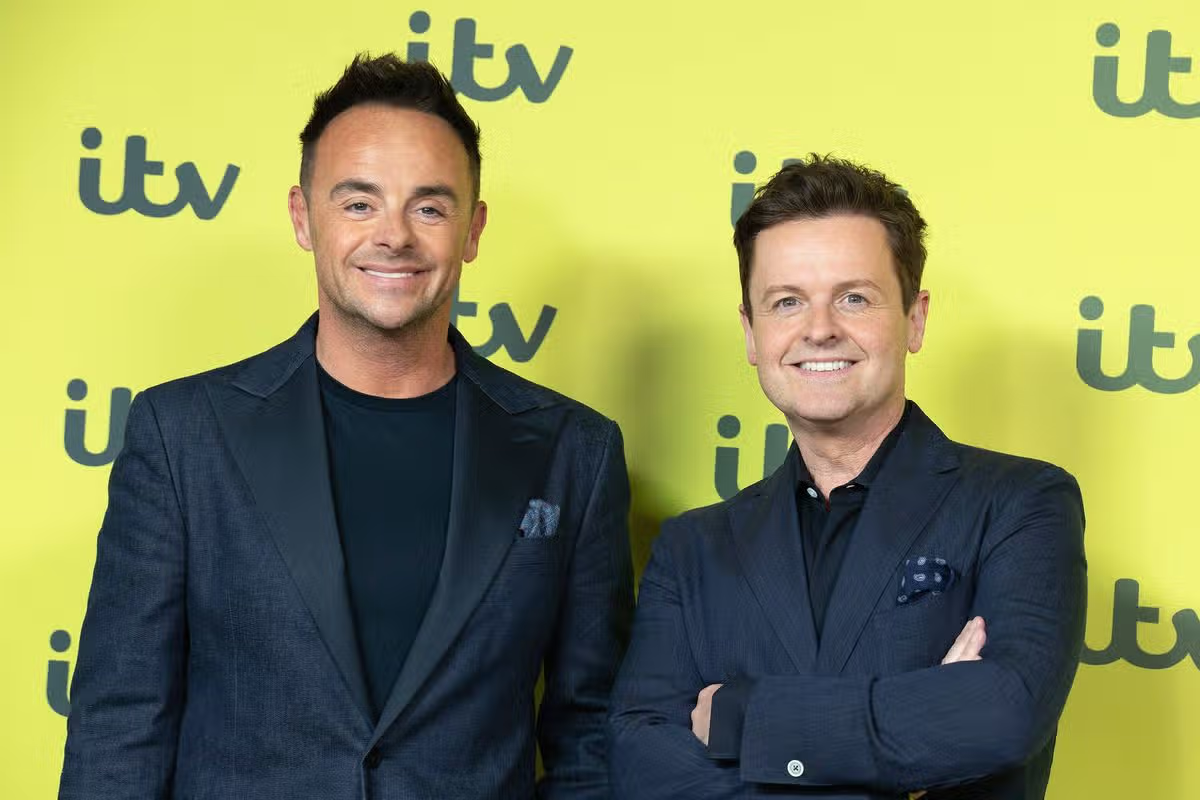
I’m A Celebrity… Get Me Out Of Here! hosts Ant McPartlin and Declan Donnelly have been at the helm of the ITV reality show since it first launched in 2002, and over the years they have had their fair share of campmates who have caused them frustration

Ant and Dec have shared their ‘worst ever’ I’m A Celebrity contestants(Image: Jo Hale, WireImagevia Getty Images)
The next instalment of I’m A Celebrity… Get Me Out Of Here! (Series 26) is just around the corner, and although ITV is yet to officially announce the full line-up, a number of details about the schedule and strongly rumoured contestants have already emerged.
The series has reportedly been affected by a minor scheduling change this year. While the programme traditionally kicks off on a Sunday evening, ITV’s coverage of the UEFA Nations League clash between England and Spain on Sunday, 15 November has forced a reshuffle. Consequently, the new series is widely expected to launch on Monday, 16 November 2026.
As ever, Ant McPartlin and Declan Donnelly will be returning to the Australian jungle to front the main three-week reality show. With Dec celebrating his 51st birthday today (Friday, 25 September), we’ve decided to revisit some of the previous contestants who rubbed hosts Ant McPartlin and Declan Donnelly up the wrong way.
While Ant and Dec typically maintain a light-hearted and professional approach with contestants on I’m A Celebrity… Get Me Out Of Here! , they’ve occasionally revealed some candid opinions about those they deemed troublesome or underwhelming. Though the presenting duo seldom single out individuals as their “worst” on a personal level, certain campmates have left their mark for entirely the wrong reasons.
Katie Hopkins (2007)
Ant branded media personality Katie Hopkins as one of his ‘least favourite’ because she “didn’t really shine” and left minimal impact during her stint on the programme. Katie, 44, gained notoriety on The Apprentice in 2007 before featuring in that year’s series of I’m A Celebrity.
Ant, 43, went on to explain why audiences barely saw her on their screens. He told The Sun: “Katie Hopkins was in I’m A Celebrity but you wouldn’t really remember her doing it, as she didn’t really shine.”
Matt Hancock (2022)
From the second former Health Secretary Matt Hancock was announced, the presenters anticipated “uneasy tensions”. Fans also claimed they showed “favouritism” by being warmer towards other contestants while maintaining a conspicuous distance from Hancock during trials.
The hosting pair also wielded their signature humour to land subtle digs at Hancock throughout the series. During one task, Ant mocked Hancock for being a “typical politician who wouldn’t stop talking” as he provided running commentary on every element of the trial to his partner.
After Hancock performed a few lines of Ed Sheeran’s “Perfect,” Dec joked that the singer would be “gutted” to discover Hancock was a fan.
The duo also displayed genuine annoyance when Hancock allowed the camp’s rice to burn, with Ant noting it had been Hancock’s job to monitor it, stating it would make him “very angry” if he were in the camp. After the programme, Dec revealed to HuffPost UK it was “very, very difficult” to remain impartial, considering everyone nationwide, presenters included, had been affected by Hancock’s decisions throughout the pandemic.
He also acknowledged that critics who questioned whether a serving MP should feature on the show had an argument with “some validity”. Ant disclosed that while they tease everyone on the programme, they made every attempt to handle Hancock like any other contestant once he arrived in the jungle, allowing him the opportunity to share his own narrative.
Dean McCullough (2024)
The relationship between Ant and Dec and radio presenter Dean McCullough throughout the 2024 series of I’m A Celebrity was marked by apparent exasperation that steadily transformed into “tough love” and ultimate commendation.
During the early stages of the series, Ant was visibly annoyed by Dean’s efforts in the Bushtucker Trials, especially after Dean pulled out prematurely from both the “Sinister Sarcophagus” and “Drown in the Dumps” challenges.
The host subsequently confessed on companion show Unpacked that he felt “unprofessional” for letting his frustration become visible on screen, admitting he was “angry” because he thought the trials Dean quit were “doable”.
Ant and Dec eventually gazed straight into the camera to urge viewers to cease voting for Dean, noting it was “good to see other faces” and that witnessing the same contestant repeatedly struggle was becoming “boring”. Ant also playfully stated he would “never” follow Dean on Instagram.
Following Dean’s departure from the jungle, the hosts made it clear their no-nonsense strategy was intended to push him towards better performances.
During his post-exit interview, Ant told Dean: “I was so angry at you for calling ‘I’m A Celebrity’… then that tough love kind of got you through”.
Ant went on to commend Dean’s performance in the “flying challenge,” calling him “brilliant” and expressing pride in how Dean concluded his jungle journey.
Kelly Brook (2025)
Ant and Decare reported to have a long-running “feud” with Kelly Brook dating back to her brief appearance on Britain’s Got Talent. The tension stems from 2009, when Kelly Brook was drafted in as a fourth judge on Britain’s Got Talent (BGT) but was axed after just two days of filming.
In their autobiography Ooh! What a Lovely Pair, Dec recalled trying to reassure a nervous Kelly on her opening day. When he suggested the show would be fun, she allegedly replied, “And what do you do on the show?”
Ant and Dec were reportedly annoyed that Simon Cowell had brought in a fourth judge without consulting them. Dec wrote they couldn’t find a “good reason” why she was on the panel.
The presenters addressed their long-rumoured dispute with Kelly during the 2025 series of I’m A Celeb, chiefly by poking fun at it on the spin-off show Unpacked. While chatting about the campmates’ cooking prowess, Ant quipped that every dish they’d rustled up appeared “rancid”.
When it was pointed out that Kelly Brook and Martin Kemp were handling kitchen duties, Dec cheekily questioned Ant, “What’s your problem with Kelly Brook?”
Ant quickly fired back, “Don’t you start! I don’t have a problem with Kelly Brook, thank you!”
Despite their complicated past, the presenting duo remained thoroughly professional and polite throughout their on-air interactions, including Kelly’s post-elimination chat.
‘Worst’ season
Ant and Dec officially branded the 2022 contestants the “worst ever group” following their woeful performance in trials across the entire run.
The initial 10 famous faces who ventured into the jungle at the series start were singer Boy George, former Lioness Jill Scott MBE, ex-rugby player Mike Tindall MBE, Hollyoaks actor Owen Warner, ITV News’ Charlene White, radio DJ Chris Moyles, comedian Babatúndé Aléshé, Coronation Street actress Sue Cleaver, A Place in the Sun’s Scarlette Douglas and Love Island’s Olivia Attwood.
Former Health Secretary Matt Hancock MP and comedian Seann Walsh subsequently entered as latecomers.
During a live Instagram session called Jungle Club, Ant and Dec didn’t hold back after the stars consistently flopped at Kev’s Deals on Wheels trials.
Dec told followers: “I think they’re officially the worst at the challenges,” while Ant agreed, branding them the “worst ever!” Ant went further still, labelling the 2022 stars a “bunch of idiots” after they botched 7 out of 10 questions. One moment that particularly irked the presenters was when the campmates failed to correctly name how many studio albums Adele has put out.
Ant also criticised their survival abilities early on in the series, calling them “helpless”.
Strikingly, while the presenters grew frustrated with their challenge performances, they’d shown tremendous excitement when the lineup was first announced, with their reaction video showing them shouting “Yes!” and “Oh he’s going to cry!” upon initially seeing the cast list.
What celebs are rumoured to be taking part in I’m A Celebrity this year?
The most prominent celebrities rumoured to be entering the Australian jungle for I’m A Celebrity… Get Me Out of Here! 2026 include former footballer and pundit Wayne Rooney, singer Jesy Nelson, and Kaiser Chiefs star Ricky Wilson.
Other names who have been mentioned include Gavin & Stacey star Joanna Page and Love Island’s Chloe Burrows.
Rumours have also circulated that ITV bosses have put Jeremy Clarkson at the top of their dream casting list.
While ITV typically holds off on making official announcements until closer to the November launch date, several high-profile names are reportedly in advanced negotiations.
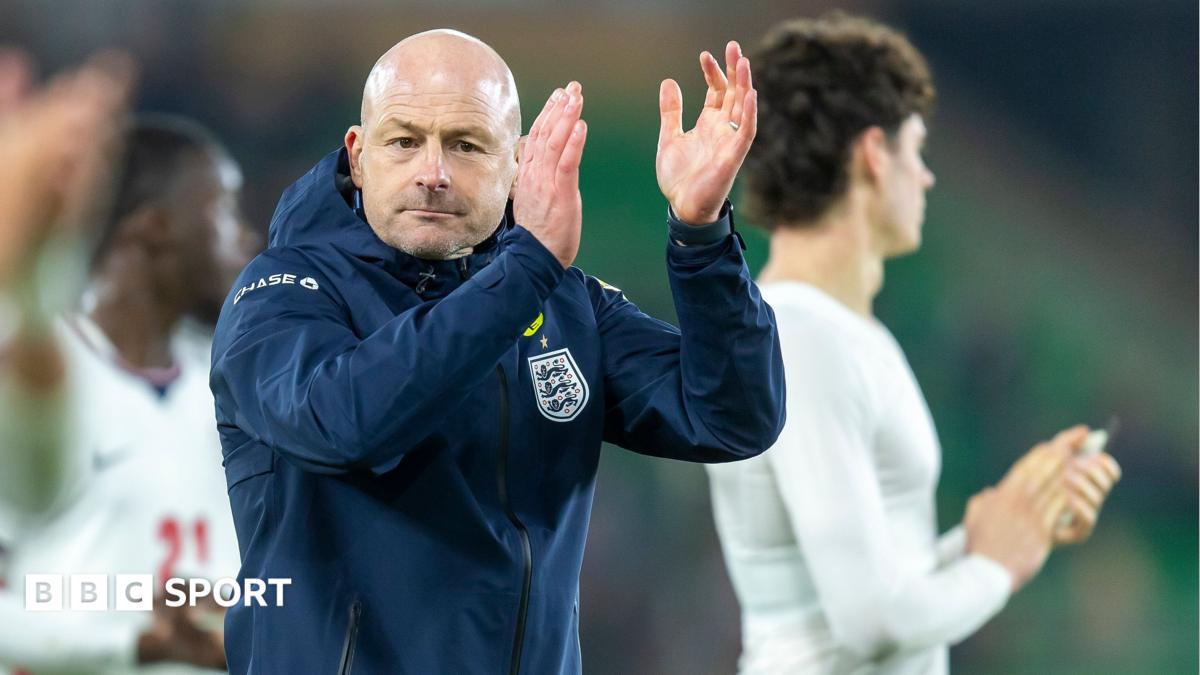
England Under-21s: Lee Carsley looks for lasting legacy with Young Lions
England lifted successive trophies in 1982 and 1984 but then had to wait 39 years until Carsley’s men won in Georgia and Romania in 2023, beating Spain in the final.
Last summer’s extra-time victory over Germany in Bratislava sealed their title defence, thanks to Jonathan Rowe’s strike.
Winning the tournament three times in a row has only ever been done once before, by Italy in the 1990s, although never in the competition’s current guise of 16 teams.
Carsley is aware of the challenge ahead – but also the lasting impact more success could have.
“The older you get, you want to leave a legacy, don’t you?” He said, with England top of Group D and three points clear of Slovakia.
“There would have been an easy move, after the first win, to go and do club management and go and accept a few of the offers.
“But I enjoy the job I’m doing and I enjoy that I’m part of a bigger quest to win a major tournament. I want to be part of the FA when we do that.”
Carsley also says he welcomes the pressure of attempting to do something no Young Lions team has done before.
“I think we have to embrace that,” said the former Everton and Derby midfielder. “They come to play for the under-21s, you’re back-to-back champions. There’s a bullseye that goes with that. We have to be aware of that and go for it.
“The expectancy, we’ll just get through the group and then we’ll win the quarters, we’ll win the semis and then we’ll just win the final… it’s very difficult.
“My priority is definitely qualifying and then that’s something I’ll think about.”
Nepal’s leader labels devastating flood a ‘warning to the world’ | Climate Crisis News
Prime Minister Balendra Shah told the UN that world leaders must act on climate change.
Published On 25 Sep 2026
Nepal’s Prime Minister Balendra Shah has appealed for action to combat the rising threat of climate change, calling the flood that devastated his country last month “a warning to the world”.
Shah made the comments during his address to the 81st Session of the United Nations General Assembly in New York on Thursday night. He told the gathering that the August disaster “was not just a local tragedy”, asking them the question, “Have you really heard that warning?”
Recommended Stories
list of 3 itemsend of list
Political leaders “have been negligent to translate those warnings in action at the speed and scale that the vulnerable people require,” he said.
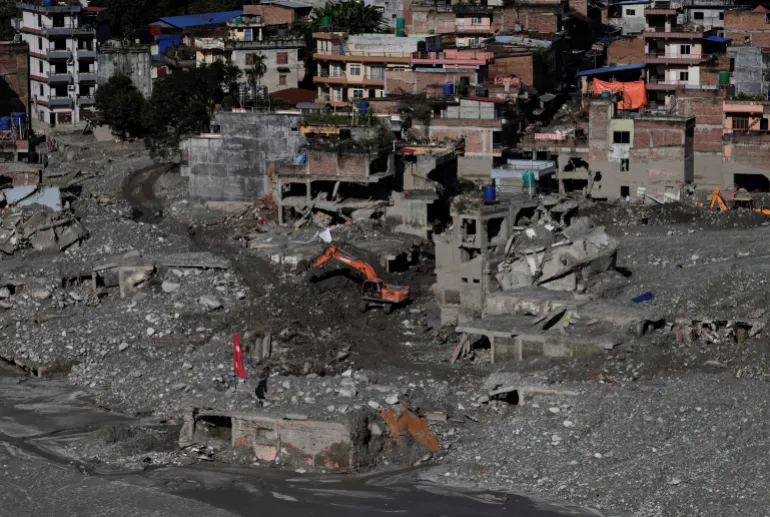
![An excavator clears mud from damaged houses following deadly flash floods and a mudslide, in Nuwakot district, Nepal, September 21, 2026 [Navesh Chitrakar/Reuters]](https://i0.wp.com/occasionaldigest.com/wp-content/uploads/2026/09/2026-09-25T021410Z_709369844_RC2ENNAUM1TN_RTRMADP_3_NEPAL-FLOODS-BALEN-UN-1790312192.jpg?w=640&ssl=1)
At least 1,453 people died when a torrent of mud, rock and water struck northern Nepal and the China-Tibet border on August 26, triggered by a glacial collapse.
According to Nepal’s National Disaster Risk Reduction and Management Authority, 5,500 people were still missing and 13,795 had been rescued.
Researchers from the World Weather Attribution (WWA) group said in a report released last week that the disaster was not caused by a single extreme weather event, but rather a “compound crisis” shaped by long-term warming, glacier retreat, permafrost thaw and geological instability.
Shah said climate change was hurting people not responsible for the crisis but who “are paying a colossal price for it”.
He said Nepal contributed less than one-tenth of 1 percent of the heat-trapping gases behind climate change. About 99 percent of the country’s electricity comes from hydropower, and many workers were trapped in tunnels by the flooding.
“Our glaciers are retreating, our mountain slopes are becoming unstable, our rivers are becoming less predictable, and every major disaster threatens to erase years of development,” Shah said.
![Nepal Prime Minister Balendra Shah addresses the 81st United Nations General Assembly at UN headquarters in New York City, US, September 24, 2026 [Eduardo Munoz/Reuters]](https://i0.wp.com/occasionaldigest.com/wp-content/uploads/2026/09/2026-09-25T002524Z_1559668133_RC20QNACRCWK_RTRMADP_3_UN-ASSEMBLY-1790312740.jpg?w=640&ssl=1)
Shah urged the international community to help bear the cost of helping Nepal adapt to climate change.
He proposed to create a ‘Himalaya Climate Resilience Mechanism’ which would include Nepal and neighbours India and China, and would allow them to share satellite data and expertise, monitor glacial lakes and strengthen joint early warning systems.
Nepal has asked the UN’s loss and damage fund for $20m in aid, the maximum allowed, but a tiny fraction of what it needs. A preliminary assessment by the government has placed the cost of the disaster at $5bn.
The fund, established in 2022 in the aftermath of catastrophic floods in Pakistan, has yet to make even its first disbursement, and observers see Nepal as a key test of its credibility.
Earlier this week, the United States pledged an additional $31m in new flood recovery support.
Cheapest cities for the Oasis tour with hotels going from less than £61 a night
Oasis ticket sales kick off this weekend and that means the lucky ones who’ve snapped up their tickets will be making plans. But how much will a trip to see the Britpop band set you back?

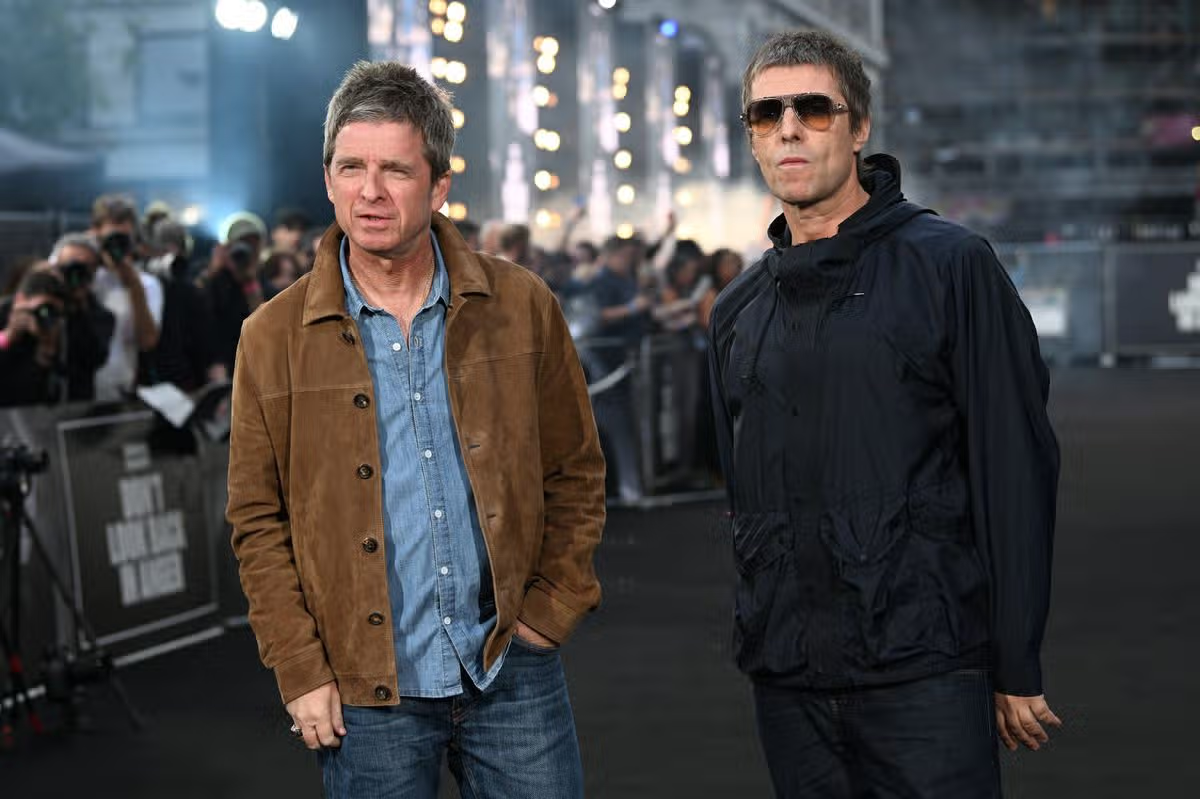
The Gallagher brothers will return to the stage for an epic tour in 2027(Image: Joe Maher/Getty Images)
Oasis tickets go on sale this weekend ahead of the Britpop band’s 2027 tour. Not only will the Manchester band be touring the UK and heading to Ireland, but they’ll also be doing dates in Europe and the USA, meaning fans from around the world will see them perform hits from Wonderwall to Live Forever.
Ticket sales have been carefully controlled to avoid scalpers turning a profit, and fans have needed to sign up to even get a chance to try to buy a ticket. If you’re not successful bagging a ticket for a UK show, then you may be thinking of heading over to see Oasis in Europe. However, this means booking transport and accommodation.
Here’s a rundown of the costs of seeing Oasis in various cities. Prices are likely to rise closer to the time, especially as hotel rooms near the stadiums are likely to be snapped up.
UK dates and costs
If you’re lucky enough to snag Oasis tickets in the UK, the dates and costs for their UK tour are:
Glasgow – Celtic Park
May, 21, 23, 25, 28 and 29
Seated tickets from £71.50 – standing from £170.50
The tour kicks off in Glasgow at the Celtic Park stadium, which is in the east of the city. It’s well connected by public transport, so you might want to opt to stay in the city centre. The Moxy Glasgow Merchant City has rooms from £337 based on two sharing and is about a mile and a half from the stadium.
Manchester – Ethiad Stadium
June 4, 6, 8, 11, 12, 15, 18, 19, 22, 25 and 26
Seats from £74.60 and standing from £173.60
Oasis will perform a string of dates in Manchester, and the city will have a huge influx of fans, so if you’re booking a hotel, you’ll need to do it as soon as possible. Hotel prices are already becoming dear. For example, on the June 2027 nights when Oasis are playing, the prices at Copthorne Hotel Manchester Salford Quays have hit £302 a night for two sharing, whereas visitors on nights without a gig pay as little as £92 for a room in this four-star property.
Knebworth – Knebworth House
September 11, 12, 18 and 19
General admission £170.50
Oasis’ return to Knebworth means this area of Hertfordshire will be very booked up. Your best bet is to get a coach bundle, as these will be available through Ticketmaster with routes across the UK. Knebworth House is a remote location, meaning staying in nearby towns with a bus connection may be wise. Hitchin has a Premier Inn, although at £349 on September 11, it’s a pricey option.
European tour dates and prices
Munich, Germany – Allianz Arena
July 2 and 3, 2027
Oasis will have two nights of shows in Munich next July, with seated tickets from €96.25 (£82.51) and standing from €165.25 (£141.68).
There are direct flights to Munich from London, Manchester, Glasgow, and several regional airports. Fly out on July 1 and come back July 4, and you’ll find flights on Lufthansa from London-Heathrow from £113 return.
The stadium is on the edge of Munich in an area called Fröttmaning. As you can imagine, hotel options are limited and already expensive for July dates. But it’s close to a Metro, so look for accommodation elsewhere in Munich that’s close to public transport, such as the ibis Hotel München Garching, which has rooms on July 2 from £218 a night and is just one stop away.
Barcelona, Spain – Estadi Olímpic Lluís Companys
July 10 and 11
Tickets to see Oasis in Barcelona start at €85 for seats and €204 for standing (£72.89 and £174.93 respectively). The Estadi Olímpic Lluís Companys stadium, where the show takes place, is on the Montjuïc hill overlooking the city, making it a memorable location for major shows. You can even take the Montjuïc Funicular to the top to get to the show, although you’ll need to take a bus back as it stops running at 10pm.
Barcelona is, of course, packed with places to stay and the metro makes it easy to get around, so you don’t necessarily need to book somewhere next to the stadium. Stay at the Radisson Blu 1882 Hotel, Barcelona Sagrada Familia , available from £332 a night for two sharing, and you’ll be close to the major tourist attractions, so you can enjoy a city break too. If you’d rather stay closer, Mambo Tango is about a 20-minute walk away and has double rooms from £284.
Barcelona is served by several regional airports, and weekend flights from London Luton start at £89 return with Wizz Air.
Amsterdam, Netherlands – Johan Cruijff Arena
July 16 and 17
The next stop on the tour is Amsterdam’s Johan Cruijff Arena, where tickets start at €84.15 for seats and €201.96 for standing (£72.15 and £173.16 respectively).
Again, the arena is on the outskirts of the city, and is found in the Zuidoost area. Just a short walk away is the Joy Hotel, which has budget double or twin rooms on the tour dates from £265 . However, the cheapest rooms don’t have a window, so don’t expect lovely views of Amsterdam.
There are lots of options for getting to the city and public transport is excellent. There are both a train and a metro station serving the arena. Eurostar offers London to Amsterdam tickets from £39 one-way, although they tend not to run at weekends, so you would need to travel down Friday and come back Monday. There are also lots of flight options from multiple airports, and even the London to Amsterdam overnight FlixBus, which starts at £44 in July. While nearly 12 hours on a coach is an endurance test, it does save you from needing to pay for a hotel that night.
Paris, France – Stade de France
July 23 and 24
Seated tickets for Oasis’ Paris shows start at €84.00 (£72), while standing options start at €199.50 (£171). However, these dates coincide with school summer holidays, so expect higher prices and demand not only from Oasis fans but also holidaying families.
The Paris leg of the tour will take place at the Stade de France in Saint-Denis, in the north of the city, and a metro line runs to the area. You can either opt to stay centrally, such as the boutique Chouchou Hotel, which has rooms from £325 a night and explore the city, or simply stay near the stadium. The Ibis Styles Paris Saint Denis La Plaine is about half a mile away, and has basic rooms from £350 a night for these July dates.
Eurostar is an excellent way to get to Paris. It arrives at Paris Gare Du Nord, and tickets currently start at £49 each way. There are also lots of flights to the sprawling Aéroport de Paris-Charles de Gaulle, about 40-minutes from the stadium, from airports across the UK.
Rome, Italy – Stadio Olimpico
July 29 and 30
Rome is another great option for Oasis fans, and the band will be playing in late July. However, it’s worth remembering that these are school holiday dates again, so travel is likely to be expensive and book quickly.
Seated tickets will start at €92.29 (£79.21), while standing will start at a whopping €221.49 (£190.09). There are some cheap flights available, such as Wizz Air, which offer a return from London Luton to Rome for around £131 for late July dates.
Stadio Olimpico is in the north of the city, and it’s served by metro and tram, which is useful as hotel options in the area are thin on the ground and expensive. Sweet Home Parioli is just over a mile away and has rooms from £180 a night based on two sharing, and offers simple accommodation that’s perfect for post-gig sleeps.
Slane Castle – Ireland
September 4 and 5
Before heading to Knebworth, Oasis will play two huge shows at Slane Castle, which is about 45 minutes north of Dublin. There will be a variety of bus services available to take visitors from the city to this rural castle for the gigs.
General admission tickets will be priced at €181.25 (£155.58) – and if you’re coming from the UK, there are lots of inexpensive flights available to Dublin. For example, Ryanair flights from Newcastle to Dublin for those dates are showing for £70 return, although there are often sales where you can buy flights more cheaply.
There will be a few pick-up and drop-off points for coaches across the region, so you might want to stay centrally in Dublin and spend some time exploring the city too. Four-star Riu Plaza The Gresham Dublin has rooms from £350 a night for two sharing, or, for £61 each per night, you can opt for a bunk at the Gardiner House Hostel for a budget-friendly stay.
Have a story you want to share? Email us at webtravel@reachplc.com
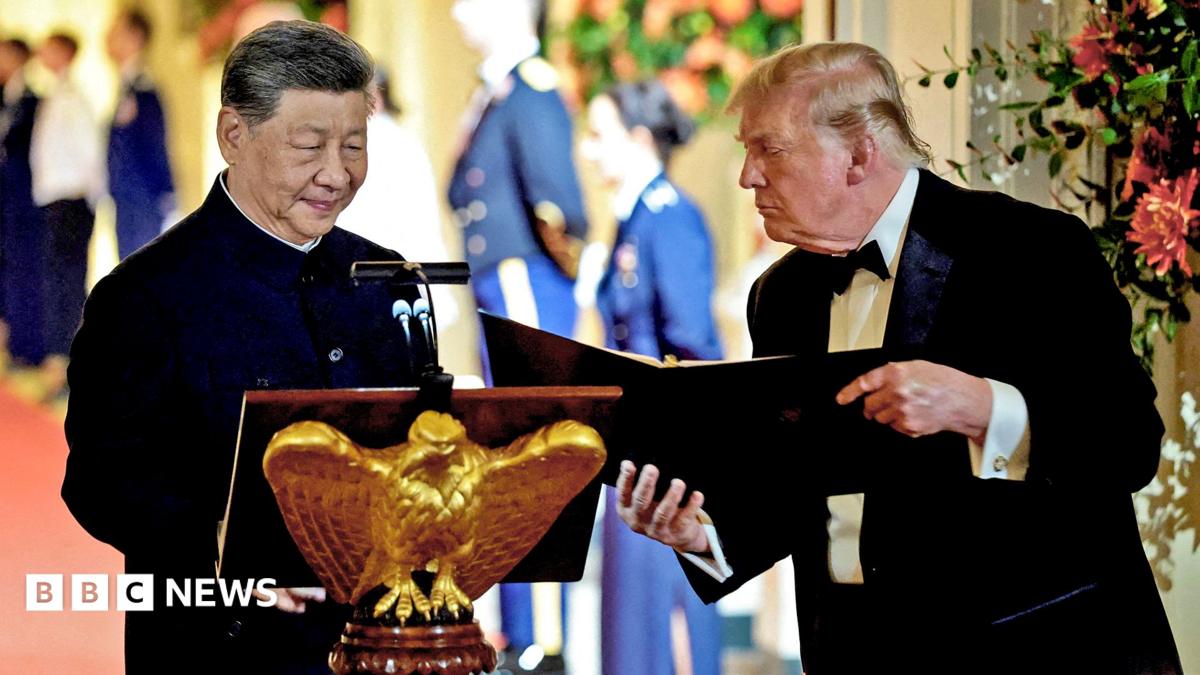
US and China must act as responsible powers together, Xi says as Trump toasts friendship at state dinner
When the BBC entered the dining hall for the dinner, SpaceX CEO Elon Musk was standing over a table and appeared to be telling an entertaining story that had two others nearby barreled over with laughter.
Defence Secretary Pete Hegseth was at another table, with a serious look on his face. His wife is sat beside him, with Jared Kushner and White House chief of staff Monica Crowley nearby.
The White House invited scores of US officials, as well as conservative broadcasters, tech industry bosses, social media CEOs and other corporate executives.
Attendees included members of Trump’s cabinet, as well as family members like his children Ivanka, Eric and Tiffany.
Bosses from the tech industry in attendance included Apple’s Tim Cook, OpenAI’s Sam Altman, Google’s Sundar Pichai, Amazon’s Jeff Bezos and Nvidia’s Jensen Huang.
Both Cook and Huang were seated at the same table as Trump and Xi. As was Musk, who previously worked in Trump’s administration leading the effort to shrink government.
Other companies whose leaders were in attendance include General Motors, Visa, Paramount Skydance, ExxonMobil and more.
Social media mogul Mark Zuckerberg also attended, as well as Jeff Yaas, the American billionaire who owns a share of TikTok.
“Everybody wanted to be there,” Trump said ahead of the event. “I would say you have the entire tech world, the entire banking world, and a lot more.”
But one notable absence was Anthropic – one of the biggest and most valuable AI firms in the world. The BBC has asked Anthropic if it was invited, or if they chose not to be there.

Bianca Censori’s sister Angelina ‘basks’ in the sun in a G-string thong on trip to Greece

BIANCA Censori’s sister Angelina soaked up the sun in a tiny string thong during a Greece getaway.
The Aussie native channeled her sister’s usually super sexy attire and stripped down into skimpy lingerie in new photos.
Angelina, 22, took to Instagram on Thursday to share multiple pictures from her Mediterranean vacation.
Some of those pics captured the model sitting on the pavement, hugging her knees into her chest while sporting a G-string thong.
She paired the bottoms with a black string bra with a vertical chain link connecting the straps.
Angelina kept her back facing the camera, showcasing her thin figure and bare butt as she sat on the ground.
Read More on Bianca Censori


Her hair was pulled into a tight bun as she gazed at her shadow on the concrete beside her.
“Basking,” Bianca‘s sister wrote in her caption.
Angelina often uses the platform to share sultry photos of herself in revealing attire.
Earlier this month, the brunette posted a series of snapshots of herself wearing a skintight white corset bodysuit.
Most read in Entertainment
She also shared a pic of herself in July, flaunting her pin-thin physique in a tiny gold bikini while lounging by the pool in Madrid, Spain.
Angelina blew fans away last November when she shared several photos of herself in a heavily cut-out lace dress.
She modeled the outfit, which showed her underboob with its massive opening at her midsection, in the mirror.
The ensemble also exposed her backside and legs with its sheer fabric, which she showcased in an overhead shot of her lying on a bed.
Bianca, 31, has often drawn attention with her revealing wardrobe after completely switching up her style when she married Kanye West, 49, in December 2022.
The Yeezy architect is usually seen sporting skintight bodysuits that display her curves, and other sexy looks.
She most recently posted several photos of herself in a gold string bikini top and skirt that barely covered her breasts or butt cheeks.
Bianca also underwent a dramatic hair transformation, swapping out her usual brown hairstyle for a platinum blonde wig.
The designer has been accused of “public indecency” numerous times over the years while repeatedly stepping out in public in barely-there attire.
Many have also blamed Kanye for pulling the strings on her fashion choices, after doing the same with his ex-wife Kim Kardashian’s style.
Angelina shut down rumors last year that her family didn’t approve of Bianca and Kanye’s marriage, telling The Herald Sun that they supported the Donda rapper.
High school flag football: Wednesday and Thursday scores
WEDNESDAY’S RESULTS
City Section
Chatsworth 37, Reseda 0
Collins Family 33, Westbrook 0
Foshay 44, Angelou 8
GALA d. Los Angeles Jordan, forfeit
GALA 41, Dymally 0
Garfield 35, Legacy 0
Granada Hills Kennedy 19, Van Nuys 0
Los Angeles Hamilton 52, LACES 0
Los Angeles Roosevelt 26, South Gate 24
Narbonne 21, Los Angeles Marshall 0
Panorama 27, Van Nuys 0
SOCES 39, VAAS 0
South East 14, Sotomayor 6
Stella 13, USC Hybrid 0
Southern Section
Alhambra 33, Rosemead 6
Anaheim 46, Estancia 0
Anaheim Canyon 20, Crean Lutheran 19
Animo Leadership 25, SEED LA 14
Aquinas 14, Ontario Christian 0
Azusa 8, Sierra Vista 0
Baldwin Park 13, Garey 0
Beckman 32, Mission Viejo 27
Bonita 26, Glendora 12
Burbank Burroughs 19, Temple City 0
Cajon 45, Arlington 0
Century 7, Santa Ana Valley 6
Cerritos 27, Paramount 7
Cerritos Valley Christian 46, Whitney 12
Chino 12, Don Lugo 7
Compton 33, Compton Centennial 0
Compton Early College 20, Environmental Charter 0
Covina 33, Northview 0
Downey 27, Bellflower 6
Edison 6, Newport Harbor 0
El Modena 7, Sunny Hills 0
El Rancho 13, South El Monte 12
Fountain Valley 13, Los Alamitos 8
Garden Grove 21, Segerstrom 20
Garden Grove Pacifica 27, Brea Olinda 13
Gahr 42, Mayfair 0
Glenn 25, Pioneer 0
Godinez 7, Tustin 0
Great Oak 40, Desert Hot Springs 0
Huntington Beach 21, Corona del Mar 20
Katella 12, Costa Mesa 6
La Canada 33, South Pasadena 0
Laguna Beach 14, Newport Beach Pacifica Christian 7
Lakewood St. Joseph 21, Bishop Amat 12
La Palma Kennedy 12, Fullerton 6
La Quinta 12, Palm Springs 6
La Serna 19, California 12
La Sierra 6, Miller 0
Lawndale 34, Culver City 6
Loma Linda Academy 33, United Christian Academy 0
Long Beach Cabrillo 41, Dominguez 6
Long Beach Wilson 18, Lakewood 0
Los Amigos 12, Savanna 6
Marina 19, Irvine 7
Mary Star of the Sea 18, Sacred Heart of Jesus 12
Monrovia 20, Gabrielino 6
Montebello 21, Arroyo 0
Mountain View 14, El Monte 0
Nogales 41, Duarte 6
Palm Desert 12, Xavier Prep 6
Placenta Valencia 28, Laguna Hills 6
Pomona 12, Bassett 0
Portola 12, Irvine University 6
Ontario 12, Montclair 0
Redlands East Valley 39, Serrano 0
San Gabriel 15, Bell Gardens 13
San Juan Hills 36, Capistrano Valley 7
San Marino 18, Westridge 13
Santa Ana Foothill 24, Troy 0
Santa Fe 14, Artesia 6
Shadow Hills 31, Indio 6
Sierra Canyon d. Flintridge Sacred Heartt, forfeit
St. Bernard 18, Cantwell-Sacred Heart of Mary 13
St. Paul 48, St. Monica 12
Vasquez d, Rosamond, forfeit
Village Christian 34, Pasadena Poly 21
Villa Park 21, El Dorado 12
West Covina 20, Hacienda Heights Wilson 0
Westminster La Quinta 13, Saddleback 0
Whittier 21, Norwalk 20
Woodbridge 47, Northwood 0
Intersectional
Long Beach Poly 20, Carson 6
THURSDAY’S RESULTS
City Section
Bell 12, Huntington Park 0
Bernstein 19, Roybal 6
Contreras 14, Mendez 0
Contreras 12, RFK Community 7
Fairfax 6, LACES 0
Foshay 40, Diego Rivera 0
Garfield 20, Legacy 0
Hollywood 26, Bernstein 6
Hollywood 32, Roybal 0
Jefferson 45, West Adams 0
Los Angeles Hamilton 26, Westchester 0
Los Angeles Roosevelt 12, South Gate 0
Manual Arts 19, Santee 14
Maywood CES 6, Marquez 0
RFK Community 12, Mendez 6
Sotomayor 32, Maywood Academy 6
Torres 13, Elizabeth 0
Venice 26, Palisades 13
Southern Section
Agoura 49, Calabasas 0
Antelope Valley 83, Littlerock 0
Burbank Providence 43, SEED LA 0
Camarillo 33, Simi Valley 12
Canyon Country Canyon 31, Valencia 13
Castaic 7, Hart 0
Chaminade 18, Harvard-Westlake 13
Channel Islands 47, Del Sol 6
Dos Pueblos 35, Rio Mesa 0
El Segundo 14, West Torrance 0
El Toro 20, Aliso Niguel 0
Highland 12, Knight 0
Lancaster 6, Eastside 0
Mater Dei 34, Linfield Christian 26
Ontario 22, Chaffey 13
Peninsula 12, North Torrance 0
Quartz Hill 43, Palmdale 0
Redondo Union 20, Palos Verdes 0
Royal 55, Oak Park 14
San Juan Hills 36, Capistrano Valley 7
Santa Barbara 26, Buena 0
Santa Monica 38, Hawthorne 0
Santa Paula 62, Cate 0
Saugus 6, Golden Valley 0
South Torrance 32, Wiseburn-Da Vinci 12
Sunny Hills 45, Oxford Academy 0
Thousand Oaks 19, Newbury Park 7
Torrance 13, Mira Costa 7
Ventura 6, San Marcos 0
Westlake 37, Oaks Christian 13
Woodbridge 46, Santa Margarita 6
Intersectional
JSerra 32, Menlo 12
Eagle Rock d. Los Angeles Wilson, forfeit

Converging crises, chaos and walkouts dominate UNGA Day Three | United Nations
Dozens of delegates walked out on Netanyahu, Yemen’s government pleaded for help, and Kuwait riled against threats to sovereignty. Al Jazeera’s Zeena Aqel explains what happened on day three of the UN General Assembly.
Published On 25 Sep 2026
Japan moves to tighten rules for foreigners, throwing futures into doubt | Migration
Tokyo, Japan – Nearly eight years after moving to Japan for work, Abdul feels more accustomed to life in the East Asian country than in his native Bangladesh.
But as the Japanese government moves to tighten the rules for permanent residency and public sentiment towards immigrants sours, Abdul is reconsidering his future.
Recommended Stories
list of 4 itemsend of list
“I don’t know what the Japanese government will do in the future, if they’ll make things stricter again,” Abdul, a tech engineer who lives in northern Tokyo with his Bangladeshi wife, told Al Jazeera.
Abdul, who is preparing to apply for both permanent residency and citizenship, is aware of the possibility that he may soon have to leave.
“I have to be prepared if both of my applications are rejected,” said Abdul, who asked not to be identified by his real name.
“Right now, I am starting to look for opportunities outside of Japan.”
Under rules set to come into effect in phases from October 1, applicants for permanent residency will need to show that their annual household income exceeds the Japanese average – a stipulation that will be applied retroactively for applications submitted since April – and demonstrate Japanese-language proficiency.
Applicants will also be required to have a pension pot equivalent to 30 years of payouts.
In an announcement detailing the changes, Japan’s Immigration Services Agency stressed the need for foreigners to “live independently” and have “a stable life without the risk of becoming a burden”.

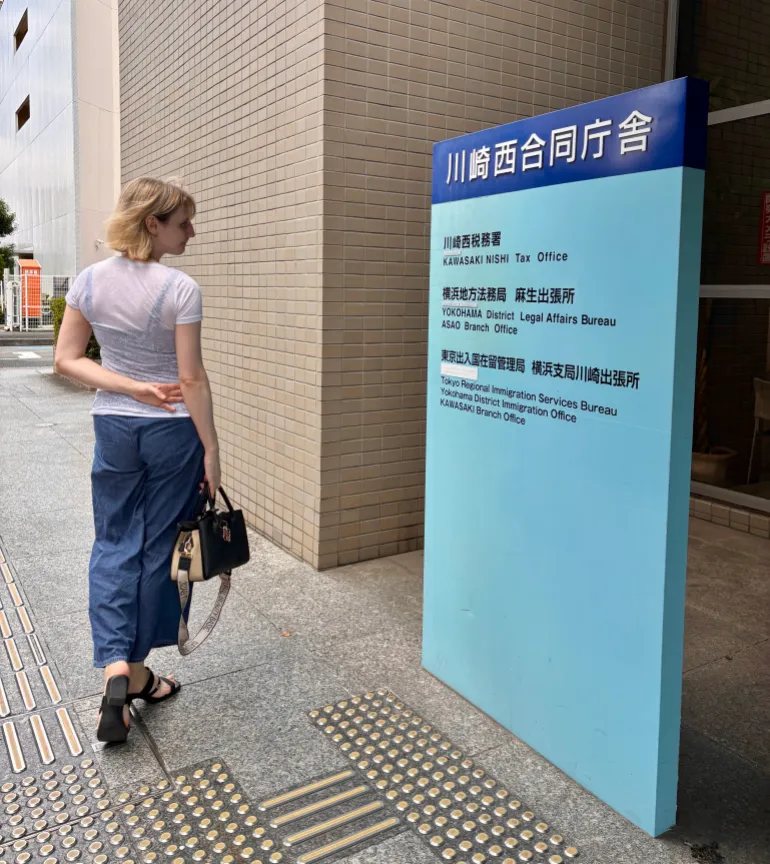
Sarah Nelkin, an American who has lived in Japan for the last 14 years, is among the many long-term residents who fear they will not qualify under the new rules.
A lover of Japanese animation and video games, Nelkin first moved to Japan as a university student and has since built a career in the country’s bustling entertainment industry.
Like Abdul, Nelkin, who submitted an application for permanent residency shortly before the announcement of the changes, is anxious about what the future holds.
If her application is rejected, she plans to apply to become a Japanese citizen – which would mean giving up her US citizenship, as Japan does not recognise dual nationality.
“I’ve lived my entire adult life in Japan … I would rather not give up my American passport. My mother lives in the US, and I want to retain my citizenship for a lot of reasons, like visiting family,” Nelkin told Al Jazeera.
“But at this point, I might have to give up my American nationality.”
Risa Hagiwara, a professor of economics at Meikai University in Urayasu, Japan, said the changes reflect a shift towards a “selective and conditional” immigration policy that is in tension with Japan’s need for labour amid a shrinking population.
“Japan needs foreign workers because of labour shortages. But if the conditions for long-term settlement become substantially more difficult, this could potentially reduce Japan’s attractiveness to foreign workers who are considering Japan as a place to build their long-term lives,” Hagiwara told Al Jazeera.
Hot-button issue
Immigration has become an increasingly hot-button topic in historically homogenous Japan.
Japan’s foreign resident population remains small compared with developed peers such as the United Kingdom and France, where 10 to 15 percent of residents were born overseas.
But it has been growing fast, hitting a record 4.12 million people, or about 3 percent of the total population, as of the end of 2025, according to government data.
By some estimates, Japan’s foreign-born population could reach the OECD average of 10 percent by 2070.
Meanwhile, the number of Japanese nationals fell by more than 900,000 between January 2025 and 2026 amid the country’s rock-bottom birthrate, according to government figures.
Hagiwara said that Japan is at a crossroads as foreign-born residents play an increasingly important role in Japanese society.
“If Japan wants to rely on foreign workers to address labour shortages, it also needs to consider what happens after they come to Japan,” Hagiwara said.
“The question is increasingly not only ‘how many foreign workers does Japan need?’, but also ‘what kind of society does Japan want to build with the people who come here?’” she said.
Japan’s mooted immigration shake-up comes amid a broader rightward shift in the country’s politics.
While campaigning for the leadership of the conservative Liberal Democratic Party last year, Japanese Prime Minister Sanae Takaichi said the country should “reconsider, at least for now, policies that allow in people with completely different cultures and backgrounds”.
Takaichi’s subsequent coalition agreement with the right-wing Japan Innovation Party (JIP) pledged a firm stance against foreigners who break the rules, as well as steps to address “potential social friction” from a growing foreign population.

At the same time, the far-right, anti-immigration Sanseito party has gained ground with its “Japan First” messaging, winning a record 15 seats at the most recent lower-house election to become the third-largest opposition party.
Public opinion has also moved against immigrants.
In a recent survey by the Institute of Social Science at the University of Tokyo, 56.3 percent of Japanese people said they opposed accepting more foreigners, up from 35.6 percent in 2024.
Nelkin and Abdul have both felt the change in sentiment.
“Before 2024, I never felt any discrimination against foreigners, but recently there has been a shift … especially online,” Abdul said.
Nelkin said peers have become outspoken in their dislike of foreigners.
“Even seemingly decent people are just saying racist stuff,” she said.
“I’ve worked for this country and specifically avoided breaking any rules, and they’re saying you are never enough,” she added. “That’s really hard.”
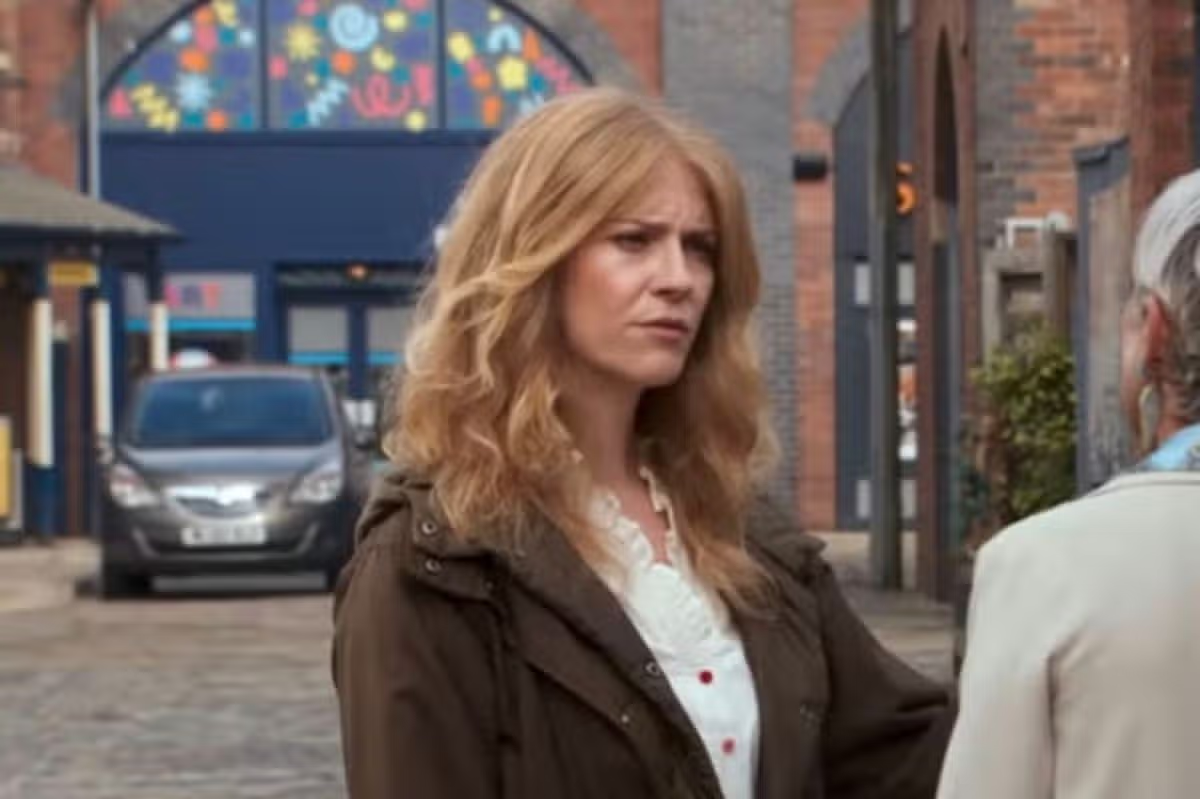
Coronation Street’s Toyah Battersby suddenly recast amid heartbreaking Debbie twist
Toyah Battersby was briefly recast in Thursday night’s episode of ITV soap Coronation Street as part of a sad twist in Debbie Wester’s long-running dementia storyline

Toyah Battersby was recast for Thursday night’s episode of Coronation Street (Image: ITV)
Toyah Battersby was briefly recast in Thursday night’s episode of Coronation Street. The Bistro waitress is normally played by Georgia Taylor, and she made her debut on the programme in 1997 alongside stepsister Leanne Batterbsy (Jane Danson), her stepfather Les and mother Janice (Vicky Entwistle).
But on the latest instalment of the world’s longest-running TV soap, the character was briefly played by another actress for a matter of seconds amid a stylistic twist to portray Debbie Webster’s dementia spiral.
The hotelier (Sue Devaney) is at the centre of a long-running storyline involving vascular dementia and in recent weeks, her condition has worsened. Debbie approached a woman and said: ” Excuse me, which way is the Rovers?”
The woman looked a little bit confused, and said: “It’s just round the corner…Are you OK, Debbie?” But Debbie immediately asked how the woman knew her name, and refused any further help as she stormed off.
It was then that it was revealed that the woman Toyah all along and, wearing the same costume, Georgia Taylor was stood in her place looking very concerned.
In the credits, the character is simply listed as Stranger, and she was played by actress Anya Williams.
Reacting to the scene, one fan wrote on Reddit: “I enjoyed that scene today. It hit hard. My first thought when debbie said how do you know my name. Was why didn’t the woman explain. Then when it panned to it being toyah I was like, wow.”
Taking to X, a second viewer said: “Very heartbreaking #Corrie scene Debbie not recognising Toyah. Dementia is a cruel disease,” and a third wrote: “Powerful scene with Debbie not recognising Toyah and us seeing it from Debbie’s POV.”
In recent years, Coronation Street has favoured the use of numerous storytelling devices like flashbacks, flashforwards, and dream sequences that have rendered it away from the naturalistic approach that made it famous.
Emmerdale has also tried this method before when dementia sufferer Ashley Thomas struggled to recognise Aaron Dingle.
For Debbie, the incident was just the latest in a series of bad turns amid her diagnosis, having recently believed she was back in the 1980s and working as a hairdresser.
It was previously confirmed that actress Sue Devaney will be leaving the soap in 2027 and, Debbie, more than aware of her mortality, recently told sister-in-law Abbie that she wanted to film her own eulogy for her funeral.
Sue previously spoke of the erratic nature of playing Debbie and wanted to make sure she was telling the story with “full impact.”
She said: “I find it really interesting to play and going into that deeper, next journey of the illness.
“It’s that thing of who’s gonna look after her around that time? Some days she’ll be lucid and normal and then other days she will have a bad day.
“That’s how it happens, so it’s been really interesting to play, it’s really moving. I speak to my friend who is a dementia specialist and she tells me the journey I’m going on and if I am doing it correctly.
“You wanna do it right and I don’t want to not tell the full impact that dementia has on somebody.”
Coronation Street airs Monday to Friday at 8:30pm on ITV1 and is available to stream from 7am on ITV X.
* Follow Mirror Celebs and TV on TikTok , Snapchat , Instagram , Twitter , Facebook , YouTube and Threads .

Zinedine Zidane waited for France – now what will he bring to role?
France will have a new face on the touchline for the first time in 14 years when they face Turkey on Friday.
Zinedine Zidane replaced Didier Deschamps after France’s fourth-place finish at the World Cup, but his appointment had been an open secret long before Les Bleus’ third-place play-off loss to England.
Talks between the former Real Madrid manager and the French football authorities kicked off as early as February 2025 – after Zidane’s former team-mate Deschamps announced a few weeks earlier he would step down following the 2026 World Cup.
When he was unveiled in Paris, Zidane was keen to highlight the time he had spent waiting on the sidelines and preparing for the job.
“I had several offers in the last four or five years, but I turned them all down,” an emotional Zidane said. “The national team is the only thing I wanted.”
While his enthusiasm at taking the job was the overarching theme of his first news conference in the French capital, the midfield legend offered few clues to France fans as to how he would approach the role.
Even a question on Kylian Mbappe’s captaincy was bypassed: “The most important thing for him now is to rest, we’ll have the chance to speak in September.”
Mbappe, speaking to Spanish newspaper AS, has since said having the former Real Madrid star as his national team coach was “like a film”.
When asked about his preferred style of play, Zidane opted against going into tactical detail.
“I can’t explain to you in just a couple of words how we’re going win. I have to arrive, meet with the players, and explain my plans to them. After that, it’ll be up to me to keep this team winning.”
However, Zidane confirmed his intention “to do things differently” and he has called up five uncapped players for this international break.
He went on to signal that there would be a degree of “continuation” from the work of his predecessor, which he made sure to praise.
“I’m going to try do what I know how to, but it won’t be a complete break either.”
So what will Zidane bring to the France dugout?

Multiple regions in Russia come under Ukrainian drone attacks | Russia-Ukraine war
Ukraine has targeted an industrial plant in Russia’s Perm region with a massive drone swarm. Russian authorities say they also repelled strikes headed towards Moscow.
Published On 25 Sep 2026