



Japan moves to tighten rules for foreigners, throwing futures into doubt | Migration
Tokyo, Japan – Nearly eight years after moving to Japan for work, Abdul feels more accustomed to life in the East Asian country than in his native Bangladesh.
But as the Japanese government moves to tighten the rules for permanent residency and public sentiment towards immigrants sours, Abdul is reconsidering his future.
Recommended Stories
list of 4 itemsend of list
“I don’t know what the Japanese government will do in the future, if they’ll make things stricter again,” Abdul, a tech engineer who lives in northern Tokyo with his Bangladeshi wife, told Al Jazeera.
Abdul, who is preparing to apply for both permanent residency and citizenship, is aware of the possibility that he may soon have to leave.
“I have to be prepared if both of my applications are rejected,” said Abdul, who asked not to be identified by his real name.
“Right now, I am starting to look for opportunities outside of Japan.”
Under rules set to come into effect in phases from October 1, applicants for permanent residency will need to show that their annual household income exceeds the Japanese average – a stipulation that will be applied retroactively for applications submitted since April – and demonstrate Japanese-language proficiency.
Applicants will also be required to have a pension pot equivalent to 30 years of payouts.
In an announcement detailing the changes, Japan’s Immigration Services Agency stressed the need for foreigners to “live independently” and have “a stable life without the risk of becoming a burden”.

Sarah Nelkin, an American who has lived in Japan for the last 14 years, is among the many long-term residents who fear they will not qualify under the new rules.
A lover of Japanese animation and video games, Nelkin first moved to Japan as a university student and has since built a career in the country’s bustling entertainment industry.
Like Abdul, Nelkin, who submitted an application for permanent residency shortly before the announcement of the changes, is anxious about what the future holds.
If her application is rejected, she plans to apply to become a Japanese citizen – which would mean giving up her US citizenship, as Japan does not recognise dual nationality.
“I’ve lived my entire adult life in Japan … I would rather not give up my American passport. My mother lives in the US, and I want to retain my citizenship for a lot of reasons, like visiting family,” Nelkin told Al Jazeera.
“But at this point, I might have to give up my American nationality.”
Risa Hagiwara, a professor of economics at Meikai University in Urayasu, Japan, said the changes reflect a shift towards a “selective and conditional” immigration policy that is in tension with Japan’s need for labour amid a shrinking population.
“Japan needs foreign workers because of labour shortages. But if the conditions for long-term settlement become substantially more difficult, this could potentially reduce Japan’s attractiveness to foreign workers who are considering Japan as a place to build their long-term lives,” Hagiwara told Al Jazeera.
Hot-button issue
Immigration has become an increasingly hot-button topic in historically homogenous Japan.
Japan’s foreign resident population remains small compared with developed peers such as the United Kingdom and France, where 10 to 15 percent of residents were born overseas.
But it has been growing fast, hitting a record 4.12 million people, or about 3 percent of the total population, as of the end of 2025, according to government data.
By some estimates, Japan’s foreign-born population could reach the OECD average of 10 percent by 2070.
Meanwhile, the number of Japanese nationals fell by more than 900,000 between January 2025 and 2026 amid the country’s rock-bottom birthrate, according to government figures.
Hagiwara said that Japan is at a crossroads as foreign-born residents play an increasingly important role in Japanese society.
“If Japan wants to rely on foreign workers to address labour shortages, it also needs to consider what happens after they come to Japan,” Hagiwara said.
“The question is increasingly not only ‘how many foreign workers does Japan need?’, but also ‘what kind of society does Japan want to build with the people who come here?’” she said.
Japan’s mooted immigration shake-up comes amid a broader rightward shift in the country’s politics.
While campaigning for the leadership of the conservative Liberal Democratic Party last year, Japanese Prime Minister Sanae Takaichi said the country should “reconsider, at least for now, policies that allow in people with completely different cultures and backgrounds”.
Takaichi’s subsequent coalition agreement with the right-wing Japan Innovation Party (JIP) pledged a firm stance against foreigners who break the rules, as well as steps to address “potential social friction” from a growing foreign population.

At the same time, the far-right, anti-immigration Sanseito party has gained ground with its “Japan First” messaging, winning a record 15 seats at the most recent lower-house election to become the third-largest opposition party.
Public opinion has also moved against immigrants.
In a recent survey by the Institute of Social Science at the University of Tokyo, 56.3 percent of Japanese people said they opposed accepting more foreigners, up from 35.6 percent in 2024.
Nelkin and Abdul have both felt the change in sentiment.
“Before 2024, I never felt any discrimination against foreigners, but recently there has been a shift … especially online,” Abdul said.
Nelkin said peers have become outspoken in their dislike of foreigners.
“Even seemingly decent people are just saying racist stuff,” she said.
“I’ve worked for this country and specifically avoided breaking any rules, and they’re saying you are never enough,” she added. “That’s really hard.”

Coronation Street’s Toyah Battersby suddenly recast amid heartbreaking Debbie twist
Toyah Battersby was briefly recast in Thursday night’s episode of ITV soap Coronation Street as part of a sad twist in Debbie Wester’s long-running dementia storyline

Toyah Battersby was recast for Thursday night’s episode of Coronation Street (Image: ITV)
Toyah Battersby was briefly recast in Thursday night’s episode of Coronation Street. The Bistro waitress is normally played by Georgia Taylor, and she made her debut on the programme in 1997 alongside stepsister Leanne Batterbsy (Jane Danson), her stepfather Les and mother Janice (Vicky Entwistle).
But on the latest instalment of the world’s longest-running TV soap, the character was briefly played by another actress for a matter of seconds amid a stylistic twist to portray Debbie Webster’s dementia spiral.
The hotelier (Sue Devaney) is at the centre of a long-running storyline involving vascular dementia and in recent weeks, her condition has worsened. Debbie approached a woman and said: ” Excuse me, which way is the Rovers?”
The woman looked a little bit confused, and said: “It’s just round the corner…Are you OK, Debbie?” But Debbie immediately asked how the woman knew her name, and refused any further help as she stormed off.
It was then that it was revealed that the woman Toyah all along and, wearing the same costume, Georgia Taylor was stood in her place looking very concerned.
In the credits, the character is simply listed as Stranger, and she was played by actress Anya Williams.
Reacting to the scene, one fan wrote on Reddit: “I enjoyed that scene today. It hit hard. My first thought when debbie said how do you know my name. Was why didn’t the woman explain. Then when it panned to it being toyah I was like, wow.”
Taking to X, a second viewer said: “Very heartbreaking #Corrie scene Debbie not recognising Toyah. Dementia is a cruel disease,” and a third wrote: “Powerful scene with Debbie not recognising Toyah and us seeing it from Debbie’s POV.”
In recent years, Coronation Street has favoured the use of numerous storytelling devices like flashbacks, flashforwards, and dream sequences that have rendered it away from the naturalistic approach that made it famous.
Emmerdale has also tried this method before when dementia sufferer Ashley Thomas struggled to recognise Aaron Dingle.
For Debbie, the incident was just the latest in a series of bad turns amid her diagnosis, having recently believed she was back in the 1980s and working as a hairdresser.
It was previously confirmed that actress Sue Devaney will be leaving the soap in 2027 and, Debbie, more than aware of her mortality, recently told sister-in-law Abbie that she wanted to film her own eulogy for her funeral.
Sue previously spoke of the erratic nature of playing Debbie and wanted to make sure she was telling the story with “full impact.”
She said: “I find it really interesting to play and going into that deeper, next journey of the illness.
“It’s that thing of who’s gonna look after her around that time? Some days she’ll be lucid and normal and then other days she will have a bad day.
“That’s how it happens, so it’s been really interesting to play, it’s really moving. I speak to my friend who is a dementia specialist and she tells me the journey I’m going on and if I am doing it correctly.
“You wanna do it right and I don’t want to not tell the full impact that dementia has on somebody.”
Coronation Street airs Monday to Friday at 8:30pm on ITV1 and is available to stream from 7am on ITV X.
* Follow Mirror Celebs and TV on TikTok , Snapchat , Instagram , Twitter , Facebook , YouTube and Threads .

Zinedine Zidane waited for France – now what will he bring to role?
France will have a new face on the touchline for the first time in 14 years when they face Turkey on Friday.
Zinedine Zidane replaced Didier Deschamps after France’s fourth-place finish at the World Cup, but his appointment had been an open secret long before Les Bleus’ third-place play-off loss to England.
Talks between the former Real Madrid manager and the French football authorities kicked off as early as February 2025 – after Zidane’s former team-mate Deschamps announced a few weeks earlier he would step down following the 2026 World Cup.
When he was unveiled in Paris, Zidane was keen to highlight the time he had spent waiting on the sidelines and preparing for the job.
“I had several offers in the last four or five years, but I turned them all down,” an emotional Zidane said. “The national team is the only thing I wanted.”
While his enthusiasm at taking the job was the overarching theme of his first news conference in the French capital, the midfield legend offered few clues to France fans as to how he would approach the role.
Even a question on Kylian Mbappe’s captaincy was bypassed: “The most important thing for him now is to rest, we’ll have the chance to speak in September.”
Mbappe, speaking to Spanish newspaper AS, has since said having the former Real Madrid star as his national team coach was “like a film”.
When asked about his preferred style of play, Zidane opted against going into tactical detail.
“I can’t explain to you in just a couple of words how we’re going win. I have to arrive, meet with the players, and explain my plans to them. After that, it’ll be up to me to keep this team winning.”
However, Zidane confirmed his intention “to do things differently” and he has called up five uncapped players for this international break.
He went on to signal that there would be a degree of “continuation” from the work of his predecessor, which he made sure to praise.
“I’m going to try do what I know how to, but it won’t be a complete break either.”
So what will Zidane bring to the France dugout?

Multiple regions in Russia come under Ukrainian drone attacks | Russia-Ukraine war
Ukraine has targeted an industrial plant in Russia’s Perm region with a massive drone swarm. Russian authorities say they also repelled strikes headed towards Moscow.
Published On 25 Sep 2026

‘Everything is golden’: readers’ tips for a great autumn day out in the UK | United Kingdom holidays
Gambling on sunshine at Loch Lomond
I love Loch Lomond in autumn. I’d start with a walk around Balmaha village and a stretch of the West Highland Way, pretending I’m there for the scenery rather than earning the right to eat something massive afterwards. Autumn is when it looks best: orange hills, cold air, dramatic clouds and the constant Scottish gamble of whether you’ll get sunshine, sideways rain, or both within 10 minutes. I finish, if I’m not driving, with a wee dram to properly round things off.
Pete
Cornwall’s wild autumn seas
The rough beauty of Cornwall’s sea views appeals to me. A great autumn day involves walking along the staggered cliff edges between Godrevy and Portreath. The isolated nature of the coastal paths makes me feel as if the sea is singing just for me, while below the waves go wild, waiting to be admired. On this walk, you will be rewarded with the most breathtaking views, lone benches and burnt orange sunsets.
Oliwia
A hydro-powered house in Northumberland
When I first visited the National Trust’s Cragside in Northumberland, a staff member at the entrance made the bold claim that it was “the best place in England”. In autumn you can really see their point. The estate’s 1,000 acres are covered with a huge variety of trees that transform the landscape into a mixture of reds, oranges and deep greens, contrasting perfectly with the often misty Northumberland weather. It’s a perfect autumn day trip for woodland walks, possibly stopping for a picnic at one of the many lakes or gardens, and visiting the extraordinary hydro-powered Victorian house with its pioneering gadgets.
Everly
Profile
Readers’ tips: send a tip for a chance to win a £200 voucher for a Coolstays break
Show
Guardian Travel readers’ tips
Every week we ask our readers for recommendations from their travels. A selection of tips will be featured online and may appear in print. To enter the latest competition visit the readers’ tips homepage
–
– back sections make it manageable without losing the drama.
Bonita Philp
Deep in the forest in the Scottish Borders
Glentress Forest in the Scottish Borders is hard to beat on a crisp autumn day. Start with a walk or mountain-bike ride through the forest, when the trails are surrounded by copper, red and gold, and climb high enough for brilliant views across the Tweed valley. Afterwards, warm up with coffee and something sweet at the cafe before heading into nearby Peebles for a wander along the river and around its independent shops. It feels properly remote despite being less than an hour from Edinburgh. And, whether you’re cycling or walking, autumn is when the forest is at its most spectacular.
Remi Lapeyre
Birmingham’s secret oasis
Winterbourne House and Garden at Birmingham University is a wonderful little oasis in Edgbaston, just outside the city centre. A beautiful Arts and Crafts style house, set in stunning gardens, it is a lovely place for a wander and is especially beautiful on a sunny day in early autumn when everything is golden. See herons at the reservoir, talk to friendly robins by the walled garden and browse the bookshop. Have coffee there and then head into nearby Harborne for lunch or dinner.
Rachel
Rivers and ruins in a Lancashire valley
Rocky Brook is the name given by locals to the River Roddlesworth, which flows through a wonderful wooded valley at the edge of the West Pennine Moors. The woodland, planted by Liverpool Corporation Waterworks, provides plenty of autumn colour. A network of paths allows exploration of the woods and the ruins of Hollinshead Hall and well house. There’s a public car park, cafe and pub (the Royal Arms) at Ryal Fold, and for those who walk north-west through the woods there’s also the Hare & Hounds at Abbey Village. Four buses a day run from Blackburn to the Royal.
Graham Dean
after newsletter promotion
Twisted oaks and fungi in the Peak District
The Longshaw estate in the Peak District is perfect for an autumn stroll. Both Oaks Wood and Bolehill Quarry have a huge variety of fungi in their hidden depths. The twisted oak trees in Padley Gorge look at their most spectacular on early autumn misty mornings. It’s easy to explore pathways on the estate with the friendly free social walk every Wednesday. Finish a wonderful day with a treat in the cafe.
Katharine
A lime tree avenue in Nottinghamshire
Clumber Park is a must-visit at this time of year. The National Trust property features peaceful woodlands with golden leaf carpets, crisp lakeside views and an ornamental bridge. You’ll want to keep your camera handy as you enter a double tree avenue of 1,296 limes stretching three miles (one of the longest in Europe), which provides a gorgeous golden canopy. The walled kitchen garden is a favourite with its massive apple collection and seasonal displays. The apple juice I’ve tried here is some of the best I’ve tasted.
Asma
A Roman autumn at Hadrian’s Wall
My perfect autumn day is walking Hadrian’s Wall from Steel Rigg, when the moorland turns copper and gold and every climb rewards you with another enormous Northumberland view. Pack a flask, sturdy boots and something waterproof – the weather changes its mind even faster than I do. You only pay for parking, and shorter out- and
Winning tip: Steaming through north Wales
My perfect autumn day out is a trip on the Llangollen Railway in north Wales. There’s something magical about travelling through the Dee valley on a steam train when the leaves have turned orange and gold. We start in Llangollen, grab something warm to drink, then climb aboard for the journey alongside the River Dee, watching the autumn scenery through the window. Afterwards, we wander around Llangollen, exploring the little shops. It’s simple, nostalgic and feels like autumn properly arriving – especially when you hear the steam train whistle through the valley.
Chelsea

Israeli football player sent off after gun-firing goal celebration | Athletics News
Israeli footballer Saied Abu Farchi has been sent off during a Nations League match after using a corner flag to mimic firing a rifle while celebrating his equaliser against Austria. Israel lost 3-1.
Published On 25 Sep 2026

Big Brother housemates forced to intervene as house plunged into explosive row
Big Brother was also forced to issue a warning to the housemate

Big Brother’s Rochelle found herself at the centre of drama again(Image: ITV)
Big Brother housemates were forced to intervene after a huge row broke out once again and “threats of violence”.
There has been plenty of chaos in the Big Brother house in just over a week since the show returned to screens. Already, viewers have witnessed heated clashes and a live evictions as personalities continue to clash.
Last night’s instalment (September 23), saw the housemates nominate for the first time this series as they told Big Brother who they wished to face eviction this week. After receiving the highest number of votes, Pauline will once again face this week’s eviction alongside fellow housemate Chelsey.
Viewers are being asked to choose who should leave as one housemate will be forced to say their goodbyes in tomorrow’s live eviction (September 25).
But before that, the drama continued in tonight’s instalment with more explosive rows and rule breaks forcing Big Brother to dish out the punishments.
For this week’s shopping task, Big Brother has transformed the House into Noah’s Ark. Each housemate was assigned an animal persona and must take part in a range of different challenges, with Philip and Charlotte in charge as Noah and his wife.
Samuel and Johanne were lions; Pauline and Omar were elephants; Yasmin and Harry were sharks; Chelsey and Frankie were crows; Lynx and Rhianna were rabbits and Rob and Rochelle were bugs.
It didn’t take long before things turned sour as tensions started to rise. When tasked with cooking, Rochelle appeared to struggle with her and Rob required to cook for the whole house.
Getting increasingly stressed, Rochelle could be heard saying: “This isn’t my thing” as she fought back tears. But when served their food, the housemates noticed things were not quite as it seemed.
Concerns were raised over whether the chicken was cooked properly, meaning Johanne wanted to cook her own chicken – however this was against the rules.
Convinced the chicken was uncooked, Johanne said she was going to put the chicken in the airfryer for a while longer – which was against the rules.
Rochelle fumed: “I don’t think you’re allowed to… the chicken is cooked.” However, Yasmin hit back that people would not eat raw chicken.
Stating she wanted to cook her own chicken, Rochelle hit back she was not allowed to, but Johanne fumed: “Who are you talking to? I’m not eating it. I’m not eating it. Now what?”
She added: “Sit your a** down. Who the hell are you talking to? I want to cook my chicken longer – I can do that. Who are you talking to? Your craziness needs to really calm down.”
Fuming that Rochelle was “unstable”, Johanne then fumed: “It’s not my fault you didn’t take cooking classes….You started screaming like a crazy woman. I’m not your child.”
Rochelle replied: “The minute you walked in, you were going to say it was sh*t.” Johanne commented: “You need to learn how to cook.”
After a heated exchange, Johanne said: “You’re a self-entitled 80-year-old woman. I’m not the one. Get your old a** together. You old hag!”
The back and fourth continued to become heated as Philip was forced to intervene, telling his co-stars to “calm down”. The other housemates were stunned by what they witnessed as Rochelle was soon called to the Diary Room. Big Brother then warned Rochelle against threats of violence which was deemed unacceptable.
Big Brother continues tomorrow at 9pm on ITV2 and ITVX

Portugal 1-0 Wales: Craig Bellamy wants more from his side after narrow Portugal loss
Wales earned plaudits but Craig Bellamy wants more from his side, after admitting they were forced to suffer in their narrow 1-0 defeat in Portugal.
Joao Felix’s deflected strike proved enough to earn victory in Lisbon for the hosts, who also saw Cristiano Ronaldo’s effort ruled out by VAR.
It was a winning start to the Nations League title defence for Portugal and for new manager Jorge Jesus.
Despite being under pressure for long spells in Lisbon, Bellamy’s injury-hit side ended strongly as Brennan Johnson and Lewis Koumas both went close to snatching a draw.
“It was a difficult game for us. We had to suffer a lot,” said Bellamy.
“I think that’s the longest we’ve been in a game without the ball.
“We could have done more with the ball but I’m beyond proud as well.
“We have a lot of players who weren’t here. That’s OK, we can handle it.
“A lot of players who don’t play, week-in, week-out. So for them to use the energy they were able to, we’ve got to have a big heart to be able to do that. They’ve always shown that and they showed that again.”
Pakistani forces kill Afghan Taliban fighters in border escalation | Border Disputes News
Pakistani security forces report ongoing cross-border fire in latest escalation in fighting between the neighbours.

Published On 25 Sep 2026
Pakistan has foiled an “attempted Afghan aggression” on the Pakistan-Afghan border.
Pakistani security sources said several Afghan members of the Taliban were killed in an intermittent exchange of fire in the Gulistan area of the border on Friday and that fighting was ongoing.
Recommended Stories
list of 3 itemsend of list
There has been no official confirmation from either country involved.
The Afghan government said on Thursday that it would deliver an “appropriate response” to Pakistani air attacks on 10 locations in Afghanistan earlier in the day.
The strikes were in response to a “deliberate and unlawful incursion into Pakistan by drones” on Wednesday, Pakistani Information Minister Attaullah Tarar said on Thursday.
Tarar said in a post on his X account that Pakistan’s aerial and drone attacks hit “terrorist hideouts and support infrastructure including drone launching and storage sites”.
He also posted a video said to show the military strikes on the Afghan sites.
Afghanistan’s government spokesperson Zabihullah Mujahid said the air strikes targeted Kandahar, Paktia and Khost provinces.
Taliban officials denied that their government launched drones against Pakistan on Wednesday.
The air raids on Thursday were carried out amid growing tensions between the former allies over attacks by armed groups in Pakistan, which triggered their worst fighting in years in February.
Islamabad accuses Kabul of harbouring fighters who stage cross-border attacks, but Afghanistan’s government denies harbouring anti-Pakistani armed groups and says the attacks are Pakistan’s internal problem.
The escalation threatens mediation efforts by China, Turkiye, Qatar and Saudi Arabia to broker a lasting peace between the two neighbours.

France Sending Forces To Help Defend Saudi Arabia’s Red Sea Oil Facilities
France is sending military assistance to Saudi Arabia to protect the Yanbu oil facilities as the Kingdom battles the Iran-backed Houthi rebels of Yemen. The move comes amid growing concerns about the remaining flow of oil from the region, which France, as well as the rest of Europe, relies upon heavily.
In a live television interview Thursday night Paris time, French President Emmanuel Macron said he was sending an unspecified number of troops and equipment to the Saudi Arabia to protect the Yanbu energy hub, located on the Red Sea.
“This is the agreement we have finalized with the Saudis,” Macron explained. “We are going to send military resources, that is to say, soldiers, radar systems and defense systems, to protect this site — not to get us involved in any conflicts, but to protect this site.”
The French leader did not elaborate on the exact equipment he would send, how many troops, or when they would arrive. Nor did he address what would happen if French personnel were killed or injured or equipment damaged or destroyed. We have reached out to the French Embassy for further details. Based on his mention of radars and seeing that the threat to Saudi oil infrastructure is almost entirely from aerial attacks from drones and missiles, these will likely be air defense forces.
The decision was prompted by repeated Houthi missile and drone attacks as well as suspected strikes from Iranian-backed militias in Iraq on Saudi Arabia’s oil infrastructure. Yanbu in particular is a key installation. As we have explained in the past, Saudi Arabia has diverted millions of barrels of oil per day through pipelines to its Yanbu port on the Red Sea in an effort to minimize the energy shortages due to the hostilities around the Persian Gulf.

Before Macron’s announcement on Thursday, the Houthis claimed they had carried out two more waves of attacks on Saudi targets, including one on the Saudi Aramco facility in Yanbu, “using a number of ballistic and cruise missiles, as well as drones.”
In addition, the Houthis claimed they struck Riyadh.
There was no immediate Saudi confirmation of an attack on the Saudi capital. Saudi civil defense did not issue an emergency alert for Riyadh on Thursday.
Earlier in the day, the Houthis said they struck “enemy command and control centers, operations rooms, weapon depots, missile launch platforms, and military sites belonging to Saudi-led enemy formations in Jizan,” a Red Sea port city.
“The Saudi-led military coalition in Yemen said on Thursday that it had shot down six ballistic missiles fired by the Iran-backed Houthi militia, in what appeared to be one of the largest cross-border attacks by the group since its conflict with Saudi Arabia [flared back up],” The New York Times reported.
The missiles were aimed at the Saudi cities of Taif and Yanbu, Maj. Gen. Turki al-Maliki, a spokesman for the Saudi-led coalition, claimed on X. “Escalations and violations by the terrorist Houthi militia will be dealt with firmly,” he stated, without specifying where the missiles were intercepted.
TWZ cannot independently verify any of these claims.
Today’s attacks are the latest in the escalating conflict between the Houthis and Saudi Arabia. Earlier this year, the Houthis imposed a blockade on the Bab al-Mandab Strait (BAM) and began striking Saudi ships in the southern part of the Red Sea as well as critical energy terminals on that body of water and Saudi refineries. Iranian proxies have also struck the vital East-West pipeline that carries oil to the Red Sea to bypass the Strait of Hormuz, where Iran vastly curtailed shipping after the launch of Operation Epic Fury. The East-West pipeline reportedly reopened after being shut down following a long-range drone attack.

The stark reality facing Macron is that if Saudi oil infrastructure and transport nodes near the Red Sea are destroyed or the pipeline that feeds it is shut down for months the last major oil lifeline from the region — and especially to Europe — will be closed off, sparking a deeper energy crisis.
Iran has already severely curtailed the flow of oil through the Strait of Hormuz since the U.S. and Israel attacked it on Feb. 28. The movement of oil has been further impeded by a U.S. blockade on Iranian ports. However, transits have been increasing as of late, thanks in large measure to U.S. military escorts that U.S. Central Command claims have allowed more than a billion barrels of crude to pass through the Strait of Hormuz. Still, the traffic is far below what it was before the war broke out.
Having both the Strait of Hormuz largely closed and energy exports out of the Red Sea shut down simultaneously is a nightmare scenario. By Thursday evening Eastern time, the per-barrel price of Brent crude oil shot up to nearly $107, according to OilPrice.com. It had fallen below $100 per barrel just two days earlier.
Given all this, the French president sought to offer reassurance about oil supplies, according to France 24.
“He said he had carried out ‘intense diplomatic activity,’ meeting in recent weeks with the leaders of Saudi Arabia, Iraq and Nigeria, all hydrocarbon suppliers, to ensure France keeps receiving the same volumes,” the publication noted.
“We have replenished gas stocks and also oil stocks” for the months ahead, the French president also said.
Macron’s decision follows one by the U.K.’s Royal Air Force (RAF) on Tuesday to deploy one of its Voyager aerial refueling jets to help Saudi Arabia defend against Houthi attacks. As with the French move, it is a response to concerns about the flow of oil.
“Escalating tensions in the Gulf could have negative consequences here in the UK—such as rising prices, disruptions to energy supplies, and increased costs for British businesses,” the U.K. Defense Ministry (MoD) explained in announcing the deployment. “The Houthis pose a threat to stability in the Middle East; therefore, it is in the UK’s national interest—economically and in terms of security—that they do not succeed in their aims.”
“We unequivocally condemn Houthi attacks on Saudi Arabia, and our position is clear: both Saudi Arabia and the Yemeni government have the right to self-defense,” the ministry added.
The jet will operate from a U.K. air base in Cyprus and will begin air-to-air refueling operations in the coming days, the BBC reported.

The French and British deployments contrast decisions by the U.S. and other nations not to get involved with the Saudi-Houthi fight.
Last week, Trump turned down a direct plea from Saudi Crown Prince Mohammed bin Salman, the Kingdom’s de facto leader, to attack the Houthis. Meanwhile, Pakistan and Turkey, which signed the Mecca Joint Defense Agreement with Saudi Arabia, have yet to provide any direct military aid. The pact holds that an attack on one is considered an attack on all; however, it doesn’t stipulate exactly what actions should be taken.
The security situation in Yemen has drastically deteriorated since the launch of Epic Fury after the Houthis joined the U.S.-Iran conflict on the side of their major supporter.
The Houthis have been directly attacking Saudi Arabia over claims that the kingdom has imposed a blockade on them. Beyond that, the mostly dormant civil war between the Houthis and internationally recognized Yemeni government forces, backed by Saudi Arabia, reignited in the wake of operation Epic Fury. The Houthis have made large territorial gains in the renewed conflict, including capturing the port city of Mokha and two key islands in the Red Sea. This has strengthened the Houthi hold on the BAM. You can read more about that in our story here.
The civil war in Yemen erupted in 2014 and expanded a year later when a Saudi-led coalition joined forces with the government ousted by the Houthis. The fighting between Saudi-led forces and the Houthis largely abated after a tenuous ceasefire took hold in 2022. The Saudis held off on getting involved in the recent Red Sea conflict, which saw the U.S. and coalition warships duking it out with the Houthis and eventually led to a U.S.-led air campaign over Yemen. The United Kingdom was another significant player in that air campaign.
Meanwhile, exacerbating concerns about the flow of oil from the Red Sea, “a senior adviser to Iran’s supreme leader warned Thursday that Iranian forces and their Houthi allies in Yemen could respond to any new U.S. attacks by opening ‘a new front’ in its war with the U.S. by targeting energy supplies in the Red Sea,” CBS News reported.
The statements came after U.S. President Donald Trump on Wednesday once again threatened Iran.
“Will a deal be made with Iran that lets them rebuild and create a far greater country than it ever was before?” Trump asked rhetorically. “Or do I annihilate the Islamic Republic and do it quickly, never giving them a chance to kill and destroy people and countries again?”
Trump added that he believed he would make a peace deal with Iran after the upcoming U.S. midterm elections, which will decide the control of Congress.
As we noted yesterday, with gasoline and diesel price increases damaging the economy, the war and Trump’s handling of it have been unpopular with voters.
The fact that France is sending forces to Saudi Arabia is an ominous development and another indication that the current spate of unrest that began with Epic Fury does not appear to show any signs of ending anytime soon.
Contact the author: howard@twz.com

Peter Byrne death: Singer for the synth-pop group Naked Eyes was 74
Naked Eyes lead singer Peter Byrne died in Los Angeles on Sept. 14, according to the group’s website.
Byrne, who co-founded the synth-pop band with Rob Fisher in 1982, died “peacefully … after a brief illness,” the statement reads.

Naked Eyes’ Pete Byrne performs onstage in Los Angeles in 2019.
(Scott Dudelson / Getty Images)
Naked Eyes, a high note for the MTV generation, scored ’80s hits with their synth-pop version of Burt Bacharach and Hal David’s “Always Something There to Remind Me” and their original song “Promises, Promises,” with the former hitting No. 8 on the Billboard Hot 100 in 1983 and the latter reaching No. 11 that same year. “When the Lights Go Out” and “(What) in the Name of Love” also reached the Hot 100’s Top 40, hitting No. 37 in 1983 and No. 39 in 1984, respectively.

Byrne was born in Islington, North London, and began his music career in the mid-’70s. From 1979 to 1982, he was a member of the band Neon, which included Fisher and future Tears for Fears founders Curt Smith and Roland Orzabal. Byrne and Fisher released their debut album as Naked Eyes in 1983, according to the group’s website.
After Fisher died in 1999, Byrne released his 2001 solo album “The Real Illusion” and Naked Eyes albums “Fumbling With the Covers” in 2007 and “Disguise the Limit” in 2021. A remastered version of their self-titled debut album was released in 2025.
Byrne is survived by his siblings Eileen, Sandy, Carol and Steve; his three children, Merlin, Dylan and Chloe; and his ex-wife, Elena.

Friday’s Economic Calendar | Seeking Alpha

kyoshino/E+ via Getty Images
5:15 AM John Williams Speaks
Participates in a policy panel at the 6th Monetary Economics Conference organized by the University of Oxford, the New York Fed, and the Bank of England.
8:30 AM Durable Goods Orders
Durable goods orders are

Northern California college wrestler dies in fall at Yosemite
A Northern California community college wrestling star slipped and fell to his death Sunday at Yosemite National Park, officials confirmed.
Santa Rosa Junior College sophomore Ryan George died in an apparent accident, his college coach, Fred Duerr, posted in a statement Tuesday.
The Santa Rosa Press Democrat broke the news Tuesday, saying the 19-year-old “was hiking with friends near Illilouette Falls in Yosemite when he reportedly slipped and fell to his death.”
“Details are limited right now, and it’s been a really hard time for us all trying to process everything,” Duerr said in the statement. “If you knew Ryan, you know he was one of the most genuine, positive people you could ever meet. He had this way of lighting up a room, making you feel welcome, and bringing out the best in everyone around him.”
Yosemite National Park officials did not immediately respond to an email seeking comment.
George is listed as a Santa Rosa native in the school’s media guide and graduated from Montgomery High School in that city.
Last season, he enjoyed a strong run through the state championship in the 197-pound division. He entered sixth-ranked and finished with five victories, including two falls, en route to third place.
His finish was impressive considering he lost in the second round of the double-elimination tournament.
George rallied with perhaps his best effort of championships, defeating No. 5-ranked Dominic Sanders Jr. with a pin in 2 minutes, 38 seconds, in elimination bracket action.
He picked up the bronze in that tournament by defeating teammate Joe Ellis via a 6-2 decision.
“He was an amazing leader and wrestler, but more than that, he was an amazing human — kind, loyal, funny, and the kind of friend everyone wishes they had in their life,” Duerr said. “We love you and we will miss you so much, Ryan. Thank you for everything you gave us all.”
A GoFundMe was established to aid George’s sister, Jaida.

Saudi, Turkish, Pakistani chiefs plan urgent talks amid Yemen fighting | News
The pact stipulates that an attack on one of the three countries is considered an attack on all of them.
Saudi Arabia, Turkiye and Pakistan have announced they are planning an urgent meeting of their chiefs of staff to discuss ways to support the kingdom under the Mecca Joint Defence Agreement.
The announcement followed a meeting on Thursday in New York between Saudi Foreign Minister Prince Faisal bin Farhan Al Saud, Pakistan’s Deputy Prime Minister and Foreign Minister Ishaq Dar and Turkish Foreign Minister Hakan Fidan, according to the Saudi Press Agency.
Recommended Stories
list of 4 itemsend of list
The statement did not say when the military chiefs would meet or what form of support could be considered.
Saudi Arabia, Turkiye and Pakistan signed the Mecca Joint Defence Agreement on August 7 to strengthen collective deterrence and expand defence cooperation.
The pact stipulates that an attack on one of the three countries is considered an attack on them all.
The three countries have since begun setting up mechanisms under the pact. Their foreign and defence ministers and military chiefs met in Istanbul on August 31 for the first meeting of the Strategic Political and Defence Committee, agreeing to establish a secretariat in Saudi Arabia and to deepen military cooperation.
Thursday’s foreign ministers’ meeting also condemned attacks targeting Mecca as well as civilian and economic facilities in Saudi Arabia, and it affirmed the kingdom’s right to defend itself under Article 51 of the UN Charter.
The diplomatic moves came as Saudi Arabia reported a fresh wave of attacks from Yemen.
Saudi Arabia said its air defences shot down six ballistic missiles launched towards Taif and Yanbu on Thursday.
Major-General Turki al-Malki, the coalition spokesman, said further Houthi escalation would be “dealt with firmly”. Saudi Civil Defence authorities had issued alerts in several areas before later saying the danger had passed.
The Houthis separately claimed missile and drone attacks on a “sensitive target” in Riyadh and Saudi Aramco facilities in Yanbu.
France has also offered to provide defensive support to Saudi Arabia. President Emmanuel Macron said Paris would send military assets to help protect Yanbu.
“We are going to send military assets, meaning soldiers, radars and defence systems to protect this site,” Macron said in an interview with TF1 on Thursday.
Yemen clashes drive rising casualties and displacement
The cross-border attacks have coincided with some of the heaviest fighting inside Yemen since hostilities escalated again.
Fighting across several fronts in Yemen killed at least 150 Houthi fighters and members of government-aligned forces in the 24 hours leading into Friday, according to an AFP news agency tally.
The toll compiled by AFP included 98 fighters on the government side and 52 from the Houthis, with clashes reported around the Kahboub Mountains and areas between Lahj and Taiz overlooking the Bab al-Mandeb strait.
The Houthis have also expanded their presence along Yemen’s Red Sea coast, including by taking the port city of Mocha and strategic islands. The gains have strengthened the group’s position around Bab al-Mandeb, one of the world’s busiest shipping corridors. About 12 percent of global trade normally passes through the waterway, according to AP.
Yemen’s internationally recognised government has urged greater international involvement, warning at the UN General Assembly that Houthi control around the strait poses a wider economic risk.
Vice President Abdullah Abdulkader Al Alimi-Bawzer accused the Houthis of using freedom of navigation as leverage, saying their actions were “taking hostage the entire global economy”.
The renewed fighting has forced more than 230,000 people from their homes since the beginning of September, according to UNHCR, as clashes spread across multiple front lines. The agency said the latest displacement has added to about 5.2 million people already internally displaced across Yemen.

UNHCR said families have been uprooted across governorates, including Hodeidah, Taiz, Lahj, Aden, Abyan, Marib, al-Dhalea and Shabwah, with many fleeing at short notice and leaving with few belongings.
Shelter, food, clean water, healthcare and protection services are among the most urgent needs, while host communities and displacement sites are becoming increasingly overstretched.

Contrasting treatment of Israel and Palestine on display at the UN | United Nations
Israel’s Prime Minister addressed the UN General Assembly in person, despite having an International Criminal Court (ICC) arrest warrant issued against him. Palestinian President Abbas meanwhile was forced to address the Assembly virtually. Al Jazeera’s James Bays reports.
Published On 25 Sep 2026
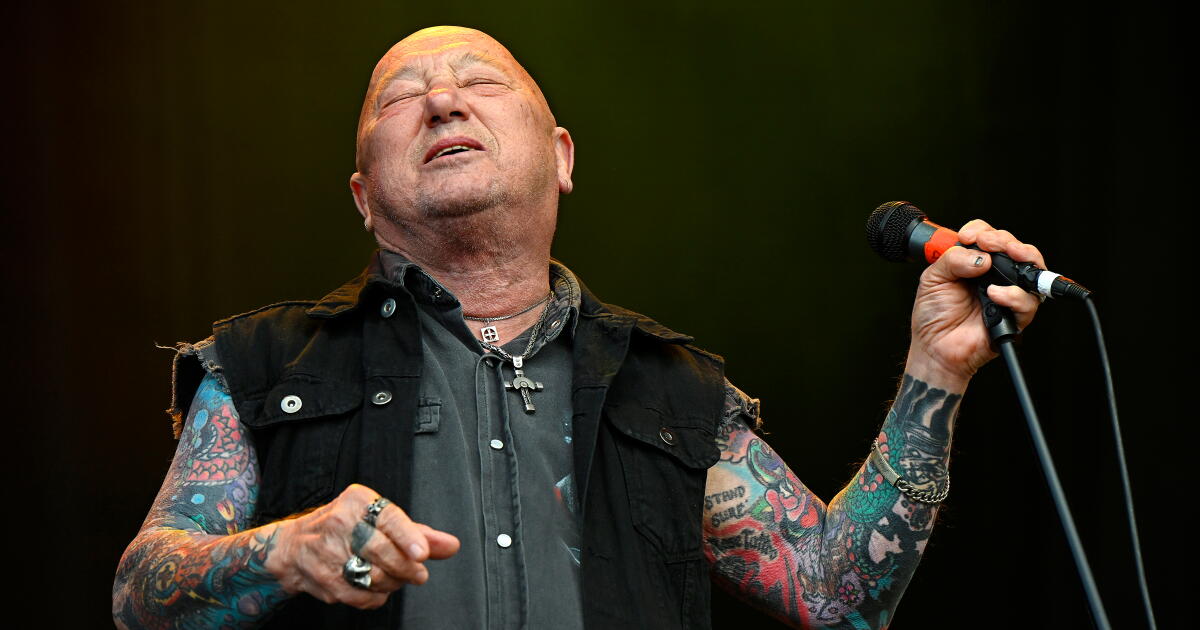
Gary ‘Angry’ Anderson, frontman for Aussie rock band Rose Tattoo, dies at 79
Gary “Angry” Anderson, front man for the Australian rock band Rose Tattoo, has died. He was 79.
News of Anderson’s death came via the band’s Instagram account, which said he died Monday in Sydney. The vocalist had suffered cardiac arrest weeks earlier during Rose Tattoo‘s farewell tour in Europe.
“Angry was a devoted father, and much-loved member of his friends, bandmates and the wider music and entertainment community. His loss will be deeply felt by all those who knew and loved him both here in Australia and overseas,” the band said.
Reports of Anderson’s health problems first came to light when the band canceled an appearance at the Alcatraz Metal Festival in Kortrijk, Belgium, on Aug. 9, stating on their Instagram account that the singer was in the hospital due to a “medical issue.”
By Aug. 10, Rose Tattoo had canceled all remaining shows on the band’s European tour as Anderson stayed in the hospital. Three weeks later, it was revealed via the band’s Instagram that the rocker’s medical issue was cardiac arrest and that he was receiving treatment and care.
Anderson was the most veteran member of Rose Tattoo, a hard rock and blues band that formed in Sydney in 1976. The group is known for tracks including “Rock ‘n’ Roll Outlaw” and “Bad Boy for Love,” and some of their discography was covered by Guns N’ Roses early in their career, including “Nice Boys” for the 1986 EP “Live ?!*@ Like a Suicide.” Rose Tattoo would later open for the L.A. hard rock band while on tour in Australia in 1993 for their Use Your Illusion Tour.
In the band’s bio, bandmates are described as as “four tall, gaunt men with unnaturally spikey red hair” — which at the time included Pete Wells on slide guitar, Ian Rilen on bass, Dillas “Digger” Royall on drums and Mick Cocks on guitar. Anderson was described as the “fifth out front stocky and furiously shaven” member, standing at 5 feet, 1 inch tall.
“[They] aren’t an average sight,” the biography states. “Even in the realm of Rock ’n’ Roll excesses.”
Apart from his role in the band, Anderson gained fame internationally as a solo artist when his debut 1987 single, “Suddenly,” earned critical acclaim and appeared on the charts in Australia, Belgium, New Zealand, the Netherlands and the United Kingdom.
The track was used as the wedding theme in an episode of the Australian soap opera “Neighbours,” in which characters Scott Robinson and Charlene Mitchell got married.
Anderson was also a youth advocate, reportedly serving as an ambassador for national child protection campaigns. According to the Australian Broadcasting Corp., he has been connected to numerous children’s hospitals, the Starlight Children’s Foundation, as well as the Make-a-Wish Foundation and Canteen, a support organization for youths with cancer.
In 1993, he was made a member of the Order of Australia for his role as a youth advocate.
After longtime members of Rose Tattoo died from various forms of cancer, Anderson became an advocate for men’s health and conducted campaigns to raise awareness about prostate cancer in 2007. Wells, the guitarist, died of prostate cancer in 2006 at age 59.
Anderson stirred controversy with forays into politics. In 2007 he espoused controversial views about immigration and Muslim communities in Australia. In 2016, he was endorsed as Senate candidate by the Australian Liberty Alliance, a right-wing group that opposes Muslim immigration.
Anderson’s son Liam was killed in 2018. The singer is survived by children Galen, Roxanee and Blaine Anderson.

Lakers’ new era opens with a thanks for the LeBron James era
The news conference Thursday began with Lakers president of operations Rob Pelinka saying he wanted to “express gratitude” to LeBron James for the eight years he spent playing for Los Angeles before departing to Philadelphia as a free agent over the summer.
It didn’t take long for Pelinka to pivot into Luka Doncic and Austin Reaves, and how they are now the leaders of the Lakers with James gone.
James informed the Lakers on June 30 that he had plans to play elsewhere, and thus began a new chapter for the Lakers. James, who signed with the 76ers, won an NBA championship with the Lakers in 2020. He led the Lakers to the Western Conference second round of the 2026 playoffs.
Over the course of his 23-year NBA career, James’ longest tenure had been with the Lakers.
And for that, Pelinka was thankful.
“I think before we get into the questions, it’s been a few weeks since I’ve last seen you guys. I thought it would be appropriate at the front to express gratitude for the LeBron era here,” Pelinka said. “Clearly, new team and new players, and that’s what we’re going to talk about today. But we as an organization are still grateful for the run that we had with him here. The Lakers have become — as they should — a perennial playoff team — won a championship, went to the Western Conference finals. It was a great era, and we’re grateful for it. I think it’s important to say that at the onset as we turn into a new chapter.”
Pelinka said he collaborated with Lakers coach JJ Redick to build a team around Doncic, using a three-pronged approach.
They wanted to re-sign Reaves, which the Lakers did at four years and $180 million, the largest contract ever for an undrafted player in NBA history.
They wanted to acquire a top-notch center, which the Lakers did by getting Walker Kessler from the Utah Jazz in a sign-and-trade deal. The Lakers sent two unprotected first-round picks and two first-round pick swaps to the Jazz for Kessler and then signed him to a four-year, $130-million contract.
They wanted to add quality depth, which the Lakers did by getting Quentin Grimes, Jaden Hardy, Collin Sexton, Matisse Thybulle, Ziaire Williams, Sandro Mamukelashvili and Kevon Looney.
Pelinka said this was the “thesis” on how they wanted to build the Lakers for the 2026-27 season.
“And there were three fundamental pillars of what we wanted to accomplish in the offseason: We wanted to retain Austin Reaves. That was a really big thing for us,” Pelinka said. “We wanted to find a way to acquire a franchise center and then we wanted to develop a roster of JJ Redick dribble-pass-shoot players that were younger and add depth to our roster. That was sort of our three-prong thesis basketball-wise for the offseason, and we felt like we accomplished all those things.
“Re-signing Austin, putting together a trade to acquire Walker Kessler, and then building out our team with young players that could dribble-pass-shoot, and have brought the average age of our roster to around 26 or 27, which lines up so perfectly with building a team around Luka Doncic. That’s what we’re here to talk about today, is our offseason and the excitement heading into this year.”

Lakers top executive Rob Pelinka, with reporters in the foreground, addresses the media at the team’s training facility in El Segundo on Thursday.
(Allen J. Schaben / Los Angeles Times)
Pelinka, who held the news conference with Redick by his side, was asked about the new Lakers ownership group of Bob Iger and Joshua Kushner, who purchased the franchise for a record $12.5 billion from Dodgers owner and Guggenheim Partners’ Mark Walter, who owned the Lakers for about a year. The deal hasn’t been finalized but is expected to be approved by the NBA’s Board of Governors.
“We have had introductory meetings with Bob and Josh, and those have been excellent,” Pelinka said. “With a pending transaction, we’re not at liberty to talk more about that under league rules. But we’ve had preliminary discussions with them that have been really, really positive. In terms of day-to-day, nothing’s changed. We’re operating with Lakers excellence.”
The biggest change is James not being with the Lakers.
After the Lakers were eliminated by the Oklahoma City Thunder in May, James expressed interest in re-signing with the team.
Pelinka even said the Lakers wanted James to retire with the franchise.
But that didn’t happen.
“Again, we’re grateful for the LeBron era,” Pelinka said. “I think the communications with him this offseason were held diplomatically, professionally and honestly. I’m so thankful for the partnership that we had that continued up until this summer when a decision was made for him to play for another team. It was done amicably, professionally, gracefully. We looked at the whole thing with gratitude, because it’s been an incredible era for us here.”

NYC police arrest Susan Sarandon, other celebrities protesting Netanyahu | Protests News
Rights groups accuse the UN of hosting a “war criminal” as delegations walked out during Netanyahu’s speech.

Published On 25 Sep 2026
Police arrested about 100 protesters, including actors and politicians, outside the United Nations headquarters in New York, as demonstrators rallied against Israeli Prime Minister Benjamin Netanyahu ahead of his address to the UN General Assembly.
Among those arrested were Oscar-winning actor Susan Sarandon, Emmy winner Hannah Einbinder, Democratic congressional candidate Darializa Avila Chevalier and New York City Council member Chi Osse.
Recommended Stories
list of 3 itemsend of list
The protest, organised by the advocacy group Jewish Voice for Peace, drew about 200 people wearing identical white T-shirts printed with slogans including “Fund people not bombs”, “No war” and “Free Palestine”.
Protesters blocked traffic, and after police ordered them to leave over loudspeakers, some moved to the sidewalks. Officers then surrounded the protesters who remained seated on the pavement, chanting “Netanyahu go to hell”. The demonstrators were then escorted to police buses.
“What’s being done to Gaza, the obliteration of an entire society, in our name, with our tax dollars, this is our responsibility to speak out against, and Netanyahu has no right to use the platform of the United Nations to justify these atrocities,” said protester Manijeh Moradian, a 50-year-old university professor of Iranian and Jewish heritage.
Inside the UNGA, Netanyahu took the stage to defend Israel’s actions in the Middle East as he sought to counter growing international isolation ahead of Israel’s upcoming elections, while dozens of delegates streamed out of the hall.
Separately, pro-Palestine protesters gathered on the steps of the New York Public Library in Manhattan, waving Palestinian flags and carrying banners reading “New York rejects Zionism” and “Palestine deserves freedom”.
Rabbi Yitzchok Deutsch, a representative of Neturei Karta International, said Netanyahu was “using our religion, our identity, to justify all these crimes”.
Deutsch sent a message of gratitude to New York City Mayor Zohran Mamdani “for his courage to do whatever he can to arrest” Netanyahu.
Protester Melissa Zuniga questioned why Netanyahu was allowed to speak at the UN “when he has an international warrant for his arrest”.

An SR-71 Blackbird Has Vanished
Last week, NASA Administrator Jared Isaacman cryptically teased plans for a new high- and fast-flying X-plane with a silhouette of an aircraft that immediately drew comparisons to the famed SR-71 Blackbird as a backdrop. In our report, we looked at what it could mean, including the possibility of reviving the SR-71, or at least using it to inform or even cobble together a new airframe. Now it turns out that an SR-71 that had been on display at NASA’s Armstrong Flight Research Center for years is suspiciously missing.
Steve Trimble, Aviation Week‘s defense editor and friend of TWZ, was first to report the disappearance of the former NASA SR-71, also known by the tail number 844, at Armstrong. That facility is collocated with Edwards Air Force Base in California. Trimble’s piece says that satellite imagery shows the jet has not been seen since at least May 17. The aircraft in question, which originally carried the U.S. Air Force serial number 61-7980, was the last Blackbird produced and the last one to fly, taking to the skies for the final time in 1999.

“The current disposition of the aircraft is unclear, but Aviation Week sources suggest that the aircraft was moved into a hangar earlier this year for an inspection,” according to the story. “The presentation and the disappearance of the display SR-71S with the 844 tail number for NASA raises the possibility of a return-to-flight program after a more than 26-year-long hiatus.”

The presentation mentioned above is the one NASA’s Isaacman gave last week at the annual All-In Summit in Los Angeles, California, during which he shared the SR-71-esque silhouette.
“In the service of the first A [aeronautics] in NASA, we are rebuilding our X-plane fleet. The X-59 is researching quiet supersonic flight, but it’s just the beginning,” he said at that time. “As NASA recommits to flight test and works alongside industry to push the boundaries of airframe and propulsion design, it will not be long before NASA once again is flying as high and as fast as we had in decades past, and then even more.”
Isaacman has made expanding NASA’s X-plane fleets a top priority since taking charge of the agency last year.
“You sure that’s a Blackbird?” the NASA administrator said during a live interview that immediately followed his remarks after the image was brought up, but did not offer any further clarification.

“NASA has a long history of building and flying experimental aircraft that push the boundaries of what is possible,” NASA told TWZ directly when asked for more information. “As Administrator Isaacman has said, we want to see more X-planes flying in the years ahead, developing the technologies that will allow us to fly higher, farther, and faster than we have in decades. We look forward to sharing more as those efforts progress.”
We have reached back out to NASA in light of Aviation Week‘s report.
As we wrote in our initial reporting on Isaacman’s comments:
“As for bringing a Blackbird back into operation for high-speed testing, which is now at the forefront of military aeronautics (and civilian to a lesser degree) after decades of being sidelined, that would be a very challenging operation. The SR-71s are long retired and have been placed in museums and other display areas. While the Pentagon could technically claw some of them back from their ‘on loan’ status, reconstituting even one of them would be a major undertaking as the entire support ecosystem that once sustained them has been gone for decades. Still, having a Mach 3+ capable jet for testing would be a highly relevant tool in a new age of high-speed flight exploration.”
“On the other hand, building a new test aircraft that aims higher and faster than the SR-71, but may be based on its ‘DNA,’ is certainly possible. Such an aircraft could leverage material science, avionics, flight controls, and engines that are seven decades more modern than its progenitor. Technology demonstrators in this class could also already exist in the classified domain. NASA could possibly assume ownership of one after the Pentagon declassifies it, as well.”
“Regardless of how such an exotic aircraft is obtained, one of the biggest differentiating factors could be that a NASA aircraft is piloted by a human onboard, instead of it being a drone, but an uncrewed aircraft is possible too.“
Aviation Week‘s report today notes that tail number 844 would probably be the best available candidate for returning to flight status. In addition to being the last produced and the last to fly, NASA previously upgraded it, including with “an automated digital flight and inlet control system to virtually eliminate the Blackbird’s problem of violent engine unstarts at high speed.” It has also been sitting in a controlled area in the Mojave Desert that is great for preservation.

SR-71 LASRE in Flight over California’s Mojave Desert
It is also worth pointing out here that Isaacman is personally aware of the time and resources it takes to reconstitute high-end vintage military aircraft. He founded private ‘red air’ aggressor firm Draken International, making him once the owner of the world’s largest private air force stocked with old jets. His own private collection includes a demilitarized, ex-Ukrainian two-seat MiG-29UB that he flies regularly. He has also been working to restore a former Royal Air Force swing-wing Panavia Tornado F2 interceptor, which would be the most complex private military jet flying, if or when it returned to working condition.
At the same time, the SR-71 is in a completely different category, having been the very definition of a high-demand, low-density asset even at the very peak of its service life with the Air Force. Only 32 of these jets were ever built, and they were notoriously complex and expensive to operate and maintain. The aircraft’s Pratt & Whitney J58 turbojets ran on JP-7 fuel that is no longer in regular production. After 9/11, the possibility was raised of returning a Blackbird to service to support the Global War on Terror, but doing so was projected to cost between $40 and $45 million – and that was just two years after 844’s last flight.
There is also a possibility, in line with Isaacman’s comments last week, that 844 could re-merge in a substantially different, reworked form. There is even the potential it could be retrofitted for uncrewed, or at least pilot-optional, flight. Any such conversion effort would also be a major undertaking, as would sustaining the resulting bespoke jet. As we noted earlier, NASA could also use the SR-71 at Edwards to help inform other future designs.
At the same time, maybe this is all a coincidence and the SR-71 in question is getting some other form of TLC, but its months-long absence is certainly a curious development in light of the current push for new X-planes under Isaacman’s leadership.
Contact the author: joe@twz.com

Netflix The Crown star leads gripping new Sky thriller perfect for fans of The Capture
Fans of dark crime dramas have a new thriller to look forward to, with a familiar face set to lead Sky’s latest big adaptation.

The Crown actress will lead the cast in the gripping new drama(Image: Youtube)
Fans of dark, gripping crime dramas have a new series to add to their watchlists.
David Oyelowo is set to lead the cast in Sky’s new series The Girl with the Dragon Tattoo, alongside rising star Viola Prettejohn, who is known for playing young Princess Elizabeth in the sixth season of The Crown.
The eight-part Sky Original is adaptation of Stieg Larsson’s bestselling Millennium novels. It could be perfect for viewers who enjoyed shows such as The Fall and The Capture, with a dark mystery, complex characters and a dangerous investigation at its heart.
David, who is known for his roles in Selma and Interstellar will take on the role of investigative journalist Mikael Blomkvist. Viola Prettejohn will play Lisbeth Salander, the brilliant but troubled hacker at the centre of Larsson’s story.
The story follows Blomkvist as he is hired by wealthy businessman Henrik Vanger to investigate the disappearance of his niece Harriet.
Harriet vanished more than 30 years earlier from the Vanger family’s isolated island home, but Henrik remains convinced that a member of his own family was responsible.
Blomkvist soon teams up with Salander, an exceptionally talented hacker with a complicated past and a fierce determination to uncover the truth.
Together, they begin to uncover secrets buried within the Vanger family, leading them towards a far more dangerous mystery than they initially expected.
The new adaptation will bring Larsson’s story into the modern day, exploring themes including power, misogyny, secrecy and technology.
The original Girl with the Dragon Tattoo novel was published in 2005 and went on to become an international bestseller. The Millennium books have sold more than 100 million copies worldwide and have already been adapted for both Swedish and English-language audiences.
The first English-language film adaptation was released in 2011 and starred Daniel Craig as Blomkvist and Rooney Mara as Salander, with David Fincher directing.
The new Sky series will offer a fresh interpretation of the characters and story for a new audience and it comes from Left Bank Pictures, the production company behind The Crown and The Day of the Jackal.
Meghan Lyvers, Managing Director, Scripted Originals, Sky, said: “Lisbeth Salander and Mikael Blomkvist are two of modern fiction’s most iconic and compelling characters, and we’re thrilled to have Viola and David bringing them to life for a new generation.”
She added: “Our brilliant writing team, Reinaldo Marcus Green’s bold vision and our fantastic partners at Left Bank Pictures are creating a series that honours everything audiences love about The Girl with the Dragon Tattoo, while taking its characters, mystery and themes into a world that feels unmistakably of the moment. We can’t wait for audiences to experience it.”
Filming is due to begin in Lithuania next month, with the series set to air on Sky and NOW in the UK and Ireland, as well as Sky platforms across Italy, Germany, Switzerland and Austria.
The Girl with the Dragon Tattoo lands on Sky soon

Raman’s big lead in L.A. mayoral poll puts pressure on Bass
A stunning new poll showing Los Angeles City Councilmember Nithya Raman gaining a double-digit lead over incumbent Karen Bass in the mayor’s race is increasing pressure on Bass and her allies to go sharply negative against her opponent and to seek support from conservative and undecided voters to narrow the gap.
The poll, conducted by the UC Berkeley Institute of Governmental Studies and co-sponsored by The Times, showed Bass trailing Raman by 11 percentage points — with 28% of likely voters saying they supported the mayor while 39% said they would vote for Raman. The remaining 33% were undecided, an unusually high number this close to the Nov. 3 election.
“The bottom line is this is a huge shot in the arm politically for Raman — and it’s not a good day for the mayor,” said Zev Yaroslavsky, a former L.A. City Council member who now runs the Los Angeles Initiative at the UCLA Luskin School of Public Affairs.
Dan Schnur, a former Republican political consultant, said the poll could have instant negative effects for the mayor’s fundraising ability as potential supporters might now view Raman as the favorite in the race.
“The most immediate tangible result of a poll like this is that Bass’ greatest advantage was her fundraising and it now becomes much more challenging to raise money,” he said.
Bass, appearing Wednesday at a news conference in Hollywood, said she’s seen multiple polls that show a tight race. She said that Raman is “absolutely not” the front-runner in the race.

Mayor Karen Bass speaks at Vermont/Santa Monica Metro Center on Wednesday, touting progress on construction of affordable housing.
(Kayla Bartkowski / Los Angeles Times)
The mayor said she is working to highlight the city’s progress in making rent more affordable, pointing to newly released numbers that show that more than 10,000 units of housing with restricted rents have been built since she took office in December 2022.
“The No. 1 issue to Angelenos continues to be lack of affordability, and our primary way of addressing that from the city is housing,” she said. “So we are absolutely addressing affordability.”
Others in the Bass camp seemed more anxious about the poll results.
“It put a pit in stomachs,” said one supporter close to the Bass campaign who requested anonymity to speak candidly about the poll. “But there is still an outside chance for Bass. It’s not total doomsday.”
The supporter said that the Bass campaign truly doesn’t believe Raman’s lead is that big, but that the poll was still “not good news,” especially for fundraising.
Mike Bonin, a progressive former L.A. City Council member who now runs the Pat Brown Institute at Cal State Los Angeles, said Bass needs to focus on winning over voters who chose former reality television personality Spencer Pratt in the primary election in June. Many of those voters are now on the fence.
Pratt received 26% of the vote in the primary, and most of the voters who cast ballots for him — 63% — say they still haven’t decided whom to vote for in the runoff, the poll found. Among the Pratt voters who have decided, 22% favored Bass compared with 16% for Raman.
Bonin said he expects Bass and her allies to attack Raman’s progressive views in order to reach Pratt voters. Raman is a member of the Democratic Socialists of America and opposed raises for Los Angeles Police Department officers that had been championed by Bass.
“The nature of the attacks will try to reach the Pratt voters particularly since they are the largest bloc of undecideds and they skew conservative,” Bonin said.
The Los Angeles Police Protective League, the union representing LAPD officers, is already airing campaign ads critical of Raman over her opposition to a law barring homeless encampments next to schools. In the coming days, the group will also roll out commercials highlighting Raman’s ties to the DSA, which has endorsed her mayoral bid, said union spokesman Tom Saggau.
“Our own poll told us that the Pratt folks were very much undecided, and that when they heard more about Nithya’s record, and her co-governing with DSA, they moved off of her,” he said, adding that his group still views the race as a dead heat.
Raman, not surprisingly, cheered the poll results.
“This poll reflects the momentum we’re seeing on the ground. Angelenos are ready for change and want to see a City That Works,” Raman said in a post on Instagram.
Raman campaign officials said the poll probably will help their fundraising efforts, which they said had already been gaining momentum over the last few weeks. And Schnur, the former GOP political consultant, said the wide lead allows Raman to spend more time touting her own credentials instead of disparaging Bass.
“For the most part Raman has the front-runner’s luxury of putting out a positive message and reinforcing her own credentials,” Schnur said.
Estevan Montemayor, who is running the pro-Raman Estamos con Nithya independent expenditure group, said his group’s role will be to inform voters about Raman’s positives while the Bass campaign attacks.
“They’re gonna come after Nithya and we’re gonna be here to tell her success story,” he said.
Bass supporter Stuart Waldman, chief executive of the Los Angeles County Business Federation, said the large number of undecided voters this close to the Nov. 3 election is worrying but also leaves an opening for Bass to gain ground.
“Any swing in any direction could make a big change,” Waldman said. “We have no idea who’s going to vote. … Usually by this point in time, everything has tightened up.”

Councilmember Nithya Raman, lower right, campaigns at a Latinos Con Raman rally at La Cita Bar in downtown Los Angeles.
(Genaro Molina / Los Angeles Times)
In courting those undecided voters, however, Bass is burdened by high unfavorability numbers, according to the Berkeley IGS/L.A. Times poll.
The mayor had 63% unfavorable ratings, the poll found, with 28% favorable and 9% having no opinion. By comparison, 40% had a favorable view of Raman, according to the poll, while 39% said they had an unfavorable view of her and 21% had no opinion.
Mike Murphy, a Republican political consultant, said that Bass needs to accept responsibility on core issues upsetting Angelenos about her tenure, such as homelessness and the 2025 Palisades fire, which killed 12 people and destroyed thousands of homes. In a recent interview with The Times, Bass said her biggest mistake as mayor was being in Ghana when the fire began amid high wind warnings.
“You have to say, ‘I hear you,’” he said. “Voters don’t think Karen gets that they are mad about things that happened during her term.”
Then, Murphy said, he believes Bass needs to attack Raman as being more establishment than Bass.
Murphy noted that Bass has frequently attacked Raman for being “at City Hall longer than I have,” which he called a powerful message to voters who are considering Raman because they want change. Raman was elected in 2020 and Bass in 2022.
Other polls taken in the campaign have shown a closer race than the Berkeley IGS/L.A. Times poll.
In an internal Raman campaign poll from early September, the council member was ahead, 44% to 39%, with 17% undecided. She was also leading, 38% to 32%, in a poll commissioned by the group Streets for All, which is backing Raman.
In an early August poll commissioned by an independent expenditure group supporting Bass, the mayor had the edge, 41% to 35%, with 24% undecided.

Mayor Karen Bass greets community members after speaking at Vermont/Santa Monica Metro Center.
(Kayla Bartkowski / Los Angeles Times)
The Bass campaign cited some of those polls when responding to the Berkeley IGS/L.A. Times poll Wednesday, calling it an “outlier poll” and accusing the pollsters of getting it wrong.
“In the primary … they got it wrong and undercounted Karen Bass’ support,” campaign spokesperson Alex Stack said in a news release.
Stack added that polls conducted online, like the Berkeley IGS/L.A. Times poll, “systematically [undercount] working-class families, seniors, and non-English speaking communities who regularly turn out on Election Day.”
Mark DiCamillo, the director of the Berkeley IGS Poll, defended the methodology, saying he has spent 45 years polling in California and eight years running the Berkeley IGS Poll.
“What would you expect from a campaign down by double digits? They attack the poll,” he said.

Aaron Donald ready to ‘earn’ more snaps for Rams vs. Broncos
Aaron Donald is still earning his spot.
In his mind, anyway.
During defensive line drills, the Future Hall of Famer continues to go third — even when groups are split — rather than lead.
“Earning my keep right now,” Donald said after Rams practice Thursday. “I’m a guy that likes to work and earn everything I get.”
Donald, 35, has one game under his belt after returning from a two-year retirement to rejoin the team that selected the three-time NFL defensive player of the year in the first round of the 2014 NFL draft.
Donald played 33 snaps in the Rams’ 28-6 victory over the New York Giants on Monday. He made three tackles, including one for a loss.
Donald said he watched tape of his performance six times — two times by himself, once with his brother and three more times on his own.
“Not as bad as I thought,” he said. “A lot of things to clean up but on the right track.”
Donald looked “excellent,” defensive coordinator Chris Shula said.
“He was awesome,” Shula said. “He put a lot of pressure on the quarterback, and then you see like some of the run plays … that group as a whole played really tough, played stout, played physical at the line of scrimmage and Aaron was a huge part of that.”
Now, one of the top interior pass rushers in NFL history is preparing for Sunday night’s game against the Denver Broncos in Denver.
Will Donald’s playing time increase?
“Every game is going to kind of tell its own story,” Shula said. “I think we have a general range of where he would be, but I think depending on how the game plays out, you never know how many snaps and the situations that you’re going to be in.
“You never want to put a full hard cap on it.”
Donald is happy with the way his return to game action is playing out.
“We’ve got a good rotation … keeping guys fresh and right now I’m liking it,” he said. “I think it’s at a great pace right now.
“I’m getting my feet wet, get going, get a feel for the game again and other guys are out there working and getting work too.”
Etc.
Rams receiver Puka Nacua (hip), who sat out against the Giants, did not practice for the second day in a row. On Wednesday, coach Sean McVay told reporters he was “not sure” if Nacua would play against the Broncos. Later in the day, he told ESPN radio that Nacua was “not making great progress.” … Tight end Colby Parkinson (knee) and safety Kam Kinchens (hamstring) also did not practice.