



Daniel Dubois defeats Fabio Wardley to retain WBO heavyweight boxing title | Boxing
Champion dominates fellow British boxer in London before facing a challenge from IBO champion Hrgovic.
Published On 18 Oct 2026
Daniel “Dynamite” Dubois has retained his WBO heavyweight belt with a one-sided and devastating second-round stoppage of fellow British boxer Fabio Wardley in their world title rematch in London.
The 29-year-old champion made a storming start at the O2 Arena on Saturday, and Wardley’s legs gave way within 17 seconds of the opening bell as Dubois floored him with a straight right punch.
Wardley, 31, beat the count and could have been stopped at the end of the first round when he took a further brutal pounding on the ropes but was saved by the bell.

There was no escape from the onslaught of blows in the second round as Dubois picked up where he left off and Wardley took punch after punch until the towel was thrown in and referee Steve Gray brought the fight to a close.
“Fabio is a great warrior, coming in for a second time, but it was my time and my era,” said “Triple D”, never a man for long speeches. “I had my intentions, bad intentions, from the beginning.
“Our back was against the wall the first time. This time, we just had to go out there and show that we mean business, and that’s what we did tonight.”
Dubois dealt Wardley his first defeat as a professional in May when he came back from two knockdowns, the first after 16 seconds, to take the title in the 11th round of a thunderous and bloody clash in Manchester.

Wardley, promoted to WBO champion in November after Ukraine’s Oleksandr Usyk vacated the title, was acclaimed for his courage and refusal to give in the first time around, but on Saturday, he looked like a shell of the man seen in Manchester.
He now has a record of 20 wins and two defeats with Dubois on 24 wins with three defeats.
“I’ve always thrown myself in with the best competitors out there, the toughest, the biggest, hardest, meanest guys around. There’s no shame in testing yourself against the best,” he said.
“Daniel’s a testament to coming up short and coming again. I’ll be looking to do the exact same thing.
“Boxing is a game of fine margins. It can be done and over in a round or two, or it can go into a big old war like it was last time.”

Dubois was previously the IBF champion, losing the title to Usyk in London in July last year before coming back to take the WBO belt from Wardley.
Croatian Filip Hrgovic, the IBF champion after beating the United Kingdom’s Moses Itauma in August, was ringside on Saturday and challenged Dubois to a fight with both belts on the line.
“It was an easy night for Daniel. He did a good job, quick win. So he’s ready to fight me in March, right, Daniel?” Hrgovic said before promoter Frank Warren suggested he might have to deal with other candidates first.
Dubois beat the Croatian in June 2024 to take the interim IBF belt and was then upgraded to champion when Usyk vacated his title.
“I want to have a rematch with him. I want to get my old belt back and rule the division,” Dubois said.


TV Licence rule pensioners may not realise gets them it for free
Pensioners could get it for free – saving themselves an annual fee of £180

Not everyone can get it for free – but it’s worth checking(Image: Getty)
Pensioners could be missing out on a free TV Licence – saving them £180 per year.
The standard annual TV Licence costs £180 for a colour licence. Meanwhile, a black-and-white licence costs £60.50, following an increase on April 1, 2026.
There are around 23.3 million TV licences in force – a fall of 539,000 year on year, according to a BBC report on July 14, 2026. This generated income of £3.9 billion, up £36 million year on year, “largely driven by the licence fee uplift.”
Pensioners could get a free TV Licence
You need a TV Licence to watch or record live programmes on any channel, including the BBC. A licence is also required to watch BBC programmes on BBC iPlayer, whether you’re streaming live or watching a downloaded programme on a TV, computer, tablet or smartphone.
If you need one, you could get a free licence if you’re 75 or over and you get Pension Credit. You can also get a discounted TV Licence if you’re blind or live in residential care.
If you’re 75 or over, you could get a free TV Licence
You can get a free TV licence if you’re 75 or older and you either:
- get Pension Credit
- live with your partner who gets Pension Credit
The licence covers everyone who lives at your address. If you already receive Pension Credit, you can apply from age 74. You’ll still need to pay for your licence until the end of the month before you turn 75, after which your free licence will take effect.
TV Licensing notes that there are separate arrangements in place for over-75s on the Isle of Man, the Bailiwick of Jersey, and the Bailiwick of Guernsey.
If you don’t have Pension Credit but think you may be eligible for it, it’s worth checking, TV Licensing suggests.
You can apply online here. If you would prefer to apply for a free TV Licence by phone, call 0300 790 6117* to speak to an advisor. Lines are open between 8.30am and 6.30pm, from Monday to Friday.
*Calls to their 0300 numbers cost no more than a national rate call to an 01 or 02 number, whether from a mobile or landline. If you get inclusive minutes, calls to an 0300 number will be included free of charge.
If you’re in residential care or sheltered accommodation
You can get a heavily discounted TV Licence if you live in an eligible residential care home, supported housing or sheltered accommodation. TV Licensing says that this is known as an Accommodation for Residential Care (ARC) licence and costs £7.50 per room, flat or bungalow.
You must be either:
- retired and over 60
- disabled
You should speak to your care home managers to find out if your accommodation qualifies. They are responsible for arranging this type of licence, gov.uk advises.
If you’re registered blind
If you’re blind (severely sight-impaired) and can provide the required evidence, you can apply for a 50% concession. Your licence will also cover anyone who lives with you.
A blind concession TV Licence costs £90 for colour and £30.25 for black-and-white annually. If you’re partially sighted (sight impaired), you’re not eligible.
If someone you live with is blind (severely sight impaired), you can apply for a blind concession, whatever their age. If you already have a TV Licence but it isn’t in the blind person’s name, you’ll need to transfer it into their name. You can do this by submitting a first-time blind application and entering the existing TV Licence number for your address when you apply.

High school football: Saturday's scores
Results form CIF City and Southern Section high school football games on Saturday, Oct. 17.
Source link
AI tool helps stranded protesters find their way home in the Indian capital | Protests News
New Delhi, India – A 19-year-old woman was detained by police during the youth-led antigovernment protests in the Indian capital over the weekend.
The young woman, who asked to remain anonymous for fear of further reprisals from the authorities, said she was detained on Sunday as thousands of people congregated in central New Delhi. They were demanding the resignation of India’s Chief Election Commissioner, Gyanesh Kumar, over alleged irregularities in electoral rolls, which saw the removal of 133 million people from the voter lists.
Recommended Stories
list of 4 itemsend of list
After the woman’s detention, she and several other demonstrators were taken on a police bus to a location about 50km from the protest site. With no cash and her phone battery drained, the woman spent nearly an hour wandering along a dark road, trying to figure out what to do next.
A car pulled up and the driver asked if she needed any help.
“I was frightened and completely lost. When those volunteers finally helped me get back safely, it felt like a miracle. I had never imagined that someone I had never met would come forward to help me like that,” she told Al Jazeera.
For a young woman in New Delhi, notoriously referred to as the “rape capital of India”, being alone in the middle of the night and getting into a car with strangers is not an easy decision. The city records an average of three rapes a day.
But the young protester said she immediately recognised one of the volunteers in the car. She had seen his videos online, in which he had asked the detained protesters whether they needed help. Recognising a familiar face reassured her that the people offering the ride could be trusted.
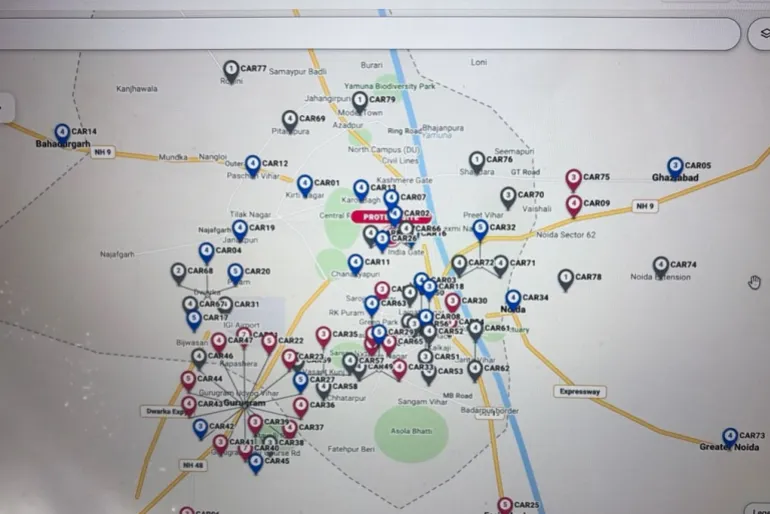
The woman was rescued using an AI-assisted tool developed by 25-year-old Rajiv Choudhary, who is helping protesters get home safely after being detained and dropped off by the police far away.
Called the Detainee Gharwapsi Yojana, the initiative combines a digital dashboard with a network of volunteers who track information about police buses carrying detainees and arrange transport for those left stranded.
“Gharwapsi” in Hindi means “to return home”. It is also a play on a campaign by India’s right-wing Hindu groups which want to bring the country’s Muslims and Christians back into the Hindu fold, claiming that their ancestors converted to “foreign” religions from Hinduism. “Yojana” means a plan.
Since the beginning of this month, India has seen near daily protests over alleged electoral fraud by Kumar and his commission. Led by the satirical Cockroach Janta Party (CJP), a number of left-leaning student groups as well as the main opposition Congress party, the protests have seen tens of thousands of people hitting the streets in New Delhi and other cities.
In response, authorities in the Indian capital have imposed a sweeping crackdown, blocking roads, closing metro stations and detaining thousands as Prime Minister Narendra Modi’s government faces the biggest challenge to its power after 12 years of rule.
Choudhary said his network’s primary focus was to help minors, elderly people and women, mainly first-time protesters.
The initiative operates through a private digital dashboard that uses AI-assisted data processing, live mapping and information shared by volunteers on the ground. Volunteers send details, including police bus numbers and locations, through WhatsApp, helping the team coordinate assistance and rides home.

Choudhary said he and his associate, journalist Meghnad, who goes by a single name, initially worked with a small group of volunteers to connect detainees with transport, legal assistance and medical support. The network has since expanded to more than 130 volunteers, who have offered their time and resources to assist detained demonstrators.
“For people caught up in these demonstrations, the ordeal doesn’t end with detention. They can be taken far from the protest site and left trying to find their way home from unfamiliar locations, often struggling to contact friends or arrange transport,” he said.
The idea grew out of Choudhary’s experience during an earlier protest called by the CJP at Jantar Mantar, the designated protest site in New Delhi that has now been denotified by the authorities. Initially, he helped organise supplies and volunteers.
As demonstrations continued, he recognised that protesters needed more systemic support, particularly those who were detained by the police and left fending for themselves far from the city limits.

As renewed protests began on October 2 , Choudhary built a digital system around the same volunteer network using AI tools. It began with a simple spreadsheet.
“The whole aim behind the application was that I had to systemise things that are not systemised,” he said. “We just wanted to become a support system that could help our people in their fight for their demands.”
Choudhary recalled receiving a distress call from a woman who had been detained in central New Delhi and released on the outskirts of the city. Stranded alone near a railway station, with metro services shut and no clear way to get home, she was frightened and unsure which way to turn.
She reached out to Choudhary’s network for help and he arranged for a nearby female driver to take her home safely. “It is heartbreaking to see people left helpless in an unfamiliar city, frightened and unsure of how they will get home,” he said.
For now, the Detainee Gharwapsi Yojana operates only in New Delhi, but Choudhary plans to expand it to other cities.
“I am overwhelmed by the response from volunteers and drivers who have come forward to help without charging anything. They are offering their services for free because they want to support the protesters,” he said.
The 19-year-old woman who was helped by Choudhary’s team described the initiative as “a lifeline for protesters”. She said the team not only arranged her return, but also offered reassurance and emotional support.
“I cannot thank them enough. As long as we have people like them in our society, no authority can stop us from demanding our rights and protesting peacefully,” she said.

Guatemalan former prosecutor shot dead at sports centre | Crime News
Guatemalan police say they arrested two men in connection with the killing of Juan Francisco Solorzano Foppa.
Published On 18 Oct 2026
Lawyer Juan Francisco Solorzano Foppa, known for his high-profile cases against powerful businessmen in Guatemala, has died after being shot by two men during a visit to a sports centre.
The attack on Saturday at the Campo Marte sports complex in Guatemala City resulted in the deaths of Foppa and another man, Gustavo Adolfo Aguilar Gamarro, according to the Public Prosecutor’s Office.
Recommended Stories
list of 3 itemsend of list
Shortly after, the Guatemalan police said they arrested two men and seized a carbine-style firearm and a motorcycle in connection with the case.

Foppa was a 43-year-old former prosecutor and anticorruption lawyer who denounced wrongdoing by some of Guatemala’s most powerful politicians, business leaders and companies, and in 2023 briefly joined the defence team of a prominent journalist.
President Bernardo Arevalo condemned the attack. “I strongly condemn the cowardly murder of former prosecutor Juan Francisco Solorzano Foppa,” he wrote on his official X account. “Both the direct perpetrators and those who ordered the crime must face the full weight of the law.”
Arevalo said he has instructed his government to coordinate with the relevant authorities to solve the crime.
“Those who believe that terror can intimidate the people of Guatemala and the government I lead are mistaken. In honour of Foppa, in honour of our homeland, in honour of justice.”

Foppa headed the Criminal Investigations Directorate within the Public Prosecutor’s Office before he took charge of Guatemala’s tax authority (SAT) from 2016 to 2018, when he helped prosecute dozens of powerful Guatemalan business figures and recover unpaid taxes.
In 2025, Foppa alleged a connection between the Barrio 18 gang and the National Unity of Hope party, as well as links between criminal gangs and the judicial system. In 2023, he briefly joined the defence team of Guatemalan journalist Jose Ruben Zamora, who has become an international symbol of resistance to the criminalisation of journalism and the erosion of judicial independence in Central America.
Foppa had to leave the Zamora case after being accused by the Public Prosecutor’s Office of obstructing the proceedings and destroying or concealing information, a charge he denied but ultimately accepted as part of a plea agreement, saying he did not believe he would receive a fair trial.

Kendall Jenner says she’d be open to sex with women as she breaks silence on Cara Delevingne romance rumours
KENDALL Jenner has denied ever dating fellow model Cara Delevingne — but says being a lesbian would be “amazing”.
The US beauty, 30, sees the Brit, who she has been pals with for around 12 years, as a “sister”.
She said: “There’s definitely a rumour that she and I dated or something in the past, which is not true.
“I love Cara.
“She’s my sister, and that never happened.”
Kendall, who is seeing Aussie actor Jacob Elordi, 29, spoke out in the latest episode of US reality show The Kardashians.
Read more on Kendall Jenner


She said: “She kind of like brought me under her wing in a way and made me feel really safe and welcome in the modelling world.”
She said that “people think I’m a lesbian to this day.
“I’m not”, but she has not ruled out the idea of same-sex love.
She went on: “For the record, I think being a lesbian would be fun and amazing and easier.
“I just have never had a desire to have sex with women.
“Never say never, right?”

‘We hang on to summer a little longer here’: five of the best places for autumn sun in Europe and Turkey | Europe holidays
Kalkan, Turkey
A Kalkan sunset is always a beautiful thing – the horseshoe-shaped bay deepening to azure blue against an apricot-rose sky – but, in October, when the light is low and the sun drops early, it’s almost transcendentally lovely. In some Turkish resorts, you’d be sitting watching it surrounded by quiet streets, half-empty bars and that melancholic sense that another season is over. In Kalkan, it still feels like summer; the harbourfront restaurants throng with visitors, the day gulets (wooden boats) still putter in and out of the bay and you don’t have to wait an hour to get a taxi back to your villa.
For me, the best thing about an autumn break – besides the sunsets – is that I can visit some of my favourite places that just get overrun in summer. The glittering beach at Kaputas, sandwiched into a triangular gap on the mountainous Kalkan-Kas road, has become a victim of Instagram; from May to September, it’s impossible to get near. In October, the waters are still warm and the beach – although still busy – has plenty of space for a dip and a laze.
About 20 minutes’ drive inland, the mountain village of Bezirgan, which used to serve as a summer retreat for wealthier Kalkan residents, settles back into complete peace in autumn, save for the woodpeckers battering away at the bark of the almond trees and the squirrels skittering through the leaves. The Lycian Way weaves through the village, past Ottoman-era grain stores, with the lush gardens of the Pirha Köy Sofrası restaurant a great bet for a plate of traditional manti (dumplings in yoghurt) or kofte (meatballs), before setting off for a hike (they do fantastic breakfasts too).
Back in Kalkan, it’s always cocktail hour somewhere; often on a roof terrace, with a jazz soundtrack floating out above the streets of the Old Town. This year, the Fountain Terrace Cocktail Bar has been popular, but I still love sitting in the Merkez Cafe, a Kalkan institution since the early 1990s, smack-bang in the heart of the village and a prime spot for people-watching when the evening begins.
And because the season’s end is in sight, all the restaurant owners and waiters are cheerfully giddy, and the whole place swings with an end-of-term vibe. Sitting at the Blue Marlin (tucked away beneath the Pirat hotel) with a cold Efes beer and a selection of the town’s best meze, the only thing that makes me rueful is that it will be several months before I’ll be back here again.
White House has doubles from £120 B&B
Annabelle Thorpe
Agua Amarga, Spain
Along Spain’s wild Costa de Almería are a handful of exquisite little towns and villages. San José is probably the best known, put on the map by its most famous inhabitant, the late Joe Strummer, but 25 miles east is the real jewel of the Almería coast. Agua Amarga is a typical Andalucían fishing village moonlighting as a stylish low-key holiday destination, perfect for late-season sun-seekers.
Its location, on a crescent bay, makes for spectacular sunrises and sunsets over the arid headlands that bookend the 500-metre-long beach. In the narrow, whitewashed streets, a lush palm grove and splashes of pink bougainvillaea remind you that north Africa is just a short hop across the Mediterranean. In the summer, Agua Amarga’s unspoilt sands and turquoise waters attract plenty of visitors, but the vibe remains relaxed. There are a handful of restaurants and bars around the main plaza, and a few eateries on the beach, including Los Tarahis, a traditional chiringuito (beach bar) where you can enjoy dishes such as arroz negro con bogavante (black rice with lobster) with your toes in the sand. In winter, the town goes into hibernation, but in autumn the sun and sea are still warm and the bars and restaurants are still open for business.
Agua Amarga is not the place to go to party. It’s a world away from the overdeveloped costas to the west and north, but it is the perfect base to immerse yourself in nature. Hiking trails lead from the village over the cliffs to a string of isolated coves and the ruins of 18th-century forts dotted along the headlands. And if you tire of following the shimmering sea, you can strike out inland to explore the Cabo de Gata nature reserve, with its winding ramblas (dry riverbeds), prickly pears and eerie abandoned goldmines.
This corner of Spain is famous for its movie locations, notably Sergio Leone’s spaghetti westerns and Hollywood blockbusters including Lawrence of Arabia and Conan the Barbarian. For UK cinephiles, British gangster classic Sexy Beast was filmed in Agua Amarga, and Ray Winstone’s swanky villa is available as a holiday rental (minus the boulder in the swimming pool).
The name Agua Amarga translates as “bitter water”, dating back to the 19th century and the contamination caused by mining iron ore. Those days are gone, and now Agua Amarga couldn’t be sweeter.
Hotel Las Calas has doubles from £80
Lois Pryce
Cascais, Portugal
As many of Portugal’s southern resorts prepare to hibernate for winter, Cascais’s green-fingered municipal workers set to work on the town’s well-manicured flower beds, ensuring a seamless seasonal rotation. Violas, primroses and cyclamen furnish pops of purple, magenta and orange below tall palms lining a promenade punctuated with palatial homes and pockets of golden sand. Even in late autumn, the semi-tropical scene banishes the blues.
My happy place when the off-season rolls around, Cascais has enough energy and atmosphere to entertain, and is arguably at its finest after summer’s beach throngs and Lisbon day trippers (Cascais lies 20 miles west of the city, a 30- to 40-minute train ride from Cais do Sodré station) have receded.
Once the summer retreat of Europe’s nobility, Cascais is now Portugal’s year-round crowd-pleaser – and come autumn, accommodation prices are far less aristocratic. There are stately manors and spa hotels aplenty, but my pick is Casa Vela, a surprisingly spacious sidestreet bolthole. Its sauna, shrouded in tropical gardens imported by the owner and his grandfather, brings joy even on the chilliest days. And if rains do come, there are a clutch of cultural attractions in the town, including the pyramid-shaped, terracotta-hued Casa das Histórias Paula Rego, featuring works by the acclaimed Portuguese-British artist.
Still, with about 300 sunny days a year, Cascais’s main off-season pull is for those who like to be active outdoors. Blue-sky mornings see waterfront joggers pass pretty squares carpeted in black-and-white calçada portuguesa (the distinctive patterned pavement mosaics), the hulking 15th-century citadel, and a mustard-hued palace overlooking a cove. Swimming is bracing, but kayaking on the calmer waters where the Tagus River meets the Atlantic more than compensates.
Better still, hire a bicycle and trace the craggy coastline, which grows wilder as it arches north-west, with sheer cliffs appearing in the distant haze. Praia do Guincho is the star, a glorious dune-backed beach battered by winds that keep surfers of all stripes well sated.
A half-hour bus ride from Cascais, Sintra’s iconic palaces and quintas unfurl across the forest-clad mountains. Summer in the town will test your patience. But with fewer crowds in the off-season, the essence of this former elite enclave and trove of European Romantic architecture returns. Hiking the hewn stairs to the Moorish Castle in thick fog is magical, while the vibrant burgundy-and-yellow facade of the fairytale National Palace of Pena brightens the greyest of days.
As the nights start to draw in, you can chase the dwindling sunlight by heading to windswept Cabo da Roca at Portugal’s far western tip. Not only are the sunsets here spectacular, for much of autumn and winter they are the latest in mainland Europe – a sweetener for the shorter days.
Casa Vela has doubles from €79 room-only
Daniel James Clarke
after newsletter promotion
Senigallia, Italy
Velvet Beach (Spiaggia di Velluto) is the alluring name for the miles of fine sand that fringe the town of Senigallia, in Italy’s Marche region. But from May to September, that golden loveliness all but disappears under the umbrellas and sunbeds of beach clubs.
Italians love the place, some returning every summer for decades, but in high season it is probably best left to them. However, Senigallia has an allure beyond the beach that can be enjoyed year-round – and autumn is particularly rewarding.
It’s known in Italy as the “five-star town” for the number of Michelin stars its top two restaurants hold between them. At Uliassi (three stars) and Madonnina del Pescatore (two), ambitious locally born chefs have kept one another on their toes for decades, and their fame has encouraged other restaurateurs to up their game.
If Uliassi’s famous €280 tasting menu is beyond your budget, Senigallia has plenty of innovative, quality places that are more affordable. It’s hard to eat badly here, but fish fans will relish the exquisitely prepared raw stuff at Cuoco di Bordo (two courses from €34) on the seafront. The more rustic Rimante (two courses from €27), in the cobbled centre, offers super-friendly service, great pasta and a roast goose speciality. For pizza nights, nearby O’sarracin has superlative margheritas (€8.50) and tasty ragù-filled arancini to start.
Pizza al formaggio, by contrast, isn’t pizza at all, but a sort of savoury panettone, flavoured with parmesan and pecorino cheese, maybe with chunks oozing out of a warm slice. It’s usually an Easter treat, but bakery Pandefrà makes it from October until May. Autumn in Senigallia also brings amazing fresh produce (chestnuts, persimmons, grapes and pomegranates; pumpkins, greens and radicchio) to chefs and market stalls.
And, of course, it brings the olive harvest, with new oil to taste in local delis and at the Festa dell’Olio Nuovo (6-10 November) in Scapezzano, three miles inland, reached by a pleasant hour’s walk up the quiet Strada di Fontenuovo (there’s a bus back).
With so much eating, you do need to work up an appetite. Hiking the Heron Trail along the Misa River will help, and offers downy oaks in their autumn finery, but the best walk for me starts at the splendid Rotonda a Mare gallery on its 1930s pier, heads inland on quiet lanes to Gabriella and Montignano villages, then descends to the coast for a sunset stroll back along that – now peaceful – Velvet Beach.
Al Foro Annonario has doubles from €80 B&B
Liz Boulter
Saint-Jean-de-Luz, France
Tucked away in the corner of France just before the Basque coast runs into Spain, Saint-Jean-de-Luz hangs on to the warmth of summer a little longer than the rest of the west coast. Its enticing crescent beach is sheltered by two headlands and so, as the Atlantic crashes against the rest of the coast, you can dig your toes into the golden sand as the sea gently laps the shore and truly feel as if you’ve escaped the world.
The town makes for a great introduction to the French Basque Country, with its traditional red or green timber-framed architecture, adorned in many cases with strings of the local espelette chilli pepper – its gentle heat infuses many of the local dishes. Pick up a pot at the local market hall, which is a good place to find other hero products of the local cuisine, such as Ossau-Iraty cheese and black cherry jam.
Elsewhere, the patisserie Maison Adam is the place to find the local almond macaron called the pare gabea (it means incomparable in Basque), which was first made in 1660 to celebrate the marriage of King Louis XIV and Marie-Thérèse of Spain. Their nuptials took place just round the corner at the Saint-Jean-de-Baptiste church – half-built at the time – which has an extraordinarily detailed gilt altarpiece that was installed in 1669, as well as a three-tiered gallery for the congregation. Meanwhile, a votive ship hanging from the ceiling is a nod to the town’s close relationship to the sea, with small fishing boats departing the neat harbour to fish for hake, a local speciality.
You can venture out on to the seas too, with a boat trip on the small cruiser Nivelle V (€20), which goes along the coast towards Spain, first passing the 17th-century cylindrical fort at Socoa and its sea wall that juts across the bay. As you cruise past the Flysch cliffs, which look like layers of diagonally stacked cardboard, you might spot a few silver flying fish jumping out of the steely blue Atlantic.
On arrival back at port, take the short walk across the bridge that spans the River Nivelle to the neighbouring village of Ciboure. It’s a warren of red and green Basque townhouses that overlook narrow streets winding up the hill. Between them sits the restaurant Chez Mattin (mains from €28), a local institution, where chef Michel Niquet serves his signature dish, ttorro, a fish stew that was invented by his grandfather.
The Madison has doubles from €125. For more information, see saint-jean-de-luz.com
Carolyn Boyd
All accommodation prices are for October/November and were correct at the time of publication

Angel City FC extends its unbeaten streak to eight games
Ally Sentnor scored the go-ahead goal in the 43rd minute as Angel City rallied from an early deficit behind three unanswered goals in a 3-2 win on the road against the Denver Summit on Saturday.
Denver forward Melissa Kössler’s tap-in off a corner kick gave Denver (10-10-8) the lead in the second minute. Midfielder Lindsey Heaps’ volley doubled the lead in the 18th. It was her fourth goal in the last three games.
Angel City responded with Sveindís Jónsdóttir scoring in the 32nd minute. Seven minutes later, Taylor Suarez scored to make it 2-2 before Sentnor scored four minutes later.
Gisele Thompson had two assists.
Angel City (13-8-7) is unbeaten in its last eight games.

At least 19 dead in stampede at Kolkata Hindu festival | News
A seven-year-old girl was among at least 19 people killed in a stampede during a Hindu festival in Kolkata, India. Heavy rain and a sudden crowd surge triggered the deadly crush, leaving another 25 people injured.
Published On 18 Oct 2026
Deaths confirmed in major fire at Canada military base
A large fire near a Canadian military base in Alberta has killed and injured some people, the defence minister said, without confirming the number of casualties.
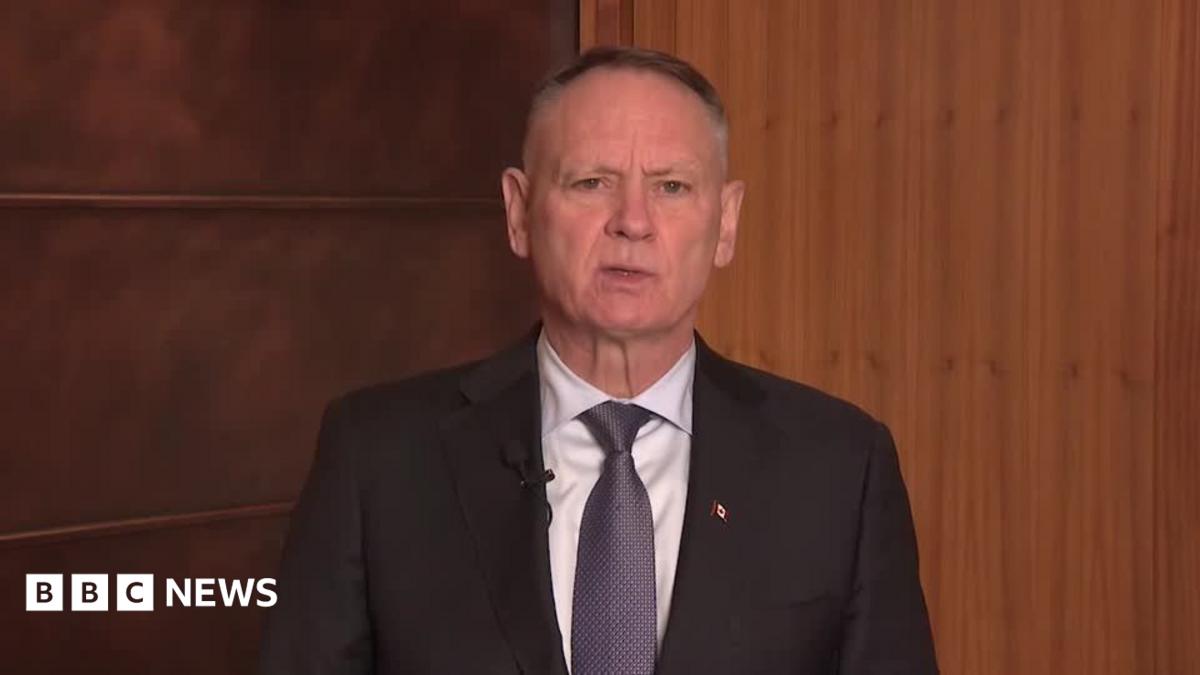
The Canadian Armed Forces were working with local authorities to manage the fire and were looking into what caused it, David McGuinty said, describing the situation as “very, very active and delicate”.
Canada’s Prime Minister Mark Carney said on X that a “serious incident creating a major fire” had occurred, adding his “thoughts are with all the brave women and men affected”.
Canadian Forces Base Wainwright, where the fire broke out, is one of the country’s busiest military training bases.
The Canadian Broadcasting Corporation describes it as “the principal base for live fire training exercises”. About 690 military personnel and 300 civilian workers are on site on a regular day, according to the CBC.
Saturday’s blaze “spread rapidly due to high winds” and had torn through the fences of the base, the Municipal District of Wainwright said.
McGuinty told reporters he “cannot recall an incident like this in recent memory”.
Alberta’s premier Danielle Smith says the “significant and tragic fire” is “affecting many of [the province’s] brave military personnel”. Provincial authorities are in touch with the central government in managing and investigating the situation, she added.
It is unclear when the fire broke out, but the district first posted about the incident at about 17:30 local time (23:30 GMT).
Local authorities have urged residents to avoid the area and give all emergency vehicles right of way.
Neighbouring provinces have offered their support.
Saskatchewan premier Scott Moe says he has deployed resources to Alberta and is “ready to provide more if required”, while British Columbia premier David Eby says his government has “reached out to Alberta to offer all possible assistance”.

Meghan Markle ‘used by Netflix’ amidst The Gentlemen speculation
Sources claim Meghan Markle was ‘used by Netflix’ in order to promote The Gentlemen, amidst speculation that she would be making an appearance in the series

Sources claim that the Duchess of Sussex was ‘used’ to promote The Gentlemen(Image: AP)
Meghan Markle was reportedly “used” to promote The Gentlemen, according to her friends. It had been widely reported that the Duchess of Sussex would be making a full-time return to acting on the Netflix series, having found fame playing Rachel Zane on the US legal drama, Suits.
Since stepping down as senior working royals in January 2020, Meghan and her husband, Prince Harry, have lived a financially independent lifestyle and worked with the streaming giant Netflix on several projects. However, after it emerged that the Sussexes would be returning to live in the UK, it was reported that she was in talks to appear in The Gentlemen.
Now, those said to be close to the Duchess claim she feels “used” by the show after being in advanced talks to join the cast for series three. But any hopes of seeing Meghan in the Guy Ritchie drama were recently shot down.
To see more of the stories you love from The Mirror and to find them easily in Google, make us your preferred source. Free and easy to do, just click on the link here to find more from The Mirror at the top of your feed.
“Some people in her camp feel she was used to help promote season two, because they knew it wasn’t as good as the first season and had already commissioned a third [series],” a source told The Telegraph. The source went on to add: “It’s the oldest marketing trick in the book: get a big name to read a script, then leak that you’re ‘in conversation’ with them when, in reality, nothing is particularly far along.
“The whole thing left a bit of a sour taste in the Sussex camp’s mouth. Needless to say, Netflix got what it wanted: huge viewing figures for season two and a lot of publicity.”
Viewing figures from Barb, the official ratings agency, show that audiences dropped by around 15 per cent from the first series’ debut episode, which was streamed by 3.5 million people in March 2024. These figures declined by 500,000 for the latest series.
But it appears that director Guy Ritchie wasn’t impressed with the talks about Meghan joining the cast. “Really?” was Guy’s first response after hearing of the speculation.
A source told The Sun that the 58-year-old went on to rule out any future appearances by Meghan. He is reported to have said: “Not a chance.”
Meanwhile, the Express reports that the Duchess will be offered a staggering £3.7million to return to her role as Rachel Zane. It’s claimed that NBCUniversal is ready to spend a “substantial budget” to reunite Meghan with her former castmates, seven years after the show ended.
“Everything is beginning to fit in place and shooting the whole thing at a major UK studio is actually a smart financial move as well as being convenient for Meghan,” a source said of making a special episode of the show. The source went on to add: “It’s way too soon to say if a Suits reunion would reignite an entire new series, but that’s clearly the hope of Patrick and several of the show’s other leading cast members.”
The duchess recently returned to acting for the first time in nearly a decade with a cameo as herself in the upcoming comedy Close Personal Friends, which stars Lily Collins and Brie Larson. Although she has returned to the screen, it’s said she will be playing herself in the Amazon MGM Studios film, which focuses on two couples, one of whom is famous and the other not.
The Mirror has approached a spokesperson for the Duchess and Netflix.
Like this story? For more of the latest showbiz news and gossip, follow Mirror Celebs on TikTok, Snapchat, Instagram, Twitter, Facebook, YouTube and Threads.

Ty Dieffenbach shines for No. 12 UCLA in win over Wisconsin
Behind a standout performance from quarterback Ty Dieffenbach in his first UCLA start, the No. 12 Bruins defeated Wisconsin 17-7 at the Rose Bowl on Saturday.
Dieffenbach orchestrated a six-play, 89-yard drive in the fourth quarter to help seal the win for the Bruins, who clinched bowl eligibility by improving to 6-0 under coach Bob Chesney. UCLA is the only undefeated team in the Big Ten.
Although UCLA (6-0, 4-0) entered with one of the most potent ground attacks in the nation, the Badgers’ (4-2, 2-1) stalwart defense — a unit that ranked No. 15 in total defense and ninth in passing yards allowed heading into the game — held UCLA to just 3.2 yards per carry. Heisman Trophy contender Wayne Knight was limited to just 29 all-purpose yards, though he scored his 12th touchdown of the season.
With UCLA struggling to get a push at the point of attack and the Wisconsin defense sealing the edge, the Bruins put their trust in Dieffenbach, who started in his first Football Bowl Subdivision game following Nico Iamaleava sustaining a knee injury against Oregon last week that could keep the senior out for the remainder of the season.
The understudy shined in the spotlight.
Even though expectations were tempered for Dieffenbach, he largely did not miss a beat, completing 22 of 33 passes for 264 yards — better than any single-game passing yards total Iamaleava has produced at UCLA.
Dieffenbach set up UCLA’s first touchdown in the second quarter when he completed a 21-yard pass to Jalen Saint Paul one play before Knight scored on a one-yard carry.

UCLA running back Wayne Knight breaks a tackle from Wisconsin safety Marvin Burks Jr. during the second quarter Saturday.
(Ronaldo Bolanos / Los Angeles Times)
UCLA’s second score — a touchdown that put the Bruins up 10 points in the fourth quarter — capped Dieffenbach’s most impressive drive. Starting at the UCLA 11, Dieffenbach connected on passes of 28 and 33 yards on a drive that culminated with Anthony Woods scoring on a three-yard run.
Dieffenbach looked poised in the pocket as he made passes under pressure. He excelled on third down, with UCLA converting on 13 of 20 tries. He threw one interception, which came on a Hail Mary as expired in the second quarter, and took just one sack.
Giving Dieffenbach some breathing room, UCLA’s defense dominated again, holding Wisconsin to 214 total yards. Even without UCLA starting outside cornerback Rodrick Pleasant, the Bruins’ secondary blanketed the Badgers in coverage, giving up just 66 passing yards, with Wisconsin’s top receiver Jaylon Domingeaux finishing with 26 yards.

Wisconsin running back Darrion Dupree is tackled by UCLA defensive lineman Sahir West during the second quarter.
(Ronaldo Bolanos / Los Angeles Times)
And while the “Bruin Bullies” held up at the line of scrimmage against the Badgers’ tailbacks, Wisconsin quarterback Colton Joseph ran for 71 yards and one touchdown, using various formations and fakes to confuse the Bruins’ stacked box.
While UCLA failed to produce a takeaway for the first time this season — despite forcing two fumbles, both of which were recovered by Wisconsin — the Bruins made several key stops to help UCLA stay in control.
A 10-yard sack from fifth-year linebacker Jalen Woods on third down late in the second quarter led to an unsuccessful 46-yard field-goal attempt by Gavin Lahm, leaving Wisconsin scoreless at halftime.

UCLA wide receiver Brian Rowe Jr. celebrates after making a catch in the second quarter Saturday against Wisconsin.
(Ronaldo Bolanos / Los Angeles Times)
After Wisconsin scored its only touchdown and subsequently forced UCLA into a three-and-out late in the third quarter, the Badgers had the ball with a chance to take the lead. But the Bruins forced two incomplete passes and stuffed Joseph at the line to force a punt.
In the fourth quarter, UCLA stopped running back Darrion Dupree short of a first down on fourth-and-two at the Bruins’ 48 to all but end the Badgers’ hopes of a comeback.

Rubio wants ‘crackdown’ on settler violence after US journalist attack | Israel-Palestine conflict
The Trump administration has asked Israel to stop settler attacks in the occupied West Bank, according to Secretary of State Marco Rubio. This comes amid outrage over a savage settler attack on Washington Post photojournalist Heidi Levine on Friday.
Published On 18 Oct 2026
From Violent Barricades in 2014 to Official Right-Wing: Venezuela’s Opposition
In February 2014, Venezuela witnessed one of the most prolonged and violent periods in the past 17 years against the nationally elected government.
What began as violence at some of the country’s more elite universities quickly descended into the violent street barricades, known as the guarimbas. Forty-three people, mostly civilians and security personnel, were killed. Entire communities were walled in, their residents blocked from accessing food, transport, gas and even necessary medical services. Buildings were set alight with people inside, hundreds were injured.
The proponents, the so-called guarimberos, called themselves protesters: a claim echoed many times in the international press. But for the government and a vast number of ordinary citizens, they were terrorists.
The anniversary of these events comes at a critical moment in Venezuelan politics: over the past two weeks, the newly elected right-wing legislators in the country’s national assembly have begun pushing for an Amnesty Law. If passed, this legislation would grant a pardon to the most violent perpetrators of the barricades.
With the perpetrators of these acts potentially about to be set free, many in Venezuela are asking: could more violence be on the cards? To answer this question we have to understand what the violent barricades were, who took part in them and why they eventually petered out. As usual, there is a whole other story that the mainstream media ignored.
Who Were the Violent Barricaders?
Although the international media portrayed the barricades as a spontaneous youth uprising, testimonies that have emerged in the wake of the barricades tell a very different story.
“There were organized groups from within the universities, which were divided into subgroups. People in charge of the distribution of information, photos, and publishing all that, people in charge of planning the routes, people in charge of security… there was organization amidst the chaos,” Gabriel* — an undercover participant at the protests who wished to remain anonymous — told me.
It’s also clear that the “youthful” barricaders didn’t operate alone — although they might have been the official face of the unrest.
In the barricaders’ stronghold of Altamira and Chacao in Caracas, collaborators from private homes to small businesses facilitated the protesters with a network of internet connections and passwords to aid their communications, as well as with food and drink, places to hold meetings or to hide from police.
But it was perhaps at night when the most sinister and violent elements of the barricades emerged.
“There was a core violent group, but they weren’t students … They really did want to cause big shit, cause confrontations with police, they even intimidated the other guys (barricaders), they said ‘you’re a bunch of pussies, what are we gonna do with this shit?’,” Gabriel said.
“They knew how to act in these circumstances … (the police) launched gas bombs at them, and they all got out the way, grabbed the bombs and threw them back …There were people who really knew about this stuff,” related Gabriel.
The right-wing MUD coalition was a leader of the violence. In the words of one tight-lipped barricader, who also wished to remain anonymous, in response to why the protests had erupted in the first place, he simply replied, “I think it was more because of the calls from the political parties of the opposition.”
Gabriel also stated that the relationship between the MUD and the barricaders was clear.
“None of the protesters at the universities wore their university t-shirts, they all wore Popular Will or Justice First t-shirts … They might have been student groups, but the student councils are affiliated to the political opposition parties and they are accountable to them … There was a feeling among the universities that they wanted to take to the streets. There wasn’t exactly a violent idea there … but it was clear that some people wanted something transcendental to happen, the death of someone, a policeman getting burned…”
And despite the official narrative that the right wing wasn’t violent, “Men on motorbikes circled the camps — no one could get near, not even the police. But by night these … ultra violent radical groups turned up, and they (those students at the camps) let them in.”
But perhaps the most revealing comment in terms of how far the organized right-wing were involved in the 2014 barricades came when I asked what the majority of the barricaders were doing now.
“Well if I am totally honest, those guys are legislators now,” Gabriel said.
The mayor of Hatillo, David Smolansky, and legislator Gabriela Arellano “were both up to their necks in it,” according to Gabriel. “Those who aren’t in the opposition rank and file, are in prison,” he concluded.
Mystery Dollars
Another question mark which also still hangs over the violent barricades is where the money came from to pay for tents, food and drink, transport, walky-talkies, weapons and a whole cohort of other not so cheap items in Venezuela.
While I was informed that many of the barricaders were paid approximately 600 bolivars a day to take part – especially to dissuade people from going on holiday during carnival – Gabriel also confirmed that he was approached and asked if he wanted to “make a bit of money.”
But the currency circulating among the violent barricaders gives even more pause for thought.
“I would actually go as far as to say that there were more dollars inside the camps than bolivars,” stated Gabriel, who added that the guarimbas coincided with a hike in the black market price of the dollar against the bolivar on website, Dolartoday.
What is clear from all this is that the guarimbas were not “student protests” or the youth in rebellion, as the mainstream media portrayed. While there were some middle class students among the ranks who didn’t intend to harm anyone, it’s also true that there were many others who came from Venezuela’s well seasoned and highly organized right-wing student movement and who were happy to flirt with violence, and even to let other other people do the dirty work on their behalf. Likewise, there were evidently highly violent groups within the protests who received funding and military training.
The Fish that Didn’t Want Water: ‘He Who Tires, Loses’
“They lost strength, people came out less and less, maybe we would have achieved something if people had stayed in the streets… Also, because of the places that (the barricades) were carried out, in Altamira, you can’t do anything in Altamira, you have to do this in the center of Caracas,” one barricader, who also preferred to be anonymous, said.
So why did the Guarimbas peter out? From a big protest in Caracas to barricades of main roads in other cities, the right-wing then also set up local barricades in their own communities.
This was undoubtedly the straw which broke the camel’s back. In fact the barricade slogan, “he who tires, loses,” was meant to inspire people in their local communities to weather the formidable storm.
But the slogans didn’t stop people from getting tired of being barricaded in for months, without access to work, school, health, and food- no matter how disaffected these sectors were from the government.
In fact, the violent barricader I spoke to even admitted that his life in Altamira was “too affected” by the barricades.
Rather than capitalizing on local discontent, the guarimberos managed to alienate their upper and middle class support base by terrorizing them in their own homes. Even their fellow students became sick and tired of the university strike — which meant many were delayed in graduating.
With no desire to engage with the popular sectors in the country’s barrios – who the barricade leaders identified as home to the “Chavista collectives” that were “even more their enemy than the police” — the movement literally had nowhere to go inside of Venezuela.
“They tried maybe once to bring (the barricades) up here… but the collectives, the organised community, we chased them out,” said community activist Laura from a community radio station in the eastern barrio of Petare, whose local community went head to head with a group of guarimberos, not far from where they had managed to decapitate a motorcyclist in a barbed wire trap.
“People would do the same again,” she said
2016 = More Guarimbas?
I was told by another former barricader that “if we have to take to the streets again then we will, but you know that’s not so easy, it involves organization”.
Despite the fact that barricades across main roads and targeted arson attacks continue to take place in Merida and Tachira, as Laura told me, it is unlikely that more barricades on a national scale will erupt this year because the rightwing is focusing its energies on its new found power in the National Assembly, as well as on organizing the recall referendum against president Nicolas Maduro for mid-2016.
The problem for the right-wing is that the latter requires a much more consolidated level of organization than the violent barricades ever did, and it can’t be pulled off through riding the wave of media lies and discontent.
In order to organize a recall referendum, the opposition will have to collect the signatures of 20 percent of nationally registered voters – that means approximately just under 4 million signatures. And although the opposition won big at the National Assembly elections last December, they only managed to do so because of mass Chavista abstention – not because they substantially increased their vote or political presence.
In spite of the discontent, says Laura, “the opposition know they still don’t have the people in the street … that’s why more guarimbas would be a last resort.”
And in the meantime, Chavismo is looking to regroup. In the streets, in community media, and in workplaces.
The violent barricades were the result of absolute frustration by the right-wing after having exhausted all options to oust Chavismo. But although the right-wing may have had a short term game plan to deal a series of blows to the government, they have never had an overall long-term political strategy.
While the right-wing National Assembly continues to attempt to weaken the Bolivarian revolution and its gains through legislating and the option of a recall referendum is open, it’s possible that further violence may be kept at bay.
But if the Supreme Court blocks legislative decisions, or the recall is a failure for the right-wing, “In that scenario, I think it’s possible that all hell will break loose,” states Laura.
Whether it’s 2006 or 2016, violence is always on the opposition’s cards, especially when it has exhausted all other means.

The Voice UK semi-finalists revealed as fans praise ‘absolutely amazing’ lineup
The Voice UK semi-final will see the ITV contestants fighting for a spot in the coveted final

The Voice UK returned to screens on Saturday night (Image: ITV)
The Voice UK has finally whittled down its semi finals line up.
ITV viewers were glued to their screens as the singing competition returned on Saturday night (October 17) for another week of The Battle Rounds. This time it was the turn of Kelly Rowland along with Tom Fletcher and Danny Jones to pick their semi-finalists.
The coaches pitted their contestants against each other and selected their three favourite performers with help from guest mentors. Kelly was joined by singer-songwriter Delta Goodrem, while Tom and Danny invited their McFly bandmates Dougie Poynter and Harry Judd to help them through the tough decision.
Who made it through to The Voice UK semi finals?
In the end, just three contestants from each team made it through to next Saturday’s (October 24) show. Read on for the full list of contestants set to face off in the semi-finals.
Team Tom and Danny
- Frank Raven
- Jack Algar
- Ciiara Nyx
Fans at home were thrilled with the coaches’ selections, as one commented on social media: “Absolutely amazing lineup!!,” with a second adding: “Good choices! Hard decision as they were all really good xx.”
Team Kelly
- Lascel Wood
- Monique Nicholson-Porter
- Aaren James
Team Kelly also received praise from viewers, with some fans predicting they will be difficult to beat. “THE TEAM TO BEAT!!,” commented an Instagram user. Someone else agreed, posting: “Excellent choices for team Kelly.”
Ensure our latest ITV stories always appear at the top of your Google Search by making us a Preferred Source. Click here to activate or add us as Preferred Source in your Google search settings.
Last week’s episode saw Sir Tom Jones and will.i.am choose their own semi-finalists, with help from Paloma Faith and Cheryl, respectively.
Team Sir Tom
- Molly J
- Cate McHugh
- Amãlia Estradas
Team Will
- Naná Aldrin-Quaye
- Sonna Rele
- Diogo Ferreira
ITV viewers can tune into The Voice UK semi-finals next Saturday at 8.35pm on ITV1 and ITVX. Only one artist from each team will be chosen to progress to the final. Whoever wins the show walks away with a recording contract with Universal Music Group and a huge £50,000 cash prize.
The latest episode of The Voice UK is available to watch on ITVX.

Why Liverpool are still 'too easy' to play against
Match of the Day’s Danny Murphy analyses how Liverpool are still to “easy” to play against despite their 2-1 victory over Brentford.
Source link
Search continues for 11 missing after boat sank off Mexico’s Baja coast | US-Mexico Border News
Some of 16 survivors treated for suspected shark bites, US coastguard says.

Published On 18 Oct 2026
The search continues for 11 people still missing after a boat capsized off Mexico’s Baja California coast on Friday, as multiple survivors have been treated for suspected shark bites, according to the US coastguard.
“Several of the individuals rescued were suffering from severe injuries consistent with shark bites, and the Coast Guard provided life-saving first aid while en route [to] San Diego,” the coastguard said in a statement on Saturday.
Recommended Stories
list of 3 itemsend of list
Sixteen Mexican nationals were rescued on Friday. Survivors told officials there were 27 people on board.
The coastguard and US Navy used multiple aircraft and boats, along with assistance from the Mexican Navy, to search the area for the remaining passengers. An additional helicopter will be deployed later on Saturday, according to the coastguard.

A Mayday call was transmitted from someone on the boat at about 1am on Friday, coastguard Lieutenant Santiago Tamburini said on the day.
A rescue helicopter reached the site about two hours later. It took about 90 minutes for the crew, which included a rescue swimmer, to pull the 16 people from the water, he added.
The boat went down about 225km (140 miles) west of Ensenada, Mexico, an area popular with fishing and leisure boats, but that is also frequented by smugglers.
Although the incident did not happen in US waters, coastguard official Charlie Valor said on Saturday they “were able to help, and that’s why we launched our assets”.
Fatal attempts to transport refugees and migrants from Mexico to the US have occurred in the past.
In May 2025, at least three people died when a boat flipped off the coast about 56km (35 miles) north of the US-Mexico border.
In 2023, eight people were killed in one of the deadliest maritime smuggling accidents off the US coast, when two boats approached a San Diego beach in heavy fog, and one capsized in the surf.

Leonardo DRS Explains How Army Counter-UAS Mission Is Evolving
Leonardo DRS has been heavily involved in mobile counter-unmanned aerial systems (C-UAS) efforts including the U.S. Army M-SHORAD (Maneuver Short-Range Air Defense) Increment 1 program, also known as SGT STOUT, which provides an air defense capability for ground maneuver forces against low-altitude aerial threats. The company is now preparing for the forthcoming M-SHORAD Increment 4 program, which requires a vehicle-agnostic, reconfigurable, palletized or “sled”-based air defense capability.

TWZ’s Jamie Hunter spoke in-depth with Joe Rolwes, Director of Business Development at Leonardo DRS, about how mobile air defense is evolving and the various technologies that are being employed.

Leonardo DRS Explains How Army Counter-UAS Mission Is Evolving

Grantchester hunk Tom Brittney splits from secret fiancée and goes public with new romance
GRANTCHESTER hunk Tom Brittney has split from his fiancée and moved on with tattooed model Clo Gascoigne.
It comes two years after Tom’s engagement to his long-term girlfriend, whose name he never revealed.
The new couple have now gone Instagram-official as Clo shared a loved-up snap of them on the red carpet at Prime Video’s Carrie launch last week.
Tom, who recently starred in thriller movie Fall 2: Deadpoint, featured in Clo’s TikTok (which she has now deleted) where she filmed him watching himself on telly with the caption: “POV your boyfriend is an actor.”
Congrats.
HOLLY AND FELTZ CLICK
HOLLY WILLOUGHBY has been exchanging tips with Vanessa Feltz on kickstarting their YouTube careers.
The presenters, who worked together regularly on This Morning, shared a snap on Instagram on Friday after watching a performance at the English National Opera in central London.


Speaking earlier in the week at Best magazine’s Heroes Awards, Vanessa said: “I’ve had a really great voicenote from Holly.
“She is incredibly encouraging and she says she’s thoroughly enjoying it and she can see that I am.
“We’re having dinner this week. We really like each other and support each other and I think she’s doing an absolute bang-up job. I think that women supporting women is always attractive and great.”
The former chat show host started her own YouTube series, At Home With Vanessa, earlier this year.
She added: “It’s quite a big deal to do it. Terrestrial TV seems to feel narrower, smaller, and fewer and fewer opportunities.
“On terrestrial TV, they all seem to be reining themselves in, there seem to be lots of cuts being made, and closures, things are shorter and smaller and less often and all this kind of thing.
“So I think the idea of just waiting for an opportunity there might be a very long wait.
“It’s a question of feeling like you want to try to see if you can make an opportunity for yourself.”
MARK HAMILL is reprising his role as Luke Skywalker . . . in an Old Spice ad.
The actor filmed a top-secret campaign for the vintage aftershave favoured by dads, in which he appeared as his legendary Star Wars character.
The shoot took place in the UK last week.
A mole tells me: “Mark was paid big bucks for the ad – after all, he’s a huge Hollywood star.
“Bosses think he’ll appeal to the Old Spice market as Star Wars is so popular with dads.”
Mark also has a cameo in Amazon Prime’s new series Carrie, where he plays a fraudulent fortune teller.
NICOLE SPOTTED IN CATSUIT
NICOLE SCHERZINGER had a wild night stepping out in a skintight leopard-print catsuit.
The singer was joined by her Pussycat Dolls bandmates Ashley Roberts and Kimberley Wyatt at Nammos Greek restaurant in London’s Mayfair on Friday night, to celebrate their successful reunion tour.
The trio dined on signature dishes and enjoyed cocktails.
An onlooker said: “They were in high spirits. They had an amazing tour and got rave reviews, they deserve to let their hair down.”
TYLA’S HOT FLUFF
TYLA showed her softer side as she donned a fluffy lingerie set for a show on Friday night.
Excited to be performing in the capital, the South African singer painted “London” across her thigh for the O2 Brixton Academy leg of her A*Pop World Tour.
The Water hitmaker, full name Tyla Laura Seethal, revealed that she loves the UK but still sees Johannesburg as her home.
The Grammy Award-winning singer said: “We don’t have paparazzi and you see our superstars at the mall, like every weekend. It’s kind of chill.
“It feels like a movie [in the UK] – the fact that people care about every little thing I do and say.”
Tyla continues her tour tonight in Glasgow then Manchester tomorrow.
ZARA’S GOT SOMETHING ‘SPECIAL’
ZARA LARSSON has confirmed a new album is coming next year and has already recorded the first track.
The star said the “special” song came by accident while she was working on this year’s remix album Girls Trips and she knows it’s going to be a hit.
She explained on Popcast: “I think it’s going to be a really fun journey to write the next album.
“I already have new lyrics, actually I have one song we did just because we couldn’t help ourselves when we weremaking Girls Trips and it sort of gave me the same feeling to when I did (previous album) Midnight Sun.
“When I left that session you just know when something is special and that’s one, and also what it was; for the four of us being fully present.”
EMMERDALE OLIVIA IS NED OVER HEELS
THEY had a sizzling love affair on Emmerdale – but I can reveal that Olivia Bromley and Ned Porteous are a couple off-screen as well.
The ITV soap pair have been secretly dating for months.
Gorgeous Olivia and hunky Ned grew close after their characters, Dawn Taylor and Joe Tate, were involved in one of the show’s biggest-ever love triangles.
But the couple initially kept their romance quiet.
An Emmerdale source said: “Olivia and Ned were a couple off-screen while acting out those sex scenes.
“It was easy for them to get away with it because they were working so closely together.
“A few people clocked what was going on and they both admitted that they were seeing where things go. But it’s been a good few months now and they couldn’t be happier.”
Olivia left the soap over the summer, but now she has a great excuse to keep visiting the set.

L.A. Chargers vs. Kansas City Chiefs: How to watch, start time, odds
p]:text-cms-story-body-color-text”>
Six weeks into the NFL season and Chargers versus the Kansas City Chiefs pits a winless team against an unbeaten one. Last season, when the Chargers swept the Chiefs, feels like a lifetime ago.
This game might not be as lopsided as it appears, considering these teams know each other so well. But these are rough times for the Chargers, who are still missing their two starting tackles and All-Pro safety Derwin James Jr. What’s more, it has been a terrible start for Justin Herbert, who has five touchdowns, seven interceptions, an anemic passer rating of 70.2 and has been sacked 17 times.
Conversely, Chiefs quarterback Patrick Mahomes is on a roll despite returning from last season’s devastating knee injury. He has nine touchdowns, two interceptions, a 106.2 rating and six sacks — almost two-thirds fewer than Herbert.
A big battle for Los Angeles will be on defense, as the Chargers have done a good job against the run and are facing Kansas City’s Kenneth Walker III, who has rushed for 537 yards at an average of 6.2 yards per carry.

Buildings burn as French protests go into the night | Protests
Witnesses say masked protesters set fire to Limoges town hall, which officials say is now ‘largely lost’. In Paris, fires, looting and tear gas marked a night of unrest as cost-of-living protests raged on throughout the country.
Published On 18 Oct 2026

Trump waives several Russia sanctions as row with Zelensky intensifies
Russian envoy Kirill Dmitriev said Trump’s order was “an important and truly historic moment”.
Posting on X, he said the sanctions would have inflicted “serious damage”, primarily on the US and global market, and that economic cooperation benefits both nations.
Democrats including the Virginia Congressman Don Beyer criticised the move, accusing Trump of capitulating to Moscow and turning his back on Kyiv and Zelensky.
“Trump’s latest surrender to Putin again betrays our Ukrainian partners and defies clear congressional intent of legislation designed to punish Russia for its illegal war of aggression,” Beyer wrote on X.
A handful of Republicans, too, came out against the move.
Senator Ted Cruz of Texas, a Trump ally, called waiving the sanctions a mistake, saying on Fox News: “I wish the president hadn’t done it.”
He added there were other ways to address diesel prices and “the current path, unfortunately, just… benefits Putin and that’s not a good idea.”
Senator John Cornyn, also of Texas, said on X: “Helping Putin in Ukraine is reckless. He would not stop with Ukraine and our NATO allies would be next.”
North Carolina Senator Thom Tillis called it “beyond irresponsible”, noting the sanctions legislation passed the chamber with a large, bipartisan majority.
Trump could bring down energy prices “by solving the Iran problem, not by doing a solid for Vladimir Putin,” he said.
Nebraska Representative Don Bacon said many lawmakers will now resist funding the president’s agenda “knowing he is propping up a dictator’s invasion and throwing an ally under the bus”.
The move is likely to draw further anger from Ukraine, where Zelensky has long stressed the need for stringent sanctions to limit funding that Russia can use in its war effort.
Zelensky said on Saturday morning that the sanctions “could have helped enormously” and that the law was “supposed to impose truly effective pressure on Russia to bring this war to an end”.
He pointed to Russian overnight attacks on 15 Ukrainian energy facilities that had caused power cuts in several regions and said: “Russia is trying to cause a blackout in Ukraine – right before winter.”
Zelensky said it was “important that everyone in America also sees what is really happening” on the ground.