



Kaoru Mitoma: Brighton boss Fabian Hurzeler unsure if Japan winger will be fit for 2026 World Cup
Brighton boss Fabian Hurzeler says he “is not sure yet” if Japan winger Kaoru Mitoma will be fit to play in the 2026 World Cup.
Mitoma suffered a hamstring injury in a win against Wolves and will miss his side’s final two Premier League games of the season.
Japan coach Hajime Moriyasu is set to name his squad for the World Cup, which starts on 11 June, on Friday.
“Regarding the World Cup, I’m not sure yet,” said Hurzeler before the Seagulls play at Leeds United on Sunday (15:00 BST).
“We’ll be in touch with the Japan federation.
“We really have to be patient with this injury, we cannot give a clear schedule.
“He will miss our two games. That is sad for Kaoru. He was in good form and had a big impact on our performances.”

Retail sales rose 0.5% in April; nearly 5% for year
May 14 (UPI) — U.S. consumers spent $757.1 billion on retail and food services in April, a 0.5% increase over March, the U.S. Census Bureau reported Thursday.
For 12 months ending in April, not adjusted for price changes, sales increased by 4.9%. Total sales for February through April increased 4.4% over the same period in 2025.
Gasoline sales climbed 2.8% in April after jumping 13.7% in March.
Retail trade sales increased by 0.5% over March and 5.2% over last year. Non-store retail went up 11.1% for the year. Sales minus gasoline and building materials increased 0.46%.
While retail sales increased in April, they did so at a slower rate than in March, which increased by 1.6% for the month. Yet it was still the third consecutive monthly increase.
Retail sales as a whole grew but several categories experienced declines, including furniture store sales, down 2%, car dealerships, down 0.5%, department stores, down 3.2%, and clothing stores, down 1.5%.
A consumer survey conducted by the University of Michigan found that consumer sentiments are low due to concerns about high prices and current economic conditions. This has caused consumers to hold off on making major purchases, such as furniture and automobiles.

Vice President JD Vance speaks during a news conference on anti-fraud initiatives in the Indian Treaty Room of the Eisenhower Executive Office Building at the White House on Wednesday. Photo by Daniel Heuer/UPI | License Photo

Latvian PM resigns over handling of stray Ukrainian drones | Newsfeed
Latvia’s Prime Minister Evika Silina resigned following criticism of her government’s handling of stray drones, believed to be Ukrainian, crossing into Latvian territory. The controversy deepened divisions within the ruling coalition, causing it to lose its parliamentary majority.
Published On 14 May 2026

‘Steamy’ Netflix thriller with 10-minute episodes perfect for binge-watching
Netflix’s ‘micro-series’ has already creeped its way into the UK’s top 10

There are 20 mini episodes to stream(Image: NETFLIX)
Fans of a “saucy” drama can binge-watch this one in just an afternoon.
Binge-watching is how most TV fanatics view their favourite shows nowadays with Netflix dropping the perfect “micro-series” for its subscribers.
Mexican thriller Between Father and Son has arrived with the 20-part series focussed on well-respected lawyer Barbara (played by Pamela Almanza) whose life changes after “just a few suspenseful minutes”.
She visits the house of her fiance Alvaro (Erick Elias) before getting married but unexpectedly finds herself attracted to her future step-son Iker (Graco Sendel).
On top of the forbidden sexual tension, there’s also the mystery around what happened to Alvaro’s first wife and Iker’s mum Fernanda who went missing.
Between Father and Son is perfect for those wanting to quickly binge their way through a series.
Each of the 20 episodes have a running time of 10 minutes or less, with seven instalments just seven minutes long.
So Netflix subscribers could binge-watch the entire boxset of Between Father and Son in under four hours if watched back-to-back.
However, while fans have been “hooked” by the Mexican drama, some have complained of a technical issue.
From episode four onwards, fans are currently unable to hear the dialogue in Between Father and Son.
Taking to X, a viewer questioned: “Why’s there no sound?”, as another on Reddit stated: “It doesn’t have any dialogue audio after episode three.”
They went on to add: “I am already hooked though and patiently waiting for the issue to be fixed!”
But others have shared that their audio is working fine, including the English dubbed version of the series.
Between Father and Son is available to watch on Netflix.

Huge surge in half-term holiday bookings as families fear UK washout
THE spring weather has been very up and down so far – but sadly for the week of half-term it looks like rain is on the way.
If you’re considering a family-friendly break this May half-term, there are still plenty of holiday deals in Spain, Turkey and Cyprus.
Follow The Sun’s award-winning travel team on Instagram and Tiktok for top holiday tips and inspiration @thesuntravel.
On the Beach has found that bookings for May half-term are up by as much as 40 per cent in recent weeks as it looks like weather in the UK will be yet another washout – so we’ve Sun Travel has found some of the best deals abroad on offer.
BLUESEA Los Fiscos, Lanzarote
First up is the BLUESEA Los Fiscos in Lanzarote which has a pretty swimming pool and white-washed apartments.
Stays include free Wi-Fi and access to the pool bar – there’s also a children’s playground.
With the all-inclusive package, guests can enjoy the buffet that serves up all three meals and plenty of drinks.
A five-night stay at the BLUESEA Los Fiscos in Lanzarote, Spain, including flights leaving from Manchester on May 27 cost £293pp (based on 2 adults and 2 children).
To make it all-inclusive is an extra £28pp.
Guitart Central Park Aqua Resort, Spain
Guitart Central Park Aqua Resort in the Costa Brava will be a hit with the kids thanks to its aquapark with two waterslides and splash zone.
To keep them further entertained, the hotel has more activities like football, rugby and tennis.
It has three buffet restaurants, is an 11-minute walk to nearby Cala Banys Beach and has spacious bedrooms.
A five-night half-board stay at the Guitart Central Park Aqua Resort including flights leaving from London Luton on May 26 cost £330pp (based on 2 adults and 2 children).
Miarosa Konakli Garden, Turkey
Miarosa Konakli Garden has it all, comfortable rooms, a pool with waterslides and a plenty of entertainment.
The hotel has its own kids club as well as a playground – and for the whole family to get involved there’s activities like darts, table tennis, card games and watersports.
There’s a main restaurant as well as three bars – including one by the pool.
A four-night all-inclusive stay at the Miarosa Konakli Garden in Antalya, Turkey, including flights leaving from London Gatwick on May 25 cost £368pp (based on 2 adults and 2 children).
Best Los Angeles Hotel, Spain
Best Los Angeles Hotel has fewer frills than some of the other offers, but it has everything needed for a relaxing half-term break in the sun.
It’s 10-minutes from popular beaches and the nearby town of Salou is known for its shops, bars and restaurants.
The PortAventura Theme Park is around two miles away too for those who fancy a go on thrilling rides.
A seven-night half-board stay at the Best Los Angeles Hotel including flights leaving from Dublin on May 25 cost £320pp (based on 2 adults and 2 children).
MedPlaya Flamingo Oasis, Spain
When the Spanish sun comes out, MedPlaya Flamingo Oasis in Costa Blanca is where you want to be.
It has a huge lake-style swimming pool to cool off in and is surrounded by sunloungers.
During the evenings, there’s performances at the Piano Bar – or head up to the rooftop bar to watch the sunset.
A seven-night half-board stay at the MedPlaya Flamingo Oasis including flights leaving from Edinburgh on May 25 cost £260pp (based on 2 adults and 2 children).
Grand Muthu Golf Plaza Hotel & Spa, Tenerife
In Tenerife, families can enjoy a break at the Grand Muthu Golf Plaza Hotel & Spa.
It has a swimming pool and lots of entertainment – for any adults who want to golf, there are two of the island’s most popular courses nearby.
Accommodation is in studios, apartments and junior suites with a balcony or terrace.
A four-night all-inclusive stay at the Grand Muthu Golf Plaza Hotel & Spa including flights leaving from Glasgow on May 25 cost £310pp (based on 2 adults and 2 children).
Arsi Blue Beach, Turkey
The Arsi Blue Beach is a great choice for families as it’s steps away from Antalya’s Alanya Beach and has a children’s pool on-site.
Not forgetting the adults, there are also spa treatments and a sauna is available too.
Guests can enjoy meals at the restaurant and make sure to pop into the lounge bar and beach bar too.
A five-night all-inclusive stay at the Arsi Blue Beach in Turkey including flights leaving from Belfast on May 26 starts from £259pp (based on 2 adults and 2 children).
Arabella World Hotel, Turkey
The 4-star Arabella World Hotel sits on Turkey’s sun-drenched southern coast and even has its own private beach.
With swimming pools and slides, dining, wellness and children’s activities too – no one in the family will ever be bored here.
But if that isn’t quite enough, Water Planet Aquapark is around a 10-minute drive away.
A seven-night all-inclusive stay at the Arabella World Hotel including flights leaving from Belfast on May 24 starts from £319pp (based on 2 adults and 2 children).
Cosmelenia Hotel Apartments, Cyprus
If you fancy heading further afield, check out the Cosmelenia Hotel Apartments in Ayia Napa.
Small but mighty, it has everything for a family break from its swimming pool to parasol- covered sunbeds, air-conditioned rooms, a restaurant and bar.
Waterworld Waterpark just a short walk away too.
A six-night all-inclusive stay at the Cosmelenia Hotel Apartments including flights leaving from Belfast on May 25 starts from £319pp (based on 2 adults and 2 children).
Deloix Aqua Center, Spain
The Deloix Aqua Center is found in a quiet part of Benidorm and has it all from an aqua centre, children’s water playground and rooftop paddle courts with city views.
It has three outdoor swimming pools, including a lagoon-style pool and one indoor pool for year-round paddling.
There’s a spa, gym and wellness centre as well as an on-site restaurant, café and bar.
A five-night full-board stay at the Deloix Aqua Center Spain including flights leaving from Belfast on May 25 starts from £309pp (based on 2 adults and 2 children).
Prices correct at time of publication.
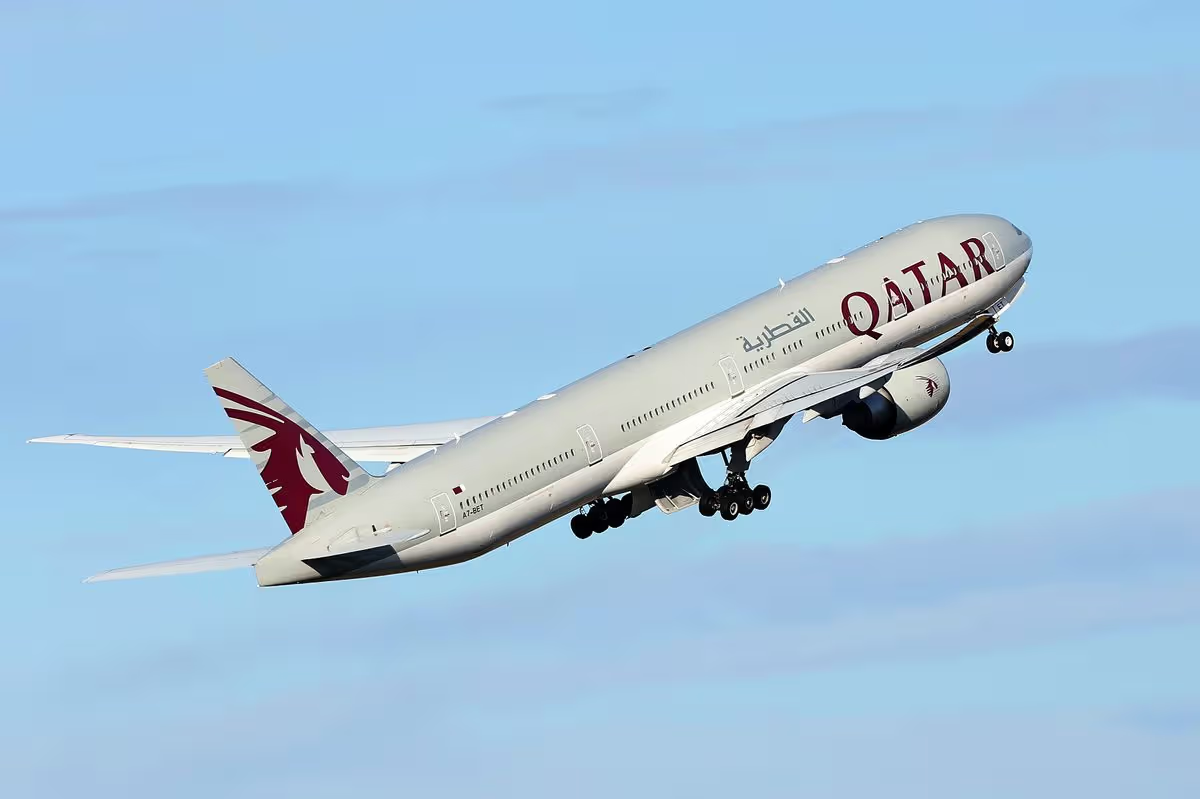
Qatar Airways becomes 19th airline to cancel flights in May with 22 routes suspended
Airlines have been forced to cancel and amend flight schedules due to the ongoing Middle East conflict and soaring jet fuel prices, with Qatar Airways also hit with suspended routes

Qatar Airways has suspended routes to 22 cities(Image: Getty Images)
Qatar Airways has become the latest airline to cancel flights this May.
Since the Middle East conflict erupted in late February, airlines have been forced to axe routes and amend flight schedules due to restricted airspace across the Gulf region. The situation was heightened by Iran’s blockade of the Strait of Hormuz, through which roughly 20 per cent of the world’s oil and gas passes, triggering a worldwide shortage and skyrocketing jet fuel prices.
With growing concerns over the long-term supply of jet fuel, a whopping 18 airlines have announced cancellations, and 13,000 flights worldwide have been taken from May schedules, according to figures from aviation analytics firm Cirium. Now, Qatar Airways is the latest airline to have routes axed, with flights to 22 cities suspended during May and beyond.
READ MORE: Full list of 18 airlines cancelling flights for May half-term as fuel crisis staggers onREAD MORE: EasyJet latest update for Brits heading to France, Spain and Portugal amid new travel rules
Qatar Airways has suspended flights from its Doha Hamad International Airport (DOH) to four European countries, Malta, Sarajevo, Sofia, and Venice, according to Simple Flying. As airlines prioritise their routes amid the jet fuel crisis, it is thought Qatar Airways will resume routes to Malta, Sofia and Venice in September.
Additionally, the Doha-based airline is not currently offering flights from its hub to Canberra, Cebu, Djibouti, Kano, Kigali, Mogadishu, Nagpur, or Zanzibar. Around half of these routes are expected to return in September, after one of the busiest travel periods, the summer holidays.
As a result of the Middle East conflict, drone and missile strikes caused major airspace closures, which severely impacted the Doha-based airline. Further routes suspended by Qatar Airways include flights to Aleppo, Gassim, Istanbul Sabiha Gökçen, Mashhad, Neom Bay, Shiraz, Tabuk, Taif, Tehran, and Yanbu. In addition to three cities in Iran, where the airspace remains closed.
Some of the suspended routes, excluding Aleppo and Iran, are expected to resume in September. In total, 22 routes have been suspended.
However, it’s not all bad news in the world of aviation this week. Qatar Airways announced that it is resuming some of its routes and that its Airbus A380s will return next month. The plane has been grounded. In a statement released on 13 May, the airline said: “Qatar Airways continues to restore its network across the Middle East, with the resumption of double-daily passenger flights to Abu Dhabi (AUH), the capital of the United Arab Emirates.”
This comes after the airline announced plans to expand its network further in time for the summer holidays. “Qatar Airways is expanding its international flight network, with services to over 150 destinations from 16 June 2026, connecting more passengers to more of the world this summer,” the statement read.
Airlines with cancelledflights in May
- Air Asia X
- Air Canada
- Air China
- Air Transat
- Air New Zealand
- Asiana Airlines
- Cathay Pacific
- Delta
- KLM
- Lufthansa
- Norse Atlantic
- Qantas
- Qatar Airways
- SAS
- Thai Airways
- Turkish Airlines
- United Airlines
- Vietjet
- Vietnam Airlines
Do you have a travel story to share? Email webtravel@reachplc.com

Spygate: Championship play-off final may be delayed by hearing
The Championship play-off final may not go ahead on Saturday 23 May as the English Football League (EFL) investigates the Spygate scandal surrounding finalists Southampton.
A hearing conducted by an Independent Disciplinary Commission will take place on or before Tuesday 19 May.
Saints have been charged by the EFL with breaking rules by observing one of Middlesbrough’s training sessions before last Saturday’s semi-final first leg at the Riverside.
Southampton are due to face Hull City in the play-off final for a place in the Premier League next season.
Although the EFL has warned supporters there could be changes to the fixture, they are working on the basis that the final will go ahead as planned, with a kick-off time of 16:30 BST.
Should the match need to be rescheduled due to the outcome of the hearing and any subsequent appeal process, the EFL says it has a “number of contingency plans” available.
The Championship fixture is the first of three play-off finals held across three days at Wembley, with the League One and Two versions due to be held on the Sunday and Monday, respectively.
The stadium is booked out the following weekend, when the Rugby League Challenge Cup final will be played on 30 May and the Women’s FA Cup final on 31 May.
A major music event takes place at the stadium on the following weekend on Saturday 6 June.

UKMTO says Honduran-flagged vessel seized by Iran near UAE
A container ship sails on the Strait of Hormuz, as seen from Ras Al Khaimah, United Arab Emirates, in June 2025. The UK’s Maritime Trade Operations said Thursday that a Honduran-flagged vessel was seized by Iran northeast of Fujairah, United Arab Emirates. File Photo by Ali Haider/EPA-EFE
May 14 (UPI) — The U.K.’s Maritime Trade Operations said Thursday that a Honduran-flagged vessel was seized by Iran northeast of Fujairah, United Arab Emirates.
The Hui Chuan, described by UKMTO as a “floating armoury,” was in the Gulf of Oman when it was seized by Iranian forces. The vessel is moving toward Iranian waters.
UKMTO said in a statement that the seizure was reported about 38 nautical miles northeast of Fujairah.
“The CSO has reported that the vessel has been taken by unauthorized personnel [whilst] at anchor and is now bound for Iranian Territorial Waters,” UKMTO said in its report. “UKMTO continue to investigate.”
The vessel had been anchored in the Gulf of Oman for about a month. Its operators said it was storing weapons used to protect ships from pirate attacks.
The Hui Chuan is at least the second vessel to be attacked on the Gulf of Oman in as many days. On Wednesday, the Indian-flagged vessel Haji Ali sank off the coast of Oman after an explosion.
Security firm Vanguard said the explosion was believed to have been caused by a “drone or missile.”
Tensions in the Persian Gulf remain high during an uneasy ceasefire between the United States and Iran. The United States has imposed a naval blockade on the Strait of Hormuz, pursuing any vessels using Iranian ports. Iran has meanwhile threatened vessels traversing the strait since the United States and Israel launched strikes on Iran on Feb. 28.

Wreathes are seen amongst the statues at the Korean War Veterans Memorial during Memorial Day weekend in Washington on May 27, 2023. Memorial Day, which honors U.S. military personnel who died while in service, is held on the last Monday of May. Photo by Bonnie Cash/UPI | License Photo

‘The world is sounding an alarm’: Why big tech is the new colonist | Features
Istanbul, Turkiye – When investigations by Al Jazeera and other media outlets in 2024 revealed that Israeli-linked artificial intelligence (AI) systems such as Lavender and Gospel had helped generate thousands of military targets in Gaza, critics warned that warfare was entering a new era – one driven not only by soldiers and bombs, but by algorithms, data, and surveillance technology.
Then, in September 2024, thousands of pagers and walkie-talkies used by members of Hezbollah exploded in coordinated attacks in Lebanon, widely attributed to Israeli intelligence operations that had turned ordinary communication devices into weapons.
And, last year, reporting by Al Jazeera also raised concerns about the use of cloud and data infrastructure linked to major US technology companies in Israeli surveillance operations involving Palestinians.
For a growing number of scholars, economists and political thinkers, such developments reflect more than just the changing nature of conflict. They show how power in the modern world is increasingly exercised not just through military force, but through technology, finance and control over information.
That argument has revived broader debates around decolonisation – a term historically associated with the dismantling of European empires after World War II, when countries across Asia, Africa and the Middle East gained formal independence.
But many proponents of what is termed “decolonial theory” – a school of thought arguing that colonial-era systems of power and hierarchy still shape modern politics, economics and knowledge – argue that colonial power structures never fully disappeared. Instead, they evolved, embedding themselves in global financial systems, technology platforms, media networks and even the production of knowledge itself.
Dependence of Global South countries on Western technology, digital infrastructure and global markets can create new forms of political and economic vulnerability, particularly across the Global South.
“A generation may have grown up believing they had never experienced colonialism or exploitation,” Esra Albayrak, board chair of the NUN Foundation for Education and Culture and daughter of Turkish President Recep Tayyip Erdogan, told Al Jazeera during the World Decolonization Forum in Istanbul on May 11-12.
“Yet, mentally, they may still be living under colonial influence.”
The war in Gaza marked a turning point, Albayrak says, shining a spotlight on how international principles are not applied equally. Global institutions have so far failed to stop what many countries and rights groups have described as genocide against Palestinians.
“The world is sounding an alarm, and we can no longer afford to remain indifferent to it,” she said.
A techno-feudal era
Albayrak argues that a handful of technology companies are emerging as new, invisible centres of power, shaping how information is produced, circulated and consumed in the digital age.
She describes the digital sphere as the realm of what she calls “future colonialism”, warning that AI systems trained largely on Western-centric data risk reinforcing existing global inequalities.
“When AI systems are run by those tech companies and trained on Western sources, they risk carrying the hierarchies of the past into tomorrow’s digital world, as they now have personalised data, suppressing identity,” Albayrak said.
By this, she means that most major AI models are still trained largely on English-language and Western-produced data – a pattern critics say risks sidelining non-Western languages, cultures and perspectives.
On social media platforms, algorithms tend to amplify some conflicts while rendering others nearly invisible, effectively shaping what billions of users see, discuss and remember online.
Walter D Mignolo, professor at Duke University, argues that while what we historically see as “formal colonialism” may have largely ended, systems of Western dominance continue through economics, culture, technology and knowledge production.
“Coloniality is not over. It is all over the world,” Mignolo said, arguing that modern ideas of development and progress often have the effect of pressuring societies to conform to Western norms.
Rather than simply resisting those systems, he said, societies must find a way to “re-exist” by rebuilding intellectual and cultural autonomy outside dominant global frameworks.
Colonisers in the financial age
The March 2026 Global Debt Report by the Organisation for Economic Co-operation and Development (OECD) reveals that 44 countries face severe debt burdens, often aggravated by global conflicts, forcing some governments to spend more on interest payments than on health or education.
This is not a new phenomenon, as developing countries have been labouring under the weight of foreign debt for decades.
But British political economist and author Ann Pettifor told Al Jazeera that modern forms of domination are now increasingly embedded not in empires or nation-states, but in financial systems operating beyond democratic oversight.
Pettifor points to the growing influence of “shadow” banking networks – financial institutions operating largely outside traditional banking regulations – and giant asset managers such as BlackRock, which manages $13 trillion in assets.
Much of the global financial architecture now functions largely outside the regulatory control of governments, she says, including that of Western states themselves.
“This is not a state colonising other states,” Pettifor said. “This is the financial system colonising the whole world, including my country and the US.”
She argues that elected governments increasingly struggle to control key economic realities – from energy prices to commodity markets – because those systems are dictated by global financial actors operating far beyond public accountability.
In Nigeria, for example, Pettifor says, efforts to expand domestic refining capacity continue to face pressure from international financial institutions and global energy markets to keep fuel prices tied to global markets and maintain reliance on imported refined oil products, despite its vast oil reserves.
Coordinated cooperation between developing nations may be necessary to challenge the dominance of Western-centred financial systems, Pettifor says, pointing to growing efforts across parts of West Africa to expand regional refining capacity and reduce dependence on imported fuel. Yet such ambitions can also leave critical sectors dependent on the decisions and influence of a small number of powerful private actors.
Global financial markets, algorithm-driven platforms, and foreign-controlled digital infrastructure increasingly define everyday life – from fuel and food prices to the information people consume online and the technologies governments and societies depend on, observers say.
A ‘mastery complex’
As wars become increasingly influenced by AI, digital infrastructure and financial dependency, debates around colonisation are focusing less on territorial control and more on who influences energy prices, lending systems, access to technology and the flow of information across borders, observers say.
Albayrak draws a parallel between today’s debates around technology and global power and Rudyard Kipling’s 1899 poem “The White Man’s Burden”, published as the US took control of the Philippines following the Spanish-American War. The poem framed colonial expansion as a moral obligation to “civilise” other societies rather than an exercise of domination.
Albayrak said such traces of “mastery complex” still survive today, though in different forms – not necessarily through military occupation, but through technological, financial and informational influence.
But what the world really needs, she argues, is a global order built not on hierarchy, but on shared responsibility.
“The burden should belong to humanity collectively.”

Lee Andrews ex shares cryptic post hinting at his downfall as she sends new message to Katie Price
LEE Andrews ex has shared a cryptic post that hinted at his downfall as she sends a new message to Katie Price.
The self-proclaimed businessman, 42, was supposed to appear on Good Morning Britain with wife Katie Price on Tuesday but she was forced to go solo after he claimed he missed his flight.
Lee Andrews ex Alana Percival has posted a cryptic story which said: “Today is the day..unfolding,” amid his failure to reach the UK.
In a second post Alana declared: “Also I promise there is so much to come to show you exactly what I meant when I warned her from him.
“I refuse to keep silent not just for me but for anyone else that is going through the same thing I went through.”
Almost talking directly to Katie Price, she added: “I am healed/healing and happy and if I can help anyone going through anything similar my messages are open, you are not alone.”
This comes as there’s ongoing speculation that Katie‘s husband Lee is unable to leave the United Arab Emirates city after allegedly forging his ex-girlfriend Dina Taji’s signature to secure a £200,000 loan – something he’s strongly denied.
After missing his flight, Lee later shared a video on Instagram from the airport to say he was on his way to the UK to see his wife again.
However, despite his claims that he was flying from Muscat in Oman, he was caught in a lie as he was clearly at Dubai airport in the video, which is where he resides.
Alana, who has previously hit out at him on several occasions, has claimed he pulled the same airport stunt with her.
They dated for nine months until late last year, even proposing to her in a identical proposal to the one he did for Katie.
Taking to her Instagram stories, she expressed: “Another time he ‘pretended’ to be coming to the UK to come and see me.
“Wearing his cap so facial recognition doesn’t get him hahaha lies lies and more lies… delusional is a understatement.
“This excuse was one of soooooo many but a ‘flight risk’ if this one. He went all the way to the airport to lie when he cannot travel lol.”
During the GMB interview with Katie, Susanna and Ed told how they had approached the Foreign Office to see if Lee had a travel ban.
They said they had been informed they had “supported a British man detained in the United Arab Emirates“.
Katie addressed the situation on the latest episode of her The Katie Price Show podcast, telling sister Sophie: “I said [to Lee], ‘Don’t do that to me again. I have to go on live TV without you and make me look stupid and a d**k.’
“’No wonder everyone’s saying you’re this, you’re that – because they’ve got a reason to say it. I agree’.”
The mum-of-five then confessed she’s not even entirely sure whether or not her husband is unable to leave the United Arab Emirates city.
Katie added: “I want answers. Just a bit of respect. Just tell me what’s going on.”

TUI to launch first ever loyalty scheme with LOADS of free perks for holidaymakers

TUI is launching its first ever loyalty scheme for UK customers – and there are plenty of perks.
The Smiles Reward Club is set to be rolled out later this year and holidaymakers will be able to use it across flights, holidays and cruises.

Follow The Sun’s award-winning travel team on Instagram and Tiktok for top holiday tips and inspiration @thesuntravel.
TUI Group CEO Sebastian Ebel announced yesterday the TUI Smiles Rewards Club will be rolled out in the UK ‘this summer or autumn’.
This will be the first time ever that TUI will have a loyalty scheme for its customers.
The Smiles Rewards Club will be able to be used across all bookings including flights, hotels, packages, cruises, and experiences.
As members make purchases, they will progress through three levels and each level increases the benefits like TUI treats, priority support and personalised rewards.
These rewards also include on-board and in-hotel added benefits.
For even more potential wins, there will also be a monthly game with ‘great prizes’ to be won.
For higher tier members, there will be better access to services like priority live chat and priority call support.
The scheme launched in Finland in March of this year and will be rolled out in the UK later this year.
Here’s another travel website which launched its own loyalty scheme this year.

Underwater memorial to wrecked slave ship draws pilgrims seeking to connect with their roots
KEY WEST, Fla. — Ruthie Browning dove into the calm, blue water off Key West, Fla., expecting to see “a big, old rock with stuff growing all over it.”
She was on a pilgrimage with other Black divers and community members, visiting sacred sites including one where a British slave ship — the Henrietta Marie — sank 326 years ago.
The vessel had delivered 200 enslaved people from West Africa to Jamaica and was heading back to Britain in 1700 — near the peak of the trans-Atlantic slave trade — when it was swallowed up in the churning waters of New Ground Reef where the Atlantic Ocean meets the Gulf of Mexico.
A concrete marker at the site memorializes the people on that ship.
As Browning and her group prepared to dive in early May, the water was calm. The marker, 20 feet below, was visible from the glassy surface. “I thought I’d look at it, pay my respects and that’ll be that,” she said.
But something unexpected happened. Tears filled her eyes. She gently told herself: If you can be quiet, maybe they will speak.
Staring at the monument, which is now a small living reef covered in corals and sponges, she felt her ancestors’ words: “My daughter, we’re so glad you’re here.”
Overwhelmed, Browning lingered by the marker bearing the words: “Henrietta Marie. In memory and recognition of the courage, pain and suffering on enslaved African people. Speak her name and gently touch the souls of our ancestors.”
She felt submerged in gratitude.
“Without their stamina, their spirit and survival, I wouldn’t be here today. None of us would be here today,” she said.
Pilgrimages aren’t meant to be easy
For the pilgrims in Key West, the gathering was an act of devotion, a quest for connection with their roots and for spiritually nourishing generations to come. They had tried to dive to the marker last summer, but the water was too choppy.
“The ancestors were not smiling down on us then,” said Jay Haigler, master diving instructor with Underwater Adventure Seekers, the world’s oldest Black scuba diving club. “This year was different.”
Such a pilgrimage was never meant to be easy, said Michael Cottman, who has written two books about the Henrietta Marie and was part of the National Association of Black Scuba Divers that installed the marker in 1992.
Cottman believes the site contains “spiritual turbulence.”
“Even if it wasn’t carrying enslaved people, it embodies the oppression of our people,” he said.
The group organized an annual pilgrimage in the 1990s, but it didn’t continue. The latest trip was spurred by an underwater interview project proposed by Stanford University anthropologist Ayana Omilade Flewellen, who serves on the board of Diving With a Purpose, a Black scuba diving nonprofit dedicated to documenting slave shipwrecks.
The submerged interviews also helped her connect as a pilgrim, Flewellen said. “I felt a kind of tenderness in my heart.”
The spiritual experience helped her process a traumatic history rooted in death and suffering.
“It’s hard to attach your life with this history,” she said. “The only way I could do that was turn toward what the divers were experiencing on this pilgrimage. That’s where it all bloomed and blossomed.”
Ancient ritual at African refugee cemetery
The pilgrims also gathered on land. At Higgs Beach on the south side of Key West, they visited a memorial and burial ground for 297 African refugees who died in 1860 after being rescued by the U.S. Navy from three slave ships — Wildfire, William and Bogota. Over 1,400 refugees were housed by the government in a compound and provided food and medical care, said Corey Malcom, the Florida Keys History Center’s lead historian.
While many were sent back to Africa, hundreds died due to the horrific conditions on the ships, he said.
Largely forgotten for decades, the grave site was discovered by historians and geologists using ground-penetrating radar. In 2010, a large pit containing 100 more bodies was located at a community dog park across the street. The area is now fenced off, Malcom said.
On Saturday, pilgrims met at the cemetery and held an emotional libation ceremony, a sacred, ancient ritual rooted in Afro-Caribbean spiritual tradition. One by one, group members tearfully thanked their ancestors and poured white rum on the beach. The clear spirit is believed to act as a messenger, inviting ancestral souls for their blessings.
“To honor your ancestors and the road they’ve traveled is very, very important because we’re all connected,” said Addeliar Guy, one of the elders and an avid diver.
Underwater monument represents a living history
Joel Johnson trained for weeks for his first open-water dive at the Henrietta Marie site. Johnson, the president and CEO of the National Marine Sanctuary Foundation, said what surprised him as he approached the monument was the vibrancy surrounding it. Fish darted among the corals that swayed with the currents; shells rested on the sandy bottom.
Conservation and protecting these habitats also preserve the history below the waves, Johnson said.
“This was not a place of death, but a place of life,” he said. “I didn’t feel like I was grieving for my ancestors. I felt like I was in the stream of history, recognizing that I’m a part of that. It made me happy.”
While underwater, Michael Philip Davenport, president of Underwater Adventure Seekers, was inspired to create art showing ancestors emerging from the monument.
“Their spirituality is still in that space,” he said. “I was feeling their lives and their tragedy.”
Dr. Melody Garrett, an anesthesiologist, started training with Diving With a Purpose in 2011 and has gone on missions to find the Guerrero, a Spanish pirate ship that wrecked in 1827 while carrying 561 enslaved Africans.
“A pilgrimage like this is so important now more than ever because there is an effort to cover up, rewrite and change history,” she said. She cited the Trump administration’s moves to remove references to slavery and Black history at National Park Service sites and federal museums, labeling it as divisive “anti-American propaganda.”
For Garrett, seeing these pieces of history gives her a strong sense of identity as an American, as the nation prepares to celebrate its 250th birthday.
“Black people have been here since before this country’s inception, longer than many other people have,” she said. “This is our country.”
Exhibit displays shackles used in slave trade
Remnants of the Henrietta Marie’s wooden hull are embedded at the site under layers of sand. The shipwreck was discovered in 1972 by treasure hunter Mel Fisher, but it wasn’t until 1983 that hundreds of intact items were recovered. Only a few slave ships were found out of the 35,000 used to transport over 12 million enslaved Africans; most vessels were intentionally destroyed to hide the illicit trade.
The artifacts, which occupy an entire floor of the Mel Fisher Maritime Museum in Key West, include over 80 sets of iron shackles, many of them child-size.
When Kory Lamberts first walked over wooden planks in the exhibit, they unexpectedly creaked.
“It was visceral,” he said. “It took me to a place. It also tells me that these were young people — children. These are baby shackles. There’s no sugarcoating it. The truth really hits you.”
While in Key West, Lamberts — who runs a nonprofit to make aquatics more equitable — said he brought back fish from the Henrietta Marie site, which he imagines would have absorbed the DNA of the ancestors. The group ate that fish for dinner the night after the dives — like a sacrament.
“I don’t practice a faith, but isn’t this what people are doing every Sunday at church?” he asked. “I wasn’t just bonded with this site through the experience of being there, but at this molecular level with a full circle moment of connection with myself and my history.”
Bharath writes for the Associated Press.
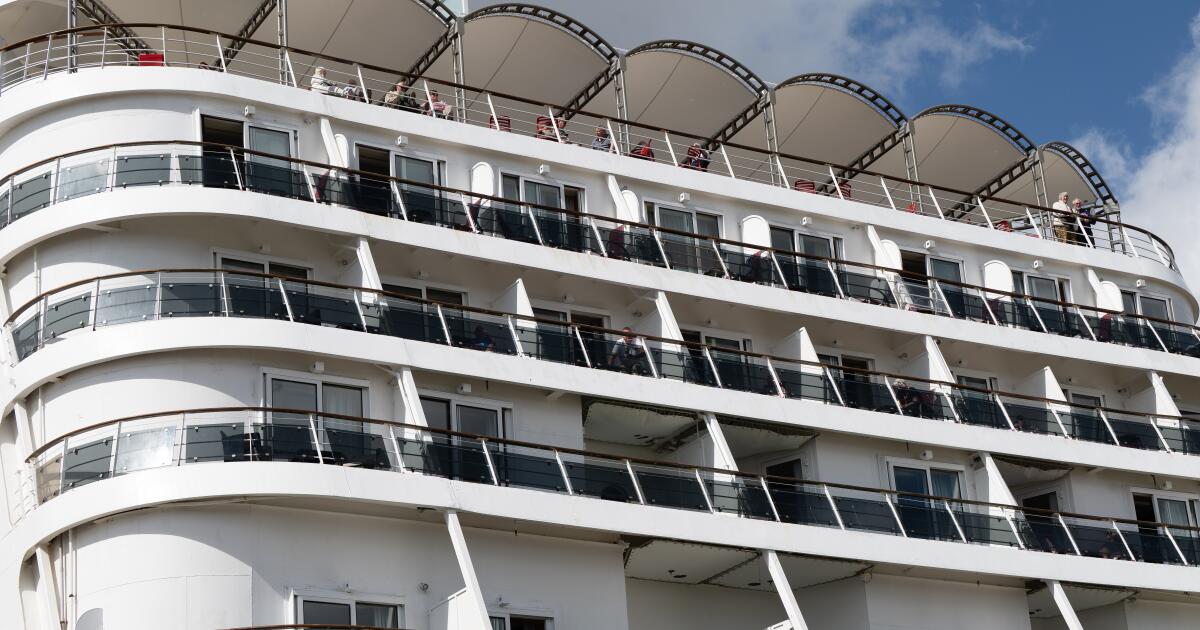
France allows asymptomatic passengers off new cruise ship struck by stomach bug outbreak
BORDEAUX — Passengers unaffected by an illness outbreak on a British cruise ship have been allowed off the ship in Bordeaux, while authorities confirmed the cause of the outbreak is norovirus, a nasty stomach bug that spreads easily.
French authorities had initially ordered over 1,700 passengers and crew on The Ambition cruise ship to remain on board, but then decided late Wednesday to let those unaffected disembark. One passenger was spotted raising his arms in triumph while leaving the vessel.
It was not immediately clear how many left the ship.
French authorities said there is no link to a deadly hantavirus outbreak on a Dutch vessel that has put European health authorities on alert in recent weeks.
The Ambition was midway through a 14-night cruise from Belfast and Liverpool, with scheduled stops in northern Spain and along France’s Atlantic coast when it was struck by the outbreak. It reached Bordeaux on Tuesday evening, according to the operator, Ambassador Cruise Line. It was not immediately clear if or when it would resume its journey.
Samples analyzed at Bordeaux University Hospital confirmed an outbreak of norovirus. Local authorities said at this stage no serious cases have been reported and that sick passengers were cared for onboard by the ship’s medical team.
The U.S. Centers for Disease Control and Prevention, which tracks outbreaks on voyages that call on U.S. and foreign ports, recorded 23 gastrointestinal outbreaks on cruise ships last year. Most were caused by norovirus, including a new strain.
Ambassador Cruise Line, a British operator catering to passengers over 50, was founded in 2021.
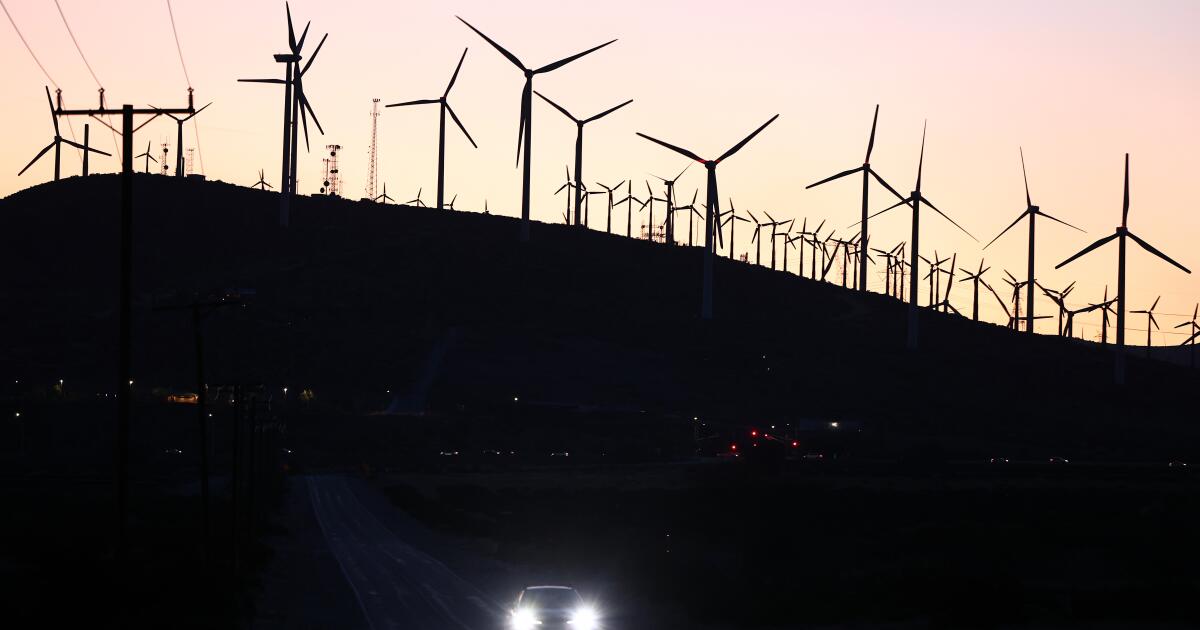
Hiltzik: Why does Trump hate wind power?
Trump is shelling out $2 billion of taxpayer money to kill wind power projects, but his hatred for the technology is based on myths
Picking the wildest fantasy promoted by President Trump as a basis for public policy is increasingly challenging — is it his yarn about schoolchildren being secretly abducted from their classrooms and given sex-changing operations? The notion that the vaccines given to children are like “a vat, like a big glass, of stuff pumped into their bodies?”
Here’s one that has disrupted the economics of renewable energy generation and will cost Americans billions of dollars: It’s Trump’s “completely weird war on wind power in the United States,” based on a sheaf of “fact-free arguments.”
That judgment comes from Steven Cohen, a climate policy expert at Columbia University, who points out that wind already accounts for 10.5% of U.S. energy generation, that it’s destined to continue growing — and that most of it is generated today in red states such as Texas, Oklahoma, Iowa and Kansas.
Fifty years from now, people are going to be amazed that we burned these rare, useful hydrocarbons for fuel, when the sun was just sitting up there providing an essentially infinite source of energy.
— Steven Cohen, Columbia University
There is no question that Trump’s weird war against wind is full blown. On the day of his second inauguration, he issued an executive order shutting down all new permits for offshore wind farms and ordered the Interior Department to review existing permits.
A federal judge in Massachusetts blocked the executive order in December, and his orders suspending work on existing offshore wind projects have been halted by other federal judges. The Trump administration has blocked or delayed as many as 165 wind projects on private land, citing “national security” concerns, according to the American Clean Power Assn.
Most recently, Trump has reached agreements with offshore wind firms in which the government will pay them a combined $2 billion to abandon their U.S. projects.
At some level, this crusade resembles Trump’s misguided effort to revive the American coal industry, which is on the glide path to inevitable extinction. In that case, Trump is waging an explicitly partisan and ideological battle. “We’re ending Joe Biden’s war on beautiful, clean coal,” he declared last April.
Trump’s anti-wind program is part of his campaign to dismantle U.S. renewables policy because of its roots in the Biden administration.
Additionally, multiple commentators conjecture that his hostility to wind originated in 2011, when he groused that an offshore wind farm would be visible from one of his golf courses in Scotland. He sued to thwart the “ugly” project, and lost.
But Trump has mustered other arguments against wind, on- and offshore, none of which holds water.
During a cabinet meeting in July 2025, he called wind “a very expensive form of energy.” In fact, on average it’s cheaper than natural gas, coal and nuclear generation. Perhaps more important, the cost has been coming down sharply as technology improves and the sector reaches critical mass: falling to eight cents from 21 cents per kilowatt-hour from 2010 to 2024 for offshore projects, and to 3.4 cents from 11.3 cents for land-based wind farms over the same period.
Trump blamed wind turbines for mass killing whales and birds. Neither assertion is correct.
The National Oceanic and Atmospheric Administration, a federal agency, says “there are no known links between large whale deaths and ongoing offshore wind activities.”
The Audubon Society reported in January that although wind turbines can present hazards to birds, “developers can effectively manage these risks without significantly increasing project costs.” The biggest risks to birds come from the climate: “Two-thirds of North American birds are at increasing risk of extinction from global temperature rise,” the society reported — a threat that wind power can ameliorate.
Trump spokeswoman Taylor Rogers didn’t respond to my questions about the derivation of his anti-wind stance, but told me by email only that “President Trump has been clear: hard-earned taxpayer dollars shouldn’t be wasted on unreliable and costly wind farms that pose serious threats to our national security. Instead, we should be strengthening and expanding our infrastructure that produces reliable, affordable, and secure energy like natural gas plants.”
That brings us to the recent deals with offshore wind developers. The largest single deal, signed in March, was with the French firm TotalEnergies, which is to receive approximately $1 billion from the federal government to abandon all of its U.S. offshore wind projects and invest instead in oil and gas projects, including a liquefied natural gas export facility in Texas.
In his March 23 announcement of the deal, Interior Secretary Doug Burgum called offshore wind “one of the most expensive, unreliable, environmentally disruptive, and subsidy-dependent schemes ever forced on American ratepayers and taxpayers.”
This is what Huck Finn would call a “stretcher,” given the decades of subsidies spooned out to the oil and gas industry, reaching more than $30 billion a year in federal and state tax credits, indulgent regulation of pollution and low-cost access to federal lands. Indeed, the investment firm Lazard recently reported that renewables, including wind, are a cost-competitive form of generation even without subsidies. (Lazard’s calculation is of the “levelized cost of energy,” meaning the average cost over a generating plant’s lifetime.)
TotalEnergies fell into lockstep with the Interior Department in its own announcement, explaining its willingness to renounce U.S. offshore wind power because “offshore wind developments in the United States, unlike those in Europe, are costly,” echoing the agency’s position that “the development of offshore wind projects is not in the country’s interest.” Never mind that one factor that makes U.S. offshore wind development costly compared with Europe is the Trump administration’s opposition.
The government subsequently reached an agreement to pay the French company Ocean Winds $885 million to walk away from two offshore wind projects, including one in the waters off California. Ocean Winds described the deal as one driven chiefly by economics, but hinted at pressure from the White House.
“We welcome the opportunity to engage constructively with the administration on this agreement and acknowledge the clarity they have provided with this decision and deal,” Michael Brown, the chief executive of Ocean Winds North America, said when the deal was announced last month. “Our priority remains disciplined capital allocation and delivering reliable energy solutions that create long-term value for ratepayers, partners, and shareholders.”
The TotalEnergies deal, which the government has described as a “refund” of money the firm paid for its offshore leades, raised the hackles of congressional Democrats, who assert that it violates the law and constitution in multiple ways.
“We will hold you accountable for this billion-dollar ripoff,” Reps. Jamie Raskin (D-Md.), ranking member of the House Judiciary Committee and Jared Huffman (D-San Rafael), ranking member of the House Committee on Natural Resources, warned TotalEnergies CEO Patrick Pouyanné in an April 29 letter.
Among other infirmities Raskin and Huffman alleged, the government’s national security rationale for canceling offshore wind leases looks “fabricated”; the payout violates the statutory formula for compensation for canceled leases; the money is to come from a fund designed only to pay court-ordered judgments and settlements of lawsuits, which don’t exist in this case; and includes a provision preventing the deal from being reviewed by a court.
The last of those provisions would have to be authorized by Congress, the letter states, asking for documents and a response from the company by Wednesday. Committee spokespersons weren’t available to say whether they received a response from TotalEnergies, and the company didn’t respond to my request for comment. I received no response from the Department of the Interior.
The California Energy Commission has opened an investigation into the Ocean Winds deal.
“The Trump Administration is recklessly spending billions of taxpayer dollars on backroom deals that would turn back the clock on innovation” CEC Chair David Hochschild said. “Taxpayer dollars should be used to build a sustainable energy future, not to pay to make projects disappear.”
What’s especially wasteful about Trump’s crusade against wind power is that it’s almost certain to be time-limited.
It’s hardly debatable that renewables such as solar and wind will be our principal sources of energy in the future; holding back the clock achieves nothing but injecting uncertainty into investment decisions that need to be made now, at a time when the price of oil is on the upswing thanks to Trump’s Iran adventure and Europe and China are racing to transition away from fossil fuels, while the U.S. remains becalmed by ideology.
“In the long run, fossil fuels will be used for petrochemicals and not for burning,” Cohen told me. “Fifty years from now, people are going to be amazed that we burned these rare, useful hydrocarbons for fuel, when the sun was just sitting up there providing an essentially infinite source of energy.”

Women’s Six Nations: England forward trio return for France decider
Burton, who switched to number eight after Feaunati pulled out of the line-up in Parma, partners the Exeter star in the back row, with Kabeya, who won player of the match in the September’s World Cup final, at open-side flanker.
Liz Crake, who won her most recent cap in 2023 and has returned to working as a dentist alongside her rugby, has been named on the bench after Saracens team-mate Kelsey Clifford suffered a leg injury.
England have won their past 17 meetings with France in all competitions, but were pushed to within a point in a 43-42 victory in last year’s Six Nations finale.
France, who have grown into the tournament as a new-look backline have found their feet, will be roared on by a crowd that is expected to set a new record for a Women’s Six Nations match in France at the 42,000-capacity Stade Atlantique.
England: Kildunne; Breach, Jones (c), Rowland, Moloney-MacDonald; Harrison, L Packer; Carson, Cokayne, Bern, Ives Campion, Burns, Burton, Kabeya, Feaunati
Replacements: Powell, Crake, Muir, Short, M Packer, Robinson, Aitchison, Sing.

Why international law can’t stop mass atrocities | TV Shows
The Hague in the Netherlands hosts the world’s most powerful international courts, where judges speak for the conscience of humanity. Yet we consult them only after atrocities have erupted – after wars have shattered communities and legal battles begin.
In theory, law can hold power to account. But has it been enough? Can it truly confront militarism, prevent atrocities, and protect people before disaster strikes?
Join Ali Rae for episode two of All Hail the Military, a five-part series that reveals the systems, power, and hidden complicities that sustain global militarism – and the profound impact it has on us all.
Published On 14 May 2026

At a glance: Starmer fights to stay on as prime minister
The prime minister is fighting to stay on in No 10 as heavy election losses trigger a Labour revolt.
Source link

Inside Rivals star Alex Hassell’s marriage with actress wife after stark warning
Rivals’ Rupert Campbell-Black star may be a literary sex god but his wife gave a blunt response to his nude scenes.

Alex Hassell tied the knot with his wife in 2011 (Image: GETTY)
Rivals actor Alex Hassell met his wife at drama school and she warned him to be wary.
Rivals fans are on the edge of their seats awaiting the arrival of season two on Disney+, starring Alex Hassell as the entitled millionaire Tory MP Rupert Campbell-Black.
The new outing will continue to follow the rivalry between Campbell-Black and Lord Tony Baddingham (David Tennant), while treating viewers to more tantalising romps.
Essex-born actor Hassell’s character may spend a lot of time in the nude, but the star’s famous wife once warned him about avoiding nude scenes.
The 45-year-old star previously told inews that his wife said to him him he’d better stop “before I get a name for myself”, going on to say he’s “not particularly body shy”.
Here is all you need to know about the star’s famous wife and how they met.
Who is Alex Hassell’s wife?
Hassell, from Southend, is married to actress Emma King and the pair tied the knot in January 2011.
King has previously taken on guest roles in Netflix’s Cowboy Bebop, The Vanishing and The Cry, and she often appears alongside her husband at red carpet events.
The pair met at drama school but didn’t get together until years later, after King went to see one of Hassell’s shows by his theatre group, Factory.
He explained to Square Mile: “She came to see a Factory show and we both asked for each other’s number off the same person.”
They have since worked together on multiple occasions, including at RSC productions and on an episode of Cowboy Bebop.
The publication went on to say his wife is “thrilled about Rivals”, which has become an international hit.
Hassell and King had a rather private wedding in front of friends and family, both preferring to keep their relationship out of the spotlight.
Get Disney+ for £3.99 for three months
This article contains affiliate links, we will receive a commission on any sales we generate from it. Learn more
Disney+ is offering a discounted subscription at £3.99 per month for three months when signing up by May 6. This provides cheaper access to hit series like Rivals, Only Murders in the Building and The Bear, plus countless titles from Marvel, Star Wars, Pixar and more.
However, King has previously shared plenty of photos of the pair on her Instagram account and she wrote a sweet tribute to her husband on their tenth wedding anniversary.
Next to a collection of snaps from their big day, she said: “Happy anniversary @alexanderhassell I never knew it was possible to feel this loved or to love this much.
“I don’t always know what I’m doing but I know I couldn’t do it without you.”
Rivals season 2 airs on Disney+ from May 15.

US 30-year bond yield tops 5% as Kevin Warsh takes Fed helm and inflation rises
Published on
Long-term US borrowing costs climbed to levels not seen since before the global financial crisis after the Treasury auctioned $25bn (€21.3bn) in 30-year bonds at a high yield of 5.058% on Wednesday, according to the department’s own data.

ADVERTISEMENT
ADVERTISEMENT
The sale came only hours after the US Senate voted to confirm former Federal Reserve governor Kevin Warsh as the next chairman, succeeding Jerome Powell.
The auction result immediately complicated the backdrop for Warsh’s arrival at the central bank, underlining the pressure facing policymakers as inflation is rising.
At the time of writing on Thursday, US 30-year bonds are trading at 5.02% while 10-year notes are selling with a yield of 4.44%.
US inflation figures released earlier this week showed consumer prices rose 3.8% from April 2025 as the 10-week Iran war pushed energy costs higher and distanced inflation from the Federal Reserve’s 2% target.
Producer price data also pointed to persistent underlying cost pressures across the economy, reinforcing expectations that the central bank may struggle to ease monetary policy quickly.
Rising Treasury yields have broad implications for the economy because they influence borrowing costs on mortgages, corporate debt and other forms of credit.
Higher long-term yields can also increase financing costs for the US government at a time when public debt is nearing $40 trillion (€34.1tn).
Investors are increasingly concerned that a combination of resilient economic growth, elevated energy prices and sustained government borrowing could keep inflationary pressures alive despite two years of restrictive monetary policy.
The yield on the benchmark 30-year Treasury bond being auctioned above 5% is a symbolic threshold last reached in 2007 before the onset of the global financial crisis.
While market conditions today differ substantially from that period, the move nonetheless underscores the sharp repricing that has taken place in global bond markets over the past two years.
Kevin Warsh inherits a difficult policy environment
Kevin Warsh takes over the Federal Reserve at a delicate moment for the US economy.
The former Morgan Stanley banker and Fed governor has previously argued in favour of maintaining the central bank’s credibility on inflation, while also signalling support for reforms to the institution’s communication strategy and balance sheet policies.
Warsh’s confirmation comes as financial markets remain divided over how aggressively the Federal Reserve should respond to persistent inflation pressures.
Some investors believe rates may need to stay higher for an extended period, while others warn that maintaining tight monetary conditions for too long could weigh heavily on economic growth and employment.
The main driver of the rise in inflation is the current disruption to global energy markets caused by the Iran war which also leaves the central bank at the mercy of geopolitics and not able to effectively control the situation.
Analysts stated that Wednesday’s Treasury auction illustrated the immediate challenge confronting the incoming Fed chair.
Elevated bond yields can help tighten financial conditions without additional rate increases from the central bank, but they can also amplify risks for heavily indebted households, businesses and the federal government itself.
For Warsh, the market reaction served as an early reminder that restoring confidence on inflation may prove more complicated than simply holding interest rates at restrictive levels.
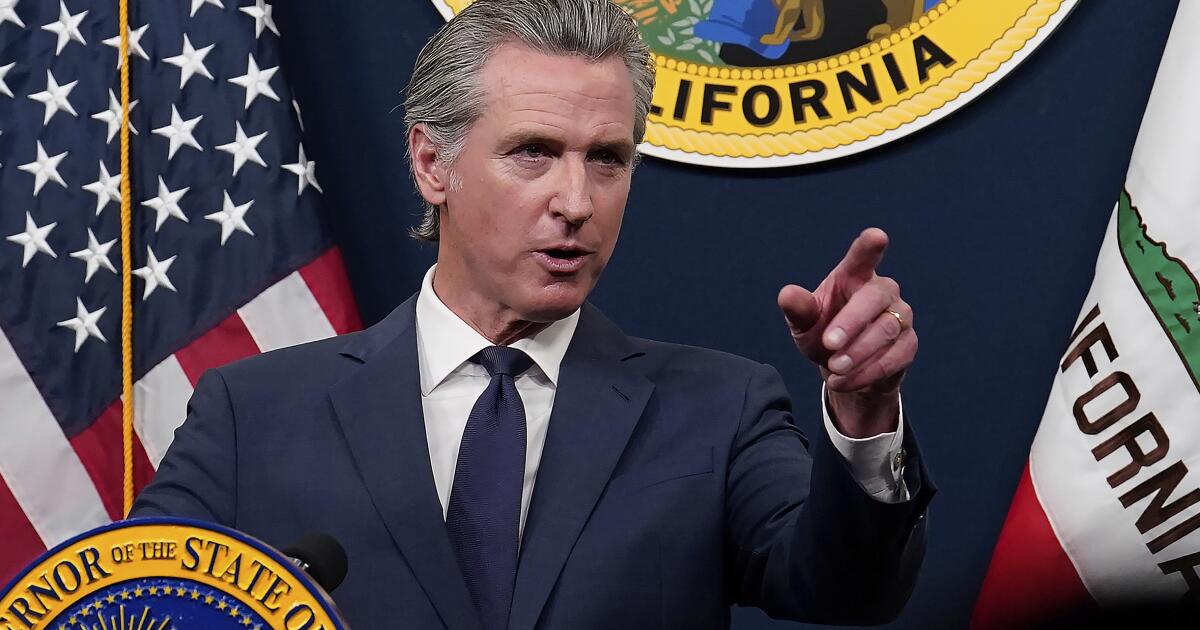
Newsom offers early peek at rosy budget projections
SACRAMENTO — Hours before Gov. Gavin Newsom is expected to present his budget plan on Thursday, his office released new projections of a $16.5-billion state revenue windfall over three years and offered a rosy outlook on California’s fiscal position during his final year in office and the year after.
Newsom’s office provided few details about his plan to reduce spending or other adjustments that he would need to propose in combination with the increase in revenue to eliminate projected deficits from 2026-27 through 2027-28.
The unusual early look at his budget proposal comes as Newsom begins to wind down his time at the state Capitol and considers a run for president in 2028.
Two weeks ago, the Legislative Analyst’s Office issued an analysis of state spending that said California could not, in the long term, afford to pay for existing services and the new programs that Newsom and Democratic lawmakers have enacted since he took office in 2019. State spending has outpaced California’s strong revenue growth by about 10%, creating a perennial budget shortfall, defined as a structural deficit.
California’s spending problem threatens to define Newsom’s fiscal legacy and could provide ripe fodder for his critics. If projections of the unexpected tax windfall, which analysts attribute to stock market interest in artificial intelligence companies, bear out, the upswing could mark a lucky break for Newsom.
The governor has largely resisted adopting new across-the-board tax increases or sharply curtailing his expensive policy proposals in order to align state spending with revenue.
His budget proposal includes a call to increase taxes on corporations by limiting state tax credits to no more than $5 million, or 50% of a company’s tax liability, beginning in the tax year 2027. No estimates were offered to explain how much revenue the new cap would bring in to support the state budget.
The preview of his budget has several new spending proposals, including providing $300 million to help low-income Californians keep $0 monthly premiums on healthcare coverage through the Affordable Care Act in response to cuts by the federal government, as well as $100 million to help wildfire victims afford construction loans to rebuild their homes. Two days before Mother’s Day, Newsom also introduced a plan to provide 400 free diapers for every California newborn at select hospitals beginning this summer.
Newsom is expected to present his budget in more detail late Thursday morning in Sacramento.
Lee Grant: Walsall appoint ex-Huddersfield Town boss as new head coach
Walsall have appointed former Huddersfield Town boss Lee Grant as the club’s new head coach.
Grant, 43, has signed a three-year contract at the Pallet-Track Bescot Stadium.
He replaces former Saddlers striker Darren Byfield, who had been given the interim job until the end of the season following the sacking of Mat Sadler in March.
Walsall finished the League Two season in 13th place, 13 points outside the play-offs, having been top of the table at Christmas.
“I’m super delighted and proud to be the new head coach,” said Grant, who was sacked by the Terriers in January after eight months in charge.
“The teams I’ve been involved in have scored lots of goals and there’s been a good development of players and my ideas around that are strong – it’s going to be a busy period for myself and the club but I’m really excited to get going, help the football club progress and I very much look forward to getting to work.”
After three years on the coaching staff at Ipswich Town, former goalkeeper Grant was appointed Huddersfield boss in May 2025, his first senior management job.
But he left just eight months into a three-year deal, despite the club sitting sixth in League One at the time.

Duststorms and lightning kill at least 96 people in northern India | Weather News
Storms are common in northern India from March to June, before the annual monsoon rains arrive.
Published On 14 May 2026
Duststorms, heavy rain and lightning have killed at least 96 people in the northern Indian state of Uttar Pradesh and damaged homes and other structures, officials said.
According to them, more than 50 people were injured in these weather-related incidents across several districts of Uttar Pradesh, India’s most populous state, on Wednesday.
Recommended Stories
list of 3 itemsend of list
Storms are common in northern India from March to June, before the annual monsoon rains arrive.
Officials said many deaths were caused by falling trees, collapsing structures and lightning. Police and disaster response teams used chainsaws and cranes to clear fallen trees from roads and railway tracks in several districts.
Narendra Srivastava, an administrative official, said emergency teams were deployed across the affected areas and that homes, crops and power infrastructure were widely damaged, particularly in rural parts.
In Prayagraj district, residents were in panic as strong winds tore through neighbourhoods.
“The storm came suddenly, and the sky turned completely dark within minutes,” Ram Kishore said. “Tin roofs were flying, and people ran indoors. We could hear trees falling throughout the evening.”
In neighbouring Bhadohi district, Savitri Devi said her family narrowly escaped after strong winds damaged their mud house. “We rushed outside when the walls started shaking because of the wind,” she said. “Our roof collapsed moments later. We spent the night at a relative’s house.”
Uttar Pradesh Chief Minister Yogi Adityanath ordered officials to complete relief operations within 24 hours and for authorities to provide emergency aid and compensation to affected families.