



MQ-72C Cargo Helicopter Drone Capabilities Demonstrated For U.S. Army
Airbus recently put the demonstrator for its MQ-72C drone helicopter through the paces for the U.S. Army. The MQ-72C has been in development for several years now for a U.S. Marine Corps competition seeking a new uncrewed cargo-carrying Aerial Logistics Connector (ALC). The Marines see uncrewed logistics ‘connectors’ as key to future expeditionary and distributed operations, and a similar Army requirement could be on the horizon, especially to support long-range air assaults.
Jaysen Yochim, Senior Director for the ALC program at Airbus, talked about the demonstration for the Army with our Howard Altman at the Association of the U.S. Army’s (AUSA) main annual convention on Monday. Airbus is currently teamed with L3Harris Technologies, Shield AI, and Parry Labs on development of this drone helicopter for the Marines, as you can learn more about here.
The current iteration of the MQ-72C is based on the crewed UH-72B Lakota, which is in turn a variant of Airbus’ H145 twin-engine light helicopter. The Army operates crewed UH-72s today, but only in non-combat roles, including counter-drug and border patrol missions, and almost exclusively within the borders of the United States.

The MQ-72C demonstration for the Army, which Airbus self-funded, took place last week at Huntsville Executive Airport just outside of Huntsville, Alabama. The service has a major presence in the Huntsville area, which is focused heavily on supporting aviation and missile developments. As of April of this year, Airbus and its partners had already conducted four rounds of autonomous flight testing of the initial demonstrator version of this design, which is not in a fully uncrewed configuration.
“We did a demonstration for the Army down in Huntsville, really to show all the capabilities that we’ve been able to develop so far on the Marine Corps-funded program,” Yochim said. “We had a total of five demonstration flights that we did down there, showing everything from the autonomous capability of the aircraft in a hover.”
This included “complex hovering patterns, both step turns and fly-through turns, similar to what you’d see on an airfield, to just show how it can be integrated onto an airfield inside of the existing routing structure and everything that exists on an airfield,” he continued. “We did multiple traffic patterns to demonstrate just a normal traffic pattern, like a normal day would be, but also traffic patterns or a flight with a no-fly zone popping up in the middle of the flight.”
The video below shows previous flight testing of the MQ-72C demonstrator.

First Autonomous ALC Flight
In that latter instance, the MQ-72C had to “autonomously make decisions” about how it was “going to route itself around the no-fly zones” once they popped up, he added. The human operator did provide the initial flight plan. There was also a pilot on board during the autonomous flight demonstrations, but only as an added safety margin, and they “never had to take control of the aircraft once,” according to Yochim.
Though the demonstrator now has provisions for a pilot, the intention is for the MQ-72C to eventually operate in a completely uncrewed mode. The current version of the design has two LIDAR sensors, facing front and back, as well as an electro-optical camera at the nose end, to help with navigation and otherwise provide situational awareness while operating in the uncrewed mode.
Those sensors feed “imagery into the flight computer with HiveMind that’s interpreting that through its perception systems to make decisions on the go,” Yochim explained. HiveMind is an autonomy software package from Shield AI, which is in use on a growing number of other uncrewed platforms, as you can read more about here.

AI Piloted Helicopters | Lakota Connector Powered by Hivemind
Yochim also talked about work that has already been done to start laying the groundwork for controlling the MQ-72C in the fully uncrewed mode. Parry Labs has been leading ground control station work.
“Over the summer is really where now the aircraft, rather than having a pilot inside the aircraft, or sorry, an autonomous operator inside the aircraft, using a gaming computer to tell the aircraft what to do, now the aircraft is receiving commands from a ground control station,” he told us. “That is that human in the loop, sending commands to the aircraft over Starlink, so that it has beyond line-of-sight. We’ve had flights that have been autonomously commanded from up to 70 miles away. All of that is stuff that’s happened in the last year. We also have where the aircraft can be commanded from both a ground control station like this and also with the Samsung tablet.”
SpaceX’s Starlink space-based network and its more secure, government-focused cousin, Starshield, are in increasingly widespread use across the U.S. military for communications and other purposes. At present, Starlink also dominates the commercial market for these services globally. Starlink and Starshield offer highly persistent and robust connectivity that is ideal for uncrewed aircraft command and control operations.
The current MQ-72C demonstrator also lacks certain features that are expected to be found on the final configuration. Plans for a set of clamshell doors at the nose notably still have yet to be realized. The UH-72 design already features clamshell doors at the rear of the fuselage, as seen below. The end goal is for the uncrewed version to have an open pass-through main cabin, offering major advantages for loading and unloading cargo, and doing so rapidly.

The nose door arrangement has been “designed. It’s been 3D rendered. It’s gone through some testing on that end, but not flight testing,” Airbus’ Yochim told us. “The flight testing, wind tunnel testing, things like that, take time, and it’s just not been the priority to get there with getting the aircraft ready.”
Yochim said that Airbus is now looking toward the 2029-2030 timeframe for integrating the nose doors. This is tied, in part, to the Marine Corps’ ALC program, where delayed funding has shifted the schedule to the right. On that front, the Marine Corps is aiming for demonstration of this capability in an operationally relevant context next year. The Airbus-led team is also not the only one under contract for that program, with Near Earth Autonomy and Honeywell also working on a design based on the Leonardo AW139 helicopter. The expectation is that the Marines will eventually pick a single ALC design to actually acquire.
In the meantime, Airbus is clearly eyeing other opportunities, including with the U.S. Army. The company’s main arm in Europe is also now pitching a functionally identical U145 drone helicopter based on the current generation H145 design.
Airbus did the “demonstration to just show the Army the capabilities that we’ve been developing with the Marine Corps,” Yochim told us. “So the Marine Corps has been funding the program up to now, and so the message we are giving the Army is this is how far your sister unit [sic; service] has been able to get us with the funding that we’ve had. It’s already product that’s out there. It’s already product that’s working.”
As mentioned, the Marines see ALC as part of a larger family of uncrewed logistics ‘connectors,’ in the air and on the surface, which will be critical to supporting expeditionary and distributed operations involving units spread across far-flung forward locations. The service sees this as particularly central to an island-hopping campaign scenario in the context of a larger potential high-end fight with China in the Pacific, where traditional logistics chains will be top targets. The conflict with Iran has only underscored how disruptive those threats can be.
The Army is facing many of the same kinds of future operational scenarios, especially when it comes to supporting future airmobile operations. The service is already expecting air assaults to take place over far greater distances in the future thanks to the introduction of the MV-75A tiltrotor. Those units will need to be supported once they arrive at their objectives, which could be heavily contested.

“We did several [air assaults] over the last few years directly from Fort Campbell to the Joint Readiness Training Center, which is 500 miles, give or take. The [Marine Corps’ MV-22] Osprey can do that very fast and in one leap,” Army Maj. Gen. David Gardner, head of the 101st Airborne Division, told our sister site Task & Purpose at AUSA. “Our current helicopters, you’ve got to make some fuel and re-arming stops along the way, and the distance isn’t there. But now that helped us think through as a division how we were going to command and control something that moved, expanded our battlefield, so to speak, twice as far, three times, four times as far, and twice as fast.”
The 101st is the Army’s premier air assault formation and is set to be the first to fly MV-75As operationally.
“We can put some things inside the helicopter, and we can put some things under a helicopter with a sling load. We’re not going to sling load something moving 250-ish knots for 500 miles. We’re not going to hang Humvees under that,” Gardner also told Task & Purpose. “We learned some things about how we need to get our equipment to the battlefield, how we need to get our sustainment to the battlefield at those distances, how we might need to rely on autonomous logistics delivery systems.”

It should be stressed that the market for semi-autonomous aerial logistics support is heating up, and that the MQ-72C is not the only option to meet such a requirement. As noted, there is another competitor in the running just for the Marines’ ALC effort, the AW139-based offering from Near Earth Autonomy and Honeywell.
Last year, Sikorsky, now a subsidiary of Lockheed Martin, revealed that it was working on a fully uncrewed version of the Black Hawk helicopter that also features a clamshell nose. Sikorsky has also been working with Robinson Unmanned on a pilotless version of the smaller R66 helicopter that again features clamshell doors at the front of the fuselage. Bell, together with Near Earth Autonomy, is developing an uncrewed cargo-carrying version of its Model 505 Jet Ranger X, as well. The drone versions of the R66 and Jet Ranger X are aimed primarily at another Marine Corps ‘connector’ program called the Medium Aerial Resupply Vehicle-Expeditionary Logistics (MARV-EL).

Introducing the S-70UAS™ U-Hawk™

Robinson Unmanned | The Future of Autonomous Rotorcraft is Here

As mentioned, the Army does already operate crewed UH-72s, but it also flies Black Hawks. The service is also expanding its use of contractor-operated R66s for pilot training.
The Army does not appear to have formalized any requirement for a cargo-carrying drone helicopter yet. At the same time, the comments from Maj. Gen. Gardner certainly suggest one may be emerging now.
There was at least enough interest within the Army already to accept Airbus’ offer of a demonstration of its MQ-72C last week.
Contact the author: joe@twz.com
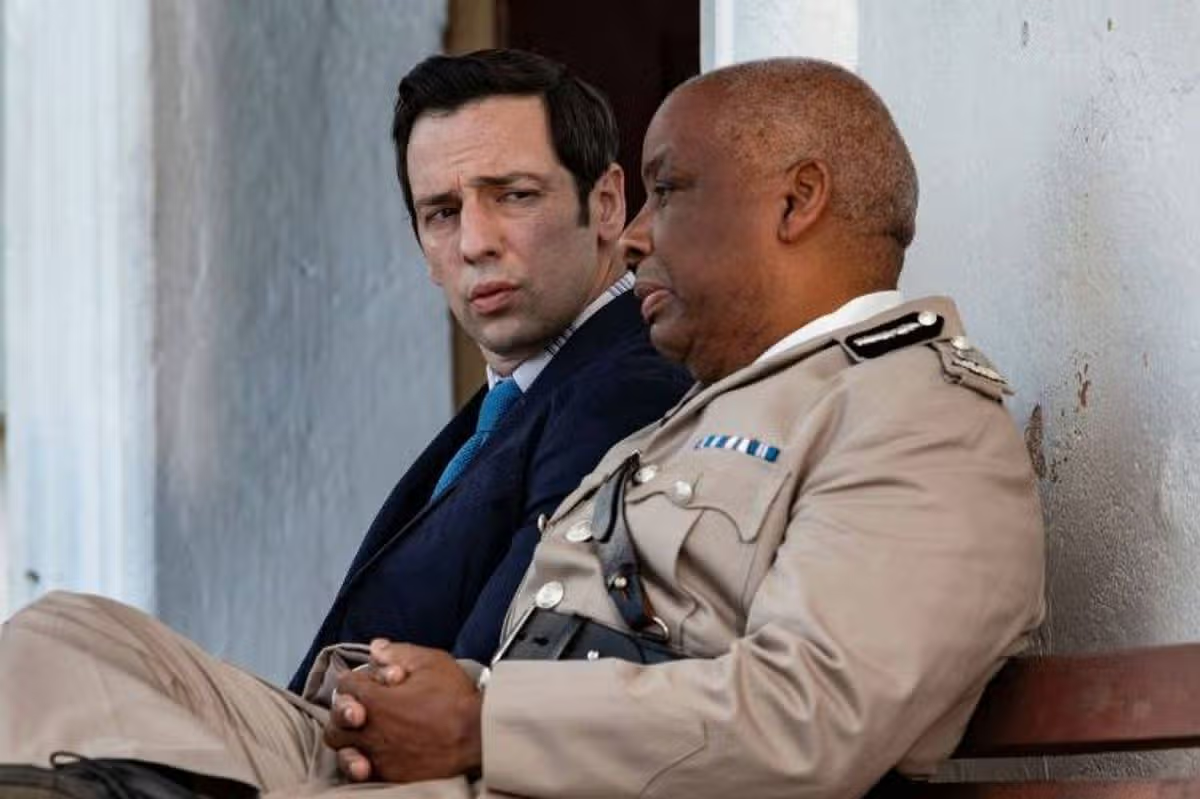
Death in Paradise sees Ralf Little return to screens as beloved DI Neville Parker
Death in Paradise will see the return of a beloved detective on Monday night as the BBC airs a repeat from series 12

Ralf Little played DI Neville Parker in Death in Paradise(Image: BBC)
Ralf Little will be back on screens as DI Neville Parker on Monday night.
The repeat from series 12 of Death in Paradise gives fans another chance to watch the show’s longest-serving detective tackle a puzzling case on Saint Marie.
The episode synopsis reads: “The team investigates a survivalist commune when one of its members is poisoned inside a locked bunker. However, with CCTV footage showing that no one went in or came out while he was in there, it seems likely that he has taken his own life – or has he? Meanwhile, Neville has a series of adventurous dates with Sophie.”
Joining Ralf in the episode are Tahj Miles as Officer Marlon Pryce, Ginny Holder as Officer Darlene Curtis, and Shantol Jackson as Naomi Thomas, giving viewers a chance to catch up with more familiar faces.
Neville first joined the Saint Marie police team back in 2020, stepping into the shoes of DI Jack Mooney (Ardal O’Hanlon).
During his four-year stint as Detective Inspector, he weathered countless challenges, conquering his allergies and aversion to the sun, and even surviving a plot to frame him for murder, cementing his status as the island’s longest-serving investigator.
Ralf ultimately departed Death in Paradise in 2024, with his character sailing off into the sunset alongside his love interest, Florence Cassell. Both he and the show’s producers agreed that Neville’s story had reached a fitting and natural conclusion, reports the Express.
Ralf was subsequently succeeded by another outstanding actor, Don Gilet, who portrays DI Mervin Wilson. Tim Key, Executive Producer for Red Planet Pictures, commented at the time: “Joining a successful show like Death in Paradise as the lead is a daunting and risky prospect, but Ralf’s confidence and talent shone through from day one, and the audience response to Neville and his journey has been amazing.”
He added, “I can’t thank Ralf enough for everything he has brought to the show, on and off screen, and wish him all the very best for the future.”
This marks not the first occasion the BBC has broadcast a repeat of Death in Paradise. Last month saw Kris Marshall and Ardal O’Hanlon return to screens as DI Humphrey Goodman and DI Jack Mooney, respectively.
Back in September, the show’s Instagram page revealed a watch-along of series six, episodes five and six, starring Kris Marshall opposite Josephine Jobert as DS Florence Cassell.
Fans can also catch Kris in the Death in Paradise spin-off, Beyond Paradise, which unfolds in the fictional town of Shipton Abbott.
Death in Paradise is available to stream on BBC iPlayer.

SocGen flags relative bargains in Treasuries as yields fall

Melpomenem/iStock via Getty Images
Société Générale has identified several U.S. Treasury securities that appear relatively inexpensive compared with bonds of similar maturities, offering investors a way to assess potential opportunities in the government bond market following a decline in yields.
In a fixed-income analysis

High school football: Week 9 schedule
WEEK 9 HIGH SCHOOL FOOTBALL SCHEDULE
(Games at 7 p.m. unless noted)
MONDAY’S SCHEDULE
SOUTHERN SECTION
Ironwood league
Village Christian at Capistrano Valley Christian
THURSDAY’S SCHEDULE
SOUTHERN SECTION
Arroyo League
La Canada at Monrovia
Muir at Burbank
Big West League
Corona Santiago at Eastvale Roosevelt
Vista Murrieta at Norco
Bravo League
Tustin at La Habra
Citrus Belt League
Beaumont at Yucaipa
Redlands at Citrus Valley
Del Rey League
Harvard-Westlake at La Salle
Delta League
Troy at Huntington Beach
Desert Empire League
La Quinta at Xavier Prep
Desert Sky League
Victor Valley at Silverado
Epsilon League
Brea Olinda at Newport Harbor
Foxtrot League
Irvine at Orange
Gano League
Don Lugo at Nogales
Montclair at Chaffey
Walnut at Rowland
Golden League
Palmdale at Quartz Hill
Inland Valley League
Canyon Springs at Hemet
Kappa League
St. Margaret’s at Esperanza
Manzanita League
Temecula Prep at Nuview Bridge
Marmonte League
Simi Valley at Bishop Diego
Mid-Cities League
Gahr at Santa Fe
Mojave River League
Apple Valley at Serrano
Mountain Pass League
Elsinore at West Valley
Temescal Canyon at Tahquitz
Omicron League
Los Amigos at Santa Ana
Rio Vista League
Artesia at Whittier
River Valley League
Big Bear at Miller
Ramona at Patriot
San Andreas League
Rialto at Kaiser
Sigma League
Anaheim at Rancho Alamitos
Ocean View at Katella
Sunbelt League
Paloma Valley at Valley View
Tango League
Garden Grove Santiago at Magnolia
8-MAN
SOUTHERN SECTION
Agape League
PAL Academy at Lucerne Valley
FRIDAY’S SCHEDULE
CITY SECTION
Central League
Bernstein at Maywood CES
Contreras at Roybal
Hollywood at Mendez
Coliseum League
Crenshaw at Dorsey
Marquez at King/Drew
Eastern League
Huntington Park at Legacy
L.A. Roosevelt at Bell
South East at South Gate
East Valley League
Arroyo at North Hollywood
Fulton at Arleta
Grant at Monroe
Sun Valley Poly at Verdugo Hills
Exposition League
Manual Arts at Jefferson
Marine League
San Pedro at Carson
Wilmington Banning at Narbonne
Metro League
Hawkins at Locke
L.A. Jordan at Dymally, 4 p.m.
Northern League
Lincoln at Franklin
L.A. Wilson at L.A. Marshall
Southern League
Torres at Belmont
West Adams at Los Angeles, 3 p.m.
Valley Mission League
San Fernando at Granada Hills Kennedy
Sylmar at Reseda
Van Nuys at Panorama
Western League
L.A. Hamilton at Venice
L.A. University at Westchester
Palisades at Fairfax
West Valley League
Chatsworth at Birmingham
Cleveland at Granada Hills
Taft at Wells Camino Real
Nonleague
Eagle Rock at Garfield
Fremont at Angelou
Stella at Sotomayor
SOUTHERN SECTION
Alliance League
South El Monte at Montebello
Almont League
Alhambra at San Gabriel
Alpha League
Edison at Yorba Linda
Mission Viejo at Los Alamitos
San Clemente at San Juan Hills
Angelus League
Paraclete at Cathedral
St. Francis at Bishop Montgomery
St. Paul at St. Pius X-St. Matthias Academy
Baseline League
Eitwanda at Chino Hills
Upland at Rancho Cucamonga
Bay League
Inglewood at Leuzinger
Palos Verdes at Redondo Union
Big West League
Corona Centennial at Chaparral
Temecula Valley at Corona
Murrieta Valley at Murrieta Mesa
Riverside King at Great Oak
Boulder League
Burbank Burroughs at Crescenta Valley
San Marino at Gabrielino
South Pasadena at Pasadena
Bravo League
Crean Lutheran at Corona Del Mar
Villa Park at Capistrano Valley
Camino Real League
St. Bernard at Mary Star of the Sea
St. Genevieve at St. Monica
Channel League
Thousand Oaks at Rio Mesa
Ventura at Moorpark
Westlake at Santa Barbara
Citrus Belt League
Redlands at Citrus Valley
Redlands East Valley at Cajon
Citrus Coast League
Channel Islands at Santa Clara
Del Sol at Carpinteria
Grace at Nordhoff
Coastal 101 League
Calabasas at Buena
Camarillo at Oak Park
Oxnard at Agoura
Conference 12 League
Keppel at Arroyo
Mountain View at Rosemead
Cottonwood League
Vasquez at Riverside Notre Dame
Whittier Christian at Riverside Prep
Crest League
Arcadia at Glendale
Temple City at Hoover
Del Rey League
Crespi at Alemany
Salesian at St. Anthony
Delta League
El Modena at Dana Hills
Western at Laguna Beach
Desert Empire League
Palm Desert at Palm Springs
Rancho Mirage at Shadow Hills
Desert Sky League
Barstow at Granite Hills
Desert Valley League
Coachella Valley at Yucca Valley
Epsilon League
Santa Ana Foothill at Tesoro
Trabuco Hills at Aliso Niguel
Foothill League
Castaic vs. West Ranch at College the Canyons
Golden Valley at Valencia
Hart at Canyon Country Canyon
Foxtrot League
El Dorado at Beckman
Segerstrom at El Toro
Gateway League
Downey at Cerritos
Mayfair at La Serna
Warren at La Mirada
Gold Coast League
Brentwood at Rio Hondo Prep
Golden League
Eastside at Knight
Highland at Lancaster
Littlerock at Antelope Valley
Hacienda League
Covina at Diamond Bar
Los Altos at Baldwin Park
West Covina at South Hills
Hub City League
Compton at Compton Centennial
Dominguez at Long Beach Cabrillo
Inland Valley League
Heritage at Citrus Hill
Lakeside at Arlington
Perris at Moreno Valley
Iota League
Garden Grove Pacifica at Marina
Laguna Hills at Cypress
La Palma Kennedy at Northwood
Ironwood League
Aquinas at Village Christian
Capistrano Valley Christian at Heritage Christian
Western Christian at Cerritos Valley Christian
Ivy League
Rancho Christian at Orange Vista
Rancho Verde at Liberty
Riverside Poly at Vista del Lago
Kappa League
Portola at Anaheim Canyon
Sunny Hills at Fullerton
Lambda League
Placentia Valencia at Fountain Valley
Westminster at Santa Ana Calvary Chapel
Woodbridge at Sonora
Manzanita League
Anza Hamilton at Silver Valley
Desert Chapel at San Jacinto Valley Academy
Marmonte League
Newbury Park at Oaks Christian
St. Bonaventure at Oxnard Pacifica
Mesquite League
Desert Christian Academy at Santa Rosa Academy
Ontario Christian at Linfield Christian
Metro League
Bell Gardens at El Rancho
El Monte at Schurr
Mid-Cities League
California at Paramount
Norwalk at Bellflower
Miramonte League
Ganesha at Workman
Pomona at Garey
Mission League
Gardena Serra at Chaminade
Loyola at Bishop Amat
Sherman Oaks Notre Damę at Sierra Canyon
Mission Valley League
Mountain View at Rosemead
Mojave River League
Oak Hills at Ridgecrest Burroughs
Sultana at Hesperia
Montview League
Azusa at Ontario
Duarte at Hacienda Heights Wilson
La Puente at Sierra Vista
Moore League
Long Beach Jordan at Lakewood
Long Beach Poly at Millikan
Mountain Valley League
Jurupa Valley at La Sierra
San Bernardino at Rubidoux
Ocean League
Hawthorne at South Torrance
Peninsula at Beverly Hills
Omicron League
Estancia at Garden Grove
Irvine University at Buena Park
Los Amigos at Santa Ana
Pioneer League
Culver City at Torrance
North Torrance at El Segundo
West Torrance at Santa Monica
Rio Vista League
Firebaugh at Pioneer
Lynwood at Glenn
River Valley League
Jurupa Valley at La Sierra
Norte Vista at Pacific
San Andreas League
Rim of the World at Colton
Sierra League
Bonita at Charter Oak
Colony at Glendora
Northview at Ayala
Sigma League
Saddleback at Costa Mesa
Skyline League
Arroyo Valley at Carter
Fontana at Indian Springs
San Gorgonio at Bloomington
Sunbelt League
Hillcrest at Riverside North
Sunkist League
Eisenhower at Summit
Grand Terrace at Jurupa Hills
Sun Valley League
Banning at Desert Hot Springs
Cathedral City at Indio
Desert Mirage at Twentynine Palms
Tango League
Bolsa Grande at Godinez
Savanna at Loara, 6:30 p.m.
Tri-County League
Fillmore at Dos Pueblos
Hueneme at Santa Paula
San Marcos at Royal
Trinity League
JSerra vs. Santa Margarita at Saddleback College
Orange Lutheran vs. Mater Dei at Santa Ana Stadium
St. John Bosco vs. Servite at Orange Coast College
Valle Vista League
Alta Loma at Chino
Claremont at San Dimas
Diamond Ranch at Los Osos
Nonleague
Maranatha at Viewpoint
INTERSECTIONAL
El Cajon Granite Hills at San Jacinto
St. Jeanne de Lestonnac at Diego Rivera
8-MAN
CITY SECTION
City League
New Designs University Park at Animo Robinson
USC Hybrid at New Designs Watts
Valley League
TEACH Tech at Valley Oaks CES
South LA College Prep at Sherman Oaks CES
SOUTHERN SECTION
Express League
Downey Calvary Chapel at Vista Meridian, 6 p.m.
Southlands Christian at Magnolia Science Academy, 3 p.m.
Freelance League
Malibu at Laguna Blanca, 3 p.m.
Majestic League
Public Safety Academy at Cornerstone Christian, 5 p.m.
Tri-Valley League
Pasadena Poly at Flintridge Prep, 6:30 p.m.
Nonleague
California School for the Deaf Riverside at Faith Baptist, 6:30 p.m.
Thacher at Sage Hill, 6 p.m.
Villanova Prep at Thousand Oaks Hillcrest Christian, 6 p.m.
INTERSECTIONAL
Bakersfield Legacy Christian Academy at Cuyama Valley
SATURDAY’S SCHEDULE
SOUTHERN SECTION
Cottonwood League
Arrowhead Christian at Webb, 1 p.m.
INTERSECTIONAL
Trinity Classical Academy at Orcutt Academy, 6 p.m.
8-MAN
SOUTHERN SECTION
Agape League
Hesperia Christian at Academy of Careers & Exploration
Coast Valley League
Valley Christian Academy at San Luis Obispo Classical Academy, 11 a.m.
Express League
Downey Calvary Chapel at Vista Meridian, 6 p.m.
Heritage League
Lancaster Baptist at Desert Christian, 3 p.m.
Tri-Valley League
Cate at Chadwick, 2 p.m.
Heritage League
Lancaster Baptist at Desert Christian, 6 p.m.
Freelance League
Highland Entrepreneur at California Lutheran, 6 p.m.
Tri-Valley League
Cate at Chadwick, 2 p.m.
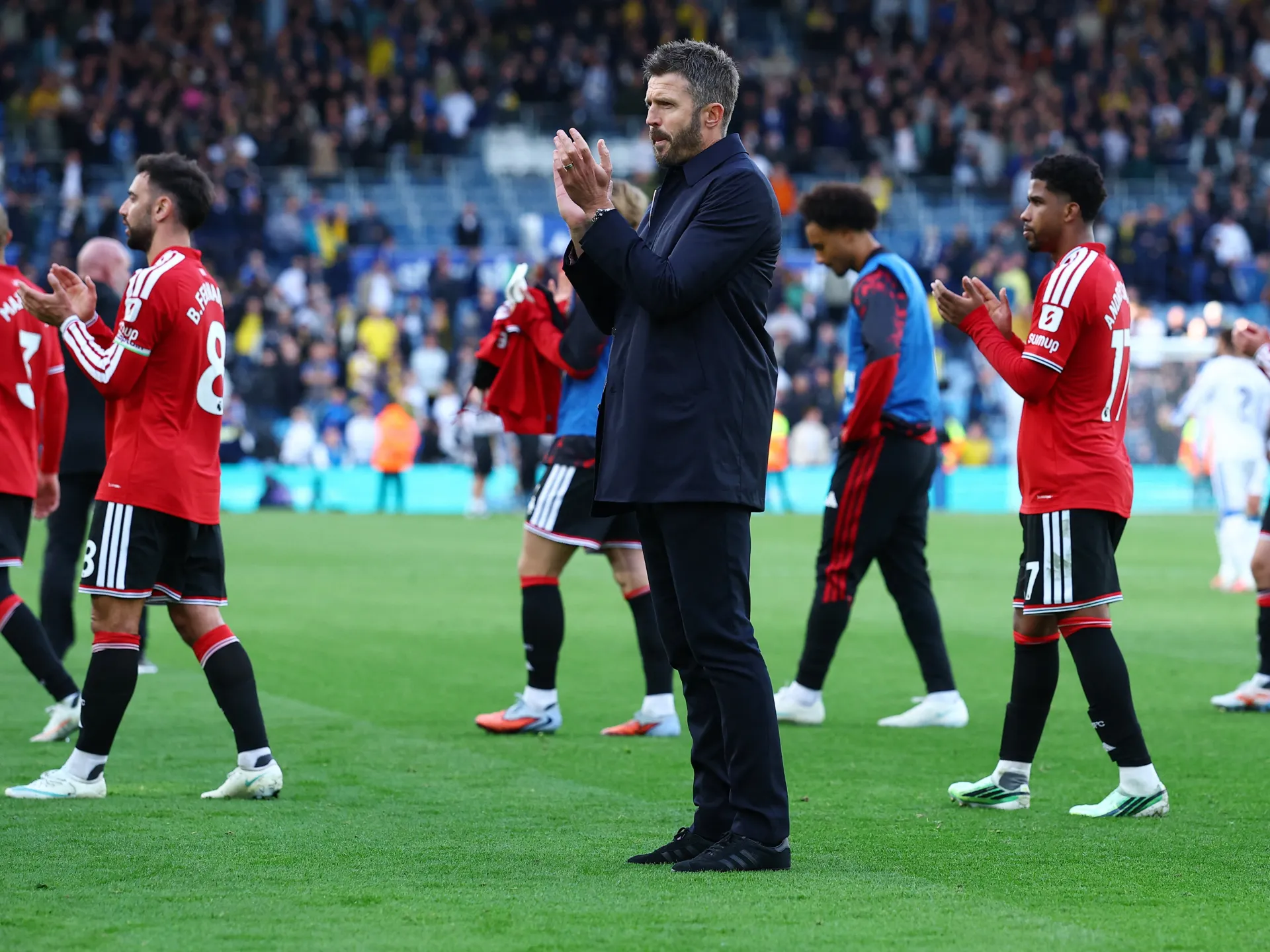
Manchester United held at Leeds despite improved performance for Carrick | Football
Bryan Mbeumo’s goal is not enough to win it for beleaguered United as Dominic Calvert-Lewin levels for Leeds.
Published On 18 Oct 2026
Manchester United ended a turbulent week with a frustrating 1-1 draw at Leeds on Sunday that does little to ease the pressure on beleaguered manager Michael Carrick.
The Red Devils travelled to the Yorkshire home of their bitter rivals desperate to find a spark after just two wins in nine games in all competitions this season.
Recommended Stories
list of 4 itemsend of list
The sense of a growing crisis at the club was exacerbated in midweek by an outburst from defender Lisandro Martinez, who took aim at the United hierarchy after a 2-0 defeat at Atletico Madrid in the Champions League.
The Argentina centre-back said Carrick, in his first full season in charge at Old Trafford, had been left with an under-strength squad after an underwhelming summer transfer window.
The United boss insisted on Friday that the club had “moved on” from the incident and Martinez was named in the starting lineup at Elland Road.
Both teams were fully committed in a feisty start to the match in Leeds but there was little goalmouth action.
The first effort on target came in the 26th minute when United goalkeeper Senne Lammens clawed away a Nico Elvedi header destined for the top corner after bouncing up off the turf.
Bryan Mbeumo, playing as United’s target man, headed wastefully wide a minute later after a fine cross from Youri Tielemans and then shot tamely at Leeds goalkeeper James Trafford.
But he finally broke the deadlock in the 35th minute when Tielemans again delivered a low ball from the right which Mbeumo guided into the bottom corner for his fourth Premier League goal of the season.
Martinez went off at half-time as Morocco’s Noussair Mazraoui was brought into the action.
Leeds started strongly after the break and were level in the 51st minute when Dominic Calvert-Lewin controlled the ball on his chest and finished at full stretch after Tarik Muharemovic got his head to the ball following a corner.
The home team were now well on top, largely limiting Carrick’s team to counter-attacks.
The Man United boss made attacking substitutions in the search for a winner, bringing on Mason Mount and Matheus Cunha, but neither team could force a winner.
The point left 20-time English champions Manchester United in 13th place in the table with just one win in seven games while Leeds are seventh.
Brighton stun Crystal Palace with five-star display
Elsewhere on Sunday, Brighton leapfrogged Arsenal into second place, at least temporarily, after humbling Crystal Palace 5-0, including a sensational Diego Gomez effort from the halfway line.
Fabian Hurzeler’s team were three goals up inside 10 minutes after an own goal from Palace defender Jaydee Canvot, Gomez’s spectacular effort and a strike from Yasin Ayari.
Further goals from Charalampos Kostoulas and substitute Jack Hinshelwood in the second half deepened Palace’s pain.
The Gunners, six points behind Manchester City, are in action at Nottingham Forest in the late-afternoon kickoff.
Arsenal need a win to rein in City, who have won all seven of their league games this season.
Enzo Maresca’s men have put together their impressive run despite off-field distractions after the club was charged with multiple breaches of Premier League financial rules.
Bournemouth beat 10-man Sunderland 2-0 with goals from Marcus Tavernier and Evanilson for their first league win of the season.

Photos: Antigovernment protesters clash with police in Albania’s capital | Protests News
Published On 18 Oct 2026
Protesters have clashed with riot police in Albania’s capital, as antigovernment demonstrations escalated into violent unrest.
Demonstrations have shaken Tirana since Tuesday, with thousands of protesters calling for Prime Minister Edi Rama to step down as they rally against poor university conditions, high tuition fees and corruption.
This week’s unrest follows months of antigovernment protests in the Balkan nation, initially prompted by a controversial resort development linked to United States President Donald Trump’s family.

‘Utterly gripping’ mystery thriller is ‘even better’ than Netflix’s Below
Thriller fans might have just found their next obsession

Josh Hartnett stars in the trending Netflix drama (Image: Netflix )
Netflix viewers addicted to new mystery thriller Below should watch this ‘gripping’ drama next.
For those who have yet to tune in, Below is a fresh supernatural series that landed on the streaming platform last week, and has since climbed to the top of the most-watched chart. Starring Josh Hartnett, the drama is set in a remote town called Snook’s Arm.
When the tight-knit community is terrorised by a mysterious sea creature, a dedicated fisherman and father (Hartnett) must find a way to protect his children and fellow neighbours.
Many fans are already hunting for their next obsession after binge-watching the entire six-episode drama in a matter of days. A 2018 series titled The Terror might just be the what viewers are looking for, and it’s available to stream on NOW.
The supernatural horror series is named after Dan Simmons’ 2007 book of the same title, which also provides the story for the first season. It tells a fictionalised version of the real lost expedition of British Royal Navy Officer Captain Sir John Franklin in 1845.
After leaving England on a mission to explore uncharted waters, two ships find themselves frozen and trapped in ice. Those onboard must fight for survival all while being stalked by a mysterious entity.
A synopsis for the show reveals: “As things worsen and civilized behaviour disintegrates in favour of survival at any cost, the crew must simultaneously battle the elements, the supernatural, and eventually themselves.”
The thriller has three seasons in total, but each series takes on a different story. While the other instalments captivated some viewers, season one is better suited for fans of Below.
And it is ‘even better’ than the Netflix series, according to Rotten Tomatoes scores. The Terror has a rare 94% score, while Below has a less impressive 87% rating.
Now TV
This article contains affiliate links, we will receive a commission on any sales we generate from it. Learn more
Now has discounts for those taking an annual subscription, with prices from £4.99 for the Entertainment Saver – but combine Entertainment and Cinema for the biggest saving over over £130 across the year.
Viewers have also shared glowing reviews for the series, with many hailing it as one of the best thrillers to come out in recent years. “One of The Top Twenty Television Shows not only this decade: but indeed this Century so-far,” shared one fan.
Someone else raved: “The show draws you in immediately. After only two episodes it’s the only thing on right now, for me, that’s a must-watch. The characters are well-written and multi-dimensional. The story is intriguing.”
A third viewer shared their own verdict, commenting: “Grim, grisly & utterly gripping,” while a fourth added: “I binge-watched Season One, couldn’t stop. Amazing performances.”
While a final fan agreed with the high praise, saying: “One of those series which will have an impact on you for ever. A masterpiece!!!”
The Terror is available to stream NOW

Prep talk: John McLellan, 13, shows off his kart racing skills in Italy
John McLellan is not old enough to have a driver’s license at 13 years old, but the Redondo Beach teenager has been racing kart cars at speeds nearing 80 mph in Italy this month.
Last week, he had a breakthrough performance, finishing third among 117 drivers representing 33 countries at the FIA Karting World Cup OK-N Junior Final at Leopard Circuit Viterbo, Italy.
His father, John Sr., sent him to Italy for four weeks to compete for Sweden-based Ward Racing.
“Dad is on him all the time,” his father said. “Do your homework, brush your teeth.”
“Yes and yes,” John Jr. said this week after returning home.
John Jr. is enrolled in a Texas-based online middle school to help with his unpredictable traveling schedule. He had been a club soccer player until deciding racing is what he wants to do.
First he was into motocross at age 6. After an accident resulting in a broken hand and broken collarbone, kart racing became his specialty, with a dream of racing Formula 1 cars.

John McLellan, 13, in his Kart car.
(Matteo Segago)
His mother is from Australia and his father is a Torrance native who chose racing motorcycles over playing high school soccer. Like father, like son.
“He loves it,” John Sr. said. “What kid wouldn’t want to race cars?”
John said of the strangeness driving high speeds at 13: “Whenever you have a kid going 80 mph without a driver’s license and going to middle school, you would think that’s absolute carnage and crazy. Karting is just a very competitive sport.”
The average lap speeds are 56 mph. John wants to attend a regular high school when he enters ninth grade next year, so whether it’s Rolling Hills Prep or Redondo Union, new friends need to know they’re hanging out with a teenager who, as Tom Cruise said in “Top Gun,” “I feel the need … the need for speed.”
This is a daily look at the positive happenings in high school sports. To submit any news, please email eric.sondheimer@latimes.com.
France protests live: Macron to address nation after protests | Emmanuel Macron News
Live updatesLive updates,
Protests are sweeping France as anger over conditions in schools meets frustration with high living costs and a government accused of doing little to address problems facing people.


Published On 18 Oct 2026

A timeline of West Bank attacks on Palestinians and foreign officials | Israel-Palestine conflict News
European diplomats and officials were attacked on Saturday amid a surge in settler pogroms across the occupied West Bank in recent weeks, coinciding with olive harvest season.
The settler pogroms have escalated just weeks before Israel heads to the polls on October 27.
Recommended Stories
list of 3 itemsend of list
The European Union (EU) on Sunday condemned settler attacks on European diplomats and Palestinians in the occupied West Bank. A day earlier, a veteran American journalist working for the Washington Post was also brutally attacked.
But this is not the first time Israeli settlers have assaulted foreign officials or prominent Palestinians in the occupied West Bank.
Here’s a timeline of some of the recent and past attacks:
October 17, 2026
Israeli settlers assaulted European diplomats, including a French mayor, near the Palestinian village of Taybeh in the occupied West Bank.
The delegation was visiting Palestinian olive harvesters on Saturday when the Israeli attackers confronted the group.
In Saturday’s incident, the settlers targeted Belgium’s consul general, French and Polish diplomats, and Catholic representatives, Belgian Minister of Foreign Affairs Maxime Prevot said.
“A French mayor was assaulted and a Belgian vehicle damaged,” Prevot said, linking the incident to Israel’s “illegal settlement policy” and pledging to push for further EU sanctions.
Bernard Baudoux, the French mayor who was assaulted, told the AFP news agency the attack suggests that “there is a tolerance on the part of the Israeli government” towards settler violence.
Video shared by an activist at the scene, Amit Orfali, shows Baudoux leaning against a vehicle while sitting on the dusty ground. Other clips showed young masked men knocking insistently on a driver’s side window and asking for identification, while other masked men carrying sticks advanced in the distance. Orfali said the masked men “threatened to kill us”.
France’s Foreign Minister Jean-Noel Barrot called on Israel to arrest the “extremist settlers” who “violently assaulted” Baudoux, and bring them to justice. “They must urgently halt this criminal violence and guarantee the safety of civilian populations, as they are compelled to do under international law,” he said in a post on X.
Israeli Prime Minister Benjamin Netanyahu’s office has, however, appeared to question the reports of the attack on the Europeans, saying on X that they are “alleged” and require “compelling evidence”, despite acknowledging that published footage of the incident exists.
“We take positive note of statements by several Israeli representatives who condemned the attacks,” the EU said in a statement on Sunday. “But we expect full accountability as well as effective measures to prevent continued acts of violence and violent harassment against Palestinians, including during the ongoing olive harvest season, as well as against journalists.”
October 16, 2026
Palestinian farmers harvesting olives and veteran American journalist Heidi Levine, 64, who freelances for the Washington Post, were brutally attacked by settlers.
Levine fell to the ground during the assault before she was set upon, witnesses said. “We looked and saw that there was a journalist … on the ground with people surrounding her, beating her, clubbing her, robbing her, pulling her up, beating her again and kicking her,” Jasper Nathaniel, an independent journalist who witnessed the attack, told Al Jazeera.
Levine later told reporters that her attackers “just kept kicking me and kicking me, like probably 50 times”.
Levine was wearing a protective vest marked “PRESS” on the front and back. Her cameras and phone were taken from her during the assault, the Washington Post reported.
Nathaniel said he and others managed to reach her when the settlers briefly backed away, but she struggled to stand. “She was in very, very bad shape. She couldn’t really get up off the ground,” he said.
As they helped Levine towards paramedics, settlers charged again, throwing more stones, he added. The journalist was eventually taken to a hospital in Ramallah.
Nathaniel said Israeli soldiers arrived after the settler assault and opened fire and used tear gas against Palestinians, shooting a man in the leg. “They do nothing to stop the settlers, and they speed into town and start firing their guns and tear-gassing, and they shoot a Palestinian man in the leg,” he said.
“They’re pointing their guns at the paramedics who are helping him, shoving journalists, including myself,” Nathaniel said, adding that the injured man was eventually taken away in an ambulance.
Wafa, the Palestinian news agency, reported that Israeli forces fired live ammunition and tear gas at Palestinians during the attack. After the soldiers left, Palestinians returned to harvesting their olives, Nathaniel added.
Netanyahu’s office has said the facts around the settler attack “remain unclear”, as it offered a conditional condemnation.
“Serious questions remain”, said a post on the official X account of the prime minister’s office, calling for an investigation to “establish the facts, including who initiated the violence”.
October 6, 2026
Israeli settlers beat Palestinian AFP news agency photographer Jaafar Ashtiyeh, 58, with rifle butts near Aqraba, south of Nablus. He suffered bruises to his head and torso and was taken by ambulance to a hospital, according to witnesses, his family and fellow journalists cited by AFP.
AFP photographer John Wessels was with Ashtiyeh when the incident occurred.
The news agency reported that a quadbike had raced towards the journalists and a man had opened live fire.
“At least six other people then rushed towards the AFP journalists, firing guns,” AFP reported. “As Ashtiyeh attempted to enter a car, which was clearly marked ‘Press’, two men jumped on him and beat him repeatedly with the butts of their rifles. ‘I could hear his screams,’ said Wessels, who was also threatened at gunpoint.”
While Ashtiyeh is now conscious in a hospital in Nablus, the assailants have taken his camera equipment, according to his colleague Wessels.
The Israeli military has yet to respond to the AFP news agency.
July 11, 2026
United States Congressional Representative Ro Khanna said he and his tour group were detained by rifle-wielding Israeli settlers during a trip to Palestine.
In a post on X, Khanna had accused the Israeli army of supporting the settlers.
“When the [Israeli army] arrived, they sided with the settlers and continued our detention,” Khanna wrote.
Khanna, a Democrat who is considering running for US president in 2028, told the Reuters news agency that “hoodlums … with machine guns” had detained his group a day earlier. “They block off the road. And then they call the [Israeli military] and the [Israeli military] is on their side,” Khanna said.
He added that the settlers were armed with US-made assault rifles.
In an interview with DRM News, Khanna said his experience in the occupied West Bank and Israel was the “first time” he had “really been acutely aware of being brown”.
“I saw the arrogance in the eyes of those settlers. Twenty-one and 22-year-olds with guns, laughing that they had detained us. The arrogance of those young [Israeli army] soldiers that my tax dollars are funding. Having no respect for the fact that they were detaining Americans,” he added.
The Israeli military disputed Khanna’s version of the events, saying that it “dispersed” civilians who were blocking the road.
Israeli officials have, however, ruled out apologising to Khanna or holding the settlers accountable.
Three months after the incident, on Saturday, October 17, Khanna called Netanyahu a “liar” after his office released an October 16 statement on X saying that “serious questions remain” about “who initiated the violence” and other details of the attack on Washington Post journalist Heidi Levine.
“Netanyahu called me a liar when settlers detained me, along with a NYT photographer, in Zanuta this past July,” Khanna wrote. “Netanyahu, you are the liar with the blood of Palestinian children on your hands.”
November 2025
One Canadian and three Italian activists were injured by illegal Israeli settlers in the Ein ad-Duyuk village in the Jericho governorate in the central West Bank, local sources told the Anadolu news agency.
Anadolu reported that settlers had stormed into a Bedouin community where the activists were residing and then assaulted them. Three activists sustained moderate injuries, while one was critically wounded, the news agency said and added that their passports, phones, and belongings were also taken.
July 2025
Palestinian activist and English teacher Awdah Hathaleen, who contributed to the Oscar-winning documentary No Other Land, was shot and killed on July 28, 2025, in the occupied West Bank village of Umm al-Khair in the Masafer Yatta region.
The beloved 31-year-old activist and father of three fell to the ground as people rushed over to try to help him. Then an ambulance came out of the nearby illegal settlement of Carmel and took him away.
Footage published by Israeli human rights group B’Tselem appears to show the suspect Yinon Levi opening fire on Hathaleen during a confrontation in the village.
Despite the visual evidence and prior sanctions imposed on Levi by both the EU and the United States over past attacks on Palestinians, Israeli authorities released him to house arrest.
US President Donald Trump also removed the penalties against Levi and other settlers accused of extremist violence after assuming office in January 2025.
July 2024
Israeli settlers attacked a group of foreign volunteers helping Palestinian farmers in the occupied West Bank.
David Hummel, an American-German in the group, told the AFP news agency that eight mainly American volunteers were working with the farmers in an olive grove near the Palestinian village of Qusra when settlers attacked them.
“They started attacking and beating us all with sticks and metal pipes, and they were throwing rocks as well at us,” he said.
“I was attacked on my legs, on my arms and here on my jaw as well and it was … very violent,” he added.
The Israeli army condemned the violence and said its troops were deployed to the scene and had fired warning shots into the air, causing the Israeli settlers to flee the area.
You’re ‘wasting Netflix account’ if you’re not watching these 3 gripping series
Television critic Luke Eccleston is back with three Netflix series he claims are ‘must-watch’ and are worth the cost of your subscription to the streaming service alone

Watch these three series to avoid ‘wasting’ your Netflix subscription (Image: Netflix)
Netflix subscribers are “wasting their accounts” if they’re yet to watch three particular series on the streaming platform, according to one TV critics. Luke Eccleston, who is known for sharing top TV recommendations online, claims the shows are “must-watch” and one is among the “most underrated” out there.
There are more than 6,000 titles available on Netflix in the UK and Ireland – including around 2,000 TV series – so it’s no wonder choosing what to watch next can prove quite daunting. Thankfully, Luke is on hand with three recommendations he assures will have you captivated.
1. Dept. Q
First on Luke’s list is the thriller series, Dept. Q. “Now this is an investigative, psychological thriller which follows after an incident where a man ends up seeing his friend paralysed and another police officer killed,” he explained.
The man ends up being placed onto cold cases permanently, according to Luke, who says you will be “on the edge of your seat from start to finish” as the drama unfolds. “I guarantee you will absolute love it,” he added.
Starring Matthew Goode, Chloe Pirrie, and Jamie Sives, Netflix synopsis states: “A brash but brilliant cop becomes head of a new police department, where he leads an unlikely team of misfits in solving Edinburgh’s cold cases.”
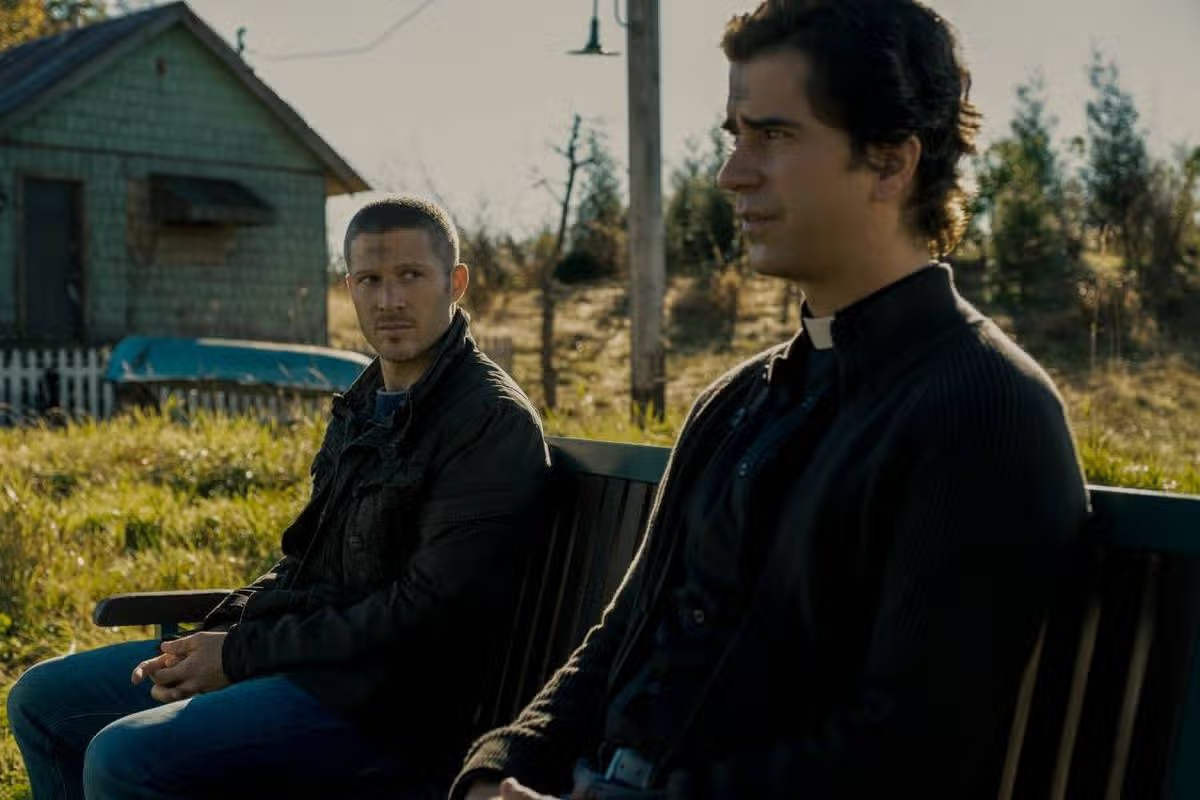
Midnight Mass
Next on Luke’s list is a “much more well-known” show, but one that seems to pass many people by. “Midnight Mass is one of the best shows you will ever see,” he declared.
Luke described the series as a “gripping horror” that follows life on a tiny island that sees a man return with a “special box” with something inside it that haunts an entire town. “I promise you will love it, so make sure you don’t miss this one out.”
Midnight Mass stars Kate Siegel, Zach Gilford and Hamish Linklater, with Netflix stating of the plot: “The arrival of a charismatic young priest brings glorious miracles, ominous mysteries and renewed religious fervor to a dying town desperate to believe.”
American Primeval
Luke described the last series on his list as a “brutal old-fashioned Western”, meanwhile. “It’s called American Primeval and follows a mother and son who have to flee their past across America in a haunting and desolate landscape.”
The critic closed by claiming that everyone he knows that has seen it “absolutely loved it”. He added: “So make sure you see this one right now.”
Netflix describes the drama: “A mother and son fleeing from their past form a found family while confronting a harsh landscape of freedom and cruelty in the American West.” The series stars Taylor Kitsch, Betty Gilpin and Dane DeHaan.
Responding to Luke’s suggestions, one viewer exclaimed: “Dept Q is brilliant! Can’t wait for season 2.”
A second person praised: “OMG American Primeval is 10/10.”
A third TikTok user added: “Midnight Mass is massively underrated.”
While a fourth agreed: “Midnight Mass is excellent, slightly slow burn the first couple episodes but stick with it and I promise you won’t be disappointed.”
Ensure our latest headlines always appear at the top of your Google Search by making us a Preferred Source. Click here to activate or add us as Preferred Source in your Google search settings.

Quaint seaside village with high street packed with independent shops is the perfect autumnal break
This charming seaside village is just as beautiful in autumn as it is in summer

This beachside town is the perfect spot for autumn(Image: UCG, UCG/Universal Images Group via Getty Images)
Summer may be behind us, but that’s no reason to abandon a trip to the seaside. While taking a dip in the sea might not be on the cards, the British coast still has a great deal to offer.
There’s one spot in particular that locals affectionately call ‘God’s pocket’, owing to its mild microclimate that brings warmer, sunnier weather than the surrounding towns. And even if it’s simply too chilly for a swim, this gorgeous location boasts a bustling high street brimming with independent shops, cafés and pubs.
That magical place is East Wittering, tucked away along the shores of the Manhood Peninsula in West Sussex.
Ensure our latest DWP headlines always appear at the top of your Google Search by making us a Preferred Source. Click here to activate or add us as Preferred Source in your Google search settings.
While it draws the crowds during summer, it’s equally as charming during the cooler months. Take a stroll along the pebbled beach and, at low tide, wander out across the exposed stretches of soft golden sand.
After soaking up the ocean views and breathing in the fresh sea air, head into town for a spot of exploring. Kick off your morning with a coffee from Ground, just a stone’s throw from the beach on Shore Street, before making your way to The Boulevard for a proper sit-down breakfast.
With a full stomach, you can throw yourself into some serious retail therapy. One of East Wittering’s greatest draws is its remarkable array of independent shops.
From vintage clothing and fashion at Let’s Go Back, to locally handcrafted art and jewellery at The Artisan Shoppe, there truly is something to suit every taste.
For those who love the great outdoors, there’s Wittering Surf Shop, while art enthusiasts can head to V. A Design Studios.
The latter is operated by local artist Victoria and stocks everything from large-scale paintings to hand-drawn cards.
Naturally, no weekend browse would be complete without a swift pint before heading home – and East Wittering has plenty of those too.
The Shore Inn is a firm favourite, tucked right beside the main beach entrance. It’s bustling, dog friendly and boasts outdoor seating if you fancy soaking up some of the early autumn sunshine.
There’s also regularly live music to enjoy while you sip on your drink.
Slightly further afield in West Wittering (roughly a 10 minute drive away) sits The Lamb Inn – an 18th century country pub brimming with character and featuring a gorgeous beer garden.
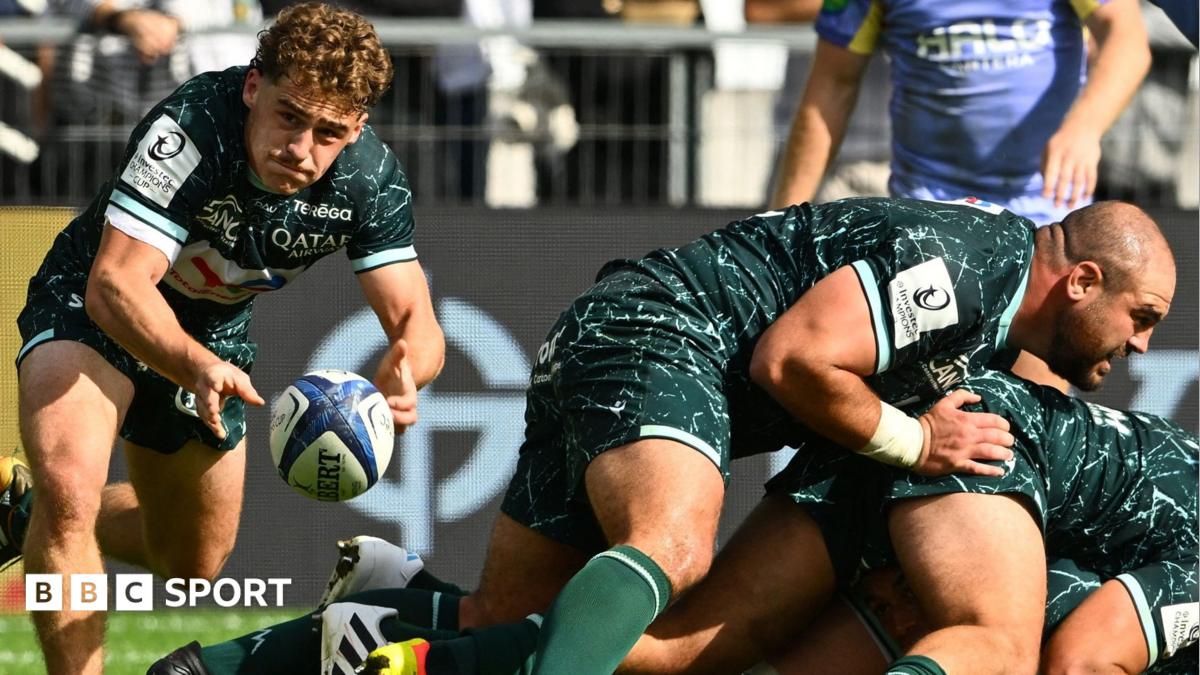
Champions Cup: Pau 41-17 Leicester Tigers – hosts gain bonus point in pool victory
Investec Champions Cup
Pau (17) 41
Tries: Marta 2, Zabala, Grandidier Nkanang, Brau-Boirie Cons: Desperes 5 Pens: Desperes 2
Leicester Tigers (10) 17
Tries: Chessum, Van der Flier Cons: Searle 2 Pen: Searle
Leicester Tigers began their Champions Cup campaign with a 41-17 defeat by French club Pau.
Portugal international Rodrigo Marta crossed for two of the home side’s five tries, with a late burst helping them earn a bonus point from their Pool One opener.
Despite falling behind to an early Pau penalty, Leicester did well in the early exchanges, their tactical kicking game keeping them camped in their opponents’ territory.
Billy Searle’s 50-22 put the Tigers in superb field position and they capitalised through captain Ollie Chessum, who was making his first appearance of the season after recovering from a foot injury.
Pau fought back well, however, showing their quality with three tries in a 20-minute spell either side of half-time.
They had already seen a Sacha Zegueur try ruled out for a knock-on before Marta, the leading try-scorer in this season’s Top 14 with six in five appearances, and prop Jon Zebala touched down late in the first half.
Centre Marta raced in again from 30 metres to extend Pau’s lead after the interval.
Archie van der Flier powered over in the corner to move Leicester back within seven points, but that would be the final time Leicester would be within range of a losing bonus point, as Pau scored 17 points without reply.
Fly-half Axel Desperes added a further penalty, Theo Attissogbe sent winger Aaron Grandidier Nkanang over unchallenged in the corner and Fabien Brau-Boirie intercepted a Leicester pass to complete the scoring.
Leicester’s remaining Pool One matches are against Clermont Auvergne, Glasgow Warriors and Leinster.

Sudan army accused of drone strike on livestock market | Sudan war
Sudan’s army says it struck RSF command centres in South Darfur, but the RSF and its allies say a crowded livestock market was hit. The UN says drone strikes are now the leading cause of civilian deaths in Sudan, as Al Jazeera’s Almigdad Alruhaid reports from Khartoum.
Published On 18 Oct 2026

Why have France’s school protests become a wider political crisis? | Protests News
Protests are sweeping France as anger over conditions in schools meets frustration with high living costs and a government accused of doing little to address problems facing people.
About 550,000 people demonstrated nationwide on Saturday, according to the Interior Ministry. Most marched peacefully, while a small minority attacked buildings, looted shops and clashed with police, who fired tear gas and charged protesters.
Recommended Stories
list of 4 itemsend of list
Prime Minister Sebastien Lecornu said 1,200 people were arrested and 150 police officers were injured. Behind the confrontations lies a political crisis, fuelled by anger at deteriorating services and overstretched household budgets, and compounded by a sense that France’s political institutions offer little hope of change.
Here is how school blockades became a nationwide movement – and what that means for President Emmanuel Macron.
How have the protests spread, what are protesters demanding?
The movement began last month in high schools in Paris’ working-class northern suburbs, where students protested against teacher shortages and poor facilities. School blockades and demonstrations later spread to cities including Bordeaux, Rennes, Nantes, Lyon, Lille and Marseille.
Saturday brought together students and trade unions, alongside supporters of the “yellow vest” movement that emerged in 2018 to challenge rising living costs and economic inequality.
Emile Chabal, a professor of contemporary history at the University of Edinburgh, told Al Jazeera the demonstrations were “the logical outcome of a series of protests” stretching back to the yellow vests.
That movement was driven by financial pressures and resentment at “the French presidential system”, he told Al Jazeera, alluding to a structure which often leads to the election of a centrist candidate, such as President Emmanuel Macron.
Saturday combined those longstanding grievances with students’ anger at deteriorating state schools. The yellow vests had demanded better public services.
Bringing students’ grievances together with wider social demands, therefore, represented “the worst possible outcome for the French government”, Chabal said.
Students’ immediate demands concern conditions in France’s lycees (public high schools), which generally educate pupils aged 15 to 18. They want smaller classes, enough teachers, better buildings and less exhausting timetables. Their complaints also reflect broader concerns about whether the state can provide the education and opportunities young people need.
But for workers, including school staff, the dispute also concerns wages and the resources available to deliver public services.
The school protests coincided with a nationwide public sector strike against the government’s budget plans. Bringing all these concerns together under one umbrella represented “the worst possible outcome for the French government”, Chabal said.
It comes as the proposed 2027 budget includes a 54 billion euro ($60.8bn) package of cost-cutting and tax measures, which the government says is necessary to reduce France’s deficit. The proposals include freezing the pay scale used to calculate civil servants’ basic salaries, which unions say would be the fourth consecutive annual freeze.
Donatella della Porta, a sociologist and political scientist, said students were inspiring wider mobilisation around inequality, cuts to public investment and democratic rights, with demands for social welfare spending rather than militarisation.
“They do not want to fight wars; they want a different future,” she told Al Jazeera.
She also linked the movement to young people’s mobilisation over Gaza, with Palestinian flags appearing at demonstrations across several European countries.
How has the government responded?
The government has focused its immediate response on public order, with President Macron saying those responsible for violence would be “prosecuted and punished”.
His comments came as a fire largely destroyed the historic town hall in the city of Limoges, while public buildings and shops were attacked elsewhere.
But those involved in violence represent only a small minority of the much larger mobilisation. Jean-Luc Melenchon, leader of the left-wing France Unbowed party, has accused the government of repressing school students and allowing the confrontation to intensify.
His argument reflects a wider political dispute about whether the government treats the protests chiefly as a security problem or addresses the grievances that have brought different groups together.
Experts say France’s problems extend beyond disagreement over individual budget measures and reflect deeper discontent. Emile Chabal, from the University of Edinburgh, said political paralysis since the 2024 parliamentary elections, which left no bloc with an outright majority, had created “an environment in which no political party or movement is able to channel social discontent”.
That fragmentation makes it difficult to build a durable agreement on spending, taxation or public services. It also leaves protesters questioning whether changing governments produces meaningful changes in policy.
The protests are also “a tough blow for Macron”, Chabal said, whose promises of youthful energy and a reformed, dynamic France have been undermined by “his inability to articulate his political project and his deeply unempathetic persona”.
Chabal added that the unrest included violence sometimes seen on the fringes of French demonstrations, with direct-action tactics associated with the yellow vests. Targets included shops and, more unusually, public buildings. He described the destruction of Limoges’ town hall as particularly significant because of its place in France’s civic history.
Other researchers emphasise the role of policing. Guya Accornero, a specialist in social movements at Lisbon’s University Institute, said previous confrontations had created lasting tensions between protesters and police.
During the current protests, a 15-year-old lost a hand to a police stun grenade, while a 14-year-old suffered a shattered jaw after being struck by a tear gas canister fired at close range, according to Human Rights Watch. The organisation condemned excessive force against children, saying the demonstrations had been overwhelmingly peaceful.
“Young people have been violently repressed also when using non-disruptive tactics,” she told Al Jazeera.
Who could benefit politically?
There is no clear answer from the experts who spoke to Al Jazeera. Paul Smith, an associate professor in French history and politics at the University of Nottingham, believes far-right leader Marine Le Pen stands to gain.
“I see only one beneficiary and that’s Le Pen,” he told Al Jazeera, suggesting the unrest could also damage Melenchon’s presidential prospects.
Chabal cautioned against assuming a far-right gain, but he said fear of disorder had historically benefited conservative or centrist parties in France, including after the 1968 protests.
Le Pen has not entirely dismissed the protesters’ grievances, describing them on X on Saturday as “legitimate social demands”, while claiming they had been “held hostage by the far left”.
The far-right may seek to reap the rewards of public discontent, but experts say it is more likely to channel that anger towards immigration and the scapegoating of migrants, rather than blaming the structures of neoliberalism and capitalism for the protesters’ woes, as Melenchon has suggested.
With a presidential election due in April 2027, candidates face competing pressures, demonstrating that they can restore order while convincing voters they will address the conditions behind the mobilisation.
The challenge, Chabal said, is how to create change in “an environment in which no political party or movement is able to channel social discontent”.

BBC Strictly fans think unlikely star now ‘frontrunner’ to beat favourites and win show
Despite other stars taking the top spot on the leaderboard, a lot of Strictly Come Dancing viewers think there’s other one ‘underrated’ star who could win the BBC show

Strictly fans think one ‘underrated’ star could win the show this year(Image: BBC)
Last night’s October 17 episode of Strictly Come Dancing was Icons Week, where the remaining couples paid tribute to musical icons. Viewers of the BBC show saw two couples top the leaderboard by both scoring 34 points. These were Love Island star Cach Mercer and partner Maddie Ingoldsby, who delivered a dapper Foxtrot that wowed the judges, earning 34 points (8, 9, 8, 9).
Actress Jaime Winstone, who was in the bottom two a few weeks ago, also was in the number one spot with her professional partner Carlos Gu after they performed an energetic, David Bowie-themed Paso Doble, scoring 34 points (8, 9, 8, 9).
Despite these two taking the top spot this week, a lot of Strictly viewers think there’s other one ‘underrated’ star who could snatch the glitterball from them.
Taking to X during the show, one fan wrote: “Tabby’s becoming one of my favourite contestants in this competition, she’s delivering in these dances and got potential winner written all over her.”
During last night’s show, British skeleton racer Tabby Stoecker and her professional partner Mark Karmalita scored a total of 29 points for their Samba.
This placed them in a three-way tie for 5th position on the leaderboard alongside Lacey Turner & Vito Coppola and John Nellis & Katya Jones.
Tabby, 25, has not topped the leaderboard outright in any week yet, but she came very close in Week 3 when she performed her Argentine Tango. She placed joint 2nd on the leaderboard with 31 points, just 2 points behind Delta Goodrem, who was awarded 33 points.
People seemed to agree with the original poster’s prediction, as the post racked up thousands of views and hundreds of likes.
One wrote: “Same, I had no idea who she was before strictly but she quickly became my fave celebrity I absolutely love her!”
While another added: “Tabby and Mark, I am obsessed!”
A third chimed in: “Oh, Tabby is that diva.”
While a fourth added: “Tabby is the underrated star of the series.”
However, not everyone agreed, as one person wrote: “Tabby, Cach, and Delta (if she comes back) are finalist material in my opinion.”
While another added: “Would love to see Tabby win but, I think Lacey (Turner) might beat her.”
Last night’s show saw Delta Goodrem was missing from the episode due to a painful rib injury. Under standard Strictly Come Dancing rules, she was granted a bye through to Week 5.
Doctors advised her to rest and recover, and both Delta and the BBC confirmed the expectation is that she will return to the dance floor next week, provided her recovery goes smoothly.
Her return plans were also confirmed by Delta’s professional dance partner Kai Widdrington when he appeared on Strictly companion show It Takes Two on Friday (October 16).
The Strictly Come Dancing Week 4 Results show is on tonight at 7:10 pm on BBC One and is all available to stream live or on-demand via BBC iPlayer.
Ensure our latest DWP headlines always appear at the top of your Google Search by making us a Preferred Source. Click here to activate or add us as Preferred Source in your Google search settings

Holiday airfares surge as airlines pass higher fuel costs to travelers (AAL:NASDAQ)

lucigerma/iStock via Getty Images
U.S. holiday airfares are heading toward their highest levels in at least a decade, according to travel-booking company Hopper, as airlines raise prices to offset escalating fuel expenses. Average domestic round-trip fares for Thanksgiving are running 31% above last year’s levels, while Christmas tickets are up

Hauntingly different Halloween at very unexpected place – ghosts, ghouls and thrills
Halloween at Kew is back for its third year and it’s even more spectacular than ever

Halloween at Kew
Kew Gardens – the world famous botanical garden nestled in West London is famed for its serene and tranquil atmosphere.
Nothing can beat whiling away the hours, meandering through the vast open space with some of the oldest, most impressive and most endangered plants, trees and flowers on the planet.
The calm that befalls people when they amble into the Palm House, soon to undergo an incredible multi-million transformation where every pane of glass will be replaced, or the Temperate House, should be bottled and sold – it would make the world a far nicer place.
However, as soon as October hits and darkness falls, Kew Gardens is transformed into a terrifying Halloween wonderland of ghouls, witches, Egyptian mummies, spectres and monsters – and it’s genuinely both awe-inspiring and a little bit terrifying.
The younger sibling of the botanical gardens Kew at Christmas, Halloween at Kew first burst onto the light trail scene two years ago and is so popular it’s definitely here to stay.
Running for two weeks until November 1, the trail is suitable for all ages and comes in three time slots – warning, I’m a fully grown adult and the later slot definitely sent shivers up my spine.
There are daylight sessions for little ones (or those not keen to be spooked) with the absolute bare minimum of scaries, a twilight slot between 6pm and 7.30pm where things are certainly getting a little spookier as the sun starts to disappear and the moonlight session from 7.30pm onwards, where everything is completely dark – and scarier.
Now, full disclaimer, I am an absolute wimp. I will not watch horror films because I get so frightened I start to cry and even cartoons have been known to make me jump.
With this in mind, one of the more intense Halloween experiences on offer around the country is definitely not something I want to be experiencing, but having been an avid fan of Christmas at Kew, there was no way I was passing up the chance to see what the brains behind the stunning light trails could cook up for Halloween – and it certainly didn’t disappoint.
From the very off it’s both magical and just the right side of spooky – a stunning tree, bedecked in ghoulish green lights with a real cloaked horseman (with his head I must say) guarding it, onto an enchanted tunnel of pumpkins and a witch cooking up spells in the front garden of a cottage in the woods.
Next up is the Egyptian section. You are warned before entering – this light trail is very interactive – things could get a little spooky. A mummy (don’t worry, yhey don’t touch you) growls at walkers as they make their way through. Even though I knew this wasn’t real, I have to confess I jumped about six feet in the air when he popped up.
What makes Kew at Halloween so spookily magical isn’t just the huge array of lights, concepts and scary scenes before you… it’s also the music and soundtrack as you walk through the black as night garden.
From ghostly moans, to creaking doors in grave yards, to a sinister and chilling sound track as you move through woodland filled with chilling cloaked figures, you really feel totally immersed in the whole experience.
From vampires putting on shows, the pumpkin patches with a real life dancing Mr Pumpkin head and haunted tractors, from giant disco skeletons (these have to be seen to be believed) to pagan gods lining the walkways, there really is nothing that hasn’t been thought of and whoever dreamt this up is an absolute genius.
We took part in the moonlight walk and there were many moments where I was genuinely unsettled and at times really frightened. If you’re parents to younger children – and there were a few on the walk in our time slot – I would recommend taking them to an earlier one. There were plenty of tears in the pitch black spooky world.
But this really is a family friendly experience. The interactive characters along the way add enormously to the fun and there are plenty of places to stop for food, a hot chocolate, or to toast marshmallows (and even something stronger if you feel your nerves need it).
So, yes, Kew is already a magical place in daylight hours, make sure you run don’t walk to get your tickets for Halloween at Kew to see this incredible offering after dark.
Tickets for Halloween at Kew start at £19.50 and family tickets are available.

The 8 UK holiday parks opening for Christmas this year and you can stay for just £6.62pp a night
SANTA VISITS, festive pantomimes, bauble making and parties every day – these holiday parks offer the ultimate Christmas experience without the price tag.
Parkdean is opening a number of its resorts over the festive season and a whole family can stay for less than £150.
Parkdean Resorts has officially opened its bookings for Christmas with festive getaways available across eight UK holiday parks.
These are:
- Camber Sands Holiday Park, Sussex
- Cayton Bay Holiday Park, Yorkshire
- Vauxhall Holiday Park, Great Yarmouth
- Trecco Bay Holiday Park, Wales
- Ty Mawr Holiday Park, Wales
- Warmwell Holiday Park, Dorset
- White Cross Bay Holiday Park, Lake District (limited activities)
- Fallbarrow Holiday Park, Lake District (accommodation only)
Each of the holiday parks will be open throughout December including Christmas and the New Year with a whole host of activities.


Winter Wonderland which will have over 30 Christmassy activities is available at Camber Sands, Cayton Bay, Trecco Bay, Ty Mawr, Warmwell and Vauxhall.
White Cross Bay and Fallbarrow will be open during the festive period – but these won’t hold the Winter Wonderland programme.
But for the ones that choose to enjoy Winter Wonderland, the events vary from park-to-park and some will have Search for Santa where youngsters are invited to help the elves find Santa with clues and songs.
There will be creative activities too like bauble and Christmas card making as well as festive pot painting.
Family-friendly pantomime performances will take to the stage with some famous faces like Jenny Ryan from The Chase.
There will be ice skating, Christmas parties and sing-alongs – for those there on Christmas Eve, there will be a special show to countdown to the big day.

Along with the Christmas activities, the holiday parks will also have their usual offerings like swimming, adventure activities and live entertainment.
One writer visited the Vauxhall holiday park in Great Yarmouth which recently underwent a £5million makeover.
Here, he watched entertainment like a knife-throwing magician, a Taylor Swift tribute act, karaoke, bingo and stand-up comedy.
Other activities at Vauxhall include the high and low ropes course, Bear Grylls escape rooms, an inflatable bounce park, a swimming-pool obstacle course, pottery painting, off-road rangers and an adventure playground.
He added: “We’ve taken our children to Dubai, Turkey, the Netherlands and Disneyland, to name a few — but they feel they’ve hit the jackpot on this quintessential Great British caravan-park holiday here in Norfolk.”
A four-night stay at Vauxhall holiday park from December 7 in a Sandpiper/Buzzard Apartment which sleeps up to six starts from £159 – or £6.62pppn.
If you want to stay for five-nights from December 23 in a Goose Apartment which sleeps four, this starts from £599 or £29.95pppn.
Trecco Bay in Porthcawl is the UK’s largest holiday park which has over 2,000 lodges and caravans.
It has Pirate Crazy Golf, a high ropes course, splash pad, archery, hoover boards and bumper zorbs.
There’s also a bowling alley and the Next Level Gaming Arena which has over 25 consoles including PS5 and Xbox.
Four-night breaks from December 14 in a Bronze Caravan which sleeps up to six starts from £159 – or £6.62pppn.
The six holiday parks with the Winter Wonderland programme have all-inclusive add-ons on certain dates, so there won’t be hidden surprises.
It includes three meals a day which are served directly to the table so there are no queues either – there’s also unlimited drinks and Costa Coffee.
This starts from £100 per adult and £40 per child (under 12) per break.
Anthony Reilly, Marketing Director at Parkdean Resorts, said: “We know that the festive period can be a stressful time for families looking to plan a getaway that’s great value, feel-good and has something for everyone.
“That’s why we’re so excited to bring back festive breaks, bigger and better than ever. Booking early means families can relax knowing they have secured their festive tradition for 2026, leaving the Christmas stress behind – and start unwrapping the excitement now.”

House Speaker Mike Johnson draws on faith as he fights to hold the Republican majority
BANGOR, Maine — Ever the optimist, Speaker Mike Johnson said he believes Republicans will hold on to their U.S. House majority, defying a surge of Democratic momentum in the final stretch of the midterm elections that will determine control of Congress.
It’s the crowds he says he’s seeing as he crosses the country campaigning for GOP candidates. The caliber of recruits and incumbents he calls workhorses, not show horses. And the nearly half a billion he has raised for House Republicans.
He also has faith.
“We run to win, and that’s biblical: You run to win,” he told the Associated Press during a campaign stop in Maine.
“And I believe that we will.”

House Speaker Mike Johnson, right, applauds along with President JD Vance as President Trump delivers his State of the Union address during a joint session of Congress in February in Washington.
(Andrew Harnik / Getty Images)
The speaker of the House is one of the most consequential elected officials in the United States, second in line of succession to the president. While Johnson quipped to Fox News recently that he may return to his hometown of Shreveport, La., to start a lawn care business if Republicans lose power on Nov. 3, he fully expects to buck an American midterm tradition that often sees the president’s party dumped in Congress.
It can be said that Johnson, who has drawn so close to President Trump that he routinely fields 1 a.m. calls — they spoke the night before as Trump rallied in Alaska — walks on the sunny side of the street. That’s despite voter frustration over high prices and the Iran war, and his own challenge of leading one of narrowest House majorities in modern times.
In his three years as speaker, Johnson has pushed past the doubters and naysayers, holding his thread-thin GOP majority together to deliver Trump’s agenda. He notably led passage of the big tax breaks and social service cuts bill. Most days he does not have a single vote to spare.
“So many times everybody had written off, there was no way he was going to be able to pull off a particular vote,” said Republican Rep. Mark Harris of North Carolina, who joined the speaker on the campaign swing. “Yet he always seems to pull out the win in the end.”
In the interview, Johnson did not speak brashly about expanding the House majority on election day, as he has in the past. But on track to visit more than 20 states and 40 congressional districts though November, he said the political mood reminds him of the 2024 election that swept Republicans to control of Congress and the White House.
“It’s not going to be a giant majority,” he said. “But I genuinely believe that we will have a working majority.”
Emboldened by Trump
Johnson first fell into the speaker’s job almost by accident, a desperate choice by his GOP colleagues after a contingent of renegade Republicans ousted his predecessor, then-Rep. Kevin McCarthy of California in 2023.
Johnson had been a lower-level member of House leadership, but distinguished himself before the Jan. 6, 2021, attack on the Capitol by organizing support for Trump’s false claims of widespread fraud in the election that he lost to Democrat Joe Biden.
In the time since, Johnson has secured proximity to Trump’s power. He joined Trump at a UFC fight in New York and once gifted the president a speaker’s gavel as Trump signed the “One Big Beautiful Bill” into law. It was a symbolic act, but one that critics saw as giving away the authority of a coequal branch of government.
More recently, Johnson abruptly sent lawmakers home early rather than face a vote forced by Republican Rep. Thomas Massie of Kentucky to impeach Defense Secretary Pete Hegseth as lawmakers tried to halt the Iran war, which has not been authorized by Congress.
Over coffee in Bangor, after rallying for House candidate Paul LePage, a former governor, Johnson brushed back criticism that Congress has eroded under his watch as Trump works to amass executive power.
“Absolute nonsense,” Johnson said.
“We did not yield Article 1 authority to the president,” he said, referring to the powers spelled out in the Constitution. “We used our own,” he said, to muscle GOP priorities past Democratic opposition.
Trump agenda at risk
Johnson has focused the election on Democrats he portrays as “communists.” A handful of far-left liberals, backed by the Democratic Socialists of America, are on the ballot.
Rep. Hakeem Jeffries of New York, the House Democratic leader who is in line for the speaker’s gavel if his party sweeps to power, is preparing a first-100 days agenda for when the new Congress convenes in January, if there is a change in control.
What the Republicans will do if they retain power is less defined.
“Lots of plans,” Johnson said, “along the same course of what we’ve been doing — less taxes, less regulation.”
Trump “wants to go big for his legacy,” he said. “We have big things on the horizon that we can do.”
The president has essentially purged the House GOP ranks of those perceived to be disloyal. Among them are Massie, who lost his primary, and Marjorie Taylor Greene of Georgia, who retired early after breaking with Trump over release of the Jeffrey Epstein files.
Pressed how he would keep Republicans in line, Johnson said he is preparing to change the House rules if he returns as speaker.
“There’s going to be some changes that are going to make the machinery work smoother,” he said.
Praying for the speaker, and the country
Faith has often been strong among House leaders. Two former speakers, Nancy Pelosi and Newt Gingrich are Catholics, as is John Boehner, who invited Pope Francis to address Congress.
Johnson, a former constitutional lawyer who was first elected alongside Trump in 2016, is expected to win his own reelection next month.
“My faith is a huge component of how I think and how I act and what I do,” said Johnson, who led a public prayer on the National Mall as part of the nation’s 250th anniversary.
He is drinking lots of coffee these days, he said, cutting back on the Celsius, and still has 1,413 unread text messages, a slight dip from the frightful number reported a few months ago by the Wall Street Journal.
One text is from someone praying for him.
Johnson said he is grateful for the outpouring of prayers he receives, for him and the country.
“I pray for God’s will. And I believe God’s will is for us — and not the communists — to be in charge of America,” Johnson said.
“And it does say in the New Testament, you run the race to win,” he said, citing 1 Corinthians 9:24. “This is a biblical admonition. So we will.”
Mascaro writes for the Associated Press.

Joe Hillman starred at Hoover; then played for Bob Knight
It was 41 years ago in April of 1987 as a 28-year-old sportswriter that I was given one of my favorite assignments.
From LAX, I flew to Indianapolis, rented a car and drove one hour to Bloomington, Ind., home of the NCAA basketball champion Indiana Hoosiers. My most vivid memory was nervously driving on Route 37 with no GPS guiding me and seeing the many varieties of basketball hoops hanging on farm houses and family homes, providing powerful evidence that all the stereotypes about the state’s love for basketball were true.
This was months after the best selling book, “A Season on the Brink,” was published. And a month after coach Bob Knight and Indiana won their fifth NCAA basketball championship.
My assignment was to check in with Glendale native Joe Hillman, a 1984 Hoover High graduate who was Knight’s first recruit from west of the Mississippi River. Hillman averaged 41.3 points his senior year at Hoover He ended up being a reserve guard behind Steve Alford and Keith Smart on the 1987 NCAA championship team, so it was perfect timing.
He also continued to play baseball and was a 25th-round draft pick of the Oakland Athletics in 1986.
Fast forward to Tuesday at the YMCA in La Cañada Flintridge. The guest speaker for the Glendale Quarterback Club was Hillman. It was the first time seeing him since my trip to Indiana. Now 60 and living outside of Indianapolis, Hillman was asked tough questions.

1984 All-CIF basketball team.
(1984 Foundation)
Can you still hit?
“I can still do that.”
Can you still make free throws?
“I don’t know about that.”
How come you never went into coaching?
“I wouldn’t have been patient enough.”
How did Knight convince you to go to Indiana?
“We don’t have this in Indiana,” Knight told him during a visit to Santa Anita while looking out at the San Gabriel Mountains. “Why would a California kid come to Indiana?”
Hillman: “I want to play on a national championship team.”
Any Knight stories to tell?
“I don’t know if you can put them in a paper.”
Years later, when talking to other players, Hillman said, “There was a method to his madness. They all had the same stories with different names.”

Indiana’s Daryl Thomas (24) and Joe Hillman (44) victorious during interview with CBS announcers Billy Packer (L) and Brent Musberger (R) in 1987.
(Manny Millan/Sports Illustrated via Getty Imaages)
Among the Knight truths: Players who practiced best always got to play. The best players always got the most heat from him. Anyone who graduated from Indiana received his total loyalty.
Hillman remembers calling Knight eight years after graduation seeking a phone number to reach a Reebok executive to inquire about a job. Knight ended up telling the executive he’d drop Adidas shoe contract for Reebok if Hillman were hired. Hillman didn’t get the job but learned what Knight would do for any player who got his degree.
“He was the most honest, most blunt coach,” Hillman said.
Asked why he chose to be subjected to such harsh criticism for four years, Hillman said, “My father was on me from the time of T-ball. He said constructive criticism was good.”
Comparing today’s college sports environment of NIL deals with the 1980s, Hillman said, “It would have been scary what kind of money we could have gotten.”
Hillman expressed disappointment at the lack of multiple-sport athletes today in high school sports. He said even Knight appreciated and supported his option to keep playing baseball.
Looking back on that trip from 1987, I re-read my observations: “The four-lane highway that stretches from Indianapolis to Bloomington is virtually deserted as darkness begins to descend over the lush, green countryside. The temperature is in the 50s, and the sky is overcast after three straight days of damp weather. The picturesque Midwestern landscape is immaculate, but equally alluring are the distinctive basketball hoops found among the farms and family homes along Route 37. Hoops are everywhere — on barns, rooftops, telephone poles, even next to power transformers.”
I remember getting lost in a forest trying to find where Hillman was living in a townhouse.
I wrote: “After finding the correct street, the quickest way to locate an Indiana basketball player’s residence is to ask a young fan. Shooting baskets by himself on a court not far away was a 12-year-old.
“Do you know where Joe Hillman lives?”
“Sure,” the youngster says.
Those were the days.

Is FIFA scrapping its peace prize after awarding it to US President Trump? | Football
Remember the FIFA Peace Prize awarded to United States President Donald Trump six months before the World Cup? Well, it is now close to being scrapped, which would make the US president its first and only winner.
Less than a year after FIFA President Gianni Infantino extolled Trump in the US capital while presenting the award at the World Cup 2026 draw, several members of the FIFA Council are questioning its merit and have demanded changes, including scrapping the award.
Recommended Stories
list of 3 itemsend of list
The calls for scrutiny come at a time when Infantino faces ongoing criticism for his World Cup sell-off plan, which also led to calls for his removal from office.
So what was the prize about, and why might it be scrapped? Here’s a look:
What is the FIFA Peace Prize?
On November 5, football’s global governing body announced a new annual award called the “FIFA Peace Prize – Football Unites the World”.
FIFA said the award was created to “reward individuals who have taken exceptional and extraordinary actions for peace”.
Why did Trump receive the FIFA Peace Prize?
A month later, Trump became the first recipient of the award.
The US leader had been heavily favoured to win the inaugural prize after failing to win the Nobel Peace Prize despite an aggressive campaign involving endorsements from other world leaders.
Trump thanked FIFA and called the award “one of the great honours of my life”.
He and Infantino are close allies, and the FIFA chief had made it clear that he thought Trump should have won the Nobel Peace Prize for his efforts to broker a ceasefire in Israel’s genocidal war on Gaza.
“This is your prize. This is your peace prize,” Infantino said at the glitzy, celebrity-studded ceremony at Washington, DC’s Kennedy Center.
Infantino has repeatedly spoken about football as a unifier for the world, but the prize is a departure from the federation’s traditional focus on sport.
Critics pointed out that the recognition came less than 24 hours after the Trump administration carried out a deadly air strike in the Caribbean.
Two months later, the US and Israel launched their war on Iran, assassinating Supreme Leader Ali Khamenei in Tehran and hitting nuclear and military sites around the country.
The US-Israel war on Iran has gone on for months with Trump saying this week that he will not attack Iran again before the November 3 midterm elections in the US.
Why might FIFA scrap the award?
Several FIFA member nations demanded the discontinuation of the award during Thursday’s FIFA Council meeting in Zurich, Switzerland, according to reports in British media.
Others called for the prize to no longer be handed out to politicians.
As a result, FIFA’s 22-member Football Social Responsibility Committee was tasked with assessing the merits of the award. It is expected to make a recommendation before the next council meeting in Doha, Qatar, on December 16.
Debbie Hewitt, a FIFA vice president and president of the English Football Association, told the media at the council briefing that the committee “will consider, first of all, how the peace prize came about, whether it should have come about, whether it should have been awarded in the way that it was, who made that decision and whether or not it should be taken out or whether it should be reformed”.
What has FIFA said?
Al Jazeera has reached out to FIFA for comment and was referred to Infantino’s statement on it: “For the FIFA Peace Prize, it was decided that the Football Social Responsibility Committee will be tasked to analyse it, provide a proposal, and also, there, a decision will be taken at the next FIFA Council meeting.”
Has the FIFA Peace Prize faced opposition?
Yes.
In October, the Norwegian Football Association (NFF) made parallel filings with FIFA committees in relation to three recent issues, one of which was related to the awarding of the FIFA Peace Prize.
“The purpose is to raise these issues formally with the appropriate bodies, to have them examined, relevant evidence obtained and accountability for the conclusions reached,” the NFF said in a statement.
The NFF has repeatedly raised questions about the award, and in April, its president, Lise Klaveness, said FIFA should scrap its peace prize to avoid getting drawn into politics.
“We want to see it abolished. We don’t think it’s part of FIFA’s mandate to give such a prize. We think we have a Nobel institute that does that job independently already,” Klaveness said.
Earlier, human rights group FairSquare filed a complaint with the FIFA Ethics Committee, accusing Infantino of breaching his duty of neutrality by supporting Trump.

‘Mockery’ of FIFA human rights policy
The criticism of the award isn’t limited to football associations.
In late April, Australia midfielder Jackson Irvine said football’s credibility as a force for good has been undermined by FIFA, and he accused FIFA of making a mockery of its human rights policy.
“As an organisation, you would have to say decisions like the one that we saw awarding this peace prize makes a mockery of what they’re trying to do with the human rights charter and trying to use football as a global driving force for good and positive change in the world,” Irvine told the Reuters news agency in an interview.
“Decisions like that feel like they just set us back in the perceived market of what football currently is, especially at the top level, where it’s becoming so disconnected from society and the grassroots of what the game actually is and means in our communities and in the world.”
Craig Mokhiber, a former United Nations official who has campaigned to suspend Israel from world football over its genocidal war in Gaza, called the award to Trump a “truly shameful development”.
Infantino has refused to take action against Israel, arguing that football “cannot solve geopolitical” issues.
“Not satisfied with two years of FIFA complicity in genocide in Palestine, Infantino and his cronies have now invented a new ‘peace prize’ in order to curry favour with Donald Trump,” Mokhiber told Al Jazeera.
He added that the award also aims to “obscure” Trump’s “disgraceful record” of support for Israel, his deadly strikes on vessels in the Caribbean Sea and “gross violations of human rights” inside the US.
Growing pressure on Infantino
The scrutiny around the FIFA Peace Prize follows the recent backlash Infantino has faced.
Infantino has been under fire since his announcement in late July that he wanted to open FIFA’s premium competitions, such as the World Cup, to private investors.
That plan was ultimately abandoned in the face of widespread criticism with a rebellion led by the European governing body UEFA, the Asian Football Confederation and CONCACAF, which runs the sport in North and Central America and the Caribbean.
Infantino has headed FIFA since 2016 and is running for re-election in March despite calls for him to stand down in the wake of the $4.2bn plan to sell a 20 per cent commercial stake in the World Cup.