


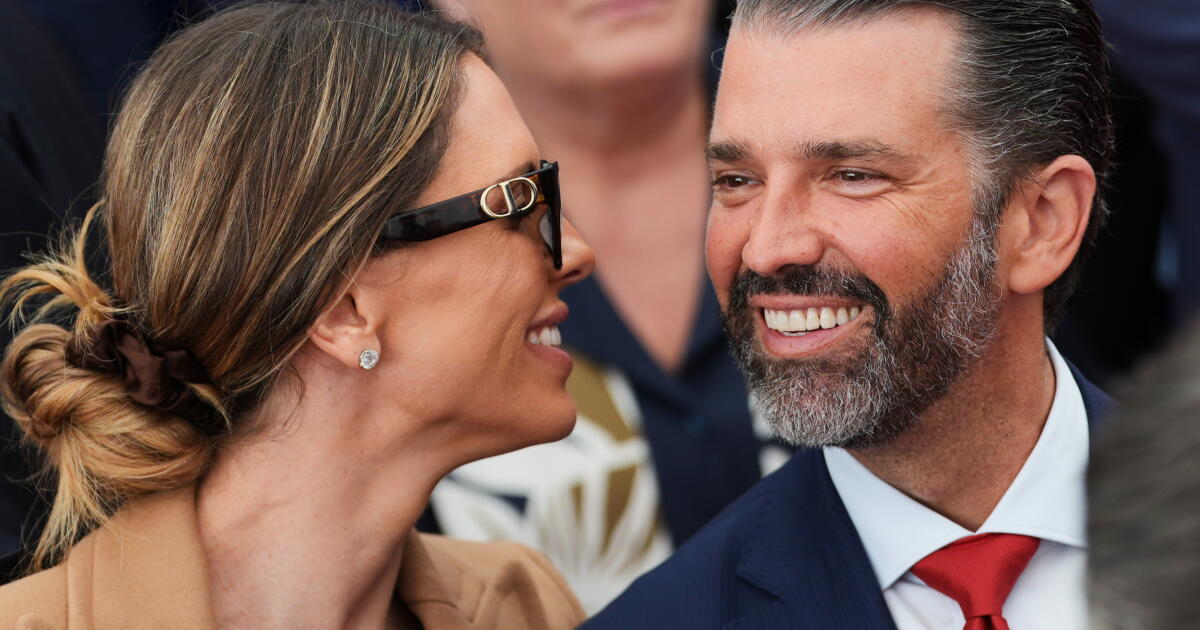
GOP Sen. John Curtis calls for probe of Trump Jr. after wedding party bankrolled by Russian oligarch
WASHINGTON — Republican Sen. John Curtis of Utah is calling on the Senate Judiciary Committee to investigate whether Donald Trump Jr. used his proximity to the presidency for financial benefit, after his recent wedding party was partially bankrolled by a Russian oligarch.
In a letter sent Tuesday, Curtis called on the committee to subpoena Trump Jr. over his business dealings, relationships with foreign individuals and entities, gifts or other benefits he has received and any instances in which his relationship to President Trump, a Republican, “was invoked or understood to provide value.” Curtis called for the same scrutiny of Hunter Biden, the son of former President Joe Biden, a Democrat.
“The country should not have to accept one standard for the family of a Republican president and another for the family of a Democratic president,” Curtis wrote in the letter addressed to GOP Sen. Chuck Grassley of Iowa, chairman of the committee, and Sen. Dick Durbin of Illinois, the top Democrat on the committee.
The letter comes as a few Republicans have shown a growing willingness to criticize Trump after largely avoiding public breaks with the president during much of his second term. The unpopular war in Iran, high gas prices and mounting concerns about the GOP’s prospects in November’s midterm elections have brought increased scrutiny of the president from within his own party.
The Trumps say it was a generous gift from a dear friend
ProPublica first reported last week that Umar Kremlev, who has close ties to Russian President Vladimir Putin, helped pay to rent a private island and for a fireworks show when Trump Jr. and socialite Bettina Anderson were married in the Bahamas in May.
In a subsequent post on her Instagram page signed by the couple, Bettina Trump wrote that Kremlev, head of the International Boxing Association, was a “dear friend” who “very generously hosted two incredible nights of celebrations for us AFTER our wedding.”
The president, who did not attend his son’s wedding, defended Kremlev’s involvement but said the money would be paid back.
Curtis calls the funding ‘corruption’
Curtis, first elected to the Senate in 2024, vowed upon taking office not to shy away from disagreeing with Trump. He has publicly broken with the president several times since, including rejecting Trump’s calls to eliminate the Senate filibuster. In a July Wall Street Journal op-ed, Curtis wrote that “under no circumstance” would he support efforts to end or alter the filibuster, which requires 60 votes to advance most legislation in the 100-member chamber.
Curtis’ criticism involving Trump’s son goes beyond those policy disagreements. Curtis last Friday called the gift “corruption” and vowed to say more in the coming days.
“A Russian oligarch paid for a lavish wedding after-party for Donald Trump Jr., which to me just stinks. It’s corruption. I don’t like it,” Curtis said in a video posted on social media.
On Tuesday, Curtis wrote on social media that Republicans “nearly wore out the subpoena machine investigating Hunter Biden’s foreign relationships” and that they “should not unplug it now.”
Any congressional committee can launch an investigation at any time. In 2017, Grassley led a Senate Judiciary Committee investigation of the Trump campaign’s ties to Russia, including a meeting that Trump Jr. held with Russians in 2016. The panel has also conducted multiple investigations of Hunter Biden.
Clare Slattery, a spokesperson for the Senate Judiciary Committee, confirmed that the committee had received Curtis’ letter but indicated that a hearing before the end of the year would be difficult, citing the limited Senate schedule and the amount of time it takes to prepare for an investigative hearing. She did not say whether the committee will investigate.
Republicans investigated the Bidens
Grassley worked alongside House Republicans in 2023 and 2024 to investigate whether Hunter Biden used his father’s name and political position to benefit his business dealings with foreign interests. The Biden family dismissed the investigations as politically motivated and denied any wrongdoing.
The GOP effort culminated in a report accusing Joe Biden of participating in a conspiracy to use his public office to enrich his family. But the House never voted on articles of impeachment against him.
“‘Trust us’ was not enough then, and it is not enough now,” Curtis wrote.
Democrats have foreshadowed plans to investigate Trump and his family if they win control of Congress in November, with particular scrutiny on the family’s financial interests. Rep. Robert Garcia, the top Democrat on the House Oversight Committee, said in a statement that the revelations surrounding Trump Jr.’s wedding “may be the most serious allegation against you to date.”
Cappelletti and Jalonick write for the Associated Press.
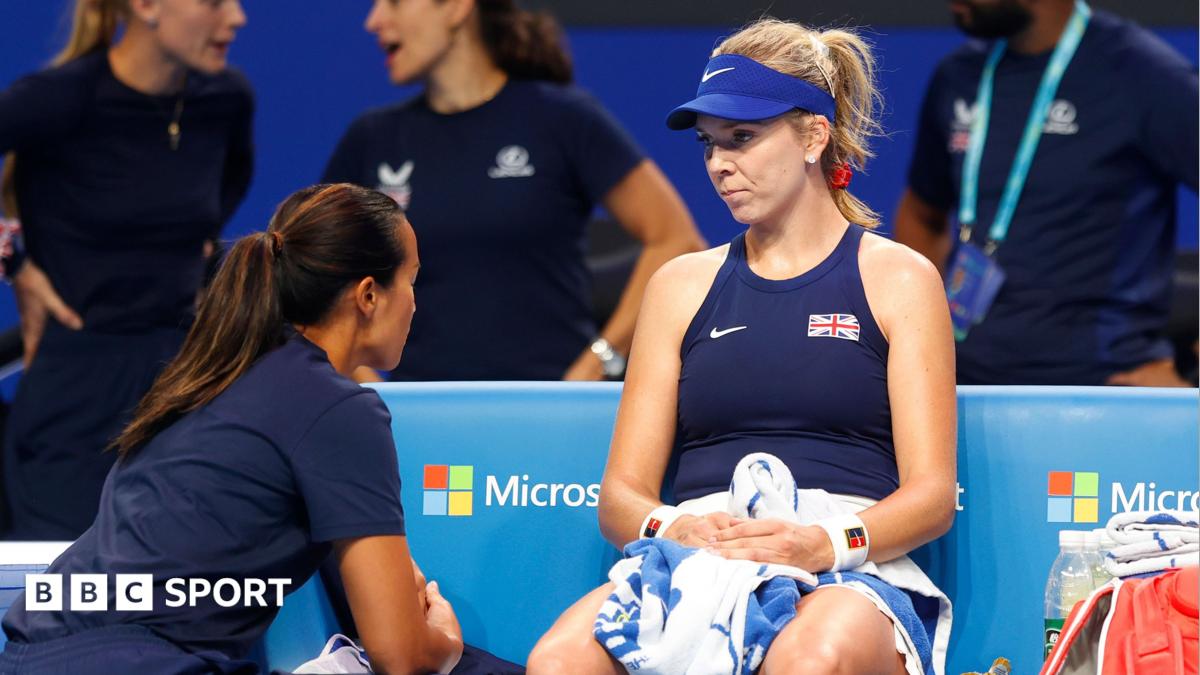
Billie Jean King Cup 2026: Great Britain out as Sonay Kartal and Katie Boulter lose to Czech Republic
Sonay Kartal and Katie Boulter lost their respective singles matches as Great Britain were beaten by a strong Czech Republic side in the Billie Jean King Cup quarter-finals.
Anne Keothavong’s team headed into the tie as underdogs, with all five Czech players placed higher in the singles rankings than any of the British squad.
Sonay Kartal produced a gritty performance as she returned to tennis after six months out with a lower back injury, but fell to a narrow 7-6 (7-2) 4-6 6-4 defeat in a marathon three-hour encounter with Marie Bouzkova.
Boulter could do little to get Britain back into the best-of-three tie as she was outplayed 6-2 7-6 (7-3) by Wimbledon champion Linda Noskova.
It was a second successive loss for Boulter at the hands of a Czech player, coming just three weeks after a 58-minute demolition by Karolina Muchova at the US Open.
It is the first time since 2023 that Britain have failed to reach the semi-finals at the Billie Jean King Cup and their wait for a maiden title will go on for another year.
The Czech Republic, who are 11-time winners of the tournament and the only team boasting two top-10 players at the Finals, will face either Kazakhstan or Spain in Friday’s semi-finals.
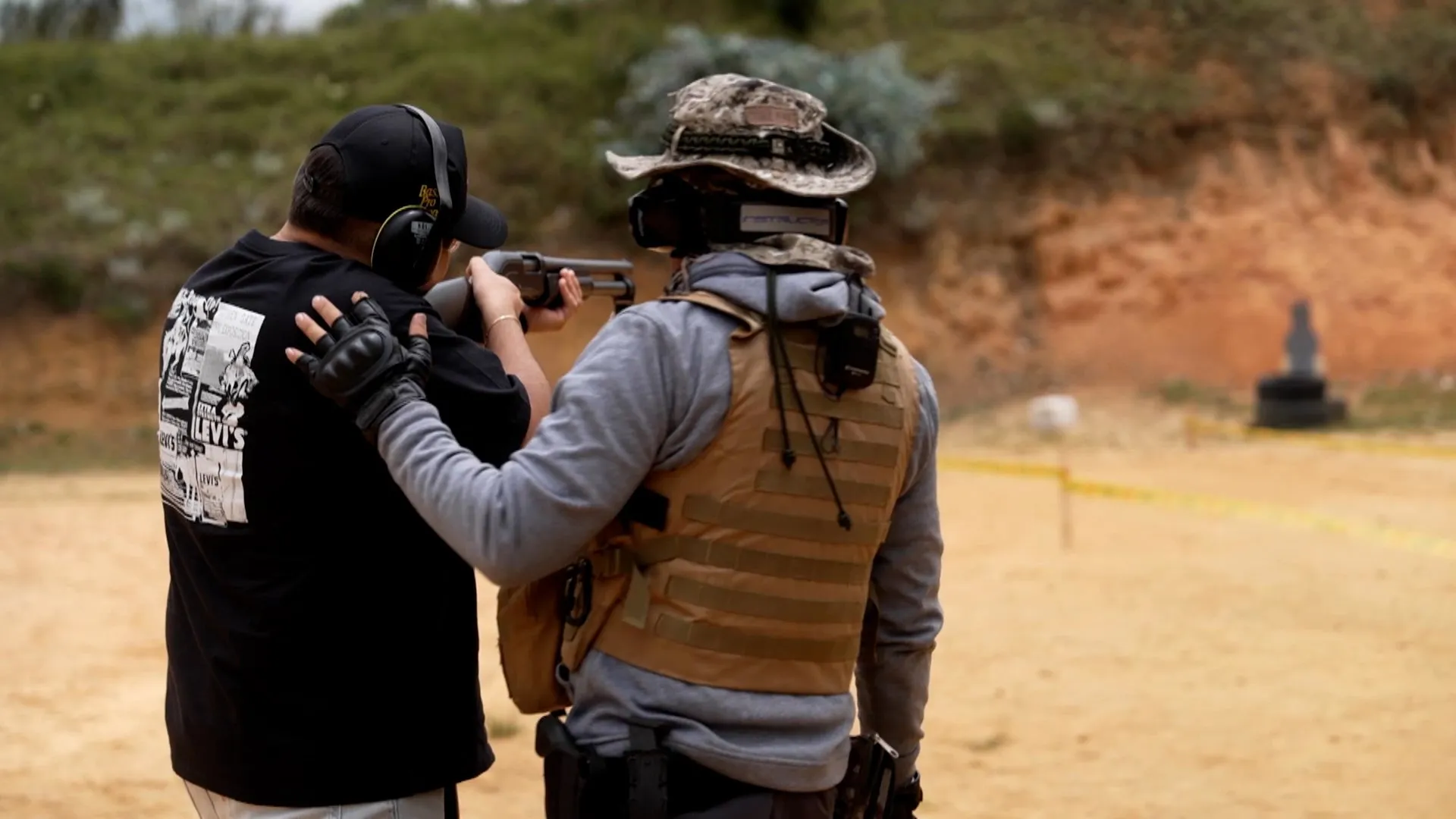
Colombia eases gun restrictions despite fears of more violence | Crime
Colombia has loosened gun laws after more than a decade of restrictions. The government says it will help people protect themselves, but some fear it will lead to an increase in even more violence.
Published On 22 Sep 2026

Brits WON’T get compensation after second major airport outage grounds thousands of flights
TWO major tech outage have caused hundreds of flight cancellations and delays across the UK this month – yet Brits will struggle to get any compensation, according to experts.
Earlier this month a major Air Traffic Control failure in the UK resulted in thousands of flights cancelled across the globe.
And another failure yesterday caused more than 200 flight cancellations and widespread delays.
With the two incidents less than two weeks apart, many travellers have been left out of pocket.
Travellers are now wondering if they can claim compensation back for their delayed or cancelled flight.
Unfortunately, it’s bad news – the NATS issue was classed as an “extraordinary circumstance” which means travellers are not entitled to cash compensation.
Read more on travel inspo


The Civil Aviation Authority said that passengers are “unlikely to be entitled to compensation”.
The maximum compensation you can get is for long-haul flights which are delayed four hours or more, which would be £520.
This is only for when the problems are caused by the airline, directly, however.
Lisa Minot, Head of Travel previously said: “Airlines are only required to give you compensation if the delay or cancellation is the airline’s fault, as in a technical failure on a plane or issues with crew.

“In this situation, where ATC is the reason for the chaos, there is unfortunately no compensation due.”
But one thing you should note is that airlines have a duty of care.
This means that when you flight is delayed, they must provide you with food, drink and accommodation.
Sometimes the airline might provide you with a voucher, but if this isn’t provided you can keep your receipts to claim back any expenses.
Often airlines will automatically book you accommodation, but you may also be asked to book accommodation yourself through its website or a dedicated app.
Travellers are advised to always check with airport staff though before booking any hotel yourself.
And make sure to keep your receipts for your hotel as well, to claim back your costs.
Don’t book anything lavish though – airlines will usually only cover a hotel at a reasonable price.
Airlines will usually have a dedicated expenses claims page for you to fill out on its website.
The CAA also recommends asking for an itemised receipt to show what you purchased and how much was spent on each thing.
Lisa added: “Check your insurance policy to see if you have any redress if you have incurred additional costs like missing a concert or unable to pick up car hire. You may be able to claim for that.
“Generally for delays, if an airline looks after you or provides you with food and drink or hotels, you cannot claim for the same costs against your travel insurance.”
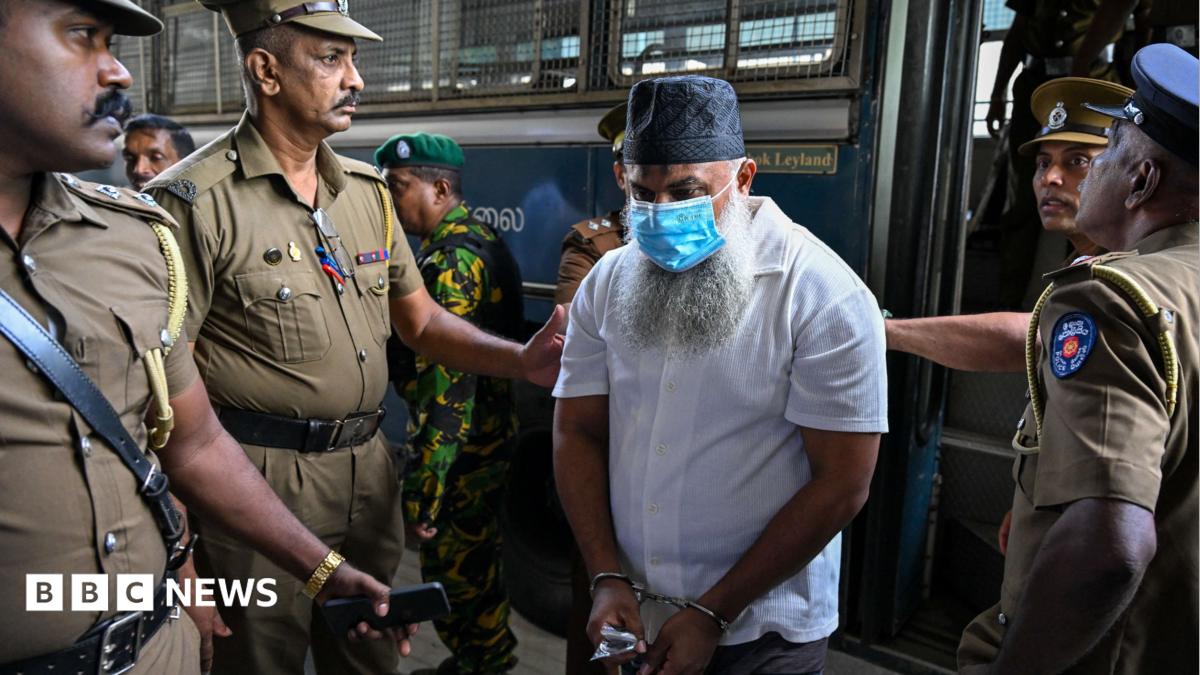
Sri Lanka Easter attacks: Court finds 15 guilty over deadly bombings
Sri Lanka’s High Court has convicted 15 men who had been charged with plotting the 2019 Easter Sunday bomb attacks that killed 270 people and injured more than 500.
Those found guilty include Naufer Moulavi, who prosecutors said masterminded the suicide bombings. Nine other men were acquitted.
The co-ordinated blasts at three churches and three luxury hotels were the deadliest in Sri Lanka since the end of its civil war in 2009. Forty-five foreigners were among the dead.
All the bombers who carried out the attacks died in the blasts. Investigators have previously blamed the bombings on Islamist extremists, and the 25 men indicted were from Sri Lanka’s Muslim minority. One died in custody.
The accused had been charged with more than 23,000 offences, including murder, conspiracy to commit terrorism and possessing firearms.
More than 2,300 people gave evidence for the prosecution.
There were also 2,076 pieces of evidence, including explosives, swords and firearms.
In the wake of the attacks, Sri Lankan authorities pointed to a “major intelligence lapse”. Its parliament heard that a tip-off from India about the attacks was not properly shared with the authorities.
In 2023, the Supreme Court ordered former president Maithripala Sirisena to pay millions in compensation to the victims of the bombings, after finding him responsible for national security failures that led to the attacks.
Last month, two former senior officials were sentenced to death for criminal negligence that led to the bombings. Death sentences are usually commuted to life in prison in Sri Lanka due to a decades-old moratorium on executions.
For years, Sri Lankans have held regular demonstrations demanding justice for the victims of the Easter attacks.
The verdict comes as a separate investigation on former intelligence chief Suresh Sallay is under way. Sallay is accused of orchestrating the bombings with Islamist extremists.
The allegations echo those aired in a 2023 documentary by British broadcaster Channel 4, which heard whistleblower testimony claiming the attacks were allowed to happen to boost the popularity of the Rajapaksa family, which long dominated Sri Lankan politics.
Sallay, who was arrested in February, denies the allegations. Former president Gotabaya Rajapaksa, who was elected months after the 2019 attacks, with a campaign of tackling Islamist extremism has also denied the allegations.
Rajapaksa, who has been banned from leaving the country, has asked the court to prevent his potential arrest in connection with the ongoing investigations.

EastEnders’ Sophie Levy leaves soap in shock exit as cast say ’emotional’ goodbye
EastEnders star Sophie Levy, who plays Priya, has left the show in an unannounced exit that left fans gobsmacked, as the BBC show’s official X account showed the cast’s emotional goodbye

Sophie Levy has left EastEnders(Image: WireImage)
The EastEnders cast have said goodbye to one of their stars in a shock exit that was not announced to fans. Sophie Levy, who played Priya Nandra-Hart, has left the show.
In tonight’s episode, Priya decided to quit Walford, terrified that Max Branning (Jake Wood) would do something drastic if he found out that she was pregnant with his child. She packs her bags and is driven off in a cab headed for Leeds.
It has now been revealed by the EastEnders’ official X, formerly known as Twitter account that these were one of Sophie’s last scenes. They shared a video of Sophie being given a huge goodbye from the cast, who chanted, “We love you Sophie, we do!”
Executive producer Ben Wadey then said: “We have just wrapped Sophie’s last scene with us on EastEnders. Congratulations, Sophie! We want to say a massive thank you on behalf of everyone at EastEnders for an extraordinary few years. It’s a really hard thing to come in and put on the shoes of a new character in the show and instantly become an icon.
“You’ve led so many amazing stories, you’ve had brilliant, unlikely partnerships with people like Martin, with Ian, with Jean most recently. I’ve been enjoying you actually driving Max Branning to have a heart attack by stressing him out so much. You’ve been extraordinary; you’re a delight to work with. You’re going to be very, very missed.”
He added that Sophie, who is pregnant, was onto a “more important adventure” next. Sophie then said that the EastEnders crew were like “family” and that she loved being on the soap. Speaking directly to the camera, she added: “I just wanted to say a massive thank you to all of the fans and the viewers of the show. I’ve been so proud and happy to be part of this family for three years. I can’t believe it’s been three years, it doesn’t feel that long but it also feels like it’s been forever!
“Thank you for having me. And let’s see. Watch this space, you knows if Priya will return.” Turning to the side to show off her baby bump, she signed off with: “See ya!”
EastEnders captioned the post with: “Sophie Levy Khan’s final day on EastEnders was an emotional one. From the moment she arrived, Priya has been an unforgettable character and leaves behind a Walford legacy to be proud of. We’re not crying, you are.”
Fans were shocked in the comments as they did not think Priya’s exit was permanent. “Wait she’s left for good?” one fan asked. Another said: “Shut the f*** up???? This can’t be Priya’s actual exit!”
A third added: “Wait a minute that was her actual last scene really I thought she would be gone for a bit and be back another great Eastenders character gone.”
Others said they thought she might return in time for Christmas, so that she could still be the pregnant woman in Max Branning’s bed at New Year. One said that it was “obvious” that Sophie would return: “She even says at the end of the video let’s see if priya will return ?? Do any of you even watch any of these videos before jumping on a bandwagon ! Its obviously just a temporary leave!”
For more of the latest showbiz news and gossip, follow Mirror Celebs on TikTok , Snapchat , Instagram , Twitter , Facebook , YouTube and Threads .

Palo Alto Networks equips OpenAI, Anthropic frontier models into AI defense products
Palo Alto Networks equips OpenAI, Anthropic frontier models into AI defense products
Source link

Israel vs Republic of Ireland – how Uefa Nations League matches became so contentious
Hungary has been deemed a suitable host nation for Israel matches because the two nations enjoy stronger diplomatic ties than those between Israel and many other European nations, and it has been willing to provide the necessary policing and security arrangements for matches to operate smoothly.
The FAI decided in the summer to play its ‘home’ fixture against Israel at a neutral stadium, citing “operational challenges that could impact on the delivery of the game on home soil”.
Reports have claimed the FAI was concerned protests could prevent the match from taking place in Dublin.
The FAI gave no official reason for the selection of Backa Topola, but choosing a venue in Serbia – in a town so remote – in theory renders security management easier and reduces the possibility of protest.
In 2025, Serbian foreign minister Marko Duric described Israel as one of Serbia’s “closest friends and strategic partners”. Serbia has also purchased military equipment, including drones and missiles, from Israel in recent years.
The decision to play in neutral stadiums has not curtailed opposition.
Fans of various Irish clubs have demonstrated against the matches during domestic fixtures in recent weeks, and on Monday more than 160 Irish athletes signed an open letter by the Irish Sport for Palestine group urging a boycott. The signatories include boxer Tyrone McKenna and former European champion athlete Ciara Mageean.
FAI CEO David Courrell said last week Uefa had rejected a request for the teams to be kept apart in future draws, director of football John Martin described the games as a “very uncomfortable situation for everyone”. Manager Heimer Hallgrimsson, meanwhile, said playing the match did not constitute legitimisation of Israel’s “genocide”.
“We’re not playing with genocide, we’re playing against genocide,” Hallgrimmson said. “We’re playing against Israel, we’re not playing with Israel.”
In response, the Israel Football Association accused Hallgrimsson of “ignorance, hypocrisy and stupidity”.
The Republic of Ireland faced Israel in Women’s EuroBasket qualifiers last autumn and earlier this year after “extensive deliberations”.
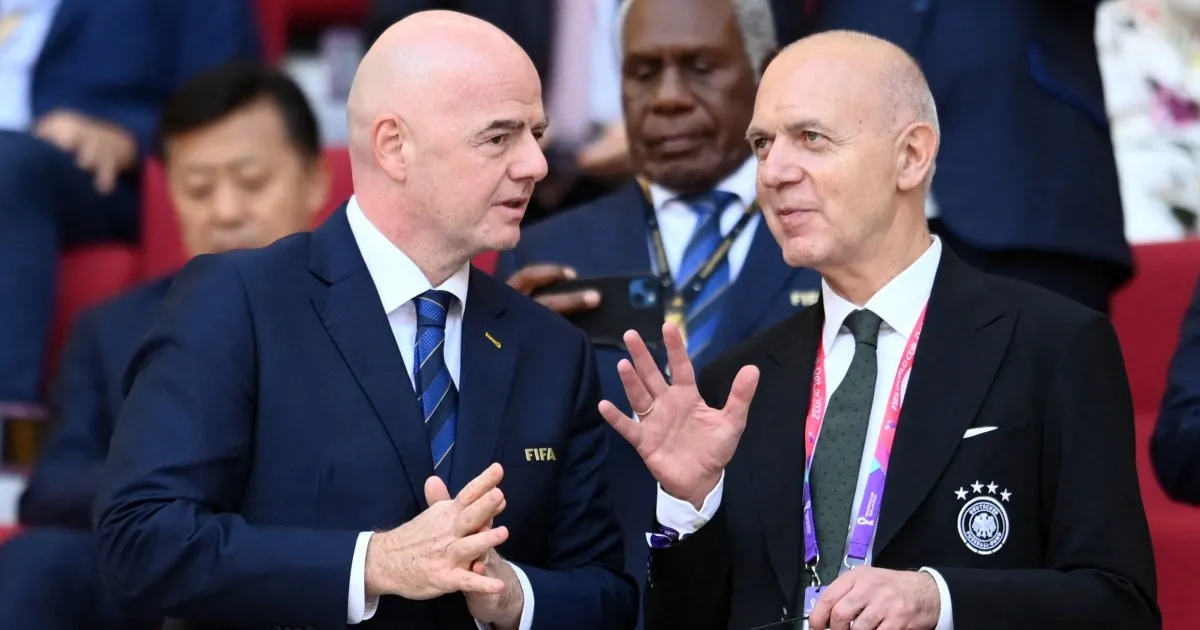
FIFA President Infantino’s letter a ploy for re-election, says German FA | Football
Infantino proposed an independent review of FIFA’s decision-making process amid criticism to his leadership.
Published On 22 Sep 2026
A letter from FIFA President Gianni Infantino this week to all 211 members, offering to discuss reforms within world football’s governing body – amid an ongoing crisis over his failed plan to sell a stake in the World Cup – is a mere ploy to get himself re-elected, Germany’s Football Association (DFB) President Bernd Neuendorf has said.
In Monday’s letter seen by the Reuters news agency, Infantino proposed an independent review of FIFA’s decision-making process, in a move that could help him regain support after the withdrawal of his controversial private investment plan.
Striking a conciliatory tone, he also said he would propose consultations with confederations, member associations and other stakeholders about strengthening FIFA’s decision-making.
Infantino faced a fierce backlash over his proposal to sell a 20 percent stake in FIFA’s commercial rights, including the World Cup, to private investors.
The plan was abandoned in July after strong opposition and boycott threats, with UEFA, the Asian Football Confederation and CONCACAF calling for changes to FIFA’s leadership.
They said there had been no consultation with any continental confederation at any stage, with Infantino acting alone. UEFA has said a change in leadership was now necessary, with the European body having lost faith in the current president.
“I regard Gianni Infantino’s letter as a transparent ploy to secure his re-election next year,” said DFB President Neuendorf on Tuesday. “Fundamentally, FIFA now seems to have recognised that changes are essential.
“However, Gianni Infantino is definitely not the right person to lead a reform process. He has squandered all credibility.”
Neuendorf is also a member of the FIFA Council, the organisation’s main decision-making body.
Infantino said in the letter that member associations’ positions on proposals or governance matters would not affect their treatment by FIFA, whose development and solidarity programmes would continue under existing rules.
The Swiss is up for re-election in March next year, with his opponents struggling to find a candidate to challenge the president. Sources familiar with the discussions told Reuters this month that he still had enough votes to win, prompting opponents to focus on curbing his powers.

Major UK railway station to cancel ALL trains for five days in huge £13million upgrade
ONE of the UK’s biggest cities will see trains cancelled for nearly a week during the busy Christmas period.
No trains will be running at Birmingham New Street from December 24 to 28 while the station undergoes a £13million upgrade.
Services will then resume on Tuesday, December 29.
Upgrades include work on the overhead power lines, which keep the trains moving.
The Christmas closure will mark the first phase of the overall three-year project to upgrade the station, with future phases taking place over Christmas 2027 and 2028.
Network Rail has said that it is working to minimise the impact but has warned travellers that journeys will take longer.
Read more on travel inspo


During the engineering work, the station building will stay open, which means travellers can still head to the shops.
There will also be staff on hand to help out with queries.
Martin Colmey, route director for Network Rail Central route, said: “Birmingham New Street is at the heart of the rail network, supporting millions of local, regional and national journeys every year.
“Much of the overhead line equipment dates back to the 1960s and needs to be replaced. This £13m investment has been carefully planned to make the railway more reliable.

“There is never a good time for this type of work and we have done all we can to reduce its impact as much as possible.
“Christmas is a quieter time, but we know it will affect journeys at an important time of the year.
“We want to make people aware as early as possible so they can plan ahead.
“As soon as tickets are available to buy for Christmas travel, there will be clear, detailed information to help passengers plan their journeys and make informed decisions.”

White House launches ‘Trump TV’ after press bans | Donald Trump
Days after banning a group of news organisations from the White House, the Trump administration has launched a platform called ‘Trump TV’ showing old speeches and announcements.
Published On 22 Sep 2026

The ‘Saint Tropez of the UK’ with huge sandy beach and new hotel as UK to hit 20C this weekend
THE UK is set to see the last of the summer sun this weekend, so where better to enjoy it than Cornwall’s Saint Tropez?
One charming coastal village has been compared to the French glamorous resort town thanks to its incredible beaches, high-end restaurants and royal visitors.
The village in question is called Rock which sits on the Camel Estuary and has incredible views across from the well-known town of Padstow.
The upscale hotspot has numerous celebrity homeowners and even Prince William and Prince Harry have enjoyed a holiday of two there.
The princes first visited Rock in the late 1990s as teenagers for family holidays and were spotted enjoying nearby beaches and surfing in Polzeath.
Other celebrities that have been known in the area include Gordon Ramsay who owns a multi-million-pound waterfront property there.


He’s even been filmed arriving to the village by helicopter.
Chef Paul Ainsworth owns the local pub called The Mariners, where you can get some of the best fish and chips in the area.
Other top spots include Four Boys which is open seven days a week for breakfast and lunch.
Fee’s Food is a deli where you can pick up quiches, freshly baked loaves, pastries – they also specialise in pies and curries.
Of course, no visit to Cornwall is complete without a trip to the beach, and Rock has a great one.
Rock Beach has described as being called “world class” by previous visitors, and another called it the “best beach I’ve been to in a long time.”

The sandy beach stretches on for around half a mile with views across the estuary to Padstow.
If you fancy venturing a little further afield, Porthilly Cove which is a secluded sandy beach is just around the corner.
The St Enodoc Hotel in Rock recently underwent a multi-million-pound renovation – it was closed for 10 months but had a grand reopening in July.
Along with 21 rooms, there are two restaurants to choose from – the Estuary Grill which serves lots of local seafood or the Flour Garden which dishes up hand-made pizzas.
The hotel has beautiful gardens too with lawn games, deck chairs and Maurice, a charming vintage French truck, with a mix of drinks including Guinness on-tap.
When it comes to getting there, the easiest way is to catch the ferry from Padstow – single journeys cost £3 for adults and £1.50 for children.
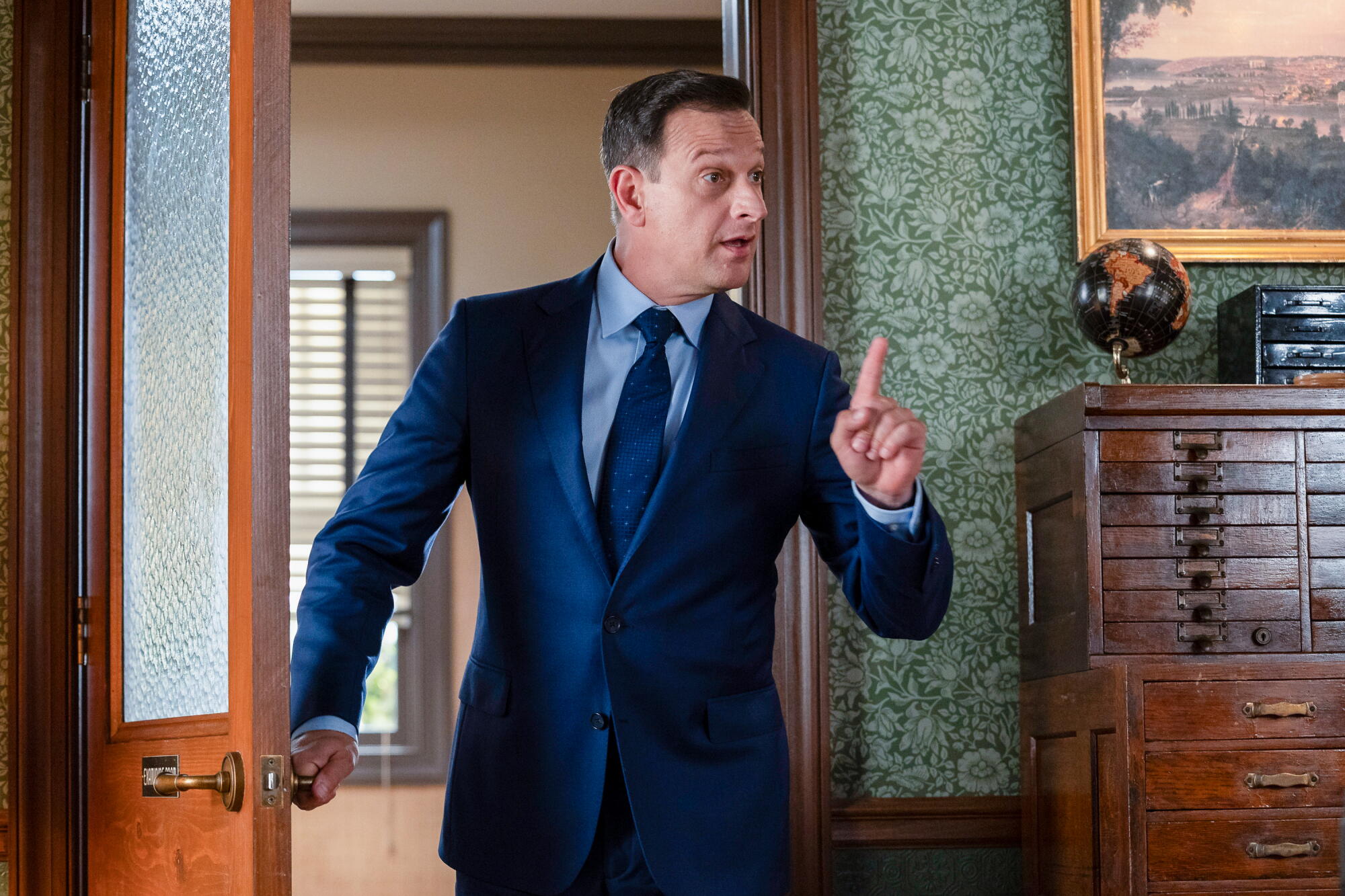
Josh Charles on ‘Best Medicine,’ ‘The Good Wife’ and embracing comedy
Filming a broadcast television show can leave even the most seasoned actors feeling like they’ve lost sense of time. But by afternoon on a recent weekday, Josh Charles actually looks like he teleported to the past as he collapses into a seat inside his production trailer in upstate New York.
He’s in the throes of filming Season 2 of “Best Medicine,” the Fox dramedy he headlines that’s set in a small fishing village in Maine, and the reason he’s shed his character’s usual suit and tie for gaitered trousers and a navy coat with red facings eventually reveals itself: Port Wenn, the show’s fictional town, is putting on a Revolutionary War reenactment. And if you’re familiar with Martin Best, the curmudgeonly doctor with an almost permanently furrowed brow portrayed by Charles, the character’s willingness to don such a getup likely took some coaxing.
That’s the fun of it all for Charles.
He’s been a working actor since childhood — making his debut at 15 in John Waters’ cult classic “Hairspray,” followed soon after by his turn as Knox Overstreet in “Dead Poets Society” — and a fixture in TV and film ever since.
While best known for dramatic roles like high-powered lawyer Will Gardner in “The Good Wife,” Charles easily pivots to comedy — like the time he memorably played the triple-collared, snobby camp ringleader in “Wet Hot American Summer: First Day of Camp.” Now, “Best Medicine” lets Charles leans into the push and pull of the comedy and drama within his tightly wound alter ego.

Josh Charles as Martin Best in Fox’s “Best Medicine.”
(Francisco Roman / Fox)
Created by Liz Tuccillo (“How to Be Single,” “Sex and the City”), the series follows a brilliant but cranky heart surgeon who, after developing a crippling blood phobia spurred by a traumatic medical case, abandons his thriving career in Boston to become a general practitioner in the town where he spent summers as a child. Martin Best is a doc whose bedside manner could use some TLC, but he came to town hoping he can still practice medicine — that is, if the townspeople would actually do as he says.
“I have been really wanting to do more comedy lately and looking — especially if I was going to call a place home for a particular period of time, like you do in a television show — for something that was a little more lighter air than I had been networking in of late,” says Charles, whose recent credits include dystopian drama “The Handmaid’s Tale” and spy thriller “The Veil.”
The series is based on the beloved British dramedy “Doc Martin,” which starred Martin Clunes as a doctor with a similar storyline, that aired between 2004 and 2022. Tuccillo says Charles brought an elegance and depth to the fish-out-of-water dynamic his character navigates in the quirky town.
“He never hits a false note,” she says in a separate video call. “I knew the material would be in great hands in that he would always elevate it just by his artistry and being. I knew he was going to be able to play the gruffness, but any time that you’re doing a show, there is a question mark on so many things. To be honest, we were like, ‘But is he going to be super funny? Is he going to want to do pratfalls? Is he going to be game for the comedy part of it?’ When we started working, it was clear he was game for all the shenanigans … he likes to laugh. So I try to devise things that I think will amuse him.”
A special advance preview of the Season 2 premiere aired Sunday, but the show will move into its regular time slot Tuesday. Here are edited excerpts from the conversation with Charles.

Josh Charles poses for photos on the “Best Medicine” set in upstate New York. He says he was drawn to the Fox dramedy because it was “a little more lighter air” than the other work he had done recently.
(Ebru Yildiz / For The Times)
“Best Medicine” hit Netflix after its first season aired. Building an audience outside the traditional linear viewing has become such a key component of television today. How do you feel about it?
One of my dad’s best friends told me, “I’m watching the show on Netflix!” He’s like, “I just can’t watch shows with commercials anymore” — as people are programmed now. That is the new shift. You go into these platforms for periods of time, build your audience in a different way and hopefully keep growing that audience. [Television] keeps evolving and growing in a way that I don’t fully understand, but I do know that it’s a different world right now. Netflix has a great reach, and it’s great that we’re on there and that people are discovering it. And apparently we did very well.
Season 2 opens with Martin on probation and under review by the medical board. What is Martin in for this season?
When it starts off, he’s really in it. Eden [Martin’s ex-girlfriend played by Eliza Coupe] is now back in the picture. She’s coming from Boston every weekend, and she’s rubbed a lot of people in town the wrong way. And the progress that Martin made, we see him maybe take a few steps back in the way that he interacts with people. He’s with her and I think there’s feelings there, but I think their relationship feels very — I don’t know, it’s interesting. It doesn’t have the fire. But she doesn’t make him feel bad about himself. She respects him, and I think those things are important. And he’s around in this town where nobody’s listening to him half the time. People are just always mad at him about something, and she’s not. She puts him a little bit on a pedestal, and I think he really needs that.
All that presents an obstacle for the show’s slow burn: Martin and Louisa (Abigail Spencer). There’s been some discourse about the art of the slow burn and how the pacing has changed in an era of short episode orders and unpredictable renewals. You have experience in this department with “The Good Wife.”
Liz and I have talked about it a little bit. You don’t want to muck bait it and drag it out for the sake of dragging it out. I think they’ve done a good job of putting the obstacles in a way that still feels organic and genuine and not yet a reach. In the British show, things accelerated so much faster. They only made eight [episodes] a year. We want to also have it feel like it’s plausible. It is really fun to have Eliza Coupe here. It’s fun to play scenes with her and [see] the different side that brought out in Martin. That is the challenge because I don’t think we’re as interested in doing it quite that fast [as the British show]. I have faith in them that we’ll land it in a good way.

Ellen Soraya Nikbakht as a peculiar patient and Josh Charles as Martin Best in the Season 2 premiere of “Best Medicine.”
(Danielle Mathias / Fox)
You’ve played in comedy and drama in your career. It’s fun to watch you straddle both sides with this character. How has it been finding the rhythm or tone with him?
A lot of the comedy I’ve done, I’ve done some stuff that’s more silly and kind of over the top. I love playing the fool. What’s really fun [here], to me, are the circumstances they put Martin in where things are blowing up in front of him and he’s just trying to deal. I’ve enjoyed doing a lot of the physical comedy on the show.
I [also] found it really interesting to have a character who doesn’t want to be around people, but he actually does. He just doesn’t really know how to do it, and he’s never really had any kind of practice at it in his life. And he’s gone through a lot of trauma in his life. He’s a really specific kind of workaholic. For him to grow up with what he did, and losing his sister really young in his life — I did research on that and what that does to people and how that can sort of frame your life. I imagine he went to private school, maybe a boarding school, then he goes on the track of going to college and medical school — we know how hard that is, the kind of hours they put in; then to be really successful at it, you put everything you have into your work. There’s this other side of his life that is completely empty. This town kind of just softens off the edges of him a little bit and helps him become a little more authentic version of who he was maybe meant to be. That gives me some place to build off of and to go with the character, other than it feeling kind of just very one-note.

Matthew Goode, left, as Finn Polmar and Josh Charles as Will Gardner in a scene from Season 5 of “The Good Wife.”
(CBS)
This series marks your return to broadcast television after leaving “The Good Wife” in its fifth season. You’ve done TV since then, of course. But a big reason you left broadcast was because of the grind of a 20-plus episode season. With “Best Medicine,” you’re the lead and the second season will have 14 episodes. Does that feel like the sweet spot?
If “The Good Wife” was “The Good Fight,” I would have done that until the wheels come off. I would have never wanted to leave that because I would have had a life. I could have been able to go do a play, travel with my family, see my kids. At the time of “The Good Wife,” I didn’t have kids, but we were about to get married and wanted to have children. I was only going to do 18 [episodes] at most with this show, if they wanted it. And then I asked them this year, “Well, we’re just at 14. What was the decision [there]?” And I’m happy about it. They also agree. This just feels like where the show wants to live creatively. You work really hard for four or five months, and then you get to go explore other projects and travel and live your life.
Your departure from “The Good Wife,” with your character Will Gardner dying, felt like an out–of–body viewing experience as it happened. The fact that it was kept under wraps —
I can’t believe we did it, honestly. There was one journalist who obviously had a source somewhere and did find out. Part of being able to keep that silent until the moment was an agreement that they would come to set and be there as long as it was [kept secret]. I remember like when the episode aired, I was in the editing bay with the editors in L.A. [for an episode I directed]. I’m seeing things come in and I was like, “Oh my God!” I thought it was going to get ruined for people on the West Coast. These days, you know how they make something, how much this cost, how they did this scene … we used to be surprised by things. To be able to truly shock people you know like in an Orson Welles-style “War of the Worlds” way. I felt like in our own sort of network TV way, this was the equivalent of that. We really got to narratively pack a punch. That season was one of the great treats of my career. I just felt the writing on that show that season was at another level.



Center Parcs rolls out sensory libraries for neurodivergent families
The family holiday park has become the first holiday operator to begin rolling out sensory libraries across all of its villages, offering free-to-borrow sensory aids for families with neurodivergent children

Elveden Forest is the first of the Center Parcs villages to have a sensory library(Image: Cameron Fillery)
Center Parcs has become the first holiday operator to begin the roll out of new sensory libraries across all of its villages, catering for families with neurodivergent children.
Working alongside specialist SEN consultancy SENNIES, the family resort has officially unveiled its sensory library at its Elveden Forest village, where families can borrow items free of charge during their stay. The short break provider intends to roll out the libraries across all of its villages by 2028.
Items such as noise-reducing ear defenders, wipe-clean boards, calming lights, fidget toys, feelings wheels, visual timers and pop tubes will be on offer for families to select from.
Georgia Sargeant, CEO and founder at SENNIES, speaking in partnership with Center Parcs, said: “No two neurodivergent children are the same, so there is no single adjustment that works for every family.
“What matters is choice, a considered range of options from sensory resources and communication aids through to support for self-regulation and co-regulation, so a family can pick what works for their child that day.
“This library turns families’ feedback into practical support and shows how holiday providers can respond meaningfully to changing needs.”
The decision to launch the library follows a survey of 500 parents and legal guardians of neurodivergent children and those with additional needs, which found that 44% believe many holiday providers fail to offer sufficient provisions for their children.
For 80%, busy or crowded environments can prove challenging for their child, while 75% sometimes avoid activities or facilities altogether because they are overwhelming.
Almost two thirds (68%) said that access to sensory and accessibility aids at their chosen destination would enhance the holiday experience for their child.
Similarly, 68% also indicated that if they could borrow sensory items for the duration of their break, it would help their family feel more supported. Currently, 72% of parents bring sensory equipment or comfort items from home on every or most trips.
Department for Education figures reveal that more than 1.8 million pupils in England now have special educational needs – an increase of 5.2% in a year. This has resulted in NHS assessment waiting lists reaching more than 240,000.
Meanwhile, the Children’s Commissioner’s latest annual briefing discovered that children’s referrals involving suspected autism rose 47% in a single year, while neurodevelopmental referrals increased by 24%.
Richie Williams, village director at Center Parcs Elveden Forest, said: “The number of families looking for more thoughtful, practical support is growing.
“This pilot is the beginning of a journey, and we will listen closely to families using it and learn from their feedback as we consider what comes next and a future rollout to other villages.”
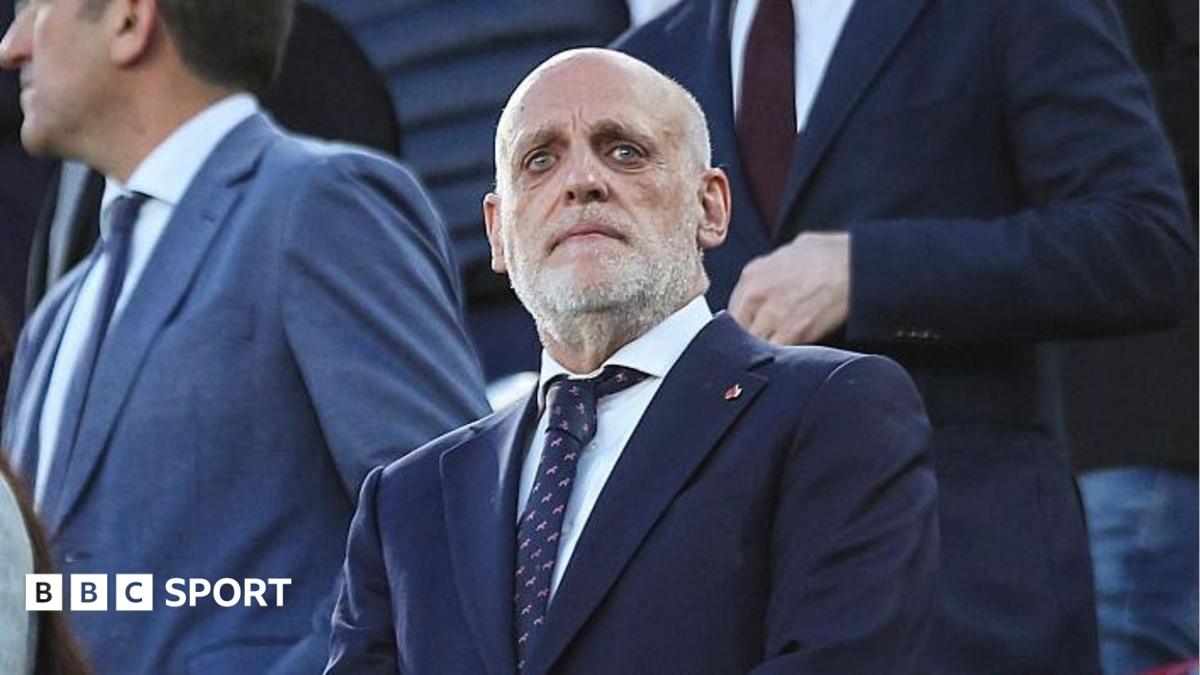
Real Madrid: Conspiracy claims against club ‘like living in another galaxy’ – Javier Tebas
La Liga president Javier Tebas says claiming there is a refereeing conspiracy against Real Madrid is like “living in another galaxy”.
Real manager Jose Mourinho accused officials of making key errors after his side were beaten 2-1 by rivals Atletico Madrid last week.
Mourinho brought printouts of screenshots to the post-match news conference, claiming Atletico should have been given two red cards in the first half.
Writing in response to an article in the Spanish media which claimed there is a “conspiracy” against Real, Tebes dismissed the allegations.
“Claiming that referees are directed against Real Madrid is living in another galaxy,” Tebas said on social media.
“That narrative serves as an excuse to cover up other shortcomings that are plain to see in these first matches of the season.
“It’s more comfortable to point to a conspiracy than to explain what’s happening on the pitch.”
Real are fourth in La Liga, six points behind Barcelona who top the table on 21 points after winning all seven of their league games this season.
After defeat by Atletico, where Real went down to 10 men in a feisty encounter after defender Dean Huijsen was sent off, Mourinho blamed the officiating.
“We can skip the press conference because the story of the match is right here,” Mourinho said as he showed media the printed images.
“Those were two clear red cards. Given the difficulties we faced afterwards playing 11 against 10, we can only imagine what 50 minutes of 11 against nine would have been like.”
Tebas has been critical of Real and its president Florentino Perez in previous years after disagreeing with their plans to join a European Super League in 2021.
In 2025 he said Real had “lost their head” after the club sent a formal letter of complaint to the Spanish FA about officiating in the league.
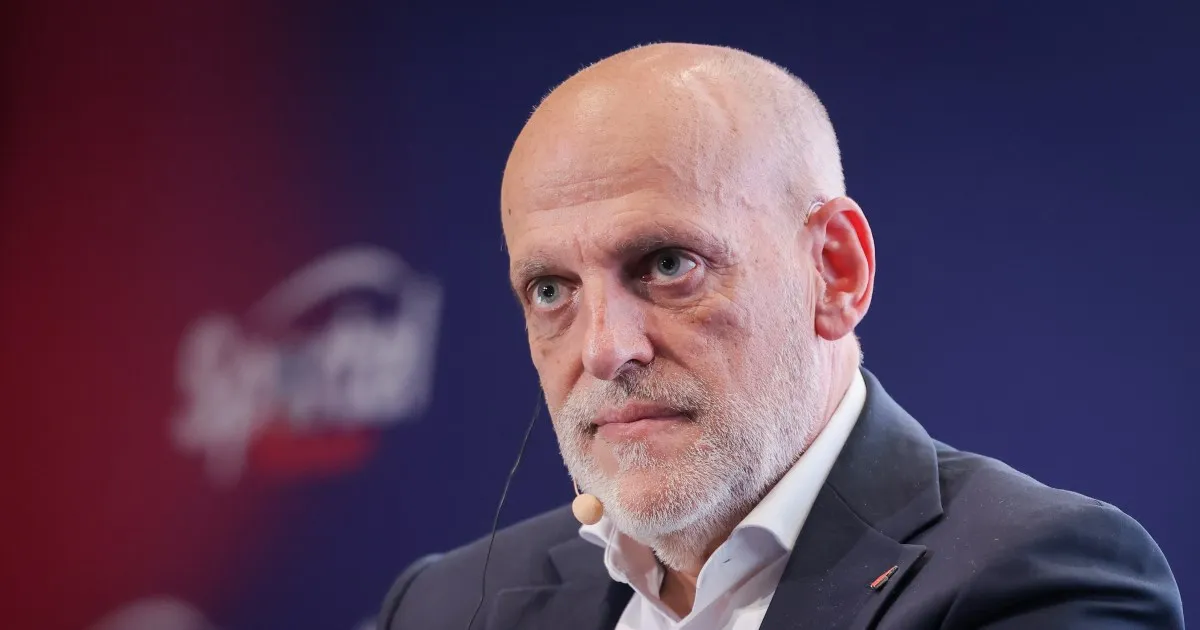
La Liga President Tebas slams Real Madrid refereeing ‘conspiracy’ claims | Football
Madrid boss Jose Mourinho accuses officials of bias after his side’s 2-1 derby defeat by Atletico Madrid.
Published On 22 Sep 2026
La Liga President Javier Tebas has hit out at what he calls accusations of a refereeing “conspiracy” by Real Madrid after their derby loss to Atletico Madrid.
Real Madrid coach Jose Mourinho brought two printed screenshots of what he thought were red-card tackles committed by Atletico players to his post-match news conference after Sunday’s 2-1 defeat.
Tebas responded to a pro-Real article on social media with a lengthy riposte on Tuesday to allegations of a “conspiracy” against the 15-time European champions.
“Here they go again, the mouthpieces and the regime’s television, building the same old narrative – the permanent conspiracy,” said Tebas, who has often been at odds with Real Madrid and the club’s outspoken president, Florentino Perez.
“This article goes further. It claims that referees harm ‘the business that feeds them’.
“What exactly is it asking for? Refereeing based on revenue, viewership or the badge? What a way to understand equality in the competition.
“Real Madrid are crucial to La Liga. But claiming that ‘La Liga is worth nothing’ without them reveals the disdain for the other clubs, their fans and their history. The competition belongs to no one.”
Madrid have made a stuttering start to the season and already sit six points behind reigning champions and early leaders Barcelona in the La Liga table.
“Claiming that referees are directed against Real Madrid is living in another galaxy,” Tebas added.
“That narrative serves as an excuse to cover up other shortcomings that are plain to see in these first matches of the season.
“It’s more comfortable to point to a conspiracy than to explain what’s happening on the pitch.”
Mourinho returned for a second spell in charge at the Santiago Bernabeu in the close season, tasked with ending a two-year spell without a major trophy.
After the heated capital derby on Sunday, Mourinho was furious that Atletico defender Cristian Romero was not sent off for a stamp on Jude Bellingham and also complained about a challenge by Lee Kang-in on Federico Valverde before the visitors were themselves reduced to 10 men five minutes after half-time.
Valverde finished the match but was later diagnosed with “severe trauma to his left ankle”, the club said in a statement. The midfielder will undergo further tests, it added.
“We could skip the press conference because the story of the match is right here,” Mourinho said, holding up the images in what was the start of a near five-minute rant.
“Those were two clear red cards. The difficulties we’ve faced since the sending-off: 11 against 10. Well, we can imagine what 50 minutes of 11 against nine would have been like if justice had been done.”

Trump-GCC Summit in New York: What does each side want? | GCC News
Leaders of the six Gulf Cooperation Council (GCC) states are set to meet United States President Donald Trump in New York on Tuesday, as the US-Israel war on Iran nears seven months.
The meeting, to be held on the sidelines of the United Nations General Assembly (UNGA), brings together countries that have borne much of the fallout from a war they did not start.
Recommended Stories
list of 4 itemsend of list
Since the war began on February 28, Iran has repeatedly struck US bases across the Middle East as well as airports, energy facilities and hotels. The war has particularly hit the Gulf nations hard, as their oil and gas exports – the mainstay of their economies – have been disrupted, causing a global energy crisis.
A June memorandum of understanding (MoU) briefly raised hopes of an end to the war, but it collapsed last month amid disputes over navigation through the Strait of Hormuz, which remains effectively closed.
These talks come as Trump says he faces a “big decision” on the war, and as Iran’s president and foreign minister are also in New York for the UNGA.
So what is on the table and what might come out of the talks? Here is all you need to know:
What do we know about the GCC-Trump meeting?
Trump is set to meet the leaders from Bahrain, Kuwait, Oman, Qatar, Saudi Arabia and the United Arab Emirates, which form the GCC, on the sidelines of the UNGA.
Trump told US media outlet Axios on Thursday that he wanted to meet the GCC leaders as he faced a “big decision” on the war and wanted to speak with them directly.
Experts say there are two interconnected issues – the US-Israel war on Iran and the conflict between Houthi rebels and the Saudi-backed government forces in Yemen.
What do the GCC countries want from the meeting?
Broadly, experts say, the GCC nations share a common goal for the meeting.
The GCC has “shared positions on the main principles of regional security and de-escalation”, Luciano Zaccara, a researcher with the New Ground Research think tank in Doha, Qatar, told Al Jazeera.
“With Trump recently threatening to ‘wipe out’ Iran, I expect the six GCC states, or at least most of them, to convey to the US president their grave concerns about the likely consequences of another round of intense US military strikes on Iran,” Giorgio Cafiero, CEO of Gulf State Analytics, told Al Jazeera.
“They will probably seek to underscore their own vulnerabilities to a renewed cycle of all-out fighting between the United States and Iran,” he said, adding that they will try to persuade Trump into making certain concessions to Tehran.
Cafiero said they will look to develop an arrangement that builds on the MoU and which “offers the most viable path toward winding down the crisis”.
Chief among their common concerns is freedom of navigation through the Strait of Hormuz and the Red Sea, according to Ahmed Helal, managing director for the Gulf region at The Asia Group.
‘Divergent’ goals
Despite common goals, the Gulf states have still experienced “divergent” outcomes from the war and will also look to persuade Trump to address their particular predicaments, Helal said.
The UAE, he explained, has been able to keep exporting oil by pipeline to its port of Fujairah, which bypasses the Strait of Hormuz, although not at the volumes it would like.
But fellow GCC member Qatar, whose gas exports depend on the strait, has seen its LNG shipments severely curtailed and wants to avoid any renewed escalation that could see its energy infrastructure targeted again, Helal said.
Speaking at an event in New York, US, on Sunday, Qatar’s Prime Minister Sheikh Mohammed bin Abdulrahman bin Jassim Al Thani described the economic fallout from the US-Israel war on Iran as an “earthquake”.
Saudi Arabia has another problem, as it is now under “enormous pressure” as the Houthis gain ground in Yemen, and has been “intensifying their lobbying” for US strikes on the group, he said.
What does Trump want from the meeting?
Predicting what the US president plans has been difficult since the outbreak of the US-Israel war on Iran, experts say.
“It could be possible that the US is expecting a more direct GCC engagement against Iran in exchange for a direct US intervention to stop the Houthi attacks against Saudi Arabia, but without the GCC leaving the main role in defending themselves”, Zaccara told Al Jazeera.
“Regarding Iran, Trump has not ruled out another major military escalation. At the same time, the administration seems to be open to exploring diplomatic options,” he said, adding there are rumours of a possible indirect US-Iran meeting on the sidelines before Iranian President Masoud Pezeshkian’s speech on Wednesday.
Helal said the administration’s focus is domestic, with the midterm elections weeks away and Trump’s approval ratings at a record low; there is “immense pressure” to lower petrol prices.
While Trump has threatened further military action, he remains politically sensitive to an “escalatory ladder” that could spike oil prices, Helal said.
The talks are unlikely to produce a breakthrough, he added, with the best-case scenario an agreement to return to negotiations potentially brokered by Qatar or Pakistan.

Contributor: We need more of the hopeful sci-fi that ‘Star Trek’ gave us 60 years ago
A few years ago, I received a call I’ll never forget. Jeanette Epps, an astronaut aboard the International Space Station, Zoomed into my living room from 250 miles above Earth. During our conversation, she told me that one of the reasons she chose her career was a television show my father created in 1966.
She wasn’t alone. I’ve heard versions of that same story from countless people over the years. Engineers. Scientists. Astronauts. People who saw possibility on a television screen before they ever saw it in the real world.
They credit “Star Trek” for showing them a future they wanted to help build. That’s an extraordinary thing for a television series to accomplish. It didn’t just entertain millions of people. It gave many of them a direction.
And I don’t think that was because of the ships, the gadgets or the aliens. It was because, underneath all of it, was a profoundly human belief that we are capable of becoming something better.
There was a time when science fiction made a bet on humanity. A bet that humanity was worth rooting for. We need storytellers willing to make that bet again.
I don’t think we have an innovation problem. We have an inspiration problem.
We talk a lot about what we’re leaving the next generation. The debt. The climate. The geopolitical mess. But there’s another inheritance we don’t talk about enough: what we show them is possible.
Today, many visions of the future are dominated by collapse, dystopia and fear. Those stories can have value. But conflict doesn’t always have to come from destruction. It can come from discovery. Two minds encountering an idea neither had considered. A crew facing the unknown with curiosity instead of fear. That kind of conflict doesn’t leave you feeling like the world is ending. It leaves you feeling like it’s just beginning.
Most storytelling holds a mirror up to who we are. Our flaws, our failures, our contradictions. But there is another kind. Stories built around characters a step or two ahead of where humanity is. Not perfect. But people who have learned how to cooperate, how to lead, how to stay curious and how to put something larger than themselves first. Characters you don’t just recognize. Characters you want to become one day.
That distinction changes what a story asks of you. And what you walk away believing is possible.
This year, “Star Trek” celebrates its 60th anniversary.
That’s not a milestone you reach by accident. Franchises built on spectacle fade. Ones built on something people actually needed tend to stick around.
The engineers who built Silicon Valley, the astronauts who went to space, the scientists pushing the edges of medicine and artificial intelligence — many of them trace a line back to this show. That wasn’t the plan. Nobody set out to build an innovation pipeline out of a television series. But that’s exactly what happened. When you give people a future worth believing in, they go build it — or sometimes they get inspired to imagine other hopeful destinations and lead us toward them. That’s not nostalgia. That’s a model.
One thing my dad understood that I think gets overlooked: “Star Trek” wasn’t going out into the galaxy to find aliens that looked different. It was going out to find aliens that thought different.
Diversity of perspective is how a species grows. My father gave that idea a name: IDIC. Infinite Diversity from Infinite Combinations. It didn’t mean you had to abandon your own point of view. It meant staying open to someone else’s. Because that’s how you grow. That idea has never been more relevant. And it has never been more achievable.
For the first time in history, a creator anywhere in the world can tell a story that reaches everyone, and now it can come from anywhere. The future belongs to everyone. The stories that shape it should too.
That astronaut who called me from space didn’t just watch a television show. She saw a future worth dedicating her life to.
Every generation needed something to build toward before they ever picked up a tool. A vision. A direction. A story that made the future feel worth the work. And right now, we’re not building enough of that.
We need stories that don’t just entertain us, but also become our compass. We need the kind of storytelling that doesn’t ask what could go wrong, but asks what could go right.
Rod Roddenberry, founder of the Roddenberry Foundation and son of “Star Trek” creator Gene Roddenberry and actor Majel Barrett Roddenberry, is an executive producer on current “Star Trek” television shows.
Insights
L.A. Times Insights delivers AI-generated analysis on Voices content to offer all points of view. Insights does not appear on any news articles.
Perspectives
The following AI-generated content is powered by Perplexity. The Los Angeles Times editorial staff does not create or edit the content.
Ideas expressed in the piece
-
The article argues that optimistic science fiction can do more than entertain: it can give audiences a constructive vision of the future and inspire people to pursue careers in science, engineering and space exploration. “Star Trek” is presented as an example of storytelling that made human progress feel attainable.
-
It contends that contemporary culture is overly saturated with collapse, dystopia and fear. Although such stories can be useful, the article suggests that narratives centered on discovery, cooperation and curiosity can encourage audiences to imagine what might go right rather than merely anticipate disaster.
-
The piece maintains that aspirational characters—people who have learned to cooperate, remain curious and serve purposes larger than themselves—can function as moral examples. In this view, fiction should not only reflect present flaws but also depict people and societies worth becoming.
-
It further argues that “Star Trek’s” emphasis on cultural and intellectual diversity remains especially relevant. The franchise’s principle of “Infinite Diversity in Infinite Combinations” is presented as a model for learning through different perspectives, while the series’ enduring influence is cited as evidence that hopeful stories can shape real-world ambitions.[1][2]
Different views on the topic
-
A contrasting perspective holds that dystopian and cautionary science fiction serves an essential purpose by exposing the consequences of reckless behavior, political failure and technological overreach. Recent commentary argues that many influential works were intended as warnings or satire, not as blueprints for an attractive future.[3]
-
Feminist dystopian fiction offers another counterpoint: bleak speculative narratives can make systemic problems—including misogyny, violence against women, gender inequality and threats to reproductive rights—more visible. From this perspective, darkness is not simply pessimism; it can be a way to represent harms that already exist and demand attention.[4]
-
Critics also caution that “Star Trek’s” hopeful vision can obscure tensions within its own world. The franchise combines ideals of cooperation and equality with armed exploration, alien conflict and interventionist politics, making it both an image of peaceful progress and a vehicle for examining militarism and political failure.[2]
-
Consequently, the strongest science fiction may not choose between hope and warning. Utopian stories can provide direction, while dystopian stories can identify dangers and test whether an envisioned future genuinely addresses exclusion, power and conflict. Treating either mode as sufficient on its own risks producing either inspiration without scrutiny or criticism without a constructive destination.[3][4]

EU seals Philippines trade deal in push to diversify away from China and US
Published on •Updated
The European Commission struck a trade agreement with the Philippines on Tuesday, stepping up its diversification strategy across the Indo-Pacific region.

ADVERTISEMENT
ADVERTISEMENT
The deal comes more than a year after the US introduced sweeping new tariffs on many of its trading partners, prompting retaliatory measures and adding to global trade tensions.
Since then, the EU has been seeking new trade ties, recently concluding major deals with India, Australia and Indonesia.
“This agreement sends a clear signal that the EU is reinforcing its engagement with the Indo-Pacific,” EU Trade Commissioner Maroš Šefčovič said on Tuesday.
“Half of global consumers are covered by European Free trade agreements. Nobody else has this advantage.”
“Squeeze on supply chains”
The new agreement will give EU businesses access to a market of 113 million people, and remove over 94% of customs duties. It will cover more than 97% of bilateral trade, including EU exports of machinery, medicines and medical appliances, as well as agri-products such as meat, pork, poultry and spirits.
Exports from the Philippines are dominated by semiconductors, integrated circuits and industrial machinery.
The deal should also facilitate EU investment in raw materials in the Philippines, as the EU seeks to move away from China, which holds a monopoly on key raw materials.
Bilateral trade in goods between the EU and the Philippines was €17.6 billion in 2025, while trade in services reached €10.3 billion in 2024. The stock of EU foreign direct investment in the Philippines amounted to €15.4 billion.
Šefčovič also said there was a “mutual interest” with countries in the wider Indo-Pacific area “to address the current global turbulence” and “the squeeze on the supply chains.”
Brussels says China has weaponised critical products for EU industry such as chips and rare earths in 2025, jeopardising whole sectors such as the car industry.
The Commissioner added that trade deals with Thailand and Malaysia were next on the EU agenda, with an agreement with Bangkok foreseen by the end of the year.
The Sports Report: Rams rout the Giants
Rams get back on track
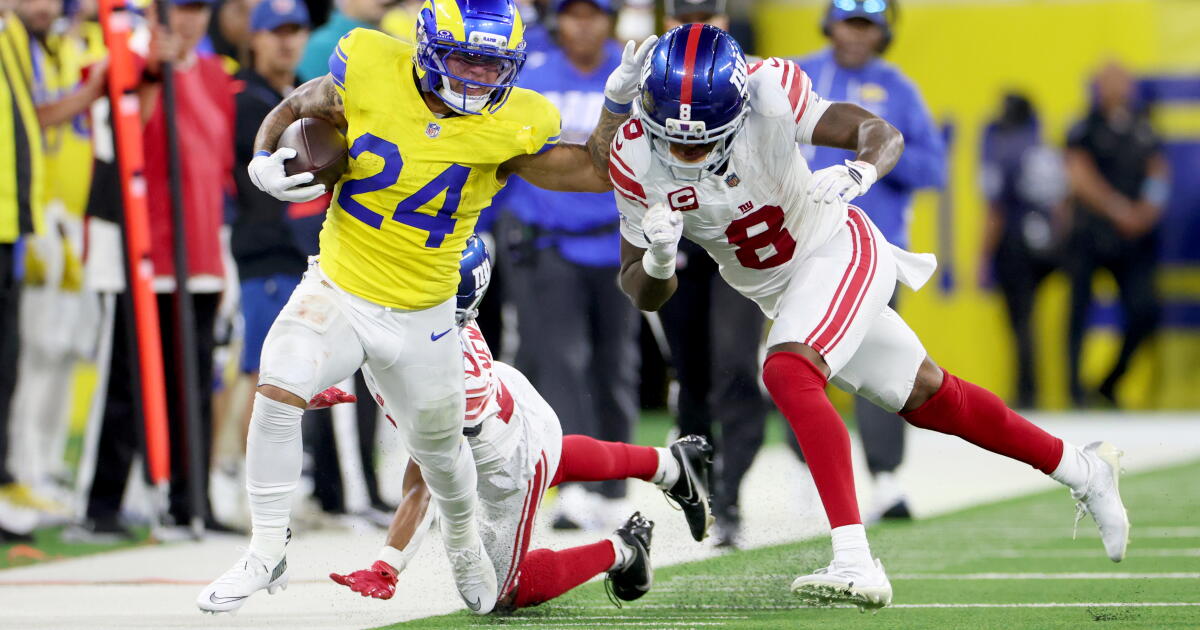
From Sam Farmer: Aaron Donald made his triumphant return to NFL relevance on Monday night, and notably so did the Rams.
The team that looked lost in its Down Under debut returned to form against the New York Giants, even with star receiver Puka Nacua watching in street clothes because of hip pain.
Matthew Stafford was surgical with his passing, throwing four touchdown passes in a 28-6 victory. Receiver Davante Adams made several acrobatic catches befitting of the retina-burning yellow “Classic Sol” jerseys that turned the Rams into human highlighter pens.
“Played with a bunch of passion, energy, excited to be back home,” Stafford said, speaking about the team as a whole and especially the defense.
“We did enough offensively, but we still left some plays out there. I wasn’t as efficient as I would have liked in certain areas. Some plays that we can make that we didn’t make. We’ll keep working on that. But it was nice to get a win as we’re finding a way to get better.”
Adams had eight catches for 195 yards and two touchdowns.
“To be here with Matthew, just to be able to bond a little bit, be a part of his deal…,” Adams said. “It’s just a blessing.”
Chargers’ offense is a disaster
From Mirjam Swanson: Be careful what you wish for when you’re wishing for a new offensive coordinator.
Chargers fans were so over Greg Roman. Anything would be better than his run-heavy scheme stunting quarterback Justin Herbert’s anticipated ascension. Anyone would be preferable to the man holding the reins while the Chargers scored just three points in last season’s wild-card loss to the New England Patriots, after which Roman was fired.
Anyone such as, say, former Miami Dolphins coach and purported offensive guru Mike McDaniel?
Yeah?
About that.
Somehow, after just two games, the Chargers’ offense under McDaniel has Bolts fans wishing anyone else was running the show. Roman included.
Because Roman wouldn’t have overcomplicated a third-and-inches play-call. He wouldn’t have had the 6-foot-6, 240-pound Herbert line up in shotgun and call for motion.
And the subsequent snap wouldn’t have hit receiver Tre’ Harris before it got to Herbert. And instead of losing five yards and having Herbert, in a rare show of emotion, slapping the turf in frustration, the Chargers probably would have gotten a fresh set of downs.
So far, McDaniel’s brief Chargers’ tenure hasn’t just been a disappointment. It has, through two games, been a disaster. Because the Chargers really needed these first two wins against opponents who both won only three games last season.
Instead, the Chargers’ offense looked as disjointed and discombobulated in Sunday’s 26-14 loss to the Las Vegas Raiders as it did the previous week in their 26-14 loss to the Arizona Cardinals.
Calling all Dodgers fans
Times sports reporter Kevin Baxter wants to talk to a few Dodgers fans for an upcoming story. If you are interested in speaking with him, please email him at kevin.baxter@latimes.com
Clippers hire interim CEO
The Clippers hired John S. Gibson as interim chief executive and governor on Monday, taking over the roles previously held by team owner Steve Ballmer, who is serving a one-year ban by the NBA.
Ballmer recently said he won’t fight the league’s salary-cap circumvention punishment in a reversal of the team’s initial defiance and vow to fight against what it called “a heavily biased investigation.”
The league suspended Ballmer for one year, fined the team $30 million and forced it to forfeit five first-round draft picks. Ballmer said the team has paid the fine.
This day in sports history
1905 — Willie Anderson wins the U.S. Open for the fourth time in five years, beating Alex Smith with a 314-total at the Myopia Hunt Club in South Hamilton, Mass.
1927 — Gene Tunney wins a unanimous 10-round decision over Jack Dempsey at Soldier Field in Chicago to retain his world heavyweight title. The fight is marred by a long 10-count in the seventh round. Dempsey knocks Tunney to the mat, but Dempsey doesn’t go to a neutral corner. The referee doesn’t start counting until four or five seconds after Tunney is down. Tunney regains his feet and goes on to win.
1974 — The Pittsburgh Steelers and the Denver Broncos are the first teams to play to a tie, 35-35, with the new overtime rule in effect.
1984 — Mississippi Valley State’s Willie Totten passes for 526 yards in a 49-32 victory over Jackson State. Wide receiver Jerry Rice has 285 yards receiving.
1987 — The 1,585-member NFL Players Assn. goes on strike after the New England-New York Jets Monday night game. The strike lasts 24 days.
1990 — Illinois’ Howard Griffith sets an NCAA record when he scores eight rushing touchdowns in a 56-21 rout of Southern Illinois. Griffith gets touchdowns in three consecutive carries in the second quarter and ties an NCAA record with four touchdowns in the third quarter. Griffith doesn’t play in the fourth quarter. It’s the most points scored in an NCAA game by a player other than a kicker.
1991 — Miami coach Don Shula gets his 300th career victory in the Dolphins’ 16-13 win over Green Bay.
2002 — New England’s Tom Brady completes 39 of 54 passes for 410 yards and throws touchdown passes to four different receivers, leading the Patriots to a 41-38 overtime victory over the Kansas City Chiefs.
2007 — Graham Harrell of Texas Tech completes 46 of 67 passes for 646 yards, the fourth-best total in major college history, in a 49-45 loss to Oklahoma State.
2007 — Kentucky’s Andre Woodson sets a major college record for consecutive passes without an interception, breaking the mark of 271 held by Fresno State’s Trent Dilfer.
2012 — Cobi Hamilton of Arkansas has 10 catches for a Southeastern Conference record 303 yards and three touchdowns in a 35-26 to Rutgers.
2012 — Old Dominion’s Taylor Heinicke smashes NCAA Division I records by throwing for 730 yards. He completes 55 of 79 attempts without being intercepted and leads the Monarchs back from a 23-point, third-quarter deficit to a 64-61 victory against New Hampshire.
2018 — Anthony Joshua retains his IBF, WBO and WBA heavyweight titles by stopping Alexander Povetkin in the seventh round at Wembley Stadium.
2018 — Jess McDonald scores two goals and the North Carolina Courage win the National Women’s Soccer League championship with a 3-0 victory over the Portland Thorns.
Compiled by the Associated Press
This day in baseball history
1911 — Cy Young, 44, beat the Pittsburgh Pirates 1-0 for his 511th and final major league victory.
1936 — The Detroit Tigers swept the St. Louis Browns 12-0 and 14-0 to record the biggest double shutout in major league history.
1954 — Karl Spooner of Brooklyn became the first pitcher in the majors to strike out 15 in his first game as the Dodgers beat the New York Giants 3-0.
1966 — The Baltimore Orioles clinched their first AL pennant in 22 years with a 6-1 victory over the Kansas City A’s. Their last pennant came in 1944 when they were the St. Louis Browns.
1968 — Cesar Tovar played one inning at each position for the Minnesota Twins, becoming the second major leaguer in history to do it. Bert Campaneris of the Oakland A’s was the other.
1969 — Willie Mays of the San Francisco Giants became the second player to hit 600 home runs, joining Babe Ruth. The two-run shot off San Diego’s Mike Corkins in the seventh inning, gave the Giants a 4-2 win.
1973 — Baltimore’s Al Bumbry tied the major-league record with three triples as the Orioles beat the Milwaukee Brewers 7-1 and clinched the American League East title.
1977 — Bert Blyleven tossed a 6-0 no-hitter for Texas against the Angels at Anaheim Stadium.
1986 — Fernando Valenzuela of the Dodgers became the first Mexican to win 20 games, beating the Houston Astros 9-2 while giving up two hits.
1990 — Andre Dawson of the Chicago Cubs stole his 300th base in an 11-5 loss to the New York Mets, to become the second player with 300 homers, 300 steals and 2,000 hits. Willie Mays was the other.
1993 — Nolan Ryan of the Texas Rangers faced three Seattle batters before hurting his right elbow. He never pitched again. Ryan finished his career with 324 wins, 5,714 strikeouts and seven no-hitters.
2000 — Houston’s Jose Lima set an NL single-season record by giving up his 47th homer in the Astros’ 12-5 loss to Cincinnati. The major league record for home runs allowed in a season is 50, set by Minnesota’s Bert Blyleven in 1986.
2003 — Detroit set an AL record with its 118th loss, falling 12-6 to Kansas City. The 1916 Philadelphia Athletics (36-117) set the record.
2003 — Second baseman Alfonso Soriano broke a major league record by hitting his 13th leadoff homer of the year in the New York Yankees’ 10-inning loss to the Chicago White Sox.
2006 — Alfonso Soriano became baseball’s first 40-40-40 player in Washington’s 3-2 win over the New York Mets. Soriano hit his 40th double and stole his 41st base. With 45 homers, he already was only the fourth major league player with 40 homers and 40 steals in a season.
2018 — The Atlanta Braves capped a most surprising season by clinching their first NL East crown since 2013, with Mike Foltynewicz taking a no-hitter into the seventh inning in a 5-3 win over the Philadelphia Phillies. A year after going 70-92, manager Brian Snitker and his Baby Braves surged back into the playoffs.
2023 — By hitting his 40th homer of the season, Ronald Acuña Jr. becomes just the fifth member of the exclusive 40-40 club consisting pf players who have hit 40 homers and stolen 40 bases in the same season. He already has over 60 steals, the first player to ever combine the two totals, and has a chance to reach 70. The Braves defeat the Nationals, 9-6. For the second time in a month, Aaron Judge hits three homers in a game to lead the Yankees to a 7-1 lead over the Diamondbacks. Judge had never had such a game before this year, and becomes the first player in Yankees history to have two in one season.
Compiled by the Associated Press
Until next time…
That concludes today’s newsletter. If you have any feedback, ideas for improvement or things you’d like to see, email me at houston.mitchell@latimes.com. To get this newsletter in your inbox, click here.

Man shot by ICE agent is in detention with bullet in his back | News
A Venezuelan man who was shot by an ICE agent in Texas on Sunday says he is in a detention centre with a bullet still lodged in his back, after being released from hospital back into ICE custody.
Published On 22 Sep 2026