



Can Ethiopia’s seven-group rebel alliance challenge Abiy Ahmed? | News
Two days after seven Ethiopian armed groups announced the formation of the Ethiopian Peoples’ Forces Alliance for Survival and pledged to remove Prime Minister Abiy Ahmed, a senior official of the Tigray People’s Liberation Front (TPLF) was asked whether the statement amounted to a declaration of war.
He hesitated, then answered with a question of his own.
“We are at war now, aren’t we?”
He was speaking to Kjetil Tronvoll, professor of peace and conflict studies at Oslo New University College, who told Al Jazeera that the answer captured what the new rebel alliance had changed.
It has not created a single, coherent military force capable of marching on Addis Ababa. It has brought several of Ethiopia’s separate conflicts into the same political framework and, potentially, into the same military calculation.
The question now is how much further that can spread and whether seven movements with different enemies, territorial claims and histories can actually fight as one.
On Tuesday, drones struck two schools in Alamata, in southern Tigray, and the town’s mayor said 14 civilians were killed and 22 wounded. The account could not be independently verified, and the federal government did not immediately comment.
By Wednesday, Tigrayan forces had seized Alula Aba Nega International Airport in Mekelle, AFP reported, citing an airport employee and a Western embassy security source. The airport employee said staff had been told there were no flights.
The alliance, whose founding statement Fano commander Zemene Kassie read on Tigrai TV on Sunday, brings together the Amhara Fano National Movement, the TPLF and the Oromo Liberation Army (OLA), along with the Ogaden National Liberation Front (ONLF), the Afar Revolutionary Democratic Unity Front, the Benishangul Peoples’ Liberation Movement and the Gumuz Peoples’ Democratic Movement.
It promises a transitional administration once Abiy is gone.
Abiy’s spokesperson, Billene Seyoum, told Reuters that the members had been collaborating for some time with Eritrean financial backing, an accusation Asmara has repeatedly denied.
The war that never really ended
The TPLF dominated Ethiopia for 27 years, until Abiy took power in 2018 and pushed it to the margins.
In November 2020, the federal army, backed by Eritrean troops and Amhara forces, went to war with it. The conflict became one of the deadliest in Ethiopia’s modern history. African Union mediator Olusegun Obasanjo believes that about 600,000 people died, though estimates of the toll have varied.
![Map showing Ethiopia’s Tigray region, where tensions between the federal government and the Tigray People’s Liberation Front (TPLF) have escalated [Graphic: Al Jazeera]](https://i0.wp.com/occasionaldigest.com/wp-content/uploads/2026/09/WEB-1000x562-ETHIOPIA-TIGRAY-1785610774.jpg?w=640&ssl=1)
That war ended in November 2022 with an agreement signed in Pretoria, South Africa.
It was a permanent cessation of hostilities. It silenced the guns and set terms for Tigray’s disarmament, but left critical questions for later, above all Western Tigray, the fertile territory claimed by both sides and administered by Amhara forces since the war.
Only Addis Ababa and the TPLF signed. Neither Eritrea nor the Amhara forces had a seat.
Jawar Mohammed, the Oromo politician who was once an ally of Abiy and later spent time in prison, told Al Jazeera that shutting them out gave them every reason to wreck the deal.
The new alliance brings together forces that were excluded from the Pretoria negotiations with one of the agreement’s signatories.
The quiet it created ended in May, when the TPLF restored the legislative council that existed before the war and installed its chairman, Debretsion Gebremichael, as regional president, effectively setting up a rival political authority to the interim administration established under the Pretoria agreement. The TPLF accused the federal government of failing to honour its side of the deal.
Federal and Tigrayan forces then clashed at Shererina, near the Sudanese border, on August 1. Heavy artillery and drones were used in the fighting, and hundreds of Tigrayans, including wounded fighters, fled into Sudan.
Then came the drones.
On August 20, two drones struck homes in Mekelle, wounding 13 people, according to the TPLF. Al Jazeera could not independently verify the account.
On September 20, a drone destroyed a truck carrying 41 tonnes of food aid near Adi Daero, according to the TPLF. Addis Ababa has acknowledged none of the reported strikes.
“We signed the Pretoria Agreement, but the regime used the agreement to kill the people of Tigray systematically,” the TPLF’s spokesperson, Michael Asgedom, told Al Jazeera.
Two scripts
Asgedom tells it two ways.
The alliance “was created to bring peace and democracy to Ethiopia”, he said.
He also said it would build a new order “over the ruins of Abiy Ahmed’s system” and that this was “the right time to eradicate the regime”.
If war comes, he said, “it will be for survival.”
One script is for diplomats, the other for fighters.
Tronvoll calls it constructive ambiguity, a phrase that fits the alliance.
![Ethiopian Prime Minister Abiy Ahmed Ali faces a new armed alliance that includes the Tigray People’s Liberation Front (TPLF) and six other groups [File: Sergei Bulkin, Sputnik, Kremlin Pool Photo via AP]](https://i0.wp.com/occasionaldigest.com/wp-content/uploads/2026/09/AP26264469792656-1790168591.jpg?w=640&ssl=1)
That the alliance claims to speak for seven peoples can delegitimise Abiy abroad and raise the price of any settlement, whether or not it fires a shot.
The first test is Eritrea, the neighbour whose name appears nowhere in the founding statement.
Over the past two years, Eritrea has reconciled with the TPLF, the enemy its troops helped to crush in 2020, as Abiy began demanding access to the Red Sea, which Asmara interpreted as a claim on its coast.
Jawar argues that Eritrea’s minimum aim is to keep any conflict on the Ethiopian side of the border.
The International Crisis Group has similarly assessed that Eritrea wants to establish a buffer zone on its southern border.
Asgedom has denied any Eritrean military presence in Tigray, but left the door ajar.
“If Eritrea can take action because of a potential danger to its survival, it is the Eritreans who should answer that question.”
Tronvoll says Eritrean troops are in Tigray now, a claim Al Jazeera could not independently verify. Magnus Taylor, deputy director of the International Crisis Group’s Horn of Africa project, told Al Jazeera that he was more cautious.
“This is substantially a domestic Ethiopian phenomenon,” he said.
Seven commands, one war?
The second test is whether seven commands can fight as one.
Zemene chairs the alliance, but the founding statement names no commander for a joint campaign.
If the line ever advances on Addis Ababa, Tronvoll asks, whose soldiers go first?
“If it is a Tigrayan general commanding Amharas to be sacrificed first to save the Tigrayan soldiers, that will split it immediately.”
Western Tigray is not mentioned in the statement either.
Taylor says the Fano are themselves divided over it: Commanders in Gojjam and Wollo can contemplate an alliance with Tigray, while those nearer the disputed land cannot.
“All these groups have their own different beef with the federal government,” Taylor said, and much of it dates from Abiy’s first year.
In 2018, Abiy invited exiled rebels home, and the OLA and the ONLF returned from Asmara.
But the OLA broke away to keep fighting, and talks with it in Tanzania collapsed in 2023.
The ONLF then split in 2025 after its then-chairman called for a return to armed struggle amid a dispute over a Chinese natural-gas concession in the Somali region.
The Amharan Fano rebelled against the government in 2023 after Abiy ordered the regional special forces to be folded into the federal army, a move many Amhara believed was tantamount to disarmament.
In June, Abiy’s Prosperity Party won 438 of 486 contested parliamentary seats. Voting did not take place in Tigray and was disrupted by insecurity in parts of Amhara and Oromia.
But their grievances are not only with Abiy’s government.
Referring to the news of the alliance, Jawar said he had “not seen anything as unpopular among the Oromos”, after years of accusations that Fano fighters have killed Oromo civilians in Wollega.
The OLA calls its participation a “procedural consensus” and has demanded that Fano disown a faction in Wollega that it says the government armed.
“There is no shared political objective,” Jawar said. “They don’t even have a shared tactical objective.”
And Tronvoll goes further: “If the members ever reached the palace, immediately a new war will start between them.”
The people being asked to fight
Then, there are the people being asked to fight.
Tigrayans are being mobilised alongside forces they remember from four years ago, when, in Tronvoll’s characterisation, “both the Eritreans and the Fano Amharas were perpetrating genocide on them.”
![The charred remains of a tank lie on a road near Gereb Agew, southern Tigray, after clashes between the Ethiopian National Defence Force (ENDF) and the Tigray People’s Liberation Front (TPLF), on March 3, 2026 [File: Abel Gerezgiher/AFP]](https://i0.wp.com/occasionaldigest.com/wp-content/uploads/2026/09/AFP__20260923__C93W39E__v1__HighRes__FilesEthiopiaTigrayConflict-1790167123.jpg?w=640&ssl=1)
Friends in Tigray have told Tronvoll of coercive recruitment. He estimates that tens of thousands have left the region in advance of a possible war and the draft.
“People are voting with their feet,” he said. “They are on their knees already. So what are the alternatives for them than to fight?”
Beyond the border
Abiy, for now, appears unmoved.
“As long as they don’t threaten the palace at Arat Kilo, he can live with that,” Tronvoll said. “I don’t think he skips lunch because of this.”
Taylor struggles for a word.
“Is it a headache? Is it an irritant? Is it a blow? It’s a combination of those things.”
In his assessment, the TPLF, which lost most of its heavy weapons in 2022, has come off worse in recent clashes against federal air power. The likelier course, he says, is a slow deterioration, with southern Tigray the flashpoint.
Jawar views Abiy’s approach as containment: Keep flights into Tigray running so that those who want to leave can do so, and let a war that few want sour public opinion.
With Tigrayan forces having seized Mekelle’s airport, that exit has closed.
Tom Gardner, author of The Abiy Project, said, “For months Abiy’s strategy has been to maintain a low-level conflict largely conducted via drones, proxies, and siege tactics. This could be the moment that strategy breaks down and a full-scale war erupts.”
The regional dimension is becoming harder to separate from the conflict inside Ethiopia.
The International Crisis Group says several thousand Tigrayans, mostly from Western Tigray/Welkait, have fought alongside the Sudanese army against the Rapid Support Forces.
Khartoum has also accused Addis Ababa of allowing drones to strike Sudan from Ethiopian soil, which Ethiopia denies.
Eritrea has aligned itself with Sudan’s army and established ties with Egypt, an opponent of Addis Ababa in the dispute surrounding Nile water resources.
The International Crisis Group has described Egypt as a close wartime ally of the Sudanese army.
Those alignments do not necessarily make the new Ethiopian alliance a regional military bloc. But they make it harder to treat Ethiopia’s conflicts as entirely domestic.
In Mekelle, the calculation is narrower.
“It is better to live than to die,” Asgedom said, “and the regime doesn’t allow us to live.”
A journalist in Mekelle, who spoke to Al Jazeera on condition of anonymity, said people had lived for months in a state of no-war-no-peace, and many now wanted it decided either way.
The alliance offers a path to war without making clear what that war would cost.
“We need peace,” residents told the journalist in Mekelle, after months without salaries or medicine.
In the city, there is an old belief that an unexpectedly windy and sunny day foretells fighting. Tuesday was both.
Moroccans head to polls amid economic uncertainty to decide next parliament | Cybercrime News
Millions of voters went to polls in Morocco on Wednesday to determine the makeup of the House of Representatives, the parliament’s lower house.
Twenty-seven political parties are competing for 395 seats in the country’s 12th legislative election since independence in 1956.
Almost 16 million people are able to vote, with 55 percent residing in urban areas and 45 percent in rural regions, seeing a mix of concerns among voters.
Economic frustrations
While King Mohammed VI will maintain most executive powers, the new government will manage many public affairs for the coming years.
Once the votes are counted, the king will appoint the head of government from the leading party, but they will still need the support of 198 deputies – an absolute majority – to gain parliamentary confidence.
The election comes at a time of mounting challenges for the country, with the economic situation creating discontent and frustration, Mohammed Masbah, head of the Moroccan Institute for Policy Analysis, told Al Jazeera.
“The upcoming elections will have special importance because they come in a context tied to a social and economic crisis, especially high prices and the cost of living on one hand,” Masbah told Al Jazeera.
“On the other hand, there is a state of frustration among broad segments of society, especially the youth. The Gen Z protests last year, as well as the attempt to cross towards Ceuta a few weeks ago, demonstrate this crisis.”
The introduction of a new financial system designed to support candidates aged 35 could encourage more youth participation. But the nearly six million Moroccans residing overseas, many of them younger citizens, will have to appoint a proxy in Morocco to cast their vote.
There is also an upcoming key milestone for the country with the 2030 World Cup, which requires huge investments. What will remain in the minds of most voters is the state of the economy and inflation, which have impacted the living standards of many Moroccans.
“I believe the upcoming elections will produce a government majority whose primary function will be to address these imbalances, especially the economic ones related to the high cost of living in Morocco,” Masbah said.
“Regarding the issues that were raised and discussed by the majority of political parties, whether represented in the government or the opposition, they are the issue of employment and high prices.”
Two of the main parties competing in the election, the National Rally of Independents and the Authenticity and Modernity Party, have put these issues at the front of their campaigns in what has been a heated election.
“Of course, this is the main topic, but in the public debate, we also noticed conflicts, especially between the top two parties currently running the government,” Masbah said. “We noticed mudslinging and accusations of squandering funds and stealing candidates, which may increase voter alienation from voting today.”
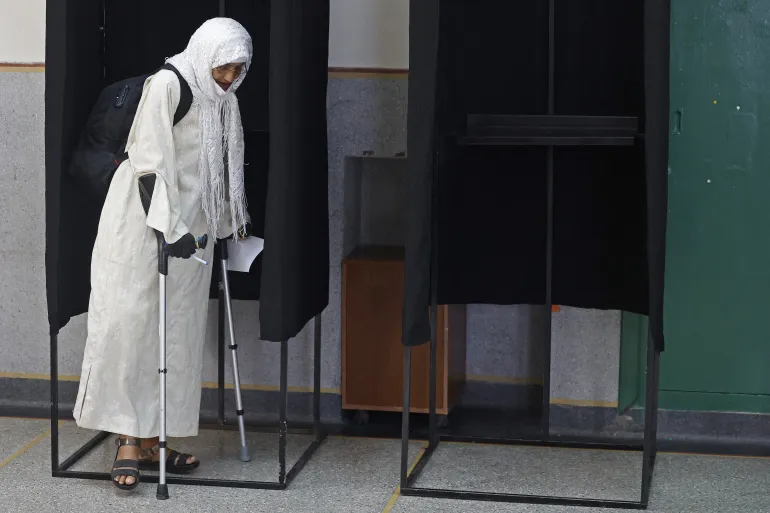
![A woman prepares to cast her ballot to vote in Morocco’s legislative elections at a polling station inside a school at the Udayas neighbourhood, Rabat, on September 23, 2026 [AFP]](https://i0.wp.com/www.aljazeera.com/wp-content/uploads/2026/09/afp_6ab3c71f1ac5-1790166815.jpg?w=640&ssl=1)
Despite the tense conditions, Morocco’s Public Prosecution has recorded a significant drop in election-related complaints compared with the 2021 vote.
But legal amendments that criminalise digital offences for the first time – including the dissemination of fake news and false allegations intended to defame candidates or voters – have been introduced. The digital space became the primary arena for violations this year, accounting for 22 complaints.
Masbah said that despite a mood of frustration in Morocco over the government’s inability to manage key economic and social issues, turnout is expected to remain steady, as it has been over the past 20 years, due to structural factors.
“Electoral and voting behaviour in Morocco is not primarily linked to electoral programmes and promises [of parties], as much as it is linked to the stable bloc formed by Moroccan deserts and villages, which relies primarily on a network of notables who have influence and the ability to win voters’ voices through utilitarian voting,” Masbah said.
“I expect that if there is a decline in the voting rate – and this is likely – it will not be catastrophic or a sharp decline, given the consideration I mentioned earlier, which is the focus on notables and traditional elites in winning over voters.”

The week’s bestselling books, September 27
The Southern California Independent Bookstore Bestsellers list for Sunday, Sept. 27, 2026, including hardcover and paperback fiction and nonfiction.
Source link

From lesser-known islands to Spanish cities
NOT sure where to head on holiday next year? Well, you’re in luck because the best places to travel to in 2027 have just been named.
Each year Lonely Planet releases its Best In Travel list highlighting amazing destinations around the globe – from beach-filled islands to mountainous coasts.
The list, which features 50 destinations and experiences, is selected by a global community of experts.
And this year, one UK spot has been featured on the experience list – walking St Cuthbert’s Way in the Scottish Borders.
The 62-mile walk stretches between Melrose and Lindisfarne, heading over the rolling hills of the Scottish Borders and through Northumberland.
Along the way, there are a number of hillforts to see as well as village pubs to stop at for a tipple, before heading across to Holy Island.
Read more on travel inspo

Patricia Yates, CEO of VisitBritain/VisitEngland, said: “It is wonderful to see St Cuthbert’s Way recognised by Lonely Planet as one of the best experiences in the world to enjoy in 2027.
“Britain is blessed with so many breathtaking landscapes, stunning coastlines and remarkable history and heritage that it is fitting that a trail, which effortlessly combines all three, has received such a glowing endorsement by global travel experts.”
As for the best places to go in the world next year, several destinations in Europe made it onto the list including The Veneto, Italy.
The Veneto region spans a large area and includes popular Italian spots such as Venice and Lake Garda, but it also includes smaller cities like Verona and Padua.

Another sunny spot on the list is Šibenik, in Croatia – a small Adriatic city with a number of vibrant festivals throughout the year as well as a white stone palace dating back to the 14th century.
Of course, Spain made it onto the list with Leon, in the north of the country.
Unlike more popular Spanish retreats, the medieval city of Leon benefits from fewer visitors and crowds, but heaps of Gothic architecture and history – as well as 29C weather in September.
Though, if you wanted to head somewhere completely different to where you have been before, venture to Skanör and Falsterbo, in Sweden, also known as the Swedish Riviera.
These two towns are linked by a bridge and can easily be explored together
Make sure to look out for the colourful beach huts as well as take a dip in the calm, shallow waters.
Plenty of long-haul destinations were named on the list too, including Quebec in Canada .
Travel Reporter Cyann Fielding, who has previously visited, said: “When people ask me where I would recommend travelling to – which is a lot – I always instantly reply Quebec.
Lonely Planets Best in Travel Destinations 2027
THESE are the best destinations to head to in 2027, according to Lonely Planet:
- Quebec, Canada
- Northern California Coast & its Redwoods, USA
- Maryland, USA
- Prince Edward Island, Canada
- New Mexico, USA
- The Veneto, Italy
- Dessau, Germany
- Skanör – Falsterbo, Sweden
- Šibenik, Croatia
- León, Spain
- Montserrat, Caribbean
- Bariloche and the lakes, Argentina
- Granada, Nicaragua
- Bocas del Toro, Panama
- Oman
- Rabat, Morocco
- Tsavo East and West National Parks, Kenya
- Dunedin & the Waitaki, New Zealand
- The Tweed, Australia
- New Caledonia, South Pacific
- Okinawa, Japan
- Chengdu, China
- Gujarat, India
- Danang, Vietnam
- Fulidhoo, Maldives
“This charming French-Canadian city feels like stepping into a fairytale, even with its own castle on the hill – which is actually Chateau de Frontenac Hotel.
“The city is easily explored on foot and is a great base for exploring the wider Quebec region with waterfalls, dense forests and pretty towns.”
If it is white beaches you are after, Fulidhoo in the Maldives also featured on the list.
Fulidhoo is actually one of the Maldives’ non-resort islands, which means you won’t see commercialisation or tourist traps.
Instead, white sand beaches sit at the edge of the island boasting crystal clear waters with stingrays and nurse sharks.
Or for a different island, Montserrat, which according to Lonely Planet is “one of the Caribbean’s most overlooked islands, with emerald-green peaks, black-sand beaches, and a fascinating history shaped by volcanic fire”.
Fancy exploring somewhere in America? Then head to the Northern California Coast and see its Redwoods.
Coast Redwoods are the tallest trees in the world and along the Northern Californian Coast they grow in many different spots including Humboldt Redwoods and Jedediah State Parks.
Sticking to the forest theme, you could visit Monteverde’s cloud forest, in Costa Rica, where the trees are surrounded by a fairytale-like mist caused by warm winds from the Caribbean meeting the cooler air of the mountains.
Or for a safari, visit Tsavo East and West National Parks in Kenya with massive savannahs where elephant herds roam freely and Yatta Plateau – the world’s longest lava flow.
When it comes to other great experiences across the globe, Lonely Planet recommends barhopping Miami’s South Beach hotels, where in addition to sunny, sandy beaches you will find the city’s iconic Art Deco hotels.
For something a little closer to home, in Italy, sailing the Aeolian Islands also made the list.
These little-known UNESCO-listed islands feature rugged coasts but also have crystal clear waters.
Or live out your Mamma Mia dream in Greece by diving into Poseidon’s underwater world with wrecks and hidden caves.
Lonely Planets Best in Travel Experiences 2027
THESE are Lonely Planet’s top experiences to do across the globe in 2027:
- Walk St Cuthbert’s Way, Scottish Borders to Northumberland
- Explore Killary Fjord, Co Galway, Ireland
- Turn temporary keeper at Rose Island Lighthouse, Rhode Island, USA
- Enjoy wine and fine-dine in Valle de Guadalupe, Mexico
- Barhop Miami’s South Beach hotels, USA
- Savour the Slow Road, Minnesota, USA
- Road-trip through history on Route Napoléon, France
- Sail the Aeolian Islands, Italy
- Dive into Poseidon’s underwater world in the Aegean Sea, Greece
- Go on a Galápagos expedition cruise, Ecuador
- Dance tango at a Buenos Aires milonga, Argentina
- Take a polar plunge, Antarctica
- Marvel at Monteverde’s cloud forest, Costa Rica
- The Museums of Abu Dhabi
- Meet Jane Goodall’s chimpanzees, Tanzania
- São Tomé and Príncipe’s deserted beaches
- Immerse in art in the Red Centre, Australia
- Experience Faʻa, Samoa
- Embark on ocean adventures, French Polynesia
- Glide on a longboat to orangutan territory, Sarawak, Malaysia
- Ride the Darjeeling Himalayan Railway, India
- Michinoku Trail, Japan
- Follow a Foodie Trail, Taiwan
- Be dazzled by Kazakhstan’s futuristic architecture, Astana
- Go flightseeing in Alaska, USA

Sen. Bernie Sanders unveils bill to ban artificial superintelligence and create Department of AI
Washington — Two leading progressive lawmakers, Sen. Bernie Sanders and Rep. Greg Casar, are unveiling legislation Wednesday that would ban artificial superintelligence and create a federal agency to oversee advanced AI as some of the industry’s own leaders urge Congress to impose guardrails on the advancing technology.
The bill, provided first to the Associated Press, would also pause advanced AI development until guidelines are implemented while creating the Department of Artificial Intelligence. Multiple employees at leading AI companies are endorsing the bill.
“It doesn’t take a genius to say, ‘slow it down,’” Sanders, I-Vt., said in an interview with AP. “Do we really want to develop a super intelligence that when it becomes smarter than human beings could act independently of human control? I don’t think we do.”
Congress has so far done little to rein in the AI industry even as some of its most prominent leaders warn about potentially catastrophic risks. President Trump has resisted recent calls for greater government oversight, putting him at odds with tech leaders including Anthropic’s Dario Amodei, OpenAI’s Sam Altman and xAI’s Elon Musk.
The bill aims to dramatically slow down AI development
The legislation would permanently prohibit artificial superintelligence, which it defines as a system that exceeds human cognitive ability or has sufficient capabilities to plan and execute the destruction or disempowerment of humanity.
It would temporarily pause development of the most advanced AI systems until new federal safety rules are established by a new Department of Artificial Intelligence. Advanced AI systems would then need federal approval before they could be deployed. Violations could carry significant penalties, including up to 20 years in prison in some cases.
A number of current employees at AI companies and experts signed on in support of the bill, according to a statement shared with AP.
Juan Felipe Cerón Uribe, a researcher in OpenAI’s Safety Systems, said in a statement supporting the bill that “superintelligence could either go extremely right or extremely wrong” and that “we shouldn’t be playing such games.”
Swante Scholz, a software engineer at Google DeepMind who said he was not speaking on behalf of his employer, said on the current path of development, the “most likely outcome is an existential catastrophe for humanity.”
“A ban on superintelligence development would be a positive change for the foreseeable future,” Scholz said in a statement.
The bill faces long odds but draws a line in a growing fight
The bill from Sanders and Casar faces long odds in the Republican-controlled Congress, where lawmakers have struggled to coalesce around even less sweeping AI regulations.
But it offers a window into how the progressive wing of the Democratic Party is approaching AI regulation ahead of November’s midterms and a 2028 presidential campaign in which the technology is expected to be an increasingly prominent issue. Casar, a Democrat from Texas, is the chair of the Congressional Progressive Caucus.
Potential 2028 presidential candidates have rushed in recent weeks to release proposals showing they’re taking the issue seriously. Maryland Democratic Gov. Wes Moore announced a plan to regulate AI on Tuesday, while California Democratic Gov. Gavin Newsom signed an executive order to accelerate implementation of a California law that calls for independent oversight of AI companies last week.
Sanders, a two-time presidential candidate who is now 85, has especially focused on the issue in recent months. In June, he introduced legislation to create a sovereign wealth fund financed through a one-time tax on the stock of the largest AI companies. Last week, he hosted colleagues for a briefing with experts and also attended a conference focused on the issue alongside Republicans, including former White House adviser Steve Bannon.
The debate over AI regulations has scrambled political alliances both in Washington and for voters across the country.
Americans have grown more concerned about the environmental impacts of artificial intelligence over the last year, according to a recent poll from The Associated Press-NORC Center for Public Affairs Research and the Energy Policy Institute at the University of Chicago.
The survey data say about half, 53%, of Americans are “extremely” or “very” concerned about artificial intelligence’s environmental impacts. That is up from 41% last year. Democrats are driving much of the increase in environmental concern, but the poll also reveals broader worries about the local impact of data centers, which power AI and cloud computing.
Trump has shown little interest in curbing AI risks
While some industry leaders have called for new safeguards, Trump has pushed in the opposite direction. On Tuesday, Trump told the United Nations General Assembly that artificial intelligence will be renamed “super intelligence.”
“I think Trump has very little understanding of what this issue is about,” Sanders said. “I think he’s mainly concerned about the economic implications of a slowdown.”
AI safety is expected to be a central part of talks between Trump and China’s Xi Jinping at the White House this week as the countries compete for dominance in the sector. The prospect of slowing development in the United States while China continues on has also been one of the central arguments against sweeping restrictions.
Sanders argued that avoiding the most dangerous forms of AI would ultimately require cooperation between the two countries, comparing the challenge to nuclear arms control during the Cold War.
“Ronald Reagan, arch-conservative, was smart enough to understand that he had to sit down with Gorbachev, a communist, and work out a nuclear treaty that protected humanity,” Sanders said. “I think we can do that again now.”
Cappelletti writes for the Associated Press.
Why USC isn’t hyping up the Oregon game: ‘Every opponent the same’
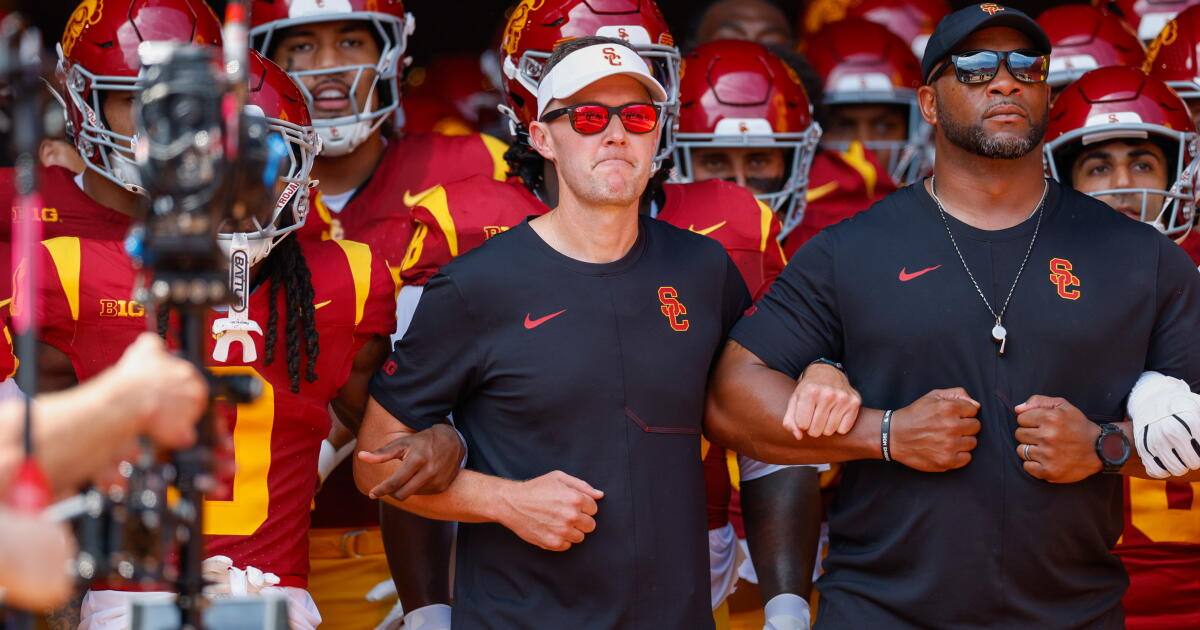
When USC and Oregon meet Saturday at the Coliseum, the stakes couldn’t be higher for Trojans coach Lincoln Riley. A win could catapult USC into serious contention for the College Football Playoff. A loss could send its season into a sudden spiral. And looming over it all are questions about the coach’s future — questions that could be answered, at least in part, by the Trojans’ performance this week.
“It’s definitely an important game,” Riley said Tuesday. “There’s no question about it.”
But ask his star quarterback if there’s any extra motivation this week to beat Oregon, and you won’t exactly get the same sentiment.
“Eh, not really,” Jayden Maiava said. “We’re just kind of attacking it the same every single week.”
Or what about the Trojans starting left tackle?
“It’s the exact same [this week],” senior Elijah Paige said. “We treat every opponent the exact same.”
At the start of arguably the most consequential week of their season, the Trojans certainly gave their best efforts not to make a big deal out of the big game with Oregon. Cliches were wielded like shields Tuesday, protecting against the imminent threat of social clips construed as bulletin board material.
But there’s no hiding from the significance of Saturday’s meeting for USC. Not when the messaging all off-season, like the billboards all around town, suggest that “the time is now.”
That’s definitely true right now for the Trojans, who face a gauntlet of a schedule in the coming weeks after Oregon. Three of their next five opponents after Oregon are ranked in the top 13, with two of those games on the road.
“This game should have a lot riding on it,” Riley said. “You kind of look forward and look ahead, it feels like a game that’s going to be relevant for a long time. I think it’s good for college football. It’s good for the West Coast.”
The rivalry between the two teams has grown especially heated in recent years. But on the football field, it hasn’t really been much of a matchup over the past two decades. USC has beat Oregon just twice in their last 10 meetings. And while USC has yet to play in the College Football Playoff, Oregon has already made three appearances and finished once as runner-up.
Oregon coach Dan Lanning has bested Riley in both of their head-to-head meetings, too. But the Ducks have not been at their best so far this season. After barely squeaking by Boise State in the season opener, they were upset on the road by Oklahoma State, which had previously lost 12 in a row.
Plus, they haven’t played at the Coliseum since the pandemic-shortened 2020 season, when they beat USC in L.A. for the Pac-12 title.
“It’s certainly not just another game,” Lanning said of the matchup with USC. “It’s as intense as it gets, when you talk about two teams that are competitive, that want to be really good, that have great talent. It means a ton to the fanbase. It means a lot to our team.”
The same is true at USC, even if no Trojan players are willing to admit it at the moment.
Though Paige did seem to let some enthusiasm slip Tuesday, when asked what it would be like to beat Oregon in his final opportunity to do so.
“It’d be awesome,” Paige said, before snapping back to attention.
“It’s an awesome game,” he continued. “We play a lot of awesome games.”
Injured DL Jahkeem Stewart still ‘touch and go’
Standout sophomore defensive lineman Jahkeem Stewart was dressed and looking ready to return at the start of USC’s Week 2 win over Louisiana. But after being a late scratch in that game, Stewart was ruled out early of USC’s Big Ten opener against Rutgers.
So what exactly changed in between?
Riley assured Tuesday that there was “no setback” with Stewart’s foot injury, which has held him out since the start of the season, but that USC “made the decision to pull him back a little bit” after seeing him warm up during Week 2.
Stewart is “hopefully not too far away,” Riley said. But his status for this Saturday certainly doesn’t sound optimistic.
“He’s continuing to rest, continuing to get healthier,” Riley said. “We do feel like we’re going to have him here at some point. But it’s a little bit kind of touch-and-go as that goes on, trying to manage … the time to rest without being too conservative with it. And so we’re definitely making progress. He’s definitely getting better and better each week.”

Center Parcs rolls out sensory libraries for neurodivergent families

CENTER Parcs has become the first holiday operator to begin the roll out of new sensory libraries at all of its villages to cater for families with neurodivergent children.
Collaborating with specialist SEN consultancy SENNIES, it has officially opened its sensory library at its Elveden Forest village, where families will be allowed to borrow items for free during their stay.


Products such as noise-reducing ear defenders, wipe-clean boards, calming lights, fidget toys, feelings wheels, visual timers and pop tubes will be available for families to choose from.
The short break provider plans to roll out libraries at all of its villages by 2028.
It follows research of 500 parents and legal guardians of neurodivergent children and those with additional needs, which revealed 80 per cent take a destination’s ability to meet their child’s individual needs into account when deciding where to go.
A further 80 per cent said busy or crowded environments can be challenging for their child, with 75 per cent sometimes avoiding activities or facilities entirely because they prove overwhelming.


Georgia Sargeant, CEO and founder at SENNIES, speaking in partnership with Center Parcs, said: “No two neurodivergent children are the same, so there is no single adjustment that works for every family.
“What matters is choice, a considered range of options from sensory resources and communication aids through to support for self-regulation and co-regulation, so a family can pick what works for their child that day.
“This library turns families’ feedback into practical support and shows how holiday providers can respond meaningfully to changing needs.”
The decision to launch the library comes as 44 per cent of parents polled said many holiday providers don’t offer adequate provisions for their children.
With 70 per cent agreeing further support is needed for neurodivergent children and kids with additional needs.
It emerged 72 per cent of mums and dads bring sensory equipment or comfort items from home on every or most trips.
And 68 per cent said access to sensory and accessibility aids at their destination would improve the holiday experience for their child.
While a further 68 per cent also said if they could obtain a variety of sensory items to loan for the duration of their getaway, it would help their family feel more supported.
Department for Education figures show more than 1.8 million pupils in England now have special educational needs – this is an increase of 5.2 per cent in a year.
And it has seen NHS assessment waitlists reach more than 240,000.
While the Children’s Commissioner’s latest annual briefing found children’s referrals, involving suspected autism, rose 47 per cent in a single year.
And neurodevelopmental referrals increased by 24 per cent.
Richie Williams, village director at Center Parcs Elveden Forest, said: “The number of families looking for more thoughtful, practical support is growing.
“This pilot is the beginning of a journey, and we will listen closely to families using it and learn from their feedback as we consider what comes next and a future rollout to other villages.”

Can flurry of New York diplomacy lead to US-Iran diplomatic breakthrough? | US-Israel war on Iran News
At the colloquium established shortly after the second world war to prevent future wars, United States President Donald Trump did just the inverse: He platformed his unceasing threats against Iran, suggesting almost casually on Tuesday that he could “annihilate” the country he has waged war against since February 28.
But behind closed doors on the sidelines of the United Nations General Assembly (UNGA), a flurry of diplomatic activity concerning the ongoing US-Iran war has also been unfolding, as world leaders gather in New York.
Recommended Stories
list of 4 itemsend of list
The US and Iran held indirect talks for three hours on Tuesday. US special envoys Steve Witkoff and Jared Kushner met Iranian Foreign Minister Abbas Araghchi, with Trump calling it a “very good” and “very productive” meeting. Trump also met Gulf Cooperation Council (GCC) leaders that day, with senior officials from the region mulling a Qatari proposal for a common security framework involving Iran and the Gulf states.
Meanwhile, Iranian President Masoud Pezeshkian arrived in New York early on Wednesday – the first time a leader whose country is at war with the US has set foot on US soil to address the gathering. And Chinese President Xi Jinping will skirt New York to instead meet Trump one-on-one in Washington, DC – his first state visit to the US in just less than a decade. Xi lands on Wednesday evening.
All these separate diplomatic initiatives, analysts tell Al Jazeera, are parts of a push to bring Iran and the US back to the negotiating table. According to Al Jazeera’s correspondent in Tehran, Tohid Asadi, Araghchi’s meeting with Witkoff and Kushner was to convey Tehran’s latest set of conditions to end the war, following the collapse of the June 60-day memorandum of understanding (MoU) finalised in Islamabad, Pakistan.
But analysts say expecting an actual deal to emerge this week from the diplomatic meetings in the US would be unrealistic. Multiple actors and mediators in the conflict are testing possible off-ramps, but core disagreements between Washington and Tehran remain unresolved.
“I am sceptical that a breakthrough deal can emerge this week, but a series of understandings can build confidence for renewed diplomacy,” Sanam Vakil, the director of the Middle East and North Africa Programme at Chatham House, told Al Jazeera.
Too early for a breakthrough
Vakil is hesitant to call the current moment ripe for a diplomatic breakthrough – it is far too early, and there is a history of negotiations failing, she said.
“Both sides have been negotiating for over two years and on two occasions, that ended with military conflict and these negotiations continue amid persistent military threats,” she said.
Iran has long pointed to its previous rounds of diplomatic talks with the US – in 2025 and again this year – as evidence that Washington can veer from negotiations to military action. It has cited the 12-day war last June, and the current conflict, which began with joint US-Israeli strikes on Tehran at a time Washington and Tehran were engaged in Oman-mediated dialogue.
Adel Abdel Ghafar, a senior fellow focusing on the Middle East at the Australian Strategic Policy Institute, said that there appears to be “genuine” movement towards reigniting negotiations – but also “a fair amount of posturing”. He referenced Trump’s praise for Tuesday’s indirect Iran-US talks and his pugnacious UNGA speech the same day.
A breakthrough hinges on whether Iran’s diplomats in New York can actually deliver, he said.
“Araghchi and Pezeshkian can negotiate, but any deal will need the consent of the [Islamic Revolutionary Guard Corps] and the hardliners in charge of the war back home,” Abdel Ghafar told Al Jazeera.
There are specific indicators to watch for another round of US-Iran contact, the analysts said.
“The signs to watch for are another confirmed round of US-Iran talks, agreement on sequencing or reciprocal steps, and language from both sides becoming more specific about implementation rather than simply repeating maximalist demands,” said Vakil.
Abdel Ghafar added that, against the backdrop of UNGA, signs could include Araghchi or Pezeshkian meeting directly with US officials, in addition to supportive statements from more hardline elements of the Iranian administration back home.
The appearance of such indicators could lead to a stronger push for such talks when Trump meets Xi, as well as an easing of fighting between the Iran-backed Houthi group and the Saudi-led coalition in Yemen, which has escalated in recent weeks, the analyst added.
The limits of Gulf and Chinese diplomacy
The analysts agreed that the Gulf states remain crucial in brokering a return to talks because they have channels to both warring sides, as well as a very strong interest in preventing further escalation, having absorbed the cost of the fighting since February. Qatar, Oman and other Gulf states have been involved in mediation efforts throughout the conflict.
“Qatar and Oman, in particular, can help translate broad political messages into workable arrangements on issues such as Hormuz and regional security,” said Vakil.
China, meanwhile, has less capacity or interest to mediate, she argued.
Beijing, however, could use its economic and political leverage with Tehran “to encourage compromise and give Iran greater confidence that any agreement will not leave it completely isolated”, said Vakil.
Abdel Ghafar pointed out that China remains Iran’s main customer for its oil, explaining why Beijing has pushed for a return to the June interim deal and the reopening of the Strait of Hormuz.
“Still, I think neither can impose a settlement – it ultimately comes down to Washington and Tehran,” he said.
Hostilities and Hormuz
The tit-for-tat rhetoric has resulted in continued deadlock in the conflict, with each side unwilling to relinquish to the other’s demands and appear to admit defeat.
On Tuesday, following Trump’s remarks on annihilating Iran, Iran’s military warned that it is ready to respond with “crushing” attacks more severe than earlier in the war.
“The main challenge is finding a formula that both governments can present domestically as a negotiated compromise rather than capitulation,” said Vakil.
The Strait of Hormuz remains a key obstacle.
“It’s Iran’s strongest card and the thing Washington most wants back, with oil prices high and midterms approaching,” said Abdel Ghafar.
“Tehran will be reluctant to give it up without firm guarantees in return.”
Still, he warned that even if Washington and Tehran de-escalate, that does not automatically extend to the Red Sea.
The wider landscape of regional instability and conflict has created new conditions for Yemen’s unresolved war to flare up once again. The Bab al-Mandeb, now under effective Houthi control, has gained greater significance amid Iran’s effective closure of the Strait of Hormuz, a vital artery for global oil and gas supplies.
“Calm in Hormuz won’t necessarily mean calm in Bab al-Mandab,” said Abdel Ghafar.

UK’s biggest waterpark that’s 28C all year round launches new Friday night events with 18 slides and wave pools
THE UK’s biggest waterpark is about to be the best place to start your weekend.
Sandcastle Waterpark, which is the largest and recently voted best in the country will be open for more hours of fun on Friday evenings.
The Blackpool waterpark has launched its Friday Night Splash event, so now you can spend your evening on its 18 slides and in the swimming pool.
Usually the waterpark is open is until 2:30pm in the week and 4pm on the weekends.
But the new Friday sessions will let you visit from 4pm until 8pm, for a post-work splash before the weekend.
The tropical waterpark, which is always heated to 28C, has something for everyone whether you’re after family-friendly splash zones or thrilling flumes.


There are 18 slides in total, and those wanting to try out the speedy rides should head to The Master Blaster which is described as “white knuckle”.
There’s also Sidewinder, the world’s first indoor half-pipe waterslide and Montazooma, a high-speed ride with hairpin bends and 360 degree helixes on the way from top to bottom.
For families, head to Thunderfalls, which are two twisting waterslides for side-by-side racing.
There are also treehouses and forts for kids to play in and that’s where you’ll find the country’s biggest water cannon.
The slower moving Ushi Gushi River Creek is the lazy river ride while the Typhoon Lagoon is the waterpark’s huge wave pool.
While the kids are splashing about, adults can escape to the Sea Breeze Spa for an extra £7 to unwind in the sauna, steam room, and aromatherapy lounge.

For the ultimate VIP day out, the £60 Tiki Cabana package gets you park entry, lunch and soft drinks, spa access, and the private retreat comes with a TV and hot tub.
Tickets to the waterpark for a three-hour session costs from £25.50 per person over the age of eight (if booked in advance).
Tickets for kids between three and seven-years-old cost from £16.50 per person and children under three go free.
The waterpark is two minutes from Blackpool Pleasure Beach – so it’s easy to make a day out of it and see all the attractions.
The main season runs until October 31, with opening dates from Wednesday to Sunday – this drops down to just weekends after this.
For even more of the UK’s tropical indoor waterparks – check out these ones which have tickets from £2.50.
Travel Reporter Cyann Fielding recently visited the waterpark…

Travel Reporter Cyann Fielding recently visited Sandcastle and gave her verdict…
She said: “Sandcastle Waterpark in Blackpool is kept at a toasty 29C and has more than 18 waterslides and attractions.
“The real gem of the show is the adult-only spa, hidden in plain sight in the middle of the waterpark.
“You’ll have to pay an extra £7.50 per person to enter the Sea Breeze Spa but it is well worth the money.
“When I visited it was quiet, with only one or two other people using the area, compared to the packed waterpark surrounding it.
“Dipping in and out of the saunas and steam room was the ideal way to relax.
“I spent half an hour in the salt inhalation room allowing my lungs to fill with warm, salty air and calm my nervous system.
“There’s Sidewinder too, which is the world’s first indoor vertical drop slide.
“Hovering over the edge of the half-pipe, butterflies flittered around my stomach anticipating the drop.
“Before I knew it, I was tipped over the edge in my rubber ring, dropping metres down before being propelled up the other side of the pipe.
“After, I ambled over to Aztec Falls, where in a rubber ring I dropped into a pitch-black bowl, swirling around like I was inside a waterfall.“

I visited one of Europe’s most popular cities — I’ll never return
This city is a favourite among trendy, wealthy people – but I don’t see the charm.

This city is beloved by tourists – but I don’t get the hype(Image: Getty)
I have been lucky enough to see a fair amount of the world not only in my role as a travel reporter, but also in my own time. However, after spending a long weekend in this popular European city I have finally discovered a place I will never return to.
Berlin is beloved by trendy east Londoners who pretend they don’t have a double barrelled surname and a trust fund. The city is full of even trendier Berliners who pretend they don’t have any interest in being cool, whilst still trying as hard as possible to appear so.
I have visited before and found the city grey, utilitarian, dirty and ugly. At the time I had a friend living there who told me the city would “eat you alive” if you let it – and I believed him.
I spent a weekend there and over those two days I stood in human faeces whilst walking through a park, watched people urinate in the U-Bahn, saw one man vomit and another man sit in it.
I was hounded by wasps for every hour of the day, and shady characters for every hour of the night.
I didn’t get eaten alive, but by the time I flew out of the city morale was low. I spent the next seven years vowing I would never return – but a twist of circumstance saw me packing my bags last Friday to spend another long weekend in Berlin.
My friends were visiting Europe from New Zealand, and the only weekend I had free time to see them was the weekend they were in Berlin, so I decided I’d give it another go. I was hoping my initial impression of the city had been wrong, and that my return trip would show me the real side of the city
Whether real or not, the side I saw was not to my liking.
The city was still as utilitarian and grey as I remembered. We stayed in Neukölln, a trendy artistic neighbourhood with plenty of coffee shops, späti (like off-licences but with seats outside to sit and enjoy a beer) and vintage shops. These are all my favourite things, but Berlin’s version of them was tinted with the greasy pallid feeling you get after a night out that has gone on several hours too long.
My least favourite thing about Berlin however, is the wasps. In late summer, they have reached peak population and ruin the city’s outdoor spaces. Sitting outside to enjoy a brunch, coffee or a pint becomes a feat of endurance as these angry insects swarm you, fall inside your pints, try to crawl inside your nose and mouth and generally make a nuisance of themselves. It’s also illegal to kill them, as they are protected under the Wildlife Act.
Over the three days I was there I had two of them die in my beer, and four of them make my £7 donut inedible.
My Berlin weekend was not all bad. I did find an amazing coffee shop near our accommodation called Leuchtstoff Kaffeebar. The coffee was delicious – perhaps the best I’ve had since I left New Zealand two years ago, and I enjoyed a Bircher Muesli that set me up perfectly for my day of wandering the city.
The café also serves pastries, and had a very cool mezzanine that you could climb up to via a ladder.
I also visited the Jewish Museum in Kreuzberg. Admission is free, and the building is truly something to behold. It uses architecture and art installations to create a feeling of absence and highlight the huge loss felt by the community as a result of the millions murdered during the Holocaust.
A large section of the building is below ground, with multi-media installations and plenty of information about the history of Judaism and their persecution in Germany. It was a sombre afternoon, but definitely worth a visit if you are in the city,
Despite finding a few things I liked about Berlin, overall my sense of the city was that it is without whimsy. I won’t say it’s soulless – but the soul it possesses is not one I care to find out more about.

I’m a family travel expert – here’s my top tip for saving money during school holidays
Finding cheap holidays during the school holidays may feel like an impossible task for parents but according to one travel pro there are some easy tricks that could help

The Travel Mum shared a handy trick to save money(Image: Apple Photos Clean Up)
When it comes to cheap holidays, most parents have already resigned themselves to the fact that prices surge during school holiday dates – but according to one travel expert, there are some minor tweaks that could actually help families save money on their next getway.
Mum-of-two and avid traveller Jen Carr has built up a following of over 349,000 on Instagram where she shares her top tips for finding cheap family travel deals.
While the peak holiday season comes with inevitably higher prices, according to Jen just changing the dates of travel by a few days could mean you save hundreds of pounds, without having to take the kids out of school during term time.
“Booking at the end of summer,” she told the Mirror exclusively. “It’s so much cheaper to go the last week of August compared to the first week of August. I guess that’s just because demand’s probably a lot less. Nobody really wants to get back off holiday the day before the kids go back to school, but if you’re willing to do that, it is a lot cheaper.”
It’s not a hack that’s specific to summer holidays either, as Jen recommended considering dates for the upcoming October half term. She added: “If, for example, in the October half term you fly three days before half term starts, you’re going to save literally hundreds of pounds. So I mean, it’s just how much you want/appreciate that attendance!”
Of course it’s worth noting that parents who do consider taking their kids out of a school for a few extra days may need to check their school’s policy on absences of this nature, or they could risk being fined per child. Currently the fine for school absences around the UK are £80 if paid within 21 days, but this can go up to £160 if paid within 28 days. This is for unauthorised absences; if you can get permission from the school for the absence, then you won’t be fined.
As for the best destinations where families can get more bang for their buck? Jen suggested that while the major hotspots are popular for a reason, there are some alternatives that deliver the same levels of experience but without the hefty price tags.
She explained: “There are destinations that are a lot cheaper than others and it seems to kind of go on a bit of a cycle with what’s popular. But places like Menorca and Majorca and Ibiza are always going to be a lot more expensive than somewhere like Agadir in Morocco, but you’re still getting the beach, the pool, holiday vibes and the sunshine. Go where the destinations are cheaper, and that does seem to change year-on-year. I’m sure next year Agadir will be really expensive, but this year it’s been really good value, all-inclusive.”
Speaking about further alternatives, Jen urged parents not to discount the likes of a city break; in fact, she herself enjoyed a family trip to Paris earlier this year, and said that both the kids and grown-ups had a brilliant time. She added: “I think it’s about knowing where to look. It’s, a like-for-like holiday is going to be more expensive in the school holidays. I guess it’s just being a bit more flexible and thinking, ‘Okay, well, it’s the August summer holidays. Do we need to go to Menorca for a week all-inclusive or could we maybe go for a road trip around Austria?’ Because it’s going to be a lot cheaper to do something a bit more off-piste.”
- Jen Carr, family travel expert and founder of The Travel Mum, shares the best affordable holiday deals for families throughout the week. Jen’s new book ‘Yes You Can Travel With Kids’ is available now.
Syria’s al-Sharaa answers questions on Israel’s violations in Syria | Syria’s War
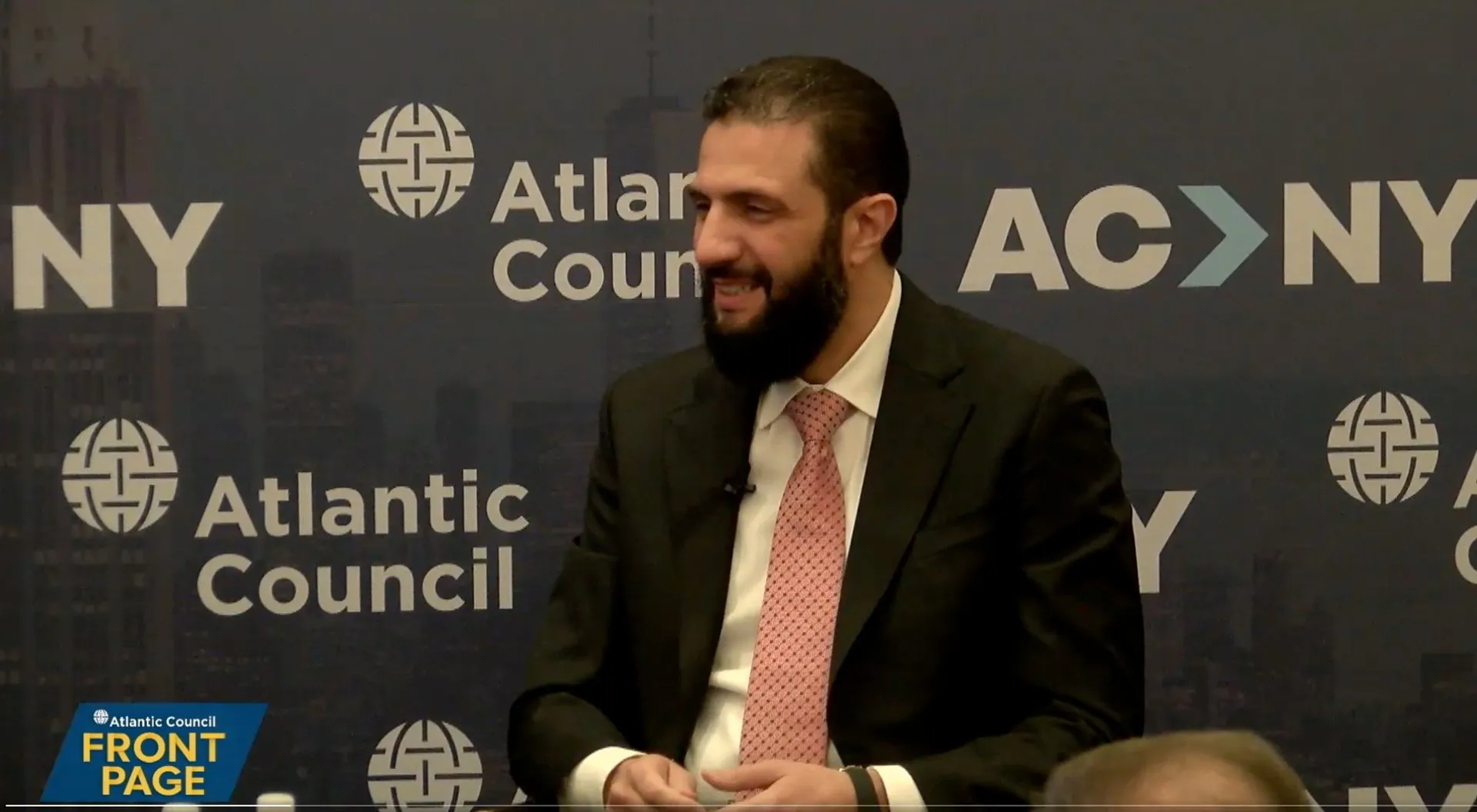
Syria’s President Ahmed al-Sharaa says Donald Trump should give New Jersey to Israel, instead of the Golan Heights. During an interview on the sidelines of UNGA, he criticised Israel’s policy of attacking and occupying Syria since October 7.
Published On 23 Sep 2026

Coleen Nolan reveals heartbreaking family feud ‘I lost those relationships’
Loose Women star Coleen Nolan has spoken out about a family feud

Coleen Nolan reveals heartbreaking family feud ‘I lost those relationships’(Image: ITV)
Coleen Nolan has opened up about a sad family rift in which some members of her family have ‘never spoken to her again’.
The beloved presenter returned to screens on Wednesday (September 23) for Loose Women. Along with Coleen, the panel consisted of Kaye Adams, Janet Street Porter and Jane Moore.
While on the show, the conversation turned to the topic of Earl Spencer’s book – which has made plenty of headlines. “I think that’s the thing when you’re writing your memoir. You can only do it from your perspective and your truth,” Coleen said.
She then shared that she waited until her mum and dad passed away before writing and releasing her own autobiography. Coleen said: “My mom and dad weren’t alive because I knew it would really hurt my mom to hear some of the things that I was going to say my truth about my dad.
“He was a brilliant dad. But had his moments where he wasn’t, and that would have upset my mom.” Coleen then shared that, due to her memoir, a family rift erupted.
She said: “Now, because I wrote those things, I had my dad’s side of the family, a couple of his sisters who never spoke to me again because of that, because they never saw him like that, and he was their golden boy, he was the only boy in the family. They absolutely idolised him.
“Even though I said he was a great dad, he drank too much for me and I didn’t like him when he was drunk and those kinds of things. I had to accept that. I lost those relationships.”
Jane Moore then asked Coleen: “Do you think that’s because you did it publicly? If you’d have that conversation with them privately, would you have carried on speaking to them?”
Coleen replied: “No, they were never, ever, ever gonna believe that. They just didn’t see anything bad at all. And, that’s okay.”
The TV star has been open about the relationship with her father – who died in the 90s – over the years. In 2024, she explained on Loose Women how she would be “scared” whenever her dad Tommy would return home from the pub at weekends.
“My dad was quite a big drinker and I think he’s the reason I became almost phobic about, well not about drink but about drunk people,” Coleen said. She added: “And even now I love when people get tipsy and have a good time but as soon as they cross that line to where their personality changes I have to leave.
“I can’t stand it because I don’t know whether it’s gonna go aggressive, you can see it in their face can’t you? That’s where I’ve gotta leave, and that stems from, as a kid, watching my dad.
“He was a brilliant dad but at weekends he’d come home and he was the quiet drunk and that scared me more because I knew he was in that mood. So that sent me the other way.”
Loose Women airs Monday to Friday at 12:30pm on ITV1.
What the US Midterms Could Mean for Venezuela
Until now, Trump has acted in Venezuela with no congressional involvement. The administration decided to work in tandem with Delcy Rodríguez, secure the oil, and run a negotiation between the old remnants of an opposition-controlled National Assembly and the regime. This framework won’t be renegotiated if the Democrats win the House of Representatives on November 3, a goal they will likely achieve. But a new Congress can exert real legislative pressure to potentially change how it moves forward.
What the Democrats have done since Maduro’s ousting
Since January, the Dems’ first efforts were two resolutions, sponsored by Tim Kaine in the Senate and Jim McGovern in the House, about war powers and who may authorize force, not about what the Venezuelan process should become. Both were supported by a few Republican leaders and failed to pass.
On February 25, Rep. Jared Moskowitz introduced the Venezuela Democratic Transition Strategy Act. It required the Secretary of State to deliver a strategy within 180 days, covering the release of political prisoners, foreign influence and assistance, followed by annual reports. Democrat Jeanne Shaheen and Republican Ted Cruz also introduced a bipartisan resolution in the Senate regarding the transition in Venezuela.
None of Trump’s numerous executive actions have required a vote, ratification, or budget allocation in the Capitol.
The initiatives by Democratic lawmakers have not aimed to reverse what happened on January 3rd, because the US cannot backtrack from the military incursion which meant, at least, Nicolás Maduro’s removal from power. What they are seeking, however, is the establishment of a plan that will lead to free elections and, in the long term, a genuine democratic transition. What is the Democrats’ position? They have maintained a stance of recognizing Edmundo González as president-elect and María Corina Machado as the leader of the opposition.
Besides, the impact of ICE and Border Patrol going after the Venezuelan community in the US has been repeatedly underlined by voices such as Rep. Debbie Wasserman-Schultz and Rep. Darren Soto, who filed a discharge petition on March 19th to force a vote on the Venezuela TPS Act.
What won’t change?
The broader US policy.
The oil agreement allegedly signed by the Trump administration, the company Nabep, and the Rodríguez regime is a 25-year project across 17 fields. That deal will not be undone by letters or congressional hearings. Not even Democrats attacking Trump’s dealings with Rodríguez have offered legislation to end them so far. A Democratic House will not be able to reinstate TPS without the Senate and a presidential signature.
The administration has shown it can take action on Venezuela without congressional involvement. That’s what it did with the military incursion on January 3rd, the deportations after invoking the Alien Enemies Act, the termination of TPS and the humanitarian parole, the formal recognition of Delcy Rodríguez as interim president, the lifting of sanctions on Delcy and sectors of the economy, the opening of the Venezuelan market to US companies, the removal of Venezuela from the list of countries that have failed to cooperate in combating drug trafficking, and the informal meeting with Rodríguez in New York. None of those executive actions required a vote, ratification, or budget allocation in the Capitol.
The only formal check Congress has is the War Powers Resolution, which has already failed twice, and Trump has promised to veto it if it ever reaches his desk. Should he do so, even with a Democratic majority in Congress, at least two-thirds of the vote is required to override a presidential veto. That threshold remains very difficult to reach.
Oversight already began
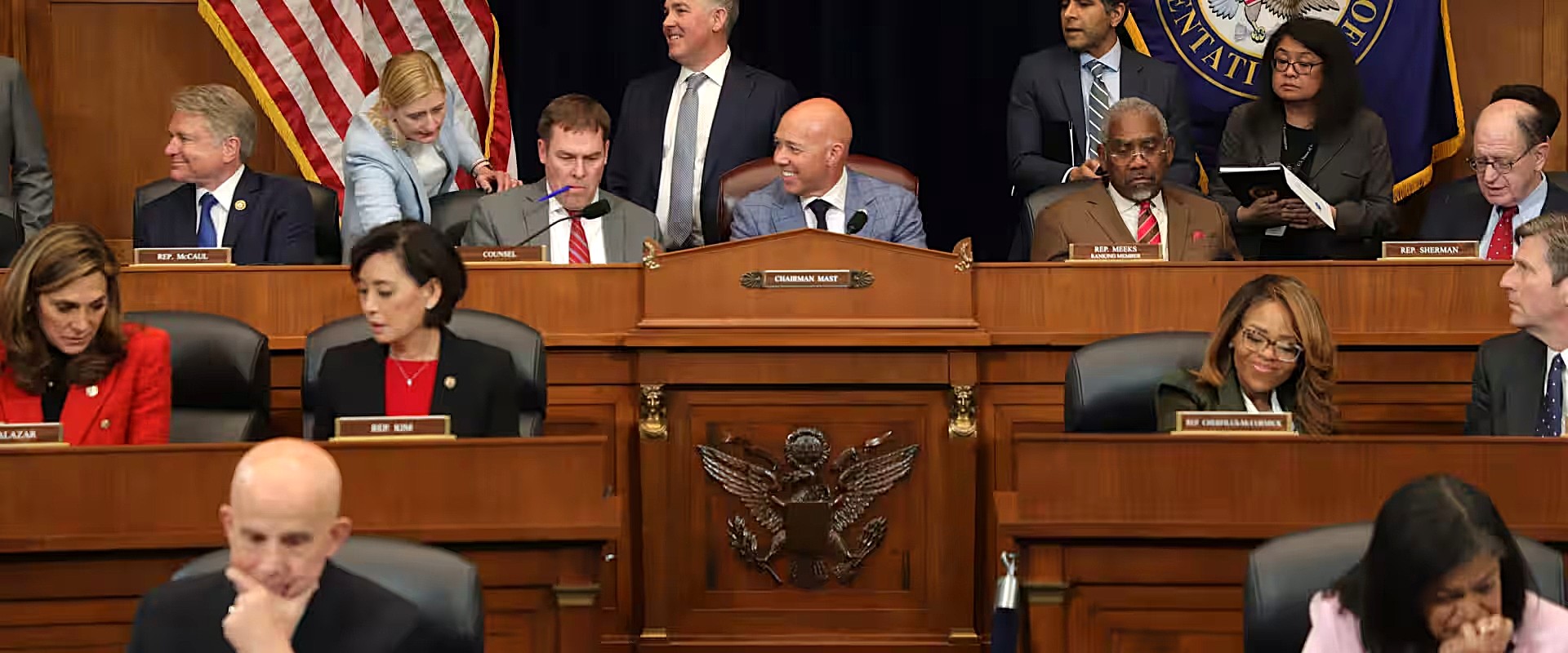
The clearest preview of what the midterm election can change came this month. Reps. Robert Garcia, Gregory Meeks and Jared Huffman, the ranking Democrats on Oversight, Foreign Affairs and Natural Resources, wrote to Secretary Rubio and Attorney General Blanche regarding the oil deal. They question why Alejandro Betancourt, who has faced investigations into alleged PDVSA money laundering, is treated as a business partner. They also say the administration has given Congress scarce details on the management of at least $13 billion in Venezuelan oil revenues.
The only thing that might change with a majority in Congress is the ability to obtain information, because those who are currently in the minority on the committees would become their chairs.
This issue is important if we expect a shift in the Legislative Oversight Committee on Venezuela. García has been the leading Democratic representative in the Oversight Committee since June 2025 and is well-positioned to chair the committee and exercise subpoena power if the Democrats win in November. Although his plans do not explicitly mention Venezuela as a priority, nor does the issue appear on the legislative agenda of Hakeem Jeffries (House Minority Leader), the agreements being negotiated and signed with Venezuela, as well as the management of oil resources, could fit perfectly with the demand for accountability and transparency that are indeed part of his priorities.
What’s happening in Florida?
We can’t talk about what we expect in November without discussing what’s happening in Florida. Although the Venezuelan vote isn’t decisive for the state, the Latino vote does carry significant weight and, in this case, naturalized US citizens or their descendants will consider immigration policies, as well as their economic impact, and abuses by ICE when they cast their vote.
The changes to electoral maps pushed by Republicans could have unexpected consequences. Moskowitz is seeking reelection and is in a competitive but winnable race. Wasserman-Schultz is in a better position in CD 20. Meanwhile, Angie Nixon, the Democratic Senate candidate, has been outspoken in her criticism of Trump’s immigration policies, demanding an end to deportations and the reinstatement of TPS.
If we want to see results regarding Venezuela that benefit Venezuelans, we have to look at the situation from an American perspective.
On the other side of the aisle, Maria Elvira Salazar’s recent announcement came as a surprise to many this week. In it, the Republican congresswoman tells Trump that his immigration control measures have gone “too far,” noting that half of the people detained by ICE in July had no criminal record. In June, she urged Trump to halt deportations to Venezuela following the earthquakes. Her actions appear to be driven more by the latest polls than by a commitment to defending immigrants’ rights.
How could a Democratic majority help the Venezuelan people?
To be honest, the only thing that might change with a majority in Congress is the ability to obtain information, because those who are currently in the minority on the committees would become their chairs. “Who negotiated the agreement? Where will the revenue go? What is the strategy behind the negotiation?” These are some of the questions that might carry more weight in the Oversight Committee or the Foreign Affairs Committee if they were headed by a Democrat rather than someone from the ruling party.
Venezuela is neither the center of the world nor a priority for the Democratic Party. One might think that it would be “easier” for chavismo to deal with the Democrats. If we want to see results regarding Venezuela that benefit Venezuelans, we have to look at the situation from an American perspective. The military intervention by the US has already happened, and if the US controls much of Venezuelan politics, that isn’t going to change because of a shift in Congress.
Americans don’t necessarily care about Venezuela’s specific situation, but they do care that the president doesn’t have “superpowers.” In my opinion, this makes it possible for Democrats to use the Venezuela issue as a mechanism for congressional oversight and to seek alliances with non-“MAGA” Republicans to place limits on Trump.

The Sports Report: Shohei Ohtani to return Wednesday
Dodgers win, Shohei Ohtani to return
From Maddie Lee: The Dodgers have less than a week left of the regular season to round into playoff form. And their roster moves for this series reflect that time crunch.
Manager Dave Roberts confirmed Tuesday that Shohei Ohtani (right biceps, left knee) was set to be reinstated from the 15-day injured list on Wednesday. Ohtani is feeling “considerably” better than he was before the IL stint, according to Roberts.
“I would say if he was a five, he’s probably an eight or a nine right now,” Roberts said before eight pitchers led the Dodgers’ 7-0 win against the San Diego Padres in the series opener.
On Tuesday, the Dodgers trimmed their magic number to clinch a first-round bye to one. And before the game, they returned two other important postseason pieces, reinstating center fielder Andy Pages (fractured left hand) and right-hander Roki Sasaki (right middle finger blister) from the injured list.
In corresponding moves, the Dodgers optioned right-hander Emmet Sheehan and catcher Eliézer Alfonzo to triple-A Oklahoma City.
Dodgers’ Dalton Rushing will have chance to make case for postseason roster spot
The Dodgers’ Josue De Paula can hit. Now he’s out to prove he can play defense, too
Angels lose to Athletics
Carlos Cortes and Zack Gelof each hit a two-run homer in the eighth inning as the Athletics rallied past the Angels 9-7 on Tuesday night.
Cortes launched a drive to right-center off Sam Bachman (1-3) to give the A’s a 7-6 lead, and Gelof cemented the comeback from a 6-0 deficit they faced just two innings before.
Cortes came off the bench as a pinch-hitter in the seventh and finished two for two with a triple and three RBIs. He also scored twice.
Our new Trojans podcast has launched
Why has it been so hard for USC football to compete for a national title after setting the standard in college football during Pete Carroll’s tenure?
Times USC beat reporter Ryan Kartje spent the past four years conducting more than 100 interviews, gaining new insight into the football program’s dramatic rise, fall and difficult push to return to national relevance.
Today, we begin sharing that story with you in “House of Troy,” a new narrative podcast from L.A. Times Studios available now on Spotify and Apple.
Check out Episode 1: “Win Now.”
In the late 1990s, USC football was in desperate need of a revival. The school turned to an unpopular choice: Pete Carroll, a former NFL coach. What happened next would transform USC into a college football powerhouse and Carroll into the face of a modern dynasty. In the first episode of “House of Troy,” Kartje takes us back to the beginning of the Carroll era and the drama that unfolded on and off the field.
Listen to “House of Troy” now on Spotify and Apple.
Nneka Ogwumike grateful for her career
From Marisa Ingemi: Nneka Ogwumike answered the same question she’s been facing for almost two months.
Why now? Why leave the WNBA when she still leads the Sparks in scoring and rebounding, has played a central role in helping the league negotiate a transformative new collective bargaining agreement and returned to the city where her pro career began?
Ogwumike is at peace with her decision. And when she steps onto the court in a Sparks jersey for the last time Thursday, she will do it without regrets.
“I’m mostly grateful,” Ogwumike said. “I haven’t really been thinking much else besides just being grateful for the opportunity to have had a 15-year career in the WNBA and also to finish in a Sparks jersey.”
Sparks fall to Aces
Four-time MVP A’ja Wilson scored 18 points and grabbed 10 rebounds to lead the Aces to an 89-79 victory over the Sparks on Tuesday night and clinch at least a No. 3 playoff seed for Las Vegas.
The Aces (30-13), on a six-game winning streak, will get home-court advantage in the first round of the playoffs, which begin Sunday. If the standings hold, they would face No. 6 seed Washington (27-16) in the best-of-three series.
Chelsea Gray scored 17 points of for the Aces, Stephanie Talbot had 14 points and Jackie Young totaled 14 points and 11 assists.
Puka Nacua’s status uncertain for Sunday
From Gary Klein: The Rams aim to ride the momentum gained from Monday night’s victory over the New York Giants into Sunday’s game against the Denver Broncos in Denver.
But it remains to be seen whether star receiver Puka Nacua will be available.
Nacua sat out against the Giants because of groin soreness.
“I’m not sure what his status is as far as this next coming week,” coach Sean McVay said Tuesday during a video conference with reporters. “I’m hopeful that he’ll play. … If he’s ready to go, great. If not, then we’ll continue to roll.”
Some insight into the next men’s World Cup squad
From Kevin Baxter: The U.S. bowed out of this summer’s World Cup with an uninspired loss to Belgium in the round of 16, the same place it has exited the three previous World Cups in which it has played. For U.S. Soccer’s much ballyhooed “golden generation,” it was a performance that hardly shone and a sign that whatever progress the federation has made over the past two decades hasn’t gone as far as hoped.
That leaves Mauricio Pochettino, coach of the national team, in a bit of a quandary heading into the new four-year World Cup cycle. Should he continue building on a foundation that has proven to be structurally weak? Or should he raze that foundation and start anew?
Turns out the answer to both those questions is yes. Because the 28-man roster Pochettino called up for the first training camp of the new cycle is a little bit of both, featuring 13 players from the World Cup squad and 12 others making their first appearance with the senior national team.
This day in sports history
1926 — Gene Tunney beats Jack Dempsey with a 10-round decision to retain the world heavyweight title.
1952 — Rocky Marciano knocks out Jersey Joe Walcott in the 13th round to retain the world heavyweight title.
1979 — The Houston Oilers overcome a 24-0 deficit to beat the Cincinnati Bengals 30-27 in overtime.
1983 — Gerry Coetzee knocks out Michael Dokes in the 10th round to win the WBA heavyweight title in Richfield, Ohio.
1992 — Manon Rheaume becomes the first woman to play in one of the four major pro sports leagues when she takes the ice in the first period for the NHL expansion Tampa Bay Lightning in an exhibition game. The 20-year-old goalie faces nine shots and allows two goals in St. Louis’ 6-4 victory.
2000 — Ben Matthews ties an NCAA record with five interceptions as Bethel beat Gustavus 14-13. Matthews ties the all-division record shared by eight players.
2007 — For the first time in NFL history, two players have 200-plus yards receiving in the same game — whether they were opponents or teammates — in Philadelphia’s 56-21 rout of Detroit. Philadelphia’s Kevin Curtis has 11 receptions for 221 yards and Detroit’s Roy Williams catches 9 passes for 204. Detroit’s Jon Kitna sets a franchise record with 446 yards passing.
2012 — The Tennessee Titans become the first team in NFL history to score five touchdowns of at least 60 yards in a game in their 44-41 overtime win over Detroit. The scorers are Tommie Campbell with a 65-yard punt-return; Jared Cook’s 61-yard reception from Jake Locker; Darius Reynaud’s 105-yard kick-return; Nate Washington’s 71-yard reception from Locker; and Alterraun Verner’s 72-yard fumble-return. The Lions also become the first team in NFL history to score two touchdowns in the final 18 seconds of regulation to either take the lead or force overtime.
2012 — Kansas City’s Jamaal Charles rushes for 233 yards, including a 91-yard TD run in the Chiefs’ 27-24 overtime win over New Orleans. Ryan Succop kicks six field goals, one to force overtime in the final seconds and a 31-yarder in overtime for the Chiefs.
2017 — The St. John’s-St. Thomas rivalry game obliterates the NCAA Division III attendance record with a crowd of 37,355. The Tommies use a stingy defense to hang on for a 20-17 win over the Johnnies at Target Field, the home of the Minnesota Twins. The previous mark was set on Oct. 8, 2016, with 17,535 fans watching Wisconsin-Oshkosh play at Wisconsin-Whitewater.
2017 — Juwan Johnson catches a seven-yard TD pass as time expires and fourth-ranked Penn State rallies to stun Iowa 21-19 in the Big Ten opener for both teams. Saquon Barkley has 211 yards rushing and 94 yards receiving for the Nittany Lions, who outgain Iowa 579-273 but nearly blew the game. With the Hawkeyes leading 19-15, Penn State goes 80 yards on 12 plays to close out the game, and Trace McSorley finds Johnson in a crowded end zone on fourth down.
2018 — Tiger Woods caps off one of the most remarkable comebacks in golf history. Woods ends his comeback season with a dominant victory at the Tour Championship. He taps in for par and a 1-over 71 for a two-shot victory over Billy Horschel. It’s the 80th victory of his PGA Tour career and his first in more than five years.
2018 — Drew Brees sets the NFL record for career completions while passing for 396 yards and three touchdowns and running for two scores to lift New Orleans past Atlanta 43-37 in overtime. Brees breaks the record of 6,300 career completions set by Brett Favre.
2022 — Tennis great Roger Federer plays his final pro match during Laver Cup in London; teams with friend and rival Rafael Nadal but loses to Americans Jack Sock and Frances Tiafoe.
Compiled by the Associated Press
This day in baseball history
1908 — In a crucial game with the Chicago Cubs, Fred Merkle of the New York Giants failed to touch second base as the apparent winning run crossed home plate. This resulted in a great dispute and the game was eventually declared a tie and played over on Oct. 8 when the Cubs and Giants ended the season in a tie.
1939 — Brooklyn’s Cookie Lavagetto went 6-for-6 to lead the Dodgers’ 27-hit attack in a 22-4 rout of the Philadelphia Phillies. Lovagetto had four singles, a double and a triple and scored four runs. He was the only Dodger without an RBI. Dixie Walker, Gene Moore and Johnny Hudson each drive in three runs.
1952 — The Brooklyn Dodgers clinched the NL title, the first time since 1948 that the pennant wasn’t decided in the season’s final game.
1957 — Hank Aaron’s 11th-inning homer gave the Milwaukee Braves a 4-2 victory over the St. Louis Cardinals and the NL pennant. It was the first time since 1950 that a New York team hadn’t finished first.
1979 — Lou Brock stole base No. 938, breaking Billy Hamilton’s record, as the St. Louis Cardinals beat the Mets 7-4 in 10 innings.
1983 — Steve Carlton of Philadelphia recorded his 300th victory with a 6-2 win over the St. Louis Cardinals at Busch Stadium.
1984 — The Detroit Tigers beat the New York Yankees 4-1, making Sparky Anderson the first manager to win more than 100 games in each league.
1986 — Rookie left-hander Jim Deshaies set a major league record by striking out eight batters to start the game and finished with a two-hitter and 10 strikeouts to lead the Houston Astros past of the Dodgers 4-0.
1987 — Albert Hall of the Atlanta Braves hit for the cycle in 5-4 win over the Houston Astros.
1988 — Jose Canseco became the first major leaguer to hit 40 homers and steal 40 bases in one season as the Oakland Athletics beat the Milwaukee Brewers 9-8 in 14 innings.
1992 — Bip Roberts tied the NL record with his 10th consecutive hit, then grounded out against Pedro Astacio to end his streak in the Cincinnati Reds’ game against the Dodgers.
1998 — Houston’s Craig Biggio became the second player this century to have 50 steals and 50 doubles in a season, joining Hall of Famer Tris Speaker.
2001 — Sammy Sosa became the first player to hit three home runs in a game three times in a season, but Moises Alou’s two-run shot rallied Houston to a 7-6 victory over the Chicago Cubs.
2008 — The New York Yankees’ streak of postseason appearances ended. Boston beat Cleveland 5-4, minutes before the Yankees’ win. The Red Sox victory clinched at least the AL wild card and eliminated New York, which had made 13 straight postseason appearances.
2013 — Alex Rios of Texas hit for the cycle in a 12-0 rout of Houston. Rios finished off the cycle with a triple to right-center field in the sixth inning.
2016 — David Ortiz hit a two-run homer in the first inning to set the RBIs record for a player in his final season, and the AL East-leading Boston beat Tampa Bay 2-1 for its ninth straight victory. Ortiz’s 37th homer came off Chris Archer and raised his RBIs total to 124, one more than Shoeless Joe Jackson in 1920. The 40-year-old’s 540th homer, his 300th on the road, struck an overhanging catwalk above the right-field seats.
2022 — Albert Pujols, who has announced his retirement at the end of the season no matter what happened, becomes the fourth player to reach the 700-home run mark — after Babe Ruth, Hank Aaron and Barry Bonds. He does so by going deep twice, first off Andrew Heaney in the third inning and then off Phil Bickford in the fourth for No. 700. The Cardinals win handily, 11-0, over the Dodgers at Dodger Stadium.
Compiled by the Associated Press
Until next time…
That concludes today’s newsletter. If you have any feedback, ideas for improvement or things you’d like to see, email me at houston.mitchell@latimes.com. To get this newsletter in your inbox, click here.

AFCON 2027 qualifiers: Teams, top players, schedule, format, matches | Football
The qualifiers for the 2027 Africa Cup of Nations begin on Thursday, with 48 countries competing to earn spots in Africa’s biggest football tournament.
Tanzania, Kenya and Uganda will cohost AFCON 2027, as the competition returns to East Africa for the first time in 51 years.
Recommended Stories
list of 4 itemsend of list
Divided into 12 groups, the teams will be involved in a six-round qualifying process that runs to March next year.
Here’s everything to know about AFCON 2027:
Which teams are in the AFCON 2027 qualifiers?
The draw for the AFCON 2027 qualifiers took place in Cairo, Egypt, in May.
The 48 teams competing in the qualifiers are as follows:
- Group A: Morocco, Gabon, Niger, Lesotho
- Group B: Egypt, Angola, Malawi, South Sudan
- Group C: Ivory Coast, Ghana, The Gambia, Somalia
- Group D: South Africa, Guinea, Kenya, Eritrea
- Group E: Democratic Republic of the Congo, Equatorial Guinea, Sierra Leone, Zimbabwe
- Group F: Burkina Faso, Benin, Mauritania, Central African Republic
- Group G: Cameroon, Comoros, Namibia, Congo
- Group H: Tunisia, Uganda, Libya, Botswana
- Group I: Algeria, Zambia, Togo, Burundi
- Group J: Senegal, Mozambique, Sudan, Ethiopia
- Group K: Mali, Cape Verde, Rwanda, Liberia
- Group L: Nigeria, Madagascar, Tanzania, Guinea-Bissau
What are the top AFCON 2027 qualifying matches?
From the first two rounds:
- Ivory Coast vs Ghana – Thursday, September 24 at 19:00 GMT
- Nigeria vs Madagascar – Friday, September 25 at 16:00 GMT
- Morocco vs Gabon – Friday, September 25 at 19:00 GMT
- Egypt vs Angola – Friday, September 25 at 19:00 GMT
- Algeria vs Zambia – Friday, September 25 at 19:00 GMT
- Senegal vs Mozambique – Friday, September 25 at 19:00 GMT
- South Africa vs Guinea – Saturday, September 26 at 16:00 GMT
What is the schedule for the 2027 Africa Cup of Nations qualifiers?
The six rounds of AFCON 2027 qualifying will be held across these FIFA international windows:
- Rounds 1 and 2: September 21-October 6, 2026
- Rounds 3 and 4: November 9-17, 2026
- Rounds 5 and 6: March 22-30, 2027
How many teams can qualify for the Africa Cup of Nations?
In total, 24 teams qualify for AFCON 2027.
The general rule is that the top two teams in each group will advance to the finals.
However, in groups containing Kenya, Uganda and Tanzania – who have automatically qualified as cohosts – only the highest-ranked team outside the respective host country will go through.
The qualifiers will be played in a home and away format, with each team playing six matches.
When and where is AFCON 2027?
The 36th edition of AFCON will be held in Kenya, Uganda and Tanzania, bringing the tournament back to East Africa after five decades.
The tournament will run from June 19 to July 17, 2027, at 10 venues across the countries.
The stadiums are in the Tanzanian cities of Dar-es-Salaam, Arusha, Zanzibar, the Kenyan capital Nairobi, and Hoima, Kampala and Lira in Uganda.
Who won the last AFCON?
Senegal defeated Morocco 1-0 in the latest AFCON final on January 18, as Pape Gueye’s extra-time goal in a chaotic contest guided them to their second continental title.
But in March, the Confederation of African Football (CAF) made the extraordinary move to strip Senegal of their crown and award it to Morocco.
The controversial decision came after a review of an incident at the end of normal time in the final, which saw most of the Senegalese team temporarily leave the field to protest an added-time penalty awarded to Morocco, which was missed after a lengthy delay.
Senegal have appealed against CAF’s decision, and the appeal will be heard by the Court of Arbitration for Sport on October 8.

Salah, Diaz and Lookman: The top players in AFCON 2027 qualifiers
Two-time African Footballer of the Year Mohamed Salah, who now plays club football for Trabzonspor in the Turkish Super Lig, stars in record seven-time African champions Egypt’s squad.
Fans should also watch out for Real Madrid forward Brahim Diaz and teen midfield sensation Ayyoub Bouaddi in the Morocco squad, led by new coach Mohamed Ouahbi, as well as Ademola Lookman and Samuel Chukwueze in the Nigerian side.
Elsewhere, Ghana are strengthened by the return of their attacking midfielder Mohammed Kudus, who missed the FIFA World Cup 2026 during a seven-month injury absence, while Senegal’s midfield features several talents such as Ibrahim Mbaye and Iliman Ndiaye.
Will Mane and Hakimi play in the AFCON qualifiers?
Morocco will be without their key player and captain Achraf Hakimi for the opening two matches as he serves a two-match suspension, alongside Ismael Saibari, who is banned for three games, for unsporting behaviour during the shambolic AFCON final in January.
Senegal will be without Sadio Mane, two-time African Footballer of the Year, as the Al-Nassr player sits out the match against Mozambique with what newly-appointed coach Patrick Vieira described as a “physical issue”.

Which other key players will miss the AFCON qualifiers?
Nigeria’s star striker Victor Osimhen will miss the opening qualifiers against Madagascar and Guinea-Bissau as he continues his recovery from a muscle problem. One of Africa’s finest forwards, Osimhen picked up the injury while playing for his Turkish club Galatasaray.
Naby Keita is among the several established names excluded from the Guinea squad, while Tunisia’s Hannibal Mejbri and Ivory Coast’s Amad Diallo are both out with injuries.
Gabon will be without former captain and all-time top scorer Pierre-Emerick Aubameyang, who quit international duty, saying he felt “humiliated” by his exclusion and subsequent reinstatement after the AFCON in Morocco in January.
Many other players also called time on their international careers this year. This includes Riyad Mahrez, who guided Algeria to the AFCON 2019 title; Edouard Mendy, Senegal’s first-choice goalkeeper during their AFCON 2021 triumph; and Ghana’s Spanish-born forward Inaki Williams.
How to watch and follow AFCON 2027 qualifying matches?
Fans can catch all the action from the AFCON 2027 qualifiers on the following broadcasters or streaming platforms:
- North Africa and Middle East: beIN SPORTS
- Sub-Saharan Africa: SuperSport
- East Africa: Azam TV, TBC Tanzania, KBC Kenya
- South Africa: SABC Sport
- Francophone Africa: Canal+
The complete list of global broadcasters is here.
Al Jazeera Sport will also bring you live coverage of select matches.

Stunning villa with private heated pool that people say is so beautiful it ‘looks like AI’ and you can stay for £38pn
IF you’re looking for spot for your next holiday that is almost too perfect to be real – we’ve found just the one.
The huge four-bedroom villa has a private heated pool, outdoor hot tub, barbecue and it’s all set right in front of towering Croatian mountains.
Villa Agava is on the Dalmatian coast in Croatia and is so flawless that visitors have said it looks fake.
In one review one visitor wrote “the villa itself does not look real. It’s so immaculate that it looks like Ai has generated it. but it is real.”
Another added: “Lovely stay, thank you for having us. Everything we needed and more. On arrival it was nice to meet you and the villa was spotless.”
Others described it as “exceptional” and “perfect”.


The villa can sleep up to eight people in four bedrooms and has five bathrooms.
Outside is where you’ll find the private, heated swimming pool, a Jacuzzi, deck chairs, and three sun umbrellas.
There’s also an outdoor shower, covered outdoor dining area so you can enjoy meals al fresco – and there’s a barbecue.
There are additional extras which aren’t included in the price, but you can opt for include a culinary experience with an in-villa private chef.
Try out an in-villa massage by a professional masseuse, go on a sailing experience or boat tour in the middle Dalmatian coast.
The best news is that it can be booked £38pppn on Airbnb.

A seven-night stay between April 12-19 between for eight guests is £2,154.
Booking are available from April 2027 until the end of October when it closes for the season.
From early spring, temperatures can sit as high as 20C and in the summer it can be as hot as 30C.
For some exploration further afield, the villa’s closest town is Omiš, and the Omiš Riviera has both sandy and pebble beaches.
The Omiš and Cetina River has high-octane activities like rafting, zip-lining, and water sports on the river.
From there visitors can also head over to the island of Brač which is often considered “Croatia’s best-kept secret”.
It has beautiful beaches including Zlatni Rat Beach which is a favourite amongst locals.
Zlatni Rat Beach has an unusually shaped sandbar and quiet coves scattered around, so it’s a must-visit.
It’s around a 42-minute drive away from Split.

Foolish undergraduate taking course that only enriches her spirit
A NAIVE 18-year-old has decided to take a degree that will do nothing but deepen her understanding of the world and appreciation of the human experience.
Lucy, not her real name, has condemned herself to a lifetime in debt by choosing a course which only broadens her mind and enhances her life instead of leading to a solid middle-management position.
Friend Ellie, not her real name, said: “I explained the point of university is to give yourself an unassailable advantage when applying for white-collar positions at blue-chip companies. But she kept talking about her ‘passion for learning’.
“What can she possibly learn by studying English Literature? All the books are summarised on Wikipedia now anyway, and if you need to do critical thinking about them there’s ChatGPT.
“Closely analysing incredible works by great writers is a waste of three years. All she’ll develop is a keen sense of empathy and a rich cultural understanding of the world around her. Employers don’t give a f** about that.
“And when she’s not making her way through the canon, she’ll be out on the piss and hooking up with boys doing sports science. I couldn’t think of a more dreary existence.”
Lucy said: “Yeah, well if I regret my decision I’ll be able to articulate my despair in a Petrarchan sonnet.”

Venezuela’s Rodríguez Thanks Trump for ‘Support’ After ‘Historic’ Meeting
Trump boasted that “to the victor belong the spoils” in reference to a recent oil deal with Venezuela. (Presidential Press)
Caracas, September 22, 2026 (venezuelanalysis.com) – Venezuelan Acting President Delcy Rodríguez and US President Donald Trump held a first face-to-face meeting on Tuesday night in New York amid the rapid rapprochement between Washington and Caracas.
The closed-door gathering took place at the Lotte New York Palace hotel during a reception for world leaders participating in the ongoing 81st session of the United Nations General Assembly. Trump was flanked by Secretary of State Marco Rubio, Treasury Secretary Scott Bessent, and other White House officials, while Rodríguez was joined by Foreign Minister Félix Plasencia.
The Venezuelan government published photos of the meeting, with the two leaders smiling for the cameras in front of the countries’ flags.
On her social media channels, Rodríguez praised the “historic” sit-down with Trump and reported that the discussions focused on strengthening “cooperation in strategic areas such as energy and mining.”
“We thanked President Trump and his government […] for its support for Venezuela’s reinsertion into multilateral spaces,” she stated. “Venezuela and the United States share a historic relation that, in this new era, we must drive forward through dialogue.”
Tuesday’s summit was the first between US and Venezuelan leaders since a brief encounter between Barack Obama and Nicolás Maduro during the 2015 Summit of the Americas in Panama.
Rodríguez is also set to be the first Venezuelan head of state to participate in the UN General Assembly since Maduro in 2018, during Trump’s first term. In 2019, then as vice president, Rodríguez addressed the UN General Assembly, denouncing US sanctions as a form of “state terrorism” and accusing Trump of “sticking his imperial claws” against Venezuela and Cuba
The high-level meeting follows a rapid diplomatic rapprochement between Caracas and Washington following the January 3 US bombings and kidnapping of President Nicolás Maduro and First Lady Cilia Flores. In the months since, the acting Rodríguez administration has fast-tracked energy and mining reforms tailored to US and Western corporate interests while also realigning the country’s foreign policy.
The Venezuelan acting president and her diplomatic team have yet to mention Maduro in their New York trip. Maduro and Flores are presently detained in Brooklyn, some 10 miles from the UN headquarters, and facing drug trafficking conspiracy charges. Both pleaded not guilty.
At the time of writing, the White House has offered no details on Tuesday’s summit with Rodríguez.
However, in his UN speech earlier in the day, Trump hailed the US’ military operation to kidnap “outlaw dictator” Maduro.
“Our actions in Venezuela are proof that the United States will no longer permit threats to America to gain a foothold anywhere in the Western Hemisphere. And if necessary, we will use our unmatched military might to secure the vital national interests of the United States,” he said.
Trump went on to boast about US corporations entering the Venezuelan energy sector and praised a recent deal giving privileged access to more than 20 percent of the Caribbean nation’s reserves to a Pentagon-controlled firm as “perhaps the biggest deal ever made.”
“To the victor belong the spoils,” he added. Rodríguez and the Venezuelan delegation were shown listening to Trump’s speech in the UN live broadcast.
Prior to the high-profile Trump sit-down, Venezuela’s acting president held meetings with Inter-American Development Bank (IDB) President Ilan Goldfajn, International Monetary Fund (IMF) Managing Director Kristalina Georgieva, and World Bank President Ajay Banga to discuss Venezuela’s reintegration into international financing and cooperation mechanisms.
“We are promoting new stages of engagement with the international financial system and working to ensure joint efforts for the benefit of the Venezuelan people. Venezuela’s future is built through partnerships, hard work, and the firm determination to keep moving forward and creating opportunities for our nation,” Rodríguez said.
She also met with UN Secretary-General António Guterres, with whom she reportedly discussed Venezuela’s political and economic situation, cooperation with the UN, human rights, and dialogue.
The Venezuelan leader likewise held a brief conversation with Spanish Prime Minister Pedro Sánchez and Foreign Minister José Manuel Albares.
Edited by Ricardo Vaz in Lisbon, Portugal.

D.A. calls Justin Bieber’s surprise MacArthur Park gig a ‘testament to … progress’
Did Justin Bieber perform at problem-plagued MacArthur Park? Never say never.
An impersonator may have tricked a Las Vegas nightclub last year, but those at the park Tuesday appeared convinced of their brush with Bieber. L.A. County’s district attorney was too.
According to social media posts, the singer and a few band members set up on a grass lawn near a Central American fried chicken shop on 6th Street. He reportedly performed several songs, including the 2025 hit “Yukon.”
L.A. County Dist. Atty. Nathan Hochman on Tuesday night pointed to the “Yukon” clip as proof that park conditions were improving.

L.A. D.A. Nathan Hochman, center left, walks with First Assistant U.S. Atty. Bill Essayli on June 4 as L.A. police and federal agents conduct an operation targeting narcotics use at MacArthur Park.
(Allen J. Schaben/Los Angeles Times)
Bieber’s performance, he said in a post on X, was a “testament to the progress we are achieving to take back the park from drug dealers and enliven it for families.”
“[He’s] definitely on the invite list for next year’s Labor Day weekend picnic!” Hochman said.
The Times reached out to Bieber’s representatives to confirm the pop singer’s appearance but did not immediately hear back.
The pop star has been leaning in to more intimate performances, notably appearing on the Grammys for a stripped-down rendition of “Yukon” (while wearing boxers and black socks).
In April, he made his Coachella headlining debut, playing a nearly 90-minute set. For a large portion of the set, he took Beliebers — as his fans are known — down memory lane, sitting behind a laptop and singing along to his old music videos.

Cineplex names Bill Walker as CEO and launches strategic review including potential sale
- Cineplex has appointed Bill Walker as chief executive officer to review strategic alternatives for the company’s future, including a potential sale.
- Cineplex is evaluating opportunities to enhance and maximize value for all shareholders and will consider a range of alternatives, including, but not

Bush Starts Off by Defying the the Constitution
Alan M. Dershowitz is a professor at Harvard Law School
The very first act of the new Bush administration was to have a Protestant Evangelist minister officially dedicate the inauguration to Jesus Christ, who he declared to be “our savior.” Invoking “the Father, the Son, the Lord Jesus Christ” and “the Holy Spirit,” Billy Graham’s son, the man selected by President George W. Bush to bless his presidency, excluded the tens of millions of Americans who are Muslims, Jews, Buddhists, Shintoists, Unitarians, agnostics and atheists from his blessing by his particularistic and parochial language.
The plain message conveyed by the new administration is that George W. Bush’s America is a Christian nation, and that non-Christians are welcome into the tent so long as they agree to accept their status as a tolerated minority rather than as fully equal citizens. In effect, Bush is saying: “This is our home, and in our home we pray to Jesus as our savior. If you want to be a guest in our home, you must accept the way we pray.”
But the United States is neither a Christian nation nor the exclusive home of any particular religious group. Non-Christians are not guests. We are as much hosts as any Mayflower-descendant Protestant. It is our home as well as theirs. And in a home with so many owners, there can be no official sectarian prayer. That is what the 1st Amendment is all about, and the first act by the new administration was in defiance of our Constitution.
This was surely not the first time in our long history that Jesus has been invoked at an official governmental assembly. But we are a different and more religiously diverse nation than we were in years past. There are now many more Muslims, Jews, Buddhists and others who do not accept Jesus as their savior. It is permissible in the U.S. to reject any particular theology. Indeed, that is part of our glorious diversity. What is not acceptable is for a presidential inauguration to exclude millions of citizens from its opening ceremony by dedicating it to a particular religious “savior.”
Our first president, George Washington, wrote to the tiny Jewish community in Rhode Island that in this new nation, we will no longer speak of mere “toleration,” because toleration implies that minorities enjoy their inherent rights “by the indulgence” of the majority. President Bush should read that letter and show it to the Rev. Franklin Graham, who told the media on the day before the inauguration that his prayer “will be for unity”; instead, it was for the Trinity. Uniting for Jesus may be Graham’s definition of unity, but it is as un-American as if a rabbi giving the official prayer had prayed for the arrival of the “true Messiah,” thus insulting the millions of Christians who believe Jesus is the true Messiah.
Inaugurations are not the appropriate setting for theological proclamations of who is, and who is not, the true Messiah. Perhaps at Bob Jones University it is appropriate for an honorary degree recipient to declare Jesus to be the only king of the United States, but the steps of the Capitol should not be confused with the lectern of a denominational church.
The inauguration ended with another Protestant minister inviting all who agree that Jesus is “the Christ” to say, “Amen” (ironically, a word that originated in Jewish prayer or, alternatively, originally a Jewish acronym for “God, the King, forever.”) Sen. Joseph Lieberman (D-Conn.), along with many others who do not believe that Jesus is the Messiah, was put in the position of either denying his own faith or remaining silent while others around him all said, “Amen.” This is precisely the position in which young public school students are placed when “voluntary” prayer is conducted at school events. If they join in prayer that is inconsistent with their religious beliefs, they have been coerced into violating their conscience. If they leave or refuse to join, they stand out as different among their peers. No student should be put in that position by their public schools at an assembly, just as no public official should be placed in that situation by their government at an inauguration.
If George W. Bush wants all Americans to accept him as their president, he made an inauspicious beginning by sandwiching his unity speech between two divisive, sectarian and inappropriate prayers.