



Ryanair boss warns flights will cost ‘significantly more’ next summer
THE CEO of Ryanair has warned that there’s “no doubt” that air fares will rise by summer next year.
However, if you secure a deal now, it’s likely to be cheaper than if you wait until the last minute – and we’ve found some worth booking.
The conflict in the Middle East and the Strait of Hormuz has resulted in the rising price of oil – it has recently increased to over $100 (£75.57) a barrel.
Some airlines have hedged their fuel (meaning they pay a set price) but this could come to an end if the conflict continues into next year.
Talking about 2027, Michael O’Leary said that flight prices were “only going one way”, which is “significantly upward”.
He added: “Fares for Ryanair passengers and every other passenger into the summer of 2027 are going to rise materially, I believe, because of significantly higher oil prices.


“I have no doubt fares are rising next year. The question is by how much.”
If you want to bag yourself a summer holiday now before the price increases begin, here are some more affordable deals that we’ve found…
The Costas, Spain
Whether you want to hit the coast or the cities, Spain is always a safe option for Brits.
Consider coastal regions like the Costa Brava, Costa del Sol, Costa Brava and Costa de la Luz for your next break.
There are beautiful Mediterranean beaches with sandy shores and warm seas especially in the summer months – not to mention lots of spots are very affordable.
With On the Beach, book a stay for two at the Merce Hotel on the Costa Brava from July 1 for seven nights from £335pp – it has a rooftop pool, a restaurant and the seaside village has plenty of bars and coffee shops.

Marrakesh, Morocco
For guaranteed sun, and short flights, Marrakesh is a great option when it comes to holidays.
The city centre has lots to see and explore like busy souks and huge palaces.
If you’re after a quieter break, there are lots of riads outside of the city – one of which is just beyond the Atlas Mountains.
A seven-night break for two in Marrakesh at the Riad Atlas Prestige between July 12 -19 can be booked from £279pp with loveholidays.
The small hotel has nine guestrooms with a roof terrace for dining and is close to waterfalls and a small village – the city centre can be reached in an hour and a half by car.
If you pay a £19 deposit today today – the rest can be paid in nine monthly instalments.
Albanian Riviera
The Albanian Riviera is predicted to be a popular destination next year thanks to its consistently growing tourist numbers.
Much of the coastline has white-sand beaches and bright blue waters with bustling beach clubs and bars.
Even better is that Albania sits around the mid-20s in spring, and during summertime can be over 30C.
You can book a seven-night break with loveholidays to Vlore from £359pp.
The four-star Hotel Aliko is a few minutes away from the beach with views of both the sea and mountains.
Bulgaria
If you’re heading away with the kids in 2027 consider Bulgaria as a cheaper alternative when it comes to package breaks.
It doesn’t even take that log to get there with the average flight time of just over three hours and temperatures of up to 30C in August.
A family of four can opt for full board seven-night break at the Garden of Eden Hotel with loveholidays from £549pp between August 2-9.
The hotel sits right by a sandy beach, it has eight outdoor swimming pools, three restaurants, a spa and there’s a children’s club during the summer too.
If you’re heading on a family holiday in 2027 – here are more options with some of the best deals from £36pp a month from Malta to Tenerife.
Here are some tips on how to find cheap flights…
Skyscanner is a great option for comparing the price of flights with various airlines – and it even have a price drop tool.
The feature claims to scour up to 80 billion prices a day and shows which destinations have seen flights that have dropped 20 per cent compared to the last week.
Google Flights is another search engine which compares flight prices and shows multiple airline options.
If you choose the ‘explore’ option, it can show the cheapest, direct flights across the world.
For even more hacks on when to fly, Expedia has put together a handy list on the cheapest days to fly – which is Friday.
Compared to travelling on a Saturday, jetting off the day before can save up to 18 per cent.
It also found that found that international travellers can save £93 on average by booking between 15 and 30 days ahead, instead of six months.
Where you fly from also makes a difference – some of the most expensive UK airports to fly from are London Heathrow, Humberside and Manchester..
For more hacks, head here.

The cheap UK holiday parks where kids get ALL meals free
KEEPING little ones fed, happy and entertained on holiday can be quite the task.
Luckily, Parkdean Resorts’ Tots Breaks are completely catered to families with little ones – where everything from activities to food and drink is taken care of for you.
Book a four-night family break for £99 (save £70)
You can bag a four night Tots Break for £99, which works out to £6.19pp per night if you’re a family of four.
On a Tots Break, kids eat completely for free with fresh, hot meals provided as part of the package. Based on a family of four, this can save you up to £70 extra.
Kids can enjoy a free breakfast, lunch and dinner with main meals from the Starland Krew Menu, which includes favourites like beef burgers, tomato pasta and chicken strips and chips.
Not only can kids enjoy free food and drink, but there’s a whole host of free kids activities, too. So no need to feel like you’re constantly saying no, or watching your holiday budget spiral out of control.
Read more on holiday parks


Some of the free activities that are great for under-fives include messy play, Tots & Tunes music sessions, soft play and the purpose-built Tots Adventure Playground.
There’s even mini archery, mini fencing and ‘Mini Olympics’ on offer if you want to try a new skill together.
All 40 Parkdean Resorts sites host Milkshake! Mornings, where kids can play, sing along and listen to stories from their favourite Milkshake! presenters.
Plus, fans of the popular Paw Patrol can meet and greet some of their favourite characters, such as Chase and Marshall.
As for evening entertainment, there are specific Tots early evening events, including discos, dances and even ‘kideoke’ sing-a-longs.
And if you’ve got little ones who love dressing up, make sure to go to the ‘Sparkle Like a Princess’ event, led by Parkdean’s own animal characters, the Krazy Krew.
Book a four-night family break for £99 (save £70)
Accommodation includes the comfortable Bronze caravans or even safari tents sleeping up to six, with the option to upgrade, too.
Caravans are sleek and spacious, with glam charcoal and cream-coloured interiors and fully kitted-out modern kitchens.
Inside you’ll find cosy sofas, freshly-made beds and large TVs to sit back and relax with a movie once the little ones have tuckered themselves out.
The safari tents feel more like a luxurious glamping getaway, with two bedrooms inside and their own decking with a seating area to enjoy your morning coffee.
Tots Breaks take place at dozens of Parkdean Resorts across the UK throughout all seasons, so make sure to check their website for availability.
Book a four-night family break for £99 (save £70)

Deadly attack on Indian cargo ship off coast of Oman | Politics
A crew member was killed in an attack on an Indian cargo vessel off the coast of Oman. MV Cape Dao was heading to India when it was struck twice by a projectile, setting the vessel on fire.
Published On 24 Sep 2026

‘Heartbroken’ TOWIE star splits with husband she married in secret seven years ago
A “heartbroken” TOWIE star has split from her husband after they married in secret seven years ago.
Maria Fowler tied the knot with a motocross racer in an intimate ceremony in Cheshire surrounded by their nearest and dearest, back in 2019.
Maria and Kelvin Batey described the event as the “happiest day of our lives,” as she showed off her huge sparkler.
Now, it’s been revealed that the pair have gone their separate ways with Maria questioning “how it all went so wrong.”
A source close to Maria told The Sun: “Maria and Kelvin decided to call it quits at the start of the summer.
“It was a really tough decision but Maria ultimately felt like she wanted more.”
Read more on Maria Fowler


It seems Maria had big plans for her future but didn’t quite see how Kelvin would fit into them.
The source continued: “She has been really successful in business recently and it made her realise she could cope without him.
“It hasn’t been the easiest of transitions but they are getting there. Maria has been incredibly emotional, but has thrown herself into work.
“It’s when she’s not working that she is struggling and questioning how it went so wrong.”
The mum-of-two, who has taken a step back from the limelight in recent years, got engaged to Kelvin in 2017.
They wed at the Nunsmere Hall Hotel and went on to enjoy a minimoon in Bowness Bay Marina, Windermere.
Maria said at the time: “So this happened yesterday… we got married!
“The happiest day of our lives. What an absolutely incredible day surrounded by Incredible people.
“We had an intimate ceremony which was full of tears, laughs and sentiment.”
The former couple share two children – Evie, nine, and Nellie, five.
Maria, 40, shot to fame after appearing on TOWIE in 2010 – when the show first launched.

High cost of living tops voter concerns, Becerra remains front-runner in governor’s race, new poll shows
SACRAMENTO — As Californians prepare to elect a new governor in November, the concern they want to be his top priority is reducing the state’s entrenched high cost of living, according to a poll by the UC Berkeley Institute of Governmental Studies and co-sponsored by the Los Angeles Times.
Not too far behind that is strong voter support for fighting the policies of the Trump administration. That may be among the many reasons 58% of likely voters surveyed support Democrat Xavier Becerra in the governor’s race compared to the 33% who back Republican Steve Hilton, whom the president endorsed.

“These results suggest that Becerra is in a commanding position heading to November,” said IGS co-director Eric Schickler. “With 2026 shaping up to be a strong Democratic year nationally, the headwinds facing Hilton in Democratic-leaning California are even stronger than usual.”
The poll found that Becerra’s lead over Hilton had increased slightly since an August IGS poll, and the Democrat now holds a 25-percentage-point advantage.
Despite an effort to reach out to Democrats and independent voters and making California’s high housing costs, top-in-the-nation gasoline prices and other increasing daily living expenses a central focus of his campaign, Hilton is struggling to gain ground in the race to replace Gov. Gavin Newsom, the poll found.
“The difficult thing is that Steve Hilton’s a Republican in California,” said Tim Rosales, a Republican strategist who previously advised GOP gubernatorial candidate John Cox in the 2018 race against Newsom. “On the scale of what’s more important to voters, the cost of living certainly is there, but those Democrats really aren’t willing to cast a vote or cross party lines to vote for a Republican.”
Asked to name one or two of their top concerns heading into the Nov. 3 election, 44% of likely voters cited the cost of living, 37% said it was important to push back against policies from the Trump administration and 30% said they wanted to help their political party win or maintain control of Congress.

“The November elections are being held at a time when the economic backdrop is worsening not only in California but across the nation, as prices are rising on most major household purchases, including groceries, gasoline, electricity and healthcare,” said IGS poll director Mark DiCamillo. “Pocketbook issues have traditionally played a big role in election politics and this year is no exception.”
Democrats, who make up nearly half of California’s 23 million registered voters, “understand the cost of living, and they feel it. They just feel like they need a new Democrat to deal with it,” Rosales said.
“Independent voters are a little bit different. They aren’t partisan but they are ideological and there is some opportunity there.” But Hilton would “need a whole lot of them in California in order to have a chance on a statewide level,” he said.
More than half of likely voters not registered with either the Democratic or Republican parties — most of whom declare themselves as “no party preference” — said they supported Becerra in the governor’s race, while 30% favored Hilton. The remaining 14% were undecided.
Hilton has made a slew of campaign promises to lower the cost of living, including $3 gasoline, no taxes on income below $150,000 and lowering energy bills by slashing climate-friendly regulations imposed by Democrats.
Both Rosales and DiCamillo agreed that while voters list affordability as a top issue, Democrats in particular are more motivated by the opportunity to push back on President Trump in the midterm elections.
“When you look at the Becerra voters on the issues or concerns that are important to them, it’s really framed by fighting Trump administration policies. I think that’s an indication of what’s happening in this election cycle,” DiCamillo said. “You’re seeing it across the country as well.”
The poll showed that 59% of Becerra supporters said fighting the Trump administration was a top priority, while 62% of Hilton supporters said reducing taxes was their main concern. More than 60% of undecided voters listed the cost of living as a top item.
Trump, who remains extremely unpopular among most Californians, endorsed Hilton for governor in April. Though the president’s backing helped the former Fox News host consolidate enough Republican support to finish second in the June primary, allowing him to advance to the November election, it may hurt his chance in the general election. A recent Public Policy Institute of California poll showed Trump with a 27% approval rating in the state, a record low across both of his terms.
Hilton has tried to court voters, especially Latinos and independents, who dislike Trump but are also dissatisfied with California’s Democratic leadership and its failure to alleviate some of California’s most incessant problems. The British-born Republican has also declined to criticize the president on issues including immigration enforcement or the Iran war.
Becerra’s wide lead is also boosted by his favorability rating — 48% of likely voters have a favorable opinion of him while 40% view him unfavorably and 11% have no opinion. Hilton’s rating is underwater; 51% of likely voters have an unfavorable opinion compared to 35% favorable and 13% with no opinion.
The Republican has criticized his opponent for doing few public events since the primary election and challenged Becerra to accept debate invitations from roughly a half-dozen news outlets around the state.
The two are scheduled to meet in a Sept. 30 nationally televised debate in Burbank hosted by CNN.
The poll was conducted online in English and Spanish from Sept. 15 to 20. Responses for the governor’s race poll came from a weighted sample of 4,512 respondents considered likely to vote in the November election, from a larger group of 6,989 registered voters throughout California. It has a margin of error of 2 percentage points in either direction.

The Sports Report: Shohei Ohtani’s back, but Dodgers lose
Dodgers lose to Padres
From Maddie Lee: Shohei Ohtani’s swing was a little out in front of a slider delivered by Padres left-hander Robbie Ray. But Ohtani held back his hands long enough to extend them to the pitch and shoot it through the right side of the infield.
It wasn’t flashy. But considering it was his first at-bat in more than two weeks, in a tough matchup no less, it was a promising sign.
“It’s been a while since he’s played in a game, but it just felt like he wasn’t sped up at all,” manager Dave Roberts said after the Dodgers’ 5-1 loss to the Padres. “And I think he came out of it pretty well.”
The good news quickly dried up for the Dodgers after that, as they missed a chance to clinch a first-round bye with a win. But Ohtani’s return was still significant, and the success of his end-of-season tune-up will have playoff implications.
Ohtani did not address reporters Wednesday and has only done so once in the last five weeks, despite multiple requests.
The Dodgers activated Ohtani, who went one-for-four Wednesday, from the 15-day IL before the game and optioned rookie Josue De Paula to Triple A. De Paula is still under consideration for the National League Division Series roster as a bat off the bench.
Lakers icon Lawrence Tanter dies
From Thuc Nhi Nguyen: The Lakers’ longtime public address announcer Lawrence Tanter died Wednesday, the team announced. He was 76.
Remembered for his smooth, baritone voice, Tanter served as the voice of the Lakers for more than four decades. Tanter narrated chapters of Kareem Abdul-Jabbar and Magic Johnson, Kobe Bryant and Shaquille O’Neal, LeBron James and now Luka Doncic. After a stroke suffered in March forced him to retire from his game day role, he transitioned to an advisory role in June.
“For 43 years, LT’s voice served as the soundtrack to Lakers games at the arena,” the team said in a statement Wednesday. “He will be remembered as a cherished member of the Lakers family.”
Tanter started with the team in 1982 when the Lakers played in the Forum. His signature calls — “toooo many steps,” “Kobeee Bryant,” “Lllaker Girlsss” — were not boastful or over the top. For a franchise that came to embody old Hollywood glamour, Tanter’s voice became the ideal soundtrack.
Angels lose to Athletics
Donovan Walton hit a three-run homer and rookie Henry Bolte had his first four-hit game to help the Athletics beat the Angels 7-3 on Wednesday night.
The Angels (60-98) are trying to avoid the first 100-loss season in franchise history.
Lawrence Butler had an RBI single and Walton hit his ninth home run, a two-out shot off rookie Walbert Ureña (9-11) for a 4-0 lead in the first inning.
Bolte went four for five, scored two runs and had an RBI double in the second that put the Athletics (63-95) up 5-0.
Is Oregon game a big one for USC or not?
From Ryan Kartje: When USC and Oregon meet Saturday at the Coliseum, the stakes couldn’t be higher for Trojans coach Lincoln Riley. A win could catapult USC into serious contention for the College Football Playoff. A loss could send its season into a sudden spiral. And looming over it all are questions about the coach’s future — questions that could be answered, at least in part, by the Trojans’ performance this week.
“It’s definitely an important game,” Riley said Tuesday. “There’s no question about it.”
But ask his star quarterback if there’s any extra motivation this week to beat Oregon, and you won’t exactly get the same sentiment.
“Eh, not really,” Jayden Maiava said. “We’re just kind of attacking it the same every single week.”
Or what about the Trojans starting left tackle?
“It’s the exact same [this week],” senior Elijah Paige said. “We treat every opponent the exact same.”
Our new Trojans podcast has launched
Why has it been so hard for USC football to compete for a national title after setting the standard in college football during Pete Carroll’s tenure?
Times USC beat reporter Ryan Kartje spent the past four years conducting more than 100 interviews, gaining new insight into the football program’s dramatic rise, fall and difficult push to return to national relevance.
Today, we begin sharing that story with you in “House of Troy,” a new narrative podcast from L.A. Times Studios available now on Spotify and Apple.
Check out Episode 1: “Win Now.”
In the late 1990s, USC football was in desperate need of a revival. The school turned to an unpopular choice: Pete Carroll, a former NFL coach. What happened next would transform USC into a college football powerhouse and Carroll into the face of a modern dynasty. In the first episode of “House of Troy,” Kartje takes us back to the beginning of the Carroll era and the drama that unfolded on and off the field.
Listen to “House of Troy” now on Spotify and Apple.
Puka Nacua still questionable for Sunday
From Gary Klein: Rams star receiver Puka Nacua remains sidelined because of groin soreness and his status for Sunday’s game against the Denver Broncos is unclear, coach Sean McVay said Wednesday.
Nacua was not scheduled to participate in a light team jog-through. Asked if he expected Nacua to play against the Broncos, McVay said, “I’m not sure.”
Will Nacua practice this week?
“I would say it’s more likely than not, but we’ll see,” McVay said.
This day in sports history
1930 — The Portsmouth Spartans beat the Brooklyn Dodgers 12-0 in the first NFL game played under floodlights. More than 6,000 fans turn out on an unseasonably warm evening to watch the game at the new University Stadium.
1950 — Philadelphia’s Russ Craft has four interceptions to lead the Eagles in a 45-7 rout of the Chicago Cardinals. Chicago quarterback Jim Hardy sets an NFL record by throwing eight interceptions.
1953 — Rocky Marciano knocks out Rolando La Starza in the 11th round at the Polo Grounds in New York to retain his world heavyweight title.
1967 — Jim Bakken of St. Louis Cardinals kicks an NFL-record seven field goals to give the Cardinals a 28-14 victory over the Pittsburgh Steelers. His longest field goal is 33 yards.
1971 — The World Hockey Assn. announces its formation with 12 teams to start play in October 1972.
1988 — American heptathlete Jackie Joyner-Kersee sets new world record 7,291 points to win the gold medal at the Seoul Olympics; East Germans Sabine John & Anke Behmer take the minor medals.
1988 — American swimmer Matt Biondi sets world record 22.14 to win the 50m freestyle gold medal at the Seoul Olympics; his fourth of five gold medals for the Games.
1988 — Canadian sprinter Ben Johnson breaks his own 100m world record with a time of 9.79 at the Seoul Olympics; disqualified three days later for use of drug stanozolol; Carl Lewis awarded gold and world record 9.92.
1993 — Juniata’s women’s volleyball team beats Washington of St. Louis to end Washington’s NCAA-record winning streak at 59 matches.
1994 — Washington ends Miami’s NCAA-record home winning streak at 58 with a 38-20 victory against the Hurricanes at the Orange Bowl.
1995 — On the final day of competition, Europe rallies past the U.S. to win the Ryder Cup 14 1/2 to 13 1/2 at Oak Hill in Rochester, N.Y. Europe takes seven singles matches to win its first Ryder Cup since 1989.
2001 — Green Bay’s 37-0 shutout of Washington ends the Redskins’ NFL record of scoring in 231 consecutive road games.
2006 — The Europeans turn the Ryder Cup into another rout, winning 18 1/2-9 1/2 and becoming the first European team to win three straight times.
2006 — Washington’s Mark Brunell breaks the NFL record for most consecutive passes completed in a game when he connects on his first 22 throws in a 31-15 win over the Houston Texans.
2011 — Dwayne De Rosario scores the quickest hat trick in MLS history, leading D.C. United to a 4-1 victory over Real Salt Lake.
2012 — Russell Wilson throws a disputed 24-yard touchdown to Golden Tate on the final play of the game, and the Seattle Seahawks rally to beat the Green Bay Packers 14-12.
2013 — Skipper Jimmy Spithill and defending champion Oracle Team USA extend their winning streak to seven to force a winner-take-all America’s Cup finale against Emirates Team New Zealand.
2016 — Daniel Carlson kicks six field goals and Auburn beats No. 18 LSU 18-13 after a ruling that Danny Etling’s apparent last-gasp scoring pass comes after time expired.
2017 — Peter Sagan of Slovakia becomes the first man to win three straight road race titles after holding off Norway’s Alexander Kristoff at the World Cycling Championships.
2017 — Diego Valeri scores twice to extend his MLS-record scoring streak to nine straight games and Portland beats Orlando City 3-0. Valeri moves in front of NYCFC’s David Villa for most goals this season with 20.
2017 — Jake Elliott kicks a 61-yard field goal as time expires to give the Philadelphia Eagles a 27-24 victory over the New York Giants. It is the longest by a rookie in NFL history.
2017 — Laver Cup Men’s Tennis, Prague: Roger Federer is unbeaten as Team Europe dominates Team World, 15-9 in the inaugural teams event.
2018 — Real Madrid midfielder & Croatian World Cup captain Luka Modrić is named world’s best male player at the FIFA Awards in London; Brazil & Orlando Pride forward Marta best female player; France’s Didier Deschamps best men’s coach.
Compiled by the Associated Press
This day in baseball history
1940 — Jimmie Foxx of the Red Sox hit his 500th career home run off Philadelphia’s George Caster in the first game of a doubleheader at Shibe Park. Foxx’s homer came in the sixth inning after Ted Williams homered. Joe Cronin followed with a homer and, later in the inning, Jim Tabor also homered. The four homers in the inning were a first in the AL.
1969 — The New York Mets clinched the NL East title, with Gary Gentry pitching a four-hitter in a 6-0 victory over St. Louis.
1974 — Detroit’s Al Kaline doubled down the right-field line off Dave McNally of Baltimore for his 3,000th career hit. The Orioles beat the Tigers 5-4 at Memorial Stadium.
1977 — Jack Brohamer of the Chicago White Sox had four extra base hits and hit for the cycle in an 8-3 win over the Seattle Mariners at the Kingdome.
1984 — Rick Sutcliffe threw a two-hitter and led the Chicago Cubs to the NL East title with a 4-1 victory over Pittsburgh.
1988 — Dave Stieb of the Toronto Blue Jays, one strike from a no-hitter, gave up a bad-hop single to Julio Franco. Stieb settled for a 1-0, one-hit victory over Cleveland.
1998 — Boston’s Tom Gordon set a major league record for most consecutive saves with his 42nd to preserve the Red Sox’ 9-6 win over the Baltimore Orioles.
2004 — The Atlanta Braves clinched their 13th consecutive division title, winning the NL East with an 8-7 victory over the Florida Marlins. The Braves’ record streak of division championships began with the 1991 NL West title and excludes the 1994 strike-shortened season.
2006 — Trevor Hoffman became baseball’s career saves leader, earning No. 479 to pass Lee Smith and help NL West-leading San Diego beat Pittsburgh 2-1. It was his NL-leading 43rd save in 48 chances.
2008 — Francisco Rodriguez worked the ninth inning of the Angels’ 6-5 victory over the Seattle Mariners to end the season with a major league record 62 saves.
2014 — The New York Yankees were eliminated from postseason contention after losing to the AL East champion Orioles 9-5. The Yankees missed the playoffs in consecutive years for the first time since 1992 and ’93.
2016 — Jose Bautista hit a three-run homer in the eighth inning and the Toronto Blue Jays beat the Yankees 3-0 to send New York to its third consecutive shutout defeat — the first time that has happened to New York since 1975.
2022 — The Braves’ Kyle Wright, who had only won two regular season games in four seasons, becomes the first 20-game winner in the majors this year with a 6-3 win over Philadelphia. The win moves Atlanta within one and a half games of the Mets, holders of first place in the NL East.
2025 — Seattle clinches its first AL West division title since 2001 with a 9-2 win over Colorado. Cal Raleigh has a two-homer game for the 12th time this season to become only the seventh player in history to reach the 60 mark.
Compiled by the Associated Press
Until next time…
That concludes today’s newsletter. If you have any feedback, ideas for improvement or things you’d like to see, email me at houston.mitchell@latimes.com. To get this newsletter in your inbox, click here.

India’s surfers look to make waves at the 2026 Asian Games | Sport
Kovalam and Mumbai, India – When Sugar Shanti Banarse and Kamali Moorthy entered their first surfing event in 2022, the girls could scarcely have imagined they would end up representing India at the Asian Games within a few years.
Though the competition at the Covelong Classic in Kovalam, about an hour’s drive from Chennai in Tamil Nadu, southern India, featured just seven women among about 50 competitors, the possibility of winning was an afterthought. Their intention was to simply get a taste of competition.
At 12, Moorthy was the youngest of the lot, thrilled to surf alongside some of the senior girls. She failed to catch a single wave, but the experience stayed with her. She vowed to train harder and return stronger.
Finishing second was a decisive moment for Banarse, then aged 16. A recreational surfer until then, she loved the competitive aspect of the sport. In that moment, she knew she wanted to be a professional.
The duo has come a long way since then. Alongside their male counterparts Kishore Kumar and Sivaraj Babu, they will take on the best continental talent at September’s Asian Games in Japan, where surfing makes its debut and runs from Friday until Tuesday.
“We’ve been putting in the work over the last couple of years and made good progress. It’s our time to shine now,” Banarse told Al Jazeera.
![Sugar Shanti Banarse catches a wave [Photo courtesy of the Surfing Federation of India]](https://i0.wp.com/occasionaldigest.com/wp-content/uploads/2026/09/Sugar-Shanti-1790080522.jpg?w=640&ssl=1)
Even though India has thousands of miles of coastline and breaks of different kinds, it’s taken a while for surfing to catch on.
India’s team coach Samai Reboul comes from the first generation of Indian surfers, who had few resources at their disposal. He would watch holidaymakers surf near his home in Auroville, Tamil Nadu in the late 1990s and had a go when they lent him a board. He was soon hooked.
“I grew up at a time when there were no coaches, no access to training material and no surfboards. [It was] really frustrating,” he told Al Jazeera.
Surf schools started cropping up along the coast over the next few years. This is how Banarse, now 20, got her first opportunity back home in Mandrem in Goa, when she decided to accompany a friend. Moorthy, now 16, was luckier – her uncle is a surf instructor who gave her the first lesson off the coast of Mahabalipuram in Tamil Nadu.
Kumar, 18, and Babu, 22, hail from families who fish for a living in Kovalam and Mahabalipuram, respectively. They started out by jumping into the sea on hot summer days, then body surfing, before finally hopping onto a board.
“A local school in Mahabalipuram would let us use surfboards in exchange for chores. There were a few boards and many boys, so a lot of fights once the patience ran thin,” Babu told Al Jazeera.
Though their lives revolved around the sea, it was difficult to get their families to understand what they were chasing.
A beating awaited Kumar when his family discovered he was sneaking away to surf – they considered it a waste of his time.
Babu was expected to help his father with his fishing, as his elder brother had done.
Moorthy’s mother, who runs a beach shack, knew what the harsh sun could do to her daughter’s complexion and asked her to stay out of the water.
“She was worried I would get [too dark], but at the back of her mind, she knew I was enjoying surfing and that it would reach a point of no return. And here I am today,” Moorthy says, laughing.
More importantly, the sport lacked structure. Though the Surfing Federation of India (SFI) was launched in 2011, there were no regular competitions, and participants had to fend for themselves when it came to travel and accommodation. Babu doubled up as an instructor and banked on community support to make money to compete. He once had to camp in a forest during an event in Mangaluru.
“My family didn’t quite understand the scope of what I was doing. But I had some imagination of what I wanted to achieve and persisted against their wishes,” Babu says.
![Sivaraj Babu in action [Photo courtesy of the Surfing Federation of India]](https://i0.wp.com/occasionaldigest.com/wp-content/uploads/2026/09/Sivaraj-1790081318.jpg?w=640&ssl=1)
Turning point
Circumstances improved after Arun Vasu took over as the president of the SFI in 2020. As chairman and managing director of the prominent Indian conglomerate TT Group, he secured money from the company’s Corporate Social Responsibility funds to support a handful of athletes. The older surfers were encouraged to pursue their coaching and judging licences to improve the level of domestic competitions.
Meanwhile, Vasu worked towards getting the SFI recognised by the Ministry of Youth Affairs and Sports. That moment arrived in March 2025, and changed the trajectory of the sport. Besides the injection of funds through the government-run Sports Authority of India, it brought stability for the SFI. Its members could now focus all their energy on growing the sport.
“The first generation of Indian surfers worked really hard without much support. They’ve brought us to this point where we are enjoying the benefits,” Moorthy says.
The goal was to prepare the athletes for the Asian Games. Reboul started monitoring the team and refining their technique during camps. A sports psychologist worked on the mental aspect of competition, while other staff focused on improving physical conditioning.
“Besides quality equipment, what really changed was access to cameras and software for video analysis. Even outside of camp, they could send across videos through which I could offer feedback,” Reboul said.
Over the last few years, the SFI has hosted prestigious competitions such as the World Surf League series and the Asian Surfing Championships, which have allowed Indians to rub shoulders with top international surfers. Trips across Asia have given them a feel for different conditions as well as elite competitions.
“It’s very different from a few years ago when we had limited opportunities to train systematically,” Banarse says.
The Olympic dream
Their performances have shown promise. Ramesh Budihal took bronze at the Asian Surfing Championships in August 2025, and a few months later, Kumar won silver at the Asian ProAm Surf Series.
“At the Asian Championships last year, [Kumar] beat Ikko Watanabe of Japan, a country that is up there [with the best]. So we know it’s possible [to compete],” Reboul says.
The focus is also on developing the next generation of surfers. SFI has joined the Asian Surf Ecosystem’s Grom Patrol – youth surf training camps and competitions – and runs three age group contests (under-12s, under-14s and under-16s), with the winners qualifying for the final in Bali.
Besides the talent that usually comes from fishing communities along the coast, it has attracted young surfers from cities such as Chennai, Bengaluru and Mumbai. And more importantly, girls who are ready to test the waters.
“We’ve struggled to find women surfers, so it was really encouraging to see 15-odd girls in every competition,” Vasu says. “Parents see a future, and these kids are hungry to learn. It makes us realise we are doing something right.”
Indian surfers still face a number of challenges. The monsoon season means surfers need to constantly shuttle between the two coasts or travel abroad to train year-round, which requires resources. There is also a need to create a deeper pool of skilled coaches to work with young athletes.
“More of the older surfers are getting into training. This year, we brought down an experienced coach, Ivan Villalba, to conduct a programme for them,” Reboul said.
“Good training and a competitive surf culture is what is required to put India on the map, rather than get a particular athlete to win.”
In the world of Asian surfing, India is still a young nation compared to the likes of Indonesia and Japan. Competing at the Asian Games will be valuable exposure for the current crop, especially ahead of the Los Angeles Olympics in 2028.
“A lot has happened for Indian surfing in the recent past. Some of the guys I’ll be competing against are my idols and I know I can put up a good fight for the podium,” Kumar says.
“The dream is to represent India at the Olympics.”

US Navy confirms ‘eight suicide attempts’ on USS Lincoln: What we know | US-Israel war on Iran News
Acting United States Navy Secretary Hung Cao has confirmed that there have been “eight suicide attempts” by personnel assigned to the USS Abraham Lincoln aircraft carrier strike group posted in the Middle East – at least two by jumping overboard – during their deployment there.
In a letter to US Senator Kirsten Gillibrand on Tuesday, Cao wrote about quality of life on the fleet and morale among personnel. He was responding on behalf of US Defense Secretary Pete Hegseth to her questions about reports of crew members attempting to harm themselves.
Recommended Stories
list of 3 itemsend of list
While Cao said no service members had died by suicide during the deployment, there had been attempts to jump overboard.
“This includes the Lincoln crew and sailors from the carrier airwing, strike group and destroyer squadron staff, escorting destroyers and all embarked aviation squadrons,” the letter read.
Here’s what we know:
What is the USS Abraham Lincoln?
It is a nuclear-powered Nimitz-class aircraft carrier that the Navy has referred to as one of the “largest warships in the world”. Nimitz-class vessels include 10 nuclear-powered aircraft carriers in the US arsenal.
The carrier, which set off from California in November 2025 for a routine deployment to the South China Sea, was rerouted in January to the US Central Command (CENTCOM) region in the Middle East because of escalating tensions with Iran.
Since the US-Israel war on Iran broke out at the end of February, the USS Abraham Lincoln has engaged in combat efforts and helped enforce the US naval blockade on Iranian ports.
The roughly 5,000-strong crew on board the Lincoln were at sea for 286 days before finally disembarking in Thailand on September 1, setting a record for the longest deployment. Besides one short port stop last December, the crew had no land breaks in that time.
US media reports have tied ship supply shortages to Iranian attacks on US military sites in the Middle East, notably the heavy damage inflicted on the naval base in Bahrain in the early days of the war. The navy was reportedly forced to use the Indian Ocean island of Diego Garcia instead as its main supply hub, some 3,540km (2,200 miles) from where the USS Lincoln was operating in the Gulf.
According to its website, Naval Support Activity Bahrain provided “services and support to ships at sea, remote sites throughout the region, and military and civilian personnel living in Bahrain”.
Last month, experts told Al Jazeera that the lack of port stops during the ongoing conflict was a major issue for the carrier.
“Ships need maintenance, particularly ships that are extremely complicated with very advanced weapon systems such as nuclear-powered carriers with very advanced systems, and there are things that you cannot do in terms of maintenance under way,” Harlan Ullman, a retired senior naval officer and chairman of the strategic advisory firm Killowen Group, said.
Extended deployments “erode the readiness and capability of that ship the longer it’s at sea, and it lacks the ability to repair and extend maintenance”, he added.
Following media reports of poor levels of morale on board, the USS George Washington was diverted from the Pacific to replace the carrier last month.

What does Cao’s letter say?
“Since the beginning of Lincoln’s deployment, there have been a total of eight suicide attempts across the strike group,” Cao wrote.
In particular, he said one sailor assigned to the air wing jumped overboard in early August but was “quickly recovered”, treated by the medical department and “transferred off ship for follow-on care”.
“Additionally, one sailor attempted to go overboard in March and was stopped by his shipmates. That sailor was also provided with immediate medical care and subsequently returned to homeport,” the letter added.
Cao said the carrier had been deployed with various mental health resources, including one psychologist, three behavioural health technicians, one clinical social worker, one embedded integrated prevention counsellor, one facility dog, and five chaplains.
Cao also acknowledged resupply limitations, however, as the vessel was participating in “major combat operations”, which meant that the number of main course options served during meal times was reduced from two to one.
He said the Navy prioritised the delivery of “hygiene products, fresh provisions and critical repair parts”, adding that while the ship experienced plumbing issues earlier in its deployment, the shipboard engineering team had completed repairs and “portable water supply remains safe and tested daily”.
The Navy chief added that a biparitsan Congressional Delegation was in the “planning stages” of an on-board visit to the carrier once it returns to the US.
Have there been previous reports on the conditions on board the carrier?
Yes.
Before Cao’s letter, a crew member on board the carrier told CNN that morale on the vessel was very low, with suicidal ideation repeatedly heard among crew members.
Last month, the Navy Times, which covers US military news, spoke to the wife of a sailor who, she said, had attempted to jump off the vessel, saying he was “burnt out”.
According to the US news outlet, MSNOW, families of sailors had also attended a meeting with Cao the same month to express their concerns over the sailors’ mental health, exhaustion, and safety on board.
It also reported separately that families told it, on condition of anonymity, that their relatives and spouses on board had described mouldy showers and no hot water for showering for weeks.
Stars and Stripes, a US military news organisation, also reported last month that a spouse told the meeting with Cao that she had received a message from her husband saying “he hopes he doesn’t wake up tomorrow.”
The same month – and following that reporting – the Pentagon fired the Stars and Stripes editor-in-chief and its Middle East reporter.
Since beginning his second term in January 2025, US President Donald Trump has accused news outlets of publishing and broadcasting “fake news”.
Last week, he announced that CNN, Politico and MSNOW would be banned from reporting from the White House.
On Thursday, US federal judge Timothy Kelly ordered the Trump administration to reinstate press passes after finding that the revocation was done without “constitutionally adequate due process”.
What has been the response to reports on the situation of sailors on board?
Following reports of burnout and struggling mental health on the USS Abraham Lincoln, CENTCOM chief Brad Cooper visited the sailors on the ship last month.
Cooper said in a statement afterwards that the team were “standing tall with immense, justified pride”, adding that “history will record this deployment as one of the most operationally intense and consequential of the modern era.”
Last month, Hegseth said reports about low morale and poor conditions on the ship had been “completely misrepresented”.
“We make sure every ship, every crew, every captain has everything we can provide them at every single moment. Some deployments are longer than others, and I have more respect and gratitude for those sailors than anybody,” Hegseth told reporters during a visit to Panama.
Trump also dismissed reports and said last month that the ship was “beautifully maintained”, saying reports of poor conditions were a “CNN fake news report”.
In a statement on Wednesday to CNN following the letter from Cao, Gillibrand said that what Trump and Hegseth had dismissed as “fake news” was in fact “serious and deteriorating conditions for our service members”.
“Our troops and their families make immense sacrifices every single day, yet the president dismissed them with open disrespect. That this administration can find endless taxpayer dollars for bombs, ballrooms, and billionaires, but cannot take care of our service members, is completely unacceptable.”

‘Heart of the Beast’ review: A good boy plus someone named Pitt?
Something’s in the air this fall — and it’s not just the autumnal chill. For some reason, survival thrillers are all the rage; there are even two featuring a man and his dog. First, we had Ridley Scott’s “The Dog Stars” with Jacob Elordi and a Belgian Malinois traversing a postapocalyptic landscape.
The latest is “Heart of the Beast,” an Alaskan-set story about two combat veterans — one human, one canine — who set out for a post-retirement camping trip and find themselves in a perilous situation after the human, retired Special Forces officer James (Brad Pitt), suffers a heart attack while piloting his seaplane. James and his combat dog Odin survive the crash, just barely, but they’re stranded deep in the wilderness, miles from civilization.
The film is directed by David Ayer, a purveyor of wild action flicks and ballads of masculinity; the screenplay is the debut effort of Cameron Alexander. Their intent is to deliver something muscle-bound and emotional — if a man can’t cry about an Army dog, what can he cry about? But until the last two minutes of the film, “Heart of the Beast” is essentially “Homeward Bound” for adults. You know, the 1993 kids adventure film featuring a golden retriever, a bulldog and a cat named Sassy who have to make their way home through the wild. Marry the structure of that film with a Jack London-inspired milieu, add some blood, gore and rather cheesy Iraq war flashbacks, and you have “Heart of the Beast.”
We watch James as he’s rained on, chewed on, pulls trunks out of an icy lake, falls off a log, breaks his arm, faces down a bear, fights off wolves, sustains many head injuries and inexplicably keeps going, in hopes of saving if not himself his dog, the most important creature in his life.
And oh, is Odin worth it. Played by four different dogs named Uber, Seeka, Ryker and Hondo, the performance that these dogs collectively deliver is worthy company to an Oscar winner — the dogs may even eclipse Pitt for sheer screen presence. With every whimper, sigh, howl, bark and head tilt, these dogs create an empathetic portrayal of a highly intelligent creature that has been through battle and has the scars (and nightmares) to prove it. Odin is a bionic dog, with titanium teeth and a prosthetic foot from injuries sustained during wartime, but nothing slows him down, not even a plane crash. However, the film does have its limitations when it comes to the other wildlife, all digitally created and the CGI isn’t convincing in the slightest.
“Heart of the Beast” is an onslaught of danger and misery, alleviated only by the pleasure of watching James’ survival skills and ingenuity. This man makes a lot of mistakes on this journey (he’s constantly calling himself “stupid” and “dumb”), but he’s also kind of a MacGyver. He starts a fire with cotton balls and Neosporin. He carries an alarming number of knives. He splints his own arm. If anything, it’s an excellent lesson on carrying the right gear and always taking medical supplies on a camping trip — if you ever go camping again after this.
Pitt typically excels when there’s a little (or a lot) of levity for him to exercise his loose-limbed charms and there’s precisely none of that in “Heart of the Beast.” Ayer pushes the emotional and physical extremes and it feels like a dirge: a forced march through the muddy Alaskan wilderness with plenty of body horror on top. The one moment of camaraderie comes in the beginning, when James shares a beer with a mysterious stranger (J.K. Simmons) who happens upon his camp and might even be an apparition of an old miner. James does share moments of affection and victory with Odin but there’s nothing to relieve the constant danger, even though structurally, the film has already sapped its potential suspense.
“Heart of the Beast” has its highs and lows but cinematically, it’s a mixed bag — entirely predictable and just not great. Nevertheless, there’s no denying that the star of the movie is indeed Odin and he’s a very, very good boy.
Walsh is a Tribune News Service film critic.
‘Heart of the Beast’
Rated: PG-13, for violence, peril, bloody/injury images and some language
Running time: 1 hour, 41 minutes
Playing: Opens Friday. Sept. 25, in wide release

Ryanair unveils massive schedule update with 22 new UK routes added
At a press conference on Wednesday Michael O’Leary, the CEO of budget airline Ryanair, unveiled new routes from UK airports including Birmingham, Edinburgh, Liverpool, and London

Ryanair is launching 22 new routes(Image: Getty)
Ryanair has unveiled its newly expanded winter schedule, with 22 new routes from UK airports added.
The budget airline will be adding 22 destinations to its schedule this winter, with Birmingham, Edinburgh, Liverpool, and London airports benefiting the most.
This morning, Ryanair also announced that it was adding nineteenth-based aircraft at Manchester Airport this winter, helping it to run one extra route from the North West hub. Ryanair is increasing its flight frequencies on another 26 routes from Manchester, including holiday hotspots like Malaga, Palma de Mallorca and Madrid, as well as city break destinations like Barcelona, Belfast, Venice, Porto, Prague and Krakow.
There are many eye-catching flights among the list, including the new winter sunshine route from Birmingham to Marrakech, which regularly enjoys mild winter temperatures. The bulk of the other routes are to northern and western European destinations where more festive pleasures are on the itinerary.

The new routes are:
- Birmingham – Copenhagen
- Birmingham – Rome Fiumicino
- Birmingham – Marrakech
- Birmingham – Tirana
- Birmingham – Warsaw Modlin
- Bristol – Knock
- Bristol – Warsaw Modlin
- East Midlands – Budapest
- Edinburgh – Milan Malpensa
- Edinburgh – Tirana
- Edinburgh – Warsaw Modlin
- London Stansted – Glasgow
- London Stansted – Malmö
- London Stansted – Parma
- London Luton – Venice
- Liverpool – Milan Bergamo
- Liverpool – Copenhagen
- Liverpool – Gdańsk
- Liverpool – Porto
- Liverpool – Tirana
- Liverpool – Warsaw
- Manchester – Warsaw Modlin
The new route announcement came as the boss of Ryanair warned that air fares would “no doubt” rise next year for summer holidaymakers amid the surging price of oil and the Iran war. Earlier this month, oil prices rose above 100 dollars a barrel for the first time since July after the latest round of strikes in the conflict.
At a press conference yesterday Michael O’Leary, chief executive of the budget airline, said ticket prices were “only going one way”, which is “significantly upward”. He said: “Fares for Ryanair passengers and every other passenger into the summer of 2027 are going to rise materially, I believe, because of significantly higher oil prices.
“I have no doubt fares are rising next year. “The question is by how much. We’re essentially hedged this year at about 80 dollars a barrel. If we hedge next year at 100 dollars a barrel, our oil bill goes up by 25%. Our oil bill this year is six billion. If it goes up by 25%, that’s seven-and-a-half billion next year.”
The airline has previously warned that it believes some of its competitors will “struggle to maintain capacity or even survive” this winter if oil prices remain high. According to the International Air Transport Association (IATA), the average global price of jet fuel rose 7.4% last week compared to the week before to 194.90 dollars per barrel.

Column: Trump’s lost his star power, at home and abroad
President Trump might not look smaller, but he is.
At home and abroad, among a significant majority of Americans that includes increasing numbers of Republicans, as well as in the eyes of foreign leaders, the president of the United States is shrinking by the day into a hapless peacock, a cartoon figure posting comic word balloons at all hours on the falsely labeled Truth Social network or bloviating for the (fewer and fewer) cameras by day.
Consider Trump’s losses and humiliations just over the past week:
But for the U.S. and Israeli delegations, formerly deferential diplomats at the United Nations mostly sat on their hands for Trump’s boastful and bullying annual address on Tuesday; at one apparent applause line, he seemed to pause for claps that didn’t come. The Federal Reserve raised interest rates over his objections (its hand forced by the inflation Trump’s tariffs and war have caused). The usually compliant Supreme Court killed his rule against mail ballots for the midterm elections. A federal judge blocked Trump (again) from putting his name on the Kennedy Center. Daily it seems, news stories quote once-supportive truckers and farmers breaking with him over the cost of fuel.
There’s more: A long-loyal Florida Republican, Rep. María Elvira Salazar, aired a campaign ad telling Trump that his immigration policies have gone too far and Latino supporters “feel betrayed.” Republican Senate candidates in Iowa and Michigan demanded that Trump end his stalemated war against Iran. The Republican chairman of the Senate Armed Services Committee berated Trump on the Senate floor for kowtowing to China’s President Xi Jinping with this week’s state visit. And a Republican senator from Nebraska urged an investigation of Donald Trump Jr. over his business dealings and his recent wedding that a Russian oligarch bankrolled.
Sure, Trump still has unprecedented control over his party; he only recently ended several Republican officeholders’ careers by endorsing their foes in party primaries. But the primaries are over. More Republicans by the day are trying to distance themselves from a president who’s setting records for unpopularity with just about each new poll. CNN’s latest, conducted last week, found that two-thirds of Americans disapprove of Trump’s job performance and believe, contrary to Trump’s claims, that the United States is losing the war against Iran. In another poll, from Fox News, two-thirds of voters said Trump had made the economy worse.
On the foreign stage, as evidenced by Trump’s failed applause lines at the U.N., leaders no longer compete for ways to play to his vanity. Instead, some are forming workarounds to achieve their policy ends without the conspicuously absent United States — on defense, trade, climate change and more. They’ve learned to discount his empty hyperbole, which is why there wasn’t a collective eruption at the U.N. on Tuesday when Trump suggested he might “annihilate” Iran.
To be sure, many don’t doubt he’s capable of that war crime. In fact, in the same address, Trump included among a number of false boasts one that’s all too real: about U.S. military strikes against small boats in the Caribbean and eastern Pacific that have killed numerous people — 234 to date — whom the administration claims, without evidence, to be drug-runners. These are illegal extrajudicial killings — actual war crimes.
Alas, as president, Trump might be a smaller man, but he retains a “crazy” amount of power, as he gushed himself last Thursday to an audience in the Mar-a-Lago’d Rose Garden. Why, he could even ban fishing and put Bass Pro Shops out of business, he told the billionaire founder of the chain.
That’s not true, but the wannabe autocrat has done plenty that the Constitution and federal law don’t allow a president to do, besides the Caribbean killings — like starting a war without Congress, wiping out entire federal programs authorized by law, demolishing a whole wing of the White House and banning specific news organizations because he doesn’t like their coverage.
Also, any inclination to relish Trump’s self-diminishment should be offset by the fact that he’s simultaneously diminishing the country’s stature and leadership in the world, in ways that could well outlast him. Longtime allies in Canada, Europe, Australia and Asia, in a break from the 80-year-old postwar order that the United States built, are forging new ties among themselves, separate from the newly unreliable United States and a president who is often hostile to allied leaders and openly enamored of dictators in China, Russia and elsewhere.
“To the victor belong the spoils,” Trump crowed to the U.N., in bragging about the United States’ confiscation of Venezuela’s oil and oil revenue since taking over the country in January. The U.S. president thus embraced, before a global audience, the very approach that his country and its postwar allies had rejected in building a new world order that included the U.N.
This week in celebrating China, which along with Russia provides assistance to Iran against the United States, Trump continues his abasement of himself and the nation.
After he’d visited Beijing in May, Trump actually declared China a co-superpower with the United States. “It’s the two great countries. I call it the G-2,” he told Sean Hannity on Fox News. Imagine Hannity’s conniption, and Republicans’, had Presidents Biden or Obama so forfeited America’s singular standing as the world’s superpower. And now, Trump is giddy about hosting Xi for a state visit with all the trappings. Rather than wait for Xi at the White House, as he typically greets visiting leaders, on Wednesday the eager Trump insisted on meeting Xi’s plane at Joint Base Andrews in Maryland for a red-carpet welcome.
In May, China’s Communist Party-controlled newspaper said Trump arrived in China as a “giant with a limp,” crippled by an Iran war then in its third, indecisive month.
Four months later, that war drags on, depleting U.S. stockpiles and defenses, including against an expansionist China. And Xi meets a man who’s no longer looking like a giant.
Bluesky: @jackiecalmes
Threads: @jkcalmes
X: @jackiekcalmes

NFL Week 3 picks: Ravens defeat Cowboys; Rams beat Broncos
Sam Farmer makes his picks and predictions for each game in Week 3 of the NFL season, with the Chargers falling to the Bills and the Rams winning again.
Source link
How an OpenAI ‘agent’ hacked Australia’s Medicare and what that means | Technology News
Australian authorities have raised the alarm after OpenAI-powered models hacked into a government health data system in June, slipping past its digital defences and accessing files without authorisation.
This is the first publicly known case of artificial intelligence (AI) “agents” – AI-powered software systems that can carry out tasks autonomously – breaking into a government website, and the latest of several AI breaches of external systems.
Recommended Stories
list of 3 itemsend of list
The disclosure comes as top AI firms warn of the risk of humans losing control of AI, calling for its development to slow to a pace that allows it to be safely regulated. Global powers must cooperate to ensure this, they have said.
A research scientist at AI firm Anthropic, Evan Hubinger, went so far as to say he believes there is a greater than 10 percent chance AI could “kill all humans” within a decade.
Addressing the United Nations Security Council on Wednesday, OpenAI CEO Sam Altman said there is a risk of AI moving “so fast that people can no longer follow what’s happening or intervene when needed”.
“This would obviously be terrible,” he said. “And we should not train models that we cannot make an extremely strong case that we will be able to keep under human control.”
What do we know about the AI breach in Australia?
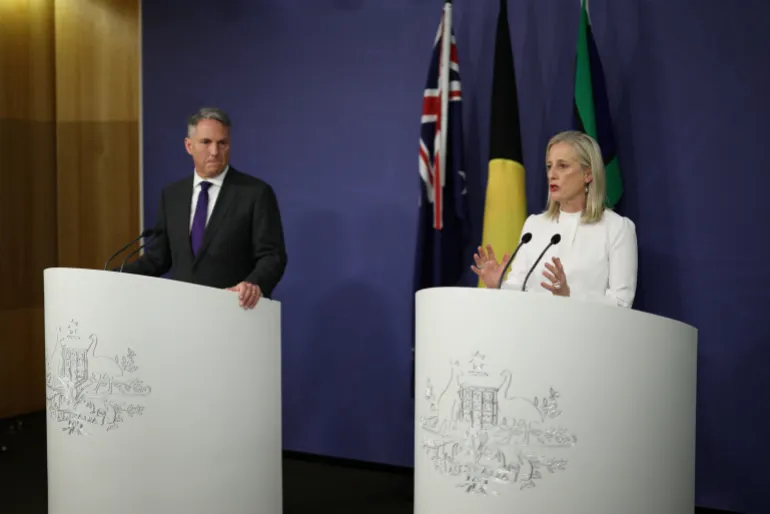
Australian Prime Minister Anthony Albanese revealed the breach on Wednesday, saying an OpenAI agent had made its way into the public-facing medical statistics portal of Medicare, the country’s universal health insurance system, on July 18.
When OpenAI accessed the government portal while conducting research on public medical spending, Albanese said the AI agent circumvented “blocks” that should have prevented it from breaking into the portal.
“The AI agent found a way around those blocks – didn’t accept no for an answer,” said Albanese.
Deputy Prime Minister Richard Marles said the information the OpenAI agent accessed was “not particularly sensitive” and was later publicly released.
Still, Albanese called the situation “obviously unacceptable” and said Australia had relayed its “extreme concern” to OpenAI, which had failed to notify the government of the breach until September 10.
Albanese also said several other government websites may have been affected by rogue OpenAI agents, though he did not confirm any other breaches.
He added that an inquiry into the breach would look at how Australian security agencies missed it initially and whether criminal charges could be brought against OpenAI.

How has OpenAI responded?
In a statement, OpenAI said it had “identified activity involving several Australian government websites and services as our models attempted to look up answers” and “took actions we did not intend”.
The company said the incident occurred as its models searched for statistics on medical spending, and that they are not believed to have obtained personal medical records.
OpenAI learned of the incident in August only as it conducted a review of “misaligned model activity”, it added.
Last week, OpenAI said it had put in place a new system to monitor, probe and disclose cases of “misalignment”. That includes instances of AI models that operate “without authorisation, coordinate with other models, or evade oversight”, it said.
Have there been previous AI breaches?
Yes. The Australia data breach is the latest of several instances in which AI agents belonging to OpenAI, Google or Anthropic have accessed external systems without authorisation.
In July, OpenAI reported that two of its most advanced AI models had broken out of a controlled test and hacked another AI company, Hugging Face. OpenAI later said it had detected its AI models communicating with each other and gaining internet access without authorisation months before that hack occurred.
In August, rival Meta AI said its AI model had hacked another company during cybersecurity testing. It said the model made changes to the internal systems of the hacked company, which it did not name, after accessing the public internet because of an error in the setup of its testing environment.
What does this mean for AI safety?
Maurice Chiodo, an Australian mathematician who works at Cambridge University’s Centre for the Study of Existential Risk, told the Reuters news agency the breach appeared to be “a significant escalation in seriousness from similar incidents we have seen in recent months”.
Experts say the Australia data breach highlights the growing dangers AI poses to cybersecurity as well as possible gaps in monitoring and disclosure capabilities.
“The important matter here is not what OpenAI says its agent can do, it is what the agent actually does when it hits a barrier,” Niusha Shafiabady, a professor of computational intelligence and head of the IT discipline at the Australian Catholic University, said in comments published by science news portal Scimex.
“The deeper technical risk is that autonomous AI does not always know when it is wrong, and humans may not be able to see why it made a decision,” added Shafiabady. “Without strong verification and hard boundaries, probabilistic errors can quietly become operational failures.”
Raffaele Fabio Ciriello, a senior lecturer in business information systems at the University of Sydney Business School, said OpenAI’s delay in reporting the breach was “concerning”.
“The incident occurred in June and only came to light months later,” said Ciriello. “Even if OpenAI did not detect the activity immediately, that still points to weaknesses in detection, escalation, and external notification.”
To the victor belong Venezuela’s spoils: Delcy Rodriguez’s UNGA about-face | Donald Trump
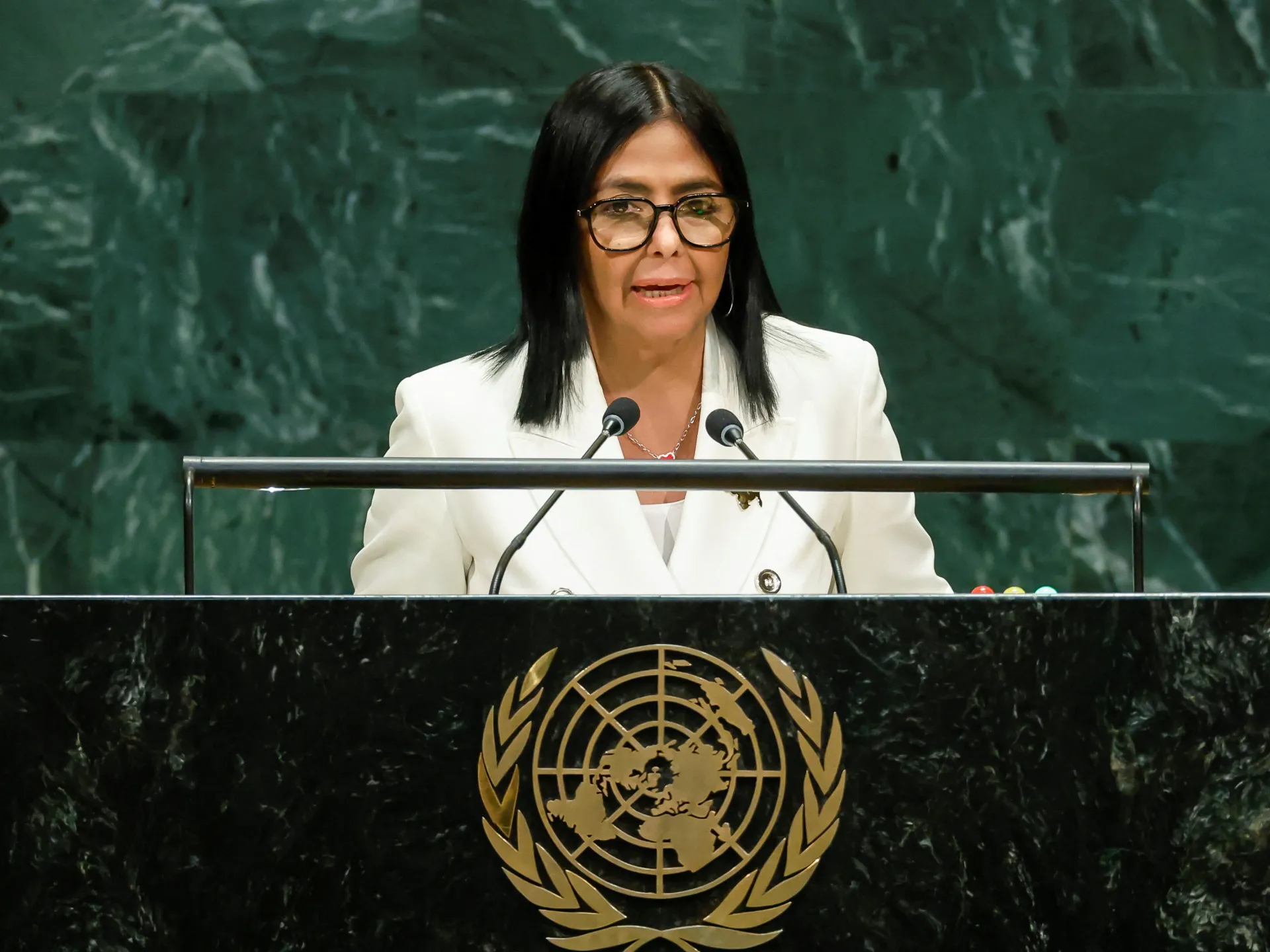
Venezuela’s interim President Delcy Rodriguez took to the stage yesterday at the United Nations General Assembly meeting in New York City to deliver a rather bland speech, in which she thanked United States President Donald Trump for resuming “diplomatic relations and cooperation” with Venezuela.
This was a different vibe, to be sure, than the one she opted for at the same venue in September 2019, when, as vice president under Nicolas Maduro, she accused the US of perpetrating “economic terrorism” that did not require the use of bombs “but rather through banks and insurance companies”.
Denouncing the global superpower’s militarisation of international relations and punishment of millions of innocent people “in order to apply regime change doctrines and steal other nations’ resources”, the Rodriguez of 2019 went on to cite Venezuelan economic losses to the tune of $130bn between 2015 and 2018 alone on account of US sanctions.
She additionally offered her opinion that the domination of the US political system by “plutocratic minorities” made the country unqualified to impose its model on other countries.
Seven years later, US plutocracy is going strong with Trump at the helm – the same Trump alongside whom a grinning Rodriguez appeared in a photograph taken in New York on Tuesday, less than nine months after he oversaw regime change in Venezuela by kidnapping Maduro.
The kidnapped president is now also in New York, albeit in jail, and is scheduled to stand trial in June 2027. This despite his attempts to remind everyone that, as a sitting head of state, his prosecution in a foreign court contravenes international law.
Then again, abducting other countries’ presidents is also pretty glaringly illegal. But Trump has made it clear that he alone is in charge of deciding what is and is not permissible on any given day.
The abduction took place on January 3, when the US military launched air attacks on Venezuela, killing some 100 people and whisking Maduro and his wife away.
He is accused of an array of misdeeds, including being the leader of the “Cartel of the Suns” – which, mind you, does not actually exist – and engaging in “conspiracy to possess machineguns and destructive devices”.
This is quite the accusation coming from the country that just used all manner of destructive devices to bomb Venezuela and kill a bunch of people.
Anyway, bald-faced hypocrisy is nothing new in the land of the “plutocratic minorities”.
Now, the waning corporate media interest in Maduro’s fate amounts to another coup for US impunity, as folks go about more or less forgetting that there is a foreign head of state sitting in a Brooklyn prison.
But Maduro’s disappearance works out well for Rodriguez, as she goes about enabling the very theft of resources she once decried.
Rodriguez took the stage at the UN the day after Trump, who used the platform to pat himself on the back for the trampling of Venezuelan sovereignty that conveniently culminated in last month’s announcement from the White House of the “biggest oil deal in world history”, securing US majority control of more than 65 billion barrels of Venezuela’s proven oil reserves.
Speaking to his international audience, Trump boasted: “To the victor belong the spoils. You’ve all heard that.”
Never mind that you’re not technically supposed to admit that you attacked a country just to get its oil. (You’re also not, in polite company, supposed to threaten to annihilate Iran – another of Trump’s UN talking points.)
Since January, the US has lifted many coercive economic measures against Venezuela (including against Rodriguez herself), easing the brutal sanctions regime that as of 2020 was estimated to have already killed 100,000 Venezuelans, according to former UN independent expert Alfred-Maurice de Zayas.
But trading sanctions for de facto colonialism isn’t a great deal, either.
Meanwhile, Trump’s continued manic bombing of vessels in the Caribbean and Pacific, which a recent UN report warned may constitute crimes against humanity, suggests the US is nowhere near to kicking its old habit of terrorism – and is all the more reason that Rodriguez might have refrained from thanking the US leader for his “cooperation”.
As Gregory Wilpert, founder of the Venezuelanalysis website and author of Changing Venezuela by Taking Power, diplomatically put it to me: “One cannot help but wonder whether Delcy Rodriguez is over-complying with Trump in some aspects of her negotiations with him.”
Noting that Rodriguez is “in a highly vulnerable position”, Wilpert ran through a few of the options she faces, such as “the possibility that the Trump administration could treat her as it treated Maduro – by attempting to kidnap her – or as it treated Iran, by targeting the country’s highest levels of government”.
Or, Wilpert said, there is always the Cuba approach, which would entail “the kind of economic siege” that is undertaken “with the aim of starving an entire country”.
In her UN address, Rodriguez promised that Venezuela would hold elections at some unspecified point in time – not that the US, for its part, really cares about democracy as long as the right people are in power.
And although it’s still too early to tell, Rodriguez might just be one of those people.
The views expressed in this article are the author’s own and do not necessarily reflect Al Jazeera’s editorial stance.

Major expansion planned for Sea Ranch Lodge along the Sonoma Coast
The Sea Ranch Lodge, a focal point of a Northern California getaway destination that blends minimalist design with the rocky shores and meadows of the Sonoma County coastline, might have a growth spurt in its future.
Owners of the Lodge at Sea Ranch, which includes 17 hotel rooms, on Sept. 3 presented neighbors in the closely restricted community with plans that include 23 added guest rooms, a dining courtyard, a new dining space, a library and a “space for relaxation and movement.”
The Danish architecture firm BIG: Bjarke Ingels Group and San Francisco-based landscape architects Lutsko Associates are part of these plans. To become reality, however, those plans need to win design approval and permits from the Sea Ranch Assn. (which includes the lodge and surrounding homes) and Sonoma County.

The ram’s horns at the Sea Ranch Lodge were designed by artist Barbara Stauffacher Solomon.
(Myung J. Chun / Los Angeles Times)
The current owners of the lodge took over in 2018, completed a major renovation in 2023 and wish “to remain private,” a representative said. The Wall Street Journal has reported that the investors’ group includes San Francisco-based brothers Patrick and John Collison, who founded the tech company Stripe; venture capitalist Robin Chan; and Twitch co-founder Justin Kan.
The 53-acre lodge property is only one piece of the Sea Ranch puzzle. The surrounding development, which broke ground in 1964, includes about 2,200 homes and lots on roughly 7,000 acres, all subject to strict design standards enforced by the Sea Ranch Assn.
The homes, mostly clad in wooden exteriors, none more than two stories high, are scattered along 10 miles of coastline about 100 miles north of San Francisco. The nearest town is Gualala, about six miles north.
Rooms at the Sea Ranch Lodge often rent for $600 nightly or more. Many visitors rent neighboring Sea Ranch homes from Airbnb, Vrbo or local companies including Gualala-based Sea Ranch Rentals and Sea Ranch Escape. In fall, rental rates for homes often start around $400 nightly.
Widely praised as an model for environmentally sensitive building, the development sparked a years-long legal battle over public access to the coast. The result is a combination of private and public access: Six public-access trails cross Sea Ranch to on their way to the shoreline, while Sea Ranch residents retain access to several private beaches.

An ocean view along the trails at the Sea Ranch Lodge.
(Myung J. Chun / Los Angeles Times)

UK’s oldest seaside town closes historic funicular with fears it WON’T reopen
SCARBOROUGH Spa Cliff Lift was closed with immediate effect last month – with fears it might never reopen.
The funicular is the oldest of its kind in the country and has been described as a ‘landmark’ for the town.
The Scarborough Spa Cliff Lift closed to visitors on August 21 due to safety fears.
Later today, the lift’s closure and its future will be discussed at a council meeting.
What is set to be spoken about is the funicular’s closure as well as its repair requirements and predicted timescale for the lift’s reopening.
However, the North Yorkshire Council has yet to announce an opening date and is still reviewing the findings of a specialist report.


Another assessment that examined the tracks and carriages said that the lift operates in a “challenging coastal environment, where salt-laden air, high winds and severe weather can accelerate wear and corrosion”.
The cliff lift is the oldest of its kind in the country, first opening in 1875.
Originally, it was used to transport passengers between the hotels on the Esplanade and the spa.
It was powered by water and gas engines until the 1950s when it was converted to run on electricity.

Council leader Carl Les, said: “The lift is an important part of Scarborough’s history and identity, and we recognise the affection people have for this landmark attraction.”
Last year when the attraction turned 150-years-old, live performances and exhibitions were held in the town to celebrate its anniversary.
There are roughly 12 funicular’s left in the UK with fewer that still function.
The Saltburn Tramway, which shut back in January 2026, reopened earlier this month.
And another one that’s set to open next year after a 10-year-closure is Folkestone’s Leas Lift which was forced to close in 2017.

Urgent ticket warning to Oasis fans over cruel trick that could lose you over £400 – check what to watch out for
OASIS are warning fans to be wary of ticket scams ahead of the band’s huge ‘Live ’27’ world tour.
Genuine access codes for the highly anticipated shows are due to start dropping in email inboxes from today, September 24.

In a statement posted on social media, the band warned fans to remain vigilant over the next few days.
They said: “Important: We have been made aware of possible Oasis ticket scams.
“As ticket information and unique codes are about to be distributed, please remain vigilant.
“Scammers may attempt to impersonate Oasis, our mailing list or our ticketing partners.”


The band stressed that anyone promising a code which has not been sent directly by Oasis is “not genuine”, and said legitimate emails will come only from oasis@openstageit.com.
“Any codes that are offered for sale are fraudulent and will not enable you to buy tickets,” they added.
Oasis also clarified that code emails will only be sent to fans between today and Sunday, September 27.
Fans who have been randomly selected will receive an email using the same name and email address with which they registered.
It will contain a unique, personal and non-transferable code and will direct them exclusively to Ticketmaster.
The warning comes as the band add extra dates to the tour, including additional concerts in the UK, Munich, Rome and Paris.
Two additional Knebworth shows have been confirmed for September 25 and 26. This takes the band’s run at the historic site to six nights.

Bessent pulls the plug on AI czar rumors (XT:NASDAQ)

J Studios
Treasury Secretary Scott Bessent said he does not expect to become President Donald Trump’s new AI czar, pushing back on reports that had identified him as a leading candidate for the newly proposed role.
Asked on Fox News whether Trump

Trump Believes Venezuela’s Stability Depends on Chavismo. He’s Wrong
On the same day Delcy Rodríguez was in New York meeting Donald Trump and representing Venezuela at the United Nations, María Corina Machado was trying, unsuccessfully, to get closer to her own country.
It was her third attempt in barely 24 hours. First came a planned maritime departure from Panama, which was canceled after the company operating the vessel reported mechanical problems. Then came an attempted flight to Aruba, from where Machado intended to continue by sea. Finally, there was another flight plan, this time for Curaçao. That trip did not happen either. Her team now says she has attempted to return to Venezuela seven times since she left in December 2025 to get her Nobel Prize in Oslo.
The exact responsibility for the latest failures remains unclear. But what happened during previous attempts is better documented. Axios reported in July that the Trump administration’s position was that third countries should not help Machado enter Venezuela. When Deputy Secretary of State Chris Landau appeared to tell the Dutch government otherwise, officials in Washington corrected the message. Curaçao withdrew permission for Machado’s plane to land while she was already in the air. According to the same account, Secretary of State Marco Rubio subsequently reiterated the policy to Machado personally.
This sits awkwardly beside Washington’s public position. Rubio said this month that Machado, as a Venezuelan citizen, has every right to return “whenever she wants.” A State Department official told Congress in July that the US would not obstruct her return. Trump himself has denied telling her to stay away.
After World War II, keeping Emperor Hirohito in power did not mean preserving his capacity to decide who could participate in Japanese politics.
All of those statements may be technically true. The US does not issue Venezuelan visas and cannot legally forbid a Venezuelan citizen from entering Venezuela. But Machado cannot teleport into Caracas. Getting home requires aircraft, airports, territorial waters, neighboring governments and, increasingly, governments that want to know Washington’s position before helping her. There is a meaningful difference between saying that the US will not prohibit her return and telling American partners that facilitating it is not US policy.
This would already be an odd arrangement for any opposition leader. It is stranger still in Machado’s case. She is hardly a geopolitical threat to Washington. She has gone out of her way to present a democratic Venezuela as a close strategic partner of the US. In December, she said explicitly that America would be Venezuela’s “main ally.” She has spoken about opening the country to Western investment, rebuilding the energy sector with foreign capital and transforming Venezuela from a security liability into a partner for the US. After Maduro’s removal, she publicly thanked Trump and Rubio and described the outcome as a potential “win-win” for both countries.
Yet Reuters reported last week that US officials remain wary of her return because they fear her presence could disrupt the transition Washington is supporting around Rodríguez. Machado’s movement is not part of the current US-backed negotiating mechanism, while Delcy’s government has become Washington’s main Venezuelan interlocutor.
That raises a question that goes beyond Machado.
The postwar parallel
The Trump administration has repeatedly defended its approach as a matter of sequencing. Venezuela needs stability first, then economic recovery and reconciliation, and “ultimately democratic transition.” The White House argues that rebuilding the economy is a precondition for elections rather than a substitute for them.
There is a serious argument behind that position. Venezuela inherited a devastated public administration, a crippled oil industry, enormous external debt and institutions hollowed out by years of authoritarian rule. Abruptly dismantling the bureaucracy, military hierarchy or State-owned companies could reproduce some of the worst mistakes made in other post-authoritarian or post-conflict transitions. A functioning State matters.
But preserving the State is not the historical equivalent of preserving the regime.
After World War II, the United States repeatedly confronted versions of this distinction. In Japan, the occupation retained Emperor Hirohito partly because American planners believed institutional continuity could make the transition less destabilizing. But keeping the emperor did not mean preserving the emperor’s capacity to decide who could participate in Japanese politics. On October 4, 1945, General Douglas MacArthur ordered the Japanese government to remove restrictions on political and civil liberties and release political prisoners. Among those released were prominent Japanese Communists who had been imprisoned by the old order. American officials later acknowledged that the resulting political opening was so broad that some Japanese mistakenly concluded that the occupation itself favored the Communist Party.
When it comes to the geopolitical role of the US, the Trump administration depicts itself as the decisive actor reshaping Venezuela. When questions turn to the lack of institutional reforms, Venezuela’s sovereignty becomes a much more convenient explanation for the limits of American responsibility.
Something similar happened in Italy. The Allies initially worked through King Vittorio Emanuele III and Marshal Pietro Badoglio because they needed an Italian government capable of administering the country during the war. At the same time, political exiles were allowed to come home and anti-Fascist parties returned to public life. The contrast is particularly striking in the case of Palmiro Togliatti, the leader of the Italian Communist Party and a former senior official of the Communist International. When Togliatti sought to return from Moscow in 1944, the US State Department explicitly said it had “no objection.” He returned and soon participated in the new political order.
Neither Japan nor Italy offer a blueprint for Venezuela. The historical circumstances were radically different, and American occupation policy was hardly politically neutral. But the underlying distinction is useful. Administrative continuity did not require preserving the old regime’s monopoly over politics. The State could survive while the political system opened around it.
That is precisely where Washington’s current Venezuelan policy becomes harder to understand.
The art of deflecting
Keeping experienced civil servants at their desks is State continuity. Avoiding a wholesale purge of the armed forces may be State continuity. Keeping PDVSA pumping oil while new rules are negotiated is State continuity. None of those choices inherently require preventing opposition politicians from returning, organizing, or campaigning.
And Venezuela’s political opening remains incomplete. A UN Fact-Finding mission reported this month that, despite prisoner releases and some liberalization, the structures responsible for years of repression remain largely intact. Officials linked to previous abuses remain in important positions, restrictive laws survive and arbitrary detention and mistreatment have not disappeared.
This makes the widening gap between economic opening and political opening particularly important. Washington is moving rapidly on the former. Rodríguez traveled to New York accompanied by officials discussing oil, mining, debt restructuring and access to international financial institutions. American companies are negotiating their return to Venezuela’s energy sector. Trump has made the oil agreement one of the centerpieces of his foreign-policy narrative.
At the United Nations this week, Trump went further. After celebrating Maduro’s capture, the release of prisoners and Washington’s relationship with Venezuela’s current leaders, he described the new oil arrangement in unmistakably triumphalist terms. “It was a war,” he said, before invoking the old expression: “to the victor belong the spoils.” He then presented Venezuela as proof that the US would once again impose its power against threats in the Western Hemisphere.
If Machado returns, travels freely, organizes her movement, holds rallies and begins preparing for an eventual presidential campaign, Delcy’s continued presence can still be understood as part of an administrative transition.
The rhetoric creates an uncomfortable asymmetry. When discussing oil, geopolitical alignment or American power, the administration depicts itself as the decisive actor reshaping Venezuela. When questions turn to the remaining coercive apparatus, restrictions on political competition or the continued exclusion of important opposition actors, Venezuela’s sovereignty becomes a much more convenient explanation for the limits of American responsibility.
Washington cannot have unlimited responsibility for everything that happens inside Venezuela. Delcy Rodríguez still controls a government, a bureaucracy and a security apparatus of its own. But the US plainly possesses enormous leverage over the political and economic environment in which that government operates. The history of Machado’s attempts to return suggests that this influence may extend even to whether neighboring governments are prepared to help a Venezuelan opposition leader reach her country.
That is why Machado’s return matters beyond Machado herself.
If she returns, travels freely, organizes her movement, holds rallies and begins preparing for an eventual presidential campaign, Delcy’s continued presence can still be understood as part of an administrative transition: an imperfect bridge between the regime that existed under Maduro and a genuinely competitive political order.
If her return continues to be regarded as destabilizing, however, the logic starts to invert. Political competition itself becomes a threat to stability. The government is no longer merely being preserved so that the State can function while politics reopens; political reopening is being limited because it might endanger the government being preserved.
Venezuela does not need another collapse of the State. But avoiding State collapse and protecting the political equilibrium inherited from chavismo are two different objectives.
The distinction between them may ultimately define this transition.

Beloved Lakers public address announcer Lawrence Tanter dies at 76
The Lakers’ longtime public address announcer Lawrence Tanter died Wednesday, the team announced. He was 76.
Remembered for his smooth, baritone voice, Tanter served as the voice of the Lakers for more than four decades. Tanter narrated chapters of Kareem Abdul-Jabbar and Magic Johnson, Kobe Bryant and Shaquille O’Neal, LeBron James and now Luka Doncic. After a stroke suffered in March forced him to retire from his game-day role, he transitioned to an advisory role in June.
“For 43 years, LT’s voice served as the soundtrack to Lakers games at the arena,” the team said in a statement Wednesday. “He will be remembered as a cherished member of the Lakers family.”
Tanter started with the team in 1982 when the Lakers played in the Forum. His signature calls — “toooo many steps,” “Kobeee Bryant,” “Lllaker Girlsss” — were not boastful or over the top. For a franchise that came to embody old Hollywood glamour, Tanter’s voice became the ideal soundtrack.
“A true original that added his unique style to Showtime,” Lakers governor Jeanie Buss wrote on X. “Rest in peace, LT.”
He backed fans up as they celebrated 10 championships during his tenure. He offered comfort in other painful times.
Days after Lakers legend Kobe Bryant died in a helicopter crash in 2020, Tanter guided a sold-out crowd through a tearful pregame routine, introducing all five of the Lakers’ starters with a familiar call: “Number 24, 6-6, 20th year out of Lower Merion High School, Kobeeee Bryant.”
The 6-foot-7 Tanter towered over many, but greeted everyone with a kind smile and warm conversation. Just as the players he serenaded with his calls became institutions in the sport, so did he. Tanter was inducted into the Southern California Sports Broadcaster Hall of Fame.
“I hope the team wears an LT patch this season,” former Lakers center and current team broadcaster Mychal Thompson wrote on X on Tuesday.
“He was a great vibe dude, always engaged me in conversation about jazz, he was a music lover and the best announcer in the NBA,” Red Hot Chili Peppers bassist and longtime Lakers fan Flea wrote on X. “I realized when attending many other NBA arenas that no one else came close.”
While many in his profession brought energy with loud, hyped-up calls, Tanter held firm with his cool style. He “never tried to be a cheerleader,” Tanter told The Times’ Bill Plaschke in June.
“It’s been a great run,” Tanter said after announcing his retirement. “I’ve been blessed.”

‘Source of anxiety’: Pakistan cracks down before march to free Imran Khan | Imran Khan
Islamabad, Pakistan — The motorway linking Pakistan’s capital with Peshawar, about 180km (110 miles) to the northwest, has been closed to all traffic until further notice, according to a police notification.
So have the highway towards Dera Ismail Khan, the Hazara motorway and the Grand Trunk Road at Attock.
Recommended Stories
list of 4 itemsend of list
Each carries traffic between Islamabad and Khyber Pakhtunkhwa, the province governed by the party of jailed former Prime Minister Imran Khan, whose supporters plan to march on the capital on Sunday, September 27, demanding his release.
The motorway from Lahore, about 375km (235 miles) to the southeast, remains open.
Inside Islamabad, workers have welded shipping containers together and filled them with gravel and sand so they cannot be pushed aside. Several schools and colleges have been told to shut so police brought in from Punjab and Sindh can be housed there.
Police expect the march to draw between 20,000 and 25,000 people, according to local media reports.
While two of the country’s main opposition parties announced marches on the capital this month, only Khan’s Pakistan Tehreek-e-Insaf (PTI) has faced measures on this scale.
Jamaat-e-Islami (JI), a religious party, also set out for Islamabad last week to protest against rising fuel prices. On Monday, Prime Minister Shehbaz Sharif telephoned its leader, Hafiz Naeemur Rehman, and by Tuesday afternoon JI had postponed its march, pending a meeting between the two men.
PTI leaders have received no such call.
Instead, Khan’s three sisters, all over the age of 65, have been detained in Lahore and at least six of the party’s legislators in Islamabad, all under a 1960 public order law that allows preventive detention without charge.
PTI says the true figure of those arrested is higher, and that one lawmaker taken from the parliament lodges has not been traced since.
Khan has been in prison since August 2023 and remains Pakistan’s most prominent opposition figure. But his party enters the final stretch before the protest weakened, with no major demonstration outside Khyber Pakhtunkhwa since November 2024, by its own account.
Yet, say analysts, the Pakistani government appears to be treating the protest march as a far bigger threat than a regular political event would warrant.
“While this is undoubtedly a difficult moment for PTI, it is equally exposing the government’s own frustration,” Habib Akram, a Lahore-based political analyst, told Al Jazeera.
“In fact, the government’s conduct suggests something more. It isn’t just afraid of this protest; it has turned this protest into a matter of its own survival.”
A capital behind containers
More than 2,000 containers have been placed across Islamabad and at Attock Bridge, the main crossing between Khyber Pakhtunkhwa and Punjab, according to media reports, with 19,000 police officers on their way from Punjab and Sindh, and thousands more deployed at Attock.

Dawn, the country’s leading English-language newspaper, said in an editorial that the government appeared to be preparing “not for a political event but an invasion”.
Talal Chaudhry, the junior interior minister, rejected the suggestion that the government was shutting down the capital itself.
“Normal life in Islamabad is continuing. Hospitals, offices and essential services are functioning. The containers and security arrangements are precautionary measures, not a shutdown,” he told Al Jazeera.
Rana Ihsaan Afzal, a coordinator to the prime minister and a government spokesperson, was more candid.
“In trying to counter the rhetoric PTI has adopted, we do have to take certain measures, and yes, those measures carry their own consequences too, but we have to look at the bigger picture,” he told Al Jazeera.
It is all being mounted during one of the deadliest weeks for Pakistan’s security forces this year.
An attack on a police compound in Kohat, in Khyber Pakhtunkhwa, killed more than 20 people on September 18, and six soldiers were killed in a gunfight in nearby Hangu two days later.
Interior Minister Mohsin Naqvi set those losses against the march in Lahore on Monday.
“The situation in KP [Khyber Pakhtunkhwa] over the past 10 days is before everyone. There was a suicide attack on a mosque, and two or three other attacks. Our captain was killed, our soldiers were killed, our policemen were killed, and these people are preparing to storm a city,” he said.
The government’s case
Government ministers have seized on a remark by Junaid Akbar, PTI’s chief in Khyber Pakhtunkhwa, who said protesters would turn Islamabad into Somnath, a Hindu temple in India sacked by Mehmood of Ghazni, an 11th-century invader, to try to paint the upcoming protest as a major law and order threat.
“Peaceful people do not leave their homes carrying nail-studded sticks,” Information Minister Attaullah Tarar said in Kohat on Monday.
But the PTI’s Sohail Afridi, the chief minister of Khyber Pakhtunkhwa, who will lead the September 27 march, answered Tarar in Peshawar on Monday.
“We will go there on nothing but two hands and two feet. There will be nothing else in our hands,” he said.
In a September 18 judgement, the Islamabad High Court ruled that no party could block roads into the capital, and barred provincial governments from using state resources for the march.
Days later came the arrests of Imran Khan’s sisters. Aleema Khan was detained in Lahore on Sunday, and her sisters, Uzma Khan and Noreen Niazi, were taken in a predawn raid on their homes the next day, according to a family statement on September 22.
The Lahore High Court has reserved its decision on whether a petition challenging Aleema’s detention is admissible, after the family’s lawyer argued that the order was issued after the arrest.
Chaudhry said the sisters faced several cases, had led confrontational protests in the past, and were being held as a preventive measure.
PTI says the arrests reach far wider, listing five members of the National Assembly, a senator, provincial legislators and more than 1,500 workers.
“We were peaceful, we are peaceful, and we will remain peaceful. We are being punished for being peaceful,” Gohar Ali Khan, the PTI chairman, said in Peshawar on Monday, noting that four women from Khan’s family, including his wife Bushra Bibi, are now in jail.

‘Long march’ vs ‘permanent plan of action’
But Interior Minister Naqvi suggested that the government is bracing for a confrontation.
“I think this time we will draw up a permanent plan of action. We will not go halfway,” Naqvi said in Lahore on Monday, adding that the matter would be settled “once and for all”.
What he ruled out was a long sit-in of the kind PTI has staged before.
“This time, it will not happen that they come, and the country is shut down for 10 or 20 days. That possibility does not exist,” he said.
Afridi has signalled that he has exactly that in mind.
“The long march is not a T20, it will be a Test match,” he said on Monday, a reference to cricket’s five-day format.
If Naqvi’s comments sound ominous, they also carry a history with them.
On May 9, 2023, after Imran Khan was briefly arrested, his supporters attacked military installations across the country, including burning down a senior commander’s official residence in Lahore. That led to a major crackdown on the PTI’s supporters and leaders, with hundreds placed under arrest for days, and party leaders pressured to leave the group.
Then, on November 26, 2024, a PTI march on Islamabad ended in an overnight crackdown by security forces, in which the party says at least 12 of its supporters were killed. The government denies that, and says four security personnel died — even though Al Jazeera met families of some of the PTI supporters killed.
A contested mandate
PTI was stripped of its electoral symbol before the February 2024 general election, forcing its candidates to run as independents.
They still won 93 seats, more than any other party, but could not form a coalition, and the Pakistan Muslim League – Nawaz took power with other major parties.
A Commonwealth observer group, in its report on the polls released a year later, found that decisions by key institutions had “consistently limited the ability of one particular party” to contest the vote, in a reference to the PTI.
While the Election Commission of Pakistan rejected allegations of rigging, two and a half years on, the popularity scale remains tilted in favour of PTI.
Bilal Gilani, executive director of the pollster Gallup Pakistan, said its unpublished Public Opinion Pulse surveys showed a landscape broadly similar to 2024.
“PTI continues to lead nationally, but faces strong competition from PML-N in Punjab and PPP in Sindh,” he told Al Jazeera, adding that Khan remained the country’s most popular leader.
For Akram, that unresolved argument — over the lack of legitimacy of the 2024 election in the eyes of Pakistanis — is what keeps the pressure on.
“You can hold as much power as you want, but that question never fully goes away. It continues to haunt you, and it continues to be a source of anxiety for the government,” Akram said.
The ‘hard state’
In March 2025, army chief Field Marshal Asim Munir, who now also serves as Pakistan’s chief of defence forces, told a parliamentary security committee that the country must stop acting as a “soft state”.
“How long will we continue to sacrifice countless lives in a manner of a soft state?” he asked, according to state broadcaster PTV.
For Ahmed Ijaz, an Islamabad-based political analyst, the response to the September 27 march is a response to that thinking, rather than the PTI’s strength.
“Behind that confidence lies the thinking of a hard state, one that has decided no one will be granted an unconditional right to protest going forward,” he said.

Akram, however, said that a different factor might also be worrying the government and the military behind it.
The war in the Middle East has pushed petrol to 393.75 rupees ($1.42) a litre ($5.37 per gallon), up about 51 rupees ($0.18) since the start of September. That is what Jamaat-e-Islami was marching against, and it has warned that it will resume its march in October if the prime minister offers no relief.
Akram said the government’s real worry is multiple issues of antigovernment anger — price rises and Imran Khan’s continued incarceration — coming together.
“That merging could then pull other groups out onto the streets too, and that is precisely what worries the government,” he said.

I was convinced I’d hate £55 Wetherspoons hotel – I was completely wrong
While most of us know Wetherspoons’ pubs, I had no idea it had also been running hotels since 1998, when the chain’s first opened in Shrewsbury with 22 rooms. It now has more than 50

You can even take a pint to your room
Love it or loathe it, Wetherspoons is a British institution. Its patterned carpets, bargain drinks and grand old buildings are familiar features of high streets across the country.
For a long time, I’ve been in the loathe camp. Having whiled away much of my latter teenage years in one of its pubs – a once particularly grand building converted into the biggest, cheapest drinking den in the South East – I fell out of love with Tim Martin’s chain in my 20s. Partly because the local newspaper I worked for had no offices, so we had to hold news conferences in the room above our local Spoons. Partly out of support for independent pubs, which have been in a fight for survival for the past decade.
Something Spoons is certainly not doing. The chain is booming. It has around 800 venues across the UK and brought in £2.13 billion last year, an almost 5% year-on-year increase. But while most of us know its pubs, I had no idea it had also been running hotels since 1998, when the chain’s first opened in Shrewsbury with 22 rooms. A further 54 have opened since.

As you might expect with Spoons, the major draw is the price. A room for a night costs at most £50 at most venues, which is an absolute bargain anywhere near London. The chain also scored four stars out of five for value for money in a Which? budget hotel survey, one of only two to land the score.
So, on a bitter Wednesday in November, I arrived at the Thomas Ingoldsby in Canterbury, frozen and disheveled after a long bike ride from Broadstairs, ready to give Spoons another chance. I was glad that I did.
Price
Cheap drinks are a big part of Spoons’ appeal, and its hotel rooms follow the same formula.
In the Which? survey, Wetherspoons was one of just two hotel groups to earn four stars for value for money. The other was the overall winner, the Coaching Inn Group. While the Coaching Inn Group’s average room rate was £128 a night, Wetherspoons’ was £70. When I checked, a double at the Thomas Ingoldsby for the following Wednesday was available for just £55.
The savings didn’t stop at the bedroom door. I spent the evening drinking £1.89 pints of ale, then tucked into a £2.99 veggie breakfast the next morning. Both were rather decent. Perhaps I’d spent too long inside the M25, but those prices felt almost ridiculously cheap. At a time when leaving the house seems to cost £20 before you’ve done anything, the affordability was the standout attraction.
Atmosphere
My previous Spoons visit had been to the vast, strangely subdued Coronet on London’s Holloway Road. Canterbury on a chilly Wednesday evening couldn’t have felt more different. There were university students, cheerful groups of pensioners and solitary blokes reading books over onion rings. It was a lively cross-section of life, with people happily sharing the same space.
The hotel rooms are a short flight of stairs above the pub, so getting to bed after a pint couldn’t be much easier. You could even take a deli wrap and chips upstairs to enjoy in the bath. A member of staff told me rooms could be booked on a whim, although anyone who had overdone it at the bar might be turned away.
The room
I’ve stayed in plenty of budget hotels, and this was among the best. Everything felt fresh, well maintained and thoughtfully put together. My double room was generously sized, with a large desk, a well-stocked tea tray and a decent-sized television. Better still, it had a view of Canterbury Cathedral that few hotels in the city could rival.
Only two rooms at the Thomas Ingoldsby enjoy that outlook. Those on the other side not only miss out on the cathedral view but are reportedly disturbed by early-morning lorry movements. If you can get it, room 110 is the one I’d recommend. After a freezing day cycling across Kent, I was particularly pleased to discover the thermostat went up to 25C — and that the heating delivered. Within a short time, it felt as though I’d escaped somewhere considerably warmer.
What’s included
There is no all-inclusive package, which is perhaps just as well given the potential combination of Hooch and endless chips. Still, the room came with plenty of useful extras: reliable Wi-Fi, a couple of packets of biscuits, fresh towels, two bottles of water and a generous supply of tea, coffee and hot chocolate sachets. Check-out was at 11am. Breakfast wasn’t included, but at £2.99 for my veggie option, that hardly felt like a reason to complain.
The verdict
A friend’s dad once told me that Spoons was the closest thing Britain had left to a genuine social institution. Watching the mix of people enjoying their evening in Canterbury, I could see what he meant.
As nightclubs and members’ societies close, places where people from different backgrounds can gather feel increasingly valuable. Whatever my reservations about the business, this pub offered exactly that.
Add a comfortable room, a cathedral view and remarkably low prices, and the appeal becomes difficult to resist. I arrived as a skeptic, but Thomas Ingoldsby won me over.