



After a record year, YouTube extends its Coachella livestream deal to 2030
YouTube is holding onto its exclusive livestream deal with Coachella.
The tech giant in San Bruno, Calif., has renewed its partnership with festival promoter Goldenvoice, keeping exclusive livestream rights to the three-day desert festival through 2030. The next edition, in April 2027, will mark 15 years of Coachella on YouTube.
“We’re excited to bring the energy of the desert to millions of music fans around the world,” Neal Mohan, YouTube’s chief executive officer, said at its Made On YouTube event in New York City on Wednesday morning.
This year’s Coachella, headlined by Sabrina Carpenter, Justin Bieber and Karol G, drew the most concurrent viewers in the history of Coachella on YouTube, according to the company. Bieber, who was discovered on YouTube, even included a nostalgic homage to the platform into his set.
Over the years, the livestream has become an essential part of the Coachella experience, especially for fans who can’t make it to the desert. What started as a single feed has evolved into live coverage of every stage across both weekends.
Beyond Coachella, YouTube doubled down on livestreaming during its presentation, unveiling a slew of new live and AI-powered tools. In August, more than 600 million logged-in viewers watched live content on the platform each day on average, according to YouTube. The new live features include a new co-hosting function in which two creators can appear on the same stream together, and a live auto-dubbing tool that automatically translates speech in real time. Several of the updates are slated to roll out in early 2027.
“Whether it’s a music festival or a creator’s livestream, fandom is no longer a spectator sport,” added Mohan. “Just look at the sheer scale of the live communities we’re seeing today.”
YouTube isn’t the only streamer leaning into live. Netflix has spent the last few years buliding out its own live business, which now includes NFL and MLB games.

Big oil mobilizes to block Trump's diesel export ban idea: WSJ
Big oil mobilizes to block Trump's diesel export ban idea: WSJ
Source link

Shohei Ohtani gets a hit in his return, but Dodgers fall to the Padres
Shohei Ohtani’s swing was a little out in front of a slider delivered by Padres left-hander Robbie Ray. But Ohtani held back his hands long enough to extend them to the pitch and shoot it through the right side of the infield.
It wasn’t flashy. But considering it was his first at-bat in more than two weeks, in a tough matchup no less, it was a promising sign.
“It’s been a while since he’s played in a game, but it just felt like he wasn’t sped up at all,” manager Dave Roberts said after the Dodgers’ 5-1 loss to the Padres. “And I think he came out of it pretty well.”
The good news quickly dried up for the Dodgers after that, as they missed a chance to clinch a first-round bye with a win. But Ohtani’s return was still significant, and the success of his end-of-season tune-up will have playoff implications.
Ohtani did not address reporters Wednesday and has only done so once in the last five weeks, despite multiple requests.
The Dodgers activated Ohtani, who went one-for-four Wednesday, from the 15-day IL before the game and optioned rookie Josue De Paula to Triple A. De Paula is still under consideration for the National League Division Series roster as a bat off the bench.
“This was the original thought, that once Shohei gets back, we’re going to send him out,” manager Dave Roberts said. “We had a runway to give him, which we gave him and he performed more than admirably. This also, as far as the timing, just gives us an opportunity to potentially have him back for the postseason. He’s a part of the conversation, and he’s earned that, and that’s what I told him last night.”
De Paula joined triple-A Oklahoma City for Game 2 of the PCL Championship on Wednesday. And Ohtani slid into the Dodgers lineup, hitting second in the batting order for the first time this season, with Mookie Betts leading off against the Padres southpaw.
“I know Shohei, Mookie, they’re always on board with whatever I decide to do,” Roberts said. “I think it just makes it tougher to navigate versus left. There’s a Mookie tax [to get to Ohtani]. If you want to get to Freddie [Freeman], there’s a Will Smith tax. I like that. And versus a right-hander, I like kind of flipping those two for the same reasons.”
Ohtani, welcomed back in his first at-bat by a partial standing ovation, walked in his second plate appearance. And with two out and the bases loaded in the bottom of the fourth inning, he appeared to have walked again.
Then Padres catcher Ethan Salas tapped the top of his head to challenge the ball call. And an ABS review showed the fastball had clipped the top of the strike zone. Ohtani fouled off the next two pitches before whiffing on a sinker to end the inning.
That missed opportunity rolled right into a sloppy fifth inning for the Dodgers defense.
Starting pitcher Yoshinobu Yamamoto had given up a two-run homer to Manny Machado the previous inning but had otherwise avoided damage.
To open the fifth, he induced Salas to hit the ball on the ground, but it got away from second baseman Tommy Edman as he dove up the middle, for a single.
Yamamoto then got a soft grounder out of Fernando Tatís Jr. But it was too soft, giving Tatís time to reach first before third baseman Max Muncy could get off a throw.
With runners on first and second, Yamamoto had a chance to contribute on defense, fielding Dustin Harris’ comebacker bunt. But Yamamoto’s throw to third sailed wide, allowing a run to score. Machado then made it a 4-1 game with a sacrifice fly.

Yoshinobu Yamamoto reacts after a throwing error to third base in the fifth inning.
(Ronaldo Bolaños / Los Angeles Times)
Ohtani came up to the plate again in the seventh inning and put Dodgers fans on the edge of their seats by sending a long fly ball to straightaway center field. But the cheers died down as it fell shy of the fence.
“I think if you look back at the last couple weeks when he was active, he wasn’t really getting to that pitch,” Roberts said of the high fastball. “I think there might have been one pitch late that he squared up to left field that was at the top of the zone. But outside of that it was hard for him to catch up. I think tonight showed that he’s in a good spot physically.”
The top of the Dodgers order got one last chance to start a rally in the ninth inning, against star closer Mason Miller. Only Will Smith reached base, on a walk, and advanced to third on defensive indifference. Ohtani struck out on a slider.
“[Ohtani] certainly feels way better with the rest,” president of baseball operations Andrew Friedman said before the game. “The biggest thing with five games to go is get him as many at-bats as we can, some rhythm and timing.”
Ohtani could get a day off in that span, Friedman said, but the Dodgers will make those decisions based on how he’s feeling.
“Just getting as many at-bats as he can and that rhythm and timing back before we head into October is going to be really helpful,” Friedman said.
Ohtani was not in rhythm before he landed on the IL. In the last three weeks before the Dodgers finally shelved him, he had a .130 batting average. And he only had two hits in his last seven games (26 at-bats) before the move.
“You end up making subconscious adjustments where you’re protecting yourself,” Friedman said, “and there’s just slight degradation as that’s happening that compounds over time.”
Though the Dodgers downplayed the correlation before Ohtani landed on the IL, they now hope that Ohtani’s improved health will go hand-in-hand with better performance.
“Shohei says he feels back to where he was earlier in the year, which is great, which is a good start,” Friedman said. “As they are coming back, it’s important for them to feel that way … now the question is, as you start to load on real games and that intensity and that workload, it’s making sure that what we’ve done keeps guys in position to be at their best.”

China vs US: Who is winning the AI race, in four charts | Science and Technology News
United States President Donald Trump and China’s President Xi Jinping are set to meet in Washington, DC on Thursday for a summit that is expected to cover trade, artificial intelligence (AI), Taiwan and the US-Israel war on Iran.
In advance of the talks, US Treasury Secretary Scott Bessent said Washington had proposed an AI “notification mechanism” with China – effectively a hotline to alert each other when AI incidents threaten national security.
The meeting comes as leading AI companies warn about the technology’s risks, while both superpowers push to accelerate their AI race. In this visual explainer, Al Jazeera compares the US and China’s AI strength in computing power, AI models, spending and research.
Who has more computing power?
Training and running AI requires enormous amounts of computing power. The more powerful chips and computers a country has, the faster it can build and improve AI models, making computing power one of the biggest advantages in the AI race.
Computing power is measured in FLOP/s (floating-point operations per second) – or how many calculations a computer can perform in one second.
Adding up the computing power of all the AI chips a country has gives a sense of its total AI capacity. By that measure, the US is well ahead, accounting for nearly three-quarters of the world’s total AI computing power, while China holds just more than 14 percent, according to Epoch AI, an AI research institute.
The US lead comes largely from its access to the most advanced chips. US company Nvidia accounts for more than 60 percent of global AI computing capacity among major chip designers, while China’s Huawei holds a much smaller, but growing share, according to Stanford University’s 2026 AI Index.
Those chips also need somewhere to run. The US has more than 5,400 data centres – the large buildings which house thousands of computers – about 10 times as many as any other country. It also leads in dedicated AI data centres, with 84, more than the next eight countries combined.

Whose AI models are people using?
Frontier models are the most advanced AI systems, such as OpenAI’s GPT, Anthropic’s Claude and DeepSeek’s models in China. They are trained using vast amounts of data and computing power to write, reason and code.
The US has led the development of these models, but Chinese models are gaining ground.
As of March 2026, US and Chinese AI models were closely matched on Arena, a leaderboard where users compare two anonymous models and vote for the better answer. US companies Anthropic, xAI, Google and OpenAI ranked near the top, alongside China’s Alibaba and DeepSeek.
On OpenRouter, a platform that ranks AI models by real-world use, Chinese models dominate the leaderboard. Models from Chinese companies DeepSeek, Z.ai and Tencent hold the top three spots on OpenRouter by tokens processed, the units of text that AI models read and generate.

This is partly because Chinese models are cheaper to use. Many are also open-weight, meaning developers can download, adapt and run them themselves.
Chinese models can now compete with US ones in many real-world tasks, with Chinese AI models “months, not years, behind US frontier models”, according to a July analysis by the Centre for Strategic and International Studies (CSIS).
In May, the US government’s Center for AI Standards and Innovation (CAISI) estimated that DeepSeek V4 Pro, released in April, was about eight months behind leading US models.
Who is spending more?
The US is spending far more than China on the infrastructure needed to build AI, giving its tech companies a significant advantage in the race for computing power.
Goldman Sachs estimates that US hyperscalers, the giant tech companies that run large-scale cloud computing and data centres, will spend about $764bn in 2026. That includes Amazon, Microsoft, Google, Meta and Oracle. By comparison, China’s Alibaba, Tencent, Baidu and ByteDance are expected to spend $102bn.
But China’s spending is increasing faster. TrendForce, a market research firm, expects China’s four hyperscalers’ capital expenditure to rise by more than 80 percent in 2026, compared with a projected growth of 76 percent for US hyperscalers, according to the news agency Reuters.
The spending gap reflects the scale of the US tech sector, whose companies have larger revenues to reinvest in chips, data centres and talent.
Who is leading in AI research and talent?
China is producing more AI research and training more technical talent, but the US remains a magnet for the world’s top AI researchers.
China accounted for more than 27 percent of global AI publications in 2024, including journal articles, conference papers, working papers and preprints compared with 12 percent from the US, according to the Center for Security and Emerging Technology. The figures only cover publications with an English-language title or abstract.
China also trains more top researchers. According to a study by MacroPolo, 47 percent of the world’s top 20 percent of AI researchers completed their undergraduate studies in China in 2022, up from 29 percent in 2019. The study also found that 72 percent of the top AI researchers educated in China were working in the US.

Short-haul holiday destinations up to HALF PRICE and still hot in October

THERE’S a specific point during every peak-summer holiday when even the most committed sun worshipper has to admit it’s all getting a bit much.
The beach is shoulder-to-shoulder, the sand is hot enough to cook an egg and you’ve started timing dinner around whether you can secure a table without joining a queue.
That’s why I’ve become a massive advocate for the October break.
Across the Mediterranean, daytime temperatures comfortably hover in the mid-twenties and, even in October, there are hours and hours of proper sunshine every day.
Meaning you can still pack your swimwear, bring the sun cream and expect to come home a lot more tanned.
And my favourite part is: you enjoy all of that without the intense August heat, peak-season crowds or, most importantly, peak-season prices.
I crunched the booking data across our most popular summer resorts and found that October breaks are up to 49 per cent cheaper than their peak-August counterparts.
So these are the seven classic summer spots where October can genuinely be a better and much cheaper time to travel.
7. Hersonissos, Crete – 40 per cent cheaper
Crete is one of the best places to squeeze a final dose of proper Greek sunshine out of the year.
As one of Greece’s most southern major holiday islands, it holds onto summer far longer than many of its northern neighbours.
October in Hersonissos still serves up highs of 24°C and warm seas, keeping proper beach-and-pool days firmly on the menu.
Hersonissos also stays lively well into autumn, and the gentler heat also means exploring Heraklion or visiting the Palace of Knossos doesn’t turn into a sweaty endurance test.
Matched booking data shows that October packages here are, on average, 40 per cent cheaper than in August.
And I found a four-star, all-inclusive stay at Hotel Heronissos, just 100m from the beach.
It has a huge outdoor pool and puts you within walking distance of the resort centre, while your meals, snacks and local drinks are all included.
The full package works out at £320pp for 7 days – roughly £46pp a day – including the flights. Bargain.
Book a 7-night all-inclusive stay at Hotel Heronissos from 8 October 2026, with direct return flights from Bristol, for £320pp.
6. Cala Millor, Majorca – 40.1 per cent cheaper
Majorca doesn’t just pull down the blinds the second September finishes, you know?
October in Cala Millor can still hit highs of 25°C earlier in the month, with sea temperatures sitting at a very swimmable 23°C.
But the biggest win in October, by far, is the elbow room.
In August, finding a towel-sized patch on Cala Millor’s huge sandy bay feels like bidding for a London flat – but in October, you can just walk down and lay your towel out.
Booking data shows that October packages are, on average, 40.1 per cent cheaper than in August, which is a pretty crazy saving for Majorca.
I found a four-star, half-board stay at Bakour Garbi Cala Millor, which sits just 400m from the beach, has a large outdoor pool, kids’ club and playground, and its heated indoor pool and spa area is ideal for an October break.
It gives your family a built-in back-up plan if an autumn cloud briefly rolls past.
Book a 7-night half-board stay at Bakour Garbi Cala Millor from 14 October 2026, with direct return flights from Bournemouth, for £340pp.
5. Afandou, Rhodes – 43.7 per cent cheaper
Rhodes is arguably the strongest weather bet on the entire list for autumn.
October brings highs of 25°C, around nine hours of sunshine a day and sea temperatures of approximately 24°C.
That is still proper tanning weather, and feels particularly nice when everyone back home has already turned the central heating on.
Afandou is ideal for a quieter escape, with one of the longest beaches on Rhodes and a traditional village centre.
The slightly gentler heat also means you can explore the island properly without spending the entire day desperately seeking shade.
My booking data shows that October packages are, on average, 43.7 per cent cheaper than in August – another massive saving.
I tracked down a room-only stay at Golden Days Aparthotel, a simple, cheap-and-cheerful base with an outdoor pool, a separate children’s pool and a tourist train running down to Afandou Beach.
Getting a full week on one of Greece’s warmest islands for under £190pp is an absolute steal. In fact, I’ve paid more than that for a train ticket to London this year.
Book a 7-night room-only stay at Golden Days Aparthotel from 2 October 2026, with direct return flights from East Midlands, for £185pp.
4. Albir, Costa Blanca – 44 per cent cheaper
Albir delivers Costa Blanca sunshine without putting you in the middle of Benidorm.
That being said, Benidorm is still close enough for waterparks, nightlife and an emergency tribute act, but Albir itself stays super-relaxed.
October brings highs of 24°C and around eight hours of sunshine a day, alongside a palm-lined promenade overlooking the pebble beach.
The cooler autumn breeze also makes it a far better time to tackle the scenic walk up to Albir Lighthouse without desperately searching for shade every five minutes.
Booking data shows that October packages are, on average, 44 per cent cheaper than in August.
And I spotted a four-star, bed-and-breakfast stay at Sun Palace Albir in a quiet part of the resort.
It has an outdoor pool, a big sunbathing terrace and a spa area for when you fancy taking relaxation very seriously.
The stand-out feature here, though, is its restaurant terrace, which has panoramic views across the mountains and out to sea, a far better spot for breakfast than a rainy motorway service station – speaking from experience.
Book a 7-night bed-and-breakfast stay at Sun Palace Albir from 20 October 2026, with direct return flights from Manchester, for £305pp.
3. Kusadasi, Turkey – 44.3 per cent cheaper
Kusadasi stays properly hot into October, with daytime temperatures reaching highs of 26°C along the Aegean coast – and I have to say it’s absolutely gorgeous.
You could easily spend seven days flitting between the pool and the buffet, but October’s gentler heat also makes exploring the ancient marble streets of nearby Ephesus infinitely more enjoyable than during the height of summer.
When I took a peek, matched booking data showed that October packages to Kusadasi are, on average, 44.3 per cent cheaper than in August.
And to highlight that value, I found a four-star, all-inclusive stay at Marbel Hotel.
It has a huge outdoor pool, tennis court, gym and Turkish hammam bath house, with your meals and drinks wrapped into the price.
It’s a great choice if you want plenty to do at the hotel while remaining close enough to dip into the centre of Kusadasi.
Book a 7-night all-inclusive stay at Marbel Hotel from 7 October 2026, with direct return flights from London Stansted, for £365pp.
2. Laganas, Zante – 45.7 per cent cheaper
Laganas in August and Laganas in October feel like two completely different worlds.
Peak summer brings wall-to-wall crowds and full-throttle nightlife, but by October, the volume turns right down, but temperatures can still reach highs of 25°C.
You get to enjoy Laganas’ vast golden-sand beach and the clear Ionian Sea without sharing them with thousands of foam-party-obsessives.
Some seasonal bars and clubs begin closing as the month progresses, but for me that’s part of the appeal.
You still get the sunshine, warm sea and beautiful coastline – just with considerably less people around.
And booking data shows that October packages are, on average, a whopping 45.7 per cent cheaper than in August.
I found a bed-and-breakfast stay at Atlantis Hotel Zante, and this place is just 7km from the airport.
That means you can be beside the pool remarkably quickly instead of spending the first afternoon touring every hotel on the island aboard a transfer coach.
The hotel has an outdoor pool, a separate children’s pool and a Jacuzzi, while the rooms include a mini fridge, kettle and toaster to keep the snack admin easy.
Book a 7-night bed-and-breakfast stay at Atlantis Hotel Zante from 13 October 2026, with direct return flights from London Stansted, for £255pp.
1. Oropesa del Mar, Costa del Azahar – 48.6 per cent cheaper
Taking the top spot for the biggest seasonal saving is Oropesa del Mar on Spain’s underrated and underdiscovered Costa del Azahar.
October temperatures here can still climb to highs of 25°C, allowing summer to stretch on long after the UK has descended into grey drizzle.
This purpose-built Spanish resort has broad beaches and wide promenades that feel calm and effortless once the July and August rush clears out.
The slightly gentler temperatures also make October a much better time to explore the coastline or head towards Castellon and Valencia.
My booking data shows that October packages are, on average, a staggering 48.6 per cent cheaper than in August – nearly half the price for the same Spanish coastline.
I found a bed-and-breakfast stay at Magic Sports Hotel, part of the Magic World resort and a real gem of a hotel for the easily-bored holidayers among us (guilty).
It has sports simulators, themed rooms, huge swimming pools and an on-site waterpark with slides inspired by everything from Formula 1 to winter sports.
Finding seven nights here with direct return flights for £265pp feels, quite frankly, ridiculous – and it’s my pick of the deals, for sure.
Book a 7-night bed-and-breakfast stay at Magic Sports Hotel from 3 October 2026, with direct return flights from London Stansted, for £265pp.

This Is Taiwan’s New 105mm 8×8 Mobile Gun System
Taiwan has provided the first public look at its new 105mm 8×8 mobile gun system in action, with the domestically developed vehicle engaging moving and stationary targets during a live-fire demonstration in southern Taiwan. The vehicle is being developed as Taiwan continues to modernize its ground forces in response to the growing capabilities and increasingly frequent military activity of the Chinese People’s Liberation Army (PLA) around the island.

Defense ministry showcases 105mm mobile gun system
During the demonstration, held by the Republic of China Army (ROCA) at a training area in Tainan today, the vehicle reportedly engaged a moving target at approximately 0.75 miles and a stationary target at around 0.6 miles. It also fired against targets positioned 90 degrees to the side of the vehicle while operating on a gentle slope, demonstrating the gun system’s ability to engage targets while the vehicle is positioned on uneven terrain.
The vehicle subsequently fired its 7.62mm coaxial machine gun simultaneously with its main gun as part of a scenario intended to demonstrate engagement of multiple targets, including simulated amphibious assault vehicles.
An apparent weapon malfunction was also recorded during the demonstration. One of the 105mm rounds initially failed to fire, according to reports. The crew waited approximately two minutes in accordance with safety procedures before reloading the weapon, after which the vehicle fired normally. Maj. Gen. Chen Chien-chung, head of Taiwan’s Arsenal 202, the Production and Manufacturing Center of the Armament Bureau, said an investigation would be conducted into the misfire.
Despite the incident, the demonstration provided an important look at a vehicle that Taiwan is developing specifically around the country’s geography and battlefield requirements, including a potential amphibious invasion by the Chinese PLA.
A new direct fire support variant of the Clouded Leopard 8×8 infantry fighting vehicle was first publicly displayed at the Taipei Aerospace & Defense Technology Exhibition in 2023. It passed initial combat readiness testing with the ROCA in October 2023, and it was authorized for mass production in April 2024.

The production configuration has undergone significant changes since then.
Its height has been reduced by approximately 12 inches, bringing the overall vehicle height to below 9 feet 10 inches. Its turning radius has also been reduced from 36 feet to 26 feet. The reduction in turning radius was achieved by providing steering to three pairs of wheels, rather than two pairs on the earlier configuration.
Those changes are especially relevant to Taiwan, where large sections of the island feature restrictive terrain, dense urban development, narrow roads, drainage channels, and other obstacles that can limit the movement of heavy armored vehicles.

Taiwanese officials specifically highlighted the system’s suitability for culverts and urban areas, as well as the challenging terrain of Hualien and Taitung on the island’s mountainous east coast.
The vehicle’s principal weapon is a 105mm gun. The weapon can fire the general-purpose ammunition already developed for tank guns, in addition to ammunition developed specifically for the new system. The ROCA displayed armor-piercing, anti-personnel, and training ammunition during the demonstration. The gun also offers useful ammunition commonality with Taiwan’s older, but sill active M60A3 and CM11 tanks.

That compatibility potentially gives the vehicle access to an existing ammunition ecosystem while allowing Taiwan to develop specialized rounds for its particular requirements.
Against a PLA assault, the 105mm system would provide mobile direct firepower against amphibious vehicles, armored personnel carriers, fortifications, and other ground targets, complementing Taiwan’s heavier tanks and other anti-armor weapons. Its wheeled configuration also allows the vehicle to rapidly reposition along Taiwan’s road network, giving commanders a mobile source of direct firepower that could respond to amphibious landings and reinforce threatened sectors.
The system falls into the same broad category as other modern 8×8 mobile gun systems, including Italy’s Centauro family and Japan’s Type 16 Mobile Combat Vehicle.

Less successful was a mobile gun system version of the U.S. Army Stryker, also with a 105mm gun, but the service divested that in 2021 because of problems with its dated cannon and autoloader. The U.S. Army then received the M10 Booker Combat Vehicle. Armed with a 105mm main gun, the Booker is a tracked vehicle with a much higher degree of armor protection and off-road mobility, but this, too, was canceled in 2025, amid cost and weight increases.

A wheeled 105mm gun system can provide substantial direct-fire capability while offering advantages in road mobility and potentially lower logistical demands. It also lacks the combination of protection, cross-country mobility, and heavy armament associated with a tracked main battle tank.
For Taiwan, this kind of vehicle provides a comparatively compact armored platform able to move rapidly between positions and bring heavy direct firepower to areas where larger vehicles could face mobility constraints.
If fighting reaches Taiwan’s cities, the ROCA regularly trains for the challenges of urban warfare. The service has also demonstrated unusual measures to conceal and protect its armored vehicles, including disguising tanks and other vehicles as scrap piles or civilian construction equipment to complicate PLA targeting.

The vehicle’s development is also being influenced by the threat of battlefield drones. Taiwanese military officials say the system is expected to receive additional counter-drone capabilities before entering mass production. One planned modification is an anti-drone cage around the vehicle.
More ambitious changes could involve the installation of a larger-caliber automatic weapon. Reportedly, the vehicle could eventually receive another machine gun or larger-caliber automatic cannon, with the 30mm M230 chain gun identified as one possible option. The proposed weapon could use canister-type ammunition designed to disperse numerous fragments against small drones.
Adding dedicated counter-drone equipment to the mobile gun system would therefore give the vehicle another role beyond direct engagement of conventional ground targets.

The prominence of counter-drone measures in the planning of the vehicle also reflects the increasingly contested environment in which Taiwan’s armored forces would have to operate. In a conflict with China, armored units have to operate under the threat of persistent surveillance and attacks from a wide range of uncrewed systems, making concealment, mobility, dispersion, and organic counter-drone capabilities very important to any change of survival. Questioning just how long any armor would last in a full-on invasion scenario is absolutely relevant. As we have seen in Ukraine, the drone threat alone has sidelined even the most capable armor. At the same time, Taiwan is working toward its own drone-heavy battlefield doctrine, part of a broader plan to turn the island into a “hellscape” for any invading force.
Overall, the September 23 demonstration offered a useful glimpse into the thinking behind Taiwan’s indigenous armored vehicle program.
As part of a wider modernization of ROCA armor, the service has also received 108 M1A2T Abrams tanks, broadly equivalent to the M1A2 SEPv3 version — or System Enhancement Package version 3 — which you can read more about here.
With production of 178 series examples of the new vehicle scheduled to begin in 2027, Taiwan’s new 105mm mobile gun system is moving toward becoming a significant component of the island’s domestically produced armored fleet.
Contact the author: thomas@thewarzone.com

Taylor and Tay Lautner welcome a new baby girl with a familiar name
What’s better than two Taylor Lautners?
On Wednesday, Taylor Lautner and his wife Tay Lautner (née Dome) announced the arrival of their first child in a shared Instagram post, a baby girl they named … drumroll please … Lennon Taylor Lautner.
“One week loving our sweet little Lenny,” the couple wrote in the Instagram caption. Lennon arrived Sept. 16, according to the social media post, which showed a partial image of the infant.
The new parents have been married since 2022 and met through the 34-year-old “Twilight” actor’s younger sister, Makena Moore.
They announced the pregnancy in March on their Instagram accounts, hinting that the future baby could share a matching name, with the photo carousel’s caption: “What’s better than two Taylor Lautners?”
A “weight lifted” off her shoulders when she shared the news, Tay said in April on her podcast “The Squeeze.” She was afraid the news would leak when she went among the public.
“It was really exciting that Taylor and I got to do that on our own terms,” Tay continued.
In June, the two revealed the baby‘s sex in an emotional Instagram Reel, with the “Twilight” actor later writing on his personal Instagram stories that his dream “has always been to become a girl dad,” according to People.
“All I wanted was a healthy baby but deep down this moment is what I was dreaming of. The weight that was lifted off my shoulders in this moment knowing that dream came true was unlike anything I’ve felt,” the actor wrote.
In her third trimester, Tay, a 29-year-old registered nurse who has been open about mental health, expressed her thoughts and feelings about pregnancy, sharing in an Aug. 12 episode of “The Squeeze” that she gained 50 pounds, experienced swelling and had stretch marks.
“Women don’t get enough credit for what we put our bodies through because it is truly just insane,” she said in the podcast. “Let the pregnant women live a little more. We need to just applaud them, praise them and give them a little more respect.”

Tesla FSD misread speed limits in Belgium tests, road-safety group finds (TSLA:NASDAQ)

Alexander Shapovalov
Tesla’s (TSLA) Full Self-Driving system exceeded the legal speed limit in 55% of tested 30-km/h road segments in Brussels and repeatedly attempted to overtake cyclists where the maneuver is prohibited, Belgian road-safety group Johanna.be said.
Johanna.be tested FSD over about

Europe’s Disney-alternative theme park reveals huge £17million land with new spinning ride and live show
A HUGE new land is opening at a European theme park you may have never heard of.
Efteling in the Netherlands is one of the oldest theme parks in the world, and often compared to Disneyland for its fairytale themes.
And now has revealed that it will reopen its Raveleijn land on December 1 after a €20million (£17.2million) upgrade.
The star of the show will be the new €5million (£4.3million) Ravenring attraction.
The new ride features 18 winged vehicles seating up to 36 people, inspired by the Raveleijn ravens and takes them on a flight-like ride.
The new city at the park will also have a new show launching at the same time called Battle for the City.
Read more on travel inspo


The €10million (£8.6million) show will be packed with stunts and follows a dark force awakening on two characters’ wedding day where a battle then breaks out.
A total of €5million (£4.3million) has also been spent on upgrading the surrounding area including the De Verslaeghen Draek Inn which has a menu inspired by recipes travellers have collected from around the world.
There’s a new souvenir shop too – In den Ravenkorf – where visitors can pick up costumes, toys and other Raveleijn products.
Raveleijn originally opened back in 2011 and has been closed for nearly a year for upgrades to take place.

The area is themed around the story of five children who pass through a secret gate and transform into “brave riders”, according to the park.
They must then defend the city against evil.
Director of Product, Marketing & Image Koen Sanders: “The sets have been extensively revamped and Raveleijn is getting a brand-new show packed with spectacular stunts, created in collaboration with the French theme park Puy du Fou.
“At the heart of the story: when evil arises, the heroes of Raveleijn join forces.”

BBC Sport weekly quiz: What happened to Andros Townsend?
So much has happened over the past seven days, including the Asian Games, Women’s Champions League and a Kylian Mbappe transfer rumour.
About 10% of quizzers got full marks in last week’s edition. Will you make the grade this week?
After more quizzes? Go to our dedicated Football Quizzes and Sports Quizzes pages and sign up for notifications to get the latest quizzes sent straight to your device.

Outcry in Sudan as US reportedly holds al-Burhan’s UN visa over truce plan | News
Media reports say US withholds army chief’s visa to pressure him into accepting a 90-day truce in Sudan’s civil war.
Sudanese activists and journalists have criticised the United States over reports that Washington has withheld a visa from army chief Abdel Fattah al-Burhan before the United Nations General Assembly in an apparent bid to pressure him into accepting a ceasefire proposal.
Activists took to social media on Wednesday to slam the reported move as “political pressure”, arguing that access to the UN should not be used to influence Khartoum’s position on Sudan’s three-year civil war.
Recommended Stories
list of 4 itemsend of list
Neither the Sudanese government nor the US Department of State has commented on the reports.
General al-Burhan, whose army has been fighting the paramilitary Rapid Support Forces (RSF) since April 2023, was scheduled to address the General Assembly on Thursday in New York. The army chief has spoken at the assembly twice since the war began.
The conflict has killed tens of thousands of people and caused the world’s largest hunger and displacement crises.
The Reuters news agency, citing Sudanese sources, reported on Tuesday that the US was withholding al-Burhan’s visa and had made its issuance contingent on him agreeing to a 90-day ceasefire proposed by Massad Boulos, US senior adviser for Arab and African affairs.
The AFP news agency, quoting two diplomatic sources, also reported that Washington refused to issue the visa. One source called the move a “clear violation of the UN’s agreement with the US” while another said the visa had been “conditioned” on al-Burhan accepting the three-month truce.
‘Political pressure’
Sudan’s UN ambassador, Al-Harith Idriss Al-Harith, wrote to Secretary-General Antonio Guterres to request the UN’s “immediate intervention” with US authorities, according to Reuters.
Stephane Dujarric, a spokesman for Guterres, said the UN chief was “deeply concerned” that the visa had reportedly not been issued. He told the AFP that the UN Secretariat has urged the US, as host country, to ensure visas were issued in accordance with its obligations under the UN Headquarters Agreement and in time for al-Burhan to participate in the General Assembly.
Sudanese activist Mamoun al-Sheikh denounced the US move in a post on Facebook, saying: “Even if the visa is withheld, it will not silence Sudan’s voice.”
Another activist, Sayed Al-Mazaj, described linking the visa to a proposed 90-day ceasefire as “a tool for political pressure”. And in a video posted on X, Sudanese journalist Diaa Al-Din Bilal said barring al-Burhan from New York would not force him to accept the US position and could instead boost his popularity and rally support around him.
Another X user, @Atifazhri, also denounced the US move, noting that Israeli Prime Minister Benjamin Netanyahu, who is wanted by the International Criminal Court on charges of war crimes in Gaza, had been granted a visa.
“The issue is double standards – when visas become instruments of political coercion against a sovereign state while far more serious cases are treated differently. International law and justice cannot be applied selectively,” the user wrote.
US questions al-Burhan’s legitimacy
The State Department issued a statement on Tuesday that did not directly address al-Burhan’s visa but called into question his legitimacy. Its spokesman Tommy Pigott said neither the Sudanese army nor the RSF “nor their respective leaders, represent legitimate, constitutional governance for Sudan”.
He added the US would “seek to raise the cost of continued conflict on all belligerents”.
Sudan’s Ministry of Foreign Affairs hit back on Wednesday, calling on the US to engage positively with the country’s government. Any peace initiative, it said, must “be grounded in respect for Sudan’s sovereignty, unity, territorial integrity, and legitimate national institutions”.
“It must also address the root causes of the war’s continuation — foremost among them, negative foreign interference,” the ministry added.
Al-Burhan has been Sudan’s de facto leader since 2019 although the African Union and Western powers withdrew recognition after a 2021 coup that he led with Mohamed Hamdan Dagalo, the RSF’s leader, against the civilian leadership.
He has rejected externally imposed ceasefires, arguing that earlier pauses in the fighting benefitted the paramilitary group.
The US has also refused visas to Palestinian Authority President Mahmoud Abbas and some members of Iran’s delegation to the UN.

UK’s 40 best fish and chip takeaways named – is yours on the list?
The hunt for the UK’s best fish and chip shop 2027 is on and there are 40 potential winners, as the shops near you make the shortlist and standout amongst thousands

There are four in one county alone(Image: Bloomberg Creative via Getty Images)
More than 40 chippies have been named on the National Fish and Chip Awards longlist, as they battle it out to be winners of the National Fish & Chip Awards for 2027.
There are contenders in almost every county, from the seaside to small villages and big cities; the UK is home to an array of tasty chippies.
This lineup of fish and chip shops has impressed the judges, scoring ‘outstanding’ across a number of categories, including food quality, customer service, industry expertise and commitment to sustainability.
Selected from entries across the UK, the businesses in the longlist have impressed judges with their products, service and ability to represent fish and chip-loving communities up and down the country.
In their 39th year of awards, they continue to recognise greatness in the food world, across 14 categories, which includes the highly contested Restaurant of the Year.
The current Takeaway of the Year titleholder, Aman Dhesi, co-owner of The Scrap Box in York, Yorkshire, shared what his win meant to him last year.
He said: “More than six months on from winning, we’re still seeing the impact of the award. It gave the business a huge boost, as did reaching the top 10 the year before, but probably the biggest thing has been the opportunities it’s opened up for us outside the shop, from media and travel to meeting people across the industry and getting involved in some really exciting projects.
“For those in the top 40, I’d say enjoy the process and make the most of it. The awards journey really makes you look closely at your own business – what you do well, what makes you different and where you can still improve.
“We learned a huge amount through the process before we ever won. And don’t try to second-guess what the judges want. Be proud of what makes your shop yours and tell that story.”
The next stage will narrow this number down to 20 in the semi-finals, before the top 10 is revealed for 2027.
The shortlist for the 40 best Fish and Chip takeaways in the UK:
Bristol
Bishopston Fish Bar
Jolly Fryer
Devon
Chippies Plaice, Newton Abbot
Taffs Fish and Chips, Torrington
Dorset
Somewhere Else Fishy, Sherborne
Essex
The Hook of Halstead
Greater Manchester
Taylors, Stockport
Hampshire
Berties, New Milton
Best Fry, Southampton
Mike’s Traditional Fish and Chips, Eastleigh
Mister Pink’s, Milford-on-Sea
Hertfordshire
The Corner Plaice, Rickmansworth
Lancashire
The Cottage, Blackpool
Lincolnshire
Catch 22, Tattershall
Linfords Fish and Chips, Market Deeping
Pips Chips, Cleethorpes
London
Chipping Wharf Fish & Chips, Bow
Fish! Kitchen, Southwark
Skipjacks, Harrow
Merseyside
The Good Catch (Freshfield), Liverpool
Norfolk
Grosvenor Fish Bar, Norwich
Nottinghamshire
Angell’s Fisheries, Newark
Oxfordshire
Harrison’s Fish & Chip Co., Oxford
Somerset
Knights Fish Restaurant, Glastonbury
Suffolk
Tulula’s Fish & Chips, Halesworth
Surrey
The Hake, Weybridge
Seafare Guildford
Yorkshire
The Fish Bank, Sherburn-in-Elmet
Northern Ireland
County Antrim
Browns Award Winning Fish and Chips, Belfast
Merchant Fish and Chips, Ballymena
County Down
The Frying Squad (Balloo), Bangor
McCann’s Fish & Chips, Newcastle
Scotland
Aberdeenshire
Garioch Fish Bar, Inverurie
Lows Traditional Fish & Chips (Westhill), Aberdeen
Ayrshire
Enzo’s Fish and Chips, Irvine
The Fish Works, Largs
Inverness-shire
Hilton Chip Shop, Inverness
Monster Fish & Chips Co., Fort Augustus
Wales
Powys
Hennighan’s Fish & Chips Bottom Shop, Machynlleth
Vale of Glamorgan
Farnhams Fish and Chips (Boverton), Llantwit Major
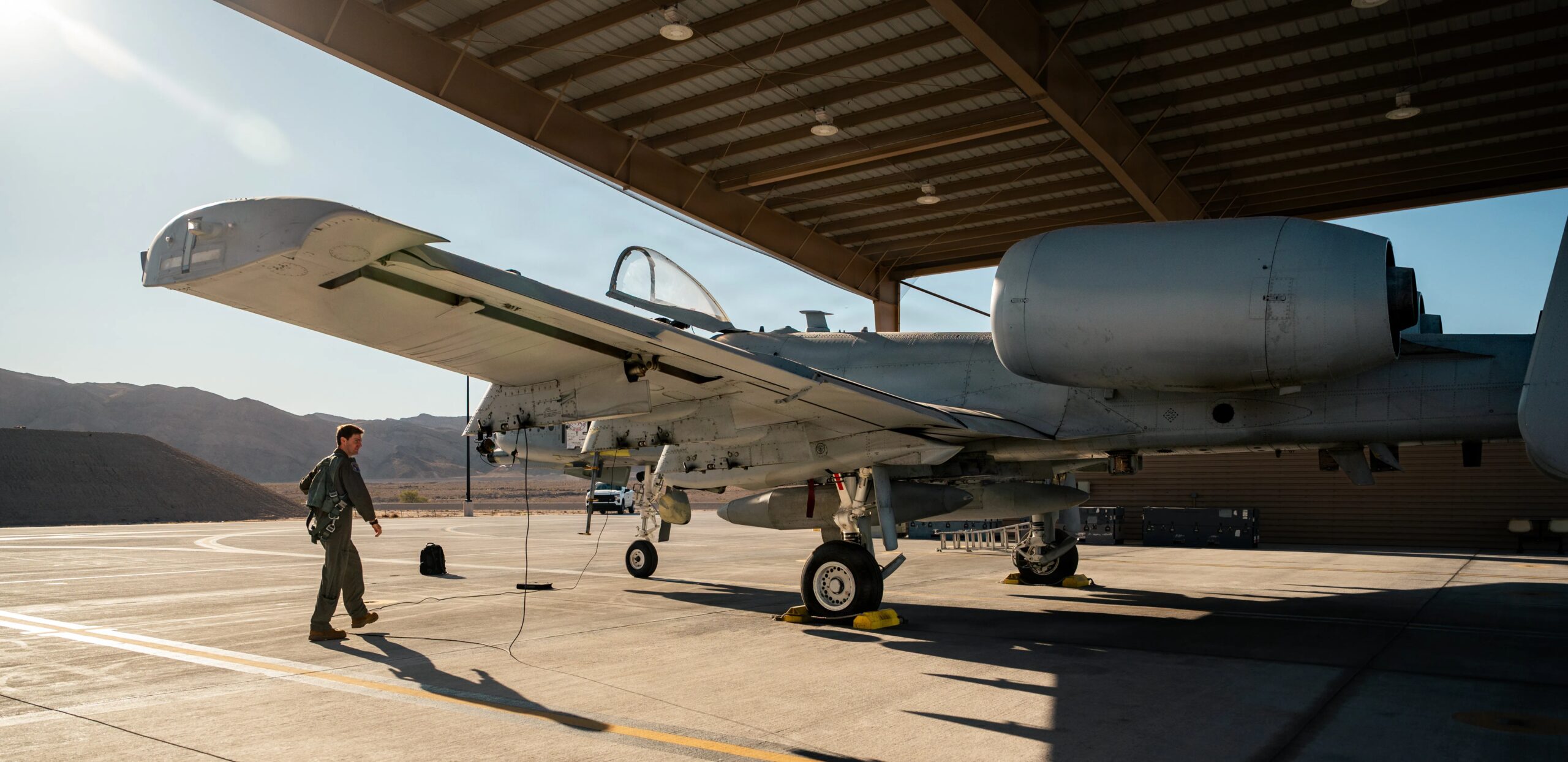
The A-10 Era Is Over At Nellis AFB
The last A-10 Thunderbolt II assigned to Nellis Air Force Base, Nevada, left the installation on September 22. The departure marks the end of nearly five decades of Warthog operations, including tactics development and testing, at the Air Force’s most high-profile fighter base. It also reflects a broader shift in which close air support expertise and some associated missions are supposedly being distributed among the F-15, F-16, and F-35 communities, although the move is controversial, to say the least.
Nearly 70 airmen assigned to Nellis gathered along the flight line to salute the aircraft as it departed. The final takeoff closes a chapter that began in 1977, when the first A-10 arrived at the base, which subsequently became a major center for developing and refining the aircraft’s operational employment.

Over the decades, Nellis-based units worked on the A-10’s software, avionics, and precision weapons capabilities, while the U.S. Air Force Weapons School’s 66th Weapons Squadron trained more than 300 A-10 weapons officers through approximately 100 classes. Many of the tactics in the A-10’s playbook emanated from the base.
The A-10’s departure consequently represents more than the retirement of another aircraft from a Nellis ramp. It also marks the end of a dedicated training and institutional ecosystem that developed around an aircraft specifically designed for close air support.
Earlier this year, Jamie Hunter of TWZ visited the U.S. Air Force A-10 Weapons Instructor Course as it was in the process of closing down, as documented in these exclusive videos:

A-10 Cockpit And Walk-Around Tour With A Warthog Weapons Instructor

The Last Days Of The A-10 Warthog Weapons School
The Air Force is now attempting to carry at least some of that expertise into a force built around multirole fourth- and fifth-generation fighters.
“We are maintaining the culture of the A-10 by involving as many other fighter communities involved in the close air support mission,” Lt. Col. Ridge Flick, commander of the 66th Weapons Squadron, said. “We are also training F-15 Eagle, F-35 Lightning II and F-16 Fighting Falcon pilots to take on some roles we have had in combat search and rescue.”

The A-10 was developed specifically for close air support, with its design emphasizing survivability at relatively low altitude, weapons employment against ground targets, and the ability to persist in the vicinity of friendly forces. In contrast, the F-16C/D and F-15E/EX were developed primarily as multirole fighters, while the F-35 combines strike, air-to-air, intelligence, surveillance and reconnaissance, and networking capabilities with a low-observable design.
Rather than replacing the A-10 with a single successor, the Air Force is therefore distributing elements of its former mission set across several aircraft and communities. The service insists its close air-support capability is not being reduced as the Warthog fleet retires, but at the very least the transition does represent a significant change in how that capability is generated and employed.

Regardless, the USAF’s claim that the impact of losing the heart of the A-10’s braintrust will not dramatically impact key mission sets in a negative manner has been viewed with extreme skepticism by some. It’s not uncommon for subject matter experts to believe the close air support and ‘Sandy’ aircrew recovery mission braintrust that the Warthog community represents is a far bigger loss than the aircraft itself, and that the USAF is not prepared to preserve this critical expertise, regardless of the service’s stated intentions.
The end of A-10 operations at Nellis also put what may be the final nail in the A-10’s coffin, as reconstituting these operations would be very challenging and costly. All this points to the Warthog being on its final glide path to retirement, once and for all.
You can read all about this controversy in our past special feature linked here.

Beyond the redistribution of Nellis’s A-10 pilots, the transition is also affecting the maintainers who supported the base’s A-10 fleet. Airmen assigned to the 757th Aircraft Maintenance Squadron’s Thunder Aircraft Maintenance Unit are being reassigned to other squadrons and airframes, including the F-35 and F-16. The Air Force is consequently moving not only personnel, but also decades of experience maintaining an aging and structurally demanding aircraft into programs supporting newer fighters.
For Staff Sgt. Eva Kehn, a weapons load crew chief with the 757th AMXS, the end of the A-10 era has an especially personal dimension because of her family’s connection to the aircraft and to aviation.

“Working on the A-10 is meaningful to me because that is something that I share with my grandfather,” Kehn said. “I’m very excited to have that new chapter and bond over that again with my grandfather.”
Kehn is transferring to an F-35 unit at Nellis, where that connection will continue in a different form. Her grandfather is now a civilian F-35 instructor, giving the two an opportunity to remain professionally connected even as the A-10 disappears from the installation.

Master Sgt. Aaron Edmonds, an aircraft section chief with the 757th AMXS, is also moving on from the Warthog after spending the past five years maintaining the aircraft. Edmonds previously worked on the F-16 earlier in his career and will now return to the Viper community.
“It’s a bittersweet moment,” Edmonds said. “I enjoyed my time with the A-10, but I’m excited because this departure marks the closing of one chapter and the start of another.”
Edmonds said the experience gained on the A-10 should be carried into the next aircraft rather than left behind with the airframe. “The advice I would give airmen who are transitioning from one airframe to another is to be open-minded, willing to learn and carry on the great work ethic from your previous aircraft over to your new one,” he said.

With the A-10 no longer present at Nellis, at least some of the expertise attached to it is being incorporated into a fighter force in which other aircraft types can contribute to the close air support mission in very different ways. An F-35, for example, can use its sensors and networking capabilities to identify and share information about targets and the battlespace, and it can go where other fighters can’t. An F-15 can contribute heavier weapons and longer endurance, among other capabilities, depending on the mission. This is not exactly new, either, as all types of aircraft provided CAS during the Global War on Terror-era, although the masters of exactly how to do it and how to execute the critical airborne forward air control (FAC-A) mission existed in the A-10 community. Still, the resulting force will be considerably different from the one centered on the Warthog, even where the underlying requirement to support troops on the ground remains.

As noted, the A-10’s retirement now looks to be gathering pace, despite repeated efforts to keep the A-10 in service and recent employment in combat operations in the Middle East. The Pentagon has granted three Warthog squadrons a reprieve to continue operating through 2030. In July, a bipartisan group of Congressmen introduced a bill that, if passed and signed into law, would require the Air Force to keep flying the jets through Fiscal Year 2033. Still, the aircraft’s eventual fate appears increasingly clear, with growing numbers heading to the 309th Aerospace Maintenance and Regeneration Group (AMARG) boneyard in Arizona for storage, including the last one from Nellis.
The ongoing retirement of the A-10 is bringing a fundamental change in how the Air Force organizes and executes the missions for which the Warthog became synonymous. Nellis will remain an important center for developing those capabilities, even though the aircraft around which that expertise was built is no longer part of the equation.
Contact the author: thomas@thewarzone.com

Truth behind Katie Holmes’ new man who saved ‘iced out’ actress from the trauma of ‘life-shattering’ Tom Cruise marriage

IT was written all over Katie Holmes’s face as she arrived at the Calvin Klein show at this month’s New York Fashion Week.
The reason for the actress’s mega-watt smile? The man on her arm, artist Jason Bard Yarmosky, whom Holmes, 47, has been dating since the start of the summer – and helped her get over the trauma of her doomed marriage to Tom Cruise.
Holmes and her new man, 39, attended four major fashion week events together, each time carefully co-ordinating their outfits – which in Hollywood terms says far more about relationship status than you might think.
Their romance has been the talk of New York society this summer, since they were first spotted in the Hamptons together in early July.
Handsome Jason is something of a name himself, building 40,000 followers on Instagram where he shares his work.
A source tells The Sun that he and Holmes have fallen for one another – fast – and that engagement may well be the next move.
“They have become close very quickly,” says the source.
“Something about Jason’s sense of self and passion for what he does really pulled Katie into his orbit and they’ve become inseparable. They are very much in love.”
They reportedly first met at a Tribeca Festival dinner in June, where Yarmosky had been selected for the festival’s Artist Awards Programme which was presented by Chanel.
They immediately bonded, says a source, over their “shared creativity”, with Holmes impressed by his work and his “quietly confident” energy.
Yarmosky is certainly cool, becoming something of a power player on the New York art scene, recently creating work for a special exhibition at iconic department store Bergdorf Goodman.
His website describes his paintings and drawings as centring around “themes of aging, time and memory” with a lot of his recent work inspired by his grandparents.
They made their relationship Instagram official this month, and shared sizzling photos from a trip they took to Lake Como in Italy as a collab post, the ultimate new power couple move.
Our source said that the trip was a huge step for them, and their electric connection was plain to see in the series of bikini photos as they enjoyed a boat trip on the lake.
Her friend Amy Astley, the former Vogue editor, commented that she was “glowing”.
“For Katie to make this romance so public is very telling,” said one friend.
“She has deliberately kept her romantic life under wraps for decades.”
Indeed, Holmes’s only long term relationship since her high-profile divorce from Tom Cruise, after almost six years of marriage, was with Jamie Foxx.
They were said to have dated for five years and in that time they were photographed together out in public only a handful of times.
In 2019, there were two – very rare – public appearances, first at the Clive Davis and Recording Academy Pre-Grammy Gala, then at the Met Gala.
A few months later, the romance was said to be over – and Holmes hasn’t found a great love again, until now, despite being linked fleetingly to chef Emilio Vitolo Jr. in 2020 and musician Bobby Wooten III in 2022.
“Things feel very different for Katie now,” said the source.
“For the first time since splitting from Tom, she wants to show the world how in love she is.”
And she certainly is – so much so that rumours are circulating that the pair could even be heading for engagement.
“It’s been a complete whirlwind,” said one Hollywood source.
“Katie’s friends and – most importantly – her parents Martin and Kathleen, all approve of the relationship. It is a big deal that they are together so publicly, it says a lot about where they are at.”
Holmes has been notoriously private about every aspect of her life since her extremely high profile marriage, and subsequent divorce from Tom Cruise – something which left her feeling “shaken” and “cautious about living in the spotlight” said sources at the time.
It has been almost twenty years since the pair married in a lavish Italian wedding, at Bracciano’s 15th-century Odescalchi Castle – a celebration that reportedly cost them upwards of $3 million and included a performance by Andrea Bocelli.
Their relationship had been a whirlwind, from meeting in 2004, to getting engaged in 2005 and having their only child Suri in April 2006, just seven months prior to the wedding, the pair became a Hollywood power couple – known as TomKat – in record time.
She told W magazine, “I’ve found the man of my dreams”.
But their downfall was almost as dramatic as the couch-jumping which defined the start of the romance.
Holmes filed for divorce from Tom Cruise in 2012 after nearly six years of marriage through a carefully planned, covert exit from the relationship.
The Wall Street Journal reported at the time that the couple had been at loggerheads about Scientology, the controversial religion of which Cruise has been a prominent member for over 40 years, calling it a “beautiful religion”.
He said in 2016, “It’s something that has helped me incredibly in my life.”
He added, “It’s something, you know, without it, I wouldn’t be where I am. So it’s a beautiful religion. I’m incredibly proud.”
Reports revealed that Holmes and Cruise had disagreements over how the couple’s daughter, Suri, would be raised, with Holmes wanting to raise Suri away from Scientology.
During a court case in 2013, Cruise confirmed that it was “one of the assertions” made by his ex-wife which led to their split.
Following the split, Holmes was granted custody of Suri and they set up home in New York where they lived an exceptionally quiet life.
Cruise was last photographed with his daughter, now 20 and attending Pennsylvania’s Carnegie Mellon University, in 2012 and she is said to have dropped his last name going instead by Suri Noelle, her mother’s middle name, in a recent Edinburgh Festival performance.
“They don’t have any kind of relationship,” a source has said of Suri and Cruise. “She was raised by Katie. They are incredibly close.”
Prior to her marriage Holmes had been riding high in her career which started with hit teen show Dawson’s Creek, and had just starred in Batman Begins in 2005.
Following their dramatic split, however, Holmes found herself somewhat “iced out of Hollywood”, says one industry insider.
Two years ago Holmes admitted: “Do I have 20 scripts at my door, all with the green light? No. Would that make life easier? Yes.”
Her most notable role in the post-Cruise years was as Jaqueline Kennedy in the TV miniseries The Kennedys, but the big blockbuster offers dried up.
Two years ago, she made a splash on Broadway with director Kenny Leon’s revival of Our Town.
Since then Holmes has been busy stepping back into the spotlight.
She has written and directed new romcom Happy Hours, in which she also stars alongside her former Dawson’s Creek co-star – and ex-boyfriend – Joshua Jackson.

She said earlier this year that “working with Josh again was a dream.”
Their friendship, which has been renewed in recent years after going no-contact while Holmes was married to Cruise, has been a huge part of Holmes’s “finding herself” again, our source tells us.
“With Josh, Katie can be herself,” they revealed. “He’s known her since they were kids. He’s encouraged her to find her voice artistically and also lean into being in the spotlight once again.”
And Holmes is certainly doing that, with more public appearances with her new man this year than we’ve seen since she was with Cruise, and a renewed spotlight on her life and career which she appears to be enjoying.
“Katie is happy and confident in who she is in a way that felt impossible even ten years ago,” said our source.
“Going through such a high profile divorce from someone who is so powerful, like Tom Cruise, was a life-shattering thing for her. It’s taken time but Katie feels free – and Jason is a big part of that.”
As Holmes said two years ago: “I’m adamant about having a life and not letting this industry dictate decisions as simple as what I wear or as complicated as what I do.”
She added, “You don’t want to be afraid of anything, right?”
It looks like Katie Holmes is really living by those words.

Judge orders White House to restore access to news outlets Trump banned
WASHINGTON — A federal judge early Thursday temporarily blocked President Trump’s move to ban three news outlets from the White House grounds and said CNN, MS NOW and Politico must have their access restored.
It’s the latest development in an escalating showdown between Trump and media outlets whose coverage he dislikes. The president announced he was banning the outlets Sept. 18, assailing what he called “fake news.” More recently, Trump has said negative coverage is dangerous for the country.
The outlets argued that they were singled out because of the content of their coverage — in other words, viewpoint discrimination — and called the ban a “blatant violation” of the 1st Amendment.
In an order posted shortly after midnight Eastern time, U.S. District Judge Timothy Kelly said the media outlets had met the legal thresholds needed to obtain a temporary restraining order, which include the likelihood of succeeding on the merits of the case and of suffering irreparable harm without an order.
“This is a high bar, but Plaintiffs have met it,” he wrote.
Kelly — whom Trump nominated in 2017 and who ordered a CNN journalist’s access restored in a similar case in 2018 — heard arguments Wednesday and ended the hearing without ruling.
On Thursday, he issued the temporary restraining order, which will be in effect for 14 days. Such orders are typically designed to preserve the status quo pending a closer review of the case by the court.
During the hearing, Kelly questioned whether the administration had met its legal responsibilities and provided CNN, MS NOW and Politico with adequate due process before banning them.
The rulings in two prior cases over press access, including one that went to the U.S. Supreme Court, made it clear that journalists are entitled to an opportunity to be heard before they have their press passes revoked.
Justice Department attorney Michael Velchik argued that the rulings in the earlier cases were wrong.
The judge noted that his decision would be guided by prior rulings in comparable 1st Amendment cases, even if the government disagrees with them.

Angels move closer to first 100-loss season after defeat by Athletics
SACRAMENTO — Donovan Walton hit a three-run homer and rookie Henry Bolte had his first four-hit game to help the Athletics beat the Angels 7-3 on Wednesday night.
The Angels (60-98) are trying to avoid the first 100-loss season in franchise history.
Lawrence Butler had an RBI single and Walton hit his ninth home run, a two-out shot off rookie Walbert Ureña (9-11) for a 4-0 lead in the first inning.
Bolte went four for five, scored two runs and had an RBI double in the second that put the Athletics (63-95) up 5-0.
Mike Trout and Vaughn Grissom hit back-to-back homers off Jeffrey Springs in the fourth to make it 5-2. It was the 22nd homer this season for Trout the 426th of his career, all with the Angels.
Grissom followed his 13th homer with an RBI single in the fifth to cut it to 5-3 and chase Springs.
Alika Williams and Bolte had singles off José Fermin in the sixth and both scored on a double by Shea Langeliers for the final margin.
Springs gave up three runs on five hits in 4 1/3 innings. The left-hander was 3-0 after his first four starts, but went 1-14 over his final 25. Geoff Hartlieb (2-1) got five outs for the win and Elvis Alvarado struck out two in the ninth to close it out.
Ureña yielded five runs and seven hits in four innings. The right-hander had given five runs in his previous three starts covering 21 innings.
Athletics catcher Brian Serven fouled a bunt off his left eye in the sixth and had to leave the game.

Pakistan says it launches air strikes on Afghanistan after drone attacks | Border Disputes News
Strikes carried out in southeastern province of Khost cause no casualties, governor’s office says.
Published On 24 Sep 2026
Pakistan says it has carried out air strikes on 10 locations in Afghanistan used to store and launch drones, some of which were used in cross-border attacks.
The air strikes on Thursday were carried out as tensions grow between the former allies over attacks by armed groups in Pakistan, which triggered their worst fighting in years in February.
Recommended Stories
list of 3 itemsend of list
Islamabad accuses Kabul of harbouring fighters who stage cross-border attacks, but Afghanistan’s Taliban government denies harbouring anti-Pakistani armed groups and says the attacks are Pakistan’s internal problem.
The air strikes were “deliberate, precise, calibrated, and proportionate, and strictly limited to identified military objectives directly linked to the attempted attacks against Pakistan”, Pakistani Information Minister Attaullah Tarar wrote on X.
He condemned a “deliberate and unlawful incursion into Pakistan by drones” on Wednesday.
“This constitutes a blatant violation of Pakistan’s sovereignty and territorial integrity and is a grave and unacceptable act of aggression,” he said.
The Pakistani air strikes were conducted in several areas of Khost province in southeastern Afghanistan, Mustaghfir Gurbaz, spokesperson for the Khost governor, said.
There were no casualties, he said.
An attack on a police facility in northwestern Pakistan last week that killed at least 21 people has reignited fighting between the countries after nearly three months of relative calm. A Pakistan Taliban faction claimed responsibility for the blast and subsequent gun battle.
On Monday, air strikes targeting three locations in northeastern Afghanistan killed three civilians in the Nurgal district of Kunar province, Afghan officials said. Islamabad said it killed 28 “terrorists”.
The escalation threatens mediation efforts by China, Turkiye, Qatar and Saudi Arabia to broker a lasting peace between the two neighbours.
Relations between the former allies have been strained since the fighting in February, the worst for years.

Taking a deep dive in Helsinki’s subterranean city | Helsinki holidays
The moon is an impostor. Swimming backstroke beneath its surface, I look up at craggy hollows in close relief. White rock undulates in all directions, a forest of peaks rising next to a desert of craters. Every time I trick myself into thinking I’m somewhere celestial, the sound of children splashing brings me back to earth.
This is no lunar landscape but Helsinki’s underground swimming hall, excavated from granite bedrock and officially opened in 1993. These days, Itäkeskus uimahalli is one of the Finnish capital’s most visited leisure facilities, welcoming 400,000 people a year. Local people mingle with tourists, I will discover, during a week exploring Helsinki’s subterranean metropolis.
My visit was one of 12 research trips I made over three years to better understand how cities are being reimagined. It turned into a book, How to Build a City, for which I travelled to locations that are testing the frontiers of urban living in response to an increasingly uncertain world.
Many global cities feature a version below ground, but Helsinki’s is thought to be the only one transformed for peace. As urbanisation increased the population, a more efficient solution was needed for heating plants and telecoms cables. You could scatter them around in expensive pockets of land, digging up the streets and sacrificing parks. Or you could tuck them away beneath ground level, by adding to bomb shelters first carved out during the second world war.
And that’s what Helsinki did. By 2010, its city council approved the world’s first officially masterplanned underground city, home to hundreds of vast human-made caves and tunnels up to 90 metres deep. Itäkeskus pool was opened 17 years before this space allocation plan was approved.
In peacetime, the caves function as shopping malls, playgrounds, a go-karting track and subway stations, all connected by almost 200 miles (293km) of tunnels. In the event of war, however, each can be transformed into a bomb shelter, part of a network capable of accommodating 900,000 Finns.
Itäkeskus swimming hall alone could house almost 4,000 people. In less than 48 hours it can be drained and fitted with decontamination showers. For the rest of the time, there are no clues as to its defence nature. Only the comforting hallmarks of the public pool: the tang of chlorine in my nose and the warmth that cloaked my skin.
I arrived in Helsinki on the morning of the spring solstice, although the ground was still dusted with greying snow and I was grateful for the heated carriages on my 25-minute Metro ride from the city centre. At Itäkeskus station, past a school surrounded by Soviet-style tower blocks, silver birches trailed bare branches over cars. From the outside, a municipal glass building gave an uninspiring welcome, but inside, I found a different world entirely.
A broad staircase swept me down steeply, framed by rocky, whitewashed walls. After paying (entry to all four of Helsinki’s public swimming halls is €6 for adults and €3.30 for children, making it popular with families as well as budget-conscious travellers), I disrobed in changing rooms spun off from a cathedral-tall granite core. Signs were in Finnish, but the space was easy for non-natives to navigate. Staff spoke excellent English.
At one side of the colossal hangar, men grimaced as they lowered themselves into a triangle of freezing water. On the other, a postmodern dreamscape was revealed, a large pool lined in lavender, canary yellow and burgundy tiles, with huge plastic triangles in cerulean and lilac suspended overhead. The only windows were set into a lifeguard’s tower next to a waterfall that filled the air with the roar of water in motion.
Swimming under the ersatz moon was an otherworldly experience. After 50 lengths, I’d earned my reward. Included in the entry fee is access to a gym, which I did not visit, plus a hot tub, steam room and two saunas, which I did. A graphic on the door showed a swimming costume crossed out in red and I gingerly removed mine, sliding into place on the bench and reminding myself that prudishness is a uniquely British affliction. Inside, it was so dark I could barely make out other bodies. The low light created the effect of a confession booth.
after newsletter promotion
Around me, conversations bubbled in Finnish, American English and German. The quotidian details of living emerged. I joined in, asking a stranger for dinner recommendations and whether I should brave the plunge pool. If you don’t dwell on it, you could forget the true purpose of this place.
It was something I kept returning to over the following days as I wandered through experimental installations at Helsinki’s underground art museum Amos Rex (from €20; children go free), whose antennae-like skylights popped up on concrete stalks from the pavement near the chichi shopping district of Kluuvi. And in the Töölö neighbourhood’s exquisite Temppeliaukio church (€8; children go free), half-buried in a giant mound of rock.
All were examples of a supremely responsive city. All were bomb shelters, too. Evidence that you can design for the future with verve and beauty. Helsinki shows it is possible to do it all.
How to Build a City: Journeys into the Urban Future by Gabriella Bennett is published by Headline (£25). To support the Guardian buy a copy at guardianbookshop.com. Delivery charges may apply.

Sikorski: Russia doesn’t have the forces to invade NATO | NATO
In an exclusive interview with Al Jazeera, Polish Foreign Minister Radoslaw Sikorski says Russia ‘doesn’t have the forces to really invade NATO.’ Sikorski was speaking on the sidelines of the UN General Assembly in New York.
Published On 24 Sep 2026

Jonathan Taylor Thomas detained after allegedly resisting police
“Home Improvement” teen heartthrob of yore Jonathan Taylor Thomas spent the night in jail for allegedly getting unruly with police after a night of drinking.
The 45-year-old actor was detained by the Los Angeles County Sheriff’s Department and taken to the Malibu/Lost Hills station in Agoura Hills shortly after midnight on Monday, according to Sheriff’s Department booking records.
Thomas’ trip to the slammer stemmed from a traffic stop that went awry in Westlake Village. He was the passenger in the car and exited the vehicle after a police officer told him to stay inside, according to TMZ. The outlet reported that Thomas was allegedly inebriated, refused the officer’s instructions and did not cooperate.
Arrest records show that the “Lion King” star was booked at the station on a felony-level charge, with total bail set at $0, which can be a temporary holding classification used during the initial intake before a prosecutor or district attorney formally evaluates the case.
Thomas spent the night in jail, but police let him go Tuesday afternoon, with records indicating that no formal criminal complaint was filed and the incident was reclassified as a detention only, rather than an arrest, which should wipe the arrest from the actor’s official record.
Thomas, perhaps best known for starring in the beloved 1990s sitcom “Home Improvement” opposite Tim Allen, also voiced Simba in Disney’s “The Lion King” and starred in other ’90s family films, including “Man of the House” and “I’ll Be Home for Christmas.”
After a decade of starring roles and magazine covers, Thomas stepped away from the limelight to focus on school, and attended Harvard, Columbia and the University of St. Andrews in Scotland.
“I’d been going nonstop since I was 8 years old,” he told People in 2013. “I wanted to go to school, to travel and have a bit of a break.”

Debbie Beard and Amanda Thorpe lost their husbands – this is their story
Amanda Thorpe has said previously she believes her husband would still be alive had he received more support from the England and Wales Cricket Board (ECB) after leaving his coaching role. Following the inquest into his death, the ECB said it was “a profound tragedy” and added Thorpe’s passing was a “stark reminder” of the challenges many face with mental health.
Matt Beard died a month after leaving his role as manager of Burnley Women. He had been in the post for only two months. When the inquest into his death was postponed indefinitely, Burnley said they were “aware of an ongoing legal process” and would “not be making any comment at this time”.
Amanda: “Graham had been struggling for the previous year to 18 months during Covid. Graham didn’t really like following rules and there were quite a few in Covid – like playing under bubble conditions. So he had been having some medication and therapy in his job. But then Graham lost his job and he didn’t see it coming.
“He did pride himself with having been in the game his whole life. He just couldn’t believe that he was blindsided by it.
“I think at least two other people were sacked at the same time, which does happen at the end of disastrous Ashes series.
“Also he was probably drinking too much and found the whole of the last trip in Covid very stressful. He then took a playful video at the end of the tour, when they had a few drinks with the opposition. One of the players sent it to two friends and someone unfortunately leaked it, so it was in the Sydney Morning Herald.”
Simon: “Going for a few drinks with the opposition – you would think that that happens in sport all the time, but they lost?”
Amanda: “Yes. It’s OK if you win but you’re not allowed to have a drink if you lose. He was probably in shock. He couldn’t believe it. And he was embarrassed and ashamed about this stupid video, which to me he blew way out of proportion. But he was in this tunnel where he thought he’d messed it all up. So he went into a quick and steep decline.”
Simon: “During that period, what could have been done? You said that he was seeking some help. What might have made a difference, do you think?”
Amanda: “He was having therapy sessions. He had 10 sessions. There’s obviously the confidentiality but I found out after he made a very serious attempt on his life, when he really hurt himself very badly, that he’d mentioned suicide. I didn’t know about that at the time. Of course, I feel that if I’d known, things could have been different. And I did feel that he wasn’t really getting better. It was difficult. I felt like maybe he did need more help – maybe residential but we didn’t really know where to find that.”
Simon: “Debbie, Matt also lost his job…”
Debbie: “He did.”
Simon: “Were there any signs that he was struggling with mental health, and then was there a steep decline afterwards?”
Debbie: “I think there were changes in behaviour, looking back. Performance-wise the team weren’t doing well so there was a lot of abuse on social media. He could never really speak his truth during media interviews of what was going on behind the scenes and he used to sound off to me at home.
“I’ve found out since that he had spoken to his brother quite a lot about his mental health. But whenever I would say to Matt ‘how are things?’, he’d be, ‘I’m all right, I’m all right’, because he always wanted the best for other people.
“He didn’t want to concern me and the family that he was having these thoughts and that he was going through these different struggles.
“The sacking came out of the blue and there was a lot of speculation around that. He was starting to drink more than he would have done normally. In terms of his behaviour, I would say he was taking a lot of risks as well. So maybe that was the start of this with him.”

OpenAI CEO: Tech companies don’t ‘have all the answers’ on AI policy | United Nations
Open AI’s CEO has called for international coordination to address potential risks posed by artificial intelligence (AI). Sam Altman’s remarks come as Australia’s government reveals OpenAI’s AI agents hacked the country’s healthcare data tracking website.
Published On 24 Sep 2026