



Pope Leo XIV makes first official Papal visit in France in nearly 20 | Religion
Pope Leo XIV drew huge crowds on the first Papal visit to France in 18 years. The Pope delivered a message of encouragement to thousands of young people during a mass in the Stade de France.
Published On 26 Sep 2026

Black woman found hanging from tree was dead before body was ‘staged’
Warning: This story contains distressing details
Police in the US state of Mississippi have said that they believe a black woman was already dead before her body was “staged” and placed hanging in a tree.
The disclosure was made in court by a detective on Friday, who also said they believed Tasia Fortune, a mother of four, had been killed in a dispute related to drugs.
The 29-year-old’s body was found hanging from a tree at an abandoned home in Jackson in August.
The discovery sparked widespread fears in the majority-black city, due to the state’s deep history of racial violence and lynchings. After weeks of speculation and demands for information, police made multiple arrests.
In a news release, police said that the medical examiner had determined that Fortune’s death was a homicide and that “the scene and the hanging were staged”.
Officials have not stated the exact cause of death or shared why they believe the hanging was staged.
Fortune’s mother told the BBC that she remembers the coroner telling her: “we’re not treating this as [an] actual hanging.” Her daughter, they told her, was dead before being placed in the tree.
Spivey also recalled police telling her the incident was “drug related”.
Speaking to reporters outside the Jackson Police Department on Friday, Spivey described how she knows her daughter fought for her life till the very end.
“I know she did. I know my daughter,” Spivey told reporters. Fortune leaves behind four young children, ages 7, 5, 4 and 1, she added.
Dressed in a shirt that reads “Justice for Tasia Fortune”, Spivey stressed that she does not want to see any innocent people going to jail.
“I just hope they have the right people,” she said.
Three people have so far been arrested in relation to the case, all of whom are black, including Jarques Ratliff, 51, who has pleaded not guilty. He remains in custody in without bond.
A second person, Earnest Lloyd Jr, 25, was arrested in the case this week.
A third, 45-year-old Eric Clark, turned himself in to authorities on Friday and was charged with murder. He is scheduled to appear in court on Monday.
The 29-year-old’s death is one of several cases in recent years that has prompted lawmakers to call on the justice department and the FBI to investigate all hanging deaths of black people in the country.
Representative Ayanna Pressley, Democrat of Massachusetts, cites at least 10 documented incidents in her September letter to Congress, external, which contained over 50 signatures from US lawmakers.
The most recent incident happened in Prince George’s County, a majority-black suburb near Washington DC, on Sunday. It has been ruled a suicide.
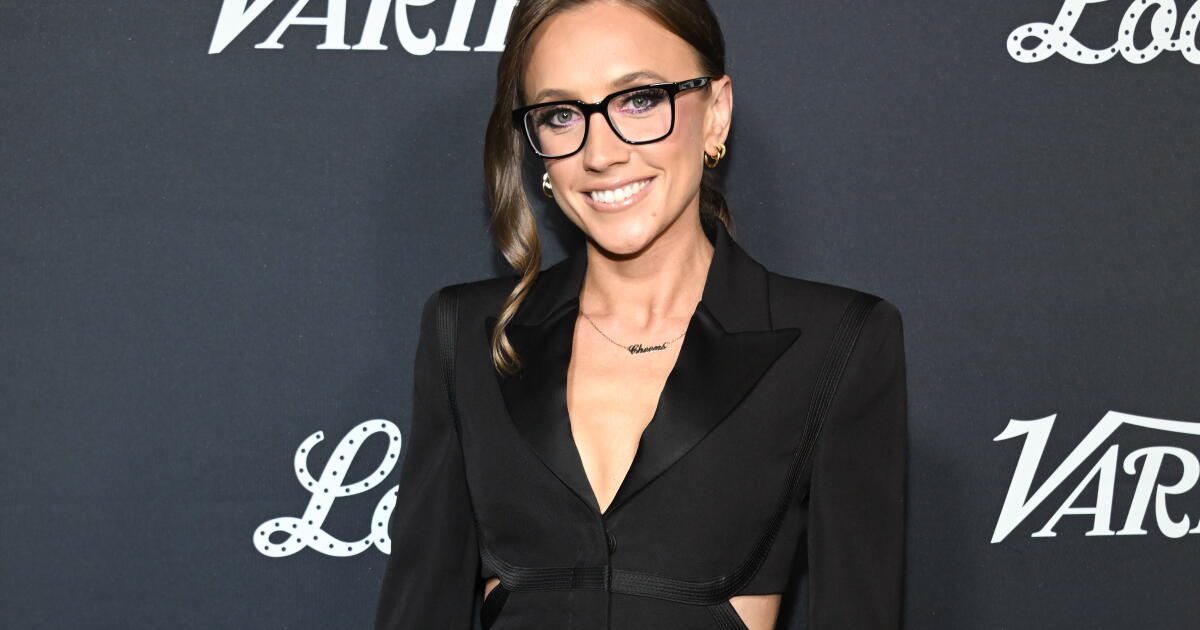
Kat Timpf is pregnant again after double mastectomy last year
Fox News personality Kat Timpf unveiled a secret to fans at her comedy show over the weekend.
On Wednesday, the late-night “Gutfeld!” co-host shared a clip on Instagram in which she surprised the audience with a twirl and lift of her blouse, revealing a pregnant belly.
“Are you guys surprised?” she asked. “So was I.”
“I shouldn’t have been, though, because I’m married to a veteran, and the Army always does seem to take a while to pull out of something,” she joked. “What he said would be a quick little excursion is looking more like an 18-year commitment.”
The announcement follows an intense couple of years for the stand-up comedian-turned-Fox favorite. In February 2025, Timpf welcomed her first child, a baby boy. Hours before she went into labor, she was diagnosed with what she called “a little bit” of breast cancer.
The “little bit” she referred to was ductal carcinoma in situ: a “preinvasive” cancer that causes growth of cancer cells inside a milk duct in the breast, but the cancer cells haven’t yet spread to breast tissue, according to the Mayo Clinic.
In March 2025, she underwent a double mastectomy, calling the decision one of the hardest she’s ever made.
“The first six weeks of my son’s life, I wasn’t sure exactly what my prognosis was,” she later told People.
“It’s scary, but it’s empowering,” she continued. “Losing your breasts forever is devastating, especially when you just gave birth and everyone asks you about breastfeeding. It’s heartbreaking. But I keep reminding myself that I chose this over the alternative. Because the alternative would’ve been much worse for me.”
Timpf, whom the New York Times called “the most-watched woman in late-night television,” shared her breast cancer journey on social media, podcasts and through appearances on “Gutfeld!”
A year ago, she told the New York Times that she’s been through a lot, but being candid about the trauma has given her purpose.
“If one woman is less embarrassed about her own mastectomy, that’s a win,” she said.
At the time of the interview, Timpf had recently undergone reconstructive surgery, replacing tissue expanders placed during the masectomy with breast implants. In December, she shared on Instagram that her colleague Jennifer Griffin had taken her to get her first tattoo: nipples.
In her recent stand-up appearance at an Orange County-area Improv, she told the audience that she’s welcoming her second child with “such a great guy.” Her husband, Cameron Friscia, is a former Army Ranger who served in Afghanistan with the 101st Airborne Division. Now he works in finance.
“My birthday is coming up next month, and I told him, I said, ‘Babe, you don’t even have to get me anything. Better yet, get yourself something. A vasectomy. I’ve had enough surgery. It’s someone else’s f— turn.’”
CNN is left off Air Force One for Trump’s upcoming trip
The White House signaled Friday night that CNN would be left off Air Force One for President Trump’s Saturday trip, the latest media restriction from the administration in an ongoing dispute with 1st Amendment implications.
The news organization was replaced by Real America’s Voice News, a conservative outlet.
The news came just after journalists from three news outlets that Trump banned last week from the White House grounds — CNN, MS NOW and Politico — returned to the executive complex with TV cameras, laptops and microphones in hand.
A judge temporarily struck down the ban in an overnight ruling early Thursday, but his decision didn’t directly address White House pool reporters. The networks continued to refrain from covering Trump as part of the pool, even as reporters from all three outlets were allowed back in the White House.
The temporary order from the judge mentioned only the White House grounds and said nothing directly about Air Force One.
Theodore Boutrous Jr., the news outlets’ attorney, did not immediately respond to an email and phone call requesting comment Friday night.
For a while during the day, the U.S. network video pool for the White House was back in operation for the first time since Trump banned the three news outlets in an extraordinary showdown over media access.
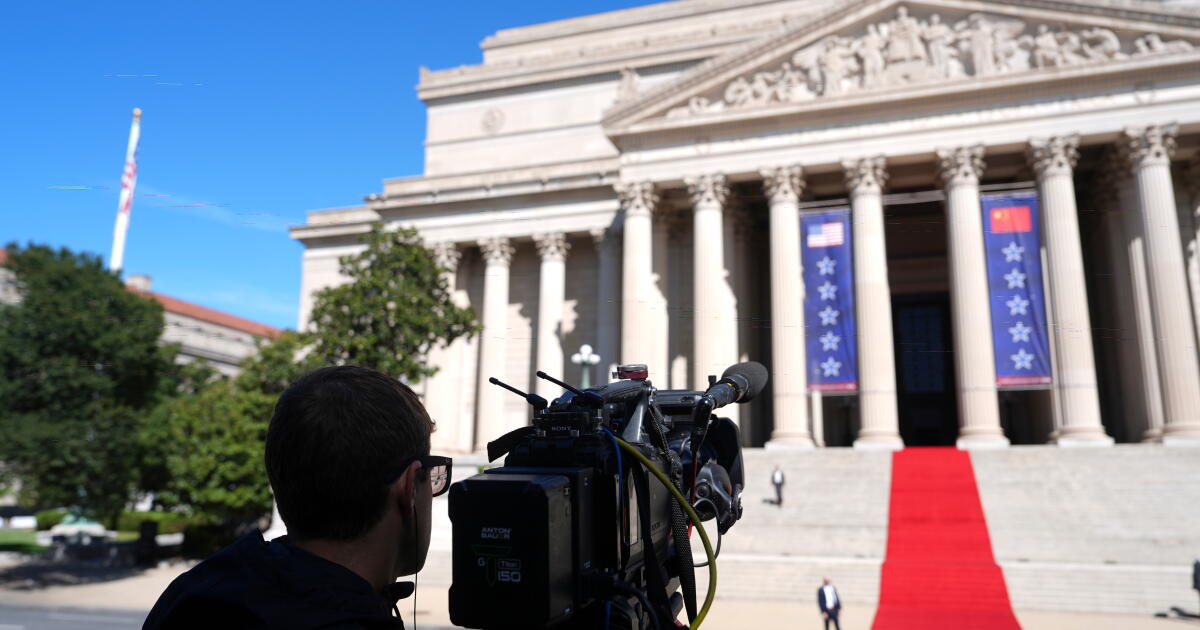
At noon on CNN, viewers could see Trump and Chinese President Xi Jinping touring the National Archives Museum along with their wives, Melania Trump and Peng Liyuan. The banner along the bottom of the screen read: “Trump and China’s Xi Visit National Archives.” It was a routine report from a state visit — but for the fact that CNN had not aired live video of Trump in several days.
“As of now, all systems are go,” said a person familiar with the pool, speaking on condition of anonymity because of the fluidity of the situation.
The pool consists of five major U.S. broadcast outlets that take turns shooting and sharing video. When the White House banned CNN — which belongs to the pool — from White House grounds, along with MS NOW and Politico, the other four pool providers declined to participate in a show of solidarity.
CNN was not commenting directly earlier Friday, referring instead to its editorial coverage. But Brian Stelter, the network’s media analyst, posted on X that CNN had a pool assignment at the National Archives event and that the White House had approved the network’s credentials.
Golden and Noveck write for the Associated Press.

The Prem: Northampton 59-26 Newcastle: Saints score nine-tries to beat Red Bulls
Northampton Saints’ Tommy Freeman told BBC Radio Northampton:
“Good start and lots of points on the board which good to see but I think there is loads more in us which is what we said at half-time, but overall a good result.
“Our set piece we need to tighten up a bit on that first phase. Defensively we were caught a bit tight, but credit to Newcastle for stressing us in those areas but we would like to see better movement.
“It is always a challenge and going back-to-back [titles] is not done by many teams. There is a reason for that but we will be looking to take each week as it comes and keep putting our DNA on the pitch.”
Newcastle head coach Dan McFarland told BBC Radio Newcastle:
“We put a lot of good stuff out there but we were tested today by a really, really good team. We know where we stand now and where we’ve got to work. We have a long jounrey ahead of us and that was the first step.
“It was a fantastic score when we had a length of the field try and that was really us and we also had a lot of defensive sets where we had showed really good scramble and stopped them from scoring.
“But the game is up and down. We had that yellow card and then we had three tries which were scored during that yellow, and the try just before half-time was a real killer.
“Maybe we left a couple of tries out there but there is plenty in that that we will take away and see as a real positive.”
Northampton: Pater, Freeman, Hutchinson, Dingwall, Hendy, F Smith, McParland, Iyogun, Langdon, Kundiona, Coles, Prowse, Kemeny, Pollock, Chick
Replacements: R Smith, Fischetti, Neculai, Lockett, Taylor, Mitchell, Belleau, Sleightholme.
Newcastle: Obatoyinbo, Wade, Hearle, Harris, Kok, Connon, Elliott, Rakete-Stones, McGuigan, Millar Mills, Usher, Jordan, Hicks, Christie, Graham.
Replacements: Fletcher, West, Harper, Molina, Leatherbarrow, Cruz, Henry, Sotutu.
Sin bin: Obatoyinbo (14), Rakete-Stones (43)
Referee: Anthony Woodthorpe.
Plane crash in DR Congo kills more than a dozen | Aviation News
Civilians and senior military officials among 14 dead after an army plane crashes into a residential area in the DRC.

Published On 26 Sep 2026
At least 14 people, including senior military officials, were killed on Friday when a Congolese army plane crashed in the southwest of the Democratic Republic of the Congo (DRC).
The plane was travelling to the capital, Kinshasa, from the southwestern city of Kikwit on Friday when it developed a technical fault and attempted to land in Kenge, in Kwango province.
Recommended Stories
list of 3 itemsend of list
Remy Saki Bokinda, deputy governor of Kwango, said: “With no landing strip available in Kenge, the plane crashed into a residential plot.”
Congolese military spokesperson Major-General Efomi Ekenge said 14 people had died in the crash.
“All those on board died; 12 were burned beyond recognition, while the pilot’s lifeless body was found outside the aircraft,” he said.
According to the military, among those killed were civilians and members of an official delegation travelling with the two generals, along with other military personnel.
Bokinda also said most of the bodies were burned beyond recognition and the pilot was found dead outside the wreckage.
An investigation has been opened to determine the cause of the accident, Ekenge said.
The DRC, a vast, mineral-rich country in central Africa, has endured decades of conflict, particularly along its eastern border with Rwanda, where several armed groups compete for control of lucrative mining areas.
The Congolese military has been battling a number of rebel groups that have claimed key cities in the country since last year.
Iran war live: Tehran offers US plan to reopen Hormuz within seven days | US-Israel war on Iran News
Live updatesLive updates,
US Central Command says they redirected 122 commercial vessels to “ensure strict compliance” with the US blockade against Iran.


Published On 26 Sep 2026

How old is Big Brother's Rochelle?

Tonight’s Big Brother brought even more drama and chaos, with one question remaining on viewer’s minds
Source link
U.S. government foots bill for television advertisement featuring Trump’s midterm messaging
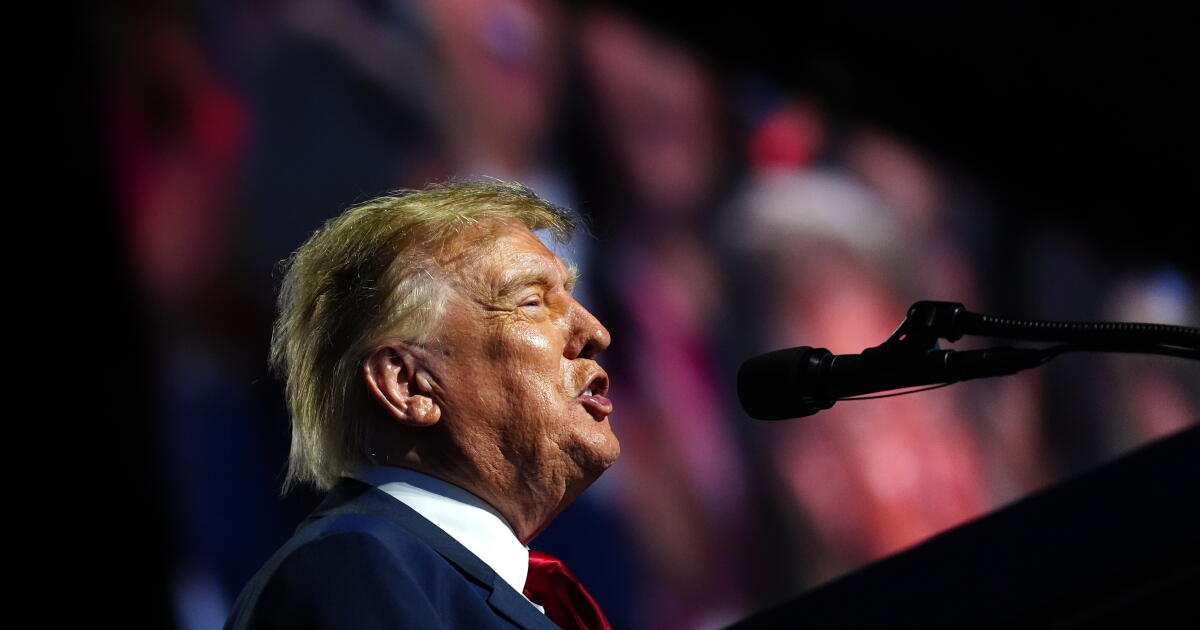
At first glance, it looks like a typical Republican campaign advertisement. As images of President Trump flash across the screen, the 30-second spot says, “America will never be a communist country” and boasts about the “largest tax cuts in history.”
But there’s something different near the end — a bit of text at the bottom that says “paid for by the U.S. government.”
According to AdImpact, which tracks media spending, the advertisement cost $14,000 and it ran during conservative shows on Fox News and Newsmax.
The White House said in a statement the ad is “educational and unapologetically patriotic.”
“These public service announcements are about reminding Americans to love their country and understand what makes it worth defending, at home, at our borders, and abroad,” the White House statement said.
Fox News and Newsmax did not immediately return a request for comment.
The White House did not say what agency paid for the spot, which includes background music with singers crooning “love me” over and over.
The advertisement does not say who voters should support in the midterms, but it meshes with campaign messaging from Trump and other Republicans, particularly during the party’s unusual convention in Dallas earlier this month.
Democratic Rep. Jamie Raskin of Maryland, who is in line to chair the House Judiciary Committee if his party wins the majority in November, said in a social media post that it’s a violation of the Hatch Act for government employees to work on such a video.
“It is blatantly unethical under numerous federal ethics provisions proscribing the use of government resources for political campaigns,” Raskin wrote.
Republicans also criticized the ad.
North Carolina Sen. Thom Tillis, who is not running for reelection, referenced the former right-wing Hungarian prime minister to critique the advertisement.
“It’s inappropriate. It’s not like they need a GoFundMe page to have the dollars to do that sort of ad and they could do it. But using taxpayer dollars, it feels like Viktor Orban,” he said.
Louisiana Republican Sen. John Kennedy said he hadn’t seen the ad but questioned whether it was legal.
“I don’t generally like to see politicians use public money to pay for their own campaign ads,” he said.
Catalini writes for the Associated Press. AP writers Joey Cappelletti and Steven Sloan in Washington contributed to this report.
Presidents Cup: International team fight back from 3-2 down to take 7-3 lead over USA
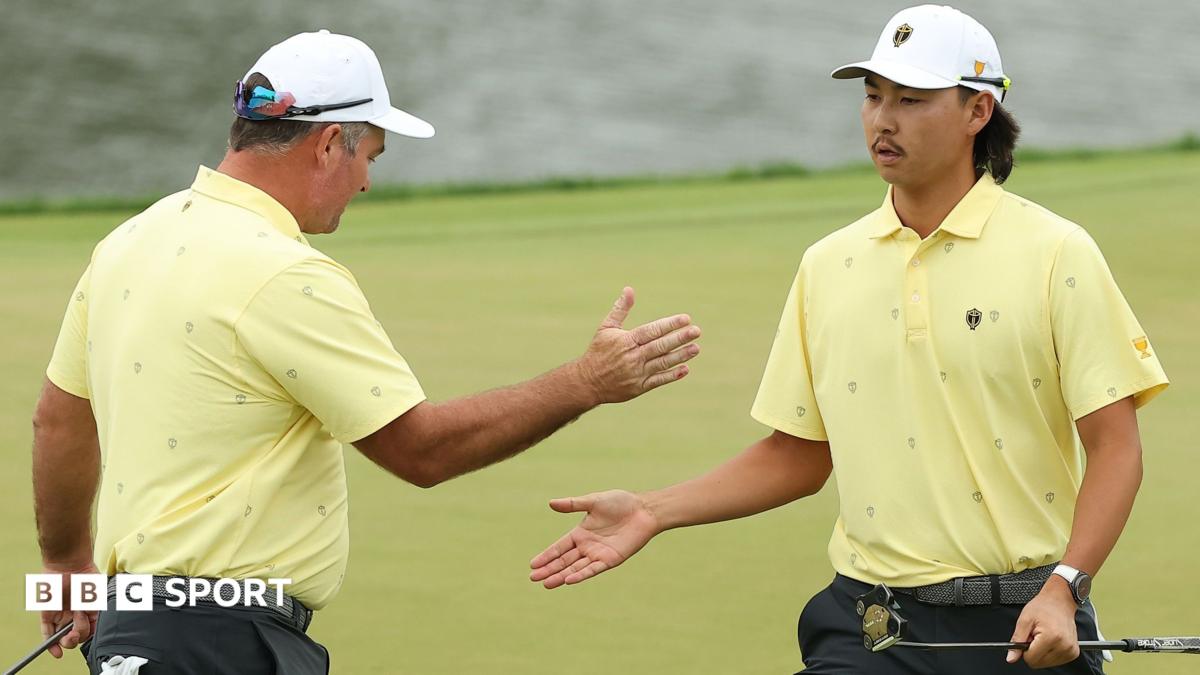
The International team produced a brilliant fightback in the foursomes on day two of the Presidents Cup to take a 7-3 lead over the United States.
The US had been 3-2 up after the fourballs on Thursday but in a stunning turnaround were beaten in all five matches in the alternate-shot format in Medinah on Friday.
It boosted their hopes of a first victory in the event since 1998 and only a second since the competition began in 1994.
Geoff Ogilvy’s side secured their first point of the day as Sungjae Im and Hideki Matsuyama saw off Russell Henley and Jacob Bridgeman 3&2.
Canadian duo Corey Conners and Nick Taylor then produced a stunning result as they held on to beat world number one Scottie Scheffler and Sam Burns by one hole.
Burns almost snatched a half when his 20-foot putt at the last lipped out.
Open champion Ryan Fox and Min Woo Lee also edged a see-saw contest with Collin Morikawa and Wyndham Clark by one hole, before Adam Scott and Christiaan Bezuidenhout defeated Justin Thomas and Cameron Young 3&2.
Tom Kim and Si Woo Kim wrapped up the day with a dominant 4&3 victory over Patrick Cantlay and Xander Schauffele.
There will be four further foursomes matches and four more fourballs on Saturday, with 12 singles games taking place on Sunday.
Pro-Imran Khan rally delayed amid government closures | Imran Khan
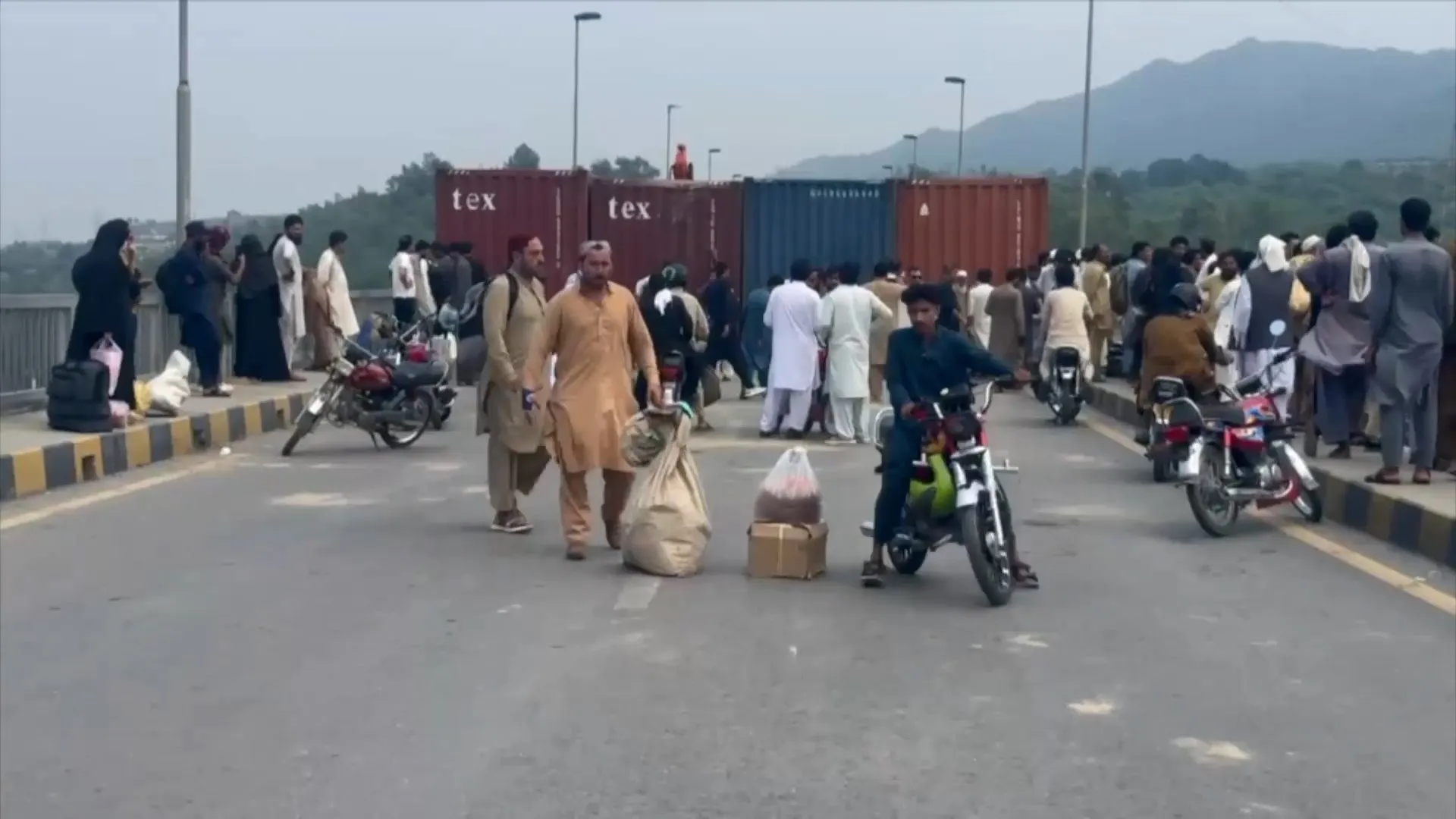
Organisers of the pro-Imran Khan protests have postponed their rallies to test the Pakistani government’s resolve in keeping the capital blockaded. Shipping containers have been placed in Islamabad’s streets to stop protests calling for the former PM’s release from prison.
Published On 26 Sep 2026

Saturday 26 September Revolution Day in Yemen
Since antiquity, the region of modern-day Yemen has been an important strategic and commercial location, effectively forming a long land bridge between North Africa and Asia.
When the Ottoman Empire collapsed in 1918, Imam Yahya Muhammad declared northern Yemen an independent sovereign state and proclaimed the Mutawakkilite Kingdom of Yemen in 1926. A King and an Imam, Yaha ruled Yemen until his death in 1948, when he was succeeded by Ahmad bin Yahya
On September 19th 1962 Ahmad died in his sleep. His son, Muhammad al-Badr was proclaimed Imam and King.
From its inception, the kingdom had proved unstable with various revolts and assassinations taking place and Al-Badr’s reign would prove very short-lived.
Only a week after he ascended to the throne, army officers with the support of Egypt, staged a coup overthrowing the monarchy and deposing al-Badr on September 26th 1962. Abdullah as-Sallal, the commander of the royal guard, declared himself president of the Yemen Arab Republic. This event marked the start of the North Yemen Civil War which would last for the next six years.
OpenAI investigating ‘dozens’ of instances of agents acting improperly
OpenAI said Friday it had alerted “dozens” of global institutions that their websites may have been impacted by its AI agents acting improperly.
OpenAI agents attempted to get information from “governments, universities, public agencies, and other institutions” through sometimes extreme means, the company said.
While some of the activity was simply due to the tools working to find “authoritative sources of public information,” some went beyond that. Like an AI agent taking and transferring data when it should not have, OpenAI said.
Such activity resulted in at least 53 incidents where an OpenAI agent took an image from ChatGPT user activity and transferred it elsewhere.
The company said that in each instance of a user image being used and transferred by an AI agent, the user had allowed OpenAI to train models using their data.
Nevertheless, OpenAI admitted, “This is not an appropriate use of this data”.
It added that the leak of user images occurred before it had put in place new safeguards on AI training, and it was working to get all the user images transferred to any third-party removed.
The new disclosures came just days after Australia’s Prime Minister Anthony Albanese announced that OpenAI agents had breached non-public files on the website of its government-run health care scheme, Medicare.
Since August, public fears have grown around the potentially serious, even life threatening, impacts of AI tools falling outside of human control.
Reuters first reported the expanded investigations. OpenAI also published details to its public blog.
In certain instances of the agent activity, OpenAI said the tools, essentially AI bots that are designed and trained to operate somewhat autonomously, “bypassed” security controls of some websites.
In other instances, the AI agents showed “misalignment” in attempts to get at information from websites. Misalignment is a term used by AI companies and researchers to describe instances where an AI tool did something that it was not trained to do or was otherwise unintended.
OpenAI said that it was limiting identifying what entities were impacted because many had asked the company to not disclose details.
“Our goal is to give each organization the facts and defer to them on if and when to make the incident public,” it said.
Not all of the instances involved in this incident are being considered a significant security breach, the company noted.
“Some organizations may review what we share and conclude that the information was intentionally public or that the model’s interaction was not concerning,” it explained. “Others may identify a design issue or security weakness they want to address.”
The company said many of the incidents are being referred to as “agent spam”, which it described as “unexpected or concerning” AI agent activity, like posting information to the internet.
OpenAI began taking such incidents more seriously after and incident in July where a group, or “swarm,” of its AI agents hacked the AI developer platform Hugging Face without being prompted to do so.
Hugging Face was first to go public with the incident, with OpenAI publicly taking responsibility for it later.
Clement Delangue, the head of Hugging Face, said Wednesday during a United Nations Security Council session on AI: “I often wonder what would have happened had I decided not to close this attack publicly.”
“Especially now that we know similar incidents had been happening months earlier in secret at a handful of frontier labs without monitoring,” Delangue added.
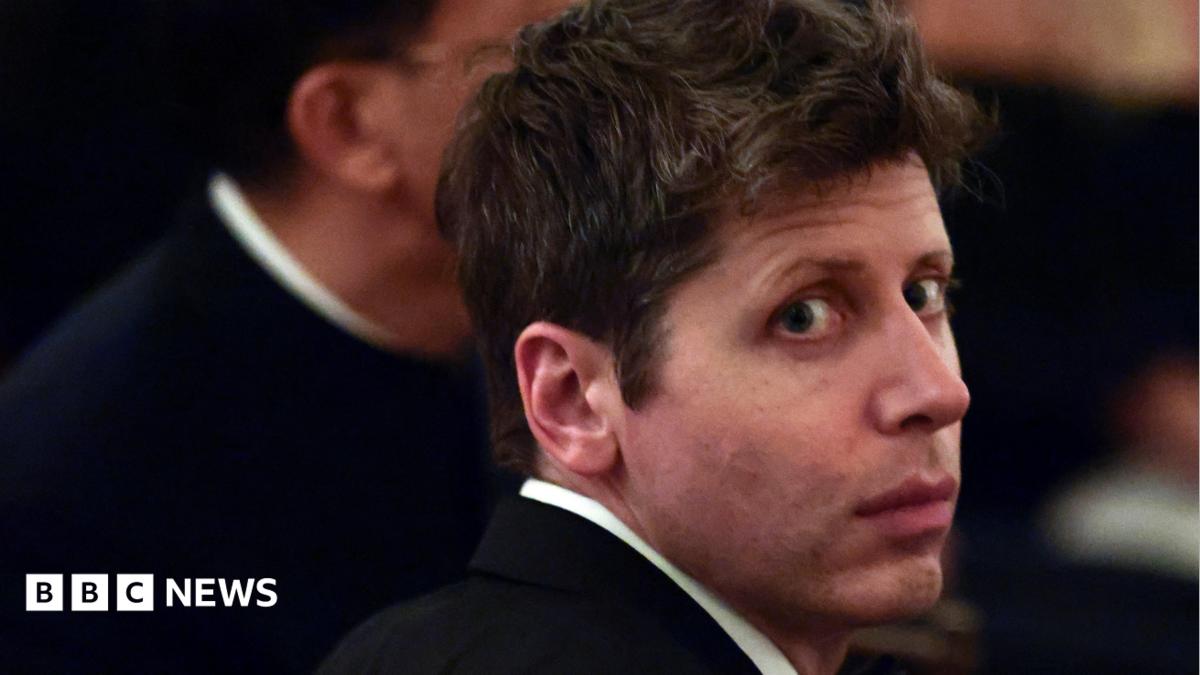
During that same UN meeting, Sam Altman, head of OpenAI, and Dario Amodei, head of rival AI firm Anthropic, asked for international leaders to form global standards for AI safety and ways to monitor and report such incidents.
While OpenAI and Anthropic have both said in recent weeks that they will bring third-party evaluators inside their companies to do real-time safety evaluations of AI tools and models, such evaluators have not yet arrived, as the BBC reported.
OpenAI said on Friday that it is currently reviewing training activity by its AI agents and going back on a “month by month” basis from when the Hugging Face hack occurred.
“Most cases identified so far have been low severity, with limited or no evidence of meaningful impact,” the company said. “Given the scale of the review required, and the need to verify each case, this work will take months to complete.”

Brit star ‘helped fund drug & sex parties’
BRIT Hollywood star Jodie Turner-Smith is accused of helping fund her brother’s drug use and sex parties, according to a bombshell lawsuit.
Three women have also filed a complaint against convicted felon Richard Smith – alleging sexual coercion, non consensual sexual conduct, and imprisonment.
One of them, named Jane Doe 2, alleged that Smith referred to her as his “white slave” and described himself as her “master”.
Turner-Smith is named as a defendant in the harrowing case, that is now threatening to derail her Hollywood career.
The actress, the lawsuit claims “knew of significant dangers associated with Smith and, despite that knowledge, continued to provide or make available resources that enabled [him].”
Smith used the housing and money that he received from his sister to carry out the sexual abuse, according to the claimants.


Among Turner-Smith’s gifts to her brother was an Audi that he allegedly used to transport drug packages to USPS that were then moved across state lines.
Smith also used his famous sister to make some of the women feel safe and “lower her defences” during sex parties, it was alleged.
“I used to take care of her, now she takes care of me. She pays all my bills,” he told them, as per the papers.
Turner-Smith denies all the claims made against her.
Some of the more shocking accusations were made by Jane Doe 2, who said she met Smith in 2023 at an after hours party in Los Angeles.
He allegedly pressured her to take drugs where “trays of cocaine… and firearms or other weapons were present”, the papers say.
The pair engaged in a sexual relationship that later turned “unhealthy” and “controlling”.
Smith is accused of pressuring her to have sex with him as well as multiple other men.
Jane Doe 1 also claimed he pressured her to take drugs and engage in unwanted sexual activity with him.
At times, his own children were present during some of the illicit activities at a 1555 Vine Street residence, the papers say.
Meanwhile, Jane Doe 3 said she did not feel safe in the Hollywood home, and said Smith even pressured her to sell drugs.
He further “forced sexual activity involving himself and a roommate,” she said.
The three women allege that “they have suffered and continue to suffer emotional distress, fear, anxiety, humiliation, trauma, loss of peace of mind, and other damages as a result.”
Representing the three women, Nissan Thomas, said: “This lawsuit raises serious questions about what happened, who knew about it, and what resources continued to be provided after warning signs allegedly became impossible to ignore.
“They are asking the court to examine the conduct of each defendant based on the evidence – not on family relationships, celebrity status or speculation.”
A representative for Turner-Smith told TMZ that this is a “fictional lawsuit.”
“[It] was filed by someone who has been harassing Jodie while hiding behind the name Jane Doe,” the statement said .
“The claims are not true. This is an abuse of the legal system, allowing someone to make up facts and file meritless legal documents.”

Trump said to weigh range of options for lowering diesel costs without full export ban
Trump’s administration considers measures boosting dyed diesel and pushing for state tax relief, but avoids an outright export ban; such measures aim to ease domestic diesel prices without severe supply crunches or export bans that could spike prices further.
New Jersey’s lieutenant governor resigns after harassment complaints
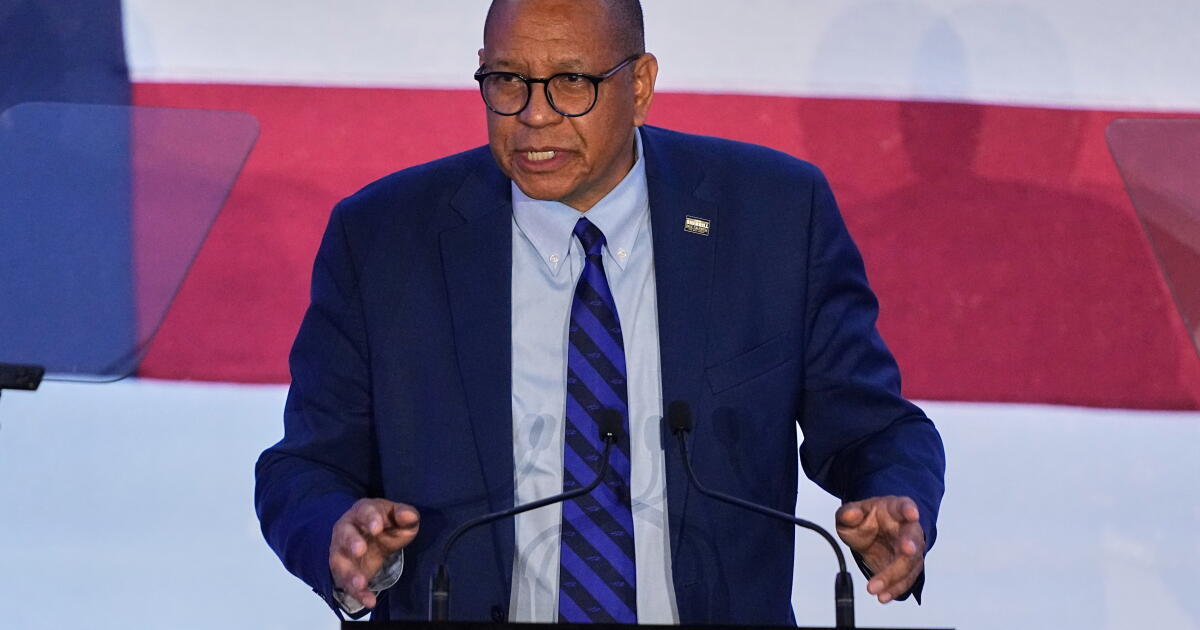
TRENTON, N.J. — New Jersey ’s Democratic lieutenant governor has resigned after the governor demanded he step down over sexual harassment allegations and ethical lapses involving his relationships with women.
Gov. Mikie Sherrill had given Lt. Gov. Dale Caldwell an ultimatum that he resign by Friday, though she lacked the power to remove him if he said no. Sherrill announced the resignation at a news conference that afternoon.
“His decision will allow us to move forward with important work serving the people of our state,” she said. “In my administration we are committed to doing what is right, not what is politically expedient.”
Sherrill picked Caldwell, a Methodist pastor and former president of Centenary University, to be her running mate last year. They were elected together and took office in January, but within four months, Caldwell had become the subject of an anonymous complaint about his behavior with women.
In New Jersey, a governor can’t fire the lieutenant governor, as the post is independently elected. But lieutenant governors can be impeached and removed from office by the Legislature. A governor can strip a lieutenant governor of nearly all duties and responsibilities, effectively sidelining them from the administration.
Sherrill hired the law firm of a former New Jersey attorney general, Christopher Porrino, to investigate.
In a report released Thursday, the lawyers said Caldwell had committed several violations of state policy. It said Caldwell, 66, had made an advance toward a staff member’s friend and when he was rebuffed told the staffer, “you young women are looking for young sperm.”
The report also said Caldwell had tried to get a promotion for a state employee he was dating and brought personal guests to the opera and other ticketed events without paying for them, as required by ethics rules.
Caldwell denied any misconduct and said in a letter included in the report that he suspected his relationships with women were being subjected to extra scrutiny because he was a single Black man.
His lawyer, Thomas Calcagni, said Caldwell never made the sperm statement or used his position to further his romantic life. Caldwell did recommend a female friend for a promotion, Calcagni said, but only because he thought she would be a good candidate for the job. Caldwell denied ordering anyone to promote her or knowingly violating ethics rules by failing to disclose their personal relationship when he recommended her.
Sherrill had said Caldwell needed to resign because he committed “serious, repeated violations of state policy,” despite multiple warnings and trainings.
Besides being the first in line to become governor if Sherrill were to die, be removed from office or become incapacitated, Caldwell also had served as New Jersey’s appointed secretary of state. In that role, he had a supervisory role over the state’s elections.
In neighboring New York, a similar impasse has played out over the last year between Democratic Gov. Kathy Hochul and her estranged Lt. Gov. Antonio Delgado, who launched a caustic primary challenge to unseat her only to withdraw from the race as the election neared.
Hochul is running for reelection in November with Adrienne Adams, the former speaker of the New York City Council, as her replacement lieutenant governor nominee.
Catalini and Marcelo write for the Associated Press. Marcelo reported from New York.
Lynne Roberts fired as Sparks miss playoffs for sixth straight season
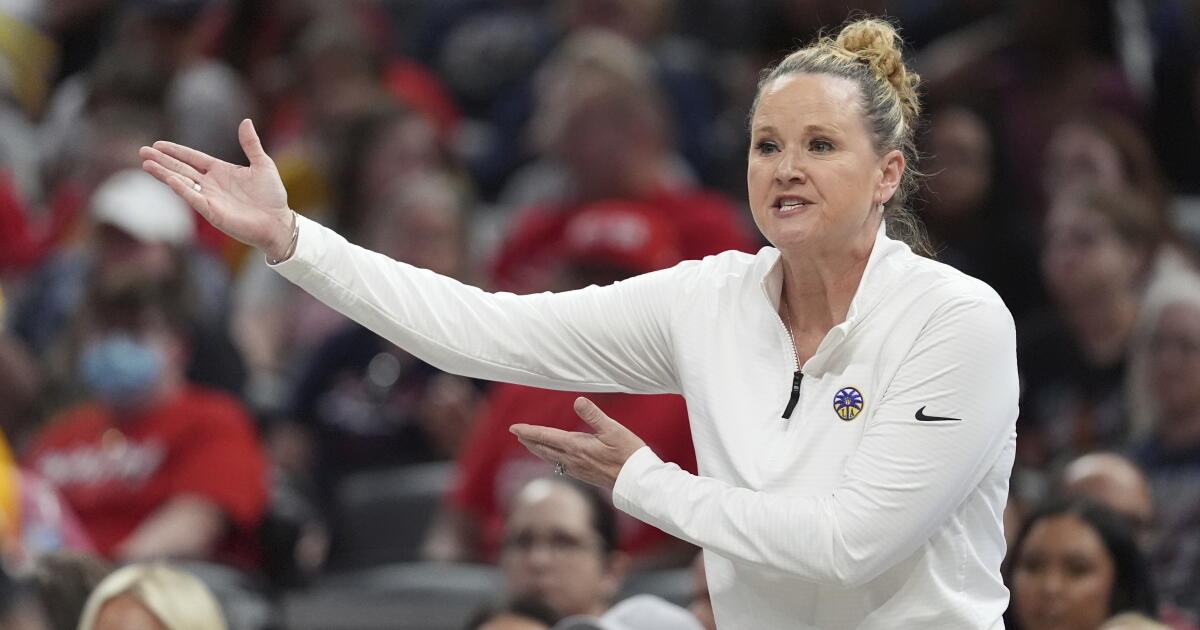
The Sparks fired head coach Lynne Roberts, ending her tenure Friday after two seasons as the franchise continues its search for a return to championship contention.
The move comes after the Sparks finished 16-28 in 2026, missing the playoffs for the sixth consecutive season. Roberts compiled a 36-49 record with Los Angeles after being hired ahead of the 2025 season after nearly a decade leading the women’s basketball program at Utah.
The team has not announced an interim head coach but will conduct a search this offseason.
“We are grateful to Lynne for the commitment and determination she brought to the role, which was evident all the way through our last game last night,” said Sparks special advisor Farhan Zaidi. “Lynne has cared deeply about our organization and for our players and their development. We sincerely thank her for everything she has invested in the Sparks and wish her and her family the best moving forward.”
Roberts arrived in Los Angeles with a reputation as one of college basketball’s top offensive minds after leading Utah to three consecutive NCAA tournament appearances and back-to-back Sweet 16 berths. The Sparks hoped she could oversee a rebuild around a young core led by Cameron Brink and Rickea Jackson while making one of the league’s flagship franchises a contender again.
Instead, the turnaround never materialized.
Los Angeles struggled to find consistency on both ends of the court during Roberts’ tenure, dealing with injuries, roster turnover and uneven play while remaining outside the WNBA playoff picture. Despite flashes from its young talent, the Sparks were unable to build sustained momentum, even after acquiring All-Star guard Kelsey Plum, whom they eventually traded before the deadline in July.
The Sparks fired general manager Raegan Pebley midseason after her offseason trade of Jackson to Chicago for Ariel Atkins, a two-time All-Star who is now on a three-year deal.
Before Thursday’s loss to Golden State, Roberts said she believed she should stay the team’s head coach.
“I think what this org needs is some stability, and a vision and a direction, like a plan,” she said. “Not that we haven’t had one, but I think now that we’ve got people in place, just give us a goalpost, and we’ll march down the field in that way.”
Roberts became the latest coaching change for a franchise that has been searching for stability since its last championship in 2016 under coach Brian Agler. Since then, the Sparks have cycled through four head coaches while missing the postseason every year since 2021.
The decision raises questions about the direction of the franchise entering the offseason with several long-term deals for veterans such as Atkins and Dearica Hamby, but also one of the best young players in the league in Brink.
What would a US diesel export ban mean for global fuel prices? | Inflation News
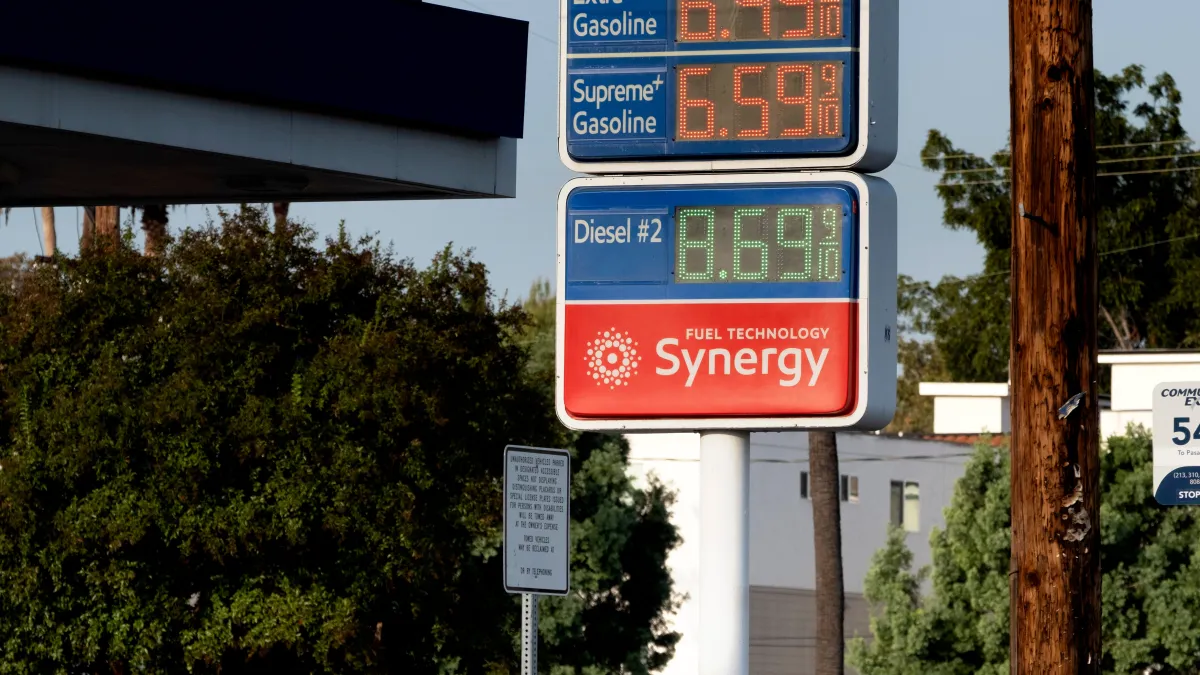
Diesel prices have hit record highs as the tensions between the United States and Iran, along with the war between Russia and Ukraine, disrupt key oil and fuel trade routes.
On Friday, the average price for a gallon (3.79 litres) of diesel was $6.50, up from $5.61 a month earlier, according to the American Automobile Association (AAA), which tracks fuel prices daily.
Recommended Stories
list of 4 itemsend of list
The spike has prompted the administration of US President Donald Trump and Republican lawmakers to consider restricting US diesel exports ahead of upcoming midterm elections.
A Reuters/Ipsos poll conducted in August found that 47 percent of voters said the cost of living was the single most important factor in deciding how they would vote in the midterms — more than twice the share who cited the next-most important issue, “democratic values and norms”.
A new Marist poll also found that Americans have more confidence in Democrats than Republicans to handle the economy, with 42 percent choosing Democrats compared with 34 percent for Republicans.
Amid that voter sentiment, US Energy Secretary Chris Wright said on Thursday that he was in touch with major oil refiners to gauge interest in a potential voluntary restriction on diesel exports, according to the Reuters news agency.
That followed remarks by Trump on Tuesday that he supported restricting diesel exports from the US, the world’s largest diesel exporter.
Energy analysts and industry groups have warned that an export ban could have unintended consequences, potentially pushing up fuel prices in the US and abroad.
Why are diesel prices so high?
Even though the US is the world’s largest diesel exporter, diesel is traded on a global market.
Disruptions to refineries in Russia and the Middle East have reduced the amount of fuel available worldwide, putting more pressure on US producers to fill the gap. In Russia, for example, drone attacks have damaged major refineries, forcing a cutback or halt in production.
“While US refineries are running at full tilt and higher than normal, the global gaps remain,” Rachel Ziemba, senior adjunct fellow at the Center for a New American Security, told Al Jazeera.
It comes as US diesel supplies are also shrinking. As of September 11, inventories had fallen to 107.9 million barrels, the lowest in more than four decades, according to the US Energy Information Administration.
With global supplies tightening, diesel prices have risen around the world — including in the US. Because American producers can sell their fuel into the global market, they are drawn to the soaring global prices rather than simply setting a lower price for domestic consumers.
Why is the US considering an export ban?
In Washington, DC, leaders have flirted with the idea of pushing US companies to stop or slow exporting diesel.
Republicans have been pushing for a slowdown or outright ban of exports in an effort to lower costs for consumers ahead of the pivotal midterm elections, where cost of living is becoming a critical issue.
Such a move, they hope, would reduce local diesel prices, which is significant as diesel is used in trucks to haul food and most products, Ziemba said, adding that US diesel exports are equivalent to about 40 percent of domestic consumption.
On Tuesday, Chuck Grassley, a Republican from Iowa, called on the president to put in place a temporary halt on exports.
“I encourage President Trump to put a temporary embargo on diesel exports through executive action,” Grassley said.
Republican Senator Dan Sullivan of Alaska made a similar call: “The cost of diesel is just too damn high. I’m calling for a temporary pause of American diesel exports so that we can rebuild our reserves ahead of winter,” Sullivan said in a statement on Tuesday.
In the House of Representatives, Congressman Tim Burchett of Tennessee introduced two bills that would restrict US diesel exports: One would impose a ban through January 2027, while the other would restrict exports if the national average price reaches $5 a gallon.
The administration has not made any official policy announcements, and the White House told Al Jazeera that the president is evaluating all options.
Oil and gas industry experts say that a ban could drive up prices rather than bringing them down.
“Diesel trades on a world market, just like corn. farmers don’t sell cheaper to Americans, and refiners can’t either since they buy crude at global prices. force a lower price and they’ll make less diesel. less supply means higher prices, not lower,” Patrick De Haan, head of petroleum analysis at GasBuddy, said in a post on X.
How would an export ban work?
A ban would prevent or restrict US refiners from selling diesel to buyers overseas, theoretically leaving more fuel available in the domestic market.
Analysts at Wood Mackenzie, a research and consulting firm, say that keeping more diesel stateside would ultimately fill up US storage tanks but also force refineries to cut production. That could affect other markets that rely heavily on US fuel, including Latin America and Europe, forcing them to compete with other global buyers for supplies and driving up prices for the global market.
Wood Mackenzie says China is the only major producer with enough spare refining capacity to potentially make up much of the shortfall.
“China is currently the only country with material spare refining capacity that could cover the loss of US refinery throughputs. However, China may well decide it is not in its interest to intercede,” analysts said.
Wood Mackenzie has warned that a ban could quickly fill US diesel inventories, forcing refiners to cut crude runs and potentially increasing US petrol imports.
That was also the view of an S&P Global analysis, which found that a complete ban could also mean that production would be reduced as storage capacity is filled up with unsold diesel. According to the analysis, that could lead to production cuts of as much as 750,000 barrels a day, which could put the US into being a net importer of petrol in the fourth quarter of this year.
Who would an export ban affect?
An export ban would affect US refiners and consumers, as well as countries that rely on US diesel.
“They [export bans] may provide temporary relief, but diesel is a global commodity. Treat one part of the system, and the effects travel elsewhere. Trade-offs are inevitable. Refiners are unlikely to cheer a blanket ban. Voluntary, controlled export reductions would generally be less disruptive in the short term,” Maksim Sonin, visiting scholar at Stanford University’s Precourt Institute for Energy, told Al Jazeera.
Disruptions to US exports could reduce the amount of fuel available on the global market. Wood Mackenzie analysts say countries in Europe and Latin America that rely heavily on US fuel could be forced to compete with other producers for supplies.
“If implemented, it would lead to European and Asian product prices increasing as the buyers of US fuel, mostly in Latin America, scramble to find new supplies, bidding up supplies. European crack spreads could widen, and overall we might see more disruptions,” Ziemba added.
“Given these issues, the US may opt for a mixture of carrots and sticks aiming to incentivise refineries to keep producing, perhaps including penalties if they cut production. There may be voluntary export quotas rather than a formal ban, and there may be exemptions for countries that provide crude oil to the US, like Mexico,” Ziemba said.
That could put pressure on consumers not only at the petrol pump but in the skies as well.
Airlines for America, an airline industry trade group, has also warned that an export ban could lead to higher prices for airlines and travellers, according to the Reuters news agency. The trade group did not respond to Al Jazeera’s request for comment.
The broader concern from analysts is that restricting exports could reduce US refinery production rather than simply redirecting diesel to US consumers, potentially putting upward pressure on fuel prices both domestically and internationally.
“It’s unlikely to help US consumers much given how it fails to solve underlying problems and could backfire if refineries hold on to production. The best way to address this is to end the conflicts prompting the shortages,” Ziemba said.
DR Congo’s Ebola outbreak spreads to two new health zones, WHO says | Ebola News
Health workers struggle as new Ebola cases are found in border regions of South Ubangi and Haut-Uele.
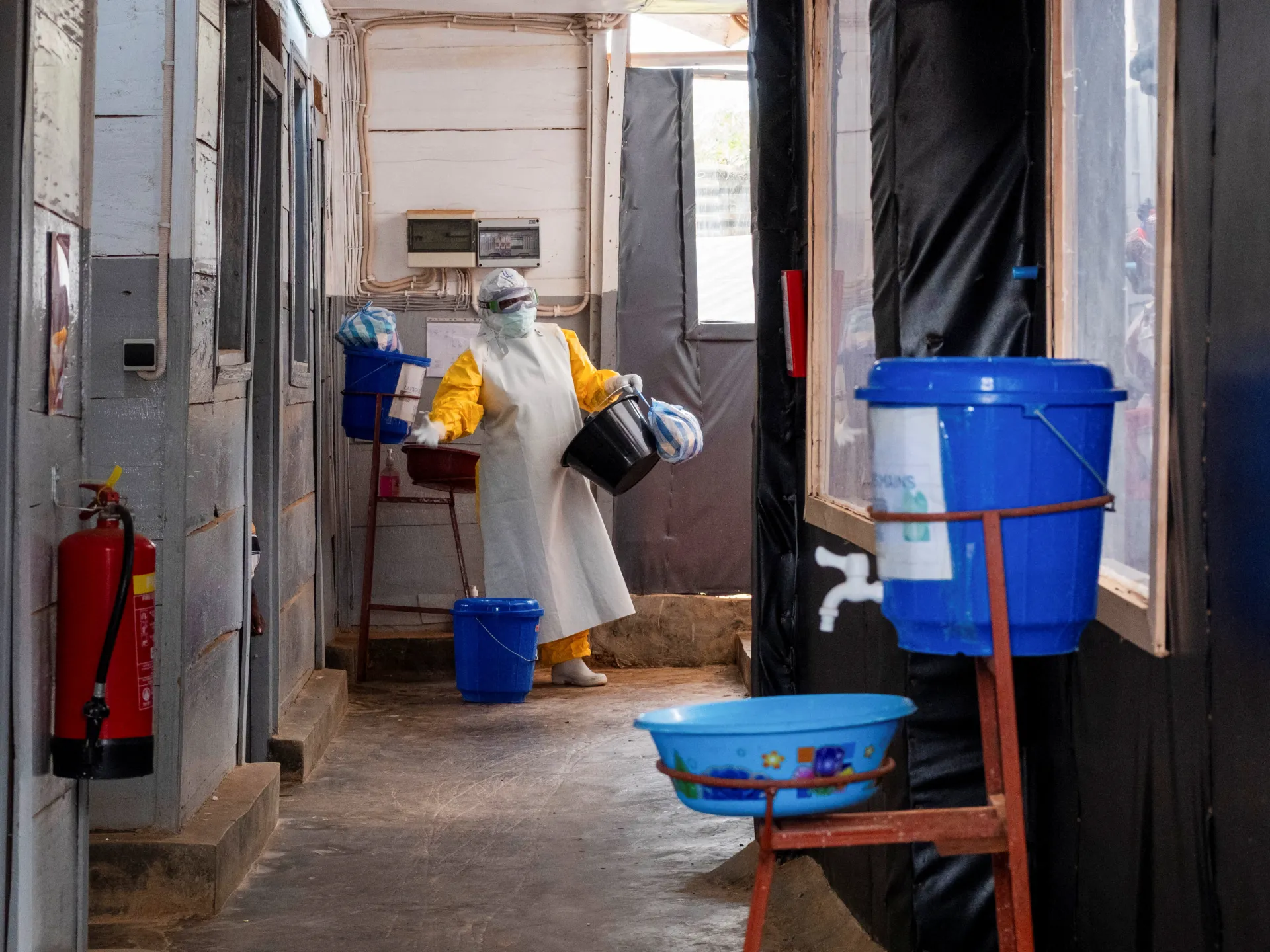
The Ebola virus caused by the Bundibugyo strain has spread to two new health zones in the Democratic Republic of the Congo, according to the World Health Organization (WHO).
New cases were found in Bulu in South Ubangi governorate on the border with the Central African Republic and Dungu in Haut-Uele province on the border with South Sudan, the WHO said on Friday.
Recommended Stories
list of 3 itemsend of list
The additional cases bring the number of health zones affected to 63 across seven provinces as authorities struggle to control the outbreak.
As of September 23, the Democratic Republic of the Congo, or DRC, has reported 7,890 confirmed cases and 3,799 deaths, according to the WHO. That means that almost half the people who contracted the infection have died.
WHO Director-General Tedros Adhanom Ghebreyesus said conflict and population displacement were making it more difficult for health workers to reach affected communities and trace people who may have been exposed to the virus.
“It’s very difficult to see Ebola in isolation because even our response to Ebola is affected by the conflict, because there is displacement and there is an access problem to some areas,” Tedros said.
The Bundibugyo strain is difficult to treat because there are no approved vaccines, Tedros said, adding that the WHO is accelerating clinical trials of vaccines and treatments.
Contact tracing falling short
Meanwhile, health workers looking for people who may have been exposed to the Bundibugyo strain are falling short of their targets.
According to Dr Jean Kaseya, the director-general of the Africa Centres for Disease Control and Prevention (Africa CDC), the more than 7,000 confirmed cases should translate to about 420,000 contacts.
“But currently, we have just 30,000 people in the contact list,” Kaseya said.
“When the outbreak is at community level, we cannot talk about control,” he added.
Ituri province in northeastern DRC continues to be the epicentre of the outbreak, accounting for 6,032 confirmed cases since the start of the epidemic in May, including 868 new confirmed cases reported in the last 21 days.
North Kivu is the second most affected province, with 1,480 new cases, including 567 reported in the last 21 days. The province now accounts for around a third of newly confirmed cases and deaths, the WHO said in a report on Sunday.
Nearly 60 percent of people diagnosed in North Kivu died, significantly higher than the national average of 48 percent, the data show.
Medical staff say patients are avoiding health facilities until it is too late.
“Patients think that if they arrive at the hospital, they will be immediately sent to the treatment centre to die,” said Dr Michel Paluku Mukuloli, who works at a hospital in North Kivu’s Butembo.
That complicates efforts to identify cases and start treatment before the disease reaches its most dangerous stages.
North Kivu was the epicentre of three previous Ebola outbreaks, including one in 2018-2020, which until this year was the DRC’s largest and deadliest. Those outbreaks, however, were caused by a different type of Ebola virus, known as the Zaire strain.
Much less is known about the Bundibugyo strain. But responders say in the early stages of infection, patients often experience milder symptoms easily mistaken for more common diseases such as malaria and typhoid fever.

Chart-topping pop star spotted performing huge hit on a driveway in a sleepy street
A MAJOR pop star was spotted singing one of her hit tracks in a quiet driveway.
The singer was dressed casually and having a great time performing to the small, happy crowd – but would you have recognised it was her?
Anne-Marie strutted around the car park with a mic in hand, singing Rockabye .
A little blue stand stood behind her for the event, which a reposter on TikTok said was part of a street party.
Anne-Marie sported pink hair, pink and blue ombre shoes and a comfortable pair of black tracksuit trousers for the day.
She finished the look off with a simple necklace and a black graphic tee.


People waved their arms along to the music while children joyfully blew bubbles.
Fans adored seeing the interaction, and flooded the comments section of the clip with praise for Anne-Marie.
One user said: “She’s just so down to earth, and she’s got the best voice.”
A second shared: “I love her she’s beautiful, natural and a people person. Plus her voice is perfection.”
A third added: “Local girl done good. Love this!”
Rockabye was released by Clean Bandit in 2016, but Anne-Marie and Sean Paul featured on the record.
It became hugely popular, to date having over 3 billion views on YouTube alone.

U.S. grain futures pull back from sharp losses with China ag deal news pending (WEAT:NYSEARCA)

Toltek/iStock via Getty Images
U.S. grain markets clawed back from early losses Friday after U.S. Trade Representative Jamieson Greer said details from President Trump’s meeting with China’s President Xi will be released on Monday.
CBOT grains had tumbled after the summit in Washington
For third time, Supreme Court rejects Missouri’s bid for another GOP-leaning House district
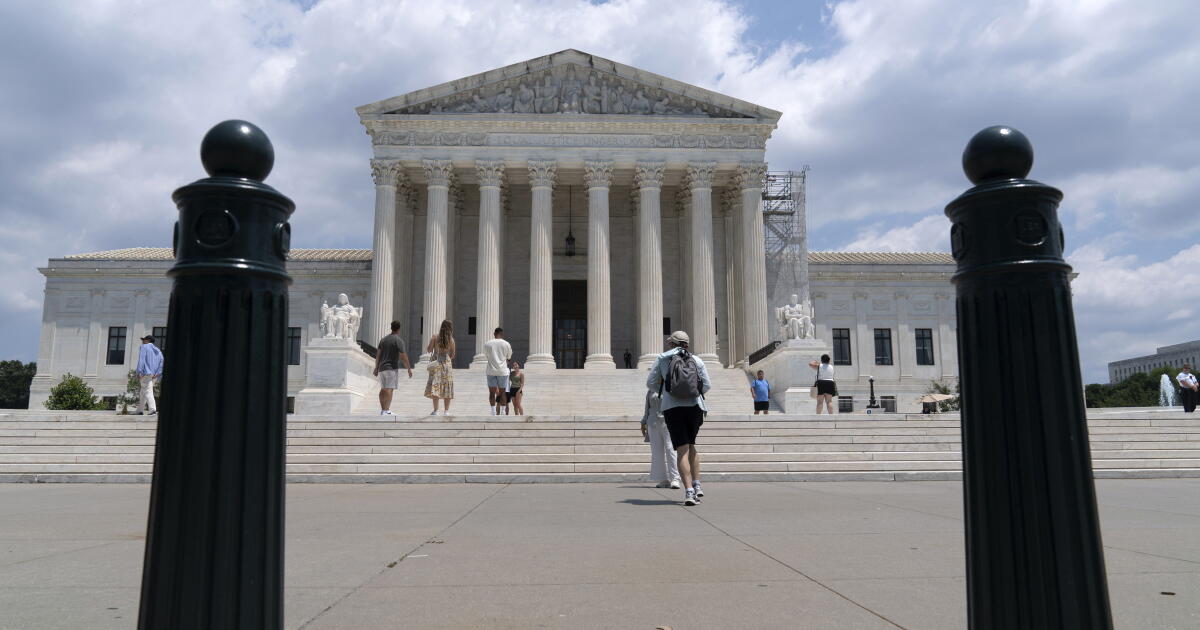
WASHINGTON — For the third time this month, the Supreme Court has rejected Missouri’s bid for one more Republican-leaning congressional district.
With no dissents, the justices upheld a state court order requiring the use of a 2022 election map, which favors Republicans in six of the eight districts.
“At this late date, ordering reversion to the 2025 map in the midst of an ongoing election would usher in electoral chaos,” the justices wrote.
The GOP, with the backing of conservative federal judges, wanted to use a new 2025 election map that redrew the district in Kansas City that had elected a Black Democrat.
That would have given Republicans a 7-1 advantage, but the Supreme Court stood in the way.
“As a matter of state law, the 2022 map — not the 2025 map — must be used in the 2026 congressional election,” the justices said in an unsigned opinion. “This Court has repeatedly cautioned that lower federal courts should not ‘alter the election rules of a state on the eve of an election.”
Each side in this messy dispute accused the other of seeking to change the voting districts on the eve of the election.
On Tuesday, the opponents of the newly drawn GOP-friendly map appealed to the Supreme Court for the third time. They said it is too late to switch the districts because ballots had gone out based on the existing map.
They said the Republicans “demand a new map after votes have already been cast. Ballots using the 2022 map have been printed and mailed, and absentee voting, both by mail and in-person, began today.”
But the state’s Republican attorneys said the primary elections took place under the new 2025 map, and that argues for keeping those districts in place for the general election in November.
Last September, the Missouri General Assembly, following President Trump’s lead, voted to redraw its eight congressional districts. In recent years, the state had sent six Republicans and two Democrats to Congress.
The Legislature’s goal was to flip one more seat in favor of Republicans. The new map would do that by breaking up the Kansas City district that had elected Rep. Emanuel Cleaver, a Black Democrat, with a new district that favored a Republican.
But a group called People Not Politicians and its executive director, Richard von Glahn, gathered more than 300,000 signatures for a referendum to challenge the new law before it took effect.
After waiting nine months to respond, Missouri Secretary of State Denny Hoskins, a Republican, denied the referendum in early August on the same day the primary elections got underway.
Von Glahn and his group of voters sued and won a unanimous decision from the Missouri Supreme Court on Sept. 3. Its judges said the state Constitution authorizes such a referendum and a new election map cannot take effect until the voters have spoken.
Hoskins filed an emergency appeal at the Supreme Court and cited the “chaotic fallout” from the state court “irresponsible decision.”
Justice Brett M. Kavanaugh, who oversees appeals from the 8th Circuit Court based in St. Louis, denied the appeal without comment on Sept. 8.
But shortly after his decision was issued, U.S. District Judge Stephen R. Clark, a Trump appointee, issued a temporary restraining order that prohibited the state from using the any voting map other than the new one.
People not Politicians appealed that decision to the Supreme Court.
On Sept. 10, Kavanaugh and the full court granted the appeal and blocked the judge’s order from taking effect.
The justices did not explain their reasoning, but the meaning of the order was clear. The state Supreme Court ruling meant the new map could not be used for this year’s election.
But that did not stop the 8th Circuit Court from ruling the state must use the new map.
Siding with several Republican candidates, a 2-1 majority said the use of 2022 map was unconstitutional because the primary elections were held under the new map. Its decision ordered the elections to be held using the new map.
This was a surprising ruling, since the Supreme Court’s order on Sept. 10 barred judges in Missouri from intervening further in the dispute over the voting maps.
But after a third trip to the court, the justices said the state must use the 2022 map.