



Athens on a plate – a food-lover’s guide to the Greek capital | Athens holidays
Coffee
Normally we stay around Plaka, so Anana is the coffee shop I go to most often. There’s also Behold The Man in Exarchia, which is one of the coolest coffee shops I’ve been to. Exarchia has a really rebellious, anti-establishment feel and this place completely fits that – it has great music, great coffee and it’s just very cool. I don’t think there’s a coffee shop in London that’s quite like it. DC
My favourite is also Anana; It’s casual and low-key, with somewhere to sit down and relax. I’ll have a freddo espresso (espresso shaken over ice), which is basically the Greek national coffee now. NM
Bakeries
For pastries, Akra is one of the best places in Athens. The food itself is rustic, simple and delicious, and the pastries are unbelievably technical. There’s something almost incongruous about it – you eat very simple savoury food and then a dessert arrives that’s incredibly elaborate. It shouldn’t necessarily work, but it does. DC
No Crumbs opened this year and I’ve already been a few times. It’s a little outside the centre, but it’s where I’d go for breakfast or something to eat on the move. In central Athens, I also like Fillo, which specialises in traditional pies from around Greece. Last time I went, they had three different spanakopitas from three different regions. NM
Breakfast
I don’t really do breakfast in Athens. We’ll normally get coffee, then at about 11am go to Diporto, which is usually our first proper stop. It’s this incredible, old, rundown restaurant near the market: cash only, orders taken with a pen, massive wine barrels in the room, no choice of wine. They just put wine and water on the table. The food is incredibly simple: chickpeas, beans, vegetables cooked down slowly, sometimes grilled sardines or fish from the market. You could recreate a Greek taverna in London, but you could never recreate Diporto. There’s such magic in it. DC
If I want to start the day properly, I go to Ipiros inside the meat market, at about 10.30am. It’s not really breakfast; it’s a proper meal. They serve slow-cooked dishes in huge pots and we usually get the tripe soup, which is good for a hangover, with loads of bread. Then we walk around the corner to Diporto and have the opposite: braised beans, chickpeas, salad and, whatever time it is, wine. NM
Traditional tavernas
Whenever we fly into Athens, we try to go straight to Taverna To Trigono in Kalyvia, out by the airport. It’s as magic as a taverna gets. One side of the menu is salads, tzatziki, cheeses and breads; the other is grilled meat such as sausage, spit-roast lamb, offal, lamb chops, sheep chops. Everything is cooked to order and served with incredible abundance and generosity. It’s very simple: good produce, salt, oregano and lemon; nothing is over-embellished. I wouldn’t go to Athens without going there. DC
Manári is a proper meat chop house in central Athens. It’s relatively new, but it feels as traditional as possible, and you don’t need to travel into the mountains outside the city to find meat that good. I order the lamb chops, pasta with meat juices and tomato salad. The lamb chops are as good as – if not better than – a good dry-aged steak. Another favourite is Tavern Spanos in Kato Patisia, for lamb chops and meats cooked slowly on the spit. Once they run out, they run out. NM
New-wave restaurants
Linou Soumpasis & Sia is probably the most forward-thinking restaurant in Athens right now, and probably one of the best in Greece. It takes quite humble, seafood-led food and gives it a fine edge without losing its simplicity. The room is incredibly simple and every detail is really considered. Last time I went, they served a version of kakavia, the traditional fish soup, which was essentially a beautiful fish and vegetable broth with olive oil. Something that simple, done that well, is incredible. DC
Linou is one of my go-tos, too. It reminds me a bit of Lyle’s meets Brat. It has a restrained approach to food that still feels very modern. I’d also go to Pharaoh, particularly for the vegetables and whatever they’re doing with fermented wheat, and Ateno, which we went to twice in two days on my last trip. Get the Greek salad, stuffed vegetables and fries with mushrooms and eggs. I also really like Ex Machina: their saganaki is fried cheese but served cold, and I always want to see what [the chef] Adam Kodovas is doing with the seafood broth because the dish changes every few months, while the formula remains the same. I go to Akra for lunch because they serve smaller portions and I can order as many dishes as possible. NM
Seafood
Travolta is banging; it’s old-school and a bit like Bentley’s in London. You get huge plates of crudo and whole fish, and they have an amazing prawn and squid skewer with squid ink and olive oil that they mix at the table. It can get expensive (fish is incredibly expensive in Greece), but if you’re really into seafood it’s very cool. Phita is another good seafood place, a little further out. DC
Travolta would be my choice for more classic seafood, too. If you want something more elevated, I’d go to Iodio near Kolonaki. There’s one dish I’ll always remember, which is raw fish served cold with a crisp sheet of rice paper on top and a warm avgolemono sauce – a classic Greek sauce made with egg and lemon. You grab everything together in one bite and it’s great. NM
Cheap eats
For souvlaki, the best is often at little roadside or market stalls. Last time we were in Exarchia, we found a tiny souvlaki stall mainly serving the market vendors. For souvla, the bigger rotisserie-style meats, we go to Psitopoleio Peloponnhsos. They serve huge pieces of meat, lamb heads; all sorts of pretty gnarly stuff cooking on the rotisserie. DC
Gyros are a dangerous subject for Greeks because everyone has their favourite. Achilleas in Neos Kosmos is one of the few places that still makes their own [meat rotisserie] (rather than buying it ready-made). In the centre, I really like Hoocut. They aren’t technically gyros because they slice the meat raw, cook it and then chop it again into small strips, but the mentality is similar. For a late-night version, go to Mandraki in Kaisariani. They’re open until about 2am and cook meat on spits late into the night. Their gyros are huge and often sell out. It’s cheap, traditional and the sort of thing people actually eat every day. NM
Wine and cocktails
Wine is Fine is really good for a pre-dinner drink, and I also love Epta Martyres, from the people behind Loggia [on Sifnos]; I’d been to both loads of times before I even realised they were connected. In Greece, I tend to want wines that are light and bright. Assyrtiko is the obvious one; in that climate you want something really zippy. DC
Pharaoh has a great wine list, and Tanini Agapi Mou is an amazing wine bar. A Greek grape I discovered this year is Vidiano. Vidiano can lean quite dry but still feels really pleasant and crisp; depending on where it’s grown, the fruit and minerality change a lot. It’s easygoing but complex at the same time. NM
Line Athens is quite molecular and it’s the kind of place you stay for the night. The cocktails are some of the best I’ve ever had in my life, let alone Athens. Baba au Rum is right in the mix, too. There’s also Rumble in the Jungle behind The Bar in Front of the Bar. The first is a bar where you walk in and think, “This is cool,” then go through another door into the second, even cooler bar hidden behind it. It’s very Athens. DC
You have to mention Line and The Bar in Front of the Bar. At Bar in Front, they’re trying to be as zero waste as possible, and you basically order through a window in a wall and sit drinking in the street. I choose what to drink according to the weather – last time I had a frozen martini that was almost like a slushie. At Line, the Paloma is usually my go-to, although on my last two visits I had one of their punches, which changes regularly. NM
We always go to Athens’ central fish and meat markets. I particularly recommend being in Athens on a Saturday because that’s when you find all these farmers’ markets around the city. Some of my best times in Athens have been wandering around those. DC
Near Diporto there’s Miran, a charcuterie shop with a huge range of cheeses and cured meats that they make themselves. Buy something there, pick up some bread and take it home. There’s also a huge farmers’ market every Saturday around Exarchia with outstanding produce. NM
Out of town
I really like Vouliagmeni, down on the coast where the Four Seasons is. We used to drive down there in the morning for sunrise, or chase the sunset if we were filming. Lake Vouliagmeni is there, too. It’s much more suburban, with huge houses and tree-lined boulevards, and it’s absolutely beautiful. You probably need a car. I don’t have one particular restaurant to send you to; for me it’s the area itself. DC
Photograph: Nito/Shutterstock
For meat, go out towards the airport to Kalyvia. There are two enormous tavernas, Christoforos and To Trigono. During the week they can be completely empty, but at the weekend you’ll struggle to get a table. People tend to swear allegiance to one or the other; I don’t have a favourite. It normally depends on who’s driving me and where they want to go. Although the last few times I’ve been to Christoforos. NM
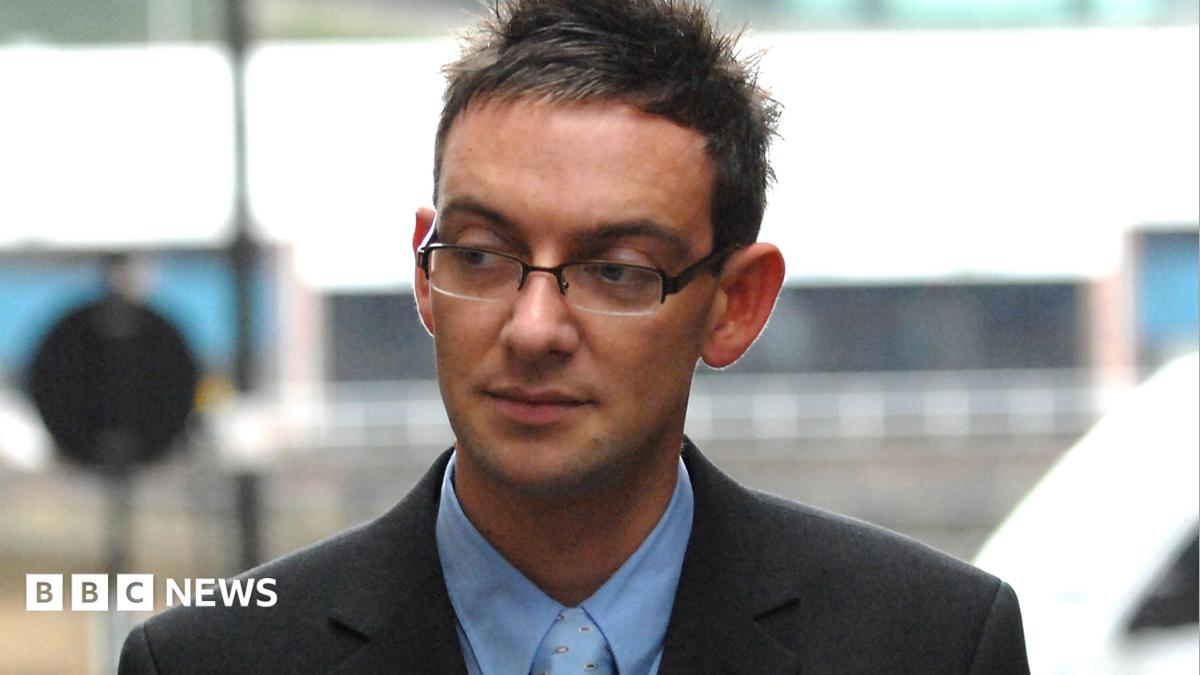
Murder or medical mix-up? New questions in the Colin Norris case
The podcast series comes a week after a public inquiry reported on the case of former neonatal nurse Lucy Letby who was convicted of murdering seven babies and attempting to murder seven others at a hospital in Chester a decade ago.
While the circumstances are very different, Norris’ supporters also argue that his case hinges on disputed interpretations of medical evidence.
The story begins in 2002 when Norris, a 26-year-old nurse, originally from Glasgow, found Ethel in an hypoglycemic coma as she recovered from a broken hip.
Doctors took blood samples to find out what caused her blood sugar to drop so low.
The test results seemed conclusive – she had a massive amount of insulin in her blood.
She died 21 days later, sparking a murder investigation.
A nurse who had been on shift on the night Ethel was found told the police that Norris had predicted the 86-year-old might not last the night.
He quickly became the prime suspect.
The police operation trawled retrospectively through all the deaths on Norris’s wards, looking for potential murders that may have gone unnoticed.
They identified three other cases of unexplained severe hypoglycemic deaths and one where the patient recovered.
No blood tests had been taken from these cases at the time of their deaths to be able to prove insulin poisoning but experts for the prosecution said in court that their medical charts showed persistent and severe low blood sugar readings.
They said that because this was so rare in non-diabetics that it must be murder.
When it came to court in 2007, experts called by the defence said four of the five patients had died of natural causes.
But after a five-month trial and a deadlocked jury, Norris was convicted by a majority of 11-1 and told he would not be eligible for parole for 30 years.
After the verdict, Ethel’s son Stuart Hall said: “I don’t think he should come out again. He’s got the knowledge to commit murder but do it discreetly.”

Mystery rift between GK Barry and Joe Baggs revealed as former best pals quietly grow apart
THEY’RE two of the nation’s biggest content creators with over 700,000 YouTube subscribers between them.
But Joe Baggs, 29, and GK Barry, 27, are no longer flying the flag for each other’s media careers and their once close friendship appears to be in tatters.
A source told The Sun: “GK and Joe used to be joined at the hip but they have quietly grown apart. They haven’t been seen together publicly since GK left the jungle, and never like each other’s posts on social media.
“Even when GK released her book, which was a big deal for her, there was radio silence from Joe.
“There’s lots of whispers about what went down, some have speculated that Joe was jealous when Grace got her spot in the jungle as he’s always wanted to do that show, while others have rubbished that suggestion and said they just drifted as she got busier.
“What’s really sad is that she always used to be round his family’s house for dinner, went on holiday together and they always posted it on the ‘gram, and now she’s never seen with the Baggs lot. It’s like they just disappeared from each other’s lives.
“Tellingly, Joe’s boyfriend Kane used to seem pretty pally with Grace too, but even he doesn’t comment on her posts anymore, so something sad has definitely gone down.”


Another source close to Joe insisted, however, that there is no bad blood.
They said: “Joe couldn’t be prouder of everything Grace has achieved since leaving the jungle. The reality is that both of their careers have taken off in different directions and, with increasingly busy work schedules, they simply don’t get to spend as much time together as they once did.
“There’s absolutely no bad blood, they remain friends and continue to champion one another from the sidelines.”
Just this week, however, Joe appeared to give away the lack of closeness between him and Grace, where he revealed fellow podcaster Chloe Burrows is his best pal at the Fellas Studio, where they both record their podcasts.
Interestingly GK also records her hit podcast, Saving Grace, at Fellas, as they are all part of the same podcast company, so the fact that he named Chloe as his work bestie and not Grace has caused a flurry of gossip in their inner circle.
“Joe and GK have lots of mutual friends, and they are all talking about this,” a pal spilled.
“The fact that Joe said this about Chloe on his pod was basically admitting that he and Grace aren’t close anymore, but few fans will have clocked it because they don’t understand they all work out of the same studio.
“Strangely, both GK and Joe are being very tight-lipped, even with their friends, about what went down, which has only made the rumour mill even more frenzied.
“It’s a shame as they were so close and they are very similar, but sadly, right now it’s looking like they aren’t going to be BFFs again anytime soon.”
The Sun has contacted representatives for Joe and GK for comment.
Both YouTubers have been chasing mainstream fame and have had successful years.
GK – real name Grace Keeling – was one of the standout stars on I’m A Celebrity last year and has gone on to establish herself as a Loose Woman. She’s also landed her own weekly show on Radio 1 as the station underwent a major reshuffle to appeal to a young more online-driven audience.
However, listeners of the BBC station criticised her first show and questioned if it was recorded live like her predecessors Matt Edmonson and Mollie King after she failed to interact with the audience.
Meanwhile, Joe is now a panellist on Love Island: Aftersun and hosted an official Britain’s Got Talent spin-off.

High school football: Friday's scores
Results from CIF City and Southern Section games from across the Southland on Friday, Sept. 25.
Source link
Disaster zone declared across Bangkok as heavy rain triggers flooding | Weather News
Nonstop rain since Thursday has submerged Thai capital’s roads and canals, sending water into many homes and stores.

Published On 26 Sep 2026
Bangkok authorities have declared a disaster zone across all 50 districts of Thailand’s capital after three consecutive days of rainfall caused heavy flooding.
The disaster designation, which gives local organisations authority to take action, came on Saturday after Governor Chadchart Sittipunt said almost 300mm (11.8 inches) of rain had fallen since Thursday afternoon.
Recommended Stories
list of 4 itemsend of list
The nonstop rain inundated roads and canals with water, sending water into many homes and stores alongside them, according to reports. Photos and videos showed major roads submerged and cars abandoned after drivers were unable to move through the rising water.
Chadchart said the east of the city was most impacted and warned that more rain was forecast again on Saturday. He added that flooding should recede once the rain subsides, as city officials work to drain floodwaters as quickly as possible.
“The rain keeps falling and we are doing our best. We are trying to pump the water out, but the water in canals are full,” he said on social media. “The risk areas are those who live near canals. Every canal is now filled.”
Later on Saturday, the government said the flooding situation had “stabilised” but added it would still take two or three days for the water to drain, as long as the rain held off. “If more rainwater doesn’t fall in the area, it will be solved,” he said.

Chadchart also advised residents to move their cars to higher ground, as Bangkok’s public transport authority offered free access to MRT train “park and ride” carparks to store their vehicles until October 2.
Reporting from a flooded street in Bangkok, Al Jazeera’s Tony Cheng said the Thai capital is no stranger to heavy rain during the monsoon season, but the continuous rainfall had locals worried.
“What usually happens is we get heavy downpours for a couple of hours, then you’ll see the street often flooded but it would flow away into the drains quickly, and it would only happen in isolated areas too,” he said.
“What’s happening here is … happening all across the city. This is not a flash flood; this is persistent heavy rain since Thursday evening, and it shows no sign of letting up.”
Somkid Pheuk-ngam, 67, a vendor who lives near a canal just north of central Bangkok, said she had to close her shop for two days.
“The water keeps coming in. It’s hard to go out now. It’s at my waist level,” she told the AFP news agency. “I cannot go anywhere,” she said, adding that this was “worse than the 2011 flood.”
Widespread flooding across Thailand in 2011 killed more than 500 people and damaged millions of homes.
The Department of Disaster Prevention and Mitigation has warned of low pressure across eastern, northeastern and central Thailand until Sunday, saying there was a risk of flash floods, forest runoff, mudslides and river overflow.

I swapped Sardinia for East London to run a hotel
WITH its enormous Olympic Park, graffiti-clad buildings, old mills, new bars and neighbourhood pubs, it’s no wonder East London is one of the world’s trendiest neighbourhoods.
And actually, that’s why Alberto Cambus who was born and raised in Italy’s Sardinia, decided he was going to stick around when he moved to the London district over 10 years ago.
Alberto Cambus, Director of Sales & Marketing, for The Stratford, explained why he has never left the quirky area of East London.
He explained: “I moved here 11 years ago to study, and I loved it – I embraced the pace, the lifestyle, the coffee – I’m even having cappuccinos after 11am now.”
“I’ve always lived in East London, so I’m definitely an advocate for it and Stratford is one of the areas I love the most.”
Here are some of his top tips on exploring the area.


Hotels
As he works The Stratford, Alberto of course highly recommends the hotel as a great base for those visiting East London.
He said: “Our hotel is itself a triumph of architecture – our architects are the same that designed the Burj Khalifa, the tallest building in the world.
“It perfectly blends with the local area and community, making it well worthwhile popping in to take a look at our art – if you check out the lobby, we have many pieces that reference the London 2012 Olympics.
“On top of that, we have tours of the area, such as the Olympic venues.
“We do tend help our guests with the ease of access to these London institutions whether it’s to Sadler’s Wells for contemporary dance or the V&A.
“We can try to facilitate the sourcing of West Ham tickets, London Lions or London Aquatics too.”

Restaurants
Despite coming from the Italian island, he did say there was an Italian restaurant in the UK that was just as good.
He said: “I have to mention Santi, an Italian restaurant in front of a hotel – the menu is similar to the classic Italian food that you’ll find in Italy.
“The pizza is amazing, it’s so underrated, I’d say it’s one of the best pizza places in London.
“Another of my favourite restaurants is Hera, a beautiful Greek restaurant – it’s in front of West Ham stadium, it has a great atmosphere, very cosy, sophisticated, but not over the top.”
Bars and pubs
Alberto admitted that the hotel’s Stratford Lounge cocktails were amazing, with “mixing of the classics” as well as a recently launched autumn menu.
But he did shout out another local bar too.
He said: “Another one is Number 90 Bar in Hackney Wick, along the canal.
“It is always lively with amazing music playing, very good cocktails and reasonably priced.”
Being in the UK for more than a decade, Alberto is a pub convert – and he raved about one called Mother Kelly’s in the Olympic Village.
He explained: “It’s tiny, very cosy pub in Victory Parade, a neighbourhood pub that excels in craft beers, sour beers , IPAs and it’s a stone’s throw away from the hotel.
“I’ve been working in Stratford for three years now so I go in a fair bit.
“I still haven’t managed to try the whole selection of beer they have – there’s so much you’re spoiled for choice.”
Lesser-known spots
Despite East London being a popular tourist destination, there are still some spots only locals know about: “Three Mills Island isn’t very well-known; essentially, they are old flour mills between the river and navigation channel – it’s completely off the beaten track.
“It’s nothing short of an East London experience because it has a huge amount of history.
“I’d say it’s quite an unusual place for London, but beautiful – and you can take a long walk around it.
“If you’re in the area, visit now because I think that the landscape of East London in 10 years will be completely different – it’s transforming in front of my eyes.”
One must-do local experience
“You absolutely have to see a West Ham match – I’m so passionate about it, there is nothing like watching them play at the London Stadium.
“I’ve been a West Ham fan since I was about 10-ears-od thanks to a very strong Italian player called Paolo Di Canio.
“One of the first activities I did here was see a West Ham game at Upton Park, then they moved to the London Stadium right next door, I always say it was fate.”
Green spaces
“This area of London used to be a bit of an urban jungle, but then obviously they built the Queen Elizabeth Olympic Park, which is an oasis of green space.
“Stratford is so much more enjoyable now, and if you combine it with the canals in Hackney Wick, the Hackney Marshes, I’d say there’s lots of nature in East London.
“It’s well connected to Victoria Park too so you can actually walk between the two parks in 10-minutes then head along Regent’s Canal.
Family attractions
“The Olympic Park has so many options and activities for families – there’s the Tumbling Bay Playground and The Aquatics Centre.
“There’s Zip World at the ArcelorMittal, and a huge slide which goes down from the Orbit too – you name it, we have it.
“There’s the Olympic Pool, which is available for guests and for kids to swim, and all sorts of activities at the Velodrome.
“The V&A East opened earlier this year – I can’t say I enjoyed going around museums when I was a kid – but they do have activities for children.”
Shopping
“I’d recommend Hackney Wick for shopping, there are lots of small markets, particularly on the weekend that populate the area.
“They sell any type of quirky item – it’s very nice.
“And I know that most people won’t be going to a butchers but I love Appetite Steakhouse, they have a huge selection of Italian meats.
“I’m mentioning it’s also a restaurant – it has the best meat I’ve found in London.”
Sweet treats and coffee
“My favourite place is called Signorelli, which is an Italo-English” bakery.
“While I’m not a massive sweet tooth, I am a huge coffee lover and Signorelli is perfect for both.
“From time to time you can be lucky enough to find a Cornetto, which is the Italian version of a croissant, but it’s a bit different in terms of the dough, and in terms of coffee, definitely, I mean, they are the best in Stratford.
“Whenever I feel homesick, I have one of their coffees, and it takes me back to Italy.”
Free things to do
“Hackney Wick is full of street art so I’d suggest taking yourself on an unofficial graffiti tour.
“One artist, Helch, has always been known by his tag – like Banksy, he passed away recently, and Hackney Wick was a place he worked the most.
“Lots of the buildings in Hackney Wick are decorated by graffiti and you can probably see it all in around 20 minutes.
“Otherwise, take a stroll around the Queen Elizabeth Olympic Park – they also have lots going on there, so it’s worth checking out their site ahead of time to not miss out like live music to kids activities.”
Best views in East London
“Our rooftop at the hotel has the best view of Stratford.
“The view from the rooftop at Kokin is unbeatable – it’s our signature restaurant on the seventh floor and you can see the very best of East London from there.
“You can enjoy the dramatic views across to St Paul’s Cathedral and enjoy some of the best sushi in London – it’s not just sushi there’s all sorts of Japanese cuisine and the chef is incredible.
“They do special events up there too like tuna carving which takes place every Wednesday.”
Daytrips from Stratford
“The thing about Stratford is that it has so many transport links so really, you’re spoilt for choice, but I would definitely say head to Kent.
“You can get there so easily and the Kent coast is amazing, there’s Whitstable, Margate, Deal, Ramsgate – I was born by the sea in Sardinia so for me to be able to get away to the beach, it’s fantastic.”

Bunker Talk: Let’s Talk About All The Things We Did And Didn’t Cover This Week

Welcome to Bunker Talk. This is a weekend open discussion post for the best commenting crew on the net, in which we can chat about all the stuff that went on this week that we didn’t cover. We can also talk about the stuff we did or whatever else grabs your interest. In other words, it’s an off-topic thread.
This week’s caption reads:
BERLIN, GERMANY JUNE 16: Heavy iron doors between different rooms during a media event on June 16, 2026, at the former Cold War-era Pankstraße subway station, now used as a nuclear fallout shelter. Built in the 1970s, the bunker offers sleeping accommodations for 3,339 people, has independent water and electricity supplies, and is hermetically sealed off from the outside world by massive steel doors. The bunker will be open to the public as part of guided tours of Berlin’s underground. Russia’s invasion of Ukraine has rekindled German authorities’ interest in providing nuclear fallout shelters in the event of war. (Photo: Carsten Koall/Getty Images)
PRIME DIRECTIVES:
- If you want to talk politics, do so respectfully and know that there’s always somebody that isn’t going to agree with you.
- If you have political differences, hash it out respectfully, stick to the facts, and no childish name-calling or personal attacks of any kind. If you can’t handle yourself in that manner, then please, discuss virtually anything else.
- No drive-by garbage political memes. No conspiracy theory rants. Links to crackpot sites will be axed, too. Trolling and shitposting will not be tolerated. No obsessive behavior about other users. Just don’t interact with folks you don’t like.
- Do not be a sucker and feed trolls! That’s as much on you as on them. Use the mute button if you don’t like what you see.
- So unless you have something of quality to say, know how to treat people with respect, understand that everyone isn’t going to subscribe to your exact same worldview, and have come to terms with the reality that there is no perfect solution when it comes to moderation of a community like this, it’s probably best to just move on.
- Finally, as always, report offenders, please. This doesn’t mean reporting people who don’t share your political views, but we really need your help in this regard.

Local slaughterhouse worker who butchered kind OAP in his home caught in forensic first
In 2002, 91-year-old Edwin Hiles was murdered in his Oxfordshire home and the way police tracked down his killer changed forensic investigations forever and led them straight to the killer

Edwin Hiles was murdered in 2002 and it changed the way police use forensic investigations
Frail 91-year-old Edwin Hiles was brutally murdered in his Oxfordshire home by a former local slaughterman who cut his phone line so he couldn’t call for help.
Paul Weedon, 24 – who worked in the ‘gut room’ of Mutchmeats’ slaughterhouse in Witney, Oxfordshire – stabbed the pensioner in the throat in 2002 after trying to rob the widower when he refused to give him money for rent.
Mr Hiles’ body was found in the front downstairs living room of his semi-detached home by a neighbour who had called in to see him. But there was no sign of the killer.
Mr Hiles was known in his community for his small-scale money lending to those in hard times and detectives immediately linked his murder to his generosity and that he may have had cash at his house
What followed changed British forensic science forever. In order to catch the killer, investigators pioneered a breakthrough technique known as “fibre-taping” for the first time in the UK – linking the victim’s body directly to bloodstained clothes Weedon had stashed in a nearby woodland close to where he was living in Chipping Norton.
Rather than just gathering loose fibres to see if the two people interacted, investigators used a complete, grid-indexed tape on both the killer’s clothing and Mr Hiles’ body to reconstruct their positions during the attack.
During the trial in 2003, Weedon had changed his story multiple times, even claiming to have seen drug dealers kill the elderly widow, according to the Oxford Mail. He also claimed he had been deliberately framed by an acquaintance who had had dealings with Mr Hiles.
But later on, he then said he stabbed Mr Hiles in the throat after the pensioner came at him with a kitchen knife to stop the robbery. In mitigation, Julian Baughan, defending, said: “This wasn’t pre-planned. It was intended possibly as an application for a loan which turned into a robbery which went wrong.”
The breakthrough forensic testing from 2003 will be shown and explained on the brand new documentary series UK Forensic Breakthroughs on the True Crime channel. Spanning across 10 episodes, each instalment will focus on its own murder case where scientific breakthroughs and microscopic evidence secured justice for grieving families.
Forensic scientist Jo Millington will give exclusive access to the experts behind the investigations, including the case of Edwin Hiles, which is set to air on September 27. Jo Millington has been a forensic scientist for over 30 years, even working behind the scenes on BBC’s Silent Witness.
Speaking of the new documentary, Jo Millington said UK Forensic Breakthroughs stands out from other crime shows and explained: “The first difference is that it puts forensic science at the heart of the show, which normally sits on the periphery in the shadow.
“Over a 10 part series, we’re using the programme to kind of assure a spotlight on forensic science. And more importantly, the scientists that do forensic science, every single day.”
Jo explained how forensic evidence isn’t just about fingerprints and bloodstains. Speaking to the Mirror, she said: “Forensic science is based on the principle that every contact leaves a trace and that’s exactly what people do when they commit a crime. Every interaction, every step has the potential to leave material in the crime scene or take it away.
“The challenge sometimes is finding the evidence in the first place, but once forensic scientists do find it then they can start to interpret it and put it into the context of an investigation.
“The evaluation of the science is really important. For example, finding my DNA in a place where I live or work is unlikely to unlock a case, but if investigators find my fingerprint in the blood of the person that has been injured, then that is like a timestamp.
“It tells you I was there when the person was bleeding – that contextual evaluation is vital – and in that particular example, I would have questions to answer.”
As well as shining a light on the forensic science work, Jo aims to tackle one common misconception about her job. She added: “The thing about forensic science is it’s mostly a process – things need to happen in a particular order in line with a particular method and the results need to be checked and double checked by people who are trained and competent.
“The chain between the evidence that is collected from a crime scene and the scientific findings that are presented to the court, and the jury, needs to be water-tight. That level of diligence and checks takes a longtime.”
TRUE CRIME is available on Sky, Virgin Media, Freeview, Freesat and Freely as well as for streaming via TRUE CRIME UK (FAST), accessible on platforms including Prime Video, Rakuten TV, Pluto TV, Plex, LG Channels, Samsung TV Plus, ITVX and 5.

Oktagon 94: The MMA fighter helping Brighton and filling stadiums in Frankfurt
Christian Eckerlin laughs modestly when asked if he feels he has contributed to Brighton’s success.
Last season, the 39-year-old MMA fighter was brought in by the Premier League club to help with their training for set-pieces.
Eckerlin was a professional footballer in Germany before transitioning to MMA, and says he taught Brighton players “wrestling, head control, hip control, and how to push back against opponents”.
Days before this interview with Eckerlin took place, the Seagulls moved up to third in the Premier League after beating champions and set-piece kings Arsenal 3-0.
Eckerlin is quick to play down the impact of his advice for the Brighton players, but admits his training “opened doors” for them.
“The Premier League is more physical, more aggressive, and they don’t know how to use their body,” Eckerlin told BBC Sport.
“Brighton sent me videos of how they defend, and they did nothing with their hips and arms.
“I taught them first in the weightlifting room, then the pitch, and it worked. This is what I did, I opened doors for them.”
Eckerlin was a professional footballer from 2005 to 2009, playing for SV Darmstadt in the third tier of German football at the peak of his career.
As a youngster, Eckerlin always wanted to play for the team he supports, Eintracht Frankfurt, but believed his dream was over when he left the sport.
Little did he know that MMA, and specifically European promotion Oktagon, would help make his dream of performing there come true.
In 2024, Eckerlin beat fellow German Christian Jungwirth at Frankfurt’s Deutsche Bank Park in front of nearly 60,000 fans in the most-attended MMA event of the year.
On Saturday, Eckerlin returns to the stadium also known as the Waldstadion for a second time to face the Czech Republic’s David Kozma at Oktagon 94 with nearly 60,000 expected once again.
“It was my first dream, when I was in the Waldstadion when I was six or seven with my uncle. It was the dream for me to play there but I thought the fire went out,” says Eckerlin.
“I cannot tell you in words what this means to me. The biggest thing in my career. And now for the second time… crazy.
“I’m at the end of my career, I’m 39, so this is maybe my last fight. There’s no better way to stop fighting in my backyard, you know.”

US official claims Trump holds all the cards in Iran talks | US-Israel war on Iran
US State Department Spokesman Tommy Pigott says President Donald Trump ‘holds all of the cards’ in talks with Tehran. Officials from both countries met with mediators on the UNGA sidelines, but so far, there is no deal.
Published On 26 Sep 2026

‘Nowhere else to go’: Gaza families shelter in buildings that may collapse | Israel-Palestine conflict News
Gaza City, Gaza Strip – The partially collapsed roof above Masada Abu Jarad’s apartment is now made up of broken concrete with twisted steel bars protruding from its edges.
And underneath the section of the room that is now open to the elements after the building’s partial collapse, Masada’s family have pitched a tent to provide shelter.
Recommended Stories
list of 3 itemsend of list
The 60-year-old knows the structure is dangerous. The Palestinian Red Crescent and the Civil Defence visited the family last week and warned them that they should leave. But in Gaza, where Israel refuses to allow proper reconstruction to take place after almost three years of its genocidal war, there are few places for them to go.
“We have no options,” Masada says. “I want to leave, but who will give me an alternative?”
She has lived in the building in Gaza City’s Palestine Square area for the past year, after returning to northern Gaza from displacement earlier in the war. But this still isn’t home. Masada’s family is originally from Beit Lahiya in the far north of the Strip, but had to leave early in the war after Israel decimated the area. They are still unable to return.
After repeated displacement, the prospect of moving again without a safe destination has become exhausting. And even if they could move, the cost is prohibitive.
“Even if there is a better place, tell me how I can afford to rent it,” Masada said.
Masada’s experience reflects a wider housing crisis across Gaza for the Palestinians who have survived Israel’s war, which has killed more than 73,000 Palestinians.
A joint assessment by the United Nations, World Bank, and European Union found that 371,888 housing units, 76.6 percent of the housing stock, had been destroyed or damaged as of October 2025. The assessment also found that rebuilding Gaza will need more than $71bn over the next decade.
The dangers of Gaza’s depleted and damaged housing stock became starkly visible on September 16, when a six-storey war-damaged residential building in Gaza City collapsed, killing 21 people, including 12 children, according to the UN and Gaza Civil Defence.
The collapse has become a warning for families living in other damaged structures.

‘I stay awake so they can sleep’
Abdullah Abu Hajar, 40, lives with his wife and five children in the al-Najma building in Gaza City’s southern Remal neighbourhood.
The six-storey building is severely damaged and unstable. About 17 families, roughly 50 to 60 people, are living there, according to Abdullah.
On the outside walls, municipal notices warn residents and passers-by that the building is unsafe and at risk of collapse.
At night, while his wife and children try to sleep, Abdullah stays awake and listens.
Every unfamiliar sound, such as concrete shifting, stones moving or an unexplained creaking somewhere inside the building, puts him on alert.
“I stay awake all night, keeping watch,” he said. “I can’t close my eyes. I keep just listening to sounds around me.”

Abdullah explained that he feels worried for his children, even though they have adapted to the danger. But he has not.
And after the September 16 building collapse, he grew even more fearful. Since then, he said, he has barely slept.
“I’m already on edge,” he said. “But I don’t know where I can go.”
Abdullah and his family were displaced from Beit Hanoon in northern Gaza after it was attacked by Israel, and moved repeatedly during the war, eventually finding the al-Najma building.
His extended family faces the same uncertainty. Abdullah said that one of his relatives has been moving between southern and northern Gaza, looking for a place where he can pitch a tent.
“I told him to come and stay with us,” Abdullah said. “But he is hesitant because of the condition of this building. At the same time, he has nowhere else to go.”

A room among the rubble
For Islam Hassanein, 36, the same fears are entwined with the place she calls home.
A mother of five, Islam has spent nearly a year living with her family in a single room on the third floor of a damaged building.
She found the room after searching for somewhere to stay. It was filled with rubble and debris.
“We cleaned it and stayed in it,” she said.
The building is leaning and visibly damaged. The plumbing doesn’t work, so the family uses a bathroom outside. There is little that resembles a family home.
But leaving has proved no easier than staying. “We keep looking, but we can’t find anywhere,” she says. “They might even force us out of here. What are we supposed to do?”
Islam says she would leave immediately if she were offered a safe place.
“If they find us a good place and provide us with a tent, we will leave from the morning,” she says. “But where is this place? And where is the tent?”

[Abdelhakim Abu Riash/Al Jazeera]
The building itself regularly reminds her of the dangers.
“Every day, you hear the cracking,” she says. “People who live here tell us, ‘It’s cracking.’ Then a column fell, and they took us out of the building temporarily.”
The potentially deadly risks will become harder to manage as winter approaches, with its colder and wetter weather.
Water can enter through exposed roofs and walls, and the already weakened structure will face additional pressure from heavy rain.
“Last winter was terrifying,” Islam said. “We were constantly afraid that the building would collapse. I spent most days in my family’s tent because this building was full of openings and would flood whenever it rained.”
“Now, I am very afraid of this winter, and I don’t know what we are going to do.”
The UN says thousands of people are sheltering in damaged buildings considered unsafe because better housing options are unavailable.
Israeli restrictions on the entry of tents, tarpaulins and other essential shelter materials are making the situation more difficult, leaving Gaza in a state of limbo, unable to move on from the war, particularly as Israel can choose to escalate the conflict at any time.
UNICEF estimates that nearly 84 percent of Gaza’s population, more than 1.76 million people, are living in overcrowded displacement sites or damaged and inadequate shelters, with little protection from cold, heavy rain and flooding.
Islam says the war has forced families to take risks they once would have considered unthinkable.
She worries about her five children, but sees few choices available to her.
“They are all afraid,” she said. “But what can we do? If there is an alternative, I will leave. We leave it to God.”


Dolly Parton recorded a song with Bono before she died
Friday is Dolly Parton Day and the late country icon remains a gift that keeps on giving.
Just months before her death in August at age 80, Parton had recorded a duet with Bono that will be included in U2’s upcoming album, “Carnaval de Luz,” the band announced Thursday. It is reportedly her final recording.
“When she got ill … she got out of her bed to sing this song. And you can hear that,” Bono told Rolling Stone. “And I can’t even listen to it now.”
The Irish singer told the outlet that he had approached Parton to ask her to collaborate on a different side project inspired by Irish folk music. She ultimately turned down that request for being “a little too Irish” for her, but countered by offering Bono one of her songs, titled “Torn,” to see if he could “take it somewhere else, maybe.”
According to Bono, he and Snow Patrol’s Johnny McDaid rewrote the lyrics and Parton agreed to sing that version. Parton shares writing credits for the track with members of U2 and McDaid.
“She sang her heart out,” Bono said. “And I cannot believe that’s an 80-year-old woman.”
“Torn,” which features lyrics around a mother who is watching her family get torn apart, will be the closing track of “Carnaval de Luz,” which will be released Nov. 13.
Parton was reportedly able to listen to the final mix of the song to give her approval.
“Dolly loved it,” the album’s producer, Garret “Jacknife” Lee, told Rolling Stone. “She was so proud of her vocal and the recording. She was thrilled with it. We were very nervous that she might not approve, or would be uncomfortable with it, but she loved it.”
For fans that can’t wait until November, 20th Century Studios and Disney on Friday announced that a newly restored version of “9 to 5” will hit theaters for a special week-long run in October. Proceeds from ticket sales to see the workplace comedy from Oct. 9 to 15 will be donated to the Dollywood Foundation to support Dolly Parton’s Imagination Library.
The announcement was made to commemorate “Give Like Dolly Day,” established by the Dollywood Foundation and also observed on Friday in Parton’s honor.

Crenshaw slows down Cleveland, but Cavaliers still pull out the win
The dominant rushing attack that earned them four lopsided wins to start the season was more methodical than punishing, but Cleveland High still ground out a 24-18 nonleague victory Friday over host Crenshaw.
The Cavaliers improved to 5-0 with the win, while the Cougars fell to 4-2.
Cleveland, which entered the game averaging 258 yards rushing per game, were held to barely more than 200 on Friday, most of them scored by senior running back Moyosoreoluwa Odebunmi, who rushed for two scores.
The loss spoiled the season debut of Crenshaw’s Ethan Grant. The transfer from Los Angeles High threw two touchdowns in his first game for the Cougars, but a fumble in the end zone erased one potential score, and three consecutive dropped passes on Crenshaw’s final drive of the game prevented a comeback.
Crenshaw dominated early, Caden Baker stripping the ball from Odebunmi near midfield on Cleveland’s first possession and scoring on the 50-yard fumble return. On the Cougars’ next possession, Grant threaded a pass through two Cavalier defenders, finding Kyion Rattler for an apparent 55-yard score. But Rattler fumbled right before crossing the goal line, turning the ball over That’s when Odebunmi reeled off his best run of the night, a 58-yarder down the right sideline, to tie the score 6-6.
After Grant’s 60-yard score to Rattler put the Cougars up 12-6, Cleveland drove 80 yards in 12 plays, keyed by three completions by quarterback Domenik Fuentes and punctuated by Joseph Hurtado’s one-yard touchdown run. After the two-point conversion, Cleveland led 14-12.
Three plays later, Crenshaw took the lead again on a 21-yard strike from Grant to Joshua Jones. But the Cougars failed on their third two-point conversion of the first half, which ended with them leading 18-14.
Neither offense did much in the second half after Cleveland scored on its first play from scrimmage, a 32-yard touchdown by Odebunmi. Crenshaw was limited to two first downs in the second half while Cleveland added a safety by Cobe Green early in the fourth quarter to make the score 24-18.
“First half we shot ourselves in the foot a good number of times” Cleveland coach Mario Guzman said. “Our biggest thing is we want to play disciplined and we were a little undisciplined in that first half. So we challenged ourselves at halftime to get back to our roots, to be disciplined, physical and fast. And we really rose to the occasion in the second.”
Huckabee blames ‘biblical illiteracy’ for waning support for Israel in US | Benjamin Netanyahu News
A Pew Research poll in April indicated 60 percent of the US adult population held an unfavourable view of Israel.
Published On 26 Sep 2026
US ambassador to Israel Mike Huckabee says that the recent souring of public opinion in the United States towards Israel is the result of a lack of “biblical literacy”.
In an interview with NewsNation on Thursday, the ambassador suggested there were three sources of declining support for Israel.
Recommended Stories
list of 3 itemsend of list
He cited disinformation and foreign propaganda, a hatred of those who believe “there is a God and that he’s made up the rules for life”, and not knowing the Bible.
“You add all that together, I guess you just want to be mad at Israel and blame them for everything,” he said.
Huckabee claimed that accusations of genocide in Gaza and that Israel is an apartheid state are false, and Americans would have a more favourable view of Israel if they would “look at the truth”.
A Pew Research poll in April indicated that, although favourable opinion of Israel remained relatively strong at 65 percent among white evangelicals, such as Huckabee, 60 percent of the US adult population held an unfavourable view of Israel.
An AP-NORC poll from July suggested that Americans who believed Israel committed genocide in Gaza outnumbered those who did not, although roughly half said they did not know enough to answer.
For Israel, the decline in support has become alarming as prominent critics of Israel won several elections, including Zohran Mamdani, who became New York City mayor.
Israeli Prime Minister Benjamin Netanyahu used part of his speech at the United Nations General Assembly to lambast Mamdani, claiming that Jews in New York told him that they no longer feel safe in the city.
Netanyahu, too, has seen declining popularity in the US, with the same Pew survey indicating more than half of Americans did not trust him to do the right thing regarding world affairs.
Mamdani has previously said that he opposes hatred and bigotry, including anti-Semitism, but promised to execute an International Criminal Court warrant for Netanyahu for war crimes when the Israeli leader next visited New York City – before eventually concluding that the city did not have the legal authority to do so.

15 great small hotels, inns and restaurants with rooms for an autumn stay in the UK | Hotels
The Tempus
Doxford, Northumberland
From the chequerboard restaurant chairs to the disco ball-glittered bar and leopard print-cushioned bedrooms, this 41-bedroom hotel has more than a hint of Alice’s Adventures in Wonderland about it. The 2026 winner of Visit England’s gold award for best small hotel, the Tempus recently opened eight wooden cabins overlooking the estate’s lake, and runs stargazing breaks in partnership with nearby Kielder Observatory. This month sees the launch of wellness experiences, combining gentle yoga and sound baths, while foraging workshops celebrate the estate’s wild bounty. Alnwick, Bamburgh and kipper-smoking Craster are close by.
Doubles from £121 B&B, thetempus.co.uk
The Old Bridge Inn
Aviemore, the Cairngorms
You can walk, cycle, swim or kayak straight from the door of this pub and bunkhouse on the banks of the River Spey in outdoorsy Aviemore. This mellow gastropub serves smoked haddock chowder and Caribbean lamb curry pies along with Cairngorm Brewery’s ales – and you’re likely to catch some live folk music too. Fresh from a recent revamp, its seven vintage-inspired bedrooms are decorated in autumnal shades of gold, green, rust and teal. Ranging from simple dorms to en suite doubles and family rooms, they come with access to a shared kitchen and dining room for DIY dinners and breakfasts.
Family rooms for up to five from £80 room-only, oldbridgeinn.co.uk
The Black Horse
Amberley, Sussex
Food is the big draw at this new pub with rooms in the South Downs. Run by farm-to-fork restaurateurs the Gladwin brothers, the 12-bedroom inn is their first venture outside London, and their first with accommodation. One thing they are deeply familiar with is local producers – not least their own family. Beef comes from their farm, wines from their vineyard, Nutbourne, and some of the pub’s artwork has been painted by family matriarch Bridget. Stay over and you can wake to breakfasts of homemade brioche with just-laid eggs, farmhouse sausages or trout gravadlax. Stroll around the village, with its castle hotel and pottery, or hike over to Arundel then catch a train back to Amberley.
Doubles from £125 B&B, blackhorse-pub.com
The Abergwaun
Fishguard, Pembrokeshire
Pembrokeshire is home to spectacular beaches, but if an autumn storm blows in, it’s great to have galleries, cafes, pubs and cinemas where you can take cover. That’s where Fishguard comes in. This small harbour town has quietly blossomed over the last couple of years. The latest opening is the Abergwaun, a bistro with rooms launched in July by the folk behind the nearby Red Onion cafe. Feast on locally line-caught seabass with kelp beurre blanc, then drift off to sleep in one of five smart, latte-coloured bedrooms. The next day, take in a pottery workshop at Tŷ Clai, hike along the Pembrokeshire coast path for a Sunday roast at the Sailor’s Safety, or catch a gig at Ffwrn.
Doubles from £140 B&B, theabergwaun.co.uk
The Lister Arms
Malham, Yorkshire Dales
Malham is one of the Yorkshire Dales’ great hiking hubs, with Malham Tarn, the amphitheatrical cliffs of Malham Cove, and Janet’s Foss and Gordale Scar waterfalls within easy reach – and staying in the village became a little easier this summer with the opening of Lister Farmhouse. Its 13 bedrooms pair smart taupe, olive and blueberry fabrics with warm wood and leather. Part of the expanded Lister Arms, which includes rooms at the inn itself and at a nearby barn conversion, the new farmhouse bedrooms are two minutes’ walk away, beside sister pub the Buck Inn. For breakfast, stroll across a packhorse bridge to the pub.
Doubles from £135 B&B, listerarms.co.uk
The Great Decoy
Hurstbourne Tarrant, Hampshire
Formerly the George & Dragon, when this Test valley pub with rooms opened in June, its name was changed to the Great Decoy in a nod to the area’s second world war history, when the surrounding countryside was used as part of a network of decoy sites to draw enemy bombers away from strategic targets. These days, a tempting mix of pub bangers (venison steak frites, wood-fired pizzas), plump-pillowed bedrooms and affordable rates is luring a more peaceful crowd. The pub is a low-beamed, candlelit haven and its eight bedrooms mix antiques with bright modern art and jauntily striped, scalloped headboards.
Doubles from £90 B&B, thegreatdecoy.co.uk
The Riverside Inn
Ross-on-Wye, Herefordshire
It was in Ross-on-Wye in the late 18th century that the artist and writer Rev William Gilpin set the blueprint for British tourism. Popularising the picturesque, he encouraged travellers to explore the local landscape for pleasure, helping to establish the idea of the British scenic escape (albeit infamously suggesting that “a mallet judiciously used” might improve the ruined charm of Tintern Abbey). More than two centuries later, five elegant new bedrooms have just opened at the Riverside Inn, giving modern-day visitors a suitably comfortable base from which to explore the area’s antiques and salvage shops, and stroll the leafy riverside pathways around Symonds Yat. Named after Charlie Mackesy characters, the rooms are decorated with finds from Baileys Home Store and other local businesses.
Doubles from £180 B&B, riversideinn-wyestreet.com
The William Cecil
Stamford, Lincolnshire
On the edge of the Burghley estate, along one of Stamford’s cute-as-a-bonnet Georgian streets, this treasured hotel underwent a major renovation two years ago. Named after Lord William Cecil, chief advisor to Elizabeth I, the 18th-century building is home to 26 bedrooms decorated in Bridgerton-meets-Babington chic, all chalky pink and sage green stripes, ginghams, velvets and chintz. The latest addition is Wild Floral, a botanical-inspired room launched this summer in collaboration with Lincolnshire designer Sophie Allport. Head out to explore the copper-flecked parkland of Burghley House, then return for pheasant kiev and blackberry tart at Milly’s, the in-house bistro.
Doubles from £155 B&B, thewilliamcecil.co.uk
Corsham House
Corsham, Wiltshire
It was no surprise that Corsham was chosen as a backdrop for the recent TV dramatisation of Jilly Cooper’s Rivals – the market town is a primetime destination. Wild peacocks roam its Georgian streets, a “secret” garden unwinds behind stately Corsham Court – home to one of Wiltshire’s finest private art collections – and independent shops and cafes rule. In the centre of it all is Corsham House, a new brasserie and bottle shop with rooms that opened in July. Once a bank, it’s now profiting from the town’s “Bath in miniature” credentials, serving its signature Corsham chips with chicken salt alongside fat rump cap steaks, and putting guests up in 11 small but daintily designed bedrooms painted in shades of rose, damson and beech.
Doubles from £111 room-only, corshamhouse.com
The Copley Arms
Hessenford, Cornwall
Just off the A387, between Plymouth and Looe, this riverside pub with rooms is worth detouring off the beaten Cornish track for. Recently taken over by the couple behind Lydford’s award-winning Castle Inn, its 17th-century core has been elegantly refurbished. Fill up on fish tacos or the catch of the day, then head upstairs, or into the cottage just behind the inn, to slumber in one of eight earthily coloured, softly lit bedrooms (the cottage rooms are the quietest). The following morning, wake to a full Cornish before hiking a loop through the woods of the Seaton Valley or strolling a section of the South West coast path over to Looe.
Doubles from £100 B&B (two nights for £160 from Sept-April), copleyarms.co.uk
The Swallow Falls Inn
Betws-y-Coed, Eryri (Snowdonia)
Just across the road from its namesake waterfall, this former coaching inn reopened last year after a major overhaul, offering visitors a comfortable and affordable base for exploring Eryri national park. Its 38 bedrooms are painted in warm, muted shades and bookended by floral wallpapers, tongue-and-groove panelling and bright, metro-tiled bathrooms. Family rooms come with sturdy wooden bunk beds and, downstairs, you can order lasagne or sausage and mash in a space framed by fringed lampshades, floral curtains and mossy green paintwork. From the inn, you can follow a riverside trail into the village of Betws-y-Coed or soak up the autumn colours on one of the waymarked paths in the nearby Gwydir forest park.
Doubles from £76 B&B, inncollectiongroup.com
The Crown
Bildeston, Suffolk
Estate-to-plate dining is the cornerstone of this sunshine-hued Tudor inn between Bury St Edmunds and Ipswich. One of several Suffolk pubs and hotels owned by the Nedging Hall estate, who completed a sympathetic makeover this spring, it has 13 smartly understated new bedrooms. It’s fully plugged into the estate’s homegrown supply chain; the owners also operate a butchery, kitchen garden and East Anglia’s oldest brewery, Mauldons (for which they grow malt barley). Head out on a gentle three-mile loop walk to neighbouring Chelsworth, then take a seat by the dining room’s open fire to feast on treacle-cured pork ribeye with garlic croquettes, and deliciously wibbly Basque cheesecake.
Doubles from £195 B&B, thebildestoncrown.com
The Customs House
Bowling, West Dunbartonshire
A hop, skip and jump (or 30-minute train ride) north-west of Glasgow, this stylish new hotel sits at the western end of the Forth and Clyde canal. Well-placed for towpath walks and cycles, it’s a grand reimagining of what was built in 1790 as the customs house for Bowling harbour. There are seven tweed-hued bedrooms in the main building, each with a view of the water and each named after a different cargo, and a floating lodge suite was added this summer, along with a sauna and cold plunge. When the restaurant opens in a neighbouring building next year, it will operate as a full-service hotel but, for now, staff are only on site during the day; evening arrivals are self check-in and continental breakfasts self-serve.
Doubles from £120 B&B, thecustomshousebowling.co.uk
Le Strange Arms
Old Hunstanton, Norfolk
Close to the RSPB reserve at Snettisham and the nature reserve at Holme Dunes, this stretch of north Norfolk coastline is a prime destination for spotting waders and waterfowl as they stop to rest on their way south, and is similarly restorative for humans. Follow a day of beach walks and sky-gazing with dinner at newly renovated gastropub the Ancient Mariner – menu highlights include Barsham’s beer-battered fish and chips, and cheeseboards ripe with local favourites Norfolk Dapple and Binham Blue – before walking across to sister hotel Le Strange Arms to sleep. Its more affordable standard rooms have yet to be updated, but recently renovated self-catering lodges and apartments put a modish mustard and navy spin on seaside chic.
Doubles from £91 room-only, lestrangearms.co.uk
Wild Duck
Ewen, the Cotswolds
Open fires? A scene-stealing, carved wood bar? Plates of buttery chicken and chips? Double Diamond ale on tap? If you were Pinterest-boarding the fantasy Cotswolds pub after a yomp through the fields (or along the river – the Thames Path starts 10 minutes’ drive away), it would be something like the Wild Duck. Just south of Cirencester, this 16th-century gardeners’ cottage turned coaching inn has been stylishly overhauled by local hospitality luminaries Sam and Georgie Pearman. Reopened in March, it now has five bedrooms above the pub and 14 others in a new wing, each decorated with heritage wallpapers, Edward Bulmer paints, antique finds and custom-designed rugs.
Doubles from £150 B&B, countrycreatures.com
Prices are for October-November and were correct at time of publication

Bangkok on red alert as massive floods hit the city | Floods
Persistent heavy downpours over a 48-hour period have triggered widespread flooding and severe traffic disruptions in Bangkok, Thailand. Authorities have issued red alerts in the worst affected areas.
Published On 26 Sep 2026

Taylor Swift ‘takes aim at famous ex’ but ‘apologises to another’ in new extended edition of The Life of a Showgirl
TAYLOR SWIFT appears to have changed tack with her songwriting now she’s married to Travis Kelce.
On her new longer version of 2025 LP The Life Of A Showgirl she seems to have started detailing friends’ failed loves instead of her own.
Fans are convinced one new track, Patient Zero, is about Joe Jonas, her ex-boyfriend and the now former husband of her pal Sophie Turner.
Taylor sings on the track, her new single: “If you wanna party with somebody who might know about the Devil on his shoulder under his halo . . . When the toxins take their hold, you’d rather die than let it go.
“But if you’re sick of him, I got you, I was Patient Zero. I’ve been there, felt the reeling, done the healing, said the curses and prayers when the fever turns a dreamer into a pathetic ghost.”
Taylor has revealed that the track resulted from a get- together with friends where one of them told how she had been contacted by an ex’s new girlfriend, asking if she had had the same experiences with the guy.


She added: “And everyone in our group just immediately started saying, ‘Oh, I’ve been through that too’.
“And I thought to myself, ‘If this has happened to all of us, it’s such an interesting angle on humanity and on relationships.
“And I wonder if I could write something from the perspective of getting this phone call, and really only from the perspective and the side of the phone call of the ex who’s been through it before.”
The extended album also includes an open apology to one of Taylor’s exes, who most fans are sure is Tom Hiddleston.
Their two-month romance played out very publicly in 2016, when the Night Manager actor became a laughing stock after wearing an “I heart TS” T-shirt.
On Pink Clouding, Taylor sings: “Years later, I still wonder how to tell you sorry.
“I didn’t wanna let you down. So I left you up there on a pink cloud.”
She adds: “I hope you realised my kind of trouble wasn’t worth it and the way I treated you, you never deserved it.
“And I swear to God, to this day, I wake up scared that I left scars on a good person.
“And I gave you zero reason to believe it. So be it. But it didn’t mean nothing. Just ’cause I could leave it.
“I hope you landed safely on the ground. And I hope you’re so happy now.”
Tom definitely is, but I’m not so sure Joe will feel the same, now he is trending all over social media again.
FLO LOOKS SHRED HOT
FLORENCE PUGH looks like she’s ready to go to a disco in this fabulous silver gown on the cover of Vanity Fair.
The Dune actress wore the backless dress with a futuristic headpiece for the mag cover.
During the chat, Florence broke her silence on her romance with Peaky Blinders actor Finn Cole, who I revealed in September 2024 she was dating.
Florence said: “I don’t want to be a secret, but I also don’t want everything to be divulged.
“The important thing is that we’re happy, and I feel solid and safe and sturdy. And that’s worth its weight in gold in our lives.”
MANIFEST’S TURKISH DELIGHTS

VIRAL Turkish girlband Manifest are taking over the UK after landing in London to meet their fans.
The band hosted a VIP boat party on the Thames with Bizarre hanging out with them as they took in the sights of the capital, complete with Union Jack umbrellas.
During the boat ride, the girls treated us to an exclusive first performance of their as-yet-to-be-named debut English single.
They were also filming a Netflix documentary special, with Bizarre’s Jack set to make a cameo.
They will headline their first UK show next month, skipping smaller venues to headline at OVO Arena Wembley.
From what we have seen of Manifest so far, I’m sure it will be one to remember.
DUA’S SUCH A SWEETIE
IF you like a tucking into the occasional tube of Smarties, this picture of Dua Lipa will hit the sweet spot.
The singer posed in a top that looked like it was made up of hundreds of the sugar-covered chocs. tied together with string.
Dua has been hard at work on a new record, the follow-up to her No1 album Radical Optimism which came out two years ago.
Fans should expect an announcement some time next year.
DOLLY’S LAST DUET WITH U2
DOLLY PARTON’s final vocal performance is being released as a duet with Bono on U2’s first album in nine years.
The Irish band have announced Carnaval de Luz will be out on November 12.
It includes Torn, which Dolly started before handing it over to U2 to work on, with the help of Snow Patrol’s Johnny McDaid.
Bono told Rolling Stone: “When she got ill, she got out of her bed to sing this song. And you can hear that. I can’t even listen to it now. She sang her heart out, and I cannot believe that’s an 80-year-old woman.”
Bono said it came about after Dolly, who died last month, turned down an Irish folk-themed side project he was working on.
Brian Eno, Ryan Tedder, Martin Garrix have also been involved in the album.
ELTON JOHN is opening the Apple Music Hall at Battersea Power Station in London on Monday.
Tickets go on sale at 9am the same day at applemusichall.com.
The opening series for the 600-capacity venue will also include Charli XCX, Chase & Status, Burna Boy, Arlo Parks and Troye Sivan.
Sets will later be available to watch on Apple Music.
ROBBIE: I ASKED TO JOIN OASIS
ROBBIE WILLIAMS asked Noel Gallagher if he could join Oasis after the band split in 2009.
On stage in Bogota, Colombia, where he is on tour, Robbie said: “I am a massive Oasis fan, so two years after they broke up I thought, ‘I’ll phone Noel Gallagher’.
“I phoned Noel and said, ‘Noel, you need a new lead singer. Let it be me’. He laughed and put the phone down. That was the last time I spoke to Noel and it makes me sad.”
Given the beef between Robbie, Noel and Liam over the years, I think it was probably a wise move.
Rob, above with Liam at Glasto in 1995, will be hoping he can get tickets for next year’s reunion tour.
I’ve still not had my code for ticket sales this weekend and the wait is killing me.

Can Democrats flip the House? Here’s the latest in key races
WASHINGTON — After two years of struggling to slow down the Trump administration agenda under a Republican governing trifecta, Democrats are hoping to capture both chambers of Congress in the upcoming midterms.
All 435 House of Representatives seats are up for election, with 37 considered competitive, 21 of them toss-ups, by the Cook Political Report — a respected polling analysis site. Republicans currently hold a 218-214 edge over Democrats, with two seats vacant and one independent in the chamber.
To control the House, Democrats need a net gain of four seats.
Recent polls have shown Democrats creeping up on or surpassing their Republican opponents as President Trump’s approval rating hovers under 40%, which may offer an opening in unexpected places. But still, in a time when a more progressive wing has risen in popularity on the left, even some moderate Democrats are suffering from associations with the current administration.
Here is a look at five competitive races:
Ohio 7th: Miller vs. Poindexter
Incumbent Republican Max Miller, mired in controversy, will face union ironworker Brian Poindexter in a 7th Congressional District race that went from solidly Republican to a toss-up in the matter of weeks.
Miller, a second-term congressman, is facing a House Ethics Committee investigation after his ex-wife, Emily Moreno — daughter of Ohio Republican Sen. Bernie Moreno — accused Miller of extreme physical abuse, which he has denied.
Miller also faced accusations from former White House press secretary Stephanie Grisham that Miller had abused her during their relationship. An Ohio judge recently ordered both parties to remove social media posts about each other that were considered disparaging.

Brian Poindexter, Democratic nominee for Ohio’s 7th Congressional District, speaks at the Strongsville Democratic Club meeting on Aug. 5 in Strongsville, Ohio.
(Nate Manley / Associated Press)
Poindexter, a relative unknown, has surged in the meantime. According to a Co/efficient poll last month, Poindexter was leading Miller by 14 points, with 86% of respondents claiming they were aware of allegations against Miller.
Poindexter has centered his campaign on strengthening unions, retaining healthcare benefits for retirees and injured workers and raising wages.
Miller has attacked his opponent for a 1998 arrest in which Poindexter, a teenager at the time, allegedly tried to swallow a rock of crack cocaine during a traffic stop. Miller also homed in on an instance of alleged assault at a baseball game in 2013 by Poindexter.
Texas 34th: Gonzalez vs. Flores
Incumbent Democrat Vicente Gonzalez Jr. is attempting to retain his seat against challenger Eric Flores, an Army veteran endorsed by Trump.
Elected in 2016, Gonzalez held the 15th Congressional District for three terms until 2021, when a Texas redistricting shift absorbed his McAllen home into the 34th district. He is currently serving his second term under a new map, which favors Republicans and has shed many of his Latino constituents.
Flores, a political newcomer, made his first national appearance at the Republican National Committee’s midterm convention in Dallas, touting his commitment to border security and accusing Gonzalez of allowing migrants to make the community unsafe.
Immigration looms as an issue in the race. Gonzalez has introduced bills to prevent federal and state immigration enforcement officers from entering homes without an official warrant, and to force agents to wear clear identification. He has publicly criticized raids targeting hospitality, medical and construction workers.
Gonzalez has scored endorsements from several progressive organizations in the state, including LUPE Votes — a subsidiary of La Unión del Pueblo Entero.
In a Barbara Jordan Public Policy Research and Survey Center poll from August, Gonzalez was leading Flores, 45% to 42%, with 8% undecided.
North Carolina 1st: Davis vs. Buckhout
Incumbent Democrat Rep. Donald Davis will have to contend with a district that has grown more conservative to retain his seat against Republican challenger Laurie Buckhout.
North Carolina’s 1st Congressional District was the state’s only swing seat held by a Democrat before last year’s redistricting, which made the area lean Republican. This will be a rematch of the 2024 race, which Davis won by less than 2 points, or around 6,000 total votes.

Laurie Buckhout speaks as President Trump and North Carolina Rep. Jennifer Balkcom look on during a campaign rally at the Gastonia Municipal Airport on Sept. 16 in Gastonia, N.C.
(Matt Kelley / Associated Press)
Cook Political Report ranked this race as leaning Republican, calling Davis “the most vulnerable House Democrat in the country.”
It is unclear whether the gerrymandering effort will have been effective enough to make the district flip to Republican. Trump endorsed Buckhout in March and reiterated his support last week.
New York 17th: Lawler vs. Conley
New York Republican incumbent Rep. Mike Lawler is attempting to fend off a challenge from Democrat Cait Conley, a former White House director of counterterrorism on the National Security Council.
Cook Political Report rankings showed that early this year, the 17th Congressional District race went from likely Republican to a toss-up.
Pete Buttigieg went on the campaign trail last week with Conley to promote the candidate’s bid to unseat Lawler.
“Cait is as serious as it gets about keeping our country safe,” Buttigieg said on a rally stage in Tarrytown, “just like she is serious about bringing down the cost of housing, healthcare and energy.”
Lawler has presented a bipartisan image in Congress, but has come under fire in his purple district for aligning himself with the Trump administration on several issues, including his support for the Iran war.
At the Republican National Committee’s midterm convention, Lawler focused much of his speech on lambasting “socialist” Democrats and attempting to appeal to the more “common sense” wing of the opposition party.
“Radical socialists are winning Democratic primaries,” he said. “They claim to be well-meaning, but there is nothing kind-hearted about protecting criminals at the expense of American families … nothing compassionate about prioritizing illegal immigrants.”
Conley, however, has publicly refused to campaign with New York Mayor Zohran Mamdani or Rep. Alexandria Ocasio-Cortez — without condemning either figure — to avoid the open conflict between establishment figures and the more progressive wing of the party.
A July poll from co/efficient showed Lawler leading Conley 50% to 45%, with a nearly 3% margin of error.

Dr. Amish Shah, shown in July, is a Democrat running in Arizona’s 1st Congressional District.
(Ross D. Franklin / Associated Press)
Arizona 1st: Shah vs. Feely
A Democratic PAC plans to invest nearly $1 million to support Democrat state Rep. Amish Shah against Republican Jay Feely, a former NFL player with close ties to the president.
The 314 Action Fund — which seeks to elect Democrats with backgrounds in science, technology, engineering and mathematics — has made a big bet on the Democrat running in the 1st Congressional District, Arizona’s wealthiest, according to the Arizona Mirror.

Former professional football player Jay Feely, shown in April, is the Republican nominee in Arizona’s 1st District.
(Ross D. Franklin / Associated Press)
Subsequent ads have brought attention to Feely’s close association with Trump and his recent attendance at the Republican National Committee’s midterm convention in Dallas. Trump won the state by five points in 2024.
Elon Musk has also figured in this race, with his America PAC giving $24,000 to Republican candidates Feely in the 1st District and Juan Ciscomani in the 6th District, according to the Copper Courier.
The Cook Political Report called the 1st District “one of the most competitive … in the country.”

How the top 25 football teams in the Southland fared this week
A look at how the top 25 high school football teams in the Southland fared this week:
Rk. School (record) result; Next game
1. SANTA MARGARITA (5-0) did not play; vs. Mater Dei, Friday
2. ST. JOHN BOSCO (4-1) did not play; vs. JSerra, Friday
3. SIERRA CANYON (5-0) def. Oxnard Pacifica, 42-10; vs. Loyola, Friday
4. CORONA CENTENNIAL (2-2) vs. De La Salle at Cal, Saturday; at Vista Murrieta, Thursday
5. MATER DEI (4-1) did not play; vs. Santa Margarita, Friday
6. MISSION VIEJO (3-1) did not play; vs. Huntington Beach Edison, Friday
7. ORANGE LUTHERAN (3-2) did not play; vs. Servite, Friday
8. SAN CLEMENTE (5-0) def. Murrieta Valley, 42-13; vs. Yorba Linda, Friday
9 . CHAMINADE (5-0) did not play; vs. Sherman Oaks Notre Dame, Friday
10. PALOS VERDES (5-0) did not play; vs. Long Beach Millikan, Friday
11. JSERRA (4-1) did not play; vs. St. John Bosco, Friday
12. SERVITE (3-2) def. Damien, 28-9; at Orange Lutheran, Friday
13. CORONA DEL MAR (5-0) did not play; at Villa Park, Friday
14. BISHOP AMAT (4-1) did not play; at Gardena Serra, Friday
15. LA SERNA (4-1) did not play; at Warren, Friday
16. CREAN LUTHERAN (3-2) did not play; at Tustin, Friday
17. CARSON (4-1) did not play; vs. Gardena, Friday
18. OXNARD PACIFICA (4-1) lost to Sierra Canyon, 42-10; vs. Oaks Chrisitian, Friday
19. GARDENA SERRA (3-2 ) did not play; vs. Bishop Amat, Friday
20. TUSTIN (4-1) did not play; vs. Crean Lutheran, Friday
21. LA HABRA (5-0) did not play; at Capistrano Valley, Friday
22. HUNTINGTON BEACH (5-0) did not play; vs. El Modena, Friday
23. YORBA LINDA (4-1) did not play; at San Clemente, Friday
24. SAN JACINTO (5-0) def. Aquinas, 20-10; at Temescal Canyon, Thursday
25. ORANGE (5-0) did not play; at El Dorado, Friday

‘Shaken faith’: Why are India’s elections under unprecedented scrutiny? | Elections News
New Delhi, India – Indian democracy has been shaken by new revelations showing divisions within the body that is in charge of conducting its elections over controversial policies that critics say have disenfranchised tens of millions of people.
India’s Election Commission, a supposedly autonomous constitutional body, is tasked with administering elections in the world’s largest democracy, and in recent decades, had won admirers across the globe for its success in conducting a voting process unmatched in scale and complexity.
But an investigation by The Indian Express newspaper reported that the current chief of the commission frequently overruled concerns raised by his two other equally ranked commissioners about the integrity of ongoing changes in the voter database.
These revelations come after a months-long struggle by India’s opposition parties to bring what they have described as the “sabotaging” conduct of the election commission to the fore, which they say is dictated by Prime Minister Narendra Modi’s party for its electoral benefit.
For decades, India has grappled with deep inequality; divisions along caste, religious and ethnic lines; and the growing role of money in its elections. Yet through it all, the actual conduct of its elections was largely viewed as “free” domestically and by global monitors.
But leading opposition leaders have, in recent months and years, for the first time, questioned whether elections can be trusted and whether votes are counted accurately, as well as whether rights decide who gets to be a voter or if those in authority take the decision arbitrarily. Those concerns, say analysts, are likely to only be amplified by the latest revelations.
“Today, that faith [in the election process] has shaken. It is very shocking for the nation,” SY Quraishi, who headed India’s election commission between 2010 and 2012, told Al Jazeera. “The Election Commission used to be a very reputed institution. Now, it is totally dysfunctional – and that’s an understatement.”
So, what does this mean for India and its democracy?

What are the latest revelations about India’s Election Commission?
Earlier this week, the Indian Express newspaper published a series of stories, based on internal documents and interviews, laying bare divisions within the poll panel – consisting of three commissioners, Gyanesh Kumar, Sukhbir Singh Sandhu, and Vivek Joshi. Kumar is the commission’s chief.
Indian law requires the commission to decide by a majority. Reports revealed that Sandhu and Joshi resisted and questioned the legality of measures Kumar took unilaterally.
Since June last year, the commission has been revising and updating the voters list state-wise. It has struck off more than 13 million names during the exercise since then, which the critics say targeted economically weaker sections, minorities, and other vulnerable groups of Indian society disproportionately.
Opposition parties took the matter to the country’s top court, which largely signed off on the process to decide on who gets to vote in India. For India’s more than 1.4 billion population, a voting right does not end merely on ballots – rather, several government welfare schemes are tied to voting rights.
Now, reports reveal that some of the strongest resistance to the three-member commission’s decisions was coming from within. In fact, Sandhu and Joshi formally objected on record at least 14 times over the last 10 months to measures issued by circumventing them. Sandhu called it “unauthorised and illegal”.
Those objections related to the new voter registration mandate; deletion and restoration of voters in the rolls; appeals by people against deletions; and the security of the list. In short, everything the commission undertook.
The opposition has alleged that the additions and deletions of the voters are undertaken as an exercise to disenfranchise a section of voters to benefit Modi’s Bharatiya Janata Party (BJP).
The commission maintained that access to the voters’ list is highly secured and decentralised, meaning that even in the remotest parts of the country, a local officer made the judgement and decision.
But the latest revelations show that the commission relied on ECINet, a digital platform that logs nearly a billion voters, which was increasingly centralised, giving more control to New Delhi over editing calls.
In one instance, the newspaper reported that officials in the coastal state of Goa flagged nearly a hundred voters who were mistakenly taken out. Editing access was limited to New Delhi.
So, Goa’s chief electoral officer wrote eight emails to officials in New Delhi in a week before the deadline passed, but got no response and voters were knocked off the list.

Why is revision of voters’ list controversial?
The Special Intensive Revision (SIR), as the process of revising the list is called, has become controversial mainly because it places an unusually heavy burden on existing voters to prove their eligibility.
Such a drive requires people to produce old records, like birth, land, and education certificates – and puts poorer, migrant, and marginalised Indians at a disadvantage, essentially drawing lines on who gets to vote in India. A minor mismatch, such as a spelling, in decades-old records could result in being struck from the voters list in India.
Opposition parties and civil society groups have argued that mass deletions could significantly alter the electorate before elections.
In some places, the exercise has been reported to disenfranchise minorities, including Muslims. In the eastern state of West Bengal, Al Jazeera earlier reported that the exercise removed 9 million residents from the electoral rolls just days before the state elections that were held in April and May.
Nearly 34 percent of the deleted voters were Muslims in the state, where they only make up 27 percent of the population. Then, Prime Minister Modi’s Hindu majoritarian BJP came to power for the first time in the politically critical state.
The BJP and supporters of the SIR process have argued that it is fundamentally aimed at removing illegal migrants, the deceased or fraudulent voters from the rolls – and have tried to portray many Muslims eliminated from the lists in border states as “illegal Bangladeshi migrants,” despite hard evidence that Indian nationals have been victims of the process.
But as the exercise has been expanded to other parts of the country, those claims have increasingly returned to embarrass even proponents of the exercise: In New Delhi, notices were served to India’s Foreign Minister S Jaishankar and his wife, alongside other high-profile politicians, judges and senior bureaucrats. Several former Indian ambassadors to countries across the world have received notices to prove that they are Indian – even though they have served as India’s sovereign representatives abroad for years.
All of this has turned what was political opposition to the SIR process into much more broad-based, nationwide scepticism about the lack of transparency in the Election Commission’s software, the process of matching voters against decades-old electoral rolls, and the criteria being used to flag voters as having “logical discrepancies”.
“The [revision of voters’ list] fundamentally inverts India’s model of electoral democracy,” said Milan Vaishnav, a senior fellow and director of the South Asia programme at the Washington, DC-based nonpartisan think tank The Carnegie Endowment for International Peace.
“Since the adoption of the Constitution, India has assumed the burden of ensuring that the last man or woman is registered to vote,” he said. Vaishnav added that unlike other democracies, notably the United States, which has repeatedly thrown up barriers to the franchise, “India historically adopted an unusually activist approach to voter registration.”
“Specifically, the way in which [the revision] has been carried out threatens to turn that principle on its head,” he told Al Jazeera. “It is now the voter who must prove his or her entitlement to remain on the electoral rolls.”
Quraishi, the former election commissioner of India, told Al Jazeera that he has been against the policies taken up under the revision.
“I hope [these revelations] are a wake-up call and serious action will be undertaken, including at the Supreme Court, the central government, and the Parliament,” Quraishi told Al Jazeera.
“Because the reputation of the Election Commission has gone into the dumps. And it is very difficult to restore it now,” he said. “We need efforts to rebuild faith in the system.”

What is the opposition demanding?
Leader of the opposition Rahul Gandhi has accused the Election Commission of “treason” against the nation, and promised that its leaders will be tried for it, if his Congress Party returns to power.
India’s popular Gen-Z pressure group, the Cockroach Janta Party, whose protest movement led to the ouster of India’s education minister in July, has threatened to hit the streets again if Kumar, the commission’s sitting chief, does not resign by Saturday.
The Cockroach group has also called for an overhaul in the selection process of the next election commissioner.
For its part, the election commission has said in a statement that the investigation report drew on “differing views and deliberations” between the three commissioners rather than official statements of protest. Sambit Patra, a spokesman for Modi’s party, told reporters that any deliberation or divisions in the commission were rather “a sign of a healthy democracy”.
But none of that appears to be cutting ice in a nation where far too many people have now faced the threat of losing their vote through an opaque process.
“Our elections are fundamentally broken,” said Gandhi at a news conference in New Delhi on Thursday. “The sacred belief in elections,” he added, was evaporating.
Aiming at Modi, Gandhi argued that the popularity of a leader could be understood, but not “how anti-incumbency disappears”.
“It doesn’t exist in North Korea. There is no democracy where anti-incumbency doesn’t work. We are looking for answers to where it went here,” Gandhi said, in effect questioning Modi’s re-election first in 2019 and then again in 2024, with a much-reduced mandate – even though there is no firm evidence of widespread voter manipulation helping Modi win those elections. “And we have found answers.”

What does it mean for Indian polity?
Asim Ali, a political analyst in New Delhi, said that the Indian republic is standing at a “dangerous moment, where we could see a breakdown of the republic.”
“We have reached a situation where every opposition party feels that the democratic guardrails have been destroyed,” Ali told Al Jazeera, adding that the allegations are about the worry that “independent institutions like the Election Commission and Supreme Court have become co-opted.”
The political cleavage has created an extreme polarisation of politics in India. “Politics has assumed a kind of existential stakes, where we have unrestrained politics of friend vs enemy,” he added.
Rasheed Kidwai, a political analyst and senior journalist who has covered the Indian government for several decades, told Al Jazeera that “impartiality is paramount” for the Election Commission.
“The fact is that Caesar’s wife should be above suspicion,” he said. “In India, we have seen difficult times, including a state emergency, but never was the role of the Election Commission compromised at this level.”
Kidwai noted that Modi’s party has ridiculed opposition parties’ concerns about free-and-fair elections, calling them sore losers. “The outcomes of a match are inconsequential, but at least the umpire should play fair,” he told Al Jazeera.
The major criticisms of Indian democracy in recent years have principally related to what happens in between elections, said Vaishnav of the Carnegie Endowment think tank.
While critics “pointed to the erosion of basic freedoms, an uneven rule of law, and the concentration of power in the hands of the executive,” Vaishnav said, “most observers have argued that when the electoral spotlight is on, India’s democracy remains remarkably robust and competitive.”
The conduct of the Election Commission is “now calling this distinction into question”, he added.

Yemen’s government offers amnesty to Houthi defectors | Houthis
President Rashad al-Alimi called on Yemenis to mobilise and join the armed forces, while offering a general amnesty to Iran-backed Houthi rebels. Fighting between the government and the Houthis has intensified, most recently near the coast of the Bab al-Mandeb strait.
Published On 26 Sep 2026

Harvey Weinstein’s prison sentences, criminal convictions explained
Harvey Weinstein’s winding legal saga took a new turn this week, one that reaffirmed that the former Hollywood kingmaker — whose alleged history of sexual assault and abuse sparked the cross-industry #MeToo reckoning — will likely spend the rest of his life in prison.
Weinstein, 74, was sentenced on Wednesday to 15 years in prison for a felony sex crime tied to allegations from former “Project Runway” production assistant Miriam “Mimi” Haley. After a retrial last year, a majority-female jury found the disgraced Hollywood mogul and co-founder of the defunct Weinstein Co. guilty of sexually assaulting Haley in 2006 at his New York apartment.
Haley described the lasting and “devastating” effects of Weinstein’s assault as she addressed the court during Wednesday’s sentencing.
“Making the decision to speak up will have me looking over my shoulder for years to come,” she said. “It’s a life sentence for me.”
Weinstein said he has “remorse for Miriam Haley’s pain,” but maintained that he’s innocent.
The New York sentencing this week was not the first time Weinstein received a lengthy prison sentence for sex crimes. Since the damning sexual assault and harassment allegations against Weinstein first entered the legal spotlight in 2017, the Oscar-winning producer has faced convictions for rape and sexual assault over the course of trials — and retrials — from 2020 to 2025.
Weinstein has already served more than six years in New York, leaving him with about nine years left on that sentence. A pending resentencing in California — he was sentenced to more than a decade for a 2013 rape — could keep the mogul behind bars for life, the Associated Press reported.
Here’s a look back on Weinstein’s previous convictions and the prison sentences that followed.
March 2020: 23-year prison sentence in New York
Weinstein was first sentenced for his sex crimes against women in New York almost three years after the #MeToo movement upended his career as a prolific movie producer.
The mogul’s 2020 sexual assault trial, the first in a handful that would follow in the coming years, ended in February 2020 with a jury delivering a mixed verdict. The jury convicted Weinstein of committing a criminal sexual act and third-degree rape based on accusations from Haley and former actor Jessica Mann, respectively. The jury acquitted him on the most serious charges, including two counts of predatory sexual assault.

Harvey Weinstein arrives at a Manhattan courthouse for jury deliberations in his rape trial, Monday, Feb. 24, 2020, in New York.
(Seth Wenig / Associated Press)
A month later, New York Supreme Court Judge James Burke announced that Weinstein would carry out a 23-year prison sentence for his crimes. He was ordered to serve 20 years for his 2006 attack against Haley in his Manhattan apartment. The judge added three years to Weinstein’s sentence for raping Mann in a Manhattan hotel in 2013. Weinstein was to serve those sentences consecutively.
At the time, the Miramax co-founder denied all wrongdoing and planned to appeal. Those efforts come into play in 2024.
February 2023: 16 years in California
Weinstein, a movie titan who once dominated Hollywood and produced some of the modern film industry’s most defining titles, including “Pulp Fiction” and the divisive Oscar best picture winner “Shakespeare in Love,” was tried in his stamping grounds in October 2022. He was prosecuted for allegations that he raped and attacked four women in Beverly Hills hotel rooms between 2004 and 2013. Before the trial, Weinstein was indicted on 11 counts of rape, forcible oral copulation and sexual battery in Los Angeles and Beverly Hills. He denied all wrongdoing.
The acrimonious trial, which stretched more than a month, ended in December 2022 with a jury convicting Weinstein of forcible rape, forcible oral copulation and sexual penetration by a foreign object. The jury acquitted Weinstein of the sexual battery of a massage therapist and failed to reach verdicts on counts involving two other women. Los Angeles County Superior Court Judge Lisa Lench declared a mistrial on the charges that left the jury deadlocked.
Weinstein’s conviction hinged on an account from an Italian model and actor identified in court as Jane Doe 1. She said the producer barged into her hotel room in Beverly Hills, where she was staying while attending a film festival, to assault her. He was sentenced to 16 years in prison in February 2023.

Harvey Weinstein appears in court at the Clara Shortridge Foltz Criminal Justice Center on Oct. 4, 2022, in Los Angeles.
(Pool / Getty Images)
“There is no prison sentence long enough to erase the damage,” Doe said during the sentencing. “He deserves to experience the same shame, humiliation and fear as I did.”
Lench ruled at the time that Weinstein cannot serve his New York and Los Angeles sentences concurrently. His attorney said the producer would return to New York to carry out the remainder of that sentence before going to prison in California.
Earlier this year, a three-panel judge from California’s 2nd District Court of Appeal unanimously agreed to deny Weinstein’s efforts to appeal the Los Angeles conviction. The Los Angeles trial judge was also ordered to resentence the mogul.
“This is not the end of the appellate process,” Juda Engelmayer, Weinstein’s publicist, said in June. “We intend to seek review in the California Supreme Court because we continue to believe significant legal errors affected the proceedings and warrant further review.”
Weinstein is awaiting resentencing for this case.
April 2024 to now: New York retrial leads to an updated prison sentence
Weinstein, imprisoned and suffering from declining health, sought relief in both California and New York. A glimmer of that relief arrived in April 2024, when a New York appeals court overturned the sex assault conviction that launched his first lengthy prison sentence.
In a dramatic reversal of the landmark #MeToo case, a state appeals court found that the judge who presided over Weinstein’s 2020 trial prejudiced his case by allowing four women who said Weinstein had assaulted them to serve as witnesses, even though their allegations were not part of the case. The appeals court also ruled the judge made a mistake in ruling prosecutors could cross-examine Weinstein about uncharged and decades-old allegations if he decided to testify.
What ensued was a retrial in 2025 that exceeded a month and featured emotional testimony from former accusers Haley and Mann, and model Kaja Sokola, who did not testify against the mogul in the 2020 trial.
The fallen Hollywood boss was retried on the allegations that led to his original rape and criminal sex act convictions. He was also tried on a new sexual assault charge stemming from Sokola’s allegation that he forced oral sex on her in 2006 when she was 19. Weinstein pleaded not guilty and his defense maintained the alleged sexual encounters were consensual. He did not take the stand, similar to his first trial in New York and his rape trial in Los Angeles.
Before Weinstein was convicted in June 2025 of forcing oral sex on Haley, he declared “it’s just not fair.”
“My life is on the line, and you know what? It’s not fair,” he said at the time. “It’s time, it’s time, it’s time, it’s time to say this trial is over.”
Time, it appears, is of the utmost importance for Weinstein, considering his renewed prison sentences in New York and an incoming sentence in California. Weinstein spoke at length with the Hollywood Reporter in March about carrying out his sentence and the possibility of dying behind bars. The former executive was jailed at the notorious Riker’s Island jail complex in New York at the time of the interview.
“It scares the s— out of me. Cold and heartless,” he told THR. “It’s incredible to have the life that I had and the things that I did for society and not have the leniency to deal with me in a kinder way. Whatever they think I did bad in my life, I didn’t get the death penalty.
“I don’t want to die in here.”
The Associated Press contributed to this report.