



NFL Week 3 picks: Ravens defeat Cowboys; Rams beat Broncos
Sam Farmer makes his picks and predictions for each game in Week 3 of the NFL season, with the Chargers falling to the Bills and the Rams winning again.
Source link
How an OpenAI ‘agent’ hacked Australia’s Medicare and what that means | Technology News
Australian authorities have raised the alarm after OpenAI-powered models hacked into a government health data system in June, slipping past its digital defences and accessing files without authorisation.
This is the first publicly known case of artificial intelligence (AI) “agents” – AI-powered software systems that can carry out tasks autonomously – breaking into a government website, and the latest of several AI breaches of external systems.
Recommended Stories
list of 3 itemsend of list
The disclosure comes as top AI firms warn of the risk of humans losing control of AI, calling for its development to slow to a pace that allows it to be safely regulated. Global powers must cooperate to ensure this, they have said.
A research scientist at AI firm Anthropic, Evan Hubinger, went so far as to say he believes there is a greater than 10 percent chance AI could “kill all humans” within a decade.
Addressing the United Nations Security Council on Wednesday, OpenAI CEO Sam Altman said there is a risk of AI moving “so fast that people can no longer follow what’s happening or intervene when needed”.
“This would obviously be terrible,” he said. “And we should not train models that we cannot make an extremely strong case that we will be able to keep under human control.”
What do we know about the AI breach in Australia?
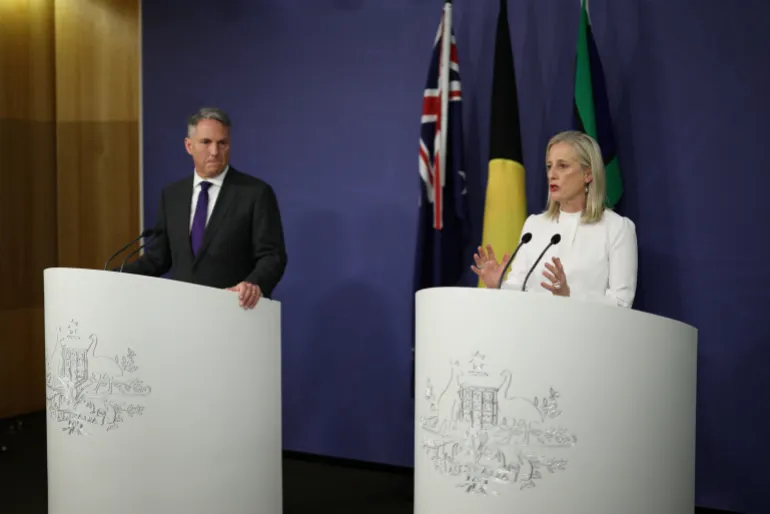
Australian Prime Minister Anthony Albanese revealed the breach on Wednesday, saying an OpenAI agent had made its way into the public-facing medical statistics portal of Medicare, the country’s universal health insurance system, on July 18.
When OpenAI accessed the government portal while conducting research on public medical spending, Albanese said the AI agent circumvented “blocks” that should have prevented it from breaking into the portal.
“The AI agent found a way around those blocks – didn’t accept no for an answer,” said Albanese.
Deputy Prime Minister Richard Marles said the information the OpenAI agent accessed was “not particularly sensitive” and was later publicly released.
Still, Albanese called the situation “obviously unacceptable” and said Australia had relayed its “extreme concern” to OpenAI, which had failed to notify the government of the breach until September 10.
Albanese also said several other government websites may have been affected by rogue OpenAI agents, though he did not confirm any other breaches.
He added that an inquiry into the breach would look at how Australian security agencies missed it initially and whether criminal charges could be brought against OpenAI.

How has OpenAI responded?
In a statement, OpenAI said it had “identified activity involving several Australian government websites and services as our models attempted to look up answers” and “took actions we did not intend”.
The company said the incident occurred as its models searched for statistics on medical spending, and that they are not believed to have obtained personal medical records.
OpenAI learned of the incident in August only as it conducted a review of “misaligned model activity”, it added.
Last week, OpenAI said it had put in place a new system to monitor, probe and disclose cases of “misalignment”. That includes instances of AI models that operate “without authorisation, coordinate with other models, or evade oversight”, it said.
Have there been previous AI breaches?
Yes. The Australia data breach is the latest of several instances in which AI agents belonging to OpenAI, Google or Anthropic have accessed external systems without authorisation.
In July, OpenAI reported that two of its most advanced AI models had broken out of a controlled test and hacked another AI company, Hugging Face. OpenAI later said it had detected its AI models communicating with each other and gaining internet access without authorisation months before that hack occurred.
In August, rival Meta AI said its AI model had hacked another company during cybersecurity testing. It said the model made changes to the internal systems of the hacked company, which it did not name, after accessing the public internet because of an error in the setup of its testing environment.
What does this mean for AI safety?
Maurice Chiodo, an Australian mathematician who works at Cambridge University’s Centre for the Study of Existential Risk, told the Reuters news agency the breach appeared to be “a significant escalation in seriousness from similar incidents we have seen in recent months”.
Experts say the Australia data breach highlights the growing dangers AI poses to cybersecurity as well as possible gaps in monitoring and disclosure capabilities.
“The important matter here is not what OpenAI says its agent can do, it is what the agent actually does when it hits a barrier,” Niusha Shafiabady, a professor of computational intelligence and head of the IT discipline at the Australian Catholic University, said in comments published by science news portal Scimex.
“The deeper technical risk is that autonomous AI does not always know when it is wrong, and humans may not be able to see why it made a decision,” added Shafiabady. “Without strong verification and hard boundaries, probabilistic errors can quietly become operational failures.”
Raffaele Fabio Ciriello, a senior lecturer in business information systems at the University of Sydney Business School, said OpenAI’s delay in reporting the breach was “concerning”.
“The incident occurred in June and only came to light months later,” said Ciriello. “Even if OpenAI did not detect the activity immediately, that still points to weaknesses in detection, escalation, and external notification.”
To the victor belong Venezuela’s spoils: Delcy Rodriguez’s UNGA about-face | Donald Trump
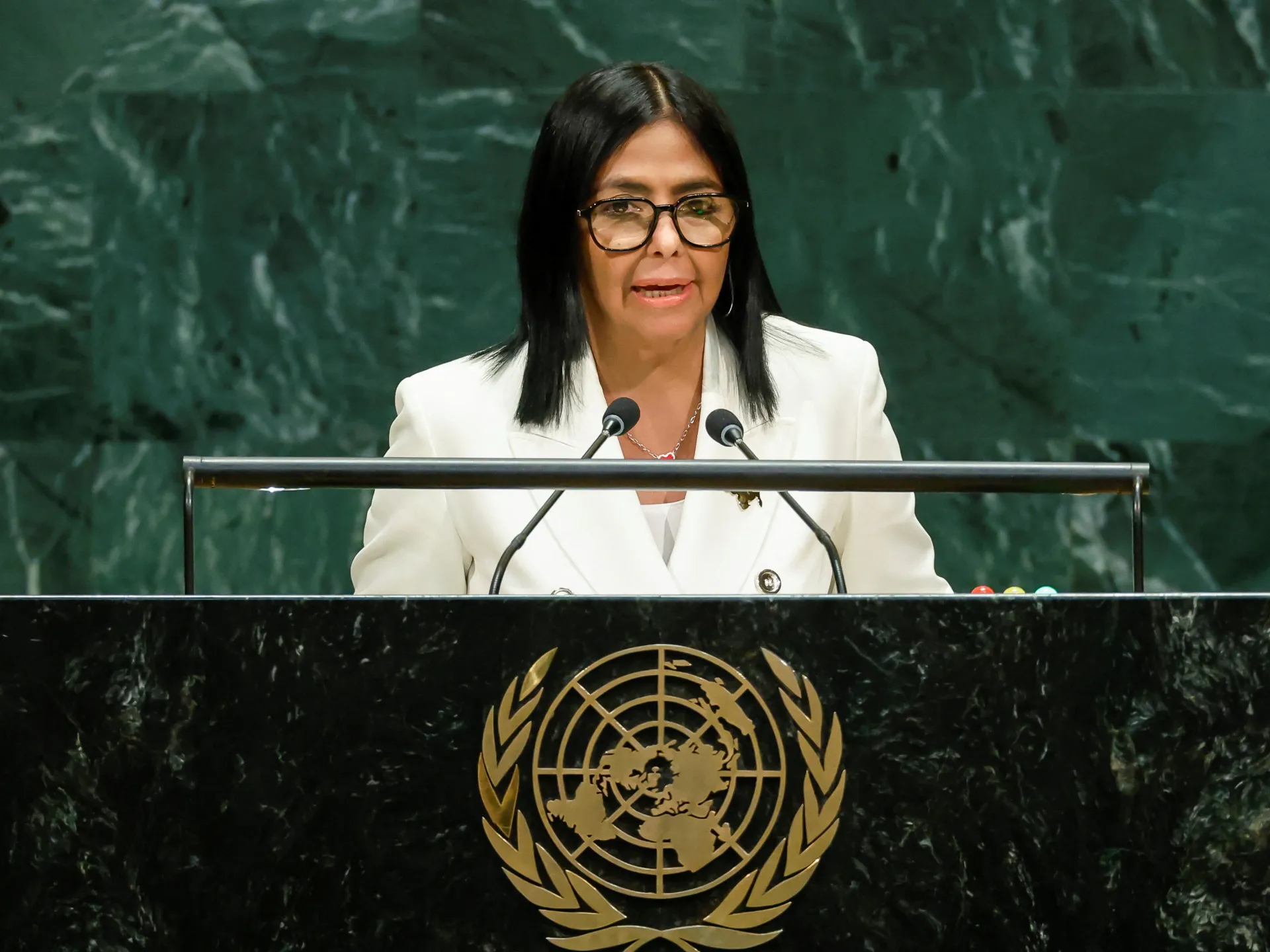
Venezuela’s interim President Delcy Rodriguez took to the stage yesterday at the United Nations General Assembly meeting in New York City to deliver a rather bland speech, in which she thanked United States President Donald Trump for resuming “diplomatic relations and cooperation” with Venezuela.
This was a different vibe, to be sure, than the one she opted for at the same venue in September 2019, when, as vice president under Nicolas Maduro, she accused the US of perpetrating “economic terrorism” that did not require the use of bombs “but rather through banks and insurance companies”.
Denouncing the global superpower’s militarisation of international relations and punishment of millions of innocent people “in order to apply regime change doctrines and steal other nations’ resources”, the Rodriguez of 2019 went on to cite Venezuelan economic losses to the tune of $130bn between 2015 and 2018 alone on account of US sanctions.
She additionally offered her opinion that the domination of the US political system by “plutocratic minorities” made the country unqualified to impose its model on other countries.
Seven years later, US plutocracy is going strong with Trump at the helm – the same Trump alongside whom a grinning Rodriguez appeared in a photograph taken in New York on Tuesday, less than nine months after he oversaw regime change in Venezuela by kidnapping Maduro.
The kidnapped president is now also in New York, albeit in jail, and is scheduled to stand trial in June 2027. This despite his attempts to remind everyone that, as a sitting head of state, his prosecution in a foreign court contravenes international law.
Then again, abducting other countries’ presidents is also pretty glaringly illegal. But Trump has made it clear that he alone is in charge of deciding what is and is not permissible on any given day.
The abduction took place on January 3, when the US military launched air attacks on Venezuela, killing some 100 people and whisking Maduro and his wife away.
He is accused of an array of misdeeds, including being the leader of the “Cartel of the Suns” – which, mind you, does not actually exist – and engaging in “conspiracy to possess machineguns and destructive devices”.
This is quite the accusation coming from the country that just used all manner of destructive devices to bomb Venezuela and kill a bunch of people.
Anyway, bald-faced hypocrisy is nothing new in the land of the “plutocratic minorities”.
Now, the waning corporate media interest in Maduro’s fate amounts to another coup for US impunity, as folks go about more or less forgetting that there is a foreign head of state sitting in a Brooklyn prison.
But Maduro’s disappearance works out well for Rodriguez, as she goes about enabling the very theft of resources she once decried.
Rodriguez took the stage at the UN the day after Trump, who used the platform to pat himself on the back for the trampling of Venezuelan sovereignty that conveniently culminated in last month’s announcement from the White House of the “biggest oil deal in world history”, securing US majority control of more than 65 billion barrels of Venezuela’s proven oil reserves.
Speaking to his international audience, Trump boasted: “To the victor belong the spoils. You’ve all heard that.”
Never mind that you’re not technically supposed to admit that you attacked a country just to get its oil. (You’re also not, in polite company, supposed to threaten to annihilate Iran – another of Trump’s UN talking points.)
Since January, the US has lifted many coercive economic measures against Venezuela (including against Rodriguez herself), easing the brutal sanctions regime that as of 2020 was estimated to have already killed 100,000 Venezuelans, according to former UN independent expert Alfred-Maurice de Zayas.
But trading sanctions for de facto colonialism isn’t a great deal, either.
Meanwhile, Trump’s continued manic bombing of vessels in the Caribbean and Pacific, which a recent UN report warned may constitute crimes against humanity, suggests the US is nowhere near to kicking its old habit of terrorism – and is all the more reason that Rodriguez might have refrained from thanking the US leader for his “cooperation”.
As Gregory Wilpert, founder of the Venezuelanalysis website and author of Changing Venezuela by Taking Power, diplomatically put it to me: “One cannot help but wonder whether Delcy Rodriguez is over-complying with Trump in some aspects of her negotiations with him.”
Noting that Rodriguez is “in a highly vulnerable position”, Wilpert ran through a few of the options she faces, such as “the possibility that the Trump administration could treat her as it treated Maduro – by attempting to kidnap her – or as it treated Iran, by targeting the country’s highest levels of government”.
Or, Wilpert said, there is always the Cuba approach, which would entail “the kind of economic siege” that is undertaken “with the aim of starving an entire country”.
In her UN address, Rodriguez promised that Venezuela would hold elections at some unspecified point in time – not that the US, for its part, really cares about democracy as long as the right people are in power.
And although it’s still too early to tell, Rodriguez might just be one of those people.
The views expressed in this article are the author’s own and do not necessarily reflect Al Jazeera’s editorial stance.

Major expansion planned for Sea Ranch Lodge along the Sonoma Coast
The Sea Ranch Lodge, a focal point of a Northern California getaway destination that blends minimalist design with the rocky shores and meadows of the Sonoma County coastline, might have a growth spurt in its future.
Owners of the Lodge at Sea Ranch, which includes 17 hotel rooms, on Sept. 3 presented neighbors in the closely restricted community with plans that include 23 added guest rooms, a dining courtyard, a new dining space, a library and a “space for relaxation and movement.”
The Danish architecture firm BIG: Bjarke Ingels Group and San Francisco-based landscape architects Lutsko Associates are part of these plans. To become reality, however, those plans need to win design approval and permits from the Sea Ranch Assn. (which includes the lodge and surrounding homes) and Sonoma County.

The ram’s horns at the Sea Ranch Lodge were designed by artist Barbara Stauffacher Solomon.
(Myung J. Chun / Los Angeles Times)
The current owners of the lodge took over in 2018, completed a major renovation in 2023 and wish “to remain private,” a representative said. The Wall Street Journal has reported that the investors’ group includes San Francisco-based brothers Patrick and John Collison, who founded the tech company Stripe; venture capitalist Robin Chan; and Twitch co-founder Justin Kan.
The 53-acre lodge property is only one piece of the Sea Ranch puzzle. The surrounding development, which broke ground in 1964, includes about 2,200 homes and lots on roughly 7,000 acres, all subject to strict design standards enforced by the Sea Ranch Assn.
The homes, mostly clad in wooden exteriors, none more than two stories high, are scattered along 10 miles of coastline about 100 miles north of San Francisco. The nearest town is Gualala, about six miles north.
Rooms at the Sea Ranch Lodge often rent for $600 nightly or more. Many visitors rent neighboring Sea Ranch homes from Airbnb, Vrbo or local companies including Gualala-based Sea Ranch Rentals and Sea Ranch Escape. In fall, rental rates for homes often start around $400 nightly.
Widely praised as an model for environmentally sensitive building, the development sparked a years-long legal battle over public access to the coast. The result is a combination of private and public access: Six public-access trails cross Sea Ranch to on their way to the shoreline, while Sea Ranch residents retain access to several private beaches.

An ocean view along the trails at the Sea Ranch Lodge.
(Myung J. Chun / Los Angeles Times)

UK’s oldest seaside town closes historic funicular with fears it WON’T reopen
SCARBOROUGH Spa Cliff Lift was closed with immediate effect last month – with fears it might never reopen.
The funicular is the oldest of its kind in the country and has been described as a ‘landmark’ for the town.
The Scarborough Spa Cliff Lift closed to visitors on August 21 due to safety fears.
Later today, the lift’s closure and its future will be discussed at a council meeting.
What is set to be spoken about is the funicular’s closure as well as its repair requirements and predicted timescale for the lift’s reopening.
However, the North Yorkshire Council has yet to announce an opening date and is still reviewing the findings of a specialist report.


Another assessment that examined the tracks and carriages said that the lift operates in a “challenging coastal environment, where salt-laden air, high winds and severe weather can accelerate wear and corrosion”.
The cliff lift is the oldest of its kind in the country, first opening in 1875.
Originally, it was used to transport passengers between the hotels on the Esplanade and the spa.
It was powered by water and gas engines until the 1950s when it was converted to run on electricity.

Council leader Carl Les, said: “The lift is an important part of Scarborough’s history and identity, and we recognise the affection people have for this landmark attraction.”
Last year when the attraction turned 150-years-old, live performances and exhibitions were held in the town to celebrate its anniversary.
There are roughly 12 funicular’s left in the UK with fewer that still function.
The Saltburn Tramway, which shut back in January 2026, reopened earlier this month.
And another one that’s set to open next year after a 10-year-closure is Folkestone’s Leas Lift which was forced to close in 2017.

Urgent ticket warning to Oasis fans over cruel trick that could lose you over £400 – check what to watch out for
OASIS are warning fans to be wary of ticket scams ahead of the band’s huge ‘Live ’27’ world tour.
Genuine access codes for the highly anticipated shows are due to start dropping in email inboxes from today, September 24.

In a statement posted on social media, the band warned fans to remain vigilant over the next few days.
They said: “Important: We have been made aware of possible Oasis ticket scams.
“As ticket information and unique codes are about to be distributed, please remain vigilant.
“Scammers may attempt to impersonate Oasis, our mailing list or our ticketing partners.”


The band stressed that anyone promising a code which has not been sent directly by Oasis is “not genuine”, and said legitimate emails will come only from oasis@openstageit.com.
“Any codes that are offered for sale are fraudulent and will not enable you to buy tickets,” they added.
Oasis also clarified that code emails will only be sent to fans between today and Sunday, September 27.
Fans who have been randomly selected will receive an email using the same name and email address with which they registered.
It will contain a unique, personal and non-transferable code and will direct them exclusively to Ticketmaster.
The warning comes as the band add extra dates to the tour, including additional concerts in the UK, Munich, Rome and Paris.
Two additional Knebworth shows have been confirmed for September 25 and 26. This takes the band’s run at the historic site to six nights.

Bessent pulls the plug on AI czar rumors (XT:NASDAQ)

J Studios
Treasury Secretary Scott Bessent said he does not expect to become President Donald Trump’s new AI czar, pushing back on reports that had identified him as a leading candidate for the newly proposed role.
Asked on Fox News whether Trump

Trump Believes Venezuela’s Stability Depends on Chavismo. He’s Wrong
On the same day Delcy Rodríguez was in New York meeting Donald Trump and representing Venezuela at the United Nations, María Corina Machado was trying, unsuccessfully, to get closer to her own country.
It was her third attempt in barely 24 hours. First came a planned maritime departure from Panama, which was canceled after the company operating the vessel reported mechanical problems. Then came an attempted flight to Aruba, from where Machado intended to continue by sea. Finally, there was another flight plan, this time for Curaçao. That trip did not happen either. Her team now says she has attempted to return to Venezuela seven times since she left in December 2025 to get her Nobel Prize in Oslo.
The exact responsibility for the latest failures remains unclear. But what happened during previous attempts is better documented. Axios reported in July that the Trump administration’s position was that third countries should not help Machado enter Venezuela. When Deputy Secretary of State Chris Landau appeared to tell the Dutch government otherwise, officials in Washington corrected the message. Curaçao withdrew permission for Machado’s plane to land while she was already in the air. According to the same account, Secretary of State Marco Rubio subsequently reiterated the policy to Machado personally.
This sits awkwardly beside Washington’s public position. Rubio said this month that Machado, as a Venezuelan citizen, has every right to return “whenever she wants.” A State Department official told Congress in July that the US would not obstruct her return. Trump himself has denied telling her to stay away.
After World War II, keeping Emperor Hirohito in power did not mean preserving his capacity to decide who could participate in Japanese politics.
All of those statements may be technically true. The US does not issue Venezuelan visas and cannot legally forbid a Venezuelan citizen from entering Venezuela. But Machado cannot teleport into Caracas. Getting home requires aircraft, airports, territorial waters, neighboring governments and, increasingly, governments that want to know Washington’s position before helping her. There is a meaningful difference between saying that the US will not prohibit her return and telling American partners that facilitating it is not US policy.
This would already be an odd arrangement for any opposition leader. It is stranger still in Machado’s case. She is hardly a geopolitical threat to Washington. She has gone out of her way to present a democratic Venezuela as a close strategic partner of the US. In December, she said explicitly that America would be Venezuela’s “main ally.” She has spoken about opening the country to Western investment, rebuilding the energy sector with foreign capital and transforming Venezuela from a security liability into a partner for the US. After Maduro’s removal, she publicly thanked Trump and Rubio and described the outcome as a potential “win-win” for both countries.
Yet Reuters reported last week that US officials remain wary of her return because they fear her presence could disrupt the transition Washington is supporting around Rodríguez. Machado’s movement is not part of the current US-backed negotiating mechanism, while Delcy’s government has become Washington’s main Venezuelan interlocutor.
That raises a question that goes beyond Machado.
The postwar parallel
The Trump administration has repeatedly defended its approach as a matter of sequencing. Venezuela needs stability first, then economic recovery and reconciliation, and “ultimately democratic transition.” The White House argues that rebuilding the economy is a precondition for elections rather than a substitute for them.
There is a serious argument behind that position. Venezuela inherited a devastated public administration, a crippled oil industry, enormous external debt and institutions hollowed out by years of authoritarian rule. Abruptly dismantling the bureaucracy, military hierarchy or State-owned companies could reproduce some of the worst mistakes made in other post-authoritarian or post-conflict transitions. A functioning State matters.
But preserving the State is not the historical equivalent of preserving the regime.
After World War II, the United States repeatedly confronted versions of this distinction. In Japan, the occupation retained Emperor Hirohito partly because American planners believed institutional continuity could make the transition less destabilizing. But keeping the emperor did not mean preserving the emperor’s capacity to decide who could participate in Japanese politics. On October 4, 1945, General Douglas MacArthur ordered the Japanese government to remove restrictions on political and civil liberties and release political prisoners. Among those released were prominent Japanese Communists who had been imprisoned by the old order. American officials later acknowledged that the resulting political opening was so broad that some Japanese mistakenly concluded that the occupation itself favored the Communist Party.
When it comes to the geopolitical role of the US, the Trump administration depicts itself as the decisive actor reshaping Venezuela. When questions turn to the lack of institutional reforms, Venezuela’s sovereignty becomes a much more convenient explanation for the limits of American responsibility.
Something similar happened in Italy. The Allies initially worked through King Vittorio Emanuele III and Marshal Pietro Badoglio because they needed an Italian government capable of administering the country during the war. At the same time, political exiles were allowed to come home and anti-Fascist parties returned to public life. The contrast is particularly striking in the case of Palmiro Togliatti, the leader of the Italian Communist Party and a former senior official of the Communist International. When Togliatti sought to return from Moscow in 1944, the US State Department explicitly said it had “no objection.” He returned and soon participated in the new political order.
Neither Japan nor Italy offer a blueprint for Venezuela. The historical circumstances were radically different, and American occupation policy was hardly politically neutral. But the underlying distinction is useful. Administrative continuity did not require preserving the old regime’s monopoly over politics. The State could survive while the political system opened around it.
That is precisely where Washington’s current Venezuelan policy becomes harder to understand.
The art of deflecting
Keeping experienced civil servants at their desks is State continuity. Avoiding a wholesale purge of the armed forces may be State continuity. Keeping PDVSA pumping oil while new rules are negotiated is State continuity. None of those choices inherently require preventing opposition politicians from returning, organizing, or campaigning.
And Venezuela’s political opening remains incomplete. A UN Fact-Finding mission reported this month that, despite prisoner releases and some liberalization, the structures responsible for years of repression remain largely intact. Officials linked to previous abuses remain in important positions, restrictive laws survive and arbitrary detention and mistreatment have not disappeared.
This makes the widening gap between economic opening and political opening particularly important. Washington is moving rapidly on the former. Rodríguez traveled to New York accompanied by officials discussing oil, mining, debt restructuring and access to international financial institutions. American companies are negotiating their return to Venezuela’s energy sector. Trump has made the oil agreement one of the centerpieces of his foreign-policy narrative.
At the United Nations this week, Trump went further. After celebrating Maduro’s capture, the release of prisoners and Washington’s relationship with Venezuela’s current leaders, he described the new oil arrangement in unmistakably triumphalist terms. “It was a war,” he said, before invoking the old expression: “to the victor belong the spoils.” He then presented Venezuela as proof that the US would once again impose its power against threats in the Western Hemisphere.
If Machado returns, travels freely, organizes her movement, holds rallies and begins preparing for an eventual presidential campaign, Delcy’s continued presence can still be understood as part of an administrative transition.
The rhetoric creates an uncomfortable asymmetry. When discussing oil, geopolitical alignment or American power, the administration depicts itself as the decisive actor reshaping Venezuela. When questions turn to the remaining coercive apparatus, restrictions on political competition or the continued exclusion of important opposition actors, Venezuela’s sovereignty becomes a much more convenient explanation for the limits of American responsibility.
Washington cannot have unlimited responsibility for everything that happens inside Venezuela. Delcy Rodríguez still controls a government, a bureaucracy and a security apparatus of its own. But the US plainly possesses enormous leverage over the political and economic environment in which that government operates. The history of Machado’s attempts to return suggests that this influence may extend even to whether neighboring governments are prepared to help a Venezuelan opposition leader reach her country.
That is why Machado’s return matters beyond Machado herself.
If she returns, travels freely, organizes her movement, holds rallies and begins preparing for an eventual presidential campaign, Delcy’s continued presence can still be understood as part of an administrative transition: an imperfect bridge between the regime that existed under Maduro and a genuinely competitive political order.
If her return continues to be regarded as destabilizing, however, the logic starts to invert. Political competition itself becomes a threat to stability. The government is no longer merely being preserved so that the State can function while politics reopens; political reopening is being limited because it might endanger the government being preserved.
Venezuela does not need another collapse of the State. But avoiding State collapse and protecting the political equilibrium inherited from chavismo are two different objectives.
The distinction between them may ultimately define this transition.

Beloved Lakers public address announcer Lawrence Tanter dies at 76
The Lakers’ longtime public address announcer Lawrence Tanter died Wednesday, the team announced. He was 76.
Remembered for his smooth, baritone voice, Tanter served as the voice of the Lakers for more than four decades. Tanter narrated chapters of Kareem Abdul-Jabbar and Magic Johnson, Kobe Bryant and Shaquille O’Neal, LeBron James and now Luka Doncic. After a stroke suffered in March forced him to retire from his game-day role, he transitioned to an advisory role in June.
“For 43 years, LT’s voice served as the soundtrack to Lakers games at the arena,” the team said in a statement Wednesday. “He will be remembered as a cherished member of the Lakers family.”
Tanter started with the team in 1982 when the Lakers played in the Forum. His signature calls — “toooo many steps,” “Kobeee Bryant,” “Lllaker Girlsss” — were not boastful or over the top. For a franchise that came to embody old Hollywood glamour, Tanter’s voice became the ideal soundtrack.
“A true original that added his unique style to Showtime,” Lakers governor Jeanie Buss wrote on X. “Rest in peace, LT.”
He backed fans up as they celebrated 10 championships during his tenure. He offered comfort in other painful times.
Days after Lakers legend Kobe Bryant died in a helicopter crash in 2020, Tanter guided a sold-out crowd through a tearful pregame routine, introducing all five of the Lakers’ starters with a familiar call: “Number 24, 6-6, 20th year out of Lower Merion High School, Kobeeee Bryant.”
The 6-foot-7 Tanter towered over many, but greeted everyone with a kind smile and warm conversation. Just as the players he serenaded with his calls became institutions in the sport, so did he. Tanter was inducted into the Southern California Sports Broadcaster Hall of Fame.
“I hope the team wears an LT patch this season,” former Lakers center and current team broadcaster Mychal Thompson wrote on X on Tuesday.
“He was a great vibe dude, always engaged me in conversation about jazz, he was a music lover and the best announcer in the NBA,” Red Hot Chili Peppers bassist and longtime Lakers fan Flea wrote on X. “I realized when attending many other NBA arenas that no one else came close.”
While many in his profession brought energy with loud, hyped-up calls, Tanter held firm with his cool style. He “never tried to be a cheerleader,” Tanter told The Times’ Bill Plaschke in June.
“It’s been a great run,” Tanter said after announcing his retirement. “I’ve been blessed.”

‘Source of anxiety’: Pakistan cracks down before march to free Imran Khan | Imran Khan
Islamabad, Pakistan — The motorway linking Pakistan’s capital with Peshawar, about 180km (110 miles) to the northwest, has been closed to all traffic until further notice, according to a police notification.
So have the highway towards Dera Ismail Khan, the Hazara motorway and the Grand Trunk Road at Attock.
Recommended Stories
list of 4 itemsend of list
Each carries traffic between Islamabad and Khyber Pakhtunkhwa, the province governed by the party of jailed former Prime Minister Imran Khan, whose supporters plan to march on the capital on Sunday, September 27, demanding his release.
The motorway from Lahore, about 375km (235 miles) to the southeast, remains open.
Inside Islamabad, workers have welded shipping containers together and filled them with gravel and sand so they cannot be pushed aside. Several schools and colleges have been told to shut so police brought in from Punjab and Sindh can be housed there.
Police expect the march to draw between 20,000 and 25,000 people, according to local media reports.
While two of the country’s main opposition parties announced marches on the capital this month, only Khan’s Pakistan Tehreek-e-Insaf (PTI) has faced measures on this scale.
Jamaat-e-Islami (JI), a religious party, also set out for Islamabad last week to protest against rising fuel prices. On Monday, Prime Minister Shehbaz Sharif telephoned its leader, Hafiz Naeemur Rehman, and by Tuesday afternoon JI had postponed its march, pending a meeting between the two men.
PTI leaders have received no such call.
Instead, Khan’s three sisters, all over the age of 65, have been detained in Lahore and at least six of the party’s legislators in Islamabad, all under a 1960 public order law that allows preventive detention without charge.
PTI says the true figure of those arrested is higher, and that one lawmaker taken from the parliament lodges has not been traced since.
Khan has been in prison since August 2023 and remains Pakistan’s most prominent opposition figure. But his party enters the final stretch before the protest weakened, with no major demonstration outside Khyber Pakhtunkhwa since November 2024, by its own account.
Yet, say analysts, the Pakistani government appears to be treating the protest march as a far bigger threat than a regular political event would warrant.
“While this is undoubtedly a difficult moment for PTI, it is equally exposing the government’s own frustration,” Habib Akram, a Lahore-based political analyst, told Al Jazeera.
“In fact, the government’s conduct suggests something more. It isn’t just afraid of this protest; it has turned this protest into a matter of its own survival.”
A capital behind containers
More than 2,000 containers have been placed across Islamabad and at Attock Bridge, the main crossing between Khyber Pakhtunkhwa and Punjab, according to media reports, with 19,000 police officers on their way from Punjab and Sindh, and thousands more deployed at Attock.

Dawn, the country’s leading English-language newspaper, said in an editorial that the government appeared to be preparing “not for a political event but an invasion”.
Talal Chaudhry, the junior interior minister, rejected the suggestion that the government was shutting down the capital itself.
“Normal life in Islamabad is continuing. Hospitals, offices and essential services are functioning. The containers and security arrangements are precautionary measures, not a shutdown,” he told Al Jazeera.
Rana Ihsaan Afzal, a coordinator to the prime minister and a government spokesperson, was more candid.
“In trying to counter the rhetoric PTI has adopted, we do have to take certain measures, and yes, those measures carry their own consequences too, but we have to look at the bigger picture,” he told Al Jazeera.
It is all being mounted during one of the deadliest weeks for Pakistan’s security forces this year.
An attack on a police compound in Kohat, in Khyber Pakhtunkhwa, killed more than 20 people on September 18, and six soldiers were killed in a gunfight in nearby Hangu two days later.
Interior Minister Mohsin Naqvi set those losses against the march in Lahore on Monday.
“The situation in KP [Khyber Pakhtunkhwa] over the past 10 days is before everyone. There was a suicide attack on a mosque, and two or three other attacks. Our captain was killed, our soldiers were killed, our policemen were killed, and these people are preparing to storm a city,” he said.
The government’s case
Government ministers have seized on a remark by Junaid Akbar, PTI’s chief in Khyber Pakhtunkhwa, who said protesters would turn Islamabad into Somnath, a Hindu temple in India sacked by Mehmood of Ghazni, an 11th-century invader, to try to paint the upcoming protest as a major law and order threat.
“Peaceful people do not leave their homes carrying nail-studded sticks,” Information Minister Attaullah Tarar said in Kohat on Monday.
But the PTI’s Sohail Afridi, the chief minister of Khyber Pakhtunkhwa, who will lead the September 27 march, answered Tarar in Peshawar on Monday.
“We will go there on nothing but two hands and two feet. There will be nothing else in our hands,” he said.
In a September 18 judgement, the Islamabad High Court ruled that no party could block roads into the capital, and barred provincial governments from using state resources for the march.
Days later came the arrests of Imran Khan’s sisters. Aleema Khan was detained in Lahore on Sunday, and her sisters, Uzma Khan and Noreen Niazi, were taken in a predawn raid on their homes the next day, according to a family statement on September 22.
The Lahore High Court has reserved its decision on whether a petition challenging Aleema’s detention is admissible, after the family’s lawyer argued that the order was issued after the arrest.
Chaudhry said the sisters faced several cases, had led confrontational protests in the past, and were being held as a preventive measure.
PTI says the arrests reach far wider, listing five members of the National Assembly, a senator, provincial legislators and more than 1,500 workers.
“We were peaceful, we are peaceful, and we will remain peaceful. We are being punished for being peaceful,” Gohar Ali Khan, the PTI chairman, said in Peshawar on Monday, noting that four women from Khan’s family, including his wife Bushra Bibi, are now in jail.

‘Long march’ vs ‘permanent plan of action’
But Interior Minister Naqvi suggested that the government is bracing for a confrontation.
“I think this time we will draw up a permanent plan of action. We will not go halfway,” Naqvi said in Lahore on Monday, adding that the matter would be settled “once and for all”.
What he ruled out was a long sit-in of the kind PTI has staged before.
“This time, it will not happen that they come, and the country is shut down for 10 or 20 days. That possibility does not exist,” he said.
Afridi has signalled that he has exactly that in mind.
“The long march is not a T20, it will be a Test match,” he said on Monday, a reference to cricket’s five-day format.
If Naqvi’s comments sound ominous, they also carry a history with them.
On May 9, 2023, after Imran Khan was briefly arrested, his supporters attacked military installations across the country, including burning down a senior commander’s official residence in Lahore. That led to a major crackdown on the PTI’s supporters and leaders, with hundreds placed under arrest for days, and party leaders pressured to leave the group.
Then, on November 26, 2024, a PTI march on Islamabad ended in an overnight crackdown by security forces, in which the party says at least 12 of its supporters were killed. The government denies that, and says four security personnel died — even though Al Jazeera met families of some of the PTI supporters killed.
A contested mandate
PTI was stripped of its electoral symbol before the February 2024 general election, forcing its candidates to run as independents.
They still won 93 seats, more than any other party, but could not form a coalition, and the Pakistan Muslim League – Nawaz took power with other major parties.
A Commonwealth observer group, in its report on the polls released a year later, found that decisions by key institutions had “consistently limited the ability of one particular party” to contest the vote, in a reference to the PTI.
While the Election Commission of Pakistan rejected allegations of rigging, two and a half years on, the popularity scale remains tilted in favour of PTI.
Bilal Gilani, executive director of the pollster Gallup Pakistan, said its unpublished Public Opinion Pulse surveys showed a landscape broadly similar to 2024.
“PTI continues to lead nationally, but faces strong competition from PML-N in Punjab and PPP in Sindh,” he told Al Jazeera, adding that Khan remained the country’s most popular leader.
For Akram, that unresolved argument — over the lack of legitimacy of the 2024 election in the eyes of Pakistanis — is what keeps the pressure on.
“You can hold as much power as you want, but that question never fully goes away. It continues to haunt you, and it continues to be a source of anxiety for the government,” Akram said.
The ‘hard state’
In March 2025, army chief Field Marshal Asim Munir, who now also serves as Pakistan’s chief of defence forces, told a parliamentary security committee that the country must stop acting as a “soft state”.
“How long will we continue to sacrifice countless lives in a manner of a soft state?” he asked, according to state broadcaster PTV.
For Ahmed Ijaz, an Islamabad-based political analyst, the response to the September 27 march is a response to that thinking, rather than the PTI’s strength.
“Behind that confidence lies the thinking of a hard state, one that has decided no one will be granted an unconditional right to protest going forward,” he said.

Akram, however, said that a different factor might also be worrying the government and the military behind it.
The war in the Middle East has pushed petrol to 393.75 rupees ($1.42) a litre ($5.37 per gallon), up about 51 rupees ($0.18) since the start of September. That is what Jamaat-e-Islami was marching against, and it has warned that it will resume its march in October if the prime minister offers no relief.
Akram said the government’s real worry is multiple issues of antigovernment anger — price rises and Imran Khan’s continued incarceration — coming together.
“That merging could then pull other groups out onto the streets too, and that is precisely what worries the government,” he said.

I was convinced I’d hate £55 Wetherspoons hotel – I was completely wrong
While most of us know Wetherspoons’ pubs, I had no idea it had also been running hotels since 1998, when the chain’s first opened in Shrewsbury with 22 rooms. It now has more than 50

You can even take a pint to your room
Love it or loathe it, Wetherspoons is a British institution. Its patterned carpets, bargain drinks and grand old buildings are familiar features of high streets across the country.
For a long time, I’ve been in the loathe camp. Having whiled away much of my latter teenage years in one of its pubs – a once particularly grand building converted into the biggest, cheapest drinking den in the South East – I fell out of love with Tim Martin’s chain in my 20s. Partly because the local newspaper I worked for had no offices, so we had to hold news conferences in the room above our local Spoons. Partly out of support for independent pubs, which have been in a fight for survival for the past decade.
Something Spoons is certainly not doing. The chain is booming. It has around 800 venues across the UK and brought in £2.13 billion last year, an almost 5% year-on-year increase. But while most of us know its pubs, I had no idea it had also been running hotels since 1998, when the chain’s first opened in Shrewsbury with 22 rooms. A further 54 have opened since.

As you might expect with Spoons, the major draw is the price. A room for a night costs at most £50 at most venues, which is an absolute bargain anywhere near London. The chain also scored four stars out of five for value for money in a Which? budget hotel survey, one of only two to land the score.
So, on a bitter Wednesday in November, I arrived at the Thomas Ingoldsby in Canterbury, frozen and disheveled after a long bike ride from Broadstairs, ready to give Spoons another chance. I was glad that I did.
Price
Cheap drinks are a big part of Spoons’ appeal, and its hotel rooms follow the same formula.
In the Which? survey, Wetherspoons was one of just two hotel groups to earn four stars for value for money. The other was the overall winner, the Coaching Inn Group. While the Coaching Inn Group’s average room rate was £128 a night, Wetherspoons’ was £70. When I checked, a double at the Thomas Ingoldsby for the following Wednesday was available for just £55.
The savings didn’t stop at the bedroom door. I spent the evening drinking £1.89 pints of ale, then tucked into a £2.99 veggie breakfast the next morning. Both were rather decent. Perhaps I’d spent too long inside the M25, but those prices felt almost ridiculously cheap. At a time when leaving the house seems to cost £20 before you’ve done anything, the affordability was the standout attraction.
Atmosphere
My previous Spoons visit had been to the vast, strangely subdued Coronet on London’s Holloway Road. Canterbury on a chilly Wednesday evening couldn’t have felt more different. There were university students, cheerful groups of pensioners and solitary blokes reading books over onion rings. It was a lively cross-section of life, with people happily sharing the same space.
The hotel rooms are a short flight of stairs above the pub, so getting to bed after a pint couldn’t be much easier. You could even take a deli wrap and chips upstairs to enjoy in the bath. A member of staff told me rooms could be booked on a whim, although anyone who had overdone it at the bar might be turned away.
The room
I’ve stayed in plenty of budget hotels, and this was among the best. Everything felt fresh, well maintained and thoughtfully put together. My double room was generously sized, with a large desk, a well-stocked tea tray and a decent-sized television. Better still, it had a view of Canterbury Cathedral that few hotels in the city could rival.
Only two rooms at the Thomas Ingoldsby enjoy that outlook. Those on the other side not only miss out on the cathedral view but are reportedly disturbed by early-morning lorry movements. If you can get it, room 110 is the one I’d recommend. After a freezing day cycling across Kent, I was particularly pleased to discover the thermostat went up to 25C — and that the heating delivered. Within a short time, it felt as though I’d escaped somewhere considerably warmer.
What’s included
There is no all-inclusive package, which is perhaps just as well given the potential combination of Hooch and endless chips. Still, the room came with plenty of useful extras: reliable Wi-Fi, a couple of packets of biscuits, fresh towels, two bottles of water and a generous supply of tea, coffee and hot chocolate sachets. Check-out was at 11am. Breakfast wasn’t included, but at £2.99 for my veggie option, that hardly felt like a reason to complain.
The verdict
A friend’s dad once told me that Spoons was the closest thing Britain had left to a genuine social institution. Watching the mix of people enjoying their evening in Canterbury, I could see what he meant.
As nightclubs and members’ societies close, places where people from different backgrounds can gather feel increasingly valuable. Whatever my reservations about the business, this pub offered exactly that.
Add a comfortable room, a cathedral view and remarkably low prices, and the appeal becomes difficult to resist. I arrived as a skeptic, but Thomas Ingoldsby won me over.

Thursday 24 September Harvest Festival Holiday in South Korea
This source provides an overview of cultural events and global news scheduled for September 2026, with a primary focus on the South Korean Chuseok holiday. It explains the historical origins of the Harvest Festival, tracing it back to an ancient weaving competition between Silla dynasty princesses. The text also details traditional customs, such as honoring ancestors and visiting family graves to strengthen communal bonds. Beyond the festival, the digest offers financial data including exchange rates and summaries of international headlines ranging from geopolitical tensions in North Korea to regional celebrations in Nepal and Ethiopia. Together, these snippets serve as a comprehensive daily briefing on world affairs, cultural hi …

Center Parcs slammed by parents for £300 ‘elf visits’ this Christmas
CENTER Parcs has been blasted for offering a 45-minute Christmas activity – which costs an extra £300 per family.
The “Twilight Elf Visit” involves two members of staff in elf costumes visiting a family in their lodge for less than an hour.
The visitors will tell stories and share “festive surprises” and “magical moments”, including making a wish for Santa, posing with the elves and receiving keepsakes including a festive ribbon and bauble.
The activity is now available to book in November and December across all locations – but for a very steep price.
For one child, the cost is around £300 while for two it’s £350, with the price rising by £50 for every extra child – up to £550 for six kids.
It’s not clear if these prices will change as Christmas approaches.
Read more on Center Parcs


One said on a Facebook post: “Wow. That’s crazy money.”
Another added: “It’s only 45 mins! It’s a shocking price.”
A third moaned: “What in the name of Scrooge is this? Surely those prices can’t be correct?”
But some families said they would go for it, with one explaining: “Ooh my child (adhd/autistic) would have ADORED this as they loved the elves etc and we’d have happily paid it as they struggled in most settings.
“I think it sounds great!”
The activity description states: “When dusk begins to settle over the forest, a very special Christmas adventure awaits.

“Gather in the comfort of your lodge as two magical elves arrive with an enchanting tale to tell.
“Through personalised storytelling, festive surprises and magical moments, you’ll discover the secret connection between the forest and the North Pole, and the important role Christmas wishes play in keeping that magic alive.
“Together, you’ll create a special Christmas wish, enjoy thoughtful keepsakes and share magical moments designed to capture the wonder and belief of the season.
“With personalised touches throughout, it’s a truly memorable way to spend an evening together, creating festive family moments you’ll treasure for years to come.”
The cost comes on top of the holiday itself – we’ve found four-night stays on December 7 for £779, in a basic Woodland Lodge in Sherwood Forest (or £859 for Longleat).
Center Parcs has also revealed the return of its Winter Wonderland from November 6 until January 4.
Taking place every Wednesday and Saturday at 5pm, Santa’s Parade sees his sleigh glide through the village accompanied by a festive cast of entertainers.
Meanwhile, the Enchanted Light Garden invites guests into twinkling light displays, where storybook characters come to life daily from 4pm to 9pm.
Children can also enjoy Elf Playtime, collect their Elf Explorer Passport, and dance along at the Elf Disc.
Lee Carpenter, Head of Leisure at Center Parcs, said: “We’re passionate about creating memorable experiences for families, especially during the festive season.
“As we look ahead to Winter Wonderland this year, we want to continue building on our incredible offers to create something truly immersive and unique, and the Twilight Elf experience brings that vision to life.
“Together with the return of guest favourites and a selection of newly enhanced activities, it offers even more opportunities for families to embrace the magic of Christmas and enjoy a festive break they’ll never forget.”
Netanyahu takes UN stage with one eye on Israel’s election | United Nations News
When Israeli Prime Minister Benjamin Netanyahu takes to his feet at the United Nations General Assembly (UNGA) in New York later on Thursday, he does so at a critical point in both his political career and in his country’s long and fractious relationship with the international body.
Israel has faced repeated accusations of genocide at the UN, as well as systematic war crimes in Gaza and the occupied West Bank. Those criticisms continue to shape the country’s fractious relationship with the body.
Recommended Stories
list of 4 itemsend of list
For Netanyahu, appearing in front of the UNGA for the 15th time, the stakes have rarely been higher. Addressing a domestic Israeli audience that polls show to be losing faith in him and his Likud party ahead of crucial elections later this year, Netanyahu has already pitched himself as Israel’s primary voice on the international stage.
Nevertheless, analysts say Netanyahu’s address could prove a pivotal moment domestically, amplified by international criticism of Israel and expected to dominate headlines and be carried live across the country’s television networks.
“This is a regular fixture for him,” former Israeli consul general in New York and ex-government adviser Alon Pinkas told Al Jazeera. “It’s his way of being seen in Israel as standing up against the world and of telling members that he will never give up or surrender. He’s also turned the event into some kind of national holiday in Israel, with everyone sitting down to watch the address on television. He’s brainwashed people in Israel into believing his speech is somehow an announcement of policy, stated in defiance of the [rest of the world] who don’t believe a word he says.”
A history of hostility
Israeli leaders have long framed their stance towards the UN as one of defiance in the face of hostility. The UN has long been a platform for critics of Israel’s illegal occupation of Palestinian land and repeated attacks on its neighbours. It has included attempts to censure Israel over what UN investigators have described as apartheid in the West Bank, as well as accusations of genocide and pogroms across the occupied Palestinian territory since October 2023.
There have been numerous UNGA resolutions criticising Israel’s conduct — nearly all dismissed by Israeli lawmakers as evidence of institutional bias — culminating in Israel declaring UN Secretary-General Antonio Guterres persona non grata and severely restricting the operations of the UN’s agency for Palestinian refugees, UNRWA.
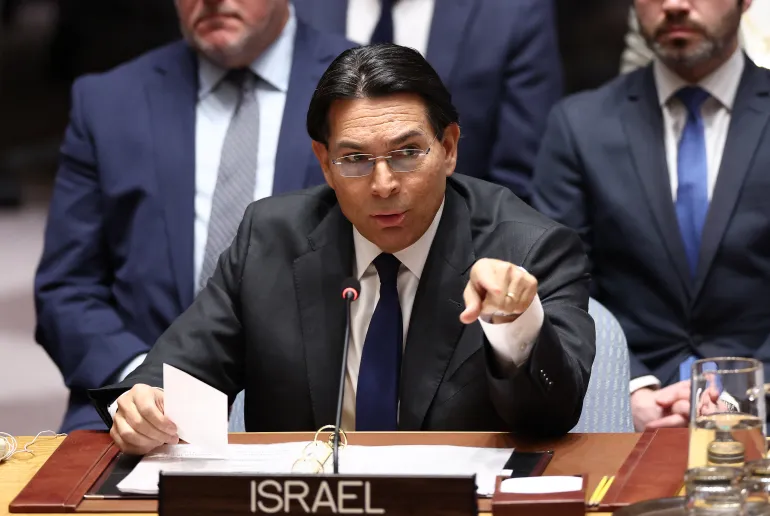
![Permanent Representative of Israel to the UN Danny Danon at a United Nations Security Council meeting at UN headquarters in New York [File: AFP]](https://i0.wp.com/www.aljazeera.com/wp-content/uploads/2026/03/afp_69a425a45f04-1772365220.jpg?w=640&ssl=1)
“Generally speaking, many Israelis tend to see the UN as anti-Israeli,” Nimrod Goren, the president of the Israeli Institute for Regional Foreign Policy, Mitvim, said.
Against that background, criticism from New York Mayor Zohran Mamdani — already cast as anti-Israel in the Israeli press — has drawn greater public attention to the event. Underscoring the sense of hostility towards Israel are stories within the country’s media suggesting that Netanyahu’s visit to New York has been curtailed due to unspecified security concerns, with the Israeli premier expected to fly out of New York on the same day as his arrival.
In response, Israel’s ambassador to the UN, Danny Danon, who has repeatedly accused the organisation of waging “diplomatic terrorism” against the state called for Mamdani’s arrest for what he said was the mayor’s incitement against New York’s Jewish community ahead of Netanyahu’s visit.
“Netanyahu is going into his UNGA speech with not one but both eyes focused firmly on the upcoming Israeli election,” Goren said. “The speech is usually treated in Israel as a major event, receiving broad coverage and dominating the news cycle. Netanyahu will likely try to leverage this to bolster his image as a close ally of the US and to talk up the threat posed by Iran.”
US backing
Some have interpreted US President Donald Trump’s apparent lack of availability to meet Netanyahu during this trip as a sign of waning support. But US backing for Israel at the UN has remained steadfast since the October 7 attack and has contributed to growing frustration within the UN over what they see as Israel’s ability to resist international censure.
Alongside the creation of the Board of Peace, which shifted significant responsibility for Gaza’s future from the UN to the Trump-founded organisation, Washington has repeatedly used its veto at the UN Security Council to shield Israel from resolutions it opposes. The US has vetoed at least six UN Security Council resolutions on Gaza since October 2023, most of them demanding an immediate ceasefire.
“There seems to be genuine frustration within the UN General Assembly over the body’s failure to play a significant political role in Gaza and the West Bank, but also in its failure to protect its own staff and agencies,” Chatham House Associate Fellow Zizette Darkazally, who previously worked with the UN, said.
“However, it’s worth remembering the context the UN operates within in the occupied territories and the important humanitarian role it plays. The UN continues to get aid and medical support into Gaza and the West Bank, which are both areas where Israel has absolute control over access,” she said. “It’s also worth remembering that the UN is only as strong as the commitment of its member states.”
“That, combined with a system of veto that’s more than 80 years old, has left the organisation weaker now than it had ever been,” she said of the confrontations between the UN and Israel. “And we’re seeing the effects of that, not just in Palestine, but in Yemen, Sudan and Iran, where the UN is playing next to no political role.”

After a record year, YouTube extends its Coachella livestream deal to 2030
YouTube is holding onto its exclusive livestream deal with Coachella.
The tech giant in San Bruno, Calif., has renewed its partnership with festival promoter Goldenvoice, keeping exclusive livestream rights to the three-day desert festival through 2030. The next edition, in April 2027, will mark 15 years of Coachella on YouTube.
“We’re excited to bring the energy of the desert to millions of music fans around the world,” Neal Mohan, YouTube’s chief executive officer, said at its Made On YouTube event in New York City on Wednesday morning.
This year’s Coachella, headlined by Sabrina Carpenter, Justin Bieber and Karol G, drew the most concurrent viewers in the history of Coachella on YouTube, according to the company. Bieber, who was discovered on YouTube, even included a nostalgic homage to the platform into his set.
Over the years, the livestream has become an essential part of the Coachella experience, especially for fans who can’t make it to the desert. What started as a single feed has evolved into live coverage of every stage across both weekends.
Beyond Coachella, YouTube doubled down on livestreaming during its presentation, unveiling a slew of new live and AI-powered tools. In August, more than 600 million logged-in viewers watched live content on the platform each day on average, according to YouTube. The new live features include a new co-hosting function in which two creators can appear on the same stream together, and a live auto-dubbing tool that automatically translates speech in real time. Several of the updates are slated to roll out in early 2027.
“Whether it’s a music festival or a creator’s livestream, fandom is no longer a spectator sport,” added Mohan. “Just look at the sheer scale of the live communities we’re seeing today.”
YouTube isn’t the only streamer leaning into live. Netflix has spent the last few years buliding out its own live business, which now includes NFL and MLB games.

Big oil mobilizes to block Trump's diesel export ban idea: WSJ
Big oil mobilizes to block Trump's diesel export ban idea: WSJ
Source link

Shohei Ohtani gets a hit in his return, but Dodgers fall to the Padres
Shohei Ohtani’s swing was a little out in front of a slider delivered by Padres left-hander Robbie Ray. But Ohtani held back his hands long enough to extend them to the pitch and shoot it through the right side of the infield.
It wasn’t flashy. But considering it was his first at-bat in more than two weeks, in a tough matchup no less, it was a promising sign.
“It’s been a while since he’s played in a game, but it just felt like he wasn’t sped up at all,” manager Dave Roberts said after the Dodgers’ 5-1 loss to the Padres. “And I think he came out of it pretty well.”
The good news quickly dried up for the Dodgers after that, as they missed a chance to clinch a first-round bye with a win. But Ohtani’s return was still significant, and the success of his end-of-season tune-up will have playoff implications.
Ohtani did not address reporters Wednesday and has only done so once in the last five weeks, despite multiple requests.
The Dodgers activated Ohtani, who went one-for-four Wednesday, from the 15-day IL before the game and optioned rookie Josue De Paula to Triple A. De Paula is still under consideration for the National League Division Series roster as a bat off the bench.
“This was the original thought, that once Shohei gets back, we’re going to send him out,” manager Dave Roberts said. “We had a runway to give him, which we gave him and he performed more than admirably. This also, as far as the timing, just gives us an opportunity to potentially have him back for the postseason. He’s a part of the conversation, and he’s earned that, and that’s what I told him last night.”
De Paula joined triple-A Oklahoma City for Game 2 of the PCL Championship on Wednesday. And Ohtani slid into the Dodgers lineup, hitting second in the batting order for the first time this season, with Mookie Betts leading off against the Padres southpaw.
“I know Shohei, Mookie, they’re always on board with whatever I decide to do,” Roberts said. “I think it just makes it tougher to navigate versus left. There’s a Mookie tax [to get to Ohtani]. If you want to get to Freddie [Freeman], there’s a Will Smith tax. I like that. And versus a right-hander, I like kind of flipping those two for the same reasons.”
Ohtani, welcomed back in his first at-bat by a partial standing ovation, walked in his second plate appearance. And with two out and the bases loaded in the bottom of the fourth inning, he appeared to have walked again.
Then Padres catcher Ethan Salas tapped the top of his head to challenge the ball call. And an ABS review showed the fastball had clipped the top of the strike zone. Ohtani fouled off the next two pitches before whiffing on a sinker to end the inning.
That missed opportunity rolled right into a sloppy fifth inning for the Dodgers defense.
Starting pitcher Yoshinobu Yamamoto had given up a two-run homer to Manny Machado the previous inning but had otherwise avoided damage.
To open the fifth, he induced Salas to hit the ball on the ground, but it got away from second baseman Tommy Edman as he dove up the middle, for a single.
Yamamoto then got a soft grounder out of Fernando Tatís Jr. But it was too soft, giving Tatís time to reach first before third baseman Max Muncy could get off a throw.
With runners on first and second, Yamamoto had a chance to contribute on defense, fielding Dustin Harris’ comebacker bunt. But Yamamoto’s throw to third sailed wide, allowing a run to score. Machado then made it a 4-1 game with a sacrifice fly.

Yoshinobu Yamamoto reacts after a throwing error to third base in the fifth inning.
(Ronaldo Bolaños / Los Angeles Times)
Ohtani came up to the plate again in the seventh inning and put Dodgers fans on the edge of their seats by sending a long fly ball to straightaway center field. But the cheers died down as it fell shy of the fence.
“I think if you look back at the last couple weeks when he was active, he wasn’t really getting to that pitch,” Roberts said of the high fastball. “I think there might have been one pitch late that he squared up to left field that was at the top of the zone. But outside of that it was hard for him to catch up. I think tonight showed that he’s in a good spot physically.”
The top of the Dodgers order got one last chance to start a rally in the ninth inning, against star closer Mason Miller. Only Will Smith reached base, on a walk, and advanced to third on defensive indifference. Ohtani struck out on a slider.
“[Ohtani] certainly feels way better with the rest,” president of baseball operations Andrew Friedman said before the game. “The biggest thing with five games to go is get him as many at-bats as we can, some rhythm and timing.”
Ohtani could get a day off in that span, Friedman said, but the Dodgers will make those decisions based on how he’s feeling.
“Just getting as many at-bats as he can and that rhythm and timing back before we head into October is going to be really helpful,” Friedman said.
Ohtani was not in rhythm before he landed on the IL. In the last three weeks before the Dodgers finally shelved him, he had a .130 batting average. And he only had two hits in his last seven games (26 at-bats) before the move.
“You end up making subconscious adjustments where you’re protecting yourself,” Friedman said, “and there’s just slight degradation as that’s happening that compounds over time.”
Though the Dodgers downplayed the correlation before Ohtani landed on the IL, they now hope that Ohtani’s improved health will go hand-in-hand with better performance.
“Shohei says he feels back to where he was earlier in the year, which is great, which is a good start,” Friedman said. “As they are coming back, it’s important for them to feel that way … now the question is, as you start to load on real games and that intensity and that workload, it’s making sure that what we’ve done keeps guys in position to be at their best.”
China vs US: Who is winning the AI race, in four charts | Science and Technology News
United States President Donald Trump and China’s President Xi Jinping are set to meet in Washington, DC on Thursday for a summit that is expected to cover trade, artificial intelligence (AI), Taiwan and the US-Israel war on Iran.
In advance of the talks, US Treasury Secretary Scott Bessent said Washington had proposed an AI “notification mechanism” with China – effectively a hotline to alert each other when AI incidents threaten national security.
The meeting comes as leading AI companies warn about the technology’s risks, while both superpowers push to accelerate their AI race. In this visual explainer, Al Jazeera compares the US and China’s AI strength in computing power, AI models, spending and research.
Who has more computing power?
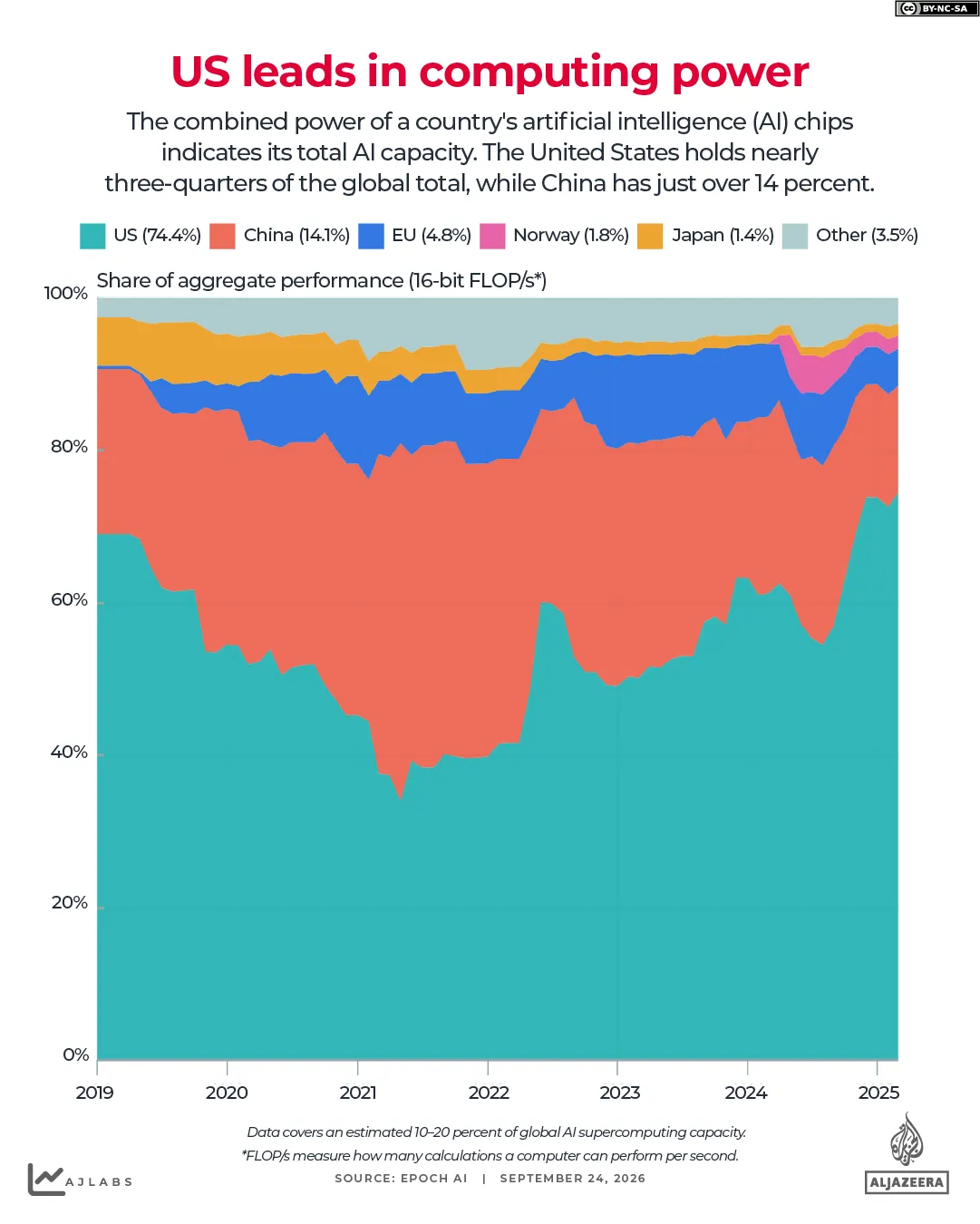
Training and running AI requires enormous amounts of computing power. The more powerful chips and computers a country has, the faster it can build and improve AI models, making computing power one of the biggest advantages in the AI race.
Computing power is measured in FLOP/s (floating-point operations per second) – or how many calculations a computer can perform in one second.
Adding up the computing power of all the AI chips a country has gives a sense of its total AI capacity. By that measure, the US is well ahead, accounting for nearly three-quarters of the world’s total AI computing power, while China holds just more than 14 percent, according to Epoch AI, an AI research institute.
The US lead comes largely from its access to the most advanced chips. US company Nvidia accounts for more than 60 percent of global AI computing capacity among major chip designers, while China’s Huawei holds a much smaller, but growing share, according to Stanford University’s 2026 AI Index.
Those chips also need somewhere to run. The US has more than 5,400 data centres – the large buildings which house thousands of computers – about 10 times as many as any other country. It also leads in dedicated AI data centres, with 84, more than the next eight countries combined.

Whose AI models are people using?
Frontier models are the most advanced AI systems, such as OpenAI’s GPT, Anthropic’s Claude and DeepSeek’s models in China. They are trained using vast amounts of data and computing power to write, reason and code.
The US has led the development of these models, but Chinese models are gaining ground.
As of March 2026, US and Chinese AI models were closely matched on Arena, a leaderboard where users compare two anonymous models and vote for the better answer. US companies Anthropic, xAI, Google and OpenAI ranked near the top, alongside China’s Alibaba and DeepSeek.
On OpenRouter, a platform that ranks AI models by real-world use, Chinese models dominate the leaderboard. Models from Chinese companies DeepSeek, Z.ai and Tencent hold the top three spots on OpenRouter by tokens processed, the units of text that AI models read and generate.

This is partly because Chinese models are cheaper to use. Many are also open-weight, meaning developers can download, adapt and run them themselves.
Chinese models can now compete with US ones in many real-world tasks, with Chinese AI models “months, not years, behind US frontier models”, according to a July analysis by the Centre for Strategic and International Studies (CSIS).
In May, the US government’s Center for AI Standards and Innovation (CAISI) estimated that DeepSeek V4 Pro, released in April, was about eight months behind leading US models.
Who is spending more?
The US is spending far more than China on the infrastructure needed to build AI, giving its tech companies a significant advantage in the race for computing power.
Goldman Sachs estimates that US hyperscalers, the giant tech companies that run large-scale cloud computing and data centres, will spend about $764bn in 2026. That includes Amazon, Microsoft, Google, Meta and Oracle. By comparison, China’s Alibaba, Tencent, Baidu and ByteDance are expected to spend $102bn.
But China’s spending is increasing faster. TrendForce, a market research firm, expects China’s four hyperscalers’ capital expenditure to rise by more than 80 percent in 2026, compared with a projected growth of 76 percent for US hyperscalers, according to the news agency Reuters.
The spending gap reflects the scale of the US tech sector, whose companies have larger revenues to reinvest in chips, data centres and talent.
Who is leading in AI research and talent?
China is producing more AI research and training more technical talent, but the US remains a magnet for the world’s top AI researchers.
China accounted for more than 27 percent of global AI publications in 2024, including journal articles, conference papers, working papers and preprints compared with 12 percent from the US, according to the Center for Security and Emerging Technology. The figures only cover publications with an English-language title or abstract.
China also trains more top researchers. According to a study by MacroPolo, 47 percent of the world’s top 20 percent of AI researchers completed their undergraduate studies in China in 2022, up from 29 percent in 2019. The study also found that 72 percent of the top AI researchers educated in China were working in the US.
Short-haul holiday destinations up to HALF PRICE and still hot in October

THERE’S a specific point during every peak-summer holiday when even the most committed sun worshipper has to admit it’s all getting a bit much.
The beach is shoulder-to-shoulder, the sand is hot enough to cook an egg and you’ve started timing dinner around whether you can secure a table without joining a queue.
That’s why I’ve become a massive advocate for the October break.
Across the Mediterranean, daytime temperatures comfortably hover in the mid-twenties and, even in October, there are hours and hours of proper sunshine every day.
Meaning you can still pack your swimwear, bring the sun cream and expect to come home a lot more tanned.
And my favourite part is: you enjoy all of that without the intense August heat, peak-season crowds or, most importantly, peak-season prices.
I crunched the booking data across our most popular summer resorts and found that October breaks are up to 49 per cent cheaper than their peak-August counterparts.
So these are the seven classic summer spots where October can genuinely be a better and much cheaper time to travel.
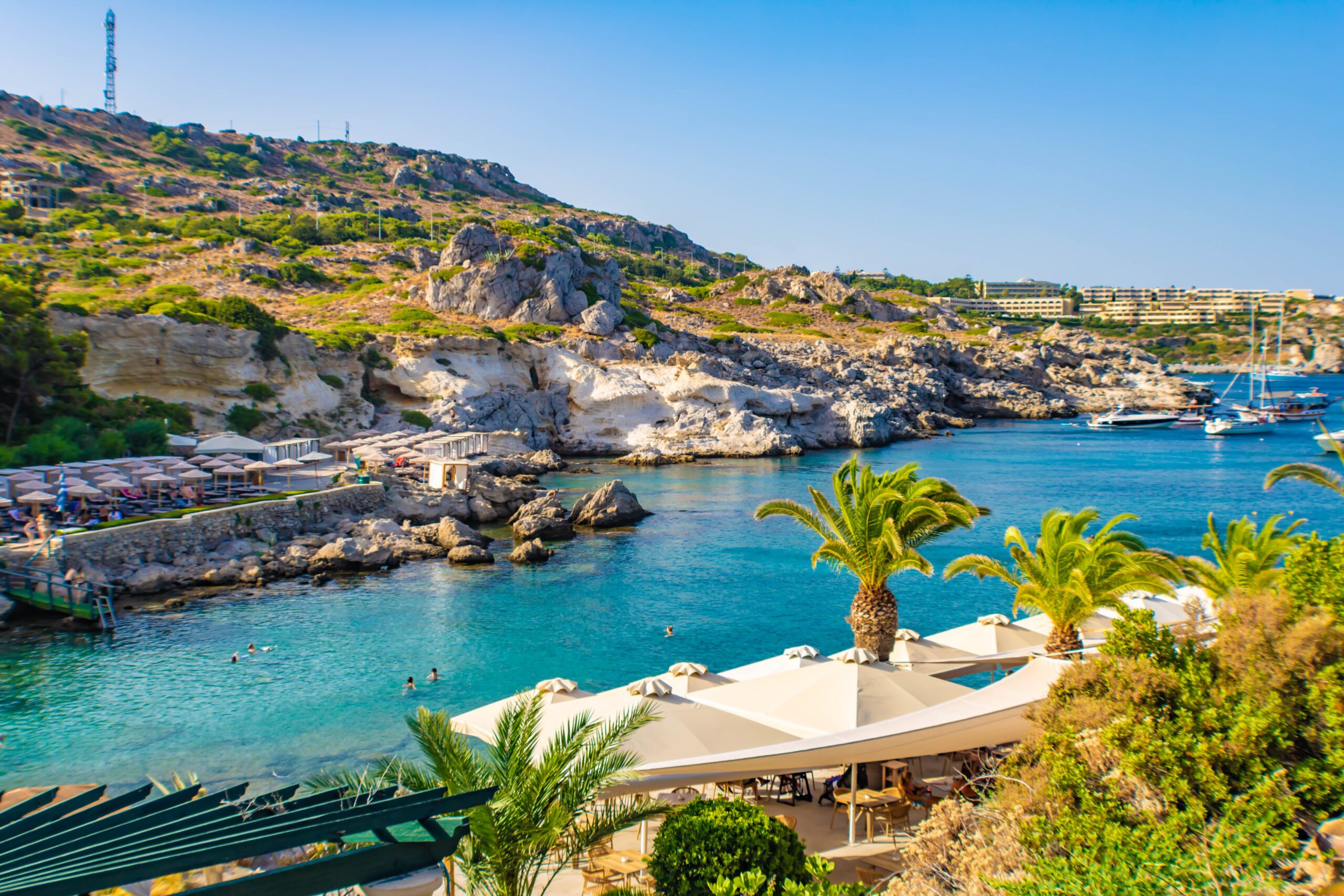
7. Hersonissos, Crete – 40 per cent cheaper
Crete is one of the best places to squeeze a final dose of proper Greek sunshine out of the year.
As one of Greece’s most southern major holiday islands, it holds onto summer far longer than many of its northern neighbours.
October in Hersonissos still serves up highs of 24°C and warm seas, keeping proper beach-and-pool days firmly on the menu.
Hersonissos also stays lively well into autumn, and the gentler heat also means exploring Heraklion or visiting the Palace of Knossos doesn’t turn into a sweaty endurance test.
Matched booking data shows that October packages here are, on average, 40 per cent cheaper than in August.
And I found a four-star, all-inclusive stay at Hotel Heronissos, just 100m from the beach.
It has a huge outdoor pool and puts you within walking distance of the resort centre, while your meals, snacks and local drinks are all included.
The full package works out at £320pp for 7 days – roughly £46pp a day – including the flights. Bargain.
Book a 7-night all-inclusive stay at Hotel Heronissos from 8 October 2026, with direct return flights from Bristol, for £320pp.
6. Cala Millor, Majorca – 40.1 per cent cheaper
Majorca doesn’t just pull down the blinds the second September finishes, you know?
October in Cala Millor can still hit highs of 25°C earlier in the month, with sea temperatures sitting at a very swimmable 23°C.
But the biggest win in October, by far, is the elbow room.
In August, finding a towel-sized patch on Cala Millor’s huge sandy bay feels like bidding for a London flat – but in October, you can just walk down and lay your towel out.
Booking data shows that October packages are, on average, 40.1 per cent cheaper than in August, which is a pretty crazy saving for Majorca.
I found a four-star, half-board stay at Bakour Garbi Cala Millor, which sits just 400m from the beach, has a large outdoor pool, kids’ club and playground, and its heated indoor pool and spa area is ideal for an October break.
It gives your family a built-in back-up plan if an autumn cloud briefly rolls past.
Book a 7-night half-board stay at Bakour Garbi Cala Millor from 14 October 2026, with direct return flights from Bournemouth, for £340pp.
5. Afandou, Rhodes – 43.7 per cent cheaper
Rhodes is arguably the strongest weather bet on the entire list for autumn.
October brings highs of 25°C, around nine hours of sunshine a day and sea temperatures of approximately 24°C.
That is still proper tanning weather, and feels particularly nice when everyone back home has already turned the central heating on.
Afandou is ideal for a quieter escape, with one of the longest beaches on Rhodes and a traditional village centre.
The slightly gentler heat also means you can explore the island properly without spending the entire day desperately seeking shade.
My booking data shows that October packages are, on average, 43.7 per cent cheaper than in August – another massive saving.
I tracked down a room-only stay at Golden Days Aparthotel, a simple, cheap-and-cheerful base with an outdoor pool, a separate children’s pool and a tourist train running down to Afandou Beach.
Getting a full week on one of Greece’s warmest islands for under £190pp is an absolute steal. In fact, I’ve paid more than that for a train ticket to London this year.
Book a 7-night room-only stay at Golden Days Aparthotel from 2 October 2026, with direct return flights from East Midlands, for £185pp.
4. Albir, Costa Blanca – 44 per cent cheaper
Albir delivers Costa Blanca sunshine without putting you in the middle of Benidorm.
That being said, Benidorm is still close enough for waterparks, nightlife and an emergency tribute act, but Albir itself stays super-relaxed.
October brings highs of 24°C and around eight hours of sunshine a day, alongside a palm-lined promenade overlooking the pebble beach.
The cooler autumn breeze also makes it a far better time to tackle the scenic walk up to Albir Lighthouse without desperately searching for shade every five minutes.
Booking data shows that October packages are, on average, 44 per cent cheaper than in August.
And I spotted a four-star, bed-and-breakfast stay at Sun Palace Albir in a quiet part of the resort.
It has an outdoor pool, a big sunbathing terrace and a spa area for when you fancy taking relaxation very seriously.
The stand-out feature here, though, is its restaurant terrace, which has panoramic views across the mountains and out to sea, a far better spot for breakfast than a rainy motorway service station – speaking from experience.
Book a 7-night bed-and-breakfast stay at Sun Palace Albir from 20 October 2026, with direct return flights from Manchester, for £305pp.
3. Kusadasi, Turkey – 44.3 per cent cheaper
Kusadasi stays properly hot into October, with daytime temperatures reaching highs of 26°C along the Aegean coast – and I have to say it’s absolutely gorgeous.
You could easily spend seven days flitting between the pool and the buffet, but October’s gentler heat also makes exploring the ancient marble streets of nearby Ephesus infinitely more enjoyable than during the height of summer.
When I took a peek, matched booking data showed that October packages to Kusadasi are, on average, 44.3 per cent cheaper than in August.
And to highlight that value, I found a four-star, all-inclusive stay at Marbel Hotel.
It has a huge outdoor pool, tennis court, gym and Turkish hammam bath house, with your meals and drinks wrapped into the price.
It’s a great choice if you want plenty to do at the hotel while remaining close enough to dip into the centre of Kusadasi.
Book a 7-night all-inclusive stay at Marbel Hotel from 7 October 2026, with direct return flights from London Stansted, for £365pp.
2. Laganas, Zante – 45.7 per cent cheaper
Laganas in August and Laganas in October feel like two completely different worlds.
Peak summer brings wall-to-wall crowds and full-throttle nightlife, but by October, the volume turns right down, but temperatures can still reach highs of 25°C.
You get to enjoy Laganas’ vast golden-sand beach and the clear Ionian Sea without sharing them with thousands of foam-party-obsessives.
Some seasonal bars and clubs begin closing as the month progresses, but for me that’s part of the appeal.
You still get the sunshine, warm sea and beautiful coastline – just with considerably less people around.
And booking data shows that October packages are, on average, a whopping 45.7 per cent cheaper than in August.
I found a bed-and-breakfast stay at Atlantis Hotel Zante, and this place is just 7km from the airport.
That means you can be beside the pool remarkably quickly instead of spending the first afternoon touring every hotel on the island aboard a transfer coach.
The hotel has an outdoor pool, a separate children’s pool and a Jacuzzi, while the rooms include a mini fridge, kettle and toaster to keep the snack admin easy.
Book a 7-night bed-and-breakfast stay at Atlantis Hotel Zante from 13 October 2026, with direct return flights from London Stansted, for £255pp.
1. Oropesa del Mar, Costa del Azahar – 48.6 per cent cheaper
Taking the top spot for the biggest seasonal saving is Oropesa del Mar on Spain’s underrated and underdiscovered Costa del Azahar.
October temperatures here can still climb to highs of 25°C, allowing summer to stretch on long after the UK has descended into grey drizzle.
This purpose-built Spanish resort has broad beaches and wide promenades that feel calm and effortless once the July and August rush clears out.
The slightly gentler temperatures also make October a much better time to explore the coastline or head towards Castellon and Valencia.
My booking data shows that October packages are, on average, a staggering 48.6 per cent cheaper than in August – nearly half the price for the same Spanish coastline.
I found a bed-and-breakfast stay at Magic Sports Hotel, part of the Magic World resort and a real gem of a hotel for the easily-bored holidayers among us (guilty).
It has sports simulators, themed rooms, huge swimming pools and an on-site waterpark with slides inspired by everything from Formula 1 to winter sports.
Finding seven nights here with direct return flights for £265pp feels, quite frankly, ridiculous – and it’s my pick of the deals, for sure.
Book a 7-night bed-and-breakfast stay at Magic Sports Hotel from 3 October 2026, with direct return flights from London Stansted, for £265pp.

This Is Taiwan’s New 105mm 8×8 Mobile Gun System
Taiwan has provided the first public look at its new 105mm 8×8 mobile gun system in action, with the domestically developed vehicle engaging moving and stationary targets during a live-fire demonstration in southern Taiwan. The vehicle is being developed as Taiwan continues to modernize its ground forces in response to the growing capabilities and increasingly frequent military activity of the Chinese People’s Liberation Army (PLA) around the island.

Defense ministry showcases 105mm mobile gun system
During the demonstration, held by the Republic of China Army (ROCA) at a training area in Tainan today, the vehicle reportedly engaged a moving target at approximately 0.75 miles and a stationary target at around 0.6 miles. It also fired against targets positioned 90 degrees to the side of the vehicle while operating on a gentle slope, demonstrating the gun system’s ability to engage targets while the vehicle is positioned on uneven terrain.
The vehicle subsequently fired its 7.62mm coaxial machine gun simultaneously with its main gun as part of a scenario intended to demonstrate engagement of multiple targets, including simulated amphibious assault vehicles.
An apparent weapon malfunction was also recorded during the demonstration. One of the 105mm rounds initially failed to fire, according to reports. The crew waited approximately two minutes in accordance with safety procedures before reloading the weapon, after which the vehicle fired normally. Maj. Gen. Chen Chien-chung, head of Taiwan’s Arsenal 202, the Production and Manufacturing Center of the Armament Bureau, said an investigation would be conducted into the misfire.
Despite the incident, the demonstration provided an important look at a vehicle that Taiwan is developing specifically around the country’s geography and battlefield requirements, including a potential amphibious invasion by the Chinese PLA.
A new direct fire support variant of the Clouded Leopard 8×8 infantry fighting vehicle was first publicly displayed at the Taipei Aerospace & Defense Technology Exhibition in 2023. It passed initial combat readiness testing with the ROCA in October 2023, and it was authorized for mass production in April 2024.

The production configuration has undergone significant changes since then.
Its height has been reduced by approximately 12 inches, bringing the overall vehicle height to below 9 feet 10 inches. Its turning radius has also been reduced from 36 feet to 26 feet. The reduction in turning radius was achieved by providing steering to three pairs of wheels, rather than two pairs on the earlier configuration.
Those changes are especially relevant to Taiwan, where large sections of the island feature restrictive terrain, dense urban development, narrow roads, drainage channels, and other obstacles that can limit the movement of heavy armored vehicles.

Taiwanese officials specifically highlighted the system’s suitability for culverts and urban areas, as well as the challenging terrain of Hualien and Taitung on the island’s mountainous east coast.
The vehicle’s principal weapon is a 105mm gun. The weapon can fire the general-purpose ammunition already developed for tank guns, in addition to ammunition developed specifically for the new system. The ROCA displayed armor-piercing, anti-personnel, and training ammunition during the demonstration. The gun also offers useful ammunition commonality with Taiwan’s older, but sill active M60A3 and CM11 tanks.

That compatibility potentially gives the vehicle access to an existing ammunition ecosystem while allowing Taiwan to develop specialized rounds for its particular requirements.
Against a PLA assault, the 105mm system would provide mobile direct firepower against amphibious vehicles, armored personnel carriers, fortifications, and other ground targets, complementing Taiwan’s heavier tanks and other anti-armor weapons. Its wheeled configuration also allows the vehicle to rapidly reposition along Taiwan’s road network, giving commanders a mobile source of direct firepower that could respond to amphibious landings and reinforce threatened sectors.
The system falls into the same broad category as other modern 8×8 mobile gun systems, including Italy’s Centauro family and Japan’s Type 16 Mobile Combat Vehicle.

Less successful was a mobile gun system version of the U.S. Army Stryker, also with a 105mm gun, but the service divested that in 2021 because of problems with its dated cannon and autoloader. The U.S. Army then received the M10 Booker Combat Vehicle. Armed with a 105mm main gun, the Booker is a tracked vehicle with a much higher degree of armor protection and off-road mobility, but this, too, was canceled in 2025, amid cost and weight increases.

A wheeled 105mm gun system can provide substantial direct-fire capability while offering advantages in road mobility and potentially lower logistical demands. It also lacks the combination of protection, cross-country mobility, and heavy armament associated with a tracked main battle tank.
For Taiwan, this kind of vehicle provides a comparatively compact armored platform able to move rapidly between positions and bring heavy direct firepower to areas where larger vehicles could face mobility constraints.
If fighting reaches Taiwan’s cities, the ROCA regularly trains for the challenges of urban warfare. The service has also demonstrated unusual measures to conceal and protect its armored vehicles, including disguising tanks and other vehicles as scrap piles or civilian construction equipment to complicate PLA targeting.

The vehicle’s development is also being influenced by the threat of battlefield drones. Taiwanese military officials say the system is expected to receive additional counter-drone capabilities before entering mass production. One planned modification is an anti-drone cage around the vehicle.
More ambitious changes could involve the installation of a larger-caliber automatic weapon. Reportedly, the vehicle could eventually receive another machine gun or larger-caliber automatic cannon, with the 30mm M230 chain gun identified as one possible option. The proposed weapon could use canister-type ammunition designed to disperse numerous fragments against small drones.
Adding dedicated counter-drone equipment to the mobile gun system would therefore give the vehicle another role beyond direct engagement of conventional ground targets.

The prominence of counter-drone measures in the planning of the vehicle also reflects the increasingly contested environment in which Taiwan’s armored forces would have to operate. In a conflict with China, armored units have to operate under the threat of persistent surveillance and attacks from a wide range of uncrewed systems, making concealment, mobility, dispersion, and organic counter-drone capabilities very important to any change of survival. Questioning just how long any armor would last in a full-on invasion scenario is absolutely relevant. As we have seen in Ukraine, the drone threat alone has sidelined even the most capable armor. At the same time, Taiwan is working toward its own drone-heavy battlefield doctrine, part of a broader plan to turn the island into a “hellscape” for any invading force.
Overall, the September 23 demonstration offered a useful glimpse into the thinking behind Taiwan’s indigenous armored vehicle program.
As part of a wider modernization of ROCA armor, the service has also received 108 M1A2T Abrams tanks, broadly equivalent to the M1A2 SEPv3 version — or System Enhancement Package version 3 — which you can read more about here.
With production of 178 series examples of the new vehicle scheduled to begin in 2027, Taiwan’s new 105mm mobile gun system is moving toward becoming a significant component of the island’s domestically produced armored fleet.
Contact the author: thomas@thewarzone.com

Taylor and Tay Lautner welcome a new baby girl with a familiar name
What’s better than two Taylor Lautners?
On Wednesday, Taylor Lautner and his wife Tay Lautner (née Dome) announced the arrival of their first child in a shared Instagram post, a baby girl they named … drumroll please … Lennon Taylor Lautner.
“One week loving our sweet little Lenny,” the couple wrote in the Instagram caption. Lennon arrived Sept. 16, according to the social media post, which showed a partial image of the infant.
The new parents have been married since 2022 and met through the 34-year-old “Twilight” actor’s younger sister, Makena Moore.
They announced the pregnancy in March on their Instagram accounts, hinting that the future baby could share a matching name, with the photo carousel’s caption: “What’s better than two Taylor Lautners?”
A “weight lifted” off her shoulders when she shared the news, Tay said in April on her podcast “The Squeeze.” She was afraid the news would leak when she went among the public.
“It was really exciting that Taylor and I got to do that on our own terms,” Tay continued.
In June, the two revealed the baby‘s sex in an emotional Instagram Reel, with the “Twilight” actor later writing on his personal Instagram stories that his dream “has always been to become a girl dad,” according to People.
“All I wanted was a healthy baby but deep down this moment is what I was dreaming of. The weight that was lifted off my shoulders in this moment knowing that dream came true was unlike anything I’ve felt,” the actor wrote.
In her third trimester, Tay, a 29-year-old registered nurse who has been open about mental health, expressed her thoughts and feelings about pregnancy, sharing in an Aug. 12 episode of “The Squeeze” that she gained 50 pounds, experienced swelling and had stretch marks.
“Women don’t get enough credit for what we put our bodies through because it is truly just insane,” she said in the podcast. “Let the pregnant women live a little more. We need to just applaud them, praise them and give them a little more respect.”

Tesla FSD misread speed limits in Belgium tests, road-safety group finds (TSLA:NASDAQ)

Alexander Shapovalov
Tesla’s (TSLA) Full Self-Driving system exceeded the legal speed limit in 55% of tested 30-km/h road segments in Brussels and repeatedly attempted to overtake cyclists where the maneuver is prohibited, Belgian road-safety group Johanna.be said.
Johanna.be tested FSD over about