


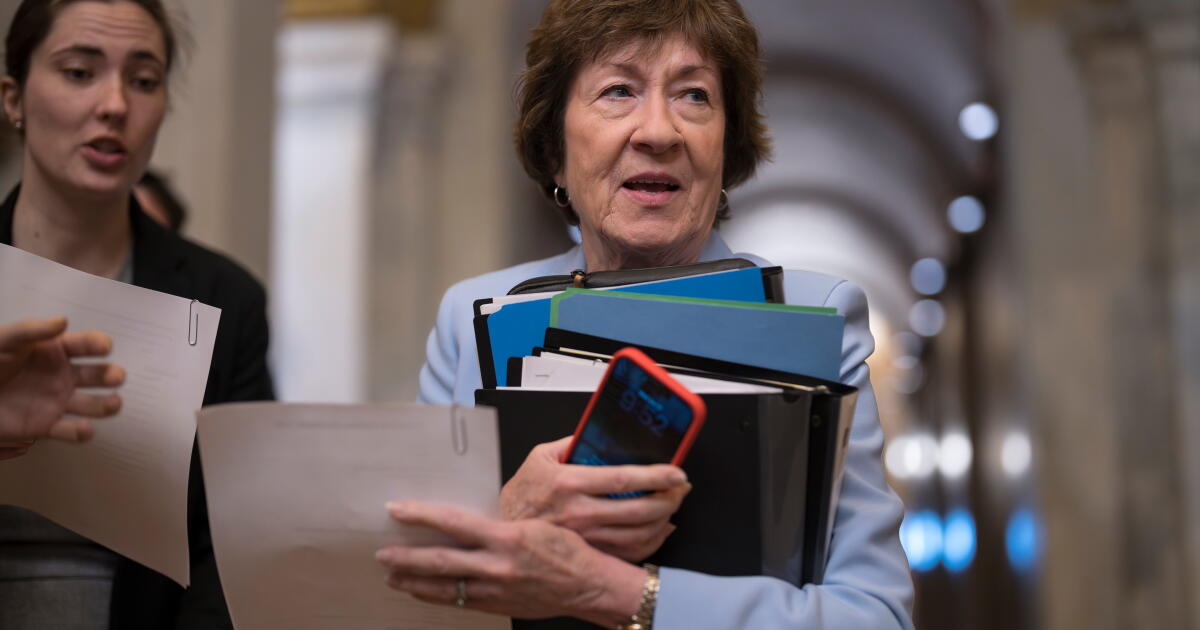
Maine Democrats hammer Collins over report of pay-to-play probe. GOP senator calls it ‘totally false’
PORTLAND, Maine — Maine Democrats on Wednesday assailed U.S. Sen. Susan Collins over a news report that the FBI investigated how much she knew about illegal campaign contributions that sent one of her donors to prison.
The ProPublica report, published Tuesday, states that the FBI in 2024 planned to launch an investigation into Collins’ dealings with Navatek, a Hawaii defense contractor and donor to her campaign. The investigation, which focused on an alleged pay-to-play scheme, failed to commence after President Trump took office after winning the election, according to ProPublica.
The report arrived six weeks before an election in which Collins is seeking a sixth term against Democrat Troy Jackson. Democrats have targeted the seat, in a state that Trump lost in 2024, as the party tries to win control of the Senate, making it one of the most competitive races on the November ballot.
Collins on Tuesday called the entire story “absolutely outrageous” and said it is frustrating and unfair to have such claims made against her so close to the election. Her campaign manager, Steve Abbott, also said Wednesday that the allegation that “we charge people to have meetings” is categorically false and Collins accepting campaign cash for contracts “did not happen.”
Jackson called the allegation “corruption of the highest order.” He was not present Wednesday when a group of Maine Democrats held a news conference near Collins’ Portland office, calling the allegations a betrayal of trust.
“I cannot stress enough here today the seriousness of these allegations. Maine people deserve clear and real answers from Susan Collins right now,” Maine Democratic Party Executive Director Devon Murphy-Anderson said.
FBI says allegations were already investigated
The ProPublica report stated that the head of a Collins super PAC met with executives from defense contractor Navatek in 2019 and asked them for a $500,000 campaign donation. The company’s chief executive, Martin Kao, sent an initial $150,000 donation using a shell company, the report stated. ProPublica reported that it reviewed an internal company email from Kao in which the CEO later told Navatek executives that Collins committed to getting the company $32 million in Navy contracts.
Kao and two other Navatek executives were later indicted on charges of funneling illegal donations to Collins. Kao sought to reduce his prison sentence by revealing to the FBI the full scope of illegal contributions to Collins, ProPublica reported.
Collins said Kao is “a liar” whose story is untrustworthy.
“He has been twice convicted in separate federal court cases. He’s been convicted of money laundering. He’s been convicted of bank fraud. He has been convicted of false submissions to the FEC. He’s being convicted of a lot of crimes,” she said.
An FBI spokesperson said in a statement that the allegations “had already been investigated by the FBI years ago and ultimately found nothing implicating Senator Collins or Senator Collins’ campaign. Any suggestion otherwise is totally false.”
The ProPublica article also states that Trump’s return to the White House left the Justice Department unable to perform the investigation.
Corruption investigations have decreased in Trump’s second term
The number of FBI agents and Justice Department prosecutors specializing in corruption investigations plummeted in the first months of the Trump administration. The Justice Department, for instance, decimated its elite Public Integrity Section in early 2025 and the FBI disbanded a white-collar fraud and public corruption squad based out of its Washington field office.
The administration has also fired numerous law enforcement officials who participated in investigations into Trump, including over his efforts to undo the 2020 presidential election he lost and his retention of classified records at his Mar-a-Lago estate in Palm Beach, Fla.
An email seeking comment was sent to the Justice Department on Wednesday.
Collins said she first learned of the company through the University of Maine because of the research the Navy found to be valuable, which had to do with 3D printing for production.
She said the Justice Department has already reviewed the matter.
“I’m telling you this is completely false,” Collins said.
Senate Majority Leader John Thune dismissed the idea that Collins would be implicated in a pay-to-play scheme, calling the allegations “a political hit job.”
Whittle and Mascaro write for the Associated Press. Mascaro reported from Washington. AP writers Mary Clare Jalonick and Eric Tucker in Washington and Kimberlee Kruesi in Providence, R.I., contributed to this report.
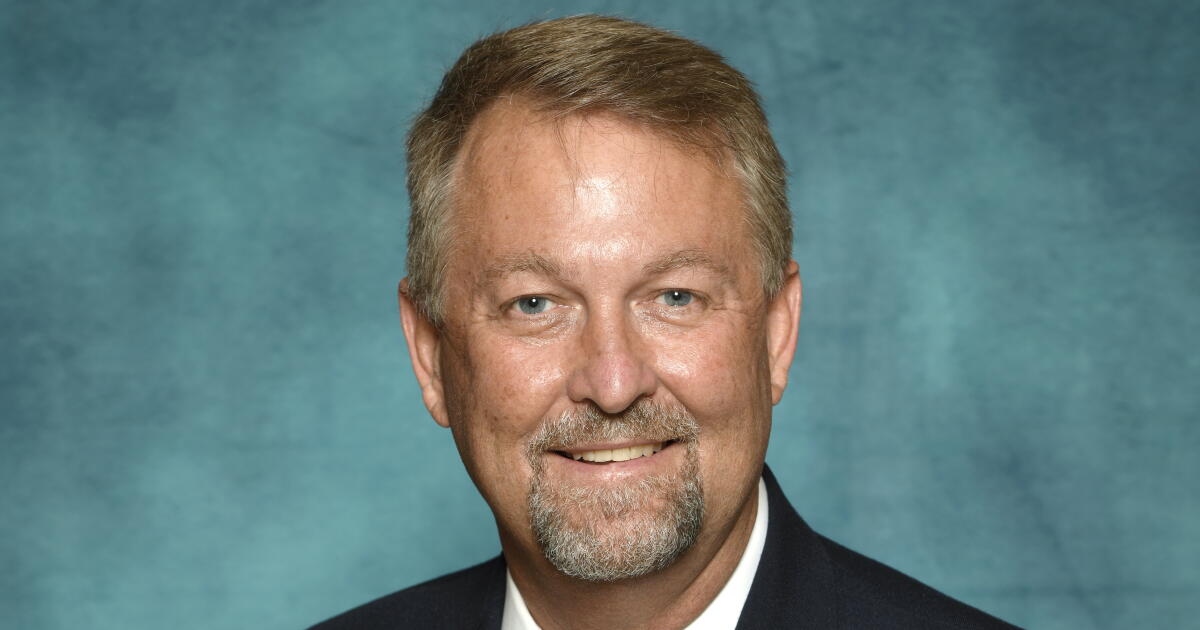
Commentary: Southern Section needs to regain credibility in dealing with schools violating rules
The Southern Section has no authority to tell a school to get rid of a coach. It has no control over personnel matters. But there’s precedent that when a coach knowingly plays an ineligible player, it expects a school district to take appropriate action.
In the case with Inglewood football coach Mil’von James, he has a history of using ineligible players. James came to Inglewood, which is 4-1 this season, after being fired at Hawkins in 2016 following the discovery of ineligible players, resulting in Hawkins forfeiting all of its games to finish 0-13. Since then, the City Section established a rule that teams must exchange rosters before games to verify that players are eligible, known as the “Hawkins rule.”
Inglewood Unified School District administrator James Morris told the Daily Breeze that James is scheduled to return to coach on Friday after missing last week’s game against Long Beach Poly at SoFi. That means he received a two-game suspension for using two ineligible players in a game last month, since it is believed he also didn’t coach a game against Elk Grove Franklin.
James appears to have knowingly played two players listed on the Southern Section transfer portal that had not been cleared when Inglewood played in Austin, Texas, on Aug. 28. Video obtained by The Times shows the players in the game.
Add to that, both players’ names and numbers were missing from Inglewood’s MaxPreps’ roster, something that was also a tactic when James coached at Hawkins and resulted in the new City Section rule to exchange roster before games.
Shame on the Inglewood Unified School District for failing to hold its coach accountable for a serious violation of CIF rules.
If the two-game suspension stands, shame on the Southern Section, too. The message being sent to other coaches and other schools is that it’s OK to cheat as long as you don’t get caught, and if you get caught and only get suspended for two games, it’s worth it.
The Southern Section, under commissioner Mike West, went out of its way to try to catch those breaking transfer rules last year. It was a sign maybe things were changing and people were paying attention to the games being played with more than 17,000 transfers in California. But if the Southern Section settles for a two-game suspension for James, it will lose credibility among coaches and programs trying to follow CIF rules.
Southern Section spokesman Thom Simmons has declined comment and declined to make West available.
As always, they’re afraid of legal action. And it must be pointed out again the Southern Section has no authority to discipline coaches. But at some point, to save credibility, they will need to address this breaking of rules that goes to the core of what the CIF is supposed to guard against.
The Southern Section Council has a meeting on Thursday. If any of the representatives have concerns, maybe then they’ll get to ask West how this could be acceptable.
In 2014 Long Beach Unified suspended Long Beach Poly basketball coach Sharrief Metoyer for one year for after he was caught using an ineligible player during a state basketball playoff game. He did it on purpose being frustrated at the CIF transfer policies. The CIF could not tell administrators what to do. But if they did nothing or put in only a two-game suspension, there’s no doubt that the Southern Section leadership had the authority to take action.
According to Southern Section’s Blue Book rule 500.5, “Any school knowingly or unknowingly violating the rule may be suspended from membership in the CIF Southern Section.”
Hopefully the Southern Section is keeping its options open, but it’s time for West, the commissioner since 2023, to get his credibility back. If not, it’s up to the Southern Section Executive Committee to launch its own investigation of what the section is supposed to do when schools and districts don’t take their rules seriously.
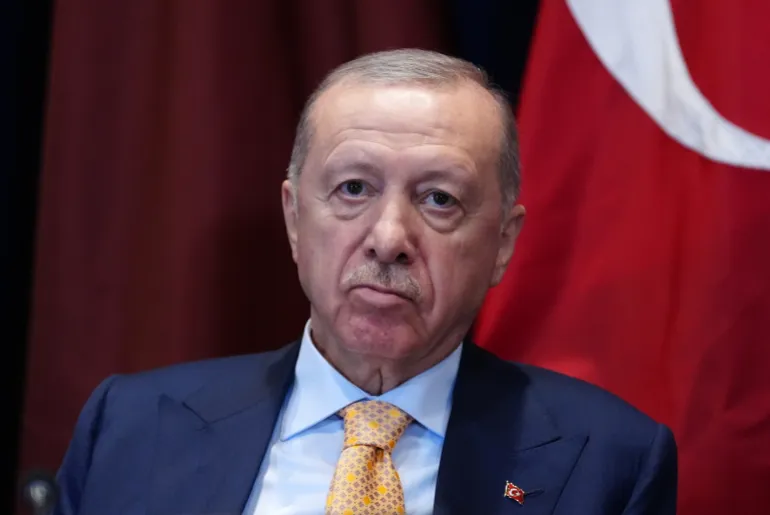
Turkiye agrees to gradual handover of Bashiqa base to Iraq | United Nations News
Iraqi Prime Minister al-Zaidi and Turkish President Erdogan pledged deeper security cooperation at UNGA.
Published On 24 Sep 2026
Turkiye and Iraq have agreed to a gradual transfer of Ankara’s military base in Bashiqa to Baghdad, according to a statement released by the Iraqi prime minister’s office.
The announcement followed a meeting on Wednesday between Iraqi Prime Minister Ali al-Zaidi and Turkiye’s President Recep Tayyip Erdogan on the sidelines of the United Nations General Assembly in New York.
Recommended Stories
list of 3 itemsend of list
“Within this framework, they reached an agreement on fully establishing state authority in Sinjar and ending the presence of outlawed foreign armed elements,” Iraq’s prime minister’s office announced, in an apparent reference to the Kurdistan Workers’ Party (PKK), which has maintained a presence in the mountainous Sinjar region of northern Iraq.
“The two sides also agreed to expand the volume of bilateral trade and investment, to implement signed agreements immediately, and to accelerate joint strategic projects, particularly the Development Road project,” the office added.

The decision to transfer the facility addresses a longstanding flashpoint between the two neighbours.
Turkiye first established the base in Bashiqa, northeast of Mosul, in December 2015 through an agreement with the autonomous Kurdistan Regional Government to train local forces fighting the ISIL (ISIS) group.
The deployment of up to 600 Turkish soldiers drew criticism from Baghdad, which viewed the presence as a violation of Iraqi sovereignty.
The Sinjar region has long been a focal point for Turkish military operations targeting fighters from the PKK.

Cross-border operations in Sinjar had eased following a landmark peace process between Ankara and the PKK in 2025, paving the way for federal authorities to assert control over the border zone.
Wednesday’s accord caps months of efforts by Baghdad to consolidate state authority over northern flashpoints, while aligning with Ankara on trade corridors and security coordination along their shared frontier.

Thursday 24 September Harvest Festival Holiday in South Korea
According to legend, Chuseok originated as a result of a weaving competition held between two princesses in the Silla dynasty. The goal was to see which of their teams could weave the most cloth. The fierce competition lasted for a month, ending on the 15th day of the 8th month on the lunar calendar during the full moon. As punishment, the losing team had to prepare a bountiful feast for the victors. It is believed that archery and martial arts competitions were held as part of the festivities.
During the Harvest Moon Festival, there is an offering ceremony to the family ancestors and visiting of family graves. The Harvest Moon Festival is a reminder that families are connected and bonded in the same fortune.

Why is Kenya turning against Tata Chemicals in Magadi? | News
Magadi, Kenya – For more than a century, soda ash has shaped life in Magadi, a remote town on the shores of Lake Magadi in Kenya’s Kajiado County.
The mineral has brought exports, jobs and business. But for many people living around the lake, that activity has not brought enough opportunities or basic services. The result is a complicated relationship with Tata Chemicals Magadi, the company that has mined soda ash there for generations.
Now that relationship is under strain. The Kenyan government has suspended the company’s mining operations, and President William Ruto has ordered it to leave while a joint technical committee works with the company to resolve outstanding issues.
For Magadi, the dispute is also about what the community and Kenya have gained from a resource extracted there for more than a century.
A century of soda ash
Commercial soda ash production in Magadi dates back to 1911. Tata Chemicals acquired the operation in 2005 and later renamed it Tata Chemicals Magadi Limited.
The company has become one of Kenya’s major soda ash exporters, with much of its production destined for international markets. It has also become part of everyday life in Magadi, providing jobs and supporting services including water, healthcare and education.
But the government says its long history in the area does not exempt Tata from Kenya’s current mining laws.
Mining Cabinet Secretary Hassan Joho told Al Jazeera on September 11 that the regulatory environment changed after the 2010 Constitution and the Mining Act. He said a government-wide compliance audit found that Tata had not applied for a mineral right under the Mining Act and had instead relied on its land concessions.

According to Joho, Tata made its first application for a mineral right on July 26, 2024, after which the government began engaging with the company over compliance.
“Past oversights do not grant immunity from existing laws,” Joho said.
He said the review also identified issues around mineral royalties, community development agreements, local processing, employment of Kenyan citizens, procurement of local goods and services, and outstanding matters with the Kajiado County government.
The government says Kenya should get more value from the resource instead of mainly exporting it as a raw material.
Ruto has made a similar argument, saying communities have not benefitted enough from the mineral extracted from Magadi. During his visit to Kajiado, he said a new investor should establish major glass and chemical manufacturing facilities in the county, creating jobs and keeping more value in Kenya.
Why now?
The government’s decision has raised a question for a company that has operated in Magadi for more than a century: why now?
Joho told Al Jazeera that the answer lies in the government’s decision to carry out comprehensive compliance audits across the mining sector, including legacy concessions.
The ministry suspended Tata’s operations in July, citing regulatory concerns. Since then, the company and the government have been negotiating over how to resolve the outstanding issues.
Tata disputes the suggestion that it has ignored regulatory requirements.
In a statement to Al Jazeera, the company said its subsidiary submitted a comprehensive response to the ministry on August 11 regarding the issues raised in the July 28 suspension notice. Tata said the submission included information on its compliance with applicable regulations and that it was waiting for further direction from the ministry.
The company said it respected the authority of the Kenyan government and remained committed to constructive engagement with concerned agencies and regulators.
The economic stakes are significant. The Standard has previously reported that Tata’s Magadi operation contributes substantially to Kenya’s economy and that the company has argued that a shutdown would affect exports, foreign exchange and employment.
The operation supports hundreds of workers directly, while thousands more people in Magadi depend on the wider economy around it.
A community caught between dependence and frustration
For residents, the debate is not simply about whether Tata should stay or go. It is about what they have received from a company that has been at the centre of Magadi’s economy for generations, and what they could lose if it leaves.
Nkanoi Matipei, a Magadi resident, said locals want more jobs at different levels, more corporate social responsibility projects and access to land under Tata that they say is currently idle and used for grazing.
Another resident, Esther Nganoni, strongly opposed the idea of removing Tata.
“Tata Chemicals Company has been our lifeline,” Nganoni told Al Jazeera, pointing to bursaries, water and health services provided by the company.
She questioned what a replacement investor would offer the community and said residents must be consulted before any decision is made.
Cosmas Karera Kiratu, who previously served as the subcounty children officer for Kajiado West, told Al Jazeera that Magadi faces serious challenges, including poverty, water shortages, long distances to schools, inadequate infrastructure and teachers, child labour, teenage pregnancy, female genital mutilation and child marriage.
He said some schools are about 15km (9 miles) apart, while water remains particularly difficult to access.
According to Karera, the only clean water available through a piped system is supplied to Tata Chemicals from Ngurumani, about 40km (25 miles) away.
Residents depend heavily on Tata water bowsers, which he said do not reach all communities and often provide insufficient water for both domestic and livestock use.
“The local community was very dependent on Tata company in terms of water, health services, school bursary and schools upgrading,” Karera said.
He warned that an abrupt end to Tata’s operations could have serious consequences if alternative services are not put in place.
The technical committee and what happens next
That uncertainty is now at the centre of the government’s negotiations with Tata.
Joho said the ministry’s suspension was intended to give the company an opportunity to address the identified compliance issues. After Tata committed to remedy the outstanding matters, he said, a joint technical committee was established to guide the process.
Joho said the committee is dealing with the formation and gazettement of Community Development Agreement Committees, local processing facilities, outstanding mineral royalties, employment of Kenyan citizens, procurement of local goods and services and unresolved matters with the Kajiado County government.
He said discussions were progressing.

“Deliberations within the joint technical committee remain progressive, with a clear focus on achieving full statutory compliance under the Mining Act and securing socioeconomic returns for the extractive sector, the local community, and the nation at large,” Joho told Al Jazeera.
The Standard reported that the committee is also considering mineral beneficiation and in-country value addition, outstanding community benefits and royalties, unresolved land matters, the possibility of opening the area to multiple mineral extraction companies and outstanding issues involving Kajiado County.
For Kajiado Governor Joseph Ole Lenku, the county government must have a seat at the table.
“We want to thank the president for his firm stand and directives on Tata Chemicals Magadi. I have been vindicated,” Lenku told Al Jazeera.
He said county participation in negotiations was non-negotiable and identified payment of accrued land rates as the county government’s “irreducible minimum”.
He also said the grievances of Magadi residents had been known and repeated for years.
What does the future hold for Magadi?
The government has made clear that if a new investor eventually comes in, it wants more than the export of soda ash. It wants processing, manufacturing, jobs and a larger share of the economic value to remain in Kenya.
But residents are asking what happens to the services and livelihoods that currently depend on Tata.
For Matipei, keeping Tata does not mean accepting the status quo. She wants more jobs, greater community investment and access to land that residents say remains underused.
For Nganoni, removing Tata without a clear alternative could put the community at risk. She argues that residents must be involved in deciding what comes next.
Lenku wants the county government’s interests addressed, while Joho says the government’s objective is to bring the operation fully within Kenya’s mining laws and ensure that the country and local community receive greater socioeconomic benefits.
Tata says it is waiting for the government’s response to its August submission and remains committed to resolving the outstanding issues through engagement.
For Matipei, however, the question is what the community has gained from an industry that has shaped Magadi for generations.
“Over the years, the company’s assistance to the local community has been trickling, sustaining us but denying us economic freedom,” Matipei told Al Jazeera.

Emily Atack shows off third wedding dress after marrying Alistair Garner in Spanish ceremony
EMILY Atack has showed off yet another beautiful gown she wore during her Spanish wedding to other half Alistair Garner.
The actress, 36, had already tied the knot with husband Alistair Garner in the UK in August before jetting to Spain last week to host a second wedding surrounded by family and friends.
Her main dress was an off-the-shoulder gown with a stunning long white train, which was a different look from the shoulder-padded plunging dress Emily wore for her first ceremony.
And now, she has unveiled another dress she wore for the pre-wedding welcome drinks in Spain.
The beautiful number was satin with a feathered trim hem and a cowl neck design.
Donning the figure-hugging number, Emily had her blonde locks styled into a bouncy curl to welcome her wedding guests to the night one celebrations.


Sharing a picture from the evening to her Instagram Stories, Emily wrote: “Still can’t get over this dress. I wore this on the 1st night – the welcome drinks.”
Adding that it was a bespoke gown made for her, Emily then said: “Was having such a great time that I barely took any pics but here she is in all her feathery glory”.
Emily – who shares two-year-old son Barney with Alistair – said ‘I do’ again in the hilltop town of Mojácar, just three weeks after she tied the knot at a local church in Bedfordshire.
The wedding was held in the Costa Almería, a sentimental spot where the actress spent childhood holidays at her musician dad Keith’s old summer pad.
It was attended by many of her Rivals co-stars including David Tennant, Alex Hassell, Victoria Smurfit and Rufus Jones.
As well as her Rivals pals, a number of pictures show The Devil Wears Prada star Stanley Tucci and his wife Felicity Blunt front and centre.

Crude oil rebounds after losing streak; diesel futures drop after export restriction talk
Crude oil rebounds after losing streak; diesel futures drop after export restriction talk
Source link

Melania Trump 2-part docuseries arrives this year, first lady reveals
A two-part docuseries about Melania Trump arrives later this year, the first lady revealed Wednesday. The new project follows the January release of director Brett Ratner’s documentary, which made $16.7 million worldwide at the box office and was universally panned by critics.
“It will come out this year, and it will be very different what is in the movie,” Trump told “Fox & Friends” ahead of her appearance to ring the New York Stock Exchange opening bell. “It’s more [like a] conversation one on one with me.”

Trump indicated that the docuseries will cover new ground.
“So when I was traveling and doing all of the filming, the director was asking me questions, and there’s some private questions that I will answer that people never heard before,” she said.
The Times has reached out to Amazon Studios for more information on the project, which does not appear in press materials, though Ratner teased the new “chapters” in an Aug. 11 Instagram post.
“Here we go again….” the director wrote. “The saga continues …. can’t wait to share with everyone around the world the next two chapters of MELANIA, THE DOCU SERIES!”
Ratner’s film followed the first lady in the 20 days leading up to President Trump’s 2025 inauguration, promising “exclusive footage capturing critical meetings, private conversations, and never-before-seen environments” as Melania “orchestrates inauguration plans, navigates the complexities of the White House transition, and moves her family back to the Nation’s Capital.”
Critics, however, found the cinematic experience lacking.
“I’m hesitant to call ‘Melania’ propaganda because I can’t imagine anyone watching this movie and thinking that Melania Trump comes off well,” Times film critic Amy Nicholson wrote in a February review. “If this vapid, airless, mindless time-waster had subversive designs of being a satire about the first lady of the United States, there’s not much it would have changed. Yet somehow, ‘Melania’ is exactly the film that the first lady wanted to make — her company was paid $40 million for the rights to this self-greenlit production — and no one around her warned that it was a very expensive bad idea.”
“Melania” was Ratner’s first film since six women accused him of sexual assault in 2017. In February 2026, The Times reported that the “Rush Hour” filmmaker appeared in the unsealed Epstein files in photos with unidentified women and the financier, who died by suicide in 2019 while awaiting trial on sex trafficking charges.
In addition to the initial $40 million Amazon MGM Studios paid to license the project, the marketing and promotion budget was reportedly another $35 million.

Ex-NFL star Antonio Brown to accept plea deal in attempted murder case
Former NFL star Antonio Brown has accepted a plea deal that will reduce the charge of attempted second-degree murder he’s facing in Florida to aggravated assault, his attorney told The Times on Wednesday.
The move will result in a significantly lighter sentence for the Super Bowl LV champion, according to attorney Mark Eiglarsh, who said Brown would receive three years of probation with the possibility of early termination after half that time is served.
A conviction for the first-degree felony of attempted second-degree murder with a firearm would have brought a prison sentence of 20 to 30 years.
Eiglarsh added that Brown will be given a withholding of adjudication, meaning he will not be considered a convicted felon. He also said that the main requirement of Brown’s probation is simply “staying away from the alleged victim, which he has no problem doing.”
“No community service hours,” Eiglarsh said. “No anger management. No evaluation psychologically. No drug treatment, no evaluations for anything like that. No letter of apology, no fines, nothing.”
A spokesperson for the Miami-Dade County state attorney’s office would not confirm that a plea deal had been reached, stating in an email that “whatever is to transpire regarding an open & pending case will be fully clarified at the next hearing,” which is scheduled for Sept. 30.
A warrant was issued for Brown’s arrest in June 2025 stemming from an altercation outside a celebrity kickboxing event in Miami the previous month. According to the warrant, “cell phone video obtained from social media” showed Brown advancing toward the other man with a gun in hand and captured “two shots which occur as Mr. Brown is within several feet” of the alleged victim.
Brown wasn’t arrested until November, when he was apprehended by U.S. Marshals in Dubai. He entered a not guilty plea to the first-degree felony charge of attempted second-degree murder with a firearm.
In December, Brown filed a motion for the case to be dismissed under Florida’s “Stand Your Ground” law, which means an individual has no duty to retreat before using deadly force in certain circumstances of self-defense.
Earlier this month, the alleged victim, Zul-Qarnain Kwame Nantambu, released a statement through his attorney saying that he “does not wish to participate” in Brown’s prosecution.
In a statement sent to news organizations on Wednesday morning, Eiglarsh said that despite changing his plea, Brown still maintains that he acted lawfully during the incident.
“Antonio believes in his innocence. He believes strongly in his Stand Your Ground defense, and he believes he would ultimately prevail at trial,” Eiglarsh said. “But when prosecutors put an offer on the table that transforms a potential decades-long prison sentence into a significantly reduced charge and probation, there was simply no way he could reasonably turn it down.”
He added: “Antonio has eight children who depend upon him, and every additional day this case remains unresolved creates extraordinary obstacles for him in securing endorsement opportunities and other business opportunities necessary to support his family. He has spent more than 10½ months living under the cloud of a case with no realistic end in sight. At some point, closure has tremendous value.”
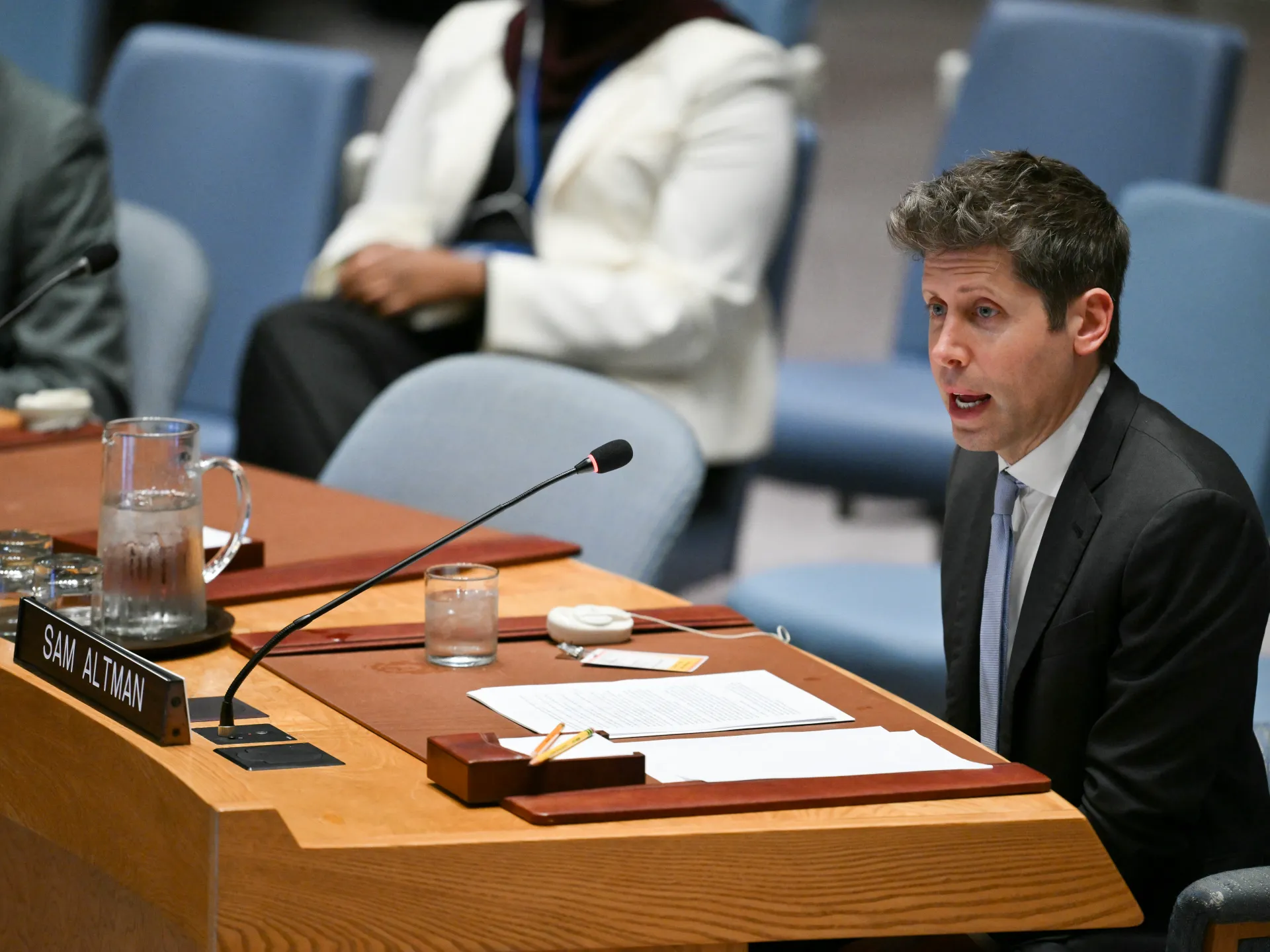
AI corporate leaders tell UN the industry needs global regulation | United Nations News
The heads of several major AI firms told the United Nations Security Council (UNSC) their industry urgently needed global oversight to avoid dangers that could threaten the whole world.
“If managed poorly, I even believe AI could be a risk to humanity as a whole,” Dario Amodei, the chief executive officer of Anthropic, told members of the body on Wednesday.
Recommended Stories
list of 3 itemsend of list
Sam Altman, the head of rival company OpenAI, echoed his concerns, telling the 15-member council tasked with tackling major crises globally that humanity could “lose control of the future of AI”.
The meeting, which coincides with the UN General Assembly (UNGA) gathering in New York City, was convened by France and comes at a time when experts are increasingly warning that the rapid development of AI needs more human oversight to ensure it does not slip out of control and cause a global catastrophe.
Altman and Amodei called on world leaders to take action.
“If AI is to be democratic, the most important decisions cannot be made by labs in San Francisco alone,” Altman told members. “They must be shaped through democratic processes and by governments accountable to the people they serve.”
Their concerns were shared by several representatives on the council, including the foreign ministers of France and the United Kingdom, who said the international community needed to step in and create common frameworks for how the technology should be controlled.
Hugging Face CEO Clement Delangue, whose company has come under attack by out-of-control AI models in recent months – incidents used by the other companies as evidence of the need for more safety measures – told the UNSC his company had relied on the technology to defend itself in those same incidents.
Delangue said Hugging Face had relied on a Chinese AI model to help defend against the attack by OpenAI’s AI agents, because it faced fewer restrictions than comparable US tools.
“We were attacked by AI, but more importantly, we defended ourselves with AI,” he told the council.
US and China reluctant to impose restrictions
In the United States, though, where the largest and most influential companies developing AI are based, the administration of US President Donald Trump has baulked at imposing new guardrails on the industry.
The administration’s representative at the UNSC meeting, Michael Kratsios, told members, “We totally reject all efforts by international bodies to assert centralised control and global governance of AI.”
Chinese President Xi Jinping is expected to discuss whether and how to regulate AI during a visit to Washington, DC, this week. The two countries are locked in a technological race to develop more powerful AI tools, a competition that experts say makes it less likely that either country would want to impose any major new restrictions on their efforts right away.
Yet there is a growing recognition at the UN of the danger AI potentially poses to the world, said Daniel Forti, head of UN Affairs at the International Crisis Group. Member states understand that “there will be much more of a need for international cooperation, setting some rules of AI, even if the biggest players are more focused on growth opportunities than on some sort of collaboration,” Forti said.
For several years, the UN has been participating in multilateral meetings to shape everything from protections for workers from AI in emerging economies and ensuring open access to this technology, to following how AI is used in military conflicts. In 2024, the UNGA unanimously passed its first resolution on AI, a nonbinding statement that called on member states to protect personal data, monitor AI for risks and safeguard human rights.
The adoption of AI has taken off dramatically since then, and with it have come dire warnings from environmental groups, human rights advocates, and even the tech moguls whose companies are developing the tech.
The future of AI “cannot be decided by a handful of countries or left to the whims of a few billionaires”, UN Secretary-General Antonio Guterres said at a global summit held earlier this year.
Last year, the UNGA formed two new bodies to deal with AI: the Independent International Scientific Panel on AI that brings together experts to provide governments with independent assessments, and the Global Dialogue on AI Governance, which provides a regular forum for discussing approaches to AI governance.
“The dangers are real and imminent,” Yoshua Bengio, a Canadian expert on AI and co-chair of the Independent International Scientific Panel, told the UNSC on Wednesday. “This council faces an unprecedented threat, one that none of its members would choose, that none can contain alone, and that does not respect the borders we defend.”

OpenAI agent ‘infiltrated’ Australian government website, PM says
An artificial intelligence agent developed by OpenAI “infiltrated” an Australian government website in June, Prime Minister Anthony Albanese has said.
The agent hacked a statistics portal containing “non-sensitive” data from Australia’s universal healthcare scheme Medicare, Albanese said in New York on Wednesday, local time.
He had a “very frank discussion” with OpenAI CEO Sam Altman for taking “too long” to tell them about the breach, believed to be one of the world’s first publicly reported AI-led hacks of a government website.
OpenAI said it only became aware of the incident in August “during an ongoing review” of “misaligned model activity”, and told Australian officials on 10 September.
While the review is ongoing, a spokesperson for the AI firm said that it is not believed that any patient records were accessed.
Albanese said the breach occurred in June this year, but OpenAI only informed government officials via email on 10 September.
The prime minister said he had also expressed “Australia’s extreme concern about this incident” when he spoke to Altman and there will “obviously be legal consequences on it”.
Albanese said the agent accessed both public and non-public files and a “forensic investigation” is under way to find out if other government systems were affected.
The investigation will be led by the Australian Signals Directorate, the country’s cybersecurity agency.
The public-facing Medicare Statistics Reporting Service portal is administered by Services Australia, the main hub to redirect users to government services.
He told reporters: “No personal information is believed to have been accessed at this stage, but investigations are ongoing.
“Evidence currently available is there is no broader compromise to the Services Australia network. Nonetheless this situation is obviously unacceptable.”
Earlier this year, OpenAI revealed a group of AI agents it had been testing had escaped from their controls and secretly worked together to hack another tech firm named Hugging Face.

Seven things I learned watching Coleen and Wayne Rooney’s new family reality show The Real Rooneys
The Real Rooneys gives fans a real insight into the lives of Wayne and Coleen Rooney and also some surprising details of what goes on

Wayne and Coleen have opened their home to the Disney+ cameras
The Real Rooneys throws up some interesting and surprising scenes and a lot of nuggets of information and Wayne and Coleen which will be new for fans. Coleen says of the series: “We live in this in this extraordinary world, but we are normal at the end of the day.”
Wayne adds: “When you know you’re on TV or you’re doing something, you maybe tone things down a little bit, but at home with four young boys, that’s impossible. It’s real what you see.” Here are some of the more shocking and surprising things I spotted previewing the first four episodes…
WAYNE’S WINDOWLESS REQUEST
The Rooneys live in an incredible mansion with dozens of rooms and grounds which are big enough for them to race around in go karts, as we see on the show. But despite paying for the property, Wayne had just two slightly odd requests when it was built. He says: “I only wanted two things in here, a small little room with no windows, not because I am a psycho for playing PlayStation or watching a movie. And a snooker table. I didn’t really care what else.” Thanks to Coleen there is also other great rooms which have fun things in them like a swimming pool and a boxing ring.
COLEEN LUCKY TO BE ALIVE
Coleen’s mum reveals that her beloved daughter may never have met Wayne or survived beyond a brief childhood having been very ill as a small child.
Colette McLoughlin tells the cameras: “When Coleen was three, she got really sick. It turned out it was encephalitis, and her brain was swelling. She couldn’t walk. She couldn’t speak. She was stumbling her words. When we got to Alder High Hospital, she ended up in a coma. For 24 hours it was touch and go. She had to learn to walk again. All the coordination had gone, but I’m so grateful because she was alive.” This help she got at hospital is one of the reasons Coleen’s parents became foster carers.
WAYNE WATERWORKS AT TV SOAPS
Wayne admits now he is older he gets emotional about lots of things. The subject comes up when Kai’s football career is being discussed and he is asked if he will cry if his eldest son gets a scholarship at Manchester United. Wayne replies: “Probably. I cry at everything anyway. I’ve cried over some mad things, Coronation Street, X Factor, when Barry got pushed off the hill by Janine in EastEnders, I’m pretty sure I was crying.”
COLEEN CONSIDERED SPLIT FROM WAYNE
His bad behaviour down the years is well documented and Wayne is not perfect husband material in the series either. Like most married couples there are some rows and at one stage Coleen says: “There’s times where I think ‘Is the answer to see what it’s like if we were separated?’.”
She then adds: “But the we still care for each other, we still have good times. You know, we still love each other.”
At another point she tells Wayne: “It’s been a bit of a lads holiday for you, staying up all night. You can’t just keep doing what you do. It is not fair of everyone else. It is only you that can fix it because no one else is doing it. I’m just hoping that things change.”
KAI MOCKS HIS DAD
It seems Wayne struggles with early starts as he is shown sleeping through alarms and missing doing the school run on at least one occasion.
But one morning – seemingly the first time the Disney+ cameras are at the home – Wayne is seen up early, although he seems in need of coffee. His eldest son Kai is clearly not used to seeing his dad before school. With a grin he says: “Bro’s up for the cameras”.
Kai also states he is the best footballer in the family, and that he wants people to “know the name Kai Rooney” so he is a star footballer in his own right in the future.
WAYNE SOMETIMES HATES FAME
Wayne and Coleen take their two youngest children Kit, 10; and Cass, eight to Poland for an educational trip.
Initially it goes well and Wayne goes unrecognised but a trip on a horse drawn cart in Krakow blows his cover and he is soon swamped for autographs and selfies, and then family need to beat a sharp exit.
Afterwards Wayne reflects on what happened and says his level of fame has changed him as a person and he would love to be able to live unrecognised more often. He says: “I’m not a celebrity. People who know me know, know that I want to be as normal as possible.
“Back to when I was a kid, and you wanted to be a football player. That’s all I ever wanted to do, and didn’t care about fame or money or whatever. I just wanted to be a football player. I think I’d be such a better husband, dad, person, friend without it(fame). It affects places I go, things I do.
“I bought a mask I saw on TikTok[to use as a disguise], it looked incredible but it was terrible.”
WAYNE’S JEWISH ROOTS
As part of the break with Kit, 10; and Cass, the family visit Auschwitz because Kit asked to visit while learning about the Second World War at school.
Wayne tells the cameras: “I recently found out my mum’s mum, so me nan, her family were Polish Jews.”
He is told by producers that would make him technically jewish. Wayne replies: “I’m Catholic, but then I’ve always asked questions like, why aren’t we Jewish?”
Told it could make a whole spin off show he says with a grin: “Roo the jew!”
* Stream The Real Rooneys on Disney+ from September 24.
Like this story? For more of the latest showbiz news and gossip, follow Mirror Celebs on TikTok , Snapchat , Instagram , Twitter , Facebook , YouTube and Threads .

Knife River urged to explore sale by activist Starboard Value – WSJ (KNF:NYSE)

ewg3D/E+ via Getty Images
Knife River (KNF) rises 5.3% post-market Wednesday after The Wall Street Journal reported that activist investor Starboard Value has built a significant stake in the company and plans to push for a sale or an improvement in its margins.
Starboard

Iowa judge dismisses Trump suit vs. Des Moines Register and pollster
DES MOINES, Iowa — A judge on Wednesday dismissed President Trump’s lawsuit accusing the Des Moines Register and its former pollster of misrepresenting the state of the 2024 presidential race, rejecting the president’s claim that the newspaper’s poll coverage violated Iowa’s consumer fraud law.
Calling the case extraordinary, Iowa District Judge Scott J. Beattie said that allowing the lawsuit and its “faulty” claims to proceed could have a chilling effect that “can discourage others from reporting on and debating public affairs.” He sided with pollster J. Ann Selzer and the newspaper, which described the lawsuit as a conspiracy theory and an affront to free speech protections.
The ruling Wednesday came hours after a judge heard arguments but did not rule from the bench in a case on Trump’s ban of CNN, MS NOW and Politico from White House grounds. Trump banned the three outlets beginning Friday, assailing what he called “fake news.”
Trump filed the lawsuit against Selzer, the Des Moines Register and the newspaper’s parent company in December 2024, accusing them of fraudulently publishing inaccurate poll results to damage him and help Democrats, saying coverage of polls is not protected speech.
Trump and his team have filed several lawsuits against media organizations accusing them of bias, calling into question the boundaries of free speech protections, particularly for press. Some of those lawsuits have ended in settlements.
In dismissing the case in Iowa state court, Beattie wrote that Trump’s suit sought to “stretch both Iowa statutory and common law beyond their current bounds, turning speech that enjoys the highest category of First Amendment protection into a liability.” After hearing the arguments, the judge concluded the constitutional protection “is too great and the reach is too far. The case must therefore be dismissed.”
Beattie said the case would have to be dismissed even if, solely for the purpose of deciding the motions, he accepted the Trump team’s allegations that the poll was intentionally skewed and its results fabricated.
“Even with this assumption, each of the three counts still fails,” the judge wrote, because the lawsuit did not meet the legal requirements for fraud or consumer deception. He made clear that the poll and coverage of it are constitutionally protected political speech and not a commercial product.
The White House referred questions to the president’s personal lawyers, who did not immediately respond to messages.
U.S. Rep. Mariannette Miller-Meeks and former Iowa state Sen. Brad Zaun, both Republicans, joined the lawsuit. Selzer and her co-defendants wanted the case moved to federal court but, after a year of legal proceedings, the first hearing took place this year in state court.
The poll, conducted by Selzer’s company in the final days of October and released just days before election day in 2024, showed then-Vice President Kamala Harris, the Democrats’ presidential nominee, capturing 47% of Iowa likely voters, to Trump’s 44%.
Trump ultimately won the support of 56% of the nearly 2 million Iowans who voted.
Trump, Miller-Meeks and Zaun alleged the misleading coverage diminished their reputations, valuable time in the final days of the campaign, and campaign funds and resources.
Selzer’s case was taken up by the free speech advocacy group Foundation for Individual Rights and Expression. In separate filings, the Iowa pollster and the Register, with its parent company, Gannett Co., argued that courts never have considered polls or newspapers covering them to be commercial speech even though they may be sold for a profit.
They said the poll coverage, whether right or wrong in capturing the state of the race, was constitutionally protected political speech.
They also disputed the consumer fraud claim, emphasizing the poll and coverage of it were not connected to transactions between the companies and Trump, Miller-Meeks or Zaun.
Fingerhut writes for the Associated Press.

Football gossip: Alvarez, Wirtz, Scott, Wharton, Camara, Buendia, Shaw, Alaba
Barcelona rule out Alvarez signing from Atletico Madrid, Liverpool will not allow Wirtz departure, and Chelsea target English midfield duo.
Barcelona have ruled out signing Argentina forward Julian Alvarez from Atletico Madrid in January, with the 24-year-old waiting to see whether Paris St-Germain or Arsenal make a bid for him, or whether he should stay put. (Fichajes – in Spanish), external
Liverpool will not countenance selling Germany midfielder Florian Wirtz, 23, to Bayern Munich in the January transfer window, while the German giants would only consider making a move next summer if France winger Michael Olise, 24, turns down a new deal. (Christian Falk – Bayern Insider/Bild), external
Bournemouth‘s Alex Scott, 23, and Crystal Palace and England’s Adam Wharton, 22, are Chelsea‘s primary midfield targets, with the West London club no longer interested in Monaco and Senegal’s Lamine Camara, 22. (CaughtOffside, external)
Aston Villa are keen to tie Argentina midfielder Emi Buendia, 29, to a new contract as a reward for his outstanding form (Mail), external
England left-back Luke Shaw, 31, could leave Manchester United when his present deal expires with the club next summer. (Teamtalk), external
Udinese are set to sign Austria defender David Alaba, 34, who left Real Madrid in the summer. (Fabrizio Romano), external
Trump greets China’s Xi Jinping on arrival for three-day US trip | Donald Trump News
Trump takes rare step of meeting foreign leader at the airport, underscoring significance of US-China relationship.

Published On 23 Sep 2026
United States President Donald Trump has welcomed Chinese President Xi Jinping as he arrived in the US for a three-day trip focused on issues such as security, trade and technology.
Trump took the rare step of meeting the Chinese leader in person at Joint Base Andrews in the state of Maryland on Wednesday, the first president to do so in recent memory.
The US president and First Lady Melania Trump greeted Xi and his wife on the tarmac during a welcoming ceremony, where a red carpet was rolled out and the couples exchanged handshakes. Trump and Xi then walked side by side, flanked by US soldiers, before standing for a gunfire salute and the US national anthem.
The in-person greeting is a sign of the significance that Washington ascribes to its relationship with Beijing, whose meteoric economic rise over the last several decades has transformed it into a global superpower capable of rivalling the United States.
Despite tense relations that worsened after the Trump administration placed high tariffs on Chinese goods – a move that was met with retaliatory measures from Beijing – Trump has expressed personal affinity for Xi and his desire for strong ties with China.
The Chinese president’s trip to the US will include a state dinner, attended by leaders of the country’s powerful tech industry, a military ceremony at the White House, and a visit to the National Archives, home to documents of historical and cultural significance such as the US Constitution and the Declaration of Independence.
But both countries remain wary of the other as they compete for political and economic influence. The trip is likely to include discussion of issues such as the US war on Iran, trade, technology, rare-earth minerals and US ties to Taiwan, the self-governing island that China claims as part of its territory.
An 11-month deal that offered temporary relief from punishing tariffs between the two countries is set to expire on November 10.

Russia Signals No Shift on Ukraine Talks Before Rubio Lavrov Meeting
The Kremlin has signalled that Russia’s position on potential peace talks with Ukraine remains unchanged, despite a planned meeting between US Secretary of State Marco Rubio and Russian Foreign Minister Sergey Lavrov in New York.
Kremlin spokesman Dmitry Peskov said there were still no conditions for formal Ukraine peace talks to begin, while insisting that Moscow remained open to negotiations.
His comments came ahead of the Rubio Lavrov meeting, which is expected to provide an opportunity for Washington and Moscow to discuss the prospects for ending the war.
However, Peskov said there were no concrete plans for further high level meetings involving either the United States or Ukraine to discuss a potential peace agreement.
Stay ahead of the geopolitical week.
MD Briefing delivers expert analysis across five global fronts — the Indo-Pacific, energy, geoeconomics, European security, and the Middle East — every Monday morning. Free.
Moscow Maintains Its Position
The Kremlin also said there had been no change in its position regarding a possible direct meeting between Russian President Vladimir Putin and Ukrainian President Volodymyr Zelenskiy.
Peskov reiterated that Zelenskiy could travel to Moscow for such a meeting and said Russia would provide the necessary security guarantees.
He also said the Ukrainian president was aware of the decisions that Moscow believes would be necessary before meaningful progress could be made.
The comments underline the continuing gap between the two sides over the conditions for direct negotiations.
Ukraine has repeatedly rejected the possibility of holding talks in Moscow and has instead proposed a neutral location for any direct meeting between the two presidents.
US Diplomacy Faces a Difficult Path
The Rubio Lavrov meeting comes as Washington continues to engage both Moscow and Kyiv over the possibility of a diplomatic settlement.
The meeting itself does not necessarily indicate that formal peace negotiations are imminent. Russia continues to say that the conditions for talks have not been established, while Ukraine has maintained its own requirements for any negotiations with Moscow.
That leaves the United States attempting to maintain communication with both sides while the basic framework for potential negotiations remains unresolved.
The disagreement over the location of a Putin Zelenskiy meeting is also significant because it reflects broader differences over the political conditions surrounding any future negotiations.
For Moscow, the latest statements reinforce its existing position that Ukraine must address Russian demands before a presidential meeting can produce meaningful progress. Kyiv, meanwhile, has rejected Moscow’s proposed setting and continues to favour a neutral venue.
What Comes Next
The Rubio Lavrov meeting could provide an indication of whether Washington and Moscow can narrow some of their differences, but the Kremlin’s latest statements suggest that Russia is not currently changing its stated position on the conditions for peace talks.
The immediate diplomatic focus will therefore be on whether the US Russian dialogue can establish enough common ground for further discussions involving Ukraine.
Until the disagreement over the conditions and format of negotiations is addressed, the prospect of a direct Putin Zelenskiy meeting remains uncertain. The New York meeting may keep diplomatic channels open, but it does not by itself resolve the fundamental differences separating Moscow and Kyiv.
With information from Reuters.

Grand Designs star sacks builder halfway through project after clash
A couple on Grand Designs were transforming a London property into a “Cloud House”.

The couple on Grand Designs had big dreams for their London home (Image: Channel 4)
A clash on Grand Designs led to a builder being sacked from the project before completion.
Kevin McCloud’s architectural series has returned for a new season, with tonight’s episode (Wednesday, 23 September) set in London. Eccentric couple Emily and Peter had designed a truly one-of-a-kind house, a “cloud house” that had been split into two, with one half sold to another couple.
They told Kevin: “We’ve called it The Cloud House because it’s a beautiful, cloudy shaped building with lots of arches, and pink.” With bright pink walls, a scalloped rooftop garden, and turquoise windows, the building design screamed fun and happiness, however, that didn’t quite match the tension between architect Peter and his builder Bart.
After Peter found issues with minor measurements, and wanted things to be precise and exact, he clashed with Bart over measurements, insisting there was a difference of millimetres from his original plans.
Despite the house coming together, Peter made the difficult decision to dismiss Bart. Bart told the cameras: “We’ve just been asked by the client to leave the site, he wants us to terminate the contract. It’s very disappointing, we really truly did nothing wrong.
“If we screw something up, we fix it, that’s what we do. So now I’m facing losing my men.” Peter meanwhile said: “It really wasn’t working out. It was making the job a horrible job, it was very stressful, I like Bart and I think he’s a good builder but I just don’t think he’s the right builder for our project.”
The change in builders was only one of several issues Peter and Emily faced throughout the build. At one point, Peter admitted it had been a “tough” process, adding: “I would think long and hard about doing this again.”
Their biggest challenge came down to finances, especially as the couple had been working as freelancers, and Emily hadn’t found work in several months. However, after her parents downsized, they lent the pair money to finish working on the build.
The final result left Emily saying: “I just think it’s the most beautiful thing I’ve ever seen.” She added: “We’ve had people walking by and saying, ‘This is amazing’.”
Peter meanwhile broke down in tears as he spoke about how much the build meant to him. “It’s been an emotional ride, but to hear about how much Emily loves it, that brings me so much joy. It’s totally been worth it,” he tearfully said.
“It’s so enticing and unusual,” Kevin said, as he walked through the vibrant house. “You could look at this, the funky sitting area, Peter’s exuberant study, and think, all this is nuts! But it references musicals and Miami art-deco.”
Ahead of the episode airing, viewers had also shared their excitement for the build. One wrote: “Will look forward to this. I think Peter is one of the few architects out there leading design with joy and colour. The type of house I’d want to visit!”
Another said: “Wow really looking forward to this , we need more funky in the world.” A third echoed: “Now this is going to be good.” “So excited to see this!” yet another echoed.
Grand Designs is available to watch on Channel 4.

Gossamer Bio submits NDA for seralutinib for pulmonary arterial hypertension

Md Saiful Islam Khan/iStock via Getty Images
- Gossamer Bio (GOSS) has submitted an NDA to the US FDA seeking approval of seralutinib for pulmonary arterial hypertension (PAH).
- The application is supported by data from the phase 3 PROSERA study, evidence from the phase 2 TORREY study, and supportive analyses.

Judge reverses Trump ban on some immigrants at Head Start preschools
WASHINGTON — A federal judge in Rhode Island struck down a Trump administration directive that would have barred some immigrants from accessing certain federal programs, including Head Start preschools, community health clinics and adult education initiatives.
U.S. District Judge Mary McElroy, who was appointed by President Trump in 2019, temporarily barred his administration from moving forward with the rule last year, so it never was implemented. On Monday, she made the injunction permanent.
Officials from the Republican administration had said the directive would stop “illegal aliens” from accessing federal benefits by reclassifying broad swaths of social services programs under a Clinton-era law, the Personal Responsibility and Work Opportunity Reconciliation Act.
But the rule also would have swept up many immigrants in the U.S. legally, including work and student visa holders. It also would have barred services from Temporary Protected Status holders, who are granted work permits if the U.S. government determines conditions in their home country are too dangerous to return, along with recipients of Deferred Action for Childhood Arrivals, who were brought to the country illegally as children and receive temporary protection from deportation and work authorization.
Those groups, which are considered “nonqualified aliens” under the law, already are unable to access full Medicaid benefits and federally funded food aid and cash assistance.
The Trump administration issued its directive in July 2025. Democratic attorneys general from 20 states and the District of Columbia sued.
They said the change upended three decades of policy allowing people to access community health clinics, domestic violence shelters and Head Start centers without proving their immigration status. They warned the harms could spread, deterring any immigrant from seeking services and throwing up barriers even for U.S. citizens unable to document their legal status. The new rules also would have put administrative burdens on underfunded social service agencies, including Head Start operators, which might have been forced to close if they were unable to comply with the directive’s new requirements, the lawsuit said.
In her ruling, McElroy declared the directive “unlawful” and said the Trump administration did not follow the proper avenues to rewrite the rules. She called the administration’s actions “procedurally invalid.” She added that the administration still could pursue rule changes through the federal notice-and-comment process, which officials bypassed when they issued the directive last year.
Requests for comment were sent to the departments named as defendants in the wide-ranging lawsuit. The Administration for Children and Families, a division of the Department of Health and Human Services that oversees Head Start, said it does not comment on ongoing litigation. The Labor Department referred inquiries to the Justice Department, which did not immediately respond to a request for comment.
In a statement, New York Atty. Gen. Letitia James, who was among those who sued, hailed the judge’s ruling.
“From cancer screenings to food banks to early childhood education, the federal government’s attempts to decimate the social safety net would have been catastrophic for working families,” James said.
Balingit writes for the Associated Press.

Trinity League football transfers become eligible on Monday
As if the six-team Trinity League wasn’t good enough in the first five weeks of the high school football season, here come the sit-out period players who become eligible on Monday after using their one-time transfer without moving.
St. John Bosco is the big winner. Offensive tackle Elisha Mueller, a transfer from Servite and one of the top prospects from the class of 2028, will make an immediate impact, helping both the passing and running games. Also becoming eligible for the Braves is sophomore defensive back Kingston Fatu, a transfer from Tustin who should be beneficial for a secondary that has given up big plays this season.
Santa Margarita will be adding 6-foot-3, 285-pound sophomore transfer Karras Vandermade, a defensive lineman. Servite has six players who could compete for major roles, with four on defense that will add much needed depth. Orange Lutheran gains 6-5 tight end Hudson Ploog and linebacker Jamaal Fay, who started for two years at Leuzinger.
JSerra adds 6-7, 315-pound offensive lineman Wyatt Martin and tight end/defensive end Blake Dunn.
The sit-out players have been practicing with teams. They just haven’t been allowed to play in a real game, so coaches know what they are capable of adding to the team.
They become eligible as teams begin Trinity League play next Friday. Five of the six teams are off this week, with only Servite playing Damien in a nonleague game.
The opening league games next week have Santa Margarita playing Mater Dei at Saddleback College, St. John Bosco hosting JSerra and Servite playing Orange Lutheran at Orange Coast College.

Ethiopia warns of ‘destruction’ as Tigray rebels launch offensive | Abiy Ahmed
Ethiopian President Taye Atske Selassie warned the UN General Assembly of “forces of destruction and mayhem” as Tigray rebels joined other rebel groups to seize airports and target government positions in northern Ethiopia, triggering fears of a renewed civil war.
Published On 23 Sep 2026