


Iranian F-14 Tomcats Meet Their Doom In Israeli Airstrikes
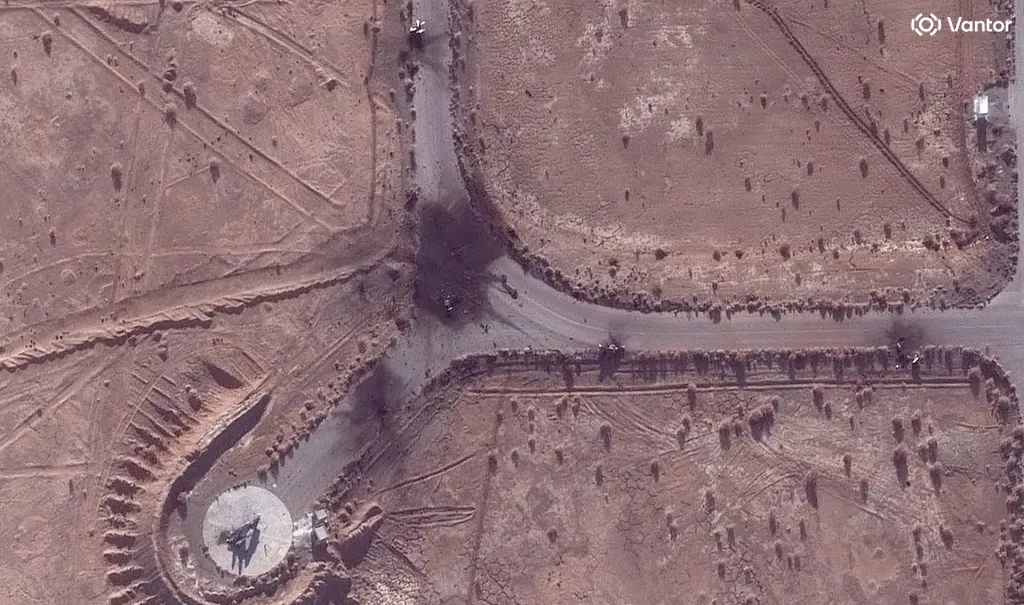
Satellite imagery from Vantor shows at least two, and more likely three, swing-wing F-14 Tomcat fighters, as well as at least 10 other aircraft destroyed on the ground following strikes on an Iranian airbase in Isfahan. Iran’s Tomcats, the only ones left in service anywhere after the U.S. Navy retired the type back in 2006, have been a hot topic of interest for decades now. The fleet’s fate may now be sealed for good as U.S. and Israeli strikes continue to pummel Iran’s Air Force, along with the rest of the country’s military and security forces.
Vantor has provided an image of Iran’s 8th Tactical Air Base in Isfahan taken on March 9, following strikes, as well as one from February 22 for comparison. The Israel Defense Forces (IDF) said explicitly on March 8 that it had targeted F-14s at Isfahan, the home base for Iran’s Tomcat fleet, but no imagery of those strikes looks to have been released. IDF videos of Iranian F-14s being struck that have been circulating online recently all look to be old.

The Vantor image from February 22 shows five F-14s. One is seen on what looks to be an alert pad, with another on a taxiway nearby. Two more are seen sitting outside a pair of aircraft hangars, while another is seen next to a separate set of hangars. The March 9 image shows the Tomcat on the pad and the lone example by the shelters to have been hit. There is also a huge scorch mark where the F-14 had been previously seen on the taxiway, pointing to its total destruction, though it is hard to tell for certain from the remaining wreckage. The other two jets appear to have been moved in the intervening weeks, and their status is unclear.


The post-strike image also shows at least 10 other aircraft destroyed along various taxiways. Vantor has assessed these to be members of the Iranian Air Force’s fleet of Chinese-made F-7 fighters. F-7 is the nomenclature for export variants of the Chengdu J-7, itself derived from the Soviet MiG-21 Fishbed.
Vantor also shared imagery of a row of four hardened aircraft shelters at Isfahan, three of which have a single hole in the top following the strikes. A structure next to the shelters, which had already been damaged prior to the current conflict, has now been flattened, as well.


Whether or not any of the F-14s that were struck at Isfahan were operational at the time is unknown. Estimates of how many Iranian Tomcats are even still airworthy have ranged widely in recent years, from just a handful to maybe as many as 25. As noted earlier, the 8th Tactical Air Base is the main station for Iran’s F-14s, though examples have also been positioned to provide quick reaction alert (QRA) coverage for Tehran in the past.
A total of 79 F-14As were delivered to Iran before the fall of the Shah in 1979. Iran’s air arm and the U.S. Navy are the only ones to have ever operated the Tomcat, and Iran has been the only one still flying them since 2006. While the current regime in Tehran has been able to keep a small portion of its original F-14 fleet flyable, sustaining the jets has been an immense challenge requiring the cannibalization of airframes.

The capabilities of the remaining jets can only have steadily degraded, as TWZ has written in the past:
“In particular, the F-14’s once-state-of-the-art AN/AWG-9 fire control radar has suffered from low serviceability, with the Tomcat fleet effectively being divided between those with fully functioning radars and those with more diminished capabilities. The current status of any surviving AIM-54 Phoenix and AIM-7 Sparrow air-to-air missiles is also a matter of debate, and Iranian programs to introduce alternative weaponry for the F-14 have had only very mixed results, as you can read more about here.“
The total number of F-14s in Iran, flyable or not, had already been reduced to some degree during the 12 Day War with Israel last year. Strike footage the IDF released during that conflict showed at least five Tomcats being struck. Satellite imagery had confirmed that at least two of those jets had been sitting idle for some time beforehand, as well.

תקיפת זוג מטוסי F 14 בשדה תעופה בטהראן | את”צ
The overall intensity of the current U.S.-Israeli air campaign against Iran has been far greater than what was seen during the 12 Day War last year. The Iranian Air Force does not appear to have mustered any kind of major response, even in the first few days of what the U.S. military has dubbed Operation Epic Fury and that the Israelis are calling Operation Roaring Lion. Qatari F-15 fighters shot down two Iranian swing-wing Su-24 Fencer combat jets attempting to carry out a strike mission on Al Udeid Air Base on March 2. An Israeli F-35I Adir also shot down a Yak-130 armed jet trainer over Iran on March 4.
Other airbases across Iran beyond Isfahan have also been targeted in U.S. and Israeli strikes. Satellite imagery has previously confirmed the loss of one Il-76 cargo plane, two C-130 airlifters, and two swing-wing Su-22 Fitter combat jets in Shiraz.
U.S. Central Command has also previously released video footage in the past showing strikes targeting Su-22s at Shiraz, as well as some of Iran’s remaining U.S.-made F-5s at Qasem Soleimani International Airport (formerly Ahvaz International Airport) in Khuzestan.
Overall, Iran’s already dilapidated air arm looks to be even more severely degraded now, and seems likely doomed, at least in its present guise. U.S. officials have said that neutralizing the Iranian government’s ability to project military power beyond its borders is a core objective of the current campaign.
When it comes to the F-14s, regardless of whether any of them were still operational to any real degree when the current conflict erupted, the story of the country’s Tomcats looks to be increasingly approaching a definitive end.
Contact the author: joe@twz.com

Kaye Adams breaks silence on BBC 'axe' with defiant message

Kaye Adams has admitted she is heartbroken to lose her BBC radio job and has hit out at those who she says are sharing "untrue" allegations
Source link
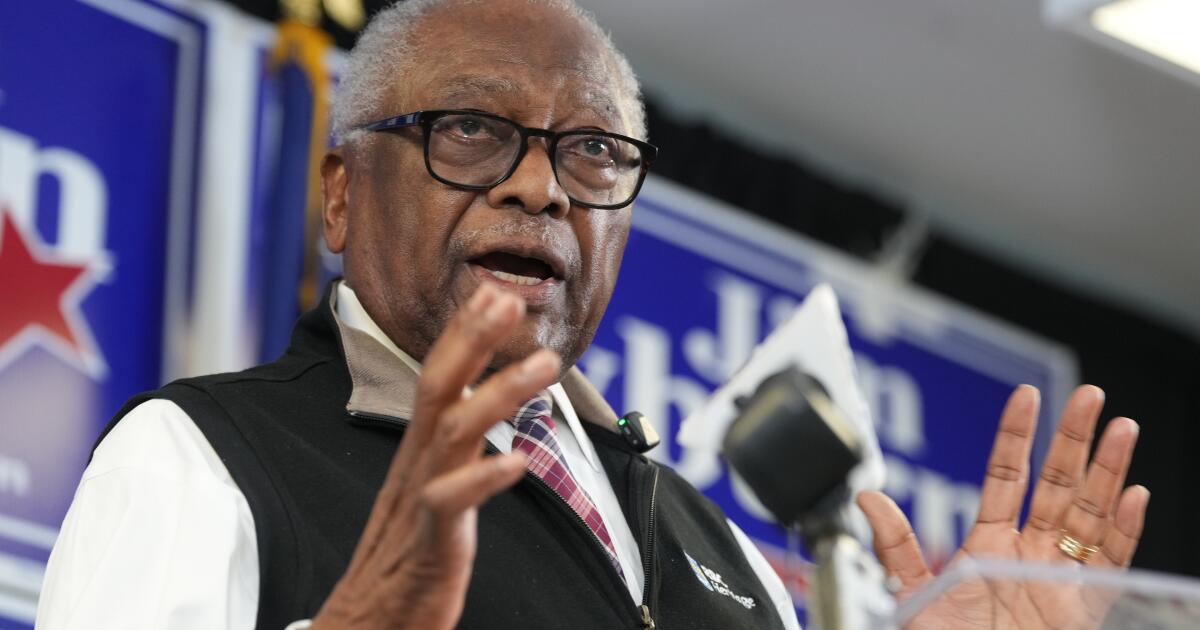
Long-serving Democrat Jim Clyburn of South Carolina will run for an 18th term in Congress
COLUMBIA, S.C. — U.S. Rep. Jim Clyburn, the dean of South Carolina’s Democrats, said Thursday that he will run for an 18th House term, a move that could position him as an influential elder statesman in Congress if his party regains the majority in November.
The decision by the 85-year-old lawmaker cuts against calls for generational change within the party. Clyburn is one of several veteran Democrats running again instead of stepping aside for younger politicians whose frustration increased in the wake of President Biden’s failed reelection campaign.
“I’m here today to say I do believe that I’m very well equipped and healthy enough to move into the next term, trying to do the things that are necessary to continue that pursuit of perfection,” Clyburn said at state party headquarters in Columbia. “And so I will run a very vigorous campaign.”
Clyburn is among the oldest Democrats serving in Washington, and the only member of the last Democratic leadership team who is looking to stick around. Former Speaker Nancy Pelosi of California and former Majority Leader Steny Hoyer of Maryland both plan to retire at the end of their current terms.
Clyburn said that he sought counsel from his three daughters before making his announcement. One of them — Mignon Clyburn, a former member of the Federal Communications Commission — said she was concerned about the political vitriol that her father would face in Washington.
“Her interest was in her daddy and what she thought I might be subjected to,” Clyburn said. “When Mignon finally had decided that she could live with it, I’m here.”
Clyburn said he heard from another woman that “‘we don’t listen to them people up there, and you should not. You should listen to the people down here, and we don’t want you to leave.’ And so I’m responding to the people that are here.”
Clyburn served as majority whip and assistant Democratic leader. Remaining in Congress for another term could give him a chance to serve alongside the first Black speaker of the House as Rep. Hakeem Jeffries of New York is in line for the gavel should Democrats win control. Clyburn for many years was the highest-ranking Black lawmaker in the House.
On Thursday, asked about the prospect of being able to advise Jeffries, Clyburn said the two spoke recently about a possible working relationship in the next Congress.
“He expressed an interest in my being a part of his leadership, if we were to take the House back,” Clyburn said. “It made me feel necessary.”
Four years ago, when Clyburn announced his bid for a 16th term, he told the Associated Press that he intended to keep campaigning as long as his health and support from his family remained stalwart.
“I’ve told them, if you ever see that I need to go to the rocking chair or spend my spare time on the golf course, let me know,” he said describing his daughters’ counsel.
Clyburn won his 2024 reelection by more than 20 percentage points. First elected in 1992, he represents the district that sweeps from areas around the capital of Columbia through rural central and eastern counties down to Charleston.
Should he serve an 18th term, Clyburn would become the longest-serving South Carolinian ever in the U.S. House. Time horizons are longer for the state’s U.S. senators, two of whom — Republican Strom Thurmond and Democrat Fritz Hollings — served 48 years and nearly 39 years, respectively.
Filing for election in this year’s elections in South Carolina opens Monday and closes March 30. South Carolina’s primary elections will be held June 9.
Whenever Clyburn does leave office, the competition to be his successor will be fierce. He is the only Democrat representing his state in Washington.
As to whether his 18th term could be his last, Clyburn called that an “open question.”
“I’m looking forward to the day that I can spend more time reading, writing and playing golf, and so this could very well be to my last term,” he said. “And it could very well not be.”
Kinnard writes for the Associated Press.

Advocates concerned city has not reviewed LA28 plan for homeless, human trafficking
A report on how Olympic organizers will tackle civil rights, homeless and human trafficking ahead and during the 2028 Games has not been made public by the city more than two months after it was filed and no date for its release has been set, leaving human rights advocates fearing the issues will not get the attention and funding they deserve.
Council president Marqueece Harris-Dawson, who chairs the ad-hoc committee on the LA28 Games, has not included the human rights report on the committee’s agenda. His office did not respond to requests for comment and Sharon Tso, the city’s chief legislative analyst, and Matthew Szabo, the city’s administrative officer, both said they have not seen the report and “nothing appears on the council file,” according to Tso.
The delay is limiting discussion on an important topic, said Stephanie Richard, a clinical professor who leads the Sunita Jain Anti-Trafficking Initiative at Loyola Law School, which released its own comprehensive report on human trafficking and the 2026 World Cup and 2028 Olympics in December.
“From an anti-trafficking perspective, this is a historic moment” she said. “Yet the public has no access to the draft.
“Without transparency, Los Angeles cannot responsibly prepare, and advocates cannot provide informed guidance. LA28 is setting a global precedent — one that currently lacks public accountability.”
LA28, the private nonprofit organizing committee for the 2028 Summer Olympic and Paralympic Games in Los Angeles, was responsible for developing a human rights strategy around the Games. Its report was due Dec. 31, a deadline it met, according to a spokesperson for the group. LA28 is not allowed to release the report publicly until the city does.
“As per our Games Agreement with the City, LA28 completed the Human Rights Strategy at the end of 2025,” said Jacie Prieto Lopez, the group’s vice-president of communications and public affairs, in LA28’s first public statement on the report. “We are now working closely with city leaders on next steps.”
What those next steps are and when they’ll be taken, no one seems to know.
FIFA is producing its own report on human rights and human trafficking around this summer’s World Cup, which will feature eight games at SoFi Stadium in Inglewood.
“In each host city, human rights teams are working towards tailored FIFA World Cup Human Rights Action Plans in consultation with local human rights stakeholders and in line with FIFA guidance,” a FIFA spokesperson said in a written statement. “Plans will be published ahead of the tournament. This work reflects a sustained and consistent commitment by FIFA to embed human rights considerations throughout the planning and delivery of the tournament.”
The FIFA report for Los Angeles isn’t expected to be released until May, according to sources close to the process not authorized to speak publicly, about a month before the tournament kicks off. Some of the other 11 U.S. host cities, among them Seattle and Houston, have already rolled out their own initiatives addressing the issue.
Richard, who was invited by the city to consult with LA28 on its study, said the release of both the Olympic and World Cup reports is important for Los Angeles because it allows for public comment and oversight.
Richard’s group has called on LA28 and FIFA to allocate between $2.75 and $3.1 million specifically for anti-trafficking implementation; to fund a public-awareness campaign and independent audits to ensure accountability and transparency; and to invest in long-term programs that extend beyond the two sporting events.
“One of the things our report starts from is the only evidence-based data connected to major sporting events is that labor trafficking increases,” Richard said. “Major sporting events requires an influx, a large influx, of workers, a lot of time immigrant workers who are highly vulnerable in the construction industry..
“Presumably a lot of these workers are brought in months ahead of time to do some of this work.”
Richard said the continued presence of federal immigration officers in Los Angeles adds another layer of complexity to the human trafficking mix.
In mid-February, nine state legislators signed a letter calling for LA28, FIFA and local officials to incorporate the recommendations made by Richards’ group into their own plans and to release the report publicly as “a critical step toward accountability.”
But when asked about the letter this month, the signatories contacted refused to comment. A spokesperson for assemblywoman Celeste Rodriguez, who represents the eastern San Fernando Valley, said Rodriguez was “unavailable to talk on this issue.”

Rep. Jim Clyburn, 85, to seek re-election
1 of 5 | Rep. James E. Clyburn, D-S.C., speaks at the 2024 Democratic National Convention in Chicago. Clyburn, 85, announced Thursday that he will run for re-election. File Photo by Tannen Maury/UPI | License Photo
March 12 (UPI) — Rep. Jim Clyburn, D-S.C., announced Thursday that he will run for his 18th term in the House of Representatives.
Clyburn, 85, said he is going to run a “very vigorous campaign.”
“Today I’m going to answer a question that’s always asked: What is there unfinished or what more do you need to do? Well, it’s in the preamble of our Constitution: We exist in pursuit of a more perfect union,” he said. “And I’m here today to say I do believe that I am very well-equipped — and healthy enough — to move into the next term, trying to do the things that are necessary to continue that pursuit of perfection.”
About his age, Clyburn said, “If I were not up to it, I would not do it. But in response to some extensive surveys, some intense consultations with my three daughters, they finally got to a unanimous opinion that I should be here today and make this announcement.”
Clyburn, who has served in the House for more than 30 years, was the No. 3 Democrat in the chamber until he stepped down as Democratic whip in 2023. He then became assistant Democratic leader to House Democratic leader Hakeem Jeffries, D-N.Y.
Reps. Nancy Pelosi, D-Calif., and Steny Hoyer, D-Md., recently announced their retirements from the House, leaving Clyburn as the only one left of that leadership trio from 2007-2023.
Clyburn joined the House in 1992 as the first Black congressman from South Carolina since Reconstruction.
Clyburn endorsed then-presidential candidate Joe Biden just before the South Carolina primary, which helped him win the state and boost his candidacy after struggling in other early primaries.
Antjuan Seawright, Clyburn’s longtime adviser, said he is still needed in Congress to “help shape the direction and future of our country.”
Seawright added that the party needs “a little hip-hop and R & B, Old Testament and the New Testament.”
South Carolina’s primary will be June 9.

President Donald Trump speaks to the members of the media on the South Lawn of the White House before boarding the Marine One helicopter to Hebron, Ky., on Wednesday. Photo by Yuri Gripas/UPI | License Photo

U.S. Navy Won’t Be Ready To Escort Tankers Through Hormuz For Weeks

The U.S. Navy is not yet ready to escort oil tankers through the Strait of Hormuz, but it will happen. This is the synopsis provided by U.S. Energy Secretary Chris Wright in an interview with CNBC. The development comes as Iran continues to pummel international shipping in and around the critical channel, which the new Iranian supreme leader, Mojtaba Khamenei, vows to keep closed.
“It’ll happen relatively soon, but it can’t happen now,” Wright said, of the planned naval escort mission. “We’re simply not ready. All of our military assets right now are focused on destroying Iran’s offensive capabilities and the manufacturing industry that supplies their offensive capabilities.” Wright added that the Navy should be able to escort tankers through the strait by the end of this month.
Khamenei, it appears, is also resolute in his plan to keep the strait closed to all maritime traffic, reportedly having turned down approaches from several countries that were seeking an end to the attacks.
U.S. President Donald Trump said on March 3 that “the United States Navy will begin escorting tankers through the Strait of Hormuz, as soon as possible.”
Putting a date of the end of this month on the escort mission is certain to trouble markets that are already feeling the pressure of the conflict. At the very least, this is an indicator that the war or its hostile aftermath will continue for weeks to come.
Equally pessimistically, there have been reports from analysts suggesting that fully reopening the strait may require some kind of ground operation to seize the Iranian coastline adjacent to it.
“Strategic priorities, like opening the Strait of Hormuz and securing what remains of Iran’s nuclear stockpile, will likely require some ground troops if no diplomatic options are pursued,” Brian Katulis, a senior fellow at the Middle East Institute, told The Wall Street Journal. “What we are looking at is potentially a very messy situation.”
Even without boots on the ground, which now seems like a remote prospect, running a tanker-escort mission, which would involve convoys protected by warships and accompanied by mine-clearing assets, is fraught with difficulty. Military unwillingness to take on missions of this kind is an issue we have explored in the past at TWZ.
The warships involved in any such endeavor would also be at extreme risk, especially from Iranian ground-mobile anti-ship missiles, which are relatively small and can be easily disguised in utility trucks. Eliminating that threat is one potential driver for a ground operation along the coast of the strait.
The U.S. military has made extensive efforts in recent days to remove the Iranian minelaying capability, but, according to the U.K. Defense Secretary, there are now increasing signs that Iran may have started mining the strait.
While tanker traffic through the strait remains at a standstill, Iran continues its campaign against commercial tankers elsewhere in the region, with another two vessels set ablaze earlier today in Iraqi waters. Iraq reportedly halted all operations at its oil ports after the attack.
The Ambrey maritime security firm told us that a Malta-flagged crude oil tanker and another merchant vessel were targeted in an attack in Al Basrah Anchorage, Iraq. One fatality was reported. At least 38 individuals were rescued from both vessels according to the Iraq Port Authority, with further search and rescue operations ongoing as of this morning.
Video footage of the incident shows a vessel engulfed in fire with a large plume of smoke rising from the area of impact. Fire can also be seen in the water as a result of the oil spill.
Unverified reports state that the two tankers were struck by uncrewed surface vehicles (USVs).
Iraq’s State Organization for Marketing of Oil identified the two vessels as crude oil tanker Safesea Vishnu and the combined chemical and oil tanker Zefyros. While the Zefyros is Malta-flagged, the Safesea Vishnu is owned by a U.S. company but was sailing under the Marshall Islands flag. A dramatic video has appeared that is said to show the moment of the explosion that targeted the Safesea Vishnu.
In a statement, the IRGC said that it considered the Safesea Vishnu as an asset of the U.S. military and claims that it was struck after ignoring repeated warnings and alerts from the IRGC Navy.
Ambrey also reports that a container vessel was struck by an unknown projectile 38 nautical miles north-northeast of Jebel Ali, United Arab Emirates. The strike was reported to have caused a small fire on board the vessel, and the crew was reported to be safe.
Another vessel, the Japanese-flagged container ship One Majesty, was reportedly also damaged while anchored in the Persian Gulf. The damage was only discovered later, around 60 miles from the Strait of Hormuz. There were no reports of casualties.
The vessel seen burning in the video below, from the perspective of crew members who evacuated on a liferaft, is the Thai-flagged cargo vessel, Mayuree Naree Bangkok, which was attacked near the Strait of Hormuz yesterday.
The continued attacks on energy infrastructure and shipping by Iran, and concerns over the intensifying conflict in the Middle East, have seen oil prices spike.
The international benchmark Brent crude is back above $100 per barrel.
In an effort to reduce concerns over global oil supplies, the International Energy Agency (IEA) has ordered the largest release of government reserves in its history.
Meanwhile, the government of Denmark is calling upon its citizens to reduce their consumption of fossil fuels.
In a post on his Truth Social site, President Trump said he remained committed to ensuring Iran cannot develop nuclear weapons, despite the impact on the global oil trade.
“The United States is the largest Oil Producer in the World, by far, so when oil prices go up, we make a lot of money. BUT, of far greater interest and importance to me, as President, is stoping [sic] an evil Empire, Iran, from having Nuclear Weapons, and destroying the Middle East and, indeed, the World.”
The day-to-day running of the conflict also comes with a high cost to the U.S. government. According to Reuters, officials from the Donald administration estimated during a congressional briefing this week that the first six days of the war on Iran had cost the United States at least $11.3 billion.
The Israeli Air Force (IAF) has struck a nuclear site in Iran, the Israel Defense Forces (IDF) announced today. The targeting of the Taleghan compound was part of a larger wave of strikes conducted over the past few days, the IDF said. Taleghan is part of the Parchin military complex, located around 20 miles southeast of Tehran.
The development comes after we reported on evidence of some kind of airstrike against the Taleghan compound, including the possibility that the hardened facility was hit by 30,000-pound GBU-57/B Massive Ordnance Penetrator (MOP) bunker buster bombs. You can read that analysis, based on satellite imagery, here.
The Israeli military said that IDF intelligence had determined that Iran had been using the Taleghan compound to develop weapons and conduct experiments as part of Amad, an Iranian scientific project aimed at developing nuclear weapons.
According to a statement from the Israeli military:
“During Operation Rising Lion, the IDF has operated systematically against knowledge centers and infrastructure related to the Iranian nuclear weapon program in order to eliminate the emerging existential threat to the State of Israel. Despite the significant damage inflicted on the program, the Iranian regime has continued efforts to advance and develop the capabilities required for the development of a nuclear weapon.”
The IDF added that it had recently identified that Iran has taken steps to rehabilitate the compound after it was struck in October 2024.
Israel announced last week that it had struck Minzadehei, another nuclear site in Iran where it said scientists were covertly developing a key component for nuclear weapons.
“The strike is a part of the series of operations carried out throughout Operation Rising Lion aimed at further damaging the Iranian terrorist regime’s nuclear aspirations.”
Other recent targets of the IDF include Abu Dharr Mohammadi, described as the operations commander responsible for the Islamic Revolutionary Guard Corps’ (IRGC) missile unit within Hezbollah.
“Earlier this week (Tuesday), the IDF struck and eliminated the terrorist Abu Dharr Mohammadi … Mohammadi was a central figure in the military coordination between Hezbollah and the Iranian terror regime, while coordinating and connecting between Hezbollah and Iranian senior officials,” the IDF said.
“Mohammadi was a key figure in Hezbollah’s military force build-up as it related to missiles, focusing on rehabilitating the program following Operation Northern Arrows,” the IDF added.
For its part, Hezbollah continues to hit back against Israel.
According to the Israeli military, Hezbollah militants launched around 200 rockets and approximately 20 drones yesterday evening from Lebanon toward Israel. After reportedly detecting signs of an unusual buildup, the IDF said it carried out a preemptive strike to disrupt the firing and thwart terrorists.
The U.S. military has also continued airstrikes on Iran, with a recent video released by Central Command (CENTCOM) showing the destruction of a C-130 Hercules transport and a P-3F Orion maritime patrol aircraft (both of which were supplied to Iran before the 1979 Islamic Revolution) and an Ilyushin Il-76 Candid airlifter.
Of these aircraft, the Islamic Republic of Iran Air Force (IRIAF) P-3F was especially notable, since it was reportedly the last of the type that was still airworthy in Iranian service.
Following attacks on Mehrabad and Bandar Abbas Air Bases, the runways at both have now been blocked by parked buses and helicopters, according to satellite imagery. The reason for this is unclear, but it is possible that it has been driven by concerns about a potential aerial assault on either of these locations. Alternatively, the aircraft and vehicles may have been arranged as decoys. The same thing has been seen in the war in Ukraine, as well as in Venezuela, earlier this year.
U.S. airstrikes against Iranian missile systems have also continued. The CENTCOM video below is noteworthy since it shows (around the 0:07 mark) the destruction of a ballistic missile apparently in the process of being erected from its launch vehicle.
A U.S. strike overnight on three bases associated with the Iranian-backed Ansar Allah al-Awfiya militia reportedly killed dozens of militiamen. The bases near al-Qaim, al-Anbar, were used to fire projectiles at U.S. interests in Jordan. The following video purports to show the results of the attack on al-Qaim.
Footage has also emerged that apparently shows a U.S. military Low-Cost Uncrewed Combat Attack System (LUCAS) kamikaze drone headed toward a militia target in Iraq. Based on the Iranian Shahed-136, these weapons were used in combat for the first time in the opening salvos of Operation Epic Fury and repeatedly since.
Overnight attacks on Iraq also struck Erbil, home to an Italian military detachment in the country. According to reports, this has led to the temporary evacuation of the Italian presence from the base.
Mojtaba Khamenei has vowed to continue attacks on U.S. bases in the region, calling for American forces to leave them immediately, or face further strikes.
While we have regularly seen Iranian ballistic missiles target Israel with cluster warheads, we now also have a view of how the separate munitions disperse, as seen from the vantage point of the cockpit of an IAF fighter jet.
In the United Arab Emirates, authorities have reportedly arrested a British tourist after they allegedly filmed missiles hitting Dubai. The 60-year-old Londoner faces two years in prison after being charged with a cybercrime, The Daily Mail reports.
He is reportedly one of 20 people to have been charged over videos and social media posts relating to recent Iranian missile strikes on the UAE.
The on-off deal to get Ukrainian-made counter-drone technology into U.S. hands has apparently taken another turn.
Taking to X, Ukrainian Prime Minister Volodymyr Zelensky wrote that he had hoped to “sign a big drone production deal with the United States, but we needed the approval from the White House.”
The deal, covering “different kinds of drones and air defense,” has not been signed yet, Zelensky added.
“I hope that maybe [our] American friends will be closer to this decision now, especially after such challenges as we see in the Middle East,” the Ukrainian leader wrote.
A fire broke out aboard the aircraft carrier USS Gerald R. Ford.
“On March 12, USS Gerald R. Ford (CVN 78) experienced a fire that originated in the ship’s main laundry spaces,” Naval Forces Central Command said in a statement on X. “The cause of the fire was not combat-related and is contained. There is no damage to the ship’s propulsion plant, and the aircraft carrier remains fully operational. Two Sailors are currently receiving medical treatment for non-life-threatening injuries and are in stable condition. Additional information will be provided when available.”
Earlier today, a U.S. official told USNI News that the initial fire had been extinguished, but the crew was still working to control the damage.
The United Arab Emirates is now using UH-60 Black Hawk series helicopters for counter-drone work, as seen in this video, which captures an engagement over Dubai.
According to a report from Reuters, citing U.S. intelligence officials, most of the Iranian leadership remains intact, and the regime is not currently at risk of collapse, despite the U.S.-Israeli campaign against it.
Certainly, as far as public statements are concerned, the remaining elements of the Iranian leadership remain steadfast in their refusal to give up the fight.
Contact the author: thomas@thewarzone.com

Forgotten Charlie Dimmock TV shows that fans rated higher than Ground Force
Gardening expert Charlie Dimmock has presented numerous TV shows beyond Ground Force and Garden Rescue and fans rated them highly

Charlie Dimmock has been a fan favourite for decades(Image: BBC)
Fans of gardening expert Charlie Dimmock could be excused for not exploring much beyond Ground Force and Garden Rescue.
With over 150 episodes of Garden Rescue available to watch and 97 instalments of the ’90s favourite Ground Force, there’s no shortage of content. However, throughout her career, she’s created numerous other gardening programmes that slipped beneath most people’s notice.
One such programme is Charlie’s Garden Army, which aired in 1999 and 2000 across 12 episodes. The series featured Charlie alongside volunteer teams transforming derelate wasteland into beautiful public gardens.
She subsequently secured a presenting position on 2002’s The Joy of Gardening and 2001’s Charlie’s Gardening Neighbours, reports the Express.
In 2005, Charlie featured at the Hampton Court Palace Flower Show as a television presenter, and she’s also participated in coverage of the Chelsea Flower Show throughout the years.
Judging purely by IMDb ratings, though, several programmes actually surpass Ground Force in terms of viewer scores.
Ground Force’s typical rating stands at 7.2 stars out of 10 – but it’s eclipsed by Garden Rescue at 7.9 stars, and the Great British Garden Revival with an identical rating.
Charlie inadvertently fell into a television career whilst employed at a garden centre, and during the ’90s, she maintained that she “wasn’t famous” and didn’t perceive herself as a TV personality.
Reflecting on her television work in a 1999 interview with The Guardian, Charlie remarked: “In some ways, the television stuff isn’t unsatisfying, it’s very interesting.
“But the other day, I was at work [at the garden centre], the first time I’d been there properly for three or four weeks, and I thought, ‘God, this is nice!’
“‘You see people you know, regular customers, and there’s no hassle. You fall out of bed, go to work, potter around. It’s all right, really.'”
Garden Rescue is on BBC One and BBC iPlayer
For the latest showbiz, TV, movie and streaming news, go to the new **Everything Gossip** website.

Volunteers needed at Eaton Canyon’s Landscape Recovery Center
I couldn’t stop looking at the thick bunches of California brittlebush, their bright yellow daisy-like flowers bursting alongside the sandy trail at Eaton Canyon.
I’d last walked the path a week after the Eaton fire, when I observed that “charred limbs of manzanita and other small trees and shrubs jerked out of the earth like seared skeletal remains. Heaps of leathery brown prickly pear pads sagged into the dirt and ash. Even the rocks were burned.”
Last Saturday, almost 14 months later, I marveled at how healthy Eaton Canyon looked as I attended L.A. County Department of Parks and Recreation’s launch of its Landscape Recovery Center. This is in large part thanks to volunteers who’ve dedicated hundreds of hours to restoring the canyon. I’m excited to tell you how you can be a part of those efforts.
The Department of Parks and Rec’s effort is a major step in repairing the damage wreaked by the Eaton fire that started Jan. 7 of last year.
The center includes a nursery full of native plants that will be used not only in Eaton Canyon but also in six other parks damaged by fire, including five in Altadena, and Castaic Lake State Recreation Area. Workers will also reestablish vital tree canopy lost in the fire, planting coast live oak, Engelmann oak and Western sycamores.

Native plants at the nursery at the Landscape Recovery Center at Eaton Canyon.
(Jaclyn Cosgrove / Los Angeles Times)
L.A. County is partnering with the Theodore Payne Foundation and the Altadena Seed Library to achieve two key goals: 1) Grow the plants in the recovery center’s nursery from locally sourced seeds. 2) Build decentralized seed banks by procuring seeds from L.A. County nature centers.
The latter involves the “process of conserving plant genetics by dehydrating and securely storing seeds for future potential restoration or research projects,” said ecologist Nina Raj, founder of Altadena Seed Library, who is working with the county to develop the seed bank project.
“By carving out space at existing nature centers for a bit of tabletop equipment and storage space, the seeds from their adjacent natural areas [will] be conserved alongside backup populations from partnering nature centers — like an insurance policy in case of, or rather, in preparation for the next natural disaster,” Raj said.

A path near the parking lot of Eaton Canyon Natural Area, as seen on Jan. 14, 2025, and on Saturday.
(Jaclyn Cosgrove / Los Angeles Times)
In the coming months, officials estimate that more than 100,000 seeds sourced from Eaton Canyon will be propagated to aid recovery efforts. The county has also purchased more than 1,000 native shrubs and understory plants, chosen not only for their ecological value but also their cultural significance to the San Gabriel Band of Mission Indians Gabrieleno/Tongva, whose leaders have been advising the county on its canyon restoration efforts.
The county also bought 200 native trees whose seeds came from “mother” trees grown in soil “extremely compatible with the organic matter here at Eaton Canyon,” said Norma Edith García-González, director of L.A. County Parks and Recreation.
All of this intentional sowing and planting is a 180-degree turn from previous recovery efforts. After the Kinneloa fire burned through Eaton Canyon in 1993, officials rushed to stabilize the hillsides. An expert team recommended grass seed be dropped from helicopters all over the hillsides, which present-day experts say may have introduced nonnative grasses to the region.

The nursery at L.A. County’s Landscape Recovery Center at Eaton Canyon.
(Jaclyn Cosgrove / Los Angeles Times)
“The Landscape Recovery Center represents a best-practice model for restoring nature, rebuilding habitat diversity and supporting disaster recovery,” García-González said. “[We are] rebuilding with intention, using climate-resilient native species informed by both ecological science and cultural knowledge.”
Most of Eaton Canyon, including its beloved nature center, burned in the 2025 fire. The recovery center’s modular building and the land around it are among the first built improvements, and the area now has electricity, water access, irrigation systems and restrooms. (The recovery center’s footprint is south of the burned nature center, and no announcement was made Saturday regarding when it might be rebuilt.)
These improvements will allow the Landscape Recovery Center, which will have five full-time and four part-time staff members, to host volunteers interested in caring for habitat, supporting the plant nursery or working in local outreach or on community science.
Volunteer events, including hands-on nursery work, will be scheduled Tuesday through Saturday, with times varying depending on the program. Those age 14 and older can sign up by calling or texting (626) 662-5091. (A quick note: Eaton Canyon remains closed to the public, outside of volunteer opportunities.)

A cultural sign welcomes visitors to Eaton Canyon.
(Jaclyn Cosgrove / Los Angeles Times)
Many volunteers have already been hard at work. Organized by the Eaton Canyon Nature Center Associates, volunteers have donated hundreds of hours to clear out short-pod mustard, castor bean, tree tobacco and fountain grass, which choke out native plants and serve as flashy fuel for wildfires.
All of this work must be done before hikers and other outdoors lovers can return to Eaton Canyon.
Jeremy Munns, a trails planner for L.A. County Parks and Recreation, said rebuilding the Eaton Canyon Trail and other county trails in the Eaton Canyon Natural Area will be part of a future phase.
The fire and subsequent flooding washed out the trail and caused hillsides to collapse into and around the canyon. Contractors, county staff and conservation corps crews will need to install retaining walls, repair drainages and add rock walls (called rock armoring) to stabilize the canyon and protect it from further erosion, Munns said.

A path near the Landscape Recovery Center.
(Jaclyn Cosgrove / Los Angeles Times)
Munns said there isn’t currently a plan to include volunteers in that work because of safety concerns.
“In the future, there will be opportunities for volunteers to help with the maintenance of these trails, but the timing of that has not yet been determined,” he said.
As I walked through the nursery during Saturday’s event, I found myself feeling hopeful. Several rows of California sagebrush, California buckwheat, chaparral beard tongue, sticky monkey flower and more sat in their pots, awaiting their new homes in the nearby ground.
It’s easy to imagine a future in which the entire canyon is healthy once again.

3 things to do

Workers tend to plants growing at the Santa Monica Mountains Fund seed farm.
(Jacsen Donohue / Santa Monica Mountains Fund)
1. Nurture yourself and nature in Newbury Park
The Santa Monica Mountains Fund and Second Nature Collective will host a yoga and volunteer day from 8 a.m. to noon Saturday in Newbury Park. Participants will first be led through a 45-minute mindful and meditative yoga session before placing hundreds of native plants in the ground. Register at eventbrite.com.
2. Nosh on nonnative plants in Studio City
Urban forager Nick Mann will lead a 3-mile foraging walk from 9:30 a.m. to noon Saturday through Fryman Canyon. He will teach participants how to identify edible nonnative plants commonly found along local trails. Donations requested but not required. Register at eventbrite.com.
3. Ride the river near Azusa
Active SGV will host a 12.4-mile bike ride from 9 a.m. to noon Saturday along the West Fork National Scenic Bikeway north of Azusa. Carpooling is encouraged, as the parking lot at the trailhead fills up. Register at eventbrite.com.

The must-read

Condor A1 (a.k.a. Hlow Hoo-let) soars across the sky in far Northern California.
(Matt Mais / Yurok Tribe)
In a potentially historic win for condor conservation, Yurok wildlife officials say there might be a condor pair tending to an egg in the tribe’s Northern California homeland — where condors haven’t nested for more than a century. Times staff writer Lila Seidman wrote that condors vanished from the state’s North Coast because of violence carried out by European settlers. “The pair believed to be nesting in Yurok country were captive born and released in 2022, as part of the first group reintroduced in that region,” Seidman wrote. “The pair, formally known as A1 and A0, are the oldest birds from their release cohort at nearly 7 years old — and the only ones old enough to reproduce.”
Happy adventuring,

P.S.
It’s officially baby season at the San Dimas Raptor Rescue. The L.A. County facility, which rehabilitates birds of prey, took in its first great horned owlet in early February. The center anticipates taking in dozens of great horned owlets who are found starving and need to be nursed back to health before being released. Generally, the center tries to release a bird back to the area where it was found. In this little baby’s case, that would be Venice Beach. The center is run, in part, by volunteers who are trained by the county before working with the birds. If you ever find a raptor that you perceive is in need, you can call the center at (626) 559-5732 before interacting with the animal. A great service to our local wildlife!
For more insider tips on Southern California’s beaches, trails and parks, check out past editions of The Wild. And to view this newsletter in your browser, click here.

This is the best age for kids on a family holiday

FAMILY holidays are most fun when children reach eight years old, according to research.
A poll of 2,000 mums and dads who’ve ever been on holiday with their child found this is the age when parents and little ones alike get the most out of getaways.

At this stage, 55 per cent believe they start to form lasting holiday memories, 64 per cent think they get genuinely excited about new places and can contribute to the planning (22 per cent).
They’re better able to relax themselves (41 per cent), enjoy more shared hobbies and activities together with their kids (41 per cent) and have longer attention spans (40 per cent) then too.
Commissioned by Jet2holidays ahead of Mother’s Day, the research found 76 per cent of mums who go on one or more getaways a year consider family holidays to be their calendar highlight.
A spokesperson for the tour operator said: “Family holidays are special at all ages.


“With the research highlighting just how meaningful family getaways are across the board.
“However, there appears to be something especially great once kids reach eight years old – with the findings suggesting many kids are more curious, more engaged and better able to take in new experiences at this age.”
The study also identified what parents look for in a family getaway – with value for money (29 per cent), a place which suits the whole family (28 per cent) and good weather (28 per cent) coming top.
Activities everyone can enjoy together are also considered key (17 per cent), along with a destination which is easy to get around (15 per cent) and genuinely family friendly accommodation (14 per cent).
To ensure the kids in particular are happy, 30 per cent ‘often’ or ‘always’ get them involved in the planning of a family break.
They do so because it makes their little ones feel included and valued (46 per cent), creates shared excitement (37 per cent) and ensures activities suit their interests (34 per cent).
And taking such steps to ensure family holidays are a success appear to be worth it – 86 per cent said memories spent with their kids on such getaways are among their most meaningful.
The research carried out through OnePoll also identified the holiday milestones those polled consider to be the most significant, with going abroad as a family for the first time (35 per cent) coming top.
Flying together for the first time (24 per cent), the first theme park or major attraction visit as a family (15 per cent) and staying away from home overnight for the first time as a unit (14 per cent) are also significant.
A spokesperson for Jet2holidays added: “It’s clear involving children in the planning process plays a big part in making a holiday memorable.
“And this is just one of a host of memorable holiday milestones they’ll be part of – whether that’s flying together for the first time or going abroad as a family stay with parents for years.
“This is why considerations like the right destination and accommodation are so important.
“We’re proud to help families make those memories by offering great value, family friendly holidays which cater to everyone, whatever stage of family life they’re in.”

10 European getaways in the Easter holidays under £200 per person… from beach resorts to cool cities
THE Easter school holidays are fast approaching and if you are thinking of a getaway for those two weeks, you are not too late to snap up a great offer.
Whether you want to head on a city break or fly and flop to a sunny beach spot, there is something for everyone.
And many of the hotels have great kids’ facilities including outdoor pools and evening activities.
Greece
You may think Greece can be expensive, but there are a number of good deals across the country.
For example, you could head to Mitsis La Vita in Rhodes, with Love Holidays between April 11 and 15 for £199 per person.
It would be on a bed and breakfast board basis flying from London Stansted with Ryanair.
Read more on travel inspo


The four-star hotel is in Rhodes town and is within walking distance of the local beach – Paralia Elli.
The hotel has an outdoor pool which is surrounded by a terrace with loungers and parasols.
Whilst in Rhodes Town, make sure to wander around the UNESCO-listed Medieval City with the Palace of the Grand Master – a 14th century fortress.
There is also the Street of the Knights, which is known as one of Europe’s best-preserved medieval streets.
Spain
Between April 5 and 8 you could head to Aparthotel Vibra Jabeque Soul in Playa D’En Bossa, Ibiza, for just £179 per person.
The hotel is self-catering and you will be flying from Manchester to Ibiza with Ryanair.
The hotel features a large pool, lined with palm trees and overlooks the ocean.
There’s also a dedicated children’s swimming area.
Or you could head to Palmanova Suites by TRH Hotel in Majorca, with Love Holidays between April 10 and 14, costing £189 per person.
The trip is on a bed and breakfast basis and you would fly from East Midlands Airport with Ryanair.
You could also go on holiday to Gran Garbi Hotel in Costa Brava between April 8 and 12 for £145 per person.
Flights will be with Ryanair and the hotel is on a bed and breakfast board basis.
Or head to the Bellevue Club in Alcudia, Majorca between April 4 and 8 for £113 per person.
You would be flying from Teeside Airport with Ryanair.
This huge hotel features 11 swimming pools, a garden theatre, 24-hour lobby bar and an on-site shop.
And just a 17 minute walk away is Alcudia Beach.
Outdoors at the hotel, kids can enjoy waterslides and parks and in the evening, the hotel also hosts entertainment.
Portugal
If you fancy heading to Portugal for Easter, you could head to Soldoiro Hotel in Albufeira, The Algarve, from April 5 to 9 for £133 per person.
The flights travel from Liverpool to Faro and you’d be flying with Ryanair.
Albufeira Old Town and new town are both within easy reach and the self-catering accommodation is only 190metres from the beach.
The hotel also features an outdoor pool, kid’s pool and a sun terrace with a pool bar.
Or opt for ChoroMar Hotel also in Albufeira from April 5 to 9 for £128 per person.
Flights are also from Liverpool to Faro, with Ryanair.
The ChoroMar Hotel is a short walk from Montechoro centre where you will find local restaurants.
Breakfast is included and snacks and drinks are also available from the bar.
For things to do at the hotel, you can enjoy an outdoor pool and sun terrace and for parents wanting a pamper, there is a spa with a hot tub, sauna and Turkish bath.
Germany
With OnTheBeach, you could travel to a&o Frankfurt Galluswarte in Frankfurt between April 8 and 12 for £113 per person.
You’d fly from London Stansted with Ryanair.
The a&o Frankfurt Galluswarte is in the prime place to explore Frankfurt, and when in the hotel you can enjoy a rooftop bar with views of the city, a sun terrace, library, games room and kid’s playground.
The rooms feature a modern style and in the morning you can help yourself to the breakfast buffet.
When in the city make sure to look out for the contrasting timber-framed houses and glass skyscrapers.
You can also head to Frankfurt’s Gothic Cathedral and climb the tower for a small fee.
Italy
If you want to head to Italy, there are a couple of great offers for different spots in the country.
For example, you could head to Hotel Della Volta Brescia in Brescia between April 4 and 9 for £130 per person, flying from Newcastle to Milan.
With 29 comfy rooms, the hotel comes with all the modern amenities you need and a buffet breakfast.
The hotel is in the centre of Brescia, which is known for is history, art and theatre.
For example, you could head to the Roman Forum and Capitolium.
Instead, you could visit Resort The Garda Village in Sirmione, Lake Garda between April 5 and 9 for £140 per person, also flying from Newcastle to Milan.
The hotel has a private beach access, an outdoor pool and bustling restaurant.
About a 10 minute walk away is Spiaggia Brema beach, which is a great spot to watch the sunset.
Rooms all boast their own kitchenette making it super easy to make food for yourself and family throughout your holiday.
For more holiday inspiration in Europe, these are the 39 best European city break destinations – and the number one is very cheap.
Plus, here are five European city breaks that are cheaper than an English train ticket.

The beach city in Spain that ‘has it all’ with flights from £15
LOOKING for a city that has it all with vibrant restaurants and shops as well as beautiful beaches? Check out Valencia.
What’s even better for Brits is that flights to the Spanish city are as little as £15, it’s just over two hours away – and travel experts at A Place in the Sun love it too.
When it comes to exploring cities looking for properties as well as a general vibe, A Place in the Sun presenters can get a real feel for a place.
And when Sun Travel spoke to two of the stars asking where in Spain their go-to city is, both had the same answer – Valencia.
Craig Rowe told us: “What I love about Valencia is that it has it all – it’s a city, and the beach is there as well.
“It has amazing coasts and beautiful architecture, it’s got everything you need from a city.


“It’s great for a weekend break, and it’s the third largest city in Spain with around 800,000 people – but it doesn’t feel too busy like Madrid or London, it’s a relaxing place to go.”
In fact, Craig loves the city so much so that he’s planning on buying a property there himself one day.
He added: “My partner Paul and I are hoping to buy a property in Spain, we’re not in a position to do it yet, but hopefully we’ll be able to in the next couple of years.
“I love Valencia as a city, whereas my partner loves Barcelona – but I think he’s coming round to my idea.”
Talking to Jean Johansson, who has been presenting A Place in the Sun since 2018, she also was full of love for Valencia.
She said: “I’m a massive fan of Spain, and Valencia especially; it’s got that beach and city vibe.
“As soon as you get out of the city centre, there are big properties there too.
“But it has great food, nice people, and it’s not as talked about as some of Spain’s other cities, but I think that will change in the next few years.”
“Personally, I much prefer it to Barcelona, which can get very busy in the summer – Valencia has more of a laid-back vibe to me.
“I only really discovered the city while working on A Place in the Sun, I’d never been to Valencia before – it’s a great place for a girls weekend, or a romantic weekend away.”
Brits can fly to Valencia from London Stansted in April from just £15 with Ryanair.
From there, you can get into the city by car in around 15 minutes.
Being a bustling Spanish city there are plenty of restaurants to grab a bite to eat.
Some of the top on Tripadvisor include Esquinita Mía, one visitor said: “The tapas dishes were fabulous – very tasty and great value. The empanadas were so good we re-ordered.”
Other top spots include Osteria da Gianni, El Garaje Foodie and Arrocería El Rek.
There’s plenty of things to see too and one popular activity is biking through the Turia Gardens and exploring the market which is one of the biggest in Europe.
In peak season the market has around 900 stalls with lots of baked foods, fresh seafood as well as perfumeries, and souvenir spots.
When Deputy Travel Editor Kara Godfrey visited the city two years ago, she went to the City of Arts and Science museum.
The huge complex cost a huge £760million to build across 10 years and film fans will recognise it as it appeared in Westworld and Doctor Who.
But it was when she visited the trendy district of El Cabanyal, she found her favourite place.
Kara said: “It’s here I fell into a warehouse-cum-greenhouse that had both a bar and jazz being played live on stage.
“The cheapest eat I found was La Finestra back in the city, where not only are the beers cheap, but you can get mini pizzas for just £2.”
Of course there are beaches too like La Malvarrosa which is the most famous and popular in the city – it has golden sand and a long promenade.
Other popular coastal spots include El Cabanyal (Las Arenas), and La Patacona.
For more on Spain, here’s a European city with 3,000 hours of sunshine a year named best destination to visit in 2026.
And this Spanish city that’s closest to the UK and is quieter than Barcelona is getting new TUI holidays.

Could oil prices really reach $200 a barrel as claimed by Iran?
The global energy landscape is facing its most volatile period in decades following the US-Israeli strikes against Iran on 28 February that triggered a wider and potentially prolonged conflict in the Middle East.

ADVERTISEMENT
ADVERTISEMENT
What began as a targeted military operation has rapidly escalated into a direct confrontation with global economic implications.
Based on claims by Iranian state media and regional reports, the Islamic Revolutionary Guard Corps (IRGC) has ostensibly adopted a strategy of “energy blackmail” to leverage the international community into pressuring the US and Israel to cease its attacks.
The $200 per oil barrel threat was first articulated shortly after the conflict began.
On Sunday 1 March, a senior IRGC spokesperson warned that if “cowardly anti-human actions” continued, the world should prepare for a massive price surge, even as high as $200 per oil barrel.
This rhetoric has since become a central pillar of Tehran’s messaging.
As recently as this Wednesday, Ebrahim Zolfaqari, the spokesperson for Iran’s Khatam al-Anbiya military command headquarters, told state media: “Get ready for the oil barrel to be at $200, because the oil price depends on the regional security which you have destabilised.”
Iran’s tactical disruption
The IRGC’s current strategy relies on “internationalising” the cost of the conflict.
By disrupting the flow of nearly 20% of the world’s oil and liquefied natural gas (LNG) through the Strait of Hormuz, Iran aims to drag the global economy into the fray.
This is why the IRGC has targeted vessels from neutral nations, including ships sailing under Thai, Japanese and Marshall Islands flags, among others.
According to energy analysts, this disruption is designed to create domestic political pressure within Western nations, to in turn force the US and Israel to pull back on military action in exchange for energy stability.
By striking countries that have not attacked them directly, Tehran is signaling that no maritime trade is safe as long as the strikes on its soil continue.
The main vector of this strategy is precisely the disruption of energy markets, an element Iran can influence directly through its geographical advantage.
A history of oil price shocks
While $200 per barrel sounds astronomical, oil has approached similar levels in the past when adjusted for inflation.
The highest nominal price ever recorded was around $147 in 2008, driven by peak oil fears and rampant speculation just before the global financial crisis. When adjusted for 2026 inflation, that 2008 peak represents roughly $211 per barrel.
Previous major shocks, such as the 1973-74 Arab Oil Embargo and the 1979 Iranian Revolution, saw prices quadruple and double respectively from pre-crisis levels.
In 1980, prices hit a nominal peak of about $39.50, which would be approximately $160 in today’s terms.
However, the current crisis involves a total physical blockade of one of the world’s most critical maritime chokepoint, increasing the risk of a price “moonshot”.
Market response and reserves
At the time of writing, Brent crude is trading just above $100 per barrel, a sharp increase from the $60 range seen in mid-February before the Iran war began.
The International Energy Agency has attempted to stabilise the market by orchestrating the largest-ever coordinated release of strategic reserves, but the continuation of Iranian strikes agaisnt oil infrastructure and tankers has largely neutralised the effort.
With insurance providers cancelling war-risk coverage and shipping companies redirecting fleets, the market remains in a state of high anxiety.
If the blockade on the Strait of Hormuz persists, the $200 figure may shift from a political threat to an increasingly likely scenario.
In a recent report, Oxford Economics identified $140 per barrel as the threshold at which the global economy tips into mild recession, reducing world GDP by 0.7% by year-end and pushing the UK, the Eurozone and Japan into contraction.
Epstein’s longtime accountant testifies on his wealth and business ties
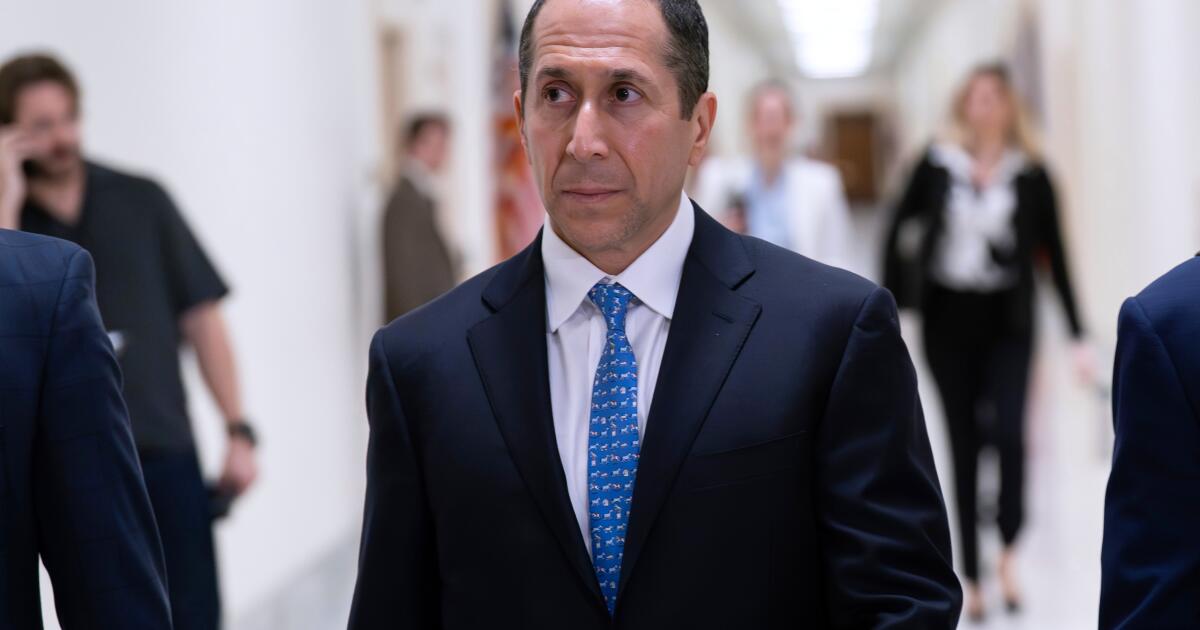
WASHINGTON — House lawmakers were digging into Jeffrey Epstein’s sprawling financial portfolio on Wednesday as a committee deposed his former accountant and tried to understand his connections to some of the world’s wealthiest men.
Richard Kahn, who worked closely with Epstein for years and now serves as an executor of his estate, appeared for the closed-door deposition on Capitol Hill. He told lawmakers that he had not personally seen evidence of Epstein’s sexual abuse, but provided a fuller picture of how Epstein acquired his wealth. The wealthy financier made hundreds of millions of dollars over two decades, during which he struck up friendships with some of the world’s most powerful men.
Kahn “was under the impression that Epstein made his money as a tax advisor and a financial planner,” said Rep. James Comer, the Republican chair of the House Oversight Committee. Lawmakers argued that a fuller picture of Epstein’s finances could help the public understand how, for years, he was able to get away with trafficking and sexually abusing underage girls.
“Jeffrey Epstein’s sex trafficking ring would not have been possible without Richard Kahn, who managed Epstein’s money for years, authorized payments, including payments to victims and survivors,” said Rep. James Walkinshaw (D-Va.), who added that Kahn told them he was unable to recall details of some of the transactions and communications that he was asked about.
Kahn has said that he was unaware of Epstein’s sexual abuse and had not seen any of his victims.
Comer (R-Ky.) also said that lawmakers confirmed during the deposition that Epstein received significant amounts of money from former retail shopping chain executive Les Wexner, hedge fund manager Glenn Dubin, tech entrepreneur Steven Sinofsky, investor Leon Black and the Rothschilds, a wealthy banking family.
None of those people have been accused of wrongdoing in their relationships with Epstein, but Democrats on the committee argued that anyone with ties to the wealthy financier should be scrutinized. Wexner was deposed by the committee last month, and Comer has also called on Black, among several others, to appear for transcribed interviews.
Kahn also told lawmakers that Epstein had financial ties to Ehud Barak, who was the prime minister of Israel from 1999 to 2001, according to Democratic Rep. Suhas Subramanyam. Barak has not been accused of wrongdoing and has said he regrets his friendship with Epstein.
Comer also said Wednesday that the committee has reviewed over 40,000 documents that it subpoenaed from JPMorgan Chase and Deutsche Bank. Epstein was connected to at least 64 business entities, according to Comer.
Republican President Trump has strongly denied any wrongdoing in his own ties to Epstein, and Comer said that Kahn had never seen any financial transactions between Epstein and Trump. Comer said that Kahn is the latest witness to testify that they had never seen Trump doing anything wrong with Epstein.
“The investigation’s about getting the truth to the American people, trying to figure out how the government failed, answer questions we all have,” Comer said.
Groves writes for the Associated Press.

Dickens v Cacace: Fighters leave talking for Dublin ring in WBA title fight
Despite the miserable weather, it wasn’t quite a storm in Dublin on Thursday, but one is quietly brewing for Saturday night when James ‘Jazza’ Dickens puts his WBA super-featherweight world title on the line against Anthony Cacace in the city’s 3 Arena.
As is the way, there were no bold statements or gimmicks from either at Thursday’s final press conference as their no-frills approach to the fight game ensured the exchanges were complimentary rather than confrontational.
Described as Cinderella Man v Cinderella Man, the pair have travelled rough terrain to get here and that is what sets this up perfectly.
Both have had their setbacks in boxing, with 34-year-old Dickens falling short in world title fights at super-bantamweight and featherweight before getting his hands on the gold when upgraded from the ‘interim’ title he won against Albert Batyrgaziev last summer.
Cacace, 37, endured years of disappointment before stopping Joe Cordina for the IBF version in May 2024, opting to vacate in order to face Leigh Wood in Nottingham last year.
“Until that first bell, all of this [build-up] is just nonsense and we have to sit here and talk,” said Liverpool’s Dickens.
“We just like to fight, but this is part of the business. I think we both just want to get in there and get the respect, throw some punches and shake hands after.”
Cacace is cut from the same cloth, with the Belfast man fully aware of what it has taken the champion to get here considering he has travelled a similar road.
“There is no point sitting here and saying ‘I’m going to do this and that’ because we are fighters and one punch can change everything,” Cacace said.
“I know Jazza has a big heart, same as me. We’re pretty similar in terms of career, so I fully respect Jazza for what he’s done in his career. He’s here for the same reason as me – to put food on the table for his family and that’s the bottom line.”

US military ‘not ready’ to escort oil ships through Hormuz, official says | US-Israel war on Iran News
The United States military is “not ready” to accompany oil ships through the Strait of Hormuz, a top official in President Donald Trump’s administration says as Iran continues to block the strategic waterway.
US Energy Secretary Chris Wright told the CNBC business news channel on Thursday that the markets are experiencing a “short-term disruption”, predicting that the war would go on for “weeks, not months”.
Recommended Stories
list of 3 itemsend of list
Despite Trump’s repeated threats, Iran has largely succeeded in shutting down the strait, which links the Gulf to the Indian Ocean. The closure has sent oil prices soaring.
Wright described the effects of the crisis as “short-term pain for long-term gain”, arguing that the US is “destroying” Iran’s ability to threaten the energy market.
Last week, Trump suggested that the US Navy would escort ships through the Gulf, but Wright said on Thursday that the move “can’t happen now”.
“We’re simply not ready. All of our military assets right now are focused on destroying Iran’s offensive capabilities and the manufacturing industry that supplies their offensive capabilities,” the energy secretary said.
“We don’t want this to be a brush-off for a year or two. We want to permanently destroy their ability to build missiles, to build roads, to have a nuclear programme.”
His comments came as Iran’s new supreme leader, Mojtaba Khamenei, affirmed in his first public comment since being selected to succeed his assassinated father, Ali Khamenei, that the Strait of Hormuz should remain closed during the war.
“The will of the people is to continue effective and deterrent defence,” Khamenei said in a written statement. “The tactic of closing the Strait of Hormuz must also continue to be used.”
The Iranian military has said it would “welcome” the US Navy escorting oil ships, suggesting it is prepared to strike US forces in the narrow waterway.
On Wednesday, three commercial vessels were attacked near the strait.
Wright announced earlier this week on social media that the US Navy had escorted an oil ship through the strait, then quickly deleted the post. The White House subsequently confirmed that the claim was not true.
It is not clear why the statement was released and then retracted.
Assurances by US officials that Washington would open the strait have temporarily calmed markets, only for prices to spike again.
The price of a barrel of oil peaked at about $120 on Sunday, up from about $70 before the US and Israel launched the war on February 28. It has been yo-yoing between $80 and $100 for the past few days.
In addition to the marine blockade, Iran has targeted oil installations across the Gulf.
As one of the world’s largest oil producers, the US is largely self-sufficient. But possible shortages in Asia and Europe have put a strain on prices globally.
According to data from the American Automobile Association, the average price of one gallon (3.78 litres) of petrol in the US is now $3.60, up from $2.94 last month.
Rising energy prices could fuel inflation and affect the cost of basic goods, including food.
But Trump suggested on Thursday that the US is benefitting from skyrocketing oil prices.
“The United States is the largest Oil Producer in the World, by far, so when oil prices go up, we make a lot of money,” the US president wrote in a social media post.
“BUT, of far greater interest and importance to me, as President, is stopping an evil Empire, Iran, from having Nuclear Weapons, and destroying the Middle East and, indeed, the World.”
Iran denies seeking a nuclear weapon, and Trump reiterated for months before the current conflict that US strikes against Iranian facilities in June had “obliterated” the country’s nuclear programme.
B-1B Being Loaded With Bunker Busters In England A Sign Of Increasing Air Supremacy Over Iran
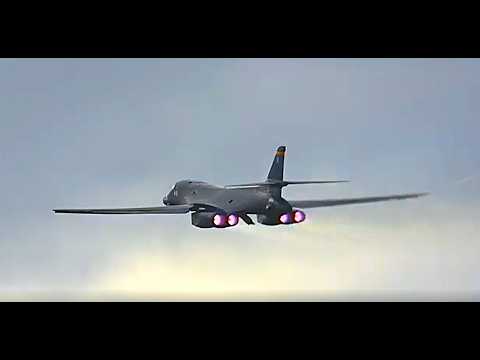
A video out of RAF Fairford in England shows American B-1Bs getting prepped for a strike mission against Iran. In addition to the staple AGM-158 JASSM cruise missiles being readied for loading onto the ‘Bones,’ we see GBU-31 Joint Direct Attack Munitions (JDAMs) equipped with BLU-109 2,000-lb bunker buster warheads. We can also see the revolving weapons rack being extracted from the B-1’s weapons bay. The move from cruise missiles to JDAMs, at least for some targets, is a sign that air supremacy over Iran is becoming more assured, at least in some areas. You can read all about how the U.S. and Israel had not achieved air supremacy last week in our report linked here.
The videos were posted on X by journalist Richard Gaisford and can be seen below:
The bomber force at RAF Fairford has expanded even larger over the last couple of days. There were nine American bombers at Fairford — three B-52s and six B-1s — as of the start of this week. Now there are 15 total — three B-52s and 12 B-1Bs.
Bomber aircraft can achieve far greater and more varied effects if they are allowed to directly strike targets instead of relying on cruise missiles fired at standoff ranges. This is especially true for delivering withering assaults on large target areas via a belly full of JDAMs. It also allows the aircraft to do this against targets that require bunker-buster capabilities. So far, we only know of the B-2 that has executed large-scale bunker buster attacks in Iran, using its stealth capabilities, as well as support from the total force, to ensure it can safely return from the mission. Fighters have been able to deliver much smaller numbers of these weapons onto targets deeper in Iran. Opening up these same target sets to forward-deployed B-1s and B-52s would help change the pace and impact of the air campaign.
Potential targets include large industrial complexes used for long-range weapons production and development, command and control bunkers, nuclear-program related sites, and, maybe most likely, keeping Iran’s underground ‘missile cities’ entombed by bombing their entrances so that the weapons that are housed inside can not be put to use.

B-1s first mission to Iran out of RAF Fairford UK
Still, B-1s and B-52s will likely operate over western Iran, where degradation of enemy air defenses has been the focus for nearly two weeks. Venturing into the eastern part of the country, which has seen far less attention, probably remains too risky. This is underscored by the map below, which the Pentagon released yesterday, showing the distribution of strikes across Iran during the first 10 days of the conflict (February 28 to March 9).

We still don’t know if the U.S. military will activate Diego Garcia as another forward operating location for its bombers. The U.K. government approved the use of both Fairford and Diego Garcia last week after denying that access leading up to the war. We have seen some heavy transport movements in satellite imagery to the remote island outpost in the Indian Ocean, and KC-135 tankers and force protection F-16s are still there, so it’s possible this could occur or has already happened. Cloud cover has kept the island obscured in satellite imagery for the last few days. Of course, such a deployment all depends on how long this campaign will actually last, with conflicting signals from the Trump administration as to its planned duration and exit strategy.
Regardless, it looks like the B-1s are going to be using their extremely large payload capacity to directly attack hardened Iranian targets in the very near future.
Contact the author: Tyler@twz.com

Moment Gemma Collins screams ‘I’m f***ing loaded!’ as she wins £20k at Cheltenham races
GEMMA Collins has won £20k at the Cheltenham races and made £5k off of just one bet.
The reality star, 45, was left overjoyed today when she raked in the cash and took home the huge amount of money.
A source told The Sun: “Gemma was over the moon and kept showing her wads of cash to James Nesbitt in the Paddy Power box. She made £20k the whole day – and £5k off one £500 bet.”
In an exclusive video obtained by The Sun, Gemma was seen shouting: “I’m f***ing loaded!,” as she revelled in her glory, before adding: “I’m coming home with 20 large ones.”
She took to Instagram to give fans a peek into her winnings as she showcased just one of her successful betting slips.
On the slip, it revealed that the former TOWIE star had won £5k from a £500 bet.
READ MORE ON GEMMA COLLINS


The television icon wrote over it: “I won @paddypowerofficial. Best day ever!,” alongside horse and four leaf clover emojis.
Gemma certainly looked the part at the Cheltenham Festival as she stunned while standing on a balcony with pals.
She kept warm in an eye-catching blue and purple checked coat with brown fur sleeves and a belt which perfectly synched in her waist.
She accessorised with a white and red headscarf and a pair of blacked out sunglasses.
Her winning moment was captured as she enjoyed a glass of bubbly and was hugged by friends surrounding her.
One of those people was Danny Dyer, who was seen throwing up a fist in celebration for the Celebrity Big Brother star.
In true Gemma fashion, she was spotted looking very animated as she celebrated her exciting victory.
Her big win comes after she was announced as part of the line-up for the second series of I’m A Celebrity… South Africa.
The show was filmed last year and will see familiar faces return for a second stint on the hit ITV series.
After it was announced earlier this week, Gemma revealed she nearly pulled out of it but was put in her place by her make-up artist.
Speaking at the press launch, Gemma said: “It didn’t work out for me the first time around in there and ever since it’s been like this black cloud hanging over my head.
“Obviously I’m older now and I just thought, I have to do this. It was one regret that I had that I left.
“I was absolutely bricking it. I was petrified. My makeup artist slapped me at Heathrow Airport because I actually said I don’t think I can actually go through with this.
“But do you know what? I took a deep breath. I went in strong. And to be honest, I think I shut it down.
“It’s not the GC in there. It’s Gemma Collins as you’ve never seen her before. You’ll see me vulnerable in there.
“I was so stripped bare going in there. And because I knew it was so disastrous the time before, I had no chance to back out of any of it.”
“The one thing that troubled me was the copious amounts of washing up,” said Gemma.
“I was on camp duty with Adam and obviously, it was a massive camp, and I’m not going to lie, I’ve got two dishwashers at home.”
ITV viewers will remember Gemma’s meltdown back in 2014 and refusal to get into a helicopter to get into camp on day one.
She was then forced to make her own way to camp, but things went from bad to worse.
After struggling with camp life and the food rations, she sensationally quit the series on day two.

Popular English seaside town reveals plans for huge £4.5million makeover
A SEAFRONT attraction has taken a major step closer to being restored to its former glory.
The seaside town of Worthing is looking to save its lido – but it could come at a cost of £4.5million.
Worthing Lido sits right on the front of the town’s beach minutes from its popular art deco pier.
It was once a popular seawater swimming pool between 1957 and 1988.
And it might be making a comeback as the local council has said it will commit £1.29million towards the first step of its redevelopment.
Councillor Sophie Cox, leader of the council, said: “The community has made it clear how much the lido means to them and that they want us to invest in it for the decades to come.


“We’re determined to make that a reality.
“Using more than £1m from the Community Infrastructure Levy shows our commitment to turning plans into action, but we know that more is needed to cover even the least expensive substructure solution.”
The funding marks the first time ever that a cash sum has been set aside for the former lido.
While the £1.29million will cover initial works, there are predictions that the work will cost at least £4.5 million.
The lido on Worthing Beach was originally built as a bandstand in 1925 and was used as a performing space for 30 years.
In 1957, the space was converted into an unheated swimming pool.
It was a popular spot for swimmers up through into the 1980s.
In 1988, Worthing Lido was even used as a temporary home to dolphins from Brighton Sealife Centre.
The dolphins were relocated to the lido while their permanent enclosure at the Sealife Centre was undergoing renovations.
In 1989 the pool was covered over and the site transformed into an entertainment centre.
It’s now home to a cafe, arcade, and is occasionally used as an event space.
For more on lidos, here are all of the new ones set to open across the UK from seafront pools to city swimming spots.
And here’s one English seaside town’s beachfront lido which will reopen this summer despite fears of closure.

Vietnam’s New Wealth: How Techcombank is Shaping Private Banking
Vietnam’s economy is undergoing a remarkable transformation, marked by rapid growth and the recent upgrade to “secondary emerging market” status by FTSE Russell. This shift is creating a new class of affluent and high-net-worth individuals, fueling unprecedented demand for sophisticated wealth management. At the forefront of this burgeoning industry is Techcombank, whose private banking arm, Techcombank Private, was recently named Best Private Bank in Vietnam for 2026 by Global Finance.
The award is more than a simple recognition; it’s a validation of a strategy designed for a new era of Vietnamese wealth. As international investors turn their attention to Vietnam, attracted by its dynamic market and stable growth, the country’s own entrepreneurs and established families are seeking financial partners who can navigate both local complexities and global opportunities. This is where the private banking landscape is being redrawn.
A Rapidly Maturing Wealth Management Landscape
Vietnam’s private banking industry is coming into its own as one of the most sophisticated and competitive markets in the region. Rapid wealth accumulation, driven by entrepreneurial success and significant generational wealth transfer, is fueling the sector’s evolution. Today’s affluent clients demand far more than basic investment services—they expect tailored strategies, global connectivity, and a partner who can support their ambitions at every stage.
“We are witnessing a pivotal moment in Vietnam’s economic story. Our clients are seeking a strategic partner who understands their journey. They are innovative founders and family leaders who require holistic solutions that cover wealth creation, preservation and legacy planning.”
Nguyen Van Linh, Deputy Chief Retail Banking Group at Techcombank Private.
This maturing market is shaped by a new generation of high-net-worth individuals who value seamless digital experiences paired with the kind of trusted, long-term relationships private banking is known for.
“The key is to combine global best practices with a deep understanding of the local context,” Van Linh explains. “Our clients’ ambitions are not confined by borders. Whether it’s planning for their children’s education overseas, exploring international investment opportunities or structuring their business for global expansion, we must provide world-class expertise right here in Vietnam.”
A Model Built on Expertise and Ecosystem
Techcombank Private’s leadership is underscored by its impressive market position, managing over VND 428 trillion in Assets Under Management and holding more than 50% market share in the affluent customer segment.
These numbers reflect a carefully constructed service model. At its core is the dedicated Private Client Relationship Manager (PCRM), an advisor trained to international standards who provides a single point of contact for a client’s diverse financial needs. Supported by a central Chief Investment Office (CIO) team, PCRMs deliver bespoke financial strategies, from intricate estate planning to dynamic portfolio management.
“Our advisory model is built on a foundation of trust and intellectual rigor,” says Van Linh. “We don’t just offer products—we co-create solutions. This involves a deep dive into a client’s personal and business aspirations to build a financial roadmap that is both resilient and aligned with their long-term vision.”
Clients gain access to a diverse portfolio of exclusive investment opportunities, including sophisticated products like ETFs, synthetic iTracker ETFs and personalized structured products. Crucially, they also benefit from privileged access to Techcombank’s integrated ecosystem. This network includes advisory and brokerage from TechcomSecurities, specialized protection solutions from Techcom Life Insurance, and unique access to premium real estate and corporate bond offerings from Vietnam’s leading developers and corporations.
Integrating Wealth and Lifestyle
A defining feature of modern private banking in Asia is the fusion of financial management with curated lifestyle experiences. Affluent clients today see wealth not just as a financial metric but as an enabler of a fulfilling life.
Techcombank Private has embedded this understanding into its service by creating a “Red Carpet Banking Experience.” This goes beyond preferential rates to offer tangible value in clients’ daily lives. The recently launched Techcombank Private lounges at Hanoi’s Noi Bai and Ho Chi Minh City’s Tan Son Nhat airports are a prime example—providing serene, exclusive spaces for clients on the move.
“We believe that true value is created when we can enhance our clients’ lives beyond their finances,” notes Van Linh. “Our 24/7 Global Concierge service, our exclusive cultural events, like the ‘Carmen’ opera, and our partnerships with luxury brands are all designed to give back our clients’ most valuable asset: their time.”
This philosophy extends to the Private Rewards Program, which turns everyday transactions into opportunities. Points can be redeemed for experiences in dining, travel and wellness. The program also features a unique family-sharing component, allowing family members to pool points for shared experiences, strengthening familial bonds and financial engagement across generations.
Nurturing the Next Generation
As Vietnam navigates its path to becoming a high-income nation, the concept of legacy is increasingly important. Recognizing this, Techcombank has committed to nurturing the next generation of leaders. The “Techcombank Education for Next Generation” program, developed in partnership with VinUni University, is a pioneering initiative that provides financial literacy training for the children of private clients.
“Building legacy is a multi-generational endeavor,” Van Linh emphasizes. “By equipping our clients’ children with financial knowledge and a sense of stewardship, we are protecting wealth and helping to ensure it grows and creates a positive impact for decades to come. This is our ultimate commitment—to be a trusted partner through every stage of our clients’ success story.”
In a rapidly evolving market, Techcombank has established a clear vision for the future of private banking in Vietnam—one that is deeply personal, digitally empowered, and holistically integrated into the lives and legacies of the nation’s most successful individuals.

Federal distrust prompts some Democratic states to protect polling places, election records
SANTA FE, N.M. — Democratic-led states alarmed by the prospect of federal immigration officers patrolling the polls during this year’s midterm elections are taking steps to counter what they see as a potential tactic to intimidate voters.
New Mexico this week became the first state to bar armed agents from polling locations in response to President Trump’s immigration crackdown, a step being considered in at least half a dozen other Democratic-led states.
The moves highlight a deep distrust toward the Trump administration from blue states, which have been the target of his aggressive immigration tactics while threatened with military deployments and deep cuts in federal funding. Their concerns were heightened after the president suggested he wants to nationalize U.S. elections, even though the Constitution says it’s the states that run elections.
The Trump administration said it has no plans to deploy immigration agents to polling locations. Last month, the heads of Immigration and Customs Enforcement and Border Patrol told a congressional committee “No, sir” when asked if they had any plans to guard polling places. The Department of Homeland Security’s deputy assistant secretary for election integrity, Heather Honey, recently told secretaries of state it “is simply not true” that immigration agents will be at the polls this year.
But a group of eight secretaries of state wants that in writing from the nominee to succeed Kristi Noem as secretary of the Department of Homeland Security. In a letter Monday to Trump’s new pick to lead the agency, Markwayne Mullin, the group pressed for assurances “that ICE will not have a presence at polling locations during the 2026 election cycle.”
Federal law already prohibits the deployment of armed federal forces to election locations unless “necessary to repel armed enemies of the United States,” but Democratic lawmakers, election officials and governors remain concerned.
“The fear is that the Trump administration will attempt to evoke a national emergency or execute some other deployment of federal agents or military troops in order to interfere with elections and intimidate voters,” said Connecticut Democratic state Rep. Matt Blumenthal, co-author of a state bill to establish a 250-foot buffer from federal agents at local polls and other restrictions on federal intervention. “And we’re not going to let that happen.”
A potential clash between states and the federal government
Other bills seeking to ban immigration agents at the polls are pending in Democratic-led states, large and small, from California to Rhode Island.
In Virginia, lawmakers are weighing legislation that could prevent federal civil immigration officials from making arrests within 40 feet of any polling place or courthouse. But the provision on polling sites remains under negotiation, and it’s unclear whether it will be in the final bill.
The newly signed law in New Mexico prohibits orders that put any armed person in the “civil, military or naval service of the United States” at local polling locations and related parking areas, or within 50 feet of a monitored ballot box, from the start of early voting.
Under New Mexico’s new law, which takes effect in May and will be in place for the state’s June 2 primary, people who experience intimidation or obstruction at the polls from federal agents or military personnel can file a civil lawsuit seeking relief in state courts. State prosecutors and local and state election officials also can sue, and the courts can apply fines of up to $50,000 per violation.
It also prohibits changes to voting qualifications and election rules and procedures that conflict with New Mexico law, as Trump prods the U.S. Senate to approve a bill to impose strict new proof-of-citizenship requirements in elections nationwide.
Any state measures intended to counter federal election law will face legal hurdles because of the supremacy clause in the U.S. Constitution, which says federal law supersedes state law.
“It could set up a direct clash between state governments and the federal government. We don’t know exactly how that’s going to go,” said Richard Hasen, director of the Safeguarding Democracy Project at the UCLA School of Law. “Given the supremacy clause, there’s only so much states can do.”
‘We will hold free and fair elections’
New Mexico Gov. Michelle Lujan Grisham said her own distrust of the Trump administration in election oversight stems from ongoing Department of Justice efforts to get detailed state voter data without explaining why and Trump’s continuing false claims of widespread fraud in the 2020 presidential election.
“Do I believe the federal government and people in the White House? No,” said Lujan Grisham, who terms out of office at the end of 2026.
“We are sending a message to everyone: We will hold free and fair elections, and New Mexicans will be safe in every ballot location and that’s our responsibility,” the Democrat said Tuesday during a news conference. “The Constitution says the states run their elections, and that bill makes that painfully re-clear to the federal government.”
Federal seizure of ballots and election records is a growing concern
New Mexico Republicans, who are in the minority in the legislature, voted in unison against the bill.
“I would question strongly why we have to do this other than just to have to poke the president in the eye,” state GOP Sen. Bill Sharer of Farmington said during floor debate.
State Sen. Katy Duhigg, an Albuquerque Democrat who was a co-sponsor of the legislation, said it’s “better safe than sorry with democracy.” She said she wanted to “make sure that there was some sort of tool that our local law enforcement would have at their disposal if something does happen, if the federal government does in some manner try to interfere with our elections.”
Connecticut’s bill, scheduled for a hearing later this week, also takes aim at federal attempts to seize ballots or other election material. It would require that state officials receive notification of such a move.
Blumenthal said state lawmakers can’t prevent seizures such as the January search by the FBI on an election center in Fulton County, Ga., a Democratic stronghold that includes Atlanta. But he said, “there might be an opportunity for our state attorney general’s office or the secretary of the state’s office to challenge that.”
Lee and Haigh write for the Associated Press. Haigh reported from Hartford, Conn. AP writer Oliva Diaz in Richmond, Va., and David A. Lieb in Jefferson City, Mo., contributed to this report.

Cheltenham Festival 2026: Nico de Boinville and Irish jockey Declan Queally shake hands after accusations of racial abuse
After first accusing De Boinville of being “abusive”, Queally told The Racing Post, external on Wednesday he had received “repeated racist abuse” from his rival.
The Irishman, riding I’ll Sort That, and De Boinville on Act Of Innocence could be seen exchanging words at the start line, but the Englishman denies any wrongdoing.
De Boinville told BBC Radio 5 Sports Extra on Thursday: “It is an ongoing investigation.
“The stewards are gathering all the evidence they can from all the video footage.
“From my point of view, I deny all the allegations against me.
“I can categorically say there weren’t any racial slurs or anything like that. Let’s let it play out.”
Queally, 37, appeared to topple off his horse before Wednesday’s race started and had to be checked over by a doctor. He was given the all-clear to race, along with Ballyfad, who was kicked pre-race and assessed by a vet in a chaotic few minutes.
A number of false starts to the planned rolling start meant the horses were moved to a standing start at the tape – leaving jockeys jostling for position.
After the race, Queally, who finished fifth, was interviewed by ITV Racing before entering the weight room.
He said: “Being abused by an English rider, Nico de Boinville, not very nice.
“I am an amateur, coming over here and riding in front of my kids. Horrific.”
When informed of Queally’s comments about a difficult start to the race, De Boinville responded: “Maybe he should look in the mirror.”
Legendary jockey AP McCoy said Queally has “as much right to be there as anyone”, while Ruby Walsh said the start system “hasn’t worked for 20 years”.
Walsh told ITV: “It’s 2026. How has nobody devised a tape that rolls in front of the horses?
“The tape should have been in front of them when they went on to the track and it should be moved in front of the horses.
“We can send missiles after fighter planes in the Gulf, but nobody can design a rolling flyaway tape. That’s the joke.”

Lula, Flávio Bolsonaro tied in Brazil presidential runoff poll

Brazilian President Luiz Inácio Lula da Silva (pictured) and right-wing Sen. Flávio Bolsonaro are each polling 41% in a potential runoff election. Photo by Sebastiao Moreira/EPA
March 12 (UPI) — Brazilian President Luiz Inácio Lula da Silva and right-wing Sen. Flávio Bolsonaro are tied for the first time for a potential runoff after the Oct. 4 presidential election, according to a poll released Wednesday. A runoff would be Oct. 25.
The survey found each candidate with 41% support in a hypothetical second round.
Bolsonaro, a member of the Liberal Party and son of former President Jair Bolsonaro, leads among voters who identify as independent, a shift that could give him an edge.
Among independents, Bolsonaro gained 6 percentage points and would lead Lula 32% to 27% in a runoff scenario. Another 36% said they would not vote and 5% were undecided.
The gap between the two candidates has narrowed steadily, from 10 points in December to seven in January, five in February and zero in March, according to the survey conducted by polling firm Quaest and commissioned by Genial Investimentos.
Similar trends have appeared in other recent polls. A Datafolha survey published Saturday showed Lula with 46% support compared with 43% for Bolsonaro.
Quaest tested first- and second-round scenarios with eight potential candidates. In first-round simulations, Lula leads in two scenarios and is statistically tied with Bolsonaro in five others. Lula’s support ranges between 36% and 39%, while Bolsonaro’s support ranges between 30% and 35%.
Felipe Nunes, Quaest’s director, said Bolsonaro’s gradual rise began after his father publicly named him as a potential candidate in December.
“Flávio has managed to consolidate Bolsonaro’s electorate. He has grown among right-wing voters and improved his performance among independent voters,” Nunes said, according to news website O Globo.
The poll also showed worsening public assessments of the government and the economy.
Both Lula and Bolsonaro face high rejection rates, with 56% of respondents saying they would not vote for Lula and 55% saying the same about Bolsonaro.
“The shift over time is striking. In December, Lula had much greater potential and lower rejection. Now, both have similar levels,” Nunes said.
The survey found 48% of Brazilians believe the economy has worsened over the past 12 months, while 24% say it has improved. In February, negative perceptions stood at 43%.