



I love a Mother’s Day freebie
SPRING is blooming and what better way to celebrate Mother’s Day than heading out in the sunshine and making use of some ‘mums go free’ deals to top attractions.
I love heading out with my boys, but sometimes it can cost a lot by the time I pay for myself and them.
But when it comes to Mother’s Day, my secret weapon is heading to spots that have a ‘mums go free’ offer.
The offers celebrate Mother’s Day but is a great opportunity for having a fun family day out whilst saving a bit of cash.
One of our favourites as a family is Audley End miniature railway near Saffron Walden in Essex, which is about to launch a new play village in time for its reopening.
Now known as Audley End Enchanted Railway, it’s a must-visit for fans of all things fairy, as the train ride is full of magical moments winding through the woodlands.
Read more on travel inspo


There’s an adventure playground and an elf and fairy walk as well as the new wooden play houses.
And this Mother’s Day weekend, both mums and grandmothers go free.
Just across the road is one of the historic houses looked after by English Heritage.
This year, Mothering Sunday falls during the National Lottery Week, which means free entry to English Heritage sites between March 7 and 15 with a lottery ticket.
At Audley End House and Gardens, one adult and two children can get free entry with each lottery ticket, so you could easily combine the English Heritage deal with the mums go free offer at the miniature railway for a full day of family fun.
While National Trust properties in England and Wales are also taking part in the National Lottery Open Week, many don’t offer free entry on Mothering Sunday, so that’s something to bear in mind.
But there are a number of other big names participating in National Lottery Open Week, such as several RSPB destinations around the UK.
What’s great about lottery week is that it’s not specific to mums – so if you’ve got an important person who you want to celebrate on Mothering Sunday, you can treat them, whoever they are.
As for other offers, you can head to Gulliver’s theme parks and get one adult entry for free with each paying child on March 14 and 15.
We always have a great time when we visit Gulliver’s Land in Milton Keynes, which is perfect for a first theme park visit if you’ve got little ones who haven’t been on rides before.
We especially love the JCB zone near the entrance, which has a covered picnic area where mums can have a coffee while the kids keep themselves occupied with diggers galore.
There are also Gulliver’s sites in Matlock Bath in Derbyshire and in Warrington, so you’re spoilt for choice if you want a fun day out.
These aren’t the only theme parks with offers for Mother’s Day either.
Other attractions include Drayton Manor near Tamworth and Flamingo Land in Yorkshire, both of which let mums go free on Mother’s Day with a full paying child.
Loads of farm parks around the country get in on the act of offering mums free entry and March is the perfect time of year for a visit, with lots of baby animals being born.
Bluebell Dairy near Derby is one example, where my little boy particularly enjoyed the huge jumping pillow and watching the cows in the milking parlour before sampling the ice cream that the farm is famous for.
Some farms are even giving mums a little gift as well as free entry.
Rand Farm Park near Lincoln, lets mums take home a potted plant to mark their special day, while at Thornton Hall Country Park near Skipton, mother figures will be offered a free glass of prosecco or orange juice.
The best way to find somewhere near you is to simply Google search ‘mums go free offer near me’, and you should discover a number of spots where you can save some money this Mother’s Day.
20 attractions with ‘mums go free’ offers
HERE are 20 attractions offering free entry for Mother’s Day next weekend:
- Amberley Museum, West Sussex
- Cotswold Farm Park
- Monk Park Farm, North Yorkshire
- Wookey Hole
- Longleat
- Anne of Cleves House
- Fishbourne Roman Palace and Gardens
- Lewes Castle and Museum
- Michelham Priory House and Gardens
- The Priest House and Gardens
- Wheelgate Park, Newark and Mansfield in Nottinghamshire
- Thornton Hall Farm
- The gardens at Hillsborough Castle
- Puxton Park, Weston-super-Mare
- Weald & Downland Living Museum, Chichester
- Preston Manor, Brighton
- Yorkshire Wildlife Park
- Seaton Tramway, East Devon
- Babbacombe Model Village, South Devon
- Woodlands Family Theme Park, South Devon
For more places to explore this Mother’s Day weekend, there are hundreds of paid-for attractions with free entry when you have this one item.
Plus, the family-friendly spas perfect for a Mother’s Day treat from country house hotel to hot-tub heaven in Lake District.
Iran war sees travel expert issue ‘big’ warning for Brits with Dubai, Qatar or Abu Dhabi flights
Specialist Claer Barrett issued the advice to concerned people who have flights in the area booked

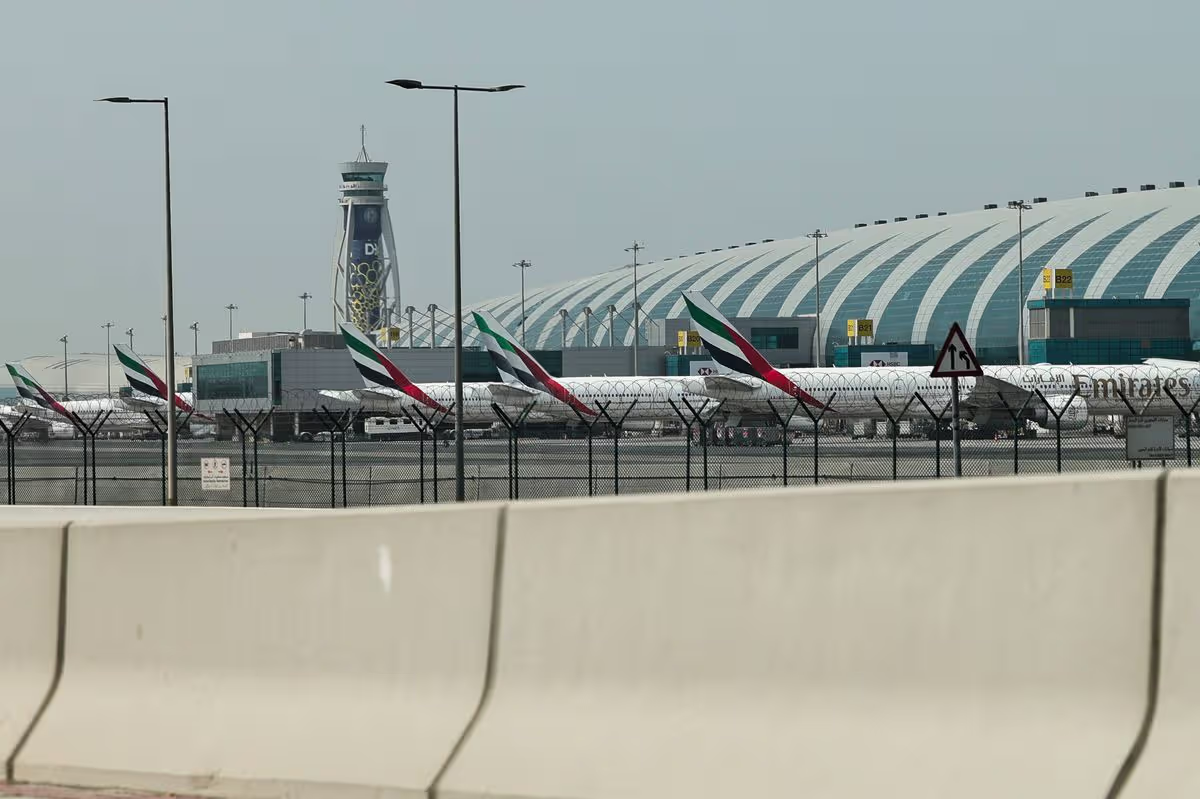
Emirates Airline planes parked on the tarmac at Dubai International Airport in Dubai on March 2(Image: FADEL SENNA, AFP via Getty Images)
A travel specialist is calling on Brits to stay calm and follow crucial guidance if their travel arrangements have been jeopardised due to the US-Israel military action against Iran. Travel chaos continues to plague the Middle East as Iran launches counter-attacks.
It is estimated that more than 100,000 Britons were left stranded in the area as airports including Qatar, Abu Dhabi and Dubai shut down operations because of the hostilities. More than 2,000 passengers landed in the UK on evacuation flights from the United Arab Emirates on Wednesday, according to Government officials.
Questions persist about the duration of the conflict, casting doubt over numerous travellers’ plans given the crucial role of Gulf airports as connection hubs for journeys to Asia and Australasia. Appearing on ITV’s Lorraine, specialist Claer Barrett delivered ‘vital’ guidance for those planning to travel in the near future.
She stated: “My big message to everyone watching is don’t panic and hit the cancel button, because if you cancel a flight, a holiday, whatever, yourself, you won’t have as many rights as if the airline cancels the flight.
“Let’s start off with flights,” she went on. “So if an airline cancels your flight, as long as you’re flying with a UK airline or departing or flying back to a UK or EU airport, you’re legally entitled to choose. So if they cancel you, you can say, ‘Well, I want a refund, I want my money back,’ or, ‘I want a different flight with a different airline, I want to be rerouted’ or offered assistance if you were stuck somewhere. So it’s important not to cancel yourself.
READ MORE: Travel expert Simon Calder update for people with Dubai, Qatar or Abu Dhabi flights bookedREAD MORE: Aviation expert Alex Macheras predicts when Emirates, BA, and Qatar Airways flights might resume
“But if your upcoming holiday is in the affected area, the advice from Which?, the big consumer website, is monitor the airline’s website to determine whether your plans are going to be affected, because lots of different places are or aren’t.
“Keep an eye on the Foreign and Commonwealth Development Office website, that’s the FCDO, they’re the people who can issue ‘do not travel’ warnings. And for goodness’ sake, make sure that you’ve got your travel insurance in place when you book your holiday.
“This is the advice that me and other consumer experts give, because something could happen before you go and you’d need to make a claim.”
Package holidays
Package breaks – where holidaymakers purchase their flights and lodging in a single booking from the same provider – are frequently more economical and generally regarded as being a more secure choice. The explanation for this is that numerous packages are safeguarded by the Atol scheme or the Package Travel Regulations (PRTs).
Any package holiday booked in the UK automatically comes with the protection of the PTRs, whilst package holidays that include a flight are safeguarded by Atol. All travel firms selling package holidays with flights to UK customers are legally obliged to hold an Atol licence.
This ensures people are brought home during a crisis. When the original Thomas Cook went under in 2019, nearly 150,000 holidaymakers were flown back by the UK government in the largest repatriation in the UK’s peacetime history.
You will also receive a refund if your package holiday is cancelled, and be compensated if various factors result in a subpar trip.
“So we’ve covered flights, but package holidays, you’re much better protected with a package holiday because most of them, anyway, are reaching out proactively, I’m hearing, to customers who do have packages booked to the Middle East,” Claer continued.
“And most of them are offering people for no charge the ability to either move their holiday dates or, in many cases, change destination, you know, so you still have your holiday but you go somewhere else. So speak to your tour operator and see what they can do for you.”

Most toxic person you know thinks she’s a people pleaser
A PSYCHOLOGICALLY corrosive and morally reprehensible person genuinely believes all her problems stem from being a people pleaser.
33-year-old Sophie, not her real name , who has not experienced a single conflict in her life that she did not personally ignite, nonetheless insists she spends her life beholden to others.
She said: “It’s been tough, learning how to prioritise myself because it’s against my selfless nature. But the alternative is people taking advantage of my good, open heart.
“I instinctively put other people’s needs before my own. Telling my friend her boyfriend was clearly into me was because she needed to know. The texts to my sister about her arse being the size of an elephant’s? Same.
“Often I can’t attend family events like weddings and funerals because I’m such an empath that I experience love in a different – you could say better – way than others. Instead, thinking of how I can best recover to help them, I go shopping or have a bath instead.
“I’m so meek that it’s a struggle not letting others impede on my time, like my manager. If she says I need to be in at 9am I move heaven and earth to do so, even if I don’t manage it. But I’ve emailed her why four times last night because I’m so desperate to please.
“But change is hard. On the train, I watched a TikTok – no headphones – asking ‘people pleasers, who’s pleased by you?’ And it was so profound. Because nobody seems pleased by me.”

UK’s 2026 Eurovision entry inspired by Britpop legends… though features chorus all in German

BBC bosses have taken inspiration from Britpop legends Blur for the UK’s 2026 Eurovision entry.
The Sun can reveal Look Mum No Computer’s song Eins, Zwei, Drei has been inspired by the British music legends.
It features random lyrics and almost spoken word verses.
Controversially, the chorus is all in German.
Sam Battle, the man behind Look Mum No Computer, says on the track: “If only there was a language that I could count in, that would make me feel better.”
He then launches into a bizarre counting session in German.
The Eurovision track opens with Sam saying: “So sick of doing the whole 9 to 5.
“I pay my dues I’m just staying alive… and I’m so bored, I’m so bored of it. Oh what’s the point of it.”
A source said; “The song is about as far away from last year’s entry as posisble but maybe that’s what the UK needed to do?
“On one hand it’s very Blur inspired.
“On the other there are whole waves of the song that are in German.
“That being said if you had been played it and told it was from another European country you’d think it’s the perfect Eurovision track.”
The song will get its official first play on BBC Radio 2 Breakfast with Scott Mills on Friday morning.
The music video is also set to drop on Friday as well.
This year’s contest takes place in May in Vienna.
The Sun revealed earlier this month how Australia will be represented by Delta Goodrem after she told Bizarre of her dream of competing in the show in an interview back in May 2025.
The Sun previously revealed how BBC bosses were forced to go back to the drawing board after one of their shortlisted acts was exposed for inappropriate comments online.
Bosses hauled the act – who is a solo artist – into a meeting where they were dramatically told they would no longer be representing the UK.
As well as the performer, the song was also ready to go – with the track being played to a number of industry high-flyers to gauge the reaction.
It meant that during January staff had been desperately trying to find a replacement act in time for the impending submission deadline.
A source previously said: “The BBC can’t take any chances with Eurovision being such a pressure cooker this year.
“Routine checks brought up past behaviour that just didn’t line up.
“It was brutal but they were dragged into a meeting and told they could no longer represent the UK.
“Naturally the person was mortified and devastated.
“It’s been a mess ever since the start of the year trying to find a new act.”
British Airways’ ‘fully booked’ update as Middle East travel chaos continues
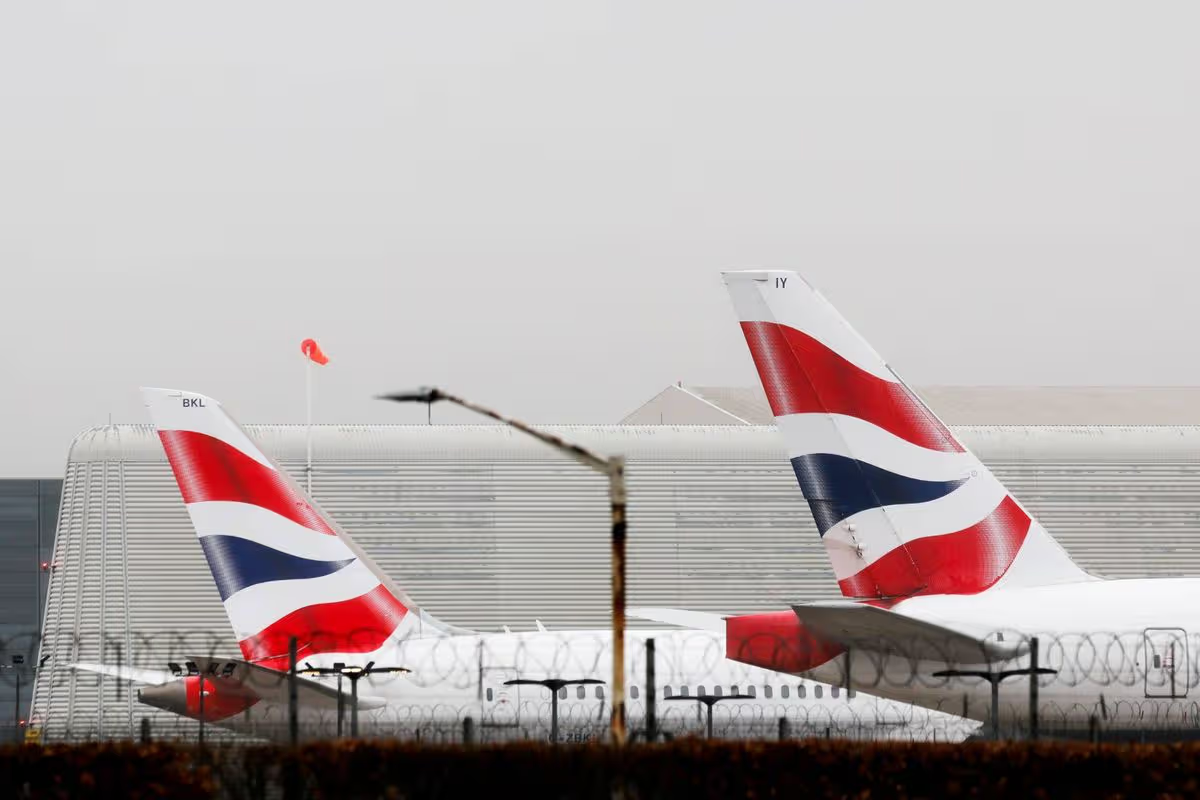
British Airways has warned all services from Oman up until March 7 are now fully booked as the scramble to return from the Middle East continues amid regional tensions

(Image: AFP via Getty Images)
British Airways has issued a warning that flights returning to the UK are ‘fully booked’ as the rush to get back from the Middle East intensifies.
In its most recent public statement, the UK’s flag carrier cautioned that all services departing from Oman through to 7 March are now completely full.
“Flights from Muscat on 5, 6 and 7 March are now fully booked. We will continue to review the situation and, if we are able to, we will add additional services,” a BA spokesperson stated at 2.14pm on Wednesday.
Oman is the nearest nation to major hubs, including Dubai and Abu Dhabi, with accessible airspace. Out of the 136 flights scheduled to depart from Oman today, just 14 have been axed so far. This stands in stark contrast to the UAE, Bahrain, Kuwait, Iraq and Lebanon, where most flights remain grounded.
READ MORE: Majorca set to introduce new cap on tourist numbers over summer monthsREAD MORE: FCDO travel advice updated for Thailand, Dubai and 8 other countries amid Iran tensions
The latest guidance from BA reads: “We remain unable to operate flights from Abu Dhabi, Amman, Bahrain, Doha, Dubai and Tel Aviv. We have scheduled further flights from Oman (Muscat) to London Heathrow departing on 6 and 7 March.
“Flights are for our customers with an existing booking who are in Oman or the UAE. If you wish to travel on one of these flights, please contact us via our dedicated phone line on +44 203 467 3854. Our teams will also be getting in touch with our customers.”
One BA flight bound for London Heathrow left Muscat after just a short delay this morning. Another is scheduled to leave at 2.30am local time tomorrow, and a third at the same time on Saturday.
Home Office minister Alex Norris has announced that a Government-chartered plane, which failed to depart from Muscat, is now scheduled to leave for the UK on Thursday.
However, he was unable to provide an exact departure time.
Mr Norris expressed confidence that the first Government rescue flight departing Oman amidst the escalating conflict in the Middle East would take off on Thursday, following an overnight delay. When questioned by LBC about the reason for the delay, he explained: “It didn’t take off because there are operational reasons… about getting passengers on board, and it wasn’t able to happen in the time that it had to happen. So that’s now going to go today instead.”
Earlier on BBC Breakfast, Mr Norris said: “We made sure we got them (the passengers) hotel rooms for the night as well, and we are facilitating and rebooking today’s flight. We hope that they do, and there’s multiple flights after it as well.”
In other news, Defence Secretary John Healey is en route to Cyprus in an attempt to defuse tensions with the island’s government following a drone strike on the British base RAF Akrotiri.
Mr Healey is expected to land in Cyprus later on Thursday. His visit follows the Cypriot high commissioner to Britain expressing his disappointment at the UK Government’s response to defending the island.
On Monday night, a hangar at RAF Akrotiri was struck by an Iranian-made Shahed drone, launched from Beirut in Lebanon, according to Cypriot officials. Two further drones detected on Monday were sh.
Shot down by British warplanes that took off from Akrotiri.
The UK has deployed air defence destroyer HMS Dragon to aid in the protection of Cyprus, although the Type 45 warship isn’t expected to set sail until next week.
Wildcat helicopters equipped with anti-drone capabilities have also been sent to the island and are anticipated to arrive this week.
In other developments in the conflict:
– Iran’s ambassador Seyed Ali Mousavi was summoned by the UK Government on Wednesday.
– A US submarine sank an Iranian warship in the Indian Ocean.
– Iran persisted in launching attacks at countries across the region, with Saudi Arabia and Kuwait targeted with missiles and drones.
– Western officials reported that the rate of Iranian missile strikes had declined, estimating that Tehran had several more days of capability to continue based on the current firing rate – although they warned that the decrease could also be a result of Iran trying to conserve its stockpiles.
– Turkey reported that a “ballistic munition” launched towards it from Iran was intercepted by Nato air defences.
– Economic uncertainty continued over the conflict in a region that plays a crucial role in international oil and gas supplies.
Column: On Iran, Russia and China, Trump’s weakness for strongmen explains his foreign policy
“I’m not going to start a war. I’m going to stop wars.”
— Donald Trump, in his victory speech Nov. 6, 2024
It’s bad enough that President Trump has broken that oft-repeated pledge and unilaterally started a war, without engaging either Congress or the American public. And that, by his war of choice against Iran, he has in the most perilous way to date betrayed his signature “America First” standard, at least as longtime proponents Marjorie Taylor Greene, Megyn Kelly, Steve Bannon, Tucker Carlson and others mean it, and as many people thought he did too.
What’s even worse than Trump’s mendacity about stopping foreign wars is the broader truth that his war on Iran underscores: In the major theaters of U.S. foreign policy — the Mideast, Europe and Asia — he is essentially letting foreigners set his course, America’s course. And to state the obvious: Israeli Prime Minister Benjamin Netanyahu, Russia’s Vladimir Putin and China’s Xi Jinping do not have America’s interests at heart.
It has long been a defining contradiction of Trump that the wannabe strongman repeatedly shows himself to be in thrall to the world’s actual strongmen. His affinity for them has for years puzzled observers in this country and abroad. Trump strikes a pose — say, on negotiating with Iran about its nukes program, promising peace in Ukraine, hitting China with tariffs — only to crumple after a phone call, a meeting or a slap back from his opposite number.
It’s always hard for a person without a strong core to maintain a stand.
Obviously different factors are at play in Trump’s relationships with Israel, a U.S. ally, with longtime adversaries Russia and China and, more specifically, with each nation’s leaders. But all three cases reflect a personalization of foreign policy that is dangerously unique to Trump. For him, it’s less “what’s good for my country” than “what’s good for me” and “who likes me.” Time and again, he’s been explicit about that.
For all Trump’s cosplaying as a strongman, he shows his weakness as a national leader when he lets foreign counterparts share the wheel with him. As a consequence, he’s driving America erratically at best. At worst, he’s steering into another costly, bloody “forever war” of the sort he railed against for decades.
He’s gone in a direction in the Middle East that, polls show, pluralities or even majorities of Americans didn’t want to go. Trump has received none of the initial rally ’round support that past presidents enjoyed after initiating military operations. That’s a hazardous place to be domestically. Most Republicans are behind Trump on the war, but not by the usual high numbers. After all, it was disgust with forever wars in Iraq and Afghanistan that sent many people flocking to Trump’s “America First” banner to begin with.
For years he warned that other presidents and presidential candidates would start a war in Iran, World War III even. Yet here we are. And after days of what Kelly derided on air as the “10,000 different explanations” that Trump has given for attacking Iran and killing its top political and military leaders, on Monday, Secretary of State Marco Rubio emphatically provided just one: Because Israel was going to strike Iran first, the United States had to join the attack to protect U.S. personnel and assets in the region from Iran’s retaliation.
Cue the blowback in MAGA world: “He’s flat out telling us that we’re in a war with Iran because Israel forced our hand,” MAGA pundit Matt Walsh lashed out online. And then Trump contradicted his secretary of State on the rationale for the attacks. Yet Rubio wasn’t the only one citing Israel’s plans as the war’s predicate. So did House Speaker “MAGA Mike” Johnson. On Tuesday, Trump himself said he had to act fast because the Iranians “were getting ready to attack Israel.”
As Democratic Sen. Mark Warner of Virginia, vice chairman of the Senate Intelligence Committee, responded, “If we equate a threat to Israel as the equivalent of an imminent threat to the United States, then we are in uncharted territory.”
Similarly, in June, Trump ordered a devastating one-off strike on Iran’s nuclear facilities to support Israel’s 12-day war against Iran. For months after, Netanyahu hounded Trump to stop the subsequent peace talks with Iran and go back on offense with Israel. So now Trump has complied, striking even as negotiations with Iran were ongoing. Sen. Lindsey Graham, the once respected Republican from South Carolina, offered his sycophantic spin: “Bibi and Trump are the modern Roosevelt-Churchill combination.”
The latters’ grave sites surely trembled.
As for Asia, Trump talks a good game against China, and, yes, he’s imposed big tariffs. But just as often he’s backtracked, often after talking with Xi. Trump’s admiration of the Chinese autocrat and his eagerness to please him is palpable. In fact, in dealing with Xi, Trump in both of his terms has violated his own words in “The Art of the Deal”: “The worst thing you can possibly do in a deal is seem desperate to make it. That makes the other guy smell blood, and then you’re dead.”
No one is more worried about Trump’s regard for Xi than the Taiwanese, living under threat from China. Just recently Trump delayed arms sales to Taiwan approved by Congress lest he upset Xi ahead of their Beijing meeting in April.
In Europe, meanwhile, Trump continues to be played by Putin at the “peace” table to end Russia’s war in Ukraine — the war that candidate Trump said he’d settle in a day. More than a year later, he continues to harangue Ukraine’s Volodymyr Zelensky to make concessions to the invader, never demanding anything from Putin.
Most heinously, Trump’s 28-point “peace” plan last November incorporated everything that Putin/Russia dreamed of extracting from Ukraine, and for good reason: The proposal came from Moscow, passed from Putin’s flunky to Trump’s. That followed Trump’s humiliating summit with Putin last August in Alaska, giving the globally reviled Russian an American stage and pageantry and serving no purpose for the United States, only for Trump the showman. All the while, Russia continued ravaging Ukraine.
So much for Trump’s election promise. He doesn’t stop wars (his repeated claims to the contrary). But he does start them.
Bluesky: @jackiecalmes
Threads: @jkcalmes
X: @jackiekcalmes

Iran footballers sing and salute to anthem at Asian Cup after prior silence
The Iranian team arrived in Australia well before the air strikes on their country by the US and Israel began last Saturday.
More than 1,100 Iranian civilians are estimated to have been killed according to the US-based Human Rights Activists News Agency, external (HRNA).
“No-one likes what’s happening, no-one wants war,” said head coach Marziyeh Jafari.
In the same news conference however, she insisted Iran have “come here to play football”.
A 4-0 defeat by Australia on Thursday means they now must beat Philippines on Sunday to have a chance of progressing to the knockout stages.
Their approach to the national anthem has matched that taken by the men’s team at the 2022 World Cup in Qatar, where they were silent before their first game against England and then sang along before their next match against Wales.
That campaign came against the backdrop of significant domestic protests in Iran over the death of 22-year-old woman Mahsa Amini while in police custody.
Before this game, dozens of Iranian-Australians gathered outside the stadium in Gold Coast waving Israeli, Australian and pre-revolution Iranian flags.
In a warming Arctic, U.S., China weigh rivalry against stewardship

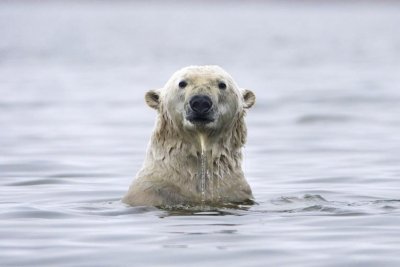
A polar bear swims in the water off a barrier island in the Arctic National Wildlife Refuge just outside the Inupiat village of Kaktovik, Alaska. File Photo by Jim Lo Scalzo/EPA
March 5 (UPI) — This year marks the 30th anniversary of the Arctic Council, once a hallmark of post-Cold War cooperation in the far north.
For decades, the Arctic Ocean remained at the margins of global power politics — a remote, ice-locked expanse governed largely through scientific collaboration and consensus-based frameworks.
That balance is now shifting. Rapid ice loss is opening seasonal sea lanes, exposing fragile ecosystems and drawing new commercial and strategic interest, even as the suspension of routine cooperation with Russia has strained the council’s role.
The Arctic is emerging as a maritime crossroads where environmental risk, economic ambition and intensifying geopolitical competition increasingly converge.
Established by the 1996 Ottawa Declaration, the Arctic Council — bringing together eight Arctic states from Canada, Denmark, Finland, Norway, Russia, Sweden the United States, Indigenous permanent participants and observers including China — remains the region’s central forum for coordinating science, environmental policy and cooperative governance. Despite mounting geopolitical strain, it continues to provide an institutional platform that could support future U.S.-China maritime cooperation in the Arctic.
Recent diplomacy suggests that even as tensions rise across trade, technology and security, cooperation is still possible when interests align.
The 2018 Agreement to Prevent Unregulated High Seas Fisheries in the Central Arctic Ocean, in force since 2021, offers a case in point. By imposing a 16-year moratorium on commercial fishing while joint scientific research assesses the ecosystem, the pact places precaution ahead of competition and provides a model for managing emerging Arctic risks.
The significance of the fisheries decision should not be understated. The agreement brought together Arctic coastal states and distant-water fishing powers, including Washington and Beijing, to manage a region where no fisheries regime previously existed.
In doing so, it transformed an ungoverned expanse of high seas into a shared space of stewardship — governed not by territorial claims, but by science, restraint and a shared recognition of ecological risk.
“The Arctic Council is a dedicated body creating a platform for collaboration built on consensus. It is far from perfect, but it has produced a number of highly influential assessments and created an international community devoted to cooperation and shared stewardship,” said Henry P. Huntington, arctic science director of the Ocean Conservancy.
Science diplomacy as a foundation
For the United States, the Arctic is a strategic frontier and an environmental priority, tied to maritime access, national defense, Indigenous livelihoods and ecological protection.
For China, it is an emerging arena of economic opportunity and global governance engagement. Beijing’s self-description as a “near-Arctic state,” combined with its investments in polar research, ice-capable vessels and Arctic shipping studies, reflects a broader ambition to participate in shaping the rules that will govern the region’s future.
International law scholar Michael Byers said China’s Arctic posture differs sharply from its behavior in the South China Sea. While Beijing has strategic interests in the region through its “Polar Silk Road,” it has no territorial claims in the Arctic and has largely operated within the existing legal framework.
In contrast to its role as a resident power in the South China Sea, Byers notes that China presents itself in the Arctic as a “near-Arctic state,” focused on resource access and emerging shipping routes — a presence that Arctic nations are watching more closely as its footprint grows.
Despite competing strategic interests, both countries share a clear objective: preventing a governance vacuum in the Arctic. The fisheries accord underscores that even amid rivalry, Washington and Moscow recognize the dangers of unregulated exploitation in fragile waters and the need for baseline rules. As such, the agreement serves not only as a conservation tool, but as a diplomatic signal that pragmatic cooperation in the Arctic remains possible.
At its center is a commitment to joint scientific research. Participating states will collaborate to monitor fish stocks, map Arctic ecosystems and assess climate impacts, generating the shared data needed to determine whether any future fishing can be conducted sustainably.
“The Arctic Council’s 30th anniversary finds its consensus-based structure severely tested. Western states suspended cooperation with Russia in 2022, effectively paralyzing what was once exemplary post-Cold War diplomacy,” said Pavel Devyatkin, a senior associate at the Arctic Institute. He said the council’s experience offers practical lessons for managing contested waters elsewhere, including the South China Sea.
Arctic marine science has long bridged geopolitical divides, including cooperation with China, showing how shared environmental risks can transcend political tension. As Devyatkin noted, the region offers a clear lesson: ecological disruption can outweigh traditional security concerns. When U.S.-Russia fisheries monitoring was suspended, key data gaps emerged just as warming waters pushed fish stocks northward — a cautionary signal for any contested maritime region facing climate-driven change.
China’s Arctic engagement is anchored in scientific diplomacy. Unlike more securitized theaters such as the South China Sea, Beijing has framed its Arctic role around cooperation, climate research and environmental stewardship. Its Yellow River Station in Svalbard has supported long-term research since 2004, while icebreakers such as Xue Long and Xue Long 2, along with polar-capable satellites, have expanded China’s research reach and technological presence in the region.
At the same time, Western policymakers remain cautious about the potential dual-use nature of these activities. Concerns focus on whether data gathered from satellites, seabed mapping or subsea systems could support military applications. U.S. and NATO officials have questioned how China might use its growing Arctic data capabilities.
The model reflects a broader principle of science diplomacy — one that has long shaped cooperation in contested maritime regions. Scientific collaboration provides a low-politics entry point for engagement, allowing rival states to build trust, exchange data and establish working relationships even when political tensions remain high.
“Marine science is an area that can promote international cooperation. That is true in many contexts, including in relation to the next International Polar Year collaborations currently being planned, that will include China,” claimed Evan T. Bloom, polar governance chair at the Ted Stevens Center for Arctic Security Studies.
Collaborative mapping of sensitive habitats could inform conservation planning and risk management. Even the design of Arctic marine protected areas, an issue gaining attention as part of global “30 by 30” conservation goals, could become a platform for coordinated policy development.
From fisheries to shipping and conservation
Shipping governance is emerging as the next test of whether U.S.-China scientific cooperation can translate into operational rules in the Arctic. As sea ice recedes, a transpolar route linking Asia, Europe and North America could reshape global trade, but the region remains poorly charted, remote and environmentally fragile, with high risks of accidents and long-term damage.
Analysts say a cooperative framework on Arctic shipping, covering safety standards, environmental protections, data sharing and emergency response, could reduce those risks. Joint monitoring of ice and vessel traffic, coordinated search-and-rescue protocols and agreed-upon environmental rules for polar operations would form the backbone of such an approach.
Marine conservation offers another pathway for cooperation. The precautionary logic underpinning the fisheries agreement aligns with broader global efforts to expand ocean protection and safeguard biodiversity.
The United States and China have expanded marine protected areas domestically and have endorsed international conservation targets. Extending that logic to the Arctic through coordinated conservation zones or networks of protected areas would reinforce ecological resilience while creating a stabilizing framework for governance.
Such initiatives also would resonate with a wider global trend: the recognition that environmental security and geopolitical stability are increasingly intertwined. As climate change accelerates, the management of shared ecosystems is becoming a central component of international relations. The Arctic, like the South China Sea or the Mediterranean, is emerging as a test case for how science-based stewardship can mitigate strategic rivalry.
The obstacles to deeper cooperation, however, remain substantial. The broader U.S.-China relationship is marked by strategic distrust, trade disputes and military competition. Arctic policy cannot be entirely insulated from tensions in other theaters, including the Indo-Pacific. Russia’s war in Ukraine has also disrupted Arctic diplomacy, limiting the functioning of multilateral bodies such as the Arctic Council and injecting new security concerns into the region.
Trust remains a central obstacle.
Washington remains wary of Beijing’s long-term strategic intentions in the Arctic, particularly the dual-use potential of infrastructure and emerging shipping routes.
Beijing casts itself as a legitimate stakeholder in global commons governance and is pressing for a greater role in shaping the rules of the evolving Arctic order.
At the same time, Russia’s continued isolation from Arctic Council processes since 2022 has pushed Moscow to seek new partners, further complicating the diplomatic landscape and slowing meaningful progress on joint conservation efforts for Arctic flora and fauna.
Against that backdrop, any expansion of cooperation will need to be incremental, transparent and anchored in verifiable scientific collaboration. The fisheries agreement provides a template: begin with a shared risk, rely on joint science, build institutional mechanisms and create habits of cooperation over time. That process is gradual, but it can be durable.
.
Timelapse shows change in the flow of ships in the Strait of Hormuz
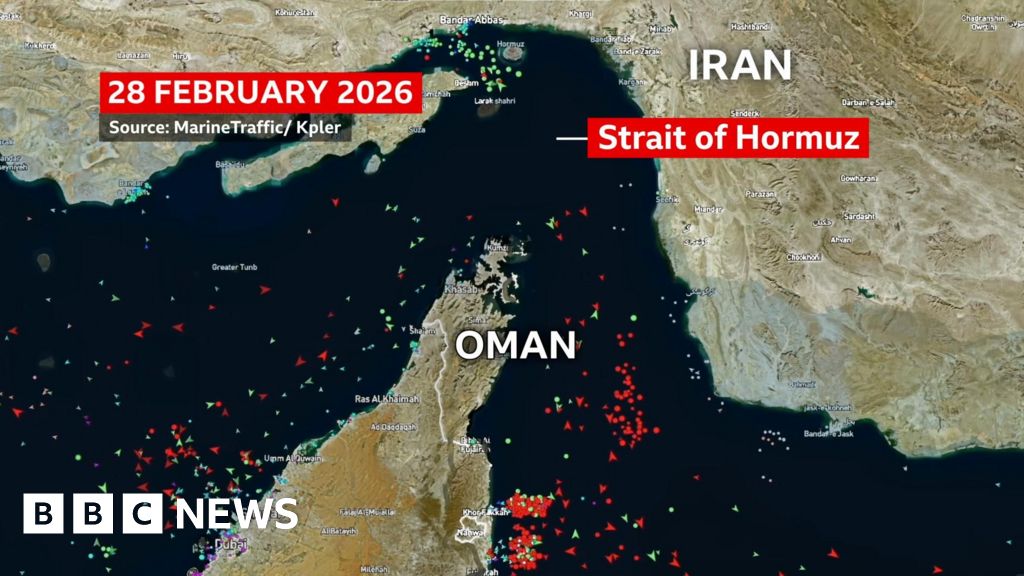
The Strait of Hormuz is a key artery for the movement of global energy supplies.
Usually, about 20% of global oil and gas passes through the narrow shipping lane in the Gulf.
Iran’s General Sardar Jabbari said that Tehran will now “not let a single drop of oil leave the region”.
A timelapse of marine traffic showed the flow of ships has decreased in the strait since the US and Israeli coordinated military offensive against Iran began on 28 February 2026.
Blocking the strait could further inflate the cost of goods and services worldwide, and hit some of the world’s biggest economies, including China, India and Japan, which are among the top importers of crude oil passing through the waterway.

Thursday 5 March Missionary Day in French Polynesia
This article examines the historical origins of Missionary Day, a significant public holiday celebrated annually in French Polynesia. It details the 1797 arrival of the ship Duff, which brought Protestant missionaries from London to the shores of Tahiti. Despite initial cultural friction and health concerns among the indigenous population, these religious figures eventually secured the conversion of King Pomare II. This pivotal moment led to the establishment of the Maohi Protestant Church, which remains the dominant religious institution across the islands today. By contextualizing the colonial era and the spread of Christianity, the text illustrates how this specific date became a corn …

Katie Price ‘had phone call with husband’s ex who warned he’s a liar and would ruin her
KATIE Price reportedly had a phone call with her husband Lee Andrews’ ex before tying the knot with the Dubai businessman.
Alana Percival, who was with Lee for nine months, has claimed that the former glamour model, 47, had “reservations” and was told by Alana to “run for the hills”, but ignored the warnings.
“Katie reached out to me via a friend. We spoke on the phone. She was saying, ‘I don’t know what to believe’ and I told her it’s black and white,” Alana told MailOnline.
She added: “I told her I would show her everything; I said I was happy to meet her. I told her he was going to break her down and ruin her.
“I told her he doesn’t have money, he has scammed loads of people, I said to her, ‘Come and sit with me for an afternoon’.”
However, Alana says Lee has painted her as a “crazy ex” and convinced Katie she is lying.


Alana was with Lee last year and says she got engaged to him in September in a proposal identical to the one he used on Katie in January,
Last month, Lee was exposed by The Sun as a fantasist businessman who faked celebrity links using AI-generated photos and recently talked about marrying two other women.
However, in her first interview since the shock romance and wedding, Katie assured she has seen proof of his fortune.
The star, who refused to get a pre-nup before marrying Lee, told The Sun: “So yes, I can reassure everyone at home that I haven’t gone for a con man.
“I haven’t gone for a scammer. There was no love bombing.
“I’ve gone for a beautiful human being who genuinely makes me happy, who I’m so in love with.”
Katie declared “I’m not stupid” – and said that Lee has shown her documents attesting to his wealth.
During the interview, she even showed The Sun his passport, Dubai residency card and, incredibly, what appears to be a real estate proof of purchase for his new property worth an astonishing £36mn – paid in cash.
Following Katie and Lee’s wedding, Alana told The Sun that Katie should “run”
She said: “Katie should run for the hills. Lee is a liar, a narcissist and I think he’s a manipulator.
“Once I tried to leave him, he told me had a heart condition and was living on borrowed time.
“Lee doesn’t know what’s fact and what’s fiction.
“It’s worrying because I think he believes his own lies.”
Who is Katie Price’s husband Lee Andrews?

KATIE Price tied the knot with Lee Andrews in January 2026. Yet who is he?
- Katie Price has married businessman fiancé Lee Andrews in a whirlwind wedding
- It is the fourth time Katie, 47, has been a bride. She has also been married to Peter Andre, Alex Reid and Kieran Hayler
- Katie and Lee met just after being introduced on social media
- Lee claimed he is a billionaire in a failed clip from his acting career
- He now claims to be a Dubai-based businessman
- Yet The Sun has unmasked him as a fantasist who faked celebrity links using AI-generated photos and recently talked about marrying two other women
- Failed actor is just another title to add to Lee’s questionable CV, after he claimed to have once worked as the Director of Philanthropy at The Prince’s Trust (now The King’s Trust)
- Lee also shared images – since proven to be AI – of him working with Elon Musk and Kim Kardashian
- It’s been revealed shameless Lee told former girlfriends that he had studied at Cambridge University, and has a PhD in biotechnology science
- But The Sun has seen a response from the university explaining it could not find a record of Lee being registered as a student with a date of birth they had provided
- His LinkedIn profile says Lee has been a Member of the Board of Advisors to the Labour Party since 2015
- Lee was also mocked for repeating the exact same wedding proposal on Katie – that he did for another woman just four months ago.
Too many Democrats in California governor’s race? That’s a great thing
After months of fretting, California Democratic leaders are now truly freaking out about too many of their own running for governor, potentially allowing two MAGA Republicans to advance to the general election.
Someone find me the world’s smallest violin.
It’s the latest mess created by a party that has held supermajorities in the state Legislature and the governor’s mansion for most of the last 15 years, yet has done little to make life better for its constituents while blaming President Trump for everything.
What does it say about them that no Democratic candidate of color is considered a favorite to succeed Gov. Gavin Newsom, when whites are only a third of California’s population? That a party casting itself as the champion of the working poor against Trump’s oligarchic reign isn’t telling a billionaire like Tom Steyer — who spent $341 million of his own money on a failed 2020 presidential run — to bow out and throw his support and moolah behind someone else, just because he’s polling in the top five?
California voters have made the state Republican Party as relevant as the Angels in baseball — yet under Democratic rule, life keeps getting harder for too many. Especially galling is how the state Democratic Party has done next to nothing to help Latinos become household names who can win.
Three Latinos with distinguished resumes — former Los Angeles Mayor Antonio Villaraigosa, former Health and Human Services Secretary Xavier Becerra and State Supt. of Public Instruction Tony Thurmond — are running for governor, yet they stand as much a chance of moving on to the general election as Alfred E. Neuman.
Latinos are a plurality of California’s population and the bedrock of the Democratic Party. Yet there’s a good chance that after November, no Latino will hold a statewide elected position for the first time since 2014.
Yes, Alex Padilla is our senior U.S. senator. But enough California Latino voters became disillusioned with the Democratic platform that Trump made large gains among them in 2024, and Latino GOP legislative candidates stormed Sacramento like never before.
So excuse my schadenfreude upon hearing earlier this week that California Democratic Party Chair Rusty Hicks wants low-polling candidates to drop out of the governor’s race, claiming in an open letter that their continued presence will “imperil” democracy.
Candidates are definitely choosing — to spite Hicks. We all should. He could have made his move long ago, as the top Democrat in the state. Instead, waiting until just before the candidate filing deadline is more amateur than a Little League game.
Worse, his move reeks of el dedazo, the kingmaking process under Mexico’s long-ruling Partido Revolucionario Institucional that translates as “the finger point,” because that’s how undemocratic it was.
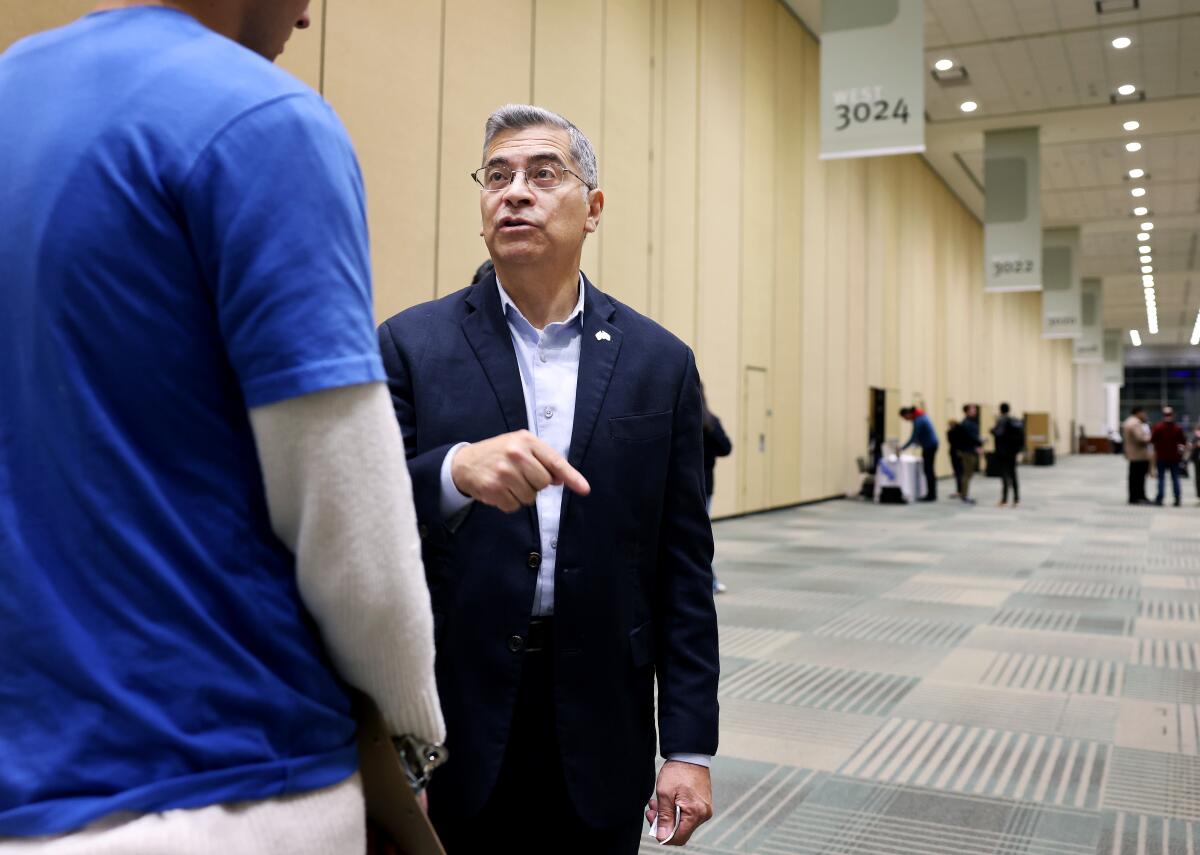
“El dedazo is not appropriate in California,” Becerra told me, referring not to Hicks but to other Democrats who have suggested that he and others withdraw. “And I suspect that very few voters in California think that a variety of choices [for governor] is not a good thing.”

Candidate Xavier Becerra chats in a hallway during the California Democratic Party convention in San Francisco last month.
(Christina House / Los Angeles Times)
As of this columna’s publication, not only has no Democratic candidate dropped out, but most are officially filing papers to jump in. Thurmond even posted a video on social media implying that Hicks’ request is racist because almost all the potential spoilers are people of color, while the top three Democratic hopefuls — Rep. Eric Swalwell, Steyer and former Rep. Katie Porter — are white.
“To me, this act doesn’t reflect the Democratic Party of 2026,” Thurmond thundered. “Aren’t we supposed to be the party who embraces democracy?”
Hicks’ move and the embarrassing aftermath reminds me of Will Rogers’ famous quip that Democrats are members of no organized political party — even if I do understand why Hicks and other Dems are so nervous.
No Democrat is towering over the field, which is why party leaders and activists futilely tried to recruit big names like Padilla and former Vice President Kamala Harris. Those who are running are nice enough. But politically, they’re carbon copies of each other. As a group, they’re as inspiring as printer paper.
The subsequent free-for-all has allowed Republicans Steve Hilton and Chad Bianco to occupy two of the top three slots in the latest Public Policy Institute of California poll alongside Porter, with Swalwell and Steyer close behind.
No other candidate polled higher than 5%, but together, the rest of them added up to 30%. Factor in the 10% of voters who are undecided, and that’s a significant slab of the potential electorate. If just two Democrats drop out, that would almost certainly stop both Hilton and Bianco from advancing.
A Republican governor for California in the Trump era would be embarrassing, terrible and a political self-own without precedent. It would make previous California political earthquakes where conservatives pounced on liberal cluelessness, like Prop. 13, Prop. 187 and the Gray Davis recall, seem as innocuous as a bounce house.
But telling candidates to kill their campaigns to make it easier for people who supposedly have a better chance is the type of least-worst choice that Democratic leaders have forced upon party faithful for too long.
They need a rude awakening. Making them sweat about a gubernatorial primary is a start. That’s why I’m glad Hicks’ plea is going nowhere. If people want to scatter their votes, it’s not only their choice — it’s democracy.
When I asked Becerra if he or his fellow underdog Dems should accept responsibility if a Republican becomes California’s next governor, he brushed off the question.
“That’s more than speculative — it’s not going to happen,” he said, predicting that undecided voters will “crystallize” soon to make the issue moot. He once again joked that there are “too many dedazos in the air.”
Villaraigosa’s answer was more damning: “It would be a collective responsibility that as a party, we failed to convince the electorate.”
Watch out, Rusty — here come your Dems!

GB wheelchair curlers beaten by top-ranked Koreans
Great Britain’s Jo Butterfield and Jason Kean suffer a heavy 14-3 loss to world number one ranked side South Korea.
Source link

Seoul shares rebound nearly 10 pct after worst-ever drop; won rises

This photo, taken Thursday, shows the trading room of Hana Bank in central Seoul after the benchmark Korea Composite Stock Price Index soared almost 10 percent to close at 5,583.9, snapping a three-session losing streak. Photo by Yonhap
South Korean stocks sharply rebounded on Thursday from the previous session’s sharpest decline ever, soaring almost 10 percent, amid signs of an easing oil price surge sparked by the ongoing Iran conflict. The local currency rose against the U.S. dollar.
The Korea Composite Stock Price Index (KOSPI) added 490.36 points, or 9.63 percent, to close at 5,583.9, snapping the three-session losing streak.
It marked the largest daily gain in terms of points in KOSPI history, renewing the previous record of 338.41 points set on Feb. 3.
Also, the 9.63 percent rise is the second steepest since Oct. 30, 2008, when the index rose 11.95 percent in the midst of the global financial crisis.
The country’s main bourse operator, the Korea Exchange (KRX), issued a buy-side sidecar around opening, suspending the selling of KOSPI futures for five minutes.
Trade volume was heavy at 1.6 billion shares worth 44.8 trillion won (US$30.5 billion), with gainers sharply beating decliners 898 to 21.
Individual investors drove the steep rally, scooping up a net 1.79 trillion won, while foreigners and institutions sold a net 144.6 billion won and 1.7 trillion won, respectively.
“The KOSPI experienced the sharpest decline in history and dropped near the 5,000-point line the previous day,” Roh Dong-gil, an analyst at Shinhan Securities, said. “Bargain hunters returned to the market to pull off a turnaround.”
Overnight on Wall Street, the Dow Jones Industrial Average rose 0.49 percent and the tech-heavy Nasdaq Composite climbed 1.29 percent on calmed oil price hikes.
In Seoul, market heavyweights led the rally.
Market bellwether Samsung Electronics surged 11.27 percent to 191,600 won, and chip giant SK hynix soared 10.84 percent to 941,000 won.
Top carmaker Hyundai Motor escalated 9.38 percent to 548,000 won, and its sister Kia jumped 6.19 percent to 166,400 won.
Defense shares were among the biggest winners as industry leader Hanwha Aerospace vaulted 4.38 percent to 1.38 million won and LIG Nex1 shot up 23.26 percent to 763,000 won.
Shinhan Financial Group rose 4.62 percent to 92,900 won, and internet giant Naver advanced 5.77 percent to 220,000 won.
Samsung Biologics, a leading pharmaceutical firm, mounted 8.64 percent to 1.65 million won, and entertainment giant CJ ENM increased 5.91 percent to 64,500 won.
The Korean won was quoted at 1,468.1 won against the U.S. dollar at 3:30 p.m., up 8.1 won from the previous session.
Bond prices, which move inversely to yields, closed higher. The yield on three-year Treasurys fell 3.4 basis points to 3.189 percent, and the return on the benchmark five-year government bonds declined 3.5 basis points to 3.442 percent.
Copyright (c) Yonhap News Agency prohibits its content from being redistributed or reprinted without consent, and forbids the content from being learned and used by artificial intelligence systems.
Iran targets headquarters of Iranian Kurdish forces in Iraq
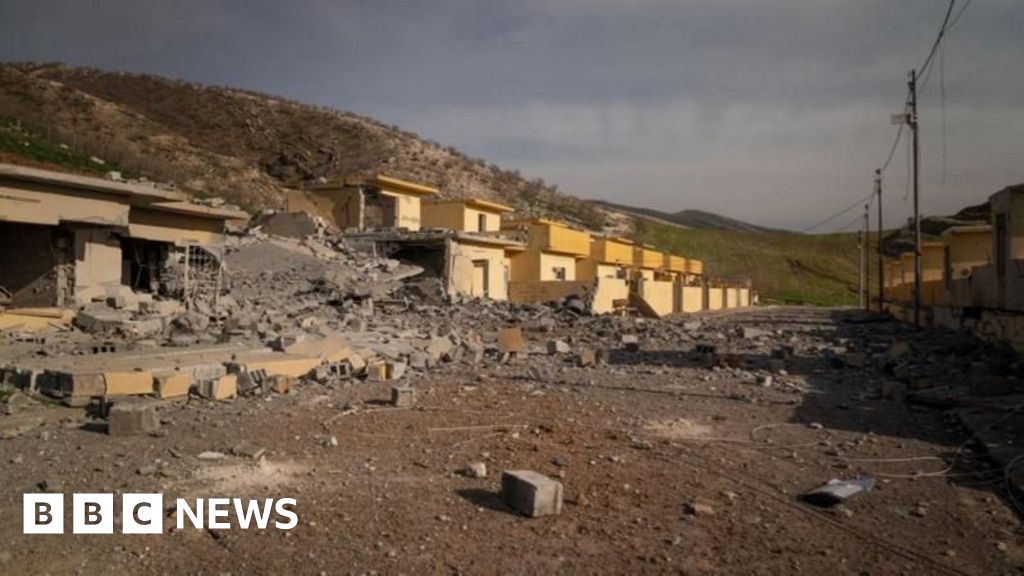
The Iranian military’s strikes come amid speculation that the US wants Iranian Kurdish groups to join its conflict with Iran.
Source link

Brand new £10million UK train station to open on ex-RAF base next to nuclear bunker under plans
PLANS to build a new railway station and more than 1,000 homes on the site of an apocalyptic bunker have been unveiled.
The proposals include building a range of affordable housing, shops, a secondary school, health centre and train station on the site of a former RAF base.
Part of a large housing development at Alconbury Weald in Huntingdonshire, the new community will sit on top of a sprawling nuclear bunker, built in 1988.
RAF Alconbury was an active airbase from 1938 up to 1995, surviving attacks from Luftwaffe during World War Two.
The construction of the bunker began in the 1980s with the site “designed to withstand a direct nuclear attack”.
Sitting on a bed of gravel, the bunker is made of steel and reinforced concrete – costing £50 million to construct.


One purpose of the site was to secretly analyse data collected by spy planes during the Cold War.
Blast-proof guillotine doors divide a number of corridors inside, and further underground is a power plant and communications hub with an entire wall filled with buttons and dials.
Already 6,000 new build homes now surround the former military base and bunker after a major development which saw the first residents set up home in 2020.
The developer, Urban&Civic, now plan to expand the Cambridgeshire by building more houses and new railway station, which has been backed by Mayor of Cambridgeshire and Peterborough.
Mike Jenner, Development Manager from Urban&Civic, said: “Phase 4 has an important role to play in the delivery of Alconbury Weald, connecting green spaces and key infrastructure.
“The design of Phase 4 ensures walking, cycling and public transport links connect to the wider site seamlessly, and supports the aspirations of our local transport partners to progress a rail station, which will benefit many.”
In homage to the area’s history dedicated green space has been named Runway Park, which the proposed plans include adding “pockets of play space near a water body” to.

‘The Bride!’ review: Maggie Gyllenhaal breathes fury into Frankenstein’s mate
“The Bride!” is a maniacal assemblage of ’30s musicals, ’40s noirs, 19th century literature and 21st century ideology. Every wacky second, you’re well aware how perilously close it is to falling apart at the seams. This spiritual sequel to “Frankenstein” is a romantic tale of obsession, possession and fantasy — adjectives that also apply to its filmmaker, Maggie Gyllenhaal, who expends massive quantities of energy jolting it to life. She succeeds by the skin of her teeth.
The monster’s missus comes with as much narrative anticipation as Godot. Mary Shelley’s 1818 novel has Dr. Frankenstein bicker with his creature about her potential existence before deciding against it in fear that “she might become ten thousand times more malignant than her mate.” Over a hundred years later, the debate continued, raging through nearly all of 1935’s “Bride of Frankenstein” which finally introduces Elsa Lanchester and her sky-high bouffant five minutes before the end credits, just enough time for her to make an iconic impression before her arranged husband blows them both to smithereens. Boris Karloff laments, “She hate me.” Lanchester’s Bride never speaks and quite possibly never knows what is happening to her at all.
Gyllenhaal’s empowerment story, meanwhile, feels like an unhinged scream. Jessie Buckley (who starred in Gyllenhaal’s debut, “The Lost Daughter”) tackles the dual roles of the Bride and Shelley, a hat tip to Lanchester, who did the same thing. The action starts in Shelley’s grave where she’s spent centuries seething about the sequel she never dared to write, then cuts to an American nightclub, where her spirit suddenly possesses a drunken strumpet named Ida (Buckley) — not smoothly but herky-jerky, with the angry author causing this gangster’s moll to go on the fritz. Her accent alternates mid-sentence from city gal to snidely British, Ida loudly accusing a mob boss of murdering women. She’s right and she’s next.
Our setting is 1936 Chicago, but this is an exaggerated, fictional world, not ours or even Karloff’s. Elsewhere in town, the original creature, played by Christian Bale, has lurched here from Austria still on his lonely quest for companionship. (For simplicity’s sake, he goes by Frank.) He begs the ethically gray Dr. Euphronius (Annette Bening) to help him finally experience what he chivalrously calls, “a garden of pleasure.” The blunter and crasser Euphronius asks if Frank has a specific shape of mammaries in mind. (Her maid, played by Jeannie Berlin, is a riot.)
This Bride comes alive roughly and rudely not having given her consent either. Regardless, now that she’s here, she still has to figure out her next move, with or without Frank, and often without key pieces of information. Frank has convinced her she’s an amnesiac. Also, somehow, she doesn’t even know that she’s dead.
The theme is, of course, a woman’s right to choose. But what’s interesting about Gyllenhaal’s approach is that she expands Ida’s options beyond an enthusiastic yes and a priggish no into a dim sum menu that includes a dubious yes, an asterisked yes and a no that rejects even having to answer the question. She also overuses Bartleby the Scrivener’s line, “I would prefer not to.” I would prefer not to hear that quote a dozen times in two hours, but neither I nor the Bride get exactly what we want.
A perversity in the script is that Frank is a manipulator and a gaslighter but overall a pretty good dude. Their bond is messy and thrilling, with one of the most delightful romantic montages in ages. There’s a great scene where Frank exposes his unbeating heart to her and gets rejected, yet he laughs with delight because the Bride’s stubborn spirit is exactly what he likes about her.
The Bride also looks dynamite in her bias-cut coral dress and peekaboo black lace bra. Her zapping turns her entire head of hair — not just a streak — shocking white à la Jean Harlow, and leaves an oddly-appealing black blotch on her cheek. It’s a fabulous look, at once sexy and frightful, with an element of cartoonishness as the movie sends her speeding around the country pursued by gangsters and the police, changing stolen cars but never her clothes.
The movie makes no secret of its phony mechanics. In one scene, the Bride is the most famous outlaw in America; in the next, a cop doesn’t recognize her at all. There are several moments that force you to accept that the characters can become psychic at will, including one where Frank somehow mind-controls a party to dance the jitterbug — heck, we almost believe that he invented it — and the smart move is just to give in and enjoy the number.
Whatever Gyllenhaal wants to do, she does, which becomes its own act of captivation and reckless empowerment. It helps that Buckley and Bale are terrific, as is the ensemble at large. The full force of Lawrence Sher’s cinematography, Karen Murphy’s production design and Hildur Guðnadóttir’s orchestral score is fabulous, combining to make something seedy, moody and extravagant.
Gyllenhaal’s love for other variations of this story is right up there onscreen with brash callbacks to Mel Brooks’ 1974 “Young Frankenstein” and the underrated “Frankenhooker.” Yet “The Bride!” isn’t just assembled from her passion for those movies. It seems to be made of every movie: a wild and playful and overbearing ambulation of references.
Almost every role is a Frankencharacter of the director’s cinematic obsessions, like Penelope Cruz’s lady detective who is named for “The Thin Man’s” Myrna Loy, acts like “His Girl Friday’s” Rosalind Russell, and dresses like Barbara Stanwyck in “Double Indemnity.” I suspect that Gyllenhaal’s favorite movie might be the same as my own, the bitterly nostalgic ’80s-does-’30s Steve Martin musical “Pennies From Heaven.” Watch it and tell me if you agree and even if you don’t, at least you’ll have seen one of the greatest films of all time.
There’s a scene in which Frank meets his own idol, an alt-world version of Fred Astaire (played by Gyllenhaal’s brother Jake, who is good at mugging and singing), and vomits his fandom at him until the actor recoils. The intensity of devotion can feel a bit like that. It also exposes that our culture is ready for its own shock of invention. Shelley spawned the entire genre of modern science fiction; today’s talents often feel like remix artists.
Like the mad scientists she’s sending up, Gyllenhaal goes too far. She triply underlines her feminist themes and nearly sabotages her own clever creation. Ironically, she doesn’t trust the audience to think for itself either. The overkill hits its nadir when the Bride repeatedly wails the survivors’ hashtag, “Me too!” But grab a scalpel and cut 10 minutes out of it and “The Bride!” would be a rip-roaring dazzler. This monster is more than alive, it’s allliiiiiive.
‘The Bride!’
Rated: R, for strong/bloody violent content, sexual content/nudity and language
Running time: 2 hours, 6 minutes
Playing: In wide release Friday, Mar. 6

Emma Raducanu to ‘tap into a few people’ for coaching advice
Remember when Raducanu caused a seismic shock by winning the 2021 US Open as a teenage qualifier who had barely played a professional tournament?
She managed to achieve the unthinkable by playing with a freedom which she has not been able to replicate consistently since.
Amost five years later and having reached the last 16 of a Grand Slam tournament only once since, Raducanu is determined to get back to basics.
That means rediscovering her natural instincts to be an aggressive baseliner. Her early success was built around not being afraid to take returns early in a bid to hustle opponents.
First serves were put back deep in the court to instantly put her rivals on the back foot and second serves were swatted away with impunity.
Raducanu’s power off both wings was impressive, although it was clear her forehand needed more work than her solid and stylish backhand.
Over the next year or so, the forehand deteriorated to a place where it lacked any punch and, following the wrist surgery which ruled her almost completely of the 2023 season, is what Roig tried to remodel.
The lack of trust in what Raducanu was being asked to do, though, was clear at the Australian Open.
In a demoralising second-round exit, she made 19 unforced errors off that wing and spoke afterwards about returning to a simple philosophy – “hitting the ball to the corners and hard”.
There is another aspect to Raducanu’s ambitions of returning to the top 10 and challenging the very best players – her body and mind.
She must continue to build fitness and durabilty – and have the heart for a scrap in tough moments – to implement the style she wants.
S. Korea imposes travel ban on Iran amid rising Middle East conflict

South Korea imposed a travel ban on all of Iran amid rising security concerns, its foreign ministry said Thursday. In this image, an Iranian flag stands amid the destruction in Enghelab Square following Wednesday’s attacks by the United States and Israel on Tehran. Photo by Nahal Farzaneh/UPI | License Photo
South Korea imposed a travel ban on all of Iran amid rising security concerns linked to the escalating conflict in the Middle East, the foreign ministry said Thursday.
A Level 3 travel alert, which advises nationals to leave the country, was upgraded to a travel ban effective at 6 p.m., the ministry said, amid escalating tensions in the Middle East following U.S. and Israeli strikes on Iran.
The ministry warned that Korean nationals who visit or stay in Iran without authorization may face punishment under relevant laws, advising those planning to travel to the region to cancel their trips and urging those currently there to evacuate.
The ministry said it issued the ban as “the worsening situation in the Middle East has raised serious concerns over the safety of Korean nationals visiting or staying in Iran.”
“The government will continue to closely monitor developments in the Middle East and take necessary measures to ensure the safety of Korean nationals,” it said.
The latest measures come as South Korea is continuing to evacuate its citizens from the Middle East after about 140 nationals were brought to safety in earlier operations, as U.S.-Israeli strikes on Iran escalate into a wider regional conflict.
The government is actively considering sending a chartered plane to the region, including the United Arab Emirates, where more than 2,000 South Korean short-term travelers remain stranded due to flight disruptions.
Copyright (c) Yonhap News Agency prohibits its content from being redistributed or reprinted without consent, and forbids the content from being learned and used by artificial intelligence systems.
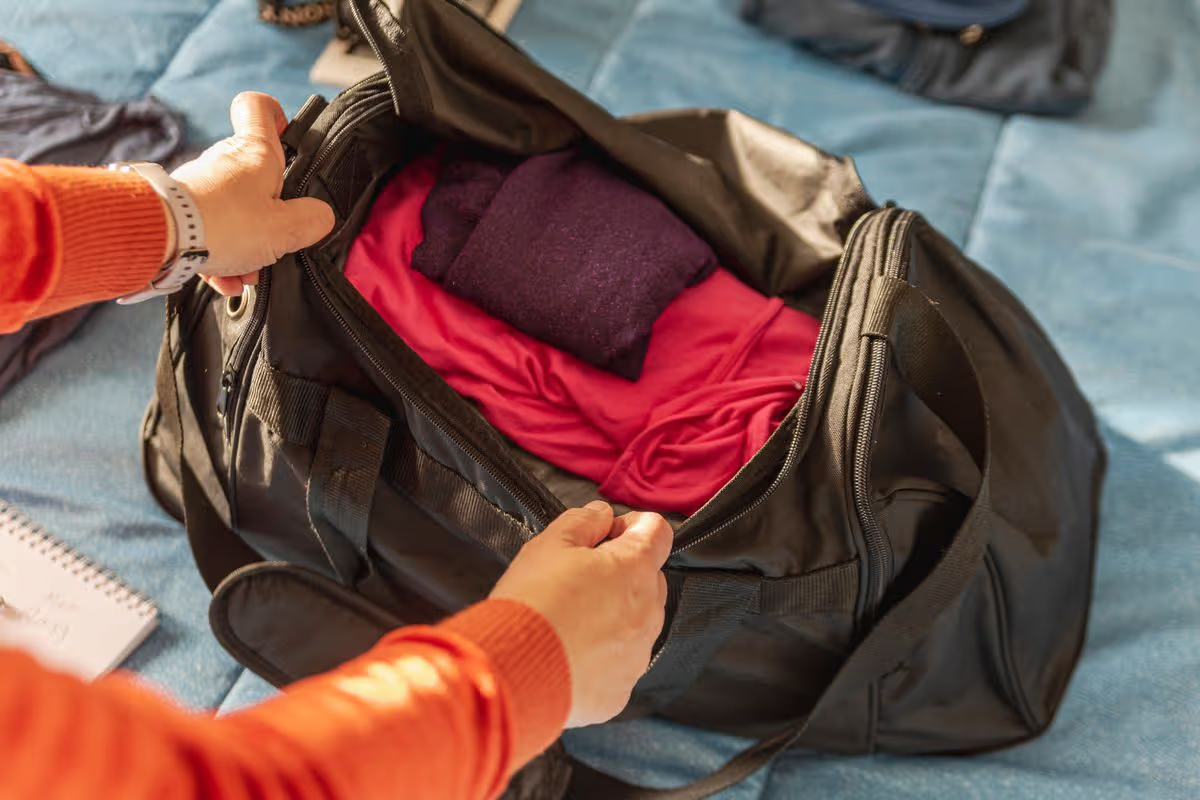
People stuck in Middle East told ‘have these essentials ready to go in grab bag’
Travel expert Ash Bhardwaj said people who are still in the country should ‘prepare’

People were advised to ‘prepare’ some essentials (stock image)(Image: Getty)
People affected by the Middle East conflict have been urged to gather a few essential items and keep them “ready to go” amid the ongoing war in Iran. Having these on hand will make sudden changes a lot less scary and chaotic, an expert has claimed.
Speaking on a recent episode of BBC Morning Live, travel expert Ash Bhardwaj said: “One of the best things you can always do is just make sure you have a grab bag. So, if you have to move quickly, you’ve got your essentials with you.”
Although it may look different for everyone, some things will likely be part of anyone’s emergency bag. Ash suggested that packing a ‘grab bag’ in advance could help during any panic that might set in during an emergency.
He said: “[That includes things like] passports, essential medicines and maybe any documents for travel insurance if you’ve got them printed out. If you’ve got kids, a change of underwear, a couple of t-shirts and some snacks.
“If you’ve got babies, and you’re no longer breastfeeding but still feeding them with formula or milk, get enough for 48 to 72 hours. This isn’t to scare you, it’s just so that you have actually thought everything through and it relaxes you.”
The broadcaster said that people should prepare and “plan for when the worst might happen”. Speaking to hotel staff can help point out emergency exits, procedures, and other important safety measures.
As of March 5, 2026, the Foreign Office advises against all but essential travel to the United Arab Emirates. There are other parts of the Middle East and surrounding areas that have also been listed as completely or partially unsafe for travel – read that latest round-up here.
The current situation in Iran caused tensions to erupt last week, on February 28, when the US and Israel launched extensive strikes. Iran’s Supreme Leader, Ayatollah Ali Khamenei, who had been in power since 1989, was killed during the initial wave of attacks.
The conflict has sparked travel chaos throughout parts of the Gulf region, including Dubai. For the most recent developments, click here for updates on travel and news.
In an update from March 5, Dubai’s Emirates Airline has announced it will operate over 100 flights on March 5 and 6 from Dubai. The airline said it will “continue to gradually build back its flying schedule, subject to airspace availability and all operational requirements being met”, adding that “safety is always our top priority”.
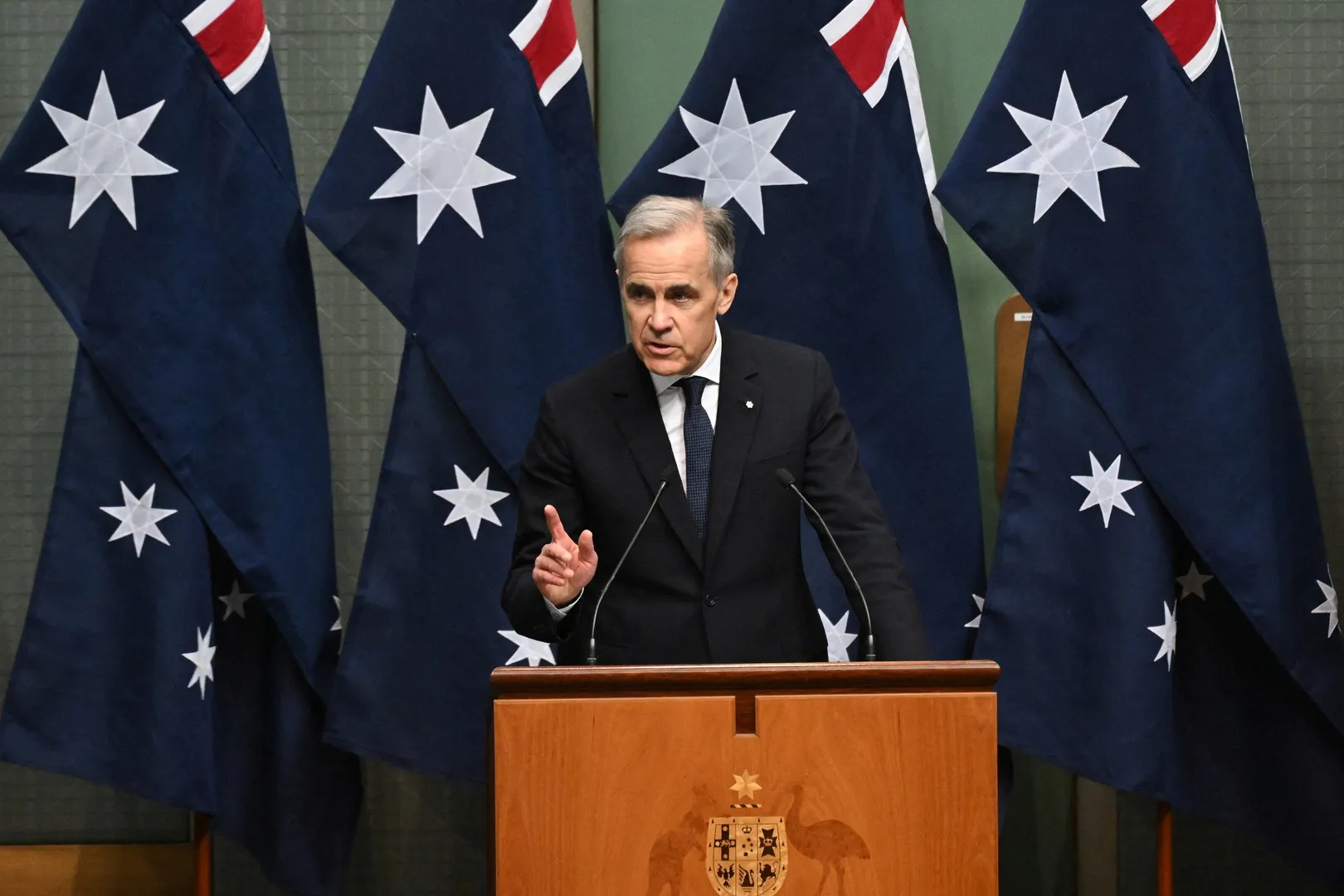
Canada PM unable to rule out military involvement in Iran war | Israel-Iran conflict
Canadian Prime Minister Mark Carney told reporters he wants de-escalation of the Iran attacks but said he couldn’t rule out his country’s military participation. He was speaking alongside Australia’s prime minister during a visit to Canberra.
Published On 5 Mar 2026
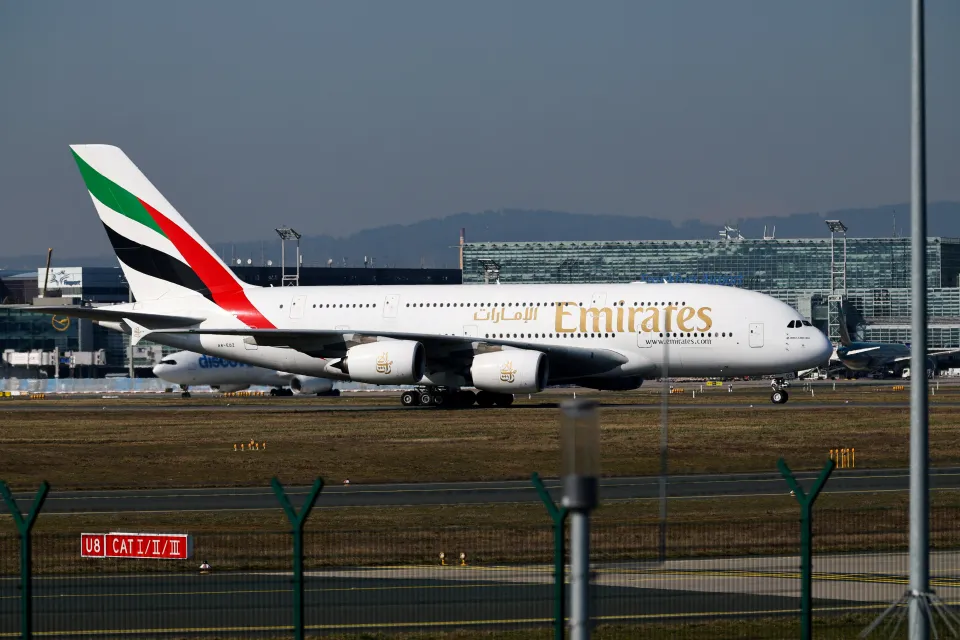
Major airlines STILL cancelling flights across Middle East
MORE than a thousand flights are still being cancelled a day due to the ongoing Iran conflict.
Countries in the Middle East – such as the UAE, Qatar and Oman – have been dragged into the crisis since last week.

And despite some relief flights now operating, thousands of Brits are still facing cancelled flights.
According to data from aviation analytics firm Cirium, 2,263 across the world have been cancelled today.
This includes more than 100 flights to and from the UK today, with 53 departing flights and 54 arriving flights.
The majority are to the UAE, so Dubai and Abu Dhabi, along with Qatar, Israel, Bahrain and Kuwait.


They warned: “We anticipate cancellations will continue for at least a week, as reported by the airlines.”
Emirates, who operate out of Dubai, is still suspending operations, said they were offering a “reduced flight schedule until further notice”.
They warned: “These flights are open for booking, and we are accommodating customers with earlier bookings as a priority.
“Customers transiting in Dubai will only be accepted for travel if their connecting flight is operating.”
Anyone without a confirmed flight booking is being warned not to travel to the airport.
Qatar Airways has still suspended flights from Doha due to the closure of the Qatari airspace, with another update tomorrow at 6am.
Some limited relief flights are being operated from Muscat to Europe, including a flight to London Heathrow.
However the airline also warns: “Passengers are kindly requested not to proceed to the airport unless they have received an official notification from Qatar Airways for these flights.”
All Etihad Airways flights are suspended until at least 6am tomorrow.
The Abu Dhabi-based airline has launched some limited repositioning and repatriation flights, which has include the UK.
British Airways says they are “unable to operate flights from Abu Dhabi, Amman, Bahrain, Doha, Dubai and Tel Aviv”.
Some limited routes are operating from Muscat.
Virgin Atlantic has relaunched flights from Dubai and Riyadh.
The Sun’s Travel Expert has answered all of your other travel questions.
We’ve also explained the latest safety advice for Cyprus, Turkey and Egypt.
