



Coinbase to custody USDC as Samsung Wallet's default stablecoin
Coinbase to custody USDC as Samsung Wallet's default stablecoin
Source link
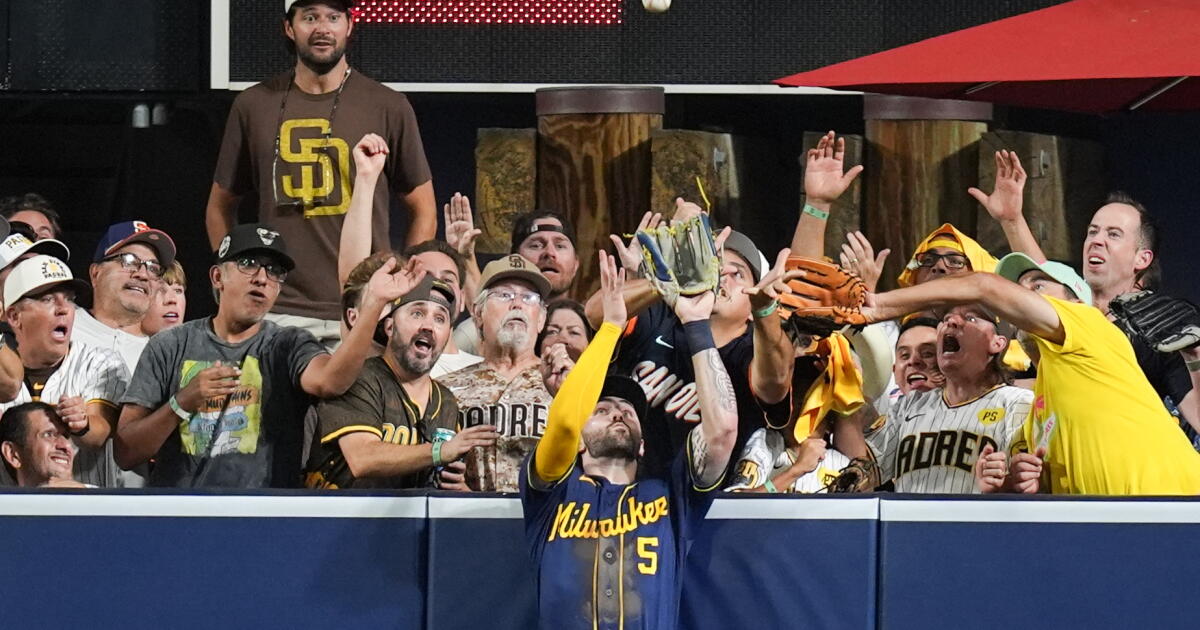
Brewers eliminate Padres, will face Dodgers in NLCS
Garrett Mitchell tripled and scored the tiebreaking run in the fifth inning before making a pivotal catch on Manny Machado’s drive to the wall in the eighth, and the Milwaukee Brewers advanced to the National League Championship Series for the second straight season with a 3-1 victory over the San Diego Padres on Wednesday night, winning their best-of-five Division Series in four games.
Mitchell also drove in Sal Frelick with Milwaukee’s first run as the Brewers ended their 12-game postseason road losing streak and reached the team’s fifth League Championship Series.
Machado nearly tied Game 4 with a 406-foot drive off reliever Abner Uribe, but Mitchell coolly tracked it down and reached just above the short wall in right-center to keep it in the yard.
Second baseman Brice Turang then ended the eighth with an acrobatic catch of Ty France’s tailing popup in foul ground.
After fending off the surging Padres in four tight games decided by a combined five runs, the 103-win Brewers will get an NLCS rematch with the Dodgers, who eliminated Atlanta on Wednesday.
The Dodgers swept Milwaukee last October on the way to their second consecutive World Series title.
Fernando Tatis Jr. hit a 429-foot homer on an otherwise tepid offensive night for the Padres, who repeatedly tested the majors’ best regular-season team before falling short of only the fourth NLCS appearance in team history.
One night after the Padres avoided elimination in Game 3, Milwaukee claimed its first road playoff win since the 2018 NLCS by sticking to its season-long formula for success.
While four Brewers pitchers combined on a three-hitter and the defense made nearly every big play, Milwaukee’s lineup calmly worked counts, pounded 10 hits through the Padres’ defense and manufactured enough runs to head home smiling.
Game 2 hero Jackson Chourio capped his high-impact series by driving in Mitchell to become the Brewers’ career leader in postseason RBIs at just 22 years old. Chourio has 17 RBIs, including six in this series, in 16 playoff games.
Milwaukee opened the scoring in the third when Frelick reached on an infield single, stole second and came around on a single by Mitchell, an Orange County native and UCLA product.
Brewers starter and former Padres draft pick Robert Gasser threw four innings of three-hit ball, but Tatis ended his 1-for-19 skid since San Diego’s playoff opener with a long shot to center in the third. It was the longest homer ever hit in the postseason at Petco Park by a San Diego player.
Padres starter Walker Buehler yielded just three hits and a run, but manager Craig Stammen replaced him with Game 1 starter Robbie Ray after William Contreras’ leadoff single in the fourth.
Mitchell then stroked a mild liner perfectly over first base and into the right-field corner leading off the fifth, and he scored on Chourio’s single through the drawn-in infield. Chourio surpassed Ryan Braun for the most postseason RBIs in Brewers history.
Jake Bauers singled leading off the sixth and went to third on Cooper Pratt’s ground-rule double before scoring on Frelick’s sacrifice fly.
The Padres were already down 3-1 in the seventh when Mason Miller allowed three baserunners, but no runs. The vaunted closer missed Game 3 for the birth of his first child.
After sitting below .500 and in 11th place in the NL in late July, San Diego roared into the first wild-card spot and then swept the Cubs in the wild-card series last week. The Padres had won 19 of 22 before losing three of four to Milwaukee.
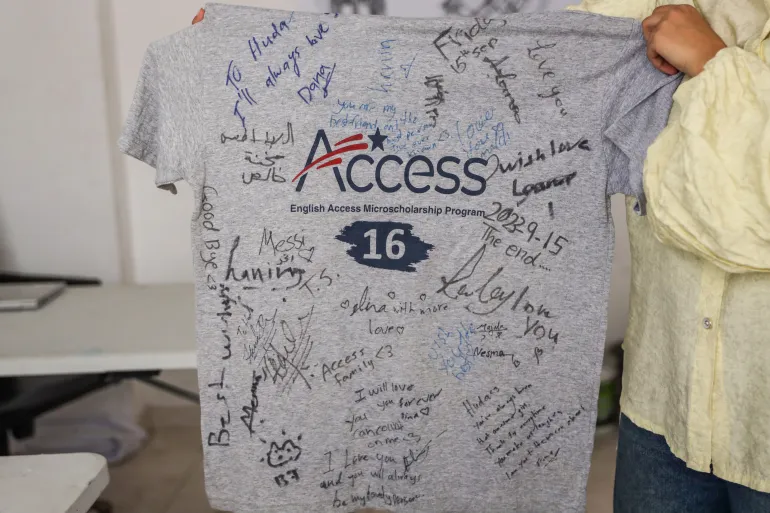
What did Palestinians take when they fled after October 7? | Crimes Against Humanity
When Huda Helassa, 20, left her home in Tal al-Hawa, southern Gaza city, in the first hours of the war, she took a signed T-shirt from the Access Microscholarship Program, a United States-funded programme that provides English-language and cultural education to young people.
Her classmates had signed the shirt on September 15, 2023, during their final class, two years before she graduated on September 27.
“When we left our home on the first day of the war, the T-shirt was one of the first things that came to my mind,” Huda says.
She put it in her bag almost instinctively, wanting to hold on to something from a part of her life that had ended just days earlier.

Huda and her family first moved to her grandmother’s house in Gaza City, then were displaced south, walking part of the way, and eventually reached Rafah in the south of the Palestinian territory.
In May 2024, they were displaced again, this time to Khan Younis. When they returned to Gaza in January 2025, they found their home completely burned.
“There was nothing left of the life we had there,” she says. “No belongings, no photographs, no memories we could hold onto, just the blackened walls.”
They were displaced again in April 2025, moving to Remal and then Tal al-Hawa, before moving to az-Zawayda in September and returning to Gaza in October. They are currently in Tal al-Hawa.
For Huda, the T-shirt remains a link to the life she had before the war, a period of learning, friendships and experiences that shaped her.

Mum vows never to holiday abroad again after receiving £28,000 bill
A British couple were left with a massive £28,000 bill while holidaying in a beautiful Greek island

A mother has vowed never to go abroad on holiday again after massive accident (Image: Kennedy News and Media)
A mother has said she will never go abroad on holiday again after being handed a £28,000 bill. Diane Steadman, 61, was on holiday on the Greek island of Skiathos on September 11 when disaster struck.
To get between the beaches on their £2,200 holiday, Diane and partner Mick Raftery had used quadbikes they’d rented. However, during one short journey between two beaches, the pair claim they were hit by a local car.
The impact from the rear sent both Diane and Mick flying off the road. While Mick came away with a few cuts and bruises, Diane landed heavily, breaking two vertebrae in her back. Diane recalled: “I felt a jump in my back and I don’t remember anything else.”
She added: “All I remember is waking up on the road. He [the car diver] wasn’t watching the road and didn’t have time to slow down. I was in and out of consciousness, I didn’t have the energy to speak to anybody when I woke up. I tried to be strong but I’m so frightened, I feel like I’m going to die.
After being moved by ambulance to a local medical centre Diane, a mother-of-two, was rushed to the mainland for further treatment, all under the belief the whole incident would be covered by her travel insurance.
However, she was shocked to find out that quadbikes weren’t covered by her policy.
What’s more, although she was under intense pain relief, she was unable to afford a £40,000 operation, so had to borrow a massive £28,000 to fly back to the UK via air ambulance on September 30.
As she waits for an operation to fix her back, Diane has paid tribute to her partner but also admitted she does not intend to go abroad again.
She said: “It’s just been one thing after another, I will not be going abroad again, no way. Mick has been brave and tried to put a smile on my face. I’m scared of the operation, everyone is telling me it’s going to be okay.”
Meanwhile Mick has issued a warning of his own pleading with people to make sure they check the small print of their insurance policies so they know what is and isn’t covered to avoid something similar happening to him and Diane.
He added: “Check your insurance before you rent a quad bike. We were mistaken in thinking insurance covered quad bikes too.”
As well as asking people to check their policies, Mick has also set up a GoFundMe to help him and Diane cover some of their costs following the disaster.
Signage at UK consulate in East Jerusalem removed as Israel’s deadline over | Israel-Palestine conflict News
Thursday marks 30 days since Israel’s foreign minister ordered the closure of the UK consulate in occupied East Jerusalem.

Published On 8 Oct 2026
Workers at the UK consulate in occupied East Jerusalem have removed its signage as the Israeli shutdown deadline arrives, further damaging strained ties between allies.
Journalists from the Reuters news agency saw workers remove a plaque reading “British Consulate General” from the building on Thursday, as well as another sign for its consular section. The UK flag was still flying over the building.
Recommended Stories
list of 3 itemsend of list
Thursday marks 30 days since Israeli Foreign Minister Gideon Saar ordered the closure of the consulate in occupied East Jerusalem. The move was in response to the UK’s wave of sanctions on illegal Israeli settlements, including a ban on importing goods made there.
The United Nations and most countries consider the settlements illegal under international law. Israel disputes this.
The United Kingdom threatened to expel 27 Israeli diplomats if Israel proceeded to close the consulate in occupied East Jerusalem, according to unverified Israeli media reports.
The consulate has not responded to an immediate request for comment.
Israel has been adamant the consulate will close even as the UK has sought to keep it open, including sending the country’s top national security adviser to Israel last week for talks.
The UK’s presence in the city dates back almost 200 years, long before the state of Israel was established in 1948. The closure order does not affect the UK’s embassy in Tel Aviv, which handles diplomatic relations with Israel’s government.
The consulate, in the Sheikh Jarrah neighbourhood of occupied East Jerusalem, handles the UK’s relations with Palestinians in Jerusalem, as well as in the occupied West Bank and Gaza. It also provides consular services to Palestinians.
The UK Foreign Office on Wednesday declined to comment when asked whether the consulate was still operating or if diplomats working there had returned to the UK.
Despite the current strains, the UK and Israel are close economic, security and intelligence partners.

Alison Hammond, 51, opens up about toyboy boyfriend, 29, and reveals secret to their romance
ALISON Hammond has hit out at critics of her 22-year age gap with her Russian boyfriend, saying it’s insulting to give her a “wildlife classification” by calling her a “cougar”.
The This Morning host, 51, has been dating massage therapist David Putman, 29, for three years and insists they are happy together because they “make each other laugh.”


However, she said she faces more criticism as a “cougar” – a slang term for a woman dating a younger man – than older men who date younger women.
Asked about whether she found the term offensive, she said: “It depends who’s saying it and how they’re saying it.
“Sometimes I think it’s funny. Sometimes I think, ‘Darling, I’m not a cougar. I’m a whole safari!’
“But there is definitely a double standard. A man dates a younger woman and everyone goes, “Good for him.”
READ MORE ON ALISON HAMMOND


“A woman dates a younger man and suddenly she’s been given a wildlife classification. Let women enjoy themselves!”
Speaking in the November/December issue of Attitude magazine, which is on newsstands today, she was also asked whether she has a message for those who judge their age difference.
The Great British Bake Off host said: “Mind your business! No, genuinely, I think people spend far too much time worrying about other people’s relationships.
“If two consenting adults are happy, loved,respected and making each other laugh,what exactly is the problem? People will always have an opinion.
“I’ve learned that you can’t live your life according to everybody else’s opinions because you’ll end up exhausted and miserable. Love who you love.”
Praising her partner further, she explained: “I love that we can make each other laugh. That’s the big thing for me.
“Life is too short to be in a relationship where you can’t laugh together. We’re different in lots of ways, but sometimes those differences are exactly what makes it interesting.
“And let’s be honest, I bring the life experience and he brings the youth. It’s basically a human multi-generational home!”
She received the Honorary Gay gong at Wednesday evening’s Virgin Atlantic Attitude Awards at London’s Roundhouse, but missed the event after suffering a health scare last Friday which saw her rushed off This Morning to hospital.
In a comment on Instagram on Monday she admitted she “thought it was a heart attack, it was very scary,” although she has since been given the all clear.
JOOLS HOLLAND is recording a one-off TV special with Fontaines D.C.
Their fans crashed the website after he hinted at the band’s new record, Dopamine Chamber, without naming them as he announced the intimate show in London on October 12.
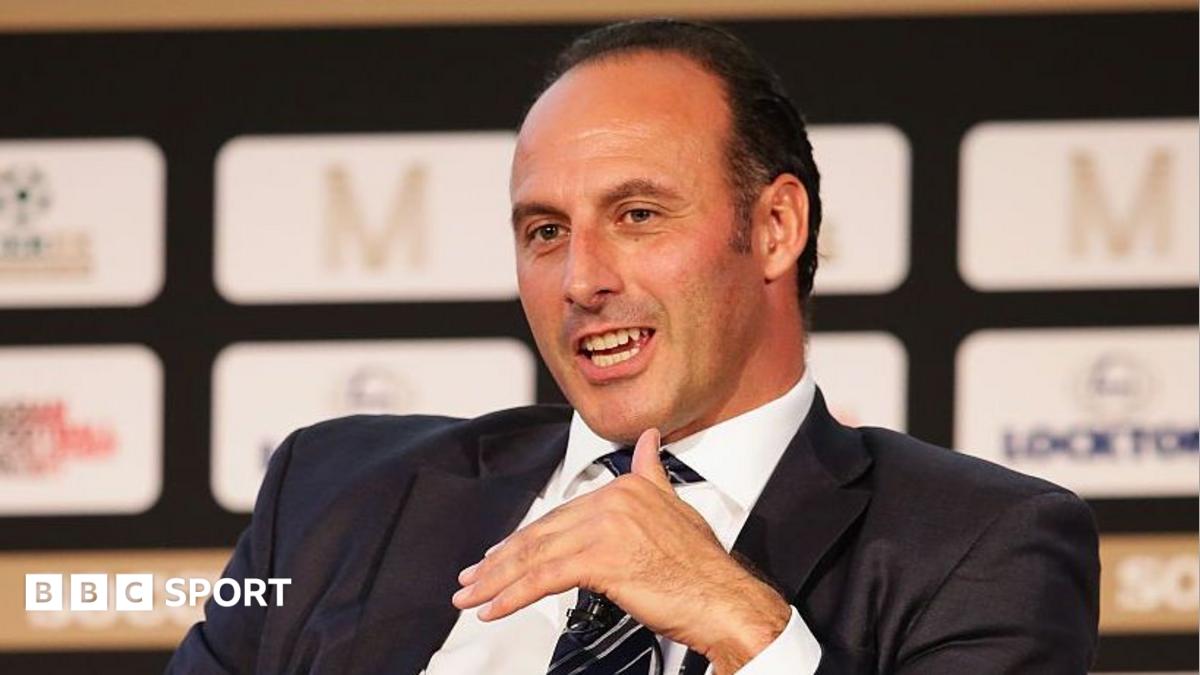
Fifa: Ex-Spurs player Ramon Vega intends to stand in 2027 presidential election
Former Tottenham Hotspur defender Ramon Vega says he intends to stand as a candidate in next year’s Fifa presidential election.
The 55-year-old is the first person to confirm they want to challenge Gianni Infantino, who has defied calls to step down in the wake of his failed plan to sell off stakes in the World Cup to private investors, which has sparked a major backlash across football.
A former Switzerland centre-back, Vega also played for Celtic and Watford and has worked in finance since retiring from football in 2004.
“I am standing to reunite the global football family, deliver genuine and lasting reform, modernise Fifa for the 21st Century, restore stability and credibility, and rebuild the trust that our game urgently needs,” he said.
Meanwhile, Sheikh Salman bin Ibrahim Al Khalifa – president of the Asian Football Confederation – has written to Infantino, distancing himself from an external review of Fifa’s governance system.
In his letter – seen by BBC Sport – Sheikh Salman proposes that Fifa’s council sets up a working group to examine potential reforms, “rather than being outsourced to an external party”.
Last month, Infantino said he was “fully committed to leading Fifa” despite Uefa, Concacaf and the Asian Football Confederation calling for him to quit.
Vega considered running for Fifa’s top job in 2015 following the suspension of former president Sepp Blatter.
Four years later he said he would stand against Infantino, but failed to garner enough support to be included in the ballot, having required the backing of five of Fifa’s 211 member federations.
Candidates must also be proposed by a member association and have played an active role in the game for two of the past five years, as well as passing an eligibility check by a review committee.
“I am standing because my life has prepared me to serve the game,” Vega said in a statement announcing his candidacy.
“Football does not belong to presidents, confederations or administrators. Football is greater than any position, any individual or any institution.
“It is the people’s game and belongs to everyone: the players, coaches, referees, supporters, volunteers, clubs, leagues, associations and communities that give football its life.
“It belongs to every child discovering the game, every professional carrying the hopes of a nation, and the billions of supporters whose passion makes football the world’s game.
“Football must always come first. Yet for too long, division has fractured our football family.
“The current leadership has demoralised the game. Weak governance has damaged Fifa’s credibility and eroded trust across the global football family. We must stop this conflict from escalating.
“Ego-driven battles within football administration must never be allowed to damage those who matter most: the players, coaches, referees and supporters around the world. They are not responsible for these conflicts. They deserve better.”
Vega concluded: “Football is in the emergency room, on life support. We cannot wait any longer. Fifa needs a new direction and fundamental reform.
“We must reunite the football family, restore trust, bring stability and modernise Fifa’s governance. This requires decisive change – not cosmetic adjustments.”
Protesters in Colombia rally against ties with Israel | News
Hundreds took to the streets of Bogota to protest the ongoing genocide in Gaza.
Published On 8 Oct 2026
Protesters have rallied in Colombia’s capital opposing the new far-right government’s policy towards Israel.
Hundreds took to the streets of Bogota on Wednesday to protest against the ongoing genocide in Gaza and the Colombian government’s decision to restore diplomatic and economic relations with Israel.
Recommended Stories
list of 3 itemsend of list
The protesters, who began their rally in front of the Israeli embassy in Bogota, criticised President Abelardo de la Espriella’s decision to open a new Colombian embassy in Jerusalem.
The rally marked three years since the Hamas-led attacks of October 7, 2023, which were followed by Israel launching a genocidal war on Gaza.
“When diplomatic relations with Israel were broken off, the message was that we would not be a nation complicit in their atrocities,” Nicolas Isaza, who took part in the protest, told Al Jazeera.
“Today our government is no longer drawing a line against the atrocities being committed in Palestine,” he added.
De la Espriella, who was sworn in as president in August, promised close relations with the US and Israel during his election campaign as a way to combat armed groups in his country.
Colombia’s government has since restored relations with Israel after former President Gustavo Petro, who criticised Israel’s genocidal war on Gaza, severed diplomatic relations and halted Israeli arms imports.
The Colombian government also recognised Israel’s claim of sovereignty over the occupied Syrian Golan Heights, just days after the new president took power.

Burnham and Merz to hold security talks in Berlin
Burnham is set to be greeted with military honours at the German capital’s Chancellery ahead of his first face-to-face meeting with the chancellor.
On Thursday, the two leaders will formally ratify the 2025 Kensington Treaty, a partnership committing both countries to tackle hostile activity through deeper cooperation on science, technology, defence, security and growth.
Speaking ahead of the visit, Burnham said the UK and Germany were “joining forces to find, expose and disrupt” threats.
He continued: “Attacks on our infrastructure, our businesses and our democracies are not a distant threat.
“They reach into people’s homes and workplaces, and they are designed to make us weaker and more divided.”
European leaders have warned the threat of hybrid attacks against Europe by Russia has intensified in recent weeks.
Hybrid warfare or hybrid attacks are loose terms which tend to describe non-military methods designed to exert pressure and destabilise an adversary – for example cyber attacks, sabotage or misinformation.
Last month, a senior Russian diplomat was summoned by the British government over an “egregious and reckless attack” on Leipzig airport.
It is a major international freight hub used for providing support to Ukraine. Moscow has denied any involvement in the incident.
Meanwhile, questions have also been raised this week about Germany’s reliability as an intelligence partner, following the bombshell arrest of a former spy chief on suspicion of espionage.
August Hanning has been accused of espionage, treason and obtaining classified information for a foreign power, the German Federal Prosecutor’s Office says.
He ran the Federal Intelligence Service (BND) from 1998 to 2005 and has since been working as a private consultant.
The talks also come during a period in which Merz’s own political future has come under intense scrutiny.
Burnham replaced Prime Minister Sir Keir Starmer in July after the former leader was forced out by his own MPs just two years after winning a landslide election victory.
Similarly, Merz has faced persistent rumours he could be replaced by his party due to his poor approval ratings and following setbacks in regional elections.
Although the chancellor appears to have overcome an immediate crisis in his leadership, questions remain over his future.
Additional reporting by Ottilie Mitchell.

Gorgeous Irina Shayk, 40, stuns as she shows off her figure in terracotta-coloured one-piece swimsuit
MODEL Irina Shayk raises the roof in a terracotta-coloured swimsuit from a new collection.
The 40-year-old was in Ibiza to help promote British swimwear brand Hunza G’s Resort 27 line.


Her square-neck zebra metallic terracotta one-piece features a crinkled fabric pattern.
Mum-of-one Irina said: “I’ve loved Hunza G for years, so working together felt natural.
“The collection is sexy and playful, with a noughties nostalgia I love.
“Shooting it in Ibiza, surrounded by friends, made it even more special.”


Irina was engaged to footballer Cristiano Ronaldo.
She also has a daughter with Hollywood actor Bradley Cooper and has also been romantically linked to footballer Tom Brady.
She has become one of the modern modeling industry’s greats after being discovered in her small Russian hometown of Yemanzhelinsk.
Irina, whose full name is Irina Valeryevna Irinahlislamova, received international recognition when she became the first Russian model to appear on the cover of the 2011 Sports Illustrated Swimsuit Issue.
She has become a runway staple, working with prestigious fashion houses worldwide.

Scott McTominay: Napoli & Scotland midfielder resumes training after corrective heart procedure
Scotland midfielder Scott McTominay has returned to training at Napoli following his recent heart surgery.
The 29-year-old’s ablation procedure – a minimally invasive operation to correct irregular heart rhythms – took place in Manchester last month and was described as “a complete success”.
And Napoli said: “On Wednesday, Scott McTominay underwent further diagnostic tests, which showed that he is fit to play.
“The Napoli player therefore resumed training with the rest of the team after the period spent training separately.”
McTominay was substituted after 56 minutes of Napoli’s 2-1 Serie A defeat by Como in August. A mild benign arrhythmia was discovered, prompting the corrective treatment.
According to the NHS,, external an arrhythmia is when the heart beats too quickly or too slowly, or the heartbeat is not steady.
The British Heart Foundation explains, external that a cardiac arrhythmia ablation involves using heat or cold energy to create tiny scars in the heart to block faulty signals and restore a typical heartbeat.
During his absence, McTominay missed four Scotland fixtures, including Tuesday’s Nations League defeat by Slovenia.
The Scots’ next games are against Switzerland and North Macedonia in November.

South Korea pledges legal action over alleged fuel exports to Russia | Russia-Ukraine war News
Ukrainian reports of South Korean fuel exports to Russia come amid strained tensions between Seoul and Kyiv.
Published On 8 Oct 2026
South Korea’s Ministry of Foreign Affairs has said the government will take legal action over illegal fuel shipments to Russia if allegations from an adviser to Ukrainian President Volodymyr Zelenskyy are confirmed.
The Foreign Ministry said on Thursday it had not confirmed whether South Korean fuel, including diesel, had been exported to Russia.
Recommended Stories
list of 3 itemsend of list
It added that exports of some products, such as diesel and jet fuel for commercial purposes, were not included in a South Korean exports control list to Russia.
On Wednesday, the South Korean presidential office dismissed a statement by Vladyslav Vlasiuk, an adviser to the Ukrainian president on sanctions policy, that 176,000 tonnes of fuel were shipped from South Korea to Russia via sanctioned tankers in July and August.
Ukraine’s top sanctions official said the alleged findings run counter to South Korea’s sanctions policy towards Russia.
“Since Russia’s invasion of Ukraine, our government has consistently implemented sanctions and export controls against Russia in close cooperation with the international community,” South Korean presidential spokesperson Kang Yu-jung said on Wednesday, according to the Yonhap news agency.
“We ask that Ukraine also refrain from distorting the relevant policies of the Republic of Korea without sufficient verification of the facts and making public remarks that can damage international trust,” she added.
Relations between South Korea and Ukraine have been strained for the past couple of weeks after Seoul accused Zelenskyy of having “unilaterally disclosed” to the United Nations General Assembly that Kyiv had transferred two North Korean prisoners of war to South Korea.
Seoul Korea demanded an official apology from Kyiv, claiming the Ukrainian president had breached a non-disclosure agreement. Kyiv said no such agreement was in place.
Pyongyang and Moscow, meanwhile, have deep ties, with the two countries having signed a mutual defence treaty in 2024. According to Ukrainian and South Korean estimates, about 14,000 to 15,000 North Korean soldiers were sent to support Russia’s war efforts against Ukraine.
North Korea and South Korea remain technically at war because the 1950–1953 Korean War ended in an armistice rather than a peace treaty.

British Commandos Emerge From German Submarine During Major NATO Exercise
As part of the largest U.K. Commando Force exercise in 15 years, British special operators conducted a submarine insertion off Scotland, making use of a German Navy Type 212A — a boat you can read about in detail here. The maneuvers are the first time since the war in Afghanistan that all of the Commando Force’s specialist elements have operated together. The submarine insertion, conducted at Cape Wrath on September 29, is part of Exercise Strike Warrior, a major NATO drill intended to rehearse allied crisis-response and warfighting operations across the North Atlantic and High North.
The U.K. Royal Navy-led Commando Force specializes in amphibious, littoral, and expeditionary operations. It brings together Royal Marines commandos with specialist elements including reconnaissance, intelligence, targeting, artillery, logistics, and medical capabilities. The force is increasingly focused on smaller, dispersed teams operating across contested littoral environments.

Commandos attempt to drive RIB onto German submarine casing in heavy swell
Including elements of the Commando Force, more than 2,000 personnel from the United Kingdom, United States, Germany, Netherlands, Canada, and Norway are currently participating in Strike Warrior, with eight warships and 19 aircraft involved in activity spanning Scotland, the Western Isles, the North-West Approaches, Galloway, the Borders and the North Sea.
The submarine insertion underscores the type of maritime special operations the British Commando Force is now increasingly training to conduct. Personnel from 148 (Meiktila) Commando Forward Observation Battery, Royal Artillery, boarded the unnamed German attack submarine off Scotland before being infiltrated toward the coast. The sub provided intelligence, surveillance, and reconnaissance (ISR) support as the force approached the target area, after which the commandos conducted a discreet small-boat insertion using inflatable raiding craft.

Once ashore, the commandos moved onto the cliffs and established an extemporized observation post. From there, they confirmed the simulated target and coordinated live naval surface fires against a simulated enemy position. Here, firepower was provided by the Portuguese Karel Doorman class frigate Dom Francisco de Almeida, presumably using its Oto Melara 76mm deck gun. Following the engagement, the team was extracted. The complete sequence incorporated submarine infiltration, small-boat insertion, covert reconnaissance and targeting, live naval gunfire, and withdrawal into a single mission profile.

The German submarine involved is particularly well suited to this kind of mission. Conventional diesel-electric attack submarines (SSK) lack the nuclear-powered endurance and sustained high speed of an SSN, but those characteristics are not necessarily what a short-range clandestine insertion mission requires. Modern SSKs such as Germany’s Type 212A are designed around extremely low acoustic signatures and can remain submerged for extended periods using air-independent propulsion, making them difficult to detect while operating in relatively shallow and constrained waters.
That combination is hugely valuable for special operations. An SSK can approach a coastline covertly, conduct ISR, release a small team and its boats, and withdraw without exposing a large surface vessel or maintaining the high-speed transit capability associated with a nuclear submarine. Its comparatively small size can also be advantageous when operating closer to shore, where depth, seabed conditions and the presence of coastal sensors can constrain larger submarines. Conventionally powered boats are also far cheaper to procure and operate and have smaller crews.


An SSN offers major advantages for longer-range deployments: far greater endurance, sustained speed, and the ability to carry and support larger payloads over intercontinental distances. These payloads can include dry deck shelters and swimmer delivery vehicles, allowing divers easy exit and entrance while the boat is submerged and at a standoff distance from the coast.
But for a mission whose essential requirement is to quietly loiter near a coast, put a small team ashore and leave, an SSK remains a highly relevant platform. Conventional submarines are particularly valuable to the kind of distributed littoral operations NATO is rehearsing in northern European waters.


The U.K. Royal Navy’s four Upholder class were its last diesel-electric submarines. They were withdrawn in 1994–95 and subsequently transferred to Canada. The Royal Navy today operates an all-nuclear submarine fleet.
The Upholders were also particularly suited to inshore operations, reconnaissance, and other missions demanding extreme quietness and maneuverability.

With this in mind, TWZ has, in the past, examined whether the U.S. Navy should complement its all-nuclear submarine fleet with advanced conventional boats. Sweden’s Gotland demonstrated the value of these kinds of boats when it was leased to the U.S. Navy for adversary training and proved exceptionally difficult for American ASW forces to detect.

Returning to the Cape Wrath drill, the 148 Battery operations officer involved explained that “This level of complexity and coordination of live assets has not been achieved by 148 for nearly 30 years.”
“We wanted to demonstrate to our partners across the United Kingdom Commando Force, wider U.K. Defense and NATO SOF community the type of missions we are prepared to execute against future threats,” the officer added.


Multinational integration is central to the exercise. Strike Warrior is testing the ability of the British Commando Force to plug into a much larger allied force in which submarines, surface combatants, aircraft, drones, and small specialist teams can contribute to different parts of the same operation.
Earlier in Strike Warrior, 148 Battery also directed fires from the Dutch Karel Doorman class frigate HNLMS Van Amstel and Royal Canadian Navy Halifax class frigate HMCS St. John’s after establishing observation posts. Those ships were operating as part of Standing NATO Maritime Group One.

The exercise also provides a snapshot of how Britain’s commandos have evolved since their intensive employment in Afghanistan. The Royal Marines’ Future Commando Force concept emphasizes smaller, more dispersed formations capable of operating in contested littoral environments, with greater reliance on maritime mobility, uncrewed systems, long-range fires, and allied capabilities.
Strike Warrior combines those elements, with the exercise including amphibious landings, boarding operations, intelligence and surveillance missions, maritime security, and anti-submarine warfare, alongside drone missions involving strikes and combat resupply. Other elements have practiced establishing protected medical facilities.
The geography of Strike Warrior is equally significant. The exercise extends across Scotland and its surrounding waters, including the Western Isles and out into the North Sea, placing the Commando Force in the maritime environment connecting the highly strategic North Atlantic, Norwegian Sea, and northern European approaches.
That region has become increasingly important to NATO planning because of the difficulty of monitoring and controlling such a large maritime battlespace. Submarines, maritime patrol aircraft, surface combatants, drones, and long-range weapons all have roles to play, while the geography provides numerous opportunities for small forces to operate from the coast and islands.


The United Kingdom has been repeatedly using the region and the wider High North as a training ground for this type of activity. Earlier this year, British commandos conducted a submarine insertion during Exercise Cold Response in Norway using the German Navy’s Type 212A submarine U-35. That also involved submarine infiltration, small-boat deployment, establishment of an observation post, and the direction of allied naval fires.

Strike Warrior expands that concept considerably and across a much larger battlespace, providing an opportunity to test not simply individual capabilities but the ability to combine them during a sustained NATO exercise.
The exercise began September 28 and concludes October 9.
For the British Commando Force, the significance extends beyond the dramatic imagery of troops emerging from a German submarine at Cape Wrath. After years in which British commandos were heavily committed to land-based counterinsurgency operations, the exercise is intended to put them firmly back in a maritime and high-end warfighting context.
This is the kind of operation that the U.K. Commando Force is now preparing to conduct alongside NATO partners in the increasingly contested waters of the North Atlantic and High North.
Contact the author: thomas@thewarzone.com

Kacey Musgraves and Intocable rerelease ‘Uncertain, TX’
Kacey Musgraves is taking another trip to “Uncertain, TX” — this time with a little bit of Tejano flair courtesy of a legendary South Texas band.
On Tuesday, Musgraves released a Spanish version of her critically acclaimed track featuring Tejano group Intocable — a song she originally recorded with country star Willie Nelson, which debuted at No. 50 on Billboard’s Hot Country Songs after the May 1 release of her seventh studio album, “Middle of Nowhere.”

“Having a song with the legends of Intocable is such a thrill for me,” said Musgraves in a press release on Tuesday. “As a Texan, I am proud of the cultural melting pot that makes our state so great and this collaboration is such a fun example of that.”
According to Intocable lead singer and accordionist Ricardo “Ricky” Muñoz, who spoke with The Times via Zoom, Musgraves had first thought of including the great conjunto accordionist Flaco Jiménez, who passed away in August 2025, to join in on the original track with Nelson, a fact that the country gal herself confirmed on the Zane Lowe interview series on Apple Music in May.
“Flaco Jiménez’s son told me that Kacey wanted to do an all-Texas thing where Willie Nelson was in the song and Kacey also invited Flaco to play accordion,” said Muñoz, who heard the original demo. “I believe at the time, Flaco was not good, health-wise, so he wasn’t able to do it.”
Muñoz, who has always been a fan of the “Rainbow” singer, said the song was “orbiting” around him. Three weeks ago, he received a call from Musgraves’ team to help with the Spanish version.
“I was very conservative on the accordion part. I just played little parts here and there,” said Muñoz. “Then they call me back and they go like, ‘No, give me some more of that.’”
This isn’t Musgraves’ first collaboration with a música mexicana artist. In August 2025, the 38-year-old singer-songwriter joined forces with Carin León for the cross-cultural ballad “Lost in Translation.”
Muñoz considered the collaboration a “perfect fit.”
“We’re representing the Tejano community, and I’m proud of that,” said Muñoz, who comes from a long line of Texas-born Mexicans. “ Once we meet in person and we get to play together, it’s even gonna be a better connection to the song.”
On Thursday, the two acts will perform together for the first time for Musgraves’ Middle of Nowhere tour at the Moody Center in Austin, Texas.
The iconic Tejano band formed in the border town of Zapata, Texas, in 1993, and rose to fame thanks to Tejano pop hits like “Fuerte No Soy,” “Soñador Eterno” and “Estás Que Te Pelas.”
In July, the “¿Y Todo Para Qué?” group received its own star on the Hollywood Walk of Fame. At the ceremony, hitmaker and songwriter Edgar Barrera, who grew up in the same borderland area, said that Intocable “showed the world what música mexicana could be.”
But the Grammy-winning band isn’t resting on its laurels. Of the Walk of Fame star, Muñoz said, “that’s just part of the journey. It’s awesome, but I haven’t really paid any more thought than the day I was there.”
Instead, the “Enséñame A Olvidarte” act is looking ahead. The group is preparing for the release of its 16th studio album next year, “Nostalgia Radical,” a project inspired by Muñoz’s mental health journey , which he said has allowed him to show up as his most authentic self.
“I was exploring myself, being vulnerable and asking questions,” said Muñoz. “ To me, going to therapy every Tuesday is like taking out the trash.”
This November, the band — which is currently zigzagging between Mexico and the U.S. for its Cultura Tour — is also up for a Latin Grammy for regional song for their country-fused pro-immigrant anthem “Estamos Todos.”
“We’re all asking all these questions, and we’re not getting the right answers or any answers. We’re just being danced around with the answers,” said Muñoz. “But in the meantime, we’re all together in this.”

The band’s pro-immigrant stance is another thing it has in common with Musgraves, who in May invited invited three teen mariachi brothers previously detained by ICE to open for her sold-out, three-night residency at Gruene Hall in New Braunfels, Texas, the oldest dance hall in the state..
The country singer also asked fans to donate to the Young Center for Immigrant Rights, which helps children whose parents have faced deportations, during the opening night of her tour in Chicago back in August.
“We need more people to talk about this and not stay quiet. Kacey is coming from another community and stepping up, I mean, that’s big, man. That’s huge. I commend her for that,” said Muñoz.

Trump’s $90 Medicare rebate rolls out, but millions aren’t eligible
WASHINGTON — President Trump says his administration will make one-time payments of $90 per person to help more than 20 million Medicare enrollees pay for their Part B premiums. It will cost about $2 billion.
Less than one-third of all Medicare recipients are eligible for the payments, which are expected to be sent out this week. Not eligible are roughly 35 million Medicare Advantage enrollees, millions of people with disabilities who get premium assistance and low-income Medicare recipients.
The election-year promise that the Republican president made over the weekend comes as the Nov. 3 midterms are fast approaching, with the cost of living and healthcare expenses among the top issues for voters.
Some questions and answers about the payouts:
Who will benefit?
Some 20.8 million people in the original Medicare Part B who are living in the United States, not receiving premium assistance from Medicaid or not paying an income-related monthly adjusted amount.
Medicare Advantage enrollees, who make up more than half of the eligible 64.2 million Medicare beneficiaries, will not receive a payment, according to KFF, a healthcare research nonprofit. Nor will 12 million low-income older adults and people with disabilities who get premium assistance.
The Part B program covers expenses such as doctor’s visits, ambulance services and lab tests. Total monthly costs generally start at about $200 and vary with income.
Allison Schuster, a White House spokeswoman, said in a statement that the administration “is enabling Americans to take control of their health by putting money directly back in the hands of Medicare patients.”
When will the payments go out and how will they be disbursed?
According to the Centers for Medicare & Medicaid Services website, eligible beneficiaries will receive one $90 rebate this month, with most getting a direct deposit on or around Friday. Others will receive a paper check from the Treasury Department later in October.
Juliette Cubanski, director of KFF’s program on Medicare policy, said the payment will be automatic.
“As far as a benefit goes, people don’t have to call or sign up — it’s just money they receive directly, but not everybody on Medicare will receive this money.”
A White House fact sheet says people can call (800) MEDICARE ([800] 633-4227) to check their eligibility for the premium rebate. To check on payment status, people should call the Social Security Administration at (800) 772-1213.
What is the source of the money?
Payments will come out of the Medicare Improvement Fund created by Congress in 2008 and intended to make improvements to the Medicare fee-for-service program.
The fund was created to improve program management and conduct oversight of contracts and contractors, according to the Congressional Budget Office, but its purpose has expanded after various legislative changes.
This is not the first time the fund has been used.
President Obama’s administration, along with Congress, redirected $20 billion to expand healthcare coverage through the Affordable Care Act.
But under Trump, it is the first time that the fund has been used to directly pay recipients.
What are critics of the plan saying?
Critics of Trump’s promise characterize the $90 payments as a preelection stunt designed to sway voters rather than address structural problems in healthcare costs and administration.
The top Democrat on the Senate Finance Committee, Oregon Sen. Ron Wyden, said in a statement that “this is another desperate attempt by a failed president to escape Americans’ revulsion with his failed agenda, amounting to one tank of Trump-inflated gas.”
Trump recently promised $500 rebate checks to an estimated 1 million Obamacare enrollees across 30 states whom the White House alleged were overcharged by the Biden administration for some fees.
Cubanski said the Medicare rebate payments were being doled out when Americans were feeling the bite of higher food, energy and gas prices. Surging healthcare costs are only compounding those pressure, she said.
“This might be helpful for people but it might not go very far.”
Hussein writes for the Associated Press.

Dodgers’ Andy Pages ends two-year postseason slump at best time
He pounded his chest twice as he left the batter’s box, and all of Dodgers nation rocked to the beat.
Andy Pages did it. He finally did it. He finally broke out of his baffling two-year October slump with a hit so powerful, he didn’t even have to climb over Kiké Hernández to get it.
How powerful? With one smooth swing he broke a tie by scoring two runs while sending two teams packing, the Atlanta Braves trudging home for the winter and the Dodgers charging into the National League Championship Series.
Yeah, it was a blast, both figuratively and literally, Pages’ two-out, two-strike bases-loaded single in the seventh inning Wednesday night silencing the lame tomahawk-chopping fans at Truist Park and giving the Dodgers an eventual clinching 4-1 victory against the Braves in the National League Division Series.

Dodger Andy Pages hits a two-RBI single against the Braves during Game 4 of the NLDS Wednesday in Atlanta.
(Kevin C. Cox / Getty Images)
Certainly, it only gets tougher from here. In winning this best-of-five series three games to one, the Dodgers can now prepare for a best-of-seven showdown task against either the mighty Milwaukee Brewers or blazing San Diego Padres.
Yes, they will need to hit better, they will need Blake Snell to find his focus, they will need Shohei Ohtani to show up.
But… Andy Pages! Seriously! If a guy who was seven for 66 in the last two postseasons and was so helpless last year he was benched for the last three games of the World Series… if that guy can drive in the winning run from the bottom of the order? The once-fallible Dodgers may just be unbeatable.
“There’s no more talented team than the Los Angeles Dodgers,” manager Dave Roberts shouted in the postgame clubhouse. “We’re the best organization in sports, top to bottom. We’re smarter, we’re better, and we’re tougher.”
At that point, someone referenced a recent comment from Padres owner José E. Feliciano insinuating that the Dodgers, baseball’s oldest team, was composed of dinosaurs.
“And we’re dinosaurs!” shouted a voice above the clubhouse din.
If they’re dinosaurs, their first initial is “T” and their last name is ‘Rex.”
It’s OK to start seriously thinking about a three-peat now. They’re now just eight wins away but, given how mediocre the American League playoff teams appear, they could realistically be just four wins away.
Here’s guessing that the NLCS will be the real World Series. And here’s guessing the Dodgers will be ready.
Pages, who won the hearts of Dodger fans last October when he made a leaping game-saving catch over the back of Kiké Hernández, was granted his first big October swing thanks to the Braves largess.
In the seventh inning of a 1-all tie, Teoscar Hernández redeemed himself for another fielding blunder with a single that finally drove dizzying Tyler Mahle from the game.
In came Game 2 rookie sensation Didier Fuentes, only this time, he was all rookie and zero sensation, walking Josue De Paula and Kyle Tucker to load the bases. Considering De Paula is just a kid and Tucker has been struggling, the fact that both showed such patience in such a pressure situation was pretty cool. And moments later, it got even cooler.
In came veteran reliever Robert Suarez, and Pages was ready for him, working the count full before lining the two-run single up the middle.
The Dodgers added a run two innings later on a Max Muncy home run — has there ever been a playoff game when he hasn’t homered? — to finalize the score.

Dodger Max Muncy celebrates after hitting a home run in the ninth inning of Game 4 of the NLDS against the Braves in Atlanta Wednesday.
(Kevin C. Cox / Getty Images)
When the game ended on an Austin Riley fly out to right field, Pages celebrated in center field by taking off his cap, turning his face to the sky and pounding the cap three times into his glove.
It was a series that was worth the emotion, the Dodgers famous starting rotation giving up just four runs in 21 ⅓ innings, the bullpen solid behind a revived Edwin Díaz, and the offense doing just enough to beat Braves aces Chris Sale and Mahle.
In the fifth inning of a tie game, starter Tyler Glasnow issued walks to Riley and Michael Harris II. With two out, in came Alex Vesia. Up stepped slugger Matt Olson. The fans climbed to their feet. This was the Braves’ big chance.

Dodgers closer Edwin Díaz throws the ball against the Braves in the ninth inning Game 4 of the NLDS Wednesday in Atlanta.
(Kevin C. Cox / Getty Images)
But Olson swung at the first pitch and lined it directly to second baseman Kiké Hernández to end the threat and quiet the joint. Díaz threw a hitless ninth for his second save of the series and…who’s going to beat them?
Afterward, Roberts referenced nearly half of his team when talking about his pride. He talked about Pages’ hit, about De Paula’s walk, about reliever Edgardo Henriquez’s 1 ⅔ shutout innings, about Muncy’s bat and Freddie Freeman’s glove.

-
Share via
“I guess, amazement,” he said. “Our guys just continue to fight, persevere. You never know who the guy’s going to be.”
The only glaring weakness was, once again, the superstar who used to be their strength. Ohtani scored the Dodgers’ first run after drawing a walk but went hitless in three ensuing at-bats. He only got two hits in the four-game series and you have to wonder if his injury-wracked body would be better out of the lineup.
How well are they playing without the full services of their most historic player? On the verge of making history, the Dodgers don’t even miss him.

US bars Fiji-based man over corruption tied to China | Corruption News
The State Department has accused the official of paying bribes to Fijian citizens to advance Chinese interests.
Published On 8 Oct 2026
The US Department of State has publicly designated a Fiji-based man for his involvement in corruption on behalf of Chinese actors.
Zhao Fugang, the director of the Overseas Chinese Service Center, “abused his public position by paying bribes to Fijian citizens to advance China-based government, business, and criminal interests”, the State Department said in a press release on Wednesday.
Recommended Stories
list of 3 itemsend of list
“His actions constituted significant corruption and adversely affected U.S. interests in Fiji.”
The designation renders Zhao and his immediate family members “generally ineligible for entry into the United States”.
The US embassy in Suva, Fiji’s capital, said Zhao’s actions left the Pacific nation open to “malign foreign influence facilitated by Chinese government, business, and criminal actors”.
The embassy also said, “Public reporting shows an established trend of criminals operating across the Pacific with ties to China.”
Beijing says Overseas Chinese Service Centers help its nationals with administrative issues abroad, such as renewing driving licences. However, rights groups have alleged they are fronts for Beijing to push interests abroad, including the targeting of dissidents.
In February, the Trump administration sanctioned two leaders of Pacific island nations for alleged corruption tied to China. The US Department of State issued a notice alleging that Hokkons Baules, the president of Palau’s Senate, and Anderson Jibas, a former mayor in the Marshall Islands, had created openings for China to increase its influence in the region.

I paid £18 for fish and chips in iconic seaside town and only needed 2 words to sum it up
A former Michelin-starred chef has reopened a well-known chippy as part of his Salt and Malt restaurant and takeaway chain

Fish and chips remain a popular seaside treat(Image: Mark Taylor)
Few foods are as quintessentially British as fish and chips. From seaside holidays to Friday night takeaways, the humble dish has become a much-loved part of life in the UK.
But the classic pairing of crispy battered fish and golden chips is actually more than a century old. Fried fish and potatoes were eaten separately before the two came together in the late 19th century, with English Heritage dating the combination to towards the end of the 1800s.
It wasn’t long before fish and chips became synonymous with a day at the seaside. This is where Reach’s reporter Mark David Taylor went to visit one iconic seaside for a day trip and to try some fish and chips.
Former Michelin-starred chef Josh Eggleton took over the much-loved seafront chippy after more than 20 years in business, transforming it into one of his Salt & Malt restaurant and takeaway outlets within just a few weeks.
And it appears to have struck a chord with locals straight away – by 6pm on the glorious summer Saturday of Mark’s visit, there was already a queue for tables inside the Weston-super-Mare restaurant, with an even lengthier one snaking outside for takeaways.
Boasting blue-tiled frontage, black and white ‘chessboard’ floor tiles and ribbed glass partitions between booths, this gleaming new Salt and Malt bears a striking resemblance to existing branches, giving the impression that Eggleton is eyeing up further seaside locations. And rightly so, as this upmarket fish and chip concept is absolutely crying out for wider expansion, reports Wales Online.
Featuring sustainably sourced North Atlantic fish, gluten-free chips and daily specials – on this occasion, Cornish Mounts Bay sardines with toasted sourdough, salad and pickles – it’s undeniably a ‘posh’ chippy, yet Eggleton has been mindful not to price out everyday seaside visitors.
Takeaway prices remain reasonably competitive with most seafront chippies – small cod and chips is £12.50, battered sausages are £2.40 and the kids’ meals are £7, chips in a cone at £2 and a large chip box for £5.60.
Inside the restaurant, prices are naturally higher, with battered haddock and chips with buttered crushed garden peas coming in at £19, and a homemade fishcake with cod, haddock, lemon, dill and parsley priced at £14.50.
The children’s menu (for ages 16 and under) in the restaurant is a reasonable £7.50, offering battered fish, sausage, chicken chunks, scampi and halloumi, all served with chips and a choice of peas, baked beans, carrots or cucumber.
Yet it’s the inventive touches and alternatives that sets Salt and Malt apart from your typical seaside chippy.
Alongside gluten-free batter as standard, diners can opt to have their cod or haddock baked in garlic butter rather than battered – perhaps the healthier choice for those craving a ‘beach body’ this summer.
For those less concerned about such matters, free chip refills are also on offer, though the portions are hearty enough that you may not need them.
Mark and his plus one sampled the cod and chips (£18) and the curried cod burger (£16.50), and neither disappointed. The cod was wrapped in crisp, golden batter, with large, moist and succulent flakes of fish inside, accompanied by a generous serving of buttery crushed peas.
Granted, £18 is above average for fish and chips, but this was a superb rendition of the great British seaside staple and well worth every penny. Nestled in a soft brioche bun, the curried cod burger featured a generous portion of lightly battered fish with a subtle curry sauce flavour, accompanied by tartare sauce, coleslaw and pickled red cabbage.
The chips were perfectly cooked – crispy on the outside, fluffy within, and completely grease-free.
Essentially, the dish brought together all the finest elements of a traditional seaside chippy – fish and chips, a bread roll, curry sauce and classic burger toppings – and the combination was nothing short of brilliant. If summed up in just two words, they’d be “top drawer”.
Traditional chippy favourites paired with stunning coastal views – what more could anyone ask for?
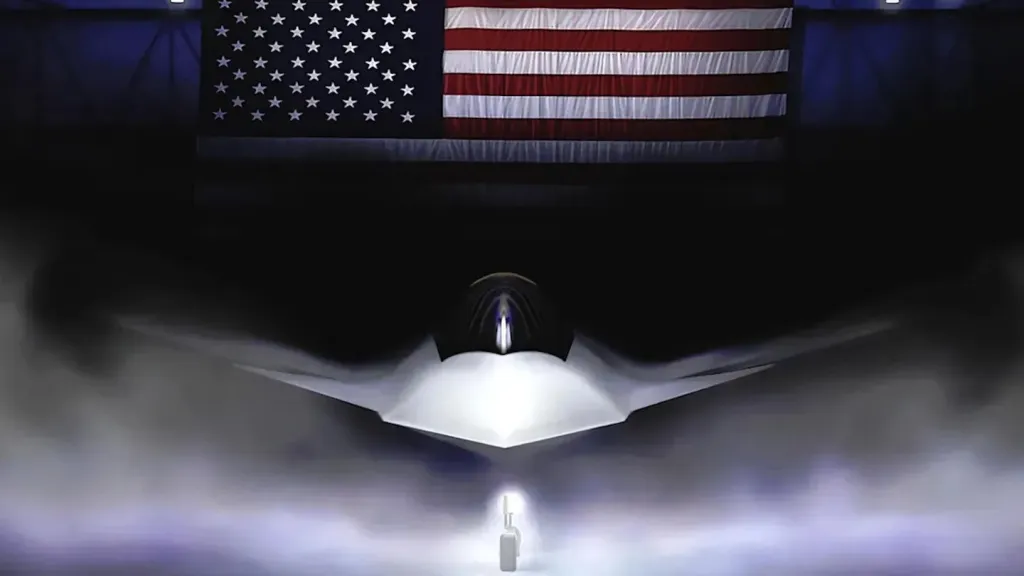
How The Groundwork For F-47 Flight Testing Is Being Laid
The testing plan for the U.S. Air Force’s sixth-generation F-47 fighter is continuing to take shape ahead of the type’s expected first flight in 2028. The Air Force Test Center (AFTC) aims to blend developmental and operational test elements, and leverage new tools in the virtual realm, to help accelerate that work. All of this is in support of an aggressive program schedule that aims to see the first production F-47s enter operational service in the early 2030s.
Air Force Brig. Gen. Mark Massaro, head of the AFTC, was asked about how the groundwork is being laid for F-47 testing during a virtual talk the Air & Space Forces Association’s Mitchell Institute for Aerospace Studies hosted yesterday. AFTC is located at Edwards Air Force Base in California, which is the Air Force’s main flight testing hub.
“So, I’ll leave timelines to the [F-47] program office and other folks to talk to, but what I will tell you are some of the things that we’re doing to accelerate our test capabilities to get critical capabilities out the door,” Massaro explained. “Integrated test is a key component.”

“So, how we mix together the DT [developmental test] and OT [operational test] elements, how we bring our operational test partners in earlier to define the requirements early on in the test planning process,” he continued. “We understand that the information that we can get early on in a program may have applicability to that final operational test requirement to establish whether it’s effective and suitable to the end user. So that’s a key component to accelerating test capabilities.”
There has always been overlap in development and operational test efforts for new U.S. military aircraft, but the Air Force has been taking steps to more deeply integrate these processes in recent years. The F-15EX Eagle II fighter, which reached initial operational capability in 2024, was the first ever Air Force aircraft to be fully tested and fielded through DT and OT efforts conducted in parallel, as you can read more about here. The service has more recently applied these concepts to the B-21 Raider program with test flights where developmental and operational test pilots have shared the cockpit.


“Another thing that we’ve learned over time too, if you think back to software testing and you think about agile software development, is having an iterative capability that you constantly iterate on,” Brig. Gen. Massaro also highlighted yesterday. “So, thinking about how we can structure our software, or our software testing, our capabilities testing.”
In this way, “we have those opportunities to inform decision makers on a regular cadence on what type of capability they may have at a certain timeline to be able to issue out to a warfighter on a time that might not be a normal milestone chart,” he continued. “We’re really working to incorporate into our test planning processes.”
“Another thing – and I kind of alluded to it a little bit earlier, too – is on the digital front, using our software tools, that super intelligence, graphic processing units, which have a significantly higher capability to process information, to really refine model iteration,” the AFTC head added. “Those models and flight test data [can be used] to update things like computational fluid dynamics when you’re doing tests like loads and high-alpha maneuvering to get information quicker from a flight test back into the program.”
Those “digital tools” can also be used “to accelerate how that information then goes back into a design choice or change if they need to make it,” he continued. “Coming up with those opportunities to use those tools in a test design and in a program” can then further help “to accelerate that final schedule delivery.”

Even very high-fidelity modeling in the digital realm is still not a substitute for real-world flight tests. However, Brig. Gen. Mark Massaro spoke more generally yesterday about how AFTC has been blending digital and live testing to maximize their respective benefits.
“We use models to develop our capabilities, and we need to anchor those models in truth, in physics, and an understanding of what happens in the real world,” the AFTC head stressed. “Outside of a cyber system, all of our capabilities touch the real world and touch physics, and we need to understand those dynamics. So, the models that we use to do design work, to do iterative type[s] of developmental work, and, in ways, operational work, too, need to be anchored in that real world truth.”
At the same time, “we can’t replicate what we need to go and test, and develop tactics and operationally test, in the real world on some of our ranges,” he also noted. “So, from a geographic perspective, just the width and the depth and the height of the ranges to the laydown of the systems that we have to see on the ranges to be able to execute against a threat, [and] the numbers that we might have to be testing.”
Blending real and virtualized elements can therefore be very valuable.
An “element that we’ve done in the developmental world for quite a while, that are [sic] part of this conversation, are plugging in, even though it’s a virtual environment, plugging in real world hardware into that virtual environment,” Massaro offered as one example. “So, you’re getting real-world software, the OFPs [operational flight program software], or you’re getting real-world sensing information coming into that virtual environment and feeding it there.”

Air Force Test Center’s Mission
Virtualized elements can also be added to real-world flight test events in various ways. The Air Force, among others, is also making use of these so-called live, virtual, constructive (LVC) concepts for training purposes for many of the same general reasons, including limited range capacity.
It is also worth noting here that the F-47 program is already benefiting from years of flight testing in secret using full-scale demonstrator aircraft. A substantial amount of simulation and modeling would also already have been done as a byproduct. A simulator likely already exists, as well, which could be used for risk reduction and fine-tuning of the F-47 design, as well as testing flight dynamics.
The Air Force has also leveraged its F-22 Raptor fleet to help in the development of relevant advanced capabilities. Back in 2023, the service announced that it was outright transforming its existing F-22 test force into one that would support the broader Next Generation Air Dominance (NGAD) initiative. F-47 is part of the larger NGAD effort, as is the Collaborative Combat Aircraft (CCA) drone program, along with work on new weapons, jet engines, and more.

Though much about the F-47 program remains highly classified, the Air Force has consistently said that the program continues to be on track. Prime contractor Boeing is now building the first flying example, and construction is already well underway to establish a full production line. As mentioned, the target date for a first flight is currently in 2028, ahead of operational fielding in the early 2030s. As an aside, Boeing has also now won the contract to develop the Navy’s sixth-generation carrier-based fighter, currently referred to as F/A-XX.
AFTC is doing its part now to be ready to support the flight testing that will be needed to keep the F-47 program on track in the coming years.
Contact the author: joe@twz.com

Celebrity Traitors bosses scrap huge plans for series as epic moment should ‘make great TV’
An ‘epic moment’ has reportedly caught Celebrity Traitors bosses off guard and forced them to scrap huge plans they had for the series. The change will reportedly “make great TV”

Bosses have been forced to scrap a cliffhanger but what has replaces it “will make great TV”
The Celebrity Traitors bosses have been forced to scrap a cliffhanger but what has replaces it “will make great TV” according to sources.
The show sees twenty-one famous faces head to The Traitors castle, ready to play the ultimate game of deception and betrayal in the hope of winning a cash prize of up to £100,000 for a charity of their choice.
Fans quickly become invested in the show and to keep viewers hooked it has become known for it’s cliffhangers.
Tonight, viewers will tune in to watch the result of last Friday’s cliffhanger. The all-star line-up will be casting their votes on who to banish from Ardross Castle after the Withnail and I actor battled to convince them he was a faithful.
Actor Richard E. Grant was chosen by host Claudia Winkleman to be a Traitor alongside presenter Maya Jama. However, just minutes into the game, comedian Joe Lycett casually asked him what role he had been given, to which Grant immediately replied, “Traitor!”
He then spent the rest of the premiere manically back-pedaling to convince his fellow contestants that he was actually a Faithful who had simply made a bad joke.
A source told The Sun: “Cliffhangers on The Traitors have become legendary so bosses never want to disappoint and hope to have the nation on tenterhooks all week, waiting for Thursdays to come around – that’s part of the reason the format being fed out twice a week works.
“So they plot out likely moments in gameplay that will be the Friday cliffs. But during filming, something so unbelievable happened even execs didn’t see it coming.
“It forced them to throw plans out the window to accommodate the epic moment – which should make great TV.”
Production firm Studio Lambert decide what elements of the show would make good teasers during pre-production.
Speaking at the launch of the series, executive producer Sarah Fay said: “We always have an idea before going into pre-production what might be cliffhangers but we have to be so reactive because who knows what the story is going to be.
“Last year we went to deadlock [at the Round Table] when it was down to David [Olusoga] and Mark [Bonner] where it was a tie. We never knew that that was going to happen until obviously, it was happening right before our eyes.
“I think the beauty of this game as well is every episode we’ve probably got about three options of what the cliffhanger could be because it’s so nail-biting.”
The Mirror has contacted the BBC press office for comment.
The Celebrity Traitors returns tonight at 8pm on BBC One.

Trump says he won’t let Iran strike L.A. or San Diego: ‘Not going to let that happen’
WASHINGTON — President Trump told a crowd in Texas on Wednesday night that he would not allow Iran to attack San Diego or Los Angeles, a comment that came two days after he made off-the-cuff remarks suggesting the West Coast cities could be struck.
“You want to see a horror show? You want to see problems? Let them hit San Diego, let them hit Los Angeles,” Trump said at a rally. He then assured the crowd: “We are not going to let that happen. We protect our cities. We protect our country.”
The San Antonio crowd cheered the remarks.
Trump’s decision to return to the subject capped two days in which the White House had been on the defensive, and it appeared aimed at tamping down the fallout from remarks he made Monday night that quickly spread online.
Speaking to a crowd in Nebraska, Trump had said: “They can take out a city, let them take out Los Angeles, let them take out San Diego. This is a very small price to pay.”
The comments drew swift condemnation from California leaders, even as the White House communications director, Steven Cheung, insisted the president’s remarks had been taken out of context.
“The media freakout over President Trump’s comments is not rooted in reality,” Cheung wrote Tuesday. “He was clearly stating U.S. cities would have been threatened if a nuclear Iran hadn’t been stopped. America is safer because of the president. Iran has no nuclear, no navy, no air force, and no money.”
But the remarks were enough to rattle many in California and drew backlash from the state’s leaders, including Republican Jim Desmond, a Navy veteran running in a highly competitive U.S. House race.
“I vehemently disagree with President Trump’s comments,” Desmond wrote on social media. “America must stand up to Iran and defend our interests, but the first responsibility of our Commander in Chief is to protect the American people and our homeland.”
Gov. Gavin Newsom on Tuesday opened the state emergency operations center to assess potential threats following Trump’s remarks. San Diego Mayor Todd Gloria and Los Angeles Mayor Karen Bass also condemned the president for potentially compromising the safety of their cities.
“San Diego is not collateral damage,” Gloria posted on social media. “We are not expendable. And we are never a ‘small price to pay.’ Keep our city out of your reckless war talk.”

Pep Guardiola: Former Man City manager to attend PSG Champions League tie
Pep Guardiola is expected to attend Manchester City‘s Champions League tie against Paris St-Germain next week – the club’s first home match since they were found guilty of the majority of the 115 charges brought against them by the Premier League.
It will mark the first time the Spaniard has returned to Etihad Stadium since he left the club at the end of last season after a decade as manager.
Earlier this month, an independent commission found the club guilty of all charges relating to breaches of the Premier League’s financial regulations between the 2009-10 and 2017-18 seasons.
City continue to deny any wrongdoing and have lodged an appeal against the findings in the Premier League’s report that stated the club falsely inflated commercial revenues by £830m through “sham” contracts.
In the aftermath of the verdict, 55-year-old Guardiola backed City’s owners and leadership and says he will “always” be behind the club.
“I want every single Manchester City fan across the world to know I am here; more than ever,” he posted on social media.
“I am, always have been, always will, be behind my club, my owner, my chairman, Ferran [Soriano], the players, staff, Enzo [Maresca] and you, our unique supporters.
“Let me be clear: we will get through this together. I love you all.”