


Yemeni government forces claim 1,860 Houthis ‘neutralised’ | News
Yemeni government forces said in a social media post that they carried out 2,103 “precise targeting operations.”

Published On 8 Oct 2026
Yemeni government forces said they have “neutralised” 1,860 Houthi fighters since launching a large-scale counter-offensive to retake territory under control of the rebel group.
The spokesperson for the internationally recognised government’s army said in a social media post early on Thursday local time that they carried out 2,103 “precise targeting operations” against Houthi military positions across several fronts as part of the ongoing “Dawn of Yemen” operation.
Recommended Stories
list of 3 itemsend of list
Rashad al-Alimi, chairman of Yemen’s Presidential Leadership Council, announced on Sunday the “Dawn of Yemen” operation to retake all Houthi-held territory, including the capital, Sanaa, which the Iran-backed group has controlled since 2014.
Battles in Yemen have focused in recent days on areas around the Bab al-Mandeb Strait, a shipping route that has become more crucial for energy exports since the conflict between the US and Iran restricted trade through the Strait of Hormuz.
Forces aligned with the Yemeni government launched an operation on Tuesday to capture strategic territory near the strait and around the city of Mocha, which the Houthis had captured in September.
Coalition targeting
The Saudi-led coalition fighting in Yemen said on Wednesday it destroyed 82 Houthi military targets in the Yemeni governorates of Saada, Hodeidah, al-Jawf and Marib.
The spokesperson for the coalition said in a statement the targets included ballistic missile sites including “11 mountain-based ballistic missile storages in Saada, command and control centres, communication systems, missile and weapons storages”.
The new operation followed Houthi attacks on Tuesday and Wednesday targeting King Khalid International Airport in Riyadh and Abha International Airport, according to the spokesperson.
Saudi Arabia’s civil aviation authority said the attacks on the two airports killed three people.
One person was killed and eight wounded in an attack on King Khalid International Airport, and two were killed and 28 wounded in an attack on facilities at Abha airport, the General Authority of Civil Aviation said in a statement.

Thursday 8 October Battle of Angamos in Peru
The Battle of Angamos (Combate naval de Angamos) was a naval battle fought on October 8th 1879, during the War of the Pacific (1879-1883). Also known as the Saltpeter War, the war began as a dispute between Chile and Bolivia over control of the Atacama Desert a region rich in valuable minerals. Peru became involved when Bolivia declared war on Chile and invoked Peru to fight on their side as part of a secret mutual agreement.
The Battle of Angamos took place off the coast of what was then Bolivia (the are is now part of present-day Chile), between the Chilean navy and the Peruvian navy.
The Chilean Navy, under the command of Captains Galvarino Riveros and Juan Jose Latorre surrounded and captured the ironclad steam-propelled warship Huáscar. The captain of the Huáscar was Admiral Miguel Grau Seminario, who was killed by the Chileans.
The defeat in the battle was seen as key turning point in the war and the Peruvian forces were unable to prevent the subsequent invasions into its territory by Chile.
Admiral Grau is considered a hero in Peru and today many streets, parks and other landmarks are named in honour of him and his warship.
Yemen war live: Yemeni forces claim key heights as Houthi attacks go on | Houthis News
Live updatesLive updates,
Saudi civil aviation authorities say Houthi attacks on Abha and King Khalid International airports have killed three civilians, including two women, and injured 36 others.


Published On 8 Oct 2026

Joe Manganiello says local shaman healed him from deadly condition
In a new memoir, Joe Manganiello is getting candid about the condition that nearly killed him and the measures he took in search of healing.
The upcoming book, “Bloodlines,” which hits bookstores and online retailers Oct. 13, follows Manganiello’s career in Hollywood from “True Blood” werewolf to “Magic Mike” hunk, his seven-year marriage and subsequent divorce from “Modern Family” star Sofía Vergara and his battle with a mystery autoimmune condition that he says nearly killed him.
The 2010s were off to a stellar start for Manganiello. He was landing notable parts in buzzy projects and fell in love with television’s Colombian Jessica Rabbit, but shortly after the couple said “I do,” the actor’s rise abruptly switched course because of health issues that left doctors stumped.

Adam Rodriguez, onstage from left, Kevin Nash, Channing Tatum, Matt Bomer and Joe Manganiello in “Magic Mike.”
(Warner Bros. Pictures)
“I was getting sicker and sicker,” he told People. Manganiello detailed debilitating abdominal pain, fevers, rashes, headaches, fatigue and ulcers in his digestive tract that caused bleeding and led to countless colonoscopies. In 2016, he was rolled into an emergency “major organ amputation” in which doctors removed a portion of his intestines and sent him home 60 pounds lighter than his normal weight, with a colostomy bag in tow.
“It happened to me, and it’s the truth, and I have all the scars to prove it,” Manganiello told the outlet. Doctors attempted to treat the actor with prescriptions used for patients with Crohn’s and ulcerative colitis, but nothing worked. An autoimmune disease seemed to be the culprit, he said, but such “conditions are a dumping ground for things [doctors] don’t understand. They start running you through this gauntlet of drugs.”
Manganiello said that, as a result of the illness, his marriage fell apart, he gave away his gun to protect himself from suicidal impulses, and he took in an itty-bitty Chihuahua named Bubbles.
He also started to pursue alternative treatment, which included a trip to Cuba, where he licked the pituitary gland in a goat’s skull, an esoteric ritual used to attempt a factory reset on a person’s immune system. When that didn’t cure him, he turned to a Santa Monica shaman who believed generational trauma caused the actor’s ailments.
“Whatever chains there were to the past suffering of my ancestors, they were completely broken,” he said. “There’s not an ounce of fear in me about moving forward with my life.”
Manganiello revealed he’s since had reconstructive surgery on his digestive tract and is seemingly cured.
“I can’t believe I’m alive,” he said. “I feel like I was reborn.”

California Proposition 39 election voter guide: Voter ID requirements
p]:text-cms-story-body-color-text”>
Proposition 39 is opposed by leading state Democrats, major civil rights organizations including the American Civil Liberties Union and major labor unions in the state, who say the measure would disenfranchise eligible voters and expose voters to identity theft by forcing them to write personal ID numbers on mail ballot envelopes.
According to campaign finance reports, the ACLU of Northern California has contributed hundreds of thousands of dollars to defeating the measure. Quinn Delaney, a major Democratic donor and fundraiser for former President Obama, and Patty Quillin, a major philanthropist and wife of Netflix co-founder Reed Hastings, both have given $1.5 million.
The Service Employees International Union Local 2015, which represents long-term caregivers, provided $1 million, the SEIU California State Council for Working People gave $500,000, and the California Teachers Assn., through its independent expenditure committee, gave another $500,000.
Arnulfo De La Cruz, president of SEIU California and SEIU Local 2015, said in a statement that the group’s members “know our nation is stronger when working people make their voices heard and have their ballots counted,” and that strict voter ID laws “are part of Trump and MAGA extremists’ agenda to rig the election system so they can cling onto their own power and get richer from corporate corruption.”
Sen. Alex Padilla (D-Calif.) recently convened a news conference where a slate of Democratic leaders — including state Senate President Pro Tempore Monique Limón (D-Goleta) and Assembly Speaker Robert Rivas (D-Hollister) — called on Californians to vote no on Proposition 39.
The Democrats called the measure a “dirty trick” from “Trump acolytes” akin to historic poll taxes designed to disenfranchise Black voters, and a power grab that would seriously harm millions of eligible voters, especially in Black and Latino communities.
“Proposition 39 is a direct assault on everything California stands for. Our people, our values and our fundamental belief that every eligible voter here in California deserves to have their voice heard and deserves to have their vote counted,” Rivas said.
Declan Rice contract: Arsenal and England midfielder close to agreeing new deal
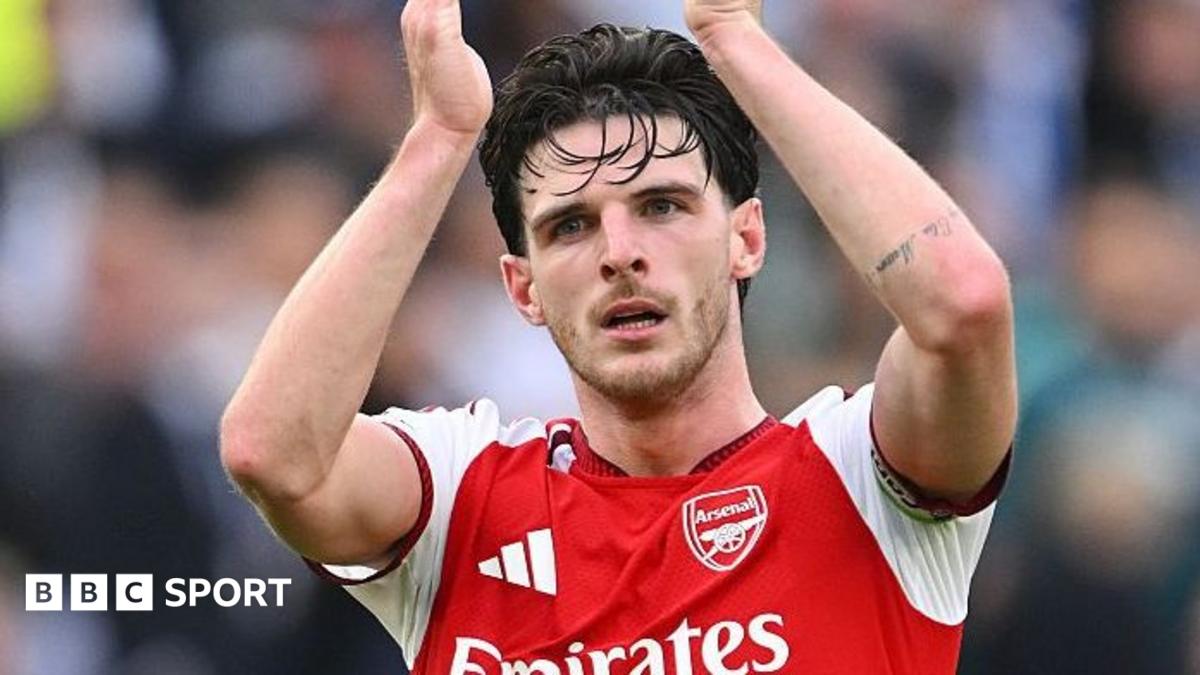
Declan Rice is close to agreeing a new long-term Arsenal contract, sources have told BBC Sport.
The England midfielder has become a crucial player for the Gunners since his arrival from West Ham for £105m in July 2023.
His current deal expires at the end of next season but BBC Sport revealed in March that talks over a new contract were under way with the process now at an advanced stage.
The 27-year-old has made 165 appearances for Arsenal and helped the club end their 22-year wait for a Premier League title last term.
Rice would receive a significant increase to his reported £240,000-per-week salary, putting him on a par with the club’s best earner Bukayo Saka, who is believed to be paid about £350,000 a week.
While Rice withdrew from Thomas Tuchel’s England squad before the recent three-week camp, he has amassed 80 caps since switching his international allegiance from the Republic of Ireland in 2019.
Tuchel has also previously lauded him one of the “best midfielders in Europe”.
Rice is expected to be involved for Arsenal when they host Leeds in the English top flight on Saturday (12:30 BST).
The news comes after Arsenal boss Mikel Arteta’s new four-year deal with the Premier League champions was announced on Wednesday.

EU-China trade talks begin in Beijing amid escalating pressure | European Union News
Talks will focus on the €1 billion daily deficit and rare earth export restrictions.
Published On 7 Oct 2026
European Trade Commissioner Maros Sefcovic has arrived in Beijing for talks on the European Union’s (EU) growing trade deficit with China.
Sefcovic will meet Chinese Commerce Minister Wang Wentao on Thursday and Friday after months of discussions over the EU’s trade deficit of more than €1bn ($1.12bn) daily, as well as Chinese curbs on exports of rare earths and other critical minerals.
Recommended Stories
list of 3 itemsend of list
Meanwhile, Chinese companies are increasingly challenging Europe’s top car brands. China rejected the EU request for voluntary curbs on Chinese hybrid car exports as the two sides enter negotiations, the Financial Times reported on Wednesday. The European Commission now hopes to get Beijing to accept a unilateral EU measure to cap hybrid imports instead, the outlet said, citing two diplomats briefed on the plan.
The two days of discussions come just as a majority of EU lawmakers called for a more assertive trade policy towards Beijing in a non-binding resolution on Wednesday. China vowed a “resolute response” to safeguard its industries if the European Union goes ahead with restrictions against Chinese companies or products, according to its commerce ministry.
Germany and France propose rapid EU measure
French President Emmanuel Macron and German Chancellor Friedrich Merz, leaders of the bloc’s two biggest powers, on Tuesday urged the EU to prepare a “credible instrument” that could be quickly activated to strike back against countries that harm the bloc economically.
The new measure would not target any specific country. German officials said the EU needed a tool as powerful as the Section 301 tariffs imposed by the United States or China’s restrictions on critical-mineral exports.
The proposed weapon – to be discussed at an EU leaders’ summit next week – would give the European Commission the power to respond to a trade aggression within days.
China responded to the letter by urging Paris and Berlin to steer clear of “protectionist” measures.
“We hope that France and Germany, as major economies in the world, will uphold openness, cooperation and free trade,” the commerce ministry said in a statement.
“They should avoid going down the wrong path in the wrong way, only to ultimately suffer the consequences themselves.”
G20 finance leaders, except China’s, agreed in September to act against “non-market” distortions that exacerbate imbalances. Beijing says that hyping up issues such as economic imbalances and overcapacity is a form of protectionism designed to exert pressure on and restrict China.
Ongoing trade talks
EU and Chinese officials have been discussing trade imbalances since June. Sefcovic said he wanted “tangible results by October” as well as some form of commitment that can be put to EU leaders meeting in Brussels.
Trade relations with China top the summit’s agenda next week, as ballooning debt has prompted auditors to warn about the next seven-year EU budget and has spurred protests in France.
European Commission President Ursula von der Leyen told the European Parliament last month that the trade imbalance had reached a tipping point and that Europe would use every tool at its disposal to rebalance the relationship.
UN peacekeeping force in Lebanon says shots fired at Israeli border post | Israel attacks Lebanon News
The United Nations Interim Force in Lebanon said there were no casualties after small arms fire targeted a border post.
Published On 7 Oct 2026
The United Nations Interim Force in Lebanon (UNIFIL) says one of its posts on the Lebanon-Israel border was targeted by small arms fire, with no casualties reported.
The UN force said the incident occurred on Wednesday morning with several rounds of small arms fire targeting a UNIFIL position near Kfar Shouba along the UN-drawn border with Israel, known as the Blue Line.
Recommended Stories
list of 3 itemsend of list
“Such deliberate attacks gravely endanger the lives of peacekeepers,” UNIFIL said in a statement, adding that it was investigating the incident.
Under pressure from the United States and Israel, the UN Security Council decided earlier this year to set December 31 as the end of the mandate for the UN peacekeeping force in Lebanon.
UNIFIL was initially created to oversee the withdrawal of Israeli troops from southern Lebanon after Israel’s 1978 invasion, and its mandate has been renewed annually since then.
The mission was expanded after the 2006 war between Israel and Hezbollah. Proponents say it remains important to maintaining a demilitarised buffer between the two sides along the volatile Israeli and Lebanese border.
Israel has long accused UNIFIL of failing to prevent threats posed by Hezbollah and has increasingly pushed for the end of its mission since cross-border fighting escalated in the wake of the October 7, 2023, Hamas-led attacks on Israel and the start of Israel’s war on Gaza.
UNIFIL currently has 7,500 peacekeepers from around 50 countries operating in Southern Lebanon.
Last month, Lebanon’s Prime Minister Nawaf Salam pressed the UN on the need to “avert the vacuum” that would be caused by withdrawing the mission from the country’s south without a viable replacement.
Violence has decreased since a ceasefire following a June memorandum of understanding in the US-Iran war. Lebanon and Israel concluded a US-sponsored framework agreement later that month.
The Israel-Lebanon deal involves the disarmament of Hezbollah, a gradual withdrawal of Israeli forces from Lebanon’s south and the deployment of the Lebanese army to the region, starting in test areas known as “pilot zones”.

Coronation Street character shot as Jodie bursts in on David and Shona with a gun
Coronation Street has released a first look at the moment villain Jodie Ramsey brandishes a gun in a deadly showdown with Shona and David Platt, moments before the gun goes off

Jodie Ramsey points a gun at Coronation Street favourites David and Shona Platt in tense scenes(Image: ITV)
Jodie Ramsey points a gun at Coronation Street favourites David and Shona Platt in tense scenes on Thursday.
Someone gets shot, leaving them fighting for their lives. Intent on stealing her sister’s life, Jodie takes violent action in a deadly showdown.
It seems a scuffle, with confusion over whether the gun is real or not, leads to it firing. But will death loom for Jodie, David or Shona, and will Jodie be stopped?
Fans have seen Jodie targeting her sister, and others, for weeks. On Thursday her plan to steal David all for herself comes into play, as she tries to seduce him.
Shona finally clocks that her villainous sister is out to get her, and plotting to steal her life. Confronting Jodie over her obsession with her family, the pair have it out, and secrets are exposed.
As David and Shona watch in horror, Jodie raises the gun at them. As David and Shona remain convinced it’s the fake gun they found recently, they challenge her unaware it’s real.
As the situation spirals the gun is fired, shooting someone. As the person collapses, the others are left reeling in horror – but who is shot, and will they die?
Will Jodie be successful in her seduction of David too, and could it lead to a sad split for him and Shona? All will be revealed during Friday’s dramatic episode of the ITV soap.
The fallout is being kept under wraps, while cryptic spoilers confirm someone could be safe. They state that David calls for an ambulance, so does this mean he isn’t hit?
Either way, paramedics soon arrive to tend to the victim, but their fate is not revealed. What is known is that in the days following, the police will investigate what has happened at the Platts house.
Soon it emerges not everyone is telling the truth about what went on, as statements are questioned. As detective Lisa Swain leads the investigation, she soon questions the given version of events.
Speaking to the Mirror recently, Shona actress Julia Goulding said Jodie would get a whole lot worse. She told us: “It’s only go to get more dramatic – how far will Jodie go? I think it’s going to wow everybody. It’s never plain sailing.”
Julia added of the plot: “I think she’s a really intricate complex character. Something has happened to make her like that; she’s not a baddie. She’s got many layers. It’s going to be interesting for the audience to peel those back. I love having Olivia with us; it’s nice exploring Shona’s background as well.”
Coronation Street airs weeknights at 8:30pm on ITV1 and ITV X. * Follow Mirror Celebs and TV on TikTok , Snapchat , Instagram , Twitter , Facebook , YouTube and Threads .
L.A. County supervisors call for improvements to restraining order system
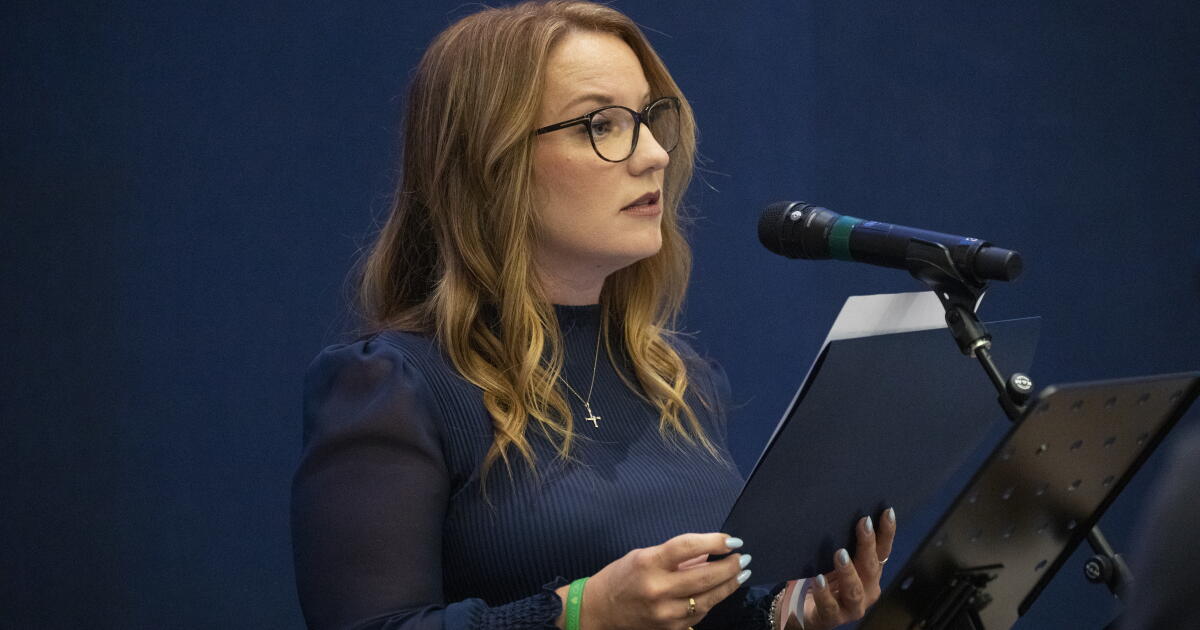
Los Angeles County Supervisor Lindsey Horvath presented a motion Tuesday calling for “bold action” to better protect victims of domestic violence and stalking, seeking to help them more effectively navigate the county’s restraining order system and obtain court-ordered protection.
Horvath cited recent Los Angeles Times reporting on the challenges victims face when obtaining and enforcing restraining orders as an inspiration for the Board of Supervisors motion, which was co-authored by board chair Hilda Solis. The supervisors are scheduled to consider the measure during the board’s Nov. 10 meeting.
“A recent story from the L.A. Times spoke to the process of domestic violence restraining orders and the work done and not being done across the county to support survivors in need of this critical support,” Horvath said.
The Times’ reporting identified at least 63 women killed in 2024 and 2025 in L.A. County whose cases involved a former partner or close relative arrested or charged with their murder. The deaths accounted for more than 40% of the 156 women killed during that period. At least 10 of those women had filed for restraining orders.
In July 2024, the county Department of Public Health’s Office of Violence Prevention issued a report with more than a dozen recommendations for reducing domestic violence homicides by improving access to restraining orders. Today, most of those recommendations have not yet been implemented.
The office said the delay was the result of insufficient funding and challenges with coordinating between the many agencies responsible for the county’s restraining order system.
If passed, the motion would mandate reports from the county’s chief executive, the Los Angeles County Sheriff’s Department, and the departments of Public Health, Mental Health, Consumer and Business Affairs, Public Social Services, and Homeless Services to assess current efforts, improvement plans and additional funding needs.
“We know that domestic violence restraining orders protect survivors and I believe the board must take every step possible to better support and protect our survivors,” she said. “The county,” she added, “must step up and lead in this space.”
The motion calls for allocating millions of dollars annually to fully fund nine county-run self-help legal centers that assist people navigating the restraining order process.
It would also officially identify “Gender-Based Violence and Intimate Partner Violence” as a priority for the Board of Supervisors, and require a presentation from the Sheriff’s Department on how the agency plans to improve its handling of restraining orders.
The Office of Violence Prevention would be required to develop a plan for a “peer navigator model” to guide survivors through the restraining order system.
The Department of Homeless Services and Housing would be asked for an assessment of what additional resources would be necessary to provide emergency beds for all people fleeing intimate partner violence.

Patriots QB Drake Maye is ‘a little bit skeptical’ about moon landing
Drake Maye is having a great week.
After a slow start to the season, the New England quarterback seemed to return to his almost-MVP form from a year ago (he finished second in voting to the Rams’ Matthew Stafford) on Sunday during a 29-26 win over the previously unbeaten Buffalo Bills.
On Wednesday, Maye was announced as the AFC offensive player of the week for his efforts in that game, which included completing 22 of 37 passes for 269 yards with three touchdowns and one interception and rushing for 54 yards in eight attempts.
With Maye-mania surely back on track in New England, there was probably no better time for the third-year quarterback to casually drop that he kinda, sorta, maybe, possibly isn’t quite sure moon landings have ever actually happened.
During an appearance Monday on WEEI-FM (93.7) in Boston, Maye was asked by a caller, “What wild conspiracy theory out there do you actually kind of secretly believe in?”
Maye asked for a moment to think — “let me try not to get too controversial,” he said — before revealing his answer.
“I don’t know about the moon, you know?” Maye said. “I’m not really sure 200% if we went there or not. I wouldn’t say I’m leaning one way or the other. I just know I’m a little bit skeptical.”
Maye spent three years at North Carolina, including two as the Tar Heels’ starting quarterback. In 2022, he set a school record with 4,321 passing yards, tied another with 38 passing touchdowns and was named the Atlantic Coast Conference player of the year.
During his time at Chapel Hill, Maye said during the radio interview earlier this week, he took a class on conspiracy theories.
“They studied Hitler being alive and ‘are birds real?’ — some of the classic ones that you hear about,” Maye explained.
Asked to elaborate on the birds one, Maye said there are some who believe birds are actually instruments of the government used to spy on us — “or something along the lines of that,” he said.
Maye isn’t the only athlete who has expressed moon-landing doubt. In 2018, Stephen Curry said he didn’t think humans had ever been there, although two days later the Golden State Warriors superstar said that he was kidding.
Former NASCAR and IndyCar driver Danica Patrick reportedly posted one such theory on her Instagram Stories in 2024 and wrote that she believes it.
“I don’t care if you think I’m crazy,” she wrote. “I already know I am.”
Earlier this year, Boston Celtics guard Derrick White described himself as a “non-moon landing guy.” Also, two-time major golf champion Bryson DeChambeau said that while it’s likely that moon landings have happened, some of the footage we’ve been shown might have been fake.

Judge orders officials to preserve Pike execution evidence | Newsfeed
A Nashville judge ordered Tennessee officials to preserve evidence from Christa Pike’s failed execution, including drugs, syringes, medical equipment and recordings. Pike’s lawyers say the two failed lethal-injection attempts amounted to unconstitutional cruel punishment.
Published On 7 Oct 2026

From winter sun beach resorts to ‘cyberpunk’ cities

TORN on where to go on holiday next year? You’re in luck – the cool new places have been revealed.
Skyscanner’s Travel Trends 2027 report has looked at which destinations are seeing the biggest year-on-year searches.
This means these are the destinations which are seeing a boom in interest in demand, and much higher than the year before.
Skyscanner boss Bryan Batista said: “Travel is entering a new era.
“As people become more intentional about how they spend their time and money, they’re making different choices about where they go, how they book and what creates lasting value.”
So here are the top 10 destinations set to be the next big thing for Brits next year.


1. Bishkek, Kyrgyzstan
The destination with the biggest boom in searches is Bishkek in Kyrgyzstan.
Searches are up 501 per cent, which could be accredited to it featurin in this year’s Race Across The World.
Expect Soviet architecture and leafy parks overlooked by the Tian Shan mountain range.
You’ll have to stopover to get to Bishkek, with common flight routes being with Pegasus or Turkish Airlines via Istanbul, taking around 10 hours.
2. Hurghada, Egypt
Hurghada might not be little-know, being a popular winter sun holiday destination.
Yet searches there are up 186 per cent, most likely up after seeing a slight drop by the Middle East conflict earlier this year.
The Egyptian resort is loved by those wanting to fly and flop, or is big with divers.
You can easily find holiday packages to Hurghada with seven nights for as little as £249pp with loveholidays.
3. Malmö, Sweden
Forget Stockholm, Malmo is the trending destination in Sweden.
With searches up 103 per cent, it makes a great alternative city break that is quieter than the other busier cities.
It’s hard not to spot the huge Turking Torso skyscraper, as well as its beautiful castles (and much-loved falafel street food scene).
EasyJet has recently launched new city breaks to Malmo – or you can fly there with Ryanair for £14.99, taking just 1hr50.
4. Trapani, Italy
Sicily’s Trapani, a coastal city in the west, has seen a boom by 95 per cent in searches.
The huge Greek temple of Segesta is its main attraction, dating back to 430BC.
Otherwise it is used as a popular jumping off point to explore the Egadi Ilands.
Direct flights with Ryanair can be found from Bournemouth for £14.99.
5. Samos, Greece
Forget Mykonos and Santorini – after all, Greece has hundreds of other islands to explore without the crowds.
And Samos has seen an increase in searches, up 75 per cent.
Actually nearer to Turkey than Greece, expect all the classics – ancient ruins, beautiful beaches and a fantastic food scene.
Jet2 has added new flights, while TUI has said it is set to be big as well.
6. Chongqing, China
If you’ve ever wanted to step into the set of Blade Runner, you need to head to China’s cyberpunk city of Chongqing.
The city – which has seen searches up 70 per cent – has huge skyscrapers best seen lit up at night.
China is having a moment too, with visas scrapped for Brits until the end of the year, and seeing a huge boom in tourism.
You can even fly there direct with Tianjin Airlines, taking around 11 hours.
7. Da Nang, Vietnam
Vietnam is often named as one of the most affordable holiday destinations, yet most trend to travel to Hoi An or Ho Chi Minh.
Yet the beach city of Da Nang has seen searches increase by 68 per cent according to Skyscanner (just after it was named a top 2027 holiday destination by Lonely Planet too).
There’s white sand beaches, but it is also, bizarrely, famous for its two beaches – Golden Beach, which is held between two huge stone hands, or Dragon Bridge which is shaped like the creature itself.
To get there, it is best to fly via places like Singapore or Bangkok, or a short domestic flight from other cities in Vietnam.
8. Sal, Cape Verde
Cape Verde remains a popular winter sun destination for Brits.
And a 67 per cent increase in searches to Sal means it is getting even more popular.
Hot weather all year round, no jet lag and short direct flights – all you’d need from a warm break from the UK
Flights to the African island are direct, with tour operators like TUI offering affordable package holidays.
9. Kittilä, Finland
If you want the ideal Christmas break, where better than Lapaland?
With searches up 65 per cent, Kittilä in Finland has it all husky sledding, reindeer safaris and and Northern Lights.
You an even head over to Levi for some fantastic skiing too.
EasyJet fly direct, and they start from £28.99.
10. Guatemala City, Guatemala
The last trending destination on the list is Guatemala City which has seen searches increase 63 per cent.
It is actually the biggest capital in Central America, with everything you could want – fantastic coffee scene and historic museums.
The scenery is pretty stunning two, with a number of volcanoes being the backdrop.
Guatemala’s tourism minister suggested earlier this year that more flights from Europe could connect to the city – but until then, you’ll have to fly via Madrid with Iberia.
Top 10 Best Value Destinations List
- Bilbao, Spain (-66%)
- Wrocław, Poland (-47%)
- Bordeaux, France (-34%)
- Zurich, Switzerland (-33%)
- Ancona, Italy (-31%)
- Rhodes, Greece (-22%)
- Pula, Croatia (-20%)
- Carcassonne, France (-20%)
- Fez, Morocco (-19%)
- Krabi, Thailand (-15%)
‘No to the father, no to the son’: Thousands march in Rio against Bolsonaro | Elections News
Published On 7 Oct 2026
Thousands of people have taken to the streets of Rio de Janeiro in a student-led protest against presidential candidate Flavio Bolsonaro and the growing influence of Brazil’s far right.
The march happened on Wednesday, just days after far-right Senator Flavio Bolsonaro, the son of former President Jair Bolsonaro, earned the most votes in the first round of the country’s presidential race.
Bolsonaro won 47 percent, ahead of his closest rival, incumbent left-wing President Luiz Inacio Lula da Silva, who gained 45 percent support.
Since neither candidate surpassed the 50 percent threshold, they will face each other in a run-off on October 25.
The results have triggered fears that Brazil could become the latest Latin American country to see its presidency switch from left to right.
Protesters marched through downtown Rio carrying signs reading “Never again Bolsonaro” and “No to the father, no to the son”. Others held banners reading “Dictatorship never again” and “Get out Bolsonaro”.
“I’m here because I believe in democracy. Because I’m scared,” said Alice Carneiro, 25, an administrator in maritime shipping who participated in the protests. She explained that, under a far-right government, she feared a backlash against her wife, who is transgender.
Jair Bolsonaro, the former president, led the country from 2019 to 2023. But his single-term tenure was marked by a series of controversies related to his far-right policies.
He voiced support for Brazil’s past military dictatorship, which was responsible for the disappearance and murder of hundreds of perceived dissidents. He also spread unfounded claims about the accuracy of Brazil’s election system, leading to a court ruling that barred him from holding office for eight years.
Currently, the former president is serving a 27-year sentence after being convicted of plotting to overturn his 2022 election defeat. After Lula’s inauguration in 2023, Bolsonaro’s supporters stormed government buildings in the capital, reportedly hoping to trigger a military uprising.
Critics have framed Jair Bolsonaro’s actions as a threat to Brazil’s democracy.
But Senator Flavio Bolsonaro has received his father’s endorsement, and he has backed amnesty for his father, a prospect that has raised concerns among protesters.
“I find this rise of the far right and the rise of Bolsonarism in Brazil very, very sad,” said Emmanuel Araujo, 19, who is preparing for university entrance exams.
“Lula might not be my preferred candidate,” Araujo added, “but amid this barbarism, we have to choose between someone we can keep criticising and someone who might take away our right to speak.”

How late Eva Marie Saint reluctantly became last star of Hollywood’s golden age
OSCAR-winner Eva Marie Saint, who has died aged 102, was a reluctant star who became a Hollywood legend.
From Alfred Hitchcock to Marlon Brando, the girl from New Jersey took on the biggest names in the business and triumphed.
She was nine months pregnant when she won the Academy Award for Best Supporting Actress in On The Waterfront in 1955, joking: “I may have the baby right here!”
Two days later her son — named Darrell, not Oscar — arrived.
Eva’s powerhouse performance alongside Marlon Brando was even more remarkable as it was her first film.
She had little truck with modern stars’ long acceptance speeches.


The oldest living Oscar winner said of her two-sentence appearance: “That was a lot for someone to say in those days.
“Most people just said thank you and walked off the stage, which I loved.
“It’s gotten out of hand these days where people have to be funny and go on and on and on.”
With the worldwide success of follow-up movie North By Northwest, an agent pushed her to make more films and become a “superstar”.
Her reply was simple: “I can’t. I can only do one a year. I have young children.”
Her agent’s response was: “Well, I guess you won’t be a superstar.”
Her perfectly calm reply: “Well, I guess not.”
But she became one anyway, and her legendary beauty even inspired the 1984 song Rattlesnakes by Lloyd Cole.
Born in Newark, New Jersey, on July 4, 1924, Eva was from a Quaker background.
“I was in the chorus in high school, not a soloist,” she once said.
“I was on the basketball team. I played the violin, part of the orchestra. I never wanted to be out there alone. Ever.”
She studied acting at university in Ohio, then moved to New York, working in theatre and television.
Her big break came in the Broadway play The Trip To Bountiful, where she caught the eye of director Elia Kazan, who cast the then 29-year-old alongside Brando in On The Waterfront.
She said: “Brando was wonderful. Probably the finest actor I’ve ever worked with.”
But he was fickle. She said: “I only saw him once after On The Waterfront.
Years later, Elizabeth Taylor was having a birthday party and he came into the room.
“He came up, we hugged, and he saw a pretty brunette over my shoulder. He said goodbye and that was the last time I ever saw him.”
With an Oscar under her belt, Hollywood was desperate to make the most of her stardust, but Eva didn’t want to leave her second baby, Laurette, to work on North By Northwest.
Hitchcock’s on-set abuse was well known, but to Eva he was the perfect English gent.
She said: “Hitchcock was a high-class guy. He always had a suit on.”
North By Northwest was a box office hit and one of the pinnacles of Eva’s career.
Going out one night with co-star Cary Grant, she saw how he was mobbed.
She said: “I couldn’t have coped with that kind of fame. I wanted a normal life.”
And when she filmed Exodus in 1960 with Paul Newman, she took family on location in Israel and Cyprus.
She met Jeffrey Hayden before she was famous and they married in 1951 — a union that lasted 65 years until his death in 2016.
Eva’s TV roles included playing Superman’s mother in 2006 and Cybill Shepherd’s mum in Eighties hit TV series Moonlighting.
For her 100th birthday all her family gathered for a big party at her home in Los Angeles.
Eva said: “I certainly don’t feel 100 years old.”
Yet her age didn’t slow her down and she led an active life, saying: “I take walks out in the fresh air, like watching baseball — especially the Los Angeles Dodgers.
“I enjoy time with family and friends. A good life.”

Exxon hopes to repeat Guyana’s oil boom offshore Trinidad and Tobago (XOM:NYSE)

David McNew/Getty Images News
ExxonMobil (XOM) is looking to replicate Guyana’s oil and gas boom off the coast of Trinidad and Tobago, the company’s head of exploration told the Financial Times in an interview Tuesday.
“A lot of people ask, where’s the next Guyana? In Trinidad, we

Private prison company sues California over civil rights law for immigrant detainees
SACRAMENTO — A private prison company is challenging a new California law requiring detention centers to provide medical care, privacy and other civil rights to people detained by federal immigration authorities.
GEO Group, a for-profit prison company, filed a complaint in federal court over Senate Bill 942, also called the Civil Detainees’ Bill of Rights Act of 2026. It mandates that immigrant and other detainees are afforded privacy, safety, hygienic living conditions and other rights.
Gov. Gavin Newsom signed the law last week as part of a package of bills to push back on the Trump administration’s immigration enforcement, which the Democratic governor described as “Orwellian.” GEO Group filed its complaint the day after Newsom signed the law.
SB 942 declares that detainees at state, local and privately run facilities have the right to medical, dental and mental health care; physical exercise; clean drinking water and functioning toilets; and other rights. It allows the attorney general to bring civil action against private and public entities that allegedly violate those rights.
GEO Group attorneys argue in the federal complaint that while California elected officials “may disagree with federal immigration policy,” the state “may not impose its preferred immigration-detention standards on federal detention operations, whether those standards would tighten, loosen, supplement, or otherwise alter the federal framework.”
According to its website, the company operates six detention facilities in California, four of which are housing detainees under contracts with Immigration and Customs Enforcement. That includes a shuttered state prison that began holding ICE detainees earlier this year.
GEO Group has had some previous success challenging laws seeking to undermine the private prison industry’s role in federal immigration enforcement. A federal court struck down a 2019 law that attempted to bar any “private detention facility within the state” after the company filed suit.
Representatives for GEO Group did not respond to a request for comment. Spokespeople for Newsom, Atty Gen. Rob Bonta and state Sen. Anna Caballero (D-Salinas), who authored the bill, did not immediately comment on the lawsuit.

Lionel Messi and Cristiano Ronaldo: Two icons, a glorious farewell & an acrimonious ending
In stark contrast, Messi brought the curtain down on his illustrious Argentina career, where he has won one World Cup and two Copa Americas, in front of an 85,000-strong sellout crowd inside the Monumental in Buenos Aires.
The 39-year-old announced his retirement from international football in August after Argentina finished runners-up at the World Cup and following the death of his father Jorge.
Messi marked his final appearance for La Albiceleste with a goal before addressing the adoring fans in a speech lasting nearly 10 minutes.
Some of his team-mates were in tears as Messi admitted he did not want to leave the field.
“There are so many emotions going through me right now,” he said. “I’m surely forgetting many things I would like to say because this is a very difficult moment for me. The first person who comes to my mind is my dad.
“I leave grateful, proud and at peace. Thank you for everything.”
Writing on social media on Wednesday, , externalMessi added: “Yesterday was my last match and I’m already missing the light blue and white jersey.
“I know I’m taking the right decision. It was an incredible journey, full of joy and some sadness, but I know for sure that every step I took was worth it.”
Messi also thanked his family, team-mates and clubs and paid tribute to another Argentina legend, the late Diego Maradona.
His Instagram post also drew a response from Ronaldo, who wrote: “Leo, after so many years of defending your country, you’ve made history that will last forever.
“I have the utmost respect for what you’ve accomplished with Argentina. A hug.”

Pro-Palestine university groups march in London on October 7 anniversary | Gaza
Pro-Palestine students took to the streets of London on October 7, despite police calls to postpone the march. Al Jazeera’s @Lina_Serene reports.
Published On 7 Oct 2026
South Africa host Australia who battle more than ‘Sandpapergate’ memories | Cricket
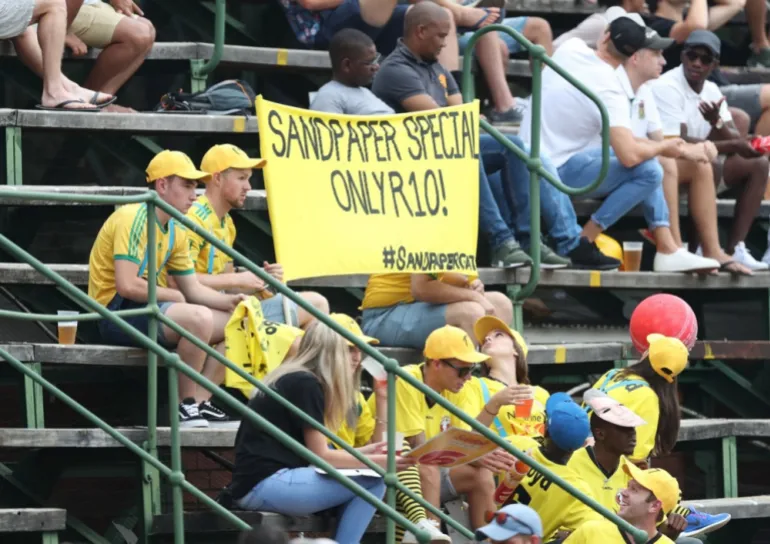
Australia play their first Test in South Africa since the 2018 ball-tampering scandal when they start a three-match series in Durban on Friday, with the visitors unlikely to face more than a few heckles over the incident that rocked the sport eight years ago.
The tourists’ efforts to roughen up the ball using sandpaper to aid reverse swing in Cape Town in March 2018 were caught on camera and led to a major reckoning for the game in Australia, with captain Steve Smith among those banned for their role in the subterfuge.
Recommended Stories
list of 4 itemsend of list
Al Jazeera Sport takes a closer look at the first Test battle in South Africa since the infamous series.
What is the context for the first return of series since ‘Sandpapergate’
South Africa have played Tests in Australia since ‘Sandpapergate’, and Australia have toured South Africa in the interim for limited-overs internationals.
The scandal has attracted little media focus in South Africa over recent weeks in comparison to the attention devoted to the incident in the Australian press.
After dethroning Australia last year in a thrilling World Test Championship (WTC) final at Lord’s to win a first major title, South Africa are focused on improving their chances of a return to the final at the end of the 2025–27 WTC cycle.
What shape are South Africa in for the visit of Australia?
The pitch at Kingsmead often proves a fickle track but should offer the spinners a chance to play a leading role in a change from South Africa’s usually seamer-friendly surfaces.
It is unusual for South Africa’s chances to be largely entrusted to their spin attack, but Simon Harmer and Keshav Maharaj wreaked havoc in India last November when they triumphed in their last two Test outings.
Spin was also a key factor for the home side as they beat Australia in the recent One-Day International series.
South Africa may therefore opt to rest frontline attack bowler Kagiso Rabada from the Test as he continues his comeback from a hamstring injury.
South Africa also have a choice to make over their number three batsman, with coach Shukri Conrad having several options including a potential first cap for 30-year-old Marques Ackerman.
How are Australia poised for their South Africa return?
Australia are also in need of a boost after a surprise home Test defeat by Bangladesh in August in their drawn series, and with an Ashes tour to England starting next June.
Injury to Australia all-rounder Cameron Green opens up a chance at number five for Cooper Connolly, or a fairytale return for 34-year-old Nic Maddinson after recovering from cancer.
Head hits back at former Australia players in defence of Test team
Australia opener Travis Head has taken to task former Test players turned critics whom he accused on Wednesday of “putting a bullet” through the current team.
Head did not single out any pundit directly, but his strong remarks at a news conference came the day after Matthew Hayden, one-time holder of the record for the most runs in a Test innings, accused selectors of “promoting the greatest pile of mediocrity that we’ve seen in a generation of cricket”.
The reference, made in a podcast, was about the recall of Maddinson, who has been out of Test cricket for nearly 10 years, but who joined the squad in South Africa after Josh Inglis fractured his finger and Cameron Green suffered a stomach injury.
“I think it’s unfairly judged a fair bit from a group of past players, pretty much that put the bullet through a lot of players, which I think is unfair,” Head said.
“But that’s what they’re paid to do. Some of them need a job, so they go after us, and that’s totally fine.
“This group is strong enough to deal with those sorts of things. That’s how it is. It’s unfortunate sometimes to have some of that feedback from a generation of players that we have huge respect for, but that’s the caper.”
Why have Australia selectors been accused of disrespecting cricket?
Hayden accused the selectors of “disrespecting first-class cricket”, asserting that batsmen should have an average of 45 runs or more before being considered for Test selection.
Head, however, praised Maddinson’s abilities and the benefits of choosing experienced players for Test cricket despite the 34-year-old replacement having a first-class average of 37.11.
“We need mature guys that know what they need to be doing,” Head said. “That revolves back to why we’ve been so good over a period of time, and why Australian cricket was so good back then in that era, because you’d bring in the Mike Husseys of the world, who are 30, who are tried and tested and know what they need to do.”
Former Australia captain Allan Border suggested that the 32-year-old Head would face his toughest test as an opener against the South African bowling attack and would perhaps be better batting at number five.
“I have laughed at a fair bit of it because if a traditional opening batter had pushed out the same sort of numbers in his first 20 innings, I think he’d be pretty safe and not talked about in the way that it has been talked about,” Head said. “It’s a lot of headline stuff.”

Smith still traumatised by Sandpapergate
In the build-up to the series, Smith has admitted he is still traumatised by “Sandpapergate” – the series he oversaw as captain.
The prolific batter was sent home in disgrace, banned for a year and sacked as captain for his role in the ball-tampering scandal during the third Test in Cape Town eight years ago.
David Warner, considered the ringleader, was suspended for 12 months and stripped of all leadership roles, while Cameron Bancroft was slapped with a nine-month ban.
Smith said he still suffers flashbacks to a traumatic period of his life, haunted by memories of leaving Johannesburg airport, with cameras clicking furiously around him, and a harrowing Sydney news conference on his return when he broke down in tears.
“I’m not a big fan of cameras … I get anxious around cameras to be honest,” he told News Corp.
“That was a traumatic experience in my life, and when I hear the flash of a camera it makes me revisit that in a way.
“The 24-48 hours of being told by James Sutherland [then Cricket Australia chief executive] that I was getting banned for a year. That and going through the airport in Johannesburg getting absolutely mobbed, and then flying back and doing that press conference.
“I still have little flashbacks here and there of it.”
Smith bore the brunt of the scandal that is considered one of Australian sport’s darkest moments, but bounced back emphatically.
He smashed a superb century against England on his return and has gone from strength to strength, with 10,920 Test runs so far at an average of 56.
“It was certainly a difficult period, particularly the initial period a few days after,” he said.
“The mental state I was in was not great. That’s somewhere I’d like not to get to again, but I certainly learned from that and have been able to move forward with my life.
“I’ve tried to kind of erase a lot of 2018 and what happened,” he added.
“I can’t remember a lot about the series. I’ve tried to block most of it out of my memory bank.”
Smith has been back to South Africa for a white-ball series since 2018, but not for a Test, and he is bracing for hostile crowds.
But the 37-year-old is unperturbed, having negotiated multiple Ashes tours to England since 2018, where the Barmy Army abused him relentlessly.
“It’s something I’m kind of used to. I’ve copped a lot at times away from home at different venues across my career and it’s something that I take in my own stride,” he said.
“I use it as motivation to try and go out and do well and try and take a positive from it.”

Big Brother viewers say same thing as housemate slapped with formal warning
The Big Brother housemate received a warning after displaying “unacceptable behaviour”

Big Brother star Pauline has been slapped with a formal warning (Image: ITV)
Big Brother viewers have said the same thing after a controversial housemate received a formal warning.
The ITV2 reality show has been packed with drama since it returned to our screens three weeks ago. Its latest clash came after the housemates were forced to nominate face-to-face as part of the Week of Revelations twist, which is all about exposing the contestants’ real opinions about each other.
Rob and Pauline ultimately received the most nominations and will face this week’s eviction. Newcomer Catrin was one of the stars who nominated Pauline, claiming the carer hasn’t made an effort to welcome her into the house. But her vote led to a heated argument between Rochelle and Pauline, where the latter pointed her finger and stepped towards Rochelle.
Big Brother has now issued a stern warning to Pauline. In Wednesday’s episode (October 7), he called the 31-year-old to the Diary Room. When asked how she was feeling, Pauline said: “A mix of emotions. Mostly disappointment. You just expect people to apply sense when things happen. Rather than assume the worst of someone, jump to conclusions, allow false narratives to hang.”
Big Brother then said: “Before you entered the Big Brother house, the rules regarding unacceptable behaviour were explained to you. At 1.46am, you were involved in an argument in the bathroom, during which you pointed your finger and stepped towards Rochelle.
“Big Brother deemed your tone and body language to be unacceptable. As a result of this, Big Brother is giving you a formal warning. Pauline, do you understand? Pauline, do you understand?”
Pauline seemingly refused to answer Big Brother and just stared silently at the camera. Viewers at home have been left furious by Big Brother’s judgement, with some arguing that Rochelle also deserved a warning.
An X user fumed: “FORMAL WARNING GET OUT OF HERE #bbuk.” Someone else said: “Rochelle pointed her finger first?!?! Omfg I hate this!!! #BBUK.”
While a third viewer added: “Rochelle should also get a warning, considering she was also point her fingers in Pauline’s face BEFOREHAND.” And yet another fan voiced their support, writing: “Ngl if I was Pauline, I’d f**** leave #BBUK.”
Others agreed with Pauline’s decision to stay silent after the warning, with one posting: “Good on Pauline in the diary room then. That warning was ridiculous,” and a second posted: “AHHHH I am HOWWWWLING that Pauline is now giving BB the silent treatment.”
The argument in question started when Catrin tried to speak to Pauline because she “felt bad” for nominating her. The original housemate was still feeling down after finding out she would be facing eviction for the third time this week, just days after her closest pal was eliminated.
So Pauline refused to speak to Catrin and later explained that her behaviour wasn’t because of Catrin’s vote, but that she was just upset about facing the chopping block yet again. Despite the explanation, Catrin still felt targeted by Pauline’s behaviour and broke down crying.
Her tears sparked a strong reaction from Rochelle, who then confronted Pauline in the bathroom despite not understanding the full story. The duo had a brutal back-and-forth during which Rochelle pointed at Pauline, fuming: “I hope you’re f**** proud of yourself.”
Pauline then fumed: “Don’t start on me. Don’t even go there. You know nothing of what happened!” That was when she moved towards Rochelle pointing her own finger back, which forced fellow housemate Harry to hold Pauline back.
Rochelle later relayed the argument as Pauline “picking on” Catrin, suggesting she was bullying the newcomer.
Big Brother continues tomorrow night at 9pm on ITV2 and ITVX

DNC sues Trump administration, alleging taxpayer-funded ads violate propaganda law
WASHINGTON — The Democratic National Committee on Wednesday sued President Trump’s administration for recent television advertisements that promoted his political message while costing taxpayers millions of dollars.
The complaint, filed in the U.S. District Court for the District of Columbia, alleges that the ads are illegal government-sponsored propaganda and accuses Trump of personally directing them. It asks the court to declare the ads illegal and stop the use of federal funds to pay for them.
Trump has faced bipartisan backlash for the ads, which glorify him and echo his campaign pitch as voters cast early ballots with the midterm elections less than a month away.
The spots, which began airing in September, already have cost more than $12 million to run, according to the media tracking firm AdImpact, and a total of $20 million in Homeland Security Department funding has been tapped to pay for them.
Responding Monday to the criticism, Trump defended the ads as “positive promotion for our Great U.S.A.” but said he’d pay for them using his MAGA Inc. super PAC going forward.
But on Tuesday, the fifth ad in the campaign began airing with the notice “paid for by the U.S. Government,” promoting Trump’s military actions in Venezuela earlier this year. The same day, Trump made it clear he hasn’t committed to reimbursing any money that has already been spent, telling reporters “we’ll decide.”
DNC Chair Ken Martin said in a statement that Trump is misusing taxpayer dollars in “a last-ditch attempt to save Republicans in November.”
“Americans deserve better than to have their hard-earned tax dollars used for Trump’s illegal schemes,” he added.
Legal experts have suggested the ads run afoul of a federal statute against congressionally appropriated money being used for “publicity or propaganda,” and potentially other federal laws. The Homeland Security money tapped for the ads comes from a $175 million package Congress gave to the department as part of Trump’s immigration enforcement agenda.
The White House has defended the ads as public service announcements akin to what past administrations have done to promote various policies. Legal experts have said the recent ads differ from many past public service announcements because they aren’t aimed at helping members of the public benefit from specific government programs.
The defendants in the lawsuit — Trump, the White House, DHS and the Office of Management and Budget — didn’t immediately respond to requests for comment.
Swenson writes for the Associated Press.