Aldo Torres. (Venezuelanalysis)
Aldo Torres is a longtime trade union leader in the electricity sector and currently serves as executive secretary of the Venezuelan Federation of Electricity Industry Workers (FETRAELEC). In this interview, he discusses the current crisis in Venezuela’s electricity system, its causes and possible solutions, as well as the impact of opening the sector to private capital.
Based on your experience in the electricity sector, what is the current assessment of the National Electricity System (SEN), and what factors are behind its crisis?
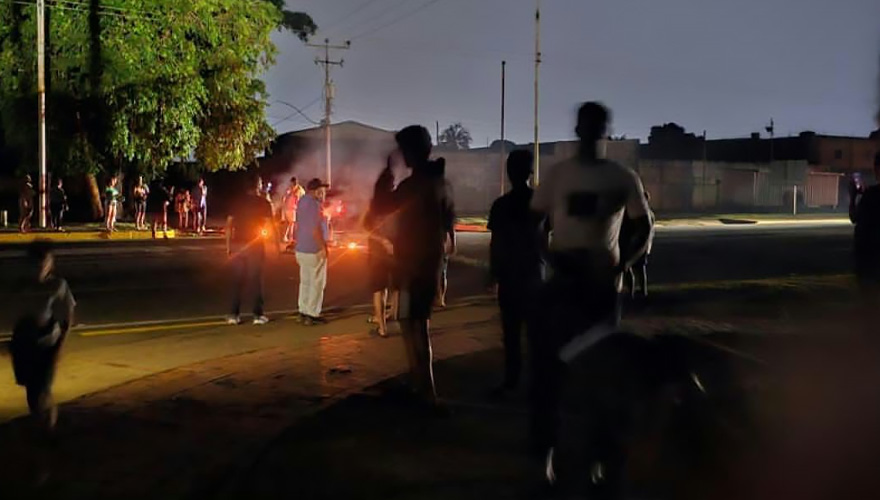
The National Electric System (SEN) has been deteriorating significantly over time. This crisis with recurrent blackouts all over the country is not a recent phenomenon. Without ignoring the impact of the blockade, the main factors, in my view, are the authorities’ incompetence, ineptitude, and lack of will to address a sector of vital importance to the life and development of the nation.
Management corruption has been a determining factor in the degradation of the electricity sector, and this has been publicly evident. In fact, many financial resources allocated for investment and improvement – at a time when there were still no economic or political sanctions – were diverted into the pockets of unscrupulous contractors.
Then, with the blockade, in addition to all its direct consequences, there was a massive exodus of professionals, technicians, and skilled workers. Faced with low wages, dangerous working conditions, and cases of political persecution, many migrated or simply left to find work elsewhere.

How did the working class respond to this deterioration you describe?
The workers constantly raised the alarm and denounced the situation. But the response was to ignore their warnings or criminalize them. For example, in 2010, [intelligence agency] SEBIN arrested 11 workers following the explosion of a turbine at the Planta Centro thermoelectric plant in Carabobo State, even though we had warned that the equipment had already reached the end of its useful life.
It is unacceptable that every time there were problems of this nature, management assumed the workers were to blame. All of this also affected the quality of the electricity service.
In short, we have been warning about the possibility of this crisis for many years. In 2008, we issued this warning to the country – and even to President Hugo Chávez – in a report that also included our proposals. After that, between 2009 and 2010, he declared an electricity emergency.
2011 marked a critical turning point. At that time, workers in the sector, organized in federations such as FETRAELEC, and [state electricity company] CORPOELEC technicians formally warned of an imminent technical and financial collapse of the industry. But after President Nicolás Maduro appointed Jesse Chacón in 2013 and later Luis Motta Domínguez to take charge of the Ministry of Electricity and CORPOELEC, the electricity problem only worsened, leading to the disaster we face today. This crisis has been negatively affecting the lives of millions of Venezuelans on all fronts. Without electricity, water supply, transportation, industries, hospitals, and more come to a standstill.
What might be the possible solutions to the crisis we are facing?
Since January 3, following the US military attack on Venezuela and the tutelage regime imposed afterward, rationing and power outages have increased. Previously, there were 3- or 4-hour blackout periods, sometimes every other day. Now they last 6 or 8 hours, or even longer, every day, with Caracas being the exception.
This worsening situation is directly linked to the increase in oil production. There’s a saying that’s becoming popular: for every barrel of oil extracted, a household is left in the dark. Independent electricity generation for the oil industry would provide some relief from the power rationing that has left Venezuelans overwhelmed and anguished, but it is not the definitive solution to the national electricity crisis.
We, as organized workers, proposed a project for “reactive power compensation” in the electricity grid. This would essentially reduce transmission losses and stabilize the voltage along the lines. It would allow for an immediate increase in the electrical power available to meet demand by optimizing the efficiency of the grid, without requiring an increase in electricity generation. This proposal would apply to high-voltage lines of 765, 400, 230, 138, and 115 kV, and, according to our estimates, we would recover approximately 2,000 MVAr of reactive power that is currently lost due to the grid’s inefficiency. In addition to this, we would be saving hundreds of millions of liters of diesel annually that are used in power plants or independent generators, a significant expense in the national budget. In fact, in 2011, this project was approved in its entirety by CORPOELEC, beginning with Caracas, and a national study was conducted to gradually expand it throughout the country, establishing an order of priority. However, due to administrative changes, it was not carried out.

Workers in the electricity sector have demanded that the sector’s collective bargaining agreement be honored and that the persecution cease. Could you explain these labor demands in more detail? What is the situation for retirees?
As is the case throughout Venezuela, collective bargaining agreements in the public sector have been paralyzed since the government issued and approved the illegal and unconstitutional Memorandum 2792 on October 11, 2018. This memorandum authorized employers to review, modify, or suspend clauses in collective bargaining agreements that they considered “burdensome” or that “jeopardized jobs.” That is why all workers are now facing precarious conditions, and the situation is even more dire for retirees and pensioners.
Furthermore, the imposed guidelines used the minimum wage as the basis for calculating pay scales, eliminating or reducing multiplier factors, professionalization bonuses, seniority pay, and other socioeconomic benefits that were hard-won through working-class struggles. And now the minimum wage is practically zero. Our main demand is that the rule of law be respected, that negotiations on our collective bargaining agreement be restored, and that our basic labor rights be upheld. This is a struggle for the entire Venezuelan working class; it is not limited to the electricity sector, of course.
How do workers view the current opening of the electricity sector to transnational private capital? What will this reform mean for service quality and access, especially for working families?
We have been debating the opening of the electricity sector to private capital in union meetings and open forums. Unfortunately, this is nothing new in the country. This was the case even before Hugo Chávez came to power and the sector was subsequently managed by military personnel who were anything but qualified to do so.
We also face a very difficult situation regarding national sovereignty, stemming from the Trump administration’s effective control over Venezuelan affairs. That is why, now, under these terrible conditions, US capital will come with its respective corporations to take over our natural resources and strategic sectors. It is absolutely outrageous.
The historical precedents of privatized electricity show us that it leads to a profound inequality in access. And the argument of corruption and poor public administration may once again be used to justify privatization. In the 1970s, the Compañía Anónima de Administración y Fomento Eléctrico (CADAFE) and its subsidiaries were victims of severe meddling and sabotage by economic groups and traditional political parties, which turned the company into the poster child of corruption and inefficiency. Then, in the 1990s, they used this as a pretext to carry out a restructuring aimed at privatizing CADAFE. This had a devastating impact on workers, whose ranks were reduced from 3,500 to fewer than 900. With this new opening to private capital, all these risks are repeating themselves.
