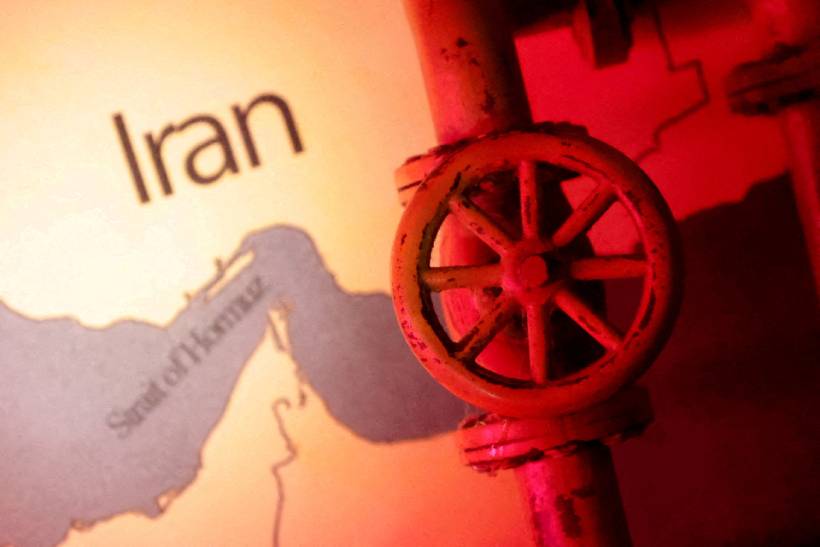
Could Strait of Hormuz Uncertainty Push Oil Prices Above $100 a Barrel?
The Strait of Hormuz has become the central pressure point in the escalating confrontation between the United States and Iran. Before the conflict, roughly 20 million barrels of oil moved through the narrow waterway each day, equivalent to about one fifth of global oil consumption. For years, traders could therefore rely on relatively consistent estimates of the volumes passing through one of the world’s most important energy corridors.
That certainty has now disappeared.
The use of “dark crossings,” in which tankers switch off their identification and navigation systems, has made vessel movements increasingly difficult to monitor. Satellite imagery, port records, tanker drafts, loading schedules and shipping data are being used to reconstruct movements, but the information remains incomplete. Recent estimates of Hormuz flows have differed dramatically, leaving traders and governments uncertain about the true scale of oil moving through the waterway.
The uncertainty comes as Brent crude has moved above the $100 a barrel threshold for the first time since July, driven by renewed military escalation and concerns over Middle Eastern oil supplies.
Stay ahead of the geopolitical week.
MD Briefing delivers expert analysis across five global fronts — the Indo-Pacific, energy, geoeconomics, European security, and the Middle East — every Monday morning. Free.
The Hormuz Information Gap
The most unusual feature of the current oil crisis is not simply that supplies may have fallen. It is that markets cannot confidently determine how much oil is actually moving.
U.S. Energy Secretary Chris Wright said more than 17 million barrels crossed the strait on August 31 under U.S. Navy supervision. Shipping intelligence firm Kpler, however, estimated that only around 6 million barrels crossed that day. Kpler put average August flows at approximately 4.3 million barrels per day, with flows rising to nearly 5 million barrels per day during the first days of September.
The difference could partly reflect different methodologies, including whether shipments using alternative routes outside Hormuz are included. Tankers that remain invisible to tracking systems for days or even weeks make the picture even harder to reconstruct.
This means that traders are attempting to price global oil supplies without reliable visibility over one of the world’s most important supply arteries.
Why the Strait of Hormuz Matters
Hormuz is strategically important because of the enormous concentration of energy exports that normally pass through it. Any sustained disruption can affect crude supplies, tanker availability, insurance costs and shipping times, eventually feeding into fuel prices and broader inflation.
The current situation is different from a straightforward blockade. The strait has not necessarily become completely impassable. Instead, its reliability has been severely compromised.
That distinction matters because a tanker does not have to be physically prevented from crossing for markets to react. The possibility that vessels may be delayed, attacked or unable to cross safely is enough to increase the cost of transporting oil.
As a result, the market is responding not only to actual supply losses but also to the risk of future disruption.
Iran’s Strategic Leverage
Iran’s ability to disrupt maritime traffic remains an important source of leverage despite indications that its military capabilities around Hormuz have been weakened.
U.S. demining operations and a growing U.S.-protected shipping corridor along Oman’s coast have allowed more vessels to enter and leave the Gulf. At the same time, Iran-linked forces continue to threaten commercial shipping, meaning Tehran retains the ability to create uncertainty even if it cannot completely shut down the waterway.
This gives Iran a form of asymmetric leverage. Tehran does not necessarily need to close Hormuz completely to impose economic costs. Sporadic attacks, warnings or restrictions can increase insurance premiums, delay shipments and encourage traders to price in a greater possibility of supply disruption.
The renewed attacks on Saudi energy infrastructure have added another layer of risk by threatening alternative routes that have become increasingly important as traffic through Hormuz has declined.
Impact on Global Oil Markets
The immediate consequence is a higher geopolitical risk premium on crude.
Oil prices normally respond to measurable fundamentals such as production, consumption, inventories and transportation. But when the market cannot establish how much oil is moving through Hormuz, uncertainty itself becomes part of the fundamental picture.
This can keep prices elevated even if actual physical supply losses are smaller than feared.
Brent has already moved above $100 a barrel, while analysts and major financial institutions have raised their oil price forecasts as concerns about prolonged disruption increase.
For oil-importing countries, sustained high crude prices could translate into higher fuel and transportation costs, increased inflationary pressure and greater economic uncertainty. Airlines, manufacturers and businesses dependent on energy-intensive supply chains would also face higher operating costs.
Economic and Geopolitical Implications
The crisis demonstrates how vulnerable the global energy system remains to a single strategic chokepoint.
For the United States, maintaining freedom of navigation through Hormuz is not simply a military objective. It is also essential to preventing a regional conflict from becoming a wider global energy crisis.
For Gulf producers, the challenge is equally significant. Even countries with substantial production capacity cannot fully compensate for disrupted shipping if export routes remain vulnerable.
For major Asian importers, the risks are particularly serious because much of the energy normally passing through Hormuz is destined for Asian markets. A prolonged disruption could therefore create significant pressure on import bills, currencies and inflation across energy-dependent economies.
The crisis also highlights the limits of alternative routes. Pipelines and routes outside Hormuz can reduce some of the pressure, but they cannot immediately replace the enormous volumes that normally pass through the waterway.
What’s Next?
The key variable is whether the confrontation between Washington and Tehran moves toward negotiations or further escalation.
A diplomatic breakthrough could rapidly reduce the geopolitical risk premium by restoring confidence in shipping and improving visibility over oil flows. A further escalation, however, could produce additional attacks on tankers, restrictions around the Gulf or renewed pressure on alternative shipping routes.
The oil market will therefore be watching tanker movements as closely as military developments.
If shipping activity becomes more visible and flows recover, some of the current premium could disappear. If the information blackout continues, traders may continue pricing the possibility of a much larger supply disruption.
Analysis
The deeper significance of the Hormuz crisis is that information itself has become a strategic commodity.
Modern energy markets have traditionally depended on the ability to monitor ships, cargoes and supply chains with increasing precision. Satellite imagery, tracking systems and port data created an assumption that physical oil flows could be observed and measured with reasonable accuracy.
That assumption is now being challenged.
The result is a market where perception can influence prices almost as powerfully as physical shortages. If traders believe Hormuz is becoming less reliable, they will pay more for crude today even without definitive evidence of a catastrophic supply loss.
This gives Iran an important form of strategic leverage. The threat of disruption can generate economic consequences even when actual disruption remains limited.
At the same time, Washington faces a difficult calculation. Greater military protection may help keep shipping moving, but prolonged confrontation can also increase the geopolitical risk premium that the United States is trying to contain.
The central question, therefore, is no longer simply how much oil is passing through the Strait of Hormuz. It is how long the global market can function without knowing the answer.
If that uncertainty persists, the oil market could continue carrying a substantial security premium even if physical supplies prove higher than current estimates suggest. The longer the uncertainty lasts, the more deeply it can become embedded in prices, inflation expectations and global economic planning.
With information from Reuters.

