Privatization

Aldo Torres: ‘For Every Barrel of Oil Extracted, a Venezuelan Household Is Left in the Dark’

Aldo Torres. (Venezuelanalysis)

Aldo Torres is a longtime trade union leader in the electricity sector and currently serves as executive secretary of the Venezuelan Federation of Electricity Industry Workers (FETRAELEC). In this interview, he discusses the current crisis in Venezuela’s electricity system, its causes and possible solutions, as well as the impact of opening the sector to private capital.

Based on your experience in the electricity sector, what is the current assessment of the National Electricity System (SEN), and what factors are behind its crisis?

The National Electric System (SEN) has been deteriorating significantly over time. This crisis with recurrent blackouts all over the country is not a recent phenomenon. Without ignoring the impact of the blockade, the main factors, in my view, are the authorities’ incompetence, ineptitude, and lack of will to address a sector of vital importance to the life and development of the nation.

Management corruption has been a determining factor in the degradation of the electricity sector, and this has been publicly evident. In fact, many financial resources allocated for investment and improvement – at a time when there were still no economic or political sanctions – were diverted into the pockets of unscrupulous contractors.

Then, with the blockade, in addition to all its direct consequences, there was a massive exodus of professionals, technicians, and skilled workers. Faced with low wages, dangerous working conditions, and cases of political persecution, many migrated or simply left to find work elsewhere.

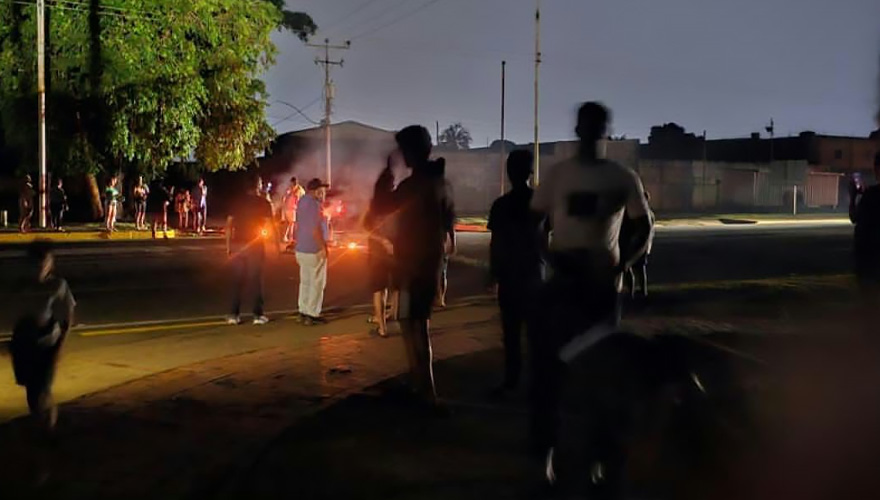
The recurring blackouts have sparked protests, with locals often blocking roads and highways. (El Tigrense)

How did the working class respond to this deterioration you describe?

The workers constantly raised the alarm and denounced the situation. But the response was to ignore their warnings or criminalize them. For example, in 2010, [intelligence agency] SEBIN arrested 11 workers following the explosion of a turbine at the Planta Centro thermoelectric plant in Carabobo State, even though we had warned that the equipment had already reached the end of its useful life.

It is unacceptable that every time there were problems of this nature, management assumed the workers were to blame. All of this also affected the quality of the electricity service.

In short, we have been warning about the possibility of this crisis for many years. In 2008, we issued this warning to the country – and even to President Hugo Chávez – in a report that also included our proposals. After that, between 2009 and 2010, he declared an electricity emergency. 

2011 marked a critical turning point. At that time, workers in the sector, organized in federations such as FETRAELEC, and [state electricity company] CORPOELEC technicians formally warned of an imminent technical and financial collapse of the industry. But after President Nicolás Maduro appointed Jesse Chacón in 2013 and later Luis Motta Domínguez to take charge of the Ministry of Electricity and CORPOELEC, the electricity problem only worsened, leading to the disaster we face today. This crisis has been negatively affecting the lives of millions of Venezuelans on all fronts. Without electricity, water supply, transportation, industries, hospitals, and more come to a standstill.

What might be the possible solutions to the crisis we are facing?

Since January 3, following the US military attack on Venezuela and the tutelage regime imposed afterward, rationing and power outages have increased. Previously, there were 3- or 4-hour blackout periods, sometimes every other day. Now they last 6 or 8 hours, or even longer, every day, with Caracas being the exception.

This worsening situation is directly linked to the increase in oil production. There’s a saying that’s becoming popular: for every barrel of oil extracted, a household is left in the dark. Independent electricity generation for the oil industry would provide some relief from the power rationing that has left Venezuelans overwhelmed and anguished, but it is not the definitive solution to the national electricity crisis.

We, as organized workers, proposed a project for “reactive power compensation” in the electricity grid. This would essentially reduce transmission losses and stabilize the voltage along the lines. It would allow for an immediate increase in the electrical power available to meet demand by optimizing the efficiency of the grid, without requiring an increase in electricity generation. This proposal would apply to high-voltage lines of 765, 400, 230, 138, and 115 kV, and, according to our estimates, we would recover approximately 2,000 MVAr of reactive power that is currently lost due to the grid’s inefficiency. In addition to this, we would be saving hundreds of millions of liters of diesel annually that are used in power plants or independent generators, a significant expense in the national budget. In fact, in 2011, this project was approved in its entirety by CORPOELEC, beginning with Caracas, and a national study was conducted to gradually expand it throughout the country, establishing an order of priority. However, due to administrative changes, it was not carried out.

Venezuelan authorities have pledged to restore 600 MW of generation at the Planta Centro thermoelectric plant in Carabobo State. (Archive)

Workers in the electricity sector have demanded that the sector’s collective bargaining agreement be honored and that the persecution cease. Could you explain these labor demands in more detail? What is the situation for retirees?

As is the case throughout Venezuela, collective bargaining agreements in the public sector have been paralyzed since the government issued and approved the illegal and unconstitutional Memorandum 2792 on October 11, 2018. This memorandum authorized employers to review, modify, or suspend clauses in collective bargaining agreements that they considered “burdensome” or that “jeopardized jobs.” That is why all workers are now facing precarious conditions, and the situation is even more dire for retirees and pensioners.

Furthermore, the imposed guidelines used the minimum wage as the basis for calculating pay scales, eliminating or reducing multiplier factors, professionalization bonuses, seniority pay, and other socioeconomic benefits that were hard-won through working-class struggles. And now the minimum wage is practically zero. Our main demand is that the rule of law be respected, that negotiations on our collective bargaining agreement be restored, and that our basic labor rights be upheld. This is a struggle for the entire Venezuelan working class; it is not limited to the electricity sector, of course.

How do workers view the current opening of the electricity sector to transnational private capital? What will this reform mean for service quality and access, especially for working families?

We have been debating the opening of the electricity sector to private capital in union meetings and open forums. Unfortunately, this is nothing new in the country. This was the case even before Hugo Chávez came to power and the sector was subsequently managed by military personnel who were anything but qualified to do so.

We also face a very difficult situation regarding national sovereignty, stemming from the Trump administration’s effective control over Venezuelan affairs. That is why, now, under these terrible conditions, US capital will come with its respective corporations to take over our natural resources and strategic sectors. It is absolutely outrageous.

The historical precedents of privatized electricity show us that it leads to a profound inequality in access. And the argument of corruption and poor public administration may once again be used to justify privatization. In the 1970s, the Compañía Anónima de Administración y Fomento Eléctrico (CADAFE) and its subsidiaries were victims of severe meddling and sabotage by economic groups and traditional political parties, which turned the company into the poster child of corruption and inefficiency. Then, in the 1990s, they used this as a pretext to carry out a restructuring aimed at privatizing CADAFE. This had a devastating impact on workers, whose ranks were reduced from 3,500 to fewer than 900. With this new opening to private capital, all these risks are repeating themselves.

CORPOELEC workers have demanded the restoration of their collective bargaining agreement. (El Impulso)

Source link

Venezuelan Parliament Approves Law to Open Electricity Sector to Partial Privatization

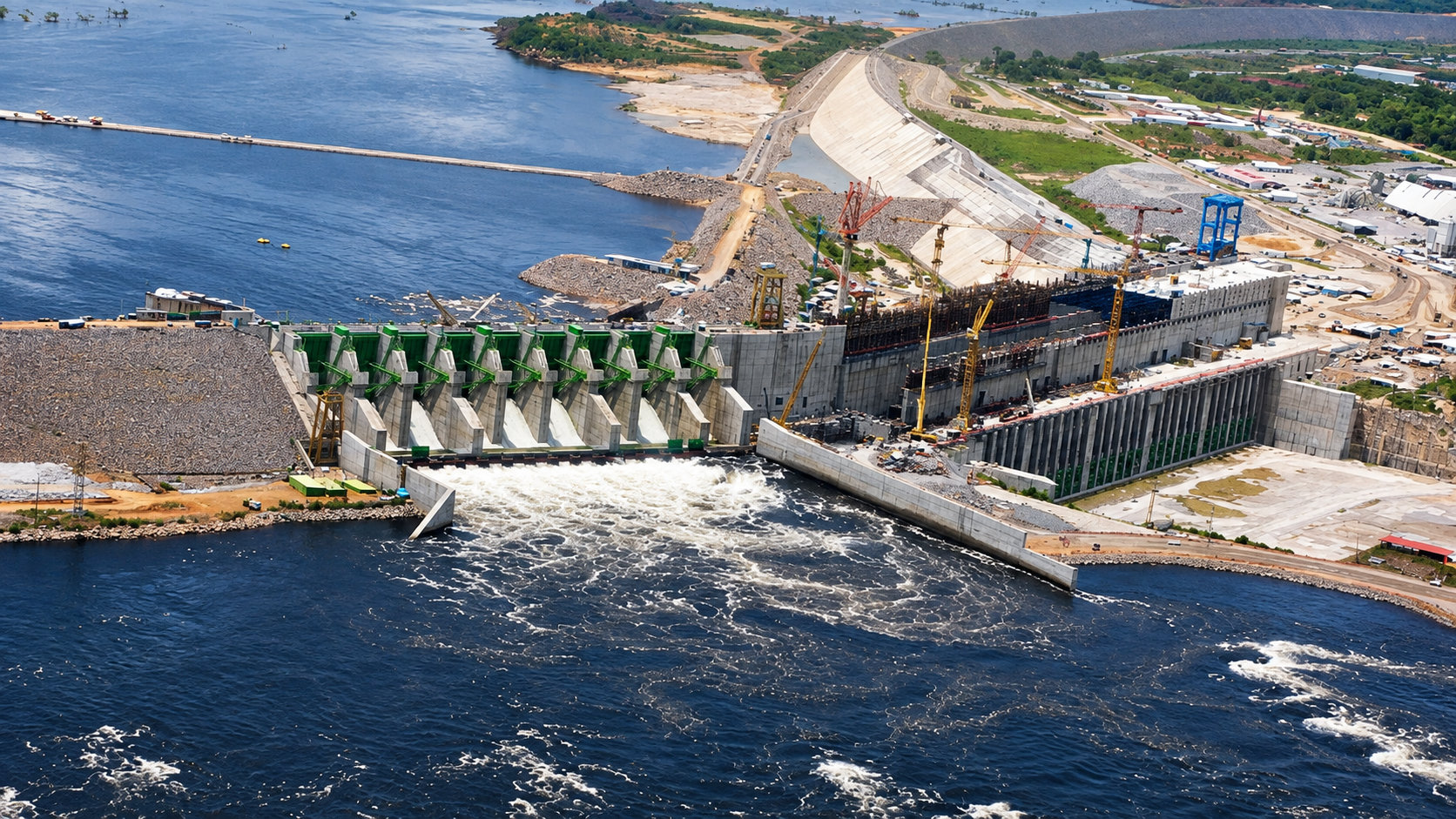
The Venezuelan government has turned to foreign corporations to complete unfinished hydroelectric projects. (El Universal)

Caracas, November 10, 2026 (venezuelanalysis.com) – The Venezuelan National Assembly approved on Tuesday a reform of the Organic Law of the Electrical System and Service to open the electrical grid to the private sector amid a crisis of rising demand and recurring blackouts.

The new legislation stipulates that power generation, transmission, distribution, and commercialization can now “be carried out by the state-owned operating company, as well as by mixed-ownership and private companies holding the corresponding authorization.”

“The reform will allow private entities to provide electricity services,” National Assembly President Jorge Rodríguez told reporters after the legislative session. “It will make self-generation possible, allowing private companies to generate and supply electricity to businesses, industries, shopping centers, etc. This will help increase supply.”

The Venezuelan parliament had preliminarily approved the reform in June. A commission incorporated adjustments to the text, which deputies reviewed across several parliamentary debates before Tuesday’s final vote. The final text, seen by Venezuelanalysis, will be published in the National Gazette in the coming days.

The updated law puts an end to the state monopoly over electricity established by former President Hugo Chávez. A 2007 law identified the sector as “strategic for the nation” and merged several companies into the National Electric Corporation (CORPOELEC). 

Under the new rules, private companies can set up new power plants, build transmission infrastructure and charge a fixed toll, or receive distribution and commercialization rights in specific areas.

In addition, they can also receive concessions of state assets for a maximum of 25 years, with the responsibility of returning them to CORPOELEC or another designated state entity at the end of the period. The state will retain exclusive control over all hydroelectric generation in the Caroní basin as well as transmission and distribution responsibilities in “strategic” areas.

The law also provides that disputes or disagreements of any kind that cannot be settled amicably by the parties may be brought before Venezuelan courts or resolved “through alternative dispute resolution mechanisms.” US licenses allowing Western corporations to deal with Venezuela have demanded that disputes be settled in the US, the UK, France, or Singapore.

Regarding oil companies, the law stipulates that they must “ensure a reliable and stable supply of electricity for the execution of primary activities” through self-generation, cogeneration, or third-party contracts designed to secure operational autonomy. Oil and independent power generation firms will also not require state authorization to generate electricity for their internal networks, unless they connect to the national grid.

Rodríguez stressed that the changes do not to amount to privatizing electricity services but rather constitute an “expansion.”

“An appropriate sanctions framework has been established, along with guarantees for private entities to participate. This is not privatization, but an expansion that allows private companies to provide services, particularly to large consumers,” he stated.

The head of the legislature added that electricity consumption tariffs will be computed in foreign currency and converted using the official exchange rate set by the Central Bank of Venezuela (BCV). He also disclosed a policy of subsidies intended to shield vulnerable sectors.

“This will primarily benefit people who, because of their income level, cannot afford the full tariff, unlike industries or major retailers,” he concluded.

The legislation also establishes a National Electric System Superintendency, empowered to establish tariffs, initiate administrative investigations, and impose penalties on those who violate the law. Operators may face fines of up to 2 percent of their gross revenue for failing to comply with regulations governing electrical installations, disregarding instructions issued by competent authorities, refusing to provide requested information, or obstructing inspections.

Consumers, meanwhile, may be fined between US $50 and $10,000 for unauthorized use of electricity, with similar penalties for unauthorized consumption, and ten times larger ones for connecting equipment that causes disturbances. The same range of fines applies to tampering with, damaging, or modifying meters and supplying electricity to third parties without authorization, among other violations.

The new law also allows the Venezuelan government to grant tax breaks to private corporations at its discretion to “promote the expansion, efficiency, or environmental sustainability” of the electric system.

The electricity reform, which follows major legislative pro-business overhauls to the mining and energy sectors, comes amid a persistent electricity crisis that sees most of the country face daily blackouts, sometimes lasting up to 12 hours.

Residents have staged recurring protests. On Monday, a crowd blocked the Argimiro Gabaldón highway connecting Barcelona and Puerto La Cruz in Anzoátegui State for several hours.

The Venezuelan Observatory of Social Conflict (OVCS) registered 531 protests related to electricity services nationwide in September. For her part, Acting President Delcy Rodríguez has criticized the demonstrations, affirming that “burning tires does not add a single megawatt to the electric grid.”

Venezuela currently produces only around 12,000 MW, roughly 40 percent of its installed capacity, and faces a generation deficit of over 4,000 MW. Venezuelan authorities have pledged to add 1,300 MW to the grid before the end of the year and have negotiated agreements with GE Vernova, Siemens, and IMPSA to bring paralyzed power plants back online.

Targeting short-term improvements, CORPOELEC recently signed an agreement with Turkish company Karpowership to lease two power-generating vessels that would add 200 MW to the grid in western Zulia State, one of the states hardest hit by electricity shortages. 

However, Venezuelan officials have not provided additional details on the contract, including its cost, duration, and fuel supply.

Edited by Ricardo Vaz in Caracas.


Source link

Venezuela: Rodríguez Pledges to Return Nationalized Assets to Former Owners

Rodríguez announced that workers’ incomes would follow GDP growth, though increases might still fall below inflation. (Presidential Press)

Caracas, October 29, 2026 (venezuelanalysis.com) – Venezuelan Acting President Delcy Rodríguez defended an ongoing plan to privatize state assets and return nationalized companies to former owners on Thursday.

“I have ordered the evaluation of non-essential state assets to be offered to the private sector or returned to their previous owners,” she said in a televised address to the nation.

“This is already in motion. The right to private property is guaranteed by our Constitution,” Rodríguez added.

In April, the acting president established a commission to evaluate the “strategic” value of state-owned companies, land, and other assets, to determine whether they should be retained, privatized, or liquidated.

Former President Hugo Chávez implemented a program of nationalizations in the 2000s to assert state control over strategic economic sectors, including electricity, telecommunications, and heavy industries.

After enacting a pro-business overhaul of hydrocarbon and mining legislation earlier this year, the Venezuelan parliament is on the verge of approving the partial privatization of the electricity sector. Foreign companies are likewise in talks to acquire the country’s largest aluminum smelter, while a consortium headed by Sunergon Oil is reportedly pushing the takeover of several industrial plants associated with the oil industry.

Business sector representative Luigi Pisella, who heads the commission, recently proposed a law enshrining multinational corporate participation in privatized public entities alongside local capital.

“I have encountered no resistance to this idea,” he stated in an interview with Banca y Negocios. “Most investors agree it is indispensable to have local partners whose experience is essential to navigate the complex Venezuelan environment.”

Pisella added that “different models of private participation” are being evaluated, but ruled out the “strategic alliances” whereby the state grants the assets in a concession-type deal while retaining ownership. The business sector spokesman argued that “no one is going to invest” without the full transfer of property.

In Thursday’s address, Acting President Rodríguez also promised that workers’ incomes would be increased quarterly next year, with the raise being at least on a par with GDP growth. 

“For 2027 we are scheduling increases to workers’ incomes in four different moments, in amounts that can never fall short of economic growth in the preceding trimesters,” she explained. 

Rodríguez did not mention adjusting the minimum wage, which has been frozen since 2022 and is currently worth around US $0.15. Instead, Venezuelan authorities have leaned on non-wage bonuses, which do not factor into vacation pay, severance, and other labor benefits in what amounts to a de facto subsidy to employers. Public sector workers currently have a monthly income floor of $240.

While Venezuela’s GDP is predicted to grow 5-10 percent in 2026, even raising non-wage bonuses by that amount falls short of inflation. Finance website Ecoanalitica estimates that prices measured in USD will end up rising 20-30 percent in 2026, meaning that an income adjustment pegged to GDP growth would amount to a loss of purchasing power.

In her message, Rodríguez went on to tout ongoing labor reform talks involving business lobbies and select trade unions. 

Private sector associations such as FEDECÁMARAS and FEDEINDUSTRIA want to slash labor costs for employers, further reducing social security contributions and eliminating the retroactive nature of severance pay and other benefits such that any future wage hike would not trigger corresponding increases.

Finally, the acting president defended recent judicial reforms and ongoing US-endorsed talks with a sector of the Venezuelan opposition that will appoint a new Supreme Court and National Electoral Council. The US State Department has claimed that new presidential elections will be held in 2027.

Rodríguez offered no specifics on an electoral timetable, stating only that “there will be elections, with a renewed electoral authority and the world as a witness.”

Edited by Lucas Koerner in Philadelphia, USA.

Source link