Venezuelan

Venezuelan Attorney General to Investigate Unreported Death in State Custody

Attorney General Devoe vowed to clarify the death of Victor Quero. (Archive)

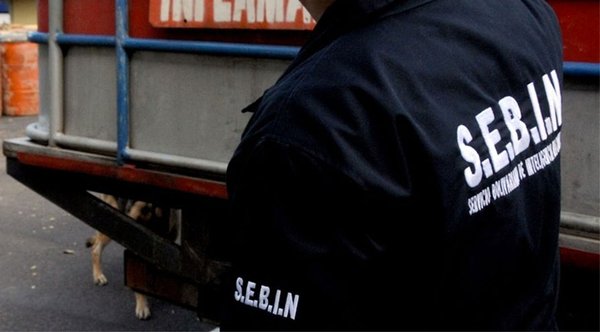
Caracas, May 11, 2026 (venezuelanalysis.com) – Venezuelan Attorney General Larry Devoe has opened an investigation into the death of Victor Hugo Quero Navas in state custody in July 2025.

“The investigation aims to clarify the facts in a timely and impartial fashion,” Devoe’s statement, published on Thursday, read. “There will be a prompt exhumation of [Quero’s] body in accordance with Venezuela’s penal code.”

Quero’s case drew headlines in recent days following reports that a request for amnesty under the Amnesty Law approved in February was denied, only for Venezuelan authorities to reveal that he had passed away months earlier.

On May 6, attorney Moisés Gutiérrez from the Human Rights and Democracy Coalition NGO informed that the Second Control Court in Caracas had denied amnesty for Quero due to the charges against him, which reportedly included terrorism, criminal association, and conspiring with foreign agencies, falling outside the scope of the Amnesty Law.

Gutiérrez argued that Quero, a 51-year-old Caracas businessman and retailer, was in a situation of “enforced disappearance,” having had no contact with relatives or a lawyer of his choice since being arrested in early January 2025.

On May 4, Public Ombudswoman Eglée Lobato met Quero’s mother, Carmen Teresa Navas, and vowed to “activate institutional mechanisms” to provide information on her son’s judicial case.

However, last Thursday, Venezuela’s Prison Ministry issued a statement disclosing that Quero had died on July 24, 2025, due to an “acute respiratory failure” following a “pulmonary thromboembolism.” Authorities added that he had been detained in the Rodeo I prison in the outskirts of Caracas since January 3, 2025 and was admitted to a hospital with “gastrointestinal bleeding” ten days before his death.

The Prison Ministry reported that Quero was buried on July 30, 2025, and that he had provided no next-of-kin information nor had any visits from relatives. Nevertheless, his mother made multiple documented visits to Rodeo I, only to receive no information on her son’s whereabouts.

The 82-year-old Navas was taken to Quero’s grave on Thursday and demanded a DNA test to confirm her son’s identity. She lamented having spent more than a year visiting the prison and judicial institutions without any answers. There was likewise no public information on any hearings in Quero’s case.

During an October visit to the Ombudsman’s office, Navas was informed of the charges against Quero and that he remained in Rodeo I, despite the fact that he had reportedly died three months earlier.

Following the latest revelations, multiple NGOs have accused Venezuelan judicial institutions of recurring human rights and due process violations. The Justicia, Encuentro y Perdón organization called for an “independent and exhaustive investigation” under the Minnesota Protocol on the Investigation of Potentially Unlawful Death.

Lavoe and Lobato took office in April following a parliamentary selection process. Their respective predecessors, Tarek William Saab and Alfredo Ruiz, have yet to comment on Quero’s case. 

Venezuelan Acting President Delcy Rodríguez did not address the case explicitly but vowed to take action against “deviations in the justice system.”

“The deviations in the penal justice system exist,” she said during a televised event on Saturday. “I have information and call for action against judges who charge fees to grant amnesty. This must stop.”

Venezuela’s February Amnesty Law grants a blanket amnesty for crimes committed in contexts of political violence since 1999. The law excludes serious human rights violations, crimes against humanity, and war crimes.

According to Venezuelan officials, more than 9,000 people have benefited from amnesty in recent months. A majority of them were not imprisoned but were still facing trial or parole-type measures.

In April, Rodríguez created a commission on penal justice reform, headed by Devoe, referring to “evils that persist” in the judicial apparatus and calling for a “truly humane justice system.” Interior Minister Diosdado Cabello, also a member of the commission, said authorities were investigating issues of prison overcrowding and systematic trial delays.

Rodríguez had served as vice president since 2018, while Cabello took over as interior minister in August 2024. In 2021, Cabello headed a parliamentary commission tasked with undertaking a “judicial revolution.” However, complaints of prison overcrowding and poor conditions, as well as due process violations, continued.

Edited by Lucas Koerner in Caracas.

Source link

Trump Administration Issues License Facilitating Venezuelan Debt Restructuring

Venezuela’s foreign debt is estimated to stand as high as US $170 billion. (Archive)

Caracas, May 6, 2026 (venezuelanalysis.com) – The US Treasury Department has issued a sanctions waiver allowing the provision of services related to the restructuring of Venezuelan debt.

General License 58 (GL58), issued on Tuesday, authorizes the provision of “legal, financial advisory, and consulting services” to the Venezuelan government and state oil company PDVSA in relation to “potential restructuring of debt” owed by the Venezuelan state, PDVSA, and PDVSA affiliates.

The license does not allow creditors to transfer or settle debt, nor directly engage with Venezuelan authorities. It additionally forbids any payment to consultants using cryptocurrencies or gold.

The Trump administration’s latest move is a necessary step to locate creditors and assess the size of Venezuela’s foreign debt, estimated to be as high as US $170 billion, split between defaulted bonds, unpaid loans, and international arbitration awards.

Venezuelan bonds, which have steadily increased in value in recent months, rallied again on Tuesday as investor confidence in a restructuring deal grows. Bonds that fell below 10 cents on the dollar are currently trading between 40 and 60 cents on the dollar. Creditor groups have also held meetings with the Trump administration as they seek to engage Caracas.

Though the Nicolás Maduro government prioritized debt service after the Venezuelan economy fell into deep recession after 2014, US economic sanctions beginning in 2017 accelerated the economic tailspin and shut Venezuela out of financial markets, making debt payments impossible. The defaulted state and PDVSA bonds, estimated at around $66 billion, have been accruing interest ever since.

The Venezuelan government, led by Acting President Delcy Rodríguez, has not publicly disclosed plans regarding the country’s external debt. In March, the Trump administration recognized Rodríguez as Venezuela’s “sole leader,” clearing another hurdle for creditors. 

Rodríguez, who previously served as vice president, took over the presidency following the US kidnapping of Maduro on January 3. In the four months since, the acting administration has fast-tracked a diplomatic rapprochement with Washington. Trump officials have made multiple visits to Caracas and have been hosted at the presidential palace.

In parallel, Venezuelan authorities have advanced multiple pro-business legislative reforms in a bid to attract foreign investment in sectors such as energy and mining. Projects to change the Caribbean nation’s labor, tax, and housing laws are currently underway. 

In parallel, Rodríguez has installed a commission to assess the “strategic” value of Venezuelan state assets and their possible privatization. The Cisneros Group, one of the country’s largest private sector conglomerates, has announced plans to raise funds ahead of potential sell-offs of state assets.

Caracas also reestablished ties with the International Monetary Fund (IMF) and the World Bank in April. Economy Vice President Calixto Ortega was recently appointed as the country’s representative before the IMF. Venezuelan leaders have stated that their priority is to access around $5 billion in IMF-issued Special Drawing Rights to address urgent needs in public services and infrastructure.

Rodríguez has stated that there are “no plans” to contract an IMF loan, though a debt-restructuring agreement would place a significant burden on Venezuelan finances. The government’s budget for 2026 was estimated at around $20 billion.

For her part, IMF Managing Director Kristalina Georgieva stated that the Washington-based institution is willing to support a loan program for Venezuela but that clarity on economic data and external debt is a necessary prior step.

Edited by Lucas Koerner in Caracas.

Source link

Venezuelan Gov’t Maintains Frozen Minimum Wage, Hikes Bonuses on May Day

With the economy under wide-reaching sanctions, the Venezuelan government has favored non-wage bonuses in recent years despite criticism from trade unions. (AFP)

Caracas, May 1, 2026 (venezuelanalysis.com) – Venezuelan Acting President Delcy Rodríguez announced on Thursday an increase in the so-called “integral minimum income” to the equivalent of US $240 per month for public sector workers.

At a public rally in Caracas, Rodríguez stated that the private sector was also urged to establish employees’ incomes at $240 per month or more. The amounts are set in US dollars but paid in bolívares at the day’s official exchange rate set by the Central Bank.

The latest adjustment involved an increase of the “economic war bonus” from $150 to $200 a month, alongside a $40 monthly food bonus. Venezuela’s monthly minimum wage has remained frozen at 130 bolívares, roughly $0.27 at the present exchange rate, since the last increase in March 2022.

The economic war bonus for pensioners was raised from $58 to $70 a month, and for public sector retirees from $130 to $168. The acting president further introduced a new, one-time “professional and academic recognition” bonus, ranging between $60 and $120, aimed at strategic sectors such as security, education, and healthcare. She also urged labor inspectorates to address workers’ demands regarding employment conditions.

The acting president described the latest income hike as “the most significant increase in recent years,” while acknowledging that it remains insufficient in the face of rising living costs. The announcement also included a commitment to develop a special plan to improve conditions for elders in the medium term.

“When I see workers protesting, I tell them ‘you are right!’” Rodríguez stated. “We want to recover wages, and this is a first step to protect the workers’ purchasing power.” In the lead-up to May 1, the Venezuelan leader had argued that salary adjustments must be “responsible” in order not to trigger inflation.

Rodríguez emphasized that the latest bonus adjustments, while maintaining the minimum wage freeze, were agreed upon in discussions between government representatives, trade unions, and business sector associations.

The tripartite negotiations are also advancing in a proposal to reform Venezuela’s Labor Law. On Thursday night, Labor Minister Carlos Castillo confirmed that a labor reform is being evaluated.

“We are discussing it,” he said in an interview with state broadcaster VTV. “It has to come out of the negotiating table and generate consensus.” 

The labor reform plans, as well as the continued bonus-over-wage policies, have drawn fierce criticism from trade unions. Center-right, right-wing, and left-wing labor organizations staged a number of rallies in multiple states on May 1st.

Organizations such as the Central University of Venezuela Professors Association (APUCV) rejected the bonus increase, arguing that it deepens the “de-waging” of salaries and undermines labor rights.

“Continuing the policy of replacing wages with income is another severe blow against the university. It disregards merit, experience, and hierarchy. It also destroys collective bargaining agreements and the institutions responsible for social security,” the group said in a statement.

In recent months, labor protests have intensified in sectors such as education, healthcare, and public services. Workers have demanded that any wage increase be fully incorporated into base salaries rather than delivered through discretionary bonuses, noting that Venezuela’s Constitution mandates at least one annual adjustment to the legal minimum wage. Unions have likewise demanded the repeal of statutes such as the 2792 Memorandum that suspended several collective bargaining rights.

These sectors have also voiced opposition to business-backed proposals to reform the Organic Labor Law (LOTTT) in ways that could reduce benefits and social security contributions. Fedecámaras and other private sector associations have demanded reforms that cheapen labor costs for employers and increase flexibility for dismissals.

Venezuela’s landmark 2012 Labor Law, one of the last major legislative projects of former President Hugo Chávez, prohibits unjustified dismissal and outsourcing, establishes one of the longest maternity leaves globally, guarantees the right to work for women and people with disabilities, and extends pension rights to all workers, including full-time homemakers and the self-employed.

The latest bonus adjustment was announced during the closing rally of the “Great Pilgrimage for a Free and Peaceful Venezuela,” a series of mobilizations across the country calling for an end to wide-reaching US sanctions imposed on the country.

The measures followed a string of recent oil agreements with transnational corporations and optimistic forecasts regarding the Venezuelan economy. However, since January, the Trump administration has imposed control over the Caribbean nation’s oil export revenues, with the disbursement amounts and timings left at US officials’ discretion.

Edited by Ricardo Vaz in Caracas.

Source link

After the US Bombing, a Venezuelan Community Under Siege Speaks

A solidarity delegation visited Ciudad Tiuna after the Jan. 3 US bombings. (Roger Harris)

The large-scale US airstrike on Venezuela was unprecedented in modern history. The surprise attack forcibly kidnapped President Nicolás Maduro and his wife, First Combatant Cilia Flores, from Fort Tiuna on the outskirts of Caracas. The US killed over 100 people in the early morning hours of January 3, 2026, including reportedly some civilians in the neighboring Ciudad Tiuna social housing complex.

We visited Ciudad Tiuna 50 days after the US bombing to hear the resident’s accounts. We were the second “solidarity brigade” to visit Venezuela and the first to arrive by air. The delegation consisted primarily of activists from the US, along with Canada, Colombia, Brazil, and Mexico. CodePink,  Task Force on the AmericasVeterans for Peace, and World Beyond War were among the solidarity organizations represented.

“Welcome to the socialist city of Tiuna.” (Roger Harris)

Ciudad Tiuna is a planned housing complex of some 20,000 units, part of the national Gran Misión Vivienda Venezuela program. Apartments are allocated with priority to families displaced by disasters and to low-income households. As of December 2025, over 5 million units have reportedly been delivered nationwide.

We were enthusiastically greeted by a community-based club affiliated with the Abuelos y Abuelas de la Patria (Grandparents of the Homeland) mission, a government program empowering seniors in communal life. They organized a cultural presentation and introduced us to social and political organizations in their socialist city.

The grandparents of the homeland greeted us. (Roger Harris)

A woman sang for mother earth accompanied by a shaman drum. A man read poetry by Allen Ginsberg and Walt Whitman, remarking “not all North Americans fornicate with their mothers” (loosely translated from Spanish).

In a tribute to Cuba, residents said they do not speak of solidarity with Cubans because “we are one people.” They praised the Cuban’s courage, including the 32 presidential guards murdered by the US in the January 3 attack. They also highlighted Cuban’s generosity in helping Venezuela achieve “territory free of illiteracy” status by 2005. Programs such as Misión Barrio Adentro brought thousands of Cuban doctors into poor urban and rural communities to provide free primary care.

And most of all, they deeply lamented the current US military blockade of Cuba, which has prevented Venezuela from supplying vital oil to the island. The suffering imposed by Washington on the Cubans pained them deeply.

They do not speak of solidarity with Cubans because “we are one people.” (Roger Harris)

They shared a flyer titled “Never Again – January 3 – Diplomacy for Peace,” which read in part:

Neither forgiveness nor forgetting! Memory is not resentment, but the heart of the people’s dignity who have been attacked. A people without justice becomes submissive. Impunity flourishes if we do not sow justice. We will not tire of weaving unity to triumph.

Their immediate demand is the release of their president and first lady. The flyer also calls for defense of popular sovereignty, no intervention by imperialism in Venezuelan affairs, and reparations for the “offended homeland.”

Their immediate demand is the release of their president and first lady. (Roger Harris)

The flier concludes with a quote from Delcy Rodríguez: “The dignity of the Venezuelan people is the first line of defense. We have to preserve our integrity as a people, guarantee our territorial integrity, and preserve our national independence.”

January 3 was not unanticipated but nevertheless a great shock. During a walking tour, they described the terror of the sneak attack. They told us each time the Venezuelan people successfully resisted Washington’s attempts at regime change – attacks dating back from the founding of their Bolivarian Revolution 26 years ago by then Venezuelan President Hugo Chávez – the siege has been racketed up.

“We were all running because we were being bombed.” (Roger Harris)

Fabricio, age 11, described a sky lit red with explosions and filled with US helicopters. The elders vowed: “Never again will we allow our children to be traumatized.” Government mental health workers have since been regularly visiting Ciudad Tiuna.

“Never again will we allow our children to be traumatized.” (Roger Harris)

They explained how they truly felt the horror that the Palestinians experience. The difference, they added, was that for them it was a single day while in Gaza it is every day.

At the time, many feared the attack could signal a protracted full-scale land invasion. Such an incursion, they warned, could well be launched in the future. (This was also the opinion of government officials that we conferred with.)

They are proud that the Bolivarian leadership remains firm and united. This they attribute to the support of the people such as themselves. The concessions forced upon the government under the threat of an even more devastating attack have been bitter to accept, but better than the alternative of greater destruction.

Dudar es traición – to doubt is to betray. (Roger Harris)

Our hosts described themselves as Chavistas, militants in support of the current government. Some wore shirts bearing the phrase dudar es traición – to doubt is to betray. Their lived experience is of a nation under imperial siege – in a perpetual state of war with the threat of more. Under such circumstances unity is prioritized.

Under conditions of siege, unity is prioritized. (Roger Harris)

They rejected speculation that the kidnapping was aided by traitors within, arguing that such narratives serve the purposes of the enemy of eroding unity by fostering distrust. They emphasized the continuity of revolutionary policy from Chávez to Maduro and now to Delcy, as she is affectionately called.

Conditions have changed but not the leadership’s dedication. They noted that regional solidarity has weakened, leaving Venezuela ever more isolated.

Before we departed, several children gave us gifts: handmade wristbands in the national colors, decorated pencils, and a book on climate change from a Marxist perspective. Our hosts also had a frank take-home message for us: “We never invaded; we liberated. Take our passion and love to give you strength to do what you must and rise up.” The hardships caused by the US sanctions – including shortages of medicine and essential goods– are linked to the failure of North Americans to restrain our own government.

After being scared away by the US bombing, the wild parrots have returned to the community. (Roger Harris)

Meanwhile, the wild guacamayas (blue-and-yellow macaws), which once came to Ciudad Tiuna to be fed by residents but disappeared after the bombing, have now returned to a community that asks only to be left in peace.

Roger D. Harris is with the Venezuela Solidarity Network, the Task Force on the Americas, and the US Peace Council.

The views expressed in this article are the author’s own and do not necessarily reflect those of the Venezuelanalysis editorial staff.

Source: Common Dreams

Venezuela is a territory of peace. (Roger Harris)

Source link

US to allow Venezuelan government to cover Maduro’s lawyer fees | Nicolas Maduro News

Defence lawyers had asked for case to be thrown out, claiming Maduro’s rights were violated following US abduction.

The United States has agreed to ease certain sanctions on Venezuela in order to allow the country’s government to cover the legal fees for ex-president Nicolas Maduro, who is on federal trial in New York City for drug trafficking charges after being abducted by US forces in January.

Maduro’s lawyer, Barry Pollack, had asked the Manhattan-based US District Judge Alvin Hellerstein to toss out the case in February, arguing that a prohibition on the government in Caracas paying the legal fees constituted a violation of Maduro’s legal right to the counsel of his choice.

Recommended Stories

list of 3 itemsend of list

In a court filing, US Department of Justice lawyers agreed to modify US sanctions so that the Venezuelan government could pay Maduro’s defence lawyer. They said the change makes the defence’s motion to throw out the case “moot”.

The pivot is the latest update in a closely watched trial that has raised a series of legal questions based on Maduro’s status as a former head of state and how he was taken into US custody.

Critics have condemned the proceedings as fundamentally illegitimate, pointing to the extraordinary US military operation to abduct Maduro and his wife, Cilia Flores, from Venezuela. Legal experts have called the raid a blatant violation of international law.

The Trump administration has maintained that the abduction was a law enforcement operation supported by the military. It has argued that Washington does not recognise Maduro as the legitimate leader of Venezuela following several contested elections.

Under the international law concept of “head of state immunity”, sitting world leaders are typically granted immunity from foreign national courts.

After being spirited to the US, Maduro and Flores pleaded not guilty and remain jailed in Brooklyn, New York. Maduro has rejected the US charges as a false pretext for seizing control of the South American country’s natural resources.

US President Donald Trump has repeatedly expressed his desire for foreign companies to access Venezuela’s vast oil reserves.

During a hearing on March 26, Judge Hellerstein did not signal that he would throw out the trial, but did question whether the sanctions preventing the Venezuelan government from covering Maduro’s legal fees were a violation of constitutional rights.

All criminal defendants in the US have constitutional rights, regardless of whether or not they are US citizens.

Prosecutors, at the time, argued that the sanctions were based on national security interests and asserted that the executive branch, rather than the judiciary, oversees foreign policy.

They further argued that Maduro and Flores could use personal funds to pay for a lawyer of their choice.

“The defendant is here, Flores is here. They present no further national security threat,” said Hellerstein.

“The right that’s implicated, paramount over other rights, is the right to constitutional counsel.”

Source link

The Neocolonial Plunder of Venezuelan Resources

The Trump administration’s January 3 military strikes opened a new era of US imperialism in Venezuela built on the plunder of the country’s resources. This interactive infographic explains Venezuela’s recent pro-business reforms, US neocolonial impositions through licenses, and the conglomerates that have already taken advantage to strike agreements.

(Click on the crosses for additional information)

(Click here to download the full infographic)

Source link

Venezuelan Gov’t Resumes IMF, World Bank Ties, Appoints New Central Bank President

Former Venezuelan President Hugo Chávez denounced the IMF and the World Bank as “weapons of US imperialism.” (AFP)

Caracas, April 17, 2026 (venezuelanalysis.com) – Venezuela has reestablished ties with the International Monetary Fund (IMF) after a seven-year hiatus.

Acting President Delcy Rodríguez confirmed the news on Thursday night, calling it a “great achievement of Venezuelan diplomacy” and a “very important step” for the Venezuelan economy.

“This is the result of months-long negotiations that the Venezuelan far-right unsuccessfully tried to sabotage,” she stated in a televised broadcast. “Good has triumphed.”

The IMF announced the “resumption of dealings” with Venezuela in a statement on Thursday, stating that the decision was “guided by the views of IMF members representing a majority of the total voting power.”

Managing Director Kristalina Georgieva stated earlier this week that the IMF had been approached by Venezuelan authorities at a technical level and that the Caribbean nation “desperately needs help.”

The World Bank likewise issued a statement disclosing the resumption of dealings with the acting Rodríguez government. Venezuela’s last loan with the institution concluded in 2005.

Venezuela had its relationship with the IMF suspended in 2019 after the first Trump administration and allies recognized the self-proclaimed “interim government” led by Juan Guaidó as the Caribbean nation’s legitimate authority.

In March, the White House recognized Rodríguez as Venezuela’s “sole leader” and later withdrew sanctions against her, while US officials spoke of efforts to reincorporate Caracas into the IMF fold.

Though relations were officially frozen in 2019, Venezuela had sought to distance itself from the Washington-based institution more than a decade prior. In 2007, former President Hugo Chávez formally withdrew Venezuela from the IMF and the World Bank, calling them “weapons of US imperialism.”

Chávez repeatedly denounced the US-controlled multilateral institutions’ role in promoting debt and underdevelopment in Global South countries and pushed for the creation of lending institutions as part of Latin American integration efforts. Under Chávez’s predecessors, Venezuela implemented draconian IMF-conditioned structural adjustment policies that saw over half of Venezuelans living in poverty by 1998.

Last year, President Nicolás Maduro stated that Venezuela had “broken the shackles” of the World Bank and the IMF and was instead building its own “self-sustainable model and relations with a new world.”

Venezuela’s priority will be accessing US $5.1 billion in Special Drawing Rights (SDR) that it is entitled to as an IMF member. In 2021, the lending institution issued $650 billion amid the Covid-19 pandemic as an effort to help countries boost reserves and address fiscal needs. 

However, Venezuela was blocked from accessing the funds as the IMF refused to rule on the country’s legitimate authorities.

Caracas’ reengagement with the IMF and the World Bank also comes amid growing speculation about the fate of Venezuela’s sizable foreign debt. The Caribbean nation owes as much as $170 billion from a combination of defaulted bonds, unpaid loans, and international arbitration awards that have accrued interest for years as US sanctions battered Venezuela’s economy and cut it off from credit markets.  

Venezuelan bonds have been rallying in recent weeks following Washington’s rapprochement with Caracas as creditors bet on a debt restructuring deal that can bring significant windfalls.

Since the January 3 US military strikes and kidnapping of President Nicolás Maduro, the Rodríguez administration has fast-tracked a number of pro-business reforms, including in the hydrocarbons and mining sectors. Upon enacting the Mining Law on Thursday, the acting president thanked Trump, Rubio, and other administration officials for their “good disposition” in establishing “cooperation.”

Rodríguez recently announced further plans to overhaul the South American country’s labor, pension, and tax legislation, while also identifying state assets that are “not strategic.” The Cisneros Group, one of Venezuela’s largest business conglomerates, recently announced the raising of funds ahead of expectations of a “wave of privatizations.”

Since January, the Trump administration has imposed control over Venezuelan oil revenues, mandating that royalties, taxes, and dividends be deposited in US Treasury accounts. In a congressional hearing on Thursday, Assistant State Secretary Michael Kozak stated that “around $3 billion” have moved through the dedicated accounts. 

He did not specify what portion of the revenues has been returned to Caracas, only that the funds had been used to pay public sector incomes and import oil industry inputs, while blocking any transactions with China, Cuba, and Iran.

Earlier this week, the Treasury’s Office of Foreign Assets Control (OFAC) issued new restricted licenses allowing transactions with the Venezuelan Central Bank and public banks that are expected to facilitate the partial return of seized Venezuelan export revenues.

On Thursday, Venezuelan authorities additionally announced a change in the Central Bank leadership, with Luis Pérez replacing Laura Guerra as president of the institution. Guerra had been appointed to the post in April 2025 by Maduro.

Pérez is an economist who had served on the BCV board of directors since 2018. In his social media profile, he describes himself as a cryptocurrency enthusiast.

Edited by Lucas Koerner in Fusagasugá, Colombia.


Source link

Venezuelan National Assembly Picks New Attorney General, Ombudswoman

The new officials were backed by a large majority of the legislature. (Archive)

Mérida, April 14, 2026 (venezuelanalysis.com) – The Venezuelan National Assembly (AN) appointed Larry Devoe as the new Attorney General and Eglée González Lobato as the Ombudswoman during an ordinary session on Thursday, April 9.

The appointments were the result of a parliamentary selection process in the wake of the resignations of Tarek William Saab and Alfredo Ruiz, who previously held the positions, in February. The new officials will assume their roles immediately.

The National Assembly finalized the appointments following the review of a list of 71 candidates for Attorney General and 61 for Ombudsman. According to official reports, the selection focused on technical and academic backgrounds, while multiple deputies spoke of the need to select “consensus” candidates.

Devoe is a lawyer who has held various legal and diplomatic positions within the Venezuelan government, having served as the Executive Secretary of the National Human Rights Council. In recent years, he represented Venezuela before the United Nations (UN) and the Organization of American States (OAS) on human rights matters.

Devoe had taken over the Attorney General post on an interim basis following Saab’s resignation. Saab had served as the country’s top prosecutor since 2017. Following his appointment and swearing-in, Devoe used his official channels to vow that his office would be committed to “defending human rights” and “protecting our people.”

For her part, new Ombudswoman González is also an attorney and a university professor specializing in Administrative Law at the Central University of Venezuela (UCV).

She served as the Director of the UCV’s Democracy and Elections Chair and has worked as an institutional and electoral analyst. The parliamentary nominations committee highlighted González’s academic background and experience in human rights as primary factors for her selection to replace Ruiz.

Devoe and González were ratified on the posts with the approval of 275 of 285 National Assembly deputies, receiving the endorsement of the ruling Socialist Party (PSUV) and allies, as well as part of the opposition.

González, who has been identified as representing a sector of the moderate opposition, was proposed by David Uzcátegui from the Fuerza Vecinal party. Devoe’s candidacy was put forward by the PSUV.

Addressing the chamber, National Assembly President Jorge Rodríguez emphasized the importance of reaching political agreements and “respecting differences.”

The right-wing Libertad faction opposed the appointments, with legislator Henri Falcón stating that the appointees did not meet “autonomy and democratic plurality” criteria.

“In the past, the institutions have been used as politically partial spaces and ideological trenches,” stressed Falcón, a former presidential candidate.

The renewal of the Attorney General and Ombudsman’s Office coincides with the processing of thousands of amnesty requests currently under review by judicial authorities. According to the National Assembly, the Amnesty Law approved in February has benefited more than 8,000 beneficiaries in less than two months.

“The economy is the most important thing”

Parliamentary leader Jorge Rodríguez stressed the importance of “dialogue” among different political factions and working to “strengthen” state institutions in a recent interview with Spanish daily El País.

“We are rapidly pushing for changes so that people feel the country’s democratic institutions are functioning properly,” he stated.

When asked about the possibility of holding elections, Rodríguez argued that the country’s economy is “the most important thing right now.”

Since January, the Venezuelan legislature has fast-tracked a number of important new laws with support from the acting Delcy Rodríguez administration, including pro-business reforms to the country’s hydrocarbon and mining frameworks.

“The Venezuelan economy needs to gain enough momentum so that the population feels this entire process was worth it,” he added, in reference to the January 3 US bombings and kidnapping of President Nicolás Maduro which Rodríguez described as a “traumatic event.”

The Venezuelan official went on to argue that “there is much work to be done” ahead of an eventual electoral process, including the selection of an electoral authority that all political organizations can “trust.”

Edited by Ricardo Vaz in Caracas.

Source link