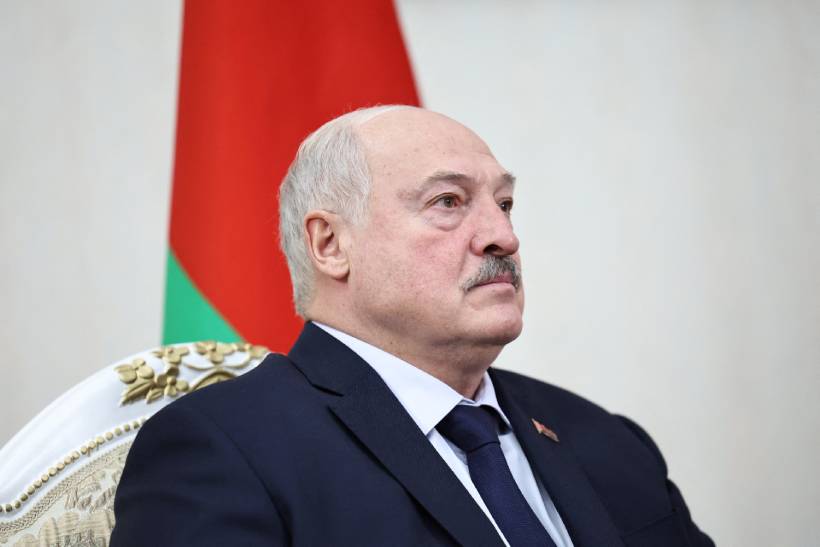
Diplomatic sparring between Ukraine and Belarus escalated sharply on 19 June, when Ukrainian President Volodymyr Zelensky demanded that Belarus dismantle communications infrastructure allegedly used by Russia to extend the range of its strike drones. Zelensky has offered a week for such removals to take place, reportedly saying, “I am giving a week for it to be withdrawn; otherwise, we will do it ourselves.” This marks a severe deterioration in relations since Belarus allowed Russian forces to cross Ukraine’s northern border using Belarusian territory in 2022. Following Russia’s withdrawal from Ukraine’s northern regions, Belarus has not enabled further assaults from its own territory but has actively aided Russian efforts, in part, by allowing drones to operate over Belarusian territory to strike Ukrainian targets with less warning. These increased tensions follow recent statements from Belarusian President Alexander Lukashenko aimed at easing tensions, stating, “If Volodymyr Oleksandrovych was offended, I apologize to him for those words… Perhaps I shouldn’t have spoken so sharply about it. But, on the other hand, he should understand, as we often say: you get what you give.” As Zelensky applies pressure to Russia’s key European ally, Lukashenko’s response may determine whether his country will begin to withdraw support or play a larger part in this war.
Belarus’ Assistance in Putin’s Invasion
Belarus has played a vital role in Russia’s aggression since 2022, remaining one of Moscow’s most important enablers throughout the war. On the opening days of the conflict, 45,000 Russian soldiers crossed into the capital region of Kyiv. Since Russia’s withdrawal from northern Ukraine, Belarus has remained a tacit supporter of the invasion, finding auxiliary ways to support its key strategic ally’s actions in Ukraine without directly becoming involved itself. While weapons transfers and diplomatic support aid Moscow’s war effort, Belarus’ most valuable contributions come from two primary sources. First, Belarus’ expansive border with Ukraine. The two countries share a border that stretches over 1,000 kilometers. The existence of a Russian ally on Ukraine’s northern border introduces the risk of another attack from this direction, requiring the dedication of over 100,000 soldiers to the defense of a region that may not become active for the duration of the war. Second, neutral airspace was made available to long-range strike drones. Without this advantageous lane of attack, Russian drones, such as the Geran-2, must spend hours loitering over Ukrainian territory, where they are exposed to interception attempts while trying to reach their targets. Additionally, and central to Zelensky’s latest ultimatum, Belarus has reportedly allowed Russia to build a network of relays along Ukraine’s border to expand the range of its strike drones, allowing greater operational reach and improved resistance to electronic warfare.
Belarusian Capabilities
Threats made without the capability to enforce them are functionally pointless, suggesting that Zelensky believes Ukraine occupies a militarily advantageous position relative to Belarus. This warrants analysis of Belarus’ military capabilities to determine whether they pose a threat to Ukraine. As of 2022, Belarus reportedly maintained an active-duty army of approximately 48,000 soldiers, with inactive trained reserves and additional supporting personnel amounting to another 300,000 people. The country fields 1,200 main battle tanks and 3,400 other armored fighting vehicles, although it is unclear how many remain in active service. Many of these vehicles are of questionable utility, with Belarus operating mainly vintage Soviet equipment and few vehicles having been modernized to contemporary standards. The Belarusian Air Force fares slightly better, fielding 48 front-line fighter aircraft, of which 16 are new Su-30SM/SM2 airframes. The war and its rapidly changing dynamics have forced Belarus to invest in the modernization of its armed forces. However, in contrast to many Western modernization programs, which frequently involve high-value equipment deals, Belarusian efforts have focused more heavily on improving infantry capabilities. Belarus currently funds several programs for procuring modern armored vehicles and has recently made new equipment purchases from Russia, including the nuclear-capable intermediate-range ballistic missile known as Oreshnik. More transformative, however, are efforts to reform the country’s mobilization system and employment of experienced Wagner mercenaries to train Belarusian soldiers in drone-centric combat techniques. This could be interpreted either as an inability to afford more comprehensive reforms or as a deliberate shift away from traditional reliance on armored formations in favor of unmanned systems. Regardless of the motivation, these programs demonstrate substantive efforts to improve the military readiness of a vital ally to Russia.
Ukrainian-Belarusian Diplomatic Efforts
Zelensky’s demand follows months of escalating tensions between Belarus and Ukraine, contrasting Belarus’ traditionally ancillary role in Ukrainian foreign relations. Due to Belarus’ refusal to participate directly in combat operations, Kyiv had little incentive to press diplomatic issues and antagonize its northern neighbor. Until the recent flare-up, it was in Ukraine’s interest to keep Belarus on the sidelines while accepting the reality of Belarusian aid and weapons transfers that benefited Russia. Relations between the two countries followed a repeated cycle of saber-rattling, military posturing, de-escalation, and periods of calm. Lukashenko has repeatedly offered his services as a mediator between Russia and Ukraine, although Kyiv has rejected these offers because of Belarus’ close ties to Moscow. Tellingly, despite Belarus aiding its aggressor, Ukraine has maintained diplomatic ties with Minsk throughout the conflict. Lukashenko further offered to open bilateral talks with Kyiv in late 2025 in an attempt to reduce rising tensions. These efforts failed to bear fruit as relations deteriorated to their lowest point since the beginning of the war in May 2026. Following the construction of additional drone launching facilities in Belarus and an increase in Russian drone strikes, Ukrainian diplomacy shifted towards the application of direct pressure. Kyiv’s announcement that it had identified more than 500 strategic Belarusian targets in the event of conflict culminated in Zelensky’s ultimatum to dismantle Russia’s drone relay network within a week. The ultimatum suggests that Ukraine is abandoning its previous strategy of managing tensions with Belarus in favor of direct pressure. It also followed the largest Ukrainian drone strike on Moscow to date. Viewed in that context, Zelensky appears to be leveraging Ukraine’s growing long-range strike capabilities while simultaneously attempting to disrupt a component of Russia’s own drone warfare infrastructure.