Russian

Claims Swirl Around Use Of New Russian Missiles To Strike Ukraine

Russia’s heavy missile barrage directed against Ukraine on the night of January 20 appears to have involved the use of several new or unusual weapons. Various sources, unofficial and official, point to the possible use of a new version of the Iskander short-range ballistic missile (SRBM), as well as the rarely employed Zircon hypersonic cruise missile. Wreckage recovered in Ukraine also confirms, for the first time, Russia’s use of repurposed missile targets for air defenses in a land-attack role.

According to a report from the Ukrainian Air Force Command, a total of 34 missiles of various types were used in the raid, along with 339 drones, approximately 250 of which were Shahed/Geran-series types. Ukraine claims that 14 of 18 ballistic missiles launched from Iskander and S-300/S-400 systems, 13 of 15 Kh-101 cruise missiles launched from strategic bombers, and 315 of 339 long-range drones were destroyed.

Note: The missile shown at the top of this story is the S-400 surface-to-air missile, a weapon which is also used in a land-attack capacity.

Based on Ukrainian accounts, Russia used an improved version of the Iskander to strike at least one target in the Vinnytsia region, deep inside Ukraine, on the night of January 20. While this is yet to be independently confirmed, it has also been reported by Russian media.

Reports began to emerge last year that Russia was poised to start mass-producing a new version of the Iskander SRBM, with greater range and improved accuracy. The original 9K720 Iskander-M’s solid-fuel 9M723 ballistic missiles have, according to official figures, a range of 500 kilometers (310 miles), although there is evidence that they can fly further than that.

The new version, the name of which is unknown, is assumed to have a range of at least 1,000 kilometers (620 miles), resulting in it being unofficially dubbed Iskander-1000. Ukrainian authorities also refer to the new weapons as Iskander-I.

Regardless, the reported range would put the new missile in the medium-range ballistic missile (MRBM) category. MRBMs are categorized as ballistic missiles with maximum ranges between 1,000 and 3,000 kilometers (620 and 1,860 miles), while SRBMs can reach out to between 300 and 1,000 kilometers (190 and 620 miles).

This is, reportedly, the only known photo of the so-called Iskander-1000, taken during tests:

According to available reports, the longer-range Iskander uses a more powerful and efficient engine to increase its range; a reduced-size warhead would be another way to help achieve this, providing more space for fuel. Accuracy is meanwhile enhanced by a new navigation and guidance system. This is assessed to include a new inertial guidance system (INS), supplemented by Glonass satellite navigation, and perhaps a radar seeker for the terminal phase. This is said to provide for an accuracy of within 16 feet. No information is available on the warhead.

Like the earlier Iskander, the Iskander-1000 is likely to be able to perform high-G maneuvers in the terminal phase and to dispense decoys, to better evade air defenses.

Examples of the decoys deployed by the 9M723 ballistic missile:

Also relevant here is the emergence of reports about the Iskander-1000 after the termination by the United States of the Intermediate-Range Nuclear Forces Treaty (INF). This had previously prohibited the Soviet Union (later Russia) and the United States from fielding any ground-launched conventional or nuclear-capable missile of any type that can hit targets between 500 and 5,500 kilometers (310 and 3,420 miles) away.

The demise of INF frees Russia from such restrictions, including on versions of the Iskander. As such, the Iskander-1000 would not only have significance in the conflict in Ukraine (being able to strike targets in the west of the country) but also against NATO in Europe. If launched from the Kaliningrad exclave, the Iskander-1000’s range would cover almost the entire Baltic Sea region, all of Denmark, and most of Germany.

Speaking to the Russian daily newspaper Moskovskij Komsomolets, “military consultant” Anton Trutze said that the Iskander-1000 (coupled with the Oreshnik intermediate-range ballistic missile) ensured “superiority over Soviet capabilities in the class of operational-tactical missiles, which were once limited by the INF Treaty.” The result for Russia, he claimed, was “a serious argument in operational and political terms.”

Another theory is that the ballistic missile reported as the Iskander-1000/Iskander-I was something else altogether.

Ukrainian authorities state that Russia launched a Zircon hypersonic missile from occupied Crimea. This weapon, designed primarily for anti-shipping, has previously been combat-tested in Ukraine. According to the U.S. Strategic Command, the Zircon is capable of traveling at speeds of up to Mach 8.

In February 2024, evidence emerged that Russia had, for the first time, used the Zircon in attacks on at least one target in Ukraine. Ukrainian scientists showed a video of the Zircon wreckage — “fragments of the engine and steering mechanisms [with] specific markings,” seen below:

via X

According to Ukrainian media reports, the Zircon was launched toward Vinnytsia. With this in mind, it’s possible that the Zircon was misreported as an Iskander-1000/Iskander-I, although these are very different weapons. By all accounts, the Iskander-1000/Iskander-I is a ballistic missile, while the Zircon, while still mysterious, is known to be a hypersonic cruise missile, likely with a ramjet powerplant. Such a mix-up would be puzzling, but it remains possible.

More concrete evidence is available concerning the use of another Russian missile on the night of January 20.

This is the RM-48U, which was developed as a target missile for the training of S-300 and S-400 air defense system crews. The RM-48U is fired from the same launchers and is based on reworked 5V55 or 48N6 missiles, as used by these systems, after they reach the end of their service lives.

Debris showing parts clearly marked as RM-48U was found after the raid, as seen in the composite below.

via X

This is the first time since the start of the full-scale war that the RM-48U has been fired against Ukraine, according to the country’s Main Intelligence Directorate, which assesses that Russia currently has approximately 400 of these missiles in its inventory.

What’s unclear at this point is whether the target missile was fitted with a warhead, turning it into a true land-attack weapon, or if it was fired together with ballistic missiles as a decoy, helping to overwhelm Ukrainian air defenses.

According to Alexander Kovalenko, from Ukraine’s Information Resistance Group, the RM-48U missiles can have a range of between 30 and 120 kilometers (19 to 75 miles), depending on how they are modified.

Kovalenko assumes that the RM-48Us are retrofitted with warheads to make up for the lack of regular ballistic missiles, specifically Iskanders. Kovalenko said that Russia is likely capable of producing only around two 9M723 missiles (for the Iskander system) per day. Back in September 2022, Ukrainian intelligence sources claimed that only 13 percent of Russia’s pre-war stocks of Iskander ballistic missiles were left, forcing it to find other solutions.

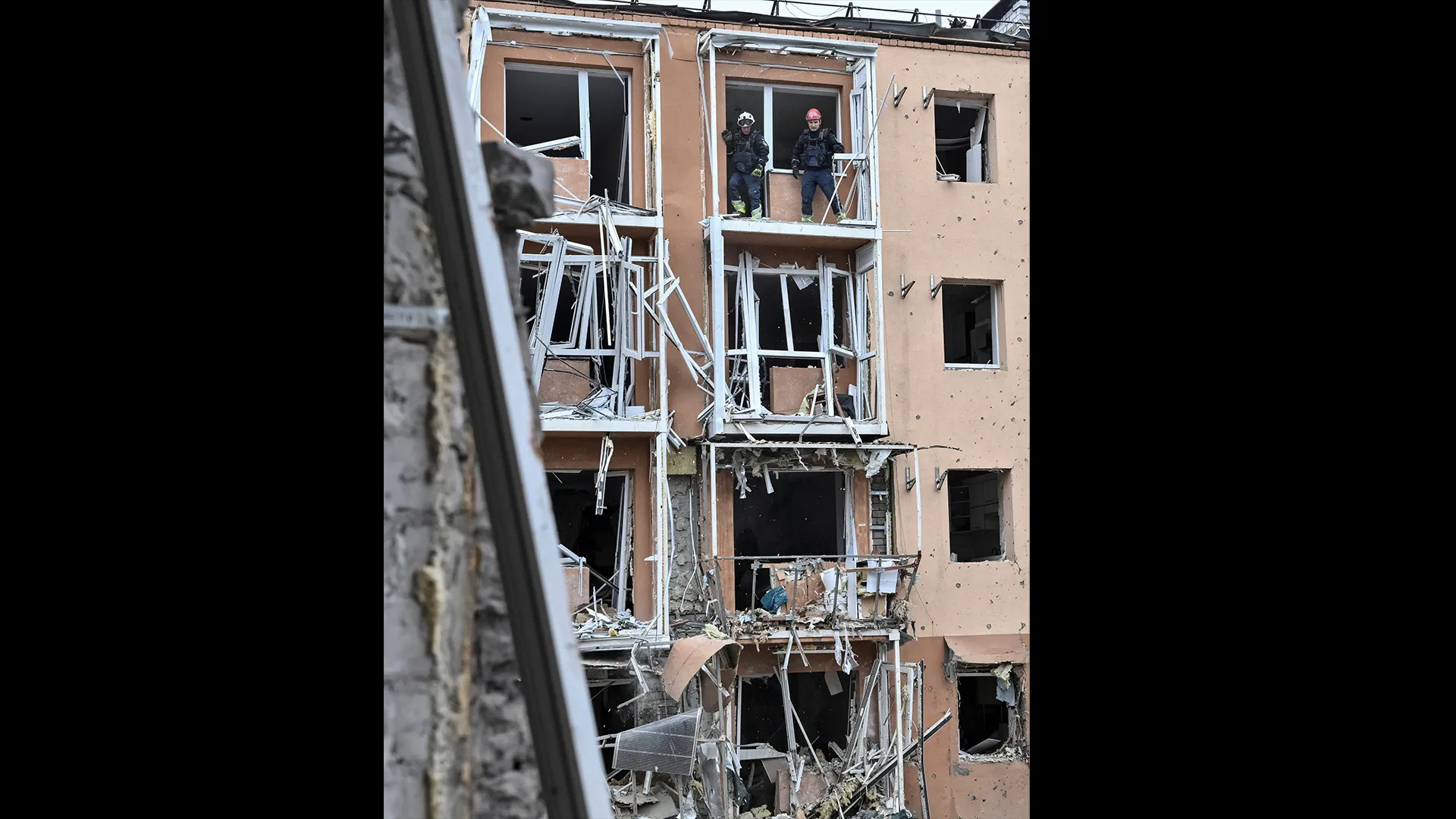
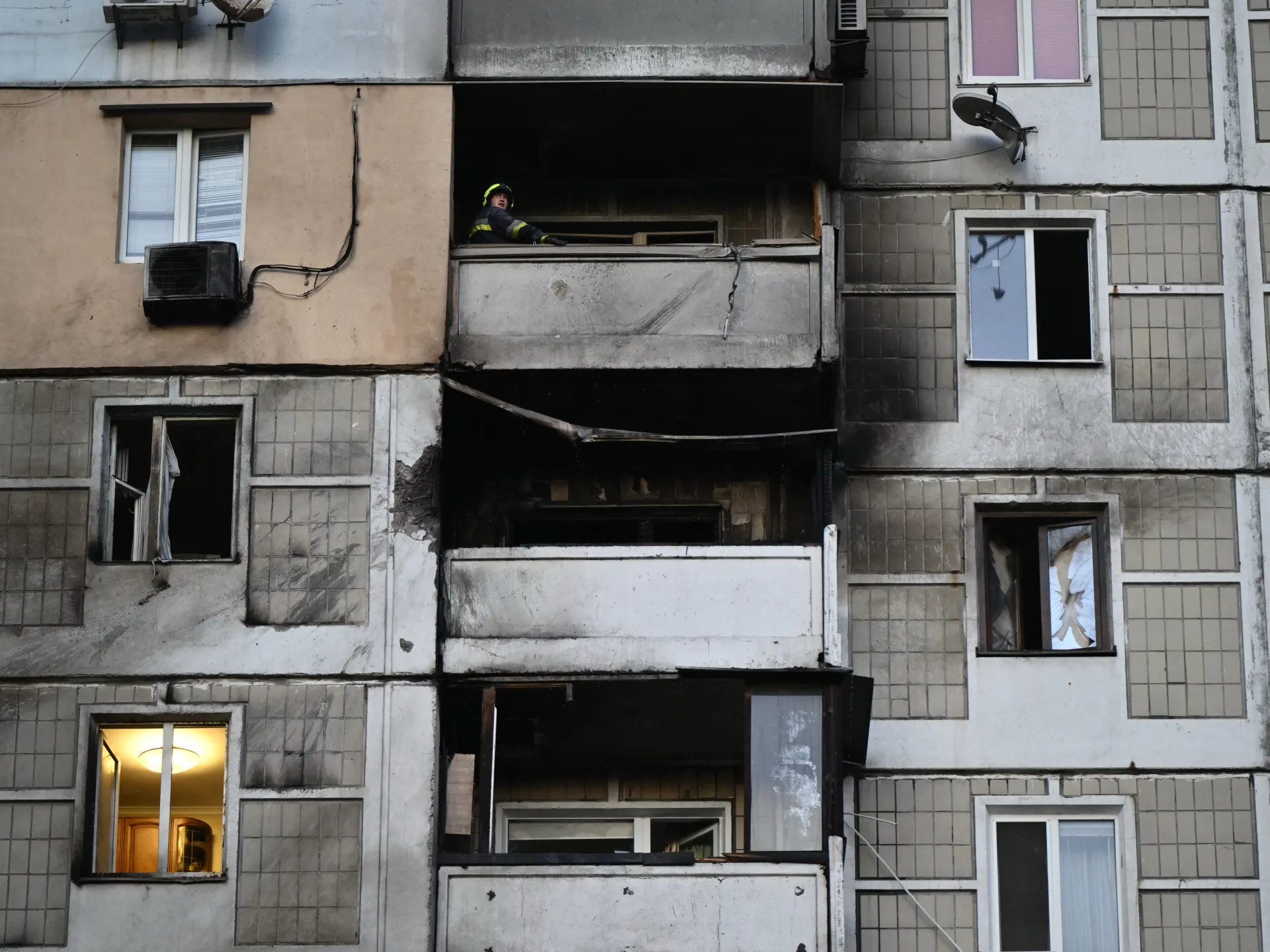
A block of flats is being damaged by the overnight Russian missile attack in the Novobavarskyi district of Kharkiv, northeastern Ukraine, on May 31, 2024. Five people are being killed and 25 injured after Russian forces launch five S-300 and S-400 anti-aircraft guided missiles from Russia's Belgorod region at Kharkiv on the night of May 31. NO USE RUSSIA. NO USE BELARUS. (Photo by Ukrinform/NurPhoto via Getty Images)
A block of flats damaged by a Russian missile attack in the Novobavarskyi district of Kharkiv, northeastern Ukraine, on May 31, 2024. Five people were killed, and 25 were injured after Russian forces launched five S-300 and S-400 anti-aircraft guided missiles from the Belgorod region at Kharkiv. Photo by Ukrinform/NurPhoto via Getty Images NurPhoto

Based on the estimated range, however, even the higher-end figure, the RM-48U is hardly an adequate substitute for an Iskander. Also, considering their original role, the accuracy of the RM-48U is likely poor, making them only suitable for very short-range strikes against area targets — or as decoys.

Russia already makes use of missiles as decoys, including time-expired air-launched cruise missiles, with their previous nuclear warheads removed. You can read more about that trend here.

At the same time, there is also a long-established precedent for using S-300 and S-400 air defense systems to fire their standard surface-to-air missile effectors against ground targets in Ukraine. The S-300 does possess a little-known surface-to-surface capability, although it is far from accurate in this role.

Finally, the same missile barrage provided evidence of very recently manufactured Kh-101 cruise missiles, which are launched from Tu-95MS Bear-H and Tu-160 Blackjack bombers. At least one of the Kh-101s reportedly downed by Ukrainian air defenses indicates that it was manufactured in the first quarter of 2026. The use of such a recent missile further underscores how Russia has depleted its stocks of older weapons, a situation that we have discussed in the past and which is exacerbated by sanctions that have disrupted its ability to produce precision weapons at scale. Considering just how new the Kh-101 in question is, it shows that Russia is meanwhile using them in a ‘just in time’ fashion, as soon as they roll off the production line.

Цієї ночі застосовані Х-101 2026 року випуску. Прямо з заводу. Тому будь який екстра вплив на доступність компонентів дає ефект.

This night, Kh-101 missiles manufactured in 2026 were used — straight from the factory. That’s why any additional pressure on the availability of… pic.twitter.com/yIRqTayCk9

— Vladyslav Vlasiuk 💙💛🇪🇺 (@vladvlas) January 20, 2026

Taken together, these missile developments indicate that Russia is continuing to vary the mix of weapons (ballistic missiles, cruise missiles, drones), and also decoys, in its large-scale attacks on Ukraine. At the same time, the use of both brand-new missiles and repurposed target missiles points to general shortages of purpose-designed missiles and decoys.

For Ukraine, however, whether new or old, the sheer numbers of missiles and drones that Russia continues to bombard it with ensure that its hard air defenses remain very much under pressure. This is a particular concern when the supply of Western-supplied air defense systems remains strictly limited, and with the biting winter months making life especially difficult for its civilian population.

Contact the author: thomas@thewarzone.com
Thomas is a defense writer and editor with over 20 years of experience covering military aerospace topics and conflicts. He’s written a number of books, edited many more, and has contributed to many of the world’s leading aviation publications. Before joining The War Zone in 2020, he was the editor of AirForces Monthly.


Source link

Russian ‘shadow fleet’ tanker diverted to French port by naval forces | Shipping News

French prosecutors say Russia-linked tanker ‘Grinch’ under investigation after interception in western Mediterranean.

The French navy has diverted an ‍oil tanker, suspected of being part of Russia’s sanctions-busting “shadow fleet”, ‍towards the port of Marseille-Fos for further investigation, according to reports.

The office of the ​prosecutor in the southern French city of Marseille, which handles matters related to ‌maritime law and is investigating the case, said on Friday that the ship had been diverted, but did not specify where to.

Recommended Stories

list of 4 itemsend of list

A source close to the case told the AFP news agency that the tanker is expected to arrive on Saturday morning at the port of Marseille-Fos in southern France.

The ‘Grinch ‘ tanker was intercepted by French naval forces on Thursday while on the high seas in the western Mediterranean, between the southern coast of Spain and the northern coast of Morocco, France’s maritime police said in a statement.

It added that navies of other countries, including Britain, supported the operation.

Video footage released by the French military of the operation showed a unit of soldiers descending from a helicopter onto the deck of the Russia-linked ship. The boarding of the vessel involved a navy boat and two navy helicopters, according to reports.

The Grinch, which was sailing under a Comoros flag, left the Russian Arctic port of Murmansk in ​early January and is suspected of operating under a ‍false flag and of belonging to the secretive fleet of ships that enables Russia to export oil around the world despite international sanctions due to Moscow’s war on Ukraine.

The AFP news agency reported that a ship called “Grinch” is under United Kingdom sanctions, while another named “Carl” – with the same registration number – is sanctioned by the United States and European Union.

Prosecutors in Marseille said they were investigating the ship’s alleged failure to confirm its nationality.

The EU has ‌imposed 19 packages of sanctions against Russia, but Moscow has adapted to most measures ‌and continues to sell millions of barrels ⁠of oil to countries such as India and China, typically at discounted prices.

Much of the oil, which is key to financing its war in Ukraine, is carried by what is known as ‌a shadow fleet of vessels operating outside of Western maritime industry regulations.

In October, France detained another Russian-linked sanctioned tanker, the Boracay, off its ‍west coast and released it after a few days.

The Boracay’s Chinese captain is to stand trial in France in February over the crew’s alleged refusal to cooperate with investigators, according to French judicial authorities.

This aerial picture taken on October 1, 2025 off the coast of the western France port of Saint-Nazaire shows French soldiers onboard the tanker from Russia's so-called "shadow fleet" suspected of being involved in drone flights over Denmark which sailed off the Danish coast between September 22 and 25. Named the Pushpa or Boracay, the Benin-flagged vessel, which is blacklisted by the European Union for being part of Russia's sanction-busting "shadow fleet", has been immobilised for several days off the French coast. (Photo by Damien MEYER / AFP)
This aerial picture taken on October 1, 2025, off the coast of western France shows French soldiers on board a tanker from Russia’s so-called ‘shadow fleet’. Named the Pushpa or Boracay, the Benin-flagged vessel is blacklisted by the European Union [Damien Meyer/AFP]

Source link

Shadow Fleet Tanker Seizure Operations Expand In The Face Of Russian Warnings

The French Navy, aided by British intelligence, boarded the Comoros-flagged tanker Grinch today. The vessel had originated its voyage from Russia. The move comes amid a growing U.S. and allied effort to use military force for interdictions of the so-called ‘shadow fleet,’ a network of ships with links to Russia that transport its oil, in breach of sanctions and price caps. In response to that effort, Russia sent a warship to escort one of these vessels, following its warning against boardings.

“We will not tolerate any violation,” French President Emmanuel Macron said on X. “This morning, the French Navy boarded an oil tanker coming from Russia, subject to international sanctions and suspected of flying a false flag. The operation was conducted on the high seas in the Mediterranean, with the support of several of our allies. It was carried out in strict compliance with the United Nations Convention on the Law of the Sea.”

We will not tolerate any violation.

This morning, the French Navy boarded an oil tanker coming from Russia, subject to international sanctions and suspected of flying a false flag.

The operation was conducted on the high seas in the Mediterranean,… pic.twitter.com/zhXVdzPx1r

— Emmanuel Macron (@EmmanuelMacron) January 22, 2026

Macron said the ship has been “diverted” and that a judicial investigation has been opened.

“We are determined to uphold international law and to ensure the effective enforcement of sanctions,” the French leader explained. “The activities of the ‘shadow fleet’ contribute to financing the war of aggression against Ukraine.”

The French military posted additional photos of the operation on X. One shows a helicopter hovering near the Grinch.

📍Méditerranée | Intervention en haute mer de la @MarineNationale pour un contrôle de pavillon sur un pétrolier.
 
⚓ Déroutement sous escorte de la Marine nationale, sur demande du procureur de la République, afin de poursuivre les vérifications.
 
🛡️ Opération menée en… https://t.co/HI60rjDd6i pic.twitter.com/pwTd4cSZjE

— Armée française – Opérations militaires (@EtatMajorFR) January 22, 2026

The French mission was conducted in conjunction with the U.K, which gathered and shared intelligence that enabled the ship to be intercepted, according to French military officials who spoke to The Associated Press. It was not the first such mission and won’t be the last, a French official told us.

“Last September, French naval forces boarded another oil tanker off the French Atlantic coast that Macron also linked to the shadow fleet,” the Independent noted. “That tanker traveled from the Russian oil terminal in Primorsk near Saint Petersburg. Known as ‘Pushpa‘ or ‘Boracay‘ — its name was changed several times — the ship was sailing under the flag of Benin.”

However, the Grinch boarding came as European nations are vowing to increase efforts to stop shadow fleet vessels, and amid growing tensions with Russia over interdiction efforts. On Monday, the Russian Project 20380 corvette Boikiy entered the English Channel, accompanying an oil tanker on its way back to the Baltic Sea, according to the Times. This military escort was the first “since Britain threatened to seize Moscow’s shadow fleet ships,” the Times added. 

Project 20380 corvette Boikiy (Russian Defense Ministry)

Last week, U.K. Foreign Secretary Yvette Cooper told Politico that London was willing to consider joint enforcement efforts. 

“We stand ready to work with allies on stronger enforcement around the shadow fleet,” she said.

While declining to offer specifics, Cooper did not rule out the prospect of British forces boarding vessels.

“It means looking at whatever is appropriate, depending on the circumstances that we face,” she told the publication.

She also “did not rule out using oil from seized vessels to fund the Ukrainian war effort — but cautioned that the prospect was of a different order to using frozen Russian assets to fund Ukraine,” according to Politico. “That idea hit a wall in discussions between EU countries in December.”

Cooper’s statements sparked a warning from Russia that these ships “will be escorted by security ships,” Russian Ambassador to the U.K. Andrey Kelin told the official Russian news outlet Izvestia earlier this week. “Areas closed to navigation may arise and attempts may be made to block critical straits and channels.”

“This is a deliberate escalation of instability, the consequences of which for international law and order and global trade will be extremely serious,” Kelin added. “What politicians in London are talking about is essentially a return to the era of the pirate Edward Teach, known as Blackbeard. What they forget is that Britain has long ceased to be the ‘ruler of the seas,’ and its actions will not go unpunished.”

While still mulling over its future plans for ship interdictions, the U.K. assisted a separate U.S. effort to seize sanctioned ships in the wake of a blockade of Venezuela ordered by President Donald Trump. On Jan. 7, British forces helped interdict the runaway tanker Marinera, which was previously known as the Bella 1, during a ship boarding in the North Sea.

“U.K. armed forces provided pre-planned operational support, including basing, to U.S. military assets interdicting the Bella 1 between the U.K. and Iceland following a U.S. request for assistance,” the MoD said in a statement at the time. “RFA Tideforce is providing support for U.S. forces pursuing and interdicting the Bella 1, while the RAF provided surveillance support from the air.”

While there were reports that Russia would send warships to escort the Marinera, there was no effort to stop the interdiction.

You can see that effort in the following video.

On Tuesday, U.S. Southern Command announced the seventh such seizure.

“U.S. military forces, in support of the Department of Homeland Security, apprehended Motor Vessel Sagitta without incident,” SOUTHCOM said on X. “The apprehension of another tanker operating in defiance of President Trump’s established quarantine of sanctioned vessels in the Caribbean.”

Because much of the oil on these sanctioned ships goes to help fund Russia’s war in Ukraine, Ukrainian President Volodymyr Zelensky on Thursday chided Europeans for not doing more to prevent the shipments.

“Why can [U.S. President Donald Trump] stop tankers of the ‘shadow fleet’ and seize their oil, while Europe can’t,” Zelensky complained during his speech at the World Economic Forum in Davos, Switzerland. “Russian oil is transported right along the European coast. This oil funds the war against Ukraine. This oil helps destabilize Europe. Therefore, Russian oil must be stopped and confiscated, and sold to benefit Europe. Why not? If Putin has no money, Europe has no war. If Europe has money, then it can protect its people as well. Right now, these tankers are earning money for Putin, and that means Russia continues to push its sick agenda.”

After the Grinch was boarded, Zelensky thanked France via a post on X.

Thank you, France! Thank you, @EmmanuelMacron! This is exactly the kind of resolve needed to ensure that Russian oil no longer finances Russia’s war. Russian tankers operating near European shores must be stopped. Sanctions against the entire infrastructure of the shadow fleet… https://t.co/6t0DbJ9xS1

— Volodymyr Zelenskyy / Володимир Зеленський (@ZelenskyyUa) January 22, 2026

“This is exactly the kind of resolve needed to ensure that Russian oil no longer finances Russia’s war,” he stated. “Russian tankers operating near European shores must be stopped.”

Contact the author: howard@thewarzone.com

Howard is a Senior Staff Writer for The War Zone, and a former Senior Managing Editor for Military Times. Prior to this, he covered military affairs for the Tampa Bay Times as a Senior Writer. Howard’s work has appeared in various publications including Yahoo News, RealClearDefense, and Air Force Times.


Source link

Ukraine scrambling for energy as Russian strikes hit infrastructure | Russia-Ukraine war News

Authorities order emergency imports of electricity as people struggle in subzero temperatures.

Ukraine’s energy minister has sounded an alarm over the energy situation as Russian strikes ​on the country’s infrastructure leave people shivering in subzero temperatures without heating or power.

Denys Shmyhal, who took office ‍earlier this week, told parliament on Friday that there was “not a single power plant left in Ukraine that the enemy has not attacked”.

Recommended Stories

list of 3 itemsend of list

Russia, since it launched its full-scale invasion of Ukraine in February 2022, has each winter concentrated fire on the country’s energy infrastructure in a bid to weaken Kyiv’s determination to defend itself and resist Moscow’s far-reaching demands for territory and limits on its military capabilities.

Shmyhal said the most challenging energy situation is in the capital, as well as the regions of Dnipropetrovsk, Kharkiv and ‍Odesa. Towns near the front line in eastern Ukraine are also filled with thousands of homes that have been without electricity and heating for days in subzero conditions.

“In some cities and regions, winter preparations have failed. Over the past two days in office, I’ve seen ​that many things are clearly stalling,” ‌he said.

The minister has ordered emergency imports of electricity, while declaring that Ukraine needs to install up to 2.7 GW of generation ‍capacity by the end of the year if it is to meet its consumption needs.

“State companies, primarily Ukrainian Railways and Naftogaz, must urgently ensure the procurement of imported electric energy during the 2025-26 heating season, amounting to at least 50 percent of total consumption,” Shmyhal said.

His ministry estimates that Ukraine has fuel reserves ‍for just 20 days. It did not give data on how much electricity Ukraine currently generates or imports, information that authorities have withheld due to wartime sensitivities.

Prime Minister Yulia Svyrydenko has introduced measures to try to help with the emergency, including reducing overnight curfews to allow people to access central heating and power hubs and extending school holidays in Kyiv until February 1.

Foreign Minister Andrii Sybiha said ‌the foreign and energy ministries had organised an international appeal for funds to help tackle Ukraine’s energy problems, similar to periodic meetings on arms supplies. ‌Norway, he said, had made an initial grant of $200m.

Russia has attacked the power grid and other energy facilities while pressing a battlefield offensive that has left Kyiv on the back foot as it faces US pressure to secure peace.

Kyiv Mayor Vitali Klitschko said on Thursday that ‌about 300 apartment buildings in the capital remained without heat after a January 9 attack knocked out heating to half the city’s high-rises.

Kharkiv’s Mayor Ihor Terekhov said Russian ‍forces destroyed a large energy facility in Ukraine’s second-biggest city on Thursday.

He did not specify what sort of facility had been hit, but said emergency crews were working around ​the clock. President Volodymyr Zelenskyy said the attack had left 400,000 people without electricity.

Kharkiv, 25 kilometres (15 miles) from the Russian border, has ‌been regularly targeted by drones, missiles and glide bombs throughout the war.

Source link

Russian attacks cause energy emergency in freezing Ukraine, says Zelenskyy | Russia-Ukraine war News

Ukraine struggles to restore heat, electricity as temperatures plummet to -19 degrees Celsius.

Ukrainian President Volodymyr Zelenskyy has said that a state of emergency is being declared for Ukraine’s energy sector, as repeated Russian attacks have left thousands of homes without heat and electricity amid freezing winter conditions.

Zelenskyy’s announcement came as temperatures dropped to -19 degrees Celsius (-2.2 Fahrenheit) in Ukraine’s capital Kyiv, where hundreds of apartment buildings remain without heat following a massive Russian attack last week.

Recommended Stories

list of 4 itemsend of list

“The consequences of Russian strikes and deteriorating weather conditions are severe,” said Zelenskyy in a post on X late on Wednesday, adding that “repair crews, energy companies, municipal services, and the State Emergency Service of Ukraine continue to work around the clock to restore electricity and heating”.

Zelenskyy also said he had asked his government to review curfew restrictions during “this extremely cold weather” and that the country was working to increase its electricity imports to try to alleviate the dire situation.

In Ukraine’s capital Kyiv, 471 apartment buildings remained without heat on Wednesday, almost a week after a Russian attack left thousands of apartments without heat, electricity and water, according to city officials.

Electricians carry out emergency repairs on a power pole after a transformer burned out due to a voltage surge caused by regular Russian air attacks on the country's energy infrastructure in Kyiv region, Ukraine, Wednesday, Jan. 14, 2026. (AP Photo/Dan Bashakov)
Electricians carry out emergency repairs on a power pole after a transformer burned out due to a voltage surge caused by regular Russian attacks on the country’s energy infrastructure in the Kyiv region, Ukraine, on Wednesday [Dan Bashakov/AP Photo]

The attack, which began last Thursday night, prompted Kyiv’s Mayor Vitali Klitschko to urge people to leave the city, saying that “half of apartment buildings in Kyiv – nearly 6,000 – are currently without heating because the capital’s critical infrastructure was damaged by the enemy’s massive attack”.

Energy supply has been a frequent target during Russia’s war on Ukraine, with Moscow and Kyiv launching attacks on oil refineries, gas pipelines, pumping stations and nuclear and thermal power stations, which are powered by coal, oil and gas.

Russian-appointed local official Yevhen Balitsky said on Telegram on Wednesday that a Ukrainian attack had left more than 3,000 people without electricity in Russian-occupied areas of Zaporizhia.

TOPSHOT - This photograph shows a big screen on a building displaying a temperature of -14 degrees Celsius in Kyiv on January 14, 2026, amid the Russian invasion of Ukraine.
A screen displays a temperature of -14C in Kyiv on Wednesday [Sergei Gapon/AFP]

Black Sea attacks

The frequent attacks on energy supply during Russia’s war with Ukraine have also expanded beyond both countries’ borders, including to oil tankers in the Black Sea.

In recent months, a number of oil tankers have come under attack from drones in the Black Sea, prompting concerns from neighbouring countries, including Turkiye and Kazakhstan.

On Tuesday, drones struck two oil tankers in the Black Sea, chartered by United States oil giant Chevron, according to the companies involved. The ships were sailing towards a terminal on the Russian coast, with the Russian Ministry of Foreign Affairs on Wednesday blaming the attacks on Ukraine, which had yet to publicly comment.

Kazakhstan’s Foreign Ministry said in a statement on Wednesday that three oil tankers were hit in the attack and that they were heading to a Caspian Pipeline Consortium (CPC) terminal, where an oil pipeline from the central Asian country ends.

The ministry urged the US and Europe to help secure the transport of oil.

“The increasing frequency of such incidents highlights the growing risks to the functioning of international energy infrastructure,” it said.

Source link

‘Deliberate torment’: Ukrainians left without heating after Russian attacks | Russia-Ukraine war News

Russia hits Ukraine’s energy infrastructure hard, slams plans for post-ceasefire multinational force in the country.

Ukrainian officials are racing to restore power in the southeast after major Russian strikes on critical infrastructure plunged hundreds of thousands into darkness in the depths of winter.

Ukrainian President Volodymyr Zelenskyy said on Thursday that the overnight strikes had aimed to “break” his country, cutting off “electricity, heating and water supplies” in Zaporizhzhia and Dnipropetrovsk, with repair crews still battling to restore services in the latter region.

Recommended Stories

list of 3 itemsend of list

He urged allies to respond to Russia’s “deliberate torment” of Ukraine.

“There is absolutely no military rationale in such strikes on the energy sector and infrastructure that leave people without electricity and heating in wintertime,” he said.

As in previous winters, Russia has intensified its strikes on Ukraine’s energy sites in what Kyiv and its allies call a deliberate strategy to wear down the civilian population, as the fourth anniversary of the Russian invasion looms.

More than 1 million people were affected in the industrialised region of Dnipropetrovsk, according to Ukrainian Deputy Prime Minister Oleksii Kuleba.

Military head Vladyslav Gaivanenko said Dnipropetrovsk’s critical energy infrastructure had been left damaged.

The Ministry of Energy said nearly 800,000 people in the region remained without electricity early on Thursday. Eight mines across the region had faced blackouts, but workers were evacuated.

Mykola Lukashuk, head of the Dnipropetrovsk regional council, said water supplies to the strategic city of Pavlohrad and nearby areas could take up to a day to repair.

Ivan Fedorov, governor of Zaporizhzhia, where power was restored Thursday, said it was the first time in “recent years” that his region had faced a total blackout, but that officials had been quick to respond.

“A difficult night for the region. But ‘light’ always wins,” he wrote on Telegram on Thursday.

Reporting from Kyiv, Al Jazeera’s Audrey MacAlpine said: “It’s not only power, but also the emergency air alarm system that has gone offline. This is an alert system that warns civilians of incoming bomb threats or drone threats.”

MacAlpine said mobile networks in the Zaporizhzhia region were also down. “The regional governor is warning people to limit their mobile phone use as a result of this,” she said.

The Ukrainian air force said on Thursday that Russia attacked with 97 drones, with 70 downed by its air defence system and 27 striking various locations.

‘Axis of war’

Kyiv has responded to the long-running targeting of its energy grid with strikes on Russian oil depots and refineries, seeking to cut off Moscow’s vital energy exports and trigger fuel shortages.

On Thursday, Russia’s Ministry of Foreign Affairs issued a statement that Moscow would consider the presence of any foreign troops in Ukraine “legitimate military targets for the Russian Armed Forces”.

The statement came after Ukraine’s allies said they had agreed on key security guarantees for Kyiv at a summit in Paris this week, with the United Kingdom and France pledging to deploy forces to Ukrainian territory if a ceasefire is reached with Russia.

However, the prospect of a ceasefire remains distant, with Ukraine saying this week that the key issues of territorial control of the eastern Donbas region and the fate of the Russian-occupied Zaporizhzhia nuclear power plant were still unresolved.

Russia said Thursday it had taken the village of Bratske in the Dnipropetrovsk region, where its troops have been advancing for several months, despite Moscow not officially claiming the region.

“The fresh militaristic declarations of the so-called coalition of the willing and the Kyiv regime constitute a veritable ‘axis of war’,” said the Foreign Ministry, labelling the plans for a multinational force in Ukraine as “increasingly dangerous and destructive”.

Source link

Russian Shahed-136 Kamikaze Drones Now Carrying MANPADS Missiles

Russia is continuing to adapt and evolve its copies of the Shahed-136 long-range one-way attack drone, known locally as the Geran, now arming it with a man-portable air defense system (MANPADS). These are more often referred to as shoulder-fired heat-seeking missiles. The development follows a previous version of the drone carrying a single R-60 air-to-air missile, which you can read more about here. It also emerges as Russia makes additional alterations to the drone, including improved line-of-sight control capabilities and self-protection systems.

Russian forces are mounting Igla MANPADS on Shahed drones to target Ukrainian helicopters that intercept them. The drones carry a camera and radio modem, and the missile is launched remotely by an operator in Russian territory. pic.twitter.com/T5TKPHyhVu

— WarTranslated (@wartranslated) January 4, 2026

An example of a MANPADS-equipped Shahed/Geran is seen in recent imagery, including a video, that shows the drone lying in the snow, after it came down intact in Ukraine, reportedly in the Chernihiv region in the north of the country. According to Ukrainian accounts, as well as the rail-mounted missile on the top, the drone is equipped with a camera and a radio-frequency modem.

An overhead view of the Shahed/Geran lying in the snow with the (unused) Igla MANPADS mounted on top. via X

The missile itself has been widely reportedly as an Igla-S, among the latest models of this widespread MANPADS. Known in Russia as the 9K388, and to NATO as the SA-24 Grinch, the weapon has a maximum range of around 3.7 miles, and improvements over earlier Igla missiles include a more sensitive infrared seeker, a heavier warhead, and an improved fuze.

A member of the Bolivarian National Militia holds a Russian-made 9K338 "Igla-S" (SA-18) man-portable air-defense (MANPAD) surface-to-air missile launcher as he takes part in a rally against US military activity in the Caribbean, in Caracas on October 30, 2025. A US guided-missile destroyer that docked for four days in Trinidad and Tobago, within firing range of mainland Venezuela -- which called its presence a "provocation" -- departed as scheduled on Thursday, AFP witnessed. (Photo by Federico PARRA / AFP) (Photo by FEDERICO PARRA/AFP via Getty Images)
A member of the Venezuelan military holds a 9K338 Igla-S MANPADS launcher in Caracas on October 30, 2025. Photo by Federico PARRA / AFP FEDERICO PARRA

On the other hand, the inscription on the top of the launch tube appears to read 9K333, which would indicate it is the more modern Verba (SA-29 Gizmo), which was developed as a replacement for the Igla. Its primary advantage is its advanced multispectral seeker, operating in the ultraviolet, near infrared, and mid-infrared bands, for improved discrimination between targets and decoys.

Verba MANPADS


Adapting the MANPADS to the Shahed/Geran appears more straightforward than the R-60, with no need for the launch rail adapter; instead, the MANPADS is simply attached to the drone within its standard launch tube. The complete Igla, for example, is also much lighter: around 40 pounds in its tube, compared to close to 100 pounds for the R-60, minus the launch rail.

Russia started employing Shahed/Geran-type long-range UAVs equipped with air-to-air missiles for combating Ukrainian aviation assets, Ukrainian military radio technology expert Serhii Flash reports.

The remains of a Shahed/Geran-type drone with an R-60 short-range air-to-air… pic.twitter.com/NHBDQQqCK9

— Status-6 (War & Military News) (@Archer83Able) December 1, 2025

As for the drone, the original Shahed-136 is Iranian in origin. Multiple variants and derivatives of the Shahed-136, including a jet-powered type, are now produced in large numbers in Russian factories, where they are known locally by the name Geran, the Russian word for geranium. Steady improvements have been made to these drones, including a degree of dynamic targeting capability, as you can read about here.

As we have discussed in the past, adding a heat-seeking anti-aircraft missile to the Shahed/Geran in theory provides the drone with a means to engage Ukrainian fixed-wing aircraft and helicopters. At the very least, giving the drone the ability to hit back at these threats offers a deterrent capability. Overall, the effectiveness of this combination is questionable. Particular challenges include the need for a high degree of situational awareness, perhaps requiring cameras around the airframe, and the need to maneuver the drone to get it into a boresight location to achieve a lock-on. However, Russia clearly considers that the adaptation is worth exploring, even just as a deterrent strategy to keep drone hunting aircraft at bay.

A profile view of the MANPADS-armed Shahed/Geran lying in the snow. via X

For some time now, Russia has been working on a man-in-the-loop (MITL) control capability for the Shahed/Geran, a feature that was confirmed when they started to appear with cameras and cellular modems, something TWZ explored in detail at the time. These developments allow the drone to be connected to an operator. Standard Shaheds fly autonomous routes to pre-planned targets on autopilot with no man-in-the-loop control. They are ‘fire and forget’ weapons.

Meanwhile, the range at which MITL can be achieved has been steadily increased. At first, the drones were adapted to exploit patchy cellular networks to provide additional connectivity when available. More recently, Shaheds have been flying with antennas allowing for direct line-of-sight control close to the front lines. This allows them to hit targets dynamically like an FPV drone, while packing a much heavier punch and being able to loiter for long periods of time. You can read all about this development here. Now, the datalink range is being extended using airborne signal relays, possibly creating a mesh network with multiple line-of-sight links. We are also now seeing Russian drones will Starlink terminals, which could provide a vastly superior beyond-line-of-sight capability and could prove to be a big problem for Ukraine if Russia can produce such a configuration in large volumes. These developments are now blurring the classification of the Shahed/Geran from its original long-range one-way attack drone to a loitering munition, with an onboard imaging capability.

Potentially, a Shahed/Geran armed with a MANPADS or an R-60 could use beyond-line-of-sight capabilities to operate the missile. But bearing in mind we know Russia is using the drones closer to the front lines, this would need only a line-of-sight link with operators near the front, or at least by receivers/transmitters placed there. Drone controllers behind the lines could also ‘pick them up’ once in the area, but such an operation is far more complex and fraught with additional risks.

Nevertheless, target acquisition and engagement of a missile-armed drone is still far from straightforward. It’s likely that the modern seeker used by the Igla-S or Verba makes it easier to engage aerial targets, compared to the R-60, with a reduced need to ‘point’ the drone directly at the target. Still, the operator would have to trigger the launch of the missile after receiving the signal indicating a lock-on has been achieved.

A close-up of the front end of the MANPADS, with an actuator fitted to open the protective cap that covers the front of the tube before the missile is fired. via X

At the same time, the Shahed/Geran remains a slow and not particularly agile launch platform, and certainly not one that was designed with air-to-air combat in mind. Adding a top-mounted missile likely also degrades its maneuverability and affects its stability, but less than would be the case with an R-60.

When it comes to finding aerial targets, the most likely scenario involves operating entirely reactively to what is seen visually on cameras around the drone or otherwise searching for targets of opportunity. Another option would involve the drone operator receiving target information from offboard assets, where applicable, but this seems less likely.

Bearing in mind the performance of the Shahed/Geran and the range of the MANPADS, the most likely targets would be the Mi-8/Mi-17 Hip series armed transport helicopters and the Mi-24 Hind series gunships that are routinely tasked with counter-drone missions. We have already seen that lower and slower-flying helicopters face a notable risk from relatively small kamikaze drones that simply fly into them. Ukrainian F-16s, MiG-29s, Su-27s and Mirage 2000s have also been tasked heavily as ‘Shahed hunters,’ but engaging fighters with these weapons would be even tougher. Still their very existence would add a credible threat to fighters approaching them.

Footage showing the door gunner on a Mil Mi-8 Multirole Helicopter with the Ukrainian Air Force using his M134 Minigun to shoot down a Russian Shahed-136 Attack Drone. pic.twitter.com/UWBd8QUXEf

— OSINTdefender (@sentdefender) November 12, 2025

While it remains to be seen just how effective the combination of Shahed/Geran with a MANPADS (or R-60) is, these developments reflect a previous precedent for arming drones with air-to-air missiles. The deterrent effect of this can be seen in at least one instance from 2002, when a U.S. Air Force MQ-1 Predator drone fired a Stinger heat-seeking anti-air missile at an Iraqi MiG-25 Foxbat fighter that was trying to shoot it down, which can be seen in the video below.

Dogfight between MQ-1 Predator drone and Mig-25 Foxbat.mp4


These measures are also indicative of efforts being made by Russia to better defend the Shahed/Geran drones. Another recent development involves the apparent addition of infrared countermeasures to defeat drone interceptors and possible missiles fired by fighters. Attached to the rear of the drone’s stabilizing endplates, these appear to employ electrically heated cylindrical blocks to generate blooming infrared energy, like the Hot Brick system.

Ukrainian military radio technology specialist and consultant Serhii “Flash” Beskrestnov reported that Russian Geran-2 drones are now capable of blinding interceptor drones and aircraft.

According to him, the Russians are equipping their strike UAVs with infrared searchlights.… pic.twitter.com/dtpnbKIklE

— OSINTWarfare (@OSINTWarfare) January 3, 2026

For now, we have no evidence of a missile-equipped Shahed/Geran attempting to engage a Ukrainian aircraft, let alone bringing one down. However, having long-range one-way attack drones fitted with air defense missiles provides another complicating factor for Ukraine and illustrates the continued modifications being made to these weapons.

Contact the author: thomas@thewarzone.com
Thomas is a defense writer and editor with over 20 years of experience covering military aerospace topics and conflicts. He’s written a number of books, edited many more, and has contributed to many of the world’s leading aviation publications. Before joining The War Zone in 2020, he was the editor of AirForces Monthly.


Source link

U.S. Coast Guard Cutter Seen Pursuing Fleeing Russian Oil Tanker For First Time (Updated)

The crew of the runaway Russian-flagged oil tanker Marinera released the first video showing a U.S. Coast Guard Legend class cutter in close pursuit. The video was posted online Tuesday by the Russian RT news outlet as the military buildup in England continues, potentially for a future U.S. boarding of the vessel.

Until recently known as the Bella-1 before it was re-registered and the crew painted a Russian flag on it, the Marinera is part of a so-called shadow fleet. These vessels are transporting oil for Russia, Iran and Venezuela in violation of sanctions imposed by the United States and other countries. The Coast Guard attempted to board the ship, which never made it to port in Venezuela and is empty, on Dec. 20. However, the crew refused to allow it. As we noted yesterday, CBS News reported that the U.S. is drawing up plans to interdict the boat. You can catch up to our most recent coverage of the pursuit for this ship in our story here.

The video posted by RT shows the cutter following the Marinera on a roughly parallel course in choppy seas in the North Atlantic. It is unclear from the video which cutter is following the Marinera. The oil tanker is reportedly located between Iceland and Scotland.

The 418-foot-long Legend class cutters often perform interdictions and can accommodate two MH-65 Dolphin helicopters, or one MH-65 or MH-60 Jayhawk helicopter and two vertically launched unmanned aerial vehicles. A Coast Guard official told us that the service is phasing out its Insitu ScanEagle drones in favor of Shield AI V-BAT drones.

It is unclear from the video if any aircraft are embarked.

The cutters are armed with a Mk. 110 57 mm deck gun; a Phalanx 20 mm close-in weapon system (CWIS), a Mk. 53 decoy launching system (NULKA); and four M2 .50-caliber machine guns.

USCG Legend class cutter Hamilton. (USCG)

Regardless of how many aviation assets it carries or how it is armed, a lone cutter in the high seas has not proven adequate to board the Marinera. Concerns about the effort have been exacerbated by Venezuelan officials having discussed “the placement of armed military personnel on tankers — disguising them as civilians for defense purposes — as well as portable Soviet-era air defense systems,” CBS reported. That’s likely why the U.S. is planning a much larger and far more capable and well defended force to do so.

In December, when the U.S. boarded the M/T Skipper, another sanctioned Russian oil tanker, law enforcement and military personnel were fast-roped from a Navy MH-65 Seahawk embarked aboard the world’s largest aircraft carrier, the USS Gerald R. Ford, not too far from Venezuela. You can see that boarding in the following video.

Today, the Federal Bureau of Investigation, Homeland Security Investigations, and the United States Coast Guard, with support from the Department of War, executed a seizure warrant for a crude oil tanker used to transport sanctioned oil from Venezuela and Iran. For multiple… pic.twitter.com/dNr0oAGl5x

— Attorney General Pamela Bondi (@AGPamBondi) December 10, 2025

As word has spread of a possible U.S. boarding, Russian milbloggers say the Marinera may be headed for the Baltic Sea, “where it will be met and escorted by the Russian fleet, unless the Americans or British manage to board the Marinera beforehand.”

Russian milblogger Military Informant says the tanker Marinera will likely be met and escorted by the Russian fleet once it enters the Baltic Sea. The vessel is currently being pursued by the US in the North Atlantic. pic.twitter.com/occZFLsH8n

— Preston Stewart (@prestonstew_) January 6, 2026

Meanwhile, as the Legend class cutter follows the Marinera on the water, the U.S. and allies continue their aerial surveillance efforts.

According to flight tracking data, U.K. Typhoon fighters, accompanied by KC-2 aerial refueling tankers, flew over the North Atlantic in the area where the tanker was last seen.

The Typhoons join U.S. Navy P-8 Poseidon maritime patrol jets, and Irish Air Corps C-295W maritime search aircraft in tracking the Marinera.

Beyond the ongoing flights, the U.S. is continuing to add aviation assets to the U.K. that could take part in any effort to track and board the Marinera. On Tuesday, a U.S. Air Force U-2 Dragon Lady high altitude surveillance jet was deployed to RAF Fairford, according to online flight tracking data. It isn’t clear if this high-flying asset is there for a potential raiding operation or other taskings. U-2s fly out of RAF Fairford regularly.

10:30~ DRAGON 86 USAF U-2/s Dragon Lady
Inbound RAF Fairford from Beale AFB.
Maintaining FL600 and not yet requested descent.
Calling “DRAGON OPS” uhf 33#.## in the red #DRAGON86 (no mode-s) pic.twitter.com/qOhoHoZ0cR

— Andy (@Andyyyyrrrr) January 6, 2026

The U-2 is the latest U.S. aircraft to be deployed to the U.K. As we noted yesterday, C-17 Globemaster III cargo jets recently arrived at RAF Fairford from Fort Campbell, Kentucky, home of the 160th Special Operations Aviation Regiment (SOAR) Night Stalkers. Local spotters say the cargo jets delivered Night Stalkers’ highly modified MH-47 Chinooks and MH-60M Black Hawks; however, no visual evidence has emerged to confirm that. Further, one of the U.S. Air Force’s shadowy CASA CN-235 intelligence, surveillance, and reconnaissance planes was also deployed to RAF Fairford, in addition to at least two AC-130J Ghostrider gunships that just arrived at RAF Mildenhall over the weekend.

A future boarding effort is not the only reason these aircraft may have been deployed to England, which you can read about in our previous report. However, those possibilities are looking less probable as the pursuit of the Marinera continues.

An AC-130J Ghostrider gunship at RAF Mildenhall on Sunday. (Andrew McKelvey)

Meanwhile, Moscow is watching all this with a wary eye.

The Russian Foreign Ministry said it was “monitoring with concern the anomalous situation surrounding the Russian oil tanker Marinera,” NBC News reported.

“For several days now, Marinera has been followed by a U.S. Coast Guard ship, despite the fact that the vessel is located approximately 4,000 kilometers (2,485 miles) from the U.S. coastline,” the statement added.

“At present, the vessel is navigating international waters of the North Atlantic under the state flag of the Russian Federation and in full compliance with international maritime law,” the Foreign Ministry continued. “At the same time, for reasons that remain unclear to us, the Russian vessel is receiving heightened attention from U.S. and NATO military forces that is clearly disproportionate to its peaceful status. We expect that Western countries, which consistently declare their commitment to freedom of navigation on the high seas, will begin by adhering to this principle in their own actions.”

‘We are monitoring the abnormal situation around the Russian tanker Marinera with concern’ — Russian MFA tells RT

Despite being 4,000 km from US shores, the civilian vessel is shadowed for days by US and NATO assets

Moscow stresses freedom of navigation on the high seas https://t.co/sMgnTIt8Y8 pic.twitter.com/TRe2W76yBJ

— RT (@RT_com) January 6, 2026

Despite any concerns, Russia has yet to deploy ships or aircraft to support the Marinera. Given its location, it will be days before the ship could reach the Baltic. There, a more robust Russian presence not too far from its shores could complicate any interdiction efforts.

For the moment, the oil tanker is making its way toward Russia unimpeded and it remains unknown if President Donald Trump will give the order to board it. Whether that happens is something we will be following closely.

Update: 8:39 PM Eastern –

The Russians have sent a submarine and other naval assets to escort the Marinera, The Wall Street Journal reported Tuesday night.

Update: 1/7/2026

U.S. forces have now boarded and secured the Marinera. You can find our continuing courage here.

Contact the author: howard@thewarzone.com

Howard is a Senior Staff Writer for The War Zone, and a former Senior Managing Editor for Military Times. Prior to this, he covered military affairs for the Tampa Bay Times as a Senior Writer. Howard’s work has appeared in various publications including Yahoo News, RealClearDefense, and Air Force Times.


Source link

One million without heat and water after Russian strikes, Ukraine says

Russian drone strikes on Ukraine overnight have left more than one million people in the southeastern region of Dnipropetrovsk without heating and water supplies, Ukraine’s deputy prime minister says.

Oleksiy Kuleba added that work was continuing to restore services following the large-scale attack, which damaged infrastructure across the southeast.

Electricity supplies were also disrupted for thousands more people in neighbouring Zaporizhzhia, state grid operator Ukrenergo said late on Wednesday. It has since been restored, according to the energy ministry.

Russia has recently intensified attacks on Ukraine’s energy infrastructure, aimed at paralysing power supplies during a harsh winter.

“Repair work continues in Dnipropetrovsk region to restore heat and water supply for more than one million subscribers,” Kuleba said in a statement on Telegram.

Hospitals, water facilities and other critical services were operating on backup systems, the energy ministry said, while residents were urged to limit electricity use to avoid further strain on the grid.

“Ukraine’s energy system is under enemy attacks every day, and energy workers are operating in extremely difficult conditions to provide people with light and heat,” Ukraine’s Prime Minister Yulia Svyrydenko wrote on Telegram, adding that deteriorating weather conditions were compounding pressure on critical infrastructure.

Andriy Kovalenko, head of Ukraine’s Centre for Countering Disinformation, described the attacks as a “deliberate terror against the civilian population and an attempt to create a humanitarian catastrophe”.

DTEK, Ukraine’s biggest private energy provider, is living in permanent crisis mode because of Russian attacks on the grid, its chief executive told the BBC last month, with most of Ukraine suffering from lengthy power cuts during winter.

Maxim Timchenko, CEO of DTEK, which provides power for 5.6 million Ukrainians, said the intensity of strikes had been so frequent “we just don’t have time to recover”.

As the fourth anniversary of Russia’s full-scale invasion approaches, Timchenko said Russia had repeatedly targeted DTEK’s energy grid with “waves of drones, cruise and ballistic missiles” and his company had found it difficult to cope.

The attacks come as Ukrainian President Volodymyr Zelensky said European allies have not given him sound guarantees that they will protect his country in the event of new Russian aggression.

Following talks in Paris on Tuesday, the UK and France signed a declaration of intent on deploying troops in Ukraine if a peace deal is reached – a move Moscow warned would make foreign forces a “legitimate target”.

Zelensky also said he believes Russia’s full-scale war against Ukraine could be brought to an end in the first half of 2026. Speaking at the opening of Cyprus’s presidency of the Council of the European Union, he said negotiations with European partners and the United States had entered a new stage and stressed that the EU should play a central role in any settlement.

Source link

Trump backs bill to sanction China, India over Russian oil, US senator says | Russia-Ukraine war News

Trump has ‘greenlit’ bipartisan push to sanction countries that buy Russian energy exports, Lindsey Graham says.

United States President Donald Trump has backed a bill to impose sanctions on countries that buy Russian oil, including China and India, an influential Republican senator has said.

Lindsey Graham, a senator for the US state of South Carolina, said on Wednesday that Trump had “greenlit” the bipartisan bill following a “very productive” meeting.

Recommended Stories

list of 4 itemsend of list

Graham’s Sanctioning Russia Act, drafted with Democrat Richard Blumenthal, would give Trump the authority to impose a tariff of up to 500 percent on imports from countries doing business with Russia’s energy sector.

“This bill will allow President Trump to punish those countries who buy cheap Russian oil fueling Putin’s war machine,” Graham said in a statement, referring to Russian President Vladimir Putin.

““This bill would give President Trump tremendous leverage against countries like China, India and Brazil to incentivize them to stop buying the cheap Russian oil that provides the financing for Putin’s bloodbath against Ukraine.”

China and Russia continue to be major buyers of Russia’s oil despite US and European sanctions imposed on the Russian energy sector in response to Moscow’s war in Ukraine.

China bought nearly half of Russia’s crude oil exports in November, while India took about 38 percent of exports, according to an analysis by the Centre for Research on Energy and Clean Air. Brazil dramatically ramped up its purchase of subsidised Russian oil after the invasion of Ukraine in 2022, but those imports have fallen substantially in recent months.

The latest US push to increase pressure on Russia comes as Moscow and Kyiv are engaged in Washington-brokered negotiations to bring an end to the nearly four-year war.

On Tuesday, the Trump administration for the first time gave its backing to European proposals for binding security guarantees for Ukraine, including post-war truce monitoring and a European-led multinational force.

Russia, which has repeatedly said that it will not accept any deployment of NATO member countries’ soldiers in Ukraine, has yet to indicate that it would support such security measures.

In his statement on his bill, Graham said the legislation was timely in light of the current situation in Ukraine.

“This will be well-timed, as Ukraine is making concessions for peace and Putin is all talk, continuing to kill the innocent,” he said.

Source link

Is This Russian Rescue Ship Really “Putin’s New Yacht?”

In a notably low-key move, Russia has introduced to service a brand-new “rescue ship,” the Voyevoda, in the Baltic region. Meanwhile, despite being assigned to the Marine Rescue Service of Russia, there have been claims, from within Russia, that the ship is at the very least dual role, including serving as a presidential vessel. This has led to it being dubbed “Putin’s yacht” in some quarters, although there remain glaring questions about how realistic this proposition is.

The Project 23700 class Voyevoda during construction. Yantar

The Voyevoda was delivered recently to the Baltic branch of the Marine Rescue Service (Morskaya Spasatelnaya Sluzhba in Russian) by Russia’s Ministry of Industry and Trade. This was reported by the Moscow-based Center for Analysis of Strategy and Technologies (CAST), a defense think tank that has been following the progress of the Voyevoda, which belongs to the Project 23700 class, drafted by the Severnoye Design Bureau. It was also confirmed by the ministry’s press service.

Project 23700 rescue support vessel “Voevoda”.
?️Baltiysk, Kaliningrad region.
? D. Klepitsyn (July 1). pic.twitter.com/FtrNUptPOt

— Massimo Frantarelli (@MrFrantarelli) July 1, 2025

Russia’s Marine Rescue Service has passed through various identities in recent years, but its main responsibility continues to be rescuing people at sea, with a secondary mission of pollution control. The service’s fleet of approximately 80 vessels includes multi-purpose ships, rescue tugs, diving vessels, and auxiliaries.

The Project 23700 class is a very large cutter, with a displacement of 7,500 metric tons, a length of 111 meters (364 feet), and a beam of 24 meters (79 feet). Its performance includes a speed of 22 knots and a range of 5,000 miles. The vessel can accommodate four small boats and two helicopters.

An early concept artwork for the Project 23700 class, showing a helicopter on the flight deck. Yantar

The Ministry of Industry and Trade issued a contract for the construction of the vessel in December 2016. Its keel was laid at the Yantar Shipyard in Kaliningrad in April 2017. The contract stated that the vessel should be delivered in November 2019, but this deadline was repeatedly pushed back. In the event, the Voyevoda was only launched in November 2019. After another four years of fitting out, it finally began shipyard sea trials in December 2023. These lasted for another two years.

Officially, the Voyevoda is intended to carry out and support a wide range of maritime rescue operations, including outside of the Baltic Sea. According to the Marine Rescue Service, the vessel can transport, deploy, and supply search and rescue equipment, including the aforementioned small boats and helicopters.

According to some reports, however, this is only half the story.

A closer look at the specifications of the Project 23700 class reveals that the vessel is suspiciously well appointed in terms of accommodation.

Based on documentation published by the Yantar Shipyard, the vessel has “enhanced comfort facilities” that appear to be far beyond what would normally be found on a rescue ship. These include eight residential units, with bedrooms, bathrooms, and offices, a conference room, a passenger wardroom with a pantry, and various walk-through areas. While at least some of these facilities would be expected, with a lower degree of comfort, on a new ocean-going vessel, it is notable that, in 2019, it emerged that Yantar announced it was seeking a contractor to carry out work “on the comprehensive equipment of the ship’s high-comfort spaces on the vessel.” The starting price for the contract was around $2.9 million, based on the exchange rate at the time.

The Project 23700 class Voyevoda is launched in November 2019. Yantar

As such, some have claimed that the Voyevoda is primarily intended to serve as a yacht for Russia’s “chief executive,” President Vladimir Putin.

Even during its construction, questions began to be raised about the ship’s actual role.

Back in 2017, shipbuilding industry sources told the Russian daily newspaper Kommersant that they “expressed doubts that the ship will be used for rescue missions.” Instead, they suggested it was more likely a “special dual-use vessel” or a “yacht for dignitaries.”

In the newspaper, Alexander Bogdashevsky, director of the Ameta company, which specializes in building private motor yachts, added:

“This vessel’s architecture and described functionality are more reminiscent of the currently popular expedition yacht type. The design, however, is very utilitarian, falling short of a full-fledged yacht for a private client, but perhaps this is intentional. I believe there is every reason to believe that the vessel’s true purpose does not correspond to its stated goals, and it will be used for the specific needs of very high-ranking government officials.”

Other notable features of the Voyevoda include the smart blue and white livery that is in contrast to the rest of the Marine Rescue Service fleet. A possible presidential seal has also been noted on the vessel in the past.

A rear view of the Project 23700 class Voyevoda during sea trials. via X

Whether carrying Putin or other officials, its long range means that it could be used for state visits further abroad, with its small boats and helicopters being used to keep it supplied and to move officials between the ship and the land, without needing to dock.

The long-standing rumors of the Voyevoda being “Putin’s yacht” may well be the reason that, according to CAST, several reports about the recent commissioning of the vessel were later removed from the internet. With the strains of the Ukrainian war and the effects of broader tensions with the West, including sanctions, being felt by much of the Russian populace, it could well be imagined that now might not be an opportune time to publicize such an investment.

Provided that the Voyevoda ends up being used as a presidential yacht, as the claims suggest, even if for only part of its duties, it would need to be equipped with facilities for critical ‘continuity of government’ missions. This would include an elaborate communications system and a capable self-defense suite, especially considering the growing threat from drones of various kinds.

It should also be noted that Russia has a track record of building dual-use vessels that blur the boundaries between civilian and military roles. A case in point is the Project 23550, an ice-breaking ship that is armed with guns, with the option to further increase its firepower in the future, including adding cruise missiles.

Russian President Vladimir Putin stands on a board a yacht during a sail along Sydney Harbour, 07 September 2007, prior to the Asia-Pacific Economic Cooperation (APEC) summit opening. APEC's 21 leaders will hold their annual meeting from 08 to 10 September. AFP PHOTO / RIA NOVOSTI / KREMLIN POOL / DMITRY ASTAKHOV (Photo credit should read DMITRY ASTAKHOV/AFP via Getty Images)
Different times: Russian President Vladimir Putin stands onboard a yacht during a sail along Sydney Harbour, in September 2007, prior to the Asia-Pacific Economic Cooperation (APEC) summit opening. DMITRY ASTAKHOV/AFP via Getty Images DMITRY ASTAKHOV

Putin himself is thought to be no stranger to yachts, but his full-scale invasion of Ukraine has made their operations extremely complicated.

There is Graceful, also codenamed Kosatka (meaning killer whale). This $100-million yacht was designed by Blohm and Voss in Germany and was constructed in Russia’s Sevmash Shipyard on the White Sea.

Inside GRACEFUL Yacht • Blohm Voss • 2014 • Owner Vladimir Putin


Just before the full-scale invasion, the Graceful left Hamburg, where it was undergoing a refit, apparently on Putin’s orders. It then made its way to Kaliningrad, and it has since been placed on a U.S. sanctions list.

It is far from alone, with dozens of oligarch-owned superyachts around the world having either been seized or sanctioned.

The U.S. government’s Office of Foreign Assets Control (OFAC) now lists the Graceful as “blocked property in which President Vladimir Putin has an interest.”

Meanwhile, the $700-million Scheherazade, rumored to be the largest superyacht the Russian president has an interest in, has been impounded in the Italian port of Marina di Carrara, where it was undergoing repairs.

A view shows the multi-million-dollar mega yacht Scheherazade, docked at the Tuscan port of Marina di Carrara, Tuscany, on March 22, 2022. The ownership of the multi-million-dollar mega yacht Scheherazade, docked on the Tuscan coast, is currently the source of speculation that it belongs to a Russian oligarch, or even perhaps President Vladimir Putin himself. Ukrainian President Volodymyr Zelensky urged Italian lawmakers on March 22 to stop their country being a playground for Russia's elite, while warning food shortages sparked by the war risk a fresh migrant crisis. (Photo by Federico SCOPPA / AFP) (Photo by FEDERICO SCOPPA/AFP via Getty Images)
The yacht Scheherazade, docked at the Tuscan port of Marina di Carrara, Tuscany, on March 22, 2022. Photo by Federico SCOPPA / AFP FEDERICO SCOPPA

With that in mind, having access to another yacht, but one that’s formally owned and operated by the Marine Rescue Service, could be one way of avoiding the same fate as some of these other vessels. On the other hand, the reality is that Russia’s leader has only a very limited possibility of using these kinds of ships, especially as long as the country remains ostracized from much of the international community and at war with Ukraine. The vessel could quickly become a top symbolic target and Ukraine has become incredibly capable at striking maritime targets far from home.

Just outfitting this vessel with basic defenses would not be enough to ensure security for such a high-profile user. It would need to be extensively equipped and under escort by a surface combatant if it intends to stray outside of Russian waters with the president onboard.

And this is all a lot of work for what would still be a far cry from a real super yacht or even a well outfitted, dedicated exploration yacht.

Certainly, it would be harder to pin its ownership on Putin or any other Russian official or oligarch, should it begin to be used for leisure duties. It may make more sense that this is something of a state-owned and operated hybrid vessel that can accommodate VIPs, from officials to industrial barons, without the fear of sanctions and a reasonable amount of baked-in security.

That’s if it is actually equipped with any decently luxurious spaces at all. The glazed deck below the bridge is of interest, but the ship doesn’t have any other luxury features that can be identified externally based on the limited imagery we have.

For now, the Voyevoda is officially working in the ranks of the Marine Rescue Service as an emergency rescue vessel, but, if the rumors turn out to be true, this may very well not be its only assignment.

It being a dedicated vessel for Putin, that assumption seems like more of a reach without further info, at least at this time.

Contact the author: thomas@thewarzone.com

Thomas is a defense writer and editor with over 20 years of experience covering military aerospace topics and conflicts. He’s written a number of books, edited many more, and has contributed to many of the world’s leading aviation publications. Before joining The War Zone in 2020, he was the editor of AirForces Monthly.


Source link

US attempting to seize Venezuela-linked Russian oil tanker: Reports | News

The United States military is attempting to seize a Russian-flagged oil tanker with links to Venezuela after a weeks-long pursuit, US and Russian media outlets report.

Two unnamed US officials told the Reuters news agency on Wednesday the operation is being carried out by the Coast Guard and US military.

‌Russian state broadcaster RT reported it appears US forces are trying to board Venezuela-linked oil tanker Marinera from a helicopter, and published ⁠an image of a helicopter ​hovering near the ship.

RT cited an unnamed source as saying a US ​coast guard vessel has been ‌following the tanker and an attempt to seize it during a storm had already been ‌carried out.

The Russian Foreign Ministry has been ‌cited by state media as ⁠saying the ship, which is now flying the Russian flag, is in international waters and ‌acting according to international maritime law.

It called on Western countries to ‍respect the vessel’s right to freedom of navigation.

More to come…

Source link

Russian drone strike on Odessa injures 6, including 3 children

Drone strikes on the Ukrainian city of Odessa overnight injured at least 6 people, including 3 children, as Russia doubled down on a month-long campaign targeting the strategically key region on the Black Sea. File photo by Igor Tkachenko/EPA-EFE

Dec. 31 (UPI) — At least six people, three of them children, were injured in the southern Ukrainian port of Odessa in a Russian drone strike overnight that blacked out parts of the city, cutting off electricity, water and heat, said local officials.

The victims, including a 7-month-old infant, an 8-year-old girl and a 14-year-old boy, belonged to two families in the same apartment building after Shahed-type drones targeted residential areas, causing structural damage and setting apartments ablaze.

Four buildings were hit in all, with firefighters rescuing at least eight people from one burning high-rise.

Private energy provider DTEK said two of its facilities in the region had been badly damaged, bringing to 10 the number of its plants attacked since the beginning of December.

Across the province, more than 170,000 people were without power, Deputy Energy Minister Oleksandr Vyazovchenko said.

Elsewhere in Odessa Oblast, logistics warehouses were set on fire in a separate strike.

The attacks came amid a sustained aerial campaign targeting port, energy and civilian infrastructure in the strategically key coastal province, which sits on the Black Sea.

The drones menacing Odessa overnight were among 127 that injured at least five other people across Kyiv, Chernihiv, Dnipropetrovsk and Kherson provinces. The Ukrainian Air Force said it downed or disabled all but 26 of the UAVs.

Over the past day, at least three people were killed by Russian artillery fire in the frontline regions of Sumy, Zaporizhzhia and Kharkiv.

Another three civilians were killed and four were injured in the eastern Donetsk province, where Ukrainian forces are engaged in intense battles with Russian forces to hold onto the remaining territory they control.

The attacks follow claims by the Kremlin of an attempted strike by Ukrainian drones on the state residence of President Vladimir Putin, northwest of Moscow, on Monday.

Russian Foreign Minister Sergey Lavrov vowed the attack, which he described as terrorism, would not go unanswered and warned it would affect the current peace talks.

Kyiv categorically rejected the claim, with President Volodymyr Zelensky calling it a “complete fabrication intended to justify additional attacks against Ukraine” and cover for Moscow’s refusal to take steps to end the war.

Source link

Have Russian claims of Ukraine attack on Putin home ended hopes for peace? | Russia-Ukraine war News

Russia has threatened to retaliate against Ukraine after alleging that nearly 100 drones had targeted one of Russian President Vladimir Putin’s residences.

The threat on Monday was made as United States President Donald Trump tries to broker a peace agreement to end the war in Ukraine, which will enter its fifth year in February.

Recommended Stories

list of 4 itemsend of list

What has Russia claimed?

On Monday, Russian Foreign Minister Sergey Lavrov alleged that Ukraine had launched the attack on the Valdai residence, one of Putin’s residences in the Novgorod region in northwestern Russia. The property is 360km (225 miles) north of Moscow.

Lavrov told reporters that Ukraine had launched 91 drones towards the residence. He added that air defence systems shot down the drones and no one was injured.

The Russian Ministry of Defence said 49 of the drones were shot down over the Bryansk region, one was shot down over the Smolensk region and 41 were shot down over the Novgorod region while en route.

“Such reckless actions will not go unanswered,” Lavrov said. “The targets for retaliatory strikes and the timing of their implementation by the Russian armed forces have been determined.”

Russian officials accused Ukraine and its president, Volodymyr Zelenskyy, of carrying out the strike to derail the prospects of a peace agreement.

In an apparent reference to Zelenskyy, Russian Security Council Deputy Chairman Dmitry Medvedev wrote on X: “The stinking Kiev b**tard is trying to derail the settlement of the conflict. He wants war. Well, now at least he’ll have to stay in hiding for the rest of his worthless life.”

Kremlin foreign policy aide Yury Ushakov said the strike took place on Sunday “practically immediately after” talks were held in Florida between Trump and Zelenskyy on ending Russia’s war on Ukraine.

After that meeting, Trump and Zelenskyy had voiced optimism, saying a peace deal between Russia and Ukraine was “close”.

Putin has not publicly commented on the attack yet. It is unclear where Putin was at the time of the attack, but he was holding meetings in the Kremlin on Saturday and Monday.

How has Ukraine responded?

Zelenskyy has strongly denied Russia’s allegation that Ukraine attacked one of Putin’s residences.

“Russia is at it again, using dangerous statements to undermine all achievements of our shared diplomatic efforts with President Trump’s team,” Zelenskyy wrote in an X post on Monday.

“This alleged ‘residence strike’ story is a complete fabrication intended to justify additional attacks against Ukraine, including Kyiv, as well as Russia’s own refusal to take necessary steps to end the war.”

Ukrainian Foreign Minister Andrii Sybiha also condemned Moscow’s claims, saying they were designed to undermine the negotiations.

In a post on X, Sybiha said the claim was intended “to create a pretext and false justification for Russia’s further attacks against Ukraine, as well as to undermine and impede the peace process”.

In another post on Tuesday, Sybiha wrote: “Almost a day passed and Russia still hasn’t provided any plausible evidence to its accusations of Ukraine’s alleged ‘attack on Putin’s residence.’ And they won’t. Because there’s none. No such attack happened.”

How has Trump reacted?

Trump appeared to accept the Russian version of events on Monday when he told reporters: “It’s one thing to be offensive. It’s another thing to attack his house. It’s not the right time to do any of that. And I learned about it from President Putin today. I was very angry about it.”

But when reporters asked Trump if US intelligence agencies had evidence of the alleged attack, Trump said: “We’ll find out.”

Congressman Don Bacon, a member of Trump’s Republican Party, criticised the president for accepting the Russian account of events without assessing the facts.

“President Trump and his team should get the facts first before assuming blame. Putin is a well known boldface liar,” Bacon wrote in an X post.

How have other world leaders reacted?

Like Trump, other leaders appeared to accept the Russian allegations.

In a statement released on Monday, the United Arab Emirates Ministry of Foreign Affairs wrote: “The United Arab Emirates has strongly condemned the attempt to target the residence of His Excellency Vladimir Putin, President of the Russian Federation, and denounced this deplorable attack and the threat it poses to security and stability.”

Indian Prime Minister Narendra Modi wrote in an X post on Tuesday: “Deeply concerned by reports of the targeting of the residence of the President of the Russian Federation.”

Modi added that the ongoing diplomatic engagement being led by the US is the “most viable path” towards achieving peace. “We urge all concerned to remain focused on these efforts and to avoid any actions that could undermine them.”

Pakistani Prime Minister Shehbaz Sharif also condemned the alleged attack.

“Pakistan condemns the reported targeting of the residence of His Excellency Vladimir Putin, President of the Russian Federation. Such a heinous act constitutes a grave threat to peace, security, and stability, particularly at a time when efforts aimed at peace are underway,” Sharif wrote on X.

“Pakistan expresses its solidarity with the President of the Russian Federation, and with the government and people of Russia.”

Have Putin’s residences previously been attacked?

Russia has made previous claims of Ukrainian attacks on Putin’s residences, including on the Kremlin, Putin’s official residence and main workplace.

In May 2023, Moscow alleged that Ukraine had deployed two drones to attack Putin’s residence in the Kremlin citadel but said its forces had disabled the drones. Kyiv denied any involvement.

On December 25, 2024, Russia alleged that it had intercepted and destroyed a Ukrainian drone also targeting the Kremlin. Kyiv again denied responsibility.

Conversely, Ukraine has alleged that Russia has attacked Kyiv and other government buildings in Ukraine.

In September, the Ukrainian military said a Russian drone attack damaged a government building in Kyiv that is home to Ukraine’s cabinet. Plumes of smoke were seen emerging from the building. Russia said it had targeted Ukrainian military infrastructure only.

What has Russia now threatened to do?

While Russia has not outright threatened to end the peace talks, Moscow said it would realign its position in the talks.

“The diplomatic consequence will be to toughen the negotiating position of the Russian Federation,” Kremlin spokesman Dmitry Peskov told reporters on Tuesday.

Russian Ministry of Foreign Affairs spokesperson Maria Zakharova warned that Moscow’s response “would not be diplomatic”. Indeed, it has warned that it plans to hit back militarily but has given no details of how or when it might do this.

Will this derail the US-led peace talks?

Speaking to reporters after his “terrific” meeting with Zelenskyy on Sunday at his Mar-a-Lago residence in Palm Beach, Florida, Trump told reporters that Moscow and Kyiv were “closer than ever” to a peace deal.

But Trump has made this claim several times before. In April, Trump said Russia and Ukraine were “very close to a deal” after Trump’s envoy Steve Witkoff met with Putin in Moscow.

On December 15, Trump also said Russia and Ukraine were “closer than ever” to a deal after talks in Berlin involving Zelenskyy and the leaders of France, Germany, the United Kingdom and NATO.

However, observers and analysts said the issue of territorial concessions remains a major sticking point. Trump’s 28-point peace plan for Ukraine, which he unveiled in November, involved Ukraine ceding large amounts of land that Russia has occupied during nearly four years of war. Zelenskyy has stated on numerous occasions that this is a line Ukraine will not cross.

Most analysts are sceptical that any progress has been made on this point and said the latest accusations against Ukraine will probably have little effect. “I don’t think there is anything to derail at this point,” said Marina Miron, an analyst at King’s College London.

The peace process “is not going well due to disagreements on key issues between Ukraine and Russia”, she told Al Jazeera.

“Trump has repeatedly claimed that a peace deal is close without sustainable agreement,” Keir Giles, a Russian military expert at the London think tank Chatham House, told Al Jazeera this month.

Russia has occupied nearly 20 percent of eastern Ukraine and has been slowly gaining territory as Ukraine’s military has been weakened by desertions, casualties and dwindling military aid. Moscow annexed Ukraine’s Crimean Peninsula in 2014.

INTERACTIVE-WHO CONTROLS WHAT IN UKRAINE-1766588523
(Al Jazeera)

“It’s probably impossible that Ukrainians will voluntarily withdraw from these territories unless we will also see a withdrawal of Russian forces on the other side,” Nathalie Tocci, director at the Rome-based think tank Istituto Affari Internazionali (Institute of International Affairs), told Al Jazeera.

Giles said there are still parallel negotiation tracks, however – one involving the US and Ukraine and another between Ukraine and European nations. He added, however, that there is no clear evidence that these efforts are fully coordinated or aligned in terms of strategy.

Source link

Zelensky: Russian drone attack claim an attempt to derail peace talks

Dec. 30 (UPI) — Ukrainian President Volodymyr Zelensky accused Russia of lying over a large-scale drone attack on President Vladimir Putin’s state residence 300 miles northwest of Moscow, which it claims was carried out by Kyiv.

Monday’s alleged attack shortly after high-level U.S.-Ukraine talks at Mar-a-Lago ended was an excuse to attack Ukraine, most likely Kyiv and government buildings there, and keep the war going, Zelensky told reporters.

Zelensky said it was no accident that Moscow announced the attack after he and U.S. President Donald Trump said they had made good progress toward finalizing a peace agreement framework, as well as lengthy security guarantees, in talks Sunday at Trump’s resort in Palm Beach.

“It’s obvious that yesterday we had a meeting with President Trump, and it’s clear that when there is no scandal for the Russians, when there is progress, it is a failure for them. They do not want to end this war and are only capable of doing so under pressure. So they are looking for a pretext,” said Zelensky.

“Russia is at it again, using dangerous statements to undermine all achievements of our shared diplomatic efforts with President Trump’s team. We keep working together to bring peace closer. This alleged ‘residence strike’ story is a complete fabrication intended to justify additional attacks against Ukraine, including Kyiv, as well as Russia’s own refusal to take necessary steps to end the war. Typical Russian lies,” Zelensky wrote on X.

Russian Foreign Minister Sergey Lavrov said Monday that Moscow had already decided on when and which targets it would hit in retaliation for Kyiv’s targeting of Putin’s residence in the Novgorod region with 91 drones, which he described as a terrorist attack.

All the drones were downed by air defenses or electronic means and neither Putin or anyone else was hurt in the incident, according to Lavrov.

However, he warned Russia would revise its stance on the peace negotiations accordingly, “taking into account the Kyiv regime’s final transition to a policy of state terrorism,” but said Moscow would not be sharing details of its new tougher policy.

Speaking at a briefing on Tuesday, Kremlin spokesman Dmitry Peskov ruled out Moscow pulling the plug on the peace talks.

“Russia is not withdrawing from the negotiation process, and will certainly continue talks and dialogue, primarily with the Americans,” he said.

Speaking to journalists at Mar-a-Lago on Monday night, Trump said he was very angry about the attack, which he said he learned about directly from Putin, saying it was not the right time for offense when peace negotiations were in such a “delicate phase.”

“I don’t like it. It’s not good. I learned about it from President Putin today. I was very angry about it. It’s a delicate period of time. This is not the right time. It’s one thing to be offensive, because they’re offensive. It’s another thing to attack his house. It’s not the right time to do any of that.”

However, he acknowledged the attack may never have taken place and vowed that U.S. intelligence would get to the bottom of it.

According to the Kremlin, the attack in the early hours of Monday local time came “almost immediately” after the American and Ukrainian teams’ talks ended on Sunday evening.

Zelensky and Trump emerged from the talks to say they were at least 95% agreed on extendable 15-year security guarantees for Ukraine, but that the issues of territory and the Zaporizhzhia nuclear plant remained sticking points.

Source link

Deadly Russian attacks continue ahead of Trump-Zelensky meeting

1 of 4 | Russia targeted Kyiv with 40 missiles and nearly 500 drones that killed one and injured 27 during an early morning aerial assault on the Ukrainian capital on Saturday. Photo by Sergey Dolzhenko/EPA

Dec. 27 (UPI) — Russian attacks on Kyiv killed at least one and injured 27 early Saturday morning as Ukrainian President Volodymyr Zelensky prepares to meet with President Donald Trump on Sunday.

The Russian aerial assault started at 1:30 a.m. local time in Kyiv with missiles and attack drones dispatched in waves, causing Kyiv Mayor Vitali Klitschko to warn residents to stay in air raid shelters, The New York Times reported.

An estimated 40 missiles and 500 drones knocked out power in much of the city during the aerial assault.

Zelensky said the attack is the latest example of why Ukraine needs its international partners to help guarantee the nation’s security before agreeing to end the war that started when Russia invaded on Feb. 24, 2022.

Zelensky and Trump are scheduled to meet in Florida on Sunday, and the Ukrainian president is hopeful of securing a legally binding security guarantee.

“This depends primarily on President Trump,” Zelensky told media. “The question is what security guarantees President Trump is ready to give Ukraine.”

The Ukrainian president has drafted a 20-point peace plan that includes the creation of a demilitarized zone between Russia and Ukraine.

He told Axios that he hopes it will lead to a framework for a cease-fire and a lasting peace that the Ukrainian people would support.

That framework might include a 60-day cease-fire to give Ukraine time to schedule and hold a national referendum, which may include territorial concessions to end the war.

Russian officials have said they understand the need for a referendum, but they want a shorter timeframe to get it done.

Before Sunday’s meeting, Zelensky is stopping in Canada on Saturday to meet with Canadian Prime Minister Mark Carney and hold virtual discussions with European leaders.

Carney and Zelensky will meet in Halifax, Nova Scotia, and have scheduled joint calls with leaders from the United Kingdom, France, Italy and Germany, according to Sky News.

President Donald Trump holds a signed executive order reclassifying marijuana from a schedule I to a schedule III controlled substance in the Oval Office of the White House on Thursday. Photo by Aaron Schwartz/UPI | License Photo

Source link

Ukraine Now Using Drone Boats To Attack Russian Riverine Targets

Ukraine is expanding its uncrewed surface vessel (USV) attacks to hit Russian targets on the Dnipro River and its tributaries. Kyiv’s USV campaign has previously hit enemy shipping, warships, and infrastructure in attacks made famous by the country’s State Security Service (SBU) and Defense Intelligence Directorate (GUR).

Meanwhile, as Russia begins to build out its own USV effort, Ukraine also said it struck a storage site for those vessels on Tuesday night in a preemptive effort to keep them from being deployed.

The 40th Coastal Defense Brigade of the 30th Marine Corps recently released a video showing the Barracuda USV it developed carrying out a mission in the Dnipro region. The video purports to show the Barracuda making its way through an inlet before hitting a small camouflaged Russian boat and outpost. The video then cuts to aerial drone views showing an explosion and resulting destruction.

“The unmanned boat ‘Barracuda’ carried out another successful mission,” the Corps stated on Telegram.

Много говорят про БЭКи “Магура” от ГУР МО Украины и Sea Baby от СБУ, хотя СОУ применяют и другие средства, не так часто показывающие свою результативную работу в эфирах всяких там “марафончиков”.

Одним из таких БЭК является Barracuda 40-й ОБрБО.

Одно из видео как БЭК выполнил… pic.twitter.com/MSBQAeGHQX

— Alexander Kovalenko (@zloy_odessit) December 24, 2025

The Barracuda USV is operated by a special unit of the same name, according to the 30th Marine Corps.

“The eponymous special unit, subordinated to the 40th Marine Brigade, independently designed and launched a water drone, which is already defending the coasts of Ukraine,” the Corps explained

A Barracuda uncrewed surface vessel designed and operated by Ukraine’s 30th Marine Corps. (30th Marine Corps screencap)

Unveiled earlier this year, the Barracuda was designed to carry out several missions, including one-way attack, strikes with grenades and first-person view (FPV) drones and resupply, according to the Corps.

A Ukrainian Barracuda USV equipped with grenade launchers.
A Ukrainian Barracuda USV equipped with launchers. (30th Marine Corps screencap)

This modular design is similar to the Sea Baby USVs produced by the SBU and the Magura line of USVs operated by GUR that have frequently staged attacks in the Black Sea. In addition to serving as one-way attack weapons, the USVs previously deployed by Ukraine have brought down jets and helicopters and launched attacks using aerial drones. This onslaught has already kept Russia’s Black Sea Fleet (BSF) at bay, forcing it to retreat from Crimea to Novorossiysk. Ukrainian USVs have also damaged enemy military facilities in occupied Crimea and the Kerch Bridge.

In an exclusive interview, Ukrainian Lt. Gen. Kyrylo Budanov, head of the Defense Intelligence Directorate (GUR), talks about his drone boat campaign against Russia.
One of GUR’s Magura-7 USVs. (GUR) GUR

However, unlike Ukraine’s long-range USVs, the Barracuda is not equipped with satellite communications.

“Its range is therefore limited, making it suitable primarily for short-distance missions among the islands of the Dnipro River, which corresponds with the operating area of the 40th Coastal Defense Brigade,” the Ukrainian United24 media outlet noted.

The unit claims that the Barracuda is guided in part by artificial intelligence, but does not provide any details.

?? Ukraine’s Marines unveil a new riverine naval drone — Barracuda.

Built by the 40th Coastal Defense Brigade, it’s modular, AI-enabled, and tailored for Dnipro island warfare: mining channels, striking with grenade launchers, and resupplying positions. pic.twitter.com/0a11OsO7R5

— Ivan Khomenko (@KhomenkoIv60065) August 24, 2025

Overall, the Barracuda appears to be a bit cheaper and less complex design that is better optimized for lower priority targets in riverine and shallow littoral areas. The lack of a satellite communications system is interesting as control of the boat would have to be provided locally, within line of sight of the boat or at least within line of sight of a relay, such as a drone, flying overhead. The boat could also follow waypoint navigation autonomously, but making pinpoint attacks in complex waterways would be a challenge for such a concept of operations.

The Barracuda attacks are part of a fight taking place on the Dnipro, its inlets and islands since the Ukrainian’s recaptured Kherson City in November 2023. With neither side being able to launch a major cross-river attack due to the difficulty of crossing a body of water while under fire from drones and artillery, the two sides have been jockeying for position in this area on a much smaller scale.

The success of Ukraine’s USVs has not been lost on Russia. Earlier this year, Moscow carried out a drone boat attack on a Ukrainian Navy reconnaissance ship in the mouth of the Danube River. That incident marked Russia’s first confirmed use of these weapons. In addition to building its own drone boats, Russia also created dedicated units to operate them. You can read more about Russia’s USV development in our story here.

The following video shows the August Russian USV attack on the Ukrainian ship.

Though there have been no confirmed Russian USV attacks since August, Ukraine remains concerned about the potential for future strikes. 

“As part of a systematic reduction of the Russian aggressor’s military-economic potential, on the night of December 24, units of the Ukrainian Defense Forces carried out successful strikes on several enemy targets,” the Ukrainian Armed Forces General Staff claimed on Wednesday. “The storage and maintenance site for unmanned boats in the area of Mirny in the temporarily occupied Ukrainian Crimea was hit.”

Ukraine says it launched an attack on a Russian drone boat storage and maintenance facility in Myrnyi, Crimea. (Google Earth)

The General Staff did not provide any visual evidence of the results of the attack and said that the extent of the damage is still being determined.

While Ukraine’s Barracuda USVs have not yet been carrying out attacks on high-value targets, the drone boats give Kyiv’s beleaguered forces another weapon they can use to help defend its internal waterways.

Contact the author: howard@thewarzone.com

Howard is a Senior Staff Writer for The War Zone, and a former Senior Managing Editor for Military Times. Prior to this, he covered military affairs for the Tampa Bay Times as a Senior Writer. Howard’s work has appeared in various publications including Yahoo News, RealClearDefense, and Air Force Times.


Source link

Polish jets intercept Russian reconnaissance plane spotted near airspace | NATO News

Poland’s defence minister said Russian aircraft was ‘escorted’ from area and did not pose immediate security threat.

Poland said its air force intercepted a “Russian reconnaissance aircraft” flying near the border of its airspace just hours after tracking suspected smuggling balloons coming from the direction of neighbouring Belarus.

“This morning, over the international waters of the Baltic Sea, Polish fighter jets intercepted, visually identified, and escorted a Russian reconnaissance aircraft flying near the border of Polish airspace from their area of responsibility,” the Operational Command of the Polish Armed Forces said in a post on X on Thursday.

Recommended Stories

list of 4 itemsend of list

Polish forces also tracked unknown “objects” flying in the direction of Poland from Belarus during the previous night, prompting Warsaw to temporarily close civilian airspace in the northeast of the country.

“After detailed analysis, it was determined that these were most likely smuggling balloons, moving in the direction and at the speed of the wind. Their flight was continuously monitored by our radar systems,” Operational Command said.

The post did not disclose any further details about the number or size of the balloons.

Polish Defence Minister Wladyslaw Kosiniak-Kamysz said on X that the incidents did not pose an immediate threat to Poland’s security, and he thanked the “nearly 20,000 of our soldiers who, during the Holidays, watch over our safety”.

“All provocations over the Baltic Sea and near the border with Belarus were under the full control of the Polish Army,” he said.

Translation: Another busy night for the operational services of the Polish Army. All provocations, both over the Baltic Sea and over the border with Belarus, were under full control. I thank nearly 20,000 of our soldiers who, during the Holidays, watch over our safety – and as can be seen – do so extremely effectively.

The Belarusian and Russian ‌embassies in Warsaw did not immediately respond ⁠to the Reuters news agency’s requests for comment.

Smuggler balloons from Belarus have repeatedly disrupted air traffic in neighbouring Lithuania, forcing airport closures. Lithuania says the balloons are sent by smugglers transporting cigarettes and ‌constitute a “hybrid attack” by Belarus, a close ally of Russia. Belarus has denied responsibility for the balloons.

The latest air alerts in Poland came three months after Poland and NATO forces shot down more than a dozen Russian drones as they flew over Polish airspace between September 9 and 10.

The event was the largest incursion of its kind on Polish airspace since Russia invaded Ukraine in February 2022.

Following the incident, NATO-member Poland called an emergency session of the United Nations Security Council to discuss the “blatant violation of the UN Charter principles and the customary law”.

Polish Foreign Minister Radoslaw Sikorski said at the time that Russia was testing how quickly NATO countries could respond to threats.

Source link

Russian forces seize embattled Siversk town as Ukrainian troops withdraw | Russia-Ukraine war News

The Ukrainian military says its forces have withdrawn from ​​the battle-scarred town of Siversk in the eastern Donetsk region after heavy fighting with Russian forces.

In a statement on Telegram on Tuesday, Ukraine’s General Staff said that Russian troops had a “significant advantage” in manpower and equipment and had exerted constant pressure on the defending Ukrainian troops by staging small-unit assaults in difficult weather conditions.

Recommended Stories

list of 4 itemsend of list

Ukraine’s decision to withdraw its forces was made to “preserve the lives of our soldiers and the combat capability of the units”, the General Staff said.

Heavy losses were inflicted on Russian forces before the order to retreat was given, and Siversk remains “under the fire control of our troops”, and “enemy units are being blocked to prevent their further advance,” the General Staff added.

Ukraine’s DeepState military monitoring site reported late on Tuesday that Russian forces had occupied Siversk as well as Hrabovske, a village in Ukraine’s Sumy region close to the border with Russia.

Russian Lieutenant General Sergei Medvedev had told Russian President Vladimir Putin on December 11 that troops had taken Siversk, where fighting has been fierce in recent months, but Ukrainian officials denied the Russian reports at the time.

Ukraine’s military said at the time that Russian troops were “taking advantage of unfavourable weather conditions” to launch attacks, but were mostly being “destroyed on the approaches”.

The Kyiv Independent news site said that, despite Siversk’s modest size – it had a pre-war population of 10,000, and now, just a few hundred civilians remain – the town was key to the defence of northern Donetsk.

The town had helped shield the larger Sloviansk and Kramatorsk areas, “the main bastions of Ukraine’s so-called ‘fortress belt’”, which Russia has been unable to conquer since the start of fighting, the Kyiv Independent said.

Donetsk is one of three Ukrainian regions at the centre of Russia’s territorial demands, which are the stumbling blocks to reaching an agreement on a ceasefire. Ukraine’s leaders have said they will not concede their country’s territory taken during Moscow’s invasion.

Russian forces had already seized an estimated 19 percent of Ukrainian territory as of early December, including Crimea, which Moscow annexed in 2014, all of the Luhansk region, and more than 80 percent of Donetsk, according to the Reuters news agency.

Russian forces also control about 75 percent of the Kherson and Zaporizhia regions, and small parts of the Kharkiv, Sumy, Mykolaiv and Dnipropetrovsk regions, according to Reuters.

A 28-point peace plan first put forward by the administration of US President Donald Trump last month says that a negotiated settlement would see Crimea, Luhansk and Donetsk “recognised as de facto Russian, including by the US”.

Ukrainian President Volodymyr Zelenskyy recently said that the United States is pushing for Ukraine to withdraw its forces from the Donetsk region to establish a “free economic zone” in the area, which he said the Russian side is referring to as a “demilitarised zone”.

People visit the graves of fallen Ukrainian soldiers decorated with Christmas trees and New Year's decorations at the Lychakiv Military Cemetery, on the day before Christmas Eve, in Lviv on December 23, 2025, amid the Russian invasion of Ukraine. (Photo by YURIY DYACHYSHYN / AFP)
People visit the graves of fallen Ukrainian soldiers, decorated with Christmas trees and New Year’s decorations, at the Lychakiv Military Cemetery, in Lviv, Ukraine on Tuesday [Yuriy Dyachyshyn/AFP]

Pope saddened as fighting continues over Christmas

The latest setback for Kyiv on the battlefield came as Zelenskyy said on Tuesday that Russian forces had launched another “massive attack” on Ukraine on Monday night, killing at least three people, including a four-year-old girl, across 13 regions targeted with drones and missiles.

In Russia, Ukrainian drone attacks killed four people in the Belgorod region over the past two days, local officials said.

Pope ‍Leo ‍expressed disappointment on Tuesday that Russia had apparently refused to agree to a ceasefire on December 25, the date many Christians celebrate Christmas.

“I will make ​an appeal one ‌more time to people of goodwill to respect at least Christmas ‌Day as a day of ‌peace,” Leo said, speaking to reporters outside his residence in Castel Gandolfo, Italy.

“Maybe they will listen to us, and there ‌will be at least 24 hours, a day of peace, ‍across the world,” he said.

While most people in Ukraine and Russia are Christians, many are Orthodox, meaning they observe Christmas on January 7.

Russian President Vladimir Putin announced an unexpected 30-hour unilateral truce a day before Easter this year, a rare pause in Russia’s war on Ukraine, which has now continued for close to three years, after Russia’s full-scale invasion in February 2022.

Source link

Sabotage Attack On Russian Su-30 Fighters Shown In Video

Two Russian Su-30 Flanker multirole fighters have been damaged in an overnight arson attack on the military airfield at Lipetsk in the region of the same name in southwest Russia. According to the Defense Intelligence of Ukraine (GUR), the raid was launched by “a representative of the resistance movement in Russia.” If that’s the case, it underscores the varied tactics being used to strike Russian military aircraft on their bases, coming soon after two separate drone attacks on Belbek Air Base in Russian-occupied Crimea.

Уражено ворожі винищувачі Су-30 та Су-27 ― відео та деталі унікальної операції ГУР в ліпєцку


‼️Two Russian aircraft, a Su-30 and a Su-27, were destroyed at a military airbase near Russian Lipetsk – Ukrainian Defense Intelligence.

The aircrafts were set on fire inside a hangar after several weeks of preparation.

They can be worth up to $100 million.

Glory! pic.twitter.com/VOa4ASHA5s

— Anton Gerashchenko (@Gerashchenko_en) December 22, 2025

In its initial statement, the GUR said that a Russian Su-30 Flanker multirole fighter and a Su-27 Flanker interceptor were damaged in a fire at Lipetsk Air Base (also known as Lipetsk-2) on the night of December 20-21. The agency later clarified that both targeted aircraft two-seat, more advanced Su-30s.

Russian servicemen prepare a Russian air force Sukhoi Su-30SM fighter jet before a departure for a mission at the Russian Hmeimim military base in Latakia province, in the northwest of Syria, on December 16, 2015. - Russia began its air war in Syria on September 30, conducting air strikes against a range of anti-regime armed groups including US-backed rebels and jihadist groups. Moscow has said it is fighting and other "terrorist groups," but its campaign has come under fire by Western officials who accuse the Kremlin of seeking to prop up Syrian President Bashar al-Assad. (Photo by Paul GYPTEAU / AFP) (Photo by PAUL GYPTEAU/AFP via Getty Images)
A servicemen prepare a Russian Su-30SM fighter before a a mission at the Russian Khmeimim military base in Latakia province, in the northwest of Syria, on December 16, 2015. Photo by PAUL GYPTEAU/AFP via Getty Images PAUL GYPTEAU

While the GUR claims that is masterminded the operation, which required two weeks of planning, the agency also says that the sabotage was “directly implemented by a representative of the resistance movement to the criminal Russian regime.”

In a statement, the GUR explained: “Studying the patrol route and guard change schedule allowed them to infiltrate the aggressor state’s military facility unnoticed, hit the Russian jets in their protective aircraft hangar, and then leave the airfield unhindered.”

The GUR has released a video that purports to show the attack, which it describes as the result of “careful preparation, composure, and professionalism.” The airbase is located around 200 miles from the Ukrainian border.

Fire starts on the main undercarrige leg of a Su-30SM. YouTube screencap
Fire spreads to the engine intake of the Su-30SM. YouTube screencap

The footage includes a view inside the cockpit of an apparent Su-30SM, as well as a fire being started at one of the main undercarriage legs of the same type of jet, which then spreads to engulf one of the engine intakes. One Su-30SM is also armed with underwing air-to-air missiles. Clearly visible is one of the canard foreplanes on the Flanker, confirming it is a Su-30SM, rather than a Su-27UB or a Su-30M2.

Also seen in the video are close-ups of the aircraft’s individual red-painted ‘Bort’ numbers, ‘12’ and ‘82.’

YouTube screencap
YouTube screencap

The GUR puts the estimated total cost of the two affected fighters as “up to $100 million,” although this is presumably based on them being totally written off, something which remains unclear. Indeed, the agency only states that the jets were “disabled.” Ukrainian media reports also state that the aircraft were “put out of action,” but once again we don’t have any concrete evidence about their current state.

Lipetsk Air Base has a very significant role within the Russian Aerospace Forces (VKS).

The approximate location of Lipetsk Air Base. Google Earth

The 4th State Air Personnel Preparation and Military Evaluation Center at the base is tasked with conducting military evaluation of initial batches of new tactical combat aircraft, training pilots in the combat application of the aircraft, and developing air force tactics, which are then used by operational units.

A satellite image of Lipetsk Air Base, dated 2024. Google Earth

At Lipetsk, the 4th Center is responsible for the 968th Research Instructor Composite Aviation Regiment (968 IISAP, in Russian), which receives the first batches of new tactical aircraft. The regiment was first to receive the Su-34 Fullback, in 2010, the Yak-130 Mitten, in 2013, the Su-30SM Flanker, in 2014, and the Su-35S Flanker, in 2019. It was to also the first to receive Su-57 Felon fighters, so that pilots could undergo theoretical training on the new type.

Four Su-57s (and four Flanker-series jets) on the Lipetsk flight line, in May 2025. Google Earth

The regiment has squadrons of Sukhoi fighters (Su-27, Su-30SM, and Su-35S), tactical bombers (Su-24 Fencer and Su-34) and attack aircraft (Su-25 Frogfoot), as well as a detachment of An-26 Curl transport aircraft.

Lipetsk Air Base has two runways; the main runway is around 9,800 feet long, while the second, shorter runway has long been unused and is used for storage of several dozen MiG-29 Fulcrums, and smaller numbers of MiG-31 Foxhounds, and Su-27s.

The video evidence available suggests that at least the Su-30SM that was targeted was very much an active aircraft, based on its armament as well as its relative modernity.

There is also a strong suggestion that the aircraft targeted were part of the VKS effort to combat Ukrainian long-range one-way attack drones, including those headed toward Moscow.

Su-30SMs ‘Red 82’ and ‘Red 12’ belong to the 14th and 31st Fighter Aviation Regiments, not normally based at Lipetsk. The presence of these jets at the base, at least one of them armed with air-to-air missiles, would be consistent with a forward deployment for quick reaction alert (QRA) duties.

A burning Su-30SM with R-73/74 series air-to-air missiles below the wing. YouTube screencap

This would not be the first time that a Russian airbase has been targeted by pro-Ukrainian or Ukrainian saboteurs.

In the aftermath of reported explosions at Russian airbases in occupied Crimea, in the summer of 2022 — most dramatically, the blasts at Saki Air Base that left at least 10 jets seriously damaged or destroyed — there were reports citing Ukrainian officials claiming that a team, possibly made up of Ukrainian special operations forces, local partisans, or a mixture of both, had attacked the installations.

In October 2022, we reported on an apparent sabotage raid against a Russian airbase in the Pskov region, in the far west of the country. This was filmed by the operatives before they detonated explosives placed on attack helicopters at Ostrov Air Base. The explosions destroyed two Ka-52s and one Mi-28N, according to the Ukrainian defense intelligence service.

#Russia: A video surfaced allegedly showing the planting of explosive charges on a Russian Ka-52 helicopter by a saboteur on Veretye Air Base, Pskov Oblast – according to Russian media two helicopters there were damaged due to unknown explosions at 30th October. pic.twitter.com/Ks85KxgVNu

— Polymarket Intel (@PolymarketIntel) October 31, 2022

In May 2023, meanwhile, Russia’s Federal Security Service (FSB) confirmed a sabotage attack against a Russian strike or reconnaissance aircraft at an aircraft factory in Siberia. This was reportedly an arson attack, although it’s unclear if the aircraft in question was actually airworthy at the time.

In September 2023, there were reports that one of Russia’s most important airbases, Chkalovsky, located less than 20 miles from Moscow, was struck by saboteurs. In a statement on the raid, the GUR said that “unidentified saboteurs” were responsible for the attack on what it described as a “heavily guarded airfield,” which left three aircraft “badly damaged.”

A satellite image supposedly taken of Chkalovsky Air Base after a 2023 sabotage raid. It’s not possible to confirm whether some of the aircraft shown were indeed attacked, let alone to determine the level of damage. Ukrainian government

As we have noted in the past, the ability of saboteurs to penetrate frontline Russian airbases clearly points to major security loopholes.

On the other hand, even Russian airbases housing other strategic assets have been subject to incursions in the recent past, by apparent criminal elements, while other airfields have been penetrated by drunken soldiers in command of an armored vehicle, for example.

What remains far less clear, and something we are unlikely to learn more about for the foreseeable future, is how the Ukrainian military and intelligence services work or at least coordinate with partisans in Russia. We do know that Ukraine conducts extensive activities, including sabotage efforts, in areas of the country that Russia occupies, as well as inside Russia proper. Most prominent was this summer’s Operation Spiderweb, the large-scale Ukrainian drone strike against airbases across Russia yesterday, which you can read about in our coverage here. This used more than a hundred short-range drones that were launched from trucks against at least four bomber airfields.

In recent days, there have been other notable attacks on VKS aircraft by Ukrainian using drones, too.

As we reported last week, Belbek Air Base, a key Russian facility in occupied Crimea, was targeted by a Ukrainian drone strike on December 18, according to Ukraine. Authorities in Kyiv claim that drones hit a MiG-31BM, as well as elements of an S-400 air defense system.

Minus russian MiG-31 jet ?
Last night, the warriors from the @ServiceSsu Alpha Special Operations Center struck a russian MiG-31 fighter jet with a full combat load at the Belbek military airfield in temporarily occupied Crimea.
An S-2 Pantsir air defense system, an S-400 air… pic.twitter.com/qEsjJwrd0o

— Defense of Ukraine (@DefenceU) December 18, 2025

The Security Service of Ukraine (SBU), the government’s main internal security agency, reported that the Belbek drone strike was carried out overnight by forces from its Special Group “Alpha.”

Just two days later, “Alpha” was reportedly responsible for another drone strike on Belbek. This time, the SBU said its operatives hit two Su-27s. Like the MiG-31, these were also parked out in the open.

An SBU composite image shows drone strikes at Belbek alongside Soviet-era Su-27s. SBU

Whatever the results of the apparent partisan raid on Lipetsk, the operation once again highlights the fact that Russian military aircraft and other assets are not safe, even if relatively far from the Ukrainian battlefields, and that drones are by no means the only threat they face,

Contact the author: thomas@thewarzone.com

Thomas is a defense writer and editor with over 20 years of experience covering military aerospace topics and conflicts. He’s written a number of books, edited many more, and has contributed to many of the world’s leading aviation publications. Before joining The War Zone in 2020, he was the editor of AirForces Monthly.


Source link