Negotiators from Ukraine, Russia and the US are expected to meet in Abu Dhabi next month.
Published On 24 Oct 202624 Oct 2026
Ukraine says restrictions on its military’s Starlink satellite connections have been lifted after more than a week of disruption that hampered drone operations against Russian forces.
Defence Minister Yevhenii Khmara said on Saturday that Starlink and Starshield connections were stable on equipment travelling above 400 kilometres per hour (250 miles per hour). He credited talks with Washington and President Volodymyr Zelenskyy’s diplomacy.
Recommended Stories
list of 4 itemsend of list
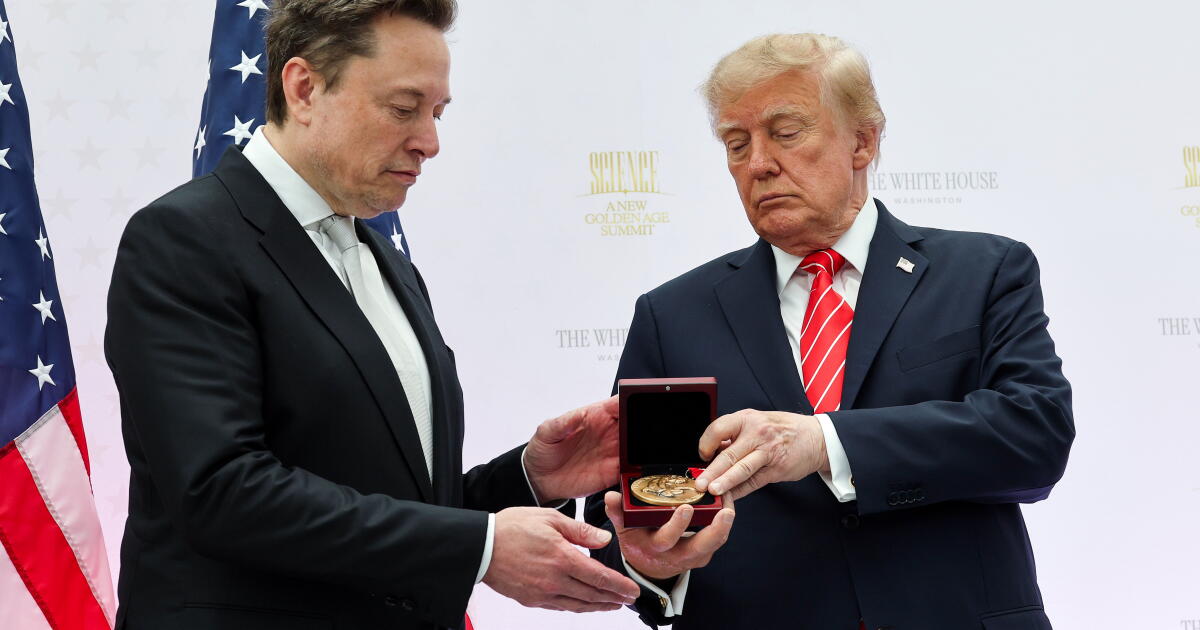
Ukraine relies heavily on Elon Musk’s SpaceX satellite services for communications and drone missions. However, who ordered the restrictions remains unclear, with US President Donald Trump denying responsibility while defending Elon Musk.
The disruption further strained relations between Kyiv and Washington, already under pressure over Trump’s agreement to temporarily lift sanctions on Russian diesel and allow US imports.
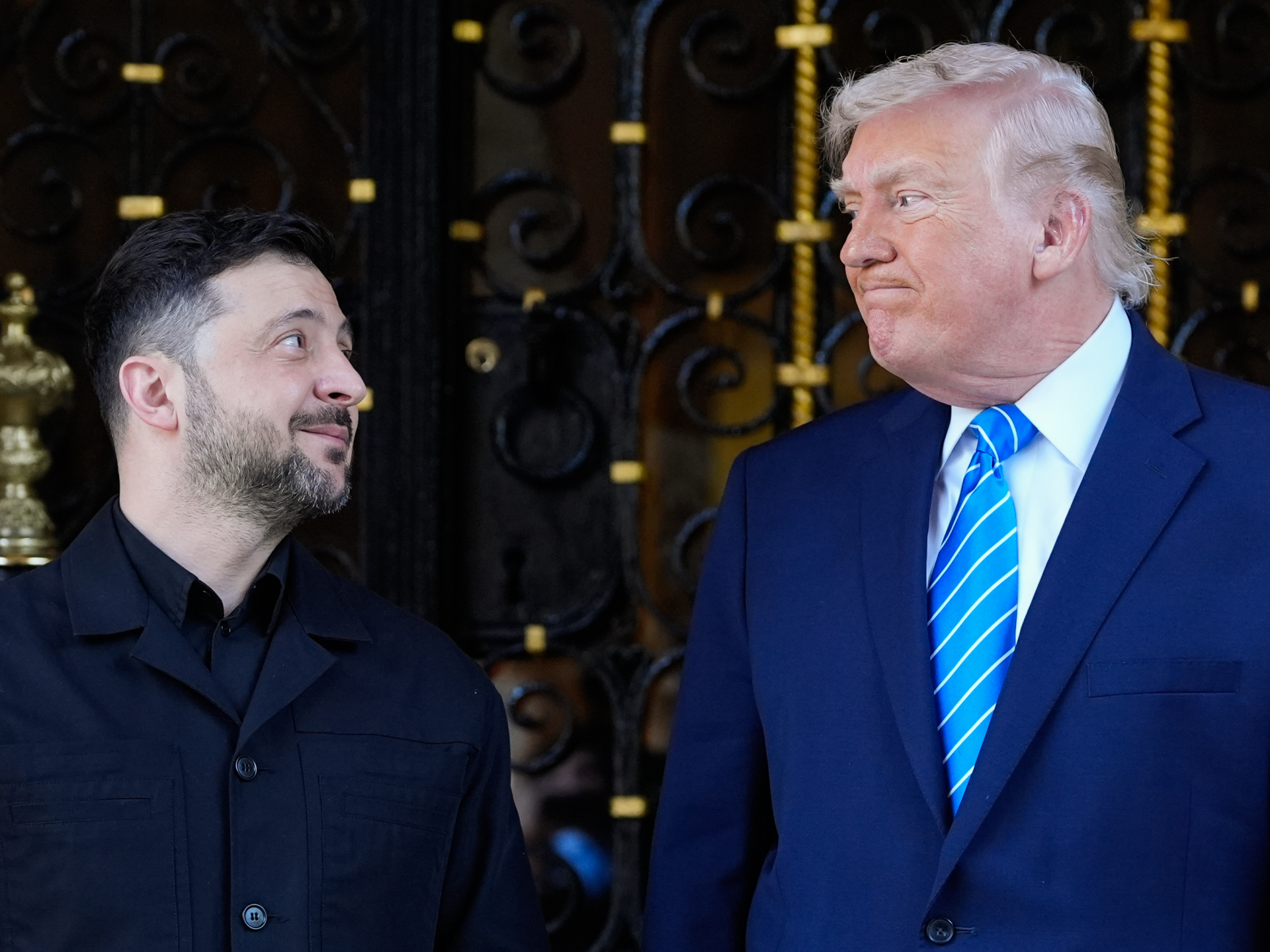
Trump also called earlier this month for Ukraine to have a new president, then suggested on Monday that someone other than Zelenskyy should negotiate for Kyiv. The exchanges follow their public confrontation at the White House in February 2025.
Talks planned in Abu Dhabi
The lifting of the Starlink restrictions comes as the United States seeks to revive peace negotiations between Moscow and Kyiv. Negotiators from Ukraine, Russia and the US are expected to meet in Abu Dhabi in the first half of November, more than four years after Russia launched its full-scale invasion in February 2022.
Kremlin spokesman Dmitry Peskov confirmed the planned negotiations on Friday, while Zelenskyy also announced agreement on technical-level meetings.
It comes as Trump credited his wife, Melania Trump, with securing a local ceasefire in Oleshky, in southern Ukraine’s Kherson region, which Russian forces have occupied since 2022.
Subsequent Ukrainian and Russian statements putting the ceasefire’s start on October 27, with the humanitarian operation planned for October 29.
Deadly attacks continue
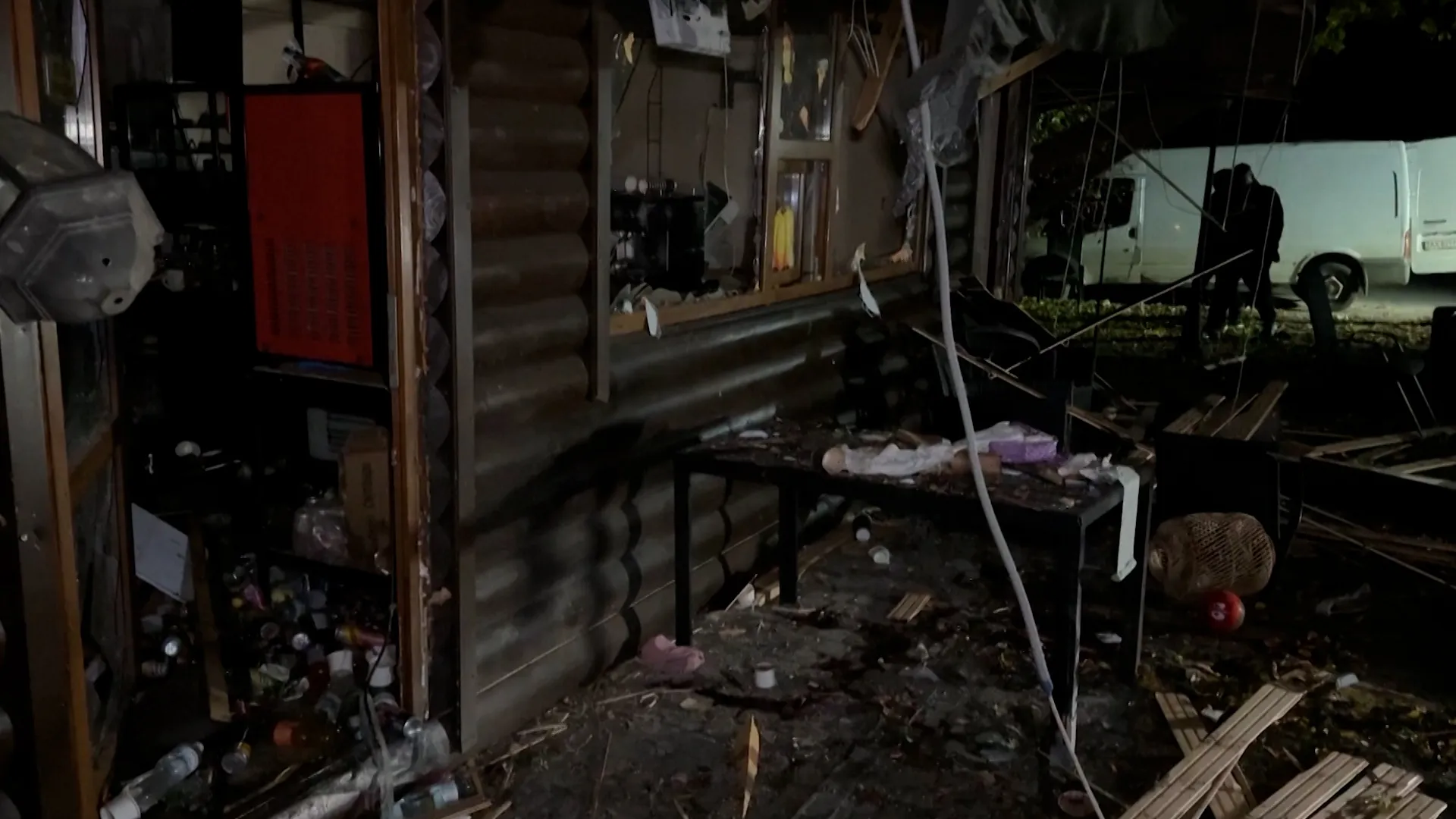
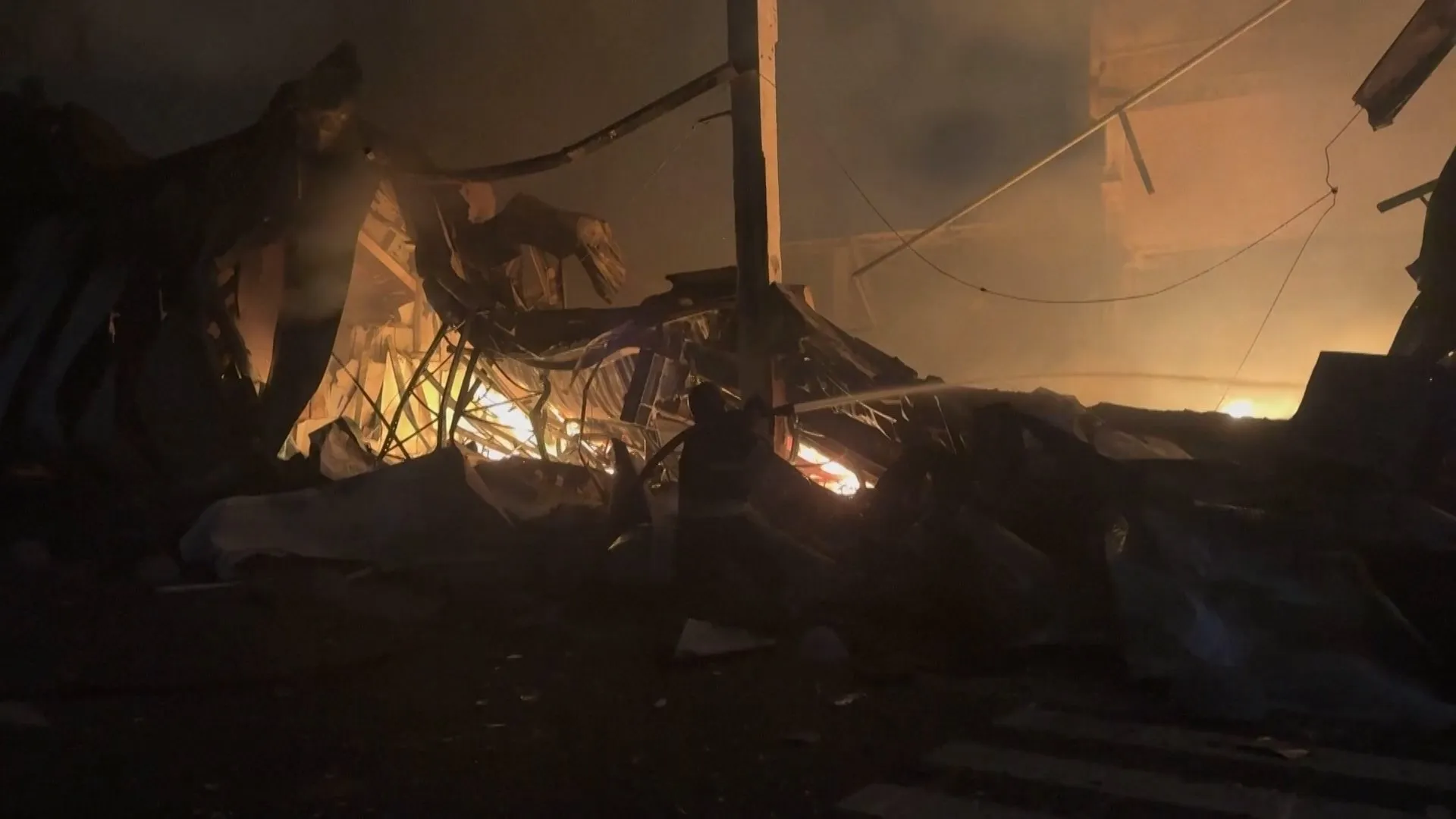
A Russian missile strike on Lozova, in Ukraine’s northeastern Kharkiv region, killed a man and wounded two others on Saturday, regional Governor Oleh Syniehubov said, while in northern Ukraine, a Russian attack on Chernihiv on Friday killed a man and wounded at least 25 people, local authorities said.
Shelling in Kramatorsk killed one person and wounded six, including three children, according to Donetsk officials. In nearby Sloviansk, attacks on Friday killed a 62-year-old woman and wounded four people, Mayor Vadym Lyakh said.
Ukraine reported strikes inside Russia on Friday and overnight into Saturday, including on Togliatti’s Togliattikauchuk petrochemical plant, a major synthetic rubber producer. Mayor Ilya Sukhikh confirmed industrial damage but reported no casualties.
Ukraine also said it struck Oryol’s Proton electronics plant, which it says makes missile components. Regional Governor Andrei Klychkov reported three deaths in an attack on an unidentified facility.
Authorities in Russian-occupied Crimea reported power cuts after overnight Ukrainian attacks.
Russia’s Defence Ministry said air defences intercepted a SCALP cruise missile, four Neptune missiles and 1,297 Ukrainian fixed-wing drones over 24 hours, TASS reported. The figures could not be independently verified.
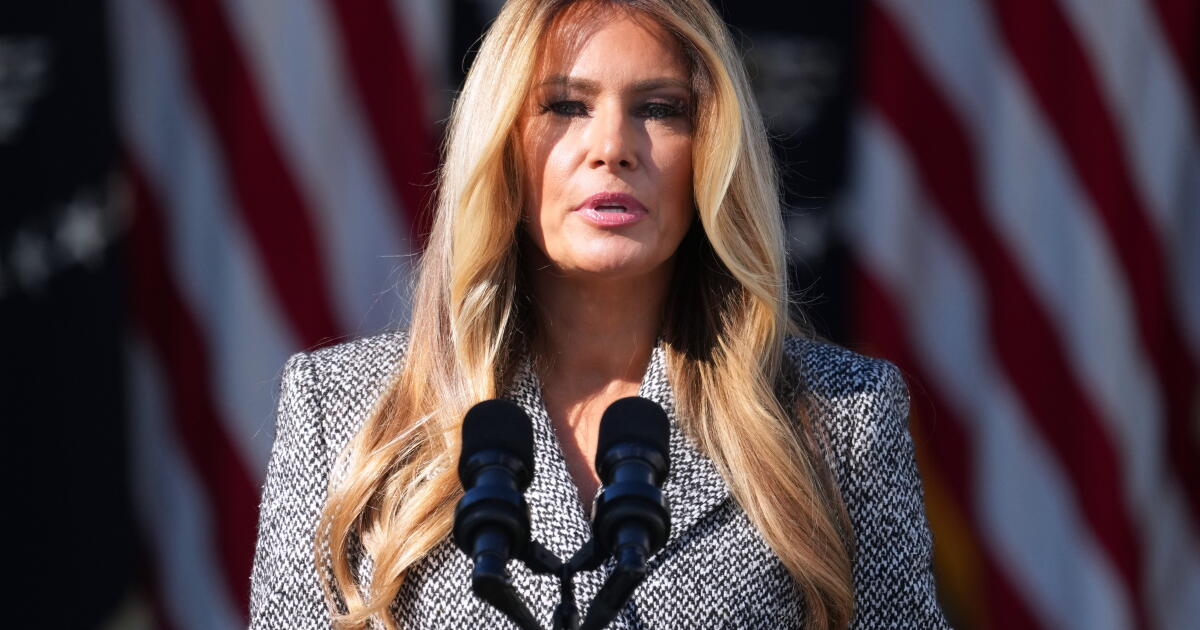
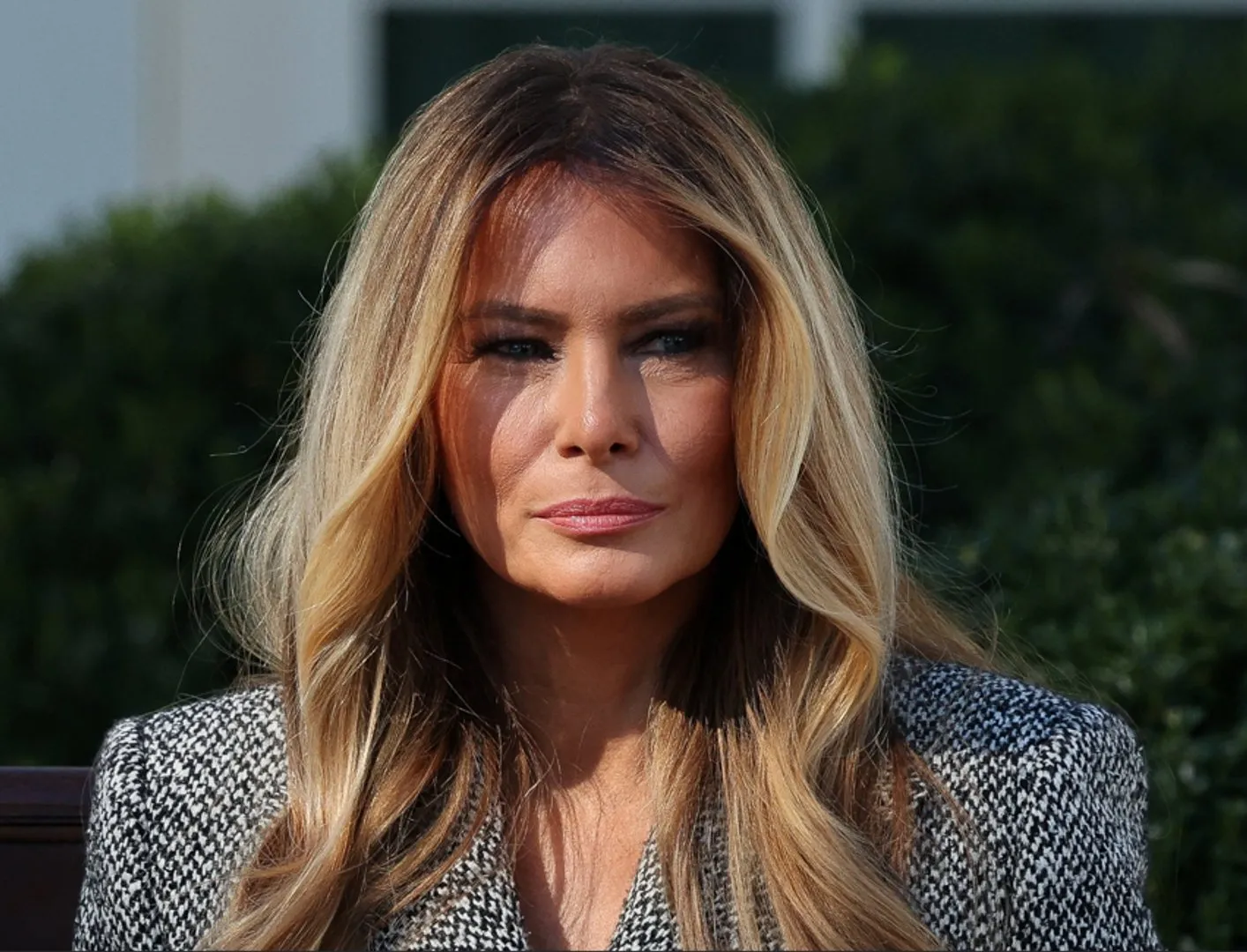
WASHINGTON — First Lady Melania Trump has brokered an upcoming ceasefire between Russia and Ukraine in the war-ravaged Ukrainian city of Oleshky to allow for humanitarian aid and the evacuation of civilians, the White House announced on Friday.
The localized ceasefire is set to begin Thursday, with the American first lady saying in a news release that the situation there is “on the brink of disaster.”
The White House said Trump had initiated the discussions and that she and a representative worked directly with Russian and Ukrainian leadership to define the terms of the ceasefire.
Ukraine’s lead negotiator for the agreement thanked Trump for her involvement and said the deal would be “extremely challenging to implement.”
“Under our agreement: first a ceasefire will be put in place; second, humanitarian aid will be delivered to Oleshky; and third, civilians will be allowed to move freely out of Oleshky,” Dmytro Lubinets, Ukraine’s human rights ombudsman, said in a video message posted online. “The operation will be carried out gradually and is extremely challenging to implement. I will therefore keep Ukrainian society informed and share the results of the operation.”
Russia’s chief of the general staff, Gen. Valery Gerasimov, said Russian forces “will cease fire on the Kherson axis” starting at 4 a.m. TuesdayMoscow time “in connection with the humanitarian operation near Oleshky.” The Russian forces will also carry out “engineering reconnaissance” and ensure “safe movement of the humanitarian convoy” into the city, Gerasimov said.
Kremlin spokesman Dmitry Peskov also said Moscow was grateful to the first lady and that effort was discussed during the latest call between Russian President Vladimir Putin and President Trump, he said.
Peskov said “those who want to leave it would be able to do so.” He would not say whether those who evacuate will be taken to Russia or Ukraine-held territory. He also demurred when asked how long the evacuation will last, saying only it would likely take several days.
Saving children is first lady’s focus, president says
Melania Trump has made helping children in conflict one of her signature issues and hosted a U.N. Security Council meeting on the issue earlier this year. She has written Putin to work on efforts to reunite families with children who have been displaced by the war.
“What she wants to do is save children, and that’s her focus,” the president said of the first lady during a question-and-answer exchange with journalists in Washington.
Tensions between Washington and Kyiv are rising
The development comes as tensions have increased to new highs between the Trump administration and Ukraine’s government. Kyiv has faced restrictions on the satellite internet system that it relies on to knock down Russian attacks, with Trump and other top U.S. officials sending mixed messages about who was responsible for throttling the Elon Musk-made Starshield system.
Trump also has recently waived new Russian sanctions, reached an agreement with Russia to import diesel and pushed Ukrainian President Volodymyr Zelensky to make a deal to end the war that began in February 2022. In renewed efforts to revive the peace process, Trump envoy Steve Witkoff traveled to Norway this week for talks with Zelensky before meeting with Putin in St. Petersburg, Russia.
Zelensky did not mention the ceasefire in Oleshky during a remote appearance at the Hudson Institute, a Washington think tank. He did note that American Patriot missile interceptors were still on hold and Starshield and Starlink speed limits were still in place.
He also spoke of the importance of the United States to renewed diplomatic efforts to end the war, including a possible joint meeting with Trump and Putin.
Dire situation in Oleshky
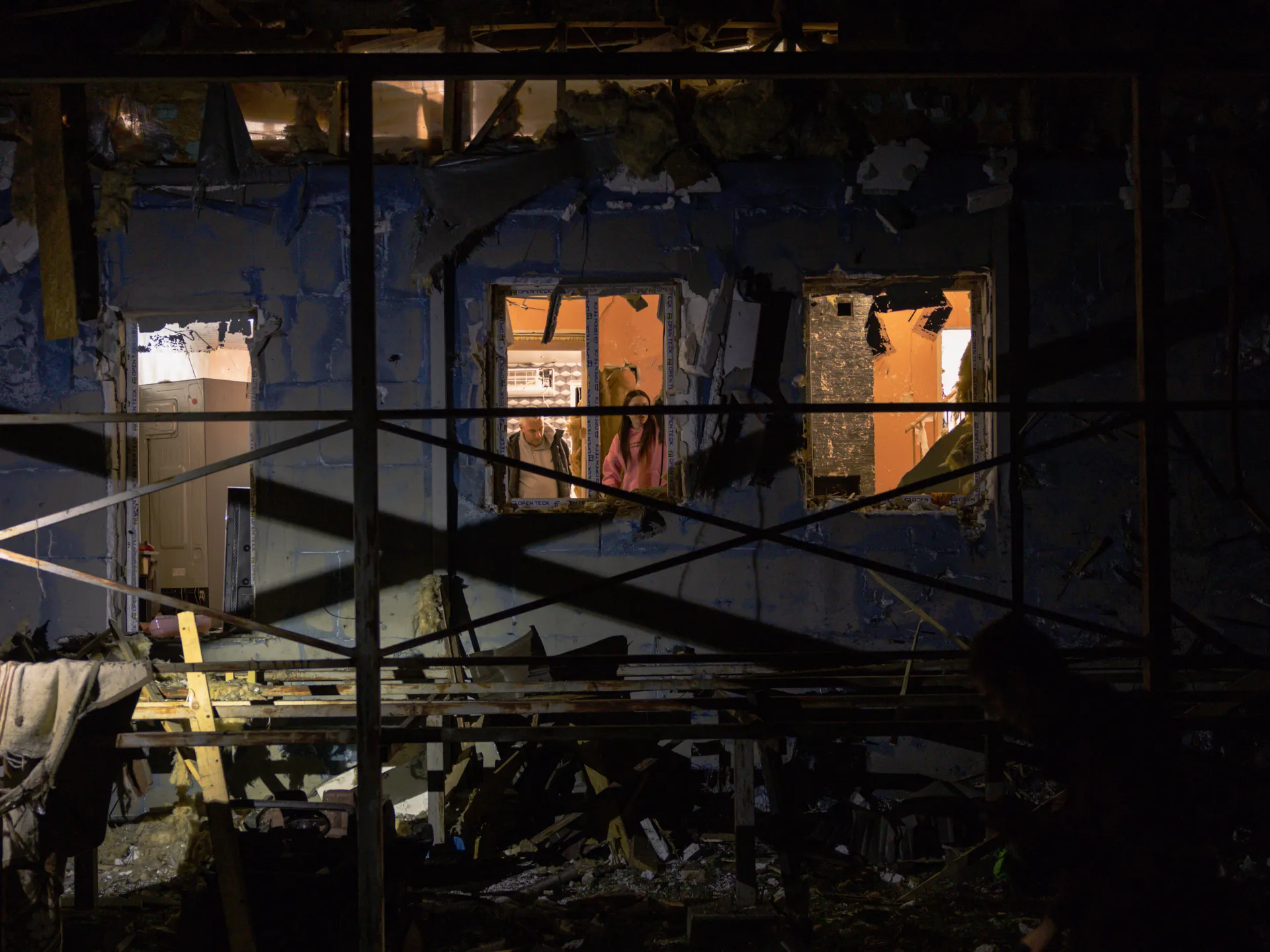
Food and medical supplies have been scarce for months in Oleshky, which sits on the Dnipro River that separates Ukrainian forces from the city’s Russian occupiers. There is no electricity, heat or running water. Roads leading from town are mined and dotted with burned-out cars. Drones buzz overhead.
Once a city of about 24,000 residents, Oleshky was captured by Moscow’s forces on the first day of their full-scale invasion of Ukraine in February 2022. Its buildings were shelled and burned, and its infrastructure damaged. In June 2023, floodwaters inundated the city after the Kakhovka Dam collapsed from an explosion that an Associated Press investigation found was likely caused by the Russian military. Hundreds of residents were killed.
Those left in the city along Ukraine’s southeastern front face death from hunger or disease as another harsh winter looms. Ukraine has appealed repeatedly for a local ceasefire to organize evacuations. Russia, as the occupying power, is obligated by international law to ensure civilians under its control have what they need to survive.
Melania Trump details the mission
Melania Trump said in the White House news release that civilian leaders from Ukraine and Russia will visit Oleshky residents to determine the level of assistance they require.
“Residents who wish to evacuate will receive coordinated support and transportation to their preferred destination,” she said. “I anticipate some will want to go to Russia, and some to Ukraine.”
Melania Trump also said “an impartial American media organization” will accompany and document Russian and Ukrainian teams on the ground throughout the process.
“This will play a significant role in ensuring that the wishes of each family are faithfully respected,” she said.
The statement did not identify the media organization.
Finley writes for the Associated Press. AP writers Seung Min Kim and Konstantin Toropin in Washington; Volodymyr Yurchuk in Kyiv, Ukraine, and Dasha Litvinova in Tallinn, Estonia, contributed to this report.
President Trump says it was First Lady Melania Trump’s initiative that led to a ceasefire between Russia and Ukraine in the Ukrainian city of Oleshky, which has been under Russian occupation for four years. The ceasefire is expected to begin in a week.
No confirmation from Russia or Ukraine as White House says ‘localised’ ceasefire to take effect in Russian-occupied Oleshky.
Published On 23 Oct 202623 Oct 2026
The White House has said First Lady Melania Trump has “secured a ceasefire” between Russia and Ukraine in the southern Ukrainian city of Oleshky.
Neither Russia nor Ukraine immediately confirmed the statement on Friday, which comes as the administration of US President Donald Trump has renewed diplomacy aimed at ending the war.
The approach has included upping pressure on Ukraine and handing several recent concessions to Russia.
“The situation in Oleshky is dire. Oleshky is a front-line war city on the brink of disaster,” Melania Trump said in a statement released by the White House.
“The people of Oleshky have limited electricity, live amid mined roads, and endure regular military attacks. It was abundantly clear that without my intervention, the possibility to bring humanitarian aid into the city and to evacuate the elderly would be impossible,” she said.
The First Lady added that her representatives worked directly with “Russian and Ukrainian leadership to define the terms of the localized ceasefire” and that civilian leaders from both countries will work together to grant humanitarian access to civilians in the city.
Overnight attacks on Kyiv injured 15 people, while two were injured in Moscow as Russia said it intercepted 163 Ukrainian drones. The attacks came hours after Putin and Zelenskyy signalled willingness to resume peace talks with the US.
CBOT wheat futures fell to 14-week lows Wednesday following news that U.S. special envoy Steve Witkoff met with Russia’s President Putin in St. Petersburg to discuss a possible peace deal and President Trump increased pressure on Ukraine to strike
WASHINGTON — President Trump’s latest embrace of Russian President Vladimir Putin is deepening alarm in Washington and among America’s allies that the White House pressure campaign could leave Ukraine vulnerable as Moscow advances.
Trump’s push to end the war, which has raged since 2022, comes on the cusp of a midterm election that could give Democrats partial or full control of Congress, expanding their oversight powers, and as polls show more than two-thirds of Americans disapprove of the president’s handling of foreign policy and support Kyiv’s fight against Russian aggression.
On Monday, Trump dismissed Russia’s ongoing assault on its neighbor, telling reporters that “they haven’t been doing much,” even as Russian forces bombed a park in Kharkiv that day, killing a mother and her 14-month-old child in her stroller.
Two days later, in St. Petersburg, Trump’s special envoy, Steve Witkoff, described Putin as a “humanitarian,” despite his invasion unleashing Europe’s deadliest conflict since World War II.
“You talk so much about my president, President Trump, being a humanitarian. You are a humanitarian also, sir,” Witkoff said after securing the release of a detained U.S. citizen from the Kremlin. At least two other Americans, both from Los Angeles, remain wrongfully detained by Russia. “I salute you, and I commend you,” he added.
Rep. Don Bacon (R-Neb.) described Witkoff’s remarks as “another embarrassment” after a steady stream of entreaties to Moscow from the Trump administration.
The diplomatic push follows Trump’s decision two weeks ago to import Russian diesel, a move that could bolster Moscow’s war effort and violate U.S. law. Days later, after Ukrainian President Volodymyr Zelensky publicly condemned the move, Trump ally Elon Musk reportedly throttled the speed of Starshield, a military-grade satellite internet service from Starlink that Kyiv relies on to defend itself against Russian attacks.
The Trump administration failed to provide Kyiv with intelligence warnings of incoming ballistic missile strikes, blaming the weather. The president waived sanctions on Russia that were passed just months earlier with overwhelming bipartisan support in the aftermath of the death of Sen. Lindsey Graham, a Trump ally and Ukraine supporter. And Trump declined to approve the transfer of interceptor missiles to Ukraine — more defensive weaponry used to protect the country from Russian strikes that have increasingly targeted civilian areas.
The developments have raised fresh questions over whether Trump has exceeded his legal authority in reshaping U.S. policy on Ukraine.
Russian diesel imports could violate a 2022 federal ban, the Ending Importation of Russian Oil Act, and throttling Starshield, withholding intelligence and delaying missile transfers could breach contractual or statutory obligations set forth by Congress — all potential subjects of investigation for a willing Congress.
And Trump’s push comes at a moment of political peril, as he faces the prospect of a Democratic-led legislature and a Republican Party ready to move beyond his lame-duck presidency.
But freedom from political obligation could also allow Trump to pursue his agenda without the needs for coalitions or popular support.
The prospect of an unchecked Trump has stoked fears on Capitol Hill that the White House could abandon Kyiv altogether.
Nine senators from both parties have asked the Pentagon’s inspector general to investigate the Starlink episode, while lawmakers across the aisle have condemned the speed restrictions. And should they take power after the midterms, Democrats are also weighing whether to make Defense Secretary Pete Hegseth’s resignation a condition of further defense funding, citing his criticism of Ukraine, according to a report in the newspaper the Hill.
“Congress will unequivocally reaffirm that Ukraine is an indispensable ally to the United States, that Russia is a self-declared enemy of the United States, and that the United States will 100% support and defend the people of Ukraine in their fight for their own freedom against this brutal, illegal, and unprovoked Russian invasion,” said Rep. Brian Fitzpatrick (R-Pa.).
“The United States must provide any and all defensive equipment that Ukraine needs to defend itself,” Fitzpatrick added. “Anyone who attempts to limit the use of Starshield for Ukraine will be fully investigated and will be held fully accountable, to include public congressional oversight hearings.”
Marco Rubio, the president’s secretary of State and national security advisor, was initially silent on Trump’s moves. But he ultimately defended them when confronted by reporters on a recent visit to Central Asia.
“We’re no longer going to be defensive about this topic,” Rubio said. “If it were not for the assistance of the United States, including under the Trump administration, there would be no Ukraine right now. Ukraine, as a sovereign state, would not exist.”
Still, Rep. Michael R. Turner (R-Ohio), a former chair of the House Intelligence Committee, said Sunday that Rubio’s explanation of Ukraine’s loss of Starlink access was “absolutely not” sufficient.
“This is something where there needs to be an investigation, there needs to be a congressional investigation,” Turner told CBS. “Lives are at risk, and lives are lost over these things.”
Trump has told reporters in recent days that his goal remains to secure a peace deal that ends the world’s deadliest conflict since World War II. But Mitt Romney, a former GOP senator from Utah and the Republican presidential nominee in 2012, dismissed Trump’s arguments as a break from U.S. values.
“Churchill could have shortened WW2 by years if he had just ‘done a deal’ with Hitler,” Romney wrote on social media. “George Washington could have done a deal to end the American Revolution.”
Zelensky “is in good company,” he added.
Europe, too, is preparing for a new confrontation with the Trump administration over the defense of Ukraine.
Germany’s chancellor rejected Trump’s approach, saying of Europe, “We are the firewall.” And the European diplomatic service responded with derision to Trump’s waiver of sanctions.
“When Russia escalates aggression against Ukraine,” the European Union’s diplomatic service said in a statement, “Europe responds with more pressure on the aggressor.”
Trump has floated a trilateral summit with Putin and Chinese President Xi Jinping in Shenzhen, China, next month, fueling European fears that he could strike a deal on Ukraine without Kyiv at the table.
The Russians and Ukrainians agreed this week in principle to begin peace talks at a technical level moderated by the United States. No timeline or framework has been set for the talks.
In an interview on Fox News, Zelensky said that he was prepared to agree to a peace deal that froze the existing battle lines, ceding nearly a quarter of Ukrainian land to Russian control. Over the last year, Russia has demanded that Kyiv also relinquish land in the Donbas region that it has failed to conquer through military means.
“Right now, we have to freeze. And I think this is a real way to end this war. We call this ceasefire,” Zelensky said. “This is minimum what we need from Russia today.”
“The most important is peace, and secure peace,” he added, “not to be afraid that occupation will come back, aggression will come back, killing will come back.”
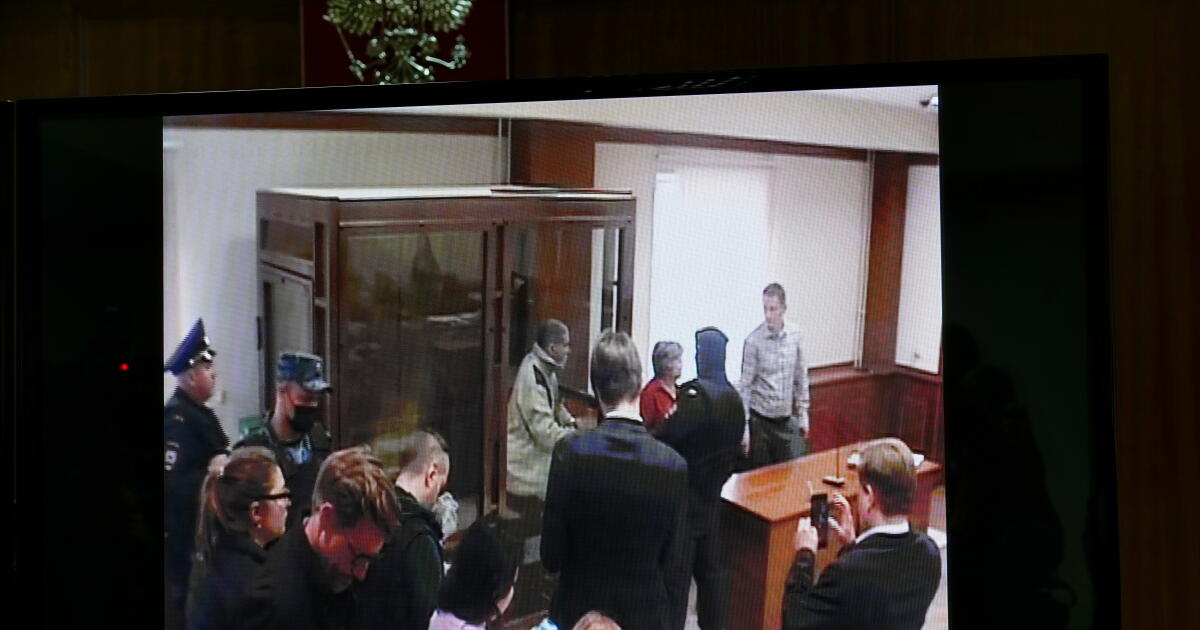
ST. PETERSBURG, Russia — Russia on Wednesday released a retired American teacher who had been imprisoned on charges of fighting as a mercenary in Ukraine, U.S. envoy Steve Witkoff said Wednesday at a meeting with Russian President Vladimir Putin in St. Petersburg.
The release of Stephen Hubbard had been foreshadowed a day earlier in Washington, when President Trump told reporters at the White House that he had talked with Putin “at length” about the issue and had asked him to free the Michigan man.
Hubbard is the second American detainee in just over two months to be freed by Russia, and his exit from custody occurred not only during a visit by Witkoff but also at a time when Trump has taken a series of actions meant to benefit Russia as Washington’s alliance with Ukraine shows signs of fraying.
Hubbard was sentenced after a closed trial in 2024 to nearly seven years in prison. Prosecutors said he had signed a contract with the Ukrainian military after Russia sent troops into Ukraine in February 2022, and that he fought alongside them until being captured two months later. The U.S. government under the Biden administration designated Hubbard as wrongfully detained.
Witkoff, a key Trump administration envoy who has tried without success to steer Russia and Ukraine toward a settlement to end a war that will hit the five-year mark in February, thanked Putin for releasing Hubbard, telling him, “Because of you, he’s going home to his family.” The Russian leader responded that Hubbard was at the St. Petersburg airport, Pulkovo, after the release.
The release occurred at a dynamic moment in relations between the United States, Ukraine and Russia, with the Washington-Kyiv alliance being stretched by tensions over drone support as the Trump administration advances policies that aid Putin.
Trump decided Friday, for instance, to waive sanctions on Russia in a bill that Congress overwhelmingly passed to support Ukraine. Named after late South Carolina Republican Sen. Lindsey Graham, the legislation targeted the flow of financial resources fueling Russia’s war.
That reversal followed Trump’s announcement of a deal to import Russian diesel fuel in a long-shot effort to curb high gas prices ahead of the U.S. midterm elections next month.
Witkoff met with Ukrainian President Volodymyr Zelensky in Norway on Tuesday. He was expected to exchange ideas from that meeting, as well as proposals from European and American colleagues, in his talks with Russian leaders in St. Petersburg on Wednesday.
Hubbard is the second American freed by Russia in about the last two months, following the release in August of Marine veteran Robert Gilman, who had been gravely ill and was imprisoned on disputed charges of assaulting a police officer.
Some two dozen Americans remain imprisoned in Russia for various reasons, according to the Foley Foundation, a hostage advocacy organization.
Hubbard had been imprisoned since 2022 on charges that Hostage Aid Worldwide, a hostage advocacy group, has called bogus.
The organization in August posted an open letter to Trump that it said was written by Patricia Hubbard Fox, Hubbard’s sister, in which she offered praise for Trump but also said brother had been subjected to “constant beatings, torture and starvation” while in custody.
“Even so, everything that you’re doing isn’t going to matter to my kidnapped, American Veteran brother, Stephen James Hubbard (soon to be 74) if Putin won’t cave and let him come home and he dies up there in a Nazi prison (crying),” the letter said.
Litvinova and Tucker write for the Associated Press. Tucker reported from Washington.
The Ukrainian Armed Forces say they have carried out the world’s first frontline evacuation of a wounded soldier by aerial drone. The soldier, from the 30th Mechanized Brigade, is said to have been recovered successfully and is undergoing treatment and rehabilitation.
“This is a historic event, at least for our unit for sure,” said “Napalm,” a squad commander and programmer with the 92nd Assault Brigade’s uncrewed ground vehicle (UGV) company. The precise date and location of the operation have not been disclosed, and the claim of a global first has not been independently verified. However, a video of the event has been published by the 92nd, which you can watch below:
ТАКОГО ЩЕ НІХТО НЕ РОБИВ! В УКРАЇНІ ПРОВЕЛИ ПЕРШУ В СВІТІ ПОВІТРЯНУ ЕВАКУАЦІЮ ЛЮДИНИ З ЛІНІЇ ФРОНТУ
At this point, it should be noted that the footage has not been independently verified and could depict a staged demonstration rather than an actual combat evacuation. It should, at least, be treated with a degree of caution.
According to accompanying reports, the infantryman was wounded while holding his position. Mines and intense Russian drone activity prevented a conventional ground evacuation, prompting the 92nd’s specialists to attempt an aerial extraction. The video shows the soldier clipping himself to the underside of the drone via a harness before being flown to safety. The extemporized nature of the platform is underscored by the fact that, while in the air, the soldier dangles below its rigid landing legs.
The soldier is seen hunched under the hexacopter before attaching his harness to the drone. 92nd Assault Brigade/YouTube screencap
The aircraft was a heavy hexacopter manufactured by Ukrainian company Gurzuf Defense, which provided it free of charge. A UAV operator from the 30th Mechanized Brigade piloted the drone. Throughout the recovery, the soldier remained in contact with the drone operator.
With the drone now airborne, the drone controllers monitor the flight from the ground. 92nd Assault Brigade/YouTube screencap
The operation involved the 92nd, 30th and 14th Mechanized Brigades, the 10th Army Corps and Gurzuf Defense.
Ukraine increasingly uses uncrewed ground vehicles to deliver supplies and evacuate casualties from exposed positions. According to Euromaidan Press, Ukrainian UGVs conducted approximately 112,000 logistics and evacuation missions between January and August 2026.
However, ground robots can struggle with mines, mud, and cratered terrain, while remaining vulnerable to drones and artillery. These obstacles make it especially difficult to conduct UGV operations in the battlefield’s “kill zone,” which can extend six to nine miles or more from the front line. You can read an in-depth account of Ukrainian UGV efforts in this previous story.
A video showing a Ukrainian UGV in action in the Donetsk region:
Ground Drones Evacuate Wounded Soldiers Under Fire In Ukraine | Ukraine Front Line Update
Aerial platforms are able to reach casualties in places where ground vehicles cannot safely travel, and can get there far quicker, without having to stick to specific routes.
The 92nd has not disclosed the evacuation distance or flight duration of the mission. If, as reported, the drone used was an Audag-6 model, this is stated to be capable of carrying a 200-pound payload over a distance of up to 15 miles.
Meanwhile, the recovery points to a growing trend in the Ukrainian Armed Forces.
Only days before the story of the evacuation broke, it emerged that Ukraine is also now testing the StarGate, a purpose-built aerial medical evacuation drone — also of the heavy hexacopter type — developed by the SkyFall company. This is a rather more tailored solution to the problem, with a covered, medical-grade stretcher slung below the drone. It has a reported payload capacity of around 330 pounds, uses AI-assisted navigation, and can also deploy nets against hostile drones attempting to intercept it.
Exclusive look at ‘StarGate,’ Ukraine’s drone that can evacuate wounded soldiers
The 92nd’s operation used a heavy-lift hexacopter adapted for an ad hoc casualty transport, rather than a more bespoke design. This means the soldier had to be adequately trained on how to strap in, and also had to be in a condition that they could actually perform this procedure. This would also be the case even if other soldiers were able to assist them in strapping in.
While these kinds of solutions may be new to the battlefield in Ukraine, using uncrewed aerial systems for personnel recovery and medical evacuation is far from new.
Back in 2016, the Army completed a demonstration of the Lockheed Martin K-Max helicopter in a casualty evacuation role. The K-Max can operate with and without a pilot and was used as a drone by the Marine Corps to deliver cargo in Afghanistan.
A U.S. Marine Corps K-Max helicopter. U.S. Marine Corps
“Unmanned and autonomous platforms have the potential to completely rewrite the medical doctrine,” Army Col. Daniel Kral, head of the Army’s Advanced Technology Research Center (TATRC), explained during a conference at Fort Detrick in Maryland in 2017.
In 2019, TWZreported on U.S. Army efforts to explore how uncrewed craft might speed up the casualty evacuation process. This work included evaluation of the Dragonfly Pictures, Inc. (DPI) DP-14 Hawk, a small, tandem-rotor drone with a 400-pound cargo capacity.
A DP-14 Hawk shown configured for casualty evacuation. Dragonfly Pictures, Inc.
The emergence of autonomous air vehicles, or uncrewed ‘flying taxis,’ with short or vertical take-off and landing capabilities in the urban air mobility sector has also generated military interest. The U.S. Air Force Research Laboratory, for example, has conducted studies into how craft such as these could be adapted for combat search and rescue, with the idea that they would be airdropped to recover a fighter pilot shot down while operating over hostile territory.
Closer to the Ukrainian hexacopter concept is the Flowcopter FC-100, a heavy-lift quadcopter drone that the U.S. Army tested in a medical evacuation capacity in Poland during the large-scale Saber Strike exercise earlier this year. Carrying a 220-pound payload, the drone has a range of more than 60 miles.
U.S. Army soldiers run with a test dummy in a stretcher towards a Flowcopter FC-100 drone during an Autonomous Triage and Treatment Challenge taking place near Bemowo Piskie Training Area, Poland, May 10, 2026, as part of Exercise Saber Strike. U.S. Army Reserve photo by Spc. Thomas Madrzak
All of these concepts aim to address the inherent vulnerability of larger personnel recovery platforms in more contested environments.
In their favor, they offer the potential to rescue troops from more precarious situations, with the smaller drones touching down in relatively tight areas in mountainous, forested, or jungle environments. Autonomous navigation systems can guide the drones through smoke, dust, or bad weather, too.
On the other hand, these small craft have no space for a medic, pararescuemen, or other additional personnel. Bearing in mind their limited range and lower speeds, they also need to be in the right location to respond to emergencies as and when they occur.
For the Ukrainian Armed Forces, aerial medical evacuation drones are being rapidly developed and now fielded to help address another problem: the vulnerability of UGVs in areas of the battlefield that have long become far too hazardous for crewed medevac platforms to operate.
By now, both sides in the Ukraine war are relying heavily upon small, autonomous uncrewed aircraft to perform a wide variety of resupply, surveillance, communications, and strike roles on and around the front lines. With that in mind, the adaptation of these kinds of vehicles for casualty evacuation and personnel recovery missions is the next logical step.
Amid escalating tensions with Ukrainian leader Volodymyr Zelenskyy, United States President Donald Trump has increased pressure on the Eastern European country to make a deal that would end the war with Russia.
Speaking at the White House on Tuesday, Trump doubled down on his efforts to blame the Ukrainian president for holding up peace efforts that would bring the years-long conflict to a close.
Recommended Stories
list of 3 itemsend of list
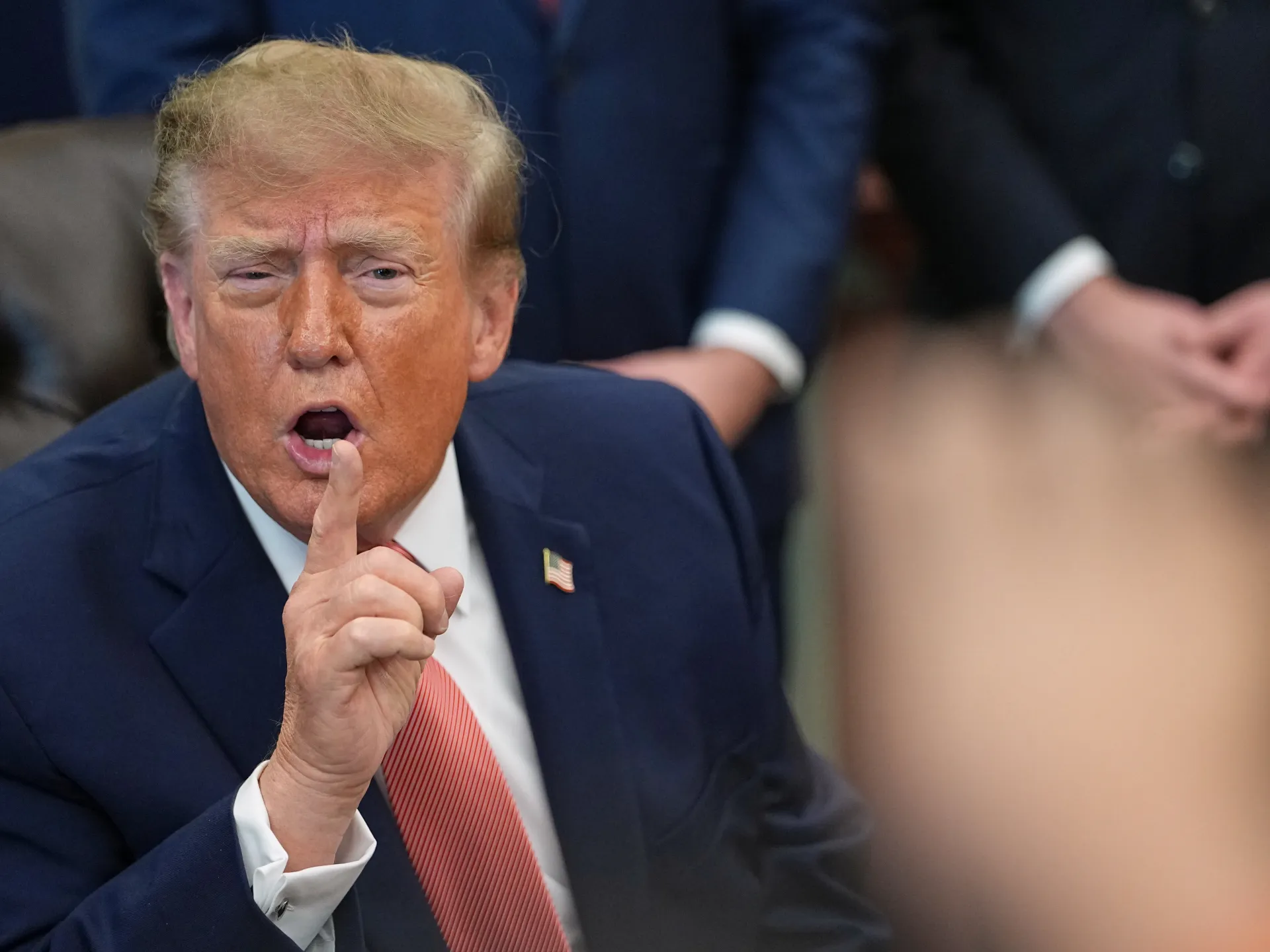
“Zelenskyy has to want to settle this war, and if he doesn’t, I think it’s going to be a very bad thing,” Trump said as he talked about Russia having an “unlimited” supply of people to send in the fight.
Moments later, the US president referenced a contentious Oval Office meeting he held with Zelenskyy in February 2025, shortly after returning to power.
Zelenskyy, Trump said, could have made a “better deal” then. “He’s going to have to want to make a deal, because I don’t think his people are going to stand for it any longer,” Trump told reporters.
On Tuesday, the Ukrainian president met US special envoy Steve Witkoff and European leaders in Oslo, Norway, to discuss ending Russia’s war.
In a post on social media after the meeting concluded, Zelenskyy said, without providing specifics, that his country has “some clear ideas on how to get to peace”.
“We are united with our European partners in this effort, and we want the Americans to take these ideas to the Russians,” Zelenskyy wrote. “One of the important ideas is to move to a potential trilateral meeting of the leaders to address the issues that only the leaders can do.”
The Ukrainian leader added that Witkoff would head to Russia on Wednesday, where peace discussions are expected to continue.
“Let’s see what Putin has to say,” Zelenskyy said.
When asked whether Russian President Vladimir Putin should meet Zelenskyy, Trump said there was “tremendous” hatred between the two leaders.
“It’s hard for them to be in the same room,” Trump said. “I don’t care how it’s done.”
Starlink controversy
Trump’s remarks come as the White House continues to squeeze Ukraine in order to force the country to cut a deal with Russia.
Last week, Ukrainian officials reported slowdowns with Starshield, the military-grade version of the Starlink satellite system, run by the aerospace company SpaceX.
Ukraine relies on the technology for communications and intelligence to prevent Russian attacks.
It is unclear who ordered restrictions that limit Ukraine’s access to Starshield. SpaceX CEO and Trump ally Elon Musk pointed a finger at the White House.
“Starshield systems are owned and controlled by the US government. Any limits on speed or usage are decided by the US military and ultimately POTUS,” he wrote on October 14.
The news agency Reuters also reported that the order came from inside the White House, citing two US officials and a Western official.
But a report in The Wall Street Journal on Tuesday claimed US officials had blamed Musk himself for the slowdown, saying the SpaceX CEO ordered it last week. Trump and US Defence Secretary Pete Hegseth have both denied that the government directed the restrictions, with Hegseth pushing responsibility towards SpaceX.
Building ties with Putin
Trump, meanwhile, has sought to ease the historically tense relations between Russia and the US.
In August 2025, Trump invited Putin to Alaska, the Russian leader’s first visit to US soil in a decade.
More recently, Trump has expressed openness this month to meeting with Putin and Chinese President Xi Jinping, as part of a trilateral discussion on denuclearisation.
Trump also announced this month that he struck a deal to obtain diesel from Russia, marking a stunning reversal of years of US pressure on Moscow’s economy.
The US president also waived new economic restrictions that would have been imposed under the Lindsey Graham Sanctioning Russia and Iran Act, a bipartisan law he signed one month earlier, in honour of a late senator.
It would have imposed sanctions on Russian officials, banks and tankers, as well as tariffs on countries that purchase Russian oil.
US Secretary of State Marco Rubio defended the decision on Tuesday, saying the law allowed the waiver through a provision embedded in the legislation.
“The president chose to use a national security waiver to not immediately implement those [sanctions and restrictions], because he recognises that these things have to be looked at in their totality,” Rubio said in an interview with India’s News18.
Rubio argued that Trump was engaged in a “balancing act” in deciding the extent of US-imposed economic restrictions and how they could impact the rest of the world.
“When you do that pressure, sometimes it spills over and has a negative impact on other countries,” Rubio said.
Earlier this month, South Korea recalled its ambassador from Kyiv after Zelenskyy disclosed the prisoner transfer.
Published On 20 Oct 202620 Oct 2026
South Korea’s Ministry of Foreign Affairs says it will withdraw additional embassy personnel from Ukraine following Kyiv’s lack of “constructive response” in a dispute about North Korean prisoners of war (POWs).
Seoul had told Kyiv of its position via multiple channels but had not received a sufficient response from Ukraine, ministry spokesperson Park Doo-soon said on Tuesday.
Recommended Stories
list of 3 itemsend of list
Earlier this month, South Korea recalled its ambassador from Kyiv after President Volodymyr Zelenskyy told the United Nations General Assembly (UNGA) that Ukraine had transferred two captured North Korean soldiers to the South.
The disclosure angered Seoul, which said the operation should have remained confidential to protect the soldiers’ families in North Korea.
“This measure was taken because we judged it necessary to facilitate an amicable resolution of the issue and restore trust between the two countries,” Park told a regular press briefing, without saying how many staff members would leave.
A charge d’affaires would stay on in Kyiv to maintain diplomatic communication along with all consular staff to protect South Korean nationals, Park added.
Persistent threats of air strikes across Ukraine had also made it difficult to ensure staff safety, he said.
Seoul previously summoned the Ukrainian ambassador and threatened unspecified “further measures”.
‘Situation resolved’
Ukraine has insisted that “diplomacy must prevail over emotions” in relations between the countries, and also said Kyiv considered “the situation resolved”.
South Korea’s Foreign Minister Cho Hyun said earlier this month that Ukraine had sent a message that “included words of apology” over Zelenskyy’s disclosure, but it fell short of “the level” Seoul had in mind.
Under South Korea’s constitution, all North Koreans are considered citizens of the Republic of Korea, as the country is officially known, and those who reach its territory and seek to defect are generally allowed to stay.
Trump calls for Zelenskyy to be replaced as negotiator, while Ukraine’s president says arms shipments delayed.
Published On 20 Oct 202620 Oct 2026
United States President Donald Trump says someone other than Ukrainian President Volodymyr Zelenskyy should negotiate on Kyiv’s behalf in talks to end Russia’s war.
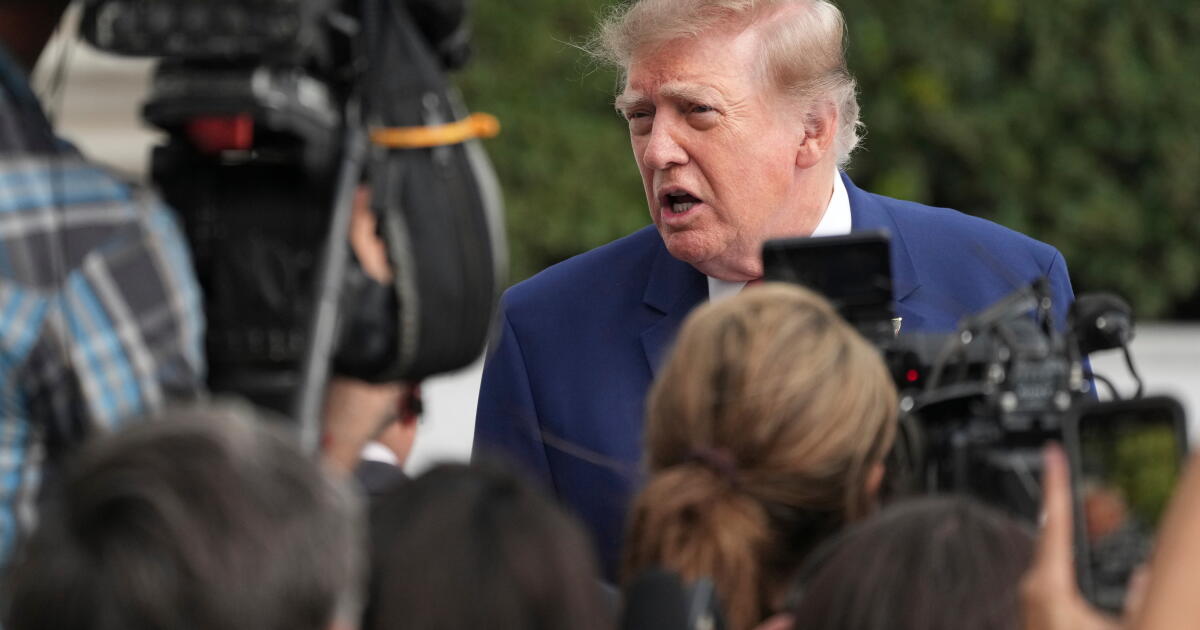
“Zelenskyy is a man that should have had settled this war a long time ago. If he would’ve listened to me, he would have made a much better deal a long time ago,” Trump told reporters outside the White House on Monday. “Maybe it’s time for Zelenskyy to get somebody else to negotiate.”
Recommended Stories
list of 3 itemsend of list
The US president has been verbally swiping at his Ukrainian counterpart for several days as a rift between the leaders deepens.
On Sunday, Trump claimed on Truth Social that Zelenskyy does not want to end the war. Earlier this month, he called for him to be replaced as president, and labelled him a “warmonger” over Ukraine’s attacks on Russian oil refineries.
Trump has also defended sanctions waivers for Russia, saying in the same Truth Social post that he wants to keep Moscow at the negotiating table.
Zelenskyy said the decision “will hurt Ukraine” and strengthen Russian President Vladimir Putin’s war effort.
Trump also announced plans on October 9 for Russia to supply more than 300,000 metric tonnes of diesel to US and global markets to tackle fuel prices that have soared since the US and Israel launched a war on Iran in late February.
The decision has angered not only Kyiv, but also European partners and US officials, who say it rewards Moscow while it continues its four-and-a-half-year war on Ukraine.
Zelenskyy told US senators at a meeting on Monday that decisions taken by the Trump administration “are hard to explain between friends”.
He said arms shipments had been delayed and intelligence sharing restricted.
“We also know that … the Pentagon is delaying the delivery of missiles that our partners have already paid for through the PURL (Prioritised Ukraine Requirements List) programme,” he said.
To his knowledge, he added, one missile package was waiting for the signature of US Defense Secretary Pete Hegseth.
He also said several European countries were ready to transfer Patriot interceptor missiles from their own stockpiles but were awaiting US approval.
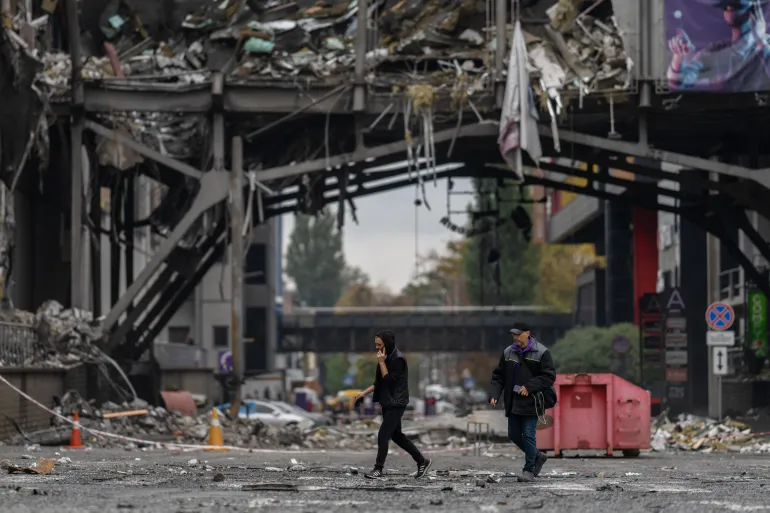
People walk in front of a damaged shopping mall following an air attack in Kyiv on October 19, 2026, amid the Russian invasion of Ukraine [Oleksii Filippov/AFP]
In remarks posted in a video on Telegram, Zelenskyy said that on three occasions in the past week, Ukraine had not received the advance warning of Russian attacks generally provided by its partners.
Last week, Zelenskyy suggested a disruption of Starlink services in Ukraine was “deliberate”. US Secretary of State Marco Rubio rejected the claim.
The sparring comes as Trump’s special envoy Steve Witkoff is set to travel to Norway this week for the next round of negotiations on ending the war in Ukraine, the Reuters news agency reported, citing three people familiar with the matter.
Two of the sources said they expected Zelenskyy to attend the meetings.
The Oslo discussions are expected to include Zelenskyy, Norwegian Prime Minister Jonas Gahr Store, representatives of the E4 – made up of the United Kingdom, France, Germany, and Poland – the European Union, and NATO.
A Russian drone strike on a park in Ukraine’s north-eastern Kharkiv region has killed six people, including three children. The attack comes amid growing concerns over Ukraine’s air defences and Donald Trump’s moves to import Russian diesel.
MIAMI — More than 100,000 people from Ukraine and Sudan can stay in the United States without immediate risk of deportation, the Department of Homeland Security said, in what amounts to a temporary reprieve after their right to stay in the country was set to expire Monday.
Temporary Protected Status was set to end Oct. 19 for about 101,000 Ukrainians and 1,800 Sudanese. But DHS said an announcement “will be made at the appropriate time.” Until then, the department said in a written statement, Ukrainians and Sudanese in the U.S. covered by those temporary measures “retain protection.” The Department did not indicate how long they could stay or when a final announcement would be made on their status.
DHS did not respond to a question about whether they can keep their work permits, but TPS generally allows people to work while their protections remain in effect.
The decision Monday marks another incident where the Trump administration, which has previously sought to end these temporary protections from deportation and send people back to their home countries, has allowed people covered by the temporary status to stay in the country but without giving any guidance as to how long.
The context of the decisions to keep the protections
The Trump administration has already terminated TPS for more than 1 million people from 13 countries, including Venezuela, Haiti, Honduras, Nicaragua, Afghanistan and Syria.
But in a change in practice roughly a month ago, the administration kept protections in place for nearly 200,000 Salvadorans whose TPS was set to expire Sept. 9. In that case they also said that they were going to make a decision at the appropriate time and that in the meantime, people from El Salvador could continue to work and live in the U.S.
Activists and a bipartisan group of lawmakers have been raising the alarm over the upcoming deadline for TPS to expire for Ukrainians, arguing that conditions remain unsafe for them to return home amid the war with Russia.
Ukraine was first designated for TPS in April 2022, following Russia’s full-scale invasion two months earlier. The Biden administration subsequently extended the designation, most recently in January 2025, when DHS authorized an additional 18 months of protection through October 2026.
The TPS program for Sudan was established in 1997, and since then, successive U.S. administrations have extended it due to the armed conflict and political instability that have plagued the African nation.
The decision Monday comes two weeks before the Nov. 3 midterm elections, when Trump’s hard line immigration policies will face a test at the ballot box.
The TPS program has offered protections for decades but is controversial
The U.S. Congress created TPS in 1990 to prevent deportations to countries suffering from natural disasters or civil strife.
It allows people already in the country to remain and work, for renewable periods if the homeland security secretary determines conditions are unsafe for their return. But it doesn’t give them a pathway to permanent residency.
Supporters say that using this tool protects people from being returned to dangerous situations and that uprooting people covered by TPS after years of living in the U.S. is cruel. Critics, especially in the Trump administration, say successive administrations have extended these protections for years regardless of what has happened in the home countries.
Federal rules say TPS is automatically extended for six months if the secretary doesn’t make a determination at least 60 days before the designation expires.
Advocates are grateful for DHS decision, warn about the war
“We’re grateful for an extension, however temporary, for TPS holders from Ukraine and Sudan,” said Myal Greene, president and CEO of World Relief, an organization that has provided humanitarian assistance in both countries. “We encourage the administration and Congress to consider longer term relief for women, men and children trying to carve out stability while their countries of origin remain in upheaval.”
Krish O’Mara Vignarajah, president and CEO of Global Refuge, noted Ukraine and Sudan are not safe and meet the legal conditions for TPS to be extended.
“Russia’s war on Ukraine is nearing its fifth year, and Ukrainians are bracing for another winter under drone and missile strikes, driving civilian casualties and devastating critical infrastructure. Sudan remains locked in a brutal civil war marked by famine, widespread human rights abuses and the hallmarks of genocide,” Vignarajah said. “It is not safe for these families to go home.”
Salomon writes for the Associated Press. AP reporter Rebecca Santana contributed to this report from Washington.
US president accuses Ukrainian leader of not wanting to end the war, as Zelenskyy speaks with Washington envoys.
Published On 19 Oct 202619 Oct 2026
United States President Donald Trump has defended sanction waivers for Russia, saying he wants to keep Moscow at the bargaining table and accusing his counterpart in Kyiv of not wanting to end the war in Ukraine.
Trump made the comments on Truth Social on Sunday in response to criticism of his decision to block numerous sanctions on Russia just days before they were due to take effect.
Recommended Stories
list of 3 itemsend of list
“My decision on Russia is a very simple one. I am in the process of negotiating Peace in the war between Russia and Ukraine, and don’t want to do anything that will drive, foolishly, Russia away from the bargaining table,” he said.
The move has triggered a significant diplomatic fallout between Trump and Ukrainian President Volodymyr Zelenskyy over the past week.
Zelenskyy said that waiving sanctions on Russia, which launched a full-scale invasion of its neighbour in 2022, “will hurt Ukraine”, telling NBC’s Meet the Press on Sunday that it would strengthen Russian President Vladimir Putin’s war effort.
“We can’t compare me and Putin. He’s [an] aggressor. He occupied us. He killed adults and children, his soldiers. He’s a terrorist, and that’s why I hope that President Trump will be very clear with this position.”
Trump reiterated his claim that Zelenskyy does not want the war on his country to end, saying on Truth Social that Kyiv was launching attacks on diesel refineries in Russia despite knowing it was “seriously hurting the world diesel markets”.
“Zelenskyy doesn’t care, and frankly, with all of the money that Europe is famously giving him… he doesn’t want to end this war, and probably never did,” Trump wrote.
Trump announced plans on October 9 for Russia to supply more than 300,000 metric tonnes of diesel to US and global markets to tackle fuel prices that have soared since the US and Israel launched war on Iran in late February. The move led Tehran to effectively close the Strait of Hormuz, through which one-fifth of global energy exports transited before the war.
Trump’s embrace of Russian energy has angered not only Kyiv, but also European partners and many US officials, who say the move rewards Moscow while it continues its four-and-a-half-year war against Ukraine.
US-Ukraine talks continue
The Ukrainian president said on X on Sunday that he has spoken with US presidential envoys Steve Witkoff and Jared Kushner as part of “virtually non-stop communication” between the two countries’ teams aimed at the “next steps in diplomacy”.
“We are doing everything on our part to make this happen, and to ensure that America’s position is strong and helps bring peace closer. Peace that everyone, except Russia, has been waiting for over the past four and a half years,” Zelenskyy wrote.
Zelenskyy spoke with Witkoff and Kushner as Russia and Ukraine continued to strike each other’s energy sites, with Moscow leaving thousands without power, and Kyiv carrying out the largest drone attack on Russia, in St Petersburg, since the war began.
US secretary of state says Ukraine has requested access to military-grade version of Starlink for strikes deep inside Russia.
Published On 18 Oct 202618 Oct 2026
United States Secretary of State Marco Rubio has said Starshield, the military-grade version of the Starlink satellite service, is currently unavailable to Ukraine, but a request from Kyiv to access the system for attacks deep inside Russia is “under discussion”.
Speaking to reporters on Saturday, Rubio stressed Starshield’s distinction with Starlink, the internet service provided by Elon Musk’s SpaceX.
Recommended Stories
list of 3 itemsend of list
“Starlink is a commercial product, okay? And so it’s regulated and handled as a commercial product. Starshield is a defence product, a military product,” said Rubio, in comments released by the Department of State.
“They’ve asked for access to it in order to conduct deep strikes inside of Russia. They do not have access to it at this moment,” he added. “That’s under conversation.”
Launched in 2022 and provided to the US government, Starshield is designed for military use as it allows for deeper encryption to process sensitive information. SpaceX says it is primarily used by US defence agencies and other “government partners”.
Last week, Ukrainian officials said restrictions on Starlink terminals had slowed some drones on the battlefield, as Ukraine tries to hold back Russian forces in their nearly five-year war.
In his comments at Joint Base Andrews in Maryland, Rubio also rejected Ukrainian President Volodymyr Zelenskyy’s suggestion that the reported disruption to Starlink services in Ukraine on Wednesday was deliberate.
“Well, I don’t know what Zelenskyy said. I’m not sure Zelenskyy knows what he’s talking about, but it wasn’t deliberate. We have nothing to do with that,” Rubio said.
Zelenskyy said on Saturday that the satellites are not tracking antennas on flying objects travelling faster than 161 kilometres per hour (100 miles per hour). This is affecting Ukrainian drones in their defence against Russian jet-powered drones and in their own medium-range attacks, he added.
Rubio said the US had not ordered Starlink speeds to be reduced and that the service had reportedly been restored to its previous level.
“No one at the White House ordered anyone to slow down internet or slow down speed so that certain drones couldn’t use it,” he said, calling the reports “categorically false”.
The remarks came as US President Donald Trump drew criticism from Democrats and Republicans after waiving sanctions on Russia and countries that buy its oil and gas, days before the restrictions were due to take effect under a law he signed last month.
Zelenskyy also criticised the sanctions waiver on Saturday, saying easing pressure on Russia would encourage further attacks.
“Financial rewards for [President Vladimir] Putin – all of this only encourages him to keep attacking,” Zelenskyy posted on social media, urging the US to maintain pressure on Moscow.
WASHINGTON — President Trump’s abrupt decision to waive sanctions on Russia days before they were to take effect drew outrage Saturday from members of Congress, which had overwhelmingly passed the legislation in a bipartisan display of American support for Ukraine in the war with Russia.
Lawmakers from both parties blasted the executive order late Friday, the latest in a series of steps that the Republican president has taken drawing the United States closer to Russia’s Vladimir Putin. Trump recently announced a diesel deal with Putin to import Russian energy in a long-shot effort to curb high gas prices in the U.S. that are roiling the midterm elections on Nov. 3.
“Beyond irresponsible,” said Sen. Thom Tillis (R-N.C.), on social media, hours after Ukrainian President Volodymyr Zelensky expressed hope that the sanctions that were supposed to take effect Sunday targeting Russian’s economy could be revived.
“What part of enforcing a law passed 86-11 by the Senate does the President and his advisors not understand?” Tillis said. “It’s unconscionable that this administration is capitulating to a Russian dictator who illegally invaded Ukraine.”
Tillis said that if Trump wants to actually bring down energy prices, he should resolve the Iran war, which is largely blamed for the spike at the pump, and “not by doing a solid for Vladimir Putin.”
Republican Sen. John Cornyn of Texas said, “Lindsey would be appalled,” referring to the late Sen. Lindsey Graham (R-S.C.), who worked endlessly on the bill before he died this summer. The bill is known as the Lindsey Graham Russian Sanctions Act.
Sen. Elizabeth Warren (D-Mass.) said Trump is “thumbing his nose” at Congress and “enabling Vladimir Putin to continue his war of aggression.” She urged her colleagues to take action to reverse course.
Trump’s actions come as Ukraine is bracing for a stark winter confronting Russia’s ongoing attacks on its energy infrastructure to heat homes and keep the lights on. Zelensky, who has endured a rocky relationship with Trump but stayed close to the U.S. lawmakers, urged supporters to speak out on behalf of the sanctions.
The next steps are highly uncertain with the House and Senate on recess until after election day. Trump said he was waiving the sanctions indefinitely, citing national security concerns. It is unlikely Congress would be in a position to take any action to challenge Trump’s moves until lawmakers return to Washington.
It took almost a year for Graham to persuade Trump to agree to the Russian sanctions package. It was designed to impose steep tariffs on countries that import large amounts of Russian oil and energy products and was promoted as way to halt the flow of funds fueling Putin’s four-year war against Ukraine.
But even as Zelensky had watched from the visitor gallery as the Senate advanced the package after Graham’s death, skeptics in Congress warned Trump would be unlikely to follow the bill once he had signed it into law a month ago.
Last week, a bipartisan group of senators urged the Trump administration to more quickly clamp down on Russia, particularly the “shadow fleet” of tankers that Moscow is using to transport oil and bypass America’s sanctions. The senators noted that the bulk of the new law’s provisions were to be effective Sunday.
Instead, Trump soon announced the diesel deal with Putin, saying that Russia had agreed to supply tons of fuel to the U.S., where gas prices have skyrocketed in some areas and voters saying affordability issues are a top concern.
Outraged lawmakers have pledged to stop the Trump-Putin deal.
New York Rep. Gregory Meeks, the ranking Democrat on the House Foreign Affairs Committee who had led opposition to the Graham bill — warning that Trump would flout the law — introduced legislation Friday that would block Trump’s diesel deal with Putin.
“At a time when the United States should be increasing pressure on the Kremlin, Donald Trump is cozying up to Putin and striking self-enriching deals instead of standing with Ukraine,” Meeks said in a statement.
He called the deal “corrupt” and said it “goes against everything the United States stands for.”
Mascaro writes for the Associated Press. Associated Press writers Kevin Freking and Mary Clare Jalonick contributed to this report.
These conversations took place during the recently wrapped Association of the U.S. Army (AUSA) annual convention in Washington, D.C., which TWZ attended.
“A lot of the things that are happening right now in terms of long-range fires, integrated air and missile defense, and the lessons that we’re learning from them, we’re able to bring a lot of that to our potential challenges in the Pacific,” Gen. Ron Clark, commander of U.S. Army Pacific (USARPAC), told us at a media roundtable. “Specifically, I am thinking through mobility and camouflage. So it’s one of those age-old Army forgotten sciences of how to hide in plain sight and how to camouflage ourselves from observation, because the ability to be able to see surface entities is almost ubiquitous.”
“Our ability to be able to use electronic warfare, to be able to use just good old-fashioned camouflage, and the ability to deceive our adversary is a must,” Clark added. You can read more about the U.S. military’s camouflage and deception efforts in our story here.
U.S. Army soldiers of Brigade Engineer Battalion camouflages a Humvee while conducting preparations during exercise Combined Resolve VII at the U.S. Army’s Joint Multinational Readiness Center in Hohenfels Germany. (U.S. Army photo by Pfc. Randy Wren) Spc. Randy Wren
A Russian heavy-duty truck painted with zebra-style stripes to confuse AI-assisted target seeking equipment. via X
As tough as things have been for Ukraine and for U.S. forces in the Middle East, the challenges will be even greater in the Pacific, Clark warned.
In Europe and the Middle East, “it’s not a near-peer adversary that we will be working against,” said Clark, referring respectively to Russia and Iran.
“Whereas in our theater, it absolutely is,” the USARPAC commander noted in a reference to China without naming the country. “So our ability to scale that and to think through the problem sets of how do we fight Type One, Type Two UAS? How do we think through ballistic missile defense holistically in the region? We spend a lot of time working with the joint force for solutions associated with that. How do we maneuver inside an archipelagic environment?”
DF-17 medium-range hypersonic ballistic missiles on display during the V-Day military parade in Beijing. (Photo by Sheng Jiapeng/China News Service/VCG via Getty Images) China News Service
For the Army, any fight in the Pacific will require soldiers to be able to hop islands and move through vast swaths of ocean, constantly hunted and frequently inside the Chinese weapons engagement zone. Clark said that the Army’s organic fleet of ships like landing craft, small tugs, and modular causeway systems operated by the service’s 8th Theater Sustainment Command will be vital for maneuver.
Two U.S. Army Landing Craft Utility (LCU) vessels. (U.S. Army) www.twz.com
“But we also have to be able to conduct tactical maneuver with forces on the ground that can provide long-range precision fires, as an example, and then move so that fires, radars, sensors are not easily targeted,” Clark added. “Because if they can see you, they can hit you. And if you know they have an opportunity to return fire, they will. So our lessons that we’re learning are, in some cases, are very, very relevant. In some cases, we can learn from some of the changing characteristics of war.”
Still, the wide-open plains and dense cities of Ukraine are quite different from the beaches and jungles of the Pacific, Clark reminded us.
A U.S. Army soldier assigned to the 1st Battalion, 27th Infantry Regiment, 2nd Mobile Brigade, 25th Infantry Division, observes a linear danger area during the Joint Pacific Multinational Readiness Center Rotation (JPMRC) 26-01 at Schofield Barracks, Hawaii, Nov. 6, 2025. (U.S. Army photo by Sgt. Duke Edwards) Sgt. Duke Edwards
“The way we generally fight does not equate specifically in the Ukraine piece to the maneuver that you would see out of U.S. forces if deployed in a conflict like that,” the USARPAC commander explained. “To be able to use operational maneuver and tactical maneuver in a way that it’s not just simply drone on drone or firing long range fires at one another at scale for an extended period of time. We find our way to work through that problem set and maneuver to positions of advantage and to prevail.”
💥Ukraine’s 115th Mechanized Brigade has released new footage showing a VB-140 Flamingo interceptor drone attacking a Russian Mi-28 attack helicopter in flight.
The drone approaches from above and flies directly into the helicopter’s spinning main rotor. It’s unclear whether… pic.twitter.com/GCb9FodXG3
When we pushed further on that point, Gen. Xavier T. Brunson, commander of United Nations Command, Combined Forces Command and United States Forces Korea, weighed in.
“To be able to move with sensors everywhere at all times causes us to achieve positions of advantage from distributed locations,” Brunson pointed out. “So the fight is: you look at maneuver. You might maneuver to a position of advantage, knowing that you’re going to change that again. The ability to utilize not only joint sensors but joint effectors, if you will, joint fires, to be able to use those things from different positions changes the shape of the operating environment.”
The bottom line, he added, is that “maneuver is always going to be maneuver. You’re going from A to B, but you might go from A to A1 to A2 to A3 to get to B, and that’s what I think we realize in this distributed fight that’s going on in Ukraine, and so we continue to watch to see what lessons might be coming back into” effect.
In part reacting to lessons learned from Ukraine and the Middle East, the Army is also changing how it trains, Clark stated. In South Korea, he said the service has to get out of the habit of concentrating so heavily on just two annual major training exercises.
“We recognize… that largely the two big exercises every year in Korea focus on large command posts,” Clark proffered. “We’ve got to move away from that. So what we intend to do is take advantage of the knowledge that we have of the threats that exist or that prevail in the Ukraine fight.”
A Republic of Korea Army 5th Engineer Brigade, K1A2 tank crosses a U.S. Army Improved Ribbon Bridge (IRB) during joint wet gap training as part of Freedom Shield 25 at Yeoncheon-gun, Republic of Korea, Mar. 20, 2025. (U.S. Army photo by Sgt. Daniela Lechuga Liggio) Sgt. Daniela Lechuga
Clark said these discussions are underway with his deputy commander, Republic of Korea Army Gen. Sungmin Kim.
“We talk about how we would operate in a distributed fashion. You know as well as I do, there’s a location that we go to to train every year in Korea, and we stay in that place,” Clark said in response to a question from another reporter. “What would it look like if we train from Jeju all the way up to Gyeonggi Province in the north? What would that look like, just with our headquarters alone?”
“So just imagine,” Clark postulated, “if we train across the entirety of the peninsula, and got ourselves in the shape where we would say [to North Korea], ‘You can’t utilize the things that you’ve learned in the fight and the battlefield in Ukraine on us, because we learned the same lessons and we’ve distributed ourselves in such a way that we don’t make ourselves the target. We won’t be moored in place,’ and that’s what I’m talking about when I talk about positional advantage. It might not be the same place to the continuum. It might not be the same place when you’re in crisis or conflict or competition. We might have to change that, and that’s what we’re learning.”
South Korea. (Google Earth)
Another lesson from Ukraine that Army leaders should be paying attention to, said another panelist, is how both sides are using aerial and ground drones to supply frontline forces and evacuate the wounded because human efforts have now become too deadly, thanks to drones.
“I think you also can’t talk about Ukraine without talking about autonomy,” said Tara Murphy Dougherty, CEO of a company called Air, which provides AI-based sustainment solutions to the Army.
“One of the advantages that you get from using simulation and automation, and really using models and compute in order to create convoy plans, as opposed to humans with Excel spreadsheets, is you are able to do many fewer actual convoys because you’re using all of your capabilities so much more effectively and efficiently,” Dougherty posited. “And while it’s an indirect example, I think it does tie to soldier protection because you’re putting fewer soldiers out there in vulnerable settings. I see that not as an end-goal outcome; we need convoys.”
Ultimately, however, the Army will have to advance what Ukraine and Russia are doing with the deployment of aerial drones and uncrewed ground vehicles for logistics by creating “convoys” of autonomous vehicles.
“I see the end goal outcome as having as many autonomous convoys as possible, and we’ve heard today already at this event some of those ideas,” the CEO added. “In the interim, until we get to more autonomy in medevac and more autonomy in convoys when it’s non-soldier material that’s going out to the battlefield, let’s try and put fewer out there while actually getting more material and capability into the force where it needs to be.”
A Hunter Wolf unmanned ground vehicle assigned to Charlie Battery, 3rd Battalion, 320th Field Artillery Regiment, 3rd Mobile Brigade, 101st Airborne Division (Air Assault). (U.S. Army photo by Master Sgt. Anthony Hewitt) Master Sgt. Anthony Hewitt
The Iranian missile and drone barrages on fixed U.S. bases across the Middle East have created some very costly lessons for American forces. As we noted earlier in this story, several troops were killed and critical air defense radars, aircraft and other important equipment were destroyed or damaged. U.S. installations across the region have also suffered damage.
In another media session, we pressed Army officials operating in South Korea about what they learned from watching the destruction caused by Iran and what they are doing to address it.
You can see a satellite image of damage to a U.S. radar site in Jordan below:
NEW: The radar for a THAAD system was struck and apparently destroyed in Jordan while two other THAAD radar systems may have been hit in the UAE, satellite images show – w/ @ThomasBordeaux7https://t.co/qiuWVQgyda
— Gianluca Mezzofiore (@GianlucaMezzo) March 5, 2026
“We certainly are watching what’s happening, and we are learning from what is happening in Operation Epic Fury,” Lt. Gen. Joseph “Joe” Hilbert, commanding general of Eighth Army, stationed in South Korea, told us. “We’re learning what’s happening in Ukraine, and we are working through changes in our own tactics and techniques and procedures to be able to react to those threats and to be able to defend against them.”
For more details, he turned the microphone over to Col. Rosanna “Ro” M. Clemente, commander of the 35th Air Defense Artillery Brigade in South Korea.
“Drawing from those lessons learned, a lot of it is trying to understand how our systems are being hunted by the adversary,” she told us. “So, strictly into all of our training plans, and as we conduct our own internal exercises, all of our air defenders are practicing something as simple as mobility and survivability jumps, which is being able to reposition and displace your systems to different alternative locations based on any type of threat warnings that we receive. They’re very, very well trained. I think all of our soldiers know how to move their systems extremely, extremely well. They move them quickly, and they are able to move them and reposition them into different locations across the peninsula that still maintains that ballistic missile defense coverage.”
U.S. Army Pvt. Nathaniel Mullins, assigned to the 35th Air Defense Artillery Brigade, analyzes a Sentinel A4 air and missile defense radar during a training exercise at Camp Humphreys, South Korea, April 22, 2026. The training highlighted Eighth Army’s continued modernization efforts by preparing soldiers to operate the new radar system. (U.S. Army photo by Cpl. Luciano Alcala) Sgt. Luciano Alcala
In addition, “we also have to rely on the other pillars of integrated air and missile defense, most specifically the passive defensive measures that we also have in place,” she added.
Those measures involve “a little bit more than just hardening – but a couple of other techniques that we’ve learned from the Russia-Ukraine war in terms of deception, how to move things around, create distractions, and make sure that we create different types of dilemmas for the adversary in terms of where our capabilities are and where are they positioned to protect its defended assets.”
At least eight people have been killed and nearly 60 injured in the latest wave of Russian strikes across Ukraine. Ukraine’s Air Force said Russia launched 332 drones and missiles overnight, of which 293 were intercepted or neutralised.
US President Donald Trump has waived more sanctions on Russia in a bid to ease energy prices, leading to a chorus of condemnation from Ukraine and EU allies. The executive order comes as the rift between Trump and Ukraine’s Zelenskyy widens.
US president’s executive order comes two days before sanctions deadline and a week after diesel deal with Putin.
Published On 17 Oct 202617 Oct 2026
US President Donald Trump has put on hold a sweeping package of sanctions on Russia that he signed into law last month, telling Congress the pause is in the national interest.
Trump signed an executive order on Friday, two days before a deadline in the law that would put the sanctions into effect.
Recommended Stories
list of 3 itemsend of list
The law – named after Lindsey Graham, the Republican senator who died unexpectedly in July after returning from Ukraine – had passed in the House of Representatives and the Senate by large margins. The bipartisan legislation was drafted by Graham and Democratic Senator Richard Blumenthal.
It sought to starve Moscow of money for the war by sanctioning Russian officials, banks and a shadow fleet of tankers carrying its energy.
It also directed Trump to impose tariffs of up to 100 percent on the five biggest importers of Russian oil or gas, with an exception for countries that import less than 15 percent of Russia’s natural gas exports and are taking steps to cut them.
Diesel deal and criticism
The decision to suspend the sanctions comes a week after Trump said the US had signed a deal to buy diesel from Russia to try to lower global fuel prices.
Both Republicans and Democrats, criticising the deal, said it would help Russia’s war effort without affecting fuel prices.
Democratic Representative Don Beyer said he and others had “warned” that Trump might do this, in reference to Trump’s deal with Moscow.
Beyer called on Congress to “fix this flawed law to stop Trump from capitulating to Putin and ensure that it truly supports Ukraine”.
Trump has also increasingly criticised Ukrainian President Volodymyr Zelenskyy lately for failing to reach a deal with Russia.
As Republicans try to keep control of Congress in the November 3 midterm elections, an AP-NORC poll released on October 1 found Americans disapprove of Trump’s handling of the Iran war and blame him for higher prices among several other domestic policy issues.
Ukrainian President Volodymyr Zelenskyy warned Russia’s ambitions extend beyond eastern Ukraine, saying its drone attacks threaten NATO. Speaking after an EU summit in Belgium, he also took a jibe at US President Donald Trump for saying he is harder to deal with than Putin.







![People walk in front of a damaged shopping mall following an air attack in Kyiv on October 19, 2026, amid the Russian invasion of Ukraine [Oleksii Filippov/AFP]](https://i0.wp.com/occasionaldigest.com/wp-content/uploads/2026/10/AFP__20261019__D3PR8JC__v1__HighRes__UkraineRussiaConflictWar-1792469703.jpg?w=640&ssl=1)