Russia

Turkiye making efforts to revive Russia-Ukraine talks, says Erdogan | Russia-Ukraine war News

Turkish president meets NATO chief as Kyiv asks Ankara to host a leaders’ level meeting with Russia.

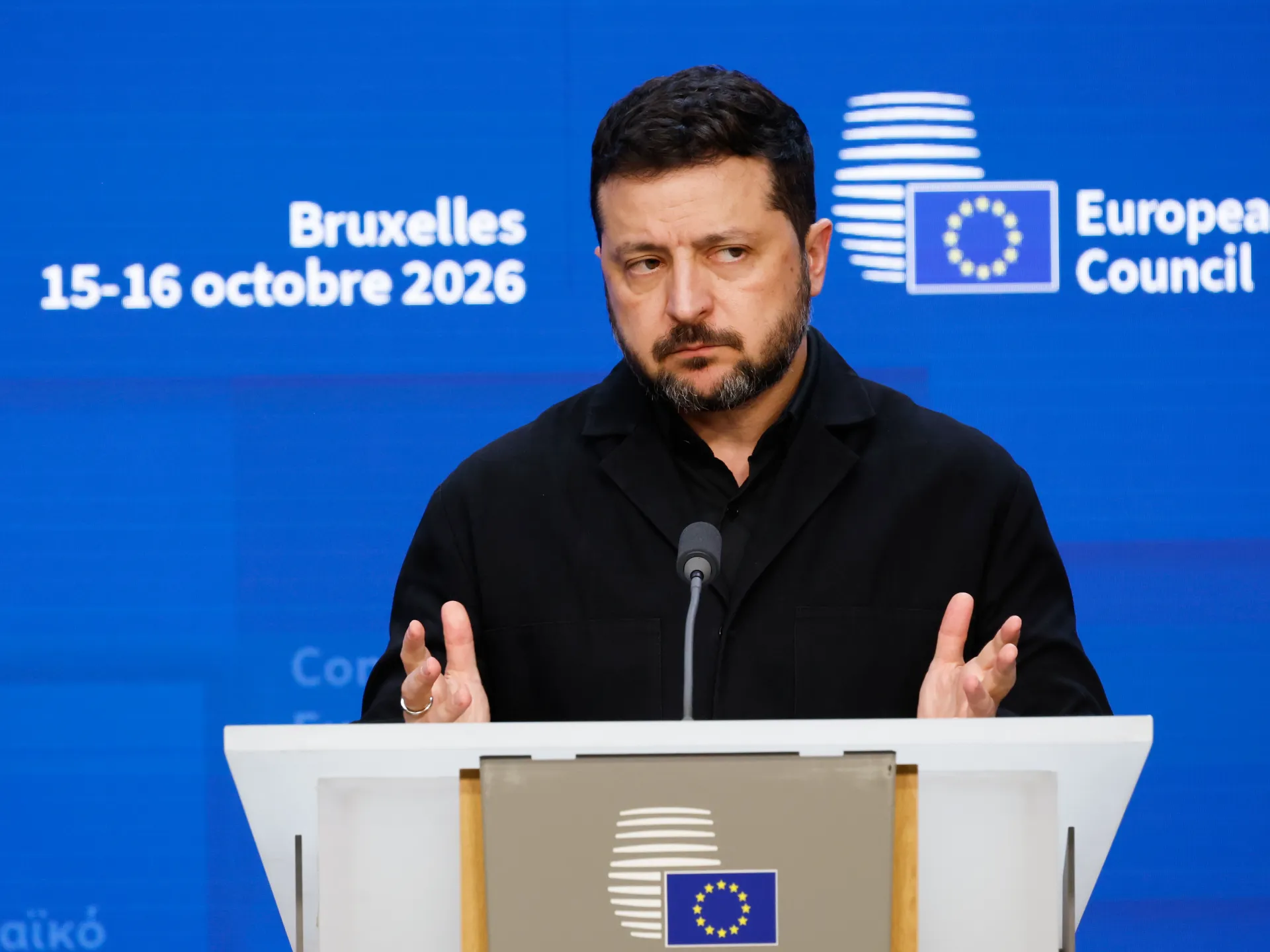
Turkiye is making efforts to revive negotiations between Russia and Ukraine and bring together the leaders of the warring sides, Turkish President Recep Tayyip Erdogan has told NATO Secretary-General Mark Rutte.

Ankara has maintained good ties with both sides since Russia’s full-scale invasion of Ukraine in 2022.

Recommended Stories

list of 4 itemsend of list

Erdogan and Rutte met in the Turkish capital Ankara, the Turkish presidency said on Wednesday.

“Erdogan said we were engaged, as Turkiye, for the Ukraine-Russia war to end with peace, and that we are working to revive negotiations and start talks at leaders’ level,” the presidency said in a readout of the meeting.

The Turkish president also told Rutte that maintaining transatlantic ties was “indispensable”, but that Ankara expected European NATO allies to take more responsibility for transatlantic security, the presidency said.

Separately, Erdogan had a phone call with German Chancellor Frank-Walter Steinmeier on Wednesday, informing him of Ankara’s efforts to achieve a lasting peace through talks in Ukraine, the presidency said.

Erdogan told the German leader that the US-Iran war was “starting to weaken Europe” and that the damage from the conflict would increase if world powers failed to intervene with “peace-oriented approaches”.

“Erdogan said Turkiye was working to end the Ukraine-Russia war through negotiations and reach lasting peace, just as it is trying with regards to Iran,” the presidency said in a statement after the phone call.

Ukraine’s request

Earlier on Wednesday, Kyiv said it had asked Turkiye, a NATO member, to host a leaders’ level meeting with Russia.

“We asked the Turks about it, we asked some other capitals,” Ukraine’s Foreign Minister Andrii Sybiha said in comments to reporters on Tuesday that were cleared for release on Wednesday.

He added that Ukraine would be ready to consider any place other than Belarus or Russia for a meeting with Russian President Vladimir Putin, and that Ukraine’s President Volodymyr Zelenskyy has long sought to try to hasten a resolution of the more than four-year war.

Meanwhile, Russian news agencies quoted Kremlin spokesman Dmitry Peskov as saying that Putin would be ready to meet his counterpart only for the purpose of finalising agreements on the conflict.

“The main thing is the goal of this meeting. Why should they meet? Putin has said he is ready for a meeting in Moscow at any moment,” the TASS news agency quoted Peskov as telling Russian state television.

“The main thing is that there should be a reason to meet, and the main thing is that the meeting should be productive. And it can only be for the purpose of finalising agreements.”

Source link

Russian police raid book publisher accused of pushing ‘gay propaganda’ | Russia-Ukraine war News

Raid is part of Moscow’s hardline social conservatism and clampdown on political life.

Russian police have raided the country’s top publishing house on suspicion that it has been disseminating “homosexual propaganda”, local media report.

Police reportedly seized thousands of books on Tuesday and took Yevgeny Kapiev, the chief executive of Eksmo, in for questioning. The raid appears to be part of Moscow’s pivot to hardline social conservatism with repressive laws running alongside a clampdown on political life and aggressive foreign policy.

Recommended Stories

list of 4 itemsend of list

Police targeted Kapiev as part of a “criminal case on extremism” over the publication of books “dealing with LGBT themes”, Eksmo communications director Yekaterina Kozhanova told the AFP news agency.

The firm’s finance director, head of distribution and deputy commercial director were also interrogated, Kozhanova said.

Eksmo is suspected of unofficially marketing books, including novels, that promote “gay propaganda” to Russian youth, the broadcaster Ren-TV reported.

An investigation into Eksmo was opened last year when authorities said “LGBT propaganda” had been “detected” in books published by its Popcorn Books subsidiary and they arrested several members of its staff.

Ultraconservative turn

Books showing approval of same-sex relations have been banned in Russia for more than 10 years.

The law has been tightened recently, requiring publishers to remove publications and destroy entire editions if they depict same-sex relationships.

The persecution of LGBTQ individuals, organisations and communities has intensified in the past decade or so as the Kremlin heralds “traditional values”. That drive has included a crackdown on films, books, art and culture, among other areas of social life.

Cultural producers have faced significant pressure even when they focus on giants of Russian culture. Biographies of Mikhail Bulgakov, author of The Master and Margarita, and the poet, actor and singer Vladimir Vysotsky have to be marked with warning labels because they are seen as promoting drug-taking.

The ultraconservative social turn has accelerated since Russia launched its full-scale invasion of Ukraine in February 2022.

In 2023, Russia’s Supreme Court ruled that LGBTQ activists should be designated as “extremists” and banned activities of the “international LGBTQ movement”.

Courts have issued fines and jail sentences to people displaying LGBTQ “symbols”, such as clothes, jewellery or posters featuring the rainbow flag.

Out of 49 European countries, the Rainbow Europe organisation ranked Russia third from bottom in terms of tolerance of LGBTQ people.

Source link

How Putin’s Coup-Proofing Measures Have Undermined Russia’s War Effort in Ukraine

Authoritarian leaders like President Vladimir Putin are faced with a dilemma: they require their military forces to competently conduct campaigns against external enemies, but these same capabilities make them more capable of successfully initiating coups to remove the incumbent leader.  Putin, like other leaders of his ilk, is forced to balance policies which promote competence in the armed forces with measures that ensure regime survival.  The latter are referred to as ‘coup-proofing’ measures, the implementation of which, to some extent explain the underperformance of the Russian war effort in Ukraine.

Counterbalancing and Parallel Forces

The coup-proofing measure of most consequence to Russia’s military performance in Ukraine is ‘counterbalancing’.  This involves the introduction of new security forces to counterbalance the military and each other.  A splintered security sector filled with various armed groups are in competition with each other for funding, recruits, and supplies, as well as the ruling autocrat’s attention, which is ultimately vital for attaining the aforementioned resources. 

Counterbalancing confers three advantages.  Firstly, it promotes loyalty by encouraging competition and distrust between militarized factions who must demonstrate allegiance to the leader to secure resources.  Secondly, it deters coups because the officers and senior figures distrust their counterparts in other organizations; and thirdly, it prevents the likelihood of a coup succeeding as it is more difficult for military and security forces operating under disparate chains of command to coordinate and cooperate effectively.

To quote, a 2017 paper appearing in the Journal of Conflict Resolution, ‘If coups are akin to coordination games, counterbalancing can be understood as an effort to add additional players to the game – actors who lack the incentive to move in concert with the others.’

Counterbalancing is rarely used in isolation and may be combined with other coup-proofing measures.  For example, authoritarian leaders frequently favour loyalty over meritocracy when selecting staff for senior military and security positions.

Mercenaries as Parallel Forces

Several parallel armed groups exist outside of the Russian military’s chain of command.  The most high-profile example is the use of mercenaries from Wagner Group, formerly led by Yevgeny Prigozhin until his demise in August 2023.  Wagner Group employs an estimated 50,000 soldiers, 40,000 of which are believed to be released prison convicts.  For Putin, the introduction of mercenaries to the war in Ukraine conferred several benefits including a degree of plausible deniability, less domestic blowback from casualties, and an alternative source of manpower which was especially valuable prior to the partial mobilization in September 2022.

From a coup-proofing perspective, the introduction of a private military company (PMC) with overlapping responsibilities to the regular military promoted greater competition between senior leaders.  This rivalry was exacerbated by the contest for vital resources like ammunition, supplies and personnel. 

The feud between Wagner’s late leader with Defence Minister Sergei Shoigu and Chief of the General Staff Valery Gerasimov was especially bitter.  Prigozhin frequently levelled scathing criticism at the two men, and other senior military officers for their handling of the war, accusing them of stealing the credit for Wagner’s battlefield successes in Ukraine, and even attempting to sabotage the PMC’s efforts by withholding vital ammunition. 

For a time, this suited Putin.  Prigozhin was careful to avoid directly criticizing the Russian president himself which helped to deflect any blame Putin might receive from the public onto his generals.  Moreover, Prigozhin’s actions appeared to fit a preestablished pattern in Russian politics whereby senior figures jostle against each other to secure the president’s favour. 

There are several Russian PMCs in addition to Wagner Group.  Konstantin Pikalov, once thought to be Prigozhin’s right hand man and the head of Wagner operations in Africa, heads his own mercenary group called ‘Convoy’, which were founded in occupied Crimea in Autumn 2022.  Another group is ‘Redut’, which was likely formed to provide security for Russian-owned facilities in Syria, but it believed to have been one of the first PMCs to provide personnel during the invasion of Ukraine in February last year.

The Russian energy giant Gazprom also has mercenaries in the guise of ‘private security organizations’, which energy companies were permitted to create after a new law was passed by Russian Prime Minister Mikhail Mishustin in February 2023.  It is unclear whether the various groups associated with Gazprom subsidiary Gazprom Neft will exclusively guard the company’s energy facilities or whether they will take on active combat roles in Ukraine.

Other Parallel Forces

Mercenaries are not the only parallel forces at play.  In 2016, Putin formed the Rosgvardiya (National Guard) under the leadership of Viktor Zolotov, the president’s former bodyguard.  The formation of the Rosgvariya entailed the reorganization of preexisting internal security forces into a new agency which directly reports to Putin.  Ostensibly, the Rosgvardiya’s responsibilities largely concern public order, policing, and counterterrorism, but the 300,000 to 400,000 strong force certainly acts as a deterrent to would-be coup-plotters.  The Rosgvardiya has also reportedly seen action in Ukraine.

Similar examples of counterbalancing can be seen in the intelligence sphere.  Three of the country’s most important intelligence services, the GRU, the SVR, and the FSB, each have their own elite special forces contingents.  Competition and mutual distrust between the three is rife due to a high degree of overlapping tasks and low degree of cooperation.  The FSB have attracted a particularly high degree of rancour from the GRU and SVR because of its increasingly proactive role conducting operations beyond its domestic remit.  Additionally, counterintelligence officers from the FSB are embedded directly within the armed forces to monitor signs of dissent. 

Finally, there are parallel forces provided by the Russian republics.  Just two days after the invasion of Ukraine, Ramzan Kadyrov, the Kremlin-appointed leader of Chechnya, confirmed that the 141st Special Motorized Regiment – better known as the Kadyrovites – were operating in the country.  The Kadyrovites are essentially a paramilitary organization loyal to Kadyrov, functioning as his private army. 

Like Prigozhin, Kadyrov has been highly critical of the Russian military leadership but avoided levelling such critiques at Putin.  By emphasizing the effectiveness of Chechen fighters over regular Russian forces, Kadyrov may have been hoping to make himself appear more indispensable to Putin.

How Coup-Proofing Degrades Military Effectiveness

The introduction of several players incentivized to hold each other in mutual suspicion is not conducive to an effective and unified war effort, as events in Ukraine have demonstrated.  As explained by James M. Powell, coup-proofing ‘undermines the fighting capacity of a military by creating coordination challenges in the field.’  Unity of command is necessary for a coup to be effective, but it is just as necessary for conducting a war.  The absence of unified command has thus jeopardized the entire Russian war effort.

The lack of a unified command structure was evident in the early stages of the war.  In the first months following the invasion, Western and Ukrainian intelligence agencies and analysts were unable to identify a single overall commander of the Russian forces in Ukraine.  Instead, it was believed that separate formations were drawn from each of Russia’s four military districts and placed under the command of senior officers from each district, with Putin taking on an oversized role, sometimes reportedly giving orders to field formations.  Last April, Army General Aleksandr Dvornikov was finally named as overall commander but there have been at least three reshuffles at the top since then.

Wagner’s increasing share of frontline duties further undermined unity of command, with Prigozhin and his mercenaries not subject to the authority of the regular armed forces.  Tensions between Prigozhin and the miliary leadership culminated in Wager Group’s mutiny in June.  A civil war or coup seemed momentarily possible in Russia until a deal was brokered by Belarusian President Alexander Lukashenko.  Prigozhin was later killed in a plane crash in August removing him from the chessboard altogether, but his insubordination was a clear sign that Putin had miscalculated and allowed the rivalries simmering between the members of his inner circle to burn too hot.

Beyond Prigozhin’s dramatic rebellion, Coup-proofing has created other unintended consequences which have hindered Russia’s military efforts.  An overemphasis on loyalty at the expense of competence coupled with fierce competition between the security and defence services have created incentive structures that have undermined honesty and integrity, inter-service cooperation, and professionalism. 

These trends were identified by analysts as being particularly pervasive in the Russian intelligence community even before the invasion of Ukraine.  For example, a 2021 Congressional Research Service report noted that ‘Agencies compete with each other for greater responsibilities, budgets, and political influence, often at the expense of other agencies.’  As Mark Galeotti puts it, ‘The competition for presidential approval is especially strong and has led to a perverse competition to tell the boss what they think he wants to hear, not what he needs to hear.’  This culture likely incentivised the Russian intelligence community to provide briefings to Putin prior to the invasion that confirmed his preconceptions that Ukraine would offer little resistance.

It is equally questionable if the most competent officers have been granted the responsibility to lead Russia’s war on Ukraine.  Sergei Surovikin, a veteran of several conflicts and broadly considered to be capable officer by most military analysts, was made the overall commander of Russian forces in Ukraine in October 2022.  However, Surovikin was replaced in January the following year by Valery Gerasimov, despite the latter having already attracted much of the blame for implementing a faulty strategy in his role as the Chief of the General Staff.  In August, Surovikin was then stripped of his role as the commander of the Russian aerospace forces due to suspicions that he was linked to the Wagner rebellion. 

Other officers have met similar fates.  On July 12, Major General Ivan Popov, who led the 58th Combined Arms Army stationed in Ukraine’s southern Zaporizhzhya region, disclosed that he had been relieved of his command after he made complaints to Gerasimov regarding the lack of troop rotations.  He also highlighted issues his soldiers were having with counterbattery radar and artillery reconnaissance.  Popov’s dismissal indicates that senior military personnel are seemingly unable to report the facts on the ground to their superiors without facing charges of disloyalty or disciplinary action.  Such a culture, especially within the Russian military’s highly hierarchal command structure will make it increasingly difficult for commanders to make informed decisions based on accurate information.

Thus far, Putin’s coup-proofing strategy has succeeded in fragmenting the Russian security elite sufficiently to secure his hold on power, despite Prigozhin’s short-lived insubordination.  However, these same measures which have enabled Putin to safeguard his rule have seriously undermined Russia’s war effort in Ukraine.  The constituent parts of Russia’s defence and security apparatuses fail to act as a whole and there is ample evidence that senior leaders have been promoted on the basis of perceived loyalty over competence.  A culture of competition and distrust has hindered cooperation, coordination, and honesty, which has led to poor decision-making, the results of which have played out on the battlefields of Ukraine since February last year.

Source link

EU credibility is on the line over Israel, says Spanish foreign minister | Russia-Ukraine war

NewsFeed

Spain’s foreign minister has warned the EU risks losing credibility if it fails to apply the same principles to Israel’s “perpetual war” in the Middle East as it does to Russia’s invasion of Ukraine. He urged a unified stance, citing human rights clauses in the EU–Israel agreement and criticising ongoing violence in Gaza, the West Bank and Lebanon.

Source link

Russia claims Ukraine-linked bomb plot foiled, German woman arrested | Russia-Ukraine war News

Russia’s FSB accused the woman, found with a bomb in her backpack, of taking part in a plot hatched by Ukraine.

Russian authorities say they have thwarted a Ukraine-linked bomb plot against security services and arrested a German woman found with a makeshift bomb in her backpack.

Russia’s FSB security agency said the unnamed woman was detained on Monday in the southern city of Pyatigorsk.

Recommended Stories

list of 3 itemsend of list

In a statement cited by Russia’s state-run TASS news agency, the FSB said it had “prevented a terrorist attack planned by the Kyiv regime against a law enforcement facility in the Stavropol region, involving a German citizen born in 1969”.

It said the woman had been recruited by a citizen from a Central Asian country, who was working on orders from Ukraine. That man was found and arrested near the targeted site.

According to the FSB, the device contained an explosive charge equivalent to 1.5kg (3 pounds) of TNT and was intended to be detonated remotely. The agency said the blast was ultimately prevented by electronic jamming.

Video of the purported arrest published by Russia’s state RIA Novosti news agency showed armed Russian security agents approach the woman as she was face down in a car park.

Another video showed masked plainclothes agents pulling a man into a station, followed by a controlled explosion of the backpack.

Russia’s previous allegations

Russia has arrested dozens of people throughout the four-year war, mostly its own citizens, on allegations of working for Ukraine to carry out sabotage attacks.

Russia has previously accused Ukraine of working with Islamic fundamentalists to carry out attacks inside Russia, without providing evidence.

Officials initially alleged that the perpetrators of a 2024 massacre at a concert hall on the outskirts of Moscow that killed 150 people were ISIL (ISIS) members in coordination with Ukraine.

ISIL claimed responsibility for that attack, making no reference of any Ukrainian involvement, for which no evidence was presented by Moscow and which Kyiv denies.

Source link

Ukraine claims attack on Russian warships in occupied Crimea | Russia-Ukraine war News

Ukraine’s military intelligence says it struck two large landing ships in Sevastopol Bay in Russian-occupied Crimea.

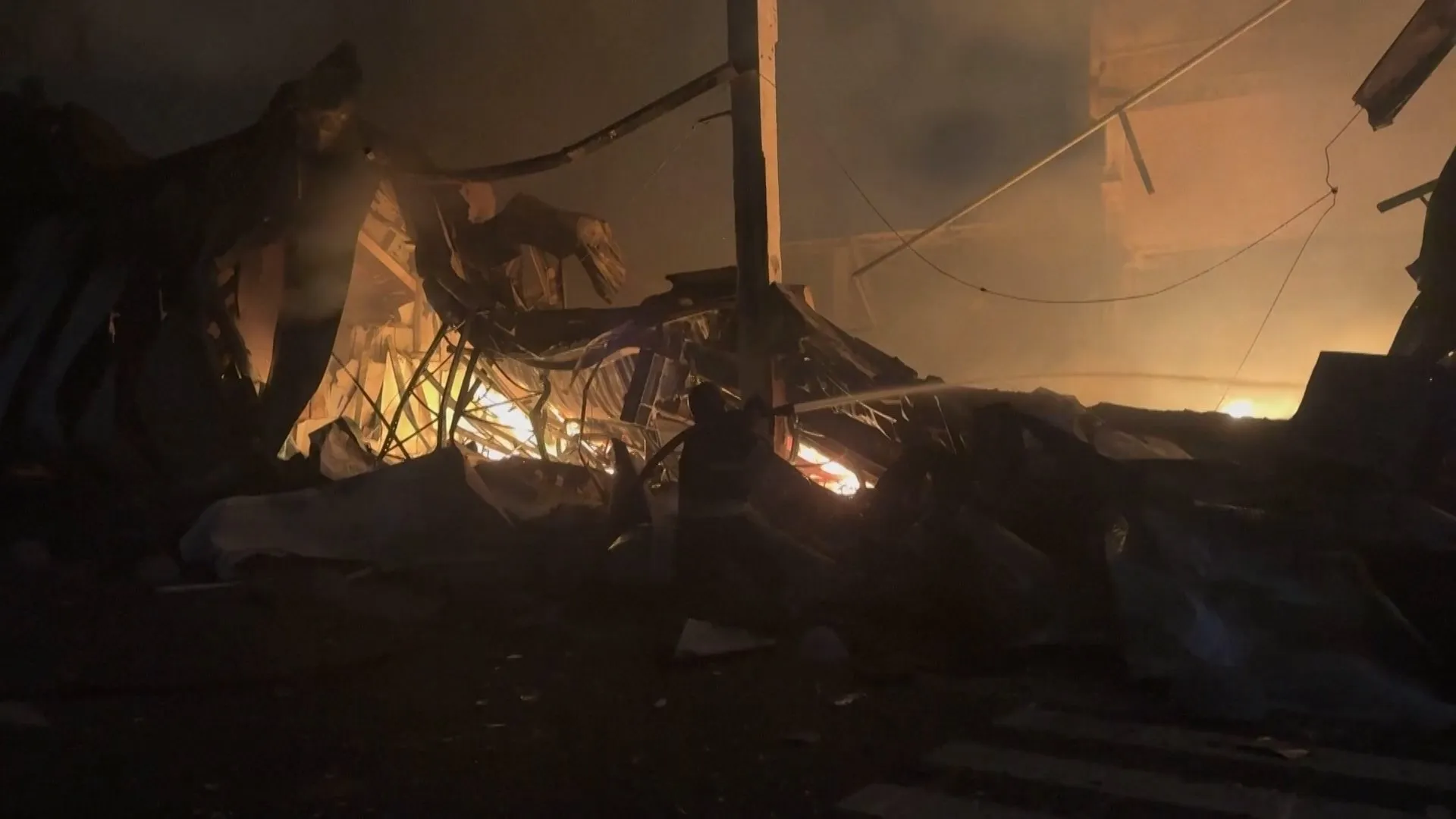
Ukraine and Russia have attacked each other overnight, with Ukrainian drones striking Russian assets in Black Sea ports and Russia hitting several regions across Ukraine, including the capital Kyiv.

Ukraine’s GUR military intelligence unit claimed attacks on two Russian landing ⁠ships and a radar station in Sevastopol Bay in Russian-occupied Crimea. It says the $150m vessels were successfully hit and radar equipment destroyed.

Recommended Stories

list of 3 itemsend of list

In Russia, Ukrainian drones targeted the port of Tuapse, killing at least one person, injuring another and damaging transport infrastructure, according to regional governor Veniamin Kondratiev.

The strike was the second on the port in three days, hours after a fire from a previous attack was extinguished.

Russia’s Defence Ministry said air defences destroyed 112 Ukrainian drones overnight.

INTERACTIVE-WHO CONTROLS WHAT IN UKRAINE-1776241851
(Al Jazeera)

Ukraine reported a series of Russian attacks on Ukrainian territory overnight, including in Kyiv, Kharkiv, Kherson, Sumy and Zaporizhia regions.

Drones hit a car in the city of Putyvl in Ukraine’s border region of Sumy, injuring three women, as well as two homes in Kyiv’s Brovary district, damaging them and injuring one person, according to Ukrainian officials.

“Tonight, the enemy is again attacking the Kyiv region with drones. Under the sights are peaceful people, homes,” said Kyiv regional military administration head Mykola Kalashnyk.

Russian attacks also damaged railway infrastructure in the northeastern city of Kharkiv, according to the Interfax-Ukraine news agency.

Over the past 24 hours, Russian attacks in the Kherson region killed one person and injured seven, while injuring four others in the Zaporizhia region, Ukrainian officials said.

Moscow’s forces have hit civilian areas almost daily since the all-out invasion of its neighbour more than four years ago, with the regular assaults occasionally punctuated by massive attacks.

More than 15,000 Ukrainian civilians have died in the strikes, according to the United Nations.

There have been several rounds of United States-brokered negotiations in recent months, but they have failed to reach an agreement to stop the fighting, with the process further stalled since the outbreak of the US-Israel war on Iran.

Even before the war on Iran, progress towards a peace deal in Ukraine had been slow, due to differences over territorial issues.

Ukraine has proposed freezing the conflict along current front lines. Russia rejects that, saying it wants the whole of the Donetsk region, despite it being partly controlled by Ukraine – a demand Kyiv says is unacceptable.

Source link

Turkiye’s Roketsan eyes top 10 exporter rank amid Middle East conflict | Business and Economy News

Modern warfare has dramatically changed as we have seen from the Russia-Ukraine war, conflicts involving Gaza, India and Pakistan, and the recent US-Israeli strikes on Iran. At the centre of this shift is a surging global reliance on drone and missile technology as well as advanced air defence systems.

Turkiye, one of the largest military powers in the Middle East, is increasingly positioning itself as a major supplier in the global defence sector. Central to this effort is Roketsan, a company founded in 1988 to supply the Turkish Armed Forces, which has since evolved into the country’s primary manufacturer of missile and rocket systems.

Recommended Stories

list of 3 itemsend of list

Currently exporting to approximately 50 countries, the firm is one of the fastest-growing defence companies globally.

So how did Roketsan secure a large share of the global arms trade?

Bypassing Western embargoes

Turkiye’s defence expansion was largely accelerated by restrictions placed upon it. Western embargoes aimed at halting its military advancement meant Ankara could not acquire the necessary technical systems or components.

In 2020, the United States imposed Countering America’s Adversaries Through Sanctions Act (CAATSA) restrictions on Turkiye – a key member of the transatlantic military alliance NATO. These sanctions targeted Turkiye’s military procurement agency, its chief Ismail Demir, and three other senior officials. Washington also ejected Ankara from the F-35 stealth jet programme in July 2019.

The measures came after Ankara purchased Russia’s S-400 missile defence system, which was seen as a potential threat to NATO security. The European Union also prepared limited sanctions and discussed restricting arms exports following energy exploration disputes in the Eastern Mediterranean.

To circumvent this, the country built an integrated, domestic defence ecosystem. Today, Turkiye relies on a vast supply chain of nearly 4,000 small and medium-sized enterprises (SMEs) scattered across the country. As a result, the Turkish defence industry now operates with a local production rate exceeding 90 percent.

Türkiye's defense industry now operates with a local production rate exceeding 90 percent, bypassing long-standing Western embargoes. [Al Jazeera]
Türkiye’s defence industry now operates with a local production rate exceeding 90 percent, bypassing long-standing Western embargoes [Al Jazeera]

This shift has yielded significant financial returns for Ankara. In 2025, Turkiye’s defence industry reported $10bn in exports. Roketsan’s General Manager Murat Ikinci told Al Jazeera that the company currently ranks 71st among global defence firms, with ambitions to break into the top 50, then the top 20, and ultimately the top 10.

To support this expansion, Turkish President Recep Tayyip Erdogan inaugurated several large-scale facilities last week, including:

  • Europe’s largest warhead facility.
  • new research and development (R&D) centre housing 1,000 engineers.
  • the “Kirikkale” facility dedicated to rocket fuel technology.
  • new infrastructure for the mass production of ballistic and cruise missiles.

These projects represent a $1bn investment, with the company planning to inject an additional $2bn to expand mass production capabilities.

The ‘Tayfun’ and modern warfare

Roketsan’s R&D strategy – which employs 3,200 engineers and makes the company the third-largest R&D institution in Turkiye – is heavily influenced by data gathered from ongoing global conflicts.

According to Ikinci, the war in Ukraine highlighted the impact of cheap, first-person view (FPV) and kamikaze drones supported by artificial intelligence. In response, Roketsan developed air defence systems like “ALKA” and “BURC,” alongside the “CIRIT” laser-guided missile.

The regional landscape was further complicated during the US-Israel war on Iran, as cheap Iranian-designed Shahed drones – recently upgraded by Russia with “Kometa-B” anti-jamming modules – overwhelmed defences and even struck a British base in Cyprus in March 2026. During the same month, NATO air defences were forced to intercept three Iranian ballistic missiles that entered Turkish airspace.

Meanwhile, the recent conflict between Israel and Iran showcased the use of complex attacks combining ballistic missiles with “swarms” of kamikaze drones designed to overwhelm air defences. This environment makes hypersonic technology a critical asset.

This brings the Tayfun (Typhoon) project into focus. Tayfun is a developing family of long-range ballistic missiles. Its most advanced iteration, the Tayfun Block 4, is a hypersonic missile engineered to penetrate advanced air defence systems by travelling at extreme speeds.

When Al Jazeera asked for specific details regarding the Tayfun’s exact operational range, Ikinci was elusive. “We avoid mentioning its range; we just say its range is sufficient,” he noted.

Similarly, historical Western sanctions have pushed Turkiye to form new cooperation initiatives, effectively accelerating an “Eastern shift” away from Western defence dependence. Turkish drones are now being used by a growing number of countries, including by Pakistan during its war against India last May.

Based on these threat assessments, Roketsan has prioritised five key areas of production:

  1. long-range ballistic and cruise missiles.
  2. air defence systems, including the “Steel Dome”, Hisar-A, Hisar-O, and Siper.
  3. submarine-launched cruise missiles, utilising the AKYA system to leverage Turkiye’s large submarine fleet.
  4. smart micro-munitions designed specifically for armed drones.
  5. long-range air-to-air missiles, a need highlighted by the brief India-Pakistan skirmish.

A strategic export model

Unlike traditional arms procurement, Turkiye is marketing its defence industry to international buyers as a strategic partnership.

“Our offer to our partners… is as follows: Let’s produce together, let’s develop technology together,” Ikinci stated.

İkinci emphasizes that Roketsan's international strategy is based on "partnership models" rather than simple sales. [Al Jazeera]
Rokestan’s General Manager Murat İkinci, right, emphasises that Roketsan’s international strategy is based on ‘partnership models’ rather than simple sales [Al Jazeera]


By establishing joint facilities and R&D centres in allied nations across the Middle East, the Far East, and Europe, Turkiye is attempting to secure long-term geopolitical alliances rather than purely transactional sales. Ikinci highlighted Qatar as a prime example of this model, describing it as a benchmark for technological, military, and security cooperation in the region.

Filling the global stockpile gap

This rapid expansion comes at a critical time for the global arms trade. Ongoing wars have severely depleted the stockpiles of advanced weapon systems worldwide.

During the recent US-Israel war on Iran, Washington relied heavily on multimillion-dollar Patriot and Terminal High Altitude Area Defense (THAAD) systems to intercept cheap Iranian drones targeting US assets across Qatar, Kuwait, Bahrain, Saudi Arabia, and the United Arab Emirates. With growing concerns that US interceptor supplies could run low, Gulf states – which have collectively detected over 1,000 drones in their airspace – are actively seeking alternative defence technologies, creating a highly lucrative opening for Turkiye’s missile industry.

Defence analyses indicate that even military superpowers like the US will require significant time to replenish their current air defence inventories due to the complexity and massive infrastructure required to build them.

Turkish defence officials view this shortage as a strategic opening. Having localised its supply chain, Turkiye claims it can manufacture and export these highly sought-after complex systems independently.

As global demand for air defence and ballistic technologies rises, Roketsan is aggressively reinvesting its revenues into production infrastructure to expand its footprint in the international arms market.

Source link

‘Sent to be killed’: How Russia forces migrants to fight in Ukraine | Russia-Ukraine war News

Kharkiv, Ukraine – Hushruzjon Salohidinov, 26, was working as a courier in Saint Petersburg, Russia’s second-largest city and President Vladimir Putin’s hometown.

But last year, the Tajik man and practising Muslim says he was arrested while picking up a parcel which police claimed contained money stolen from elderly women.

Salohidinov says he never interacted with the alleged criminals, but nevertheless spent nine months in the Kresty-2 pre-trial detention centre about 32km (20 miles) from the city, while a judge refused to start his trial because of the “weak evidence” against him.

But instead of releasing him after that, prison wardens threatened to place him in a cell with HIV-infected inmates who, they said, would gang-rape him – unless he “volunteered” to fight in Ukraine.

“They said, ‘Oh, you’ll put on a skirt now, you’ll be raped,’” Salohidinov, who has raven black hair and a messy full beard, told Al Jazeera at a centre for war prisoners in northeastern Ukraine, where he is now being held, having been captured in January this year by Ukrainian forces.

Using a carrot-and-stick tactic, the wardens also promised him a sign-up bonus of 2 million rubles ($26,200), a monthly salary of 200,000 rubles ($2,620) and an amnesty from all convictions.

So, in the autumn of 2025, Salohidinov signed up as he “saw no other way out”.

Officials in Kresty-2, St Petersburg’s prosecutors’ office and Russia’s Ministry of Defence did not respond to any of Al Jazeera’s requests for comment.

Russia migrants
Hushruzjon Salohidinov, 26, a Tajik man forced to fight for Russia, at a prisoner of war facility [Mansur Mirovalev/ Al Jazeera]

‘Catching migrants’

Salohidinov is just one of tens of thousands of labour migrants from Central Asia coerced by Russia to become soldiers as part of the Kremlin’s nationwide campaign, according to human rights groups, media reports and Russian officials.

Hochu Jit, a Ukrainian group that helps Russian soldiers surrender, has published verified lists of thousands of Central Asian soldiers like Salohidinov.

“They are literally sent to be killed, no one considers them soldiers that need to be saved,” the group wrote in a 2025 post on Telegram. These soldiers’ life expectancy on the front line is about four months. “Losses among them are catastrophic,” the group reported.

With its low birthrate and large oil wealth, Russia has for years been a magnet for millions of labour migrants from ex-Soviet Central Asia, especially Tajikistan, Uzbekistan and Kyrgyzstan.

The campaign by the Kremlin to force Central Asians to fight in Ukraine dates back to 2023 – the year after Russia’s invasion of Ukraine – when police began rounding up anyone who didn’t look Slavic and charging them with real or imagined transgressions such as a lack of registration, expired or “fake” permits or blurred stamps on their documents. Sometimes, migrants are simply bused straight to conscription offices.

In 2025, Al Jazeera interviewed another Tajik man who said he had been detained with an expired work permit and was then tortured into “volunteering” while being subjected to countless xenophobic and Islamophobic slurs from his officers.

Migrants say they are abused, tortured and threatened with jail or having their entire families deported.

“The main way of recruiting as many migrants as possible is pressure on them with threats of deportation,” Alisher Ilkhamov, the Uzbekistan-born head of the London-based Central Asia Due Diligence think tank, told Al Jazeera.

Sometimes, migrants are simply duped.

Salohidinov said one serviceman in his squad was an Uzbek who “didn’t speak a word of Russian” and was fooled into “volunteering” while signing papers at a migration centre.

In their reports about “catching” migrants, officials frequently use derogatory terms about them, and also when they describe men who have obtained Russian passports but skipped registration at conscription offices. Since the Soviet era, such registration has been obligatory for all men and, since 2024, a newly naturalised Russian national can lose his citizenship if he fails to do it.

“We’ve caught 80,000 such Russian citizens, who don’t just want to go to the front line, they don’t even want to go to a conscription office,” chief prosecutor Alexander Bastrykin said in May 2025, referring to the migrants’ alleged patriotic sentiments.

He boasted that 20,000 Central Asians with Russian passports were herded to the front line in 2025.

The year before, he said 10,000 Central Asians had been sent to Ukraine.

Such remarks resonate with the Russian public that lives with “a high level of xenophobia in the stage of fear and helplessness,” Sergey Biziyukin, an exiled opposition activist from the western city of Ryazan, told Al Jazeera.

“For them, such phrases from Bastrykin are a form of sedative.”

What makes Central Asians easy targets is that they hail from police states, which depend on Moscow politically and economically, observers say.

“While the migrants are frightened into signing contracts, their motherland doesn’t really pay any attention,” Galiya Ibragimova, an Uzbekistan-born, Moldova-based regional expert, told Al Jazeera.

Despite hefty signup bonuses and relentless propaganda, the number of Russians who want to fight in Ukraine fell by at least one-fifth this year, and Moscow will strive to recruit more Central Asians, she said.

Russia conscripts
Russian conscripts called up for military service attend a ceremony marking their departure for garrisons from a recruitment centre in Saint Petersburg, Russia, on October 15, 2025 [Anton Vaganov/Reuters]

‘We’ll have our fingers broken’

After signing the contract and leaving his debit card with his sign-up bonus with his parents, Salohidinov was sent to the western city of Voronezh for three weeks of training that did little to prepare him for the war.

“We just kept running back and forth with guns,” he said.

Their drill sergeants, he says, told the conscripts that the standard-issue flak jackets, helmets, boots and flashlights were of subpar quality and urged them to pitch in a million rubles ($13,100) each for “better” gear.

The incident corroborates reports on dozens of similar cases in Russian military units.

Salohidinov was ordered to work in a kitchen – and was verbally abused and beaten for the slightest transgression.

Of 28 men in his unit, 21 were Muslims – but their ethnic Russian officers ignored their pleas not to have pork in meals, repeating a decades-old practice of ignoring religion-related dietary restrictions dating back to the Soviet army.

The commanders demonised Ukrainians, telling them “that if we surrender, we’d be tortured, have our fingers broken, maimed, get [construction] foam up our a**, have our teeth yanked out one by one, have our arms broken”, Salohidinov says.

In early January this year, the conscripts were bused to the Russia-occupied Ukrainian region of Luhansk.

Salohidinov says he was tired, frightened and disoriented – Ukrainian drones were “always” above them and a grenade explosion nearby damaged his left eardrum.

Ukraine prisoner swap
A woman waits for news about a missing loved one as some Ukrainian soldiers return during a prisoner of war (POW) swap, amid Russia’s attacks on Ukraine, in an undisclosed location in Ukraine, on April 11, 2026 [Thomas Peter/Reuters]

‘Glad I got captured’

On the fourth day of his service, Salohidinov was ordered to run beyond Ukrainian positions as part of Russia’s new tactic to send two or three servicemen to infiltrate the porous front line.

The mission was suicidal because the terrain was open, dotted with landmines and the bodies of dead Russian soldiers, while Ukrainians were firing machineguns and flew drones above them.

“I ran and ran and saw we were being shot at,” he said. “Me and my commander decided to surrender voluntarily instead of dying for nothing.”

They detached their assault rifles’ magazines, raised their hands and yelled they were surrendering.

What followed was “a calm feeling, beautiful”, he said. “They fed us, let us have a smoke, gave us food and water and even cake.”

Now, Salohidinov hopes to return to Tajikistan and panics at the thought of being made part of a prisoner swap – these have taken place several times each year – and returning to Russia because he would be sent back to the front line.

Tajikistan and other Central Asian nations have never endorsed Russia’s war in Ukraine, but nor have they openly criticised it.

In August 2025, Tajikistan’s Prosecutor General Habibullo Vohidzoda declared that no Tajik national would be charged for fighting in Ukraine.

So, what Salohidinov needs right now is an extradition request.

“I’m even glad that I got captured, because I’m not fighting anyone now, not risking anything,” he said. “I’ll even say thanks to Ukraine for taking me prisoner.”

The Tajik embassy in Kyiv did not respond to Al Jazeera’s request for comment.

Source link

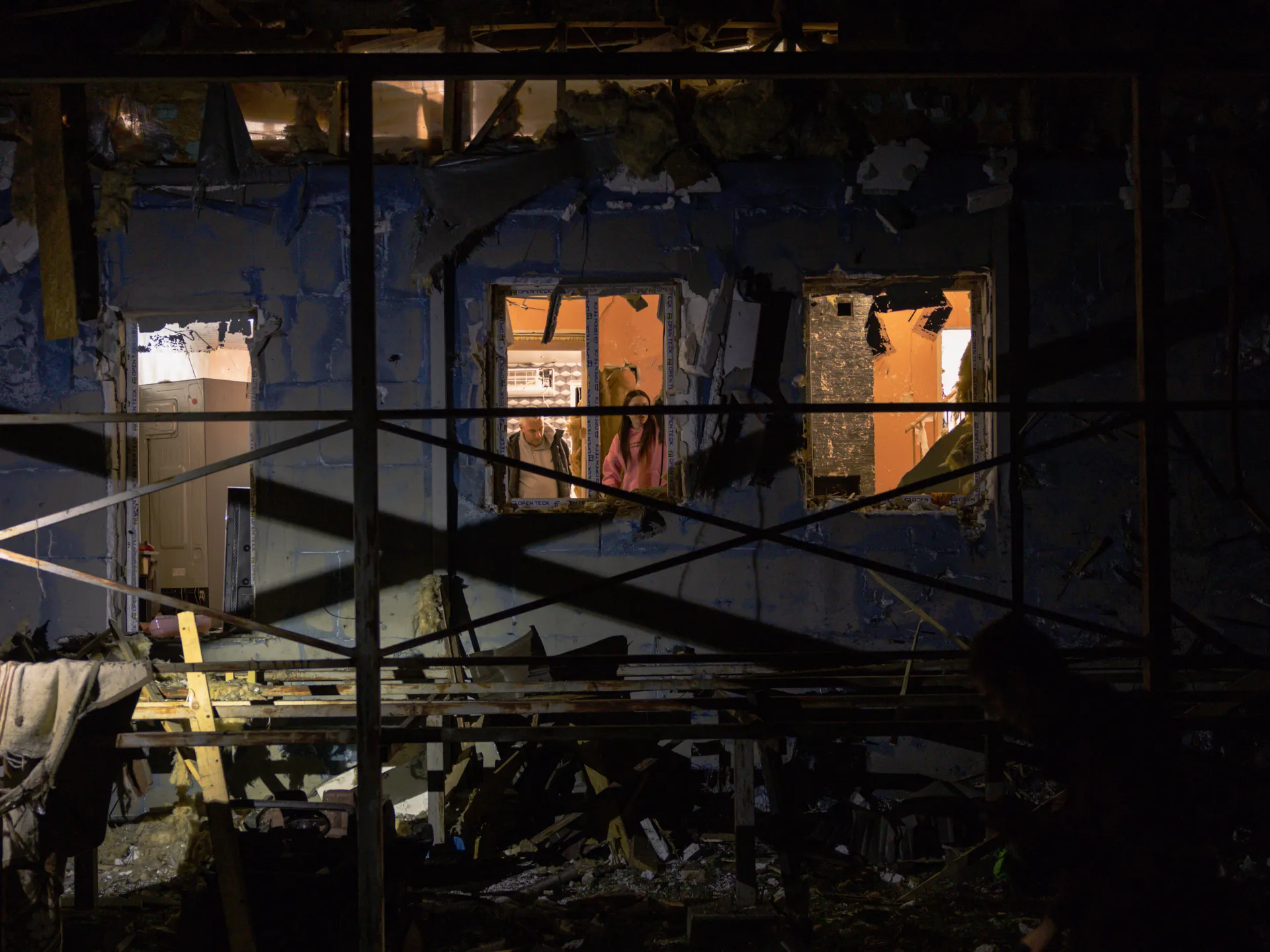
Russian attack on Ukraine’s Kyiv kills 12-year-old child, wounds 10 | Russia-Ukraine war News

BREAKING,

Kyiv’s mayor says the attacks hit Podilskyi and Obolonsky districts, causing large fires and damage to residential buildings.

Russian forces have bombed the Ukrainian capital, Kyiv, killing a 12-year-old child and wounding at least 10 people, including several doctors, according to the city’s mayor.

The child was killed early on Thursday in Kyiv’s Podilskyi district, where rocket fragments hit a 16-storey building and caused a fire at a residential building, Mayor Vitaliy Klitschko wrote in a post on Telegram.

Recommended Stories

list of 4 itemsend of list

He said rescuers have pulled another child and her mother were pulled from the rubble in Podilskyi.

The attack also hit Kyiv’s Obolonsky district, with falling rocket debris causing a large fire at a non-residential building. “Cars are also on fire,” Klitschko wrote.

More soon…

Source link

Palestinian-Israeli conflict critical for BRICS

Long before South African President Cyril Ramaphosa chaired a video summit with BRICS leaders (Brazil, Russia, India and China) with participation of new members on November 21 to discuss the Israel-Hamas conflict, there have been some differences in perceptions and approaches among them, so it was not surprising that the BRICS bloc did not agree on issuing a joint declaration.

Last August when BRICS held its 15th summit, South Africa’s position was entirely different on the International Criminal Court arrest warrant for President Vladimir Putin. But today, South Africa has vehemently called to an arrest warrant to be issued, without further delay, for Prime Minister Benjamin Netanyahu, in the ongoing bombardment and ground invasion of the Gaza Strip.

On November 20, South Africa urged the International Criminal Court (ICC) to issue an arrest warrant for Prime Minister Benjamin Netanyahu by mid-December. Minister in the Presidency Khumbudzo Ntshavheni said failure to do so would signal a “total failure” of global governance.

Some experts think Israel’s approach and strategy should be a lot more targeted and tactical to avoid civilian casualties, South Africa should be critical of their buddy Putin who has been supporting Hamas and facilitating the initial attack. The hypocrisy is suffocating. Having Putin there especially, is hypocrisy in the extreme. They do not want to meet about Ukraine, a sovereign nation that was attacked without cause nor do they want to meet about conflicts in Africa (Sudan, DRC, Somalia, S. Sudan, Nigeria, Ethiopia, et cetera.)

At the end of their lengthy discussions on November 21, leaders of the BRICS bloc, despite their comprehensive analysis of the Palestinian-Israeli conflict that began October 7, were not keen on issuing any joint declaration. It has already been interpreted as a weakness on the part of BRICS. Understandably BRICS is not a political group, as it has often been explained previously during several of its summits. But there must be stern collective decisions from such blocs as BRICS to support United Nations’ efforts toward finding resolution to the conflict has affected millions of civilians, and children in the Gaza Strip.

The virtual talks organized by current BRICS chair South Africa were the first between the group’s leaders since Israel invaded Gaza in retaliation for a deadly raid by militant group Hamas on Israel on October 7. BRICS comprises Brazil, Russia, India, China and South Africa. In August, the grouping agreed to admit Saudi Arabia, Iran, Ethiopia, Egypt, Argentina and the United Arab Emirates from January, in a move aimed at accelerating its push to reshuffle a Western-dominated world order it sees as outdated.

South African President Cyril Ramaphosa has condemned Hamas for its attack on Israeli civilians that sparked the conflict and said both sides were guilty of violating international law. “The collective punishment of Palestinian civilians through the unlawful use of force by Israel is a war crime. The deliberate denial of medicine, fuel, food and water to the residents of Gaza is tantamount to genocide. In its attacks on civilians and by taking hostages, Hamas has also violated international law and must be held accountable for these actions,” Ramaphosa said.

He, however, explained during his discussions that the diplomats did not have sufficient time to draft a declaration. “We’ve called upon all parties to exercise maximum restraint,” Ramaphosa said in his summary of the discussions. “We affirmed … that a just and lasting solution to the Palestinian-Israeli conflict can be achieved by peaceful means.”

Among the BRICS, South Africa has for years compared Israel’s policies in Gaza and the West Bank with its own past apartheid regime of racial segregation. South Africa recalled its ambassador to Israel and withdrew all its diplomatic staff. It has absolutely severed diplomatic ties over the war, taking the lead over Israel who only recalled its Ambassador Eliav Belotserkovsky to South Africa for discussions. Our monitoring shows that apart from South Africa, no other from the BRICS bloc torn down diplomatic relations with Israel.

While South African leader accuses Israel of war crimes, Putin and Xi strike more cautious note at meeting attended by Saudi Arabia, Argentina, Egypt, Ethiopia, Iran and the United Arab Emirates, which are set to join the bloc in January 2024, calling for a cease-fire and the release of civilian hostages but not launching the same level of criticism of either side as Ramaphosa.

Russian President Vladimir Putin blamed the crisis on the failure of U.S. diplomacy in the Middle East. “We call for joint efforts of the international community aimed at de-escalating the situation, a ceasefire and finding a political solution to the Palestinian-Israeli conflict. And the BRICS states… could play a key role in this work,” Putin said, and commended colleagues from the Middle East in the meeting, particularly by holding the Peace Summit in Egypt and the extraordinary Arab-Islamic Summit in Saudi Arabia.

Putin also mentioned there was a “humanitarian catastrophe” unfolding in Gaza and it was “shocking to watch how surgeries are performed on children without anesthesia.” He again blamed the crisis on what he called failed diplomacy by the United States.

“All these events, in fact, are a direct consequence of the U.S. desire to monopolize mediation functions in the Palestinian-Israeli settlement,” Putin said while appearing on teleconference from the Kremlin. He called for a cease-fire in Gaza, the freeing of hostages and the evacuation of civilians from the Gaza Strip.

Putin’s comments were in line with Russia’s careful approach to the Israel-Hamas war, which may present an opportunity for it to advance its role as a global power broker. Putin proposed last month that Moscow could mediate in the conflict due to its relationships with both Israel and the Palestinians. He said that the BRICS bloc could play “a key role” in finding a political settlement.

Different leaders emphasized different points in their remarks. Argentina’s Foreign Minister Santiago Cafiero said his country recognised Israel’s right “to legitimate self-defence while strictly respecting humanitarian international law”, while China’s Xi Jinping appeared to show more sympathy for the Palestinians.

Chinese Jinping called for the release of all civilians detained during the Israel-Hamas war and reiterated his call for an immediate cease-fire. “China believes that the following is urgent and imperative: first, all the parties to the conflict must end hostilities and achieve a cease-fire immediately,” Xi said, addressing leaders from countries including Brazil, Russia, India, South Africa and Iran by video. “All the parties must stop all violence and attacks against civilians, release civilians held captive, and act to prevent loss of more lives and spare people from more miseries.”

“The root cause of the Palestinian-Israeli situation is the fact that the right of the Palestinian people to statehood, their right to existence, and their right of return have long been ignored,” Xi said. China has historically been sympathetic to the Palestinians and supportive of a two-state solution to the Israeli-Palestinian conflict.

In his speech, Xi finally urged the international community to take concrete measures to prevent the escalation of the conflicts and the impact on the stability of the entire Middle East. He also called for a prompt convening of an international peace conference to build consensus for peace and work toward an early comprehensive, just and sustainable solution.

Russia and China are leading voices in BRICS, which has largely cast itself in recent years as standing against the perceived dominance of the West in global affairs. But it has struggled to adopt united policies or positions on many issues because of the differing priorities of the five current members. India, which also wants to be seen as a leader of the developing world, has long walked a tightrope between Israel and the Palestinians and historically has close ties to both.

Many foreign leaders have called on on the International Criminal Court to institute investigations into the military operations of the Israeli Army. The Spokesperson of the Palestinian Government, Ibrahim Milhem, said that the International Criminal Court should take an action on the genocide as it pertains by the international standard.

As confirmed by ICC chief prosecutor Karim Khan, countries such as South Africa, Bangladesh, Bolivia, Comoros, and Djibouti, which are all ICC members. Five nations are calling on the International Criminal Court to launch an investigation into Israel’s indiscriminate war and genocide on Gaza and the situation in the state of Palestine.

Turkey has also filed a case against Netanyahu with the ICC, accusing him of committing genocide against the Palestinians. Turkish President Recep Tayyip Erdogan confirmed to reporters on November 4 that Turkey is no longer considering Netanyahu as its interlocutor, but the head of the Turkish National Intelligence Organization, Ibrahim Kalin, remains in contact with Israel.

In addition, for instance, the President of Algeria called the lawyers of the Arab world and human rights groups to file a claim against Israel in the International Criminal Court for the war crimes in the Gaza Strip. Colombian President Gustavo Petro said Bogota would support Algeria’s case at the International Criminal Court (ICC) over war crimes committed by Israel, led by the Israeli occupation Prime Minister Benjamin Netanyahu, in the ongoing bombardment and ground invasion of the Gaza Strip.

According reports, more than 12,700 Palestinians have been killed in Gaza, according to the Palestinian Health Ministry in the West Bank. Officials there say another 4,000 are missing. Around 1,200 people have been killed on the Israeli side, mainly civilians during the Hamas attack.

The foreign ministers of Saudi Arabia, Jordan, Egypt, Indonesia and Palestine, as well as OIC Secretary General Hissein Brahim Taja, also discussed the situation around Gaza with Russian Foreign Minister Sergey Lavrov on the same day, November 21 and jointly concluded that self-defense is not a justification for what the Israeli military is doing in Gaza. The US and European Union have designated Hamas as a terrorist organization. According to Turkey’s Anadolu news agency, the delegation would also travel to the United Kingdom, France and the United States. 

Source link

Russia’s Lavrov visits China as US pressures Iran with Hormuz blockade | US-Israel war on Iran News

Russian Foreign Minister Sergey Lavrov has arrived in Beijing as the United States blocks the Strait of Hormuz, through which China imports about a third of its oil supplies.

Lavrov received a red-carpet welcome on Tuesday, according to photos shared by Russia’s Ministry of Foreign Affairs.

Recommended Stories

list of 4 itemsend of list

Beijing and Moscow have condemned the US and Israel over their war on Iran, with China also being economically affected by the energy crisis it has caused.

China, a big importer of Iranian oil, also slammed a recently imposed US scheme to blockade vessels entering or departing Iranian ports and coastal areas, including in the Gulf and the Gulf of Oman.

“The Strait of Hormuz is an important international trade route for goods and energy, and maintaining its security, stability, and unimpeded flow is in the common interest of the international community,” China’s Ministry of Foreign Affairs spokesman Guo Jiakun said on Monday.

Lavrov speaks to Araghchi

Al Jazeera’s Alan Fisher, reporting from Washington, DC, said the US’s goal is to choke Iran off by blocking everything coming in and out of Iranian ports.

“What the US hopes is that there’ll be pressure on Iran from some of its main business partners, including China,” he said, adding that Beijing imports about a third of its oil from Iran. “The United States is hoping that pressure on China will mean China putting pressure on Iran and forcing Iran to get back to the negotiating table.”

On Monday, Lavrov held a telephone conversation with his Iranian counterpart, Abbas Araghchi.

The top Russian diplomat told  Araghchi it was important to guard against any resumption of hostilities in the Middle East, and said Russia stood ready to help with a settlement, according to a statement by the Russian Foreign Ministry.

“S Lavrov emphasised the importance of preventing a recurrence of armed confrontation and once again confirmed Russia’s unwavering readiness to assist in resolving the crisis, which has no military solution,” the ministry said.

It added Araghchi related to Lavrov details of US-Iran talks in Pakistan at the weekend, which failed to reach a breakthrough.

Beijing and Moscow are close economic and political partners, and the relationship has deepened further since Russia’s full-scale invasion of Ukraine in 2022.

Wang also held a call with Lavrov on April 5, when they agreed that Beijing and Moscow would work together to de-escalate tensions in the Middle East.

Diplomacy traffic in Beijing

China welcomed a string of leaders of countries that have been affected by the war and its economic fallout this week, including Spanish Prime Minister Pedro Sanchez and United Arab Emirates President Mohamed bin Zayed Al Nahyan, also known as MBZ.

Chinese President Xi Jinping met MBZ and Sanchez on Tuesday morning, and Vietnamese President To Lam is expected in China for a four-day trip.

“I think what this really speaks to is that many people around the world have been surprised that China has not played a more active role in the Iran war, given it has such strong ties with Tehran, including as Iran’s largest trading partner and buyer of crude oil,” Al Jazeera’s Katrina Yu, reporting from Beijing, said.

“But what China has been doing, besides calling for restraint and more negotiation, is taking advantage of this moment to really look at states that may be a little disenchanted with the US or looking to diversify from reliance on Washington,” Yu said.

“China has presented itself as the opposite of Washington – a reliable, stable and predictable partner. For many states, that message really appeals.”

Trump’s threats after ‘fabricated’ reports

Trump, who is scheduled to visit Beijing next month for talks with Xi, said on Sunday he would hit China’s goods with a 50 percent tariff if it provided military assistance to Tehran.

His comments came the same day CNN reported that US intelligence indicated China was preparing to deliver new air defence systems to Iran within the next few weeks, quoting three people familiar with the assessments.

On Tuesday, Chinese Foreign Ministry spokesman Guo said those reports were “completely fabricated”.

“If the US insists on using this as an excuse to impose additional tariffs on China, China will definitely take resolute countermeasures,” he said.

Source link

Record turnout in Hungary as election could oust Orban and unsettle Russia

Hungarians were voting on Sunday in an election that could potentially end Prime Minister Viktor Orban’s 16-year rule. Orban’s leadership has drawn international attention, also affecting right-wing politics in the West, including the U. S. under President Donald Trump. Despite having been in power for many years, many Hungarians are dissatisfied due to economic stagnation, rising living costs, and perceived wealth accumulation by government-linked oligarchs.

Recent opinion polls indicated that Orban’s Fidesz party was trailing the new center-right opposition, Tisza party led by Peter Magyar, by 7-9 percentage points. Tisza was polling around 38-41%. Voter turnout was predicted to be a record high, with 74.23% having voted by 1500 GMT, up from 62.92% at the same time during the 2022 election. Long queues were observed at voting stations in Budapest.

Magyar encouraged voters to report any election irregularities, calling election fraud a serious crime, and expressed hope for a majority in parliament, which would allow Tisza to amend Hungary’s constitution. Orban emphasized the importance of respecting the people’s decision and following the constitution. Four years earlier, the OSCE noted that, while the election was run well, an uneven playing field may have affected the results.

Voter opinions varied; some wanted change due to tension in society, while others supported Orban for his welfare policies, claiming Fidesz delivered on promises since the end of communism. Orban characterized the election as a choice between “war and peace” and campaigned against claims that a Tisza victory would lead Hungary into Russia’s war in Ukraine.

The election drew attention from Brussels and could reshape Hungary’s ties with the EU, particularly concerning Russia. An Orban loss could weaken Russia’s influence within the EU and possibly facilitate financial aid for Ukraine. Despite Tisza’s lead in polls, analysts warned of uncertainties due to undecided voters and support for Fidesz among ethnic Hungarians in neighboring countries. Polling stations were set to close at 7 p.m. (1700 GMT).

With information from Reuters

Source link

Hungary’s landmark election draws scrutiny from EU, Russia, and US

Hungarians began voting in an important election on Sunday that could end Prime Minister Viktor Orban’s 16-year rule. This election is significant not only for Hungary but also for Russia and right-wing movements in the West, including the U. S. Orban, who identifies as a eurosceptic nationalist, has developed an “illiberal democracy” that has drawn parallels with Donald Trump’s MAGA agenda. However, many Hungarians are dissatisfied with Orban, 62, due to economic stagnation and high living costs, as well as the growing wealth of oligarchs linked to the government.

Current opinion polls suggest that Orban’s Fidesz party is trailing Peter Magyar’s center-right opposition Tisza party by 7-9 percentage points, with Tisza receiving around 38-41%. Voting started at 6 a.m. local time and is set to close at 7 p.m. Pollsters predict a record voter turnout. Many citizens, like Mihaly Bacsi, express a desire for change, highlighting tensions in the country under the current government. There is hope among voters for a return to Hungary’s Western commitments, which they associate with the pre-Orban era.

The election is being closely monitored by European Union officials, who have criticized Orban for undermining democracy, media freedom, and minority rights in Hungary. A potential defeat for Orban could also impact Ukraine negatively by blocking a crucial EU loan. Orban has framed the vote as a decision between “war and peace,” claiming that Magyar would lead Hungary into conflict, a point Magyar disputes.

Despite backing from figures like U. S. Vice President JD Vance and alliances with far-right European leaders, Orban’s campaign faced challenges due to allegations of collusion with Moscow. Orban emphasizes his goal of protecting Hungary’s national identity and values amidst global challenges. In contrast, Magyar, 45, appeals to voters’ frustrations over state corruption and declining living standards, especially among younger people eager for change.

Orban’s popularity is particularly low among those under 30. To combat this, he has introduced measures like income tax cuts for younger workers and a subsidized mortgage scheme. However, Magyar’s vision for change resonates more with the electorate. Analysts believe the election results are uncertain with undecided voters and changes to the electoral landscape, suggesting outcomes could range from a Tisza supermajority to a Fidesz majority. If Tisza wins, reversing Orban’s changes could be a challenging task for the new government.

With information from Reuters

Source link

Fury beats Makhmudov in heavyweight boxing comeback, then calls out Joshua | Boxing News

Tyson Fury beats Arslanbek Makhmudov in a unanimous points decision as he makes his heavyweight comeback.

Former world heavyweight champion Tyson Fury marked his return to the ring with a comprehensive and unanimous points win over Arslanbek Makhmudov at London’s Tottenham Hotspur Stadium.

British boxer Fury won 120-108 on two of the judges’ scorecards, with the other ruling he had defeated his Russian opponent 119-109 after the maximum 12 rounds on Saturday.

Recommended Stories

list of 4 itemsend of list

Makhmudov made a strong start to the first round, throwing a left and connecting with an overhand right.

But by the third round, Makhmudov was already showing signs of fatigue, with Fury switching stances and hitting a one-two off the Russian’s chin.

The fight continued in a similar fashion until the final bell, as Fury moved closer to a “Battle of Britain” super-fight with fellow former world champion Anthony Joshua, who was watching from ringside.

“I’ve never had a problem getting in the ring with you. I punched you out when we were kids, and I’ll punch you out again,” Joshua said as Fury shouted at him from the ring.

“With all due respect, tonight is your night, and you know I’ll [be] in that ring across from you in due time,” Joshua added.

“You aren’t going to tell me what to do. I’ve been chasing you for the last 10 years. When you’re ready, you come and see me … I’m the boss. You work for me.”

Source link

Russia suffers ‘record’ soldier casualties as Ukraine ups drone production | Russia-Ukraine war News

The casualty rate for Russian soldiers in Ukraine increased to a new monthly high in March, according to Ukraine’s armed forces. They say drone production enabled a record number of strikes.

Ukraine tallied Russian casualties at 35,351 last month, with drones causing 96 per cent of them while artillery and small arms fire accounted for the rest. That casualty rate was a 29 per cent increase on February, said Ukraine’s commander in chief.

“These are clearly confirmed losses: we have video footage of each such strike in our system,” said Ukrainian Defence Minister Mykhailo Fedorov.

The losses are slightly above a previous record set in December, and appear to confirm Ukraine’s claim that Russian casualty rates are rising inexorably this year. Ukrainian Presidential Office Deputy Head Colonel Pavlo Palisa told RBC-Ukraine that Russia had suffered 316 casualties for every square kilometre it captured in the first three months of 2026, compared with 120 casualties per square kilometre last year.

Ukraine’s defence ministry said Russia has been unable to replace all of the losses since December. Russia aimed to recruit 409,000 contract soldiers this year, Ukraine’s armed forces said in January.

That means a daily average recruitment rate of 1,120. But Ukraine’s “I Want to Live” initiative, which provides communication channels for Russian soldiers wishing to surrender, said Russia recruited 940 troops a day in the first quarter.

If sustained, that meant Russian recruitment was on track for a 65,000-man shortfall this year. Ukraine now sees manpower shortages as a Russian strategic weakness it can exploit. President Volodymyr Zelenskyy, set a goal of 50,000 Russian casualties a month in January, which he called the “optimal level” to ensure Russian forces weaken irrecoverably.

“We are confidently moving towards our strategic goal – 50,000+ eliminated occupiers per month,” said the Ukrainian defence ministry.

The territory Russia is capturing for its mounting losses is also in long-term decline, according to estimates by the Institute for the Study of War, a Washington-based think tank. Russian forces captured an average of 5.5sq km a day this year, compared to 10.66sq km a day in the middle of last year and 14.9sq km a day at the end of 2024, said the ISW.

Zelenskyy said the stark reality of manpower weakness lay behind Russian President Vladimir Putin’s ceasefire demand that Ukraine hand over the heavily fortified quarter of the eastern Donetsk region it held last August.

“They believe that if we retreat, they won’t lose hundreds of thousands of people,” Zelenskyy told the Associated Press in an interview this week.

Drones are the key

Ukrainian officials credit drone production and training for their armed forces’ growing lethality. Commander-in-Chief Oleksandr Syrskii said the armed forces struck 151,207 targets in March using drones, a 50 per cent increase on February. That’s the result of 11,000 drone sorties a day.

“This is all a historical maximum,” Syrskii said.

Palisa said that’s because Ukraine’s drone manufacturing had managed to outpace Russia’s to achieve a 1.3:1 overall ratio in First Person View drones on the frontlines.

Other reports suggested Ukraine was raising drone production. Fedorov said Ukrainian interceptor drones shot down a record 33,000 Russian UAVs of various types in March – twice as many as in the previous month.

His deputy, Serhii “Flash” Beskrestnov said he was working with interceptor drone manufacturers to develop the next generation of interceptors capable of flying at 400-550km/h to counter the jet-powered Shahed drones to which Russia was gradually converting.

Fire Point, Ukraine’s biggest manufacturer of long-range drones used in the majority of strikes deep inside Russia, told Reuters that it had designed two ballistic missiles of 300km and 850km range, which were approaching the deployment stage.

The longer-range type is capable of reaching Moscow.

Ukraine gains defensive ‘strategic initiative’

Syrskii thinks that Ukraine’s forces, although still ceding small amounts of territory, have now gained “the strategic initiative” because they “do not allow Russian troops to resume a large-scale offensive.”

He said an increase in mid-range strikes against logistics, warehouses, command posts and oil depots 30-120 km into the Russian rear had been particularly effective in hamstringing Russian assaults – one of the top operational priorities.

Syrskii said on April 5 that fighting was most intense in Dnipropetrovsk, where Ukraine’s forces have recaptured eight settlements and 480sq km of territory.

Ukraine’s leadership has long believed that Russia harbours territorial ambitions to seize the Odesa and Mykolaiv regions to control Ukraine’s entire Black Sea coastline, and to carve out a buffer zone across northern Ukraine.

Palisa told RBK-Ukraine on April 8 that Russia also planned to create a southern buffer zone in Ukraine’s southwestern Vinnytsia region next to Moldova’s Russian-speaking territory of Transnistria.

That was the first time a Ukrainian official has suggested such an ambition. “I am 100 per cent convinced that the Russians want to completely occupy us,” Zelenskyy told the AP.

Source link

Russia and Ukraine agree to 32-hour Orthodox Easter ceasefire | Russia-Ukraine war News

Moscow and Kyiv signal a short Easter truce as diplomacy stalls and war pressures mount.

Russia’s President Vladimir Putin has announced a 32-hour ceasefire for Orthodox Easter, with President Volodymyr Zelenskyy confirming that Ukraine will honour it.

The Kremlin said on Thursday that the pause in fighting will begin at 4pm Moscow time (13:00GMT) on Saturday and run until midnight on Sunday, covering Easter celebrations observed in both countries.

Recommended Stories

list of 3 itemsend of list

“We proceed on the basis that the Ukrainian side will follow the example of the Russian Federation,” the Kremlin said in a statement.

It added that Defence Minister Andrei Belousov had instructed Chief of the General Staff Valery Gerasimov to halt military operations during the period. Russian forces, however, would remain ready to respond to any violations.

Zelenskyy said Ukraine had already proposed a similar pause and would act in kind.

“Ukraine has repeatedly stated that we are ready for reciprocal steps. We proposed a ceasefire during the Easter holiday this year and will act accordingly,” he wrote on Telegram.

“People need an Easter without threats and a real move towards peace, and Russia has a chance not to return to attacks even after Easter.”

Hours after the announcement, the governor of Dnipropetrovsk region said Russian artillery and aerial attacks had killed two people.

“The enemy attacked three districts of the region almost 30 times with drones and artillery,” Oleksandr Ganzha said on Telegram on Friday.

This weekend’s planned ceasefire echoes a similar, short-lived pause declared by Moscow last year, which both sides accused each other of breaching.

The ceasefire comes as wider diplomatic efforts to end the war remain stalled, with attention in Washington shifting towards escalating tensions in the Middle East.

Difficult months ahead

Kremlin spokesman Dmitry Peskov said Moscow had not discussed the Easter proposal in advance with the United States, nor did it signal any immediate revival of three-way peace talks.

Despite the limited pause, humanitarian channels between the two sides remain active. Speaking from Moscow, Al Jazeera’s Yulia Shapovalova said Russia and Ukraine recently carried out another exchange of soldiers’ remains.

“Moscow handed over the remains of 1,000 Ukrainian soldiers to Kiev in exchange for 41 bodies of the Russians,” she said.

“More than 500 bodies of Russian servicemen have been returned this year during these regular exchanges and over 19,000 bodies of Ukrainian soldiers have been returned to Kiev,” she added.

These exchanges, often mediated by Turkiye, remain one of the few functioning lines of communication between the warring sides, alongside periodic prisoner swaps.

Zelenskyy has repeatedly pushed for temporary ceasefires, including a halt to attacks on energy infrastructure, but said Moscow had largely rejected proposals. He added that Ukraine now faces growing pressure, both on the battlefield and from international partners.

“This spring–summer period will be quite difficult politically and diplomatically. There may be pressure on Ukraine,” Zelenskyy said. “There will also be pressure on the battlefield.”

He warned that the coming months could prove decisive, as Kyiv confronts both sustained Russian attacks and shifting geopolitical priorities among its allies.

“I believe it will be very difficult for us until September.”

Source link

Nobel Prize Committee condemns Russian move to criminalise rights group | Human Rights News

Memorial was co-winner of 2022 Peace Prize for its work in documenting human rights abuses in Russia.

The committee that awards the Nobel Peace Prize has condemned attempts by Moscow to designate the human rights group and Peace Prize laureate Memorial as an “extremist organisation”.

The chairman of the Norwegian Nobel Committee, Jorgen Watne Frydnes, said in a statement on Wednesday that it was “deeply alarmed by the Russian authorities’ latest attempts to destroy Memorial – a co-recipient of the 2022 Nobel Peace Prize – by seeking to designate [it] as an extremist organisation”.

Recommended Stories

list of 3 itemsend of list

The statement was issued as Russia’s Supreme Court is expected to examine a petition from the Ministry of Justice on Thursday to add Memorial to Russia’s list of “undesirable” entities.

The designation would ban the organisation from operating in Russia, with those affiliated with it could face up to four years in prison and fines.

Memorial has already been declared a “foreign agent”, and the Supreme Court ordered it dissolved in Russia at the end of 2021.

Frydnes stressed that if the latest petition by the Justice Ministry is upheld, “all activities of Memorial will be criminalised. Anyone taking part in, or funding, Memorial’s work – or even sharing its published materials – will risk imprisonment.”

“To designate such an organisation as extremist is an affront to the fundamental values of human dignity and freedom of expression,” he added.

The committee called “on the Russian authorities to immediately withdraw this claim and to cease all harassment of Memorial and its members”.

Memorial won the Nobel Peace Prize with the Ukrainian human rights organisation Centre for Civil Liberties and Ales Bialiatski, who has worked to promote democracy and human rights in Belarus. Memorial, established in 1987, focuses on documenting human rights abuses in Russia.

Before it was banned in Russia, Memorial formed a network of about 50 organisations across Russia and outside its borders. Some of its constituents based in Germany, France and Italy continue to operate.

Several Russian Memorial leaders have been subjected to criminal proceedings – including Oleg Orlov, who was freed in a prisoner exchange in 2024 after being imprisoned for speaking out against the Ukraine war – are now working outside Russia to continue documenting human rights abuses.

Source link

Ukraine strikes Russian energy targets again — here’s what’s been hit

Ukraine has intensified its attacks on Russian energy facilities recently, as peace talks show no signs of progress. Several key facilities have been impacted:

NORSI, Russia’s fourth-largest oil refinery, owned by Lukoil, halted operations on April 5 due to a Ukrainian drone attack. This refinery, which processes 16 million metric tons of oil per year (around 320,000 barrels daily), is also Russia’s second-largest gasoline producer.

The Kirishi oil refinery may restart partial operations within a month after sustaining damage from drone attacks in late March that caused fires. Sources indicate that three of its four main units will resume operations, representing about 60% of its capacity. Last year, Kirishi produced 2 million tons of gasoline, 7.1 million tons of diesel, 6.1 million tons of fuel oil, and 600,000 tons of bitumen.

Novatek’s Ust-Luga processing plant suspended gas condensate processing and naphtha exports after drone strikes caused fires. The complex features three processing units, each with a capacity of 3 million tons per year, processing stable gas condensate into various fuels. In 2025, it processed 8 million tons.

Ukraine’s military reported hitting Russia’s Bashneft-Novoil oil refinery, located over 1,400 km (870 miles) from the border, which can process more than 7 million tons of oil annually.

The Saratov refinery was attacked on March 21, which led to the shutdown of its crude distillation unit. In 2024, it processed 5.8 million metric tons of oil, representing 2.2% of Russia’s refining capacity.

A fire at the Ilsky refinery occurred on February 17 due to drone attacks, with the blaze fully extinguished the next day. The refinery’s annual capacity is 6.6 million tons.

The Volgograd refinery was completely shut down on February 11 from drone strikes, affecting its primary processing unit, which accounts for 40% of its operations, with a processing figure of 13.7 million tons of oil in 2024.

A fire at the Ukhta refinery on February 12, caused by a drone attack, affected its primary oil processing unit, which processes 6,000 tons per day. In 2025, it processed around 3 million tons of oil.

The Afipsky refinery experienced a fire on January 21 due to drone attacks, focusing mainly on exports and processing 7.2 million metric tons of crude oil in 2024.

Additionally, a recent attack by Ukraine damaged facilities at the maritime transhipment complex in Novorossiysk, affecting oil product reservoirs. The damage did not disrupt CPC oil exports via the Black Sea, and U. S. oil major Chevron confirmed that crude oil exports from Tengiz remained stable. Ukrainian drones also caused fires at the Sheskharis oil terminal and damaged an oil pipeline at Primorsk, which saw significant storage capacity losses from drone attacks last month.

With information from Reuters

Source link

Russia and China block UN resolution on Strait of Hormuz | United Nations News

A total 11 out of 15 members supported the resolution, which was already watered down to evade vetoes.

Russia and China have vetoed a United Nations Security Council (UNSC) resolution aimed at protecting commercial shipping in the Strait of Hormuz.

The draft text, on which a vote was held on Tuesday, was proposed by Bahrain. Eleven of the 15 members of the UNSC voted in favour, and two abstained. However, Russia and China said that the measure was biased against Iran.

Recommended Stories

list of 3 itemsend of list

Under the resolution, affected states would have been asked to “coordinate efforts, defensive in nature, commensurate to the circumstances, to contribute ‌‌to ‌‌ensuring the safety and security of navigation across the Strait of Hormuz”.

Shipping through the narrow waterway, through which a fifth of global oil and gas shipments previously passed, has effectively come to a standstill after Tehran threatened to attack vessels in response to the war launched against Iran by the United States and Israel on February 28.

The blockade has sent fuel prices soaring across much of the world and led some countries, particularly in Asia, to introduce restrictions on consumption and ration supplies.

A deadline set by US President Donald Trump for Iran to reopen the water passage or else face even worse bombardment is set to expire later on Tuesday, after he repeatedly issued – and delayed – similar threats.

The US ambassador to the United Nations, Mike Waltz, condemned the Russian and Chinese vetoes, saying they marked “a new low”, as Iran’s shutting of the strait was preventing medical aid and supplies from reaching humanitarian crises in the Congo, Sudan and Gaza.

“No one should tolerate that. They are holding the global economy at gunpoint. But today, Russia and China did tolerate it.”

France deplored the vetoes. “The aim was to encourage strictly, purely defensive measures to provide the security and safety for the strait without spiralling towards escalation,” its UN ambassador, Jerome Bonnafont, said.

Russia and ⁠⁠China said the resolution was biased against Iran.

China’s UN envoy Fu Cong said adopting such a draft when the US was threatening the survival of a civilisation would have sent the wrong message.

Russia’s ⁠⁠UN ambassador, Vasily Nebenzya, said Russia and China were proposing an alternative resolution on the ⁠⁠situation in the Middle East, including maritime security.

Iran’s UN ambassador, Amir Saeid Iravani, praised the Chinese and Russian moves, saying “Their action today prevented the Security Council from being misused to legitimise aggression.”

The wording of the resolution had been the subject of behind-the-scenes negotiations for days.

An earlier version of the document had explicitly referred to Chapter 7 of the UN Charter, which grants the UNSC the authority to take measures ranging from sanctions to the use of military force.

But after China’s opposition, Bahrain had significantly weakened its draft, dropping any authorisation of the use of force.

An explicit reference to binding enforcement, included in an earlier draft, was also left out.

Source link