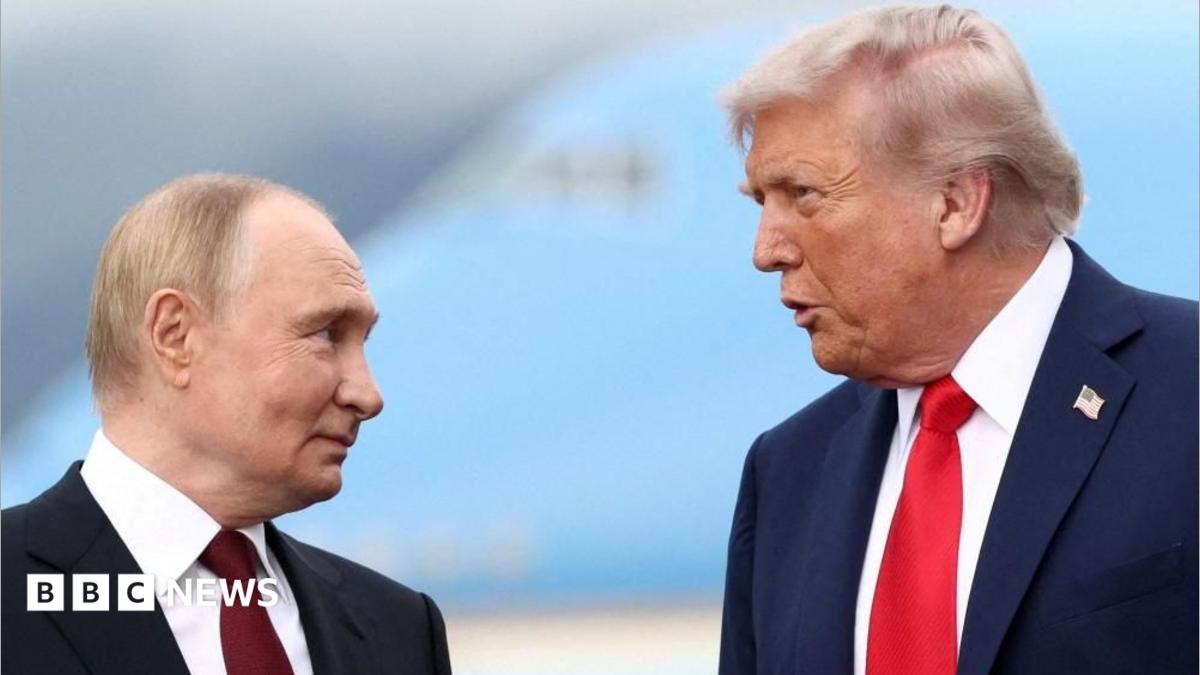
Russian envoy Kirill Dmitriev said Trump’s order was “an important and truly historic moment”.
Posting on X, he said the sanctions would have inflicted “serious damage”, primarily on the US and global market, and that economic cooperation benefits both nations.
Democrats including the Virginia Congressman Don Beyer criticised the move, accusing Trump of capitulating to Moscow and turning his back on Kyiv and Zelensky.
“Trump’s latest surrender to Putin again betrays our Ukrainian partners and defies clear congressional intent of legislation designed to punish Russia for its illegal war of aggression,” Beyer wrote on X.
A handful of Republicans, too, came out against the move.
Senator Ted Cruz of Texas, a Trump ally, called waiving the sanctions a mistake, saying on Fox News: “I wish the president hadn’t done it.”
He added there were other ways to address diesel prices and “the current path, unfortunately, just… benefits Putin and that’s not a good idea.”
Senator John Cornyn, also of Texas, said on X: “Helping Putin in Ukraine is reckless. He would not stop with Ukraine and our NATO allies would be next.”
North Carolina Senator Thom Tillis called it “beyond irresponsible”, noting the sanctions legislation passed the chamber with a large, bipartisan majority.
Trump could bring down energy prices “by solving the Iran problem, not by doing a solid for Vladimir Putin,” he said.
Nebraska Representative Don Bacon said many lawmakers will now resist funding the president’s agenda “knowing he is propping up a dictator’s invasion and throwing an ally under the bus”.
The move is likely to draw further anger from Ukraine, where Zelensky has long stressed the need for stringent sanctions to limit funding that Russia can use in its war effort.
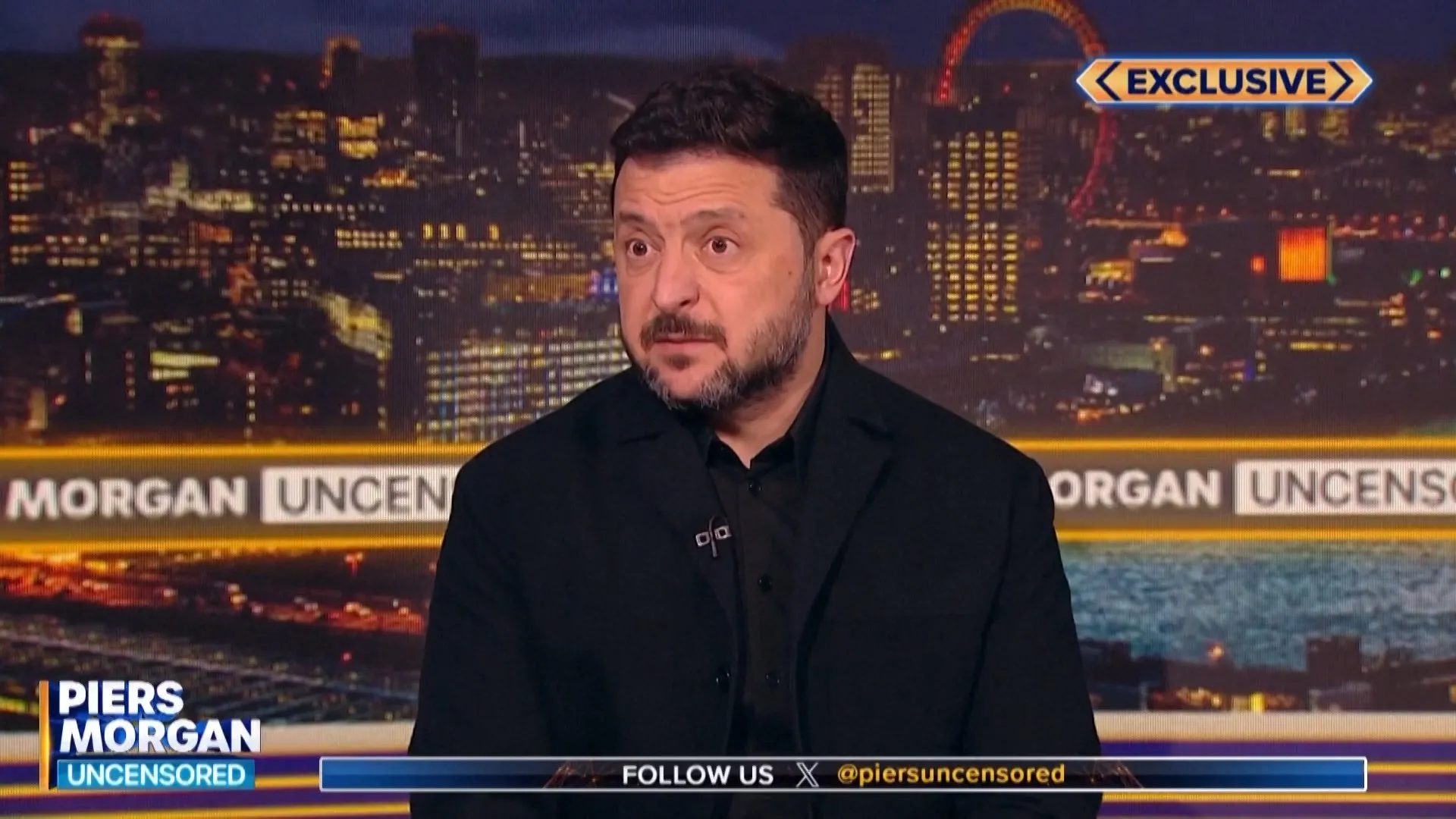
Zelensky said on Saturday morning that the sanctions “could have helped enormously” and that the law was “supposed to impose truly effective pressure on Russia to bring this war to an end”.
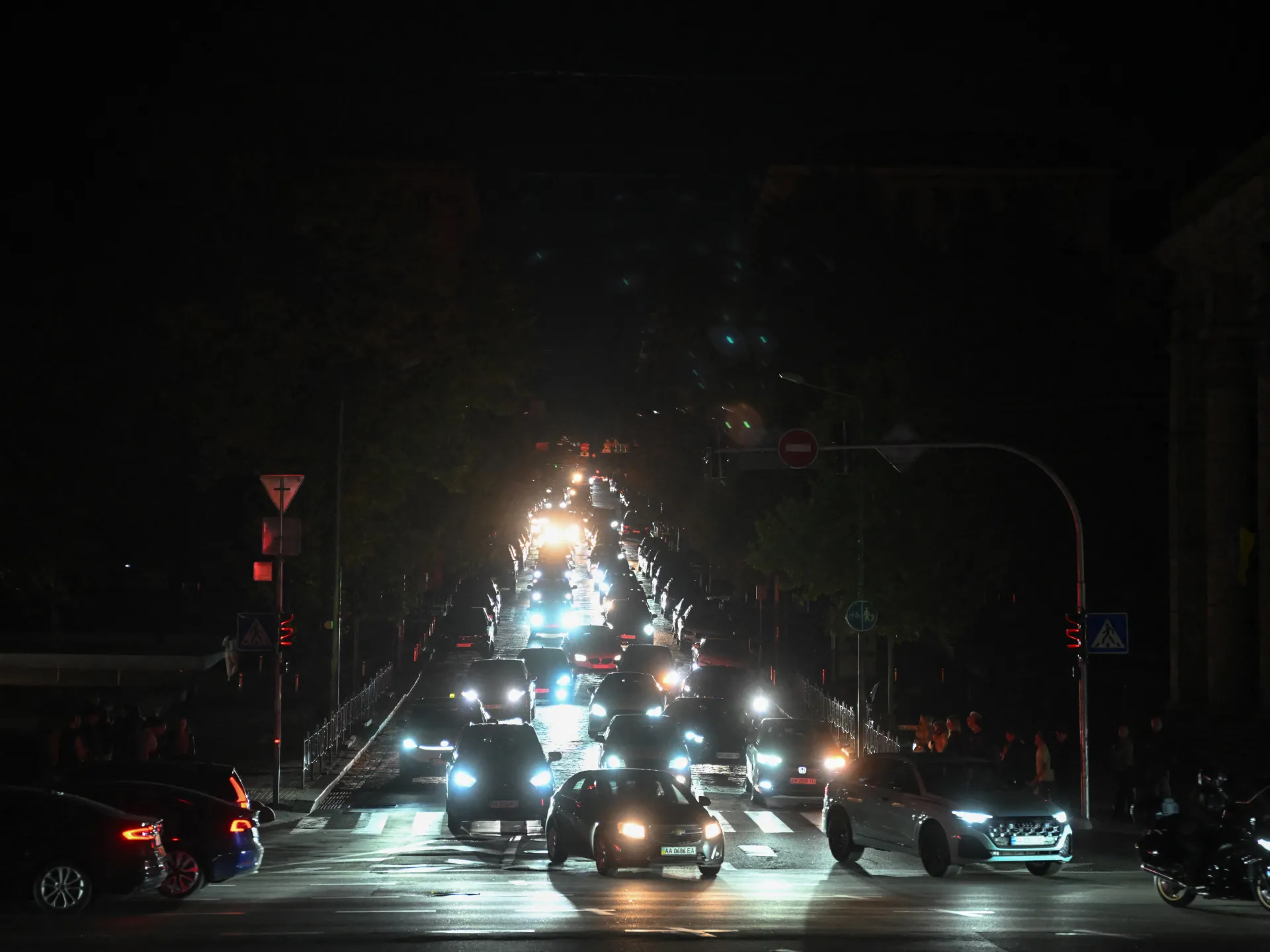
He pointed to Russian overnight attacks on 15 Ukrainian energy facilities that had caused power cuts in several regions and said: “Russia is trying to cause a blackout in Ukraine – right before winter.”
Zelensky said it was “important that everyone in America also sees what is really happening” on the ground.
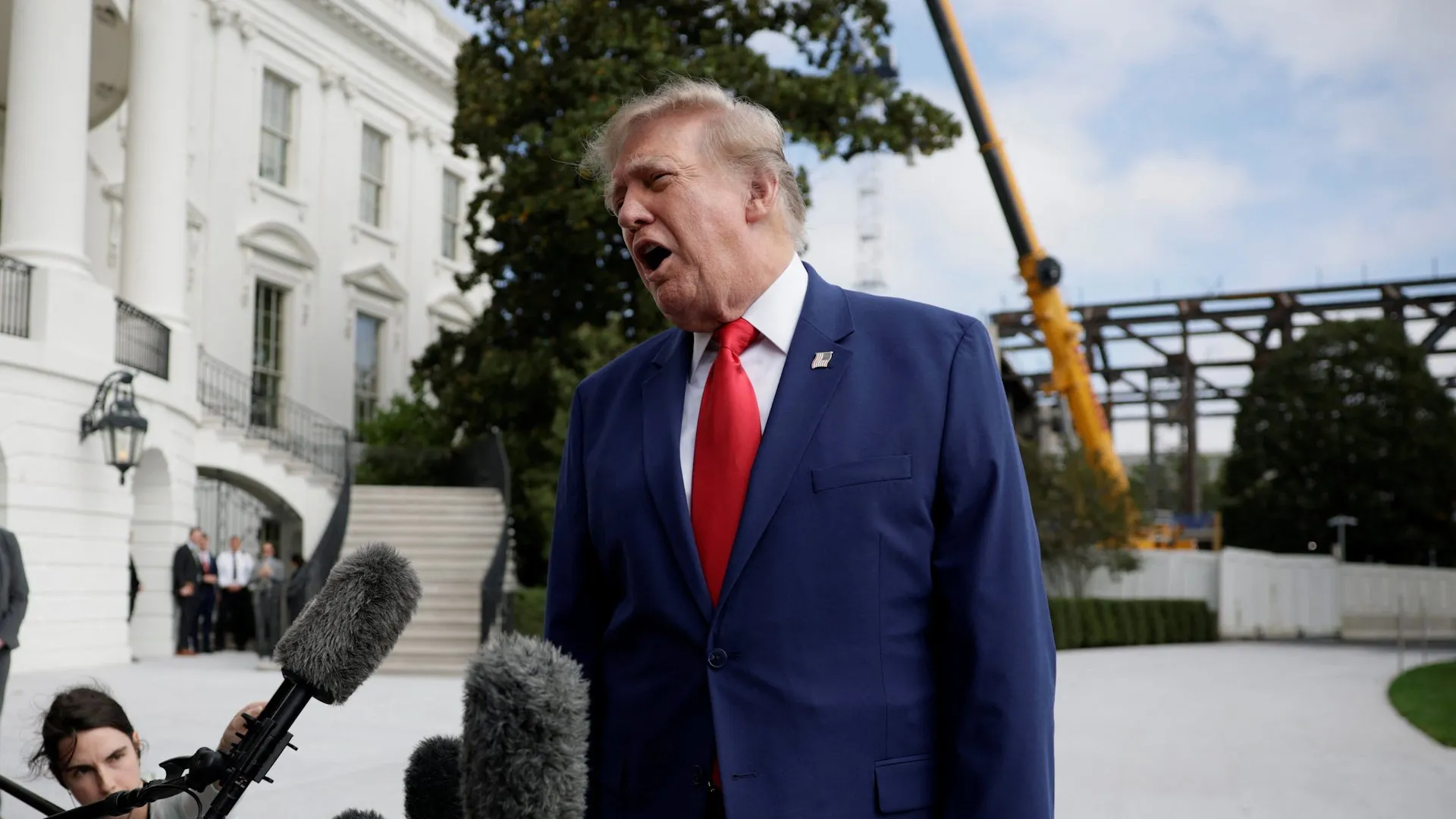
United States President Donald Trump has signed an executive order waiving newly-passed Russia sanctions, claiming the move is in the US’s “national interest”.
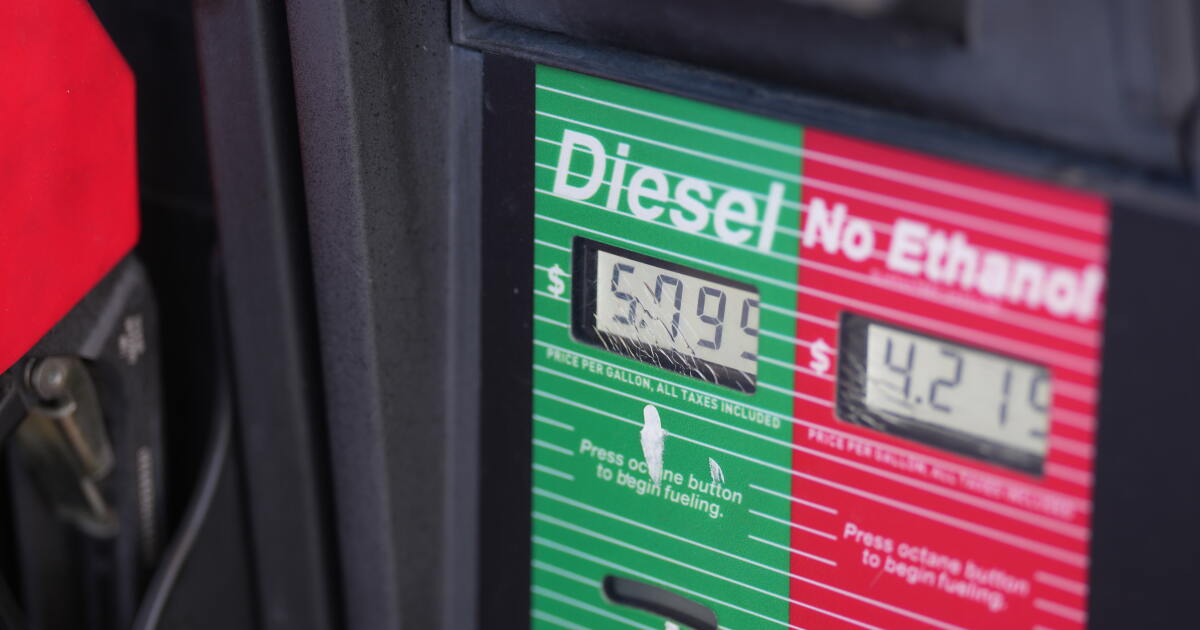
Earlier this month, Trump also announced a deal to bring stocks of Russian diesel into global markets, in a bid to drive down energy prices that have spiked during the US-Israel war on Iran. The US Treasury waived sanctions on Russian diesel sales until April 2027.
Trump’s embrace of Russian energy has angered Ukraine, European partners and many US officials, who say the move rewards Moscow while it continues its four-and-a-half-year war against its neighbour.
Ukraine’s President Volodmyr Zelenskyy slammed Trump’s diesel deal as “a gift” to Russia’s President Vladimir Putin that will help fund his war effort.
While European countries have also criticised Trump’s embrace of Russian energy, the US president has accused them of “hypocrisy”, as figures show that European Union countries continue to import Russian gas.
Here’s what we know:
Which sanctions has Trump waived?
In his executive order on Friday, Trump called off numerous planned Russia-related sanctions days before they were due to take effect, including duties on Russian goods and penalties for buying the country’s oil and gas.
The now-blocked measures were part of legislation passed in Congress with bipartisan support last month, named after the late US Senator Lindsay Graham, an outspoken critic of Russia.
They would have included up to 100 percent tariffs on all goods brought into the US from the five top importers of Russian crude oil or gas, including China and India. They could also have imposed equal penalties on countries deemed to have knowingly bought oil or gas from Russia 30 days after the law’s implementation, or to be among the top five countries helping Moscow circumvent sanctions on sales of its oil.
The waiver will hold until the Trump administration believes “further action is appropriate”, according to the executive order.
US Congressman Don Beyer, a Democrat from Virginia, said the sanctions waiver amounts to a “surrender to Putin” that “betrays our Ukrainian partners and defies clear congressional intent”.
Who will benefit from this?
Vasily Astrov, an economist at the Vienna Institute for International Economic Studies, told Al Jazeera that the Russian government will likely be the greatest beneficiary because the easing of sanctions means Russian oil will not have to be further discounted.
He estimated that about 60 cents of every extra dollar in the price of a barrel of Russian oil would “end up in state coffers”.
Russian official Kirill Dmitriev, an envoy for Putin, hailed the US decision to waive the sanctions as “an important and truly historic moment”.
Other beneficiaries include major importers of Russian oil and gas, such as China and India, who are now less exposed to the risk of secondary US penalties.
While Trump hopes the measures will also help bring down oil prices for US consumers before November mid-term elections, experts say that is less certain.
Addressing the US’s recent diesel deal with Russia, EU economy chief Valdis Dombrovskis said it is unlikely to have a significant impact on global prices.
According to Trump, that deal would bring 300,000 tonnes of diesel fuel into US and global markets “immediately”, followed by 500,000 tonnes in November, and 1 million tonnes afterwards.
“If we look at the volumes, they are not of any macroeconomic significance, and frankly, there are strong doubts whether Russia is even able to supply those volumes, and according also to US quality standards, those are big question marks,” Dombrovskis told the AFP news agency.
Which countries still buy oil from Russia?
China and India are the largest buyers of Russian crude oil, purchasing 6 billion euros ($6.74bn) and 3.6 billion euros ($4.04bn) worth respectively in September, according to the Centre for Research on Energy and Clean Air (CREA), a nonprofit think tank.
Hungary and Slovakia, the landlocked EU members that have exemptions to the bloc’s ban on Russian crude, also remain big customers, buying a combined 290 million euros ($326m) worth of the commodity in September, said CREA. Turkiye imported 172 million euros ($193m) worth of Russian crude oil the same month, the think tank added.
Since the end of 2022, the largest importers of Russian oil products, which include diesel, have been Turkiye, China, Saudi Arabia, Brazil and Singapore.
Saudi Arabia imported the most Russian oil products in September at 534 million euros ($600m), followed by Turkiye with 321 million euros ($361m), China with 304 million euros ($342m) and India with 161 million euros ($181m).
Is Europe buying increasing amounts of gas from Russia?
“The European Council regrets the United States’ decision to temporarily lift sanctions on Russian diesel,” European leaders said in a joint statement adopted following a two-day European Council meeting in Brussels this week.
But despite its own near-blanket ban on Russian oil, the EU has continued to import large quantities of Russian gas, though it plans to phase out those imports next year.
Urgewald, a Germany-based group that researches coal companies, reported this week that more than 12 million tonnes of Russian Arctic LNG was transported into EU ports from January to September this year, a 9.5 percent jump from the same period last year.
In September, EU countries imported 817 million euros ($918m) of pipeline gas, and 615 million euros ($691m) of liquefied natural gas (LNG), according to CREA.
EU members France and the Netherlands were the largest LNG importers, bringing in 446 million euros ($501m) and 116 million euros ($130m) respectively, according to the think tank. France’s LNG imports represented a 103 percent increase from the previous month, it added.
France’s President Emmanuel Macron has been among the most outspoken about Trump’s diesel deal with Russia, saying on Friday that it “sends a negative message” and would have no impact on global prices.
Hungary imported the most Russian pipeline gas of any EU member by far during the month, with 414 million euros ($465m) worth. Slovakia and Bulgaria brought in 161 million euros ($181m) and 132 million euros ($148m), respectively, according to CREA data.
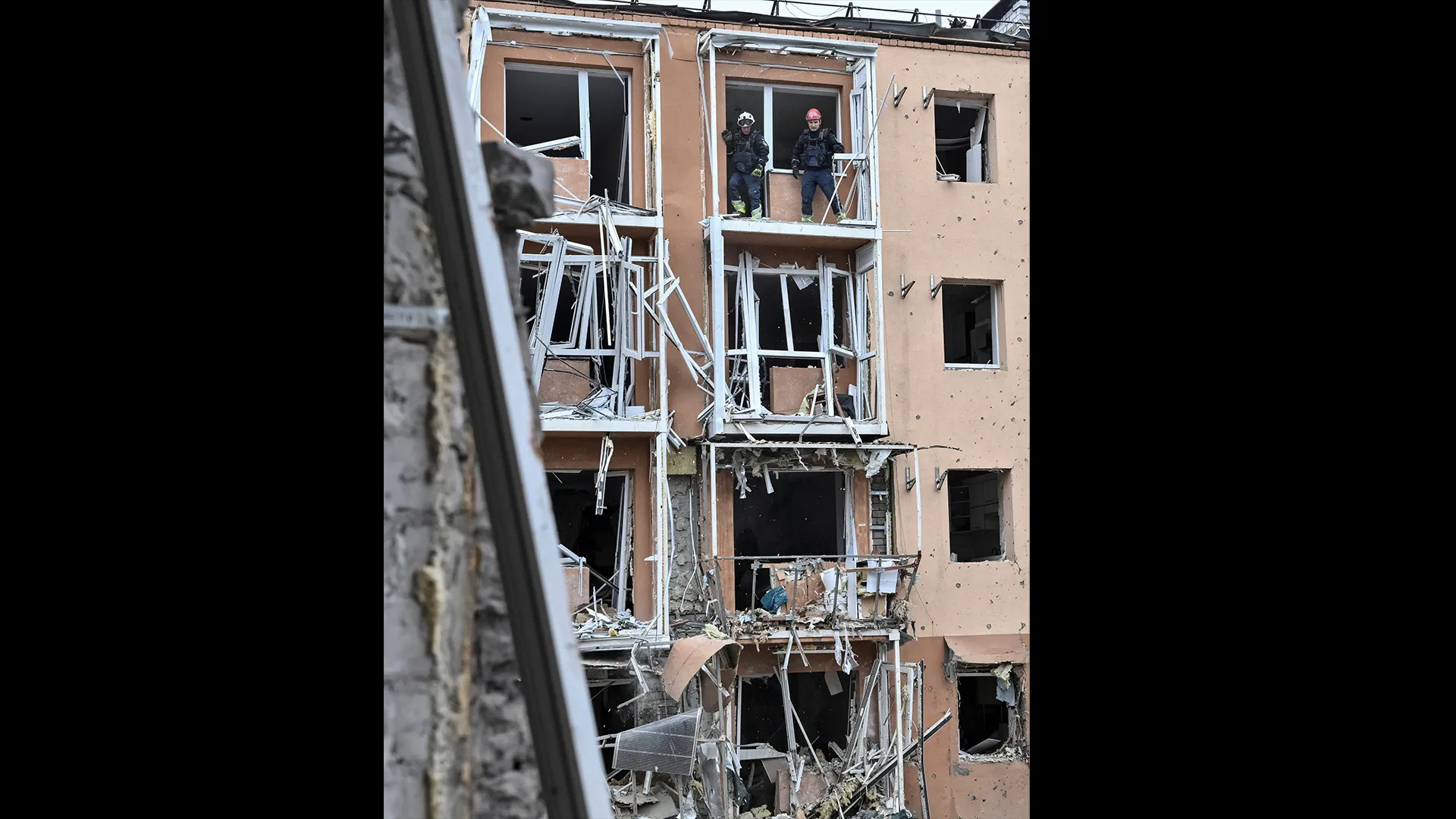
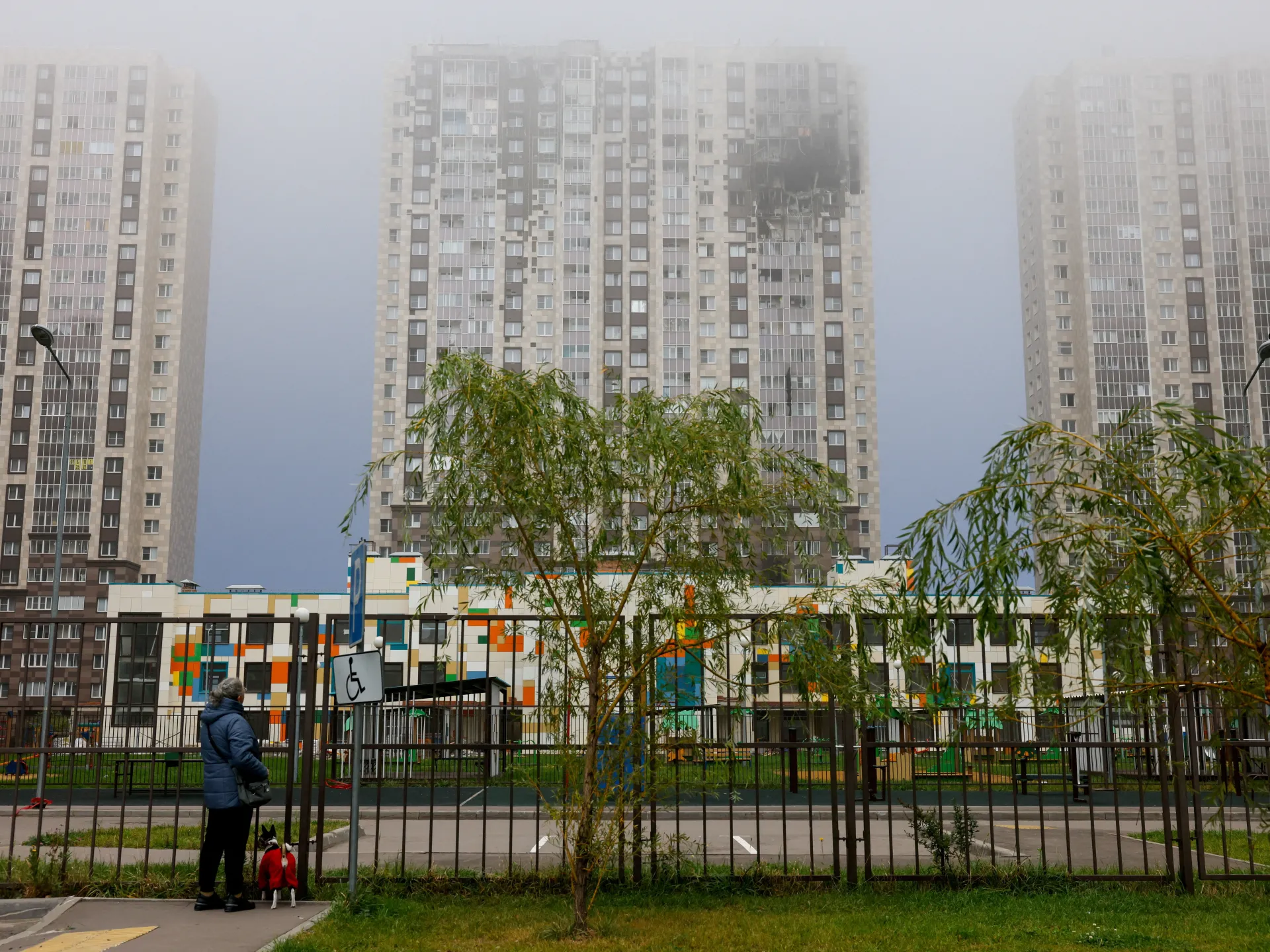
At least eight people have been killed and nearly 60 injured in the latest wave of Russian strikes across Ukraine. Ukraine’s Air Force said Russia launched 332 drones and missiles overnight, of which 293 were intercepted or neutralised.
US President Donald Trump has waived more sanctions on Russia in a bid to ease energy prices, leading to a chorus of condemnation from Ukraine and EU allies. The executive order comes as the rift between Trump and Ukraine’s Zelenskyy widens.
US president’s executive order comes two days before sanctions deadline and a week after diesel deal with Putin.
Published On 17 Oct 202617 Oct 2026
US President Donald Trump has put on hold a sweeping package of sanctions on Russia that he signed into law last month, telling Congress the pause is in the national interest.
Trump signed an executive order on Friday, two days before a deadline in the law that would put the sanctions into effect.
Recommended Stories
list of 3 itemsend of list
The law – named after Lindsey Graham, the Republican senator who died unexpectedly in July after returning from Ukraine – had passed in the House of Representatives and the Senate by large margins. The bipartisan legislation was drafted by Graham and Democratic Senator Richard Blumenthal.
It sought to starve Moscow of money for the war by sanctioning Russian officials, banks and a shadow fleet of tankers carrying its energy.
It also directed Trump to impose tariffs of up to 100 percent on the five biggest importers of Russian oil or gas, with an exception for countries that import less than 15 percent of Russia’s natural gas exports and are taking steps to cut them.
Diesel deal and criticism
The decision to suspend the sanctions comes a week after Trump said the US had signed a deal to buy diesel from Russia to try to lower global fuel prices.
Both Republicans and Democrats, criticising the deal, said it would help Russia’s war effort without affecting fuel prices.
Democratic Representative Don Beyer said he and others had “warned” that Trump might do this, in reference to Trump’s deal with Moscow.
Beyer called on Congress to “fix this flawed law to stop Trump from capitulating to Putin and ensure that it truly supports Ukraine”.
Trump has also increasingly criticised Ukrainian President Volodymyr Zelenskyy lately for failing to reach a deal with Russia.
As Republicans try to keep control of Congress in the November 3 midterm elections, an AP-NORC poll released on October 1 found Americans disapprove of Trump’s handling of the Iran war and blame him for higher prices among several other domestic policy issues.
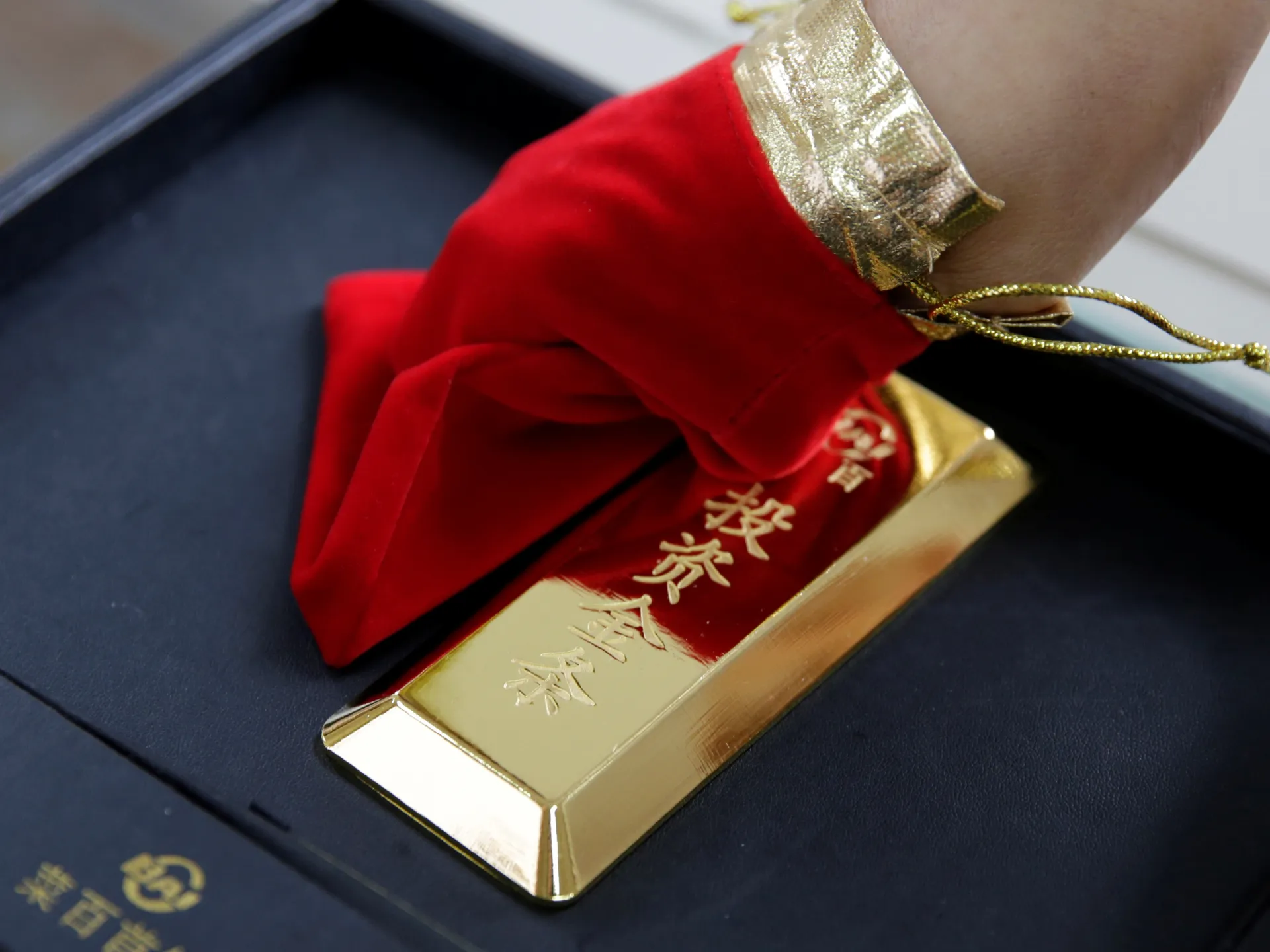
China is increasing its gold reserves in a bid to reduce its dependence on US dollar assets and protect against financial and geopolitical risks, analysts say, while households are turning to the precious metal amid uncertainty over the domestic economy.
The People’s Bank of China reported buying gold for a 23rd consecutive month in September, when the country’s central bank also made its largest monthly purchase in nearly three years. The sustained buying points to a longer-term effort to spread risk associated with its vast reserves, experts say.
Among concerns is high US debt and Western governments’ freezing of assets, which has highlighted the inherent risk in holding money overseas, particularly for emerging market and Global South economies. Gold bought and stored domestically offers protection against that risk because access does not depend on the will of another government.
But central bank buying and household demand for gold in China have different drivers. While Beijing is managing its financial exposure, private investors are seeking somewhere to preserve their savings. Here is what we know.
How much gold has China bought?
China’s central bank added approximately 23 tonnes of gold in September, bringing its reported holdings to about 2,410 tonnes, according to the World Gold Council. That was its largest monthly purchase since October 2023. Gold accounted for 8.5 percent of China’s total official reserves at the end of September, compared with 5.5 percent at the end of 2024.
Reserves are assets central banks hold to ensure they can meet international payments and respond to financial disruption. They usually include foreign currencies, foreign government debt and gold.
Private demand for gold within China has also risen, with purchases of gold bars and coins 28.4 percent higher in the first half of 2026 than during the same period last year, according to the China Gold Association. The buying of gold has continued amid falling prices, with gold down around 8.5 percent over the month.
The World Gold Council attributed the decline in gold prices partly to a stronger dollar and higher returns on US government debt. With interest rates going up in an attempt to curb inflation, these investments are attractive for buyers as they pay interest, making them more attractive to private investors than gold, which does not.
Why is China buying more gold?
A key objective is to reduce dependence on US government debt, known as Treasuries, according to Thu Lan Nguyen, head of commodity research at Commerzbank in Frankfurt.
China holds substantial reserves in dollar-based assets and, therefore, buying gold reduces its exposure to decisions taken in Washington. “China’s gold purchases are part of a broader effort to make its reserves more resilient,” Nguyen told Al Jazeera.
The freezing by Western countries of roughly $300bn in Russian Central Bank overseas assets following Moscow’s invasion of Ukraine in 2022 demonstrated how reserves held abroad can quickly become inaccessible.
The concern for China may be that a future confrontation with Washington could expose some of its overseas assets to similar restrictions. “Gold held domestically has a crucial advantage in this respect: it does not represent a claim on another country and is therefore much less exposed to sanctions or asset freezes,” Nguyen said.
“I would interpret it primarily as risk management,” she added, pointing to increased geopolitical tensions and economic and fiscal risks.
America’s rising debt, which hit $40 trillion for the first time in history earlier this year, adds another source of uncertainty. In February, the US Congressional Budget Office projected that federal debt held by the public would rise from 101 percent of the size of the US economy in 2026 to 120 percent in 2036. That provides context for concerns about Washington’s ability to repay that debt going forward should an economic crash occur. Much of this debt is held by China. Gold, therefore, offers a less volatile and risky asset to hold.
Chinese households have different motivations for buying gold. When confidence in other investments weakens, gold can become more attractive as a way to hold savings. “Strong demand for gold can partly reflect a search for alternative stores of value,” Nguyen said.
The World Gold Council has identified weak Chinese share markets as one factor supporting domestic demand for gold, while its property market is burdened by heavy borrowing and overbuilding, contributing to a fall in housing prices, making it a poorer investment.
What this means for the US dollar
Analysts warned that China’s increased buying of gold does not signal an imminent end to the dollar’s global dominance. “I would be cautious about describing this as a major shift away from the dollar,” Nguyen said. “The dollar remains by far the dominant global reserve currency.”
But a gradual shift could still matter if China and other central banks put more of their new reserves into gold, buying fewer US assets than they normally would. That could weaken one source of demand for US government debt. But the effect would depend on how widely and quickly the shift developed.
“The key point is, therefore, that this is likely to be a slow diversification process rather than a sudden abandonment of the dollar,” Nguyen said. She added that the consequences for the US economy would remain limited unless the trend broadened and accelerated substantially.
Central banks also need readily available foreign currency to support international payments and the dollar remains central to those transactions. So gold can provide financial protection, but it cannot directly replace all the functions of dollar reserves.
Who else is buying gold?
China is part of a wider trend, particularly among central banks in emerging economies, Nguyen said.
“The trend is particularly visible among emerging market central banks,” Nguyen said. “But sanctions are only part of the story.”
Poland has also become a more prominent buyer. Its central bank purchased 31 tonnes in the first quarter of 2026 and another eight tonnes in July, according to the World Gold Council.
Large holdings do not necessarily indicate recent purchases. India, for example, confirmed in June that its physical gold stock remained unchanged at about 880.5 tonnes. India’s gold reserves have changed little since mid-2025, according to the World Gold Council. It bought about four tonnes in 2025, down from 73 tonnes in 2024.
Despite China’s sustained buying, its reserves remain far smaller than those of the United States. Its holdings of about 2,300 tonnes at the end of 2025 amounted to less than one-third of the US stockpile of approximately 8,133 tonnes.
Ukrainians accuse the US of gambling with their lives as Russian strikes devastated residential buildings in the capital. President Zelenskyy says Donald Trump isn’t on the right side of history as Washington struck a diesel deal with Moscow.
Kyiv, Ukraine – The supernova-like blasts of exploding Russian ballistic missiles are followed by thunderous thumps, shockwaves, fires and deaths – and the staccato of Ukrainian air defence systems.
This week’s nightly attacks on Ukraine that killed at least 15 and wounded dozens resembled hundreds of previous raids – with one exception.
Recommended Stories
list of 4 itemsend of list
The air raid sirens began howling just seconds before or after yet another wave of missiles struck apartment buildings, power plants and warehouses.
But Ukraine’s partners did not provide the country with intelligence data from NATO’s early-warning satellites, President Volodymyr Zelenskyy said on Monday, as tensions between Washington and Kyiv rise.
He did not name the United States and President Donald Trump has denied that Washington has stopped sharing intelligence.
The constellation of military satellites detects Russian ballistic missile attacks by the rockets’ thermal flames seconds after launch.
The warnings give Ukrainians up to 10 minutes – precious, life-saving time to sound air raid sirens and send emergency text messages to prompt evacuations to bomb shelters.
“That’s what helps prevent the killings,” Zelenskyy said.
Ukraine’s ground radars can only detect the incoming missiles as their speed ranges from 6,000 to 12,000km/h (3,730 – 7,260 miles per hour).
‘Trump pressures our president’
Despite Trump’s denial, Ukrainian observers have a simple yet harrowing explanation – the US president wants to help Republicans win more congressional seats in upcoming midterm elections by pressuring Kyiv into declaring an “energy ceasefire” with Moscow that would drive global oil prices down.
“Trump pressures our president, pressures Ukraine” as he strives to “get advantage by any means necessary in the election campaign,” Lieutenant-General Ihor Romanenko, former deputy head of Ukraine’s general staff of armed forces, told Al Jazeera.
The lack of intelligence data “significantly affects the effectiveness of air defence, we don’t have time to respond,” he said.
Without the satellite data, Ukrainian drones and missiles also “lose precision when striking targets deep in Russia,” he said.
On Sunday, Trump announced the ceasefire that envisages no mutual strikes on energy infrastructure – from Russian oil refineries and fuel depots to Ukrainian power and heating stations.
“Effective immediately, there is an ENERGY CEASEFIRE in the War between Russia and Ukraine. Both parties have agreed. Do not break it!” Trump wrote on social media.
Kyiv said the announcement was a surprise, while Moscow declined to say whether it backs the idea – and kept on hitting Ukraine’s energy infrastructure.
The pressure goes beyond the refineries as Trump wants to quickly reopen, arbitrate and complete peace talks between Kyiv and Moscow – even if they benefit the Kremlin.
“He needs peace talks to succeed. Ideally, it is a certain unblocking of the peace settlement process, when Kyiv shows more willingness to agree with Russia’s demands,” Kyiv-based analyst Igar Tyshkevych told Al Jazeera.
The pressure will continue until “Kyiv shows readiness for a compromise and concessions towards Russia,” he said.
Moscow “simply abuses” the pressure and the suspension of air raid warnings to escalate attacks on Ukraine, he said.
Kyiv’s ‘priority’: The destruction of oil refineries
The suspension of data-sharing was especially shocking, given that Kyiv did stop hitting Russian refineries for three days.
It was only on Wednesday that its drones attacked refineries in Saratov and Ryazan regions, said Russia’s Deputy Prime Minister, Aleksander Novak.
However, Kyiv’s focus on striking oil refineries is ineffective and counterproductive, another observer said.
“Kyiv’s strategic priority is still the destruction of oil refineries,” Nikolay Mitrokhin of Germany’s Bremen University, who has penned hundreds of authoritative analyses of the hostilities, told Al Jazeera.
However, Russia overcame the initial shock by transporting gas from refineries in Siberia and exporting it from neighbouring Belarus and Kazakhstan.
No economic collapse, massive joblessness or public protests followed the strikes, while Moscow continued its air raids, adding jet-powered drones that resemble cruise missiles and are hard to down with Ukraine’s existing air defence system, he said.
“What is the basis for Kyiv’s and its backers’ conviction that strikes on oil refineries and depots will lead to Russia’s strategic defeat before Ukraine is defeated? I don’t understand,” he said.
However, Ukrainian attacks on data centres, bridges and factories where drones are assembled are far more effective, he said.
Recent strikes on data centres of Russian online giant Yandex and the state-run Sberbank resulted in disruptions of services in Russia and even former Soviet republics where Yandex operates its online payment, food delivery and taxi services.
Trump “didn’t ask him to stop the war, to give away cities or stop striking Russian rears in general,” Mitrokhin said.
Kyiv has repeatedly reiterated that it was ready to start peace talks if they are preceded by a ceasefire, but Moscow wanted to continue ground assaults and air raids until the peace terms were finalised – which could take months or even years.
‘We’re ready for any turn of events’
On Wednesday, Ukraine’s drone czar accused Elon Musk’s SpaceX of throttling Starlink satellite terminals that are part of the military-grade Starshield system.
Serhiy Beskrestnov said that SpaceX abruptly and without any warning limited services for terminals placed on drones flying over 160km/h (100mph).
The limit affected crucially-important interceptor drones and followed Trump’s request, presidential adviser Serhii Sternenko said.
Musk said that the White House owns and controls the Starshield systems and that any limits on speed are decided by Trump.
Some military analysts warn that the limit may be followed by a total shutdown of Starlink for Ukraine that could damage the quality of all military communications.
“But we were getting ready for everything,” Andriy Pronin told Al Jazeera. “We already know it may happen, that’s why we’re ready for any turn of events.”
In September 2022, Musk secretly ordered engineers to switch off Starlink coverage in the Russia-occupied Kherson region, effectively thwarting Kyiv’s push to retake it, Reuters reported.
In 2023, Musk threatened to cut off Ukrainian military access to Starlink unless the US defence department took over the costs.
Later, the Pentagon, Poland and other European allies took over the costs.
Ukraine president earlier said Kyiv was ‘done’ with energy ceasefire and strikes on Russian oil refineries would resume.
Published On 15 Oct 202615 Oct 2026
Russia says Ukraine has targeted an oil refinery in Ryazan, about 180 kilometres (110 miles) south of Moscow, as President Volodymyr Zelenskyy said Kyiv was “done” with an energy ceasefire unilaterally announced by United States President Donald Trump over the weekend.
“The Kyiv regime attempted a large-scale attack on an oil refinery in Ryazan,” Moscow’s defence ministry said in a statement on Thursday, adding that a “fire broke out after drone debris fell onto the refinery site.”
Recommended Stories
list of 3 itemsend of list
Ukraine’s president earlier told the British newspaper the Financial Times that strikes on Russian oil refineries would resume, and accused the US of weakening Ukraine’s position on the battlefield by allegedly withdrawing crucial intelligence sharing.
Trump on Sunday unilaterally announced an “energy ceasefire” that was not publicly confirmed, and Moscow continued striking Ukrainian energy infrastructure. Ukraine said it suspended attacks on Russian energy sites for several days after Trump’s announcement.
The US has pressured Ukraine to halt strikes on Russian refineries, claiming that a suspension of attacks and a deal to purchase 1.8 million tonnes of diesel from Russia would help reduce soaring fuel prices.
“This politically is not simple [in America], because everybody will want to ask how it can be when some people are surviving, fighting, dying – and you make . . . business with the guys with such aggression,” Zelenskyy told the FT.
Zelenskyy also alleged that Ukraine’s access to SpaceX’s satellite internet service was restricted, potentially leaving it more vulnerable to Russian attacks. The Ukrainian armed forces use SpaceX’s military-grade Starshield system for offensive and defensive operations.
In a post on X on Wednesday evening, SpaceX owner Elon Musk said that only the US military and Trump had the authority to limit Starshield’s usage and speed for clients.
In a separate post, he called for Zelenskyy to “go” as Ukraine’s leader.
“And so the slaughter continues,” Musk wrote in a separate post on X. “Time for Zelensky to go.”
Ukraine is heavily dependent on Western military aid in its fight against Russia, particularly from the US and Germany. However, Kyiv’s relations with Washington have been strained in recent weeks, with Trump calling on Saturday for Zelenskyy to be replaced.
Against this backdrop of tensions, Zelenskyy said he would be willing to pause strikes on Russian energy sites again, but only if the US supplied Ukraine with crucial Patriot interceptors.
Zelenskyy is due to meet European leaders in Brussels on Thursday as he pushes for tougher sanctions on Moscow and faster delivery of support from the European Union.
Dutch Prime Minister Rob Jetten has called on EU leaders to “step up” their game to ensure Ukraine wins the war against Russia.
The EU has already pledged $50 billion in support for Ukraine next year. However, the sum falls far short of the $175 billion Kyiv plans to spend on its defences next year.
Trump has denied that the US has stopped sharing intelligence with Ukraine.
Russian air attacks have killed at least six people in Ukraine and caused power cuts in parts of the capital Kyiv, days after United States President Donald Trump announced an “energy ceasefire” in the more-than four year war.
The Russian Defence Ministry said on Wednesday that its forces had carried out a “massive” strike against communications and energy infrastructure facilities in Ukraine, the Interfax news agency reported.
Recommended Stories
list of 3 itemsend of list
Kyiv Mayor Vitali Klitschko urged people to remain in shelters.
“Energy facilities in Kyiv and the surrounding region have come under a massive ballistic missile strike. There are power disruptions in the capital,” he wrote on Telegram.
DTEK, Ukraine’s largest private energy provider, said the attack had caused emergency power cuts in several urban districts of Kyiv.
A Russian strike on a multistorey building in the capital’s Desnianskyi district killed two people, while another attack in Golosiivsky district killed one, Ukraine’s state emergency service said.
The Ukrainian military also reported that two people were killed and six wounded in Russian attacks on the Dnipropetrovsk region. Another person was killed in the southeastern Zaporizhzhia region.
Further Russian missile attacks were reported in the Kharkiv and Zhytomyr regions, while other strikes hit Sumy and Chernigiv.
Ukrainian President Volodymyr Zelenskyy said Russian attacks on Kyiv had come without Ukraine receiving advance warning from its Western allies.
“A Russian ballistic missile attack on Kyiv. Once again, no early warning from our partners,” he wrote on Facebook. “This is absolutely unjust: when they are destroying our infrastructure, and Ukraine is not even receiving early warnings about ballistic missile launches.”
The president said Ukraine detected the missiles only as they neared Kyiv.
He also accused Russia of violating the “energy ceasefire” Trump announced on Sunday.
“A targeted Russian ballistic missile strike specifically against energy infrastructure – the very infrastructure covered by the ceasefire announced by the American President,” he wrote on X.
“The strike was entirely deliberate and demonstrative in its scale – Russia has never before shown such ostentatious disrespect toward the United States.”
Russia also reported Ukrainian drone strikes overnight. The governor of Russia’s Saratov region, Roman Busargin, said a Ukrainian drone strike had killed one person in the city of Balakovo.
Busargin said all infrastructure facilities were operating as usual. Balakovo is home to a data centre of Russia’s top lender Sberbank, a nuclear power plant and a hydropower station, whose dam spans the Volga River, among other facilities.
Moscow mayor Sergey Sobyanin said air defence forces had downed nearly 500 drones flying towards the Russian capital overnight. Russian authorities said about 160 more were brought down over the Rostov region, while others targeted Moscow.
Russia’s military later put the number of downed Ukrainian drones overnight at 902, of which 180 were shot down near the capital Moscow.
Suspect was arrested on Russia’s far-eastern Sakhalin Island before being transferred to Moscow, says Russia’s FSB.
Published On 13 Oct 202613 Oct 2026
Russian authorities say they have arrested a Japanese journalist on the far eastern Sakhalin Island, accusing him of espionage.
The Federal Security Service (FSB) announced the arrest on Tuesday, saying the man was believed to have gathered information on Russia’s defence capabilities for Japanese intelligence. The charges carry up to 20 years in prison.
Recommended Stories
list of 3 itemsend of list
Russia’s Ministry of Foreign Affairs named the journalist as Imai Yuki, who it said worked for Japan’s Hokkaido Shimbun newspaper.
The Japanese government was trying to verify reports of the journalist’s detention, according to an official at Tokyo’s embassy in Moscow cited by Japan’s Kyodo news agency.
The journalist was arrested on Yuzhno-Sakhalinsk, the main city on Sakhalin Island, as he was preparing to leave Russia, said the FSB. He was then flown to Moscow, where a court ordered him to be held behind bars pending the probe, the agency added.
A video shared by Russia’s TASS news agency, attributed to the FSB, shows masked officers appearing to handcuff the suspect in a hotel room, before transporting him to an interrogation room.
The suspect was then shown boarding a plane accompanied by two FSB servicemen, before appearing in a cage on trial in a Moscow court, which authorised his custody for nearly two months.
The Japanese man’s arrest comes amid a spike in tensions between Russia and Japan following Russian President Vladimir Putin’s trip in August to the Kuril Islands, the Moscow-controlled Pacific archipelago that is claimed by both countries.
The Sakhalin region includes Sakhalin Island and the four southernmost islands of the Kuril chain, which Japan calls the Northern Territories.
Russia and Japan never signed a formal World War II peace treaty, with the main obstacle being the unresolved territorial dispute over the Kuril Islands.
Authorities in Russia have arrested numerous foreigners for alleged espionage since it invaded neighbouring Ukraine in 2022.
One of the most prominent cases was the detention of Wall Street Journal reporter Evan Gershkovich in 2023. He was found guilty of espionage by a Russian court, sentenced to 16 years and then freed in a major prisoner swap involving Russia and Western countries in August 2024.
United States President Donald Trump has insisted that Russia and Ukraine have agreed to stop striking each other’s energy infrastructure, as he called on both sides to end the “ridiculous” war.
Trump’s comments on Monday came even as Ukrainian President Volodymyr Zelenskyy said Russian forces had struck at least six Ukrainian energy facilities since the US president declared the truce on Sunday.
Recommended Stories
list of 3 itemsend of list
“Well, they agreed,” Trump told reporters, referring to Zelenskyy and Russian President Vladimir Putin. “Because I said, ‘You agree’. That’s why they agreed, because I said they agree.”
When pressed about the Russian strikes, Trump said, “Well, I’d have to look at it and see, because there’s been violations on both sides.”
The US president called the war, which began with Russia’s full-scale invasion of Ukraine in February 2022, a “disaster” and claimed, without offering evidence, that at least 32,000 people had been killed this month alone.
“All I know is that Zelenskyy and Putin have to get together and end that ridiculous war,” he said.
Kyiv blindsided
Trump had blindsided Kyiv and its European allies when he announced the purported energy ceasefire on Sunday. The announcement came two days after he temporarily eased US sanctions on Russian diesel, a move that drew outrage in Europe and Ukraine.
Zelenskyy said it reversed years of Western efforts to isolate Russia’s economy and would only embolden Putin.
Lawmakers from both major parties in the United States have also said the diesel decision appears to violate US law. Several Republicans have objected that it undercuts a law Trump himself signed to tighten restrictions on Moscow.
Zelenskyy said on Monday that Ukraine supported an energy ceasefire and had carried out no attacks on Russian refineries overnight. He said Kyiv was prepared to sign “guarantees to make sure they can be trusted”.
But he said it was “increasingly evident” that Moscow would not comply.
“Today alone, the Russians have attacked 6 energy facilities in Ukraine. 33 people were wounded across the country,” Zelenskyy wrote on social media. “This is what happens when Russia sees the prospect of higher revenues for its war machine.”
Russia, however, has rejected any pause in fighting, with Foreign Minister Sergey Lavrov promising to press ahead with the military campaign.
“I do not think he deserves a respite,” he said of Zelenskyy. “I don’t think we’ll be buying into assurances and promises again.” Russia, he added, would continue to pursue the goals of what it calls its “special military operation” in Ukraine.
US midterms
Trump, meanwhile, has portrayed Ukraine, rather than Russia, as the main obstacle to peace. He has said that Putin is more eager on a deal than Zelenskyy, and has called on Ukrainians to vote their president out of office – an unusually harsh turn in a relationship that has been strained since Trump returned to the White House in 2025.
Al Jazeera’s Alan Fisher, reporting from Washington, DC, said Trump has previously announced agreements between Russia and Ukraine that never materialised.
“He says he wants to protect industries in the US like farmers and ranchers, and to do that he needs the price to go down. But it seems that he thinks there’s a deal, but no one else is sure that there actually is one,” Fisher said.
The latest announcement, according to our correspondent, appeared to be driven by Trump’s desire to bring down diesel prices before the US midterm elections on November 3.
Most polls predict that Republicans will lose control of Congress as voters grow frustrated with rising prices, particularly for petrol.
An opinion survey published on October 1 by the Associated Press news agency and the University of Chicago suggested that 65 percent of US adults blame the White House for the high cost of living, especially Trump’s tariff policies and his new war against Iran.
Ukraine’s European allies, meanwhile, voiced scepticism about the energy ceasefire and approved the largest set of European Union sanctions since Russia’s 2022 invasion.
The bloc’s foreign ministers added some 1,569 people and businesses to the bloc’s sanctions list to maintain the pressure on Moscow.
“Russia will only negotiate seriously under pressure, which is why we are sticking to our sanctions against Russia,” German Chancellor Friedrich Merz said in Berlin.
Ukraine’s president says Russian attacks on Ukraine’s energy infrastructure are continuing despite Donald Trump announcing that the two sides had agreed to a so-called ‘energy ceasefire’. Both Moscow and Kyiv are yet to confirm an agreement is in place.
Warsaw says the 2 suspects held in Germany will face sabotage charges.
Published On 12 Oct 202612 Oct 2026
Two Turkish citizens have been detained in Germany over a fire at a Starlink station in central Poland that Warsaw has branded an act of sabotage carried out on Russia’s behalf.
Polish officials announced the arrests on Monday, one month after the fire, which they say was aimed at disrupting internet services, including for Ukraine’s military. The fire, in Masovia in Eastern Poland, engulfed the Starlink station’s power system and backup generator.
Recommended Stories
list of 2 itemsend of list
Polish Minister of Interior Marcin Kierwinski said the two men would face charges in Poland of carrying out sabotage on the instructions of a foreign intelligence agency. German police made the arrests on behalf of Polish services, according to Deutsche Welle. Polish officials did not say where or when in Germany the men were detained.
“We have no doubt that Russian services are behind this act of sabotage,” Special Services Minister Tomasz Siemoniak said in a news conference. “It is worth adding that Russian services are increasingly turning to individuals linked to the criminal underworld,” he said.
The case is the latest in a string of incidents that officials across the European Union deem to be part of a Russian campaign of sabotage and hybrid attacks aimed at eroding support for Ukraine.
The Russian embassy in Warsaw did not immediately reply to a request for comment. Moscow has previously dismissed similar accusations as baseless and the product of anti-Russian hysteria.
Ukraine’s military relies on tens of thousands of Starlink terminals for battlefield communications and occasional drone operations. Starlink founder Elon Musk activated the service over Ukraine in 2022, days after Russia’s full-scale invasion, following a plea from Kyiv. Poland has said it pays for Ukraine’s Starlink subscription.
Musk has since clashed with Ukrainian officials over his views on the war. This year, he also agreed to switch off thousands of Russian “grey-market” Starlink terminals in Ukraine, causing problems for Russian forces. Ukraine is now seeking to use the terminals for attacks on Russian territory.
US President Donald Trump has announced an immediate “energy ceasefire” between Russia and Ukraine, days after easing sanctions on Russian fuel to tackle soaring domestic and global fuel prices.
The energy truce, announced on Sunday, marks another shift in Washington’s approach to Russian energy, as the Iran-US war and recent Ukrainian strikes on Russian energy facilities disrupted global oil supplies and pushed up fuel prices. Trump has even asked Ukraine not to attack Russian oil facilities, as Moscow remains a major exporter of diesel.
Recommended Stories
list of 3 itemsend of list
The spike in diesel prices in recent weeks has particularly put pressure on Trump’s Republican Party ahead of November’s midterm elections. Surveys show Americans hold the Trump administration responsible for the soaring fuel prices amid the unpopular US war on Iran.
“Attacks on refineries and energy facilities have taken capacity out of an already stretched global fuel market, pushing up costs for transport, agriculture and businesses, with the pain ultimately passed on to consumers,” Susannah Streeter, chief investment strategist at Wealth Club, told Al Jazeera, referring to the mutual attacks on energy sites by Ukraine and Russia.
“A genuine ceasefire could help protect supplies and ease some of that pressure, particularly as winter approaches.”
However, she warned it was too early to call it a “diplomatic breakthrough”, citing Ukrainian President Volodymyr Zelenskyy’s statement that the energy truce came as a surprise to him.
Trump’s decisions have drawn criticism from US politicians and European allies, who warn that allowing Russian fuel back into global markets could provide Moscow with new revenue to finance its war in Ukraine. In March, the Trump administration gave a sanctions waiver to Russian seaborne oil.
So, why has Trump repeatedly changed his position on Russian energy, and what is behind his latest decisions?
What is the ‘energy ceasefire’ Trump announced?
On Sunday, Trump said Russia and Ukraine had agreed to immediately stop attacking each other’s energy infrastructure.
“Both parties have agreed. Do not break it!” he wrote on Truth Social, without providing further details.
Ukrainian President Volodymyr Zelenskyy said he was not aware of the energy truce, saying the deal was “news to me” but welcomed the announcement nonetheless.
However, he said Russian drones continued targeting Ukrainian energy facilities, including a power plant in Kharkiv, after Trump’s statement.
“We are waiting for the details of the conditions between the Americans and Russians, and we are waiting to see one specific step the Americans are ready to take,” Zelenskyy said on Monday during a video address to a security conference in Warsaw.
“This energy ceasefire, it can work, and it can become a major step towards ending the war if the Americans truly step in now and make sure Russians respect it.”
(Al Jazeera)
Ukraine has repeatedly targeted Russian oil refineries, arguing that energy revenues help fund Moscow’s war. Russia, meanwhile, has attacked Ukraine’s electricity and heating infrastructure throughout the four-year conflict.
Academic Alexey Muriaev has urged caution over Trump’s announcement, questioning whether an agreement has actually been reached, and if so, what it entails.
“Is it about suspending attacks on oil refineries? And if that’s the case, then the situation would be inadequate, because Ukraine’s oil refineries have already been taken out by Russia’s strikes beforehand,” Muraviev, senior research fellow in Defence and Strategic Studies at Edith Cowan University, told Al Jazeera.
“So, in this sense, it would mean effectively Ukraine suspending unilateral action against Russia’s oil refinery facilities.”
Muriaev also linked the announcement to Trump’s diesel agreement with Russian President Vladimir Putin, suggesting it may be a signal to Zelenskyy.
“Attacking Russian oil refinery capability would probably be interpreted by Washington as an attack on US economic interests,” he said, referring to the agreement on diesel exports through April 2027.
What’s the state of global oil prices?
The ongoing conflicts in the Middle East and Ukraine have continued to keep global oil markets under pressure.
On Monday, Brent crude, the international benchmark, fell to about $103.04 a barrel following Trump’s ceasefire announcement and Russian diesel deal, while US West Texas Intermediate crude traded at about $90.96.
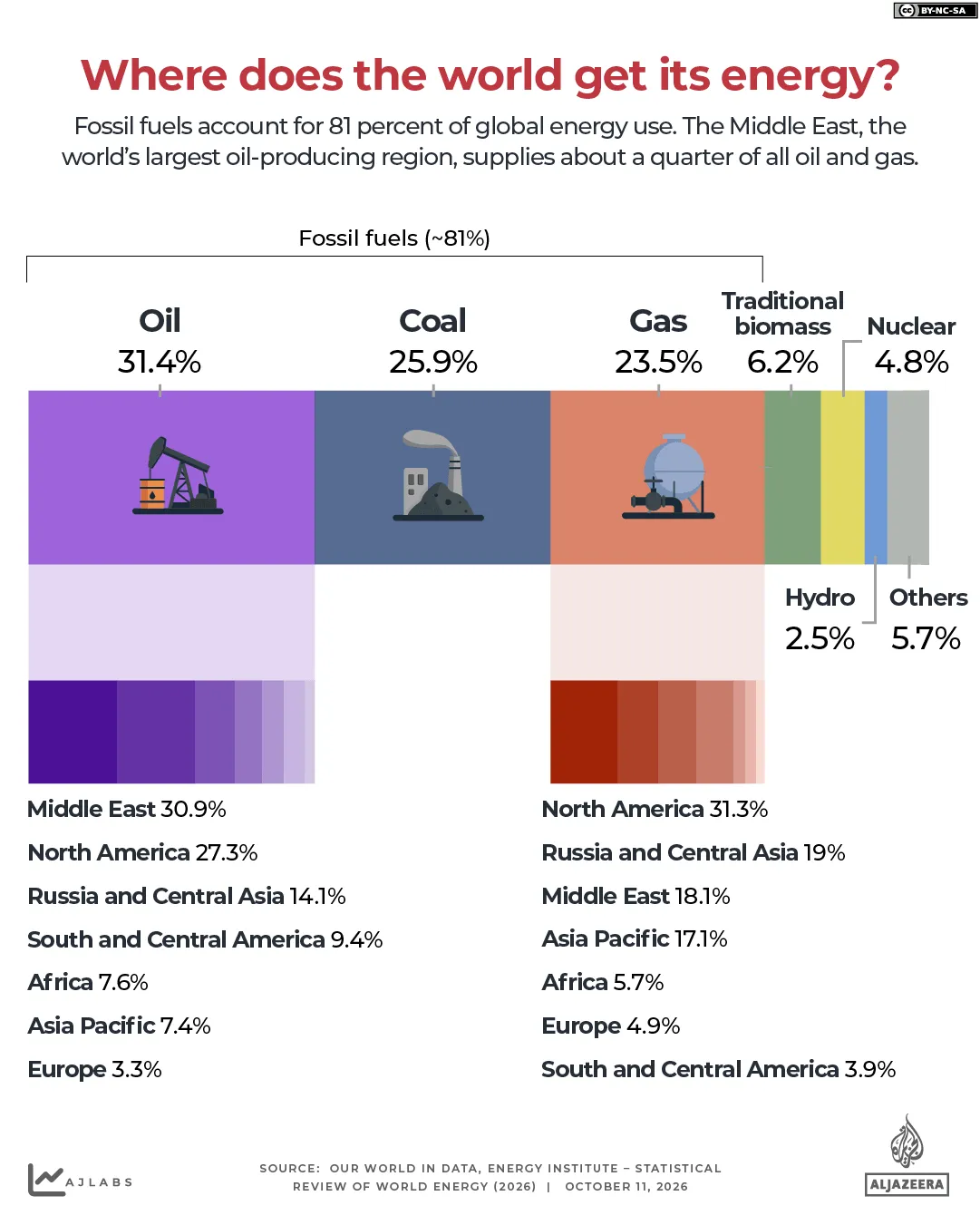
However, prices remain elevated because of the US-Israel war on Iran, which began on February 28, and disruptions in the Strait of Hormuz, a key waterway through which one-fifth of the world’s oil supplies flow.
Recent attacks on Saudi oil installations and airports by Yemen’s Houthis and the fighting around the Red Sea and Bab al-Mandeb Strait have put further pressure on oil prices.
Ukrainian attacks on Russian refineries have compounded diesel shortages, affecting a fuel essential for the agriculture and trucking industries.
The crisis prompted the Group of Seven nations last week to agree to release 100 million barrels of emergency oil and diesel reserves. The G7 decision came after pressure from Trump.
How has the Trump administration zig-zagged between punishing and embracing Russian energy?
Washington’s approach to Russian energy has shifted repeatedly since Moscow launched its full-scale invasion of Ukraine in February 2022.
Under President Joe Biden, the US banned Russian oil and energy imports in March 2022, seeking to cut off revenue used to finance Moscow’s war.
But Washington simultaneously supported a G7 price cap on Russian oil, designed to restrict Moscow’s earnings without removing too much supply from global markets.
Moreover, the Biden administration also accepted India’s continued purchases of Russian crude to prevent global prices from rising.
After returning to power last year, Trump initially intensified pressure on Moscow. In August 2025, his administration imposed additional tariffs on Indian goods over New Delhi’s purchases of Russian oil.
(Al Jazeera)
Two months later, Washington sanctioned Russian energy giants Rosneft and Lukoil, accusing Moscow of failing to seriously pursue peace negotiations to end the war in Ukraine.
However, Washington’s approach took a dramatic turn this year. On March 5, Washington issued a 30-day waiver allowing India to buy Russian oil stranded at sea, as disruptions to shipping through the Strait of Hormuz amid US attacks on Iran threatened global supplies.
A week later, the Trump administration expanded the exemption, allowing countries worldwide to buy sanctioned Russian oil and petroleum products already loaded onto tankers, with the waiver lasting until April 11.
In September, Trump urged Ukraine to stop attacking Russian refineries, blaming the strikes for global diesel shortages.
On October 9, he announced an agreement with Russian President Putin for Moscow to release more than 300,000 tonnes of diesel immediately, with another 1.5 million tonnes to follow.
Why has Trump changed his position on Russian oil frequently?
Trump’s shifting public position on Russian energy reflects ongoing, and often competing, political and economic pressures.
“Trump is caught between his geopolitical ambitions and the domestic political consequences of expensive energy,” Susannah Streeter of Wealth Club, told Al Jazeera.
She said Washington was trying to pressure Moscow over its war in Ukraine while simultaneously allowing Russian fuel sales that could generate additional revenue for the Kremlin.
“The shift may deliver a short-term political gain if supplies increase and prices ease, but it could come at a longer-term diplomatic cost,” she said, adding that the benefits appeared limited while the Middle East war continued.
US diesel prices reached a record $6.52 per gallon in September, placing Trump under pressure ahead of the November 3 midterm elections.
However, according to academic Muriev, the US president’s public rhetoric should be distinguished from his administration’s actions.
“I don’t really see inconsistency in Trump’s approach because, apart from his public rhetoric, apart from his frequent media posting, there’s been a more steady approach on behalf of his administration,” he told Al Jazeera.
He pointed to discussions between Russian and American officials in August and September, suggesting that negotiations over the latest diesel agreement may have begun well before Trump’s announcement last Friday.
Muriev suggested the timing of the announcement could be politically motivated, allowing Trump to claim a victory on energy prices before the midterms.
Moreover, Moscow also has an interest in helping Trump retain political influence because his administration appears more willing to negotiate with Russia than former President Biden was. Trump has been relatively more accepting of the Russian position on the Ukraine war and has even blamed Zelenskyy for failing to end the war.
“For Putin, it’s not just about scoring immediate economic benefit, but also achieving longer-term political and strategic goals,” Muriev said, referring to other issues such as Iran, cybersecurity, space cooperation and nuclear arms control.
The energy crisis has also created contrasting consequences for American businesses.
While higher oil prices can boost revenues for US energy producers, they increase operating costs for businesses dependent on fuel.
Susannah Streeter said cheaper diesel could provide relief to trucking companies, farmers and manufacturers, although the additional Russian supplies were unlikely to make a significant difference while disruptions in the Middle East continued.
She also warned that frequent changes to sanctions could create uncertainty for companies making long-term investment and supply-chain decisions.
“If sanctions are relaxed, reimposed or changed at short notice, companies face greater uncertainty over sourcing, compliance and the risk of being caught on the wrong side of a policy reversal,” she said.
The EU also announced that it officially added almost 1,600 new sanctions on Russia’s military industrial complex.
Published On 12 Oct 202612 Oct 2026
Ukraine’s Volodymyr Zelenskyy has accused Russia of violating the “energy ceasefire” that United States President Donald Trump unilaterally announced at the weekend and promised to respond if the attacks continue.
Speaking at the Warsaw Security Forum via videolink on Monday, the Ukrainian president urged the US to step in to ensure that Moscow abided by the truce, noting that there have already been “Russian violations of the energy ceasefire announced by President Trump.”
Recommended Stories
list of 4 itemsend of list
“We are waiting for the details of the conditions between the Americans and Russians, and we are waiting to see what specific steps the Americans are ready to take,” said Zelenskyy, who expressed surprise at the ceasefire deal.
“This energy ceasefire, it can work, and it can become a major step toward ending the war if the Americans truly step in now and make sure Russians respect it … If Russia does not agree to an energy ceasefire, we will respond,” Zelenskyy told the Warsaw Security Forum.
Trump’s announcement on Sunday that the two countries had agreed to an “energy ceasefire” caused confusion. It came two days after Trump declared a temporary easing of US sanctions on Russian diesel, prompting outrage from European allies and Kyiv, who said it would only embolden Russian President Vladimir Putin.
Both Ukraine and Russia have been launching mutual attacks on each other’s energy infrastructure for months, adding to upward pressure on global energy prices that have risen amid the US-Israeli war on Iran.
Trump has previously taken to his Truth Social account to announce truces or other arrangements before either Kyiv or Moscow confirmed them.
“An energy ceasefire and other steps to reduce escalation and guarantee security are truly needed here in reality, not just on Truth Social,” Zelenskyy added.
European leaders expressed encouragement at the proposed ceasefire, but agreed with Zelenskyy that it had not taken effect.
“I have not noted, over the last 48 hours, any energy ceasefire coming from the Russian side,” French President Emmanuel Macron told reporters at a Paris autoshow.
At the Warsaw Security Forum, Polish Prime Minister Donald Tusk said that “Russia is not interested in a ceasefire, de-escalation, or peace … that is why I will go to Brussels to urge all European partners to consider increasing sanctions.”
In Brussels, the European Union announced that it has officially added almost 1,600 new sanctions on Russia’s military industrial complex, including individuals and entities involved in its four-and-a-half-year war, in a bid to maintain pressure on Moscow.
“This is the single largest expansion of our sanctions list since Russia started its war,” EU foreign policy chief Kaja Kallas wrote online. “Europe is again showing a united front … We are making it significantly harder, slower and more expensive for Russia to produce the weapons it uses to kill Ukrainians,” she added.
Meanwhile, Russia attacked Ukrainian gas production facilities belonging to its state oil and gas company Naftogaz in the Kharkiv region overnight, which caused a fire, the company said on Monday.
“The attack damaged critical equipment. Our employees are doing everything possible to repair the damage as quickly as possible and prevent risks to the stable operation of the energy system,” Naftogaz acting CEO Sergii Fedorenko wrote on Telegram.
A day earlier, Zelenskyy had said that Ukraine was ready to halt attacks on Russian oil refineries if Moscow ceased its own attacks on Ukrainian energy infrastructure.
The claim marks the first time a UK prime minister has publicly acknowledged Russia’s interference in the vote to leave the EU.
Published On 12 Oct 202612 Oct 2026
UK Prime Minister Andy Burnham has said it is “clear” that Russia interfered in the country’s 2016 Brexit vote, warning French and German voters of the same threat.
“I asked the question coming to Downing Street: Was there interference in the 2016 referendum from Russia? And I’ve had the clear answer that yes, there was,” Burnham said in an interview with The Rest Is Politics podcast released on Sunday.
Recommended Stories
list of 3 itemsend of list
Burnham’s comments mark the first time a UK prime minister has publicly acknowledged that Russia interfered in the UK’s vote to leave the European Union. Burnham did not provide evidence for or details on the claim.
He said that “these things are important now to put clearly on the record, and, I believe, help voters in Germany and France understand that some of this politics is instigated via our enemies, namely Russia.”
Burnham said he spoke with German Chancellor Friedrich Merz about possible links between Russia and the far-right Alternative for Germany party when the two leaders met last week in Berlin.
In his address to the United Nations General Assembly in September, Burnham also condemned Russia’s attempt to interfere in the UK’s 2019 general election.
According to a 2020 report by Parliament’s Intelligence and Security Committee, the UK government had failed to ask for a deep assessment of Russia’s interference in the 2016 referendum. The report did confirm that Russia had meddled in the 2014 Scottish independence referendum, however.
Russia has repeatedly denied meddling in Western democracies or interfering in another country’s elections or referendums, casting the UK as being gripped by “anti-Russian hysteria”.
UK reconsiders Brexit
Last month, Burnham argued that the UK should reconsider options for a future relationship with the EU, including rejoining the bloc, reigniting the decisive debate more than a decade after the historic vote.
He said that the UK’s departure from the bloc had failed to fulfil Brexit supporters’ pledge of “taking back control”, and instead has made the UK weaker economically and on immigration.
WASHINGTON — A bipartisan group of six senators — four of them Republicans — called Sunday for the Trump administration to “immediately reverse course” on a plan to purchase diesel from Russia as part of an effort to lower high fuel prices.
President Trump shocked lawmakers when he announced on social media Friday that he had struck a deal with Russian President Vladimir Putin in a phone call. He said Russia will immediately supply more than 300,000 tons of diesel to the American and global market, followed by an additional 500,000 tons in November and 1 million tons “immediately thereafter.” Russia will deliver an additional 3 million tons “within a short period of time” after that, he wrote.
Four Republican senators and two Democratic senators signed onto the statement released Sunday protesting the deal. They said the administration failed to consult with Congress or submit any explanation to justify its decision as required by statute.
“The United States should not provide Putin with a financial lifeline while Russia continues to kill Ukrainian civilians. The Administration must immediately reverse course,” they wrote.
The Republican senators who signed onto the statement are Sens. Susan Collins of Maine, Lisa Murkowski of Alaska, Thom Tillis of North Carolina and John Curtis of Utah. The Democratic senators are Sens. Jeanne Shaheen of New Hampshire and Richard Blumenthal of Connecticut.
Tillis, in an interview that aired Sunday on NBC’s “Meet the Press,” said there’s a legitimate case for saying the president is not following the law if the administration goes through with its diesel purchase plan.
“We were very clear that Russia is the aggressor. Russia is the one who can end this war by backing out of territory that they occupied,” Tillis said.
Trump’s announcement came just a few weeks after Congress passed legislation that directed Trump to impose substantial tariffs on the top importers of Russian oil or natural gas, with an exception for countries that import less than 15% of Russia’s natural gas exports and have taken significant steps to reduce those imports.
The congressional effort was aimed at cutting the flow of money Russia receives from oil and gas sales to finance its war against Ukraine.
The lawmakers also noted that Congress explicitly banned Russia energy imports in 2022 — after Russia’s full-scale invasion of Ukraine — to prevent the United States from financing the war.
“Congress was clear: the U.S. should not import oil from Russia until it ends its aggression against Ukraine and ceases threats against our NATO Allies,” the six lawmakers wrote in their statement. “President Trump’s decision to allow Russian diesel imports to the U.S. runs directly counter to that law.”
Sen. John Barrasso (R-Wyo.), when asked whether the president’s action would be in violation of U.S. law, said Trump is focused on reducing the cost of energy.
“The president is balancing and has to make tough decisions,” Barrasso said on CBS’ “Face the Nation.”
He also encouraged Trump to enforce the sanctions law that Congress passed last month.
“This is just another point of leverage for the president to use against Putin in an effort to get a long-term solution in that part of the world,” Barrasso said.
Trump has recently sought to blame record U.S. diesel prices on Ukraine rather than the U.S.-led war in Iran, which has elevated world energy prices.
Third strike on Yandex facilities in a week comes as Russia and Ukraine escalate attacks on tech infrastructure.
Published On 11 Oct 202611 Oct 2026
A Russian data centre run by technology and AI company Yandex has been shut down after it was hit in a drone attack.
No injuries were reported in the attack on the facility in the city of Vladimir, east of the capital, Moscow, the company said on Sunday.
Recommended Stories
list of 4 itemsend of list
Emergency services were at the site and several of Yandex’s services were unavailable to users, the company said, as it evaluated ways to restore its systems.
“Operations at the data centre have been completely suspended,” Yandex said in a service alert on Telegram, advising users to activate disaster-recovery plans as the platform operated in emergency mode.
“The remaining resource configuration is considered unstable,” it added, warning that technical support communications could also be disrupted as teams assessed the damage.
It is the third attack on the company’s data centres in the last week, as Russia and Ukraine continue to escalate attacks on each other’s technology infrastructure.
On Friday, Yandex, which is heavily involved in Russia’s AI development and is sometimes referred to as “Russia’s Google”, said its data centre in the Kaluga region southwest of Moscow was struck by Ukrainian drones and partly put out of action.
A day earlier, a Ukrainian attack shut down Yandex’s data hub in Sasovo, southeast of Moscow, where two of the three supercomputers used to develop the company’s AI model are housed.
“We always respond in mirror-like fashion,” Ukrainian President Volodymyr Zelenskyy said on Thursday, following the Sasovo strike. “You all know, they have been hitting and continue to hit our data centres. We are responding. I can’t share all the details.”
Russia has struck several Ukrainian data centres and telecommunications infrastructure facilities over the past month, including targets in central Kyiv, in an apparent effort to disrupt the country’s connectivity and digital commerce.
Negotiators aim to present a proposal to Russia in the coming weeks, meanwhile Putin says resumption of talks unlikely.
Published On 10 Oct 202610 Oct 2026
Russian President Vladimir Putin has said an immediate resumption of peace talks with Ukraine is unlikely, citing drone attacks on Moscow during parliamentary elections last month.
In a phone call with US President Donald Trump on Friday, Putin said Moscow was ready to resume negotiations with Kyiv after the parliamentary elections. However, the drone attacks on the capital made the resumption of trilateral peace talks between Russia, Ukraine and the US unlikely.
Recommended Stories
list of 3 itemsend of list
“By launching a large-scale drone attack on Moscow, other cities and polling stations on the most important day of the elections, and by targeting some people involved in organising the elections, the Kyiv regime has, in reality, interrupted the possibility of an immediate resumption of the negotiation process,” said Kremlin foreign policy aide Yuri Ushakov about the call with Trump.
“As the president said, we will now assess when these negotiations can resume,” he added regarding the trilateral talks.
US Secretary of State Marco Rubio said on Thursday that Russia’s war in Ukraine is at a dangerous stalemate and the United States will keep working towards a deal to end the war.
Ukrainian President Volodymyr Zelenskyy said earlier this week that the country was ready to hold trilateral talks with the United States and Russia this month.
US-Russia diesel deal
Earlier on Friday, Donald Trump announced after the call with Putin that Russia agreed to deliver more than 300,000 tonnes of diesel to American and global markets.
The deal was criticised by US lawmakers, Zelenskyy and European allies.
Zelenskyy called the agreement a “gift to Putin”.
“All that money goes toward the war against people, against Ukraine, against all of us. I believe our team is simply being used as a smokescreen. And that is certainly not fair,” he said in a statement.
In response to the US-Russia diesel deal, a government spokesperson said the United Kingdom would continue to “maintain pressure on Russia through the toughest sanctions regime ever imposed by the UK.”
WASHINGTON — President Trump said that he has struck a deal to obtain diesel from Russia, a stunning reversal of years of U.S. pressure on Moscow over its war with Ukraine and an attempt to address high fuel prices ahead of the U.S. midterm elections.
Trump said on social media on Friday that he struck the deal with Russian President Vladimir Putin in a phone call in which he was expected to discuss a suspected case of plague in Russia. Instead, Trump announced that Russia will immediately supply more than 300,000 tons of diesel, followed by an additional 500,000 tons in November and 1 million tons “immediately thereafter.” Russia will deliver another 3 million tons “within a short period of time” after that, he wrote.
Trump’s shocking announcement comes after he signed a sweeping Russia sanctions law last month that aimed at clamping down on Russia’s energy economy, among other areas, that fuel its war against Ukraine.
His move casts doubt on the likelihood of the White House imposing sanctions on Russia this month, given that a bipartisan law passed by Congress directs the administration to target the top importers of Russian oil and gas.
Trump, in his announcement, did not address the sanctions or Russia’s war but said, “Lower prices for Americans, especially our Great Farmers, Ranchers, and Truckers, is my Greatest Priority.”
The White House did not immediately respond to questions about who was paying for the diesel from Russia and when the fuel being supplied under the agreement would become available. It also did not clarify whether subsequent supplies of Russian diesel set to come next month would be supplied prior to Election Day on Nov. 3.
Gas prices globally have surged as the war in Iran upends the energy sector. The national average for a gallon of diesel in the U.S. was $6.23 on Friday, according to AAA, after hitting a record $6.52 on Sept. 22.
Russian presidential envoy Kirill Dmitriev reposted the Treasury Department’s announcement on X Friday and said that “Russia-US cooperation on diesel and energy will benefit the world.”
Rep. Don Beyer, the senior House Democrat on the Joint Economic Committee, called Trump’s announcement, “infuriating.”
“This is what we warned anyone who would listen: Trump isn’t the slightest bit trustworthy when it comes to Russia,” Beyer said in a statement on X. “Giving him expanded tariff powers in hopes he would use them to help Ukraine was a mistake. Now he’s lifting sanctions on Russian fossil fuels.”
The law Trump signed last month envisions sanctions on Russian officials, banks and a shadow fleet of tankers and bans all new U.S. investment in Russia and the handling of sovereign debt.
It also directed Trump to impose tariffs of up to 100% on the top five importers of Russian oil or natural gas, with an exception for countries that import less than 15% of Russia’s natural gas exports and have taken significant steps to reduce those imports.
The U.S. has not imported Russian oil or gas since 2022, when the Biden administration banned them because of Moscow’s invasion of Ukraine, according to the U.S. Energy Information Administration.
Shortly after Trump made the announcement, the Treasury Department said it was immediately issuing a temporary license allowing Russian diesel to be supplied to the global market.
This is the latest in several licenses the U.S. Treasury has issued regarding Russian fuel shipments since the start of the Iran war earlier this year. But it is the first such license to ease sanctions on diesel for a period lasting longer than the standard 30-day window since the start of the Ukraine war.
The new so-called general license means U.S. sanctions will not apply until April 2027 on deliveries of Russian diesel that has been loaded onto tankers as of Friday. The department extended similar easing of sanctions in March and April even though Treasury Secretary Scott Bessent had ruled out such a move earlier in the year.
The extensions continue to underscore how the fallout from the Iran war has boosted Moscow’s ability to profit from its energy exports, which had been restrained by the U.S. and other allies since the invasion of Ukraine.
Price and Binkley write for the Associated Press. AP writer Will Weissert in Washington and Farnoush Amiri in New York contributed to this report.
Russian forces continue to retreat in Ukraine’s eastern Donetsk region.
The Kremlin-aligned channel Rybar, on Telegram, said on October 7 that Moscow’s forces were losing villages south of Lyman, a town they have tried to capture as a springboard to mount a full-scale offensive on the “fortress belt” cities of Sloviansk and Kramatorsk.
Recommended Stories
list of 4 itemsend of list
A Ukrainian counteroffensive named “Operation Vivaldi” this year has reclaimed 175 square kilometres (67 square miles) of previously occupied land around Lyman.
British Foreign Secretary Ed Miliband, Ukraine’s President Volodymyr Zelenskyy and Foreign Minister Andrii Sybiha visit a makeshift memorial at the site of an apartment building where 22 residents were killed the day before by a Russian missile strike in the town of Pryluky in the Chernihiv region, Ukraine, October 8, 2026 [Valentyn Ogirenko/Reuters]
“The enemy is using successes in the Lyman direction to develop attacks [east of Sloviansk], where Russian troops are forced to defend previously occupied positions and expend resources on restoring control, instead of launching their own offensive,” wrote Rybar.
“It is becoming increasingly clear that the possibility of storming the urban area [of Sloviansk] is receding into the more distant future.”
A key battle seems to be building for the village of Kryva Luka east of Sloviansk, which sits on high ground on the Russian-held right bank of the Siversky-Donets River, and which could serve as a base to launch counterattacks further east.
Ukrainian President Volodymyr Zelenskyy told the Reuters news agency that Operation Vivaldi was successful but incomplete.
To get as far as Kryva Luka, Russian sources acknowledged that Ukraine has recaptured settlements west of it. They blamed the Russian communications strategy of claiming settlements that have not been captured, giving away the plan of attack.
“Premature statements” aided Ukraine, said Rybar. “Some villages were declared liberated even before Russian units arrived, which allowed the enemy to accumulate forces there and launch counterattacks.”
A dog looks on while women hold posters as they participate in a rally demanding the establishment of a humanitarian corridor to evacuate Ukrainian civilians from the town of Oleshky in Kherson region, Kyiv, Ukraine, October 6, 2026 [Alina Smutko/Reuters]
Ukraine built up reserves in the Lyman area before unfolding its counteroffensive. That preparation seems to be yielding results.
Ukraine’s Ministry of Defence said its campaign to disrupt the flow of Russian ammunition and fuel to the front struck a record number of air defence assets and targets more than 50km (30 miles) away in September.
Russian President Vladimir Putin claimed Russia had captured 1,300sq km (500sq miles) of Ukraine in September, echoing claims by his generals.
People carry a casualty as emergency services work to rescue residents from the debris at the site of an apartment building which was hit by a Russian missile in the town of Pryluky in the Chernihiv region, Ukraine, October 7, 2026 [Valentyn Ogirenko/Reuters]
The Institute for the Study of War, which monitors territorial advances using geolocated, open-source data, said Russia actually lost 80sq km (30sq miles) during that month.
The Russian casualty rate rose to a record for 2026 of 46,230 in September, according to Ukraine’s military.
Of these, 33,087 – more than 70 percent – were confirmed kills, said Ukraine.
The commander of Ukraine’s Unmanned Systems Forces, Robert Brovdi, said enemy casualties were up by 40 percent in the first five days of October, compared with the same period in September.
The Ukrainian military on October 7 counted 1,545,950 Russian dead and wounded for the entire full-scale invasion since 2022.
A Russian jet-powered drone hits one of Kyiv’s bridges in Kyiv, Ukraine, October 2, 2026 [Valentyn Ogirenko/Reuters]
Putin’s response
Putin’s response has been to intensify bombing, causing civilian suffering.
Twenty-two people, five of them children, were killed in the city of Pryluky, in the northern Chernihiv region, when a Russian cruise missile demolished a five-storey apartment building on October 7, Putin’s birthday.
“Today, for Putin’s birthday, the Russian army ‘gifted’ the destruction of a residential building in Pryluky,” said Zelenskyy.
Ukraine’s Air Force said Russia unleashed 130 drones and 48 cruise missiles across 12 regions that day, as well as ballistics. At least two more people died in Kyiv and two in Oleksandria.
At least 30 people died in Kramatorsk on October 8, when a Russian bomb struck two city buses. Video of the emergency response showed bodies strewn across an avenue and in a park.
Ihor Malchevsky, 69, a deputy department head at Ukraine’s National Academy of Sciences, uses a ladder as flames rise from an administrative building hit by a Russian jet-powered drone attack, in Kyiv, Ukraine, September 28, 2026 [Valentyn Ogirenko/Reuters]
Recent analysis of the Geran-4 and Geran-5 jet-powered drones Russia increasingly uses for many of its attacks makes it unlikely that these attacks on nonmilitary targets are accidental.
Ukraine’s military intelligence said the attacks use satellite and sophisticated inertial navigation systems, as well as a camera that reads landmark features and checks them against an on-board database – all three systems working in concert to ensure accurate navigation.
Ukraine has responded to the jet-powered drones by speeding up delivery of F-16 fighters from its allies, which are proving an effective first line of defence.
“Currently, F-16s are destroying between 50 percent and 60 percent of the drone attacks,” said Zelenskyy.
Ukraine is also testing five new types of interceptor drones, the most successful of which is 30 percent effective, and experimenting with small-scale missiles, Zelenskyy said.
A dozen AI-driven heavy machine-gun turrets have been placed around Kyiv as a last line of defence, with dozens more planned around the country.
These are a “facility-level” defence, said Serhiy Beskrestnov, a senior Defence Ministry adviser. “It can protect a warehouse, factory, bridge, or power substation.”
Russia has begun hitting bridges across the Dnipro River, striking Kyiv’s southern and northern bridges seven times in the first four days of October. It has previously struck the building where Ukraine’s cabinet met, as well as energy facilities feeding the city, in an effort to cause a blackout.
Russia’s jet-powered drones travel at more than 500km (310 miles) per hour and are more difficult to intercept than its propeller-driven Shahed drones.
Despite this, during the October 7 strike, Ukraine’s Air Force said it intercepted 80 percent of the jet-powered drones, 95 percent of the propeller-driven drones and 80 percent of cruise missiles.
On October 7, German Chancellor Friedrich Merz visited Kyiv to announce a 1.3-billion-euro ($1.46bn) military aid package, and to sign agreements worth 8.5 billion euros ($9.5bn) to jointly develop drone defences and other weapons with Ukraine.
Merz’s visit was an important political gesture following recent elections in two German states where the pro-Russian AfD trounced his governing CDU party.
Ukraine continued long-range strikes inside Russia.
These struck refineries in Volgograd on October 2 and Bashkortostan on October 8, as part of a strategy to starve the Russian economy and military of fuel.
“Over 51 percent of the enemy’s oil refining capacity has been disabled,” said Ukraine’s military.
Ukraine also hit the Samara linear production and dispatch station, which its General Staff described as “a major hub for receiving, storing, and blending oil”.
The staff said eleven 20,000-tonne storage tanks and three 50,000-tonne storage tanks had been destroyed.
“The facility blends high- and low-sulfur oil from various fields to produce the export grade of oil known as Urals, which accounts for up to 50 percent of the total volume of Russian oil exports,” the military said.
Smoke rises in the city during a Russian missile attack in Kyiv, Ukraine, October 7, 2026 [Gleb Garanich/Reuters]
Ukraine also struck military targets. On October 7, it struck the Astrakhan Gas Processing Plant, which extracts gaseous sulphur for use in explosives.
On October 4, it destroyed a Sukhoi Su-35 multi-role fighter and a Sukhoi Su-34 fighter-bomber on the Adygea airfield, and also hit the Seshcha airfield in Bryansk.
Its campaign of mid-range strikes to destroy Russian power supply in occupied areas had reached 456 between July 6 and October 3.