Russia

Ukraine reclaims territory as it doubles attacks on Russian logistics | News

Ukraine said it reclaimed more of its territory than it lost during May, reversing a Russian trend of monthly net gains.

“The ratio of liberated and lost territories is almost 100 square kilometres (40 square miles) in our favour,” wrote Ukrainian commander-in-chief Oleksandr Syrskii on his Telegram messaging channel.

Recommended Stories

list of 4 itemsend of list

Ukrainian defence news outlet Militarnyi estimated net gains slightly higher, at 120 sq km (46 sq miles), citing sources within the military. Militarnyi said Russia seized 130 sq km (50 sq miles) and lost 250 sq km (100 sq miles) during the month.

The Institute for the Study of War, a Washington-based think tank using open source geolocated information, assessed Ukrainian gains higher still, saying Russia had seized or infiltrated 40 sq km (15 sq miles) in May but lost control of about 280 sq km (108 sq miles).

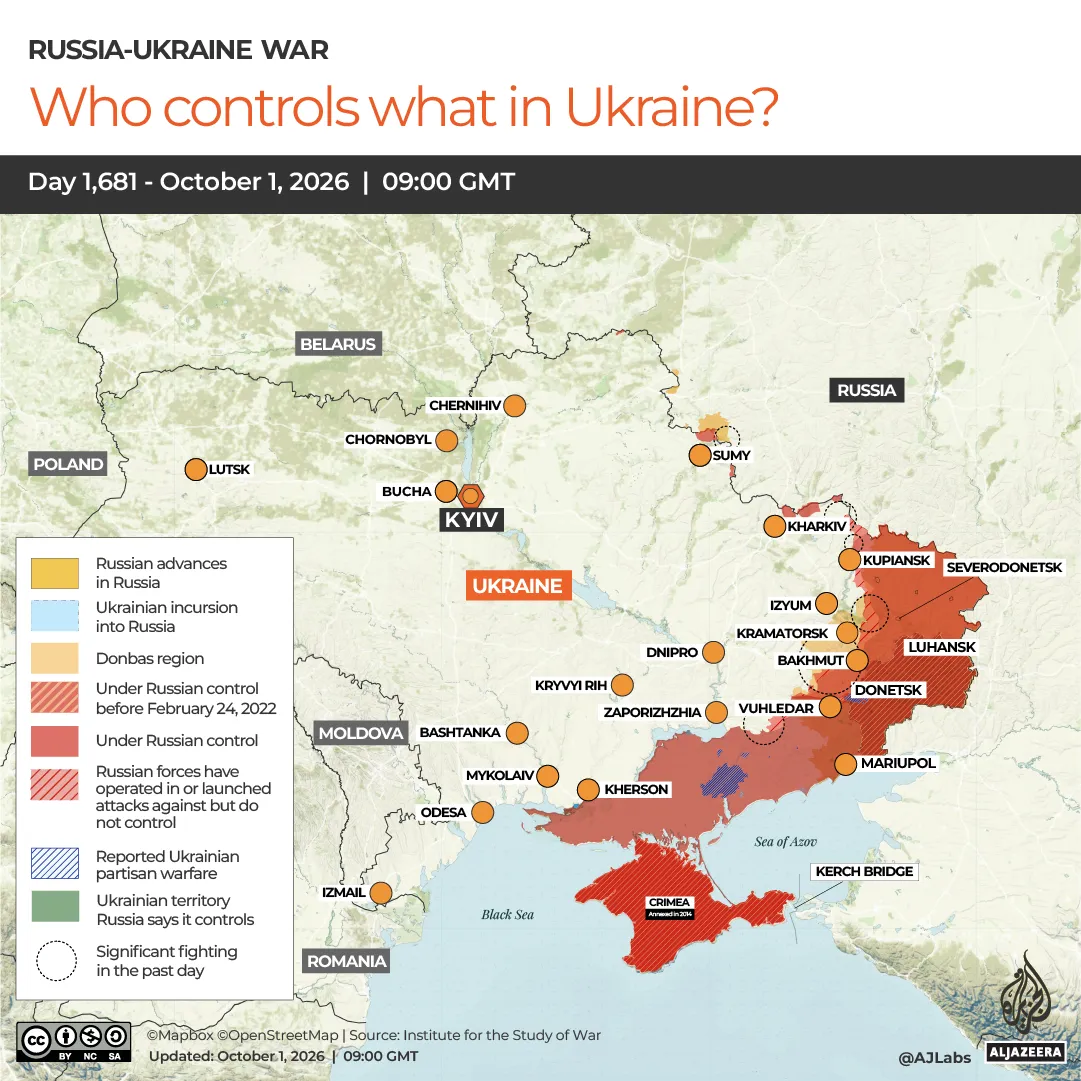
INTERACTIVE-WHO CONTROLS WHAT IN UKRAINE-1780491991
(Al Jazeera)

The ISW believed Ukraine actually reversed Russian gains in April, when it estimated Moscow’s gains at 28 sq km (11 sq miles) of Ukrainian land and lost 116 sq km (45 sq miles).

The ISW’s assessments suggest Ukrainian gains are growing.

Syrskii said Ukraine reclaimed 600 sq km (230 sq miles) during the first five months of 2026.

However, Russia was successful on one part of the front

Ukrainian military observer Kostyantyn Mashovets reported on June 10 that Russian forces had advanced into eastern Konstiantynivka, the southernmost of a “fortress belt” of four cities in the eastern region of Donetsk. Russian forces first infiltrated parts of the city last October, and now hold about 13 percent of it, said the ISW.

INTERACTIVE-WHO CONTROLS WHAT IN EASTERN UKRAINE copy-1780491964
(Al Jazeera)

Russian President Vladimir Putin has prioritised the capture of the remaining one-fifth of Donetsk he does not possess, but his set deadlines to achieve this have been missed several times.

Putin may be putting out feelers for potential ceasefire talks. Although on June 5 he rejected a call from Zelenskyy for direct talks, Zelenskyy said he had met with Russian oligarch Roman Abramovich who acted as Putin’s intermediary.

Mid-range attacks devastate Russian logistics

Ukraine says its battlefield achievements are thanks to a strategy of disrupting Russian supply lines by striking fuel and ammunition in warehouses and in transit.

“The logistical lockdown is working,” said Ukrainian Defence Minister Mykhailo Fedorov. “The number of hits on enemy targets at a distance of over 50km (30 miles) from the (frontline) has doubled,” he said, comparing May to April.

Syrskii put the May total at almost 2,000 strikes.

The effects of Ukraine’s strategy have begun to build up.

Weeks of attacks in the southern regions of Kherson and Zaporizhia reduced Russian military traffic by more than 70 percent along the M-14 motorway, the main east-west route, said Robert Brovdi, commander of Ukraine’s Unmanned Systems Forces.

INTERACTIVE-WHO CONTROLS WHAT IN SOUTHERN UKRAINE-1781084299
(Al Jazeera)

On June 7, regional authorities prohibited traffic along the M-14 altogether, Brovdi said.

That forced Russian planners to route more supplies along two highways that reach Kherson and Zaporizhia, via Crimea – the E105 and E97.

The following day, Ukraine struck a bridge that shoulders the E105 over the Chonhar Strait, leaving only the E97 passable. On June 9, as about 50 Russian fuel and ammunition trucks were routed to the E97, Ukrainian forces ambushed and destroyed some of them at Armyansk, commander Dmitry Filatov told Suspilne Radio.

“This operation would not have been possible if other units had not struck at Mariupol and the road to Berdyansk,” Filatov said, referring to the mainland routes. “This is what led to the units stationed in the Hulyaipil direction starting to be supplied, not via the Mariupol highways, but via Crimea.”

Civilians in Crimea have faced severe fuel shortages as a result of Ukrainian strikes, and these became dramatically worse in the past week.

On June 7, Sevastopol occupation governor Mikhail Razvozhaev rationed fuel to 20 litres per car per day. He later changed that to 20 litres per week.

Shortages were reportedly forcing troop evacuations from some outlying positions.

The Ukrainian underground group Atesh, which operates in Crimea, said Russian units were abandoning their positions on the Kinburn Spit because they were running out of food and fuel.

“We will create conditions under which it will be extremely difficult for military personnel and defence industry workers to remain in Crimea, in the temporarily occupied territories, or to use the routes leading to them,” Brovdi told Reuters.

Although Russia’s air force continues to command the skies over eastern Ukraine and to drop large ordnance there, Ukraine’s own figures suggest its drone superiority is the more effective tool.

Ukrainian short-and medium-range drones hit 180,000 targets in May, said Syrskii, 12.7 percent more than in April.

Ukrainian defenders are also reportedly becoming more adept at shooting down Russian Shahed drones with their own interceptor drones. Although Russia launched 25 percent more Shaheds in May compared to April, shoot-downs increased by 50 percent to about 4,000, said Fedorov,

Fedorov expected a step-change in Shahed elimination once a new generation of interceptor goes into full production which “automates 95 percent of the entire interception process”.

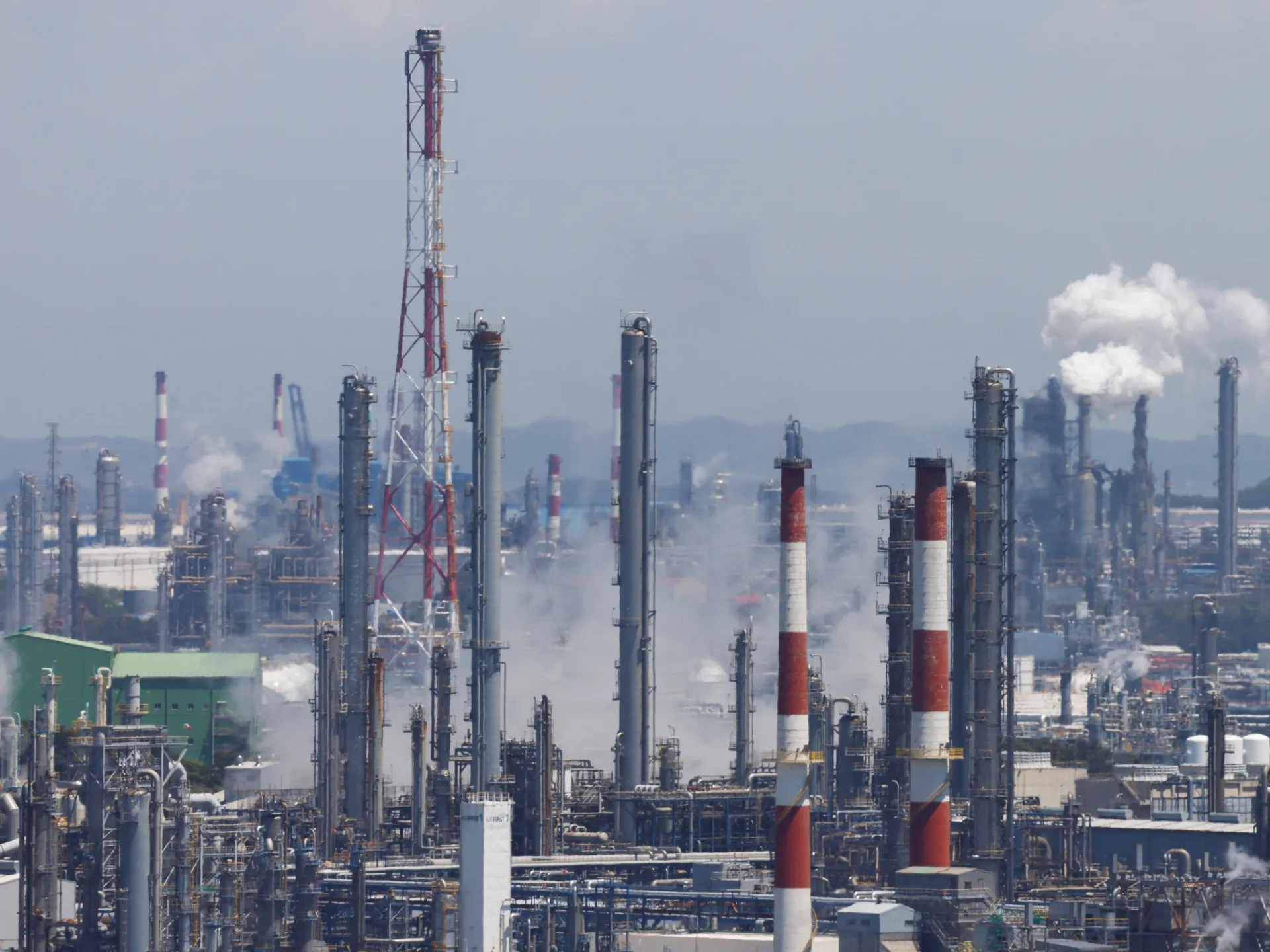
Beyond these mid-range strikes, Ukraine has also continued a successful long-range strike campaign that has devastated Russian refineries, oil depots and offloading terminals, reducing Russian oil production and export revenue.

Russian recruitment is low

Aware of the Ukrainian drone threat, Russia has created unmanned systems units of its own but appears to be having trouble manning them.

Since the beginning of the year, 14,500 people have signed contracts to serve in these units, about 21 percent of the annual recruitment target, said Syrskii. Overall, Ukraine has killed or wounded 12,500 more troops than Russia has been able to recruit this year, he said.

That is both because casualty figures have been rising since last autumn there – Ukraine estimated 31,500 Russian casualties in May – and because Moscow’s recruitment has been falling, despite increased bonuses to sign-up.

Russian opposition source Vazhnye Istorii said 71,200 people had been paid enlistment bonuses in the first quarter of 2026 according to budget data, compared to almost 90,000 in the first quarter of 2025.

It estimated that recruitment in 2025 was already 10 percent lower than in 2024.

Source link

Three killed as Ukraine and Russia exchange cross-border attacks | Russia-Ukraine war News

Three people have been killed in the border region between Russia and Ukraine, according to officials, as the two sides launched attacks on each other in the latest exchange of fire.

In Russia, two civilians were killed and two wounded in the region of Bryansk after Kyiv struck the settlement of Suzemka with artillery, Acting Governor Egor Kovalchuk said in a post on Telegram on Friday.

Recommended Stories

list of 4 itemsend of list

A ⁠drone ⁠also hit an apartment building in Russia’s ⁠central region of Tatarstan, ⁠injuring three people, while industrial facilities were ‌hit, regional head Rustam Minnikhanov said on the Telegram messaging app.

Production work was ⁠not suspended, ⁠however, he added, but did not identify ⁠any plants. ⁠The region ⁠is home to key oil processing and petrochemical ‌facilities, among others.

⁠Russia’s ⁠city of Togliatti, home to ⁠the country’s biggest ⁠carmaker Avtovaz, also came under a drone attack overnight, Samara ‌region Governor Vyacheslav Fedorishchev said on Telegram.

“Attention! Drone attack regime ⁠for Togliatti,” he ⁠wrote. Togliatti is a city ⁠on the ⁠Volga River some 800 km (500 miles) southeast ‌of Moscow.

These strikes are what Ukraine refers to as a “logistics lockdown”, said Al Jazeera’s Audrey MacAlpine, reported from Kyiv. She explained that they are mid-range strikes anywhere over 30 kilometres (17 miles) from the front line, using long-range drones and sometimes heavy weaponry to target things like oil refineries, bridges, logistics, and roads as a means of halting Russia’s front-line operations.

At the same time, she said, Ukraine also launches what it calls “long-range sanctions” against Russian targets – a “tongue-in-cheek term … that we’ve seen escalating over the past several months, where Ukraine is targeting Russia’s oil refineries and oil industry,” MacAlpine explained.

In Ukraine, a drone attack in the border region of Sumy caused casualties.

A 44-year-old woman working as a rail station operator died on her way to a shelter during the strike, according to the head of Ukrainian Railways, Oleksandr Pertsovkyi.

Another woman, a station attendant, was wounded in the attack, Pertsovkyi added.

Three people were wounded in separate attacks on Ukraine’s southern Mykolaiv region.

“We’ve seen continual threats by Russia before massive attacks, and we have certainly seen the results of those actions here in cities like Kyiv, where ballistics continue to be the Achilles heel for Ukraine”, MacAlpine said.

Russian fuel shortages after Ukrainian attacks

In recent months, Kyiv has carried out an increasing number of attacks on Russia and Russian-occupied territories.

On Thursday, fuel stations on the Russian-held Crimean Peninsula ran out of petrol after a Ukrainian campaign against the peninsula’s supply lines escalated.

A witness in Sevastopol, the peninsula’s largest city, told the Reuters news agency there was no fuel at most local petrol stations, with supplies struggling to keep up with a rationing regime imposed in recent weeks.

Another witness, in the resort town of Yevpatoriya, ⁠said there was a long queue outside the only petrol station open there.

Ukraine has been intensifying drone attacks on supply lines to the peninsula, which Russia seized from Kyiv in 2014. Local authorities have imposed fuel rationing regimes, with some foodstuffs also running short.

Besides Russian-held Crimea, only ‌two regions in Siberia have officially confirmed the shortages.

Most other regions have said the situation is under control, and that some disruptions were caused by panic buying. Moscow has denied there were any problems with fuel supplies.

Source link

Friday 12 June Russia Day in Russia

Since 1991, this holiday in the world’s largest country has changed its name twice. It was originally called ‘Independence Day’, though it was not a national holiday.

According to some surveys, many Russians still think that this holiday is Russia’s Independence Day, but the holiday has never had such a name in official documents. According to the survey of Levada Center in May 2003, 65% of the respondents named the holiday the Independence Day of Russia.

In 1994 Boris Yeltsin declared it a national holiday. The day was renamed to the catchy ‘Day of the adoption of the Declaration of Sovereignty of the Russian Federation’ with the intention of commemorating the renewed independence of the country, the creation of the post of President, the adoption of the historical national flag, and a new national anthem

On February 1st 2002, it was officially renamed to Russia Day.

Baltic states fear Russia-Ukraine war spillover after drone incursions | Russia-Ukraine war News

  • Population: 1.37 million
  • Defence spending: 5.4 percent of GDP
  • Border with Russia: 338km (210 miles)

Estonia, the smallest of the Baltic states, has experienced some dramatic incidents.

In September, Tallinn said Russian MiG-31 fighter jets entered its airspace for 12 minutes. NATO scrambled Italian F-35s stationed in Estonia as part of the Baltic Air Policing mission. Russia denied violating Estonian airspace.

In March, a stray Ukrainian military drone crashed into Estonia’s Auvere power station.

In April and May, Estonian authorities said drones entered their airspace, grounding flights and prompting warnings issued to citizens.

Estonia’s intelligence services have said that the country does not believe Russia is preparing an imminent military attack on NATO, but that Moscow may be rebuilding its forces for the long term while engaging in hybrid attacks through drones, cyber operations, and sabotage.

Tallinn claims one such hybrid method is the so-called “Narva People’s Republic”, a pro-Russian separatist narrative that casts Estonia’s Russian-speaking border region as a distinct political entity, echoing the Donetsk and Luhansk “people’s republics” used by Moscow as a pretext for intervention in Ukraine.

Estonian authorities say it is part of a disinformation campaign rather than a credible separatist movement.

Its military has, at times, been bellicose in its statements.

In May, Estonia’s Lieutenant General Andrus Merilo argued that Russia is rebuilding its military much faster than many Europeans realise and that Estonia must be ready for a renewed military threat within the next few years, marking 2027 as a critical benchmark for readiness.

In September 2024, in an interview with the Estonian public broadcaster ERR, Estonian General Vahur Karus stated that if Moscow showed signs of preparing for an attack, Estonia could strike the Russians first.

“Our capability to neutralise the enemy on its own territory is crucial,” he said.

However, the government’s rhetoric has been more measured.

In April, Ukrainian President Volodomyr Zelenskyy suggested in an interview that a new wave of Russian mobilisation may be used to launch an attack on the Baltic states.

But Estonian politicians, including the foreign minister, warned that the remarks echoed Moscow’s objective of stoking fears and made cooperation difficult.

“We do not see Russia concentrating its forces or preparing in any way militarily to attack NATO or the Baltic states; rather, it is the opposite. Russia is not in a very strong position on the Ukrainian front, and economically as well,” Estonian Foreign Minister Margus Tsahkna told ERR.

“No one is in the streets panicking,” Tony Lawrence, a research fellow at the International Centre for Defence and Security in Tallinn, told Al Jazeera.

The air incursions have “put people on edge”, but there is a sense that Russian forces are too preoccupied in Ukraine, he said.

Source link

EU Unveils 21st Sanctions Package on Russia, Targets Banks

The EU has proposed a new package of sanctions against Russia, aimed primarily at its banks, cryptocurrency networks, and drone production in response to the ongoing war in Ukraine. This 21st package targets 170 individuals and entities, including close to 90 banks, which would raise the total number of Russian banks under EU sanctions to over 100, or more than half of the country’s internationally connected lenders. These banks will face asset freezes and bans on travel and transactions. The proposal will be presented to EU ambassadors for discussion, requiring unanimous approval to be enacted.

Existing Western sanctions already restrict Russia’s banking system heavily. Many major banks were disconnected from the SWIFT payment system in 2022. Nevertheless, Russian companies have turned to smaller lenders to evade these sanctions. The goal of the new sanctions is to significantly harm Russia’s financial sector and push it toward negotiating peace with Ukraine.

As Russia’s economic growth has sharply slowed, warnings of a potential banking crisis have surfaced, though the central bank claims no crisis is present. The proposed sanctions package includes transaction bans on 35 banks, including some outside Russia, and 11 cryptocurrency platforms that aid in circumventing sanctions. EU leaders indicated plans for even stricter crypto measures in the future.

Additionally, the EU wants to freeze the oil price cap to prevent Moscow from gaining increased revenue amidst geopolitical tensions. Other measures include tighter restrictions on Russian liquefied natural gas, listings of vessels associated with sanctioned activities, and new import restrictions on fish and high-performance metal alloys vital for defense and aerospace sectors.

With information from Reuters

Source link

Zelenskyy: Putin choosing war by rejecting offer for in-person talks | Russia-Ukraine war

NewsFeed

Russian President Vladimir Putin has turned down an offer for in-person talks with Ukrainian President Volodymyr Zelenskyy, saying he sees no point in meeting. Zelenskyy said Russia “has again chosen war” by rejecting his open letter appealing for a face-to-face meeting.

Source link

House passes bill to aid Ukraine and impose new sanctions on Russia

The House passed legislation Thursday that would aid Ukraine and sanction key segments of the Russian economy, overriding objections from Republican leaders who warned the bill would undermine negotiations designed to achieve a comparable but stronger result.

The legislation, sponsored by Rep. Gregory Meeks, D-N.Y., seeks to cement U.S. assistance for Ukraine by providing more than $1 billion in security and reconstruction aid. It would make another $8 billion available for Ukraine’s defense through loans.

The 226-195 vote is a sign of impatience with President Trump’s approach to the war and represents the House’s second major foreign policy break with Trump this week. The day before, the House, for the first time, approved a war powers resolution aimed at halting U.S. military action against Iran.

Supporters were able to force action on the Ukraine bill by gathering 218 signatures on a discharge petition, a legislative tool that allows a majority of the House to effectively bypass leadership.

Once rarely successful, House members have used the petition tool this Congress to pass bills on releasing the government’s files on Jeffrey Epstein and to extend health care subsidies to many of those who get health coverage through the Affordable Care Act, though the latter measure faltered in the Senate.

Meeks said the question before the House was simple. Would it help Ukraine negotiate from a position of strength or help Russia outlast American resolve?

“We all want this war to end,” Meeks said. “The question is how. Will we abandon Ukraine and force it into a terrible deal? That is what Vladimir Putin is counting on. Or will this body live up to the commitments we’ve made since the start of this war?”

The vast majority of Republicans opposed the measure. Rep. French Hill, the chairman of the House Financial Services Committee, said he is a steadfast supporter of Ukraine. However, the Arkansas Republican said the House was confronted with a flawed, outdated measure that actually calls for less funding for Ukraine security assistance compared to what Congress had agreed to as part of this year’s defense policy. Another section could lead to a decrease in defense spending by some NATO members, he warned.

Rep. Brian Mast, the chairman of the House Committee on Foreign Affairs, said he believed the bill was “a cudgel to fight against President Trump.”

“This bill, in my opinion, is an unserious bill that was crafted basically a year-and-a-half ago,” Mast, R-Fla., said.

Rep. Don Bacon, R-Neb., broke with most of his Republican colleagues in voicing support for the measure.

“Are we going to stand with good or are we going to stand with evil? That’s what this is about tonight,” he said.

In the end, 18 Republicans, 207 Democrats and one independent voted for the bill. Democratic Rep. Ilhan Omar joined with 194 Republicans in voting against it.

Lawmakers want to send a message

Supporters are hopeful that the House’s passage of the Ukraine bill would put pressure on the Senate to do the same. But they also know the Senate likely won’t go along unless Trump endorses the bill.

“It’s probably not going to get 60 votes in the Senate, but it’s going to hopefully force the Senate to address the issue,” said Rep. Brian Fitzpatrick, R-Pa., who signed the discharge petition and voted for the bill. “It’s going to send a great message to the soldiers of Ukraine.”

He said the vote would also send a message to Putin that “we do have a pulse here, that we do care about Ukraine and that we are going to utilize our authority to help them.”

As the war has dragged on, it’s gotten more difficult for supporters of Ukraine in Congress to provide additional financial support to help Ukraine defend itself.

The U.S. has approved some $195 billion for the Ukraine response, according to the latest quarterly inspector general report for Operation Atlantic Resolve, with roughly a quarter of that going to replenish weapons stockpiles for the U.S. military. The last major legislation designed to bolster the Ukraine response occurred in April 2024, though modest amounts have since been included in annual appropriations bills.

Republican leaders tried to stop the bill

Republican leaders urged their members to oppose the legislation. House Majority Leader Steve Scalise, R-La., said there are good-faith negotiations between members of Congress and the White House to boost Ukraine. He described the negotiations as complicated.

“I think they are going to yield positive results, but you set that back if you pass legislation that doesn’t go as far as the negotiations are going,” Scalise said.

The war that followed Russia’s full-scale invasion of its neighbor is more than four years old, with no end in sight. In recent days, both sides have sought an edge by launching long-range missile strikes.

U.S.-led peace efforts have fizzled out as the sides made no progress on key differences and after the war in Iran grabbed Washington’s attention. Ukrainian President Volodymyr Zelensky accepted an unconditional ceasefire demanded by Trump, but Putin refused.

Action in the Senate on Ukraine has revolved around a bill that would impose sweeping tariffs and secondary sanctions on countries that purchase Russia’s oil, gas, uranium and other exports, which are crucial to financing Russia’s military. But the bill has languished.

Freking writes for the Associated Press. AP writer Lisa Mascaro contributed to this report.

Source link

Russia’s Andreeva beats Ukraine’s Kostyuk in no-handshake French Open semi | Tennis News

No handshake and no photo as Mirra Andreeva of Russia beats Marta Kostyuk of Ukraine to reach French Open tennis final.

Russian teenager Mirra Andreeva reached her first Grand Slam final by beating Marta Kostyuk of Ukraine 6-1, 6-3 in a tense encounter at the French Open.

Andreeva converted her first match point when she served for the tennis match on Thursday.

Recommended Stories

list of 4 itemsend of list

There was no post-match handshake between the pair, however, and Kostyuk walked off quickly, turning only to wave and blow kisses to the crowd at Court Philippe-Chatrier, where some fans were draped in Ukrainian flags.

The atmosphere beforehand was somewhat tense as the players had separate photos taken as they each stood next to two children on their respective sides of the net. Usually, the players pose for the same photo, standing right next to each other by the net.

Kostyuk and countrywoman Oleksandra Oliynykova have spoken out during the tournament about the impact Russia’s four-year invasion of Ukraine is having on their country.

The eighth seed seized control from the outset and never loosened her grip on the contest, overwhelming Kostyuk with her ⁠depth and aggression on Court Philippe-Chatrier to set up a title clash against compatriot Diana Shnaider or Polish qualifier Maja Chwalinska.

Andreeva, 19, raced into a 4-0 lead in the opening set and barely looked back in the third meeting between the two ⁠players, the Ukrainian having won the first ⁠two.

Kostyuk briefly threatened to make a contest of it in the second set, but the Russian swiftly snuffed out any hopes of a comeback before serving ⁠out the match to complete a dominant display.

“I’m still very nervous, very nervous coming to ⁠this match as she’s had an ⁠amazing season, she hadn’t lost on clay, so that put pressure,” said Andreeva.

“She’s an amazing player, a tough opponent, so I’m super happy with the way ‌I played. I’m happy I got revenge for the Madrid final, and to reach my first Grand Slam final.

“All of these ‌feelings ‌combined, I’ve never felt anything like this. I’m very excited about the last match here in Paris.”

Top-seeded Sara Errani and Andrea Vavassori of Italy won the mixed doubles final earlier Thursday, beating Gabriela Dabrowski of Canada and Evan King of the US 4-6, 6-3, 10-4.

An Italian is guaranteed to be in Sunday’s men’s French Open singles final, with Flavio Cobolli facing fellow Italian Matteo Arnaldi on Friday in the first Grand Slam semifinal for both players.

Source link

Putin Pressures Armenia as Russia Struggles to Maintain Global Influence

Russia’s influence across its traditional sphere of influence is facing growing challenges as the war in Ukraine continues to consume military, economic and diplomatic resources. For decades, Moscow maintained strong ties with former Soviet states through security guarantees, energy supplies and economic integration. However, several longtime partners have increasingly sought closer relations with the West, raising concerns in the Kremlin about the erosion of its geopolitical position.

One of the most notable examples is Armenia, a longtime Russian ally that has recently deepened engagement with the United States and Europe while exploring a path toward eventual European Union membership.

What Happened

Russian President Vladimir Putin has warned Armenia that pursuing closer integration with the European Union could come at a significant economic cost. Ahead of Armenia’s parliamentary elections, Putin suggested that Yerevan could lose access to discounted Russian oil and gas if it continues moving toward the EU.

The warning comes as polls indicate that the party of Armenian Prime Minister Nikol Pashinyan, who has pursued a more Western-oriented foreign policy, is likely to perform strongly in the vote.

Russia has already taken measures that many observers view as pressure tactics, including temporary restrictions on certain Armenian exports and warnings about possible reductions in economic cooperation.

Why Armenia Is Moving Closer to the West

Relations between Moscow and Yerevan have cooled significantly in recent years. Armenia signed a partnership agreement with the United States last month and has taken legislative steps that could eventually support EU membership aspirations.

Pashinyan’s government argues that Armenia must diversify its international partnerships and reduce its dependence on any single power. Supporters of closer Western ties point to economic opportunities, political reforms and security cooperation as key motivations behind the shift.

Russian officials, however, view Armenia’s growing engagement with Western institutions as part of a broader effort by the United States and Europe to weaken Moscow’s influence in the South Caucasus region.

Russia’s Wider Struggle to Retain Influence

The dispute with Armenia highlights a broader challenge facing Russia as it attempts to preserve its global standing while remaining heavily focused on the war in Ukraine.

Across multiple regions, Moscow is confronting increasing competition from Western powers. In Europe, countries once considered friendly to Russia are strengthening ties with the European Union and NATO. In the Balkans, political pressure is growing on governments that have traditionally maintained close relations with Moscow.

Russia also faces challenges in Moldova’s breakaway region of Transdniestria, where pro-European political forces are gaining influence. In Central Asia, Moscow is closely watching expanding Western engagement in a region it has long regarded as part of its strategic sphere.

Beyond its neighborhood, Russia’s relationships with partners such as Cuba, Venezuela and Iran are being tested as geopolitical dynamics shift and Western pressure intensifies.

What Comes Next

The outcome of Armenia’s parliamentary election will be closely watched in both Moscow and Western capitals. A victory for Pashinyan’s party could strengthen Armenia’s efforts to deepen ties with Europe and the United States, potentially leading to further tensions with Russia.

For the Kremlin, the situation represents a broader strategic dilemma. As the war in Ukraine continues without a clear resolution, Russia must balance military commitments with the need to maintain influence among traditional allies increasingly exploring alternative partnerships.

The coming months are likely to reveal whether Moscow can preserve its position in regions it has long considered part of its sphere of influence or whether Western engagement will continue to reshape the geopolitical landscape across Eastern Europe, the South Caucasus and beyond.

With information from Reuters.

Source link

Ukraine’s forcibly transferred children must not be a bargaining chip | Child Rights

It has been more than four years since Russia launched a full-scale invasion of Ukraine, expanding its occupation of Ukrainian lands, which started in 2014. In the chaos and violence of the first months of the invasion, families were separated, and childcare institutions were cut off from the control of the central authorities in Kyiv. As a result, the occupation forces forcibly transferred more than 20,000 Ukrainian children to Russia.

Russian officials claimed that they did not abduct Ukrainian children, but “saved” them through humanitarian evacuations. However, international investigations have since found that many such transfers were unlawful under international humanitarian law. In many documented cases, transfers were carried out without the consent of the living parent or legal guardians of the child.

International humanitarian law prohibits all forcible transfers and deportations of protected people from occupied territory, except for evacuations strictly required to ensure the population’s safety. Even then, evacuation must happen within occupied territory, be temporary, preserve family unity and return evacuees home as soon as hostilities cease.

Today, the lives of thousands of Ukrainian children are devastated by this forcible transfer. Instead of abiding by international legal obligations and returning them to their homeland, Russia has transformed the issue into yet another bargaining chip against the Ukrainian people.

But Ukraine refuses to abandon its children. For the past four years, there have been intense efforts from families, NGOs and the Ukrainian government to bring them back.

Take the case of Lesya (the name has been changed to protect her identity), whose testimony was recorded by The Reckoning Project— a global team of journalists and lawyers documenting and publicising atrocities committed in the war. Lesya was 15 years old when Russian forces occupied her village in the Kherson region in 2022. When the occupation authorities imposed a mandatory evacuation, she was put on a truck with more than 30 other children and was sent to a rehabilitation centre in Feodosia, Crimea. A woman accompanying the children told her that her mother would join her shortly.

At the facility, Lesya and other Ukrainian children were subjected to a strict routine, forced to do chores and study in Russian, using Russian textbooks. They were kept under surveillance indoors most of the time in a building with windows that could not be opened. Two days a week, the children underwent military training.

Eventually, a relative located her, and with the help of Save Ukraine, a Ukrainian NGO facilitating children’s return, her mother managed to bring her back.

But Lesya’s case is the exception rather than the rule. More than 2,000 Ukrainian children have been brought back thanks to efforts by NGOs, the government and foreign mediators.

Pressure through international institutions has also been pursued, but that has not accelerated the process of return.

In March 2023, the International Criminal Court issued warrants of arrest for Russian President Vladimir Putin and Commissioner for Children’s Rights Maria Lvova-Belova for the unlawful deportation and transfer of Ukrainian children.

In July 2025, the European Court of Human Rights, in Ukraine and the Netherlands v Russia, found Russia responsible for a number of human rights violations, including the organised removal of children. The court also required Russia to cooperate in establishing a mechanism to find and safely return children.

In March this year, the United Nations Independent International Commission of Inquiry on Ukraine concluded that Russia’s deportation and forcible transfer of Ukrainian children amount to crimes against humanity. The report identifies the removal of Ukrainian children as a part of a well-planned and systematically executed policy, conceived at the highest level.

On May 11, the European Union sanctioned 16 individuals and seven entities, while the United Kingdom sanctioned 29 individuals and entities responsible for the deportation, forced transfer, forced assimilation, indoctrination, militarisation and unlawful adoption of Ukrainian children. Overall, the EU has sanctioned more than 130 people and organisations for these actions. The United States, Canada, Australia, Japan, Switzerland and several other countries have introduced similar measures.

The lack of progress on this issue has driven families to desperation. Some have tried to bring their children back on their own or through often-daring missions by Save Ukraine and five other Ukrainian NGOs.

There should be no need for these risky missions. Under international humanitarian law, Russia is obligated to identify and register Ukrainian children in their care, facilitate family reunification, and permit access to neutral actors assisting Ukrainian children.

As negotiations for the end of the war have stalled and other global events have displaced Ukraine from global headlines, we urgently need to put the issue of the abducted Ukrainian children back in the spotlight.

There are several areas in which existing efforts can expand.

First, a comprehensive tracing mechanism needs to be established and financed to track abducted Ukrainian children and prevent their disappearance into dispersed care and adoption systems.

Second, ongoing legal efforts to hold to account Russian officials involved in the abduction should be intensified. This means coordinated prosecutions in states where the universal jurisdiction principle can be applied, as well as joint investigation strategies supported by Eurojust, the EU’s judicial hub. Ukraine’s partners should support its judicial processes launched against Russian officials and cooperate where needed, including through extraditions where legally applicable and other lawful transfer mechanisms. While justice may be slow, the prospect of accountability can have a deterrent effect.

Third, states can and should fully implement sanctions, trade restrictions and other obligations they assumed but did not consistently observe in practice. The sanctions regime on Russia has severely hurt its economy, but it has also seen continuous evasion. A strict implementation can help put more pressure on the regime in Moscow.

While stories of family reunions are heartening, they are just a drop in a bucket compared with the number of children who continue to be separated from their families and absorbed into a system of indoctrination and militarisation.

We must not allow the issue of returning Ukrainian children to be yet another negotiating chip for Moscow. It cannot be put on hold because negotiations have stalled or because other priorities have captured the world’s attention.

Four years is a long time in a child’s life. Each passing day further erodes their national identity and deepens the pain of separation, as they grow up in a hostile environment. There is no principle more universal than the belief that children belong with their parents and loved ones, and Ukrainian children deserve this basic human right today, not at some point in the future.

The views expressed in this article are the author’s own and do not necessarily reflect Al Jazeera’s editorial stance.

Source link

Russia Urges Venezuela to Reject NATO ‘Schemes’ for Arming Ukraine

Russian-made T-72B1V tanks in a Venezuelan military parade in 2011. (Archive)

Caracas, May 29, 2026 (venezuelanalysis.com) – The Russian government has urged Venezuelan authorities to “reject approaches” from the US and allies to transfer military equipment to Ukraine.

Russian Security Council Secretary Sergei Shoigu raised the concerns during a meeting with Venezuelan Major General José Ornelas Ferreira, secretary general of the Caribbean nation’s National Defense Council, on Wednesday in Moscow. 

The Venezuelan official was a guest at the First International Security Forum, held from May 26-29 at the Russian capital with the presence of 140 top officials from over 120 countries worldwide.

“We are aware of the activity of Western emissaries who are attempting to involve Latin American countries in various arms supply schemes for the benefit of the Kyiv regime,” Shoigu said in a bilateral meeting with Ornelas. “We expect you to reject such approaches and inform us of any such Western attempts.”

Moscow and Caracas have maintained a longstanding military alliance through which Russia has provided Venezuela with a broad supply of weapons, equipment, and technical assistance for decades, forming the backbone of the Venezuelan arsenal. The cooperation dates back to the 2000s as Hugo Chávez sought to reverse the US dependence of the armed forces.

Though neither US nor Venezuelan officials have commented on weapons transfer proposals, Shoigu’s warning follows publicized efforts by Washington and allies to bolster the beleaguered Ukrainian forces in the war against Russia. Kiev’s backers procure Soviet-era equipment that could be easily integrated into the battlefield.

Apart from securing supplies from Eastern European NATO members, Washington has also turned to Latin America, offering to exchange Russian and Soviet-made hardware for newer US equipment. Brazilian and Colombian leaders rejected the proposal.

In February 2024, Ecuador canceled plans to send or exchange Soviet/Russian-origin weaponry with the US, which intended to reroute them Ukraine. Ecuadorian President Daniel Noboa backtracked following Russian threats to suspend banana imports from the Andean country.

According to military analysts, Venezuela’s battlefield equipment — including T-72B1V tanks, BMP-3 infantry vehicles, Mi-17 helicopters, and 152 mm artillery systems — would be valuable on the Ukrainian battlefield and help address chronic ammunition shortages.

The recent Moscow security summit also saw Shoigu condemn the US’ “brutal armed invasion” of Venezuela on January 3 that led to the kidnapping of President Nicolás Maduro and First Lady Cilia Flores.

“We strongly condemn Washington’s actions on January 3, during which the legitimate head of state, Nicolás Maduro, and his wife were captured, and dozens of Venezuelan and Cuban citizens were killed,” the former Russian defense minister stated.

Shoigu criticized the Trump administration for “violating all fundamental norms of international law” and breaking “the principles governing coexistence among nations and respect for state sovereignty.”

The Russian official went on to reaffirm the Vladimir Putin government’s “unwavering support” for Caracas and the desire to “strengthen cooperation” in order to avoid future acts of aggression.

Shoigu likewise commented on the Venezuelan government, led by Acting President Delcy Rodríguez, pursuing a “new modality of relations” with the US and expressed hope that it would protect the Caribbean country’s “sovereignty and national interests.”

Following the January 3 attacks, the Trump White House has exacted major concessions from the acting Rodríguez administration, including seizing control of Venezuelan oil revenues, auditing its Central Bank, pushing pro-business legislative reforms, and securing the handover of former government envoy Alex Saab to face money laundering charges in Florida.

The growing US influence in Venezuela saw the Southern Command hold “rapid response” military exercises on May 23, with Osprey MV-22B aircraft flying over Caracas and landing near the US embassy compound. 

US officials have acknowledged a growing “collaboration” with Caracas. During a press conference on Wednesday, Secretary of War Pete Hegseth highlighted Washington’s self-declared anti-narcotics operations in the Western hemisphere and the joint work with local governments.

“Just think about the fact that our Southern Command commander landed by helicopter at the US Embassy in Caracas peacefully,” Hegseth said alongside Trump. “He was welcomed by the Venezuelans because we are now partnering with them, hopefully even in our counter-cartel missions.” 

The Trump official referred to Venezuela as “fundamental to securing our energy future and defending the homeland.”

Edited by Ricardo Vaz in Caracas.


Source link

NATO states slam Russia after drone crashes in Romania | Antonio Guterres News

Romania and its NATO allies have reacted angrily after a Russian drone crashed into an apartment building in eastern Romania, injuring two people.

The foreign ministry in Bucharest on Friday labelled the crash of the drone, part of an overnight attack aimed at Ukraine, a serious violation of international law and called on NATO to accelerate the transfer of anti-drone capabilities. The incident is just the latest incursion along the alliance’s eastern flank, raising concern that the risk of an open confrontation between Russia and NATO states is rising.

Romania said the overnight drone was tracked by radar in its airspace before crashing onto the roof of a residential building in the city of Galati.

Two F-16 fighter jets and a helicopter were scrambled, as authorities issued emergency alerts to residents. Two people suffered minor injuries and several residents were evacuated after a fire was triggered by the crash.

‘Consequences’

The incident is just the latest of several, as the war in Ukraine has spilled over into neighbouring NATO countries, raising fears of potential escalation.

Estonia, Lithuania and Latvia, as well as Finland have all reported repeated incursions into their airspace in recent months. Drone incursions sparked a government collapse in Latvia earlier this month.

Shortly after the crash, Bucharest called for NATO to speed up the transfer of anti-drone capabilities. Outgoing Prime Minister Ilie Bolojan also said that Romania would, within hours, sign ⁠a contract which ⁠will give it anti-drone defences ‌under the EU’S SAFE programme.

On Friday morning, Romania summoned the Russia ambassador.

“We will officially communicate the consequences that this lack of responsibility on the part of the Russian Federation will have for the diplomatic relations between our countries, as well as the next steps at the European level regarding sanctions packages,” Foreign Minister Oana Toiu wrote on social media.

President Nicusor Dan stated that Romania ⁠will ⁠not accept that the war of aggression ⁠waged by Russia against ⁠Ukraine be transferred to its citizens, and added that he had asked the foreign ministry ⁠to present without delay ⁠a series ⁠of measures regarding the country’s relationship with Russia, “proportionate to ‌this very serious situation”.

NATO allies and others joined the chorus of anger.

French Minister for European Affairs Benjamin Haddad said the incident highlighted the threat Russia poses to European security, noting that French troops are stationed in Romania.

“Regardless of ⁠whether it was on purpose ⁠or the ⁠result ⁠of ineptitude, Russia is still dangerous and ‌we must defend ourselves against ‌it,” ‌Polish ⁠Foreign Minister Radoslaw Sikorski told ⁠the Reuters news agency.

European Commission President Ursula von der Leyen said the incident showed that “Russia’s war of aggression has crossed yet another line”.

A NATO spokesperson also condemned “Russia’s recklessness” on social media.

Ukraine’s Foreign Minister Andrii Sybiha, whose country is pressing the United States to help boost its air defences, pledged “Ukraine stands firmly by Romania” as he branded Russia a threat to the Black Sea region and the wider ‌European continent.

“We are ready ⁠to work closely together ⁠to strengthen protection from such threats,” he wrote on social media, adding that the bid to ⁠strengthen Ukraine’s ⁠air defence is a “strategic task” to protect not only ‌Ukraine but also to reduce risks for ‌neighbouring ‌countries.

United Nations Secretary-General Antonio Guterres warned that the escalating attacks risk spiralling “out of control”, with “unknown and unintended consequences”.

He said more civilians had been killed in the first four months of this year than during the same period in the previous three years, and called for diplomacy, immediate de-escalation and “a full and unconditional ceasefire”.

Rising risk

Concern that the war is threatening to spillover is building as Russia escalates hostilities in a bid to ward off rising political and economic pressure at home.

Ukrainian forces reported that they shot down 217 drones overnight on Friday. Russia attacked with 232 drones and one ballistic missile. Hits were recorded in 14 areas, the air force said.

Moscow has said it plans “systematic strikes” on Kyiv and has issued a barrage of threats at Ukraine’s European allies, listing facilities in Europe that it said are involved in manufacturing drones and components for Ukraine.

Moscow’s Foreign Intelligence Service recently warned the Baltic nations that their NATO membership won’t protect them from retaliation should they allow Ukraine to launch attacks from their territory, with analysts warning that the risk of an open confrontation between Russia and NATO states is rising.

That heightens concern regarding NATO’s Article 5 collective defence clause, which President Donald Trump has hinted the United States may not honour in some cases.

However, the alliance’s Secretary General Mark Rutte insisted on Friday that NATO will defend all of its territory.

“Russia’s reckless behaviour is a danger to us all,” he wrote on social media. “Last ⁠night showed yet again ⁠that the implications of their illegal war of aggression don’t ⁠stop at the border.”

“We will ⁠continue to strengthen ⁠our deterrence and defence at home and continue our support for ‌Ukraine as they defend against Russia’s aggression,” he ‌added.

Source link

Armenia Faces Rising Russian Pressure Ahead of Key June Election

Russia has sharply criticized Armenia for its closer ties with the European Union, arguing that Armenia is not maintaining a balanced relationship with Moscow and is working with countries that wish Russia harm. This criticism comes ahead of Armenia’s parliamentary vote on June 7, where the ruling Civil Contract party, led by Prime Minister Nikol Pashinyan, is seeking a third term and has shown interest in strengthening ties with the West against various pro-Russian opposition groups. Recent polls suggest that Pashinyan’s party holds about 30% support.

Moscow’s discontent with Armenia’s warming relationship with the West was expressed by Russian Foreign Ministry spokeswoman Maria Zakharova, who emphasized that while Russia sees Armenia as a partner, it questions Armenia’s partnerships with the EU, especially given claims from Western nations about a “hybrid war” against Russia.

In response to these developments, Russia’s agricultural safety agency announced new temporary bans on Armenian produce, including tomatoes and strawberries, set to take effect on Saturday. Russia has warned Armenia that it may halt supplies of cheap oil, gas, and diamonds if Armenia continues pursuing EU membership. Armenia, with a population of around 3 million, depends heavily on Russian energy and military support.

With information from Reuters

Source link

Inside Ukraine’s Drone Forces Targeting Russia’s Rear Battlefield Positions

In eastern Ukraine, soldiers are using drones launched from slingshots to target military sites held by Russia. Their commander, known as “Kyt,” explained that they focus on enemy bases, ammunition depots, and air-defence systems. The soldiers prepare the drones, programming targets via a laptop before launching them.

Ukraine is increasing its efforts in these “middle strikes,” aimed at Russian defenses and logistical sites located 30 to 180 kilometers behind the frontline. President Volodymyr Zelenskiy stated that these drone strikes have increased fourfold since February, helping to slow Russian advances and shifting the battlefield momentum. According to reports, in the past month, Russia has only captured about 50 square kilometers of territory.

Defence Minister Mykhailo Fedorov announced an additional $113 million funding for effective strike units, emphasizing that the enemy’s rear area is no longer safe. The Ukrainian-made drones, called “Drakosha” or “little dragons,” can reach various targets, including parts of occupied Ukraine and even Russian territory. Analysts note that these strikes disrupt Russian logistics and have collateral effects on longer-range drone operations targeting Russian oil infrastructure.

The conflict has seen shifts in technological advantage, with both sides adapting in response to each other’s capabilities.

With information from Reuters

Source link

Russia slams US for not granting visa to diplomat for UN meeting | United Nations News

Moscow’s envoy accuses Washington of failing to honour commitments under the 1947 UN Headquarters Agreement.

Russia has slammed the United States for failing to grant a visa to Deputy Foreign Minister Alexander Alimov to attend a United Nations Security Council meeting in New York, calling the decision a breach of Washington’s obligations.

Vassily Nebenzia told the Security Council on Tuesday that the country should have been represented by Alimov – “who oversees matters related to the United Nations” – at the meeting.

Recommended Stories

list of 3 itemsend of list

“However, despite all of our attempts to persuade the US side to issue a visa to him, that visa was ultimately not granted,” Nebenzia said.

The 1947 agreement that established the international body’s headquarters in New York requires the US to issue visas to foreign diplomats looking to attend UN functions “without charge and as promptly as possible”.

Nebenzia said not granting a visa to Alimov is a violation of that treaty and also a slight to Beijing, which is chairing the Security Council in May.

“We view this not just as a breach by Washington of its obligations under United Nations Headquarters Agreement, according to which access to United Nations needs to be provided for all officials and member states, barring none, but we also view this as an egregious instance of disrespect for the Chinese presidency of the Security Council,” he said.

The US Department of State did not immediately respond to Al Jazeera’s request for comment.

The visa controversy comes at a time of receding tensions between Washington and Moscow as US President Donald Trump pushes to end the war in Ukraine.

Trump has been regularly speaking with his Russian counterpart, Vladimir Putin. But Washington has continued to enforce sanctions against Moscow over the Ukraine invasion.

Both Putin and Trump have separately visited China and met with its president, Xi Jinping, in recent weeks.

Earlier this week, Iran’s Foreign Ministry said Abbas Araghchi, the country’s top diplomat, cancelled his participation in Tuesday’s Security Council meeting due to visa issues.

During last year’s UN General Assembly, in September 2025, the US imposed strict limits on the movement of the Iranian delegation in New York.

In 2019, the US also delayed then-Iranian President Hassan Rouhani’s visa for the General Assembly but eventually granted him entry.

Source link

‘Leave Kyiv’: Why Russia’s latest Ukraine threat is a major escalation | Russia-Ukraine war News

Russia has urged foreigners to leave in Ukraine’s capital Kyiv, and warned of more strikes on the city, suggesting a major escalation in its more-than-four-year-long war on Ukraine.

In a statement issued on Monday, Russia’s Ministry of Foreign Affairs said it planned to target “decision-making centres and command posts” and drone manufacturing facilities in the Ukrainian city in a series of strikes.

Recommended Stories

list of 3 itemsend of list

Due to these facilities being allegedly “scattered throughout Kyiv”, Moscow told “foreign citizens, including personnel of diplomatic missions and international organisations, to leave the city as soon as possible”, the statement read.

The ministry’s statement also urged Kyiv residents to avoid all military and administrative infrastructure facilities in the capital, which could be potential targets.

A later statement said that Russian Foreign Minister ⁠Sergey Lavrov had ⁠advised US Secretary of State Marco Rubio of the plan and urged him to evacuate his embassy staff from Kyiv.

Moscow said these planned strikes were in response to a drone strike on a student dormitory in Starobilsk, in the Russian-occupied Luhansk region of Ukraine, which killed at least 18 people.

The threats come just days after Russian drone and rocket strikes on Kyiv on Saturday night killed at least four people and injured about 100 others.

What is behind Russia’s latest threats, and how significant are the threats to foreigners in Kyiv?

Here’s what we know:

Why is Russia threatening to attack Kyiv?

Ukraine has greatly improved its drone warfare capabilities in recent months, leading to more successful targeting of Russian military and energy infrastructure.

Most of these drones are homegrown interceptors, which have been designed to pursue attack enemy unmanned aerial vehicles (UAVs) before they hit their targets.

They can also carry a wider range of payloads and do not self-destruct, unlike one-way drones, so they can be used again in future missions.

On May 17, at least five people were killed after Ukraine launched what Russian officials described as one of the largest drone barrages of the war, with waves of UAVs dispatched to Moscow and several other regions overnight.  The Indian embassy in Russia said one Indian worker was killed and three others injured in drone strikes in the Moscow region.

Moscow region’s Governor Andrei Vorobyov added that a woman was killed after a drone slammed into a house in Khimki, north of Moscow. Vorobyov added that apartment buildings and infrastructure sites were damaged in the attacks.

The Russian foreign ministry statement on Monday labelled the Staroblisk attack as a “flagrant disregard for international humanitarian law”, and “yet another blatant demonstration of the Nazi and terrorist nature of the Kyiv regime”.

What has Ukraine said?

Ukraine’s ⁠military has denied responsibility for the strike on the student dorm, saying it had struck ‌an elite drone command unit.

Since then, Russia has also heavily targeted Kyiv and its surrounding areas with massive missile and drone attacks. resulting in at least four people killed and more than 60 injured overnight Tuesday and Wednesday.

On Monday, Ukrainian officials also reported that strikes killed several people in the eastern Kharkiv and Donetsk regions.

So how significant are Russia’s latest threats?

While both Russia and Ukraine have repeatedly launched attacks on one another’s cities, this was the first time Moscow had issued a direct warning to foreigners in Ukraine.

Commenting on this threat, Ukraine’s Foreign ⁠Minister Andrii Sybiha urged allies not to give in to “‌Russian blackmail”.

French Ambassador Gael Veyssiere noted that people in Kyiv were going about their daily lives on Monday, after the weekend’s strikes.

“It’s ⁠a way to demonstrate resilience, and I think it’s extremely important that we, around the world, we would ⁠support that,” Veyssiere told the Reuters news agency.

People watch as building burns after a Russian missile attack in Kyiv, Ukraine, Sunday, May 24, 2026. (AP Photo/Efrem Lukatsky)
People watch as a building burns after a Russian missile attack in Kyiv, Ukraine, Sunday, May 24, 2026 [Efrem Lukatsky/AP Photo]

According to Philip Bednarczyk, the German Marshall Fund of the United States’ Warsaw office director, Russia’s latest threat comes after “its attempts to break Ukraine’s will to fight over the course of the coldest winter during this war failed”.

“It is becoming clear that their war aims are not being met on the front lines, and conversely, Ukraine has taken an upper hand. Russia needs to change tactics and the narrative somehow, and this warning is an attempt to do so,” he told Al Jazeera.

What is the status of diplomacy in peace talks?

Russia and Ukraine have been holding peace talks since the war began in February 2022, but with little or no concrete outcomes.

When Donald Trump became the president of the US for the second time in January 2025, he promised to end Russia’s war in Ukraine.

He has since met both Russia’s President Vladimir Putin and Ukraine’s President Zelenskyy in separate meetings to discuss ending the war, but so far these efforts have not borne fruit.

The truce talks have largely stalled due to Russia’s insistence on keeping territory it has seized from Ukraine.

On May 22, US State Secretary Marco Rubio said that while trilateral talks had been unsuccessful, the United States was ready to organise a new round of peace talks.

But Washington has also been occupied with its war on Iran, which broke out on February 28, and analysts say EU nations might have to play a bigger part in peace talks between Moscow and Kyiv.

“Unfortunately, US attention from this administration was not able to bring peace, and it looks that attention has gone towards other parts of the world, like Iran,” Bednarczyk said.

“Europe will have to take up that role, and I believe is capable of doing so, but it is extremely important to have American backing.”

But he was also sceptical about how serious Russia is right now about peace. “After all, this is their war of choice,” he said.

Source link

European countries and EU summon Russian envoys over threats on Kyiv | Russia-Ukraine war News

EU spokesperson Anitta Hipper says Russia’s threat to diplomats and foreign citizens is an ‘unacceptable escalation’.

Germany, the Netherlands, Norway and the European Union have summoned Russian envoys a day after Moscow warned foreigners and diplomats to leave the Ukrainian capital ahead of renewed air strikes.

On Tuesday, EU spokesperson Anitta Hipper called Russia’s threat to diplomats and foreign citizens an “unacceptable escalation”.

Recommended Stories

list of 3 itemsend of list

Hipper added in a post on X that the charge d’affairs had been summoned, calling on Moscow to “stop hitting civilians & Russia to engage in genuine peace talks starting with a full and unconditional ceasefire”.

At the beginning of May, Russia and Ukraine agreed to a three-day ceasefire for Moscow’s celebrations to mark its victory over Nazi Germany in 1945 at the end of World War II, but fighting quickly resumed with both sides accusing the other of violating the agreement.

On Monday, Moscow said that it planned to launch more strikes on Kyiv after it launched a barrage of drones and missiles on Ukraine over the weekend that killed four people.

Among the weapons Russia used in its attacks were its Oreshknik hypersonic missile, which can travel 10 times the speed of sound.

The warning came after Russia accused Ukraine of targeting a vocational school last week in the Russian-occupied Luhansk region that killed 21 people.

Russian President Vladimir Putin ordered his military on Friday to prepare options for retaliation in response to the attack.

“Under the current circumstances, the Russian Armed Forces are starting to launch systematic strikes against Ukrainian military-industrial facilities in Kyiv,” Russia’s Ministry of Foreign Affairs said in a statement on Monday.

“The strikes will target both decision-making centres and command posts … We are warning foreign citizens, including personnel of diplomatic missions and international organisations, to leave the city as soon as possible,” it added.

But in response to the call to leave the country, Germany’s Federal Foreign Office said on Tuesday that Moscow was resorting to “threats, terror & escalation”, which is why they summoned the Russian ambassador.

“We made it clear to Russia today: We will not be intimidated by threats and will continue to support Ukraine with full force,” the ministry wrote on X.

Norway and the Netherlands also summoned their Russian ambassadors over threats to attack Kyiv.

With no clear end to the war in sight, United States Secretary of State Marco Rubio reiterated on Tuesday that Washington had remained ready to mediate between Russia and Ukraine, as talks have stalled.

Source link

Czech police detain Russian priest over ‘white substance’ find | Crime News

Moscow condemned the action of the Czech police, calling the detainment a ‘provocation’.

Czech police have detained a Russian cleric after four containers of a suspicious white substance were discovered in his car.

Orthodox Bishop Hilarion was detained in the town of Karlovy Vary, according to a statement released on his Telegram channel by his defence team on Monday.

Recommended Stories

list of 3 itemsend of list

The arrest sparked claims of provocation from Moscow against Czechia’s government, despite Prague having reduced its support for Ukraine since it took office six months ago.

Bishop Hilarion, 60, whose secular name is Grigory Alfeyev, heads the Russian Orthodox Church’s congregation in the western town, which hosts a sizeable Russian diaspora.

The cleric denied any involvement in drug possession. “I have no connection and have never had any connection to the illegal trafficking of narcotic substances,” he said in the statement.

Czech police said only that a man was detained on Sunday evening on a highway between Karlovy Vary and Prague, adding that interrogations were under way and no one had been charged, without disclosing the detainee’s identity.

The Czech Drug Enforcement Centre said it had also acted on an anonymous tip-off reporting the transport of narcotic and psychotropic substances.

Hilarion’s defence said police offered no clear reason for stopping the vehicle and that two patrol cars appeared to be waiting for it on the road.

Hilarion was not permitted to observe the search, his lawyer said, adding that the defence was demanding independent forensic analysis of the substance along with fingerprint and DNA checks.

‘Provocation’

Russian Foreign Ministry spokeswoman Maria Zakharova called the incident an “orchestrated provocation” aimed at discrediting Hilarion, and demanded his immediate release.

“The head of the Czech diplomatic ⁠mission in Moscow will shortly be summoned to ⁠the Russian Foreign Ministry, where a strong protest will be lodged regarding the unacceptable high-handedness of the Czech authorities,” she said.

Russian media reported that the detention followed months of anonymous threats against Hilarion, including threats of physical violence demanding he leave his post in Karlovy Vary.

Hilarion was once considered the right-hand man of Patriarch Kirill – the head of the Russian Orthodox Church and a pillar of support for President Vladimir Putin and his war on Ukraine.

However, the priest reportedly fell out of favour with Moscow’s spiritual authorities and was sent abroad in 2022, shortly after Russia’s invasion.

Pro-Ukrainian activists trample a photo of Russian President Vladimir Putin and Patriarch of Moscow and All Russia Kirill
Pro-Ukrainian activists trample a photo of Russian President Vladimir Putin and Patriarch of Moscow and All Russia (File: AFP)

His assignment to the Czech Republic came after a former aide brought sexual misconduct charges against him, allegations Hilarion denied, claiming the aide had attempted to extort €384,000 from him.

Unlike many senior Russian clergymen who have publicly backed the war in Ukraine, Hilarion has never publicly commented on the conflict.

Separately on Monday, the Czech government, a coalition of populist and far-right parties that took office in December, announced that it had approved a legal amendment ⁠that would ⁠tighten rules for Ukrainian refugees’ stays and financial support. It said it was responding to the abuse of ⁠aid, and the perception that refugees had some advantages over locals.

Source link

Russia warns Rubio strikes on Kyiv to continue, urges U.S. evacuation

Smoke rises following overnight Russian strikes on Kyiv on Sunday amid the Russian invasion. More than 600 drones and 90 missiles struck several sites across Kyiv overnight on Sunday, resulting in multiple fatalities and more than 80 injuries, according to Ukrainian President Volodymyr Zelensky. Photo by Sergey Dolzhenko/EPA

May 25 (UPI) — Russia on Monday warned the United States it will continue targeting “decision-making centers” in Kyiv and advised Washington to evacuate its personnel from Ukrainian capital as it ratcheted up pressure in the conflict.

Russian Foreign Minister Sergey Lavrov told U.S. Secretary of State Marco Rubio in a phone conversation the Russian Armed Forces are now launching “systematic and consistent strikes against facilities in Kyiv used by the Ukrainian Armed Forces and against the relevant decision-making centers,” according to a readout supplied by the Kremlin.

The Russian assault is in response to “the Kyiv regime’s ongoing terrorist attacks against civilians and civilian objects on Russian territory,” the statement said.

Lavrov also warned Rubio that the United States, “along with other states with missions in Kyiv, ensure the evacuation of their diplomatic personnel and other citizens from the Ukrainian capital.”

Earlier Monday, Moscow decried what it called “a bloody drone attack” on a college dormitory on Friday in Luhansk, a part of Ukraine occupied by Russian forces and claimed as a “people’s republic.”

Twenty-one people, including children, were killed and 42 others injured in strike, Russian President Vladimir Putin claimed while calling it a deliberate “terrorist strike.”

Ukraine, however, described it as an attack on the headquarters of Russia’s Rubicon drone military unit in Starobilsk, Luhansk.

That incident was followed by Russia’s largest-ever drone and missile attack on Kyiv overnight from Saturday into Sunday, in which two were killed more than 80 injured.

Strikes were recorded in almost every district of the city, hitting cultural targets such as The National Art Museum, the Chornobyl Museum, the National Philharmonic, the Ukrainian National Academy of Music and the Kyiv Opera Theater, the Kyiv Independent reported.

Julie Davis, the chargé d’affaires at the U.S. embassy in Kyiv, condemned the overnight strikes on Monday, calling them “deliberate strikes on civilian populations and civilian infrastructure” which she deemed “unacceptable.

“As President Trump has stated before, this war must end. We extend our deepest condolences to all those affected by this horrific tragedy.”

Such strikes in the capital are set to continue, Russia warned Monday, although insisting they are aimed at military rather than civilian targets.

“All this has exhausted our patience In this situation,” the Foreign Ministry said. “The Armed Forces of the Russian Federation are beginning to launch consistent and systemic strikes at enterprises of the Ukrainian defense industry in Kiev, including specific facilities for designing, manufacturing and programming drones and preparing them for operation.”

The strikes “will target decision-making centers and command posts,” Moscow claimed.

Firefighters conduct work while smoke rises from a building after it was attacked by Russian drones in Kyiv, Ukraine, on October 17, 2022. Photo by Vladyslav Musiienko/UPI | License Photo

Source link

Russia invites media to view deadly strike on college in Luhansk | Newsfeed

NewsFeed

Russia provided a rare look at damage caused by a Ukrainian strike on a college in occupied Luhansk. Moscow claimed that 21 people were killed in the targeted attack, Ukraine denied the claims saying it struck an elite Russian drone command unit operating in the area.

Source link